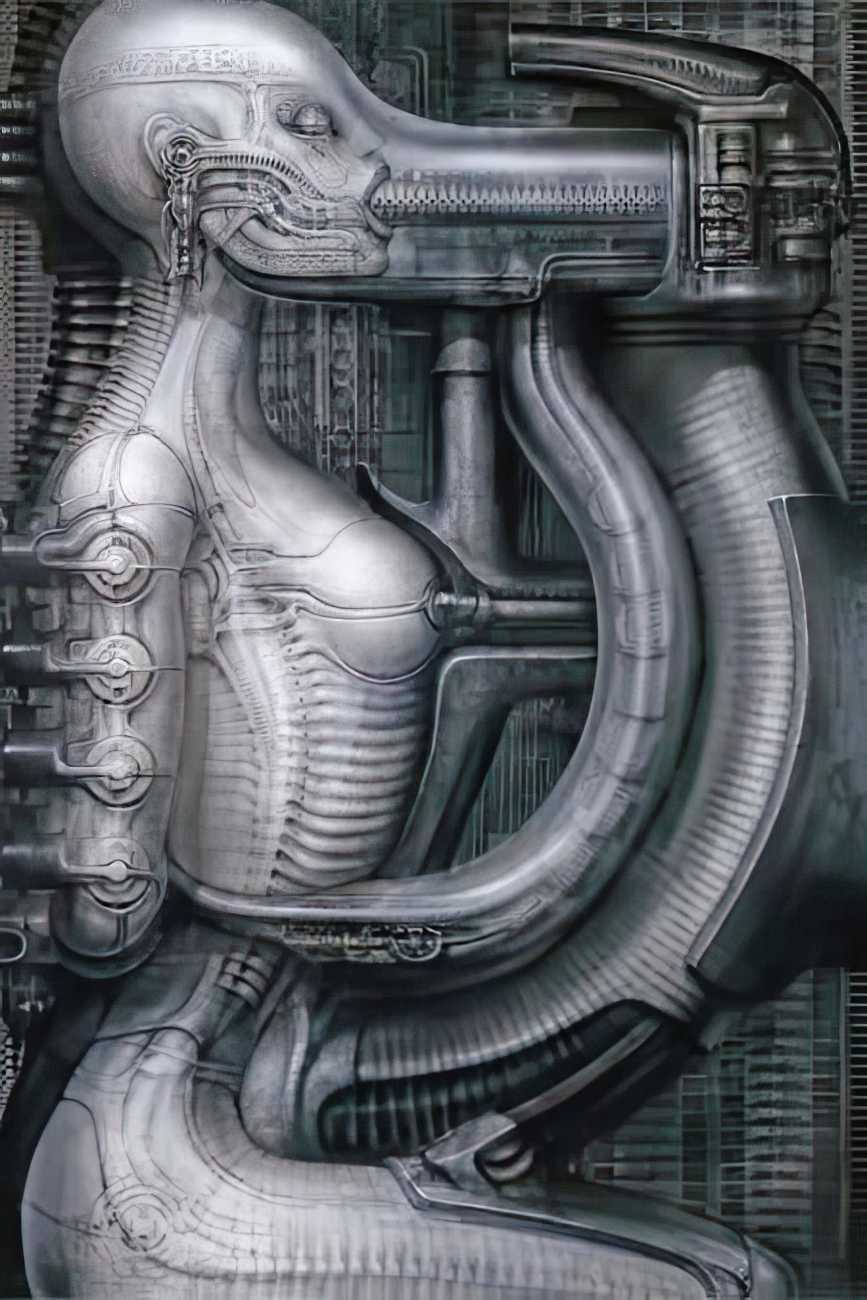
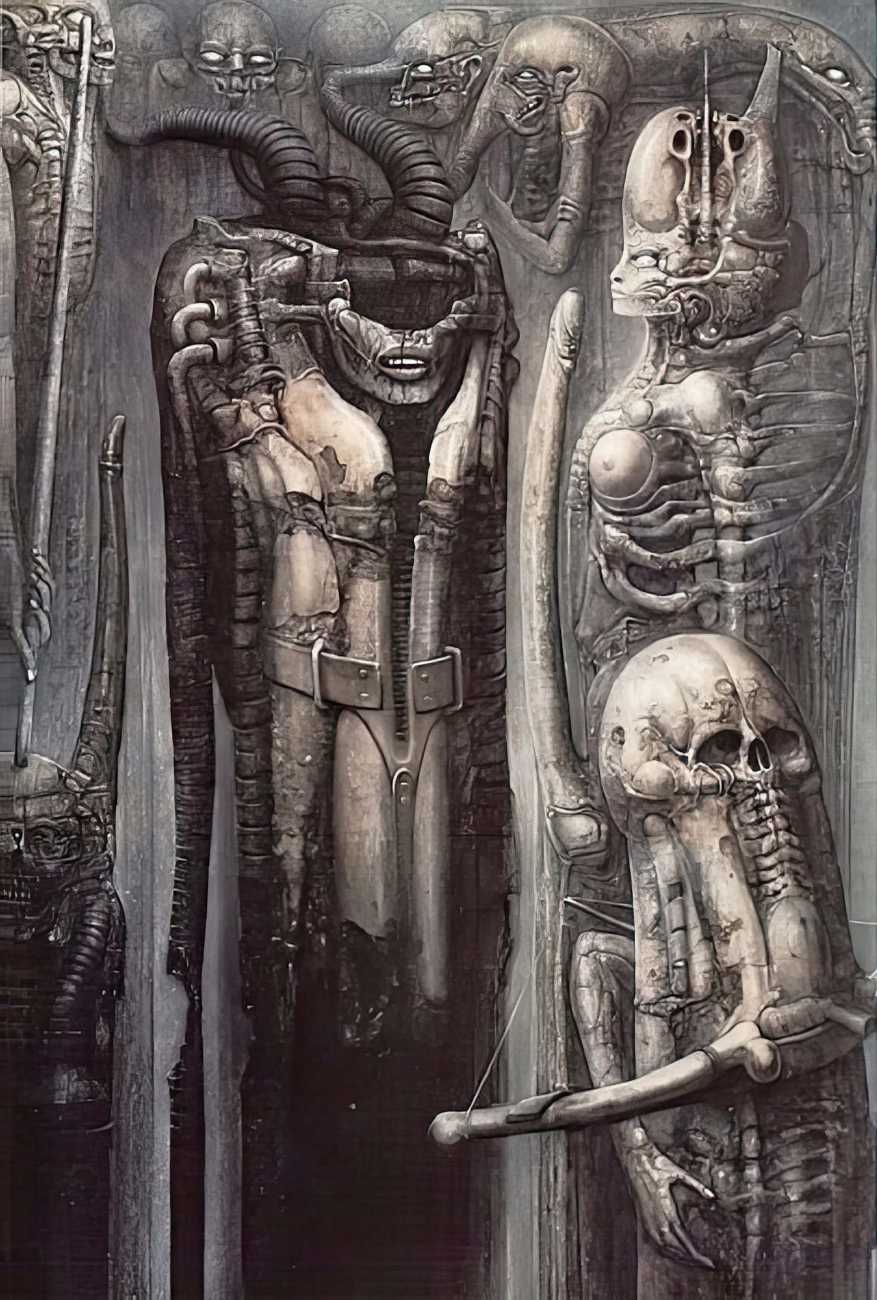
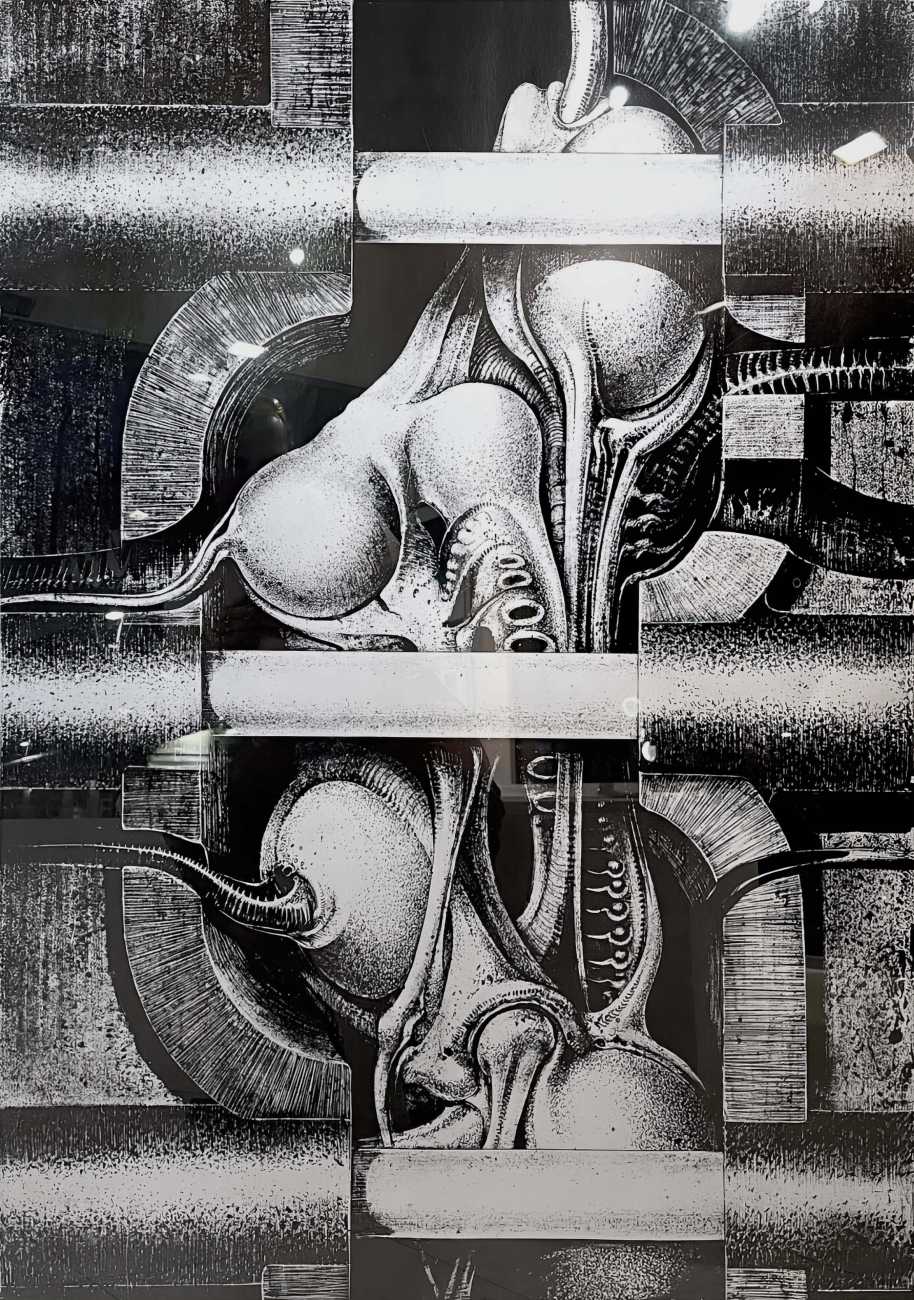
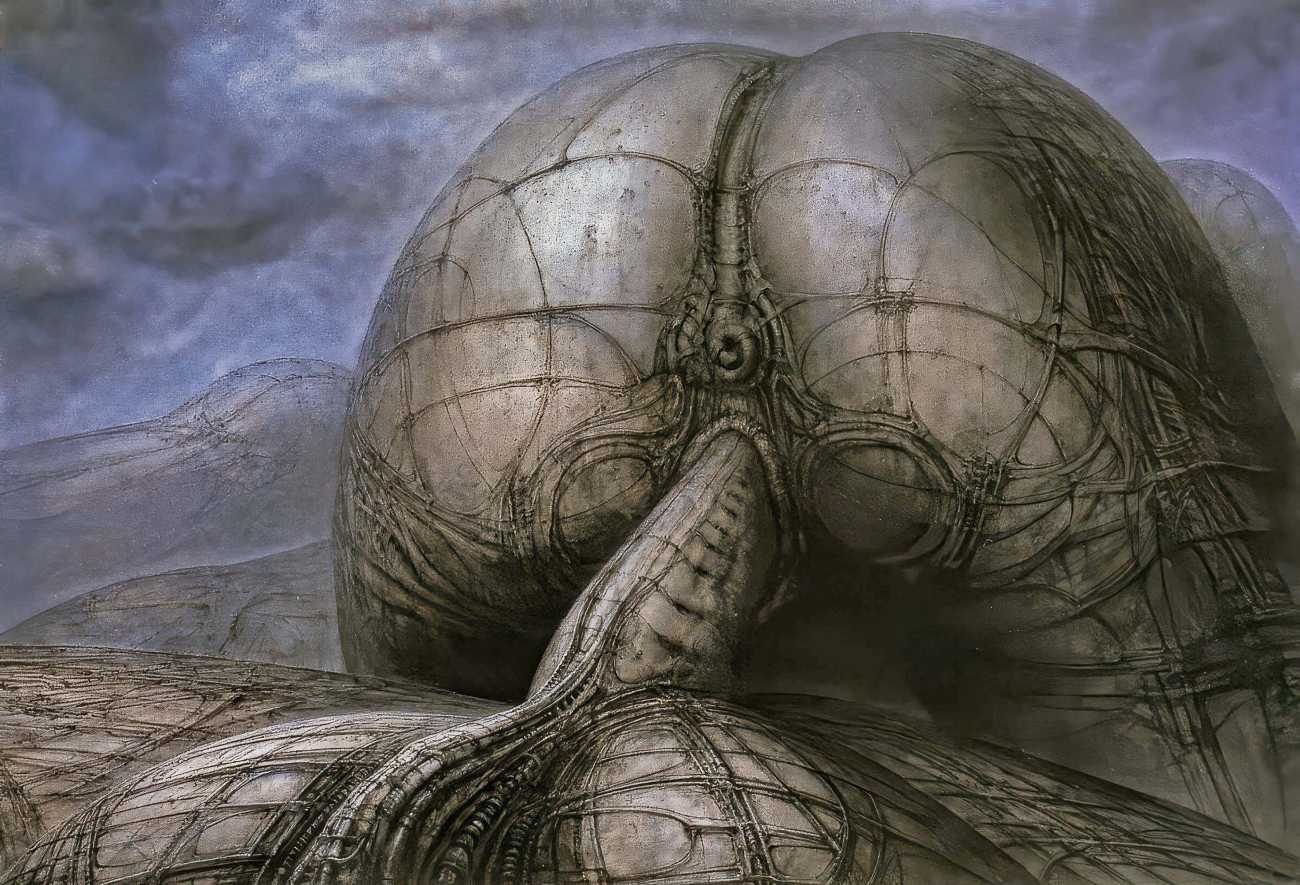
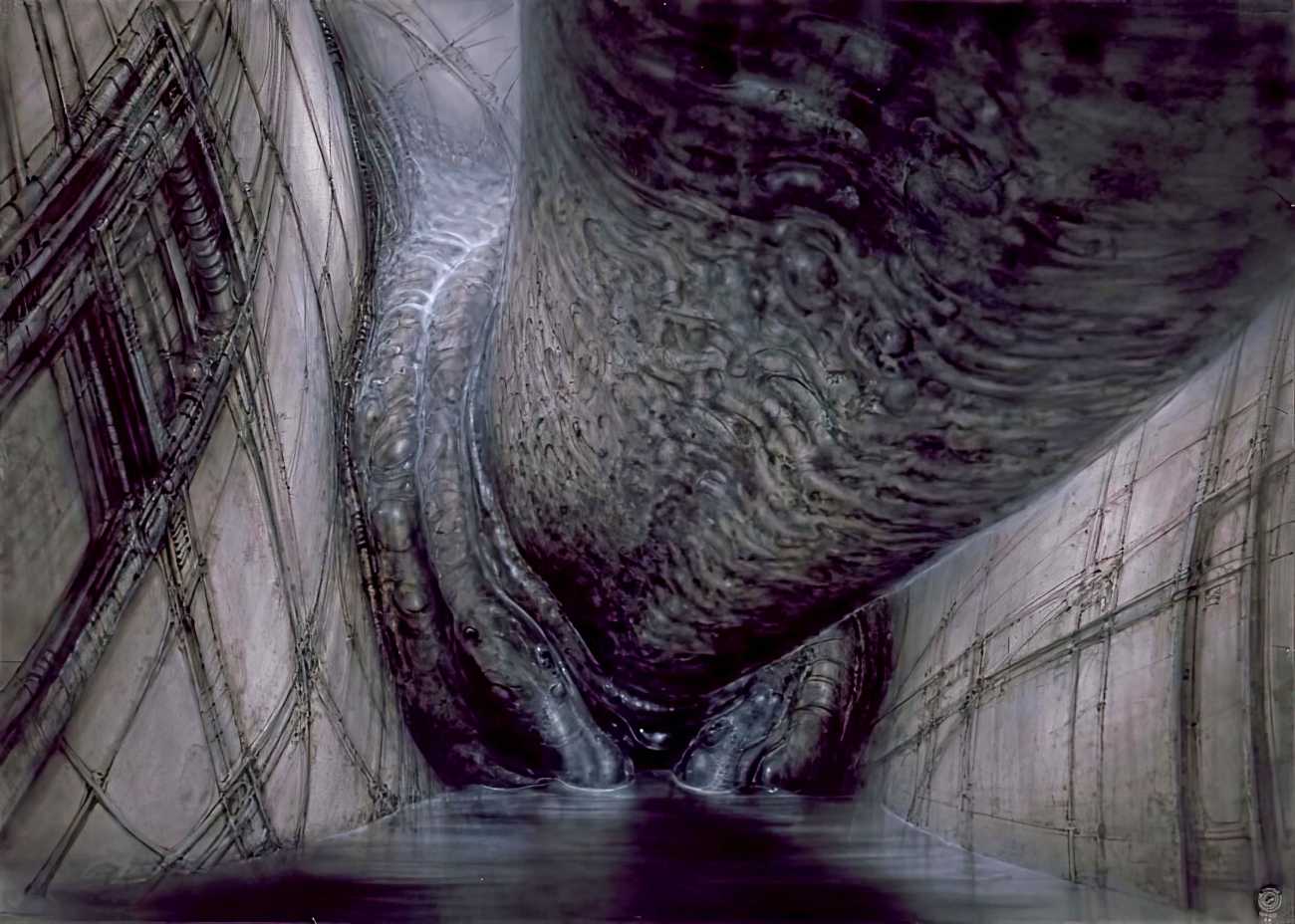
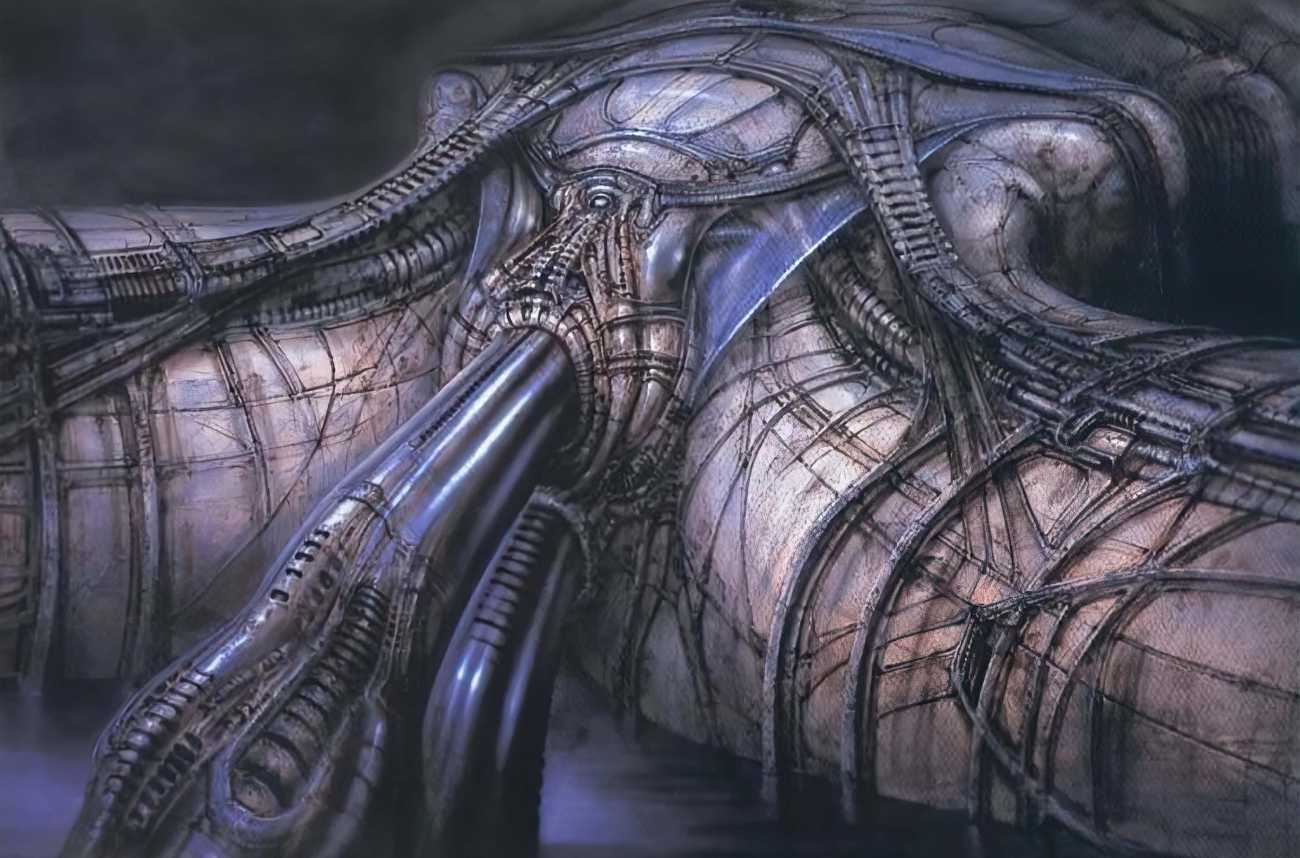
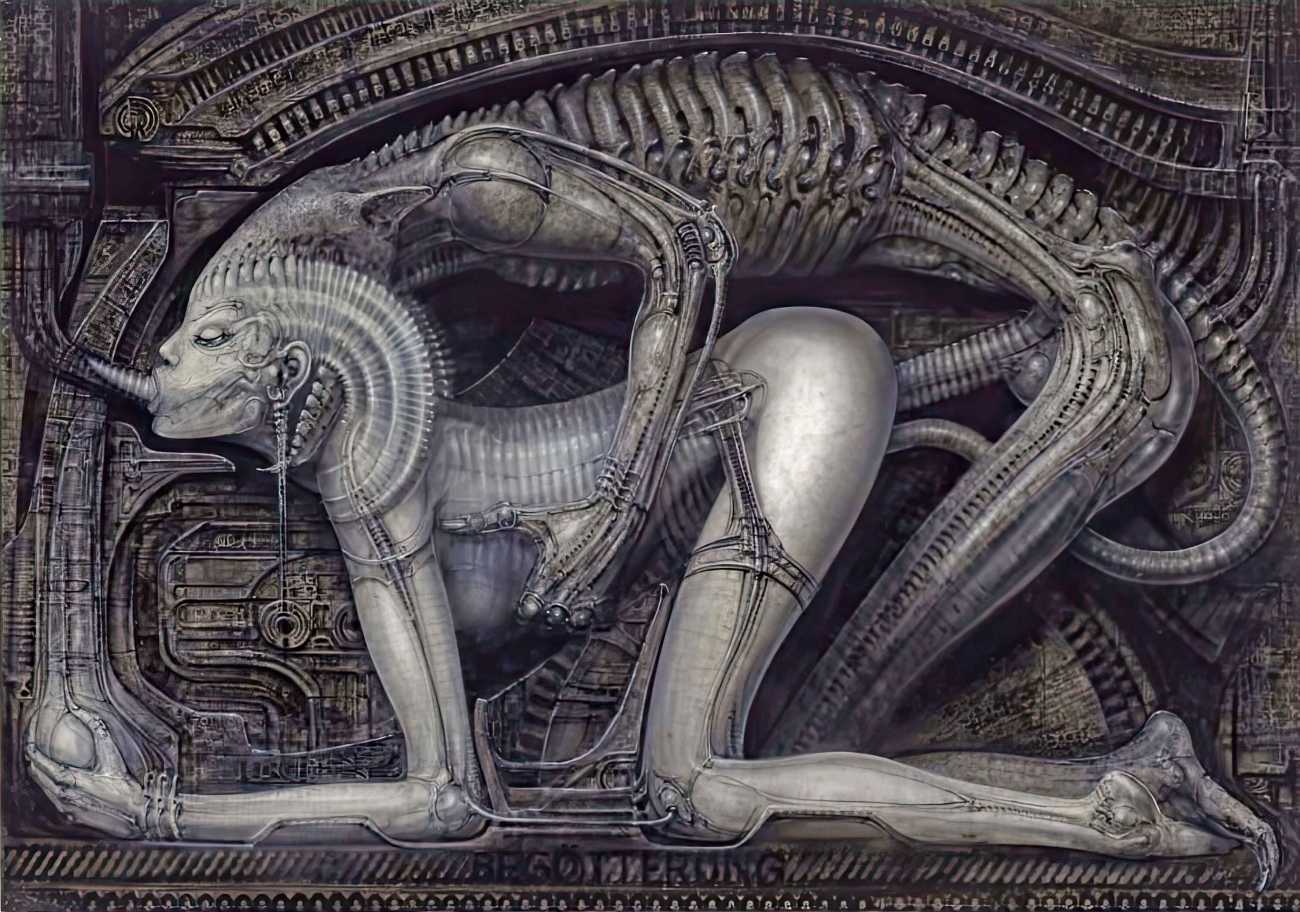
 In 1979 H.R. Giger produced a sequence of twelve works under the title Erotomechanics, exploring the fusion of human sexuality and mechanical forms that had become central to his imagery. The series brings together bodies, industrial structures, pipes, pistons and other mechanical components in increasingly elaborate configurations. Human anatomy is often difficult to distinguish from the machinery surrounding it, while sexual acts and anatomical references are incorporated into the designs with characteristic precision and unsettling directness.
The first three works in the sequence were subsequently retitled Biomechanical Landscapes I–III (Works 416–418). The remaining works retained the Erotomechanics title, numbered IV to XII. Among them are Mia & Judith (VII, Work 422), one of Giger’s best-known images of a biomechanical womb, Strapse (VIII, Work 423), and Fellatio Abstrakt (X, Work 425). Begötterung (XI, Work 428) is another particularly striking example of the series’ sexual and mechanical imagery.
In 1980 Serigraphie Albin Uldry published a limited-edition portfolio of six silkscreen prints, selected from the original twelve. The publisher chose works IV to IX, omitting the first three, which had by then acquired their Biomechanoid titles, as well as the final three works, X to XII. The resulting portfolio therefore begins partway through the original numbering. Each of the six large-format prints was printed in eight colours, and the edition was limited to 300 sets, each hand-signed and numbered by Giger. The six images of the 1980 portfolio make a particularly concentrated statement. Their combination of eroticism and industrial design is more explicit than in much of Giger’s other work, the repeated transformation of the human body into a network of mechanical structures giving the series its distinctive character.
The original twelve-work sequence and the six-print portfolio offer two different ways of encountering this remarkable body of work.