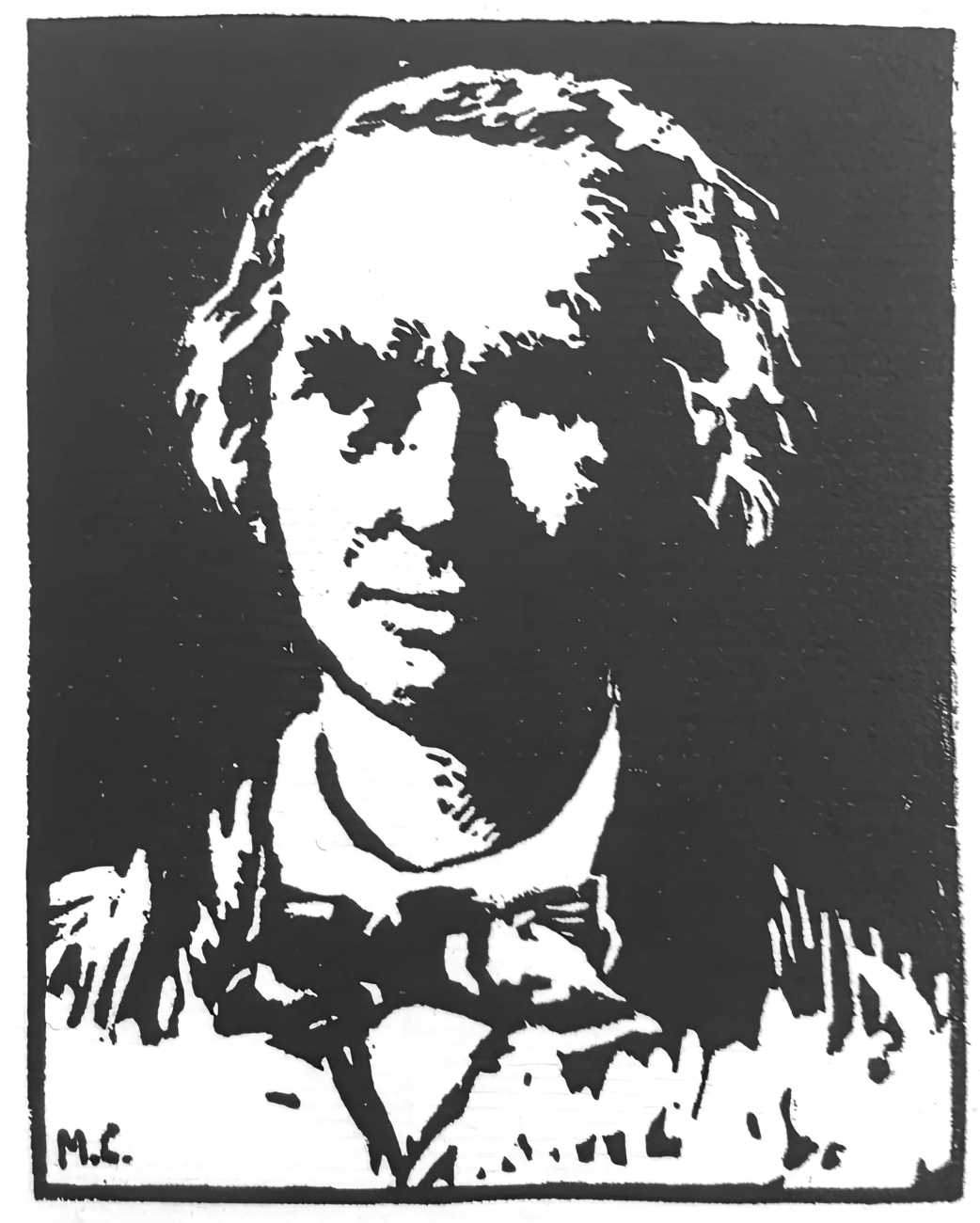
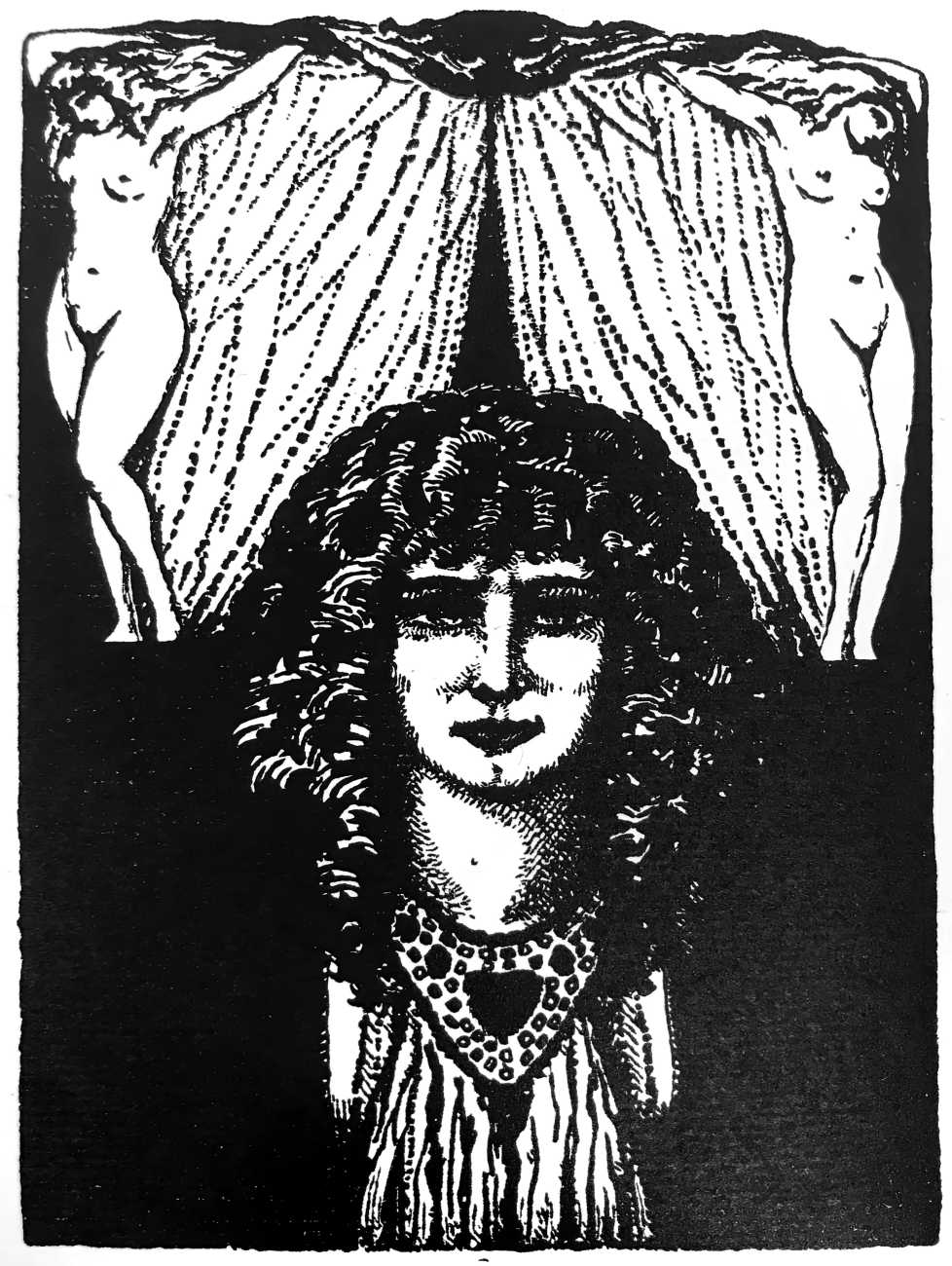
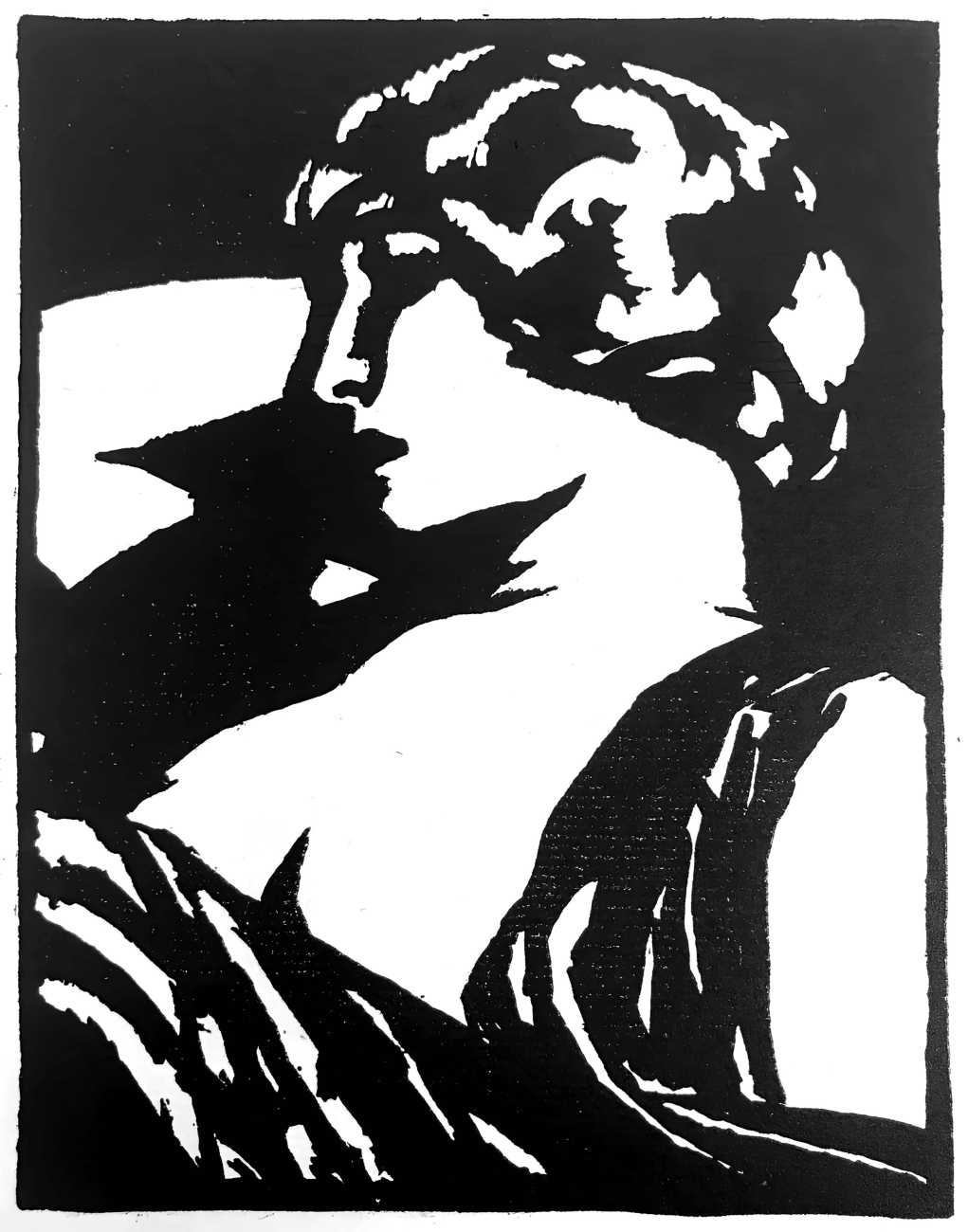
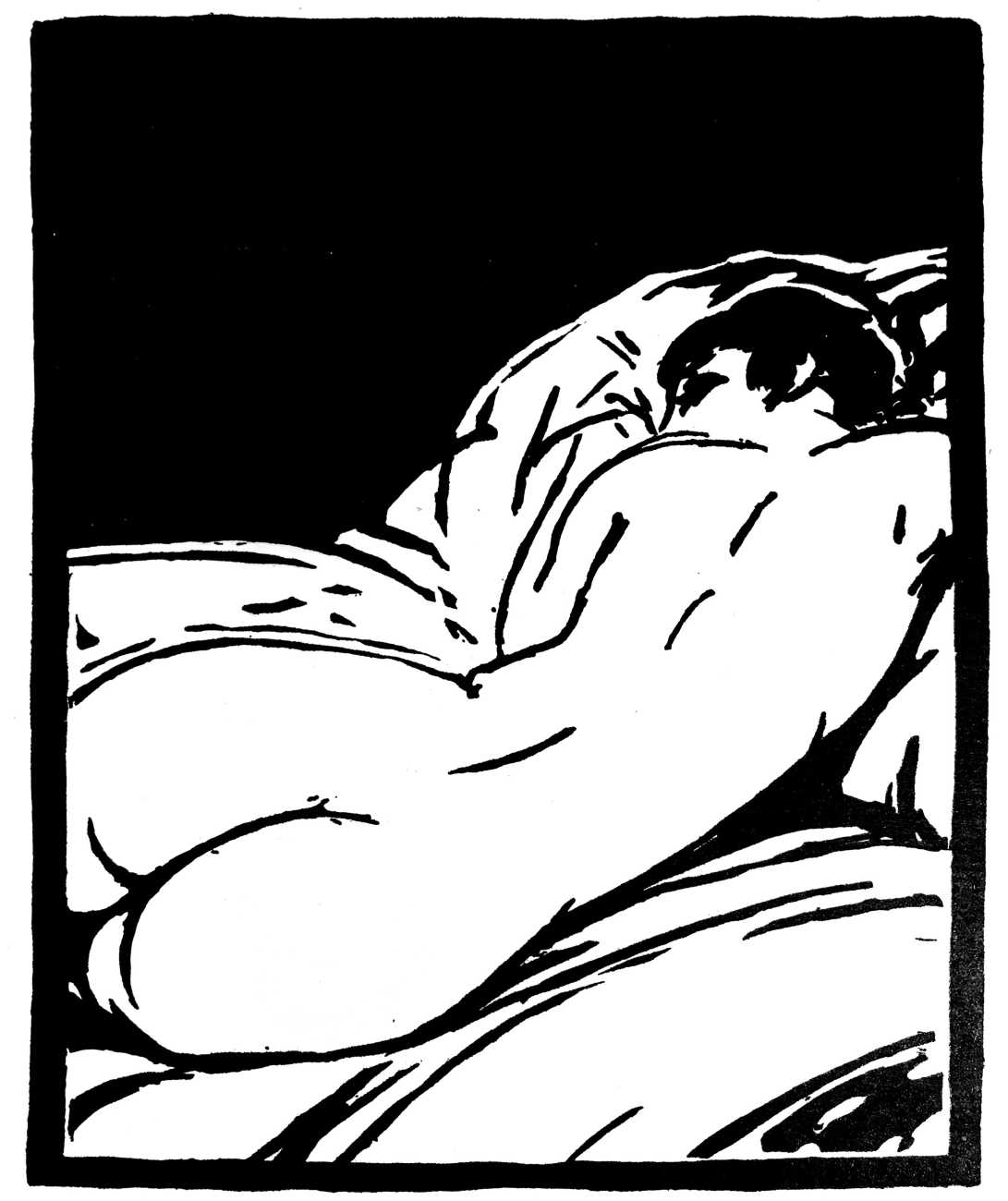
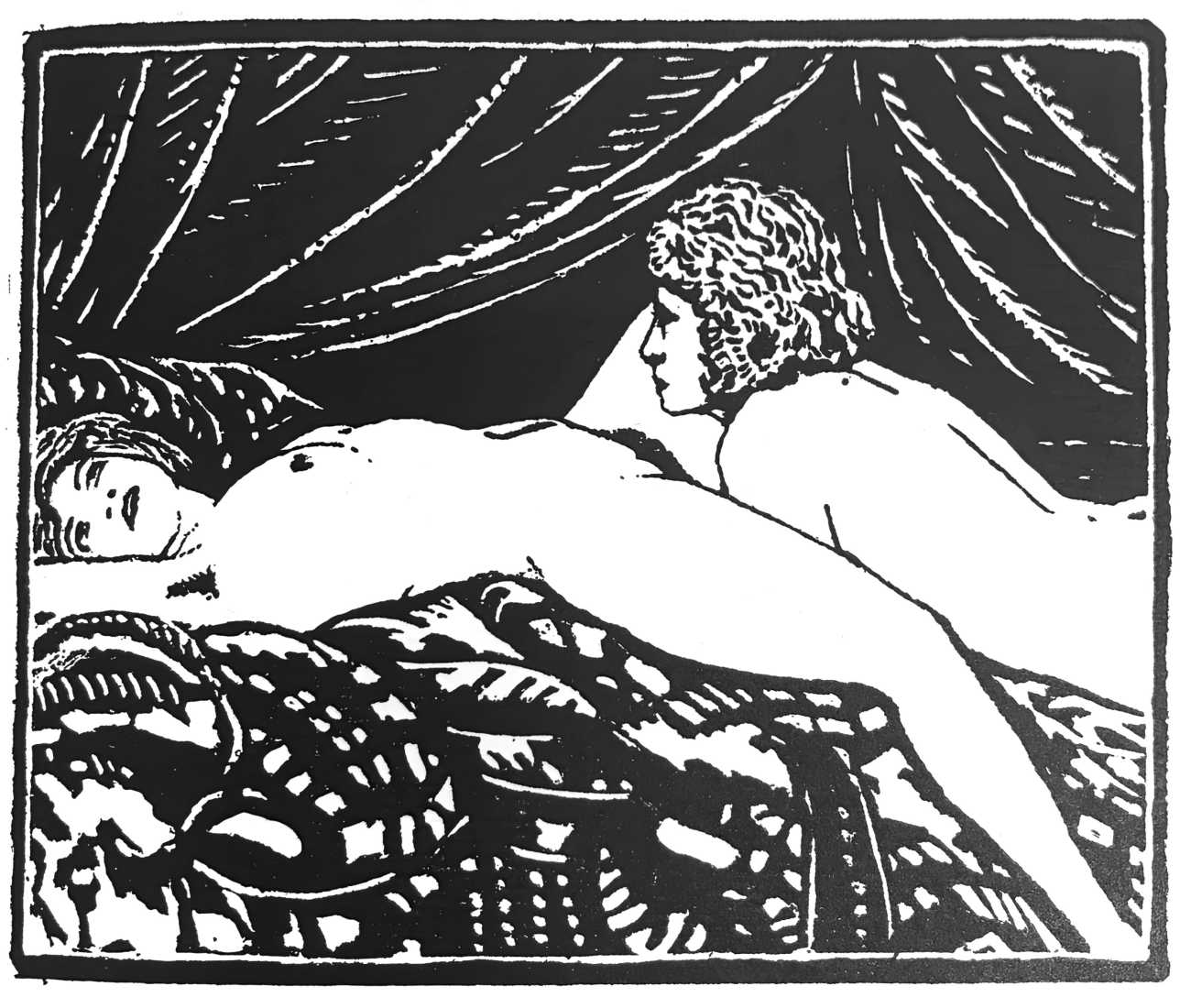
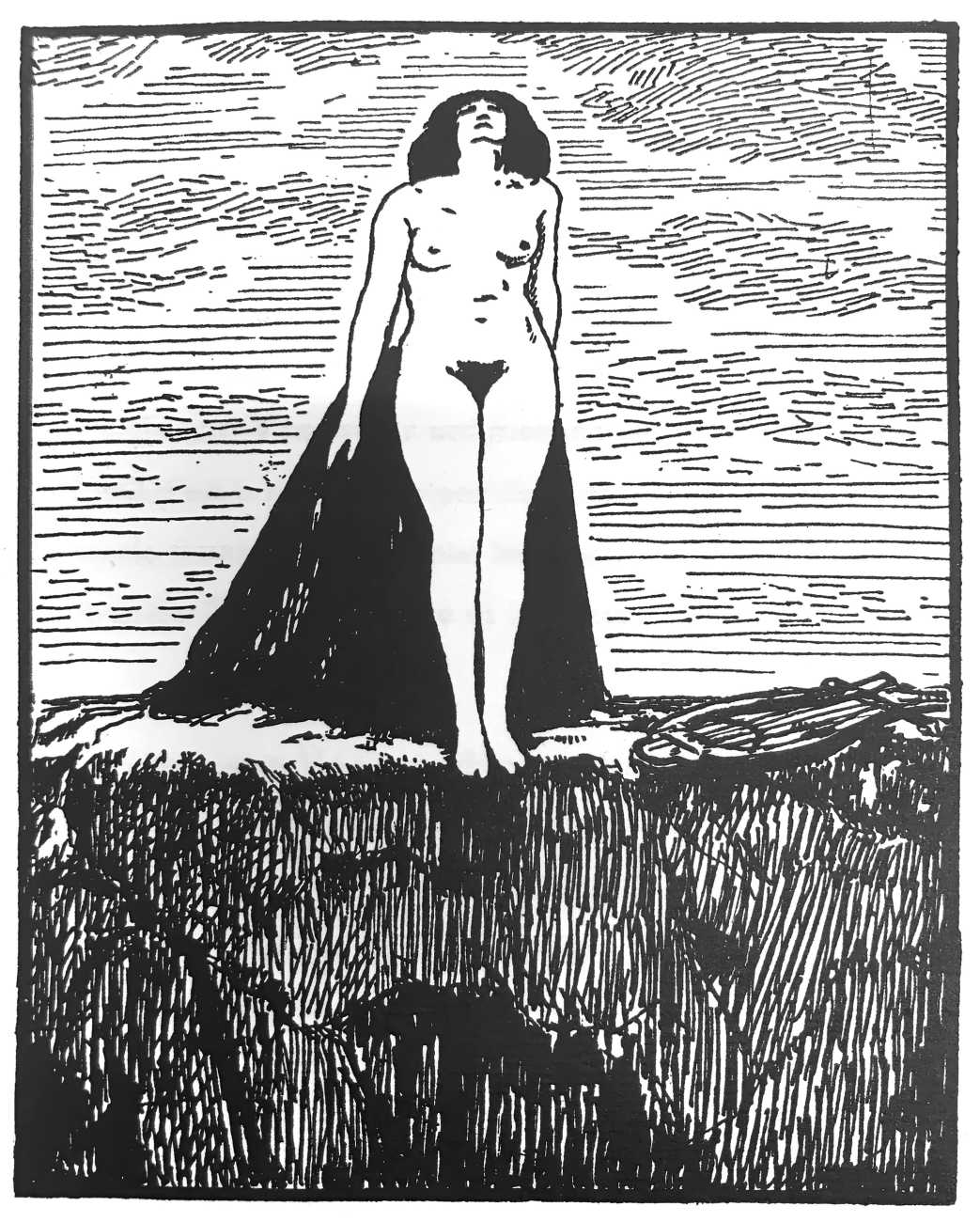
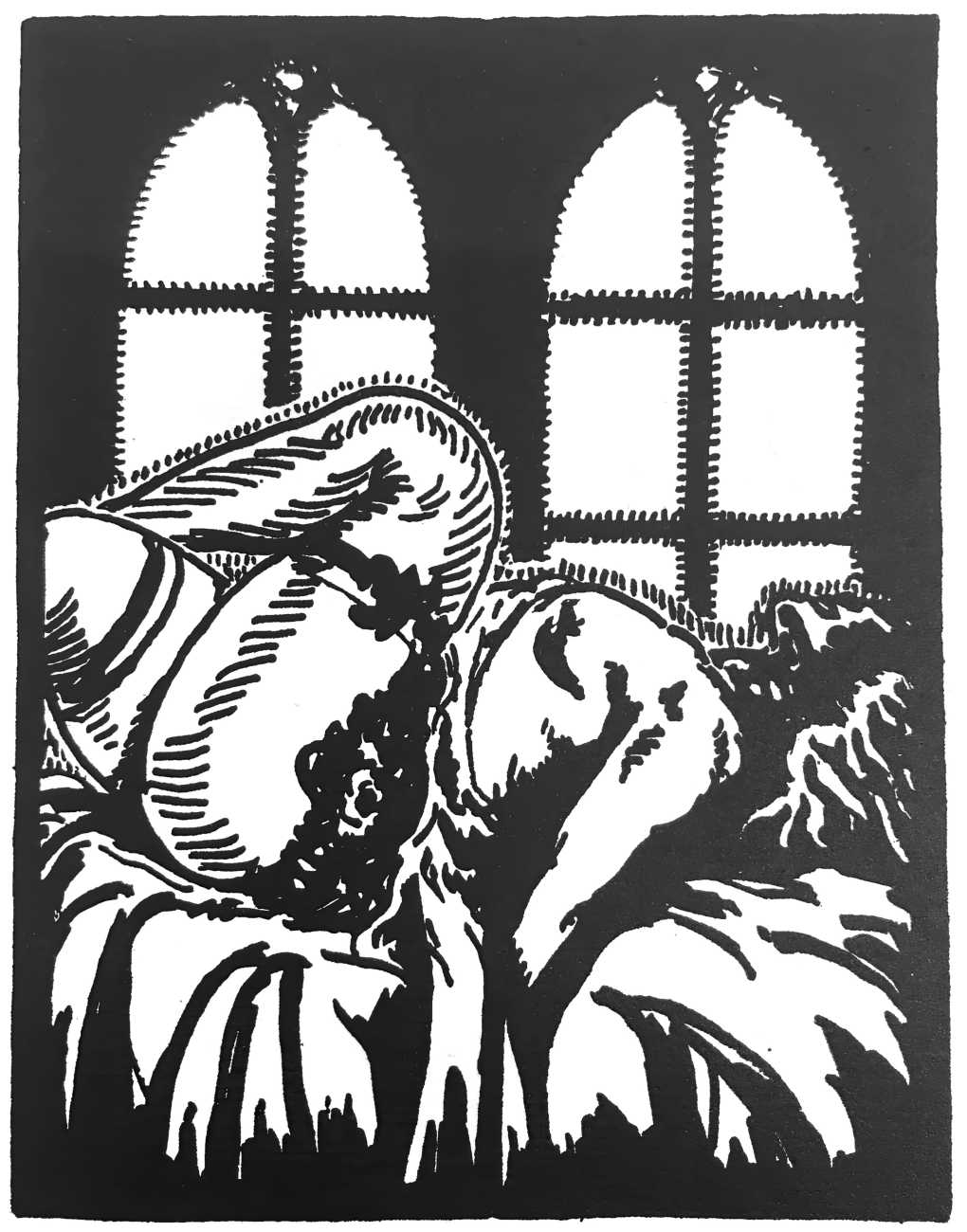
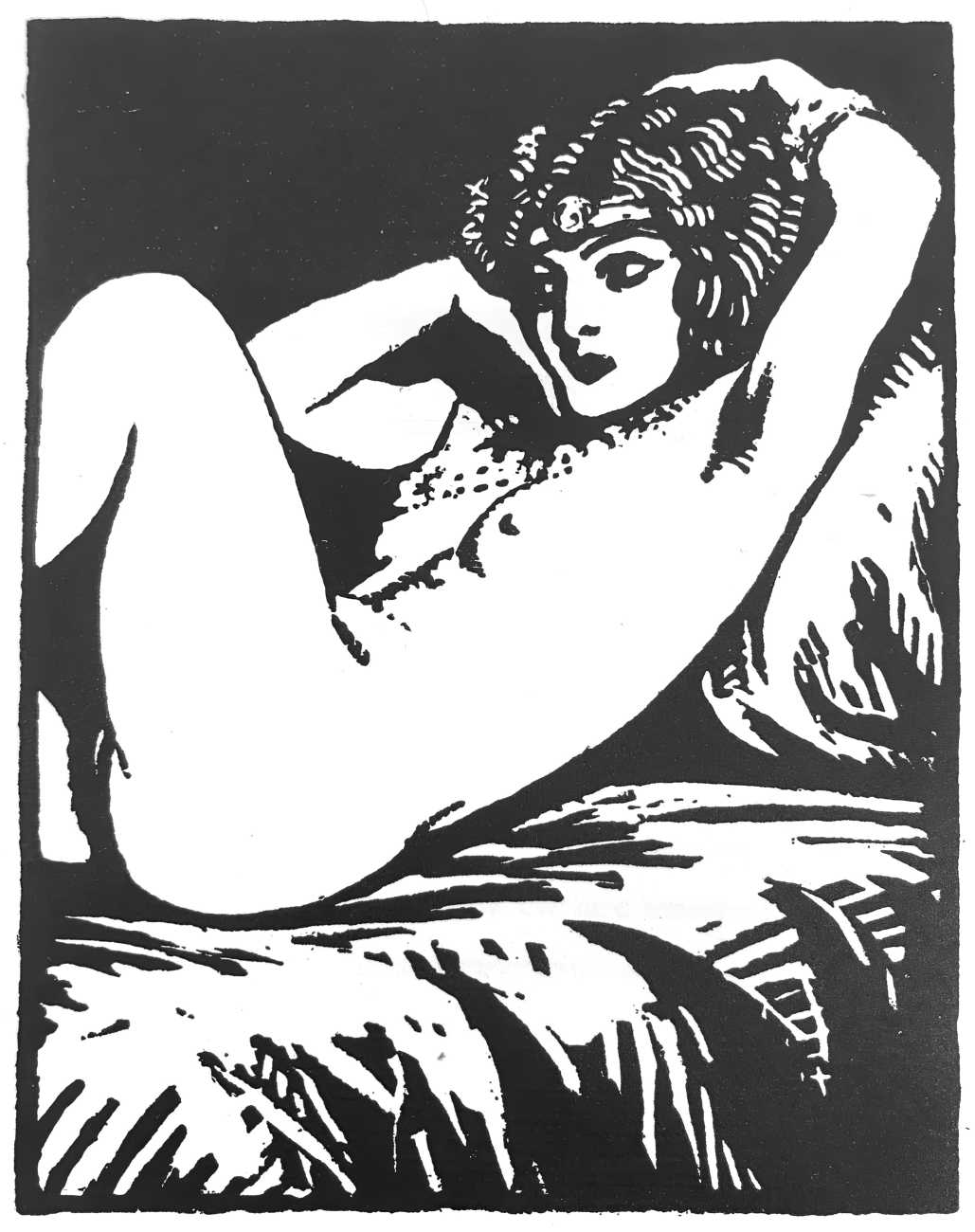
It isn’t often that we come across a complete mystery, but whoever ‘R. Mac-Carthy’ was they have covered their traces so well that no amount of clever research has unearthed their true identity. Whoever they were, the two books containing Mac-Carthy etchings show a high degree of skill and imagination.
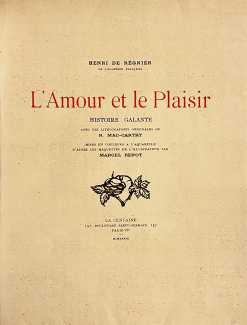 Both books, Baudelaire’s Les six pièces condamnées, published in 1926, and Henri de Regnier’s L’amour et le plaisir produced two years later, feature ‘lithographies originales de R. Mac-Carthy’, but beyond these attributions there is no trace of this rather anachronistically Irish-sounding artist. It is highly likely that Mac-Carthy is a pseudonym, though the reasons for such a talented artist to hide their light are hard to imagine.
The two Mac-Carthy-illustrated titles were published by the short-lived but clearly high-end Paris publisher La Centaine, which between 1926 and 1928 published just five titles, the other three being Rémy de Gourmont‘s Lettres intimes à l’Amazone, with illustrations by André Rouveyre, Marguerite Vallette-Eymery’s Le meneur de louves (Leader of the She-Wolves), illustrated by Henry de Renaucourt, and the unillustrated Gazette d’hier et d‘aujourd’hui (Journal of Yesterday and Today) by Paul Léautaud. The ‘Mac-Carthy’ plates bear a strong resemblance to those by Henry de Renaucourt, but why would de Renaucourt adopt a pseudonym for other La Centaine titles?
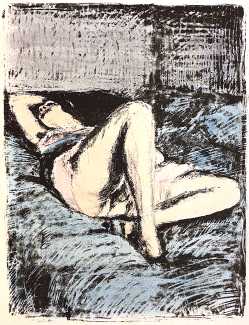
If anybody can throw more light on this mystery artist we would love to hear from you.
Example illustration
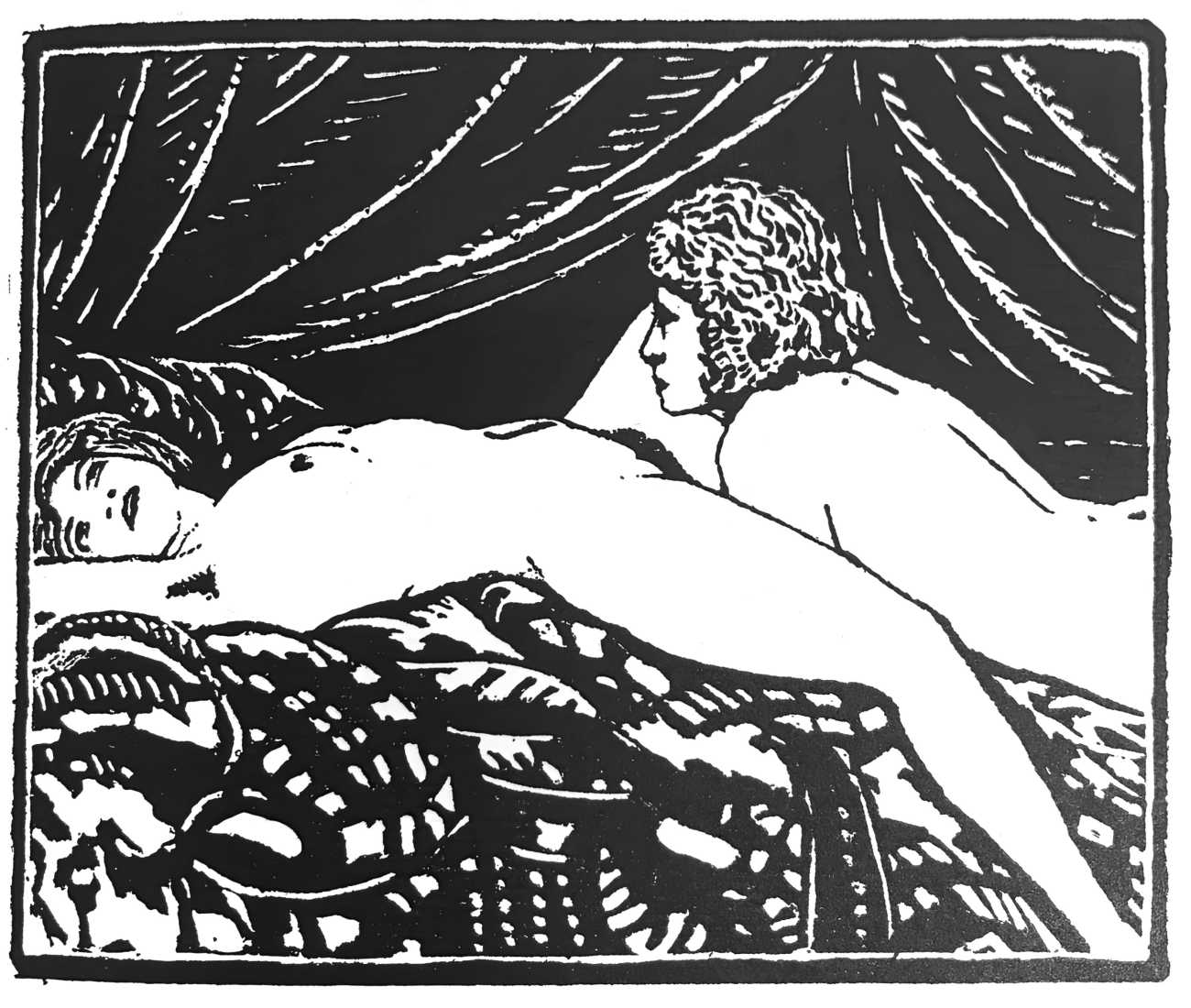
Les six pièces condamnées (1926)