 François Villon (1431–63) is the best-known French poet of the late middle ages. A ne’er-do-well who was involved in criminal behaviour and had multiple encounters with law enforcement authorities, Villon wrote about these experiences in his poems.
Villon was a great poetic innovator; he understood perfectly the medieval courtly ideal, but often chose to write against the grain, reversing the values and celebrating low-lifes destined for the gallows, falling happily into parody or lewd jokes, constantly innovating in his diction and vocabulary; a few poems make extensive use of Parisian thieves’ slang. Villon’s verse is mostly about his own life, a record of poverty, trouble, and trial which was shared by his intended audience. His poems are sprinkled with mysteries and hidden jokes, peppered with the slang of the time and the underworld subculture in which Villon moved.
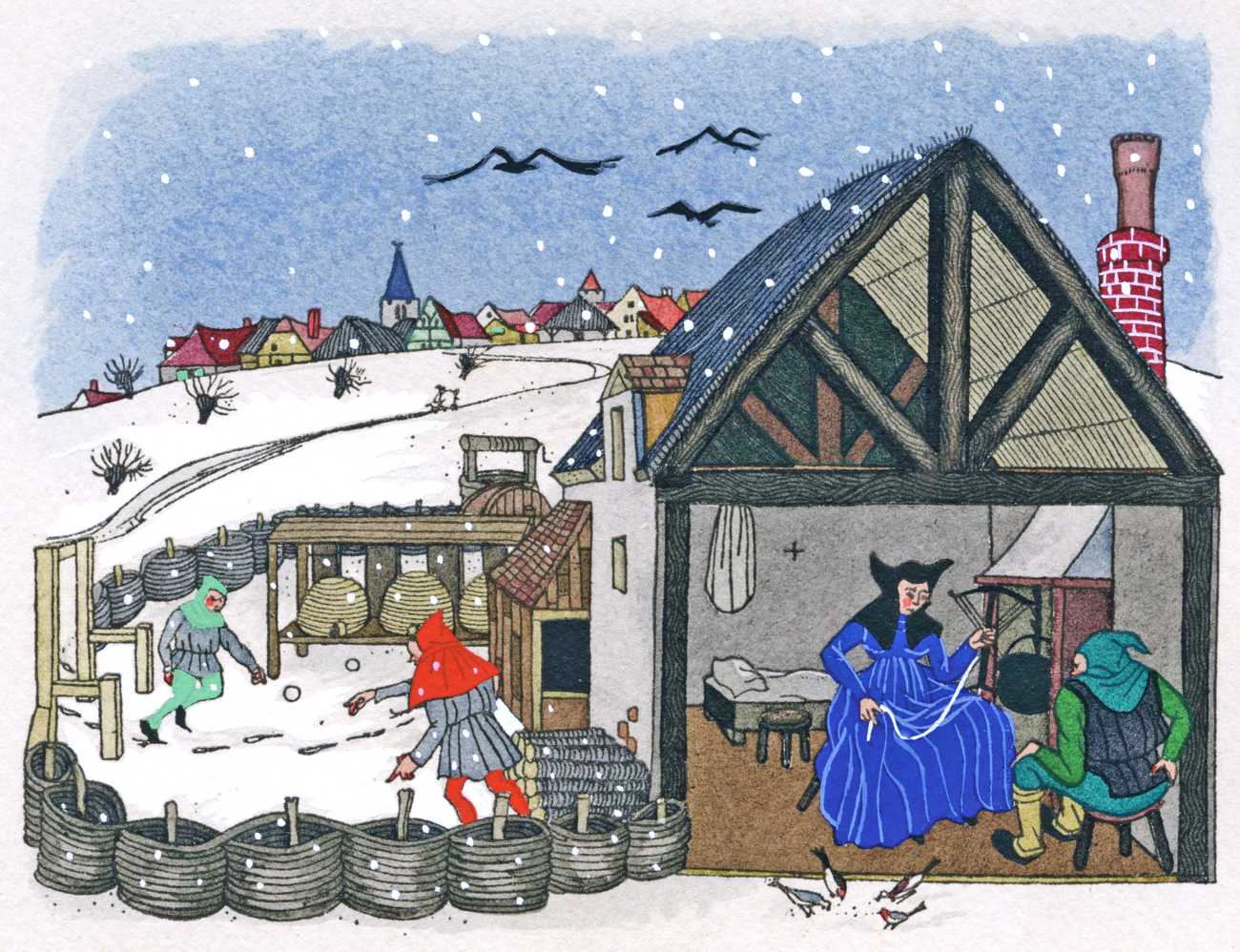
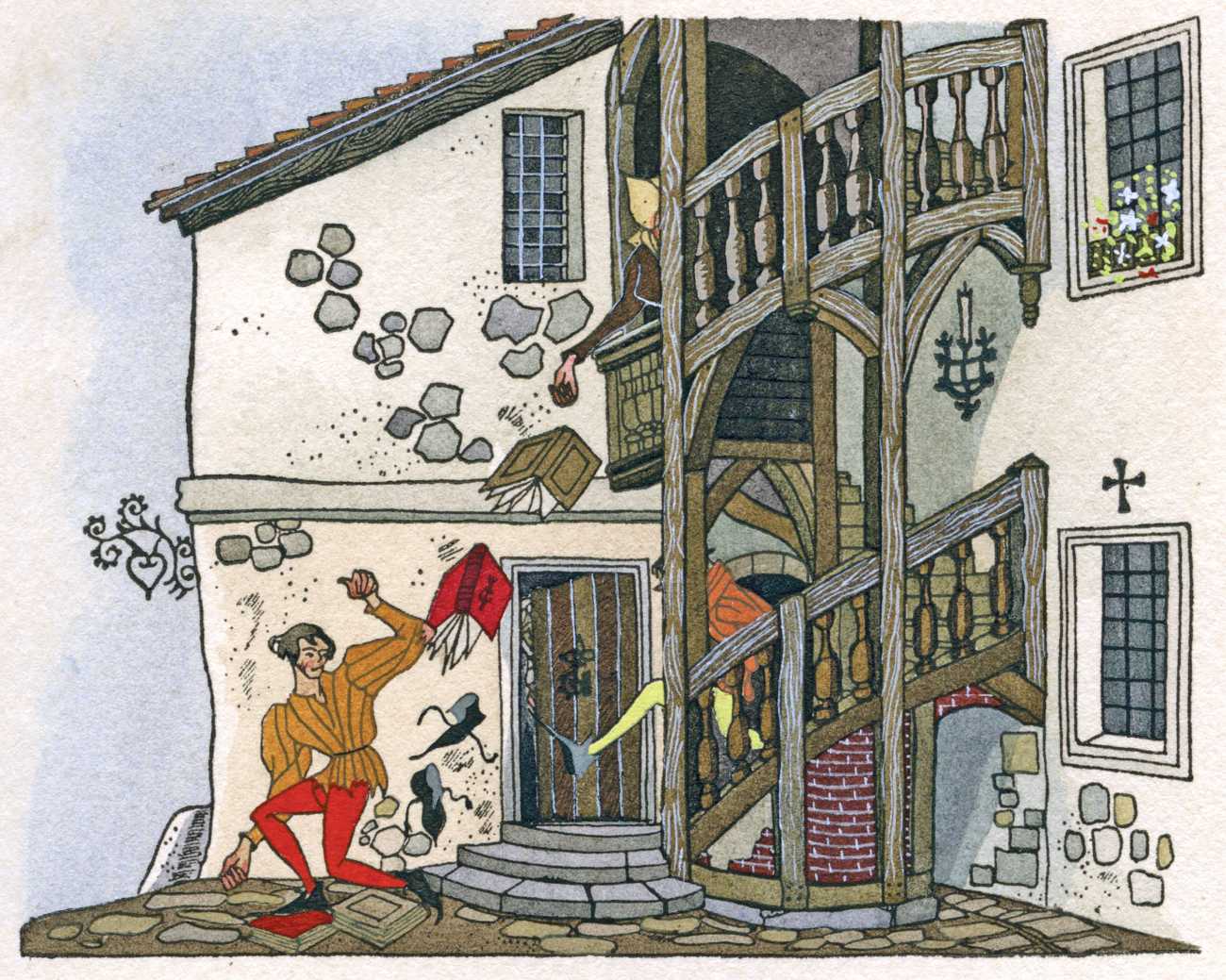
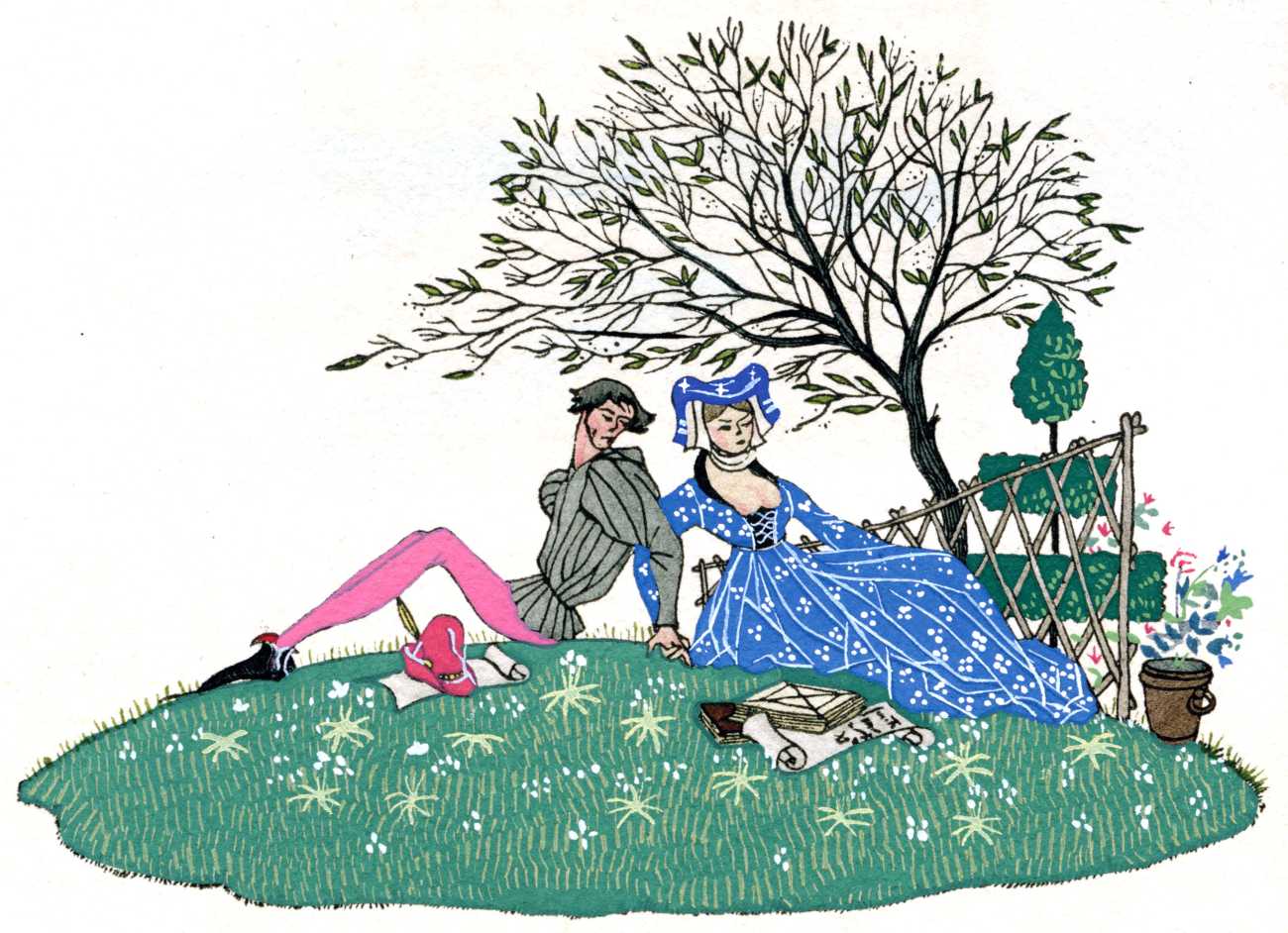
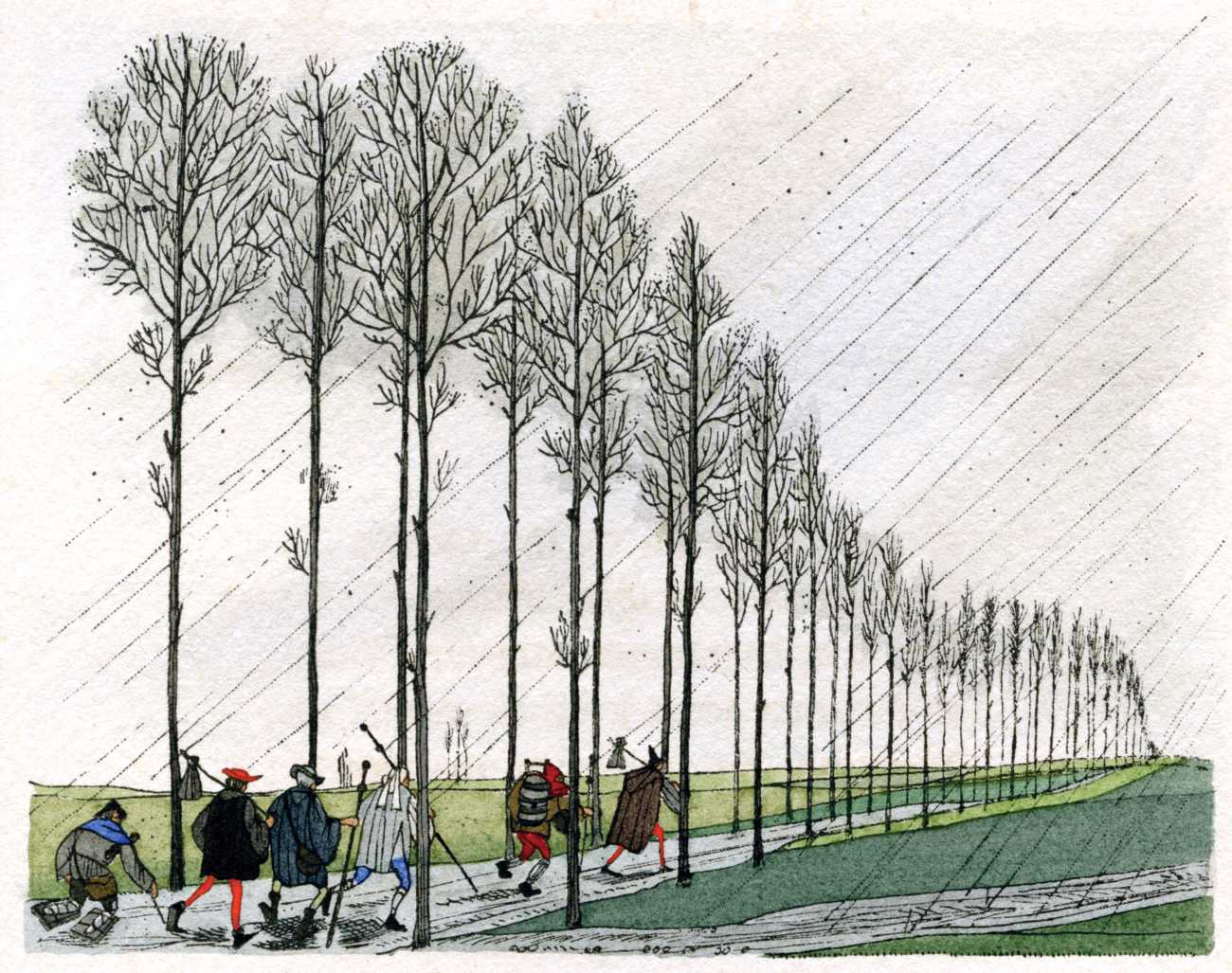
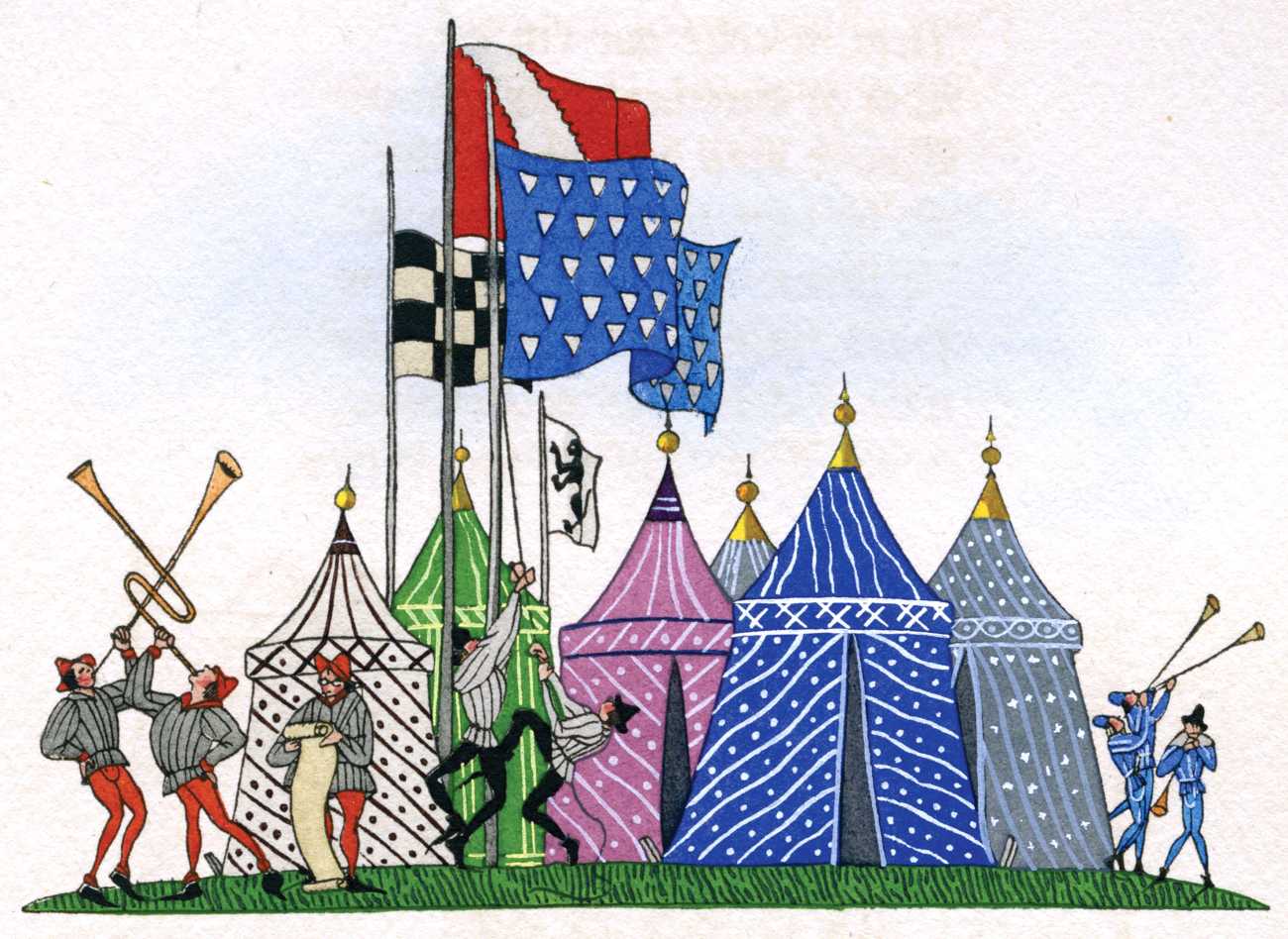
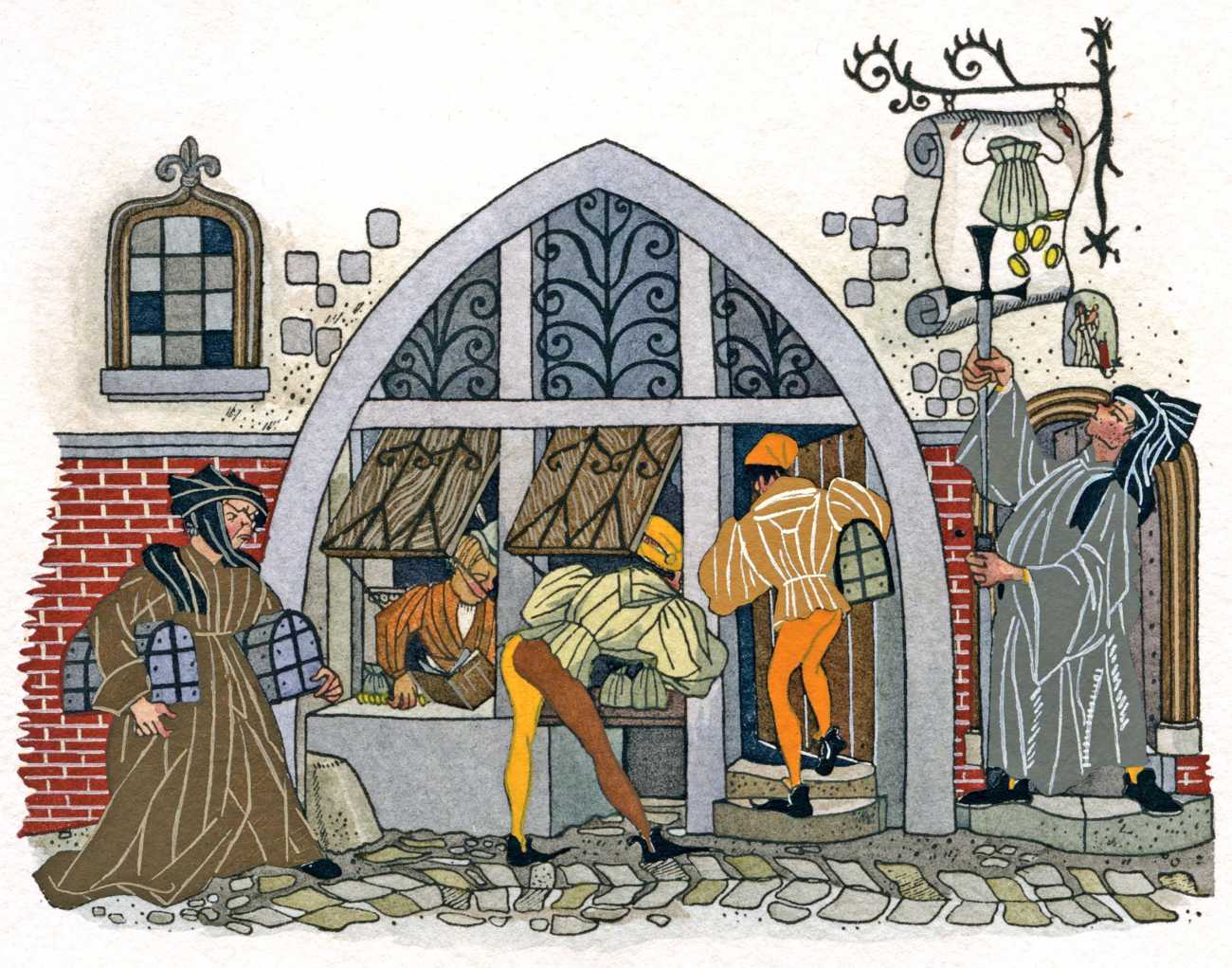
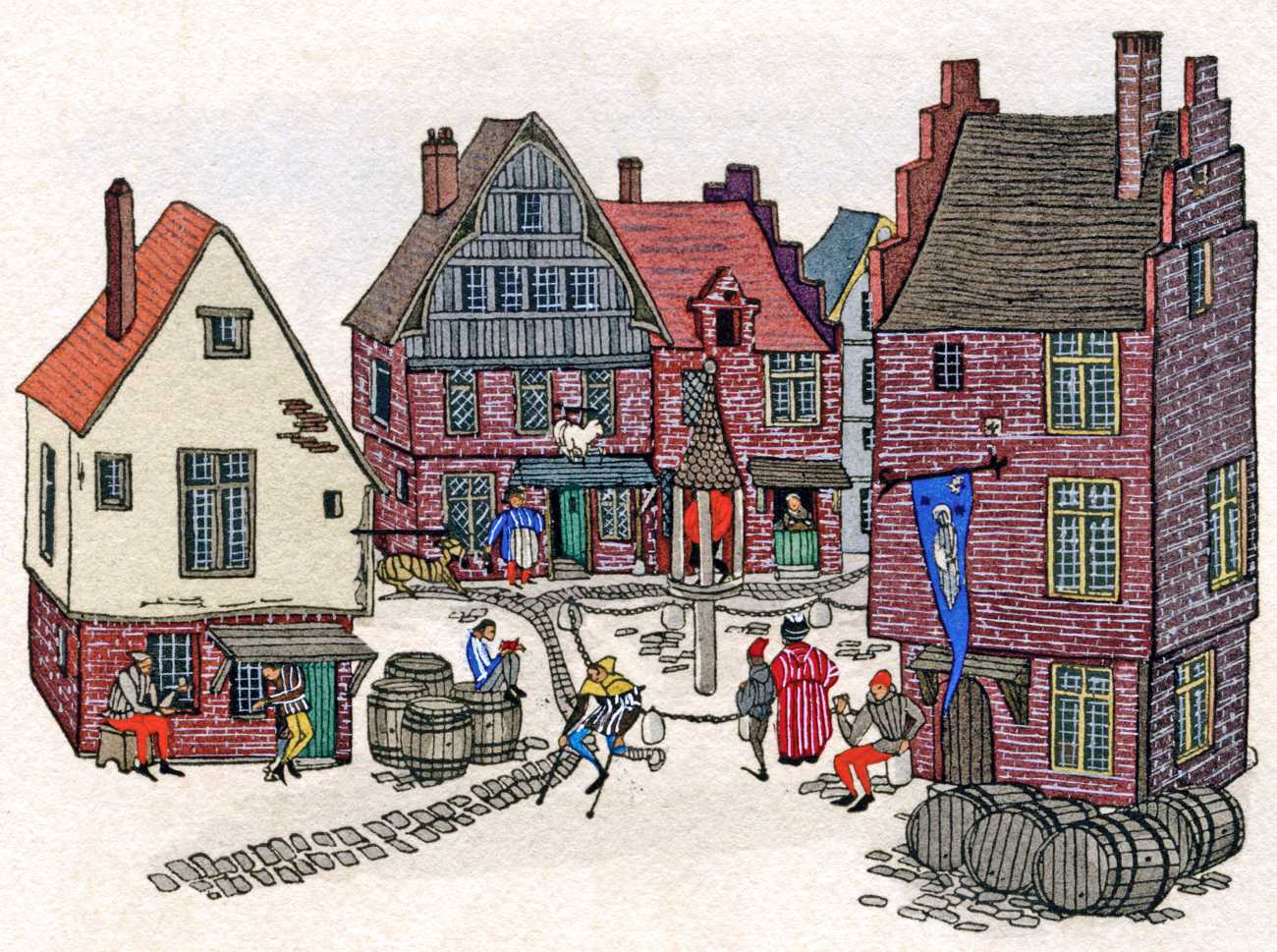
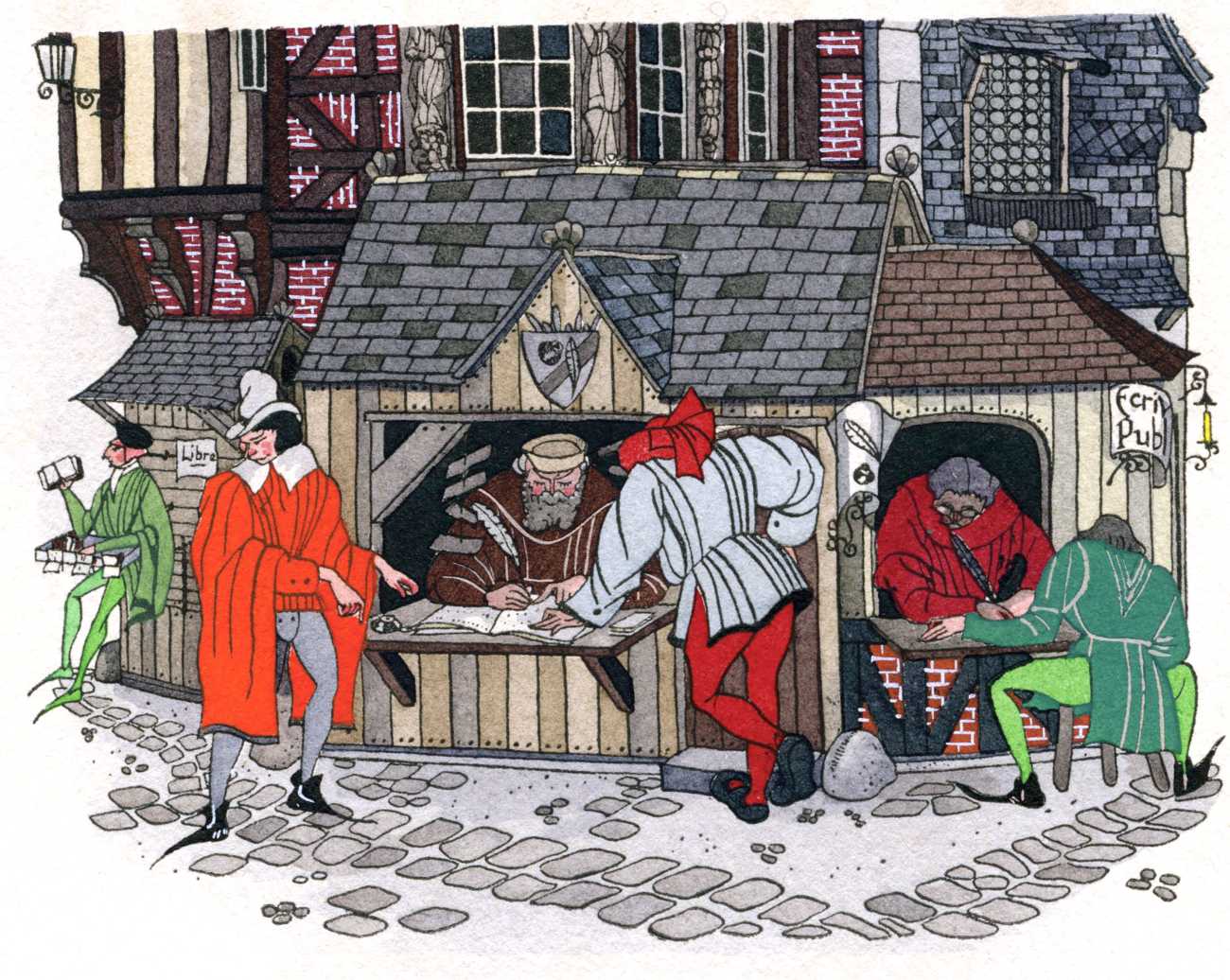
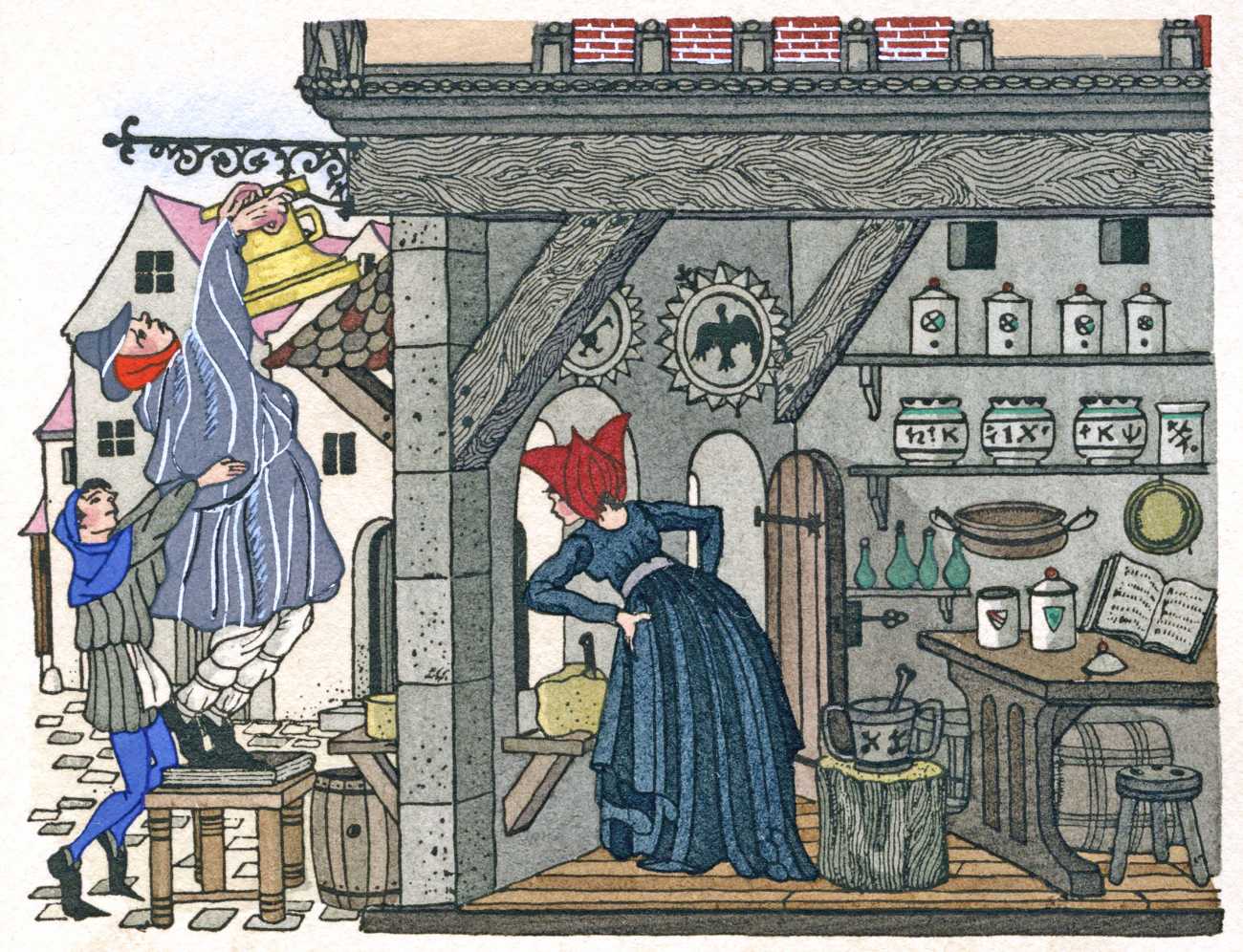
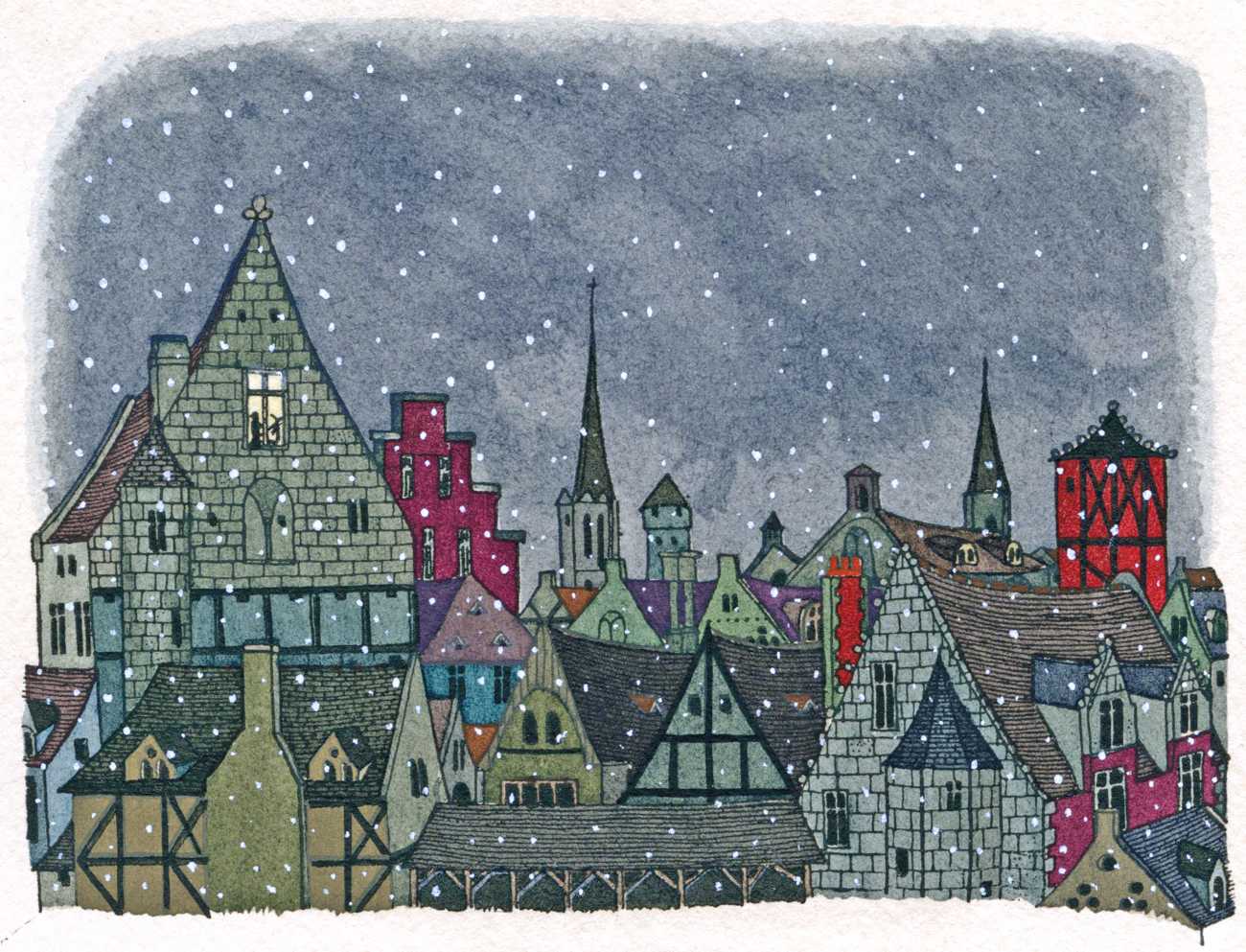
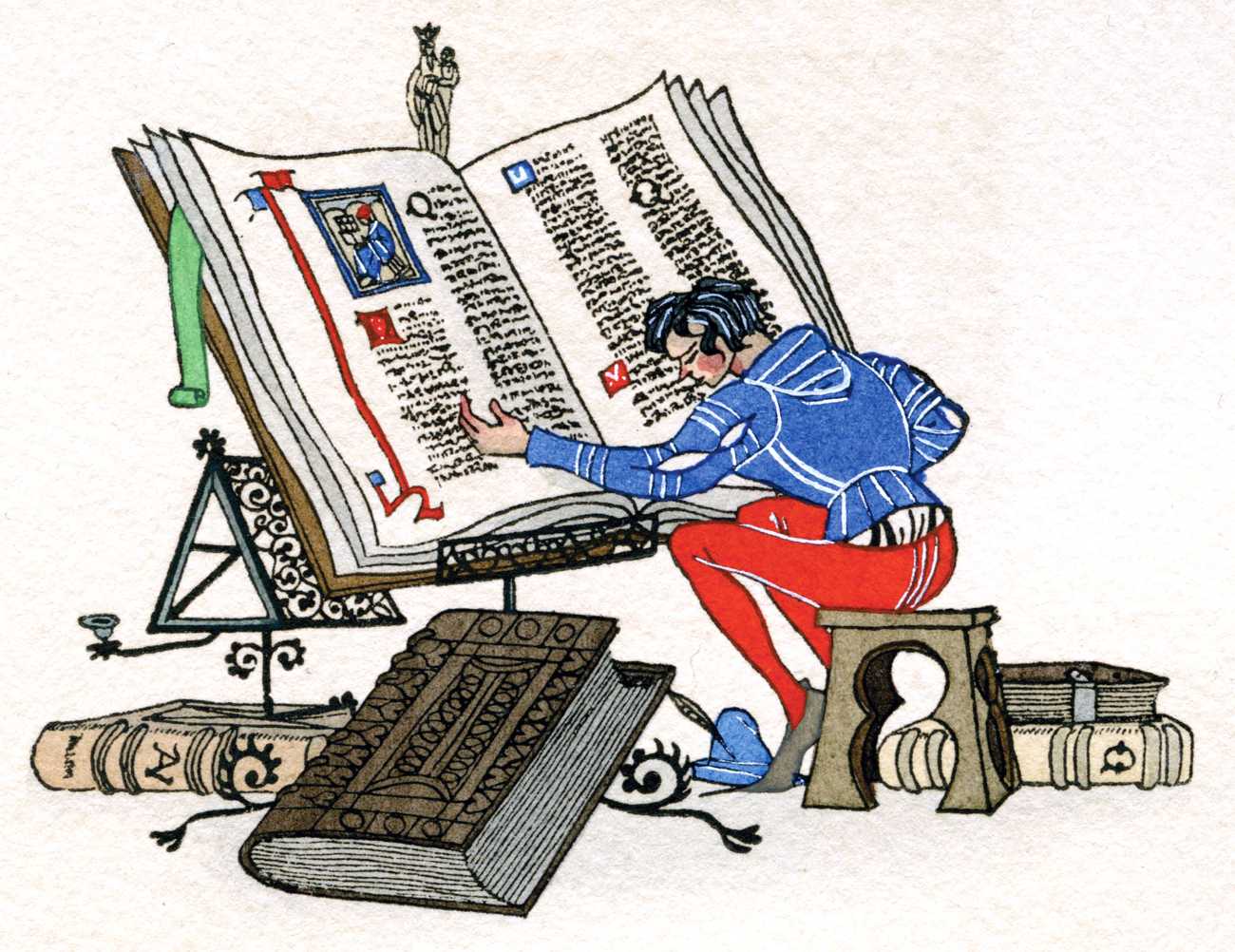
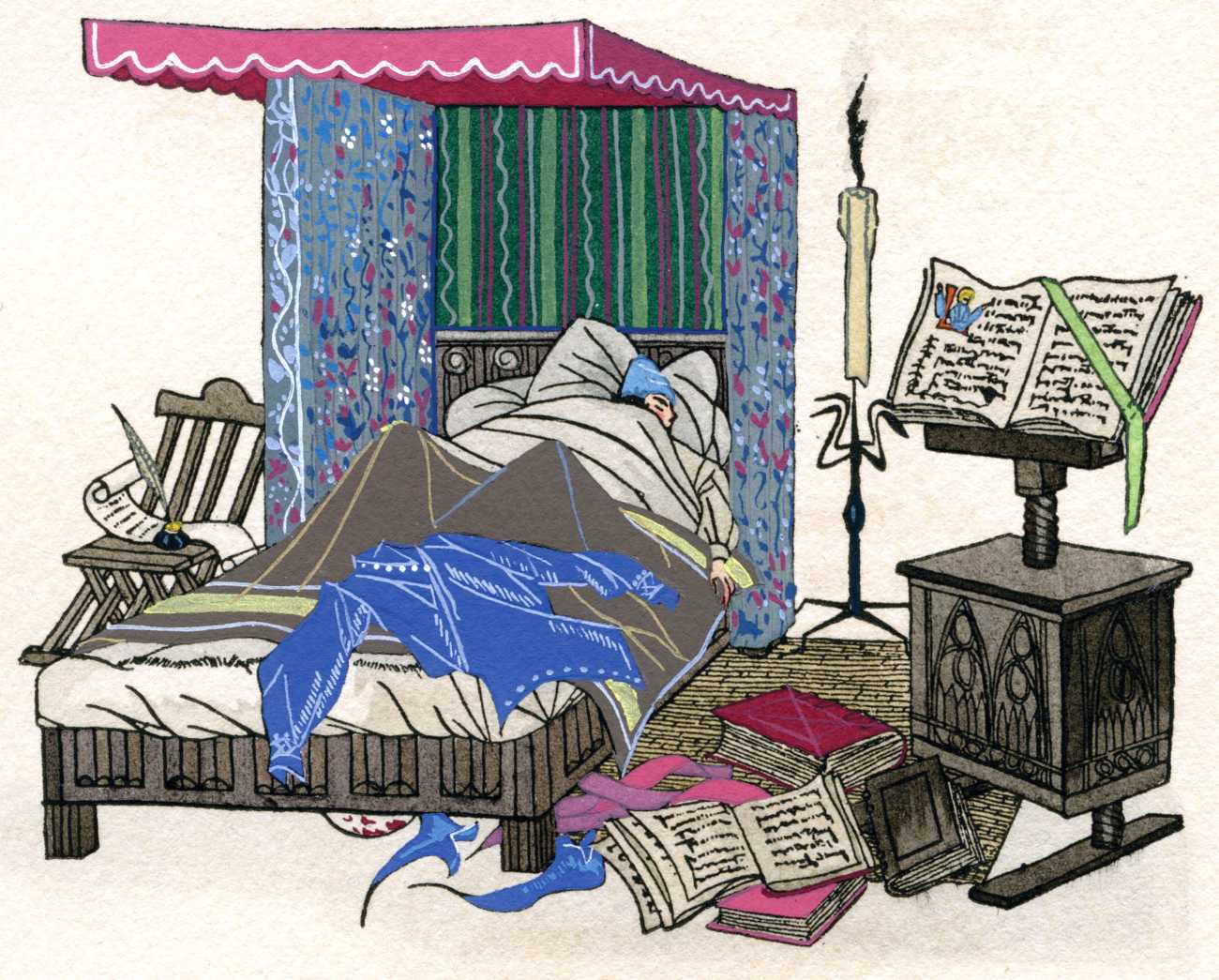
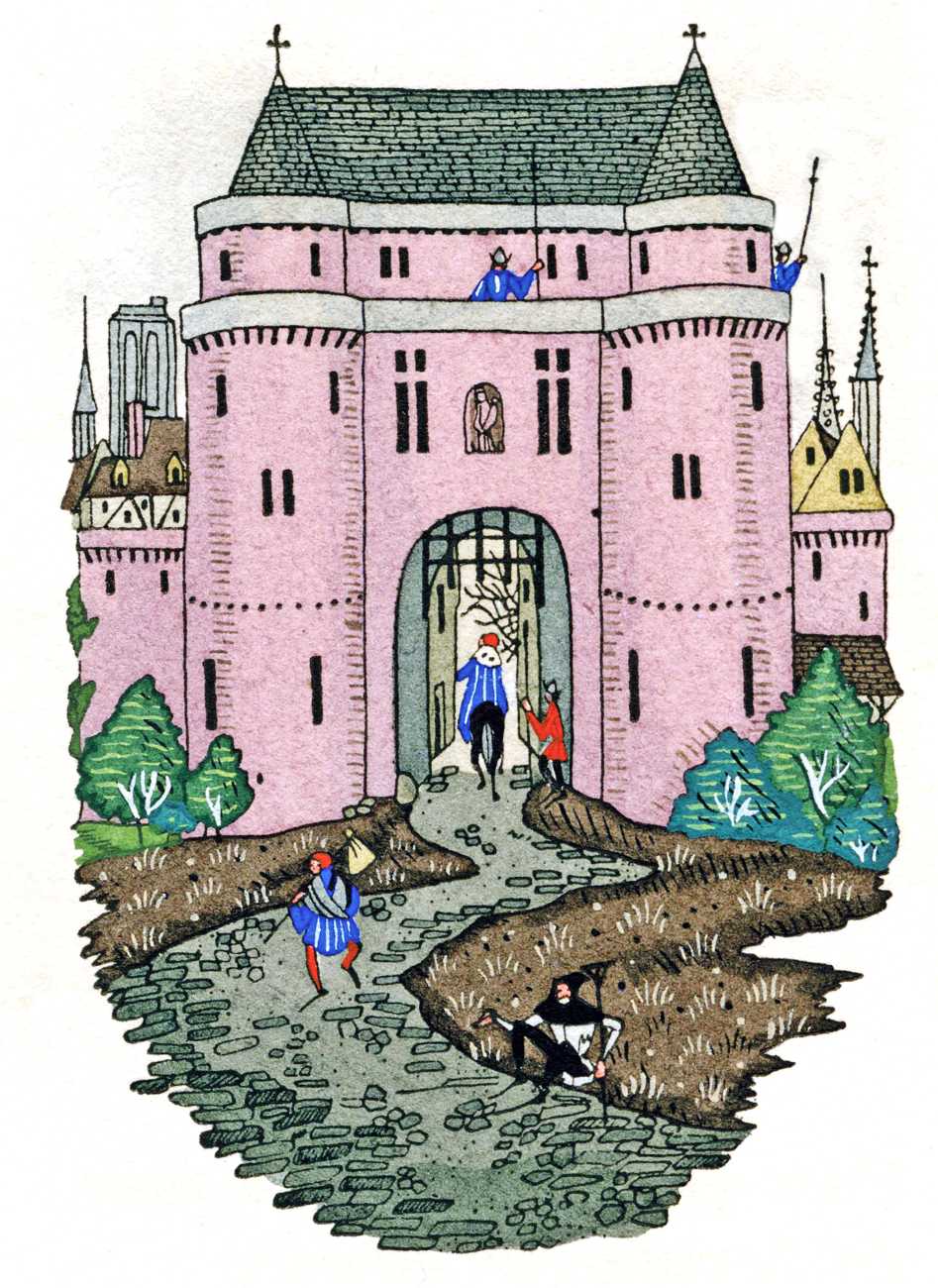
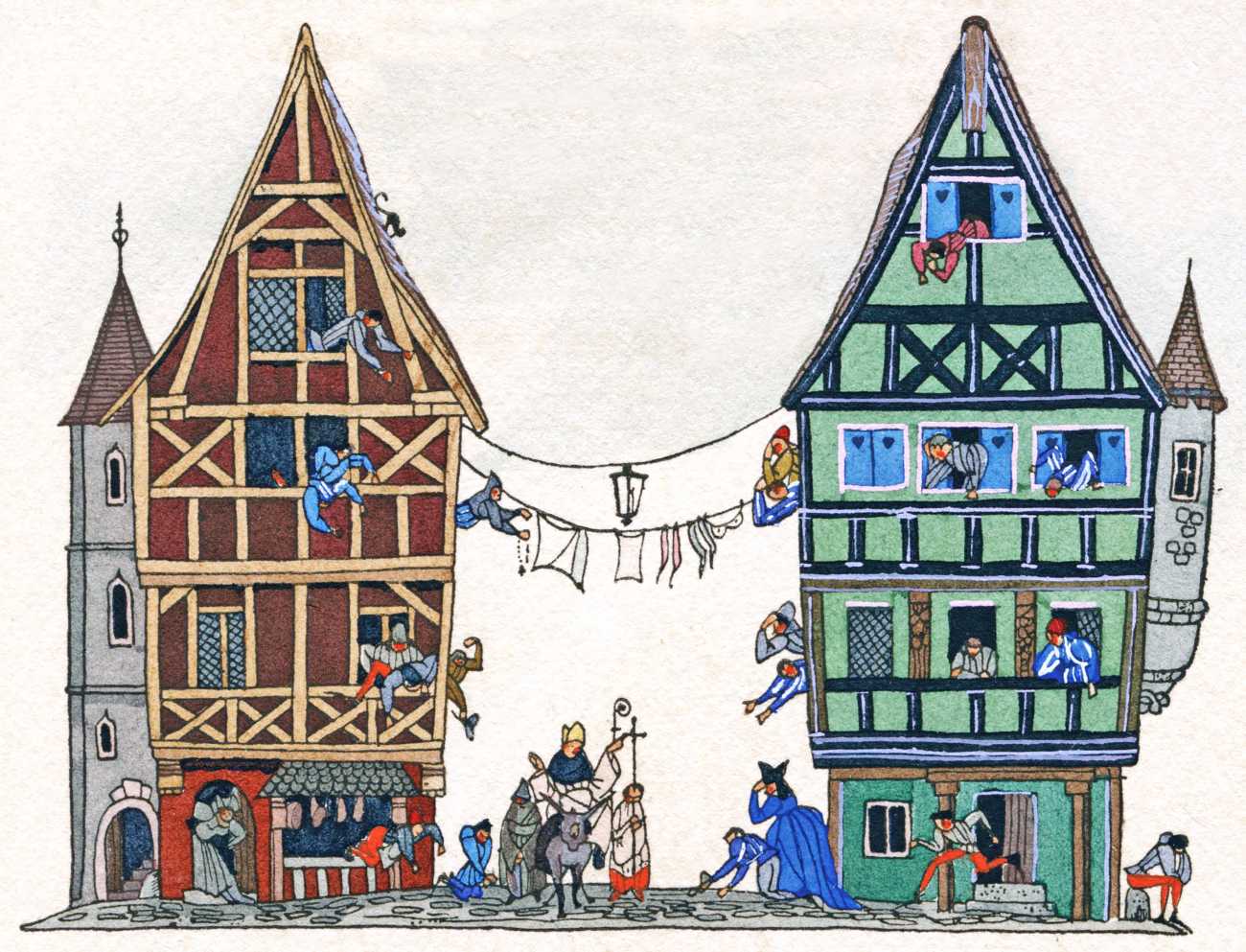
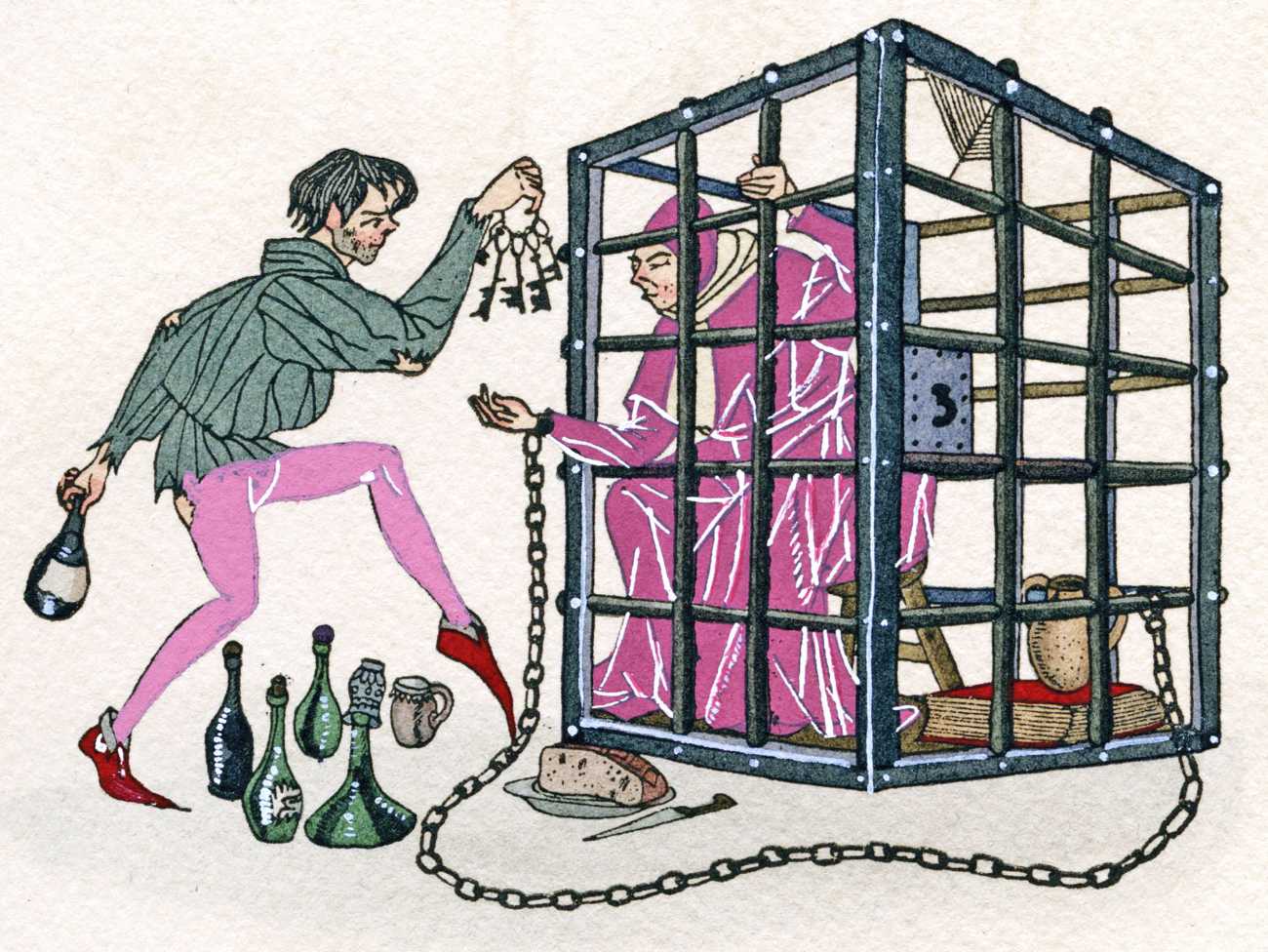
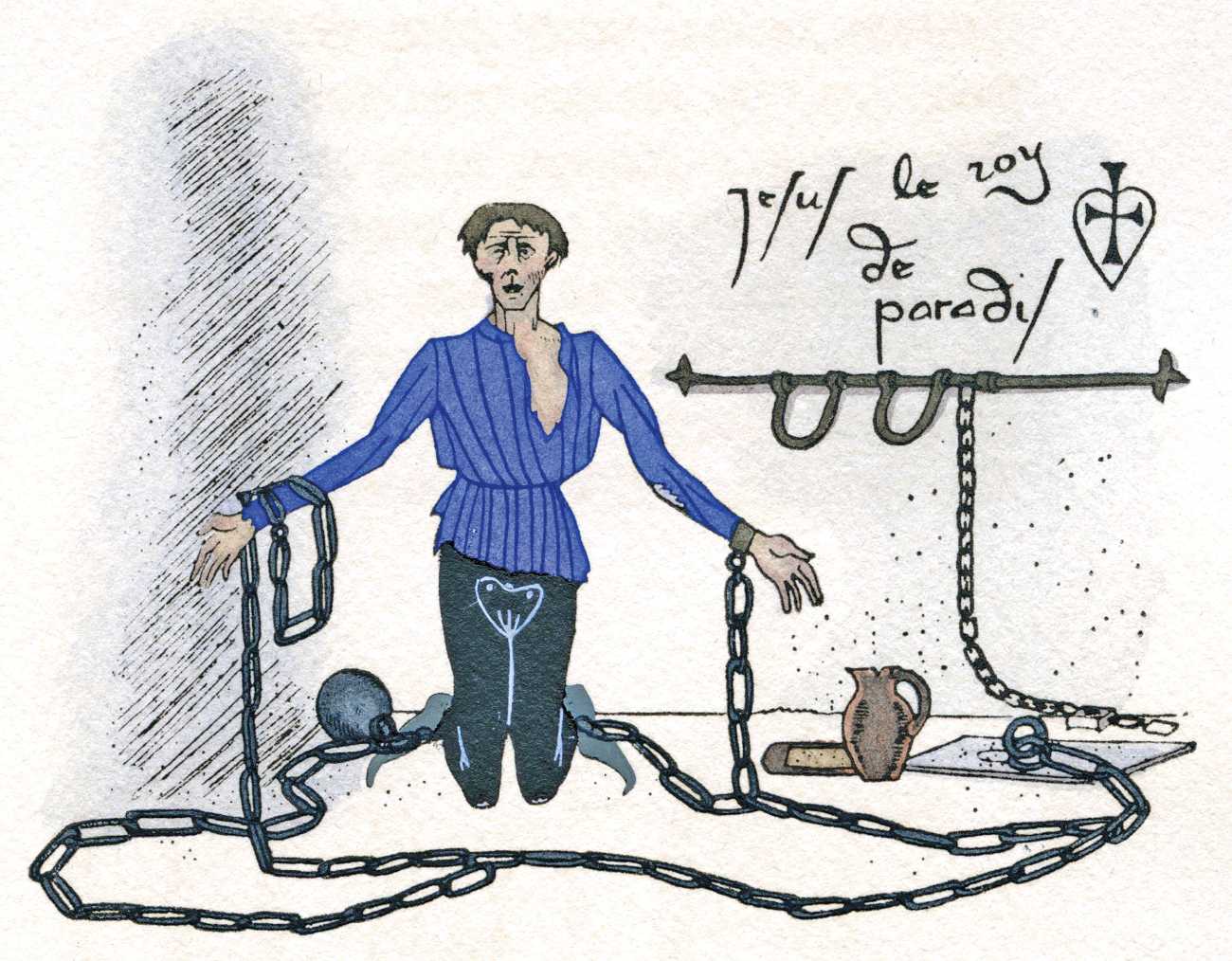
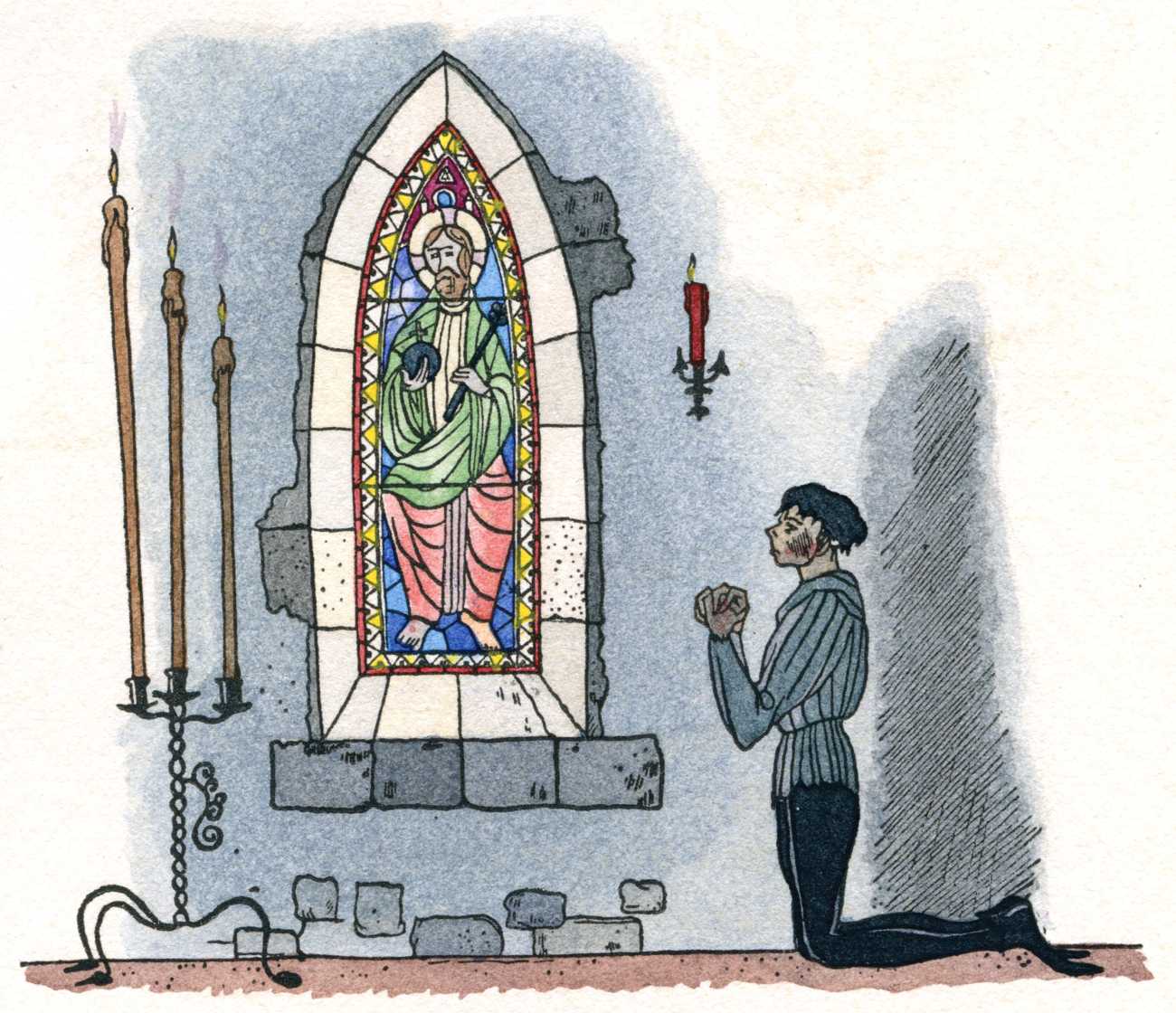
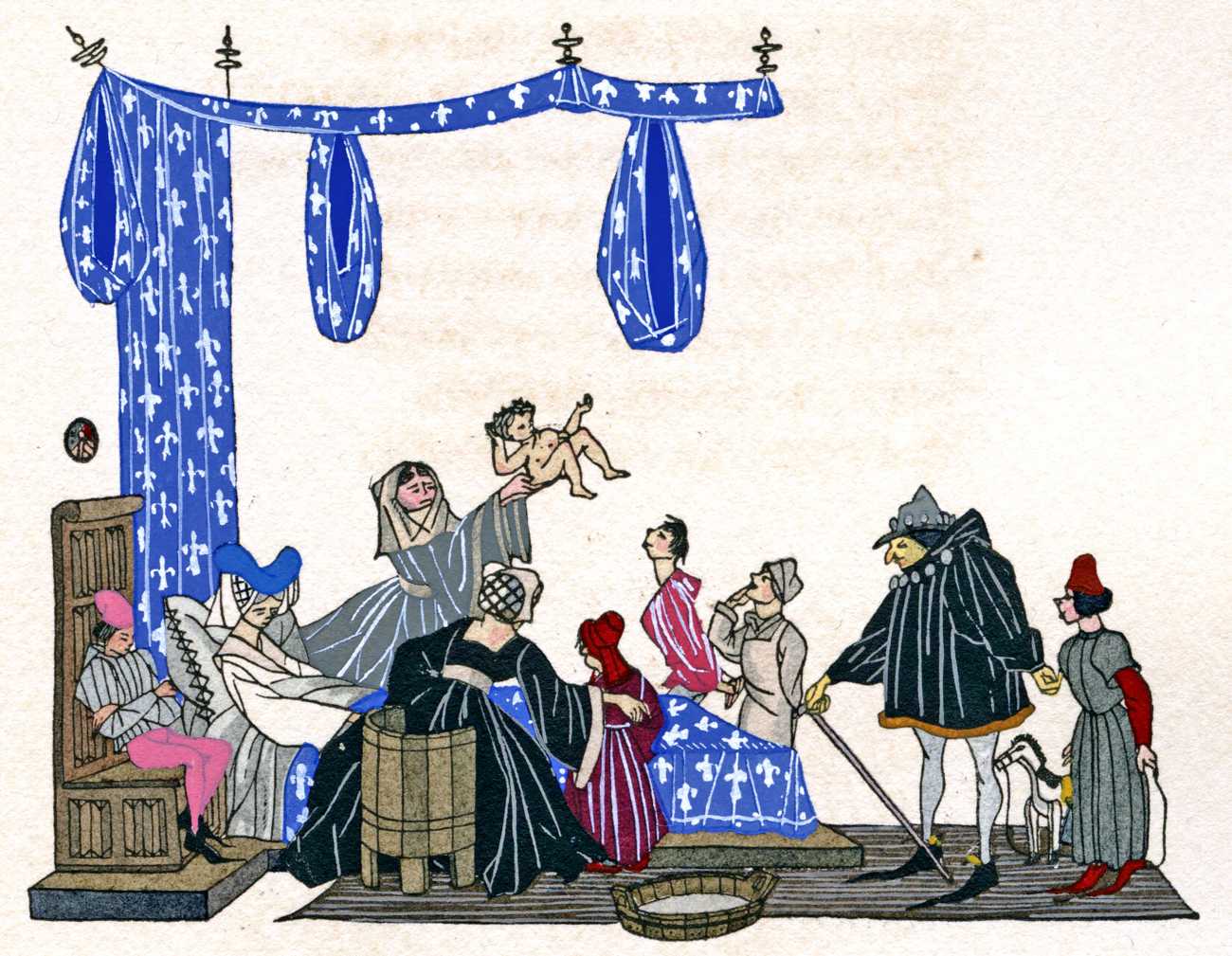
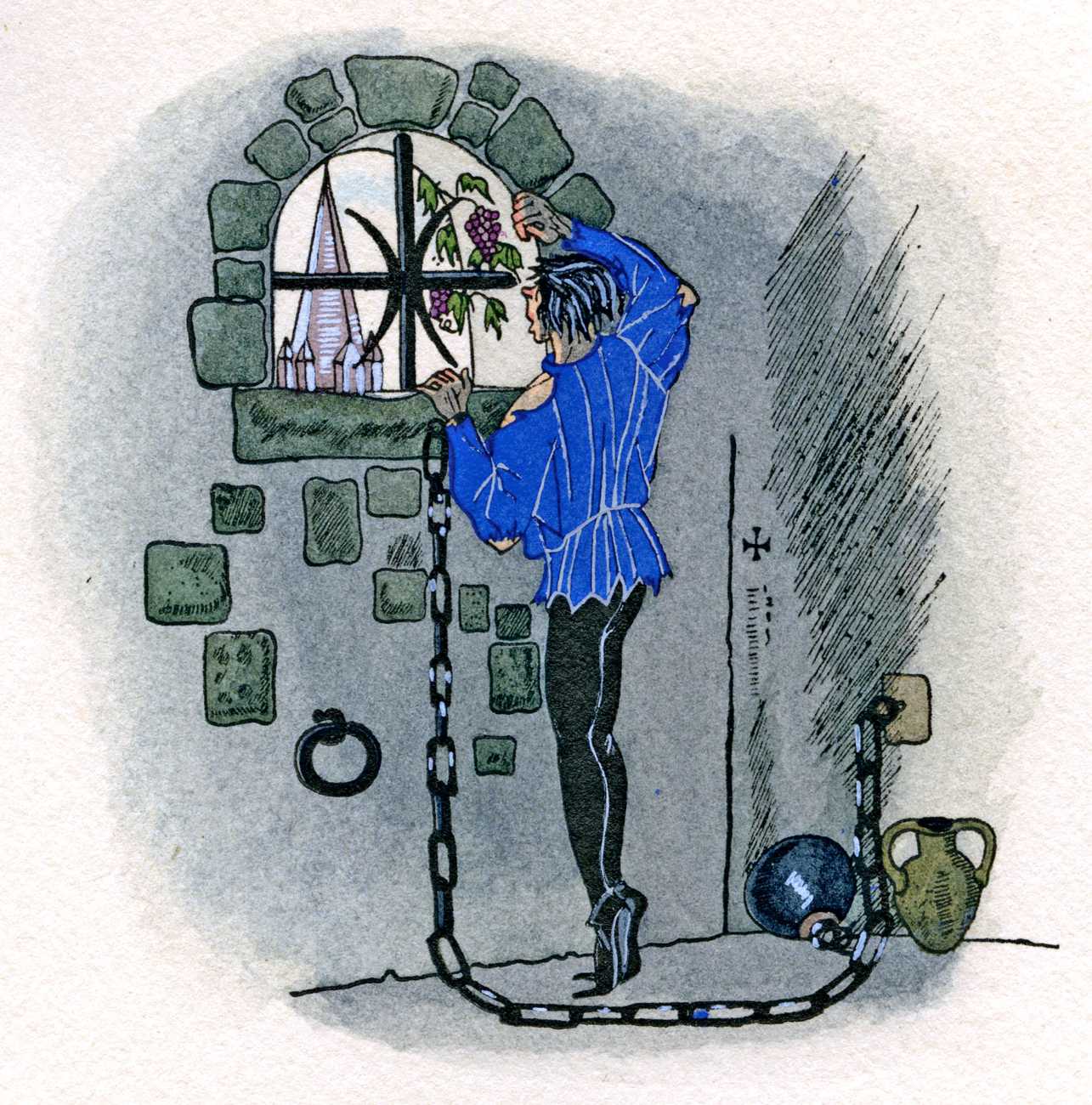
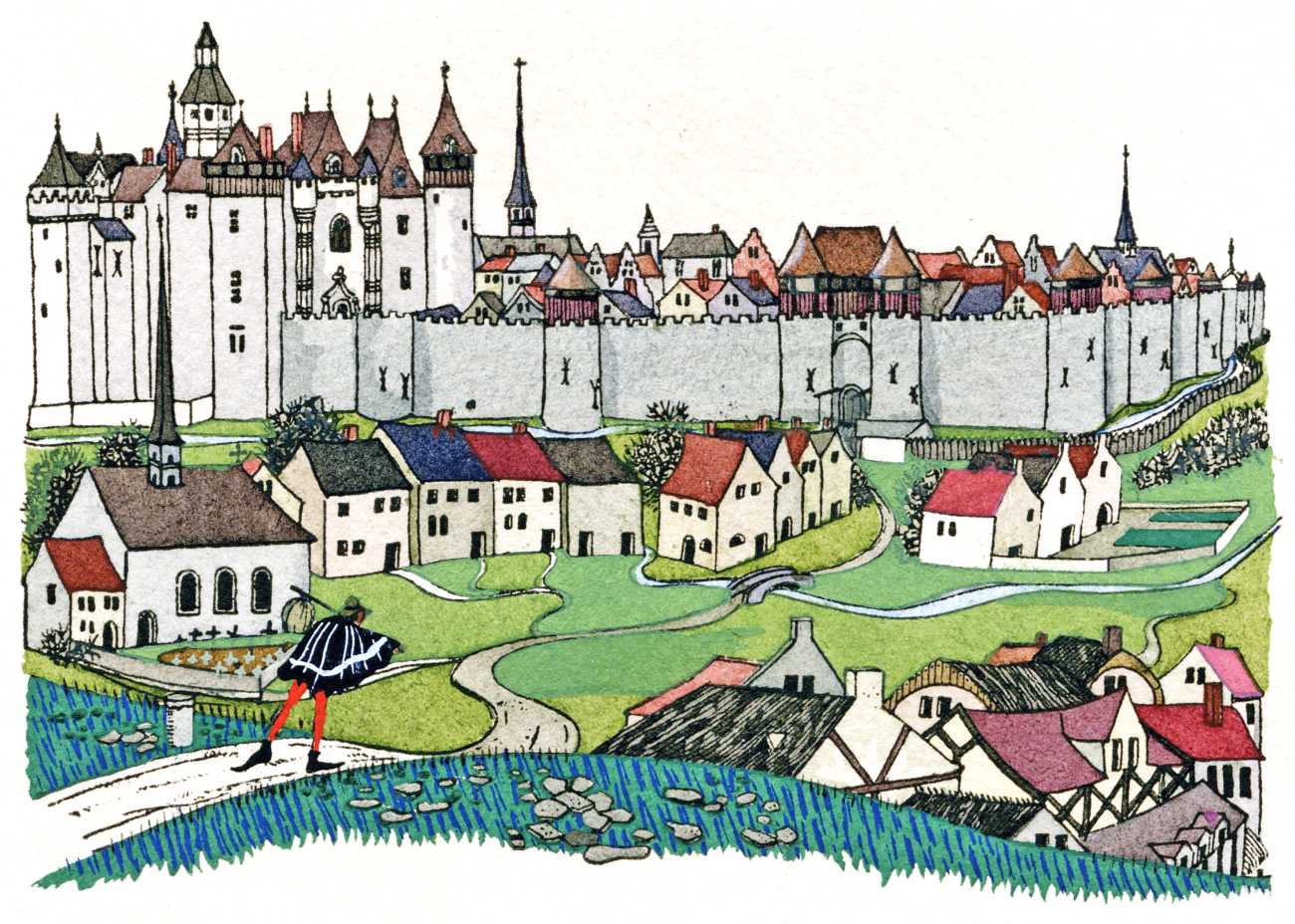
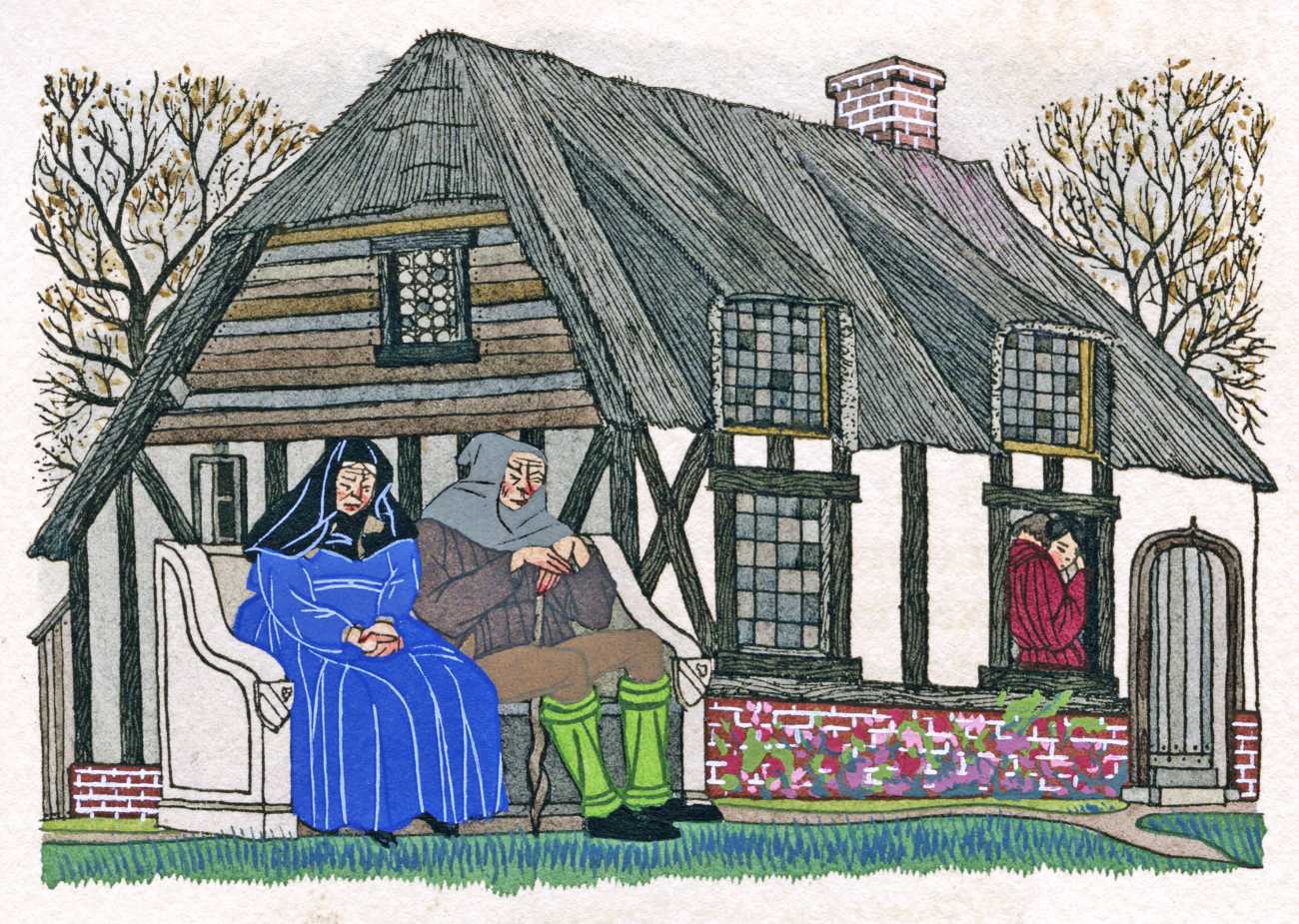
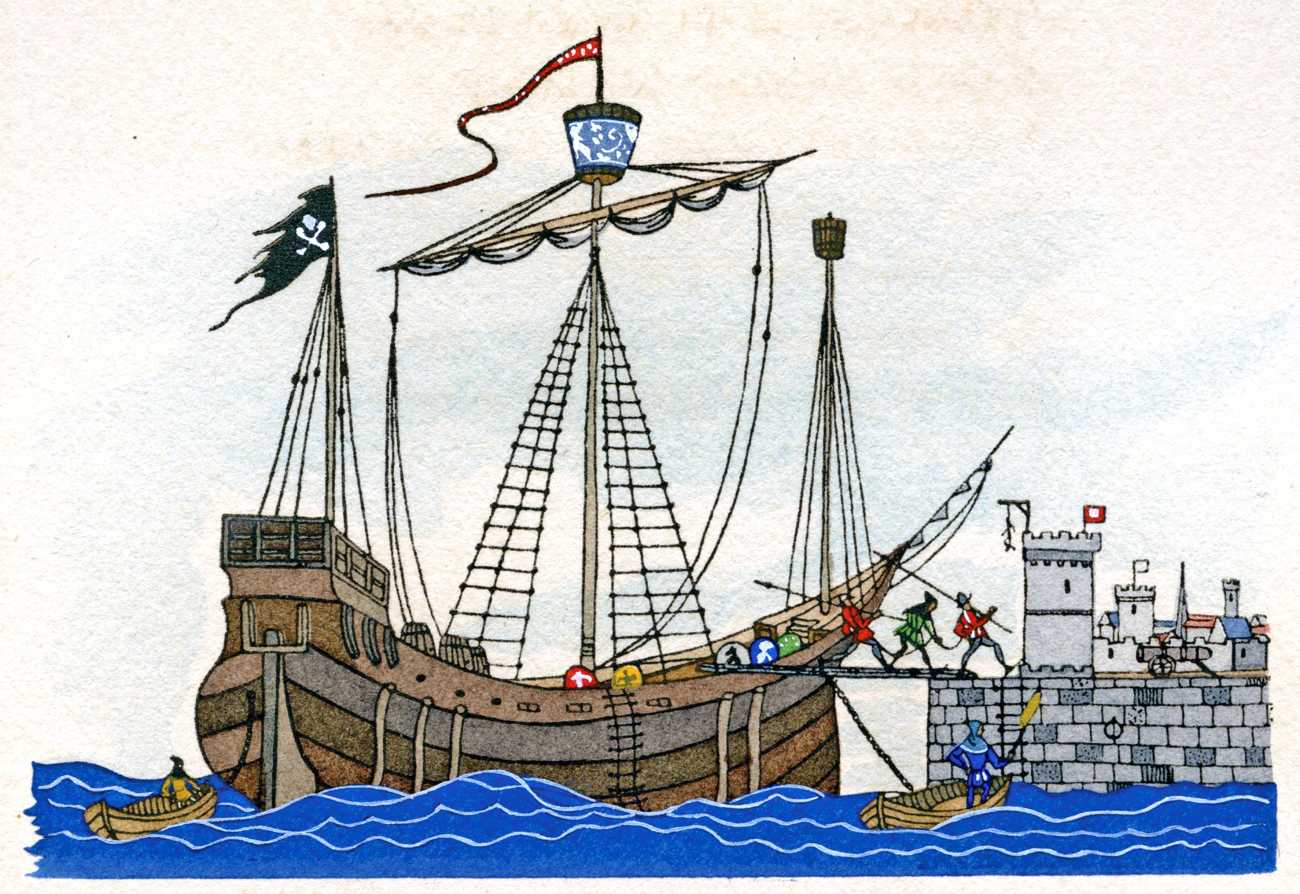
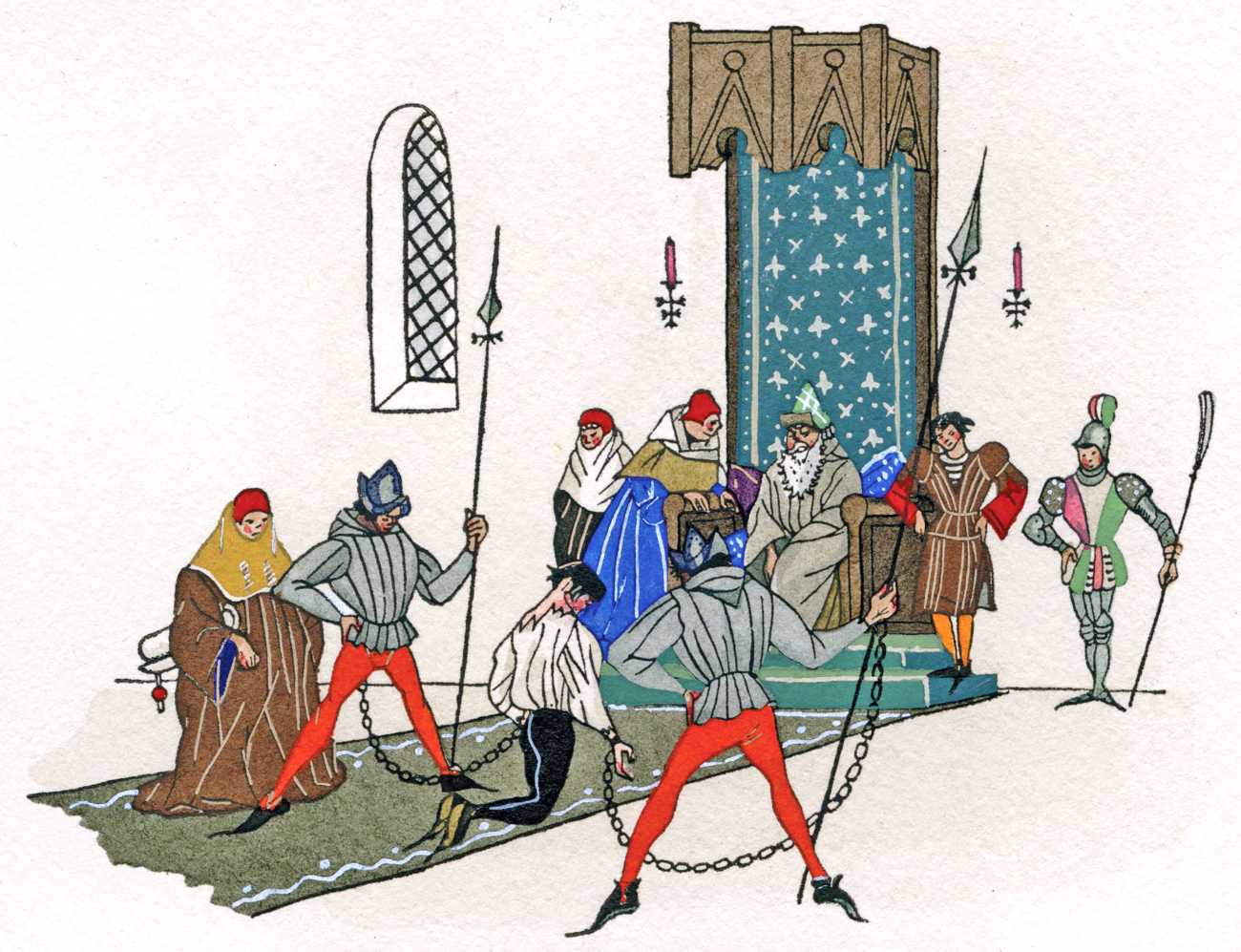
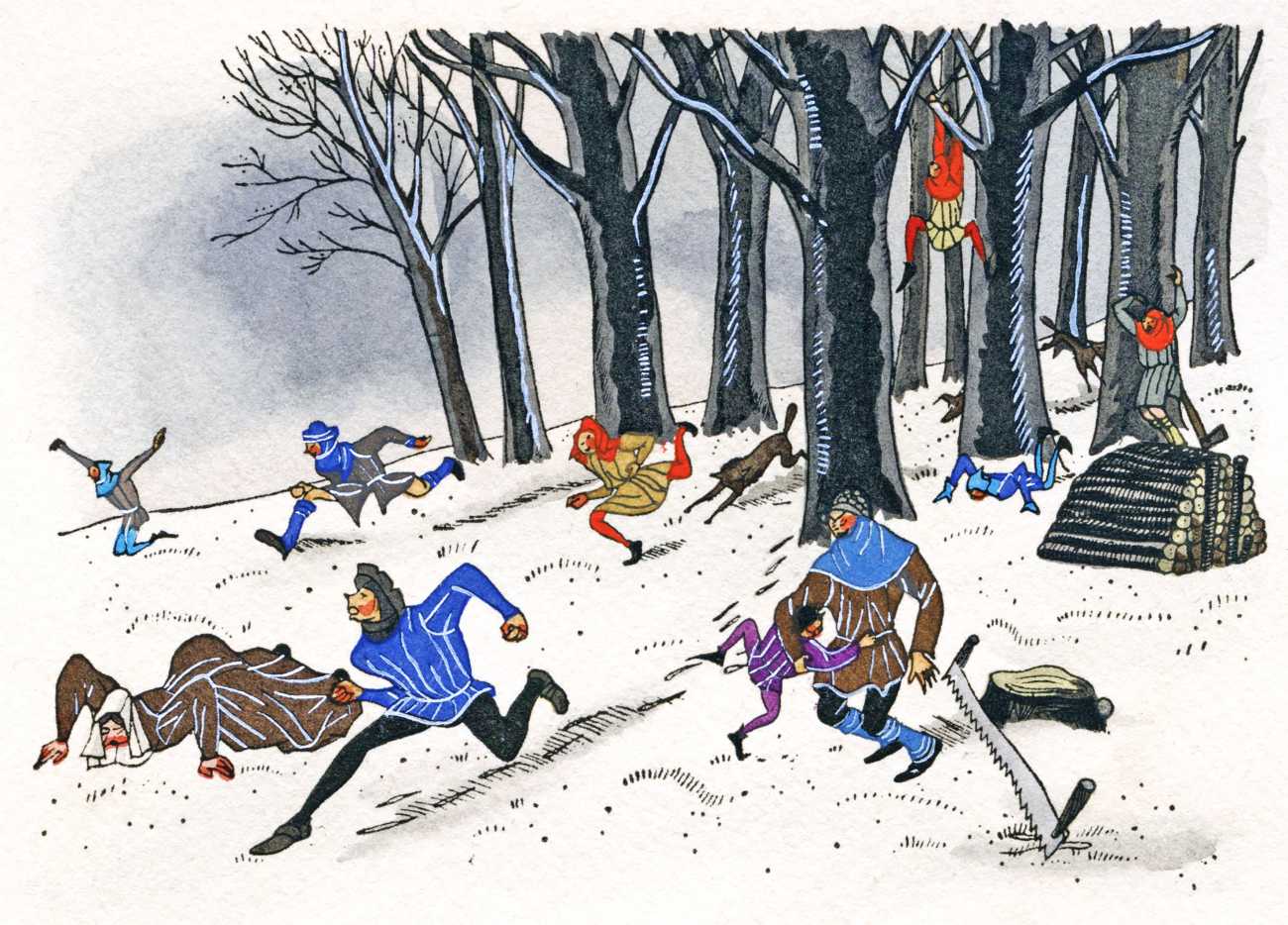
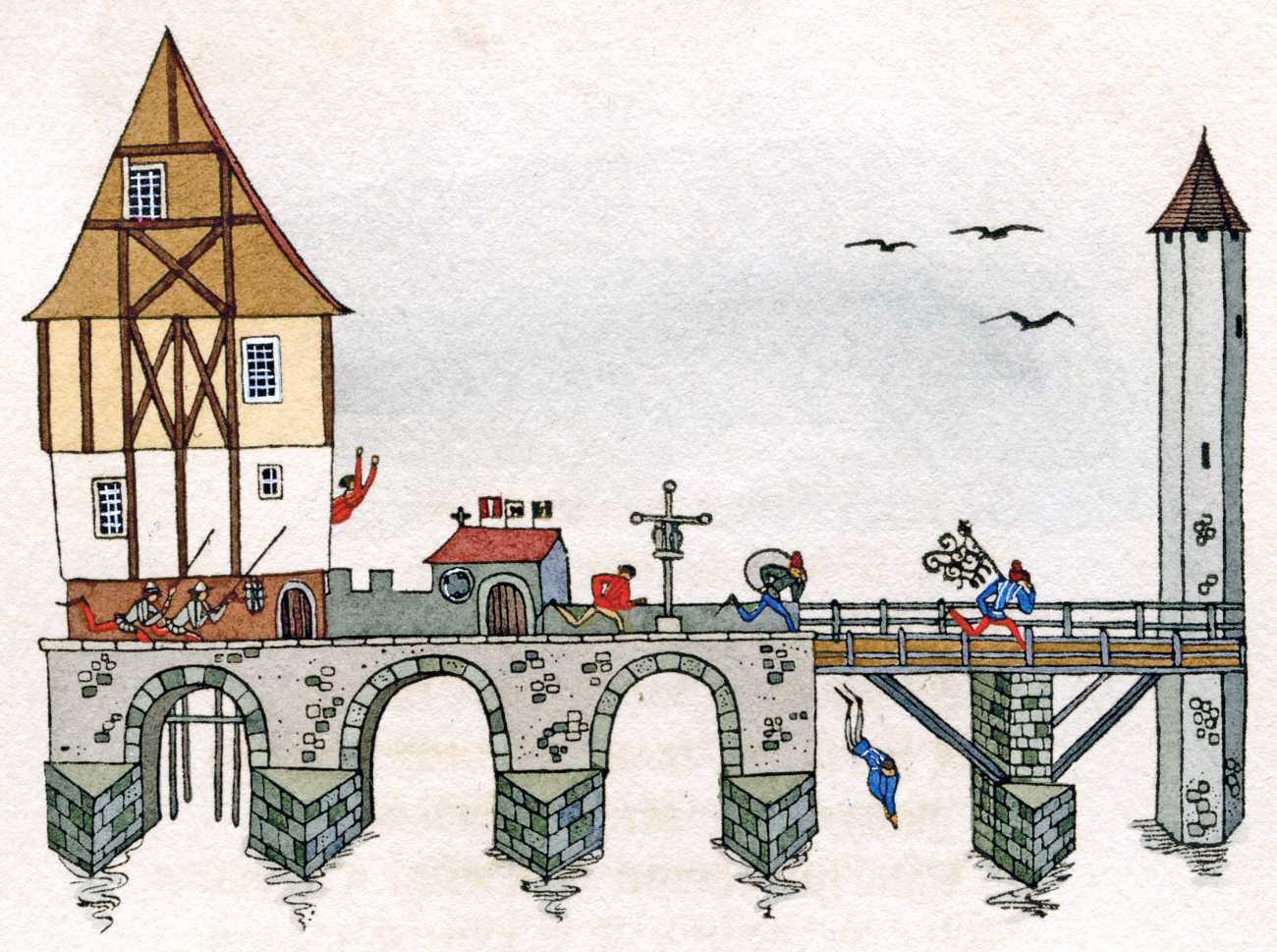
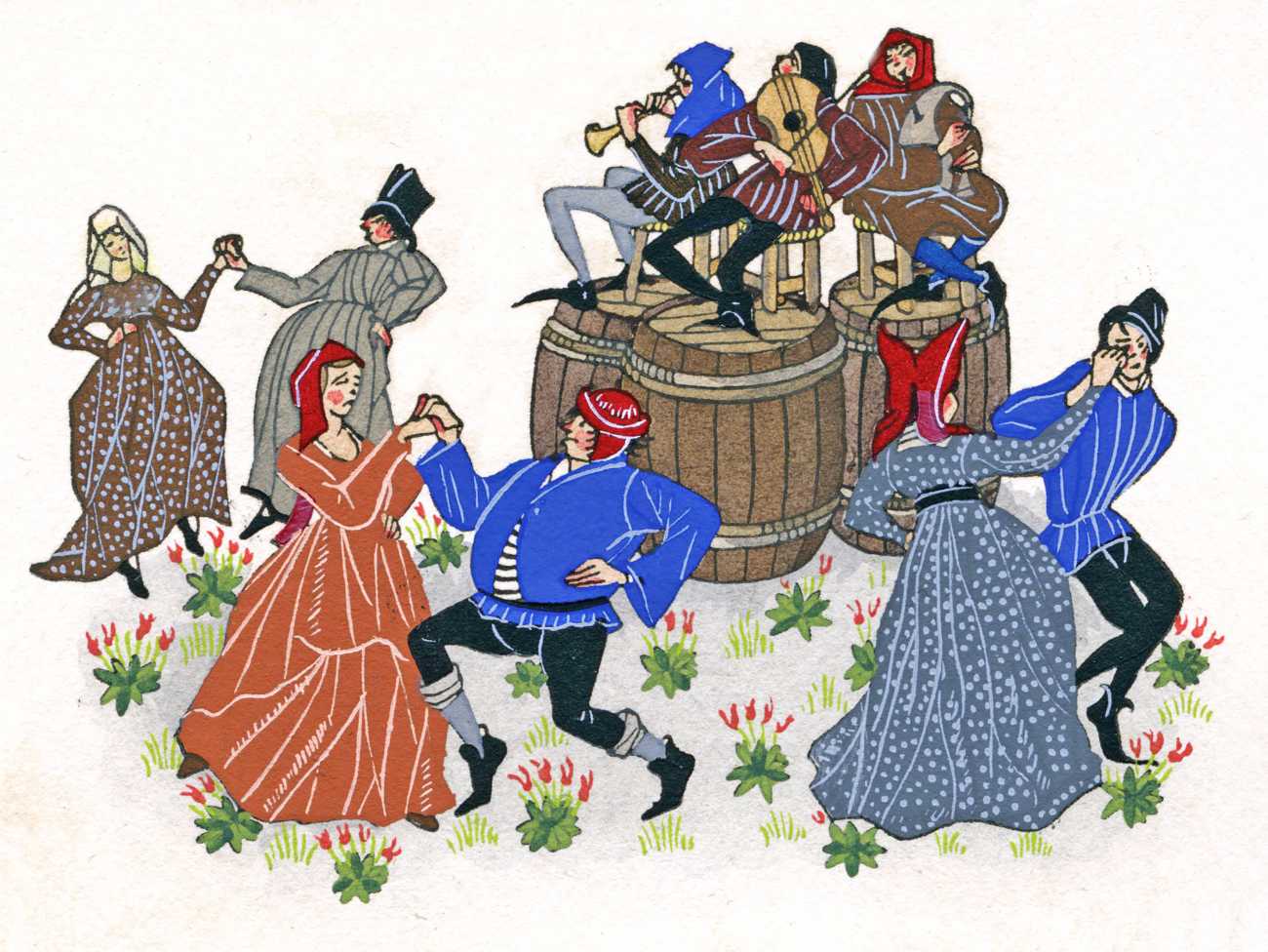
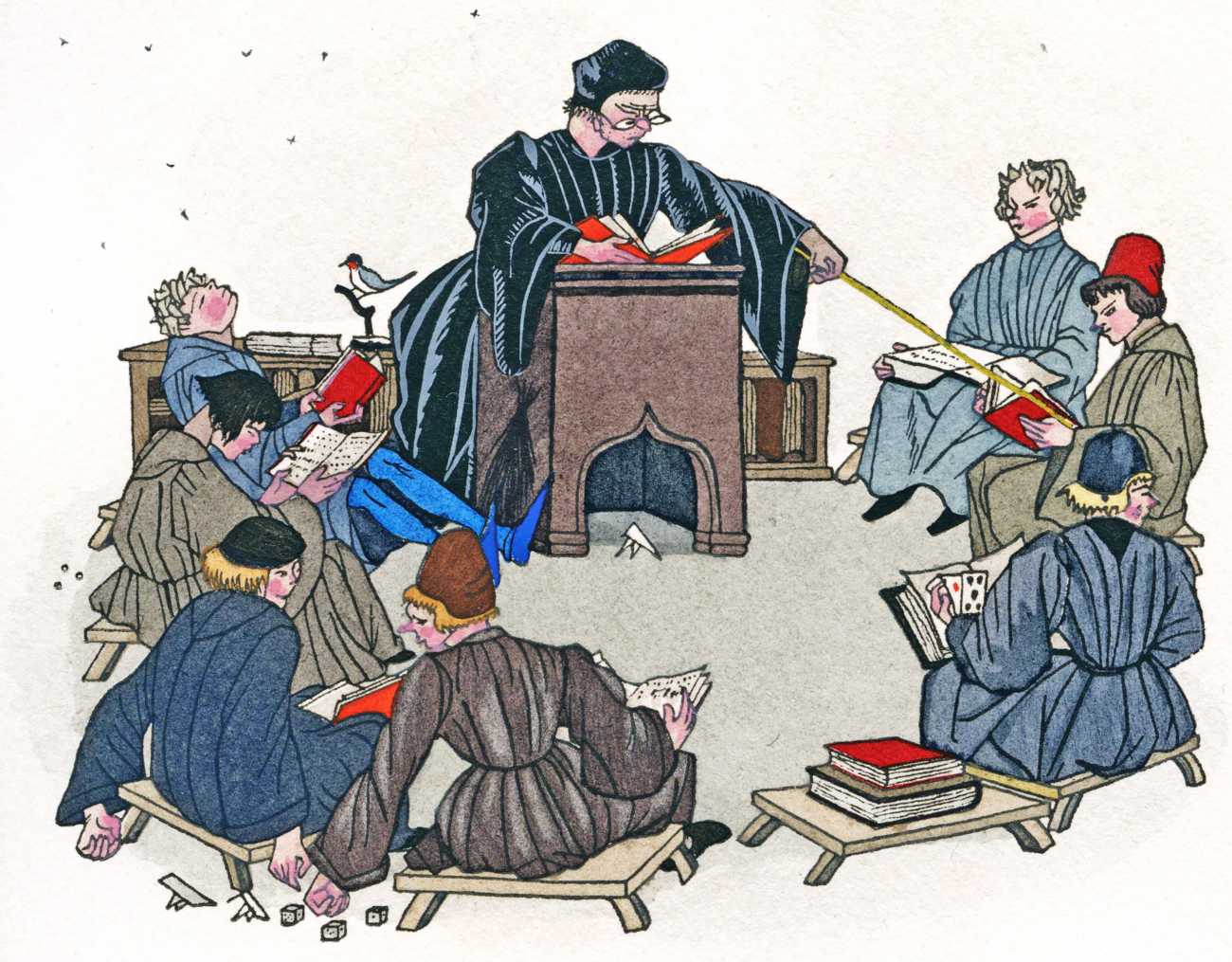
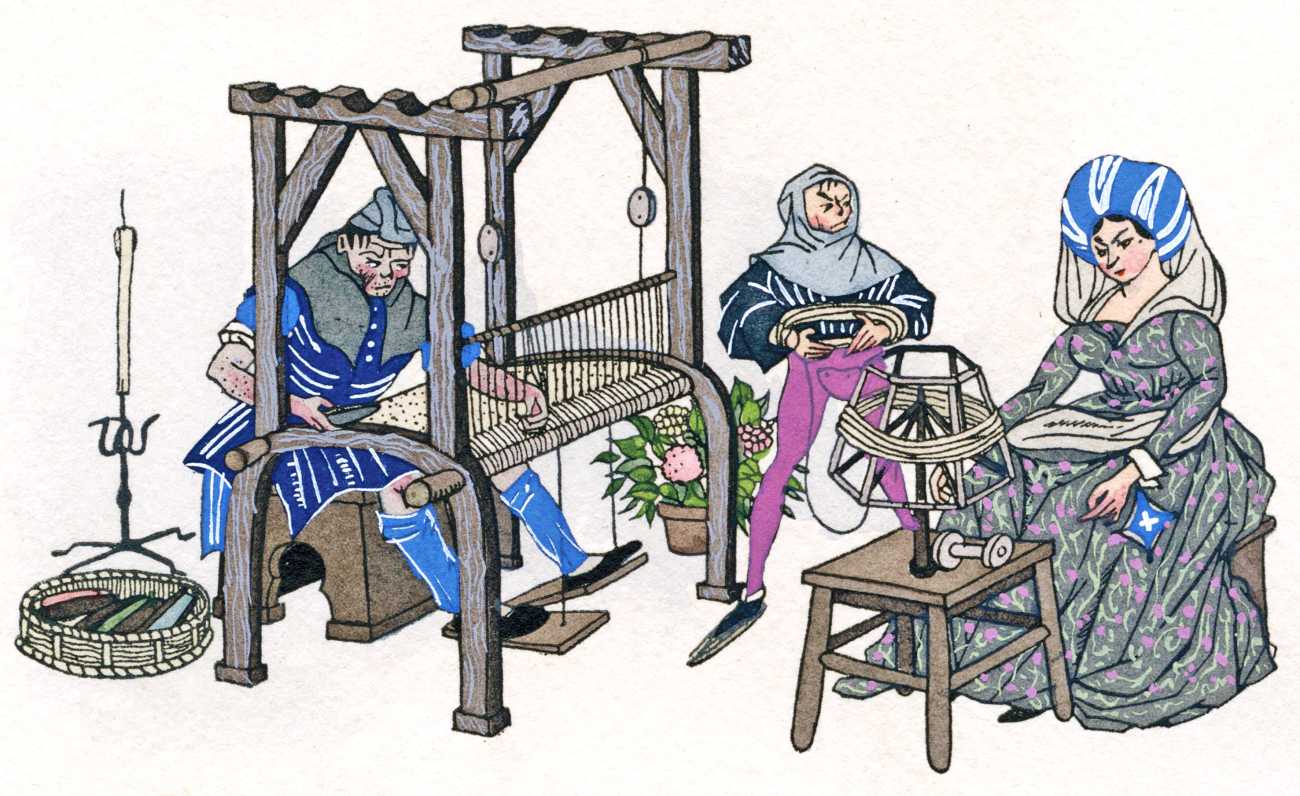
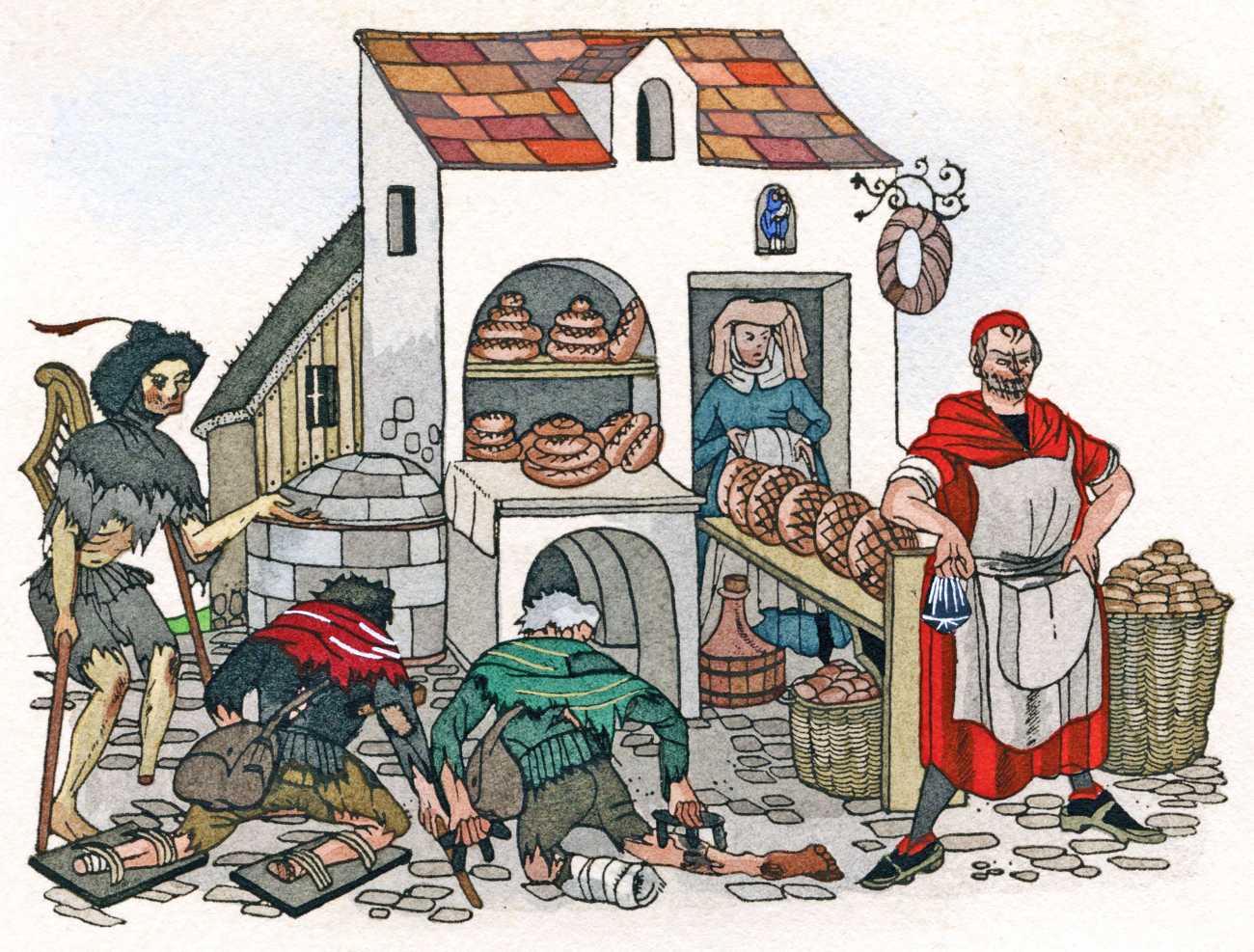
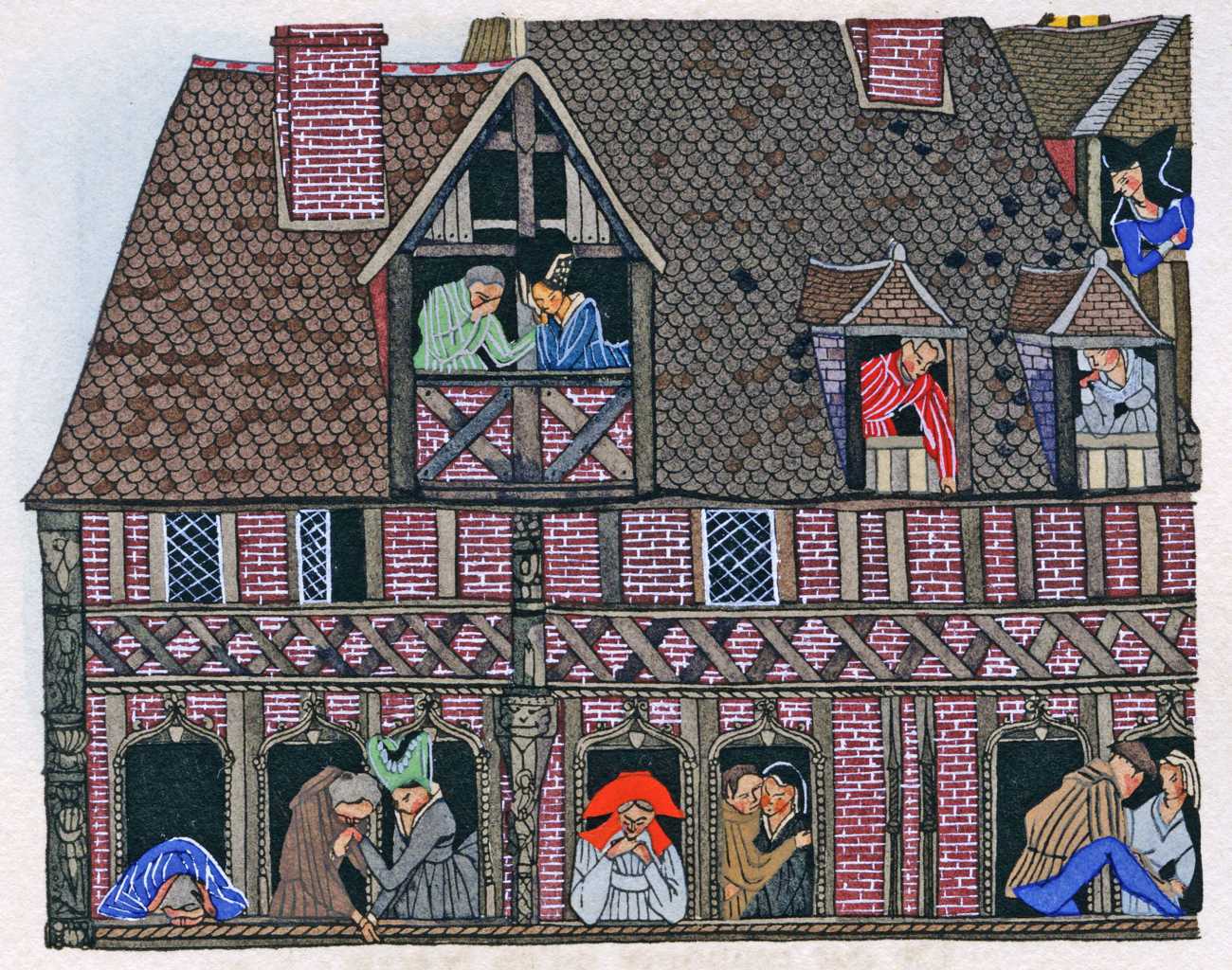
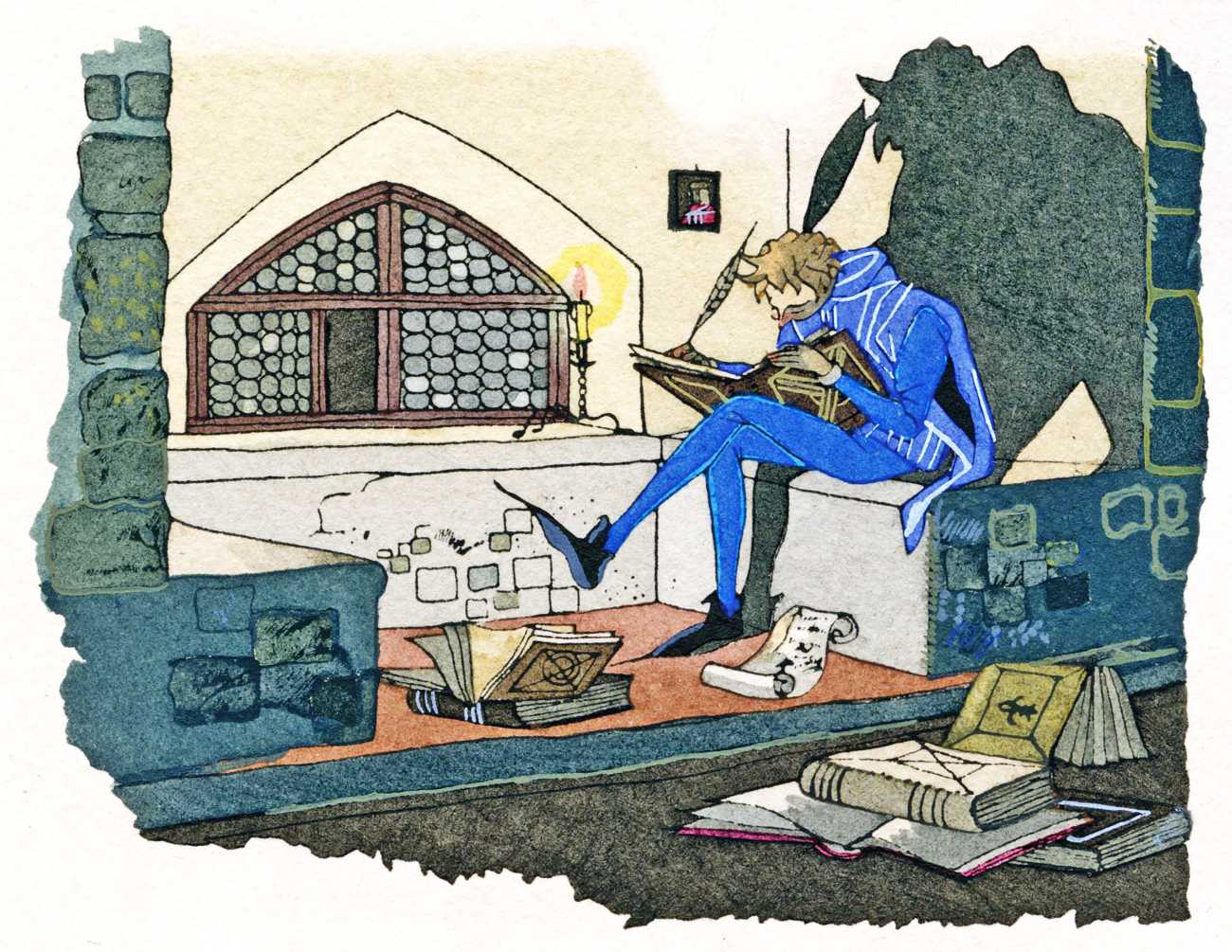
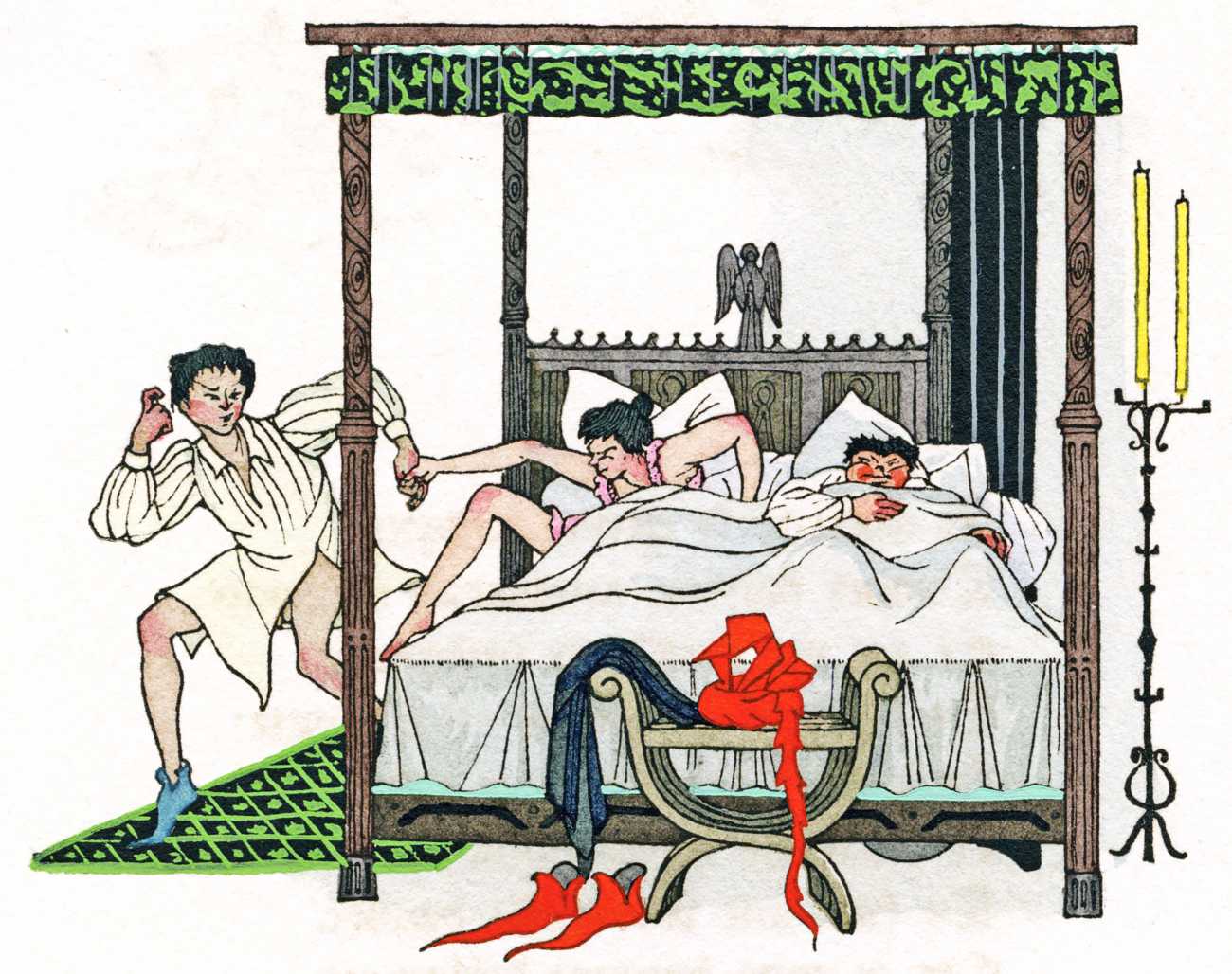
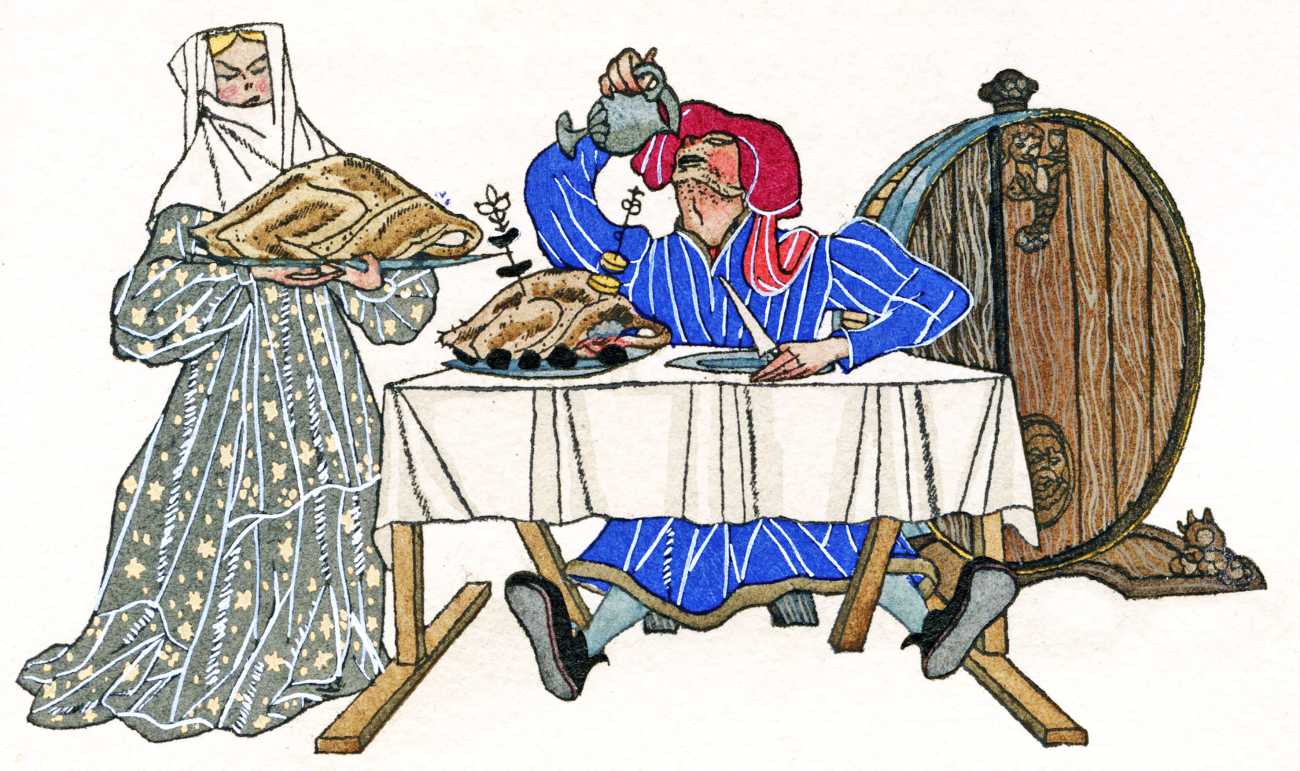
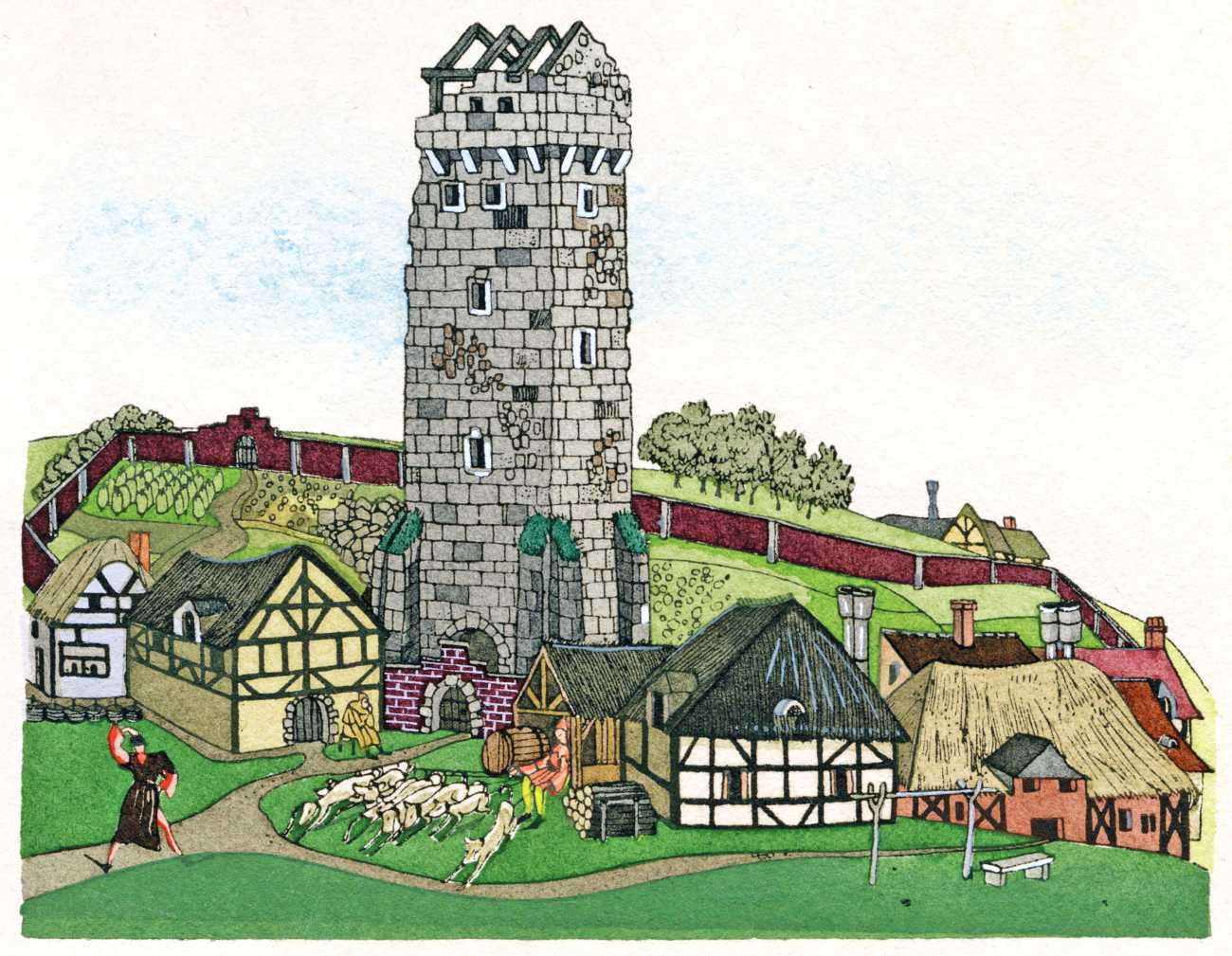
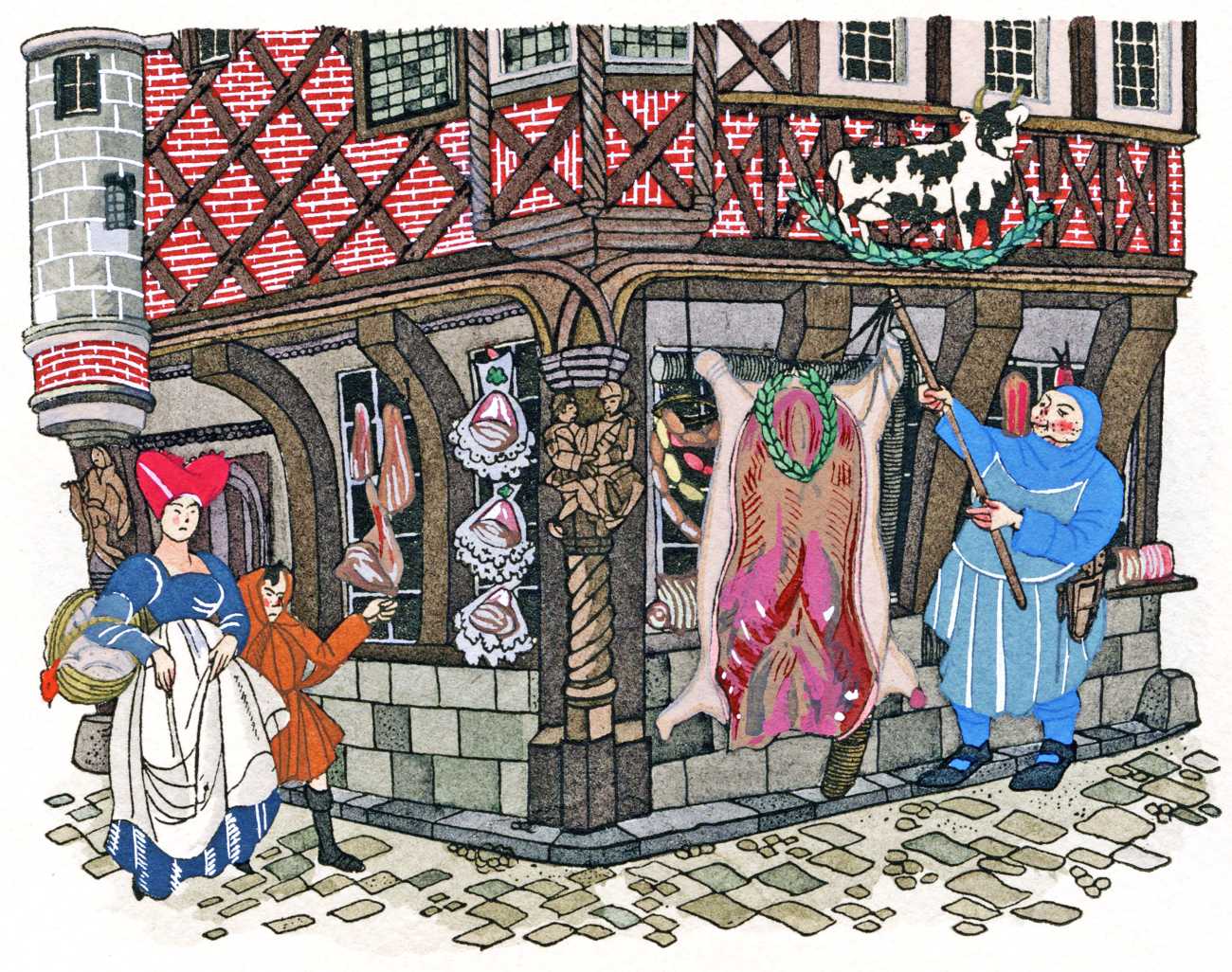
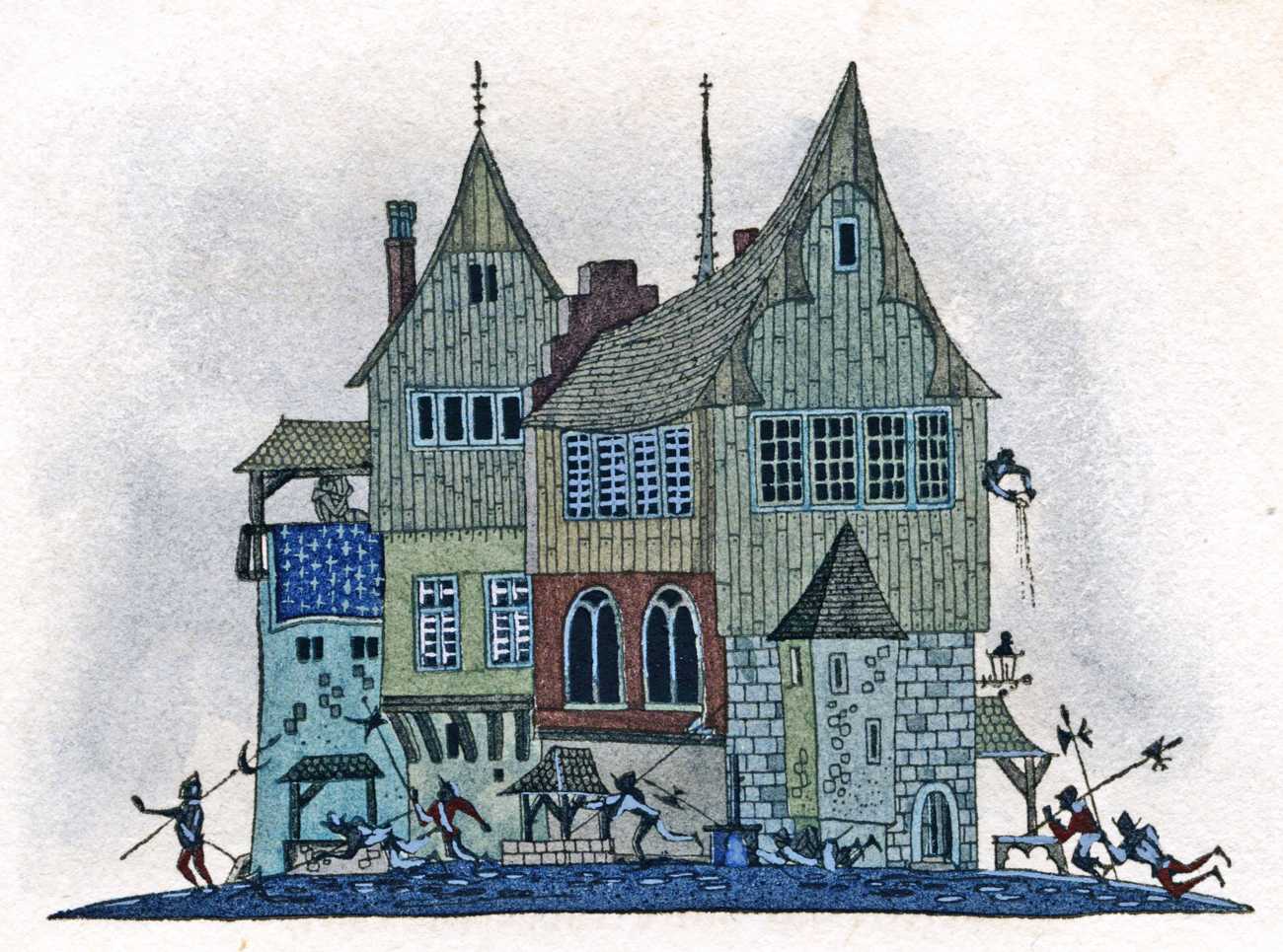
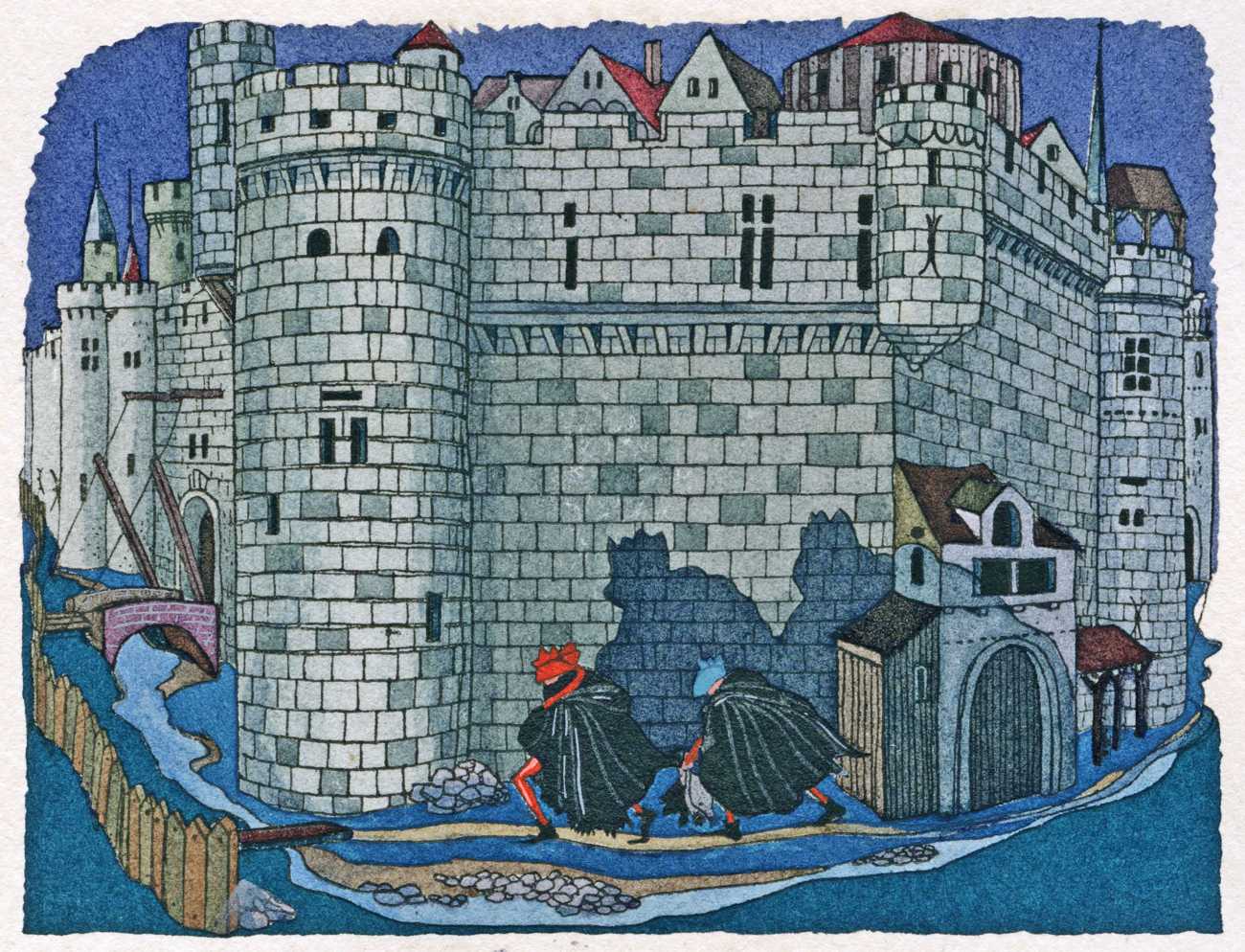
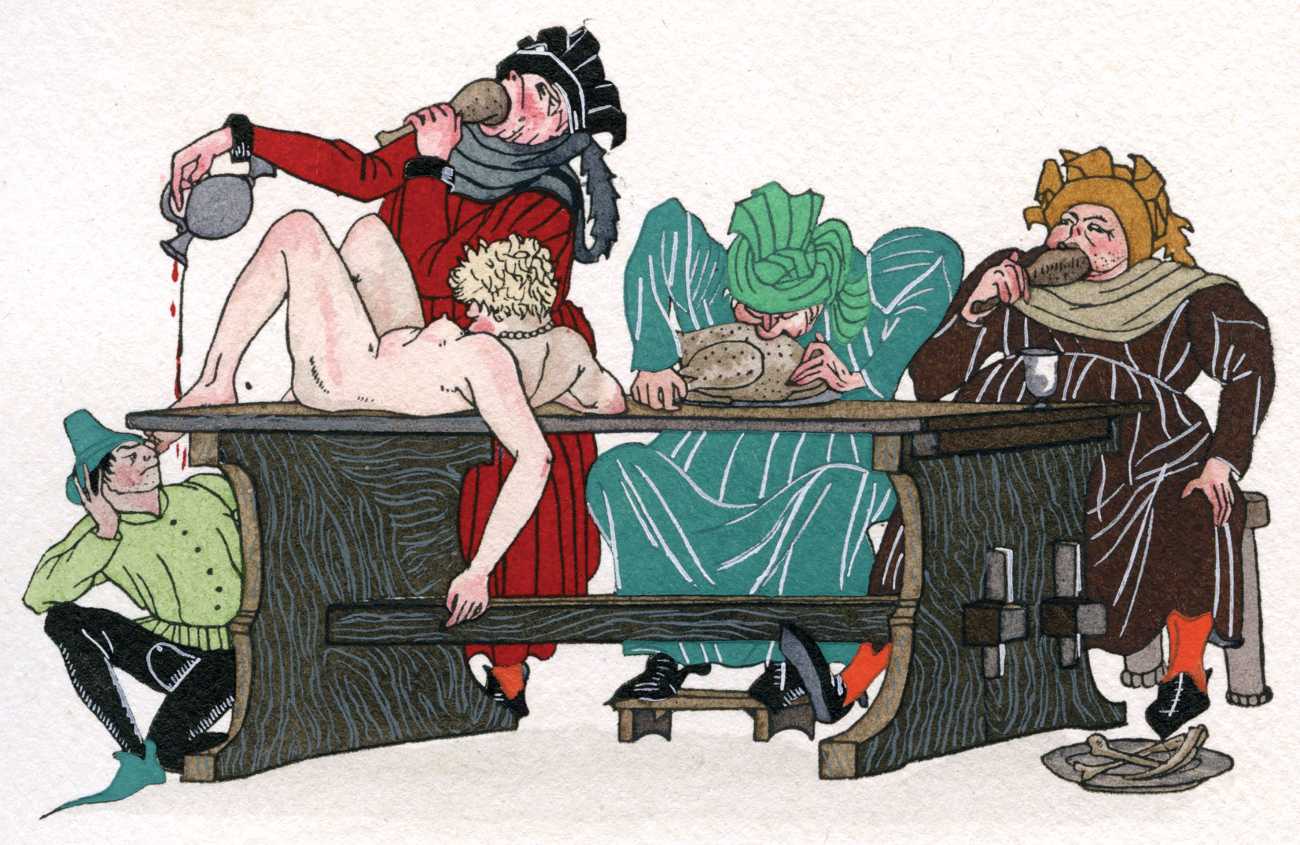
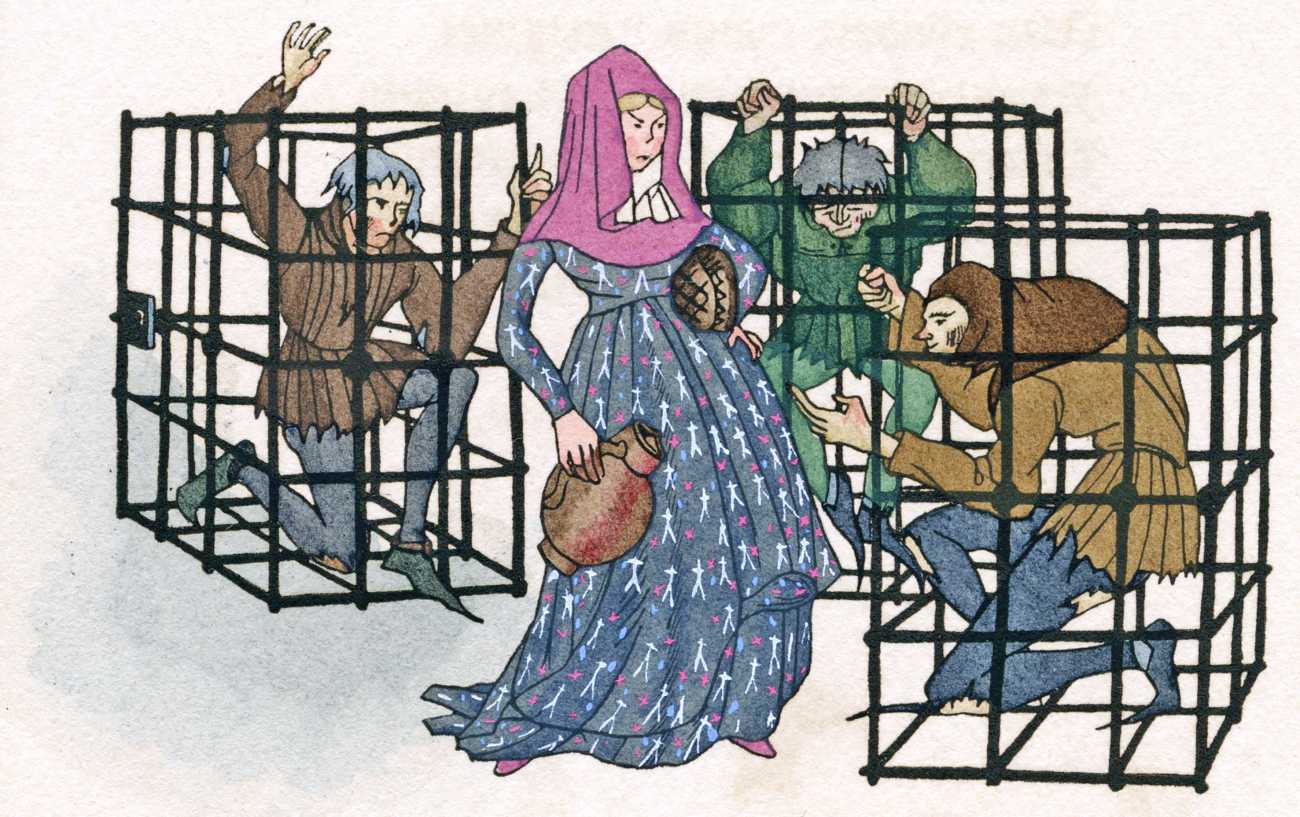
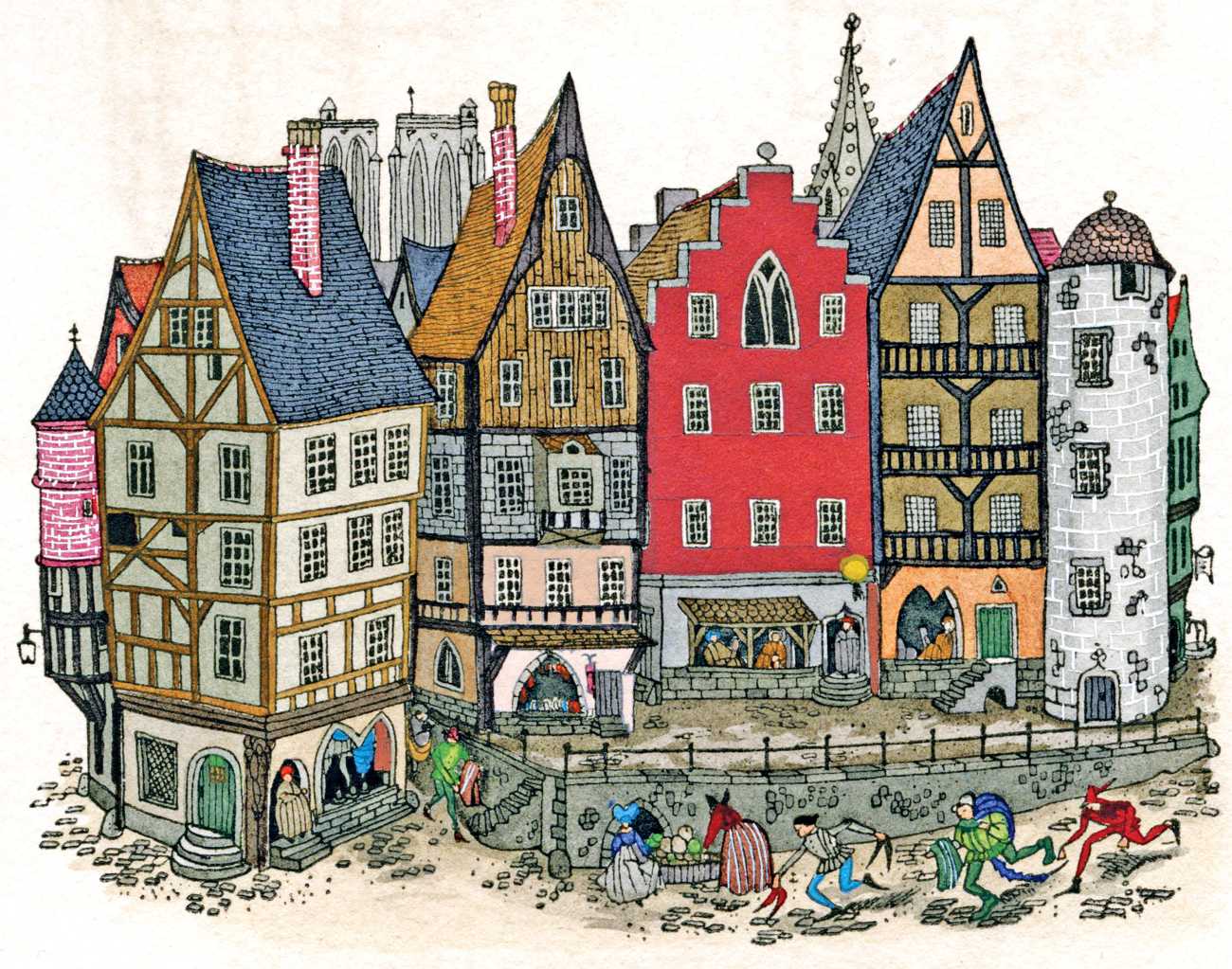
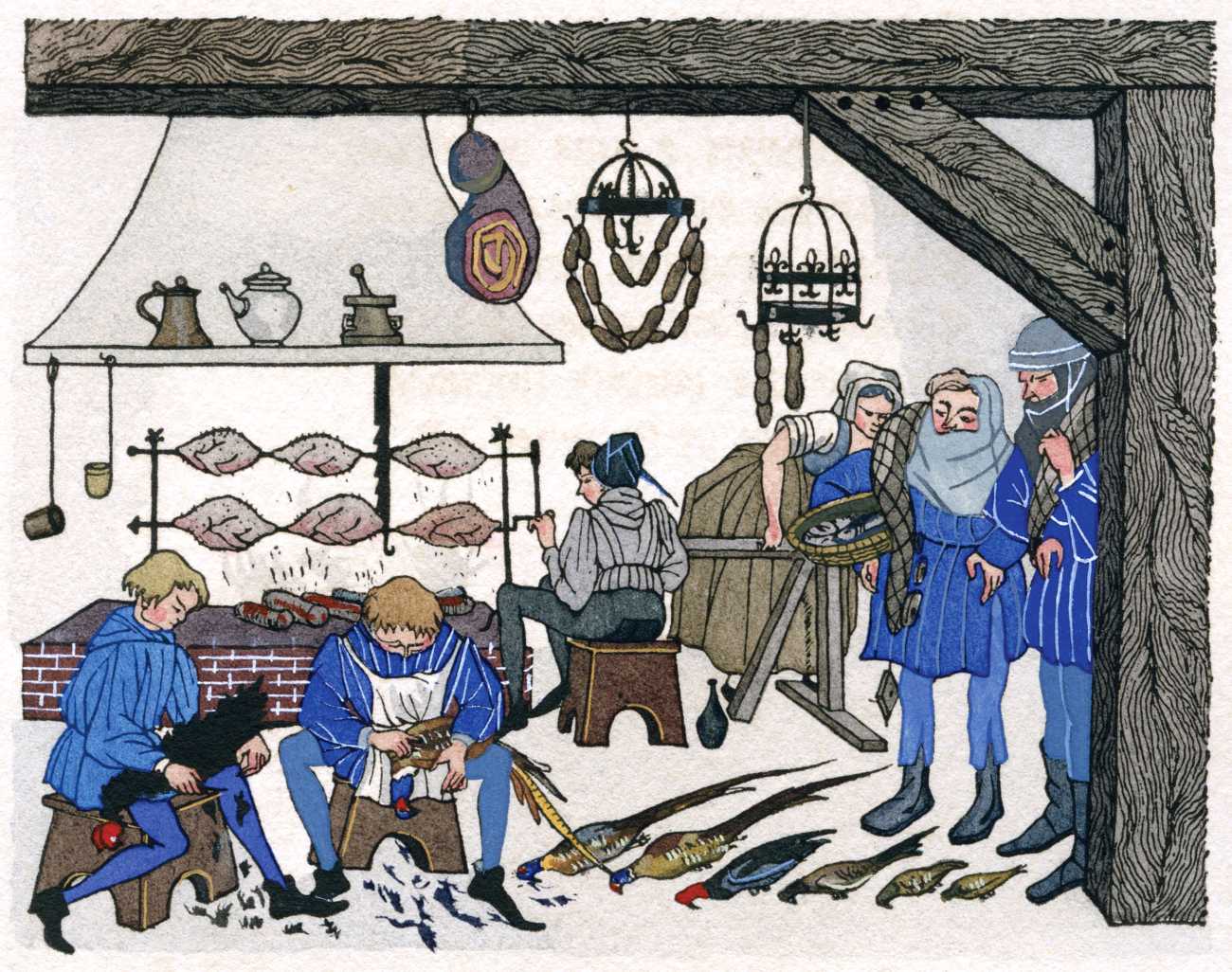
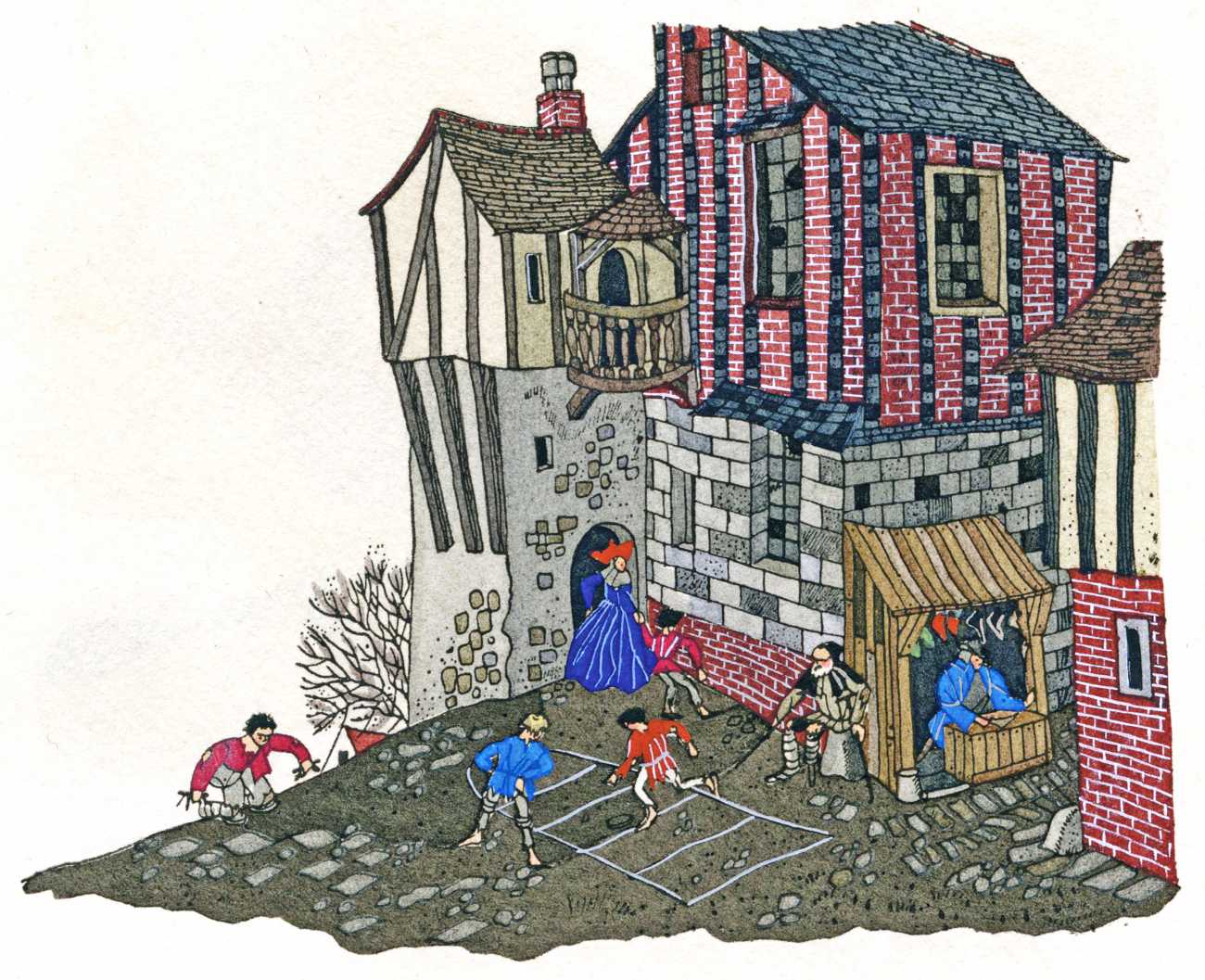
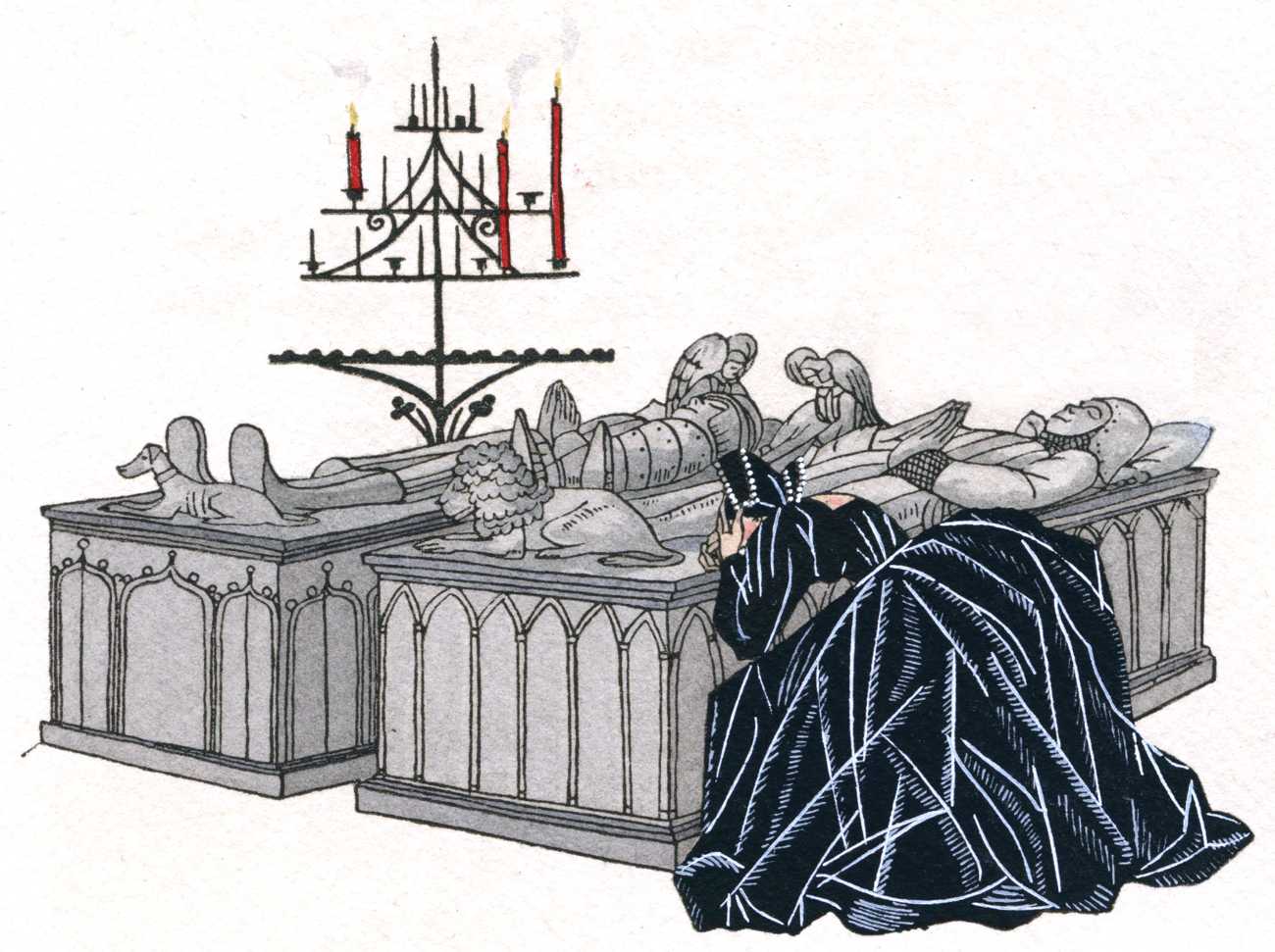
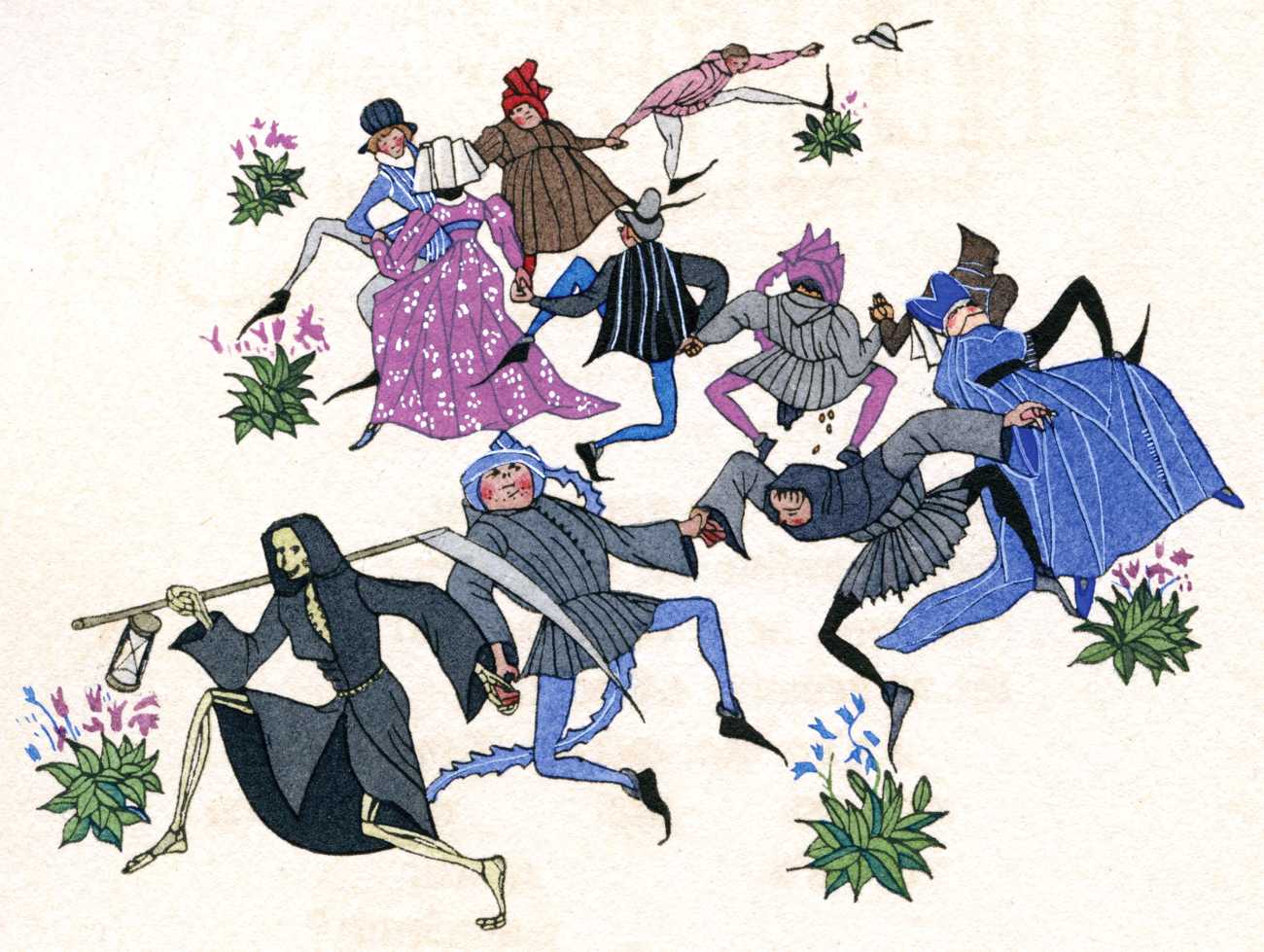
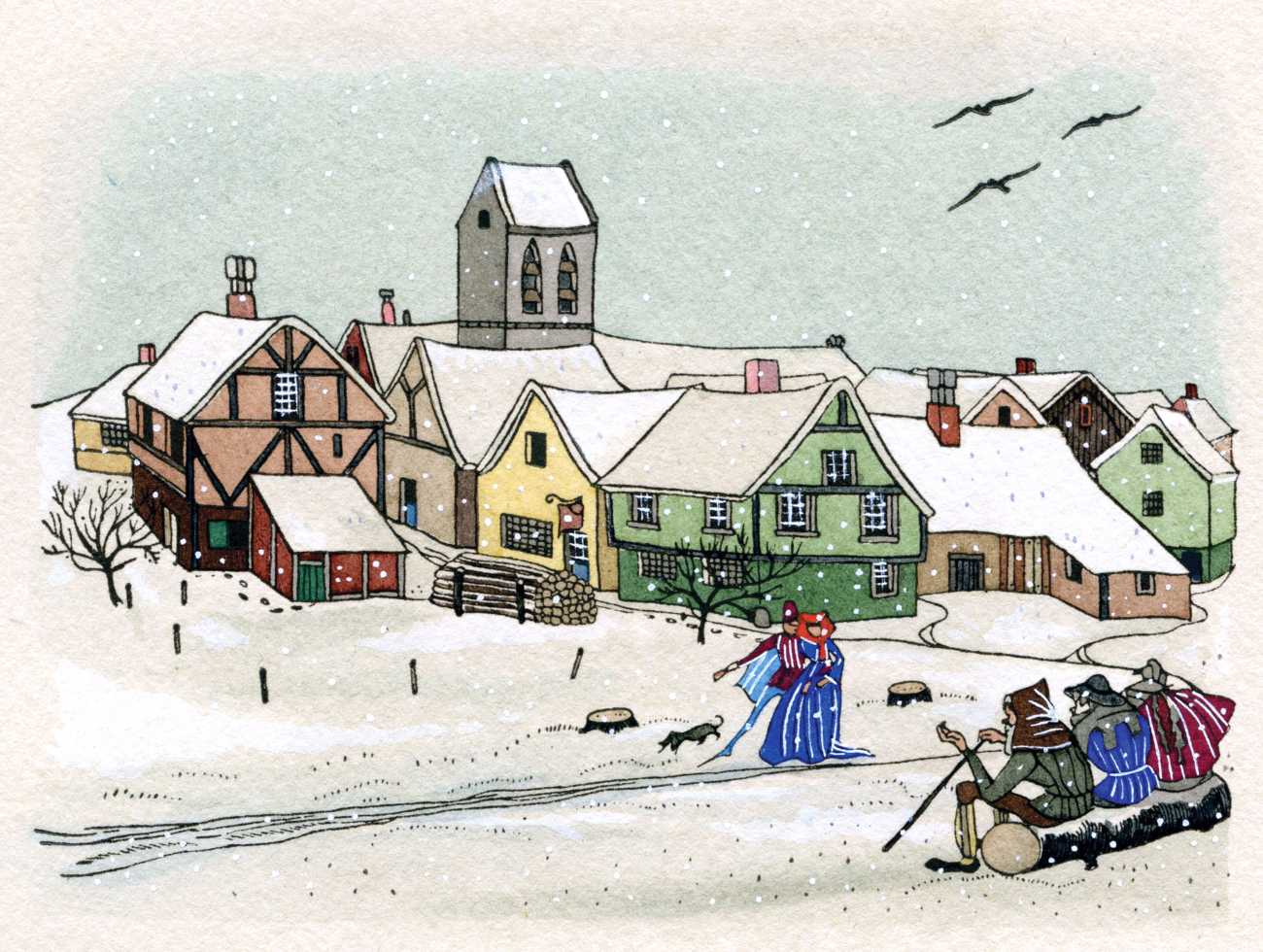
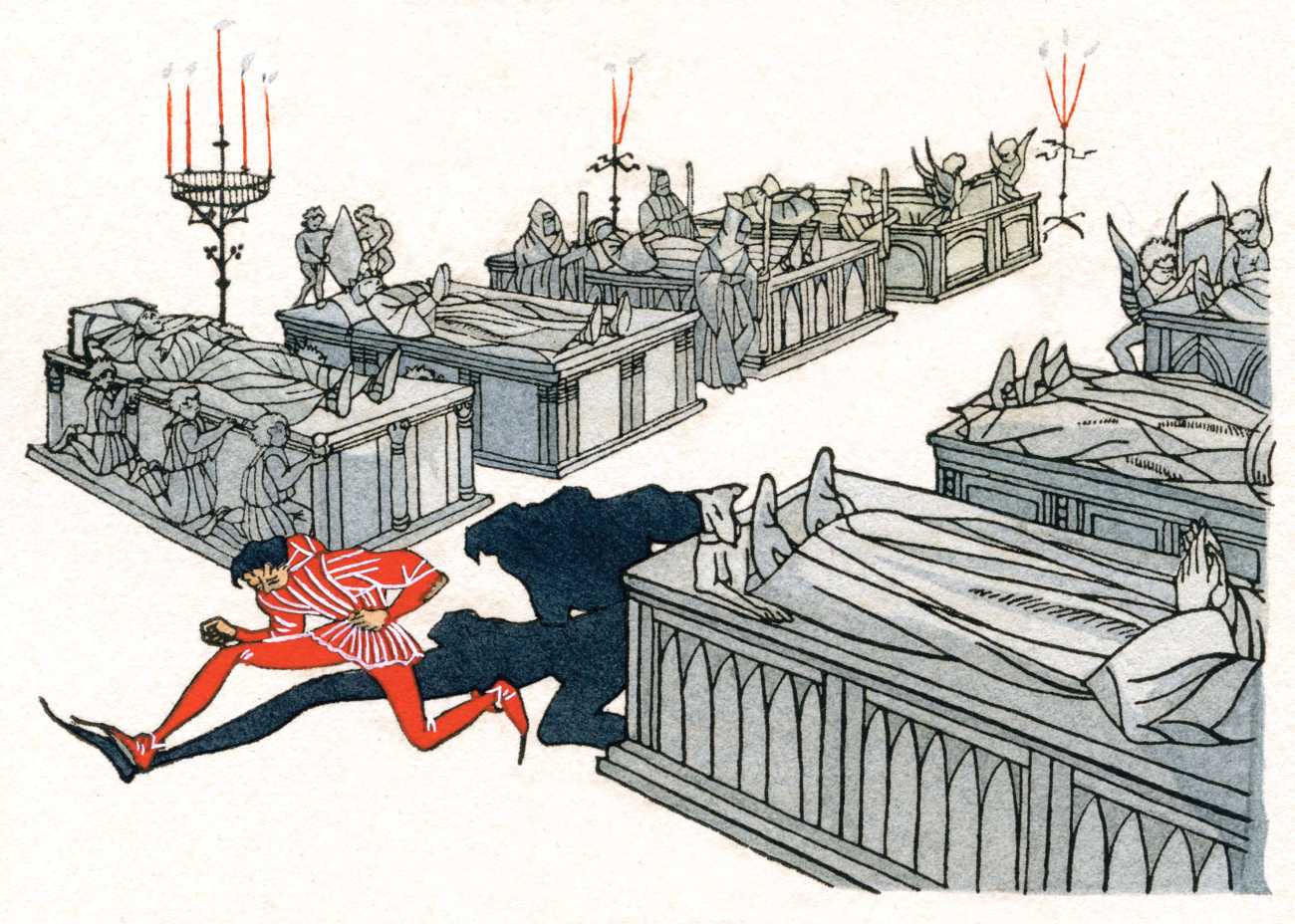
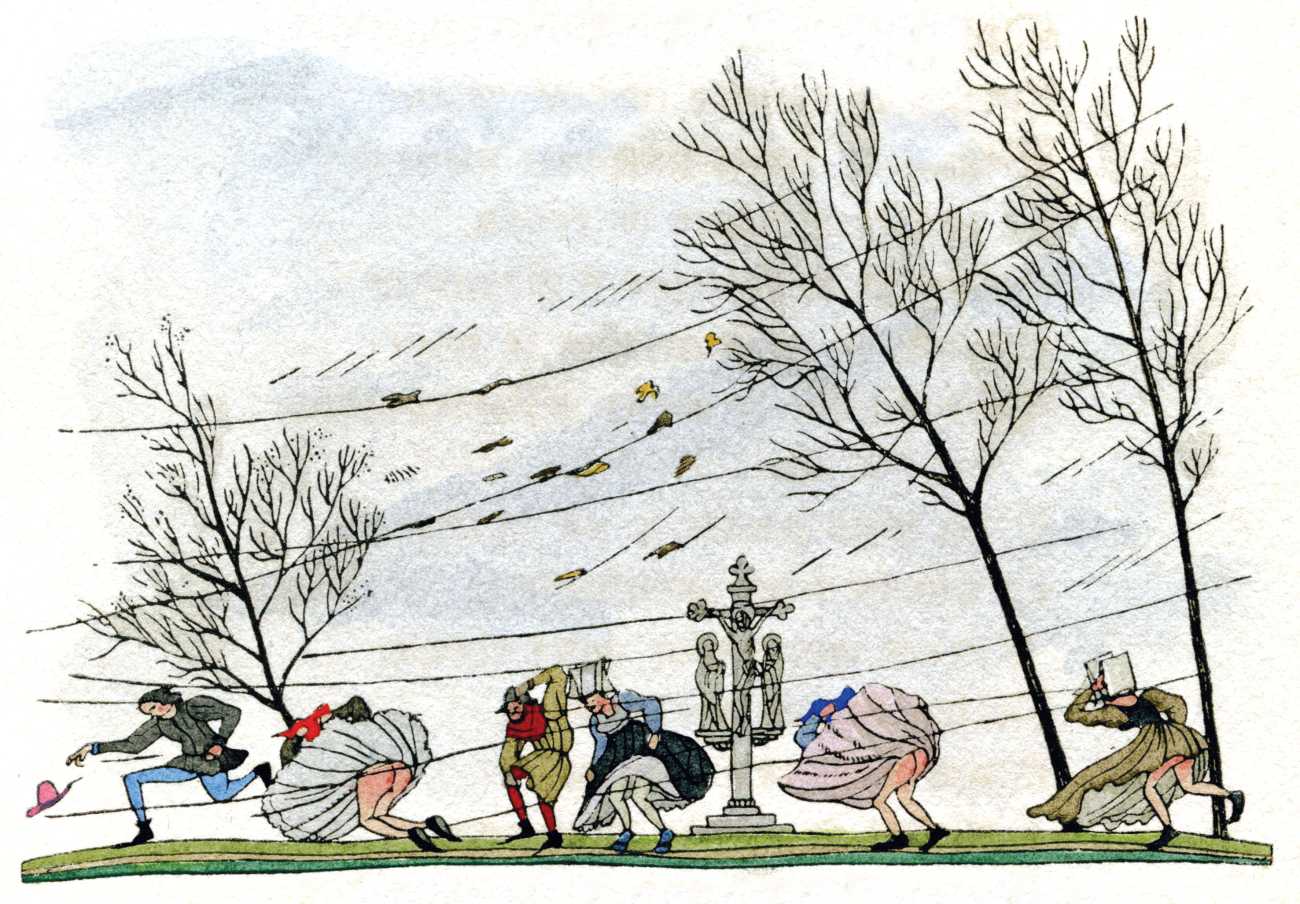
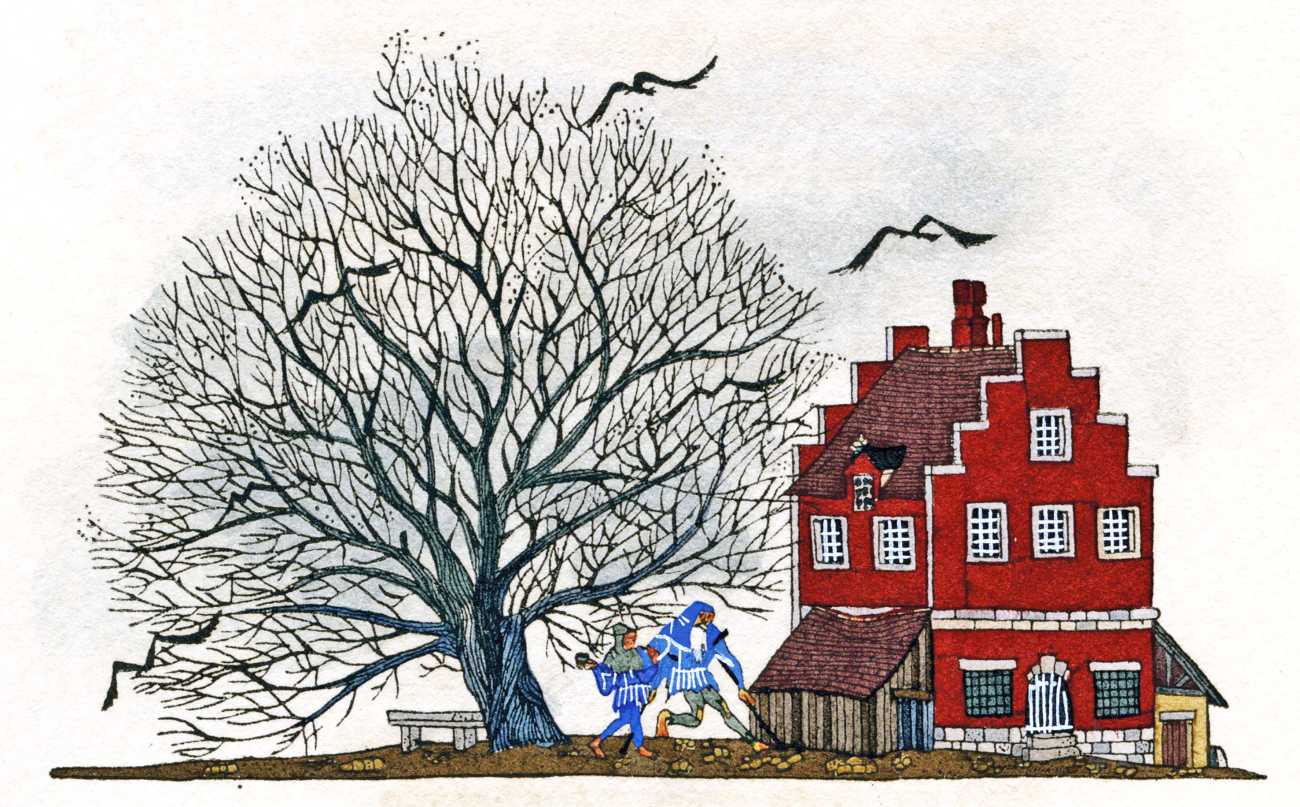
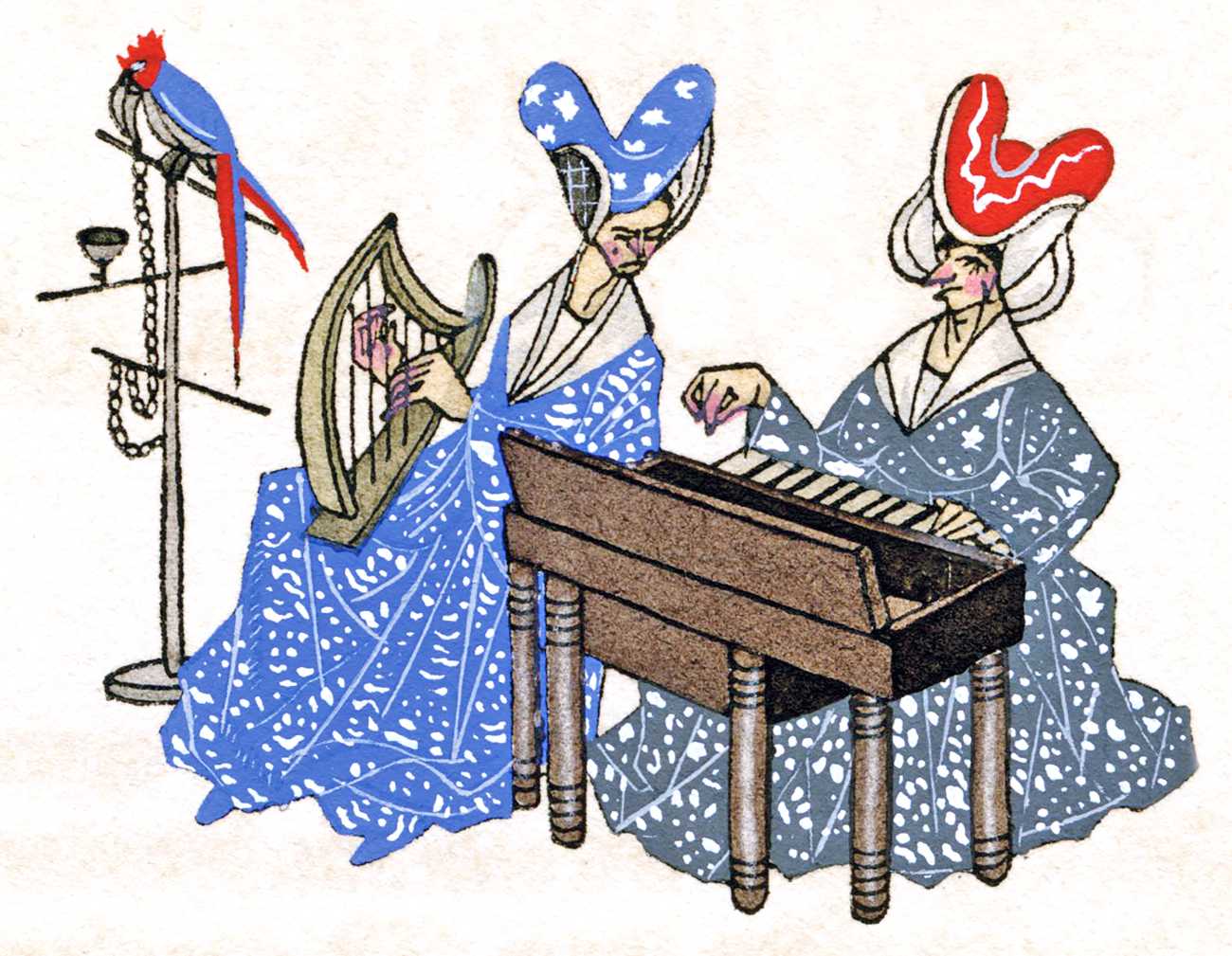
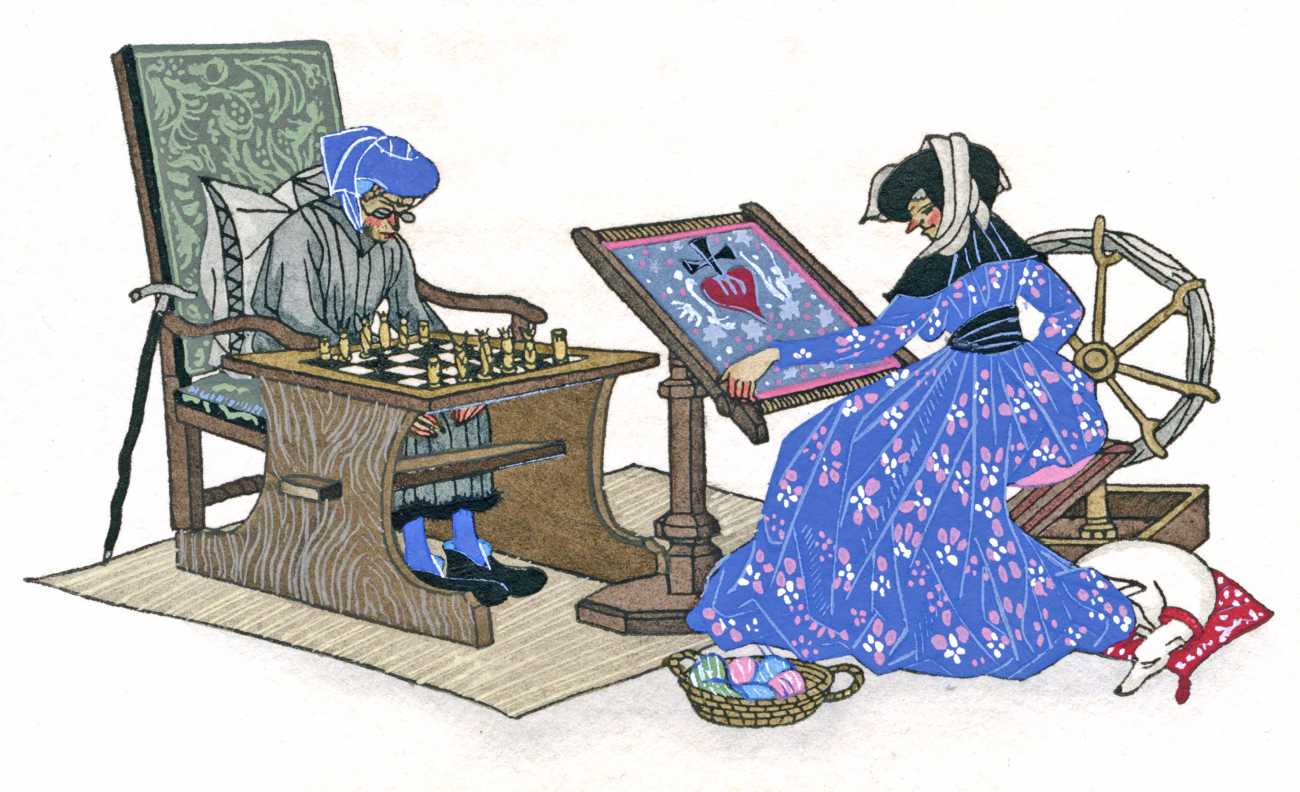
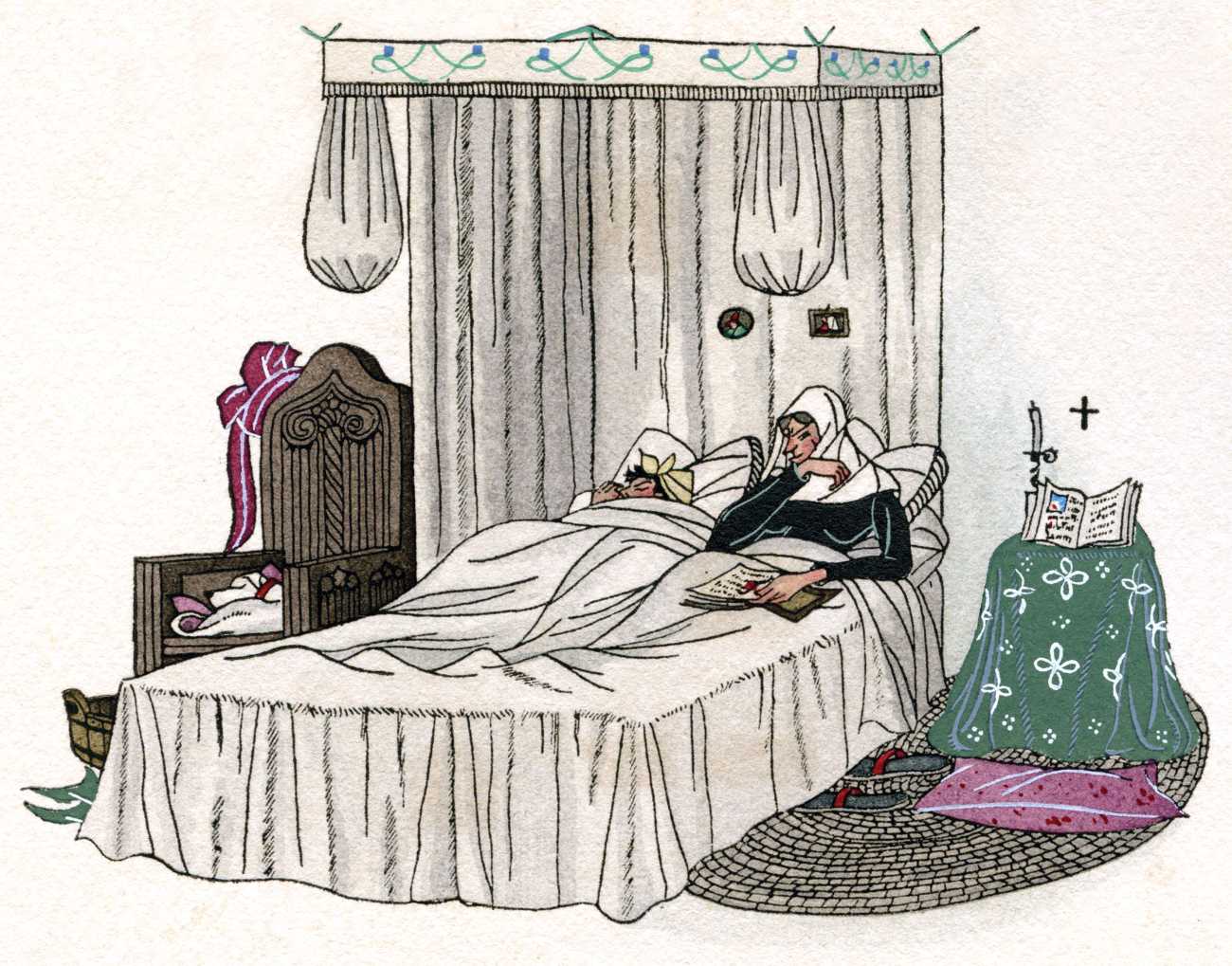
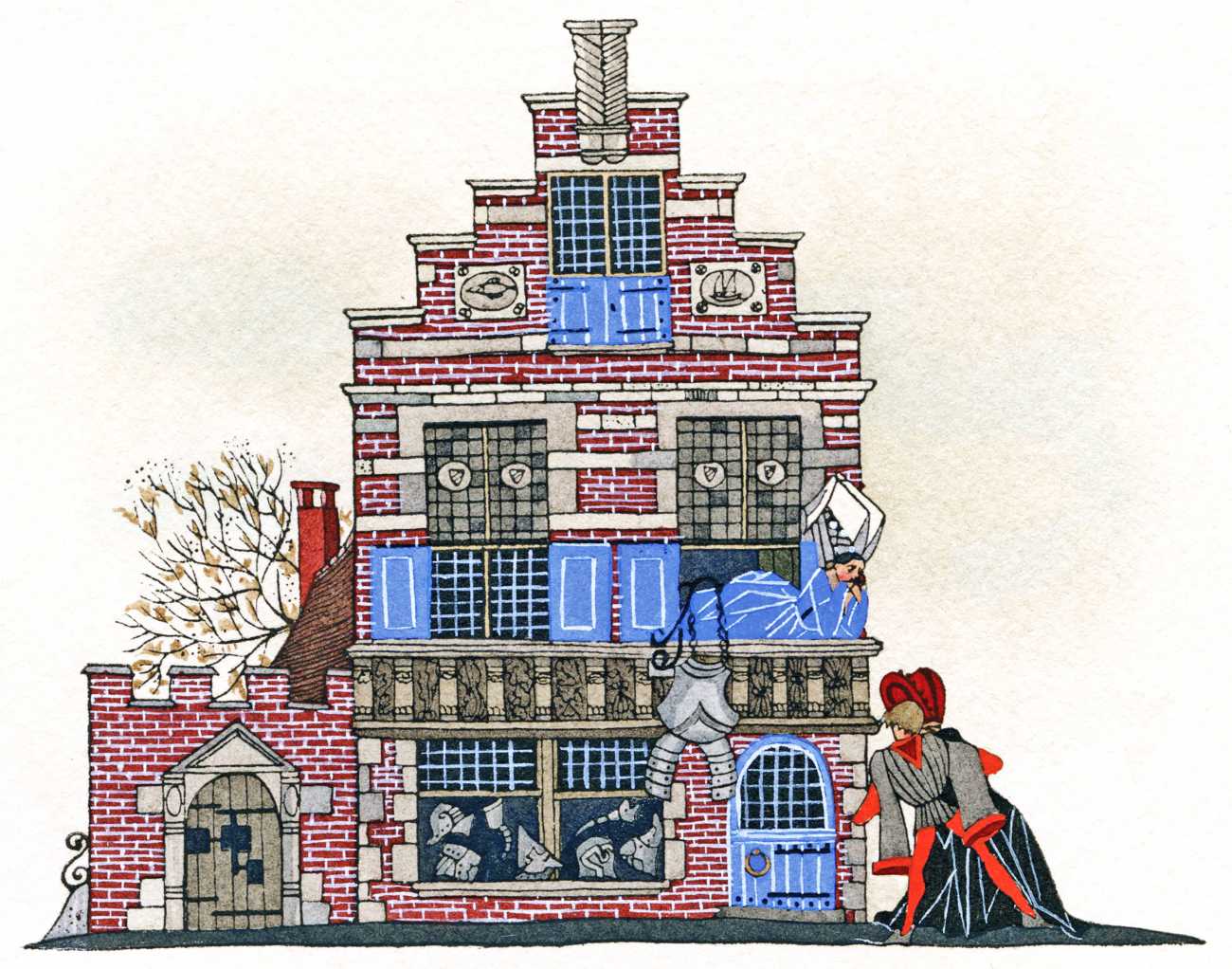
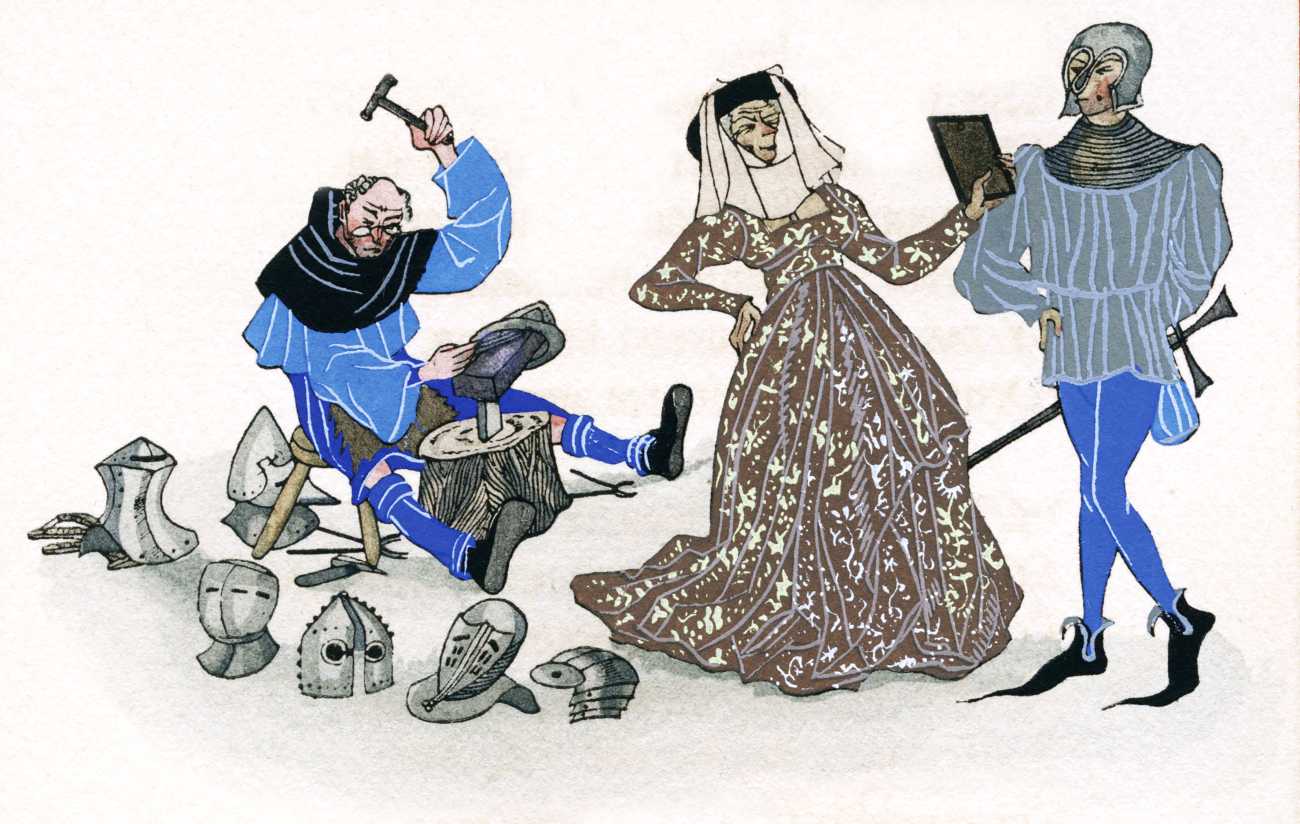
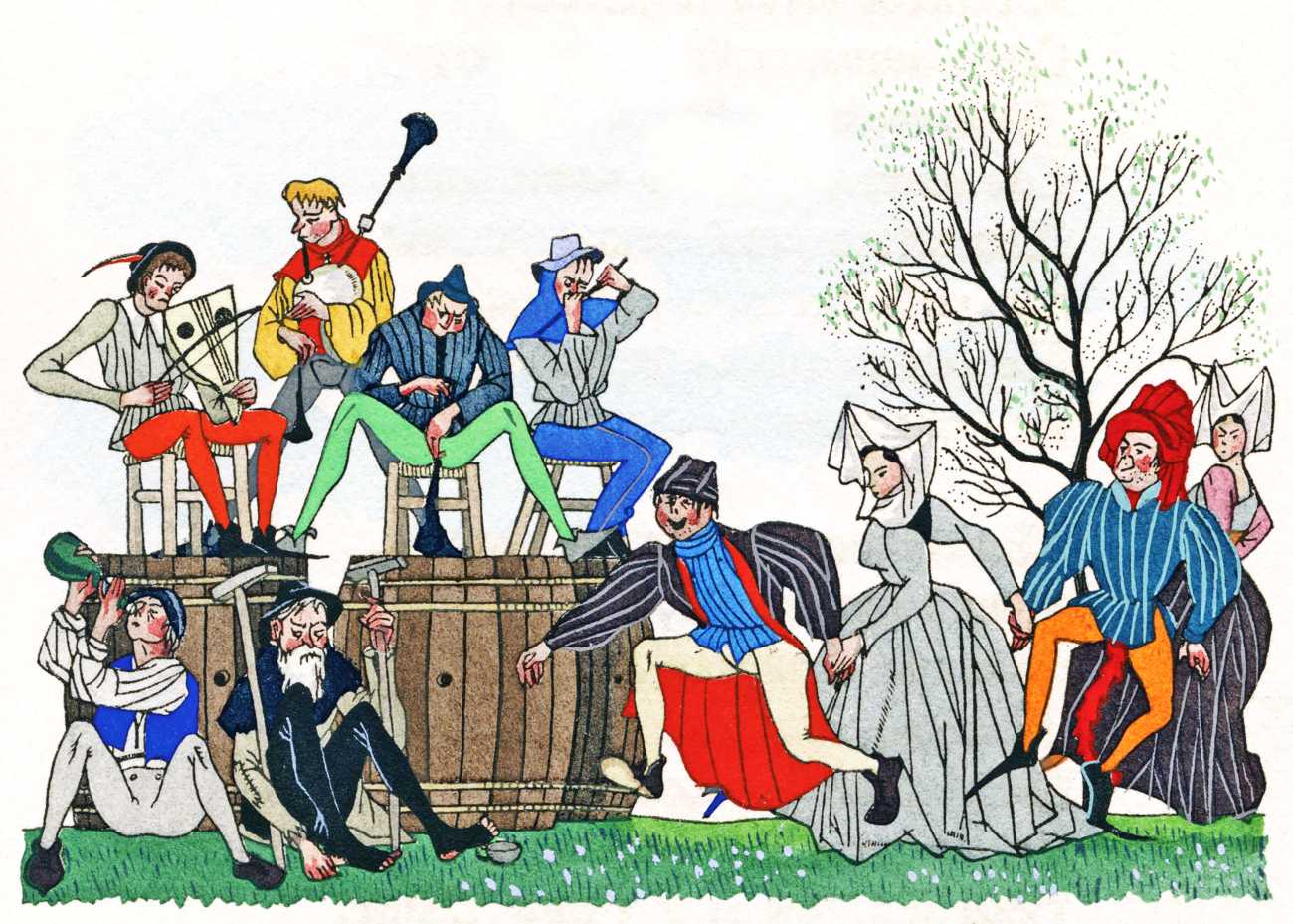
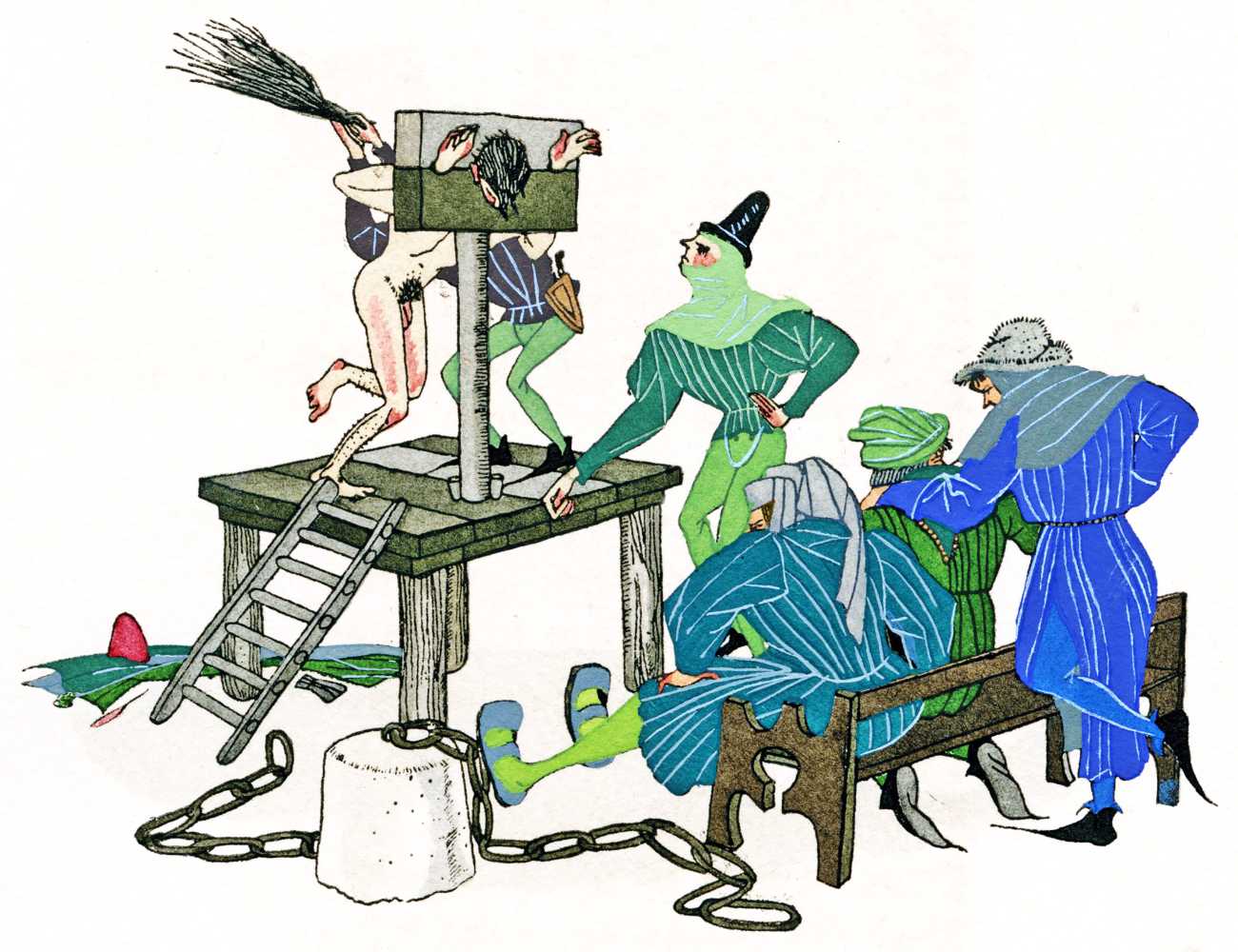
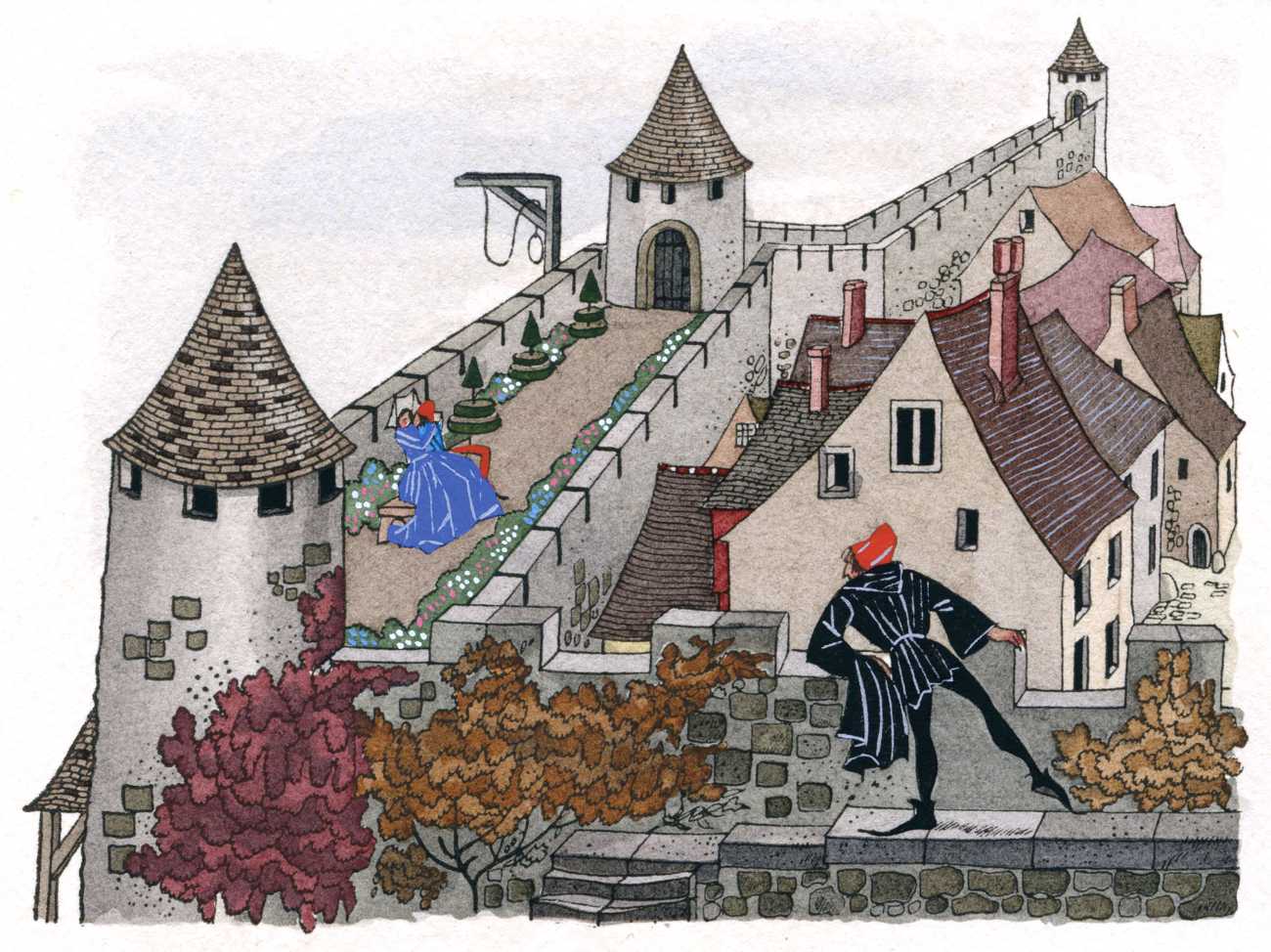
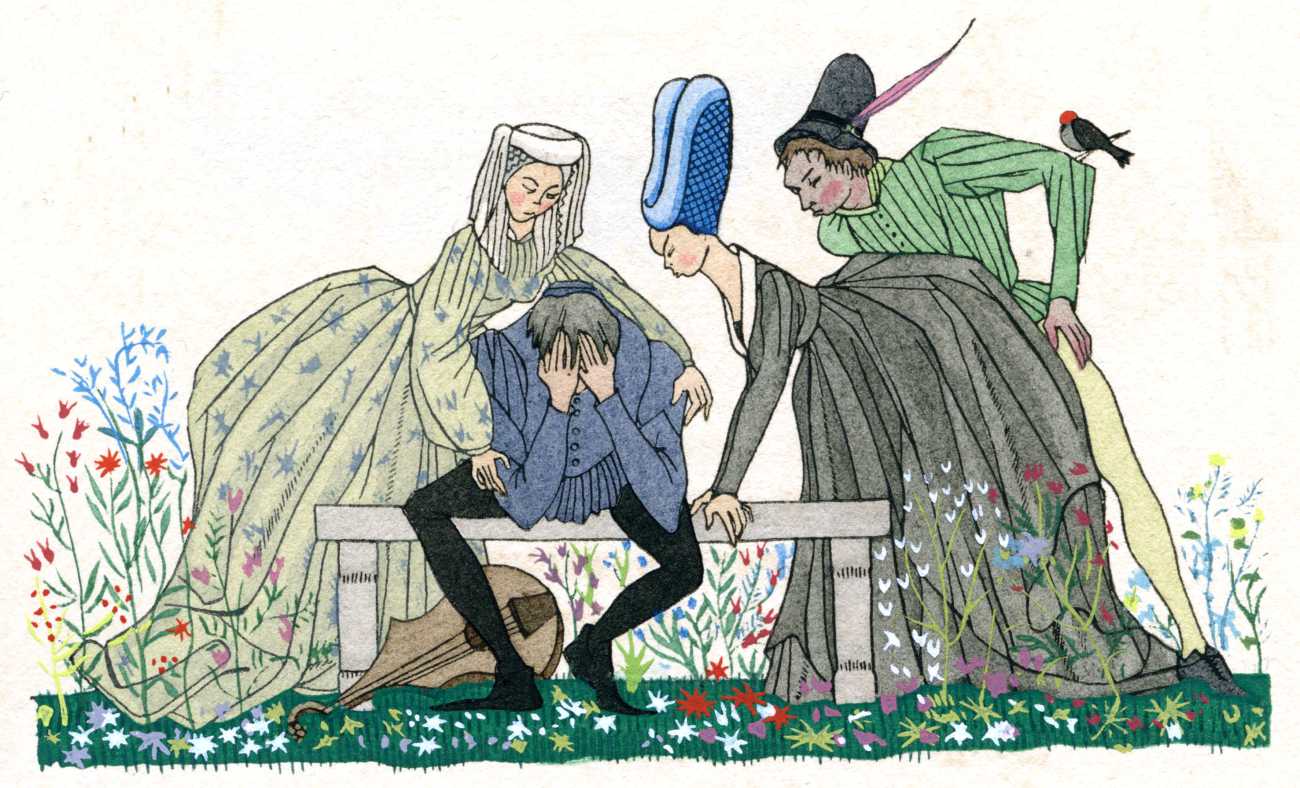
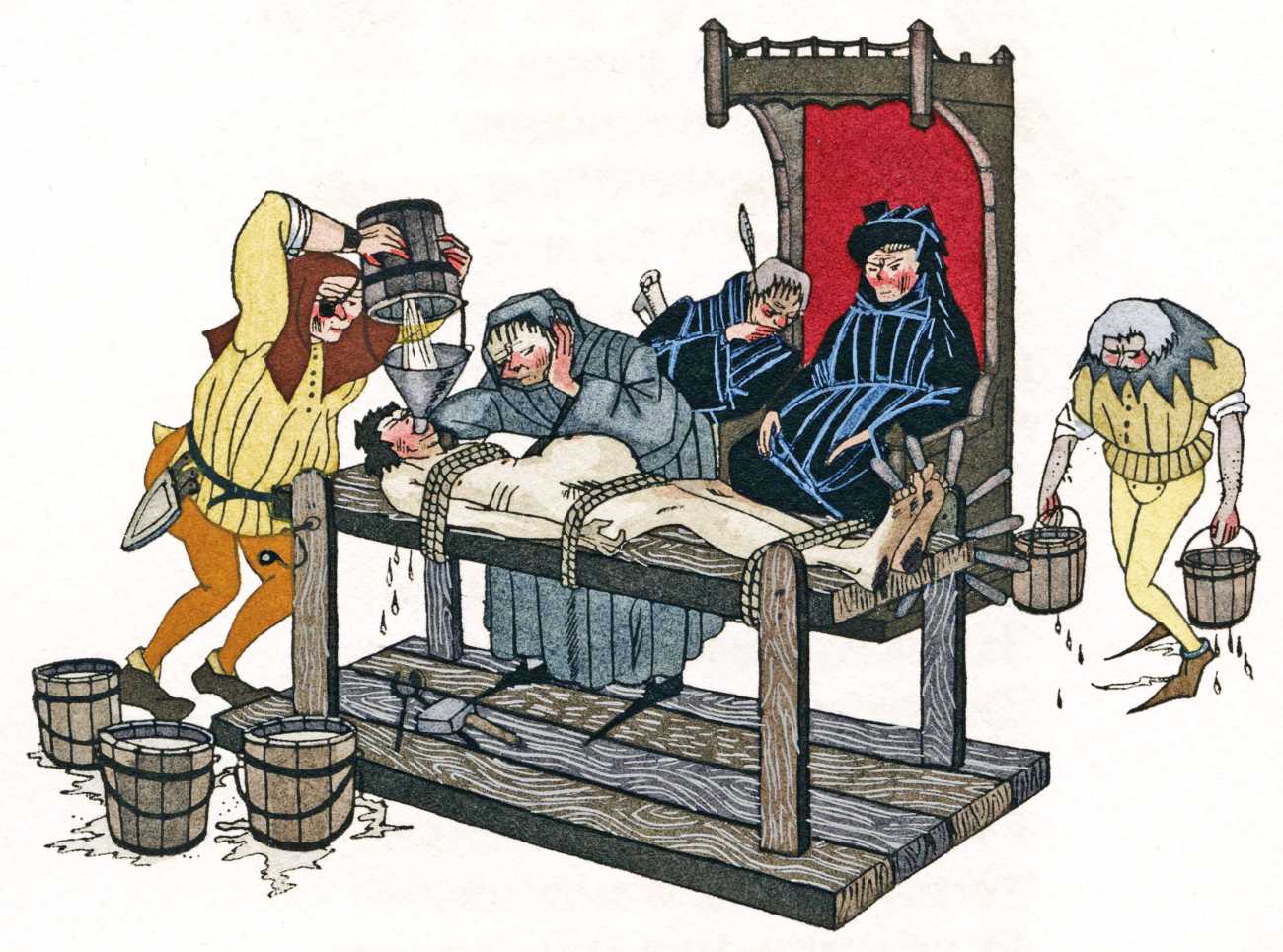
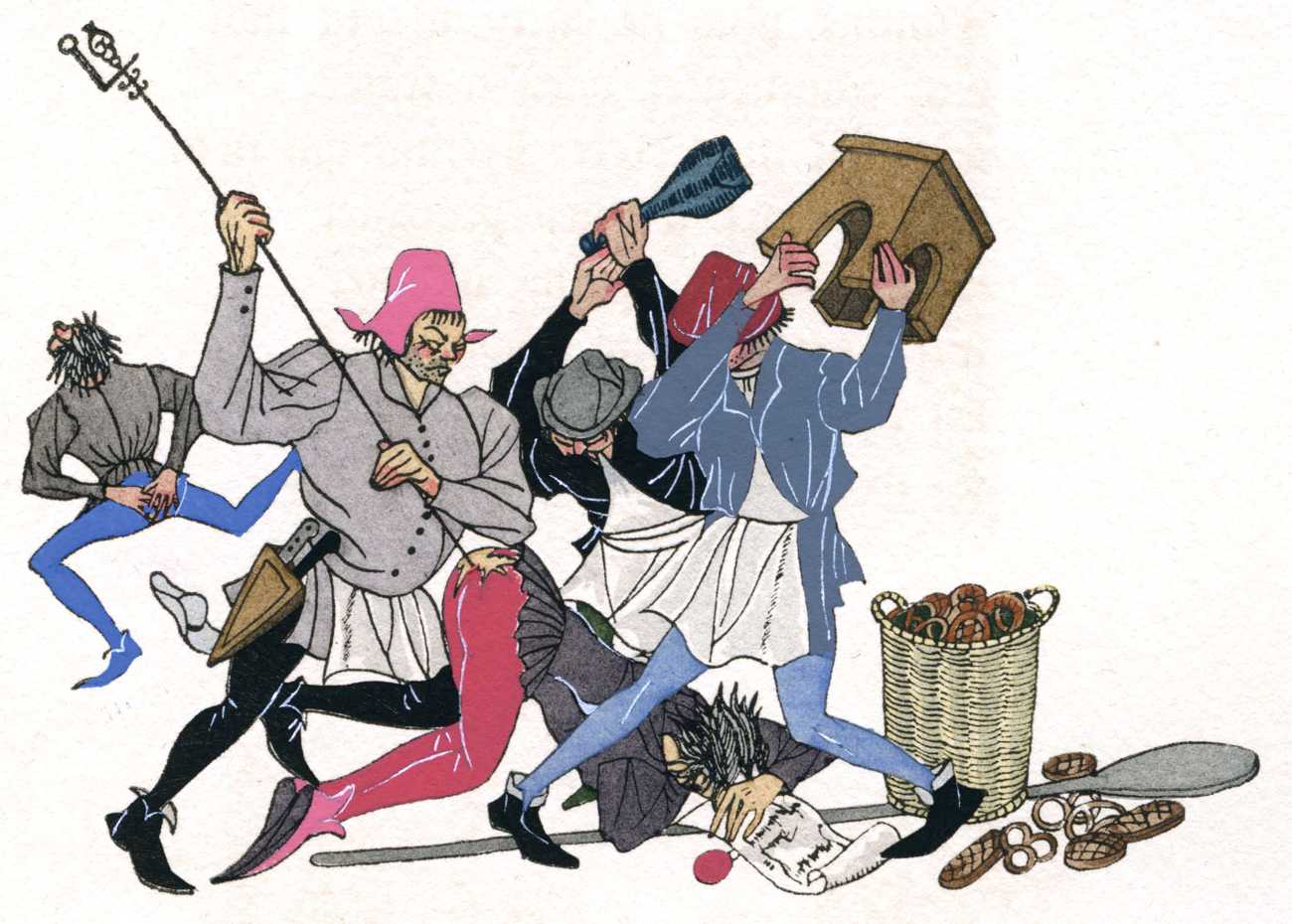
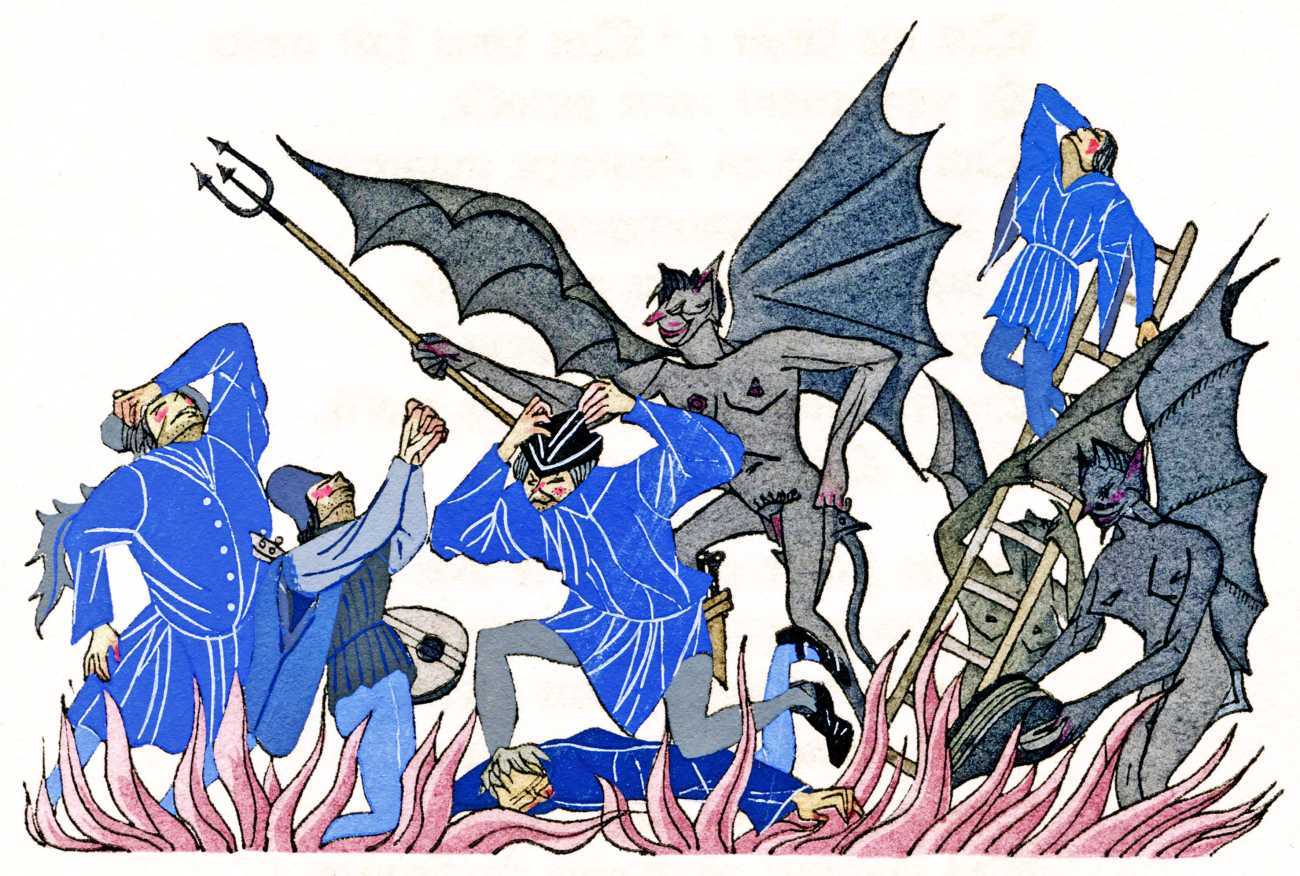
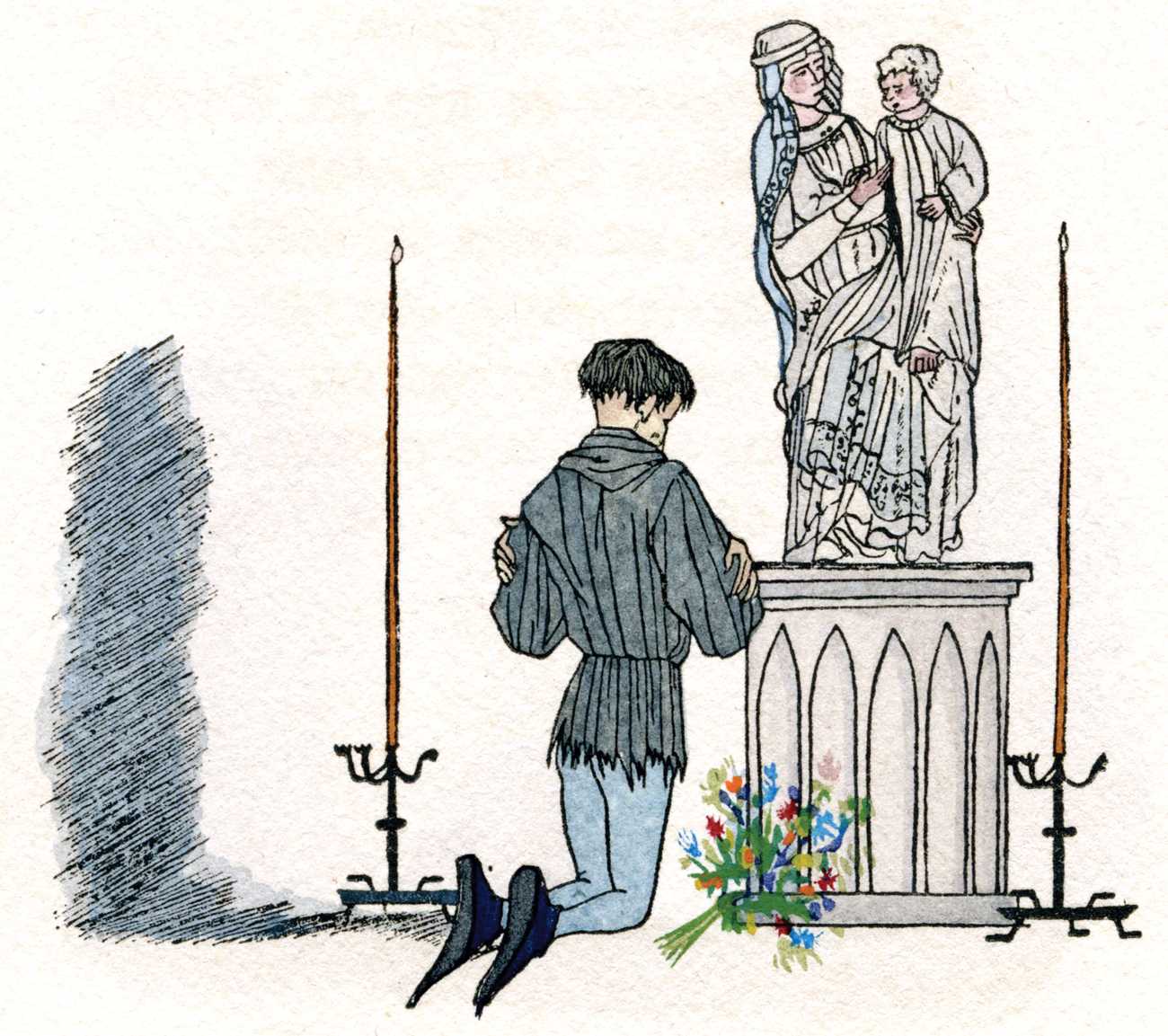
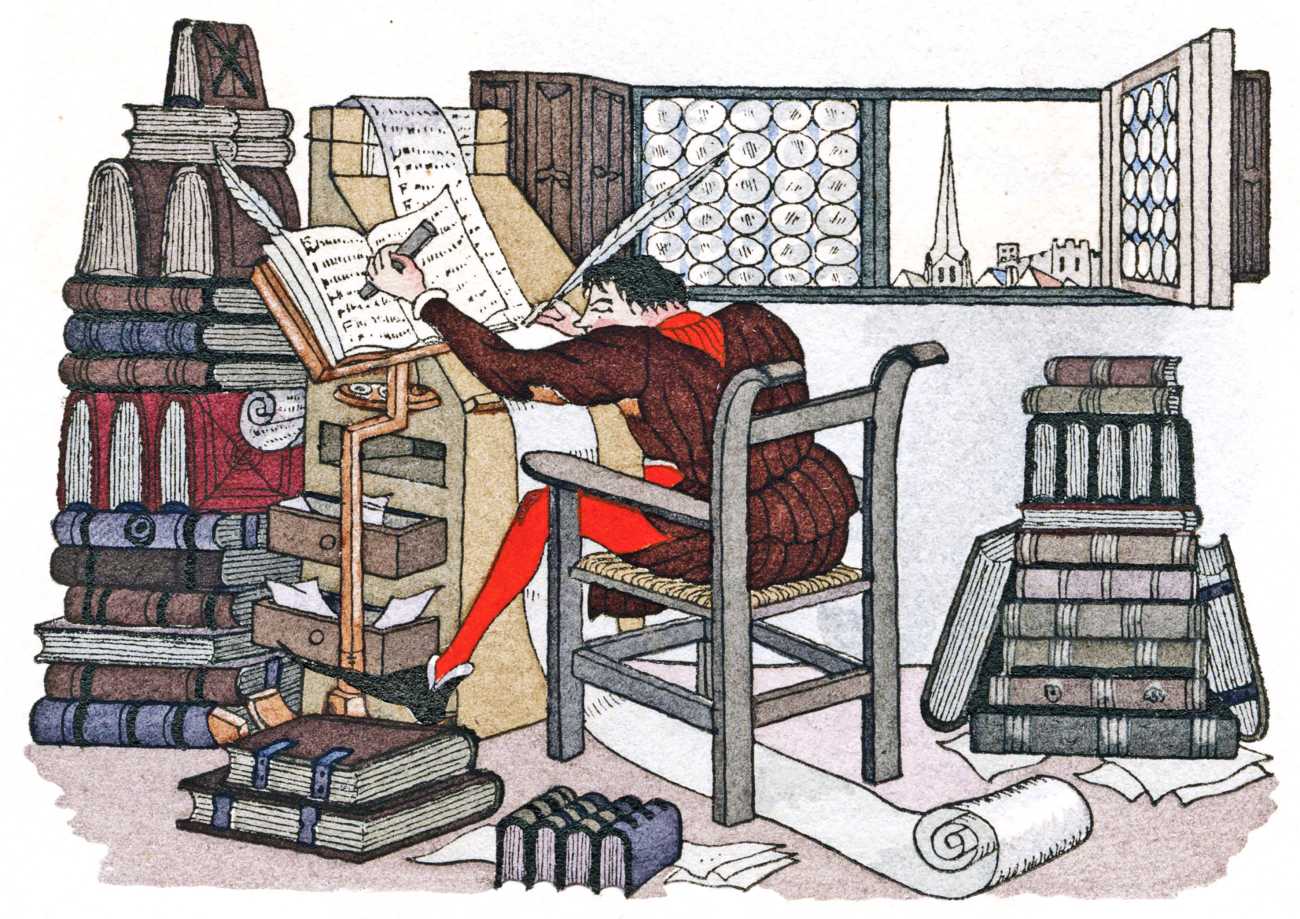
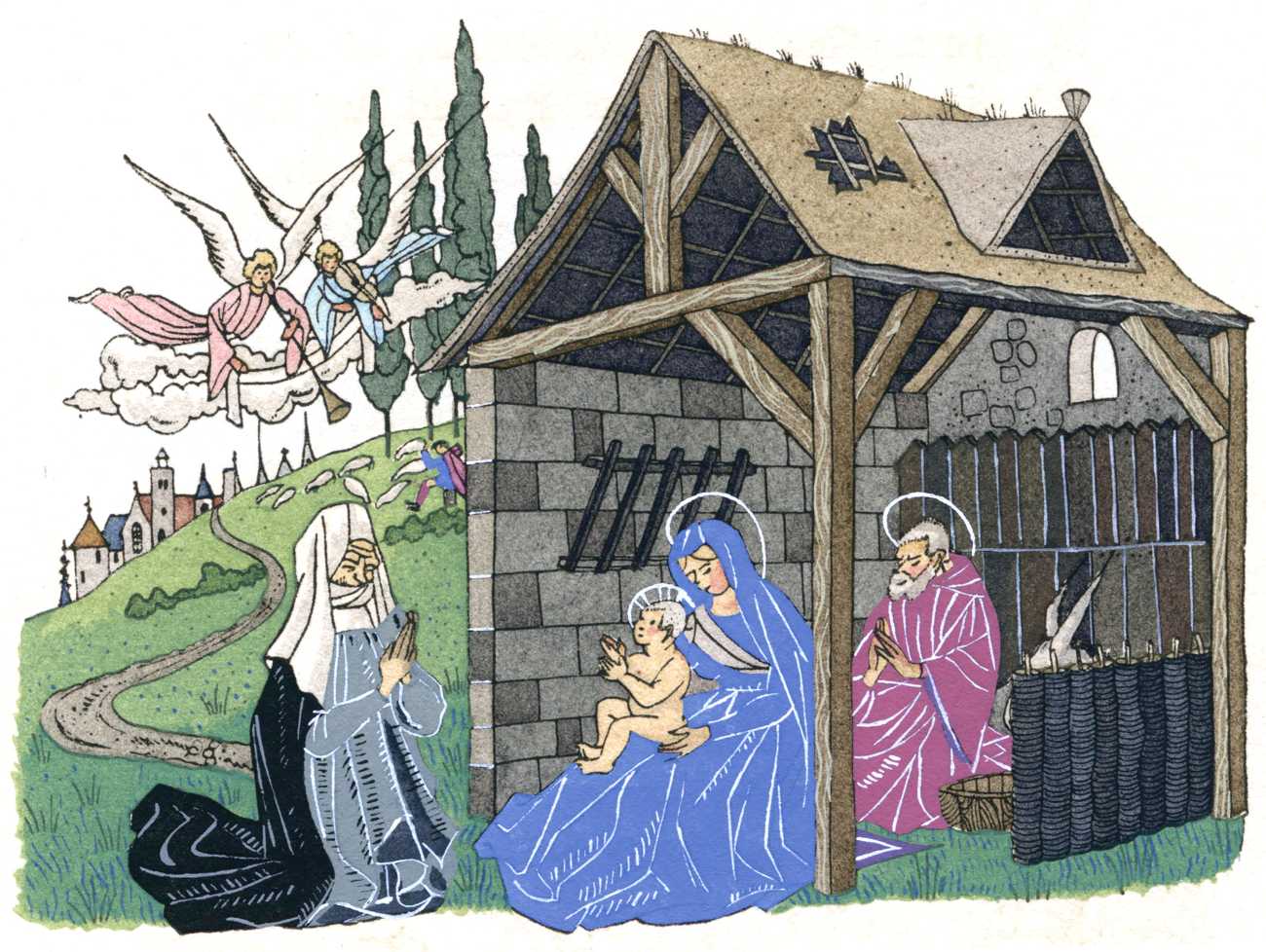
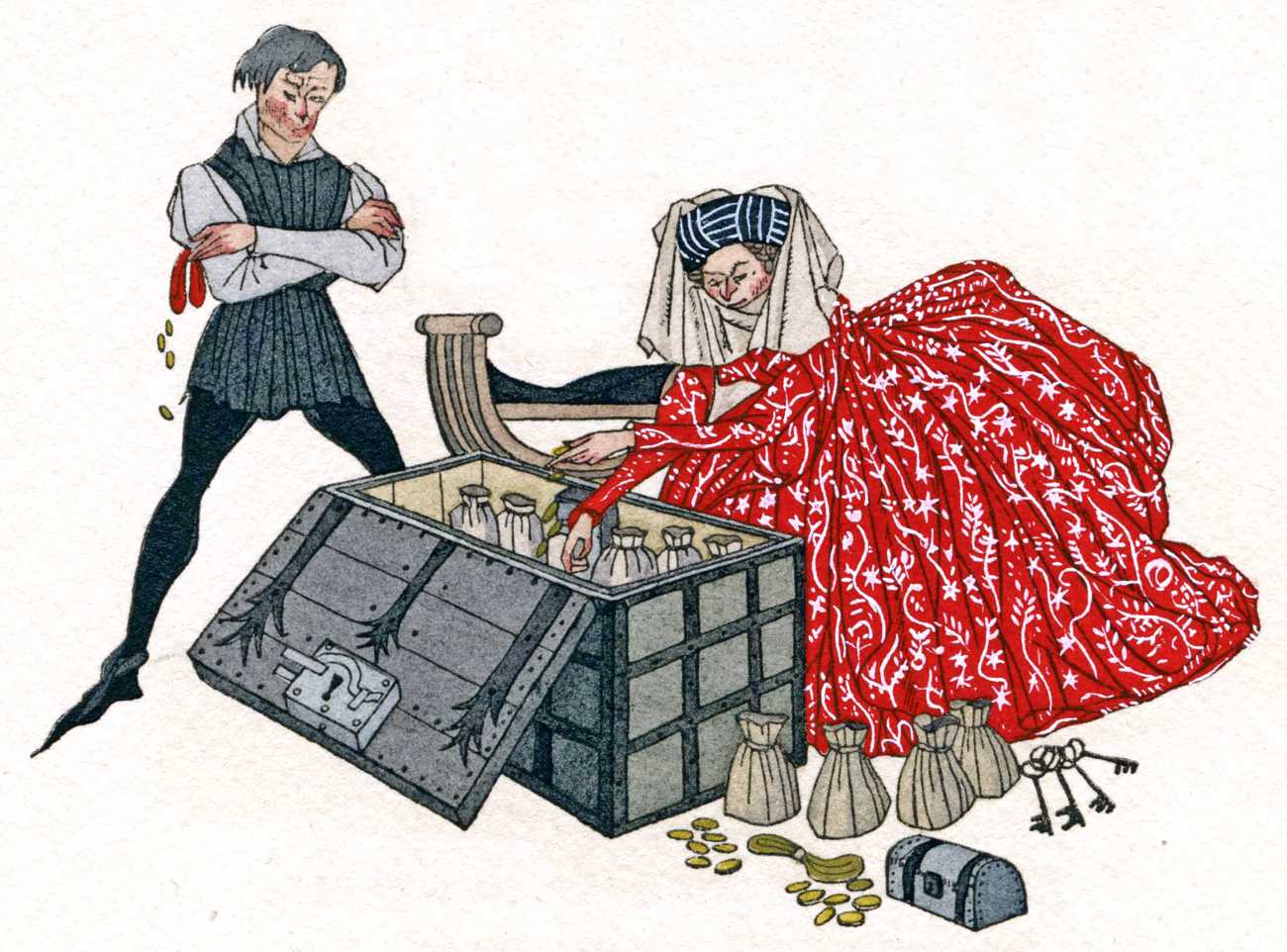
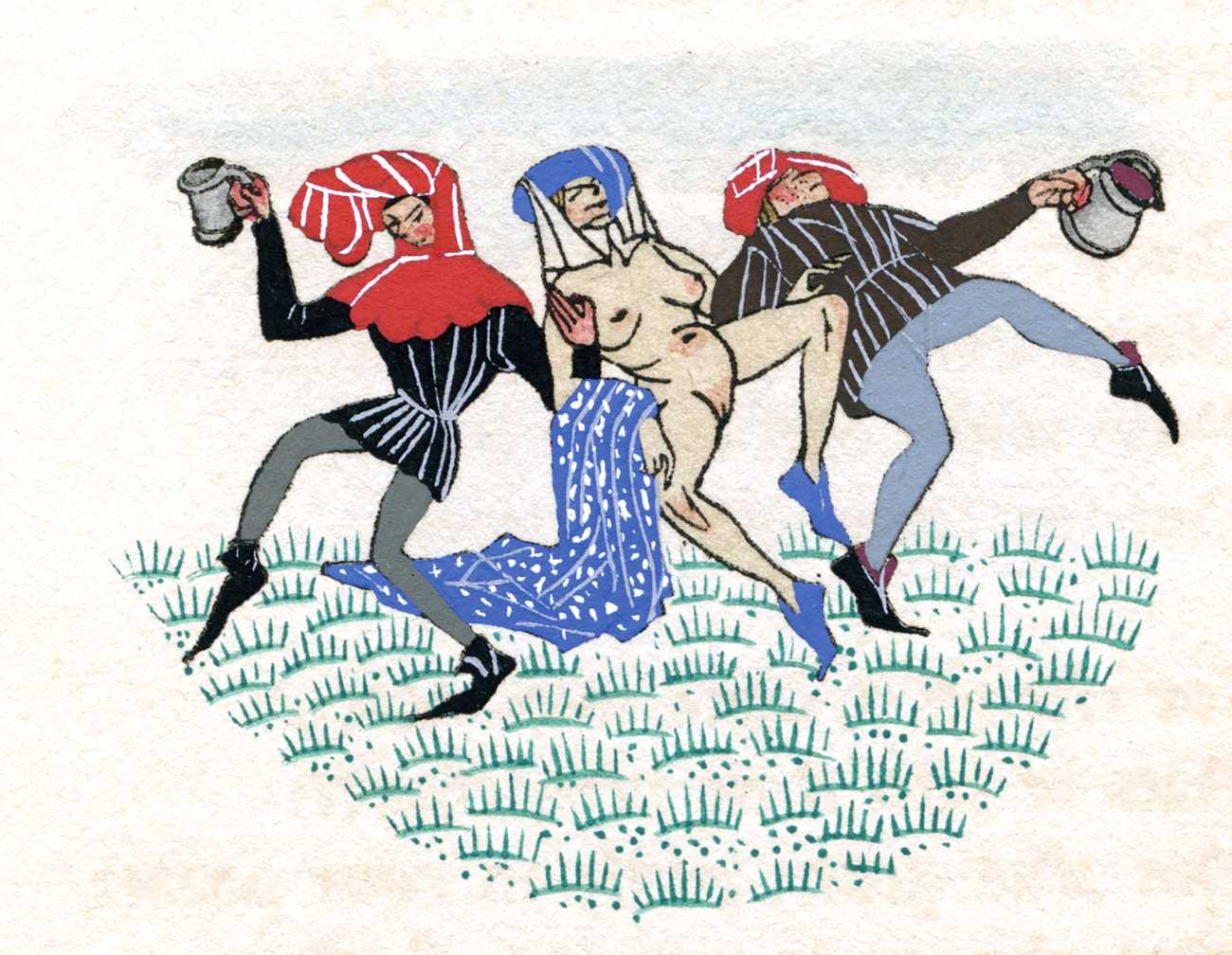
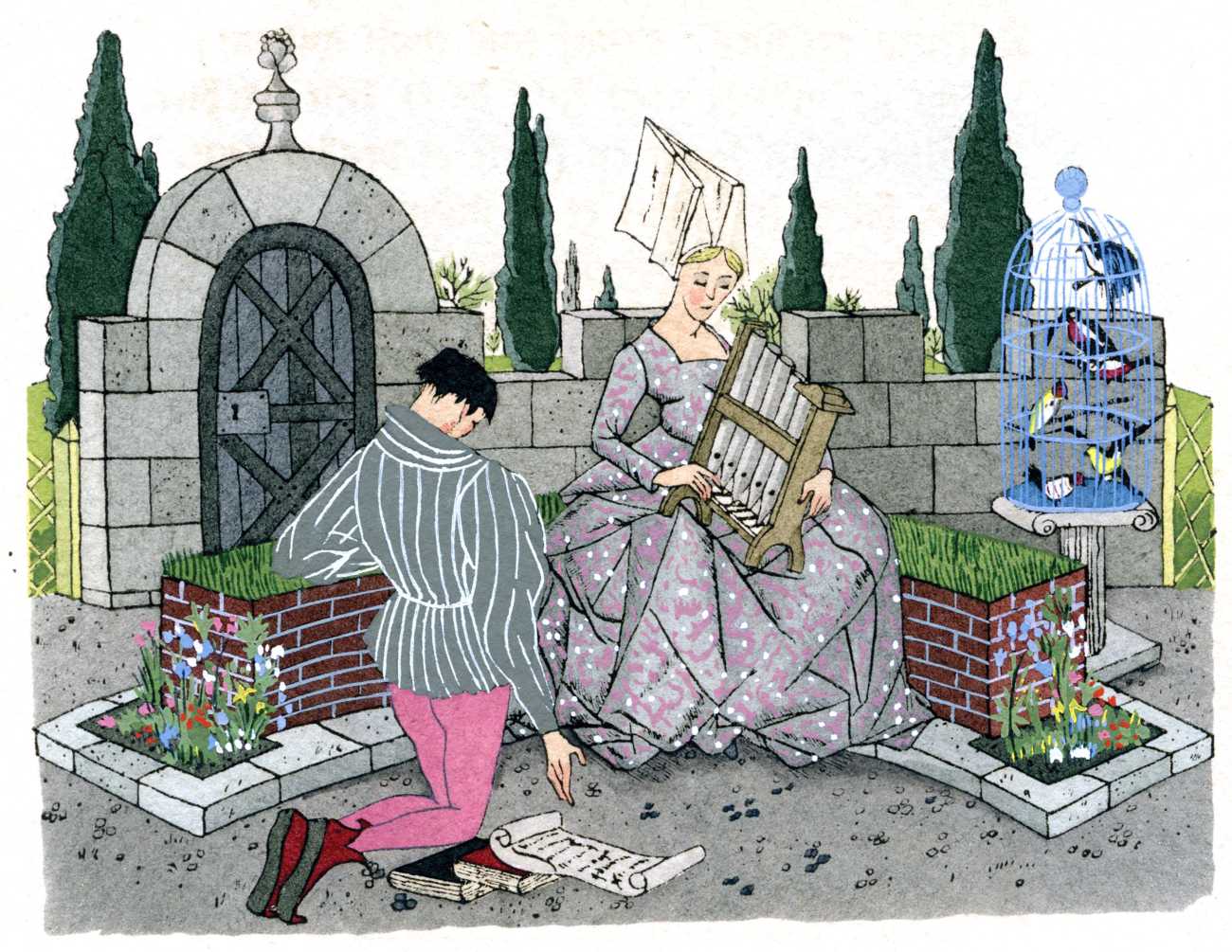
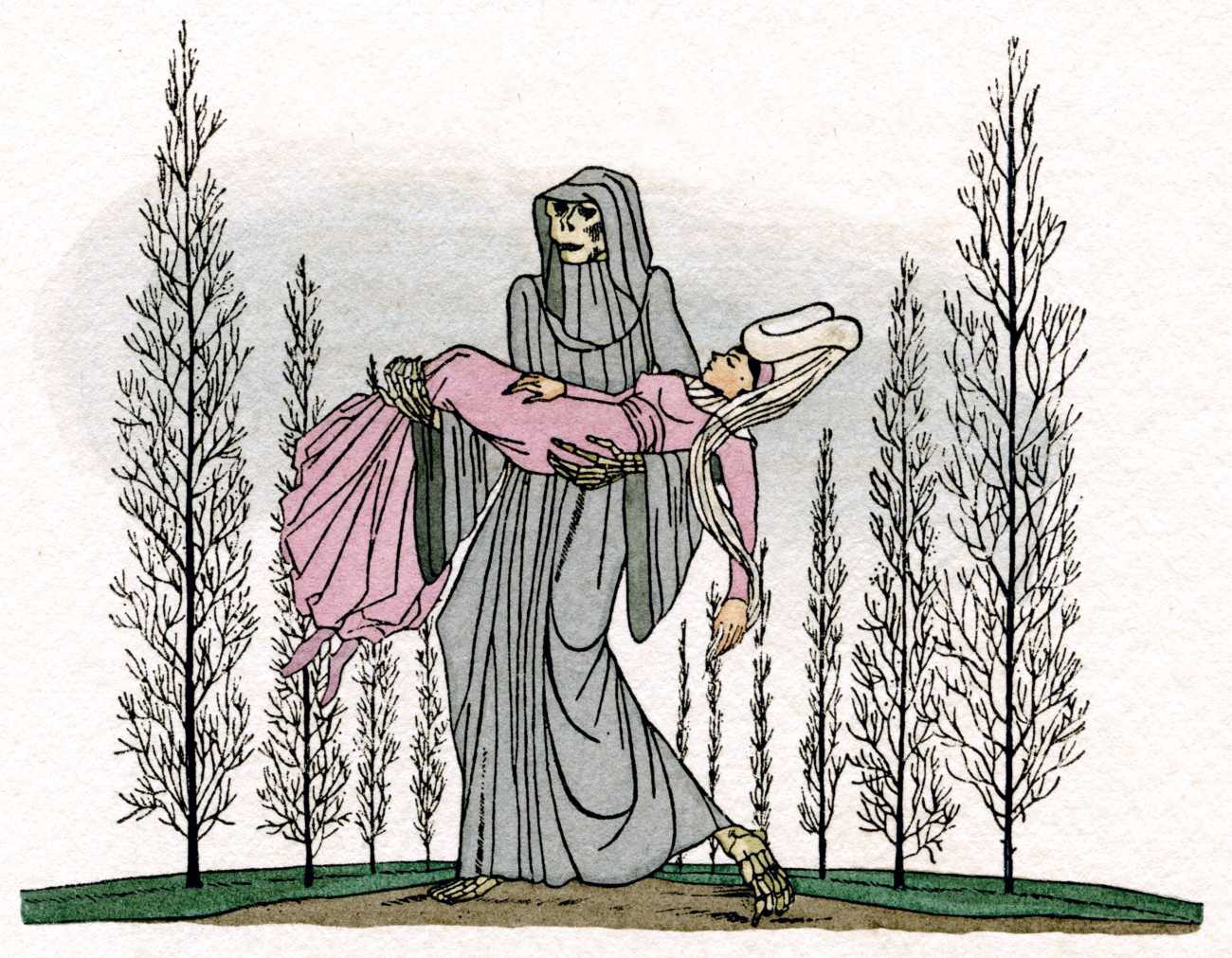
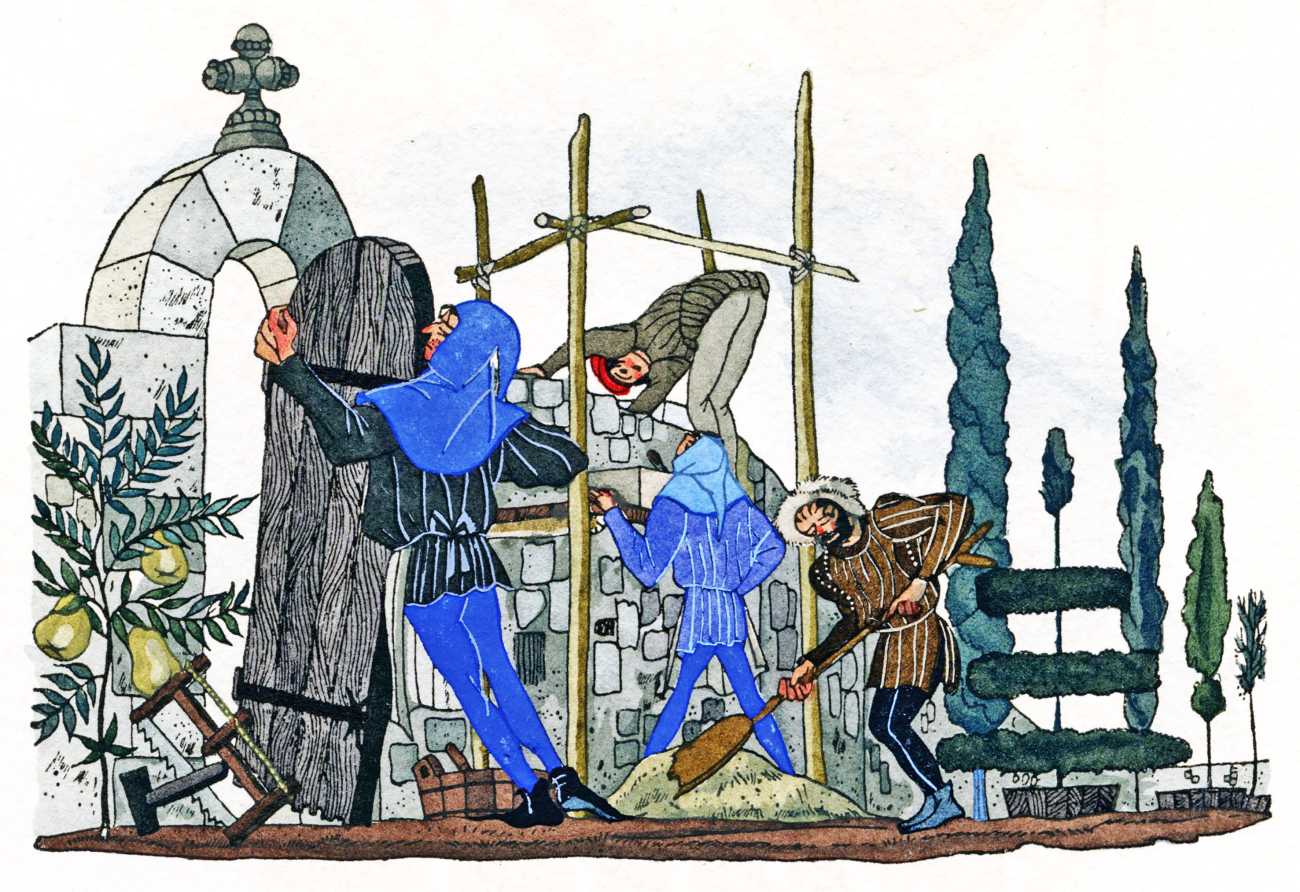
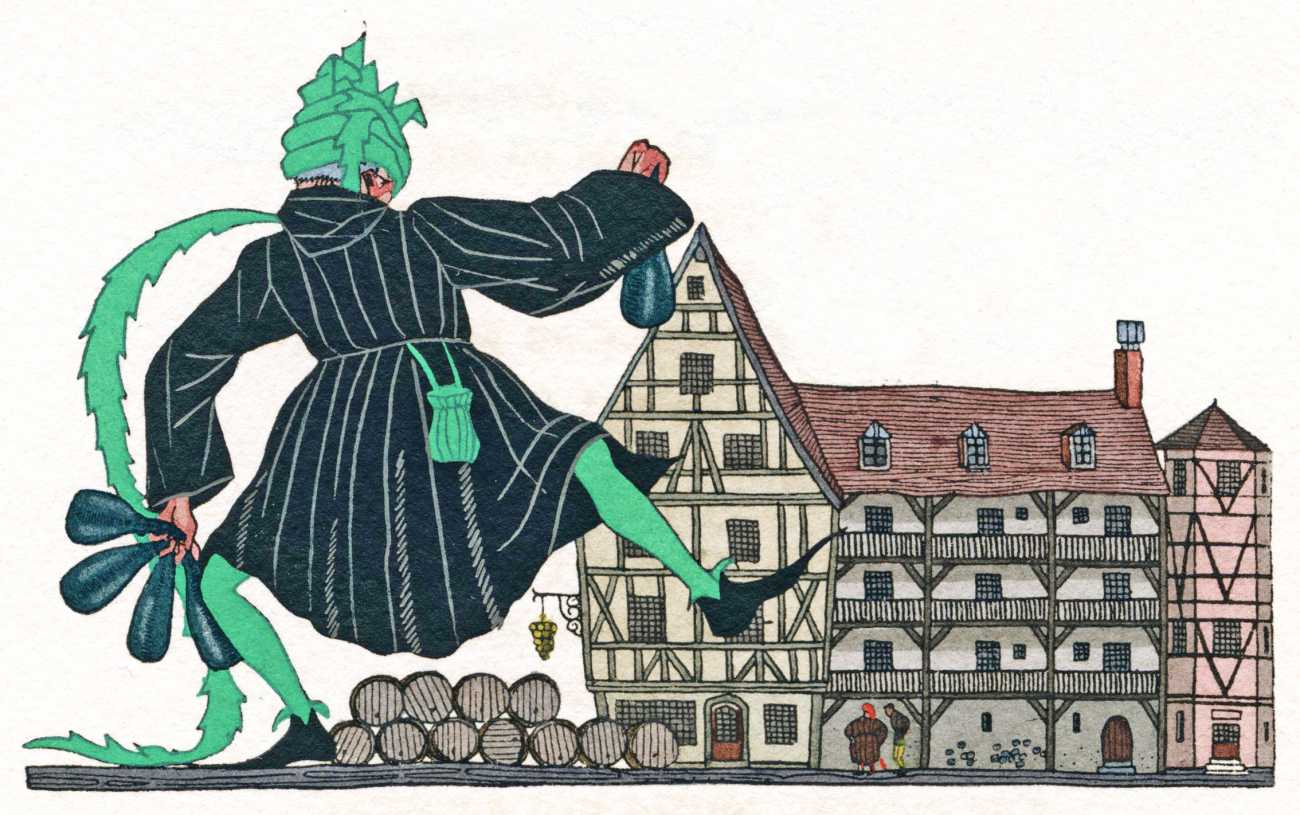
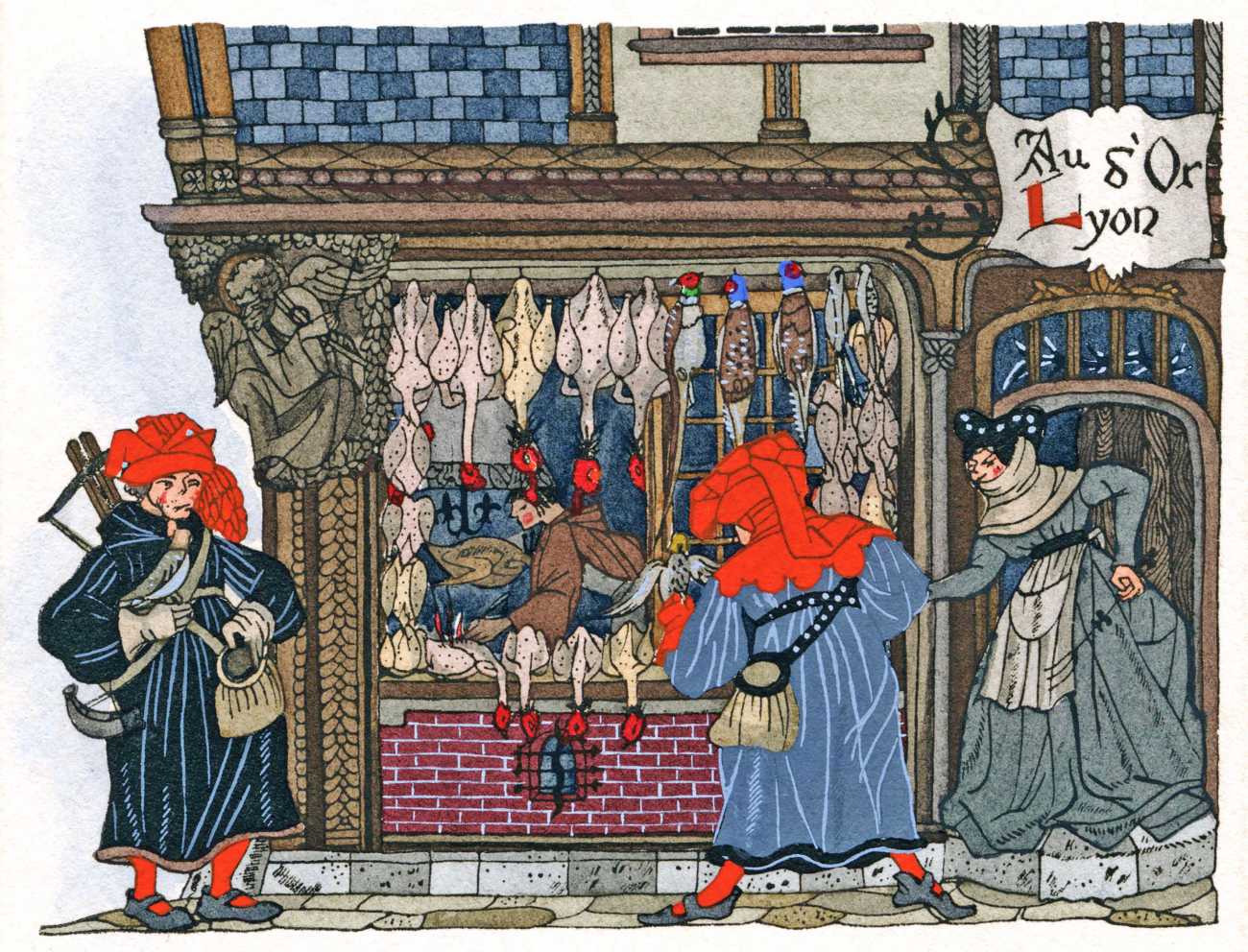
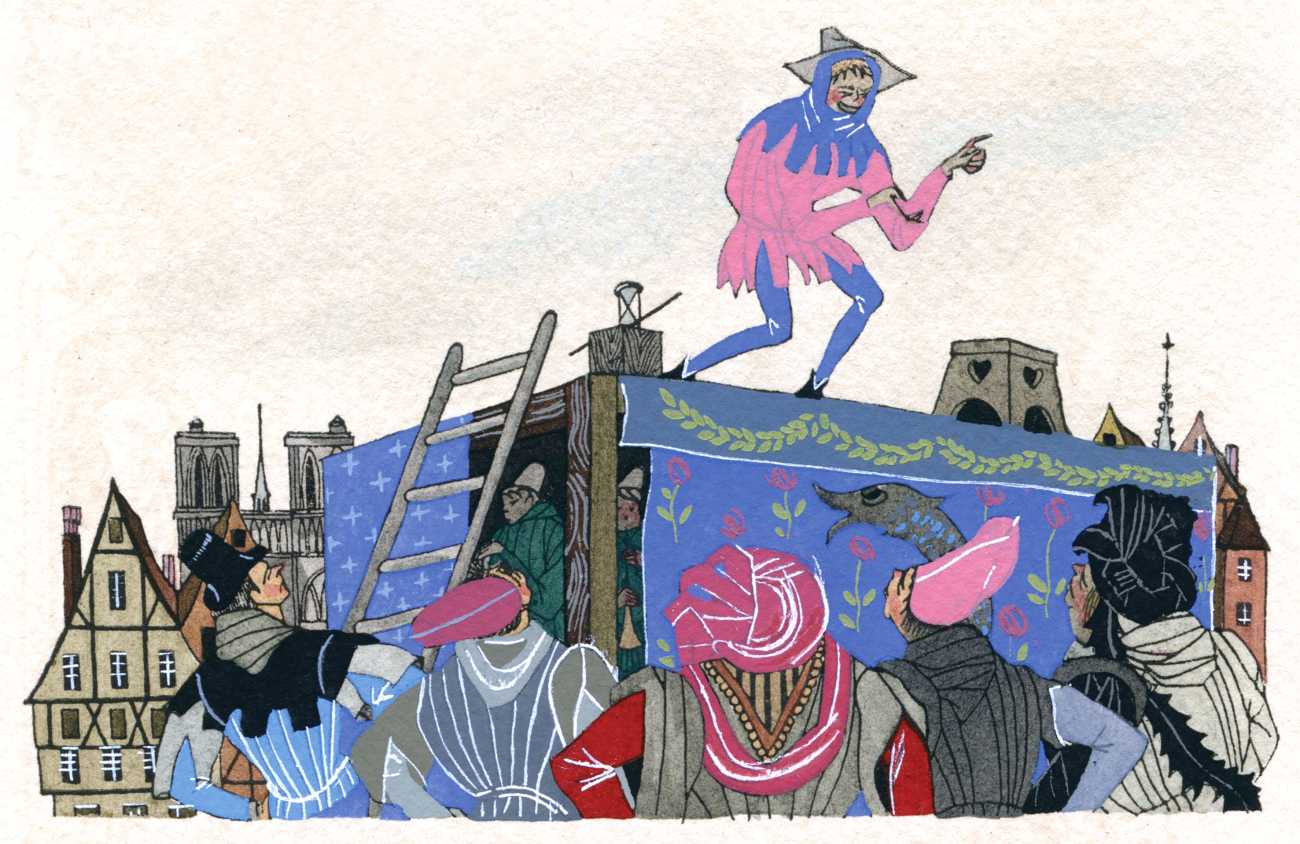
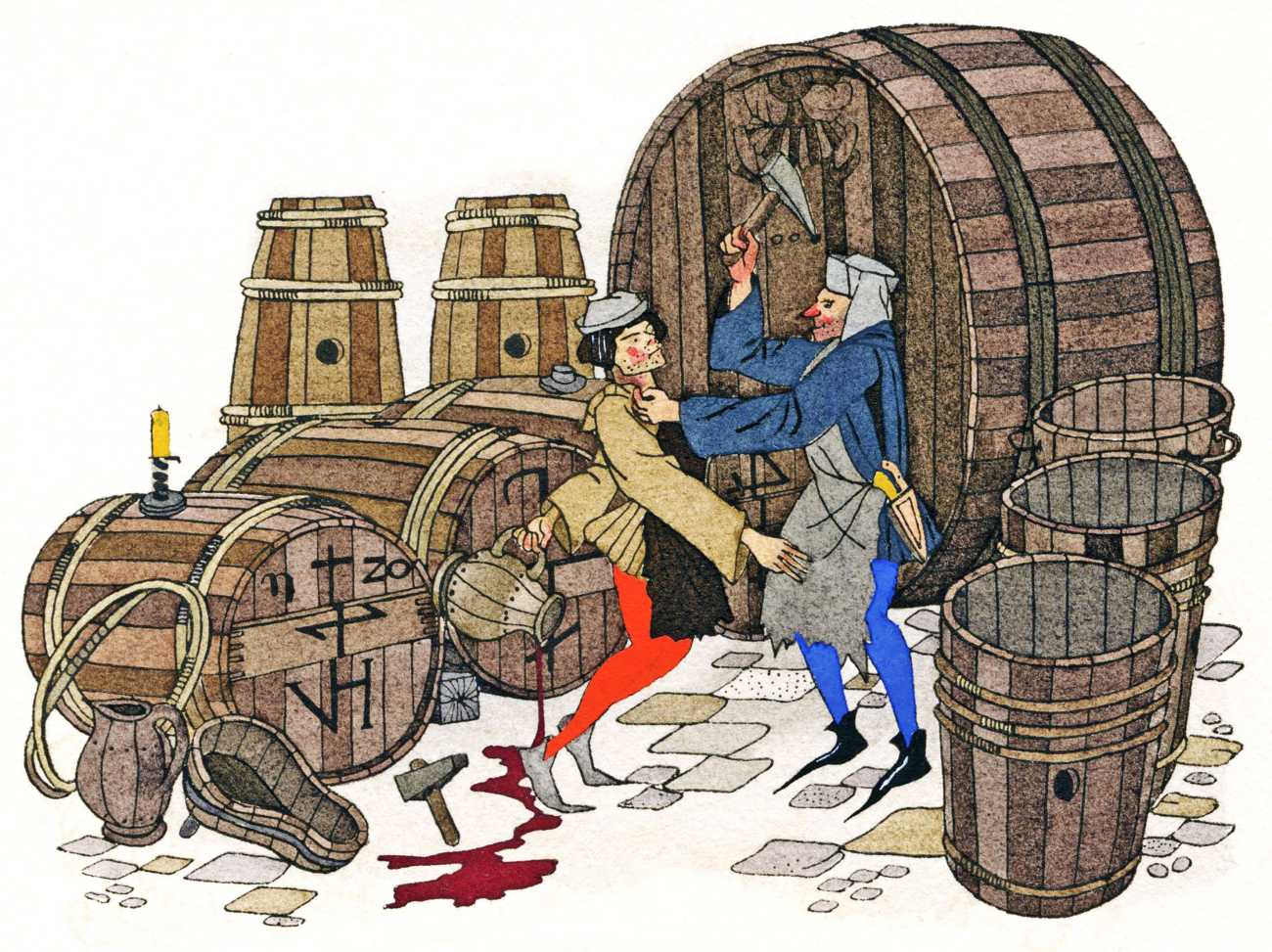
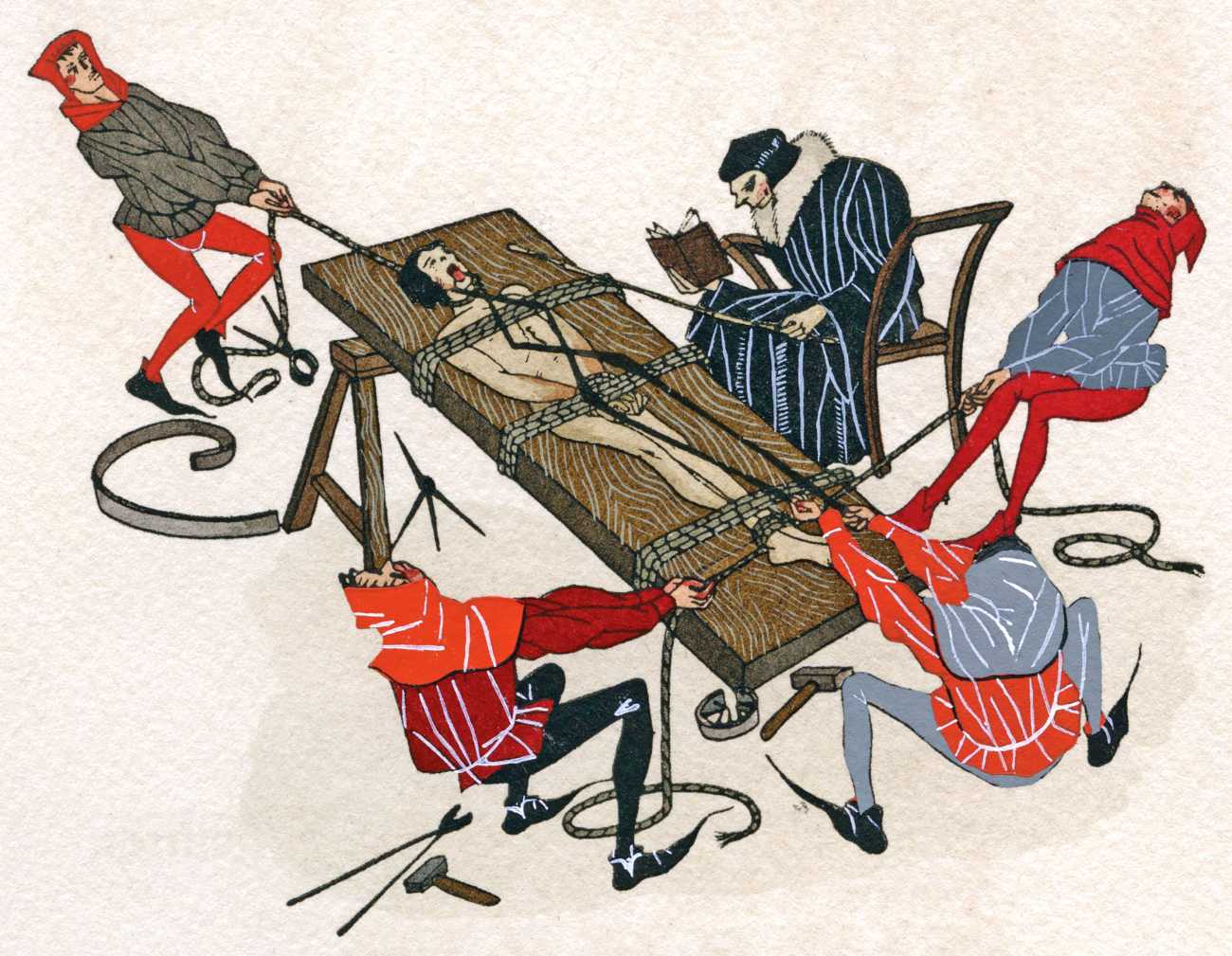
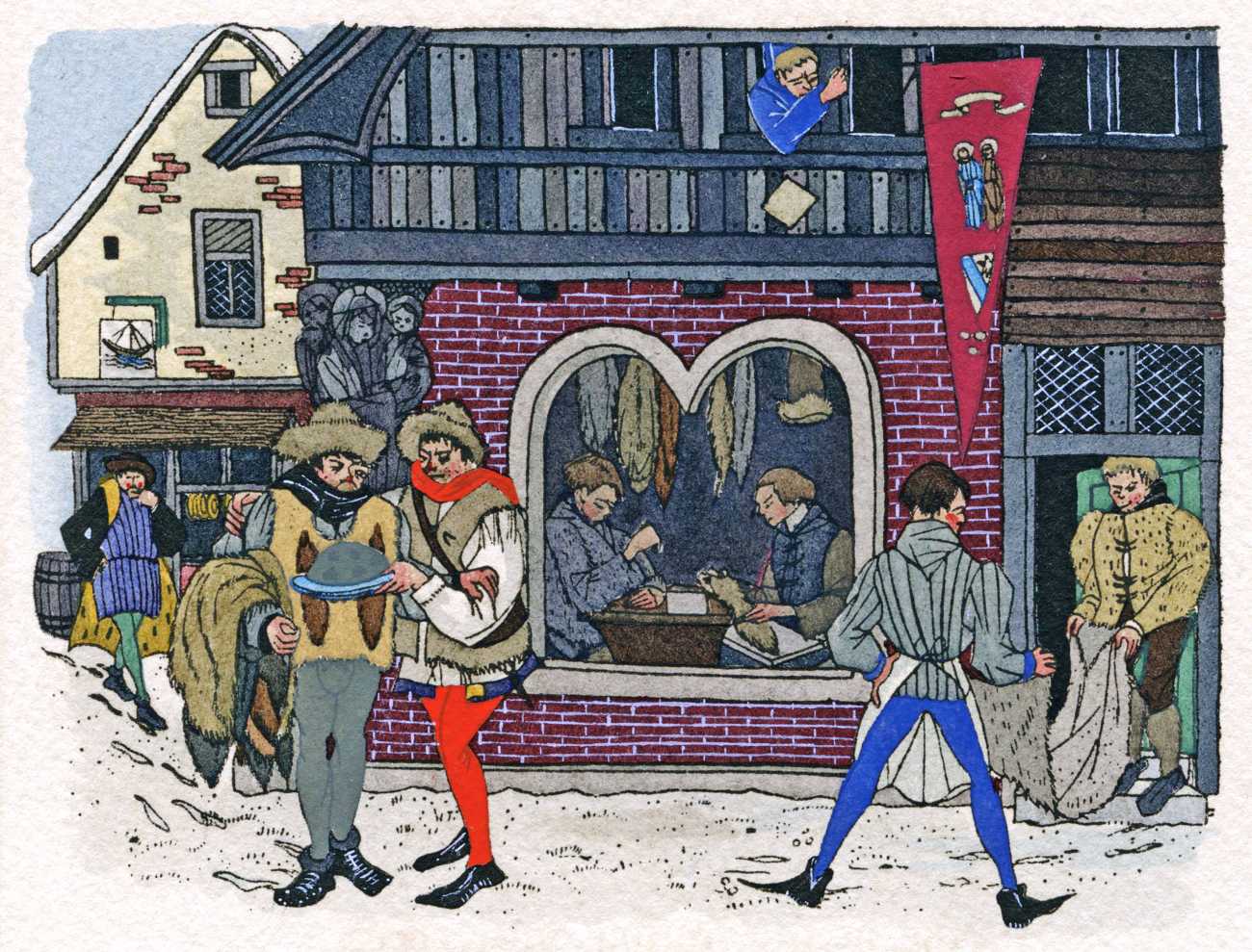
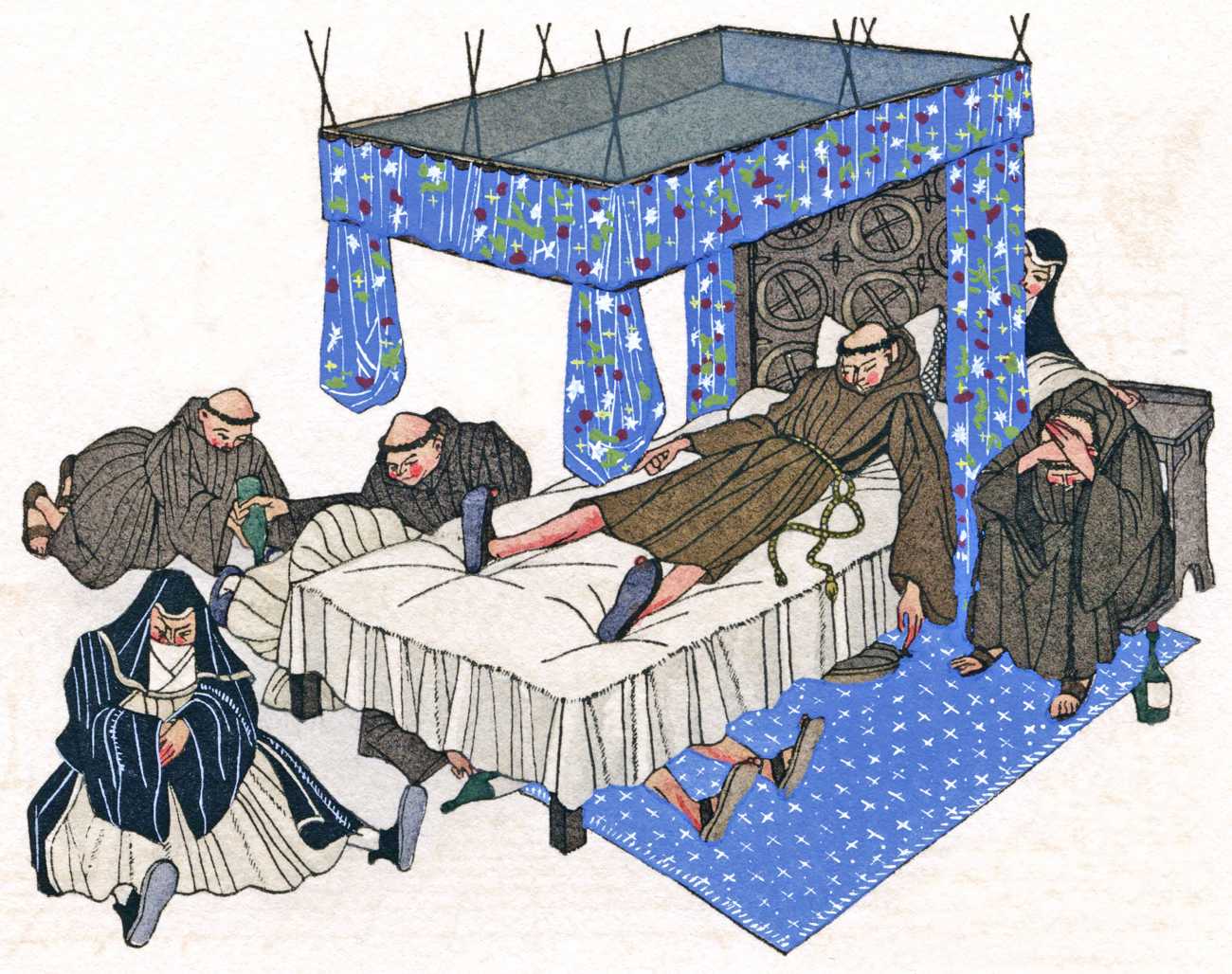
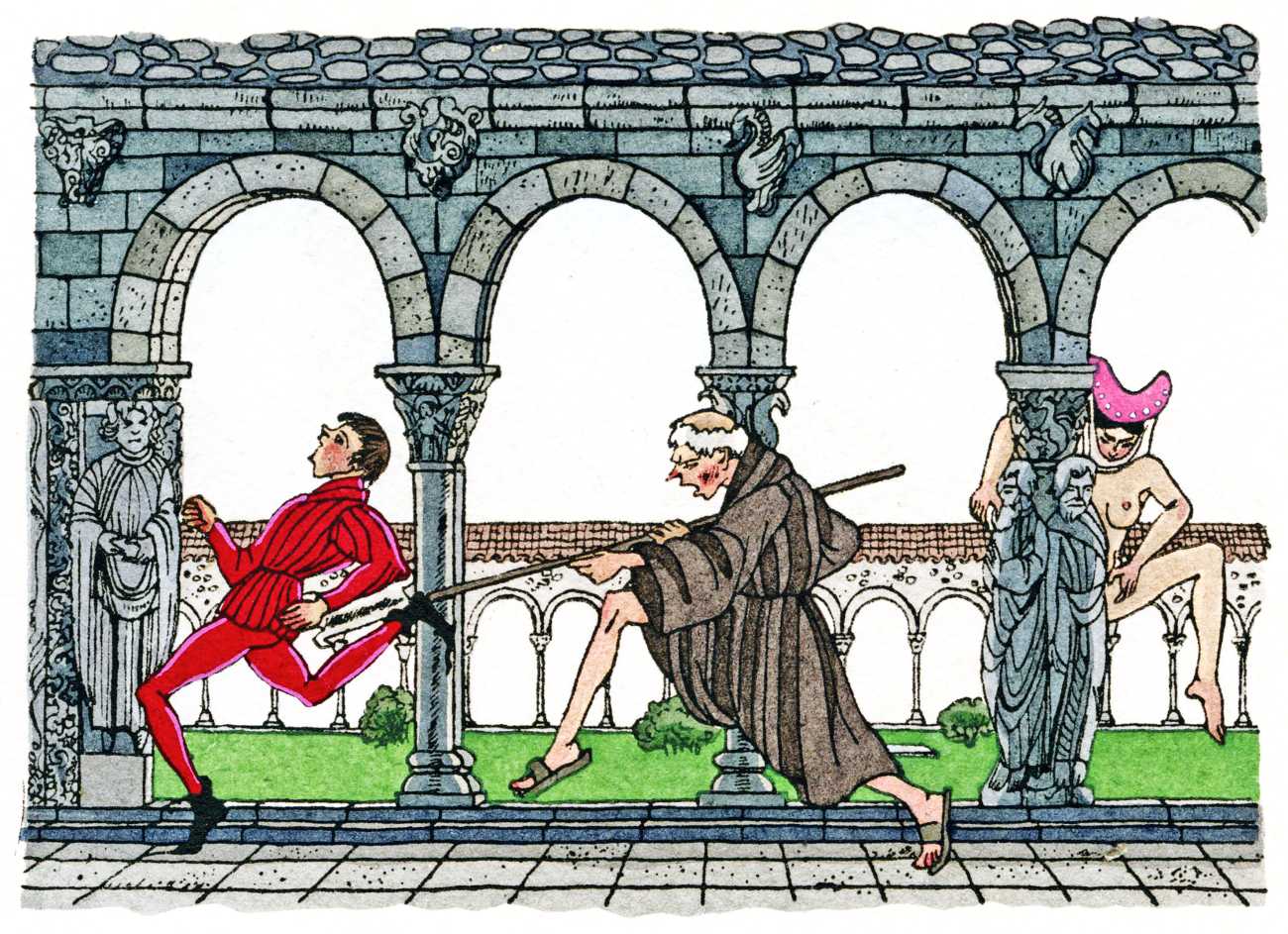
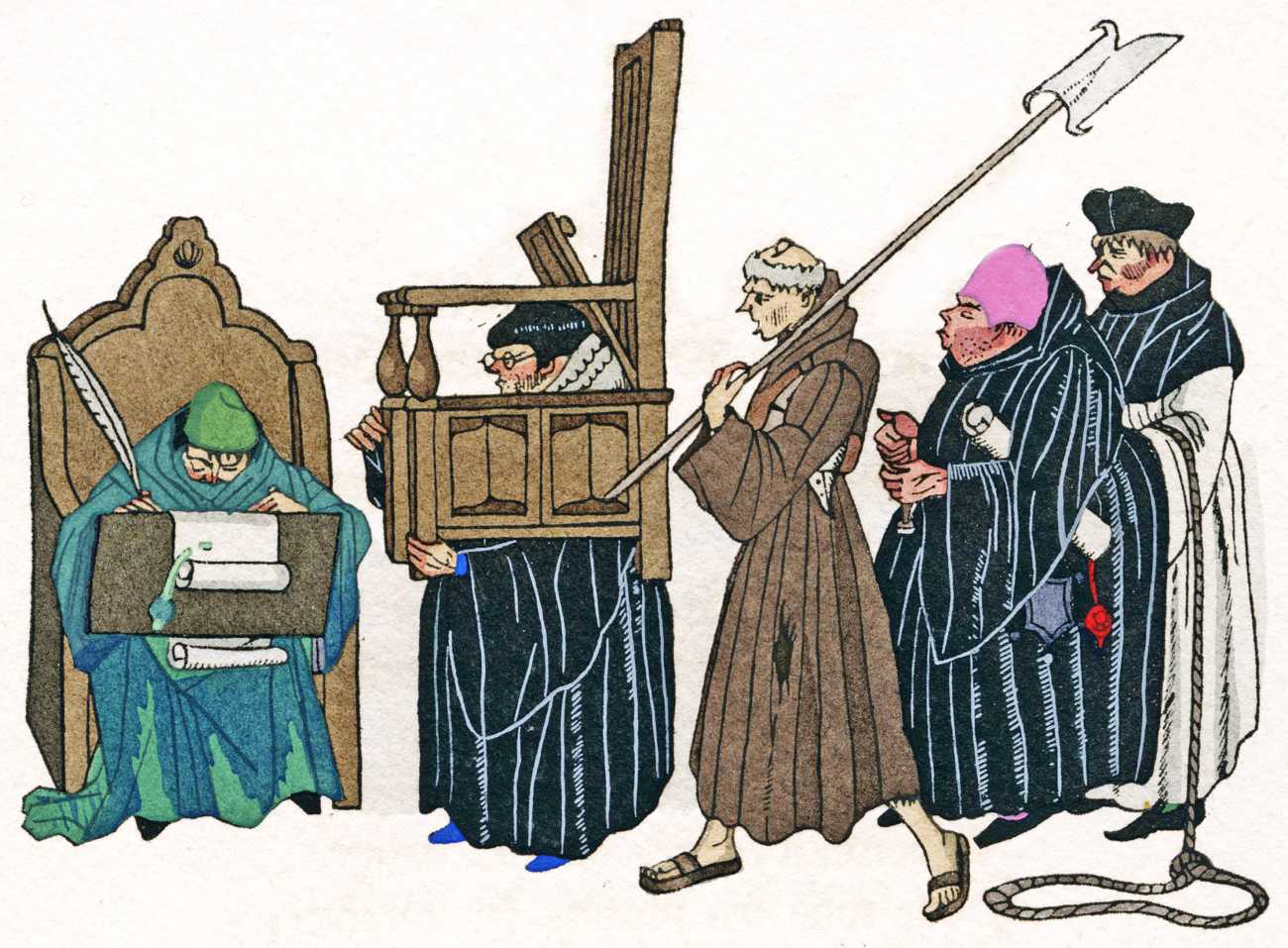
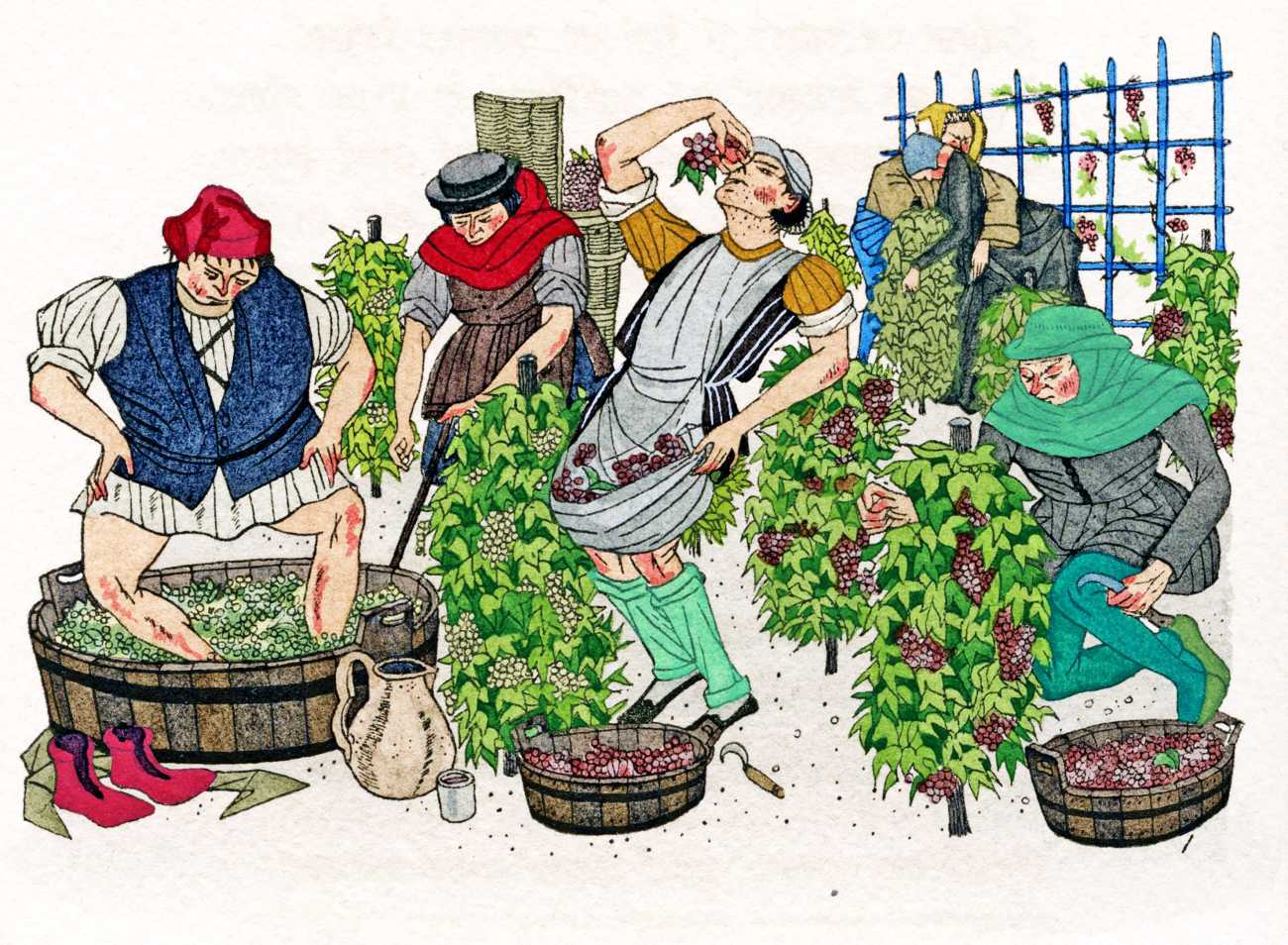
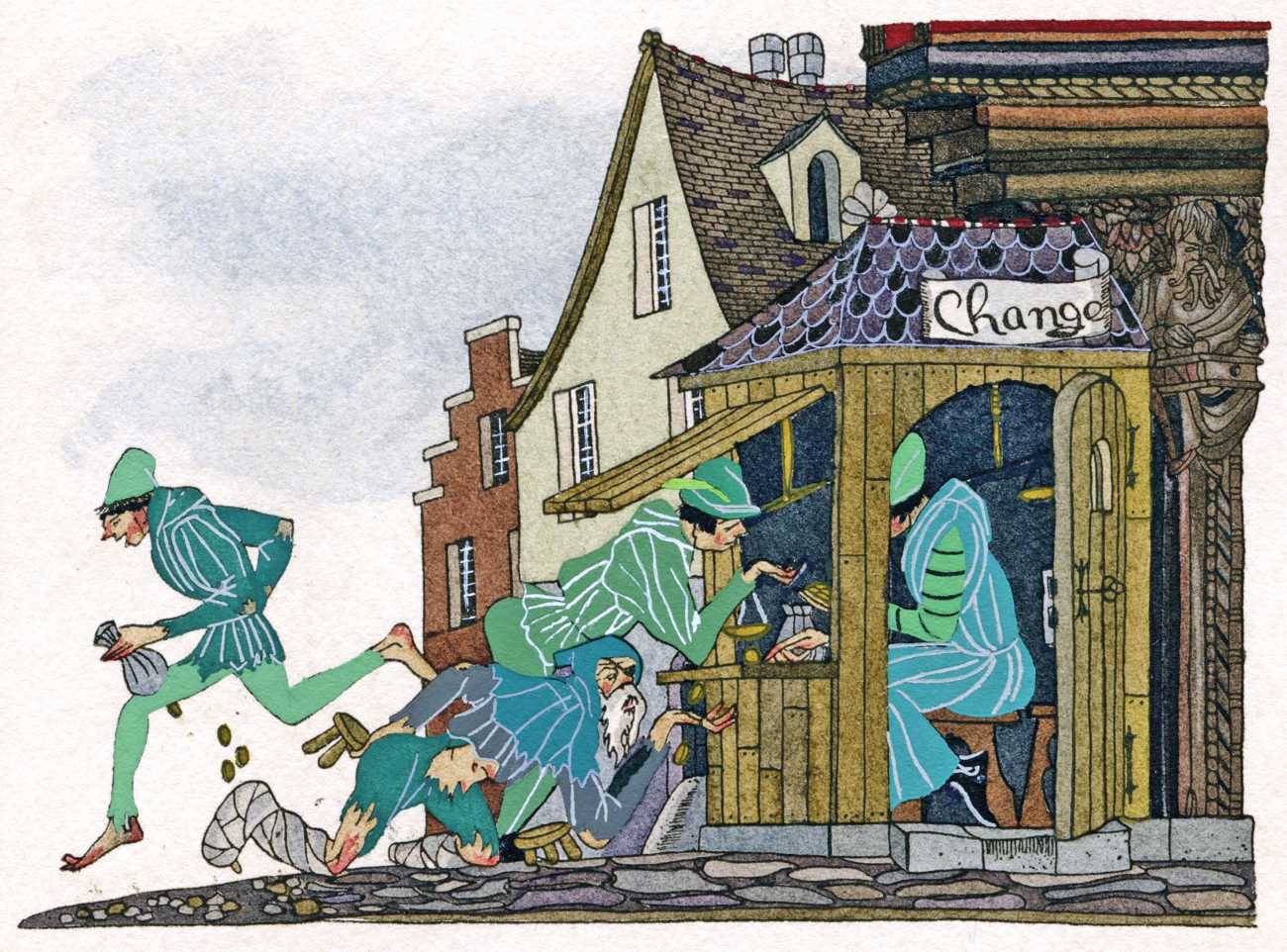
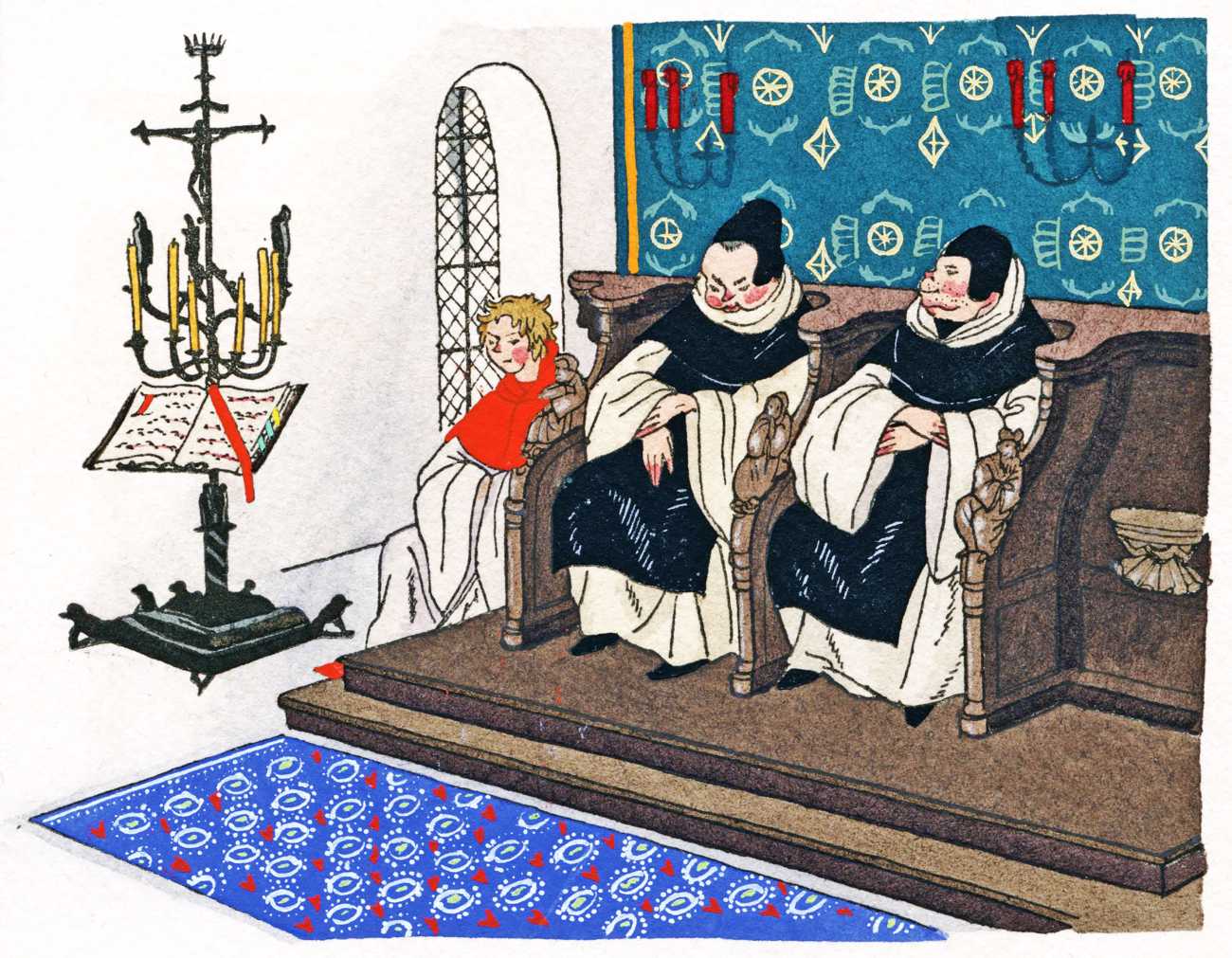
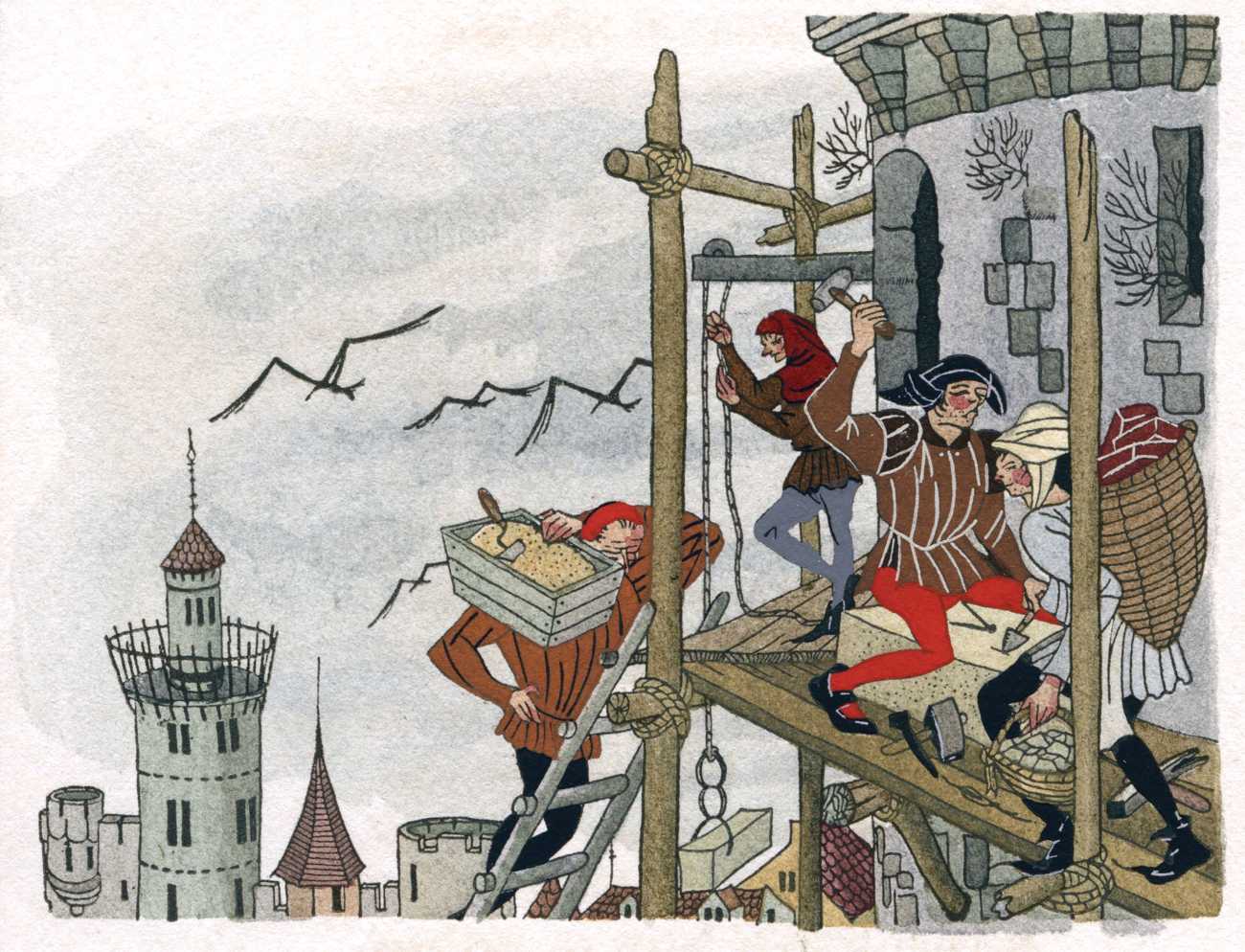
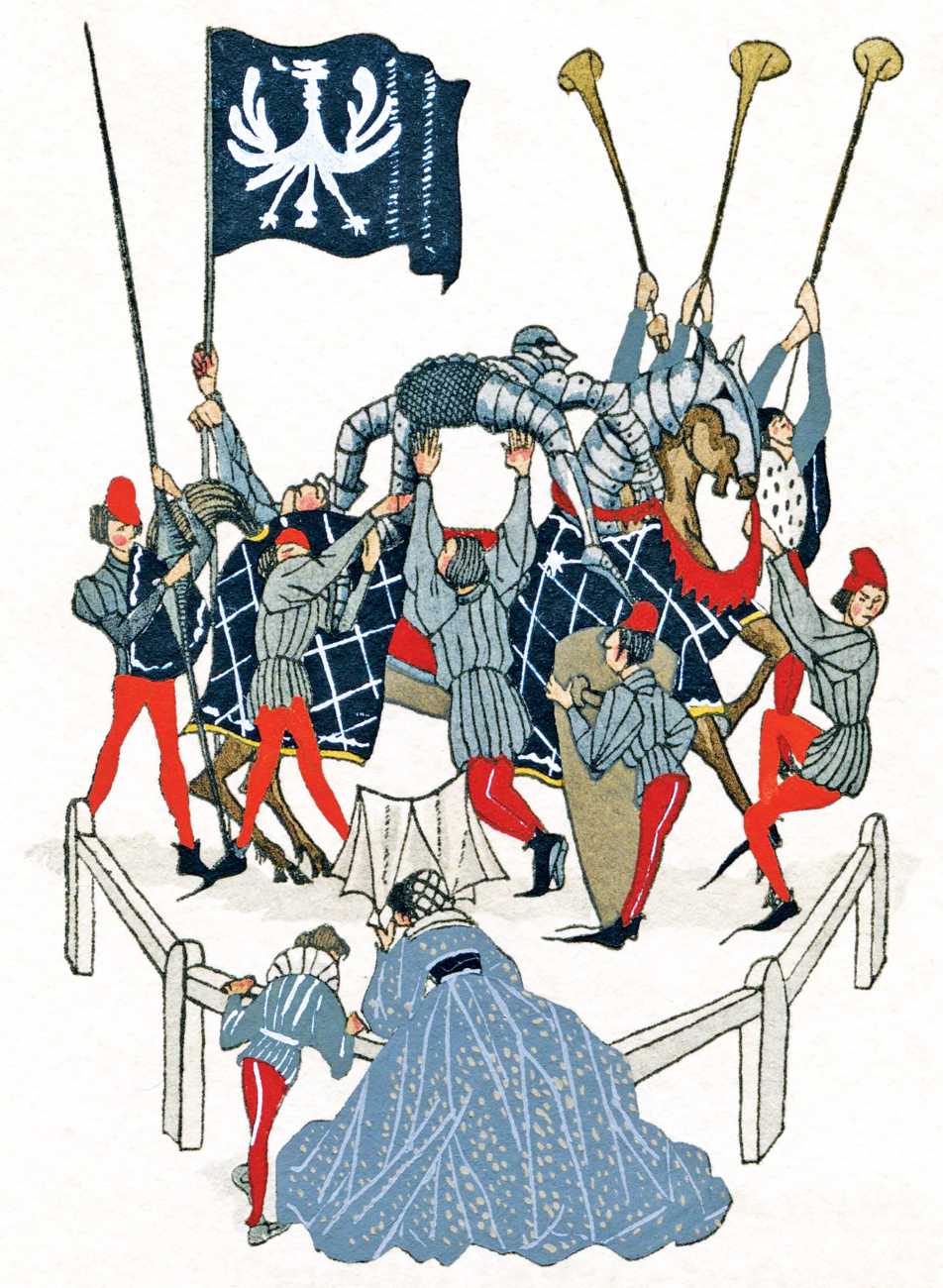
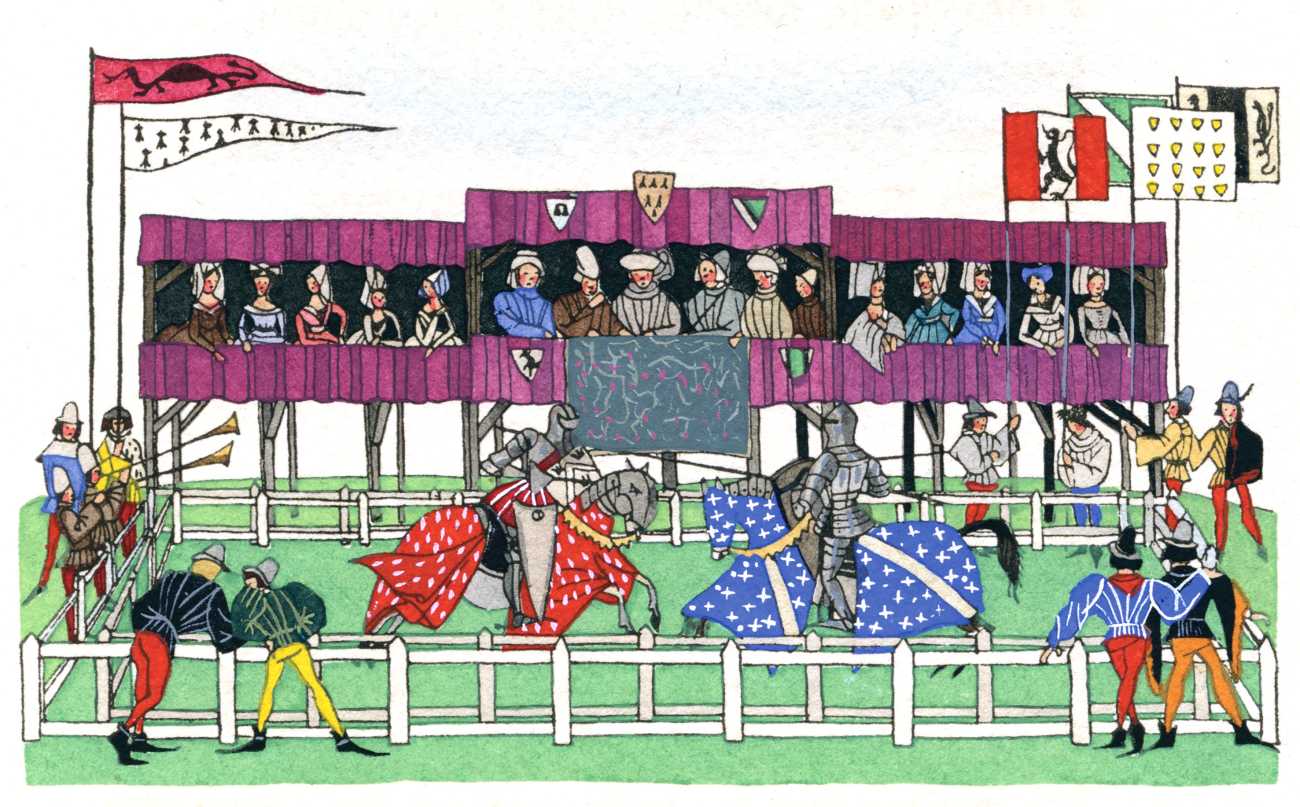
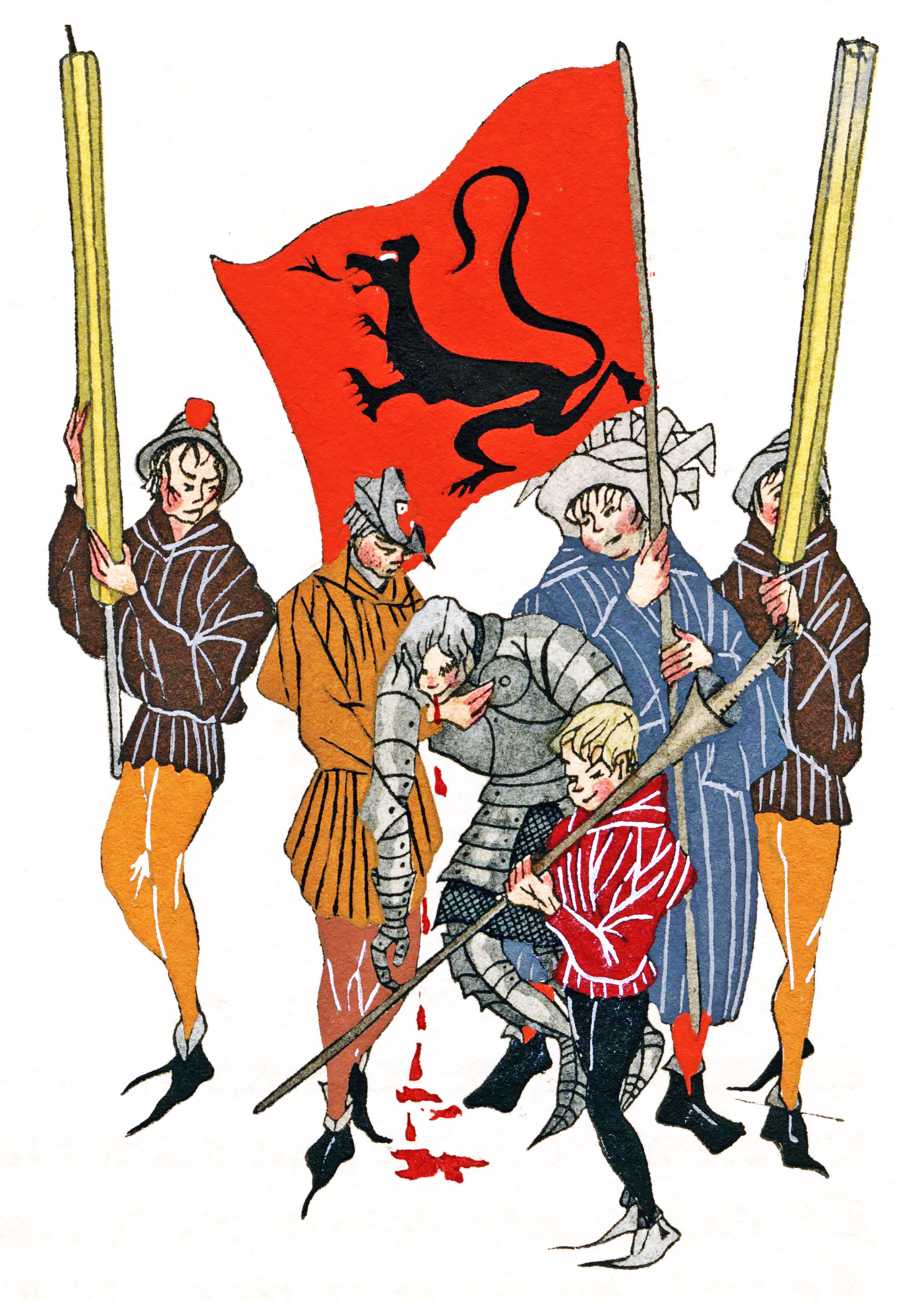
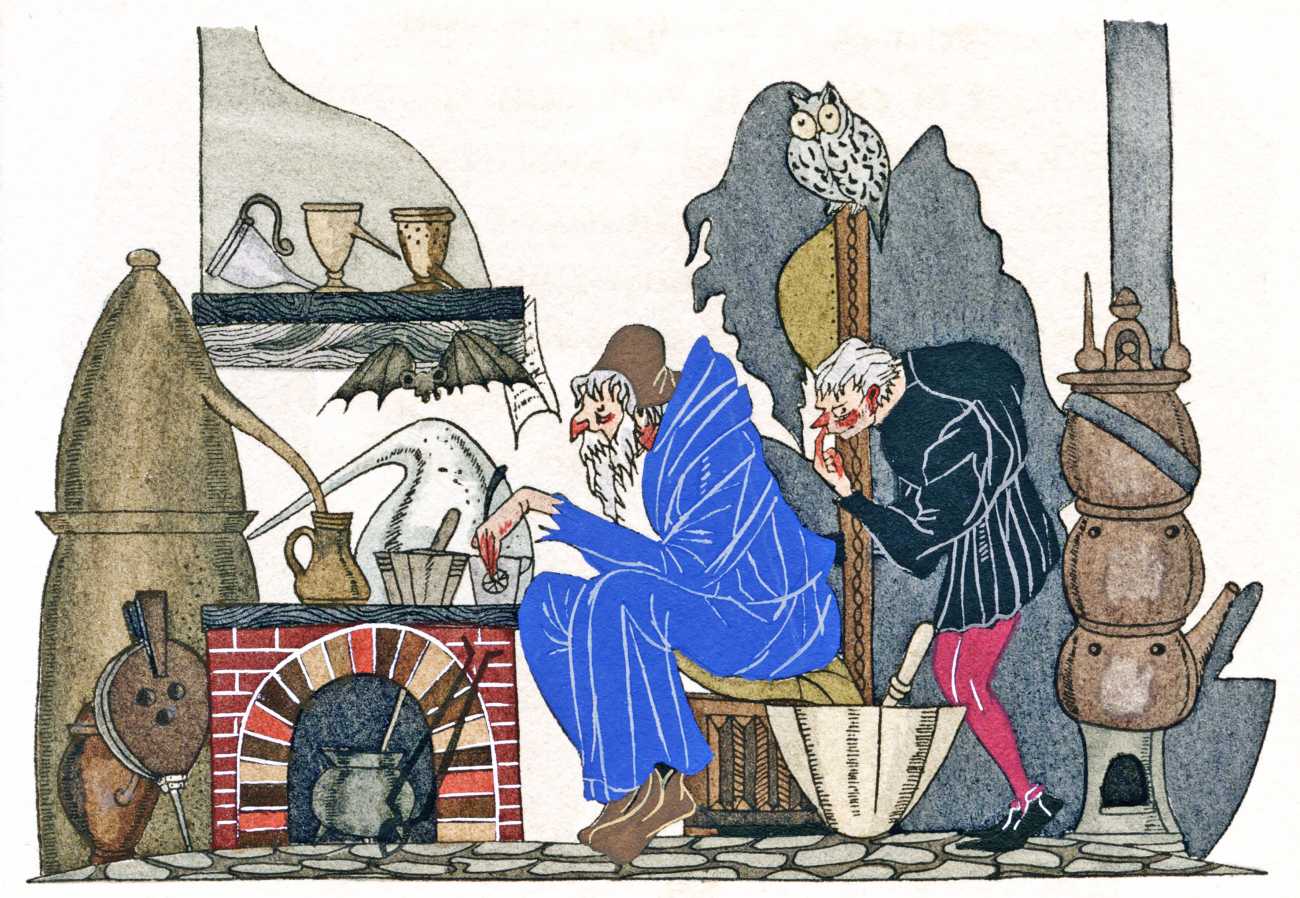
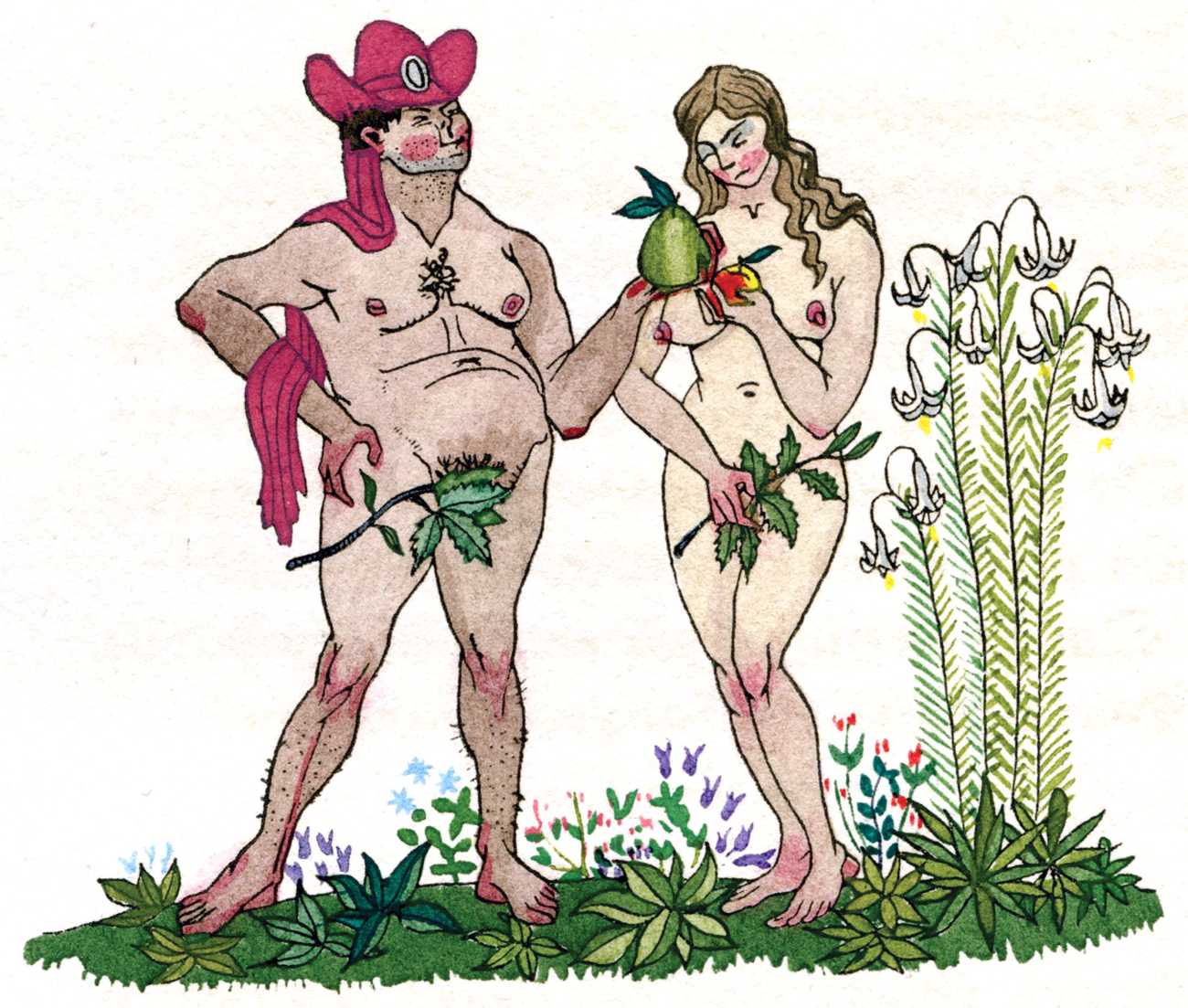
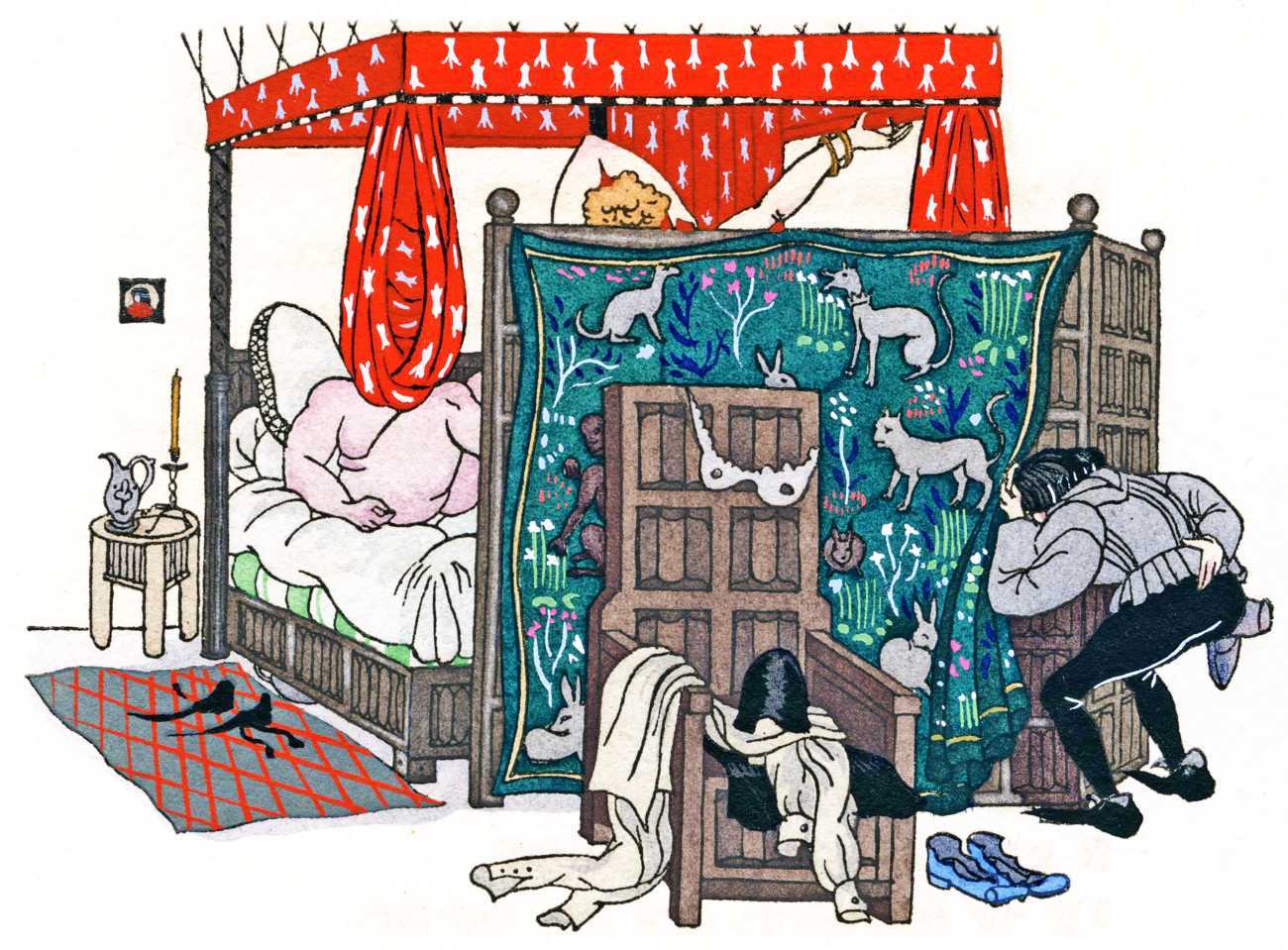
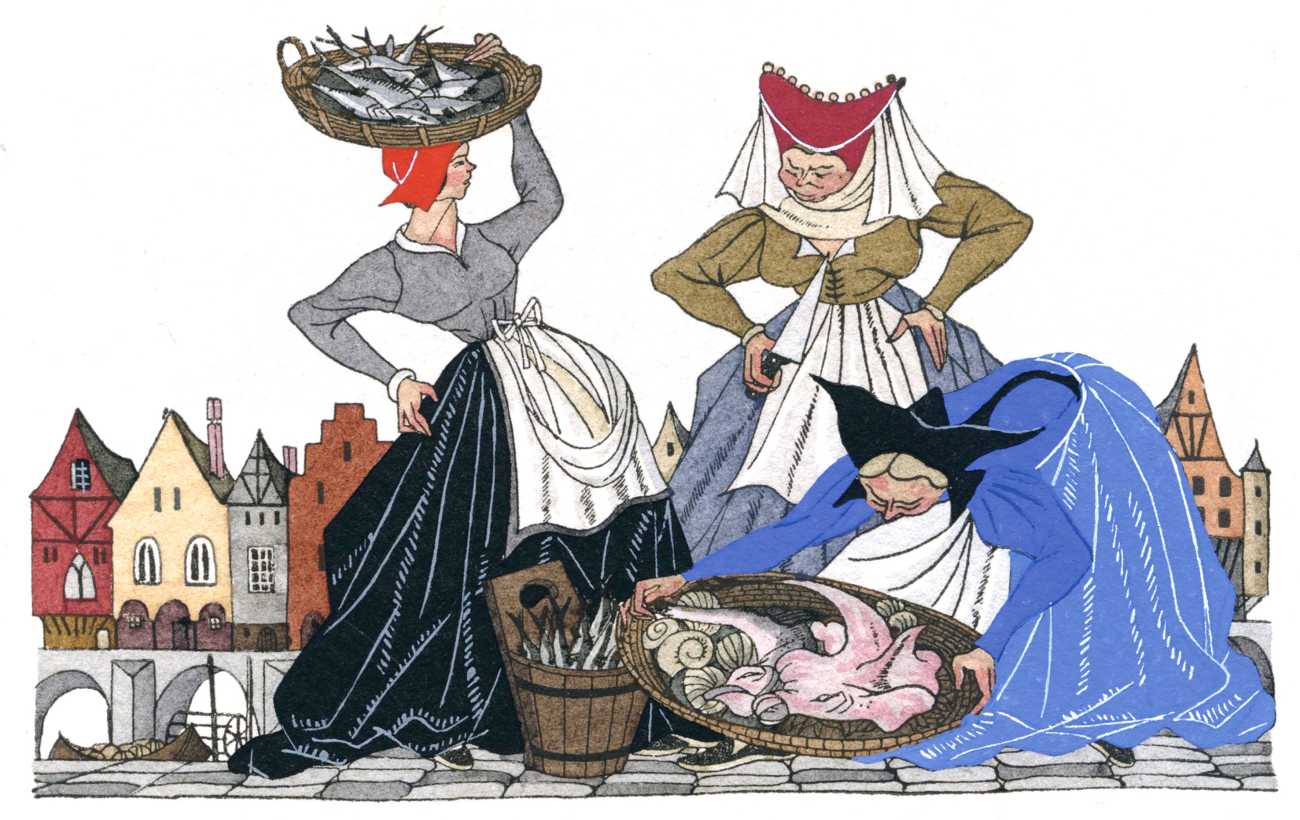
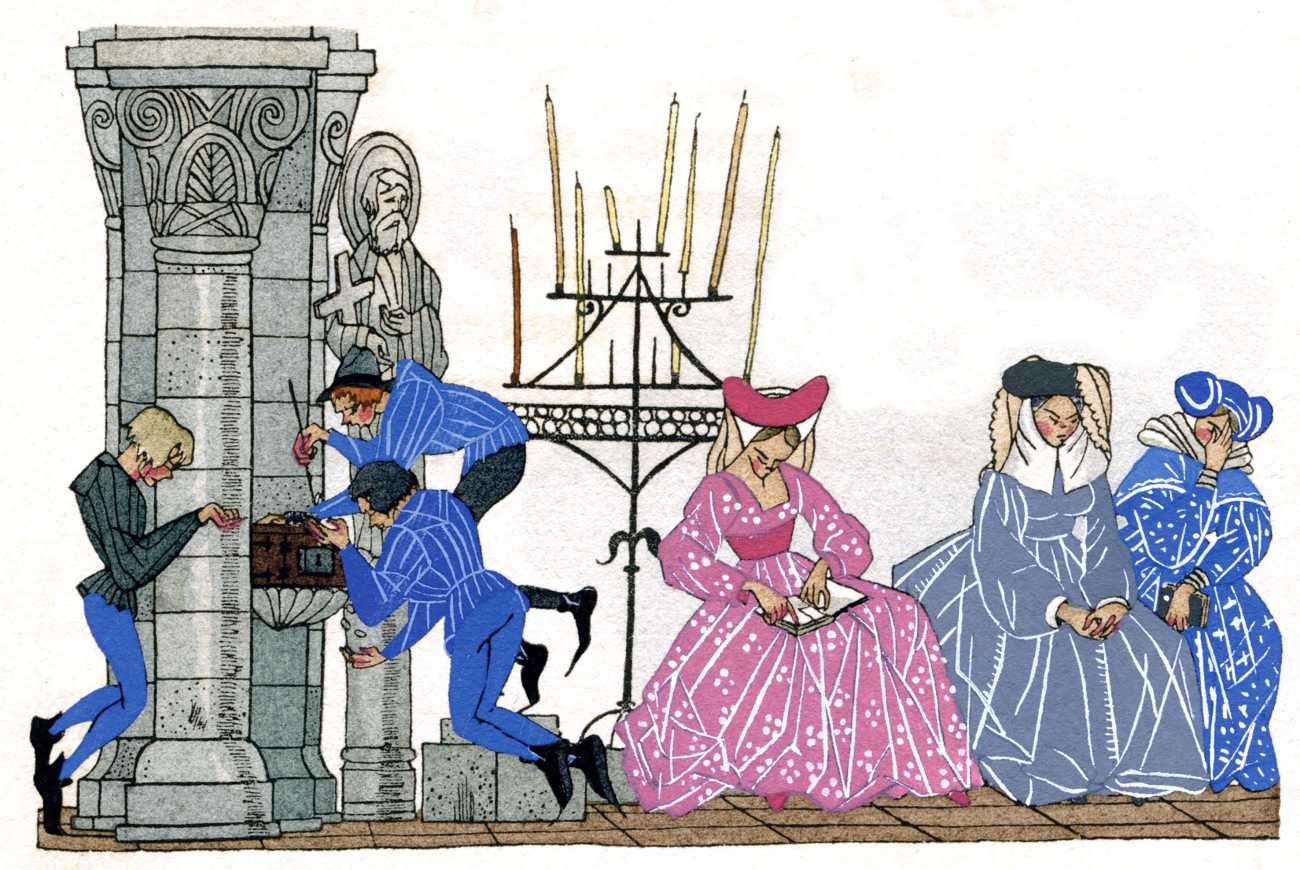
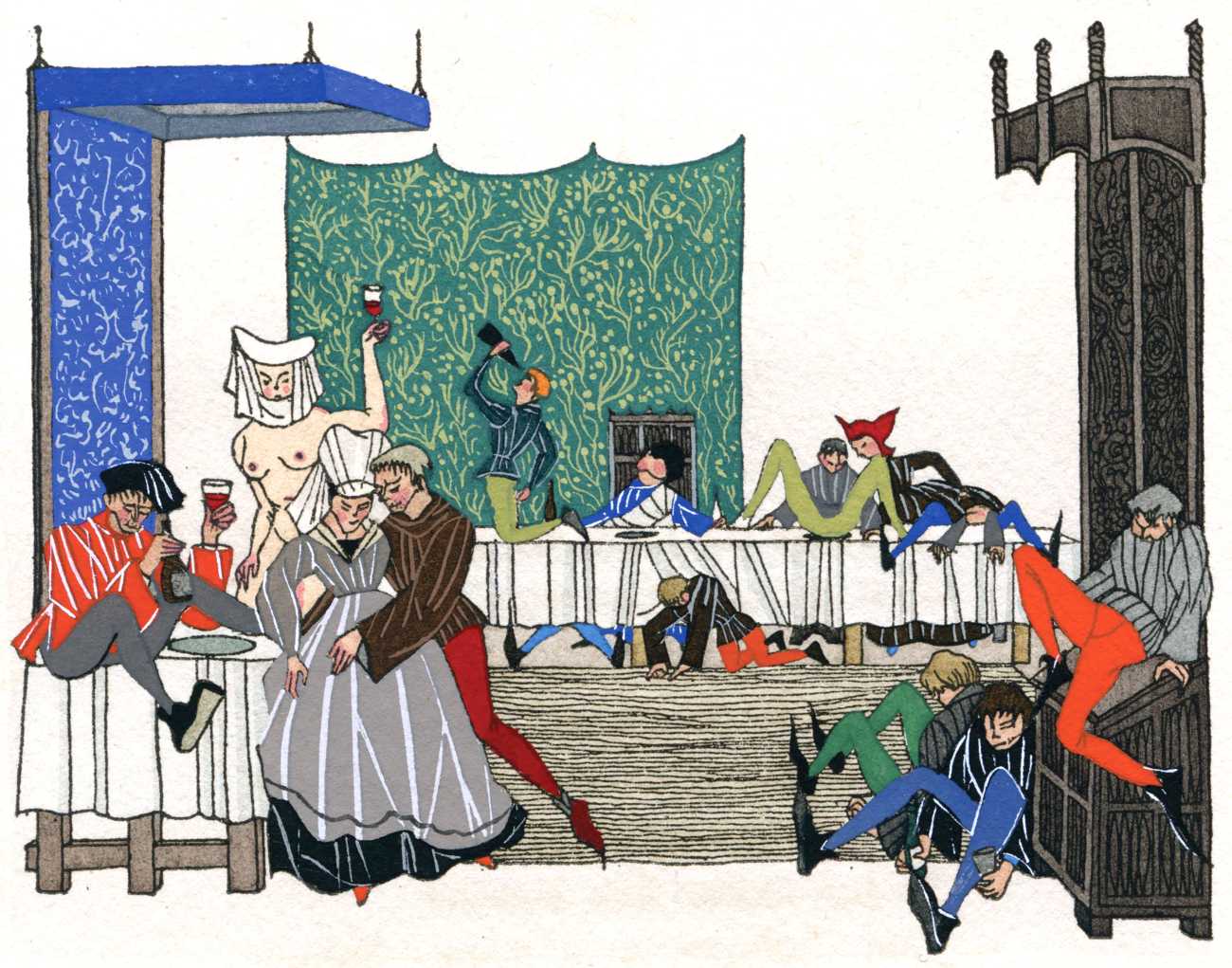
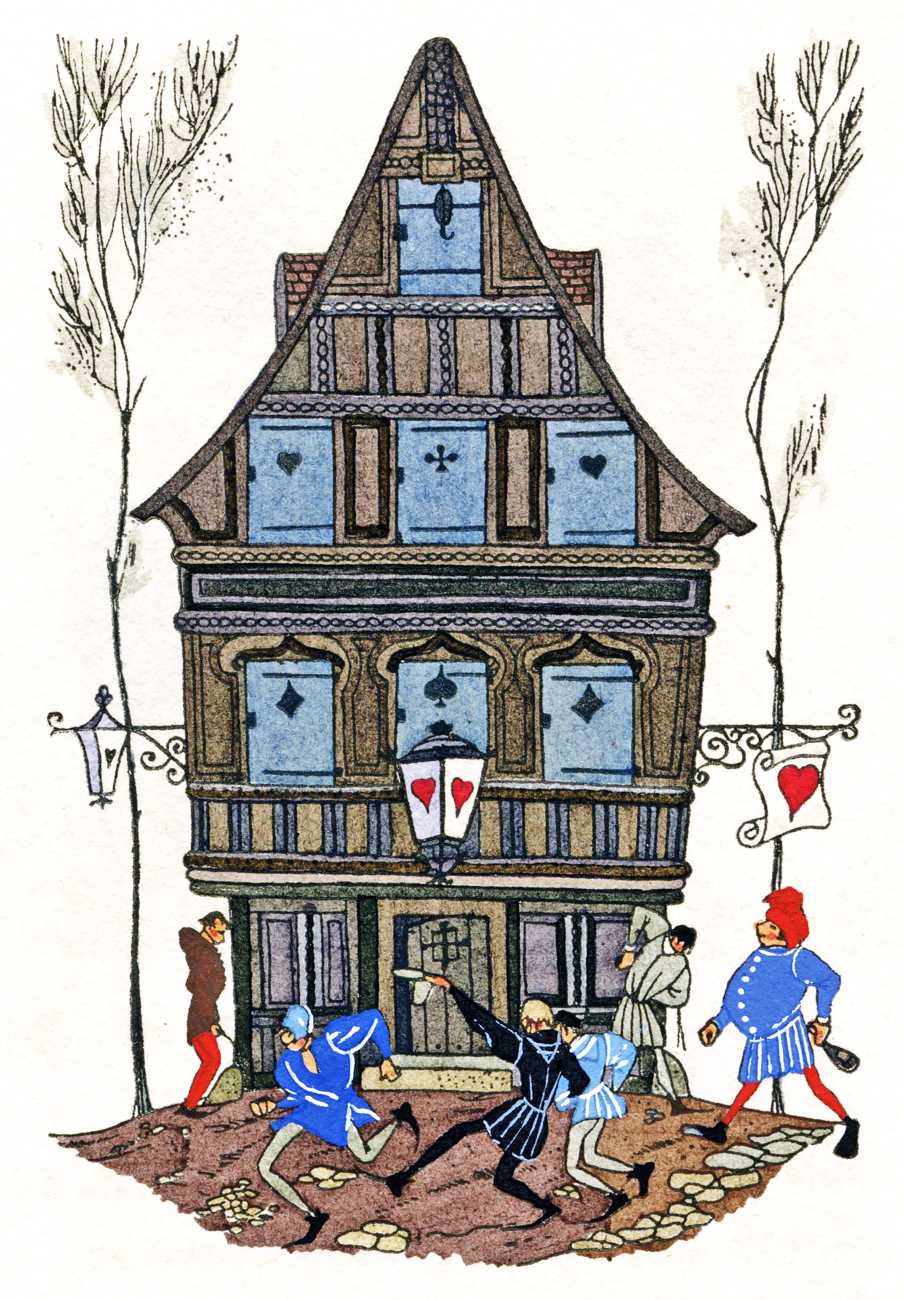
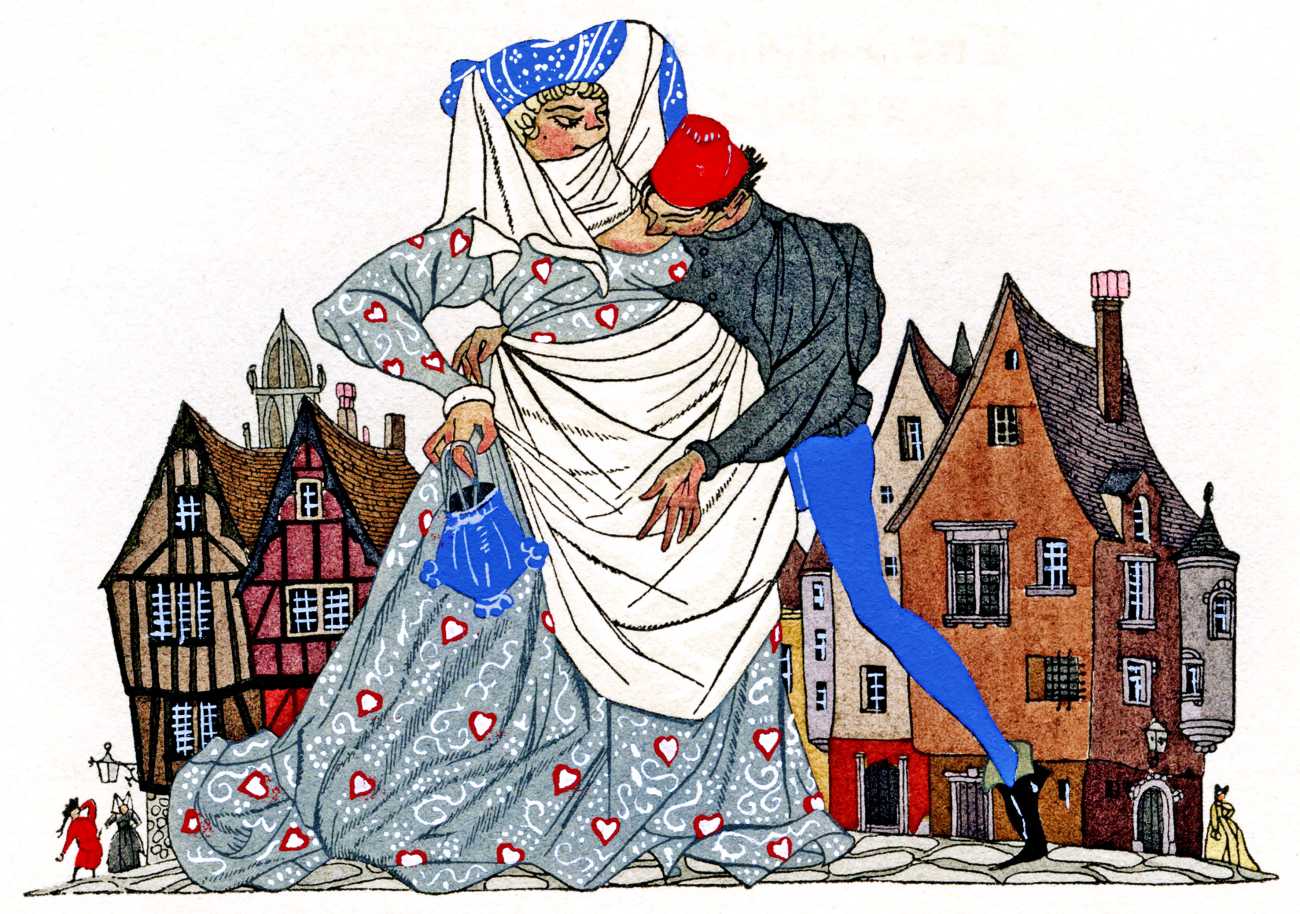
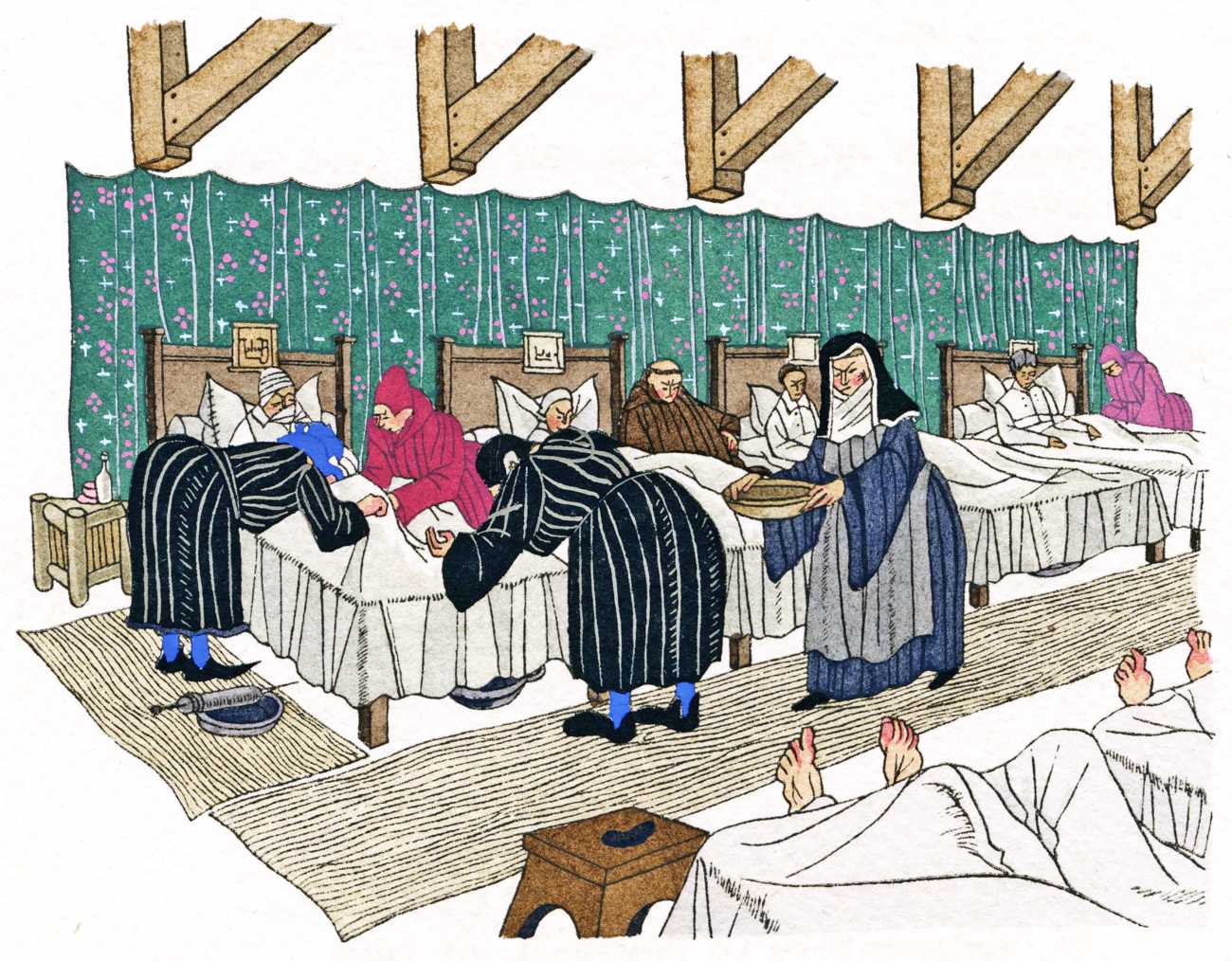
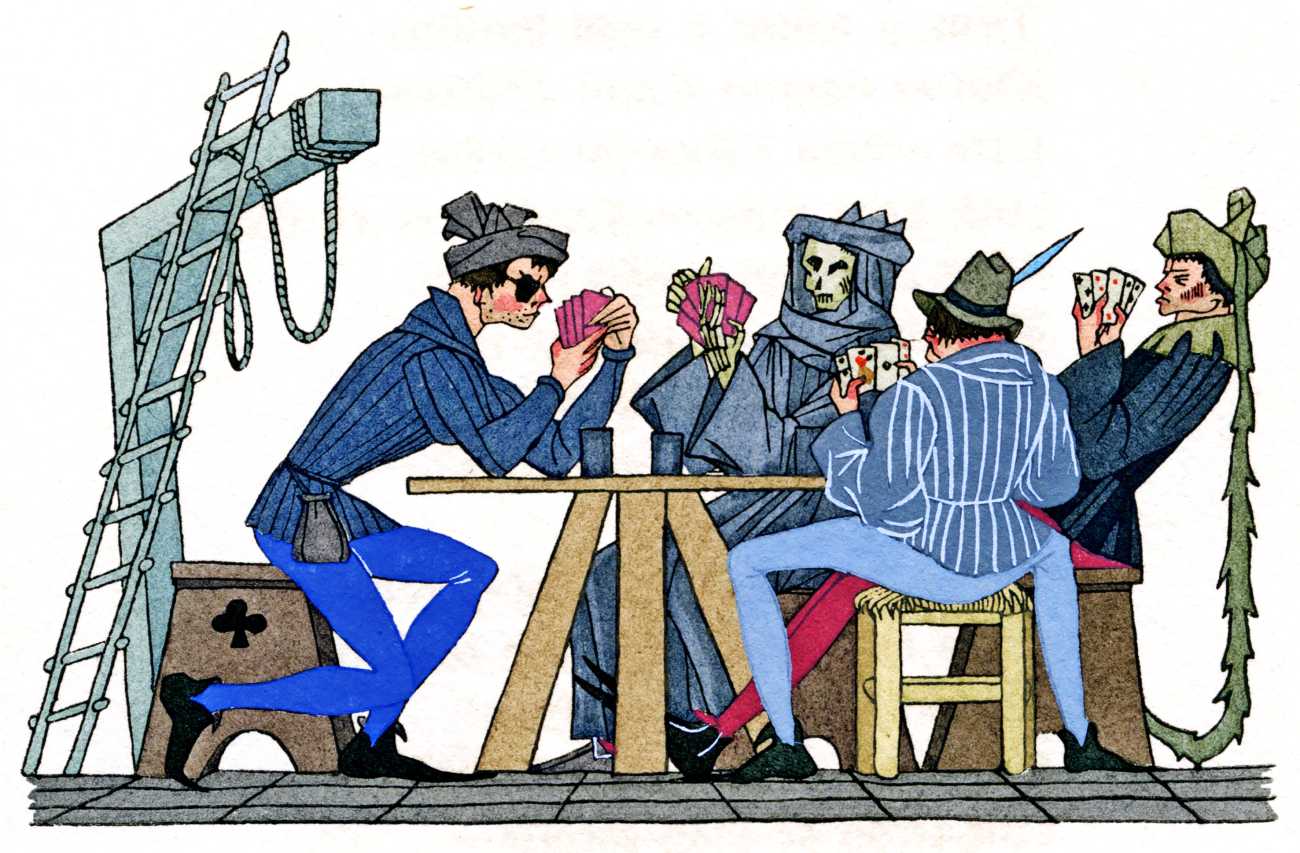
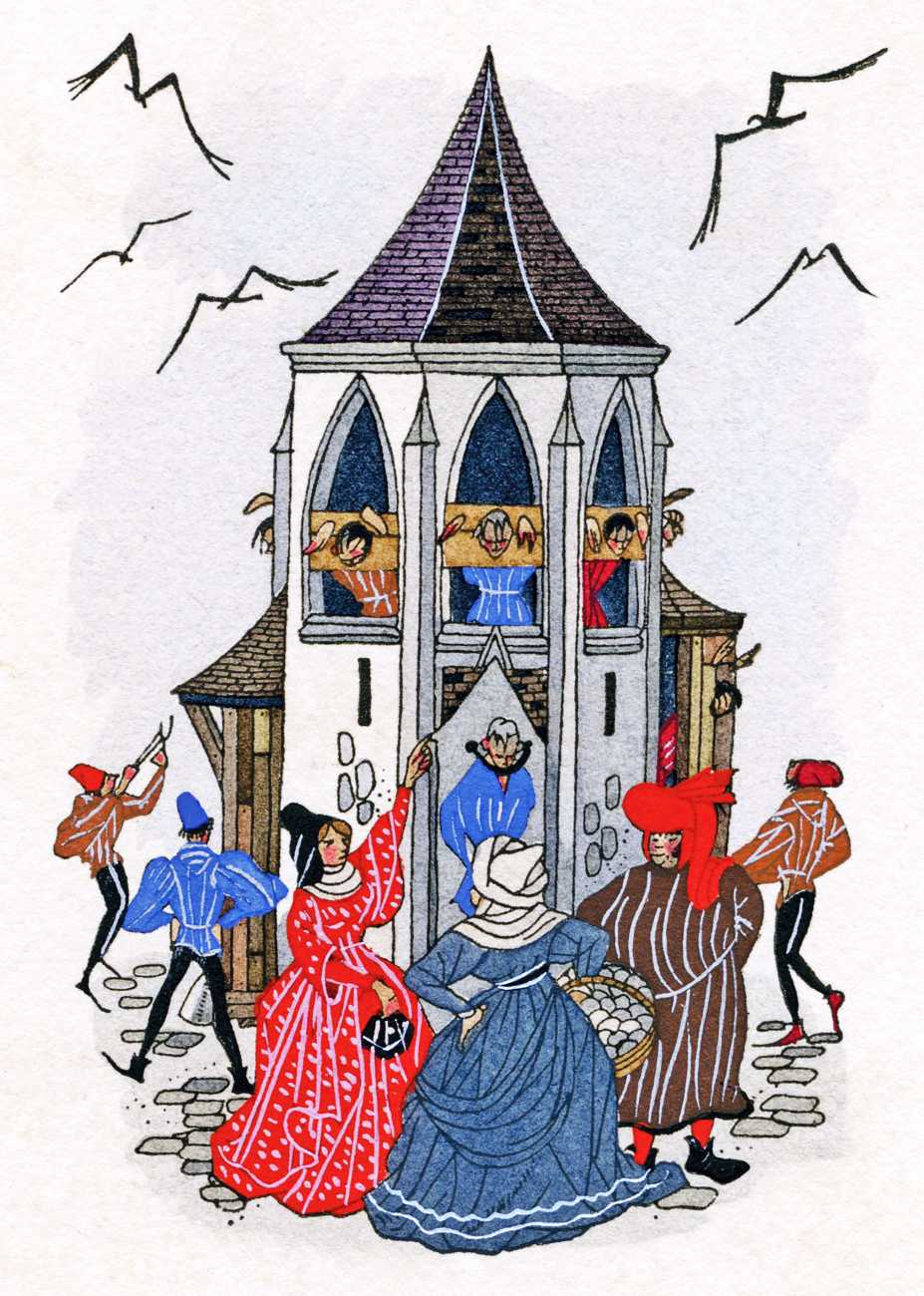
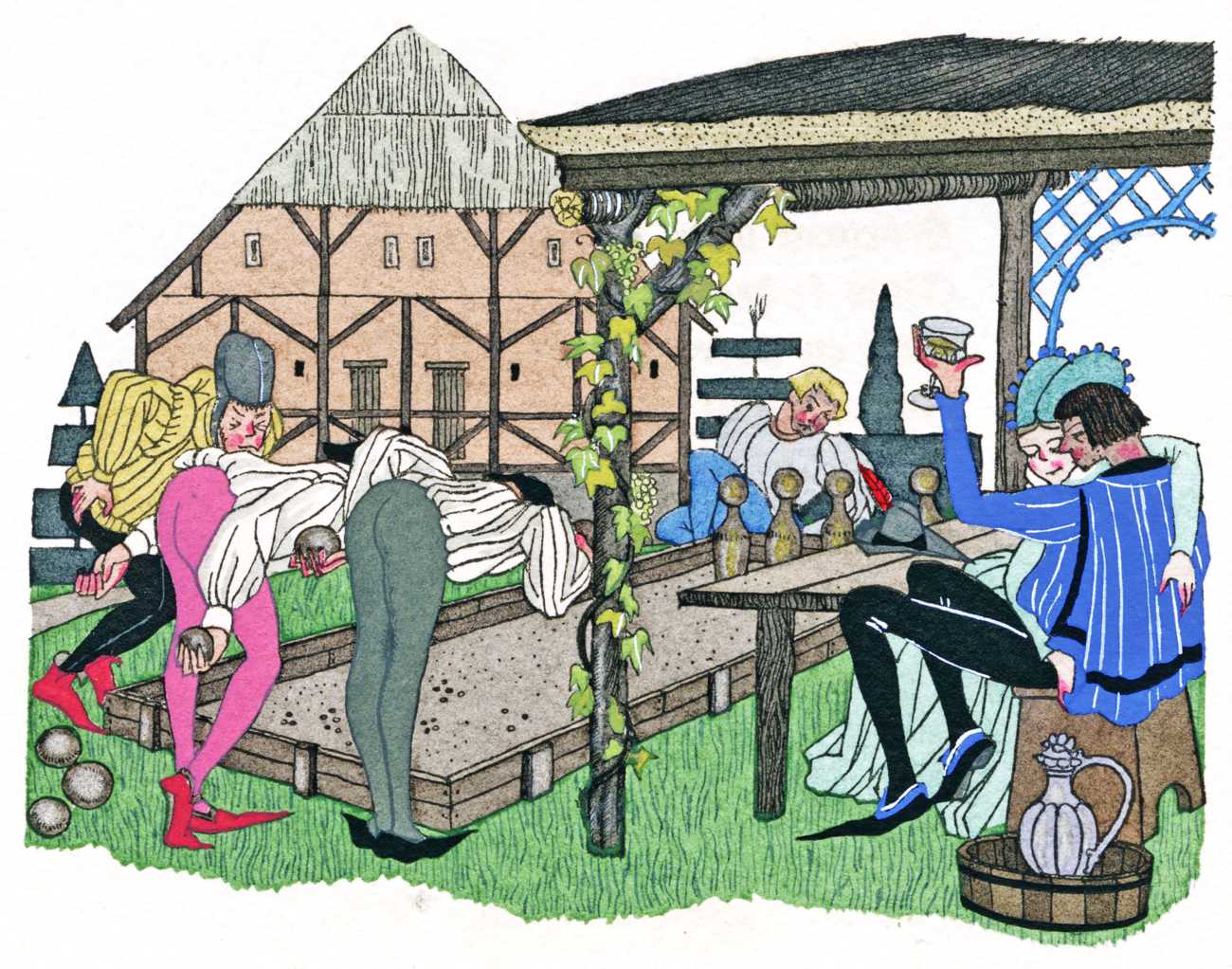
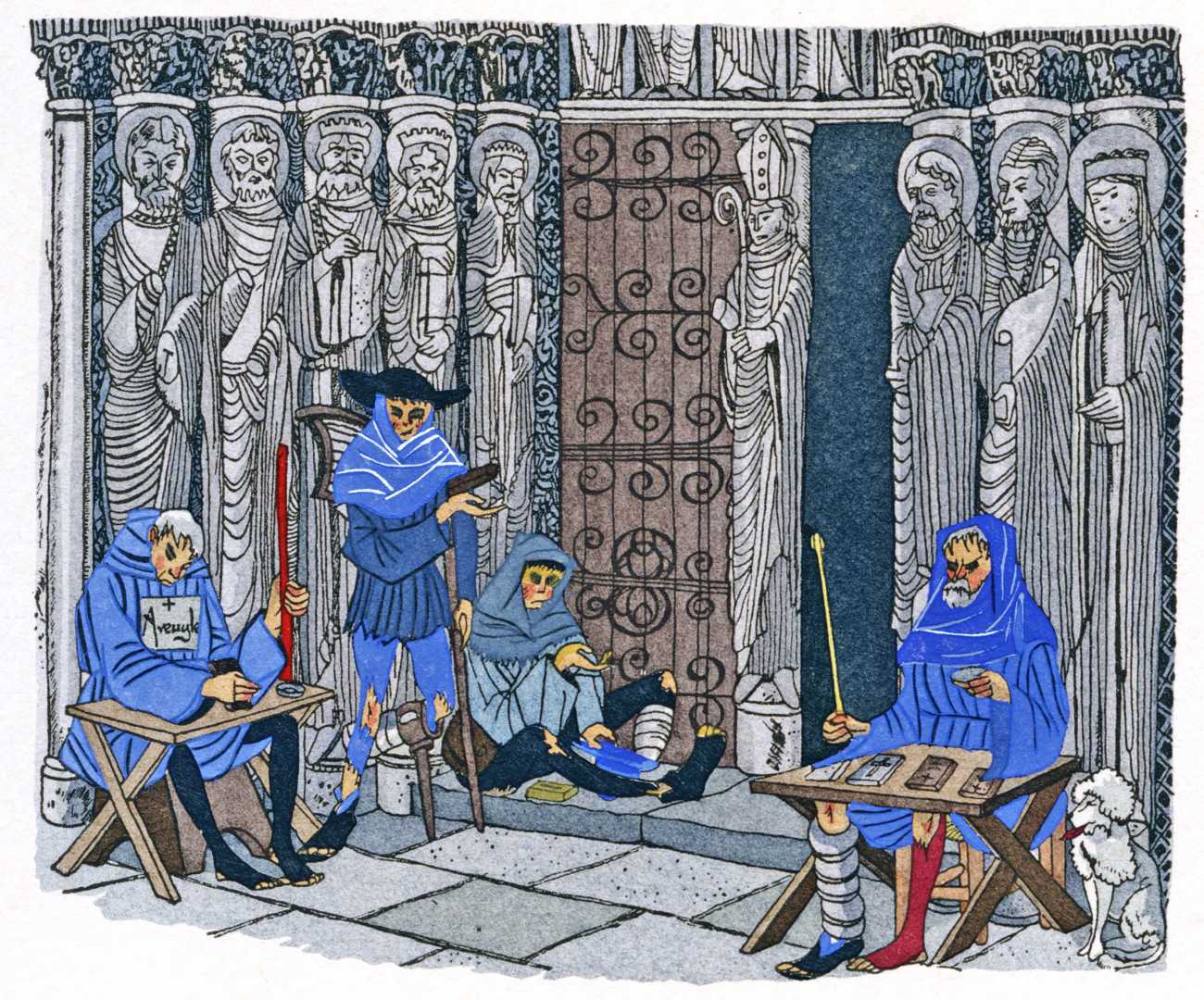
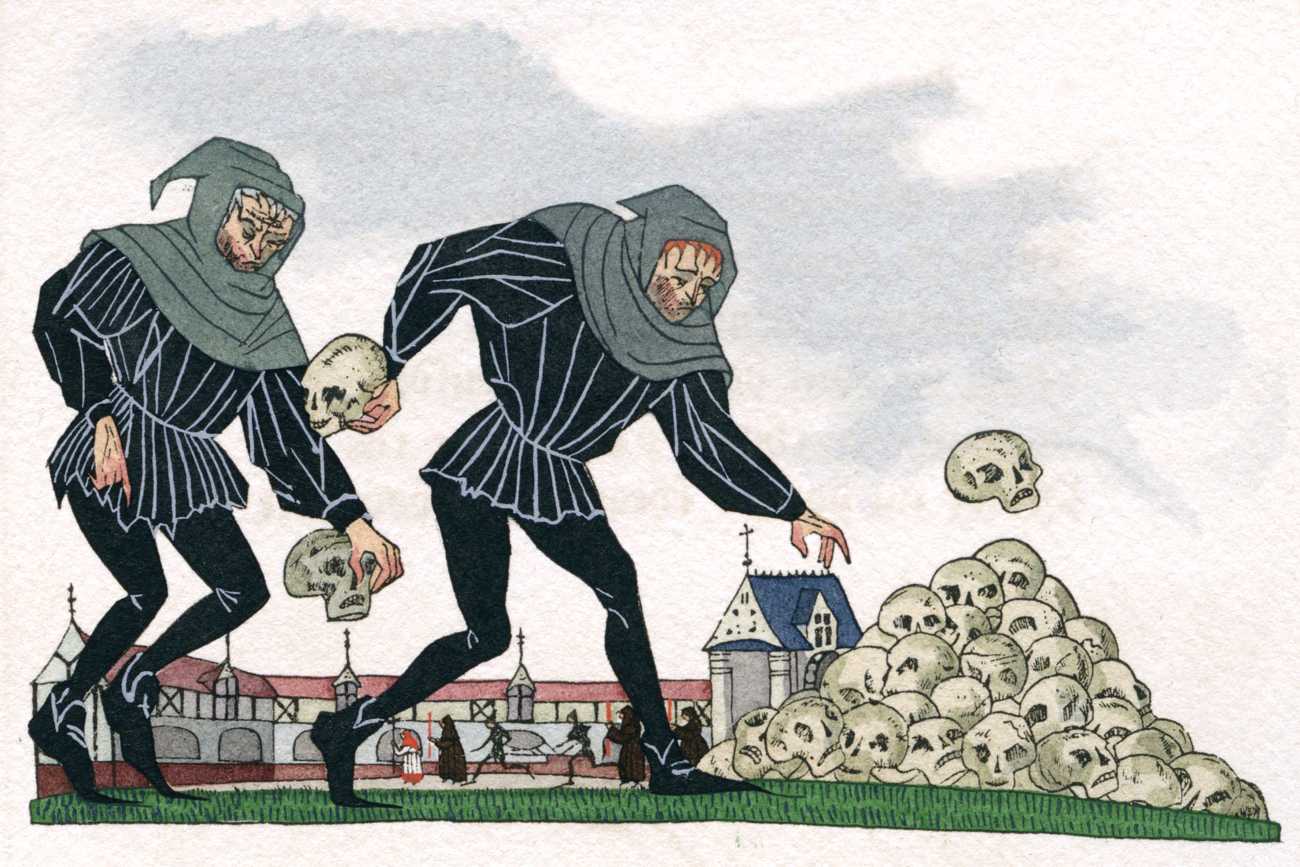
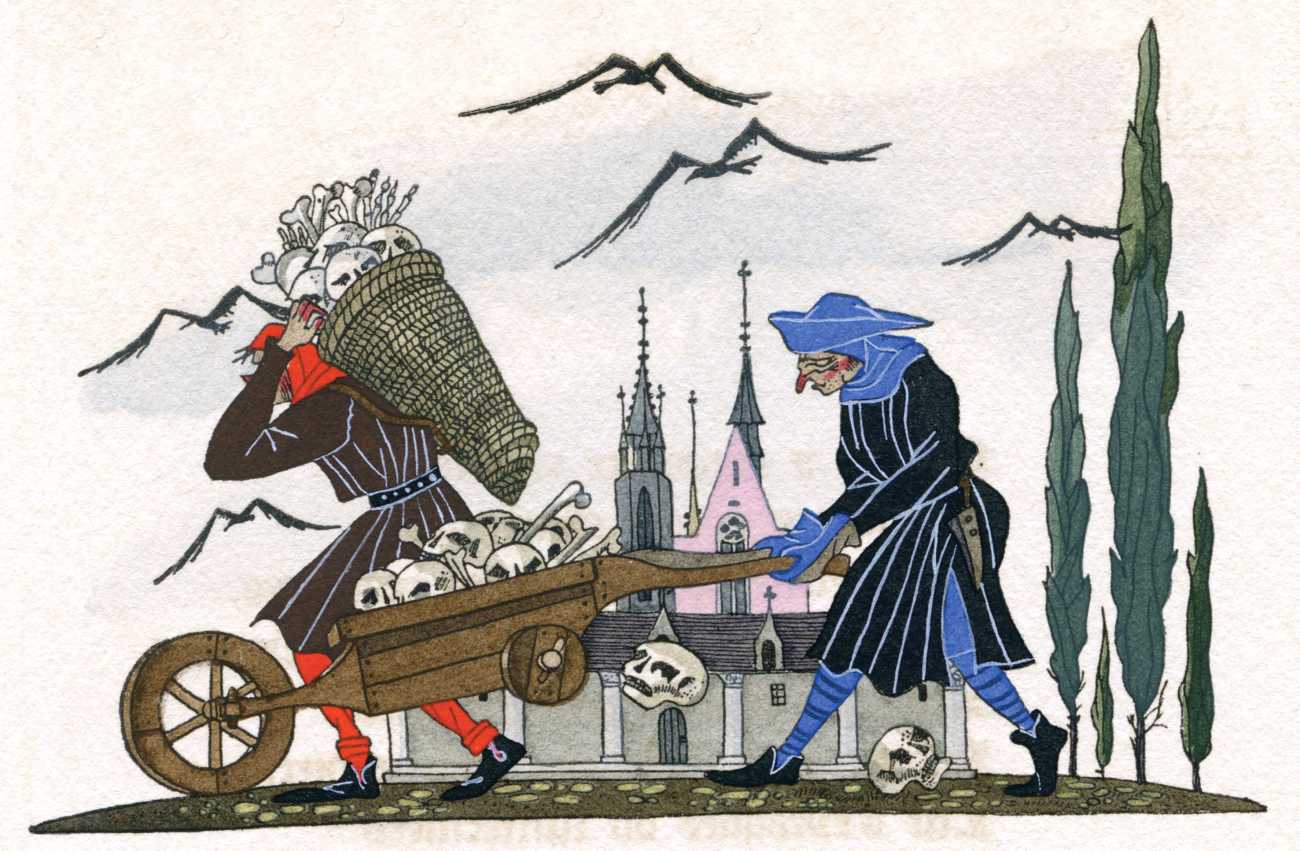
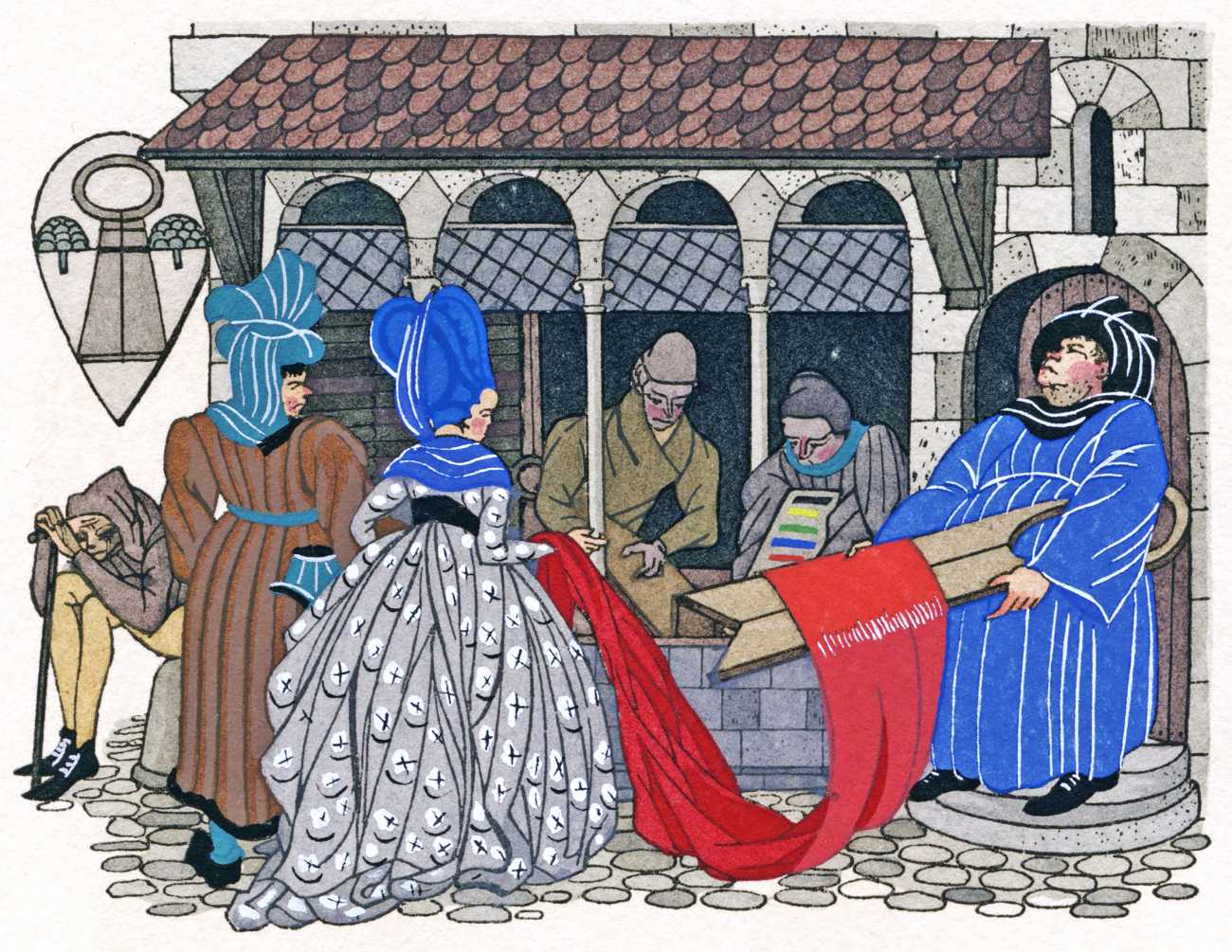
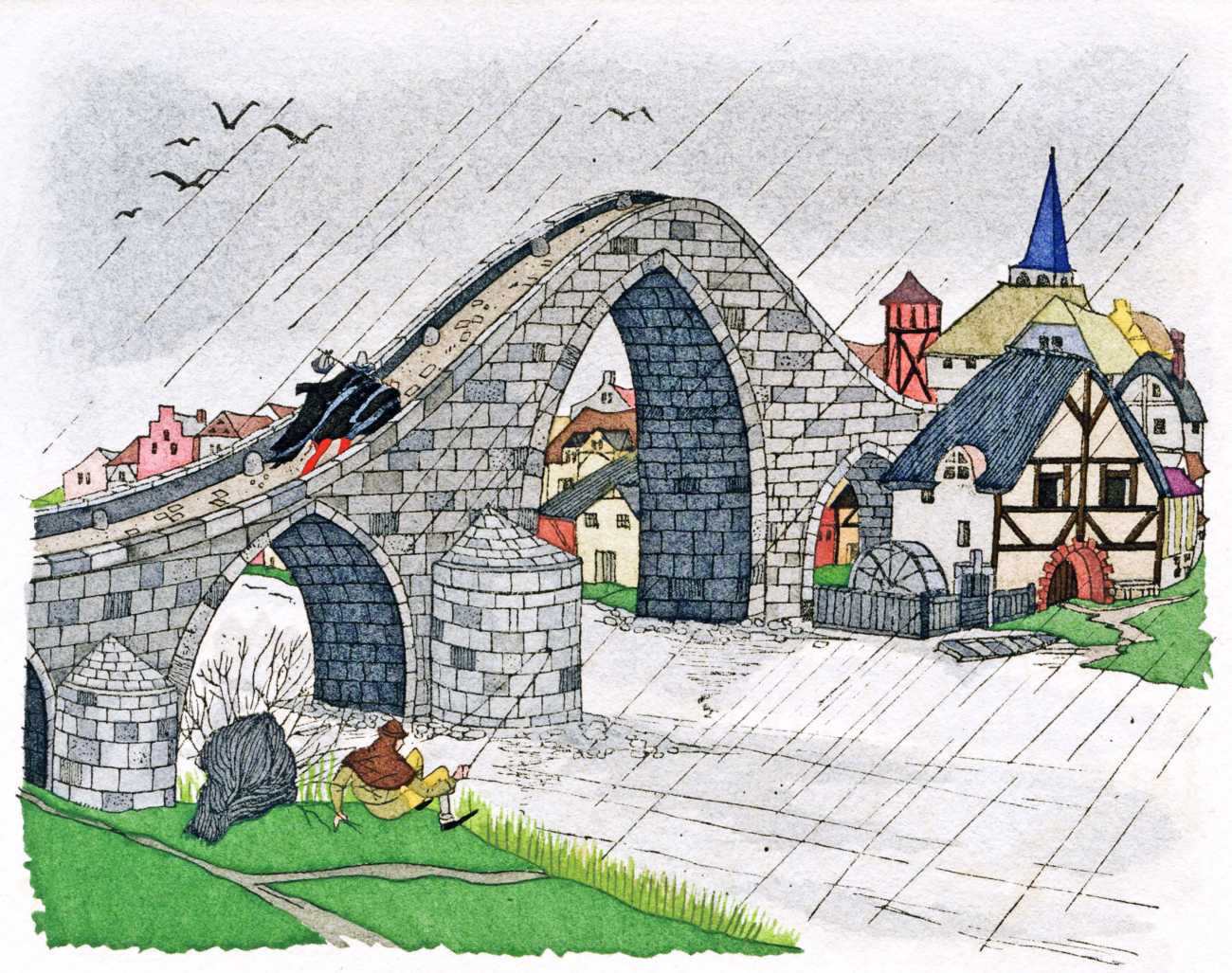
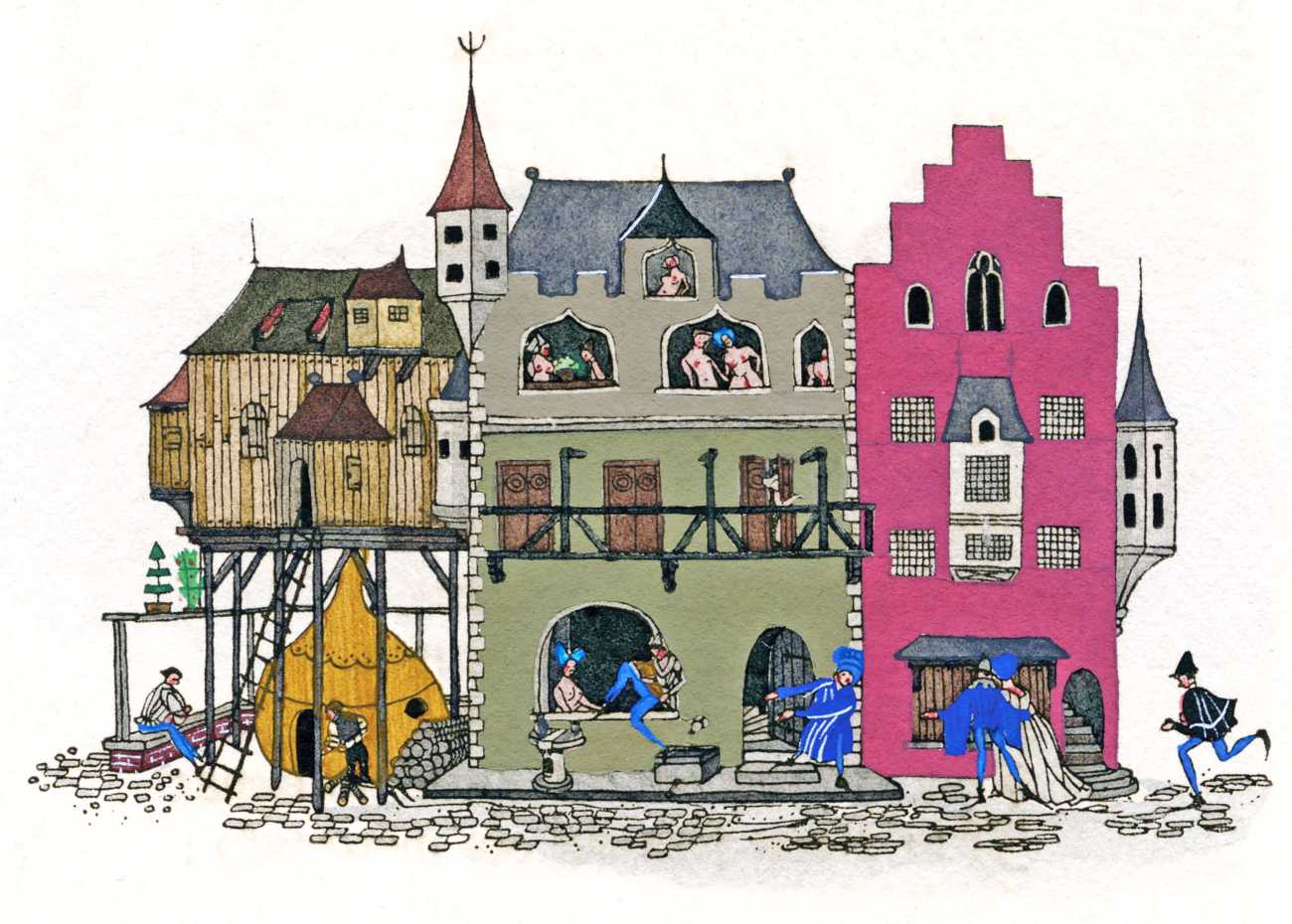
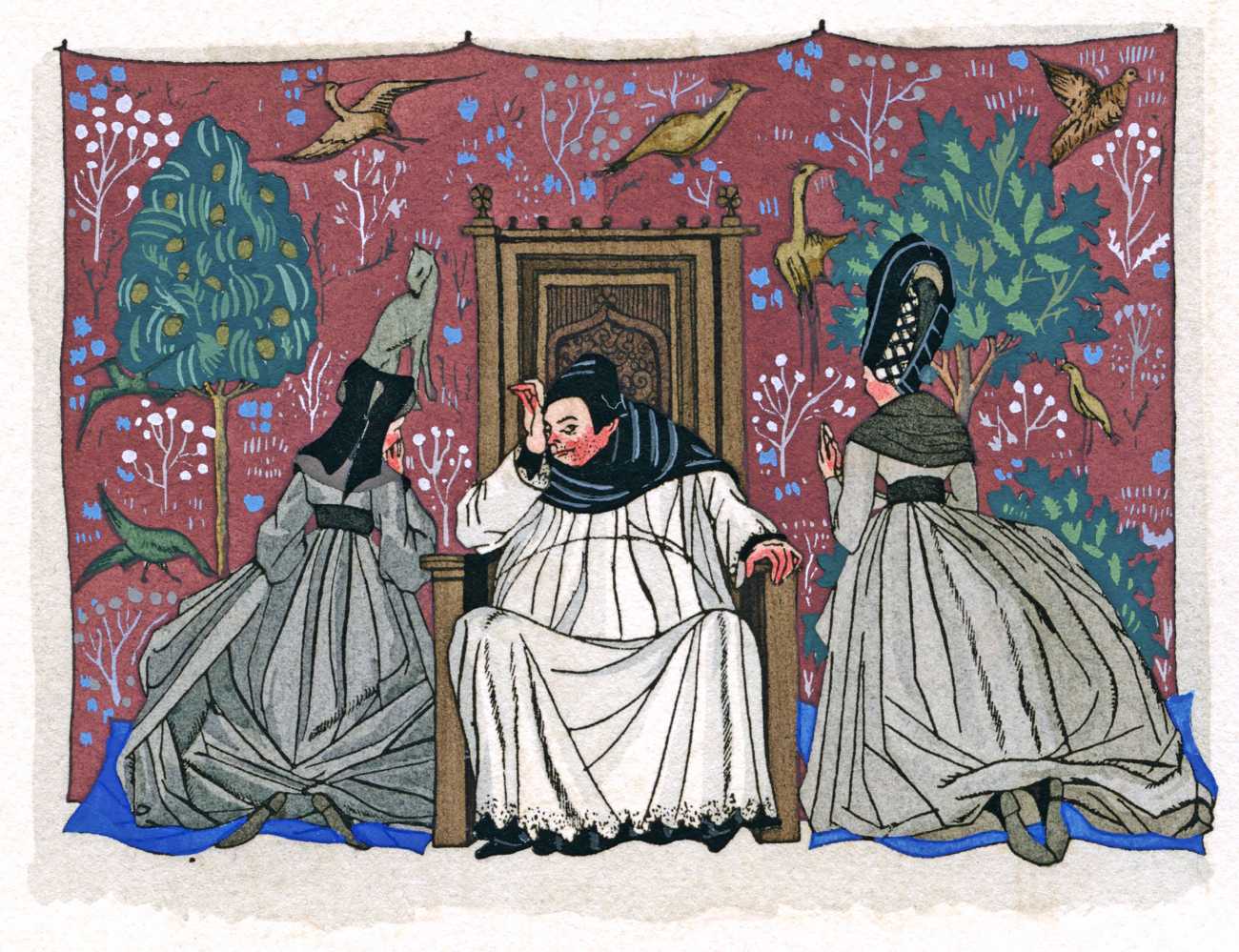
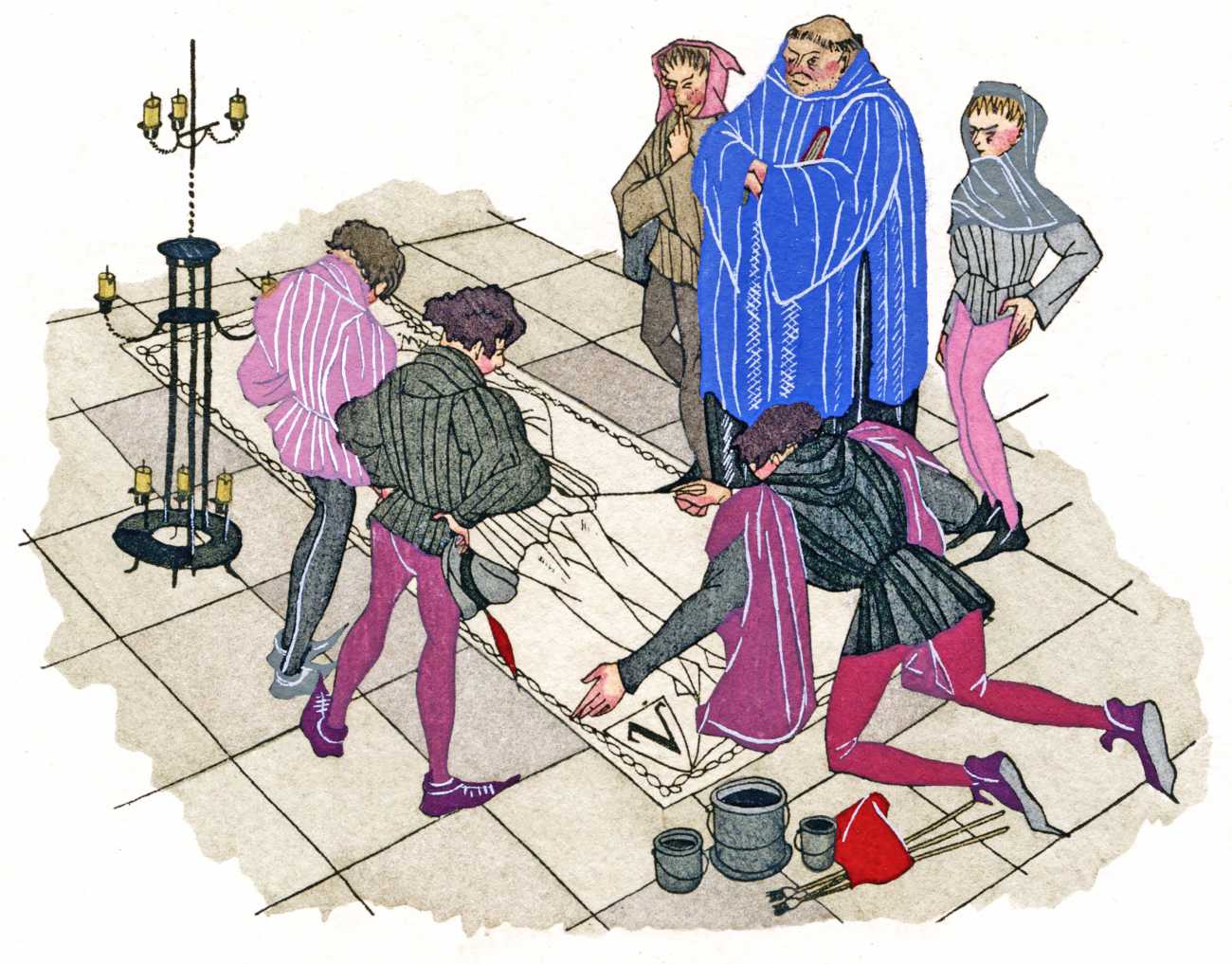
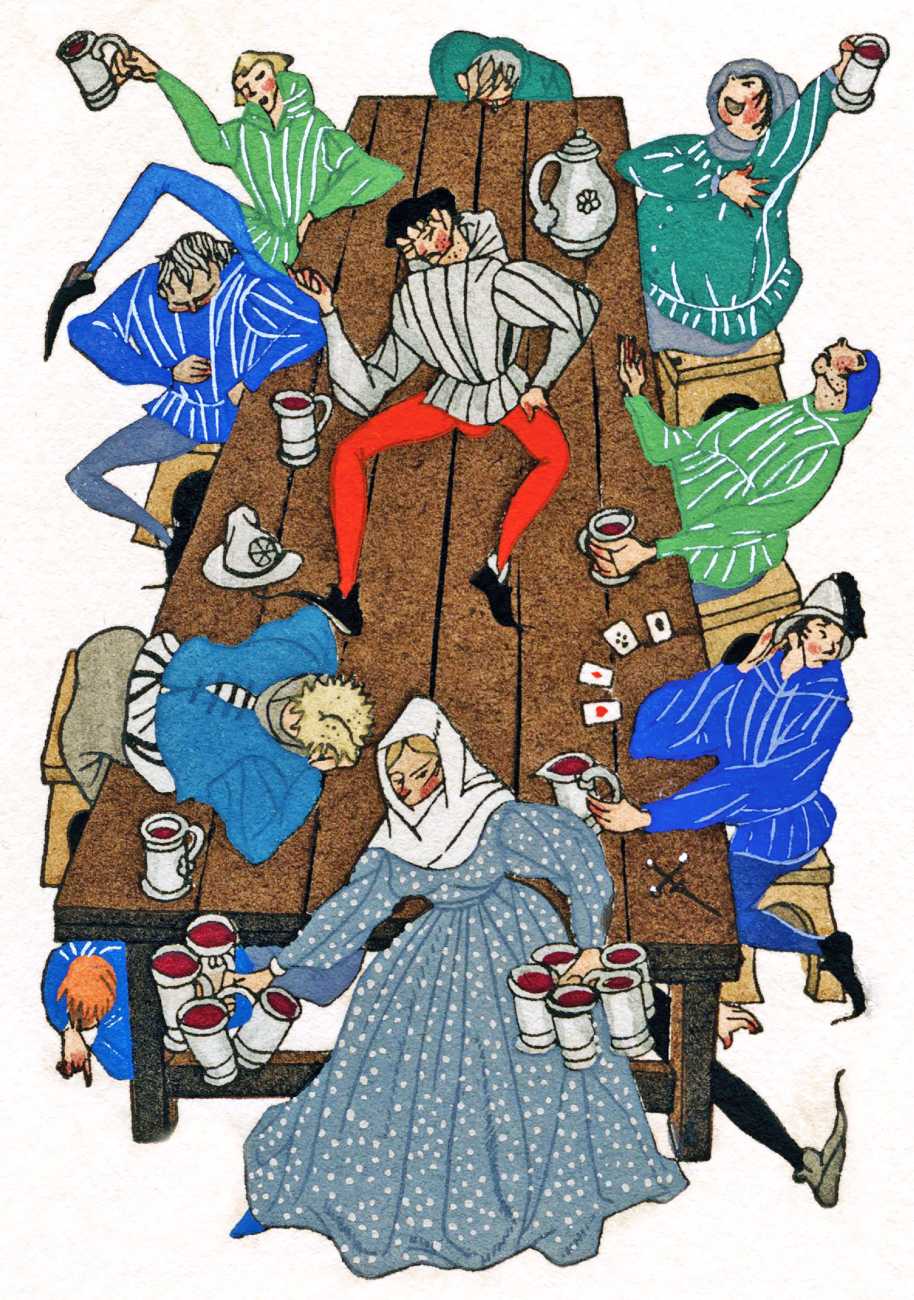
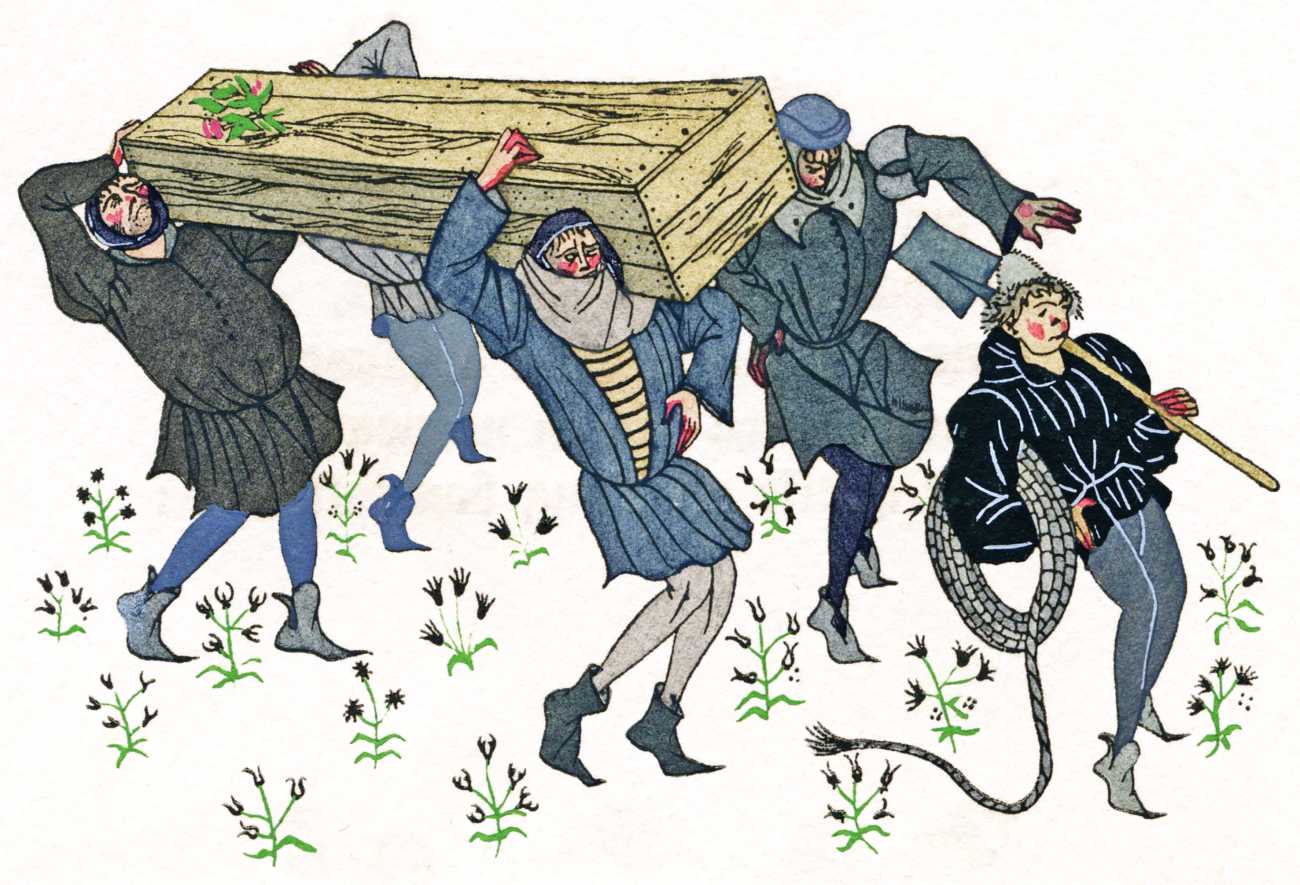
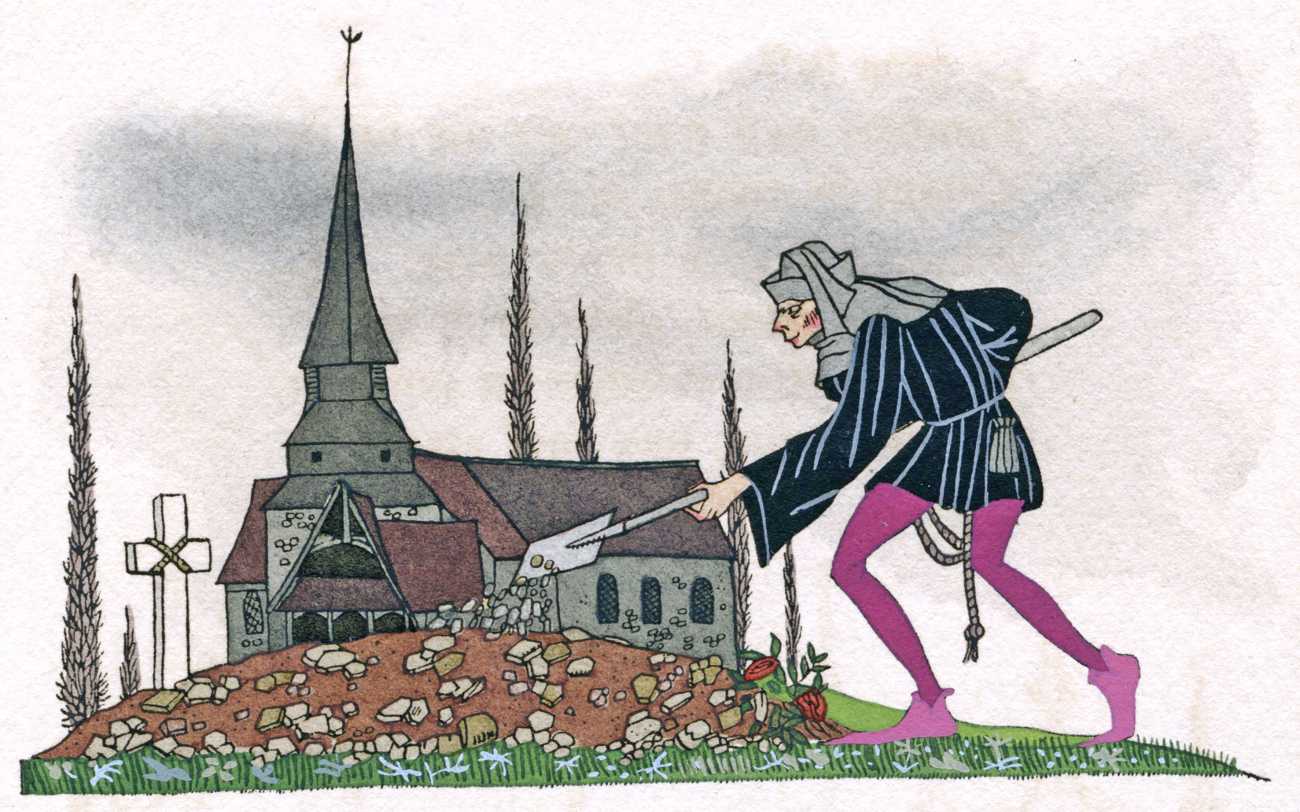
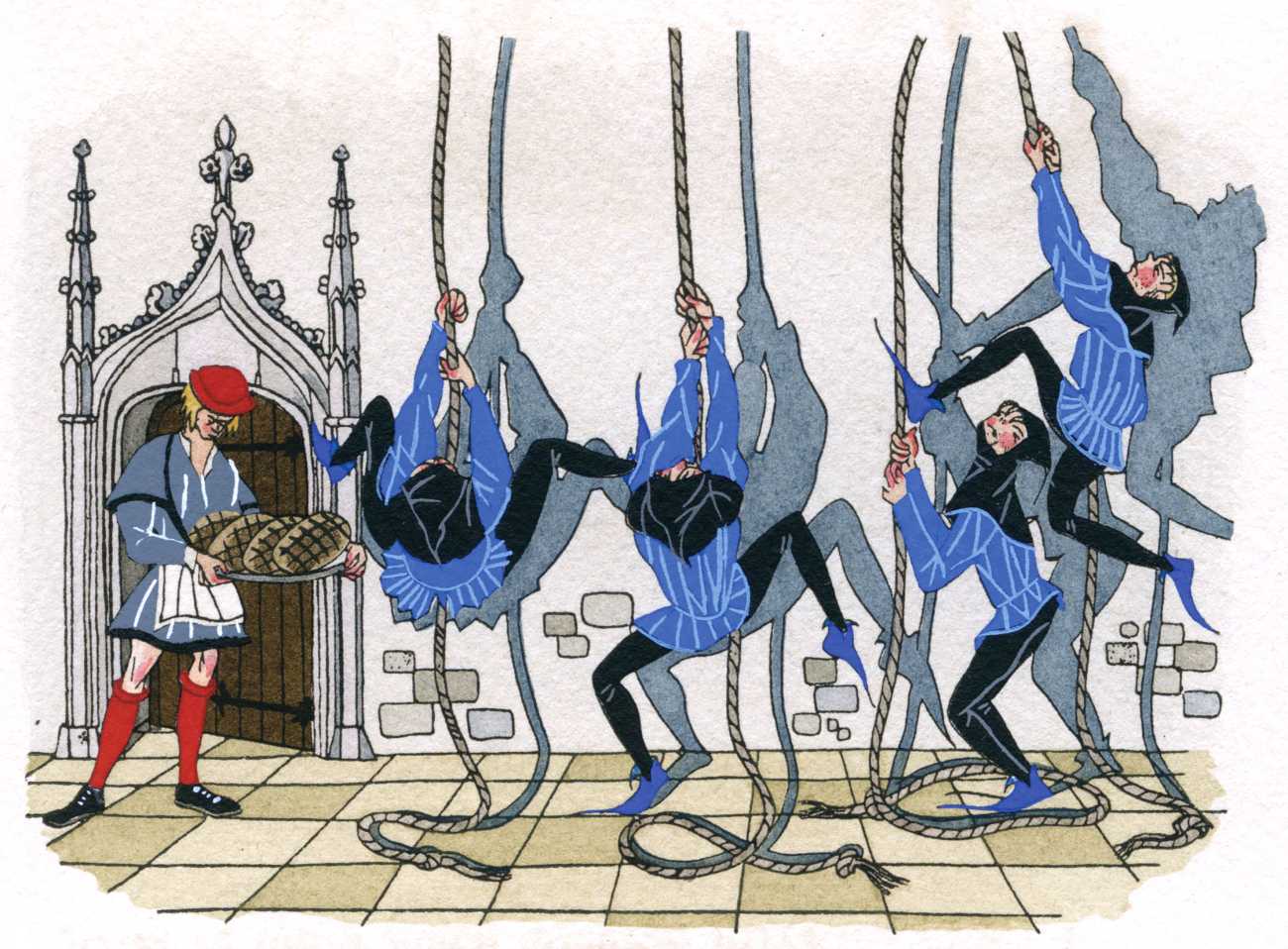
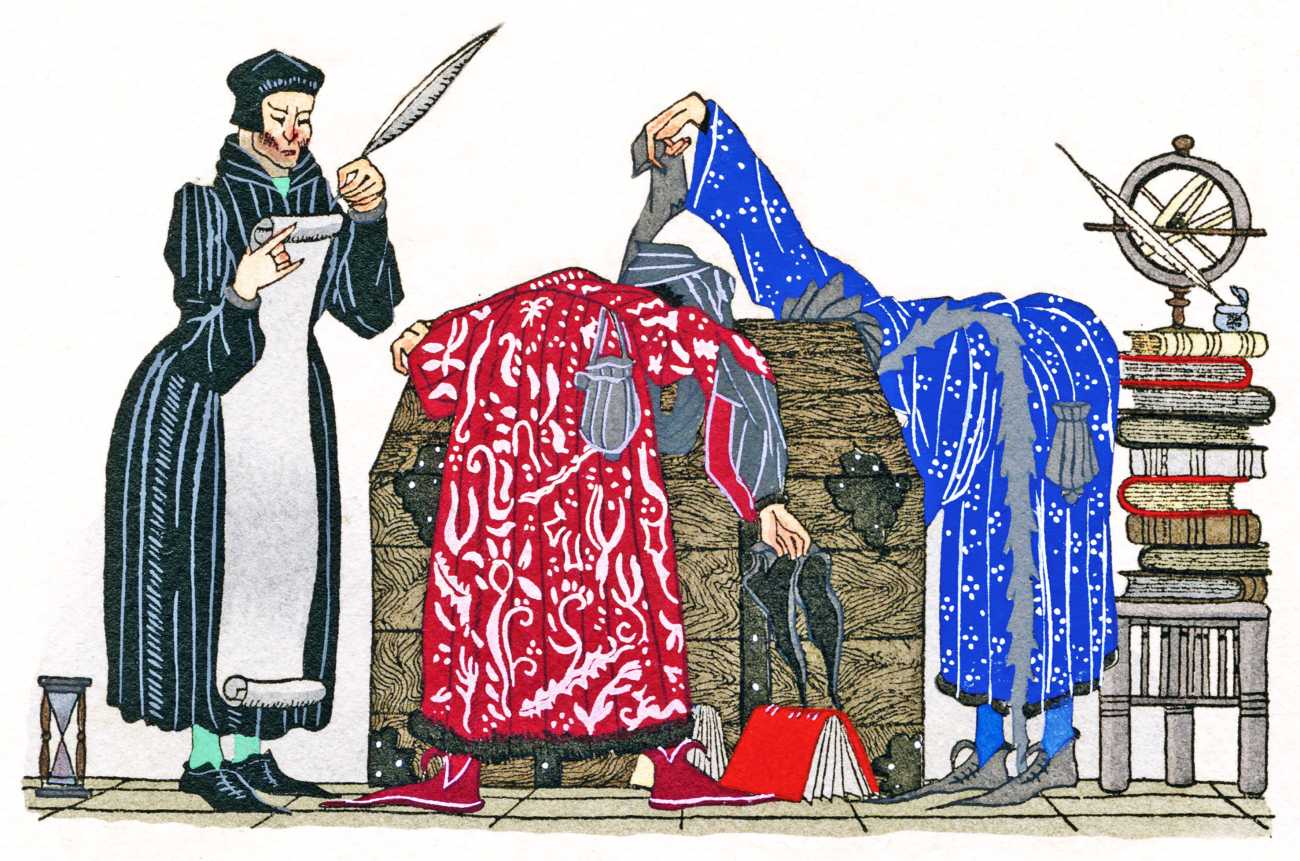
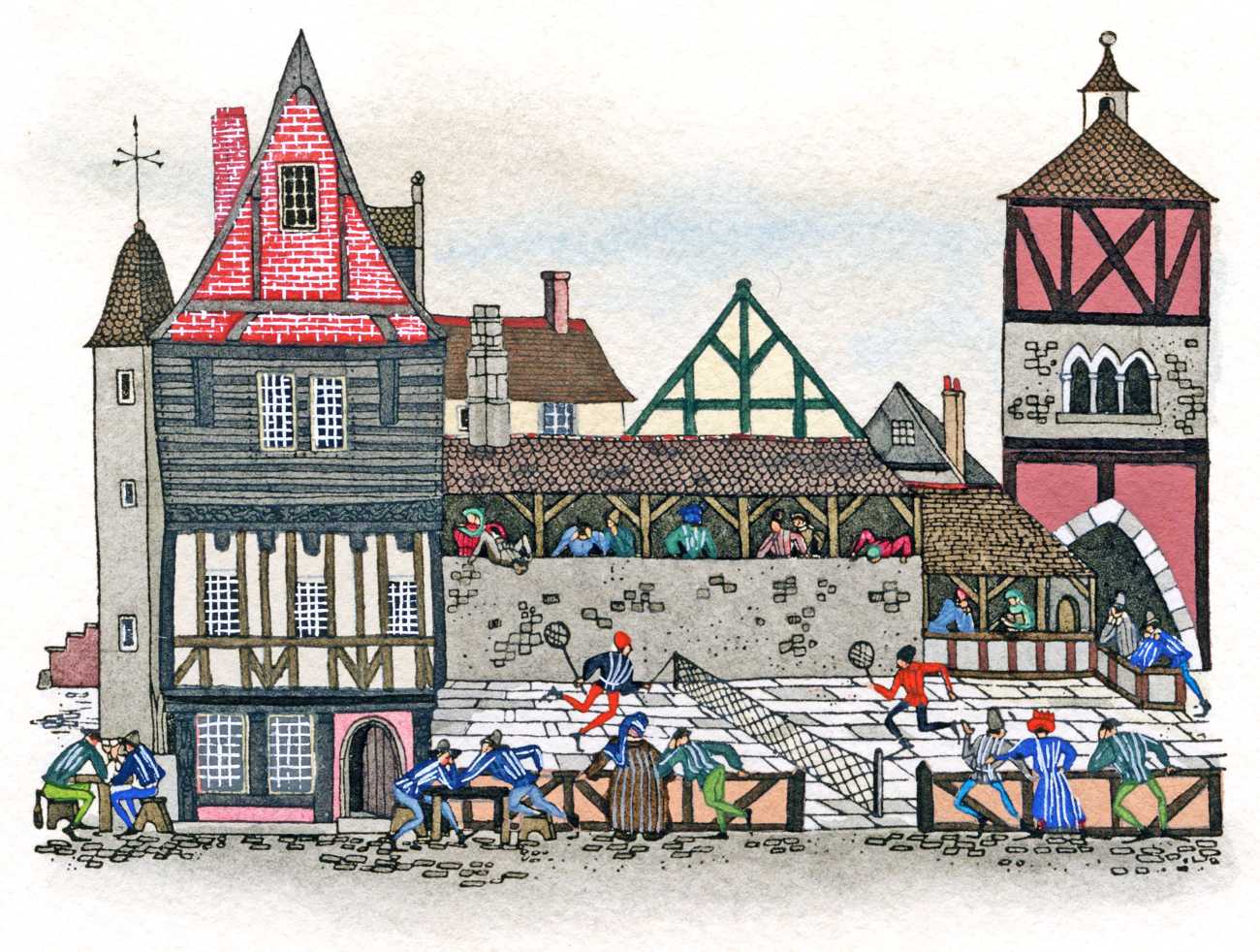
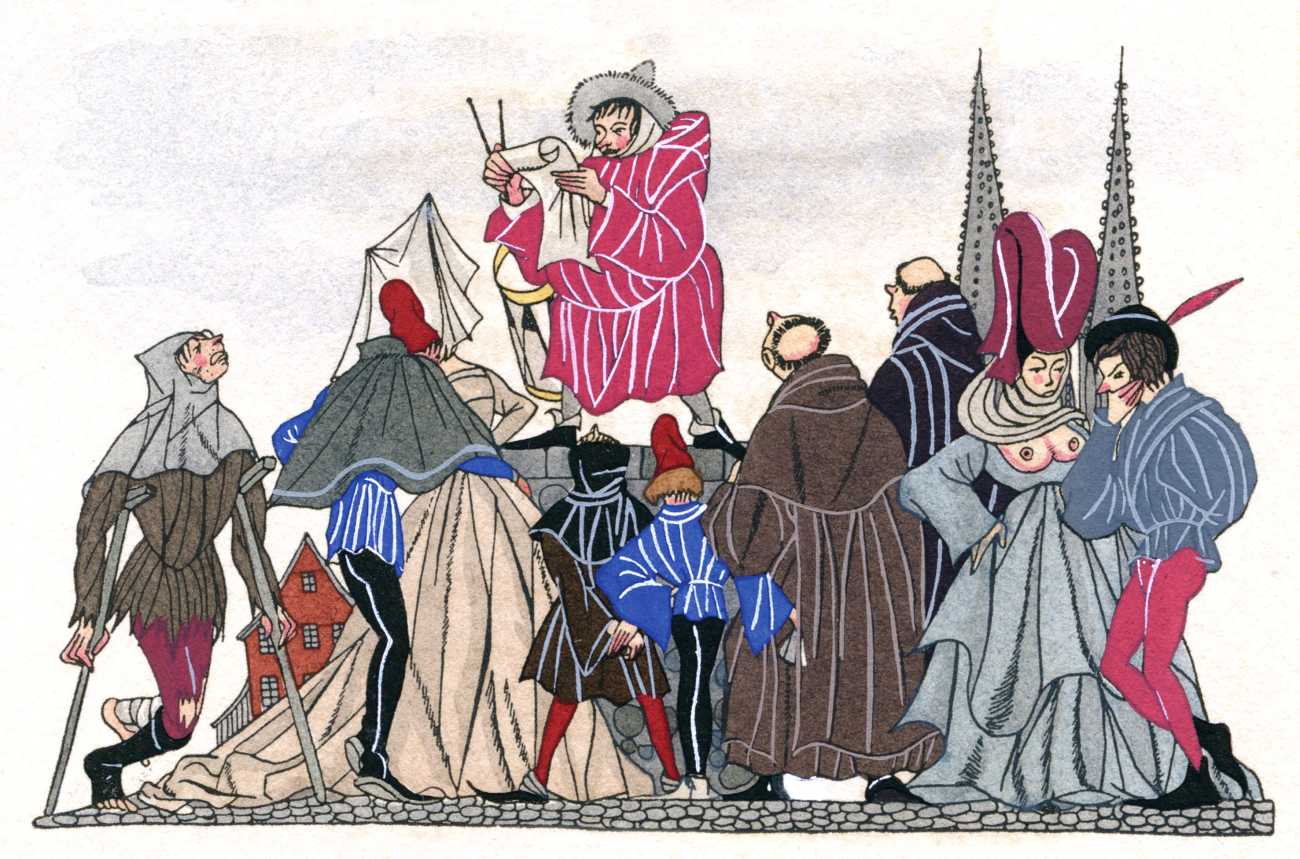
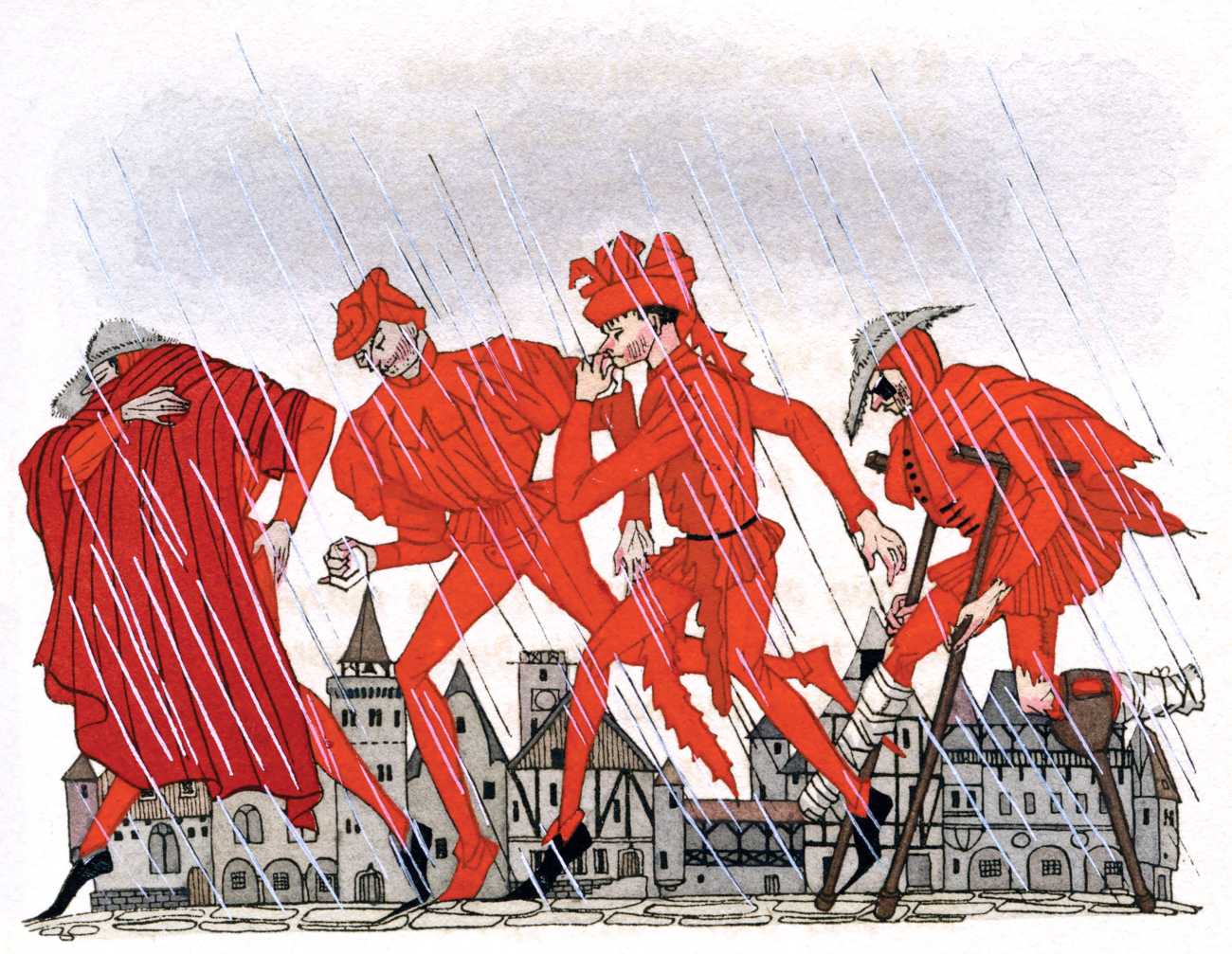
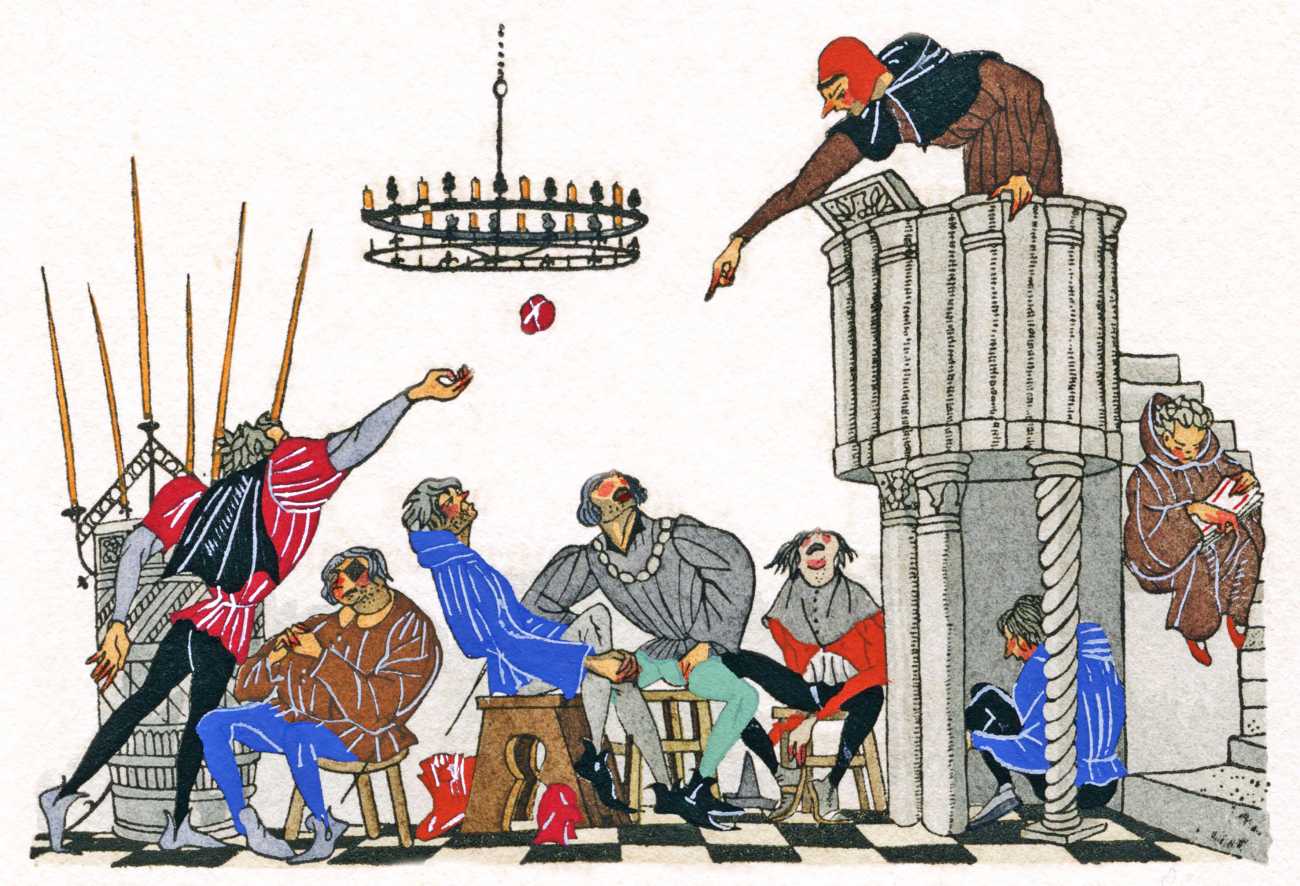
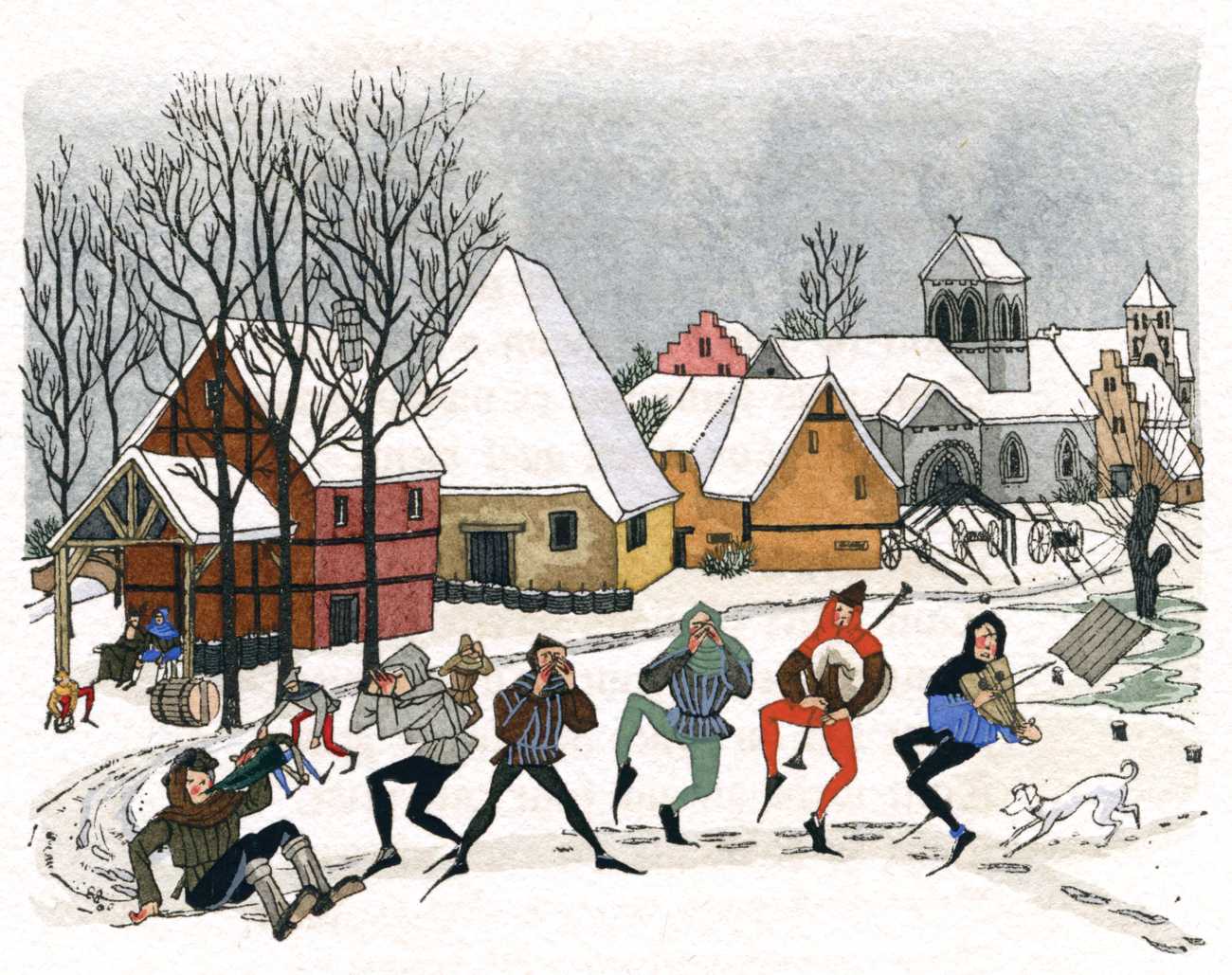
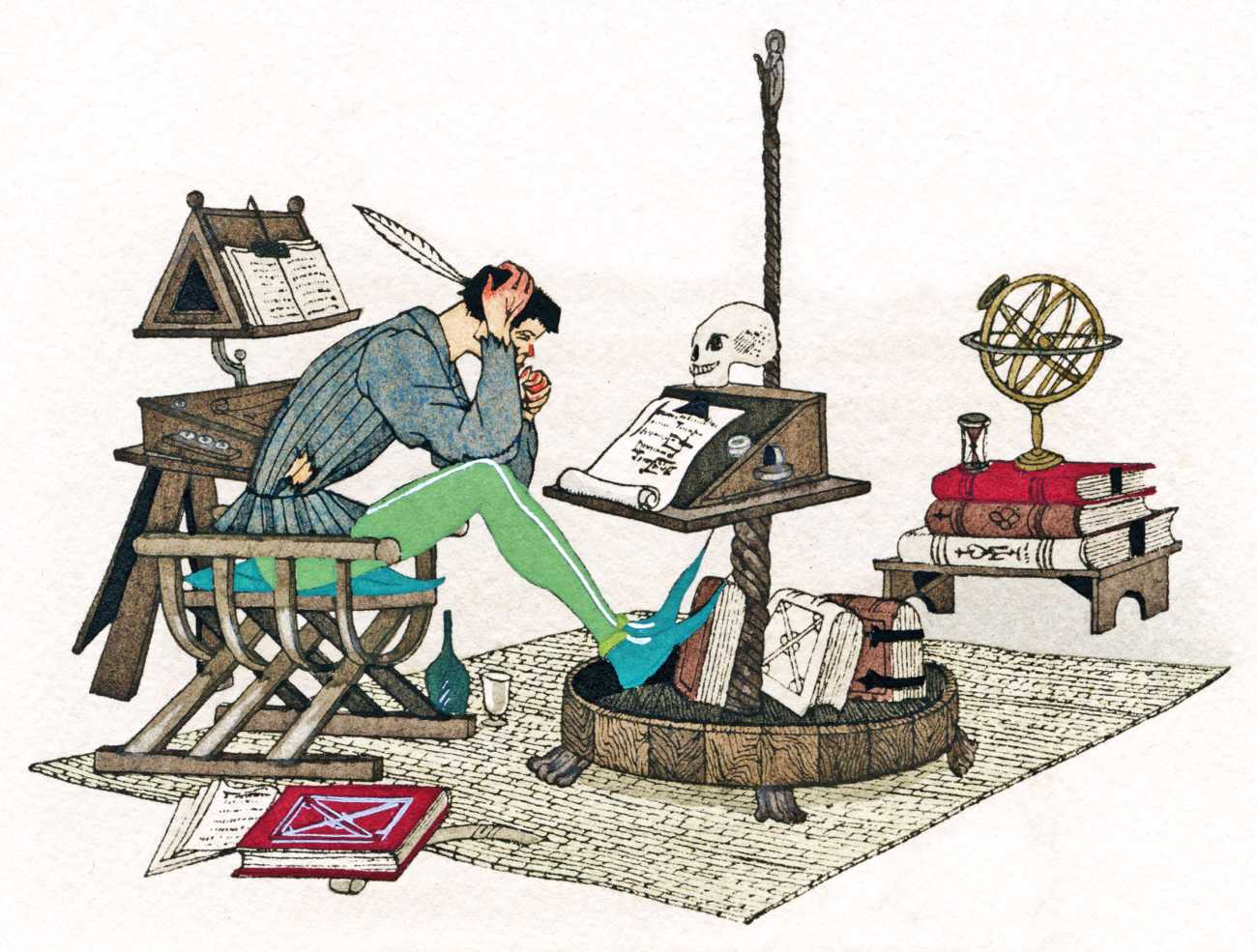
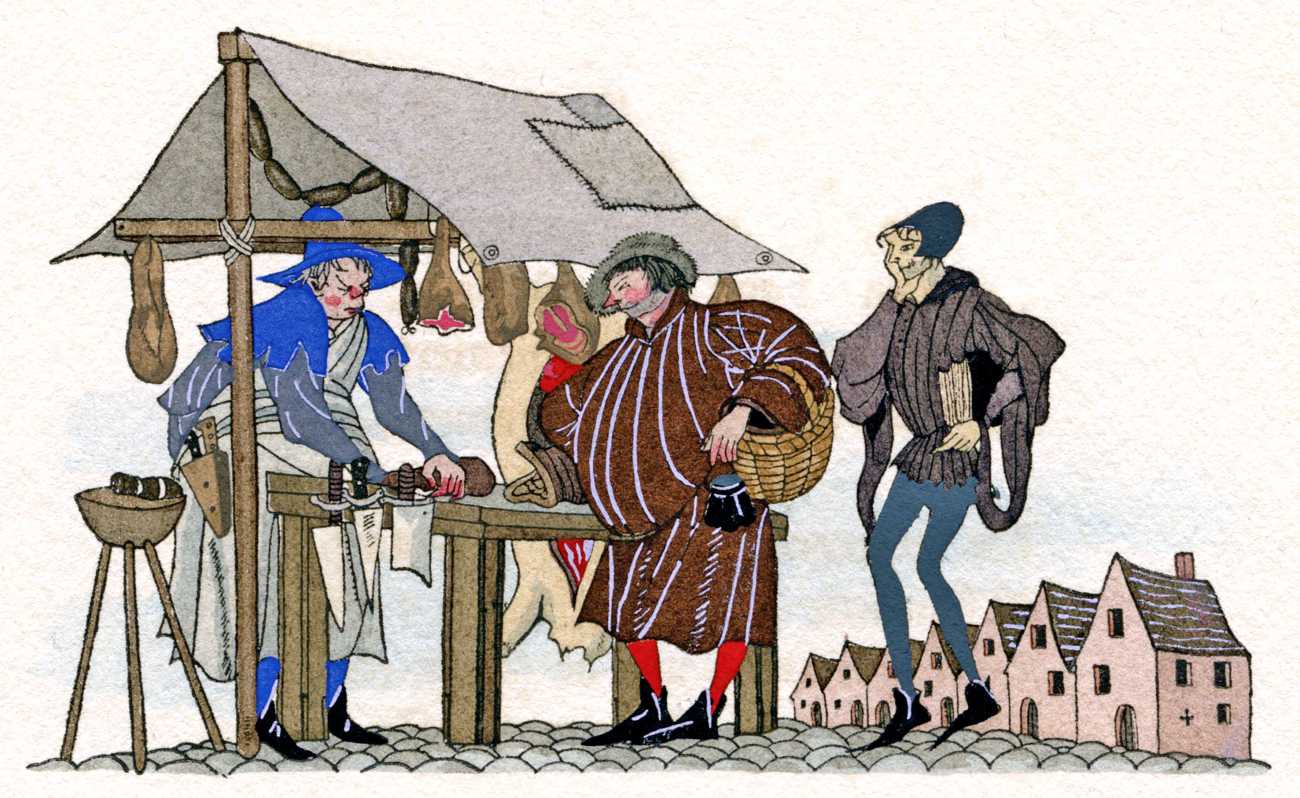
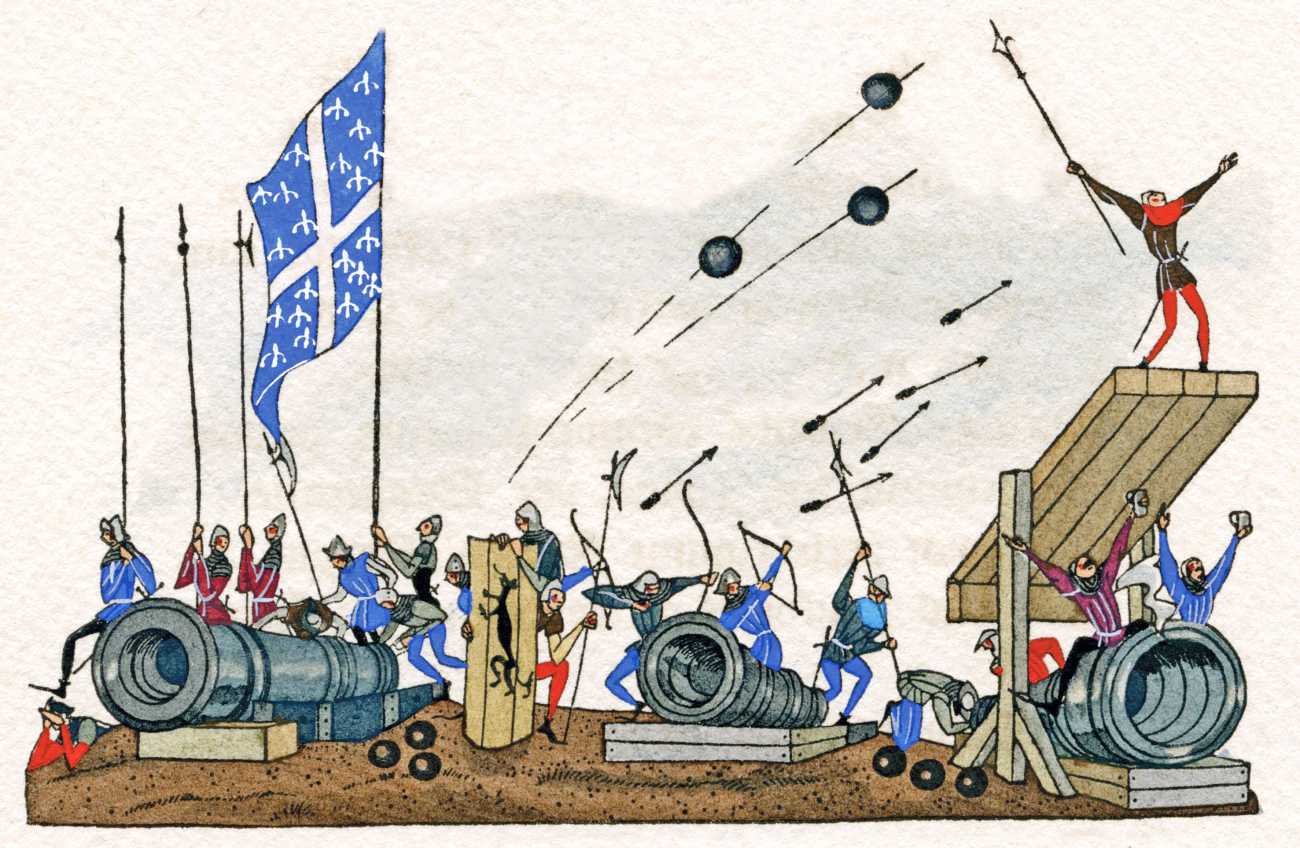
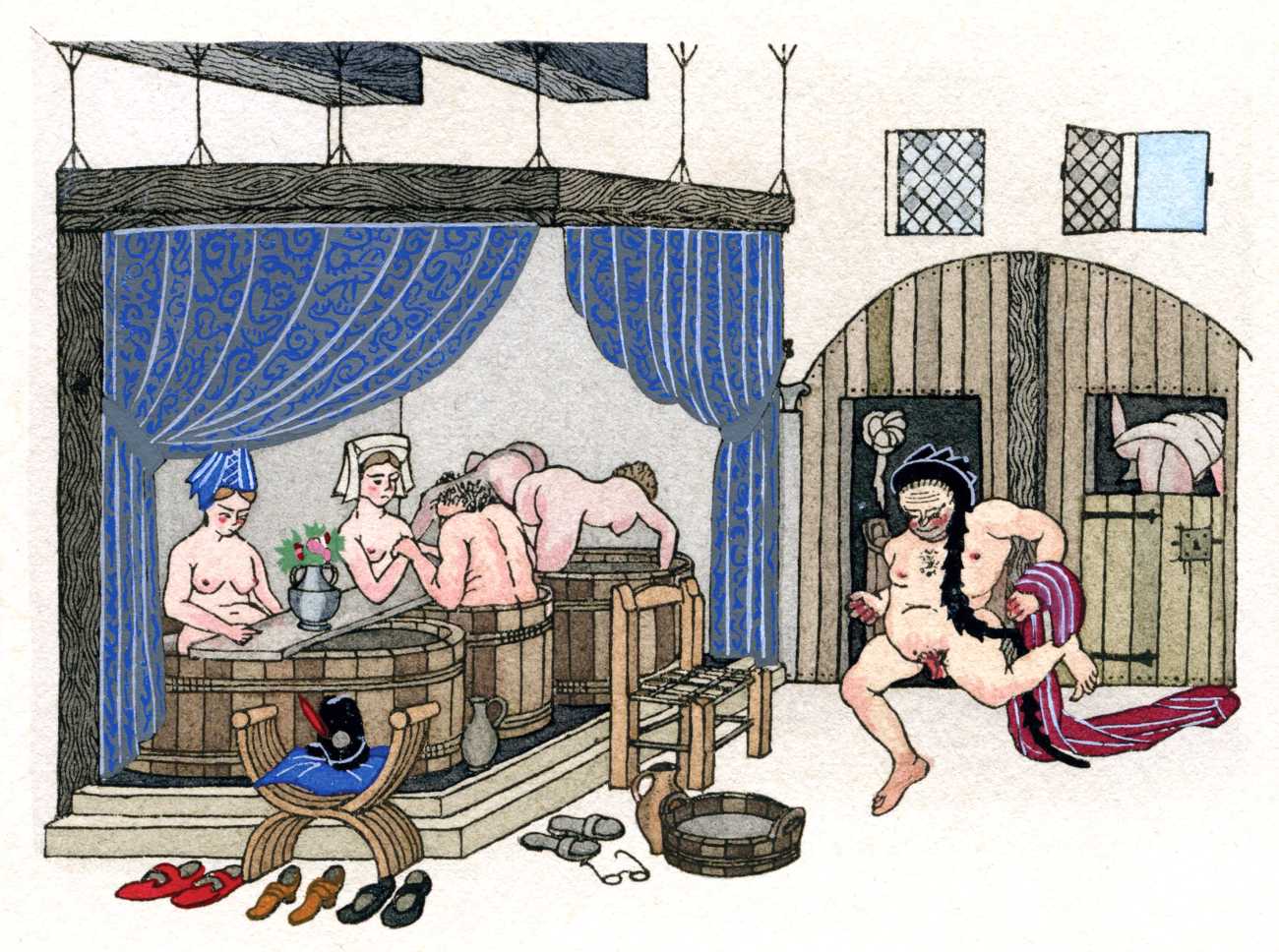
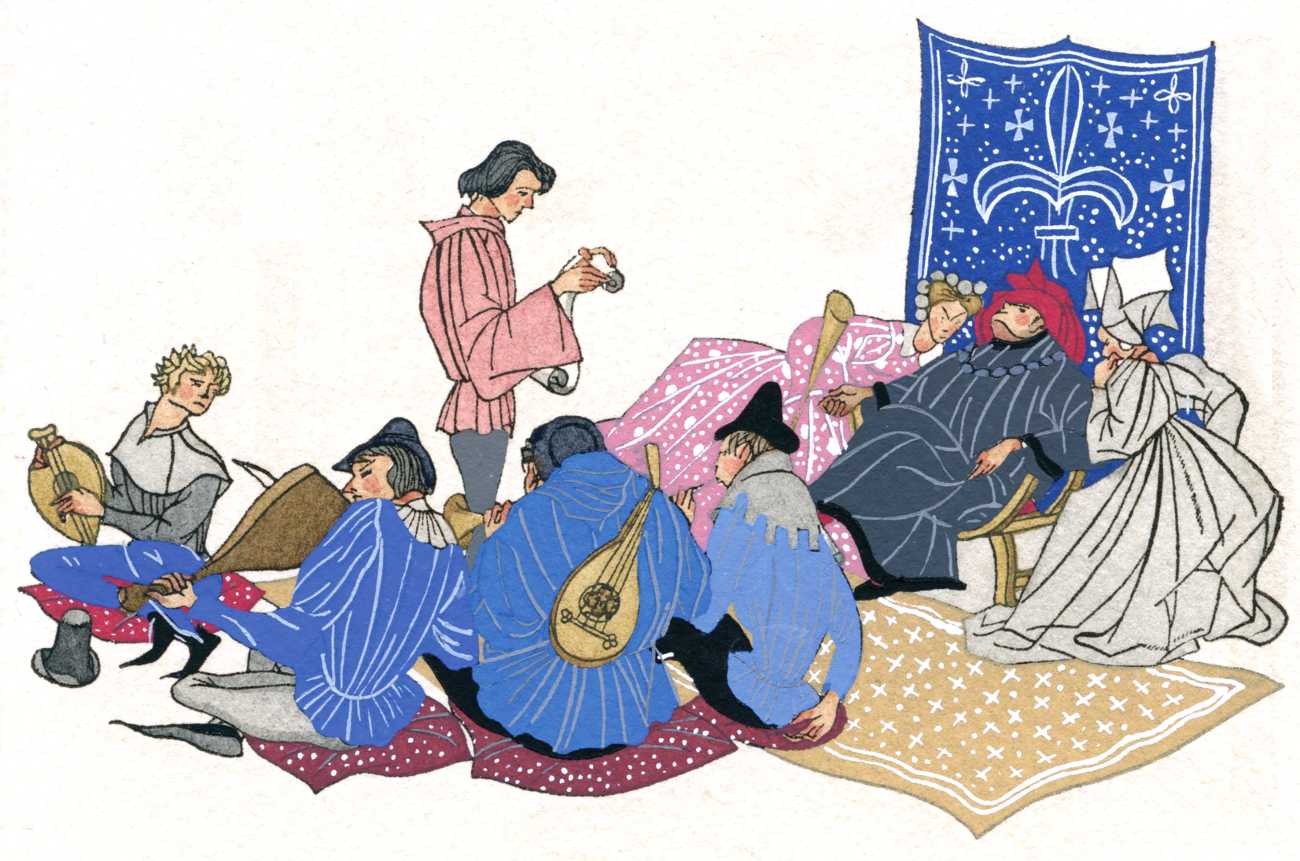
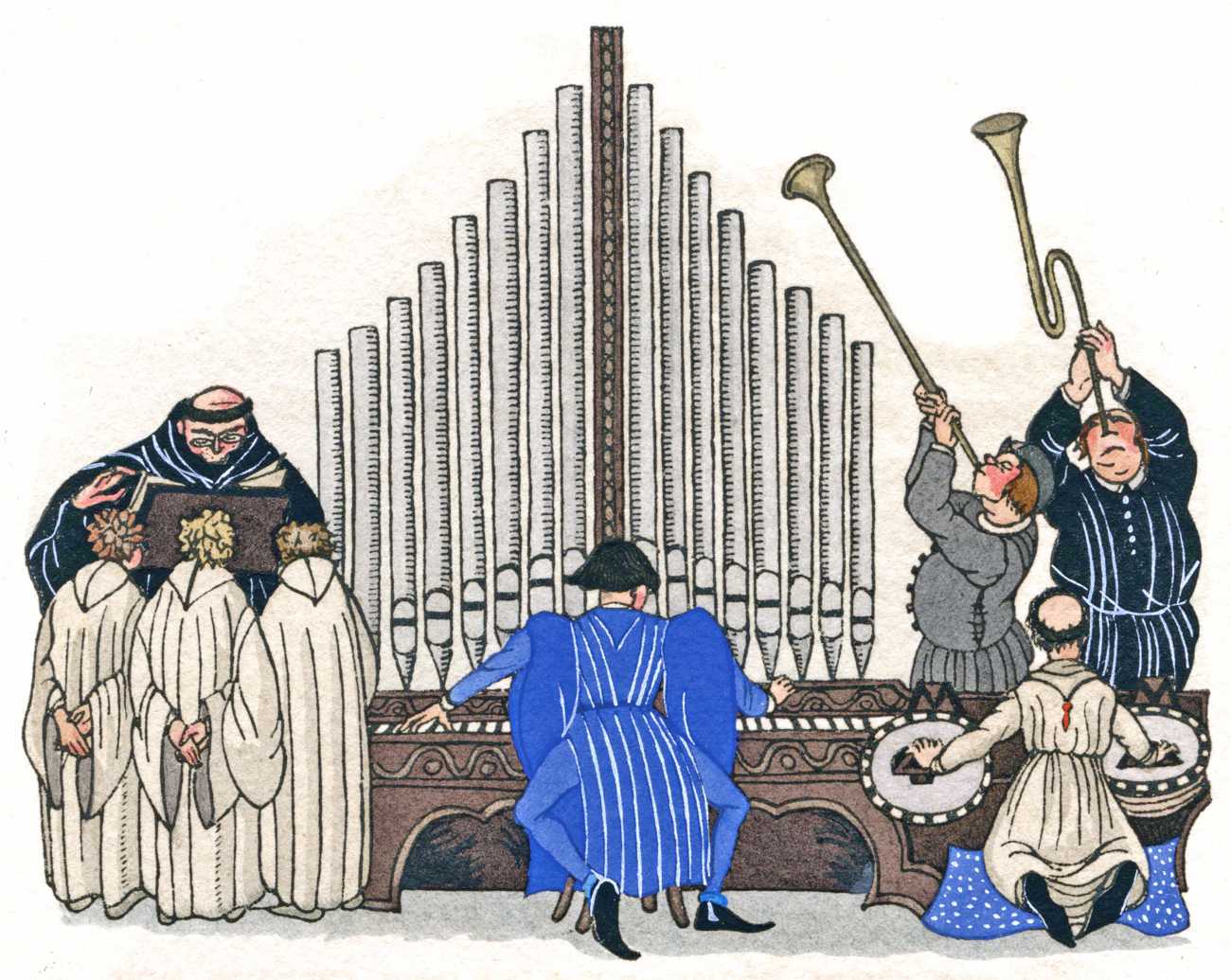
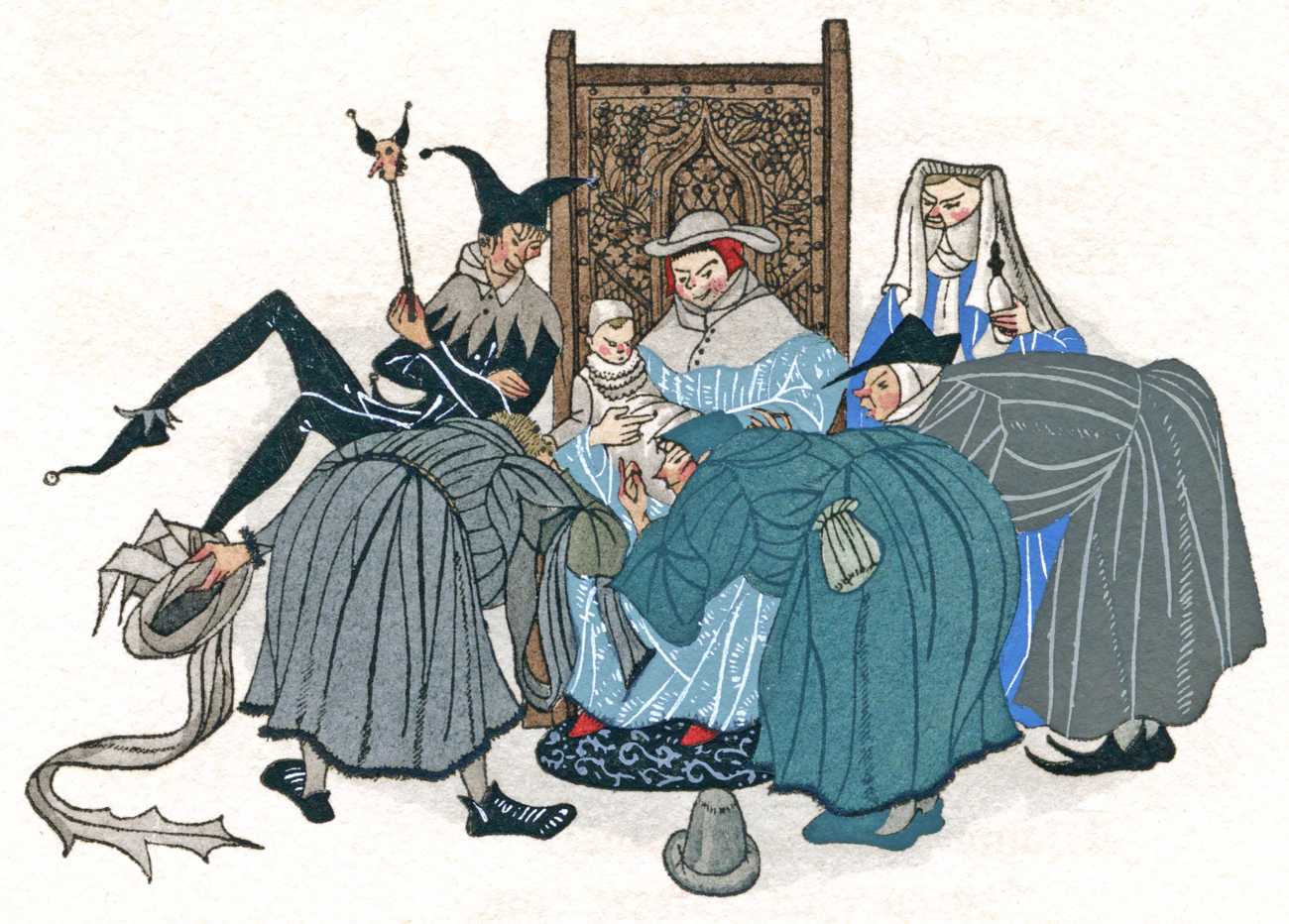
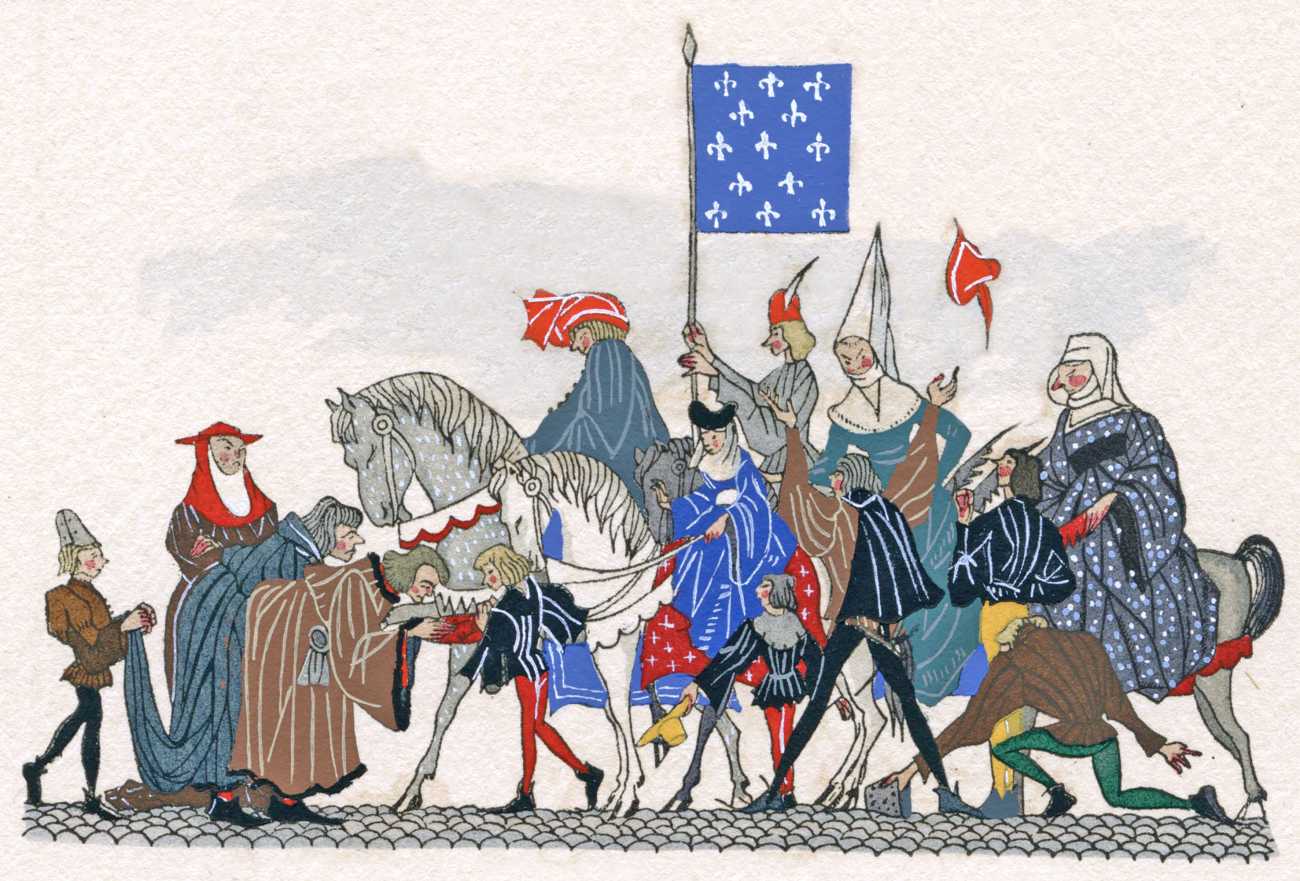
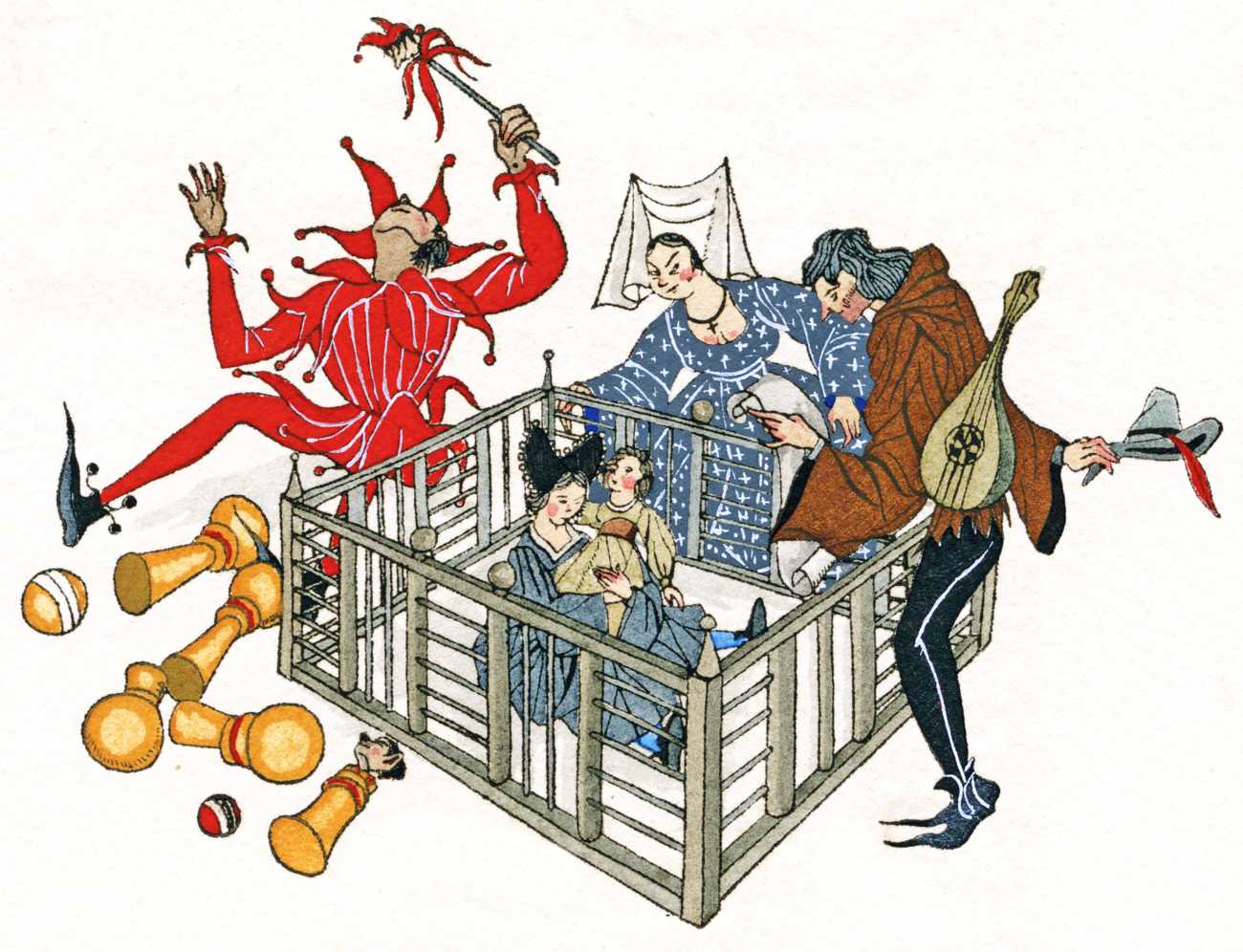
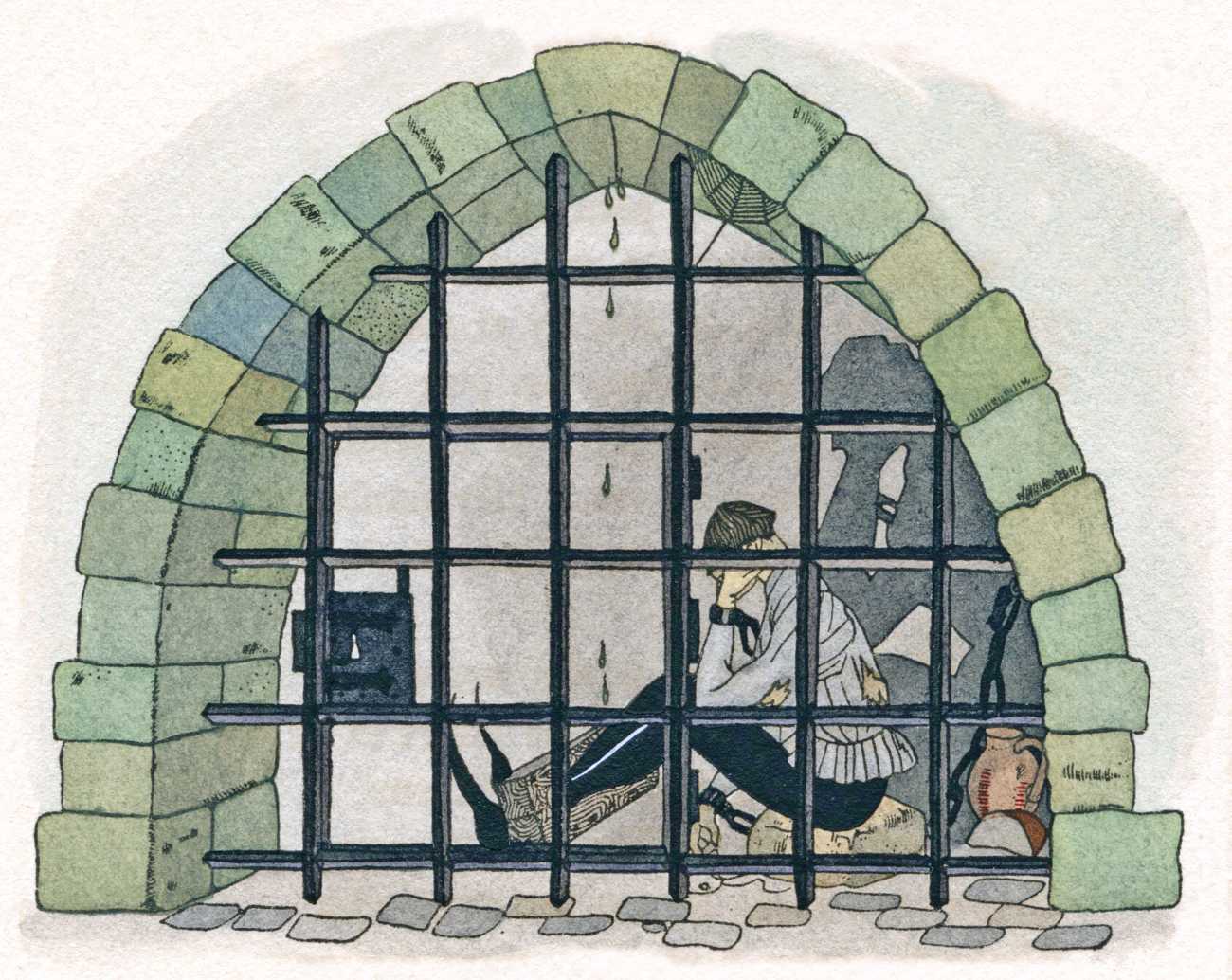
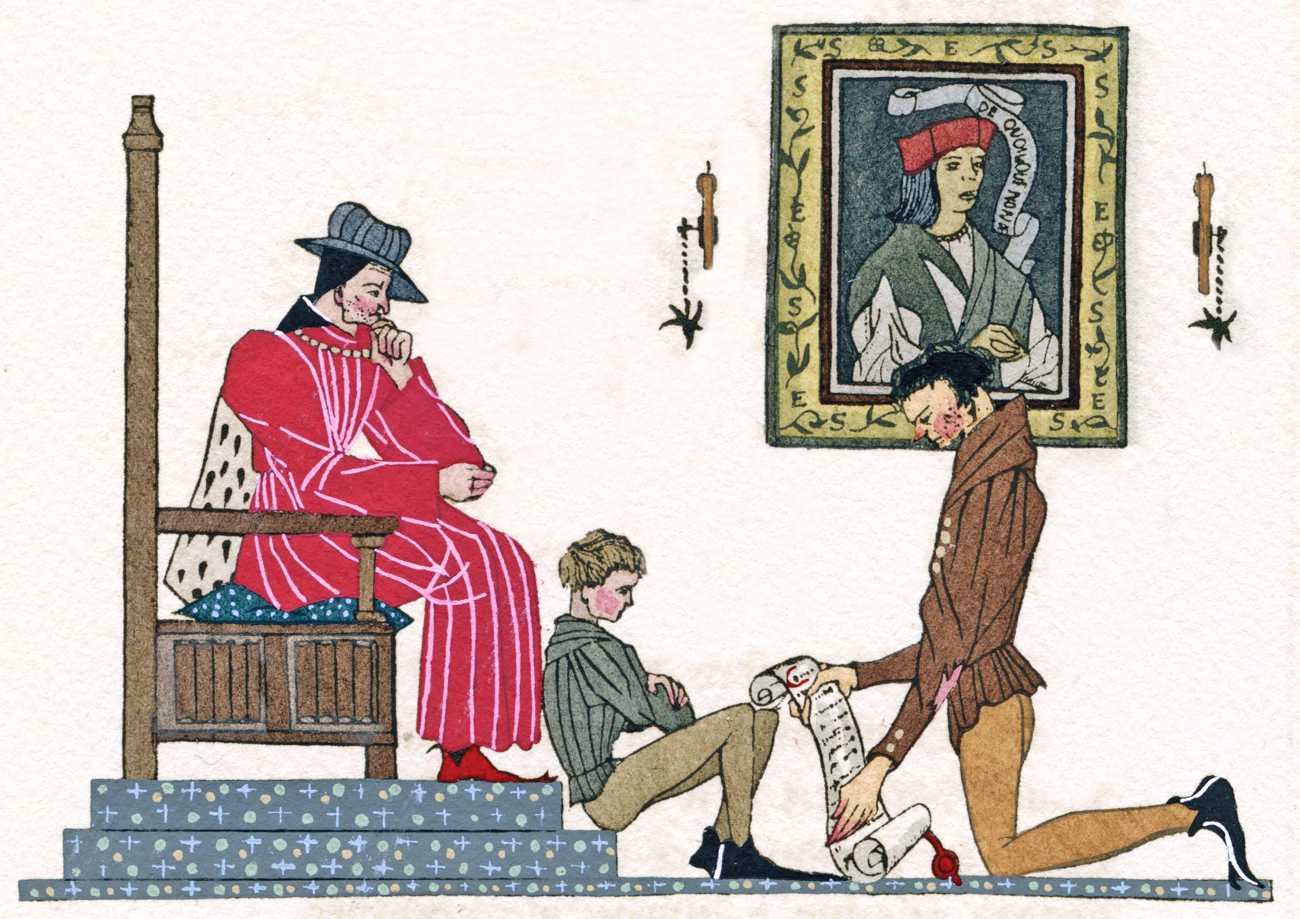
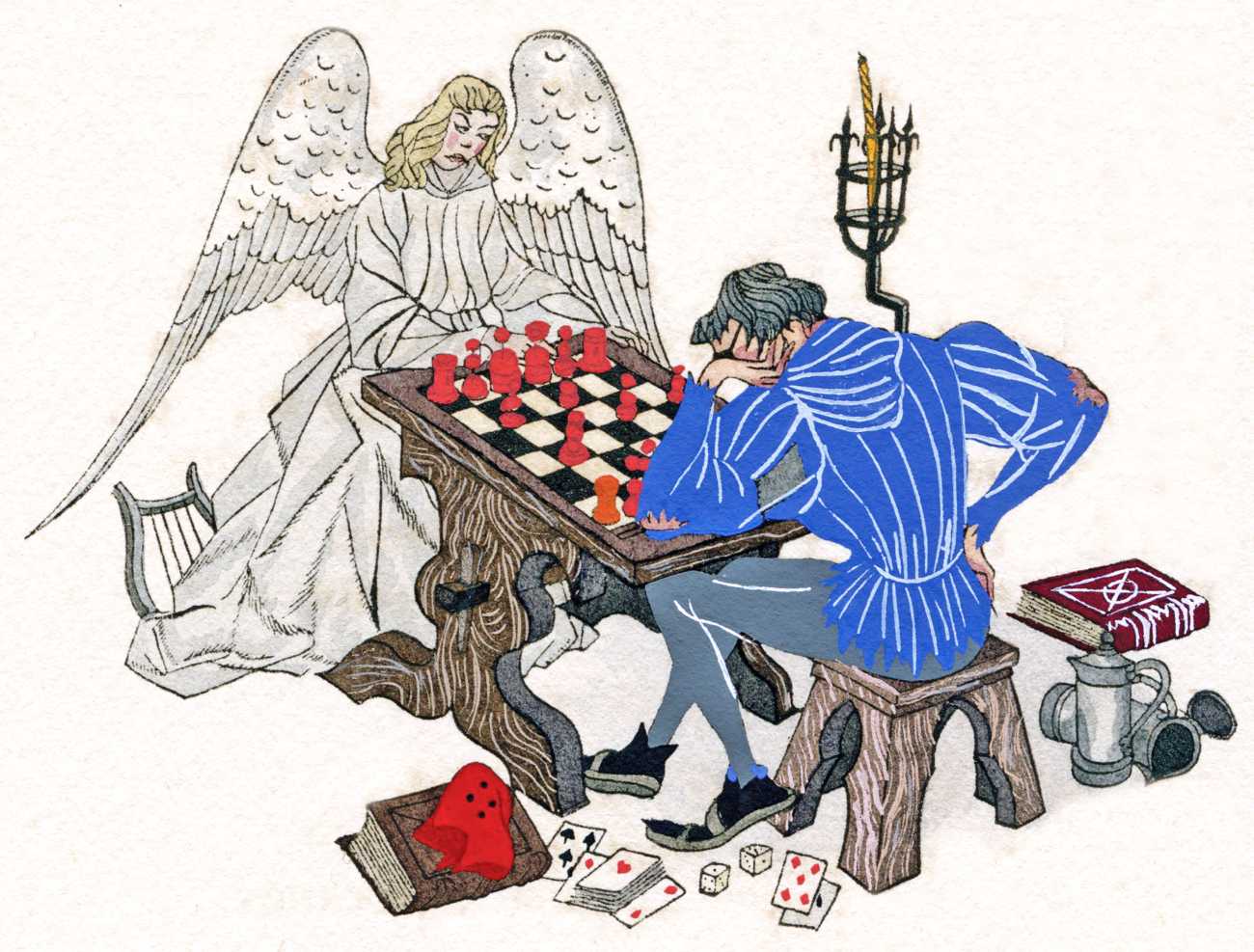
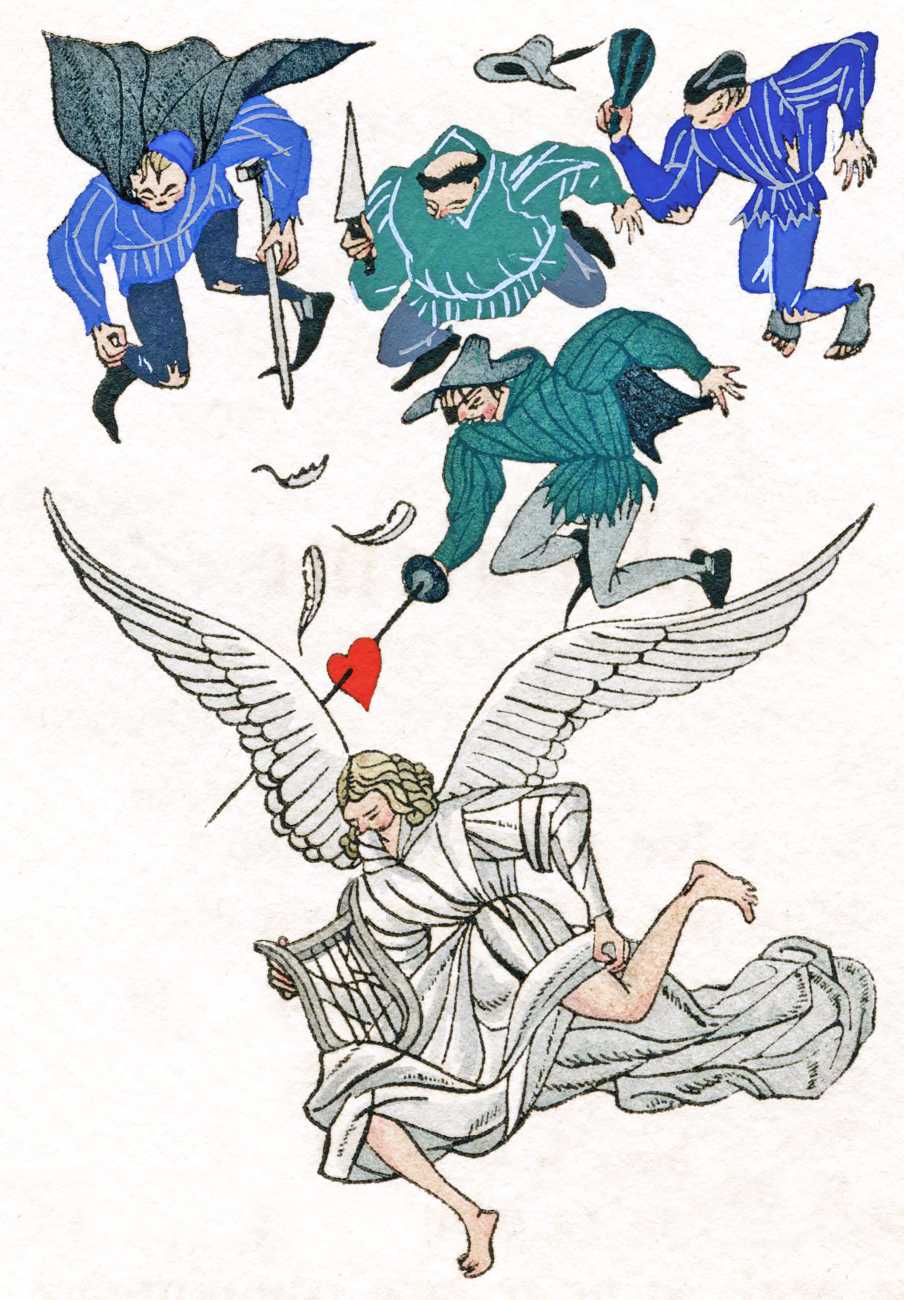
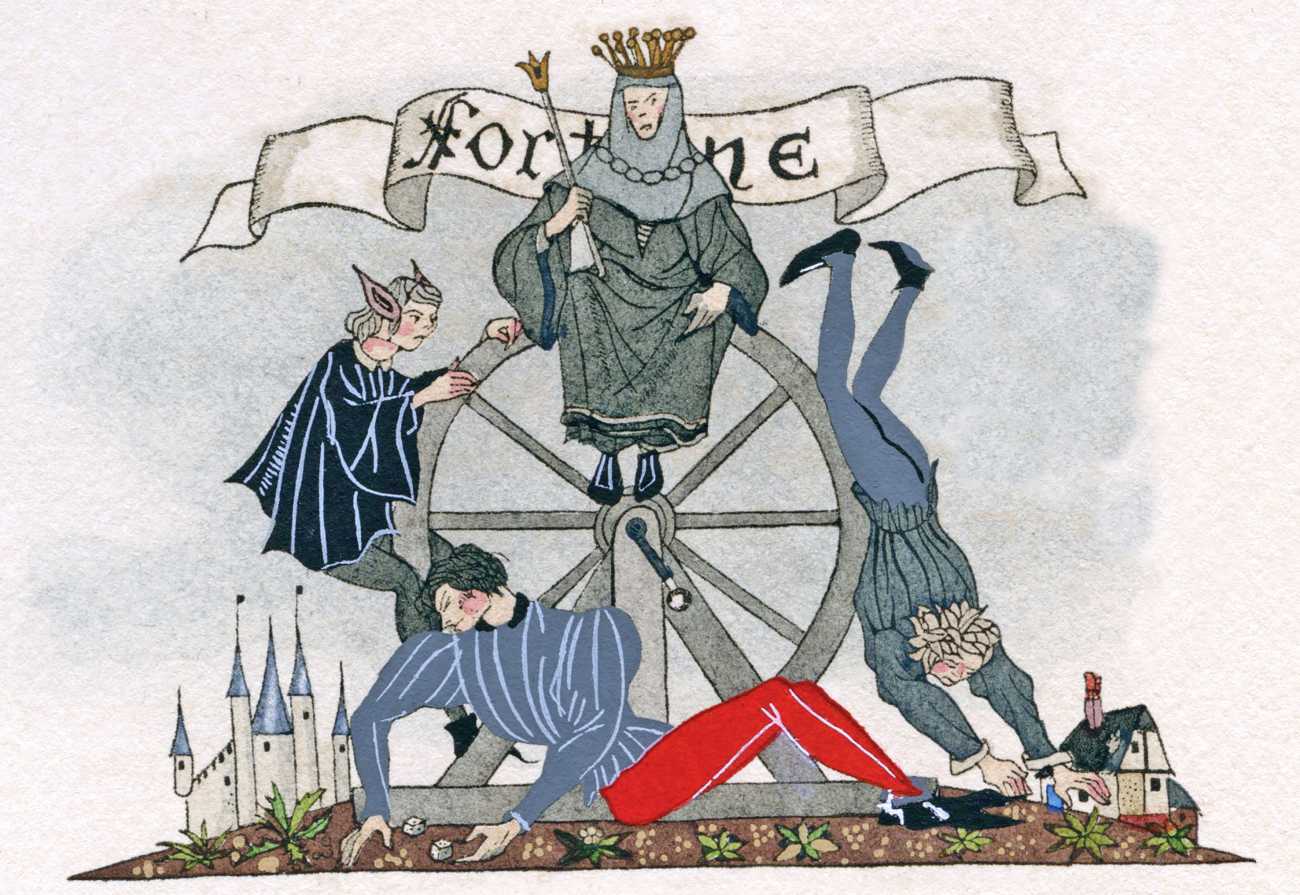
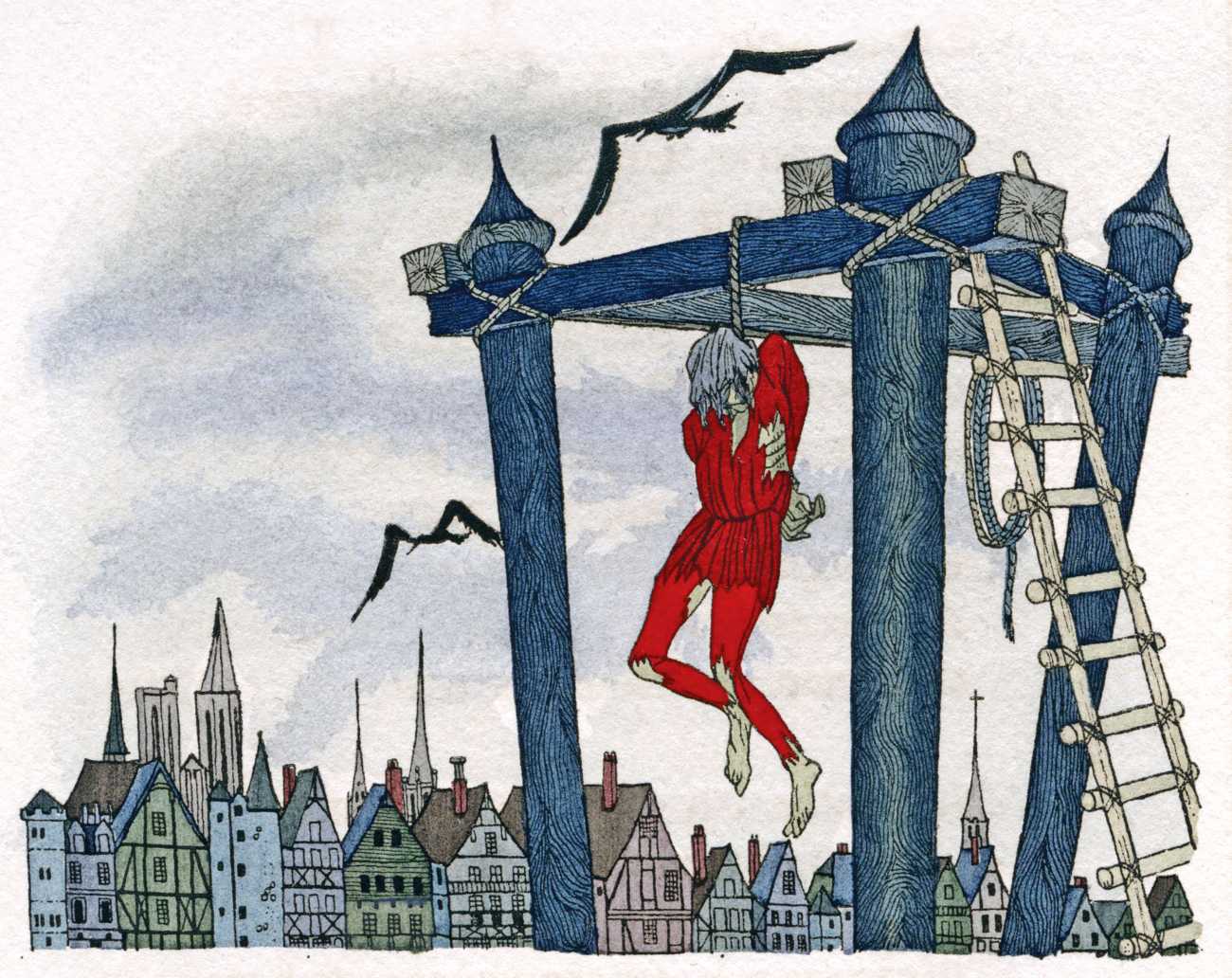
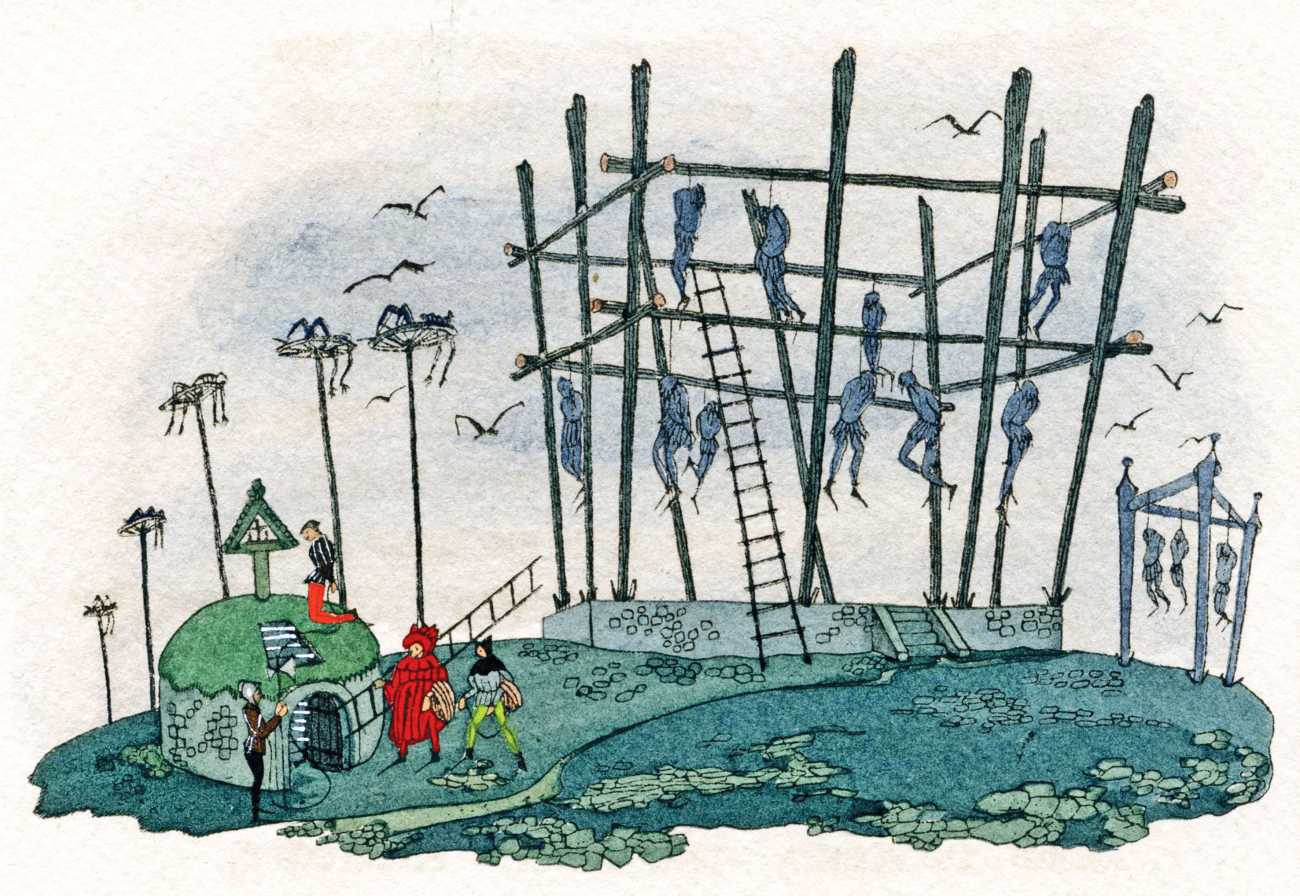
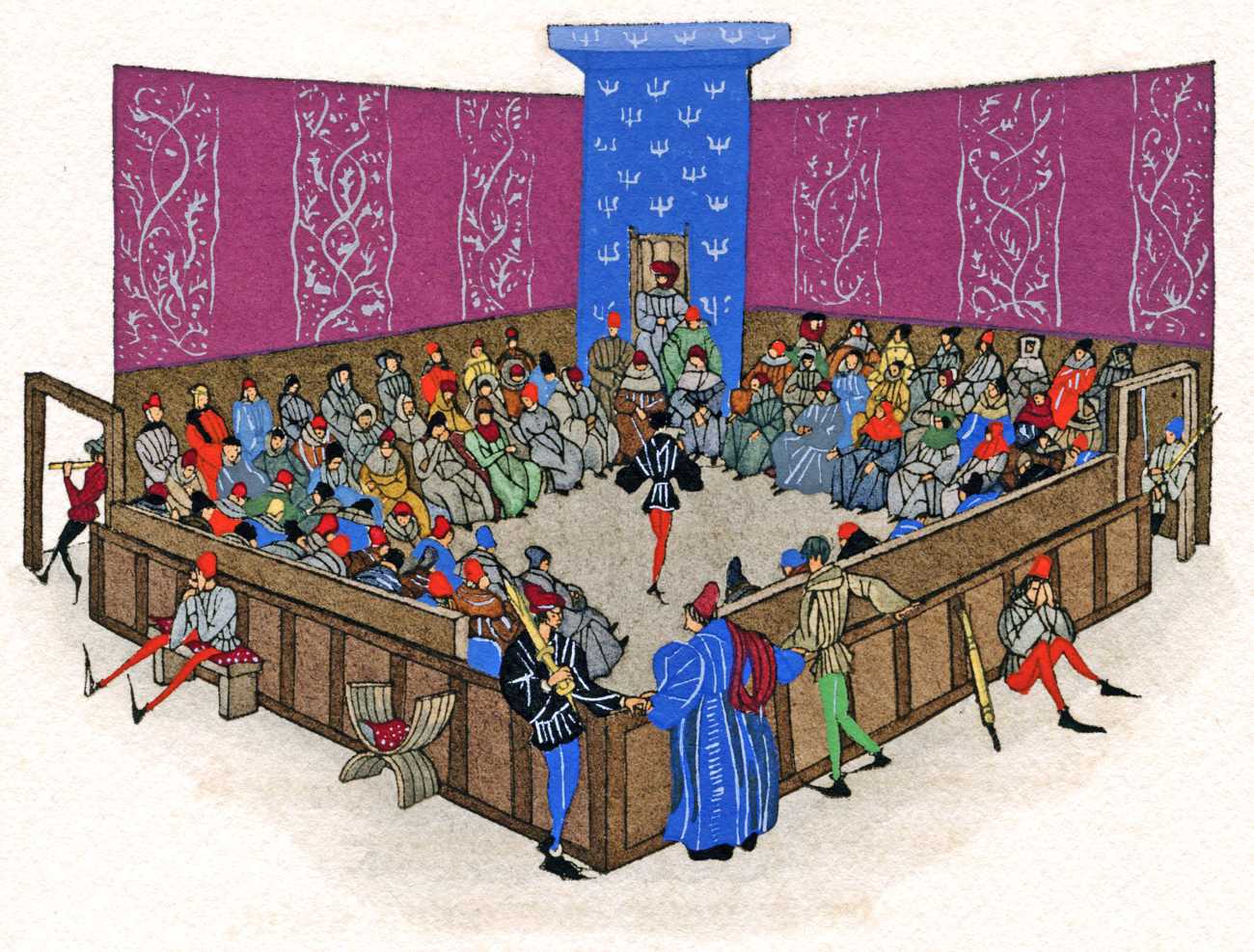
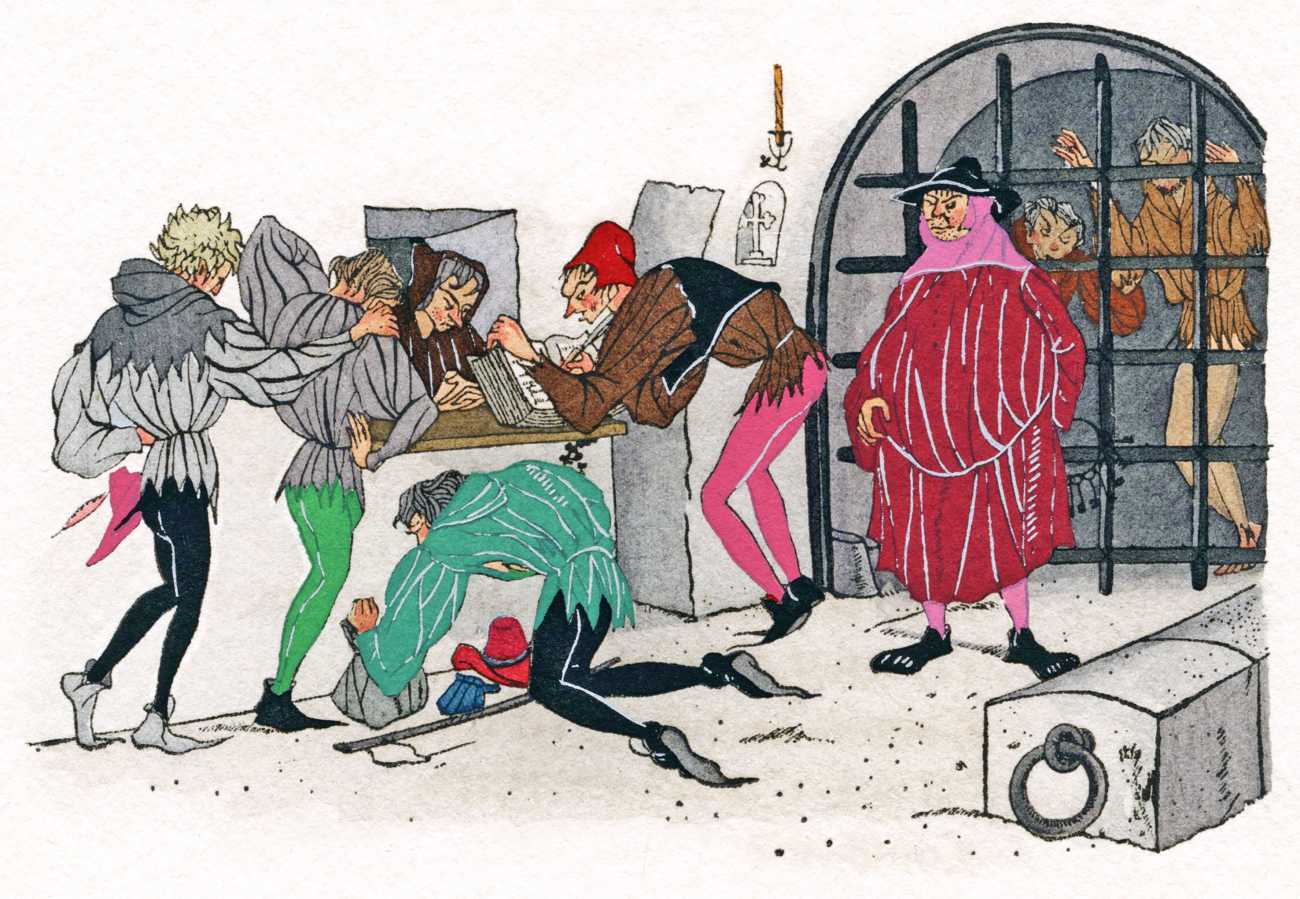
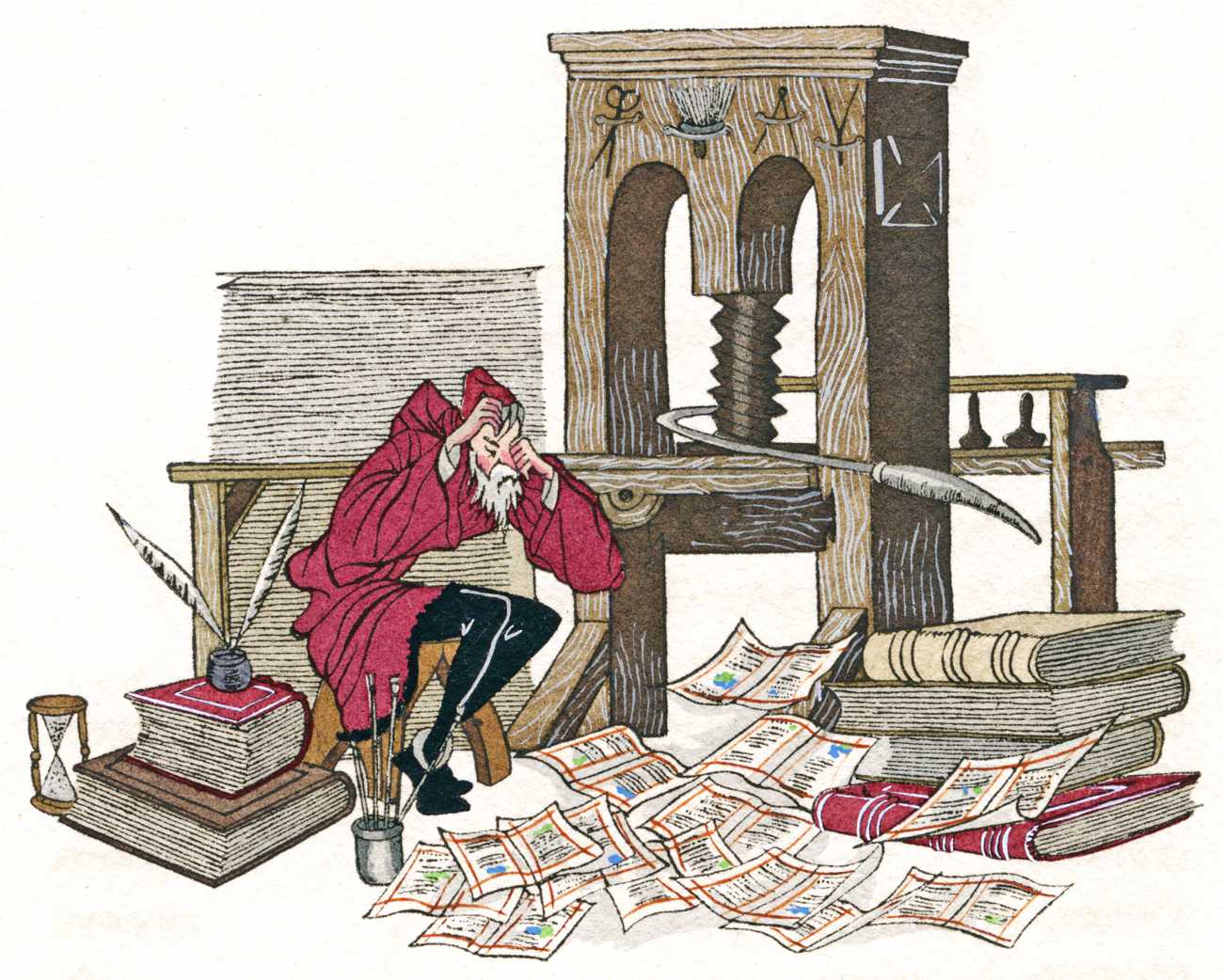
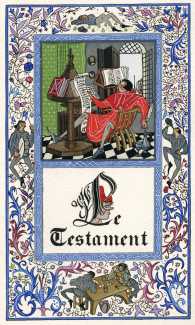
This full title of this beautiful edition of Villon’s poems is Le grant testament Villon et le petit, son codicille et ses ballades (Villon’s Great Testimony and his Small, his Codicil and his Ballads). The book has one of Lemarié’s remarkable miniatures on almost every page – 226 of them altogether, of which 150 are complete scenes of medieval life and the rest smaller decorations at the end of pages. This commission saw Lemarié at the height of his graphic skills, the detailed illustrations reflecting Villon’s life in Parisian bars, brothels and jails, then rising above the everyday world in his muse and returning to contemplate the gallows. From the standpoint of the erotic, Lemarié imagines medieval Frenchwomen free with their bosomly favours, and if you look carefully you will see all human life from the cradle, through the bathhouse and the whorehouse, to the grave.
If you would like to read François Villon’s poems in English translation, the best of many versions is David Georgi’s 2013 Poems of François Villon from Northwestern University Press, which includes Villon’s original French printed opposite the English. Notes in the back provide a wealth of information about Villon, the poems, and medieval Paris.