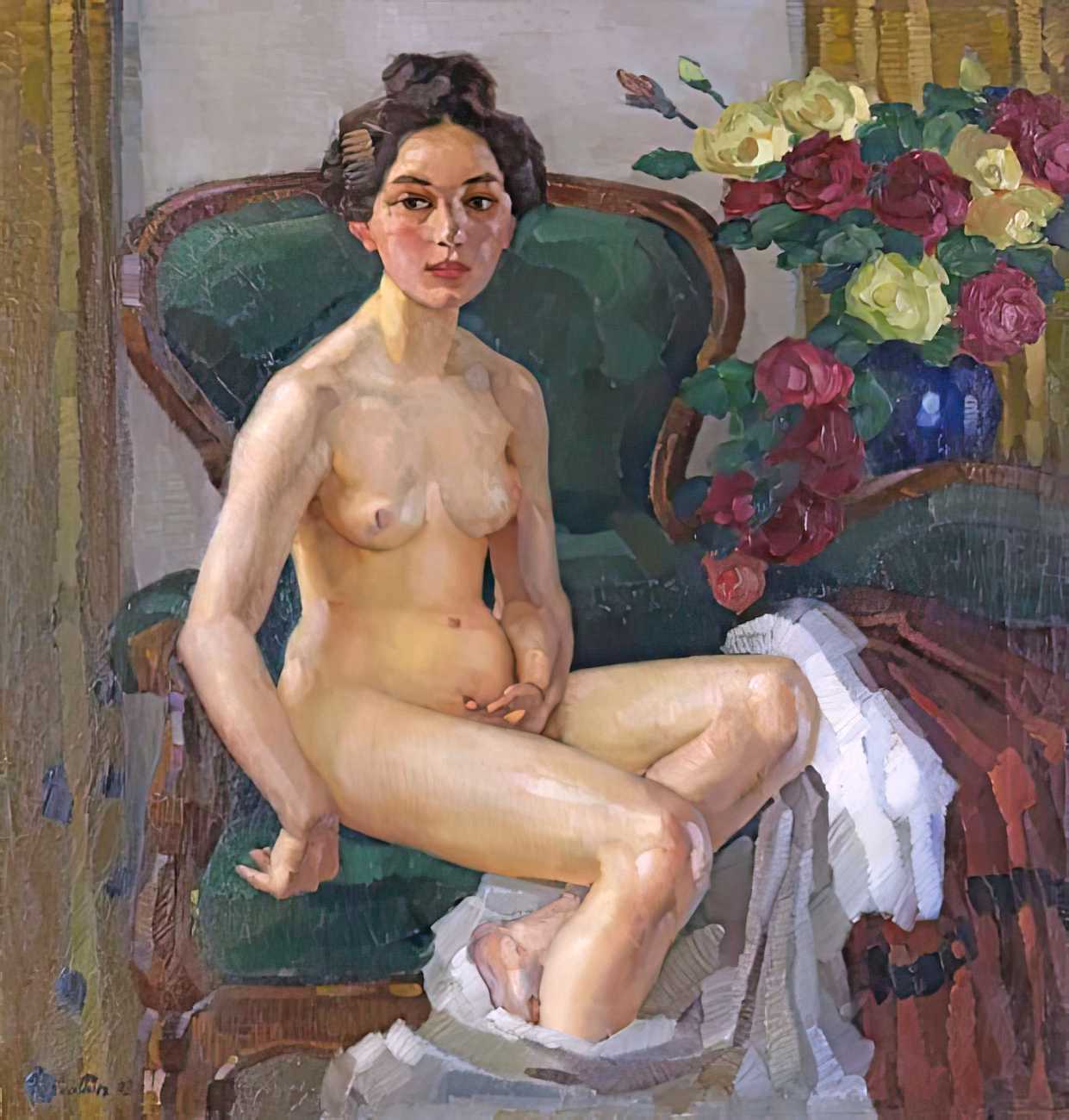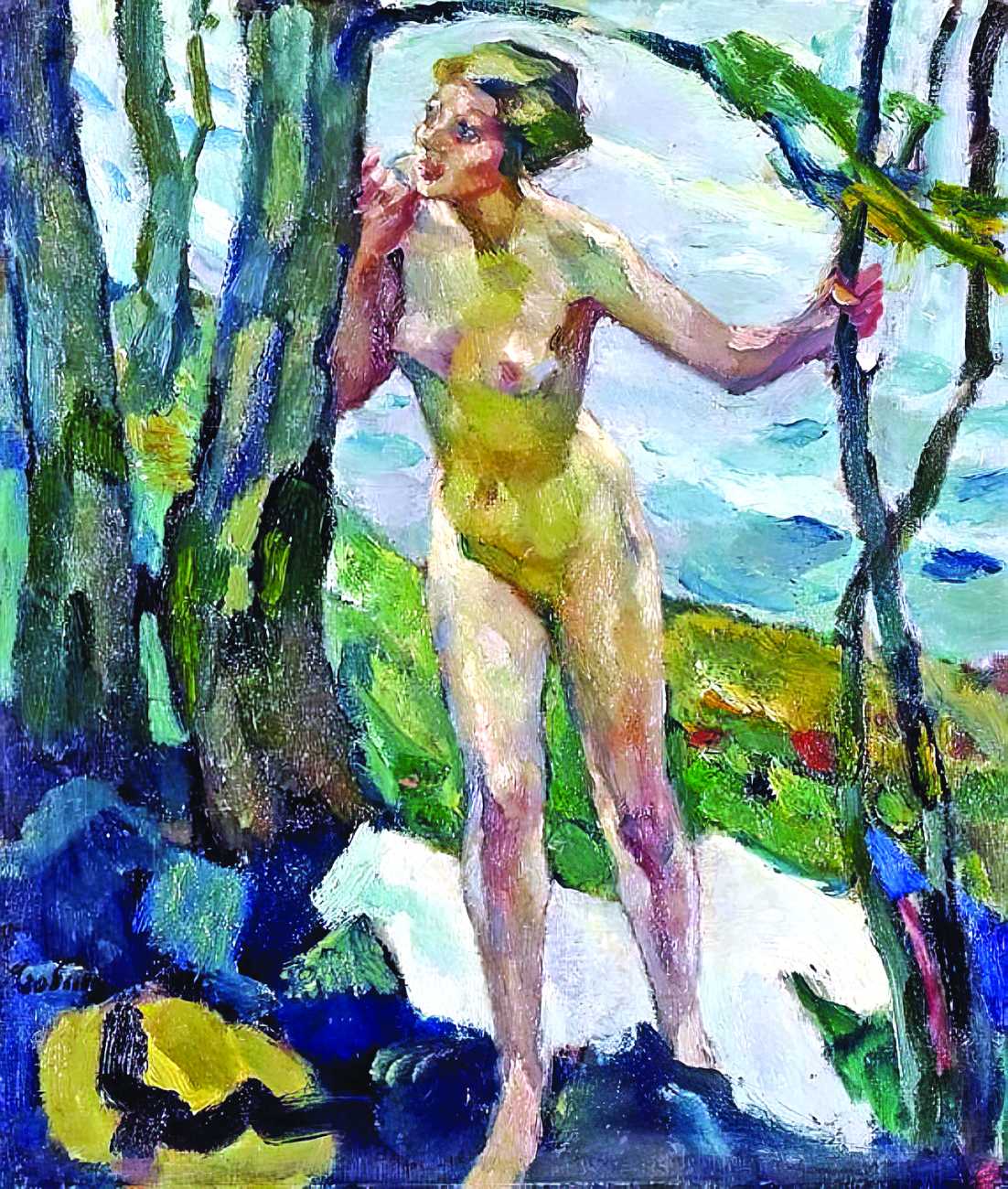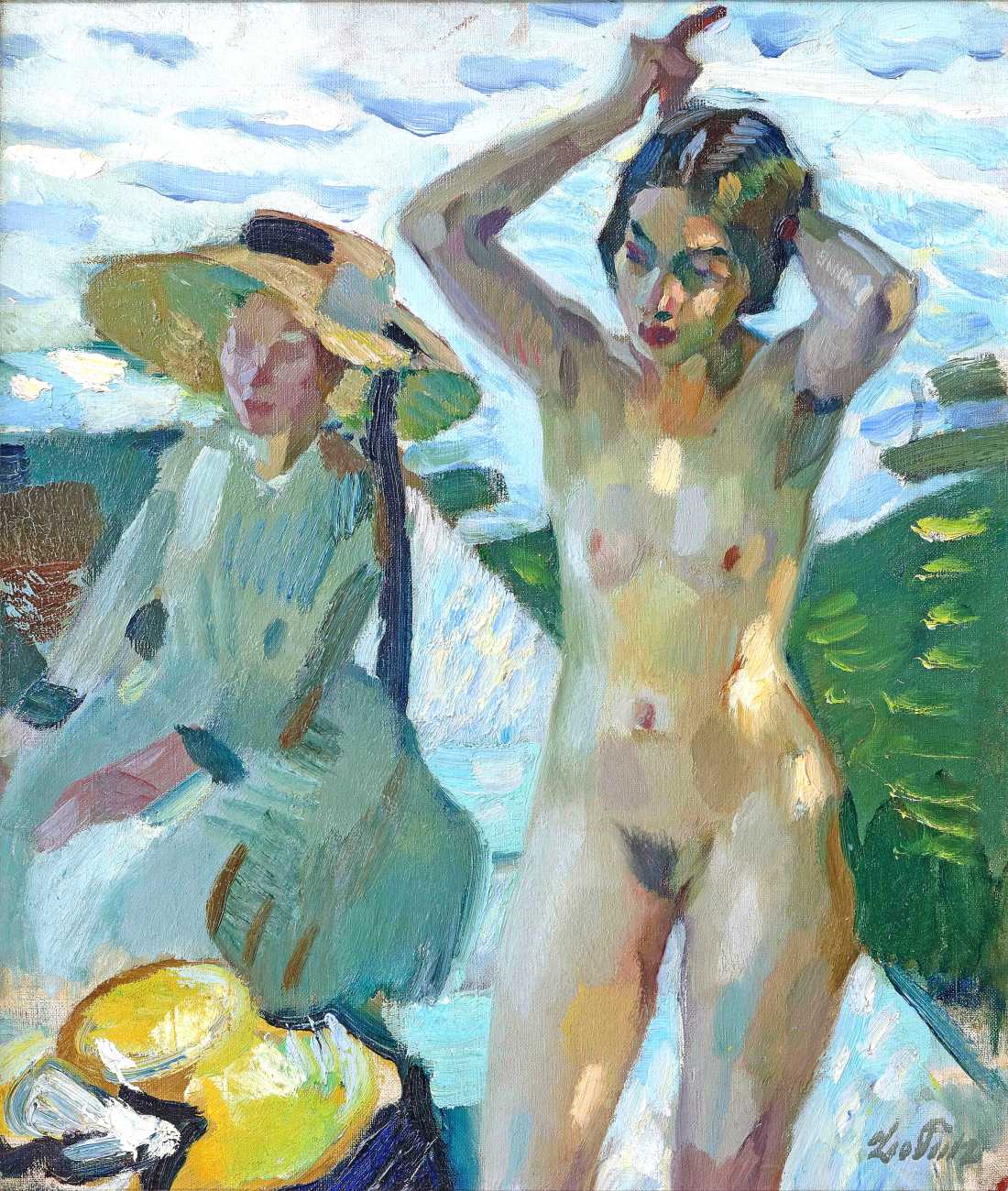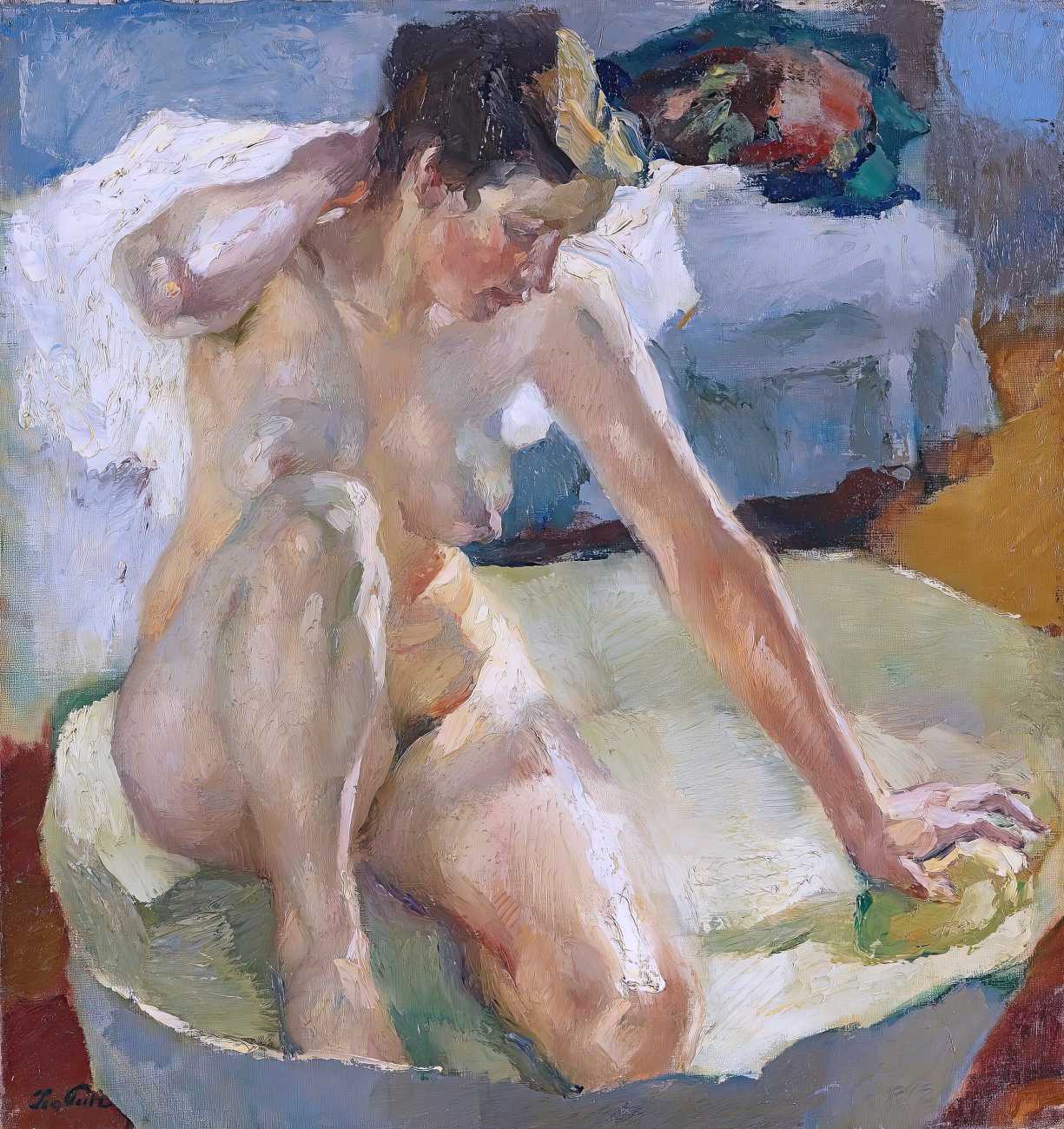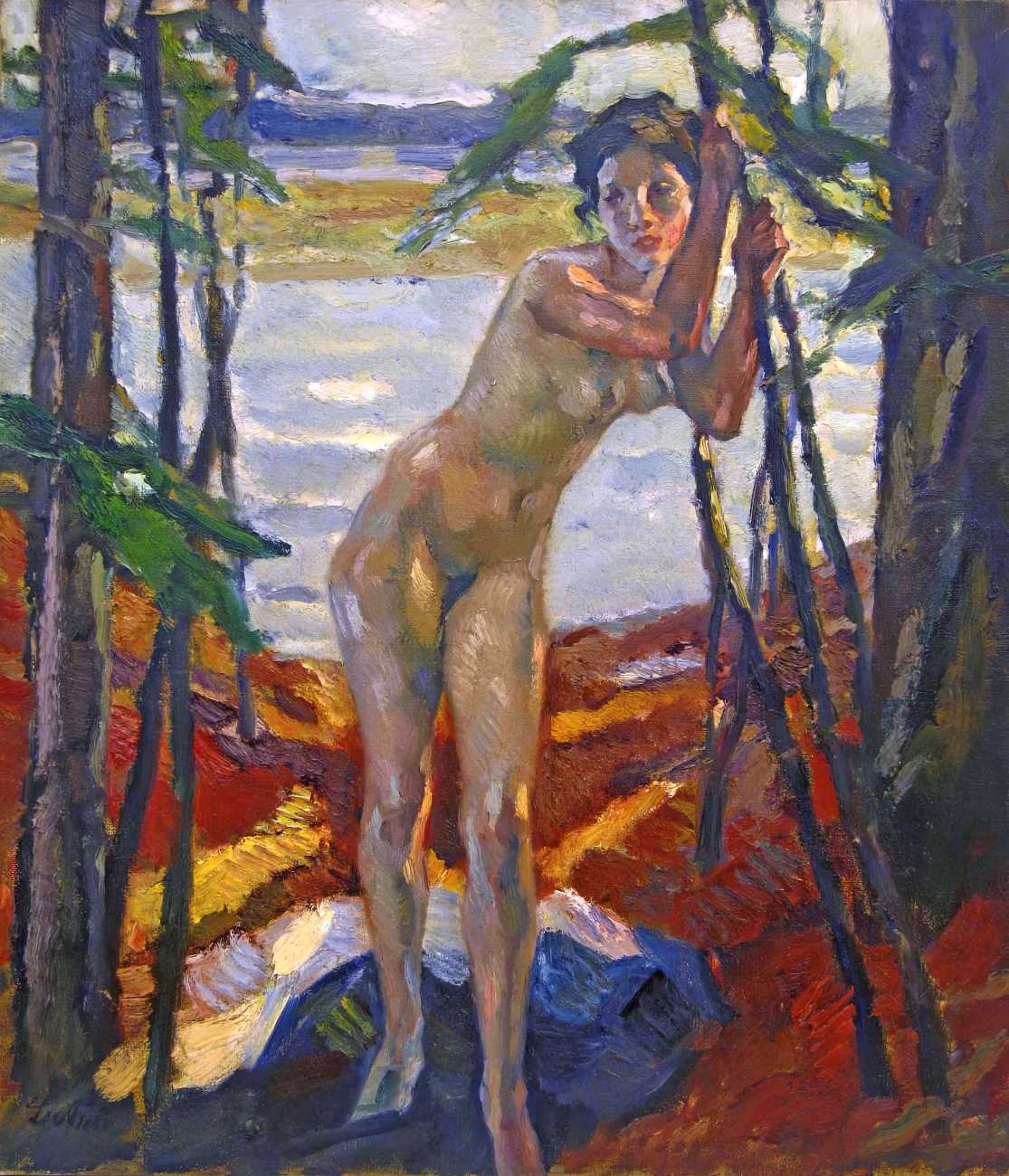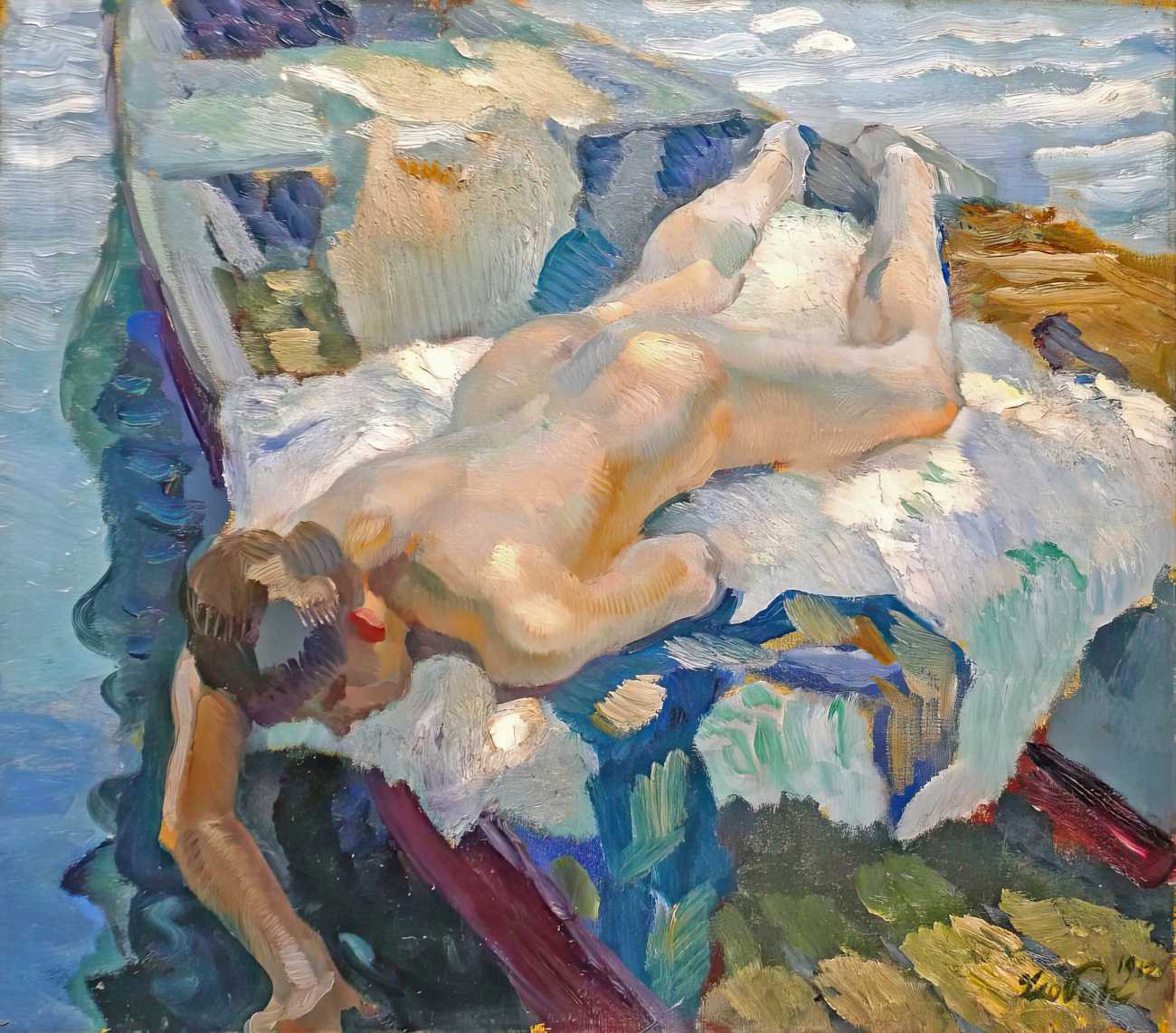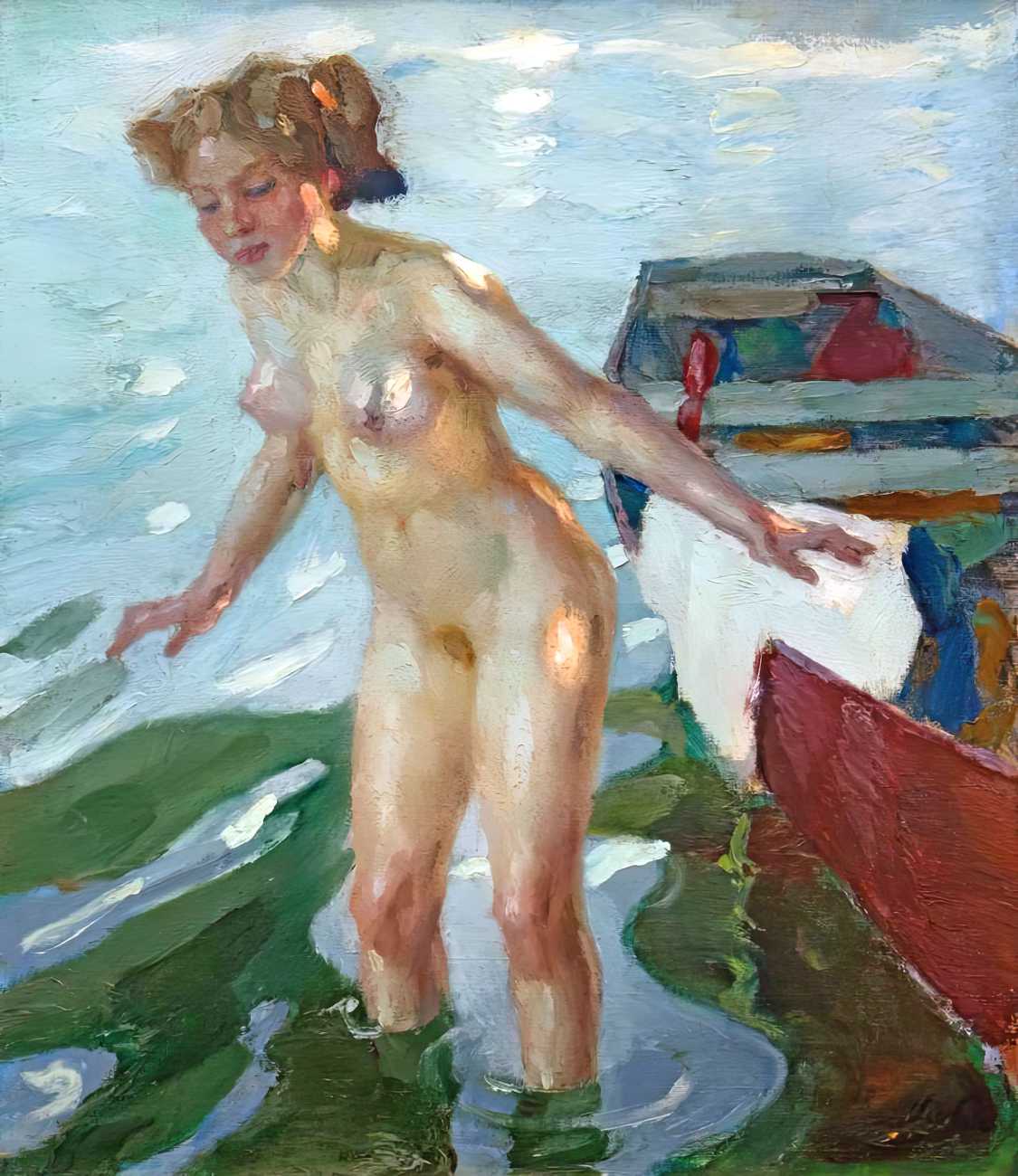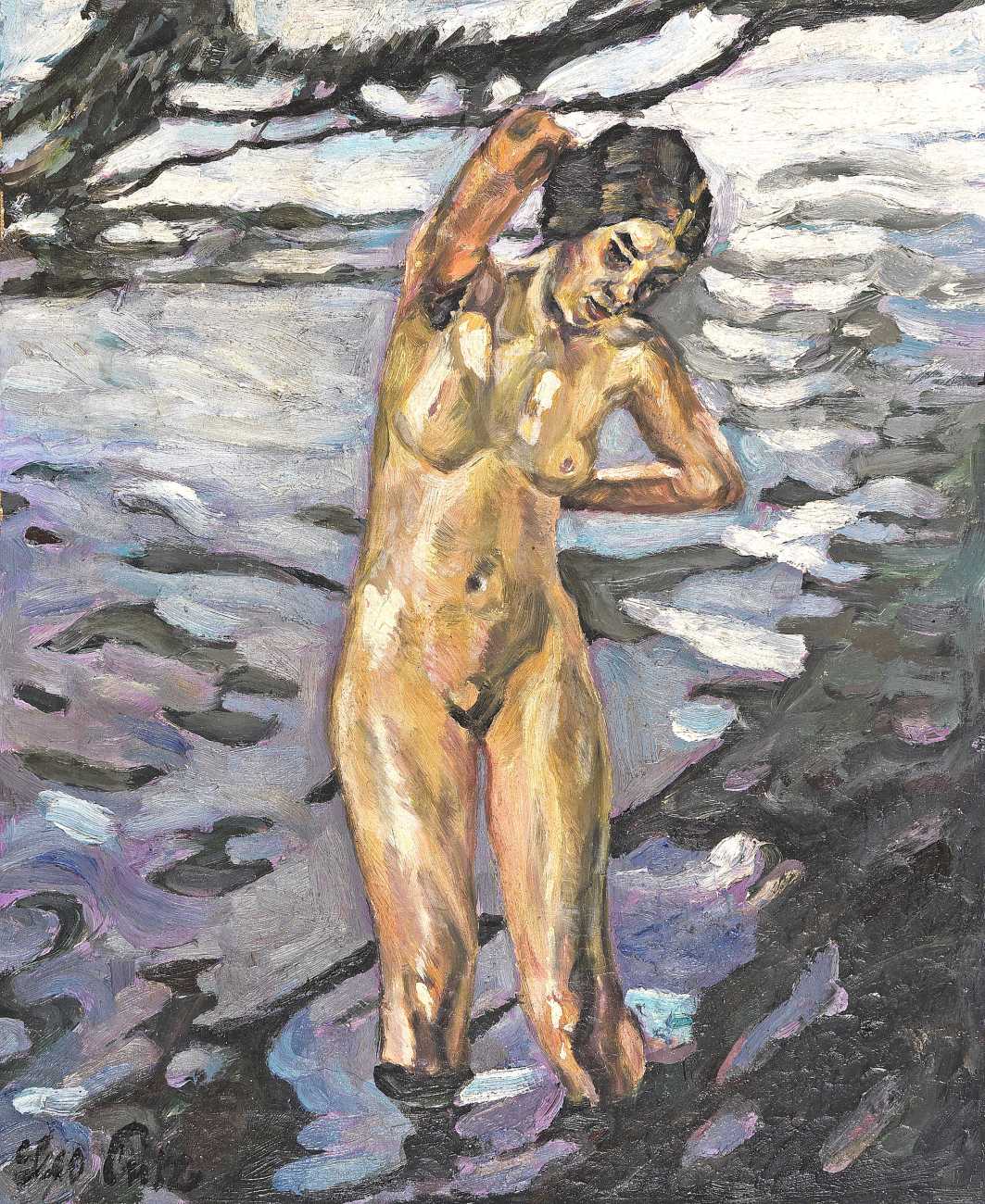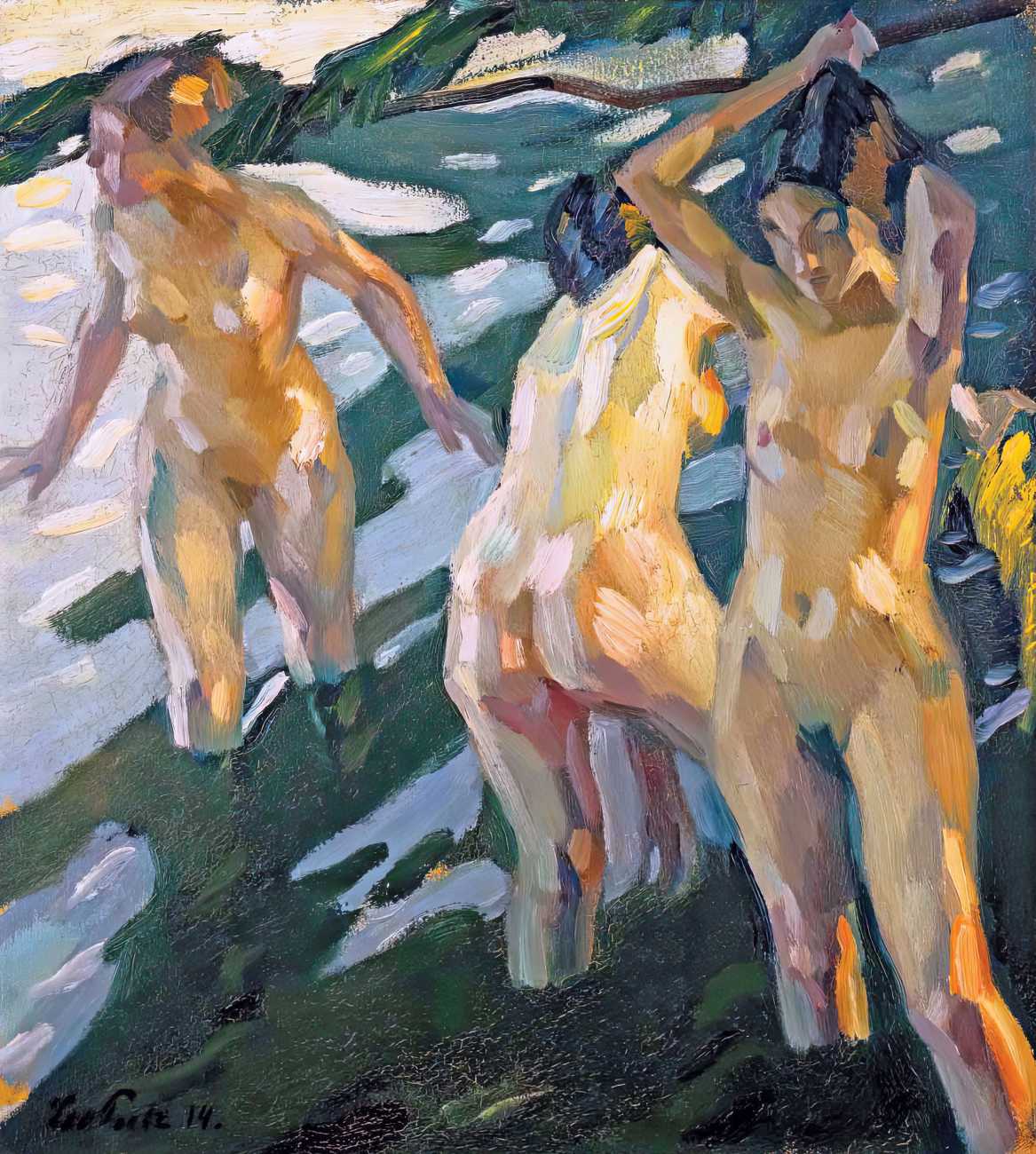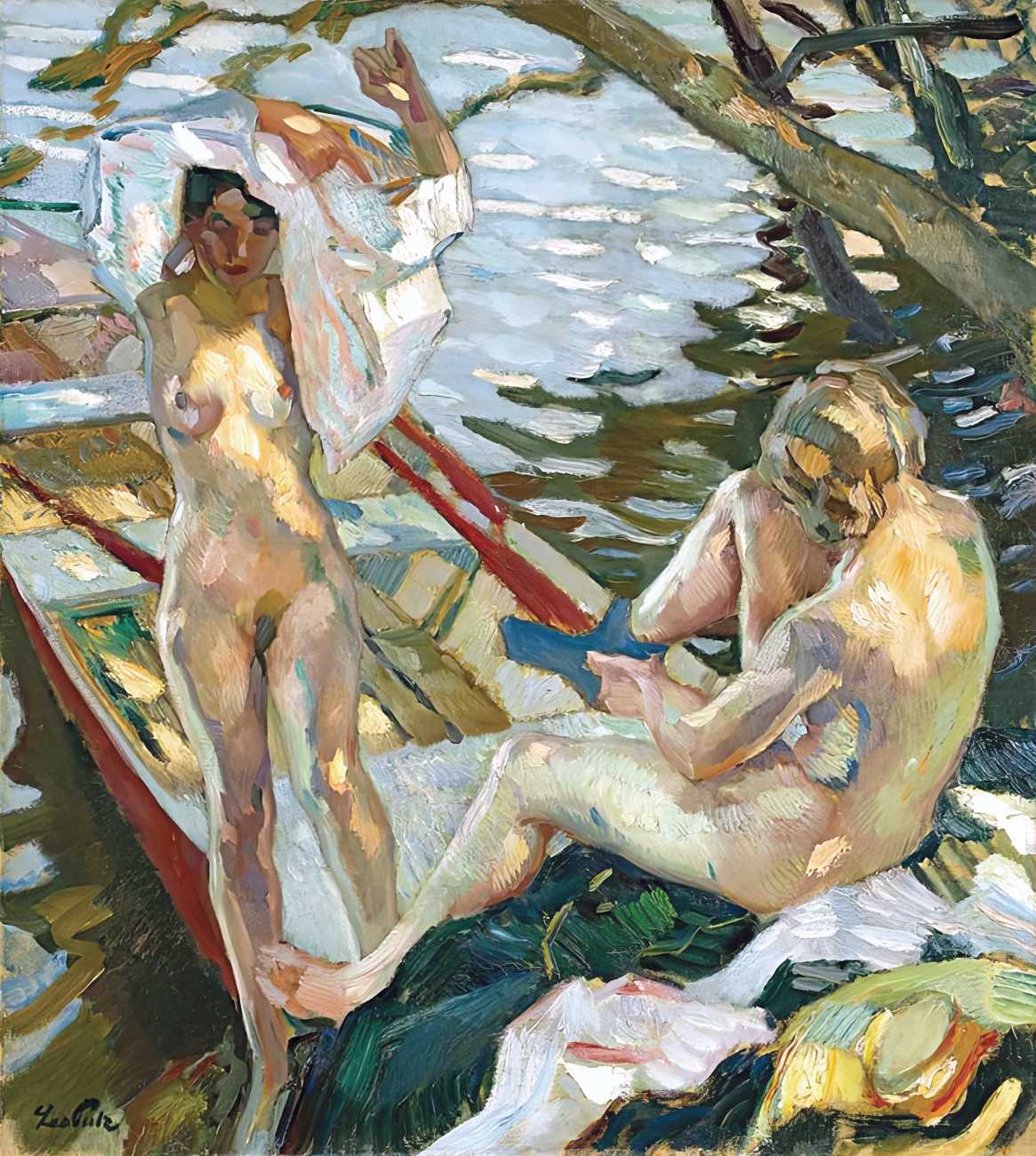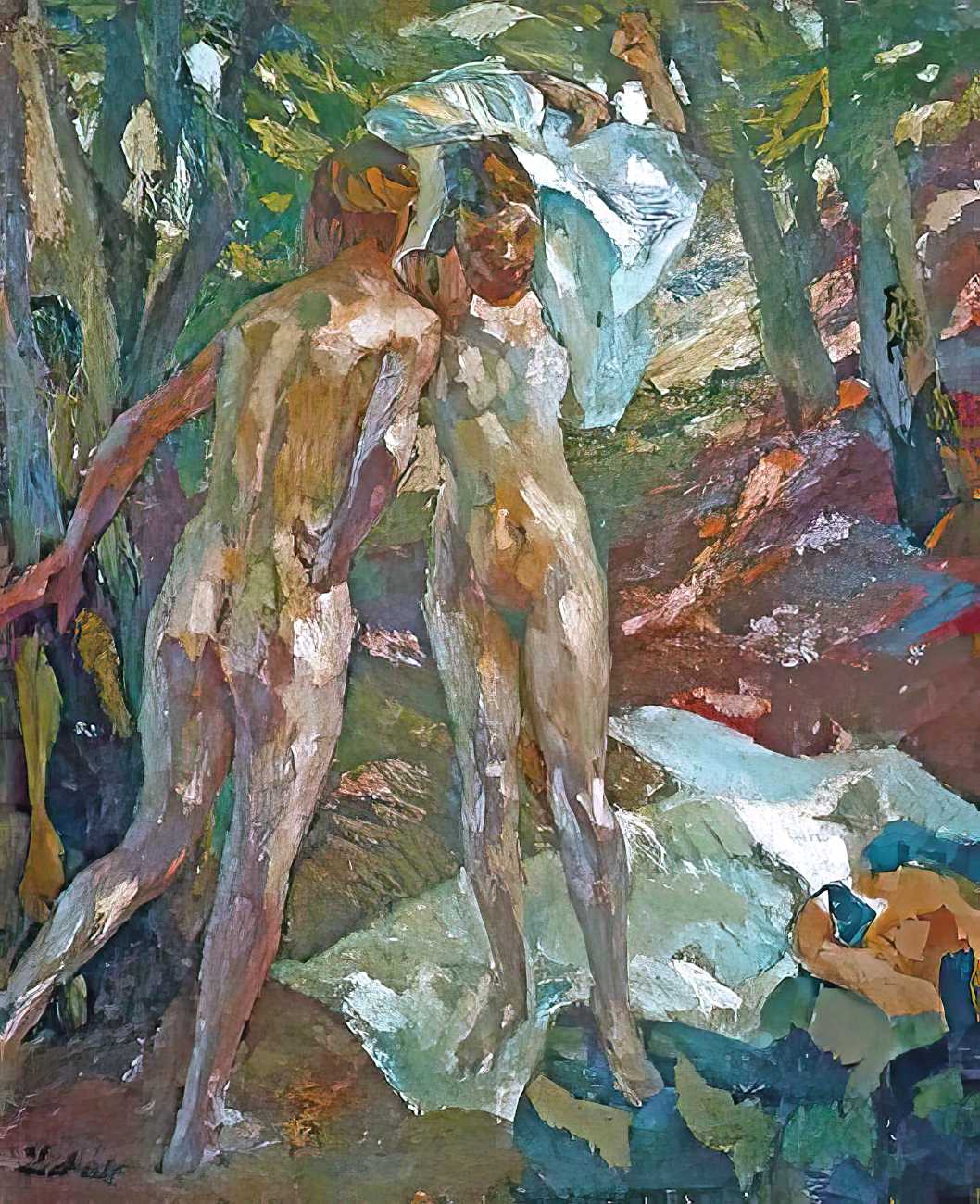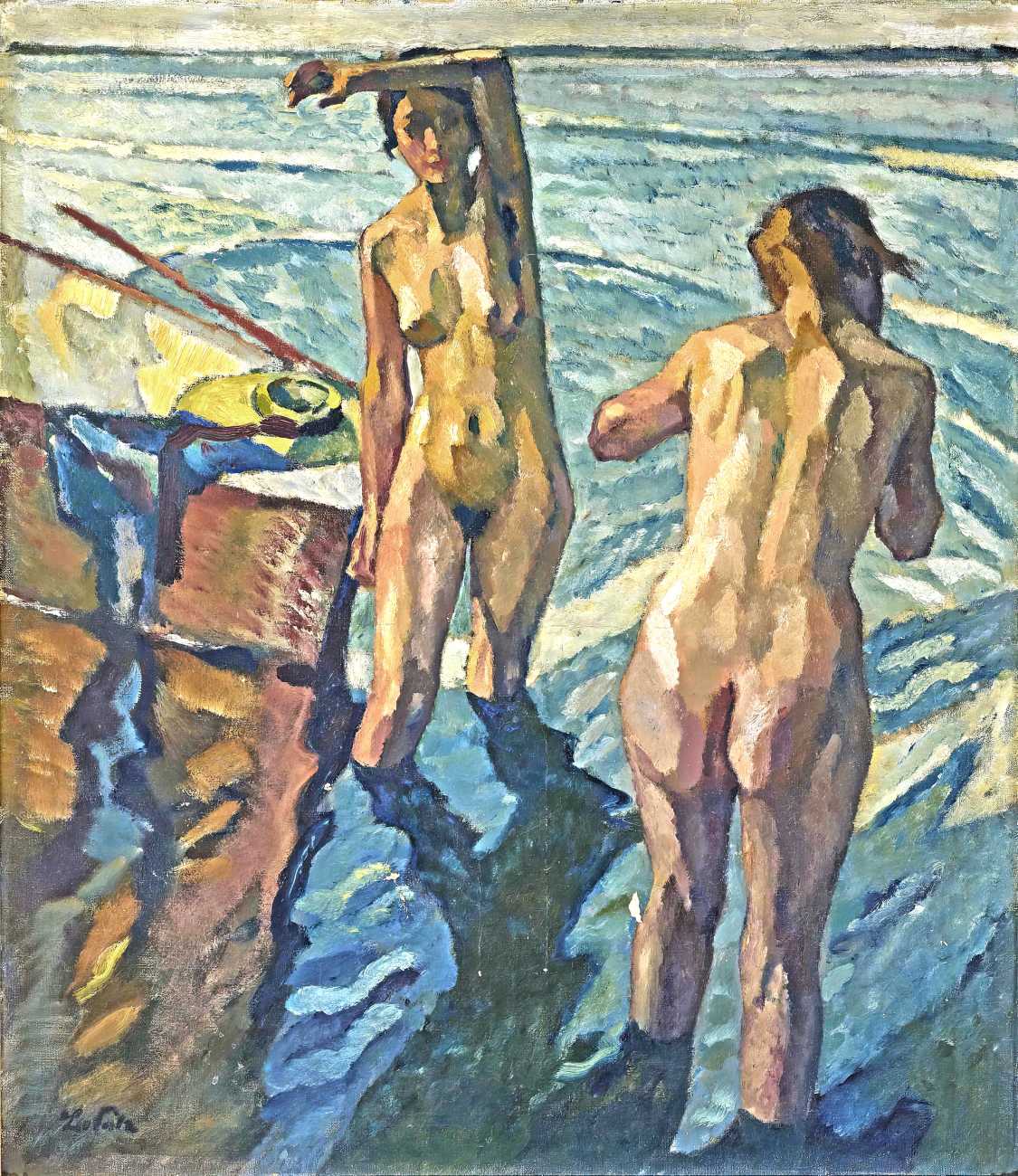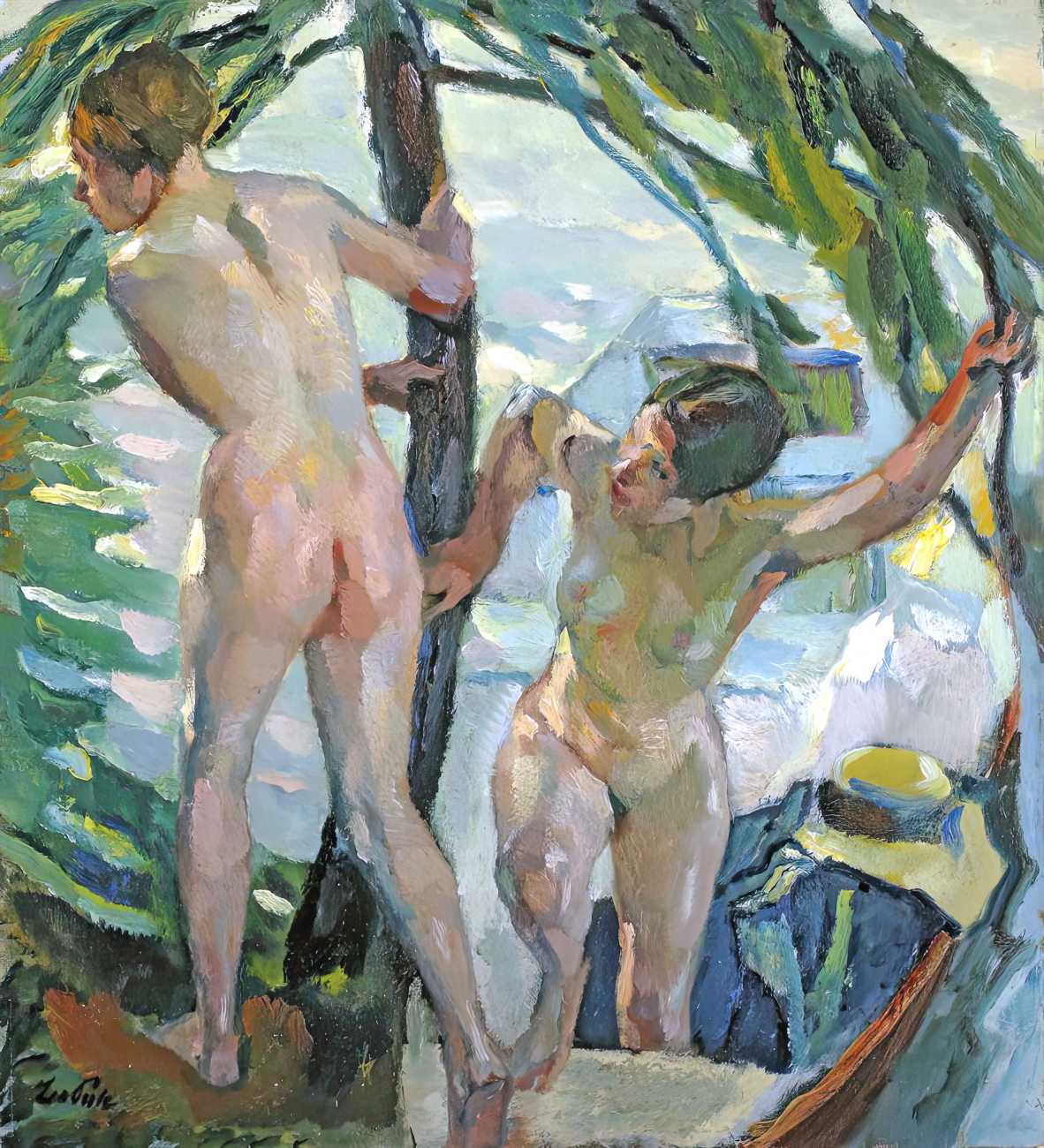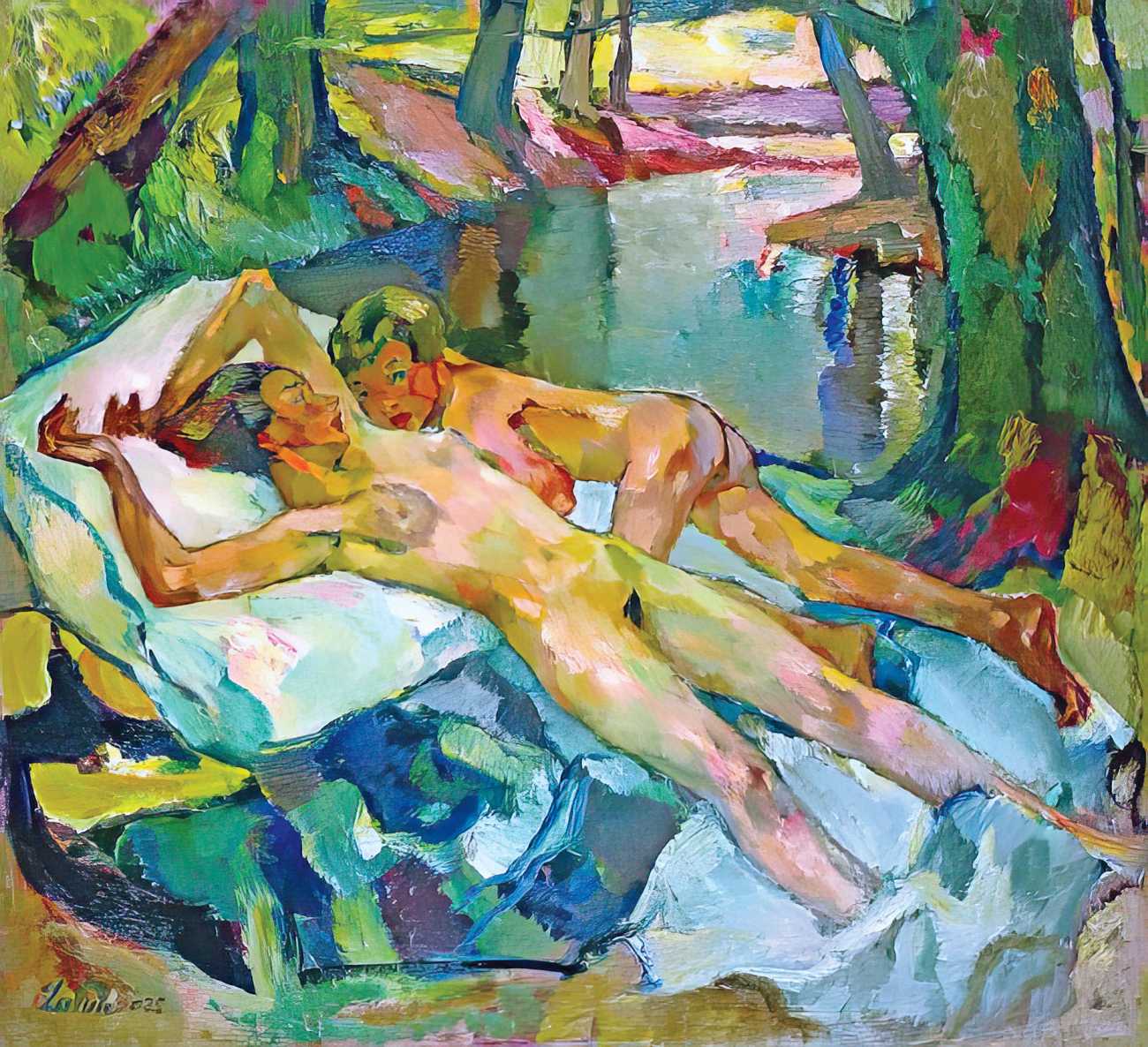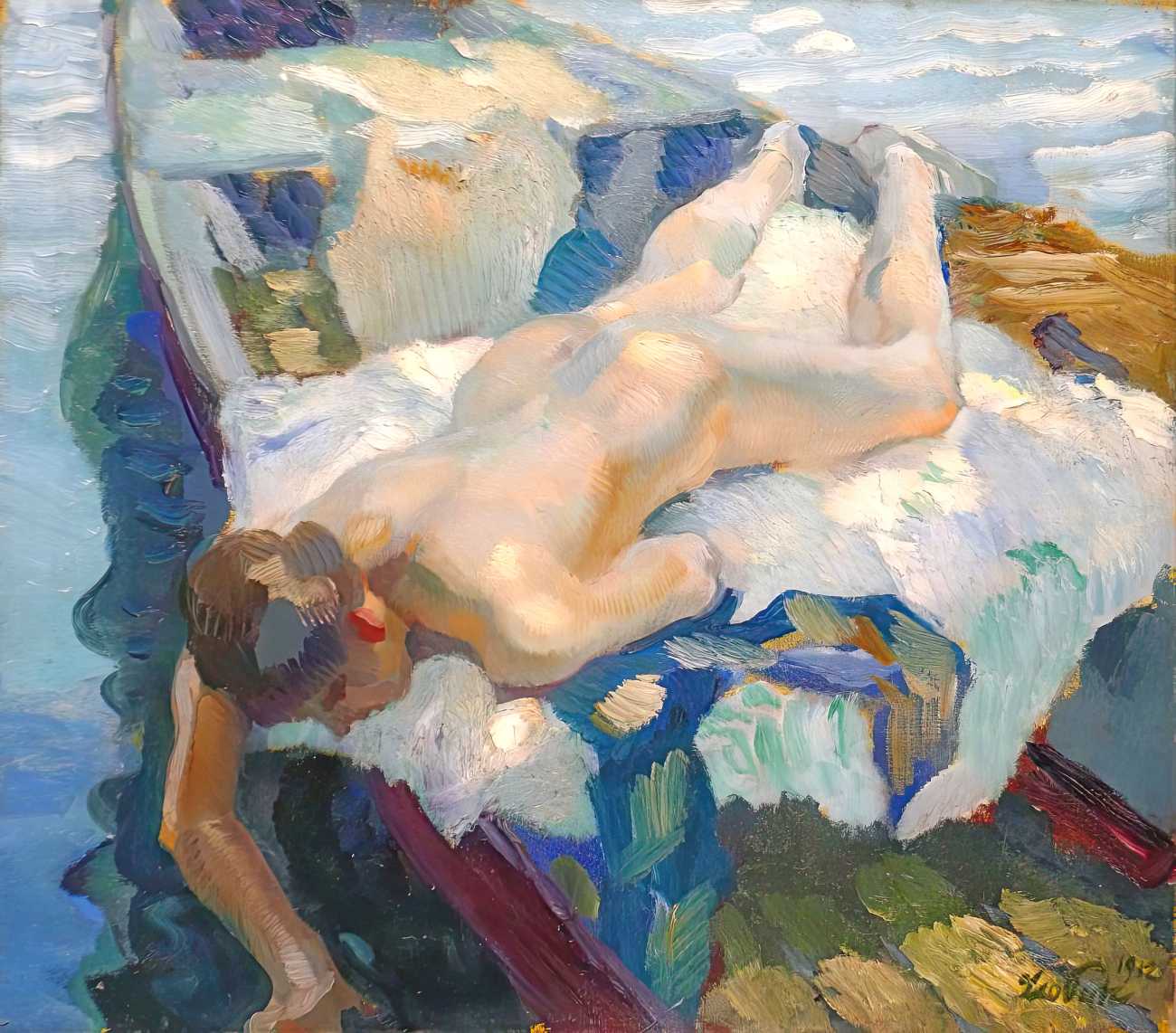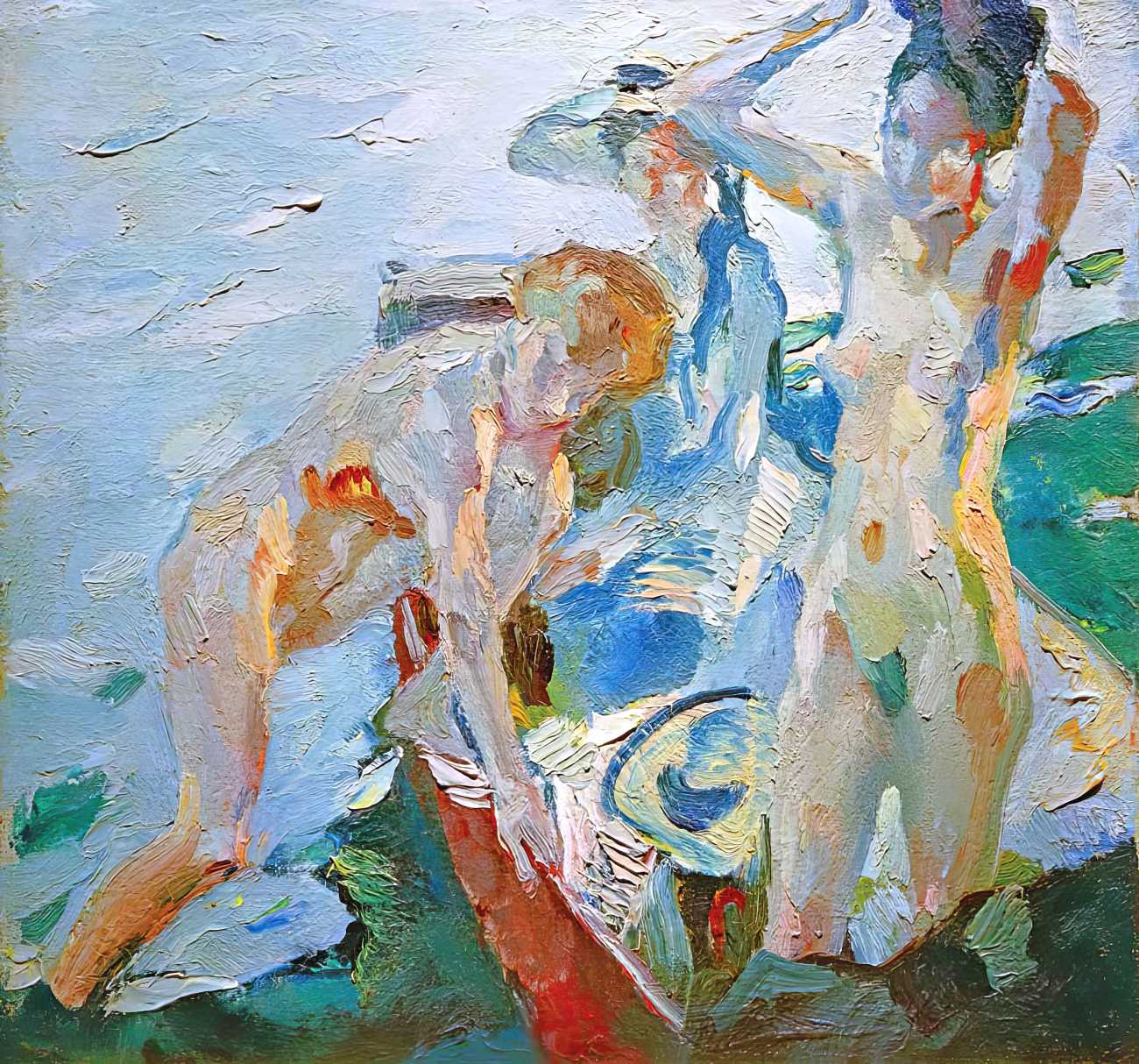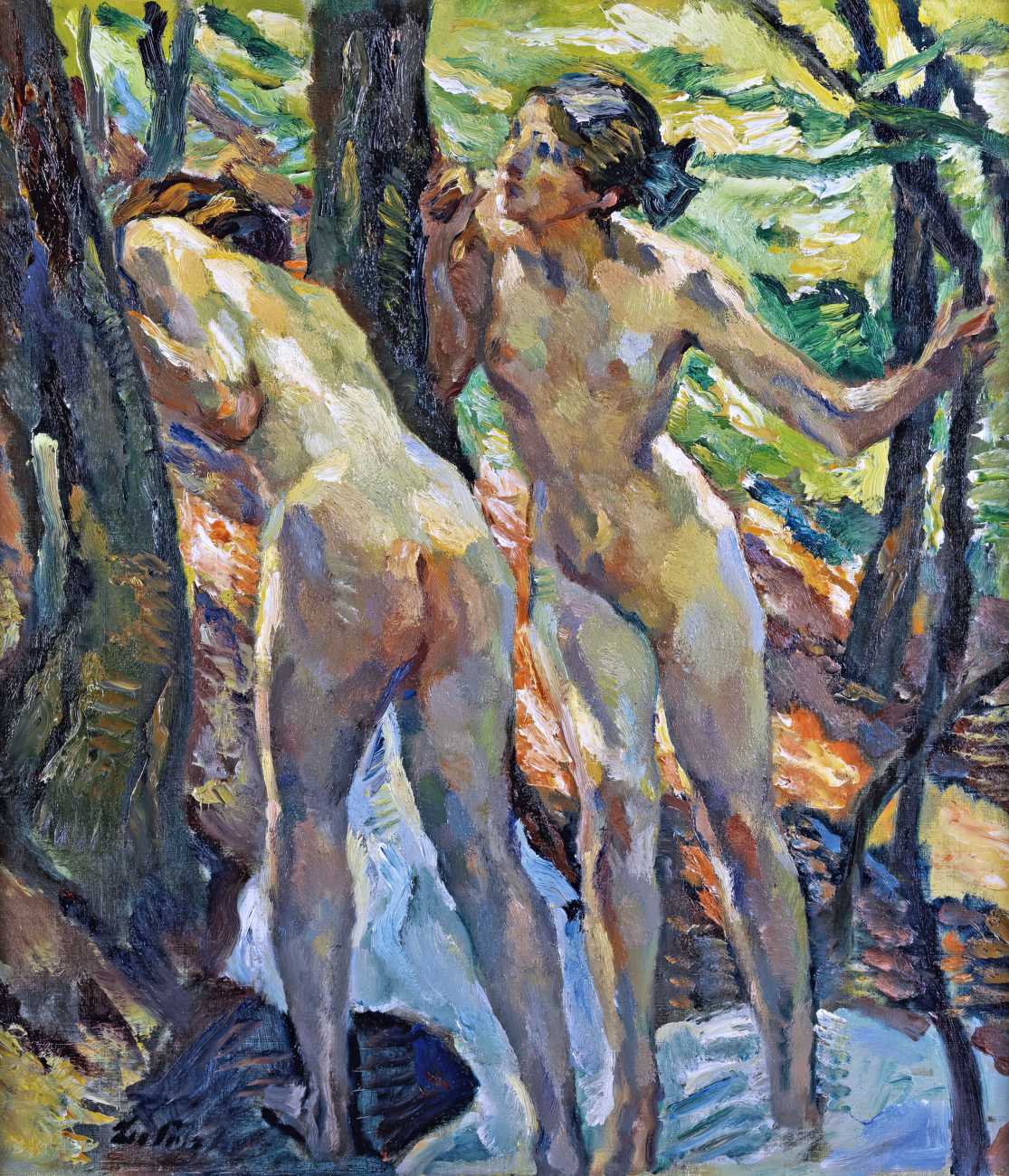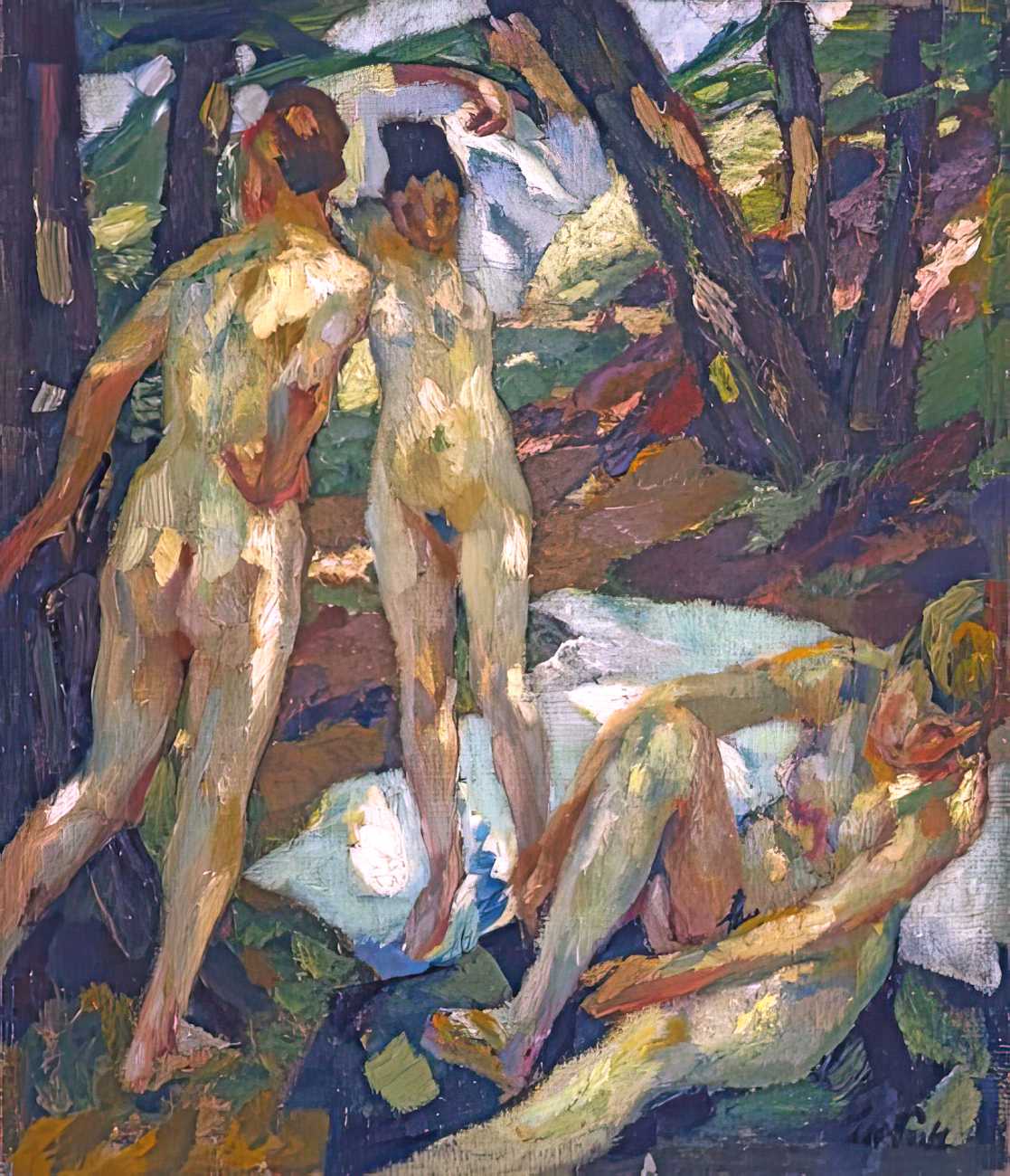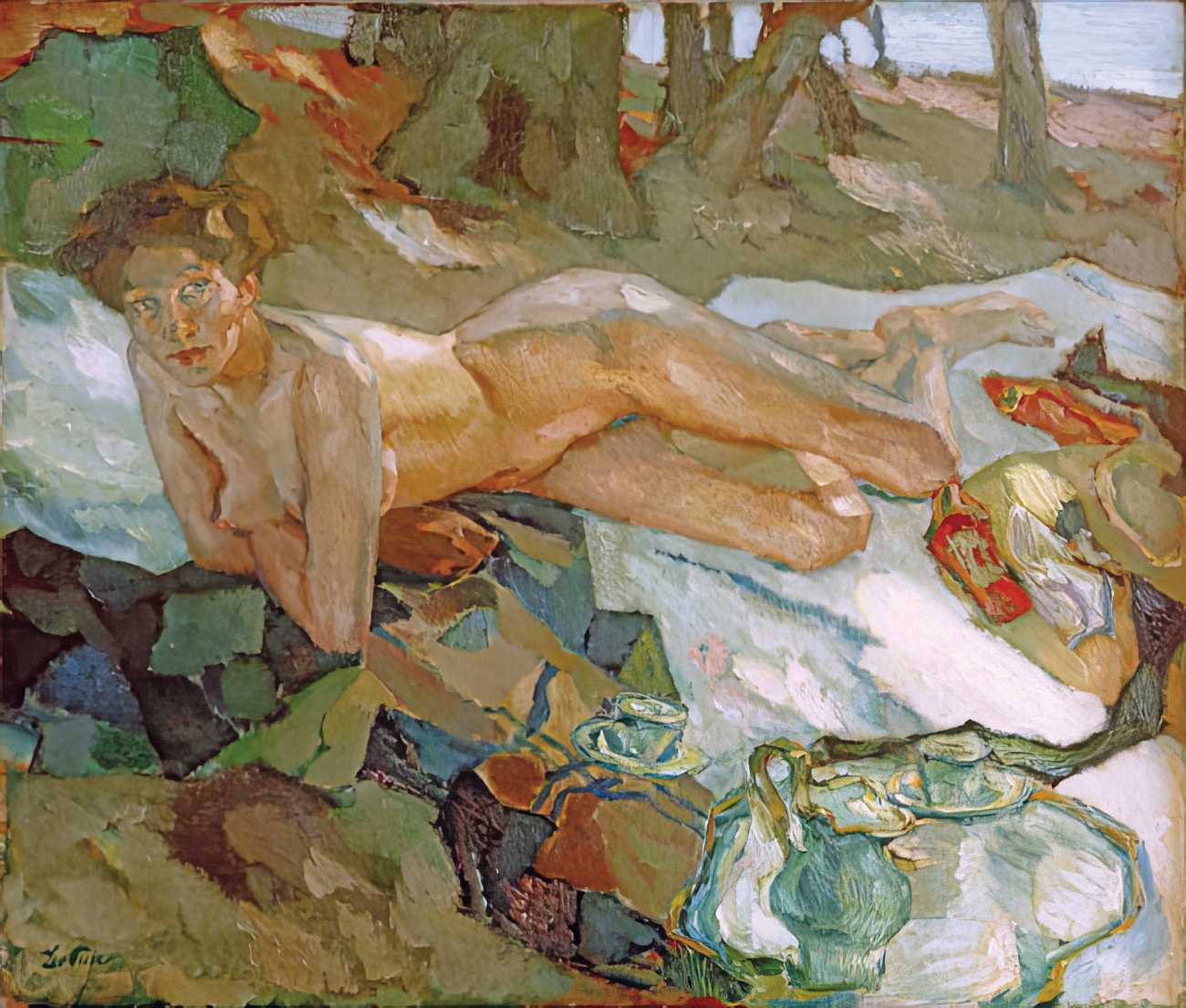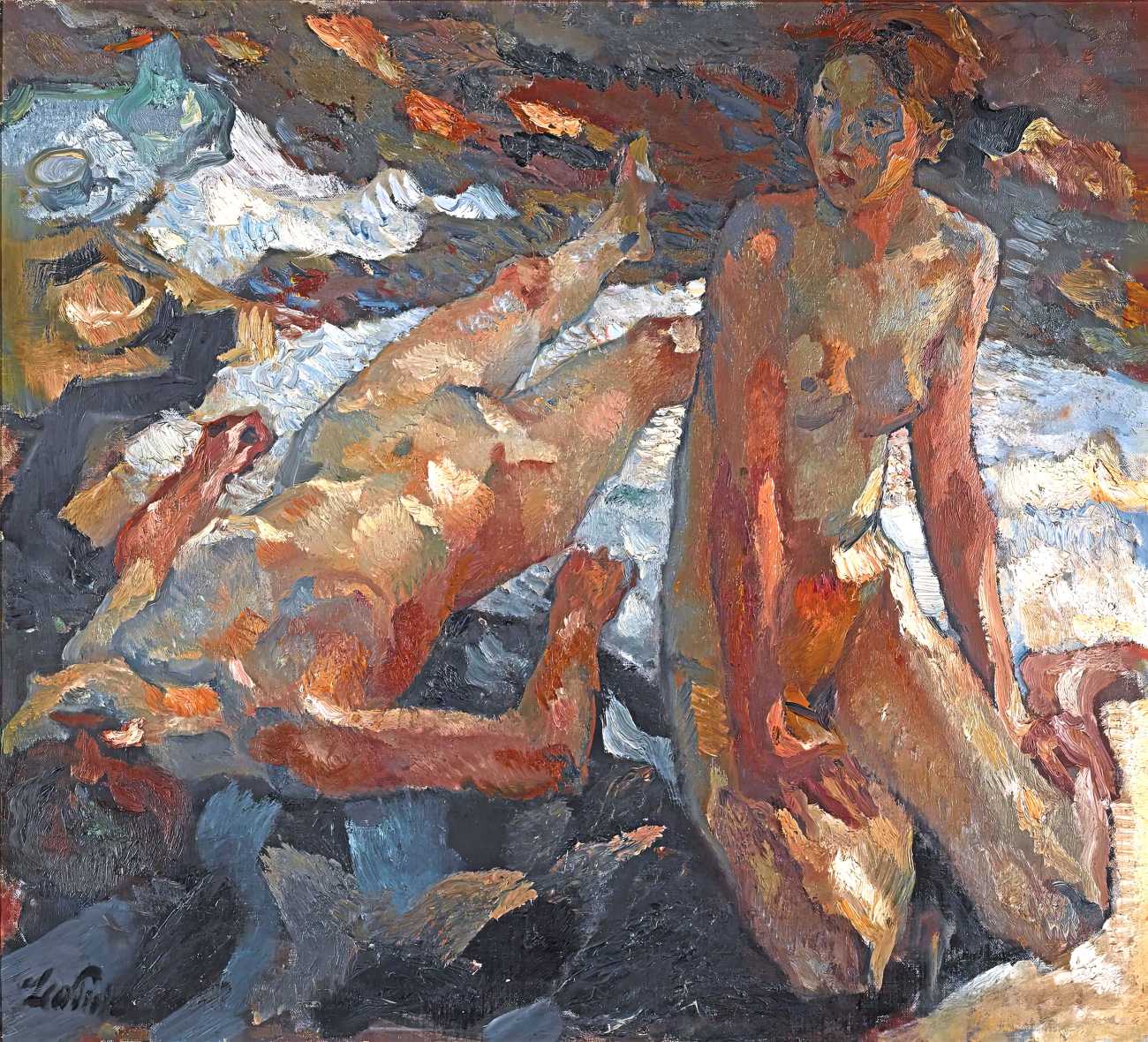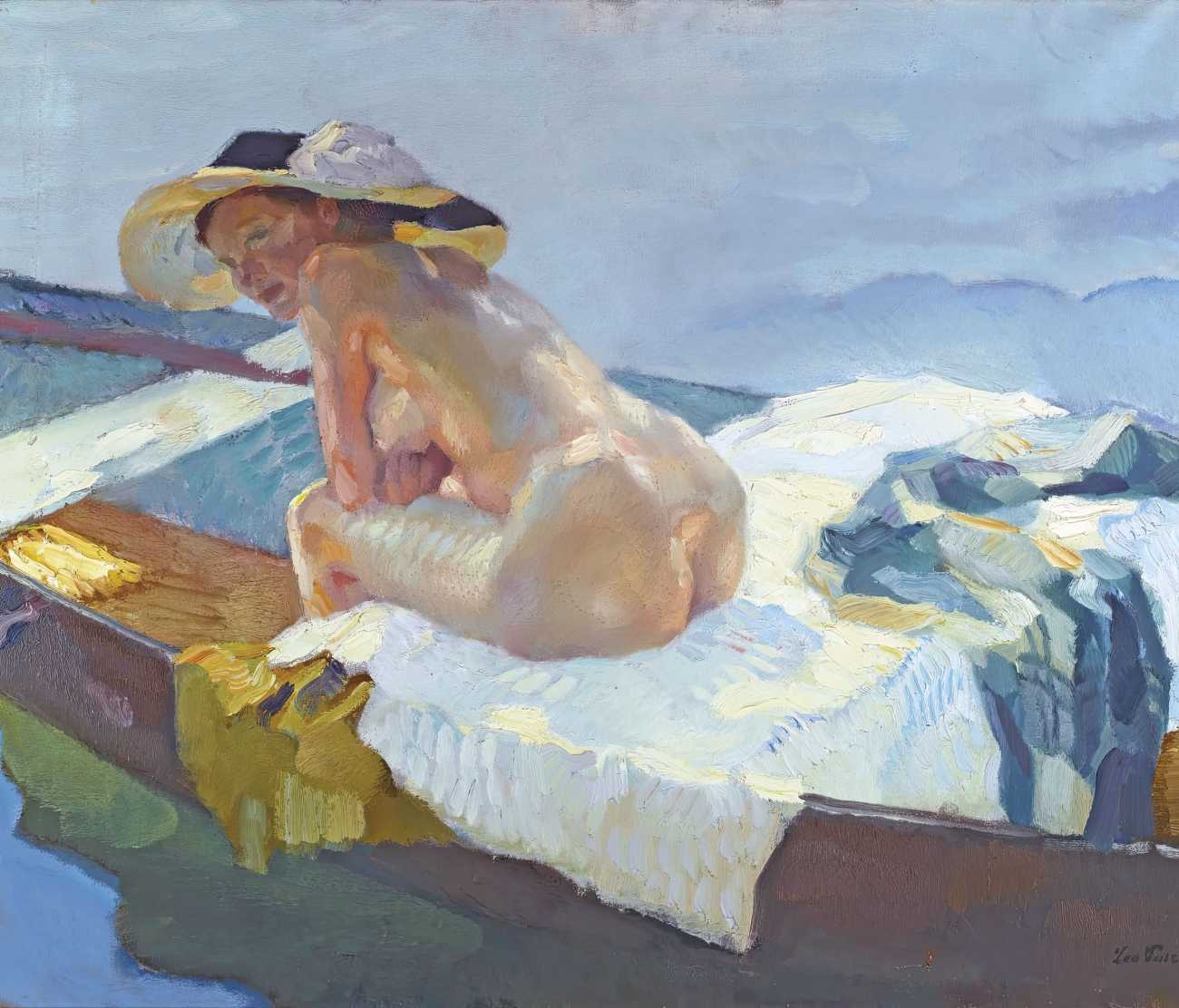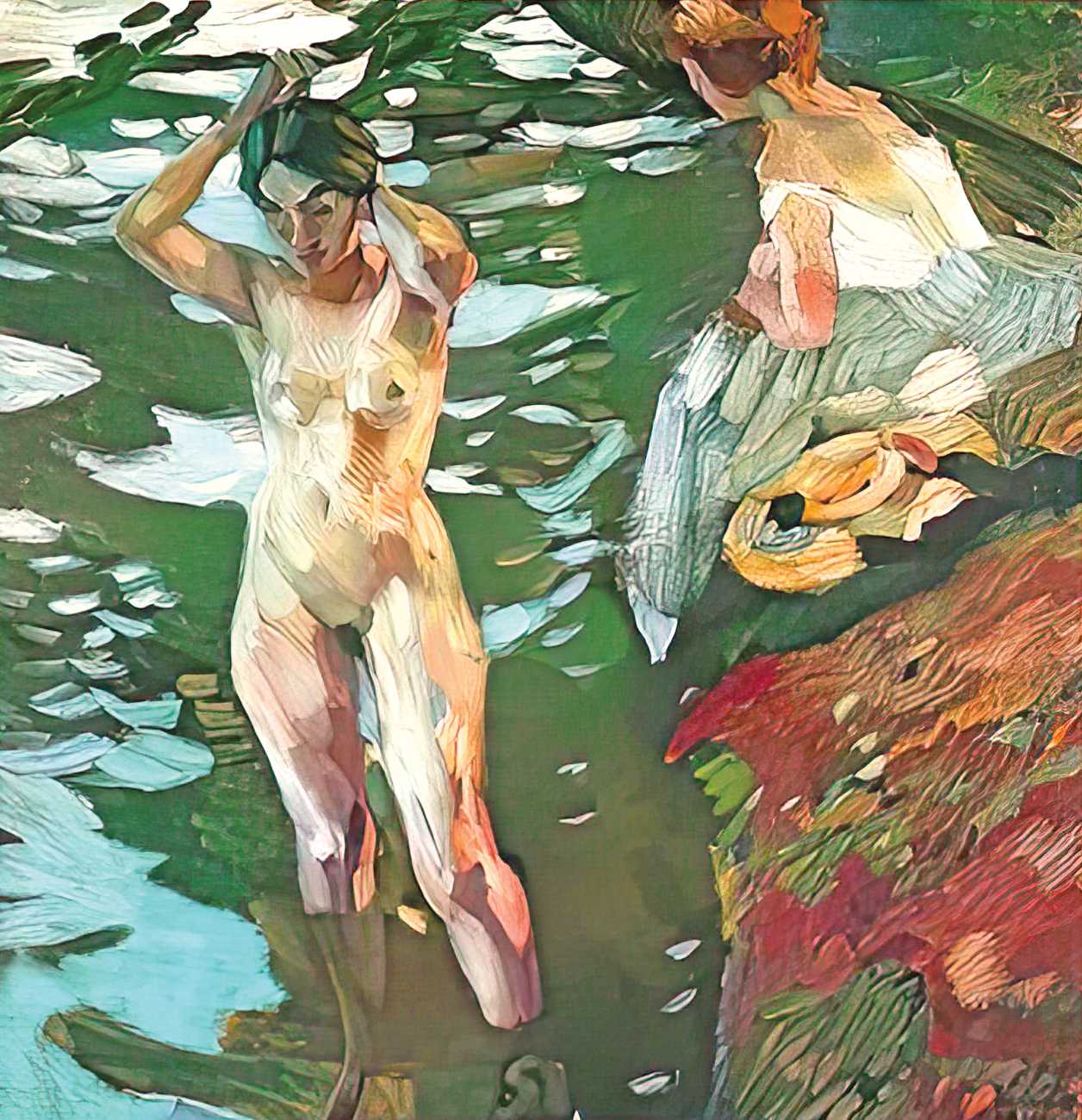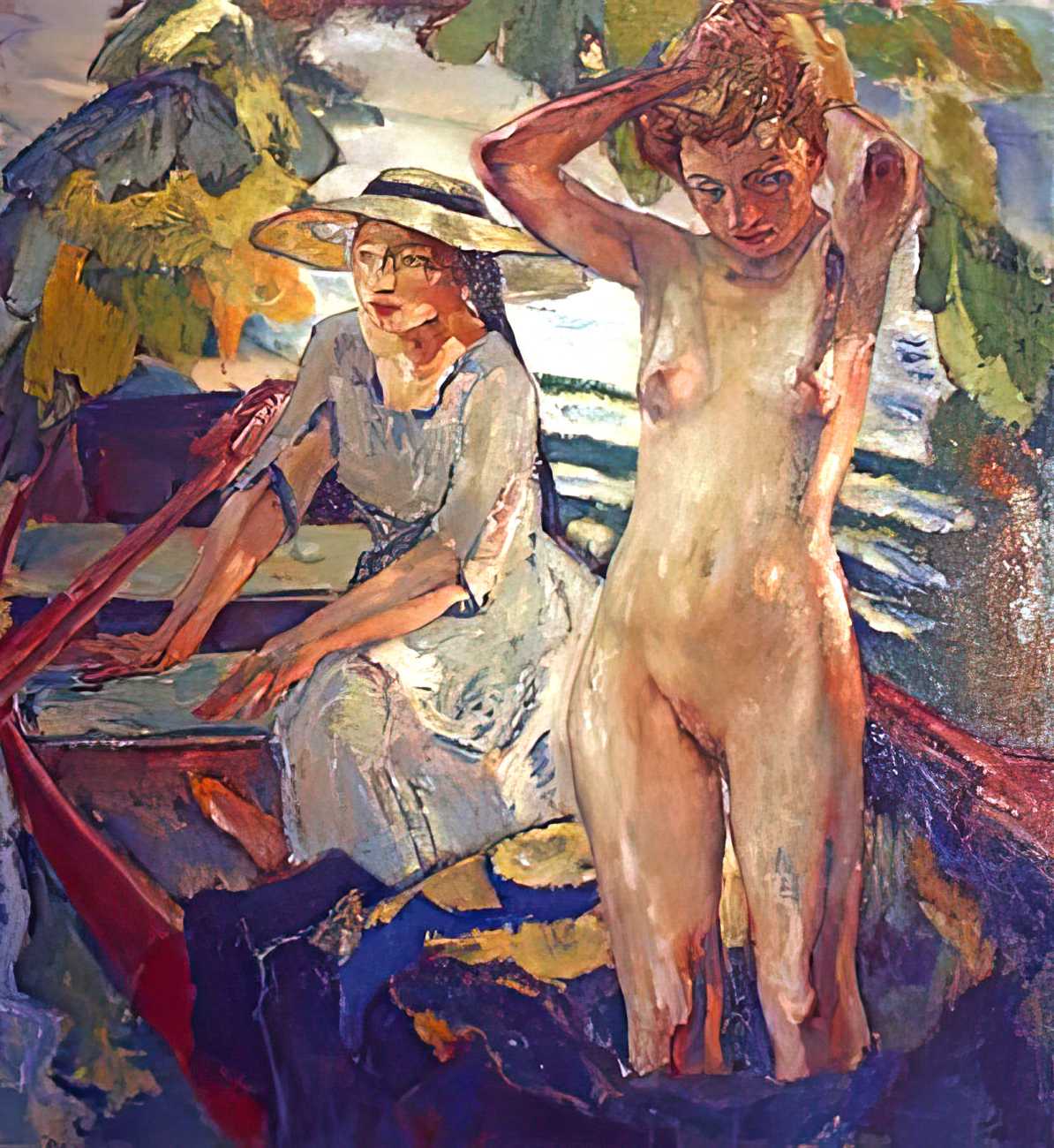
Leo Putz’s Badende (Bathers) form one of the most consistently realised themes in his oeuvre: small- to medium-scale oil canvases that place young women and girls in lakeside or garden settings where the human figure is inseparable from sun, water and foliage. These paintings appear repeatedly from the 1900s into the 1920s.
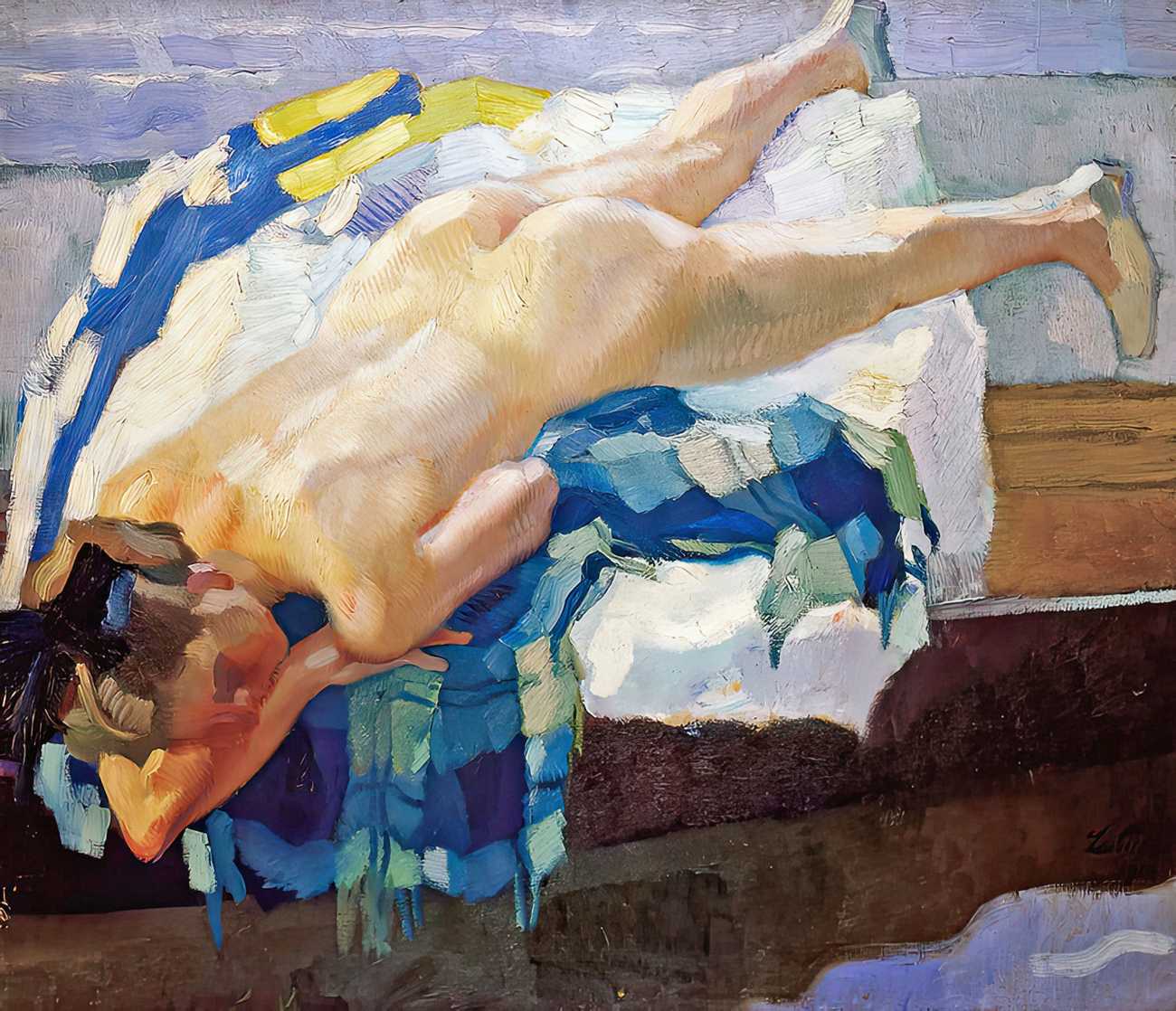
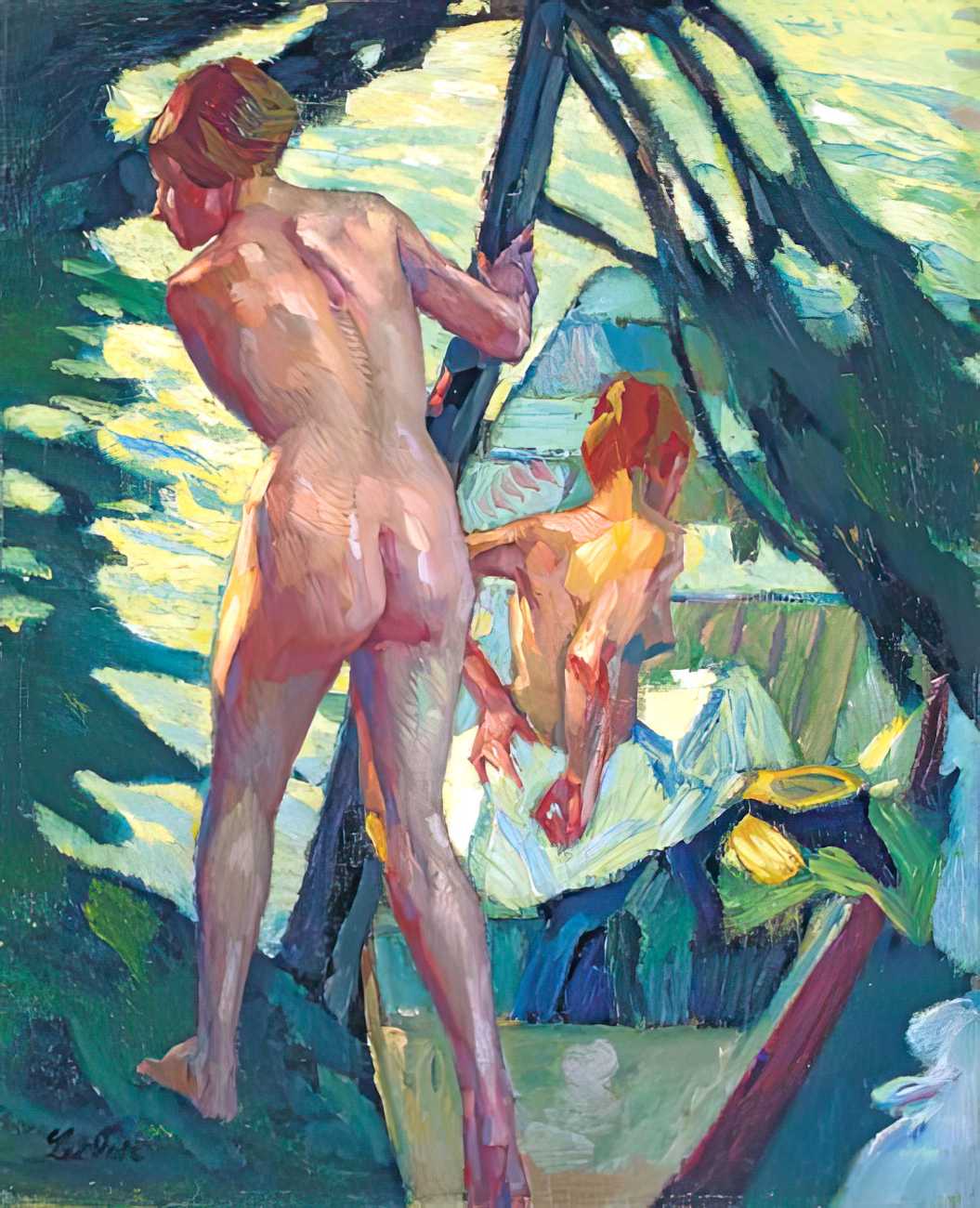
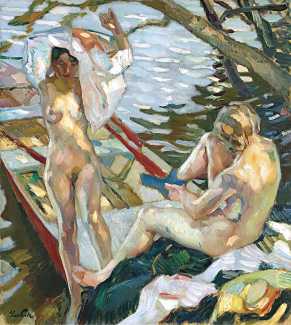
The series marries plein-air freshness with a decorative art nouveau line. Putz often composes the scene so that the bodies are integrated into the landscape through repeated shapes – arched tree branches, rippling water, folded cloth – and a palette that emphasises warm flesh tones against cool water and verdure. His brushwork ranges from relatively broad, sketch-like strokes that capture light and reflection to more modulated passages for the torso and face, producing a tension between immediacy and careful modelling.
Many of the Badende paintings are set in specific locations such as the Chiemsee area – Putz painted commissioned views and bathing scenes around lakes and castle parks, so the works can conveniently be read as genre scenes and landscapes as well as studies of naked women.
Putz’s Badende balance innocence and sensuality: nudity is seldom eroticised through dramatic poses or explicit detail. Instead, mood, reflected light and the communal yet secluded setting of a lakeside grove create a contemplative eroticism – viewers are invited to appreciate the body as a natural element in an idyllic scene rather than as the central object. The paintings capture a very specific strand of early-twentieth-century Germanic painting, where impressionist light and decorative modernism met to celebrate leisure, nature, and the painted surface.
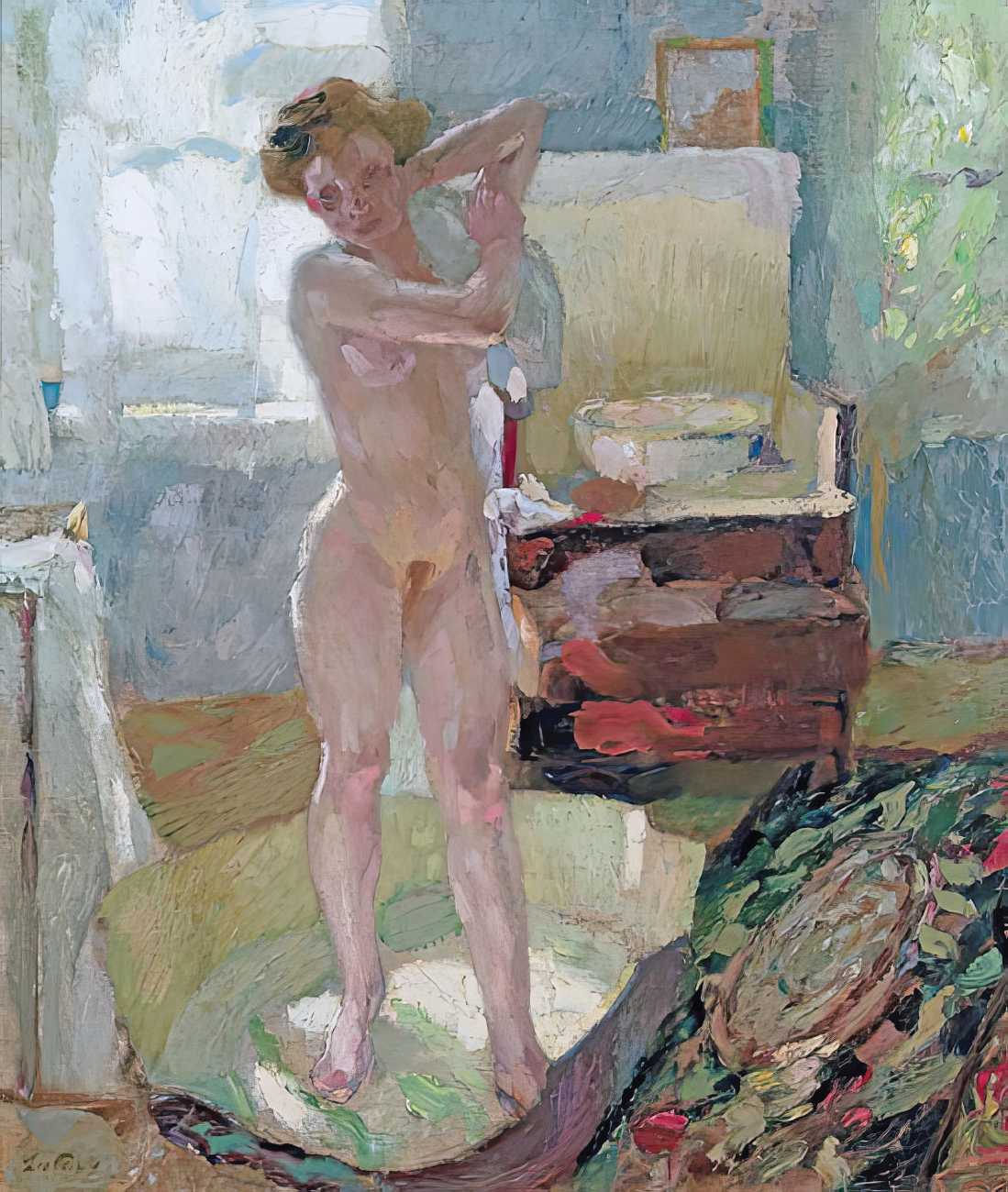
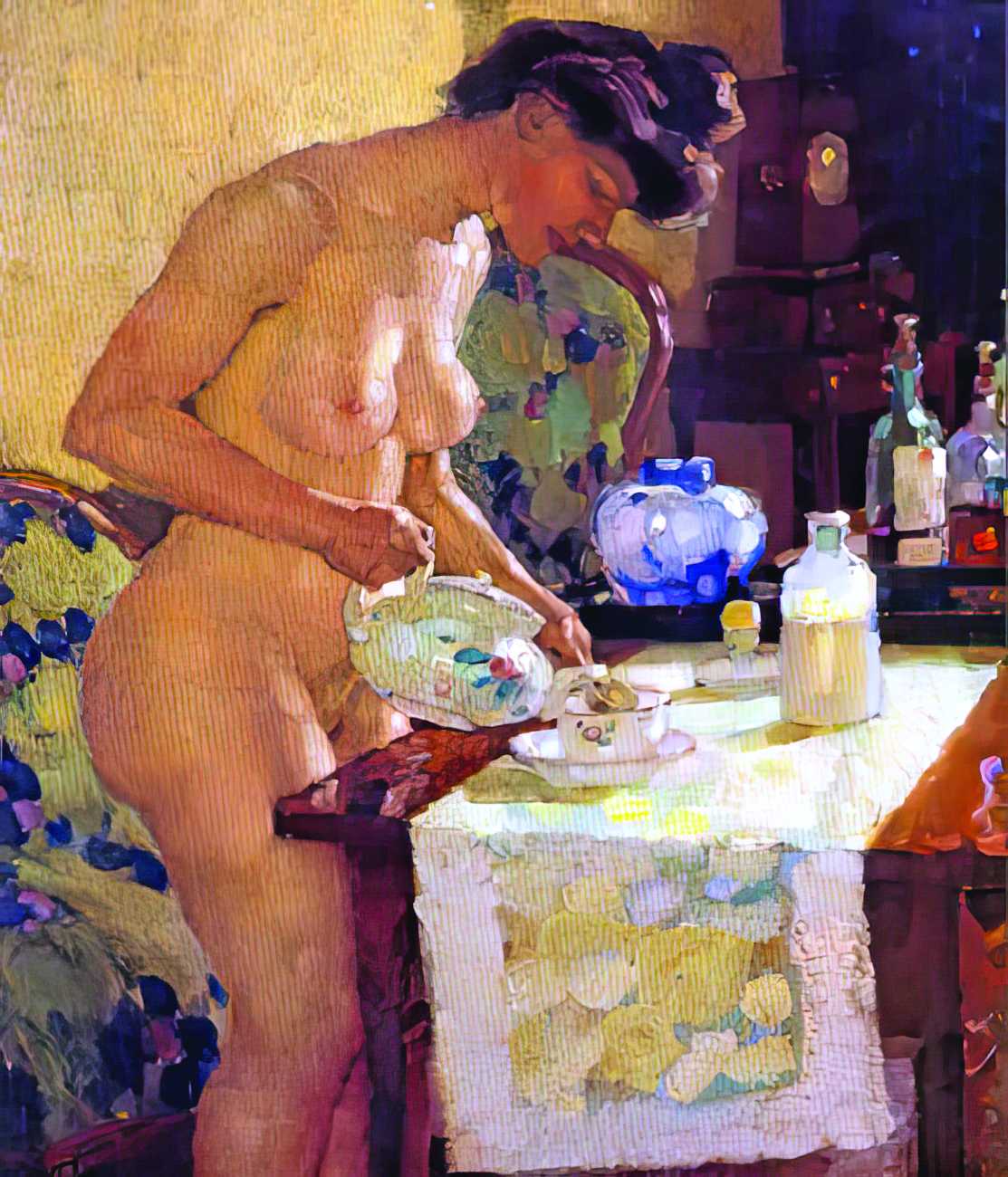
As well as the outdoor scenes, we have extended the bathing theme to include several of another of Putz’s favourite subjects, the bathtub and its female occupant.