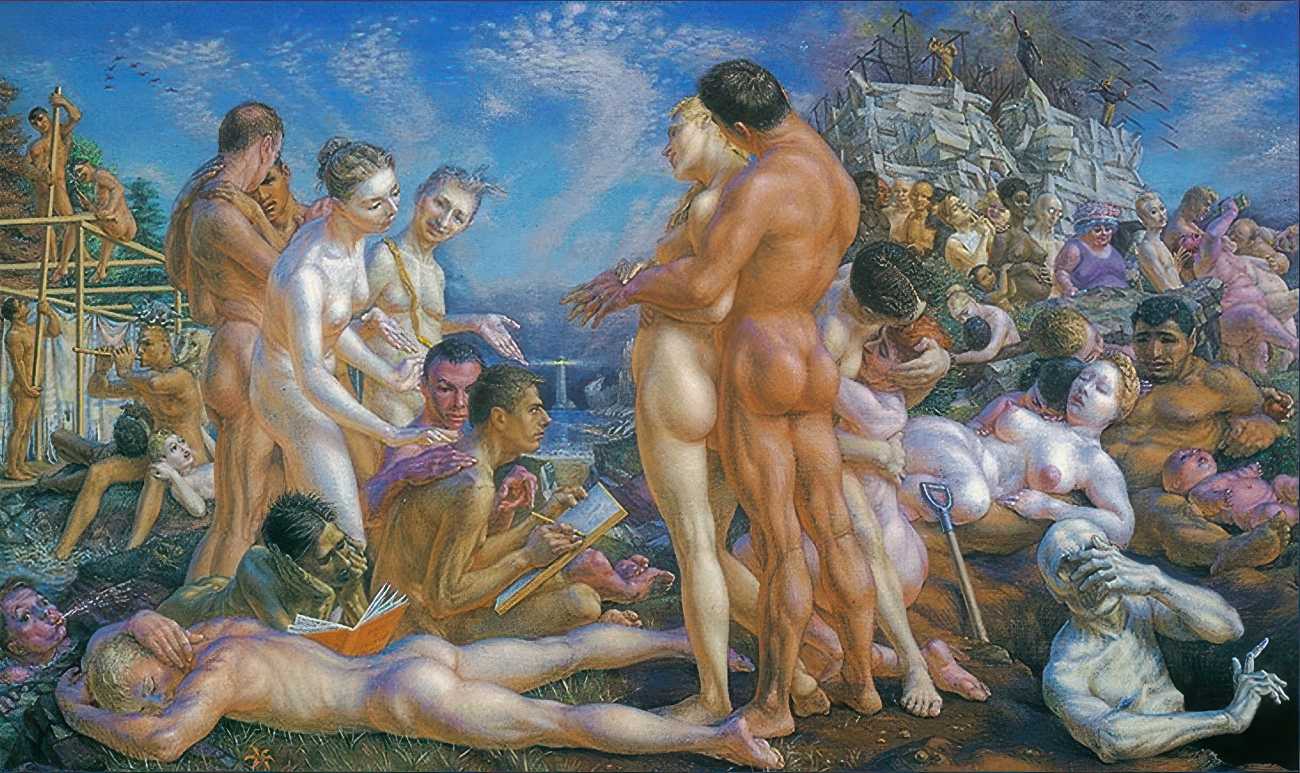
At a time when abstraction increasingly dominated galleries and museums, Paul Cadmus remained committed to figurative painting, combining the disciplined techniques of the Italian renaissance with an unsparing observation of contemporary life. His paintings are at once technically accomplished, sharply satirical and deeply sensual, bringing together social commentary and eroticism in a style that is entirely his own.
Many of his best-known works examine modern urban America. Sailors, athletes, dancers, tourists, bathers and city crowds populate his canvases, their exaggerated gestures and expressive faces revealing vanity, desire, hypocrisy and humour in equal measure. His paintings are often crowded with figures, each carefully observed and individually characterised, encouraging the viewer to discover small dramas and visual jokes. Although frequently described as a social realist, Cadmus infused everyday scenes with a theatrical intensity that owes as much to caricature and renaissance composition as it does to documentary observation.
Running through the paintings is Cadmus’s lifelong fascination with the male body. Whether depicting sailors on shore leave, ballet dancers, athletes or anonymous bathers, he celebrated masculine strength, beauty and vulnerability with a frankness that was remarkable for its time. Unlike the idealised heroes of classical painting, Cadmus’s figures remain unmistakably human. Muscular physiques sit alongside ageing bodies, awkward postures and comic excess, reflecting his belief that desire and imperfection are inseparable aspects of ordinary life.
His work repeatedly attracted controversy. The Fleet's In! was removed from exhibition by the United States Navy in 1934, while later paintings depicting sailors were similarly withdrawn from public display. Yet the publicity only strengthened Cadmus’s reputation as an artist prepared to challenge social convention, and throughout his career he remained steadfast in his commitment to figurative painting, producing works that balanced technical mastery with wit, compassion, and an often subversive sense of humour.
Cadmus’s paintings reveal an artist of extraordinary consistency. Across more than six decades he developed a visual world in which classical draughtsmanship met modern America, and satire coexisted with empathy. His paintings remain among the most distinctive achievements of twentieth-century American realism, offering an uncompromising yet affectionate portrait of humanity in all its complexity.
This selection of paintings is in chronological order, from his time in Mallorca in the 1930s to work completed shortly before his death.