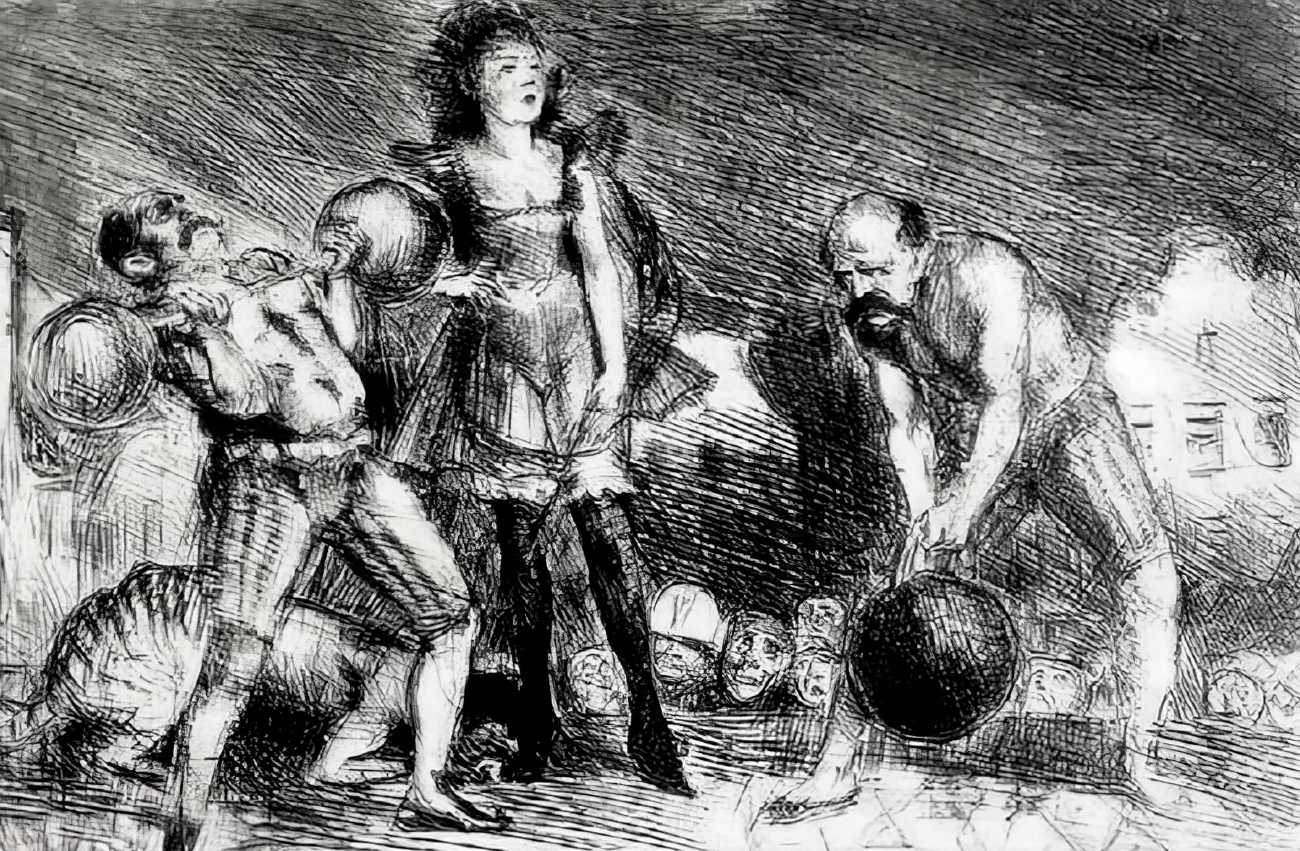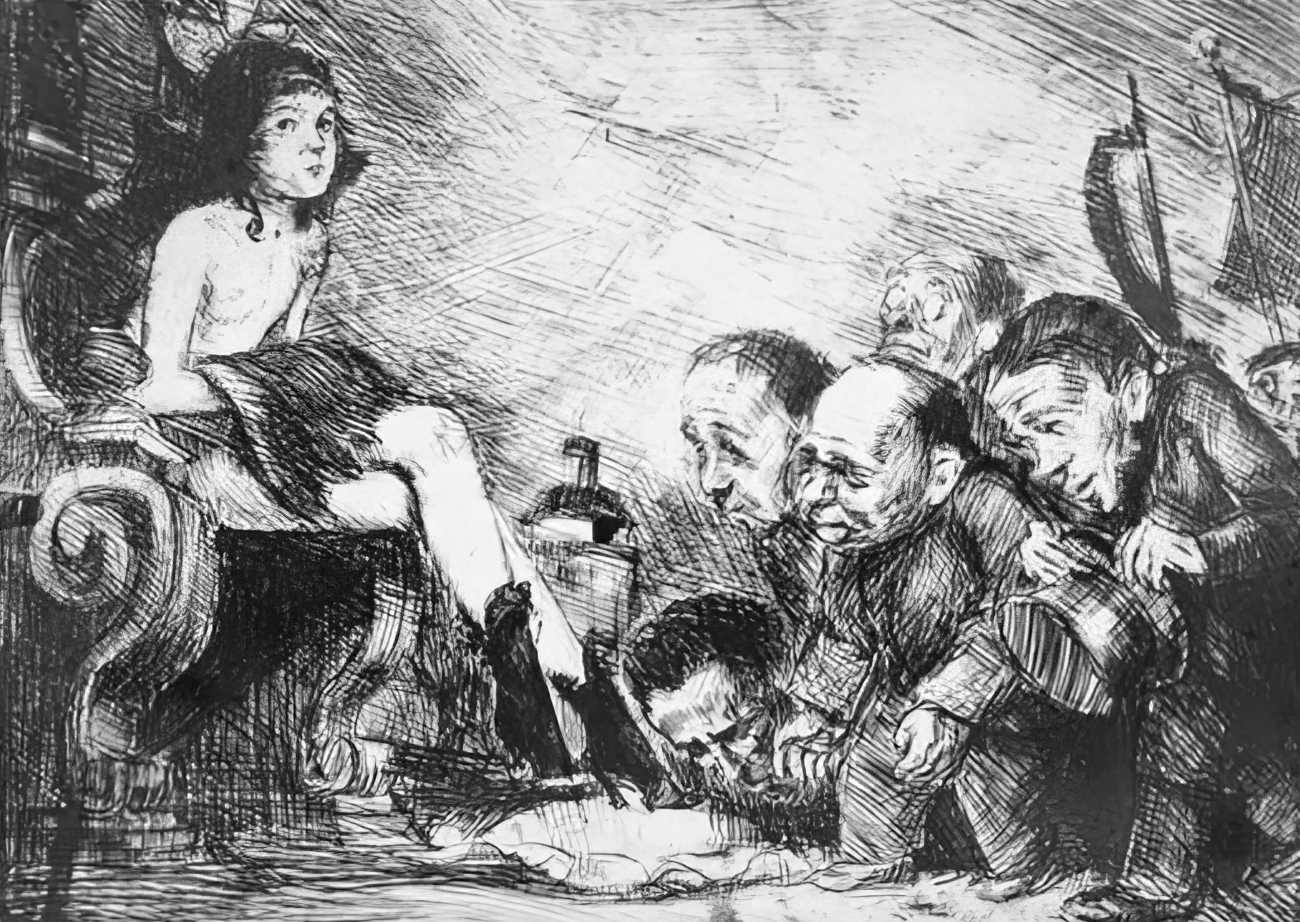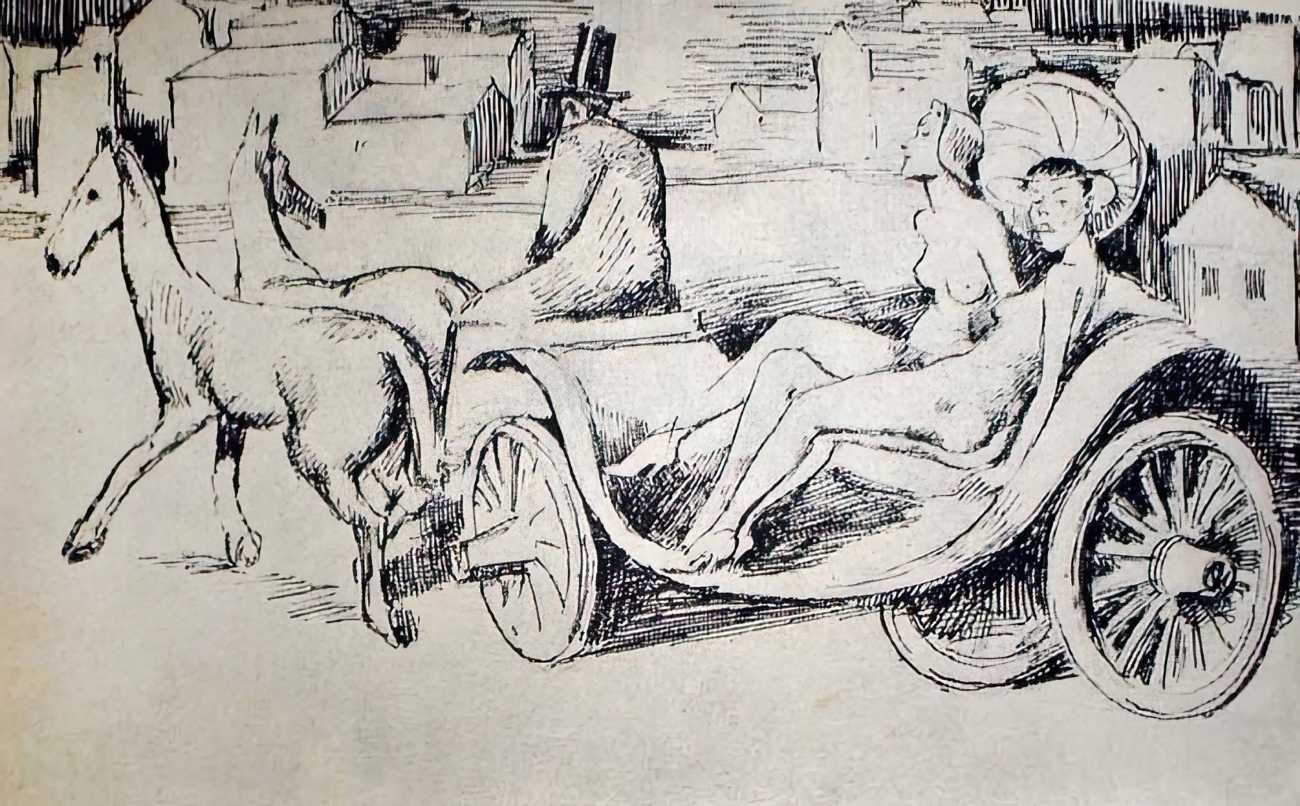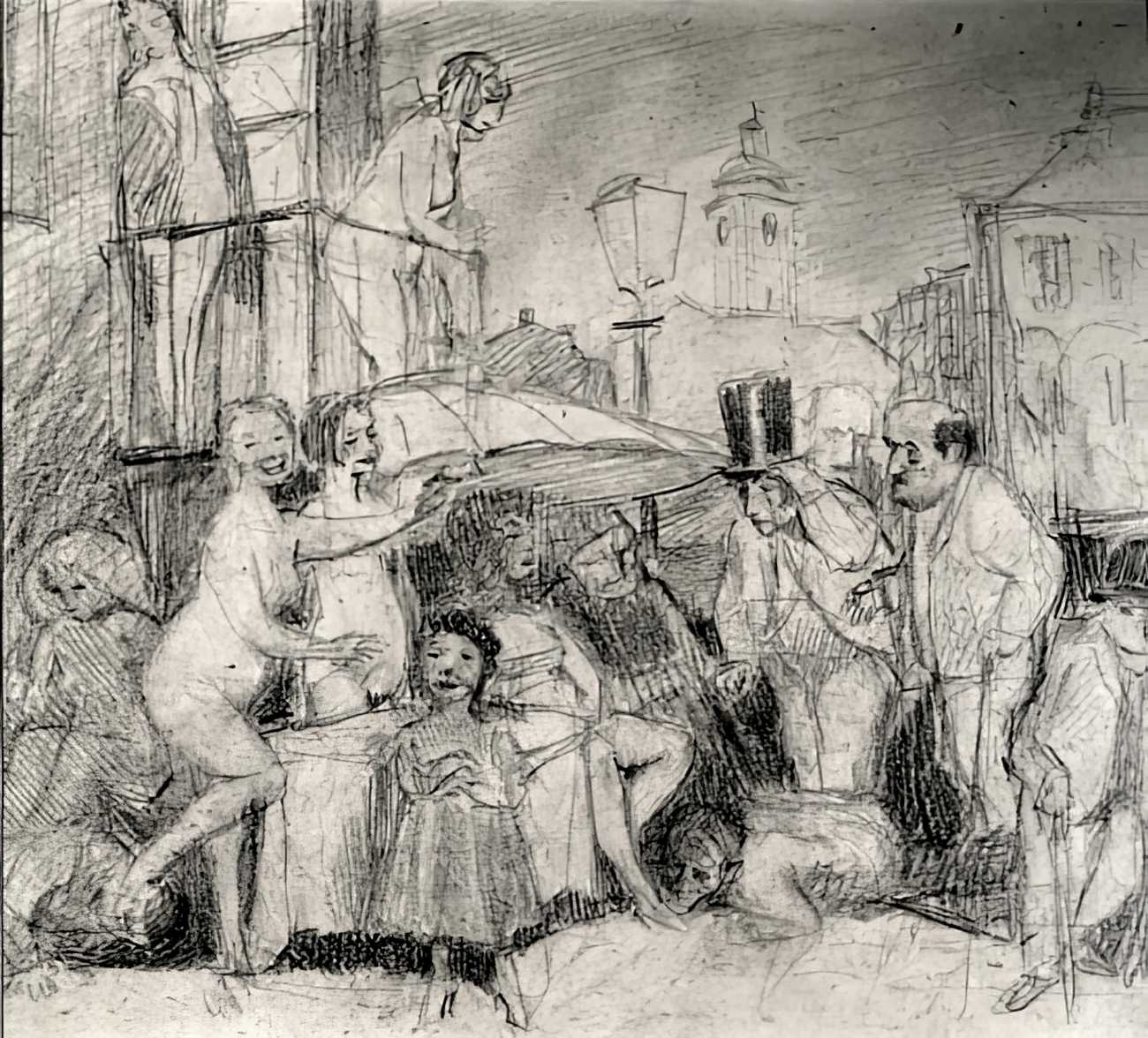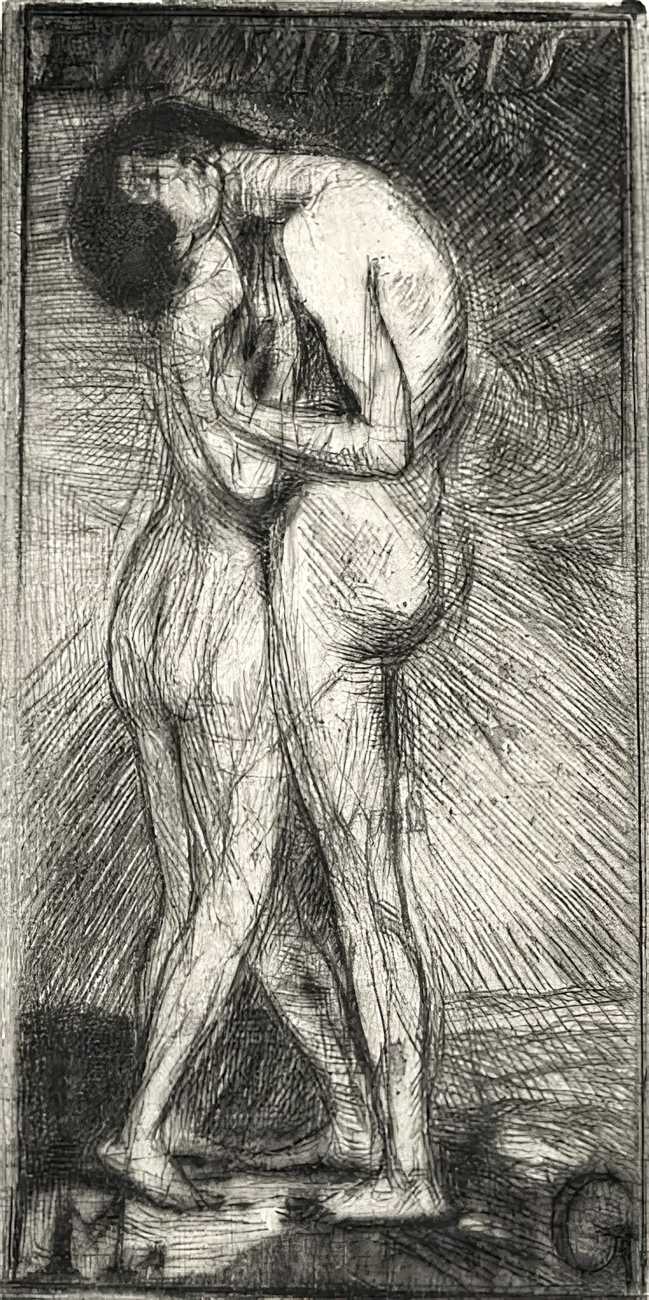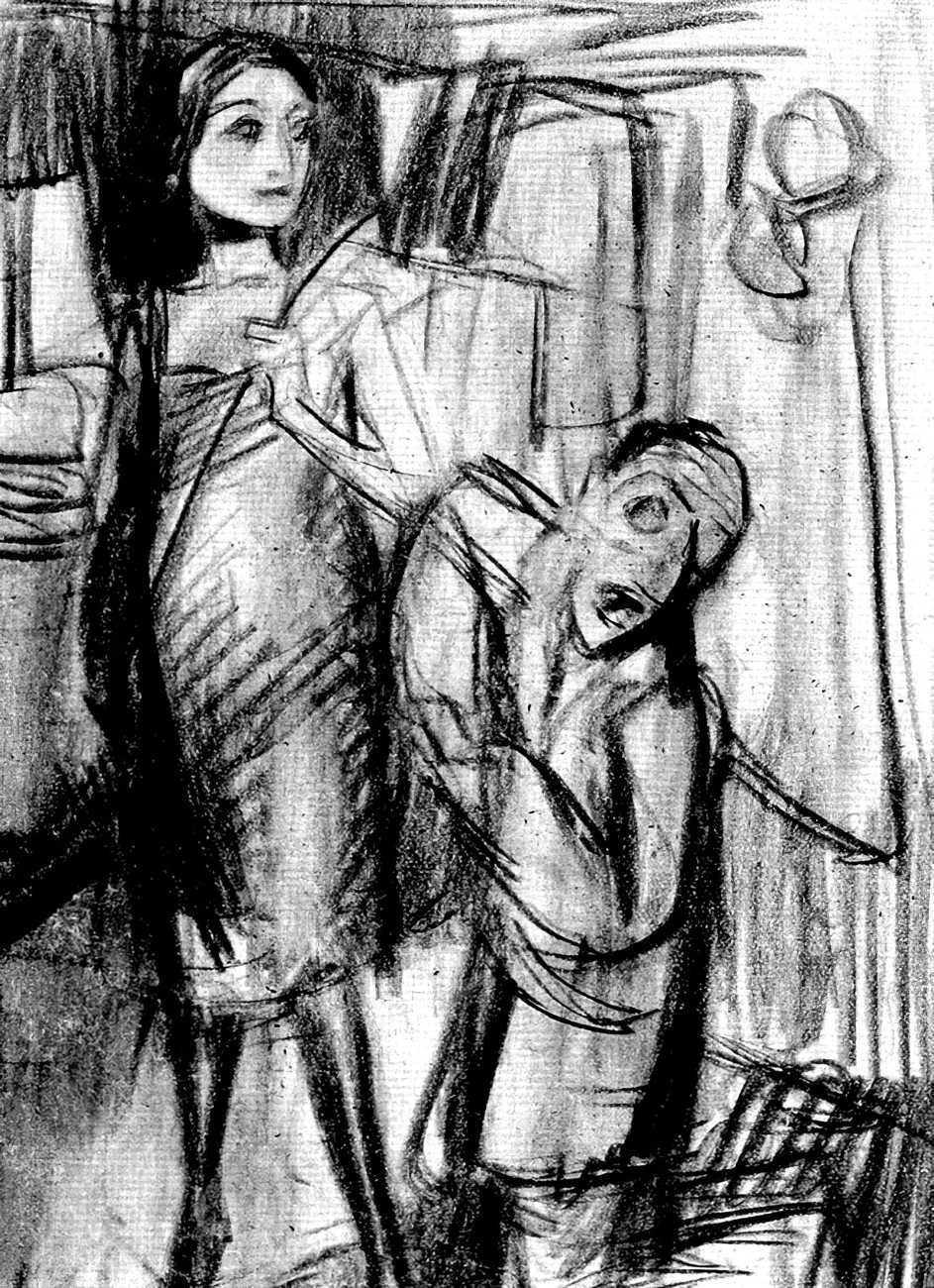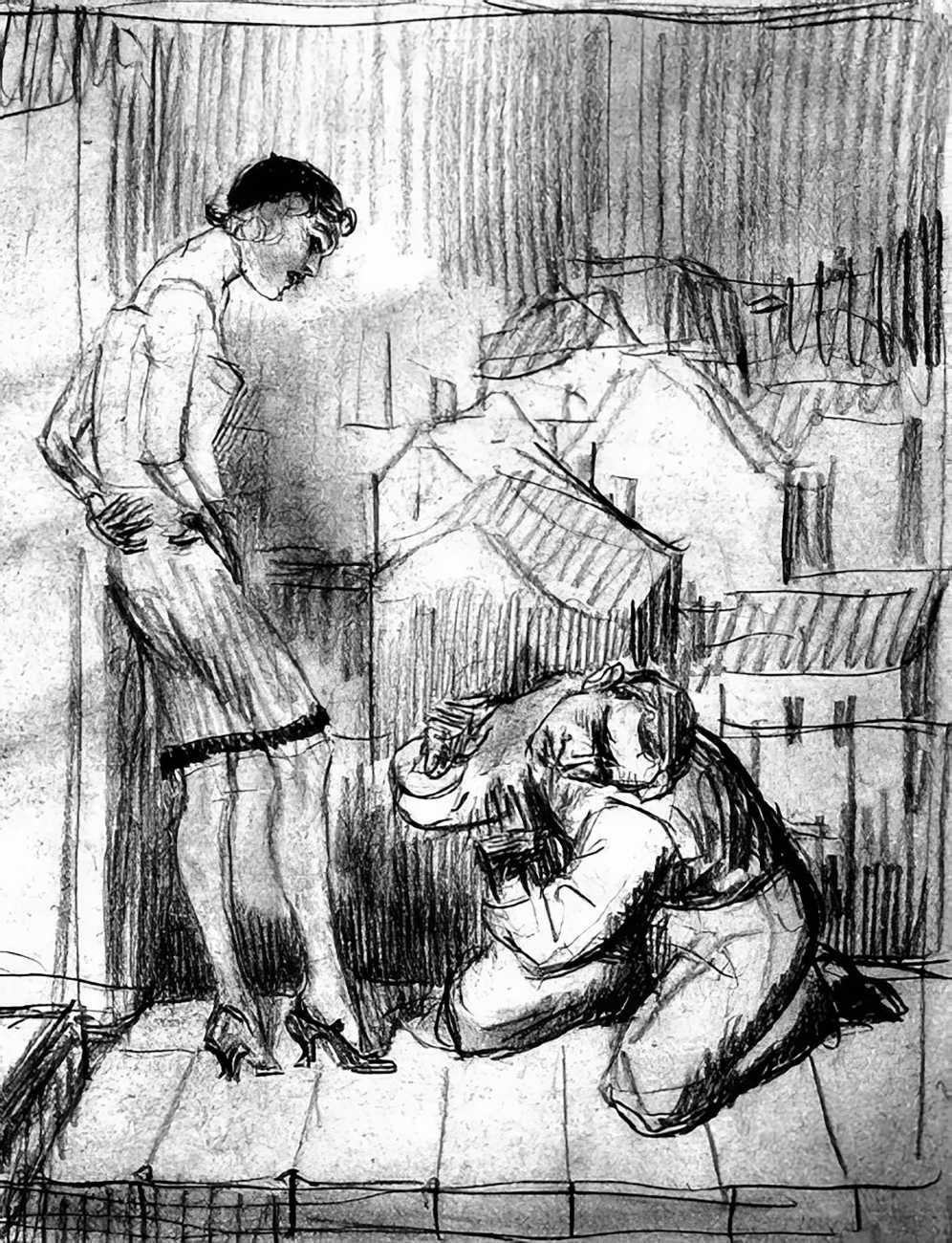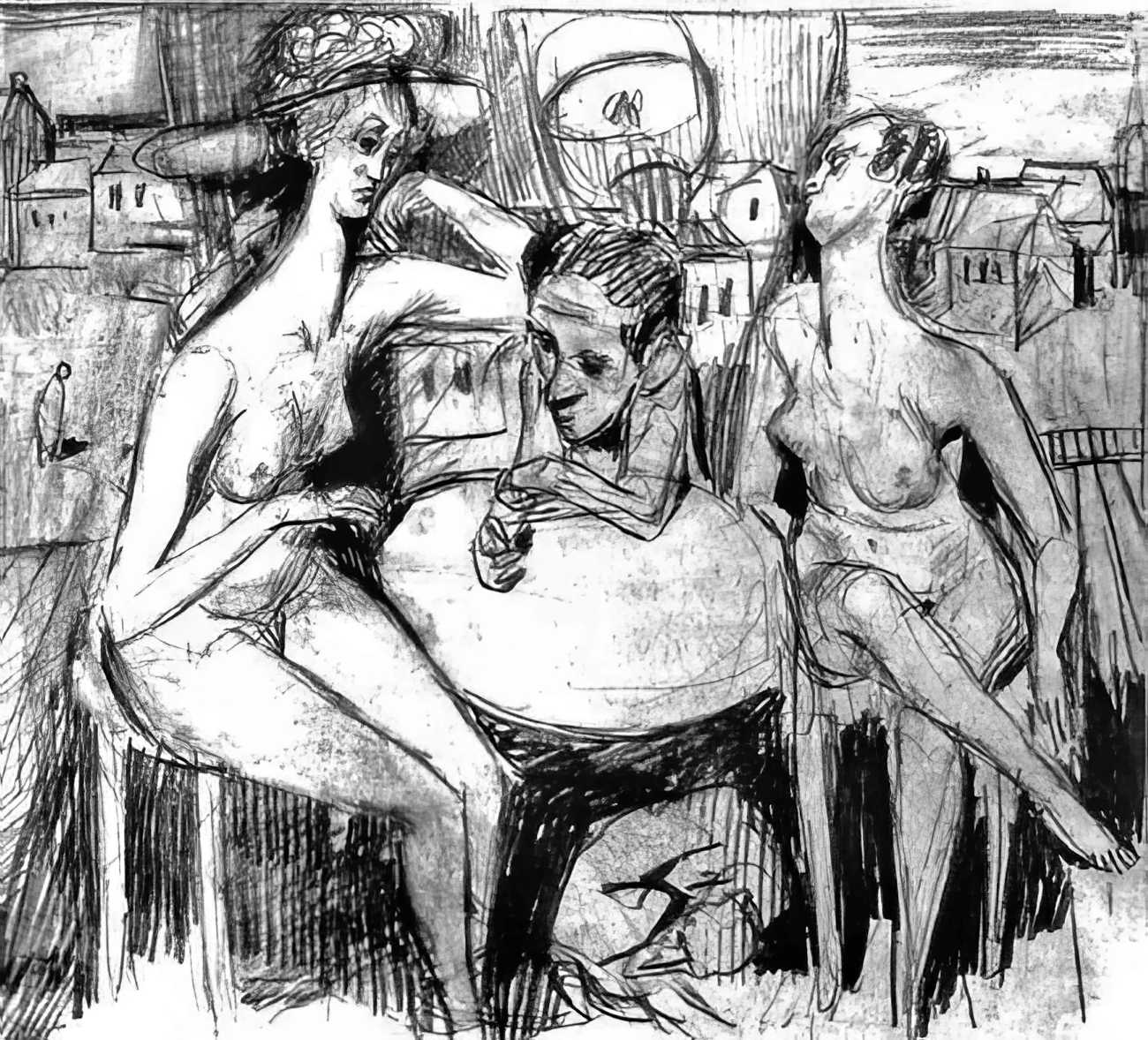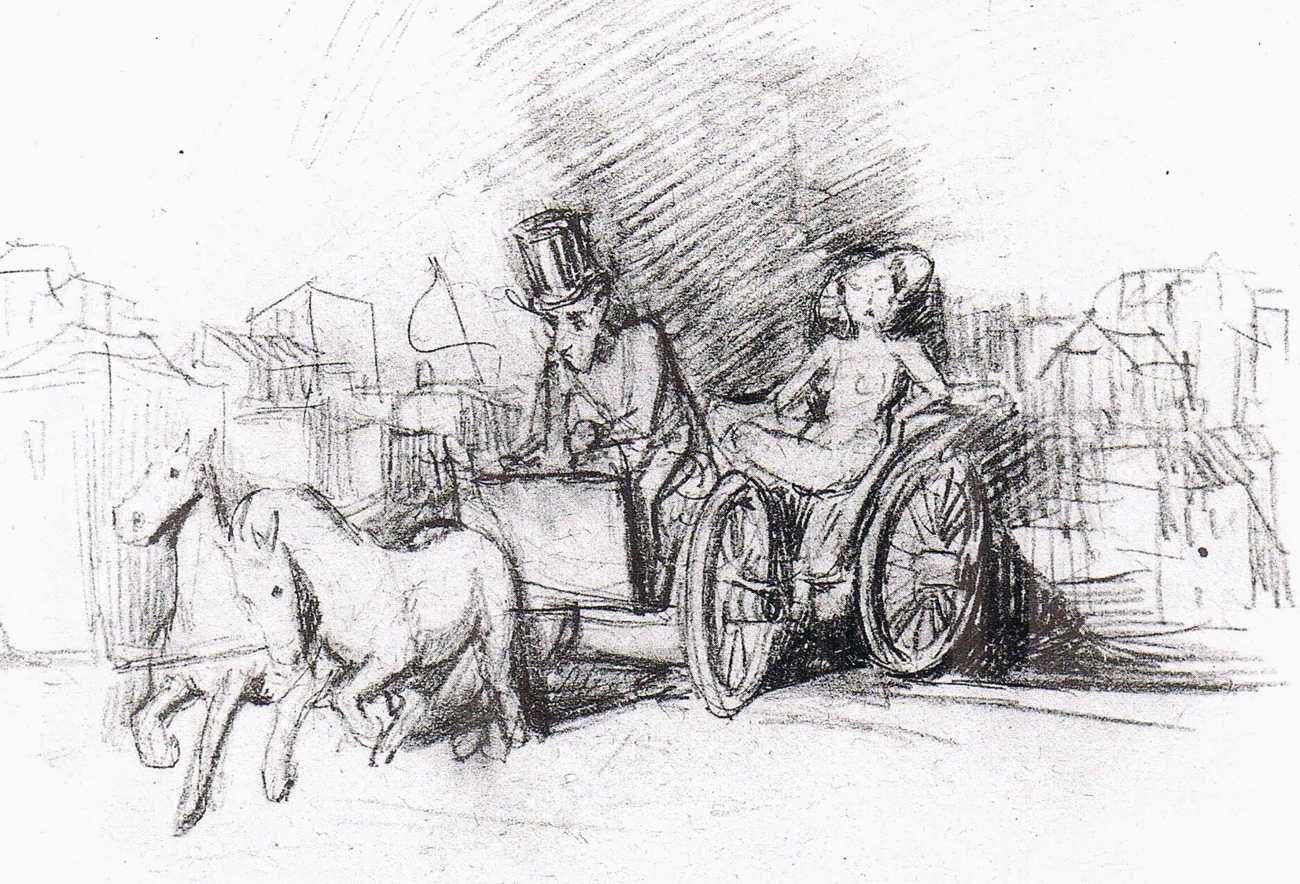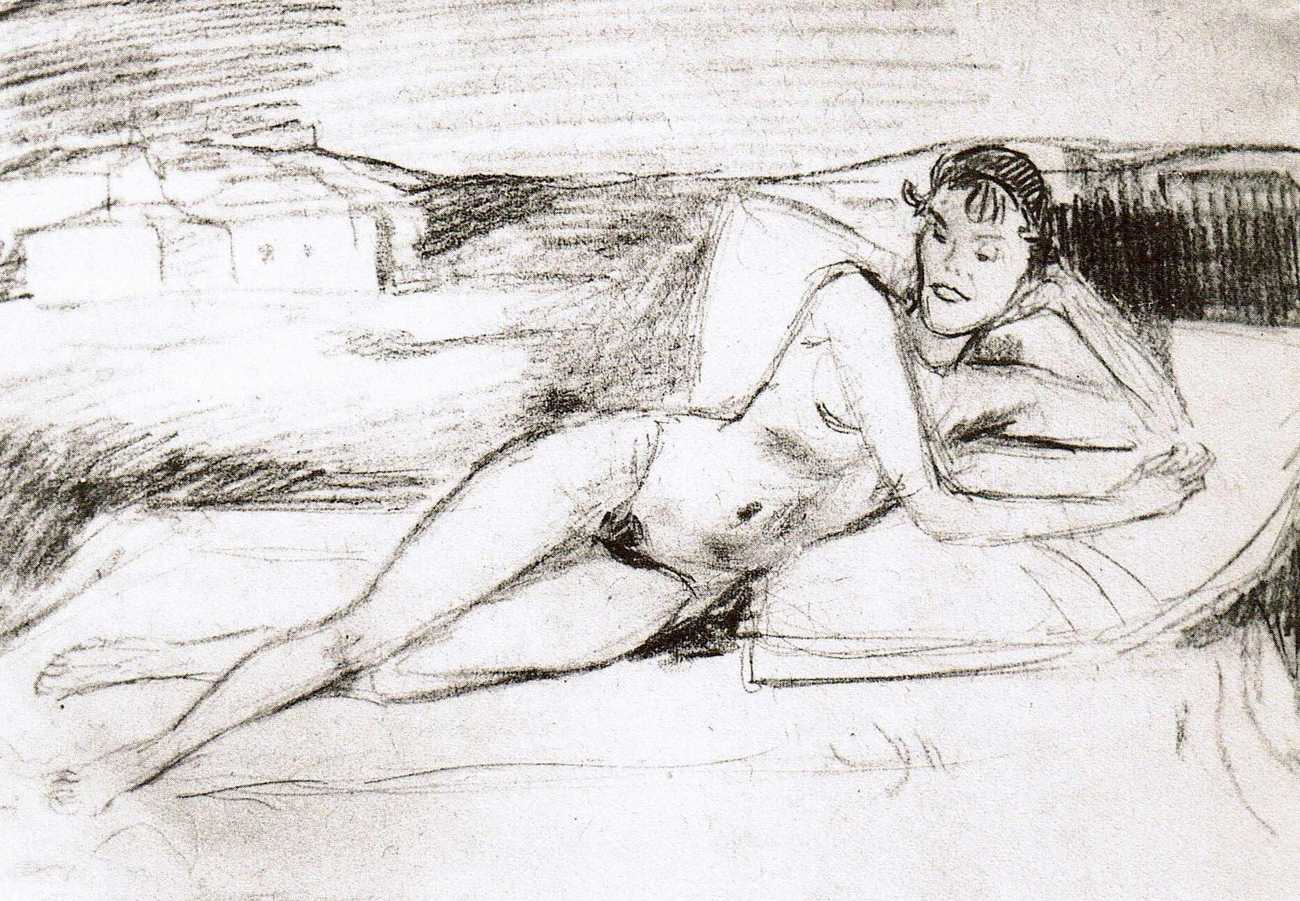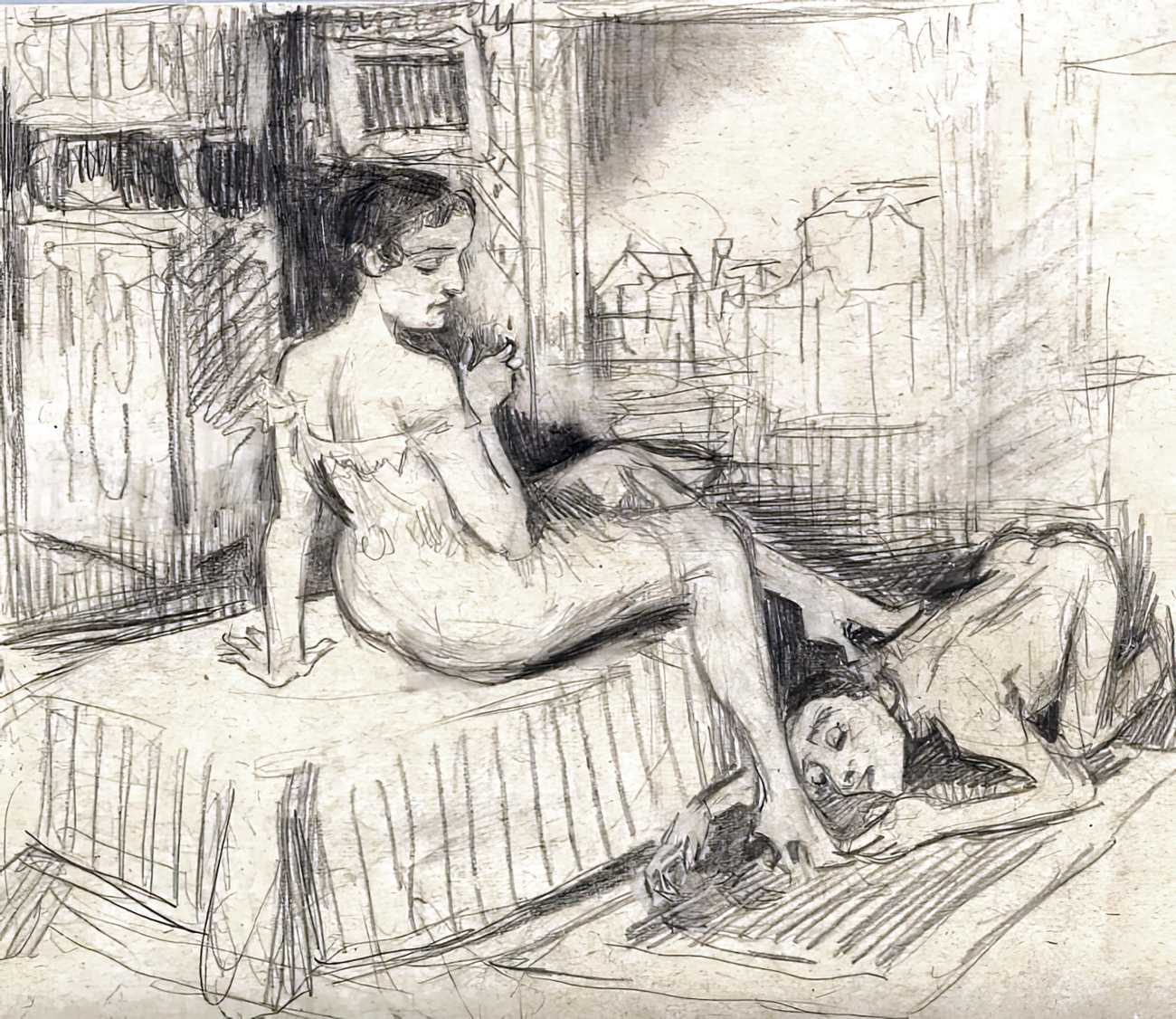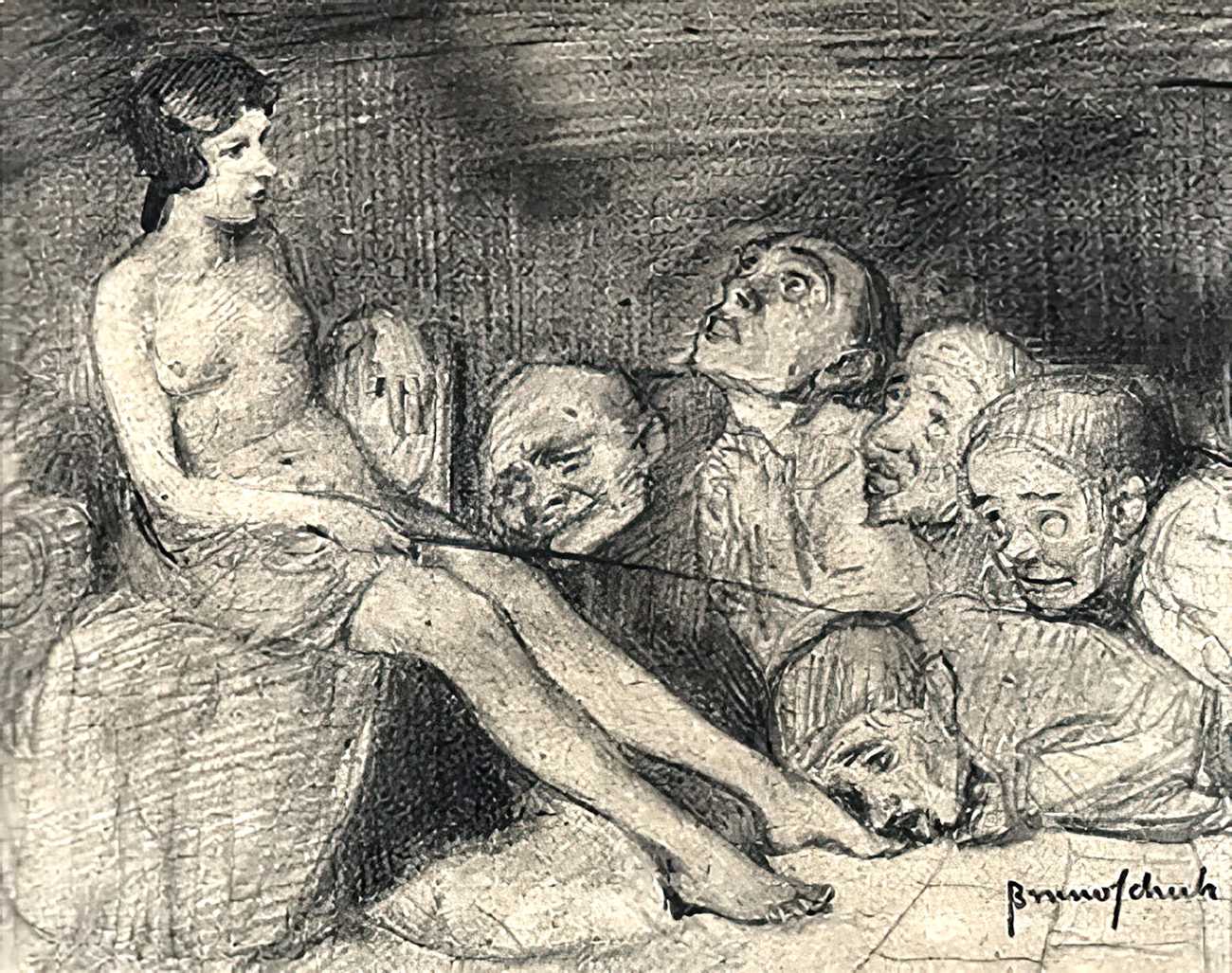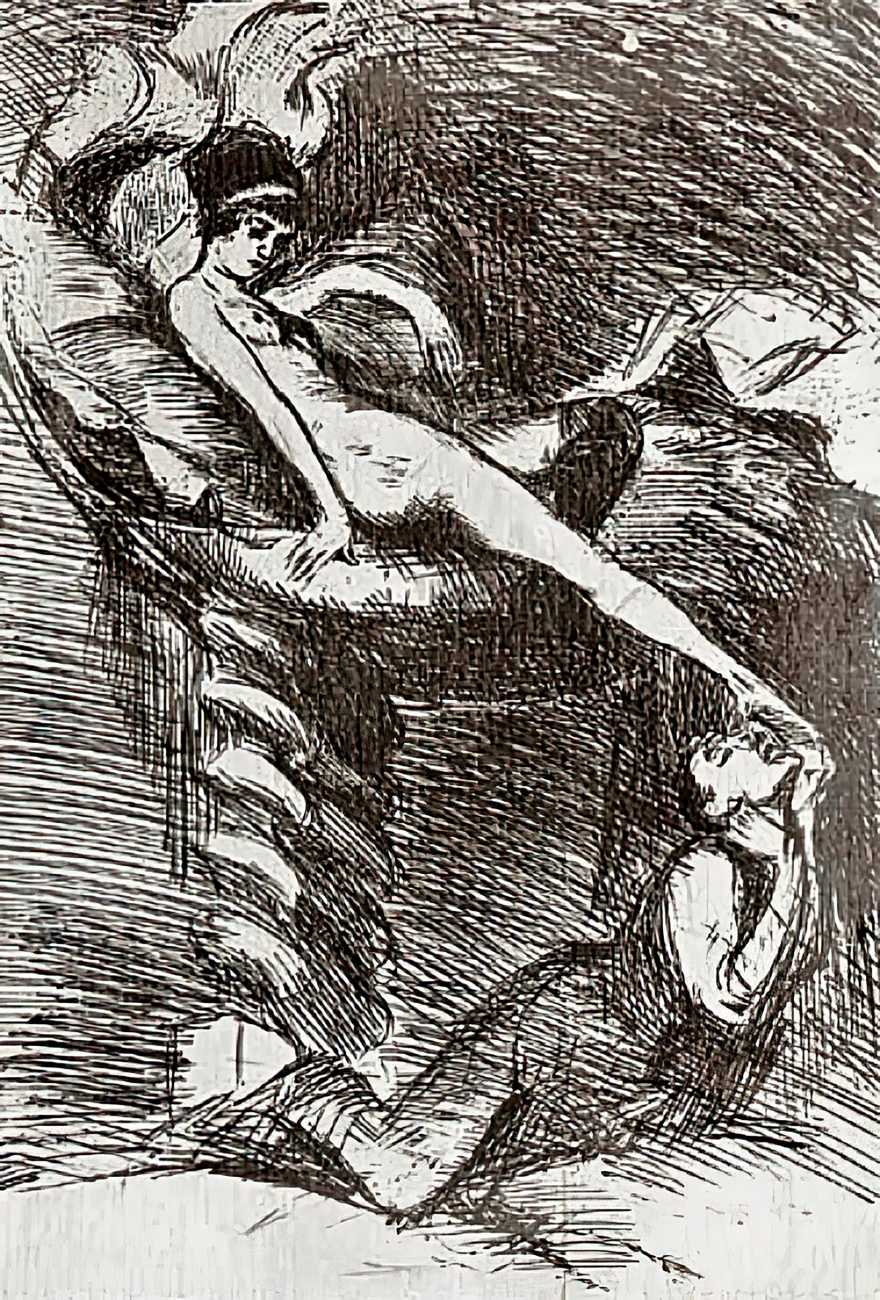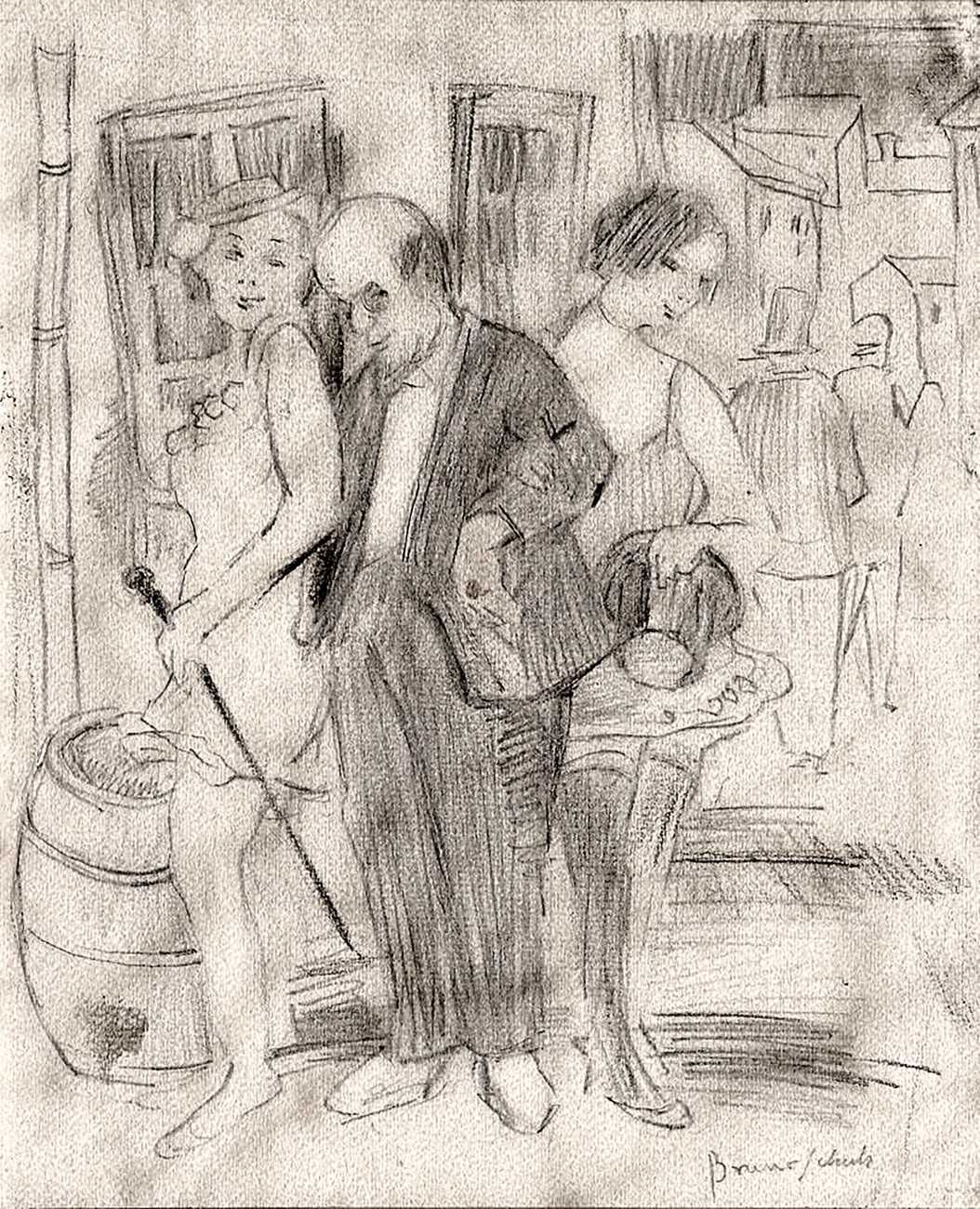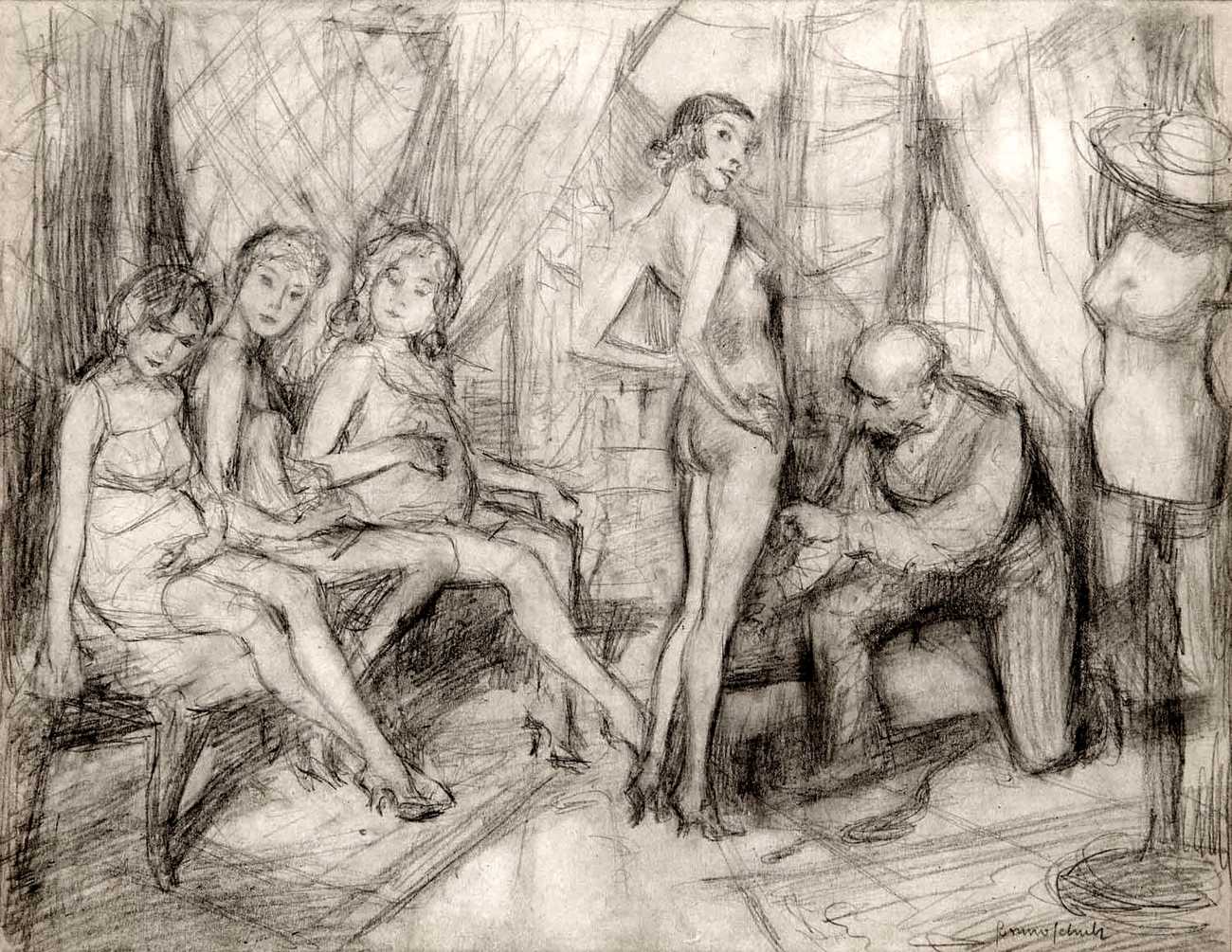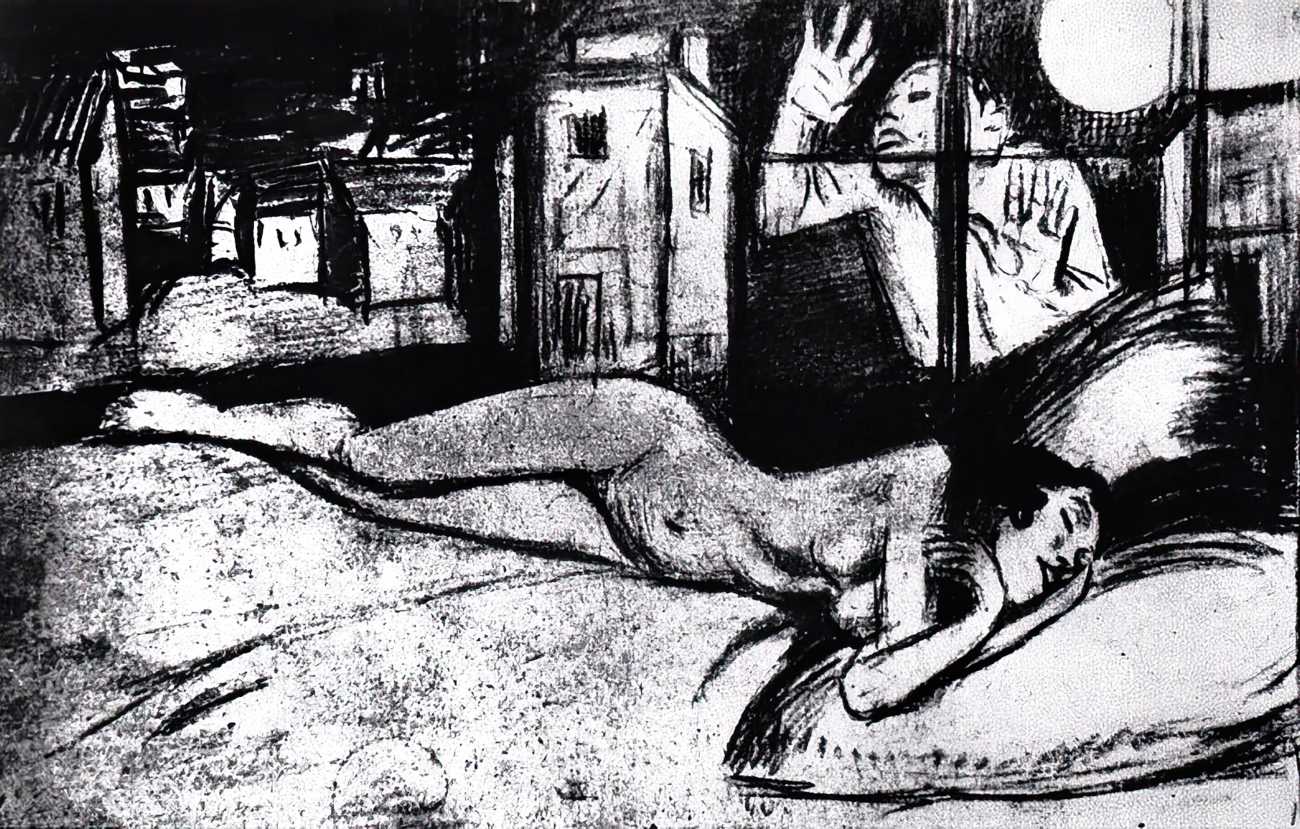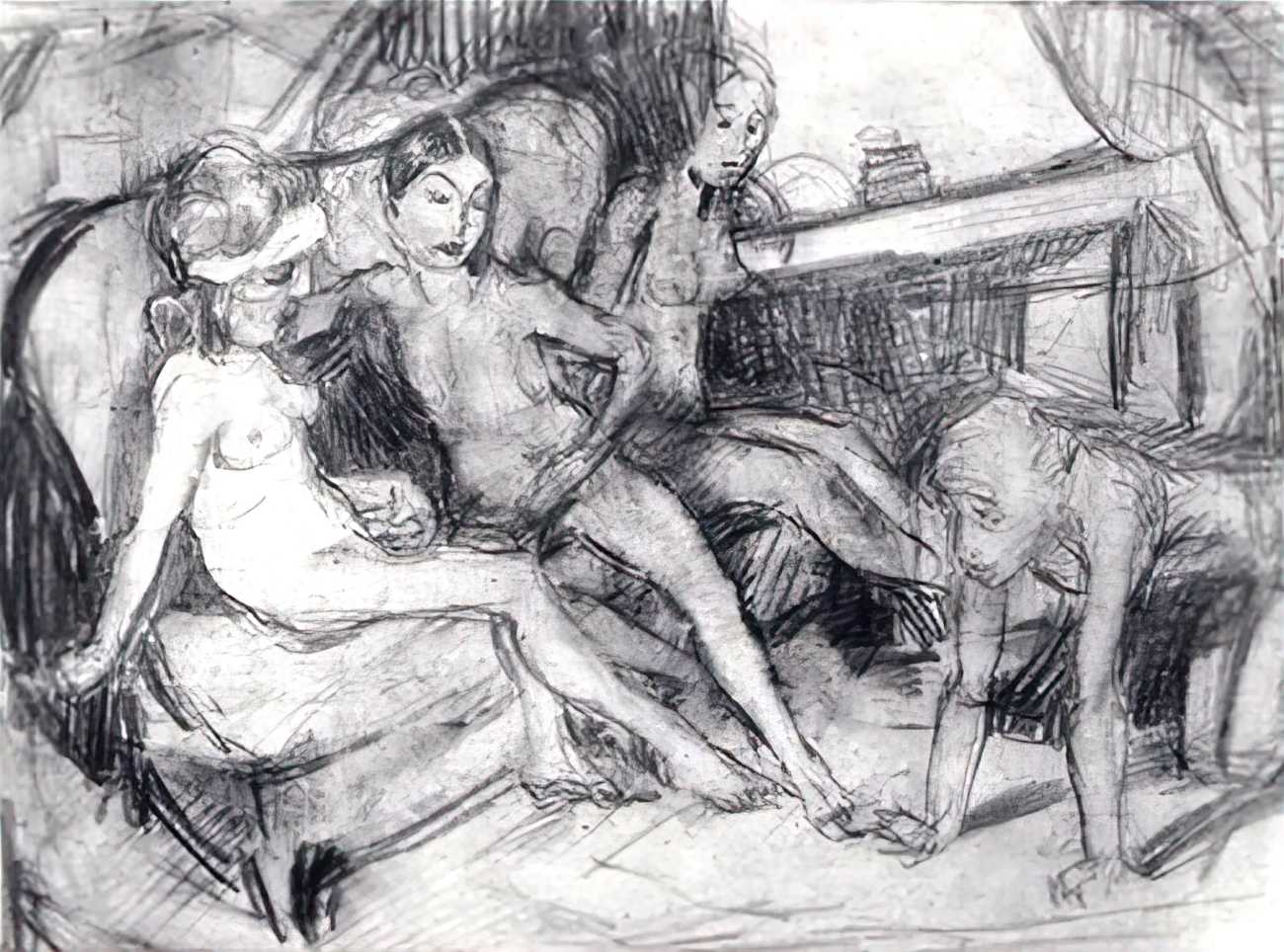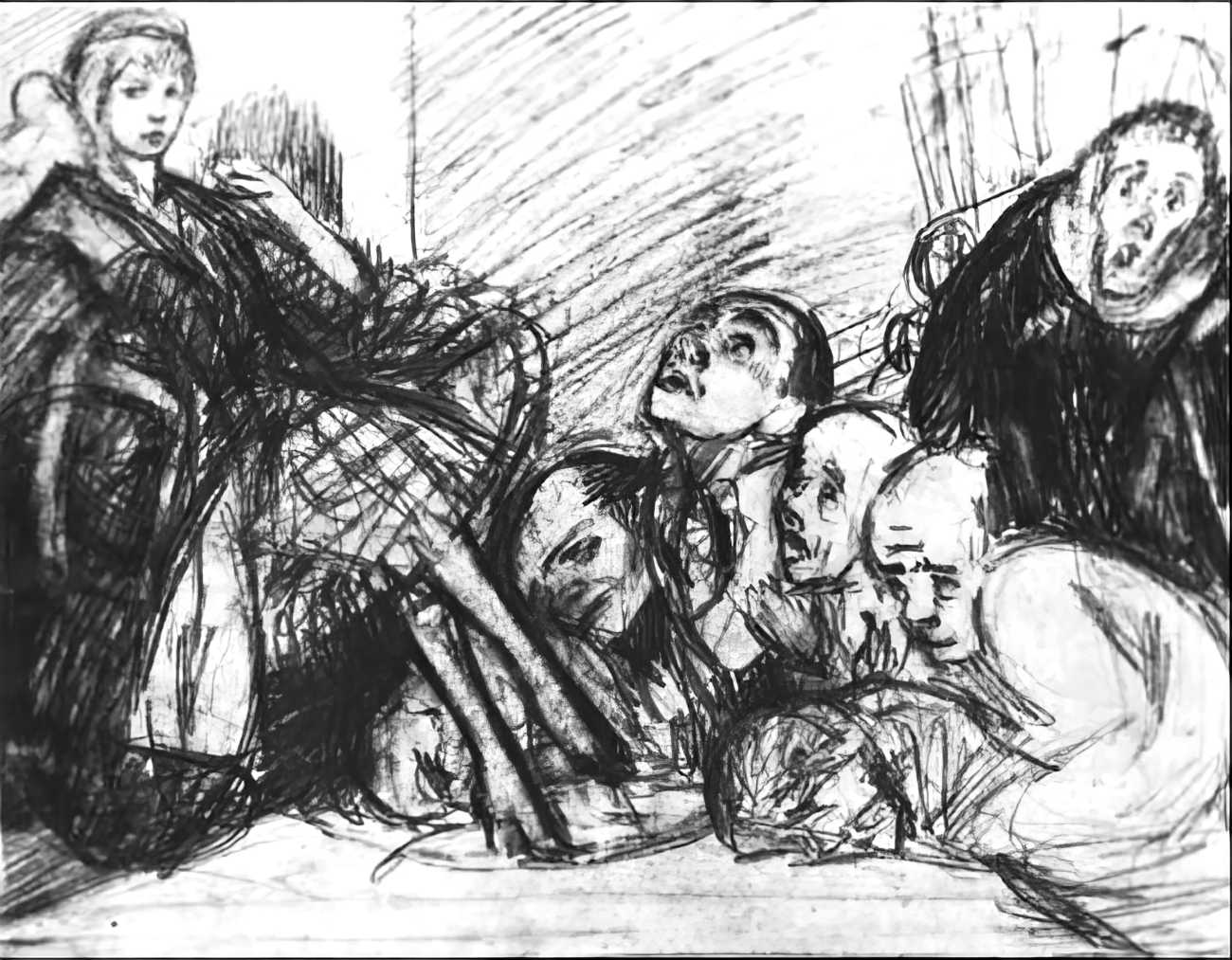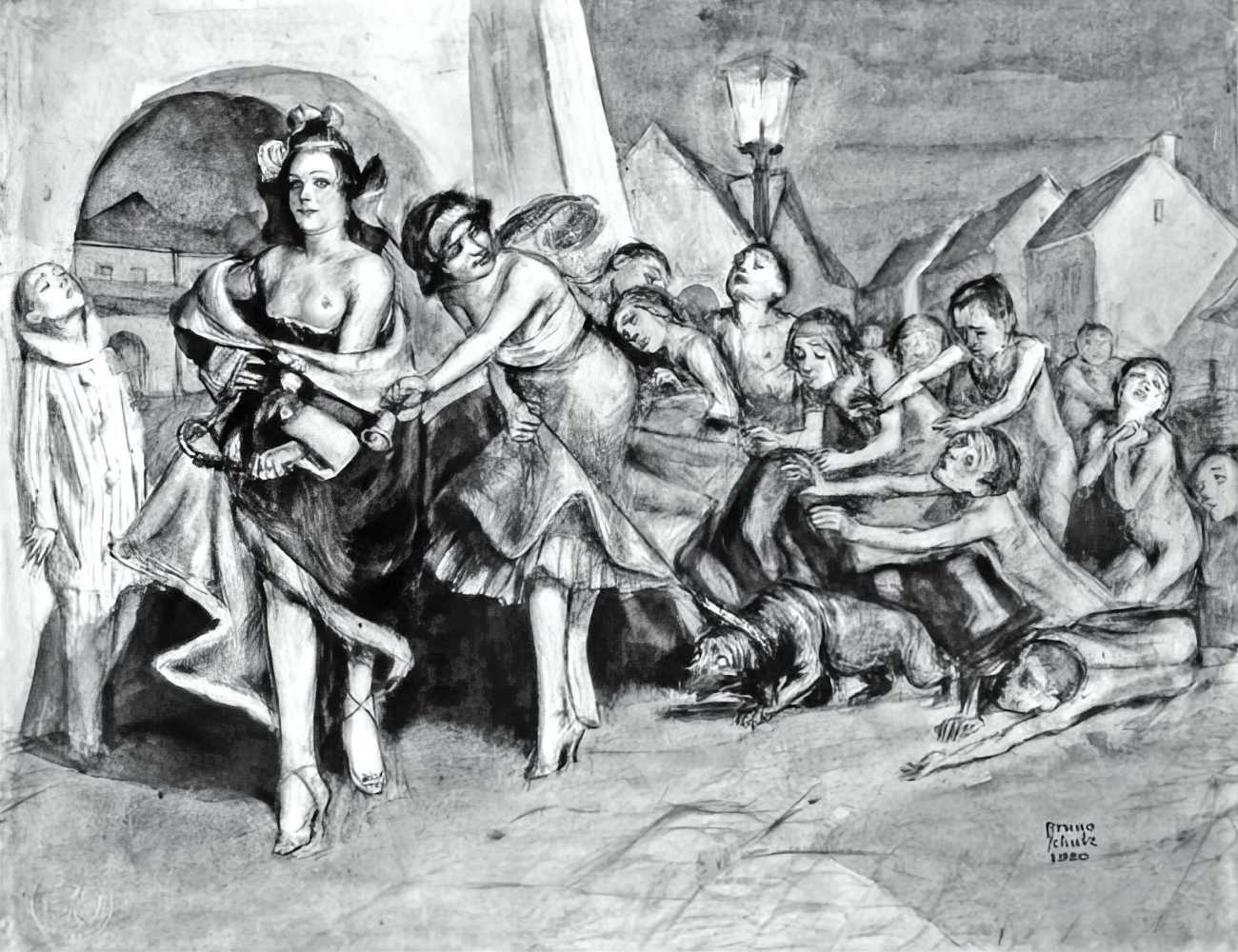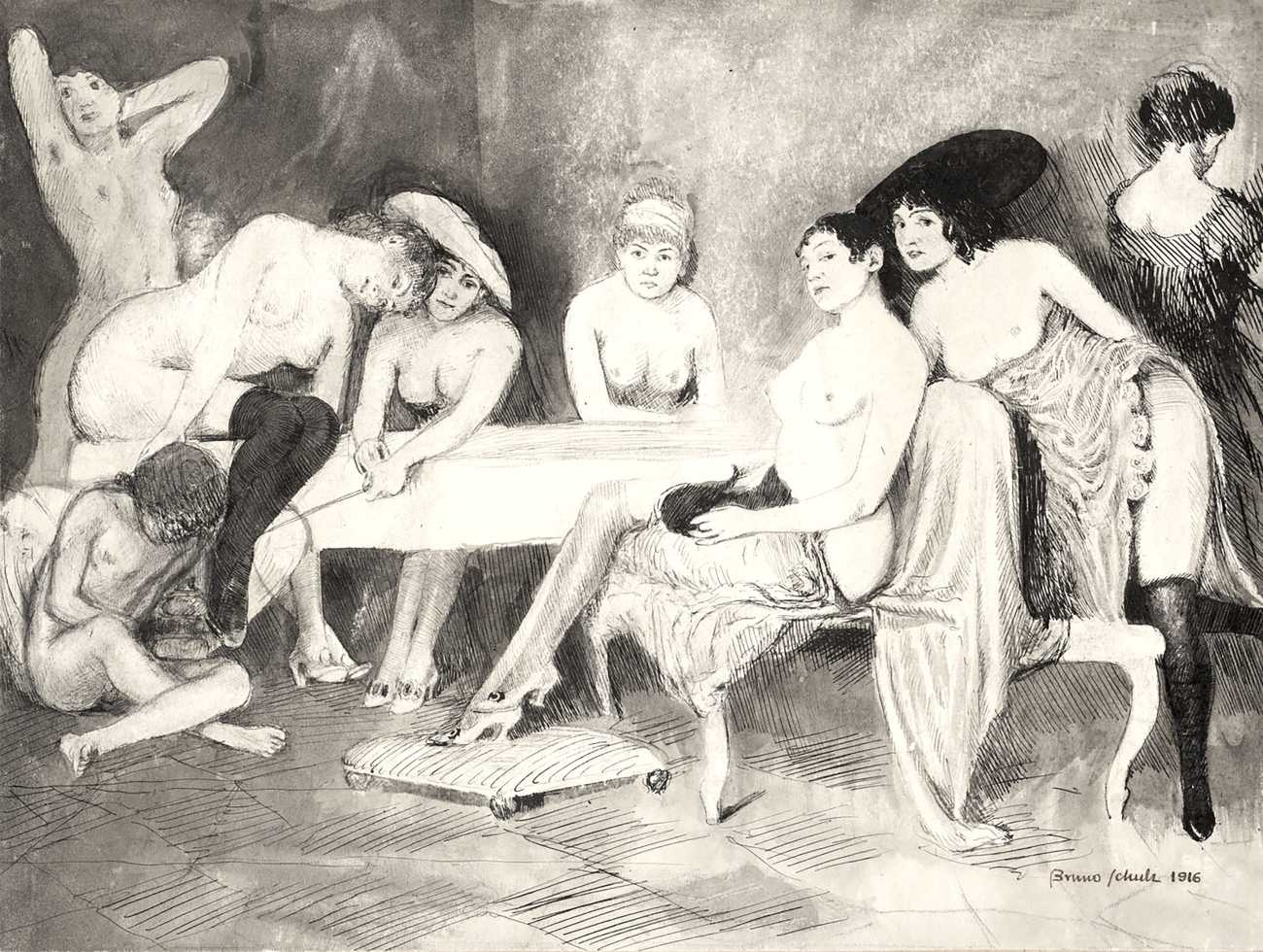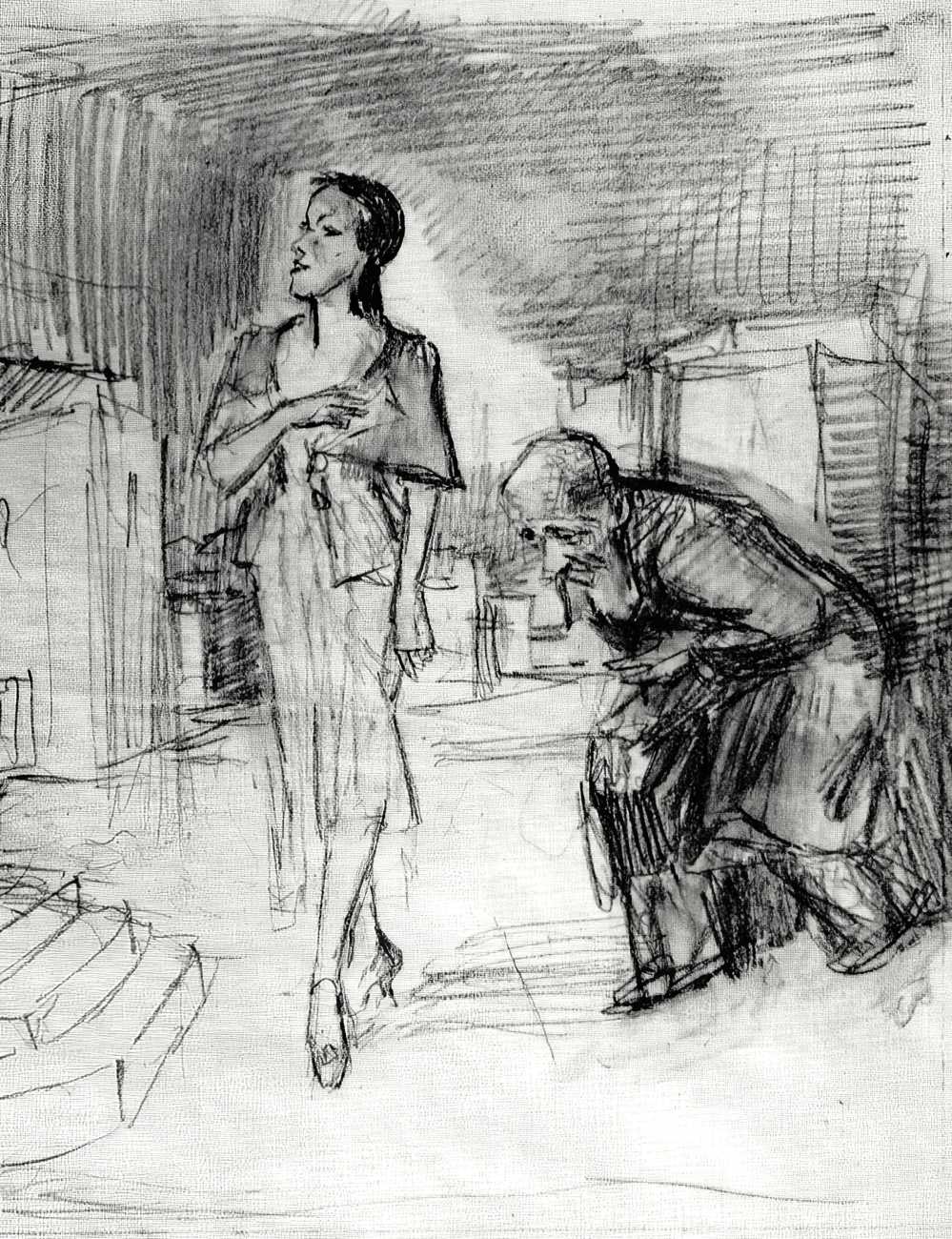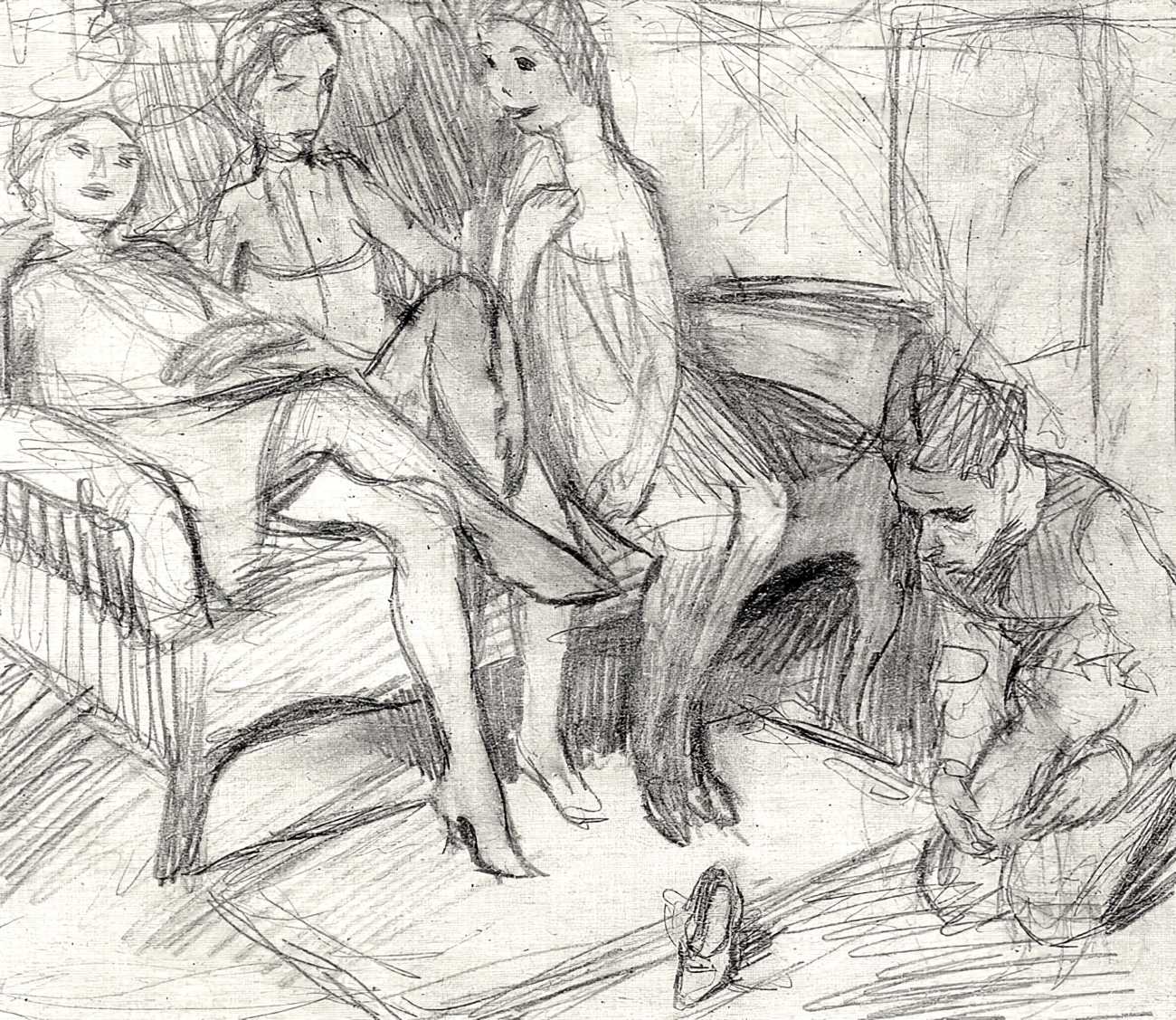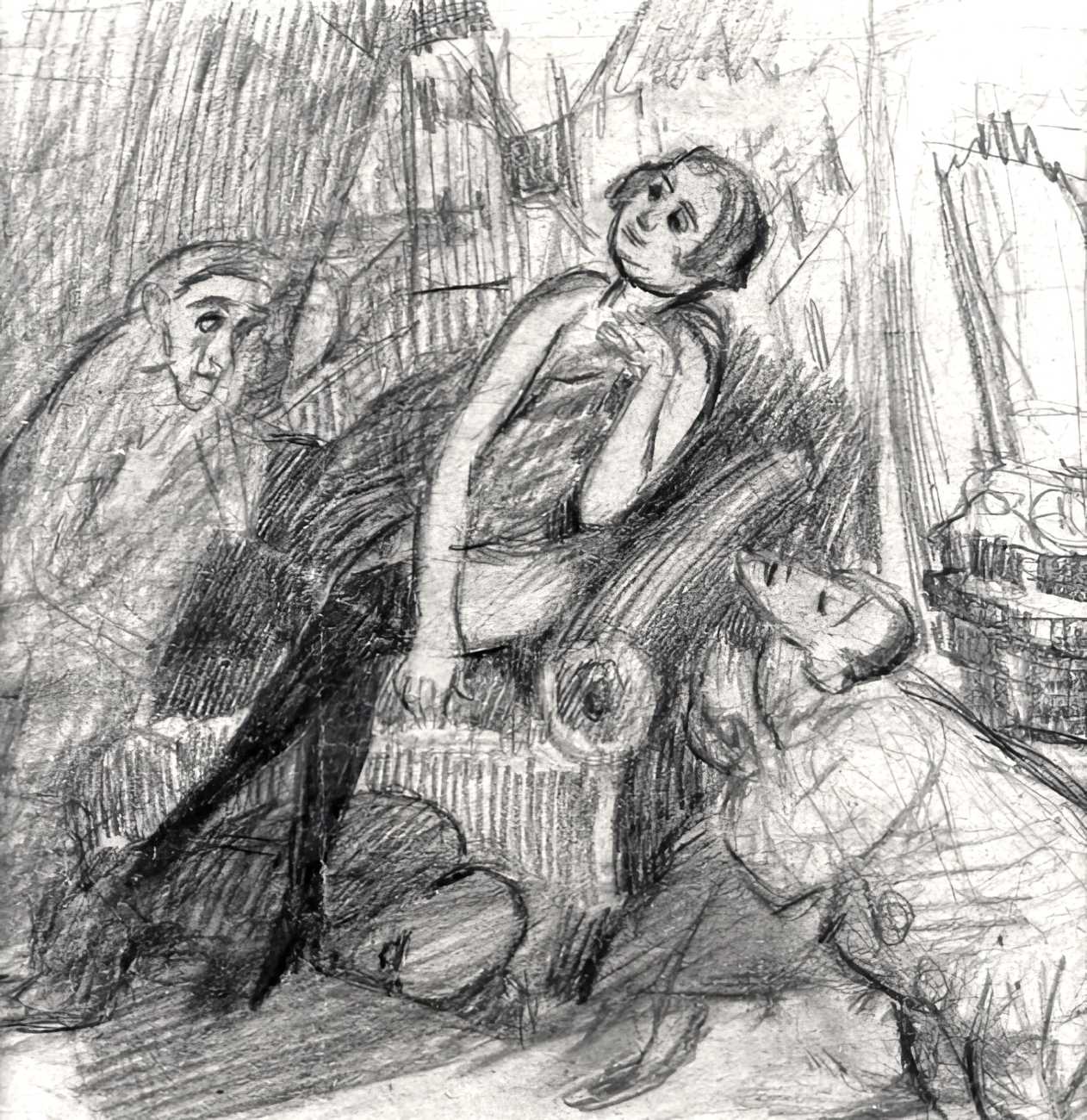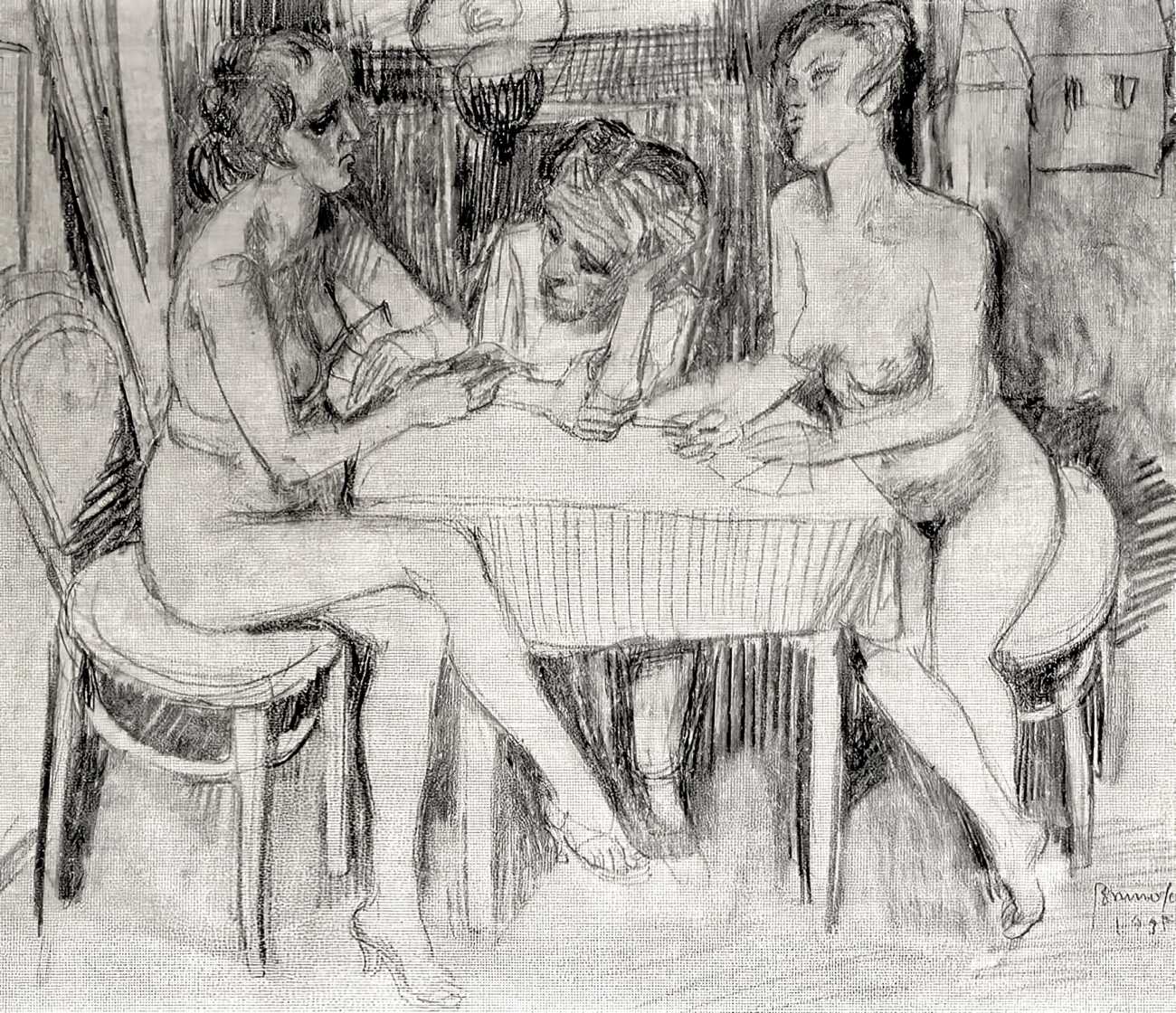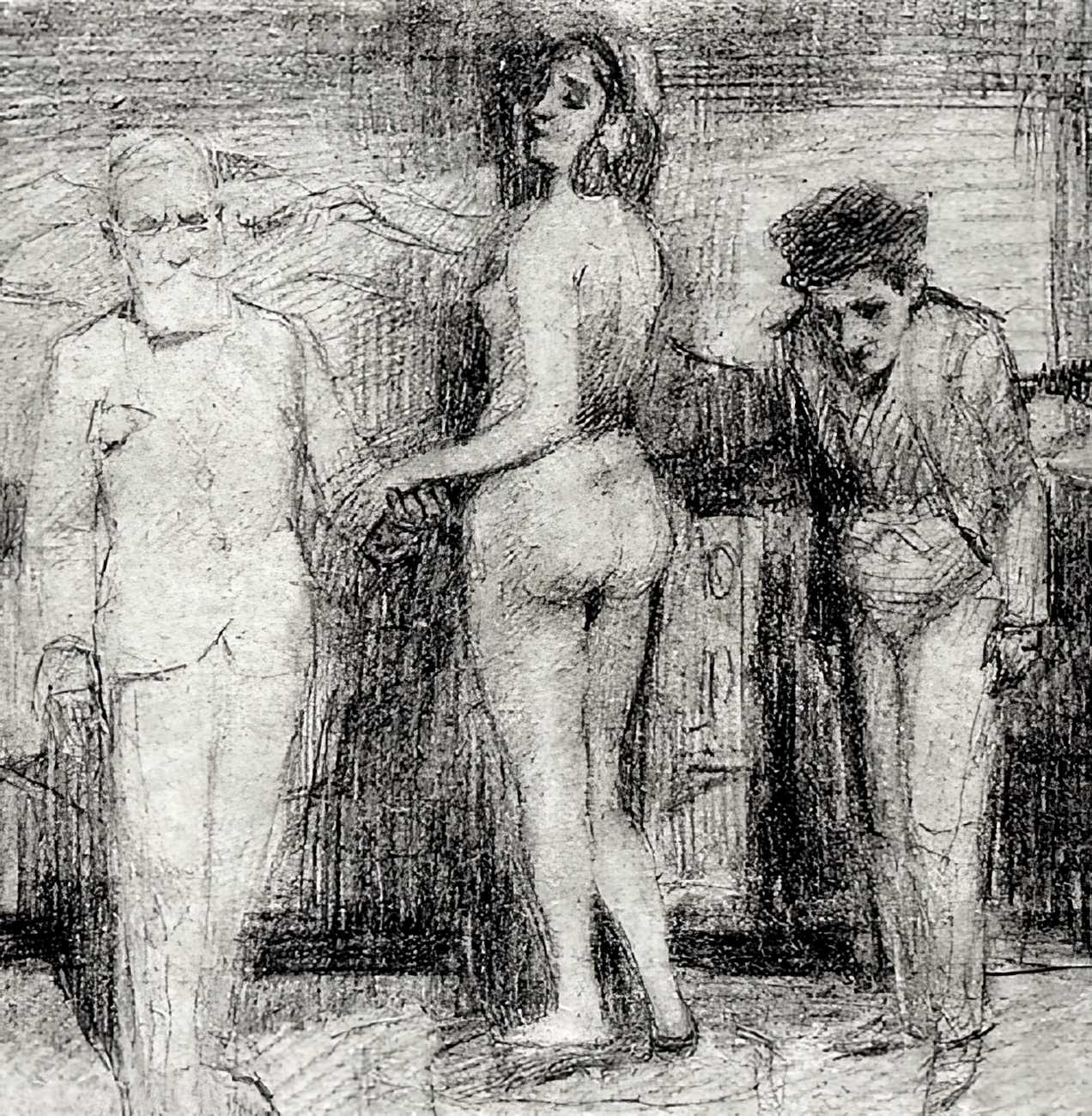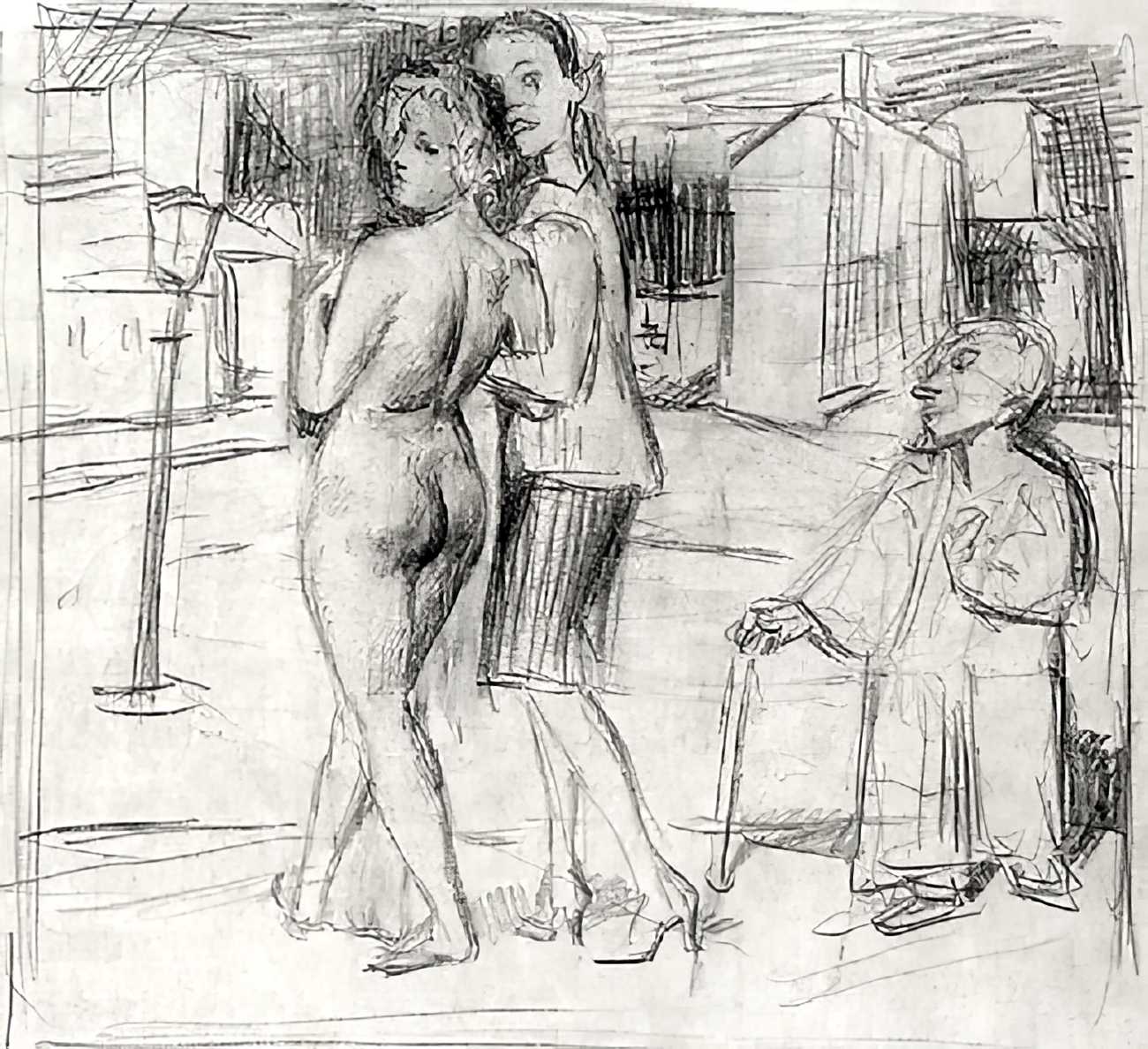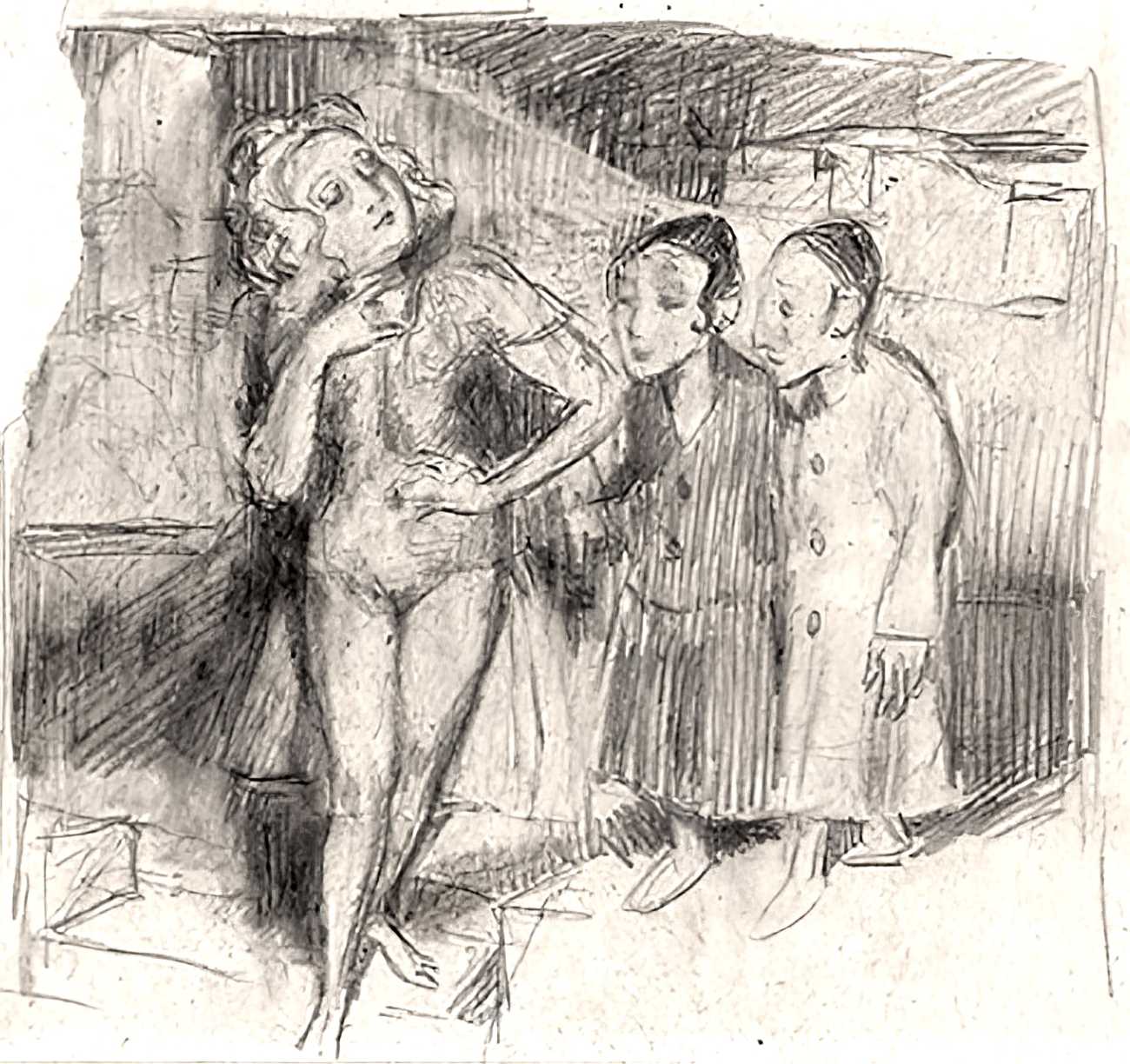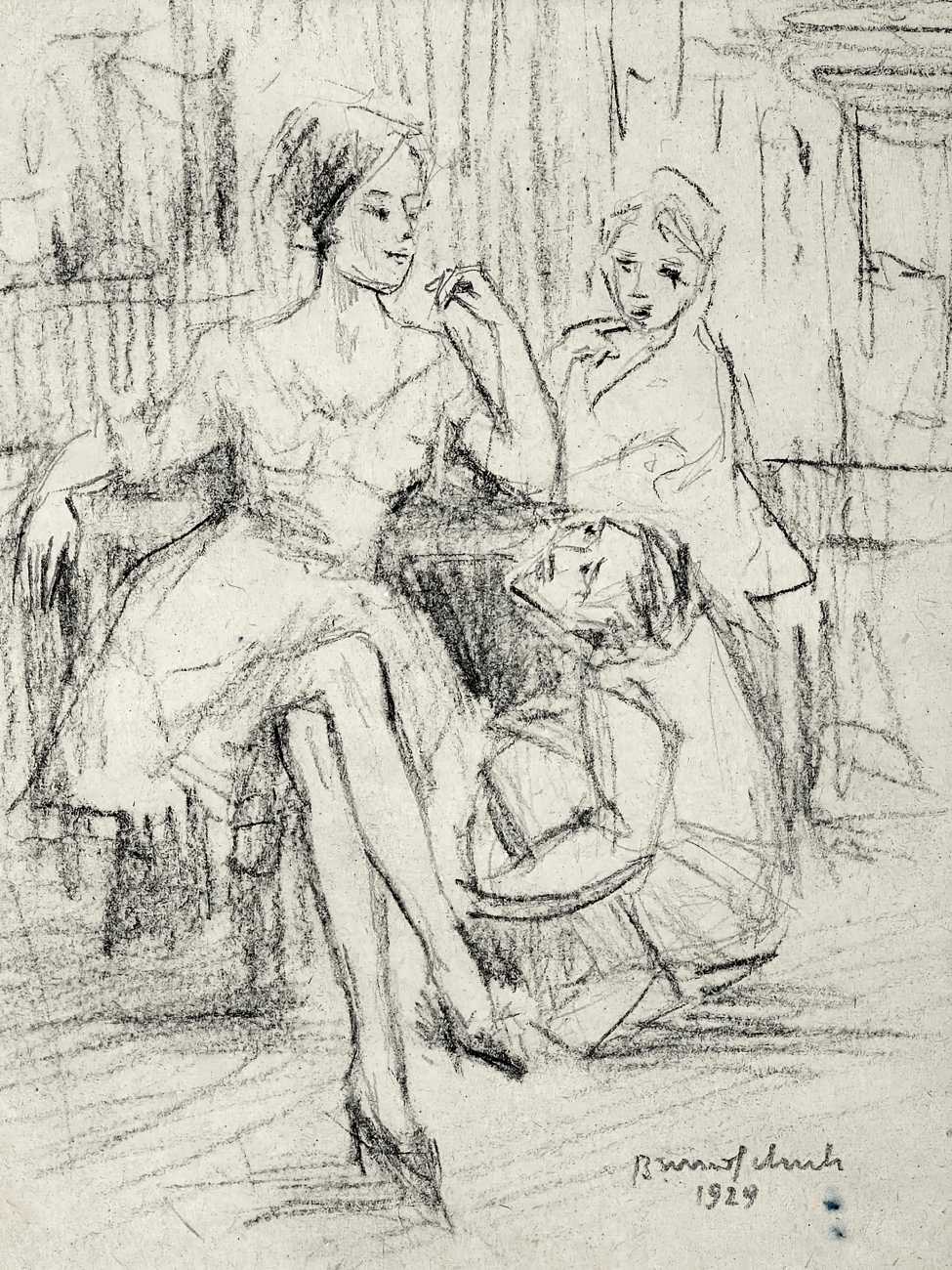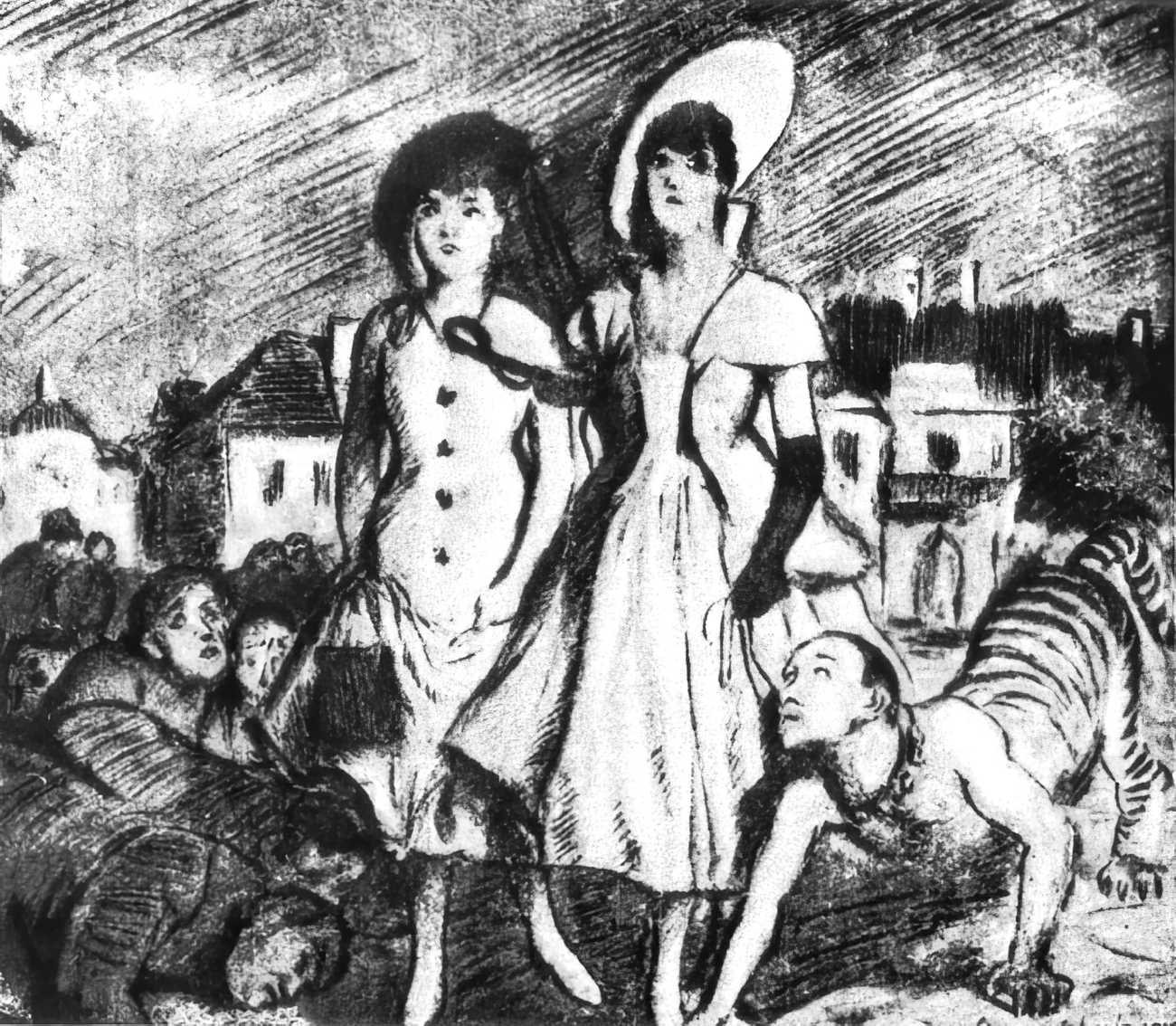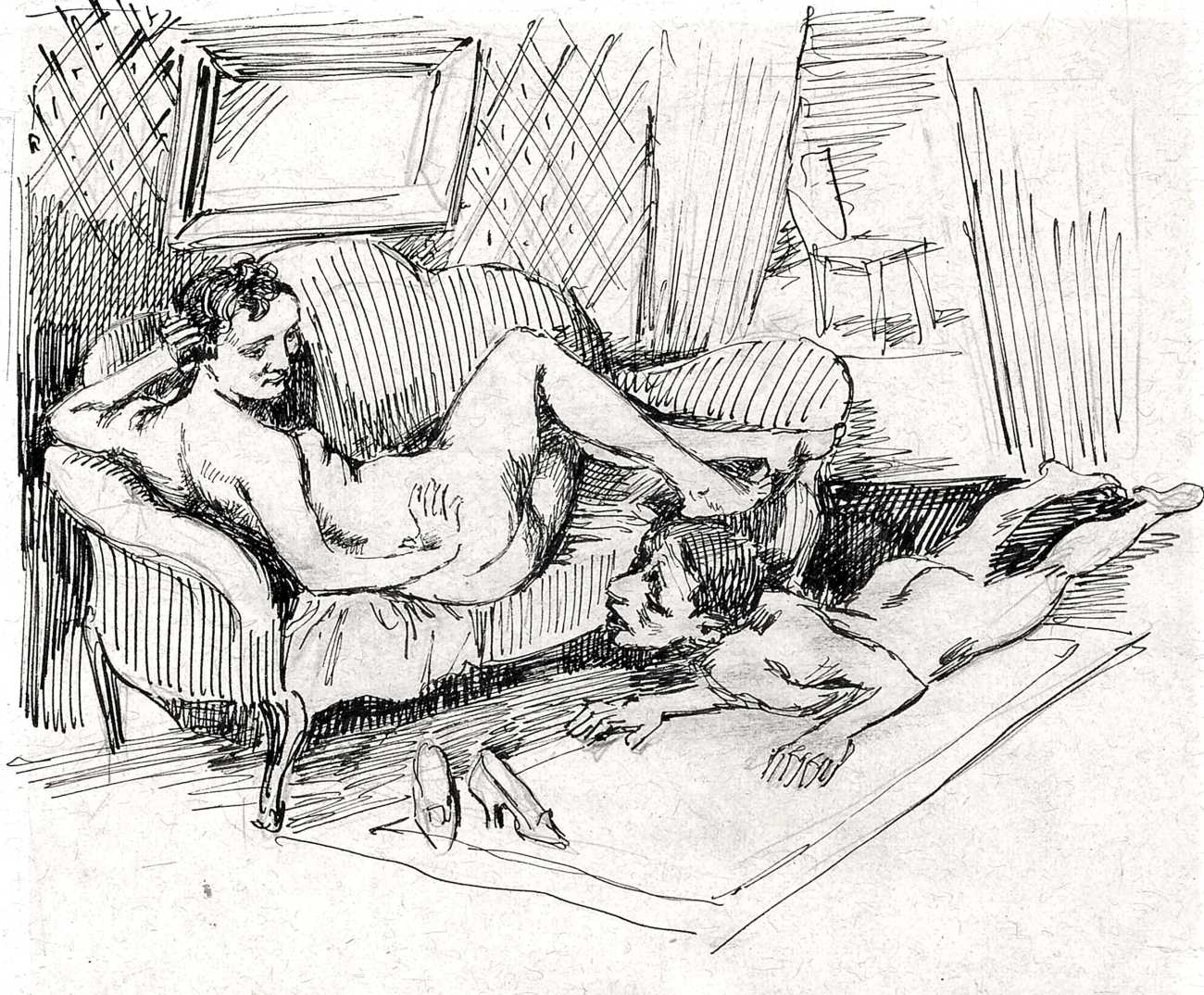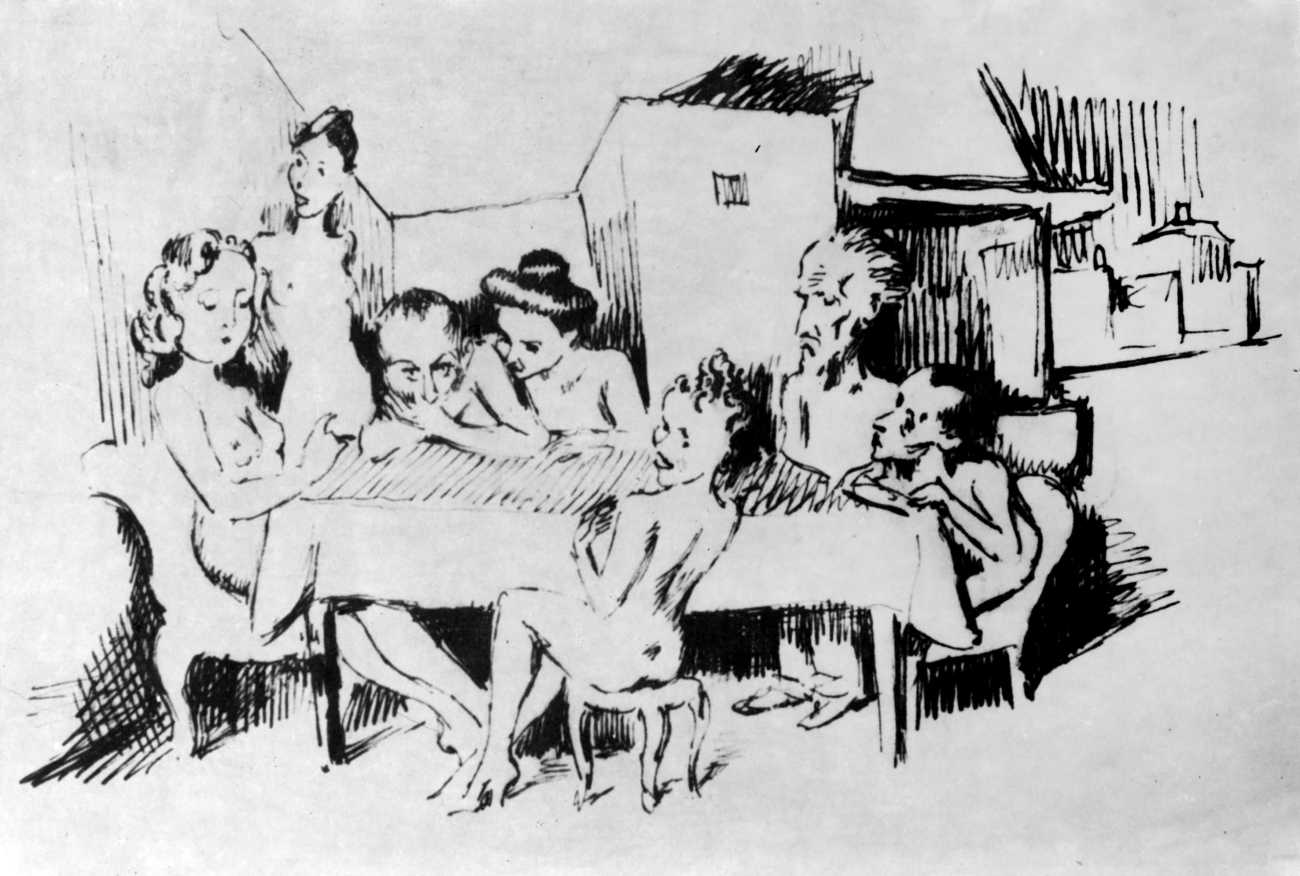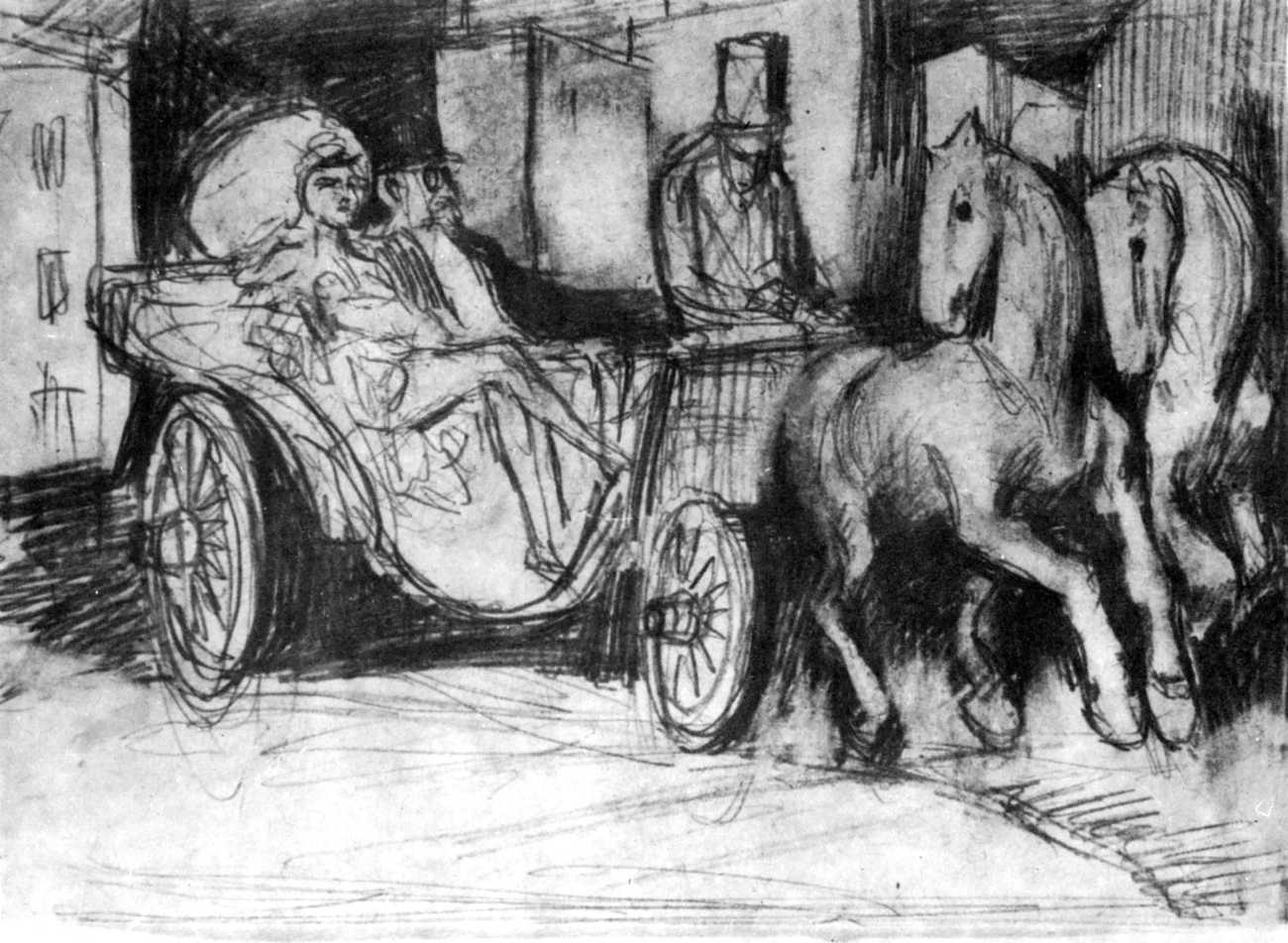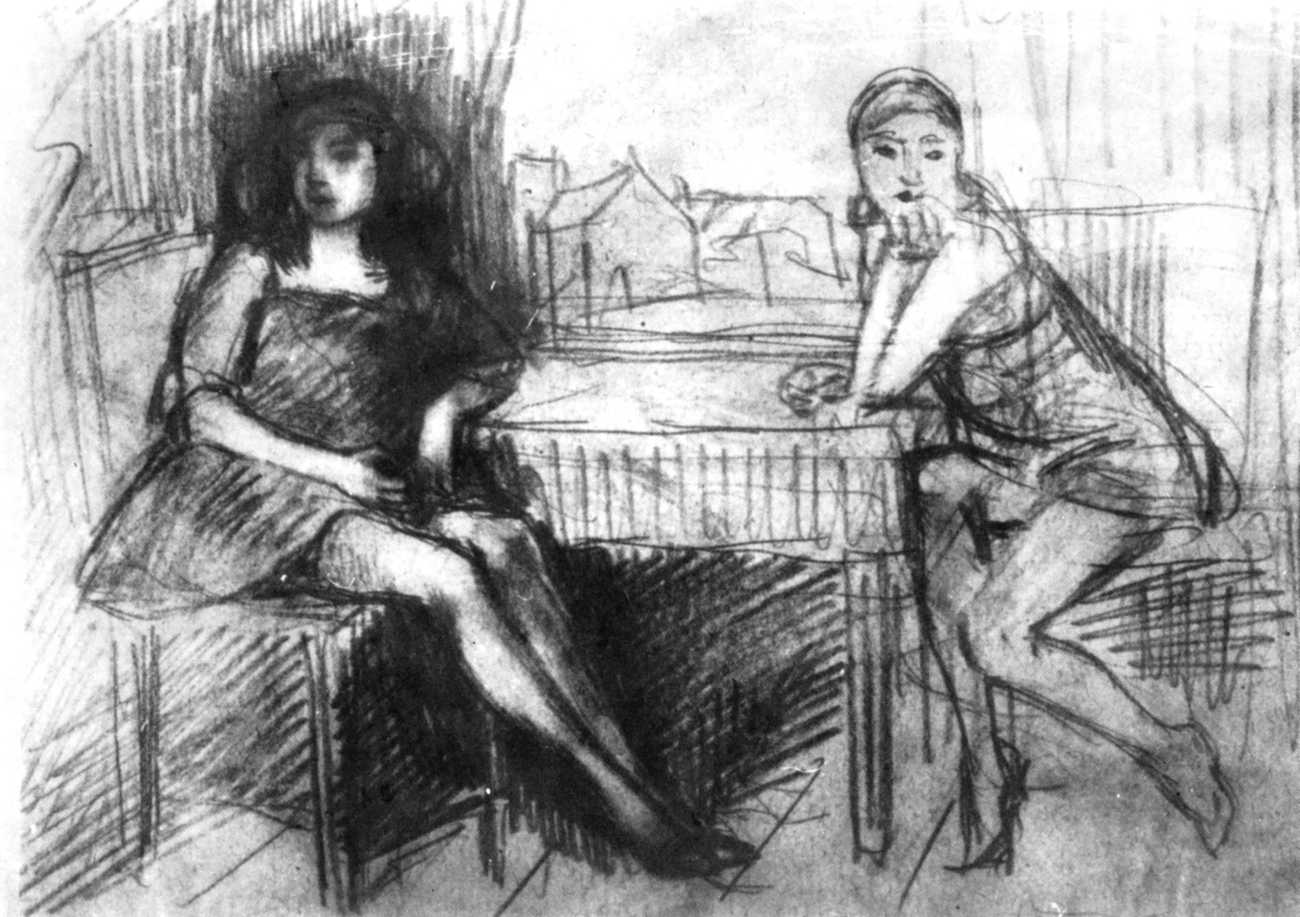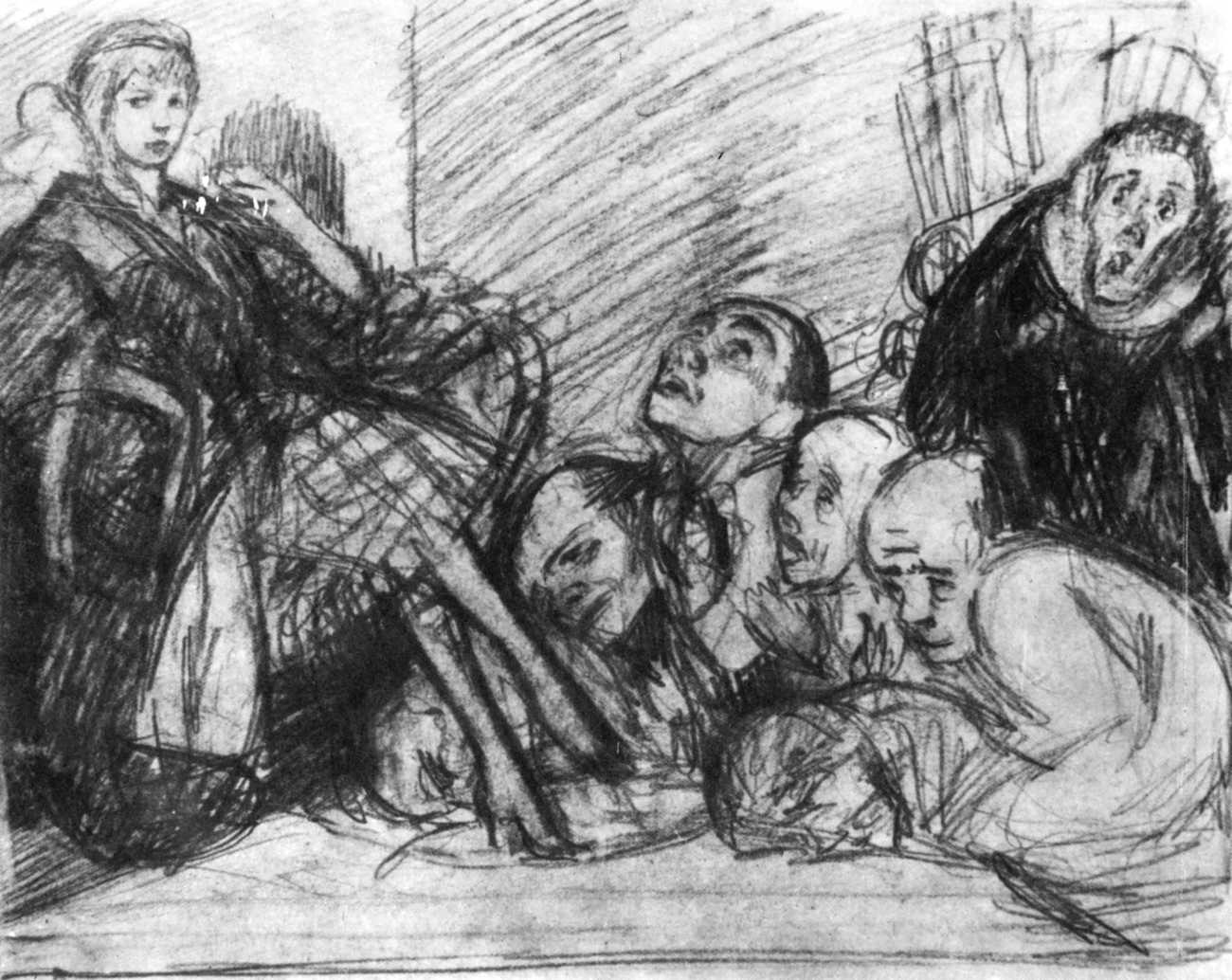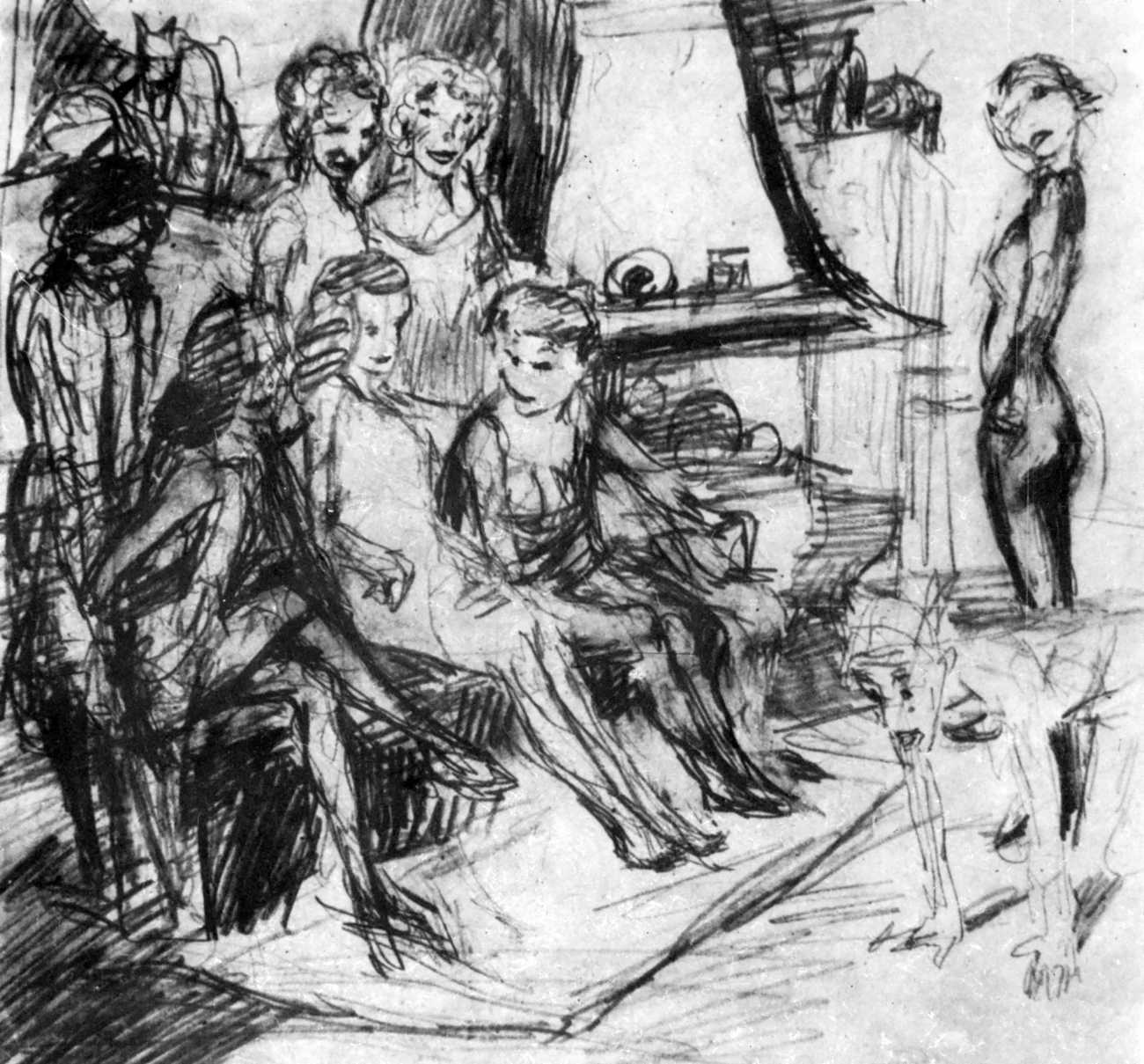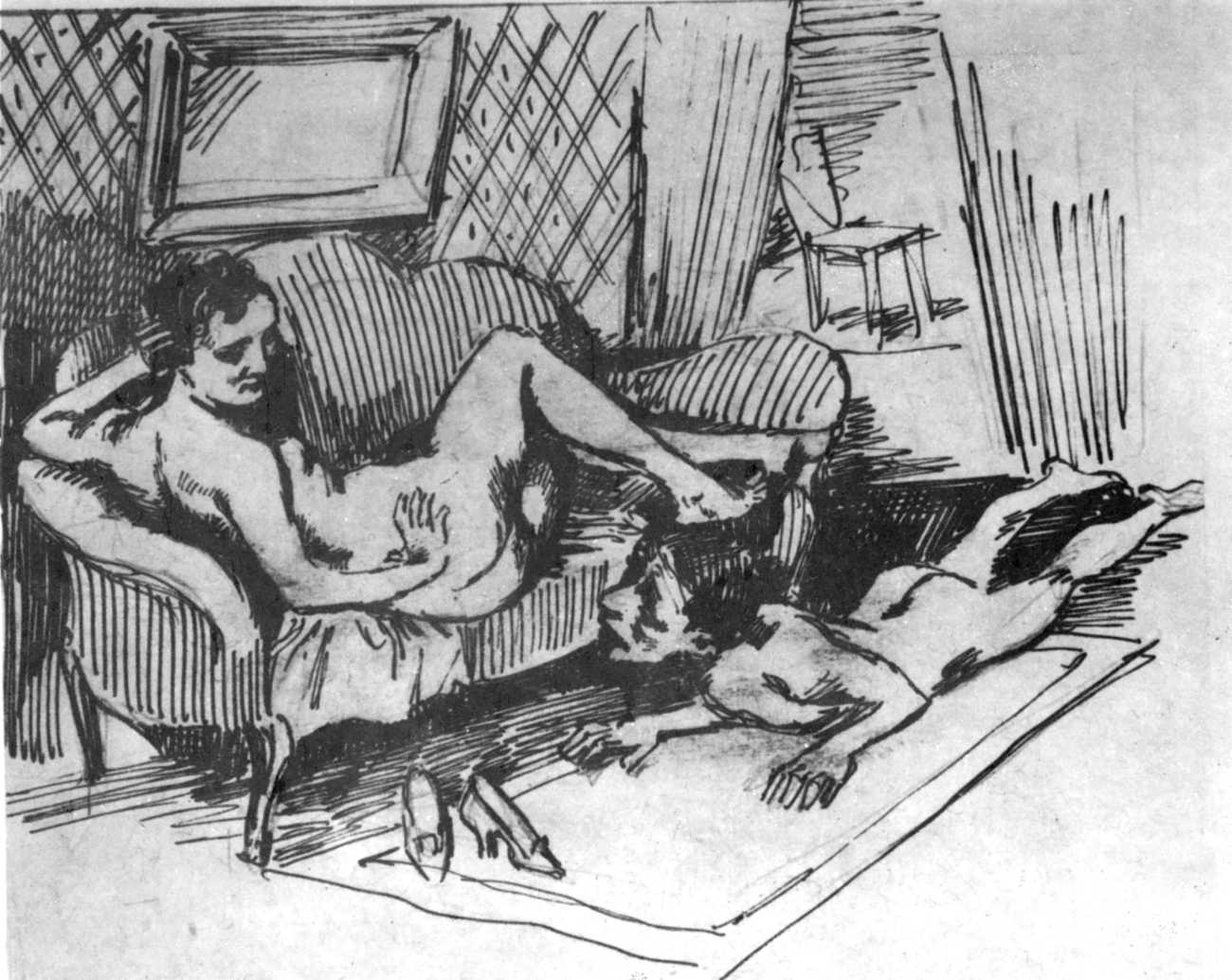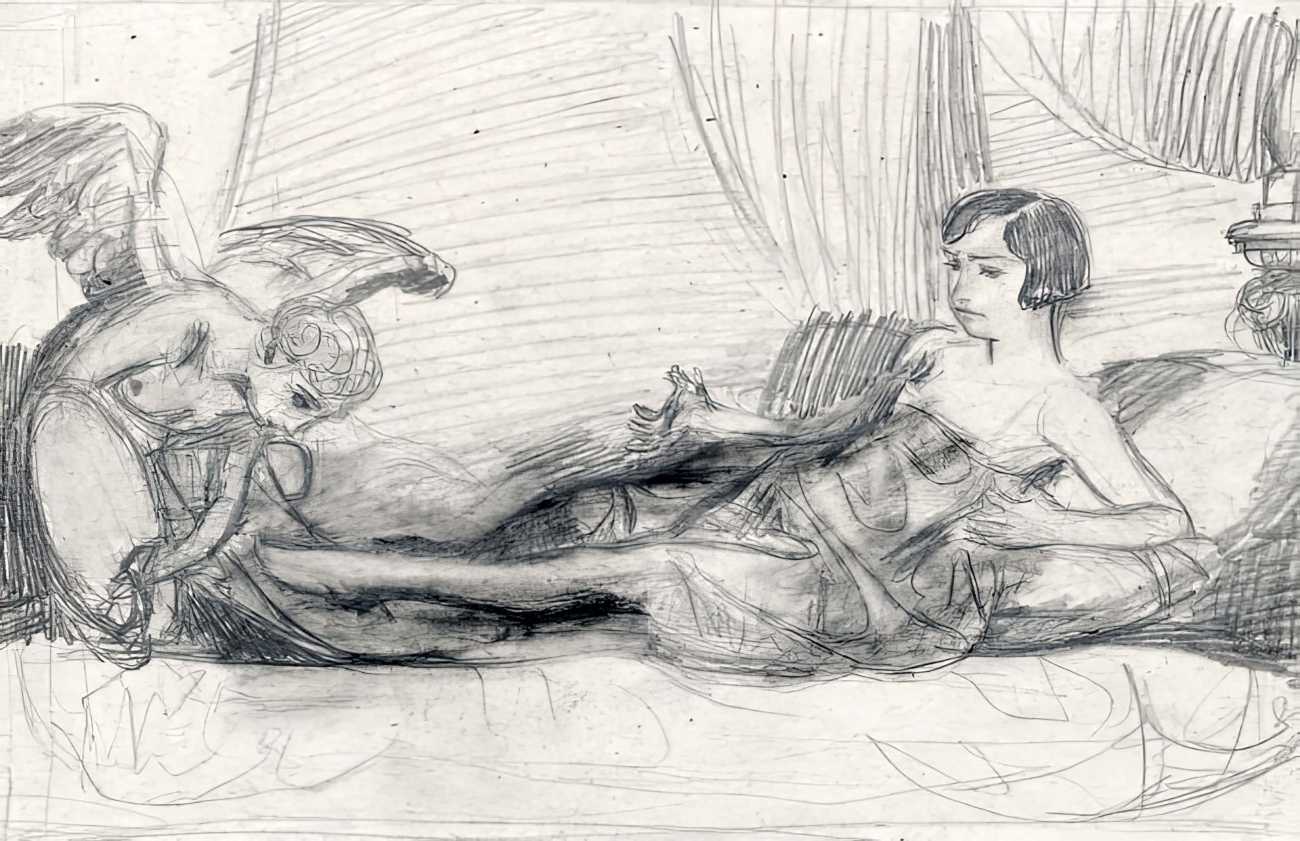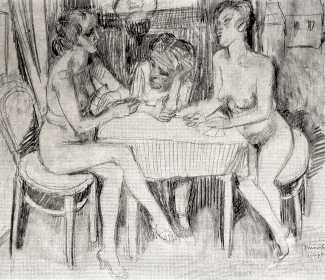
Alongside Xięga Bałwochwalcza, Bruno Schulz produced a substantial body of drawings and graphic work throughout his life. Only a fraction of his visual output survives, but the remaining works reveal an artist whose imagination moved freely between observation, fantasy, eroticism and the grotesque. His subjects include solitary figures, couples and groups, domestic interiors, streets and cityscapes, self-portraits, book illustrations and elaborate bookplates. Jewish and Hasidic imagery also appears, alongside motifs drawn from the literary and mythical worlds that increasingly occupied his imagination.
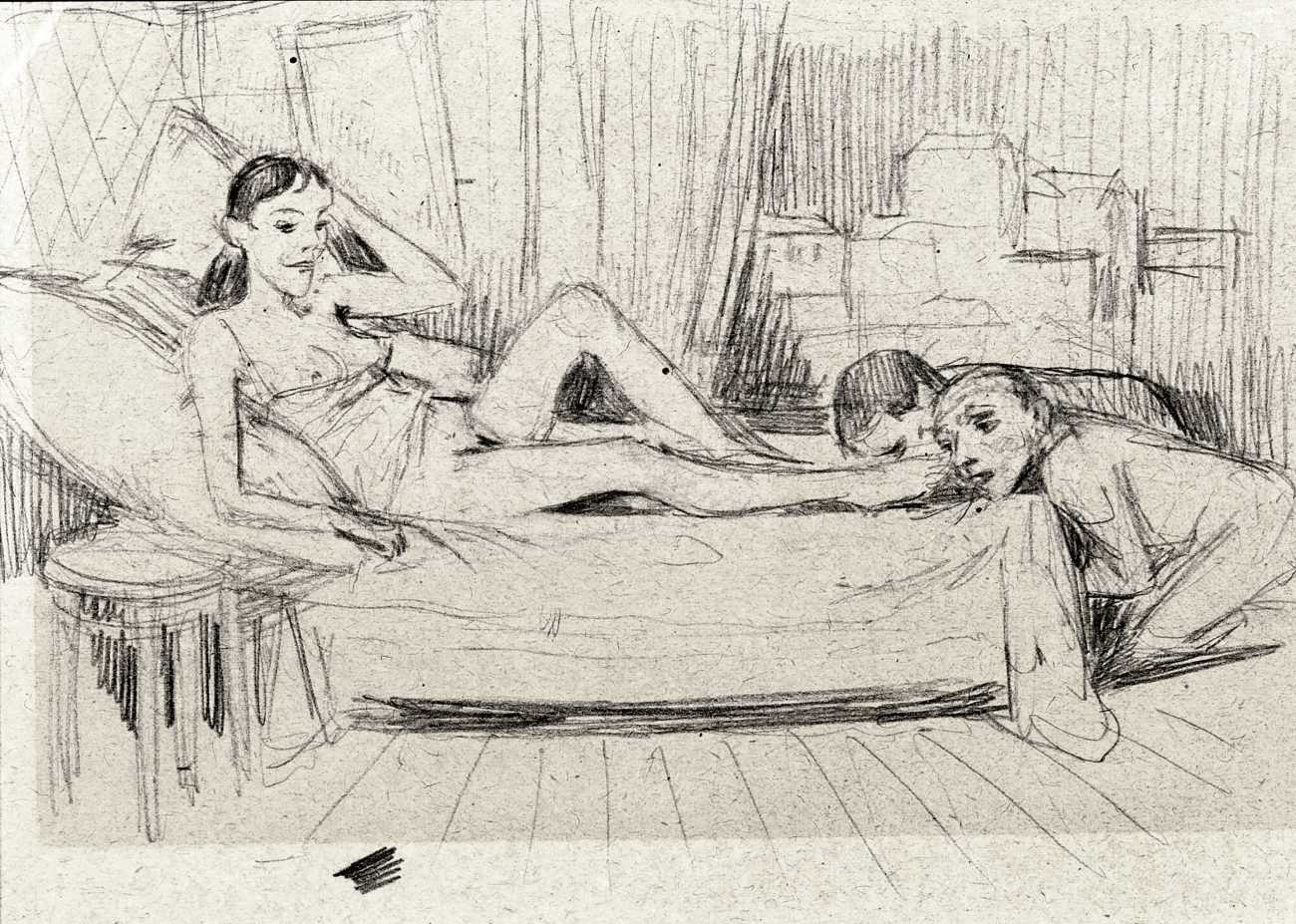
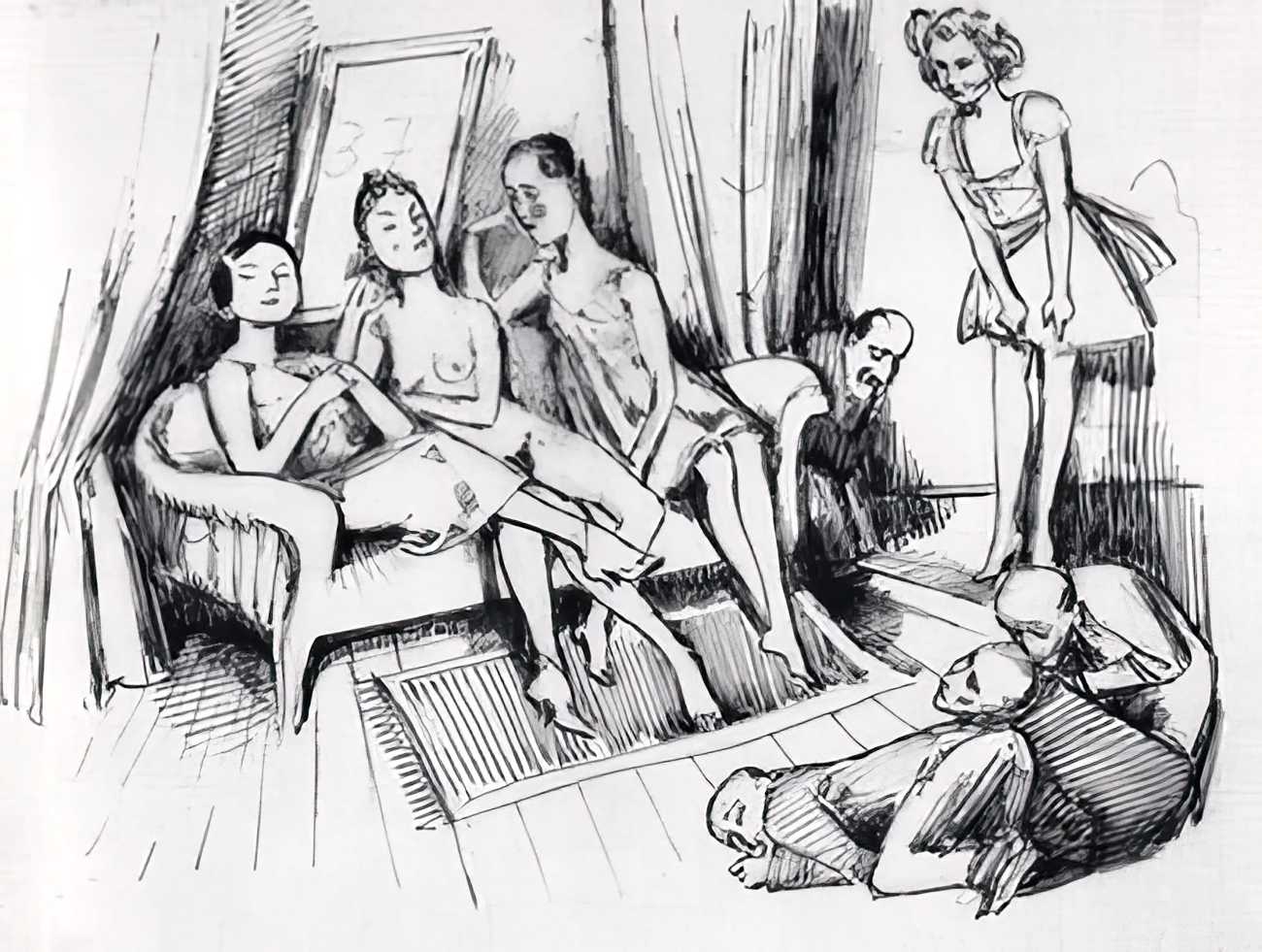
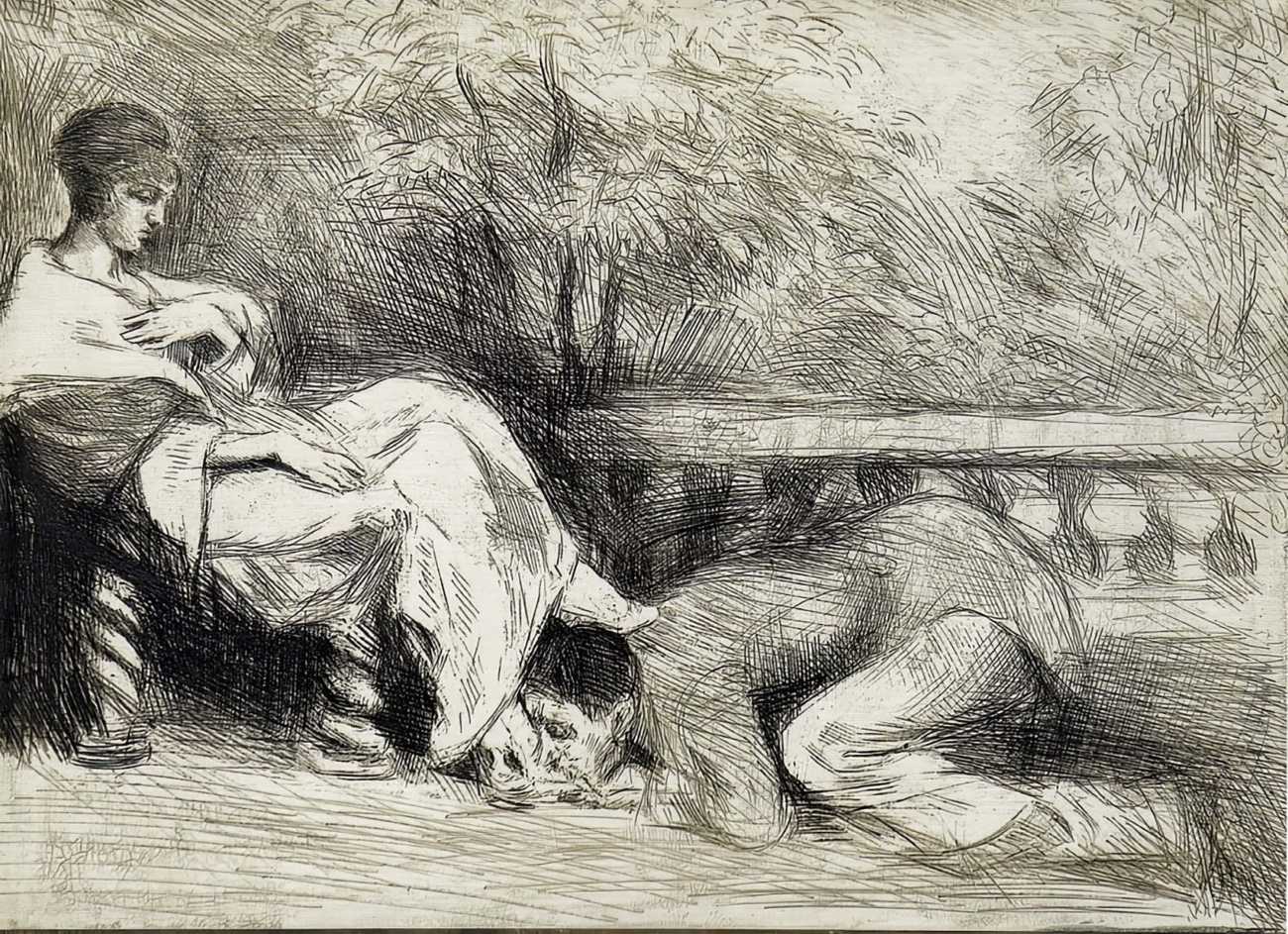
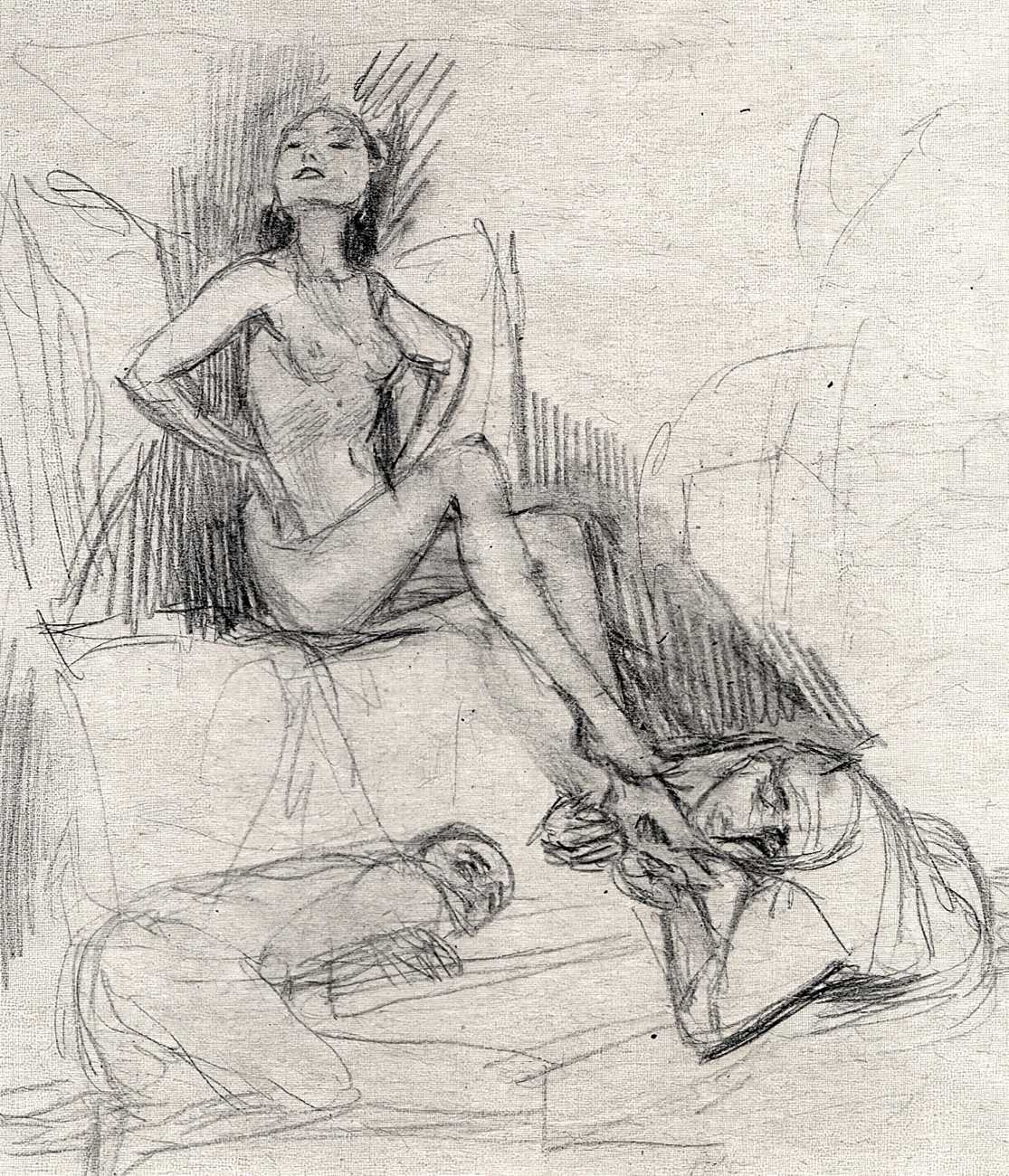
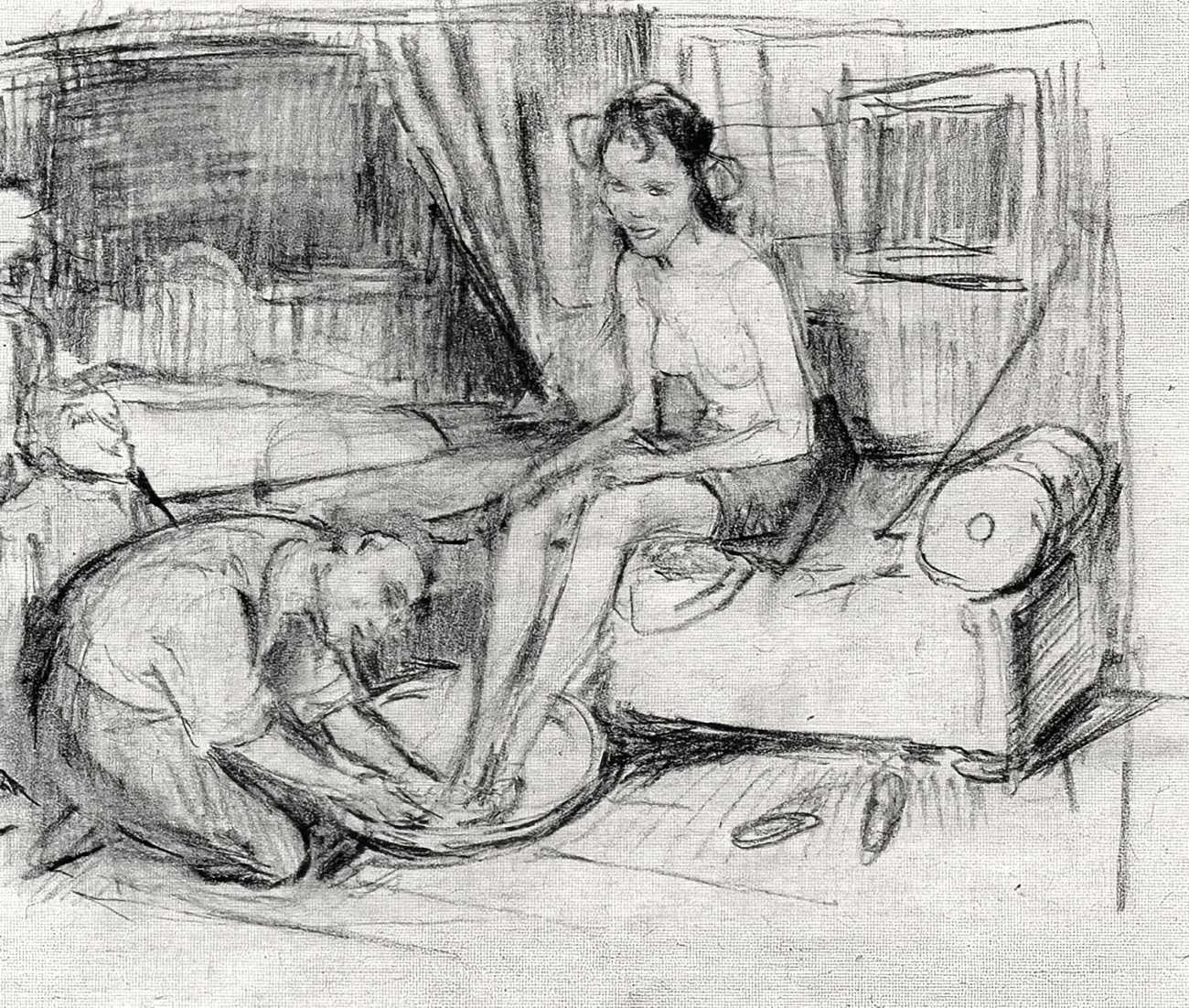
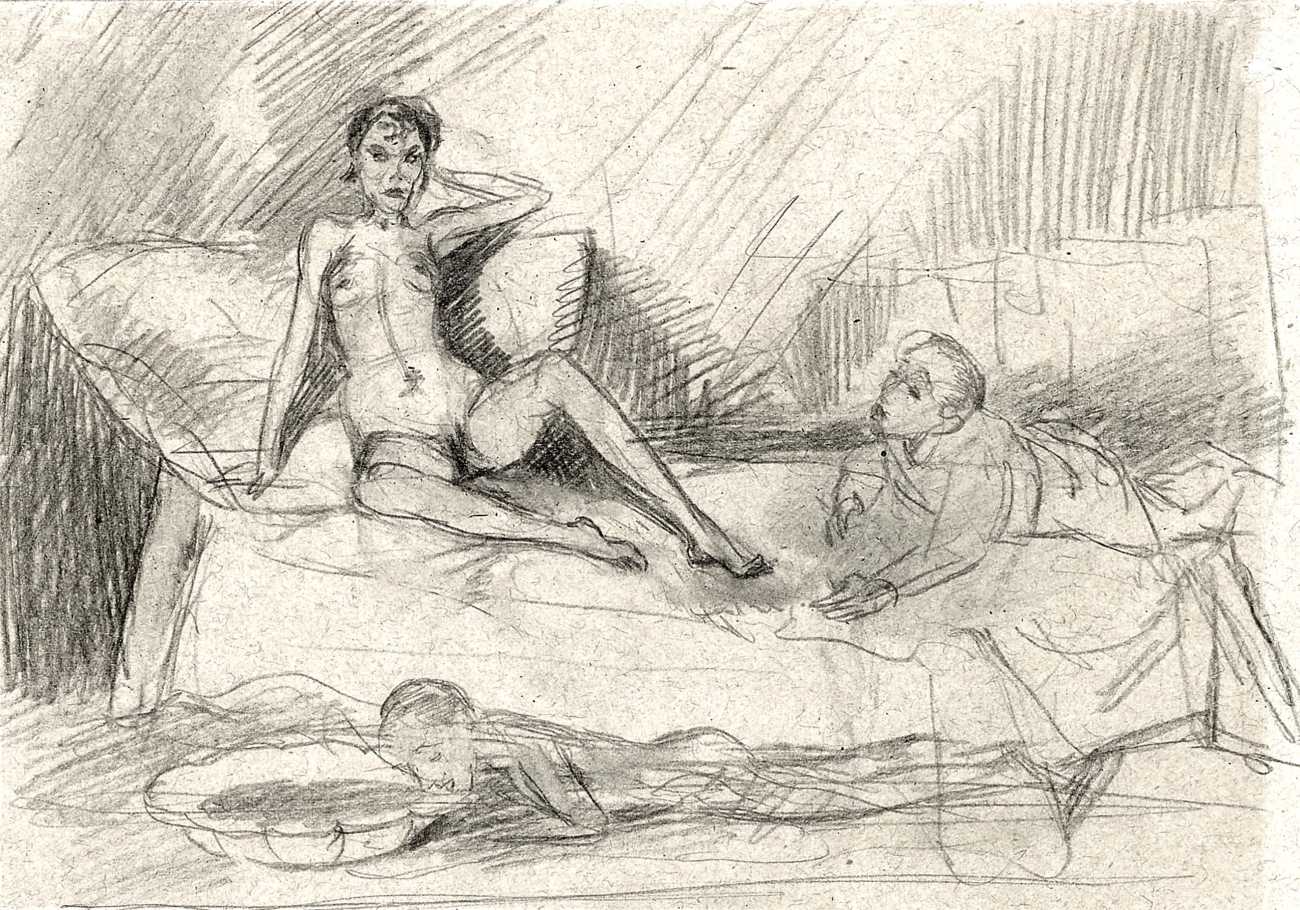
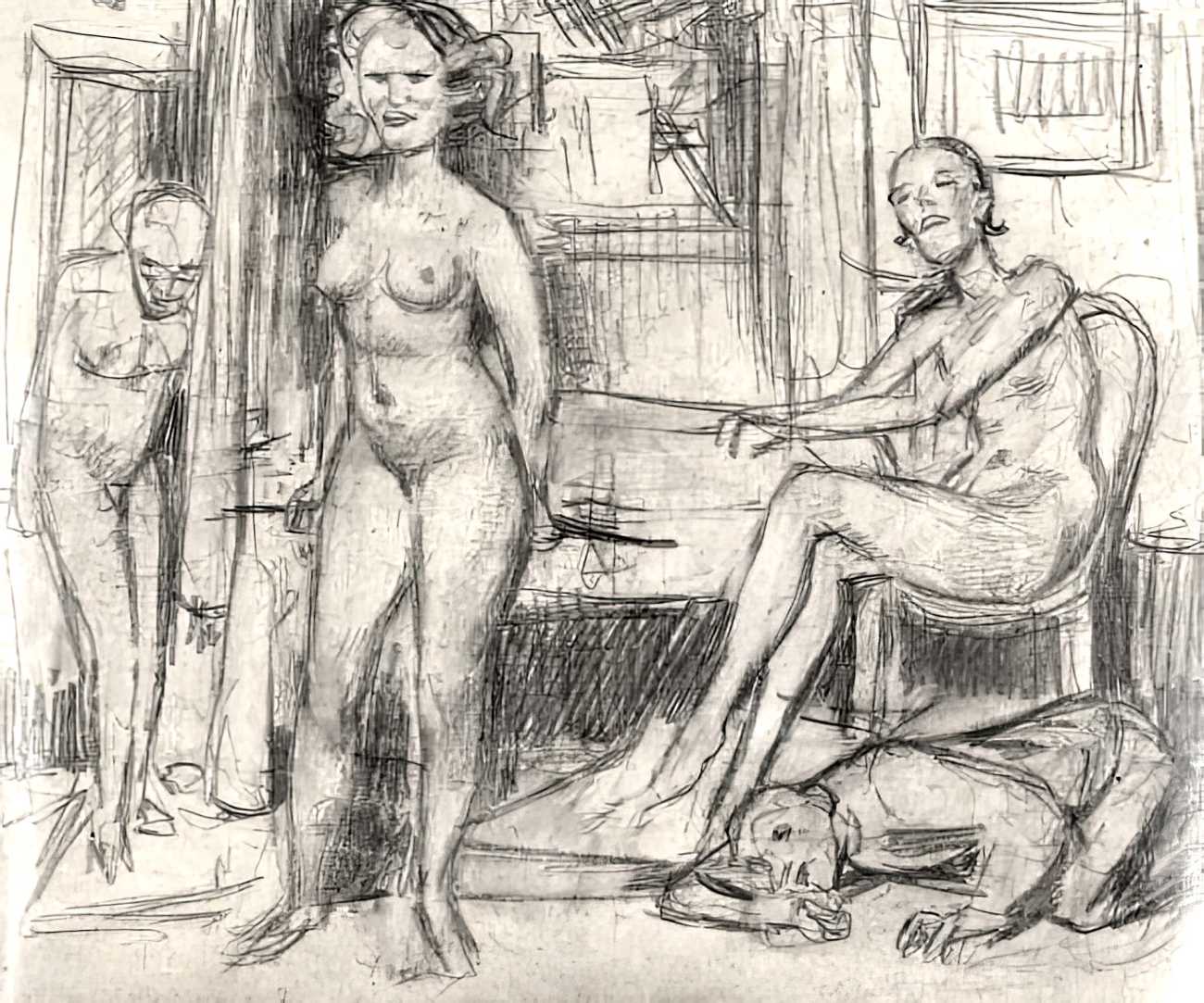
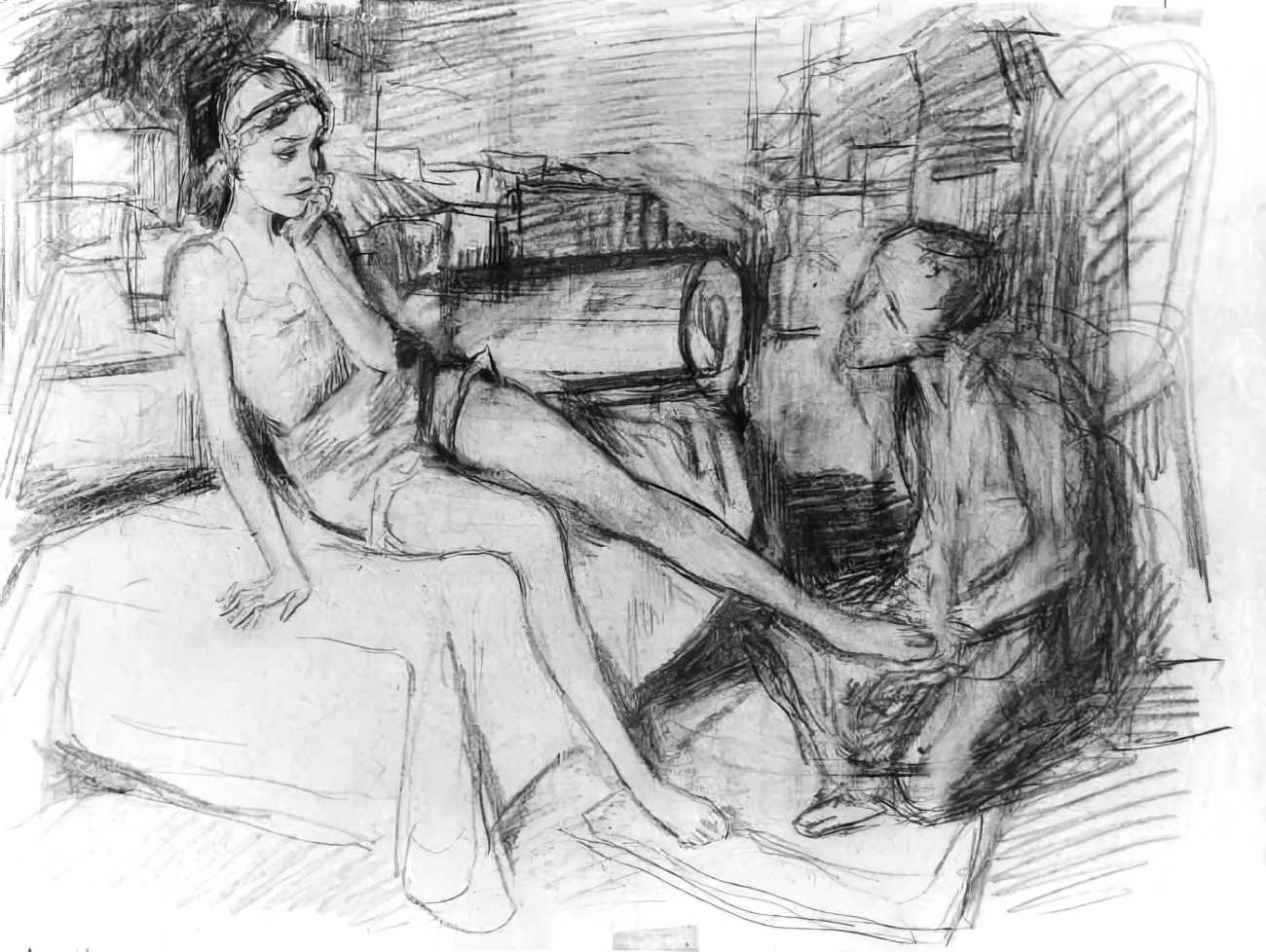
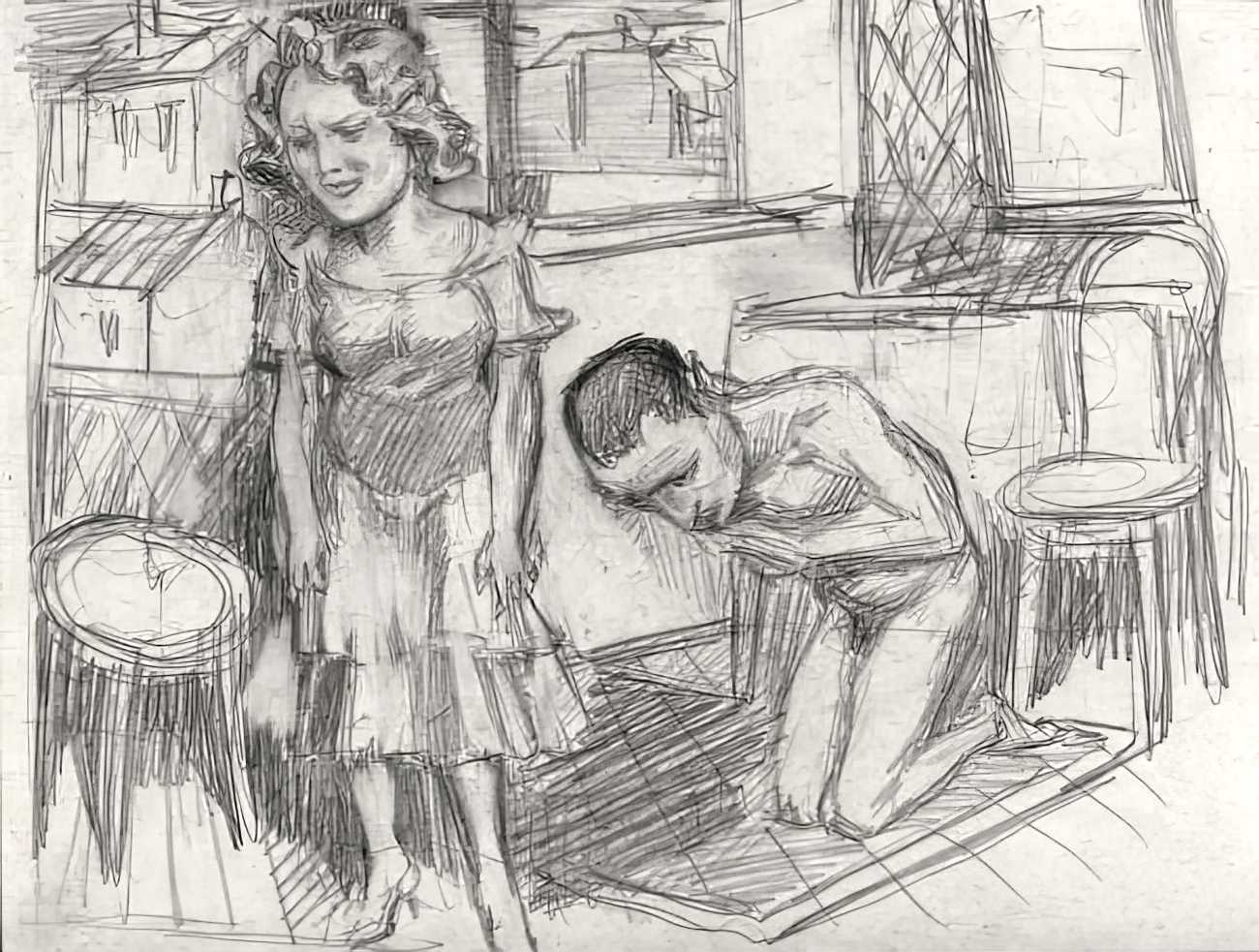
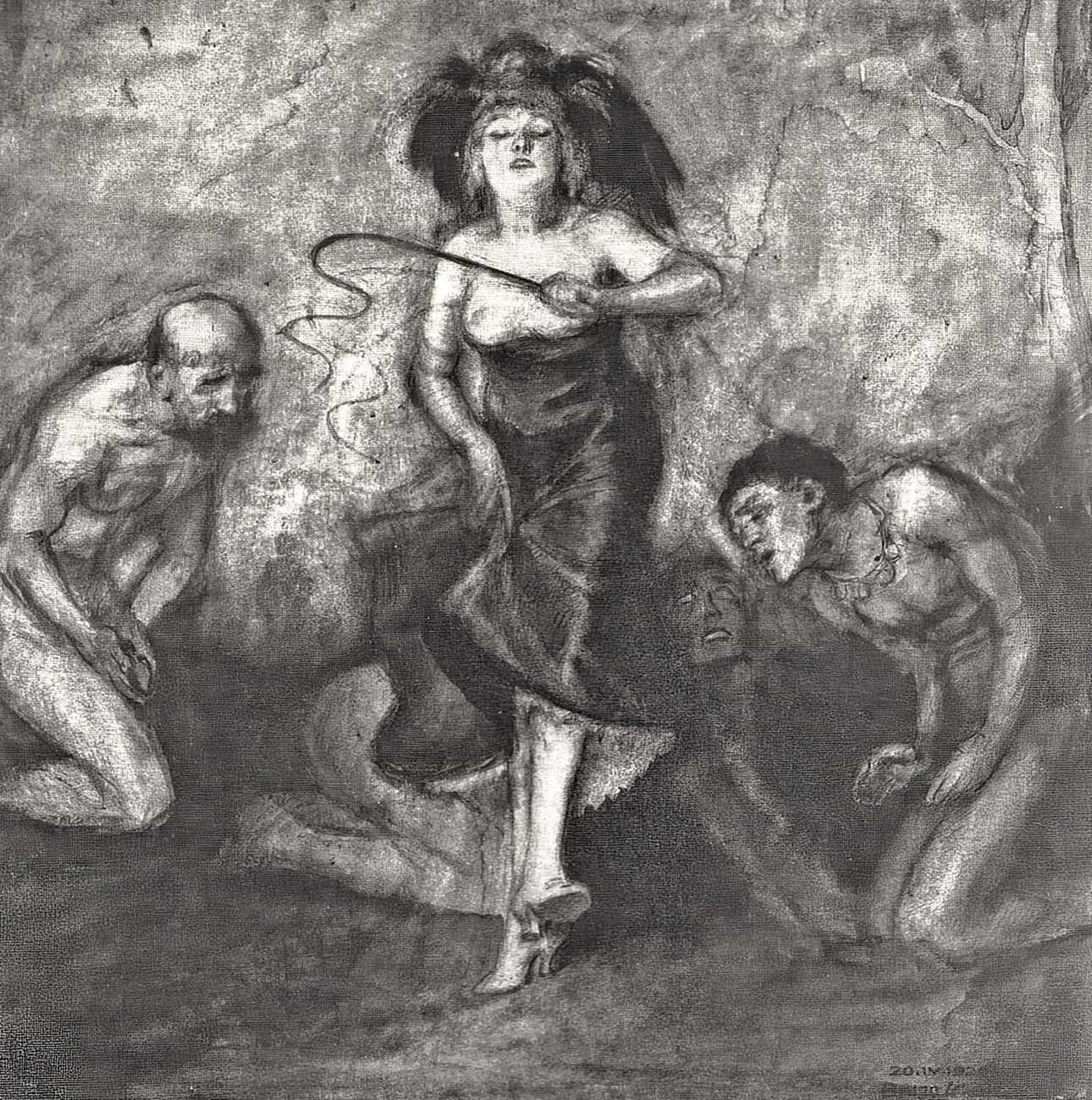
The erotic drawings return repeatedly to the same unsettling drama of power and submission. Women are often confident, self-possessed and physically dominant, while men kneel, crawl, embrace their feet or assume deliberately abject positions. Yet these encounters are rarely presented as straightforward scenes of sexual activity – Schulz surrounds them with an atmosphere of fantasy, ritual and psychological obsession, allowing erotic desire, humiliation, adoration and comedy to coexist.
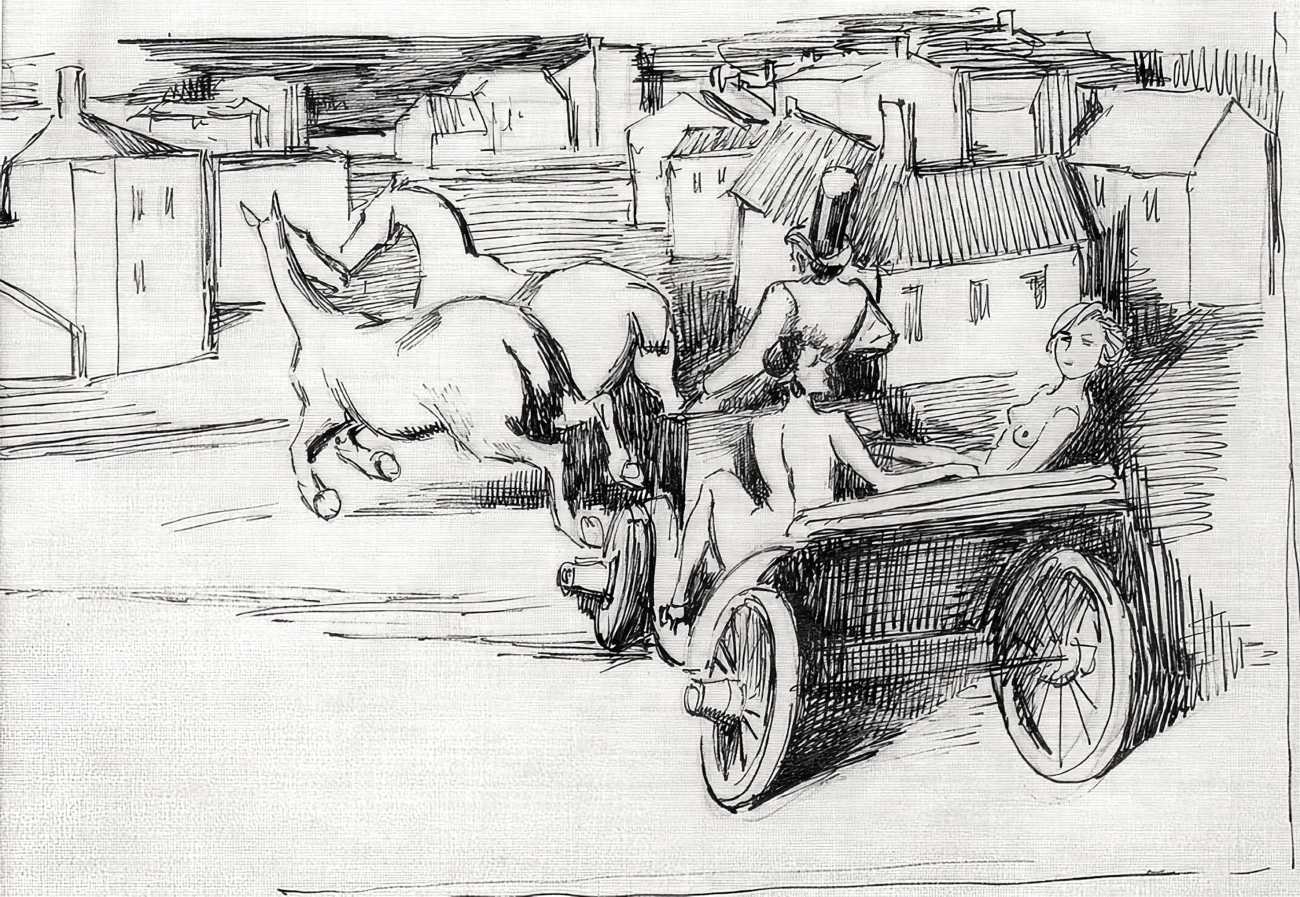
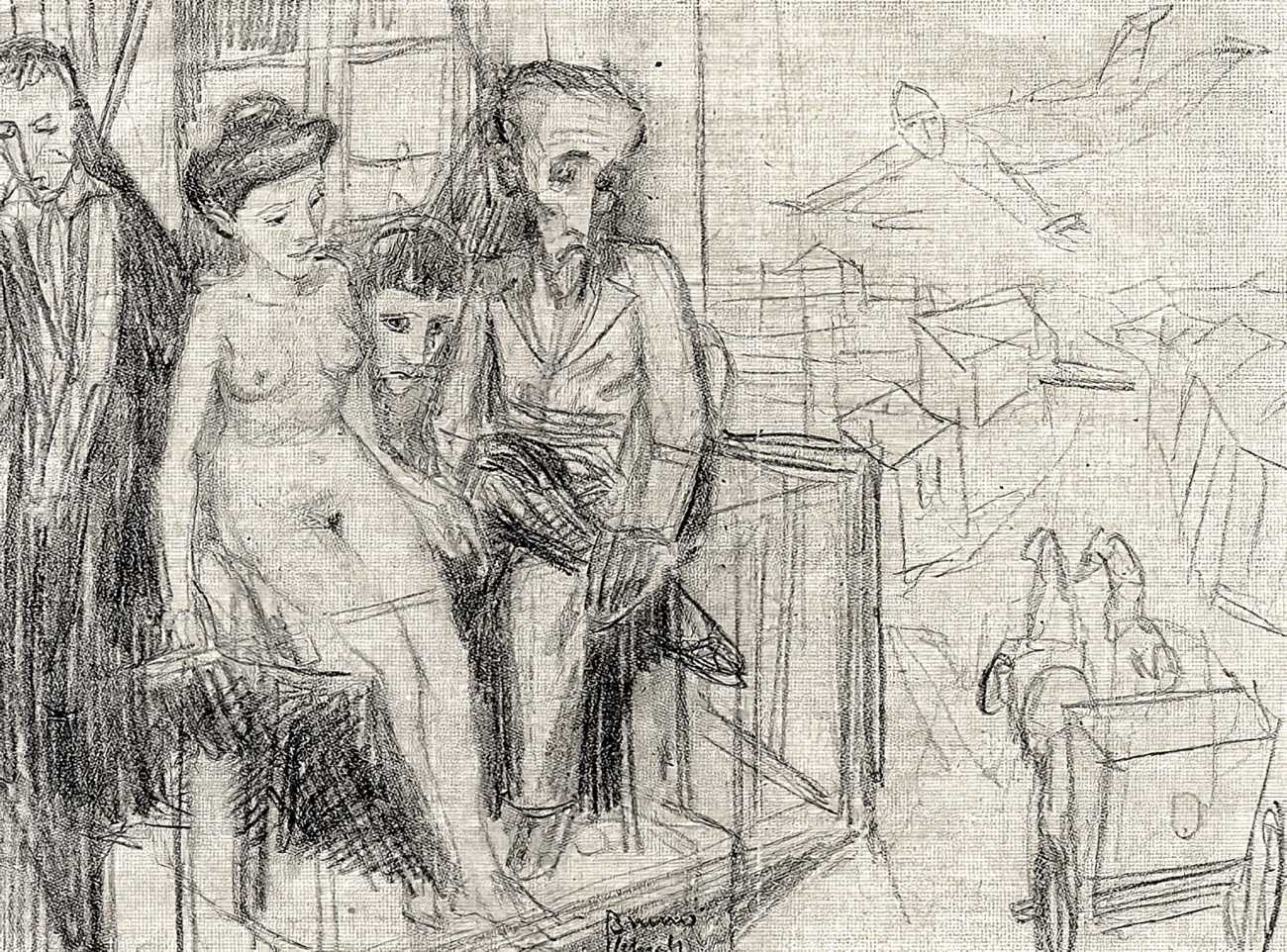
His treatment of space is distinctive. Interiors, bedrooms and shabby urban settings are transformed into stages on which these strange dramas unfold. In the later drawings, Schulz increasingly reduced the amount of descriptive detail. Elaborately furnished rooms gave way to sparse interiors, windows, beds and simplified cityscapes, while the figures became more economical and expressive.
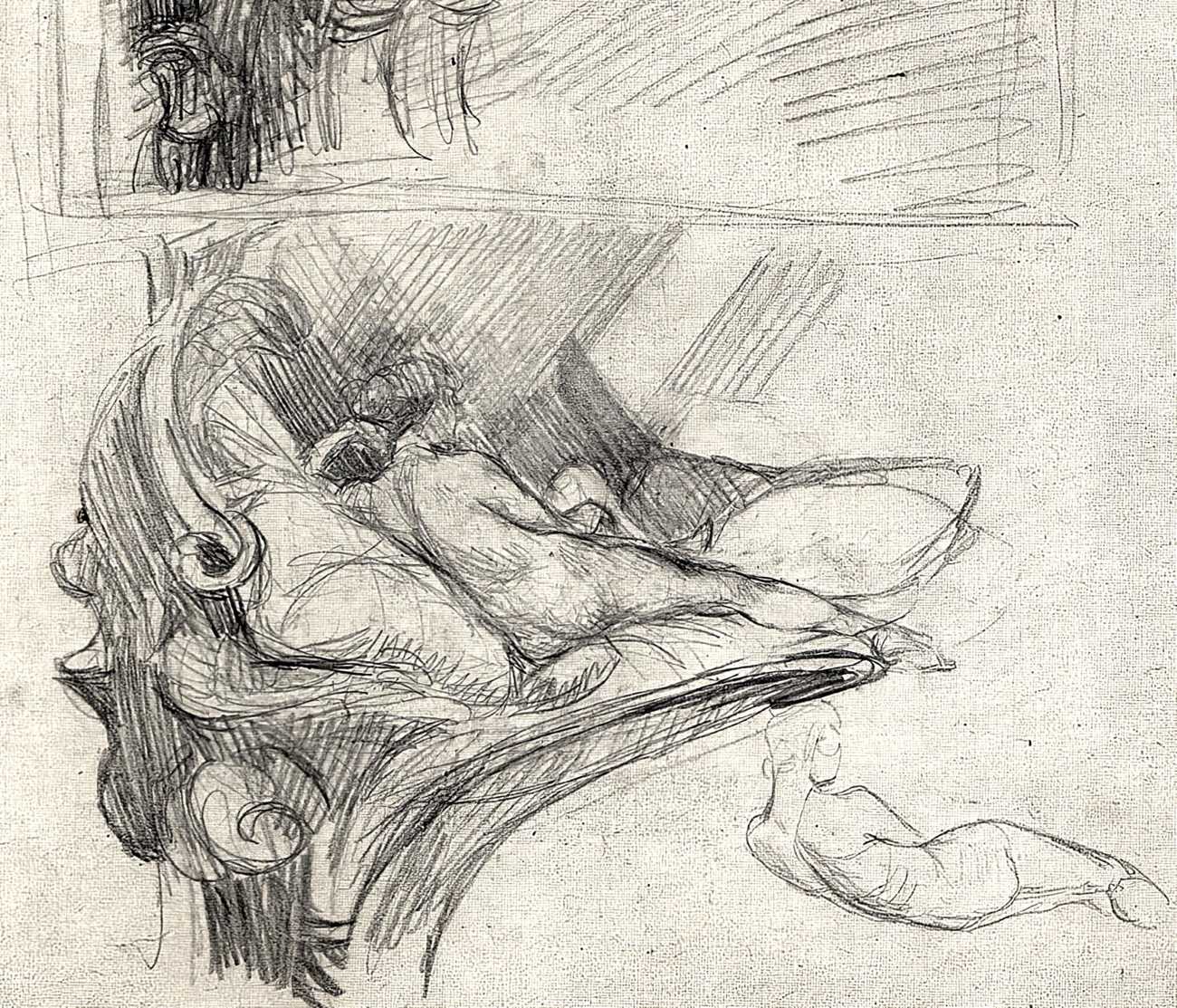
His technique varies from delicate pencil studies to more heavily worked drawings and graphic processes, with the same nervous, searching line running through much of the work. Schulz could move from softly observed figures to violently distorted bodies, from apparently casual sketches to compositions of considerable theatrical intensity. His bookplates and illustrations demonstrate another aspect of his imagination, combining decorative invention with the same fascination with bodies, metamorphosis, fantasy and symbolic relationships.