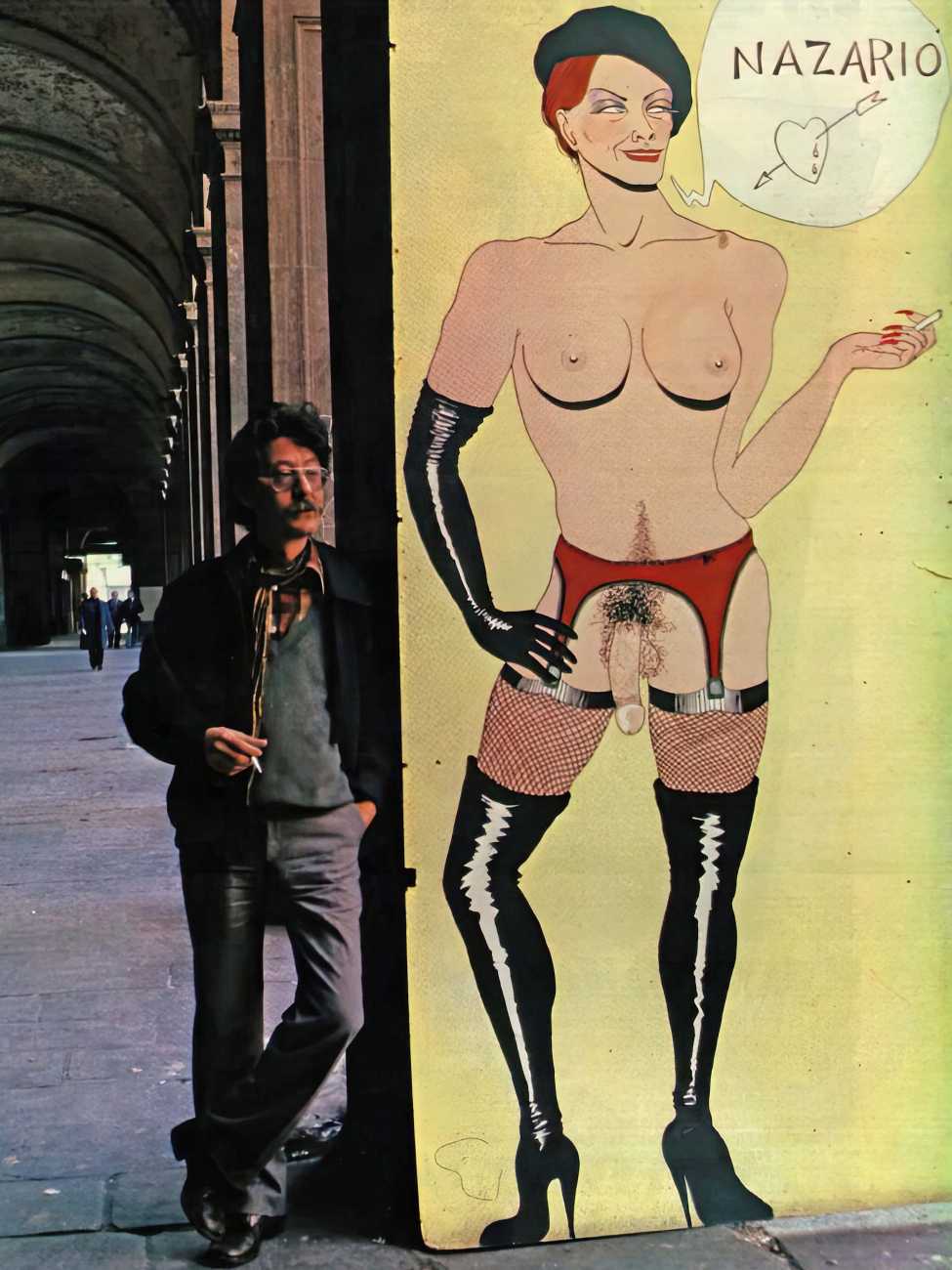
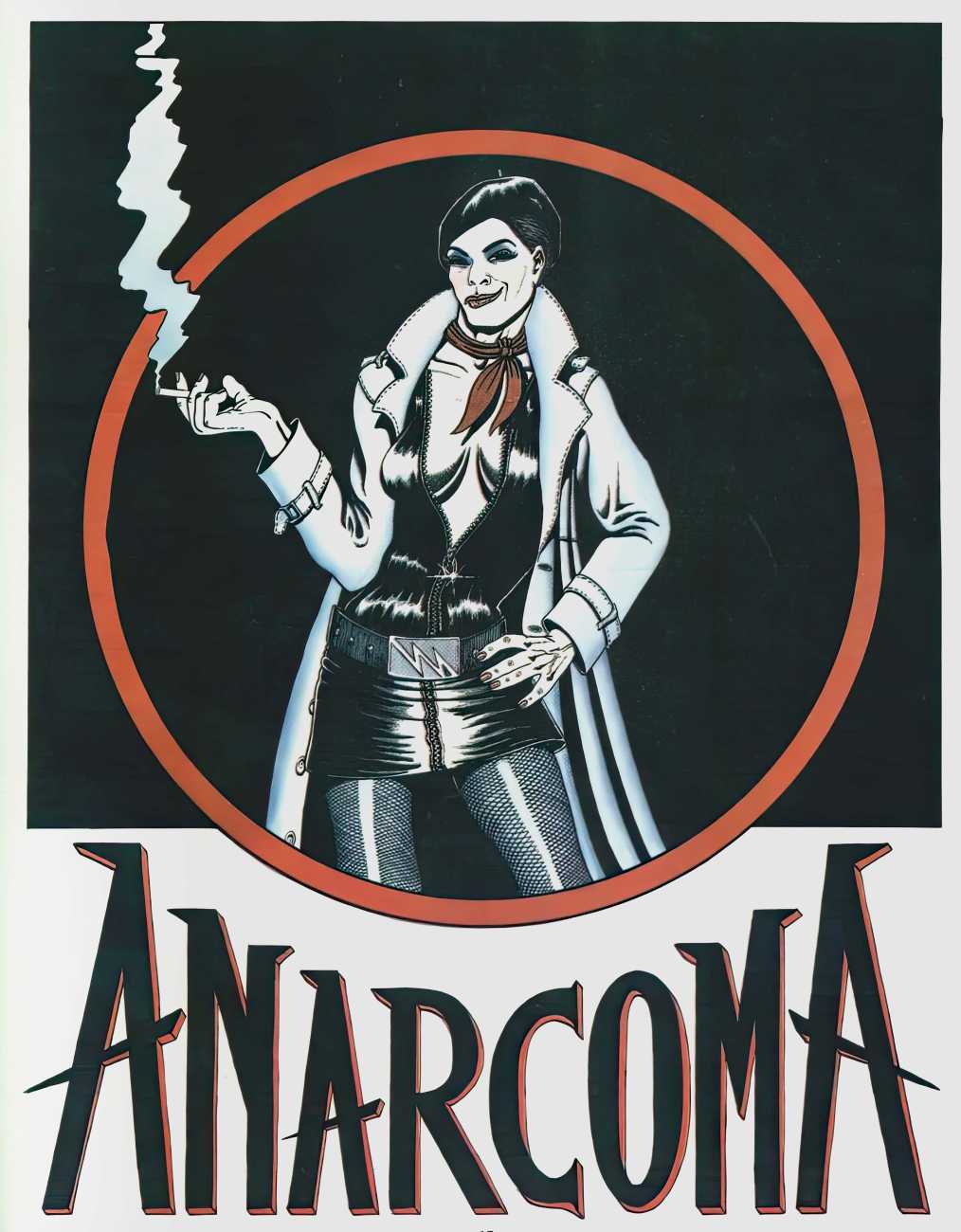
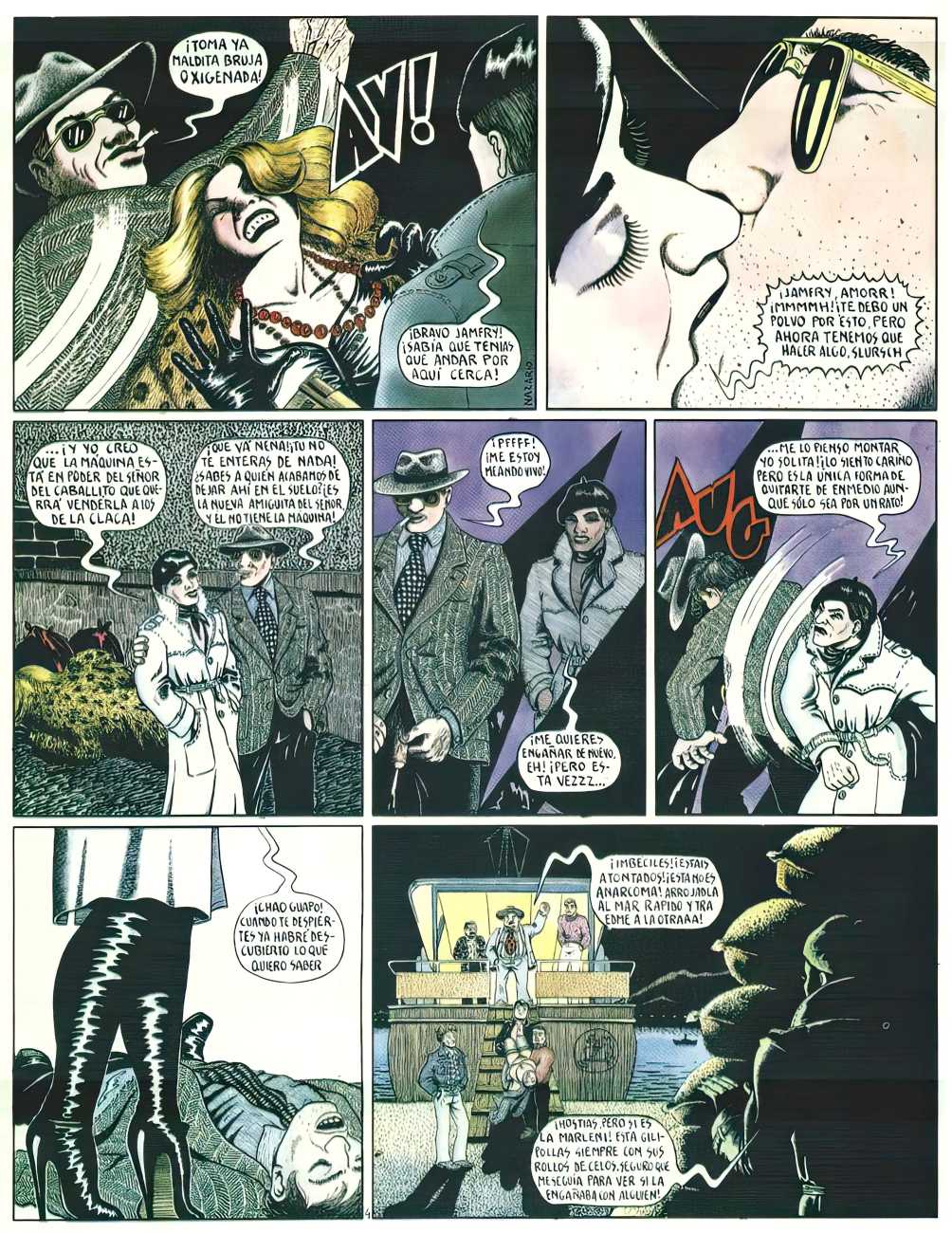
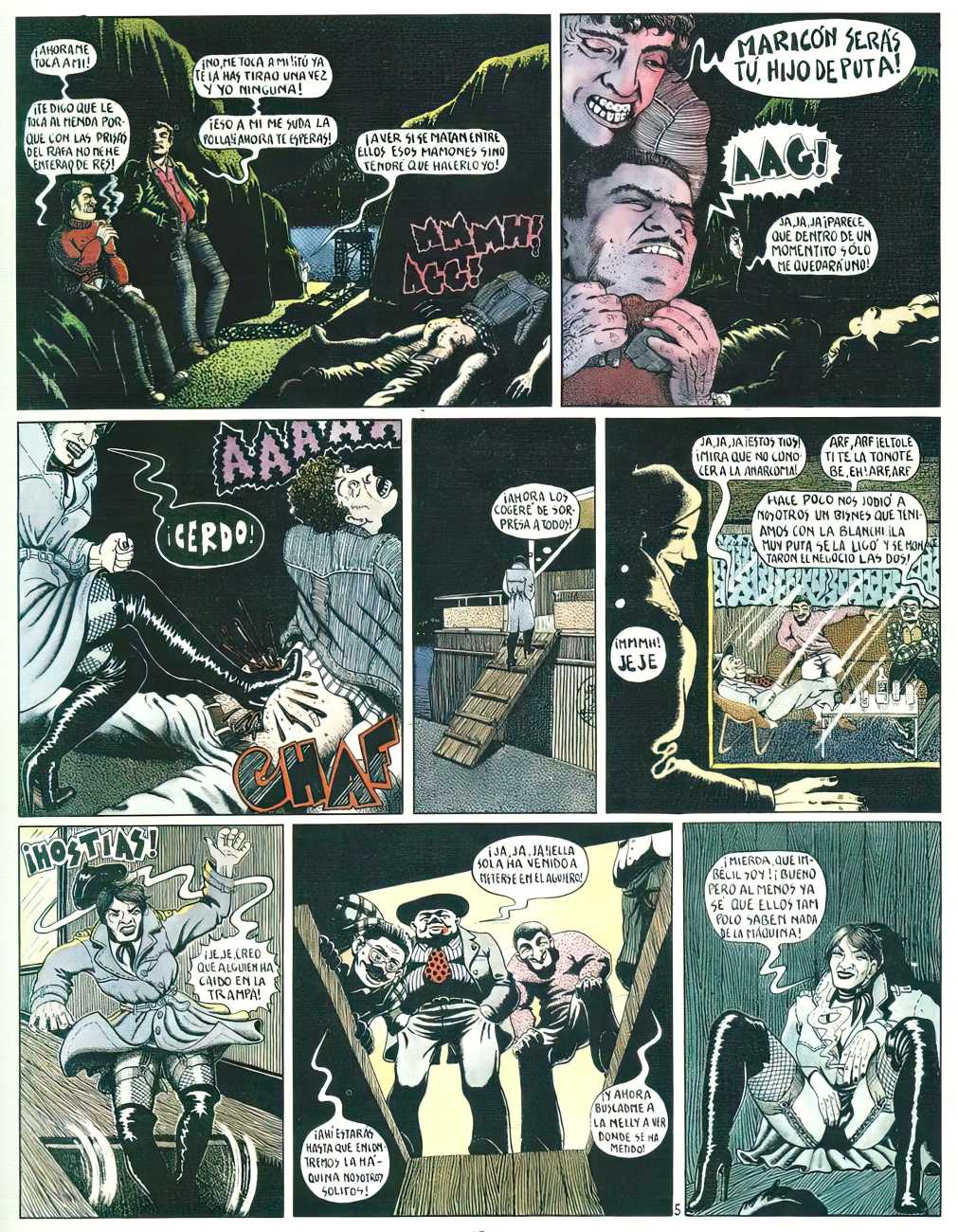
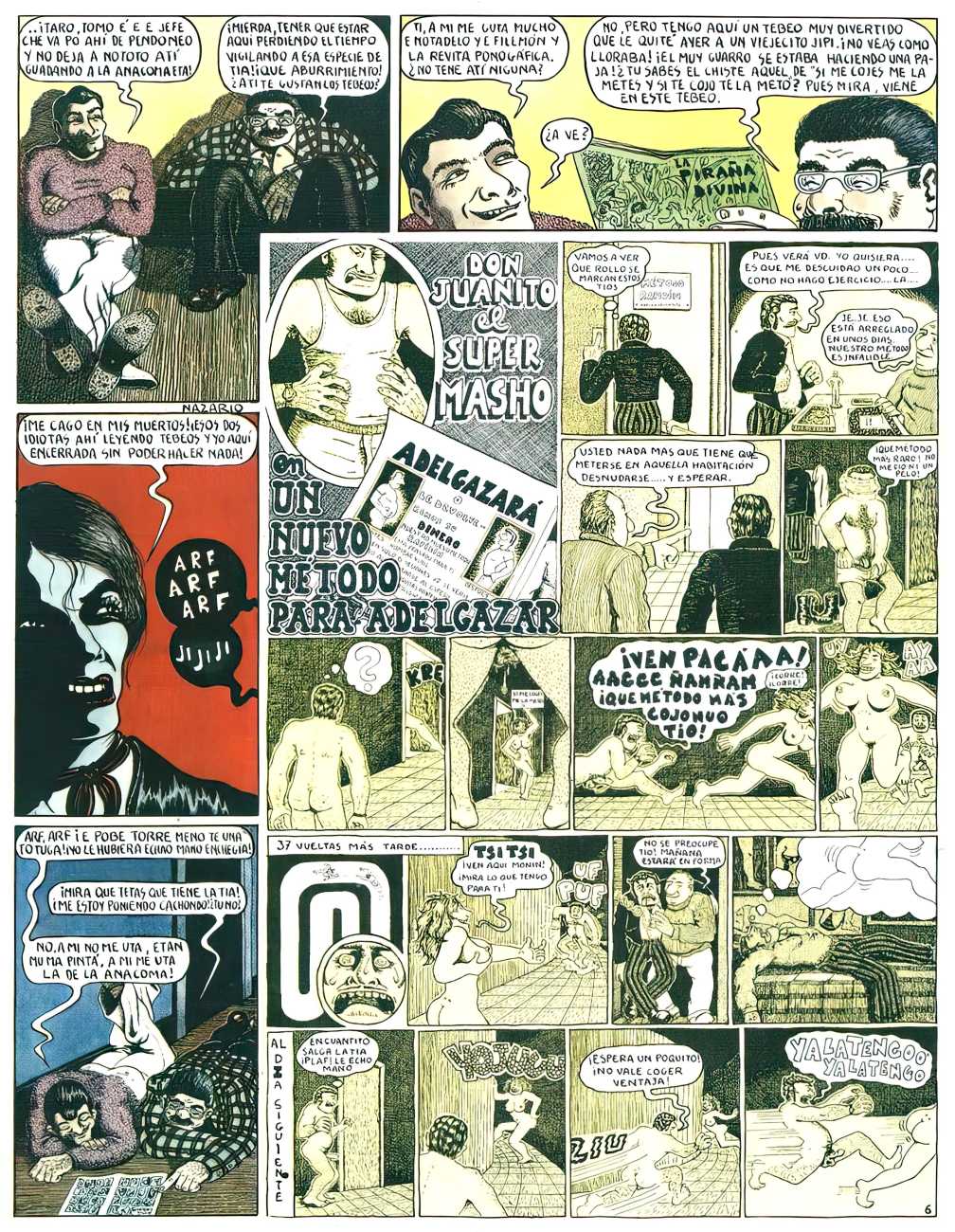
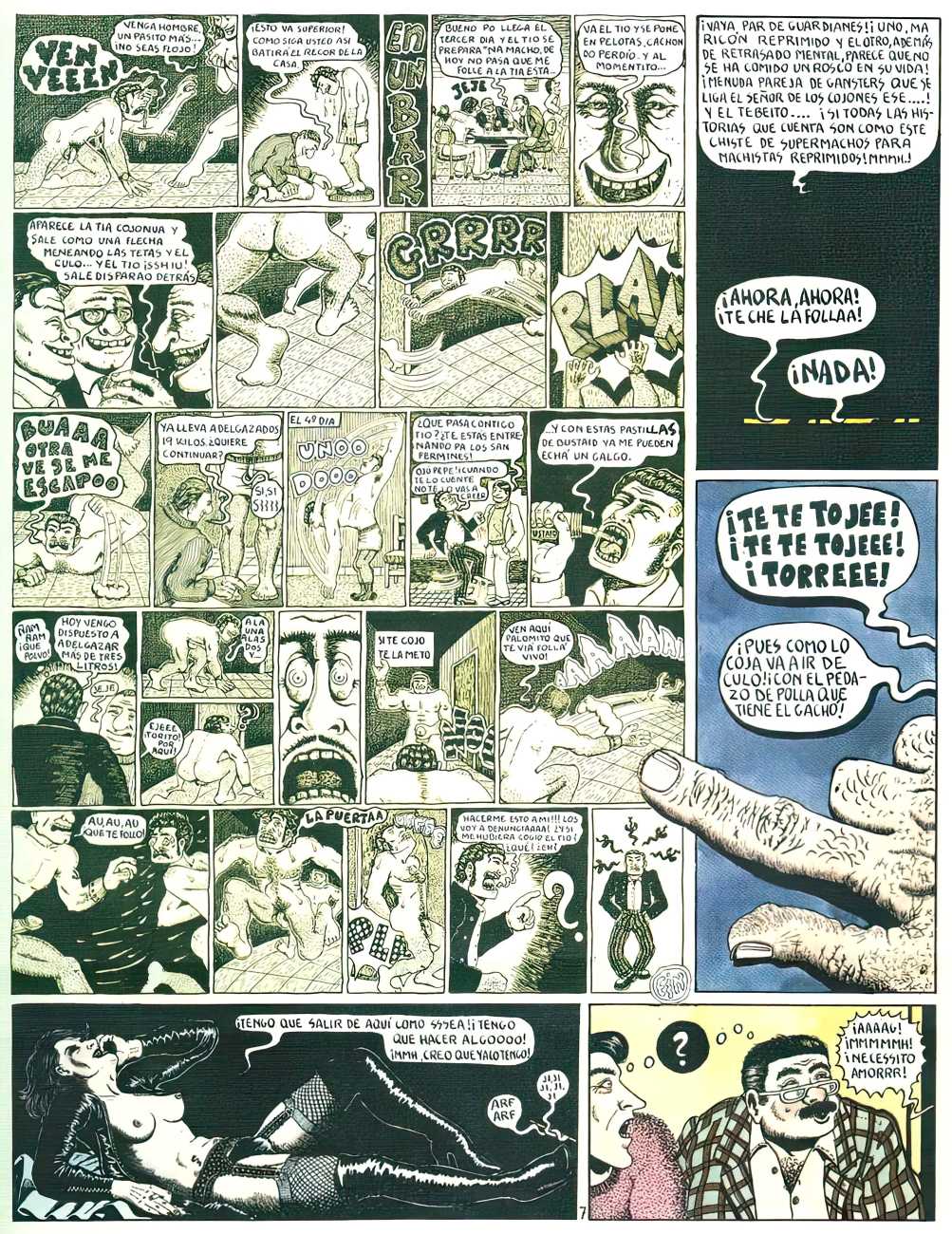
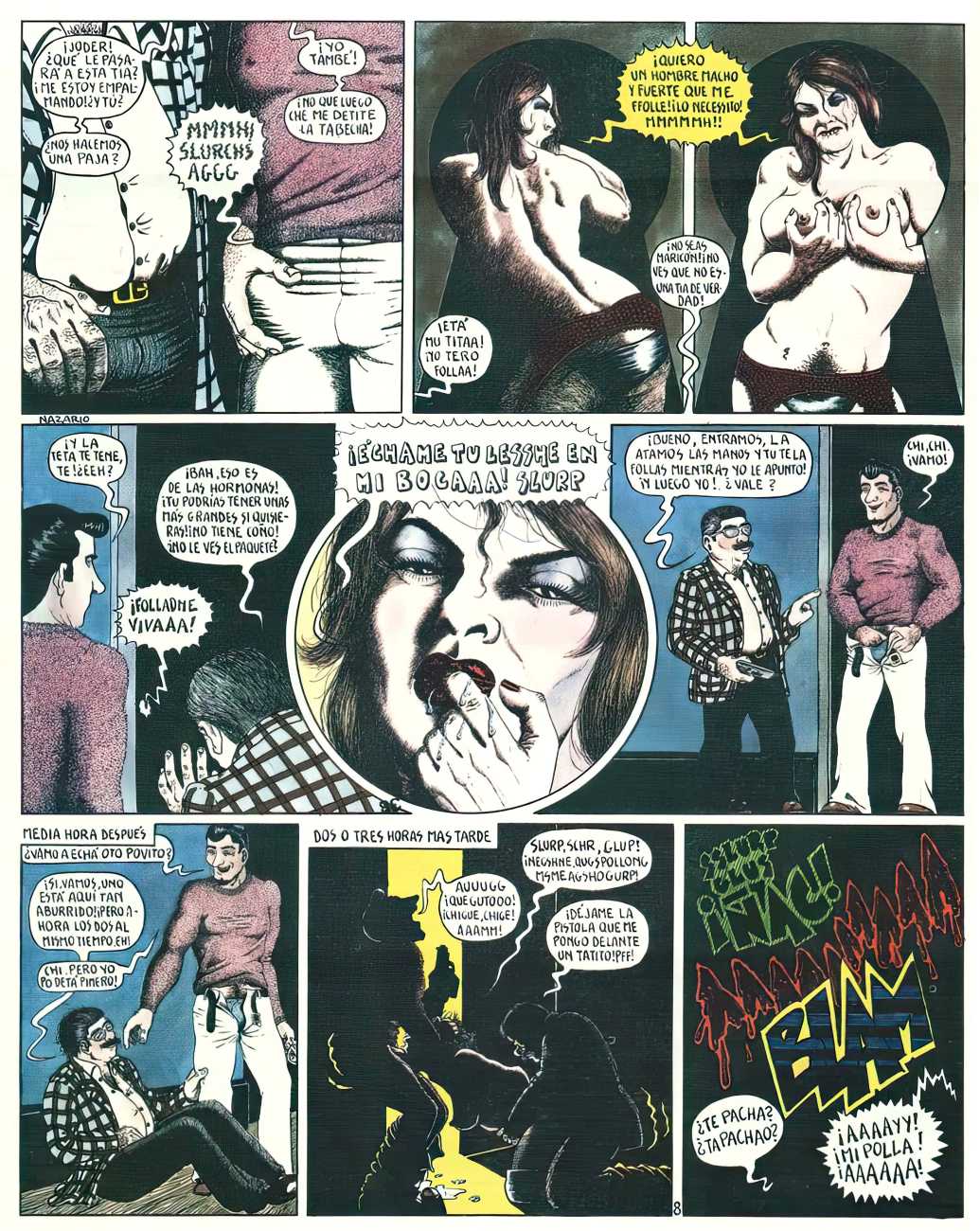
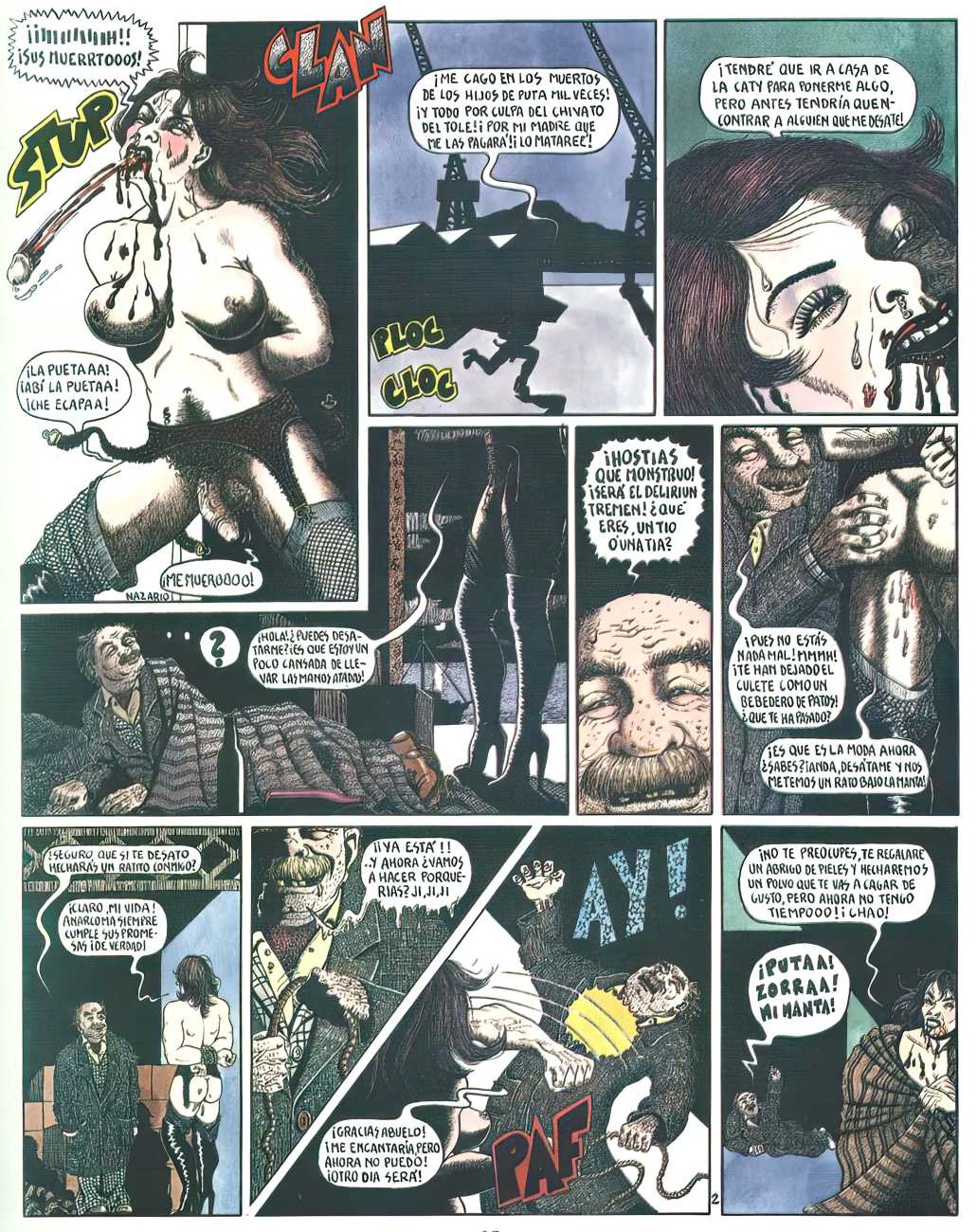
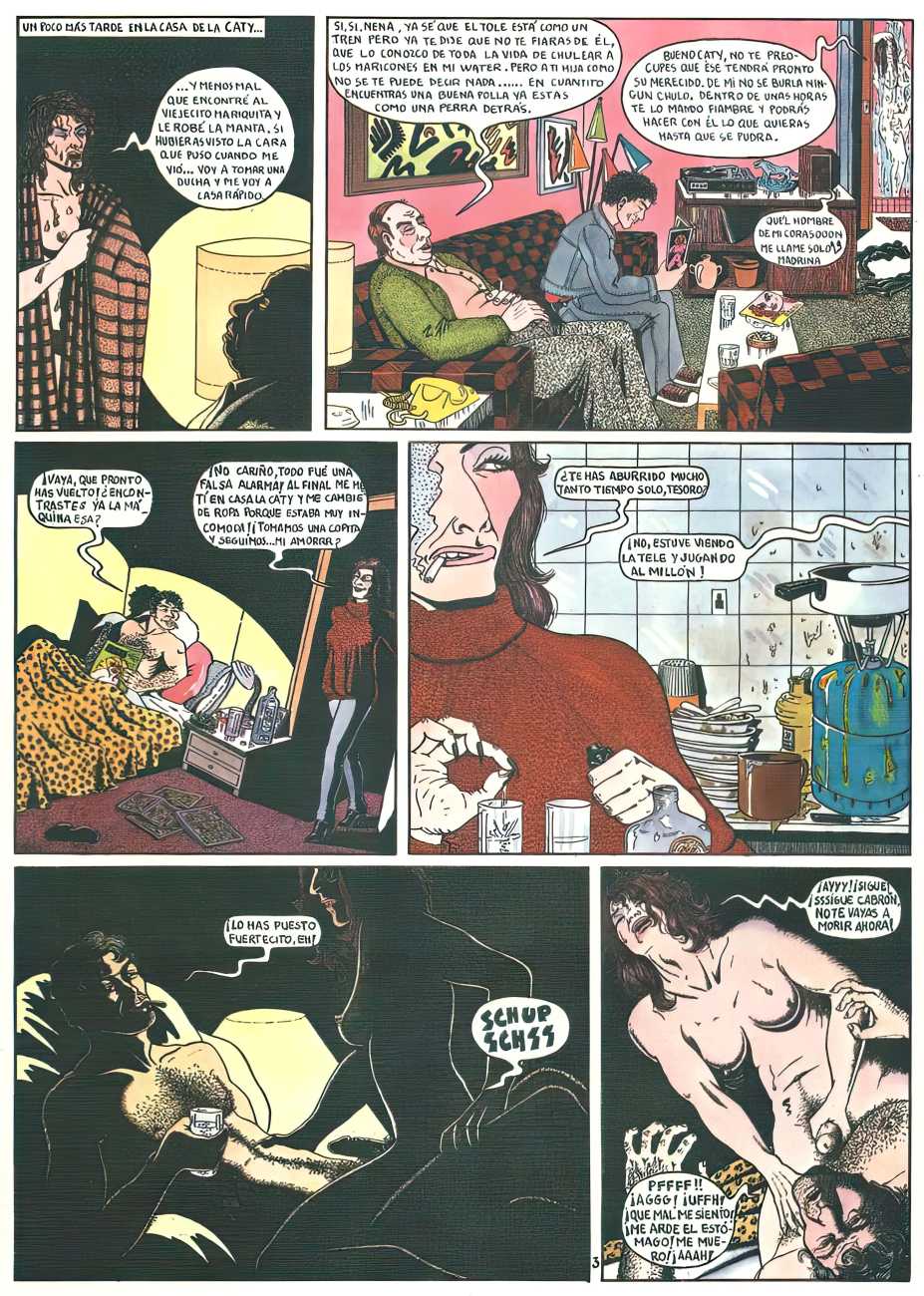
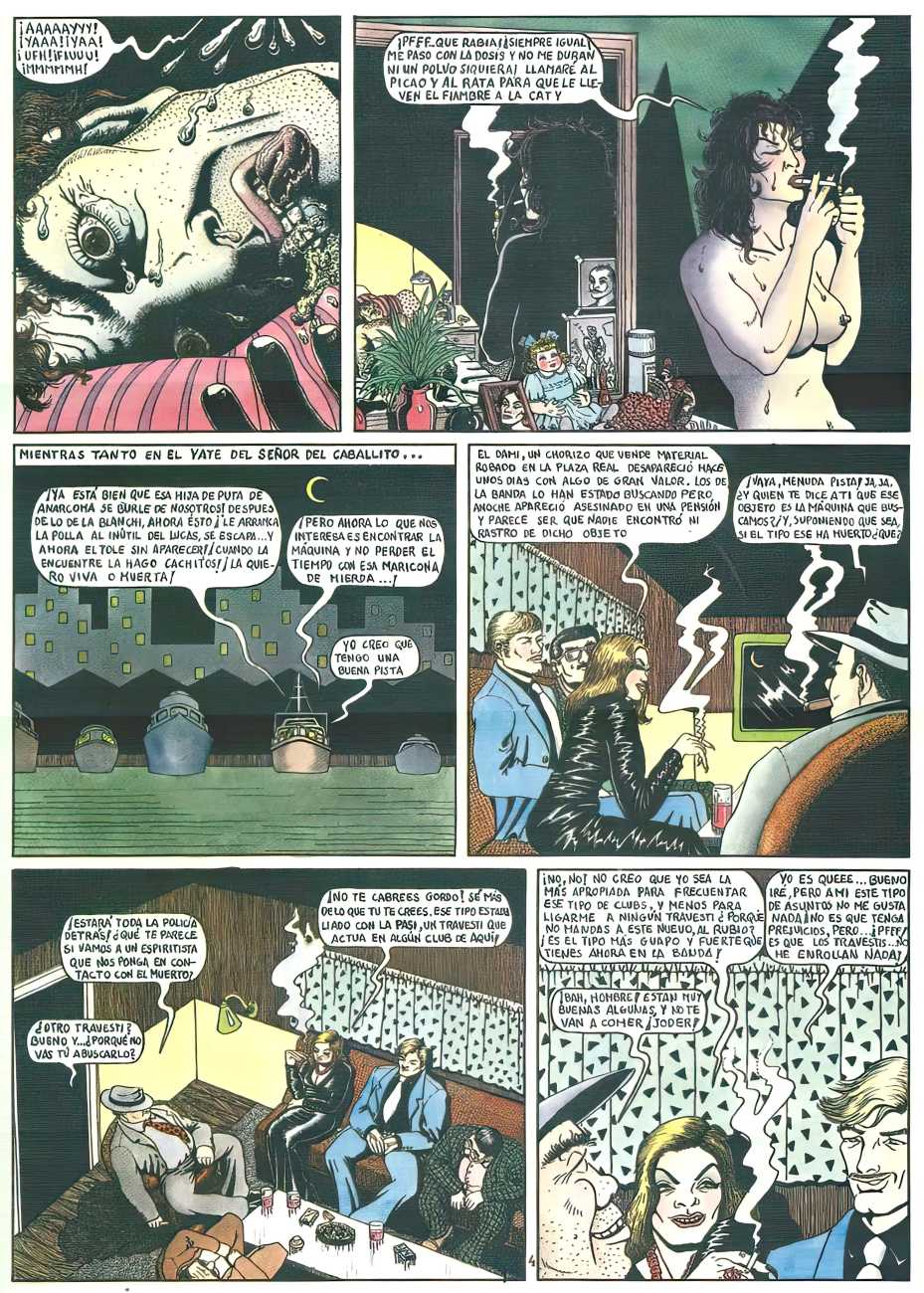
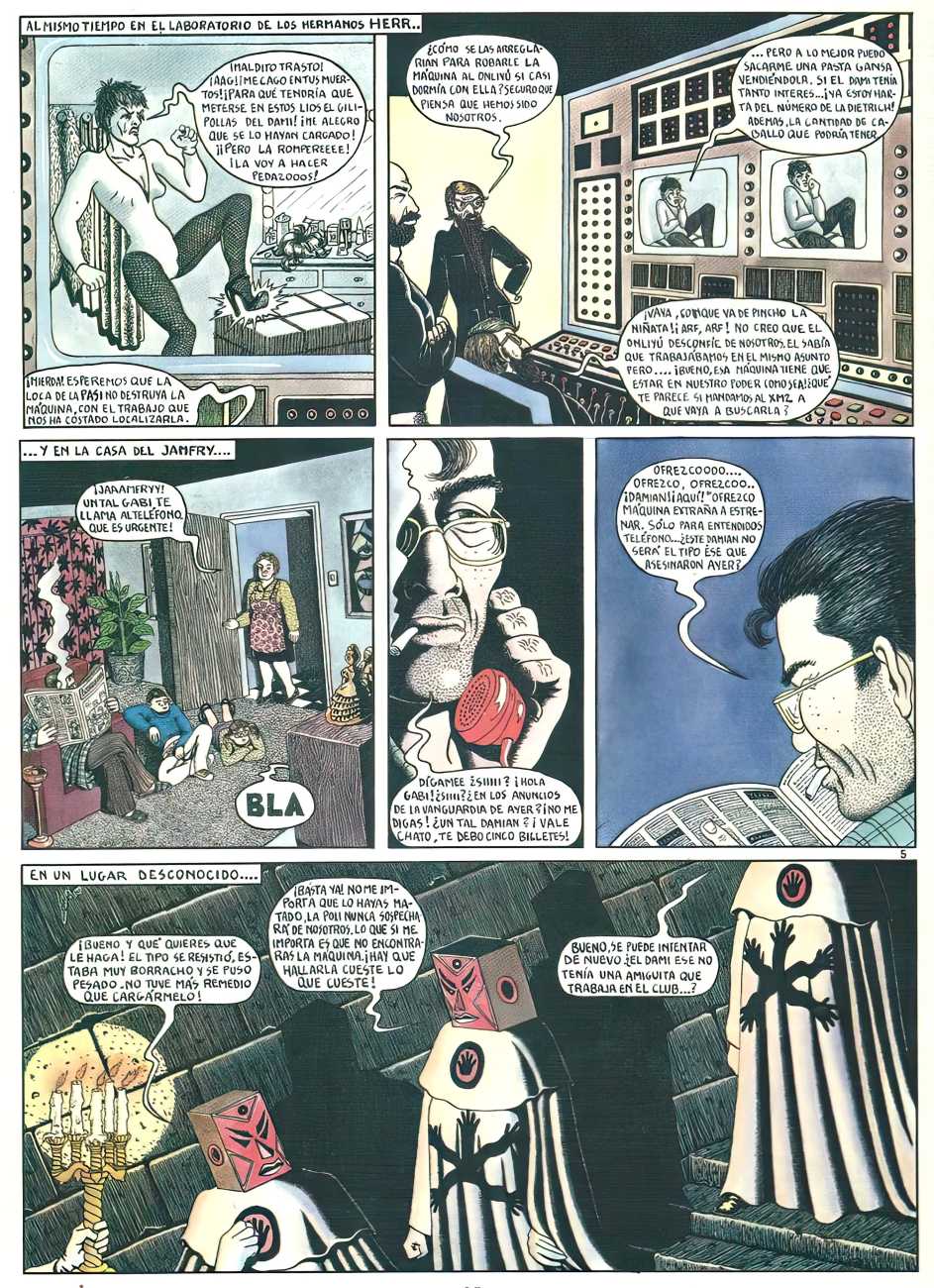
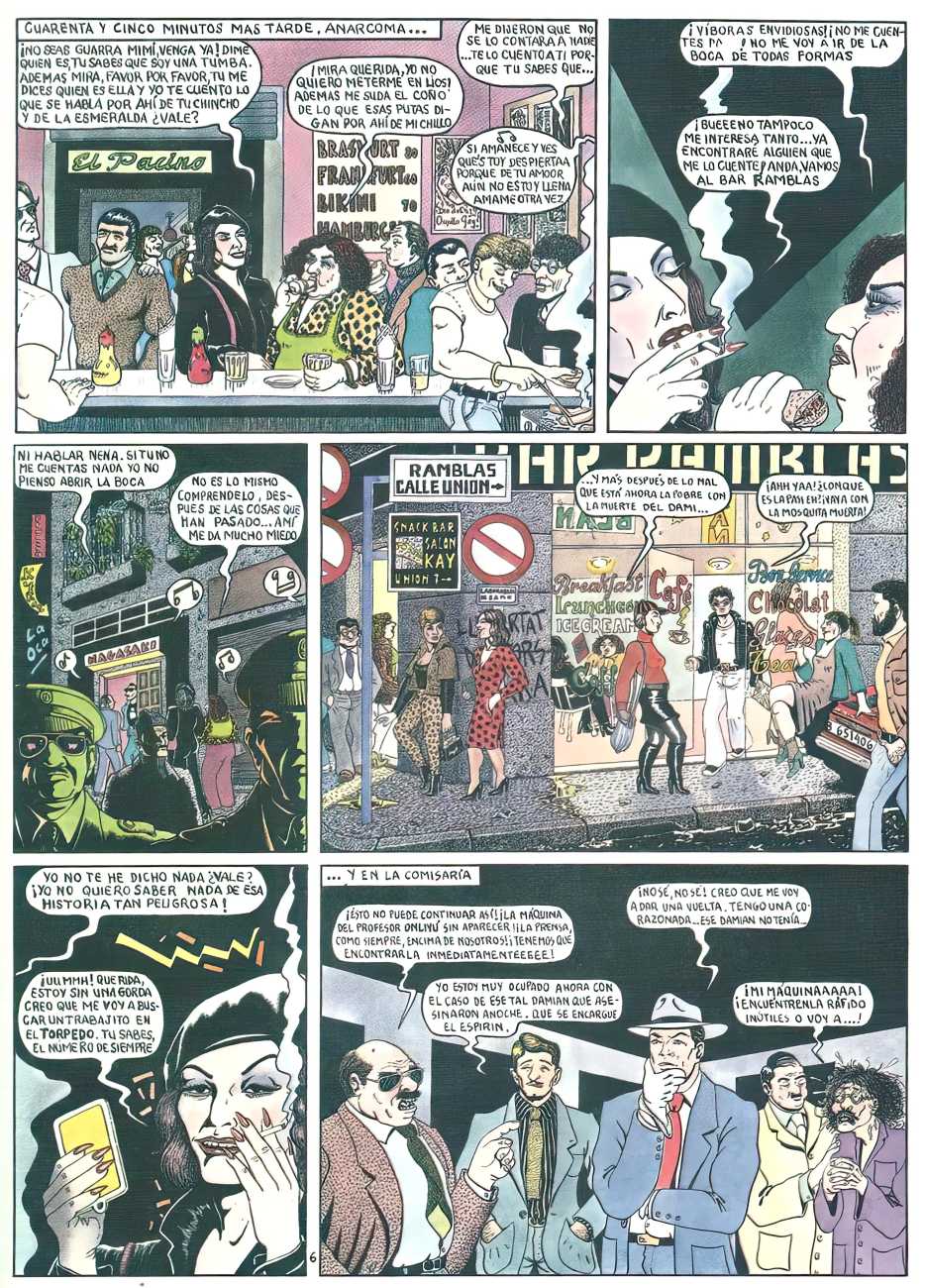
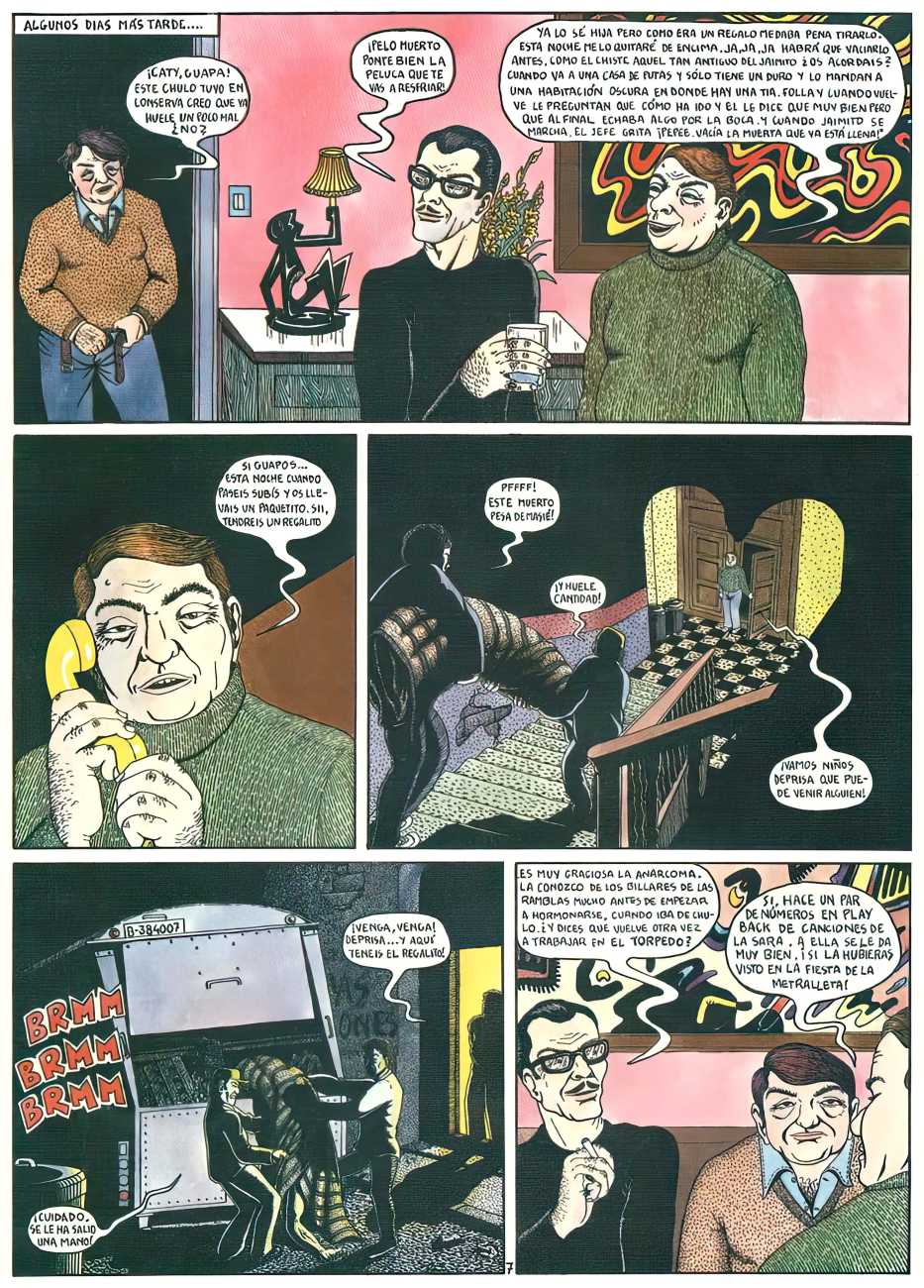
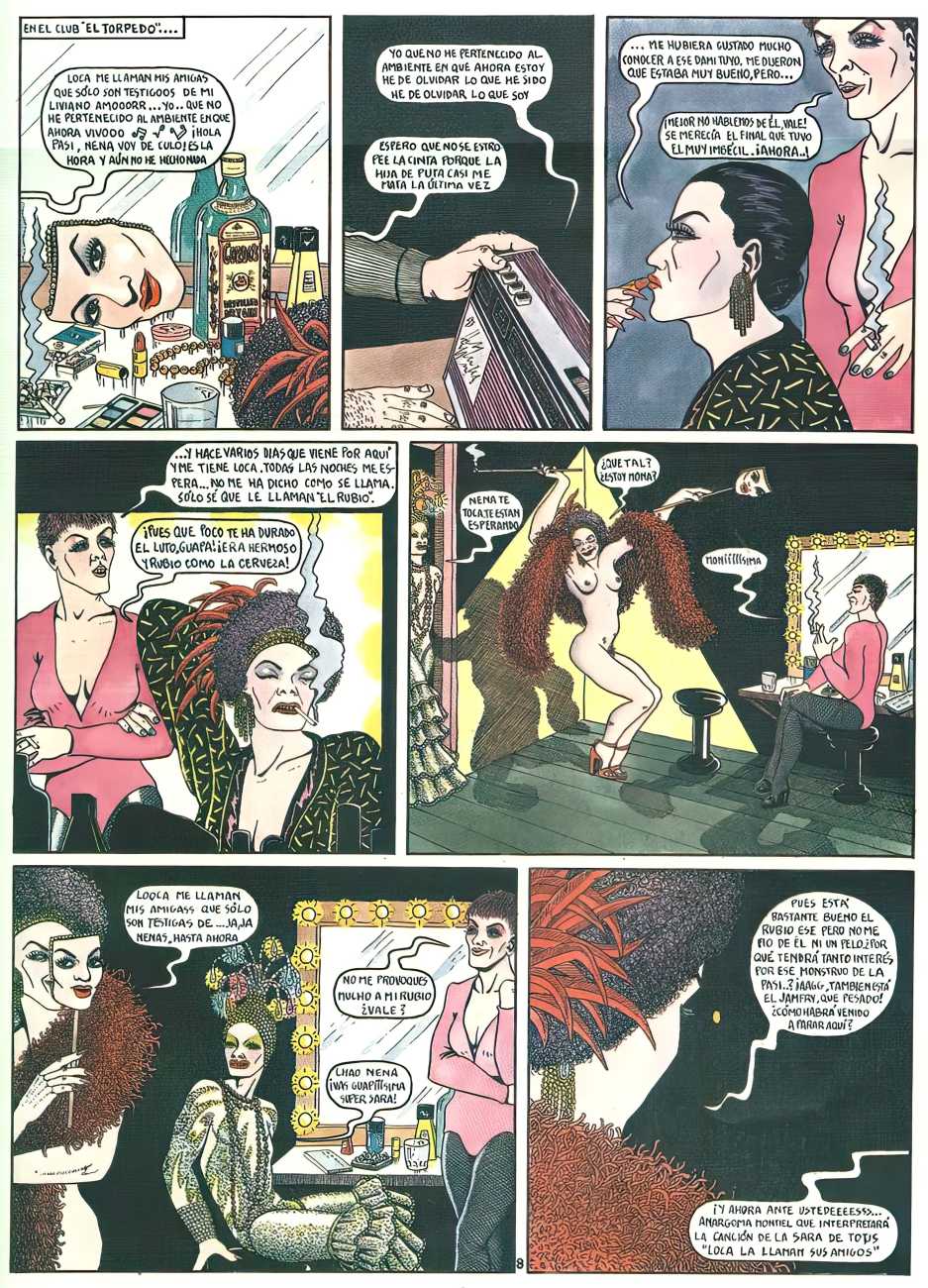
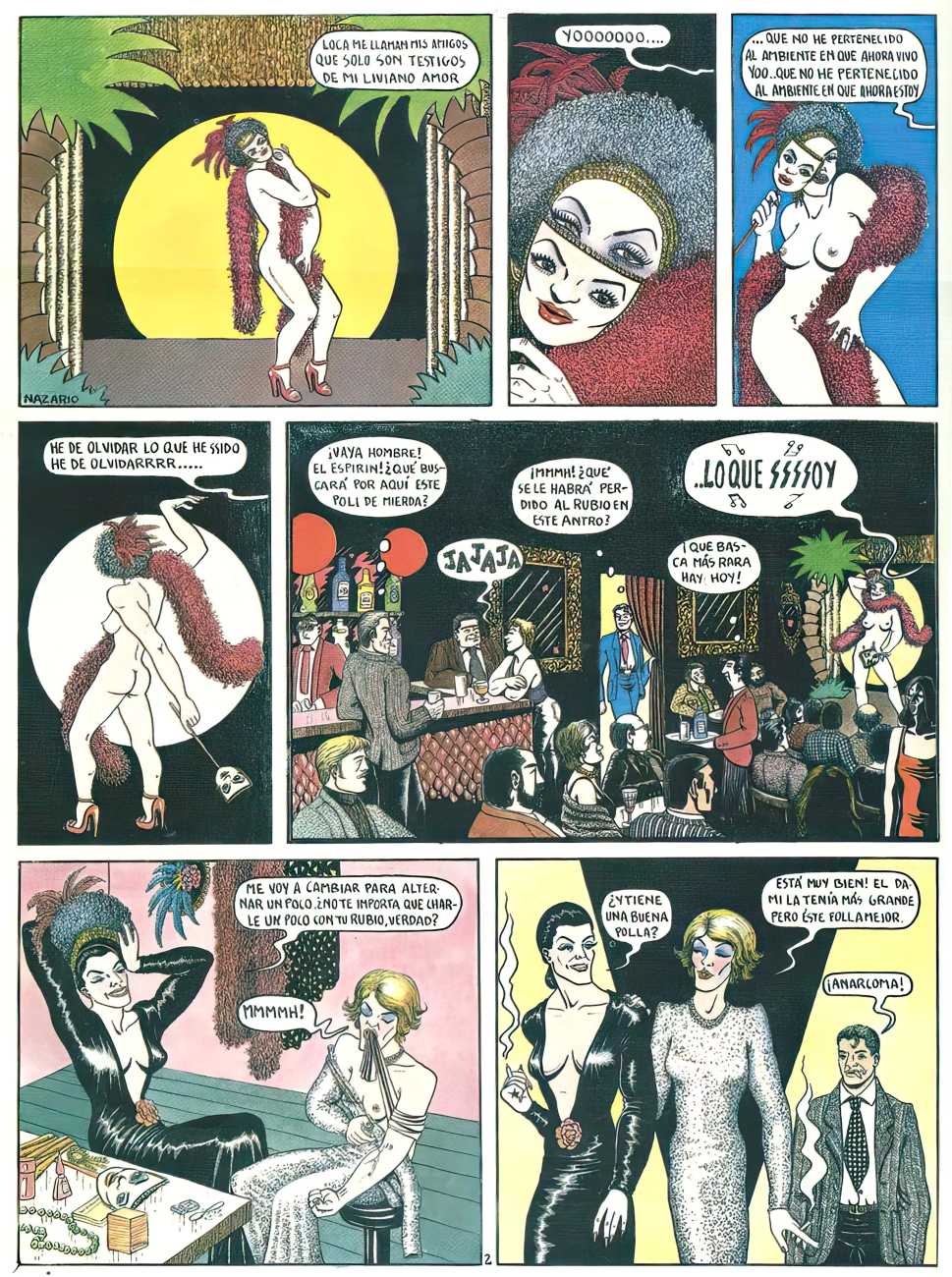
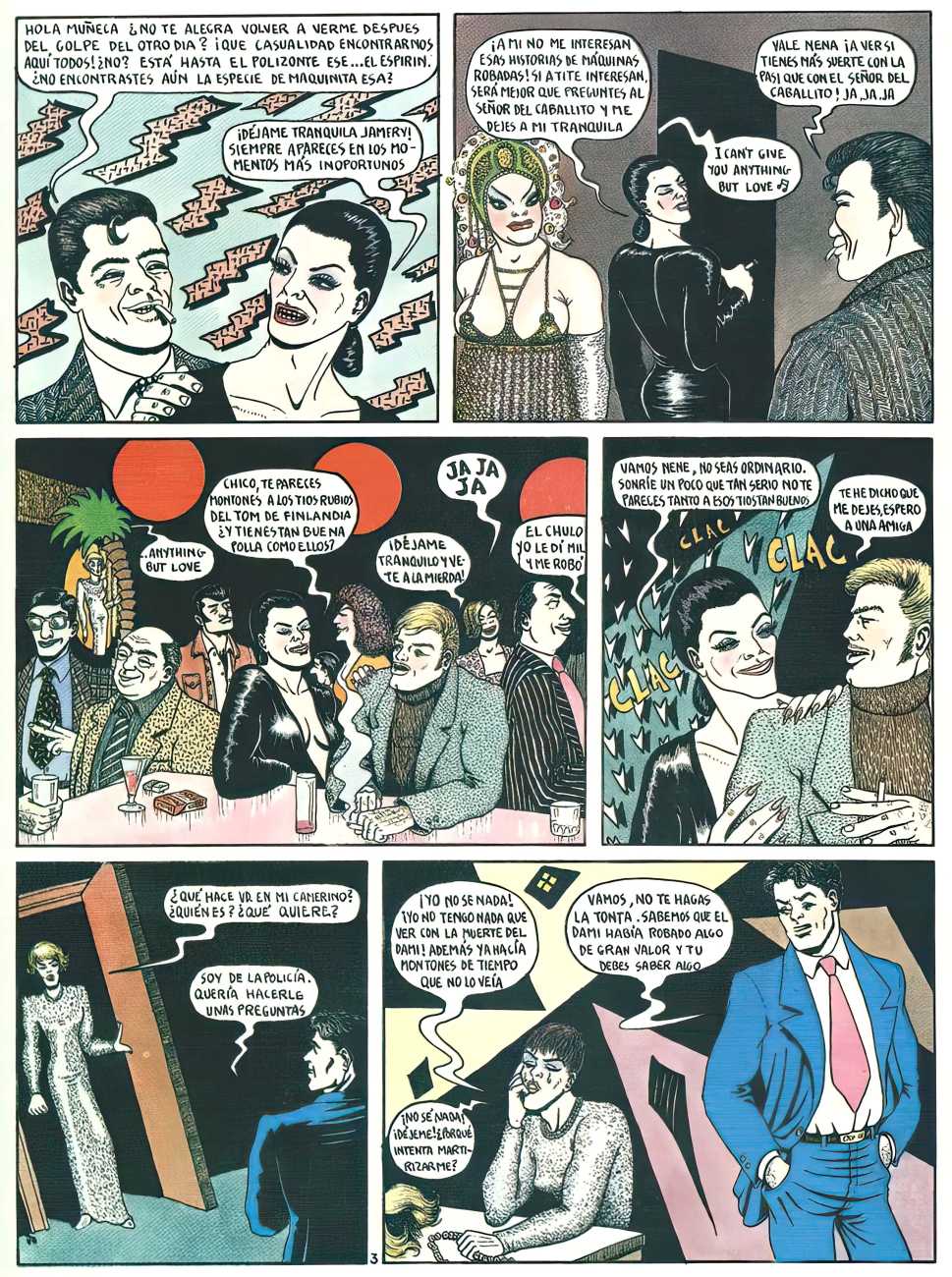
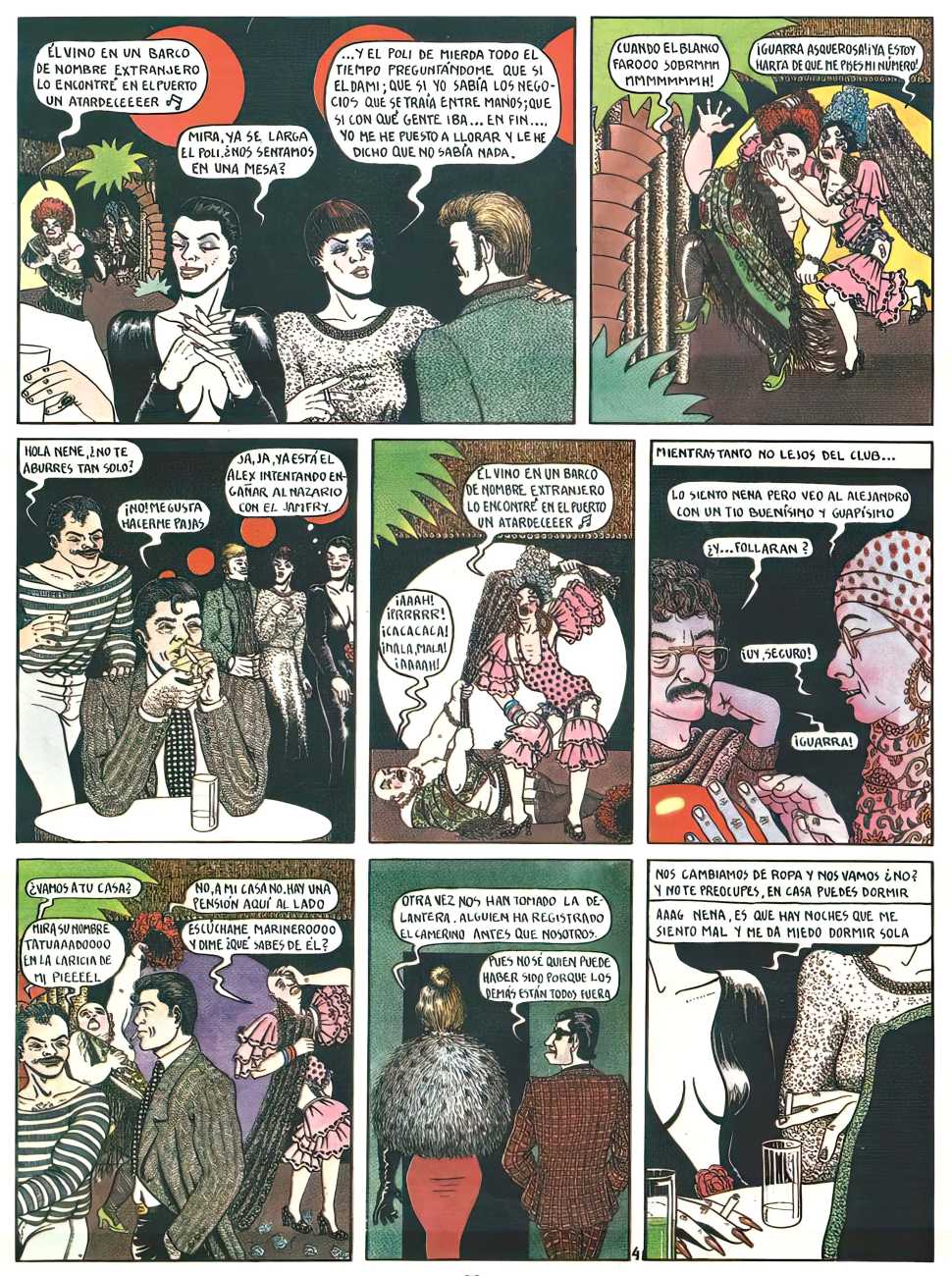
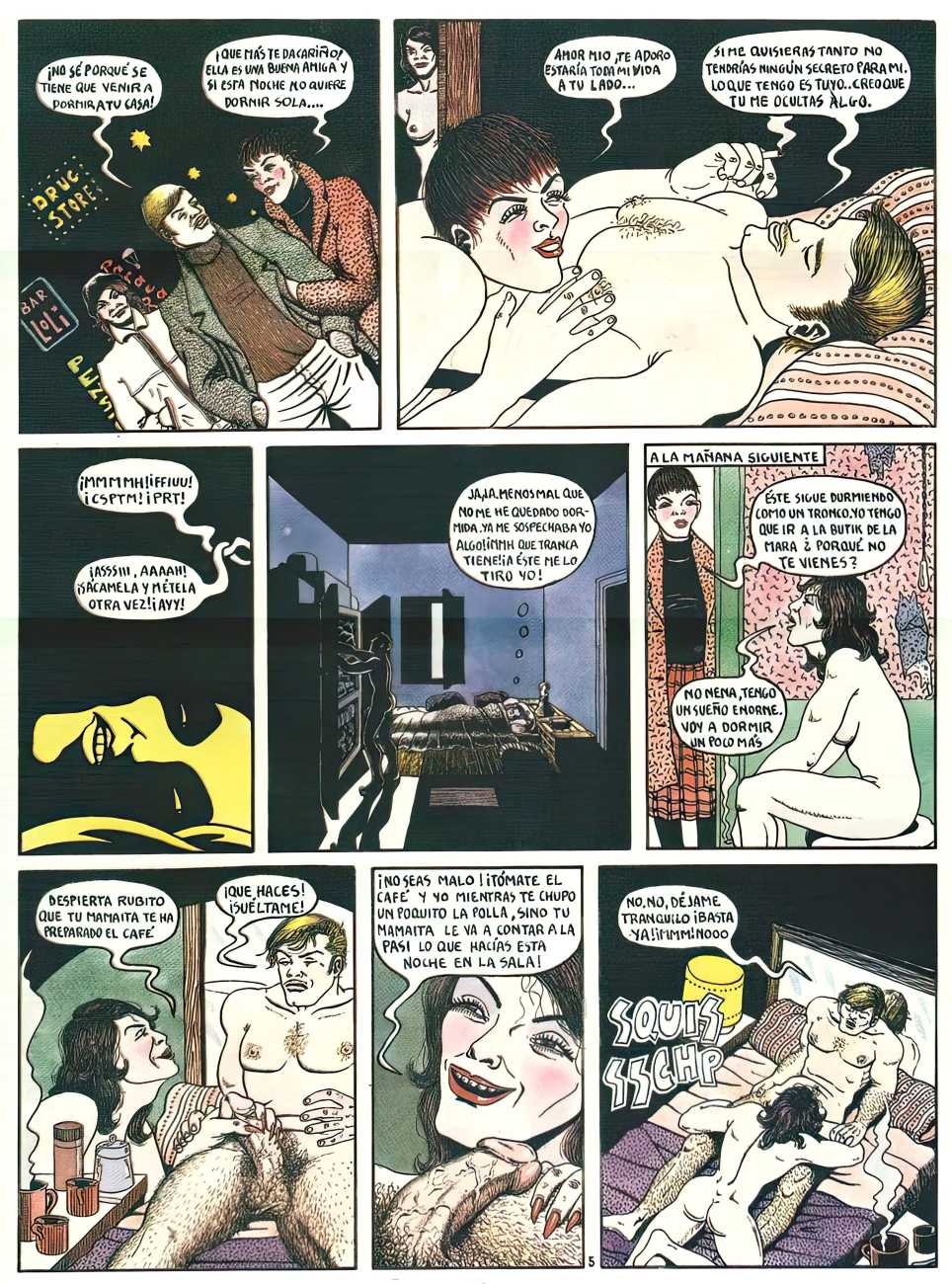
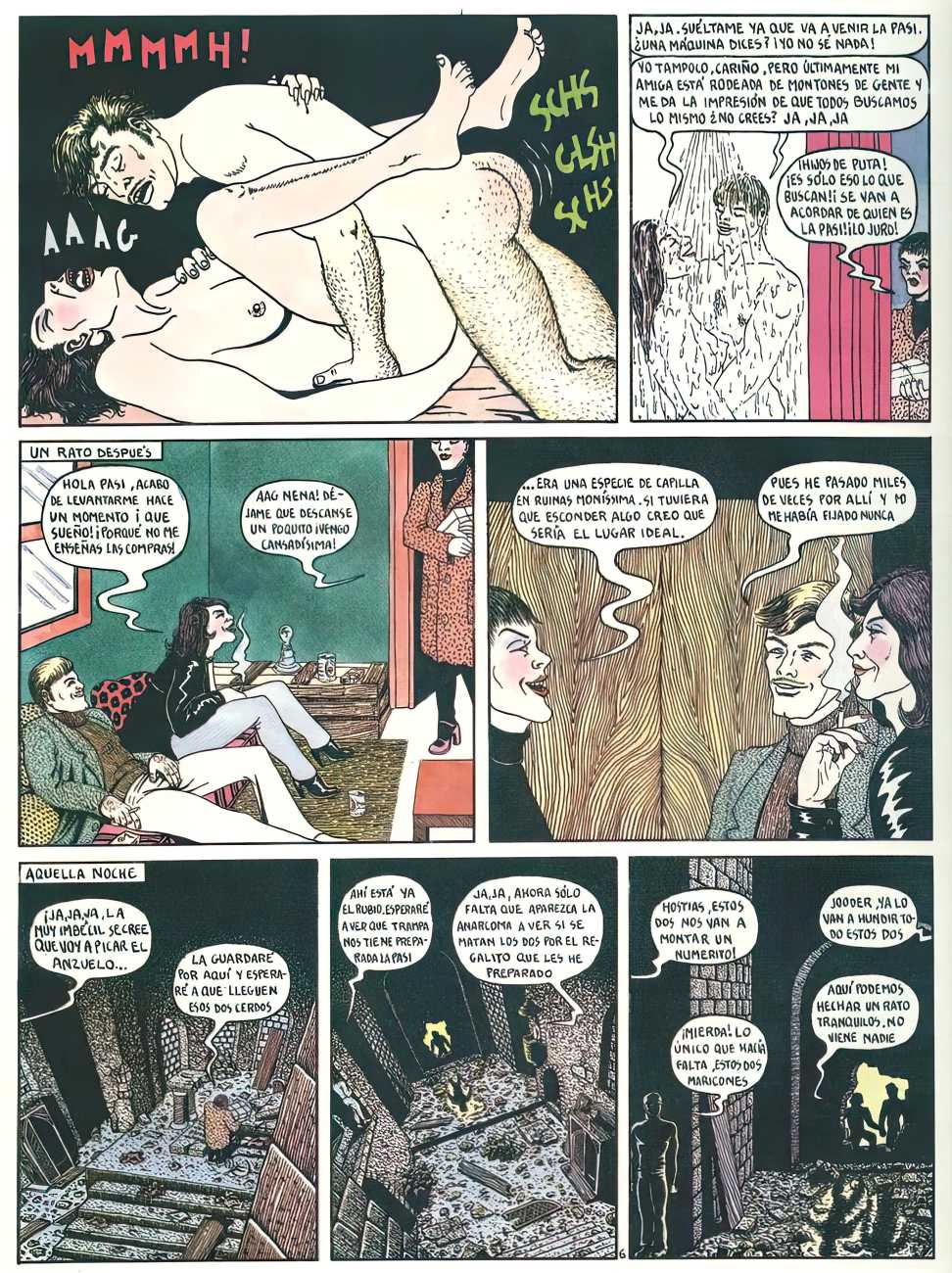
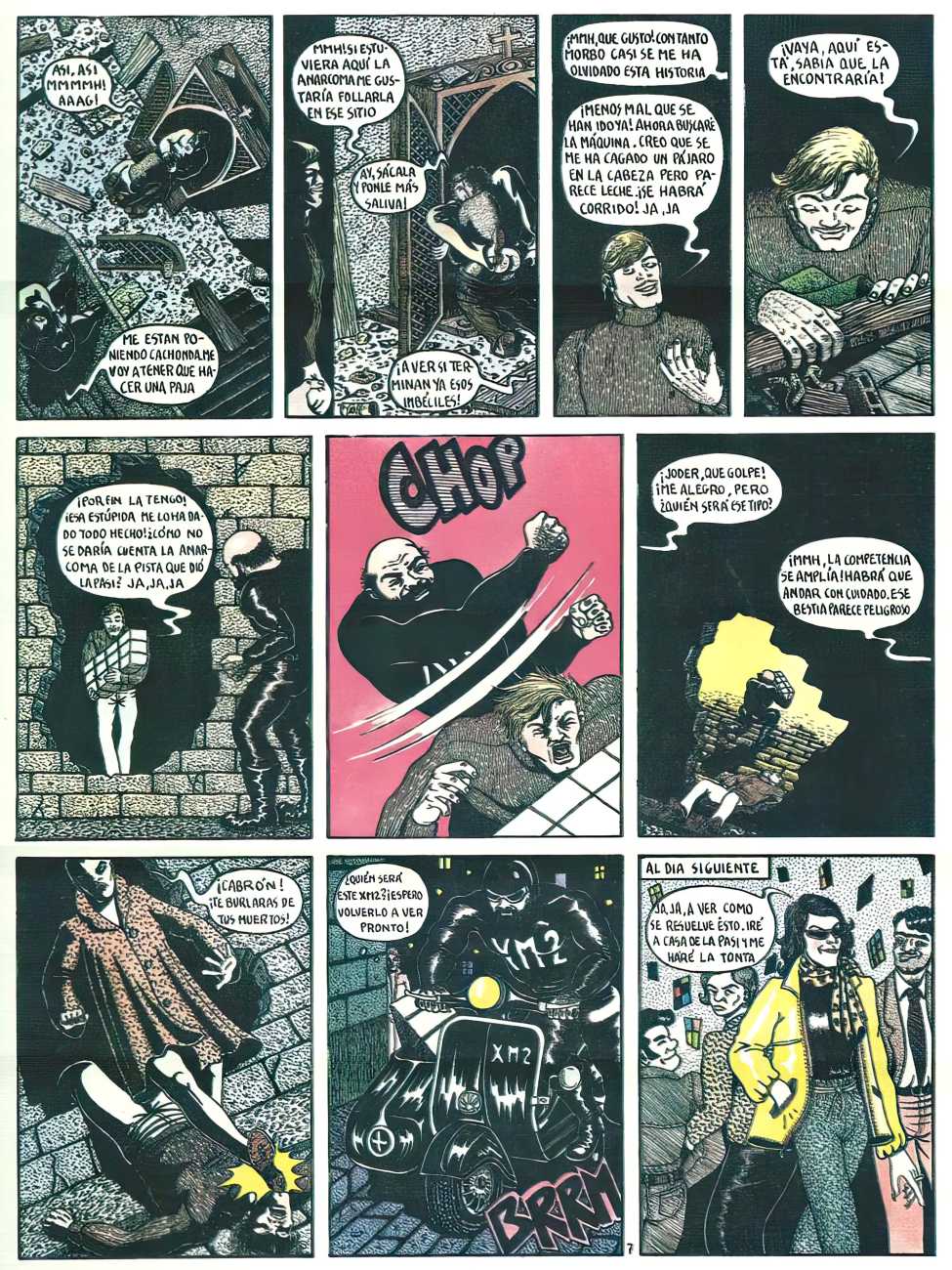
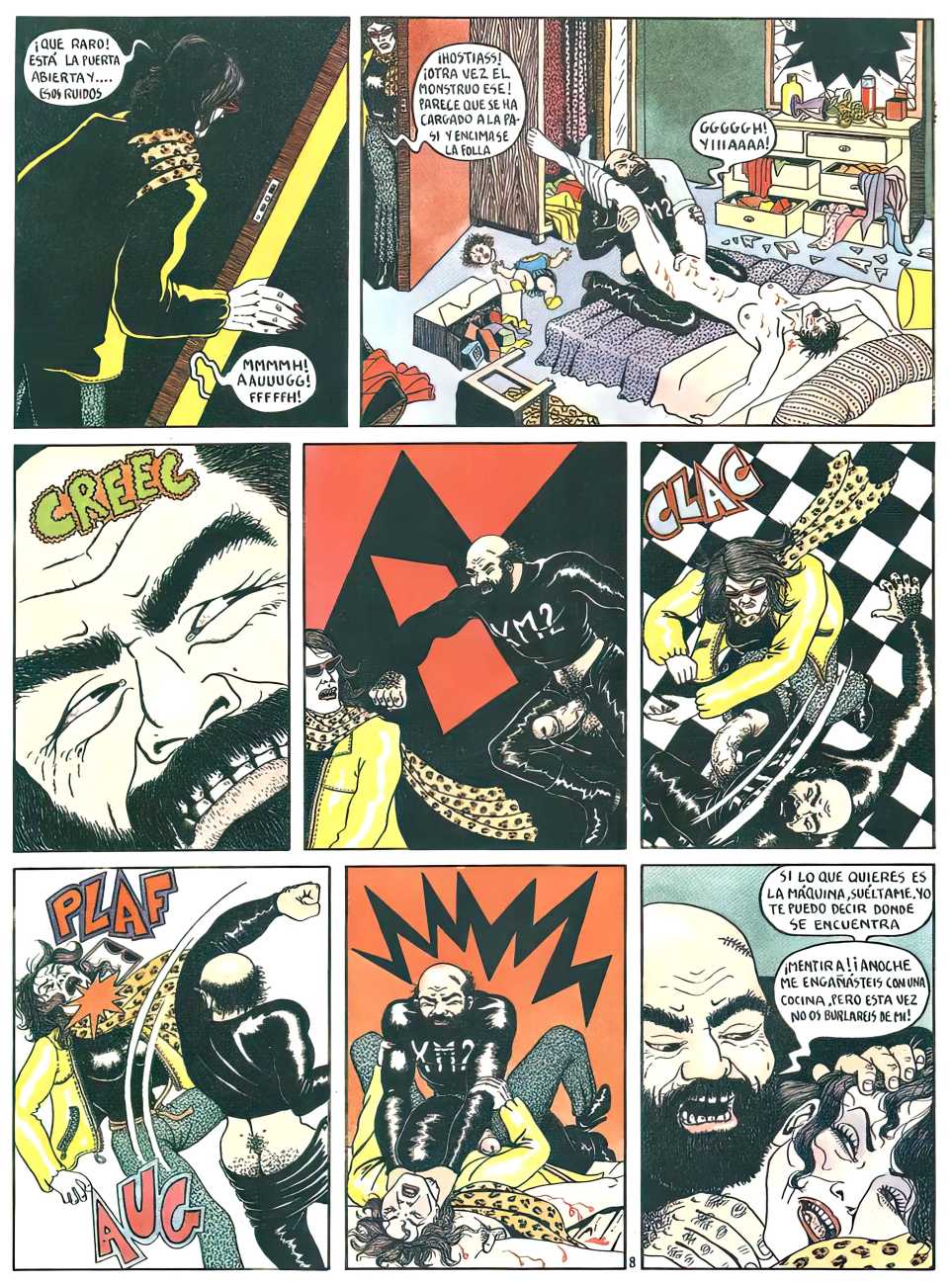
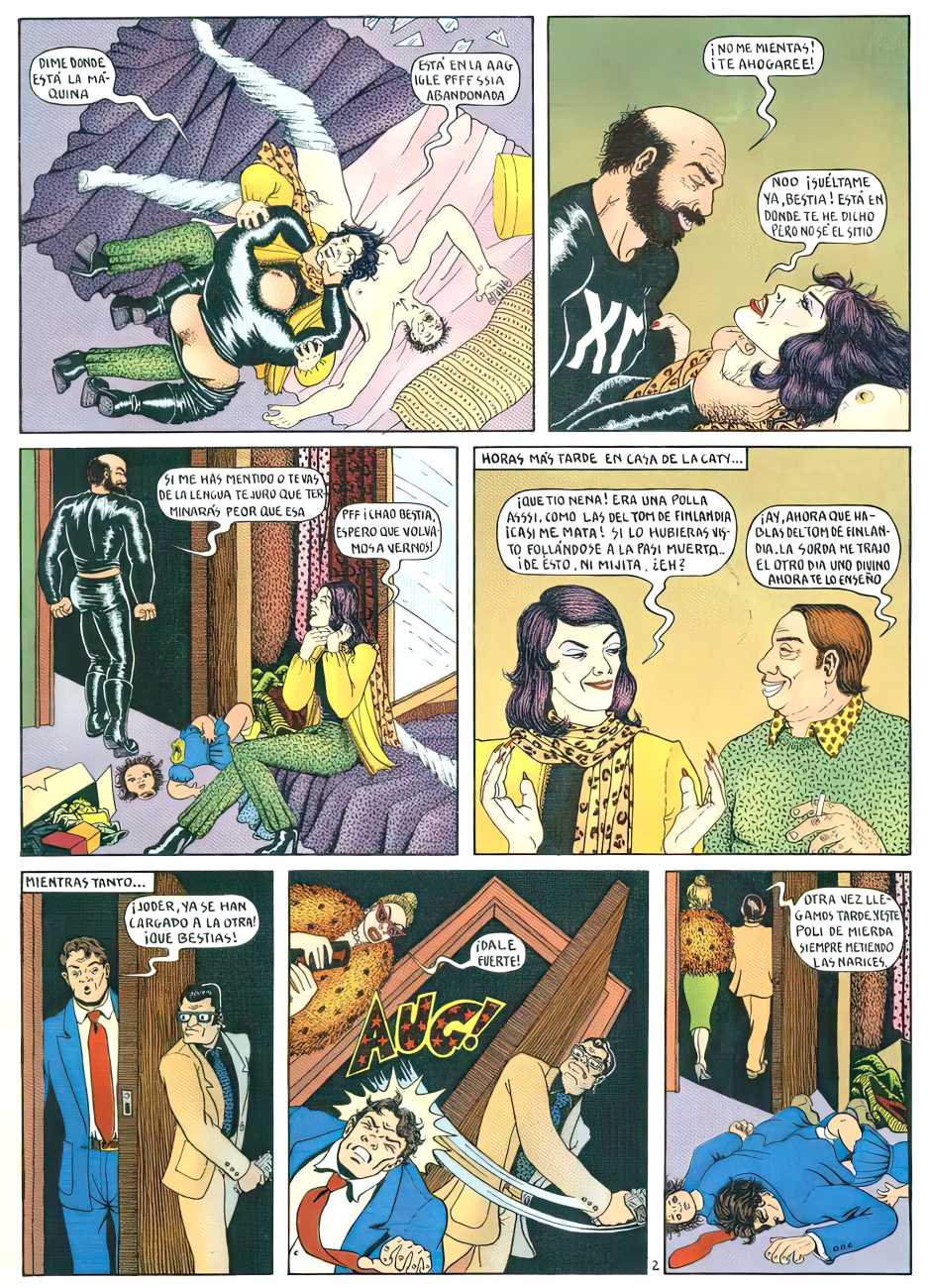
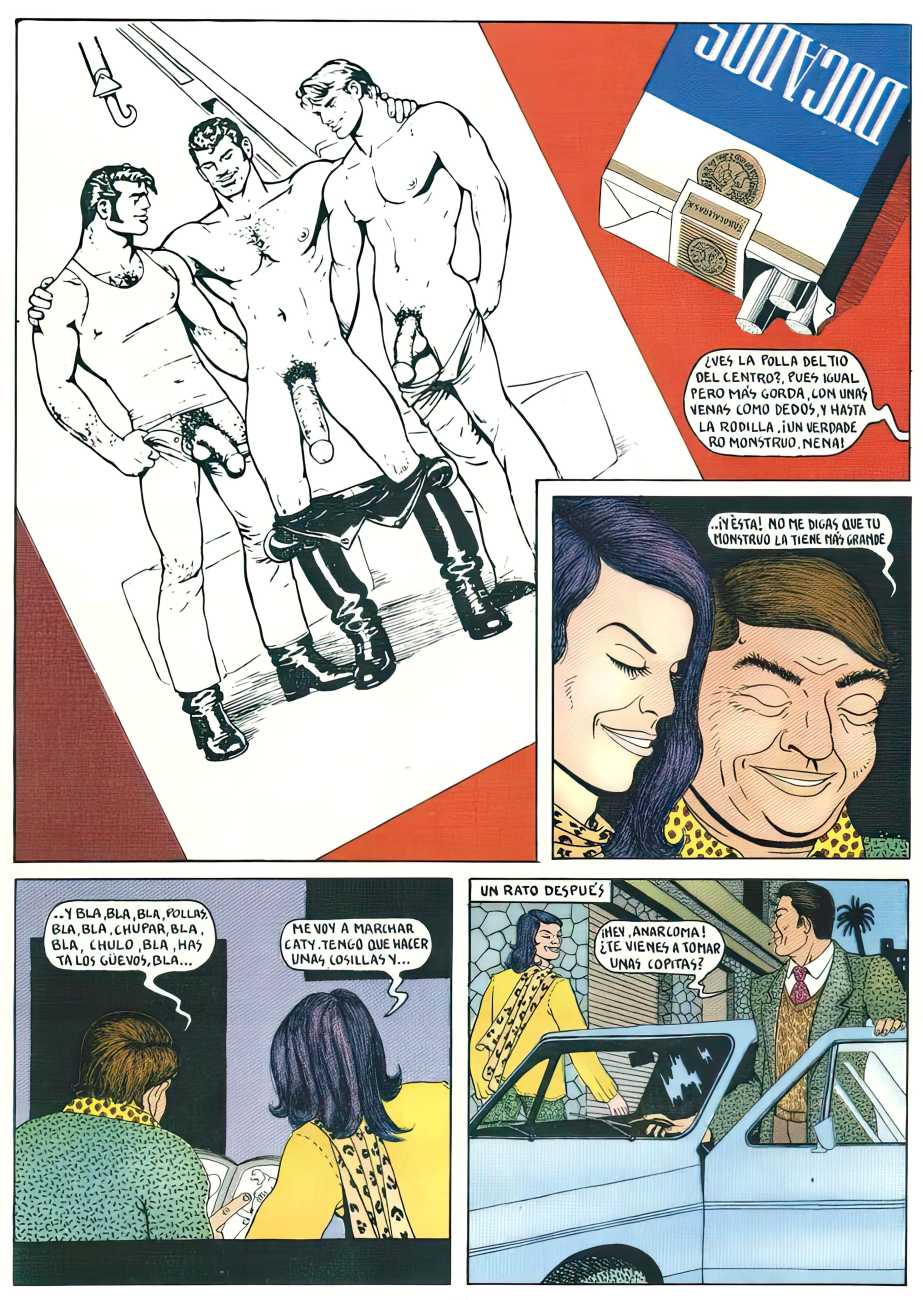
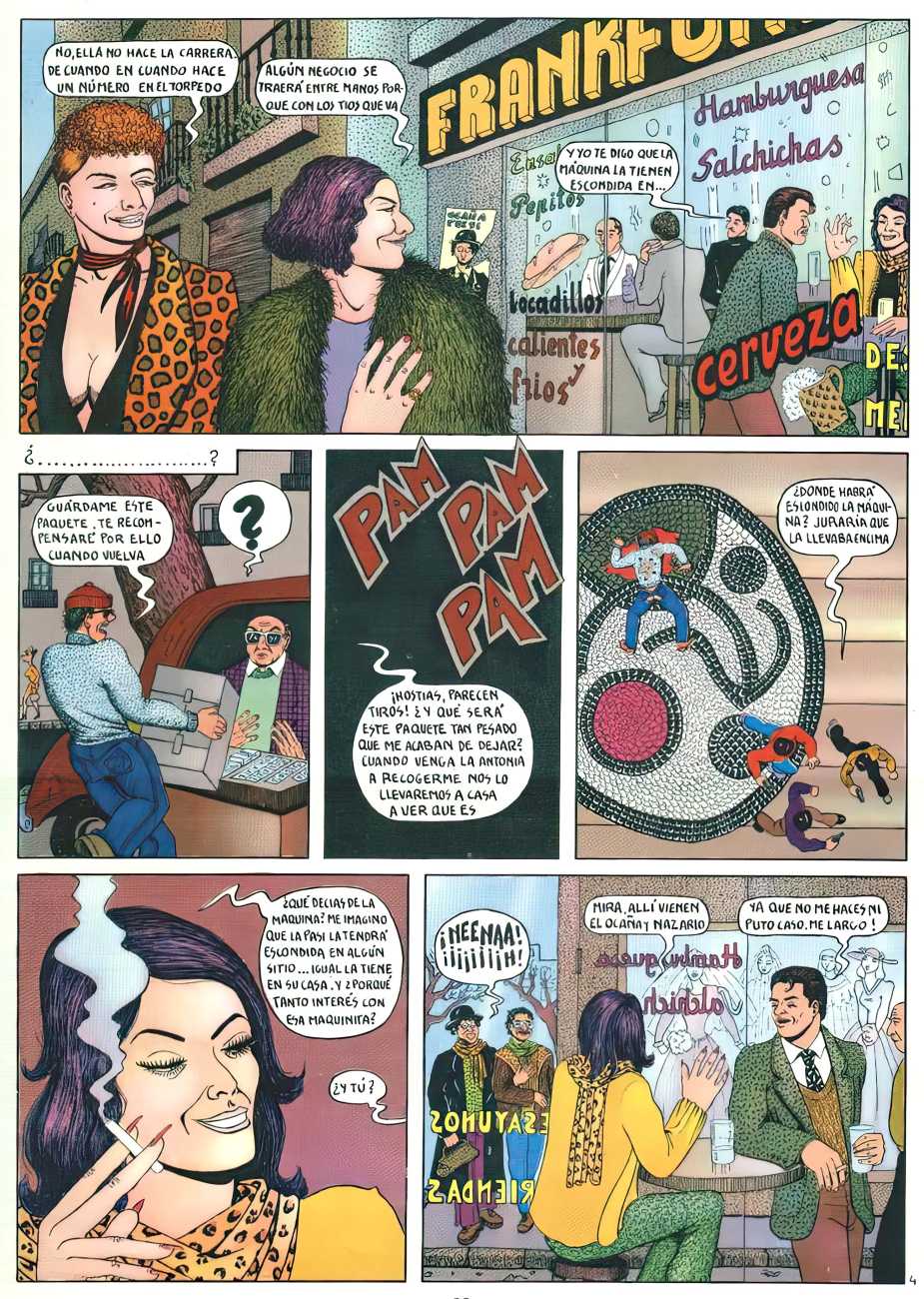
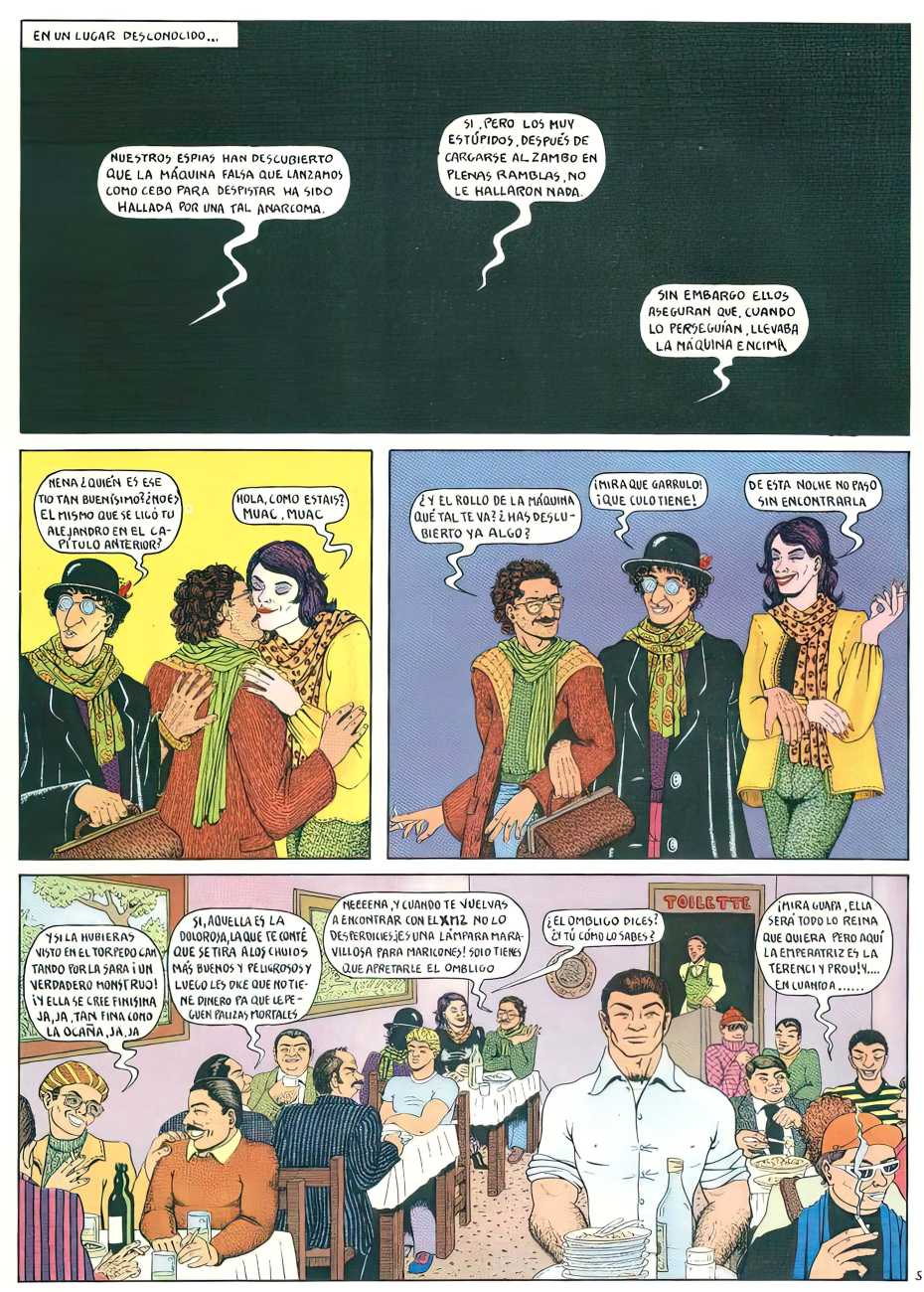
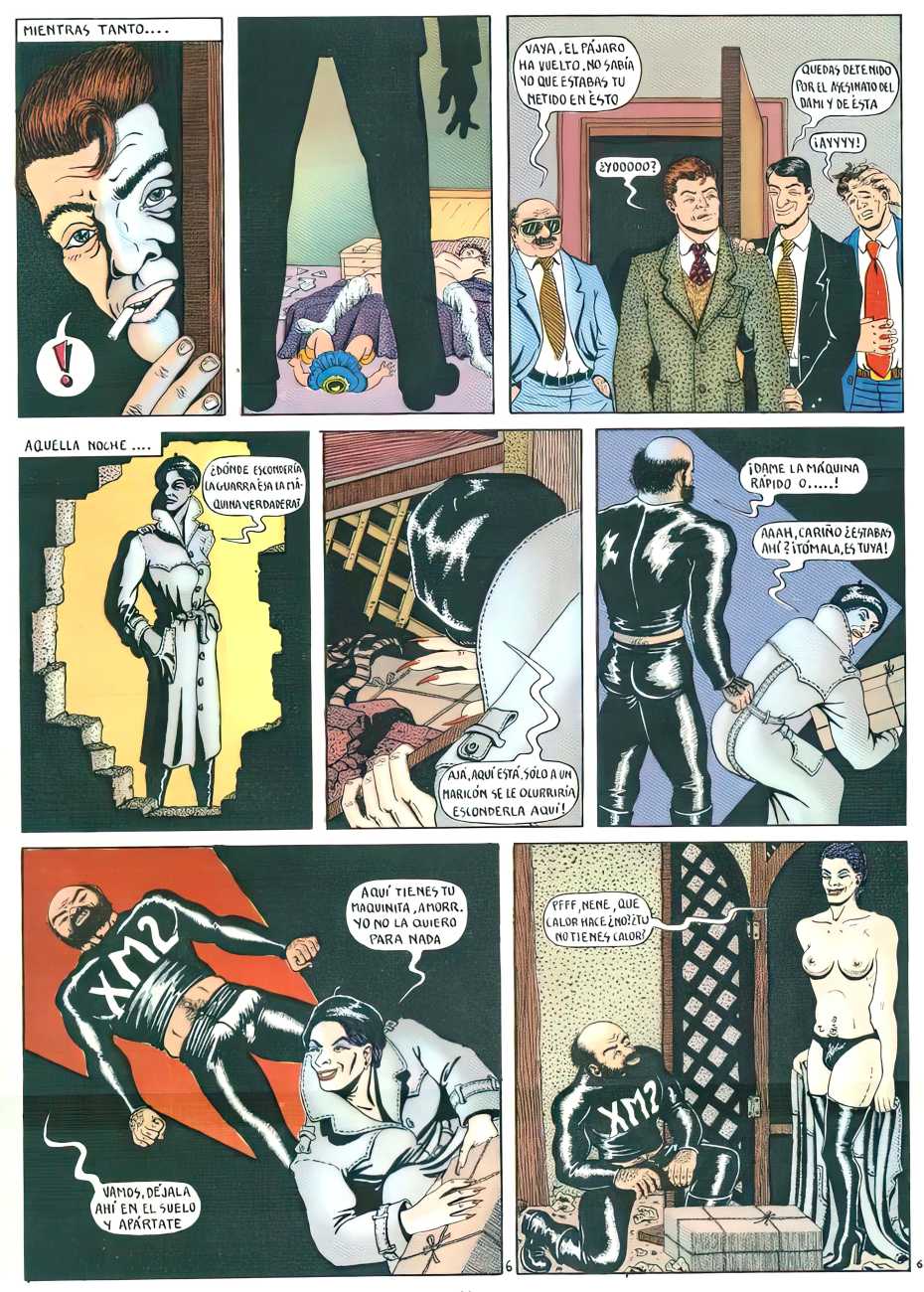
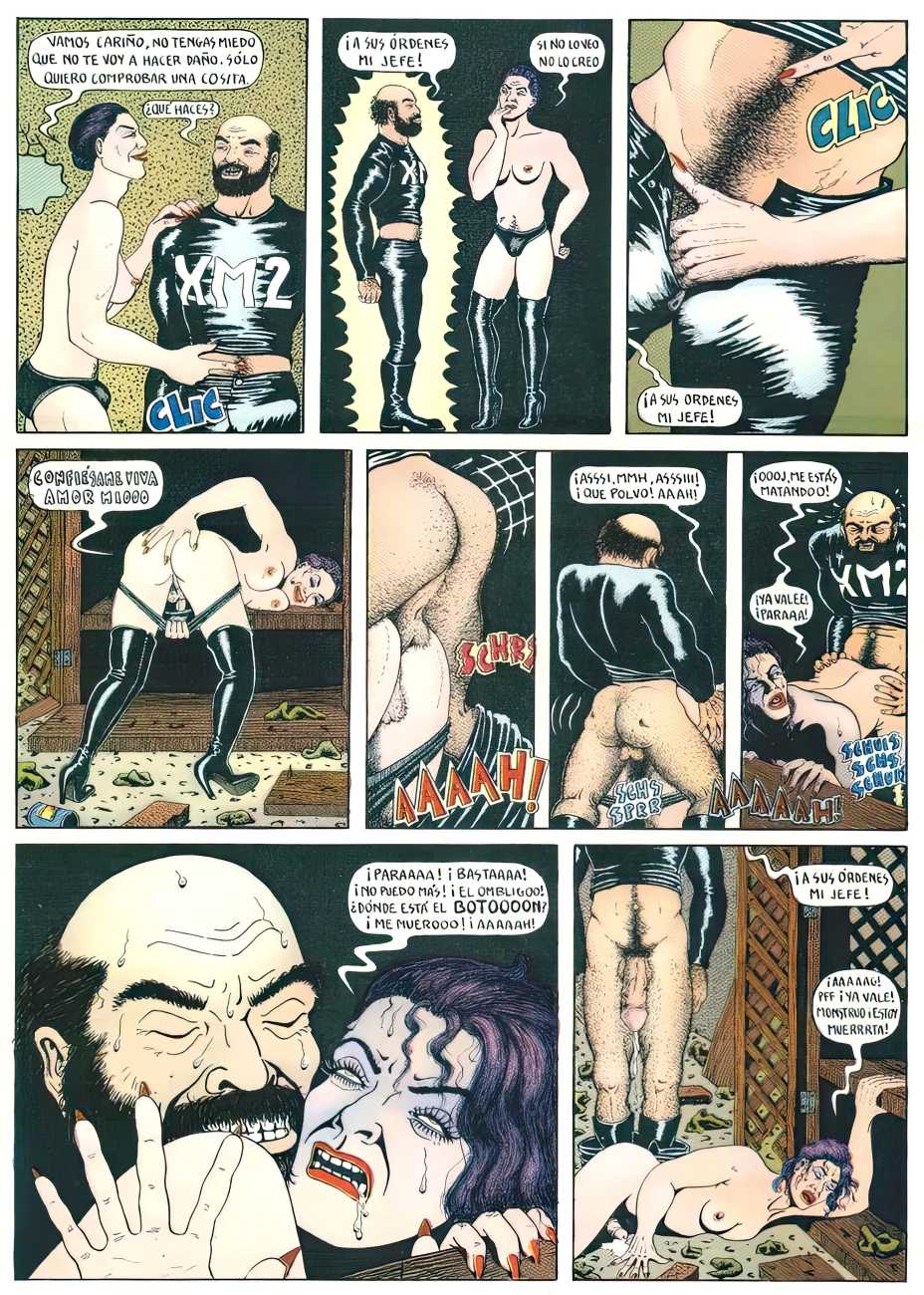
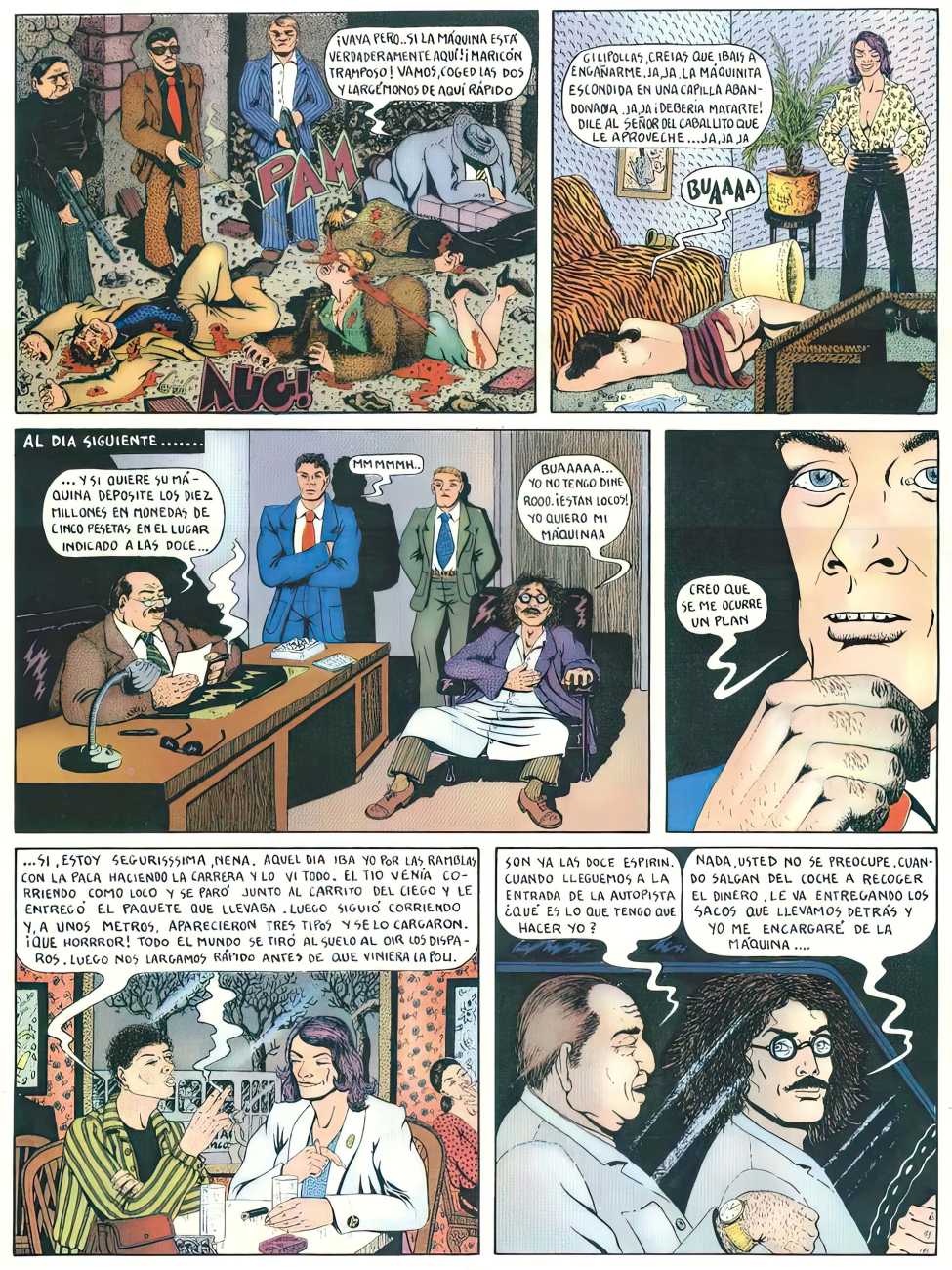
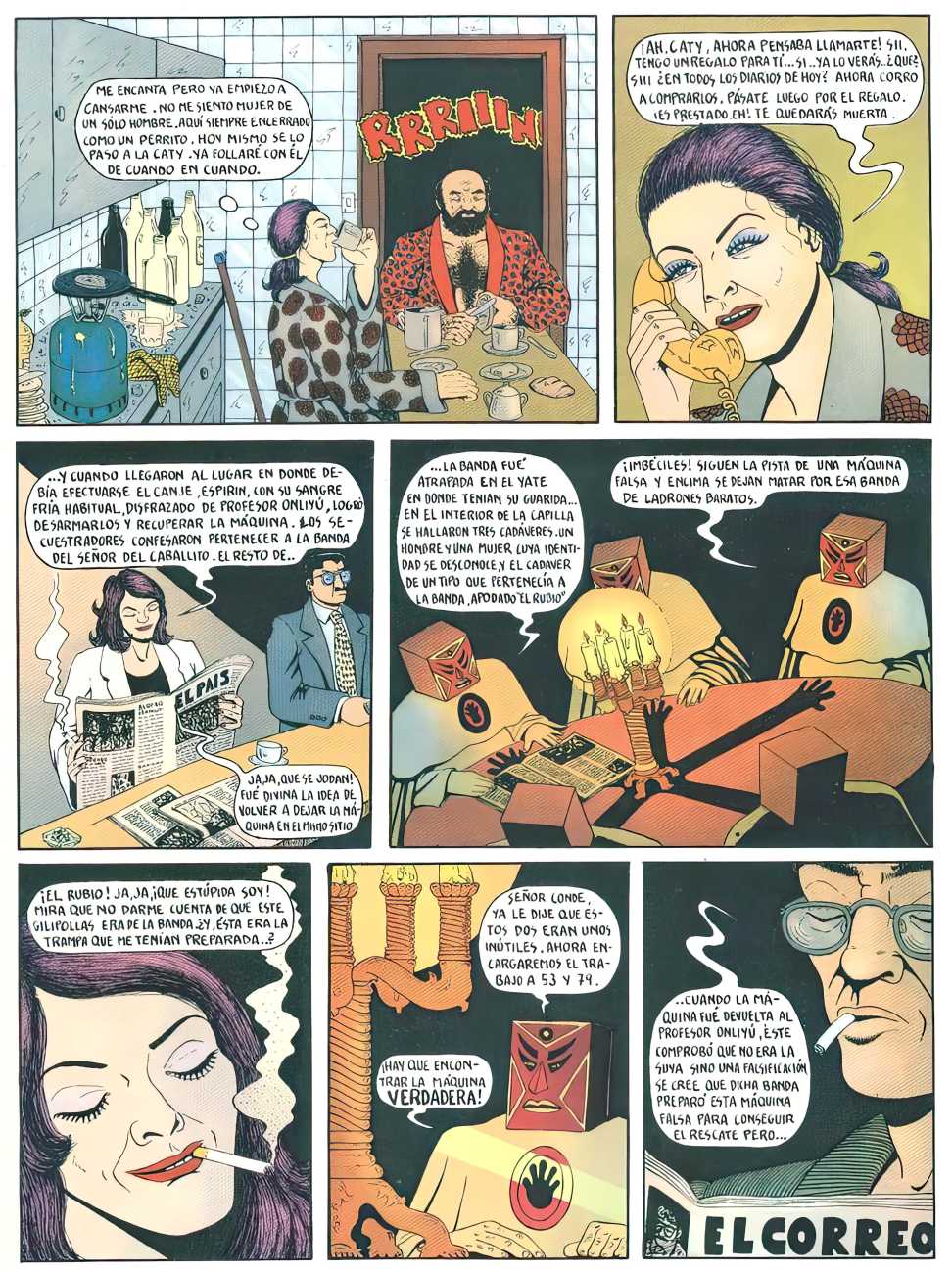
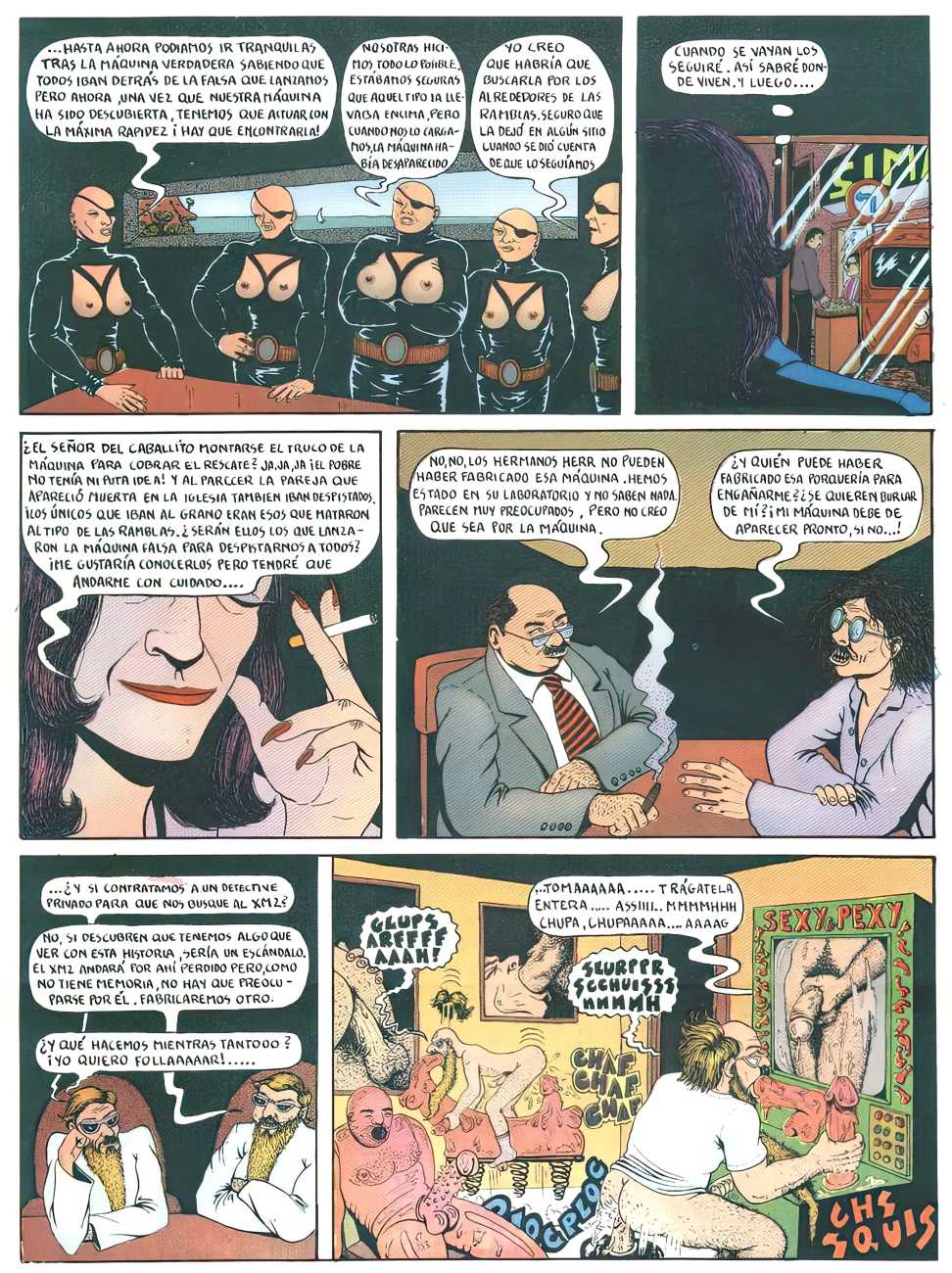
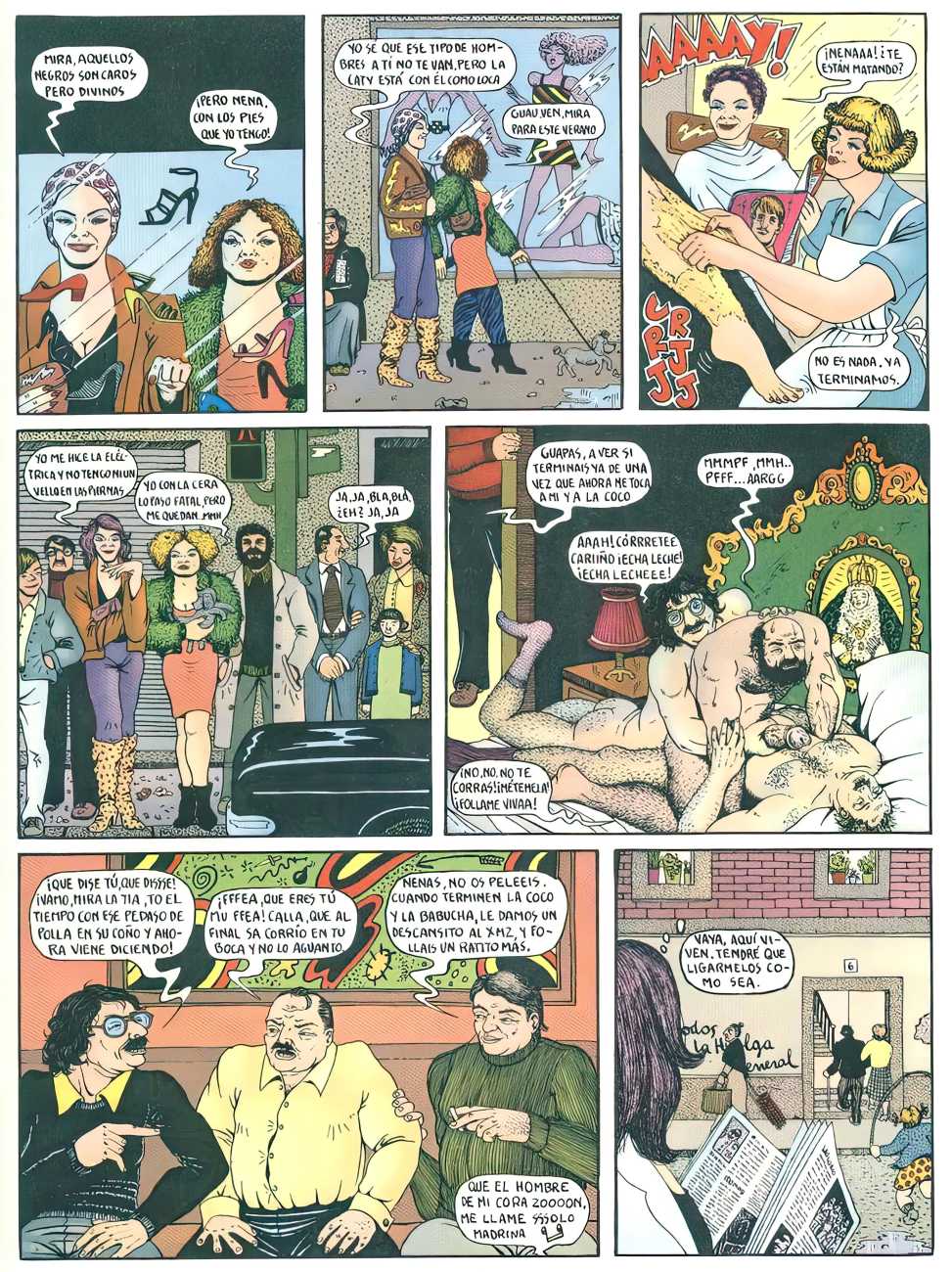
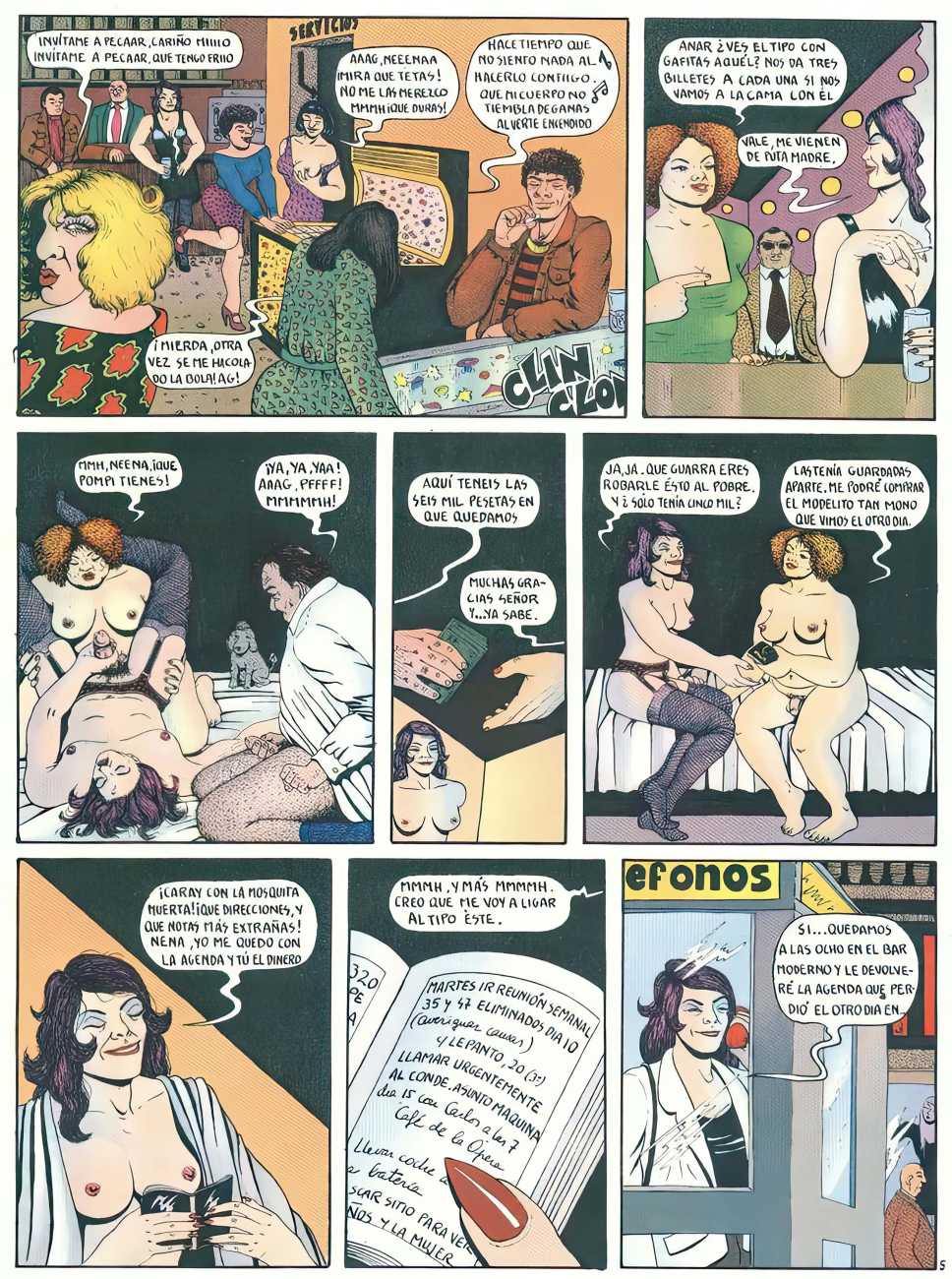
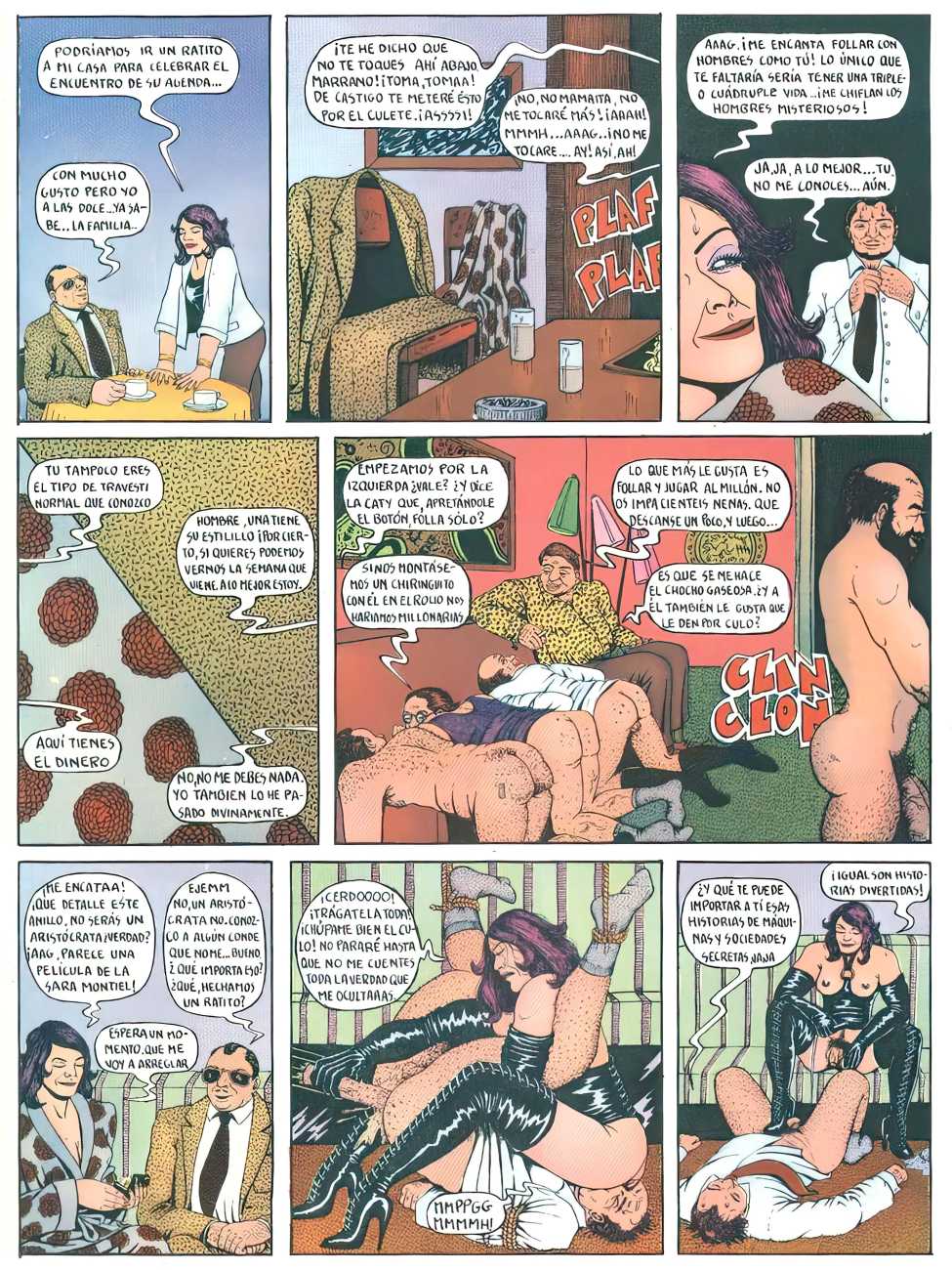
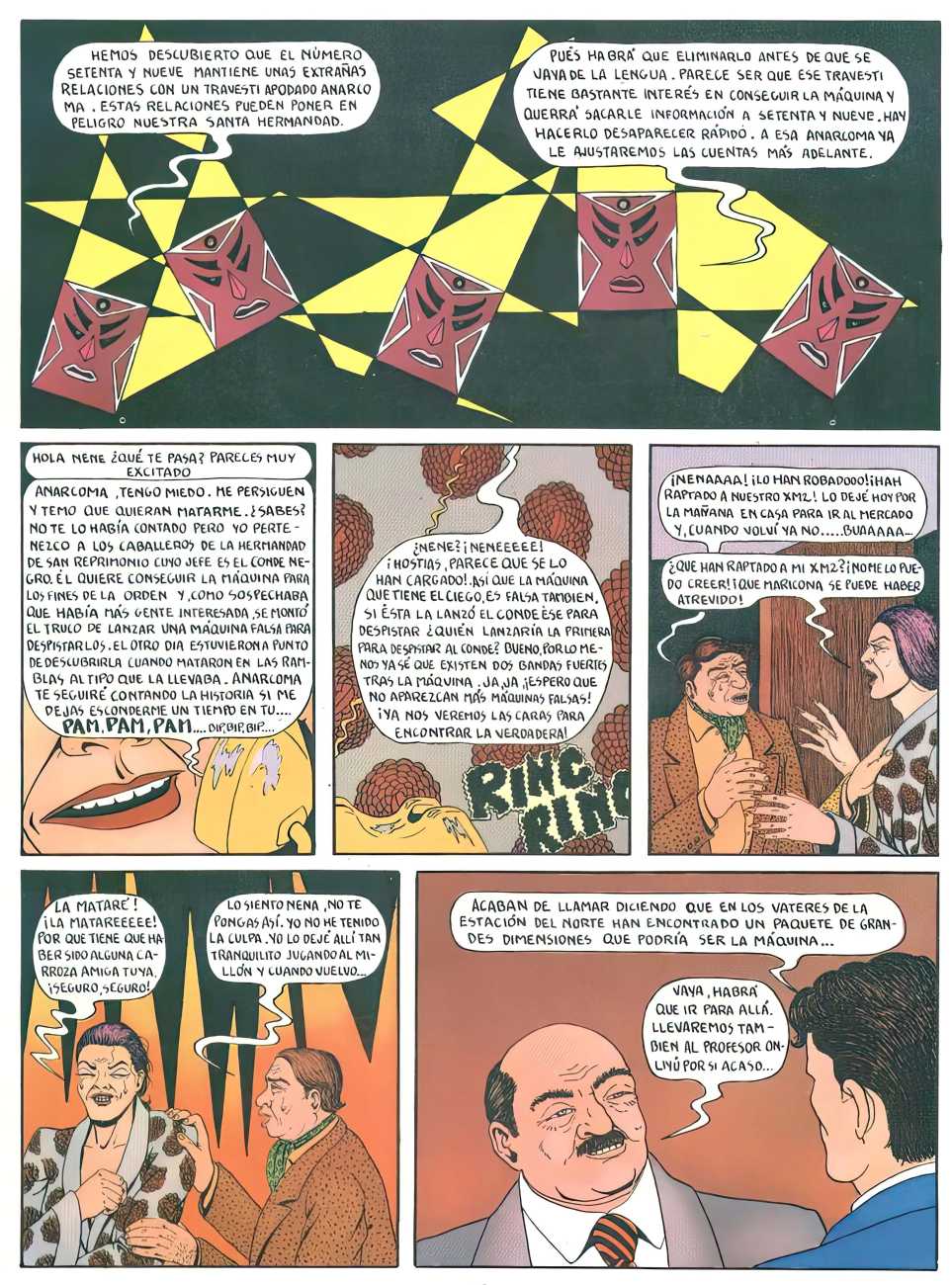
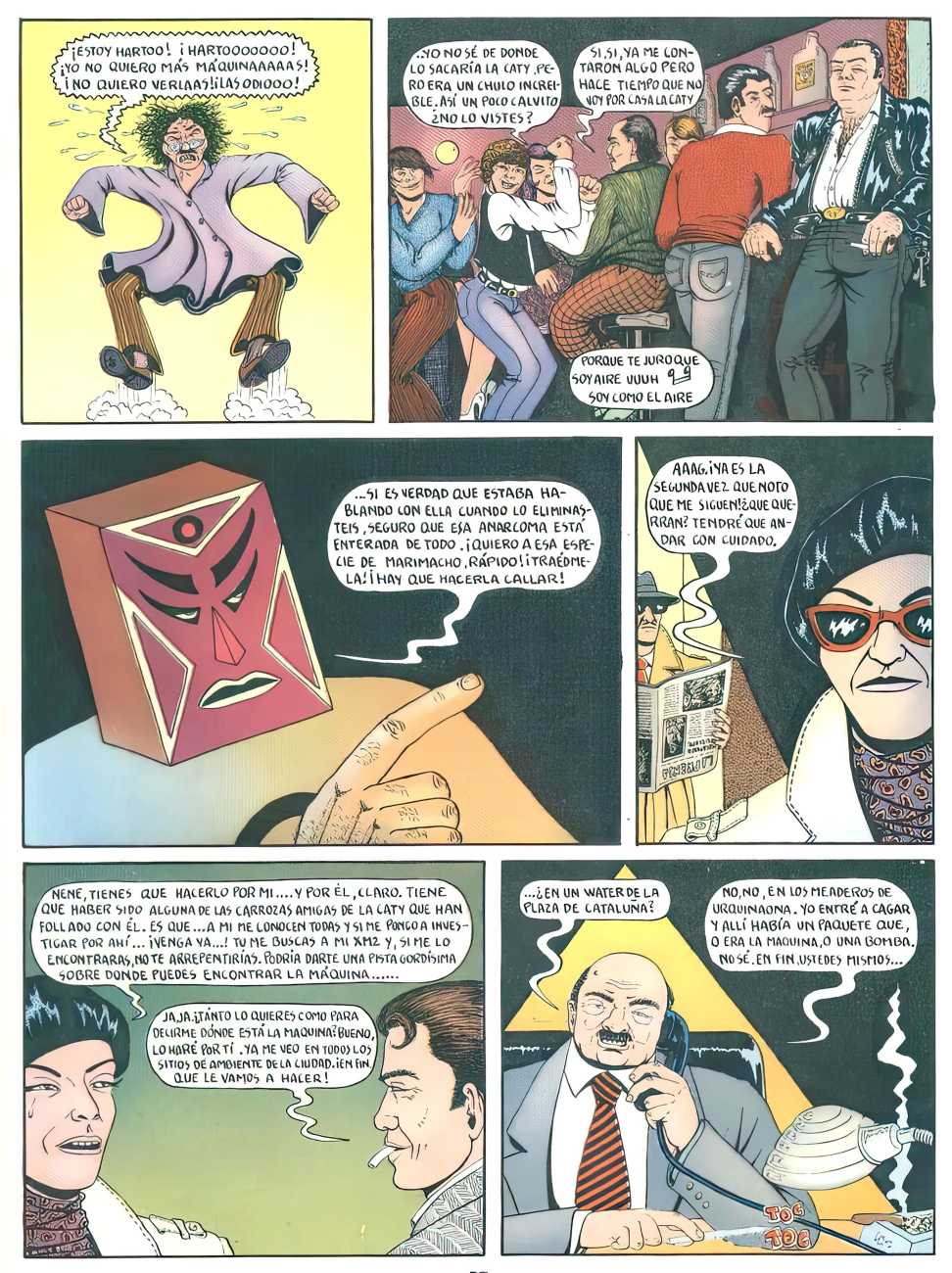
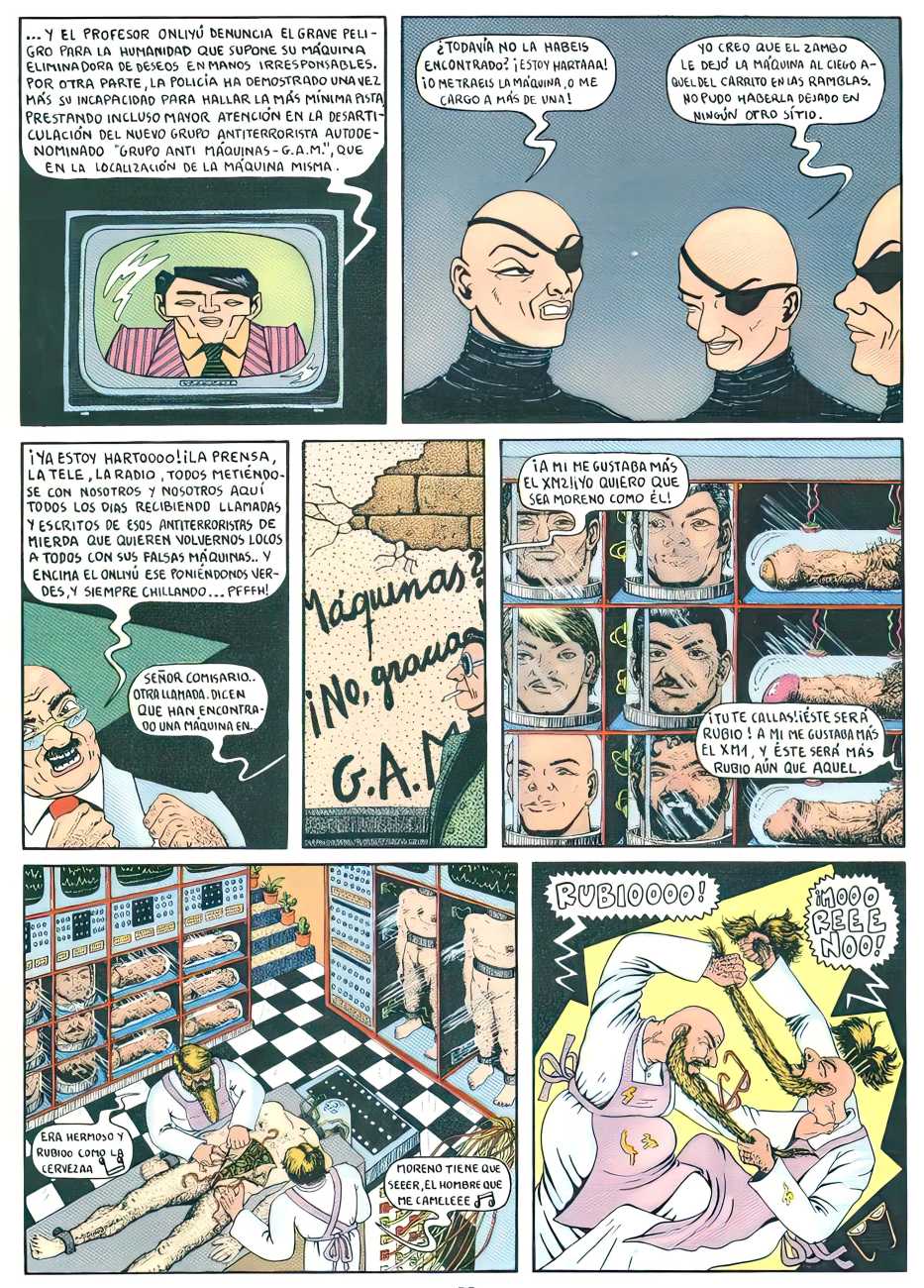
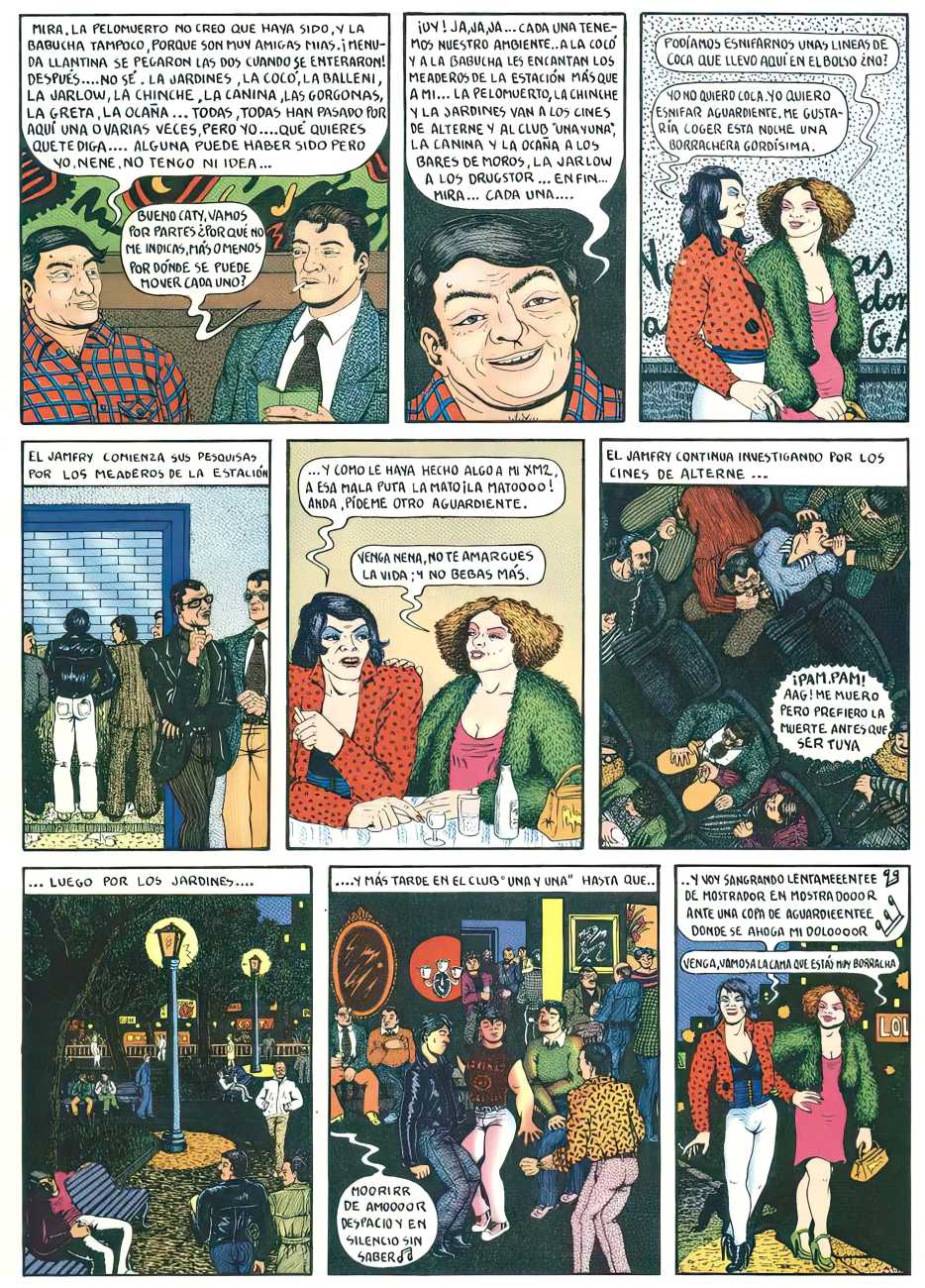
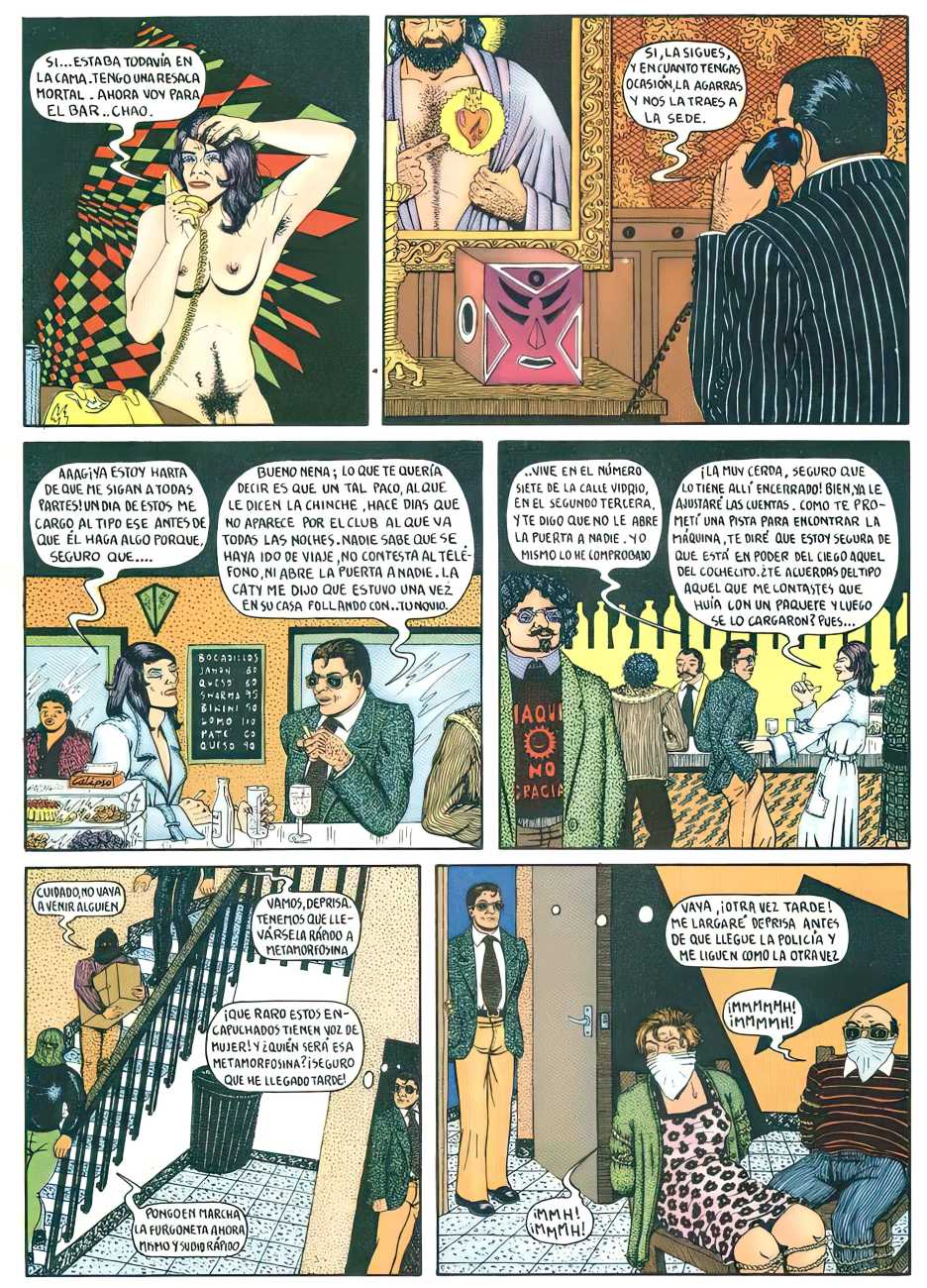
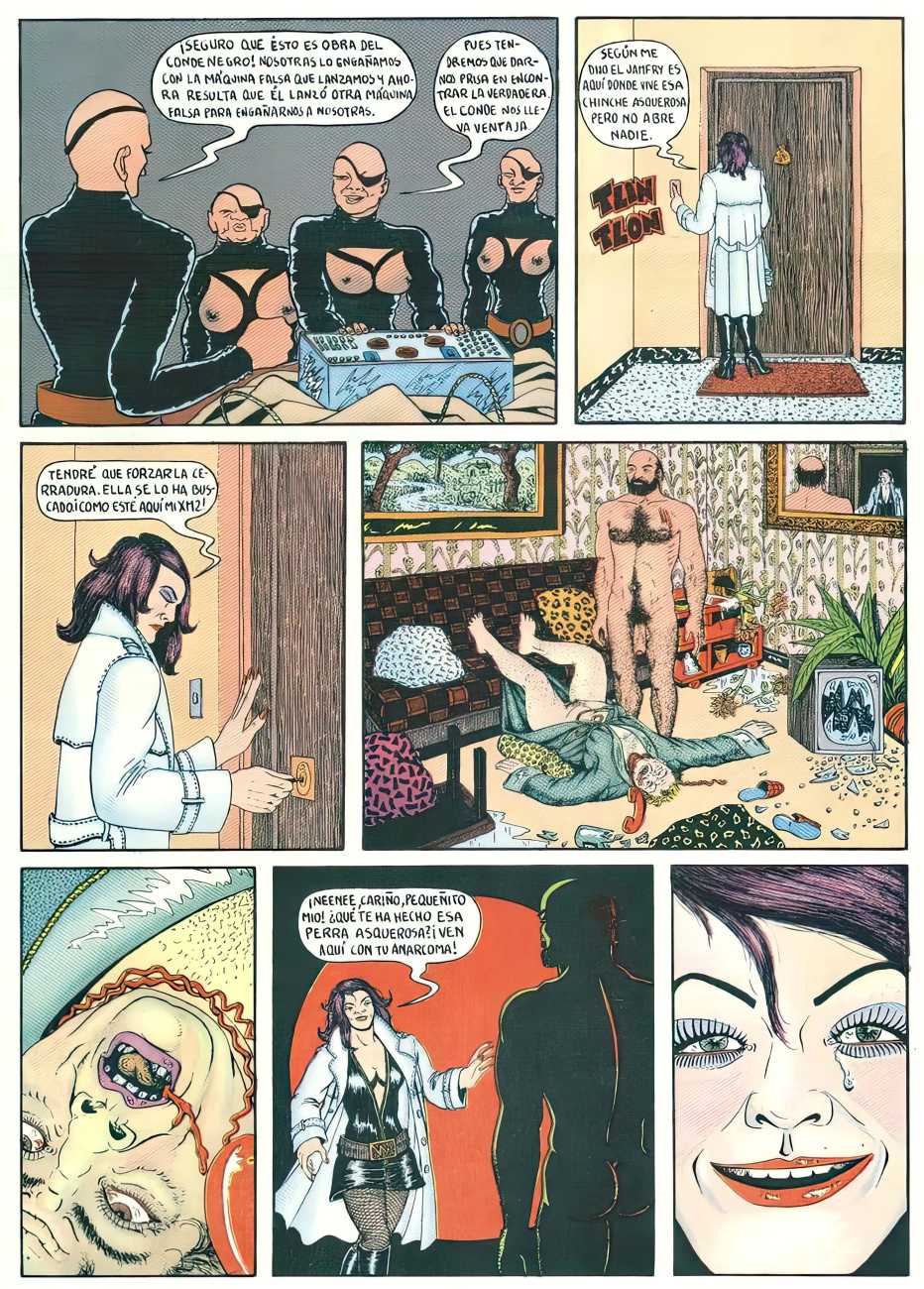
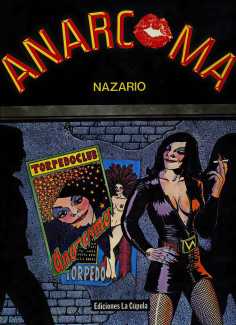
 With Anarcoma, Nazario transformed the anarchic energy of his early underground comics into a fully developed fictional world. The character first appeared in Rampa in 1978, and from 1979 in El Víbora, before the first book version was published in 1983.
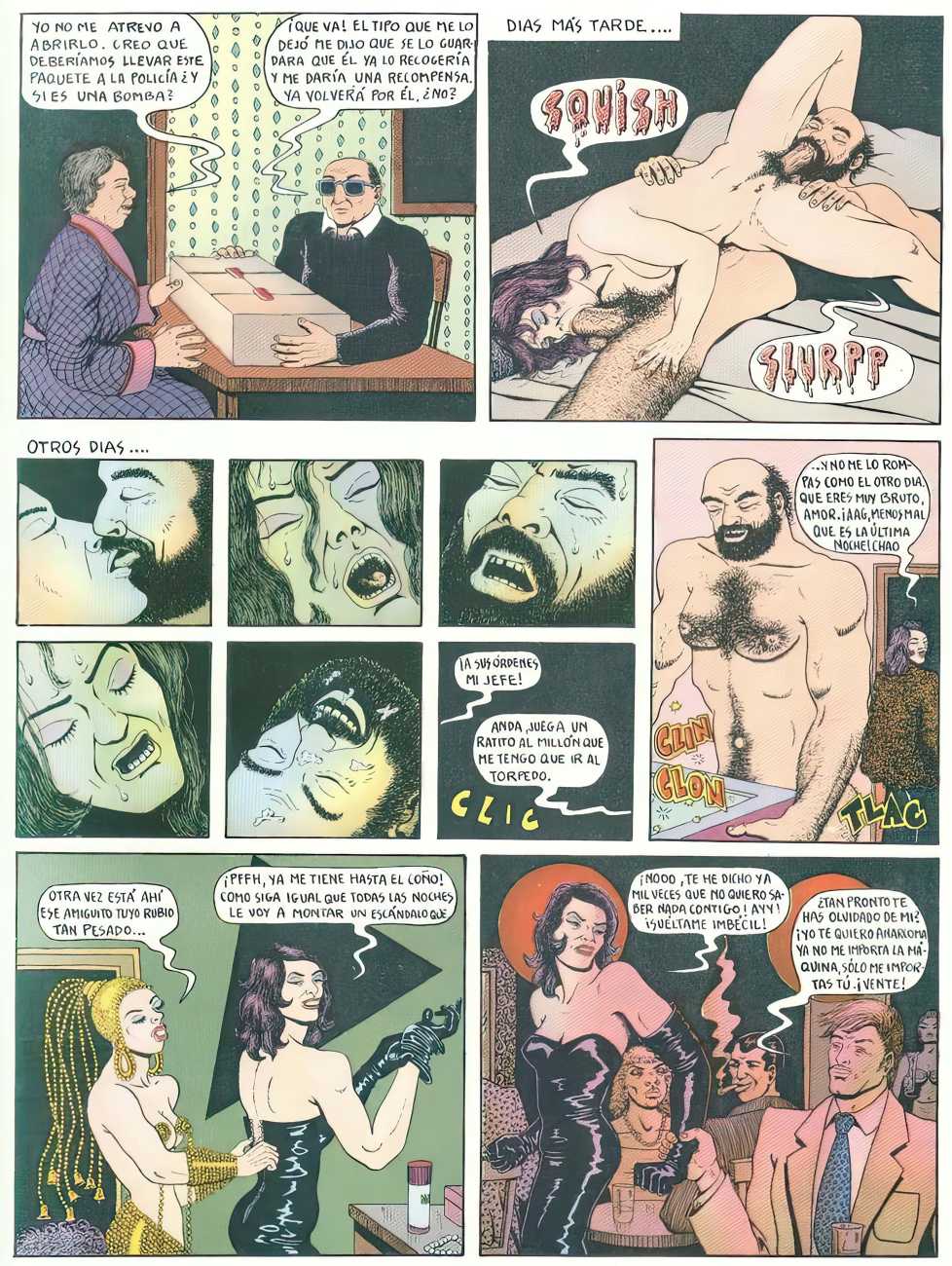
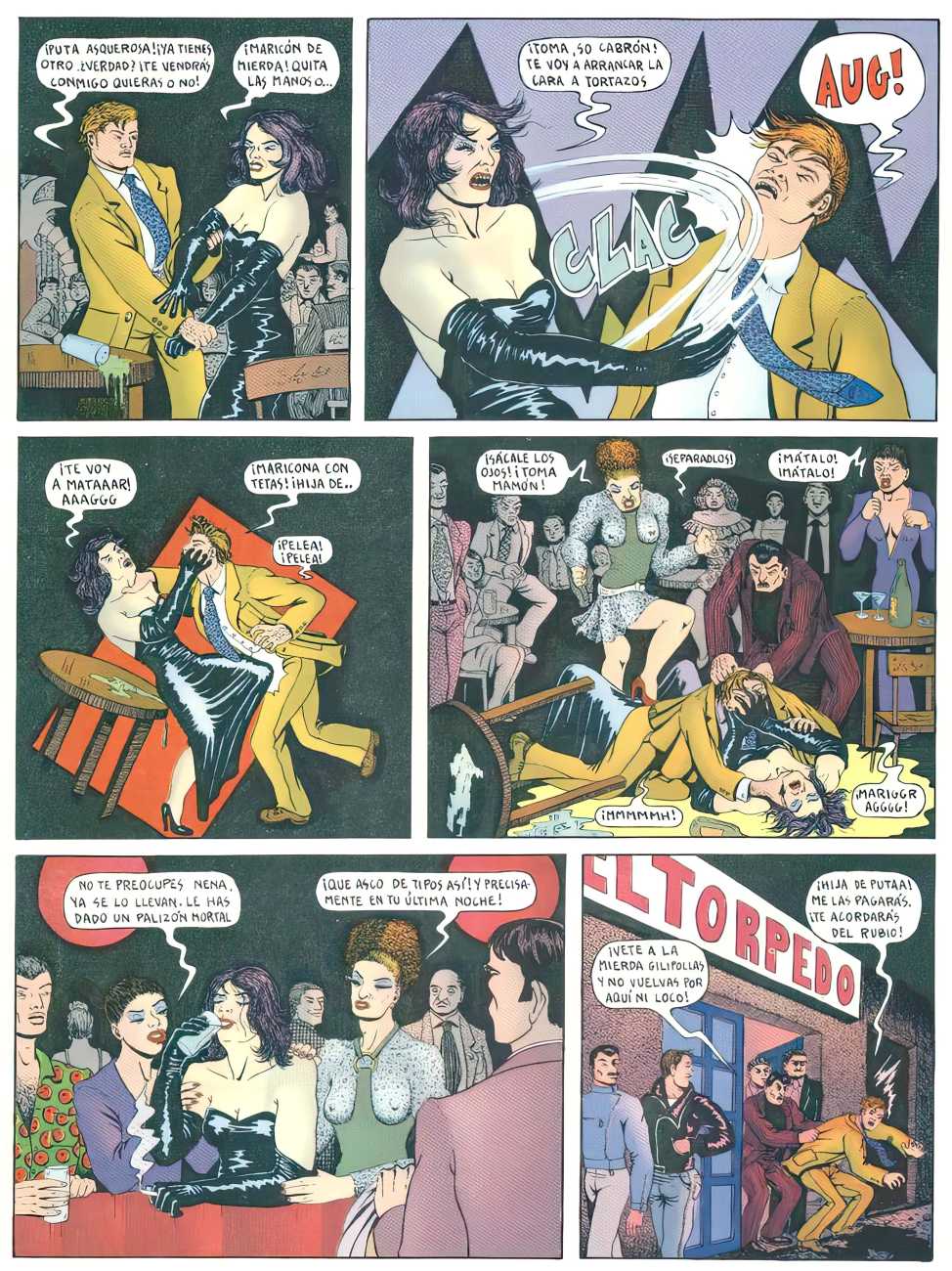
Anarcoma is a transvestite detective who works the Barcelona Ramblas, combining the glamour and toughness of a classic film noir heroine with a very different sexual identity. Nazario described her as a mixture of Lauren Bacall and Humphrey Bogart, and the comparison is immediately apparent in the pages – she is glamorous, self-possessed and dangerous, but also flamboyant and deliberately excessive. Her favourite colour is black, and Nazario gives her a wonderfully theatrical wardrobe of greatcoats, shorts, boots and fishnet stockings.
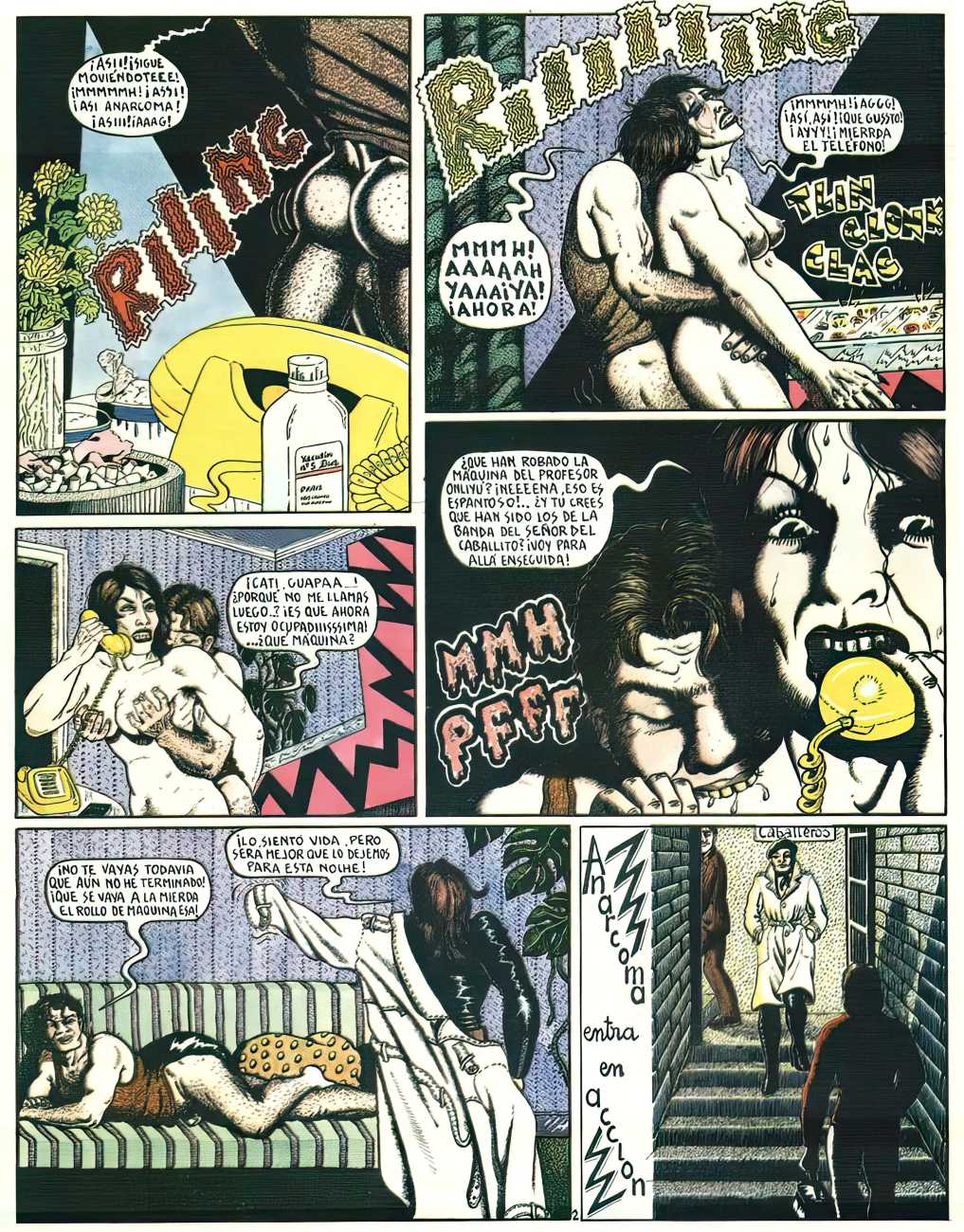
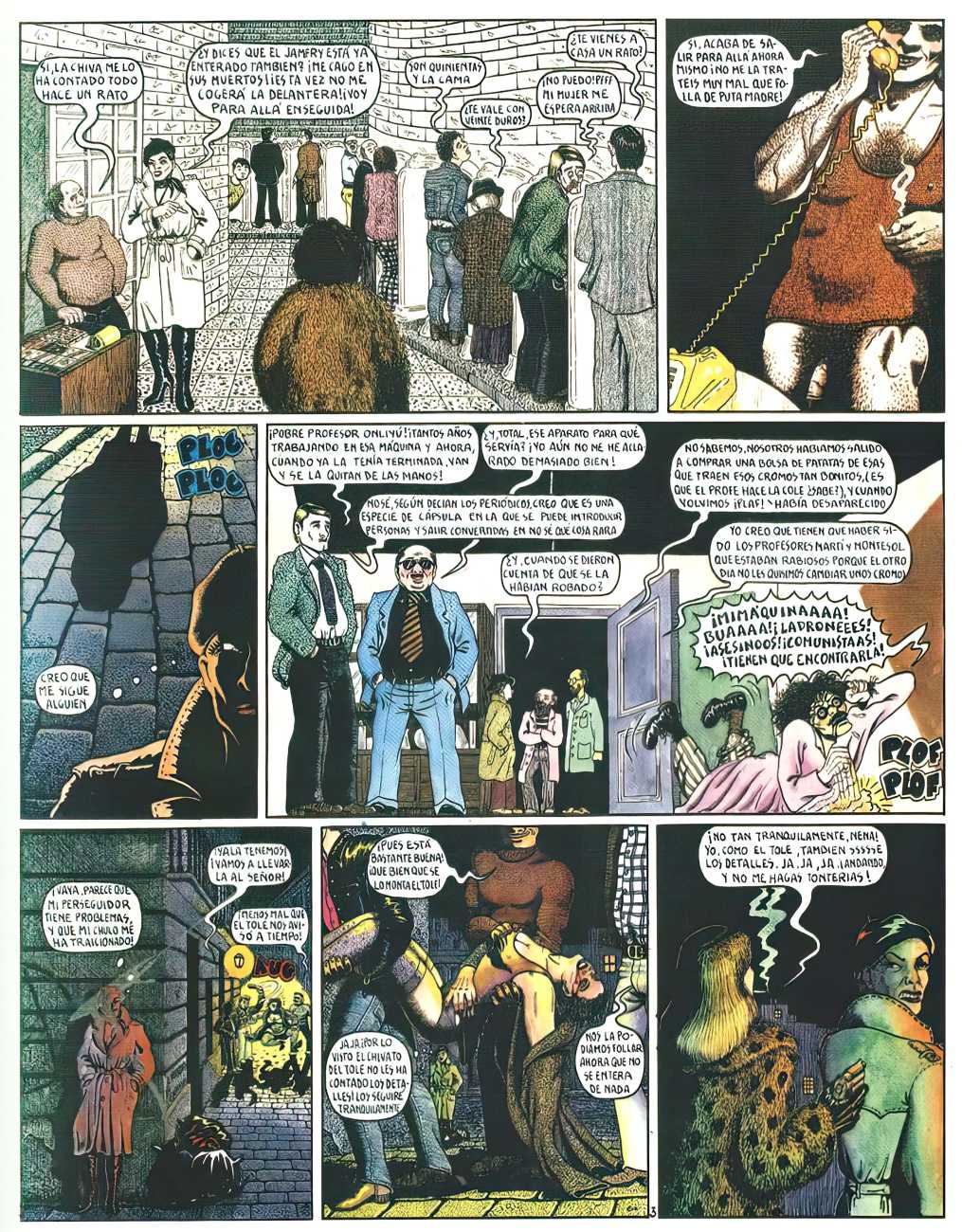
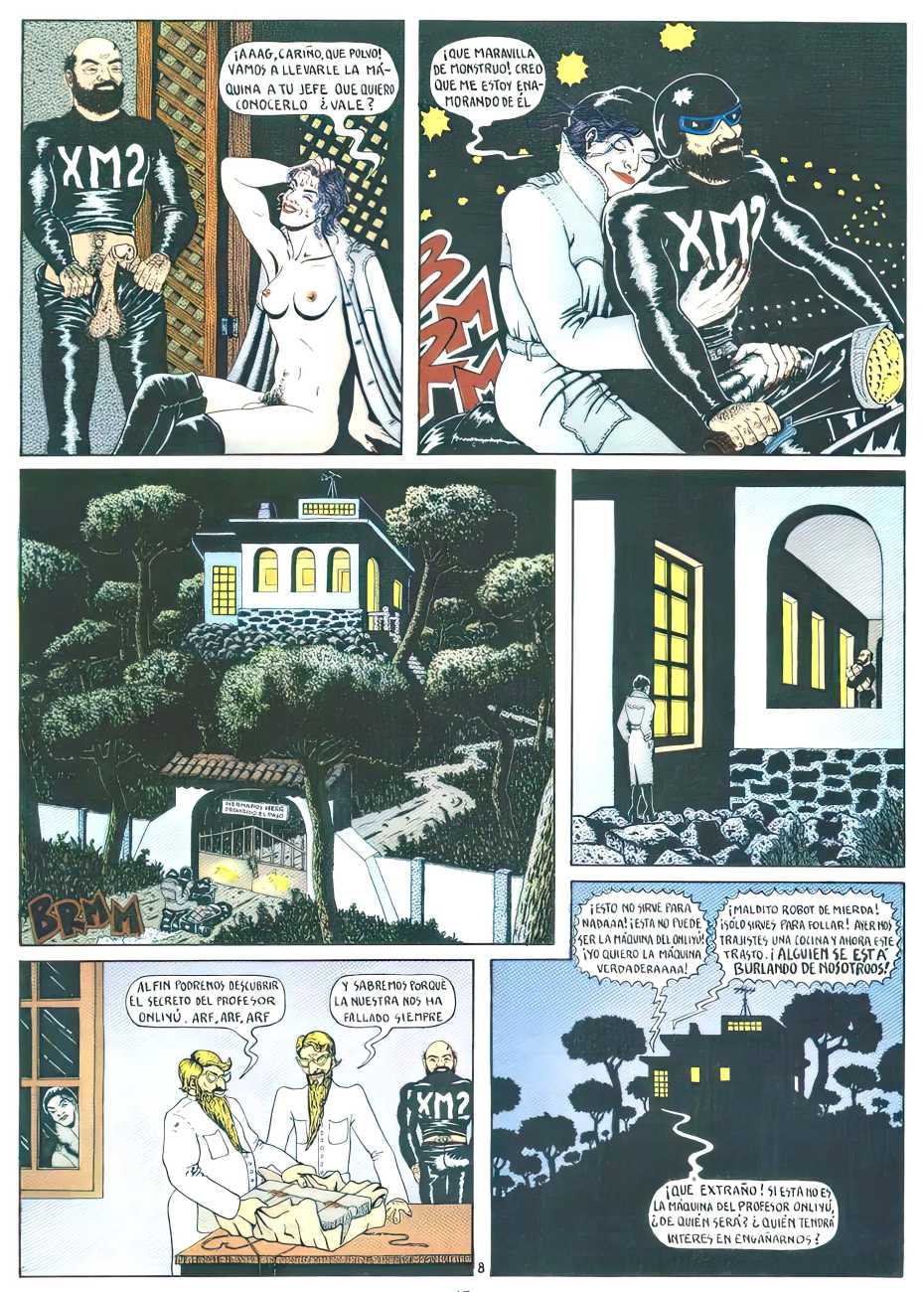
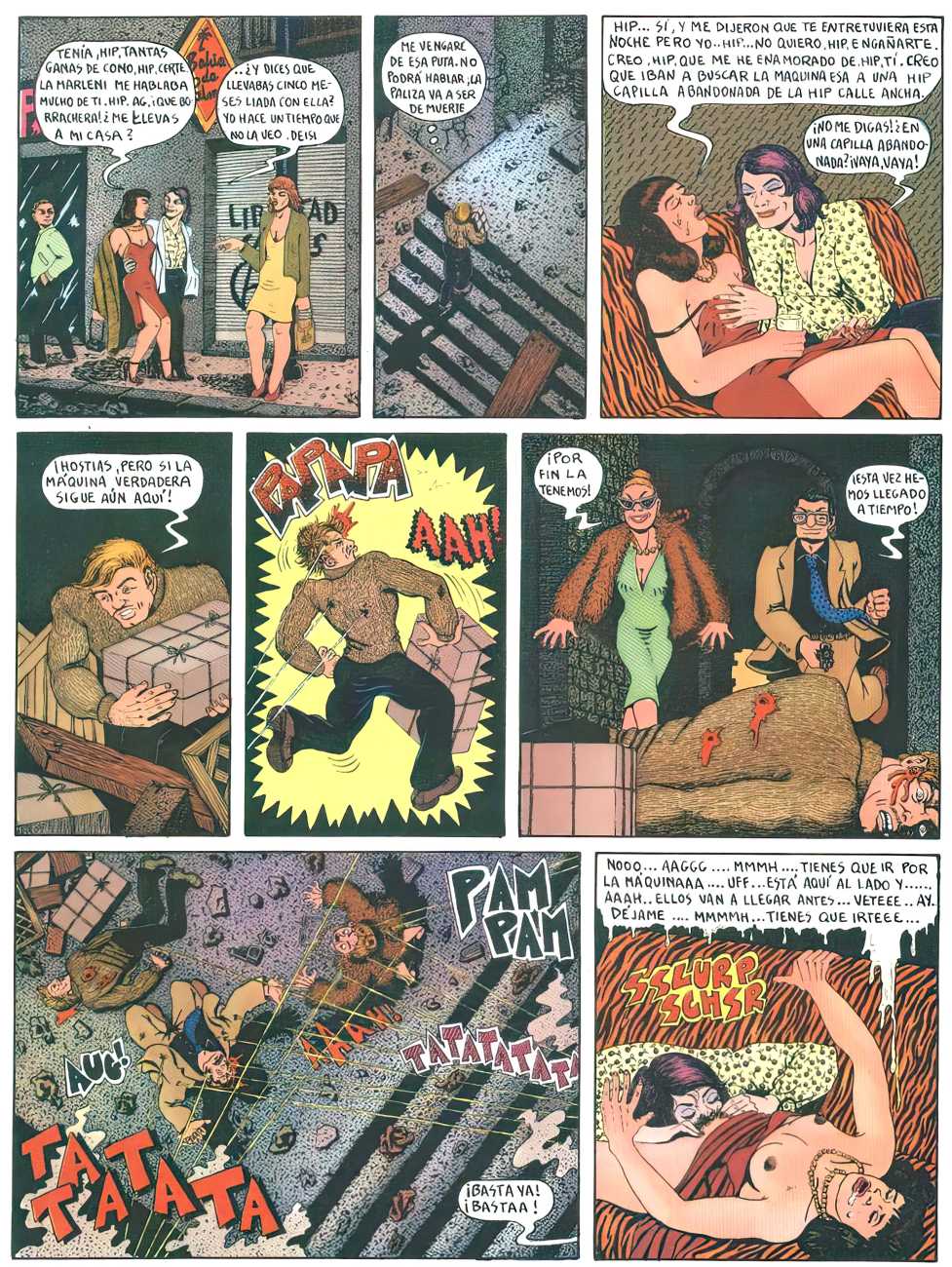
The plot revolves around the mysterious machine invented by Professor Onliyú, setting Anarcoma and a wonderfully improbable collection of criminals, queens, gangsters, scientists, religious fanatics and robots against one another. But the mystery is almost an excuse for Nazario to populate his pages with the people and places of Barcelona’s queer underground. The bars, streets, clubs, public toilets and back rooms are rendered with a striking mixture of observation and fantasy. As the introduction to the book observes, the queer experience is not treated as something exotic or exceptional, it is simply the normal condition of the world the comic inhabits.
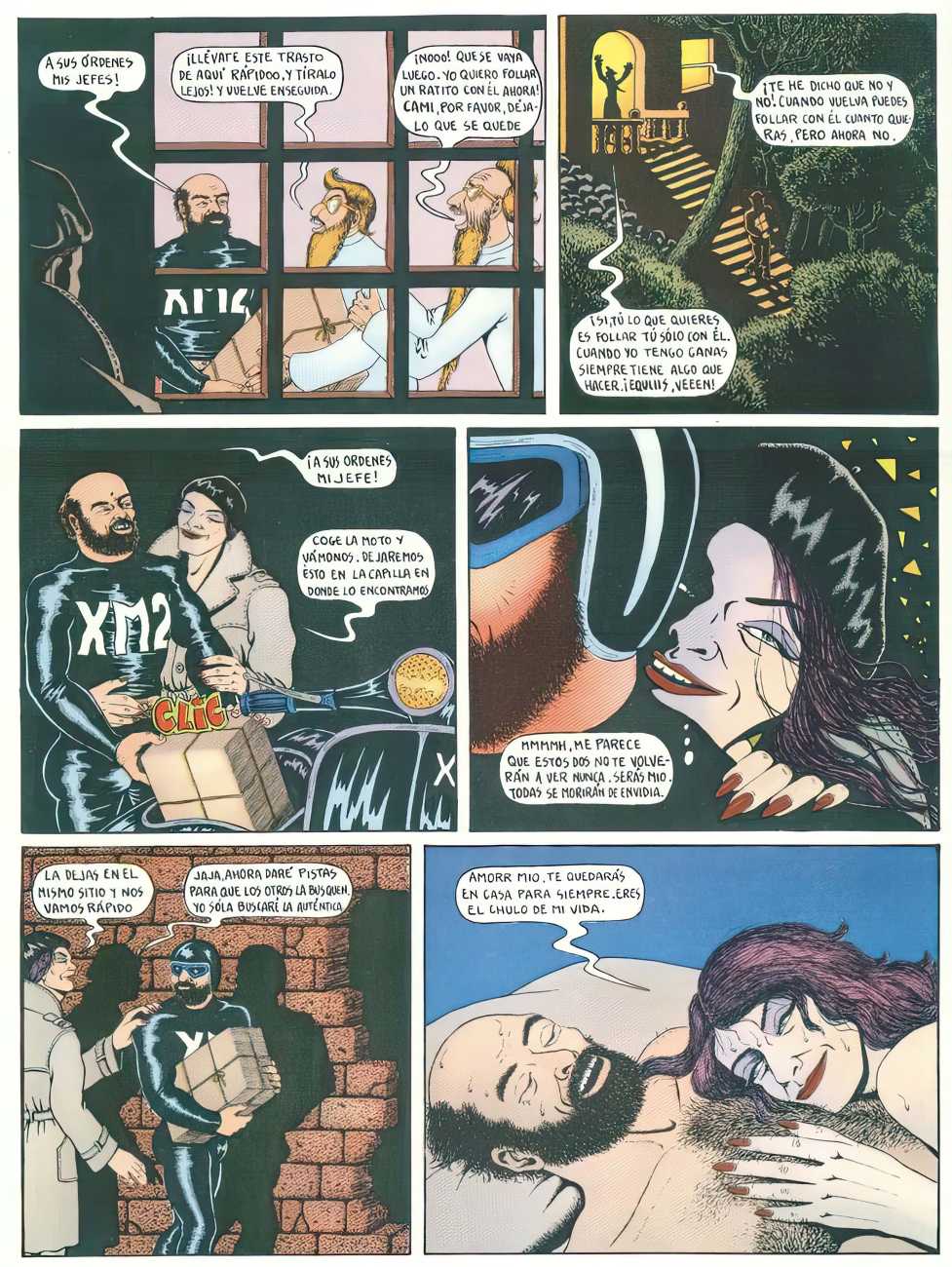
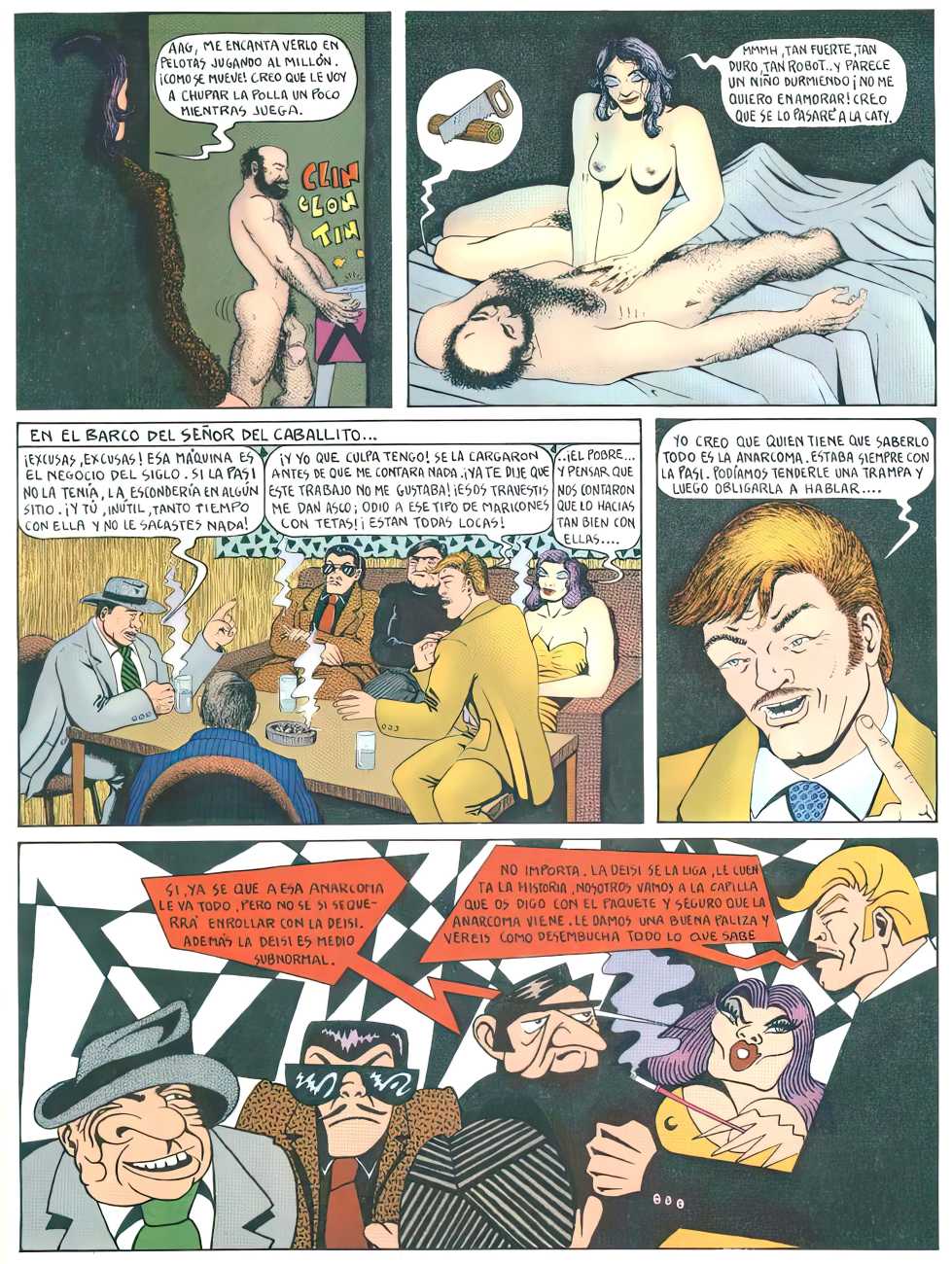
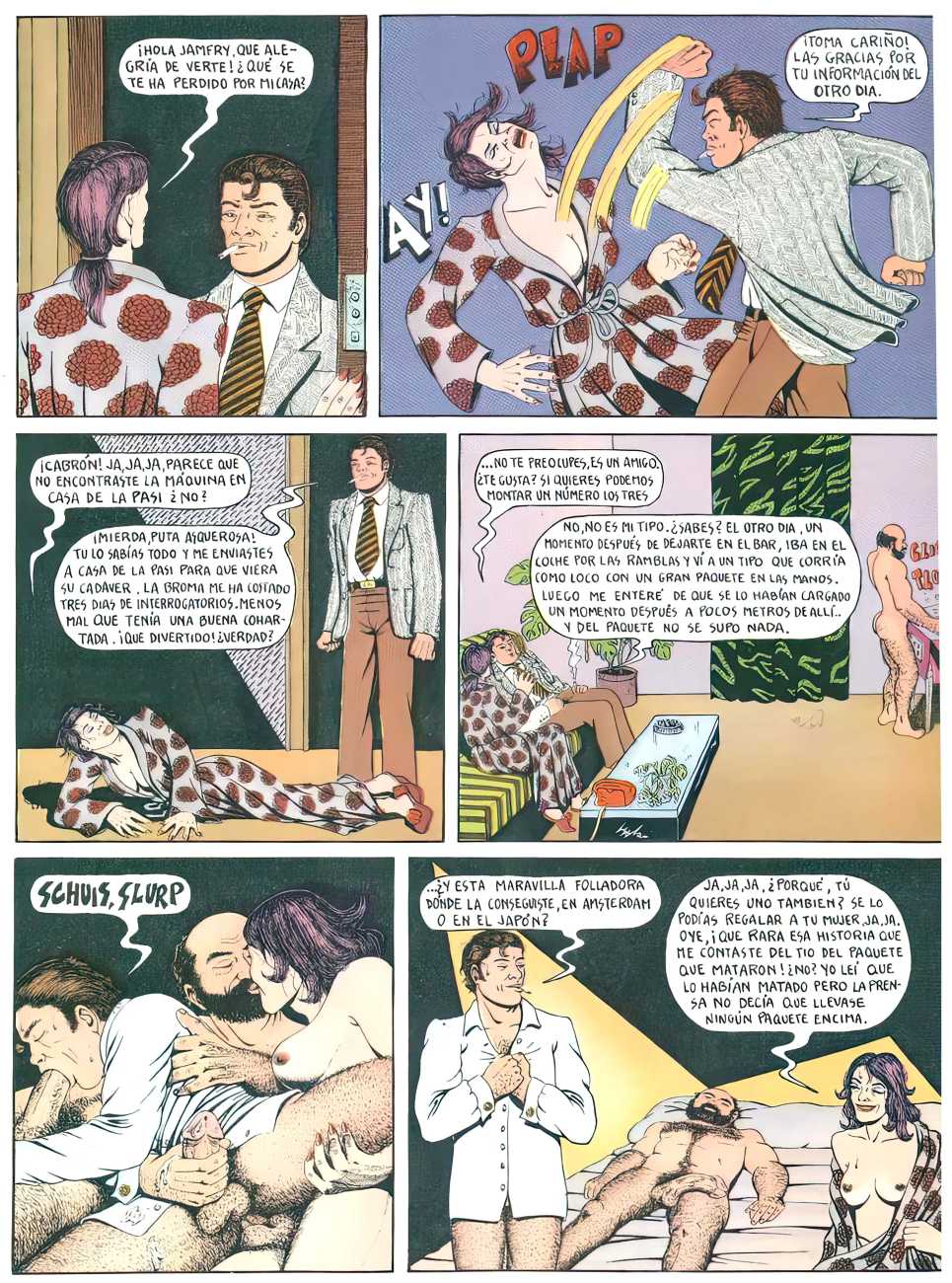
Sex is consequently inseparable from the narrative. Characters flirt, cruise, seduce, betray, fight and have sex with one another with the same matter-of-fact enthusiasm. Anarcoma herself is emphatically active rather than merely decorative, pursuing her desires as freely as she pursues the mystery. Even the absurdly over-endowed robot XM2 becomes part of the plot, eventually falling in love with Anarcoma and becoming her extraordinarily unconventional pimp.
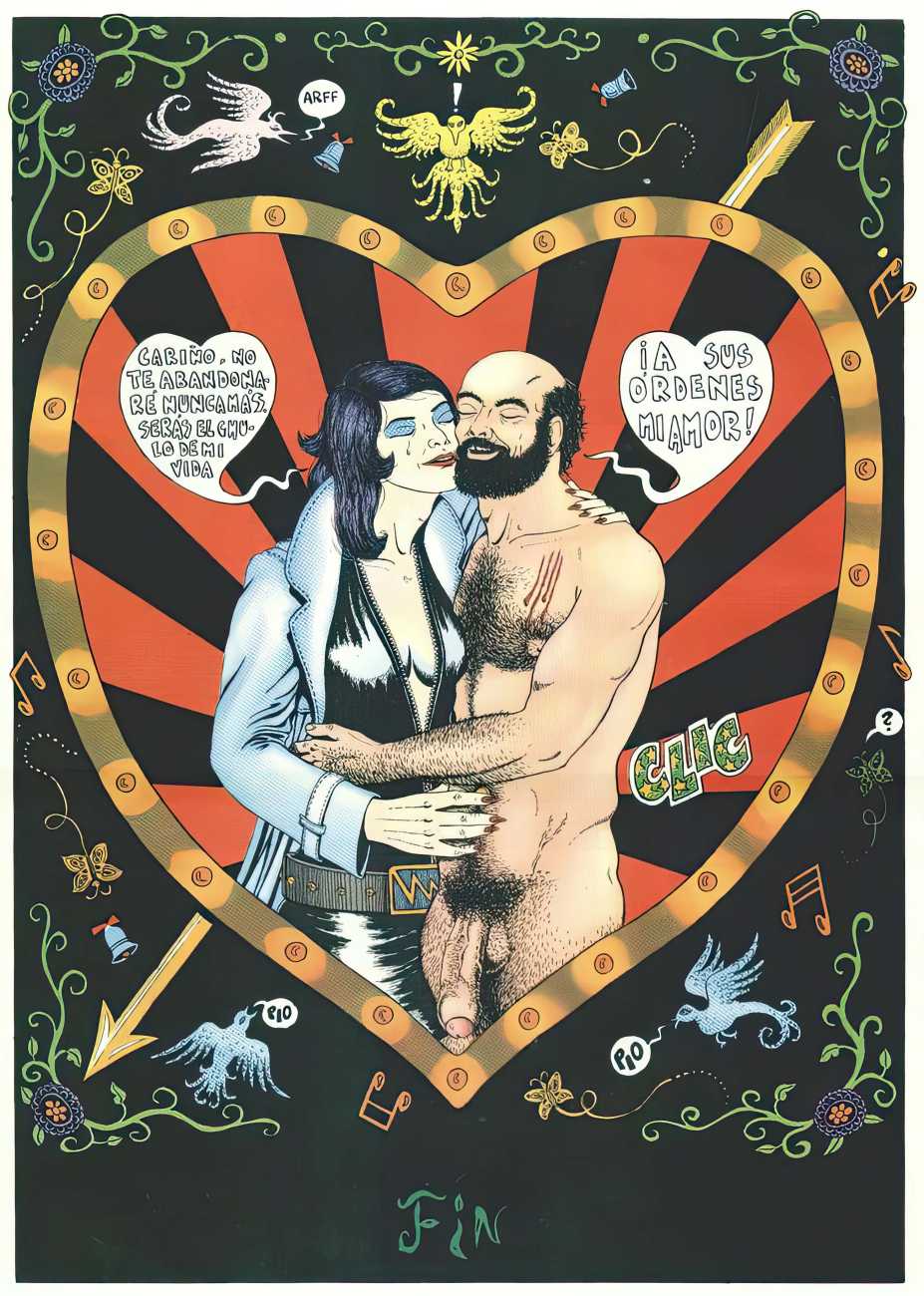
Visually, Anarcoma is a considerable advance on La Piraña Divina. The pages combine dense black areas and expressive line work with a strikingly limited colour palette, while Nazario’s exuberant lettering and ‘sound effects’ become part of the artwork itself. Eroticism, comedy, violence and grotesque fantasy coexist within compositions that are surprisingly sophisticated.
The result is one of Nazario’s defining creations: outrageous, funny, erotic and unmistakably rooted in the Barcelona of its time, and an extraordinarily imaginative comic world in its own right.
Anarcoma was followed by a second volume, Anarcoma 2, published by La Cúpula in 1986, which continued the adventures in a new sequence of stories originally appearing in El Víbora between 1985 and 1986. In 2016 Nazario returned to Anarcoma, publishing Nuevas Aventuras de Anarcoma y el Robot XM2, turning the unfinished idea for a third comic adventure into a prose work. The following year, Integral Anarcoma brought together the complete surviving Anarcoma material, including the two original stories and shorter pieces.
The 1983 edition of Anarcoma includes an introduction signed by ‘Professor Onliyú’, giving fascinating insights into the process of creating the comic – here we have selected the most interesting parts of this introduction.
The Birth of Anarcoma
Like most of Nazario’s inventions, Anarcoma is the result of a long and laborious gestation and a birth full of accidents and surprises.
Anarcoma, the transvestite detective of the Ramblas, belongs, according to Nazario himself, to the abundant tradition of lively, determined, attractive, sensual and cold comic-book heroines; in other words, she is a more or less close relation of Modesty Blaise, Jodelle and, above all, Barbarella – although she has characteristics of her own which, so to speak, are immediately apparent.
But it is during these months – or sometimes years – while the story lies dormant that, it seems to me, the whole thing takes shape in Nazario’s mind, above all through conversations in bars, gin and tonic after gin and tonic, with his friends. Because bars, for Nazario, as for certain other lucid people who are aware of the marvels of urban civilisation, are not merely watering holes or places to meet friends and enemies – though they are that too – but sanctuaries of meditation, academies of the imagination, temples of confidence and factories of ideas.
And so that ‘transvestite detective I’ve invented’ gradually acquired Anarcoma’s face, character and obsessions through innumerable little drinks at the Ambos Mundos, the Reixas, the Taberna, and the other bars clustered affectionately around Nazario and Alejandro’s home in the Plaza Real.
When the whole complicated business had matured sufficiently, Nazario began drawing it, intending it for a magazine with pretensions to sophisticated, high-class pornography which began its life already mortally wounded. It survived three or four issues, and its closure seemed to be the definitive death sentence for Anarcoma and her boys, because if Nazario finds it difficult to begin telling a story, continuing it after it has been abruptly interrupted – as happened with Purita – reaches an almost impossible degree of difficulty.
But just then El Víbora appeared, and its arrival allowed the stormy relationship between Anarcoma and XM2 to continue, with an euphoria matched only by the almost limitless proliferation of the bogus machines of Professor Onliyú.
Apart from immediately recognisable characters such as his boyfriend Alejandro – the boy in the blue-and-white striped jersey – Ocaña – the one with the bowler hat and glasses – or myself – the hysterical man in the white coat – the pages of Anarcoma are populated by recognisable people and settings which have turned the story of the ferocious female detective into almost a cult object, from the Plaça de Catalunya to the Real, and from El Molino to Zeleste.
One of Nazario’s permanent sources of anger – and, incidentally, one that causes him no little trouble – is the fact that the homosexual world is treated, both in weighty analyses and in the most petty everyday circumstances, as ‘something other’, accepted only so long as it retains its character of exceptionality and, at best, exoticism. In the story of Anarcoma precisely the opposite happens – homosexuality is what is logical, obvious and natural. With its fights, its glories and its miseries.
More than the superabundance of cocks, it seems to me that this is what makes Anarcoma uncomfortable for readers of every conceivable kind. Nazario? Nazario takes it calmly. He laughs, orders another gin and tonic, and carries on imagining.