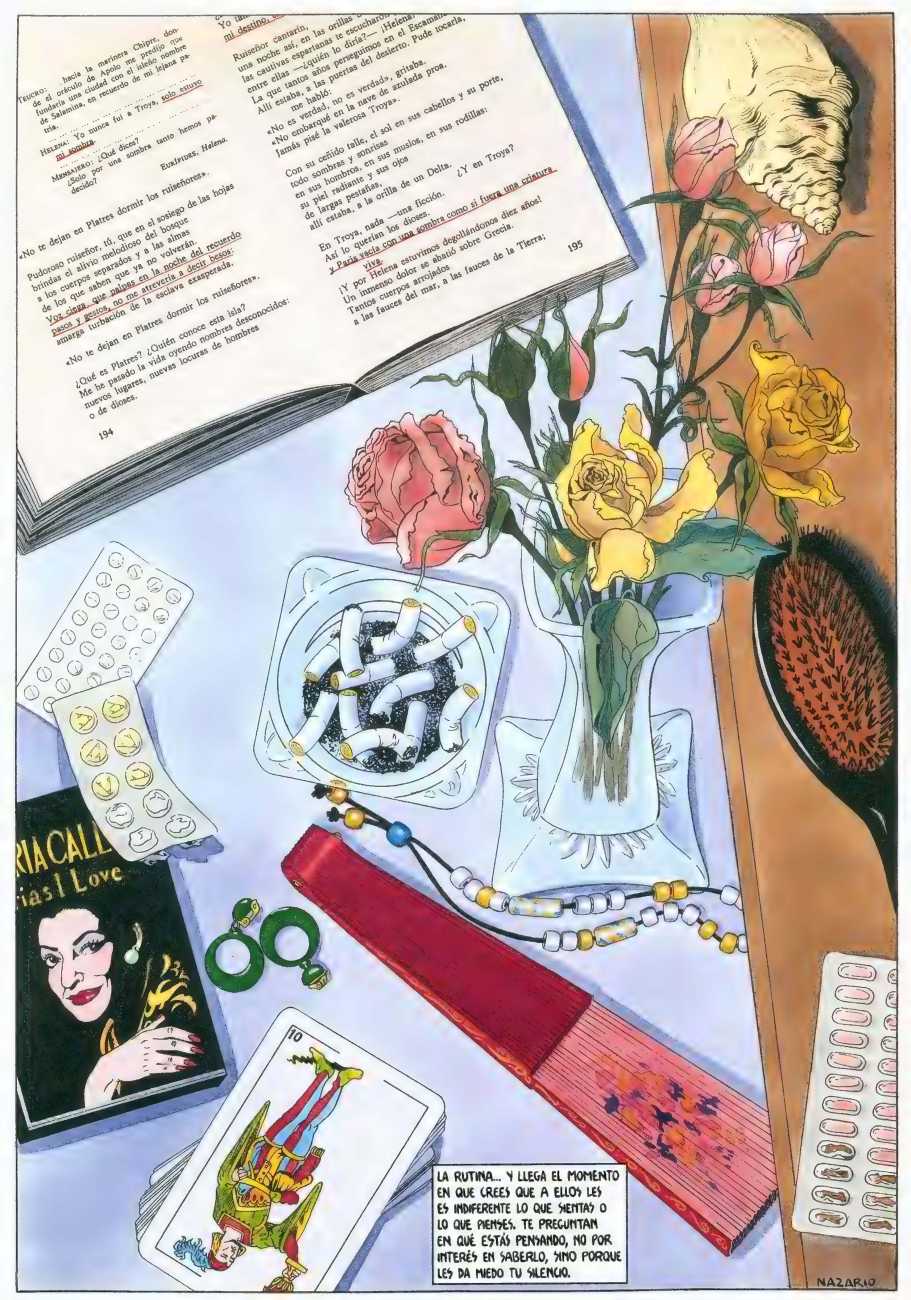
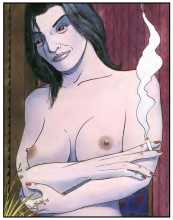
 On the penultimate page of this story we see a dressing table on which rests a book open beside a still life of objects. The collection of objects epitomises the woman sitting before the dressing table – a comb covered with hairs, a deck of cards for playing solitaire, a small bottle of eau de cologne, a fan, a vase of lilies, and three blister packs of different medicines. The woman has underlined several verses of the poem ‘Helena’ from the Poesías Completas by Yorgos Seferis. In one of these verses, ‘And Paris used to come with a shadow as if it were a living creature’, the poet refers to the work of Euripides, in which Euripides maintains that the real Helen never went to Troy but to Egypt, and that the woman who went to Troy was her shadow.
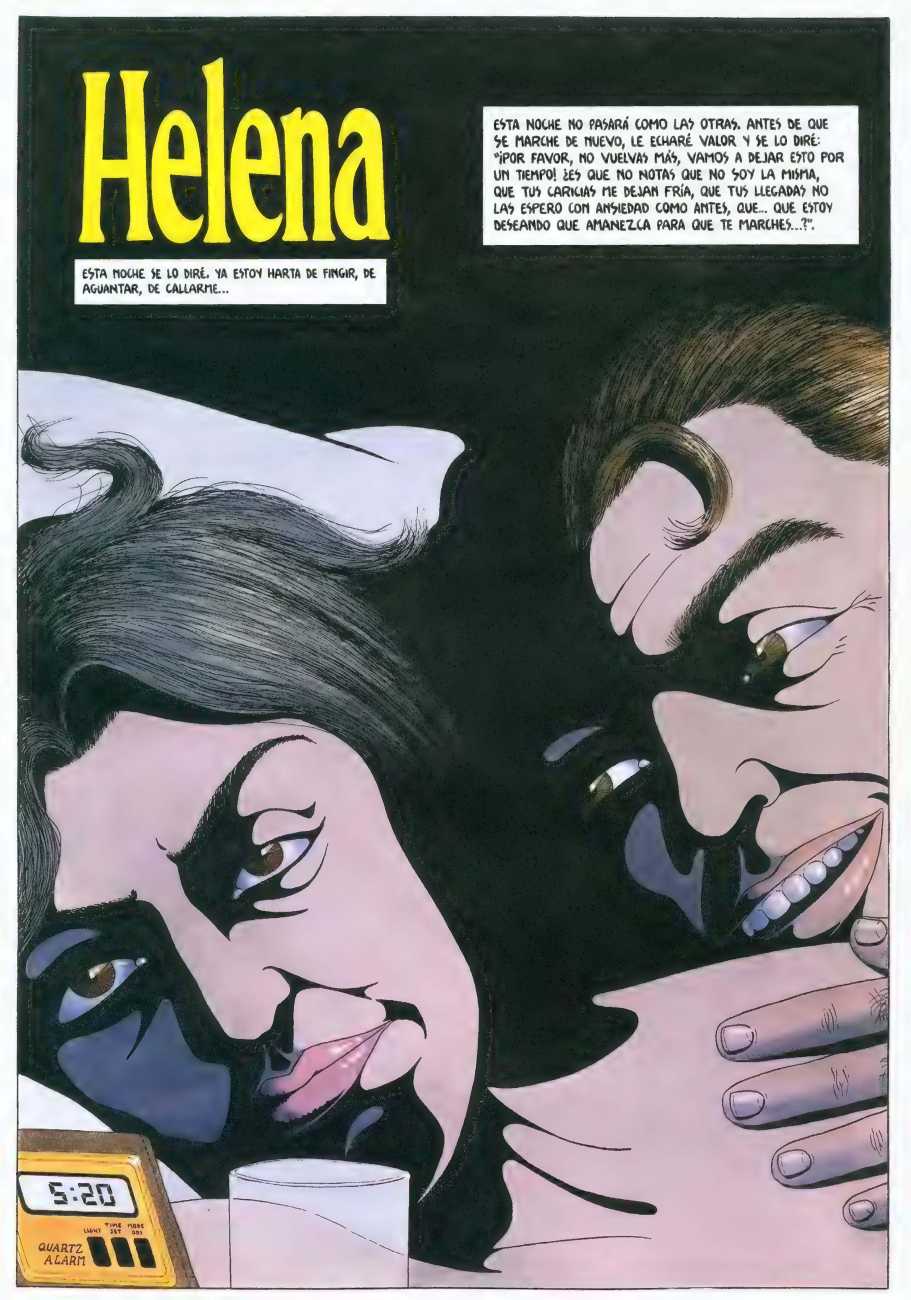
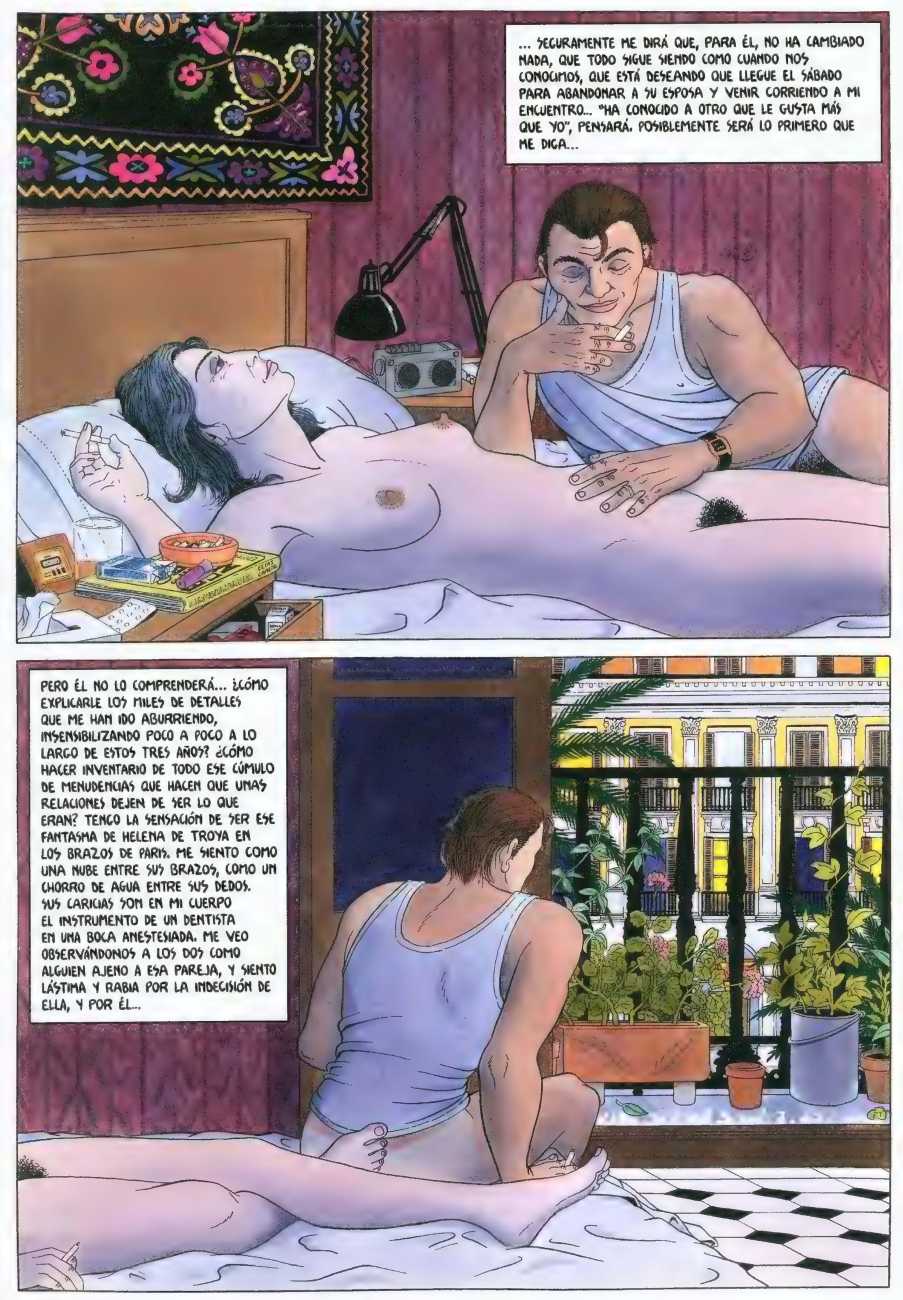
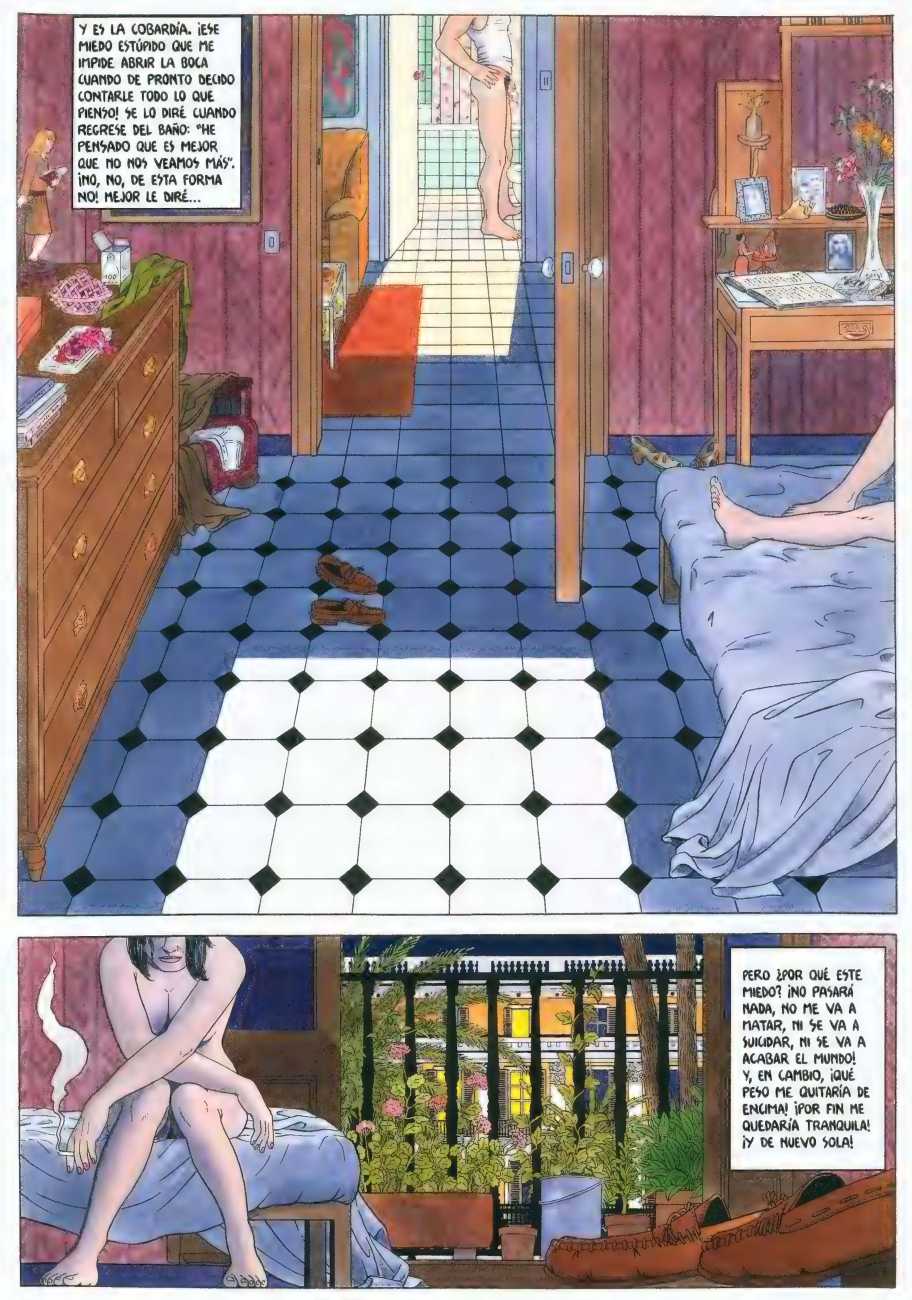
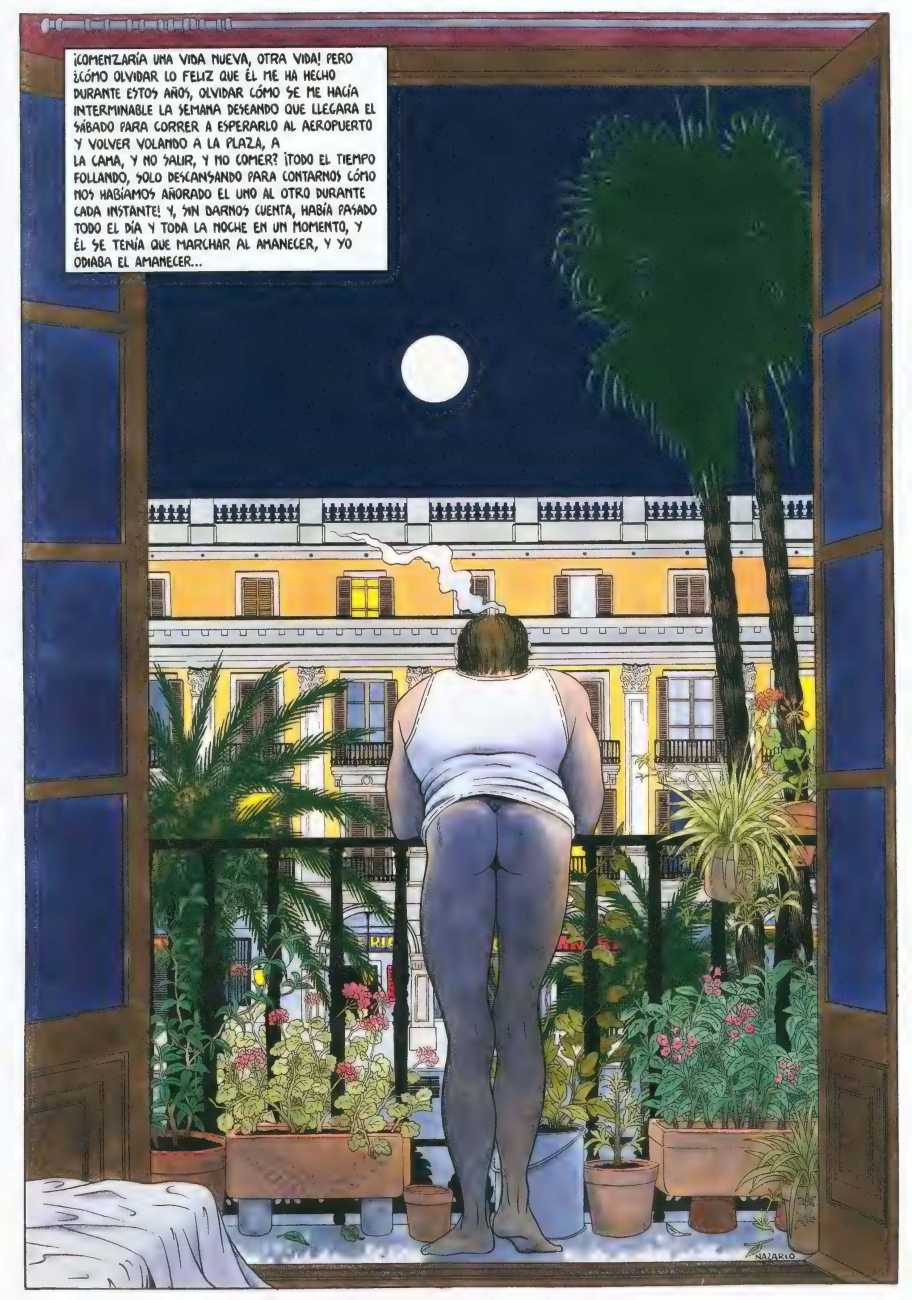
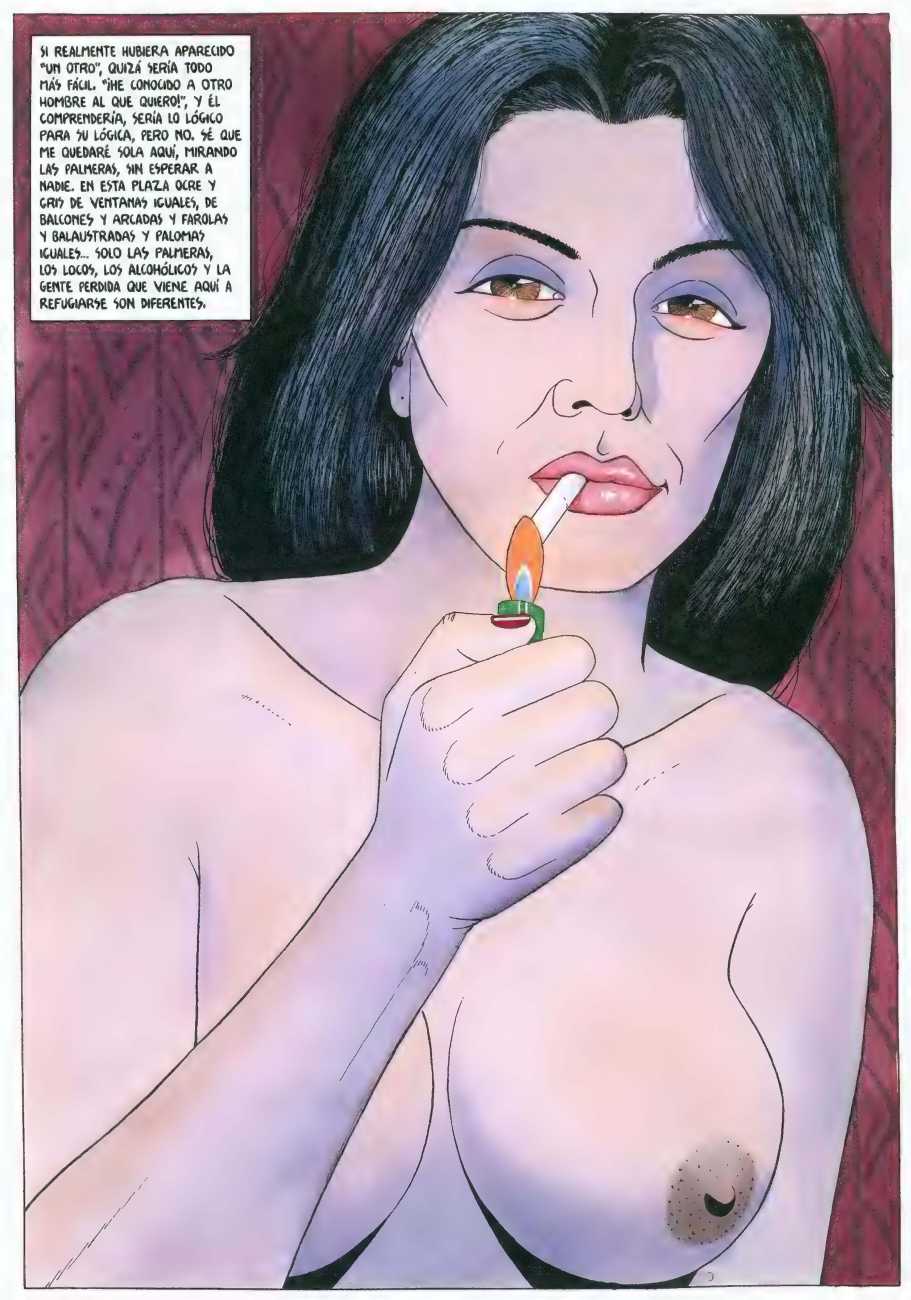
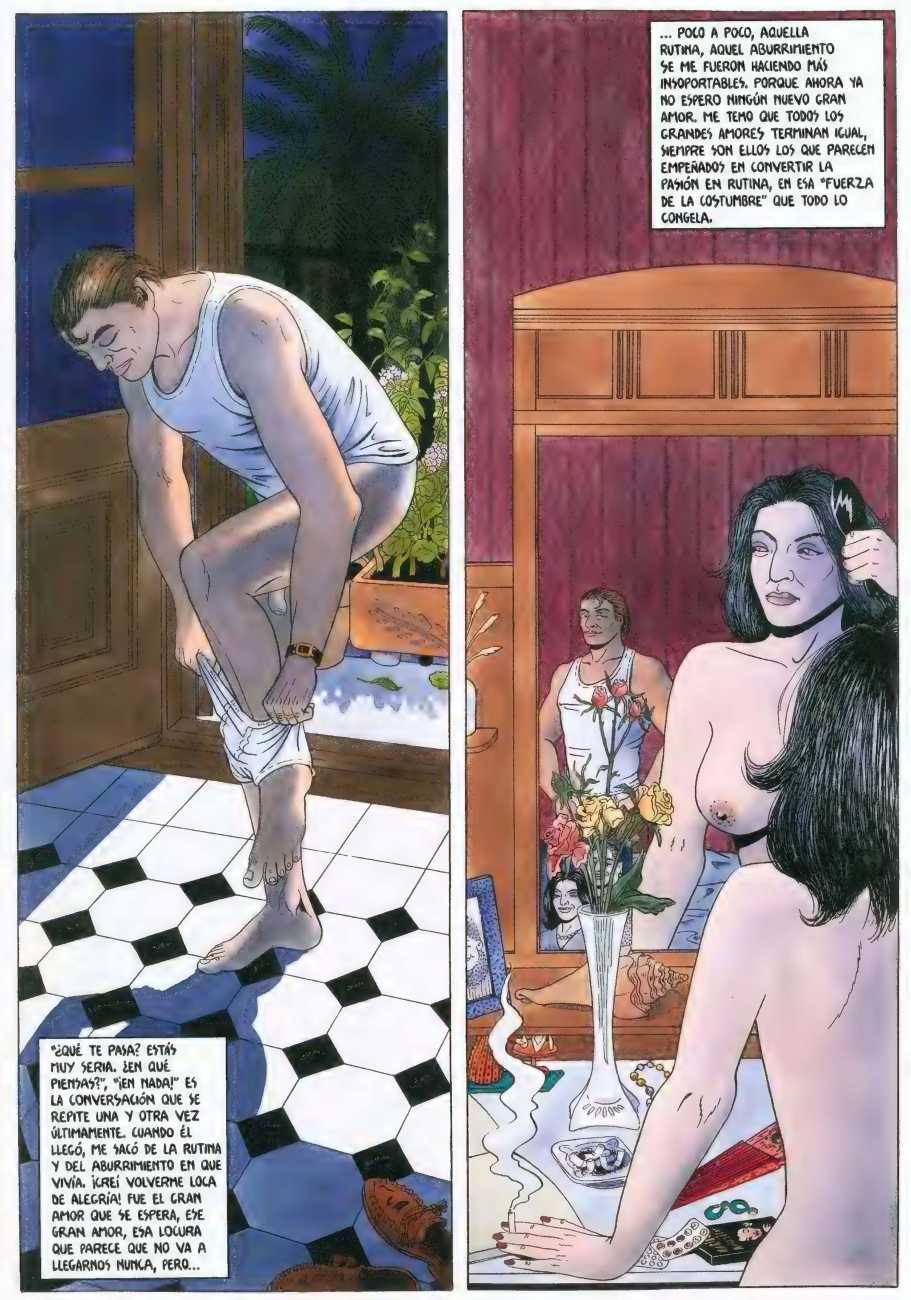
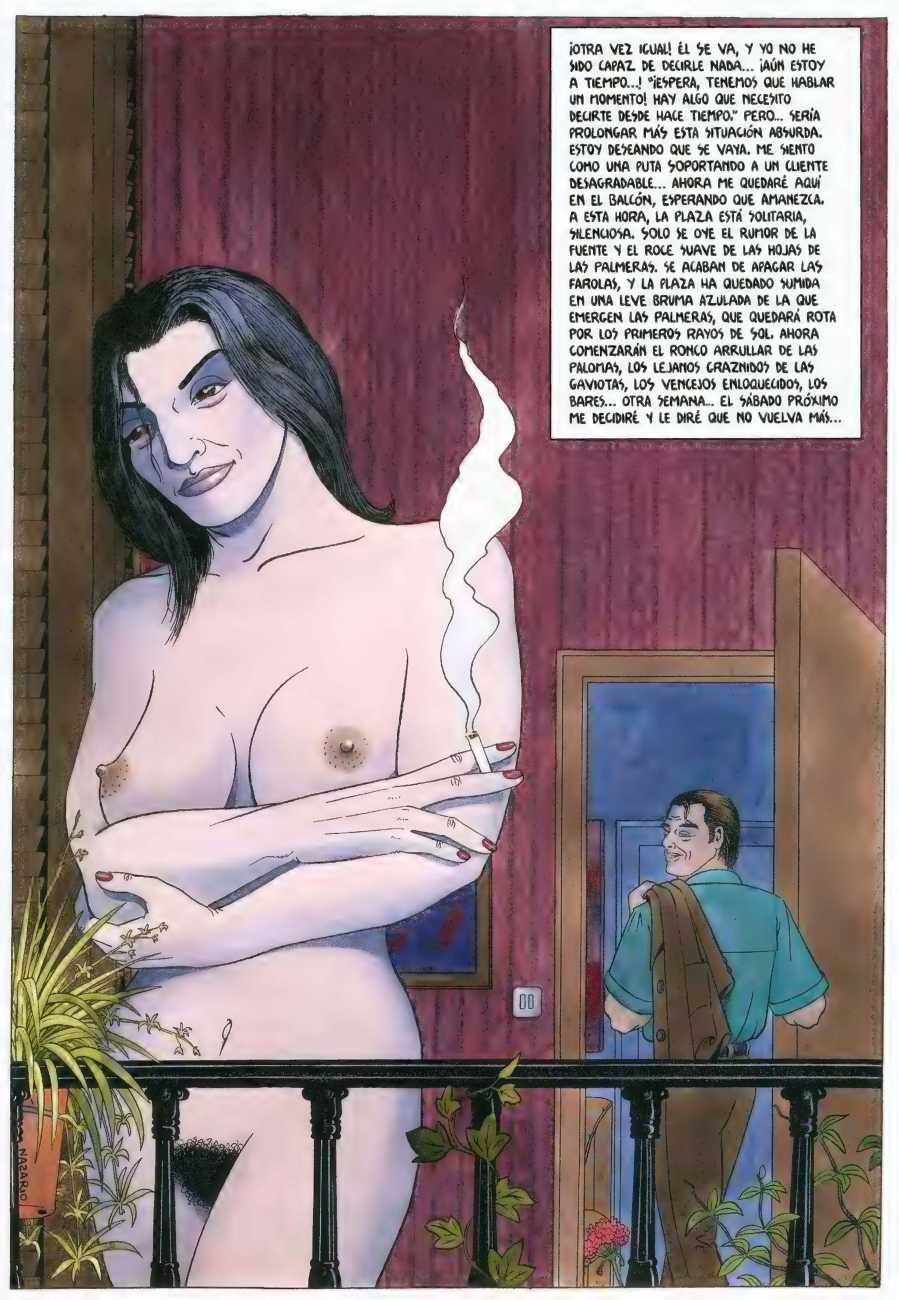
As Nazario explains, ‘In the story Helena, una Sombra en la Plaza Real (Helena, a Shadow in the Plaza Real), I illustrated the monologue of a woman who lives alone and receives a visit from her lover once a week. For some time, her love has been fading away and she does not know how to confess it to him. Her indecision leads her to continue maintaining a masochistic relationship, putting off her confession from one week to the next. This insecure woman, who allows herself to be used without desire, has gradually been turning into an inert body, a ghost, a shadow.’
Helena was published in issue 125 of the magazine El Víbora. Nazario also offered it to the French magazine L'Écho des Savanes, where they had previously published Los Amores de Júpiter, but it was rejected because it included too much text.