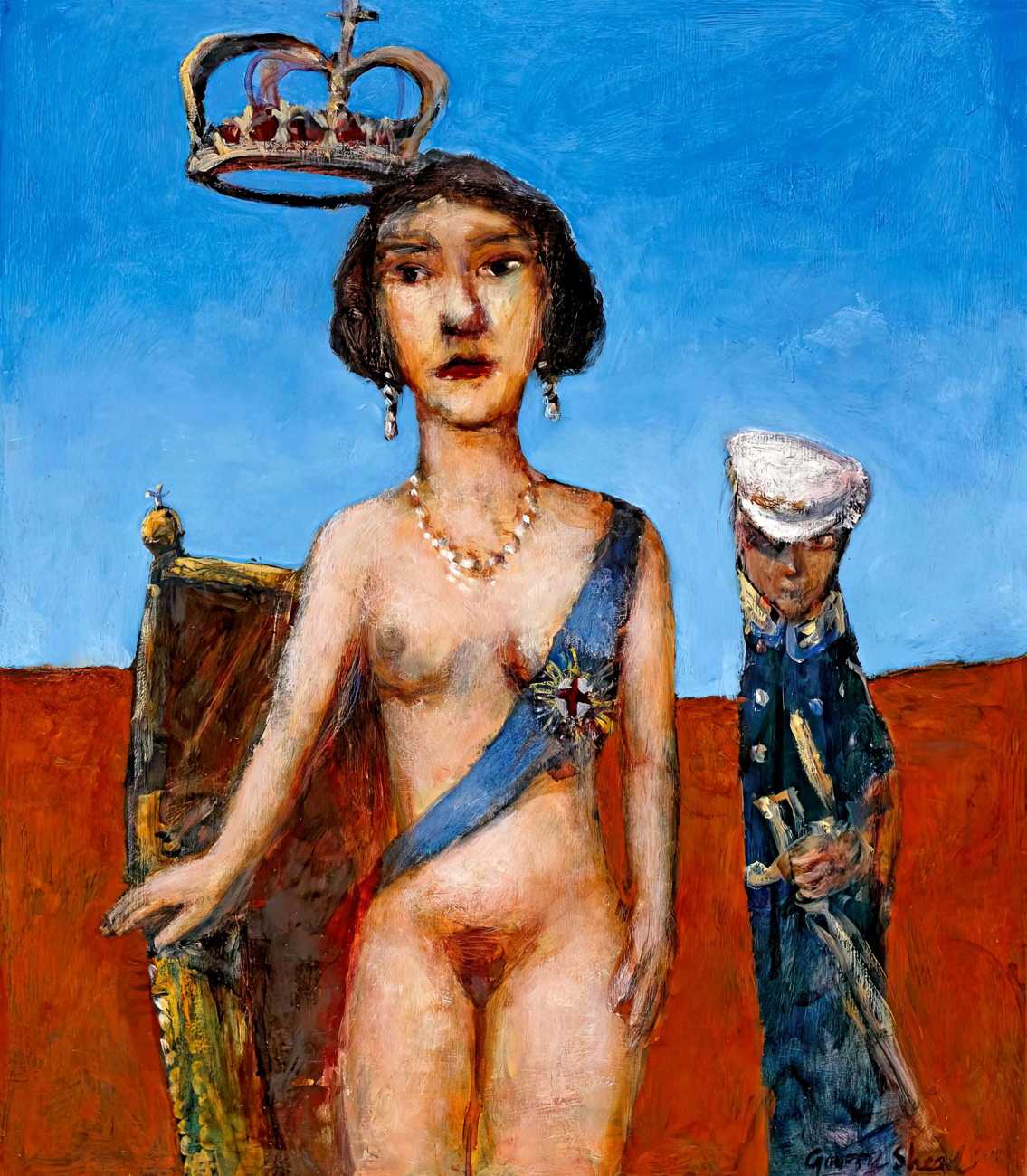
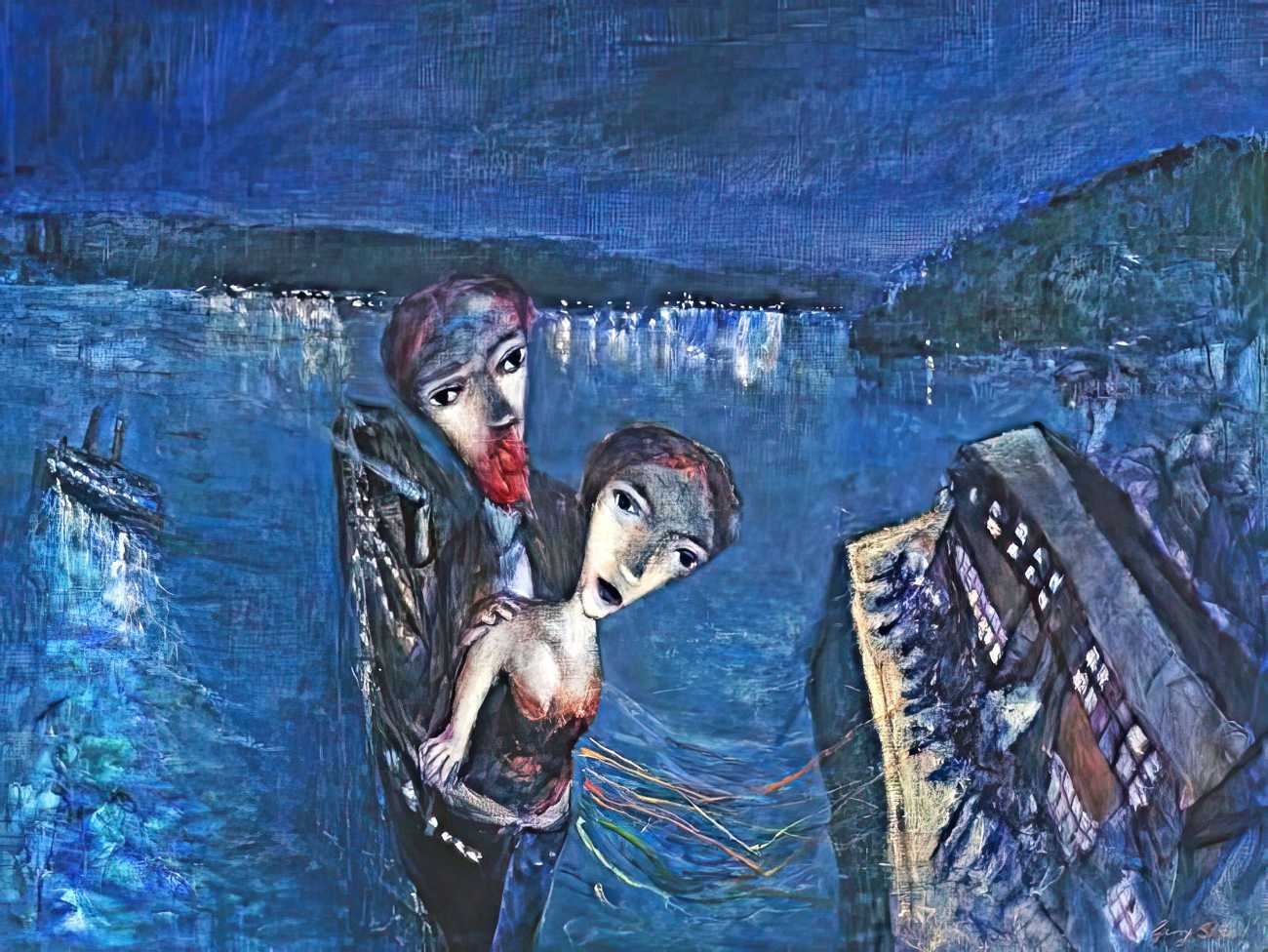
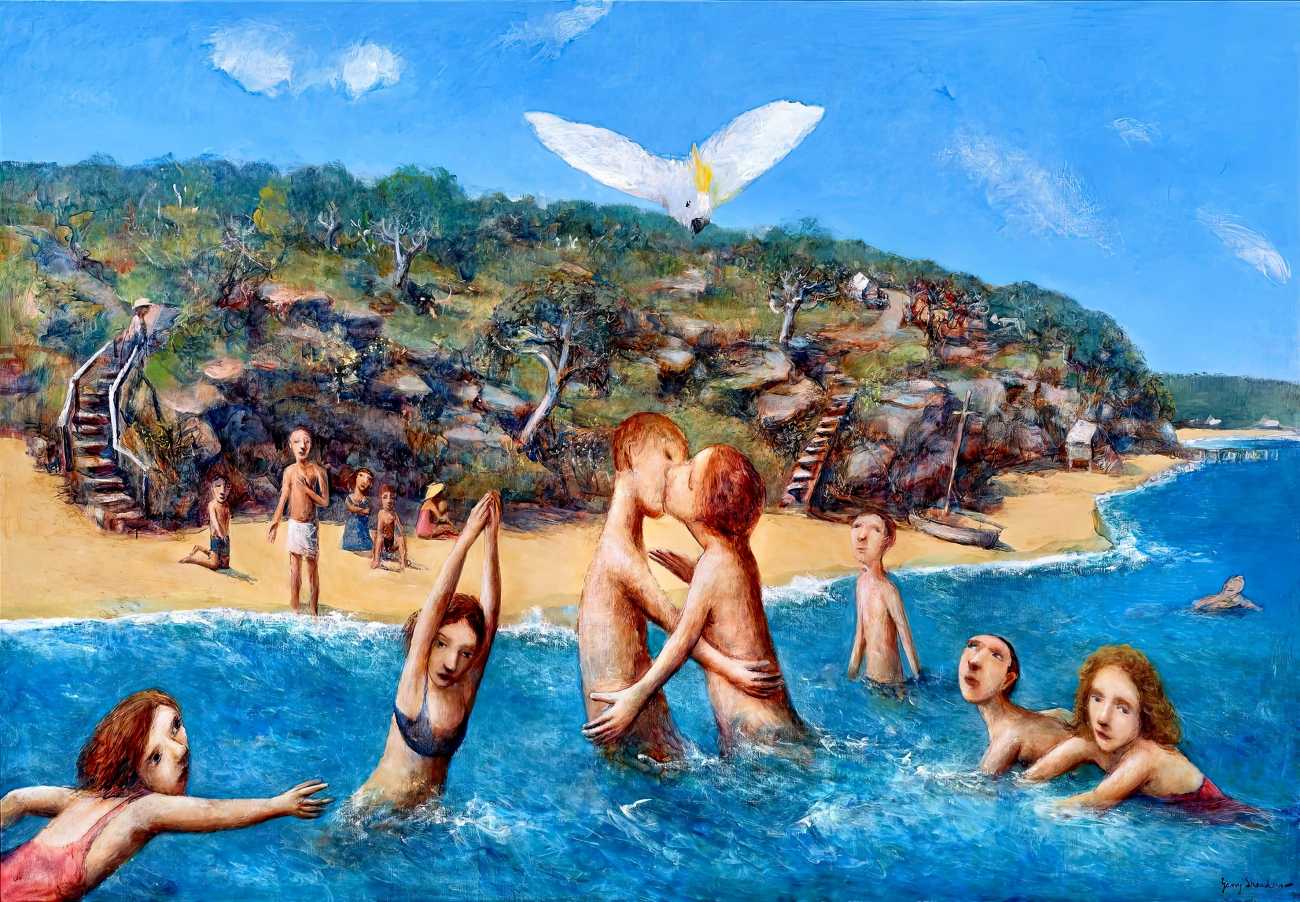
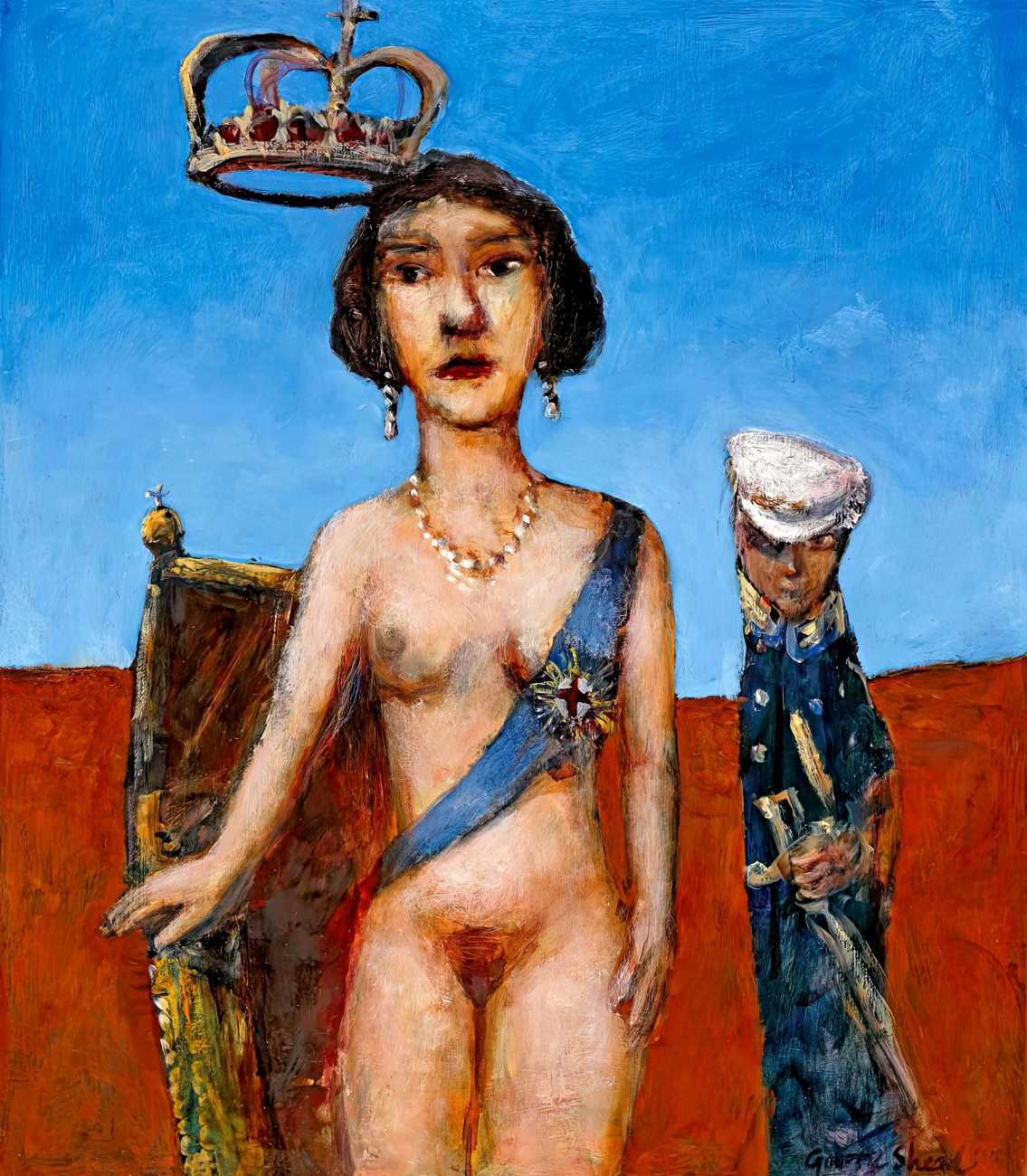
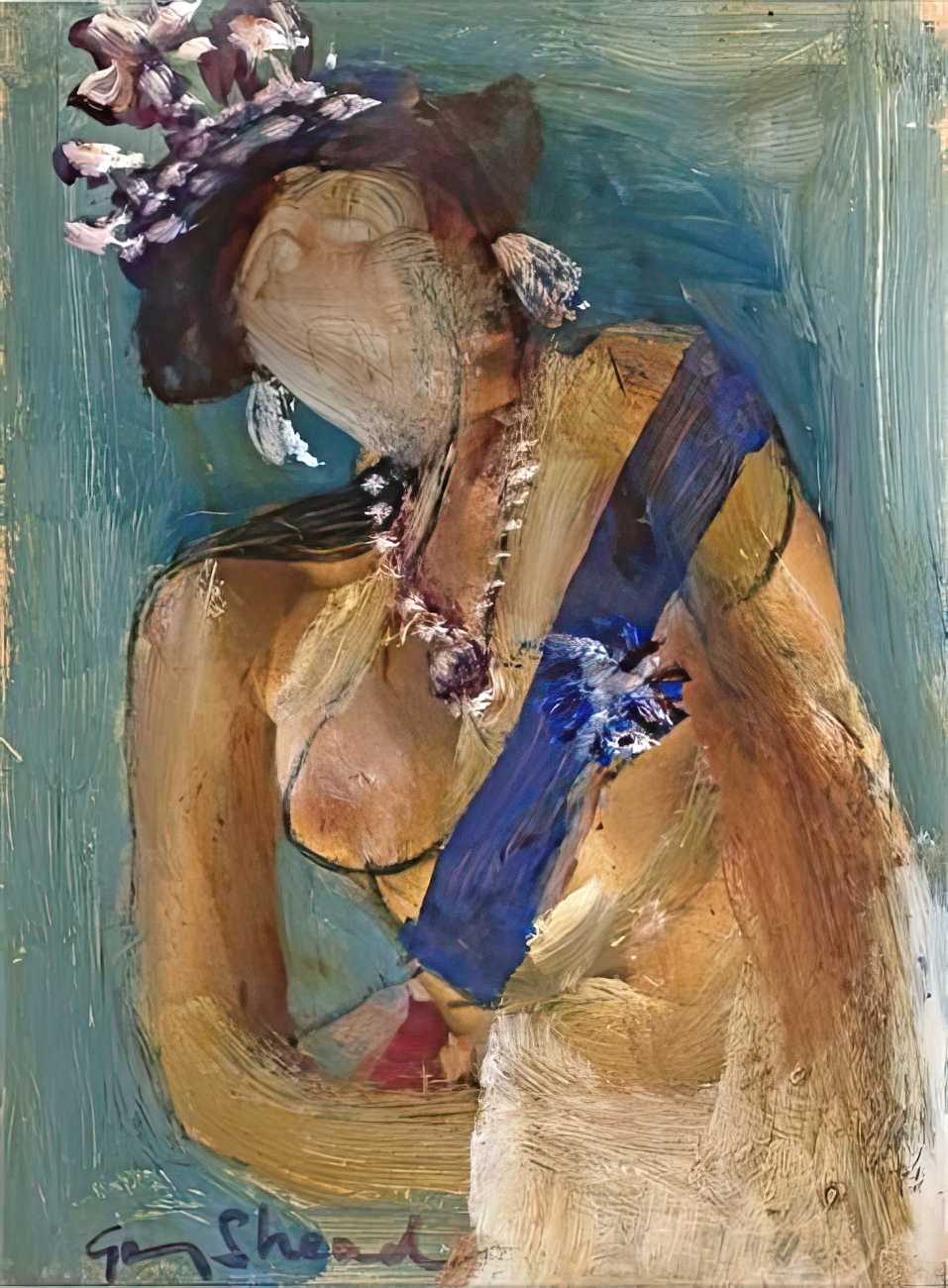
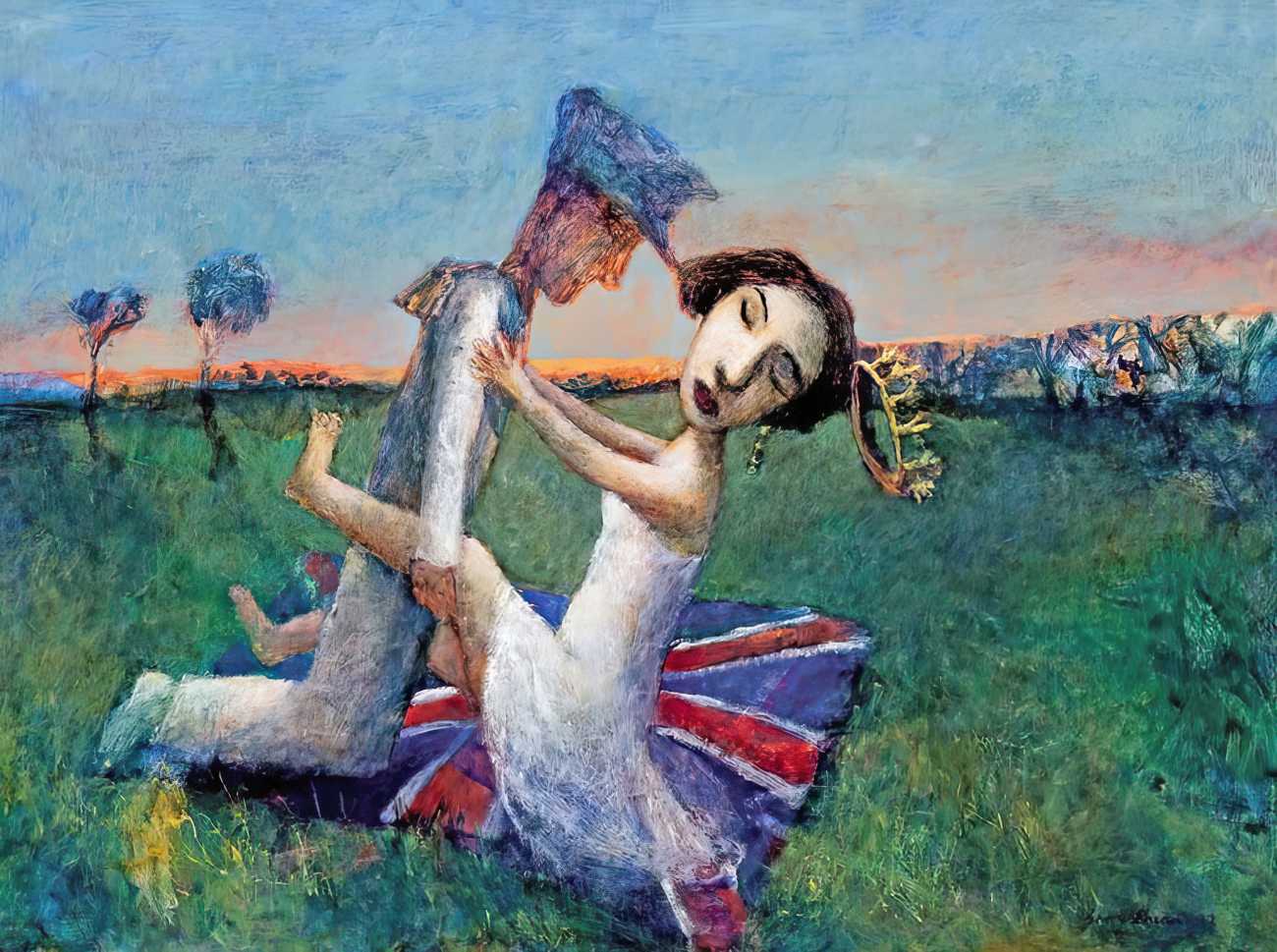
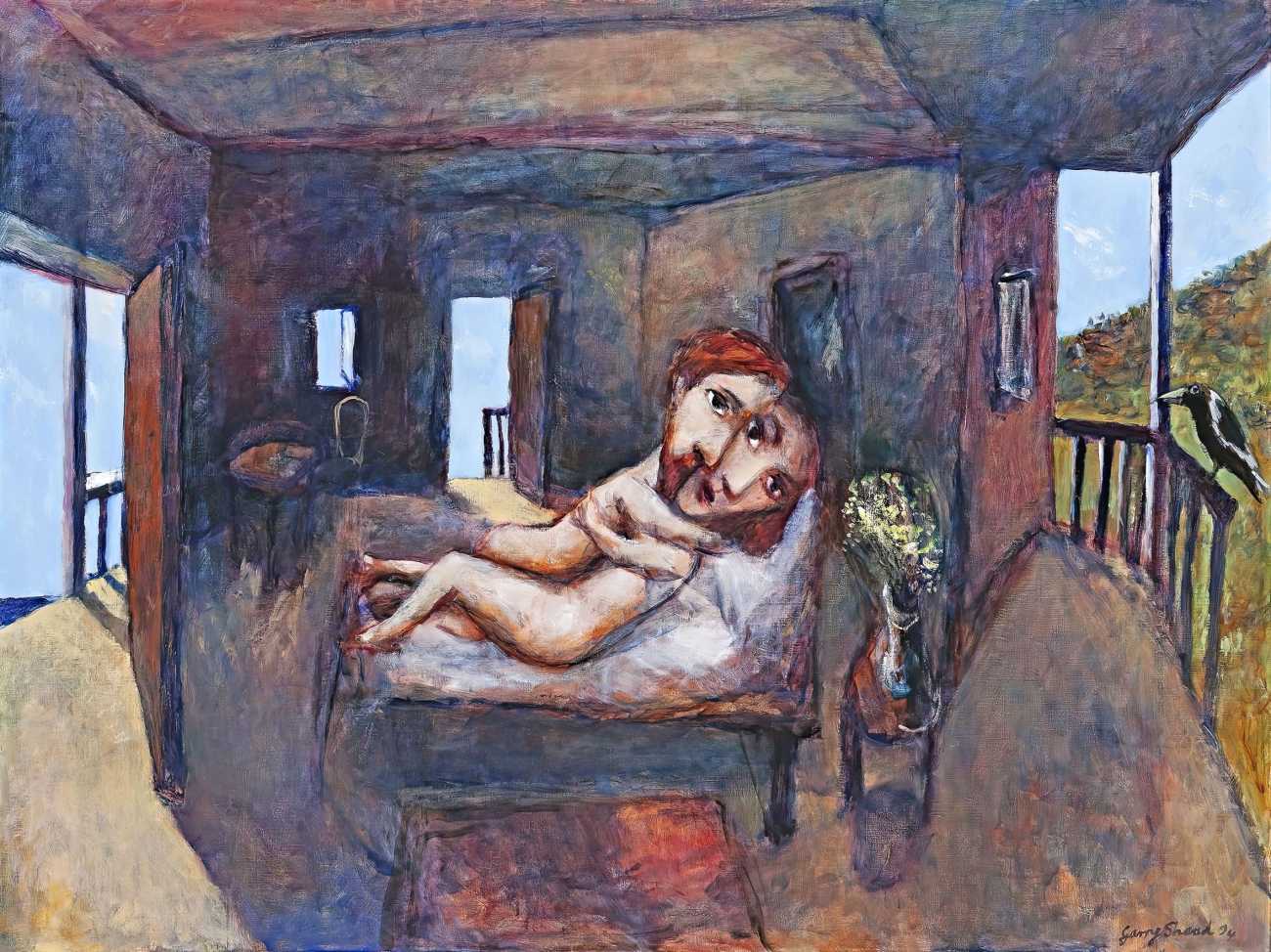
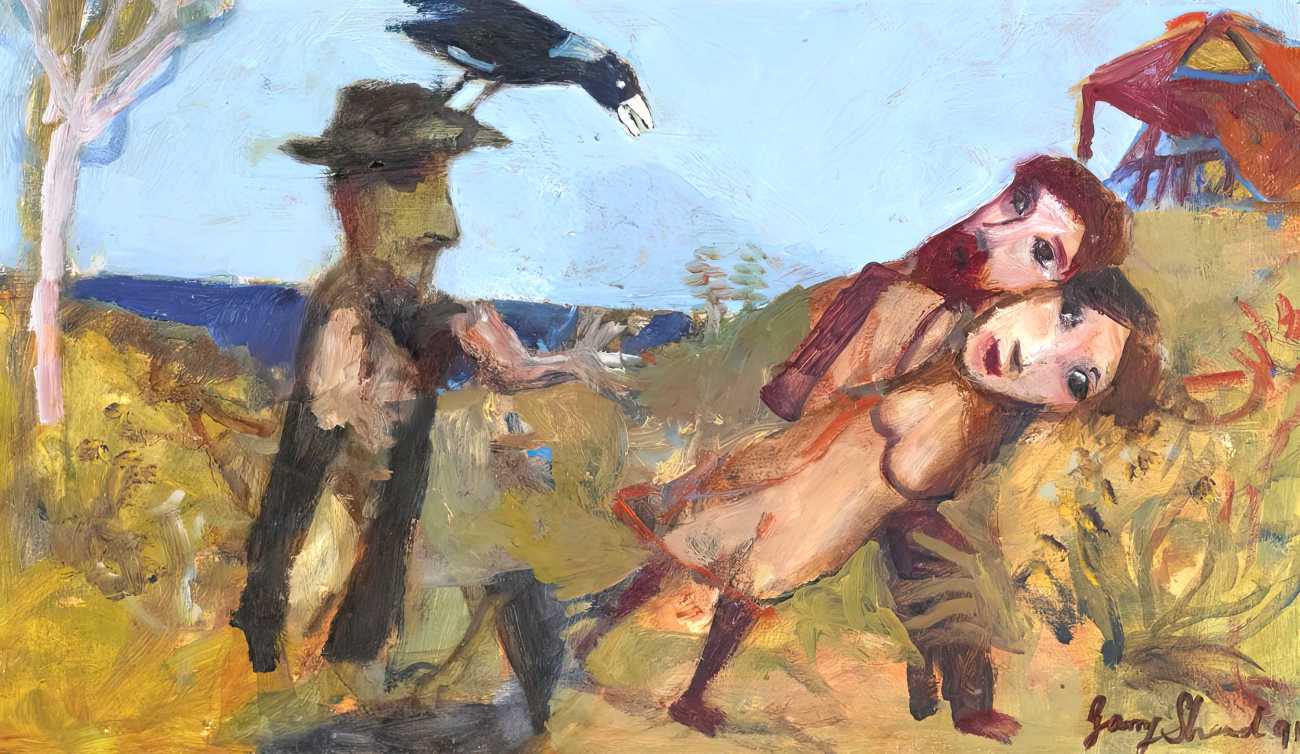
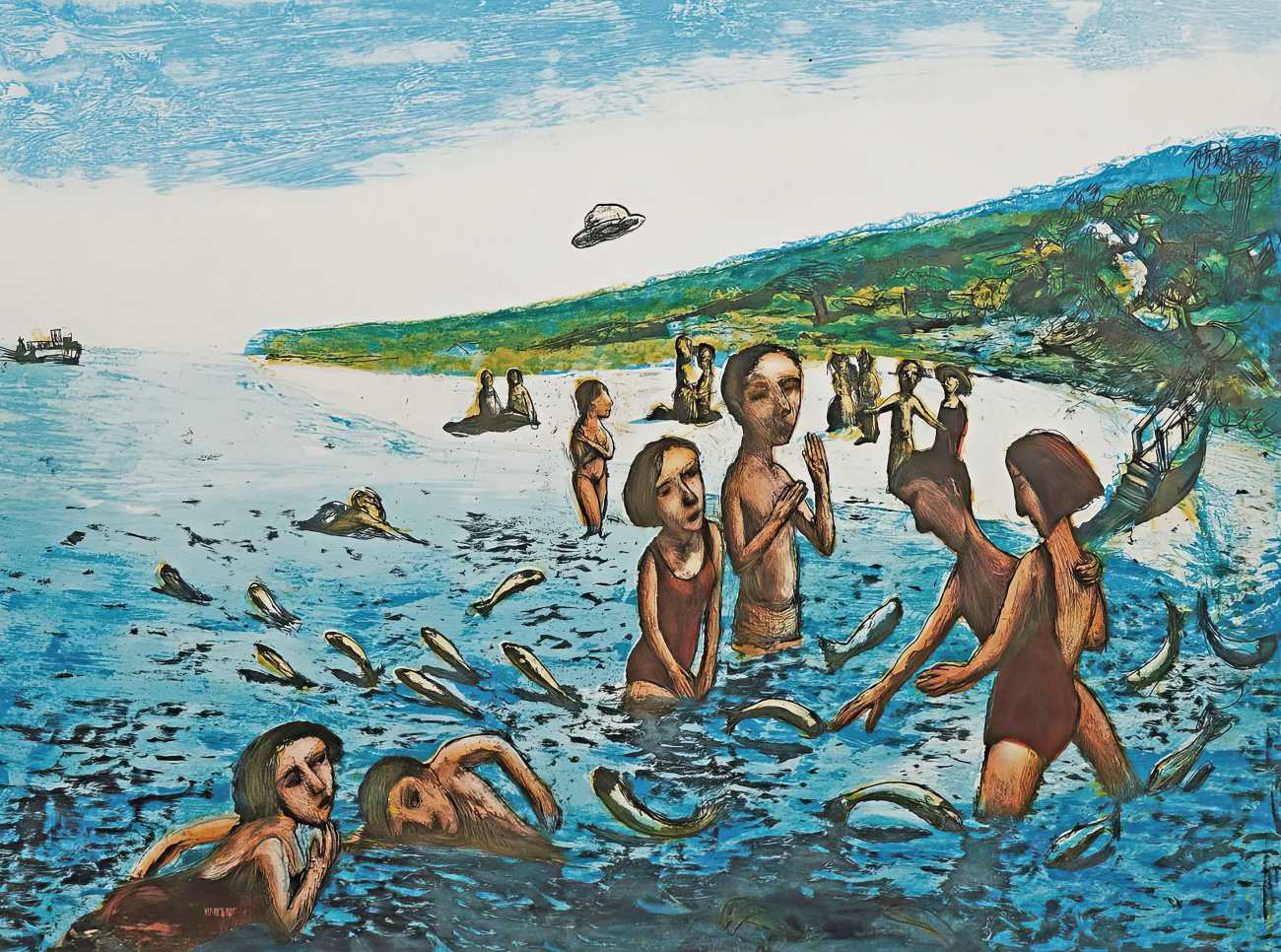
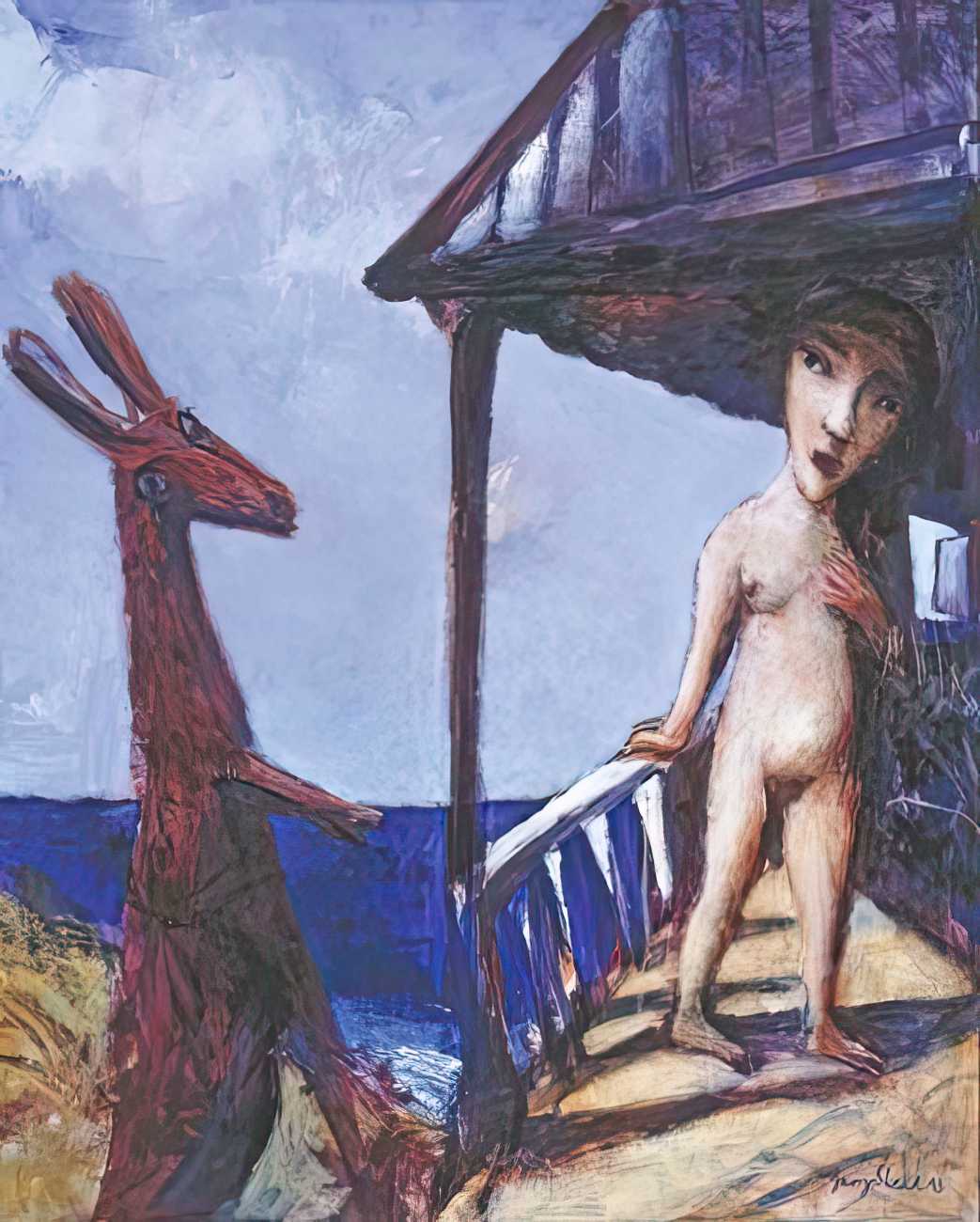
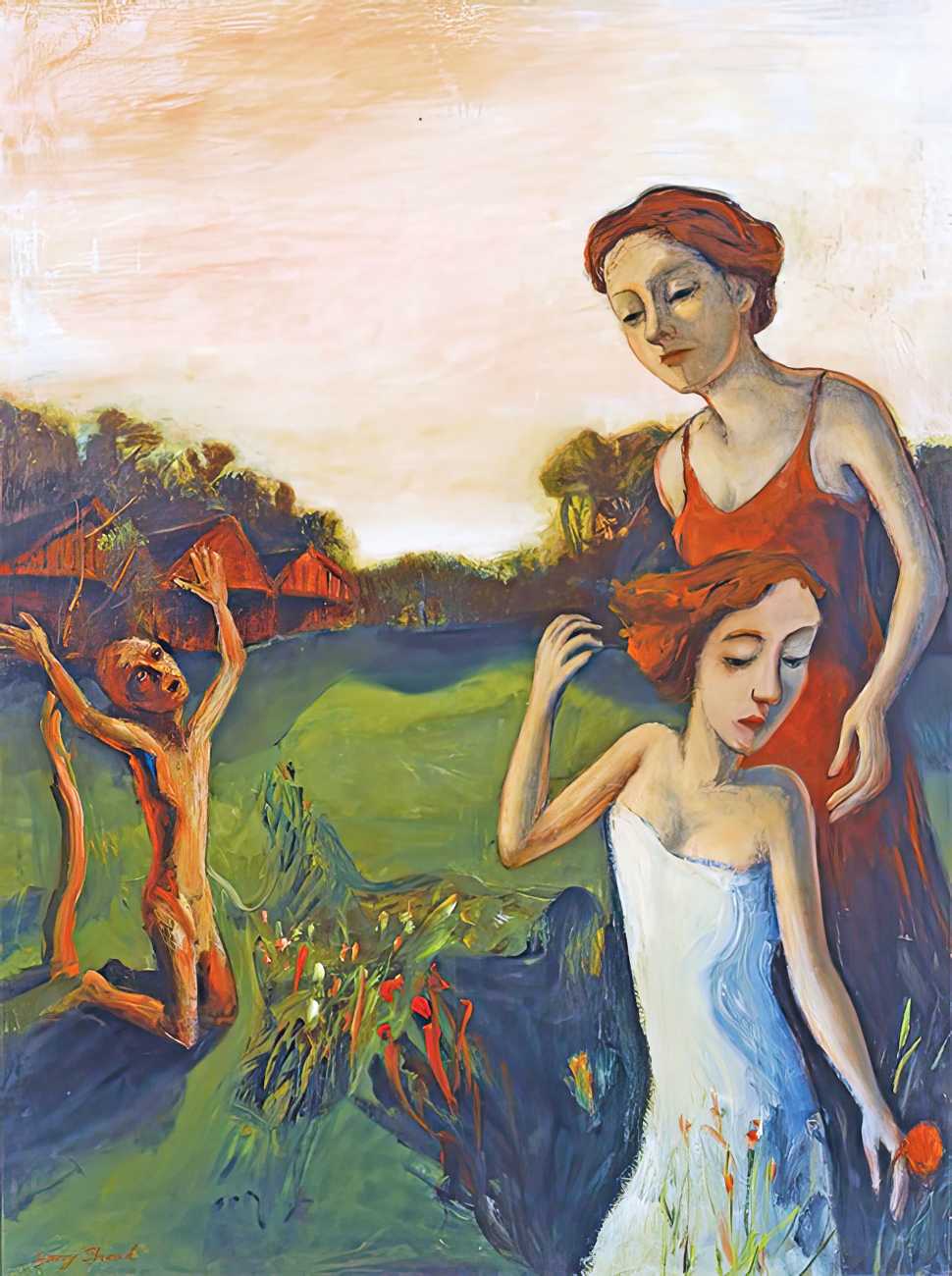
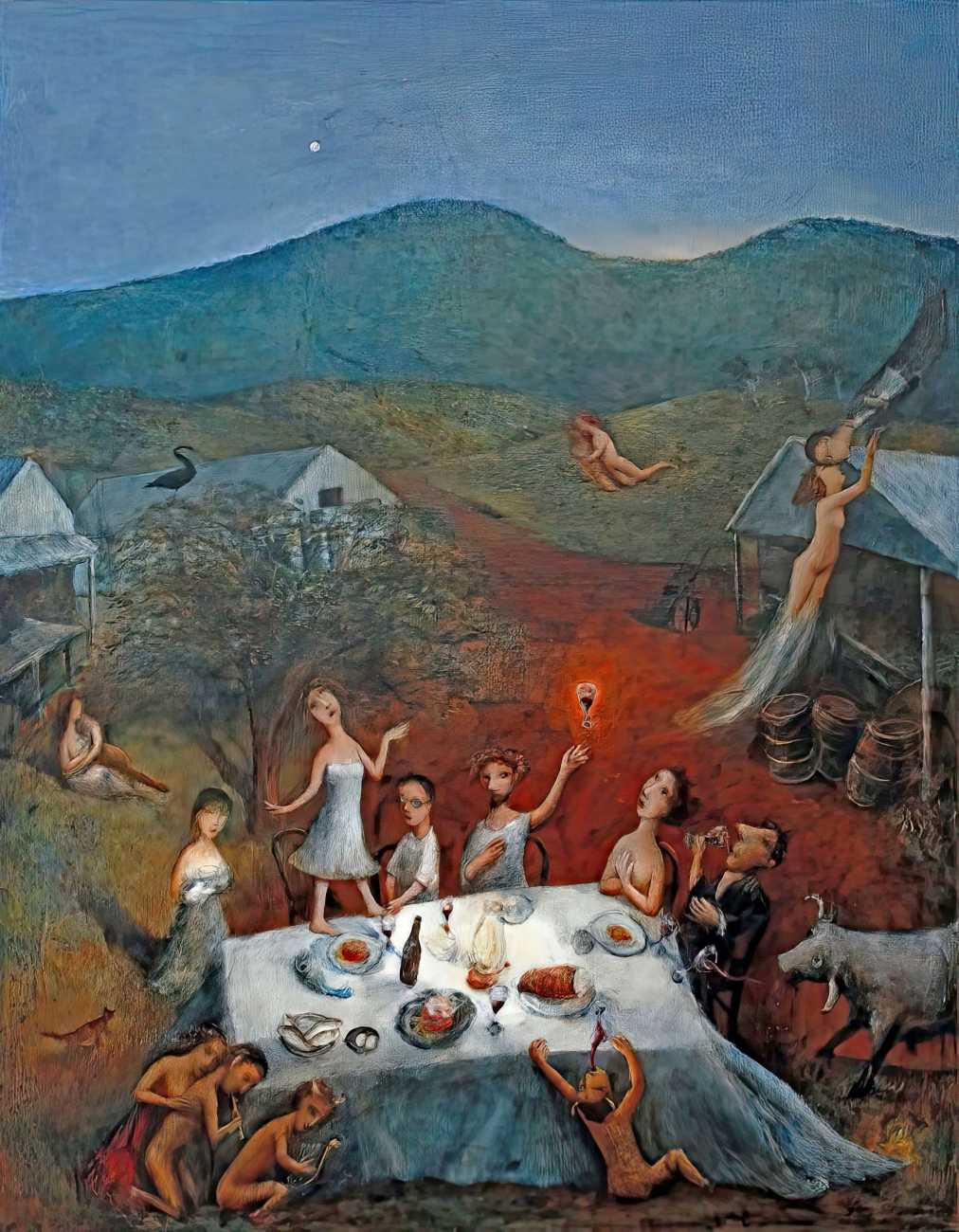
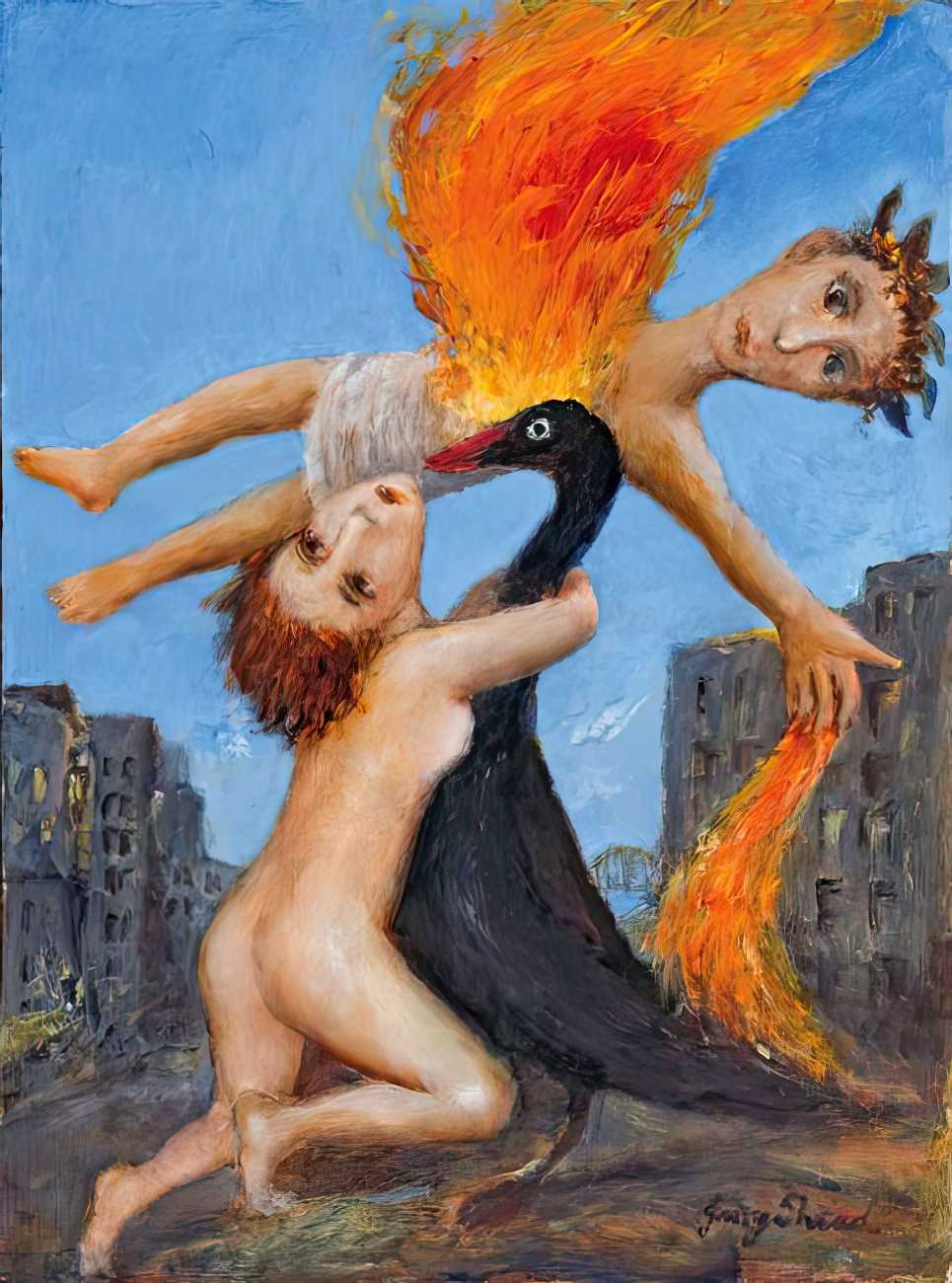
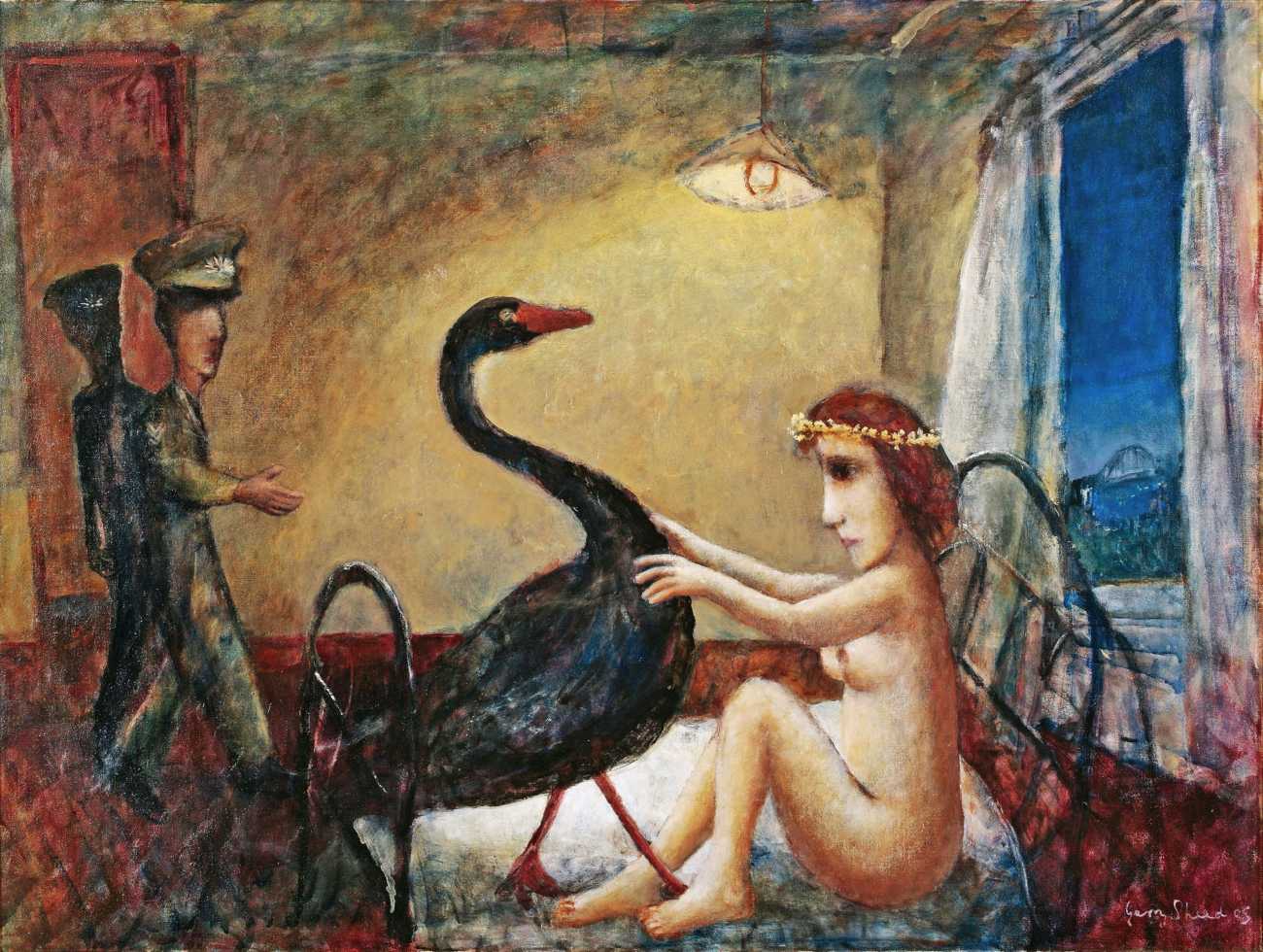
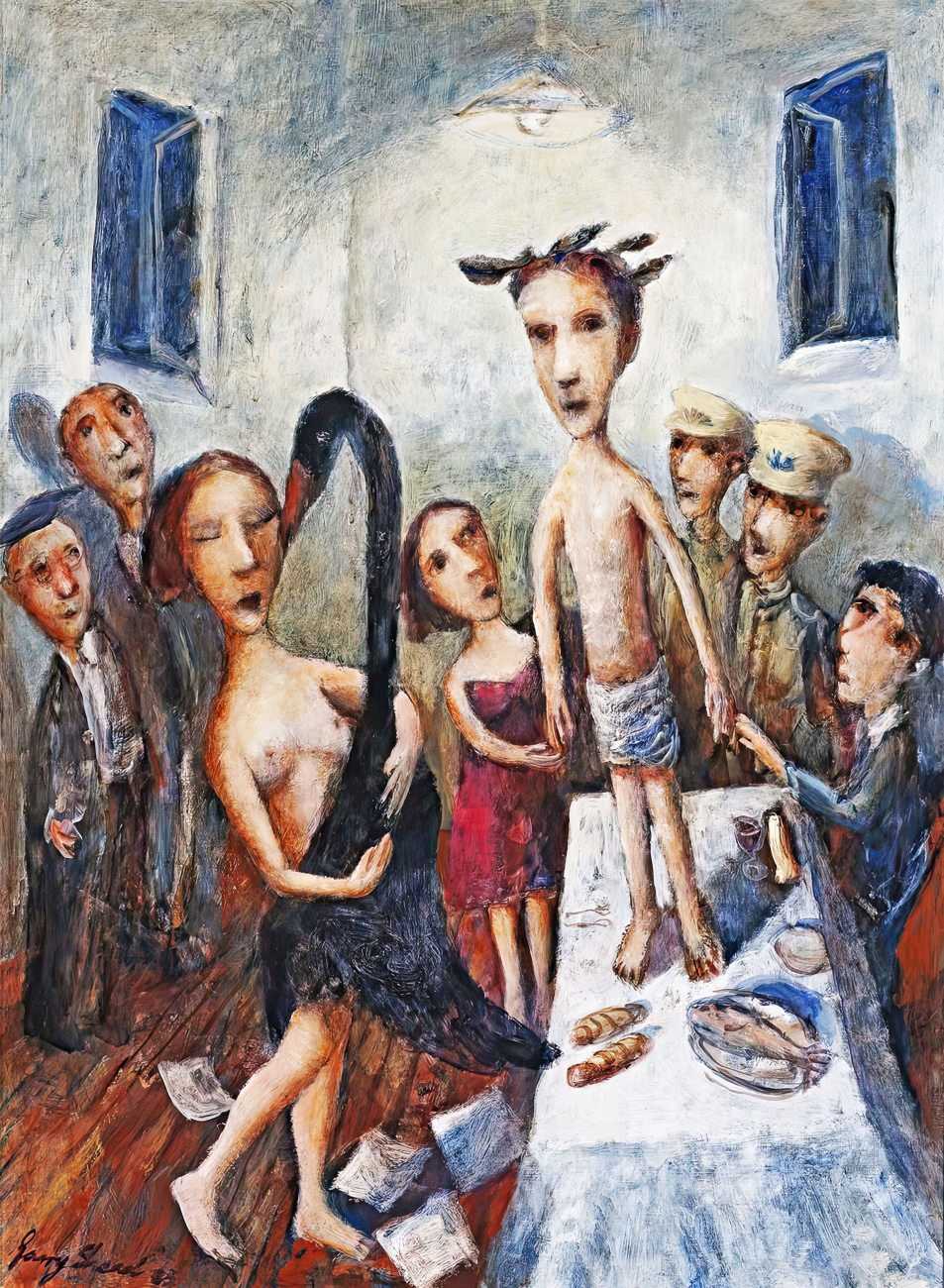
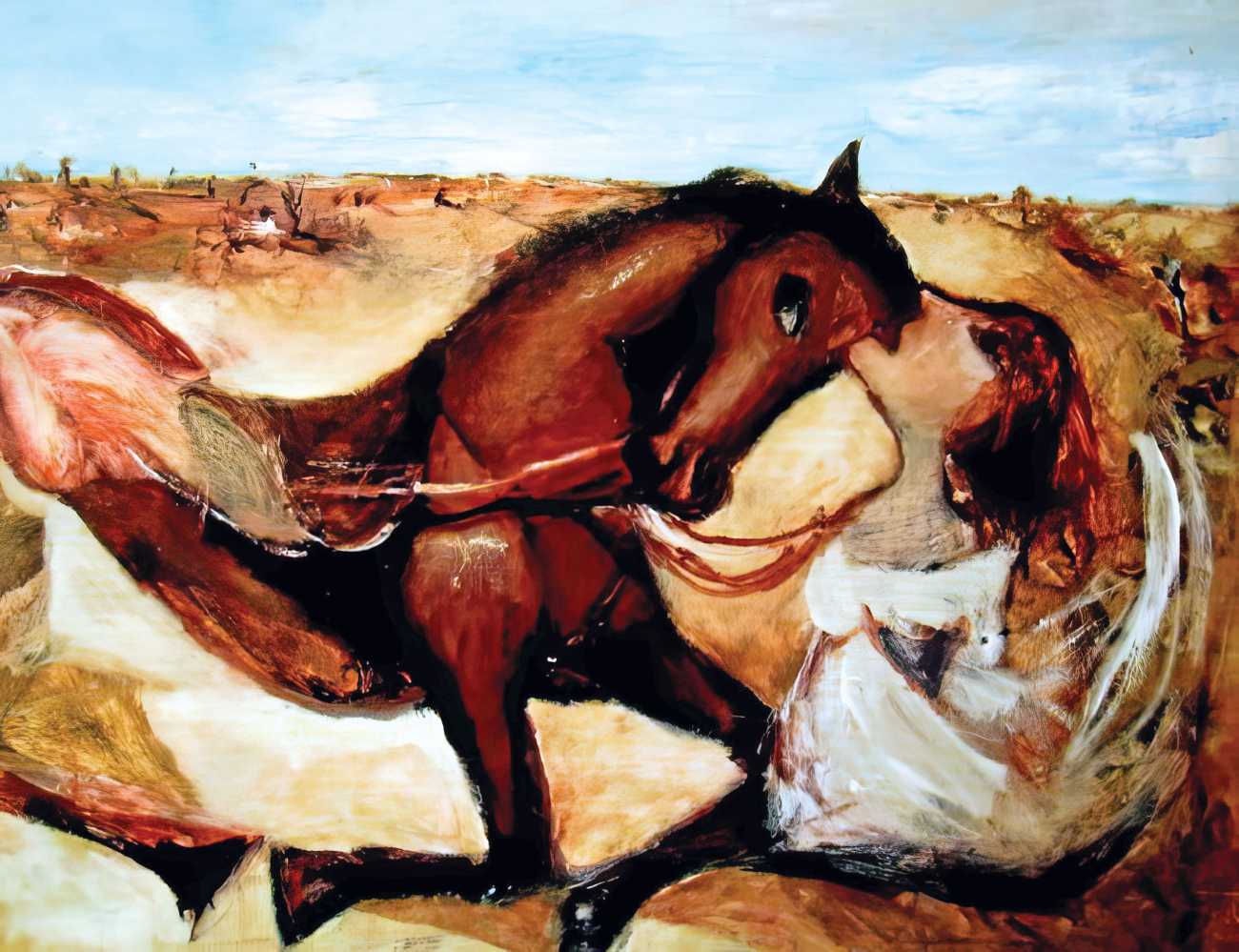
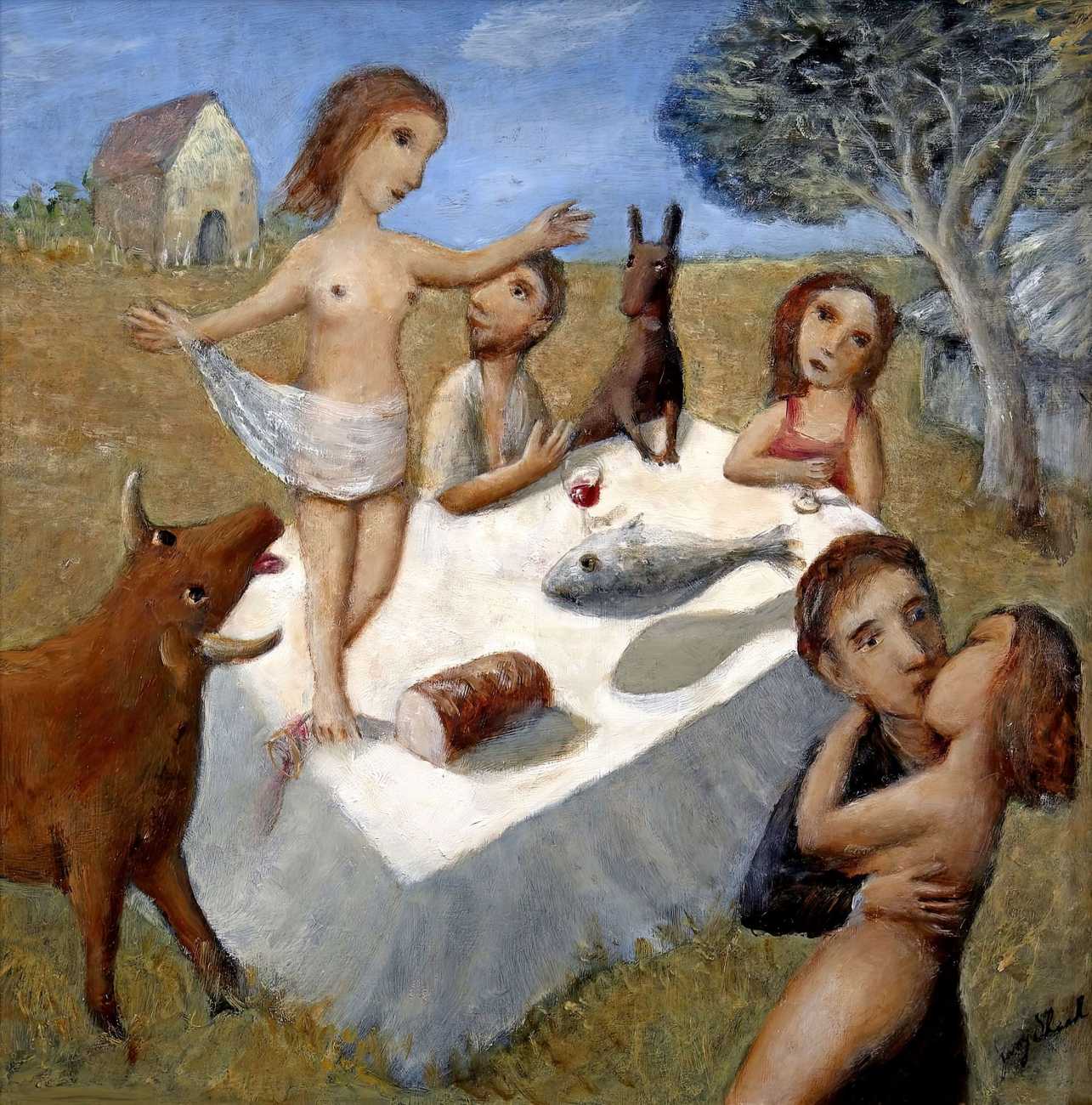
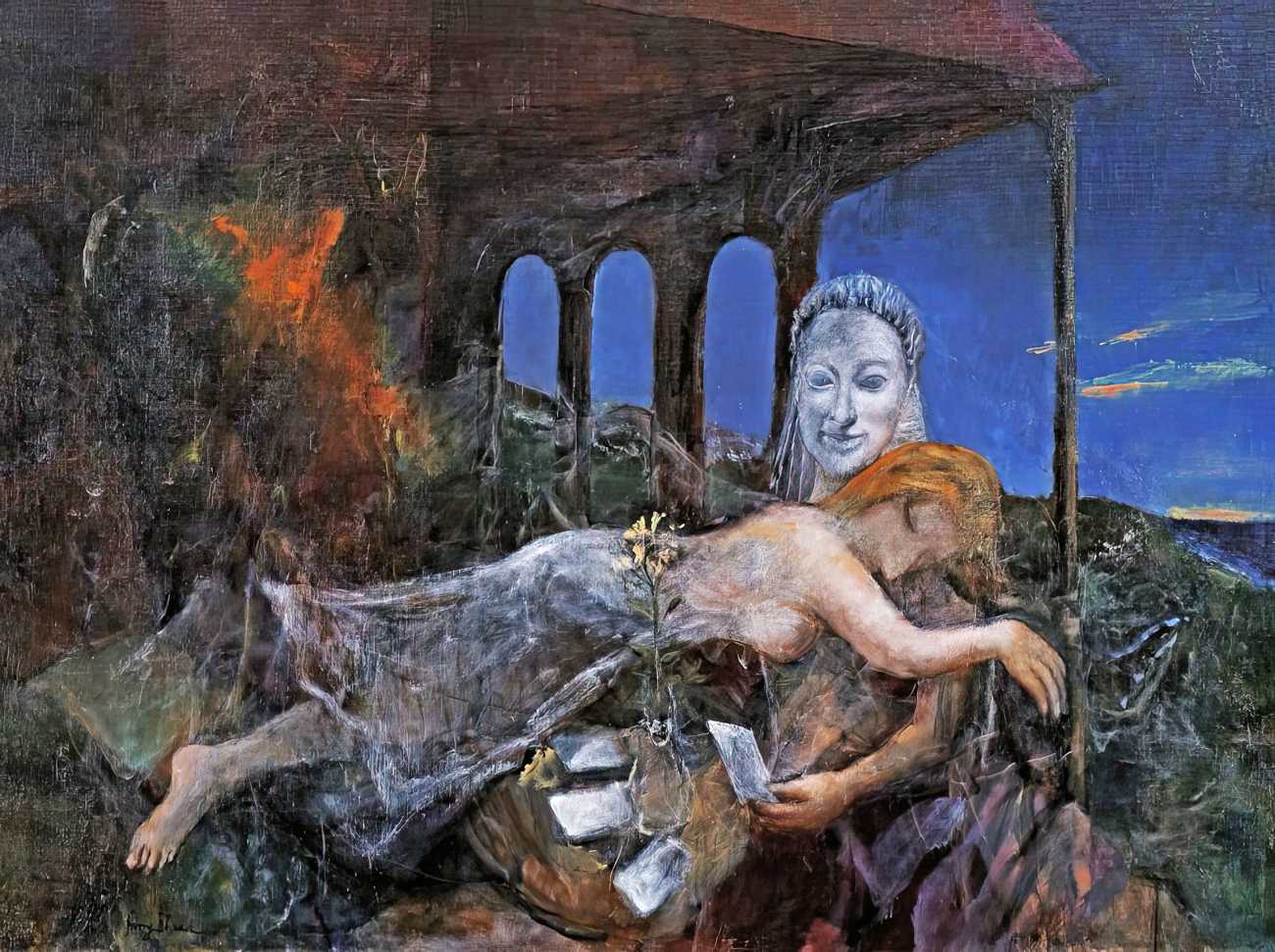
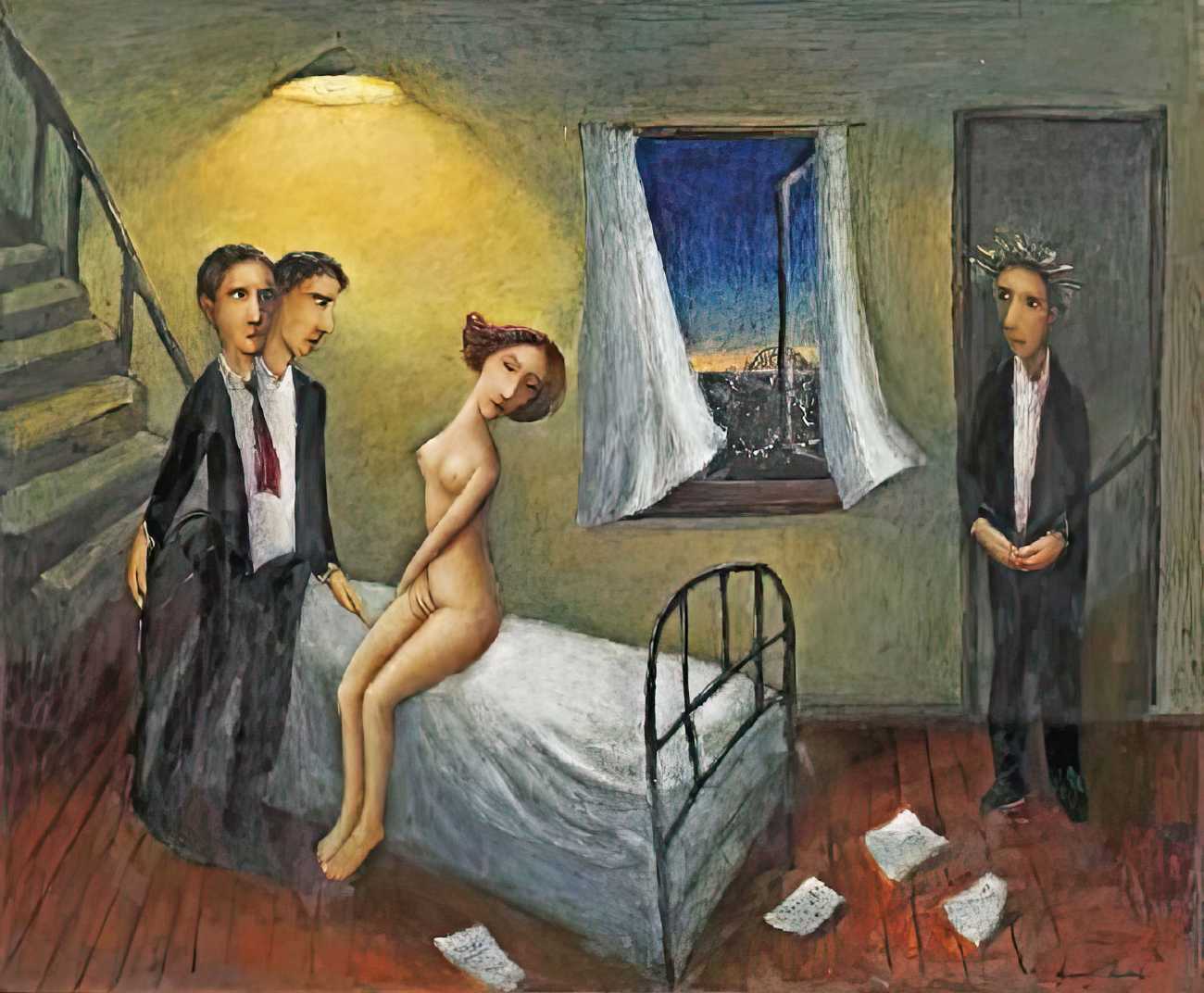
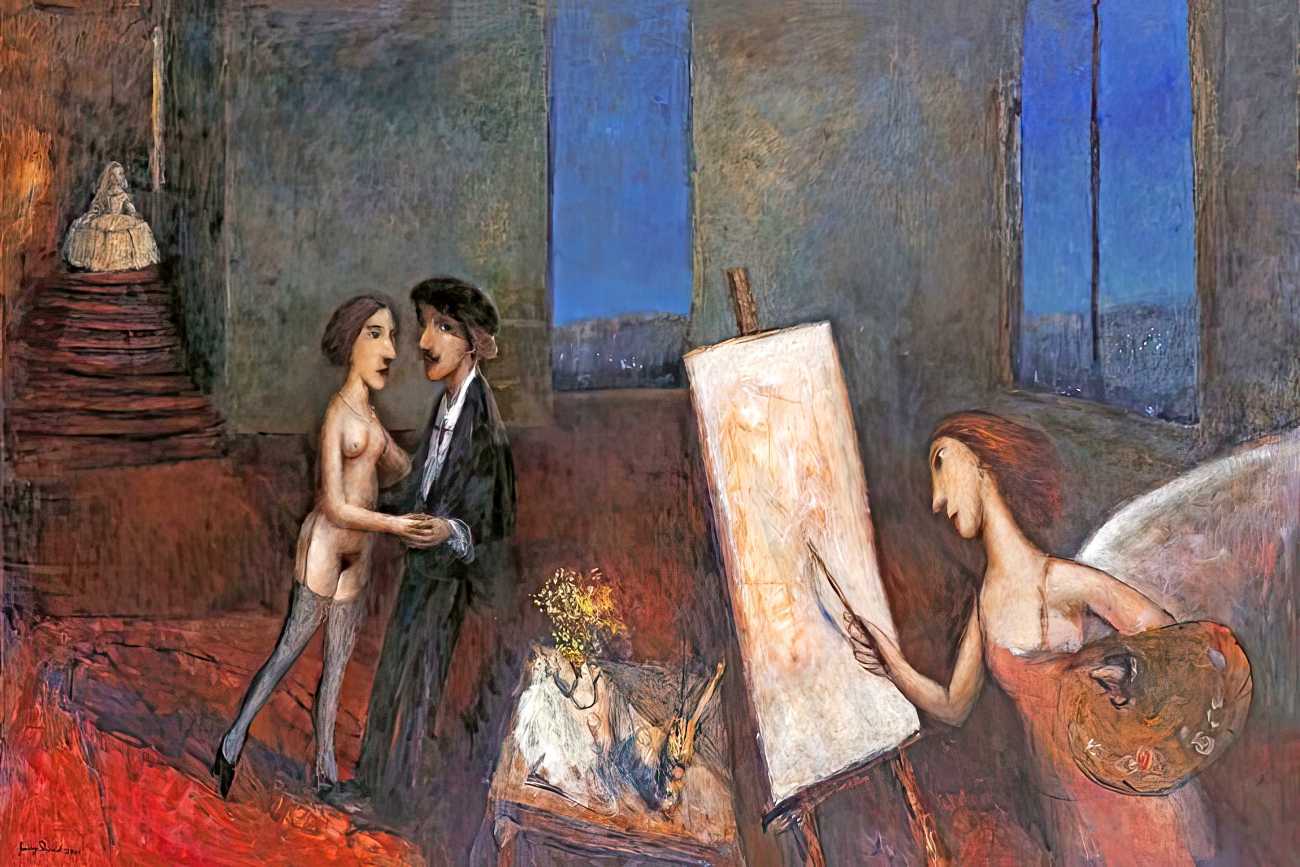
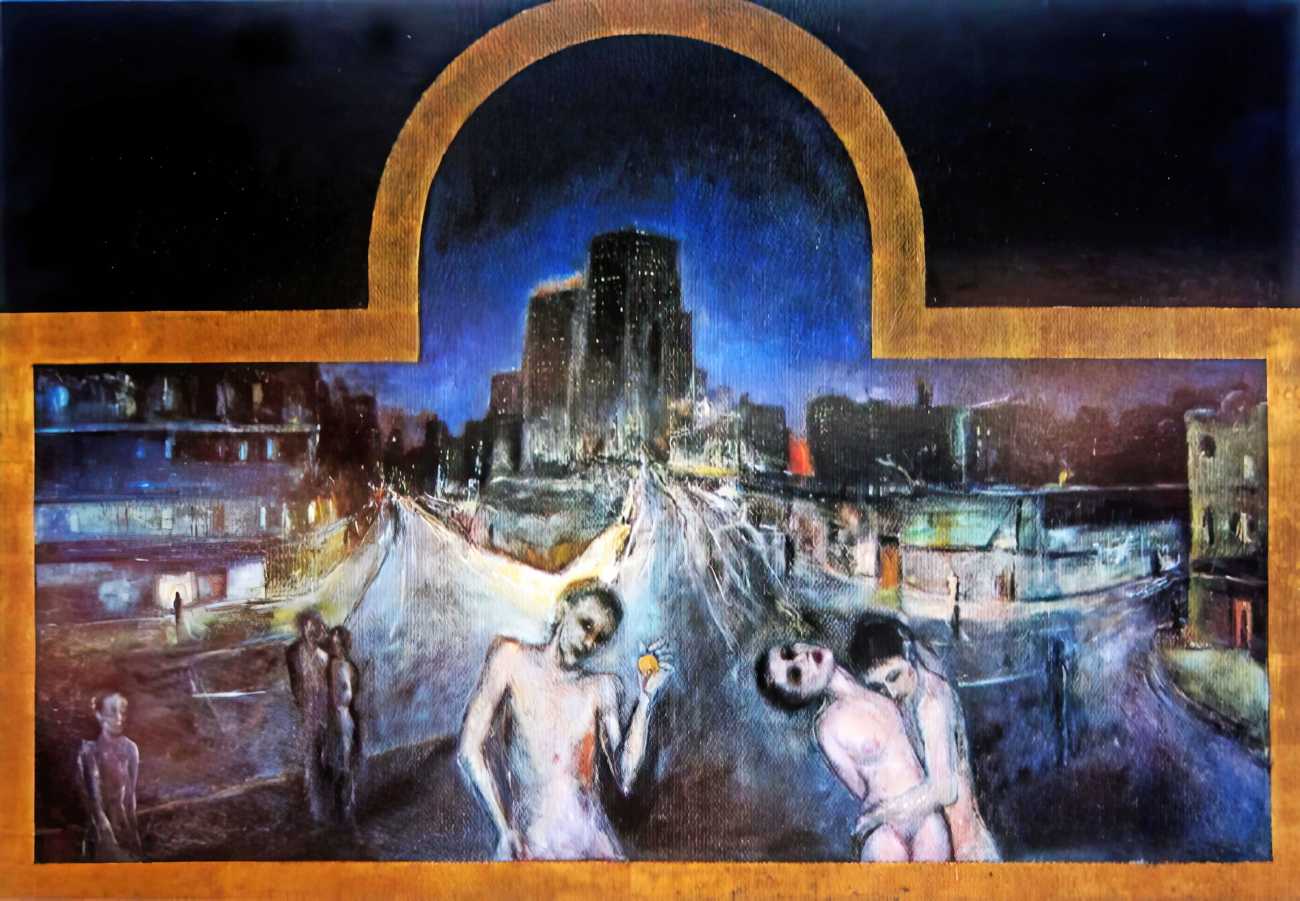
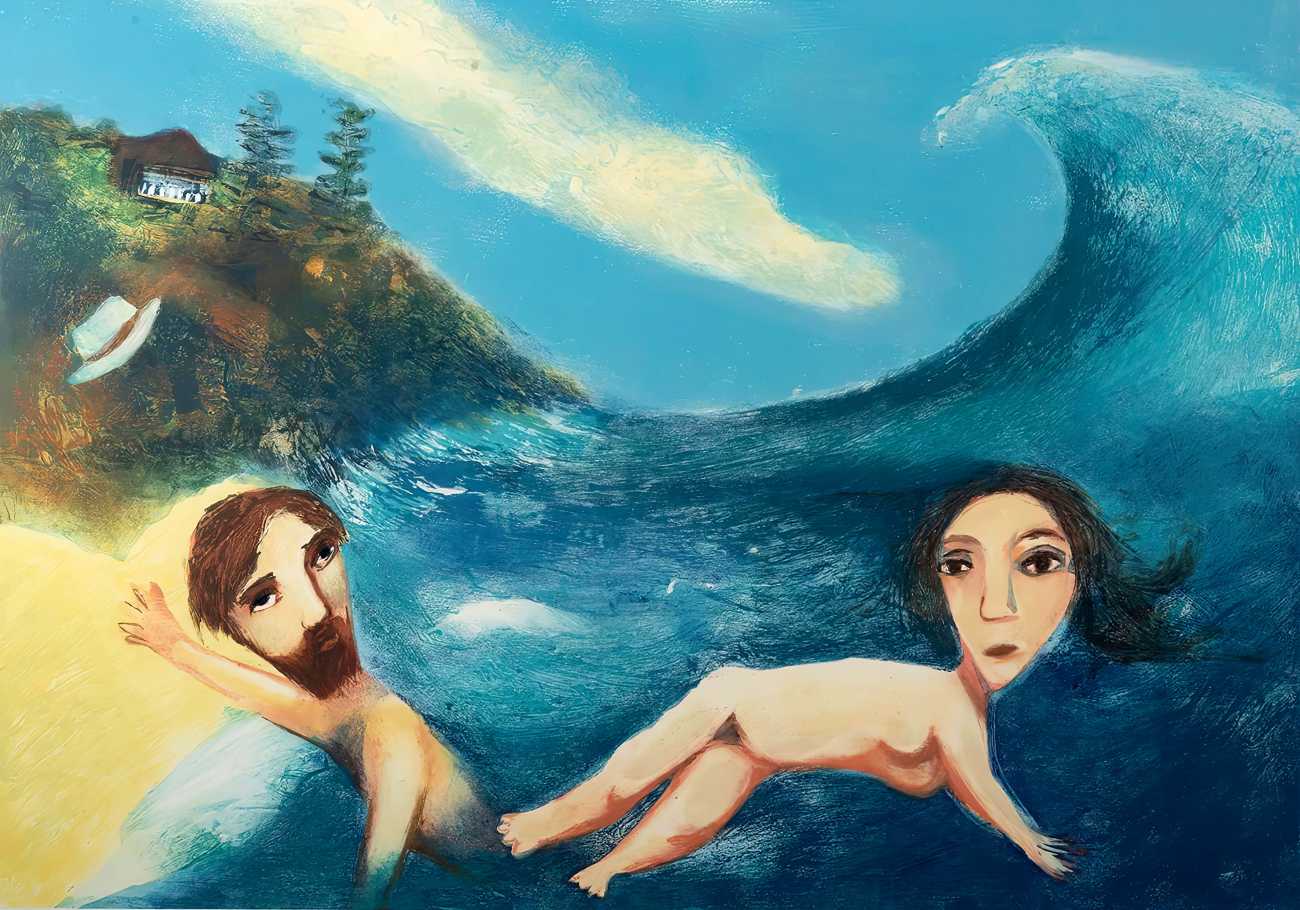
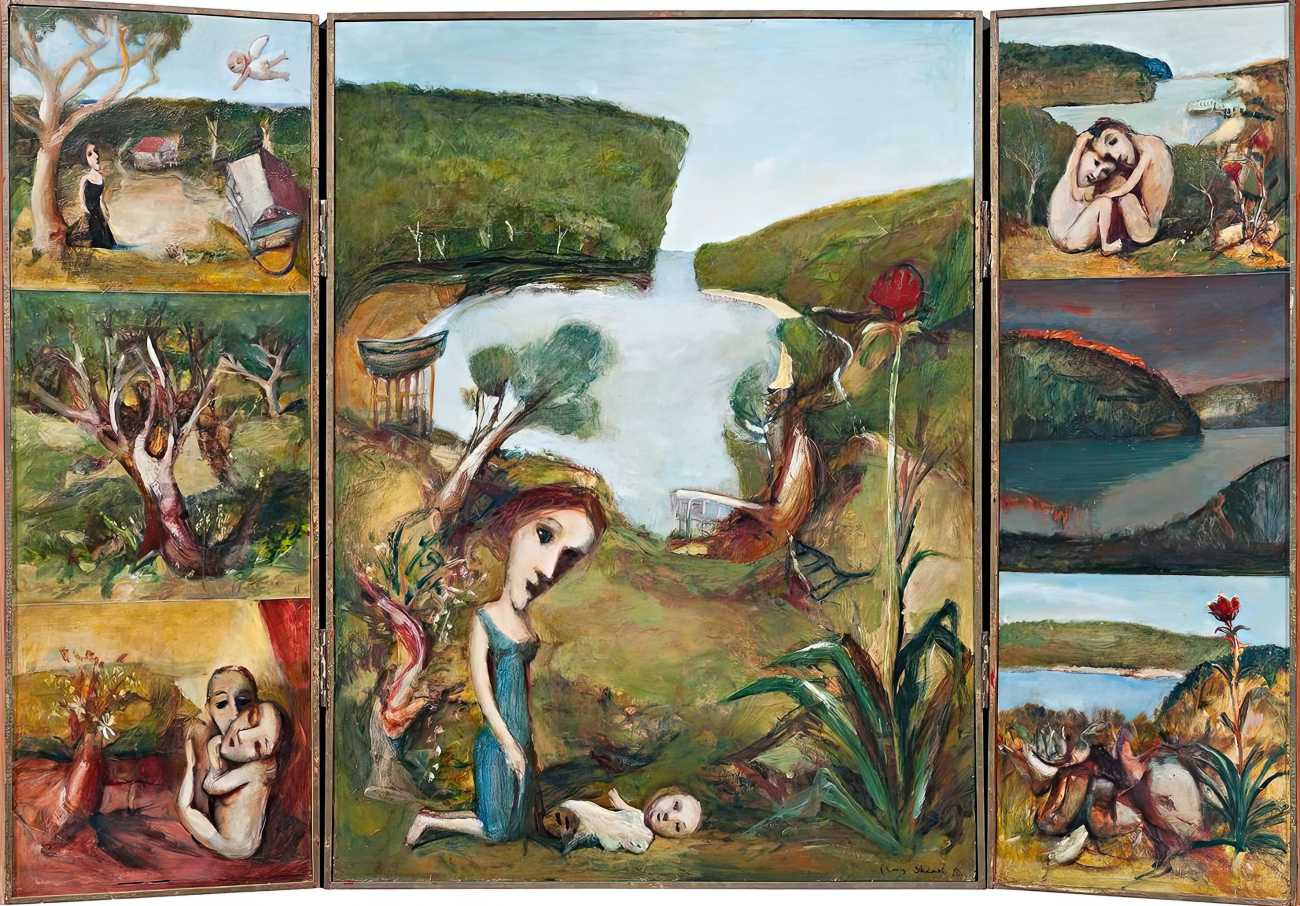
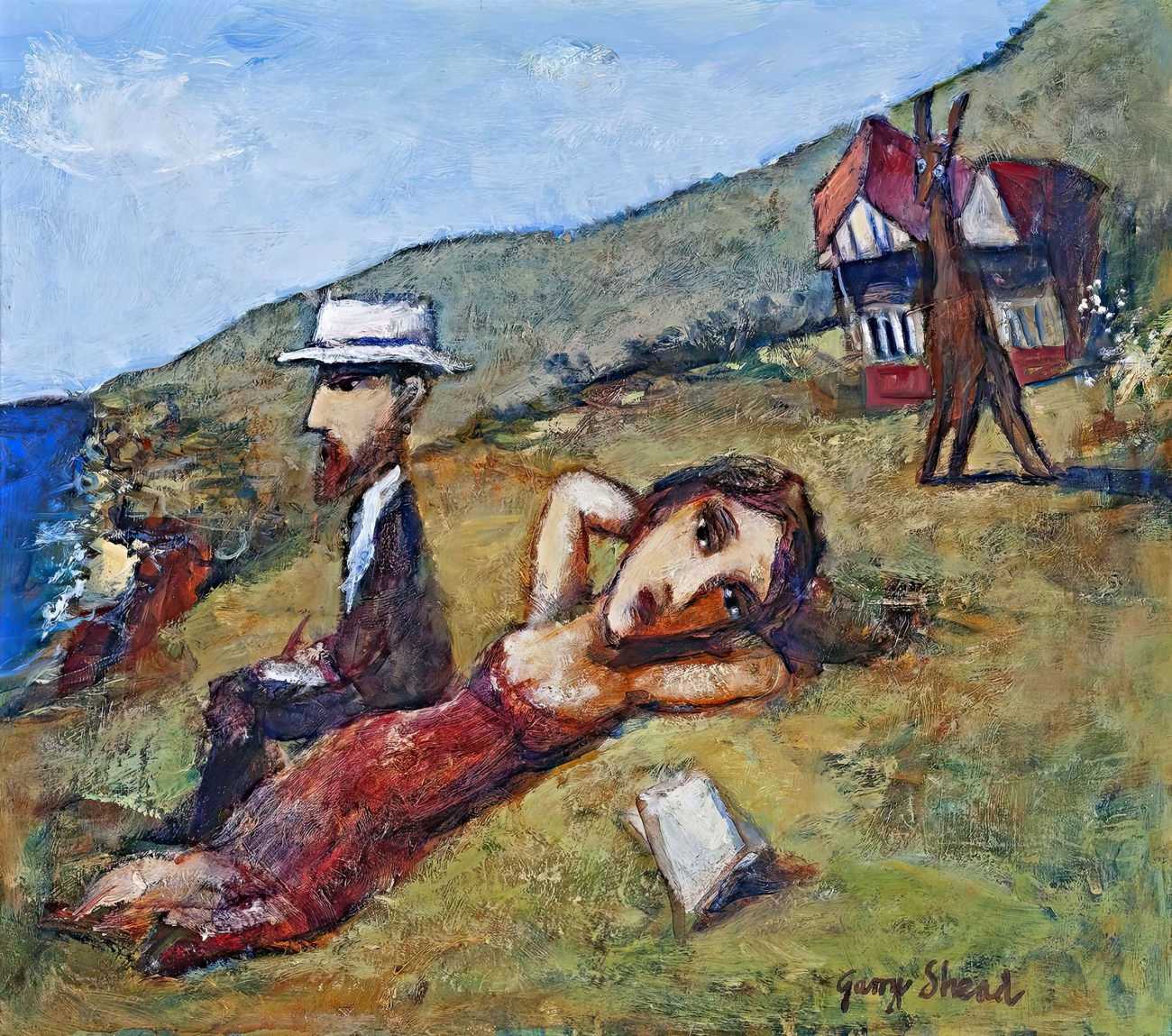
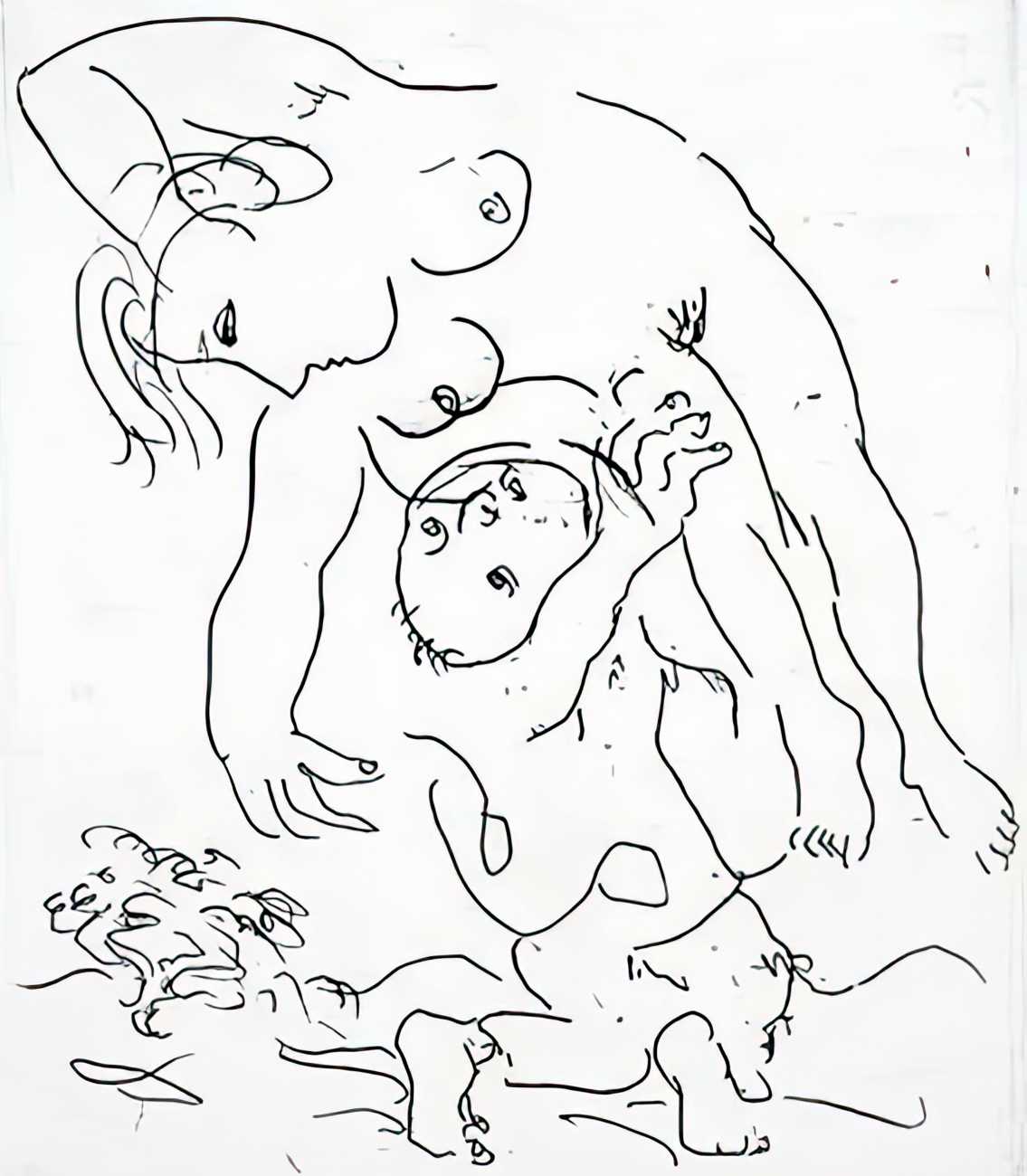
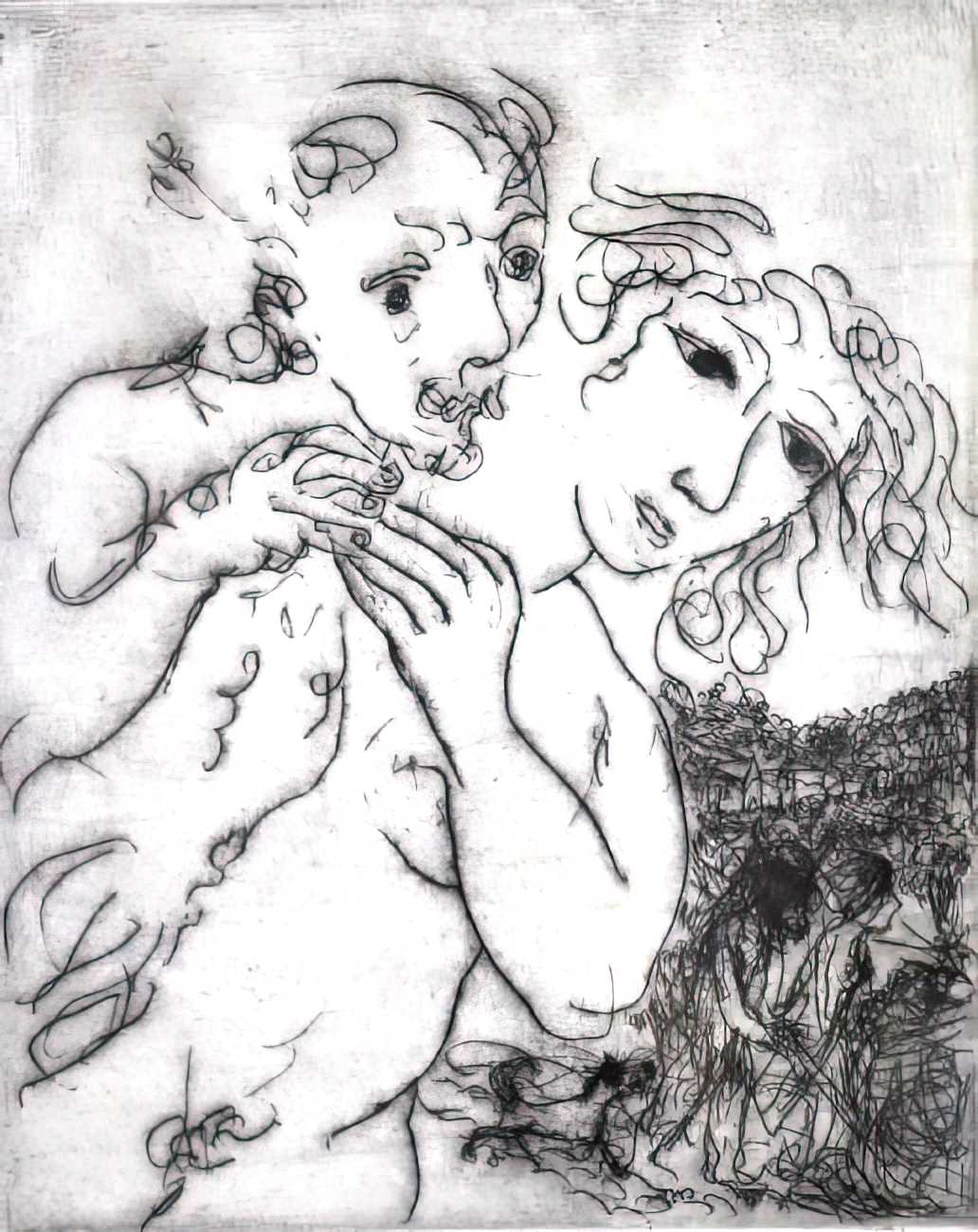
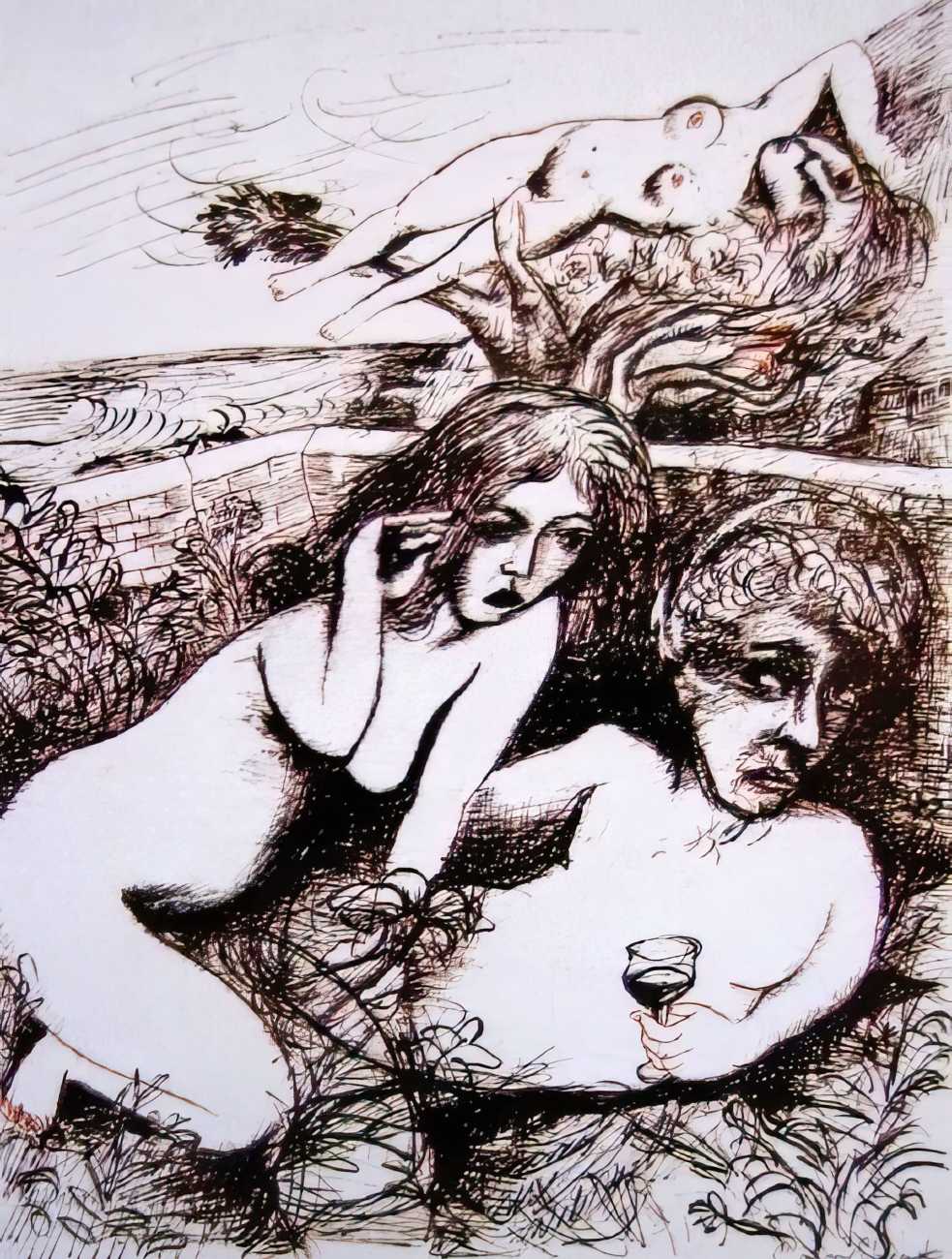
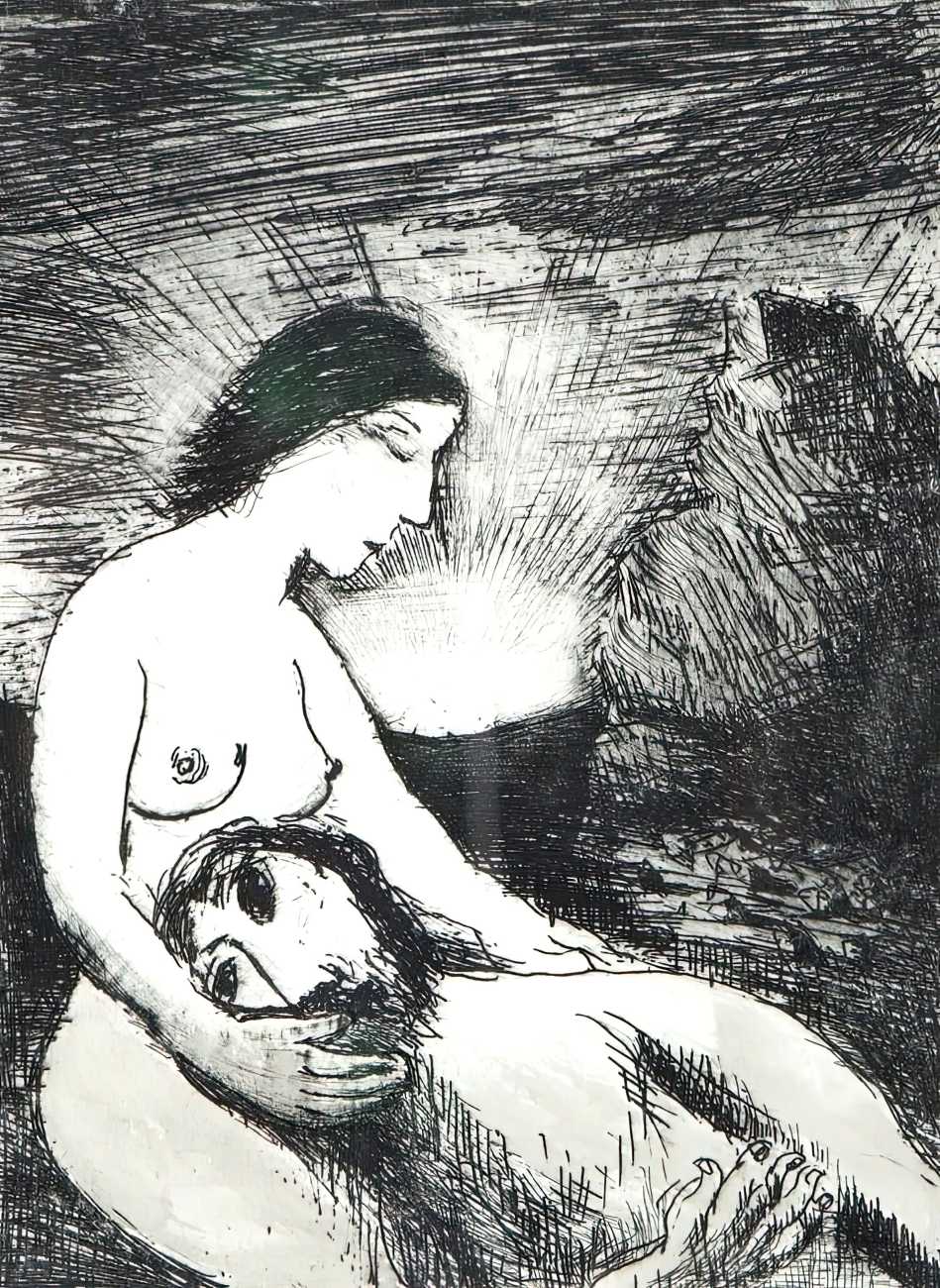
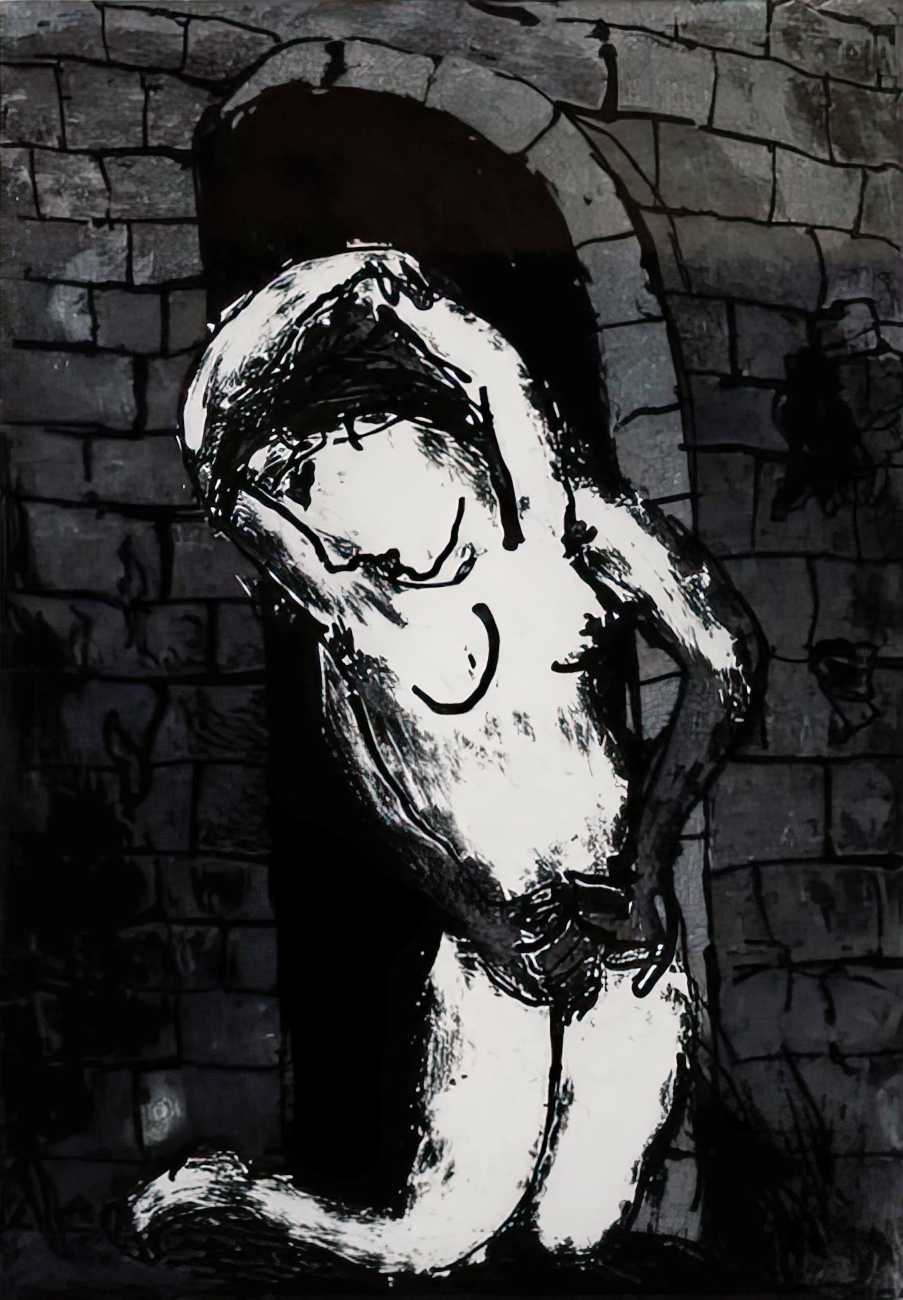
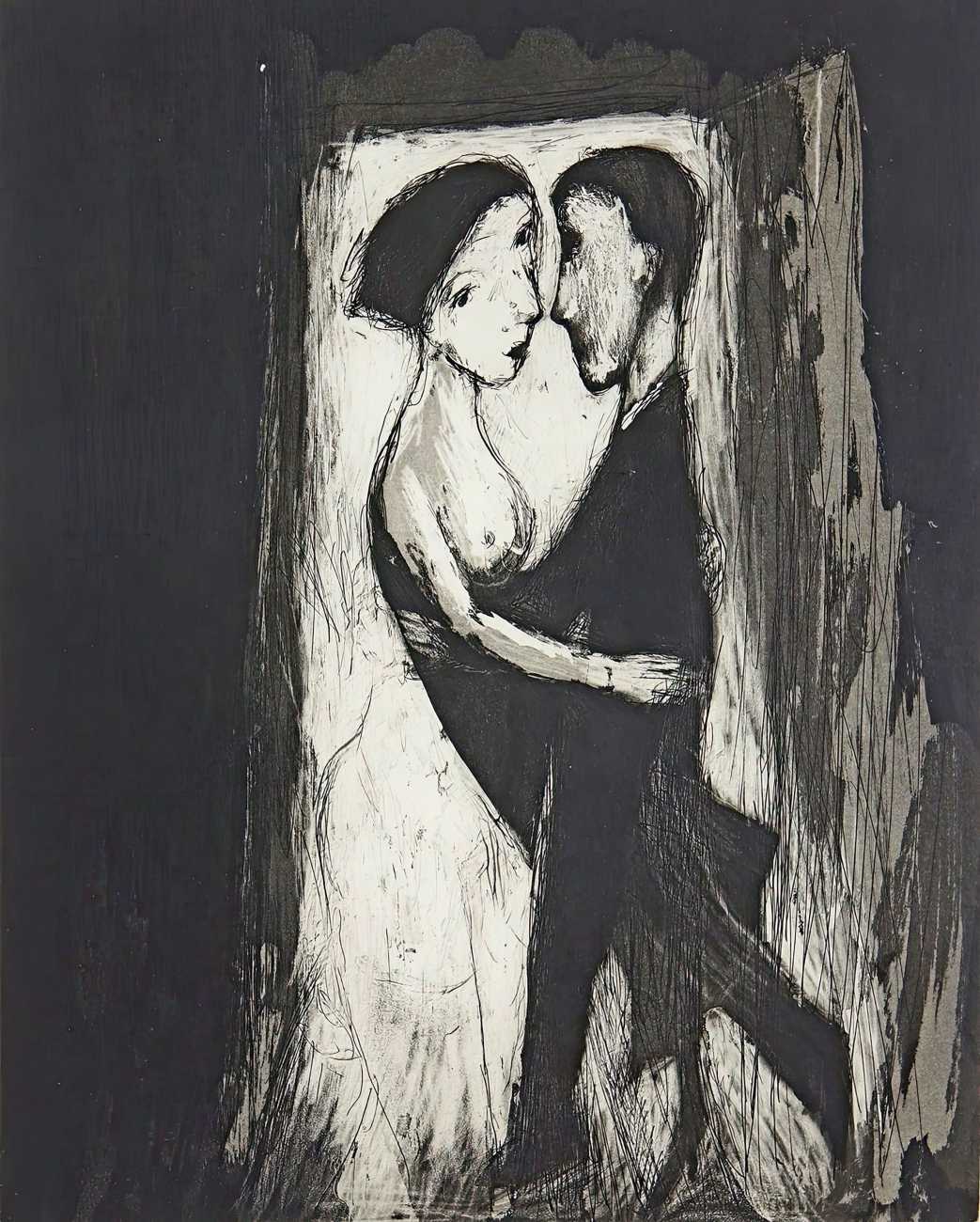
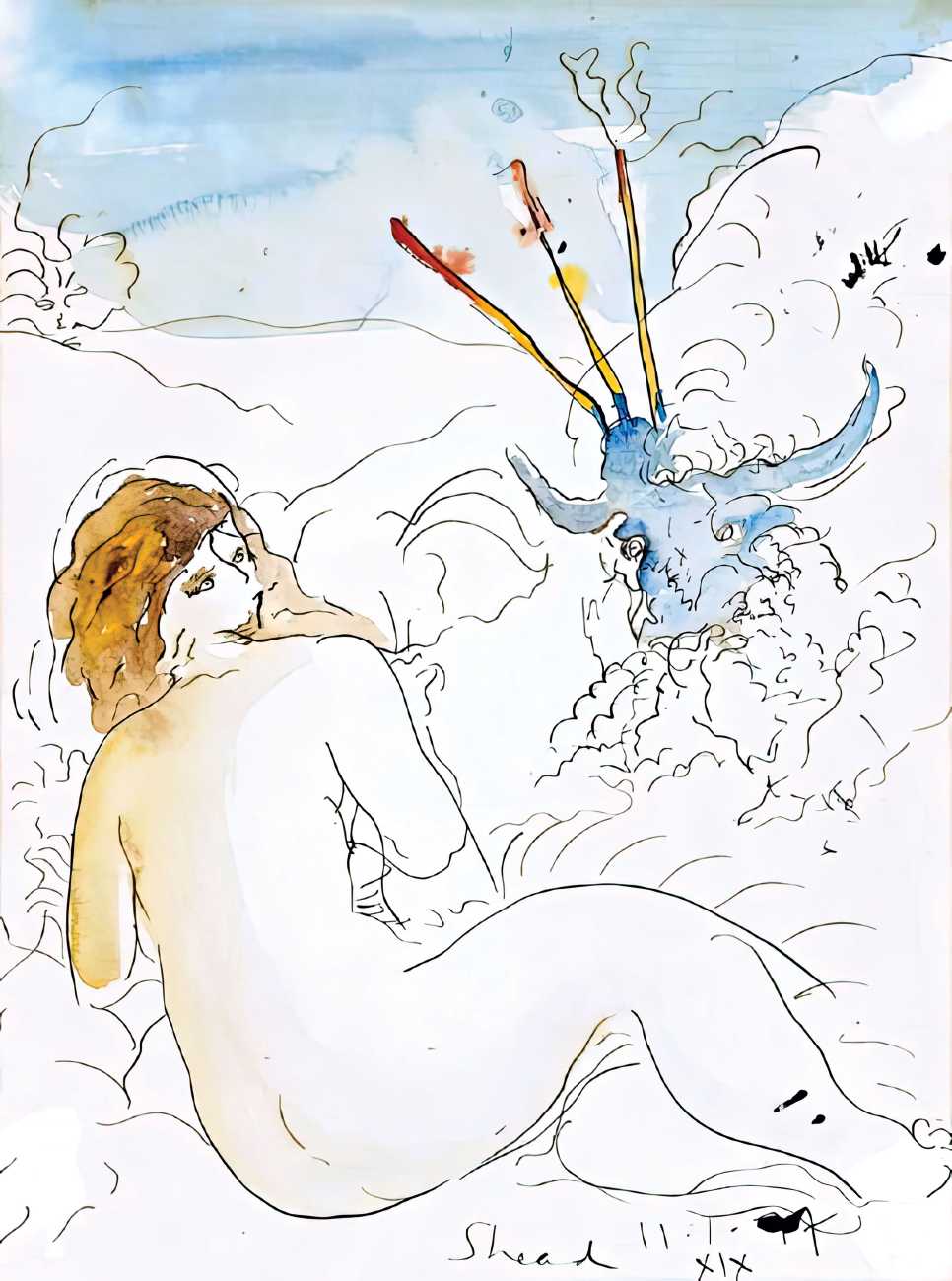
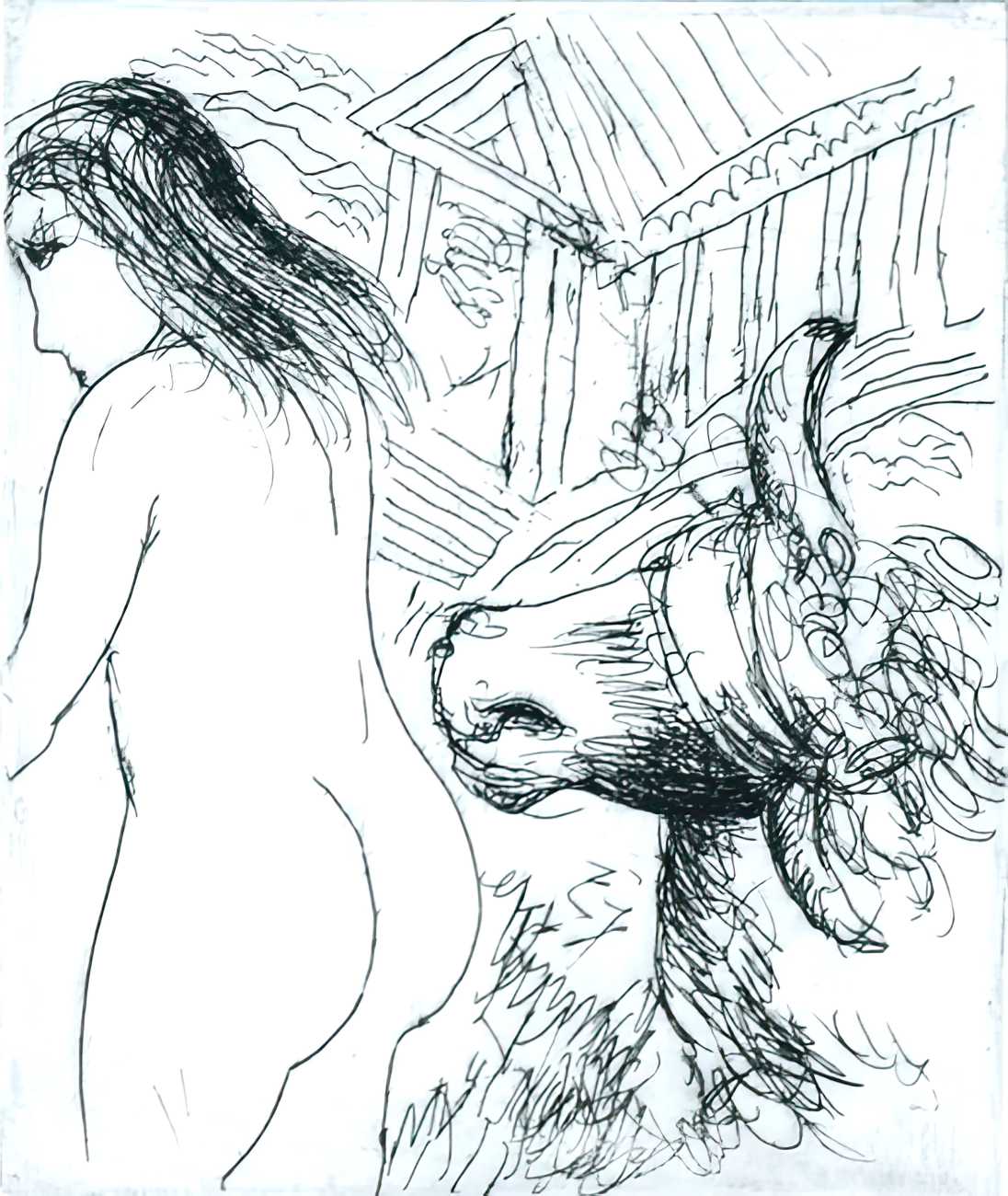
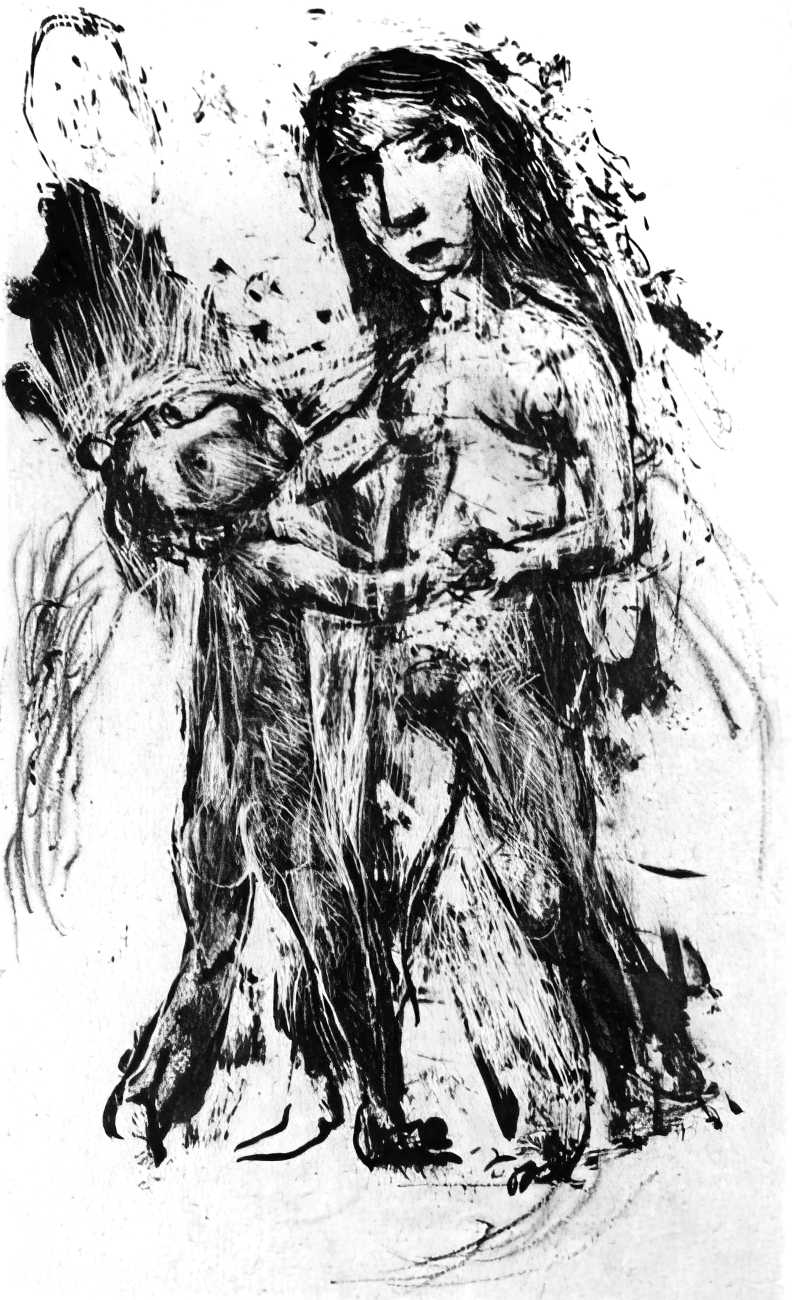
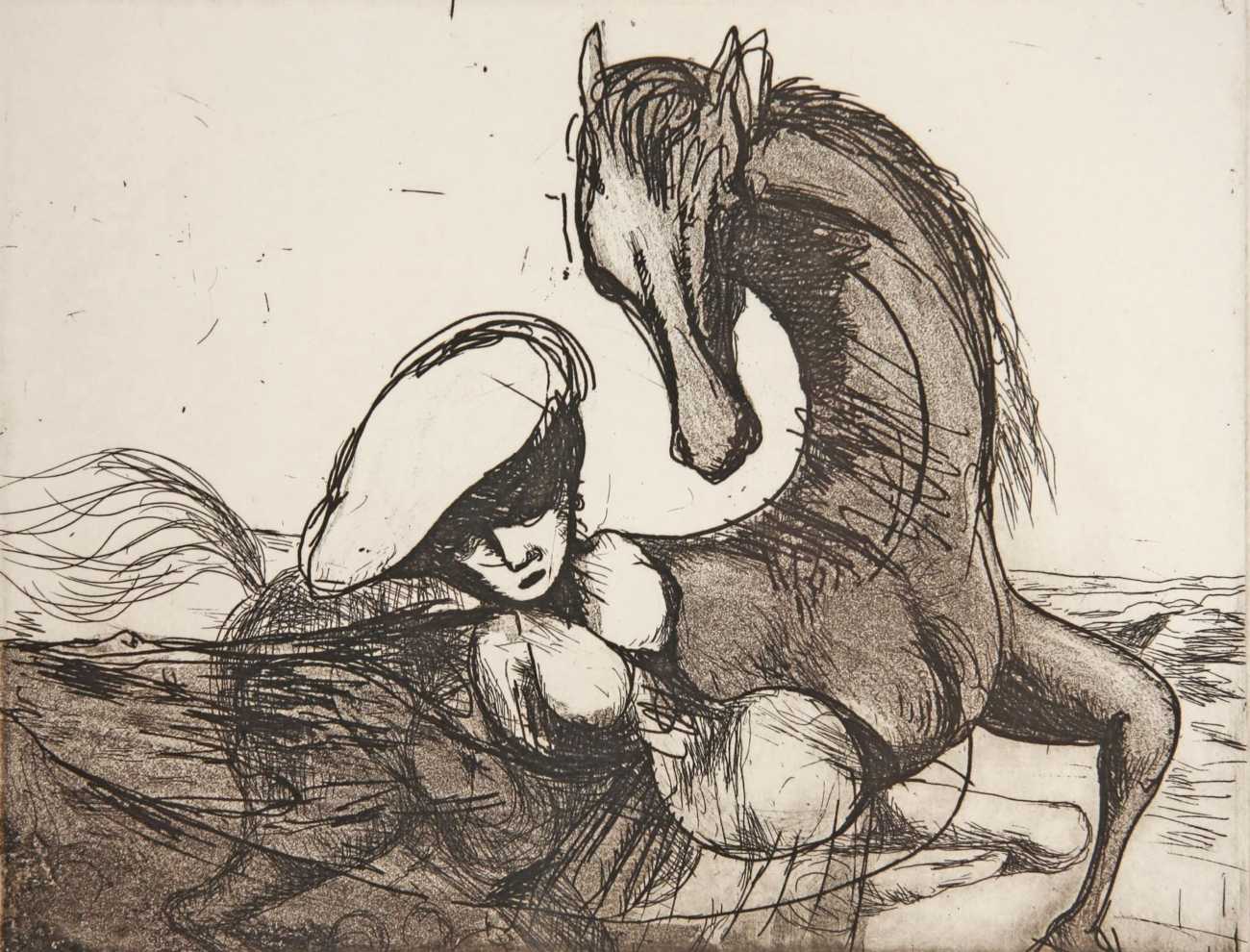
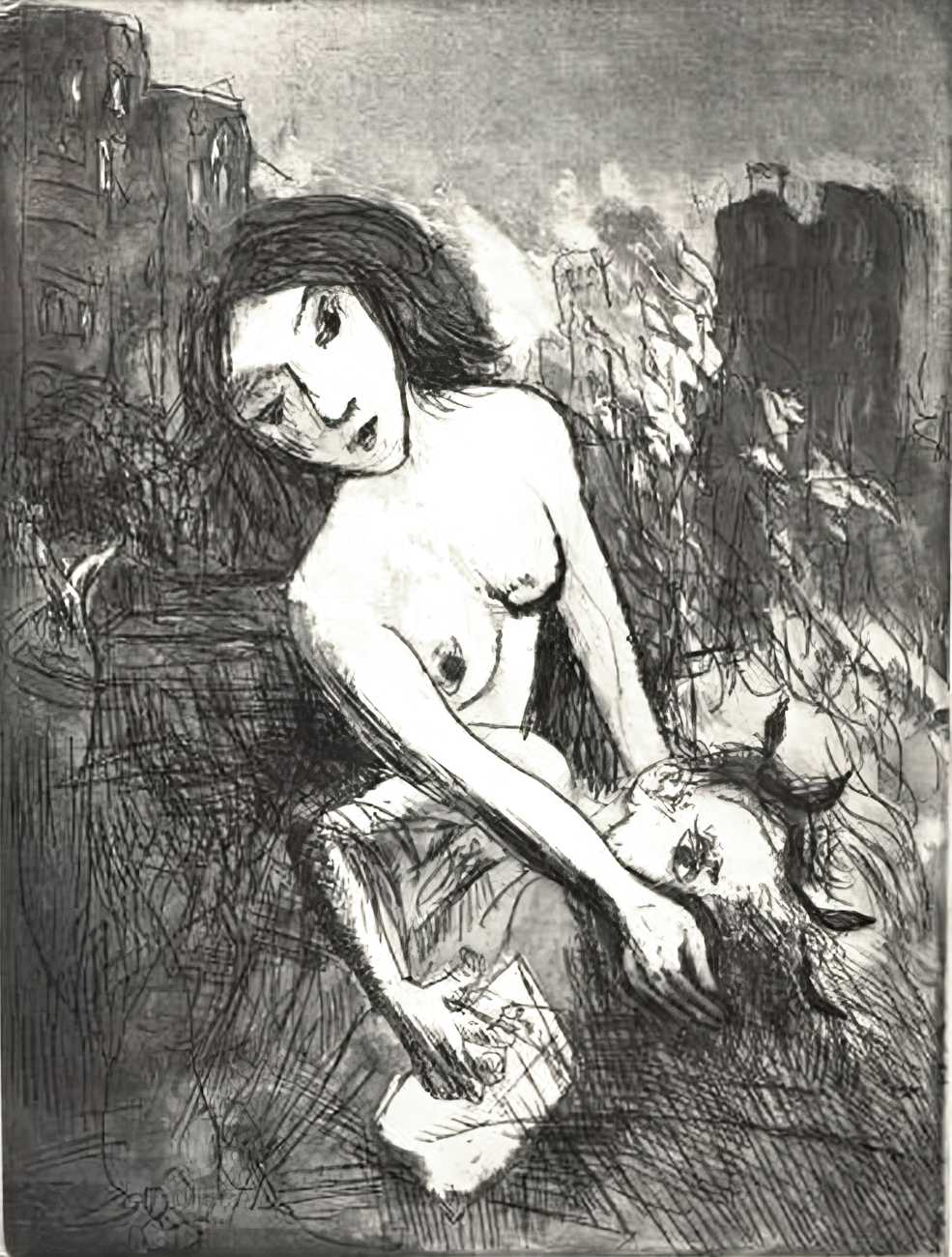
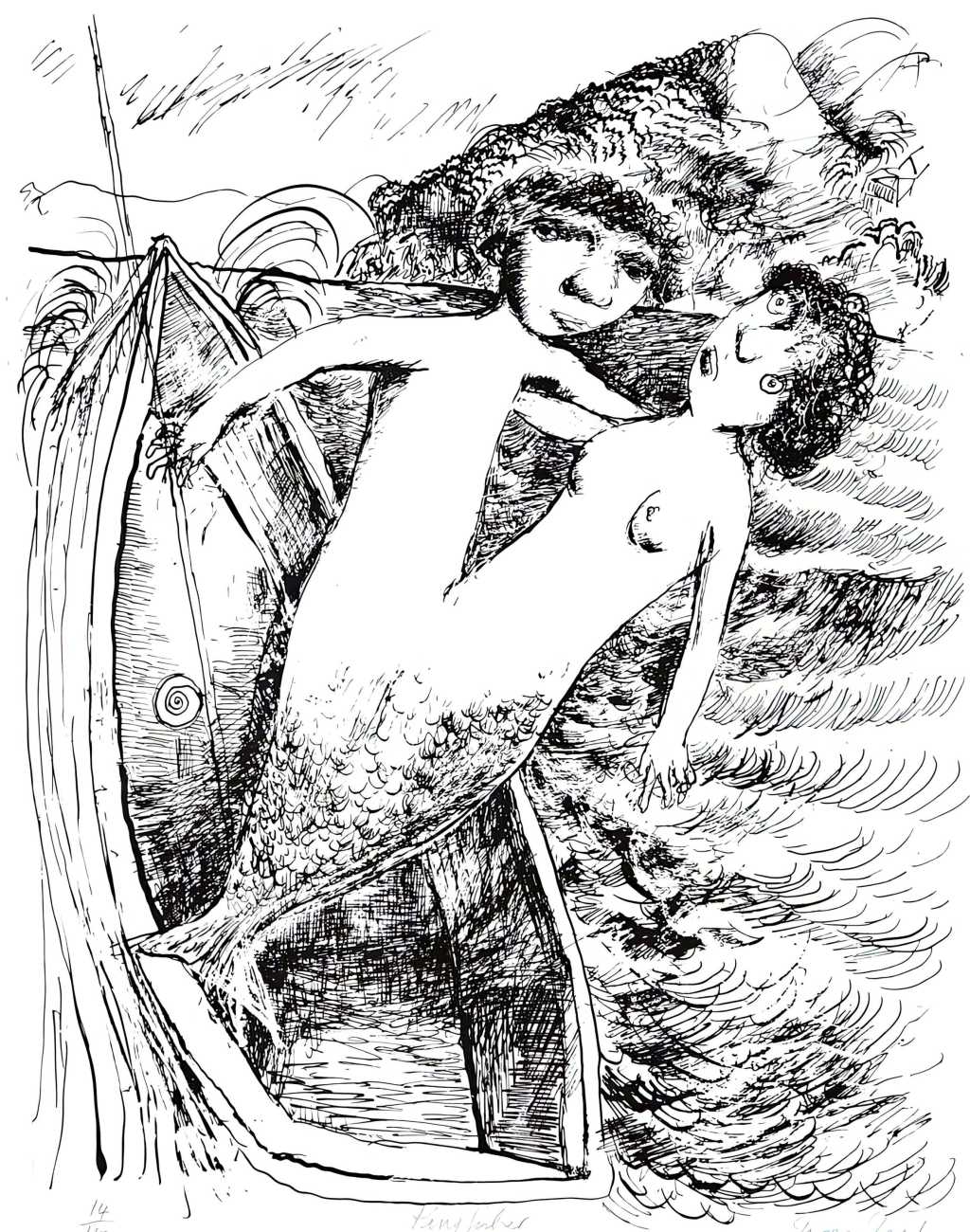
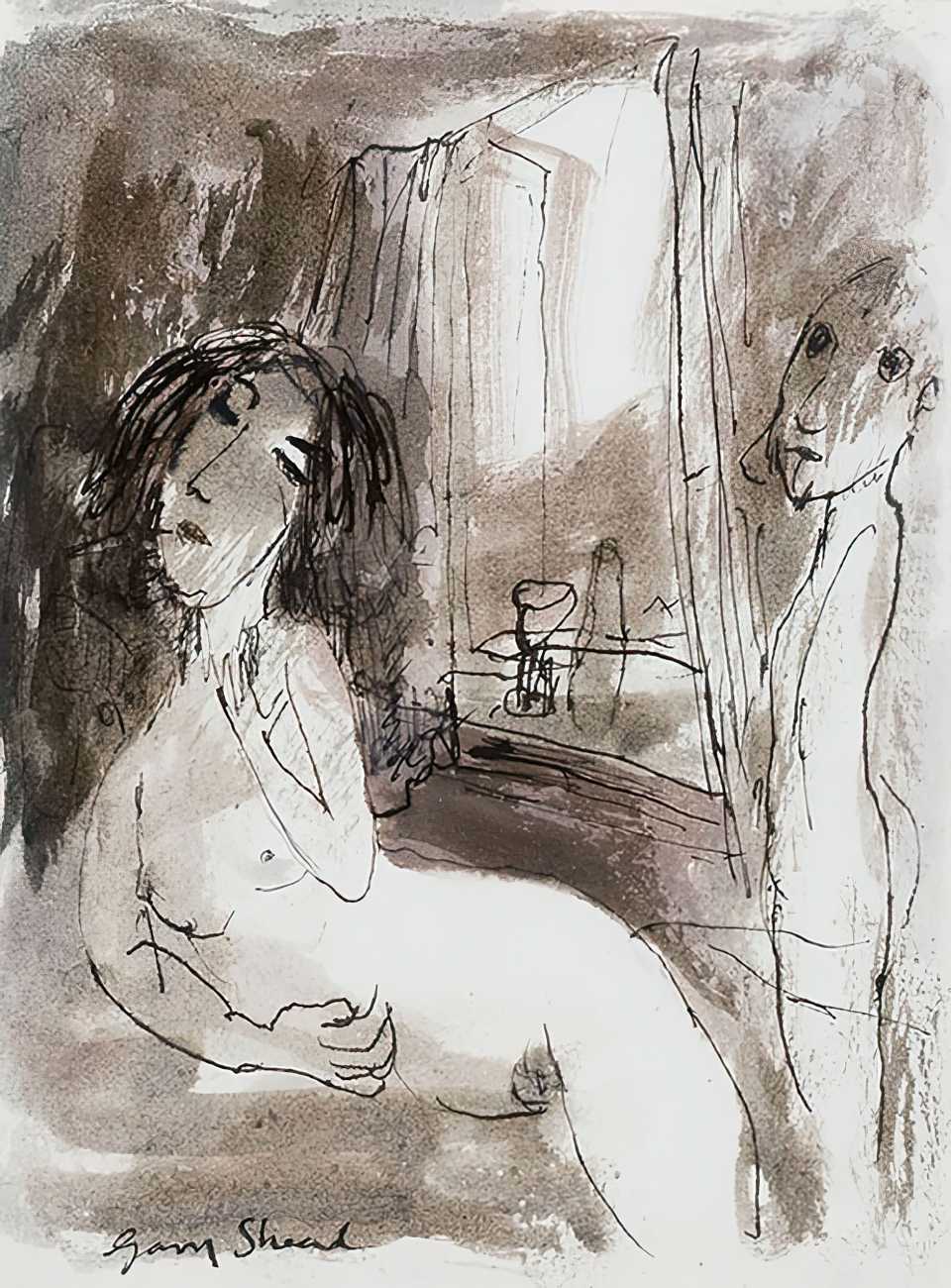
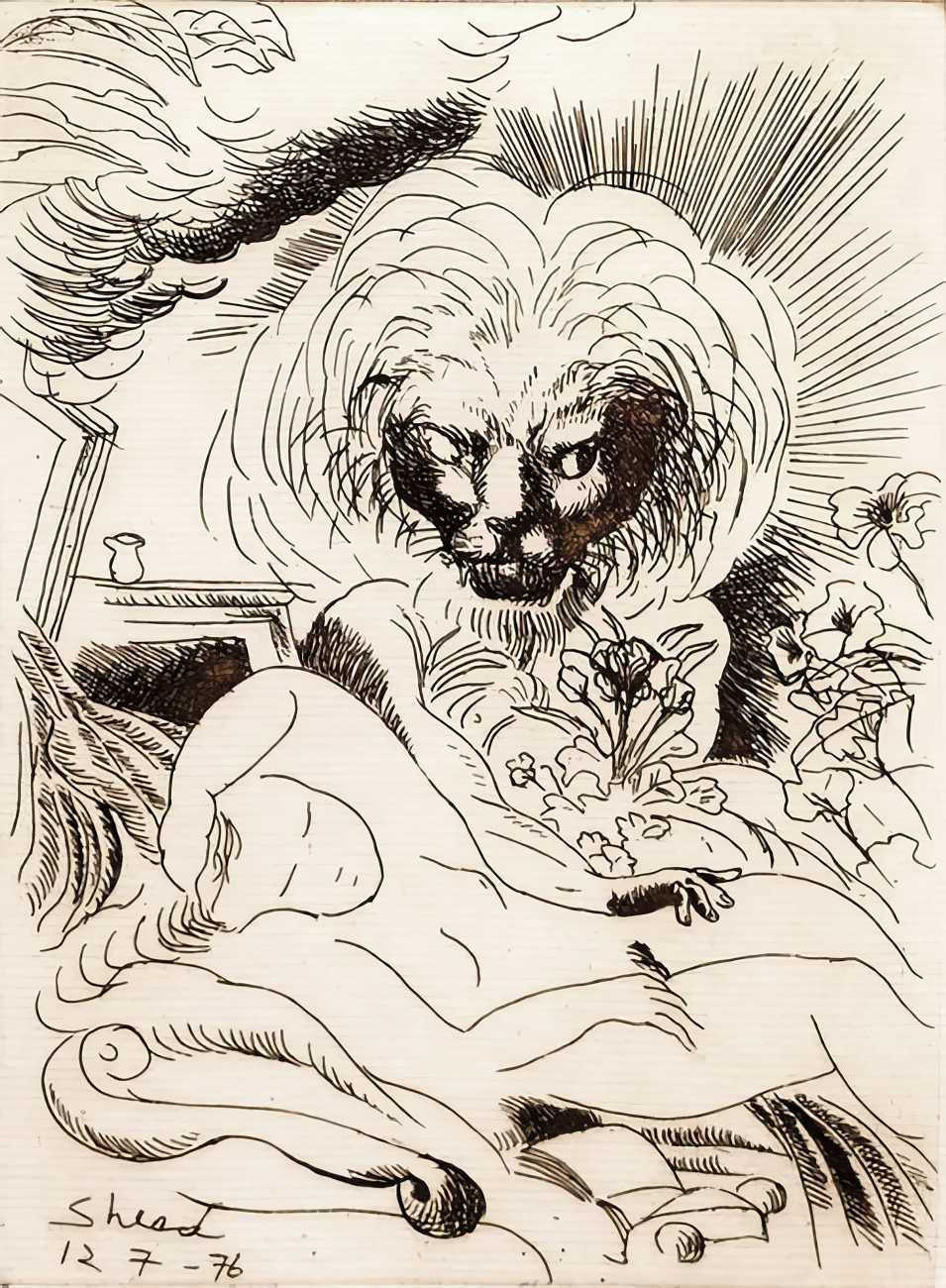
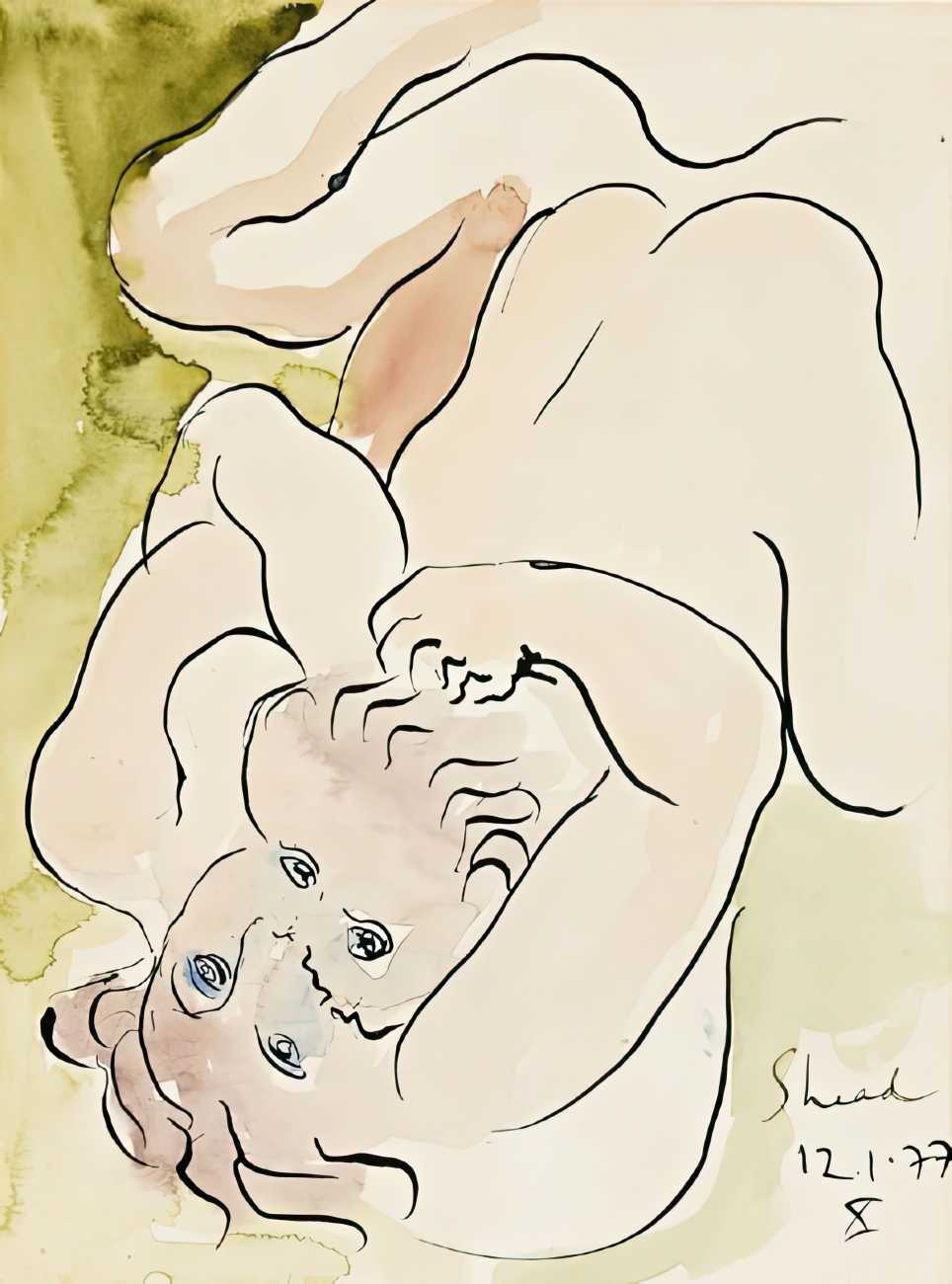
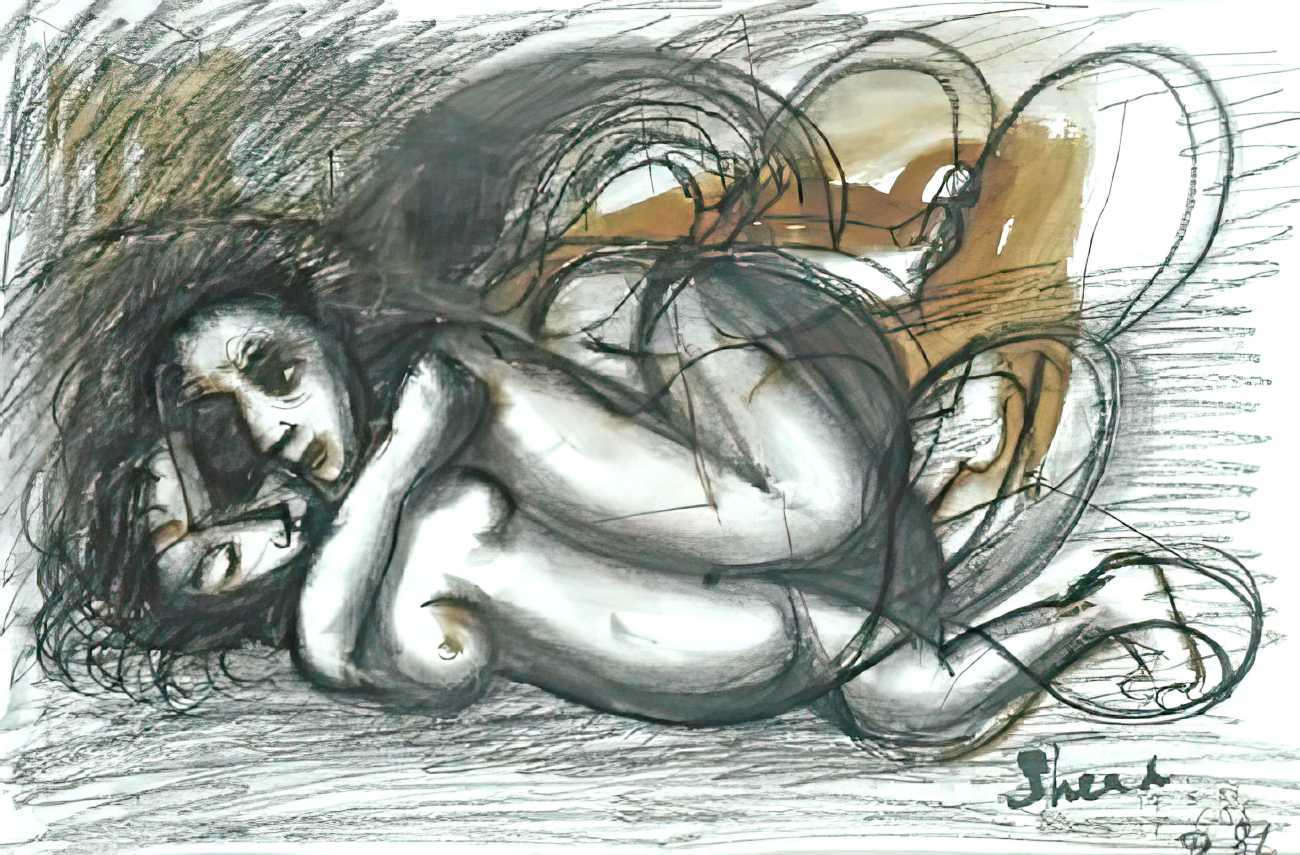
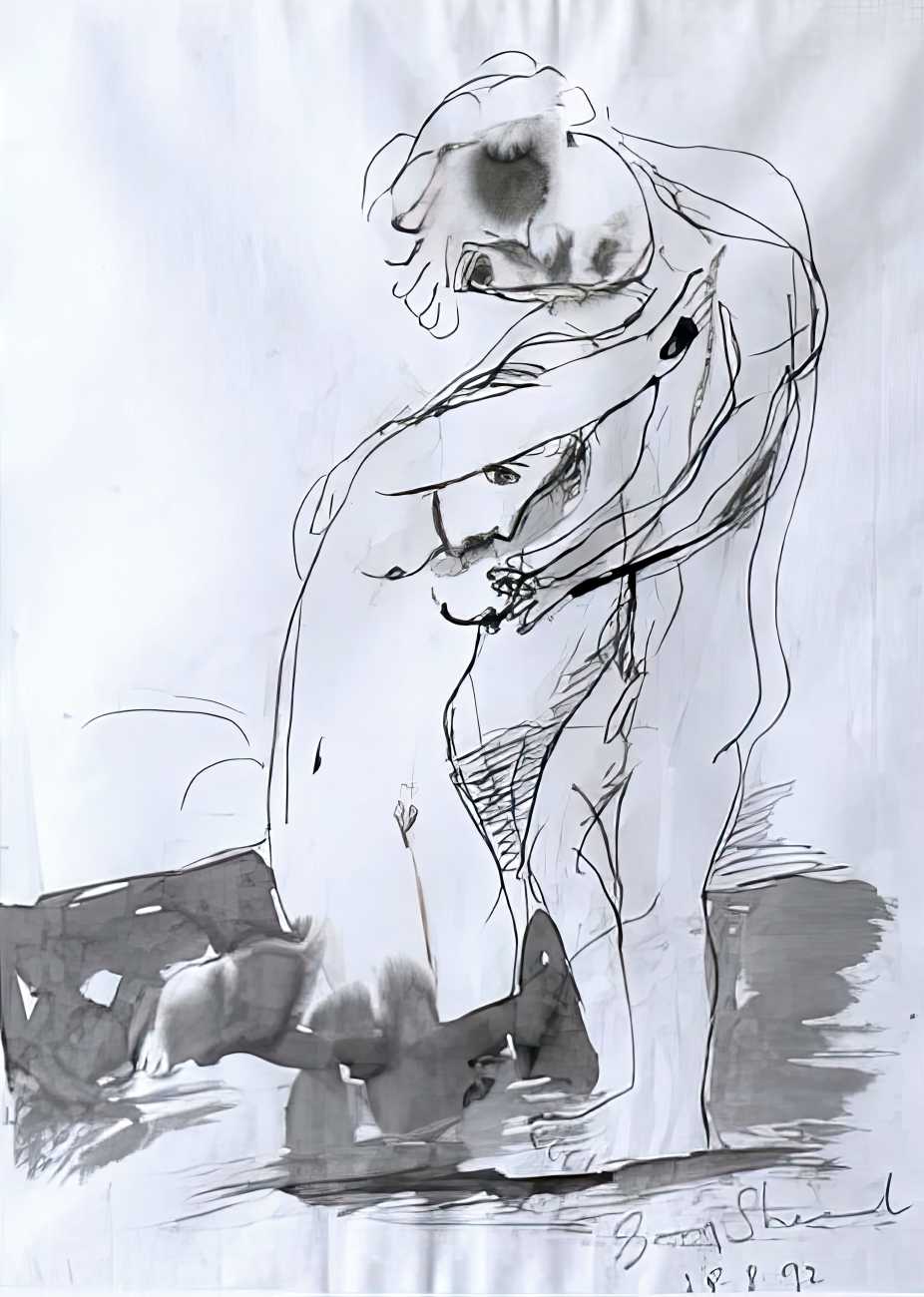
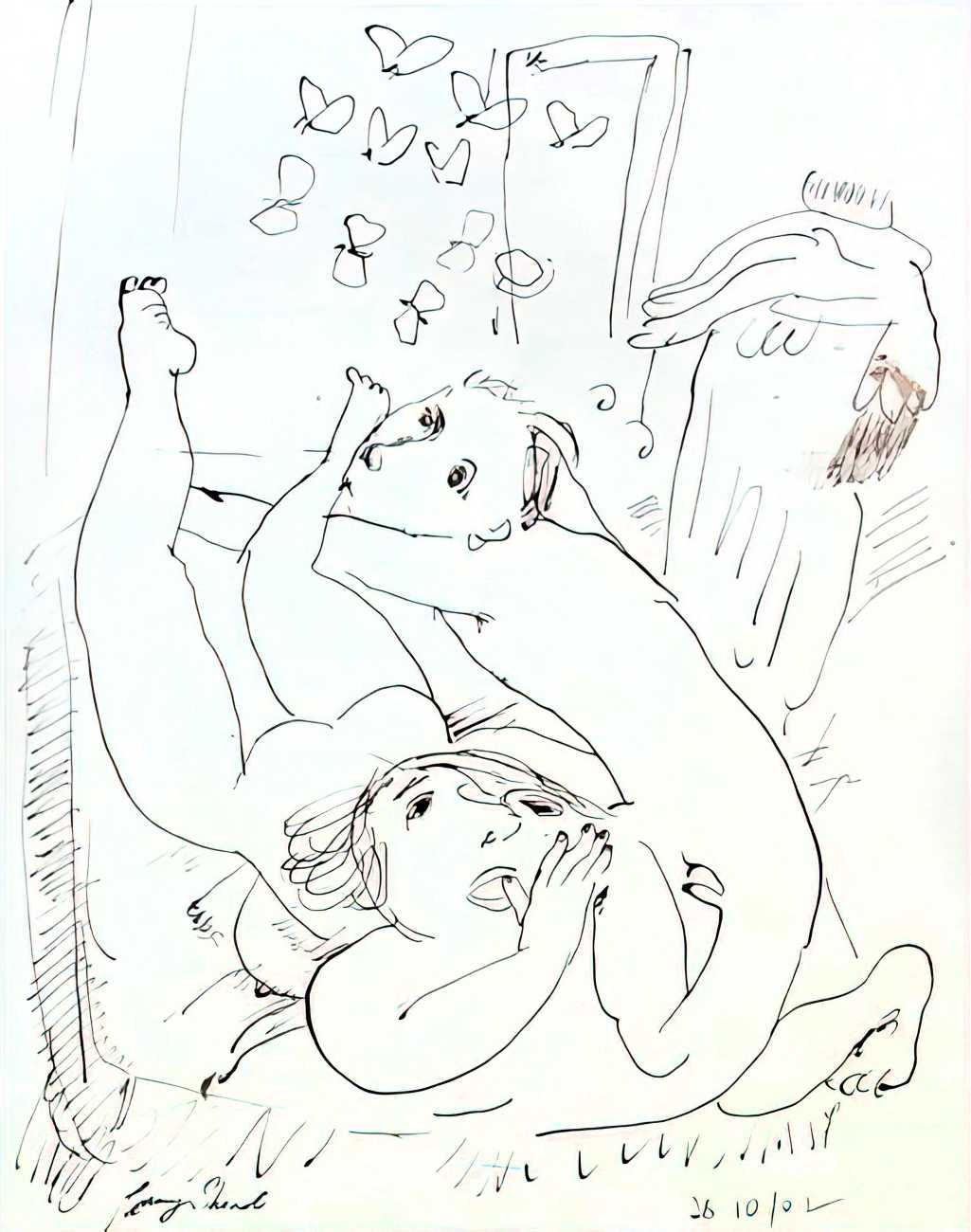
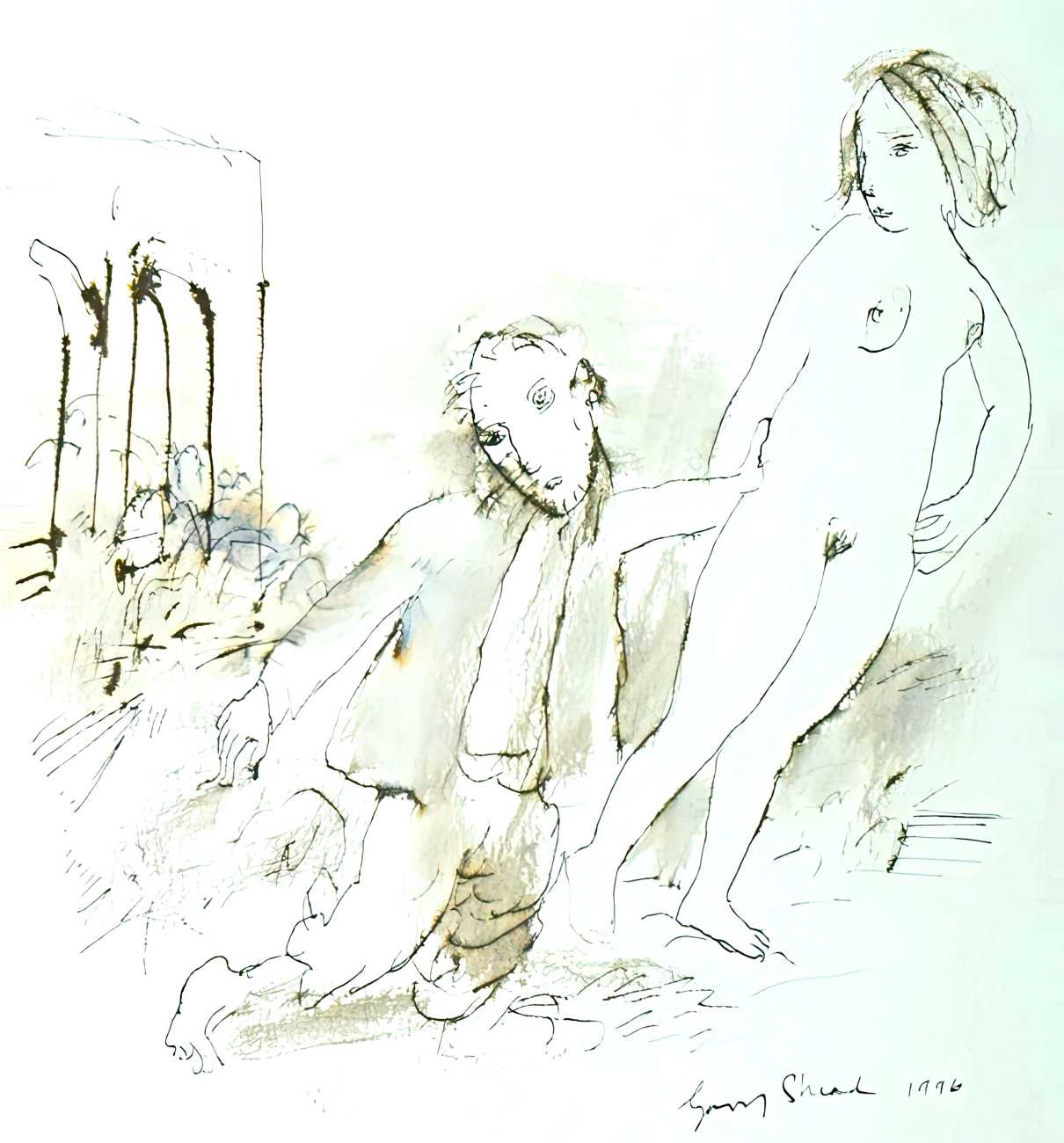
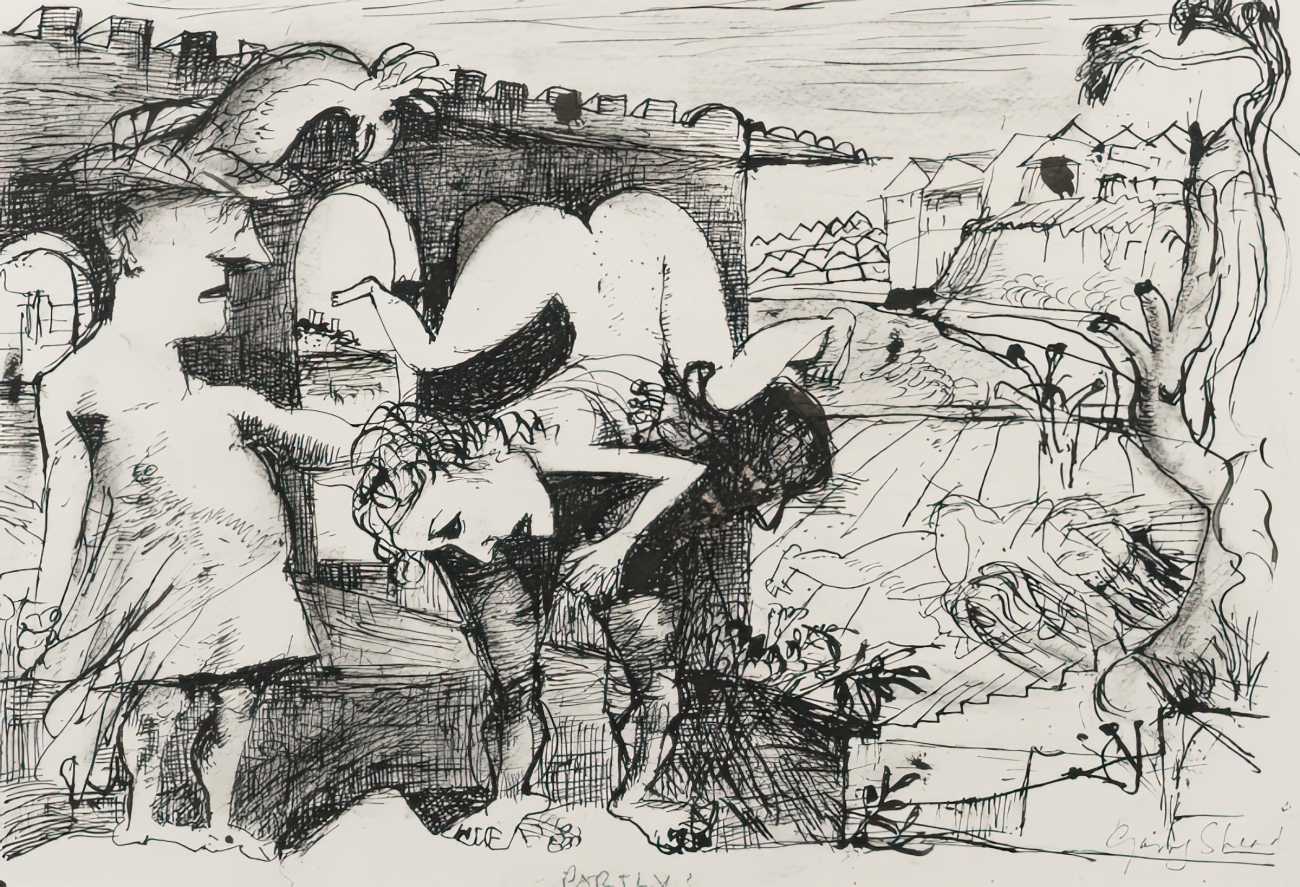
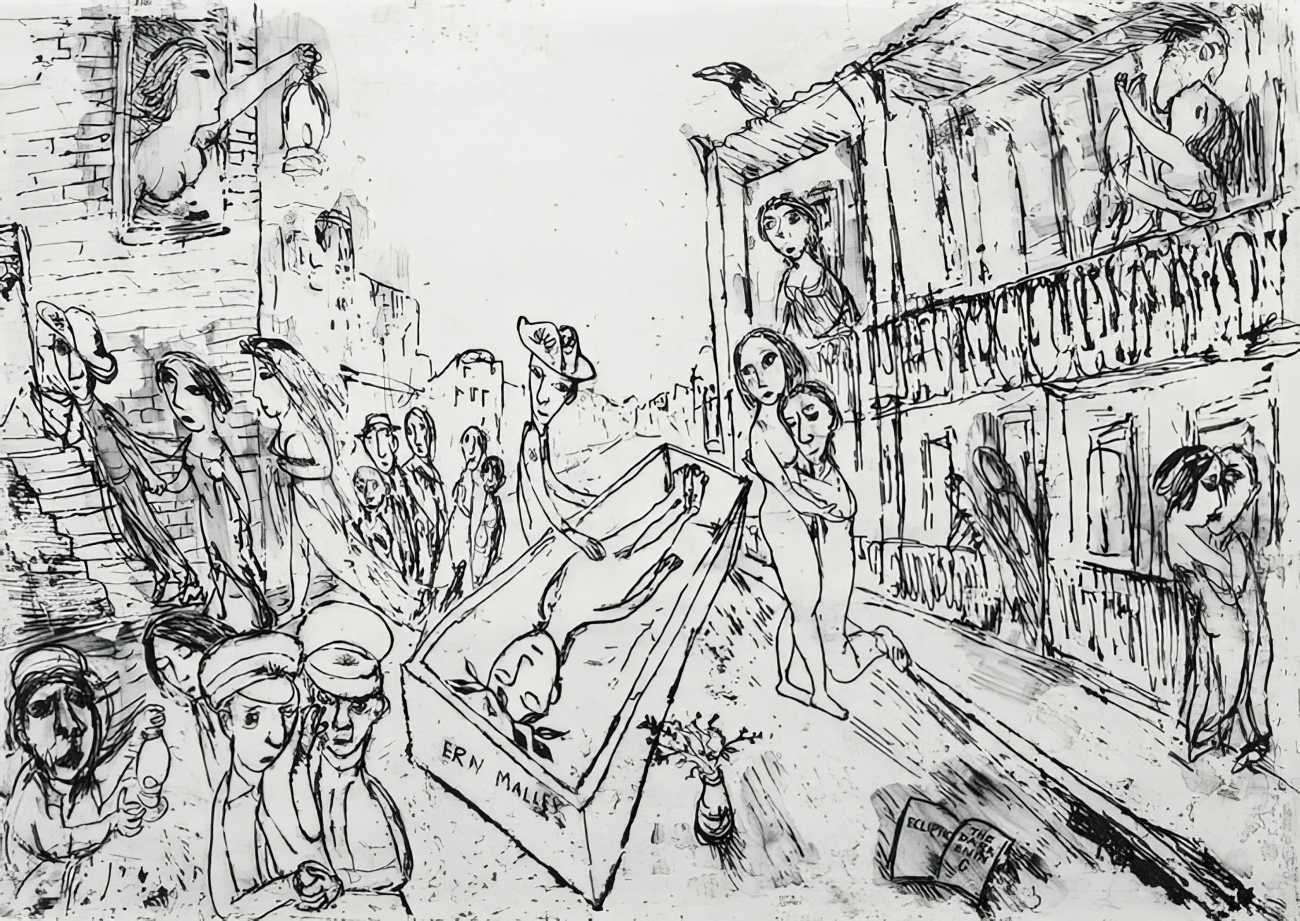
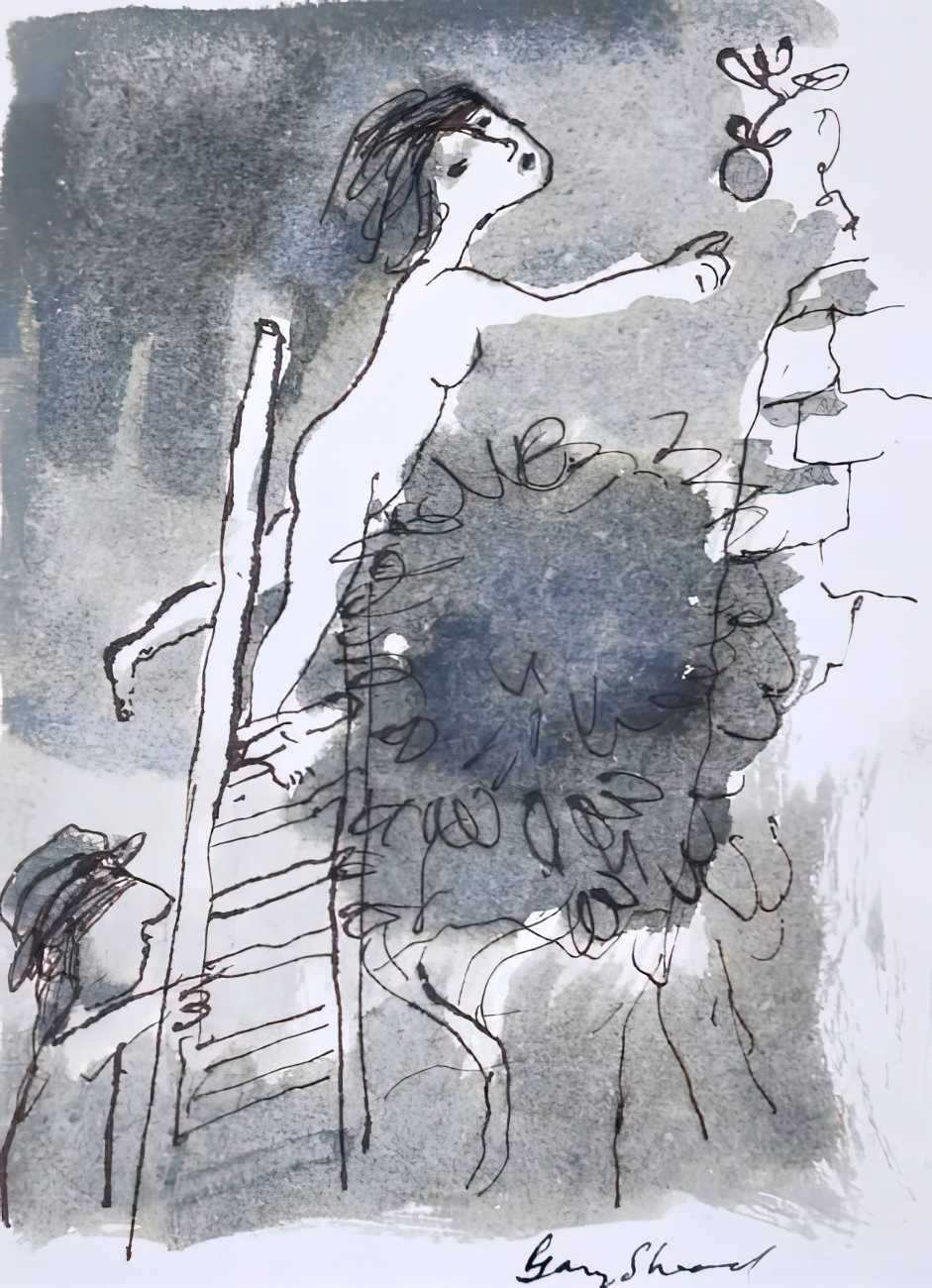
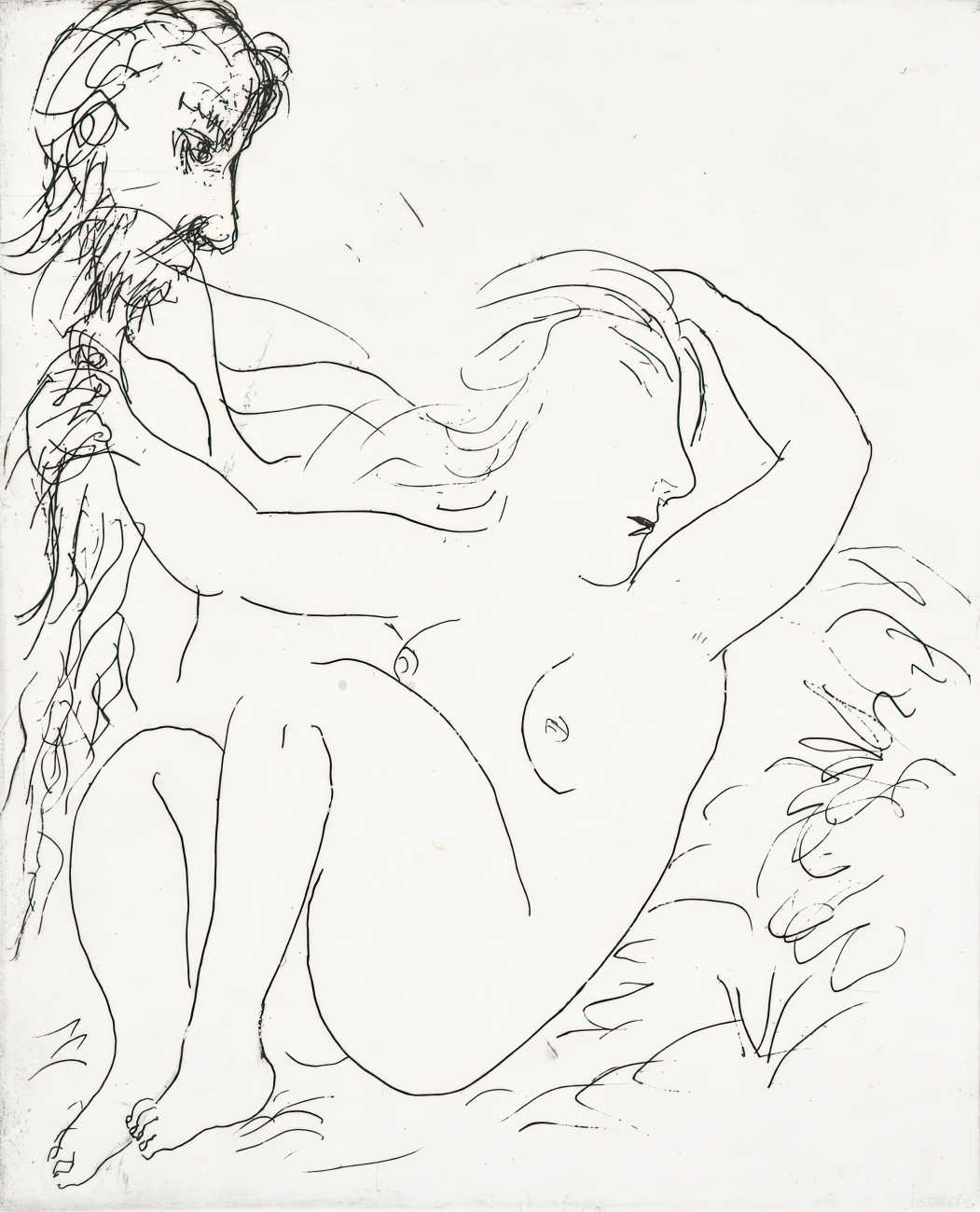
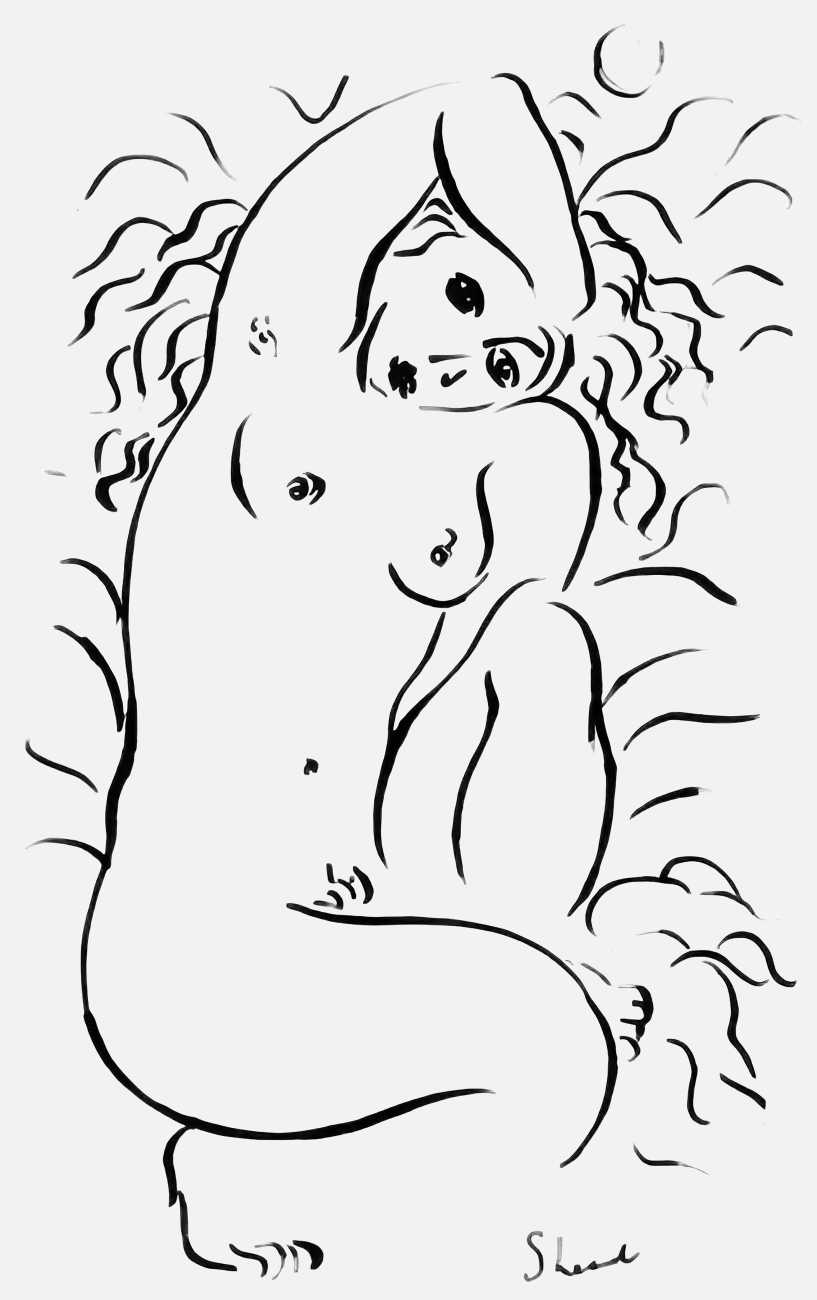
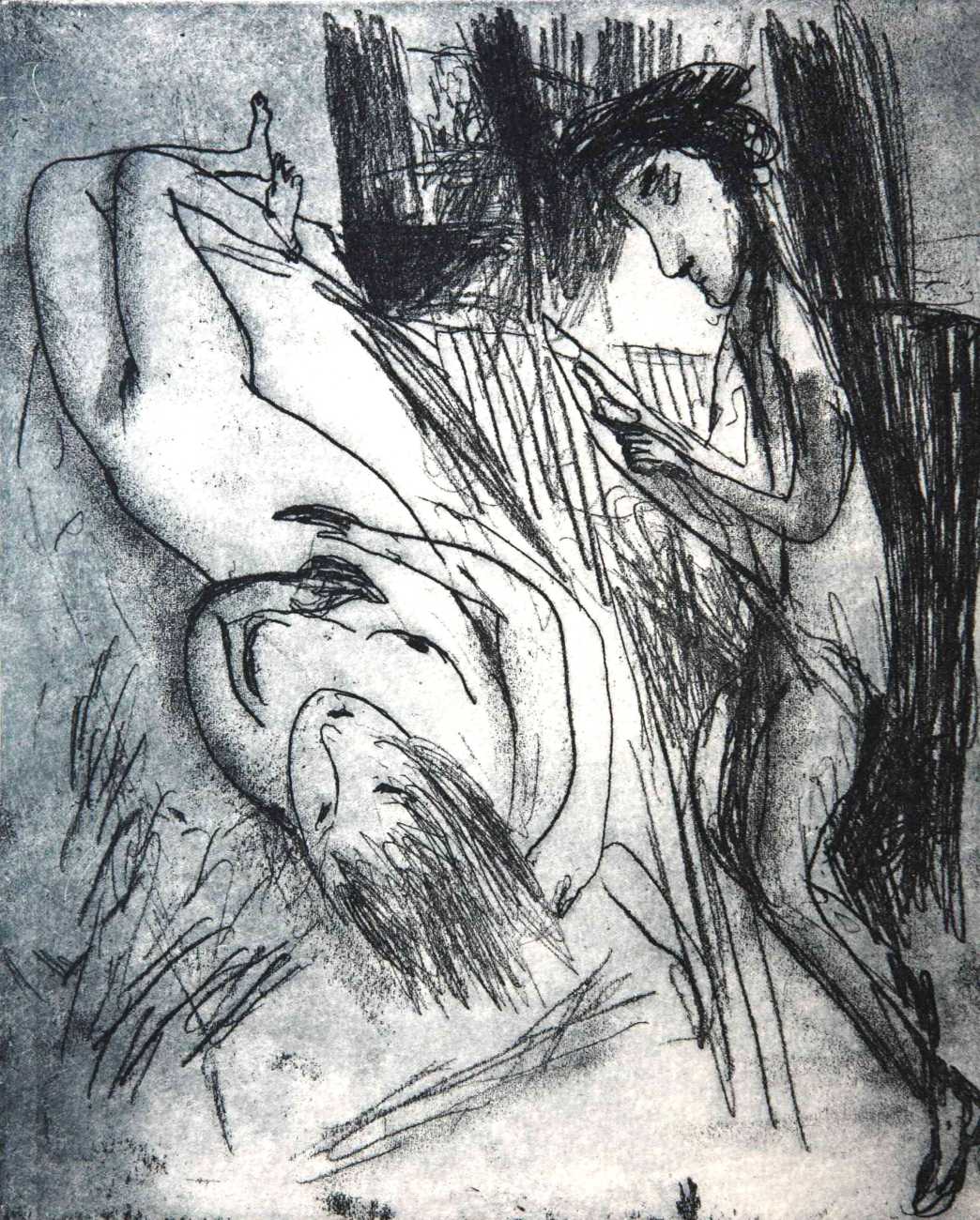
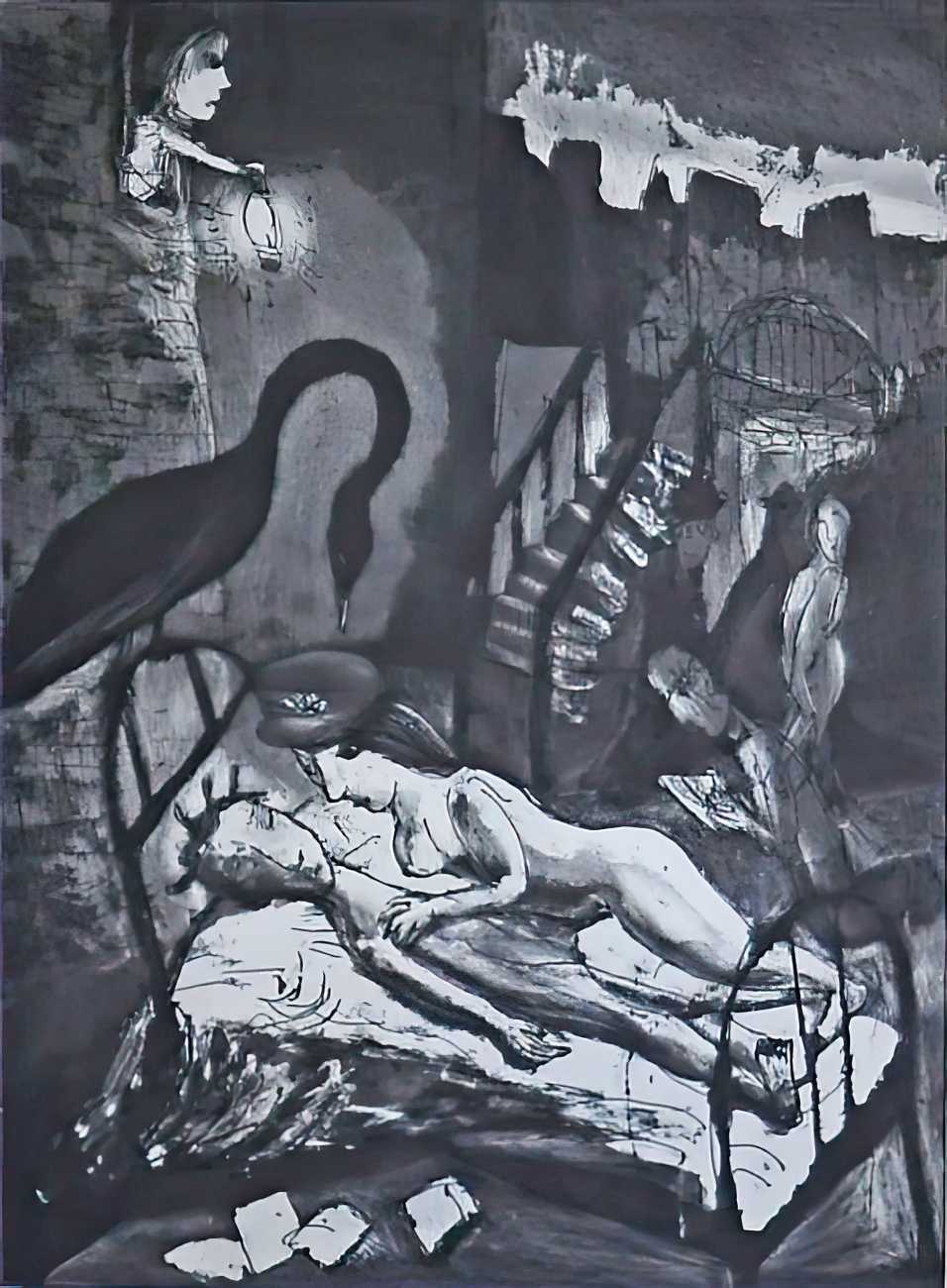
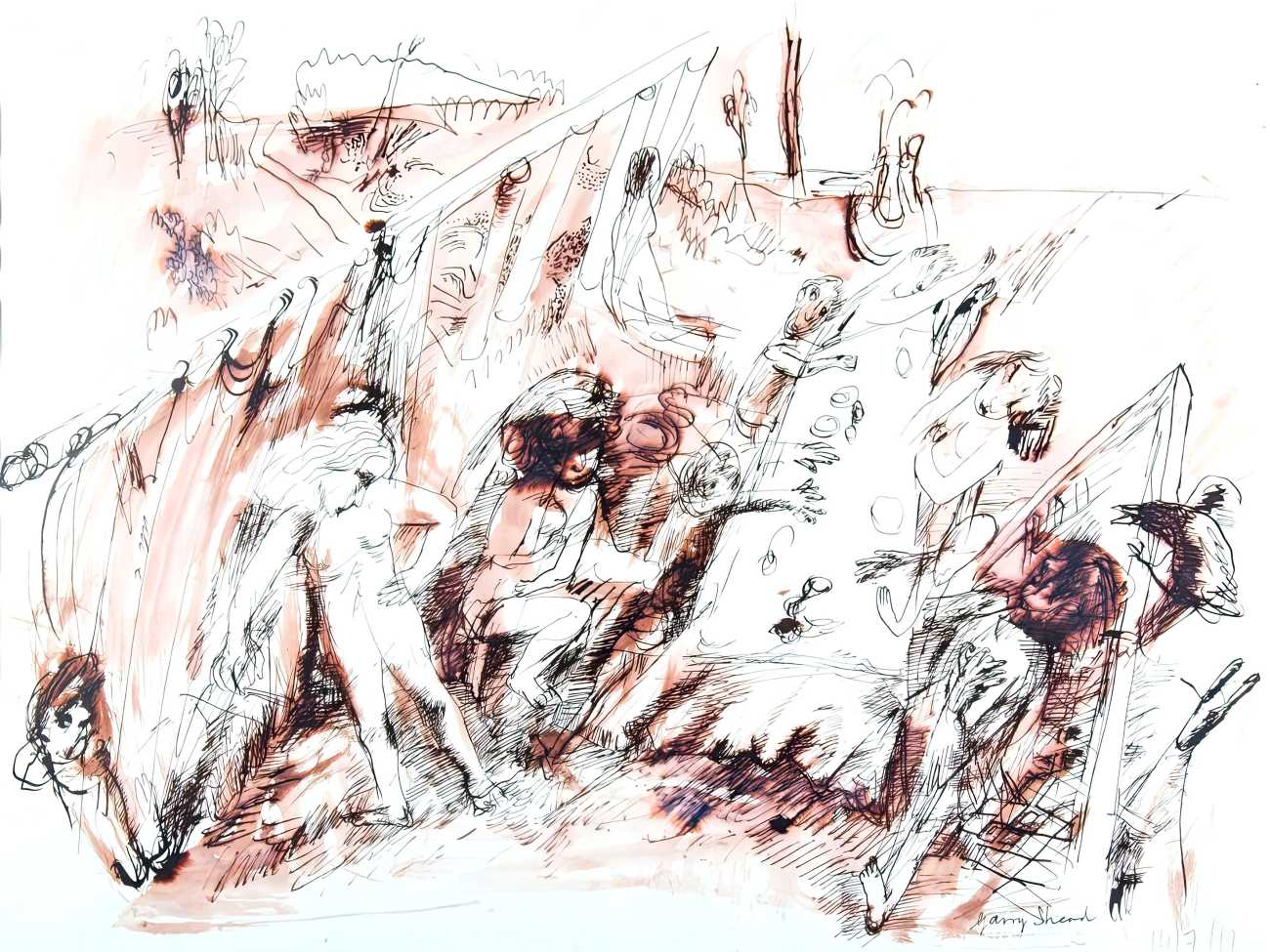
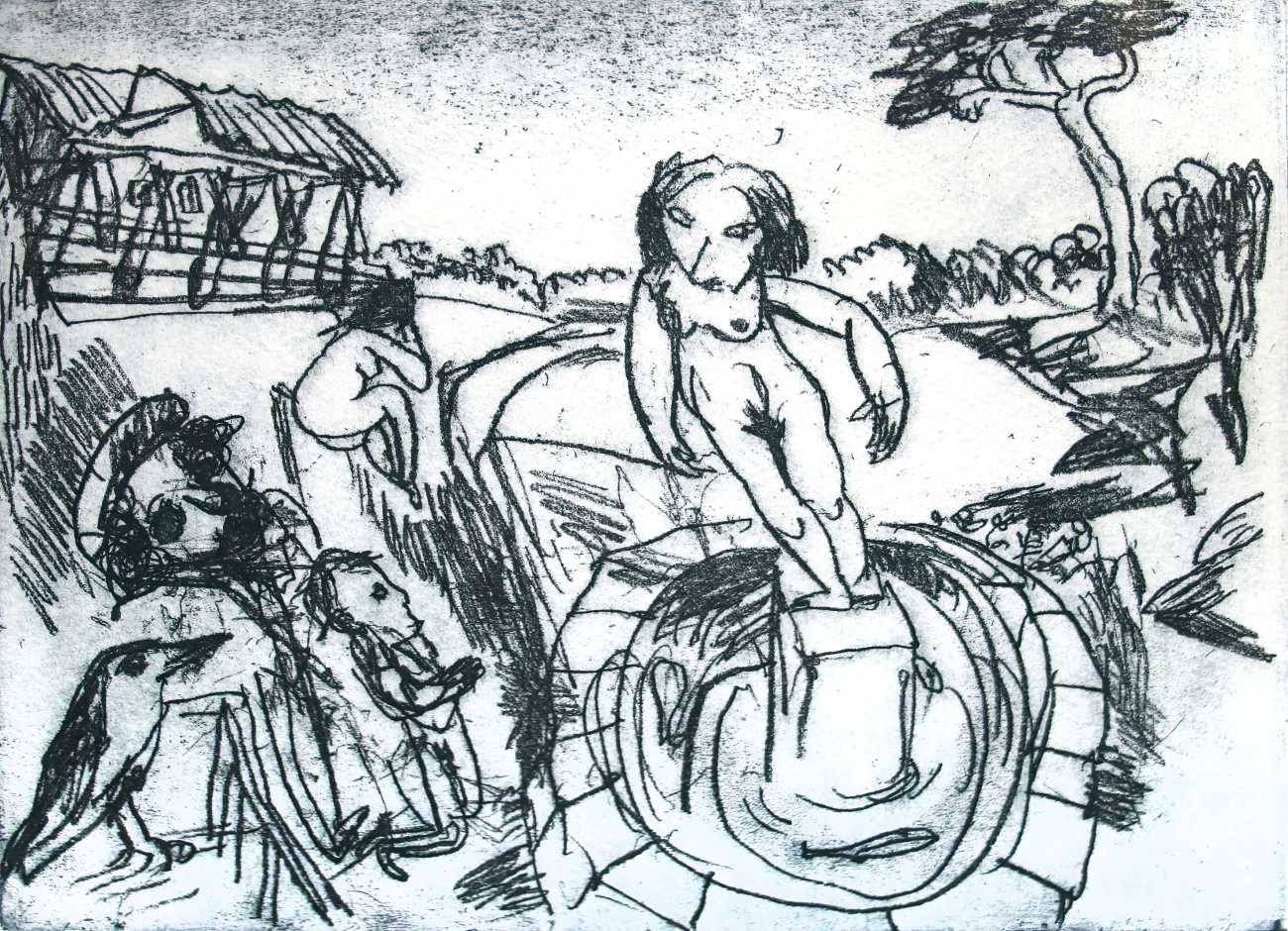
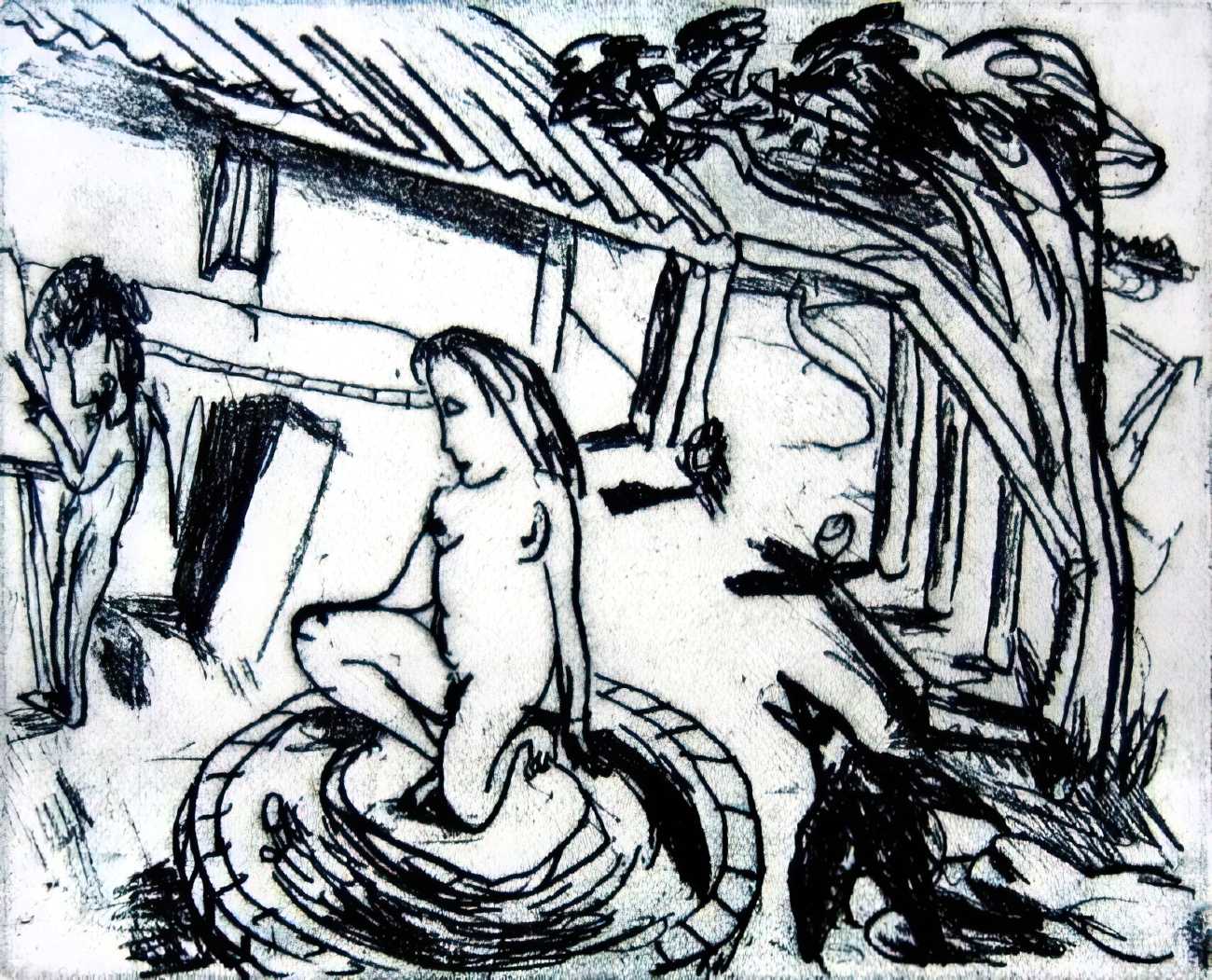
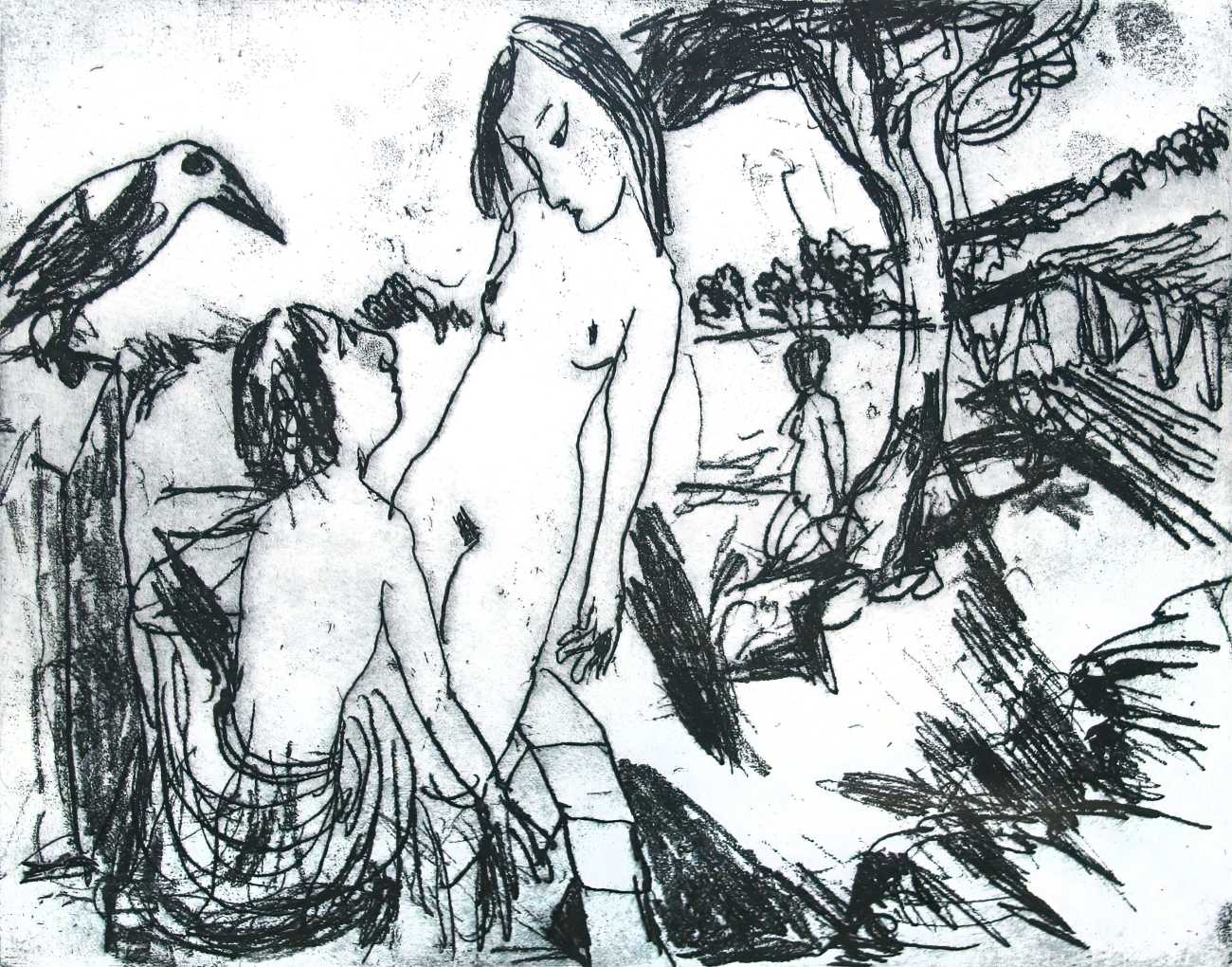
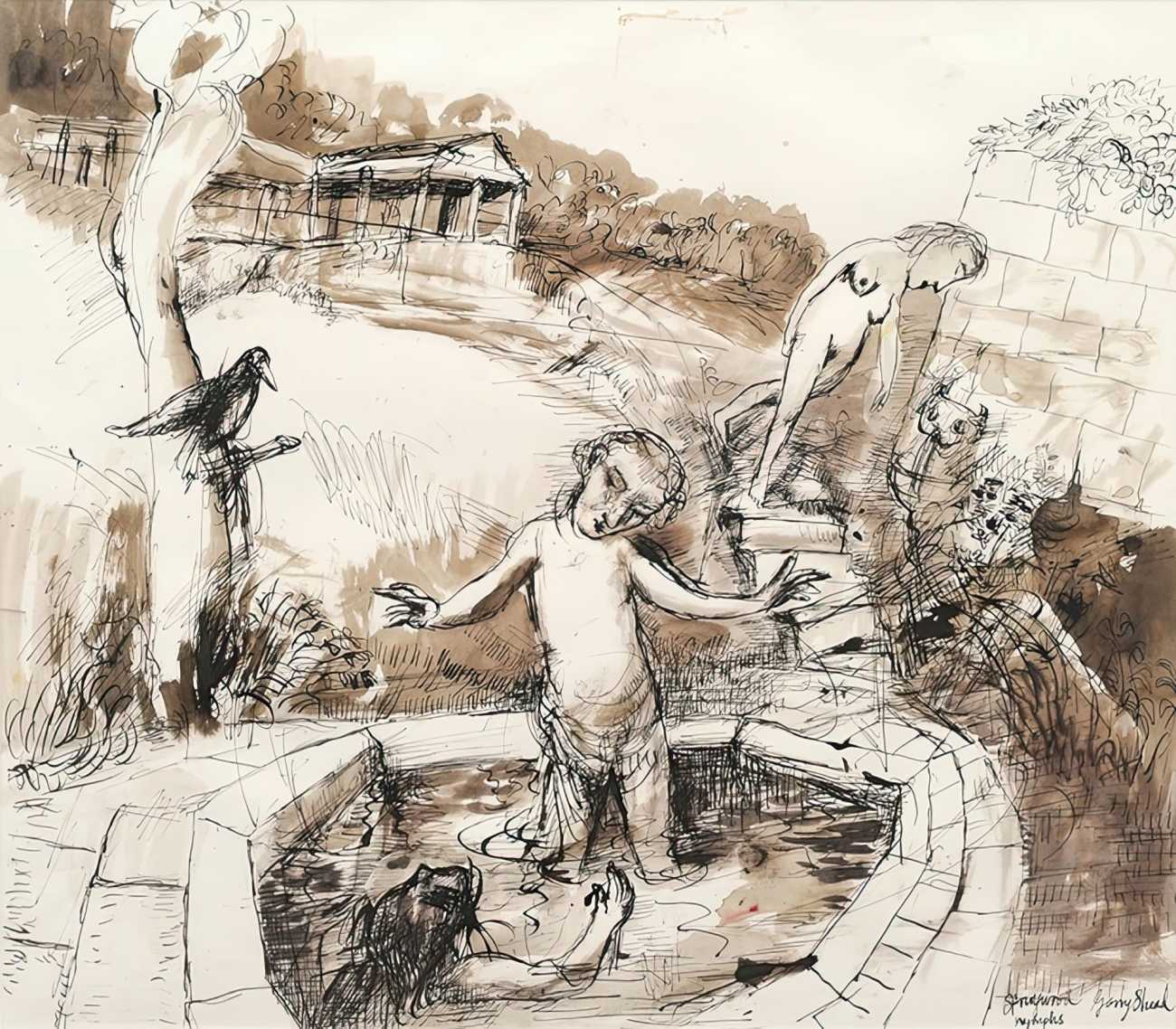
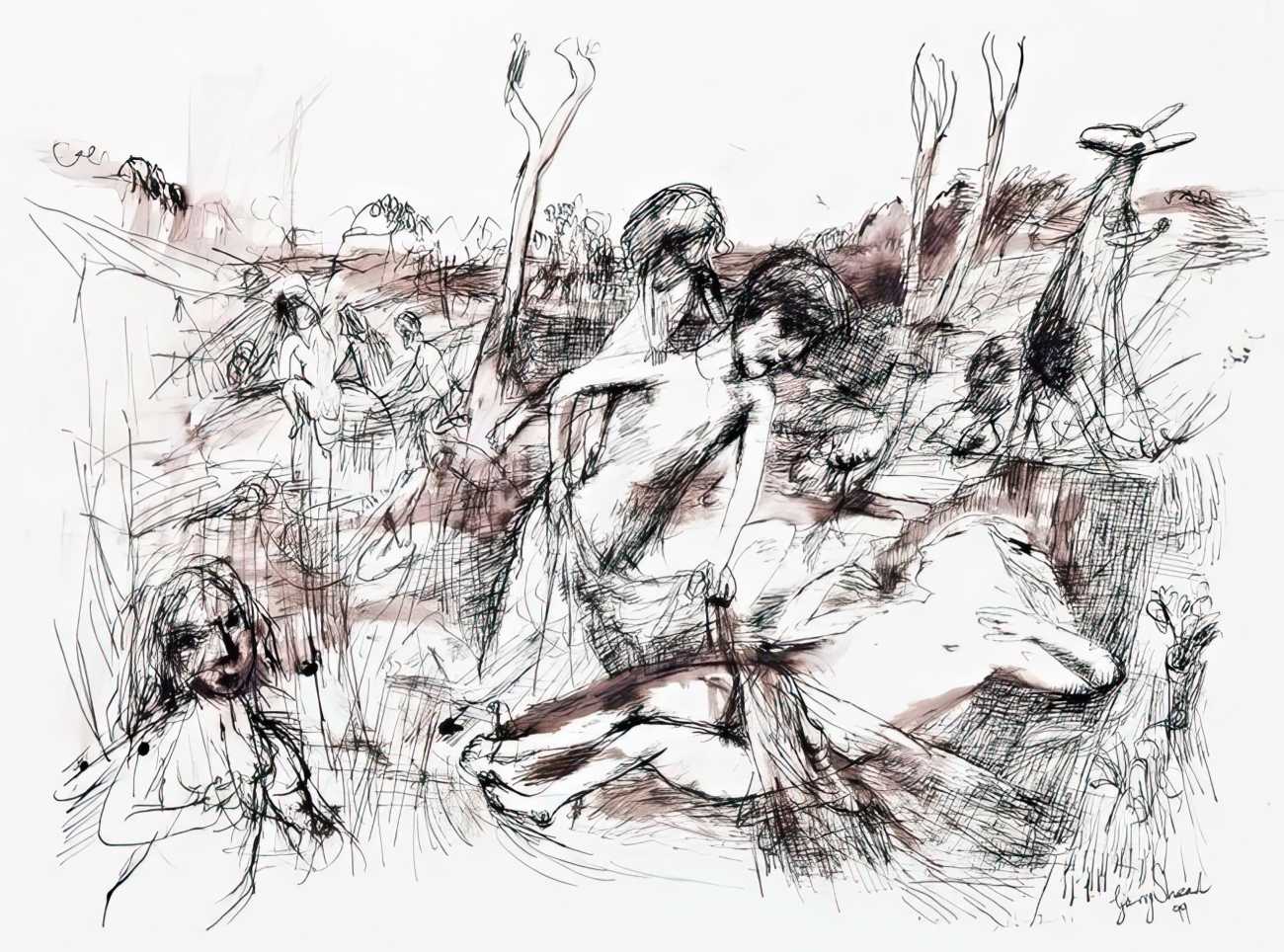
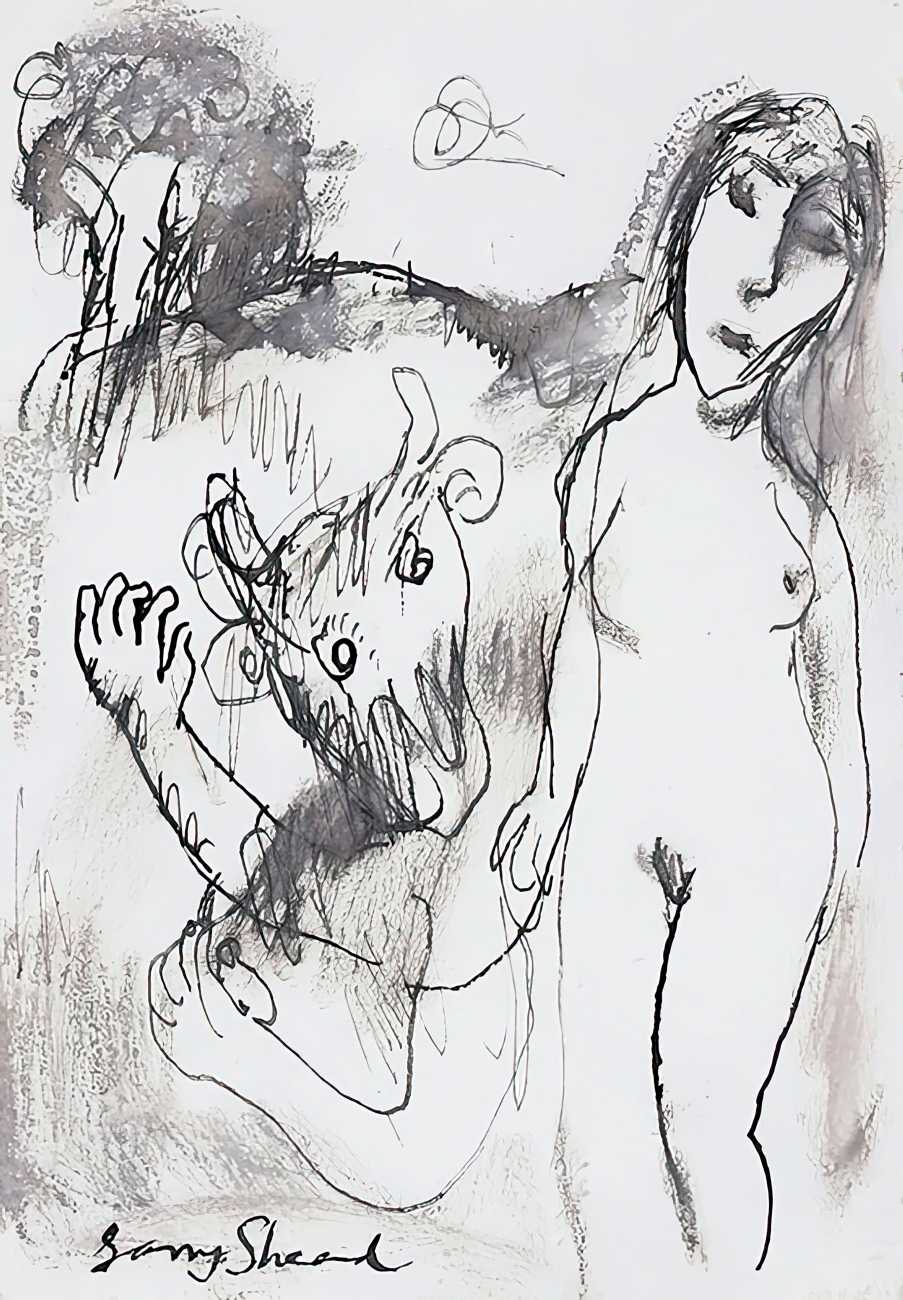
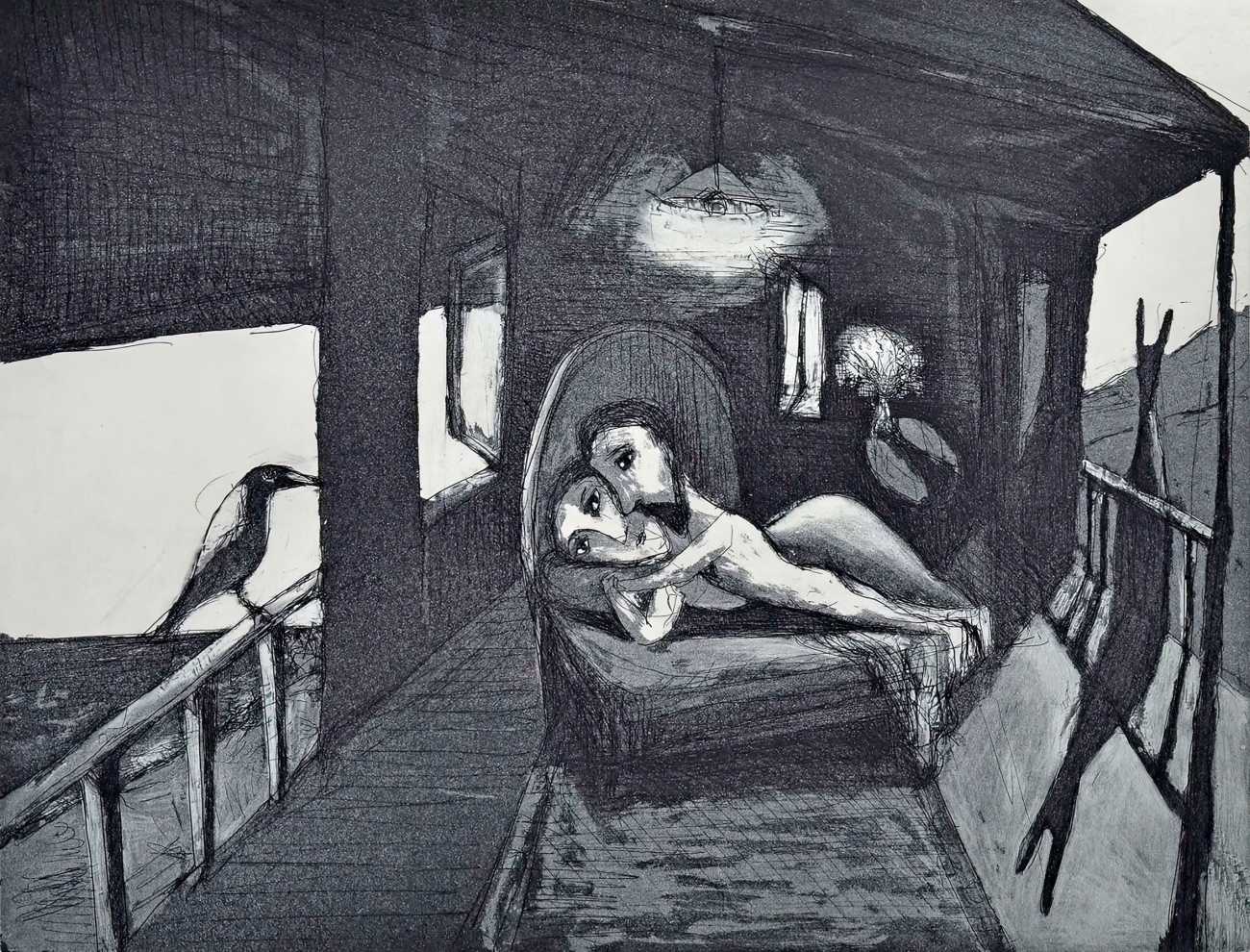
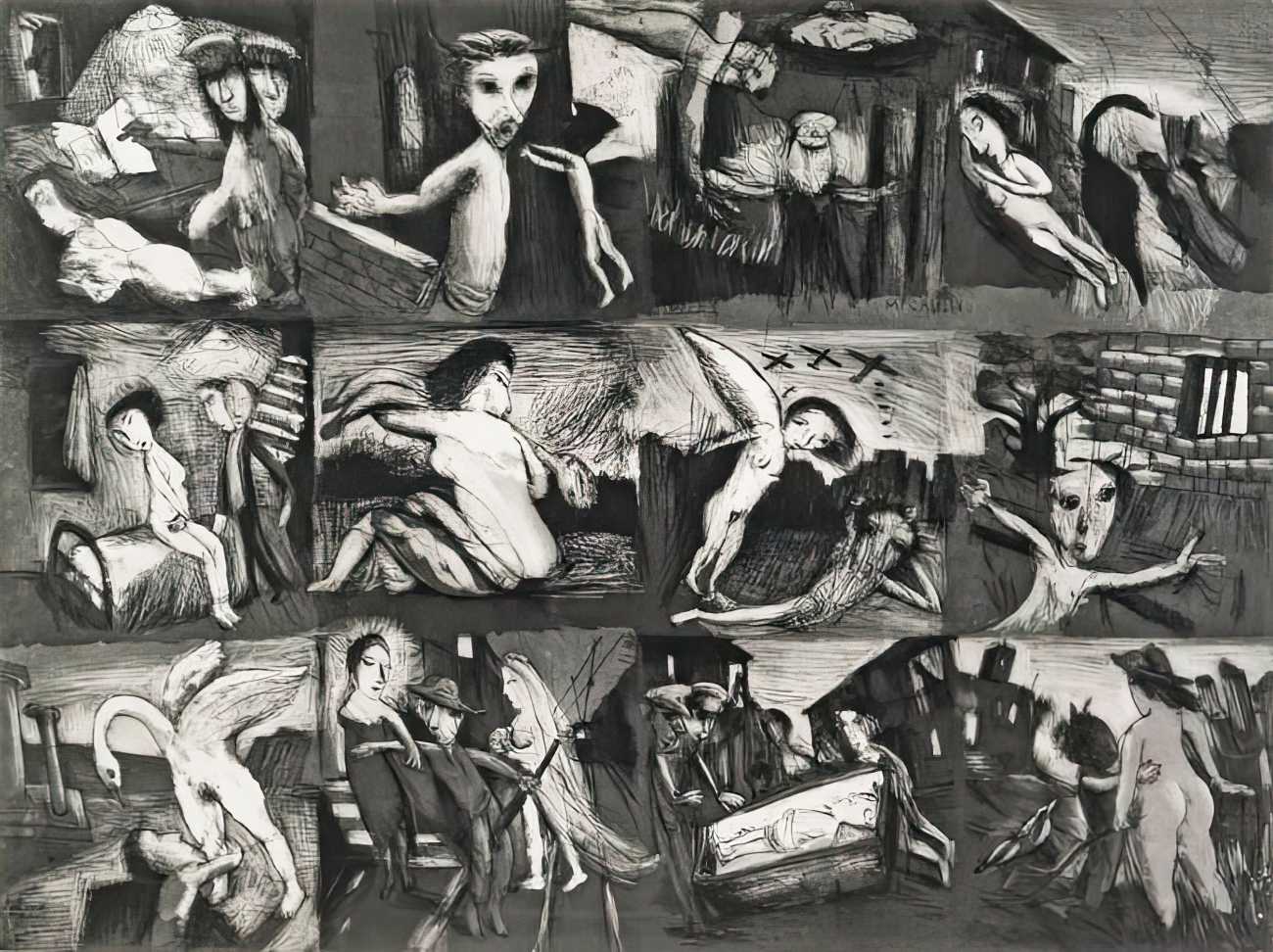
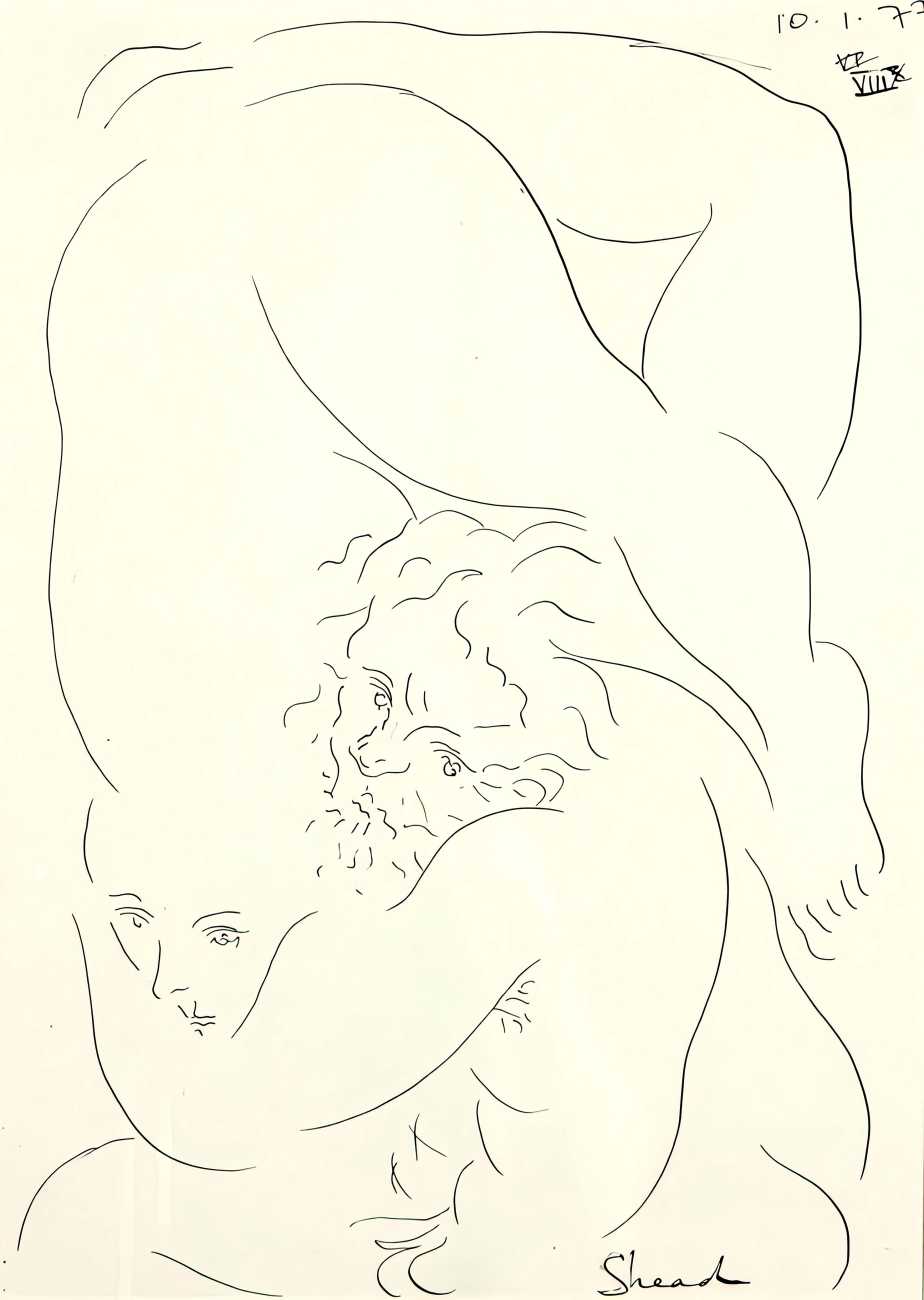
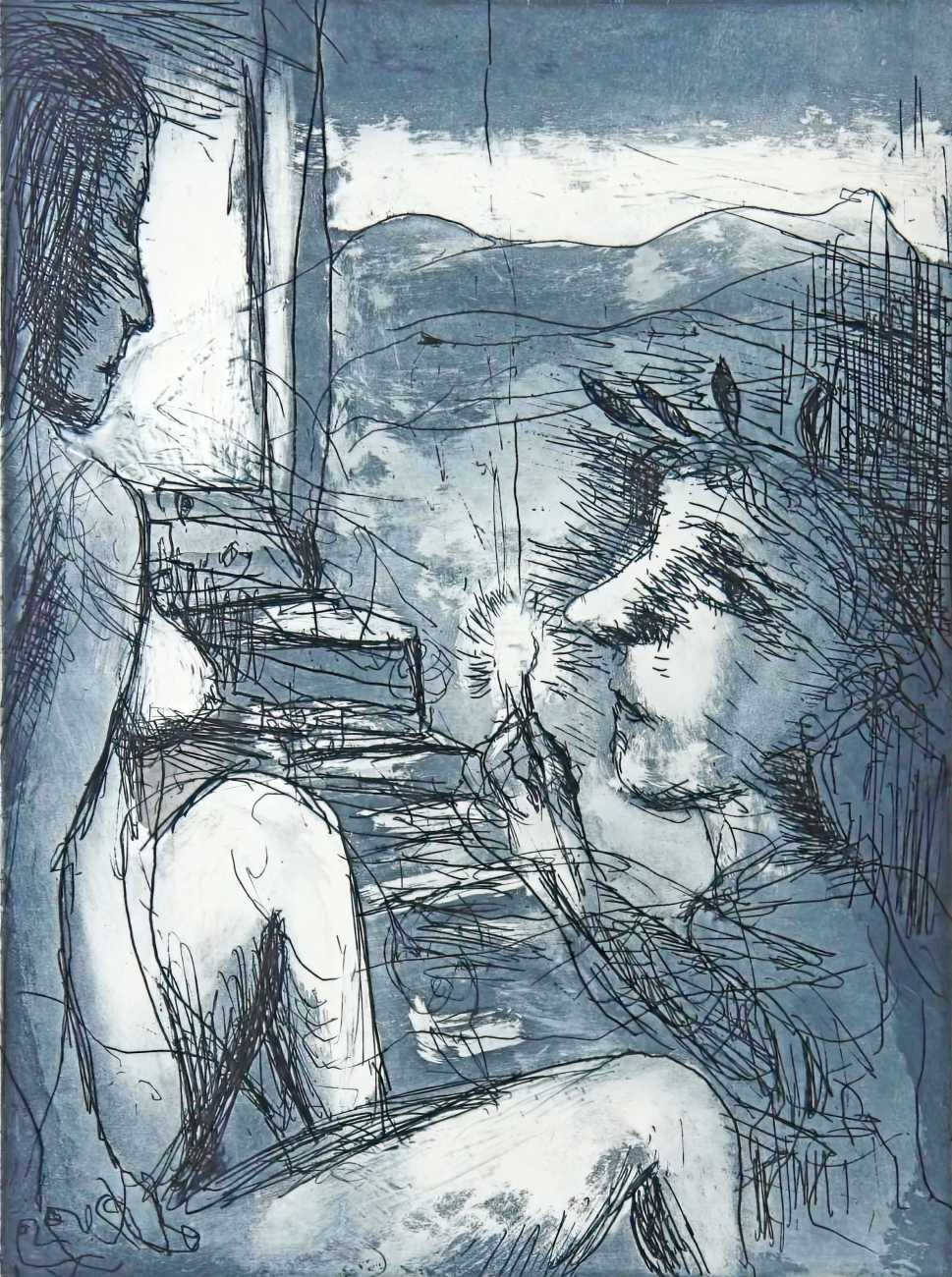
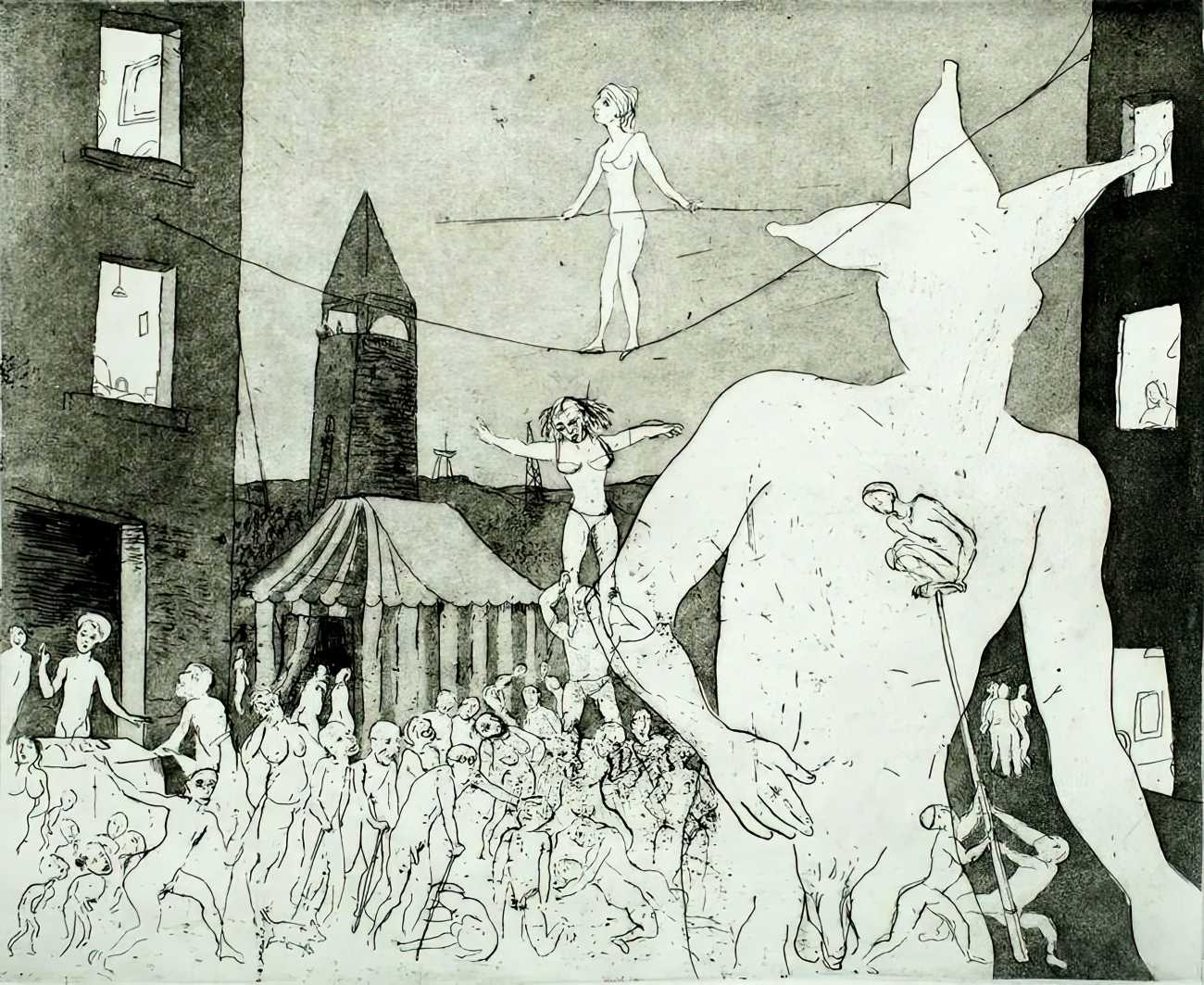
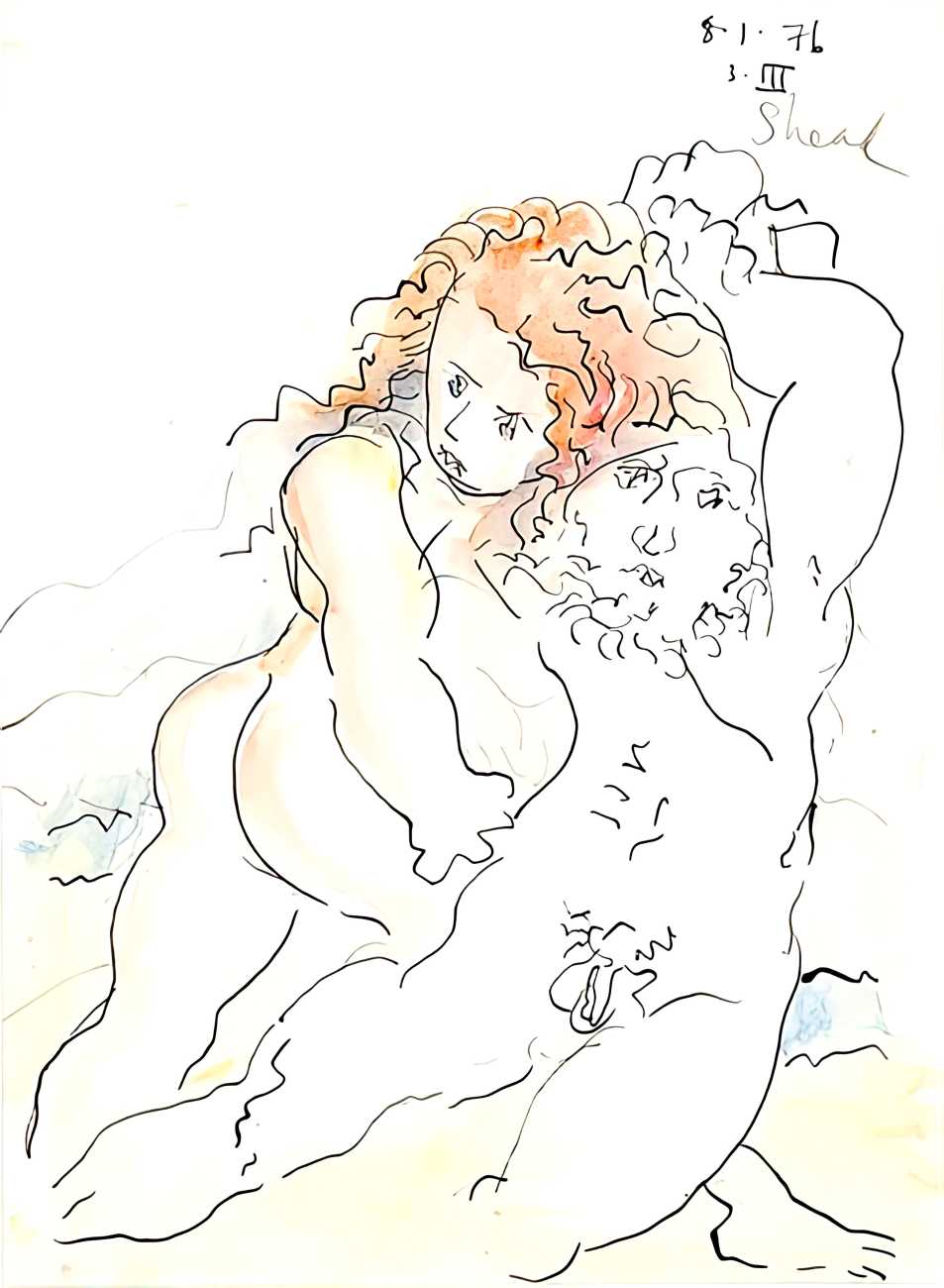
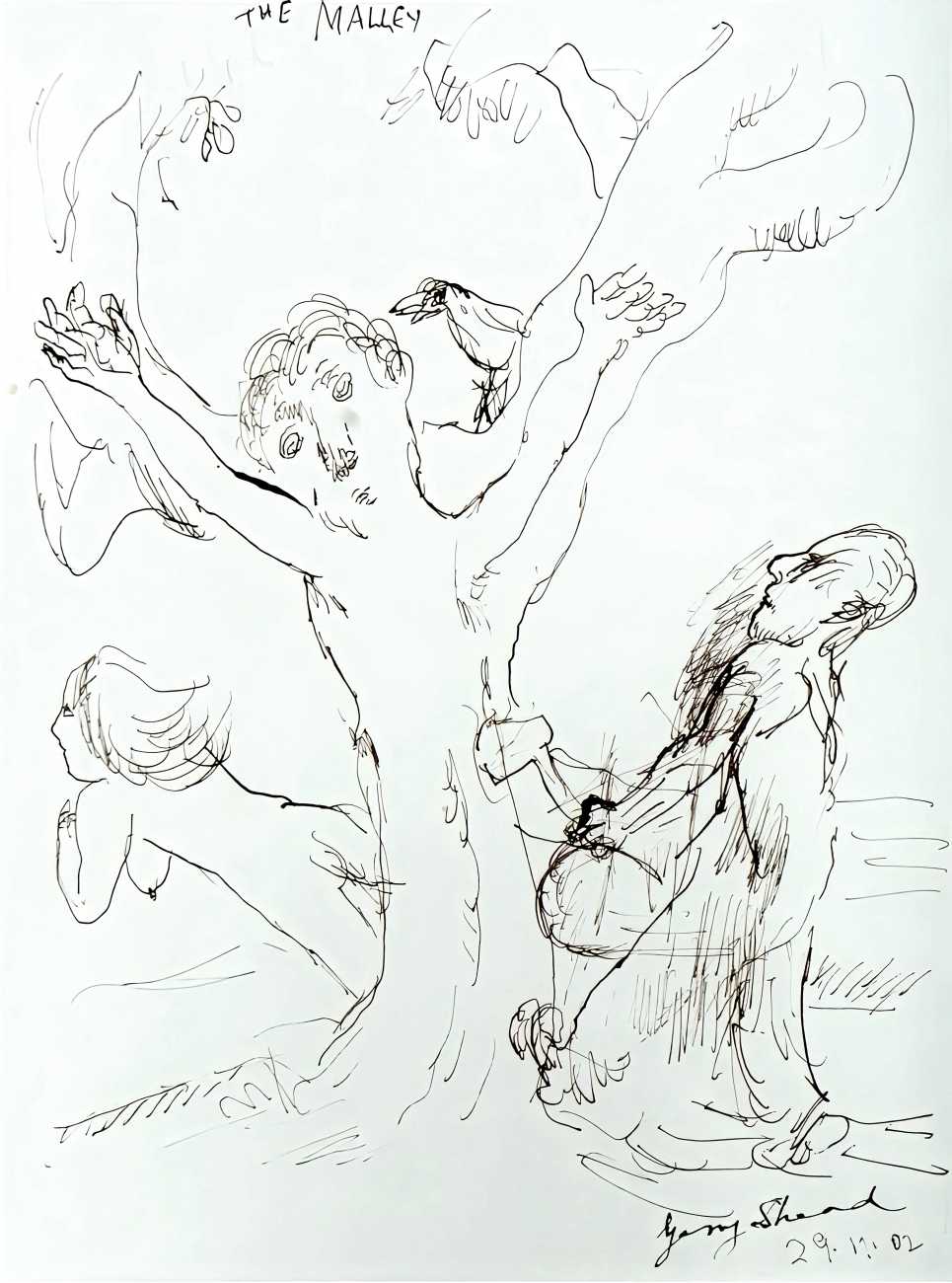
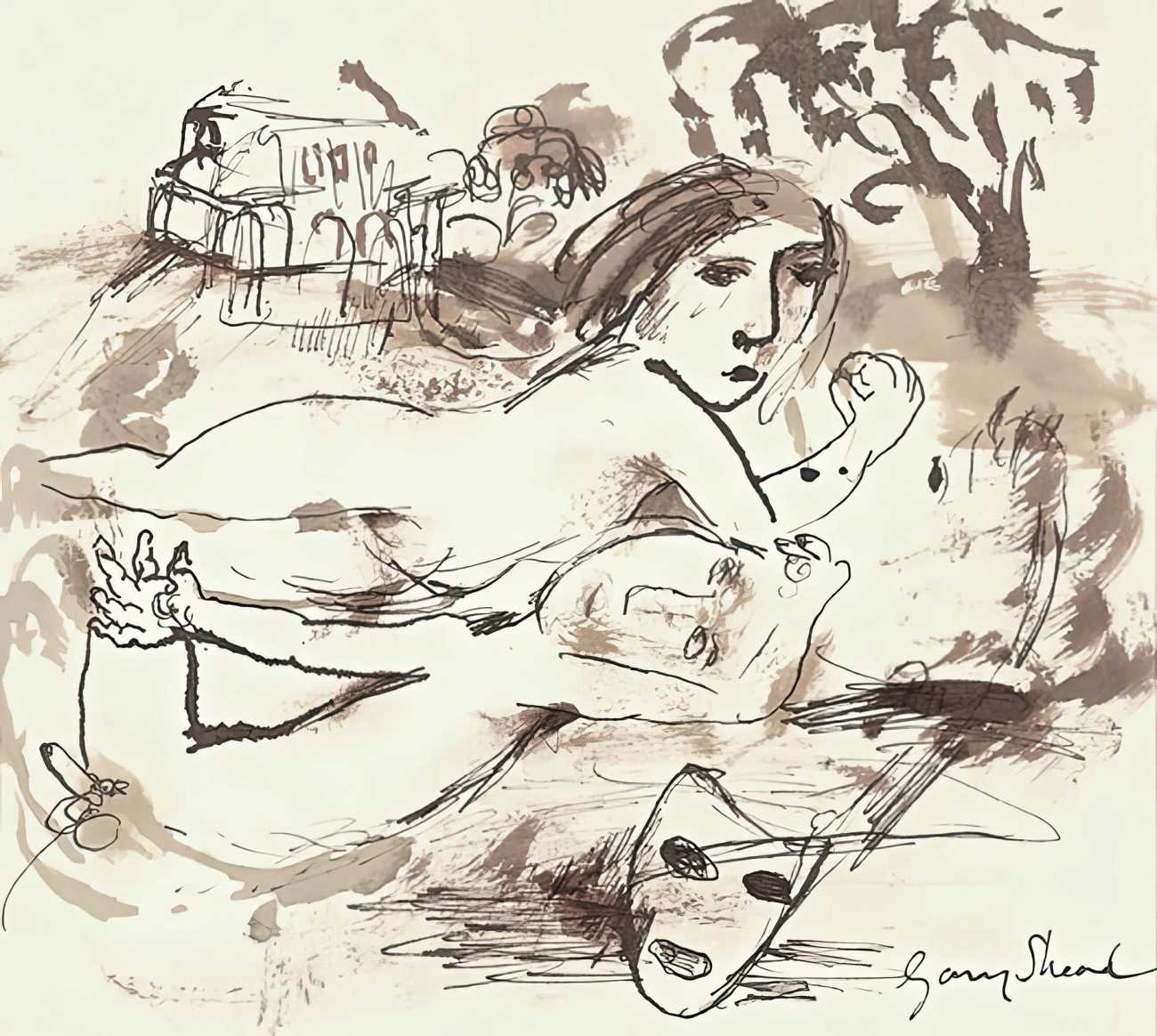
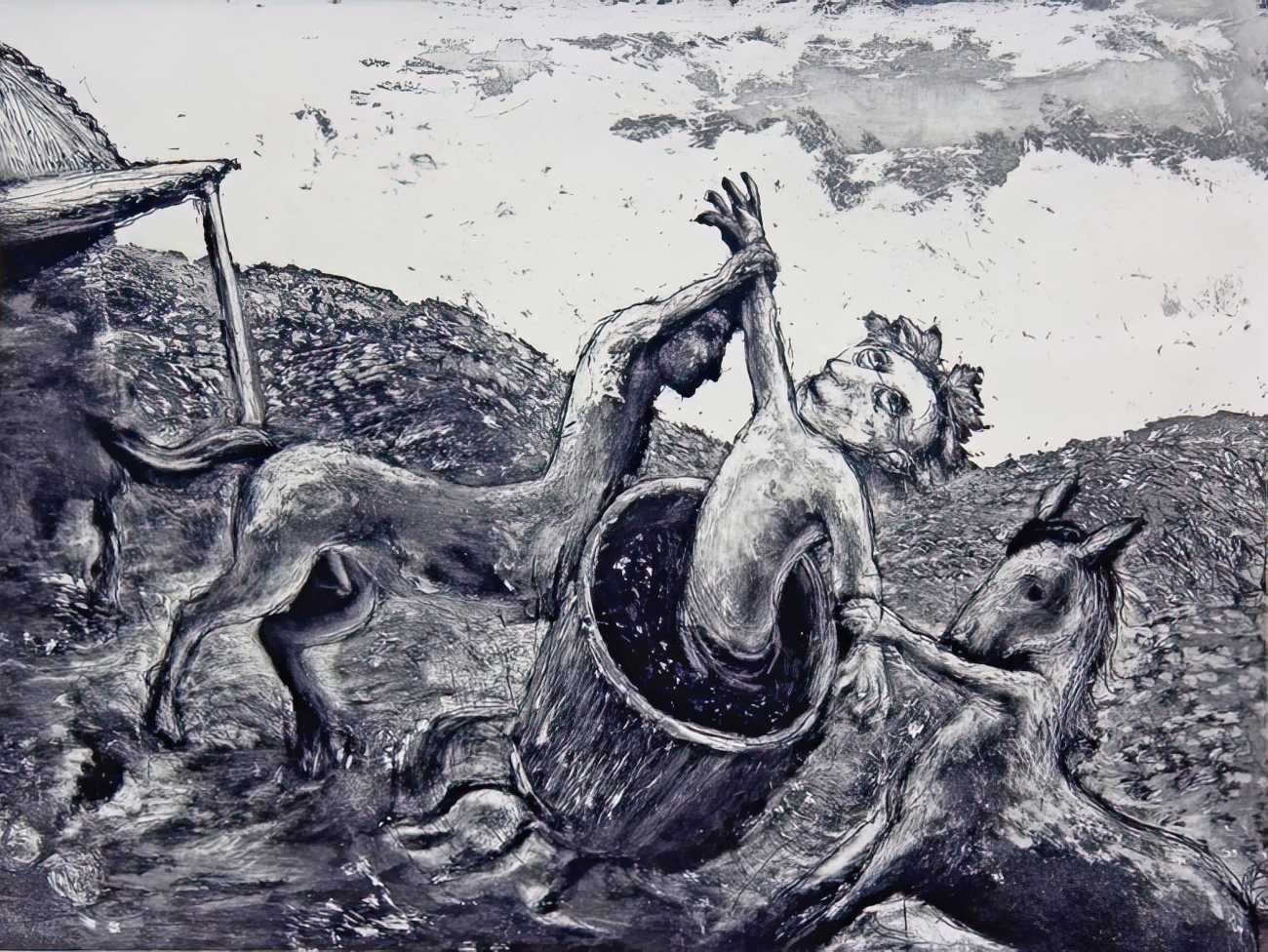
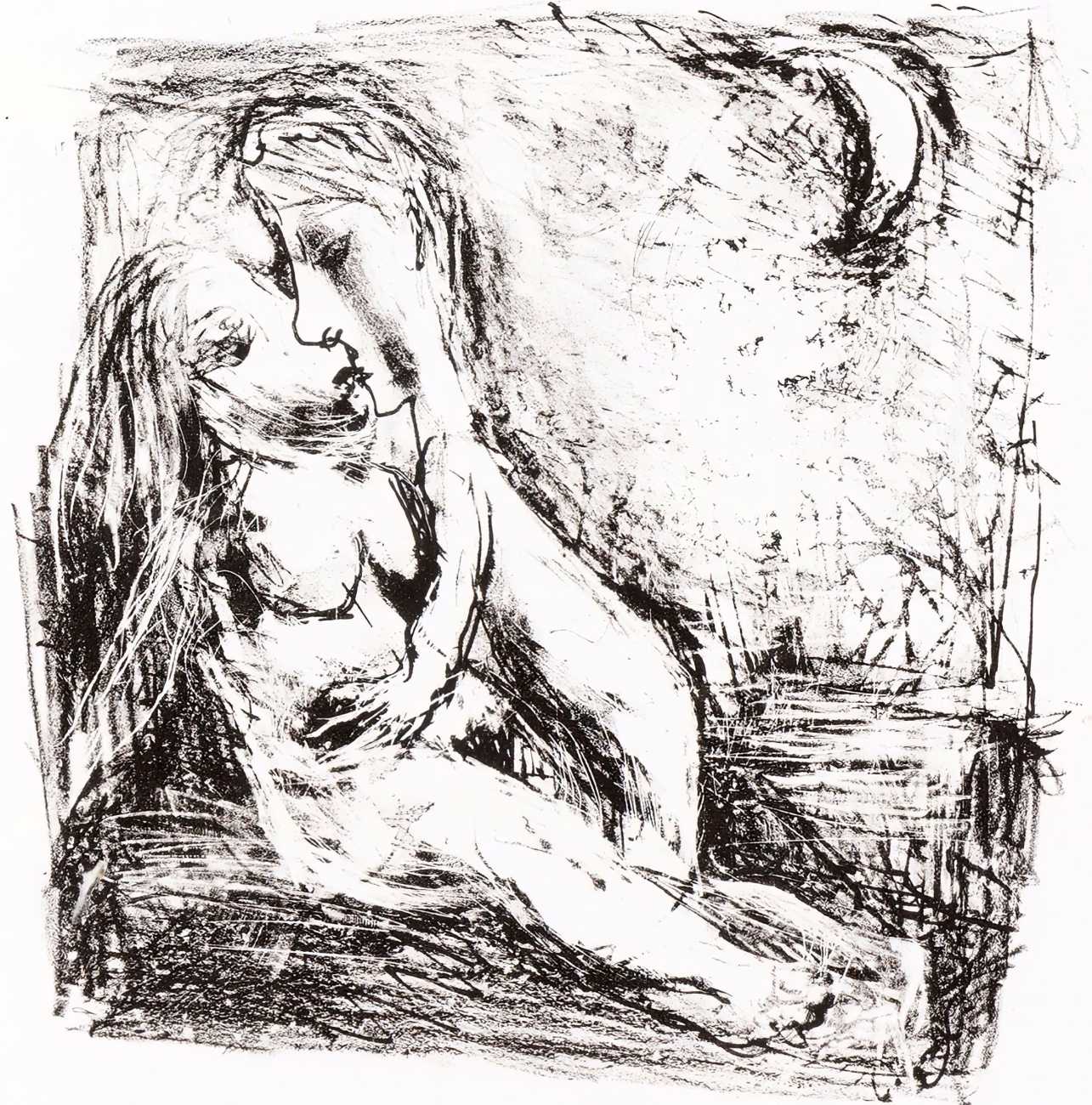
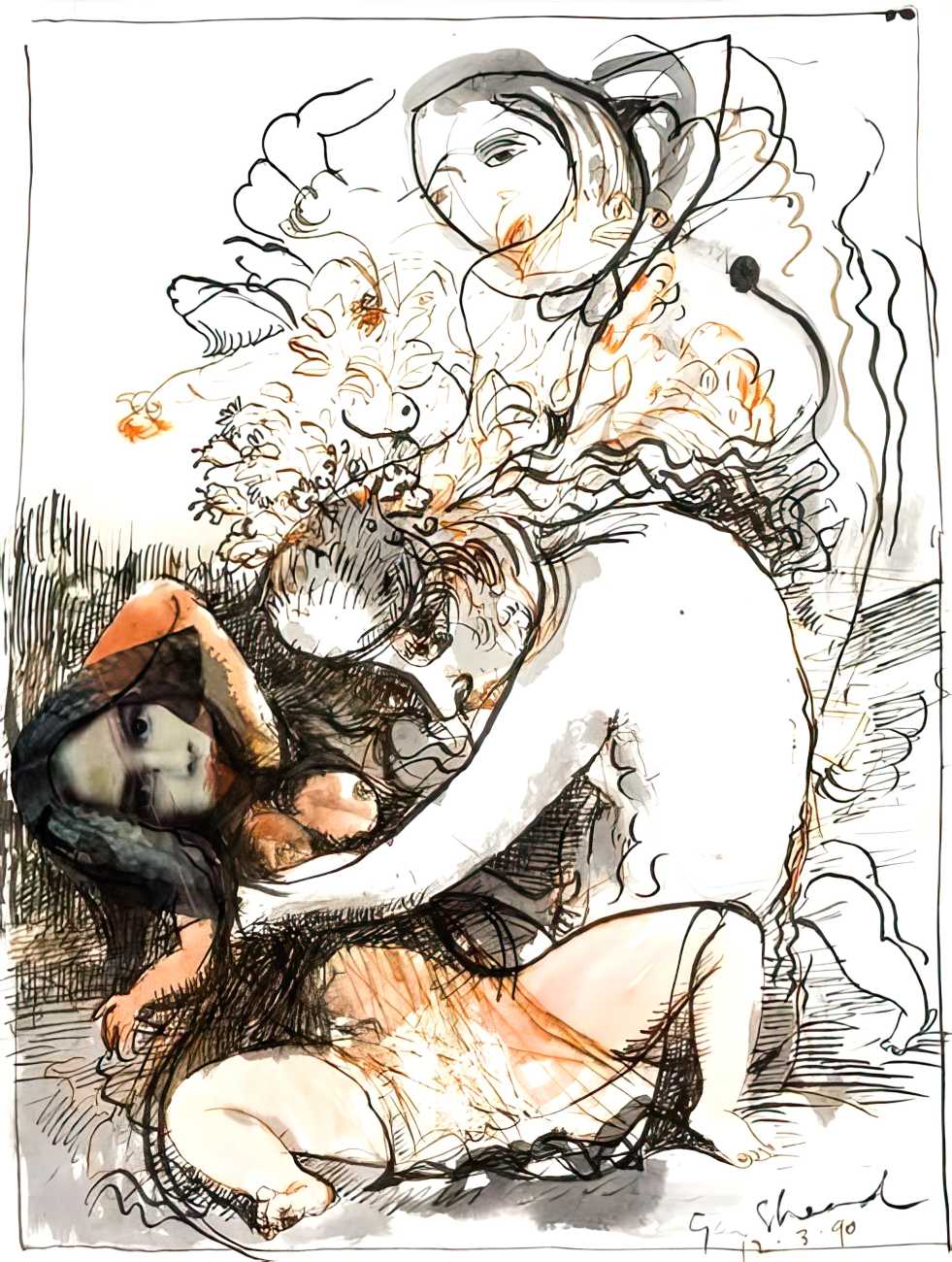
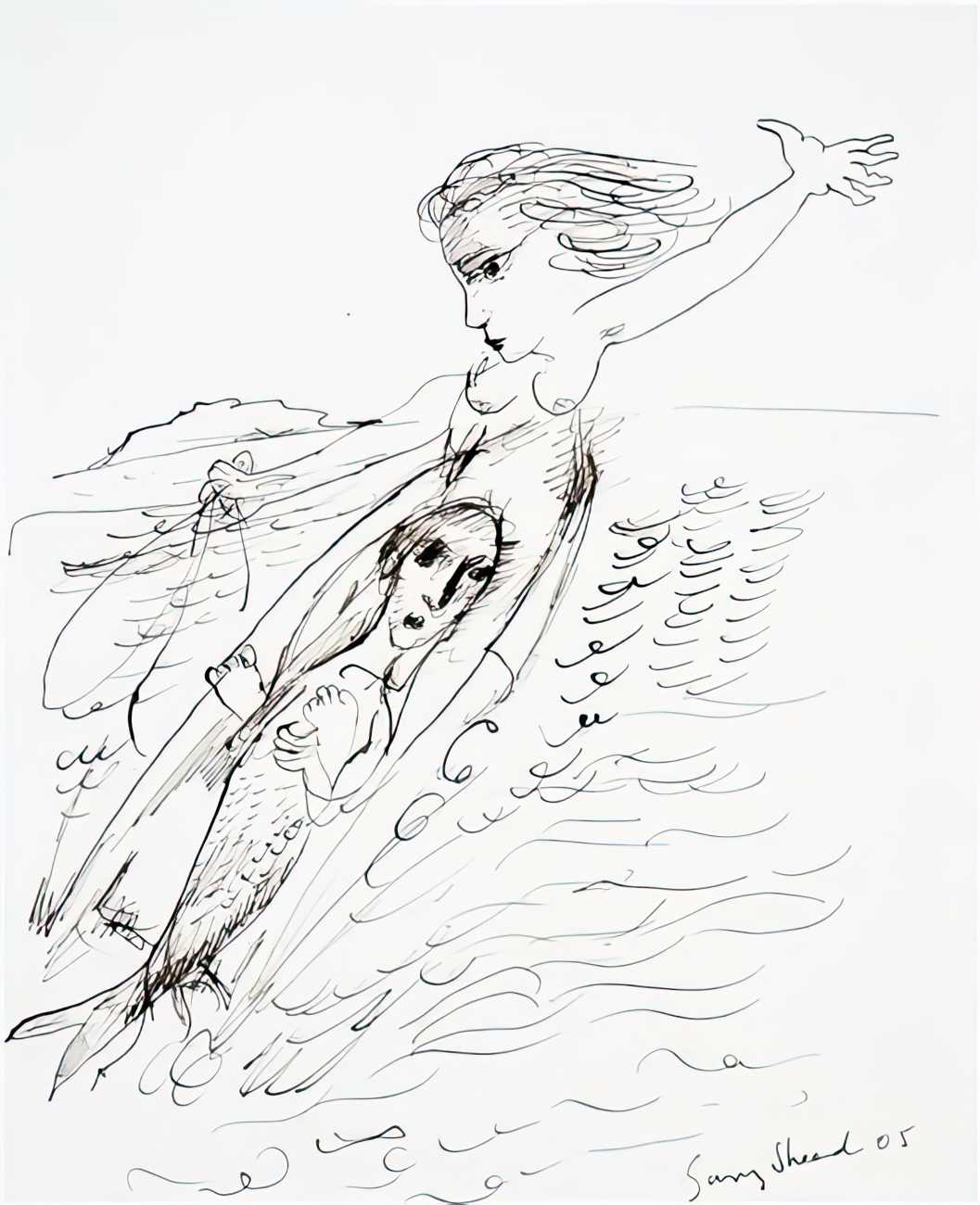
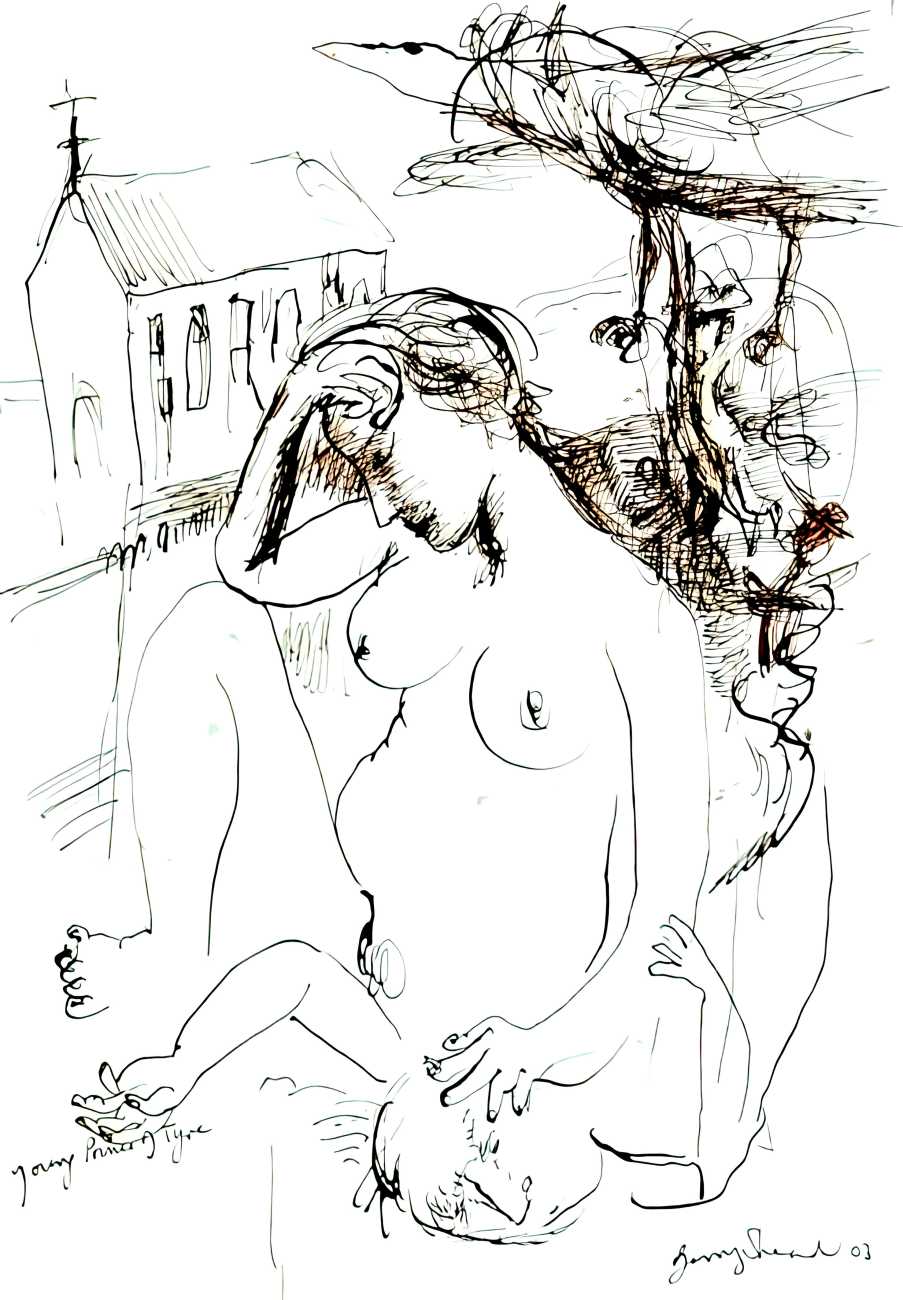
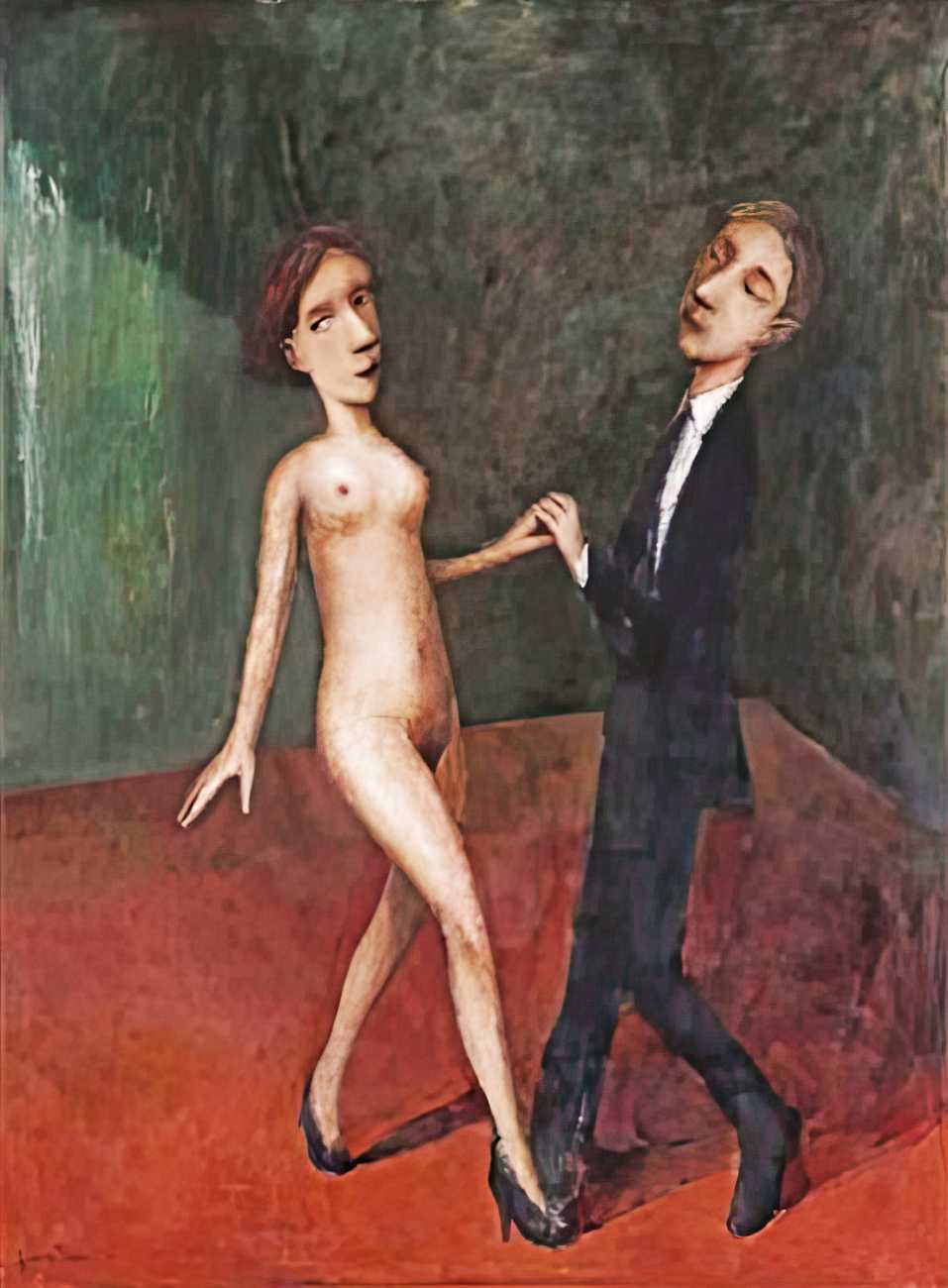
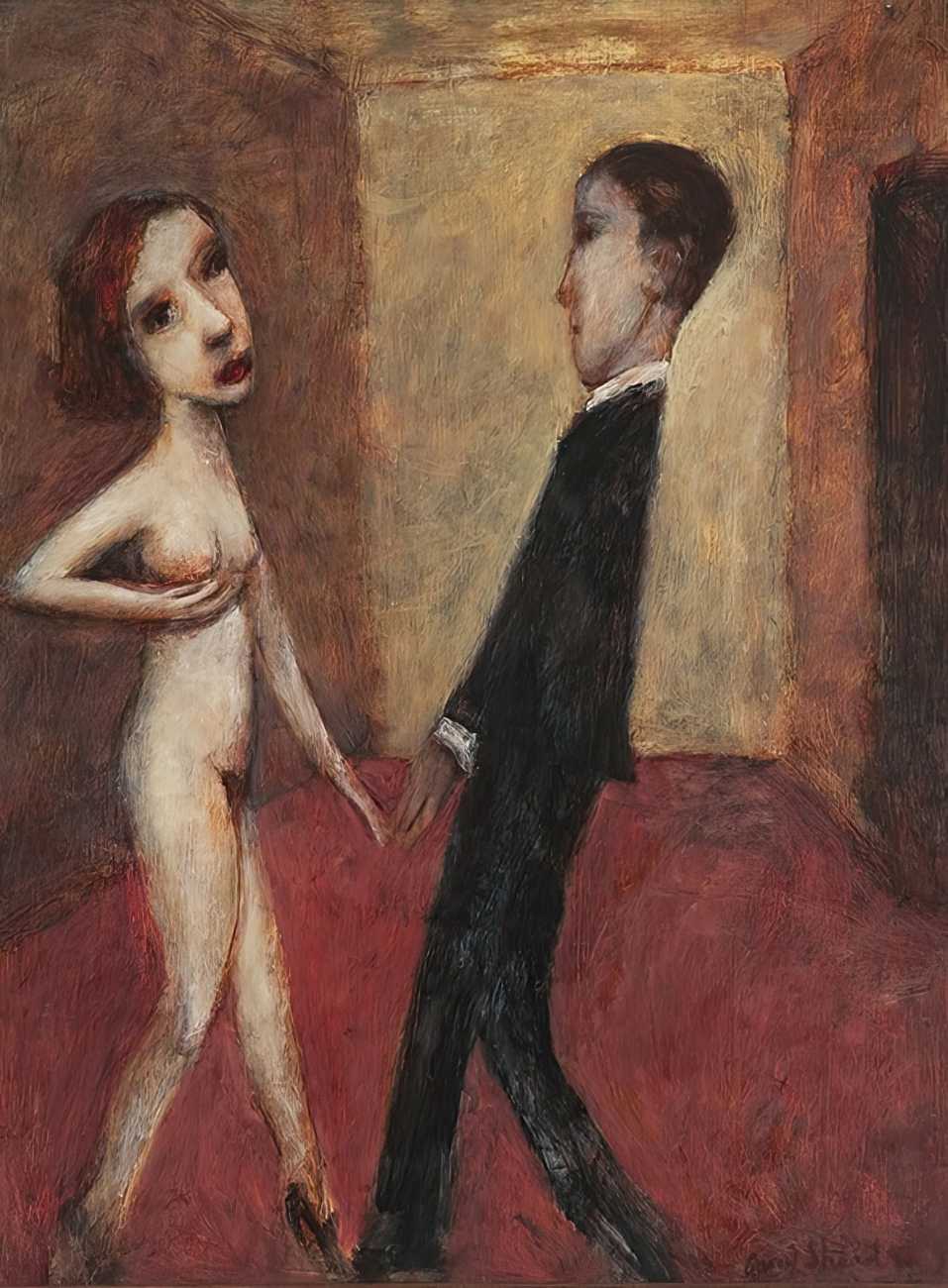
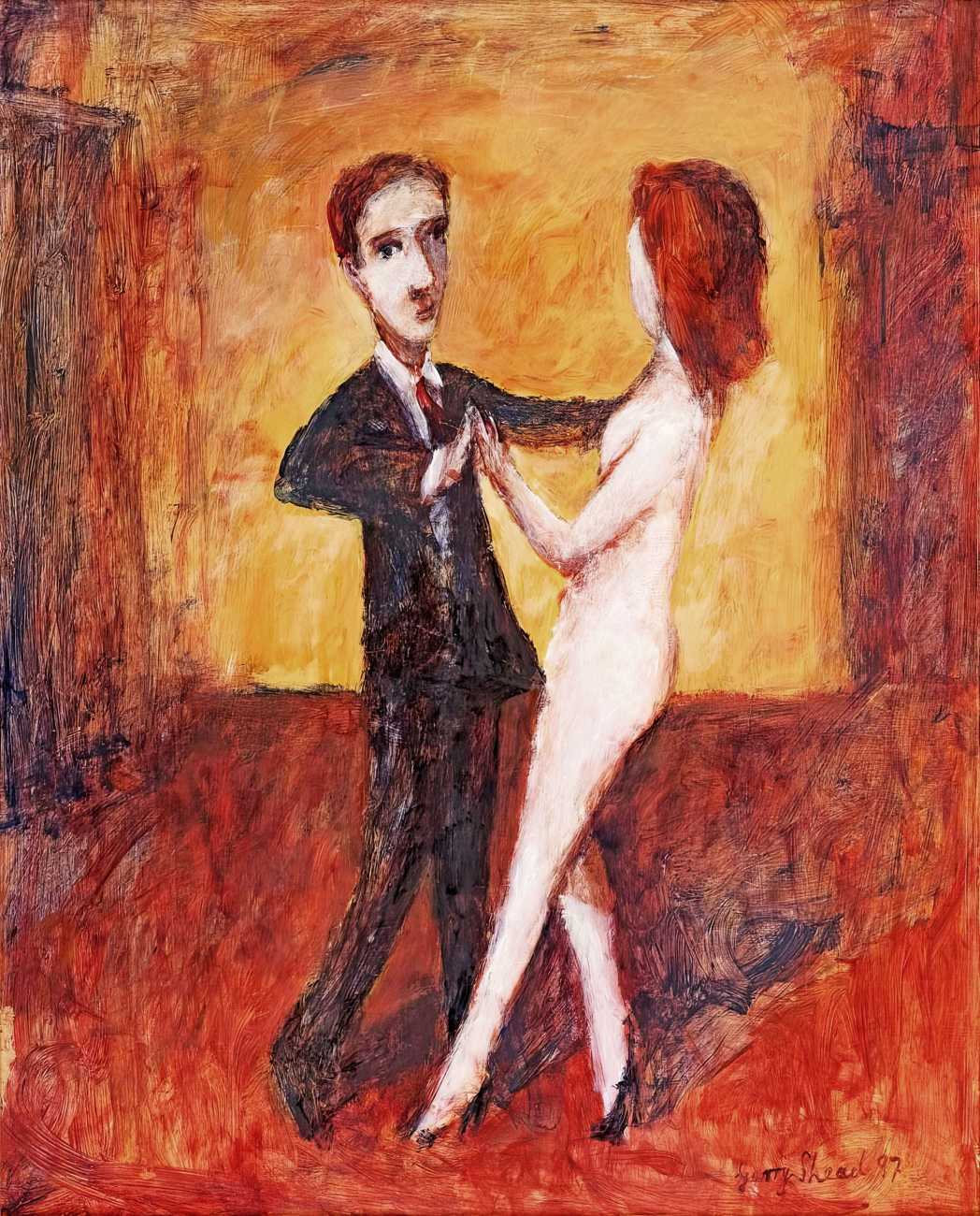
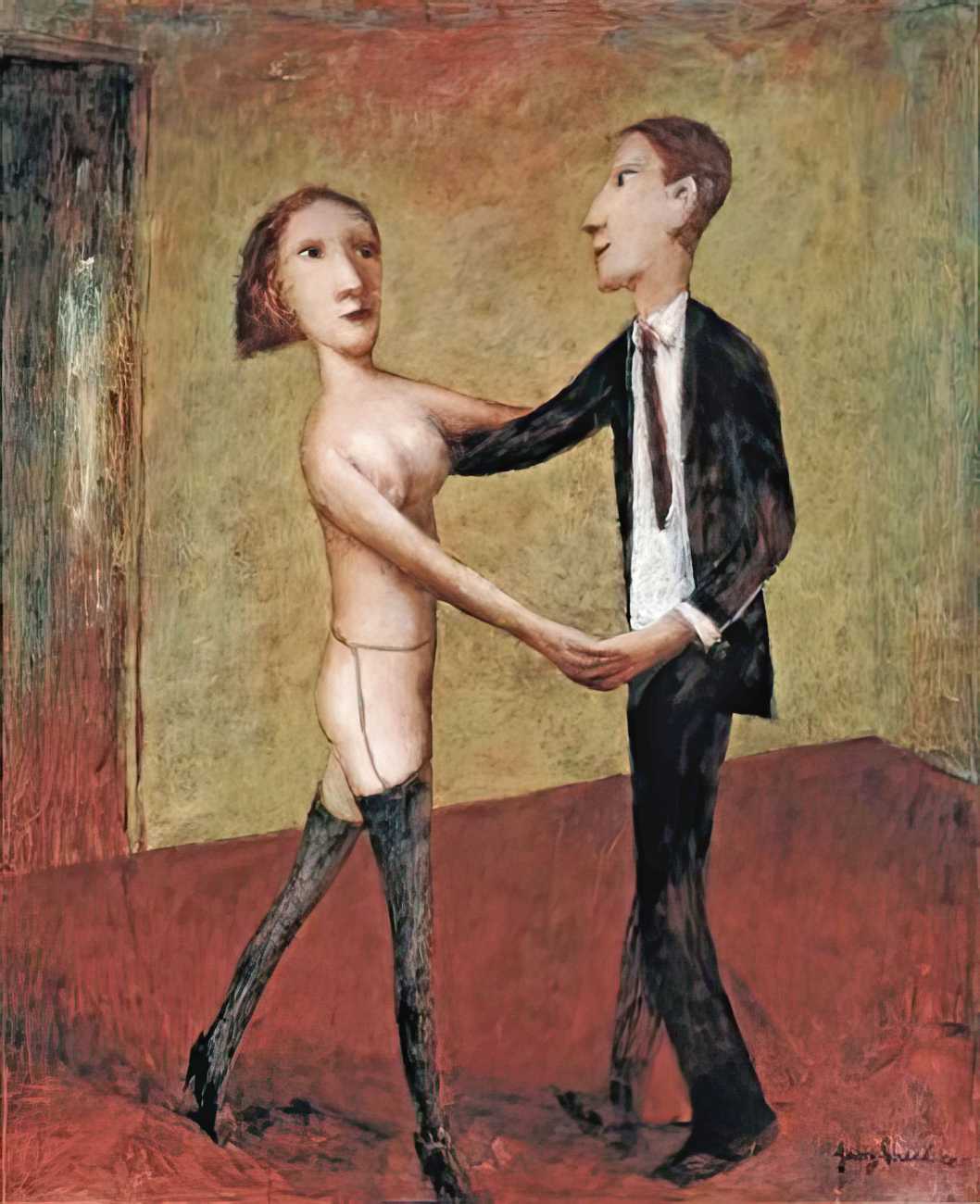
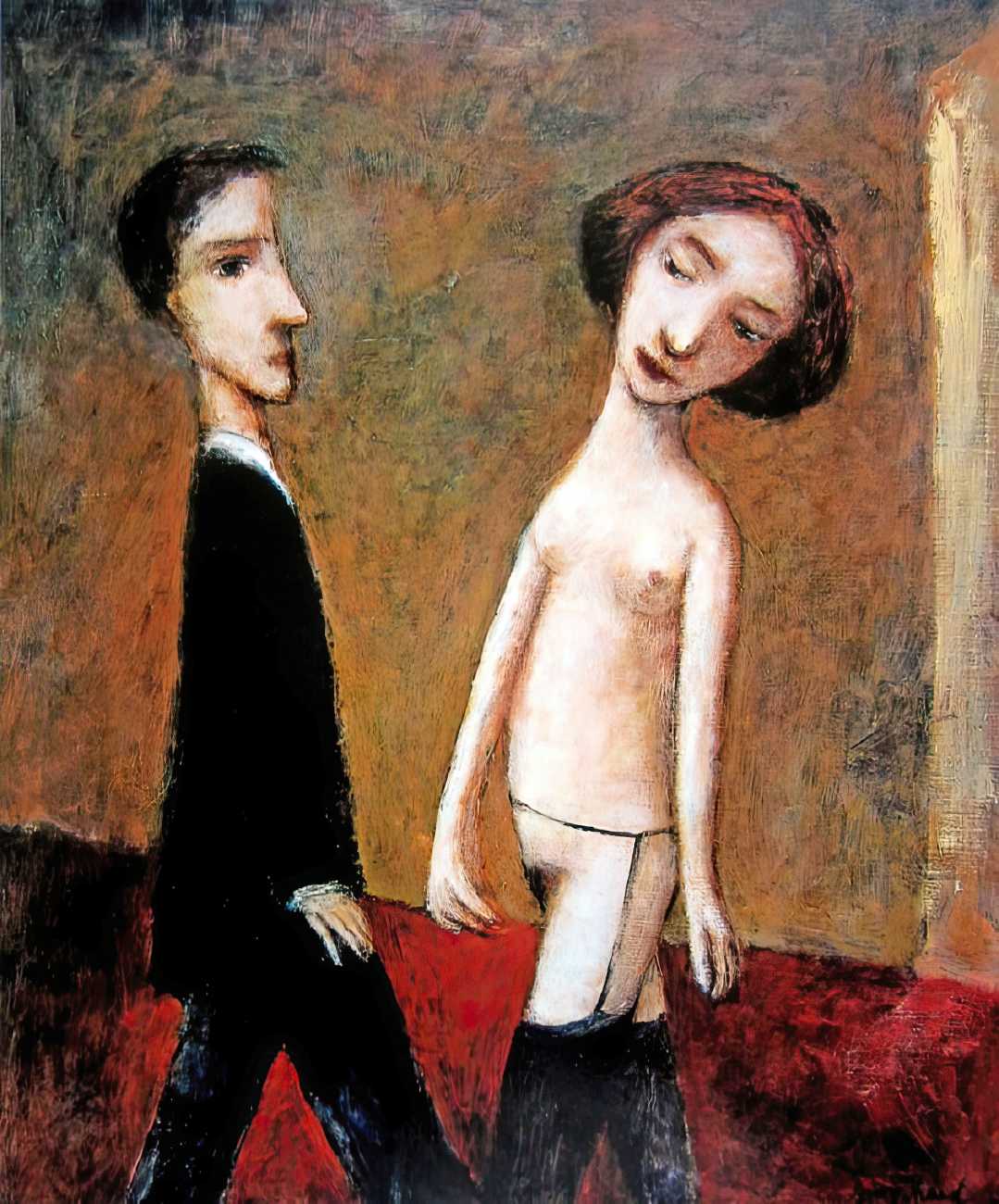
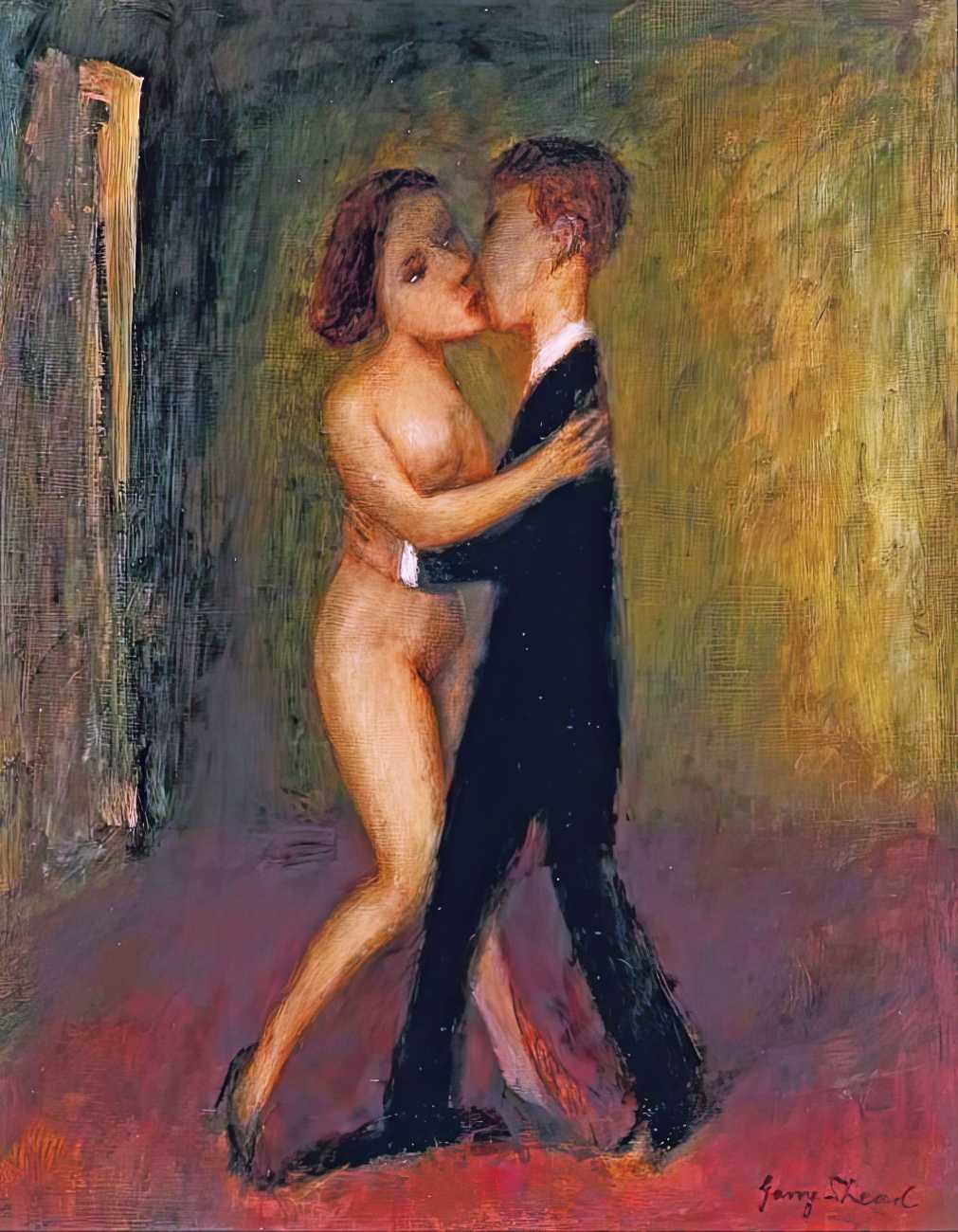
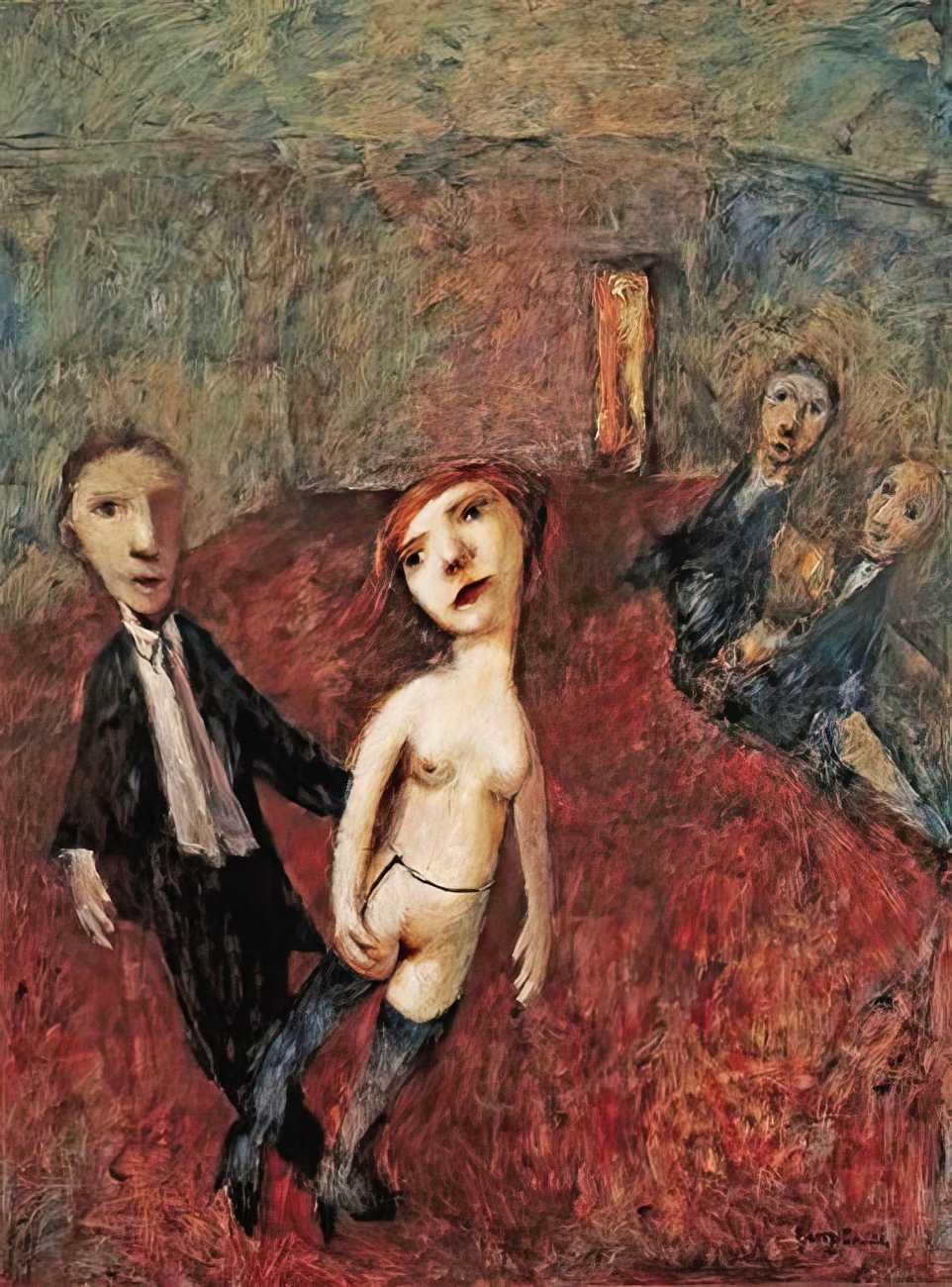
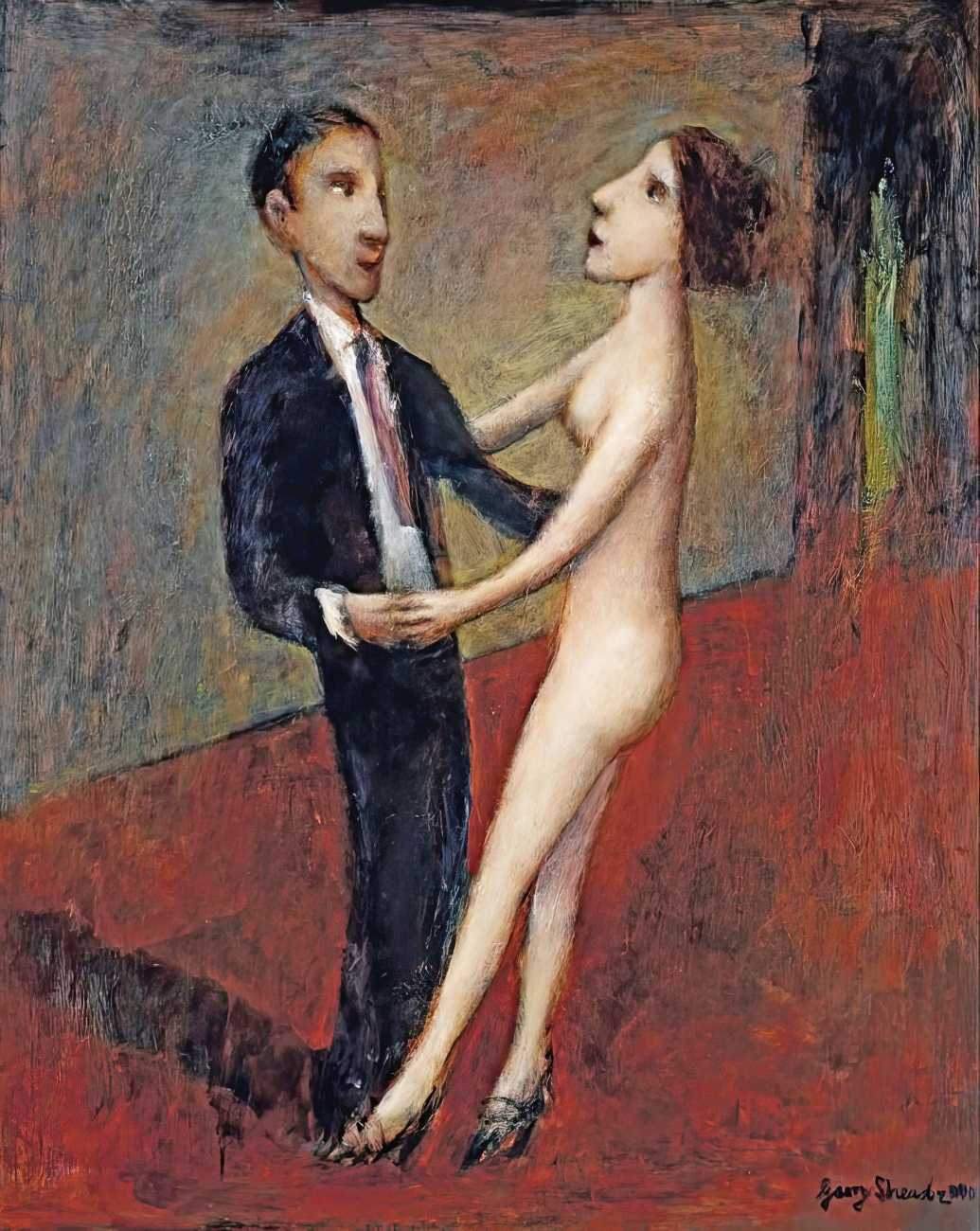
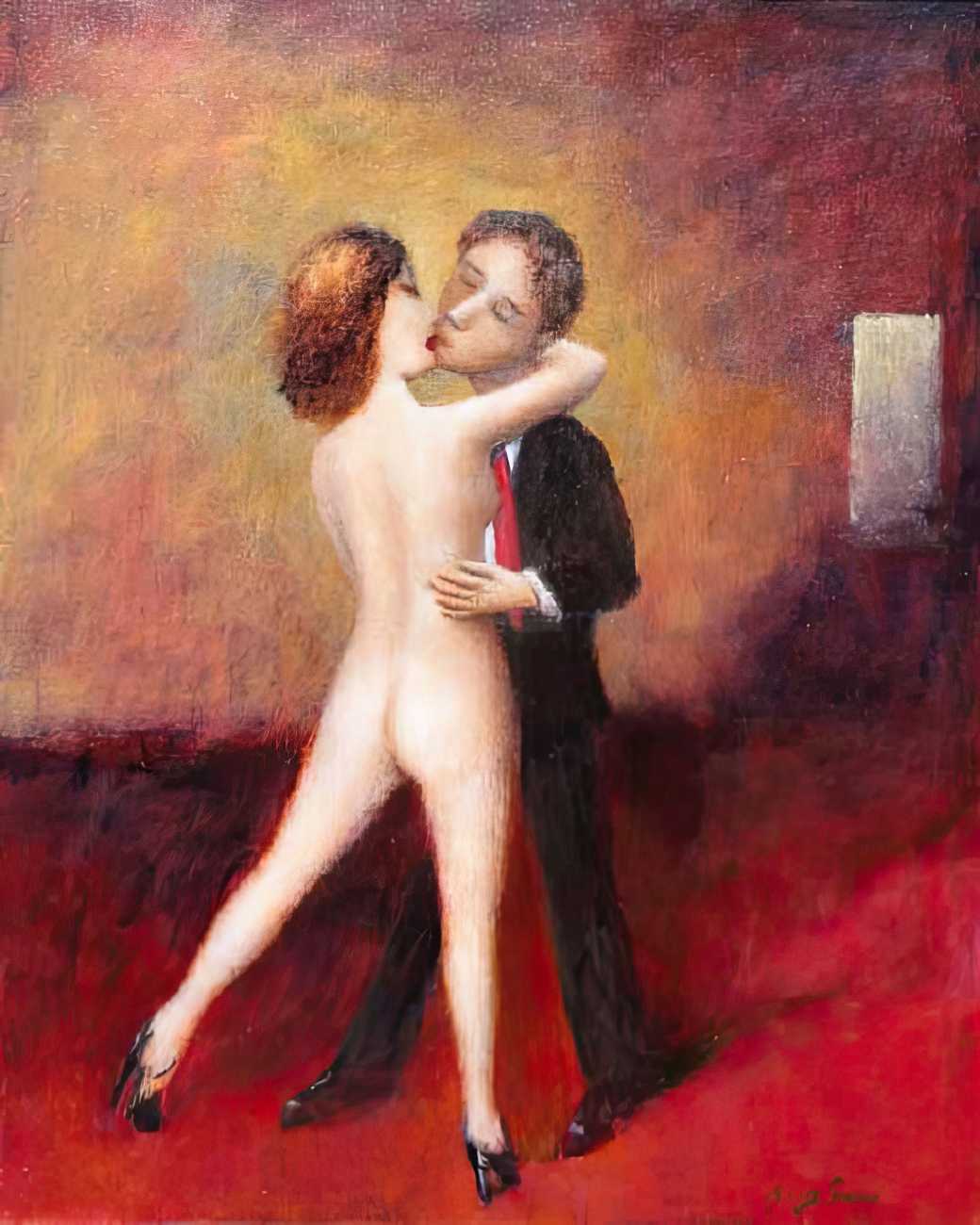
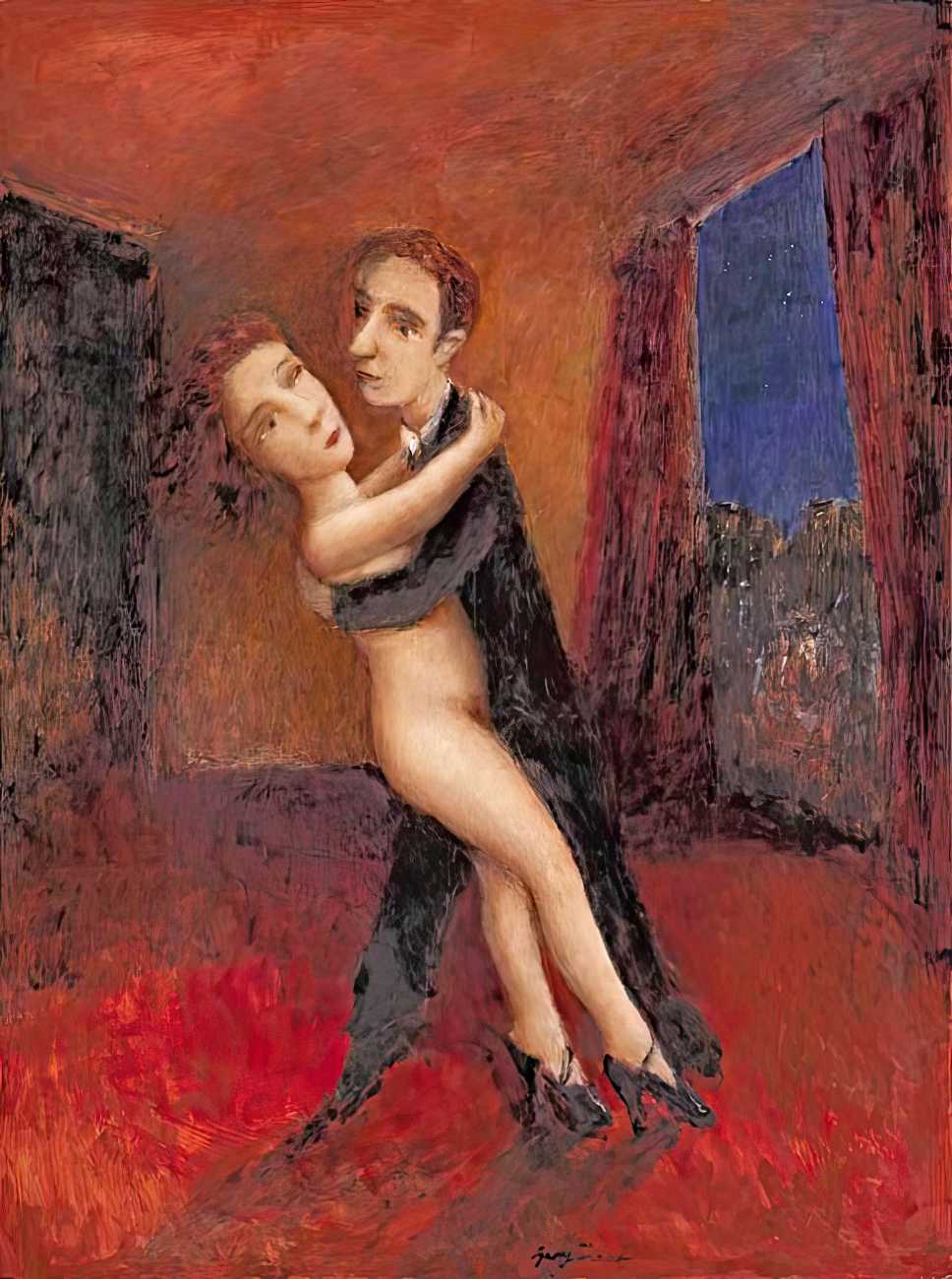
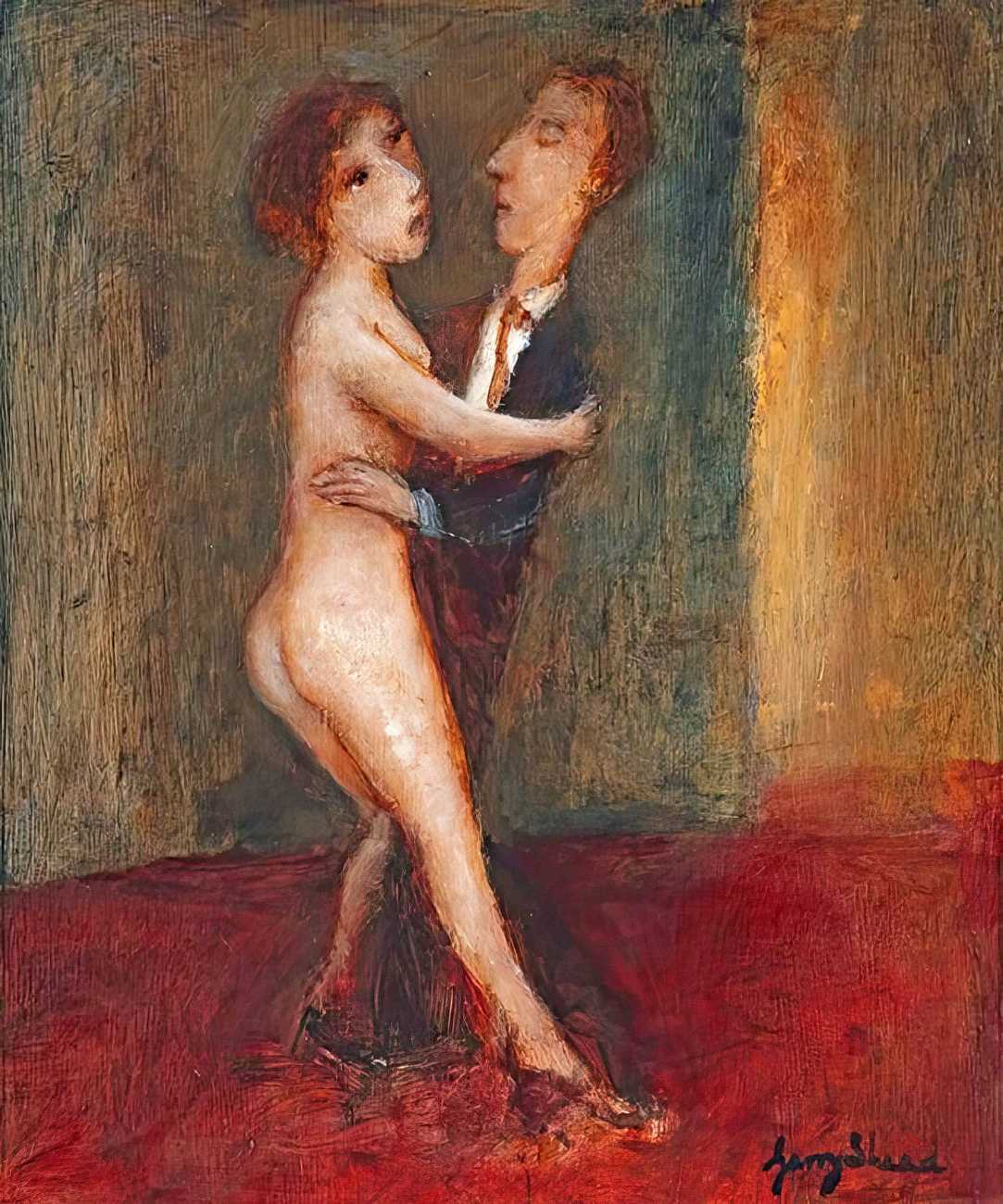
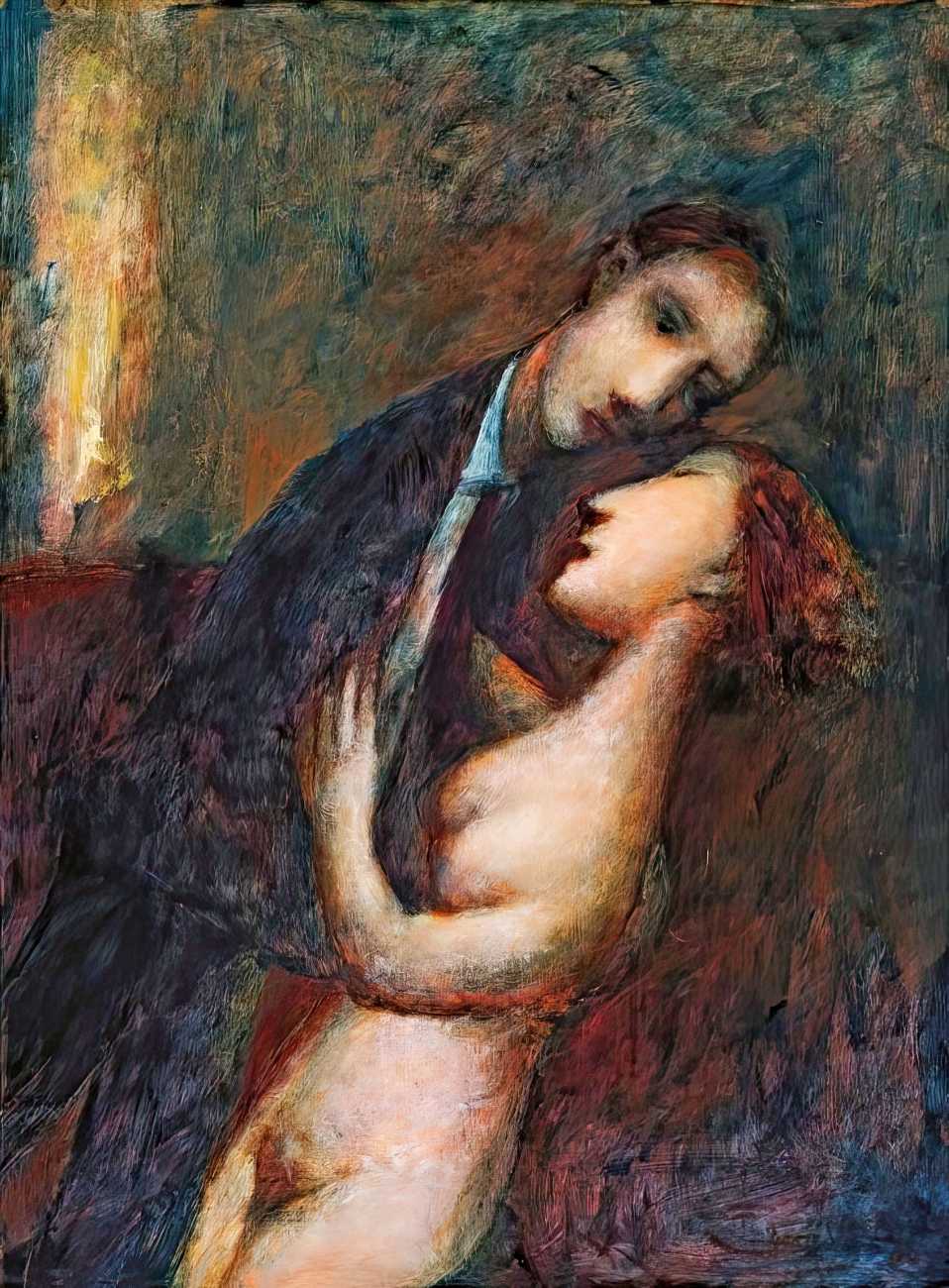
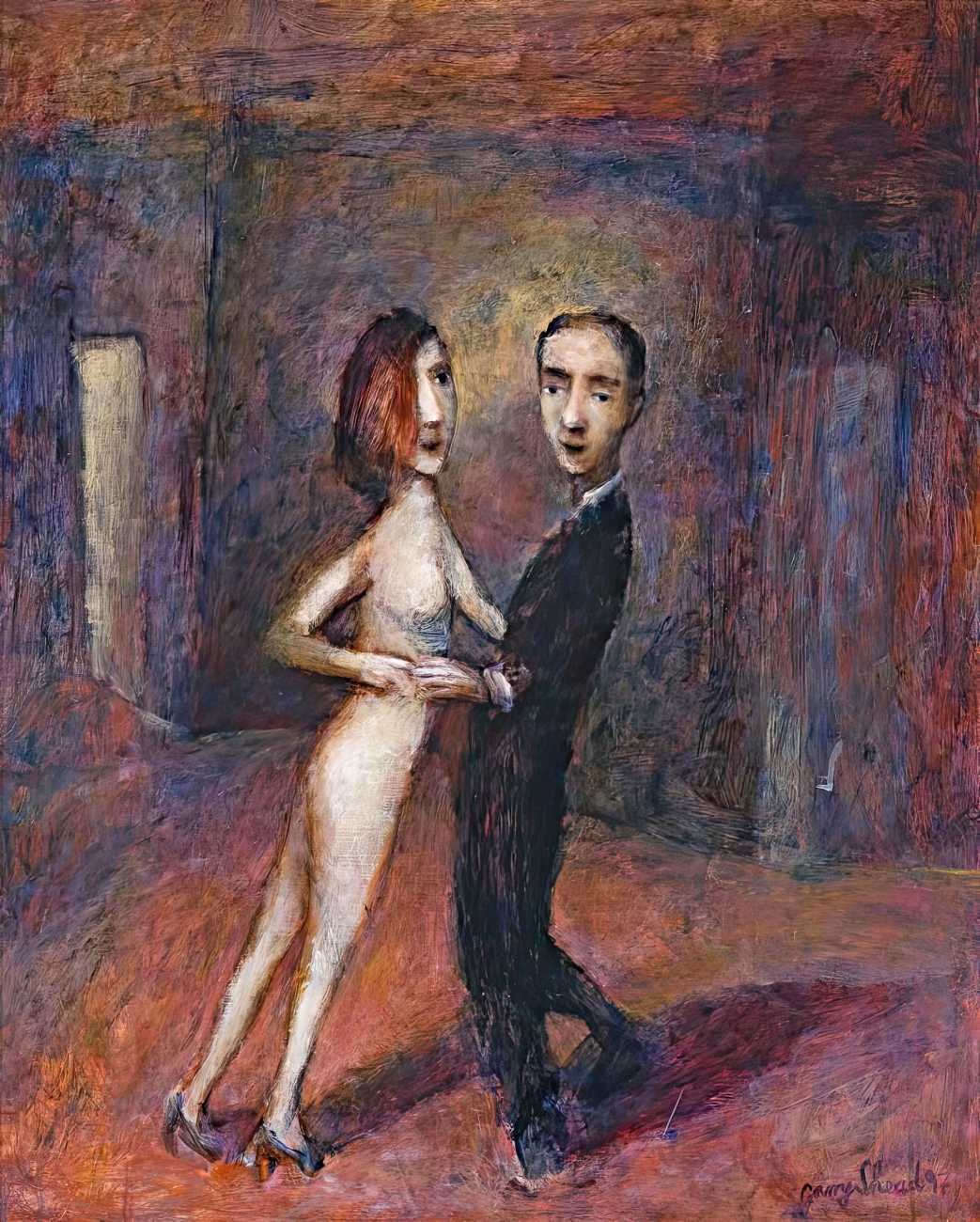
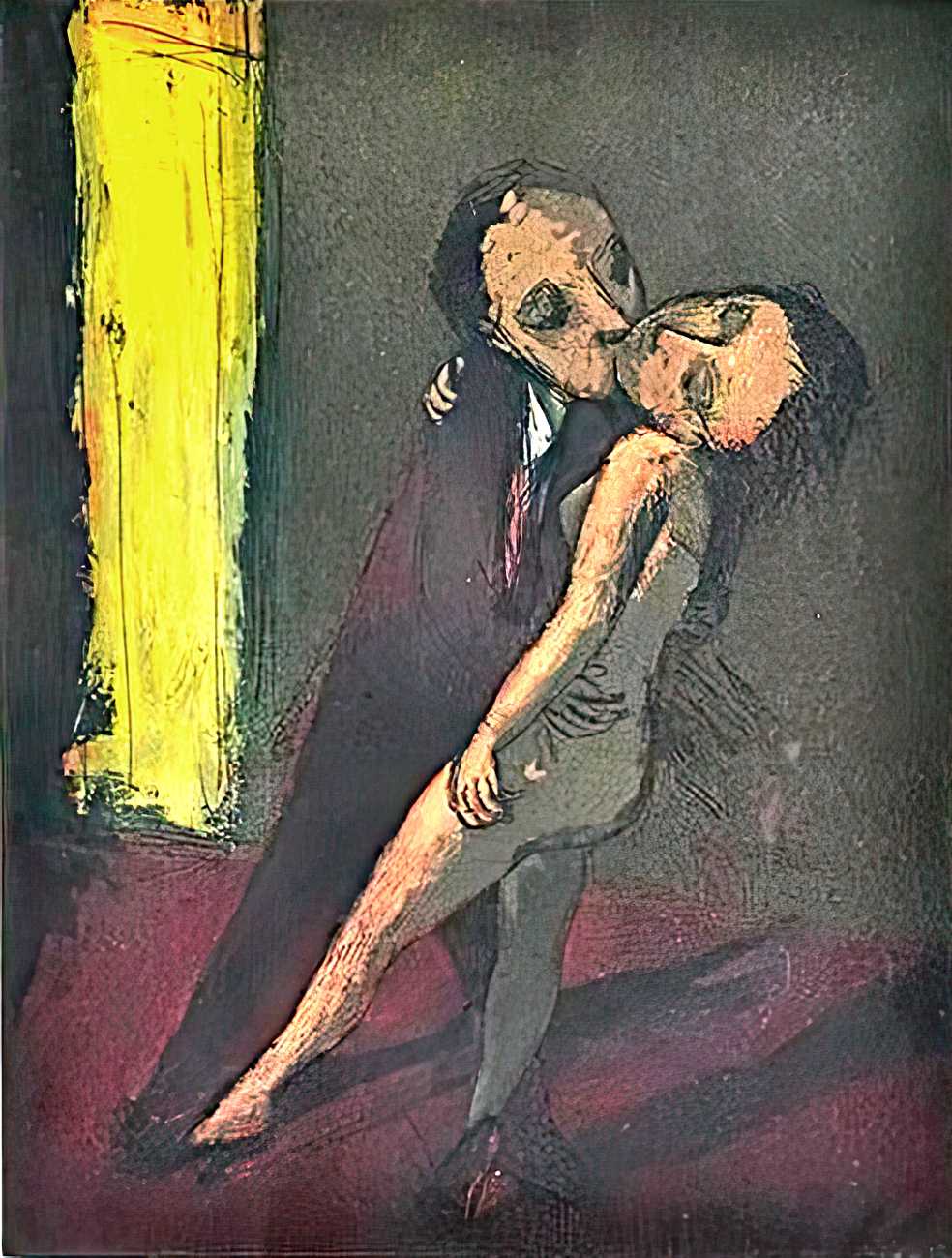
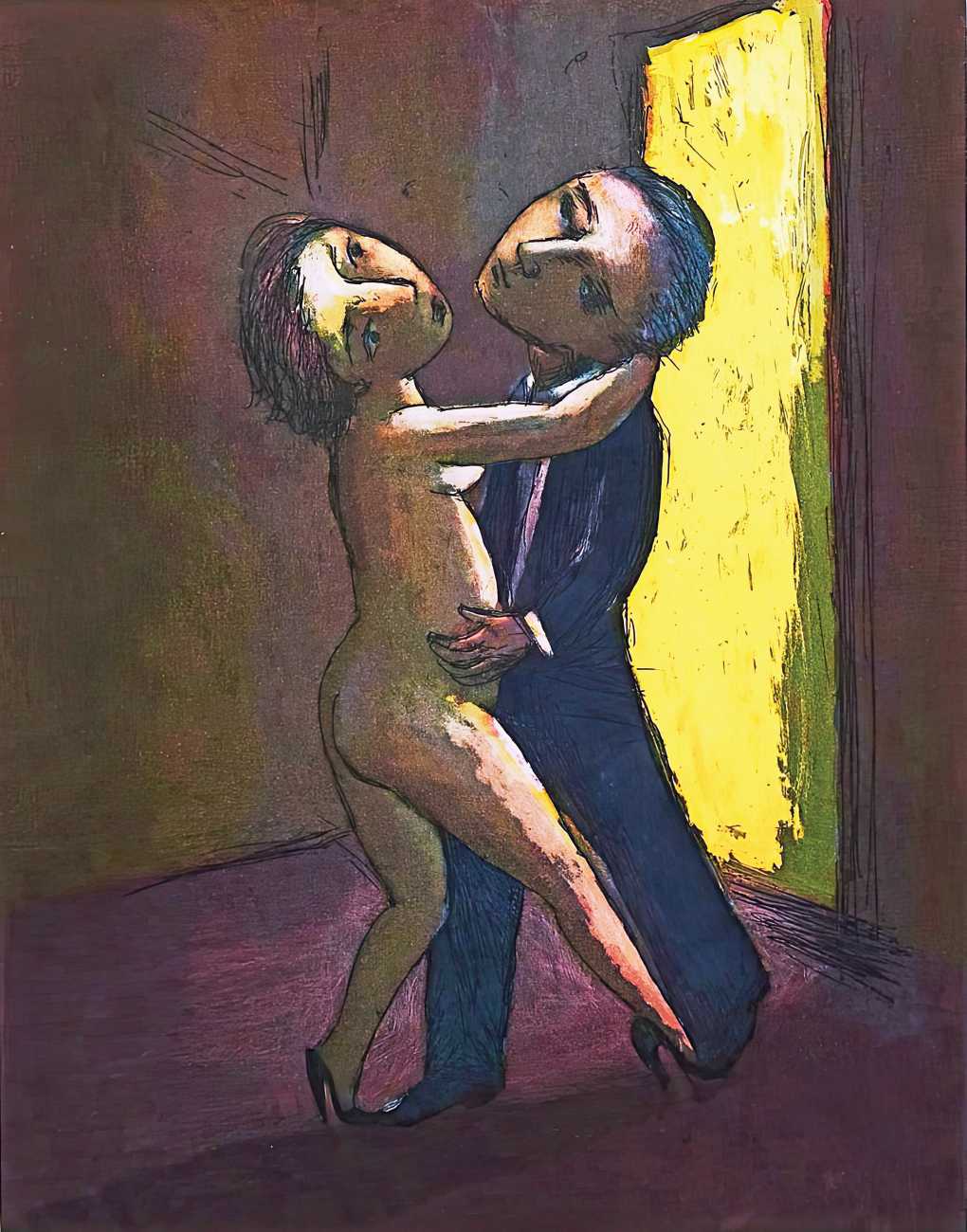
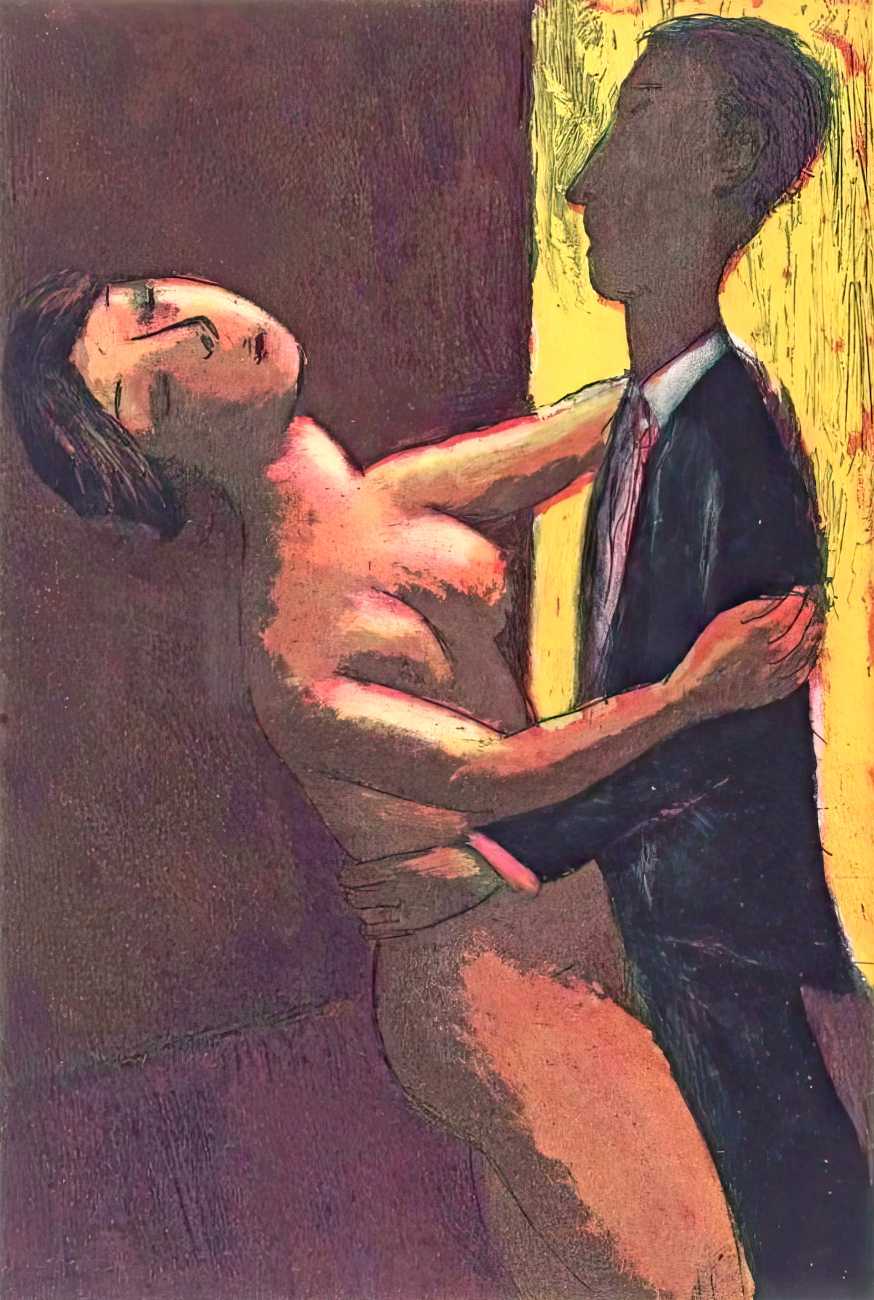
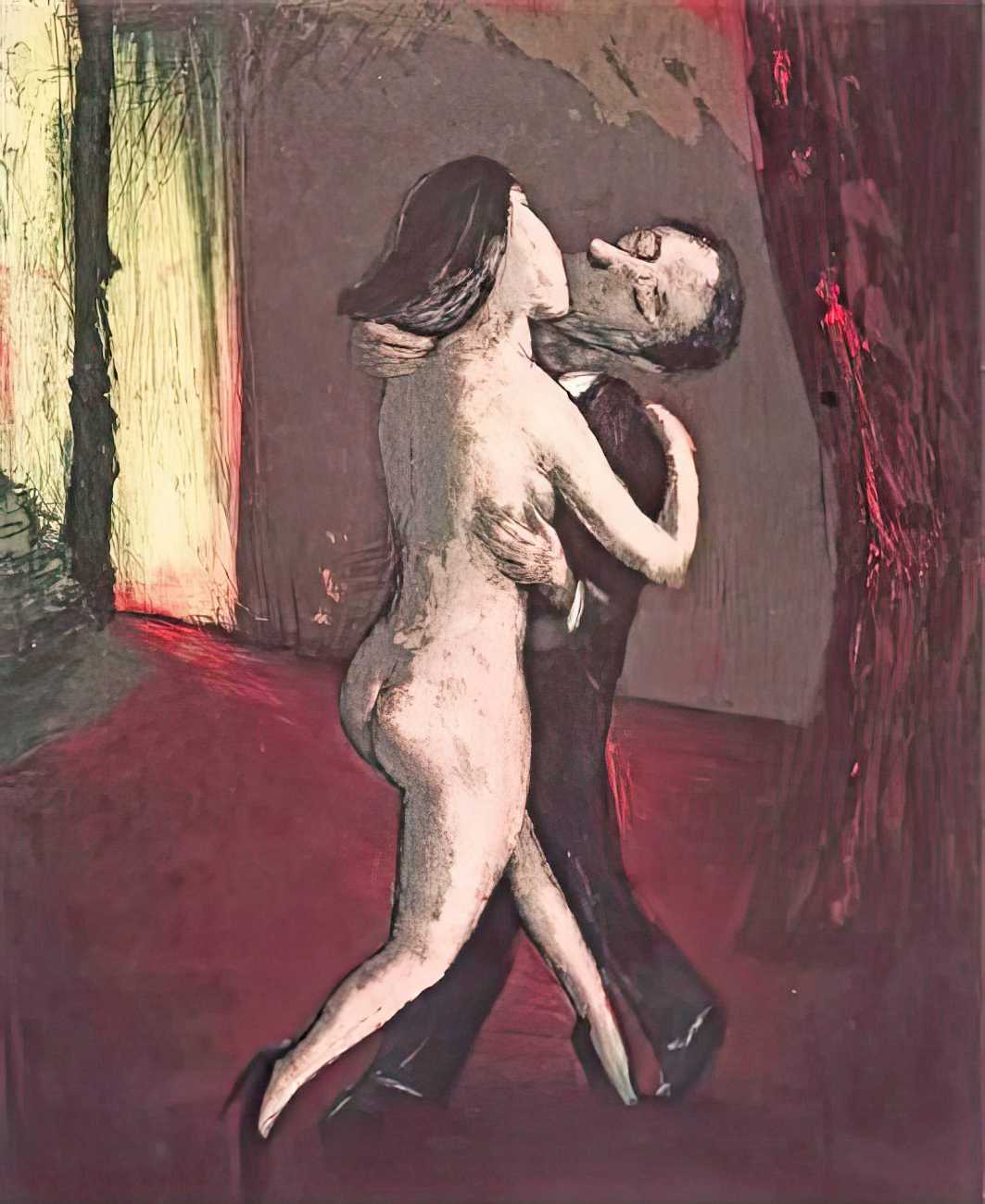
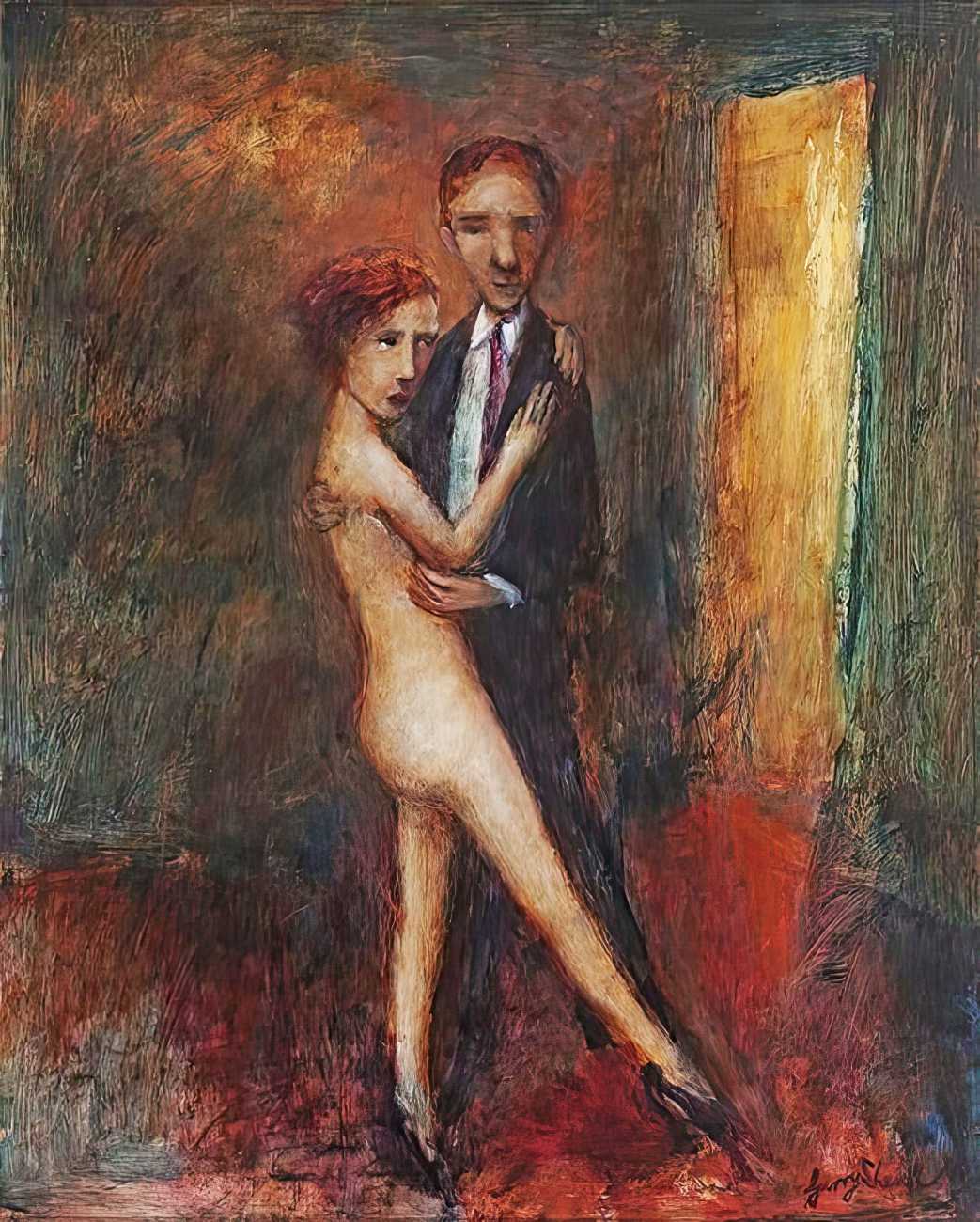
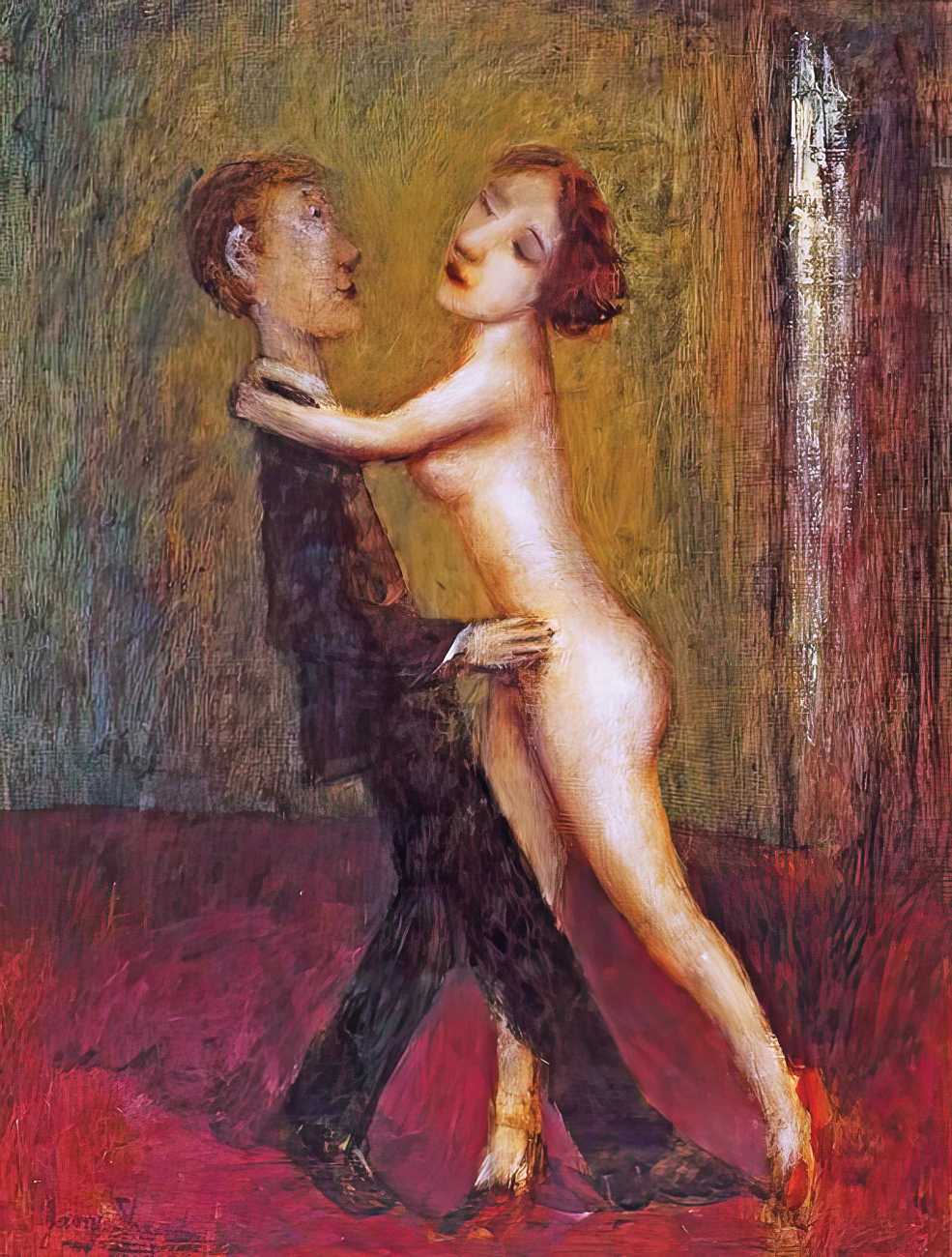
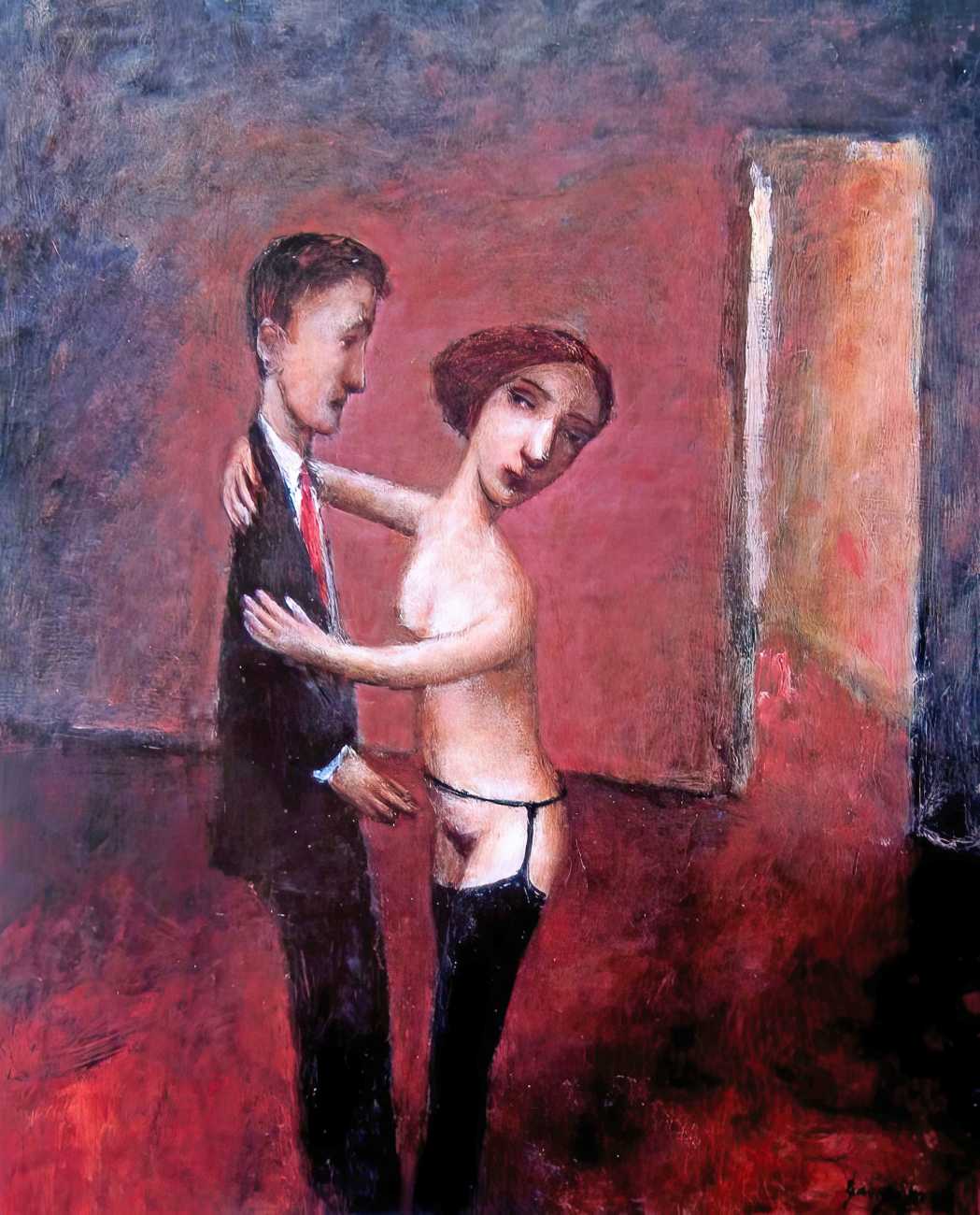
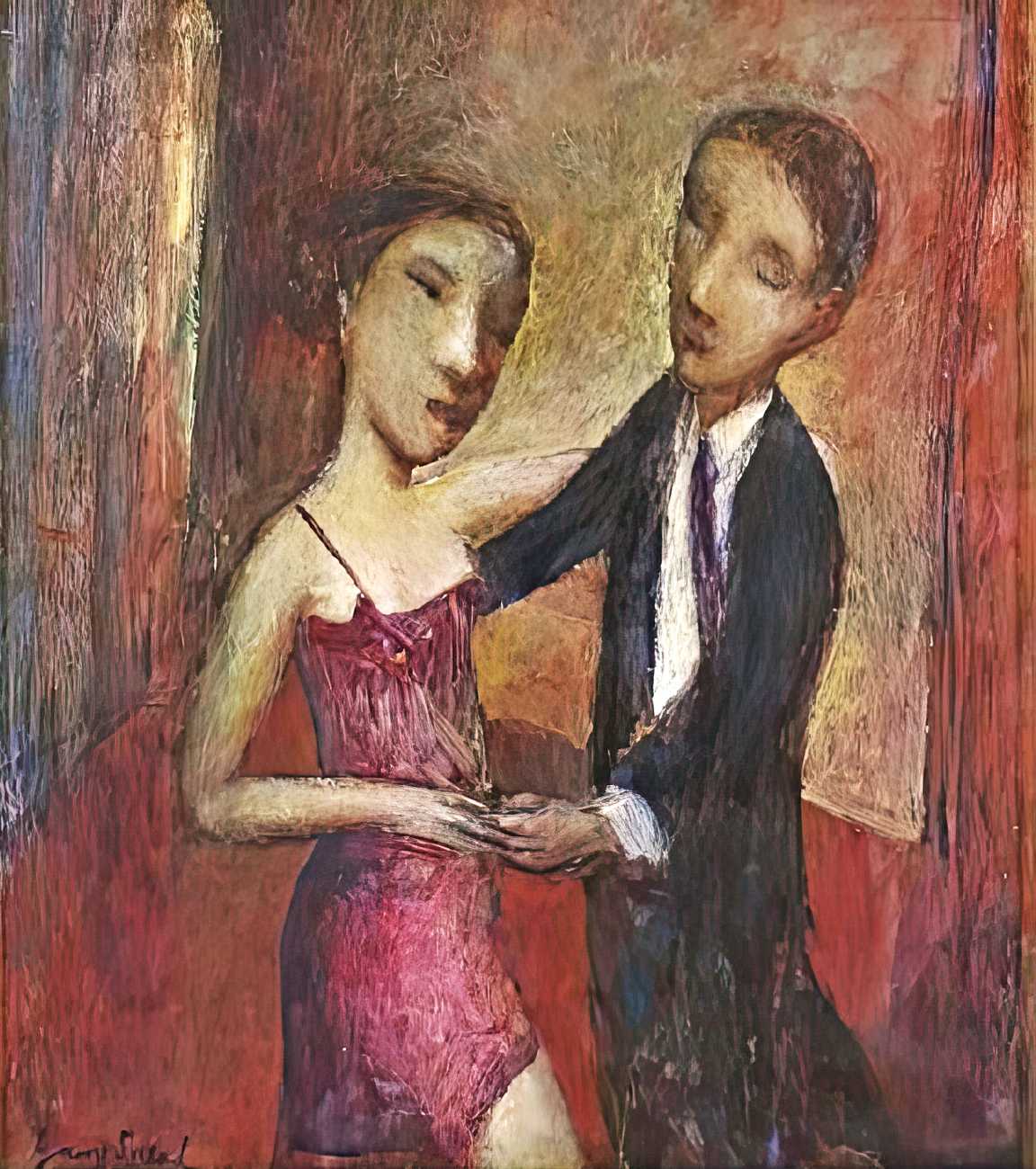
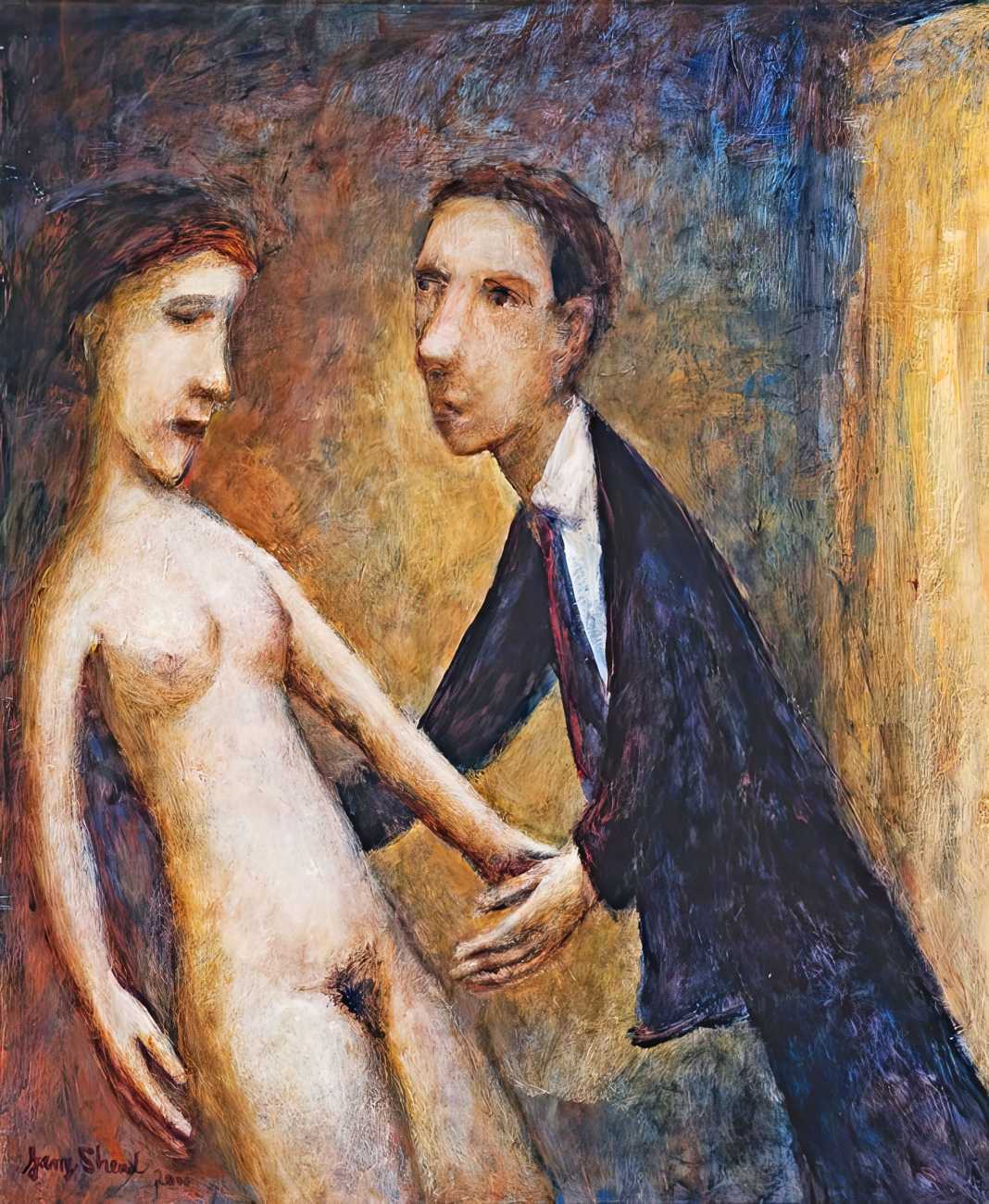
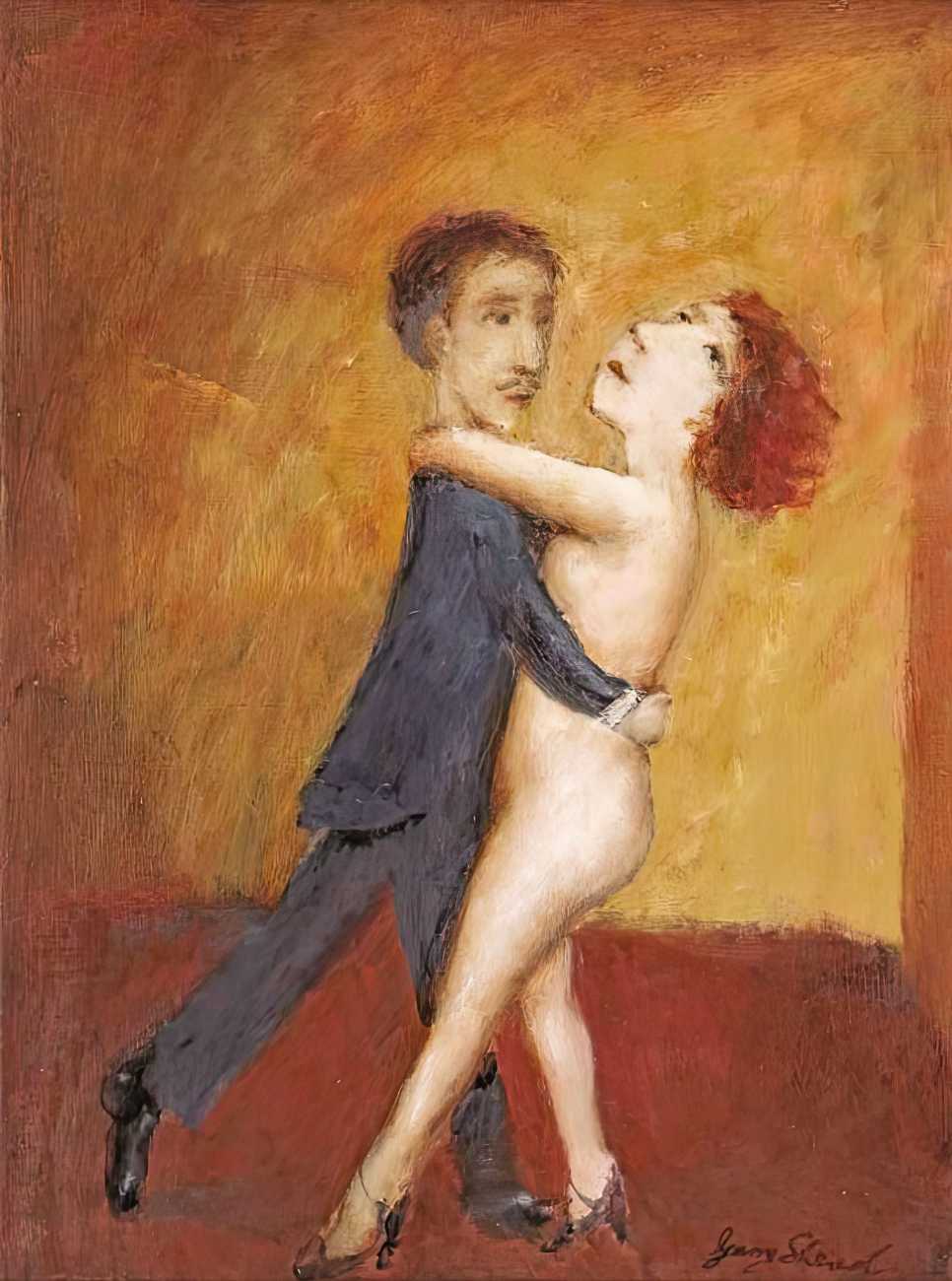
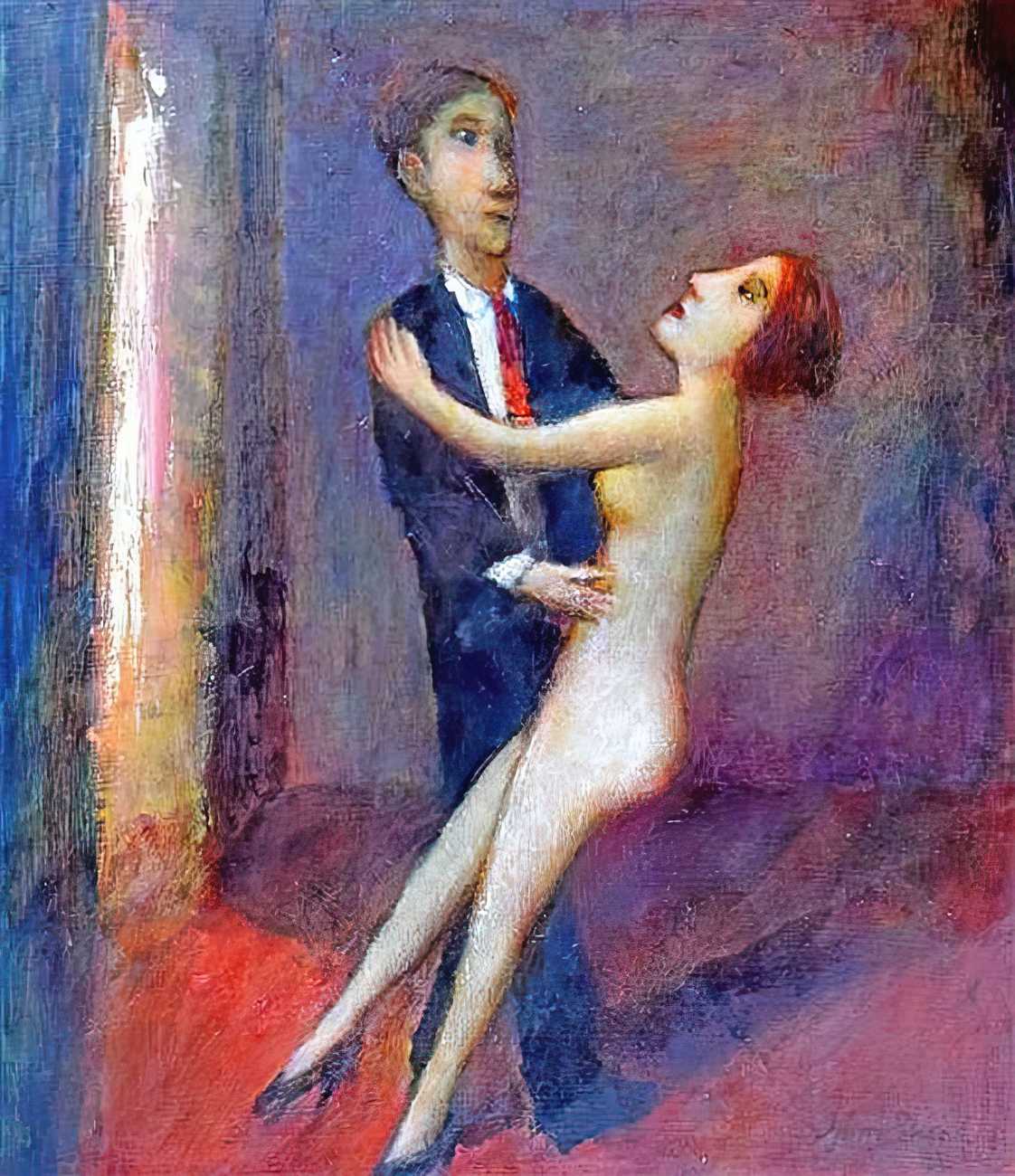
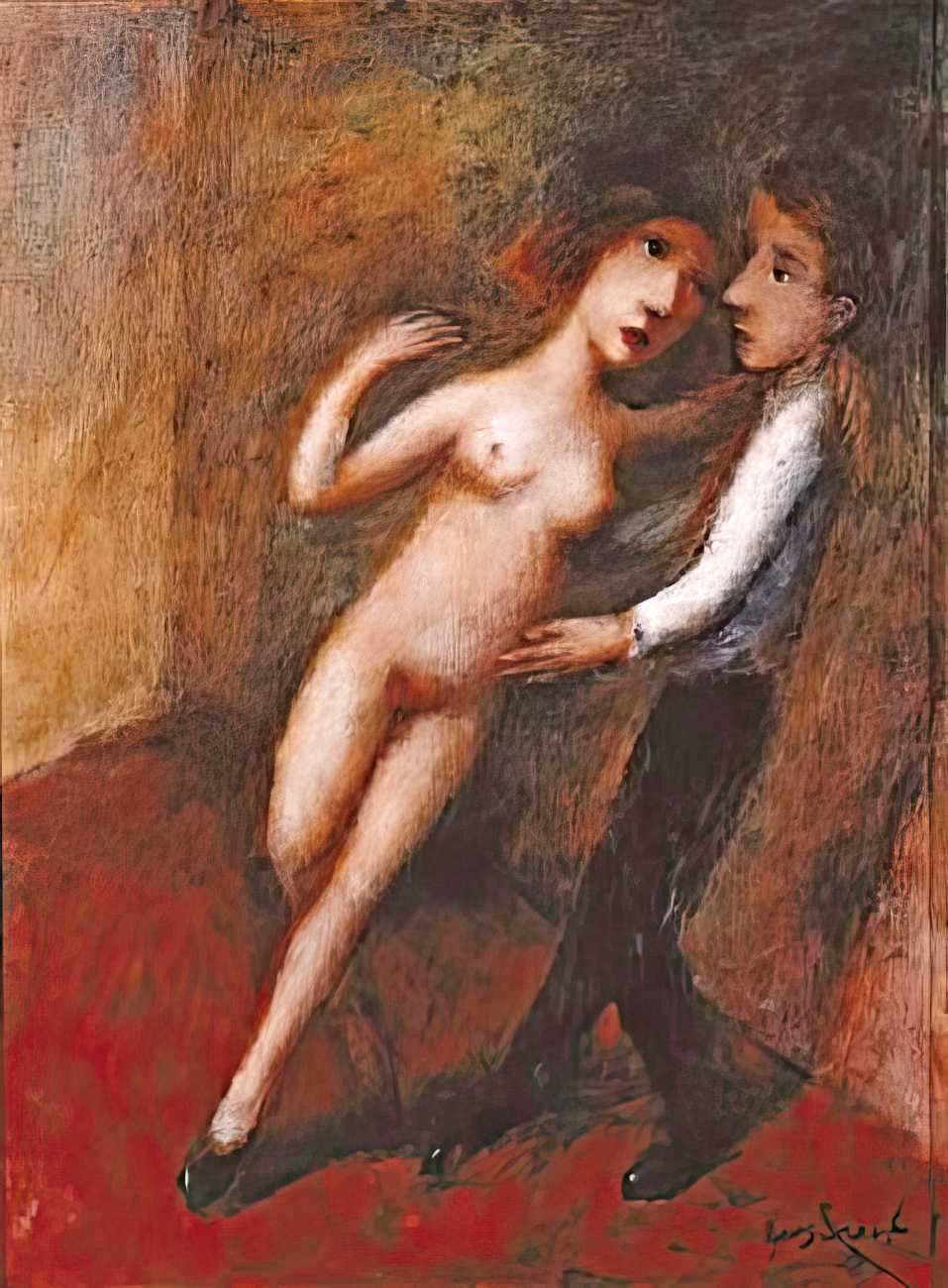
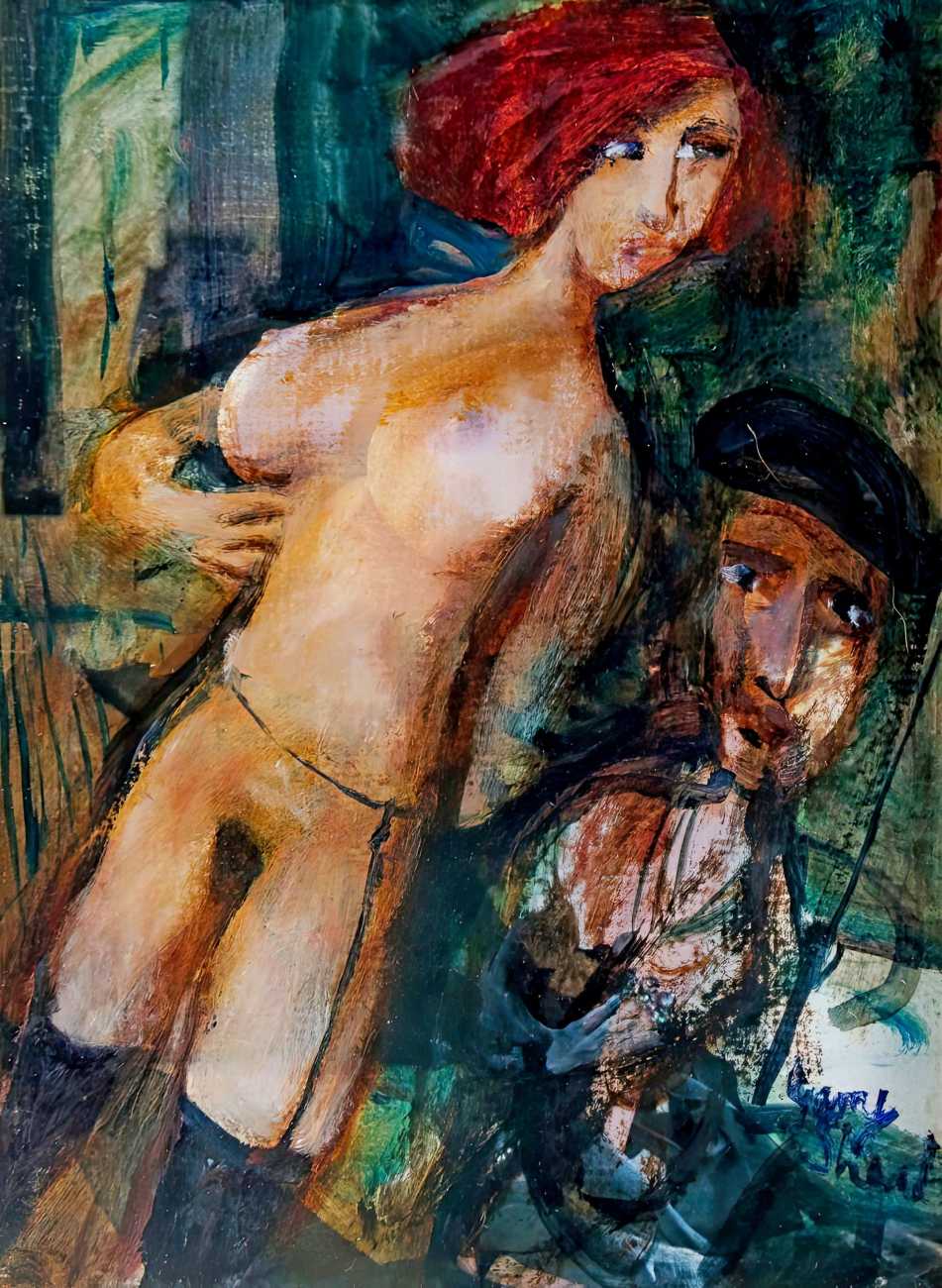
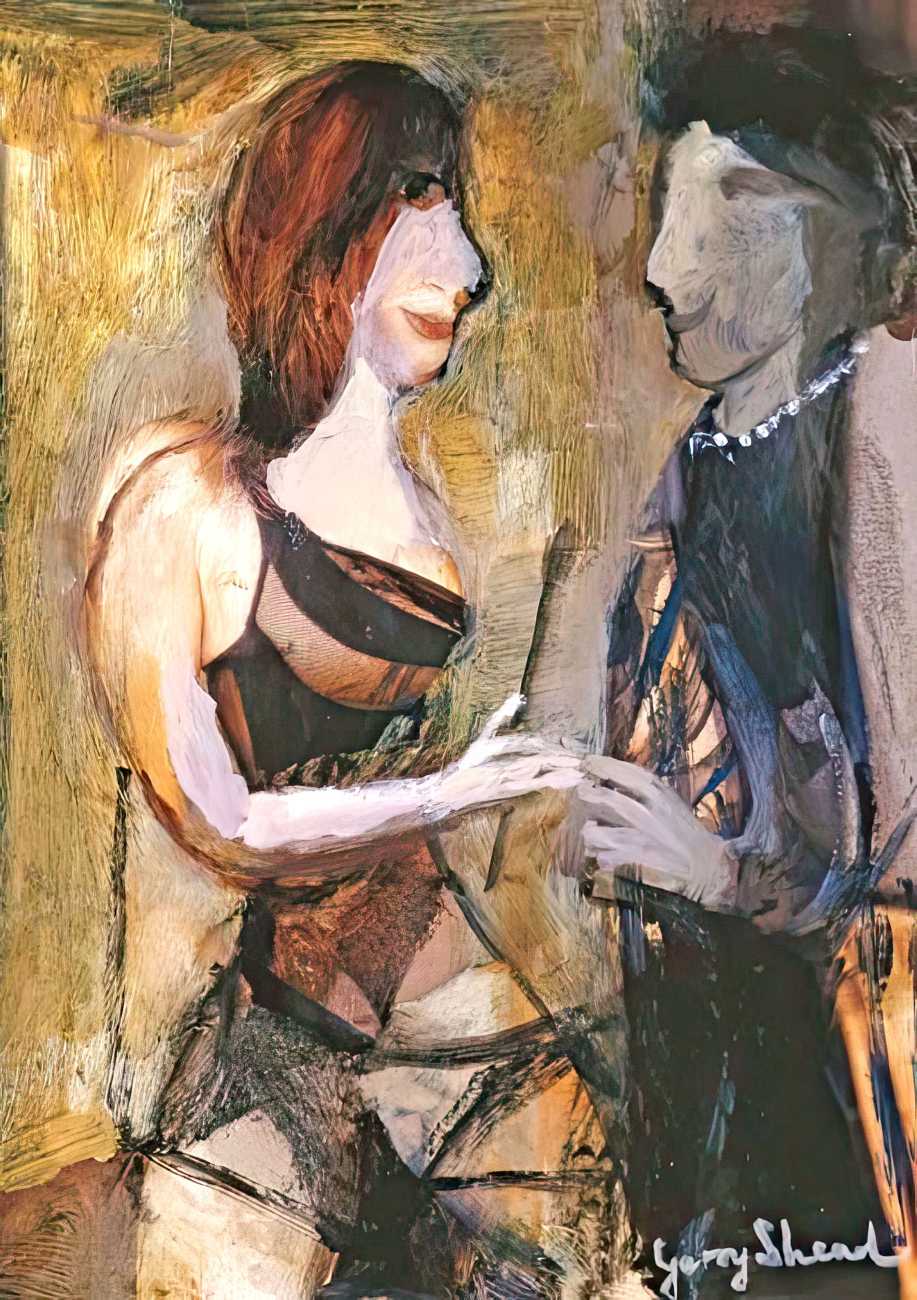
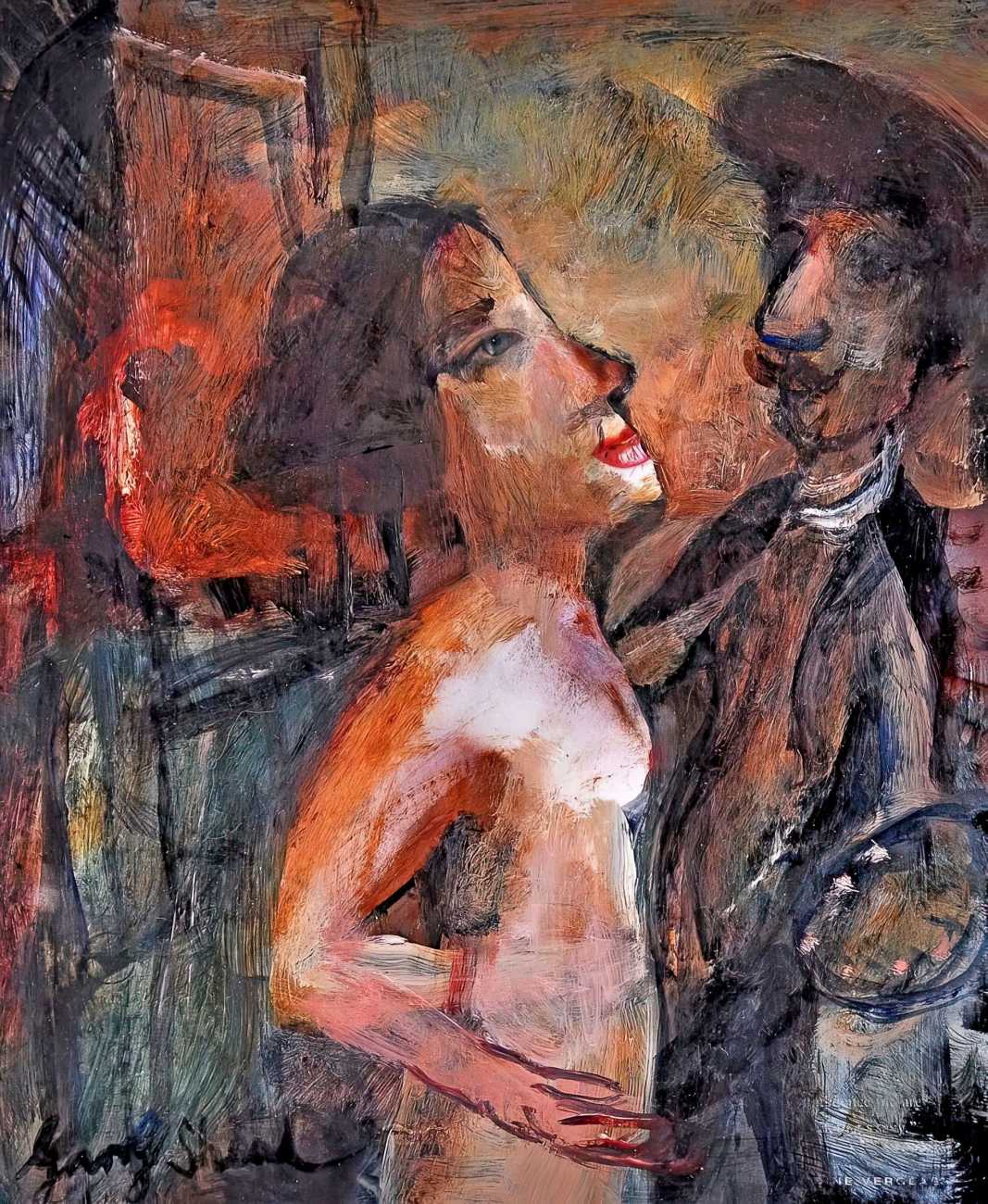
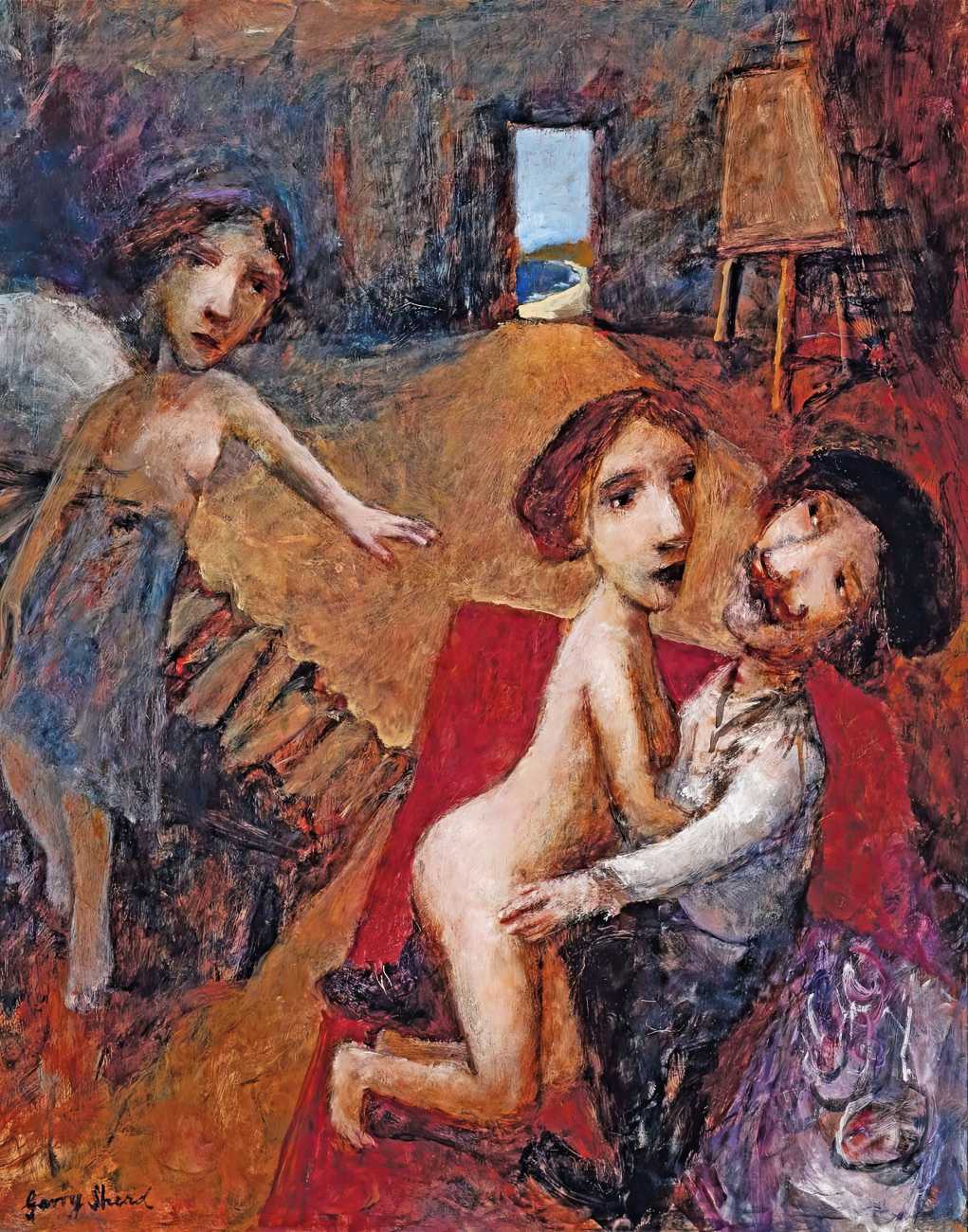
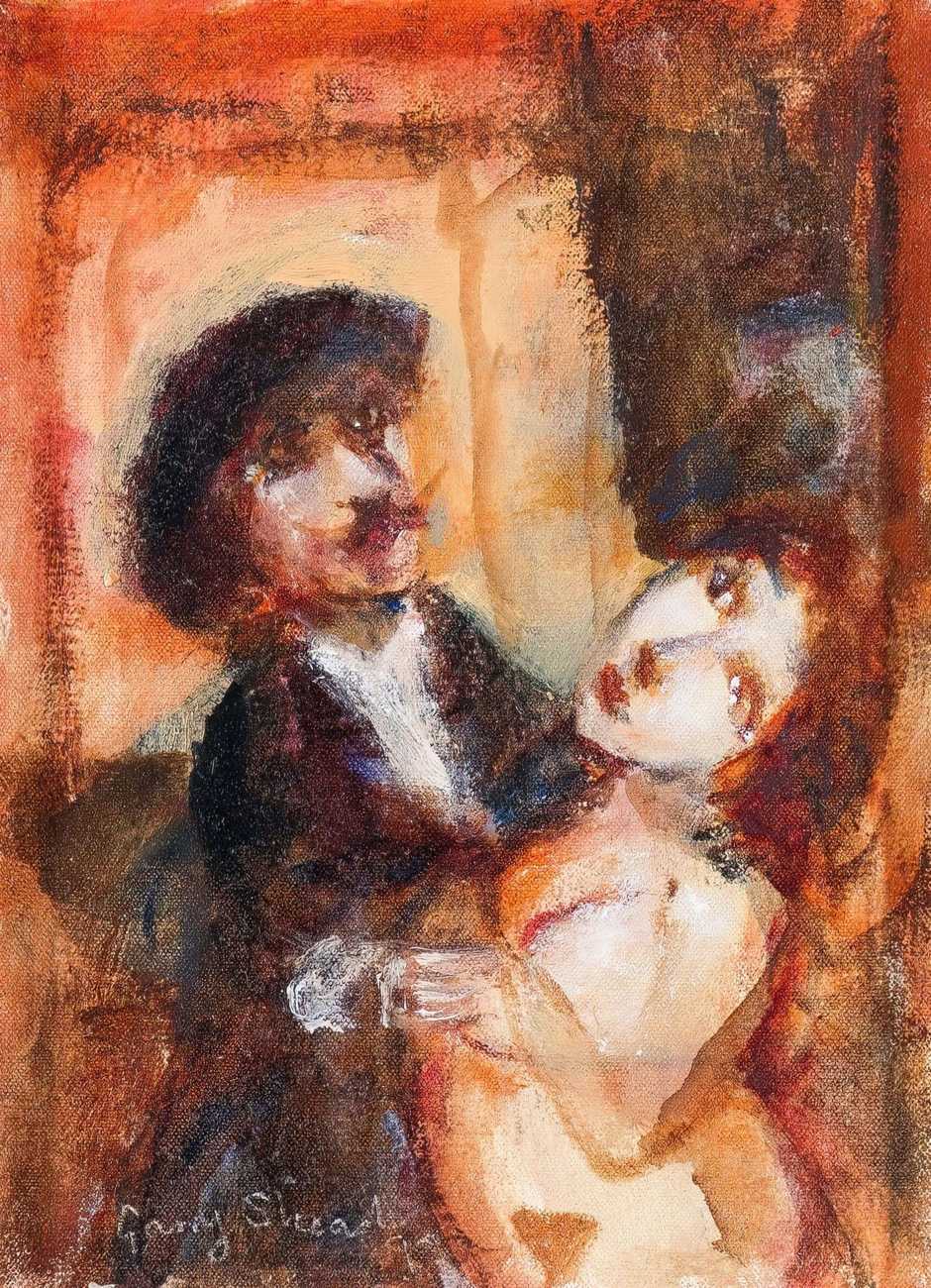
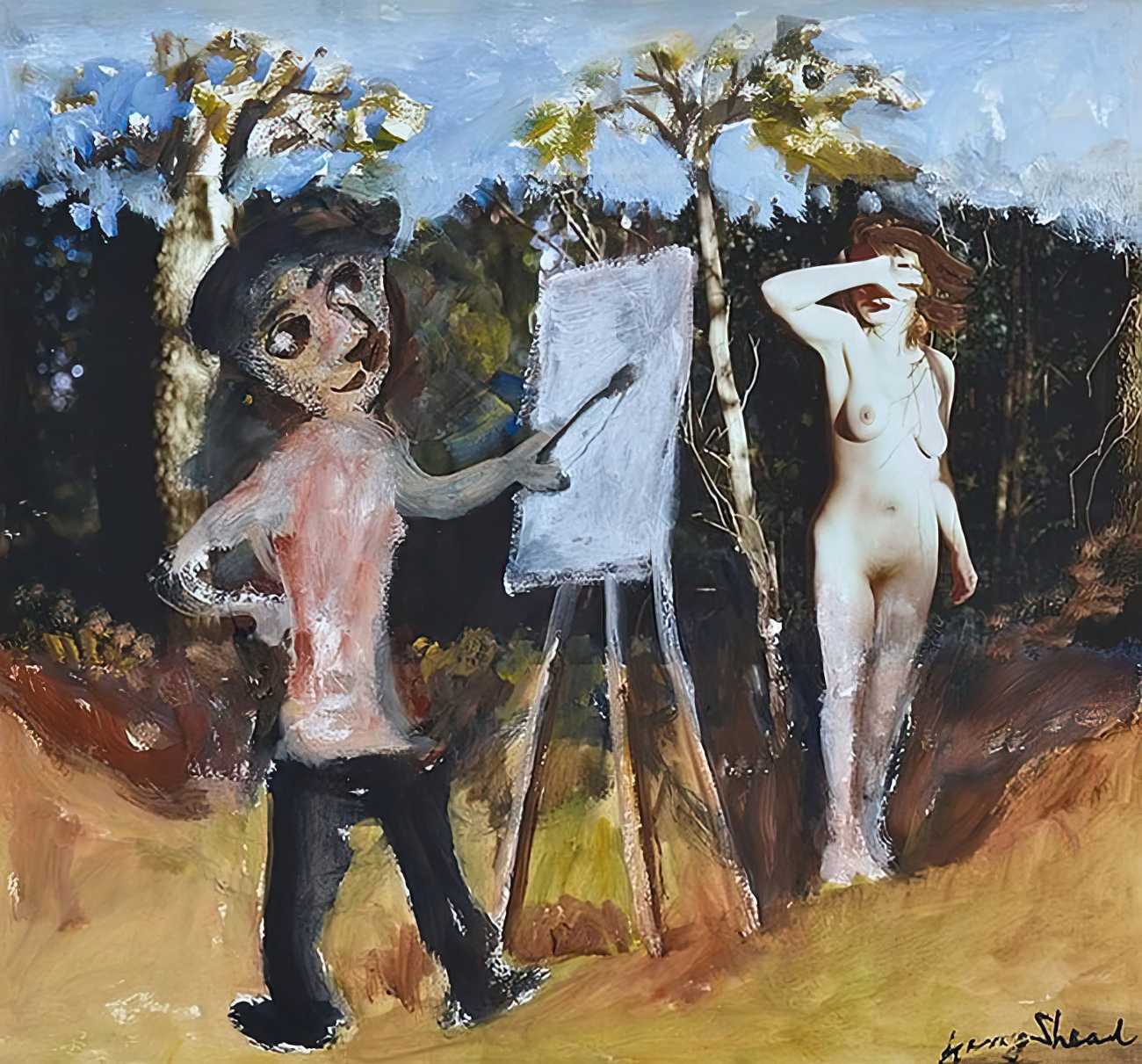
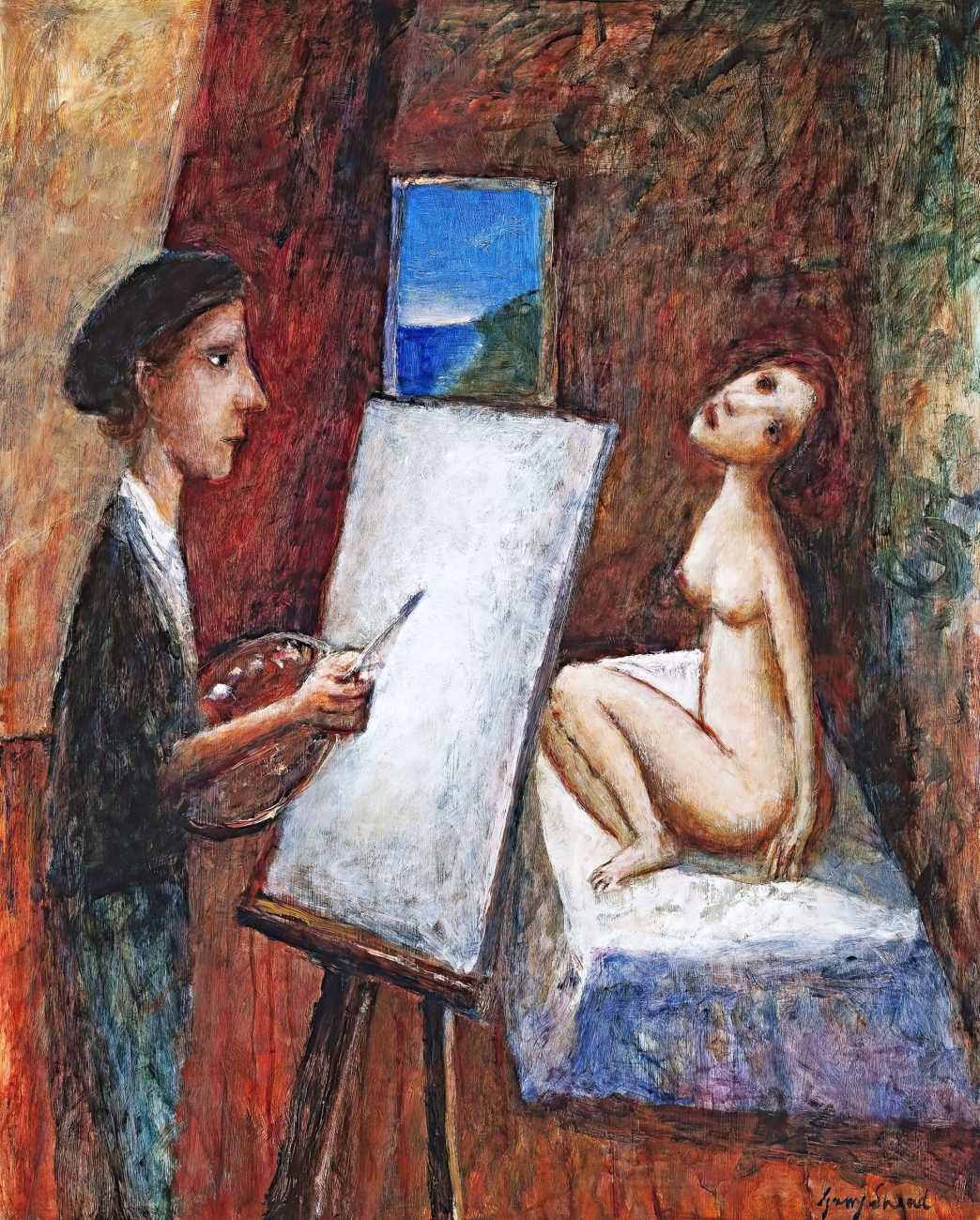
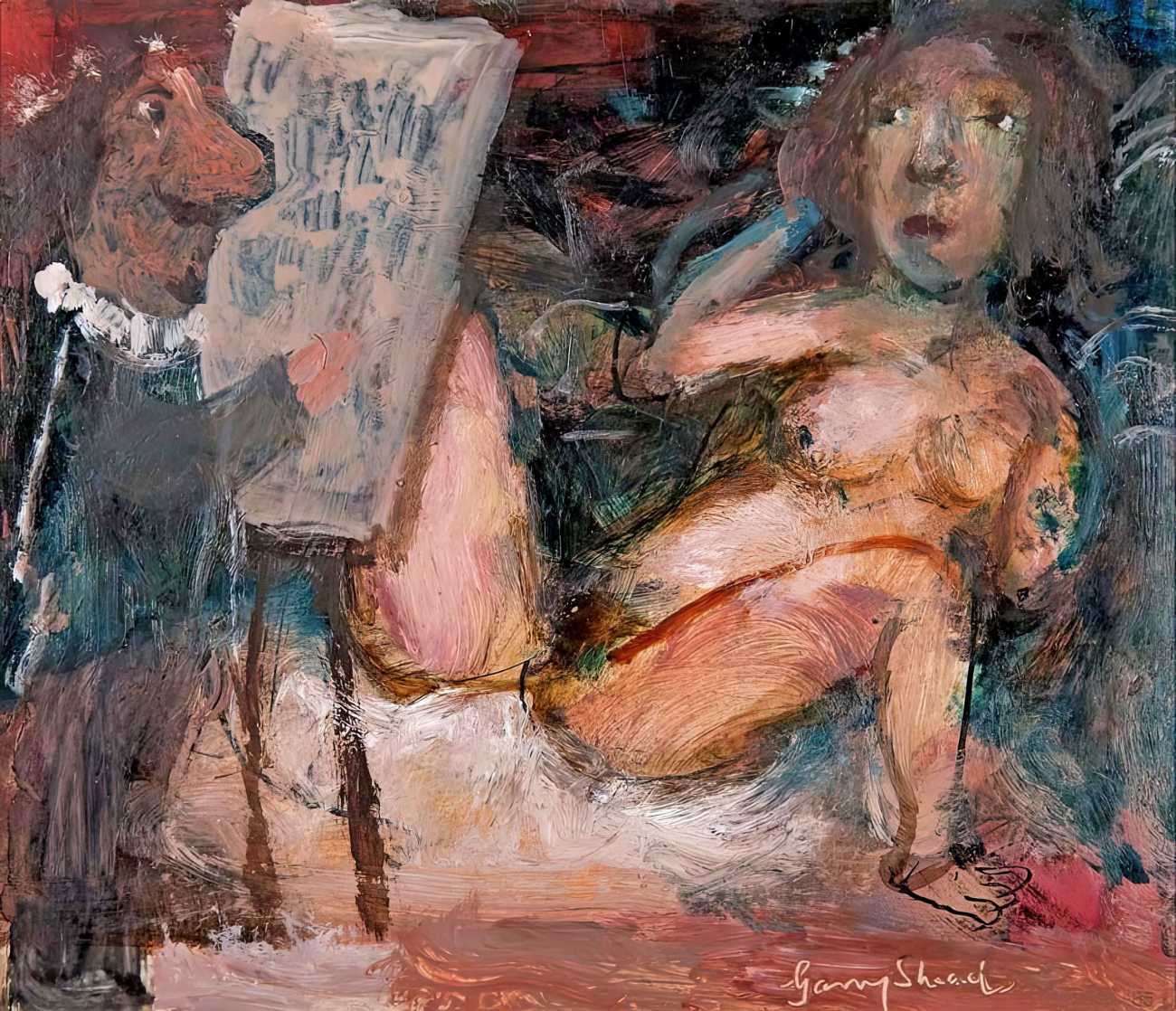
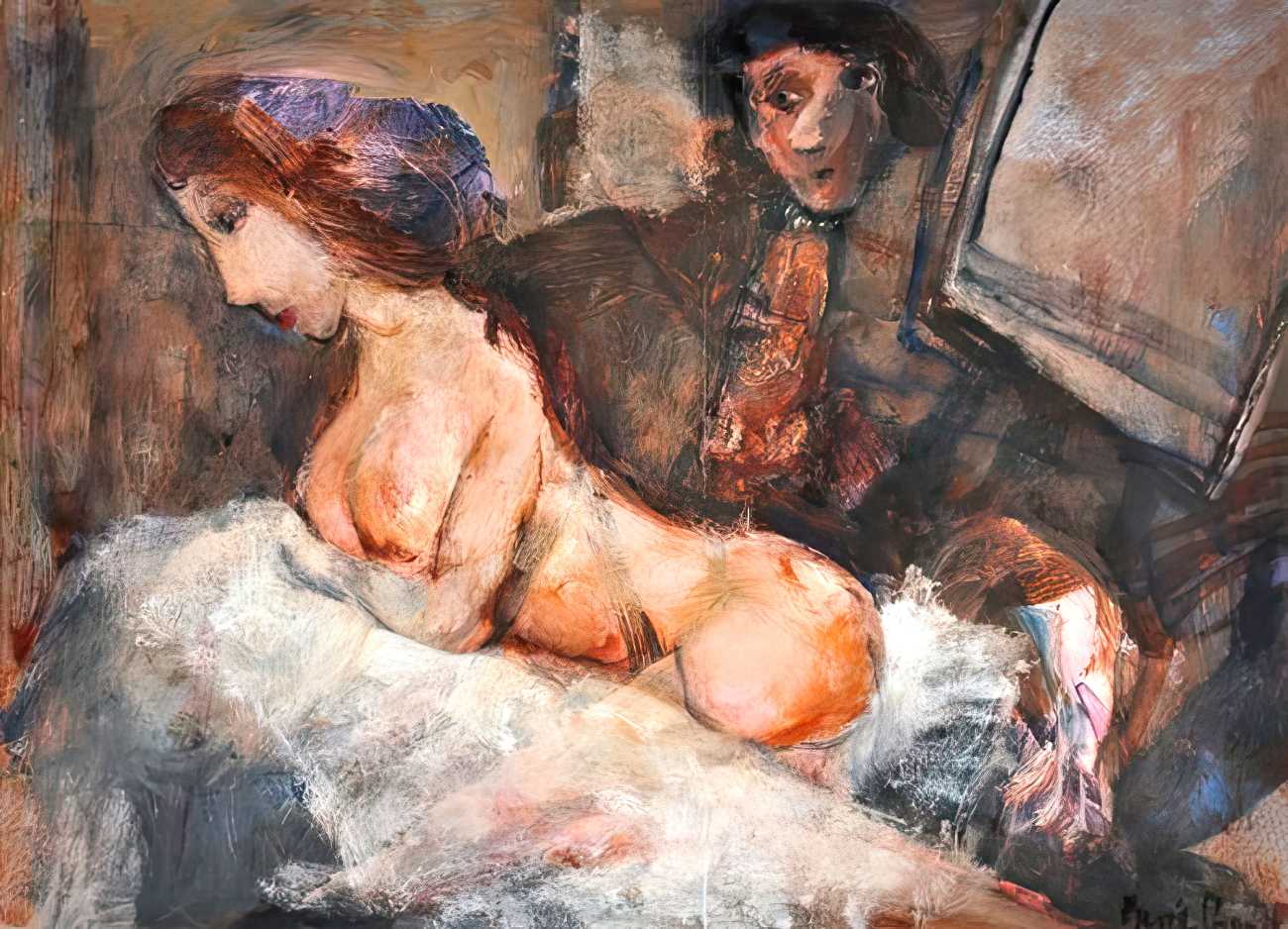
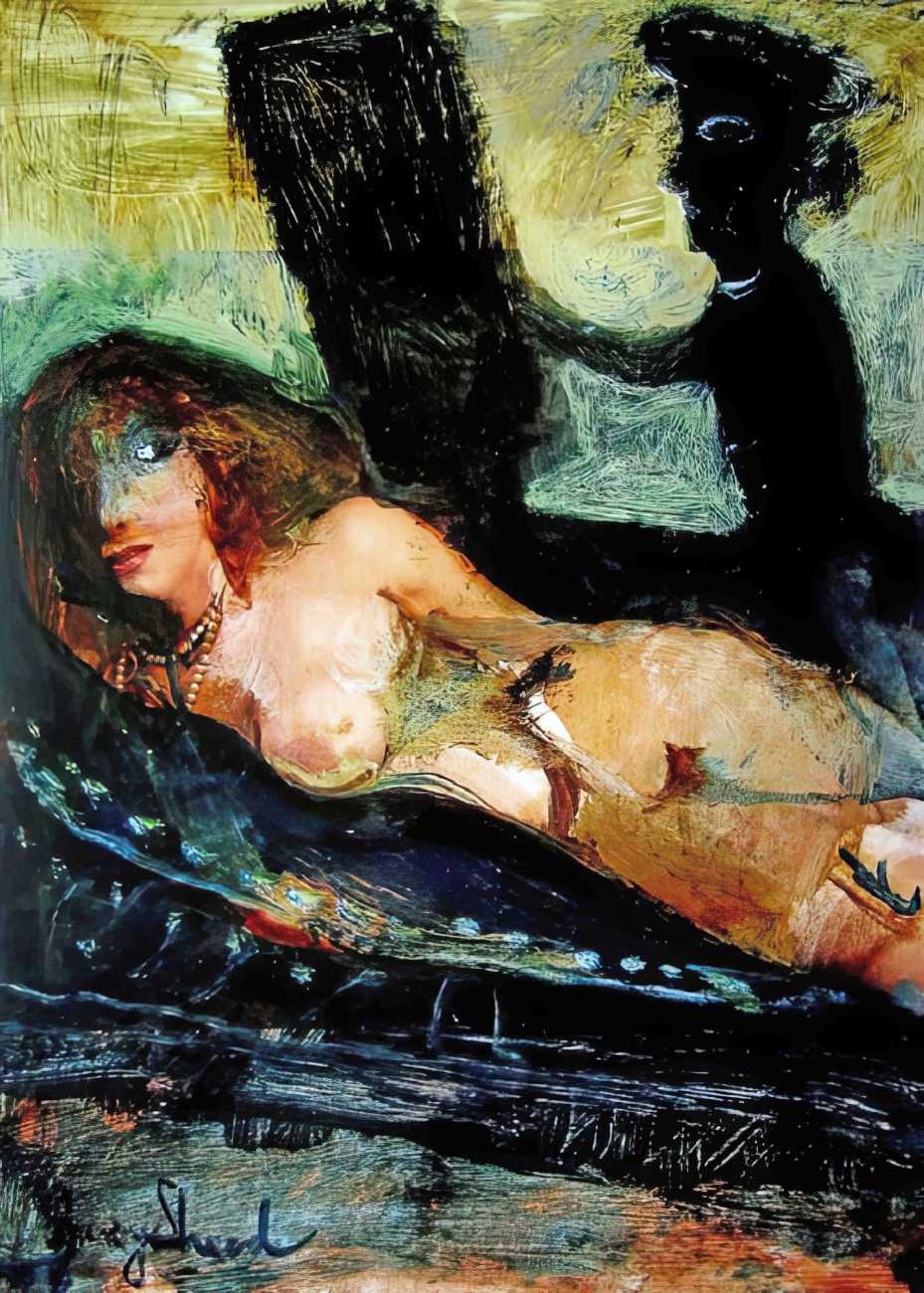
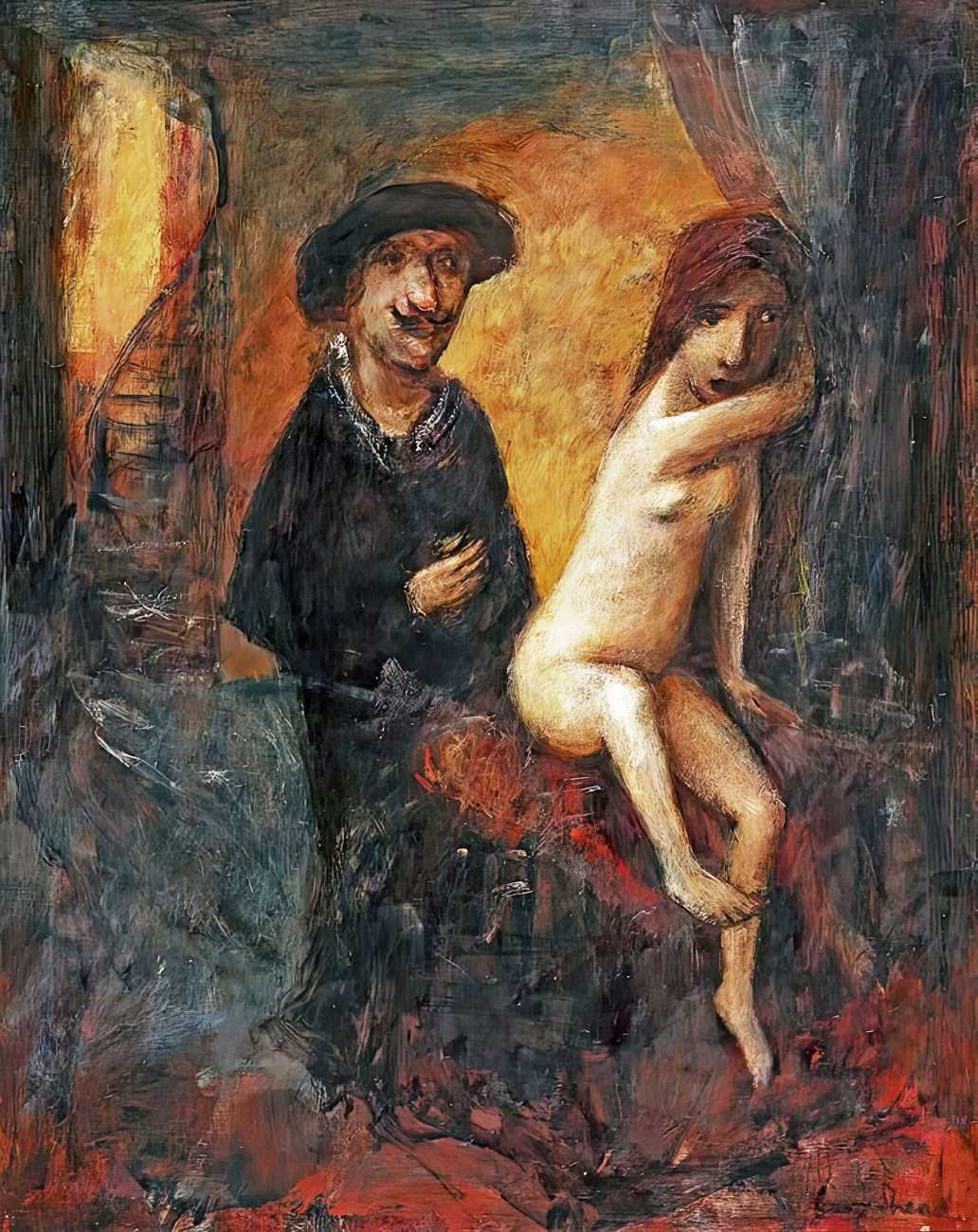
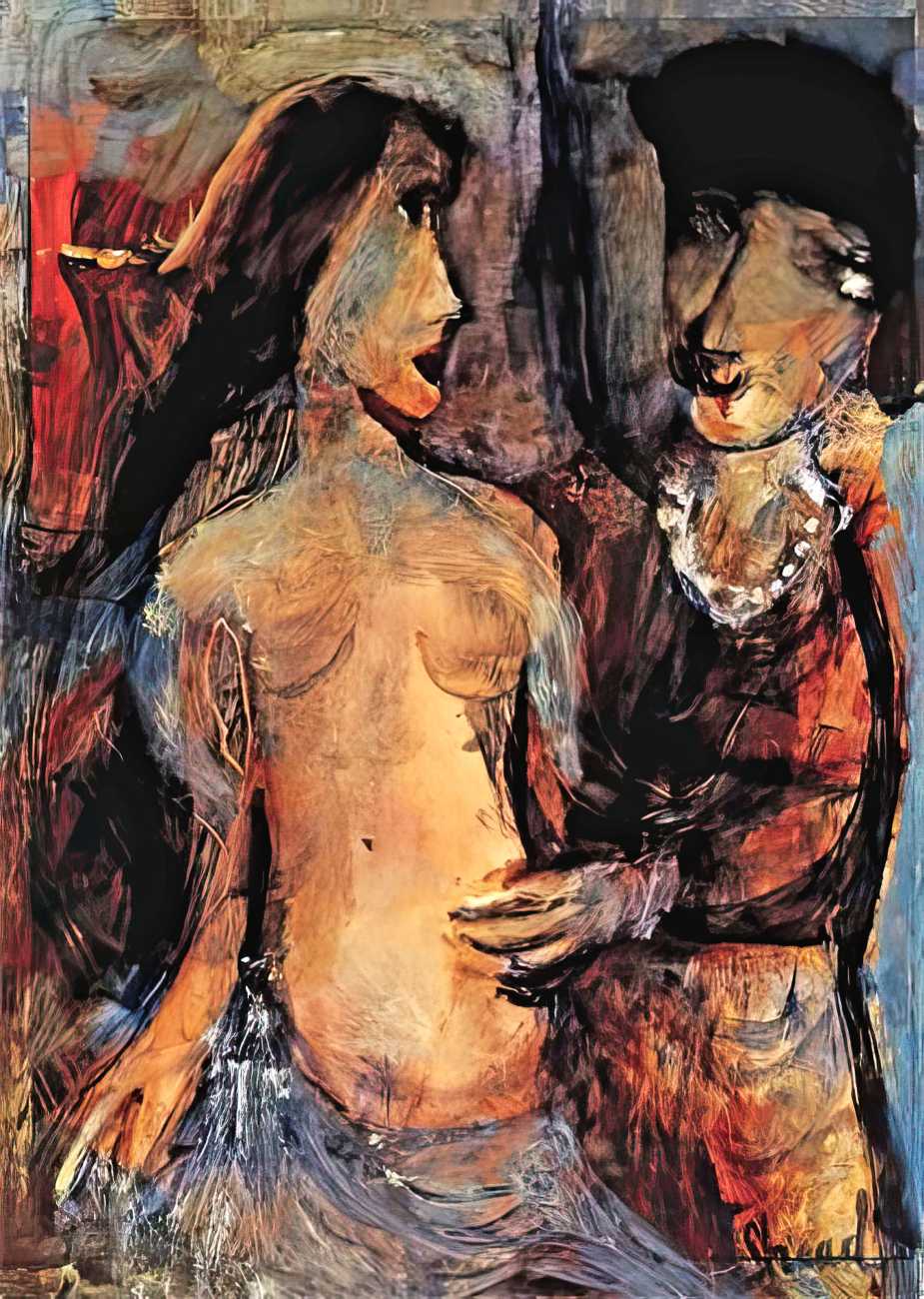
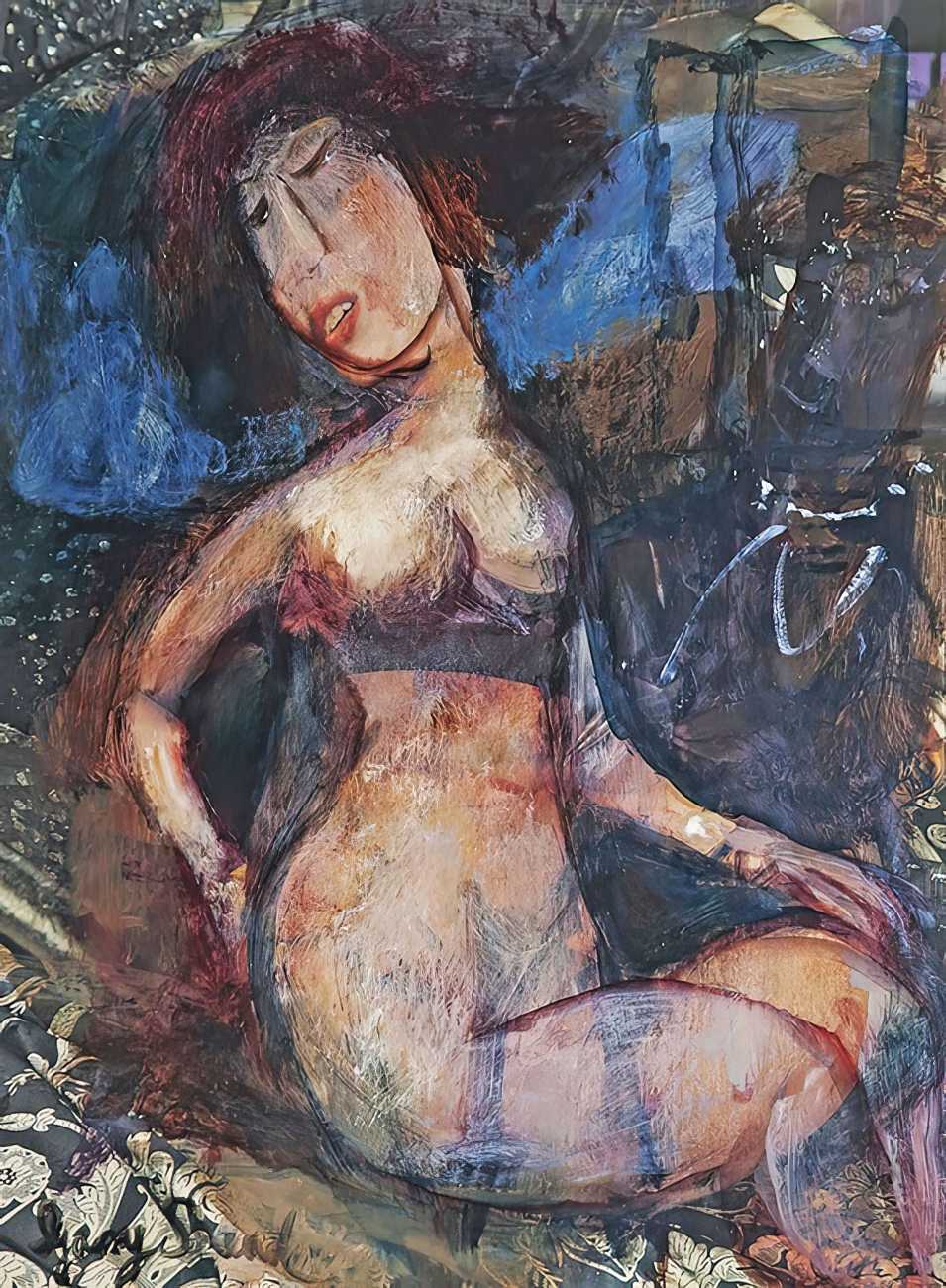
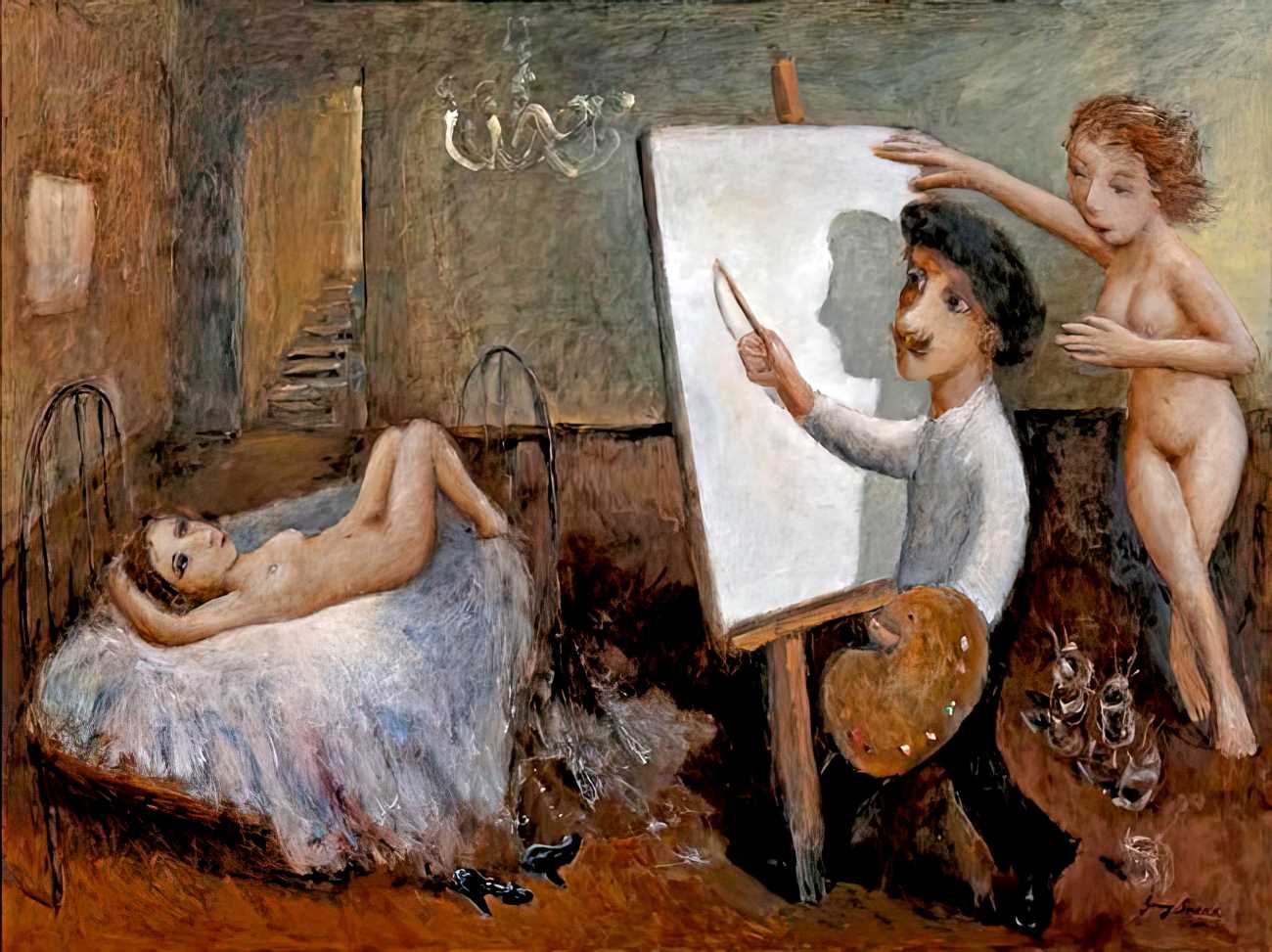
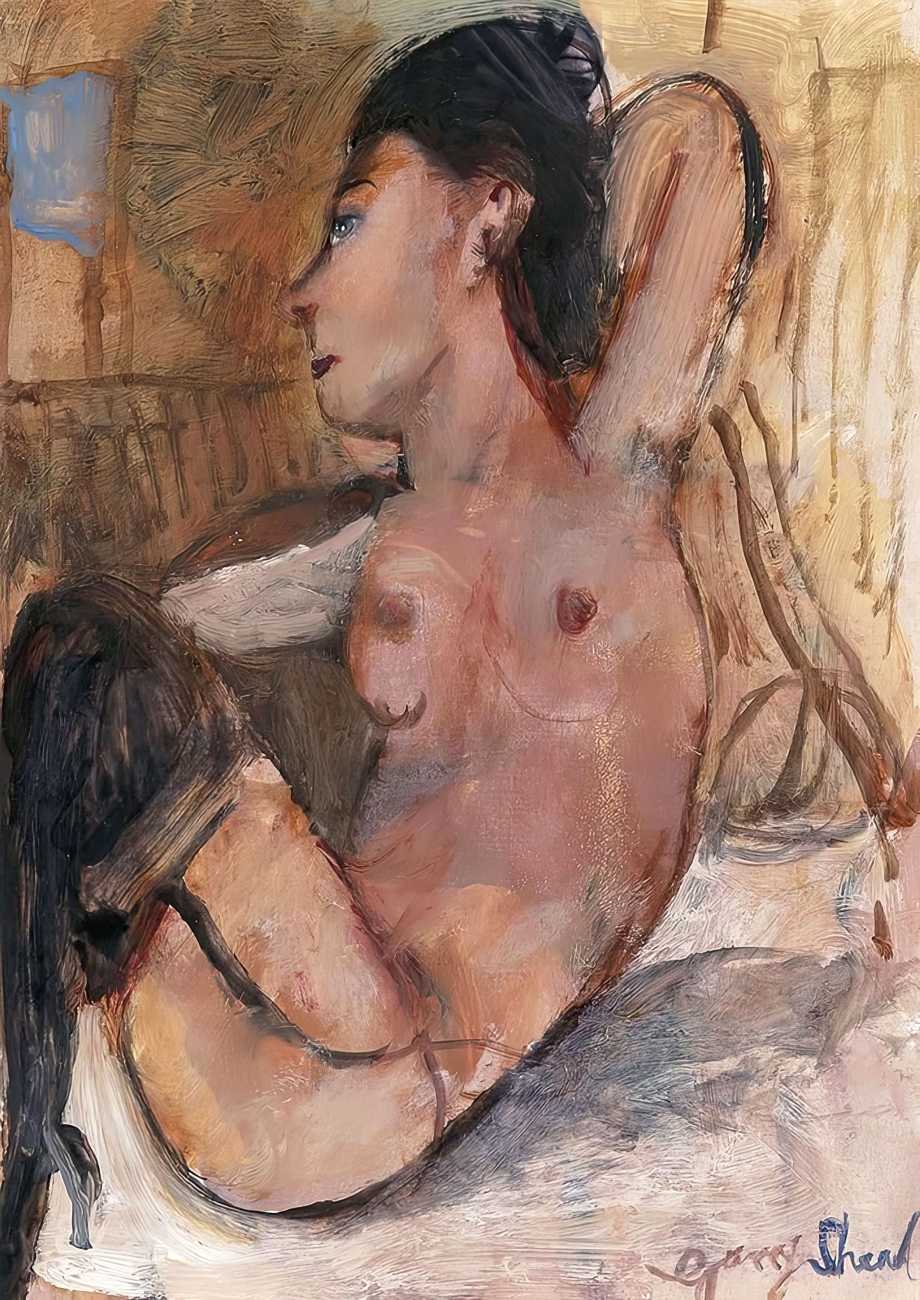
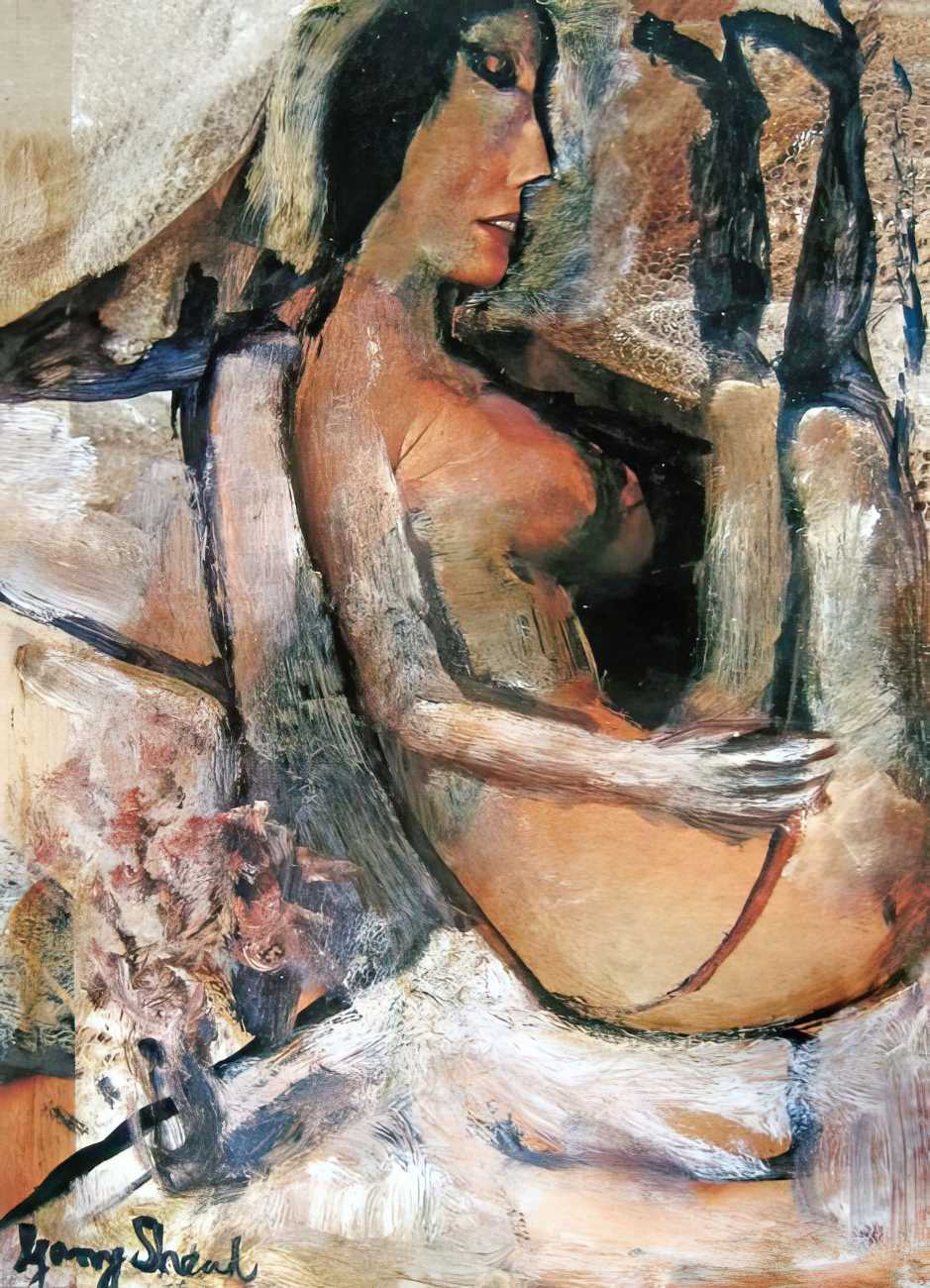
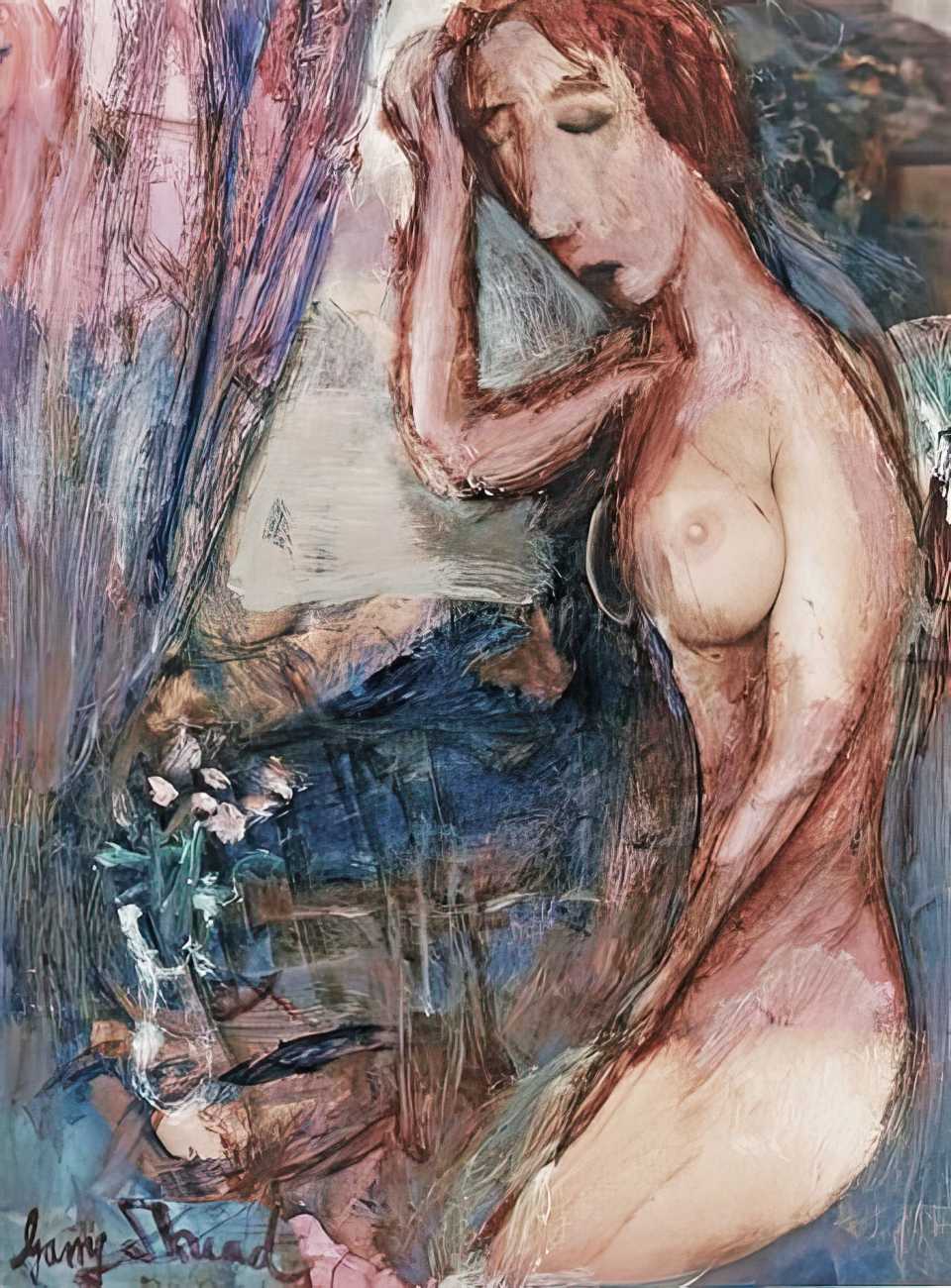
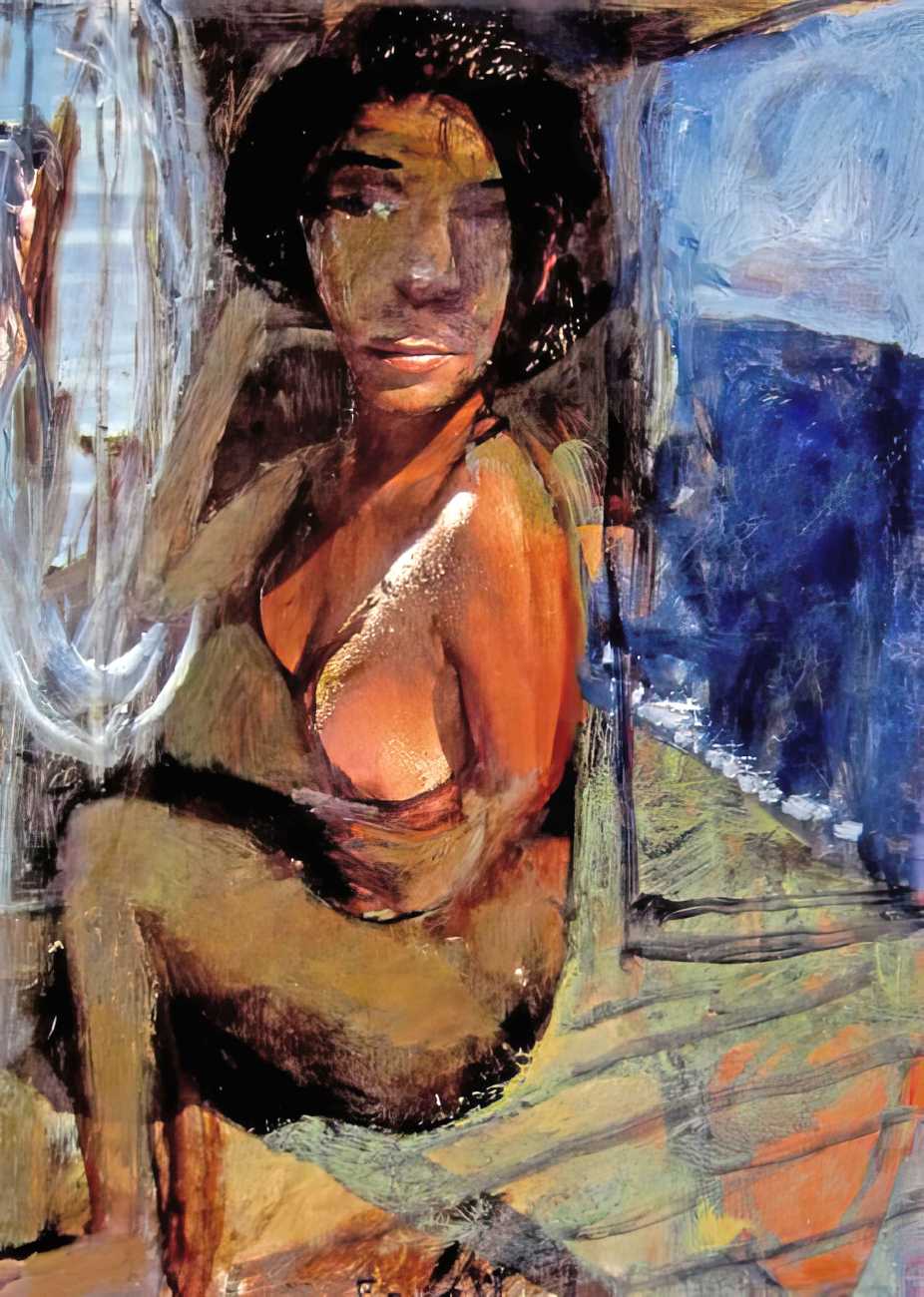
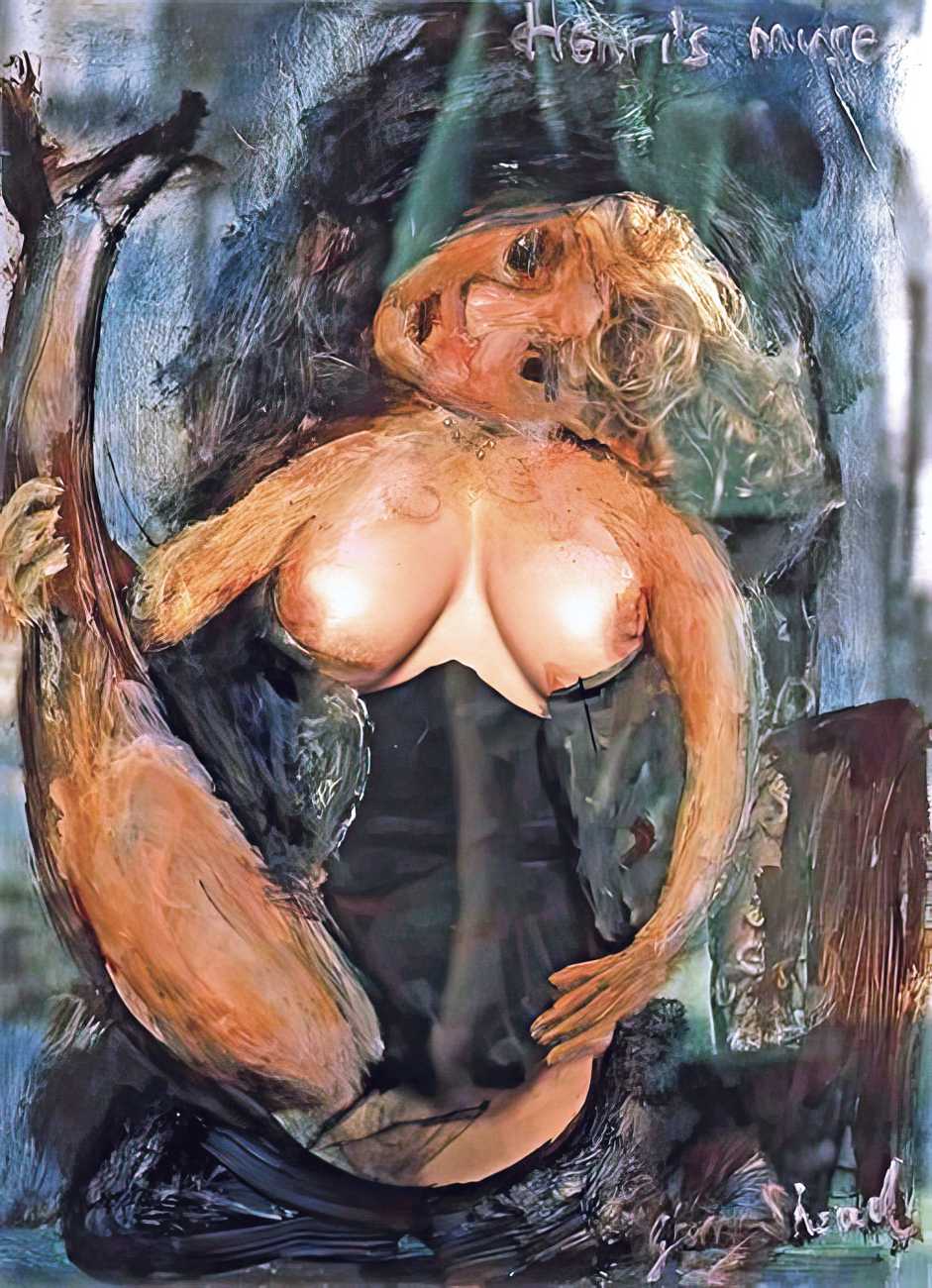
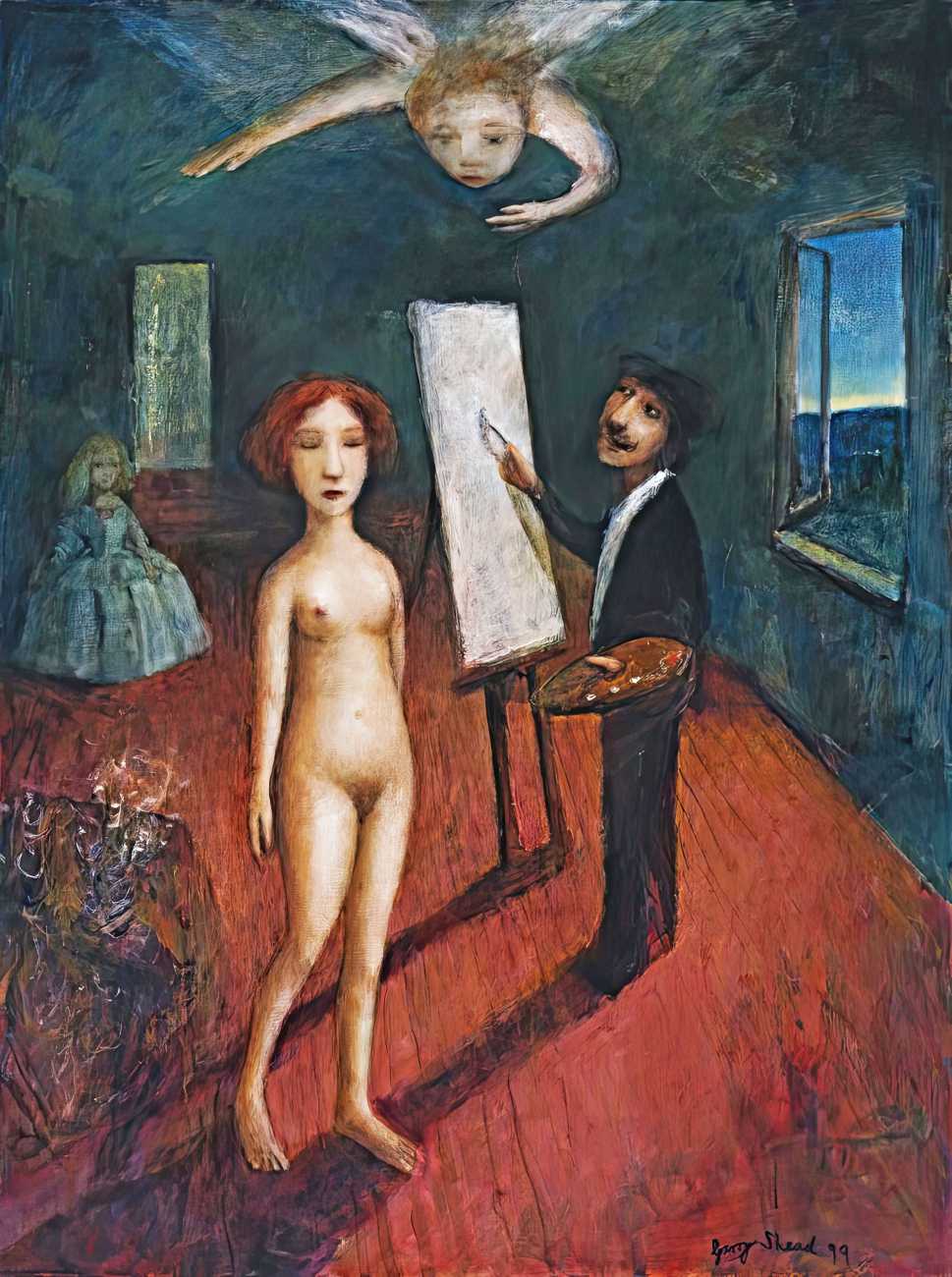
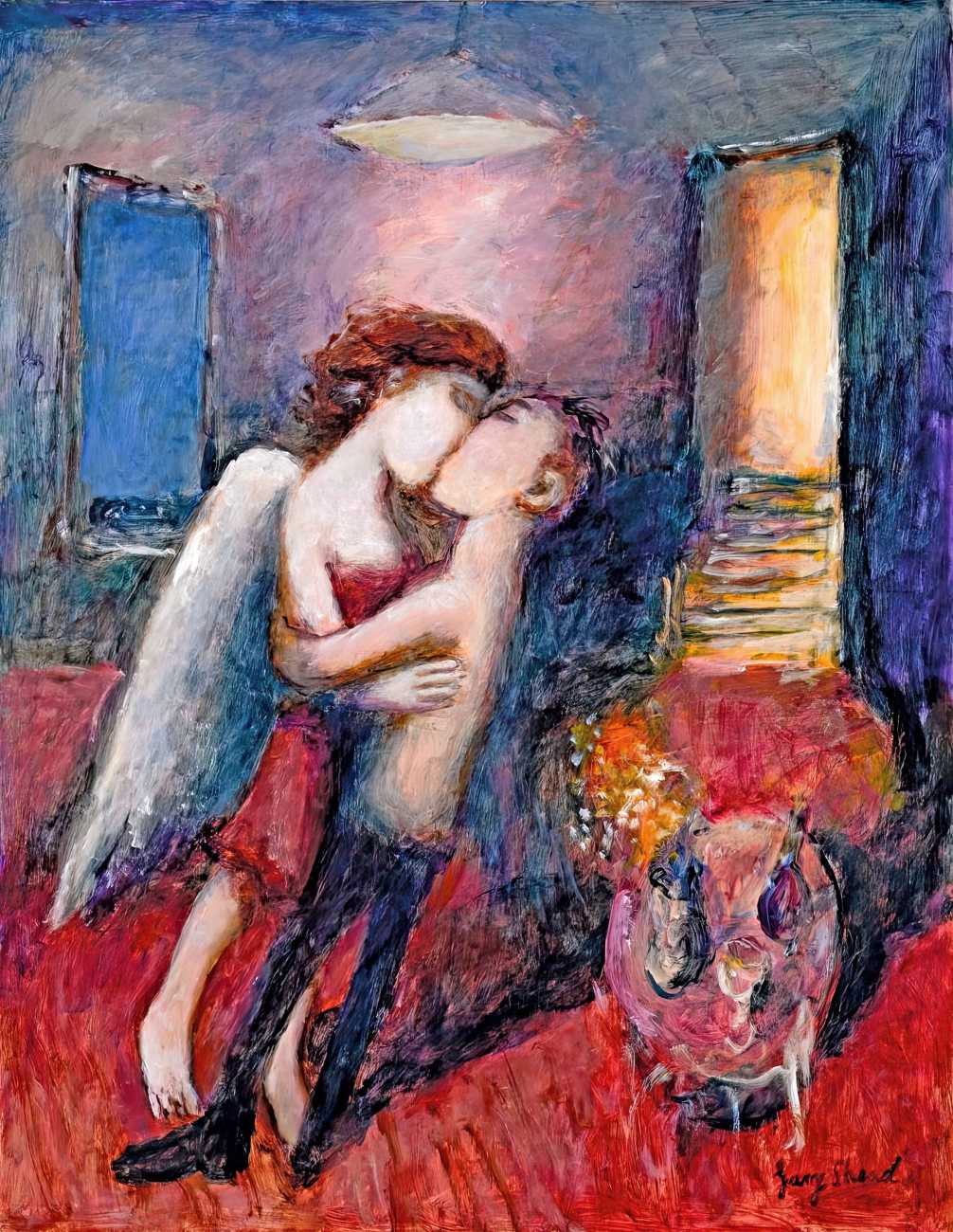
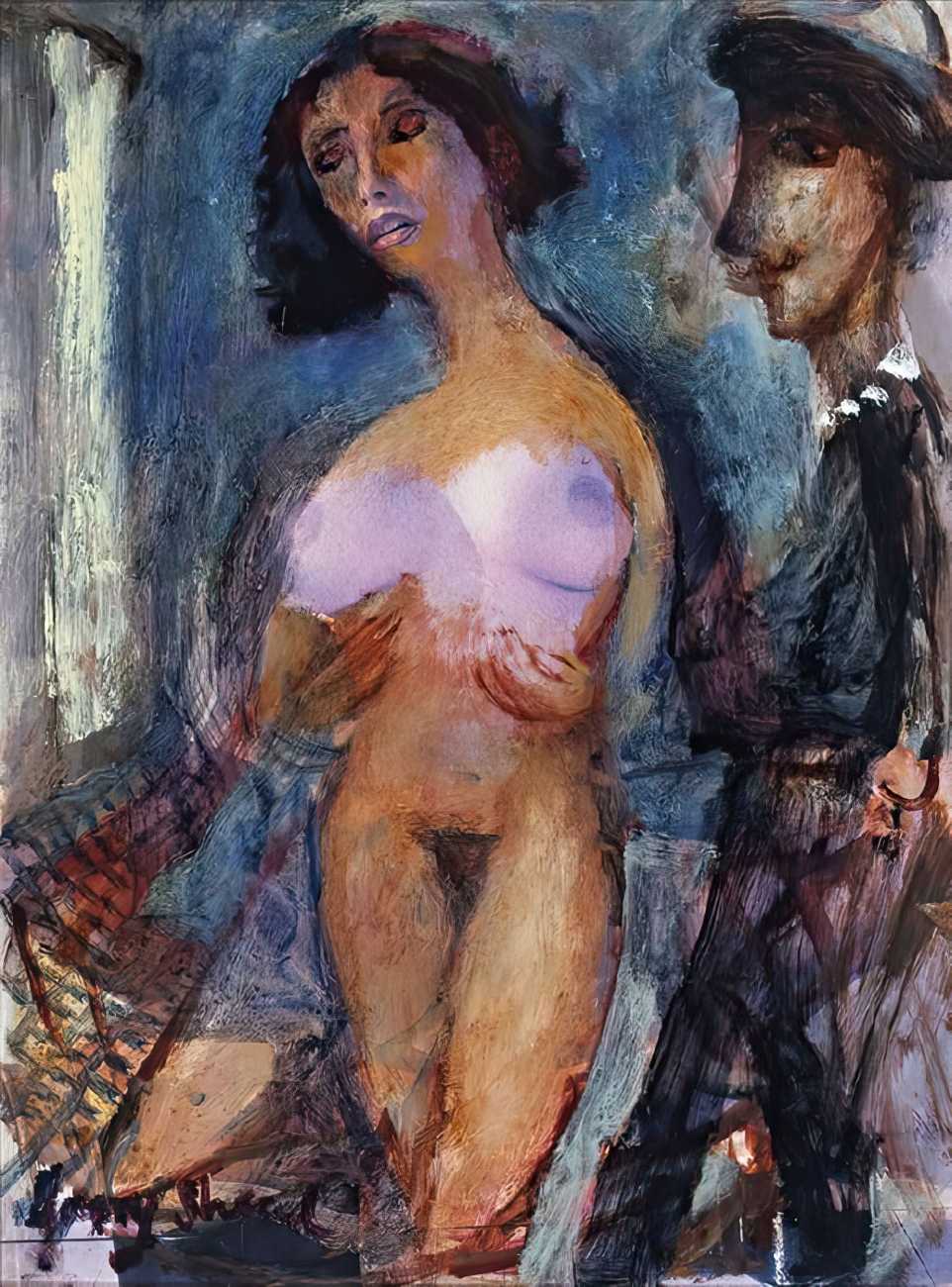
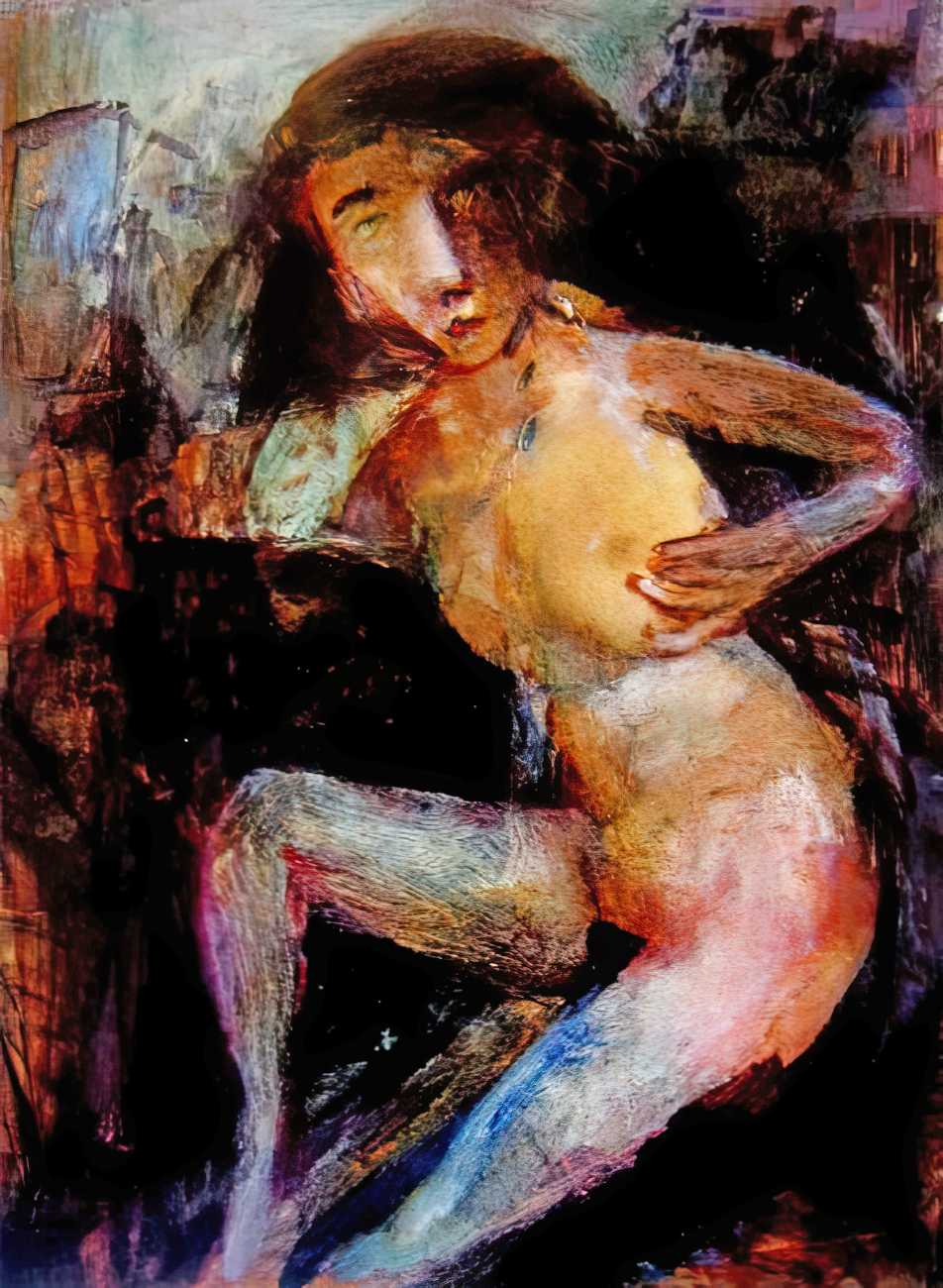
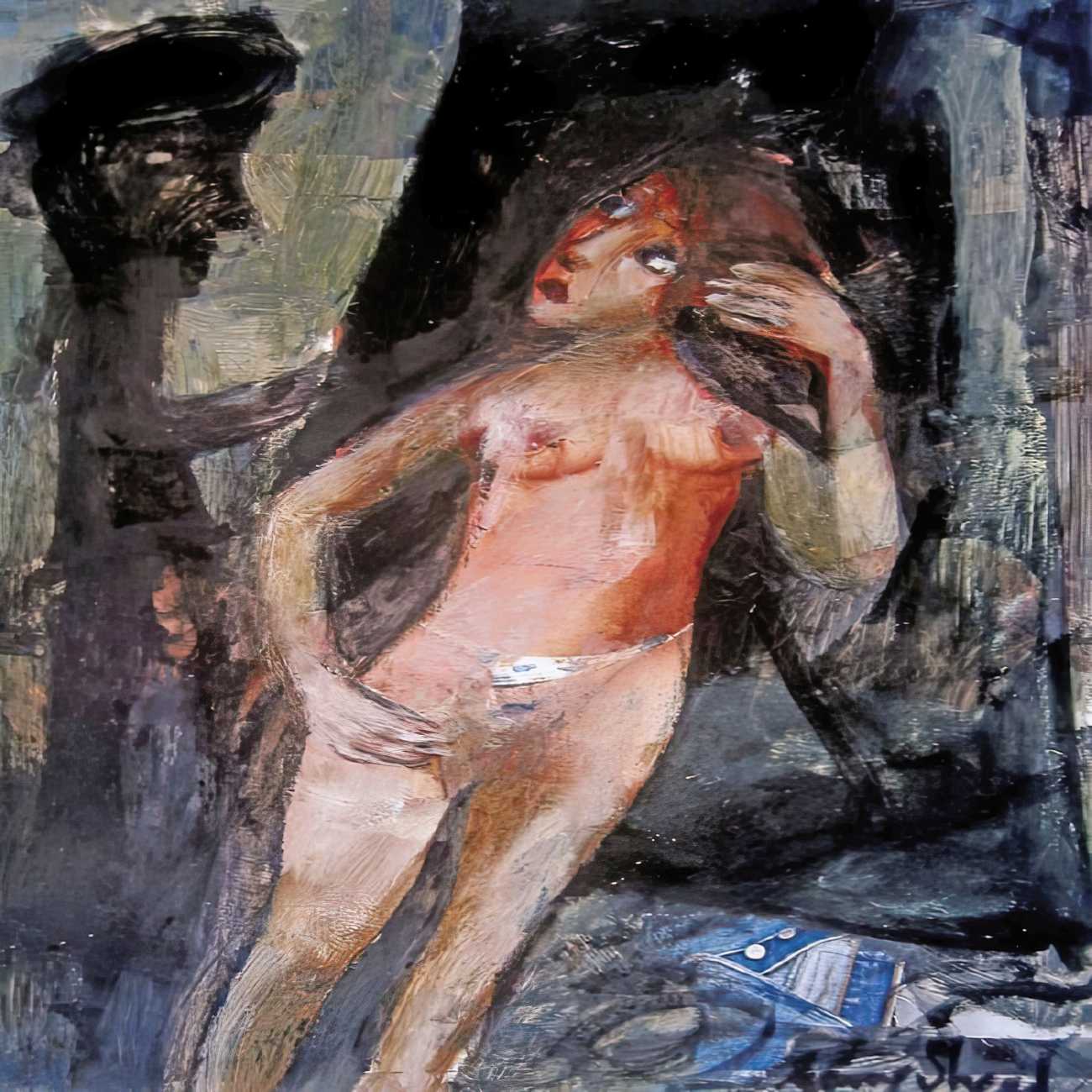
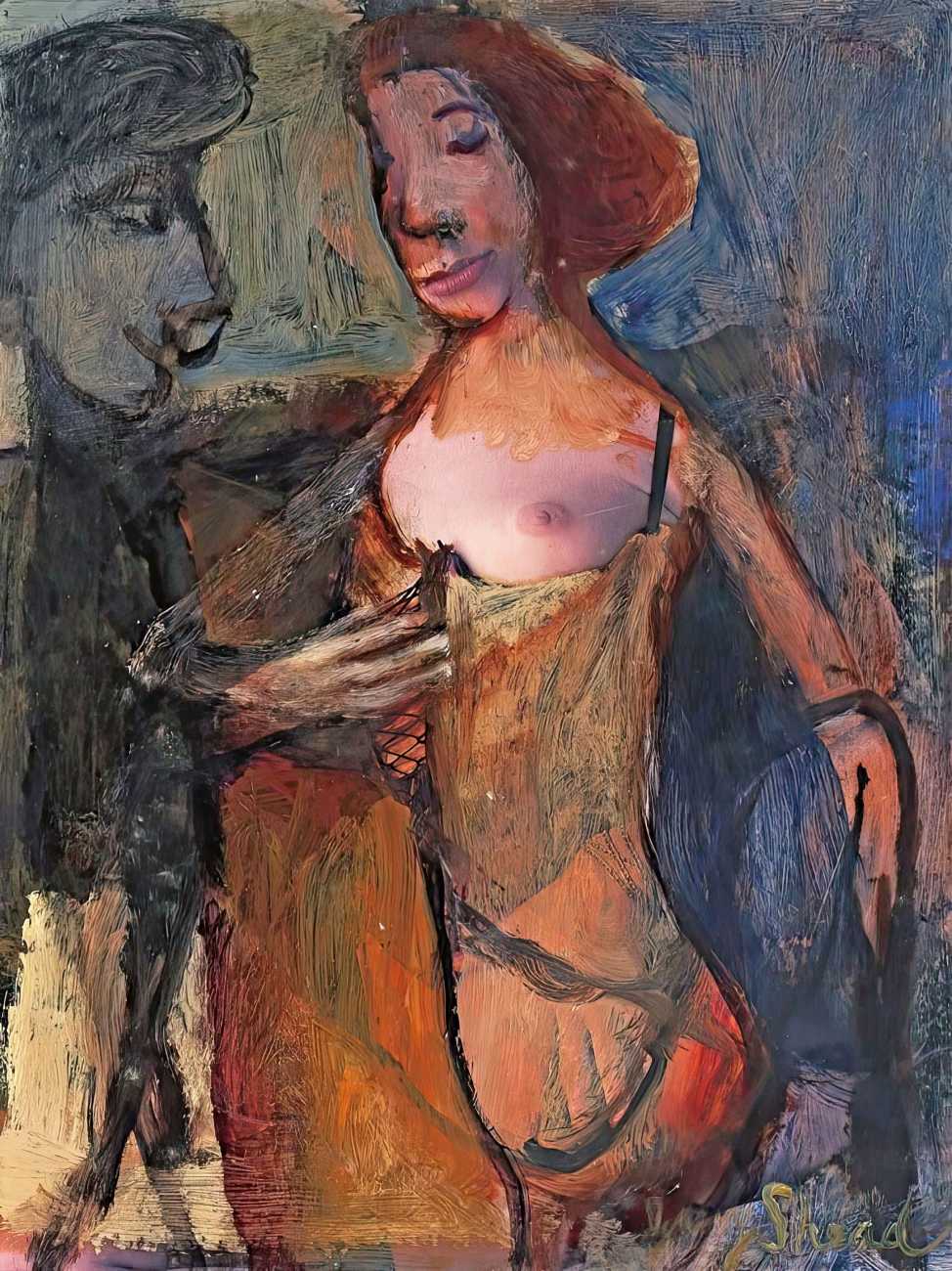
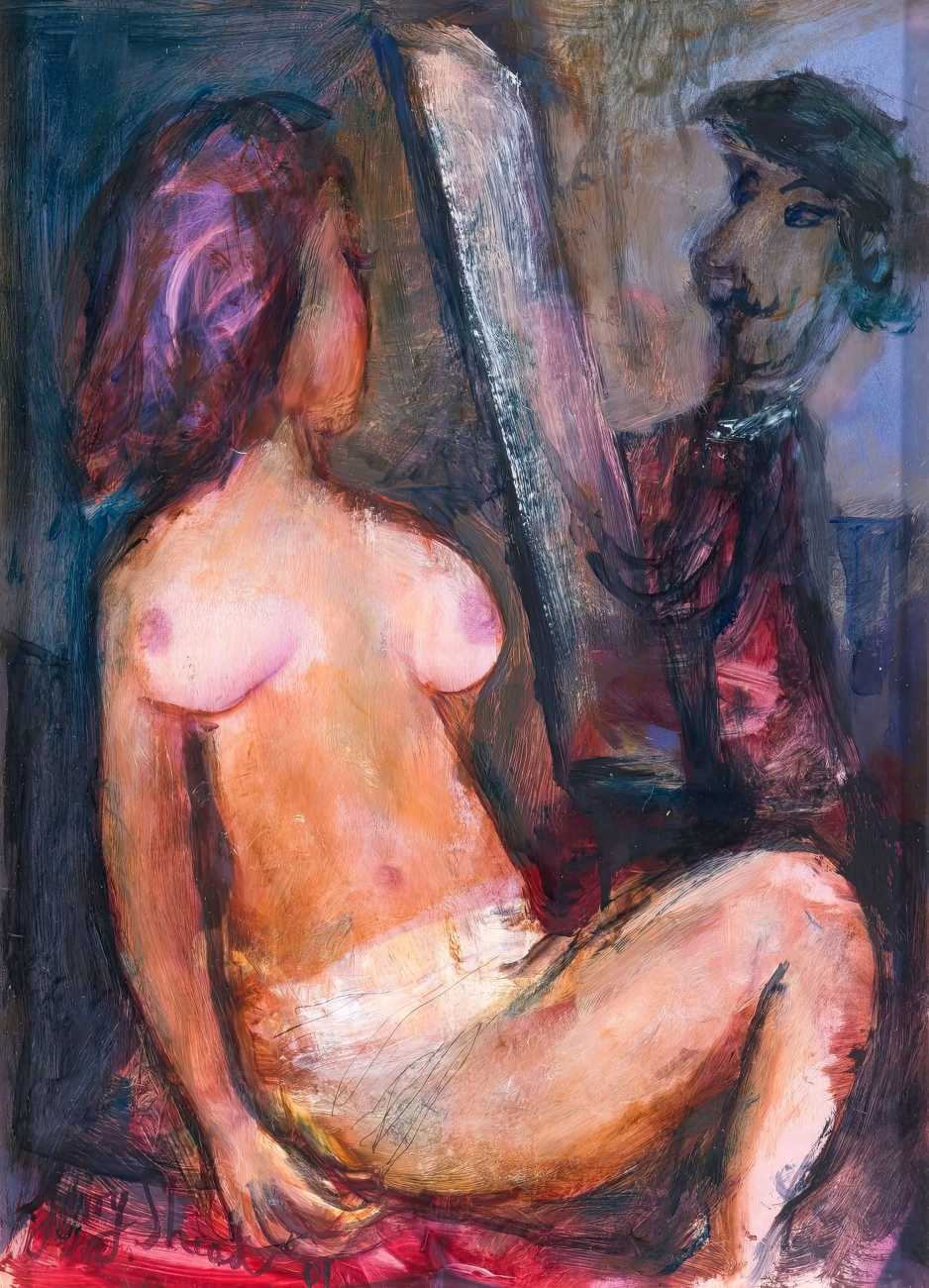
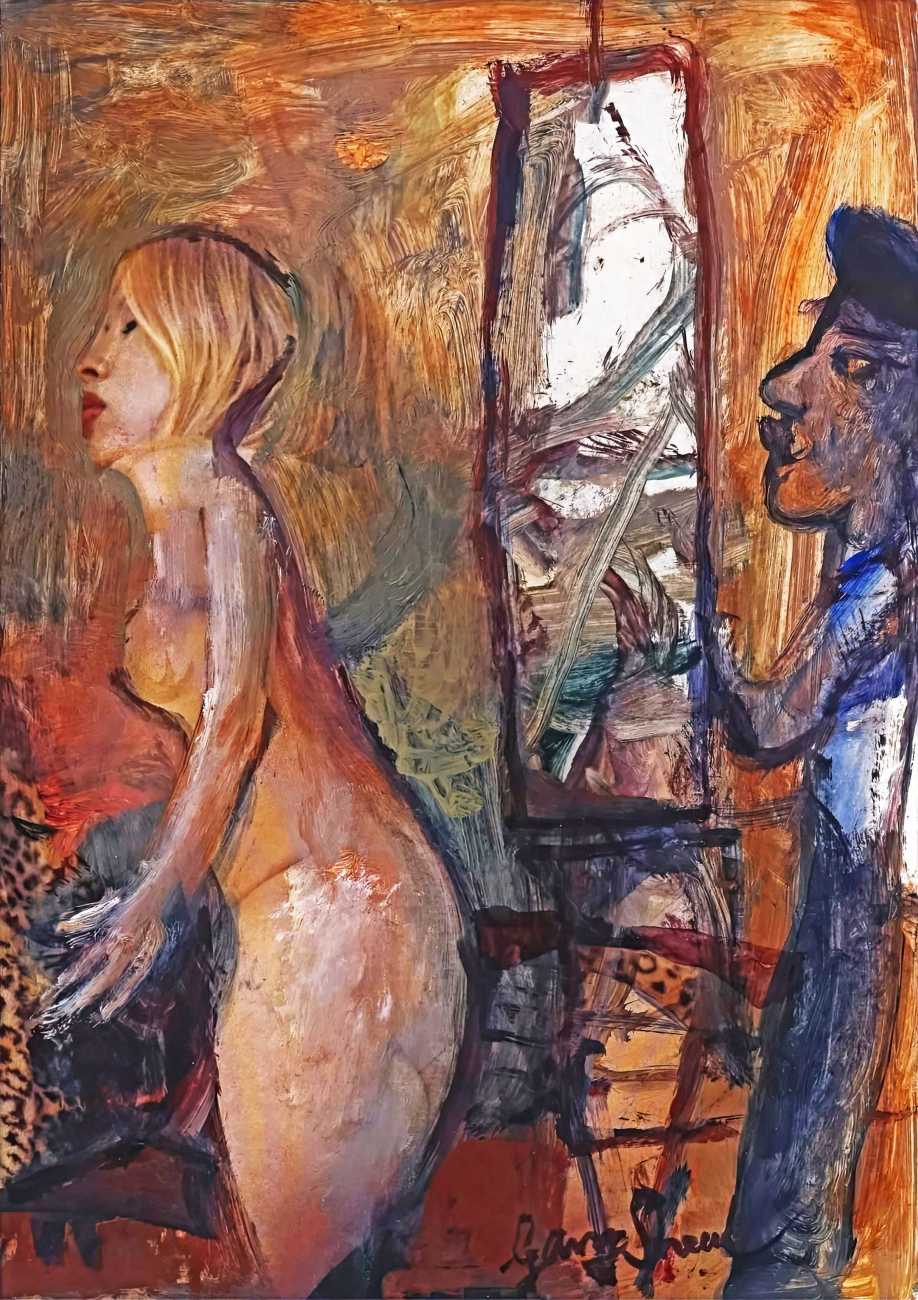
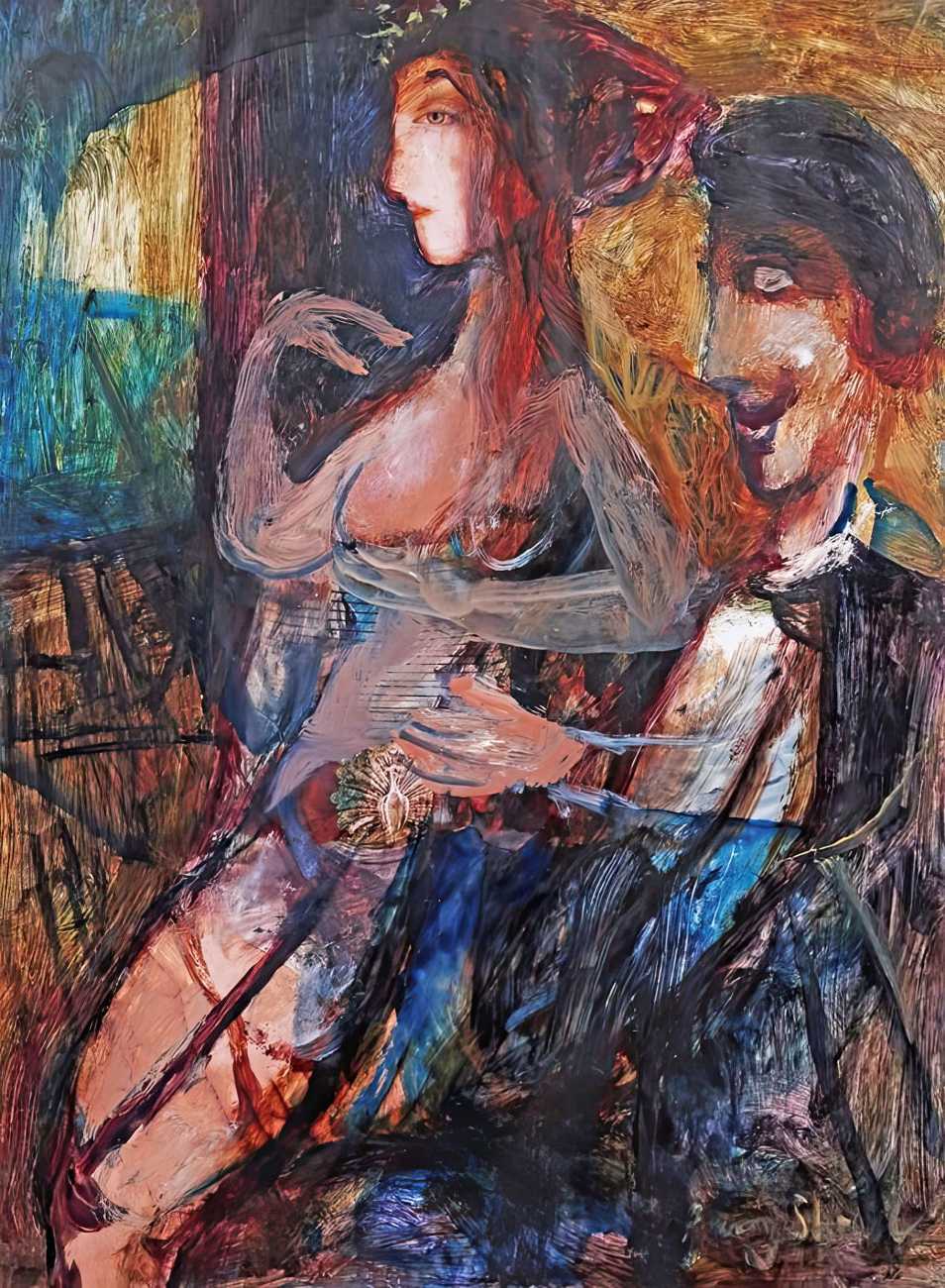
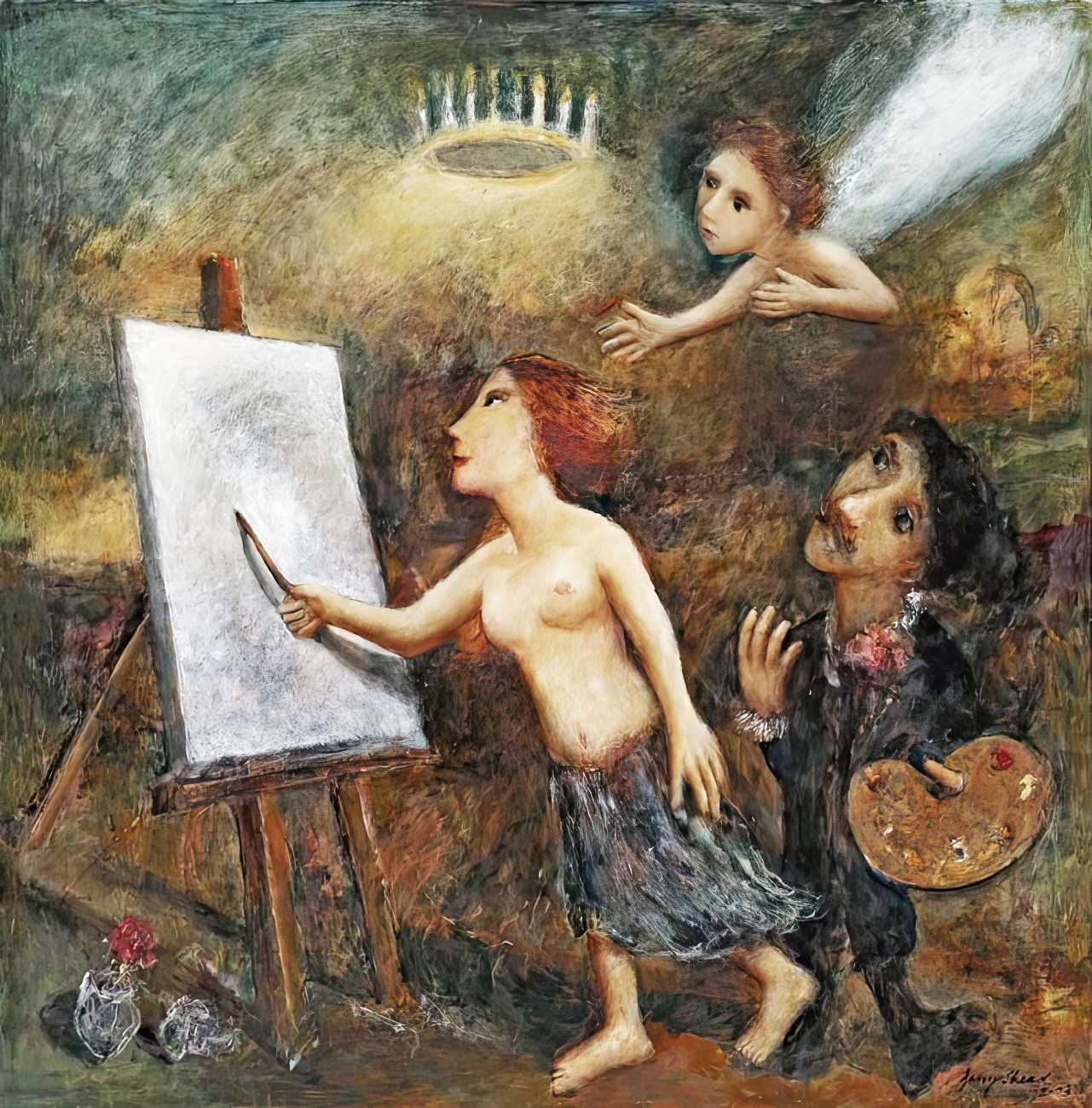
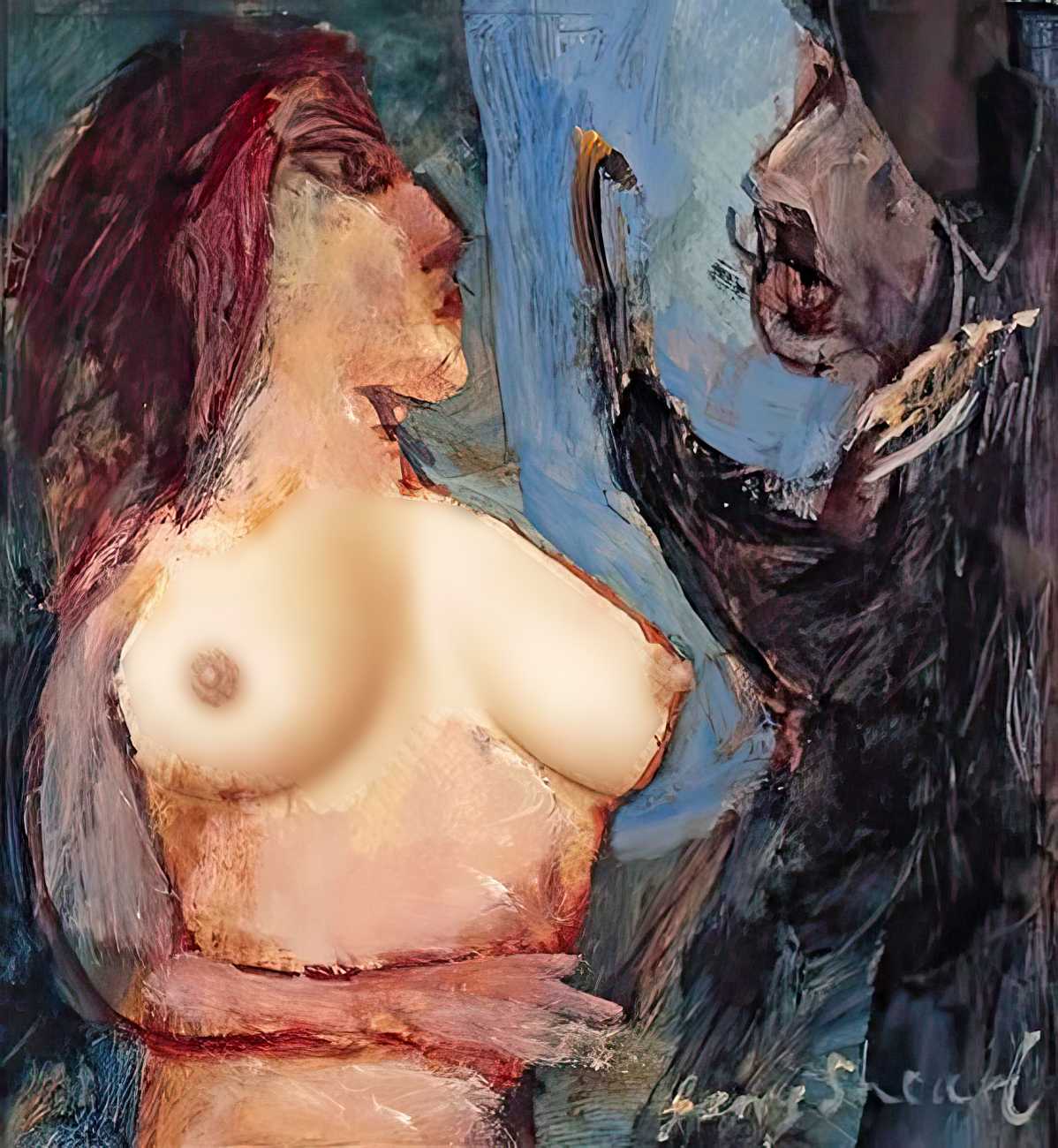
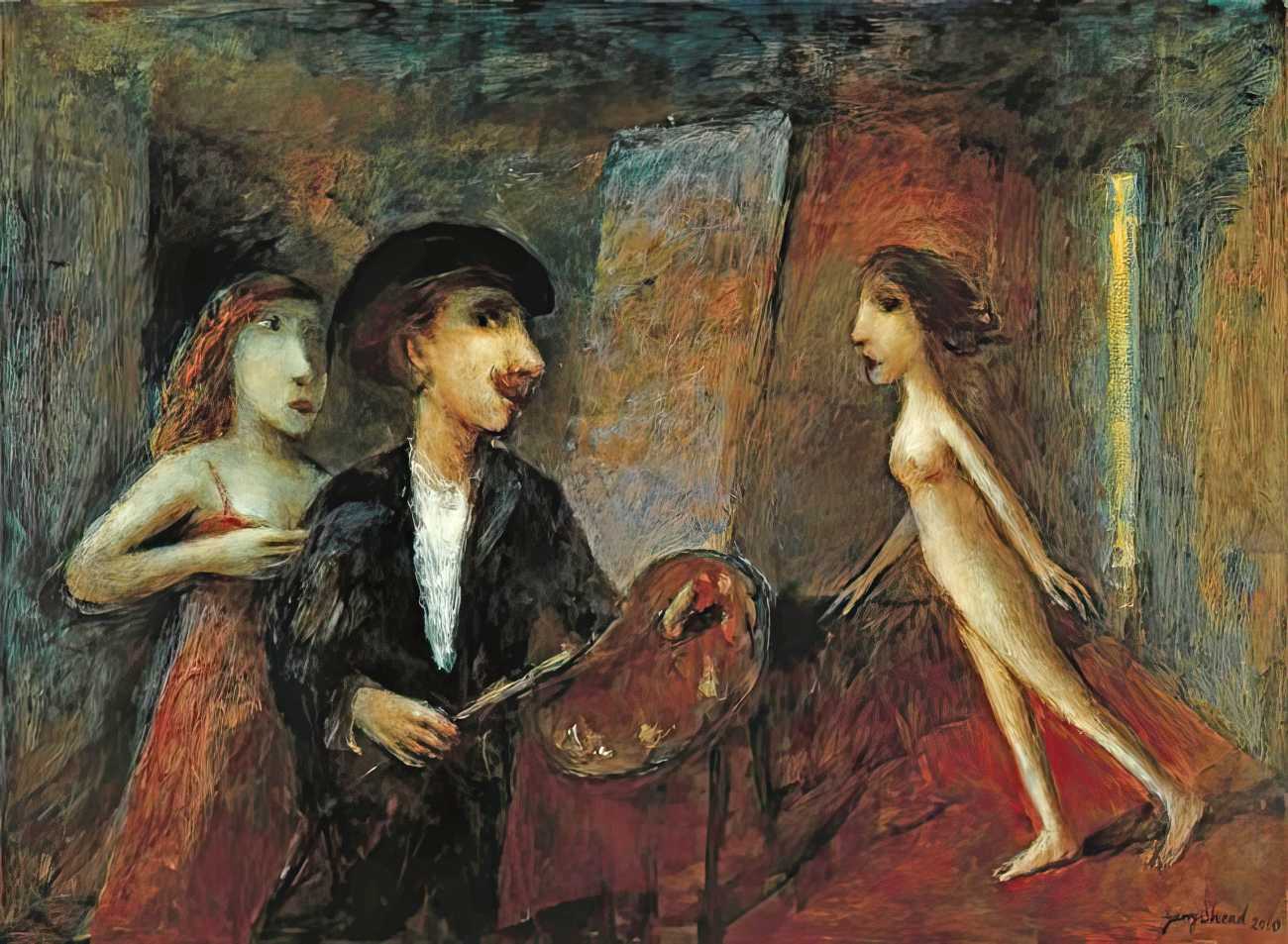
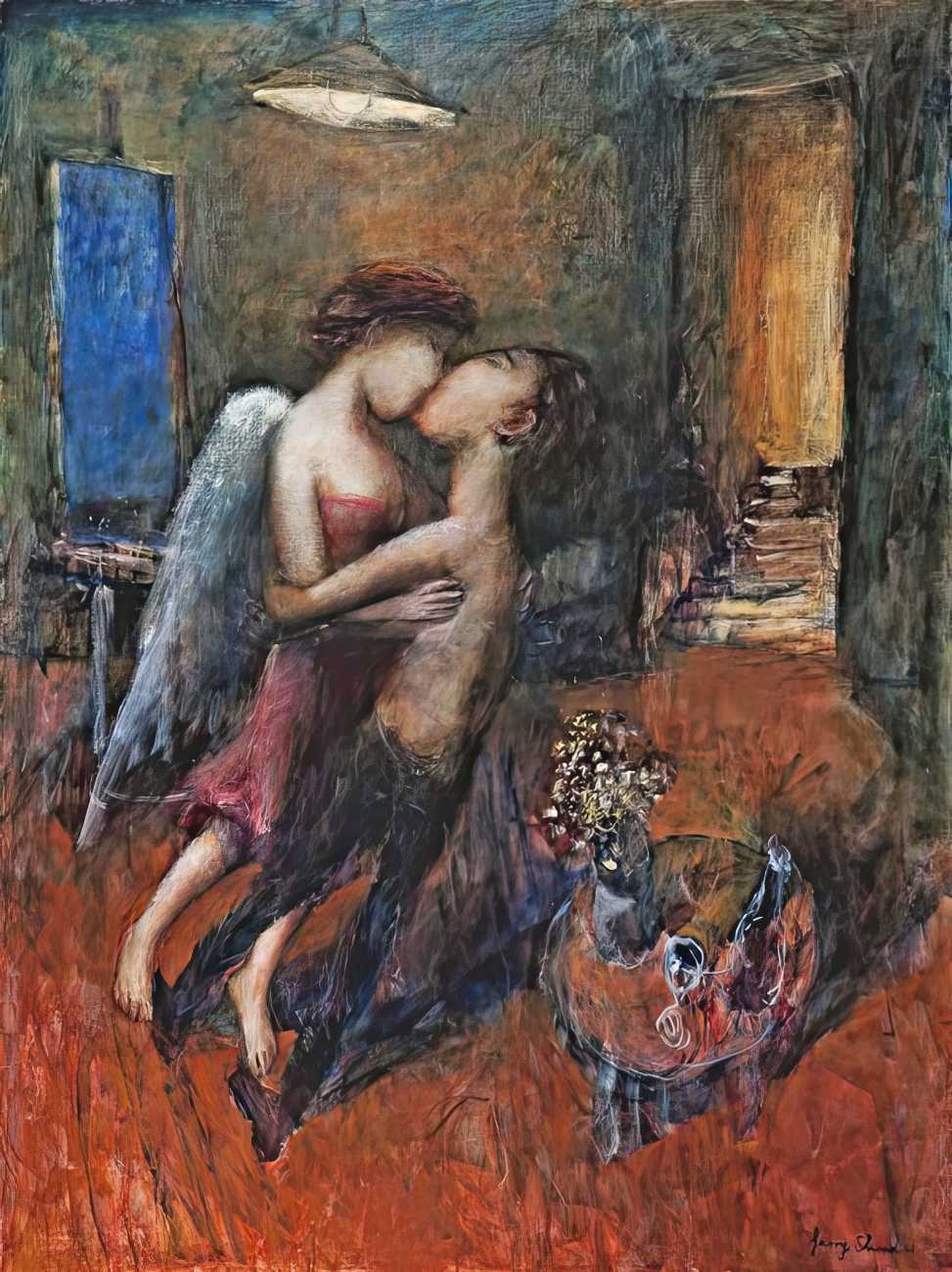
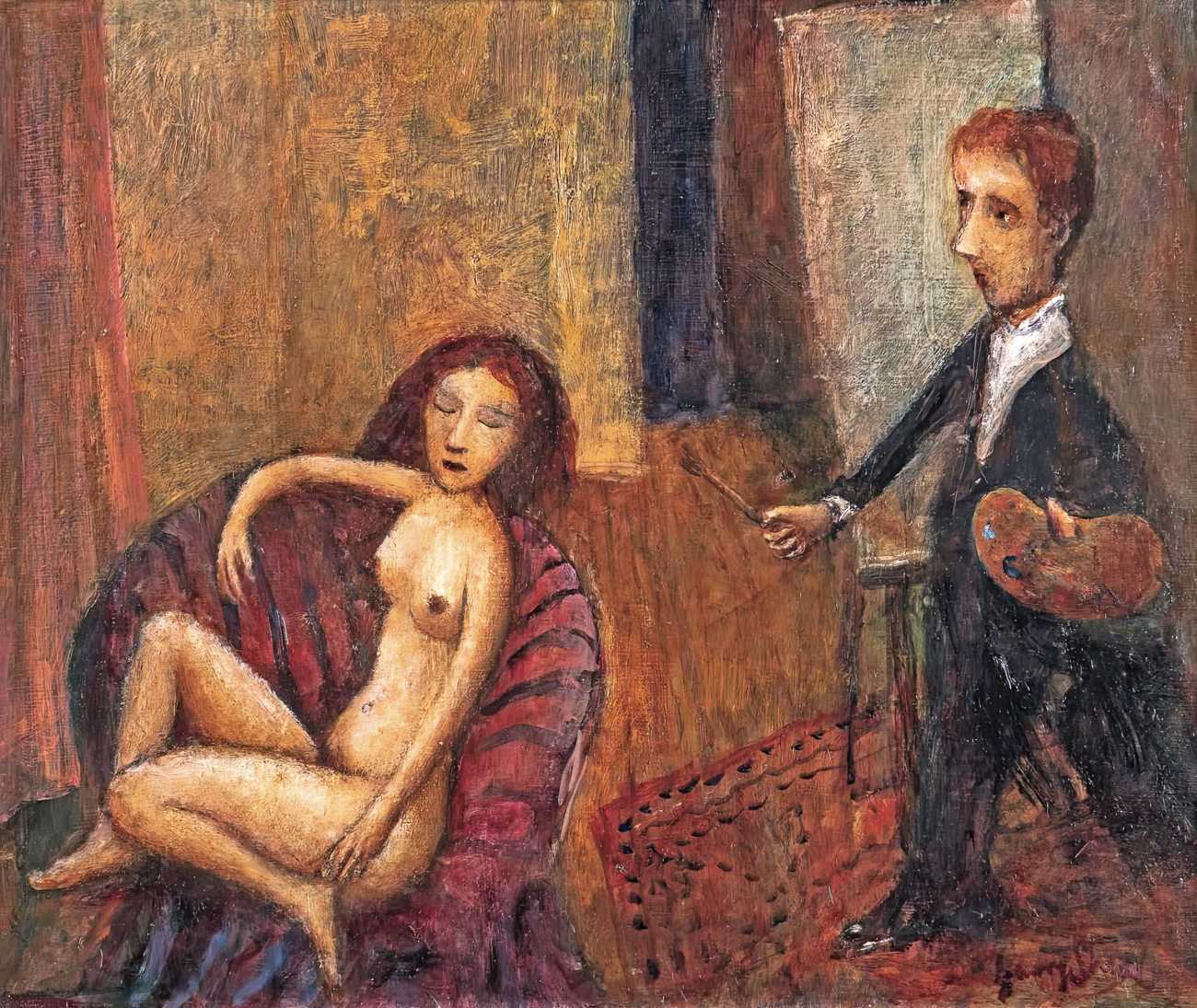
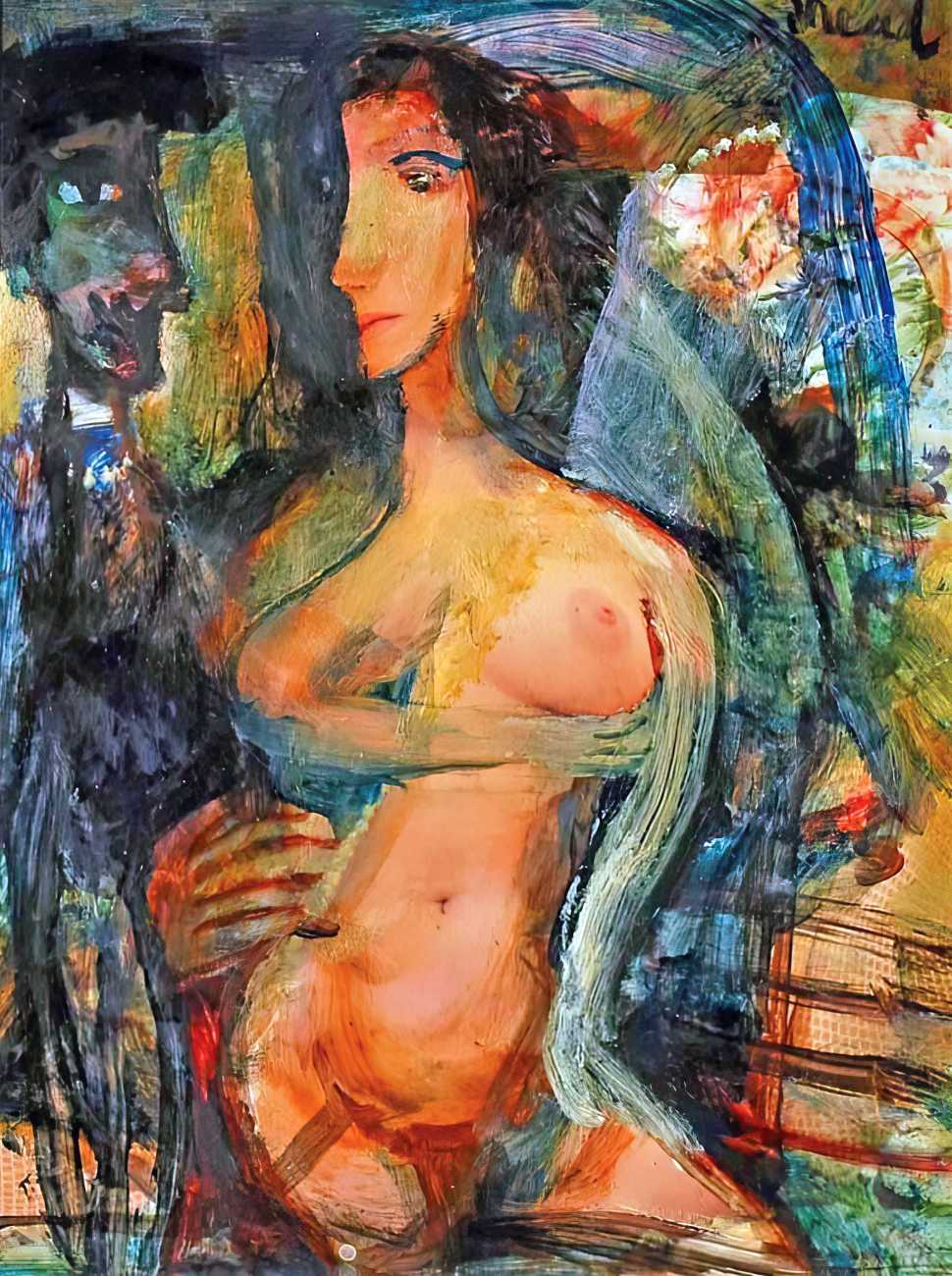
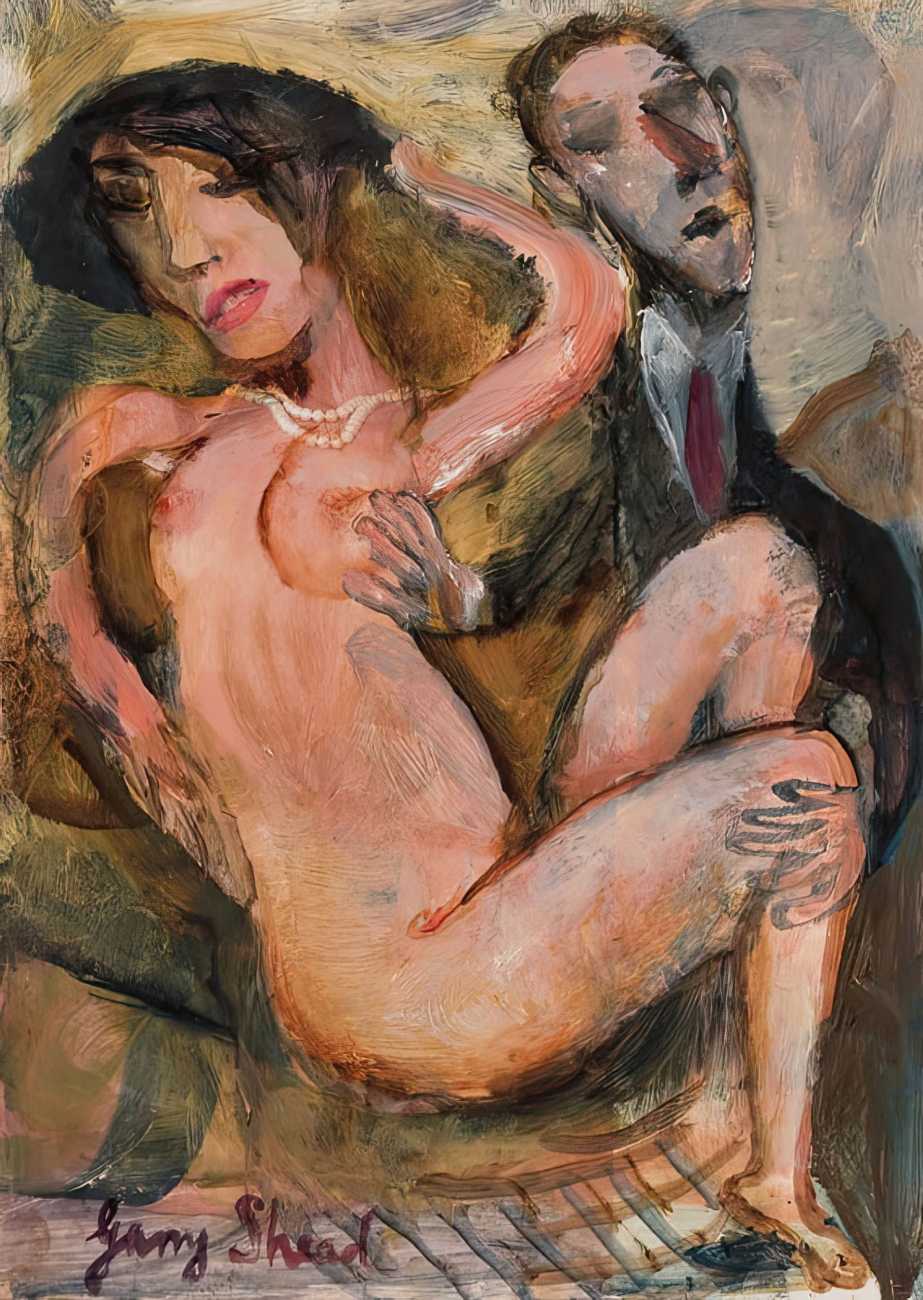
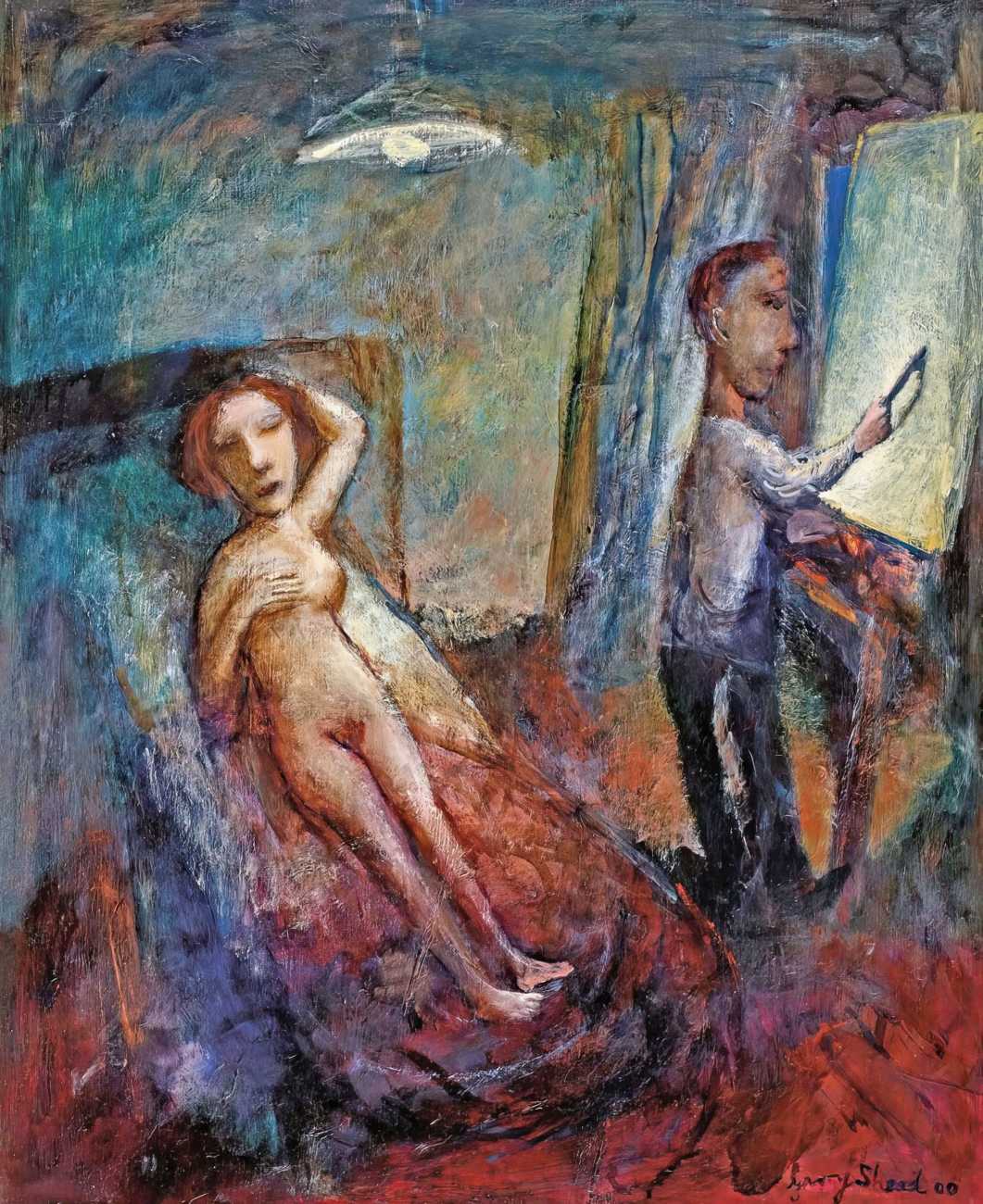
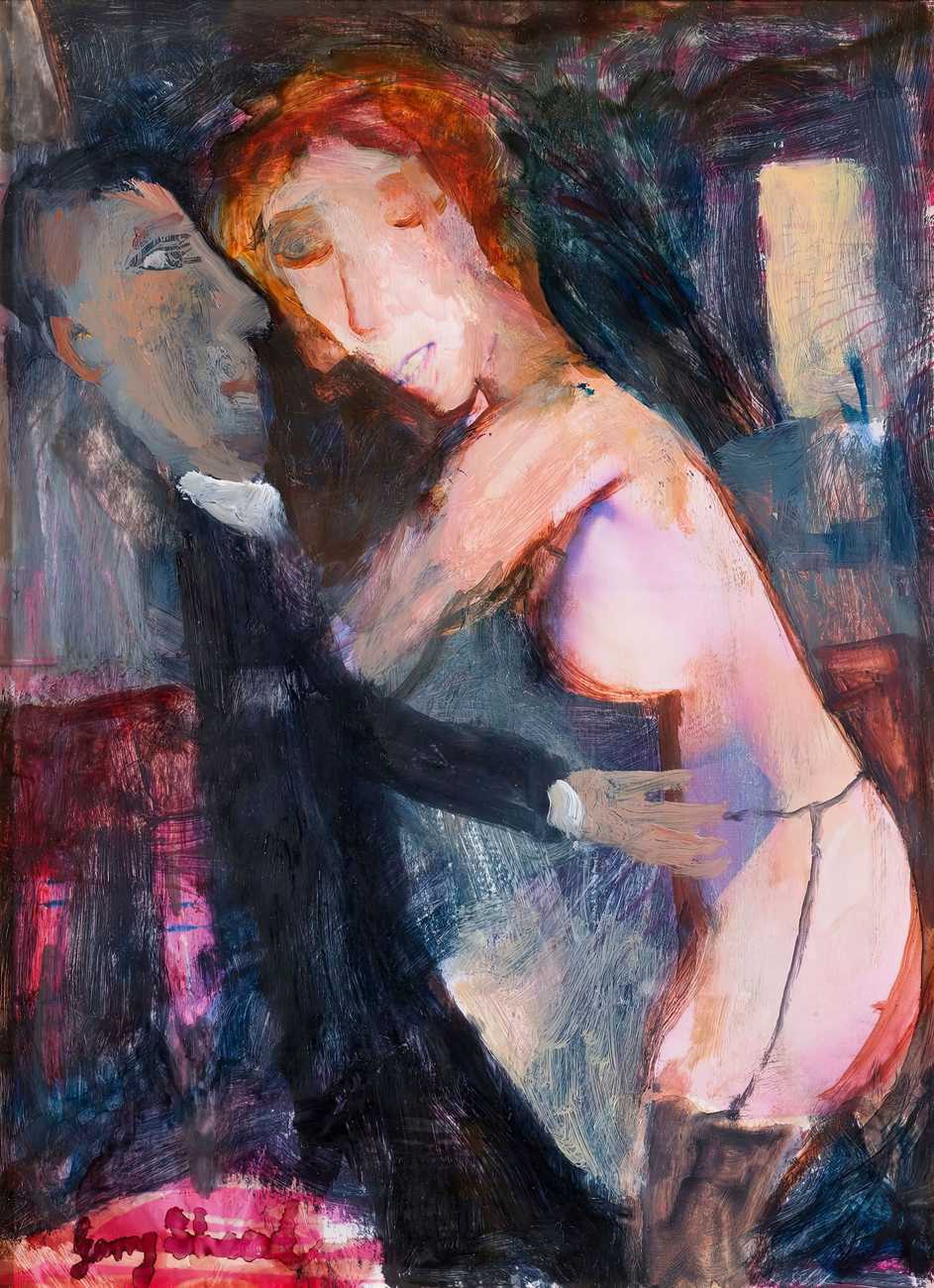
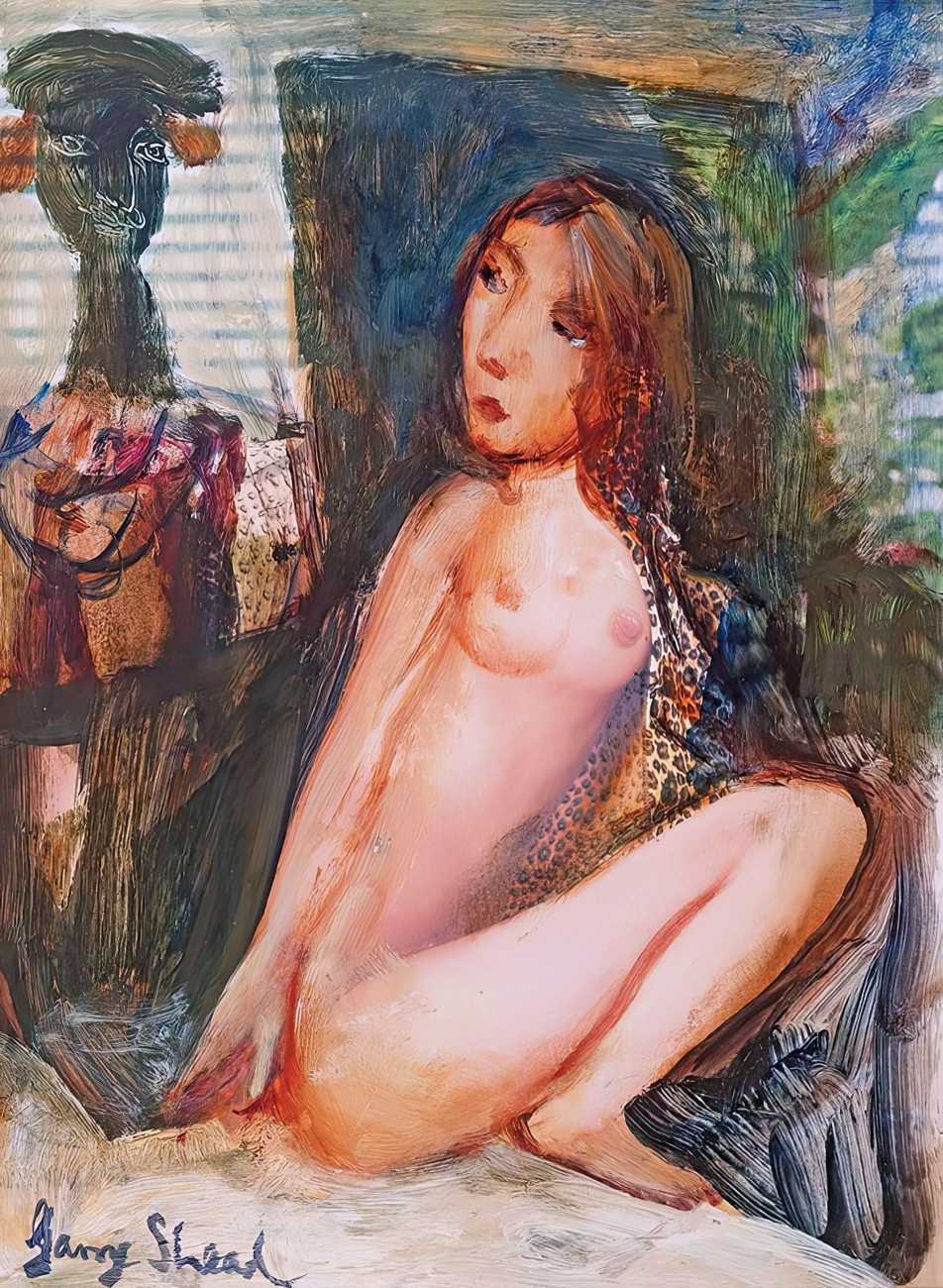
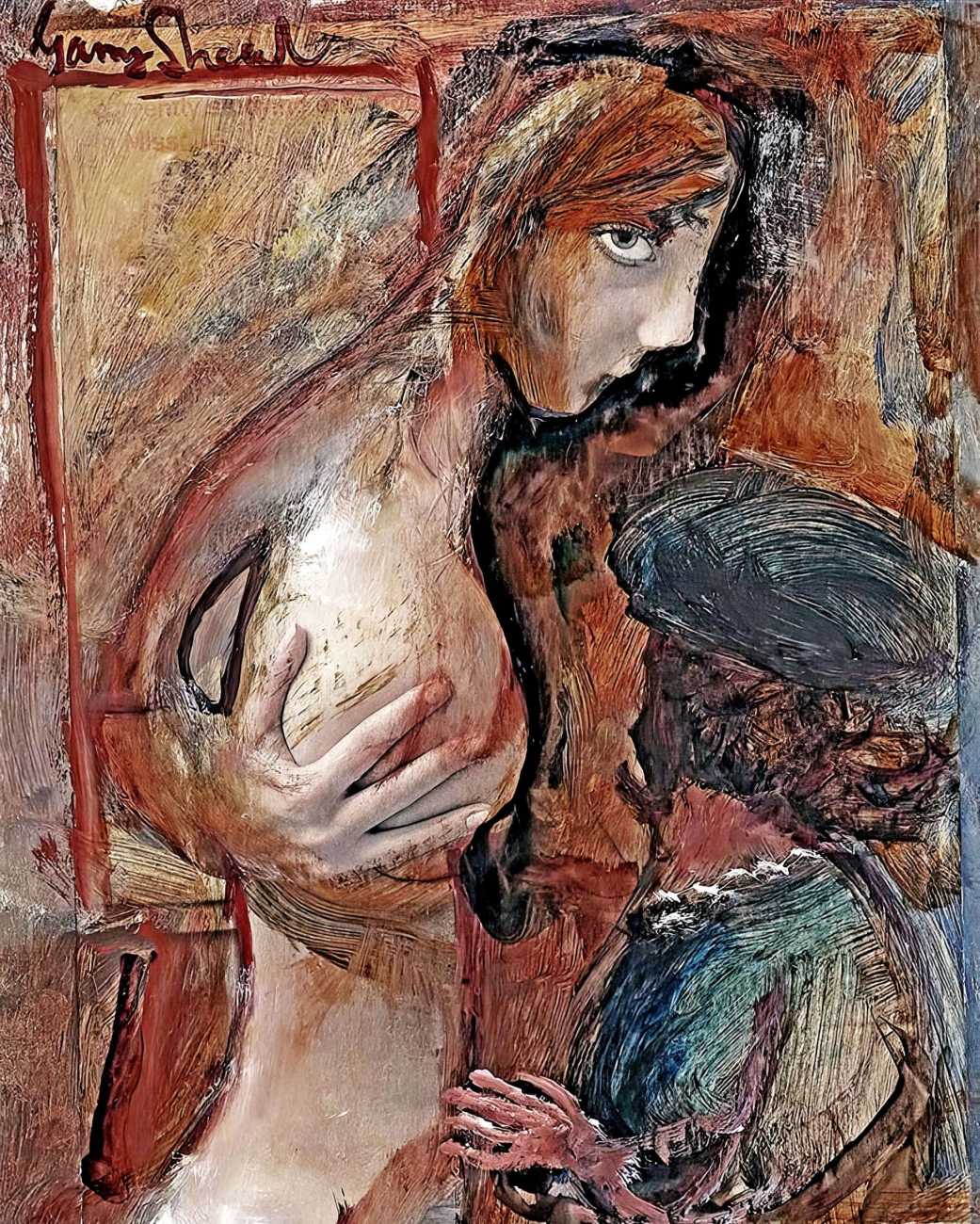
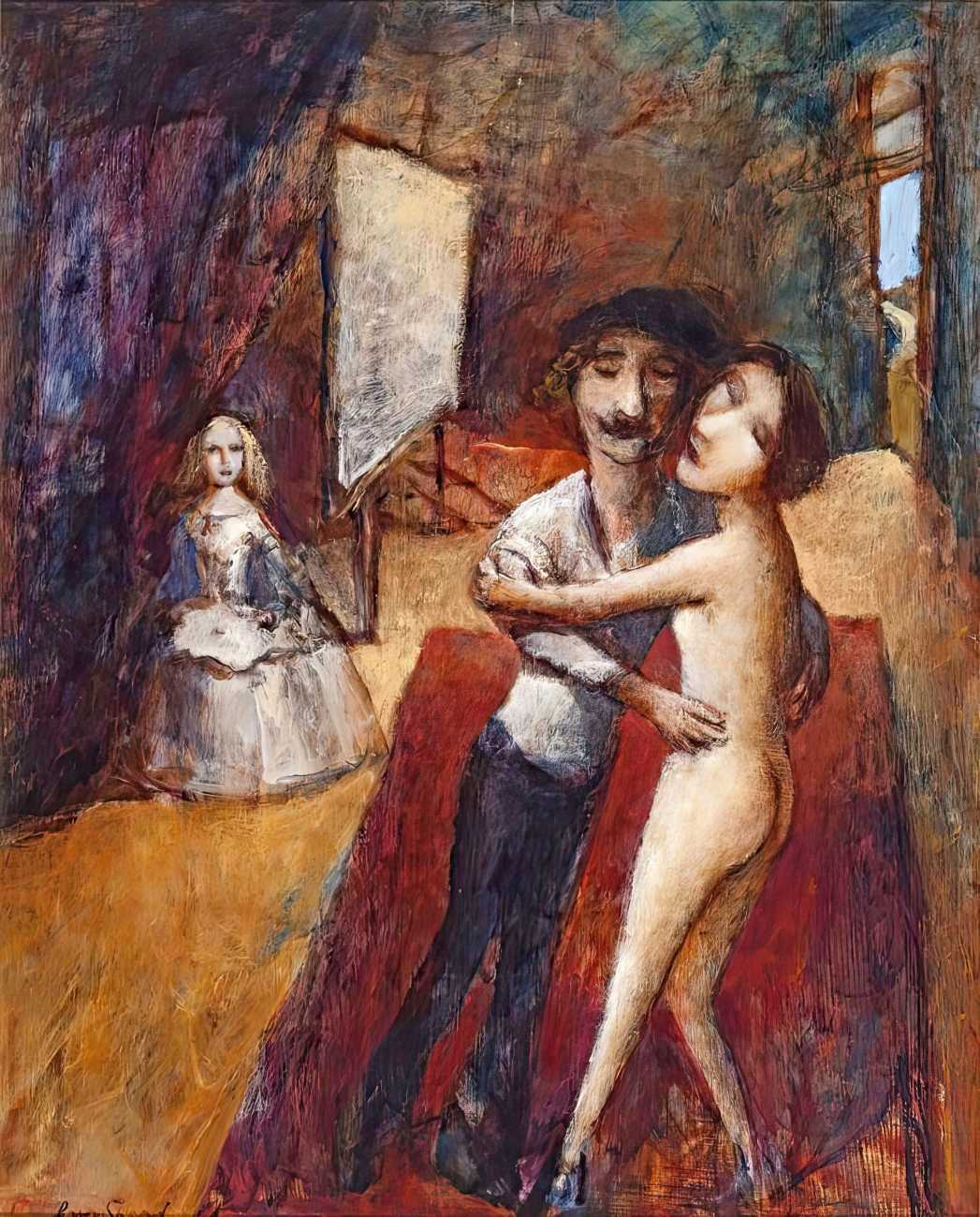
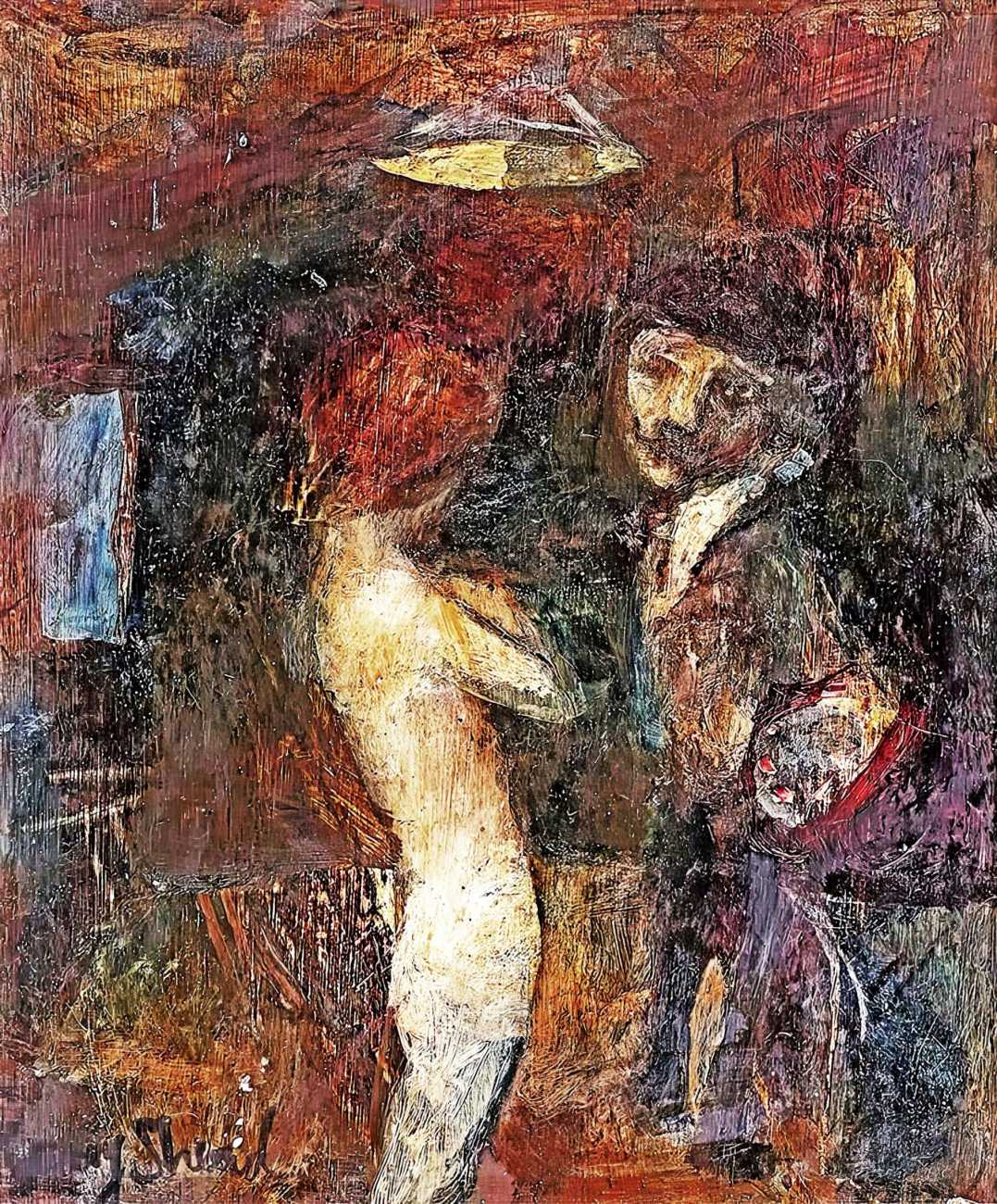
 Garry Shead is one of Australia’s most distinctive figurative artists, working across painting, drawing, printmaking, ceramics and experimental film. His work combines literature, mythology, sexuality and Australian identity in a personal visual language populated by lovers, muses, animals, and historical or literary figures. Familiar subjects become strange, dreamlike and often erotic, as he explores desire, imagination, and the relationship between artist and model.
Shead grew up in Gordon in Sydney’s northern suburbs, and attended Shore Grammar School, where his teachers John Lipscombe and Ross Doig recognised his artistic talent. He entered the National Art School in Sydney in 1961, and that same year, aged nineteen, his portrait of his sister Lynne was accepted for the Archibald Prize exhibition. He became involved in the emerging Sydney counterculture, befriending artists including Martin Sharp and contributing cartoons to The Bulletin, Honi Soit, the Sydney Morning Herald and Oz. He also developed an interest in experimental film, becoming a founding member of the Ubu Films collective.
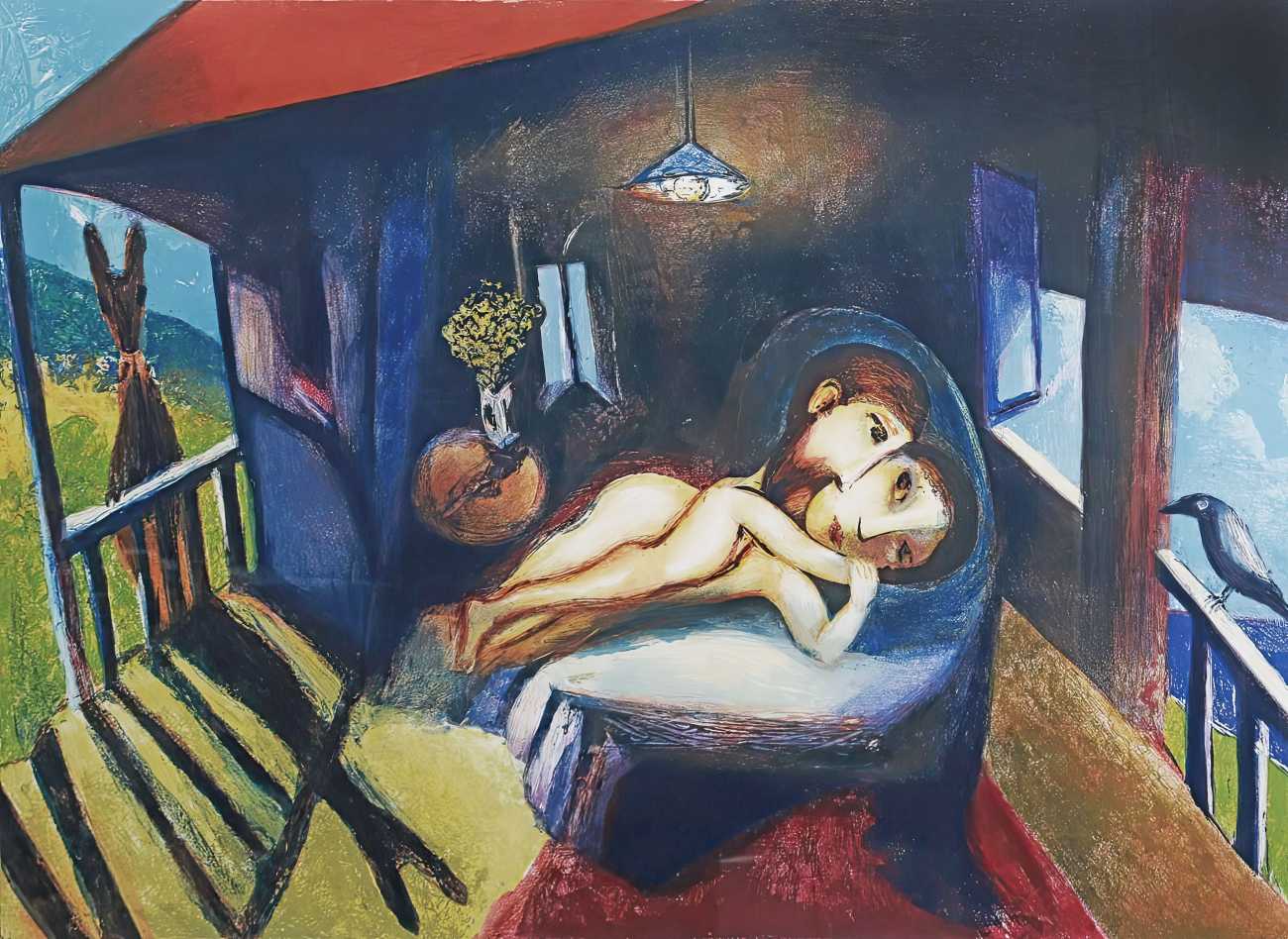
Shead spent only two years at art school and was largely self-taught thereafter, studying the old masters and learning from art manuals. Rembrandt, Velázquez and Vermeer were important influences, alongside the more surreal imagery of Dalí. From early in his career, the human form, particularly the female figure, was central to his work. His paintings, drawings and films share an erotic sensibility and a gentle lyricism. Rather than treating eroticism as simply a matter of physical attraction, he uses bodies and encounters to explore intimacy, fantasy, voyeurism and the uncertain boundary between reality and imagination.
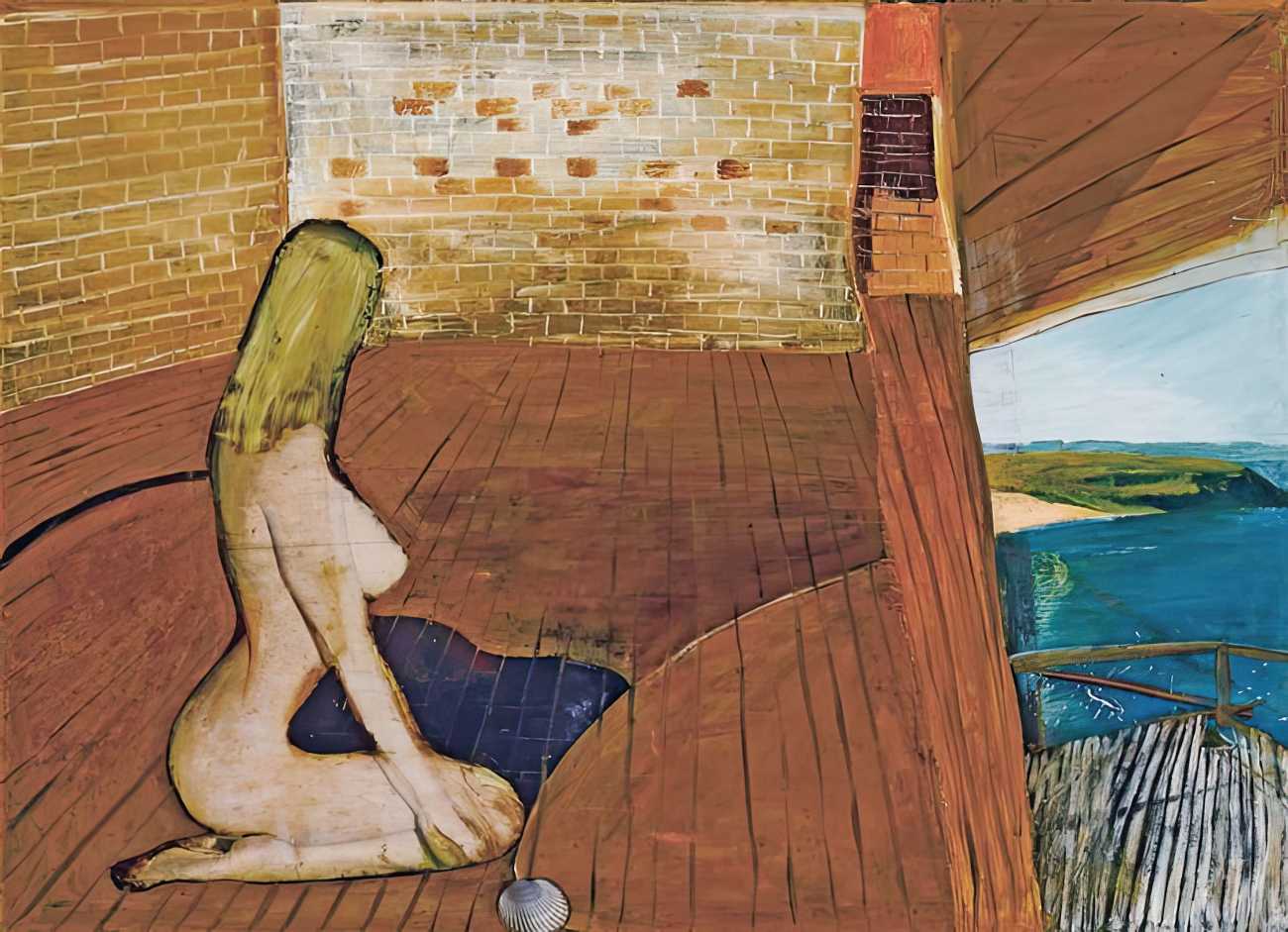
A decisive influence on his personal and artistic life was the Hungarian sculptor Judit Englert, whom he met during an artists’ residency at the Károlyi Foundation in Vence, southern France, in 1981. They lived together in Budapest before returning to Australia in 1983, and settled at Bundeena, south of Sydney, in 1987. Englert was not merely a model but an artist and creative collaborator who helped Shead develop his approach to composition. He later acknowledged how profoundly she had changed his career. She also became his most enduring muse, appearing repeatedly in his work, sometimes recognisably and sometimes in the guise of historical, literary or imagined women. She died of pancreatic cancer in 2007.
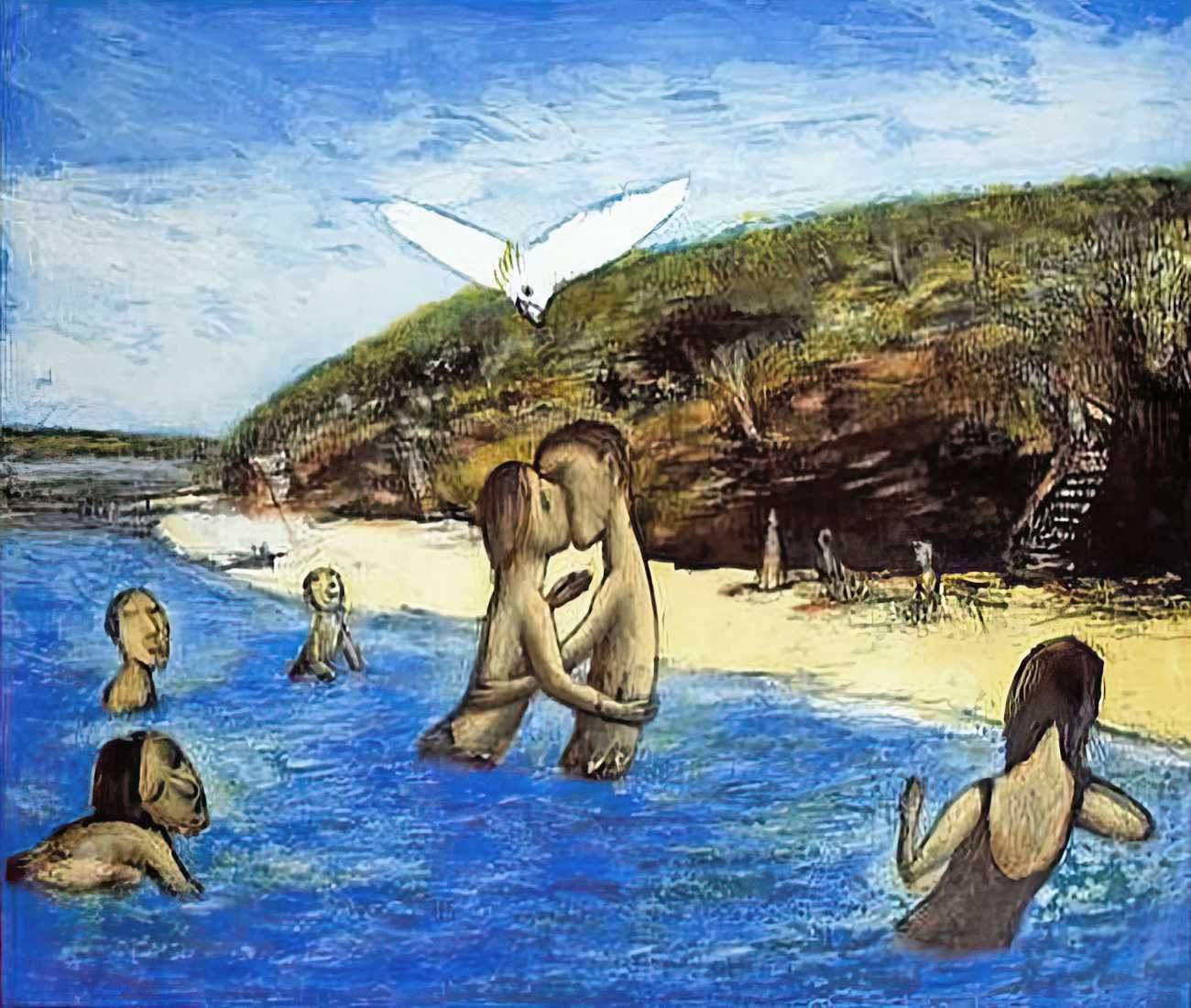
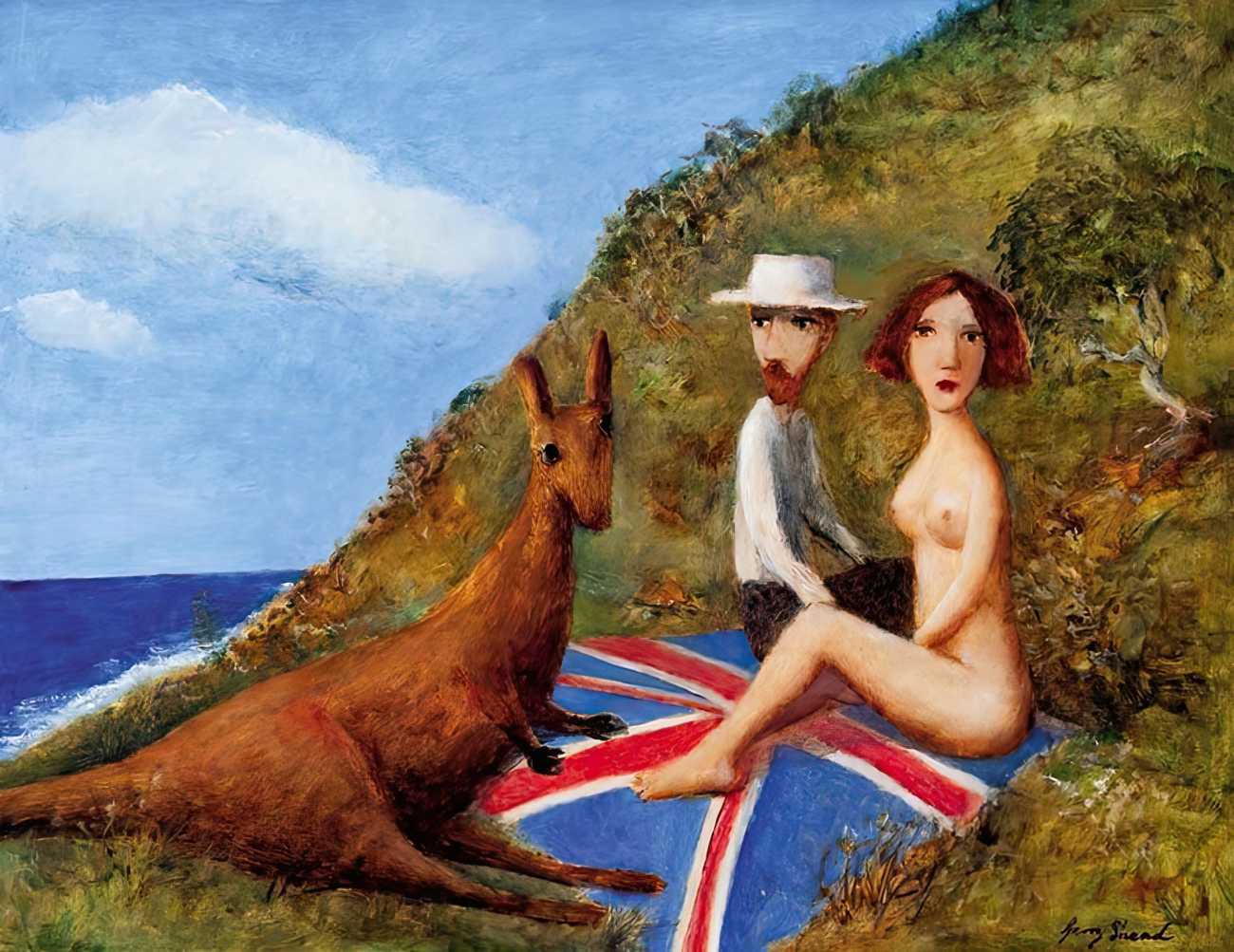
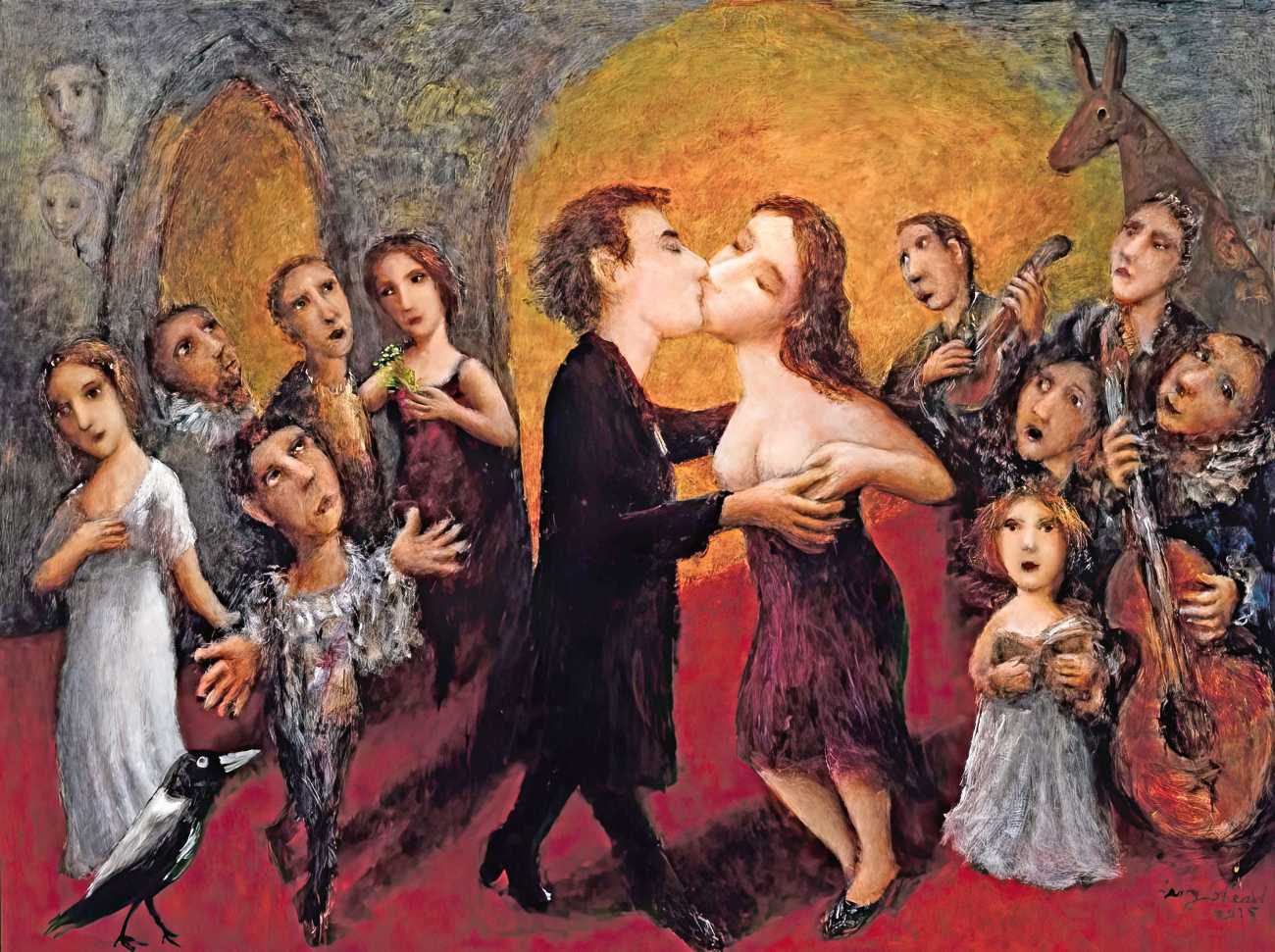
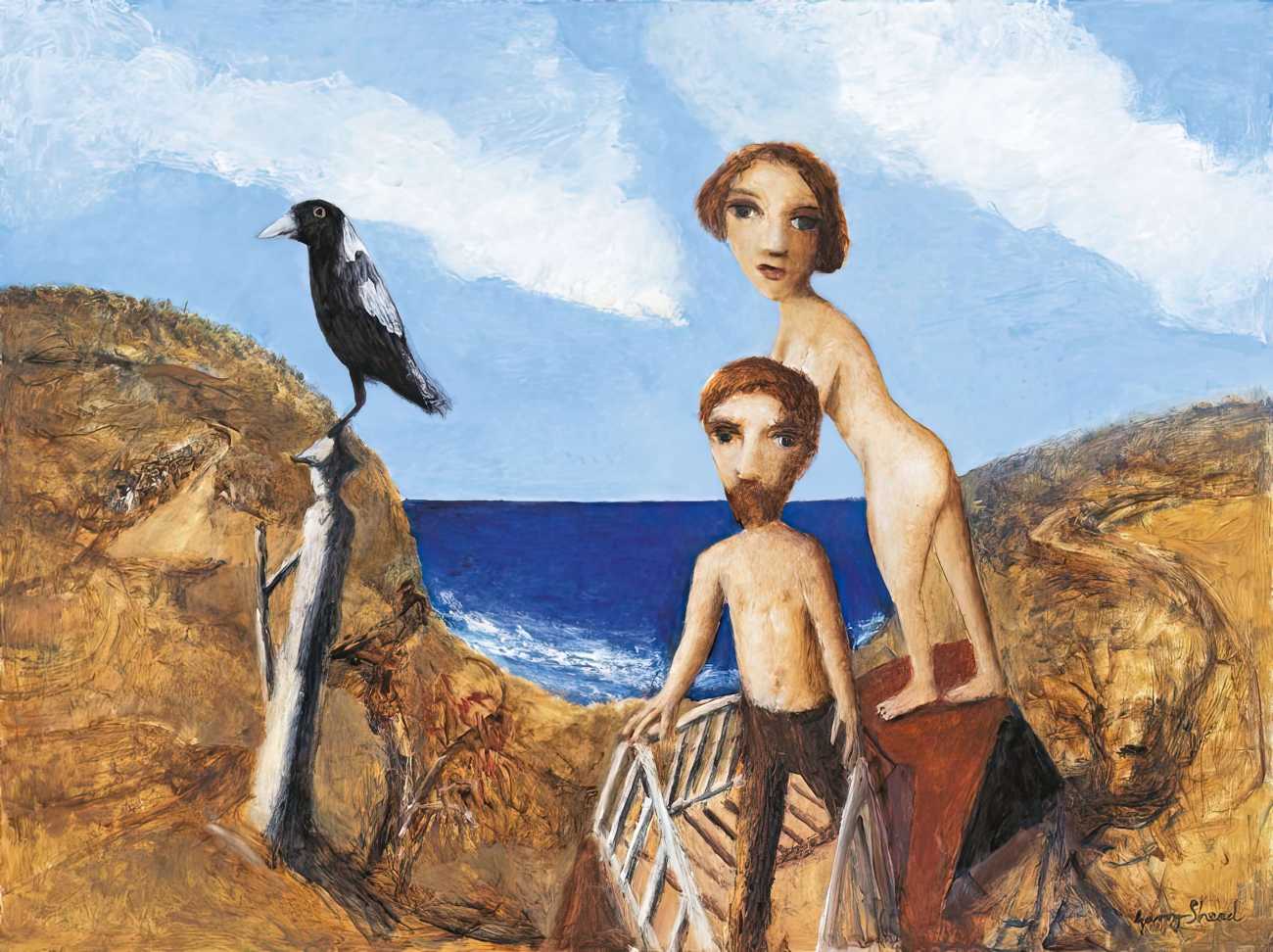
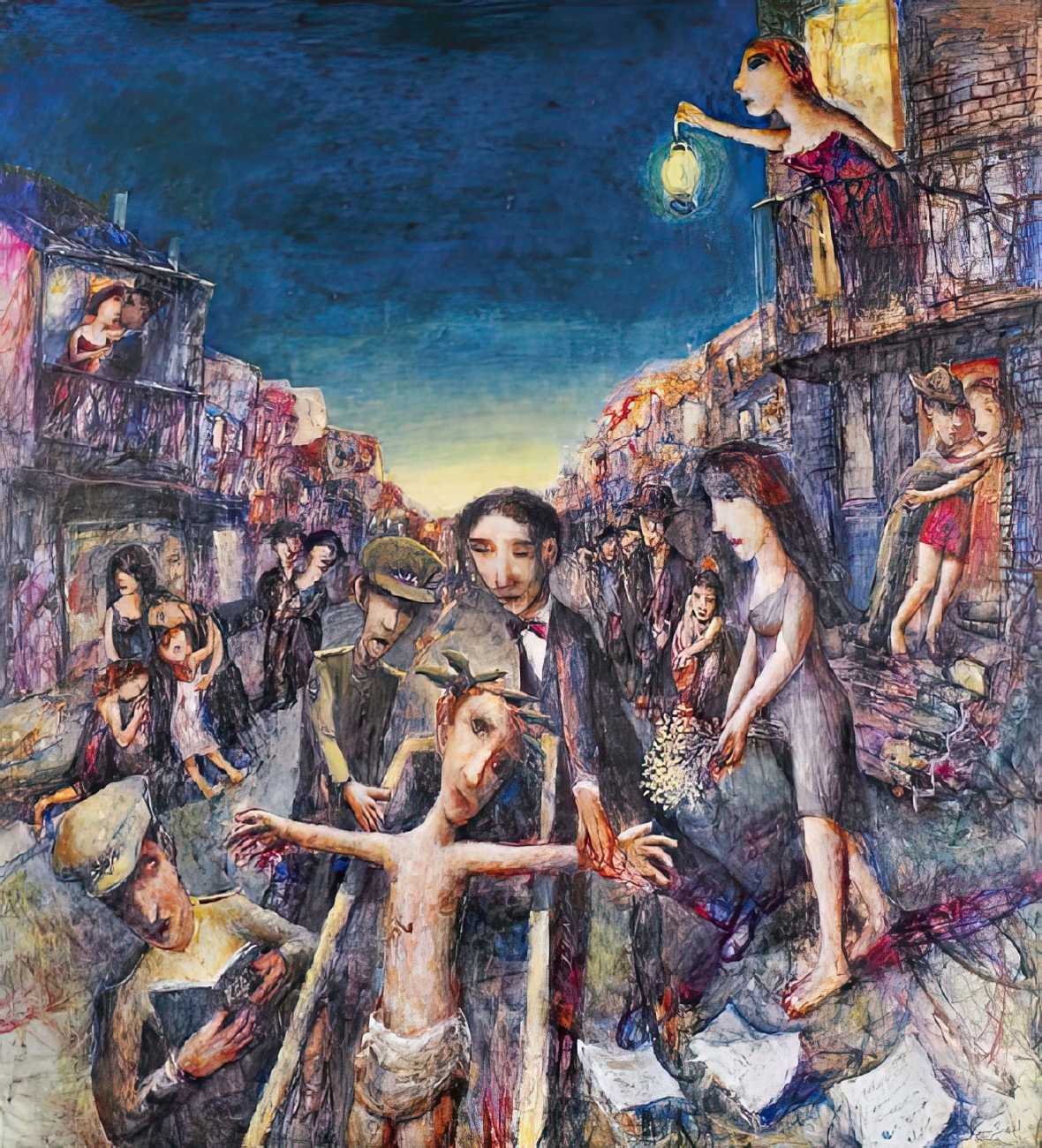
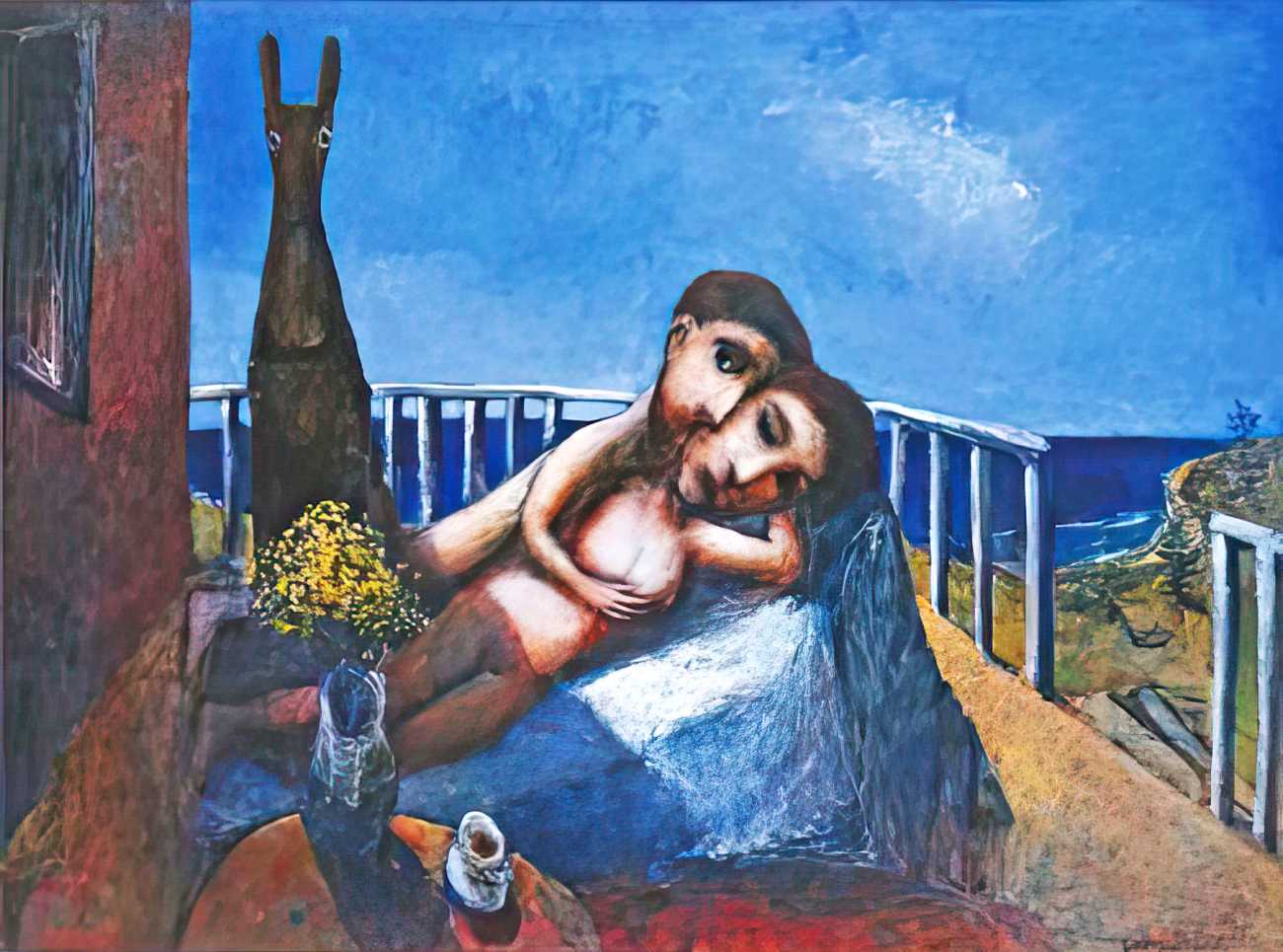
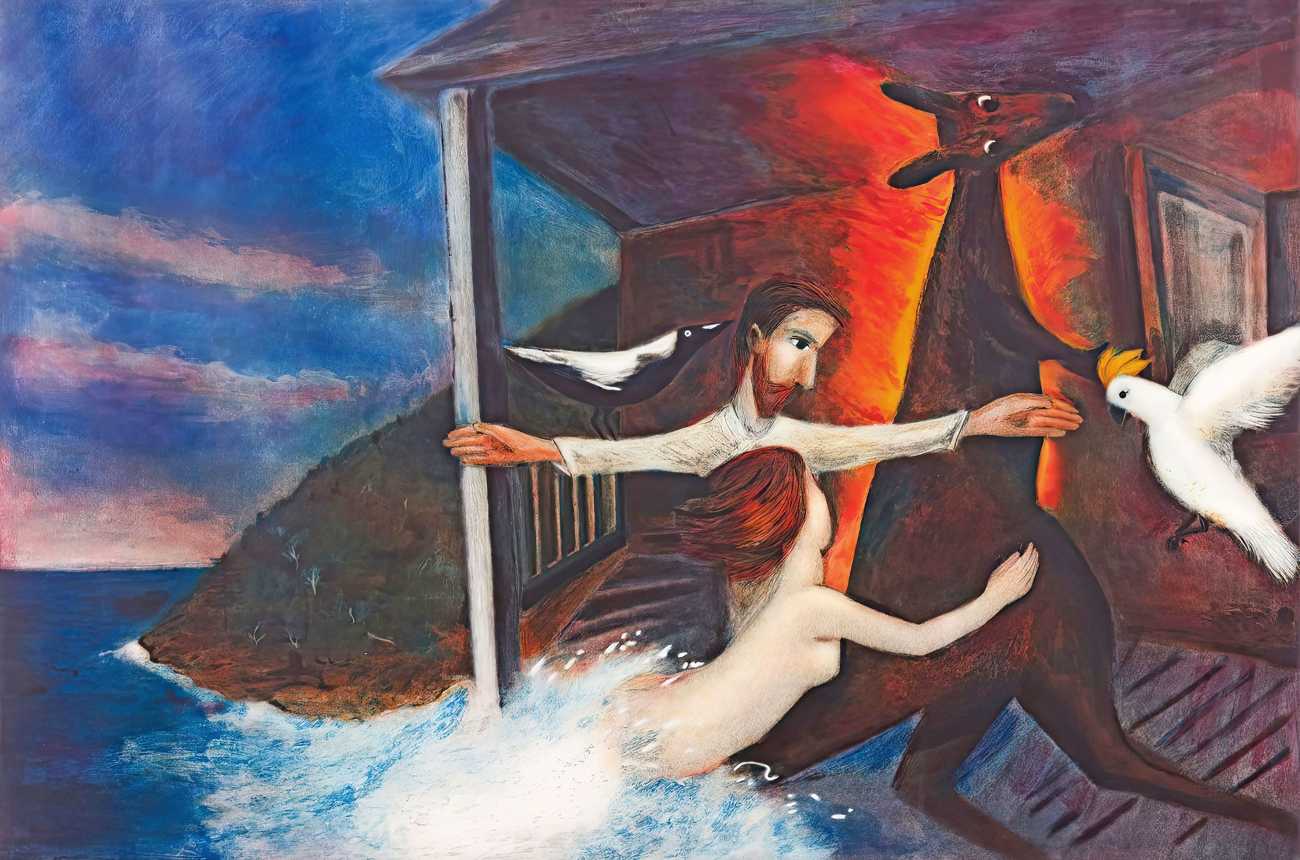
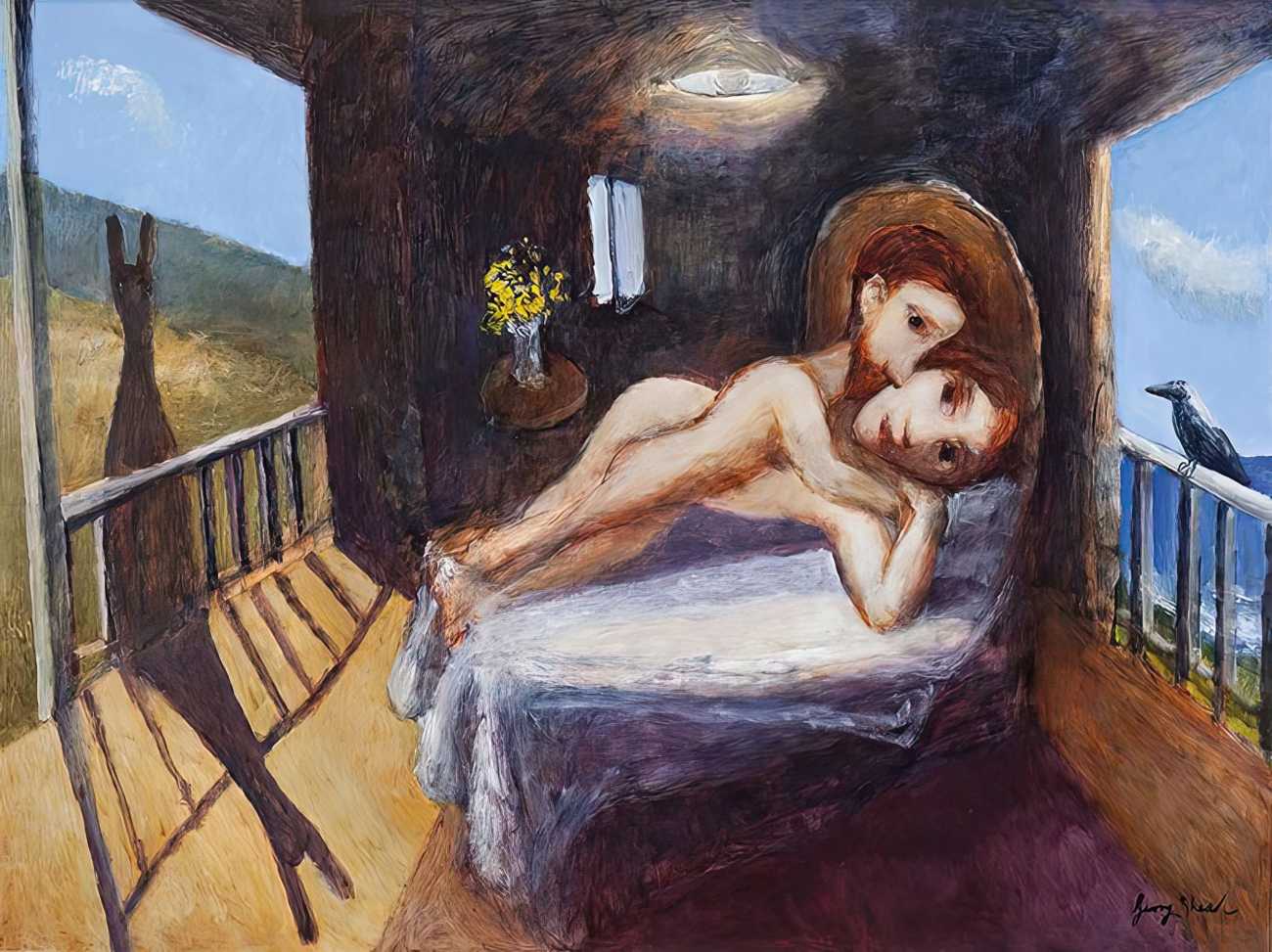
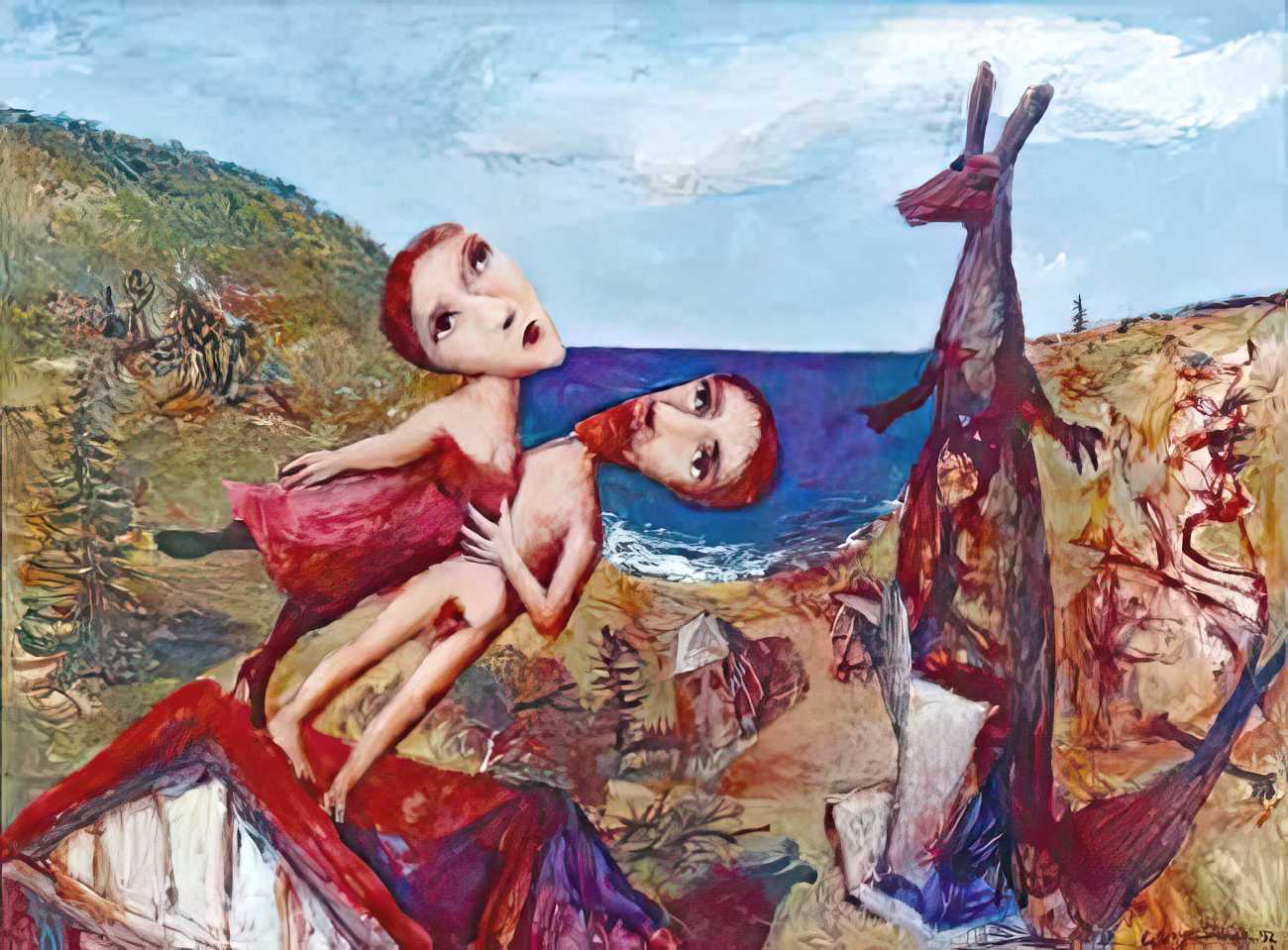
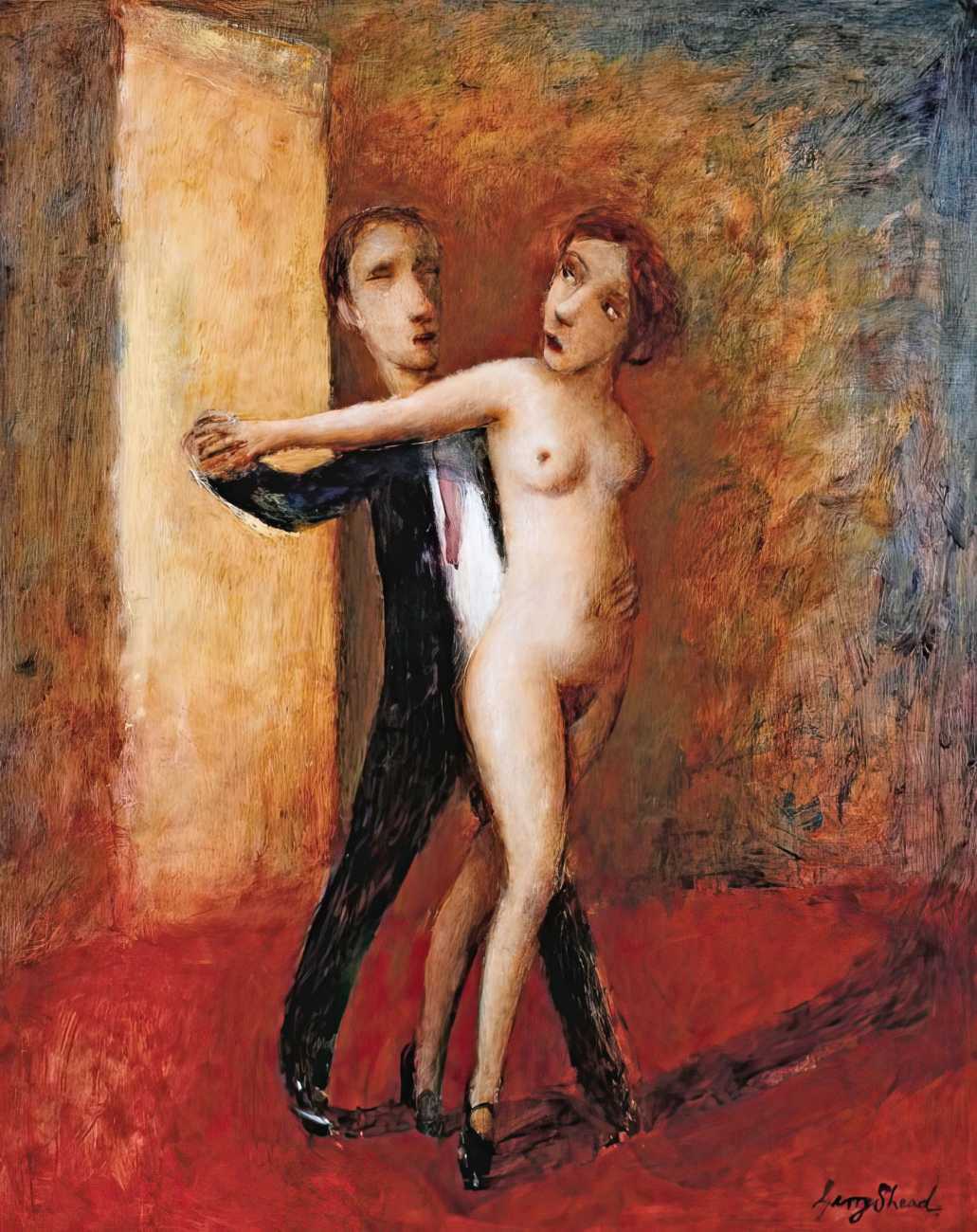
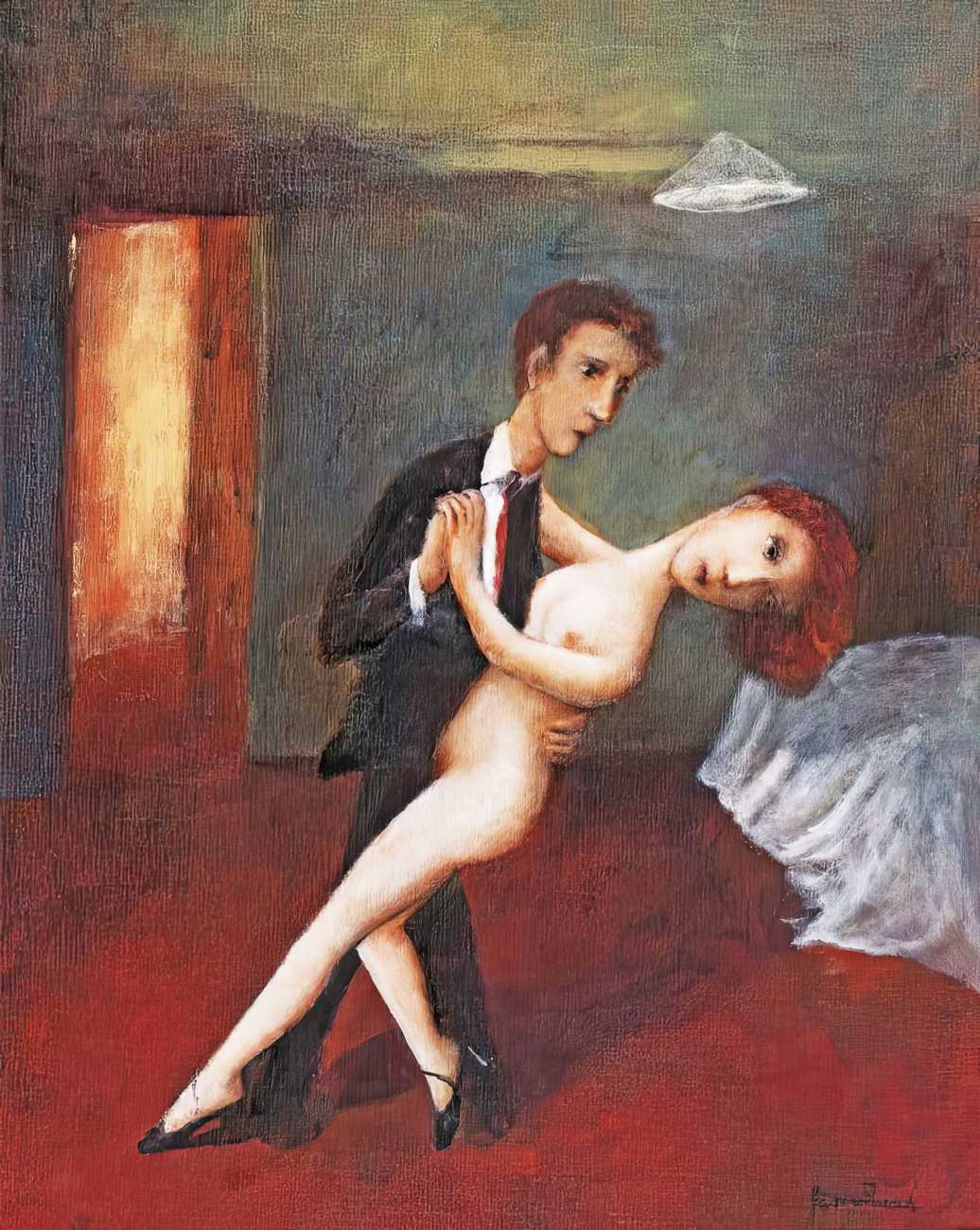
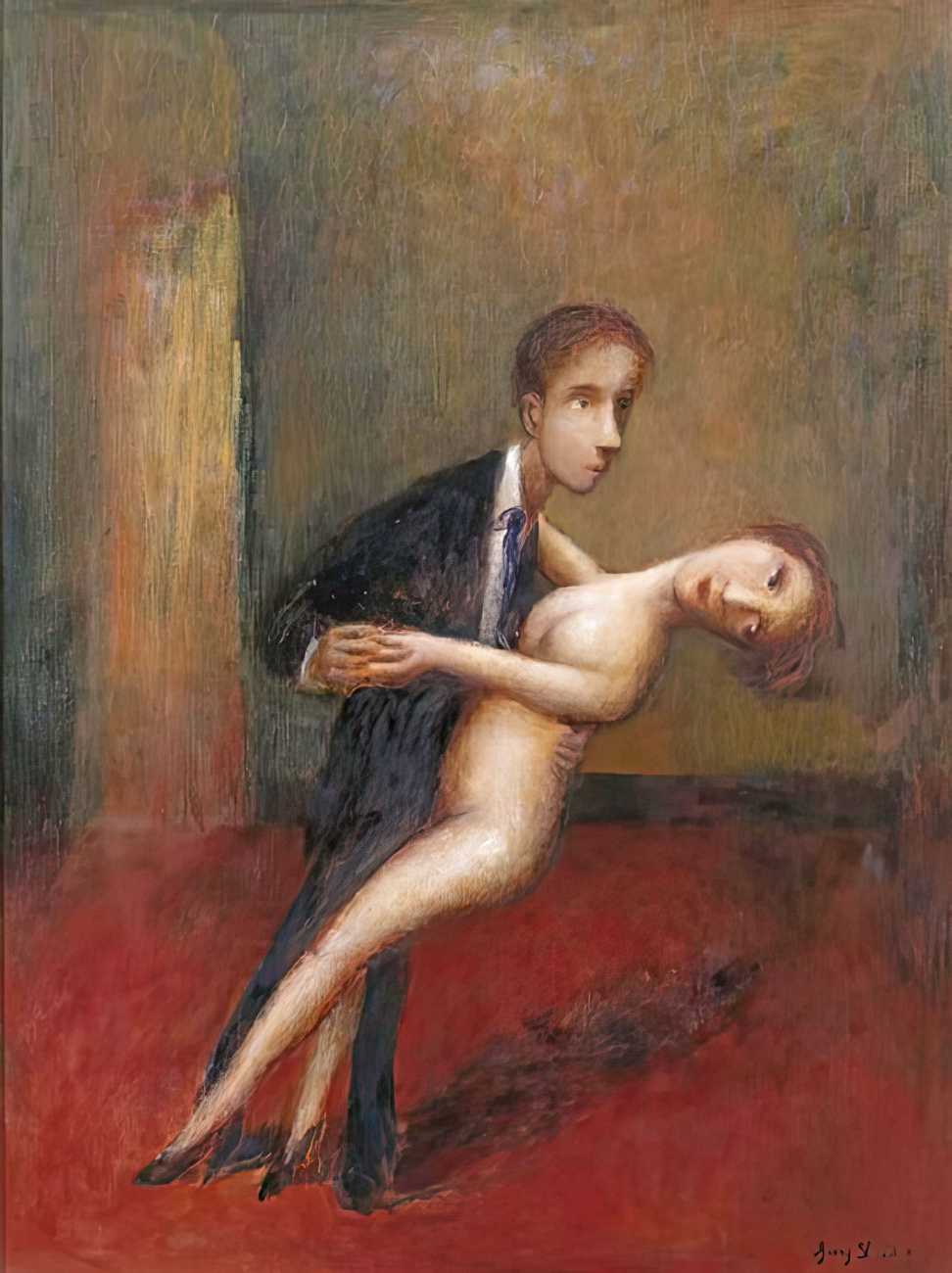
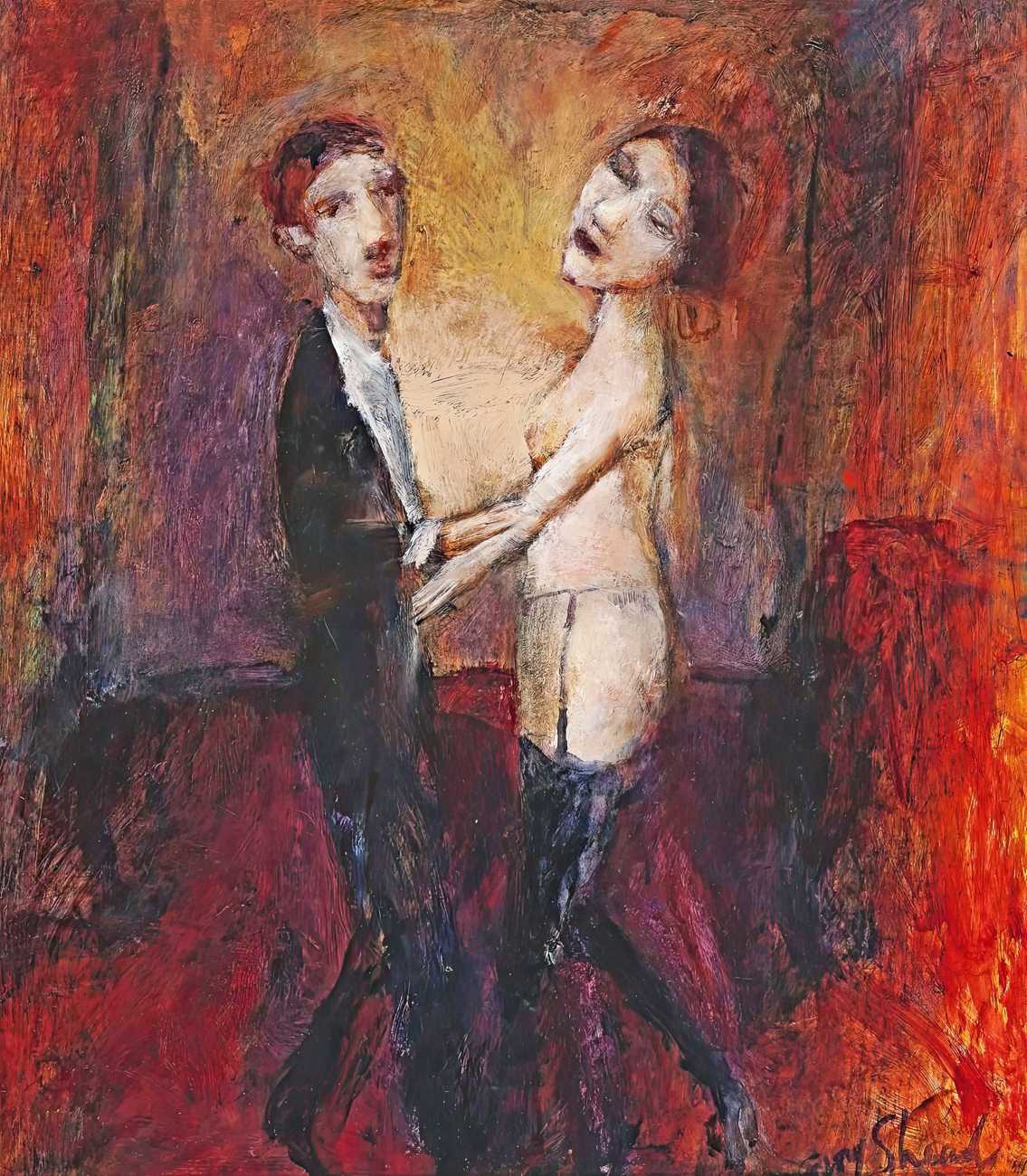
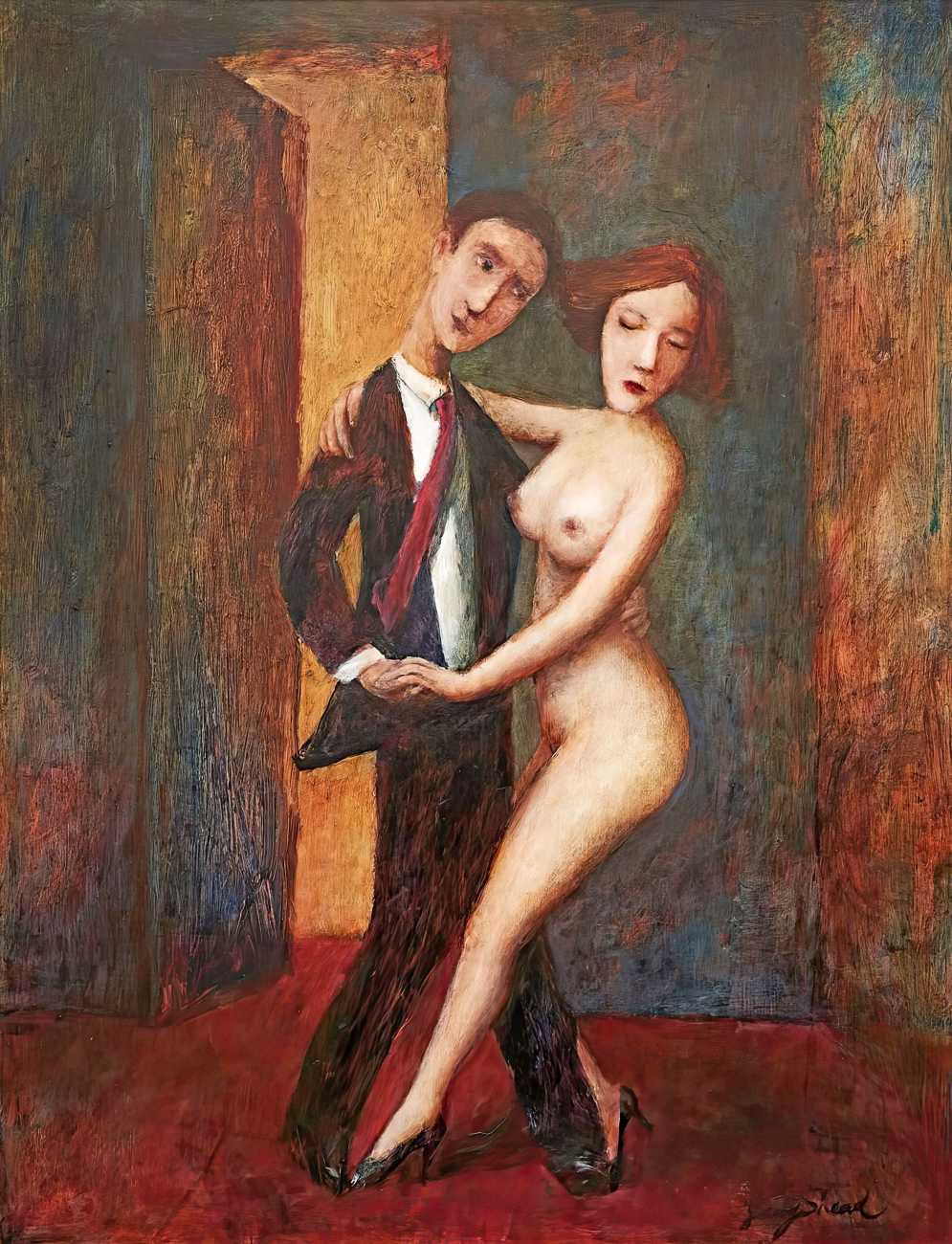
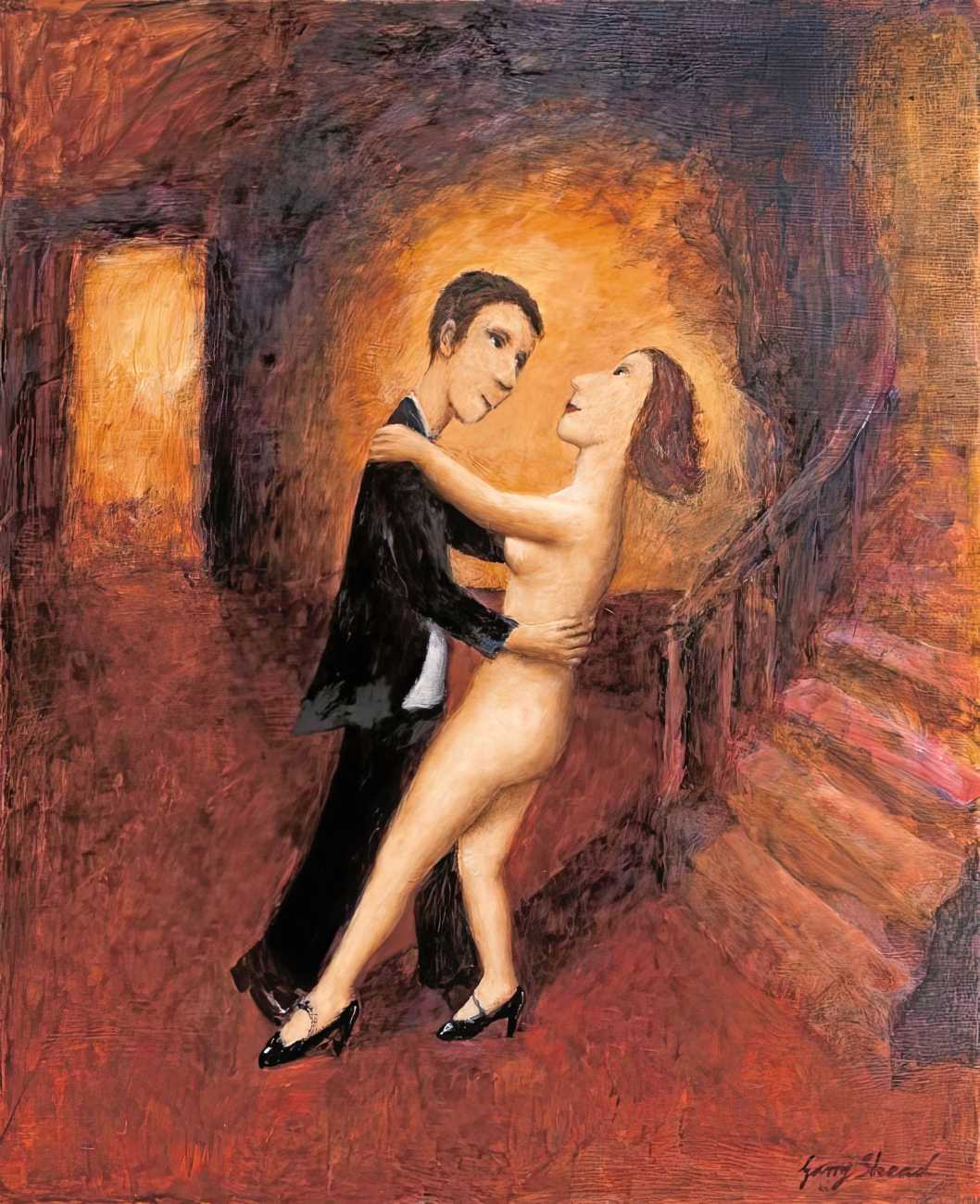
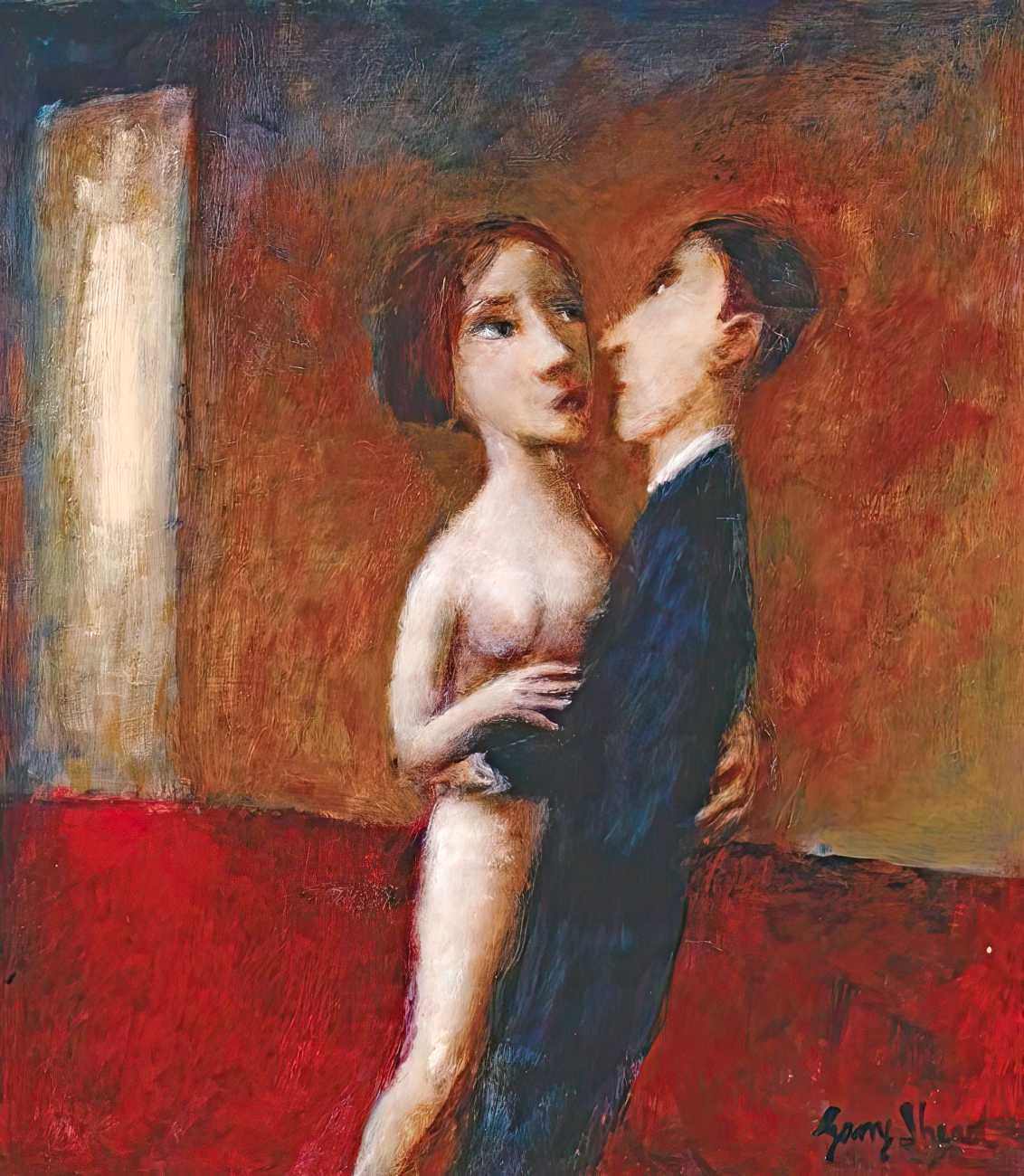
Bundeena’s coastal landscape became an important setting for Shead’s paintings, particularly his series inspired by D.H. Lawrence’s novel Kangaroo. Rather than illustrating the book directly, he brought its concerns with sexuality, relationships and Australian identity into an imagined landscape populated by human figures and animals. Other major sequences explored the tango-like encounters of the Dancers paintings, the satirical fantasies of the Royal Suite, and the literary deception behind the invented poet Ern Malley.
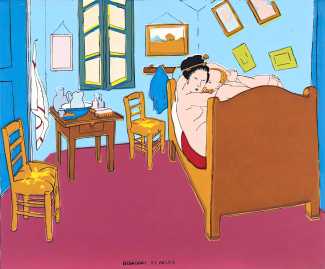
From the late 1990s, Shead also returned explicitly to the traditions of European painting in his Artist and Muse series, placing himself and Judit within imagined studios inspired by Rembrandt, Velázquez and Goya. Across these works, the relationship between artist and model becomes both a personal subject and a means of examining the nature of artistic creation. Shead’s paintings rarely settle into a single interpretation, their mixture of eroticism, humour, mythology and autobiography leaving the viewer to negotiate and interpret the stories they reference.
Similar artists
Michael Ayrton – British painter and illustrator of mythological subjects.
Arthur Boyd – Australian painter of lovers, beasts, and biblical and mythological scenes.
Edgar Degas – French painter of dancers, brothels and backstage life.
Paul Delvaux – Belgian painter of staged figures in dreamlike settings.
Norman Lindsay – Australian draughtsman and painter of mythological subjects.
Pablo Picasso – Spanish painter and printmaker of artist-and-model and mythological subjects.
Wendy Sharpe – Australian figurative painter of imagined scenes, performers and myth.
Example illustration