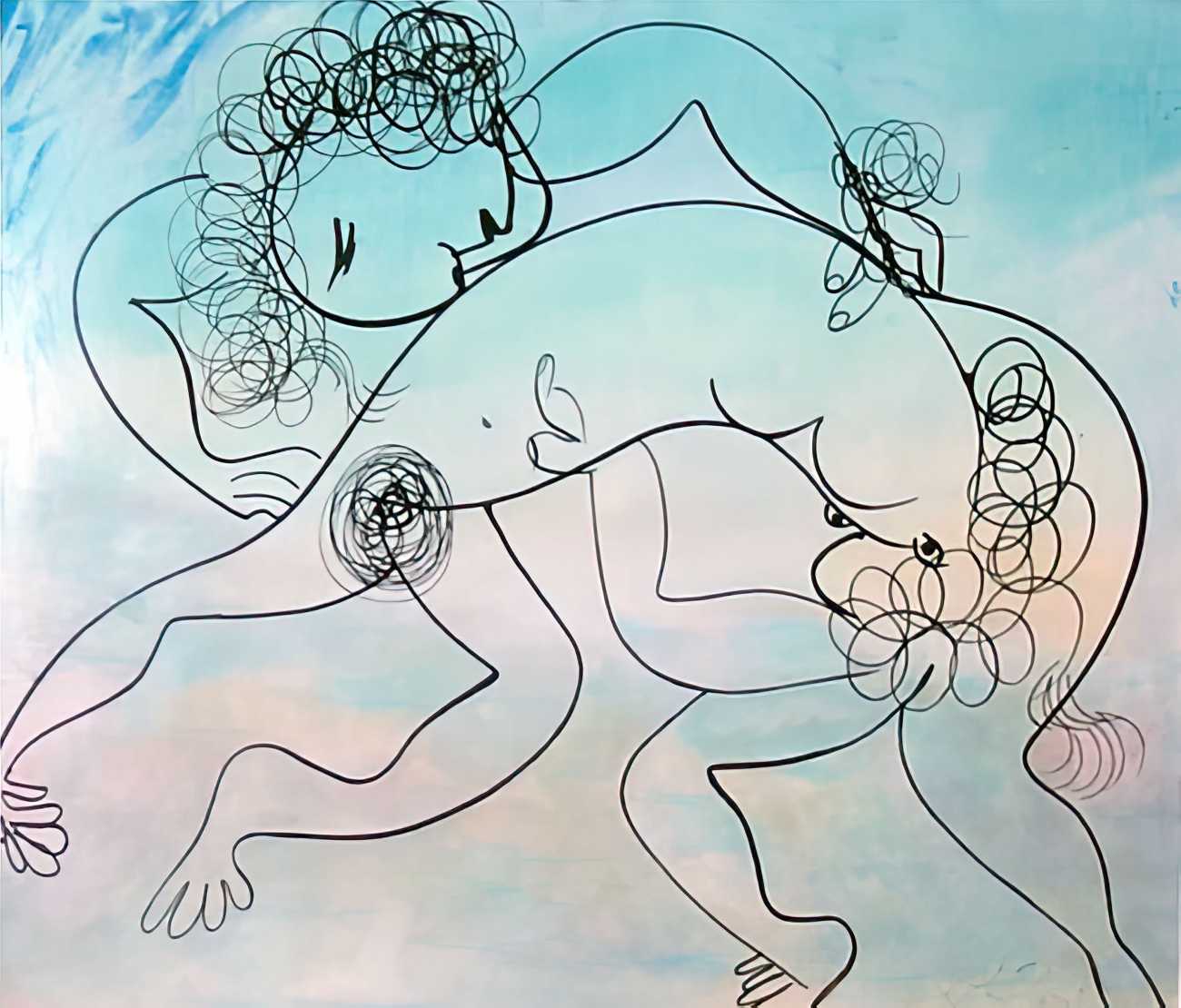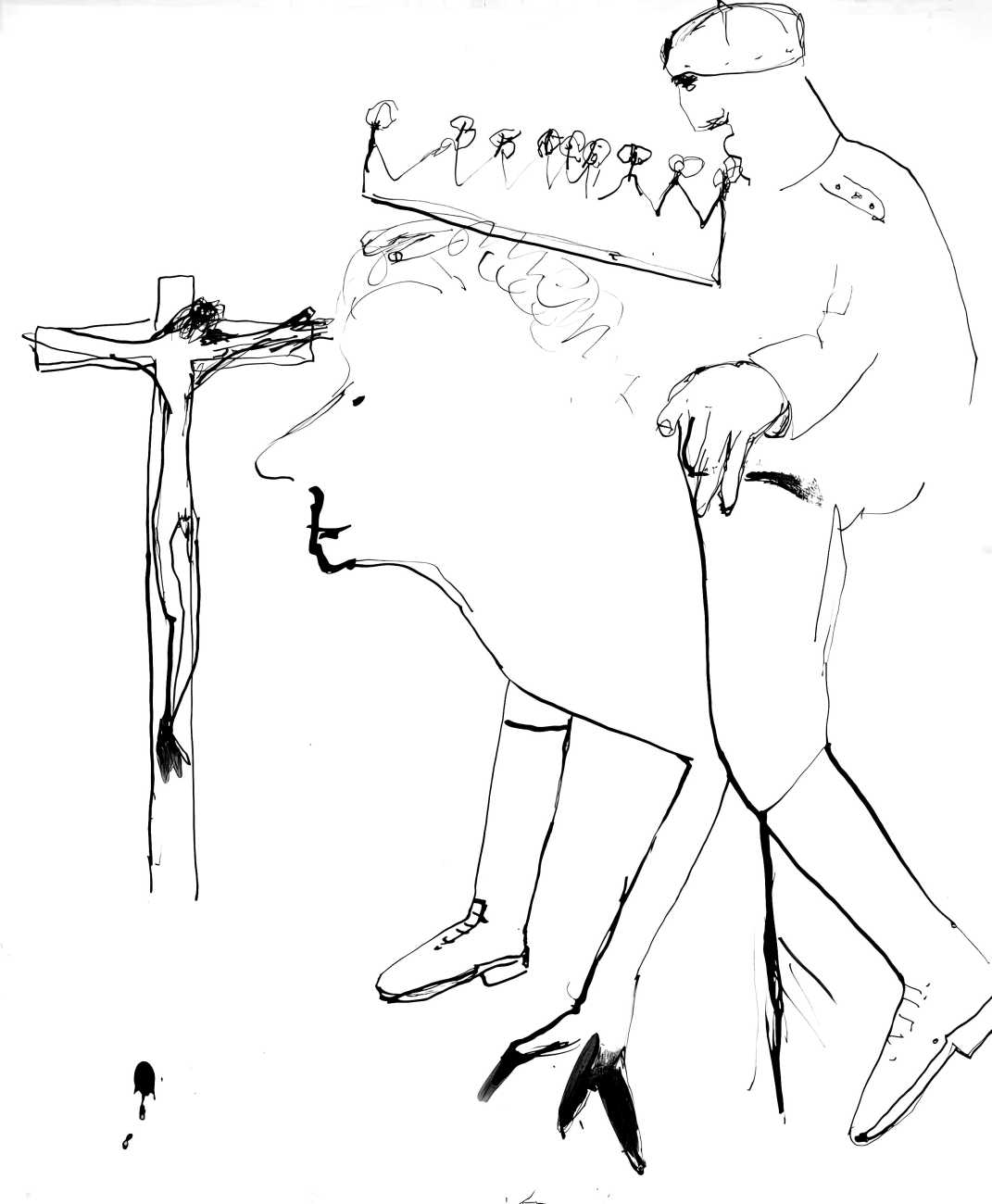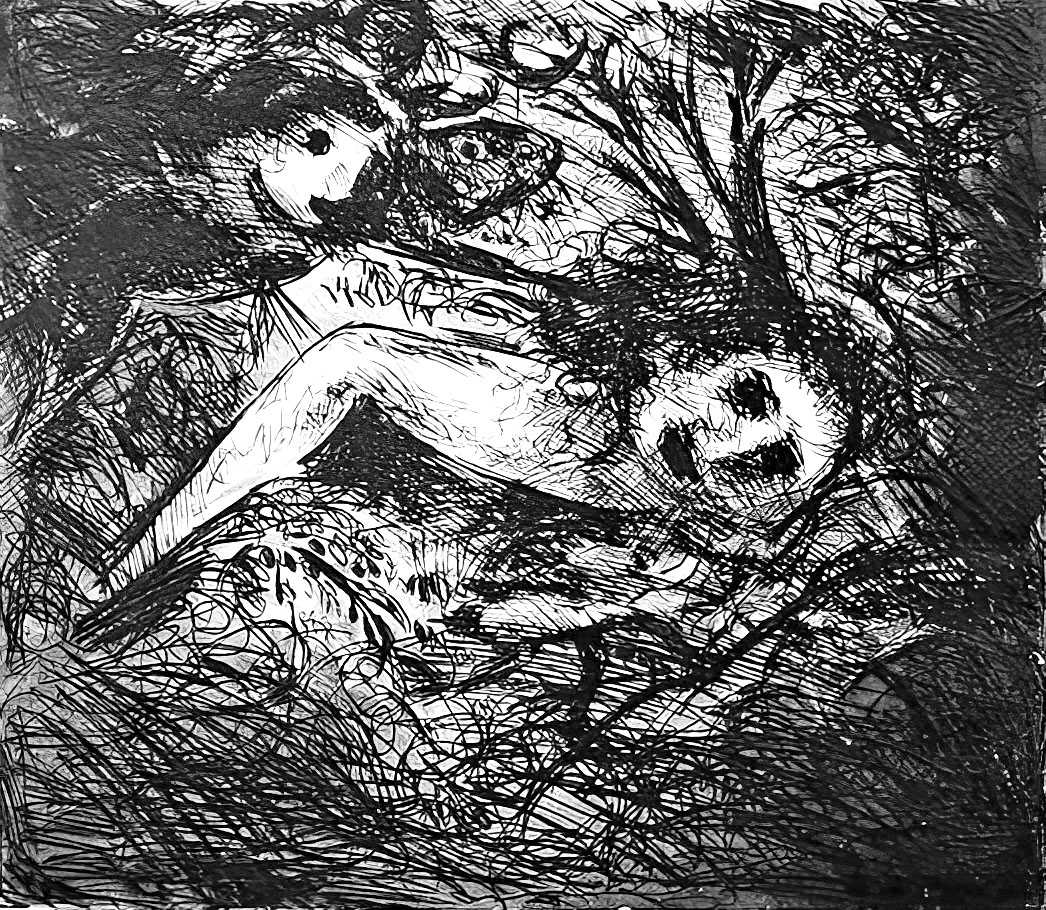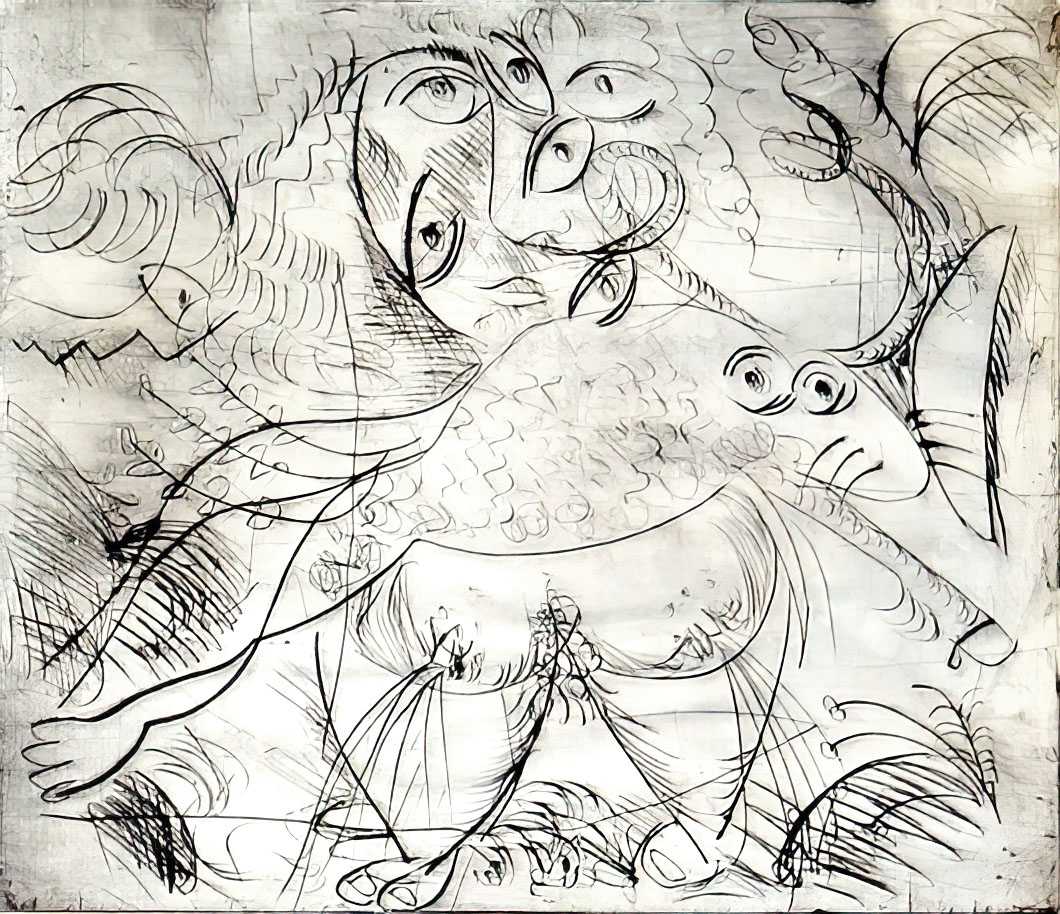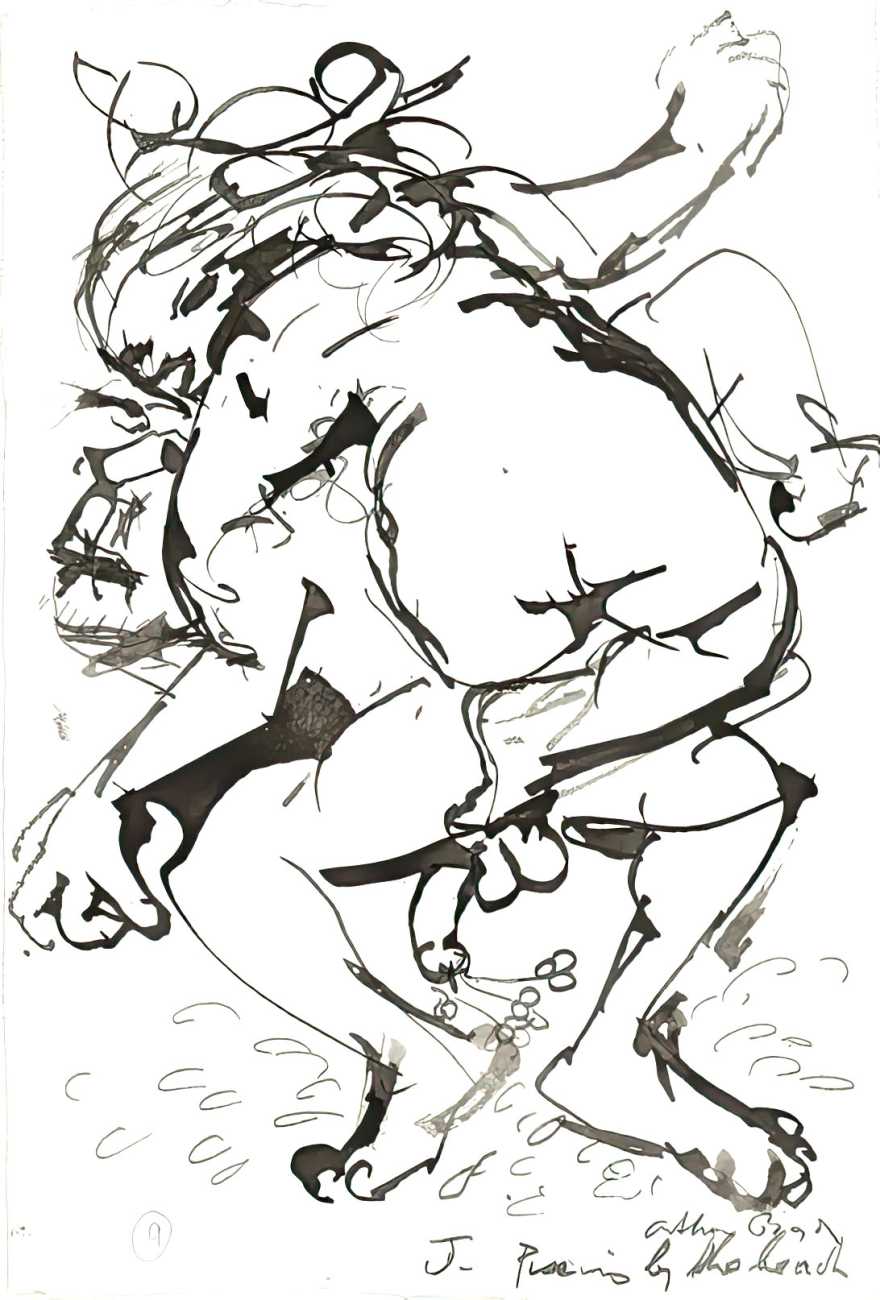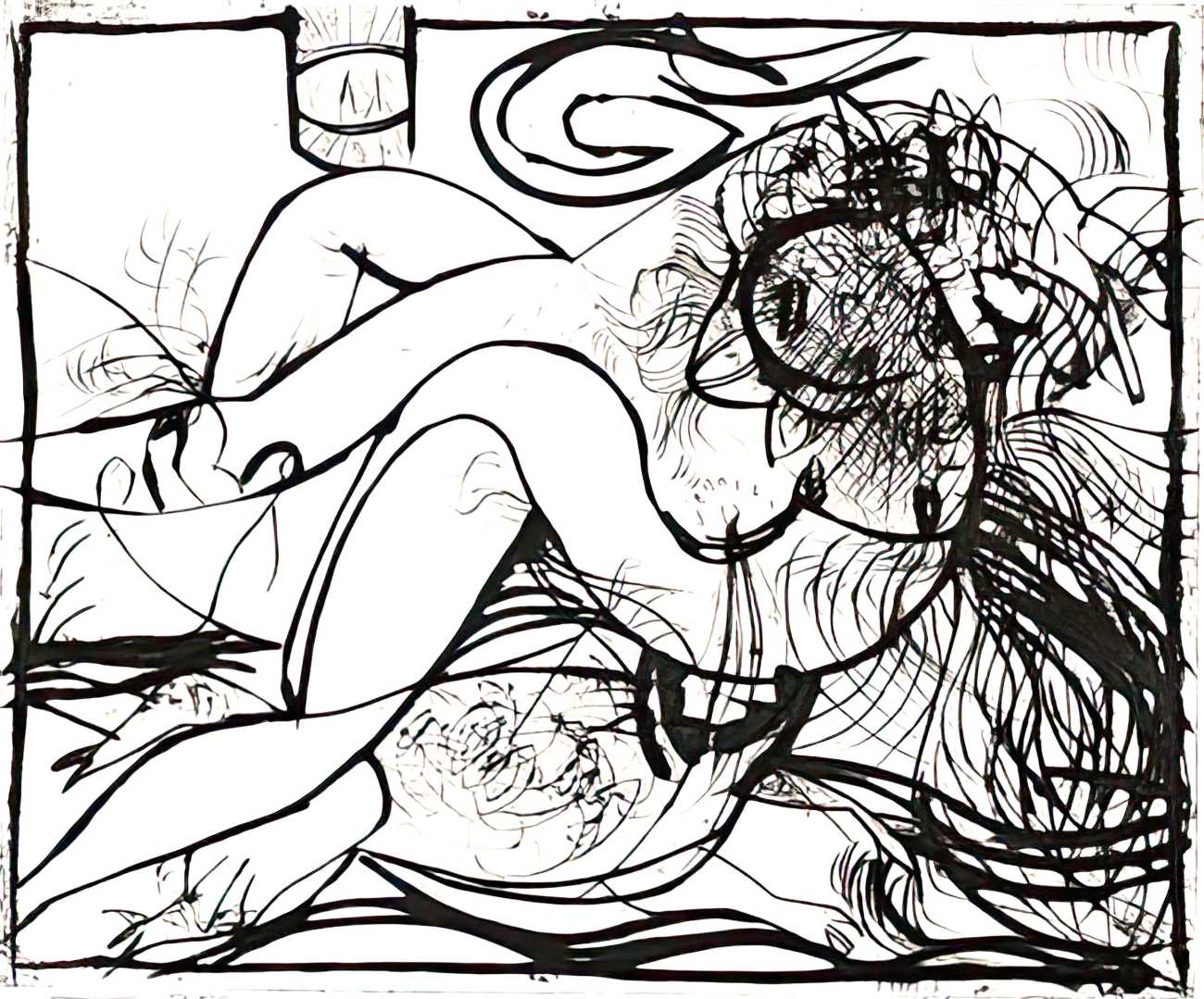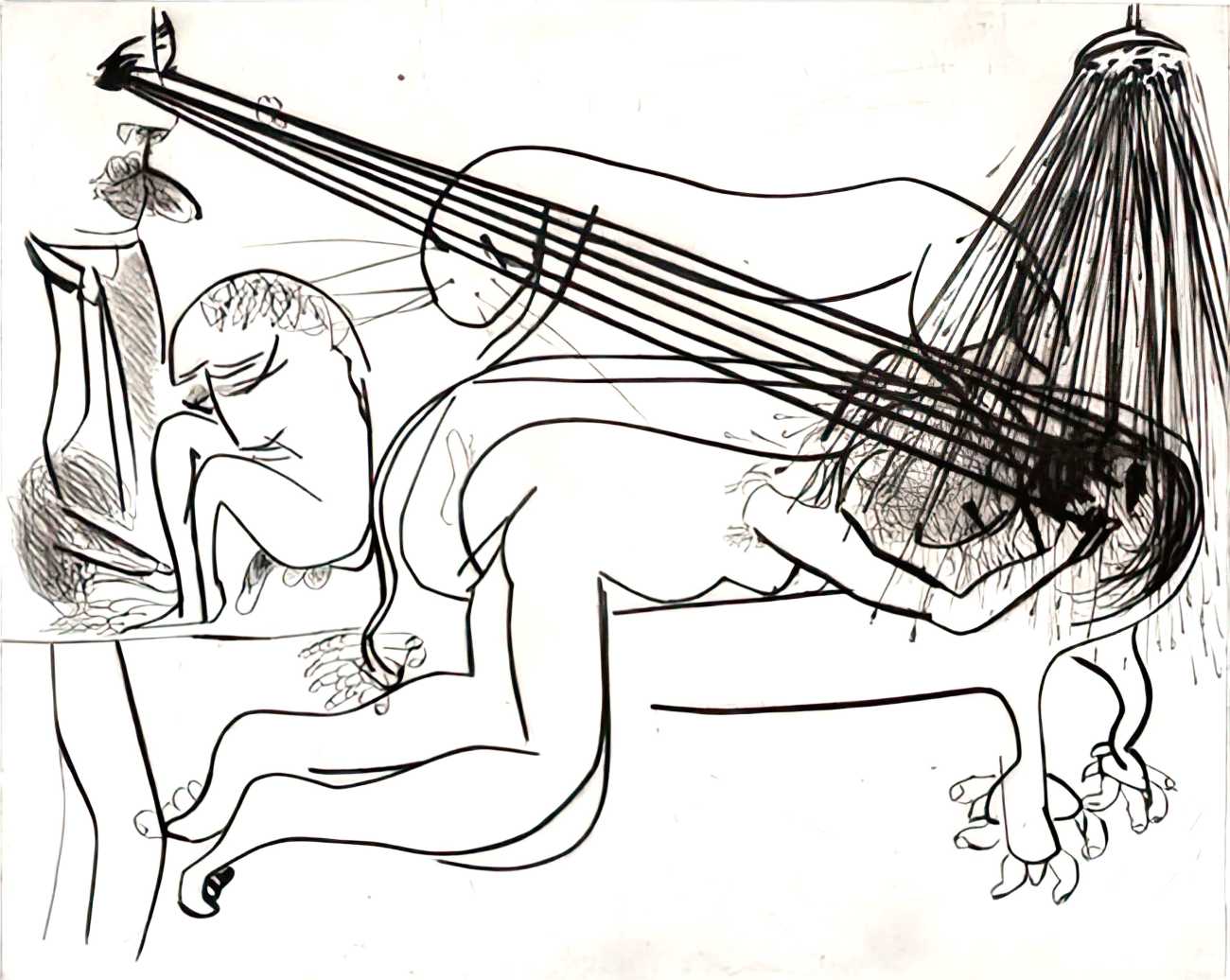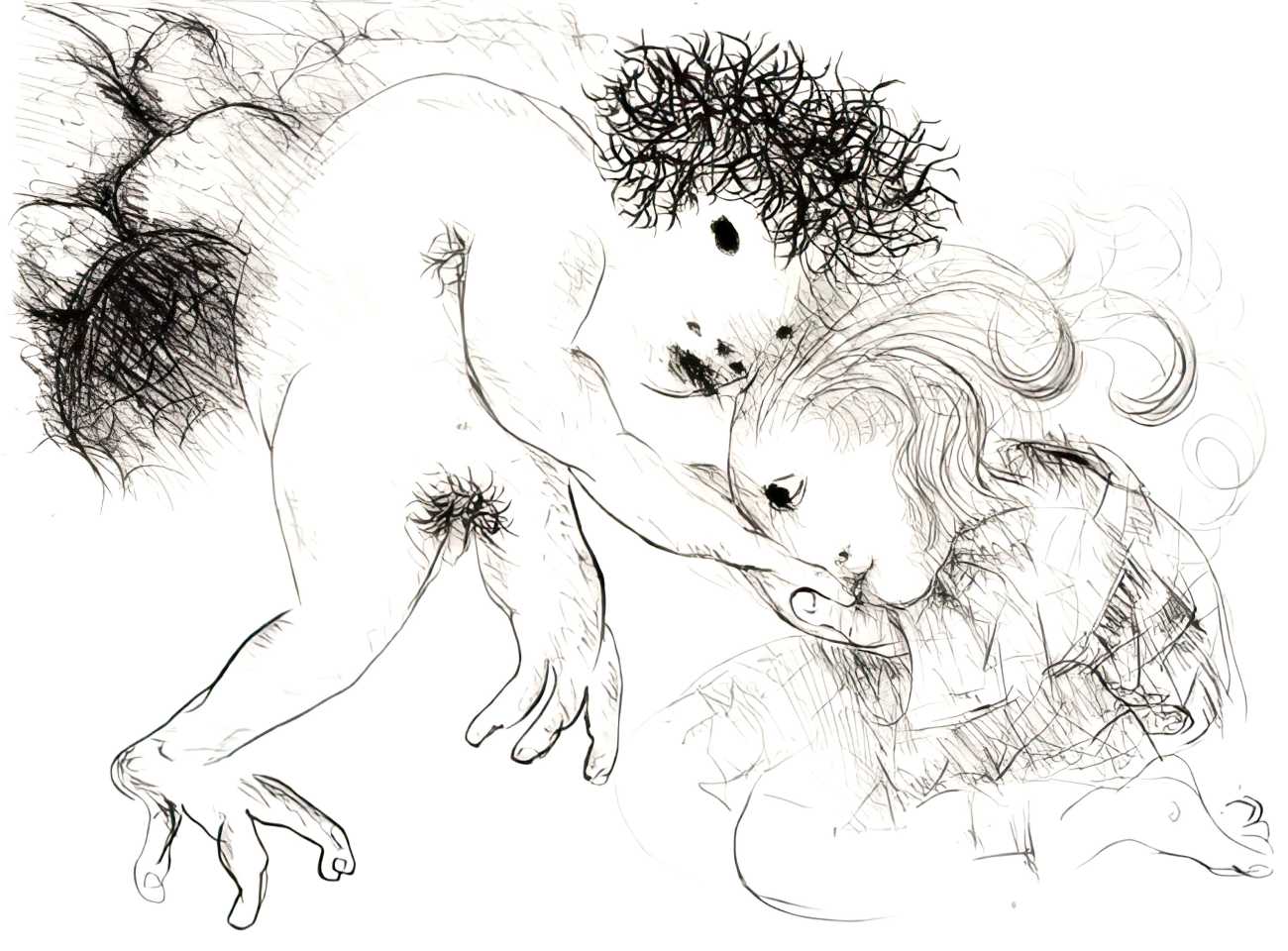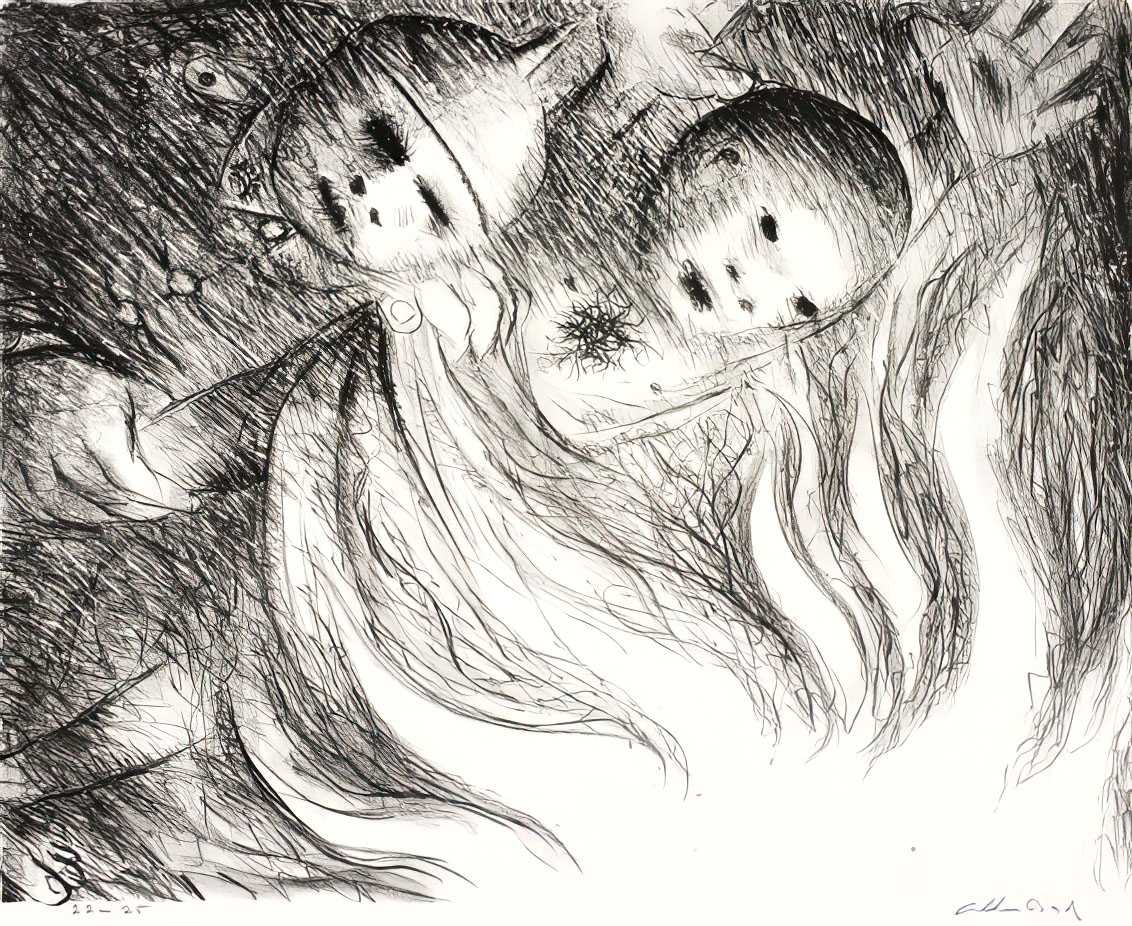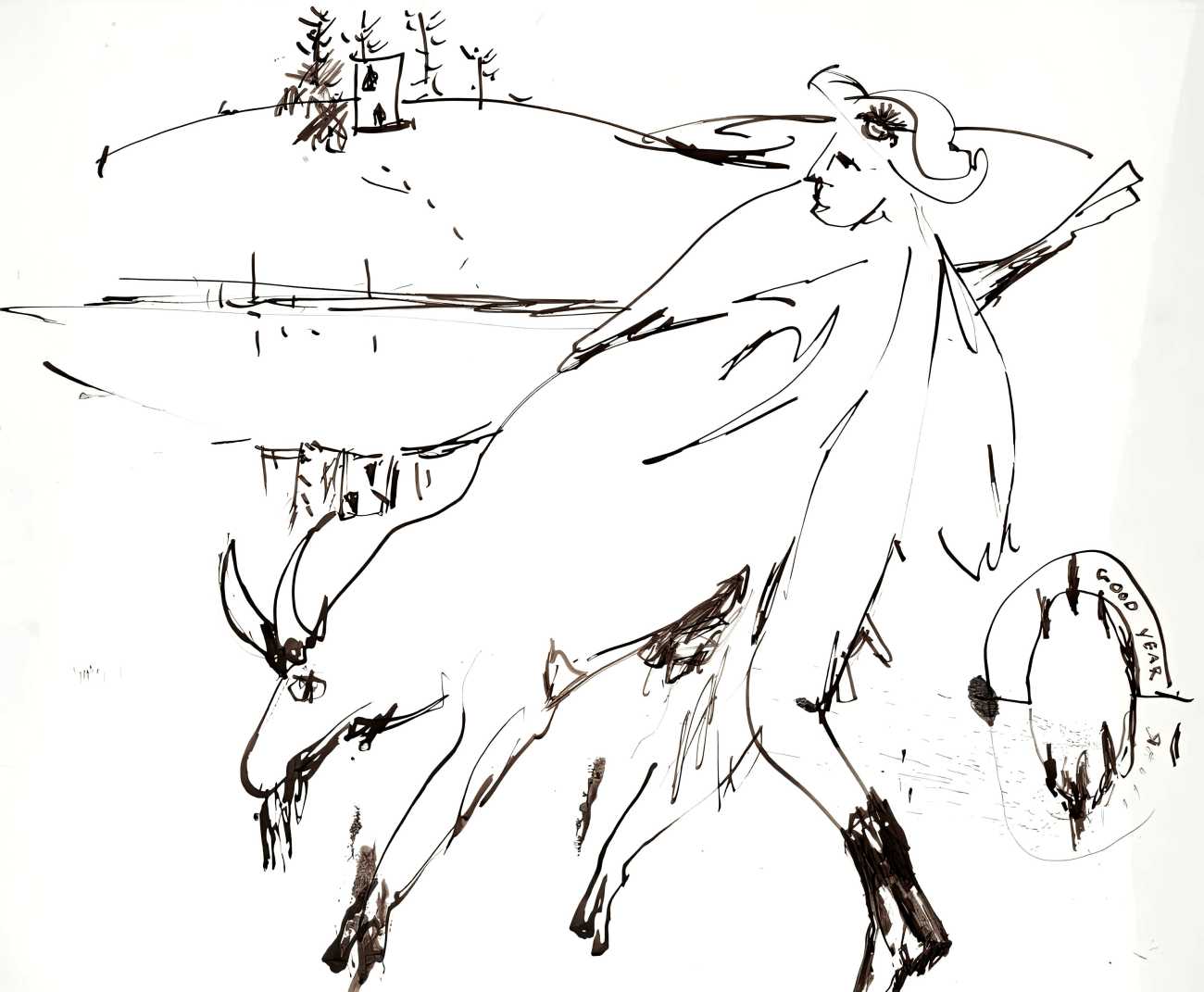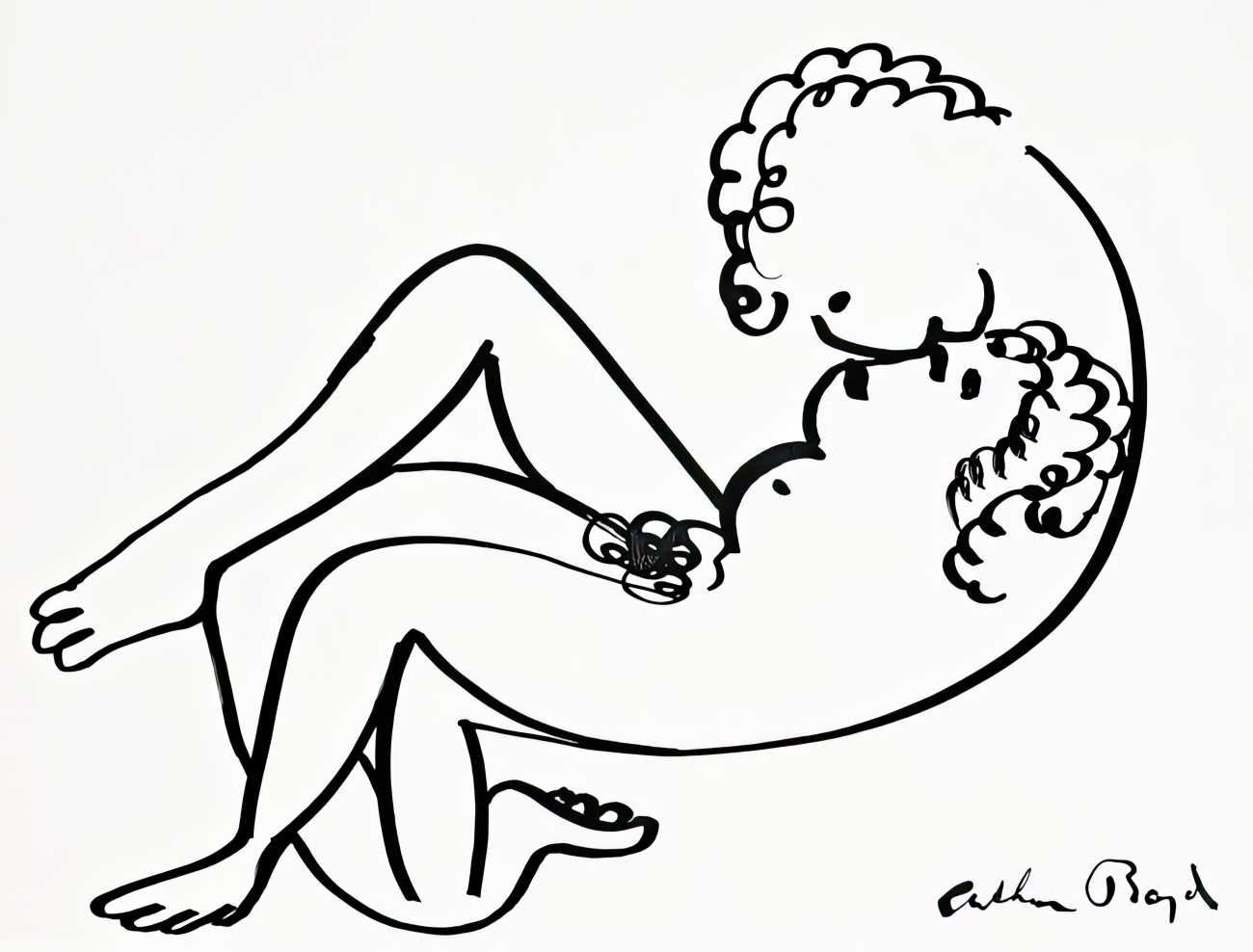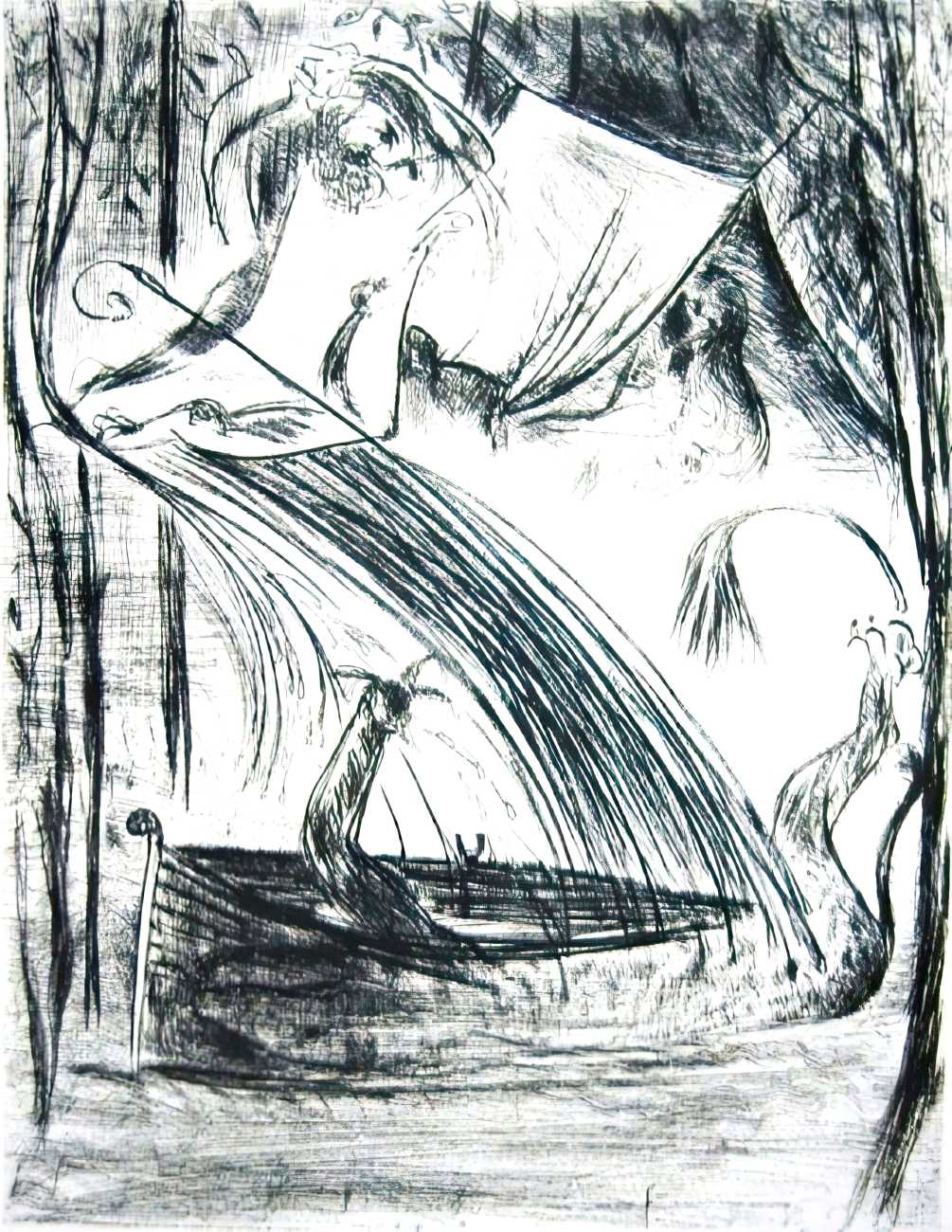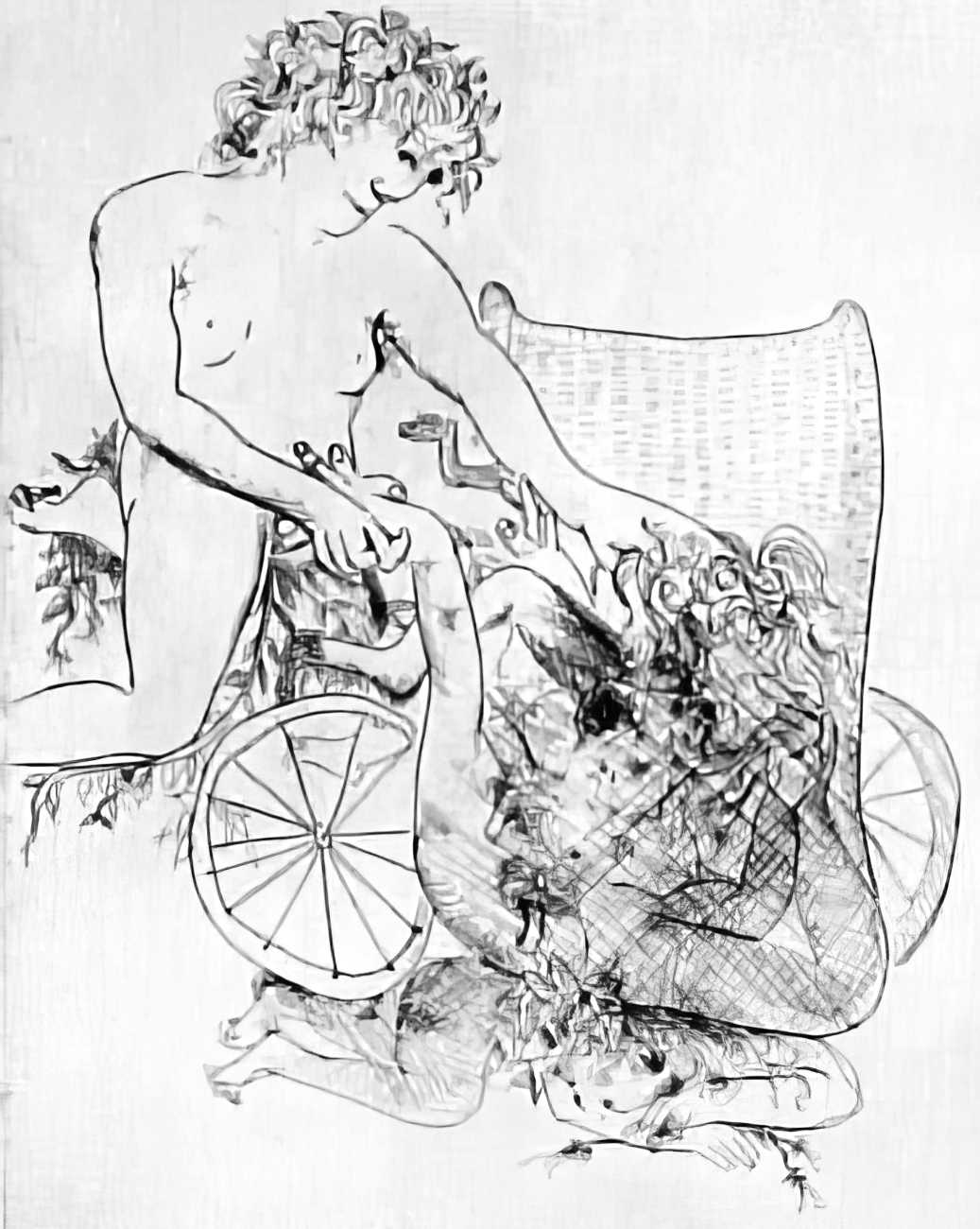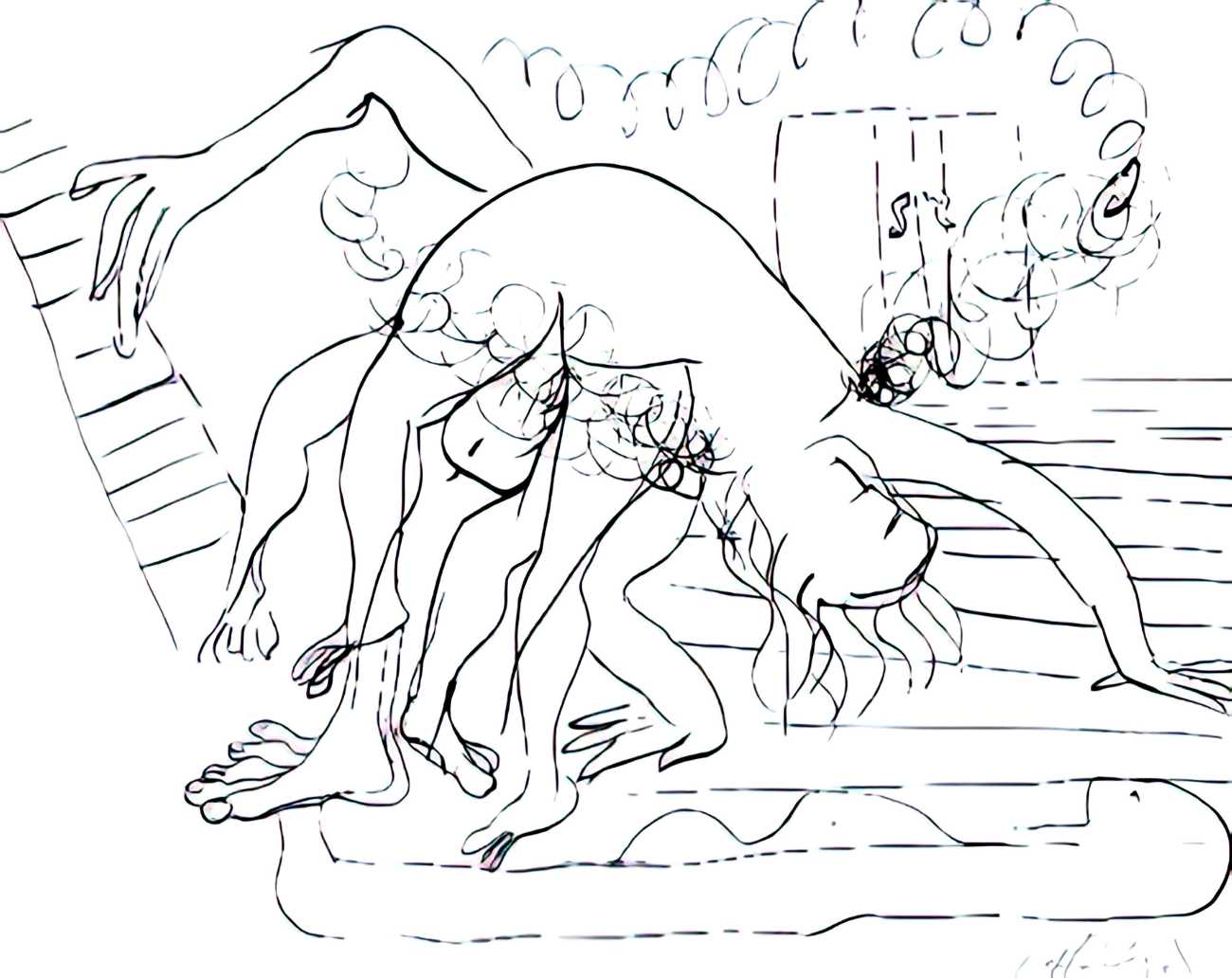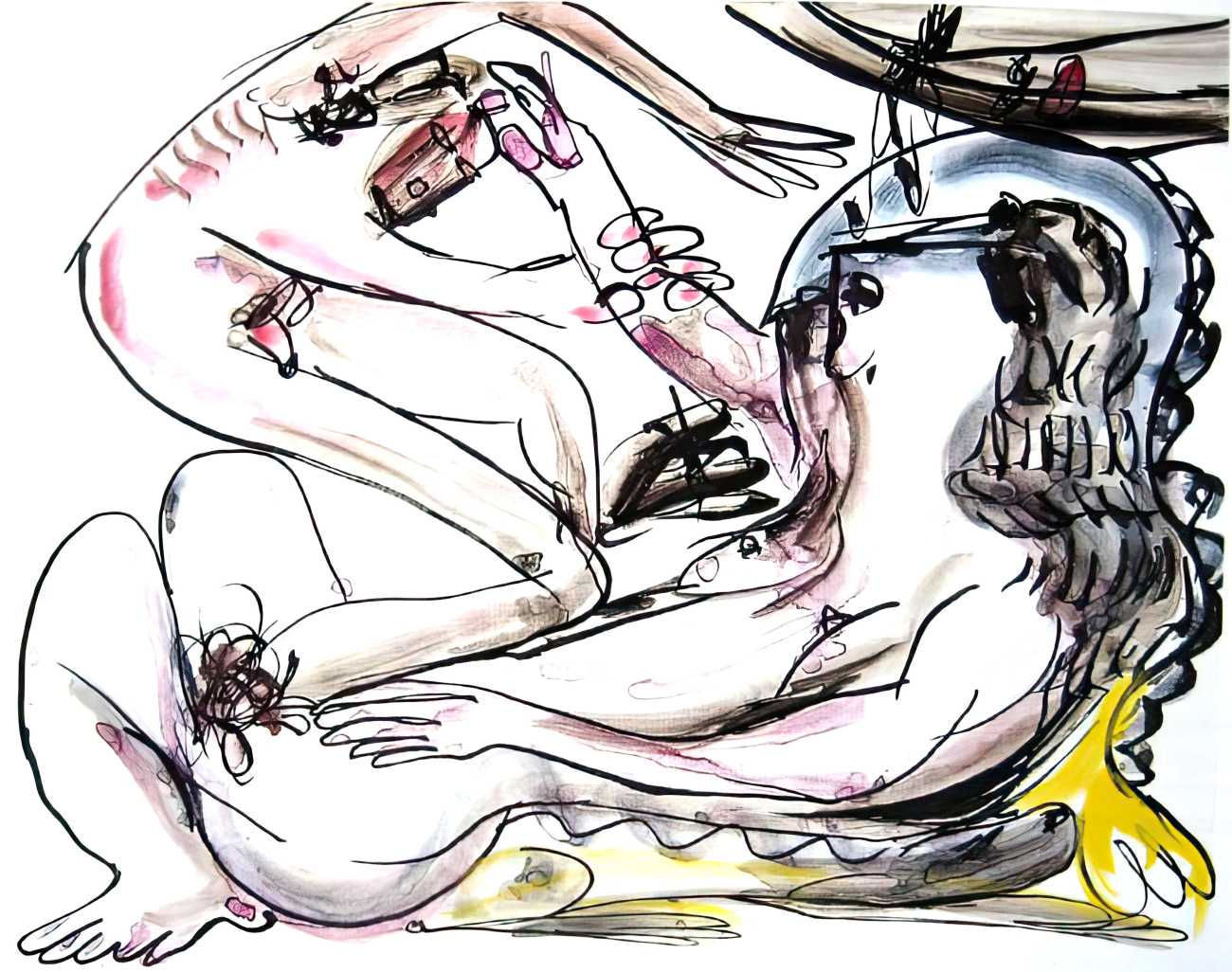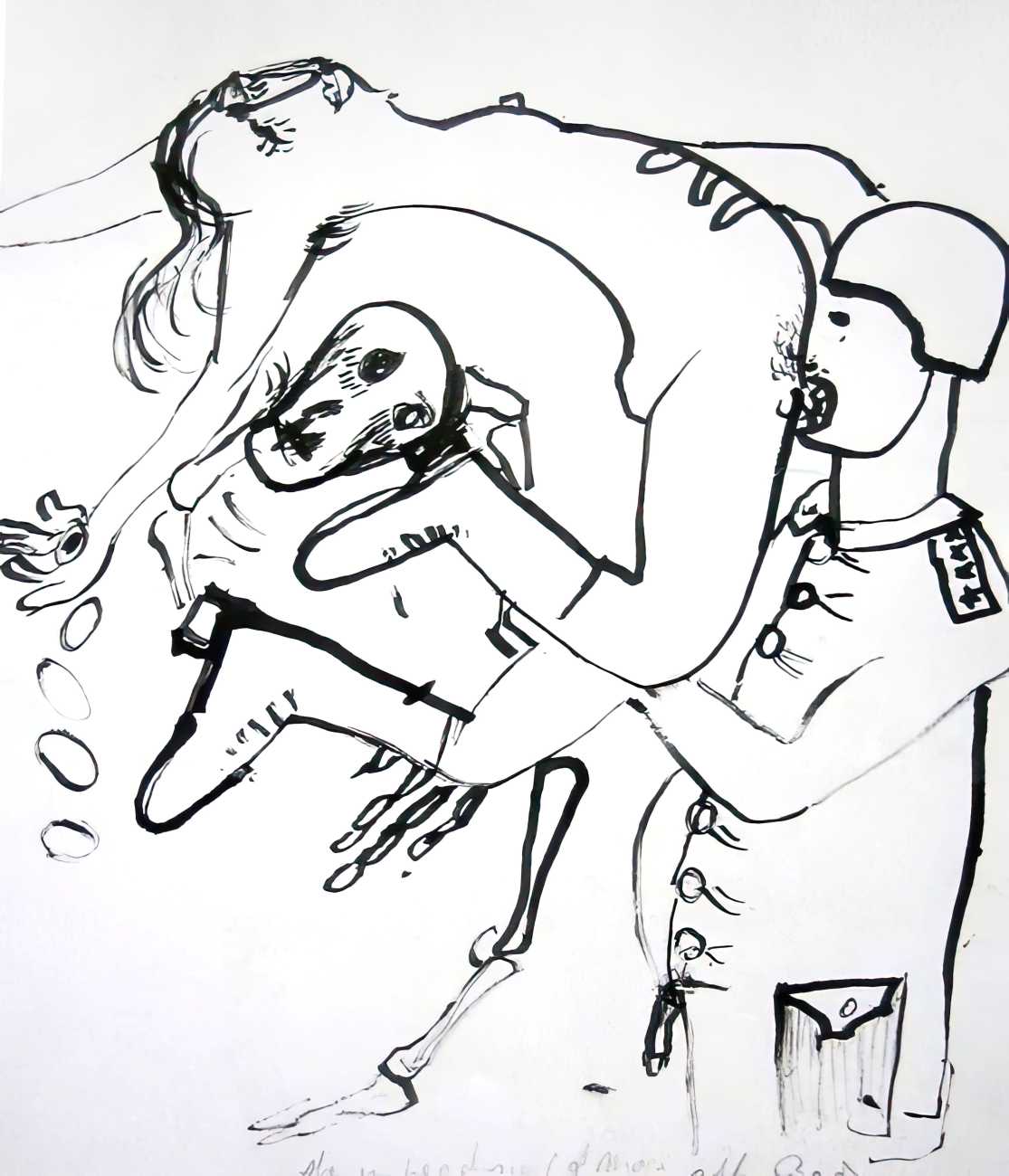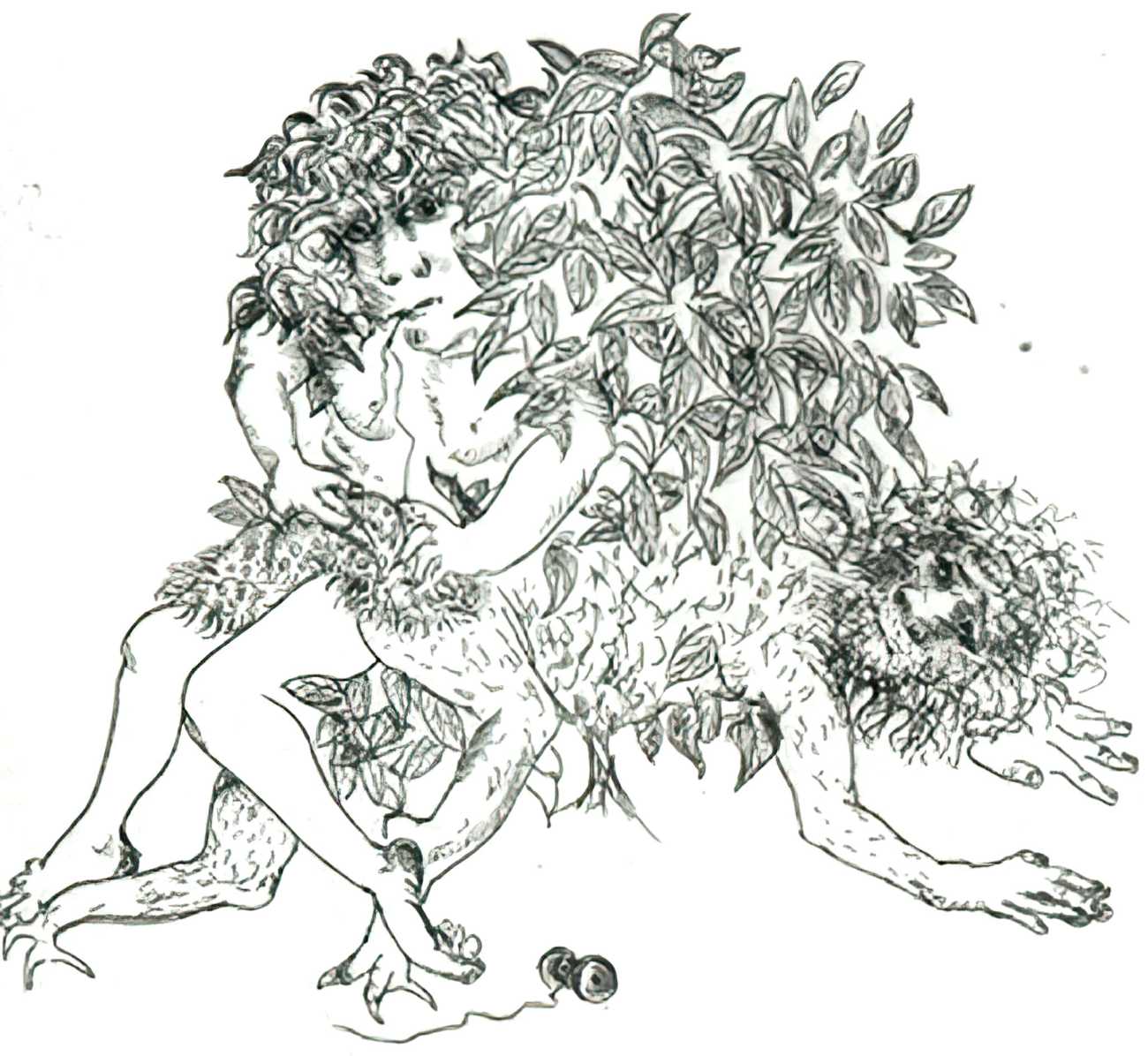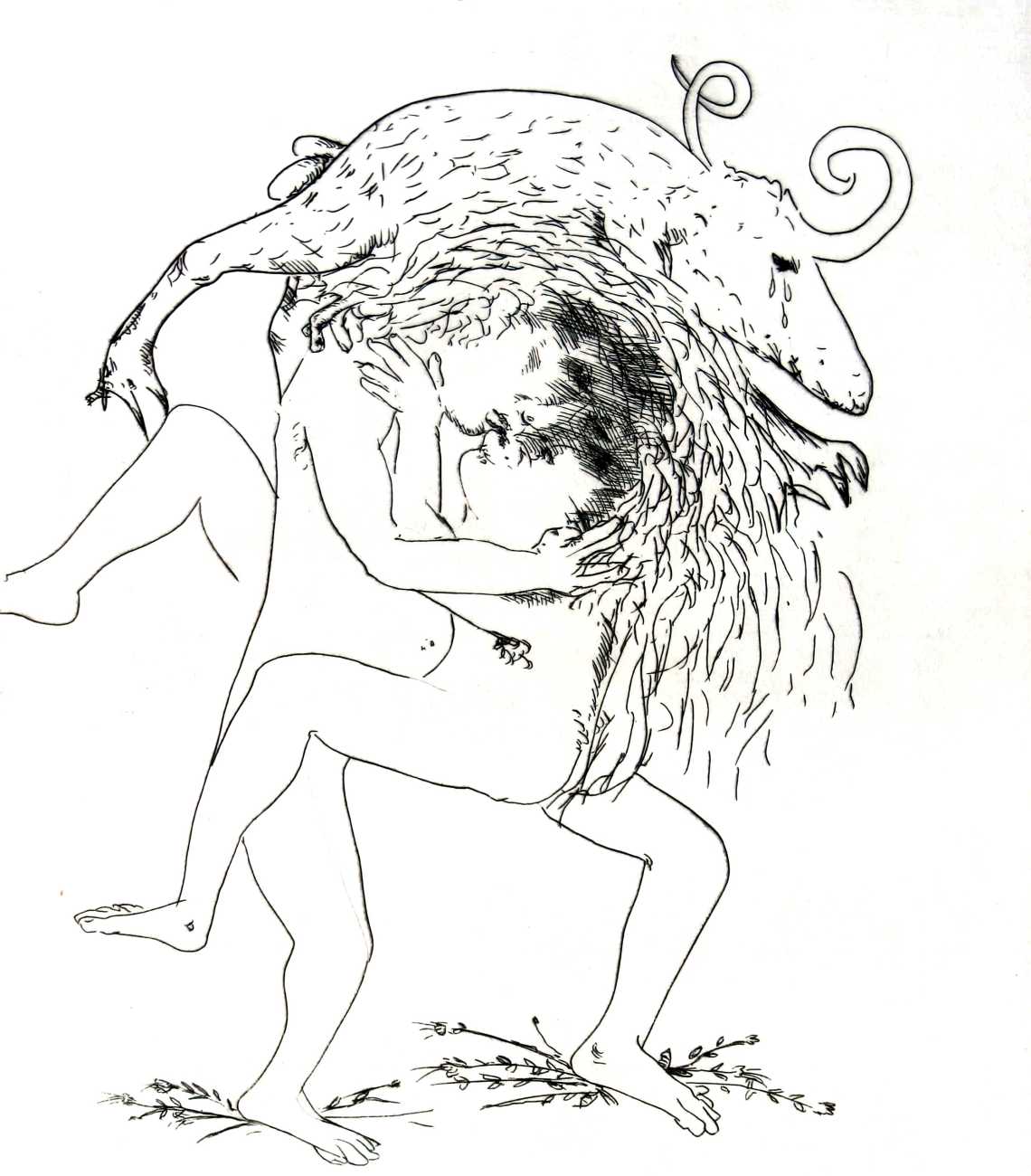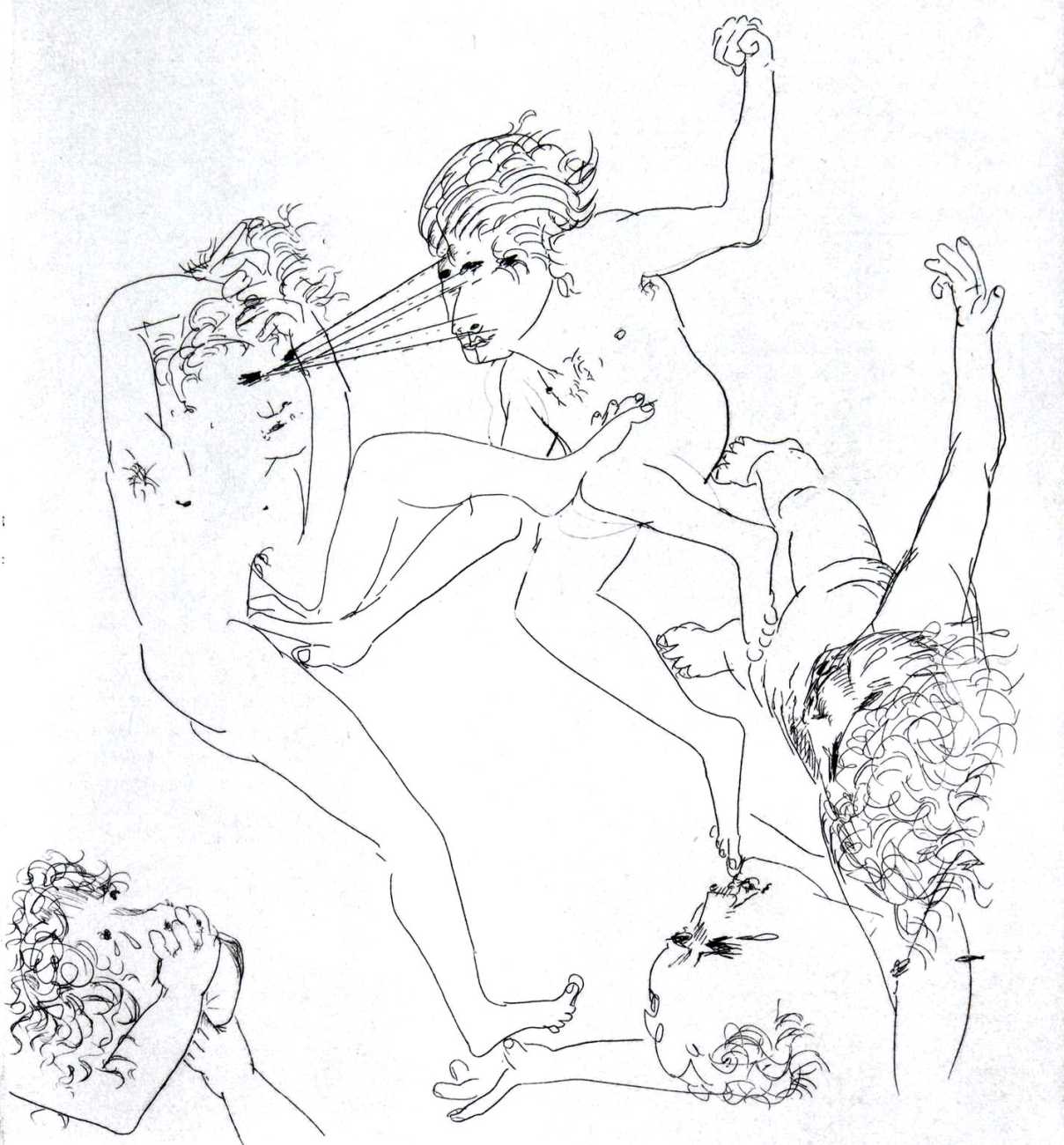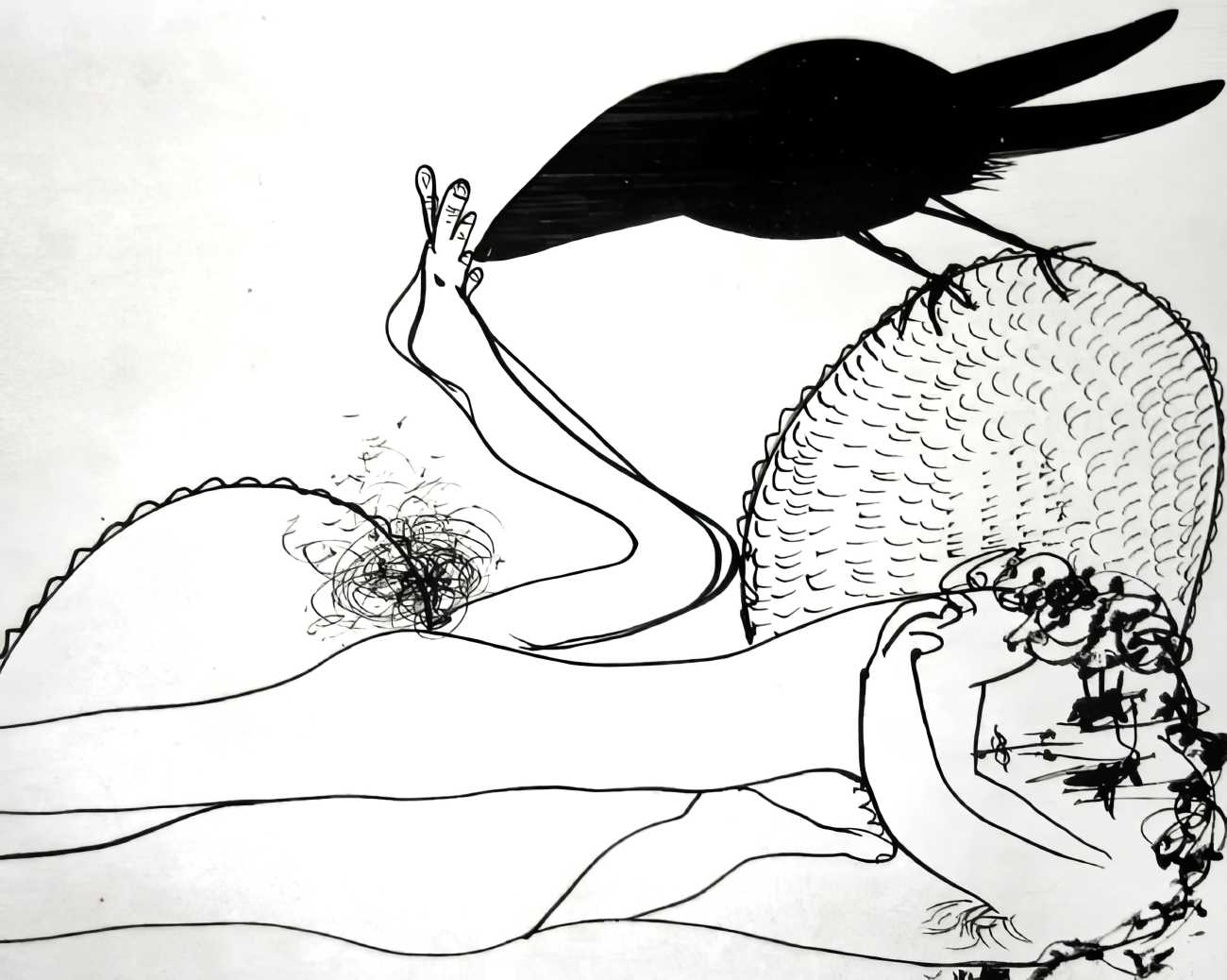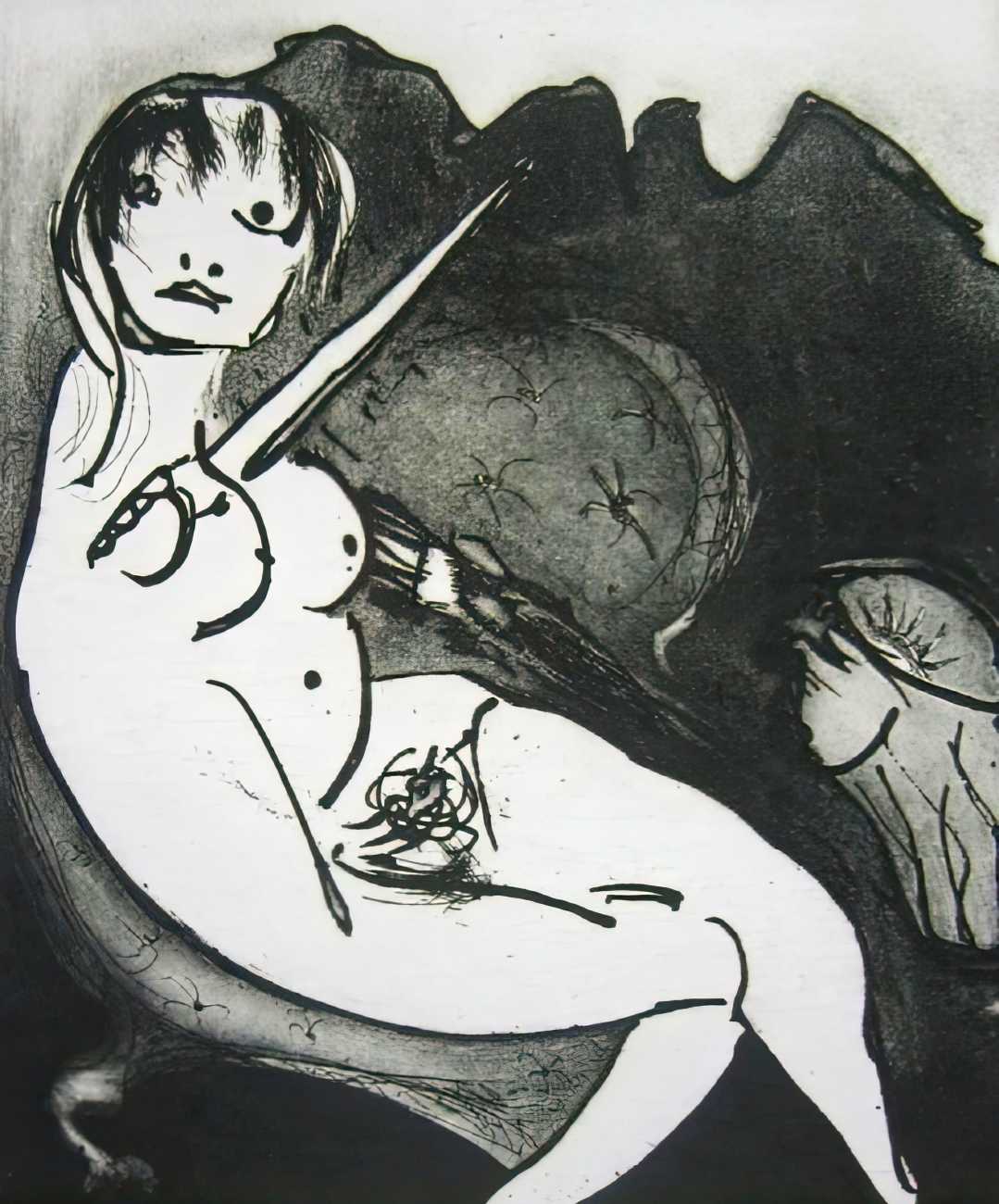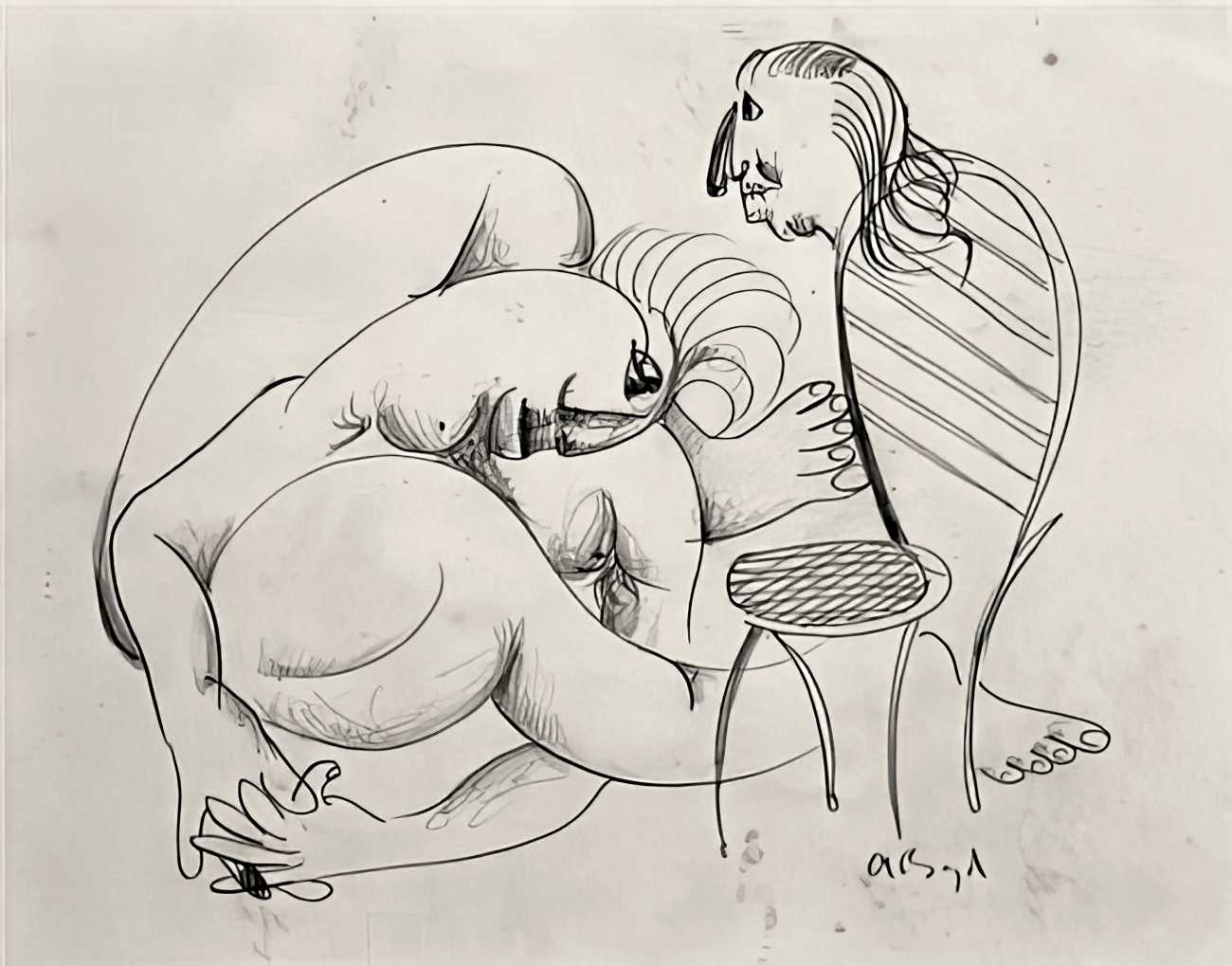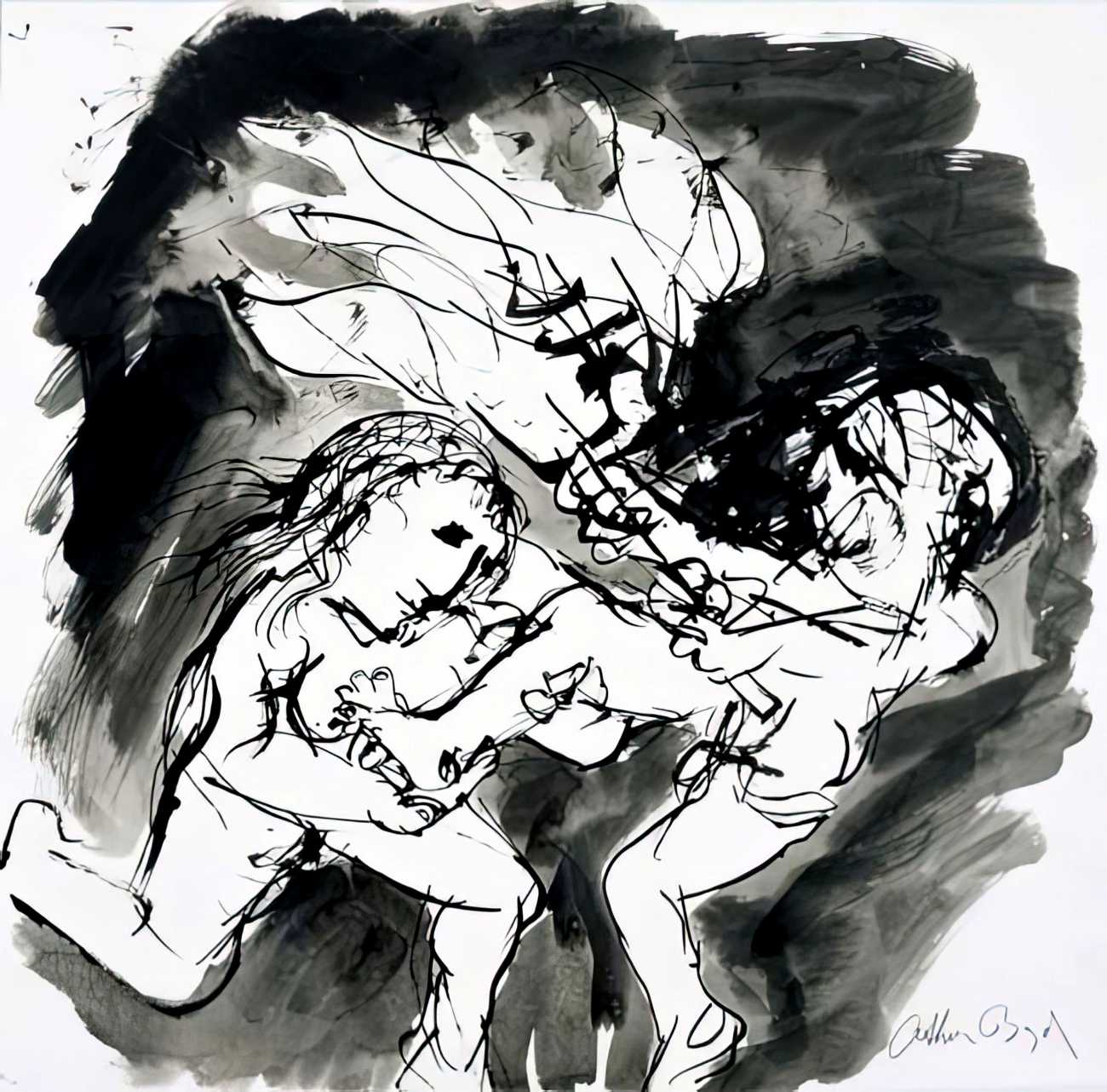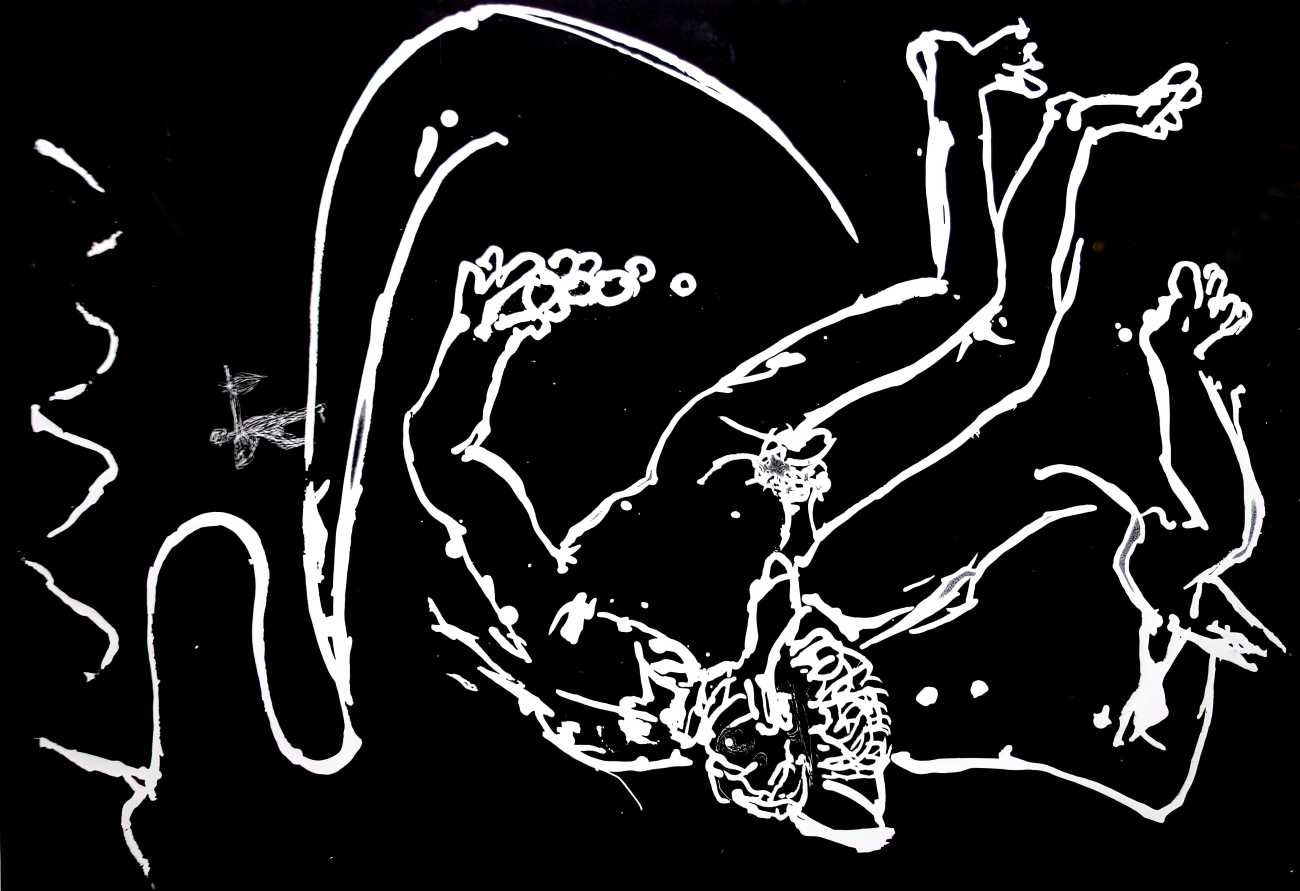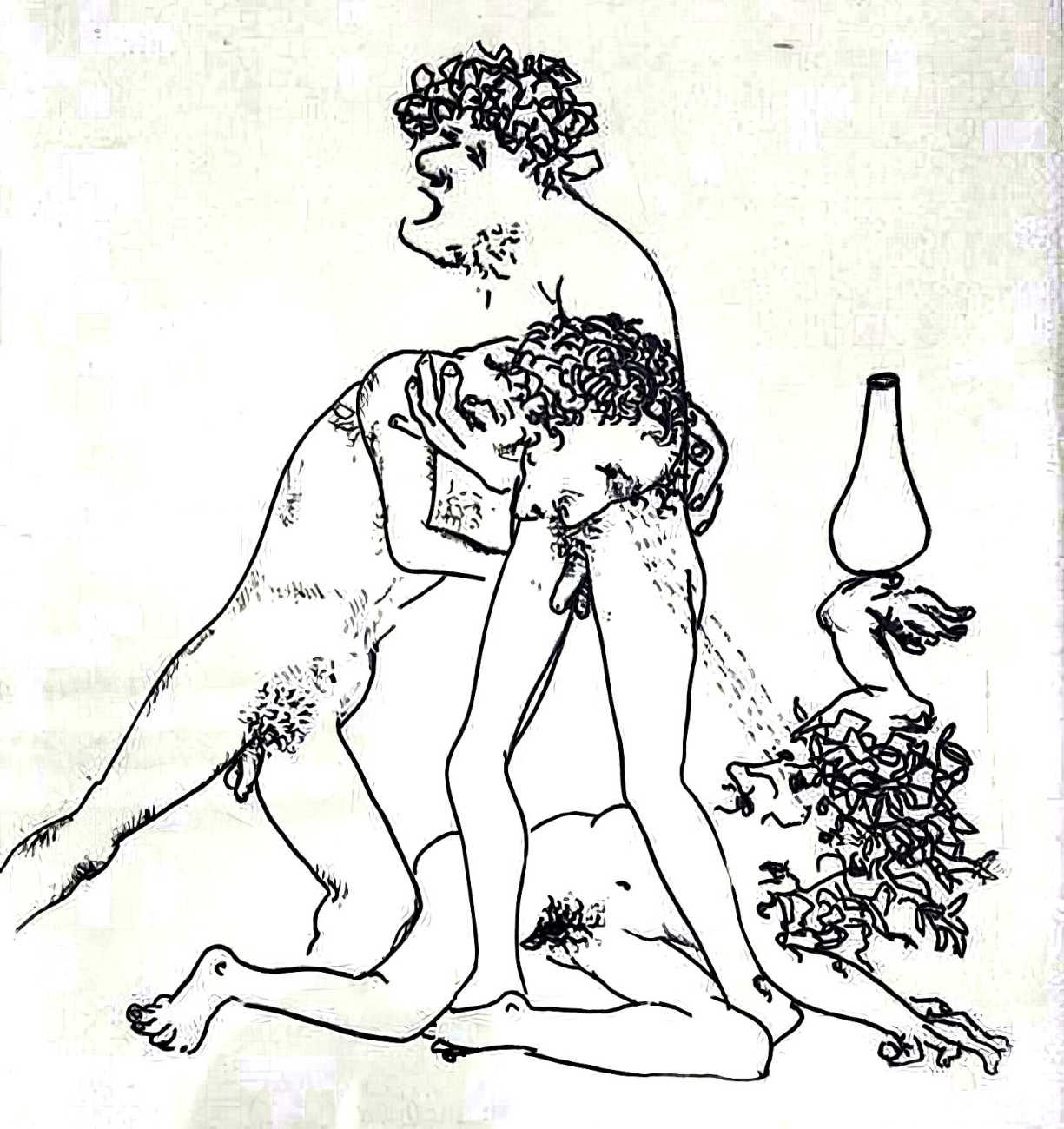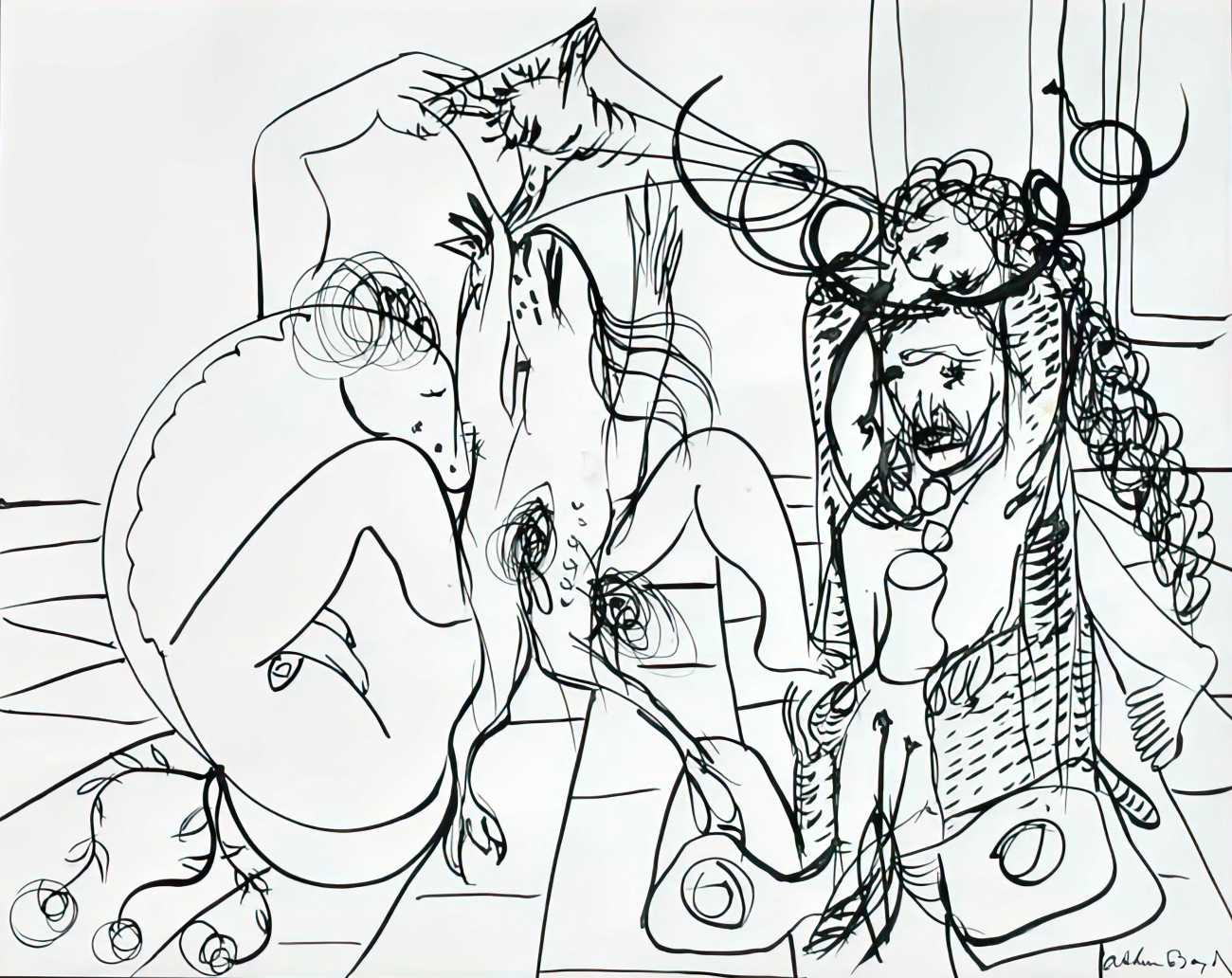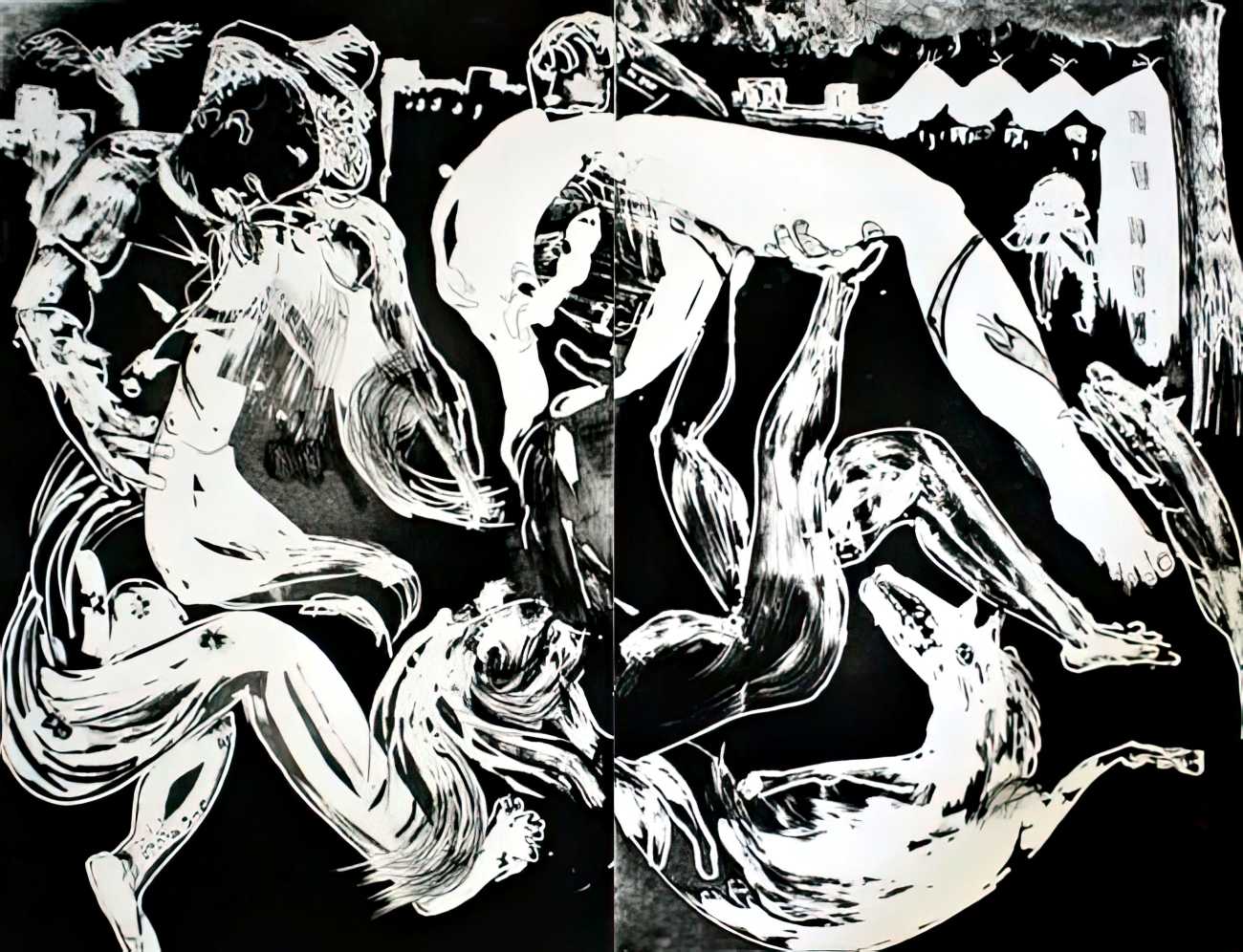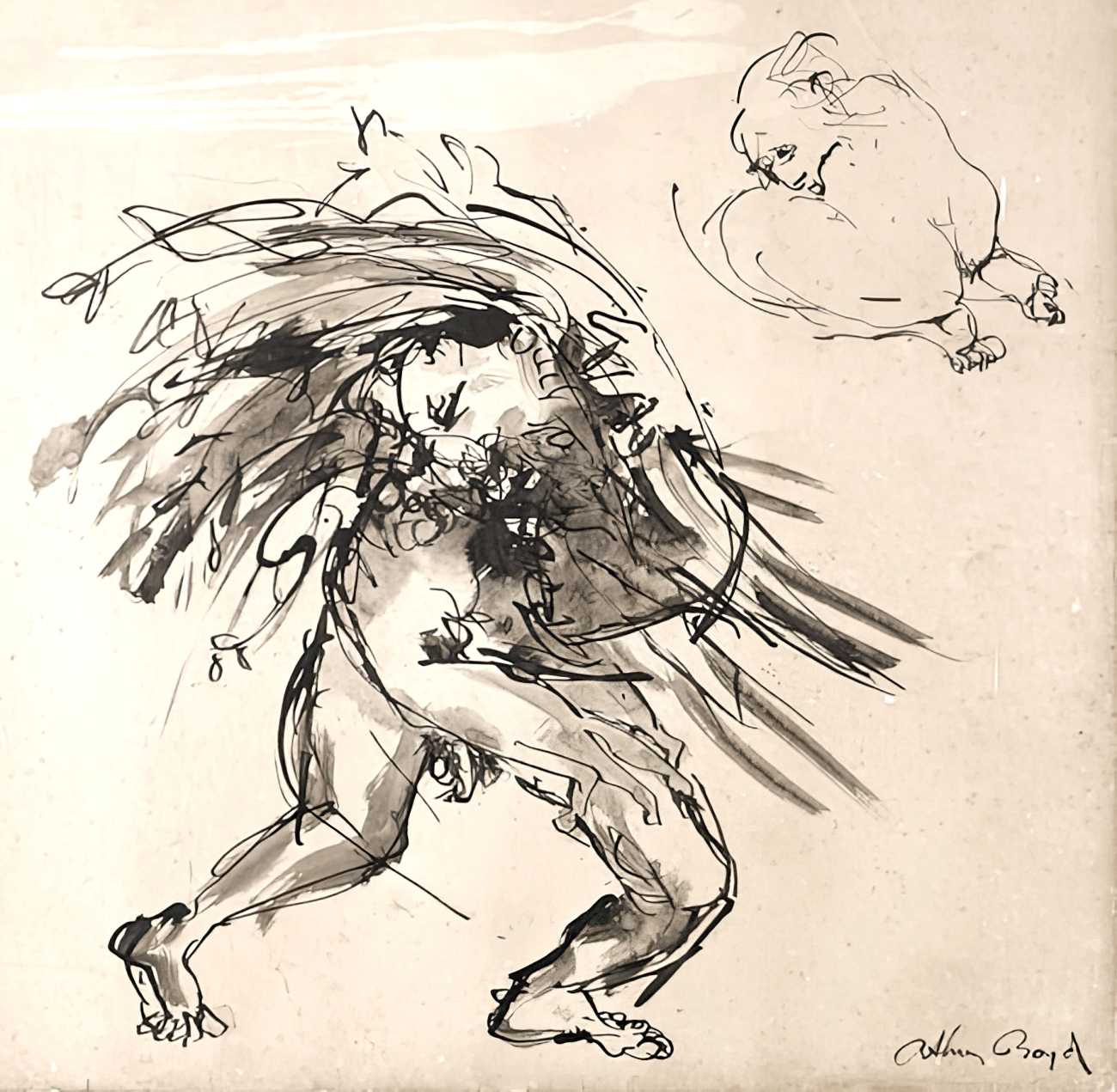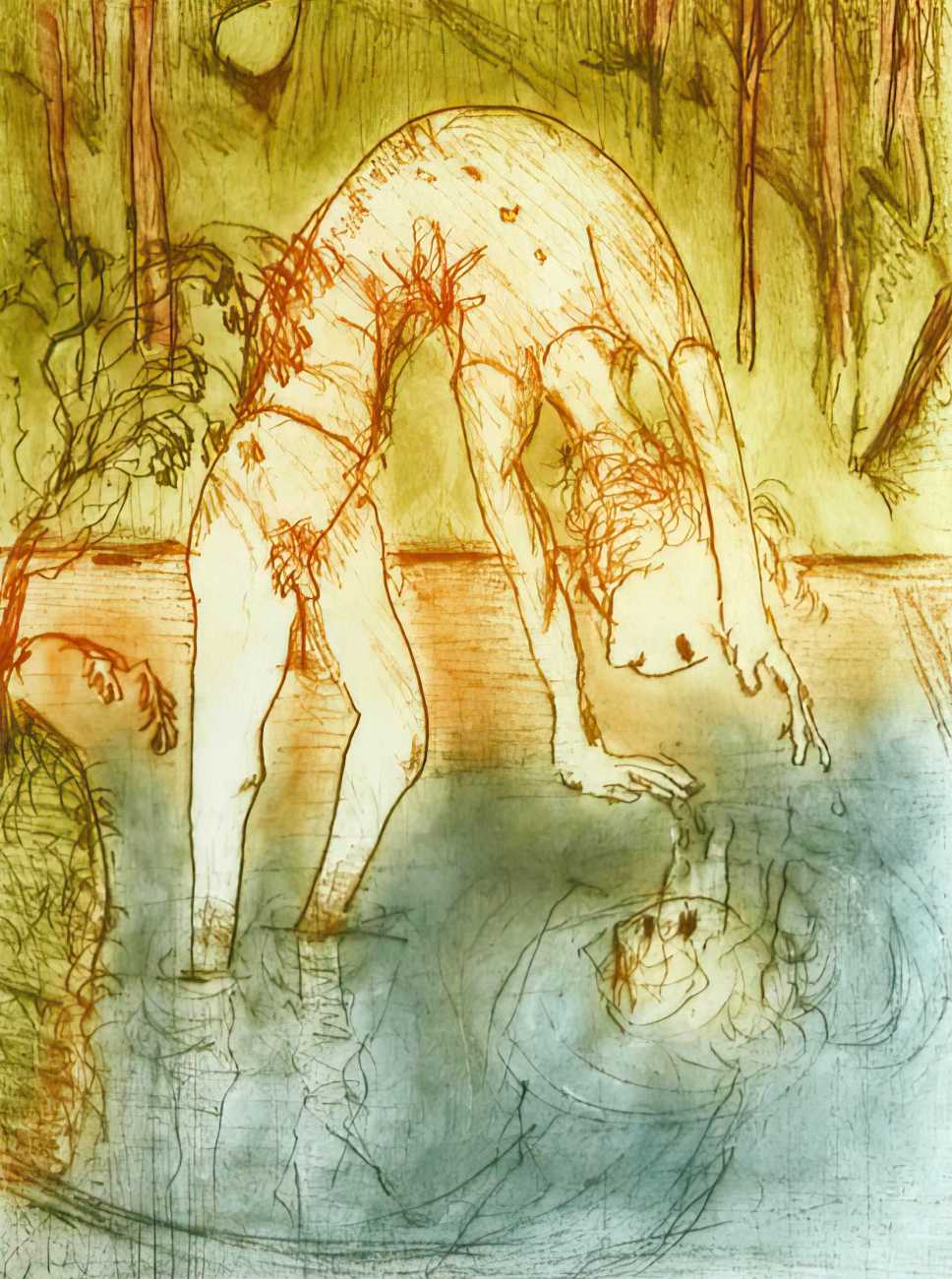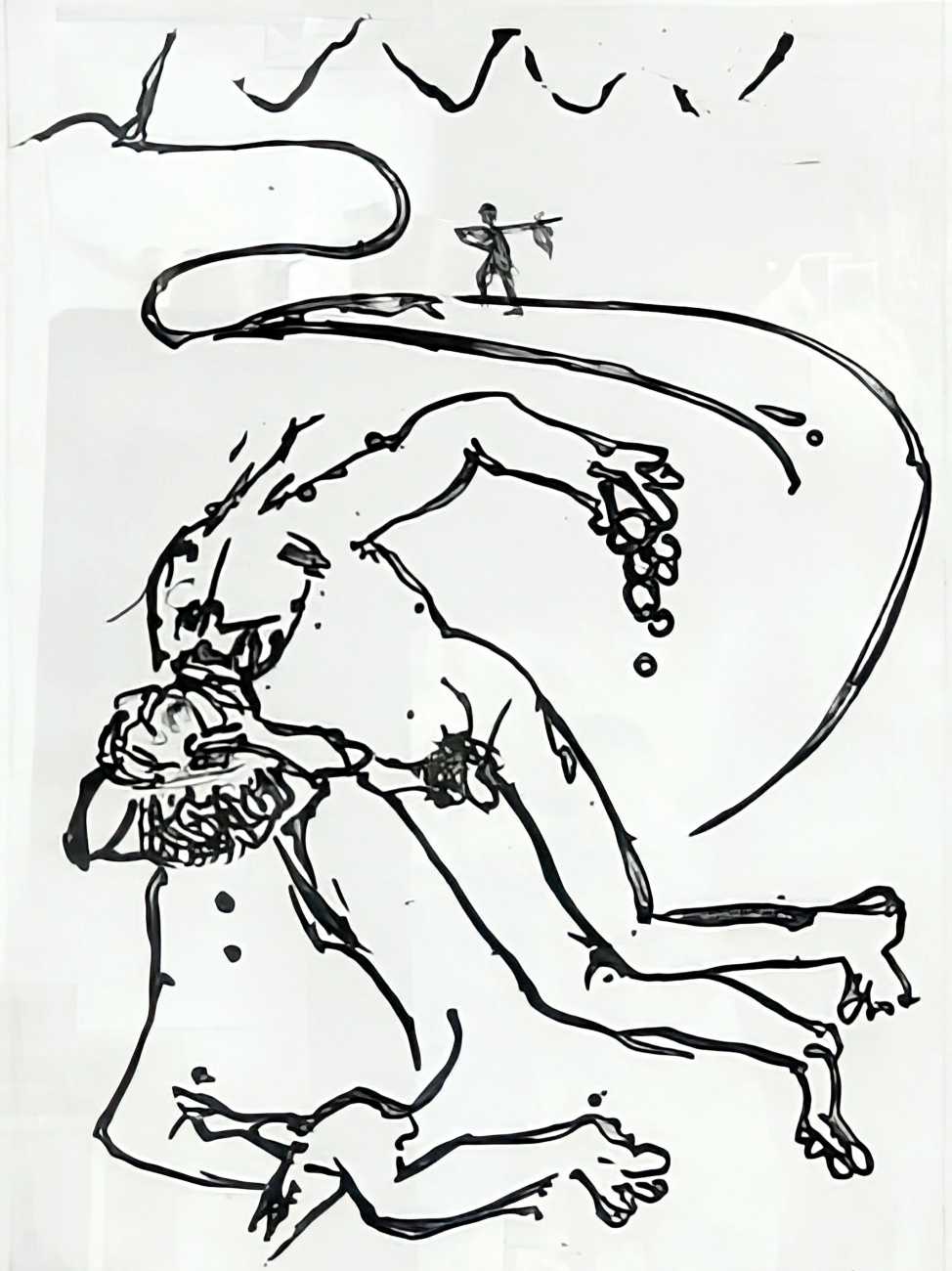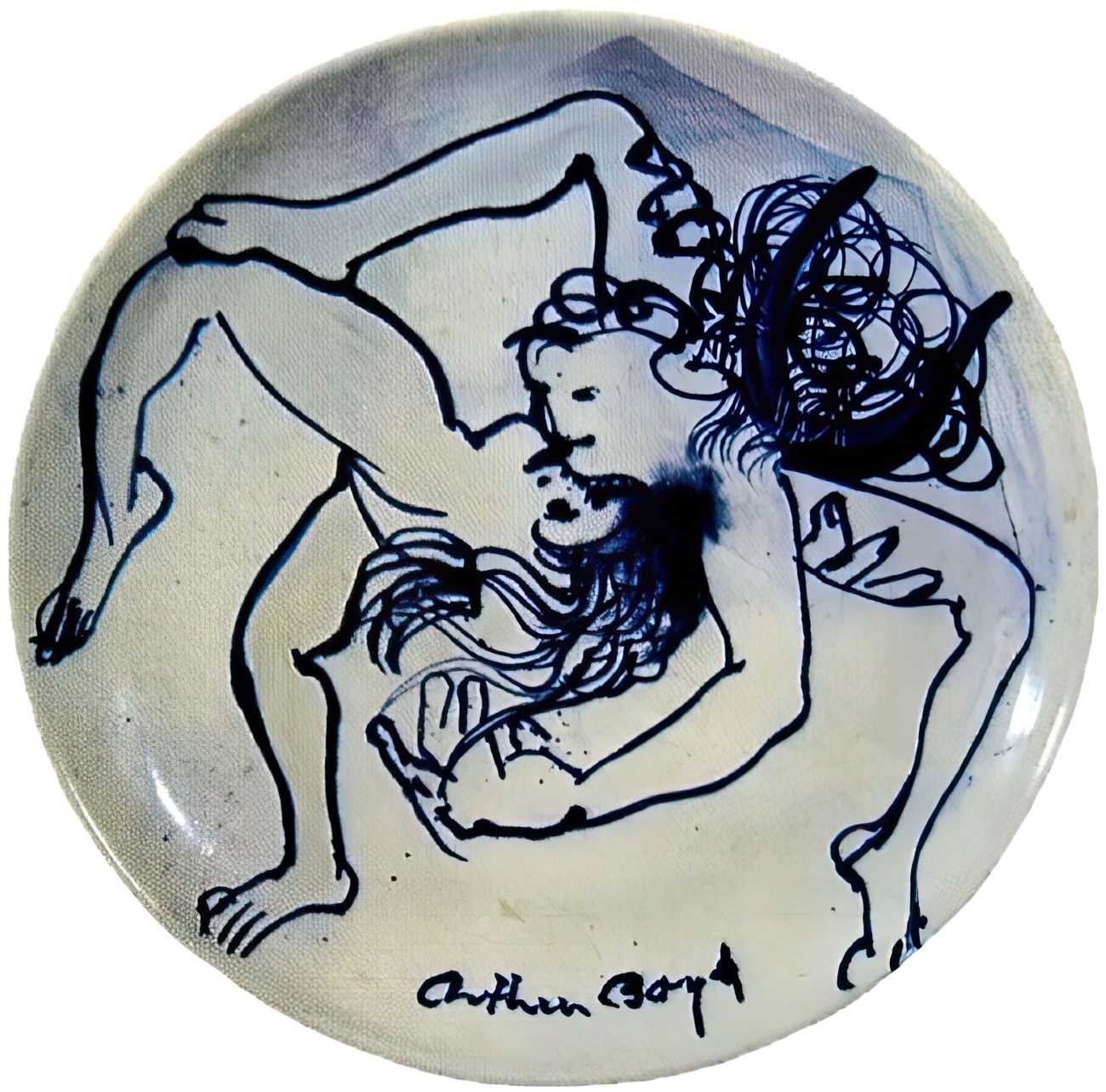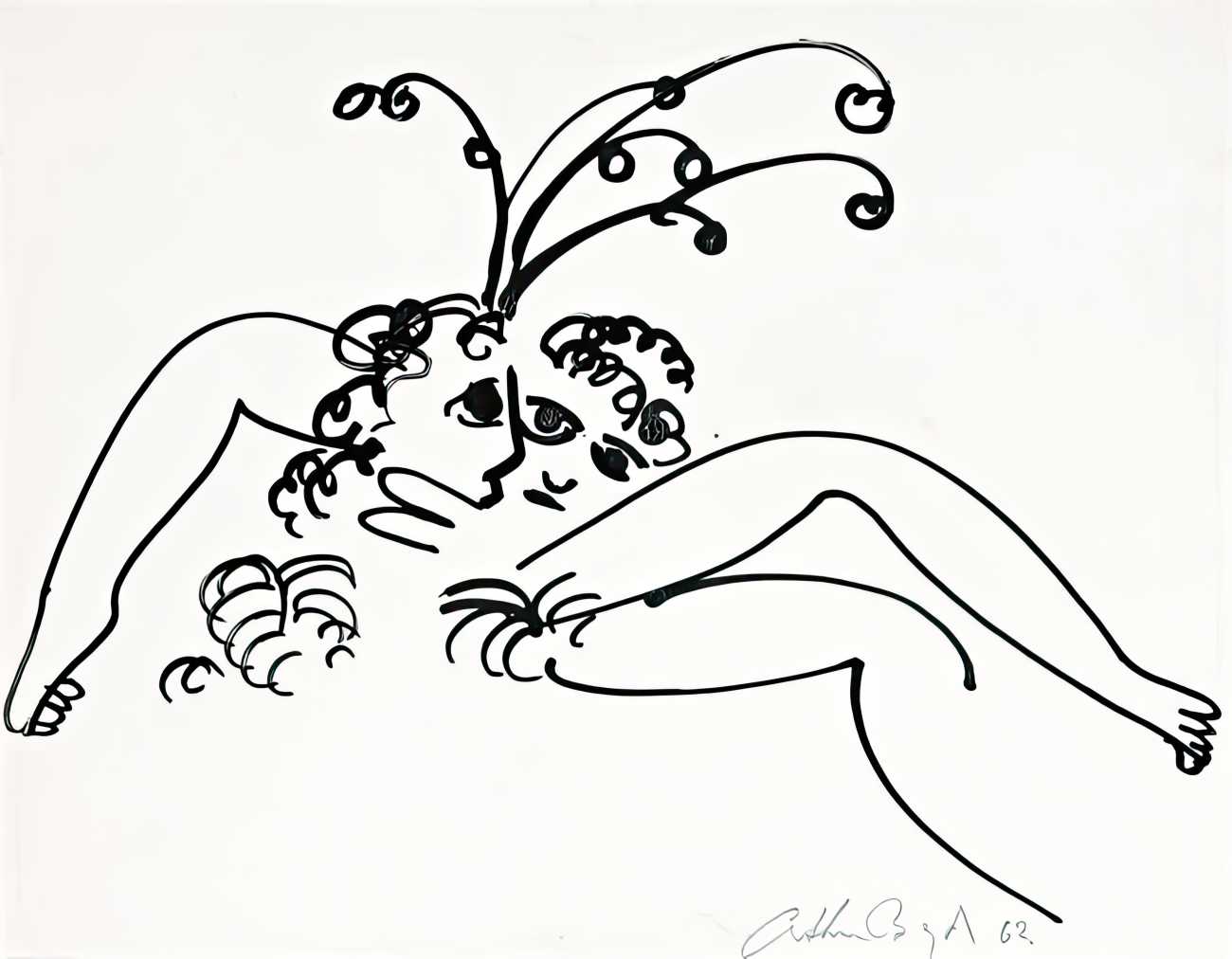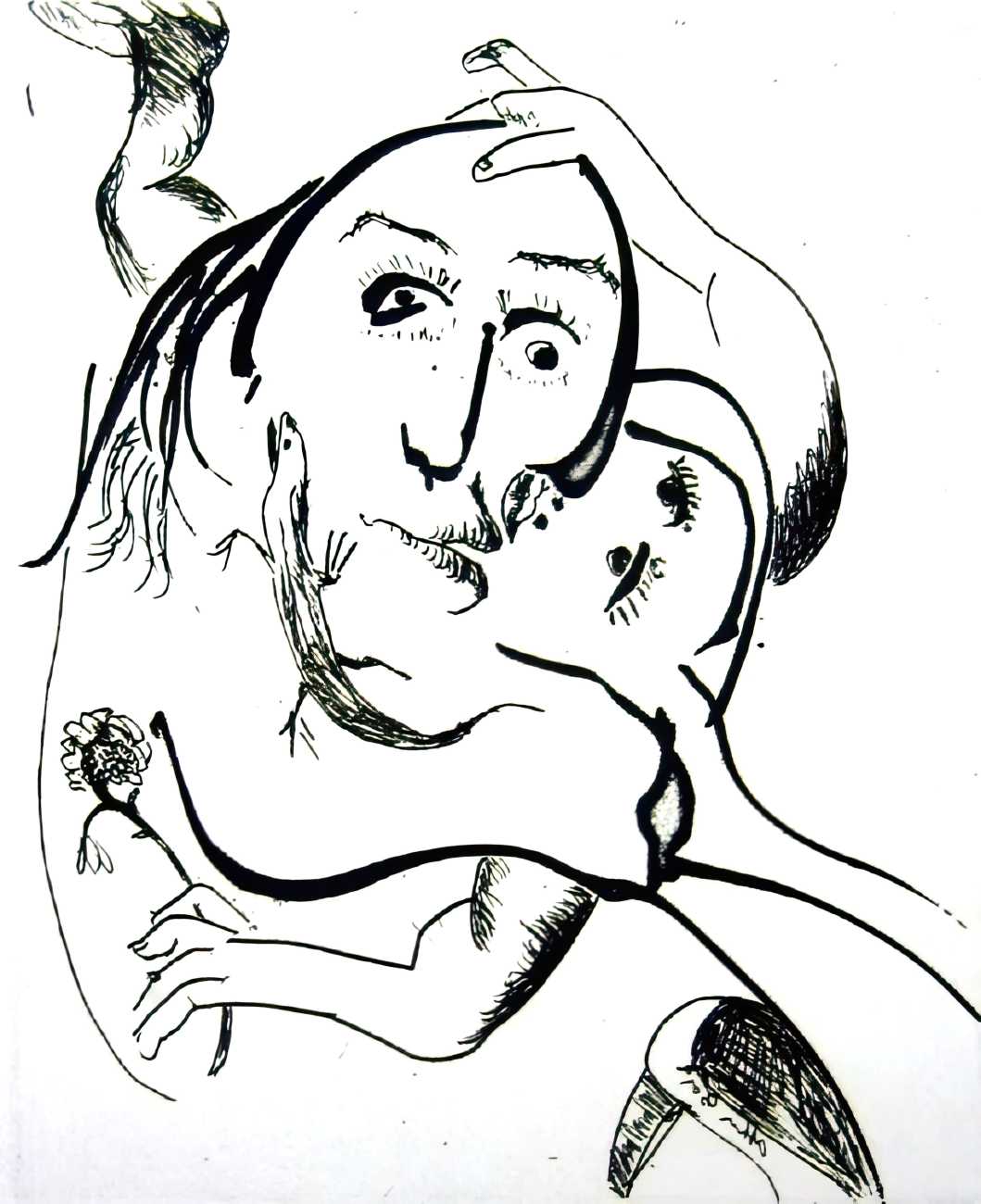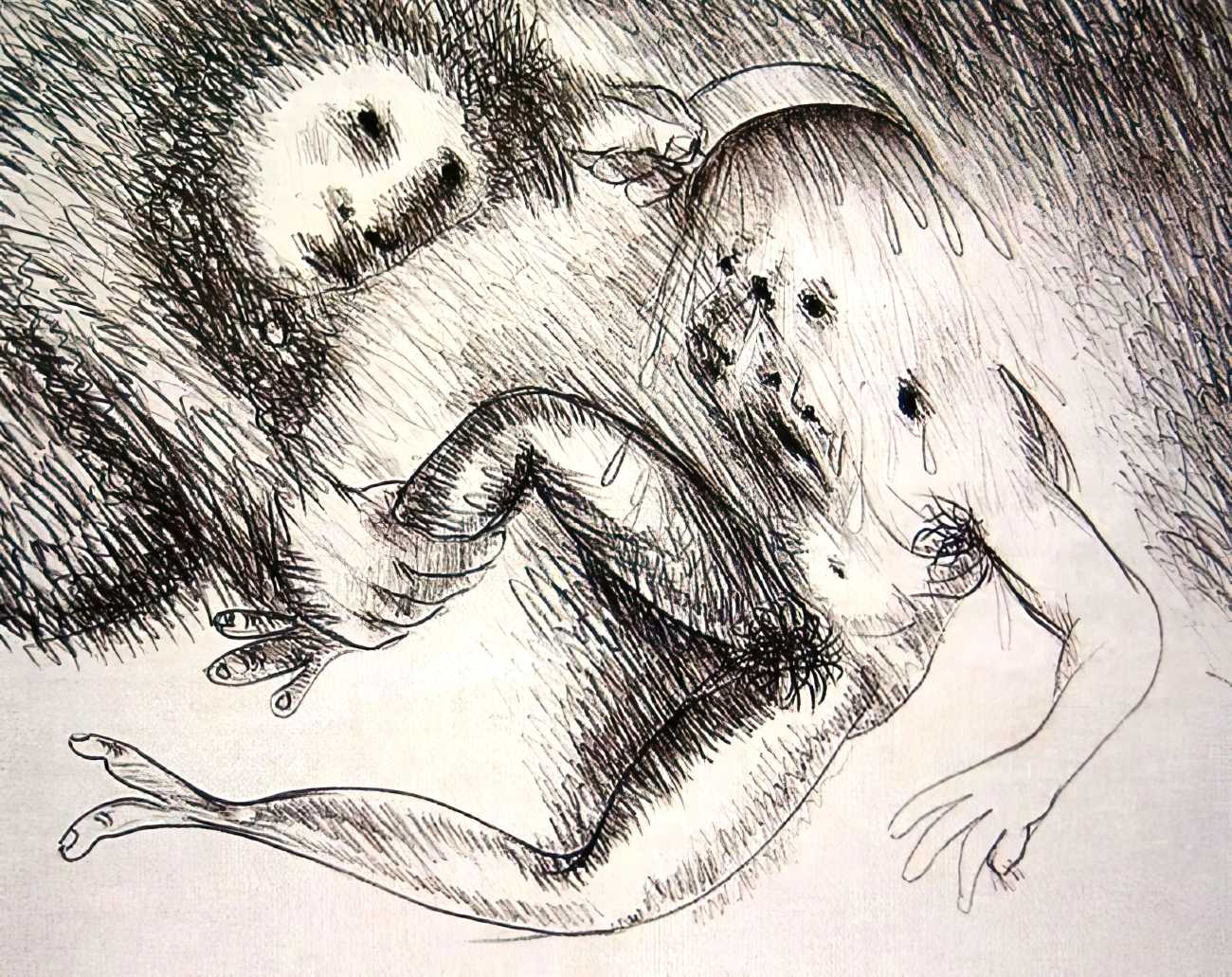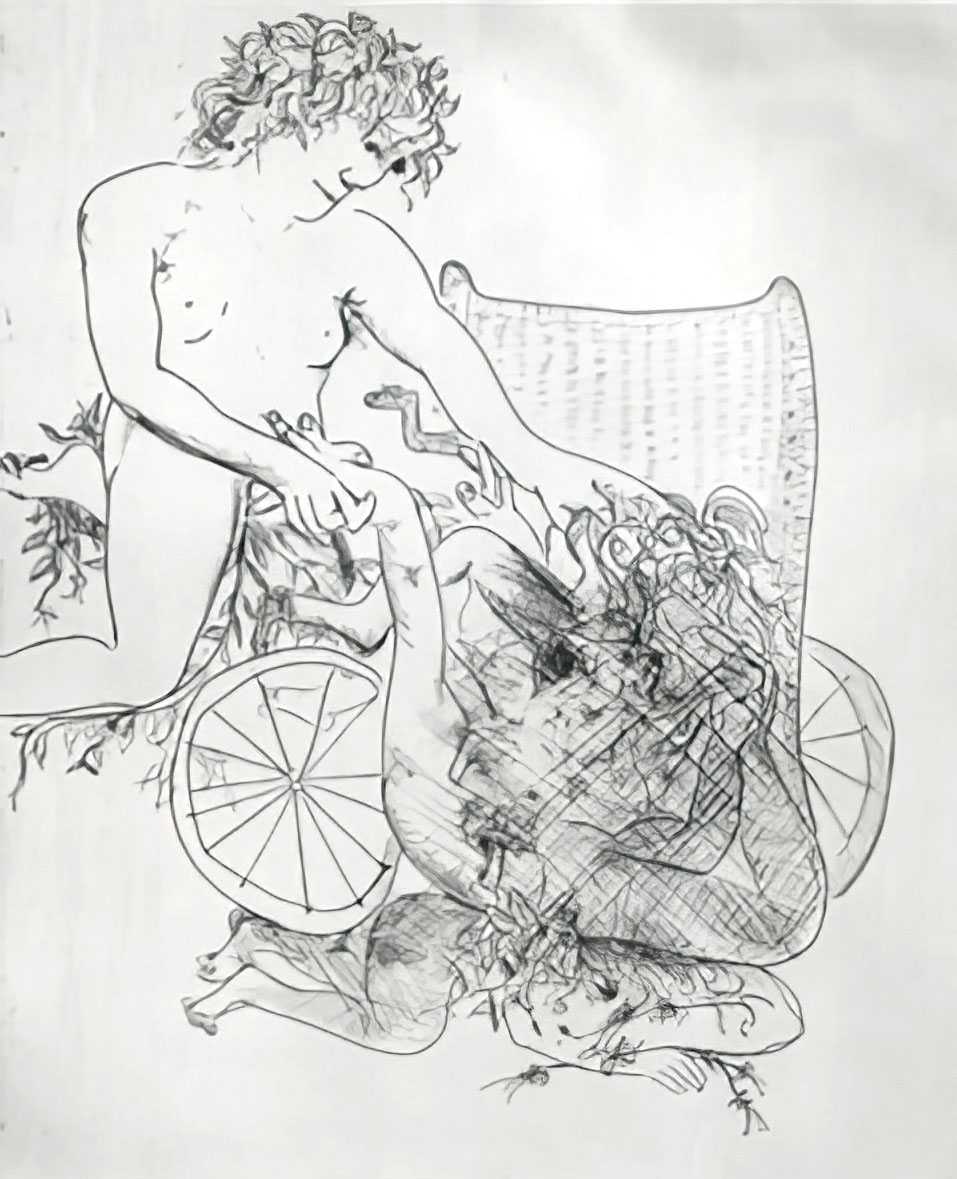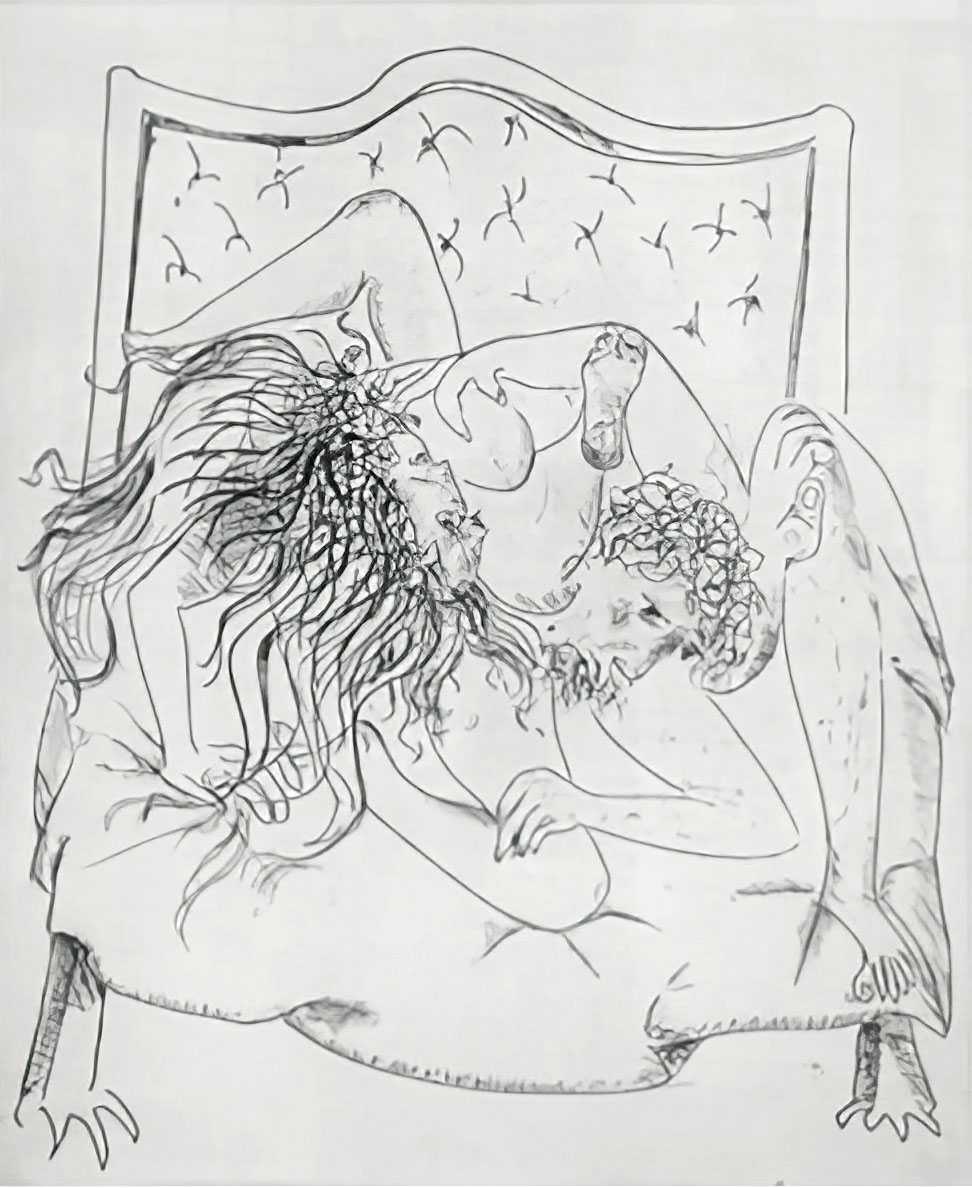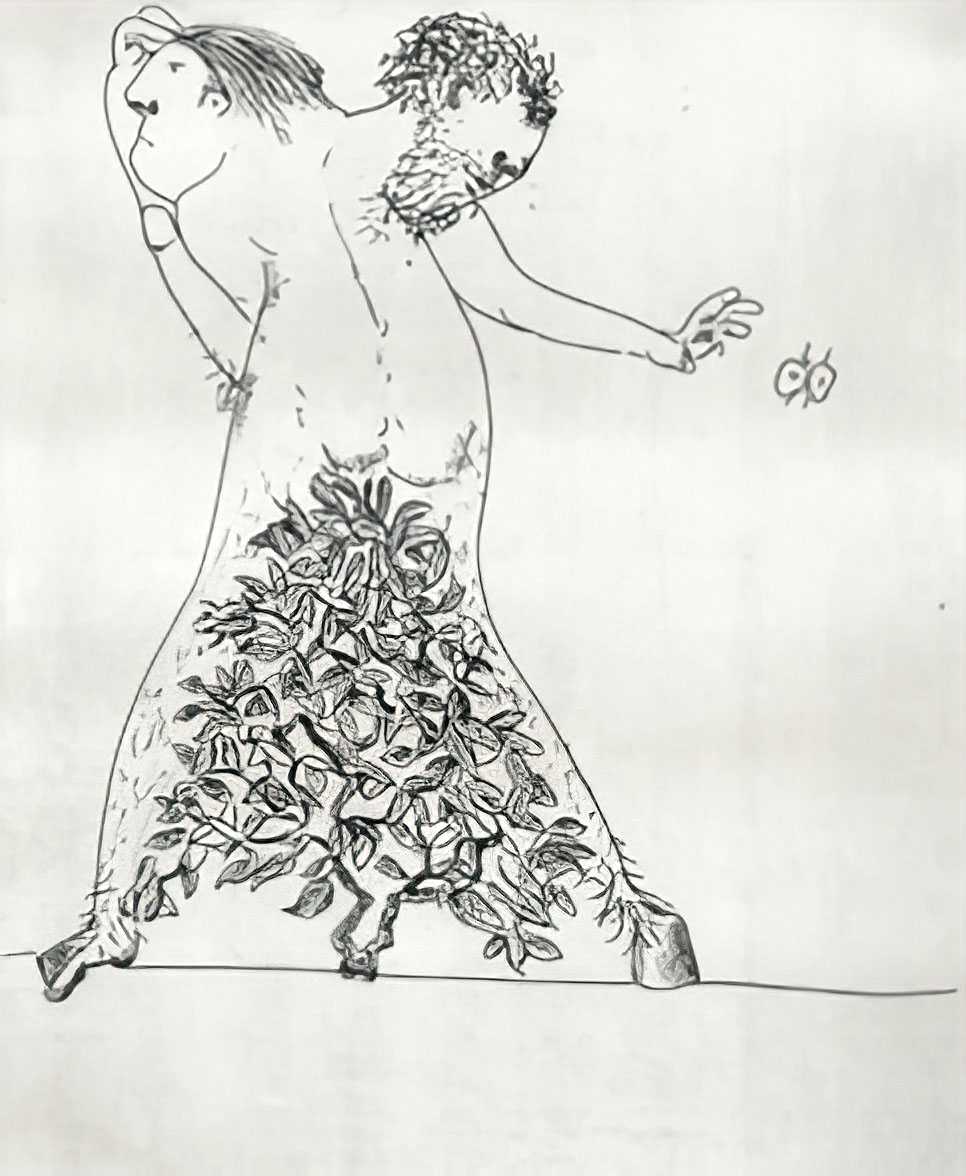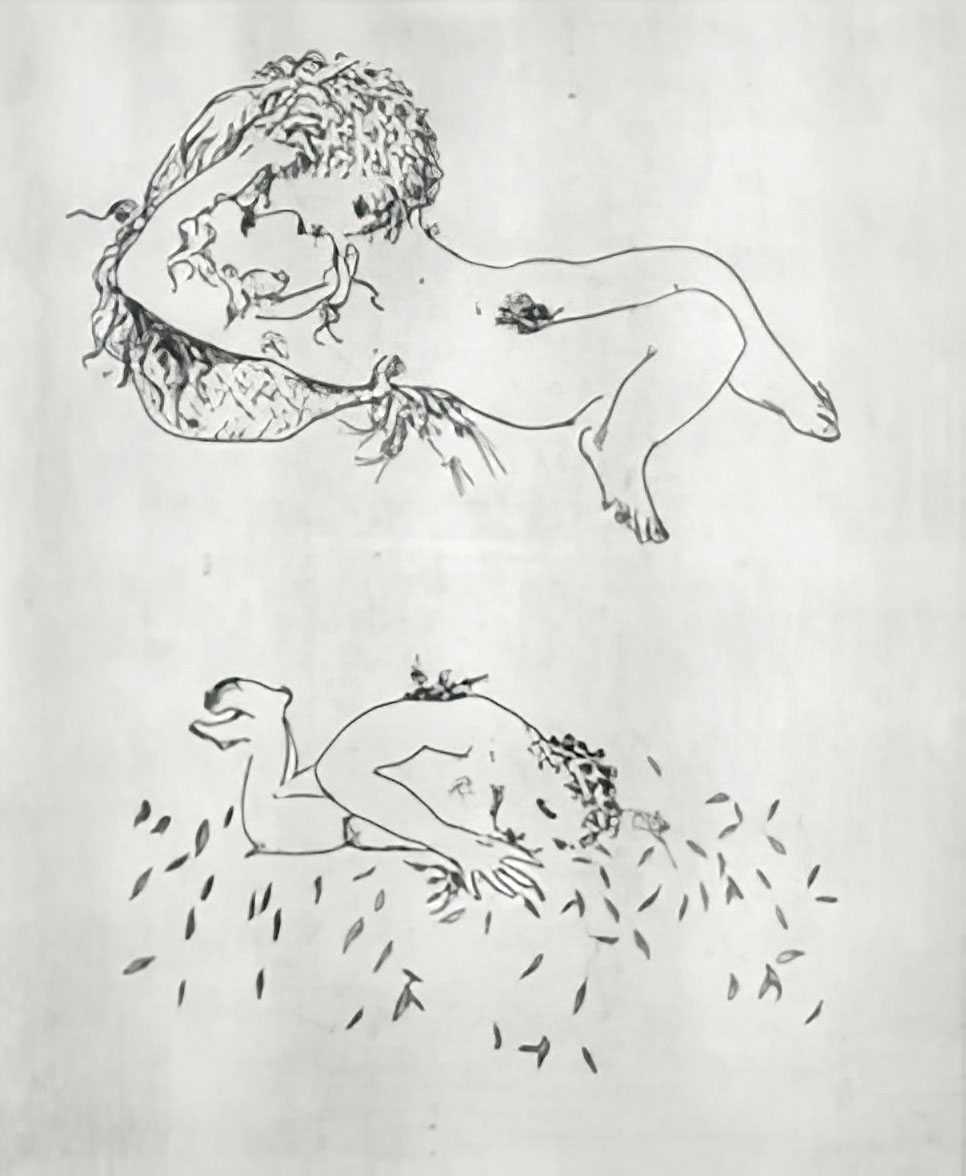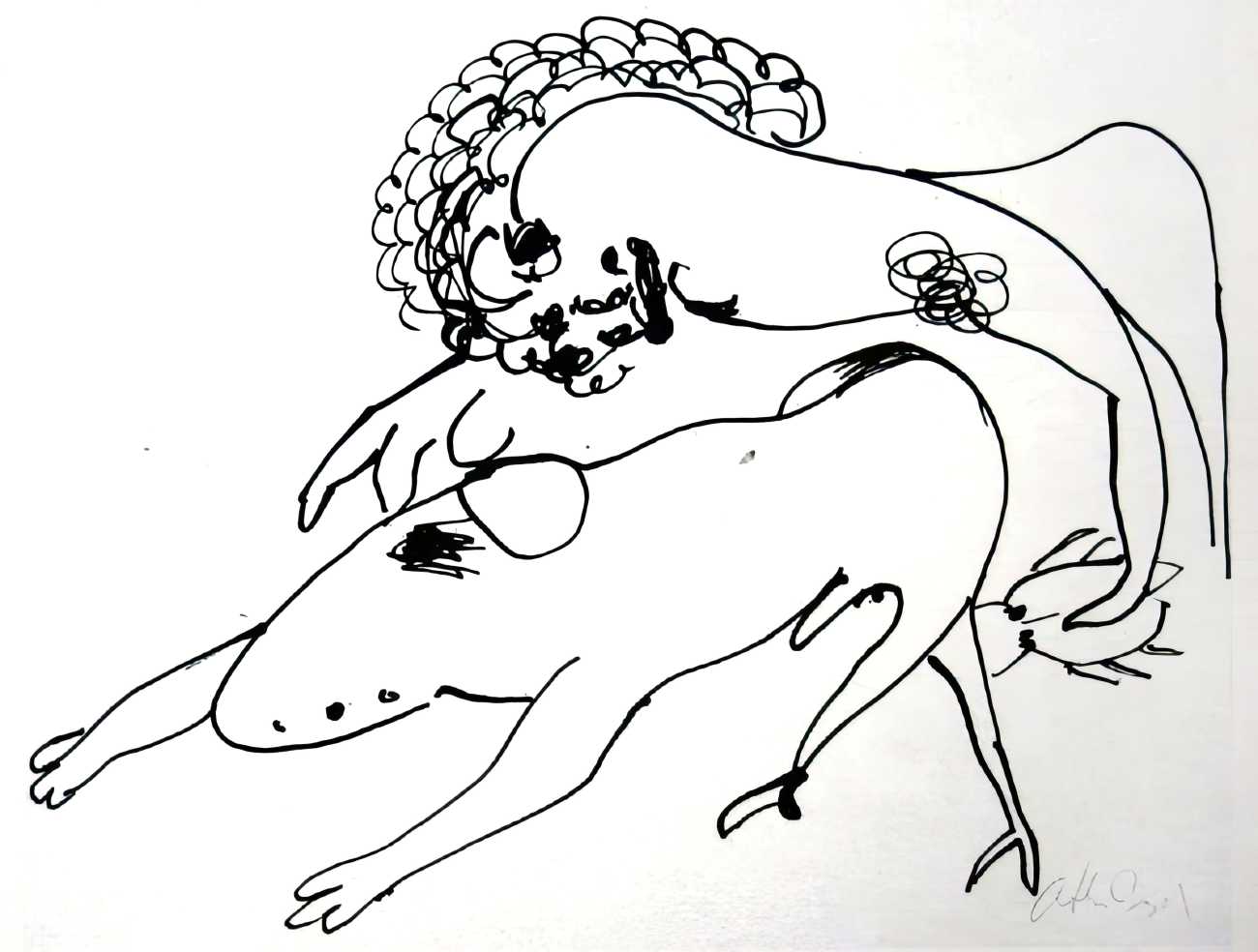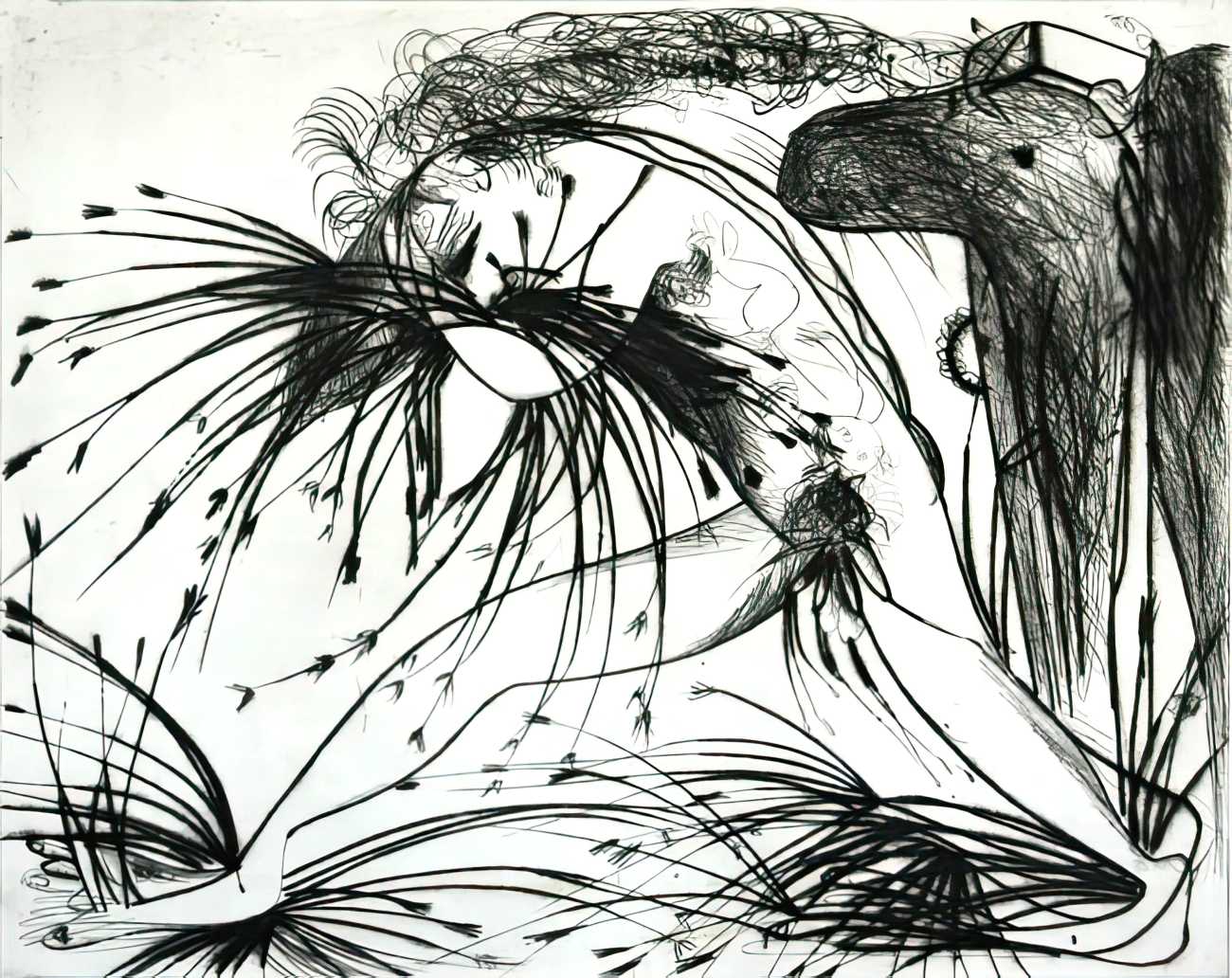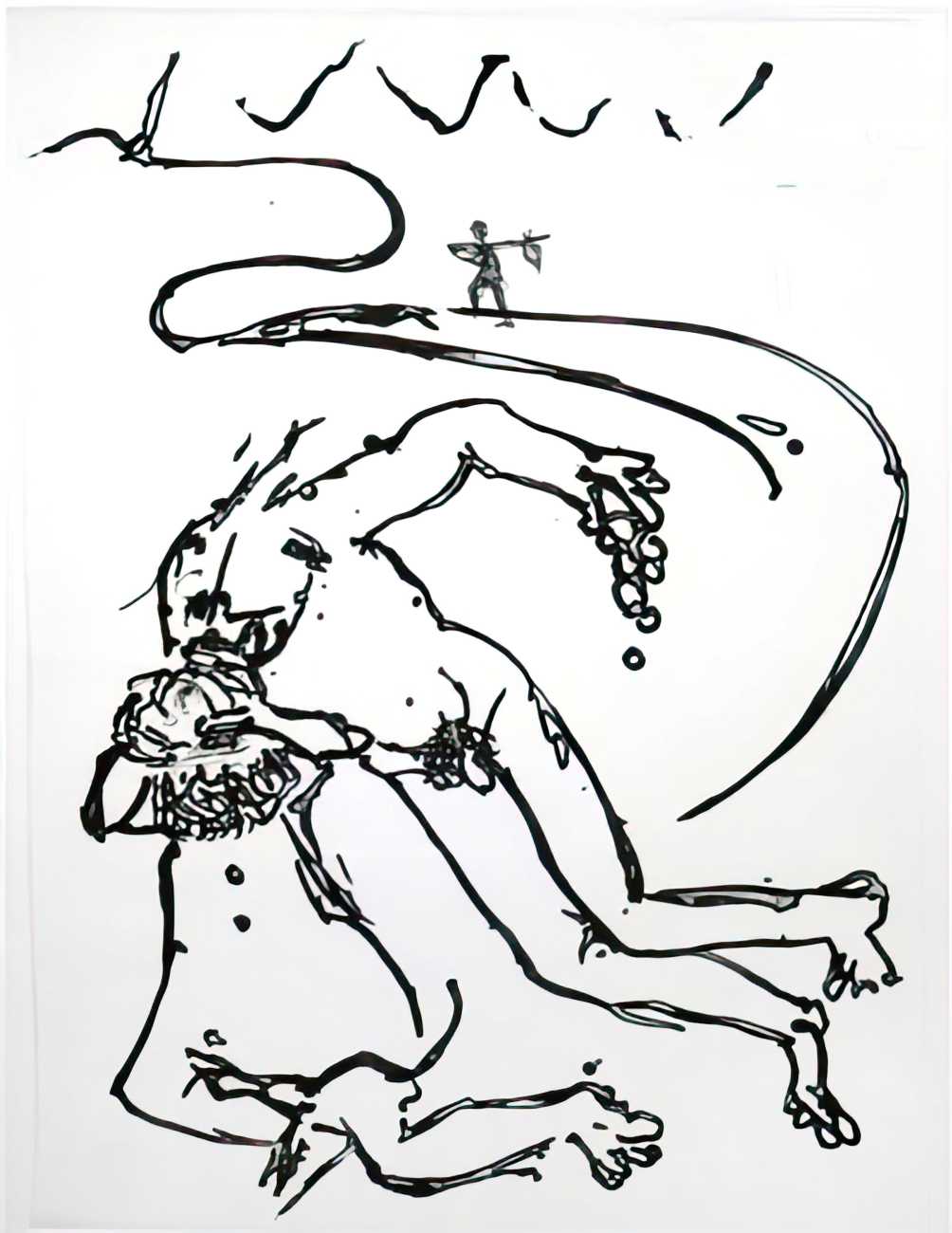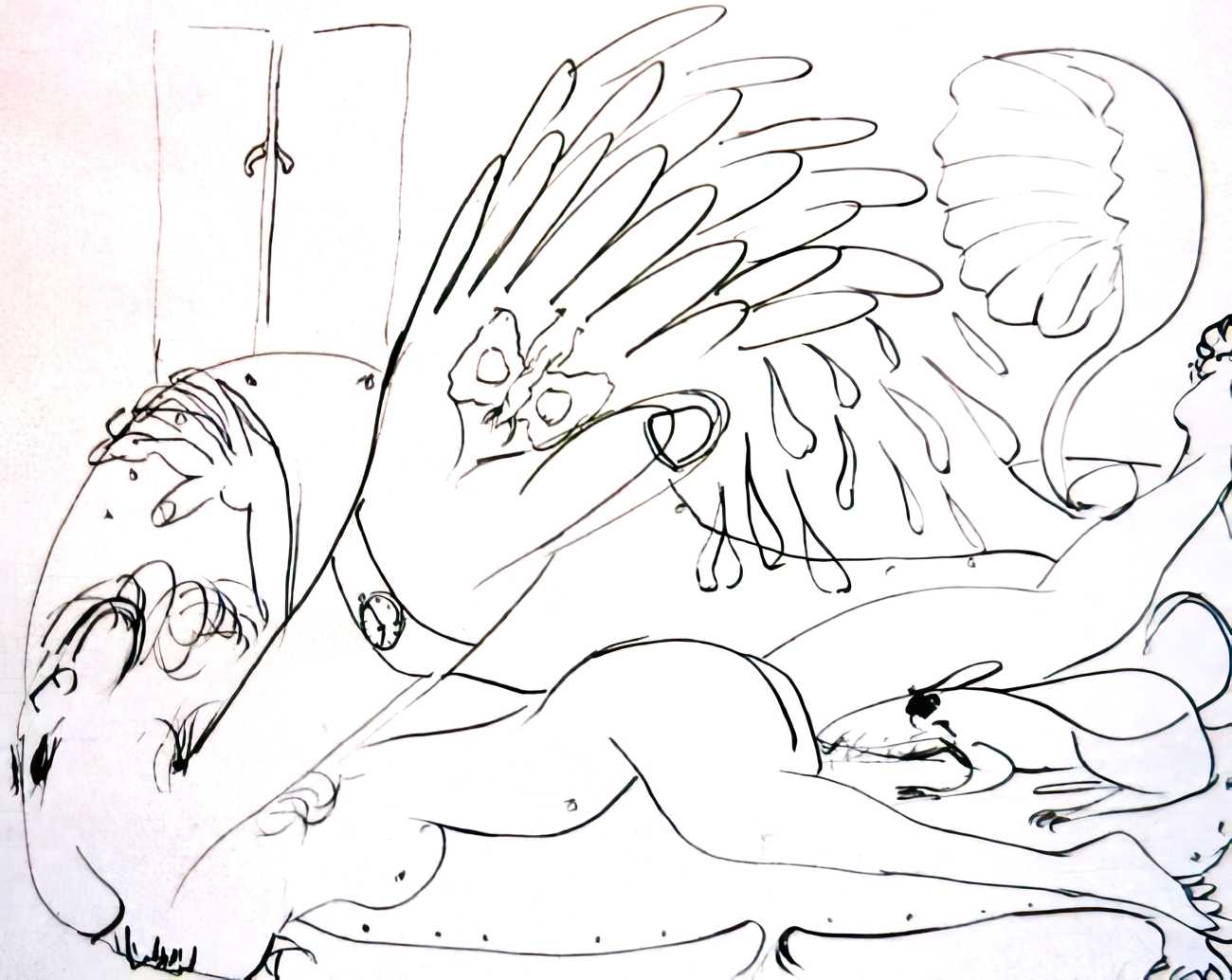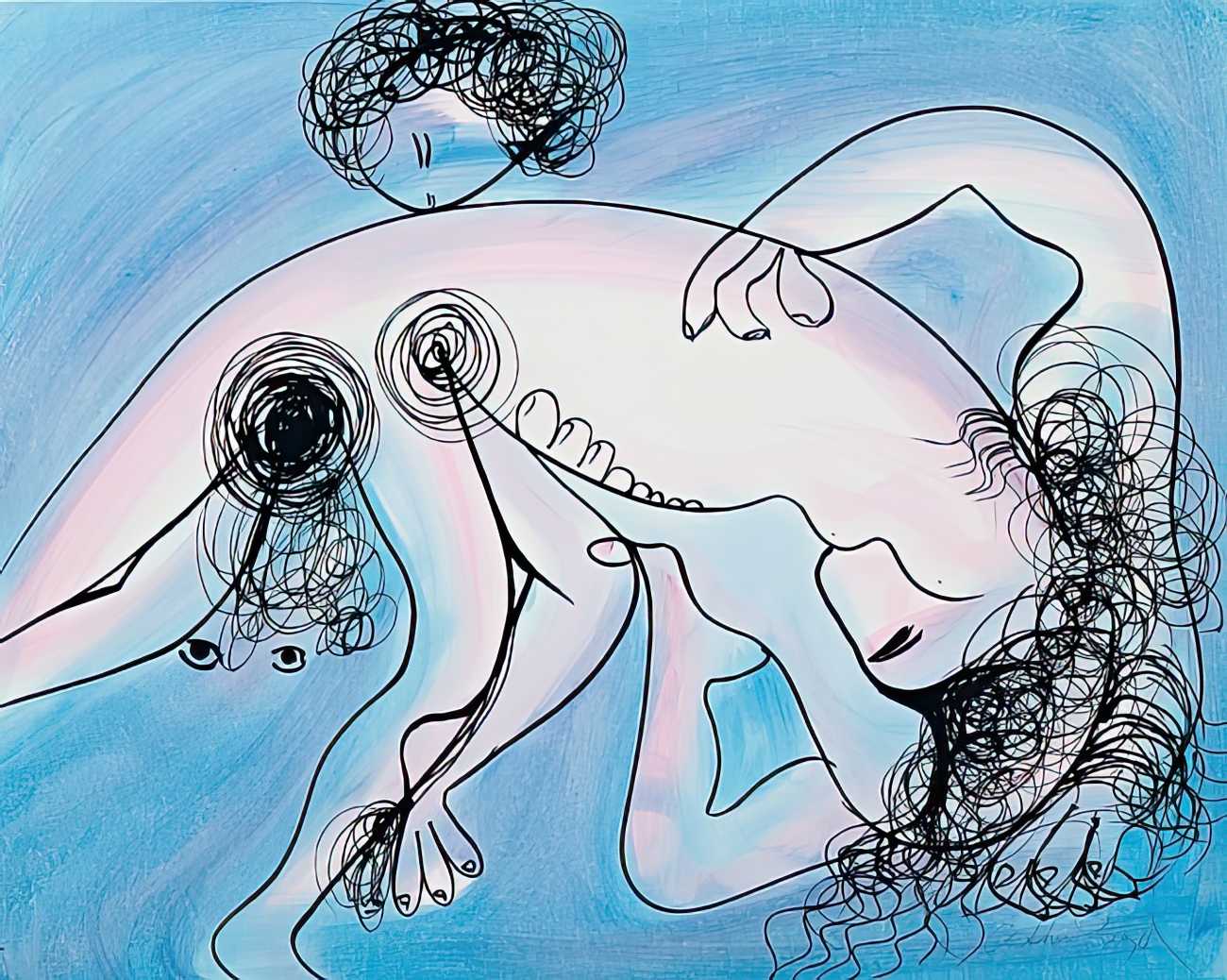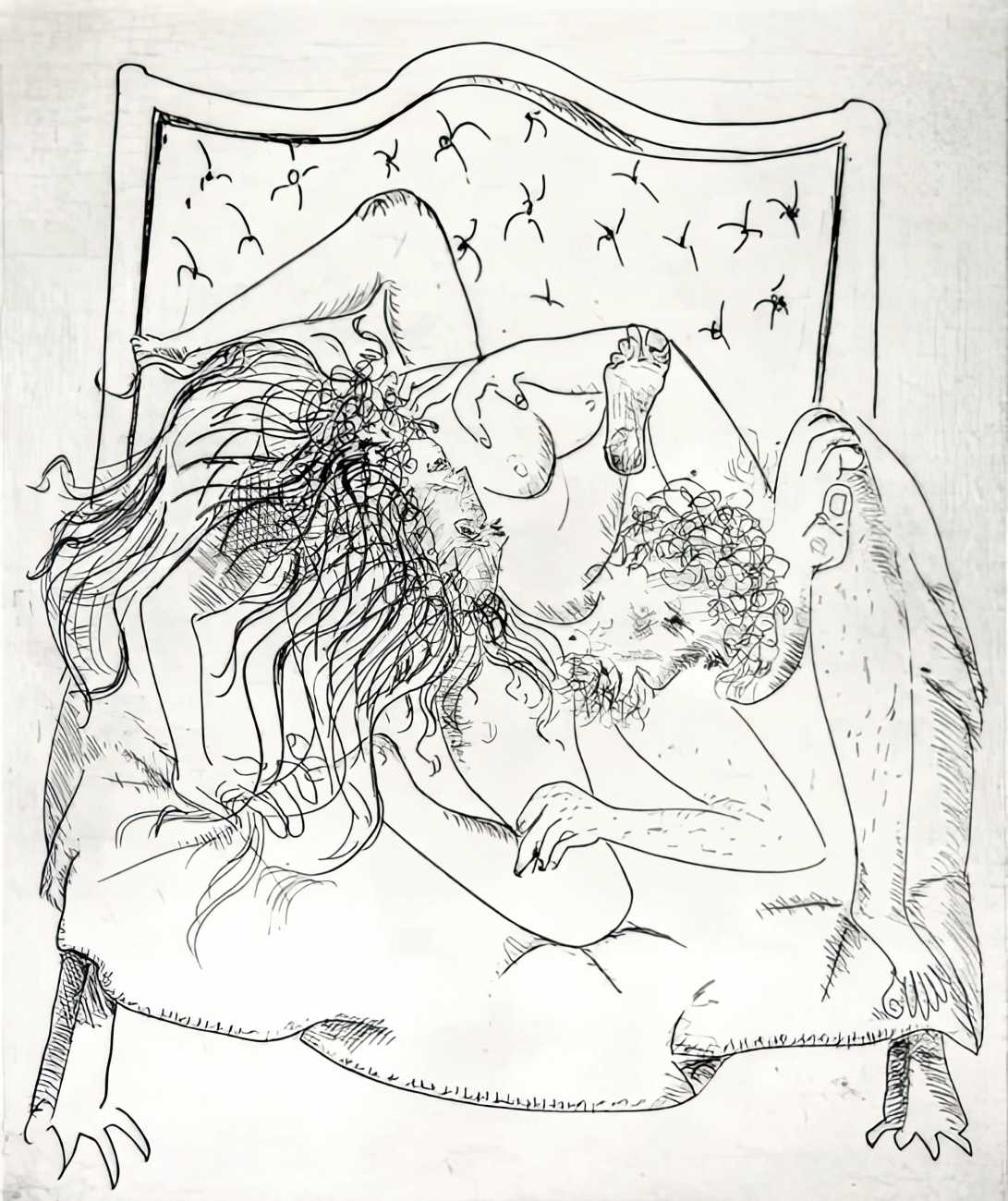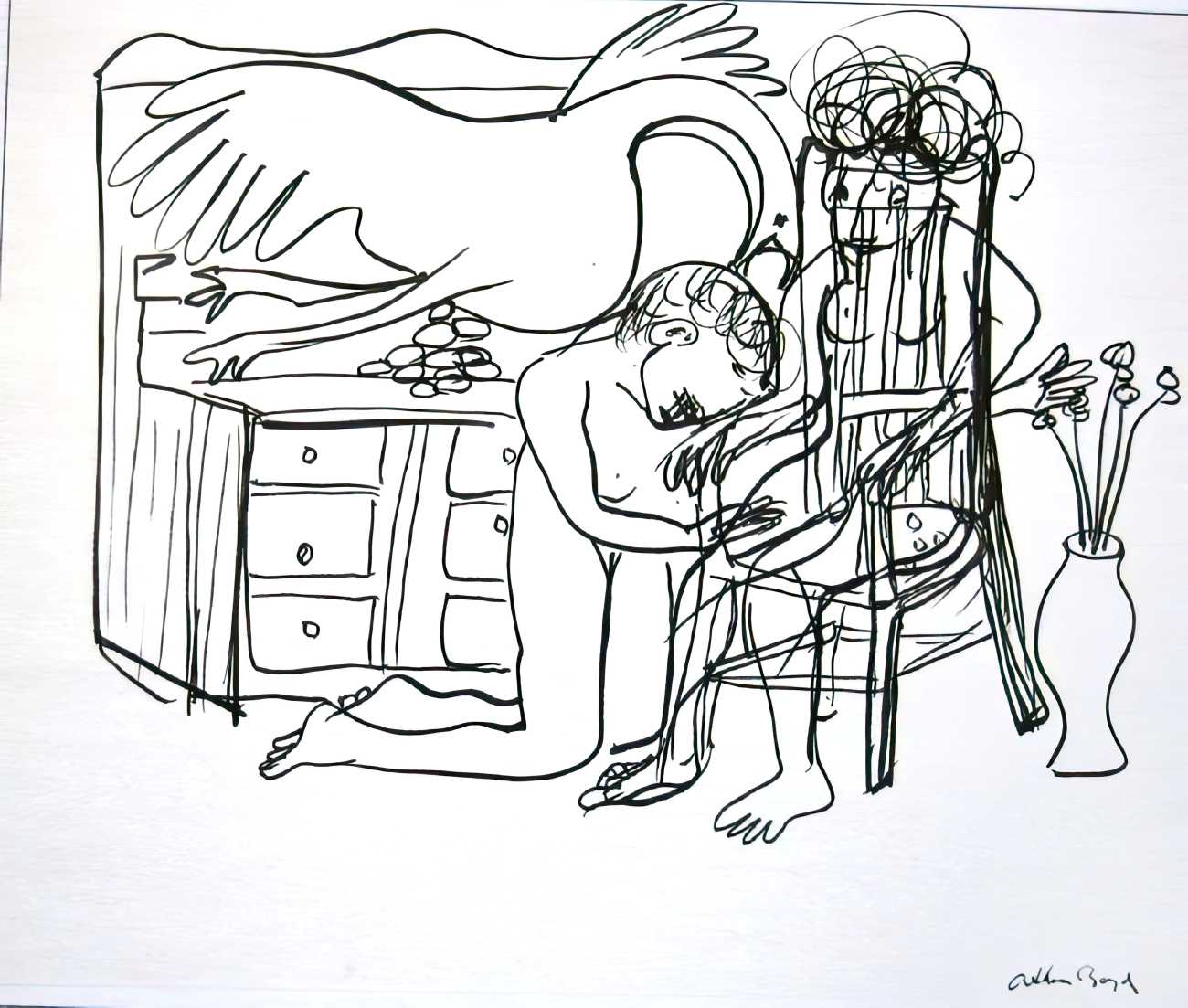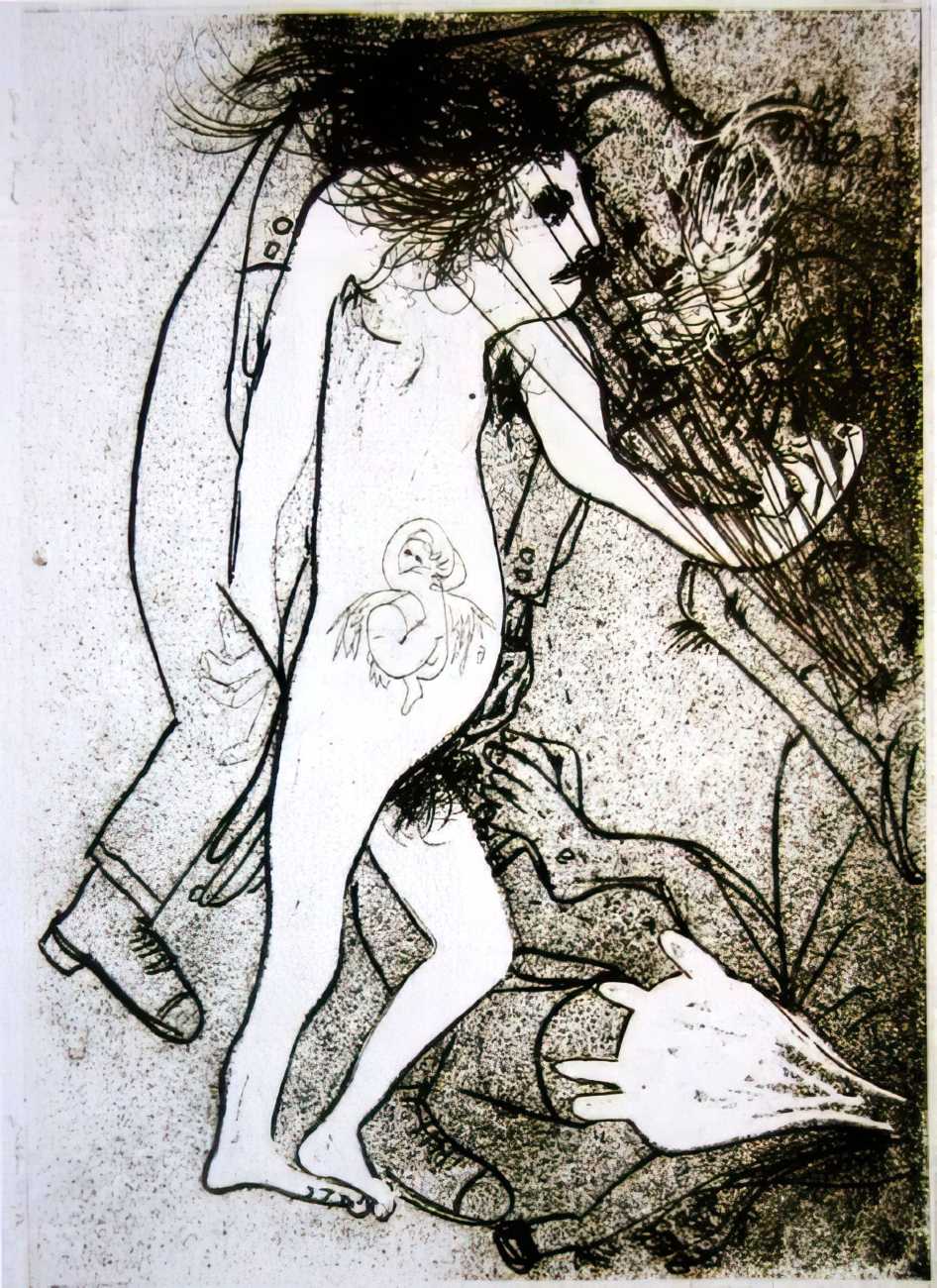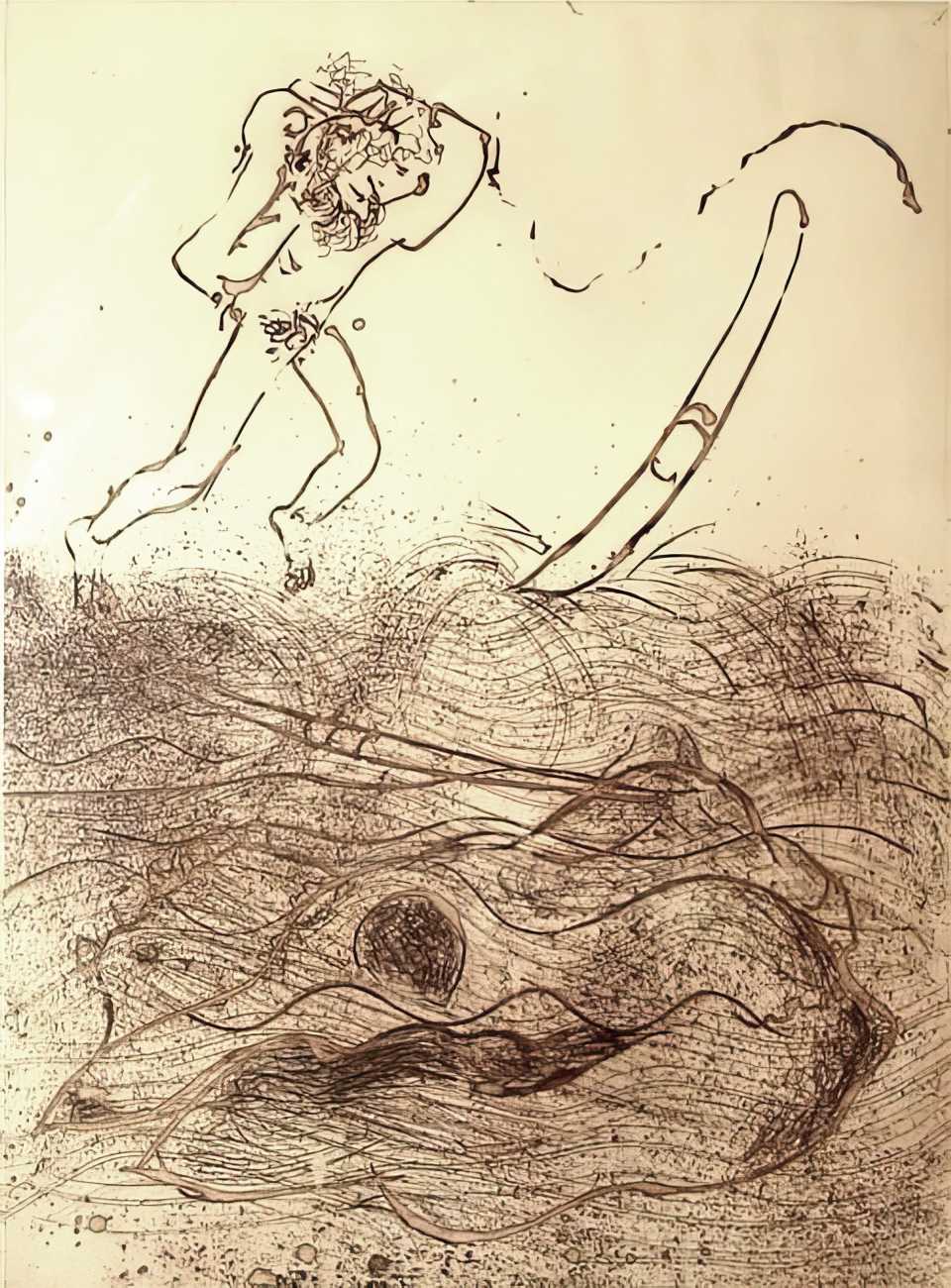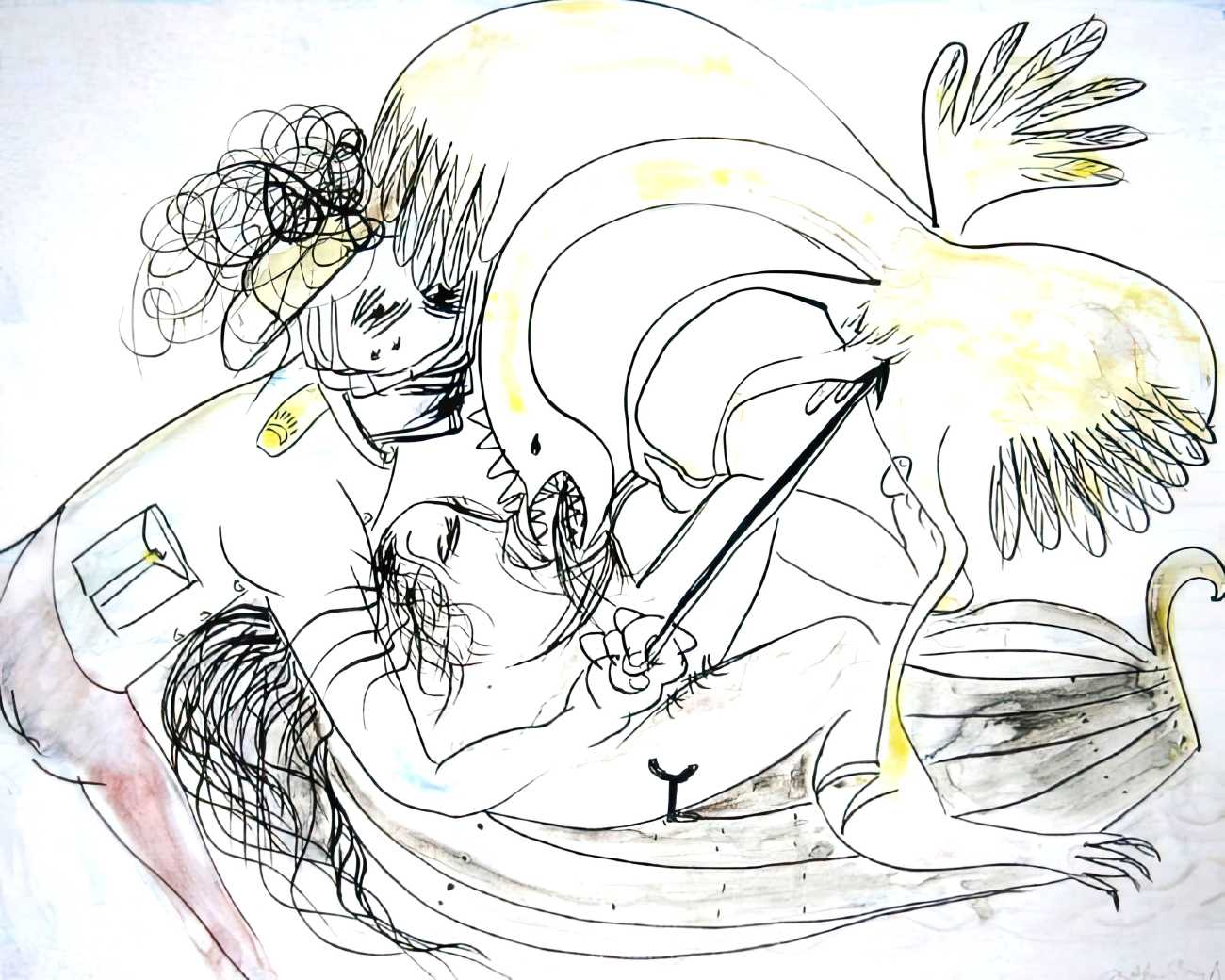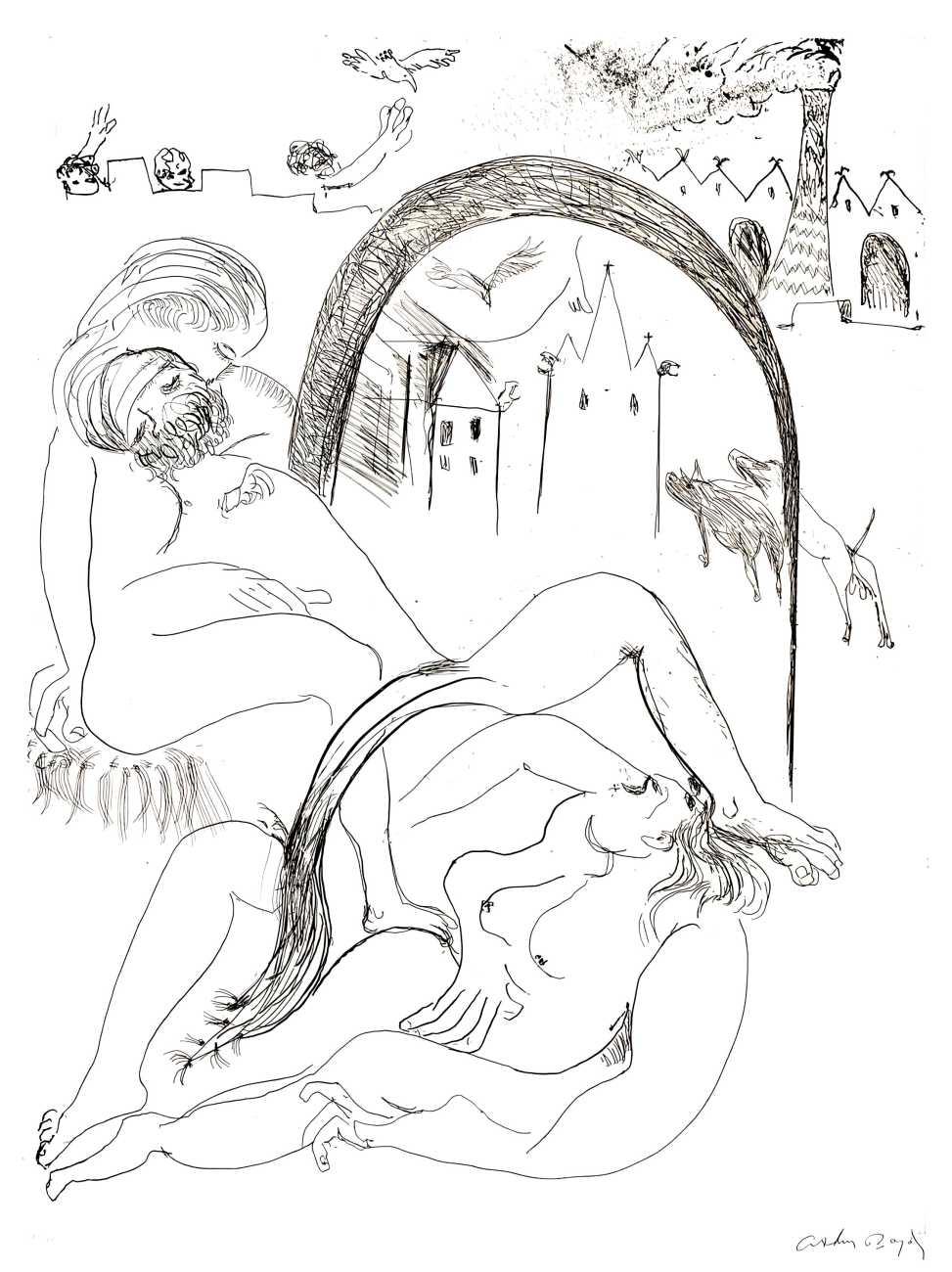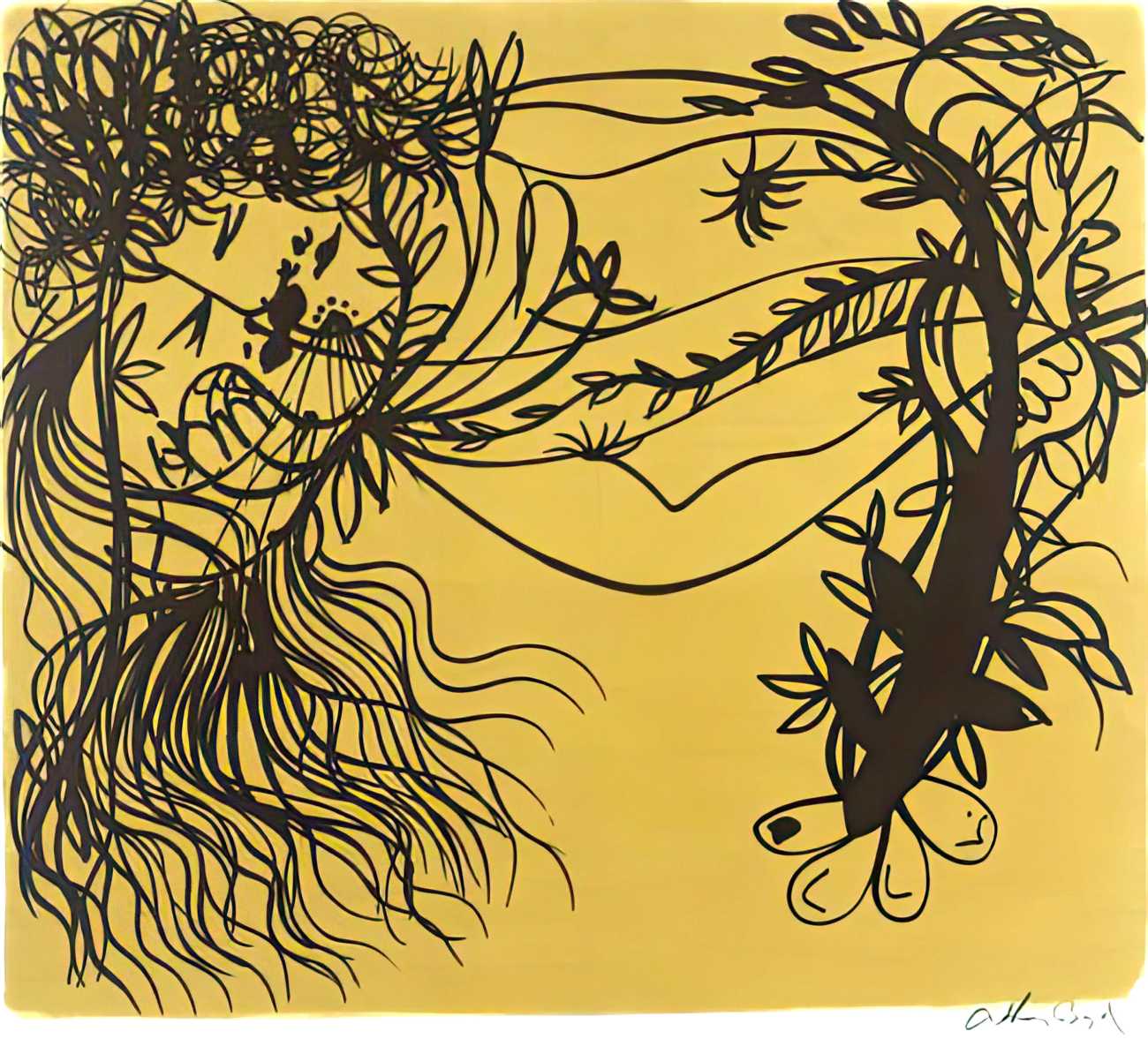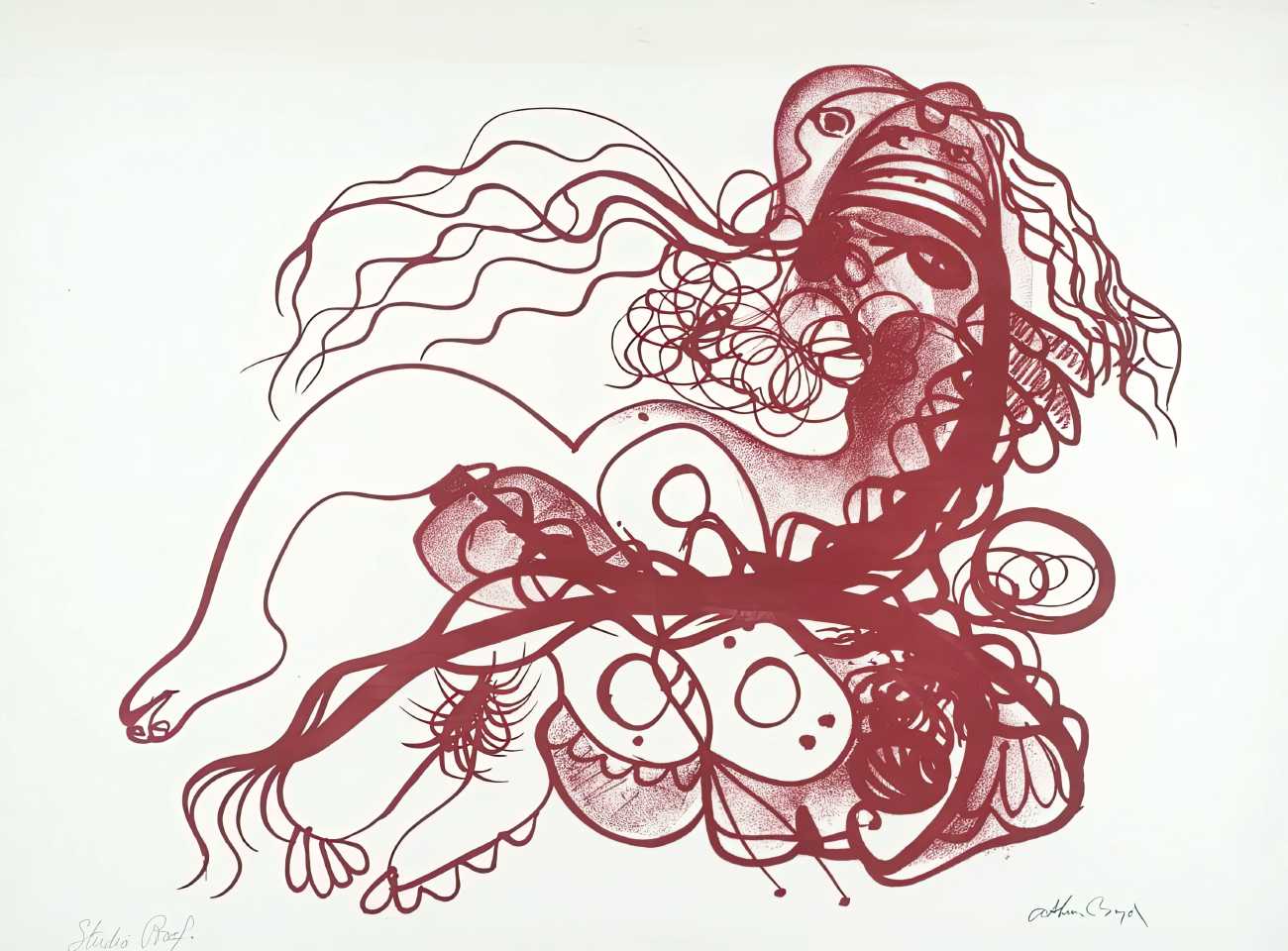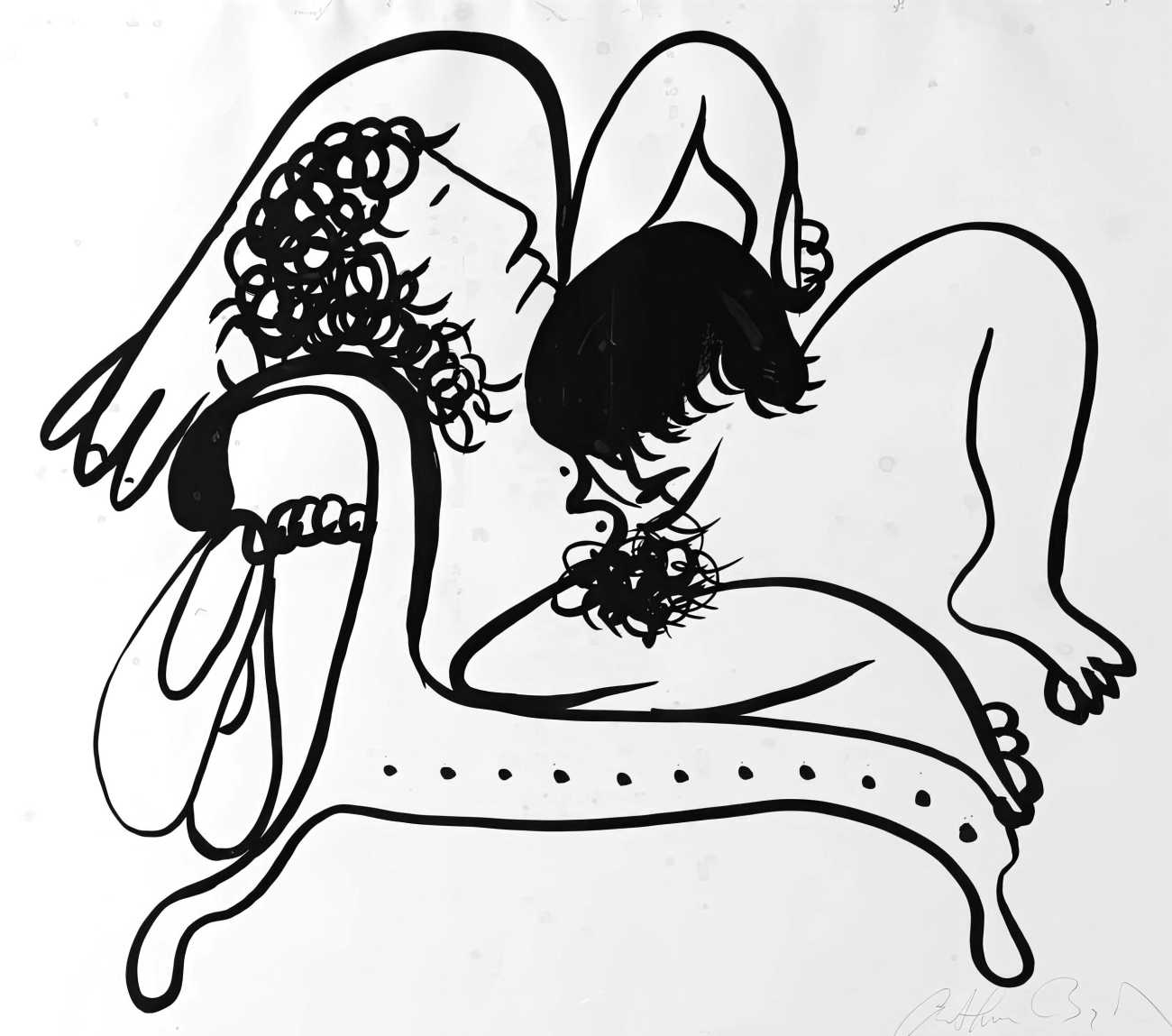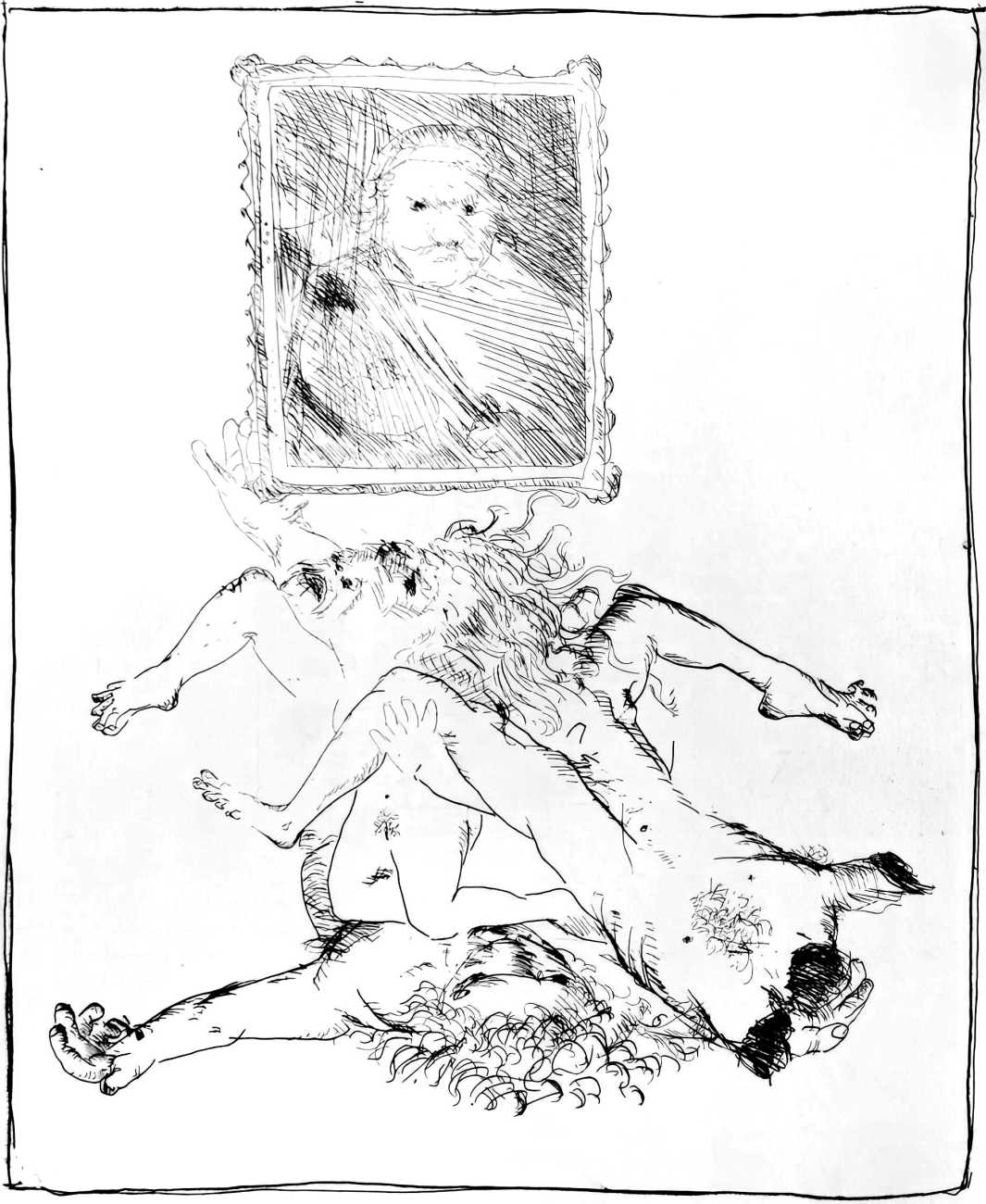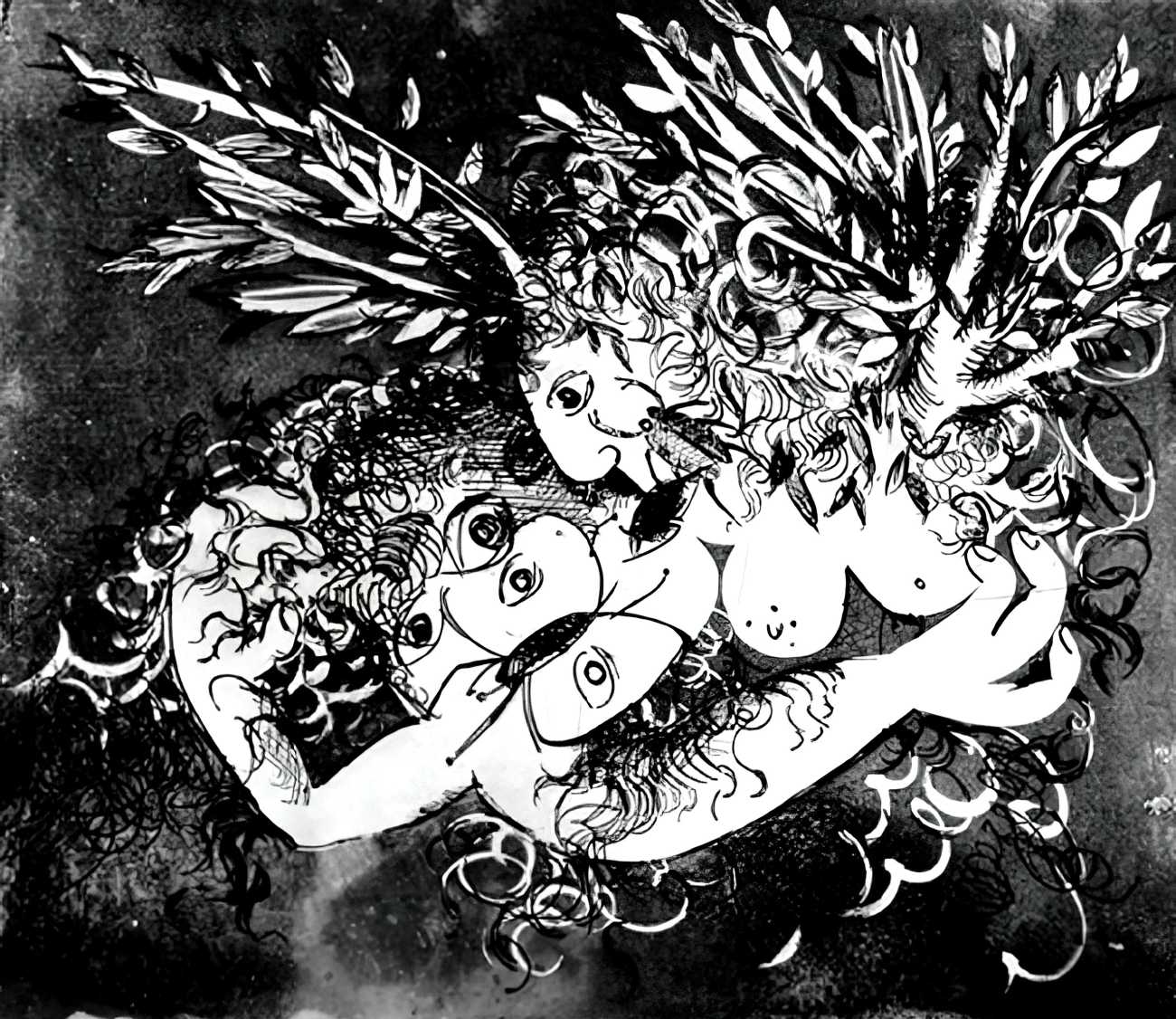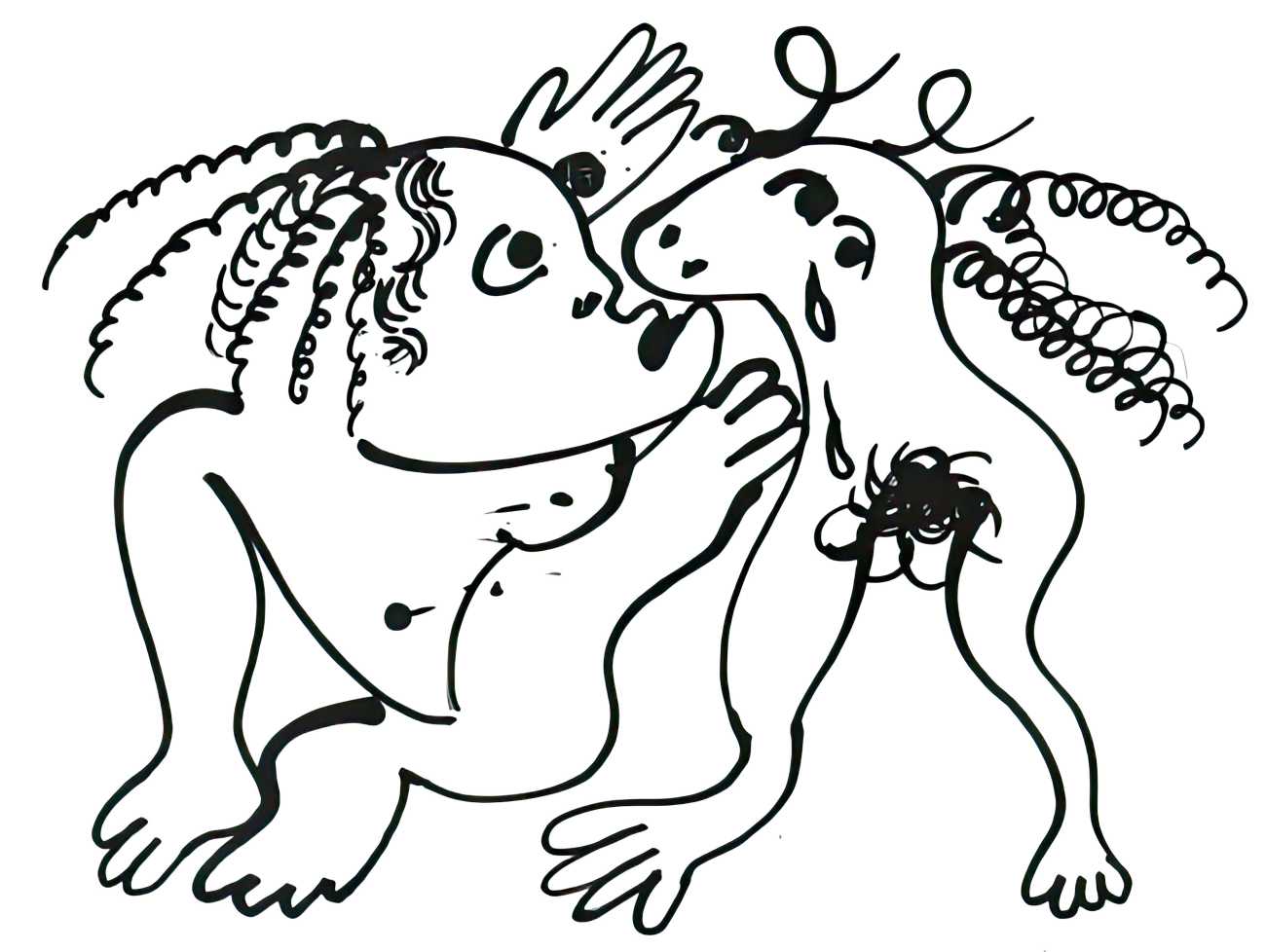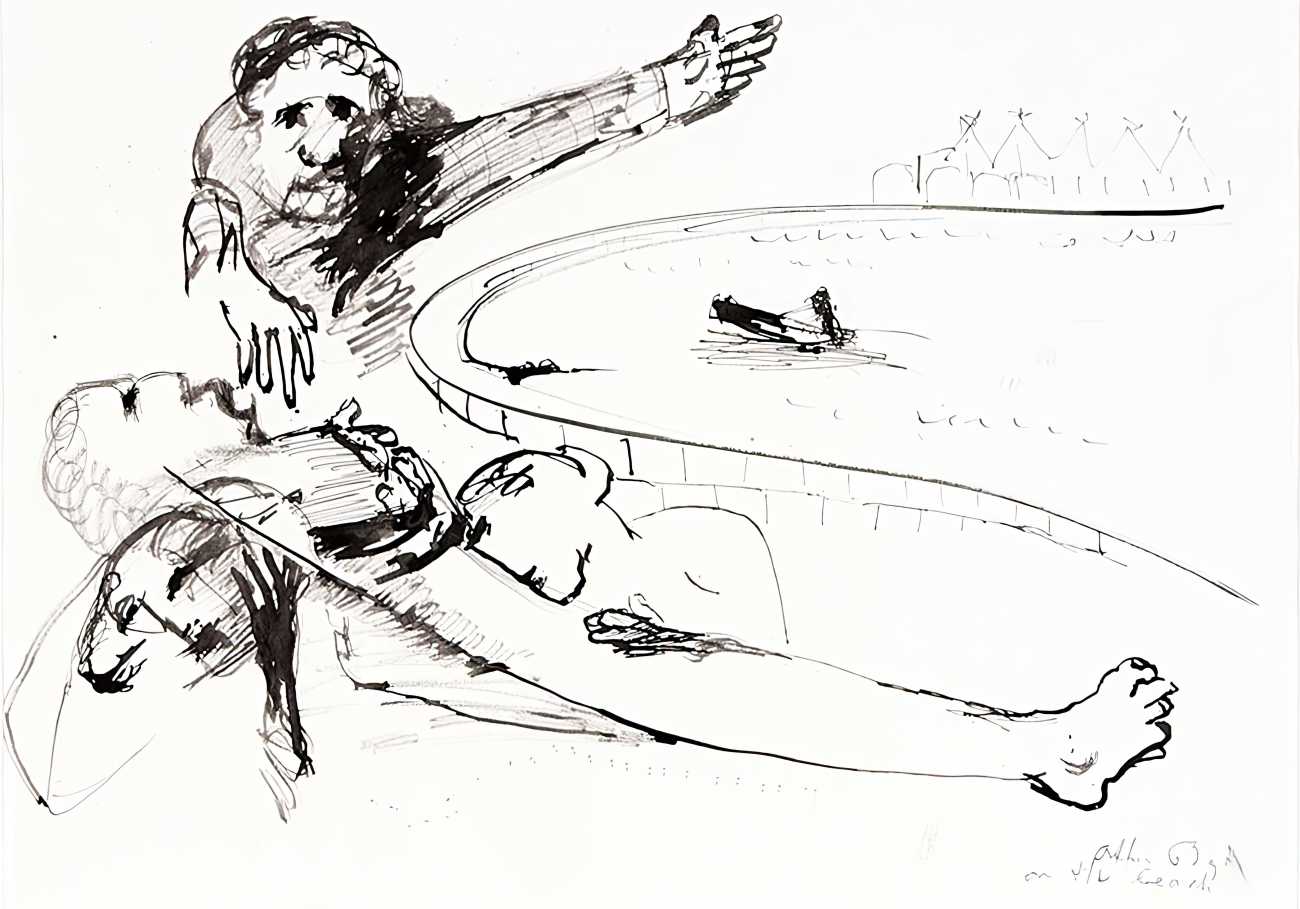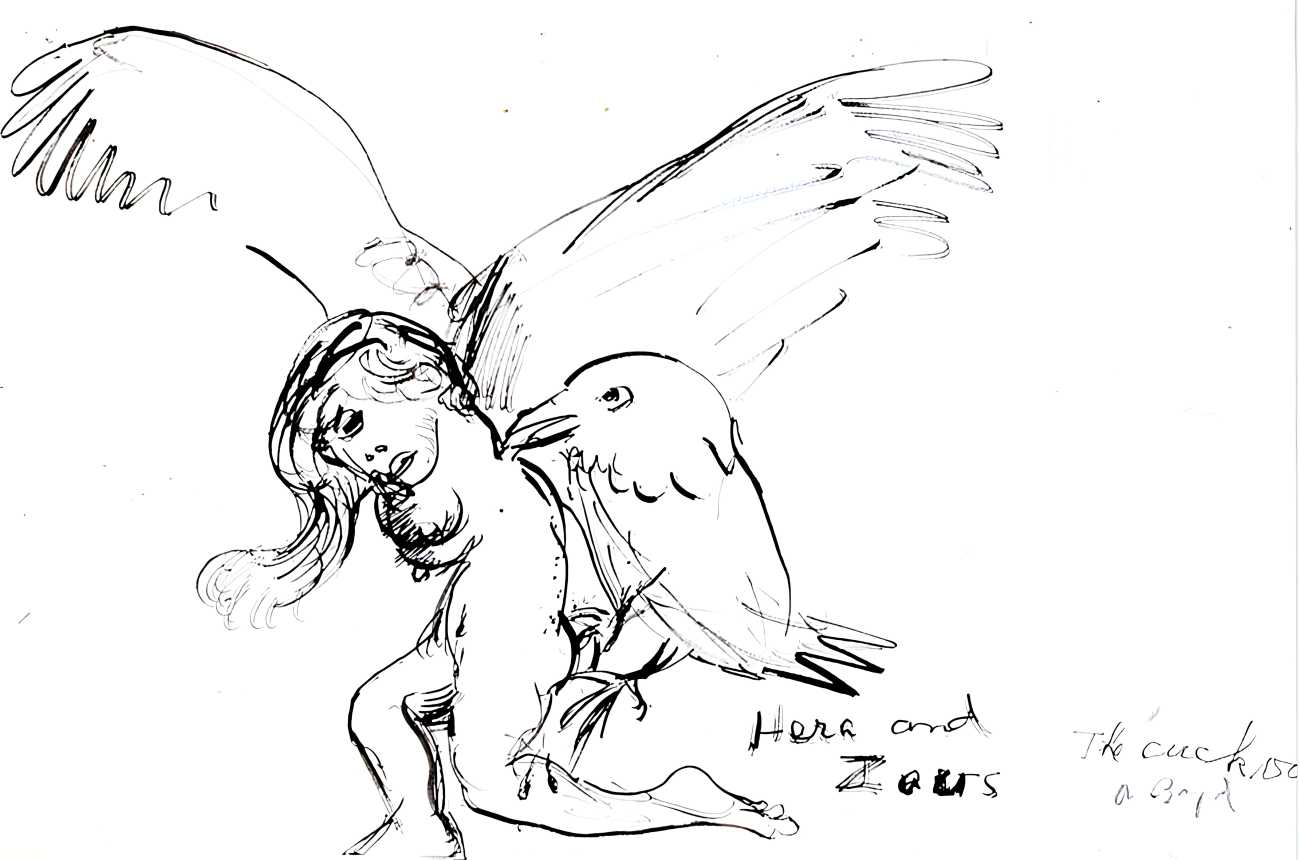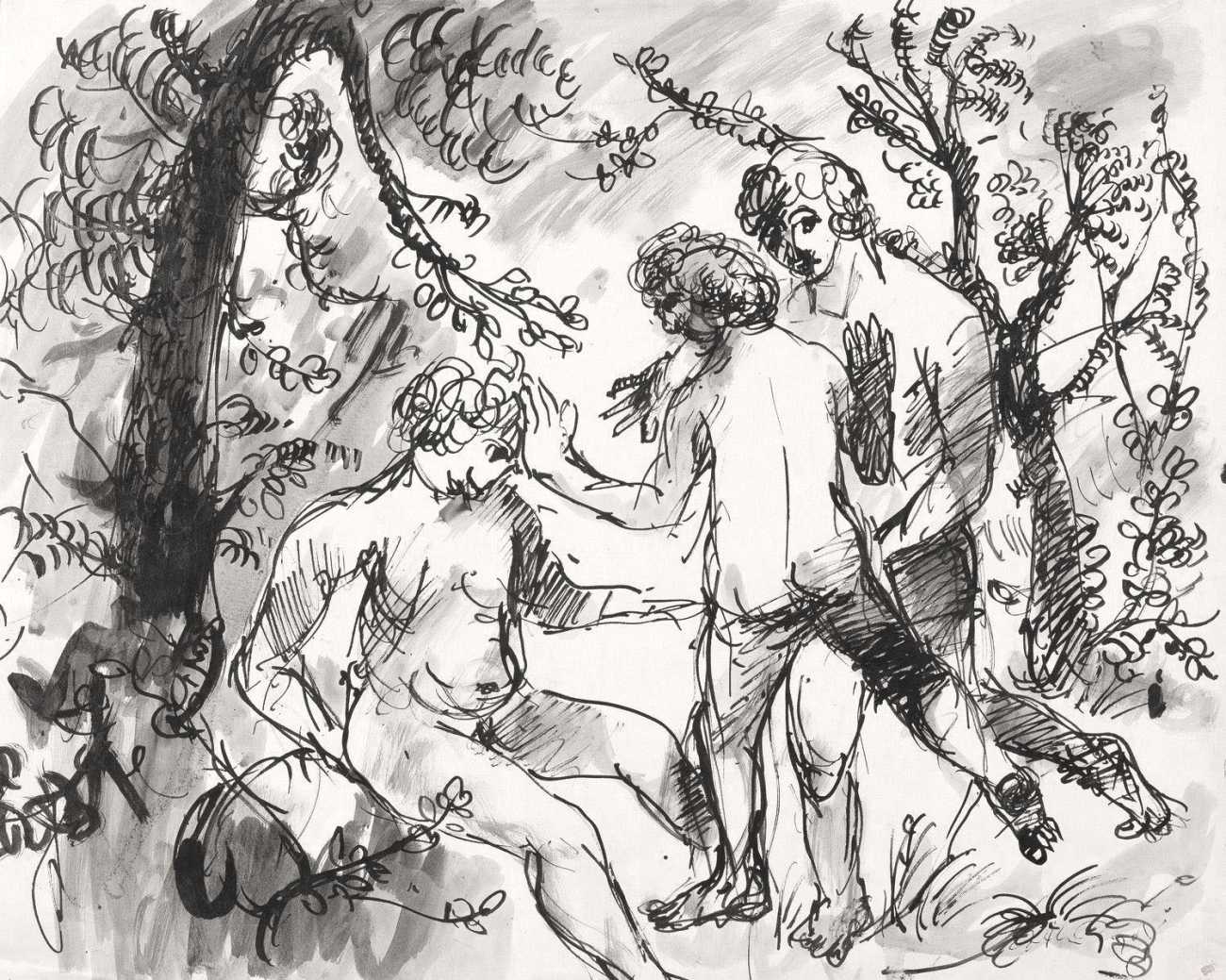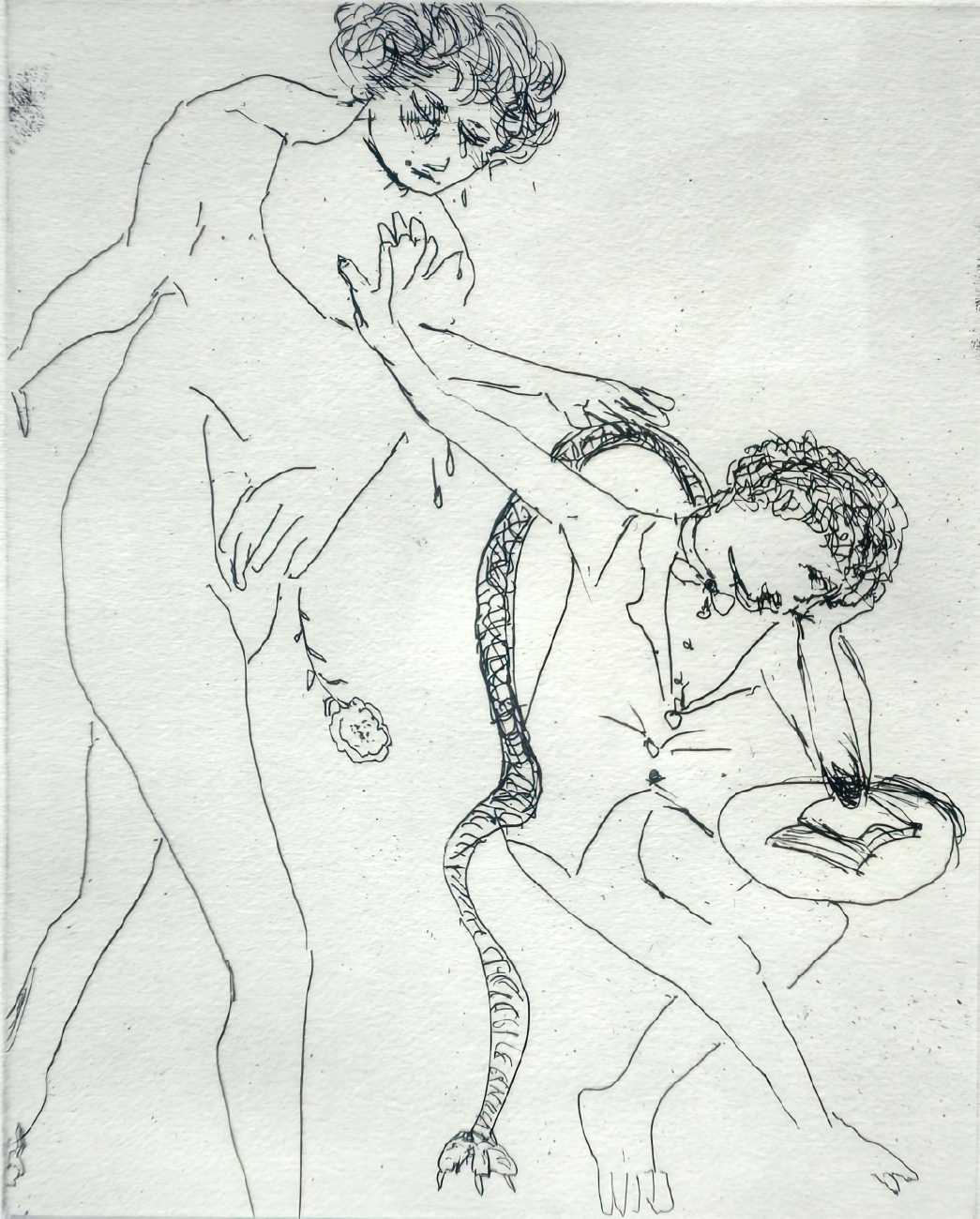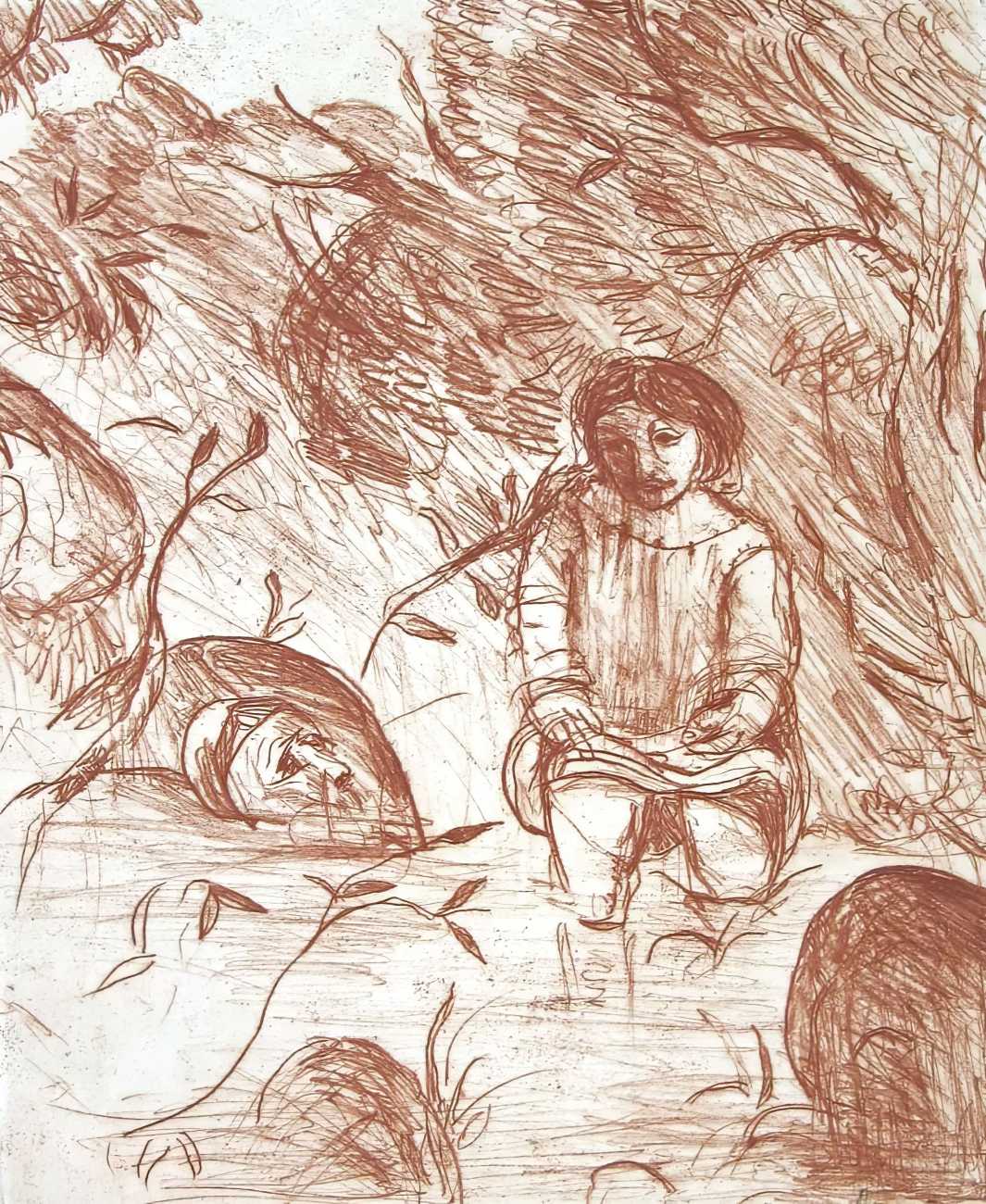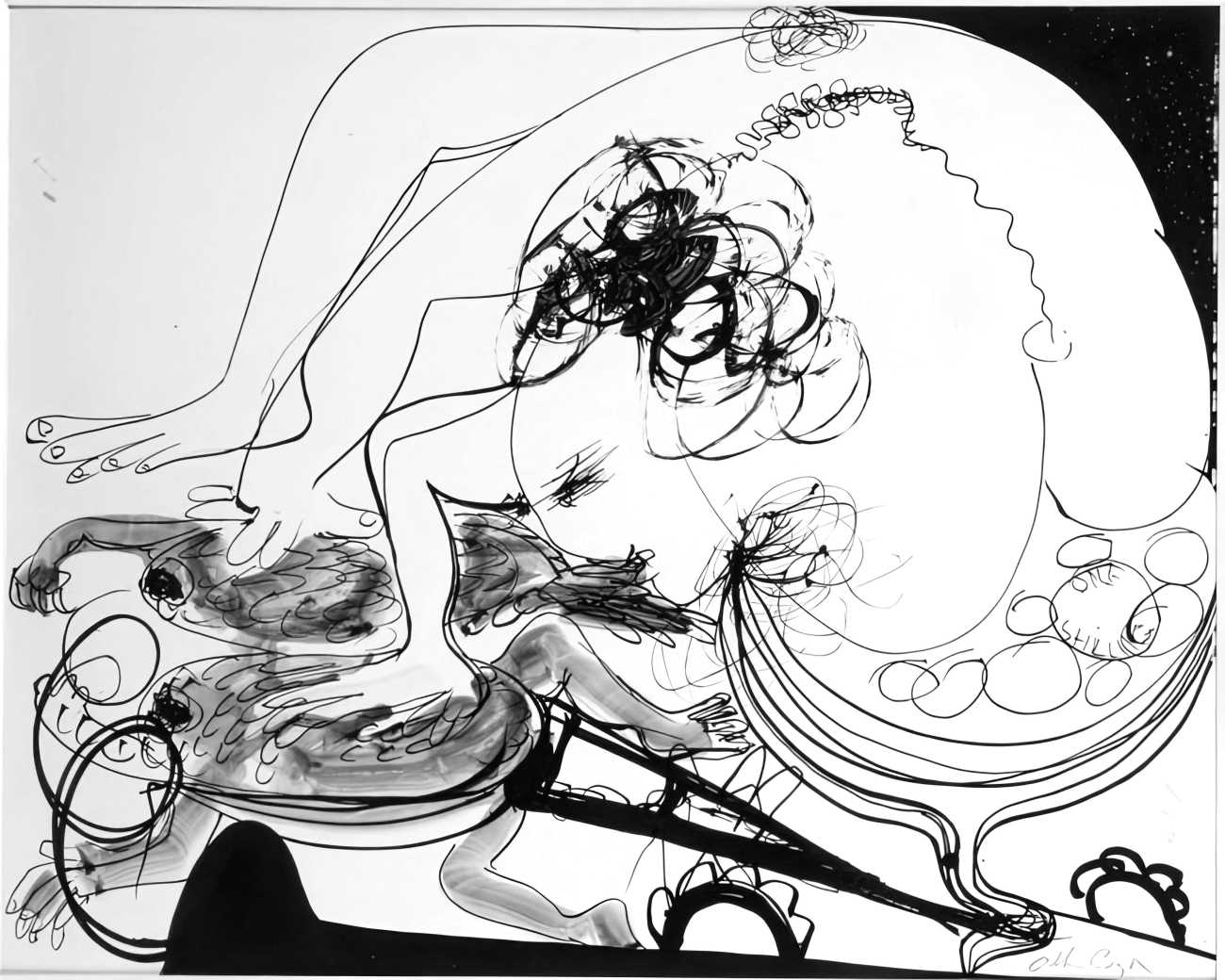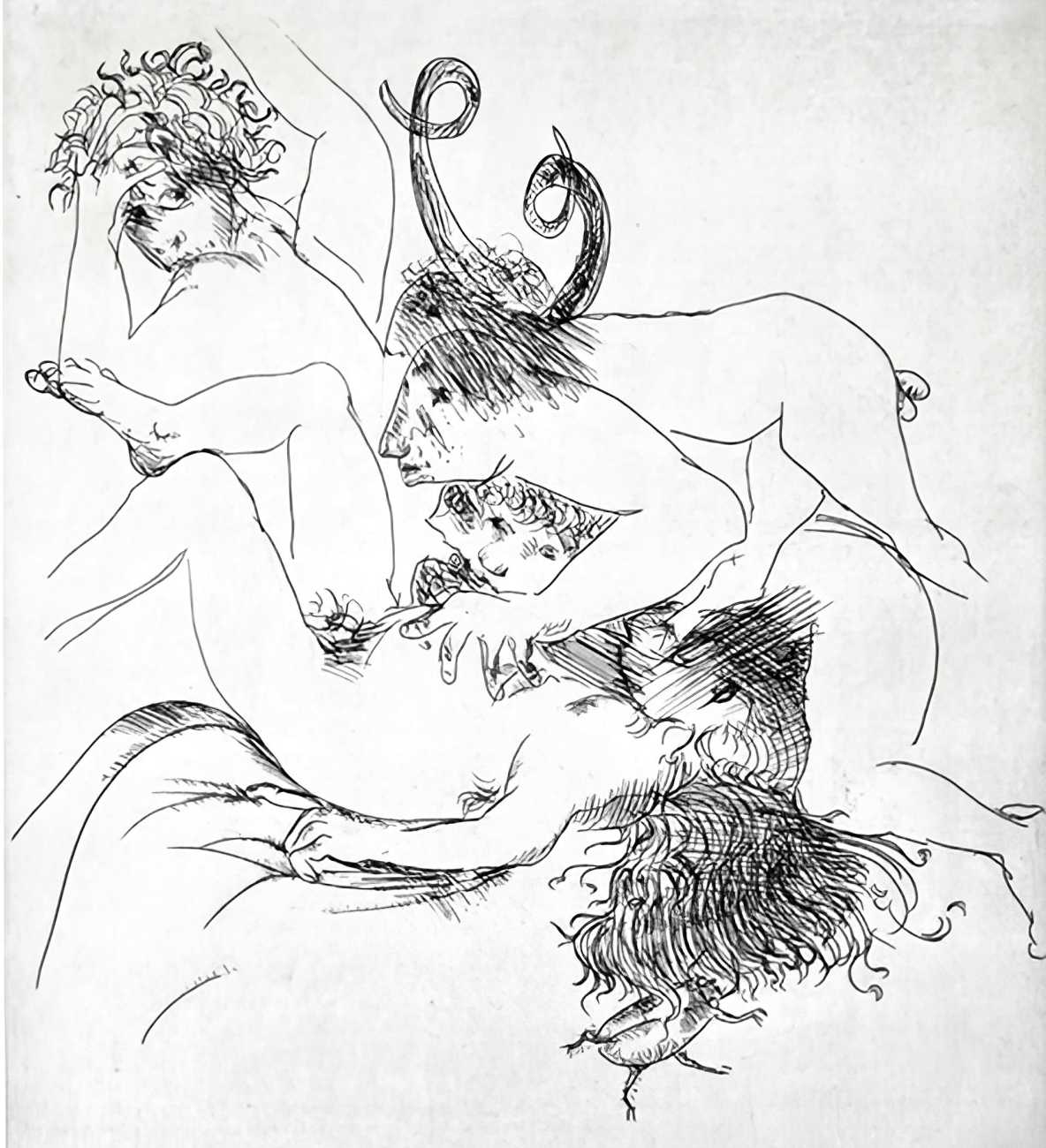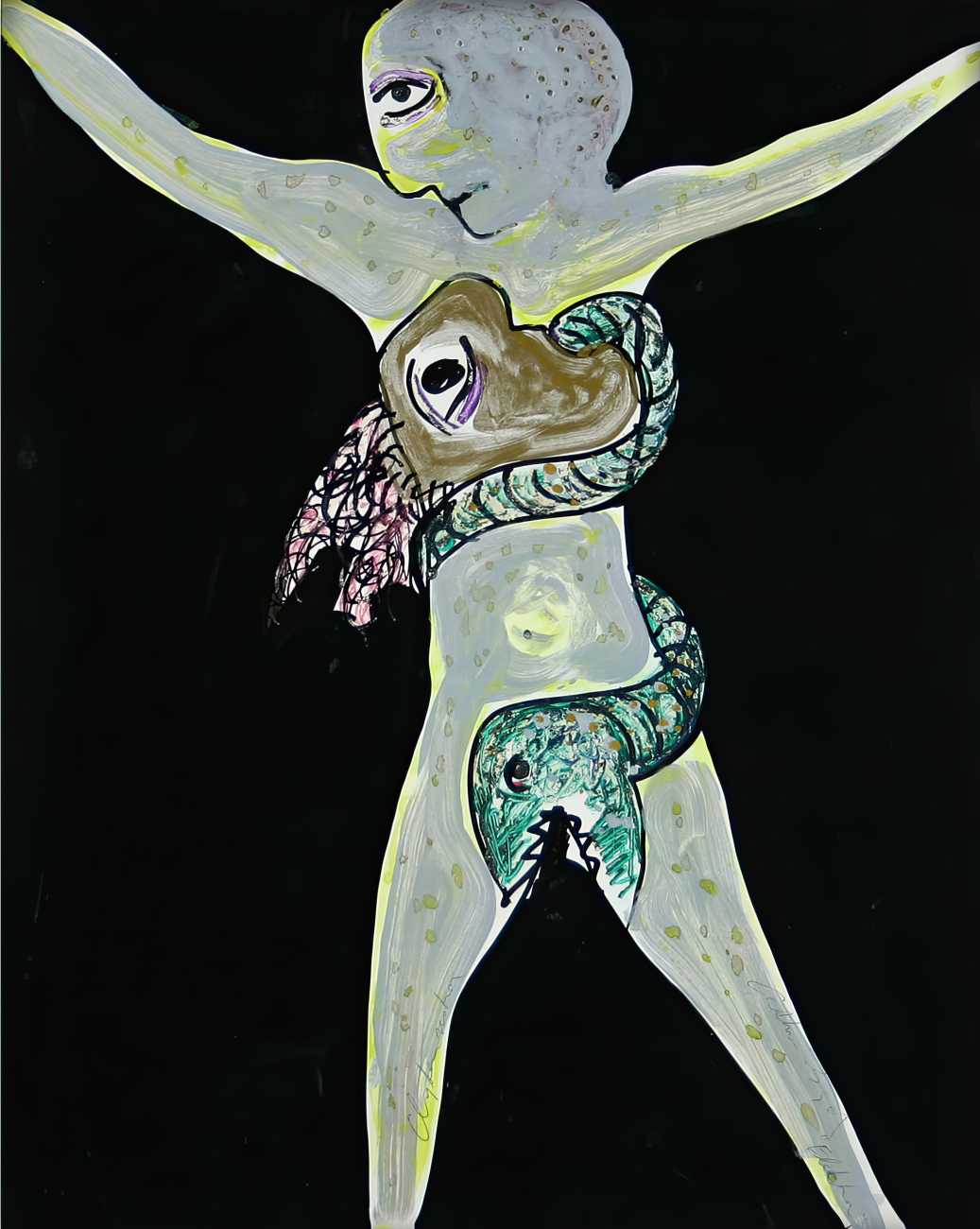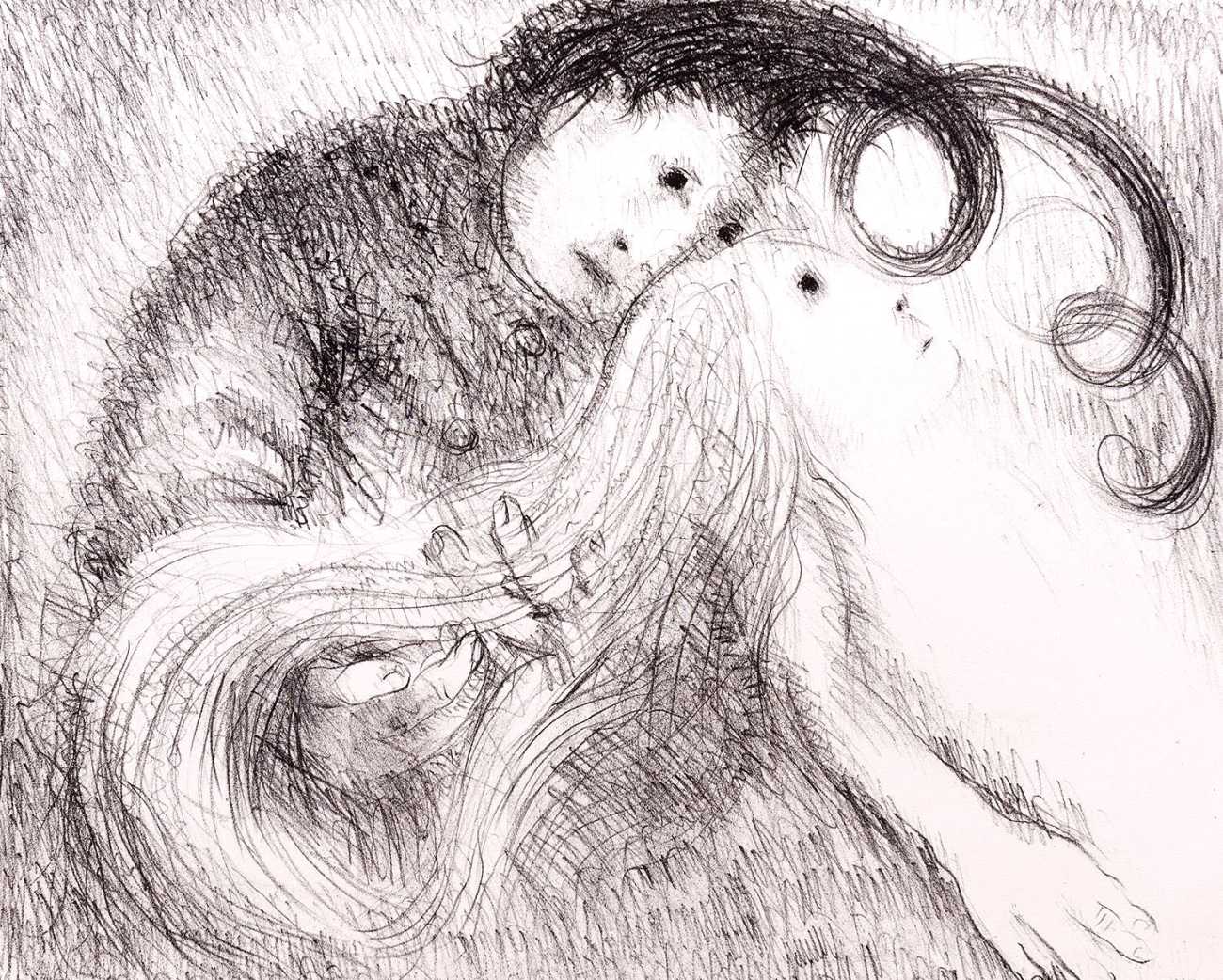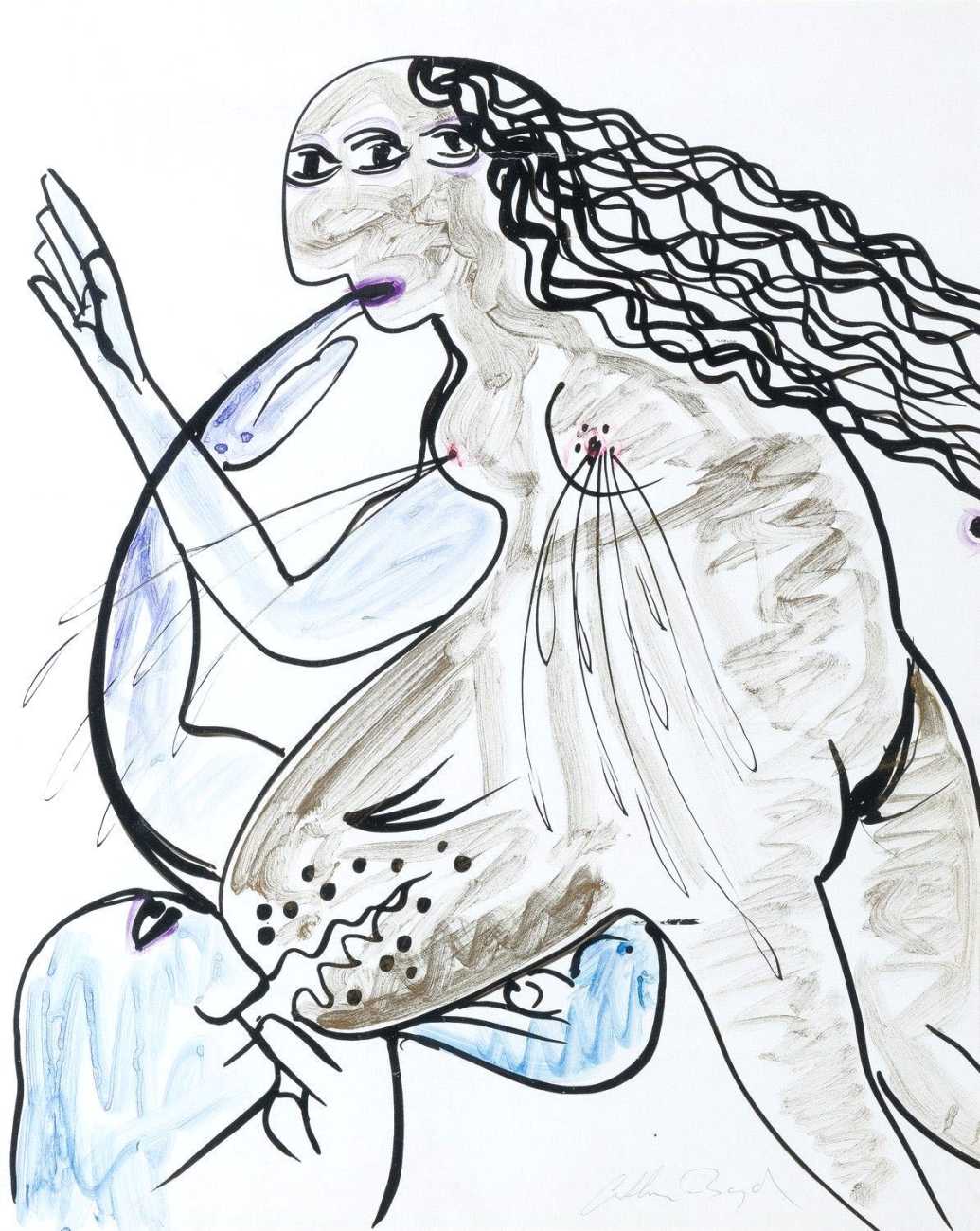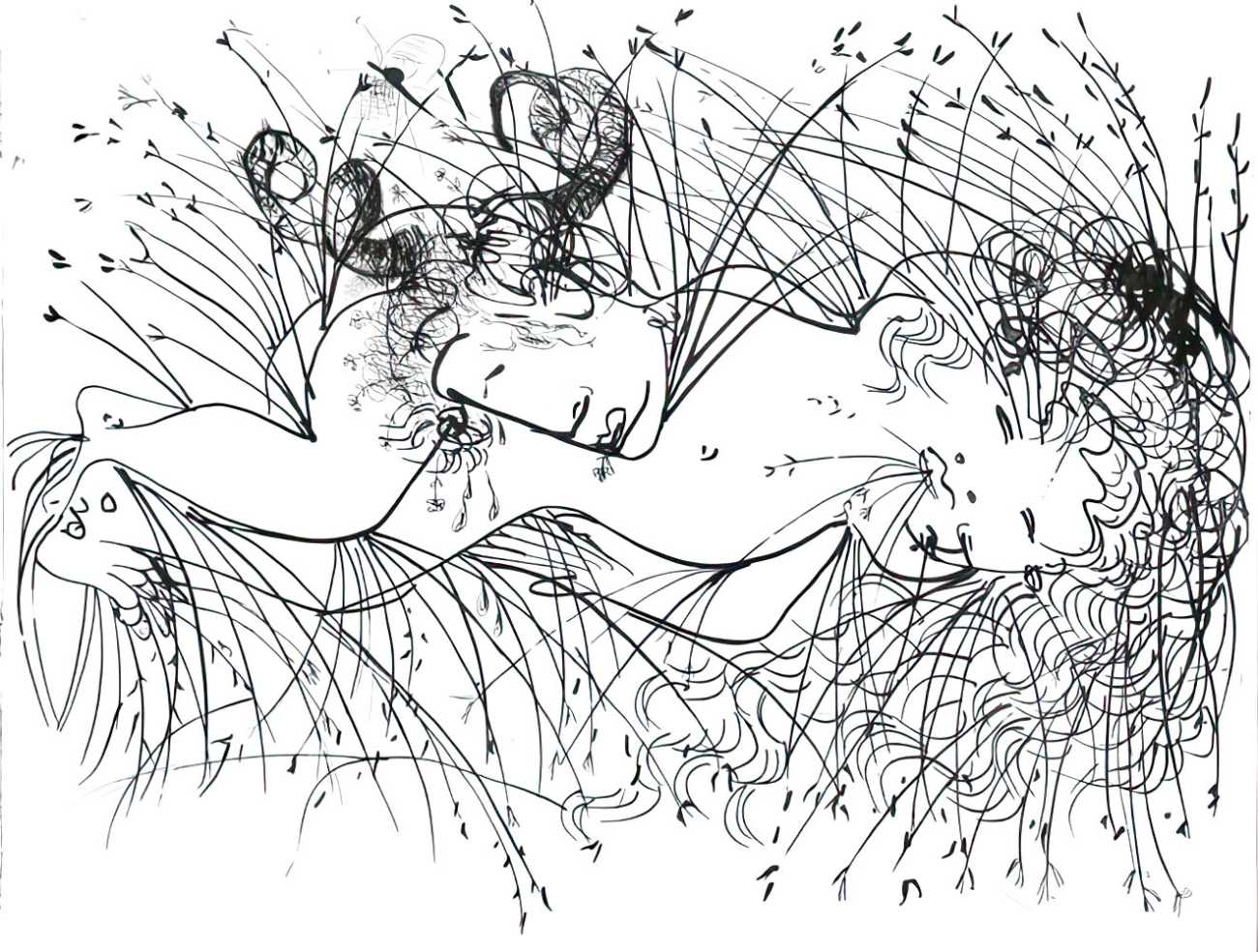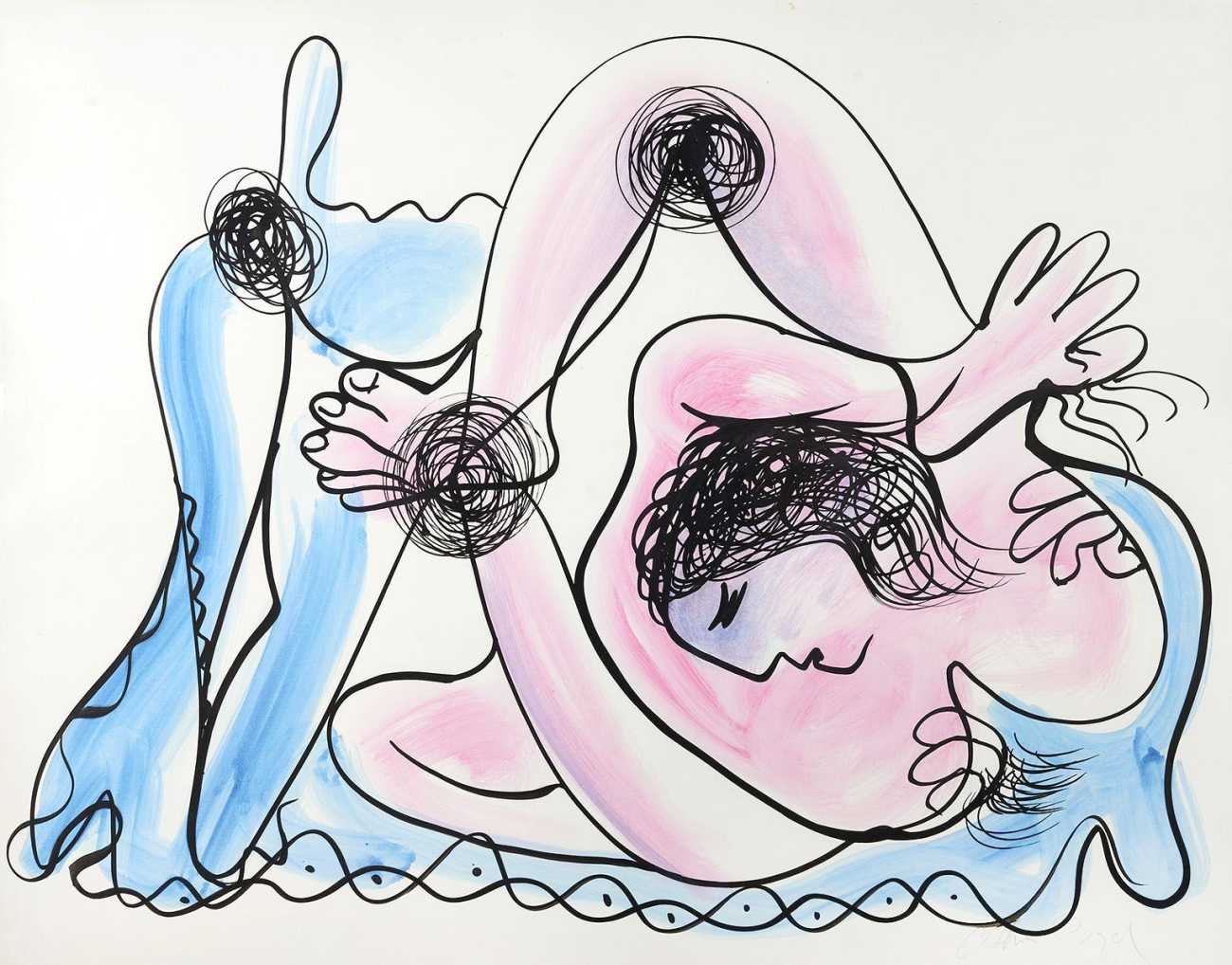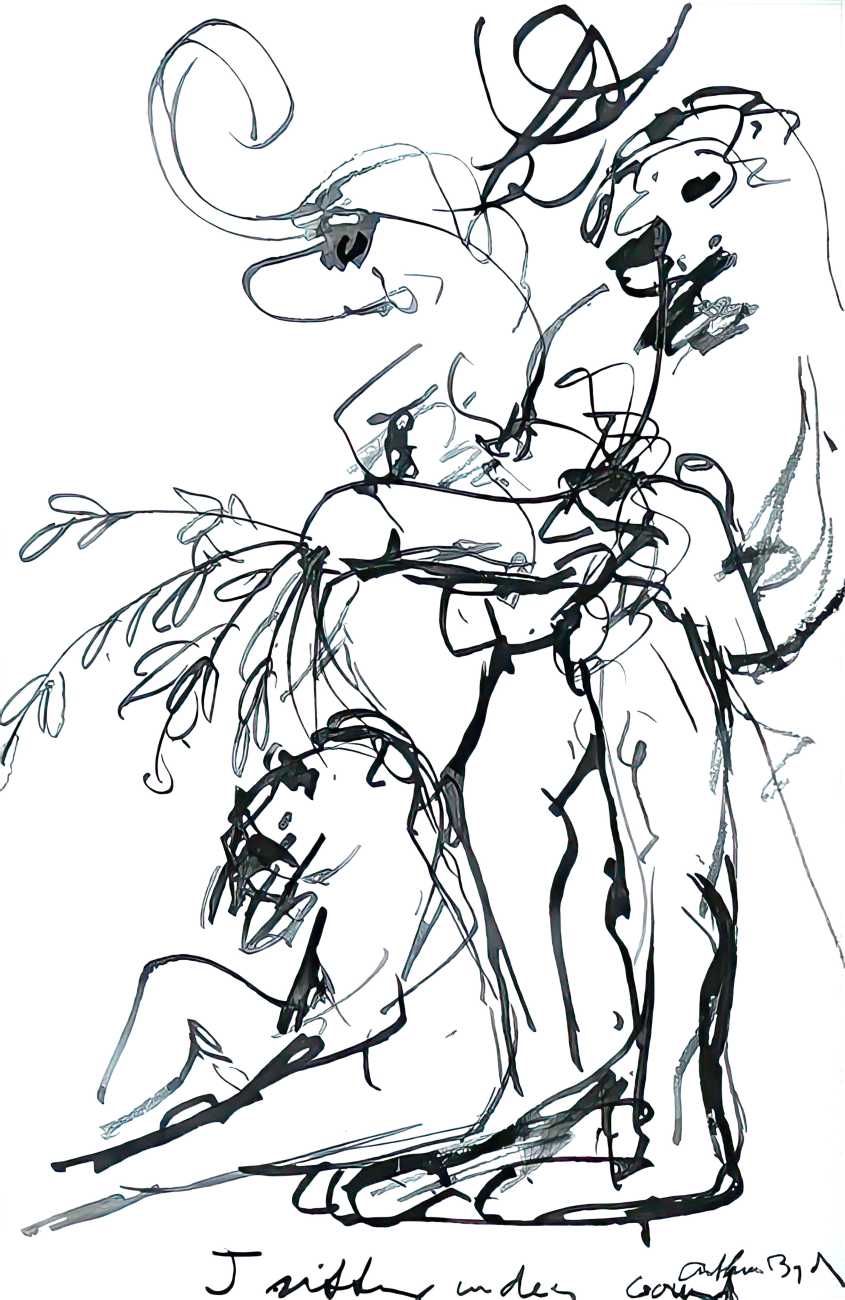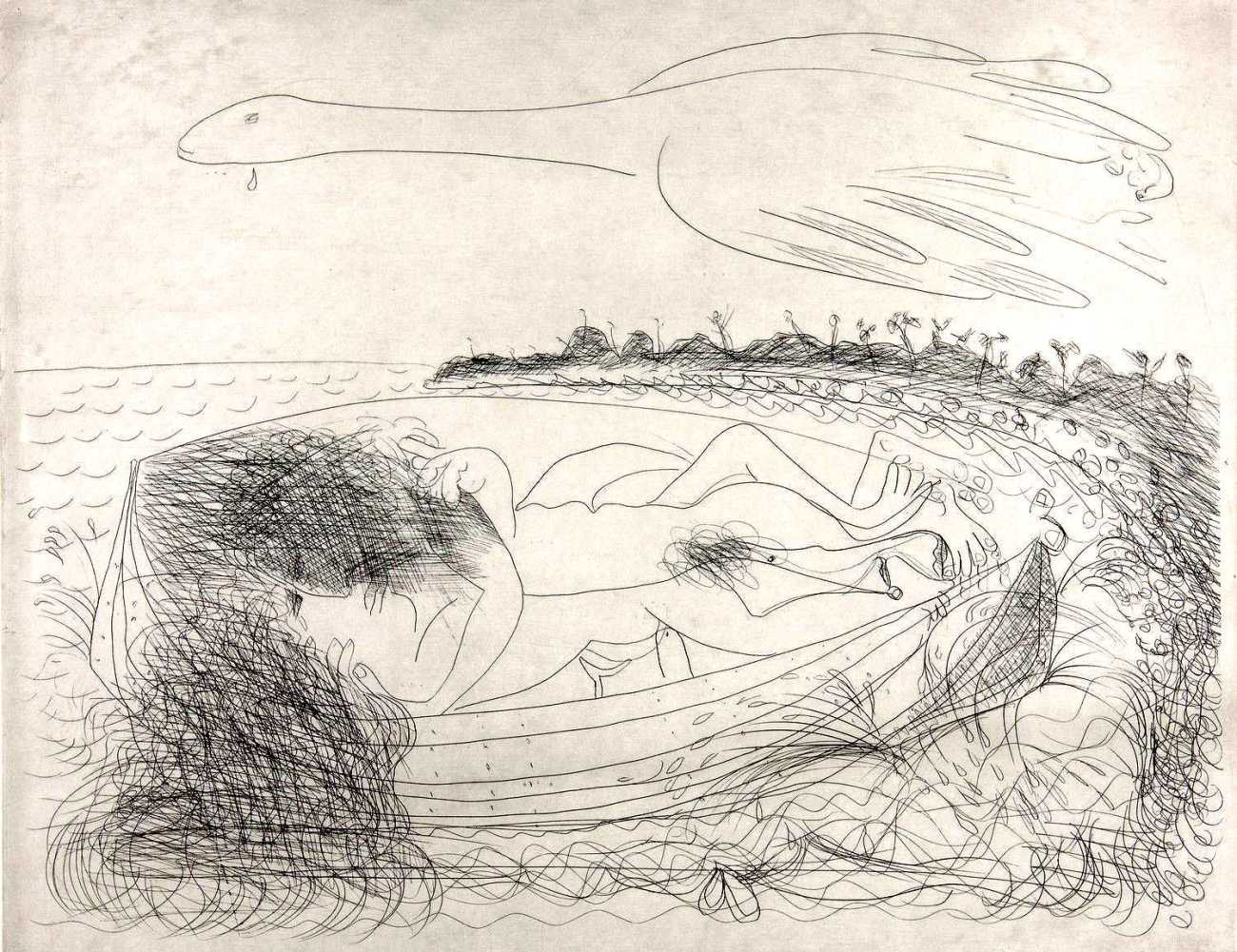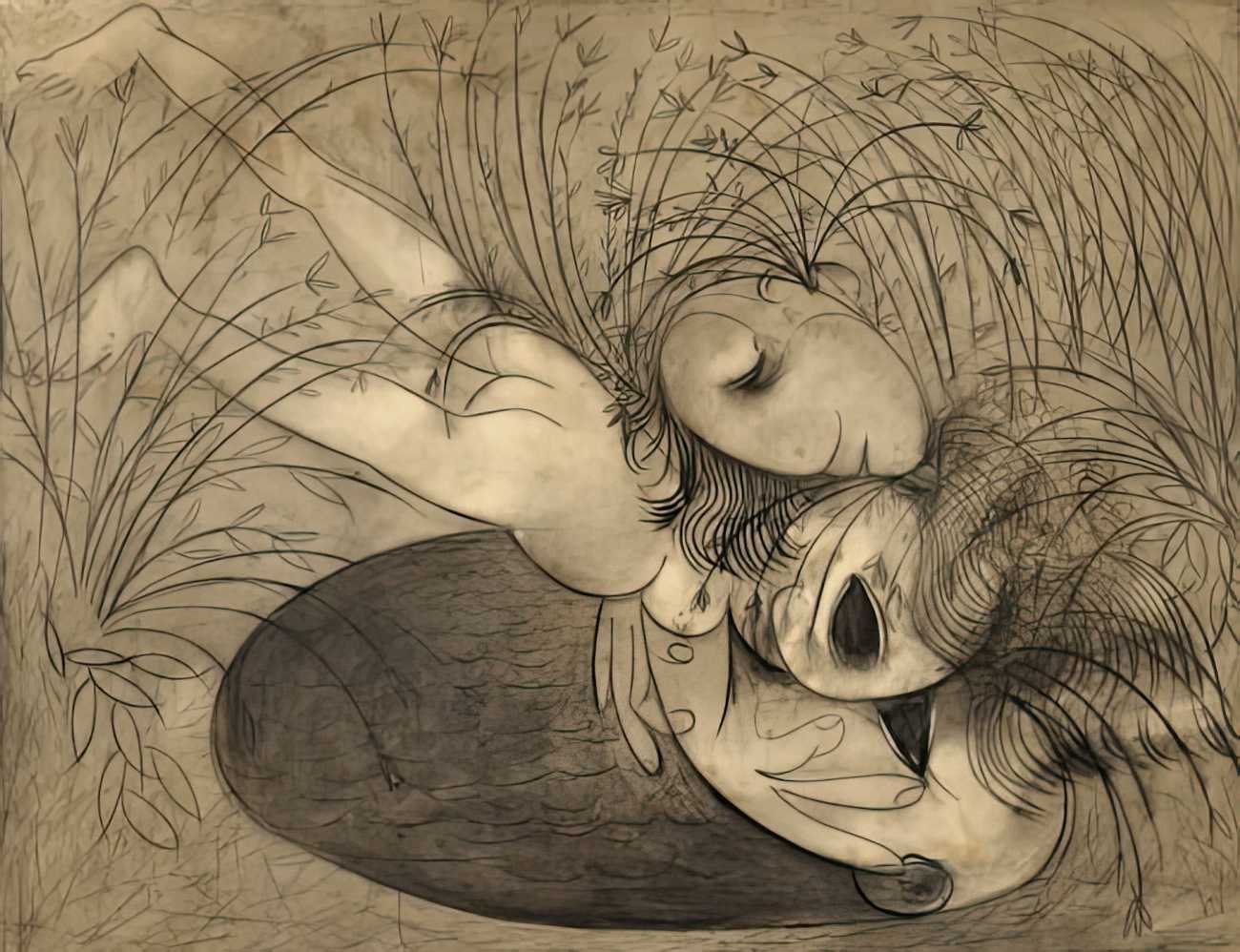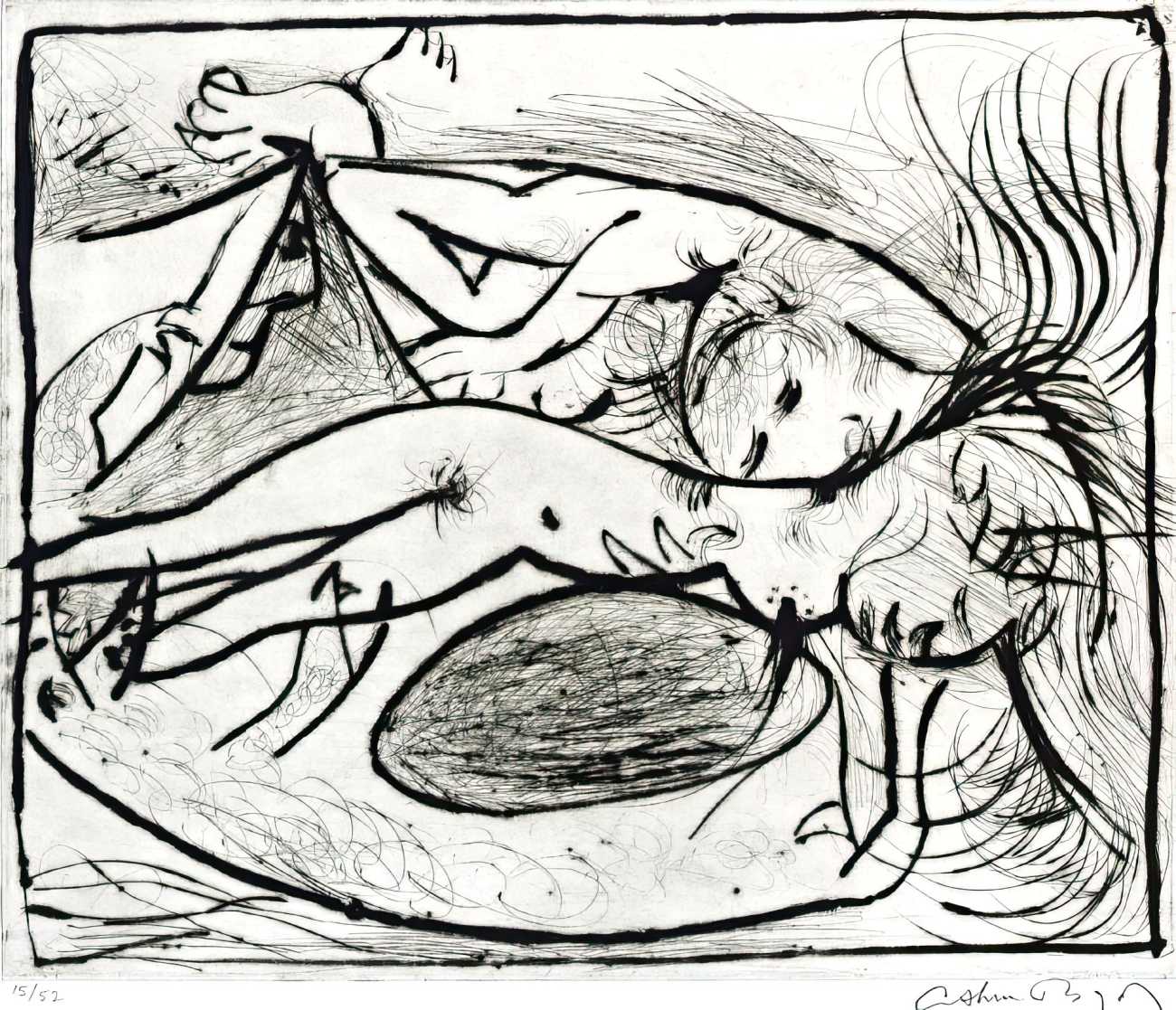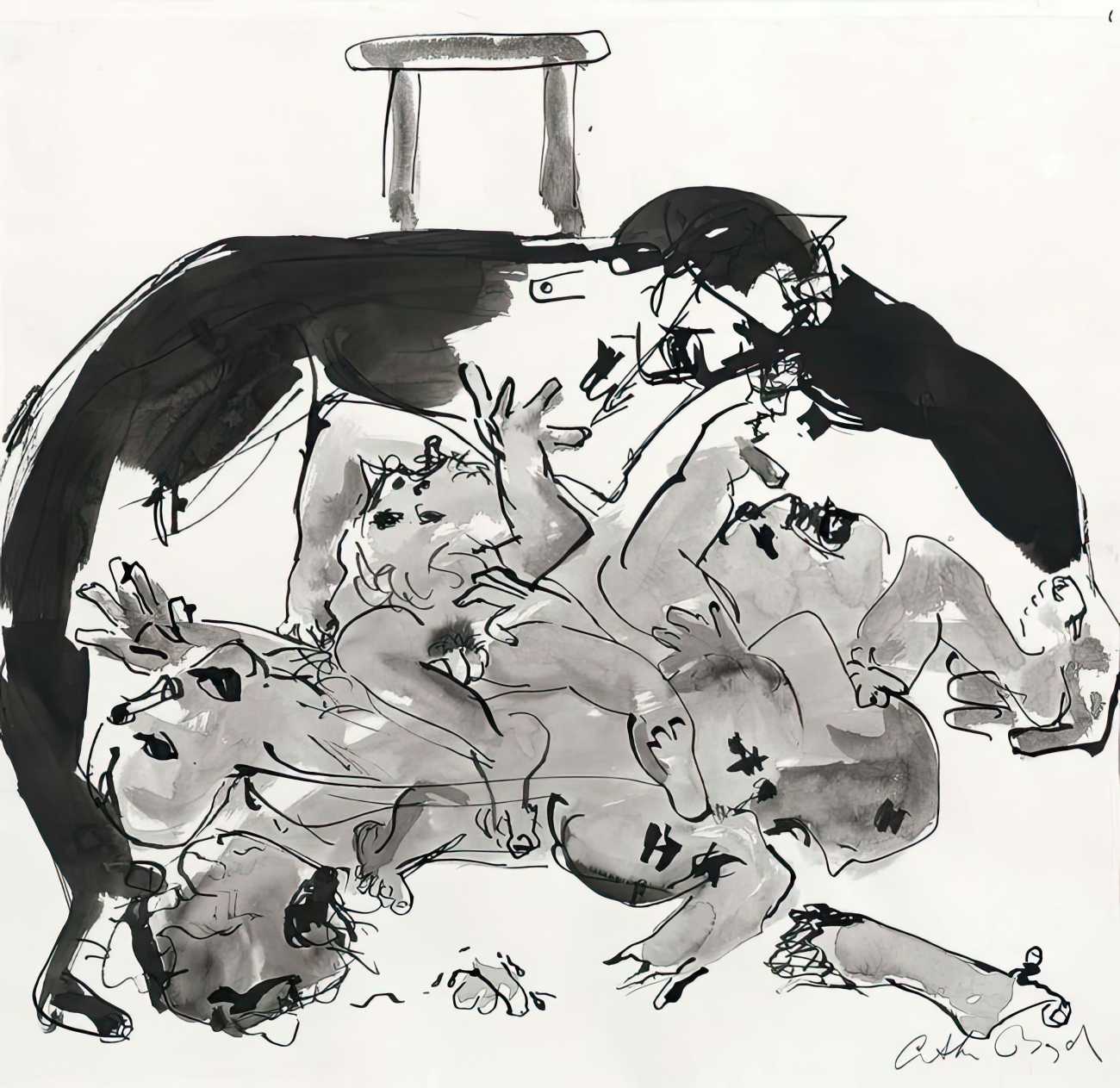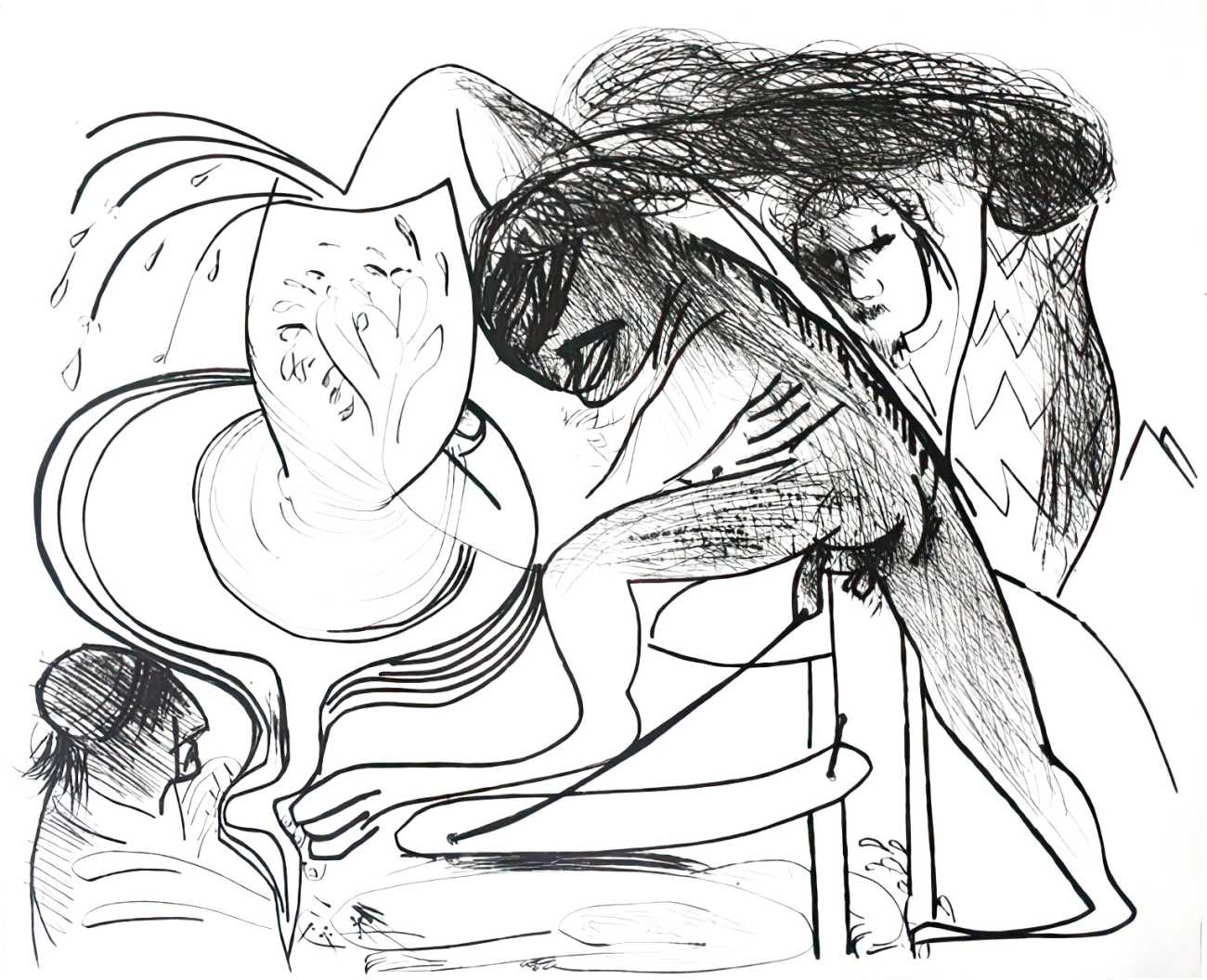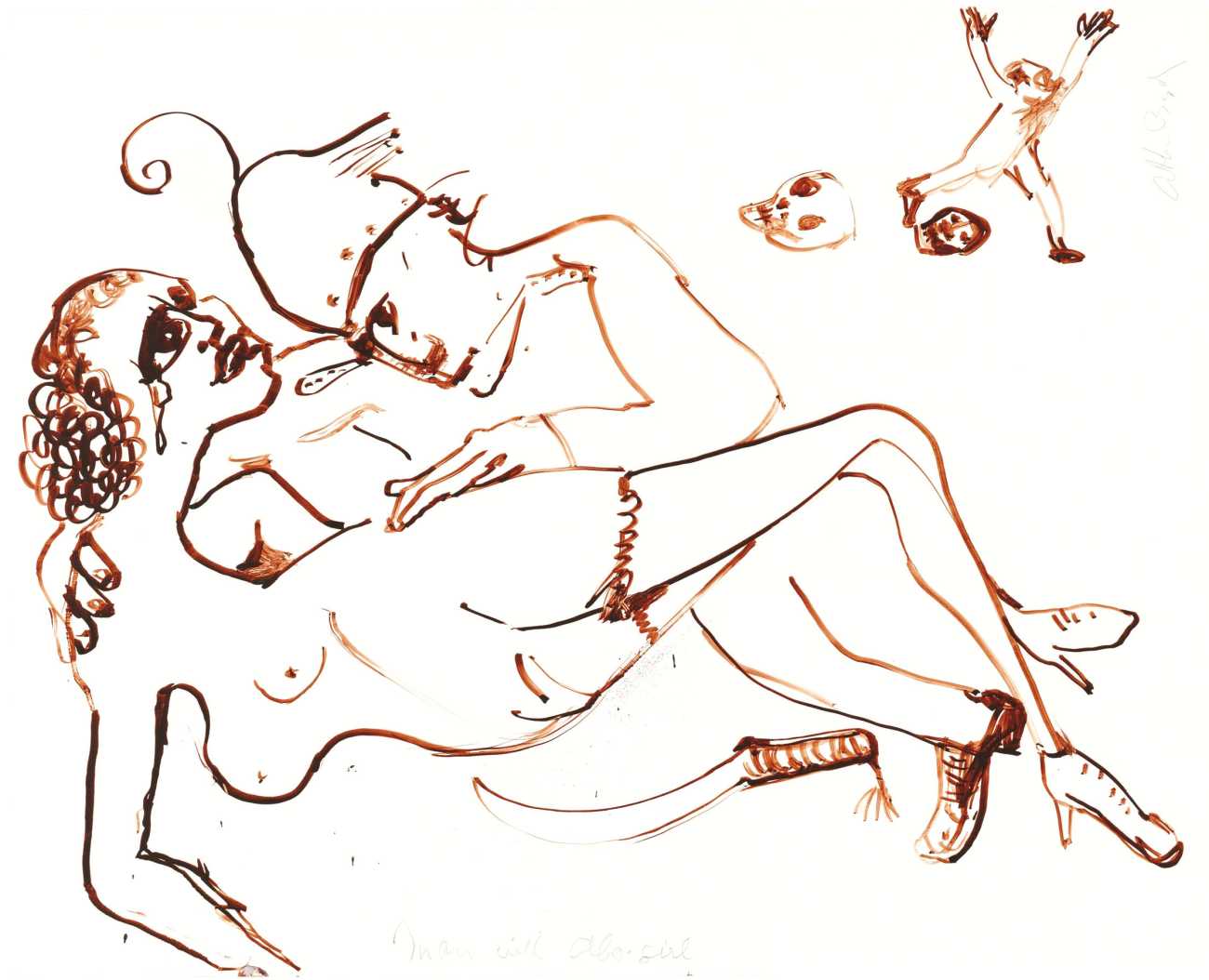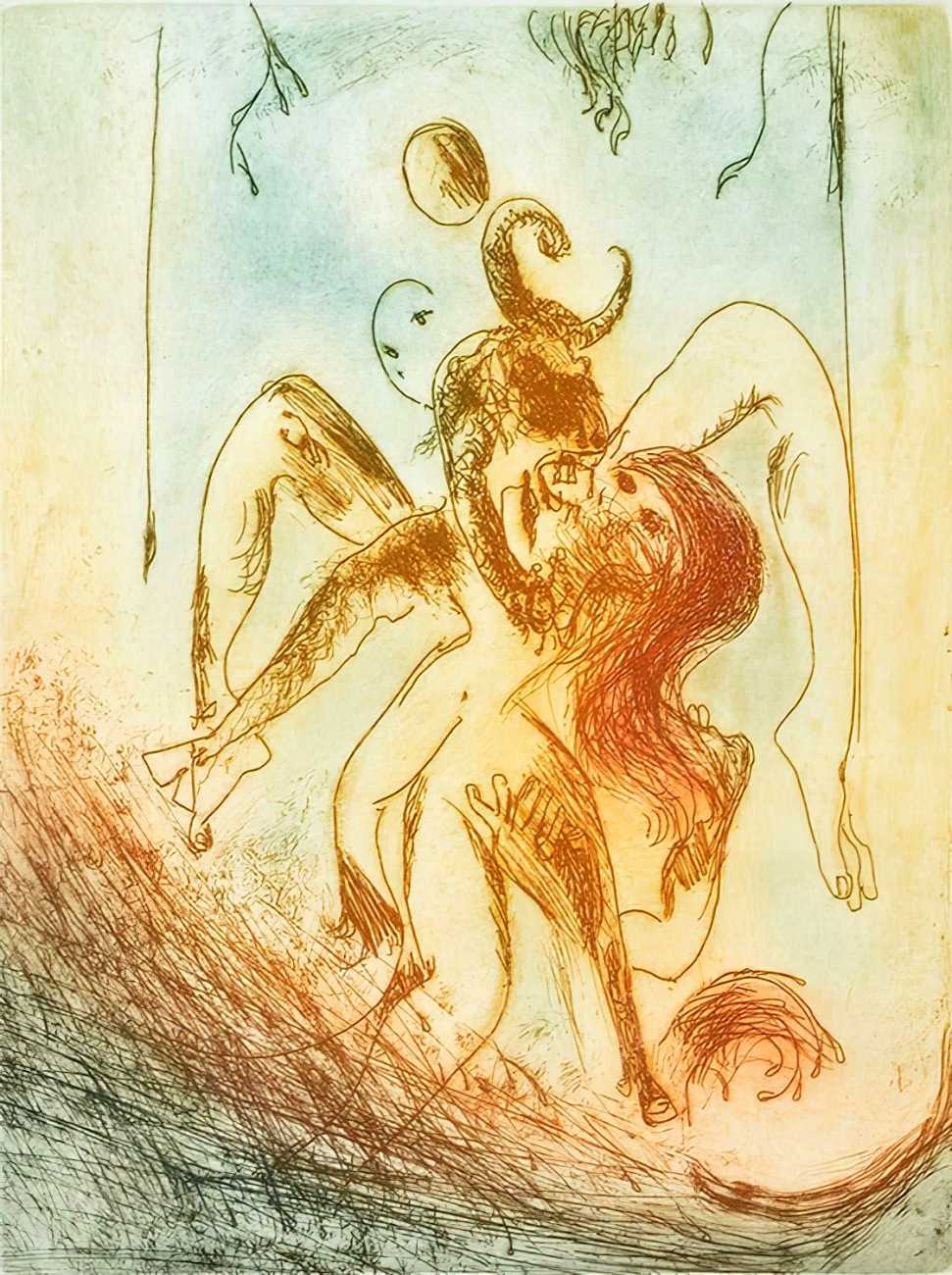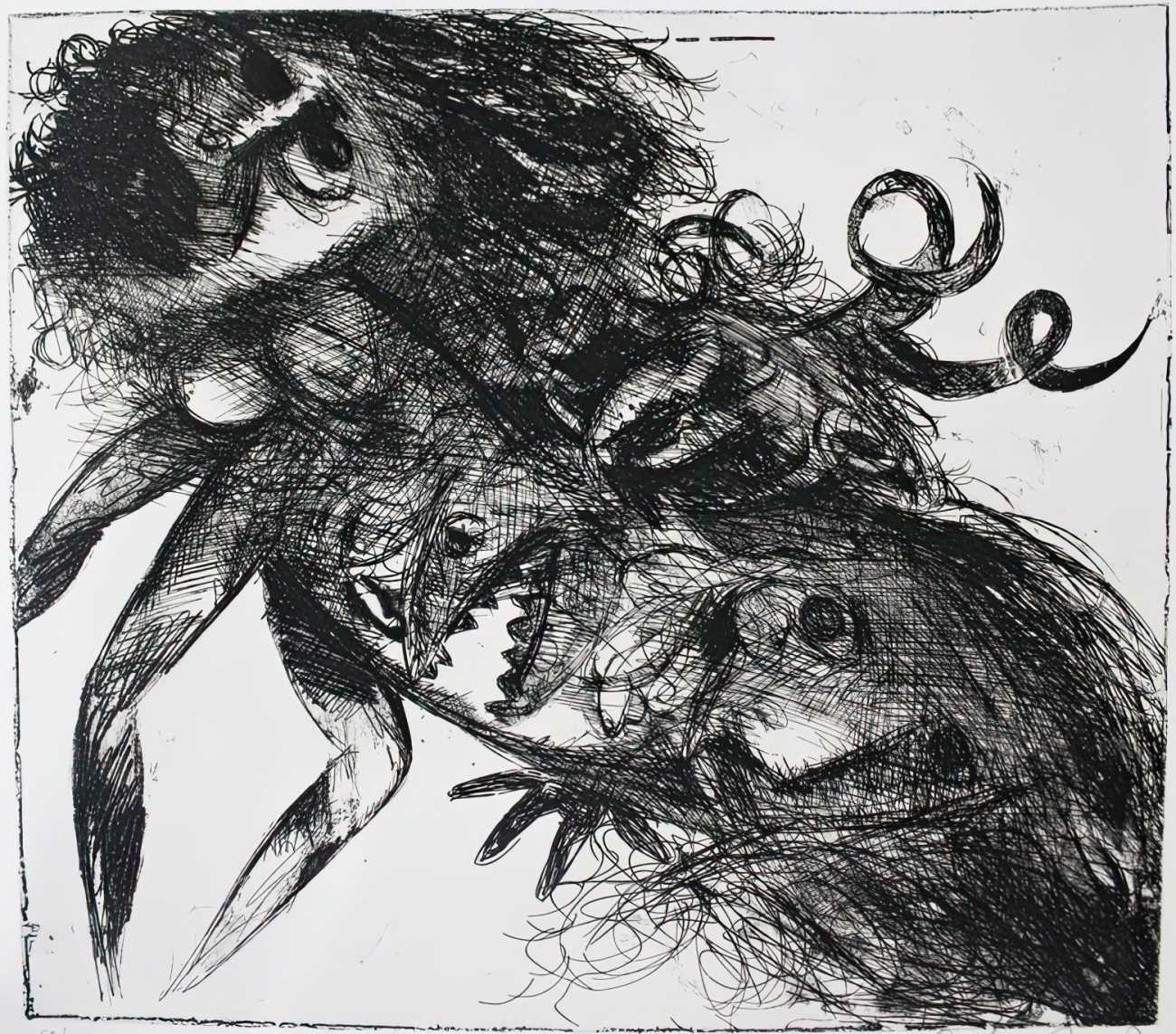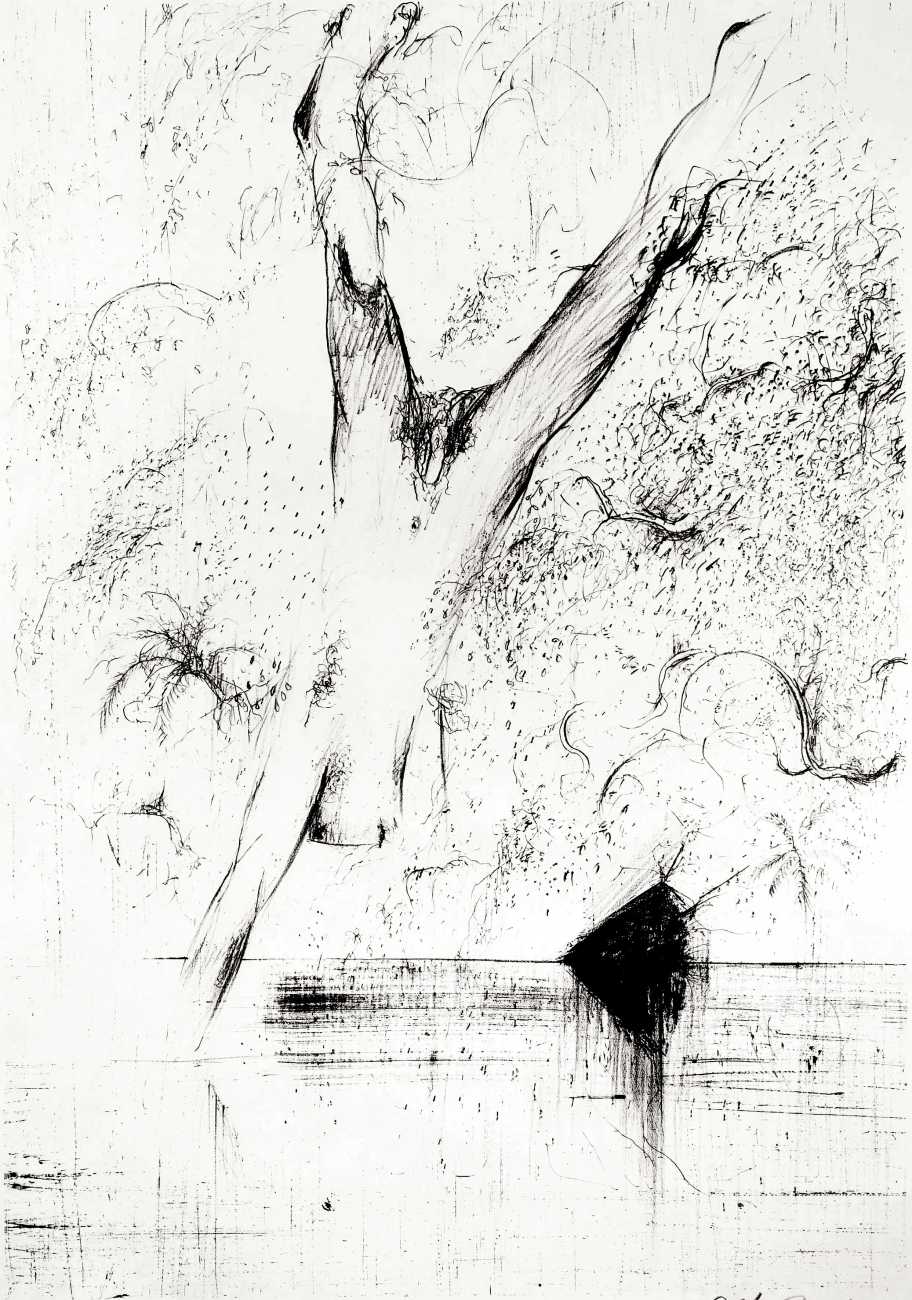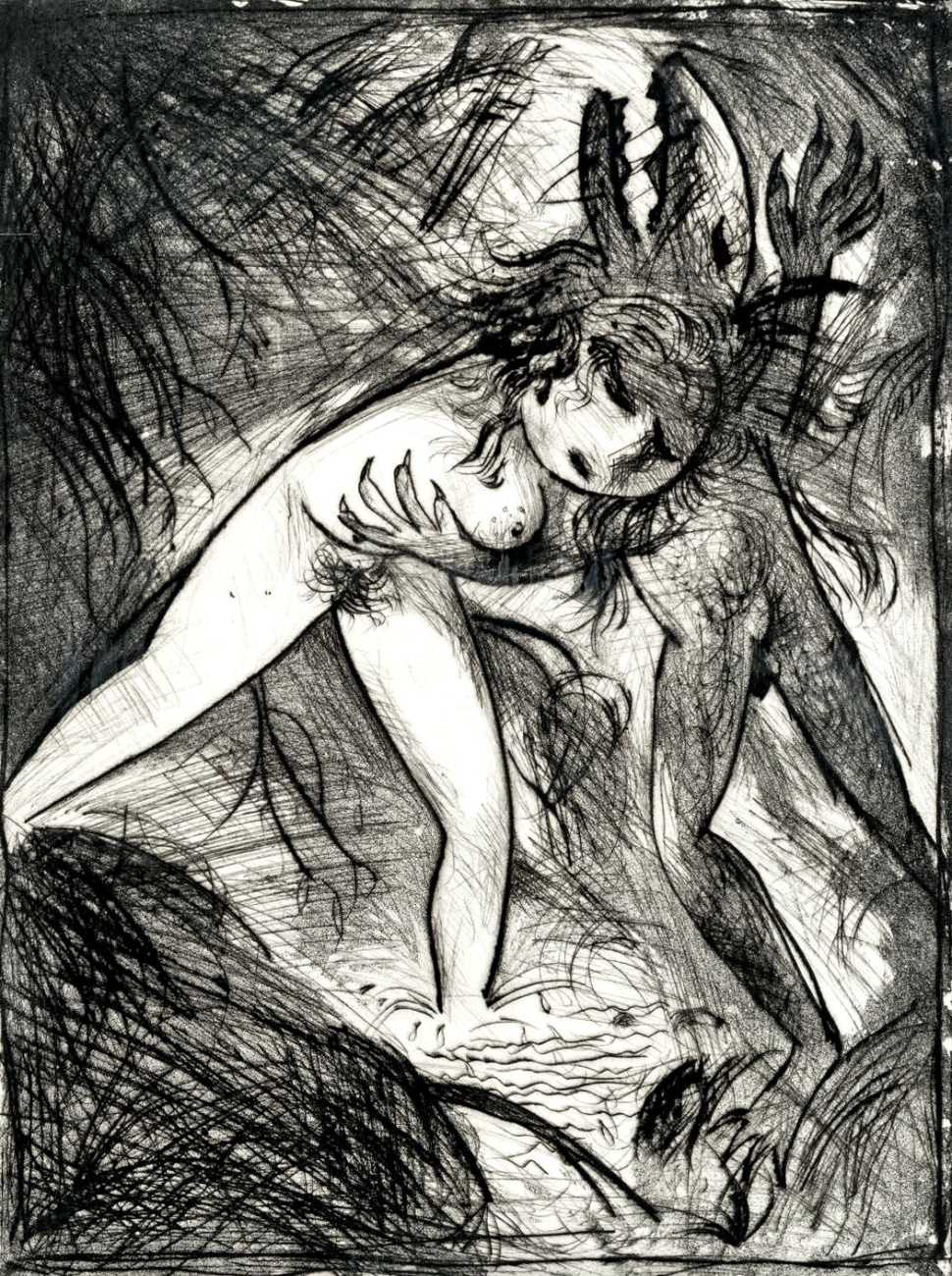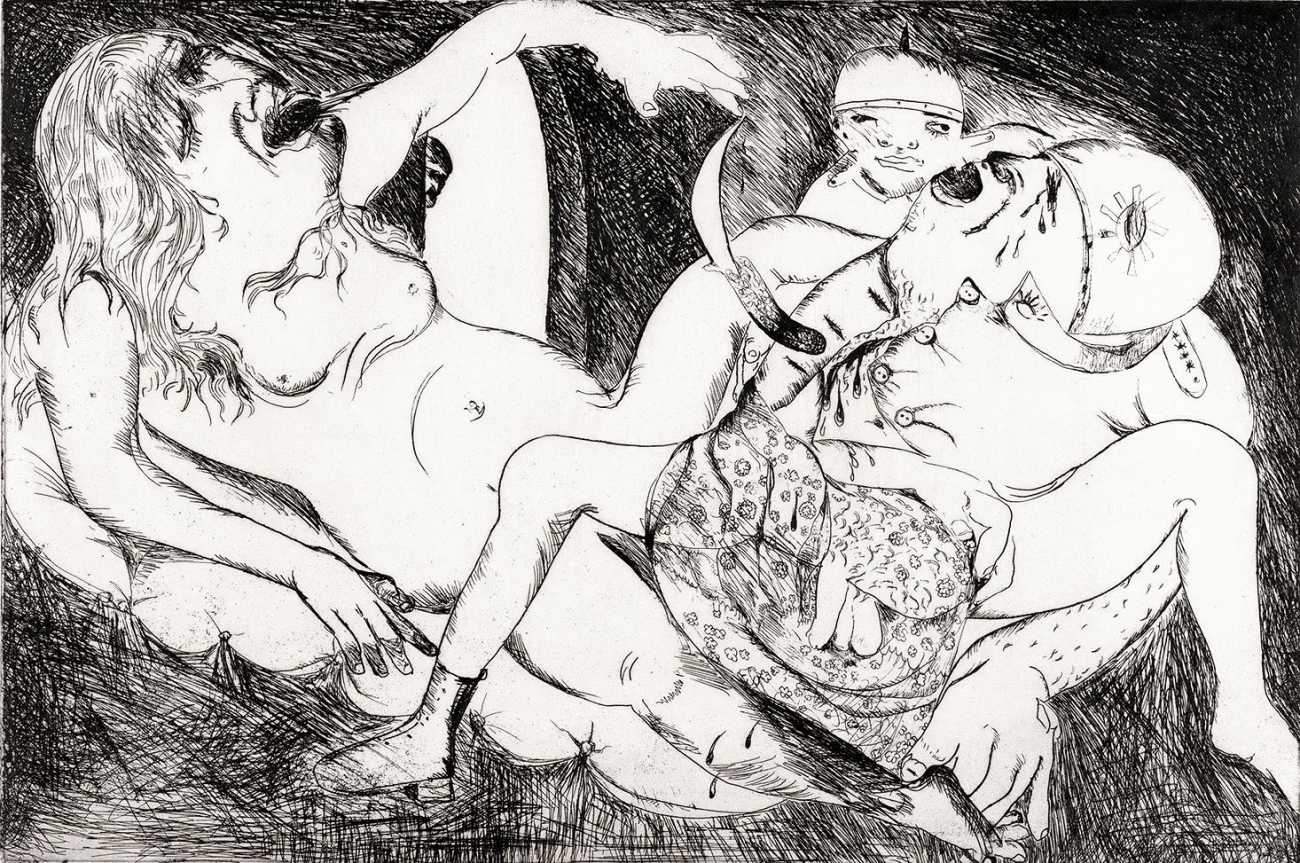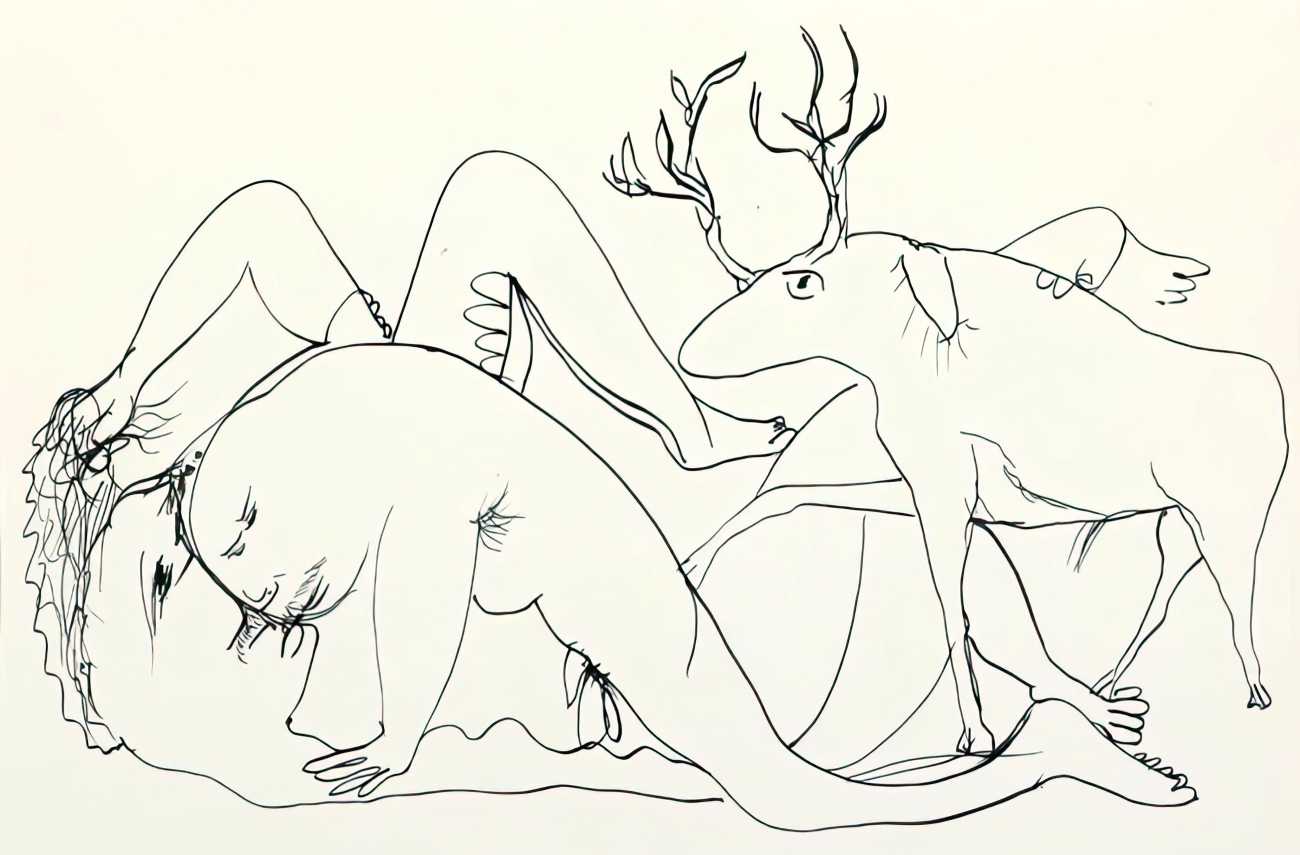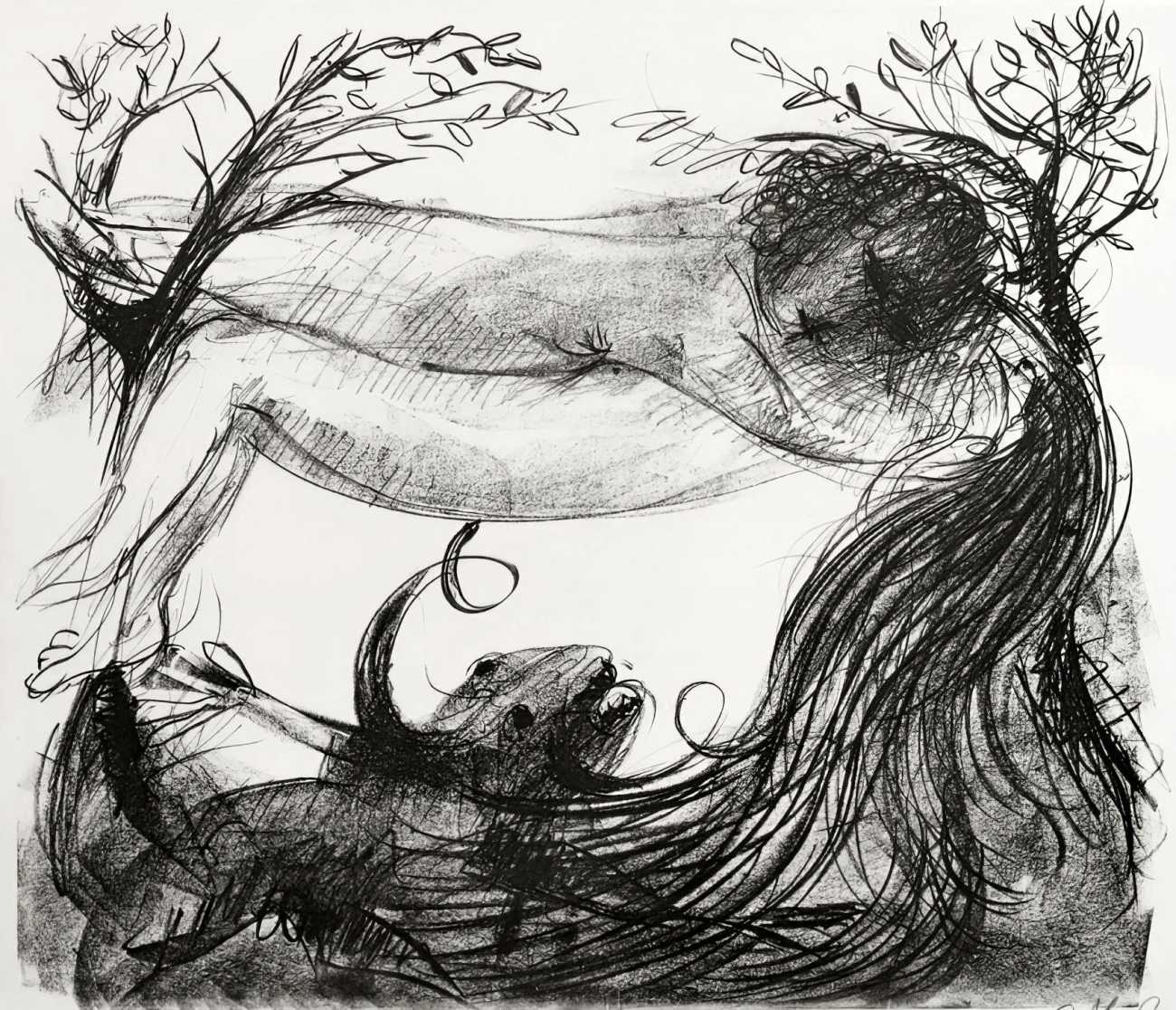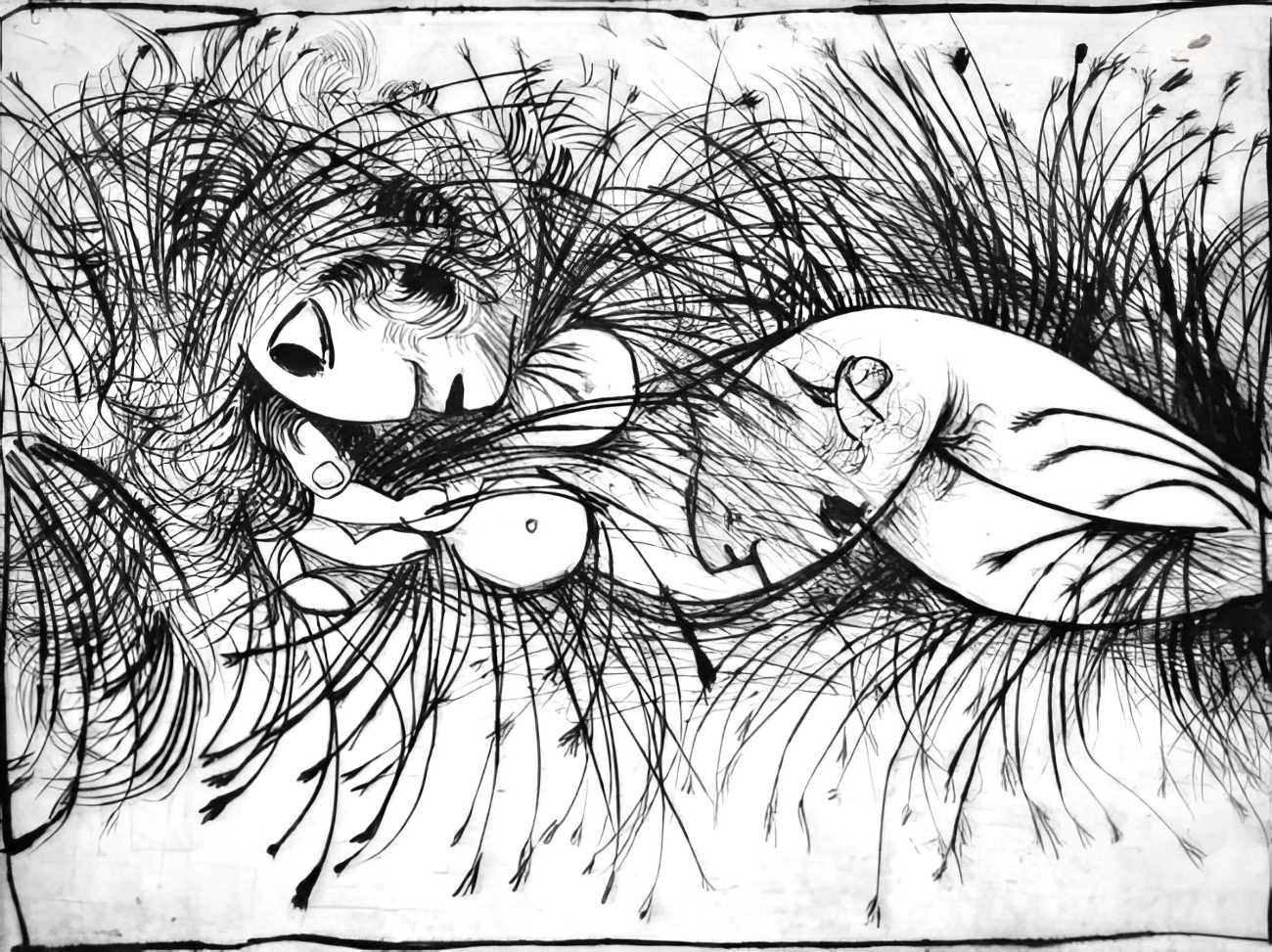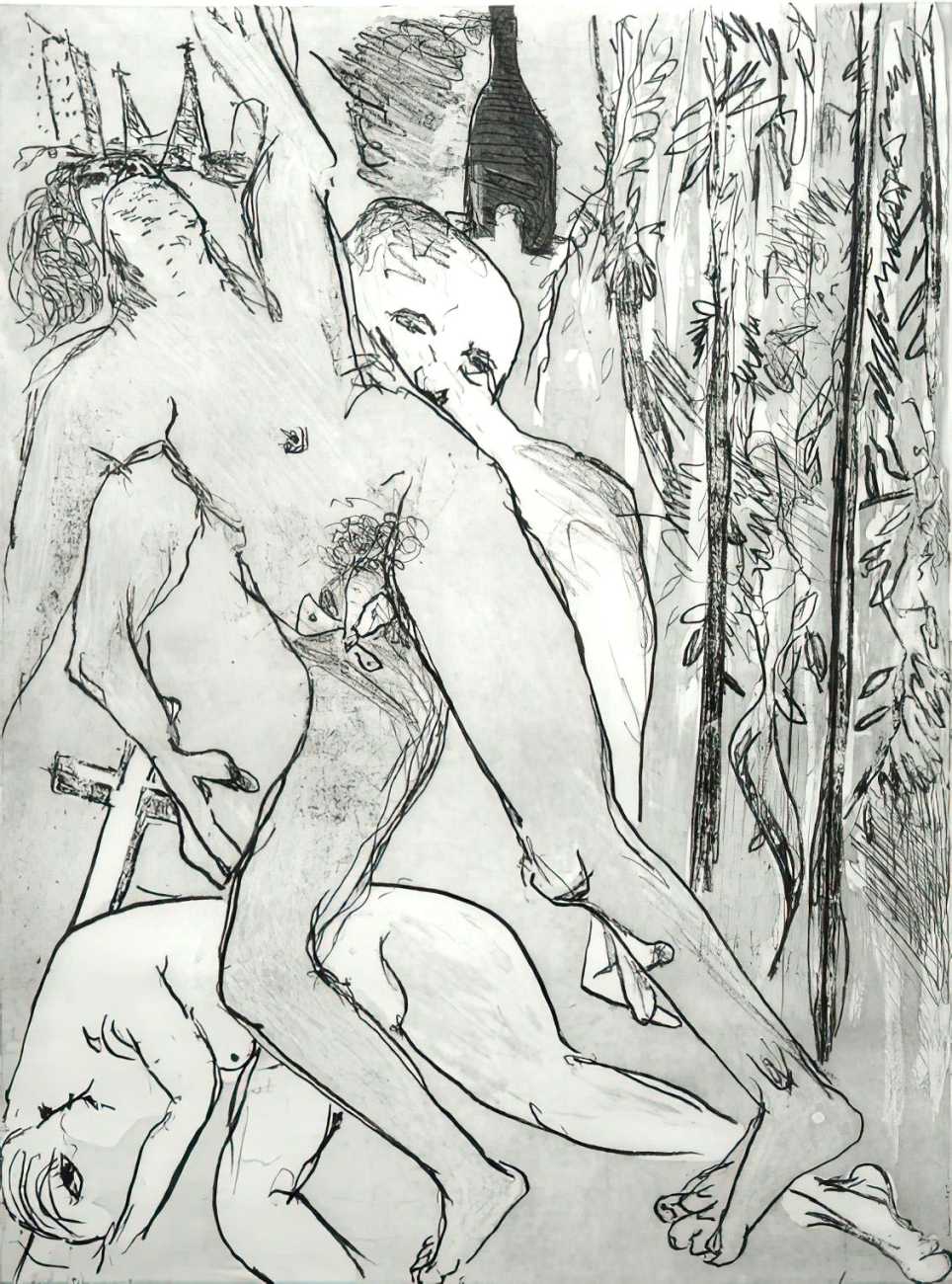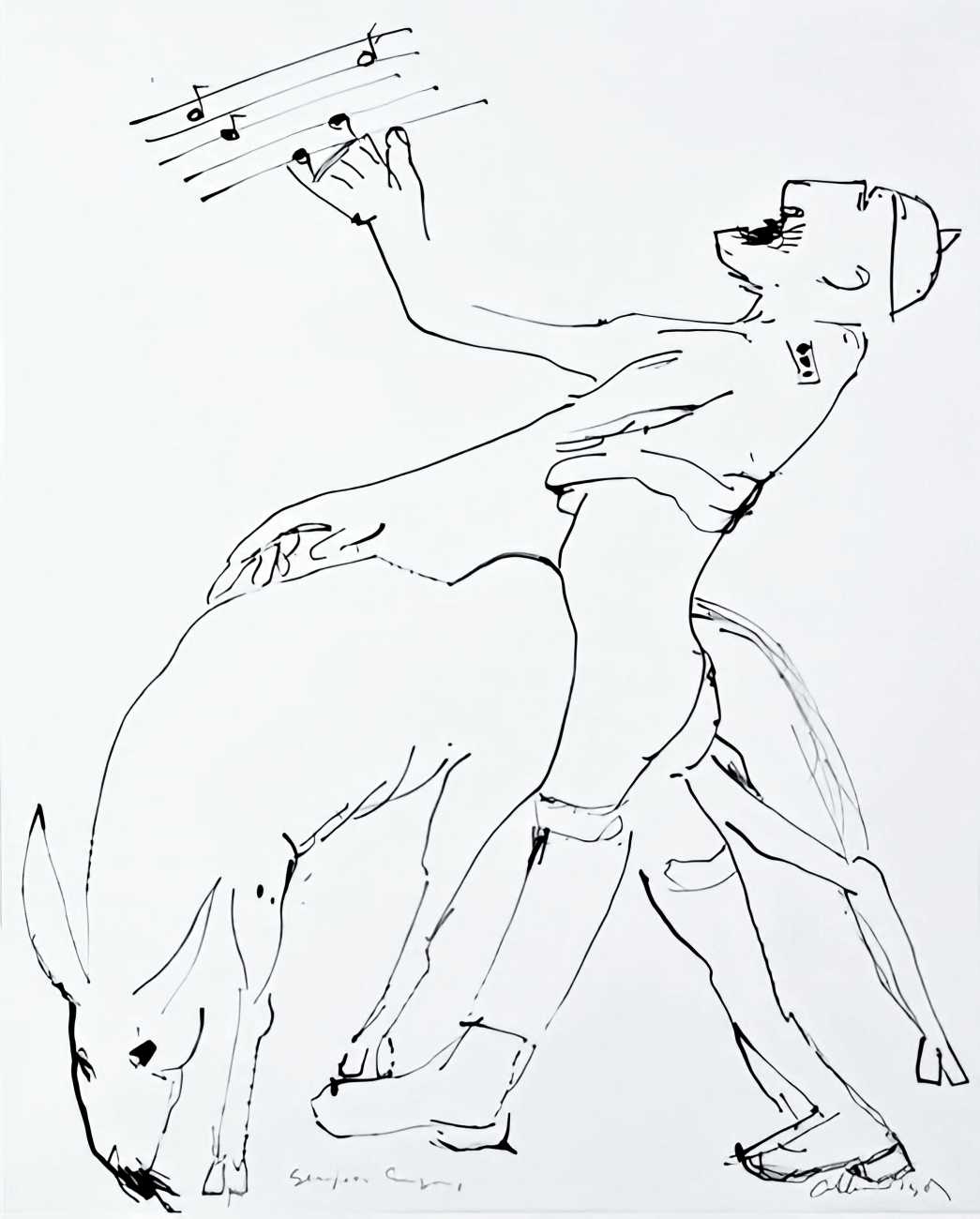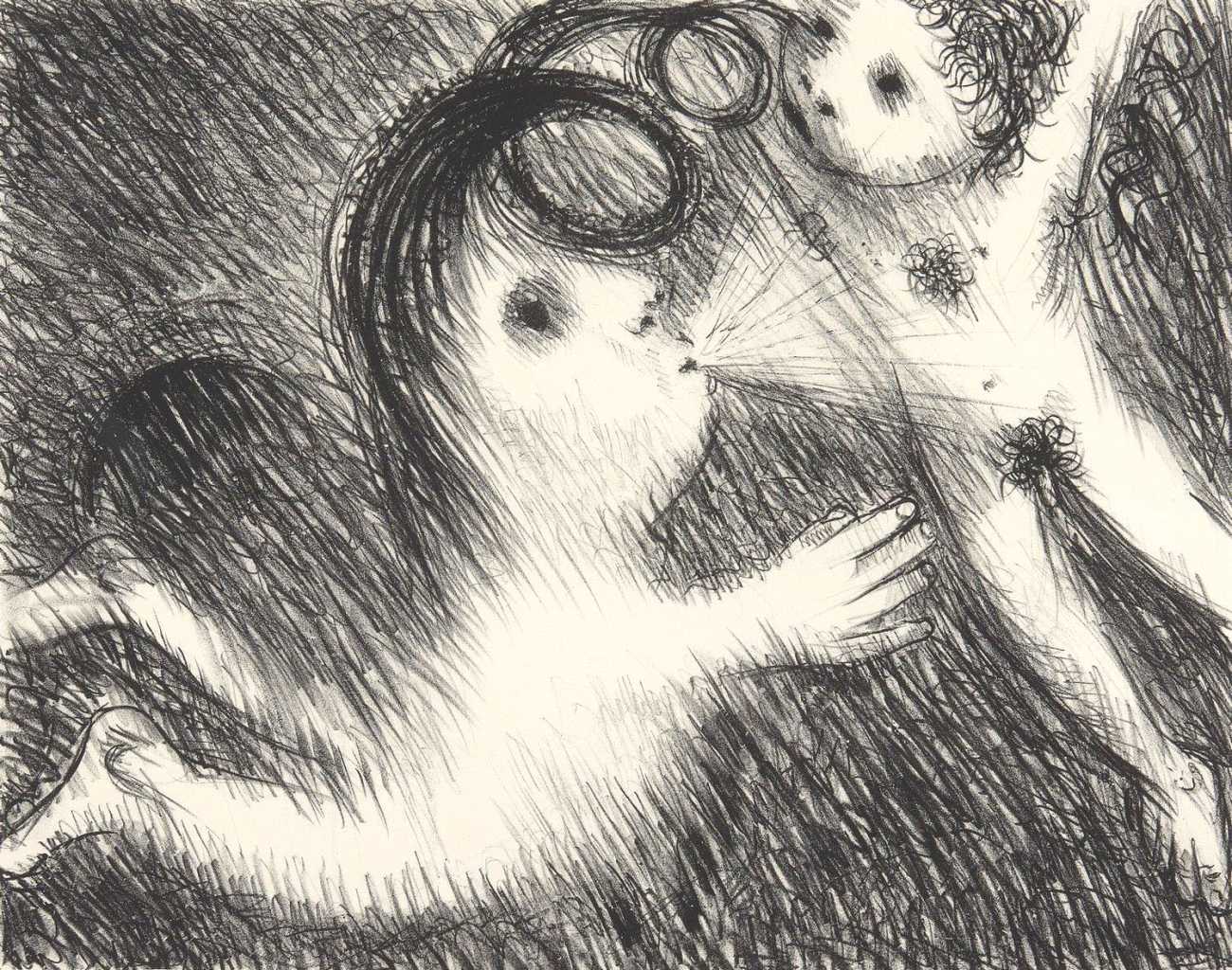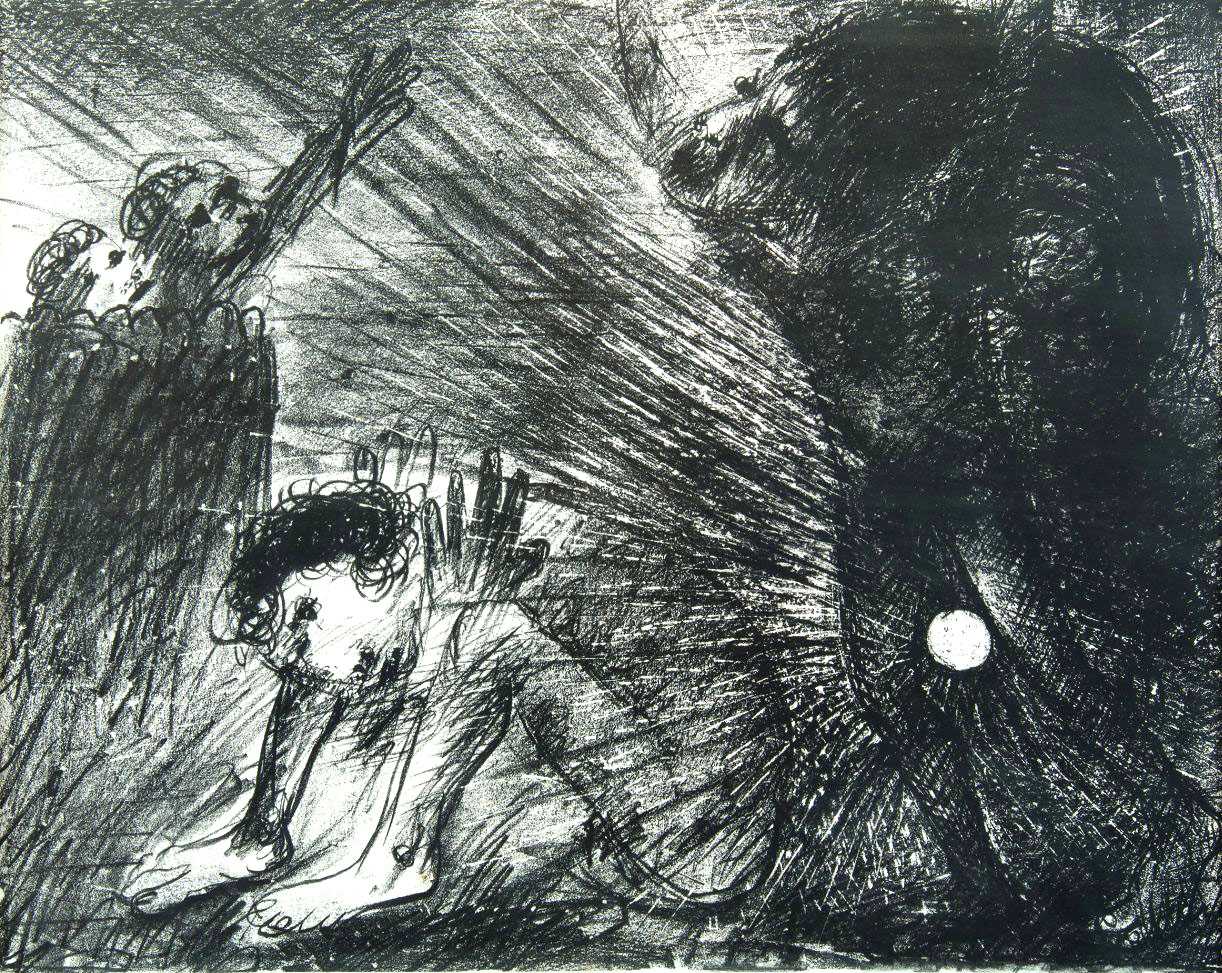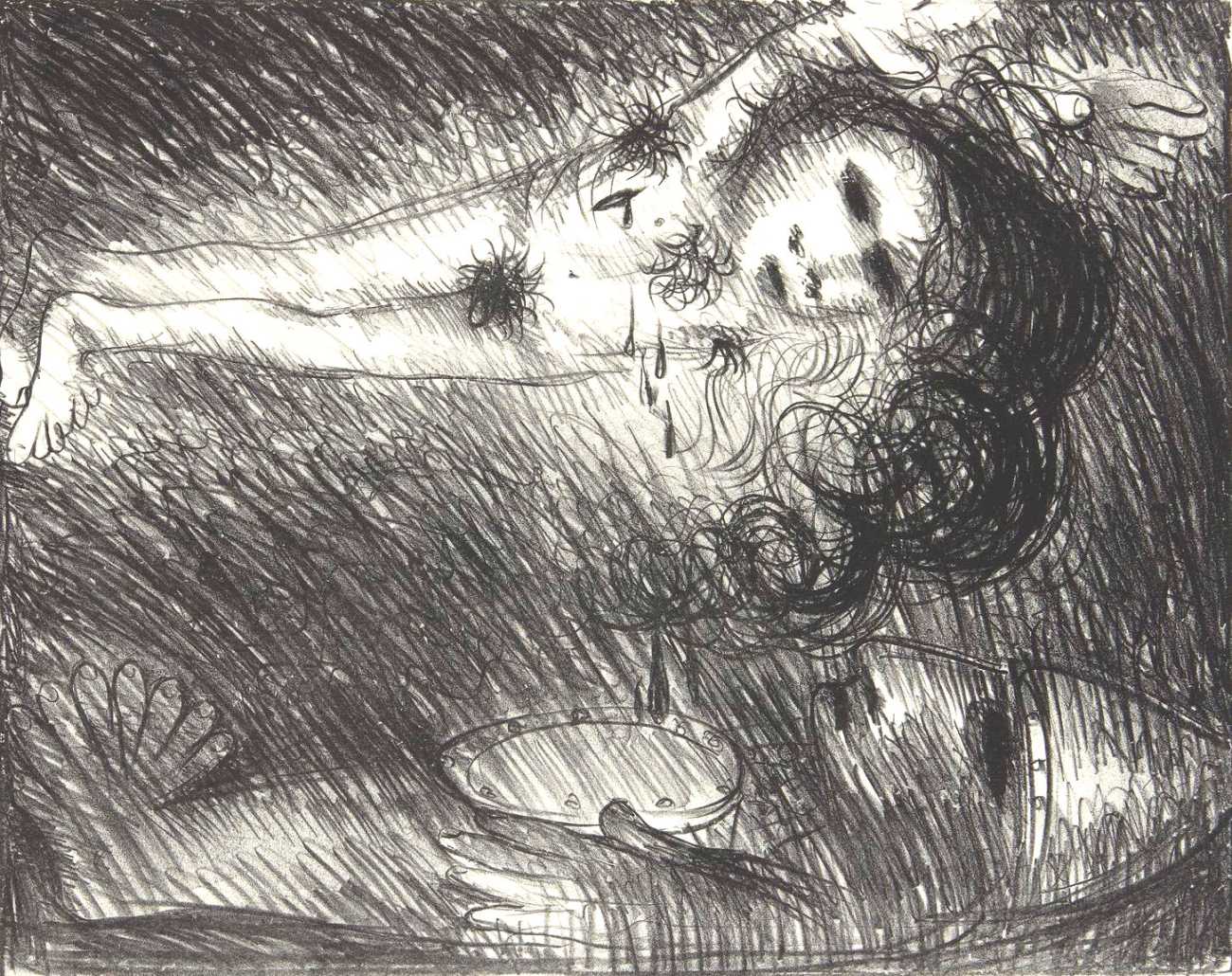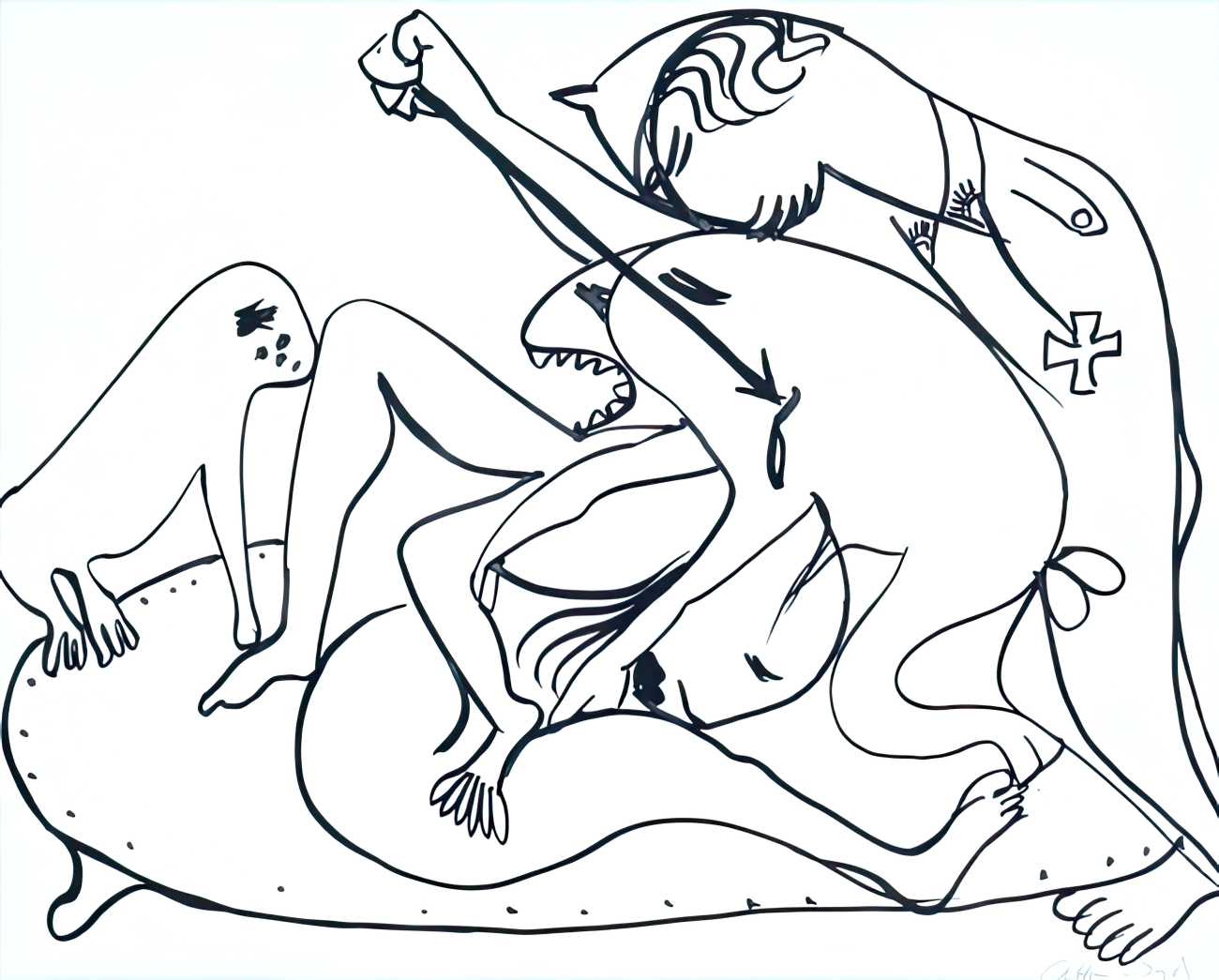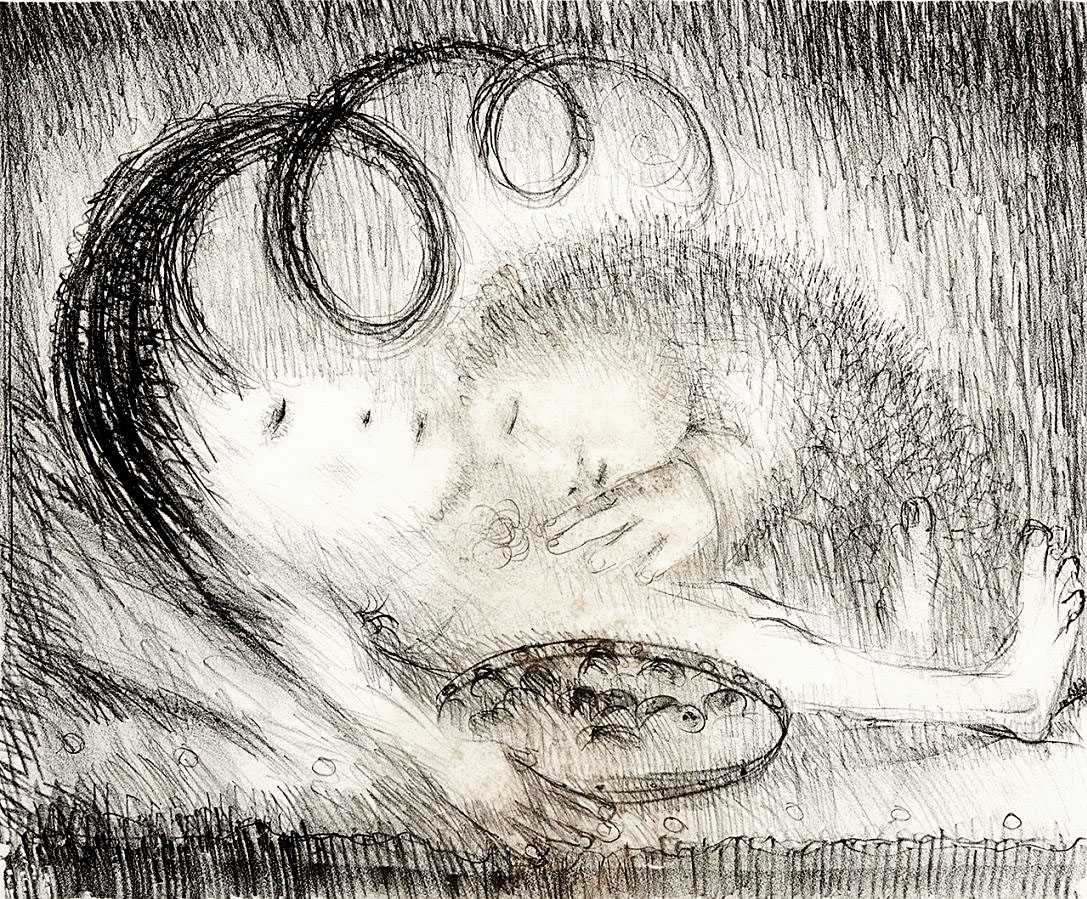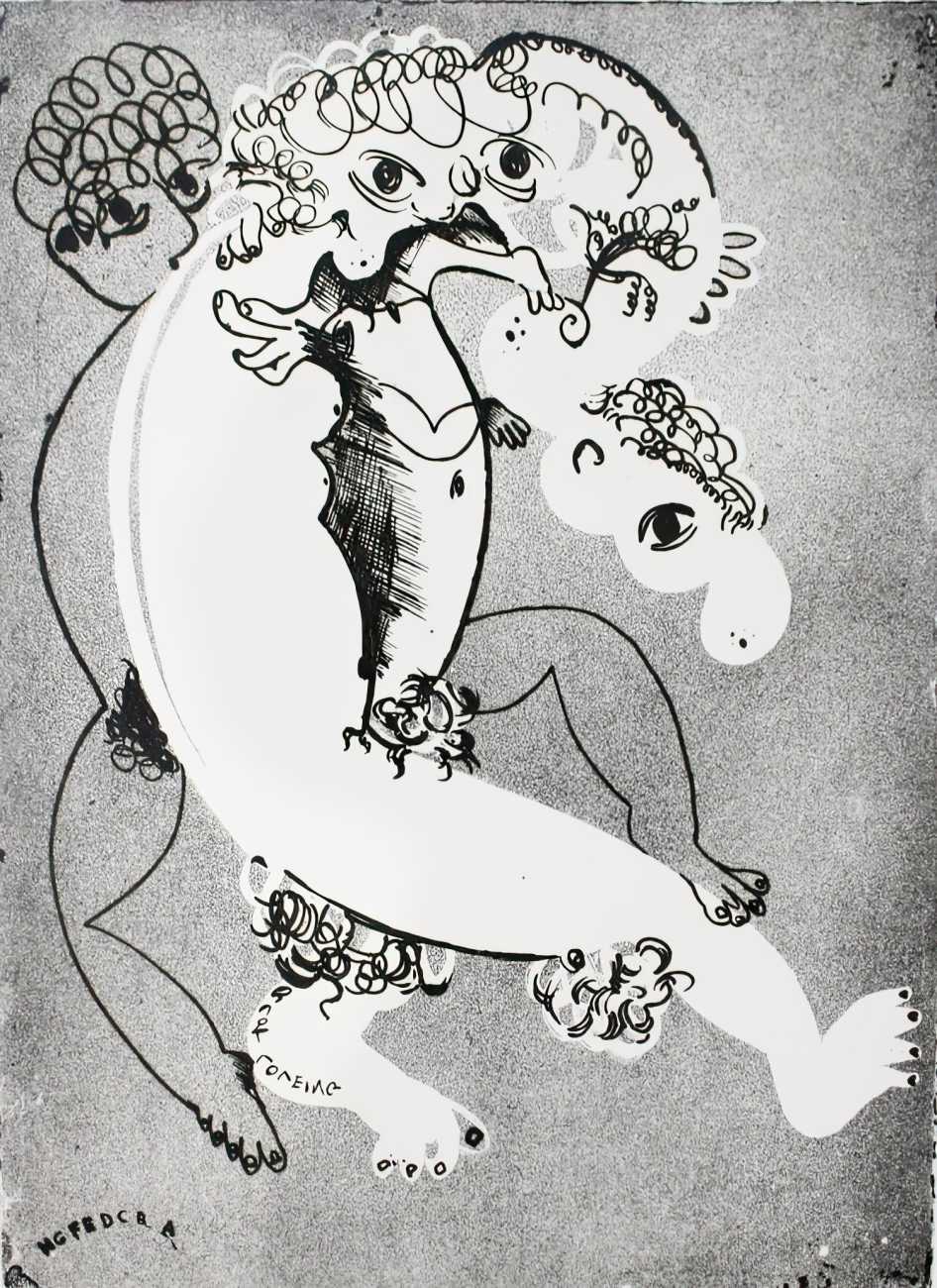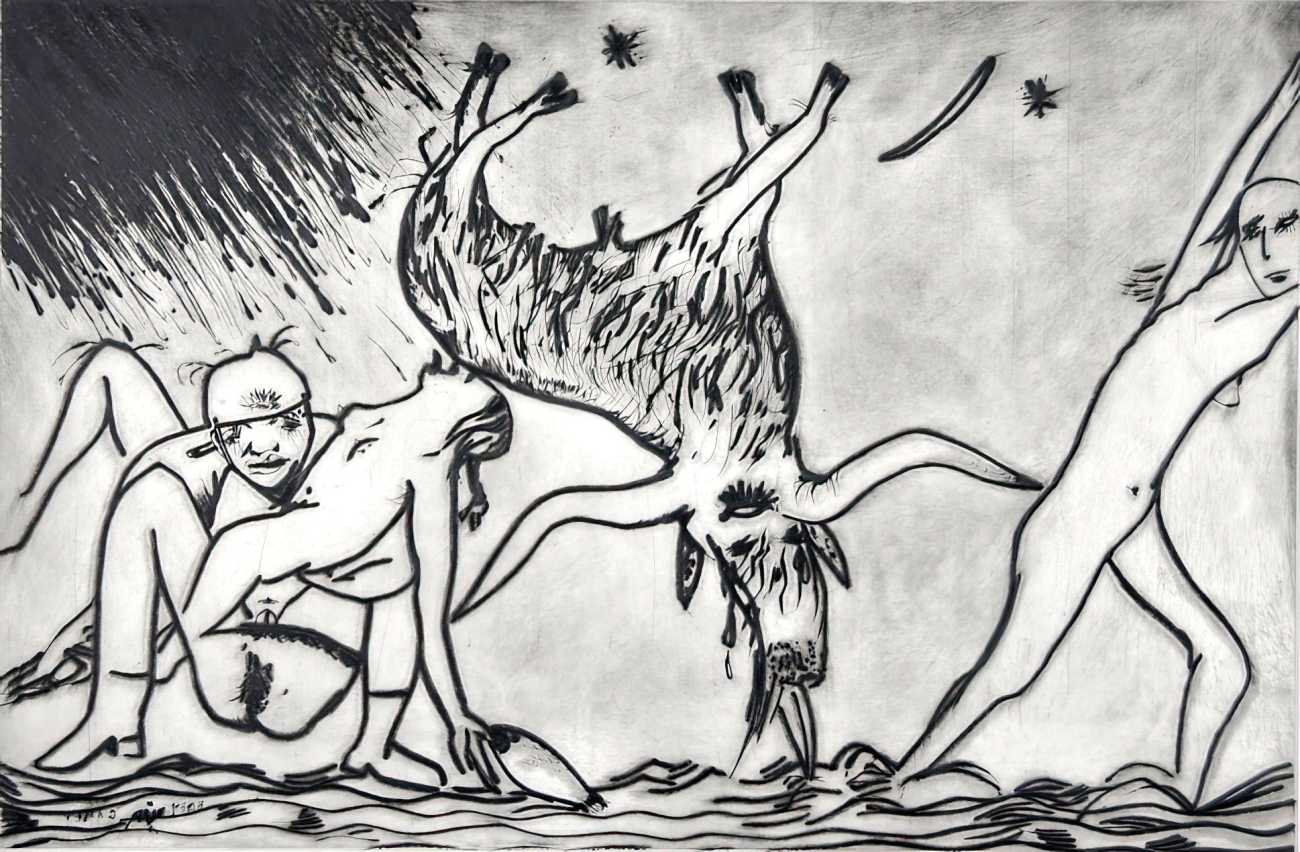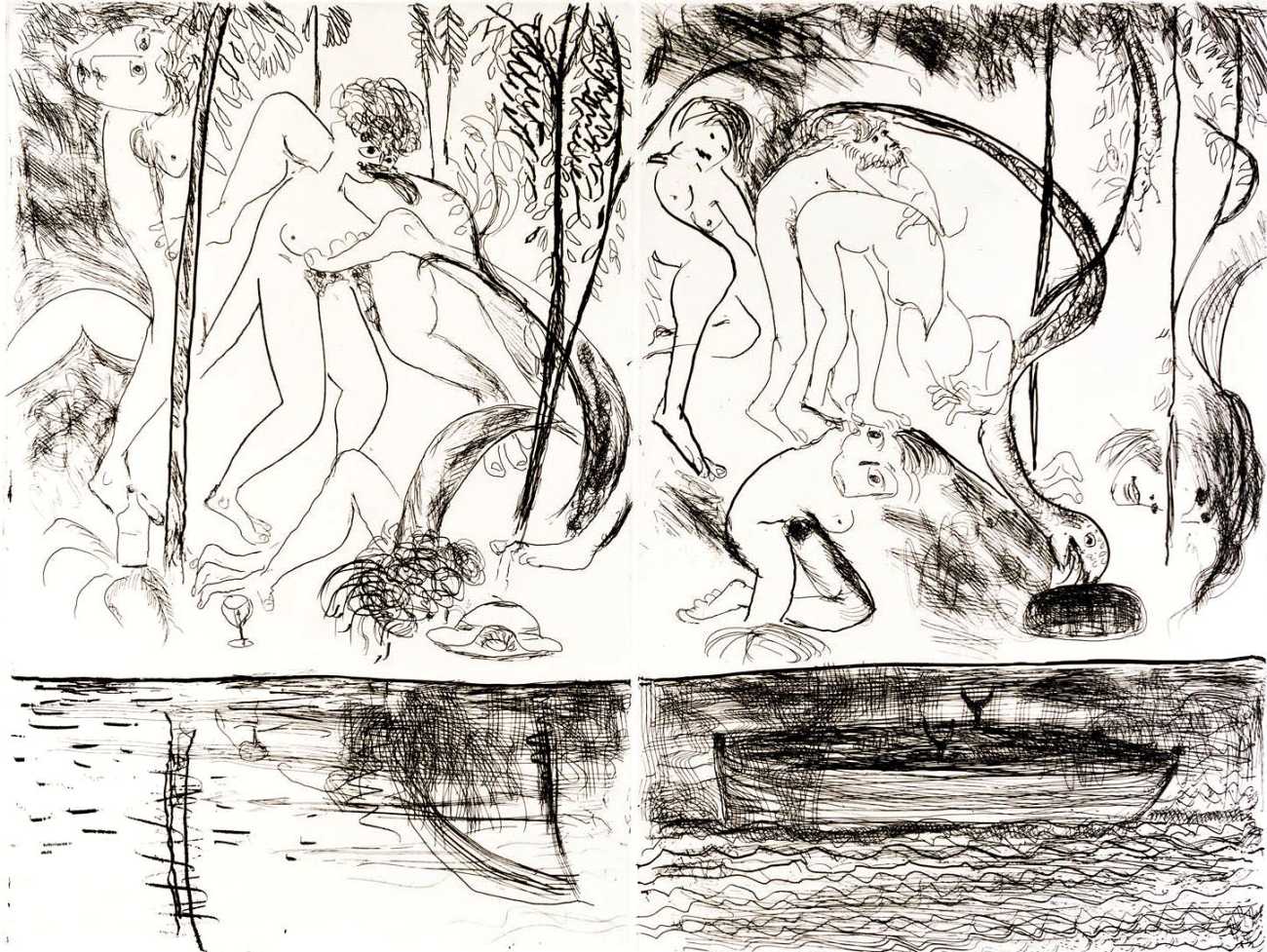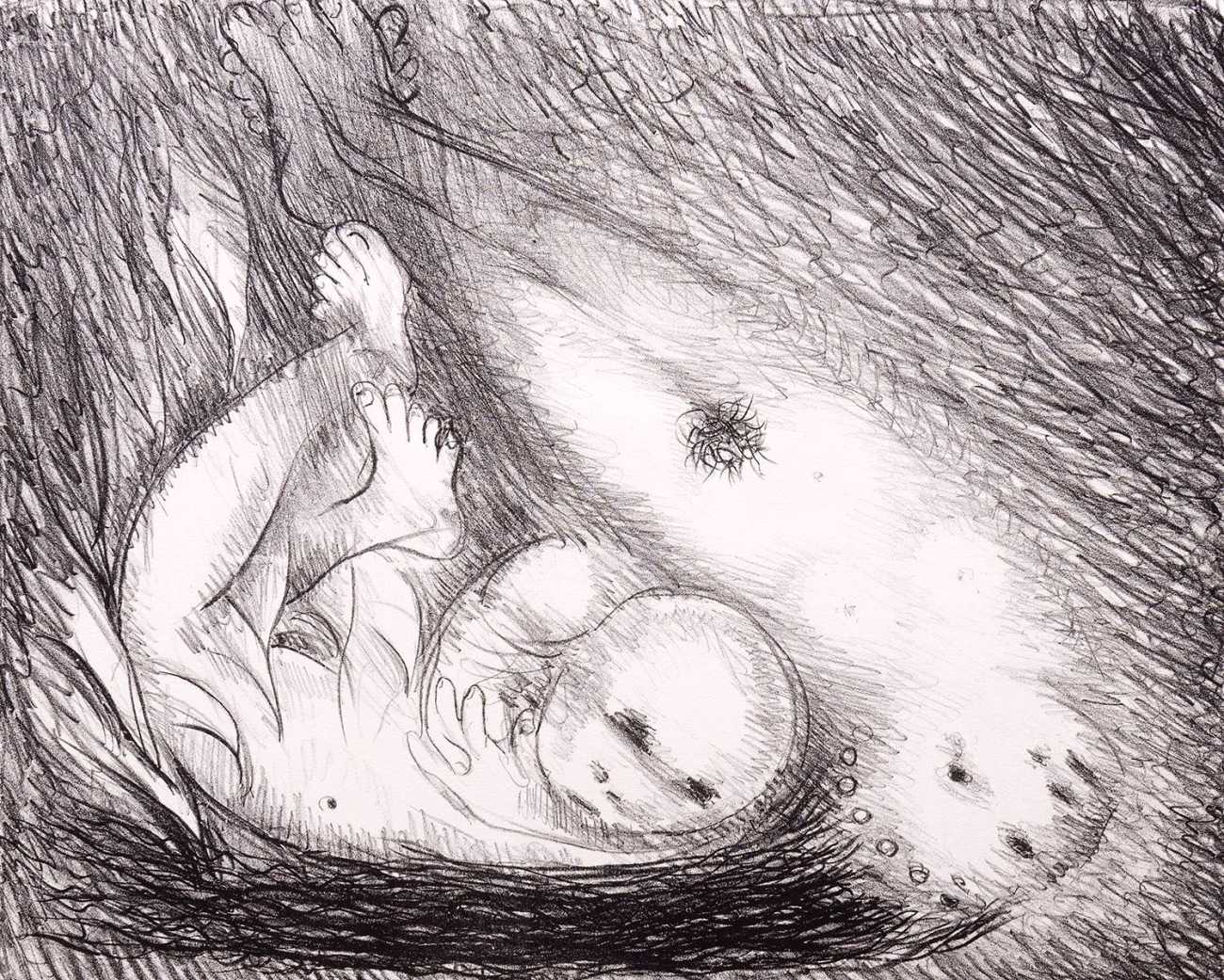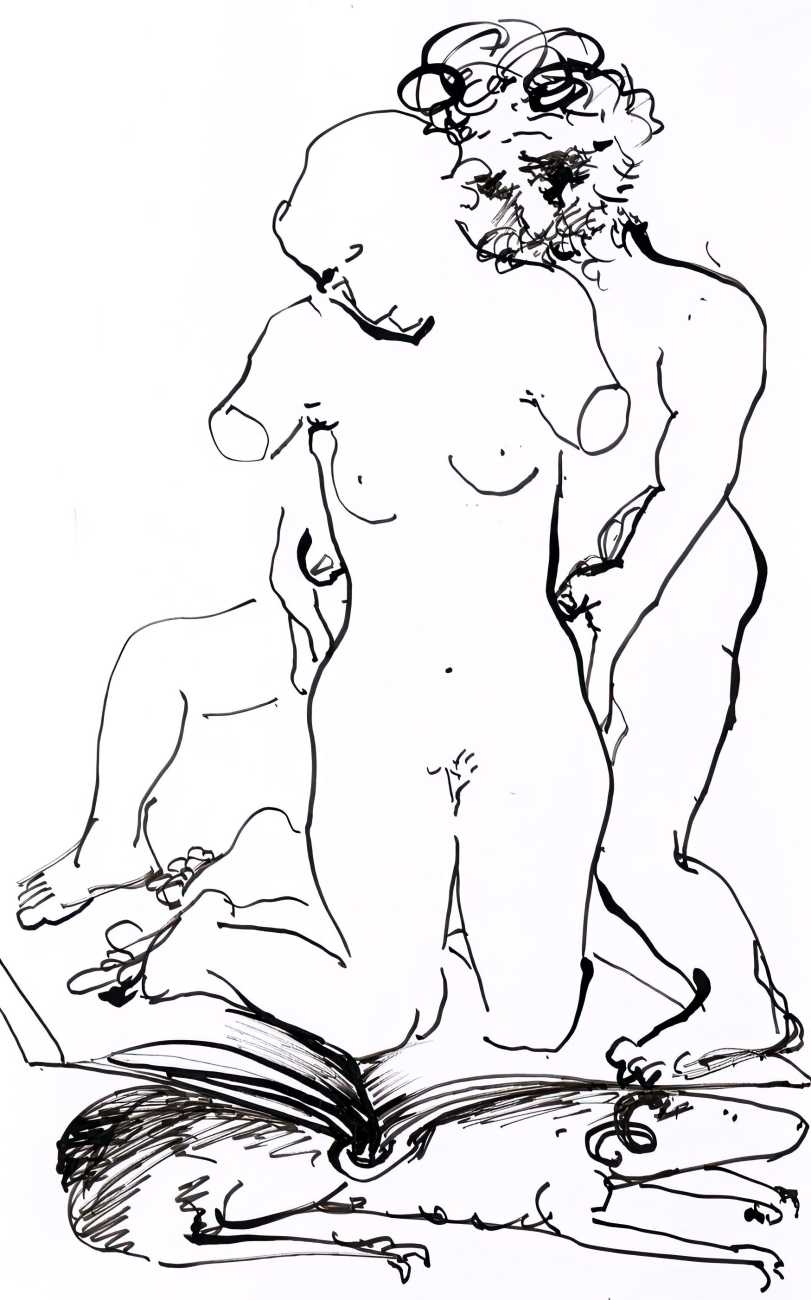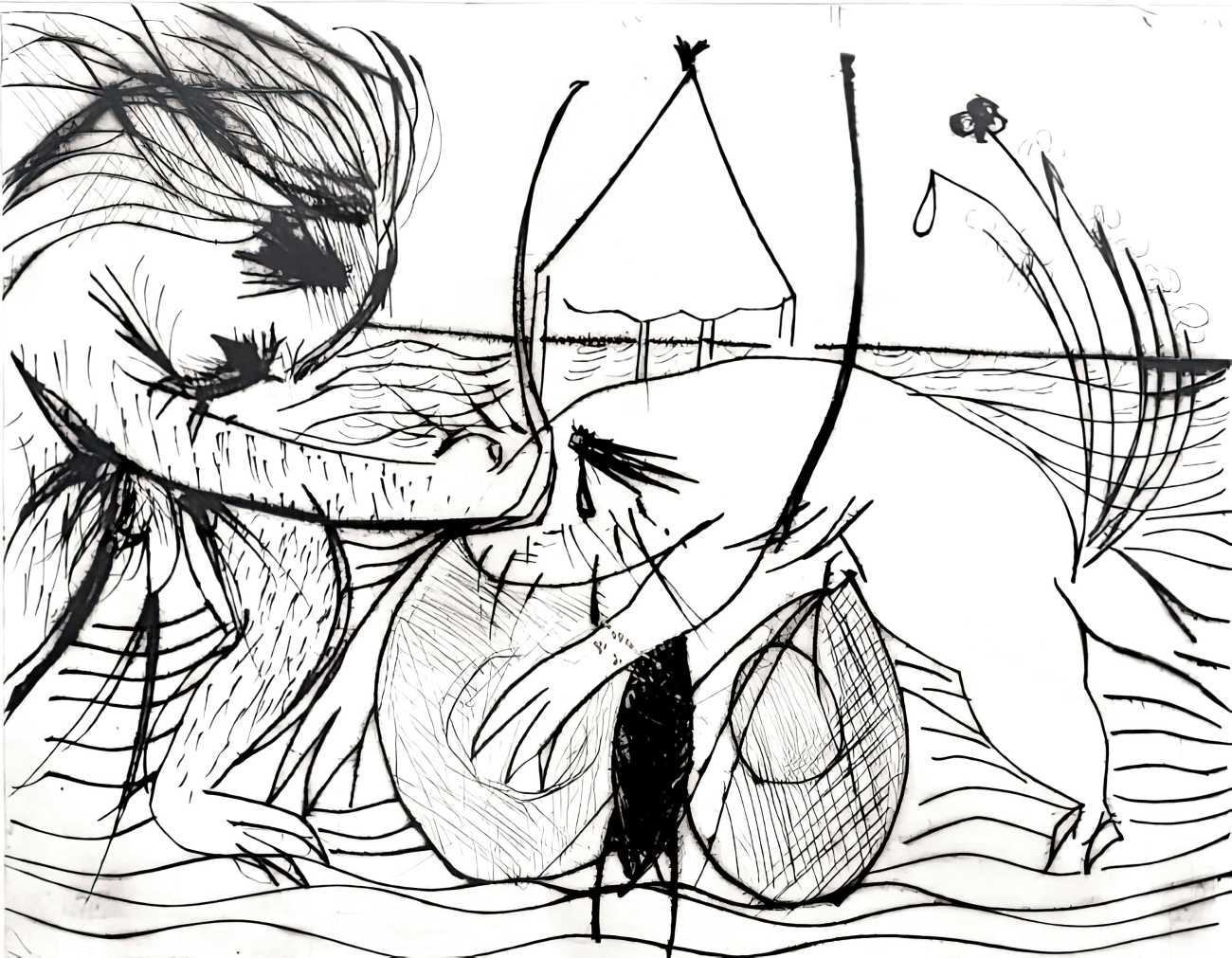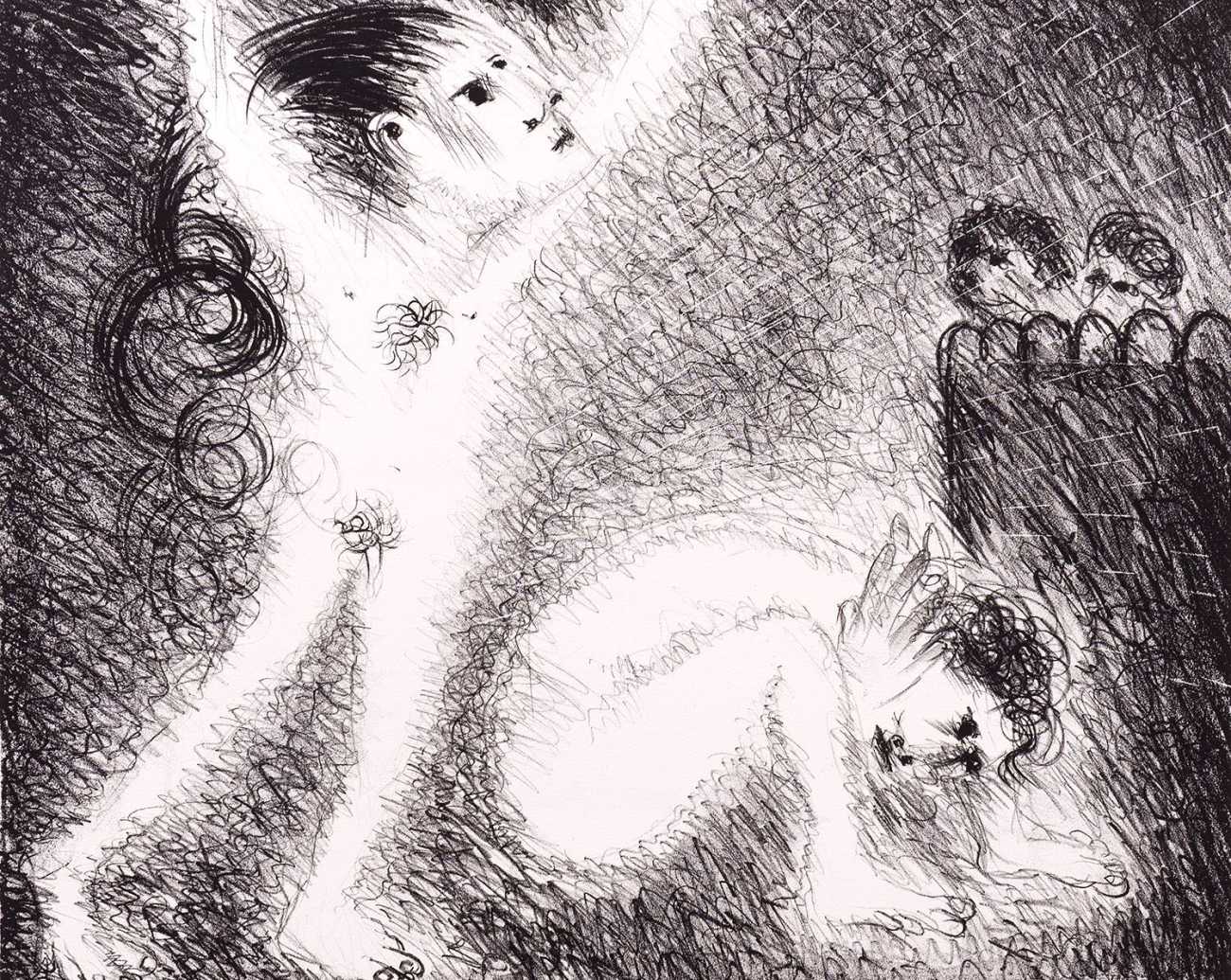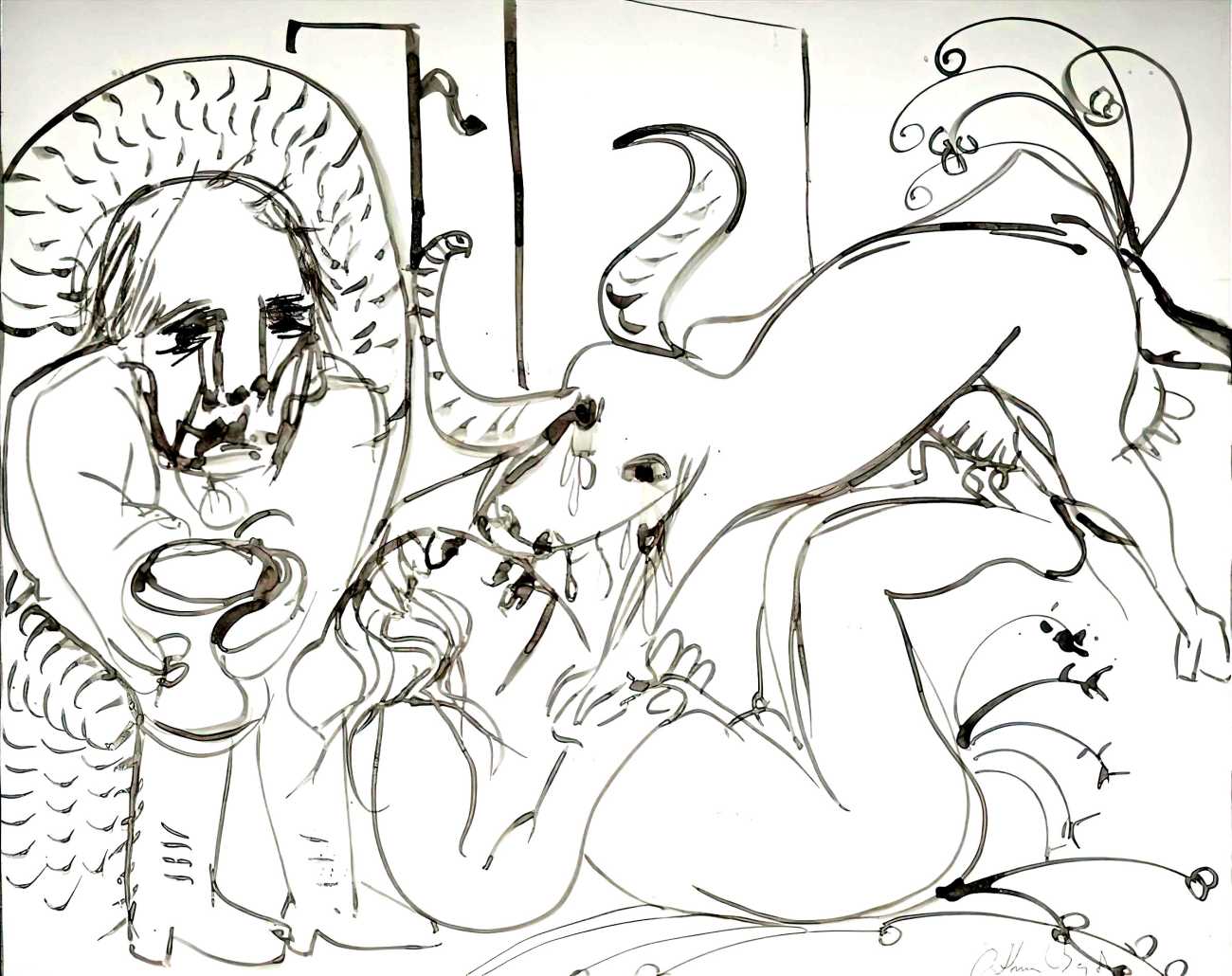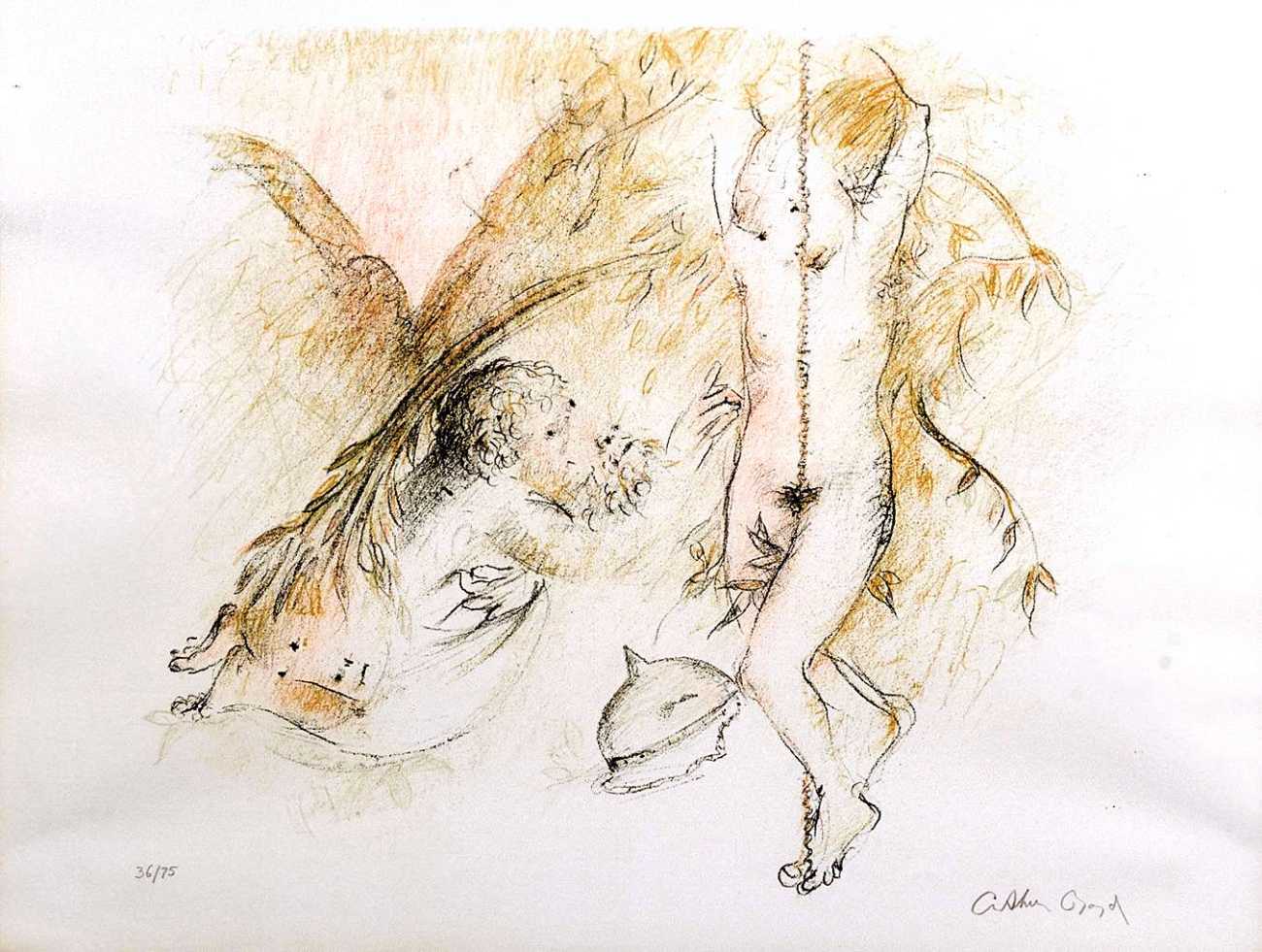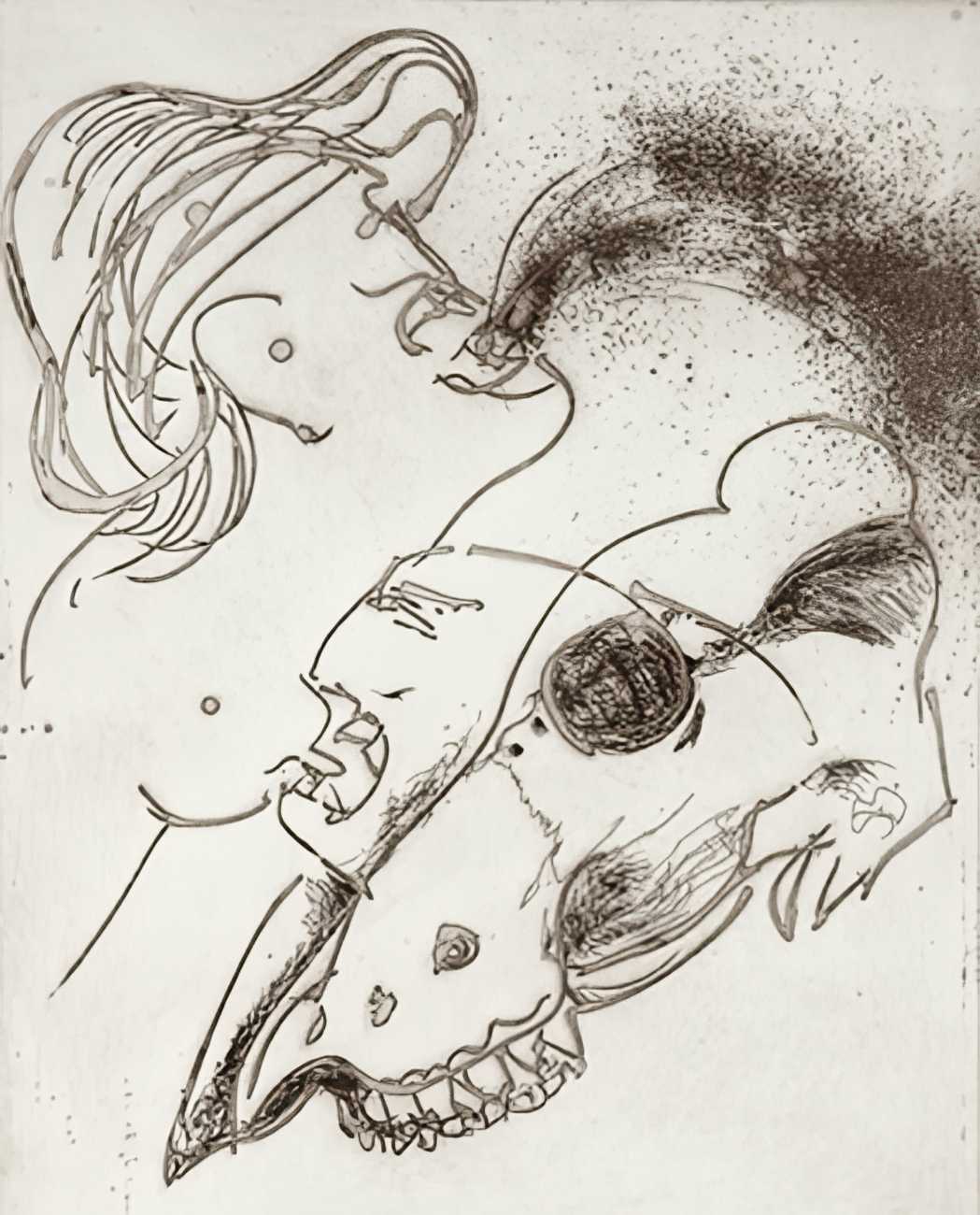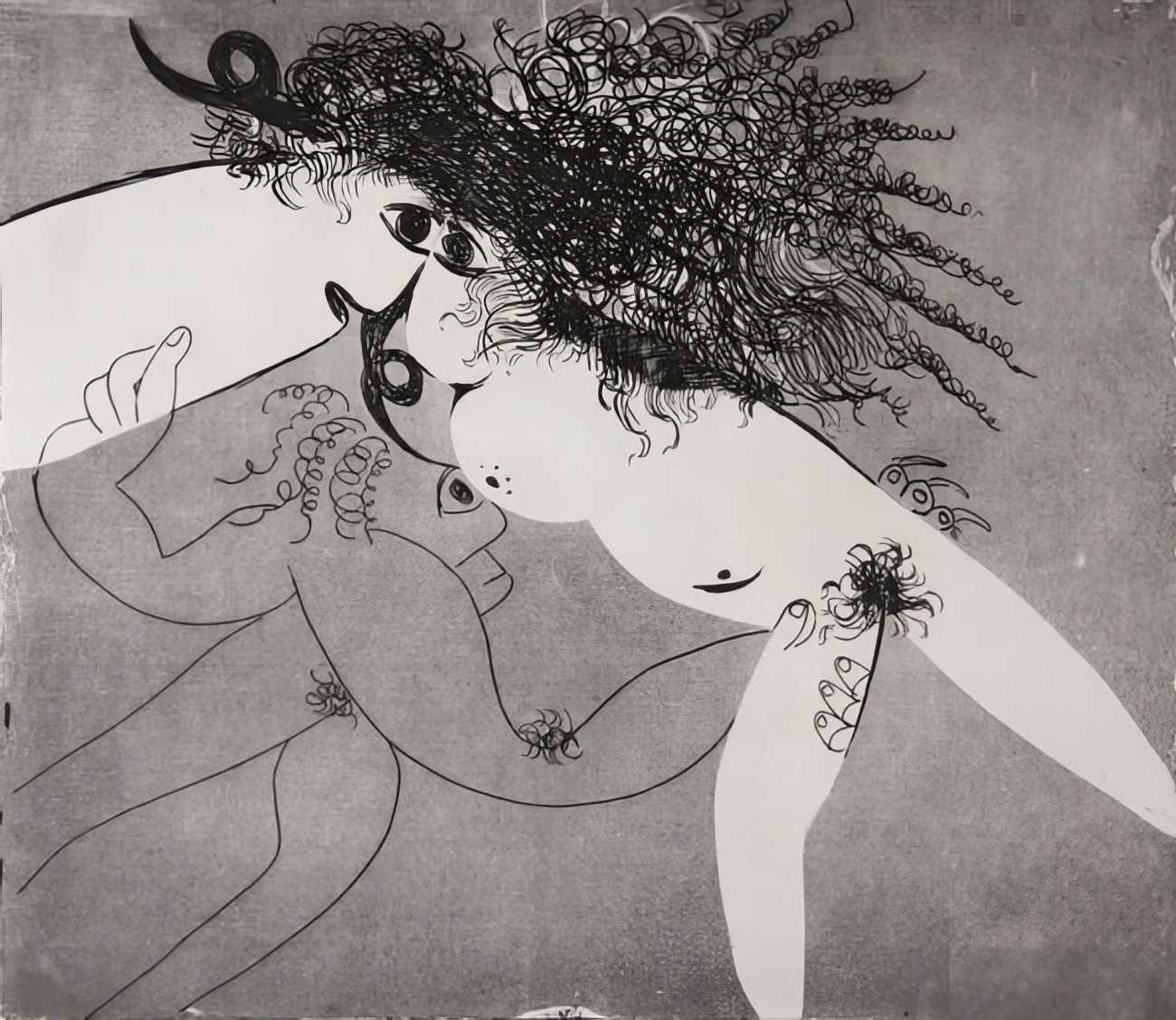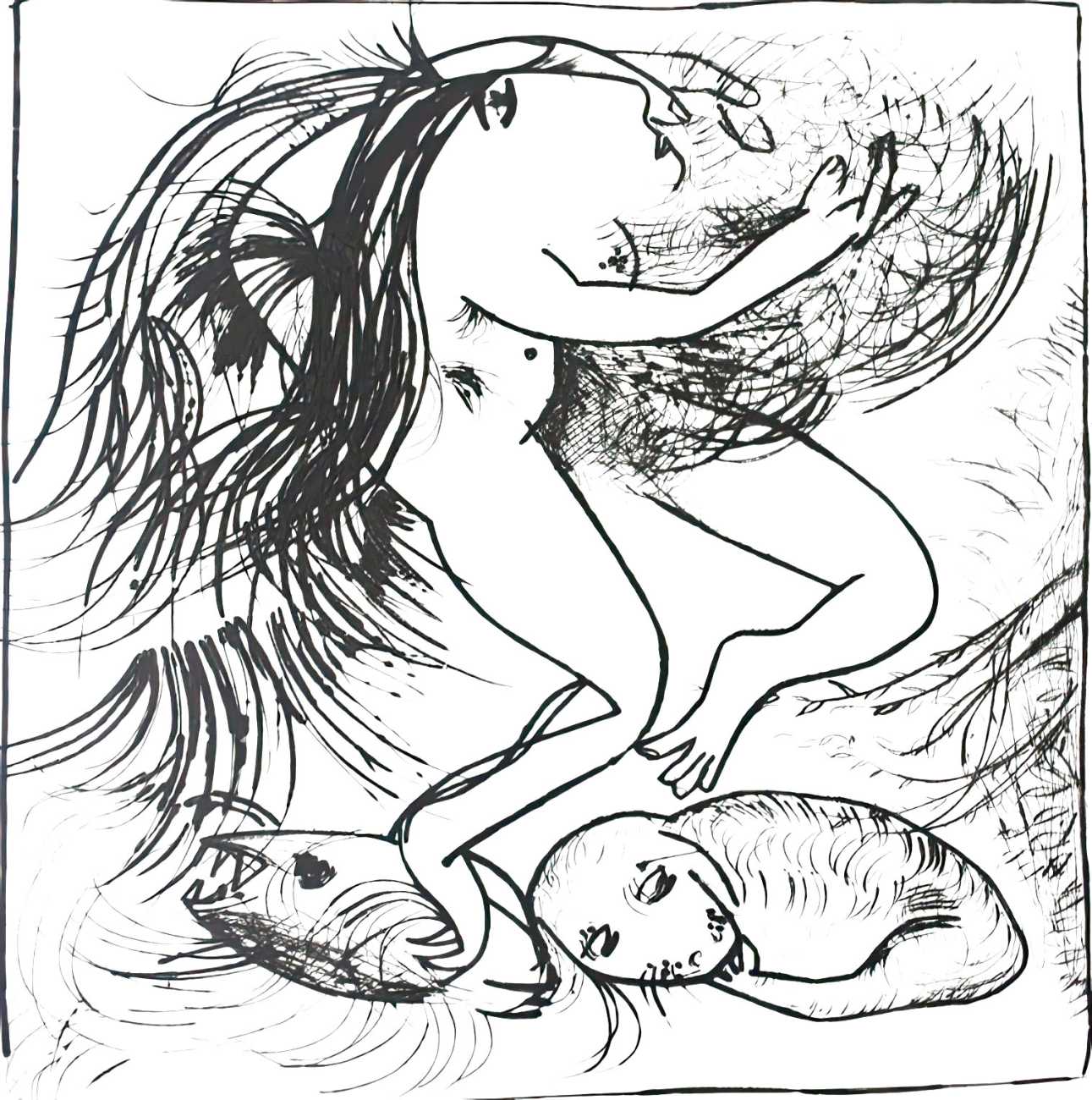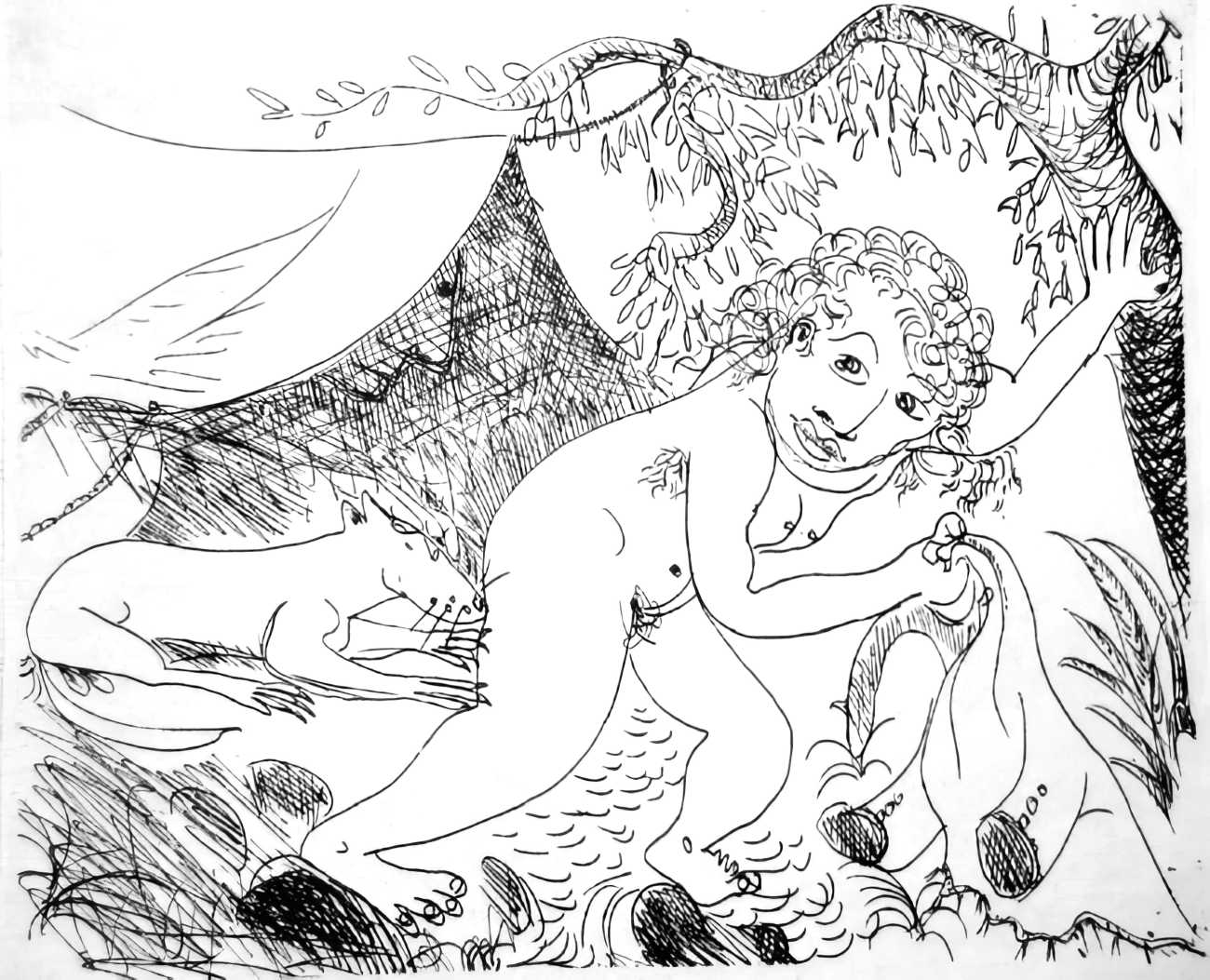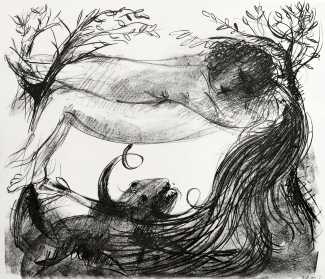
Arthur Boyd’s drawings and prints reveal an uninhibited, often startlingly erotic dimension of his art. Working in ink and charcoal with fluid, rapidly applied lines, he explores the human body in scenes of sexual intimacy, passionate embrace and physical vulnerability. Lovers entwine in tangled compositions, their limbs overlapping until individual bodies seem to merge. Elsewhere, solitary figures recline or crouch in exposed, uncomfortable poses, bringing human beings into encounters with animals and grotesque hybrid creatures.
Rather than carefully modelling the body, Boyd frequently defines it with a few emphatic strokes, allowing a curve of the back, a bent knee, or the gesture of an outstretched arm to carry the composition. Lines twist, double back and accumulate into dense knots around faces, hair and interlocking limbs, suggesting the intensity of physical contact. Occasional washes of colour introduce a softer, more lyrical atmosphere without diminishing the directness of the imagery.
Boyd’s subjects range from intimate encounters between lovers to scenes of pursuit, humiliation and violence. The distinction between desire and aggression becomes disturbingly blurred, while exaggerated features and animal-like transformations give some compositions a nightmarish, almost surreal character.
The black and white plates at the end of this selection are mostly from his Electra (1963), Lysistrata (1970) and Narcissus (1977) series.
In his drawings and prints Boyd combines a powerful physicality with a restless, searching imagination. They are not polished illustrations of idealised beauty, but spontaneous investigations of desire, vulnerability and the unruly relationship between humanity and the natural world, allowing erotic experience to merge with an emotional candour that is sometimes playful, sometimes disturbing, and frequently both at the same time.