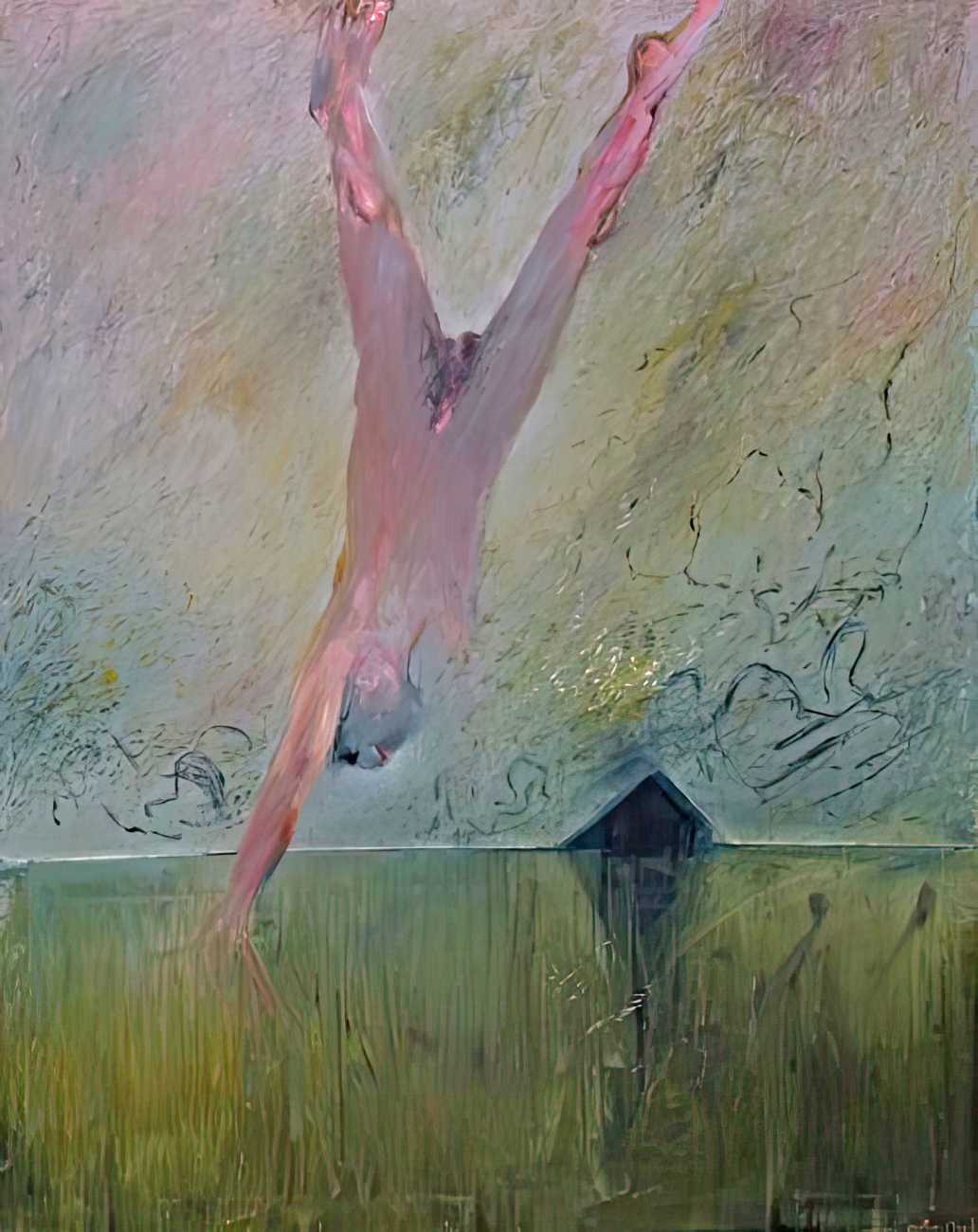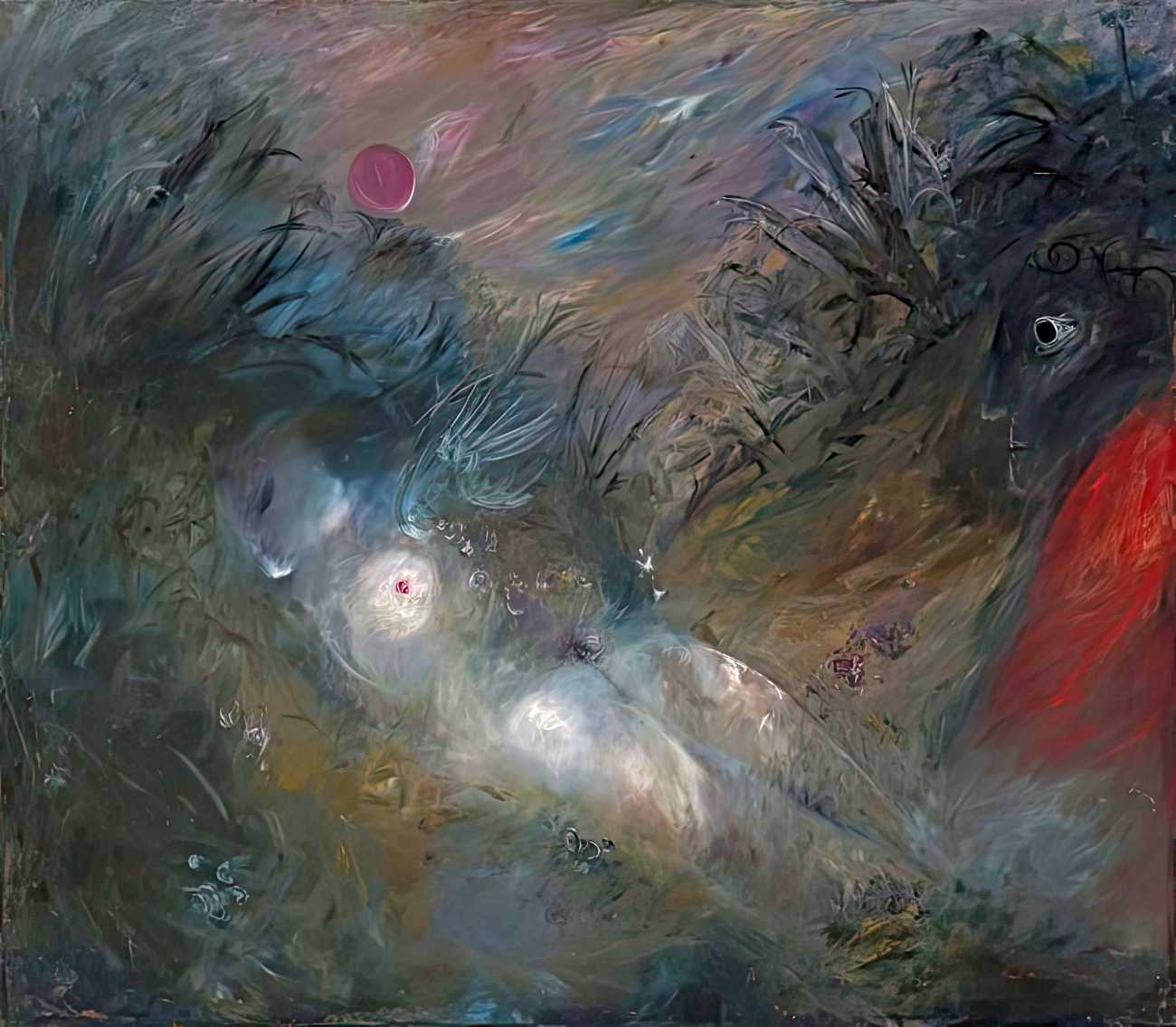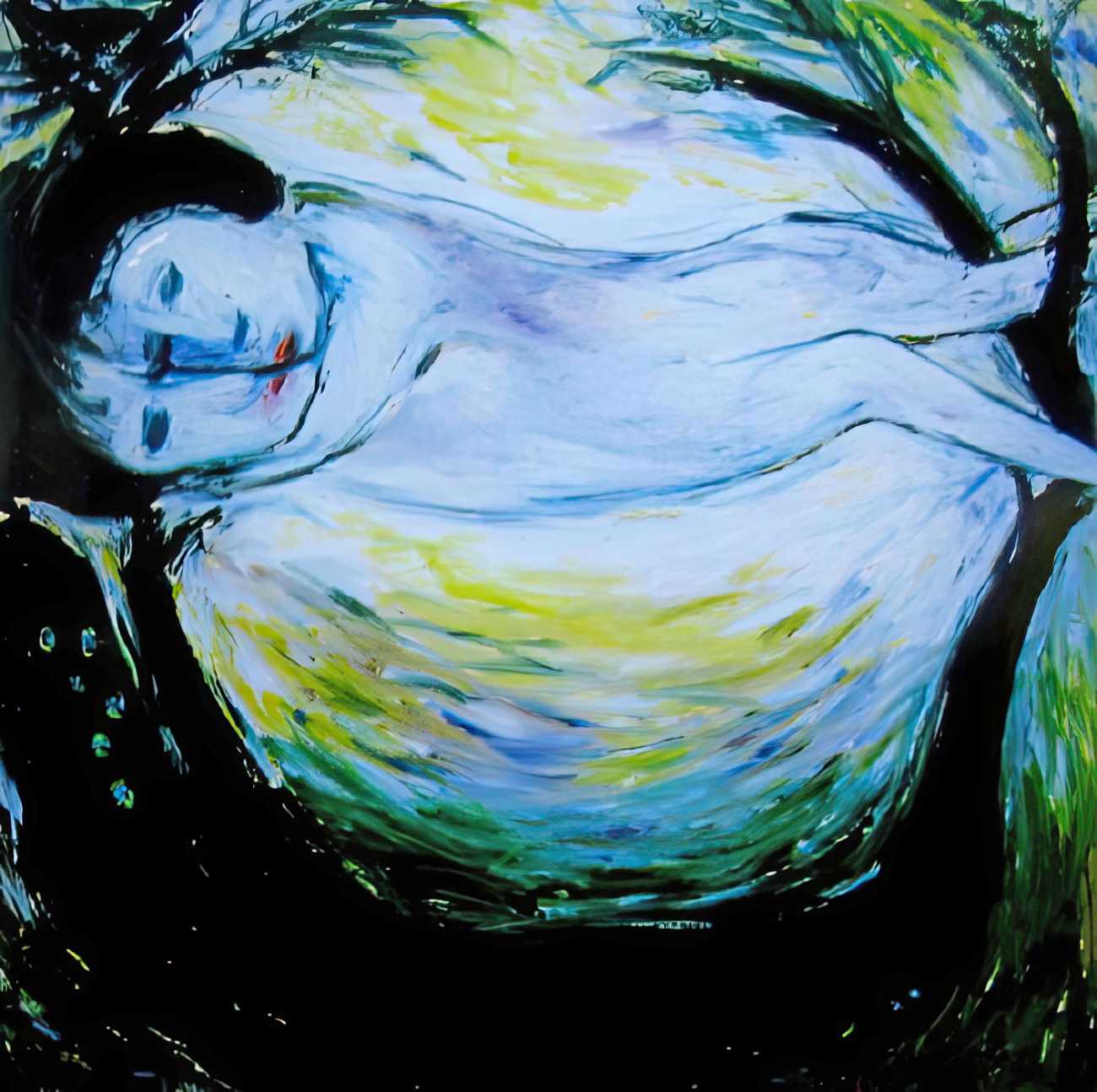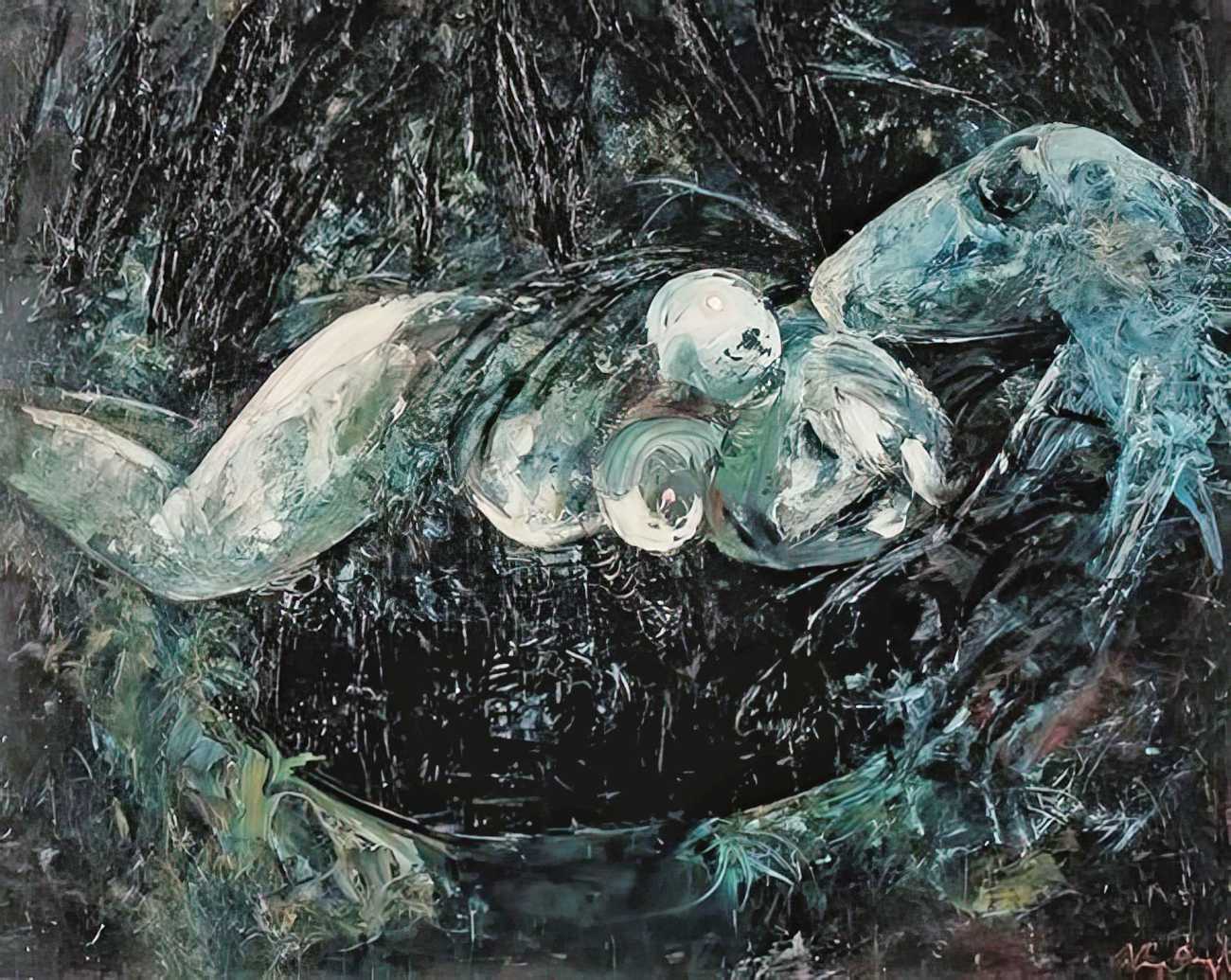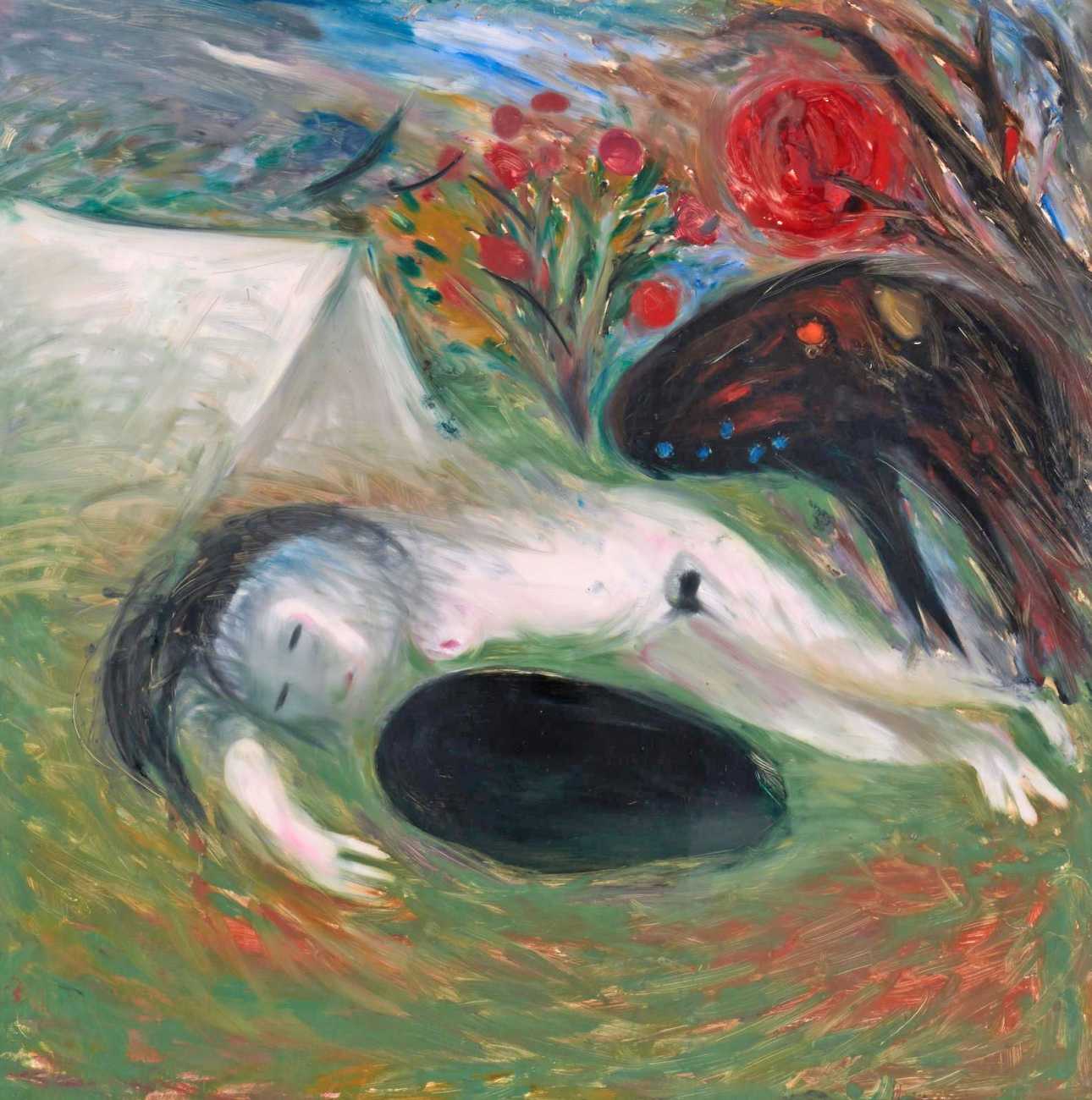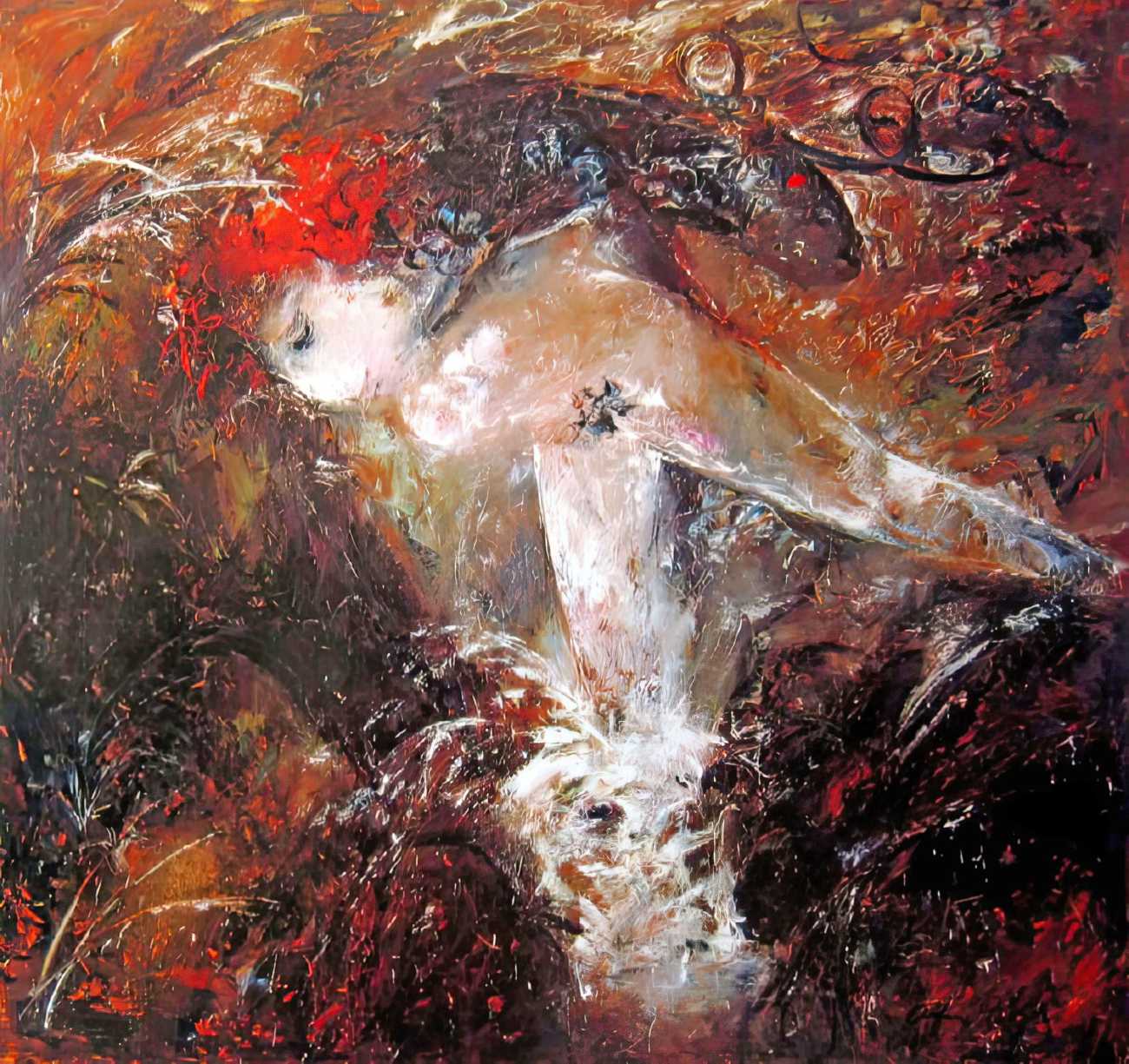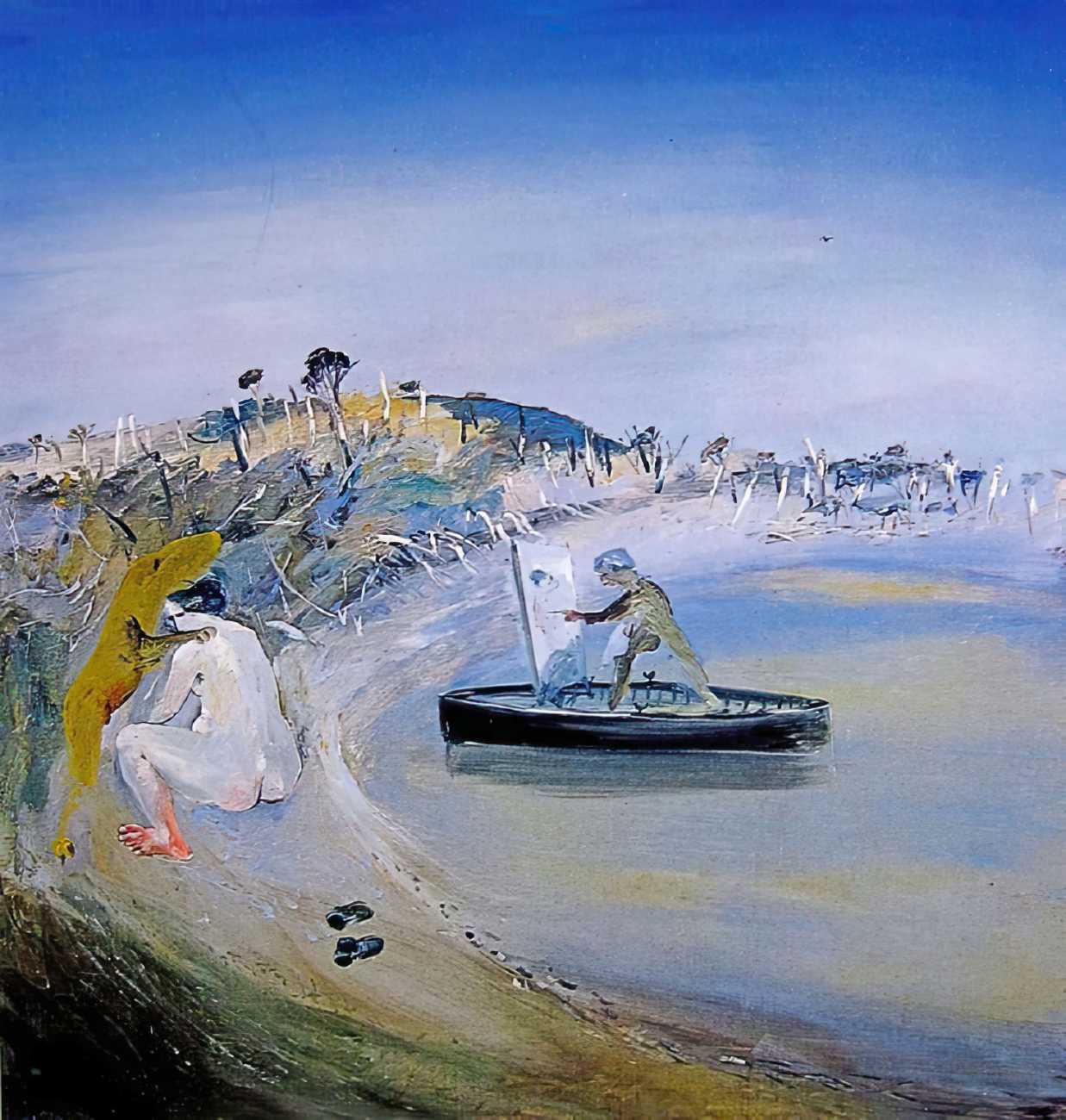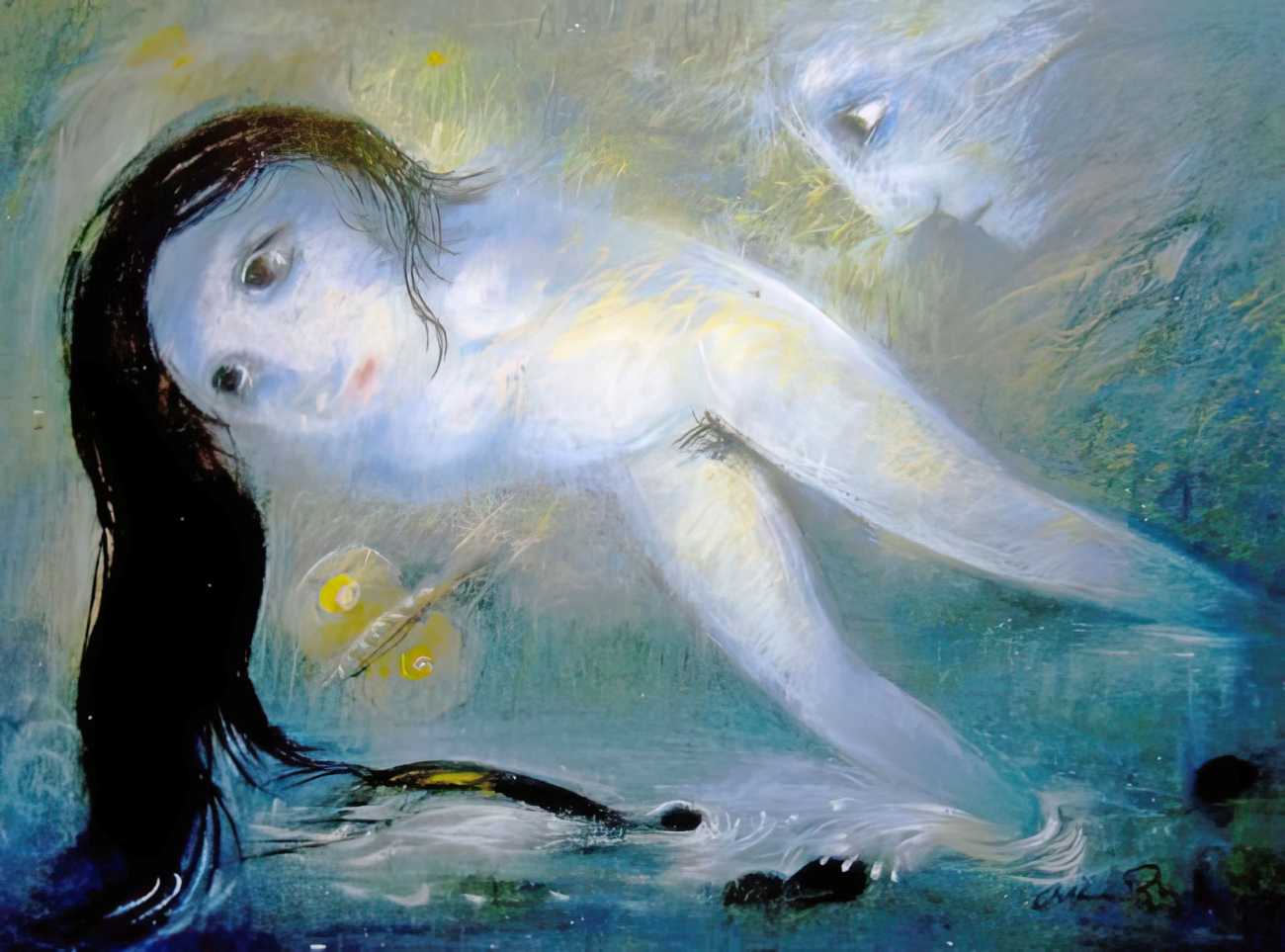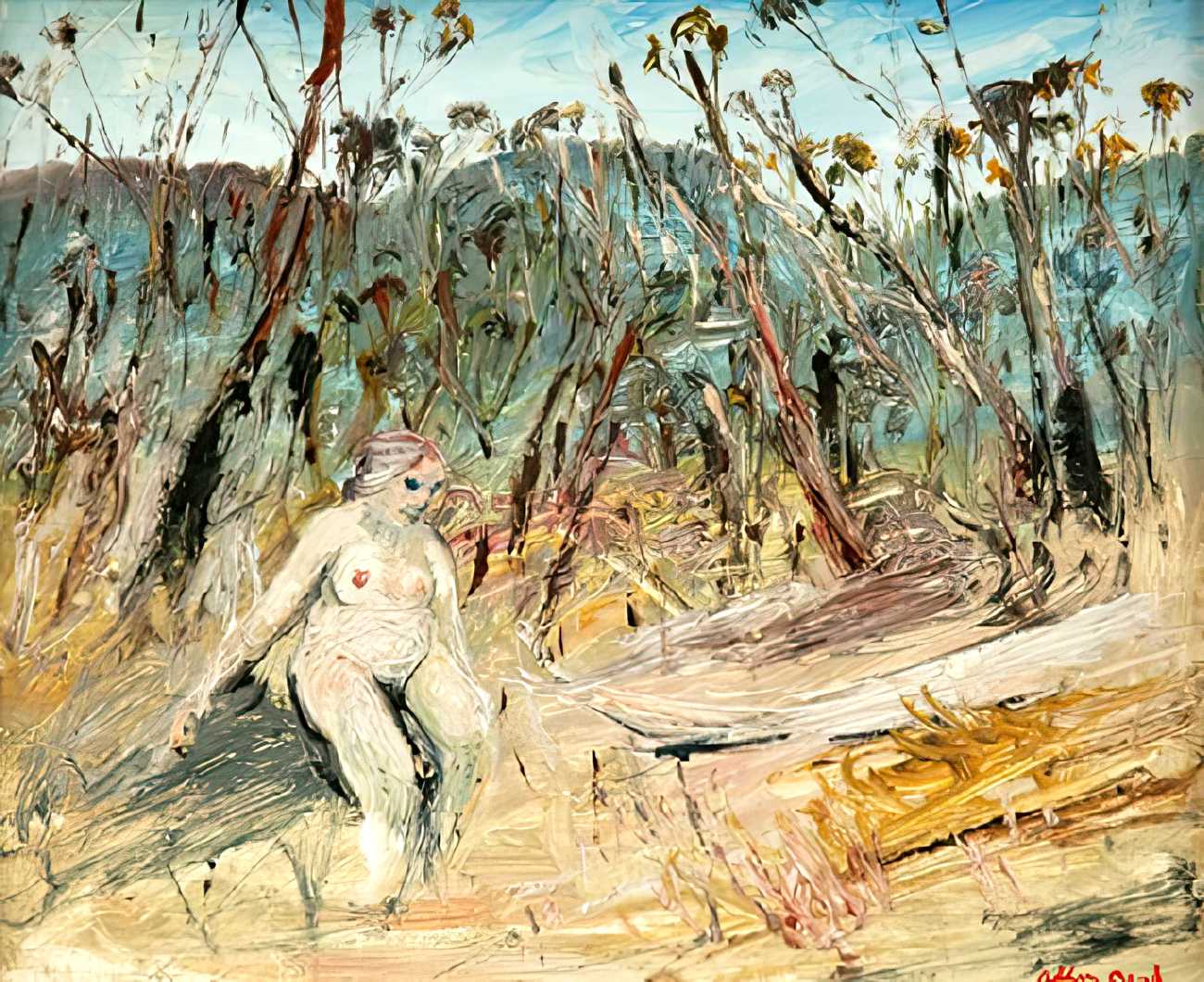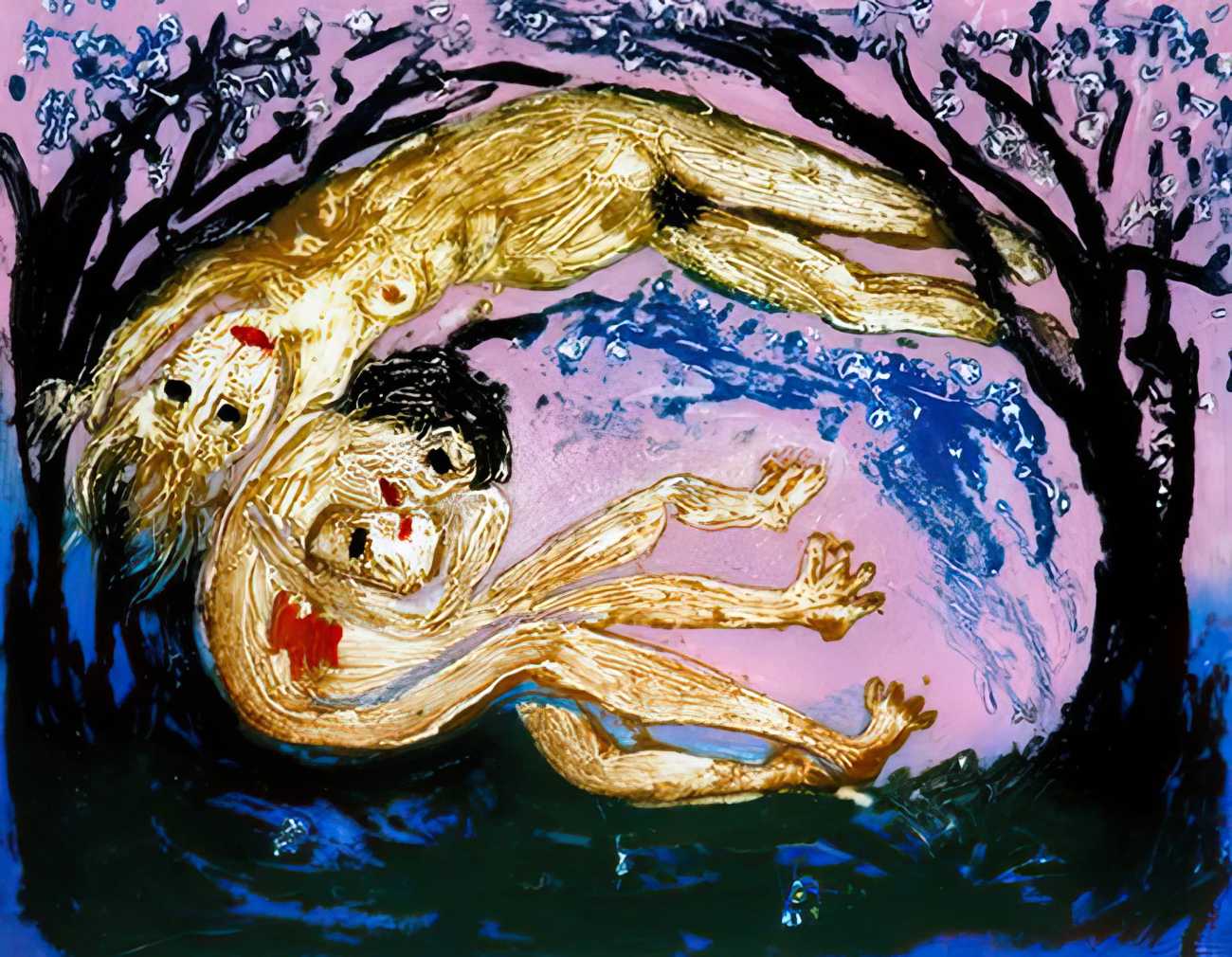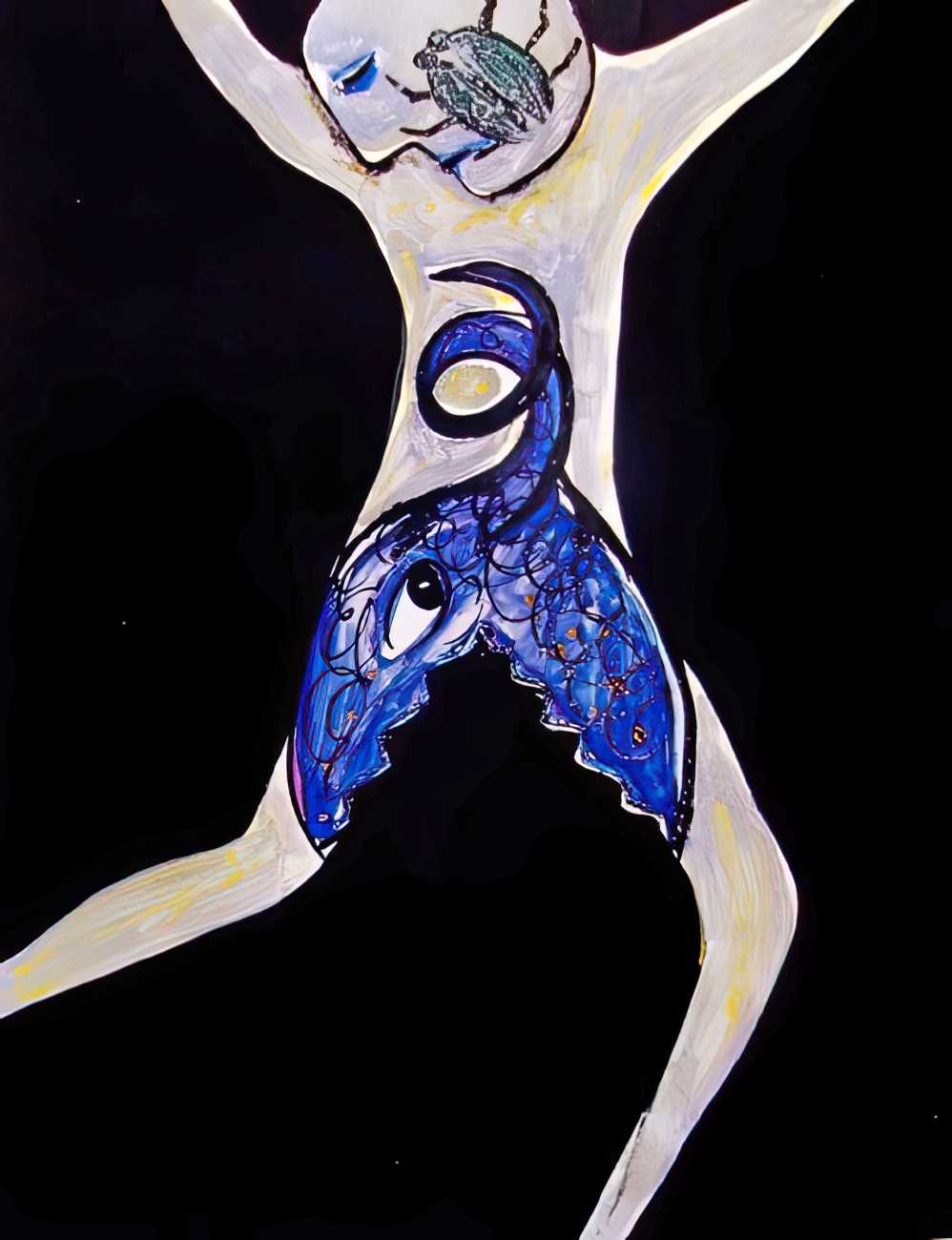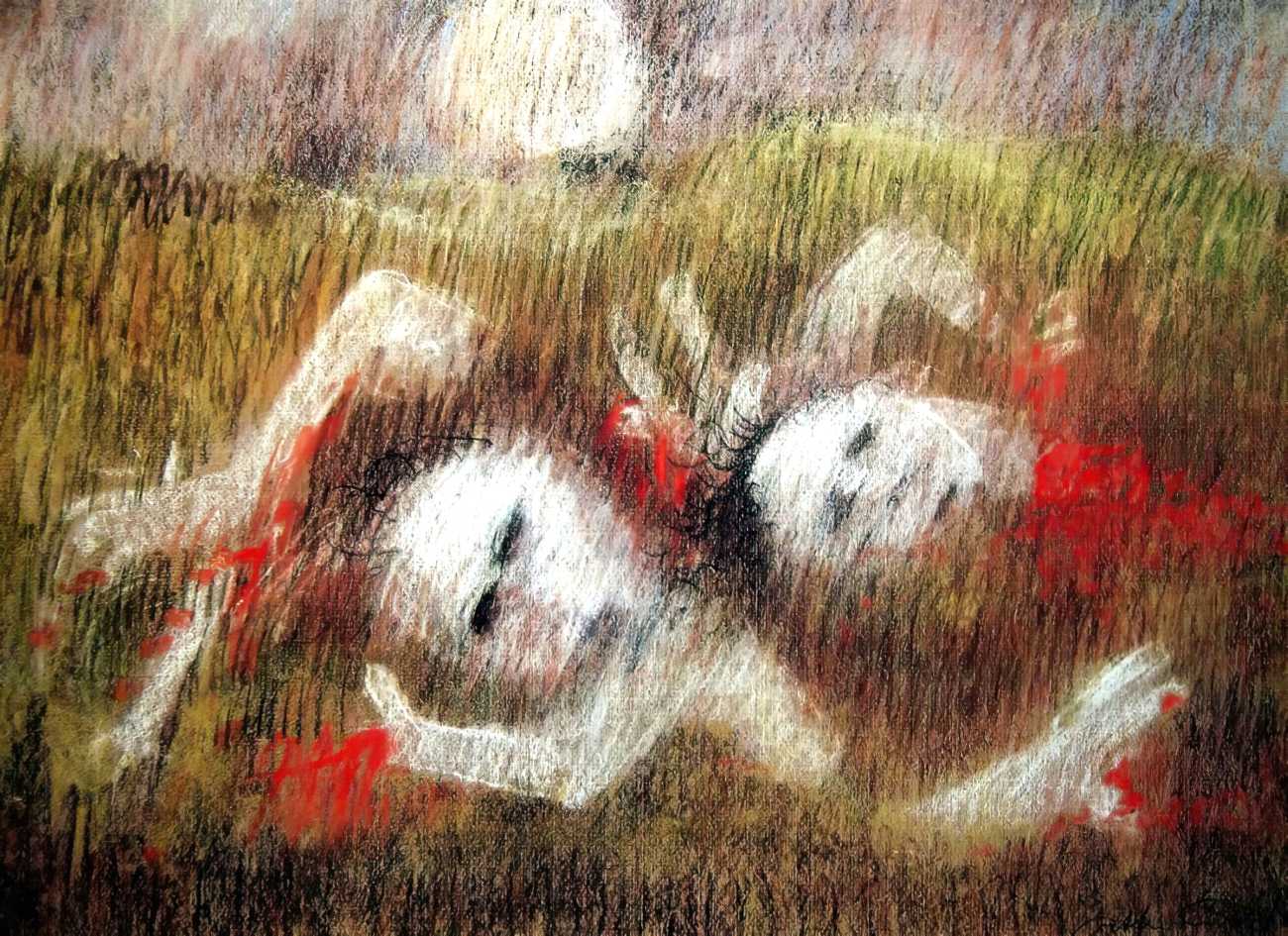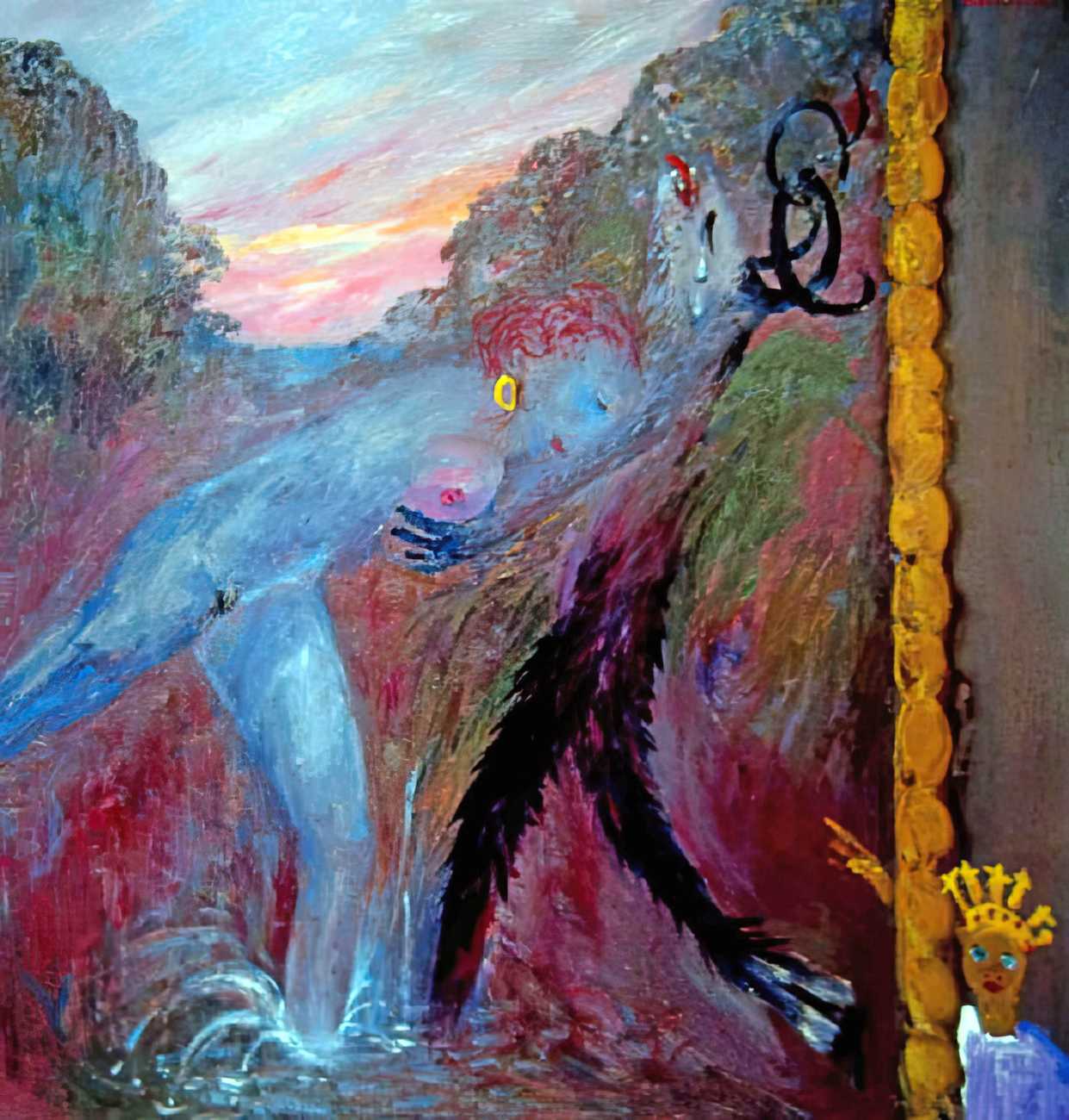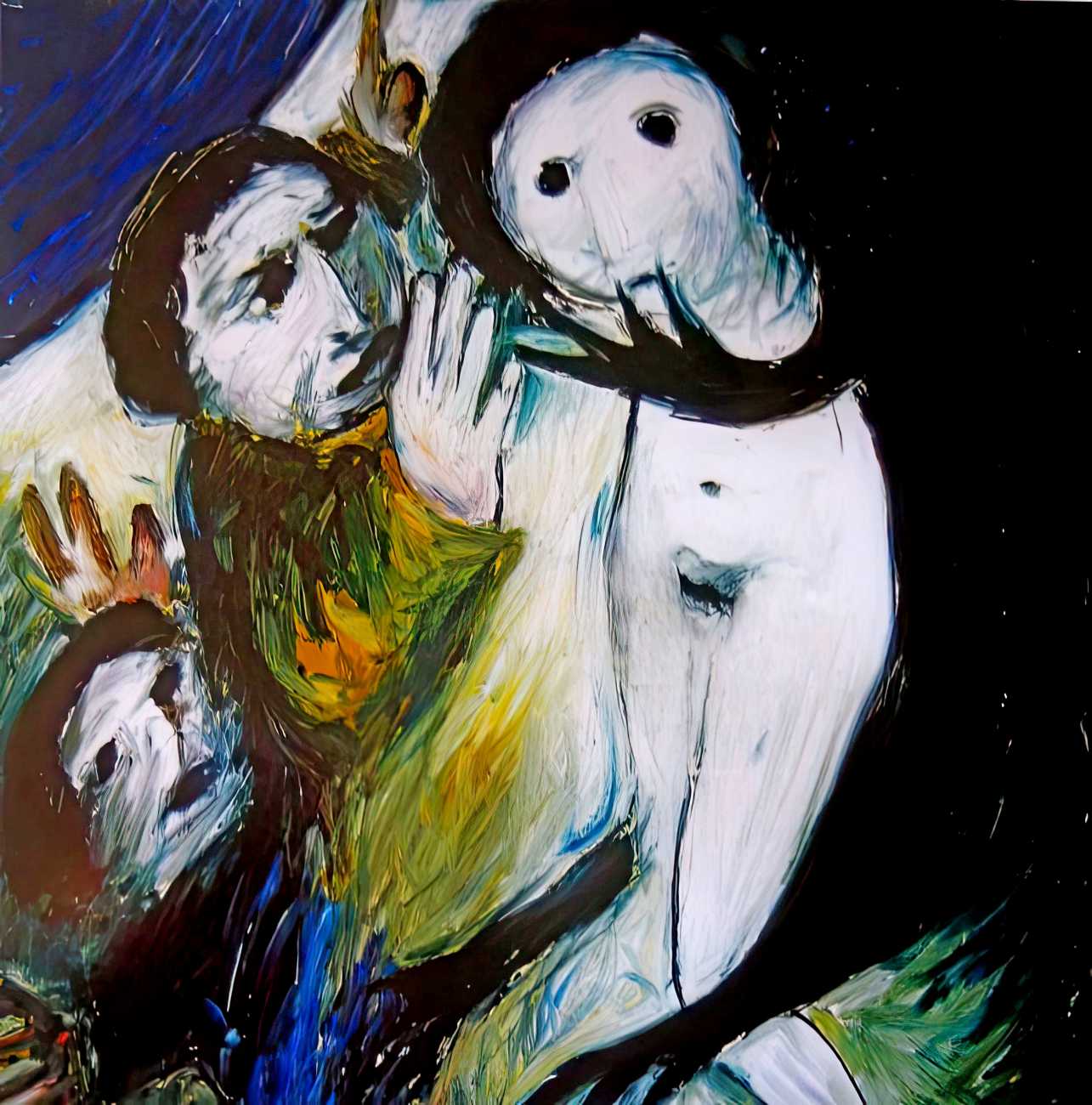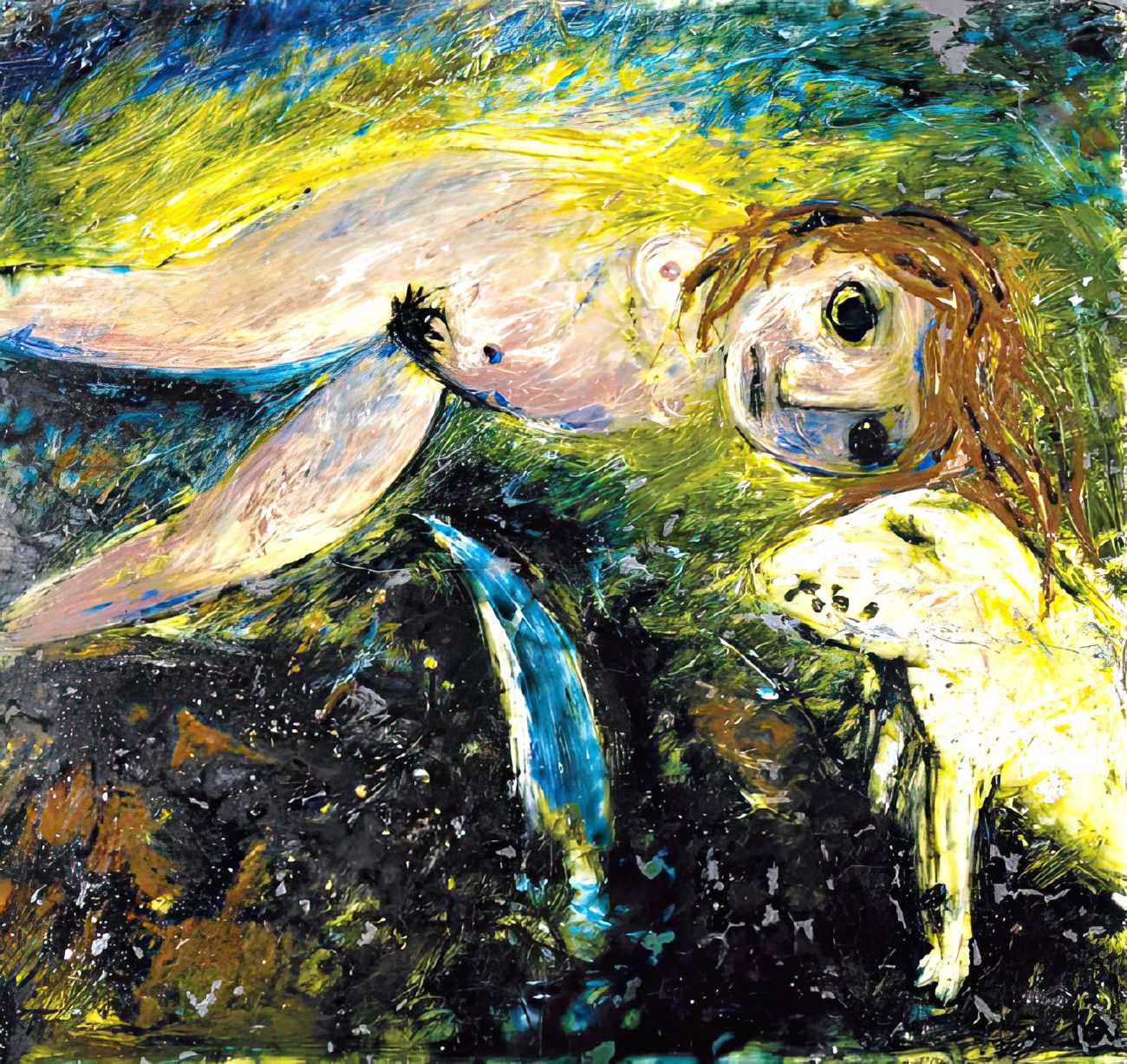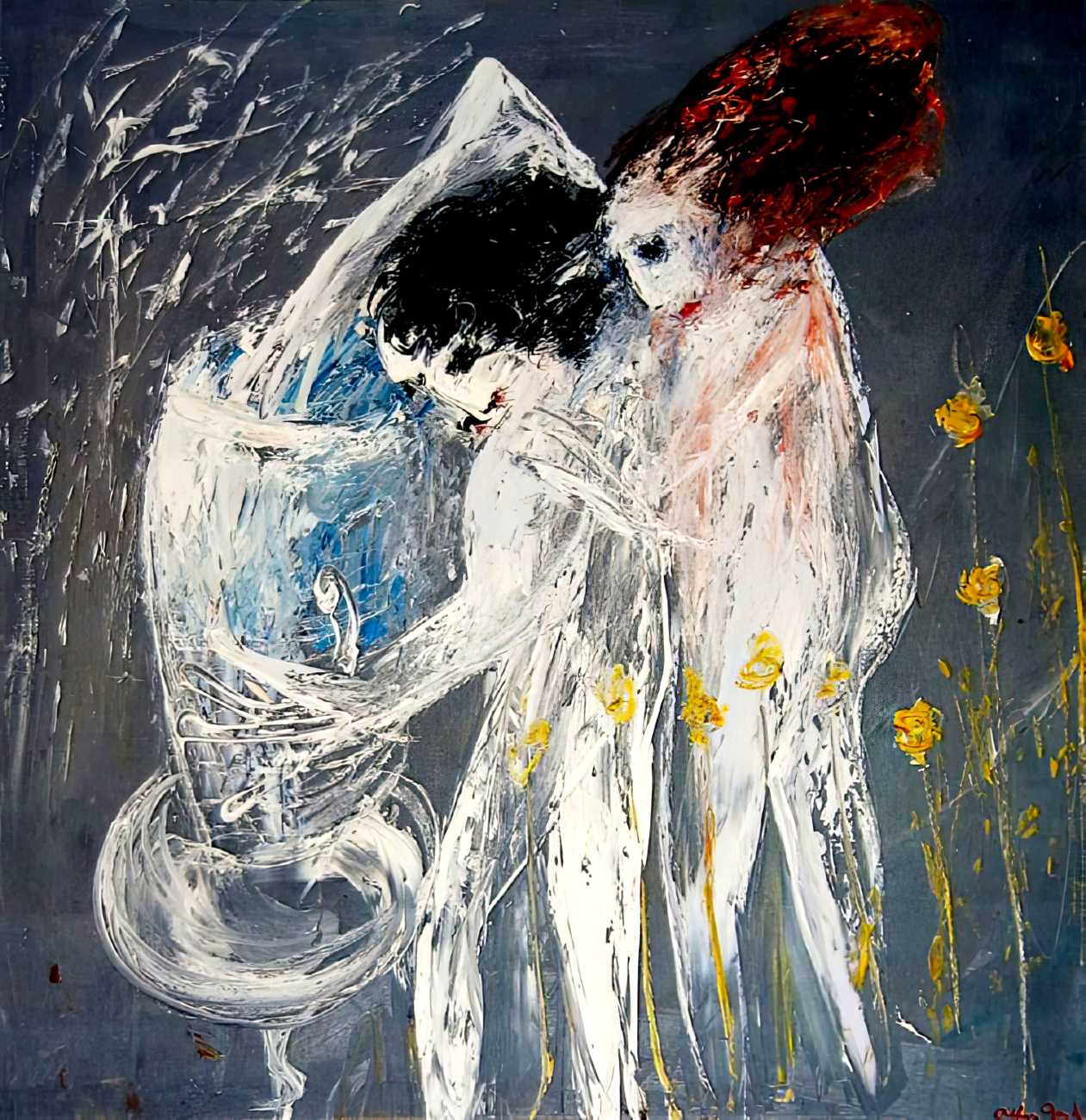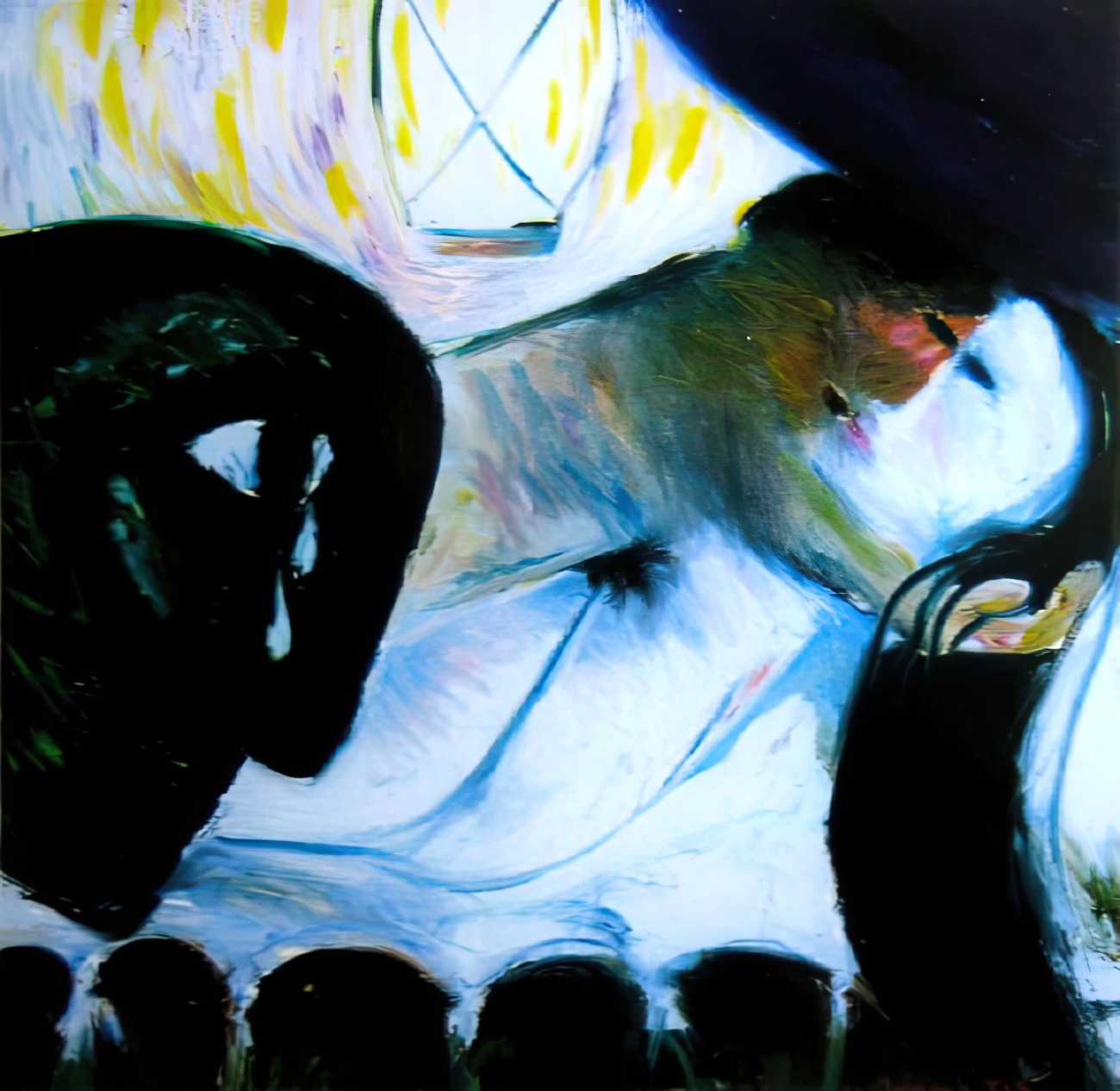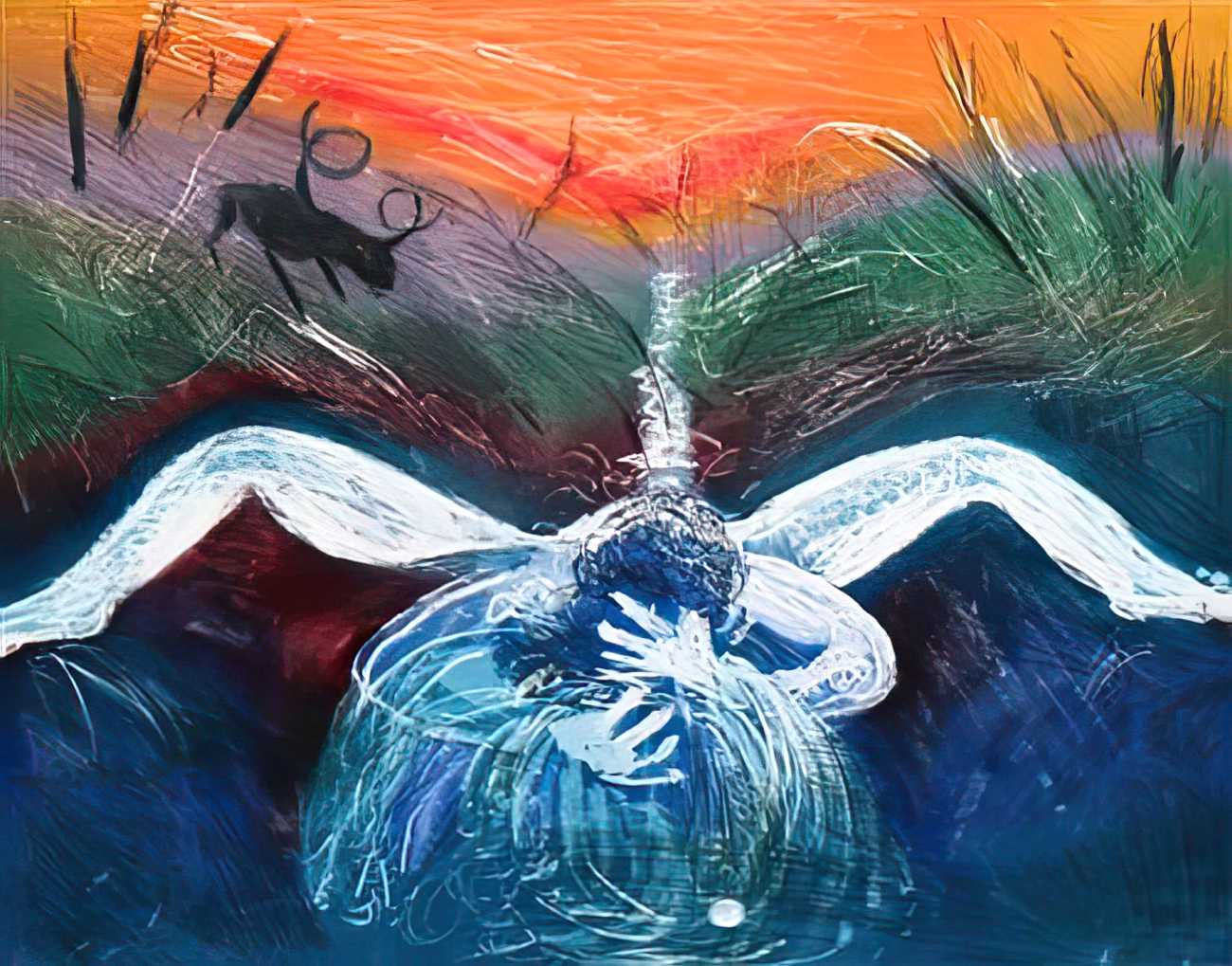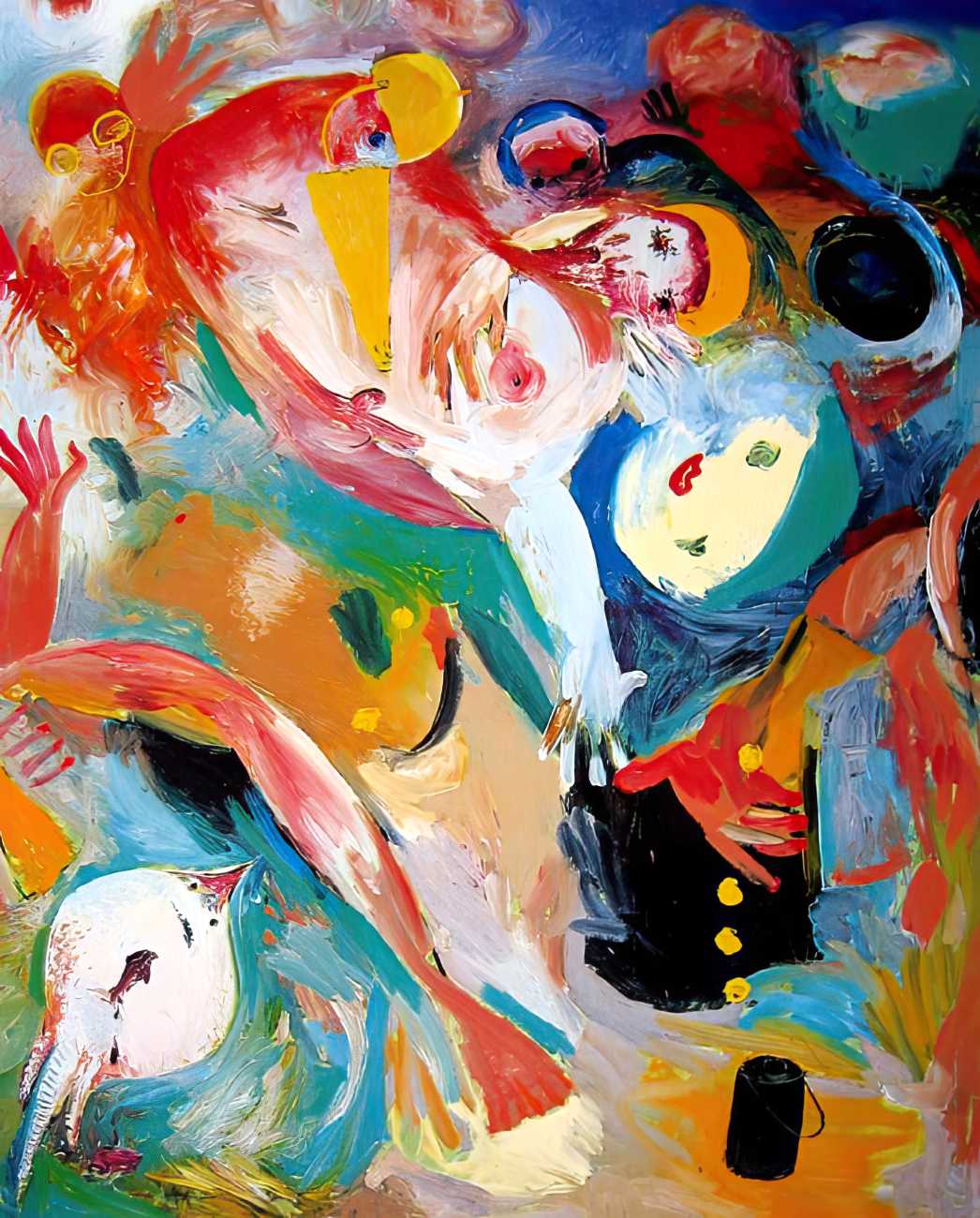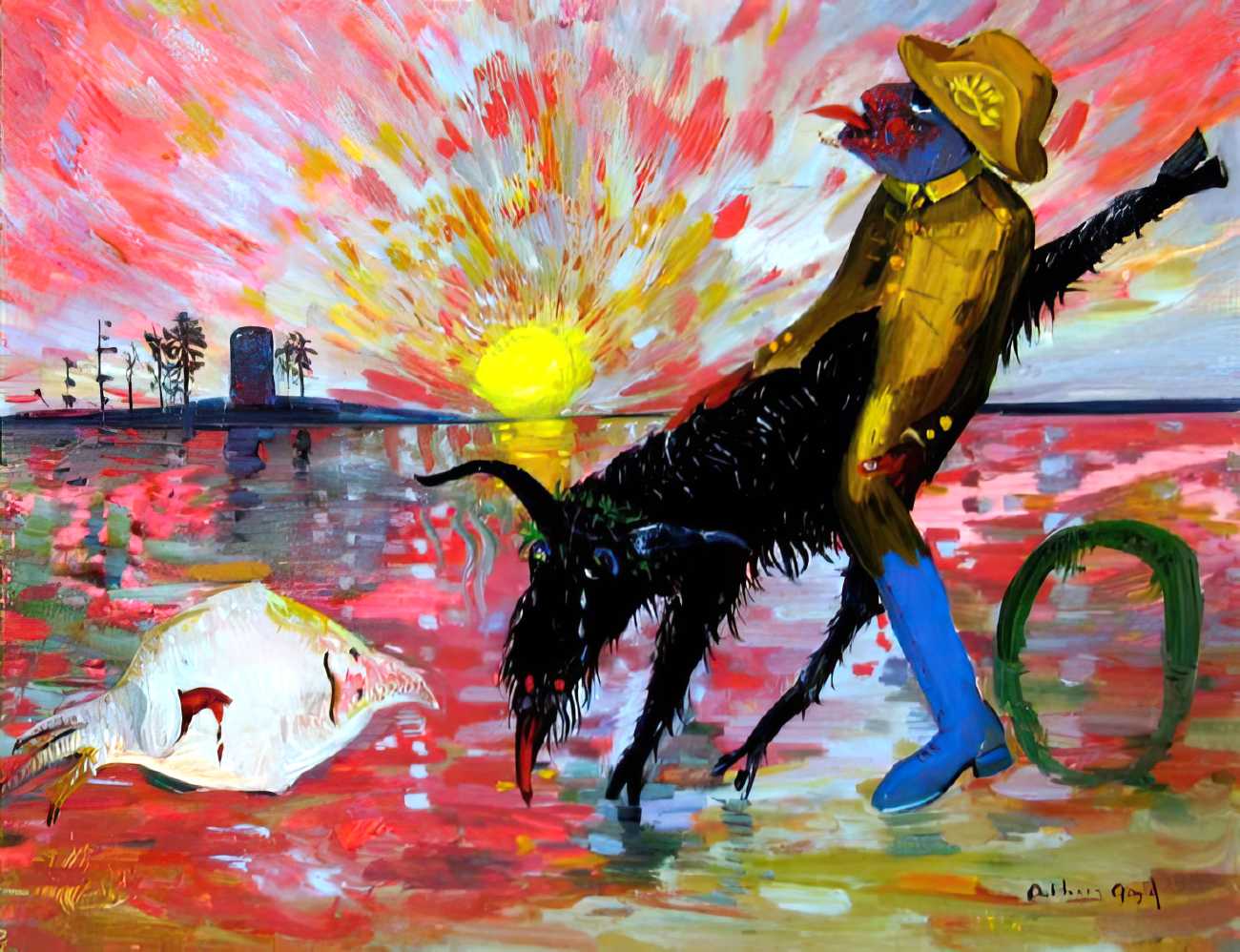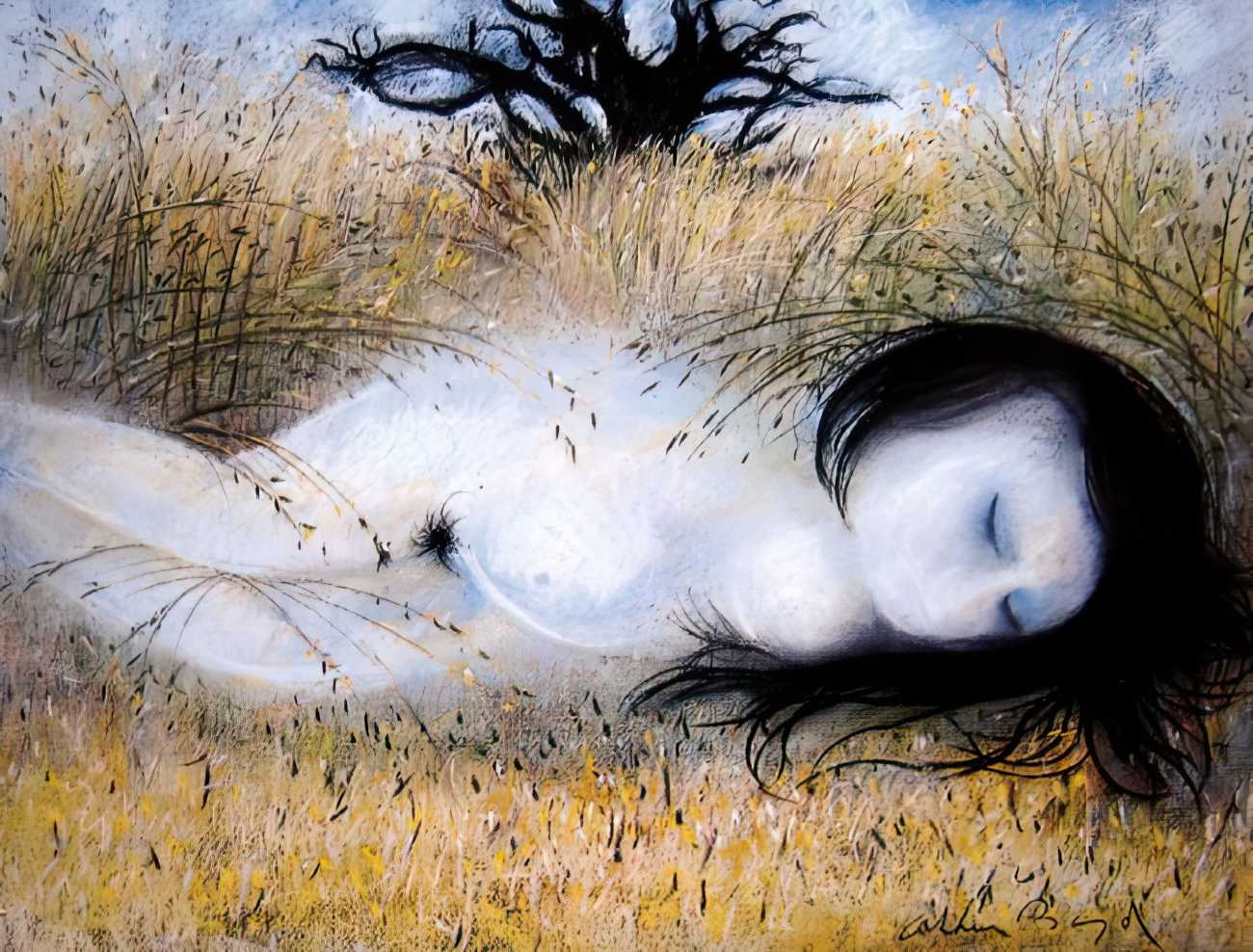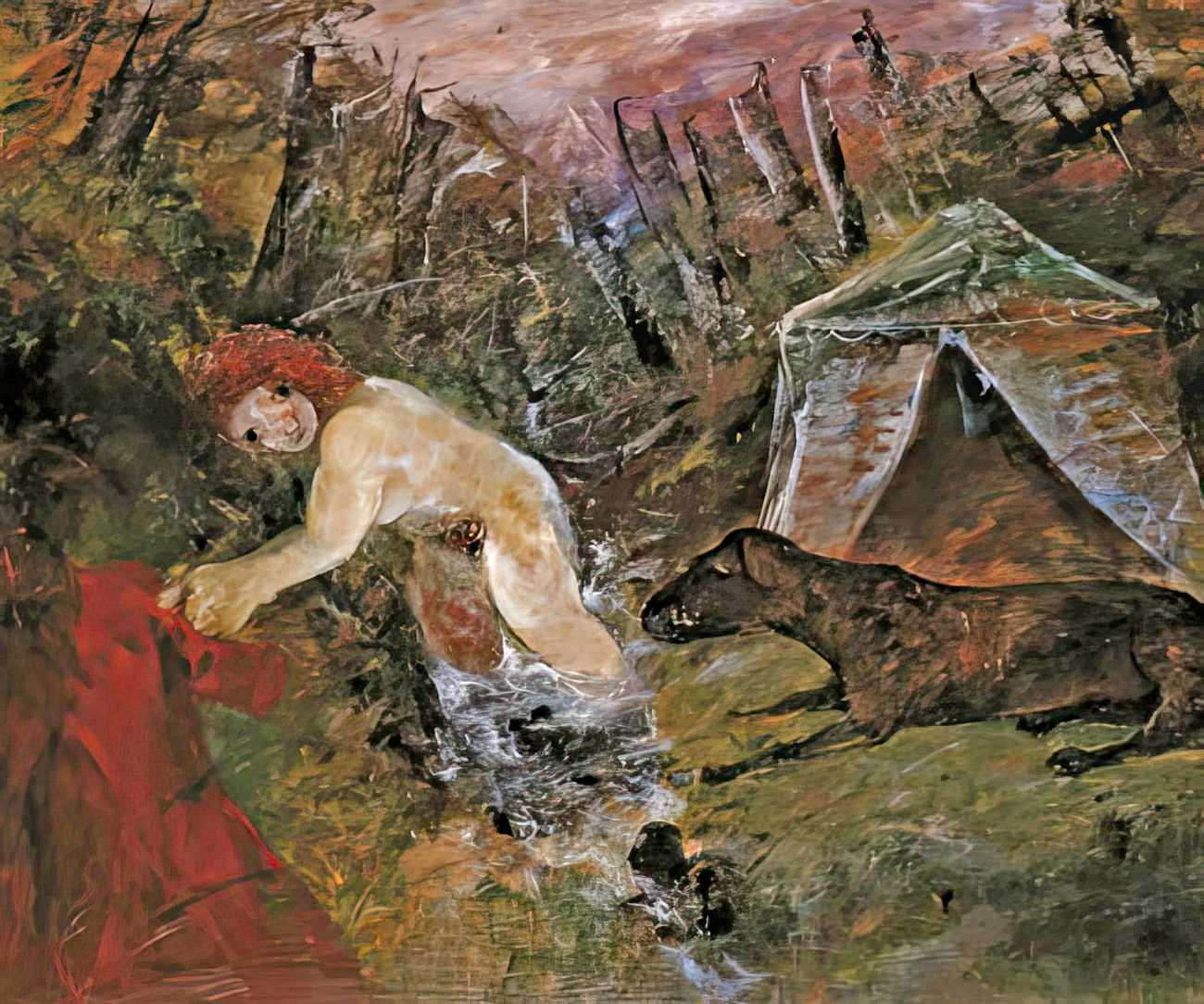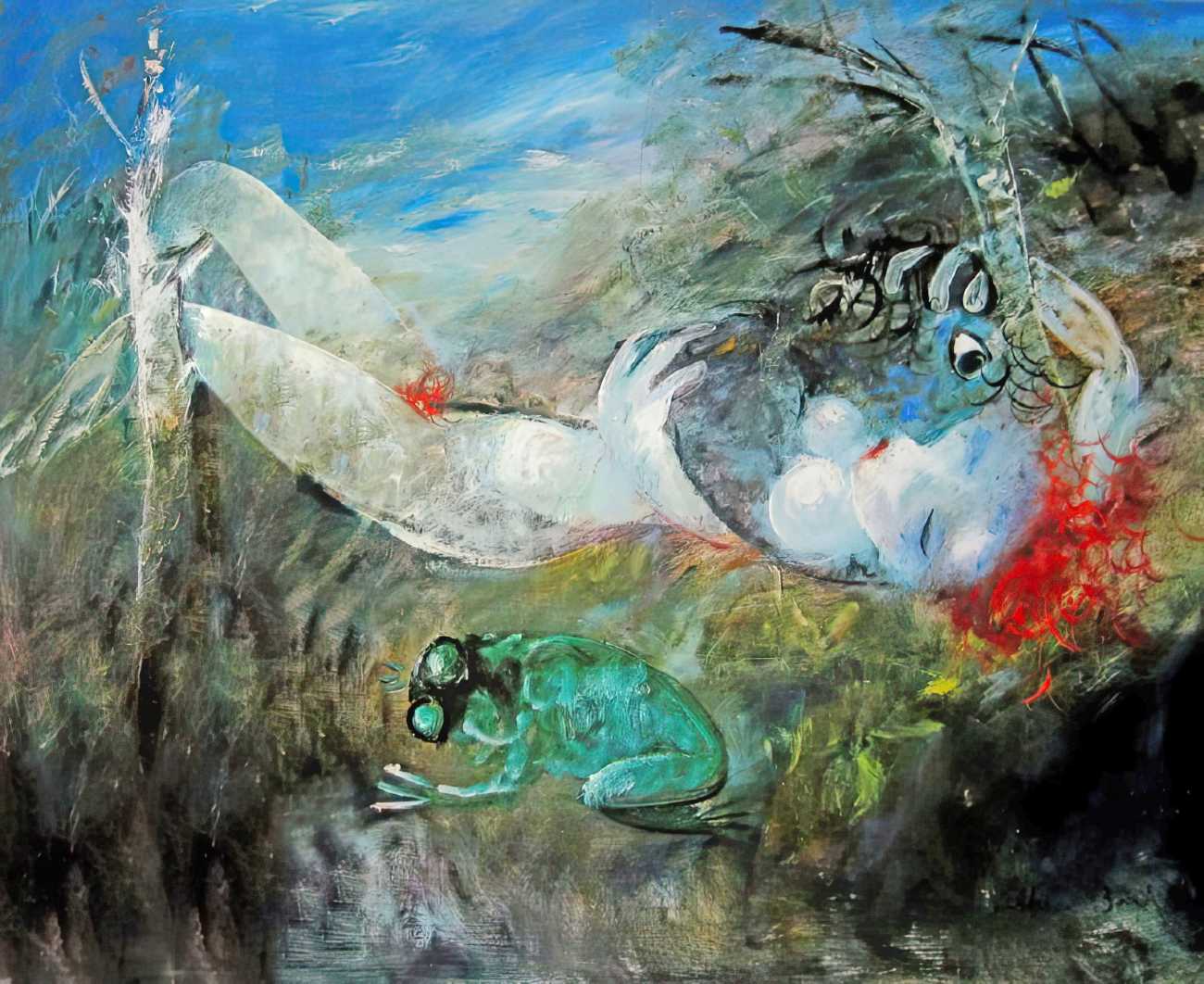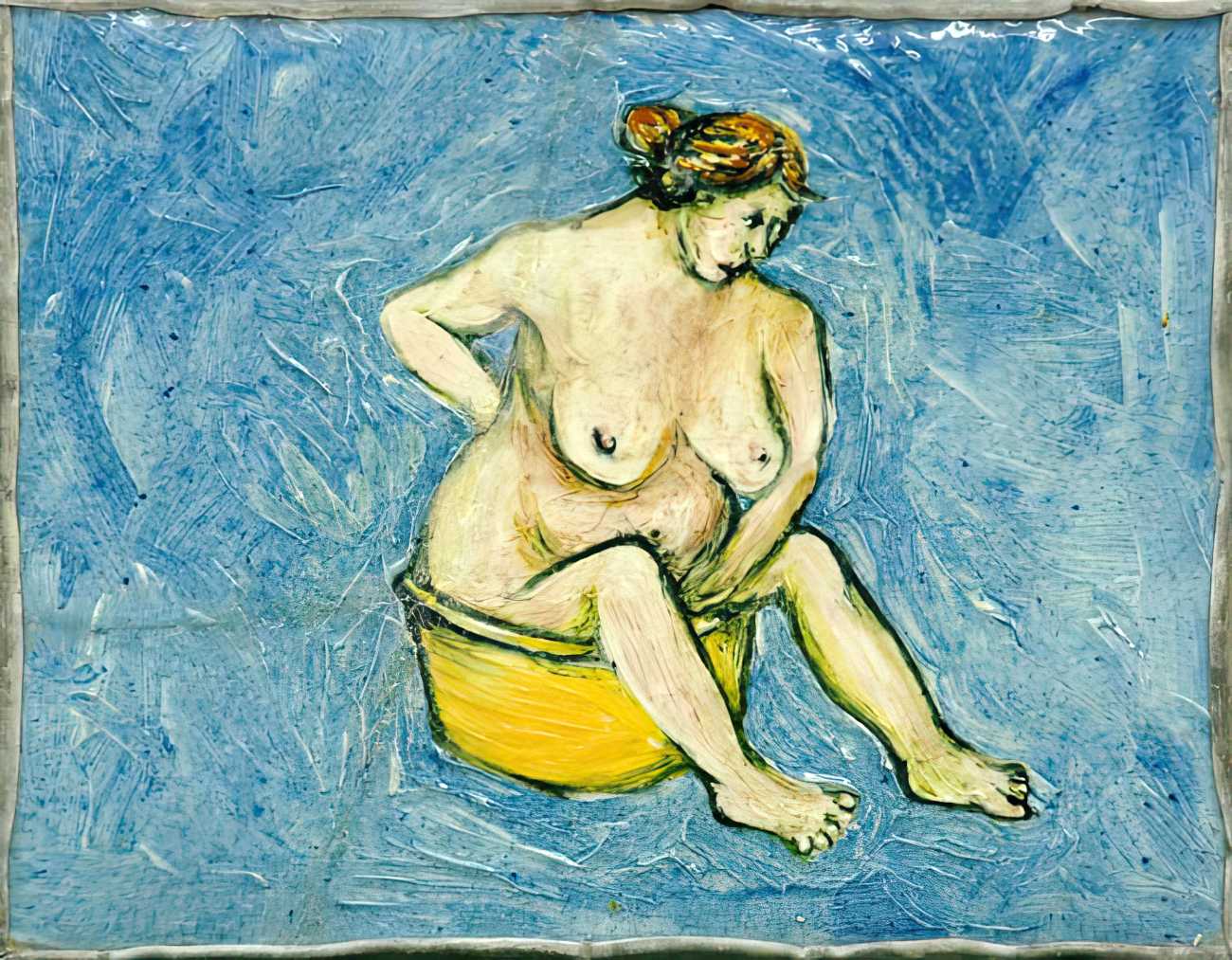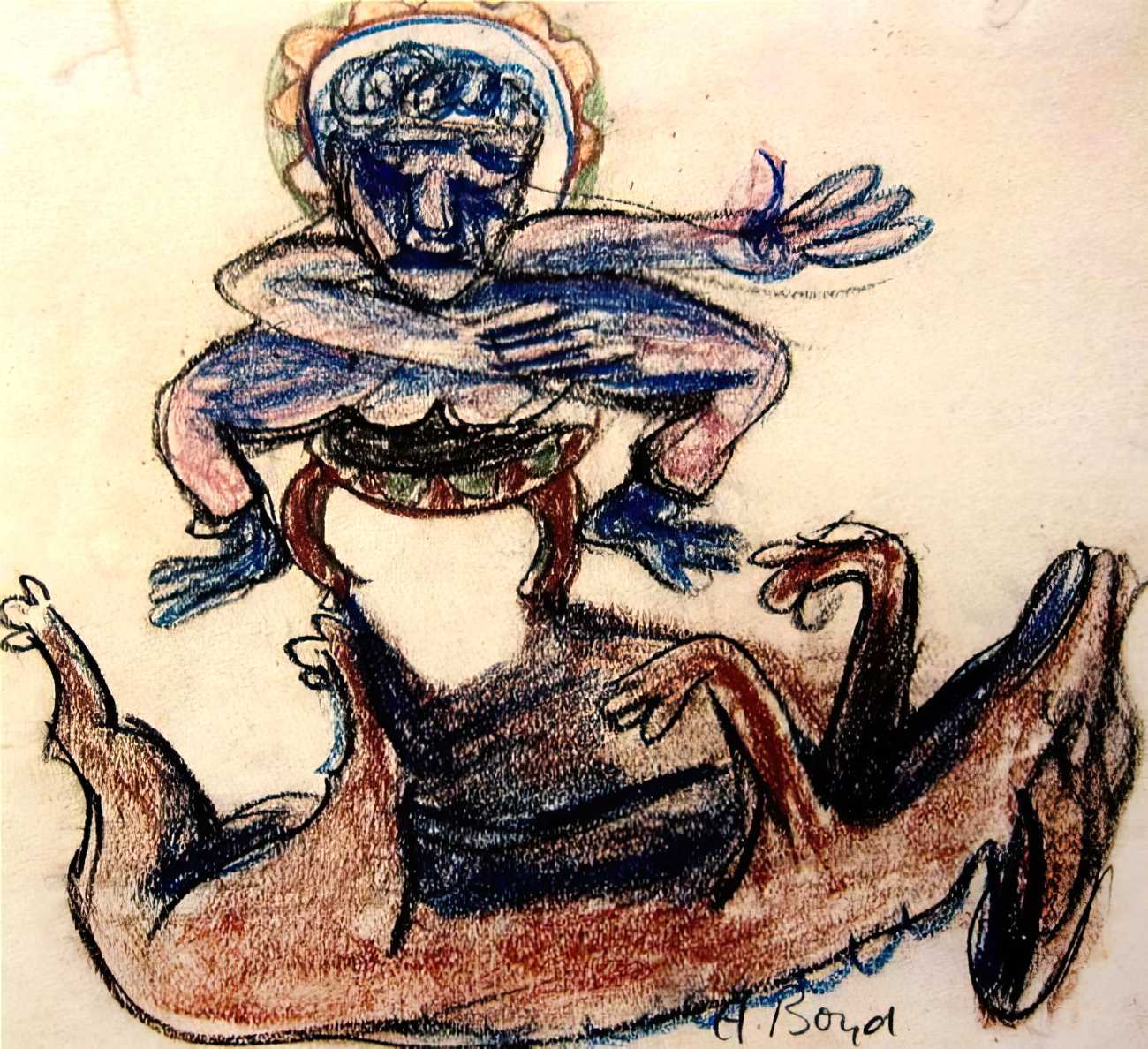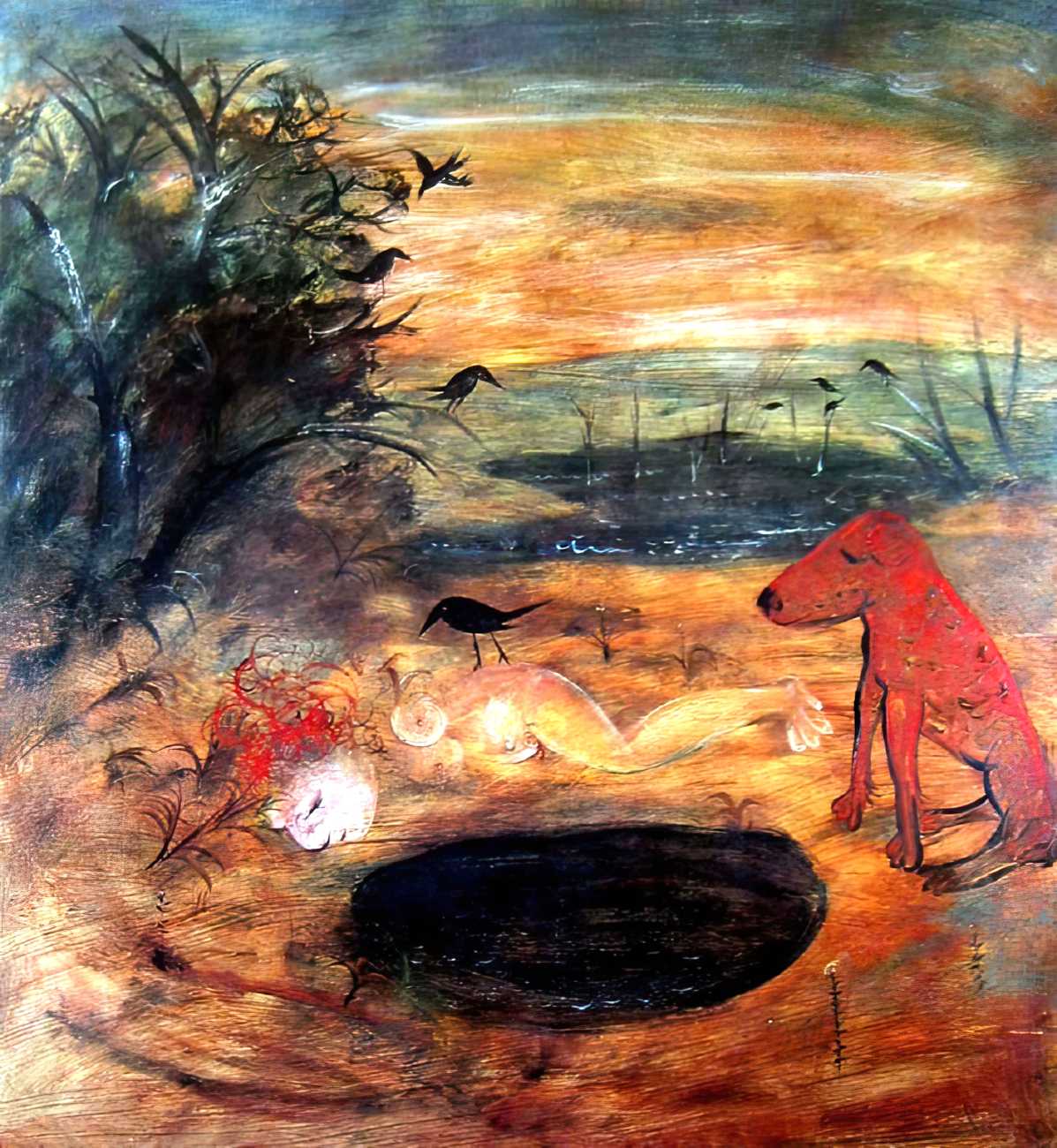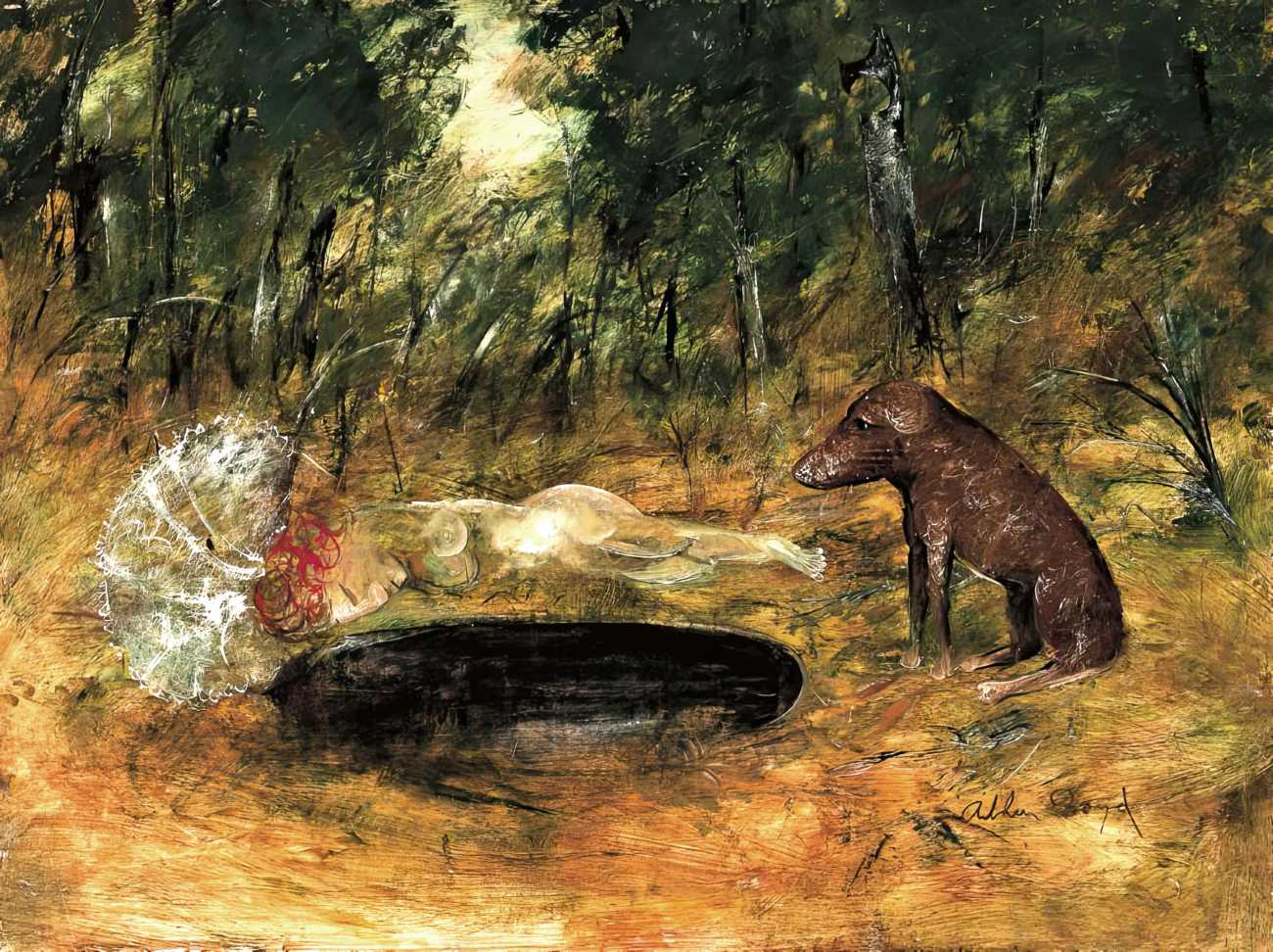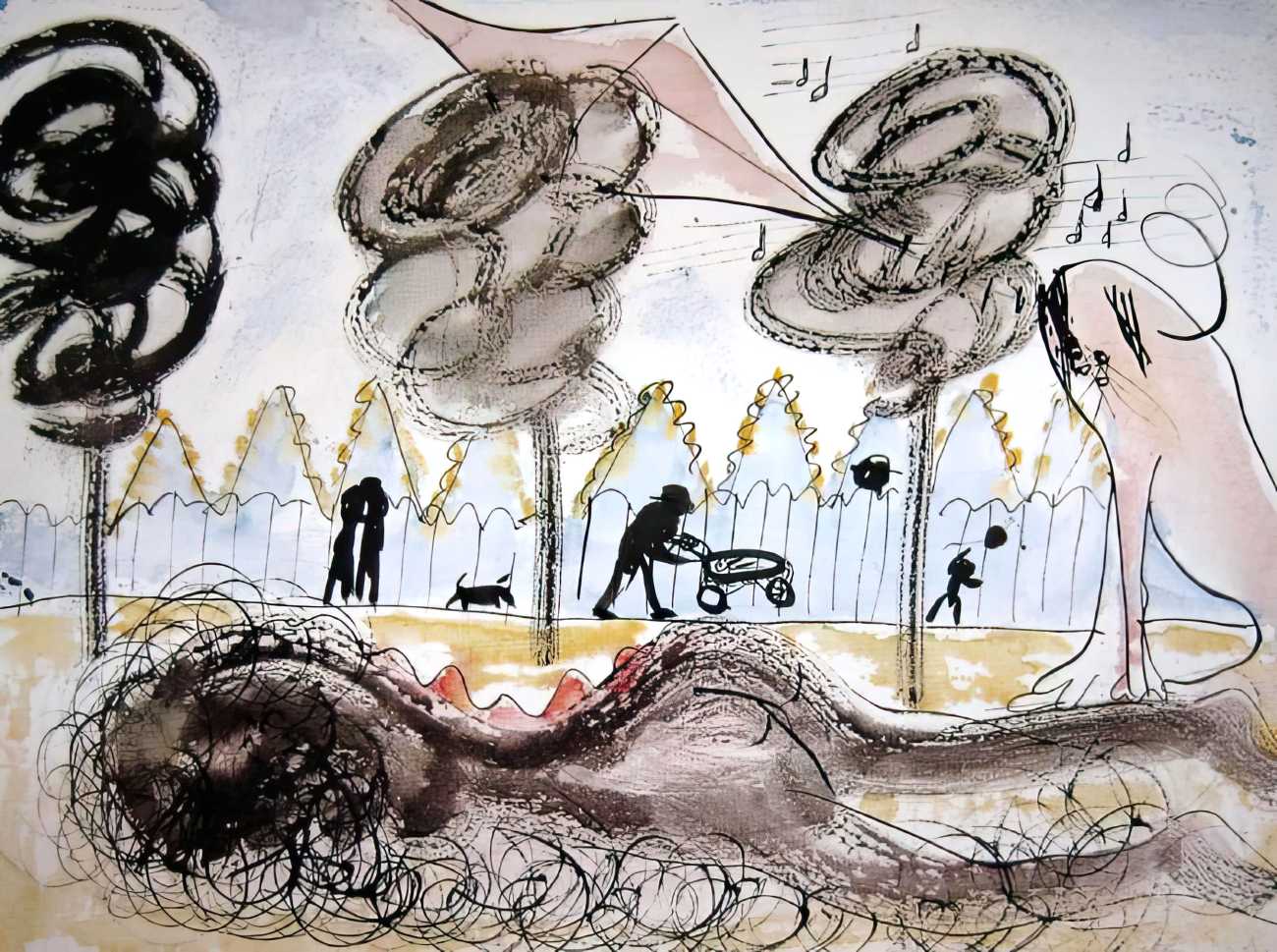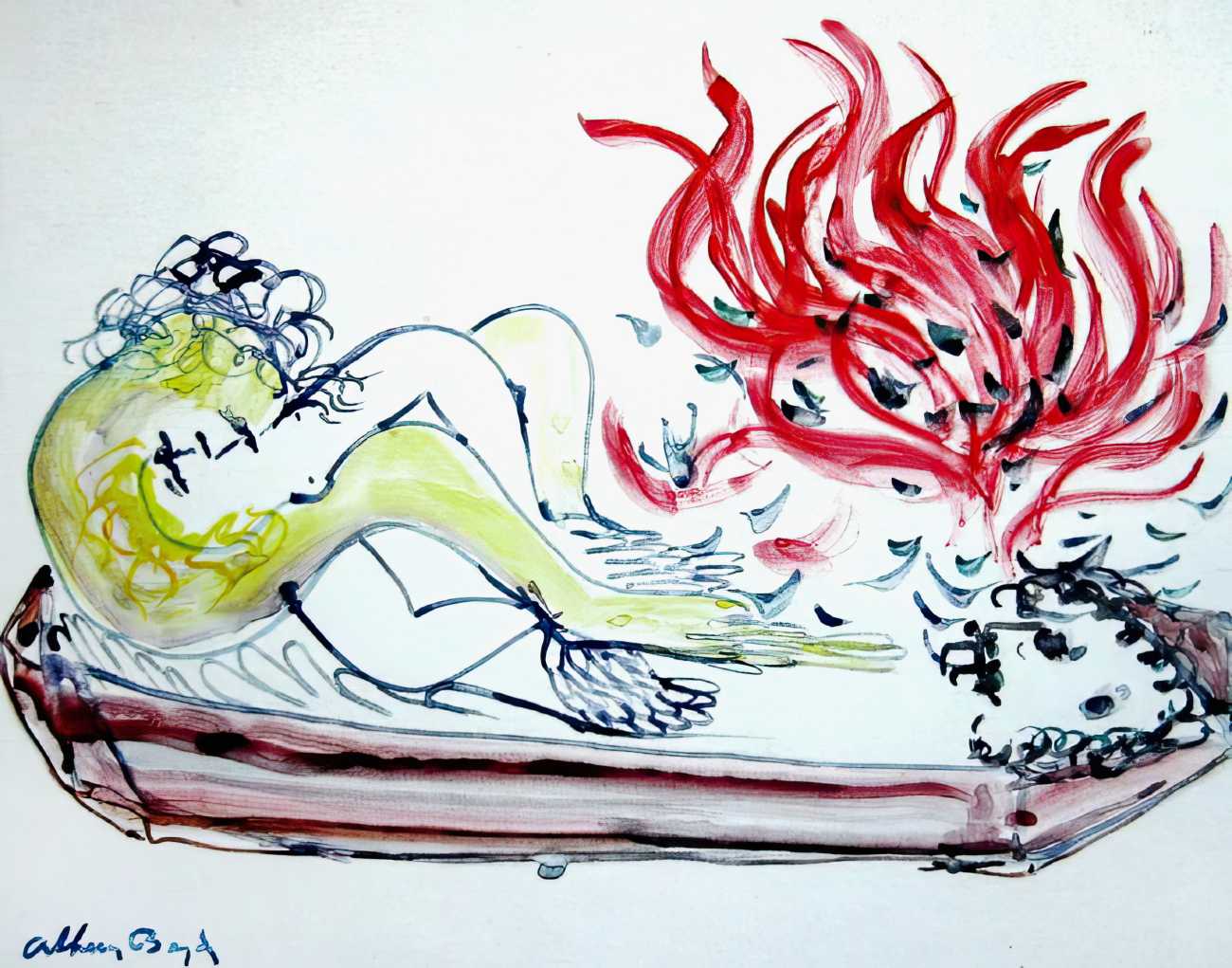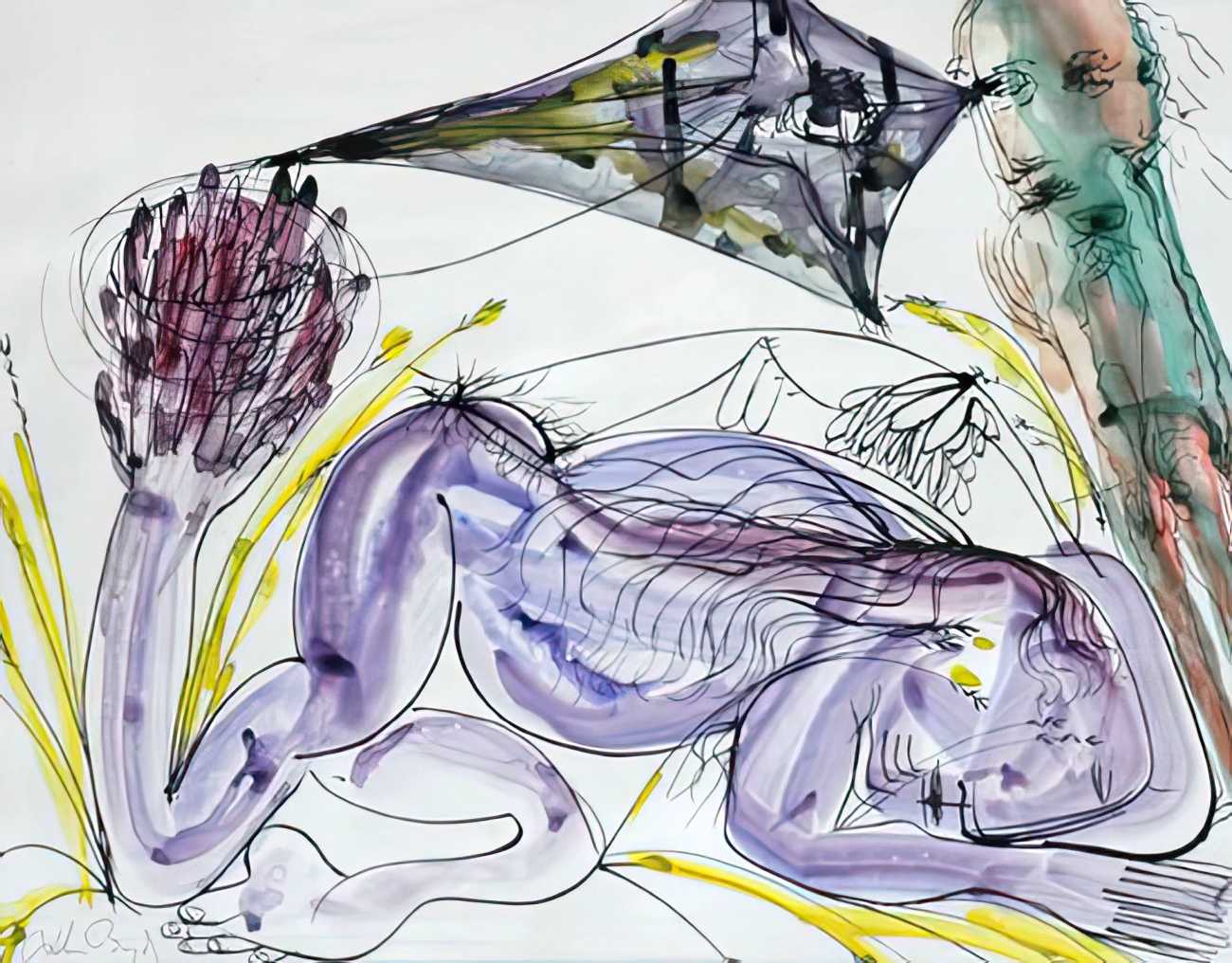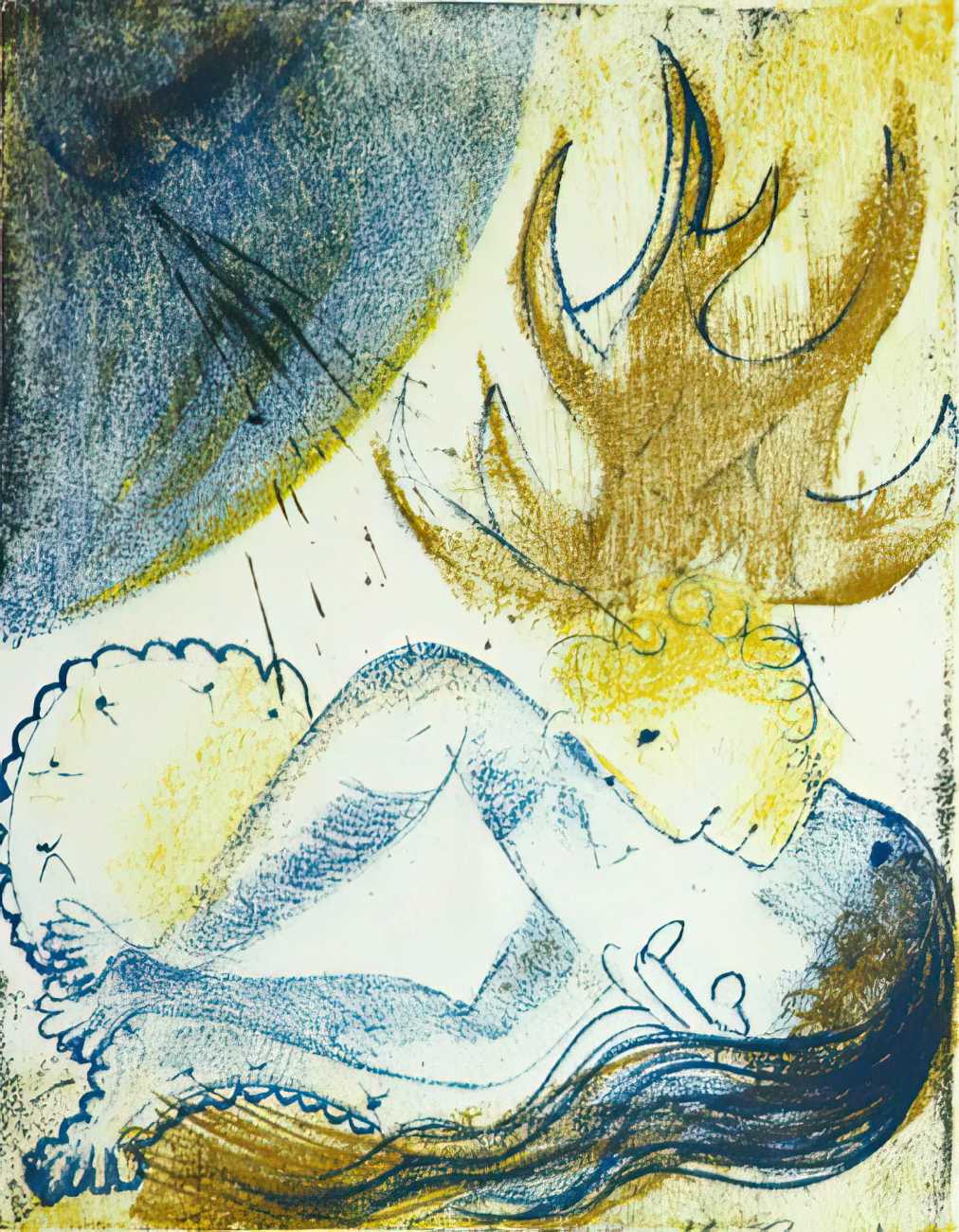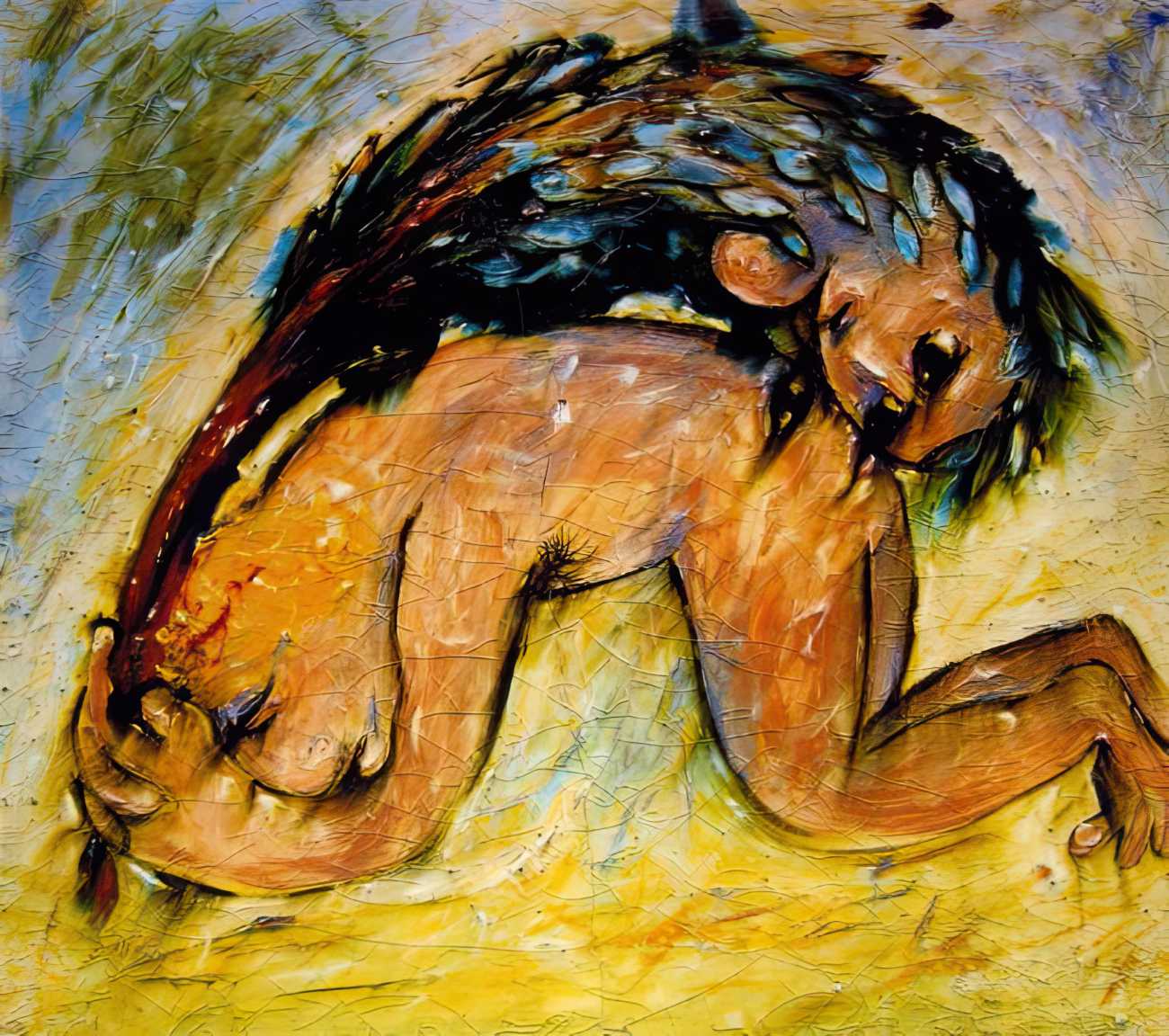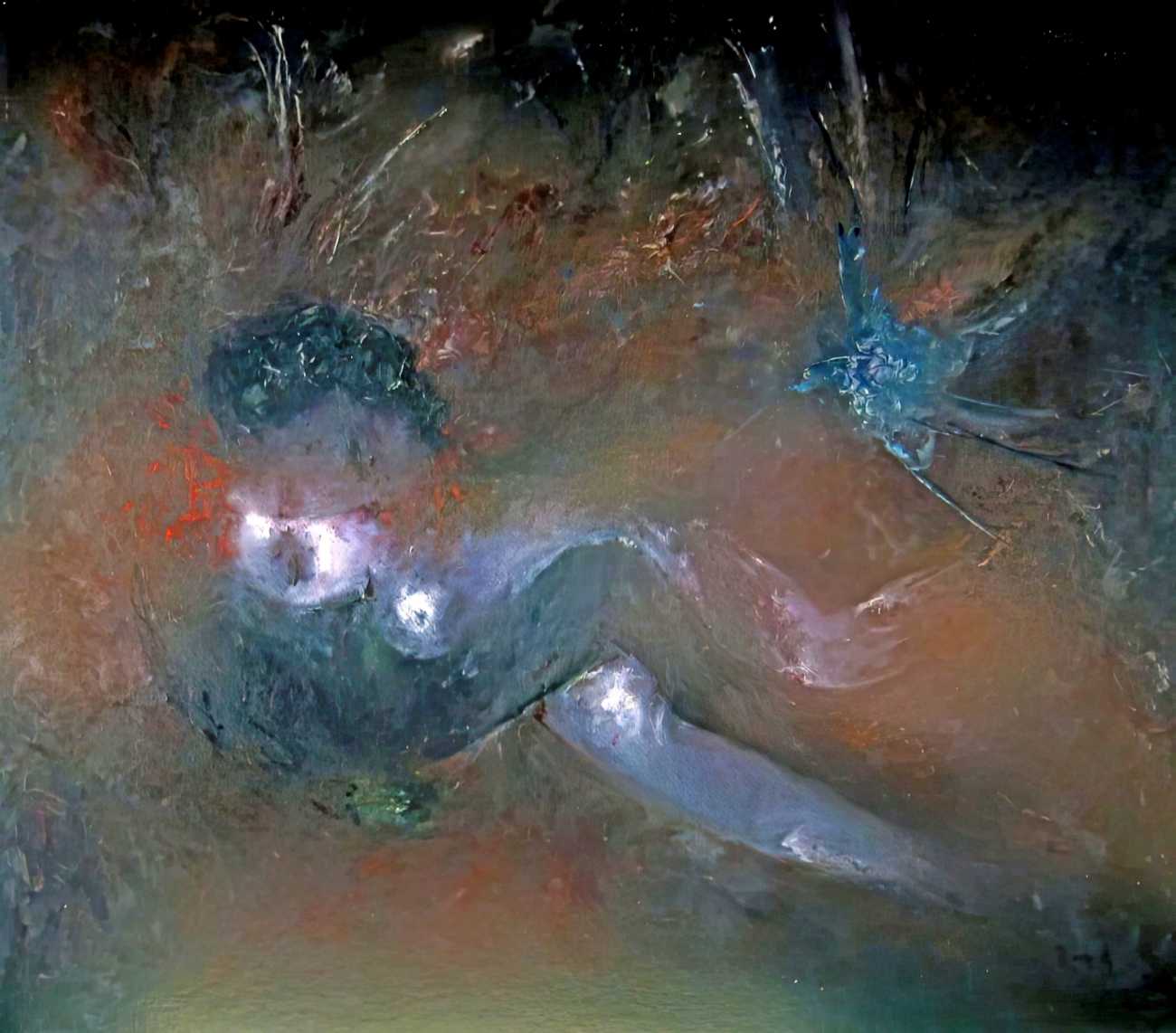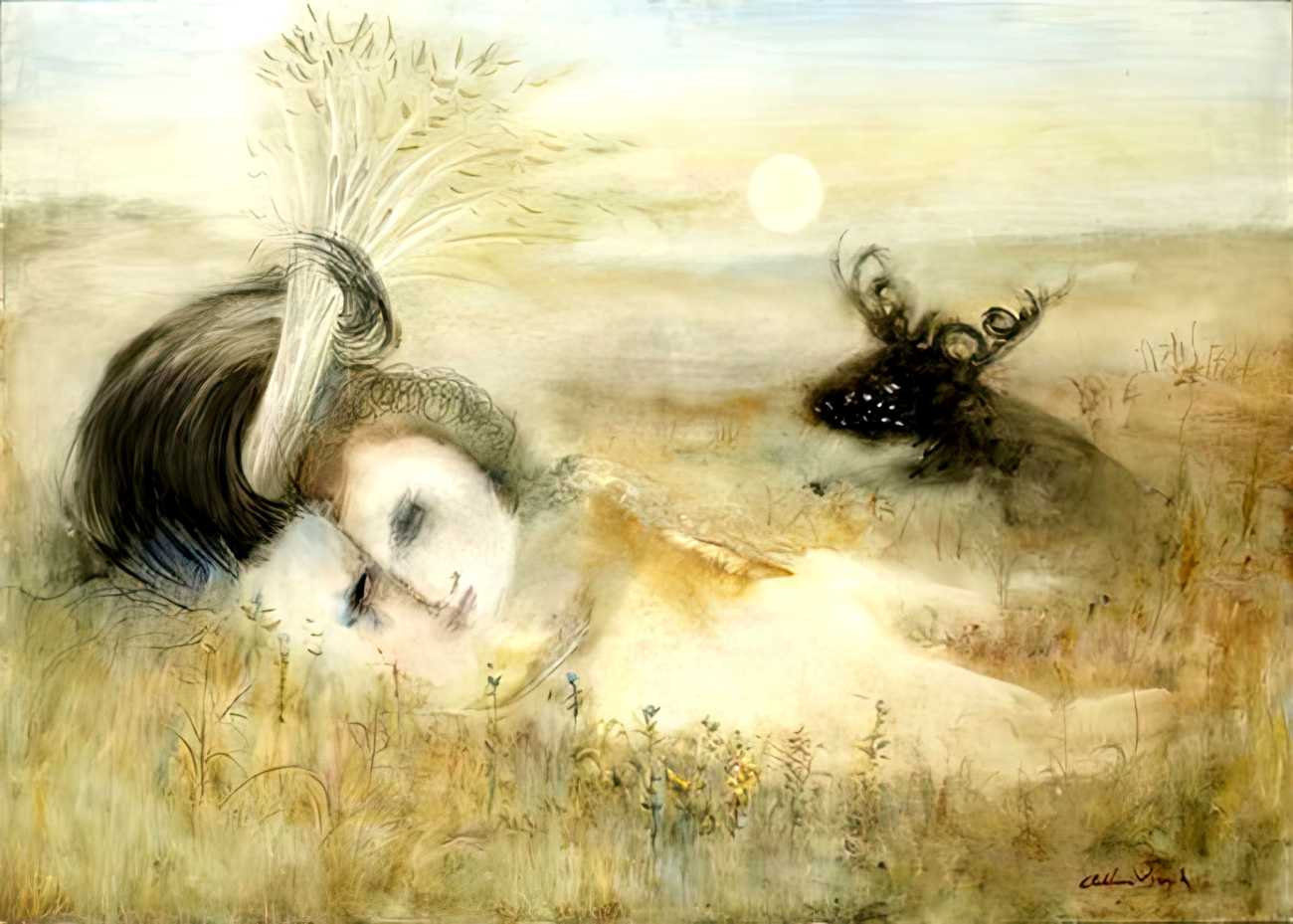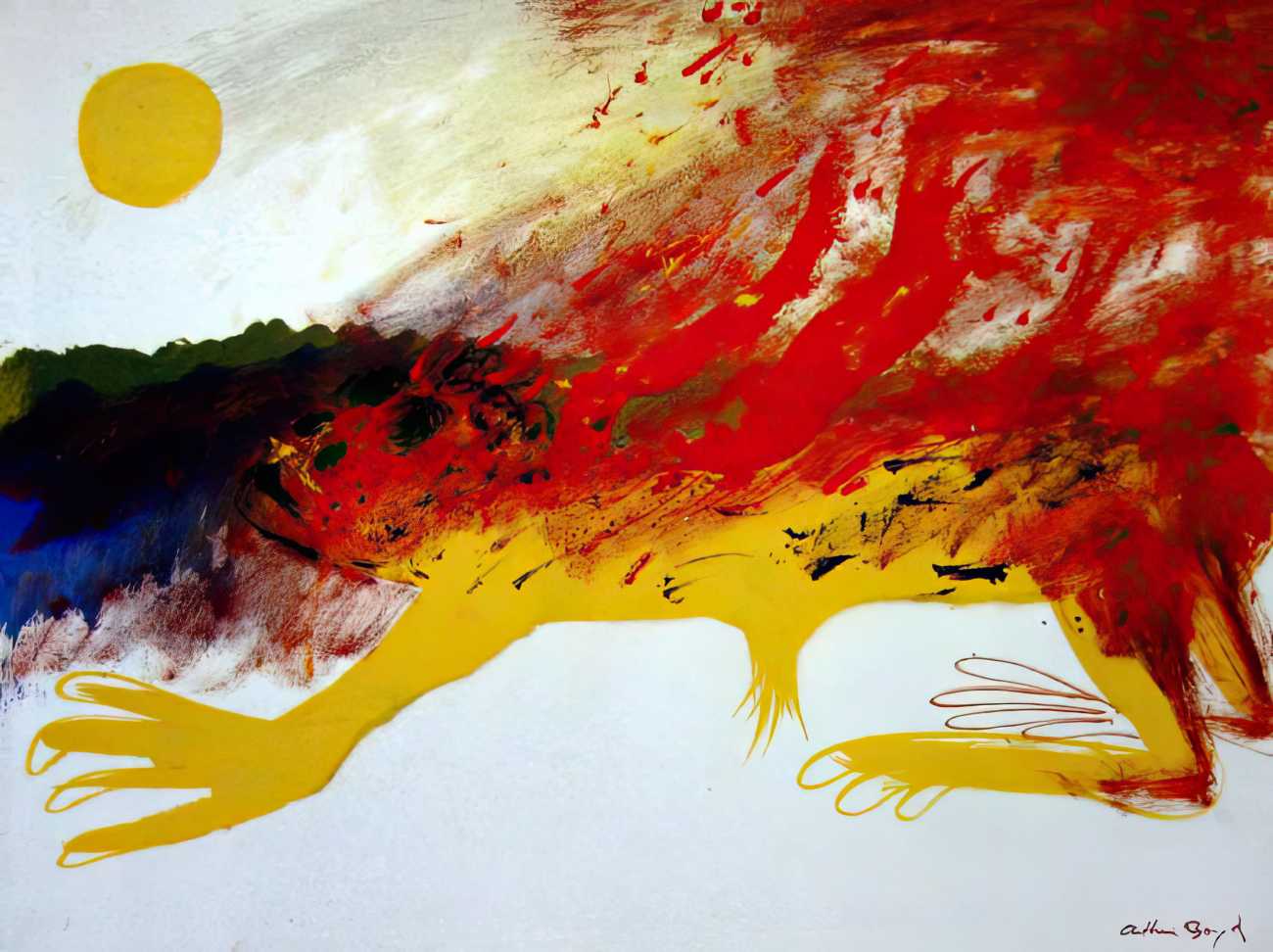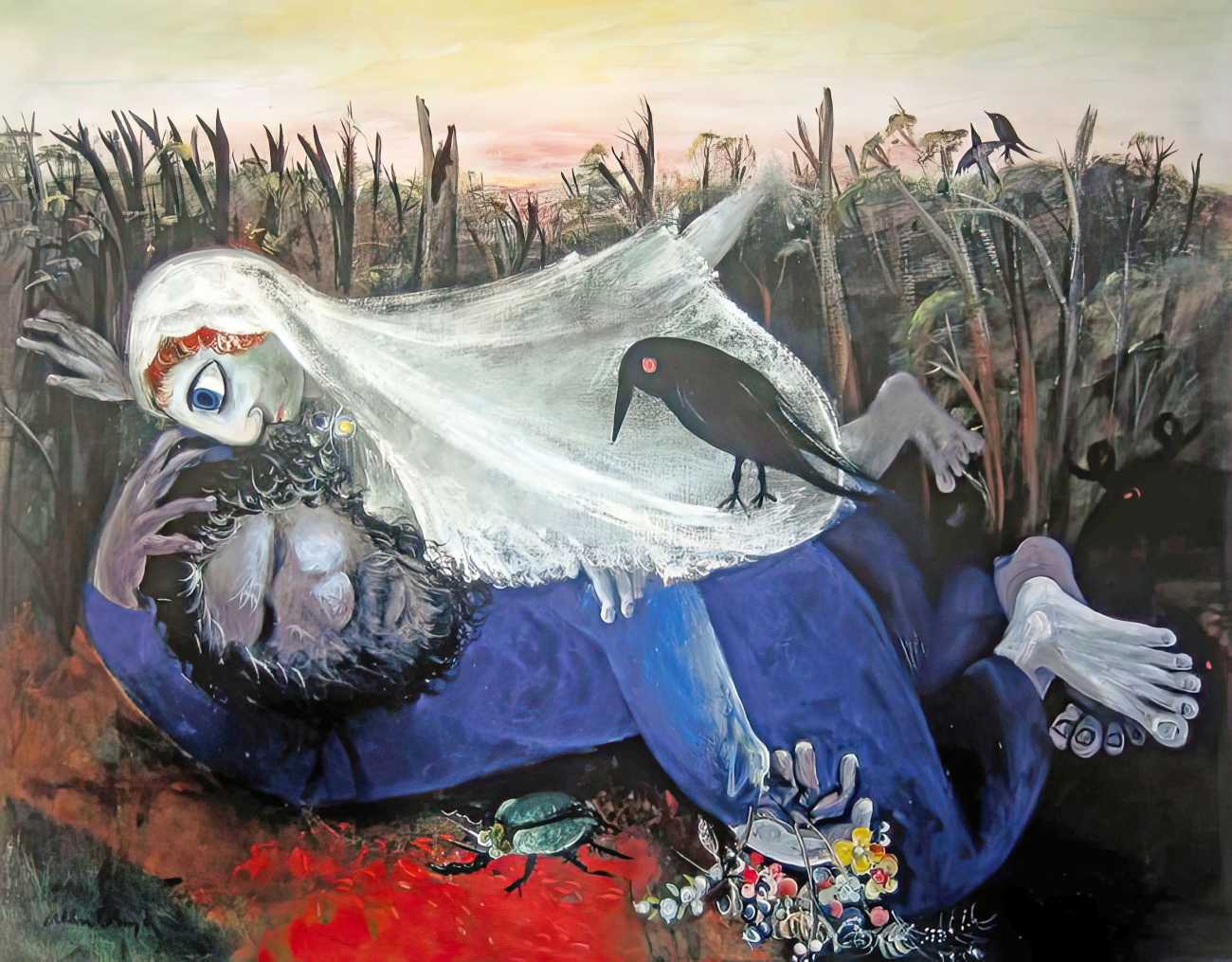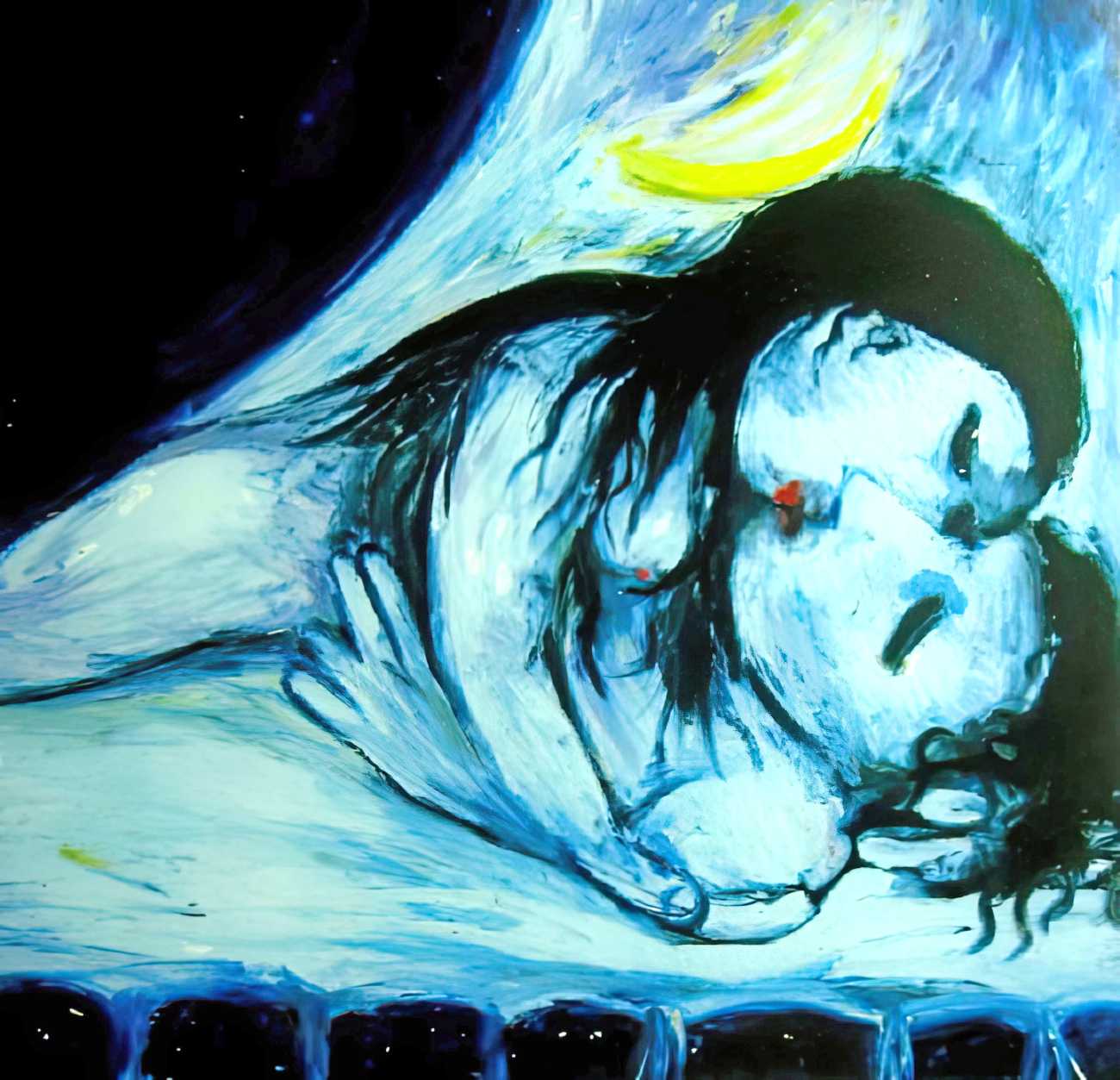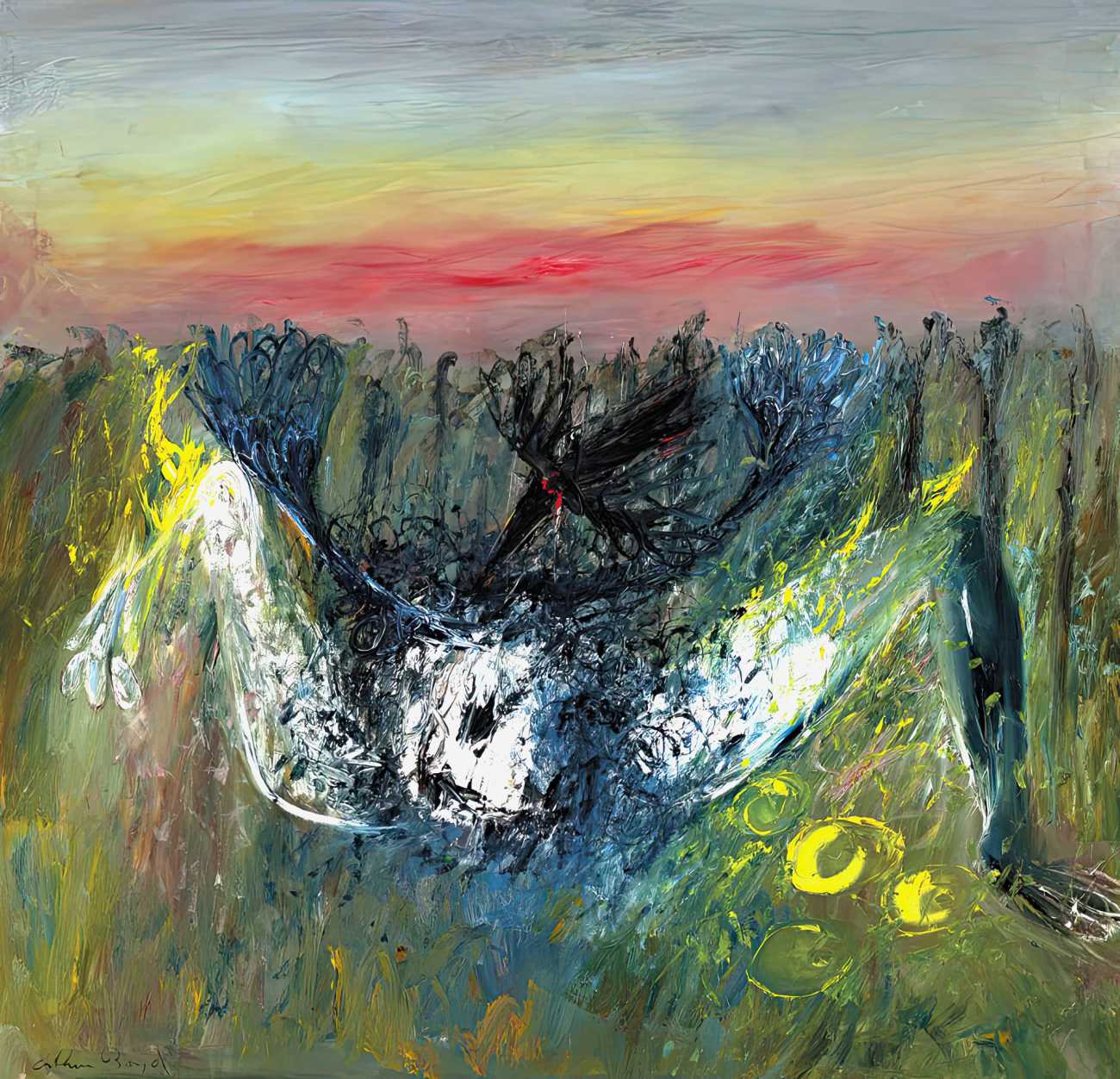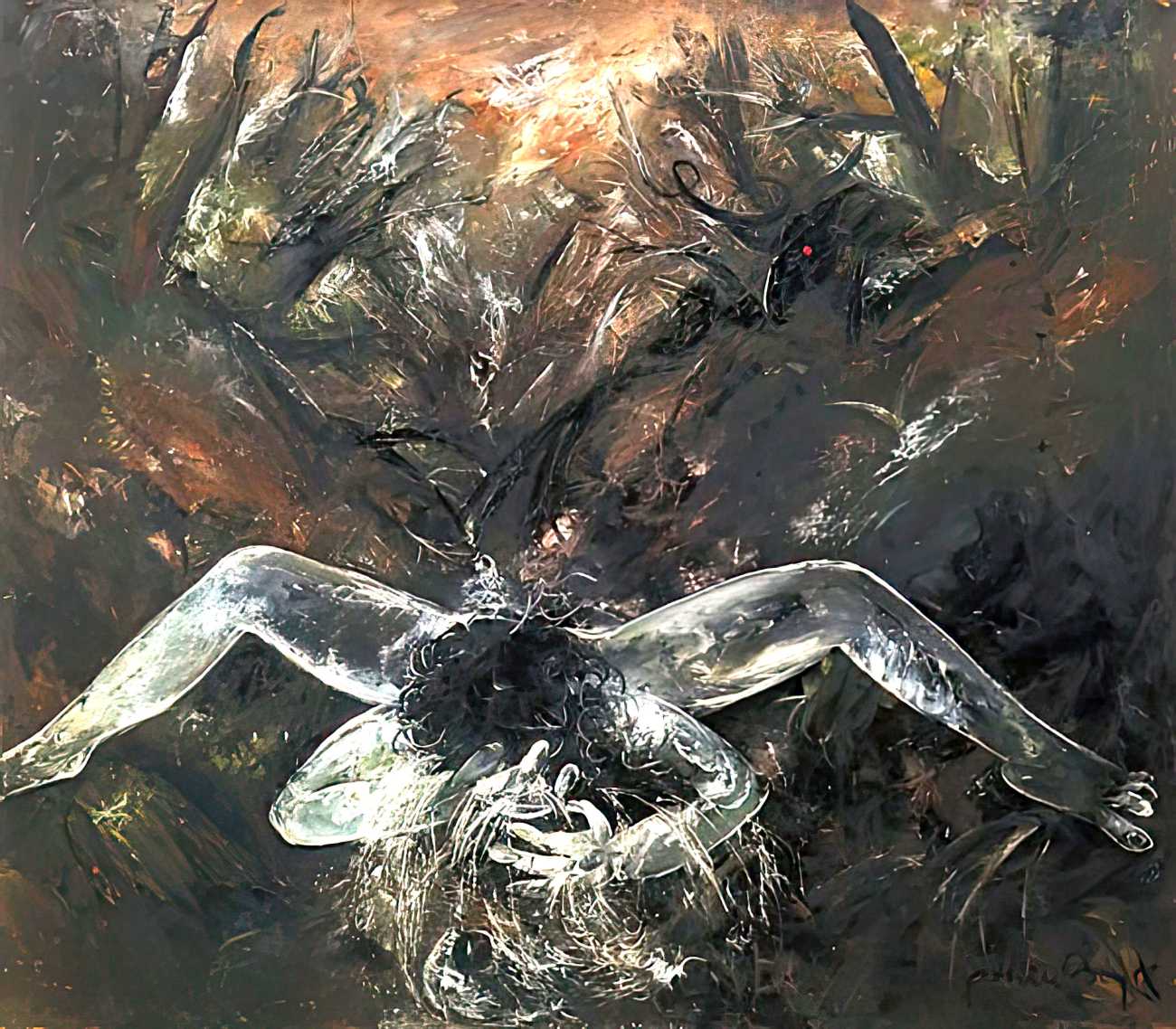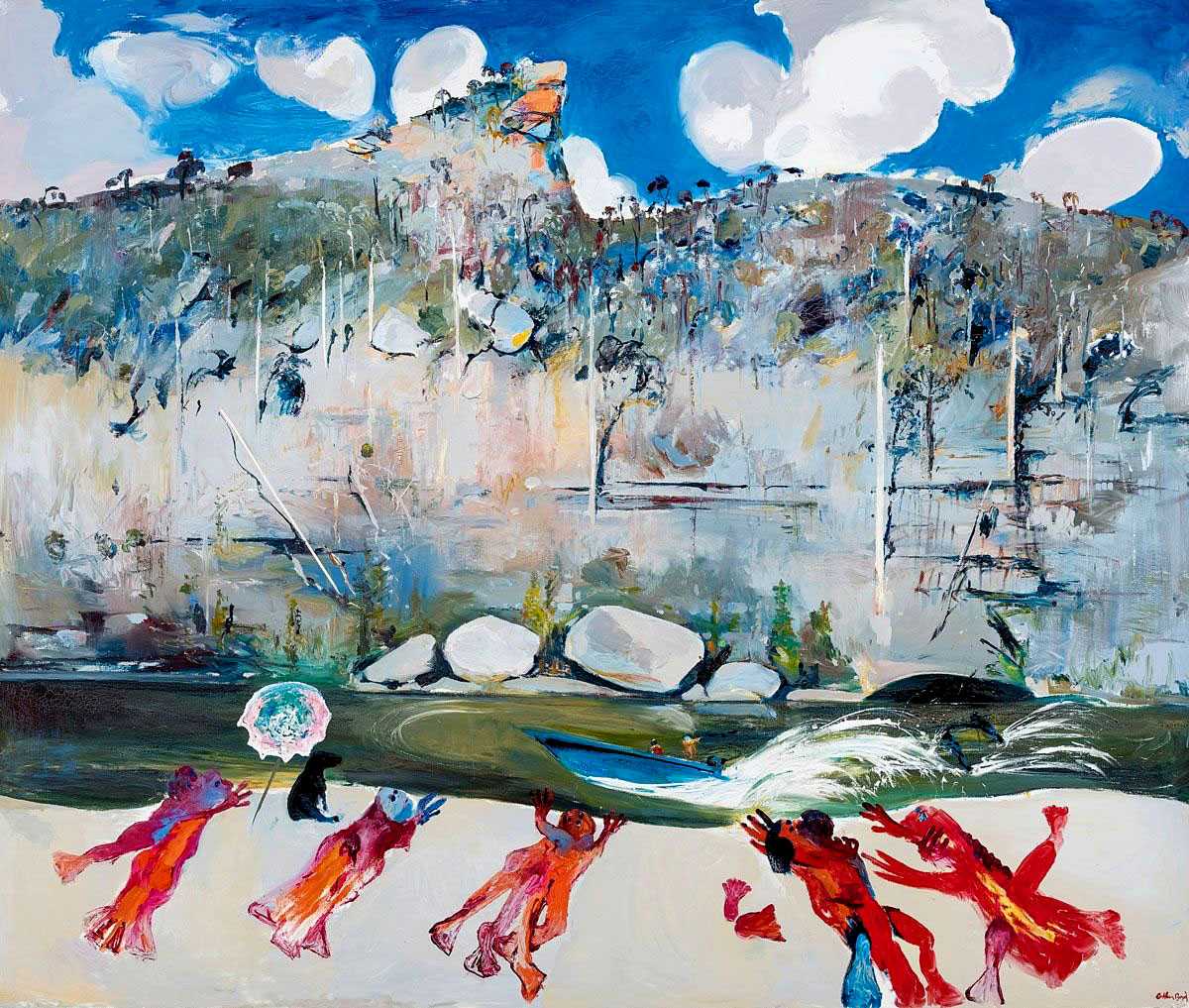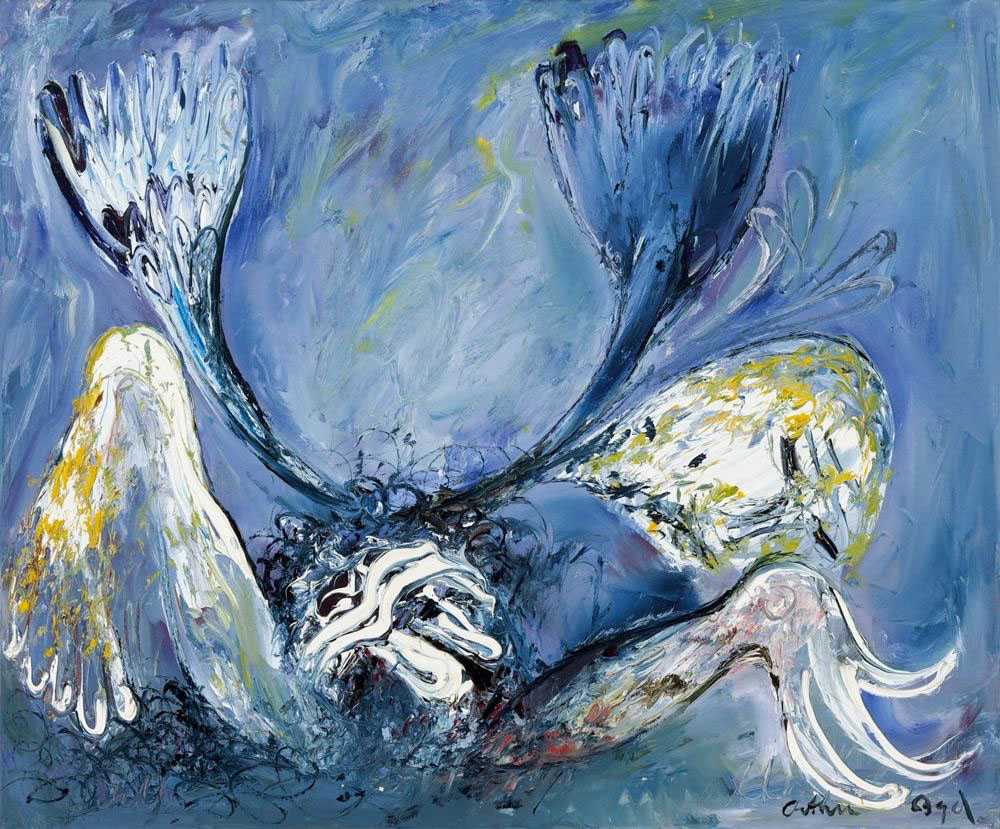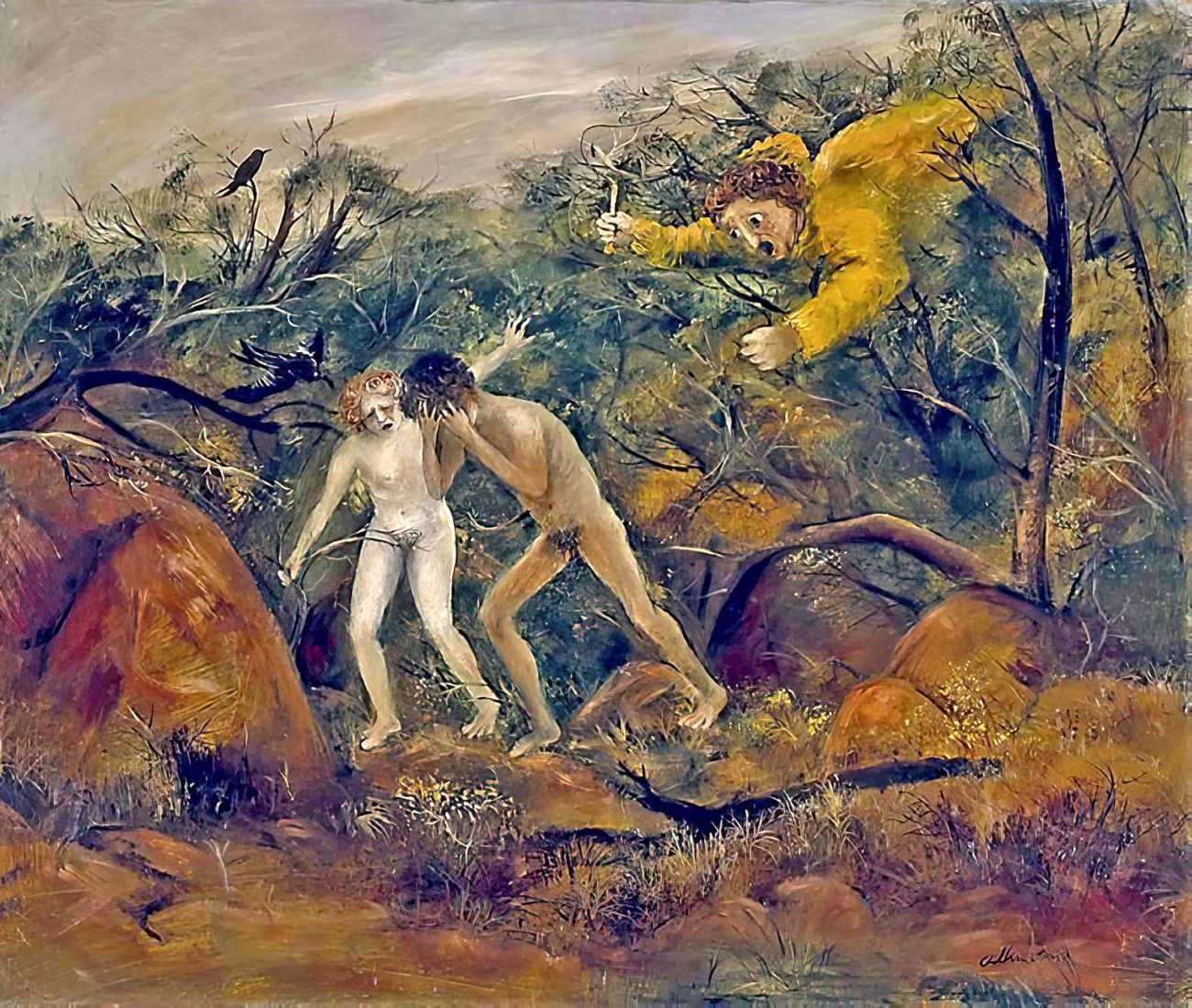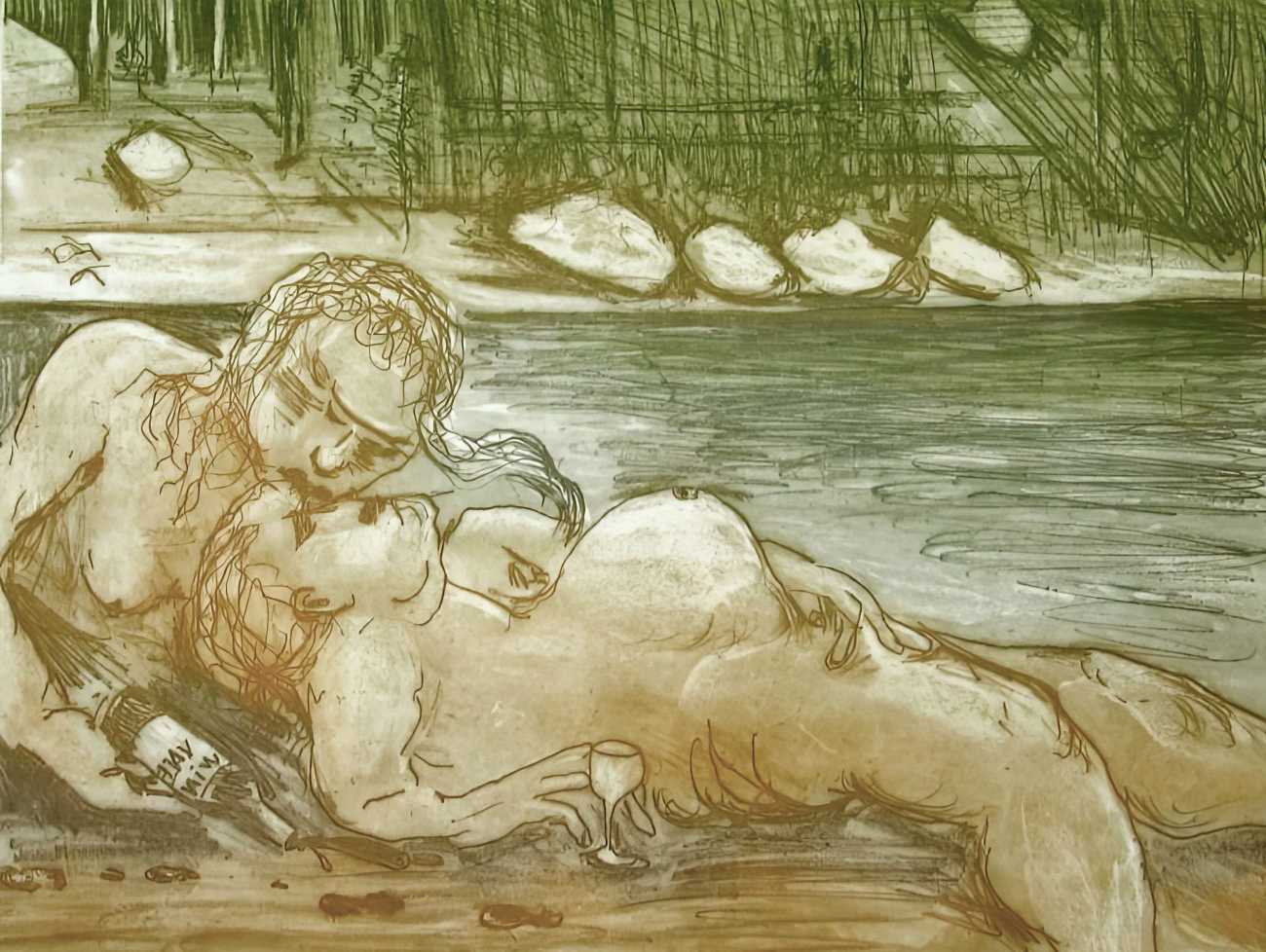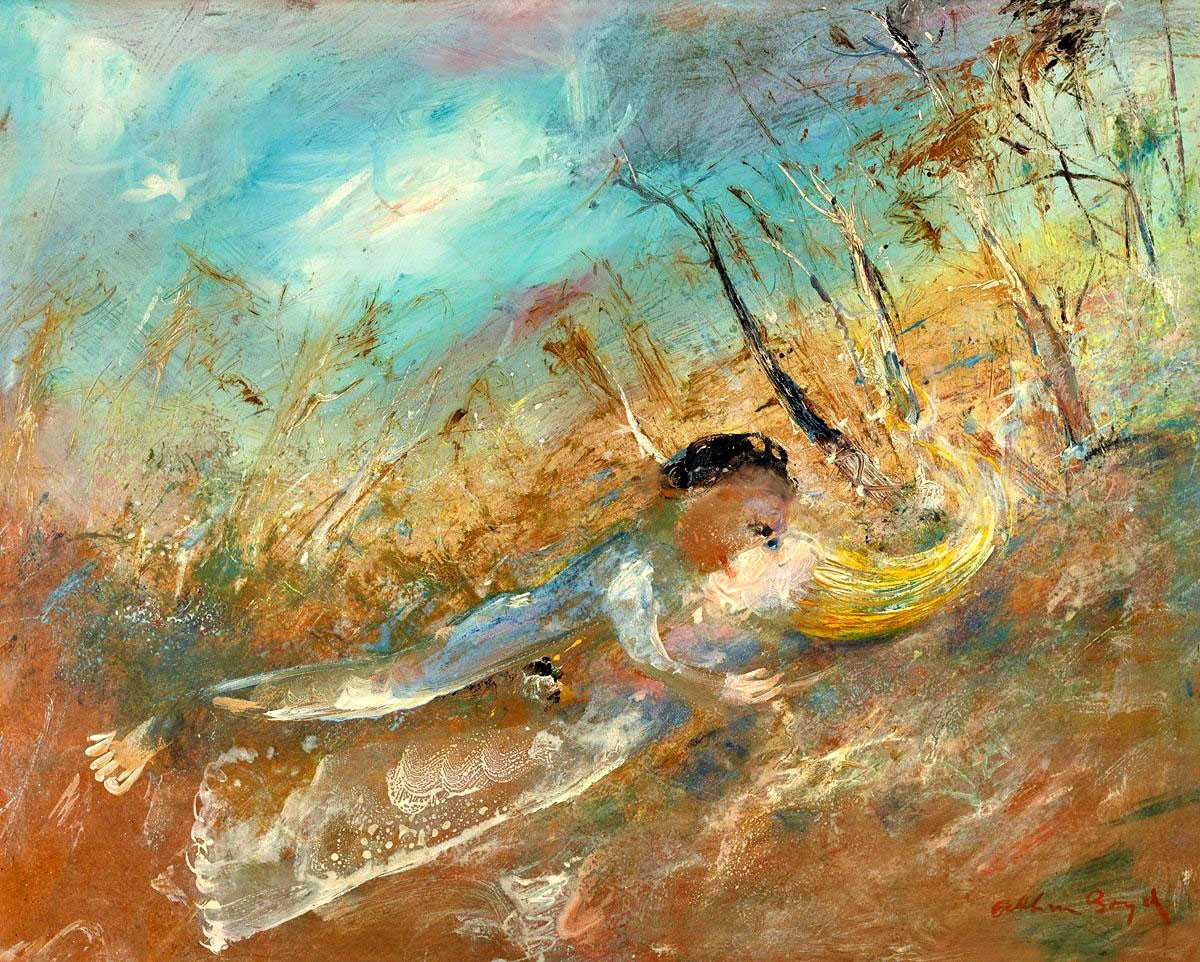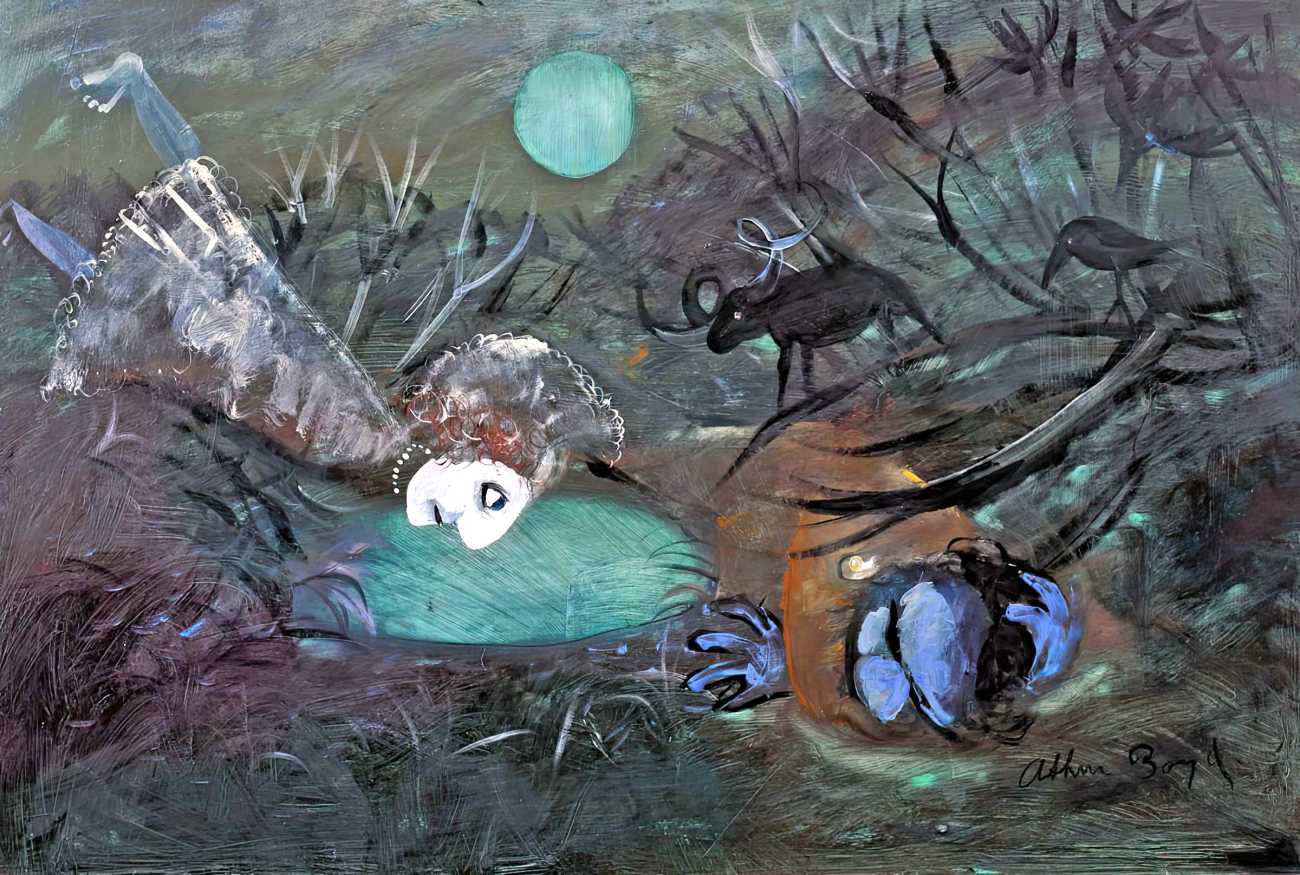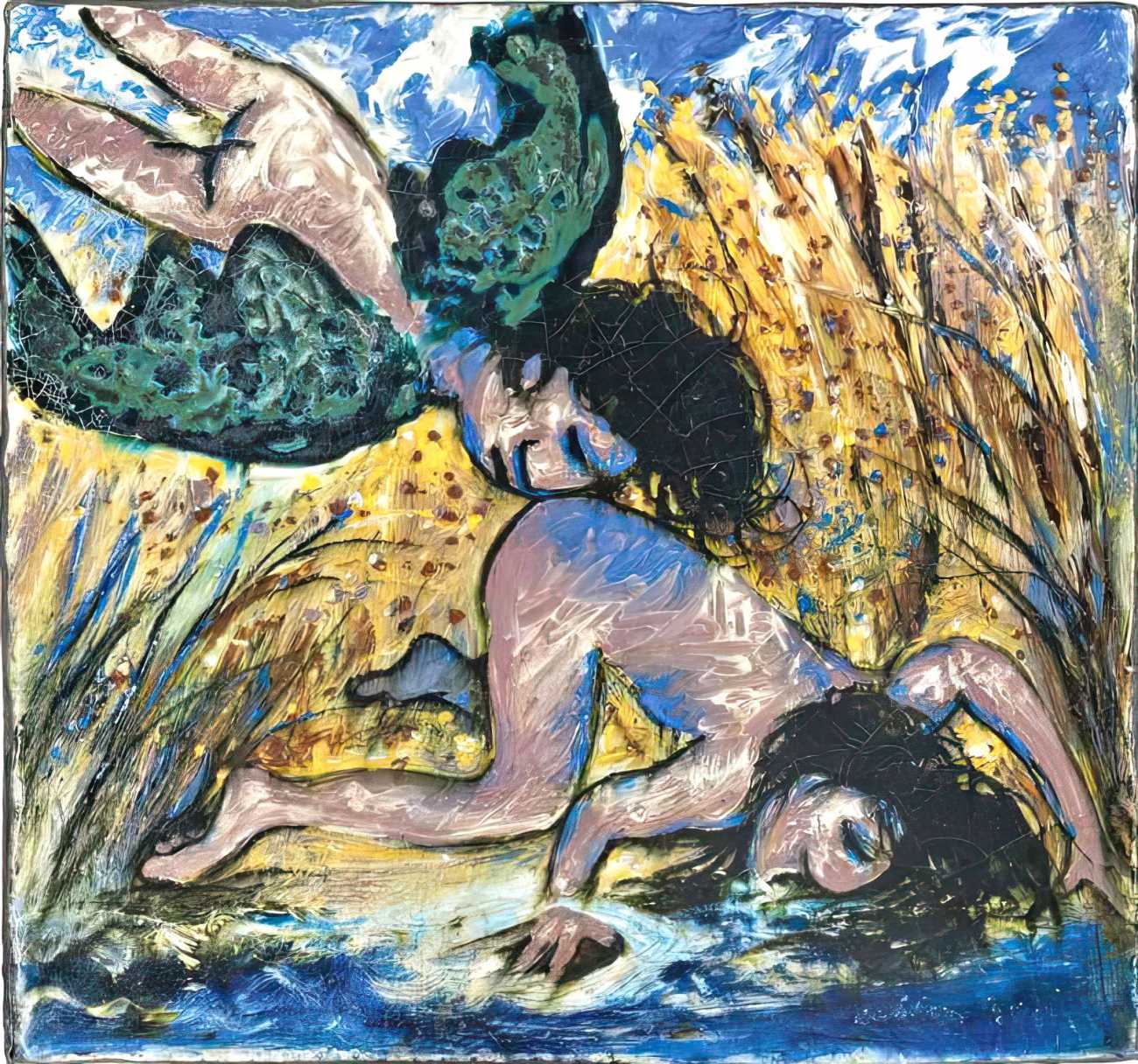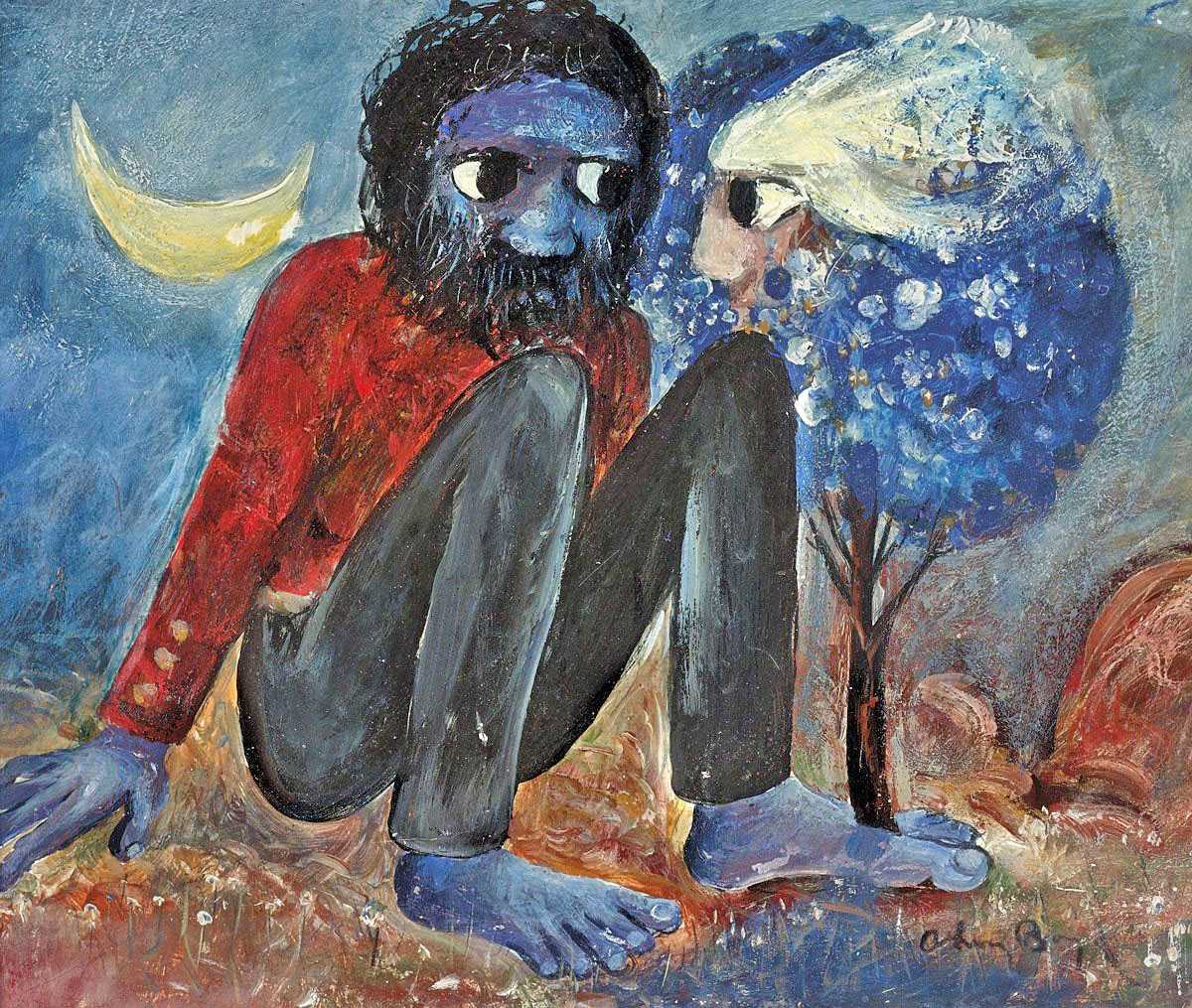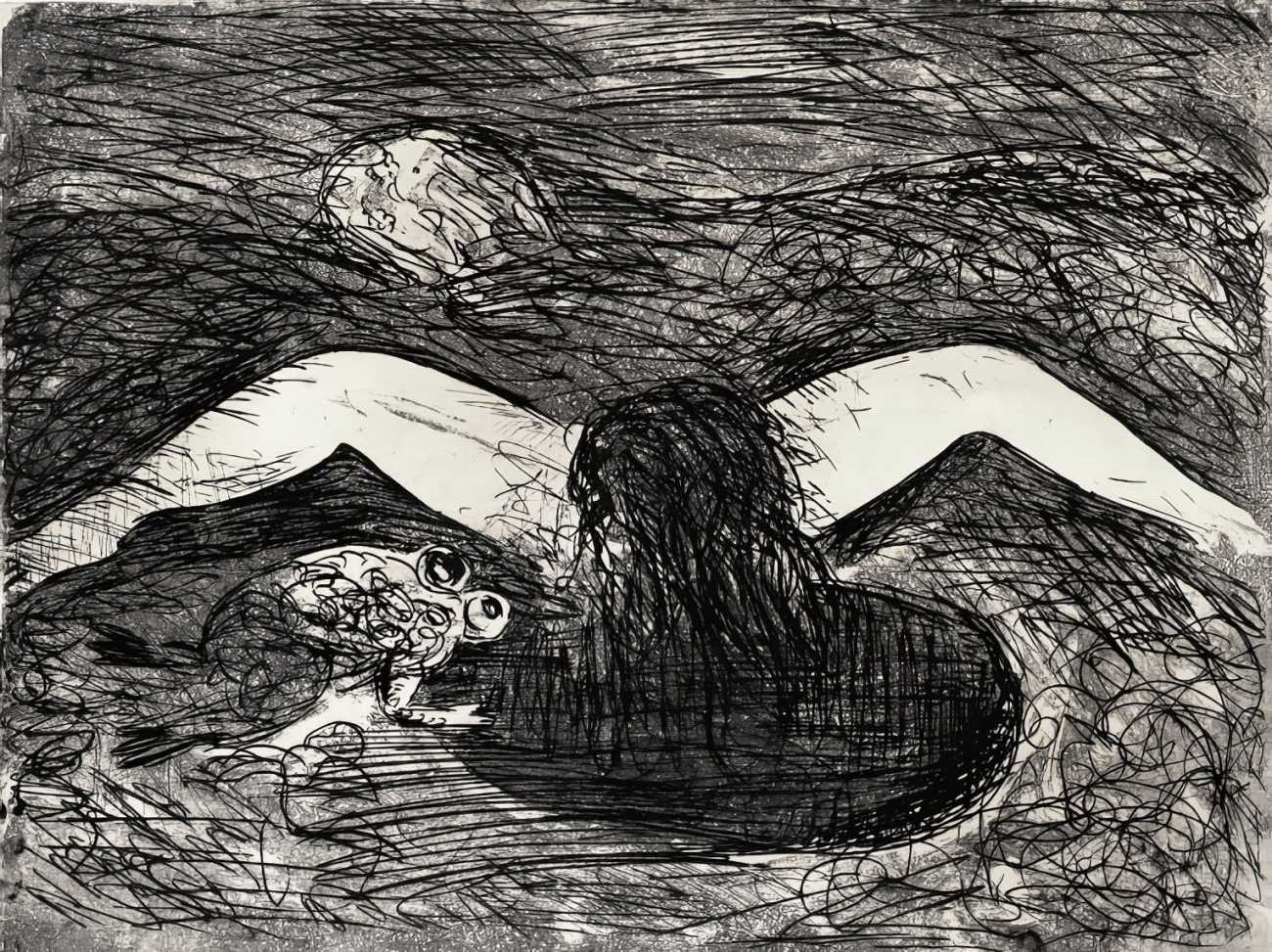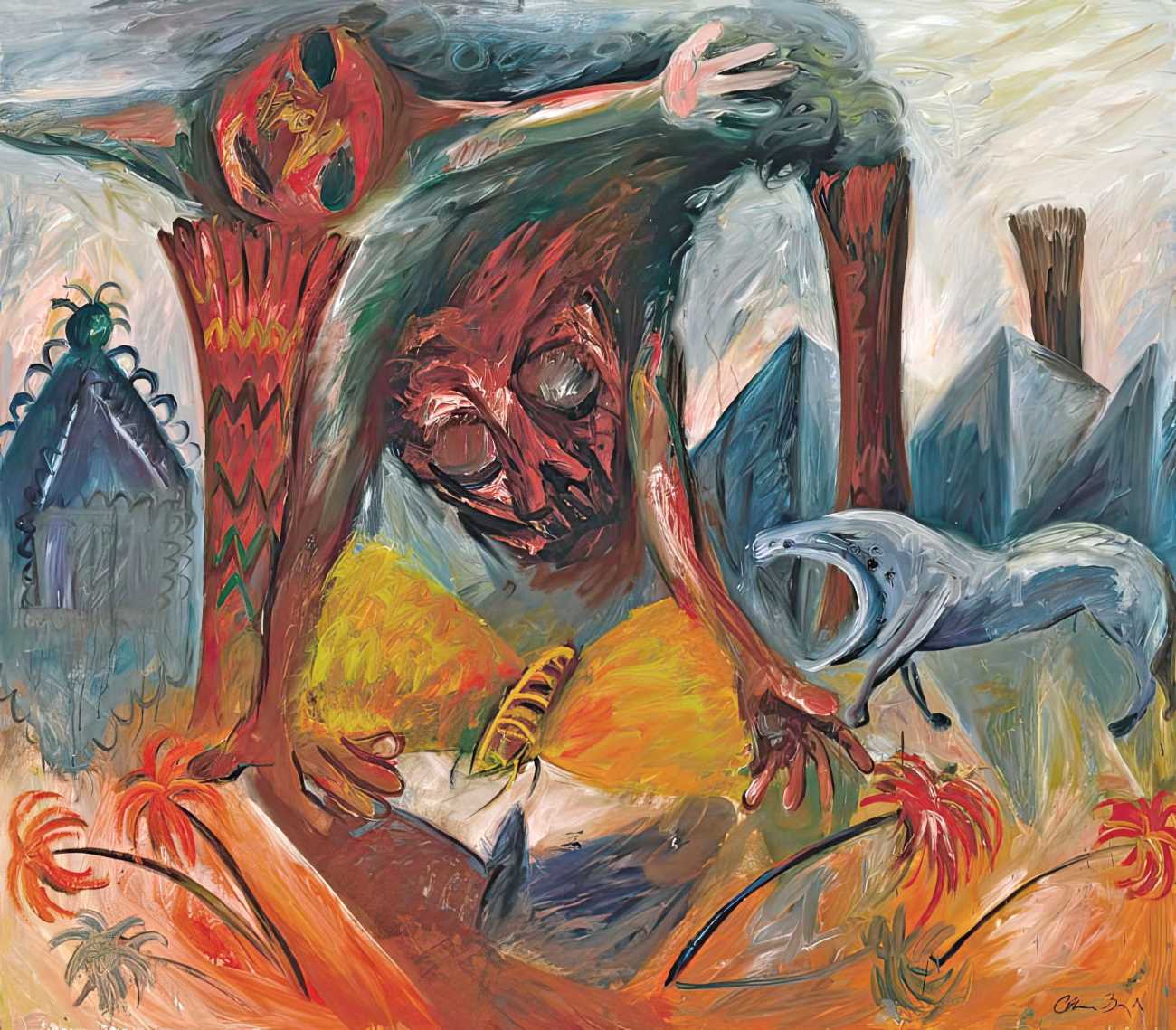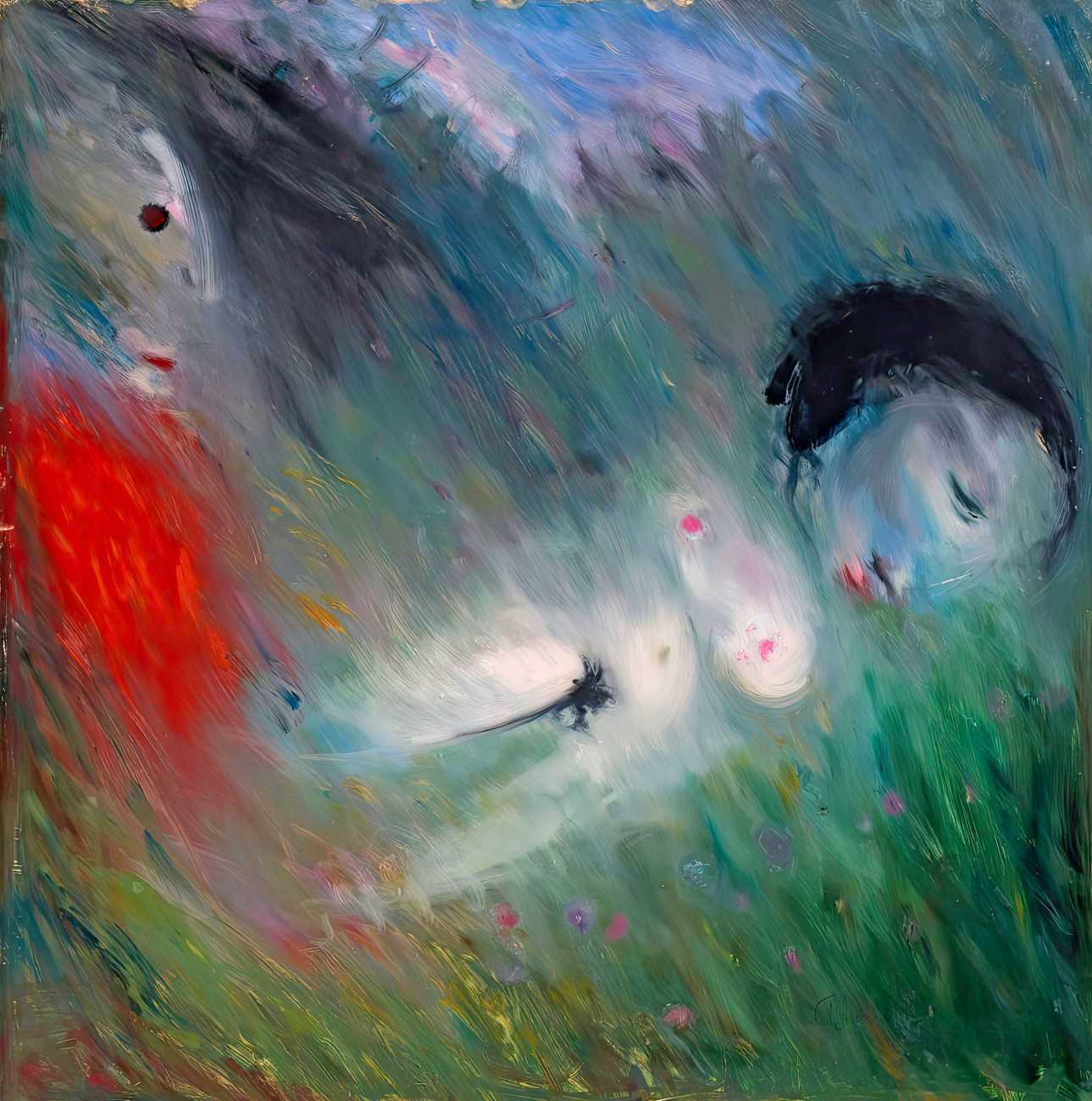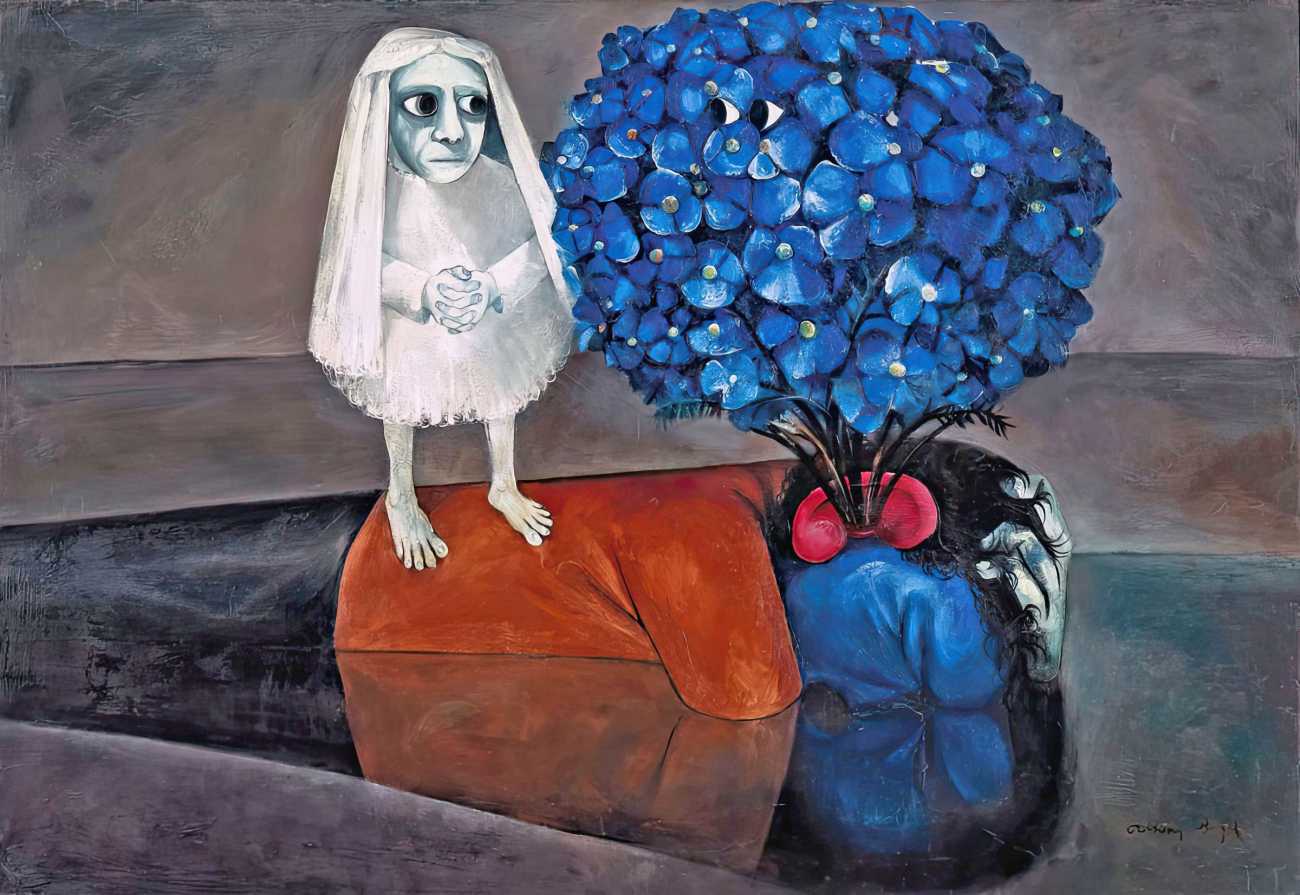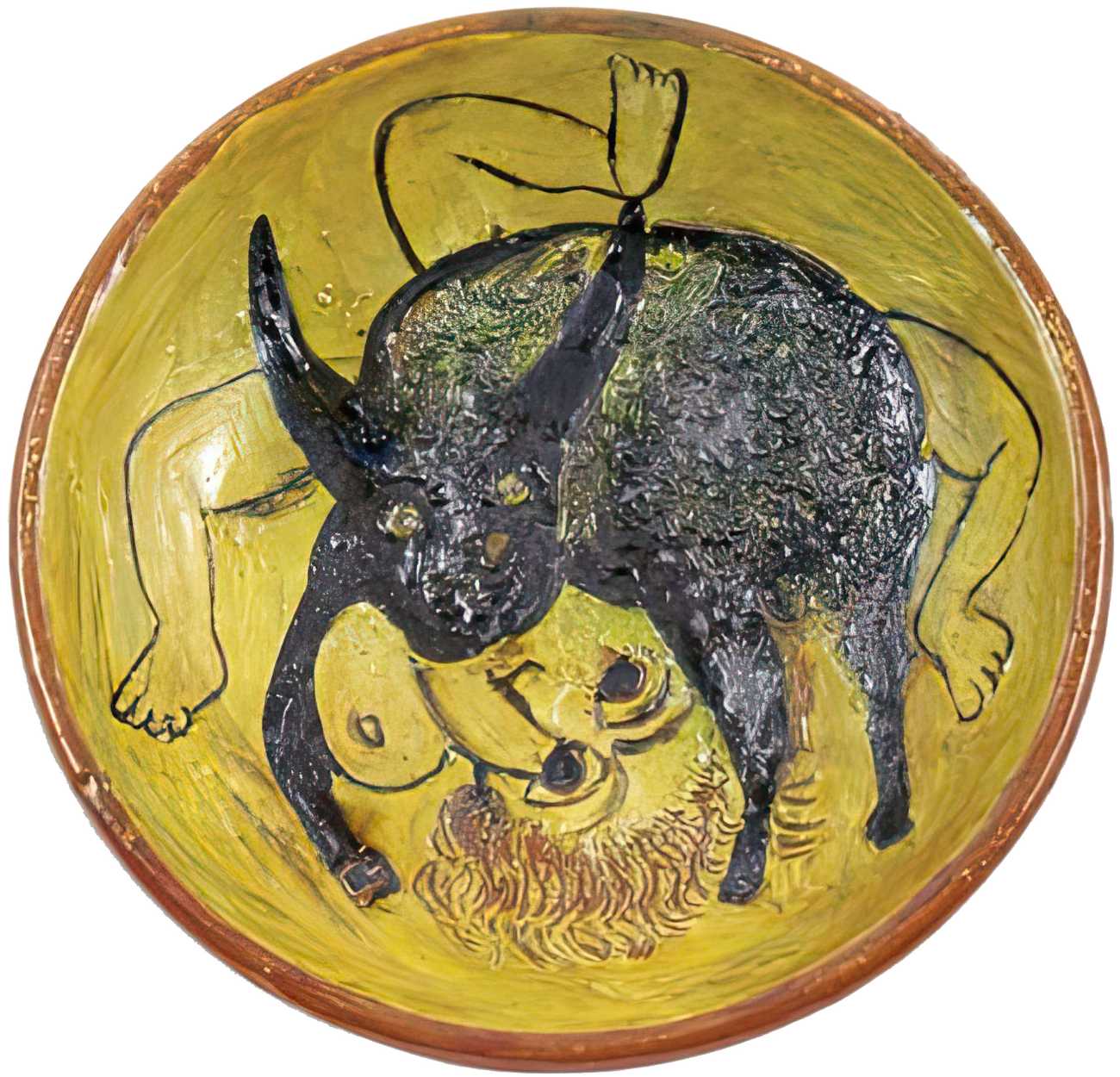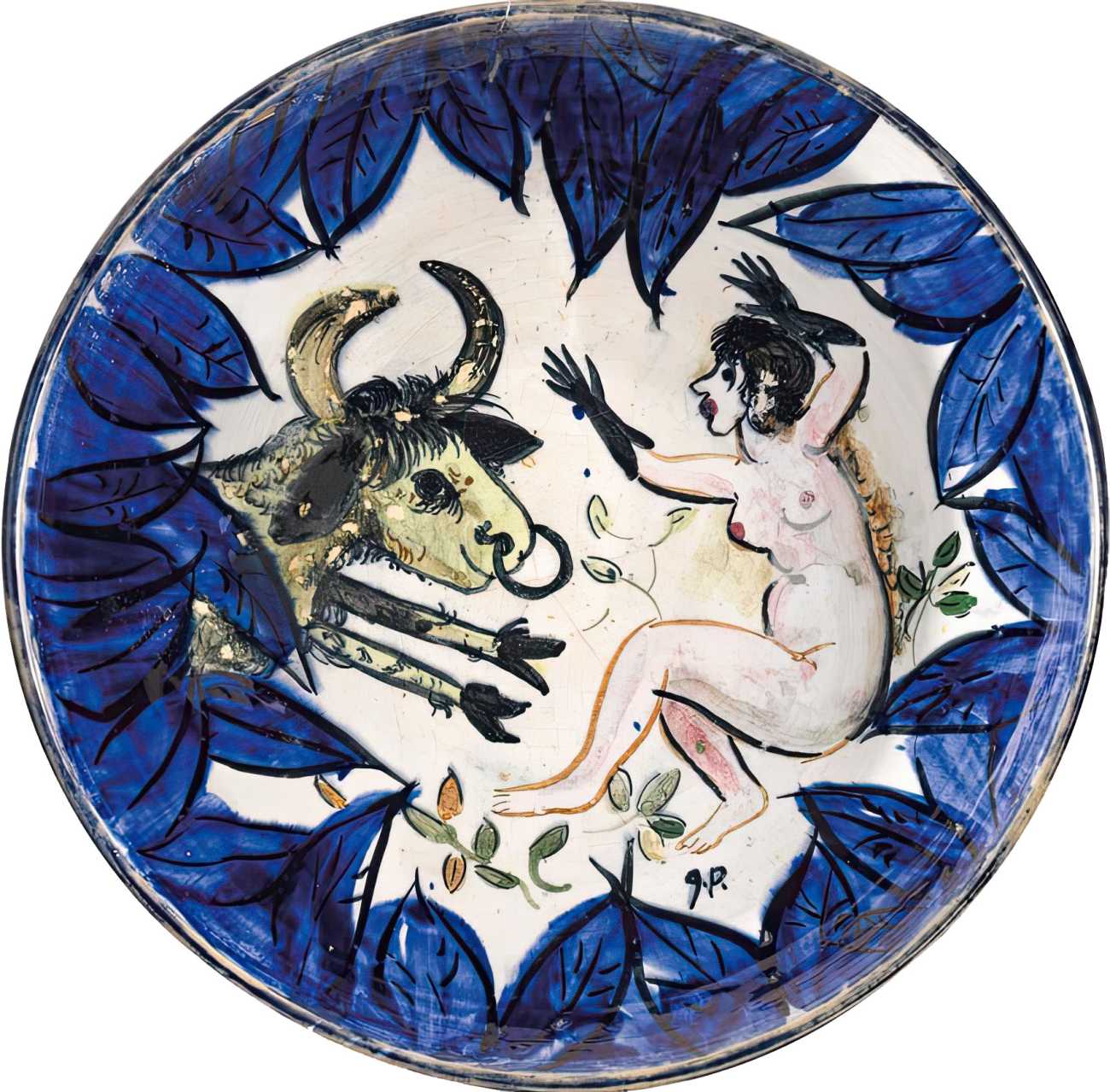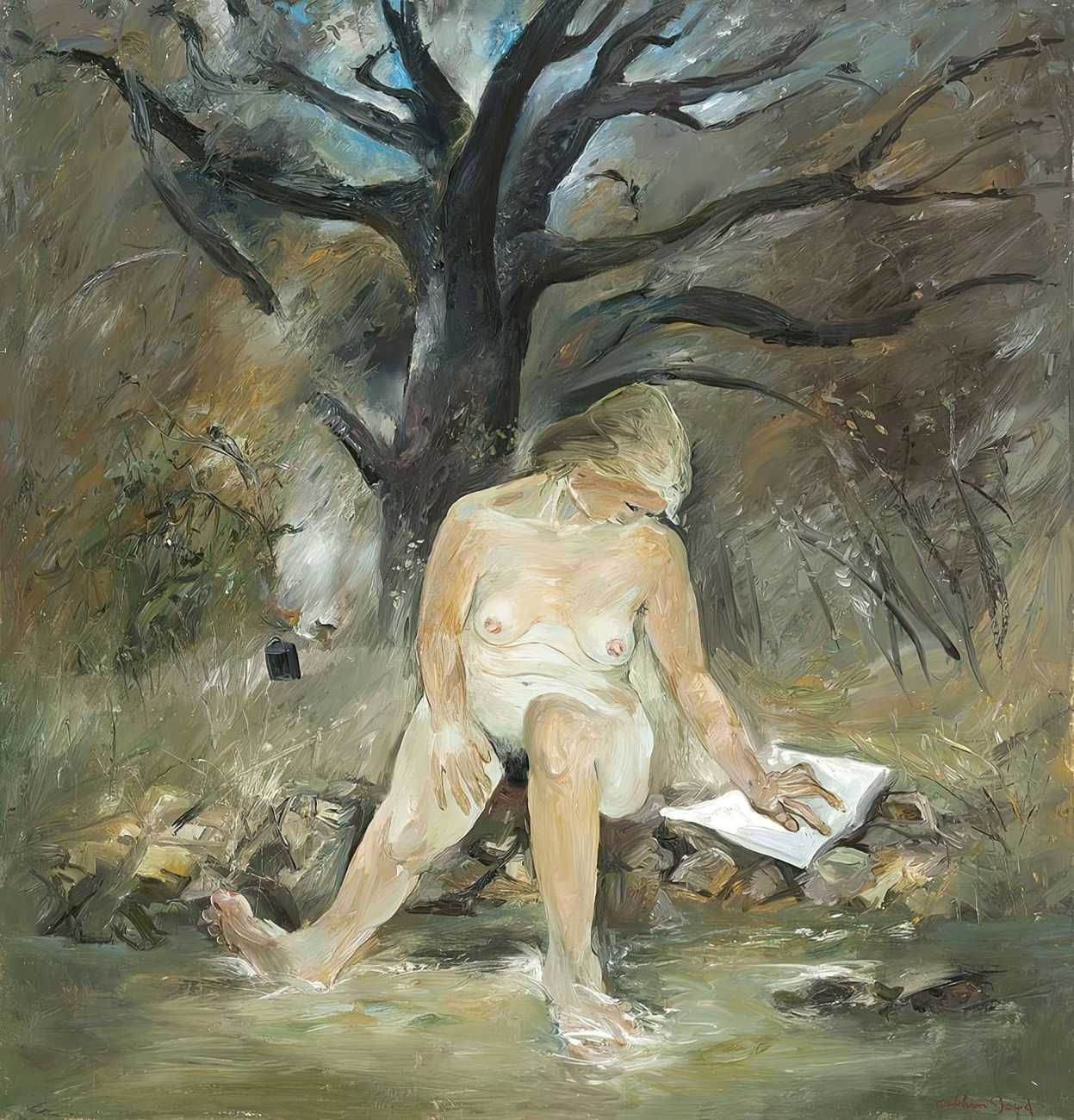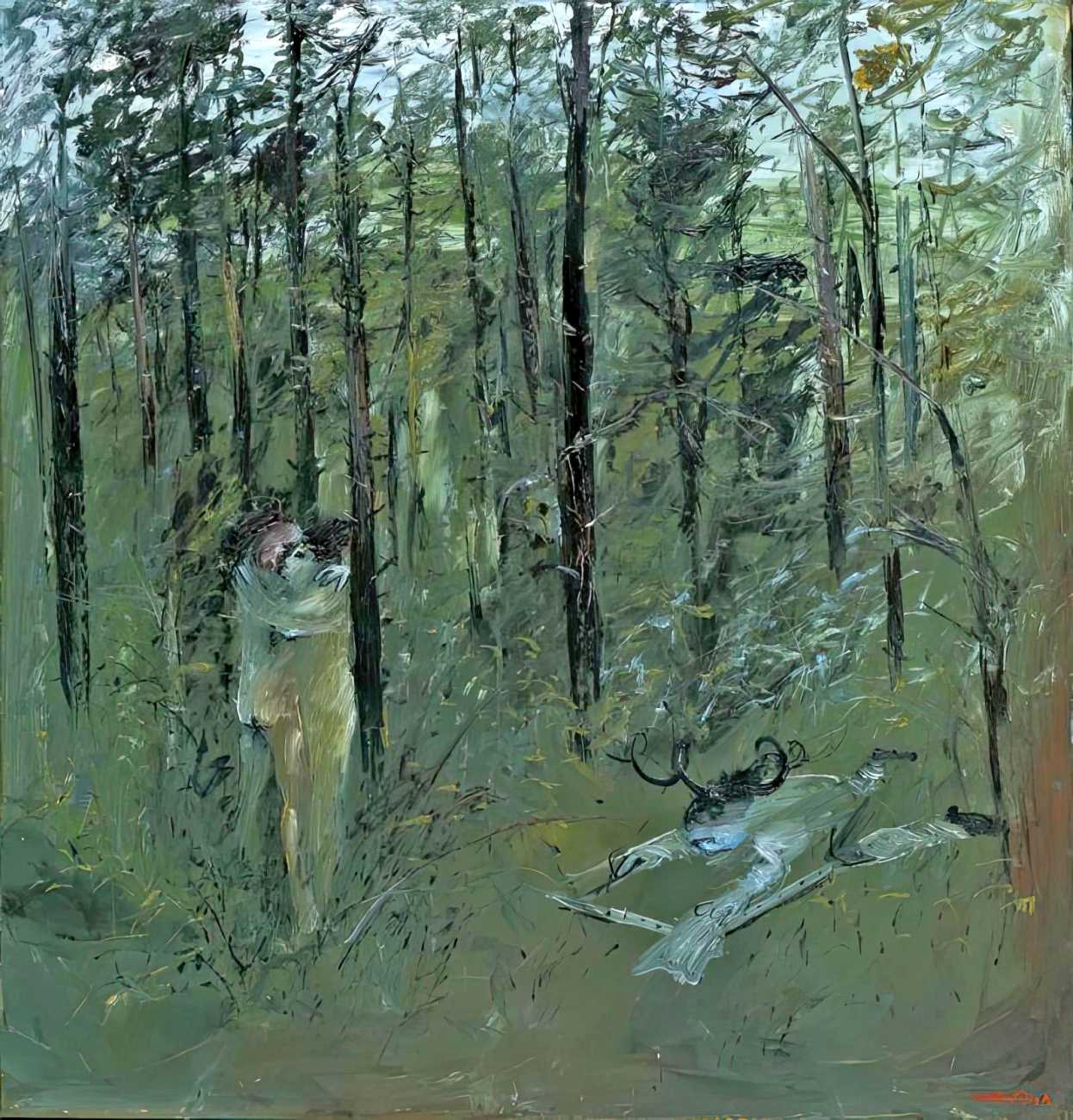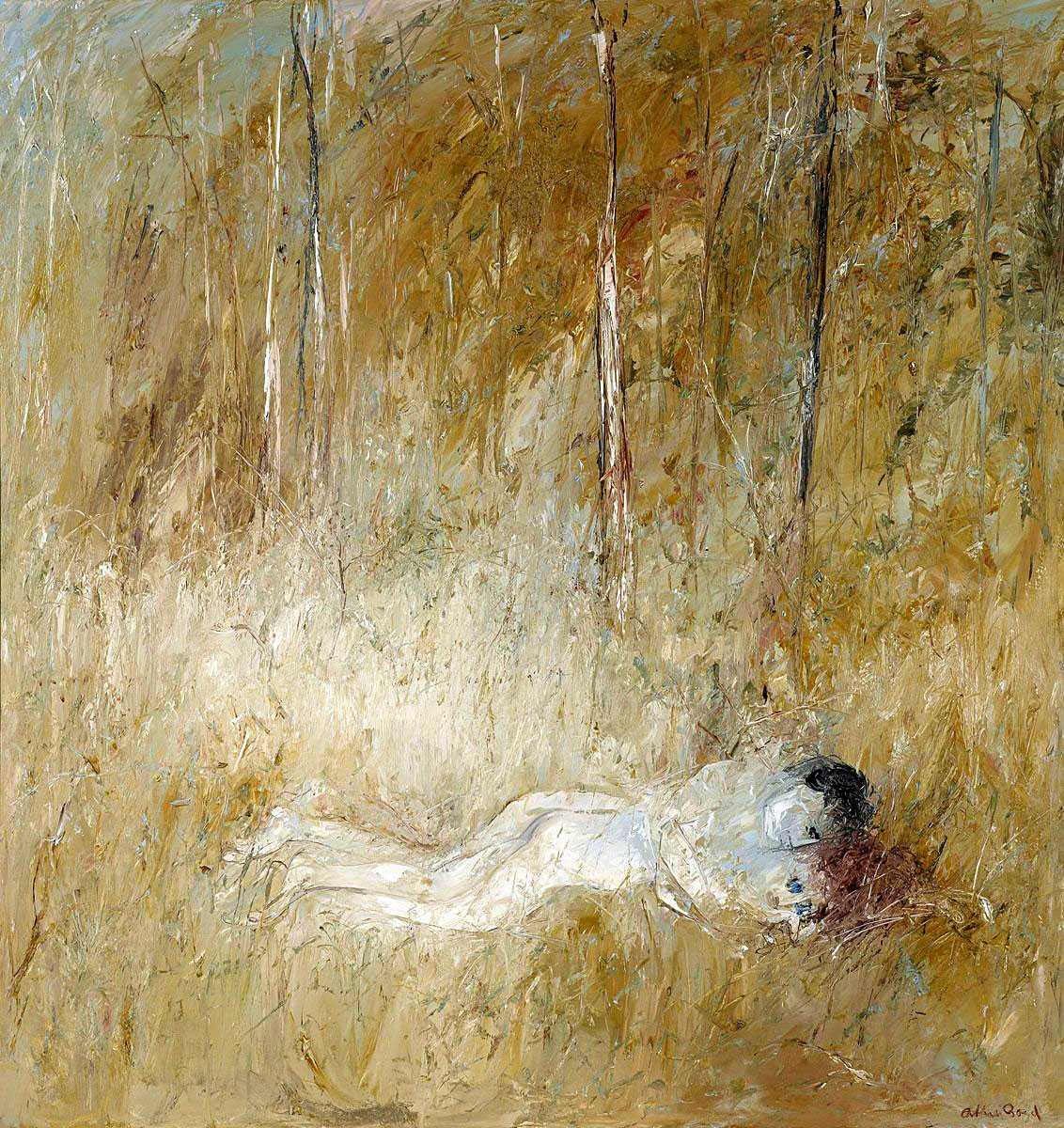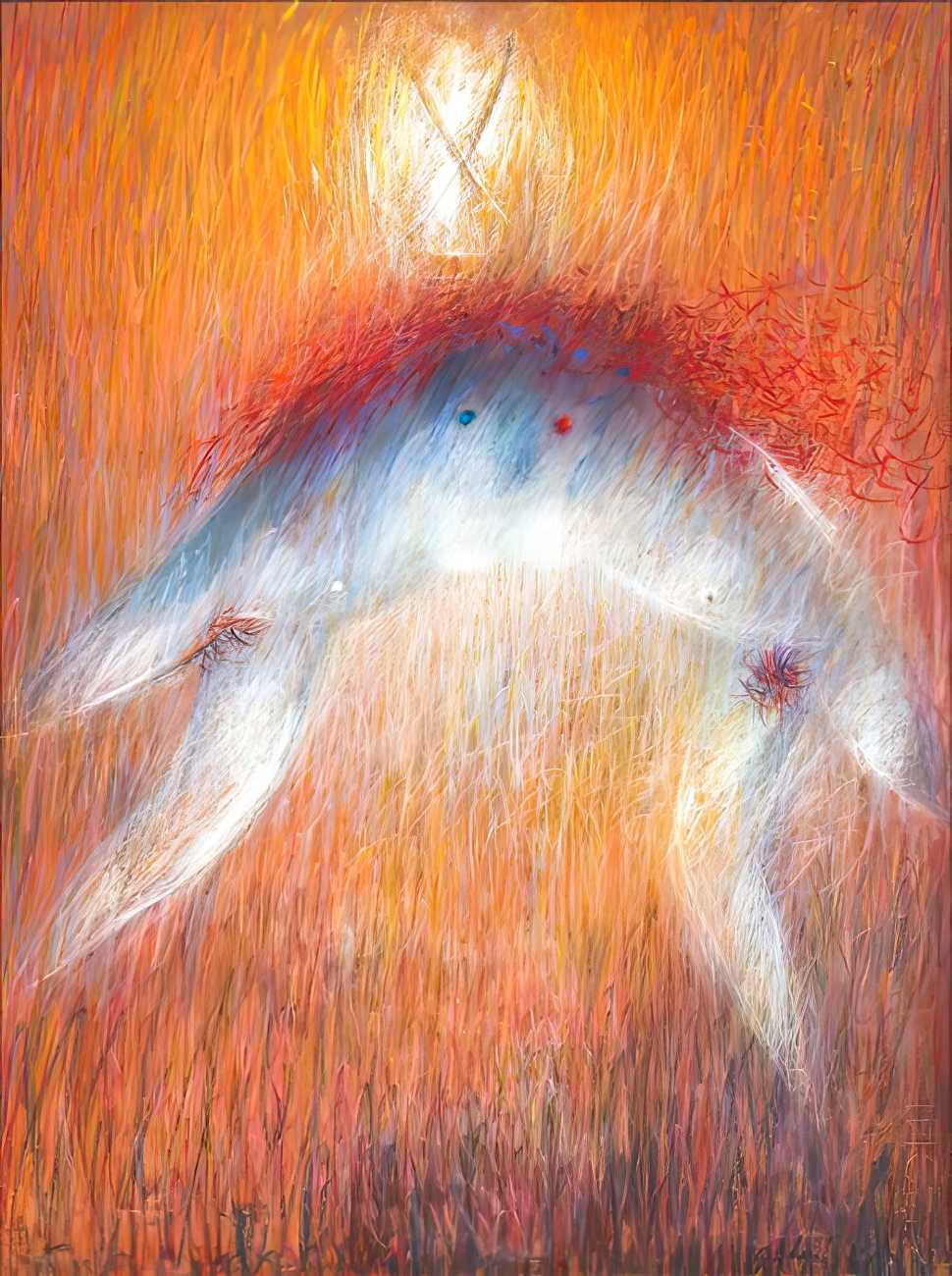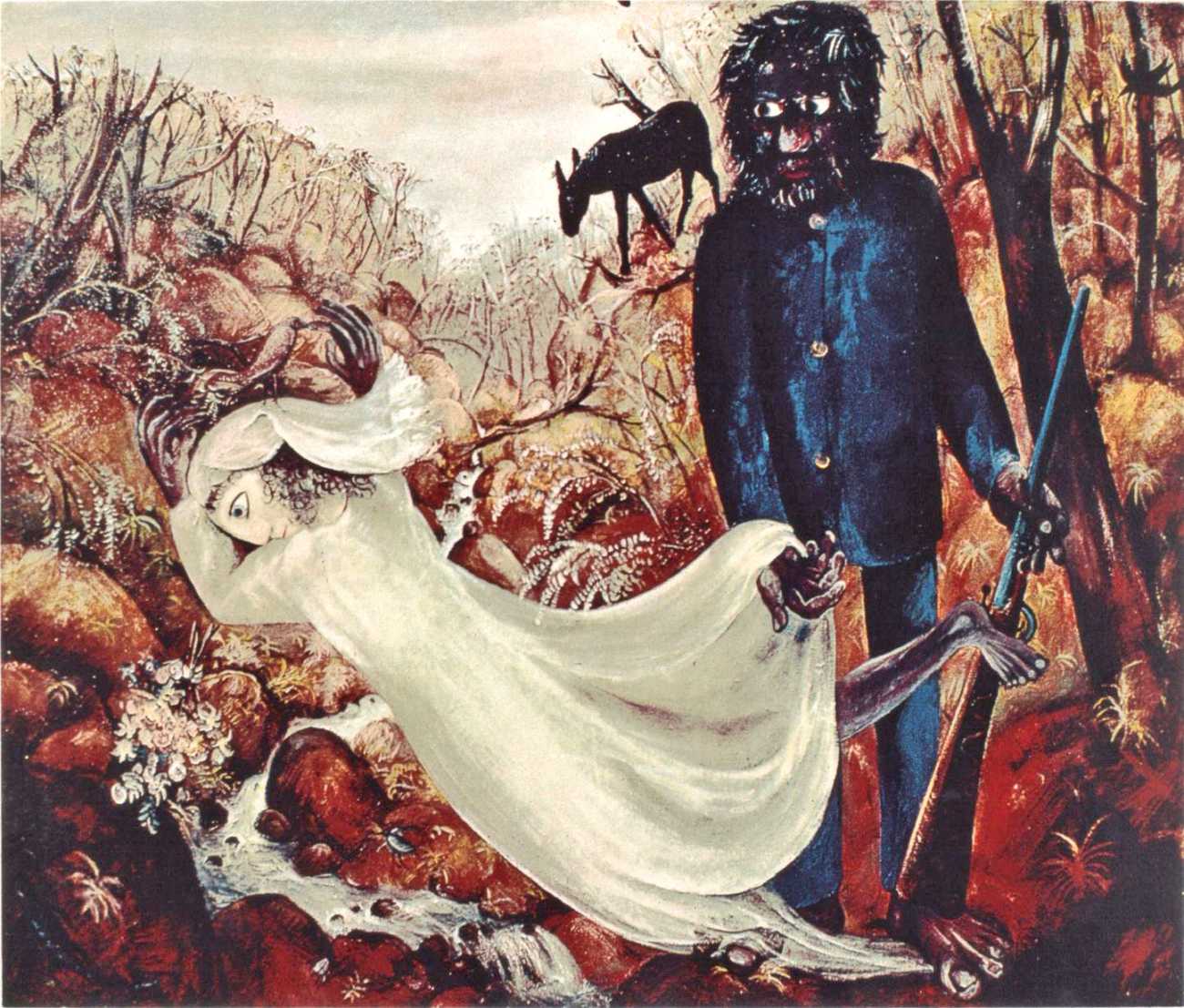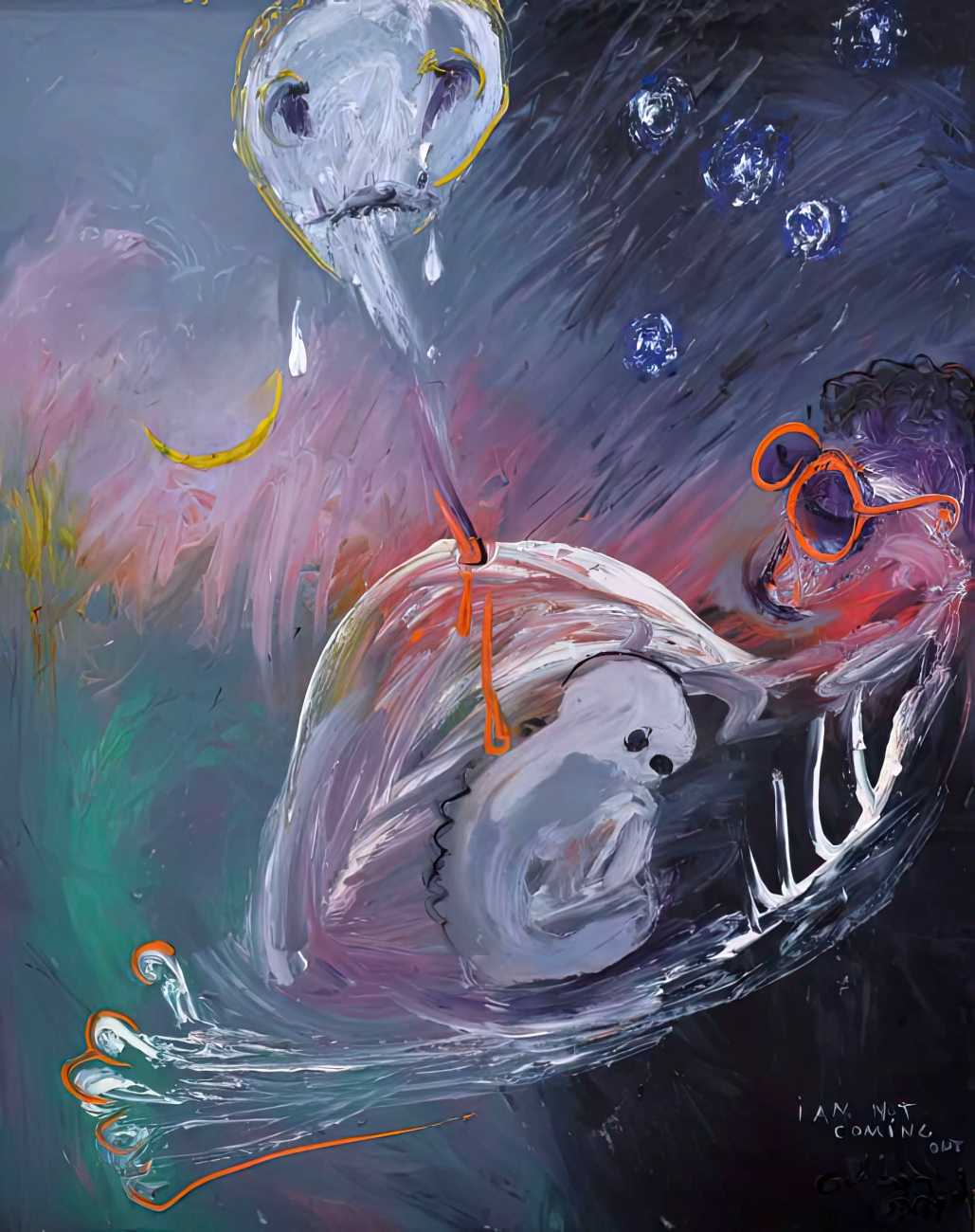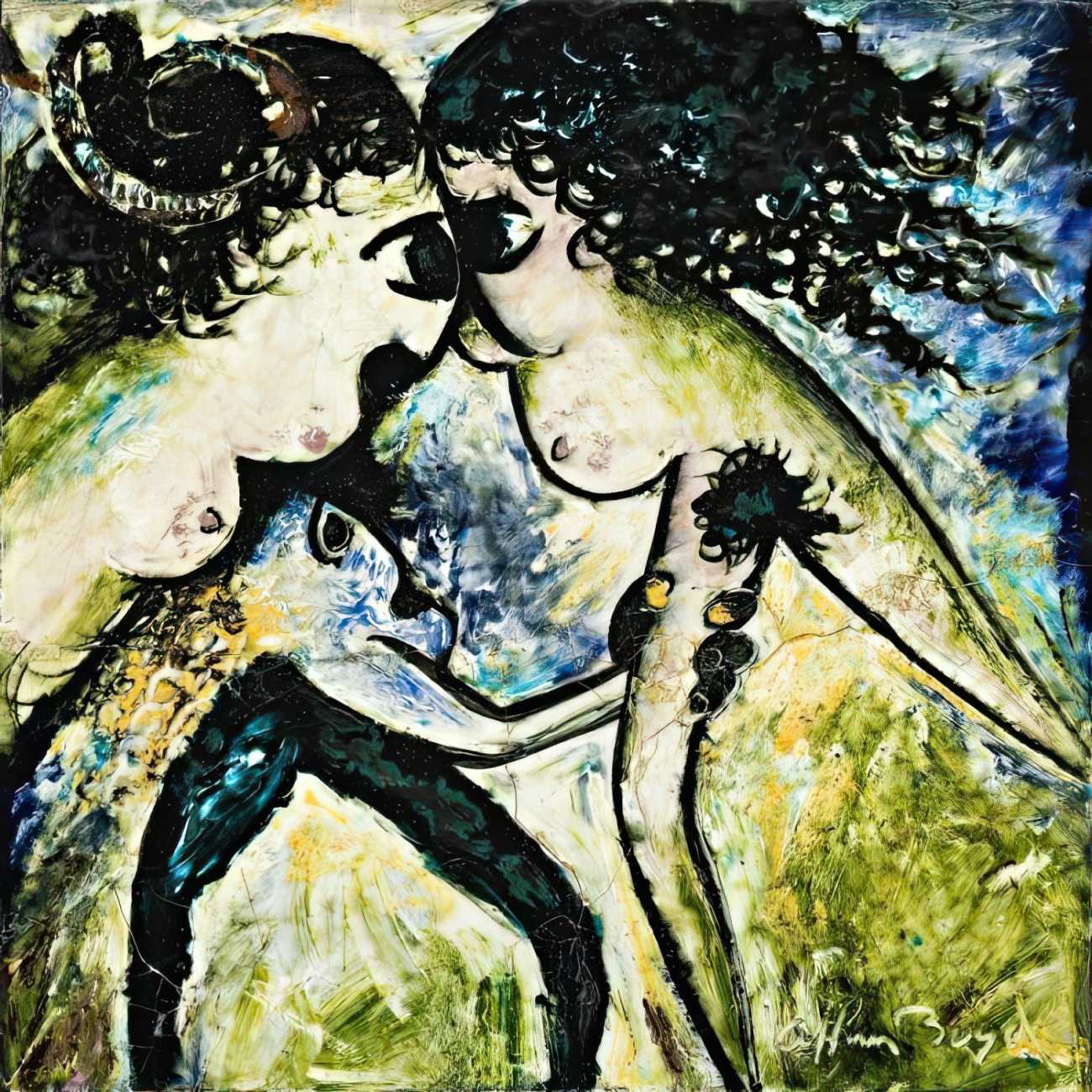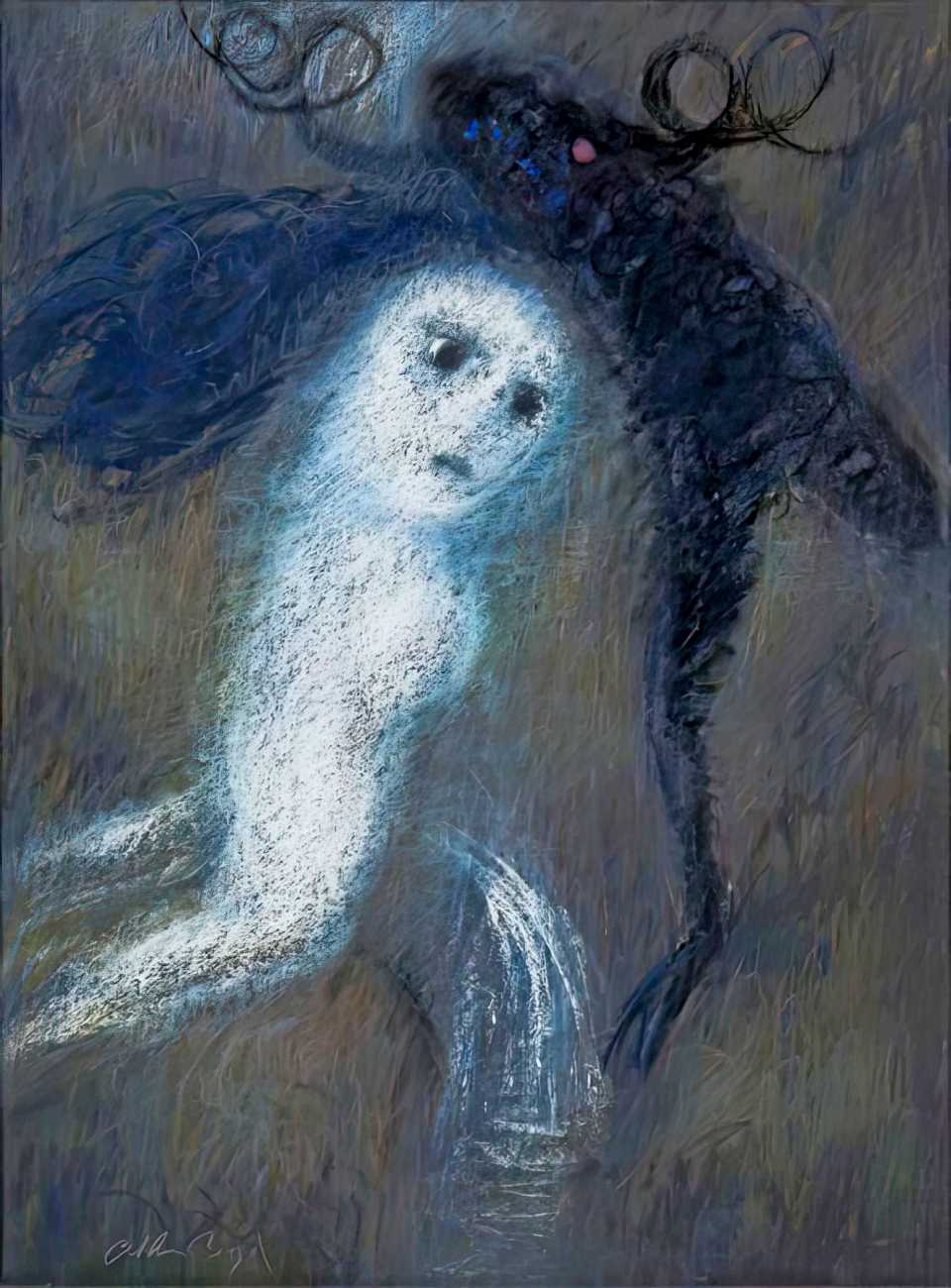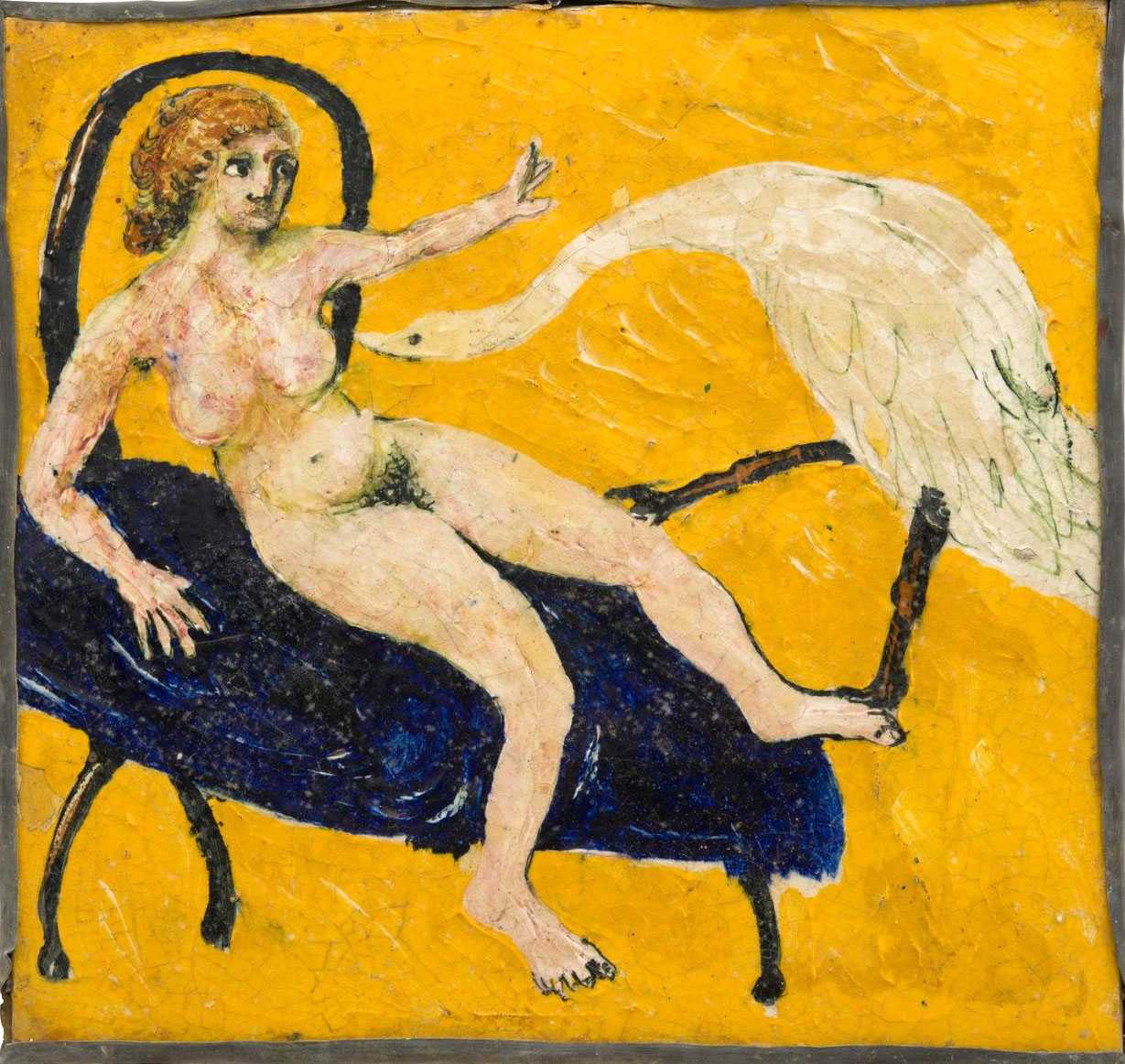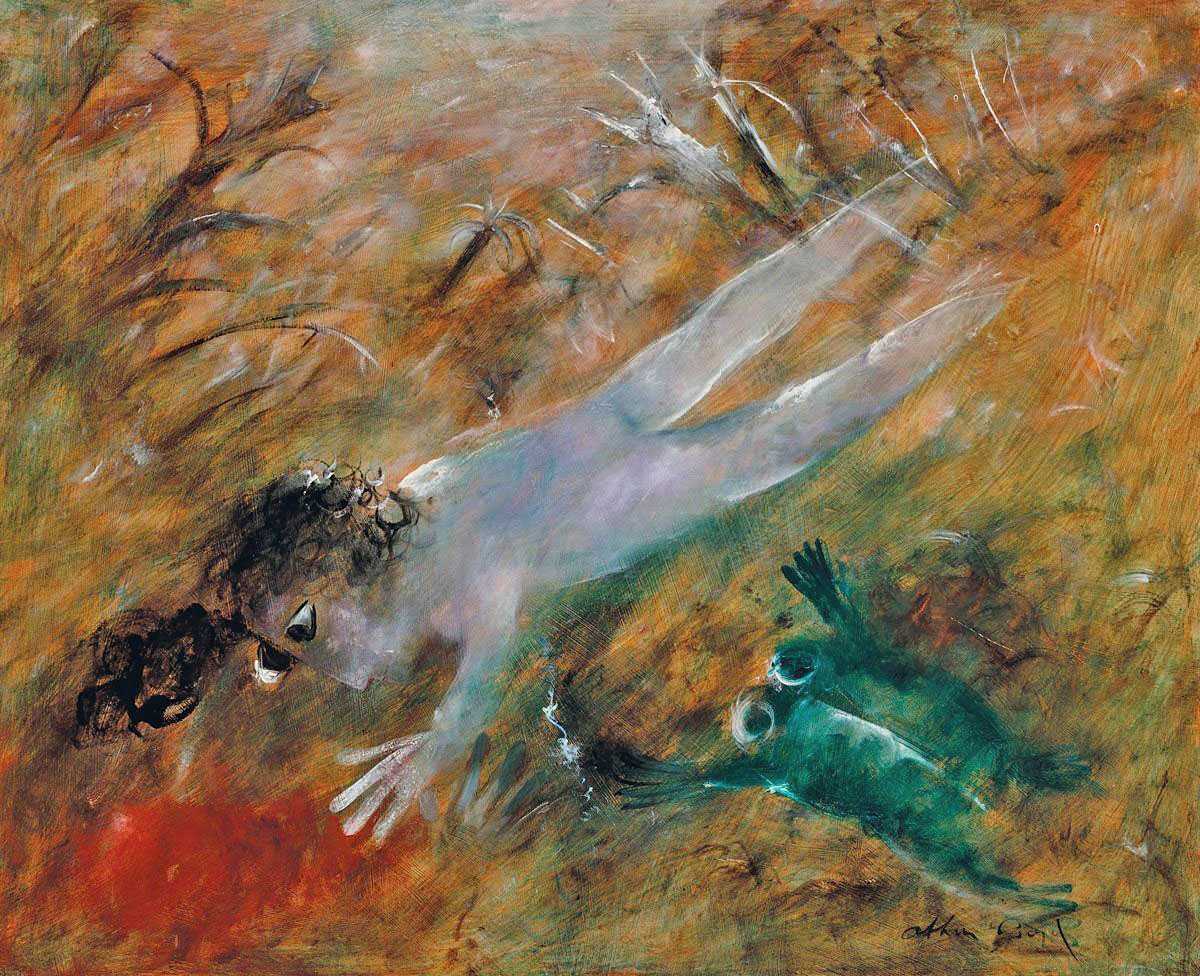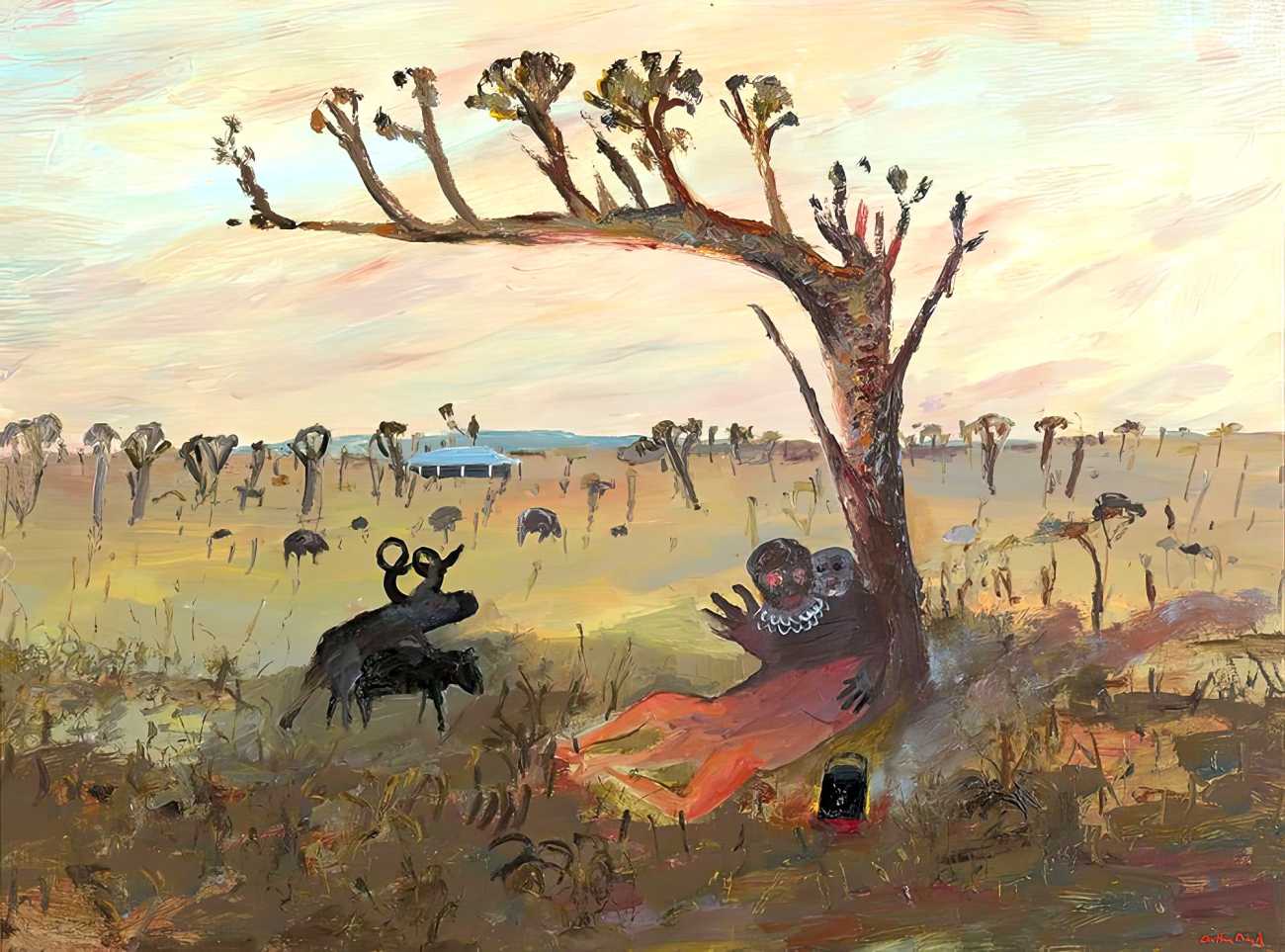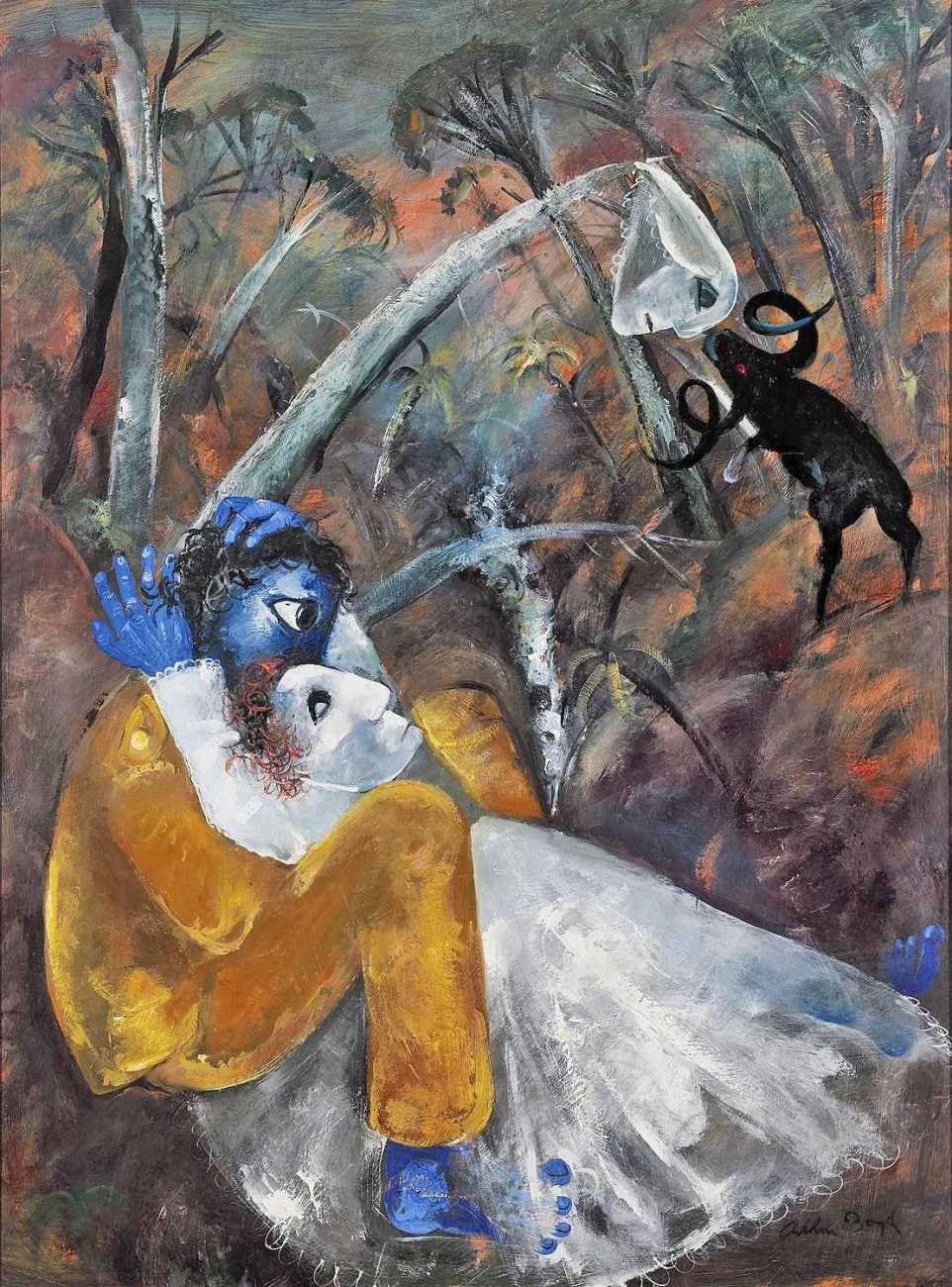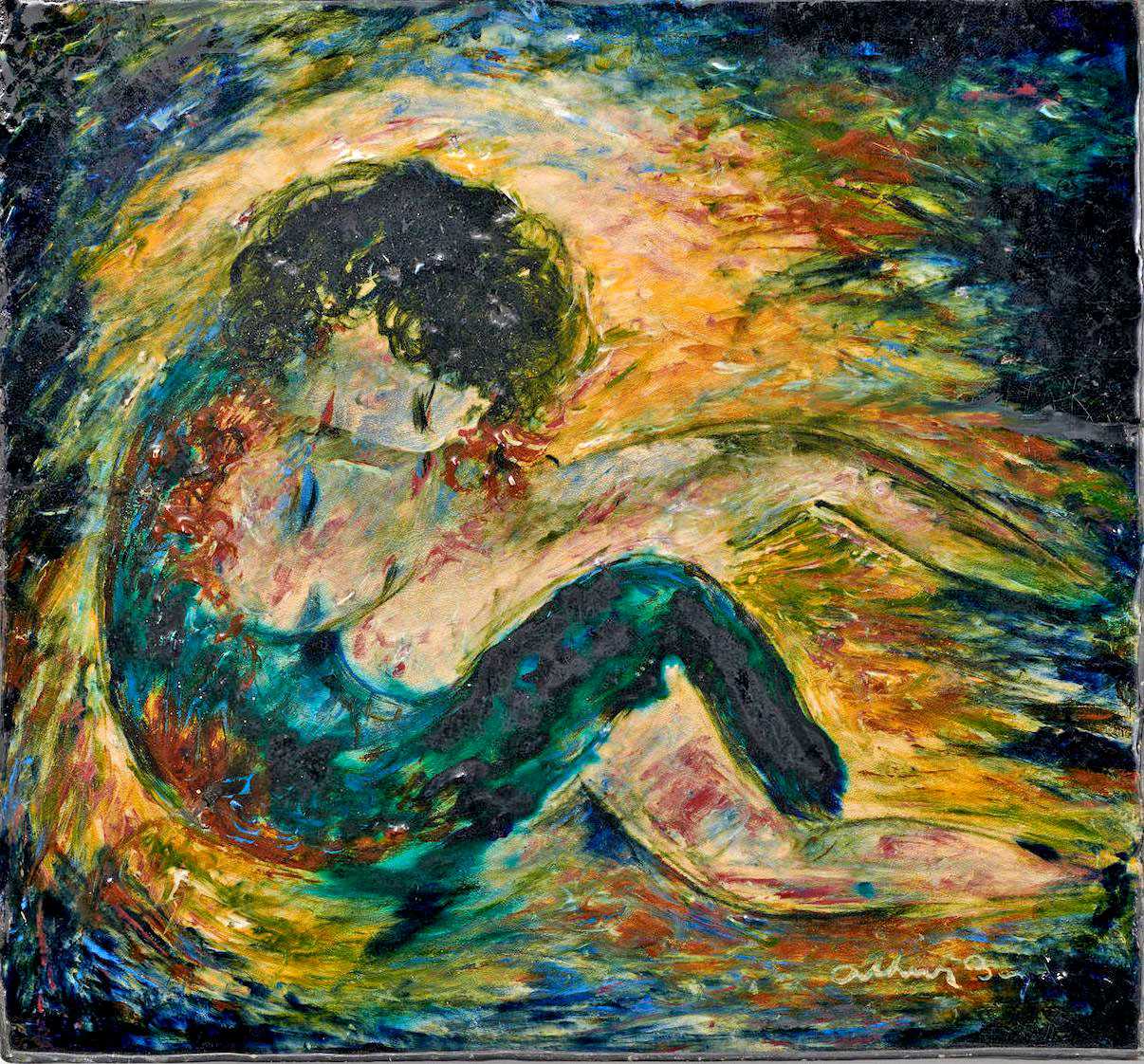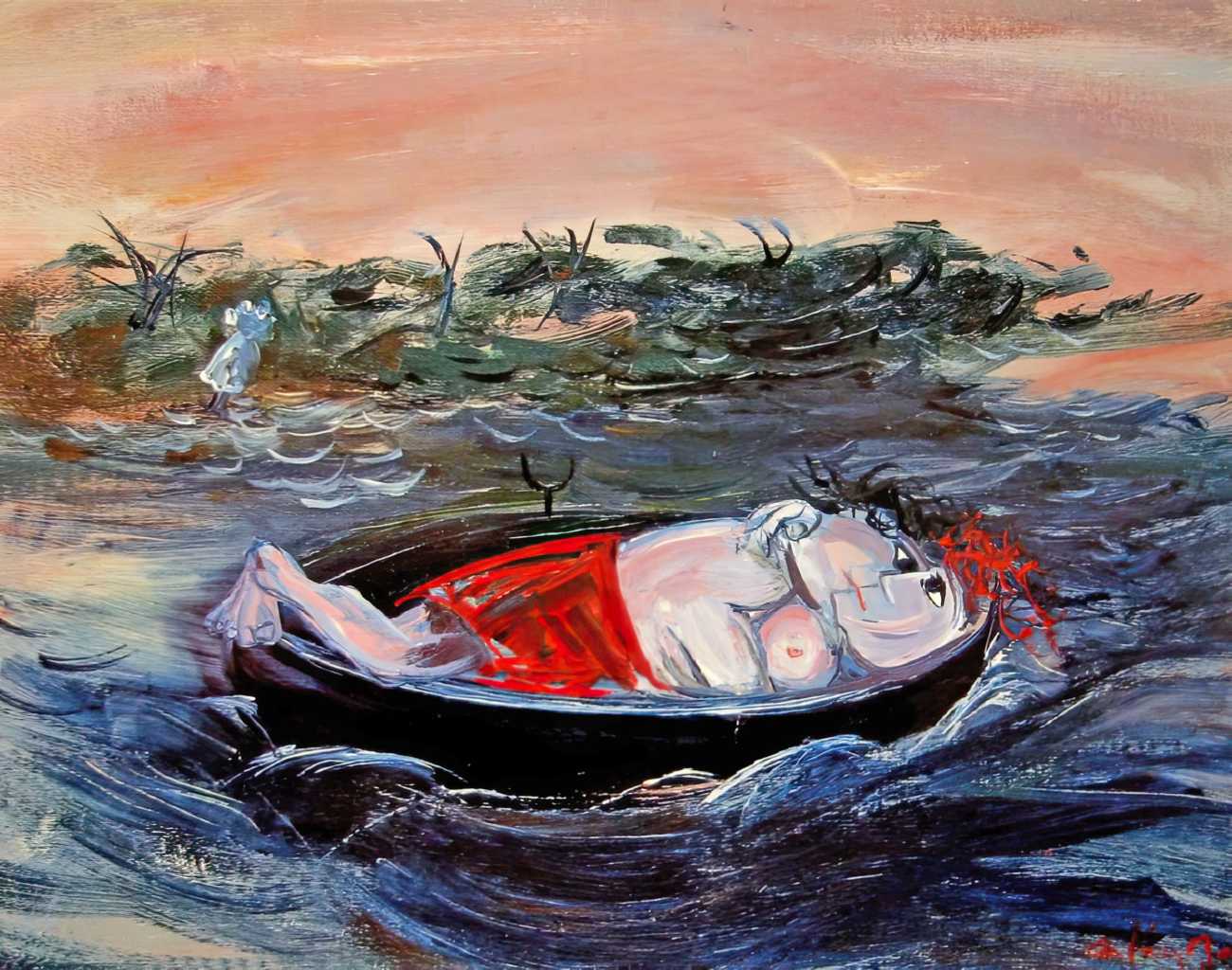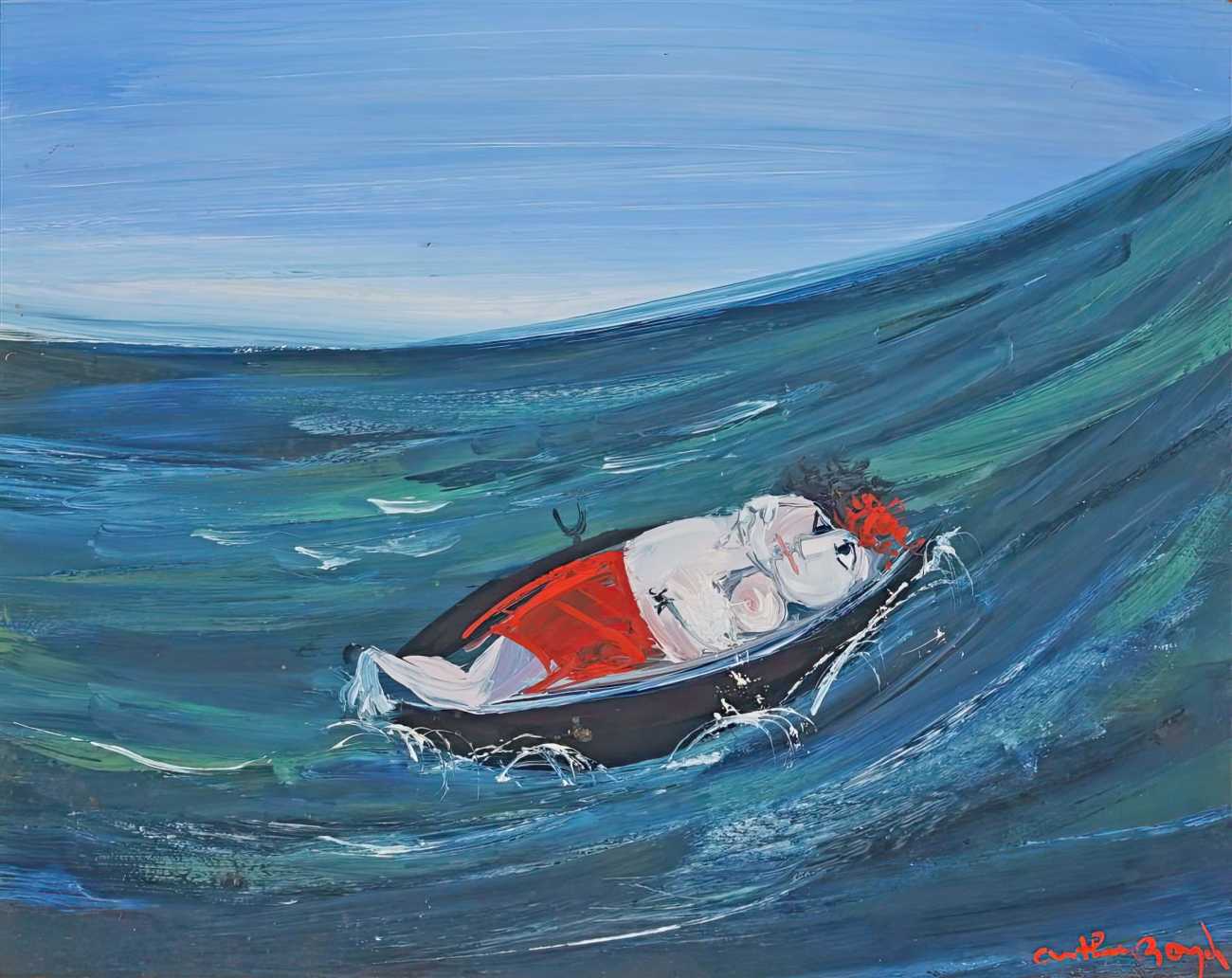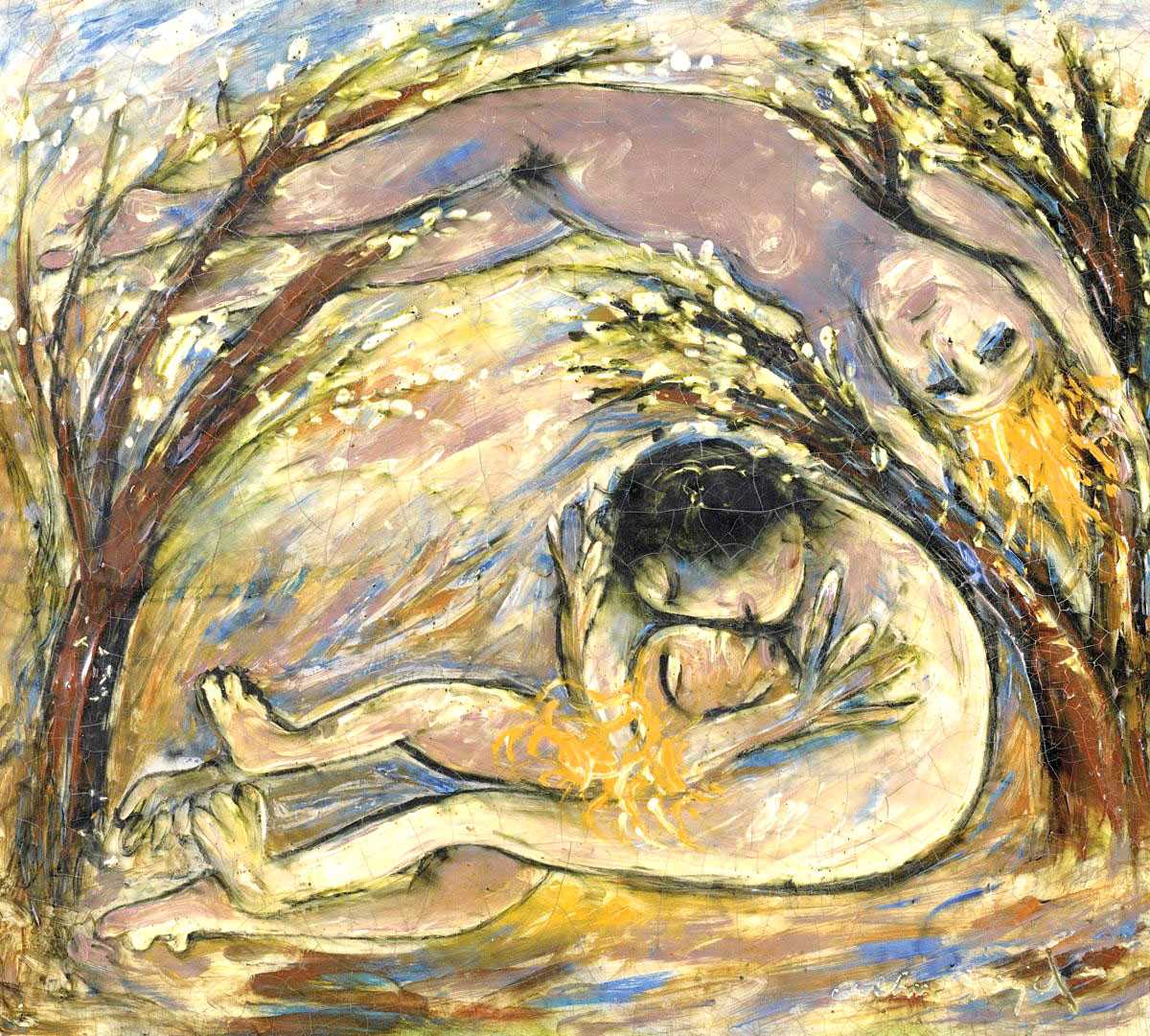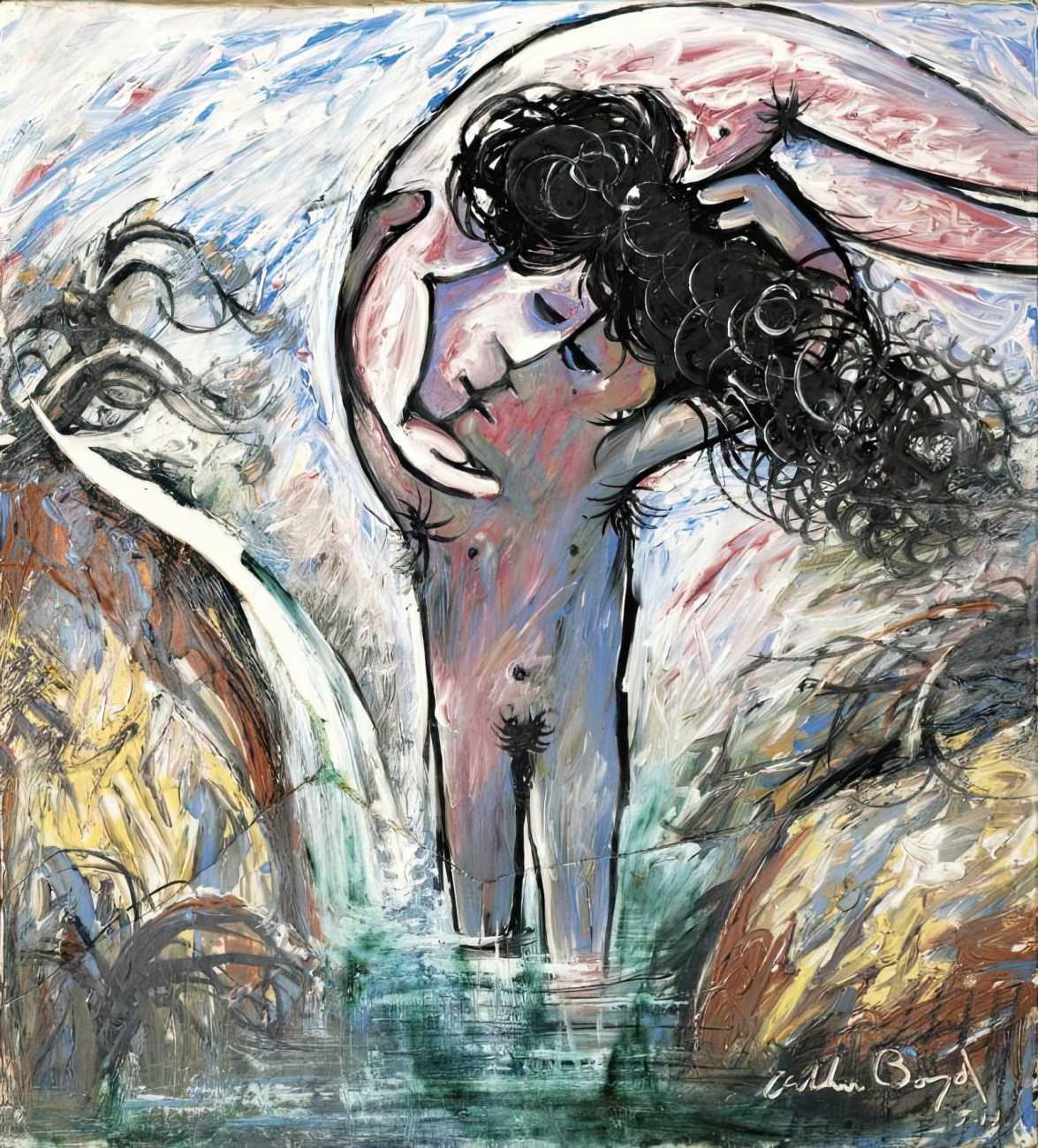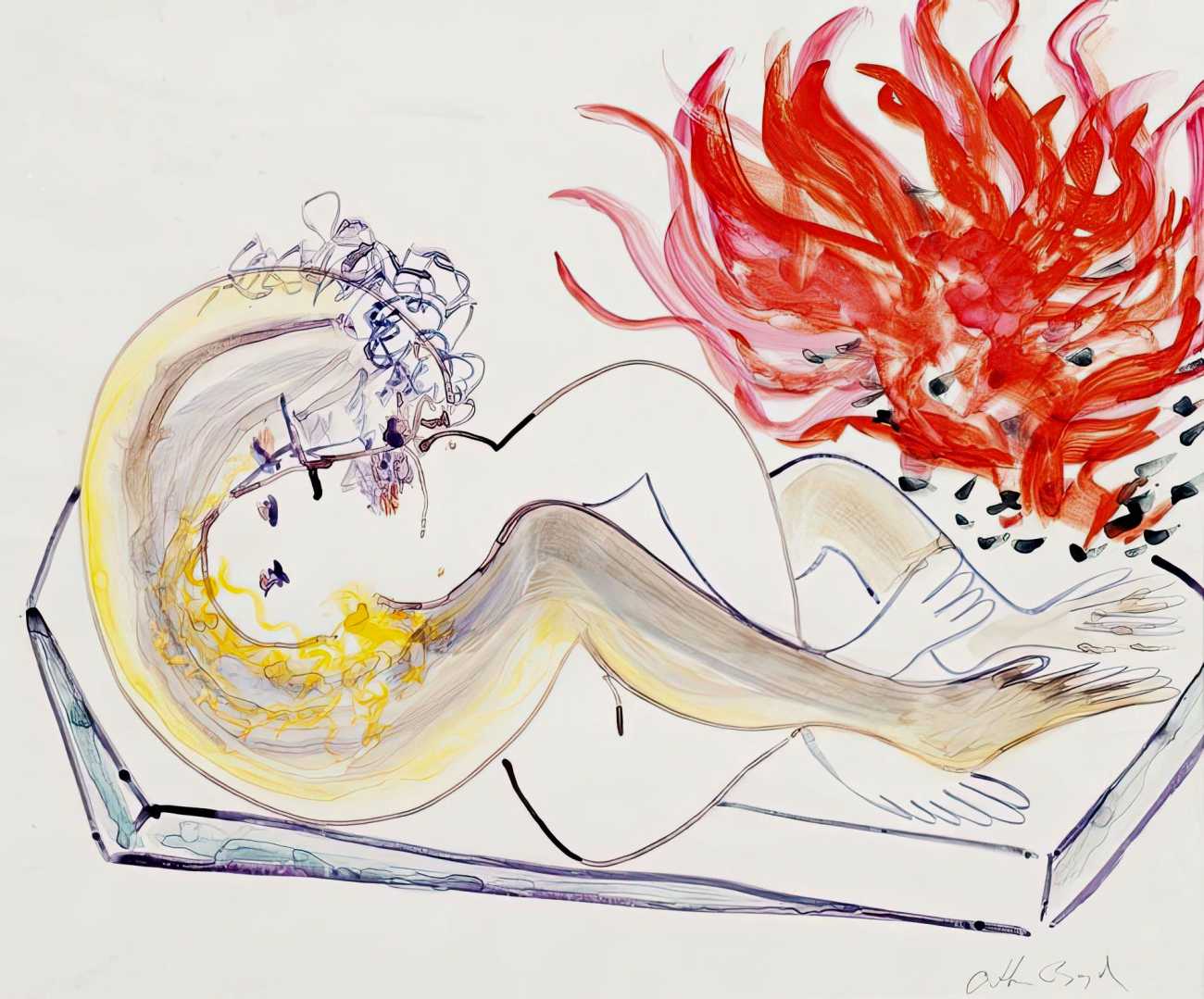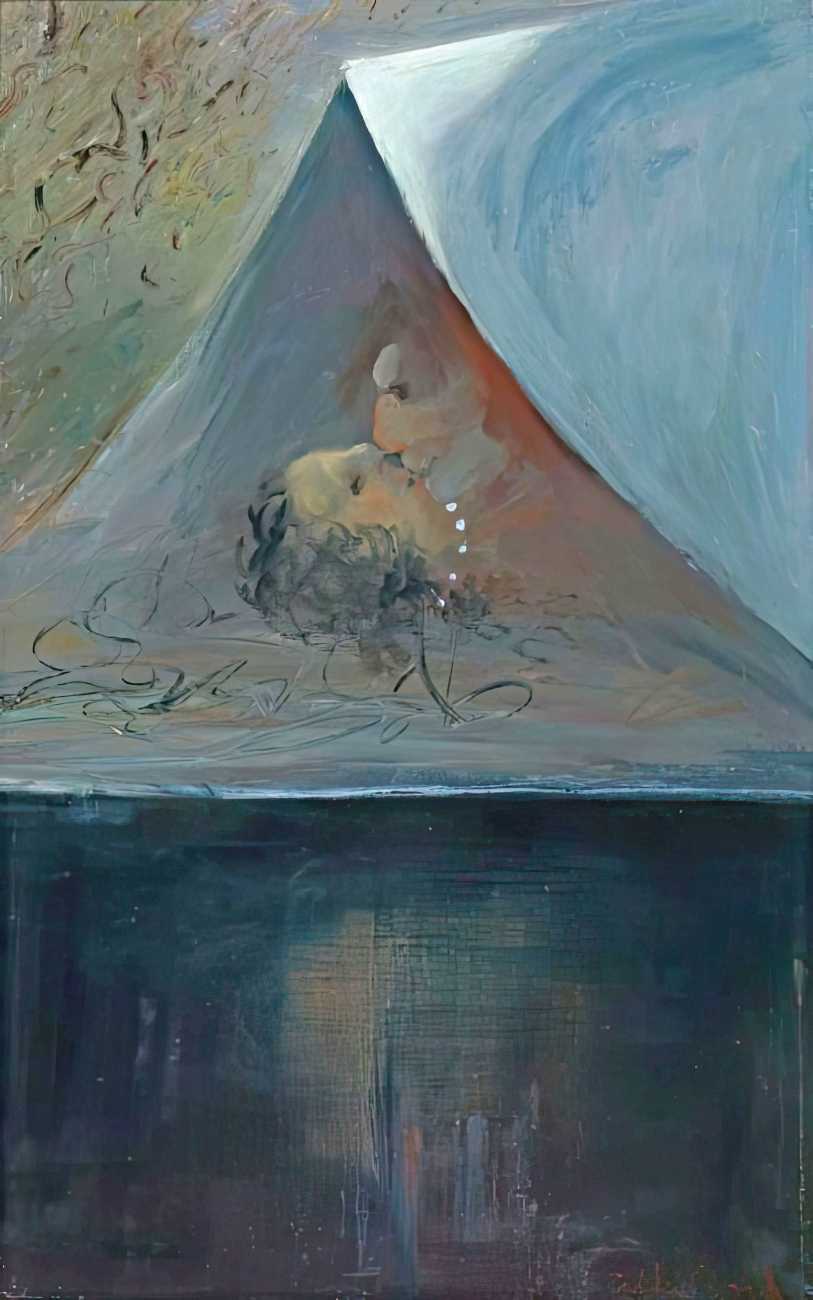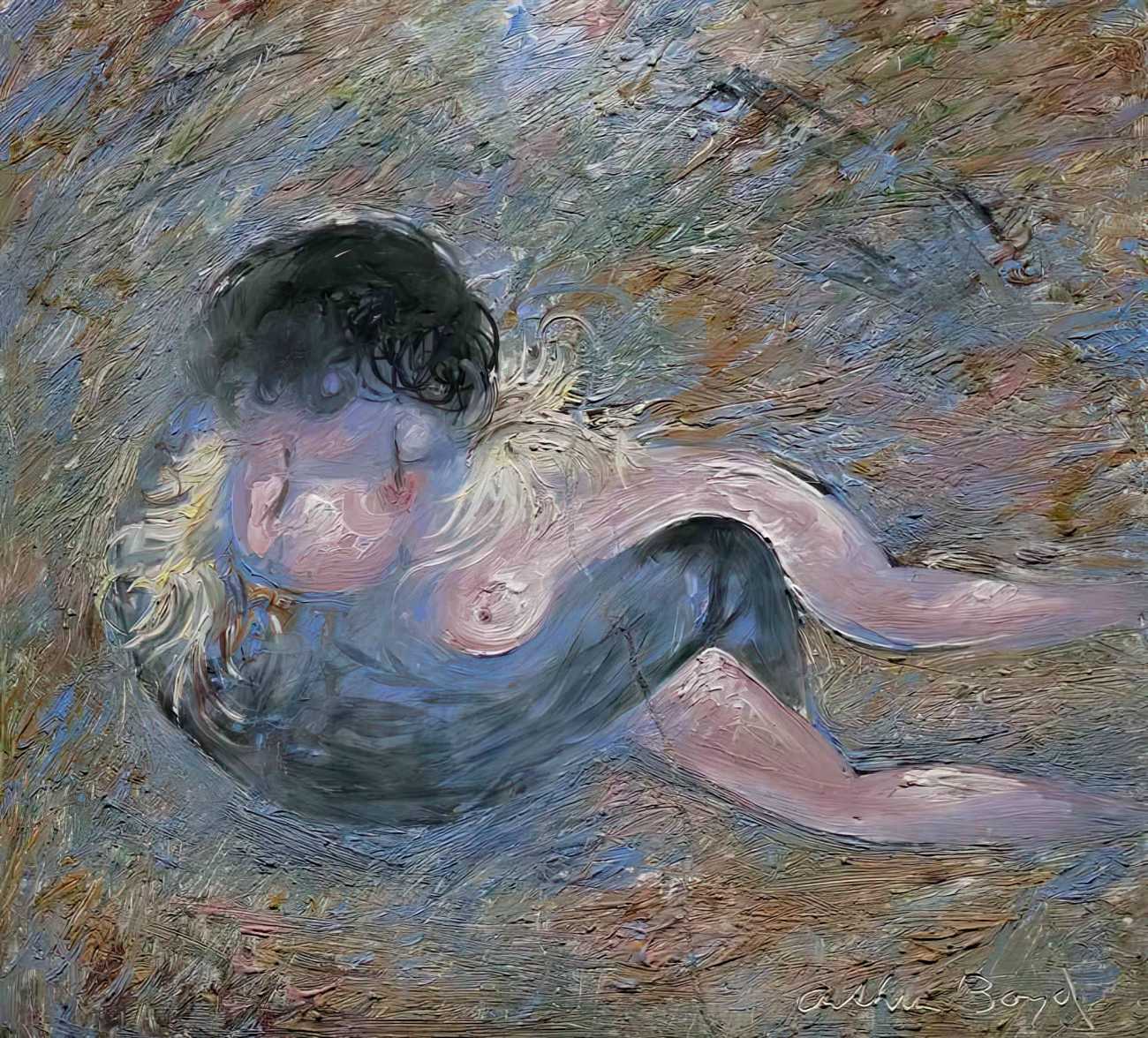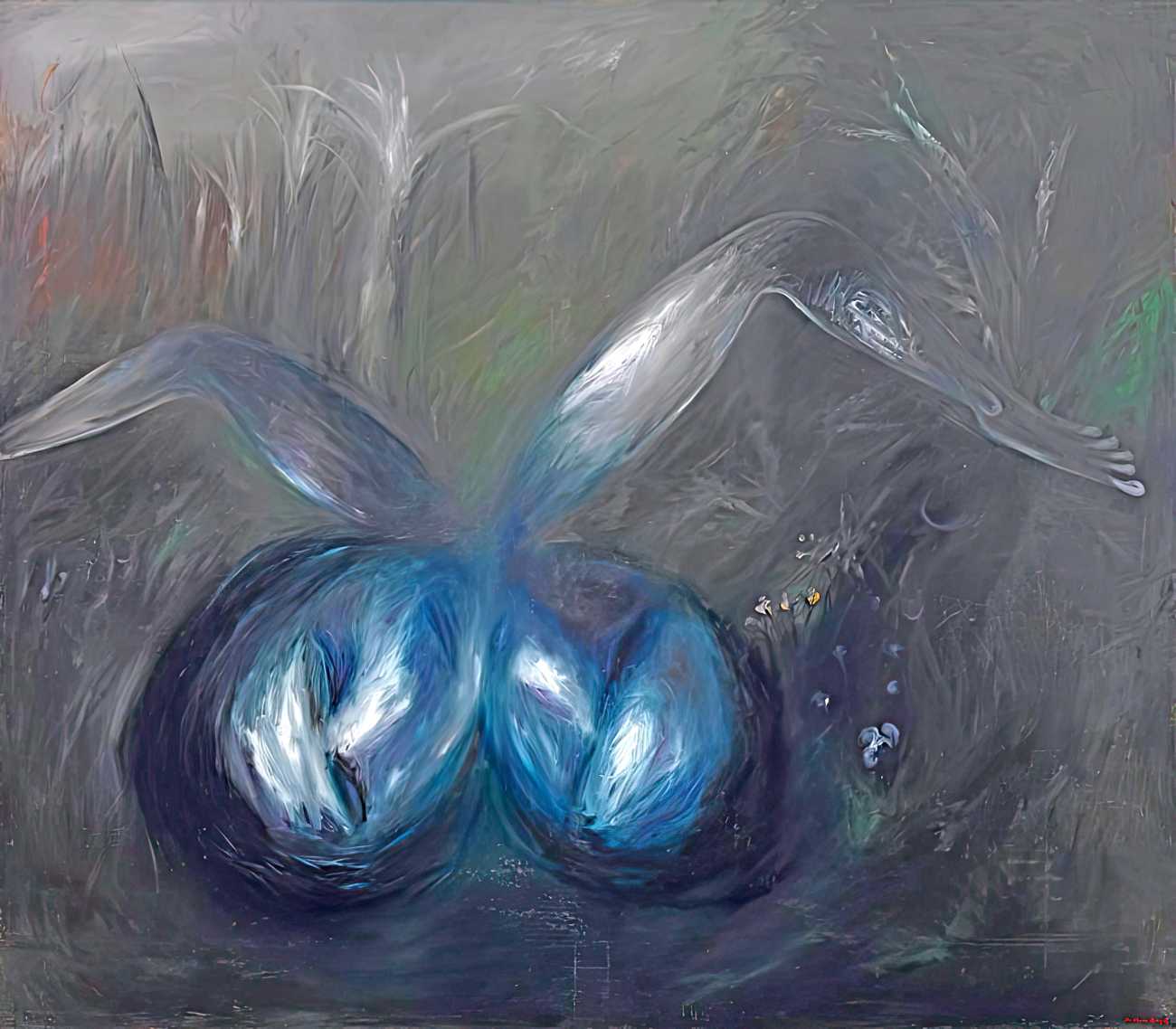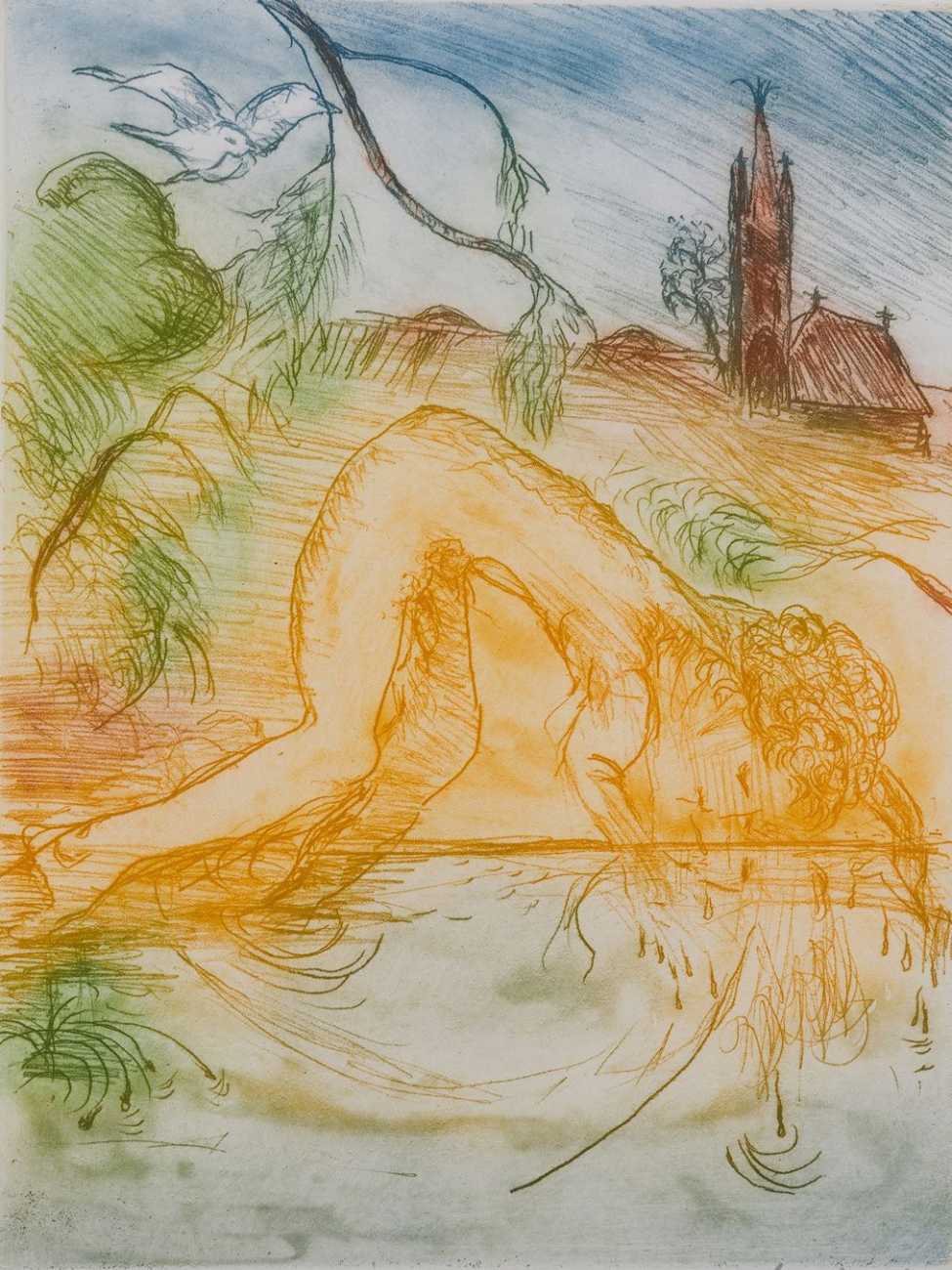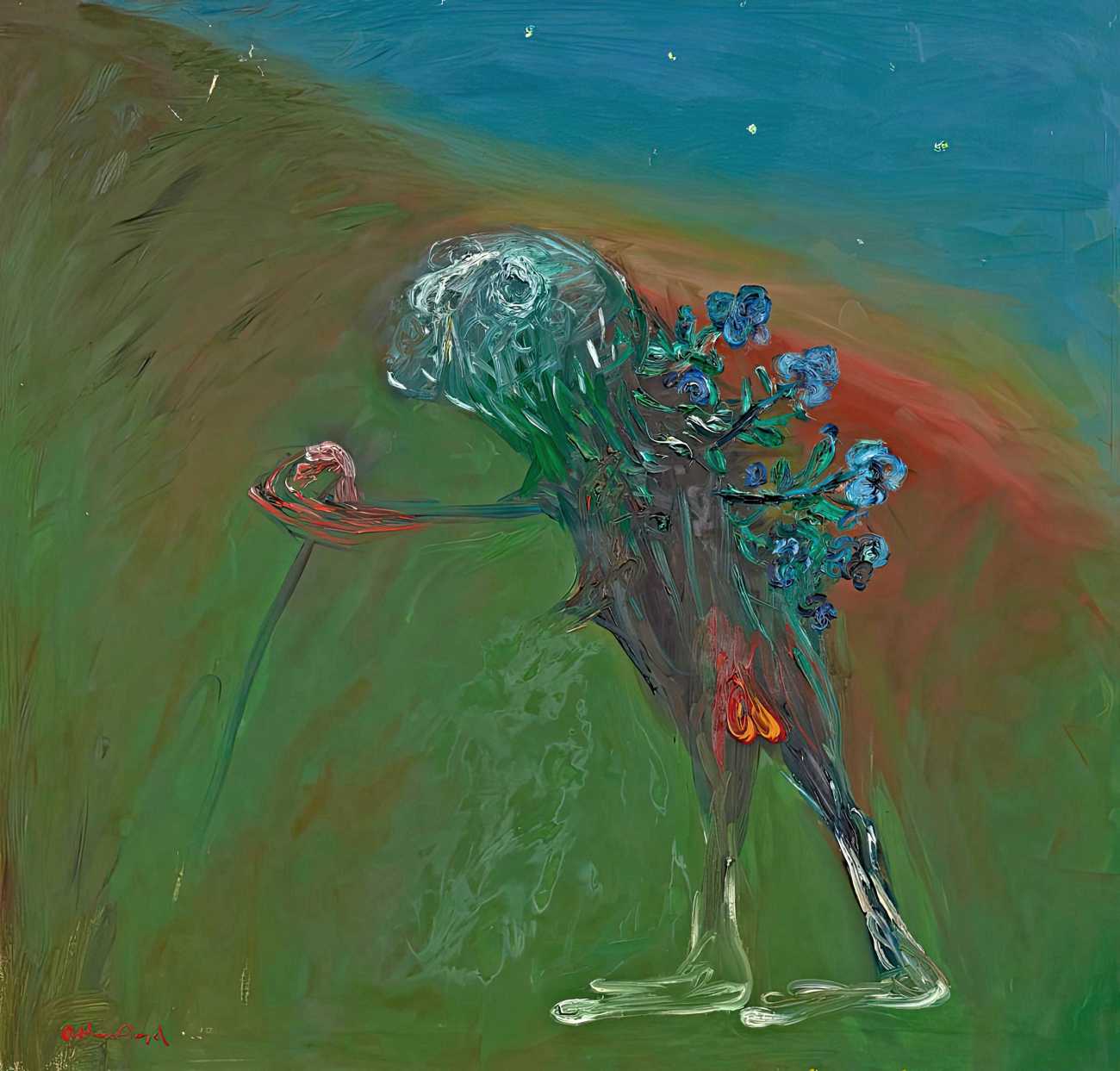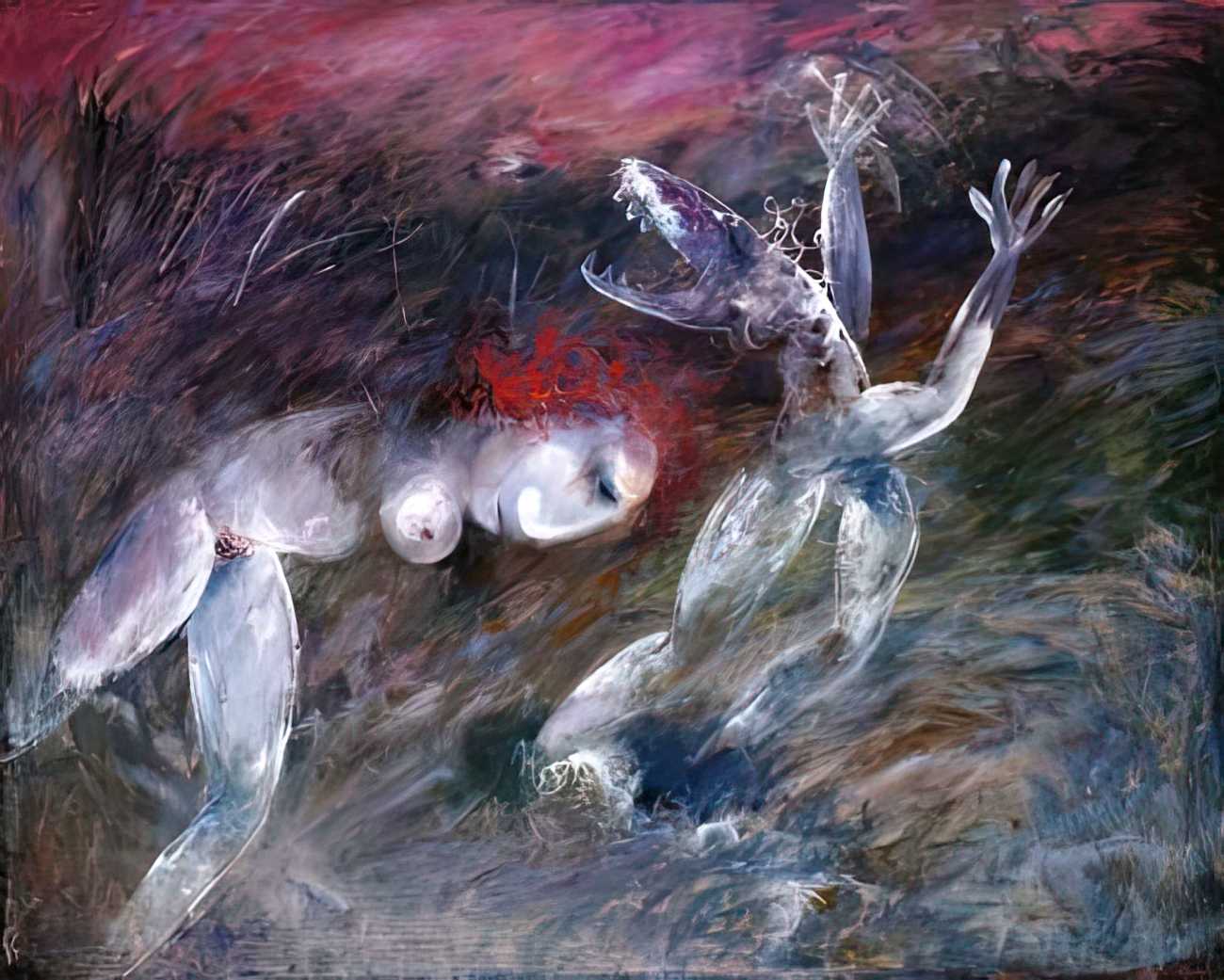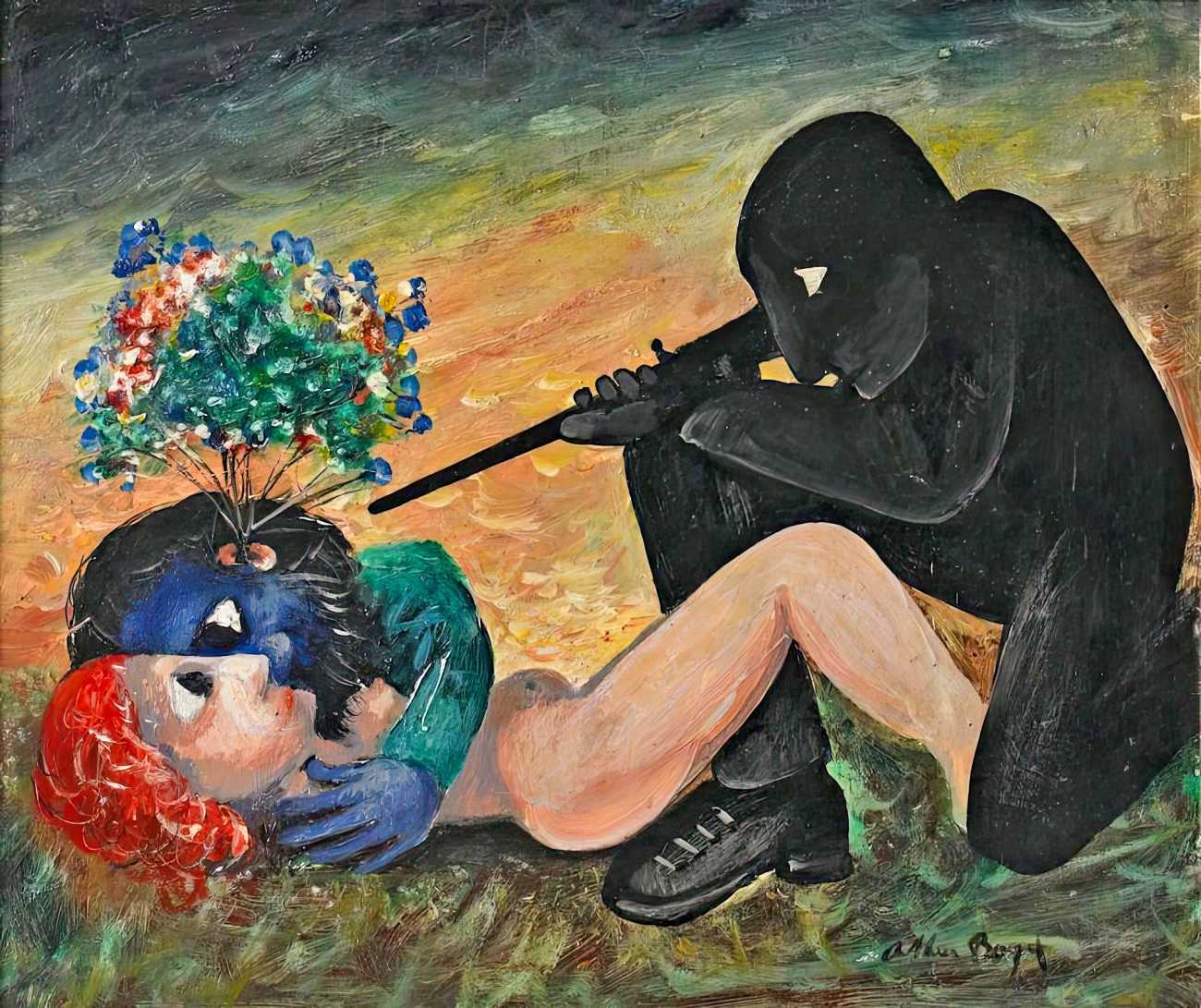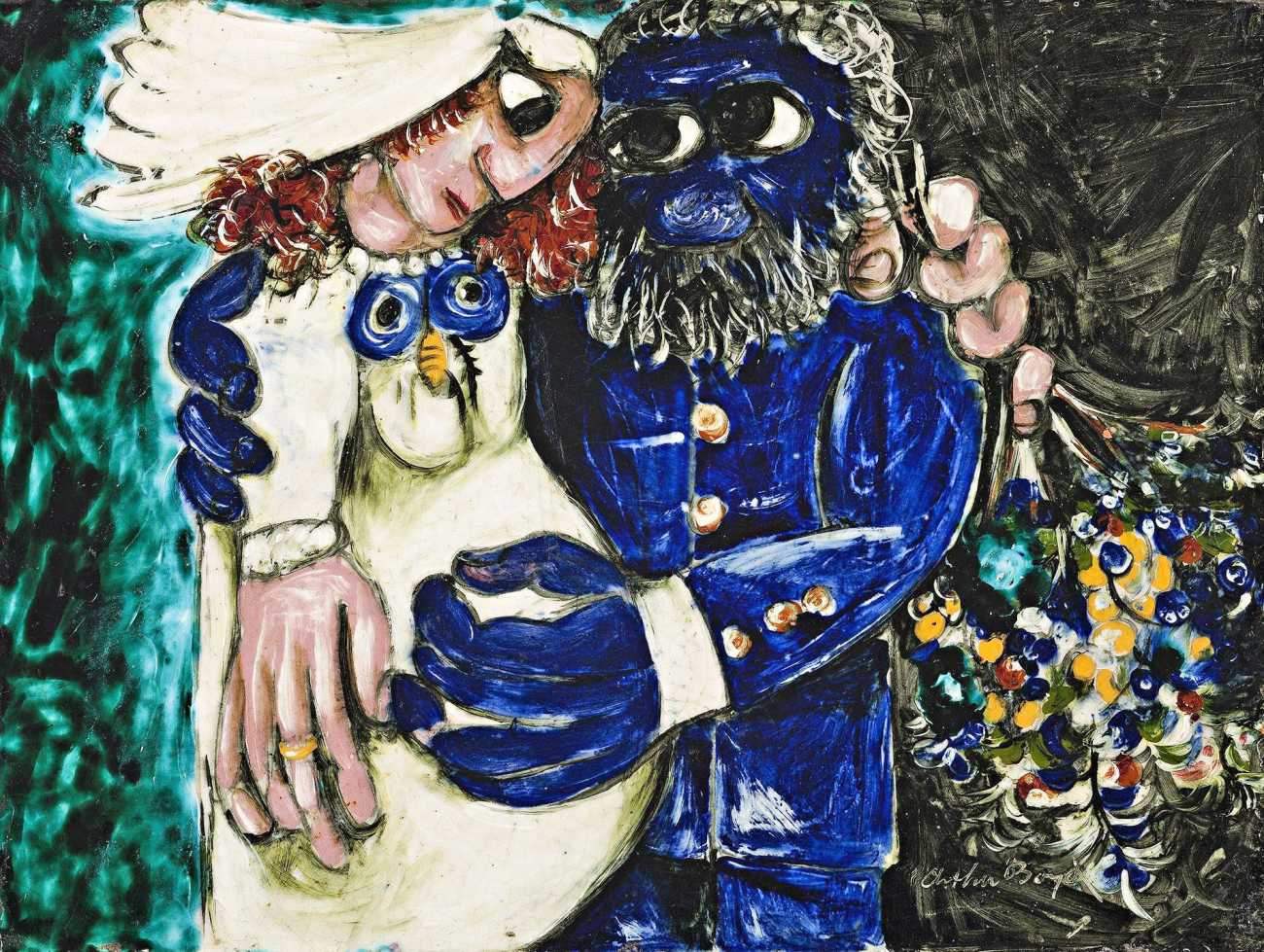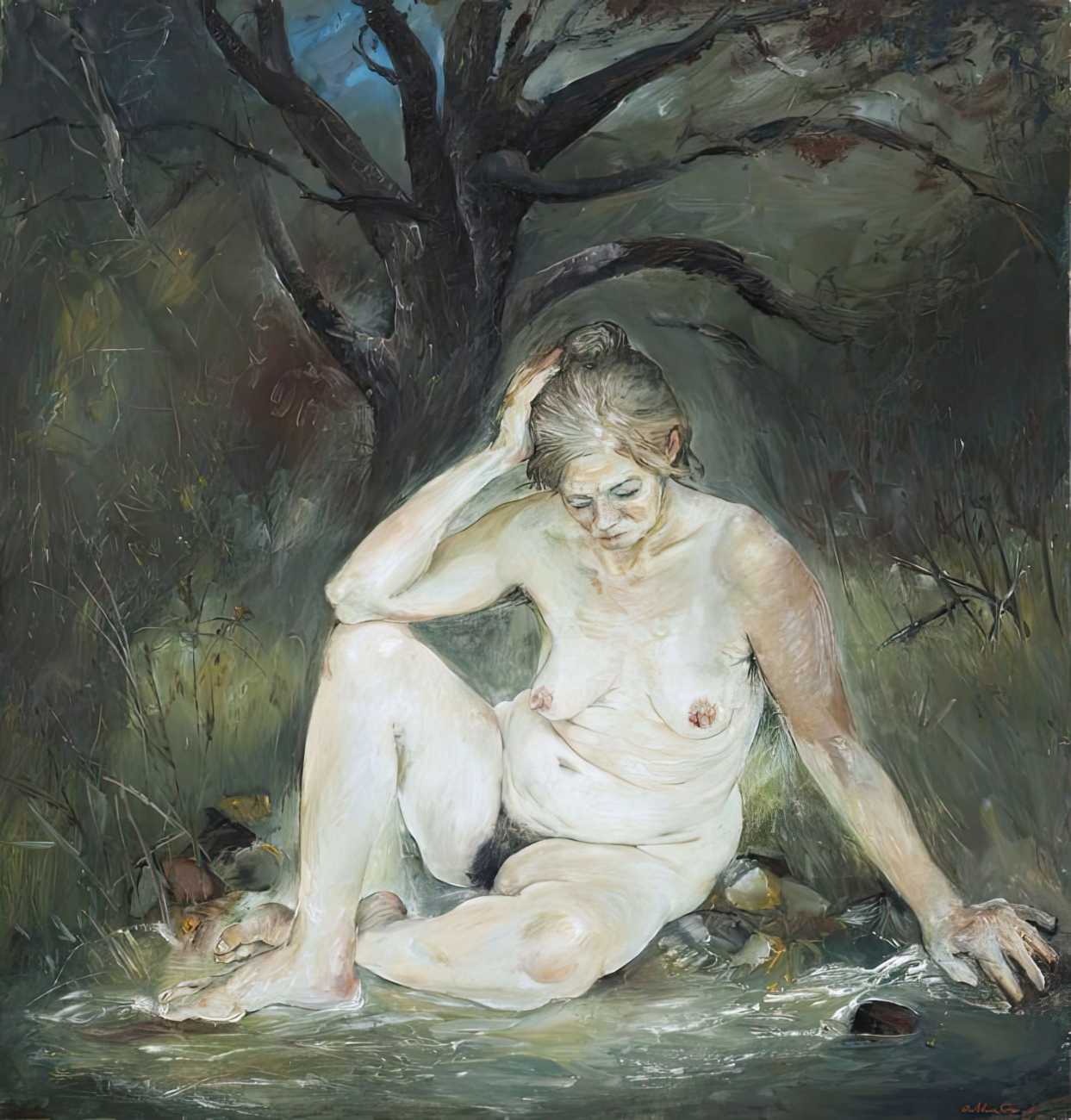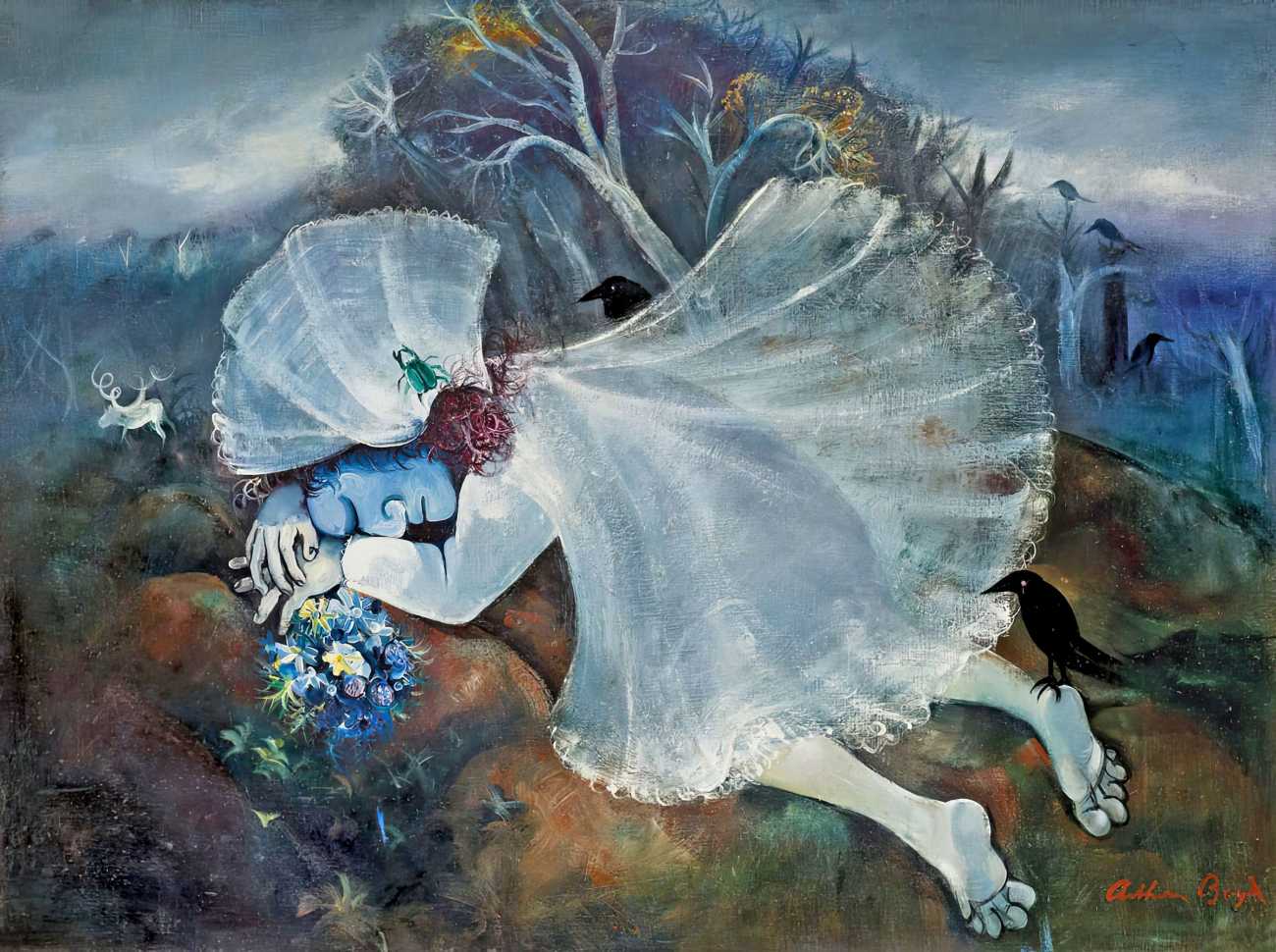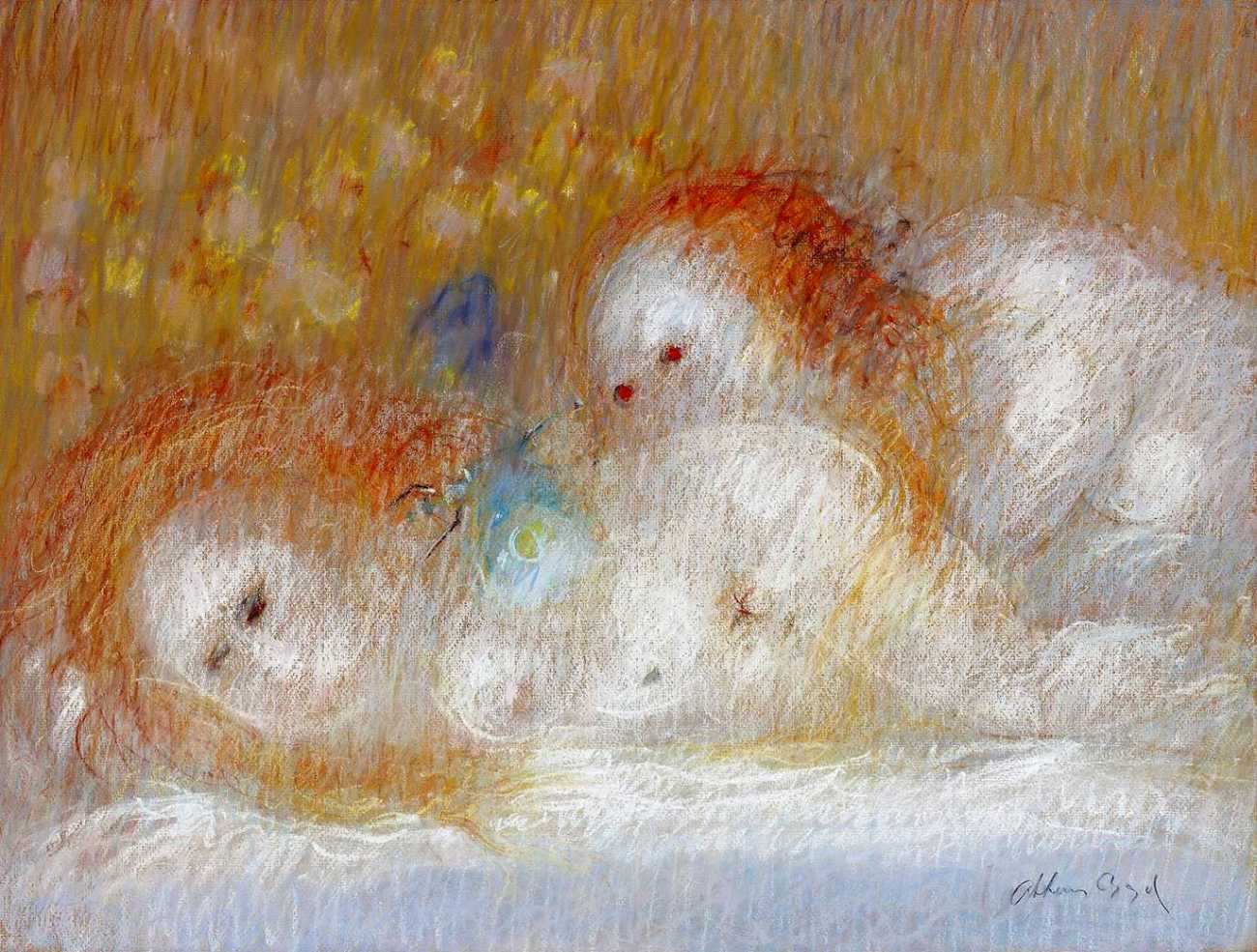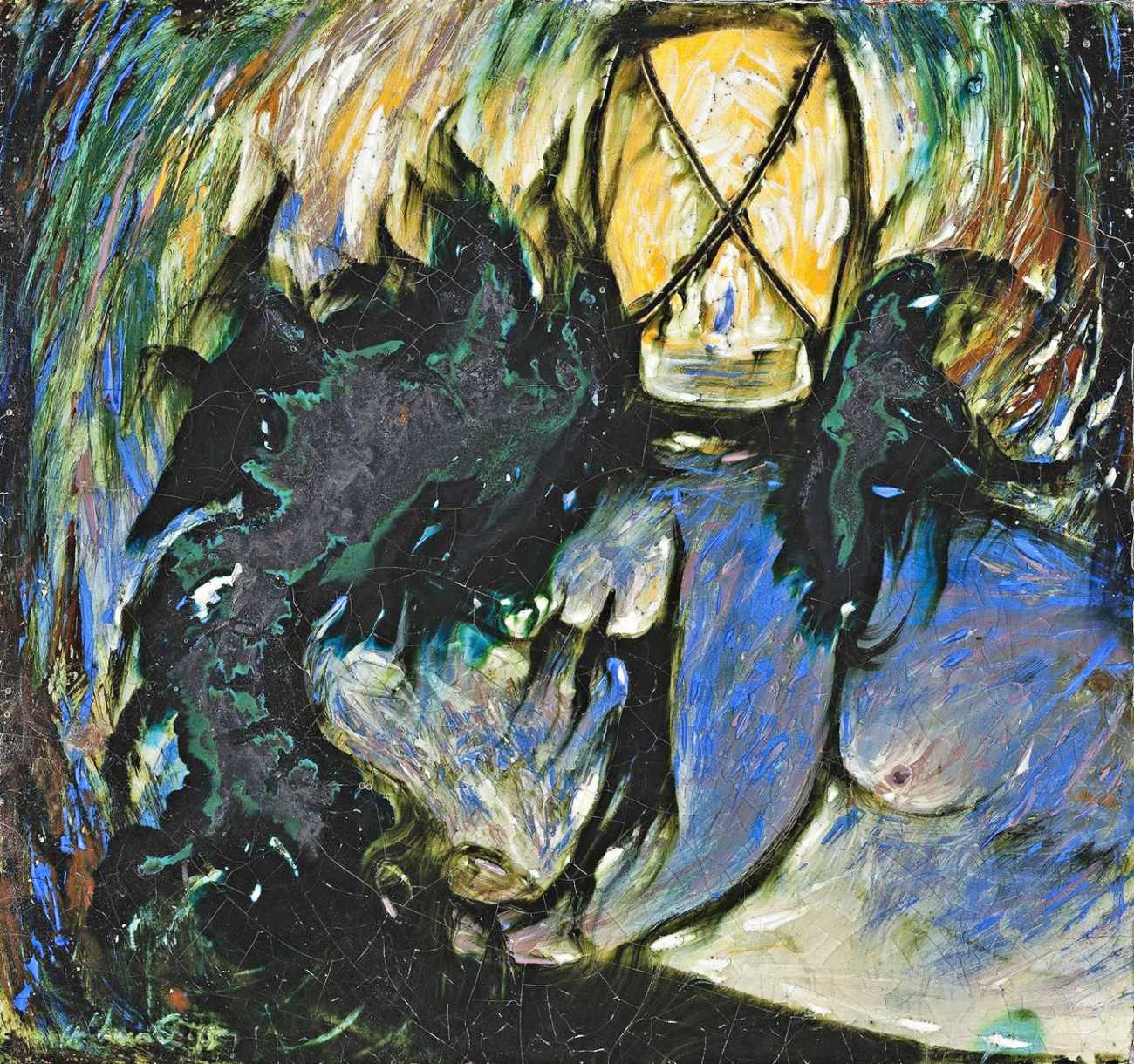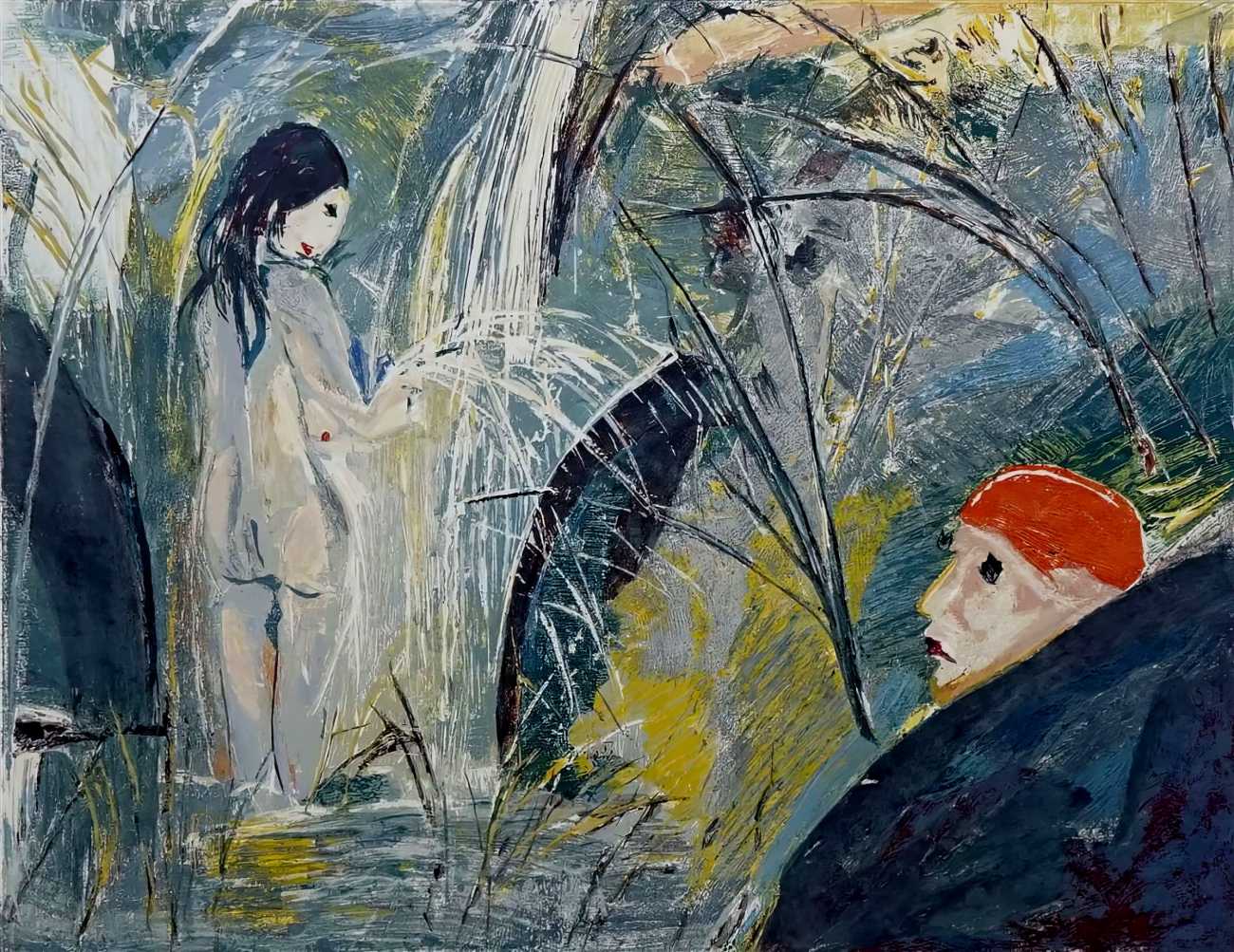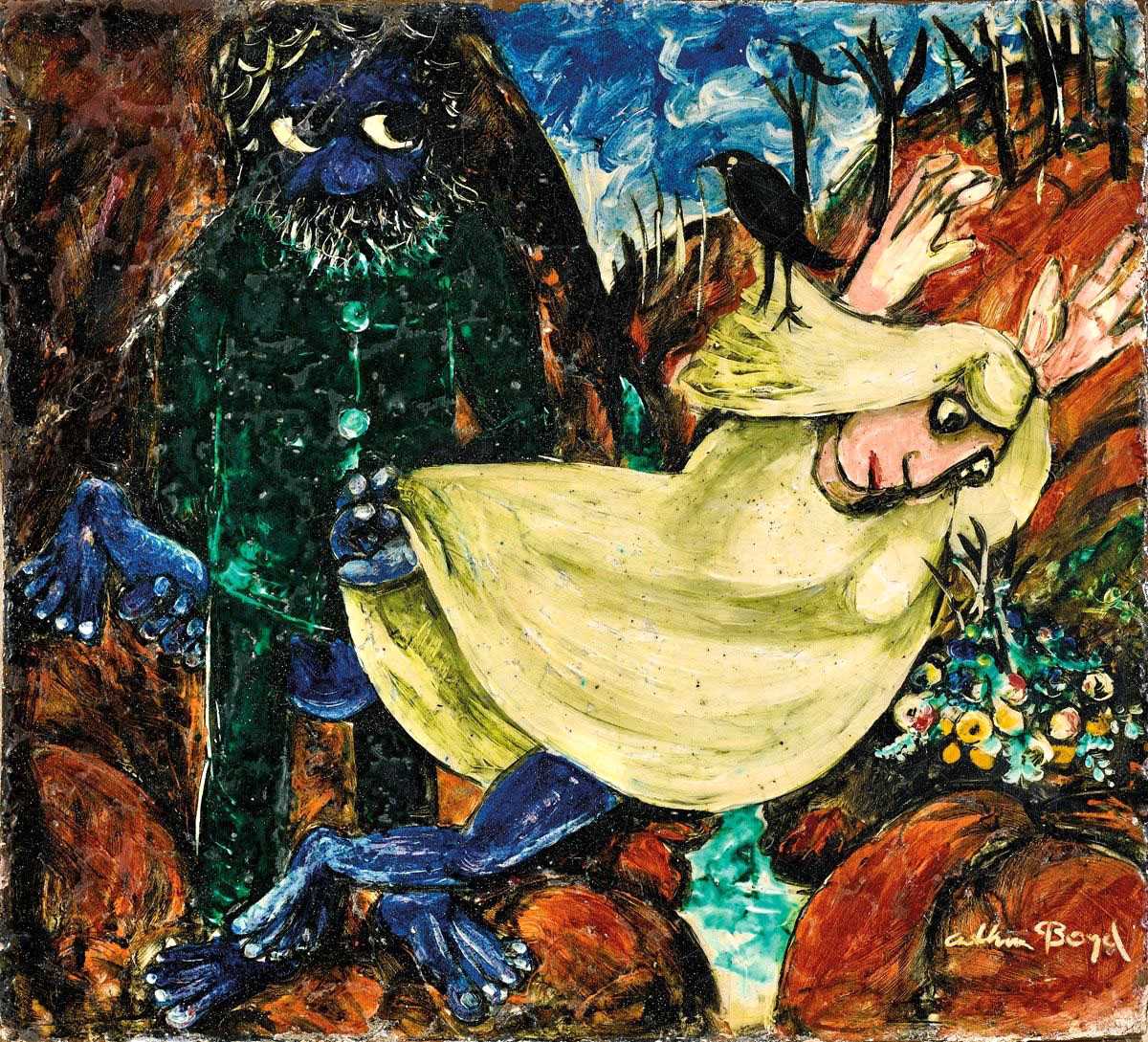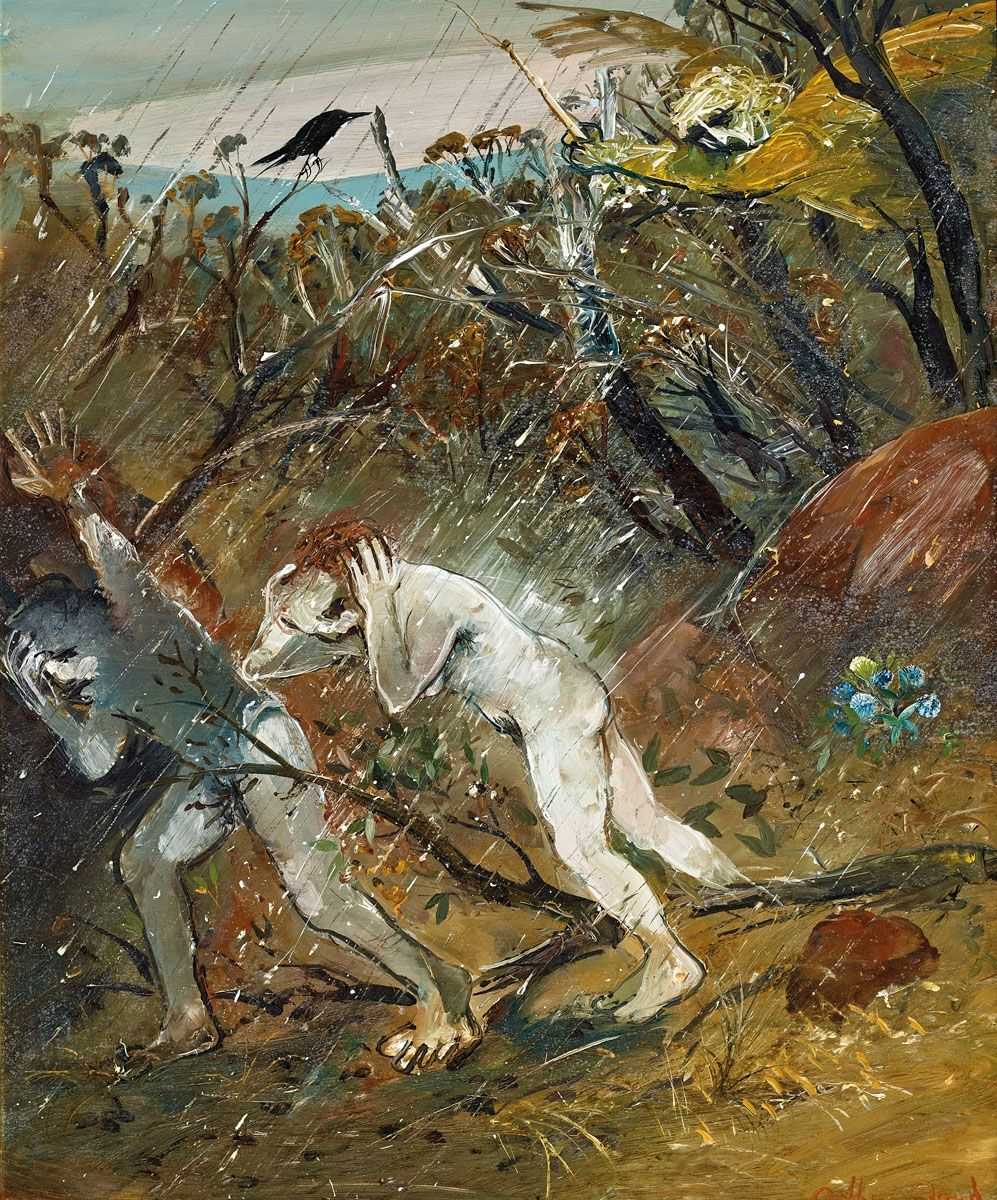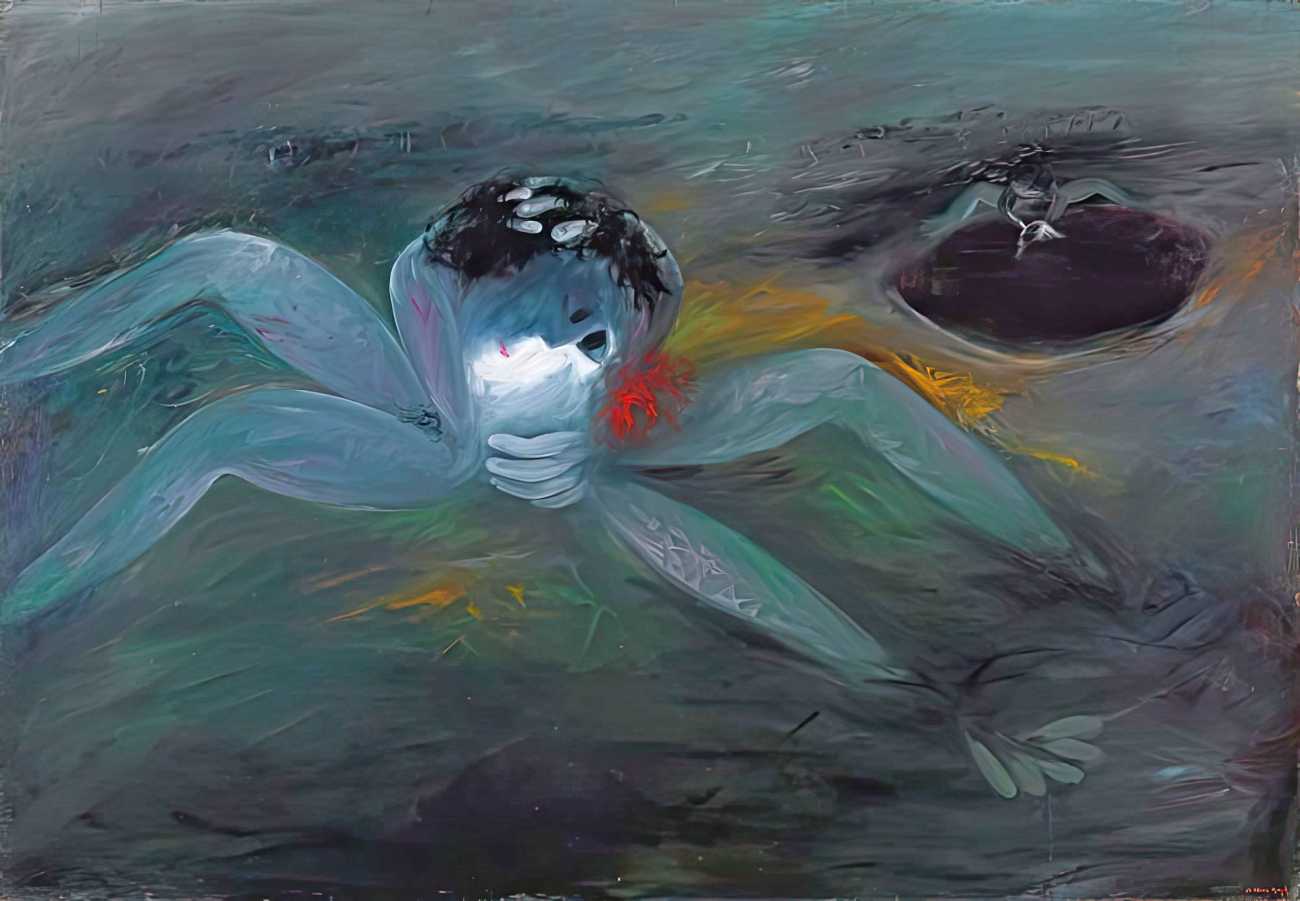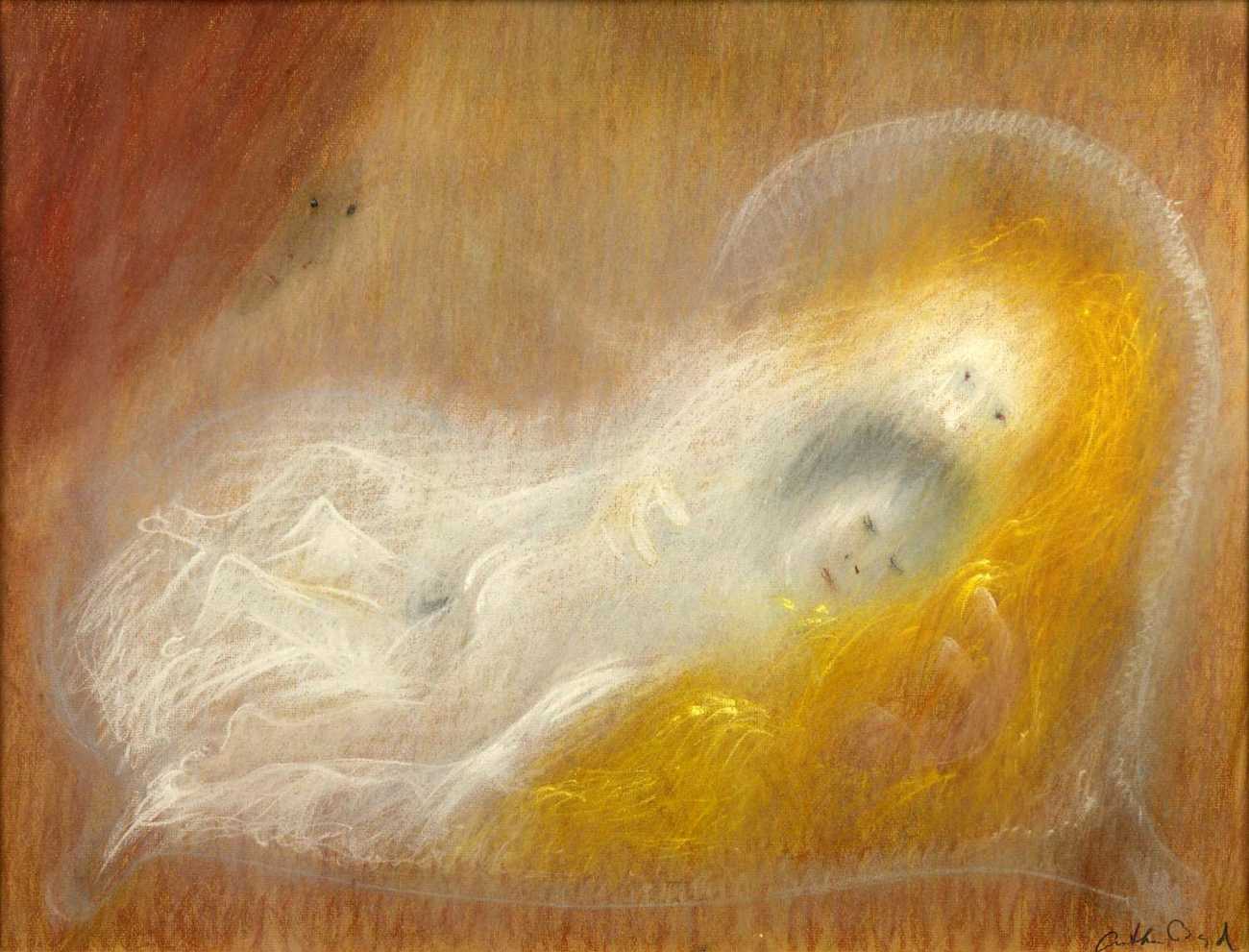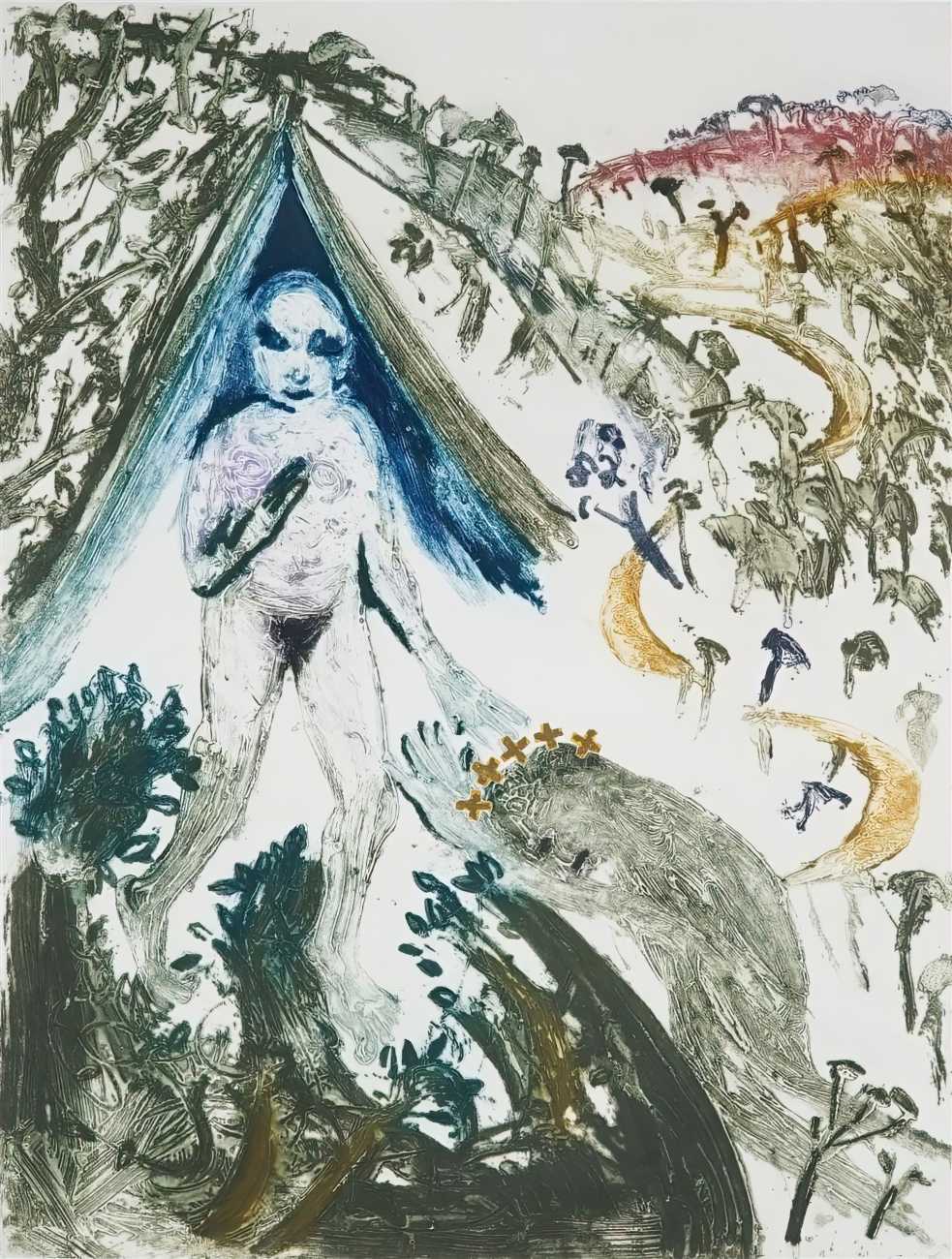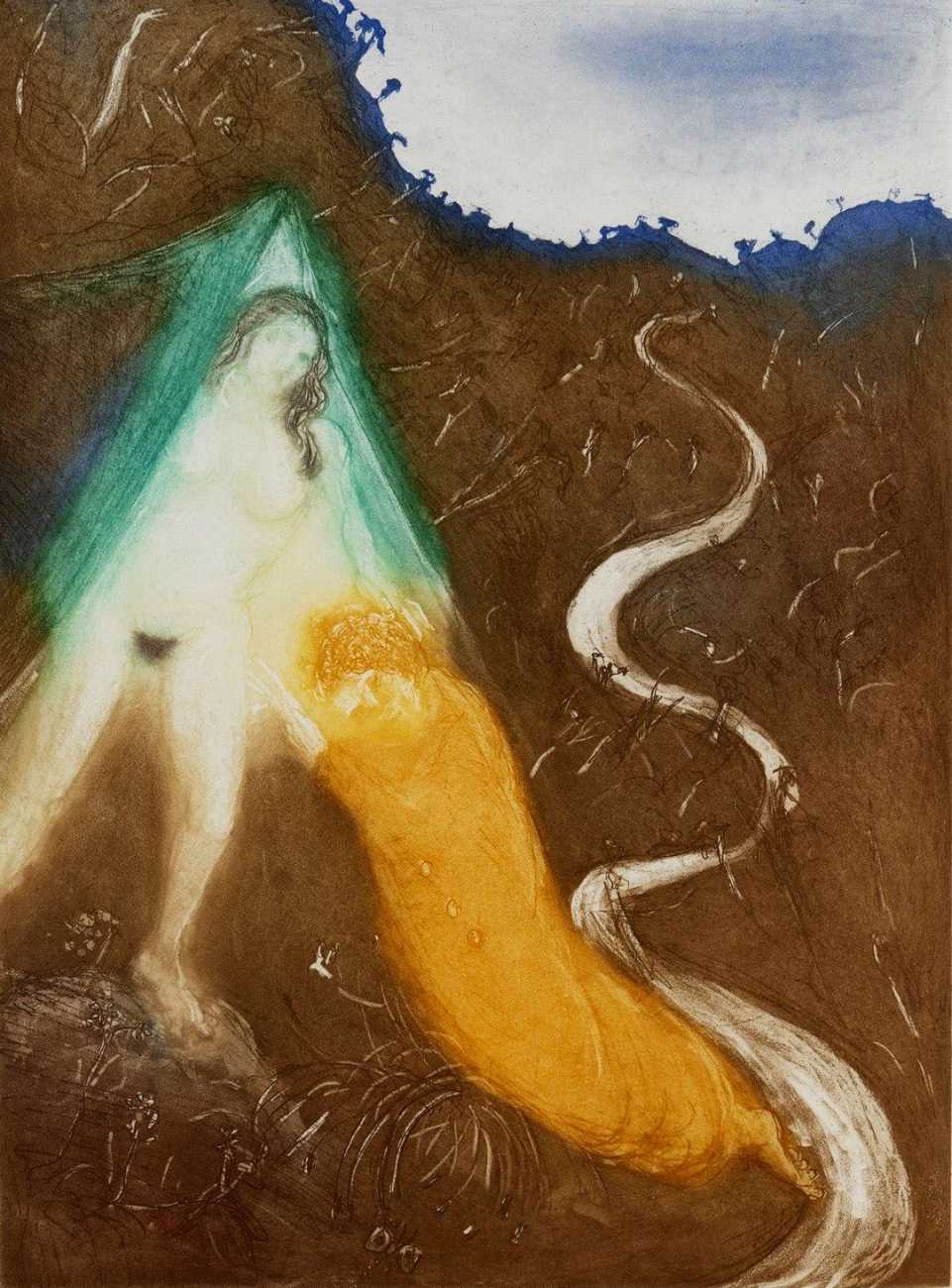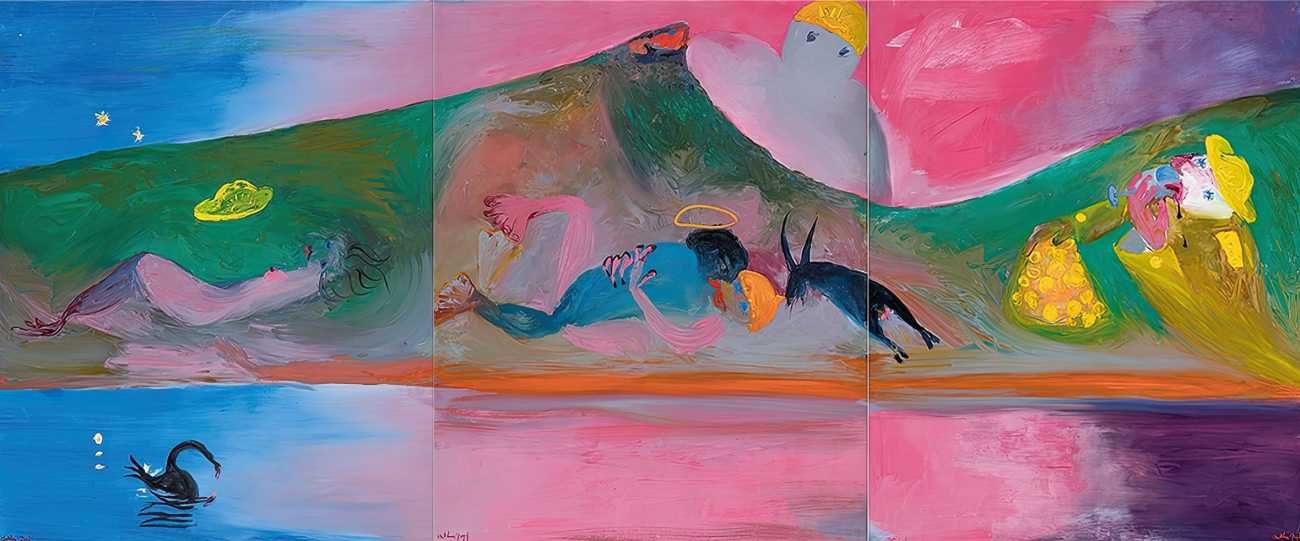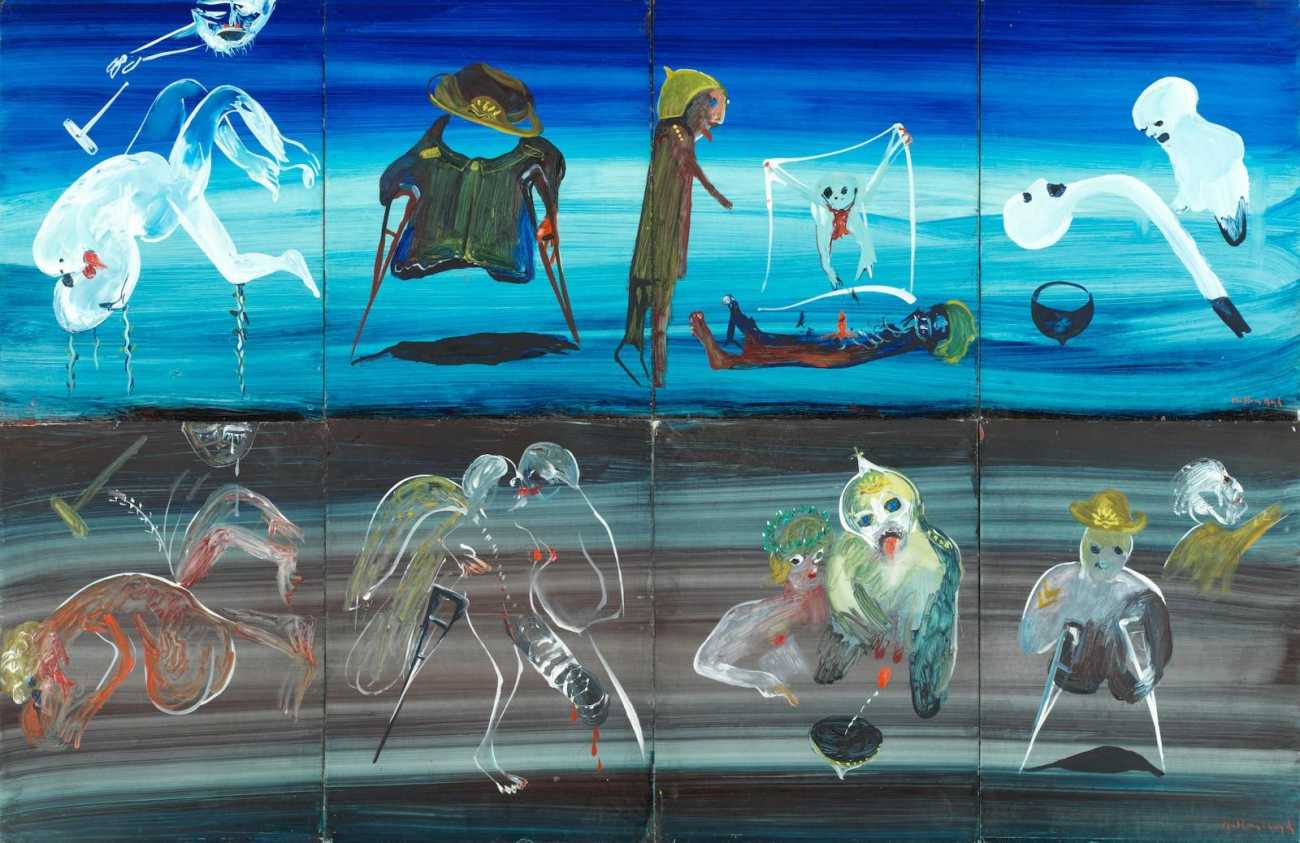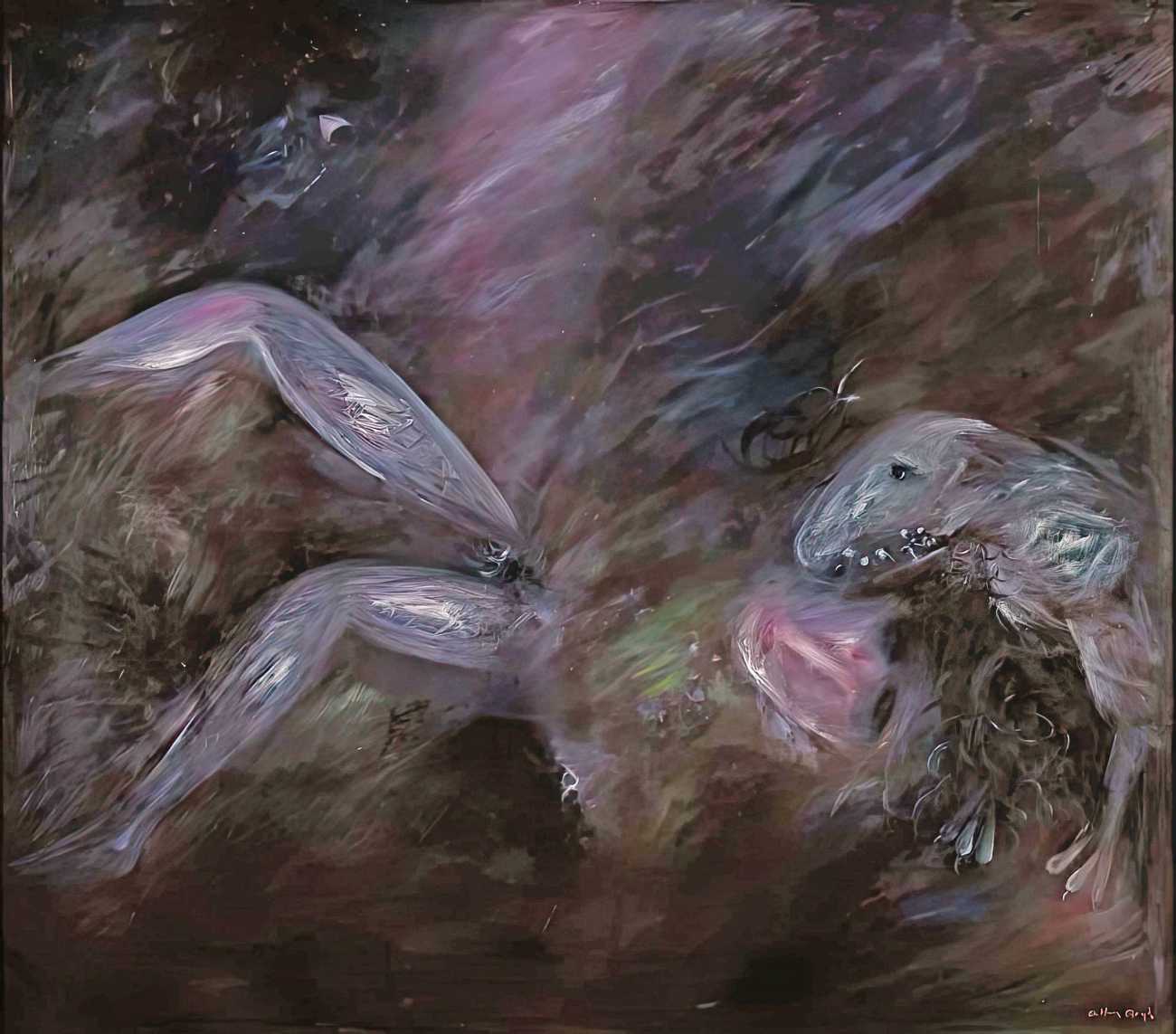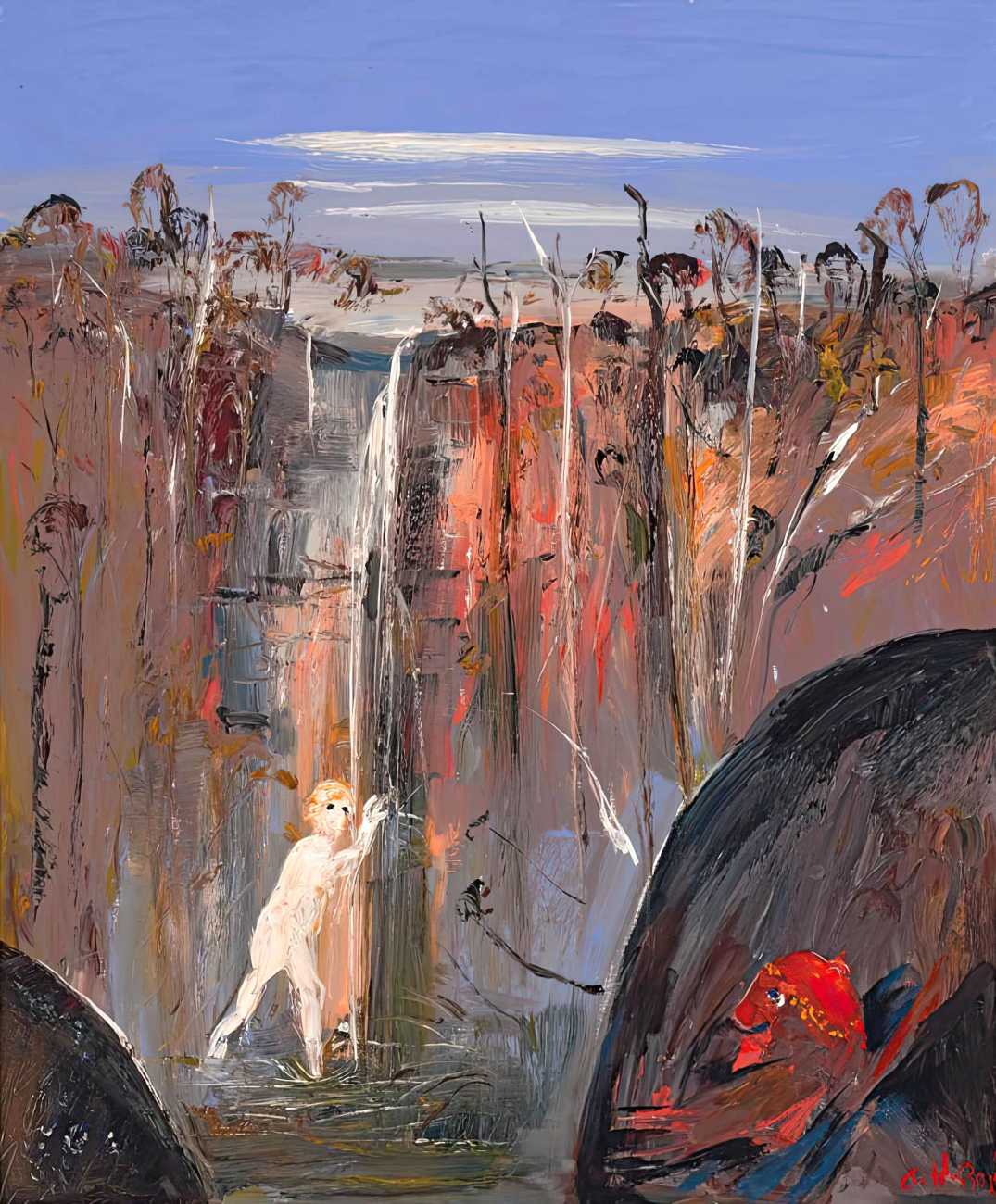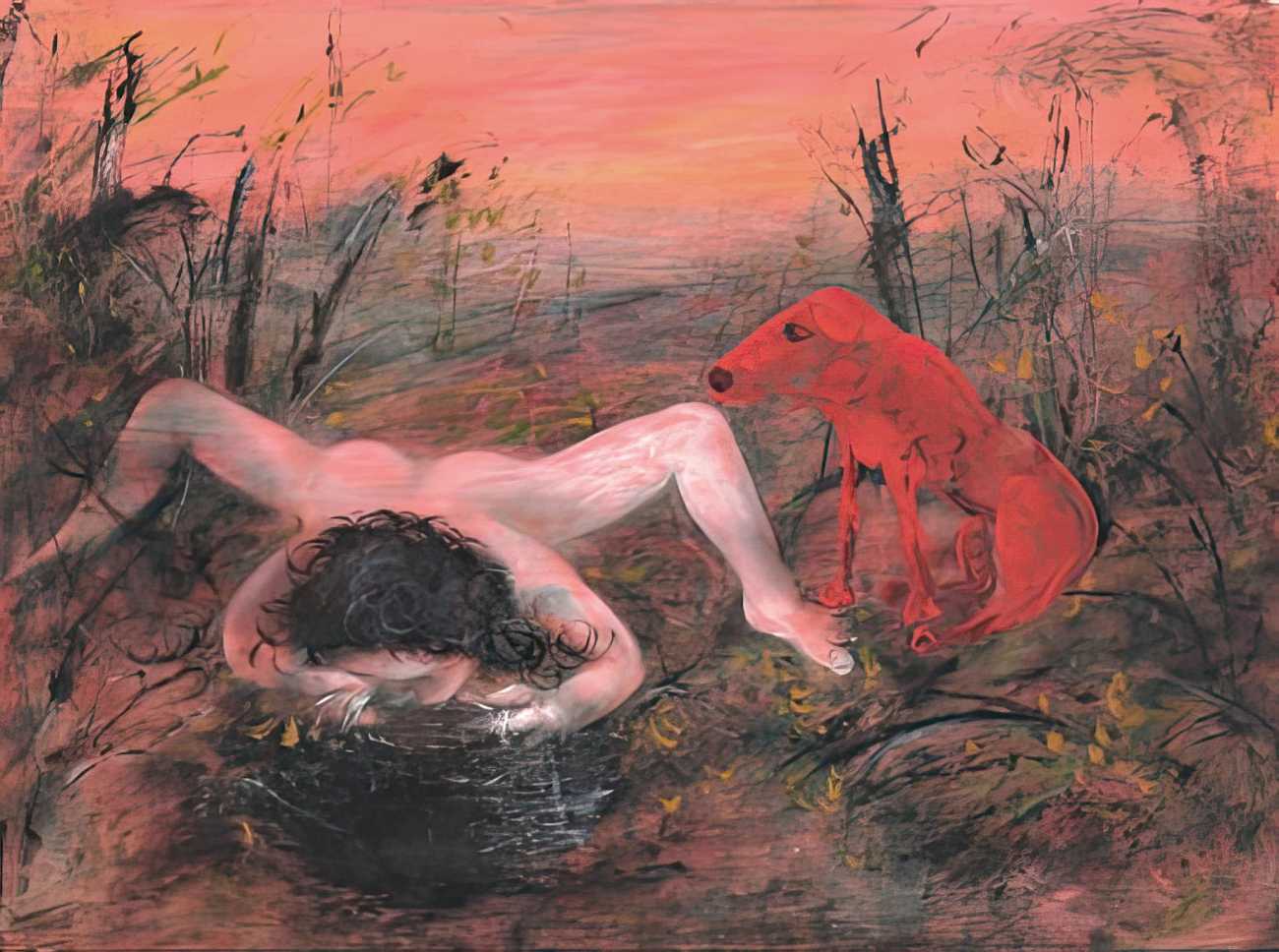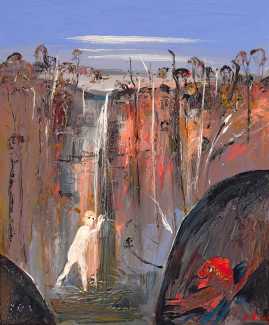
Arthur Boyd’s paintings imagine a world where sexuality, nature and the darker impulses of human behaviour are intimately intertwined. The human body is central to this vision, appearing in solitary contemplation, passionate embraces, and violent or disturbing encounters. Figures lie naked in long grass, beside streams or beneath ancient trees, their pale flesh set against the tangled vegetation of the Australian landscape. Lovers cling to one another, kiss and explore each other’s bodies, while others seem exposed, pursued or threatened by forces they cannot control.
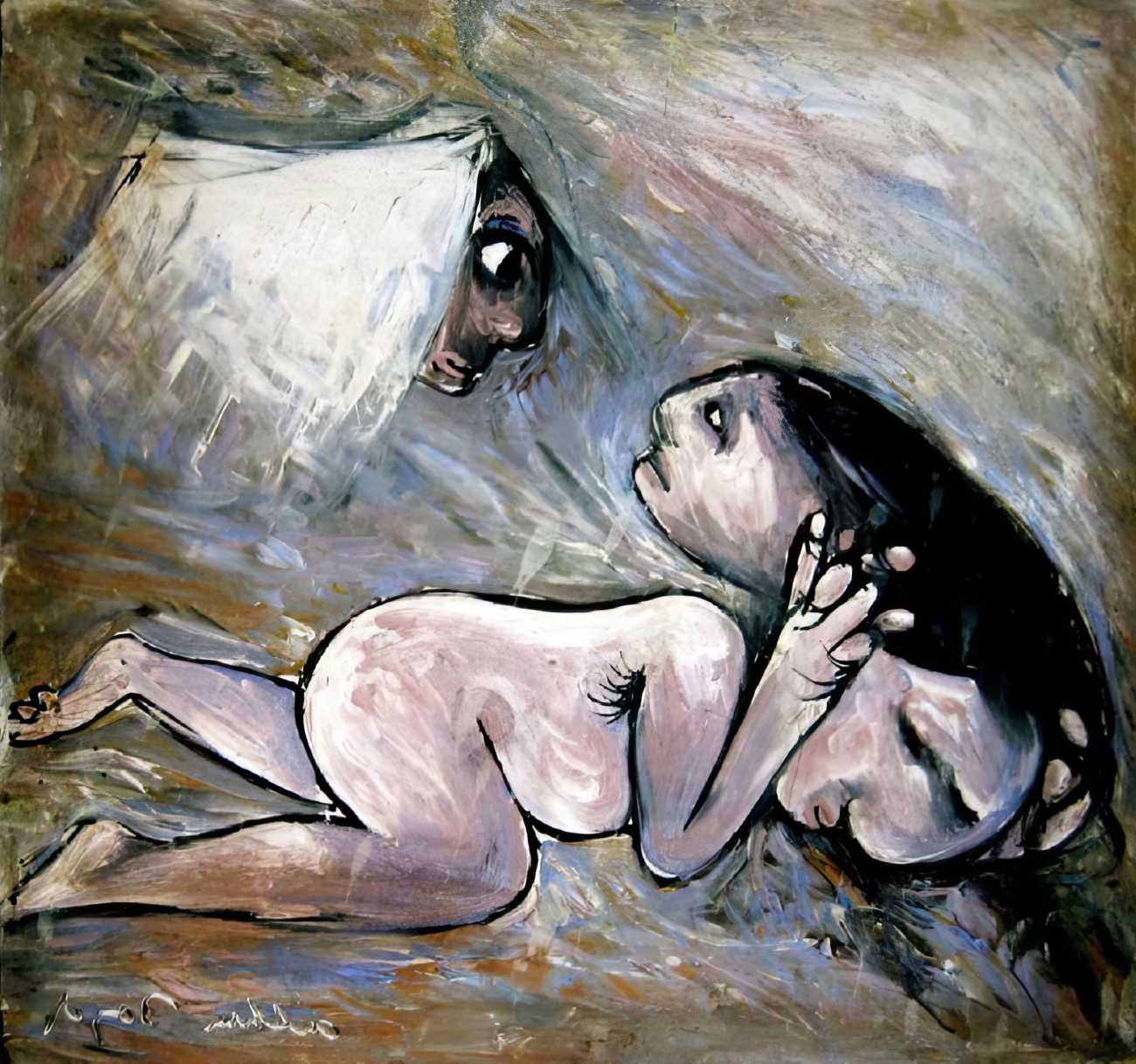
Boyd’s erotic imagery is rarely straightforwardly celebratory. Tenderness and sensual pleasure coexist with anxiety, shame, persecution and brutality. His lovers may appear absorbed in one another, yet their contorted bodies and troubled expressions suggest relationships complicated by fear and vulnerability. The human figure often becomes grotesque and animalistic, blurring the boundaries between desire and violence, civilisation and instinct. Sexuality is an elemental force, capable of bringing people together but also exposing them to suffering and humiliation.
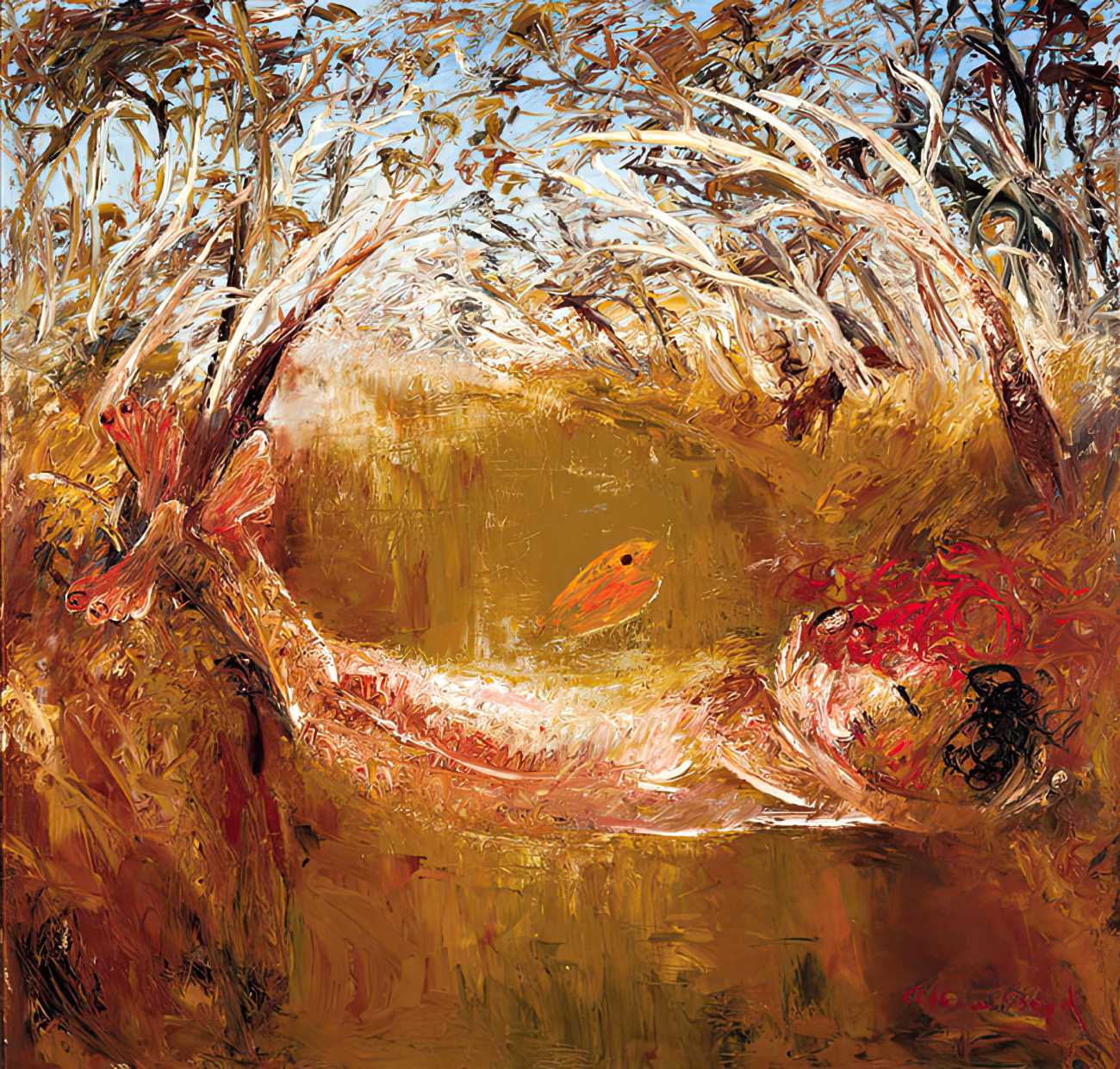
For Boyd the natural world is far more than a backdrop. Streams, forests, cornfields and barren landscapes provide settings in which passions unfold with the inevitability of a myth or a dream. Birds, animals and fantastic creatures further unsettle the distinction between the human and the animal, the innocent and the threatening.
Boyd’s vigorous brushwork reinforces the emotional intensity. His bodies are outlined in sweeping, agitated strokes, luminous flesh contrasting with dark foliage, muddy earth, and flashes of brilliant colour. Drawing on Australian landscape, biblical narratives, mythology and allegory, Boyd creates a deeply personal vision in which desire, love, violence and mortality are inseparable aspects of the human condition.