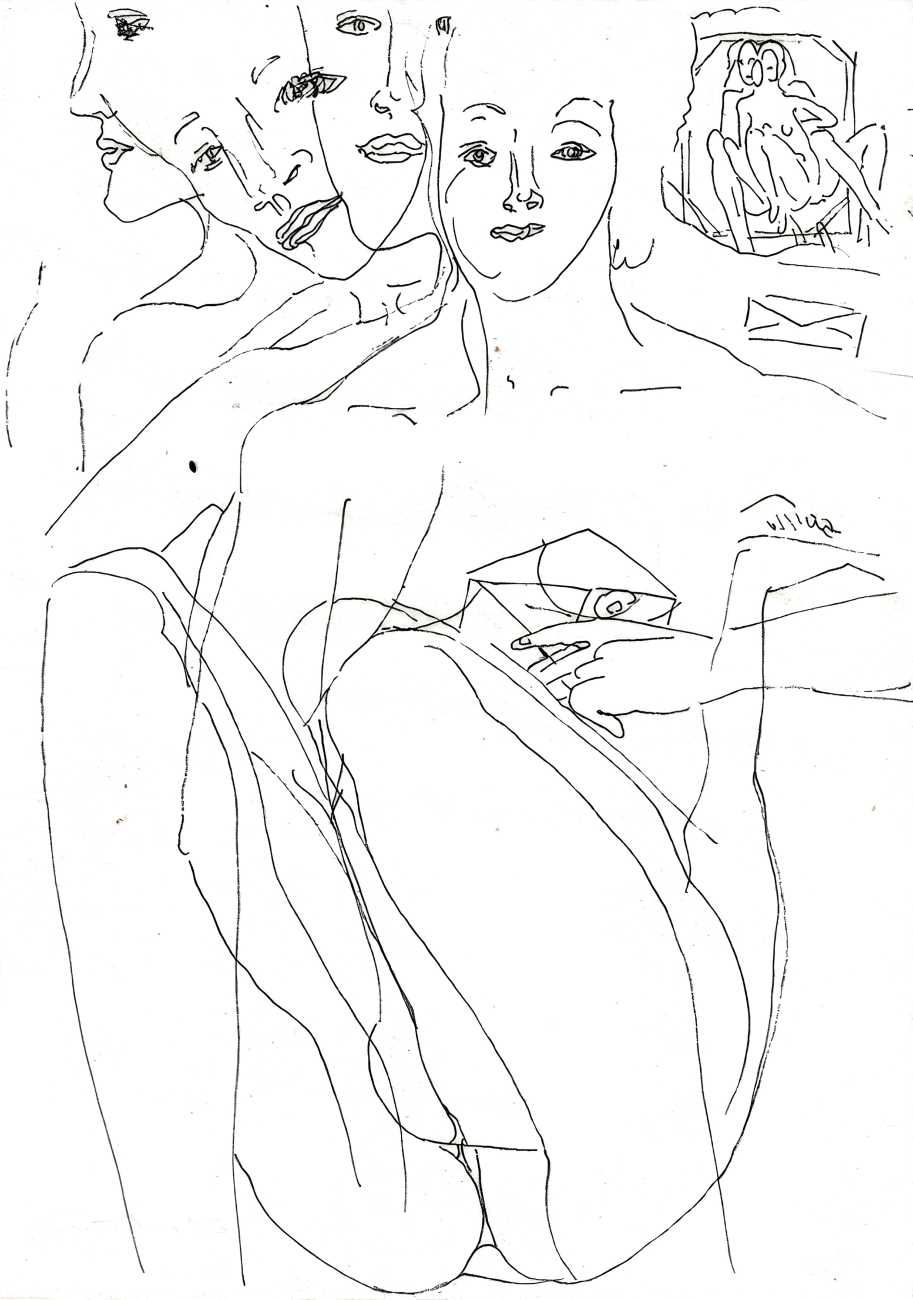
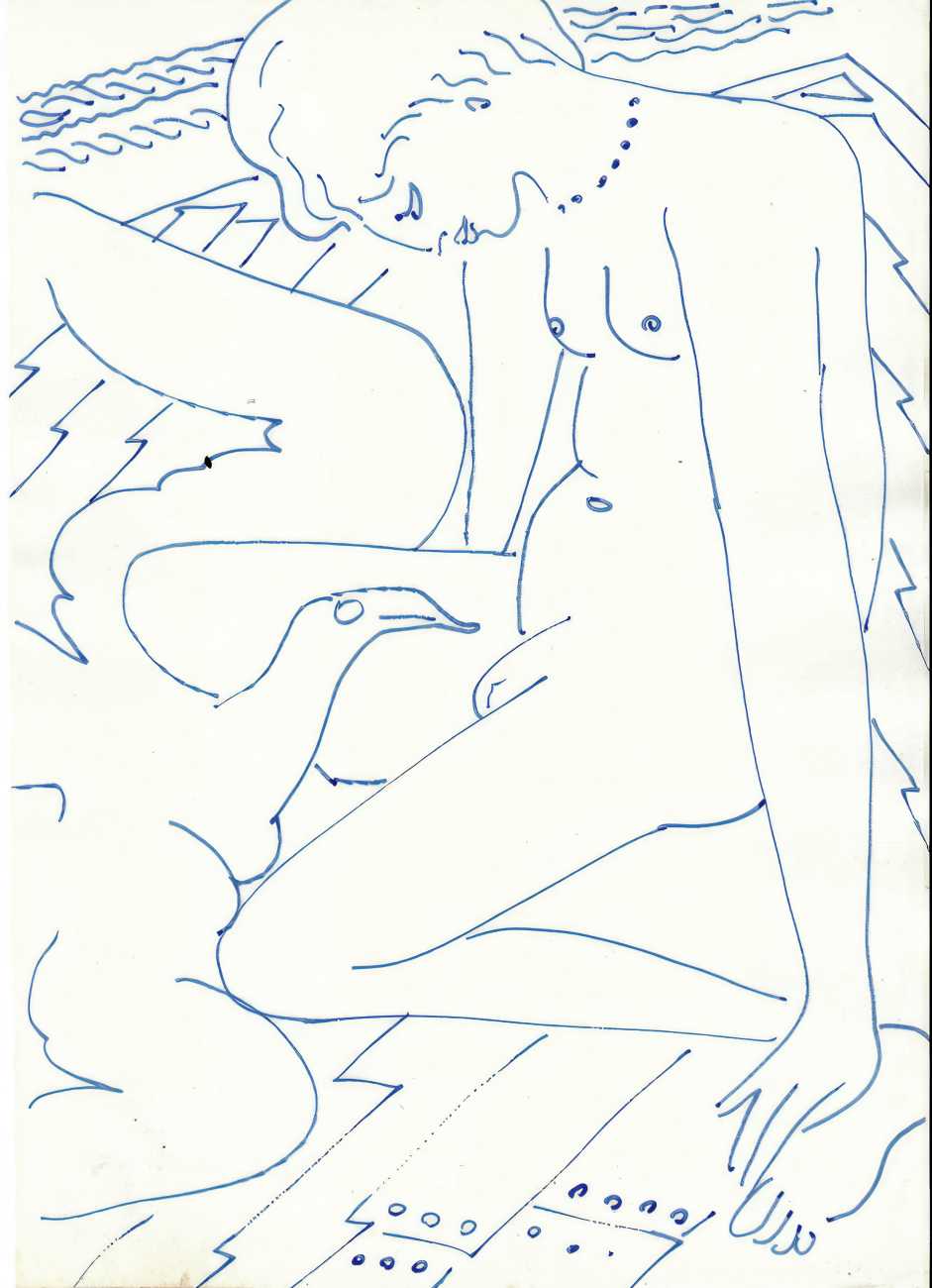
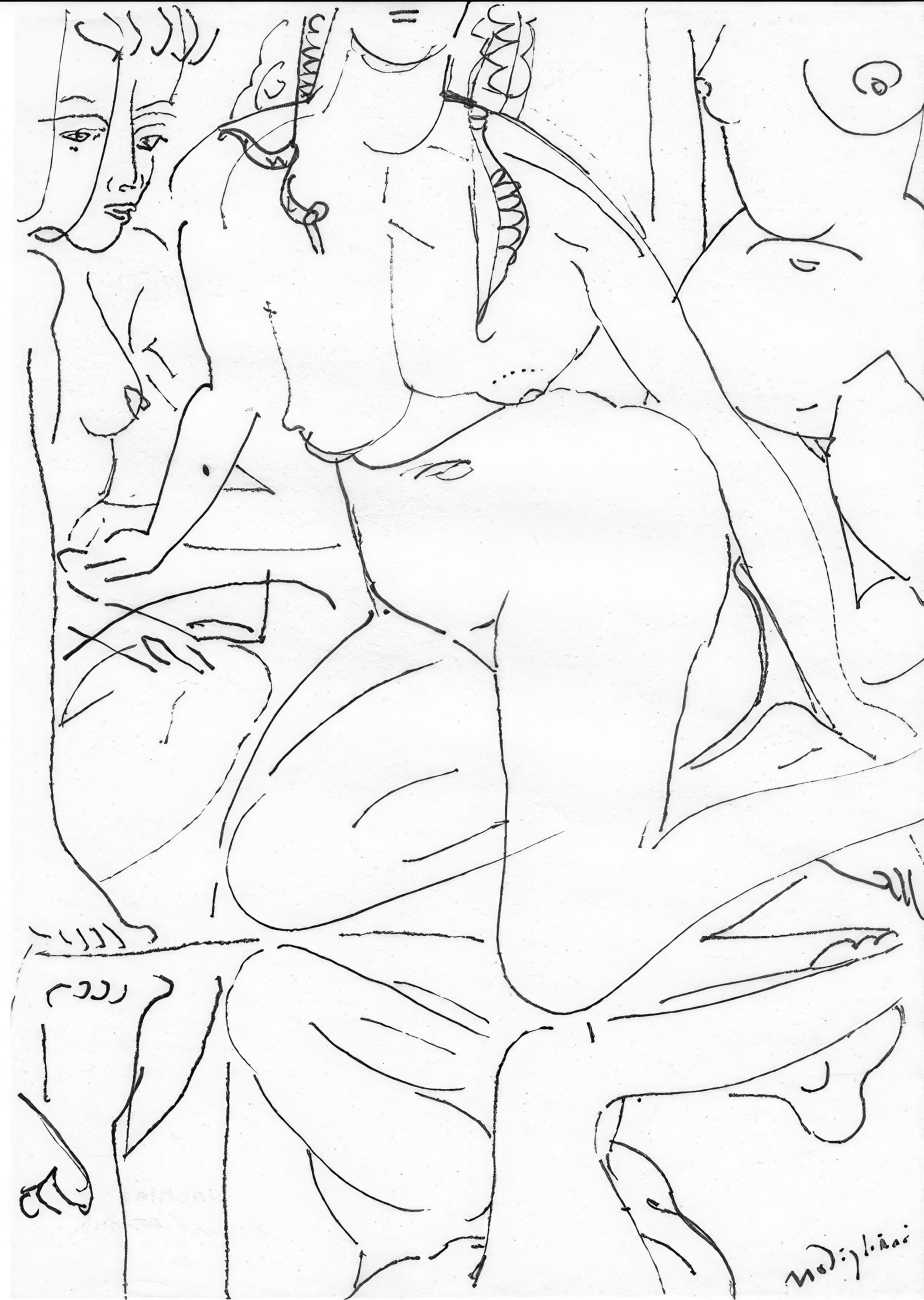
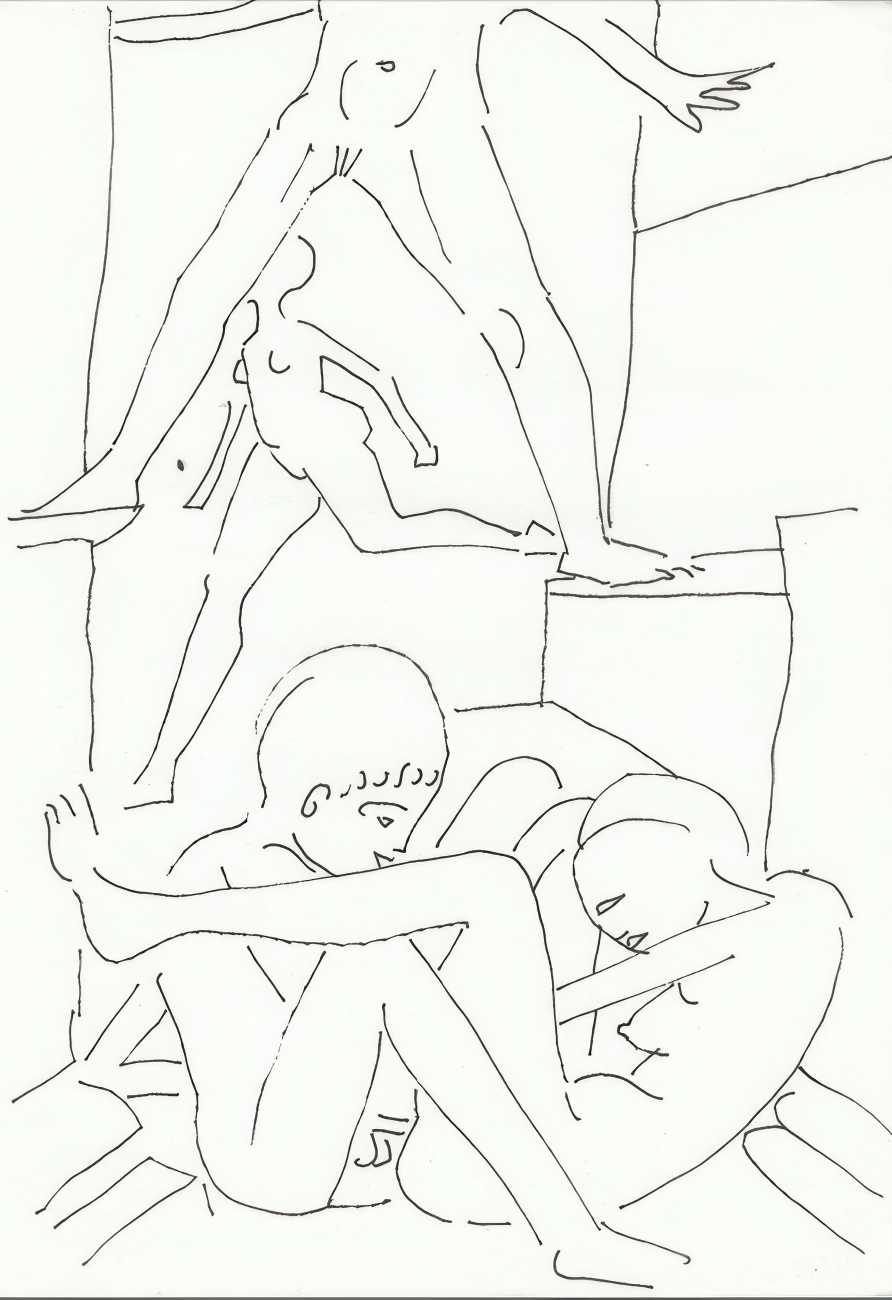
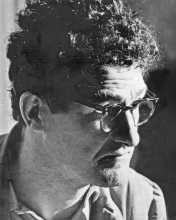
 The son of pharmacist Richard Frank and his wife Marie-Luise, the German artist Edvard Frank was born in Korschenbroich near Düsseldorf, and attended high school in Dillingen, a village near Saarbrücken, where his father had taken over a pharmacy. He began his art training in 1926 at the Kunstgewerbeschule (Crafts and Applied Arts School) in Trier under August Trümper, followed by studies at the Werkschulen Köln under Richard Seewald, and at the Akademie der Künste in Berlin with Karl Hofer. Frank went to Rome for a study visit in 1934–35. After being drafted in 1941, he was discharged the following year due to an injury, possibly self-inflicted, and avoided war service again in 1945 by deserting. In 1944 some of his pre-war work was destroyed in a bombing raid.
After World War II, Frank first lived in Birkenfeld in the Hunsrück mountains. During this time he created numerous drawings and watercolours, but was reluctant to sell them or give them away. He co-founded the Palatinate Secession and became a member of the New Darmstadt Secession, as well as of the German Artists’ Association. He enjoyed increasing success with exhibitions at the Baden-Baden Municipal Art Collection, as well as in Hamburg, Lübeck, Berlin, Karlsruhe, Mannheim, Mainz and Kaiserslautern.
In 1968 Frank moved to Winningen on the Moselle, and the following year to Saarlouis to live with his sister. After several bouts of depression he spent time in a sanatorium, where he painted intensively, then in 1969 he travelled to Turkey with his artist friend Renate Braun. His health stabilised and the palette of his watercolours brightened noticeably. He spent the last summers of his life in Corsica, Tunisia, Sicily and Ischia, and the winters back in Saarlouis.
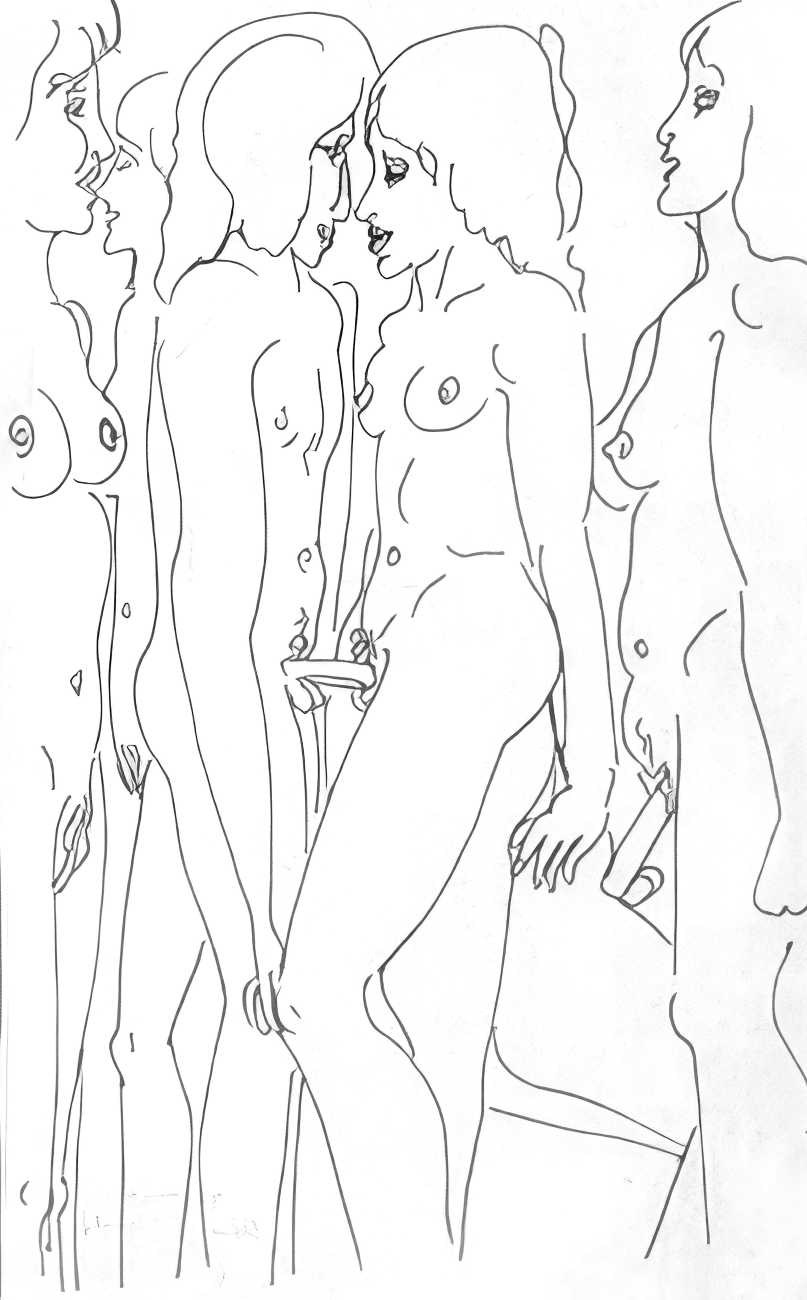
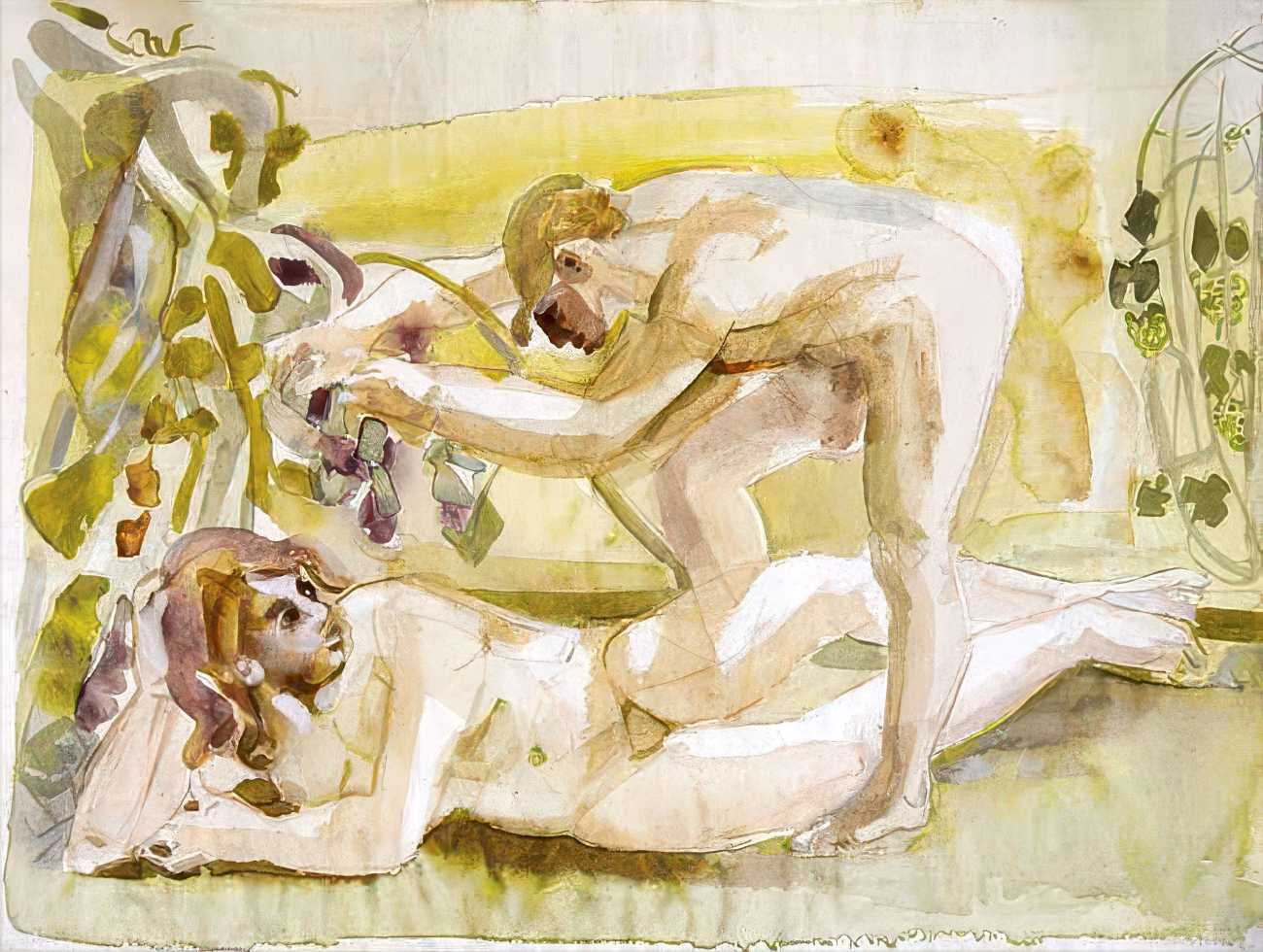
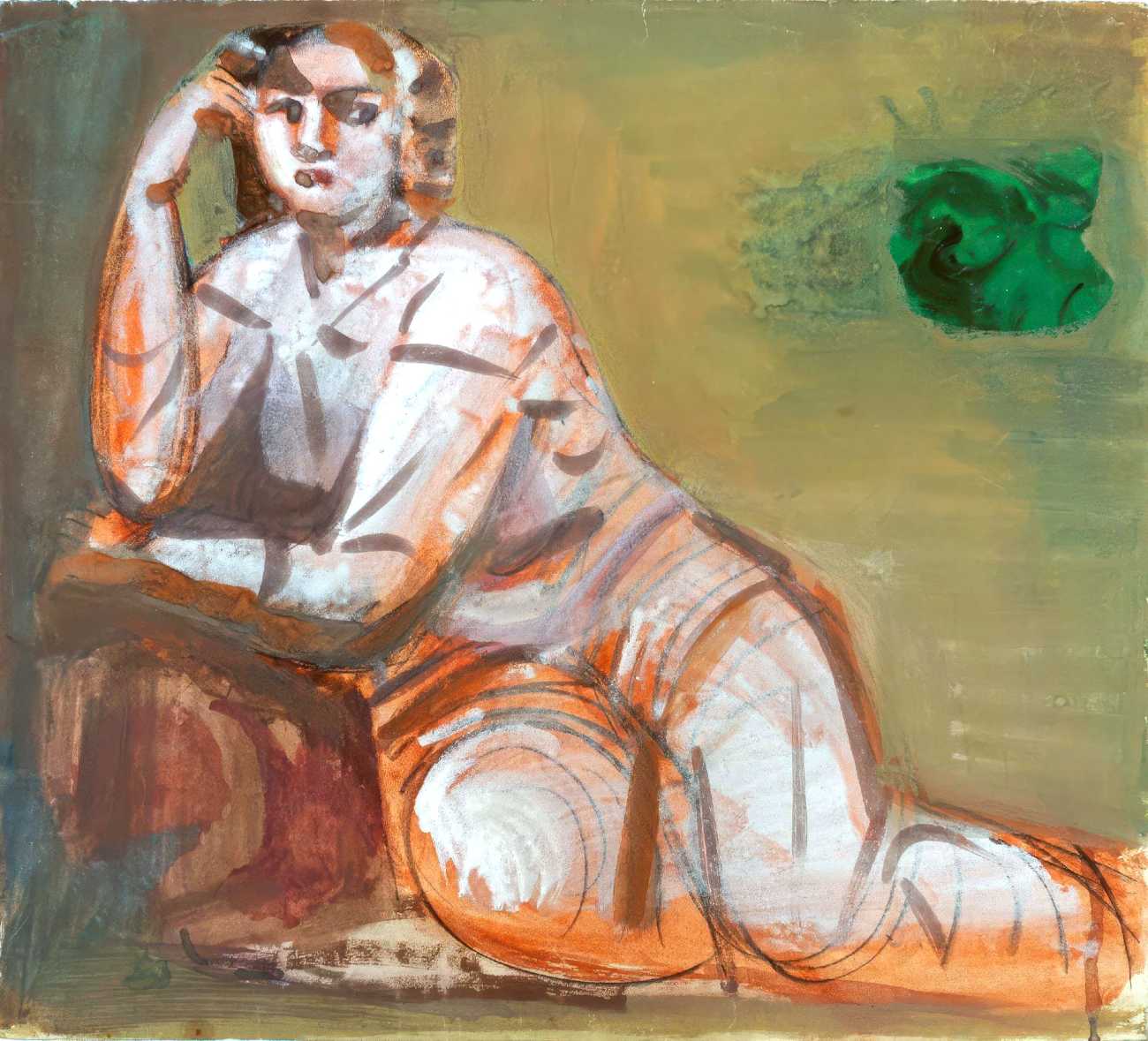
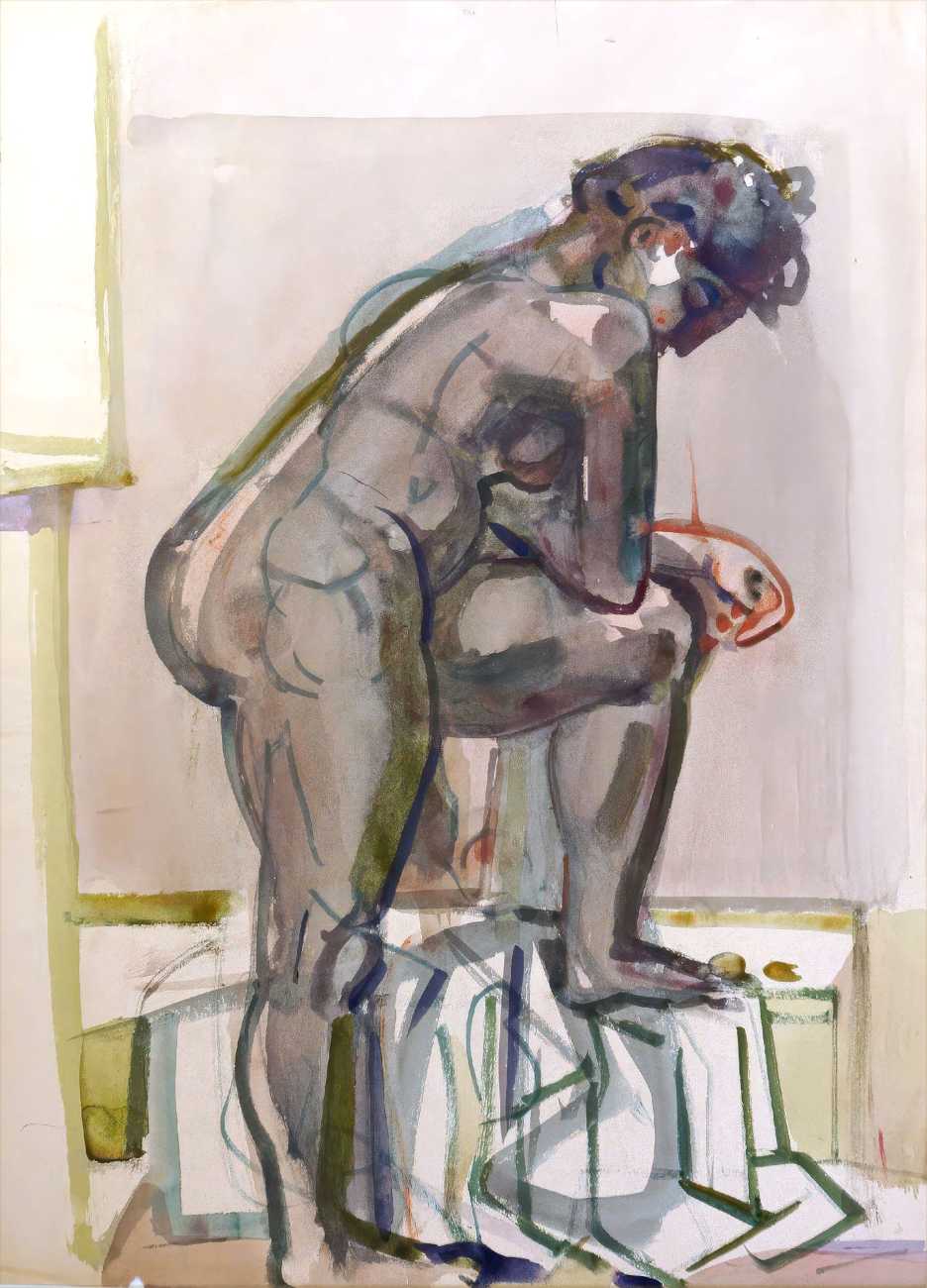
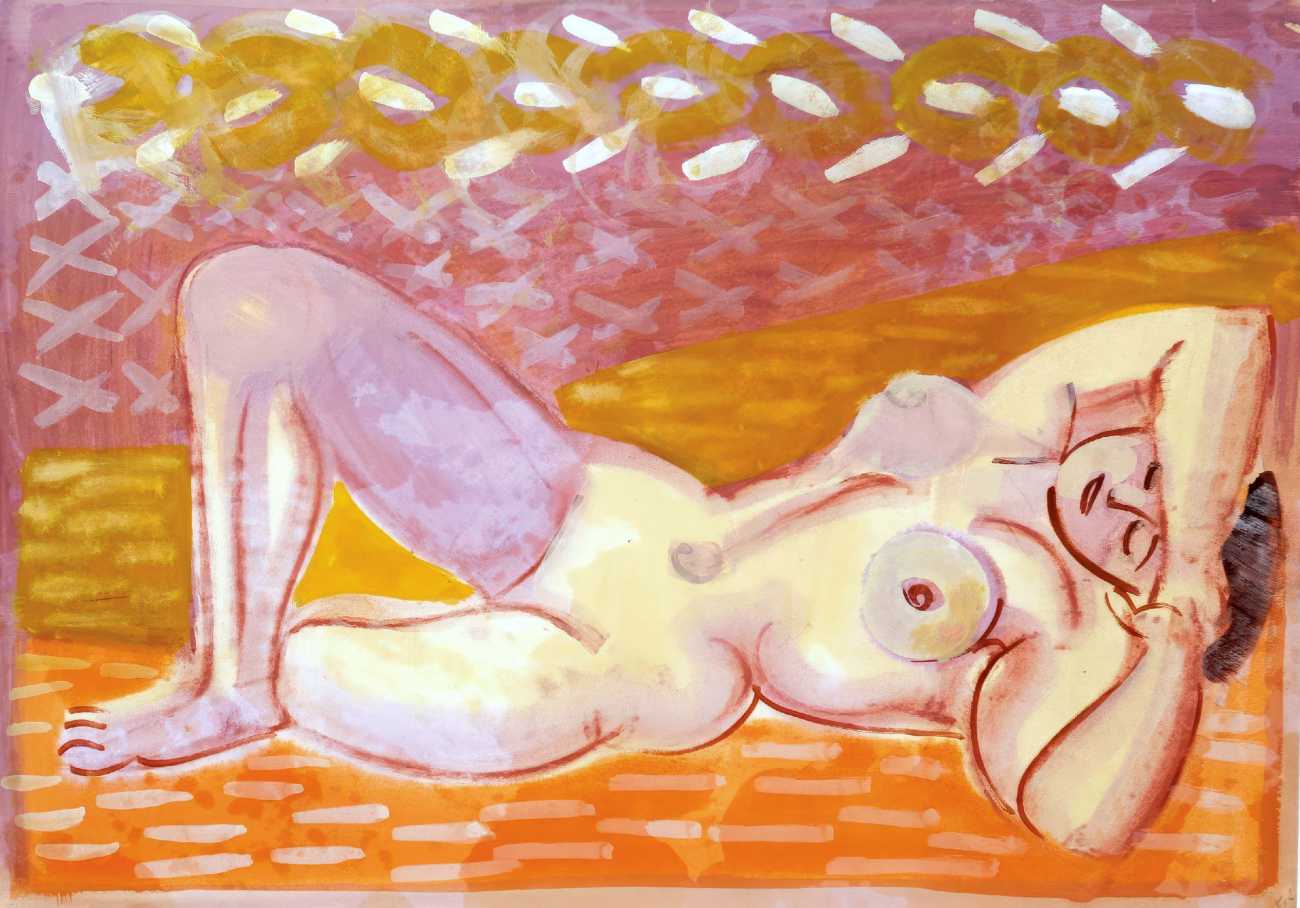
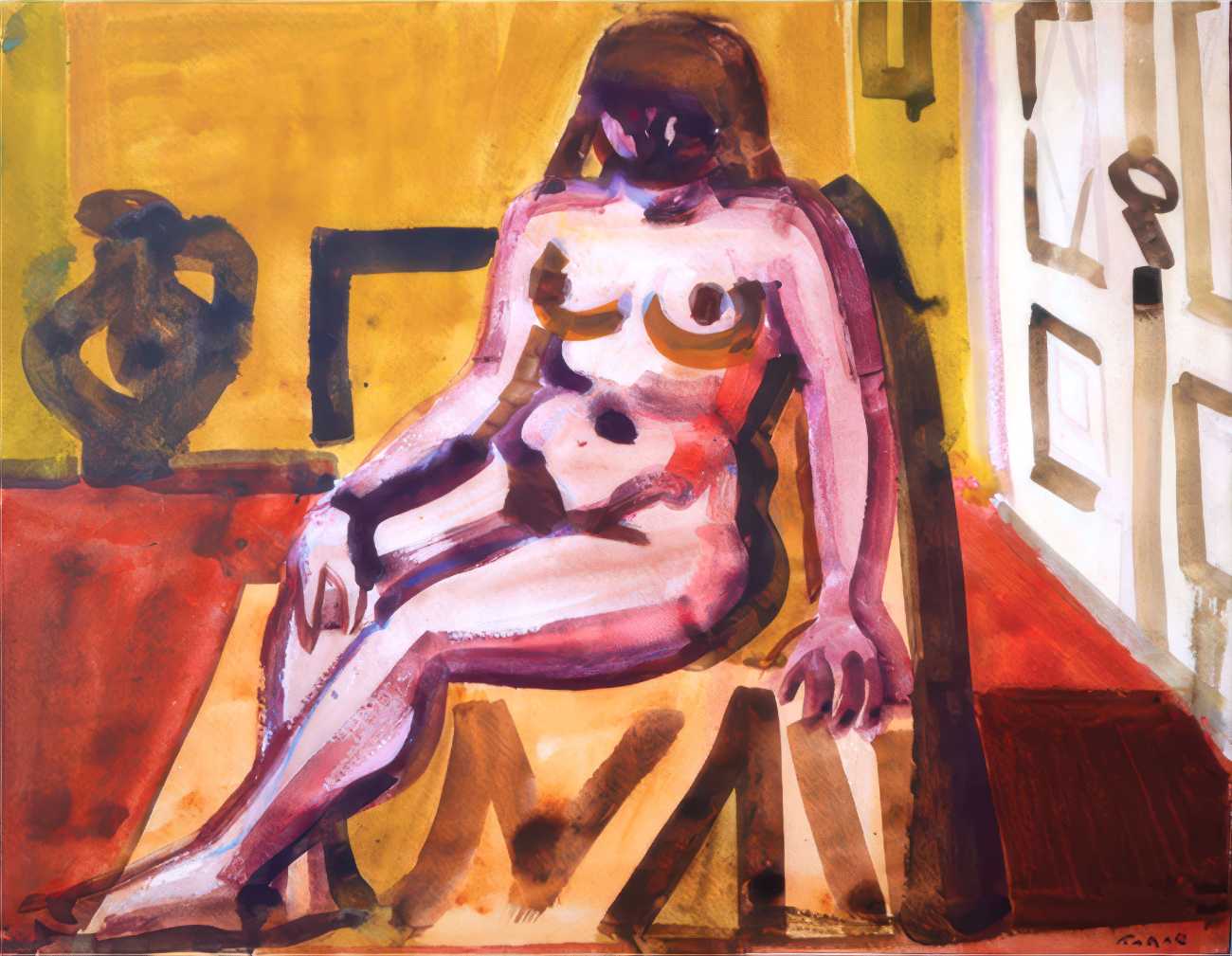
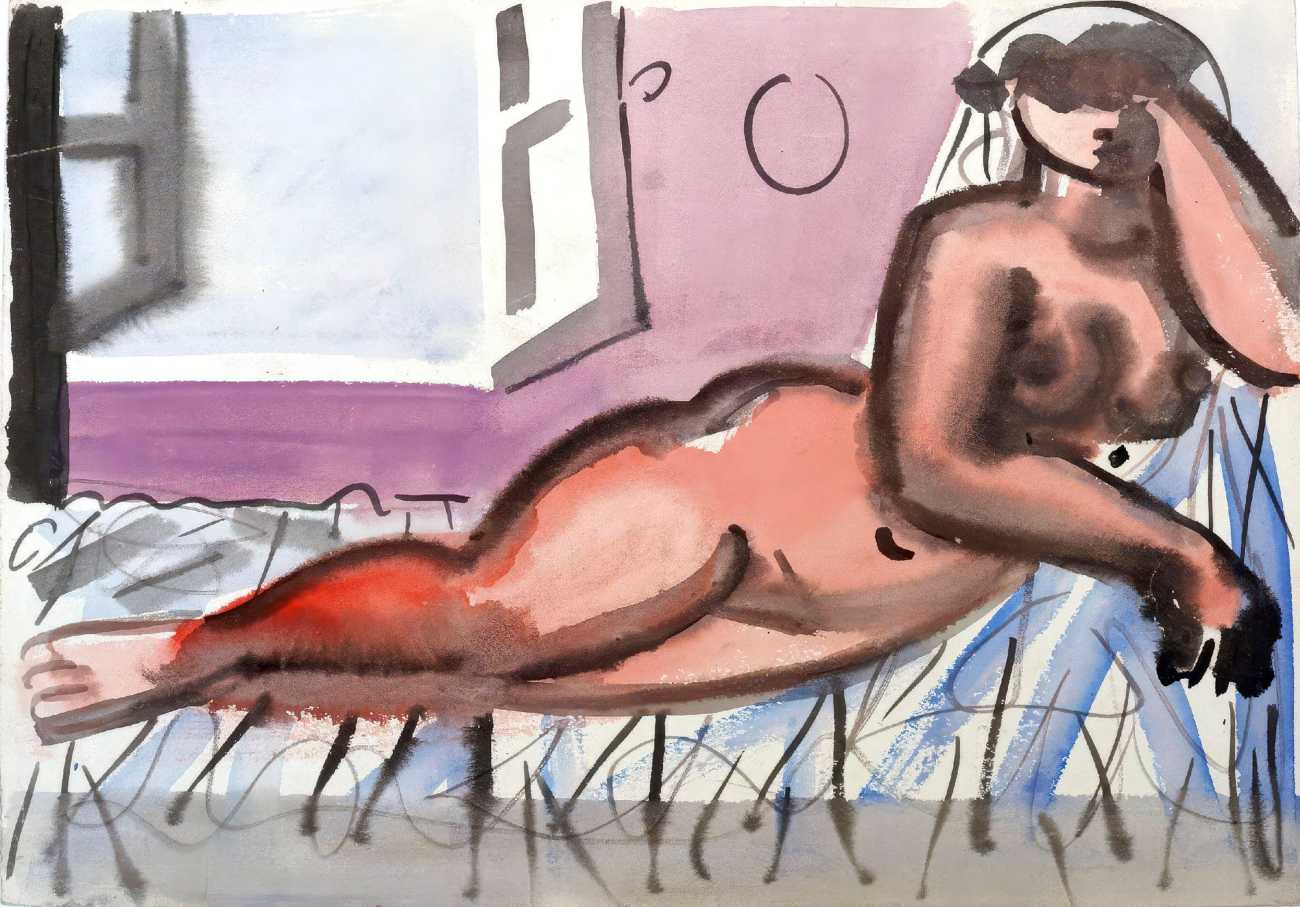
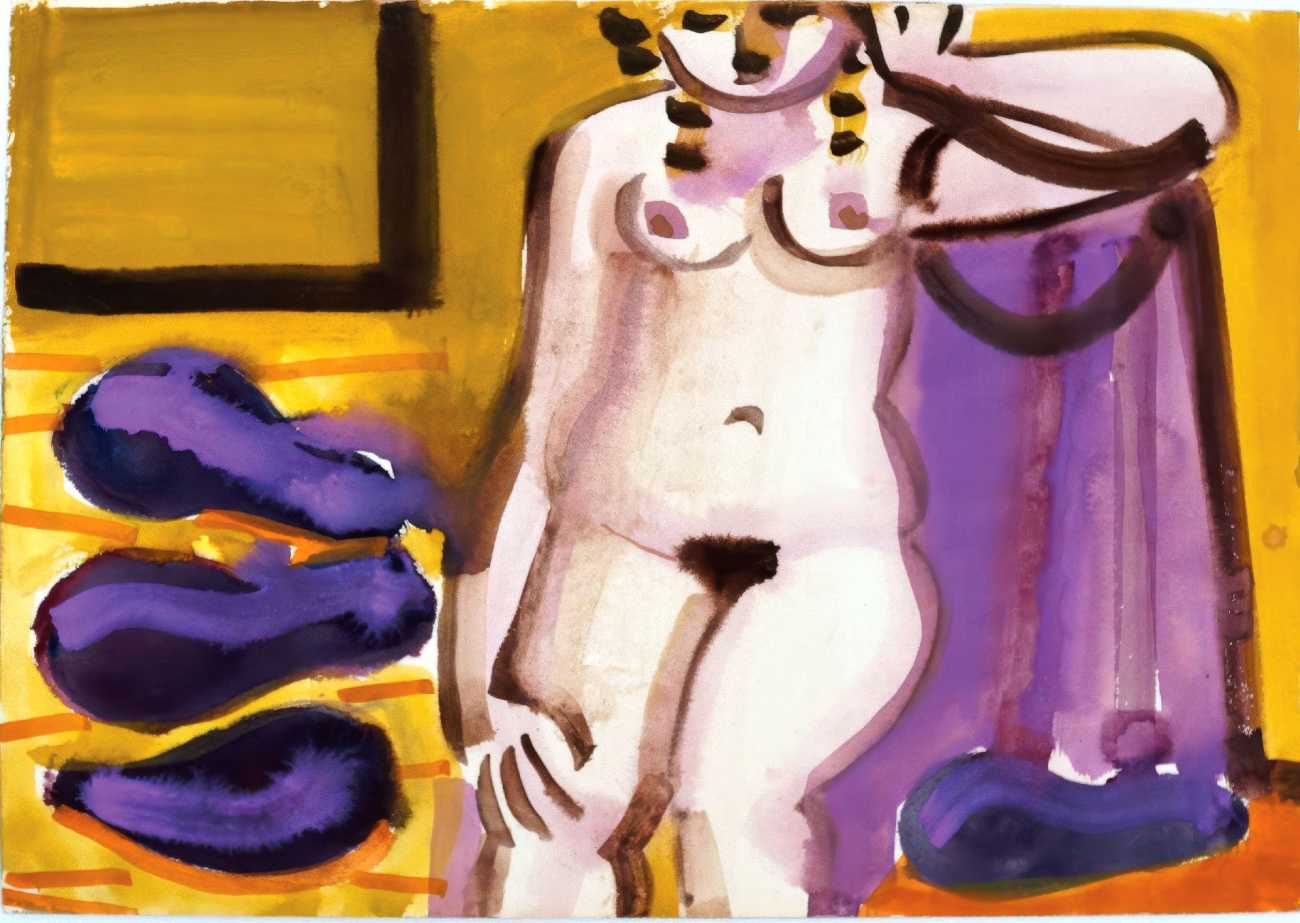
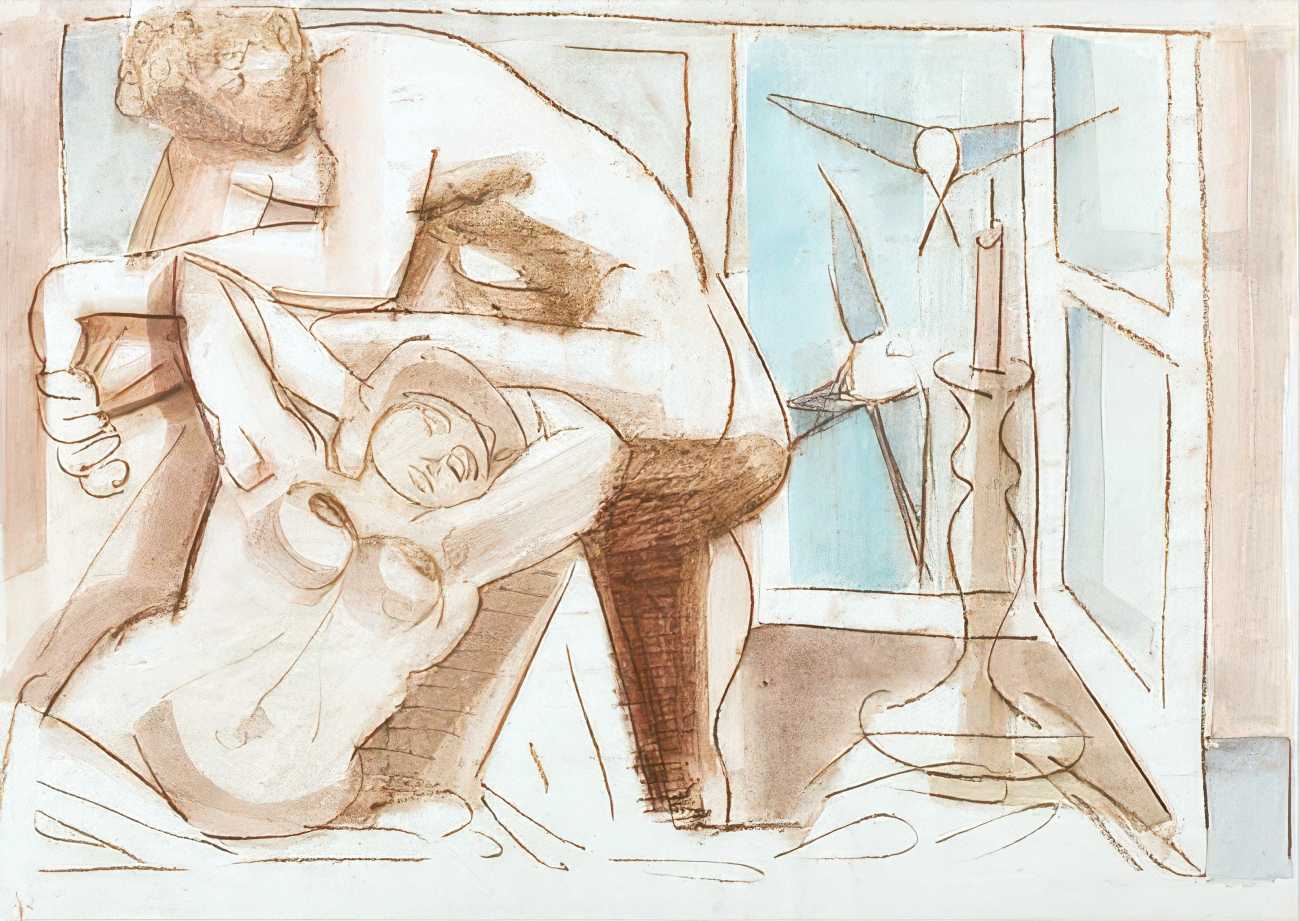
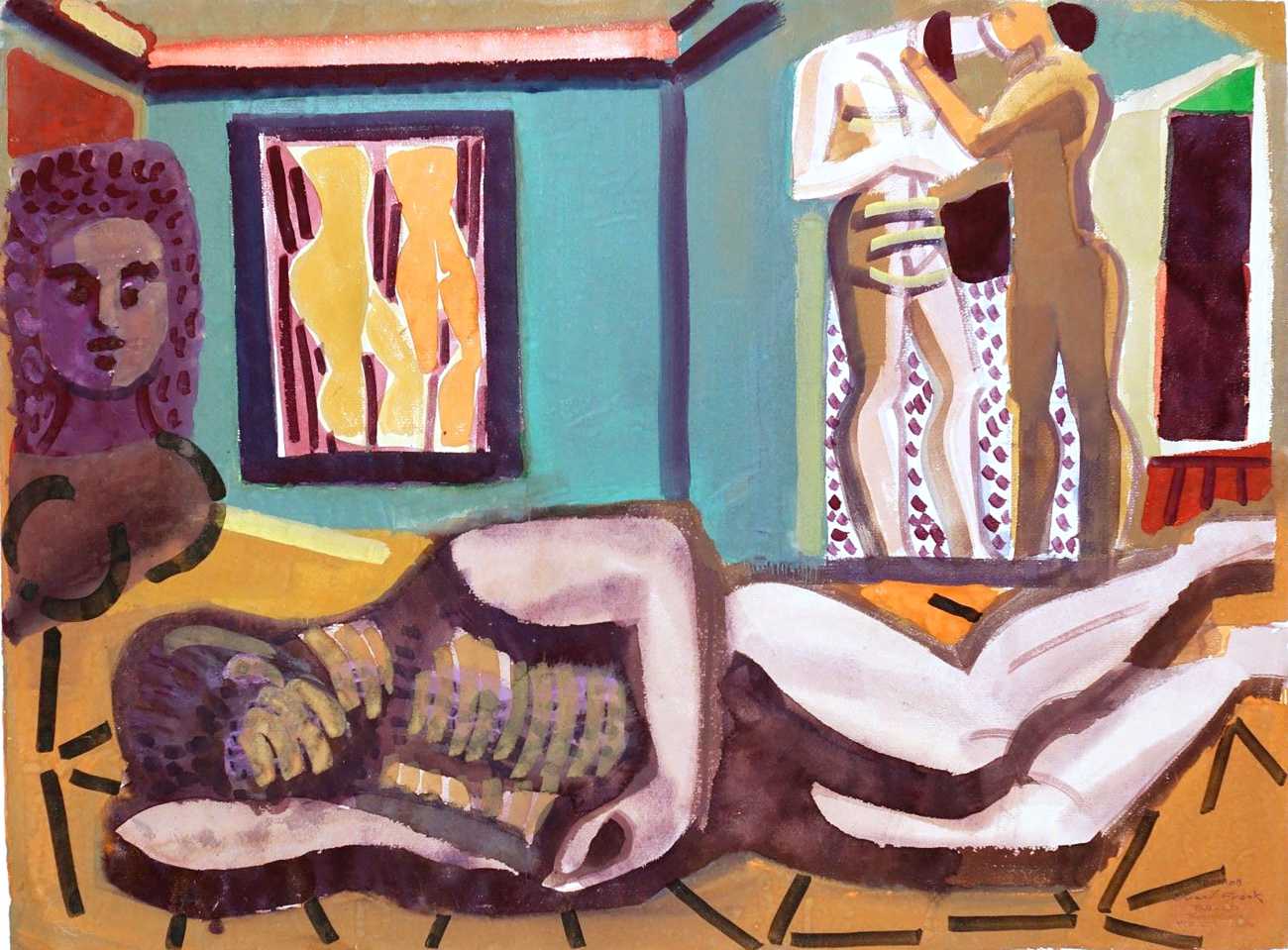
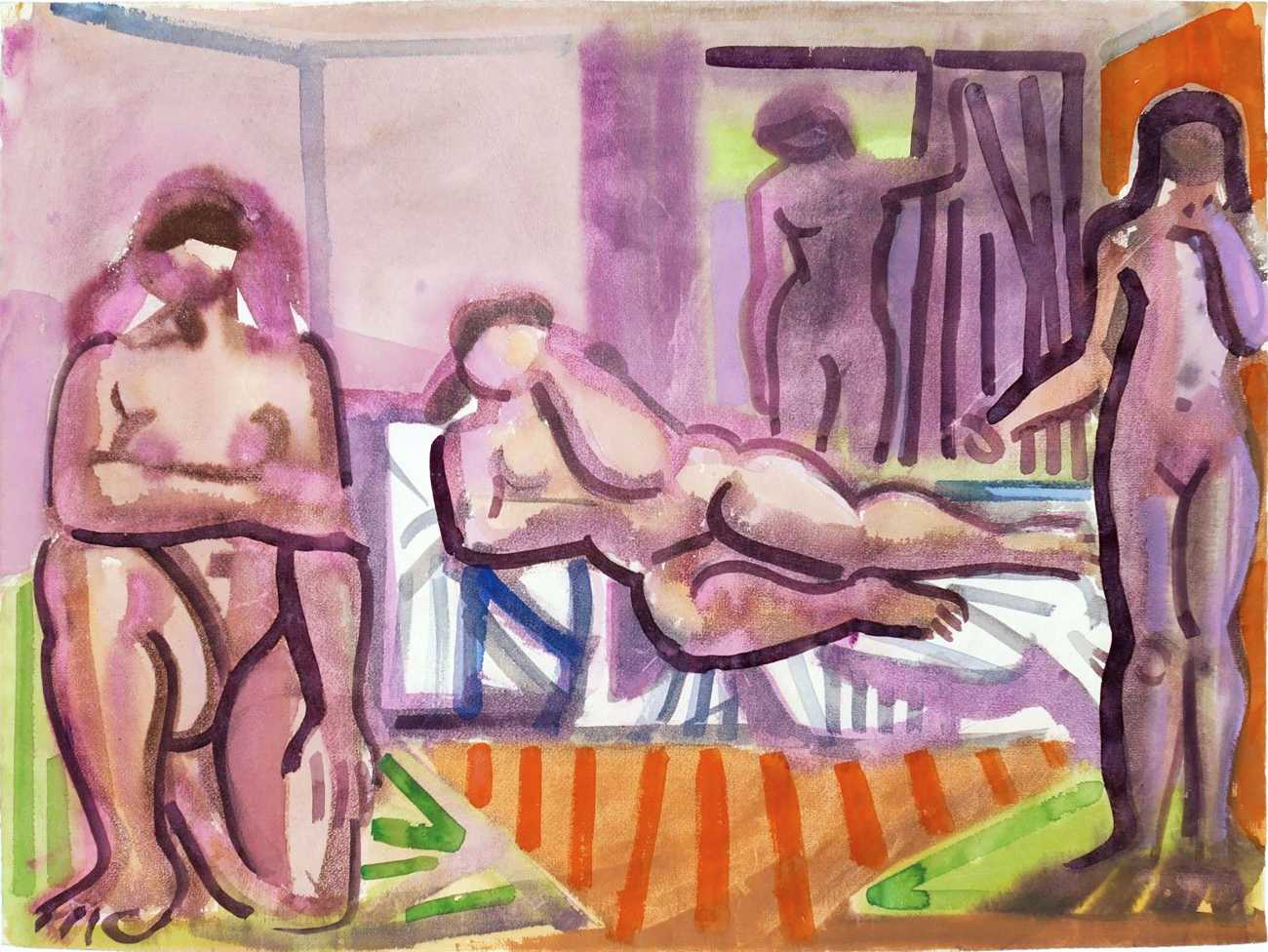
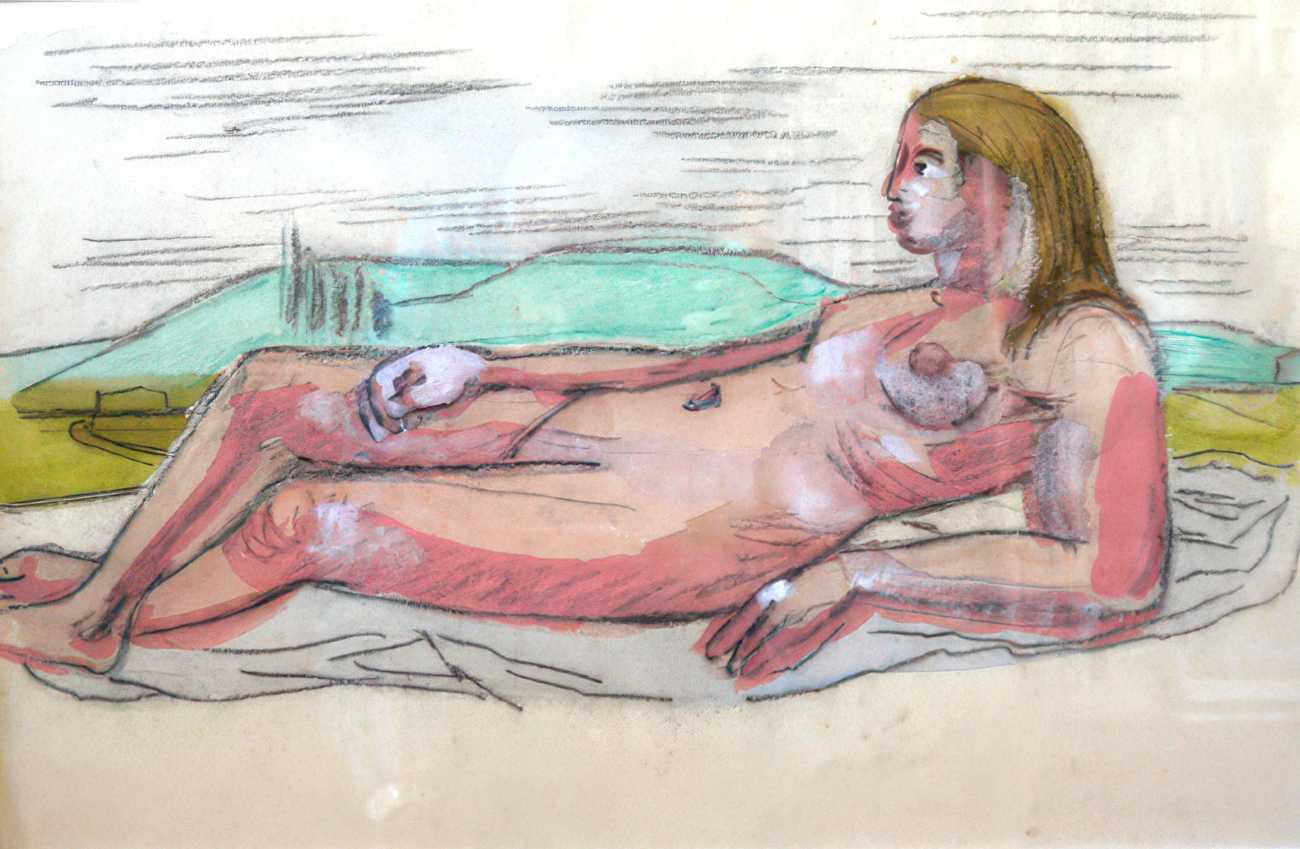
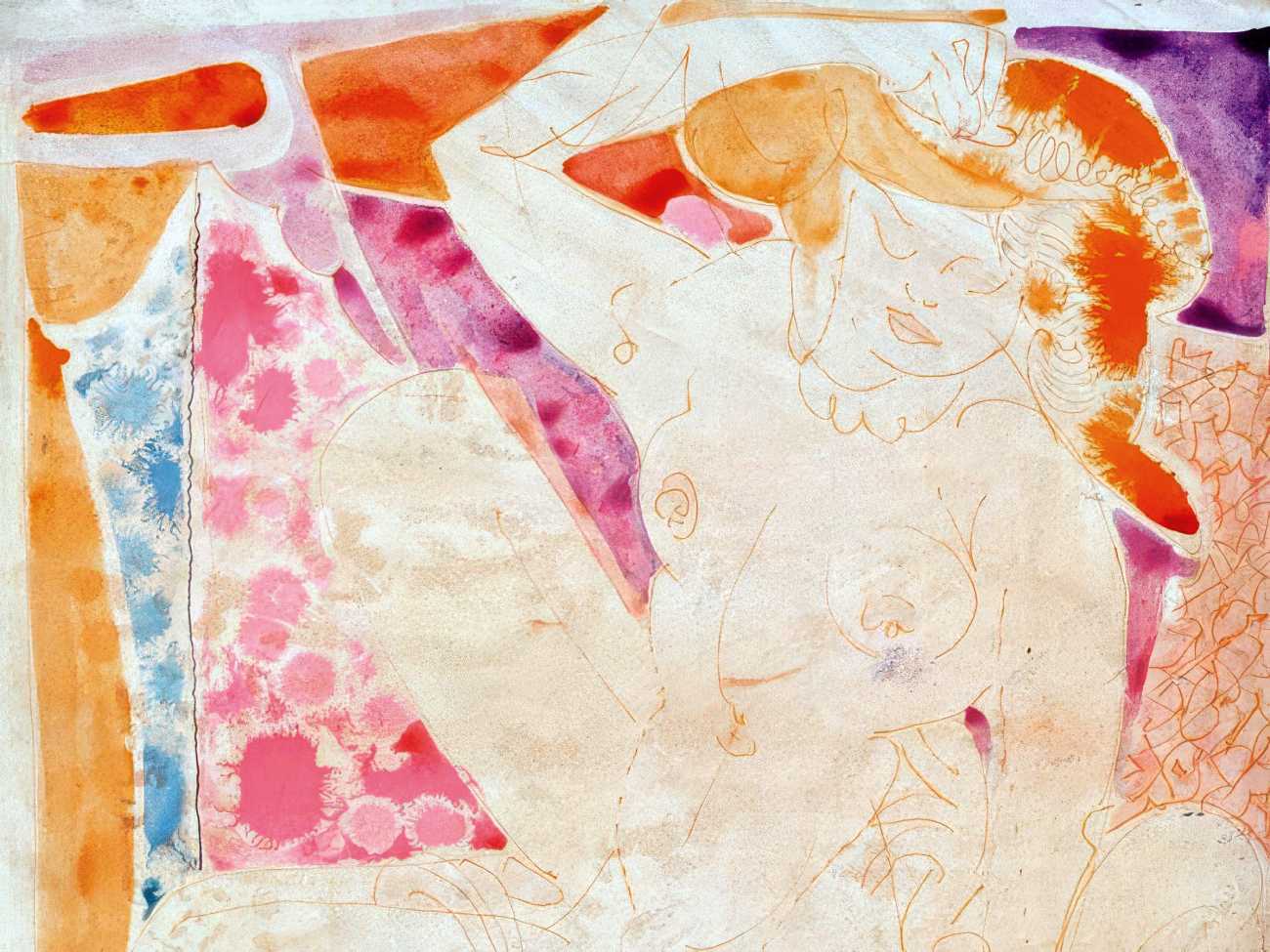
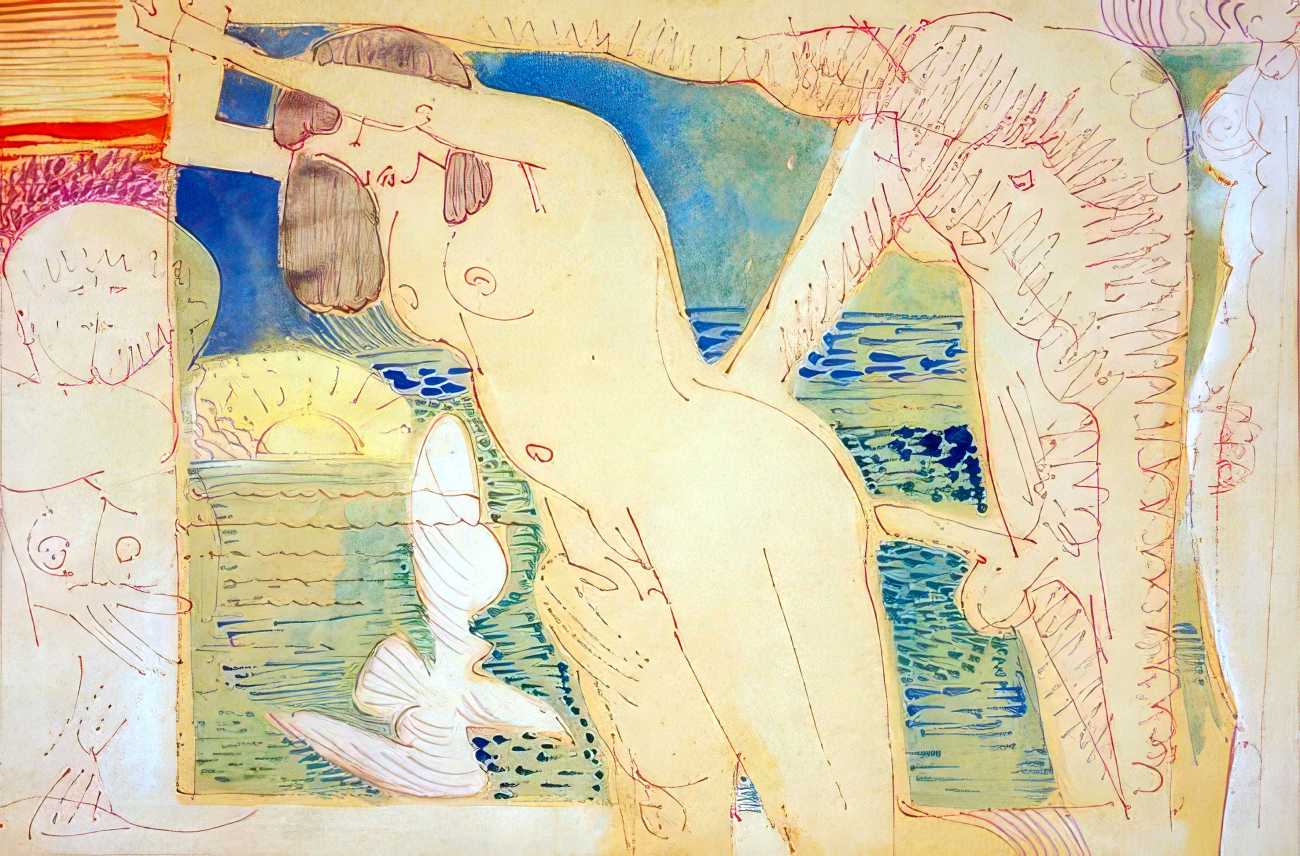
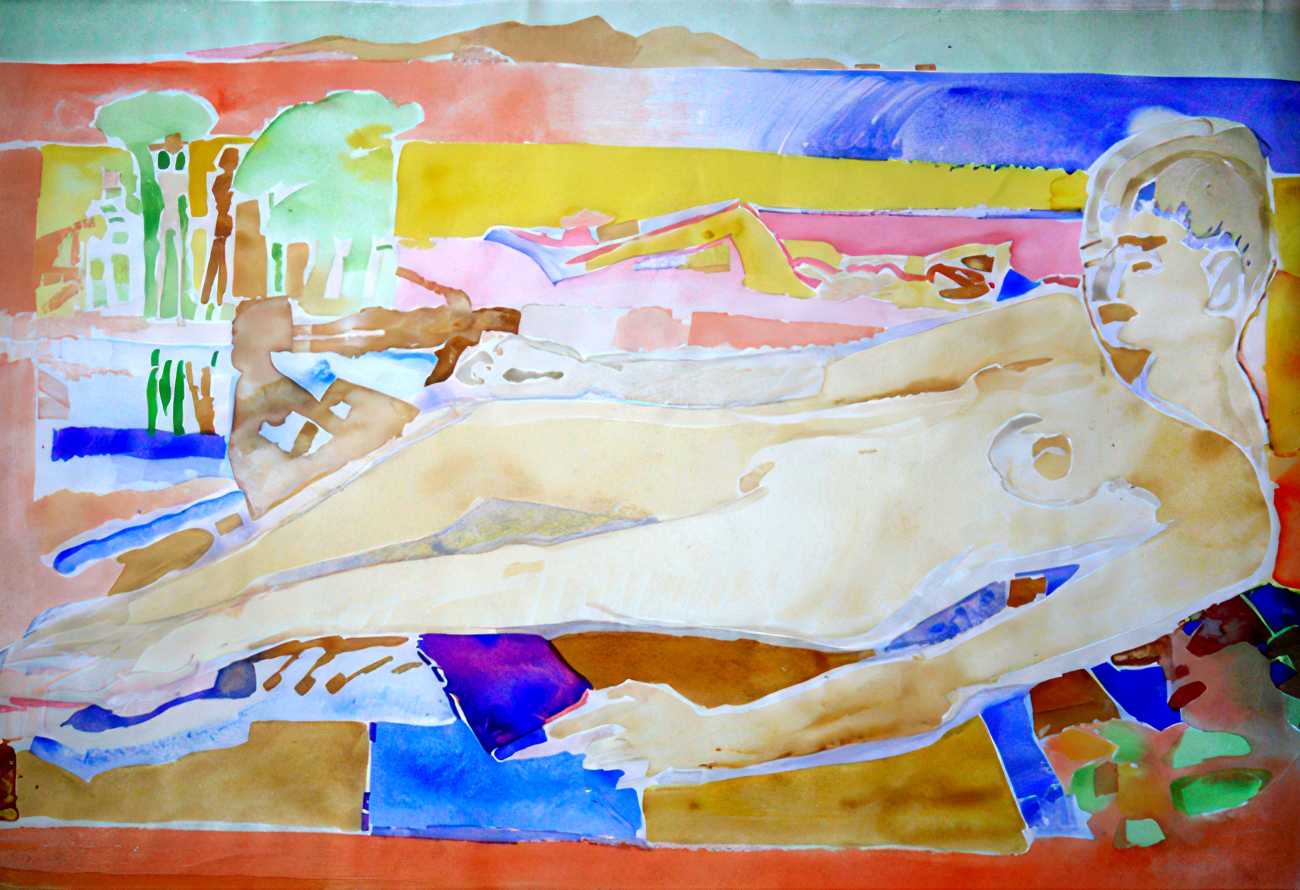
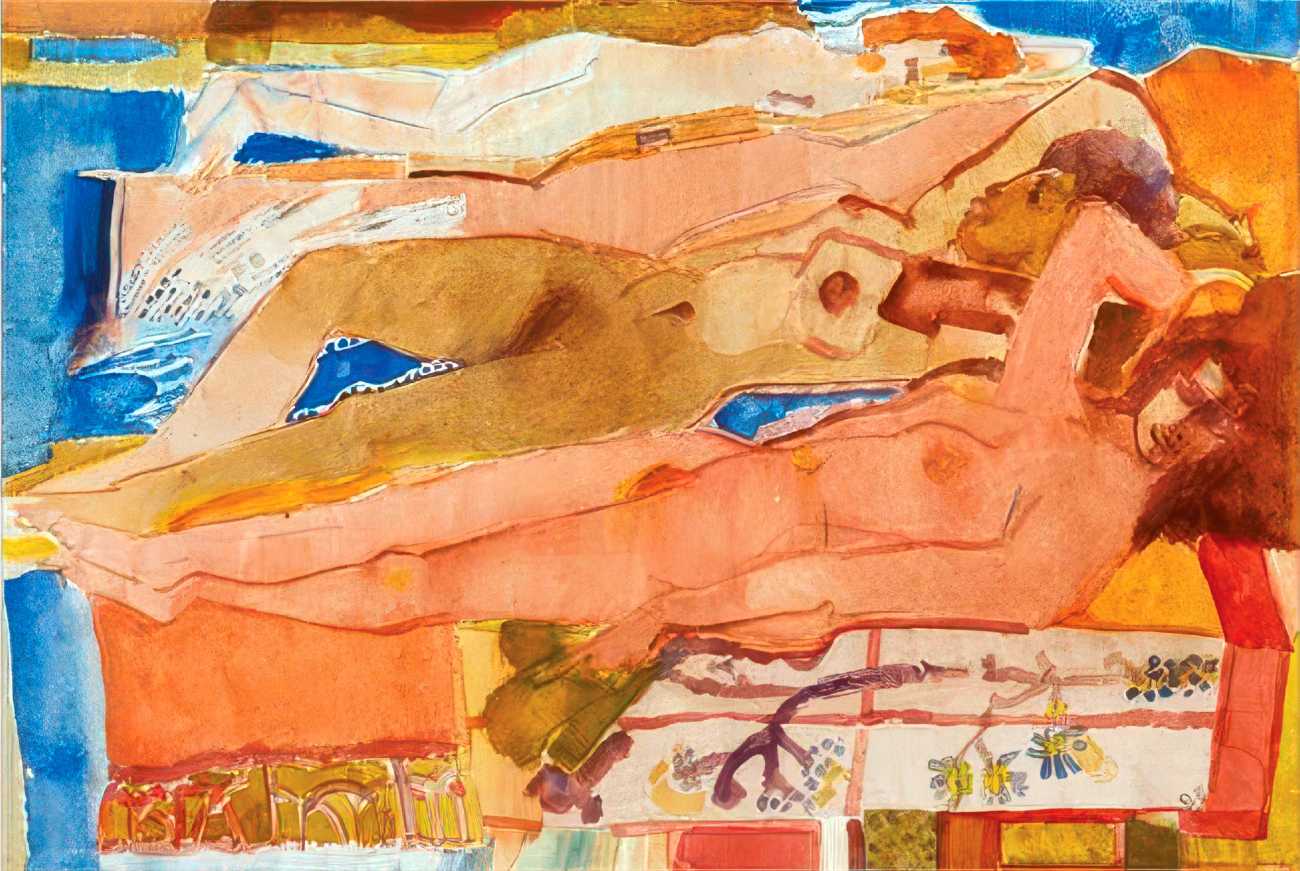
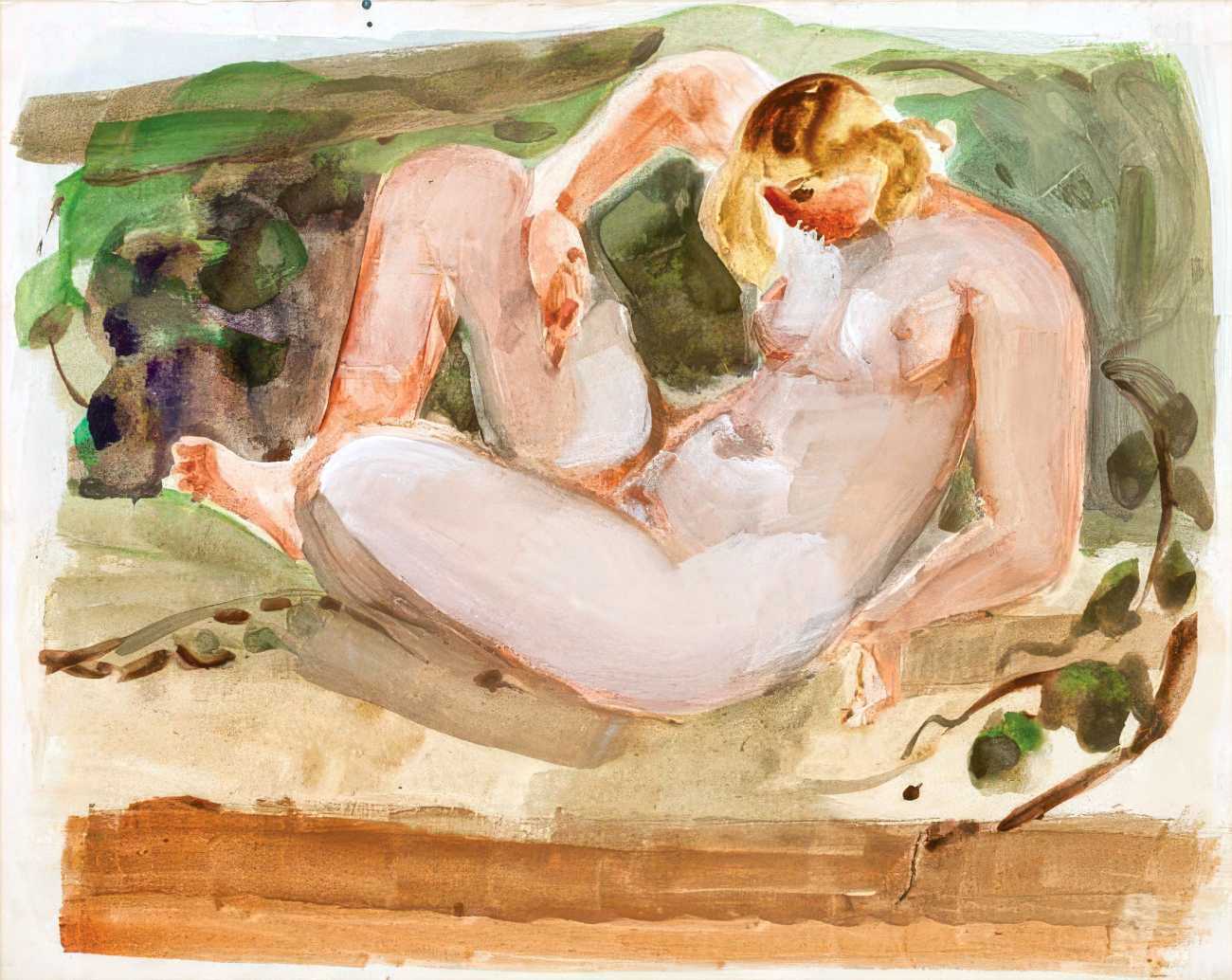
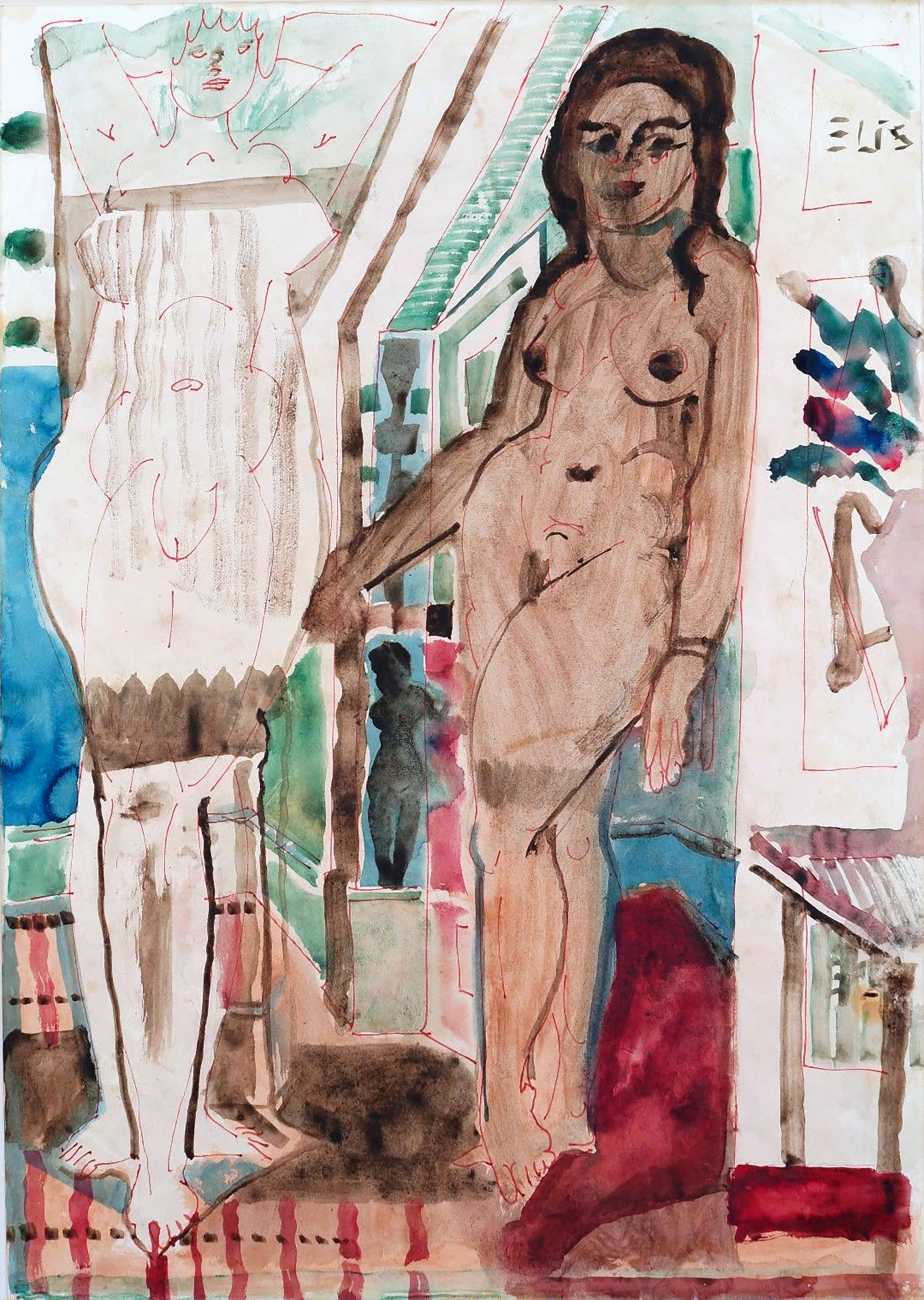
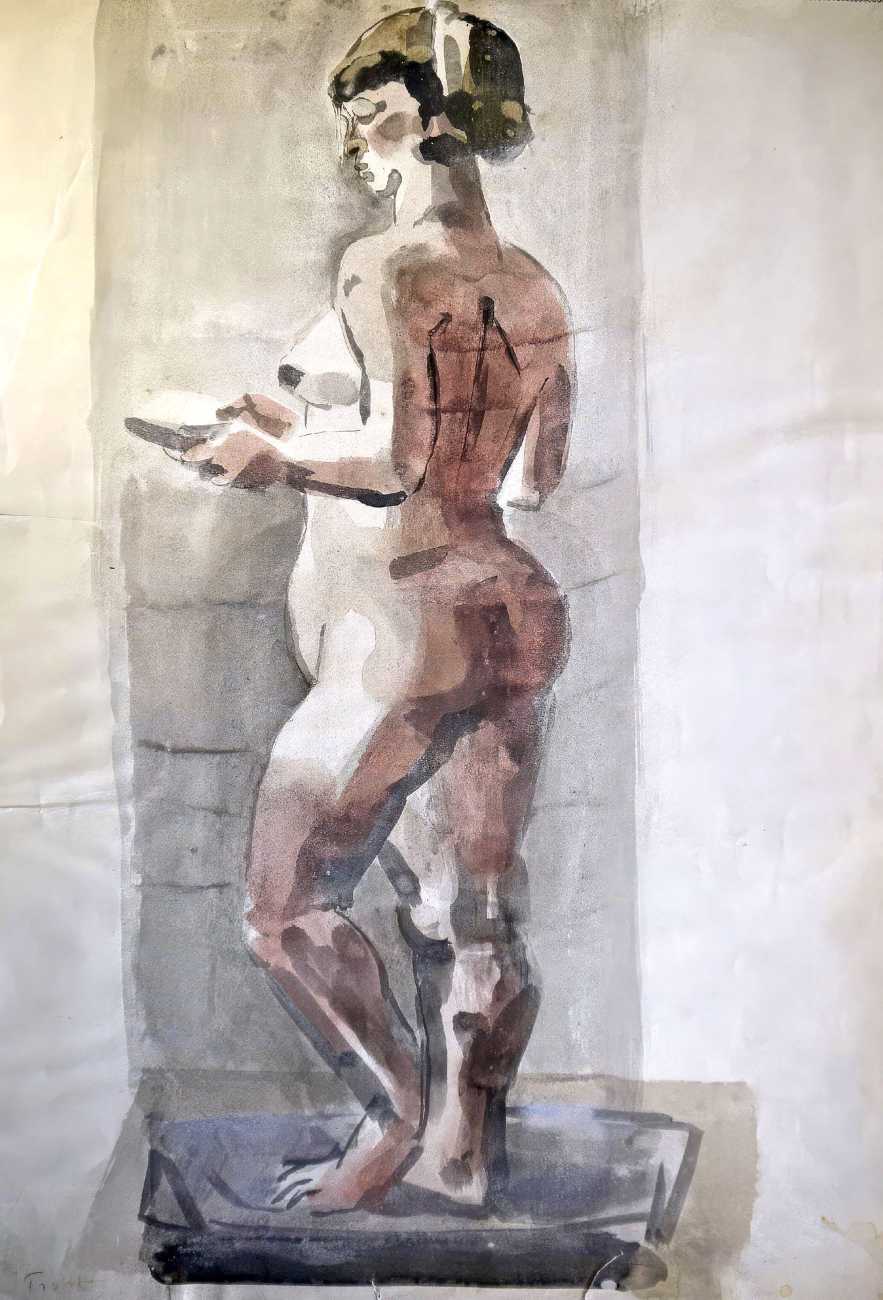
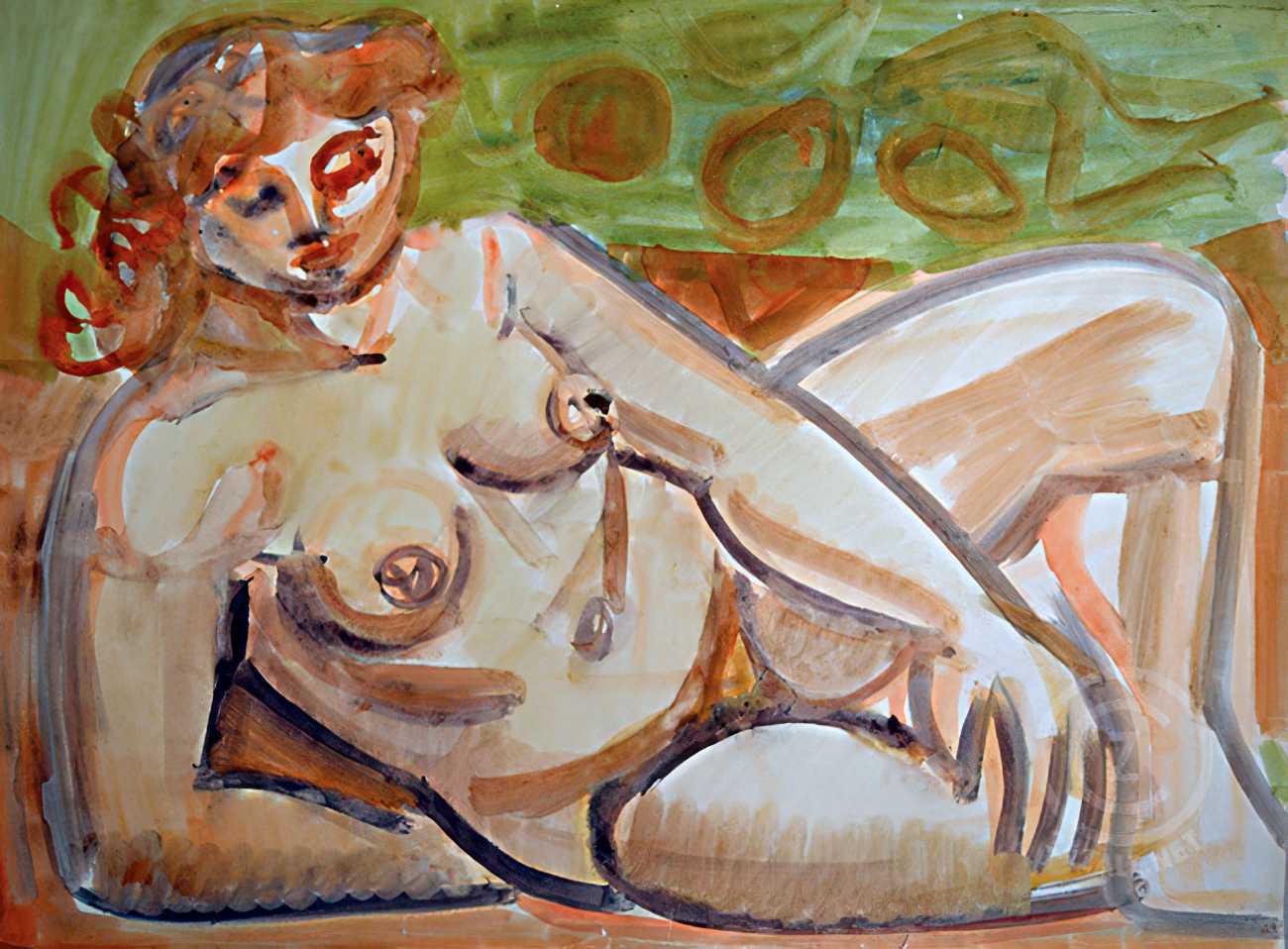
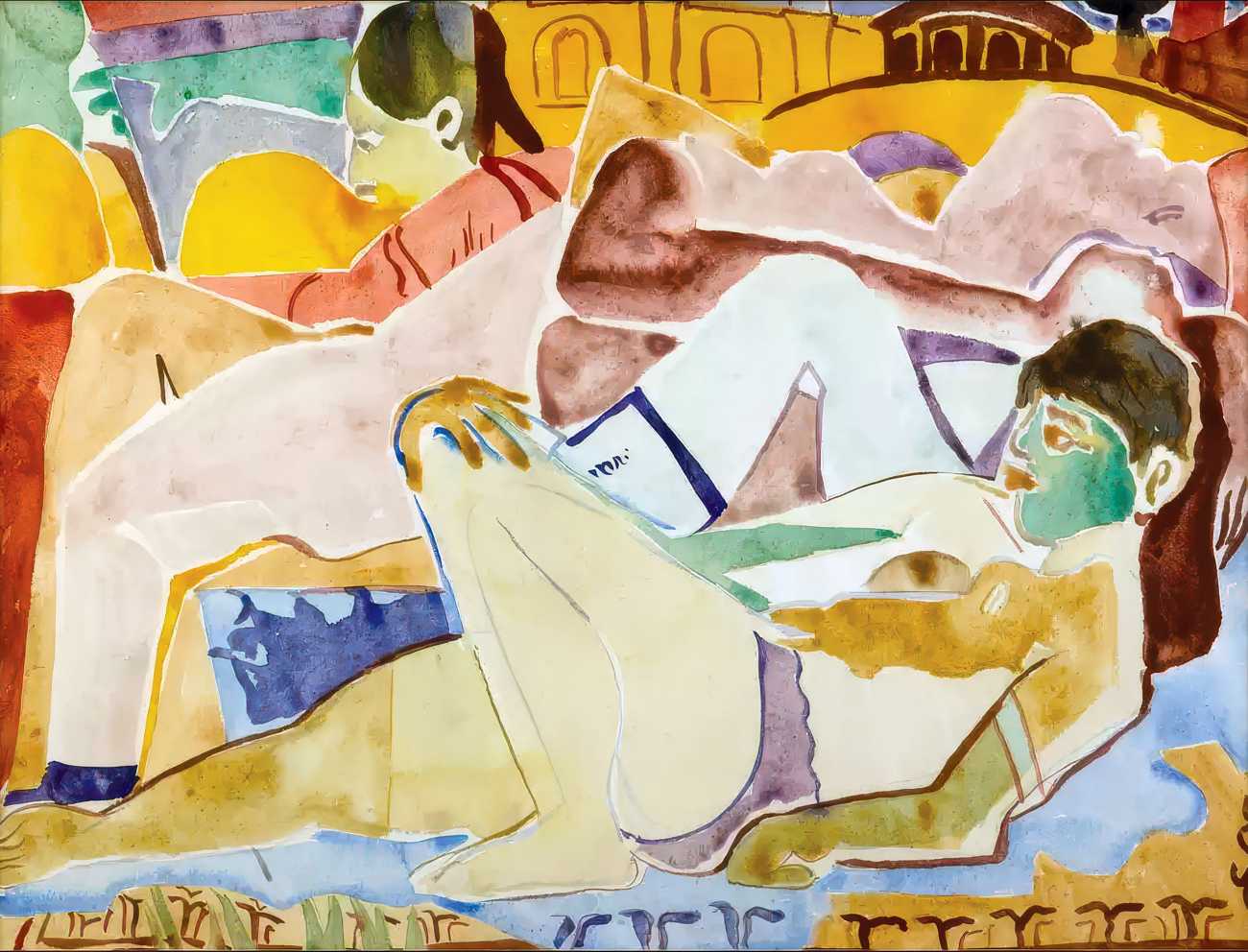
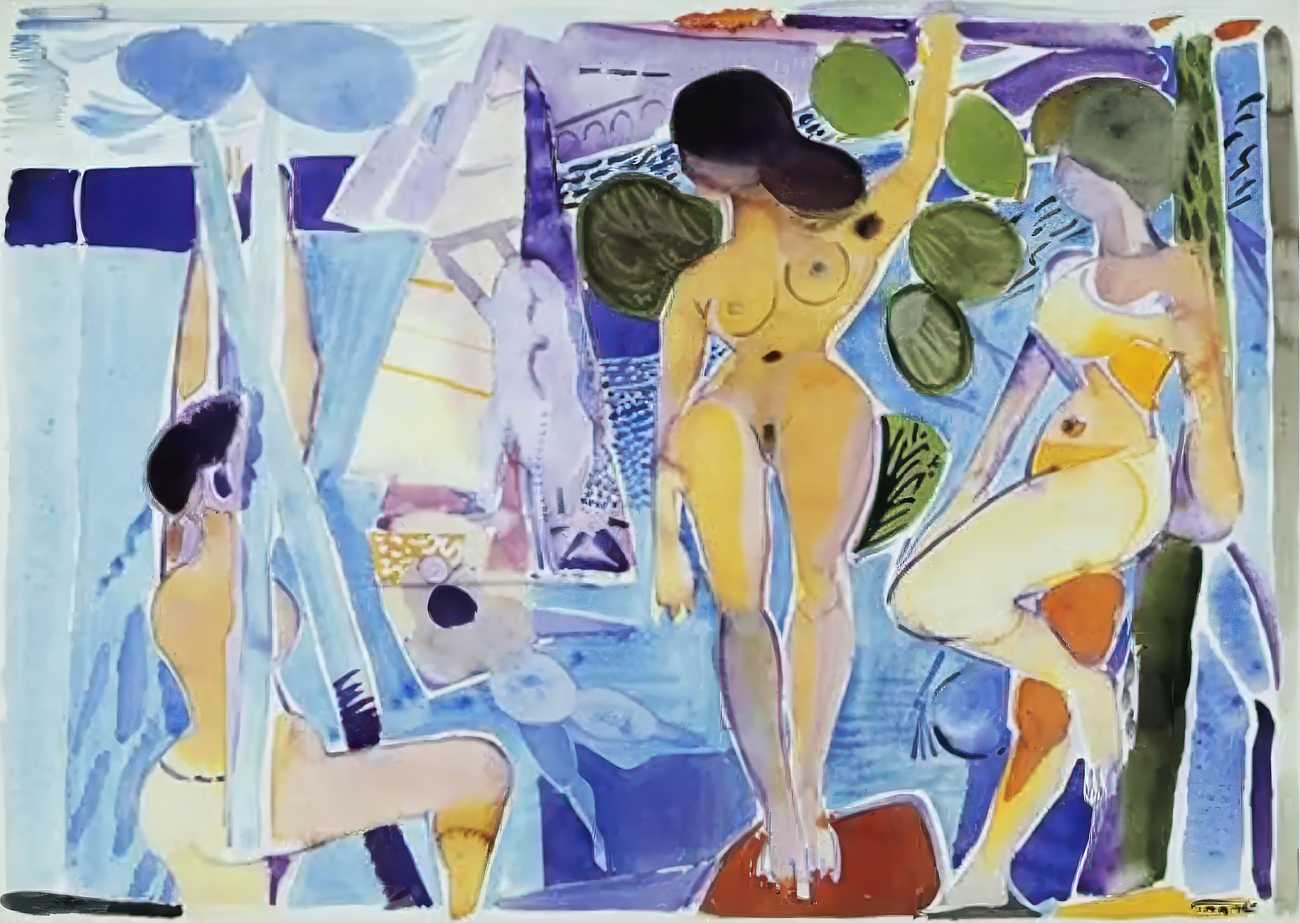
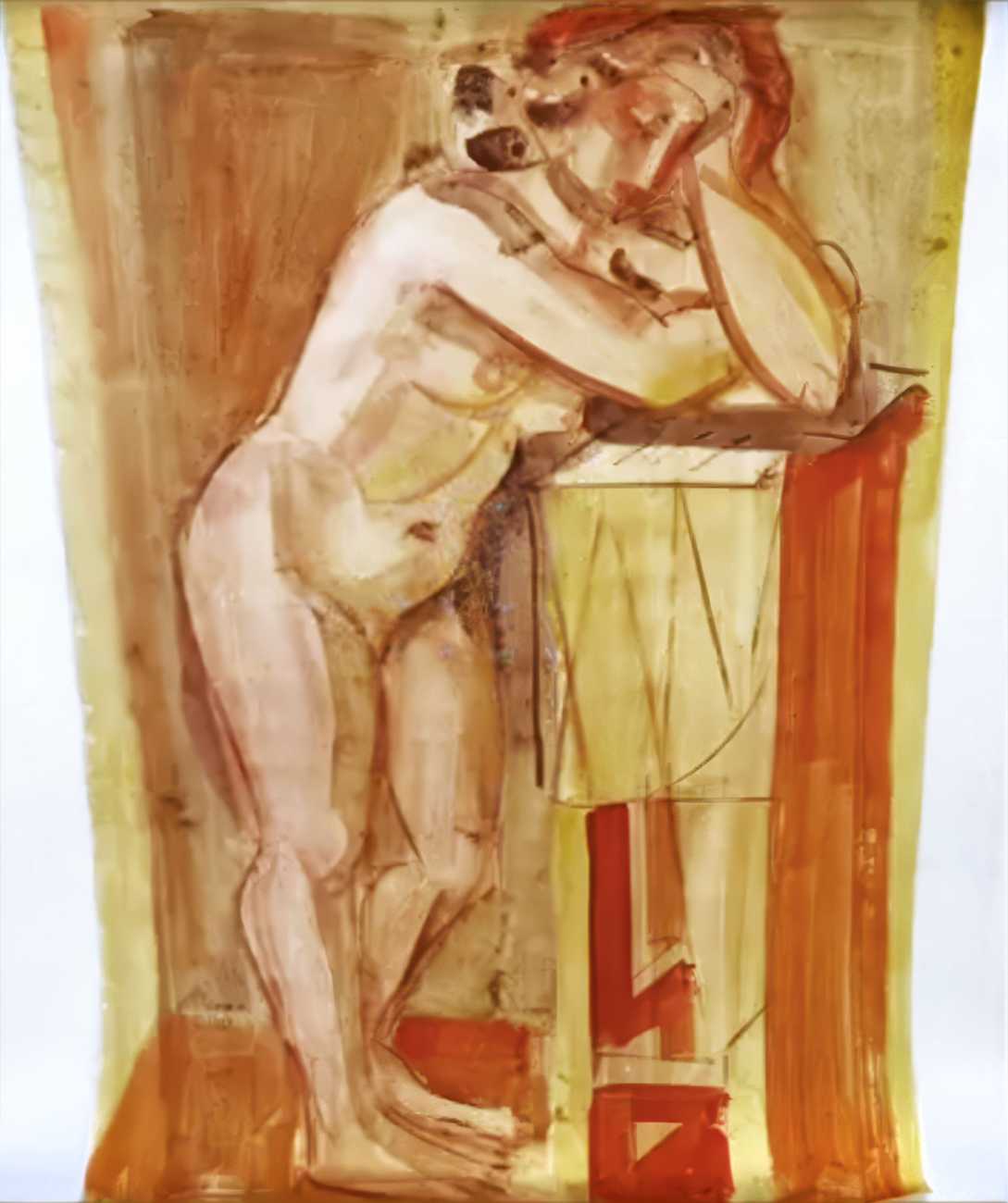
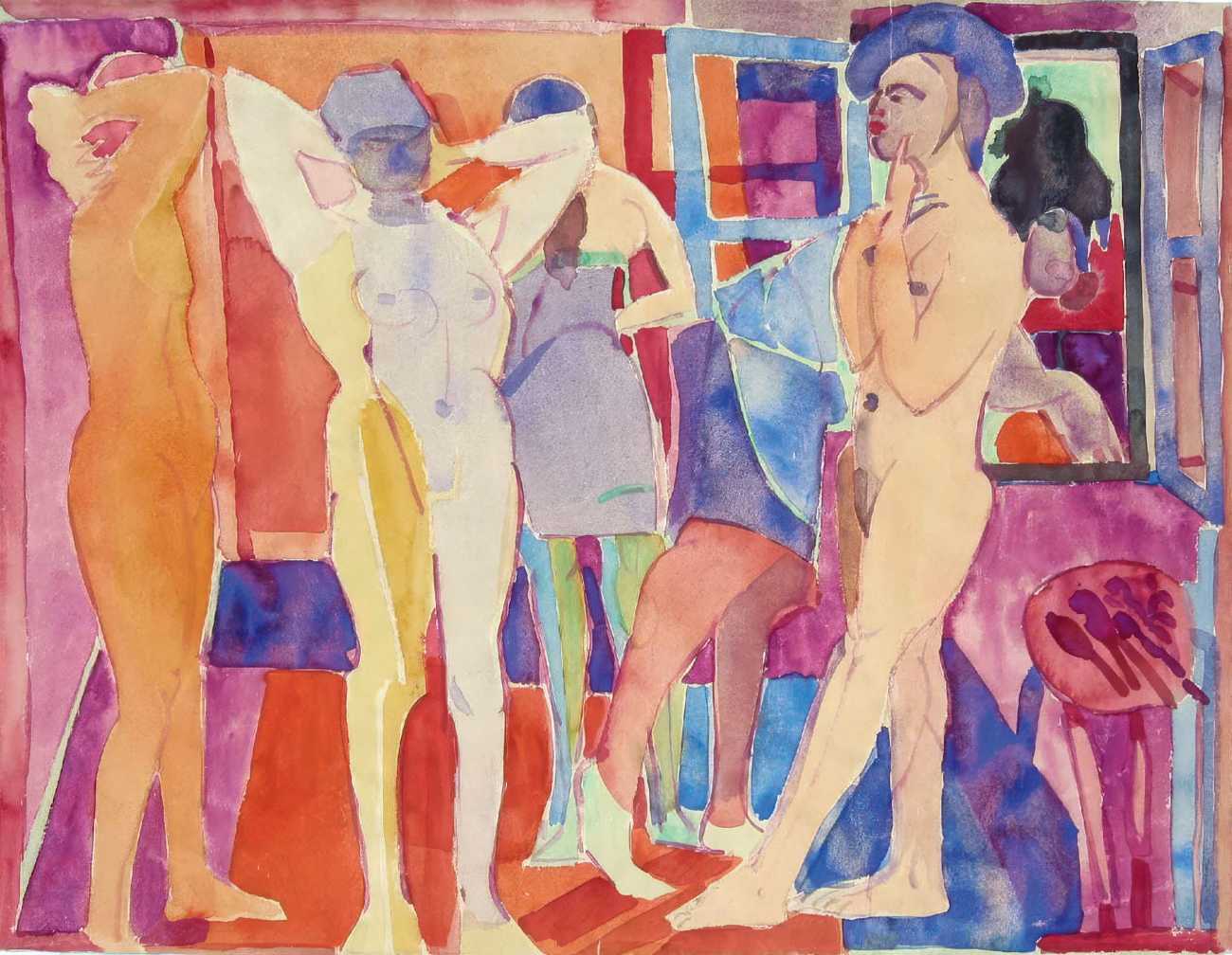
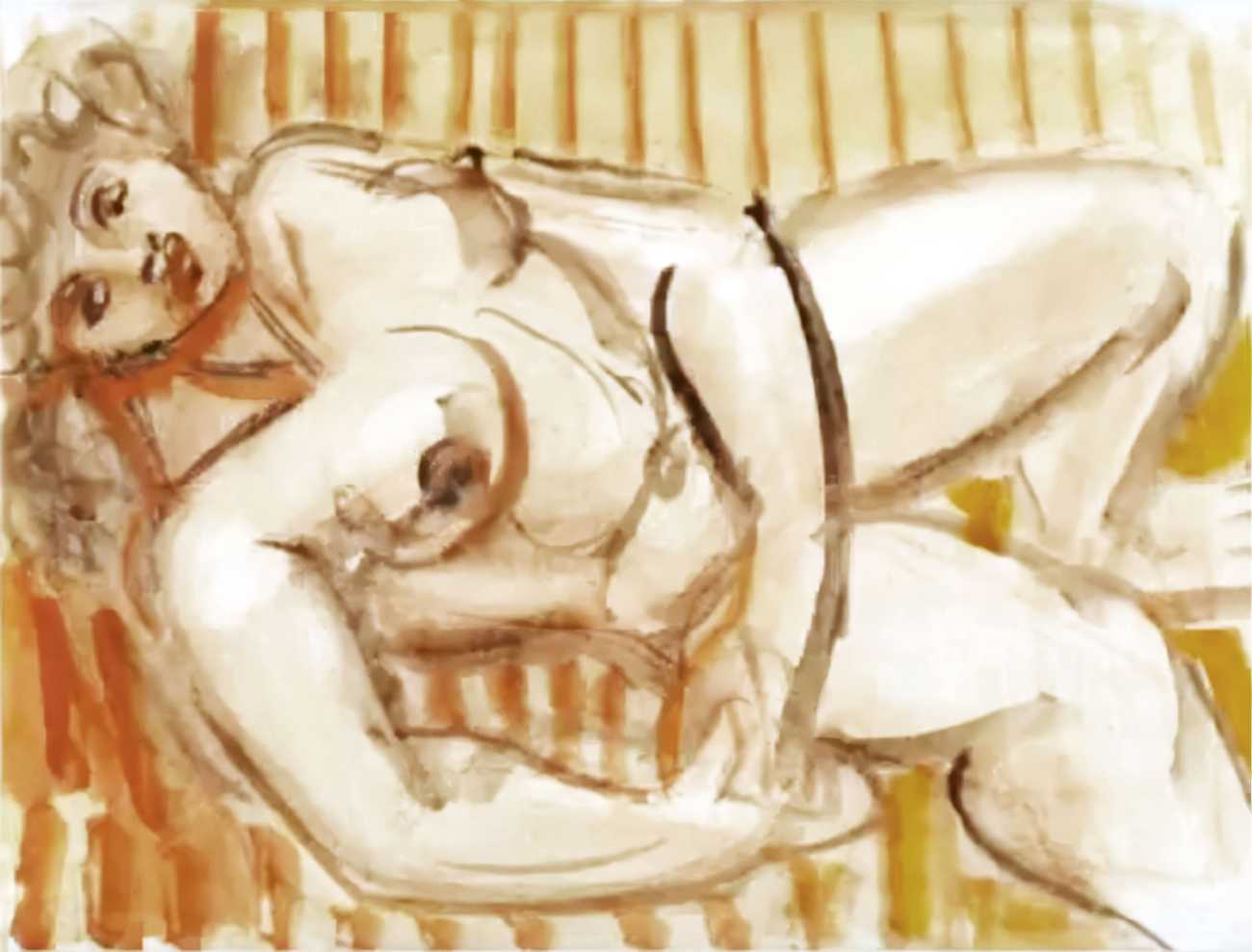
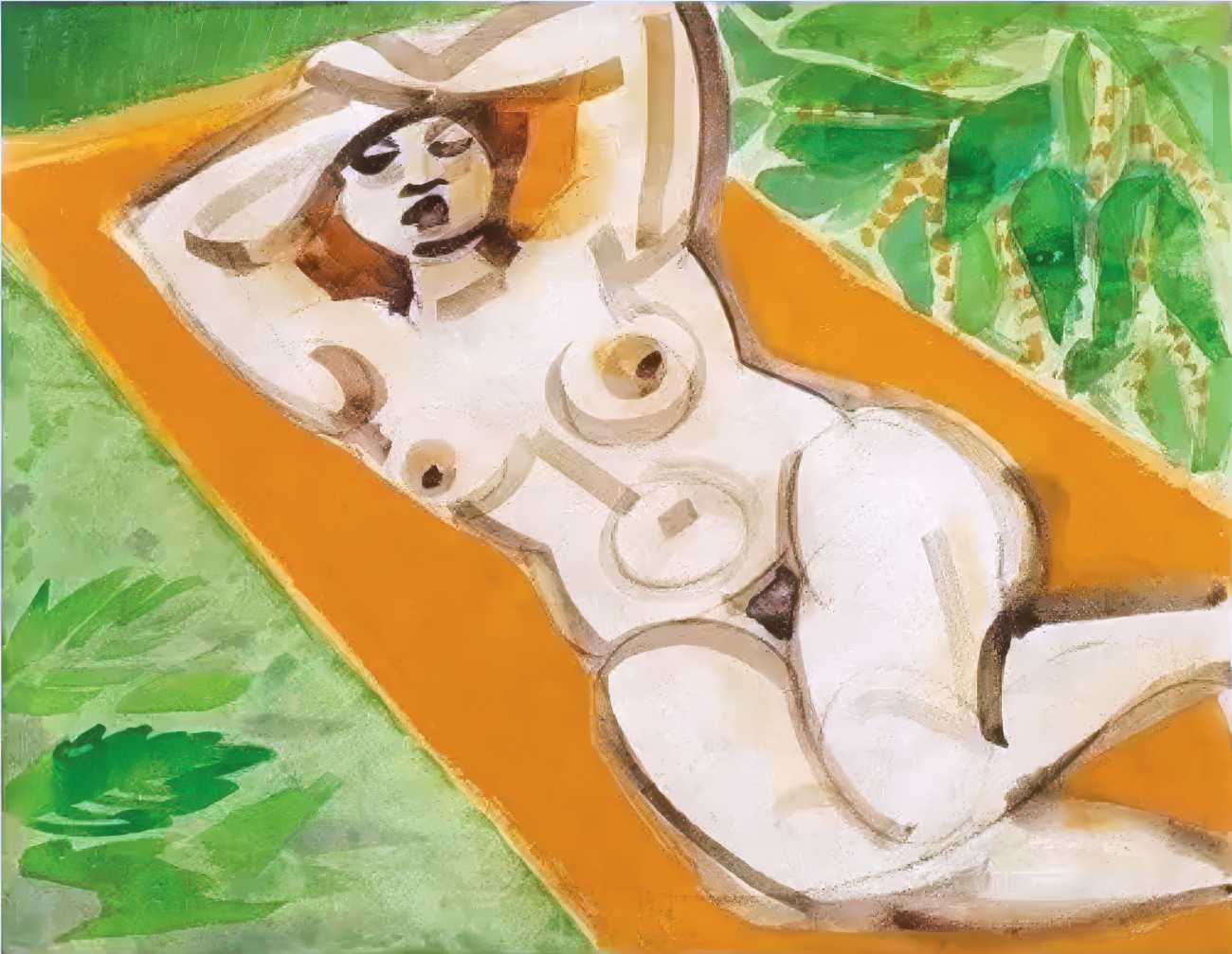
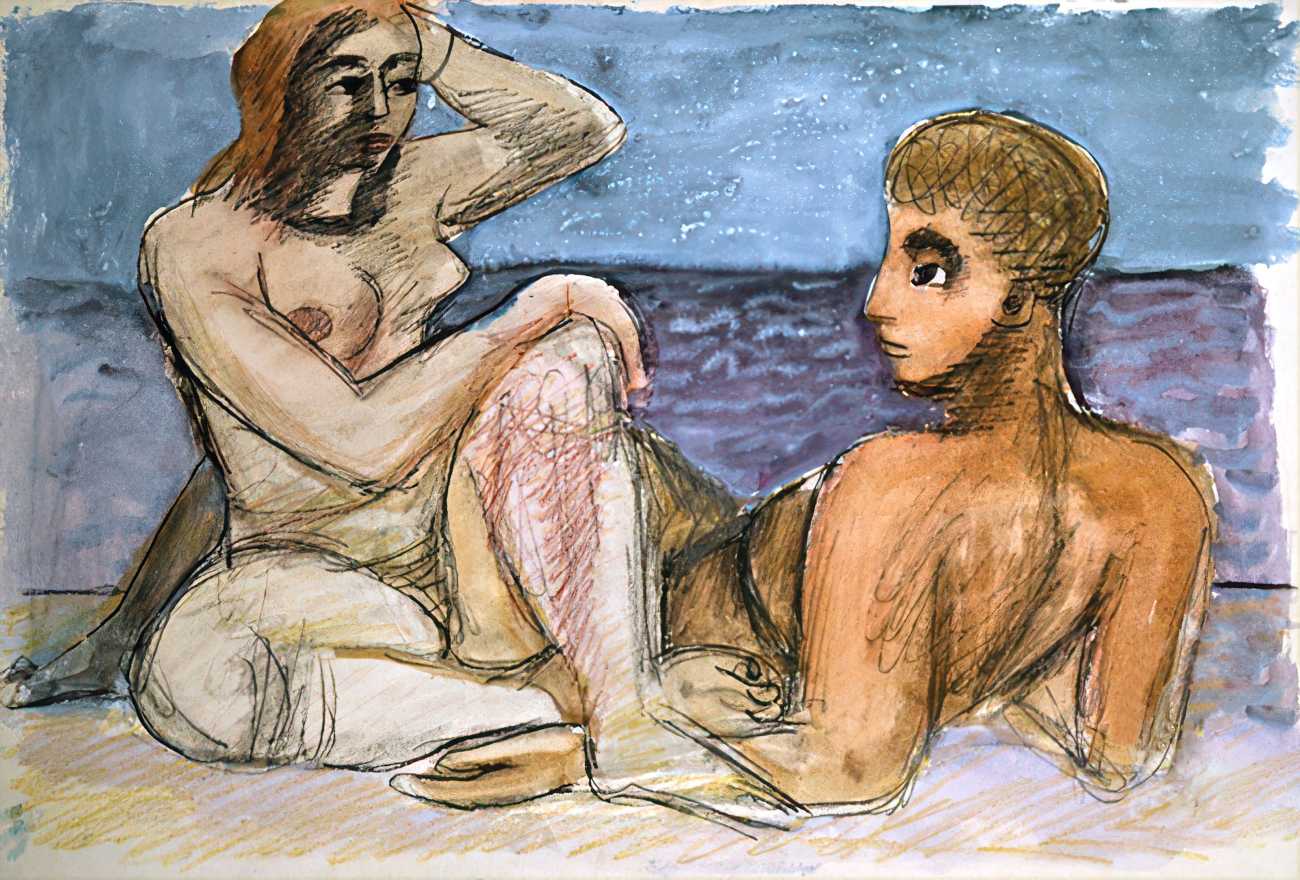
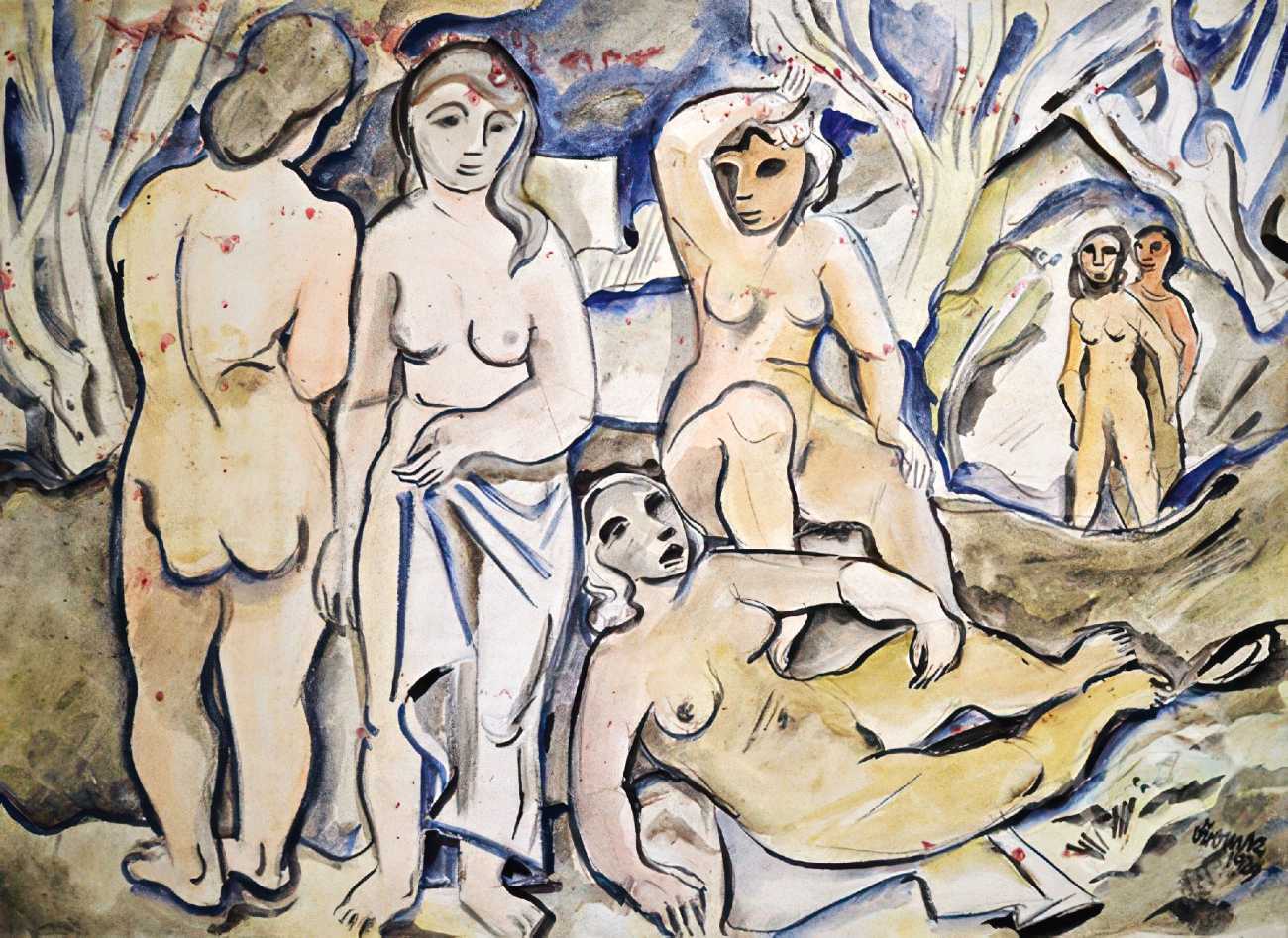
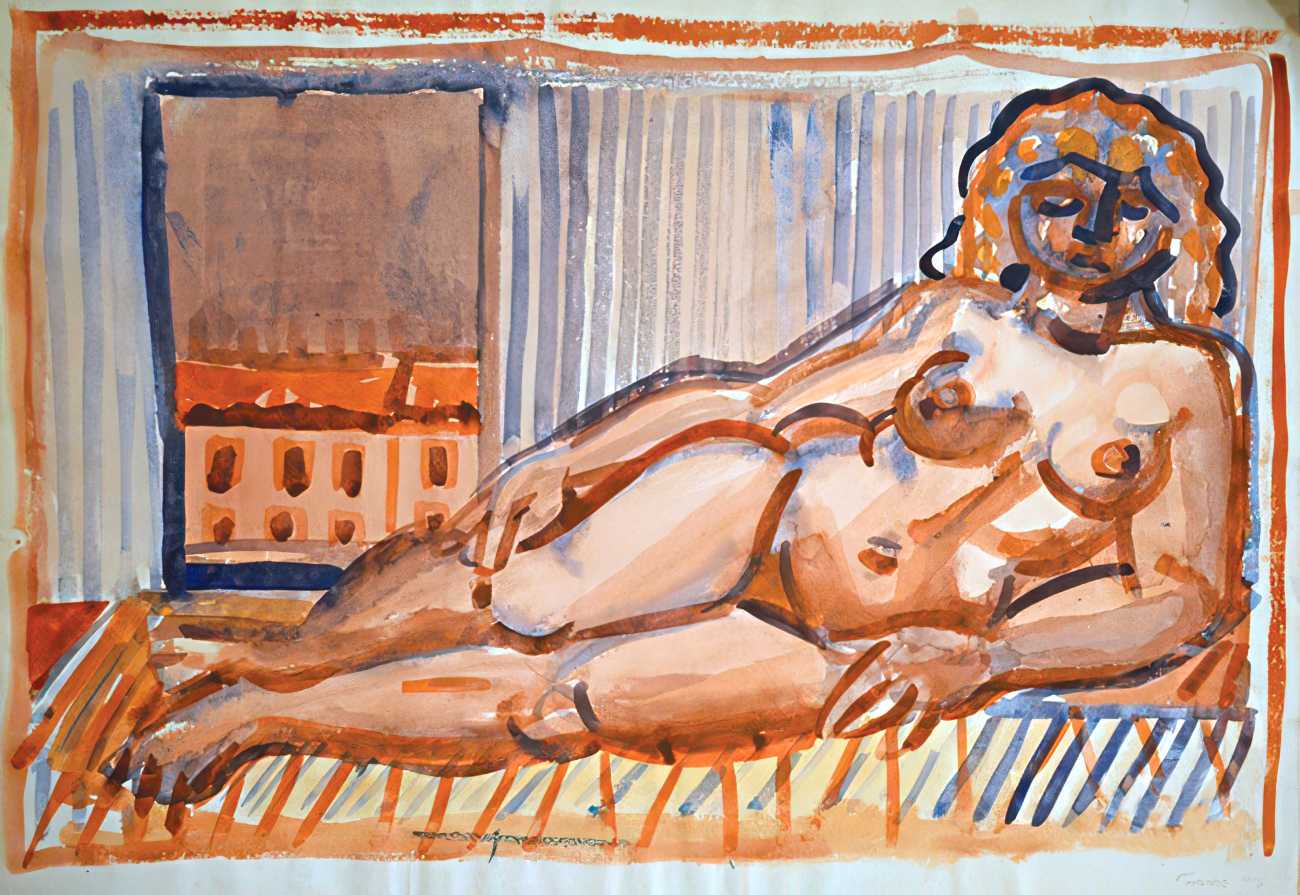
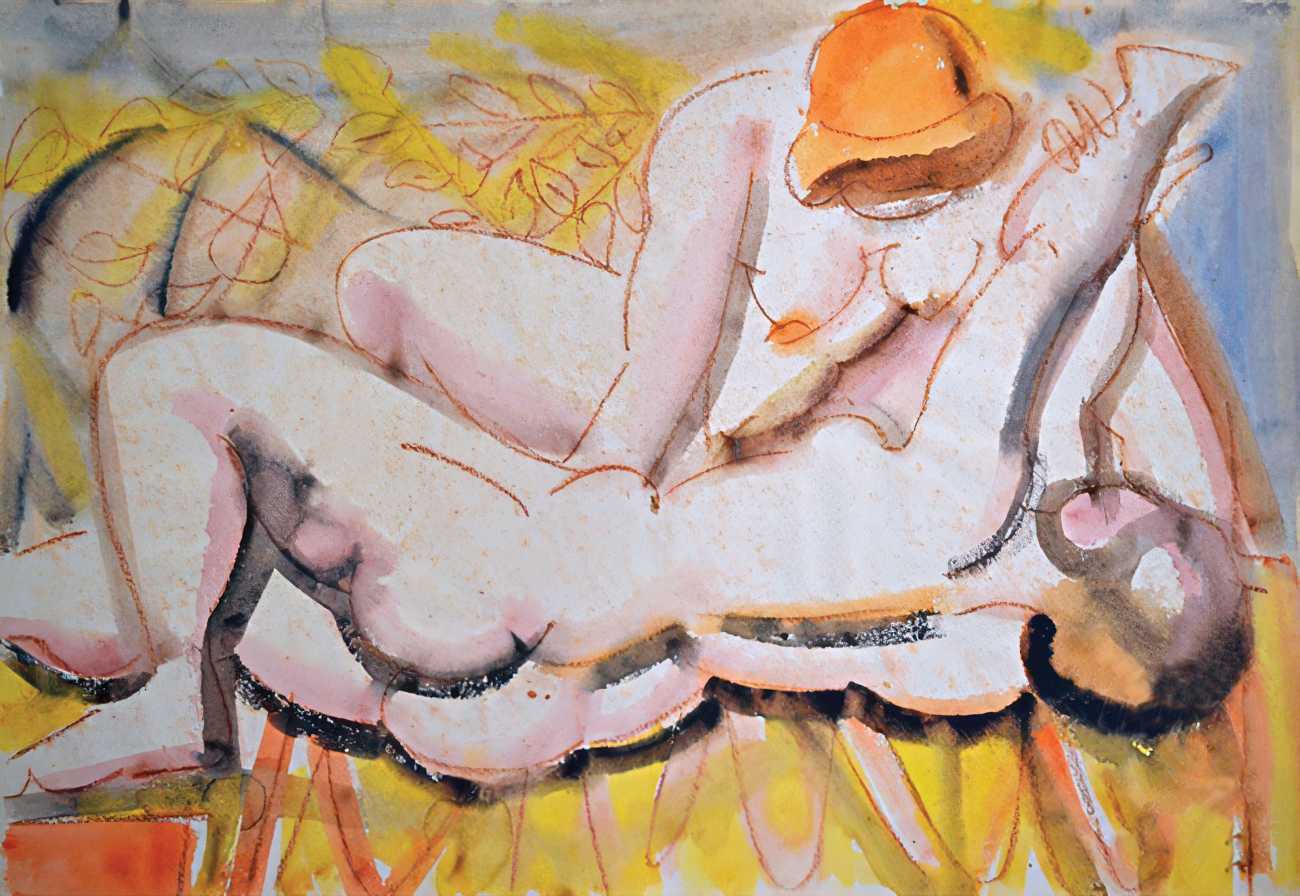
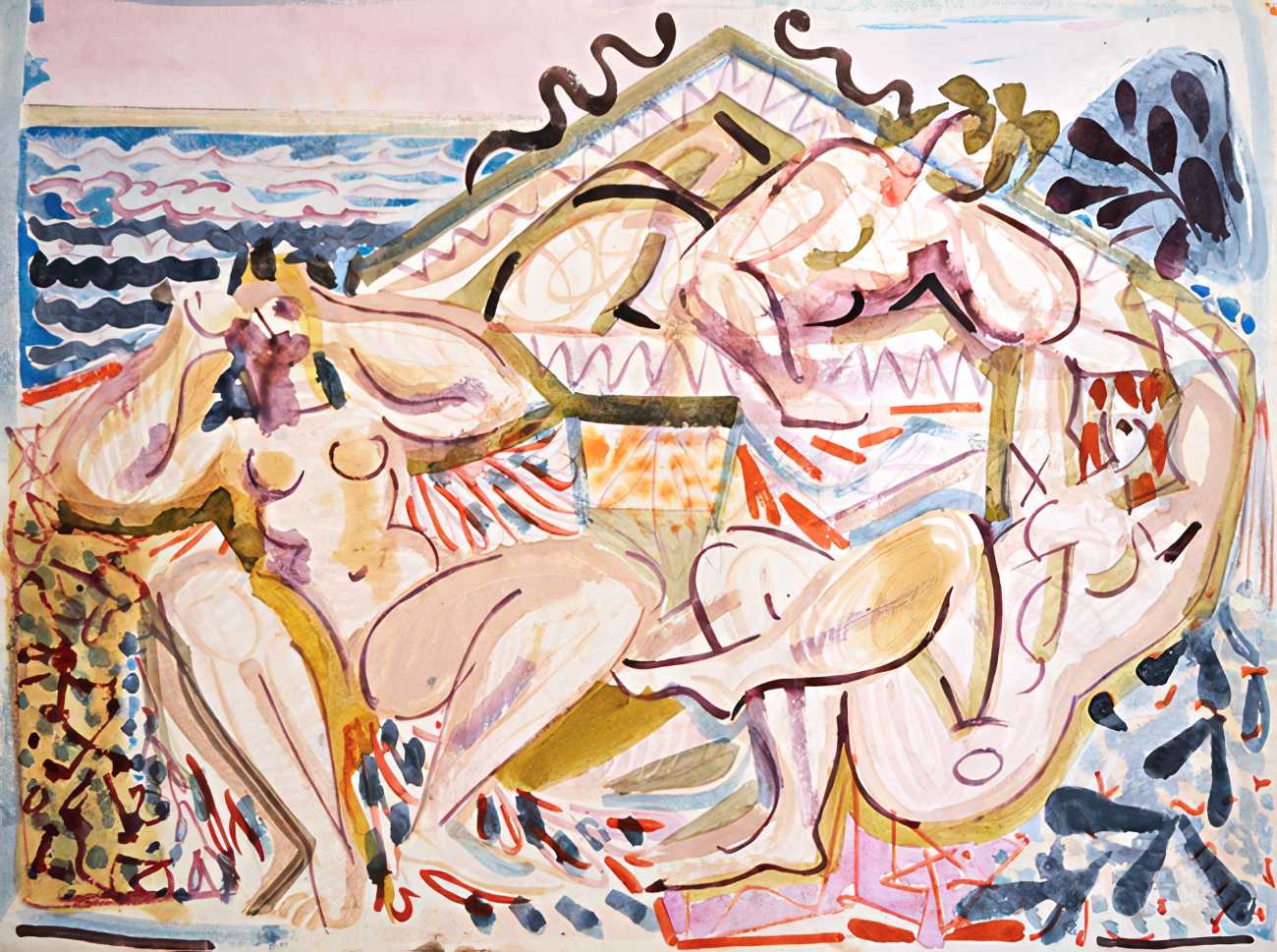
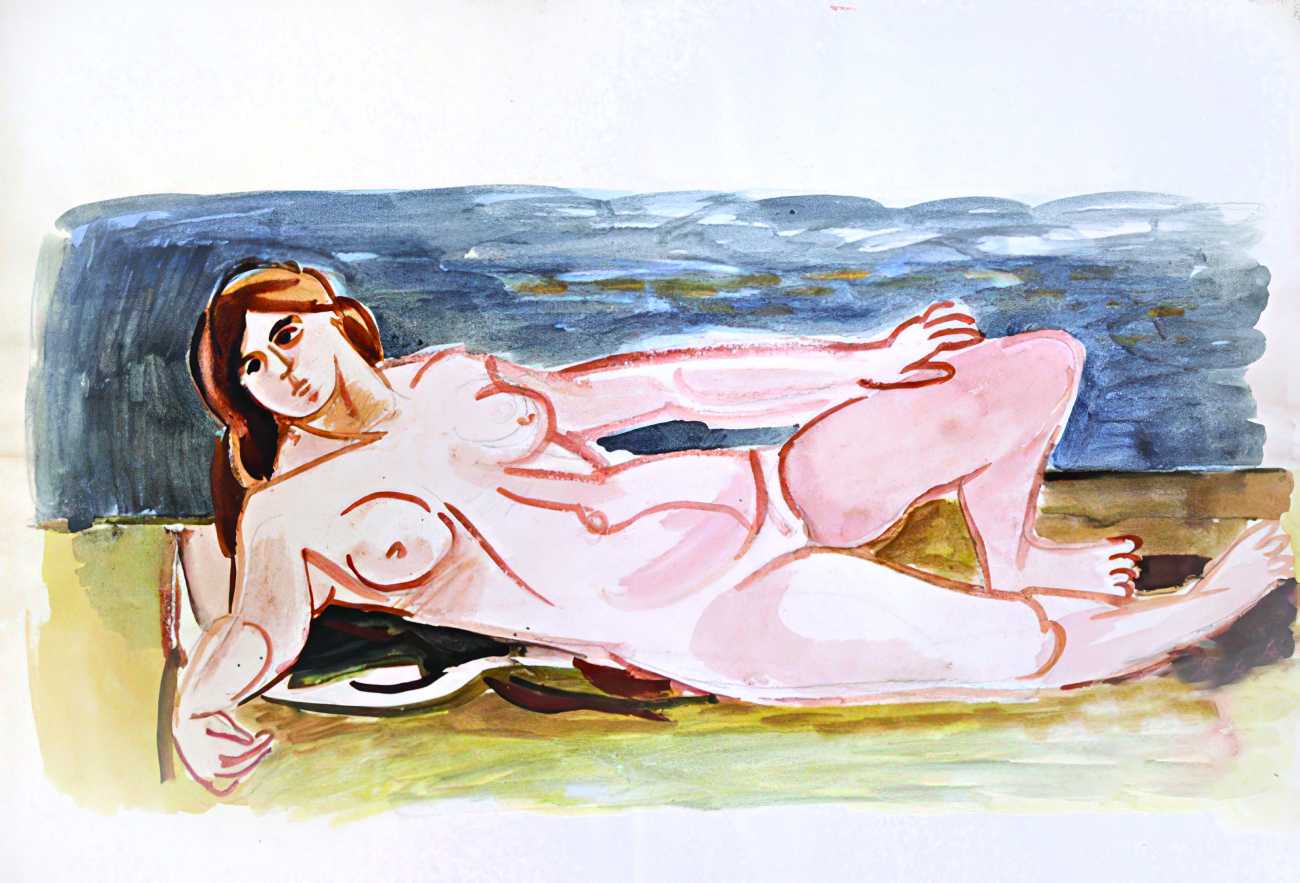
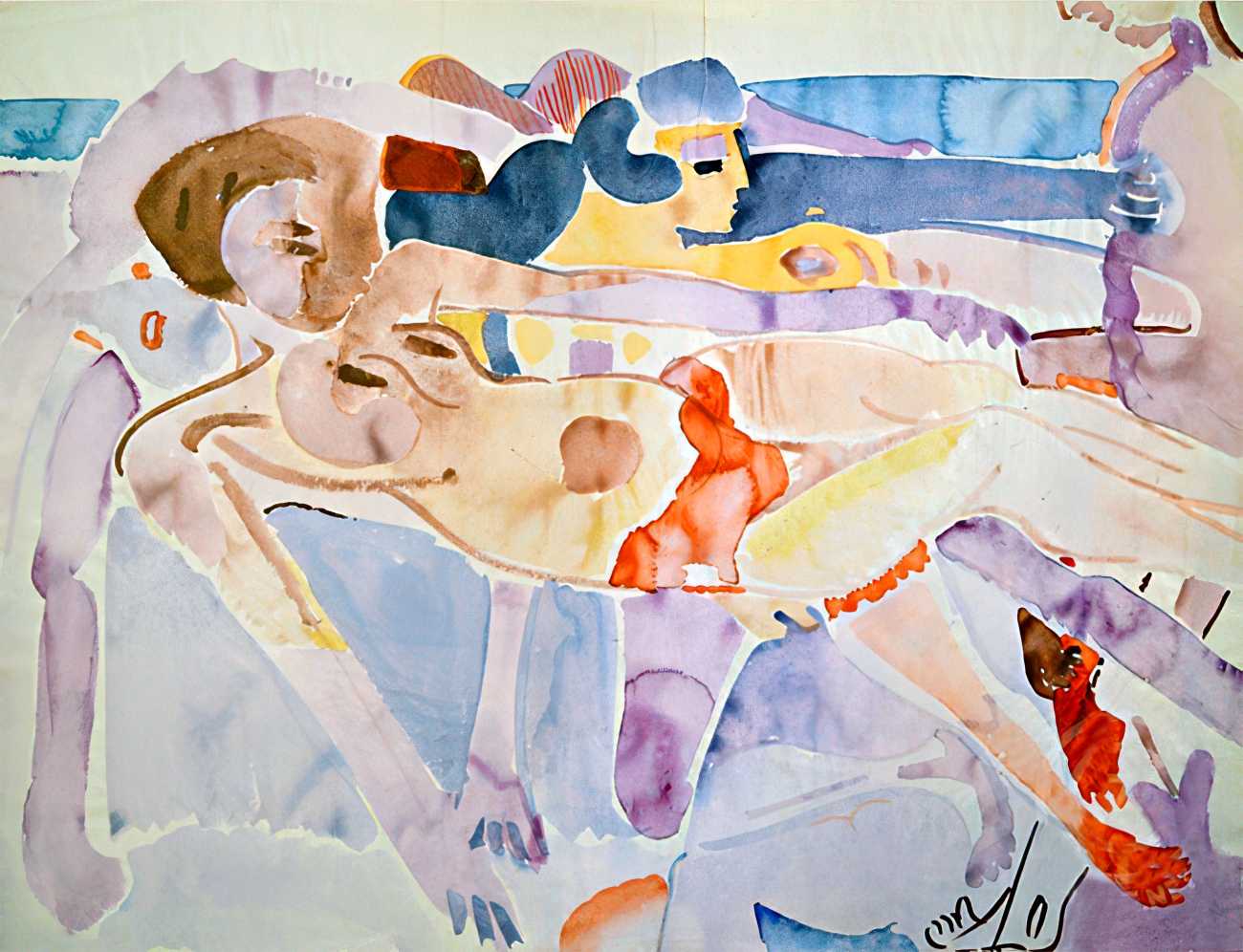
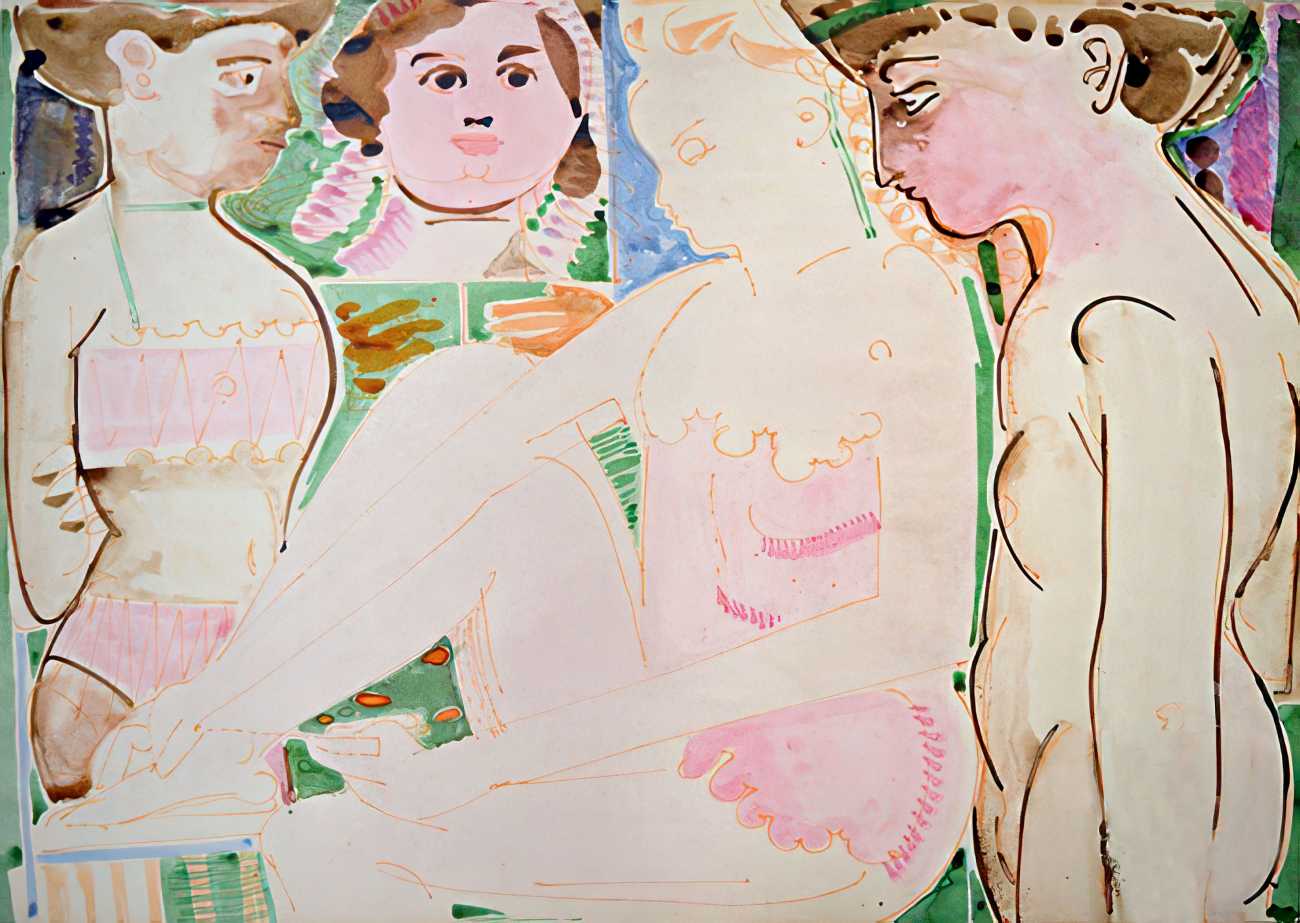
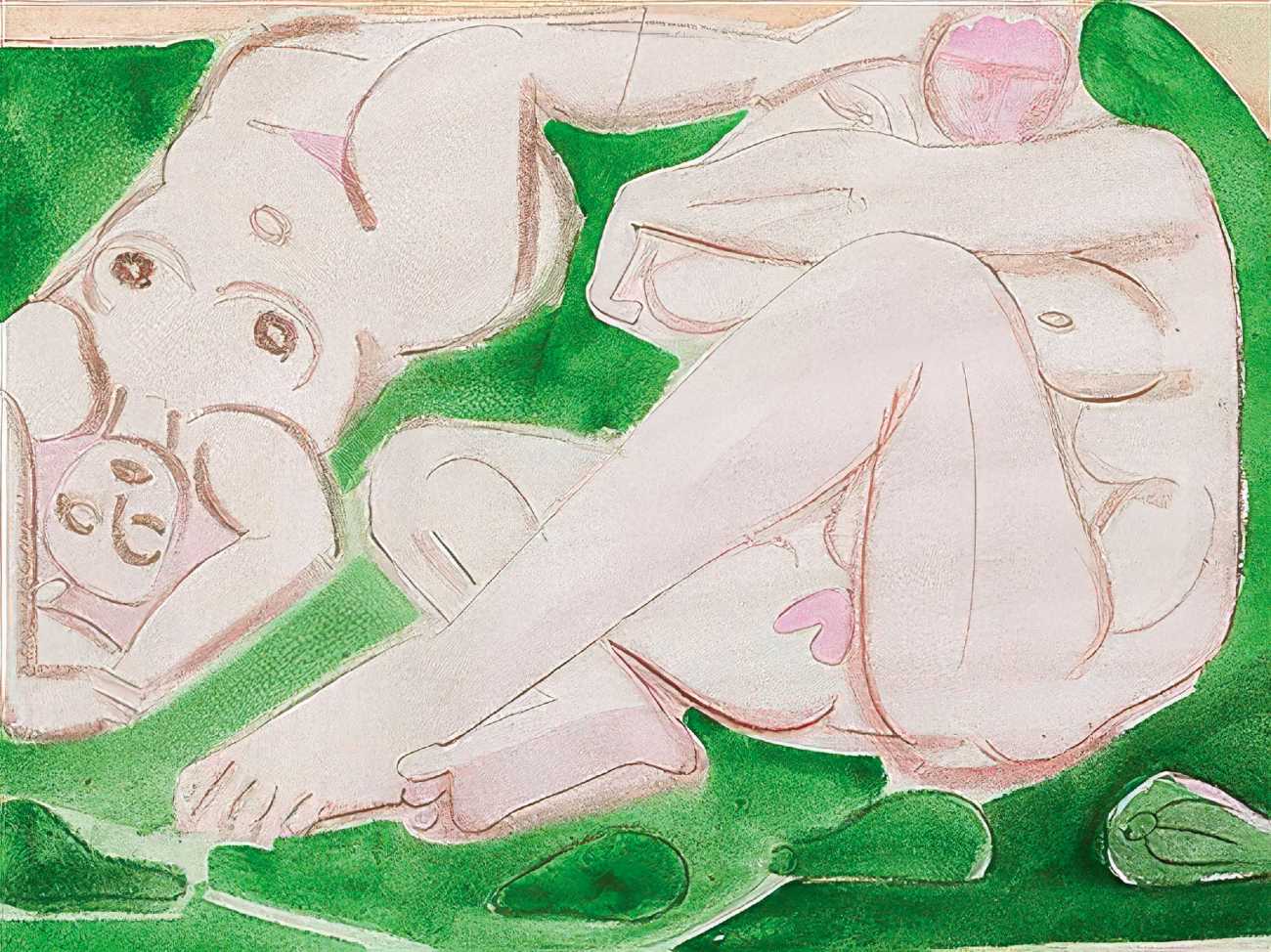
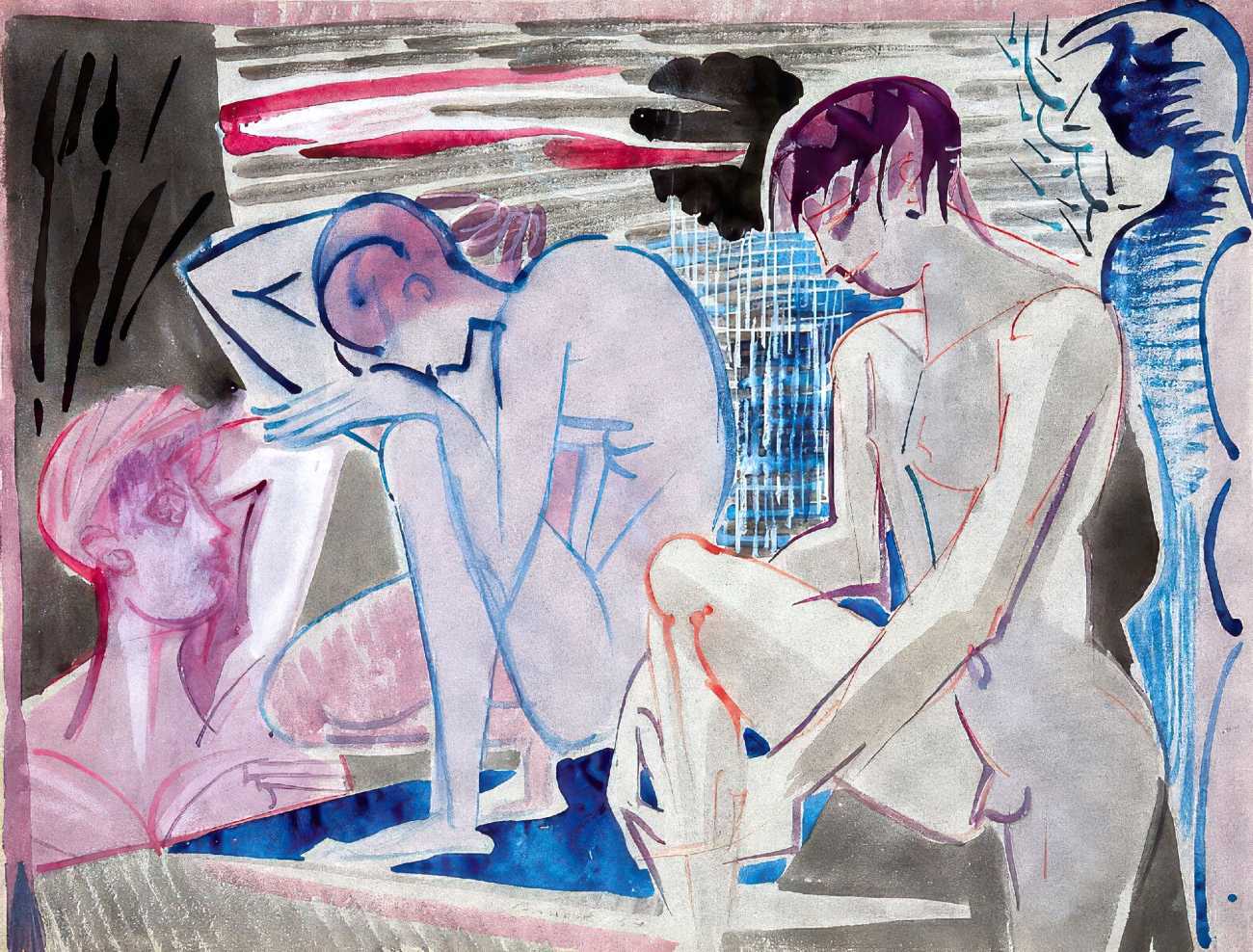
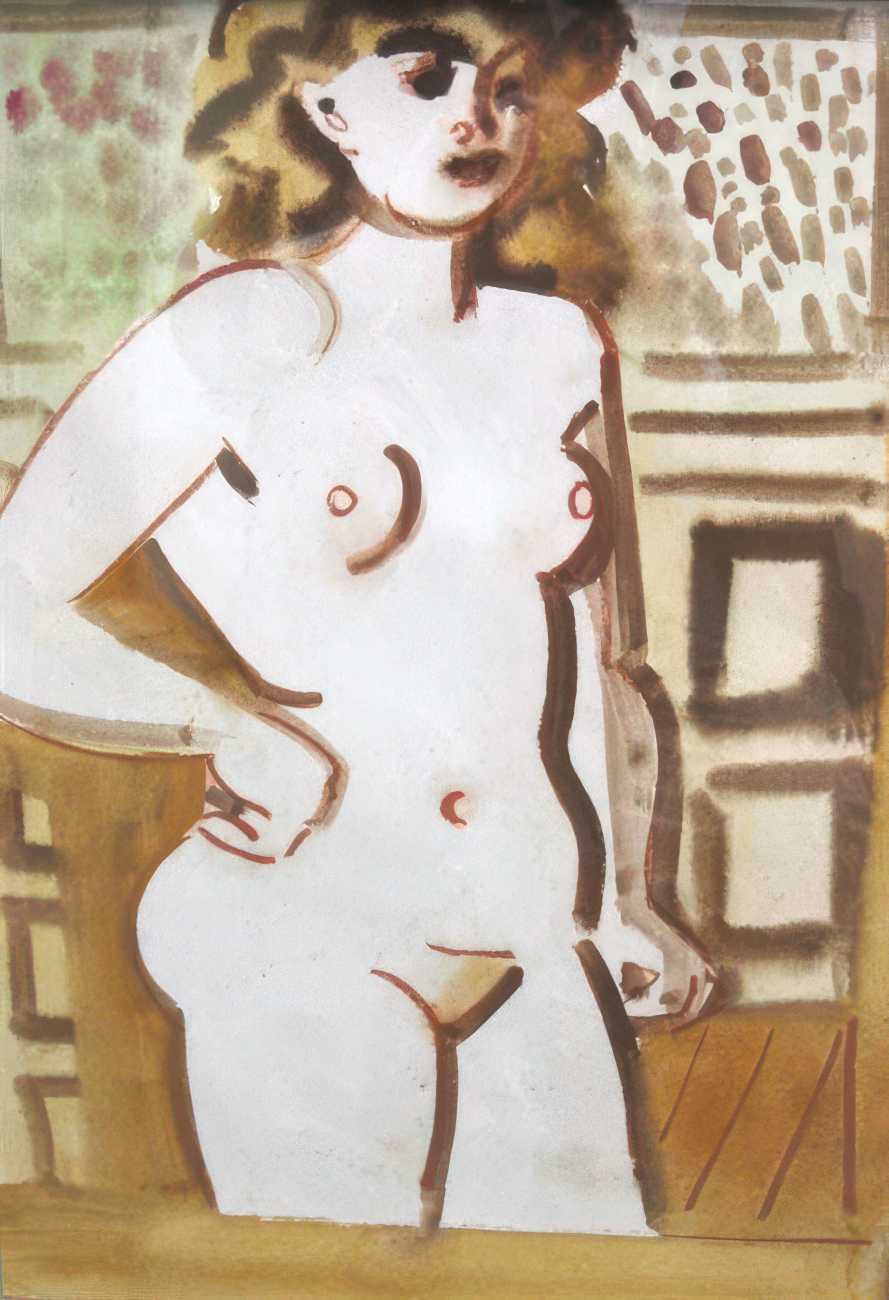
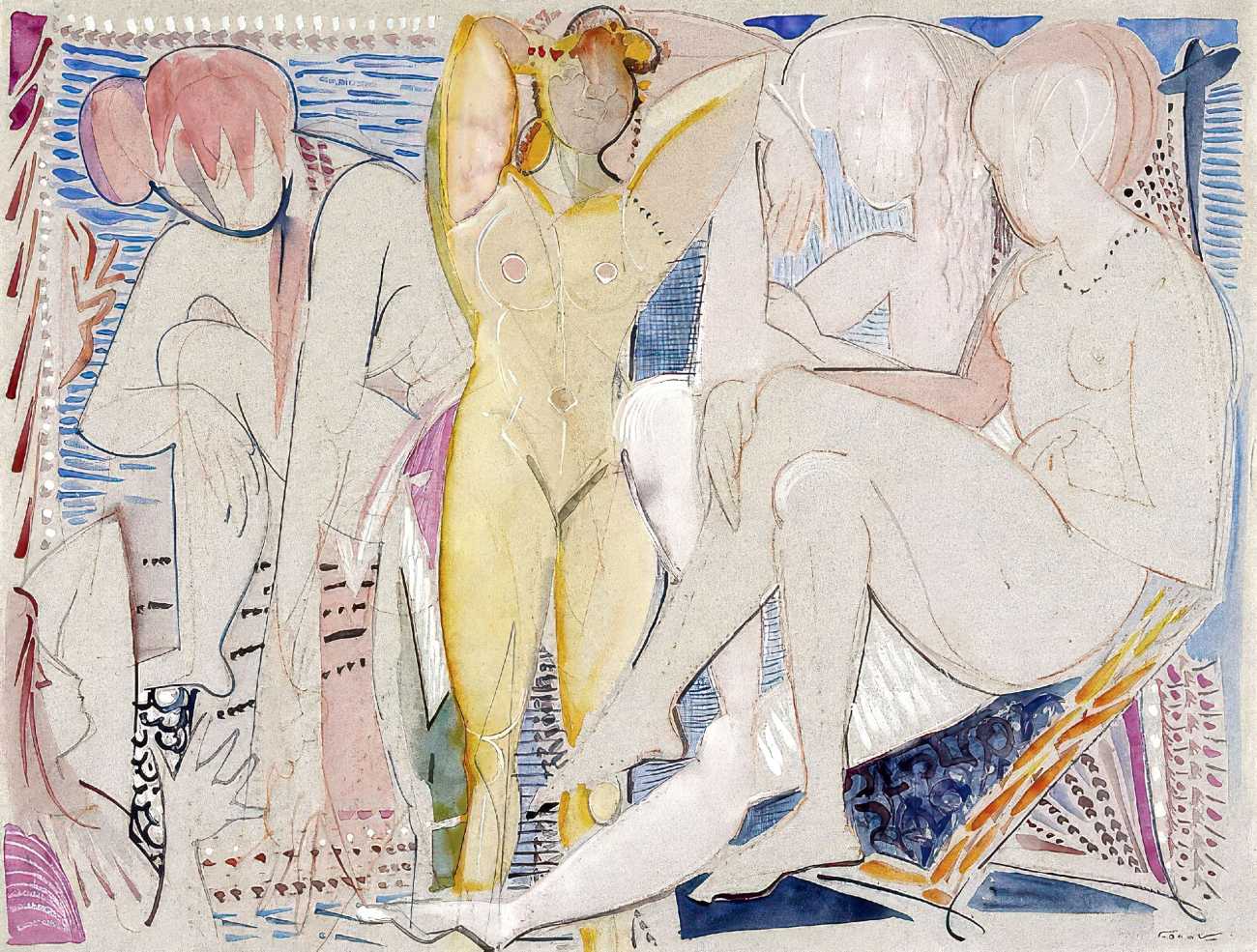
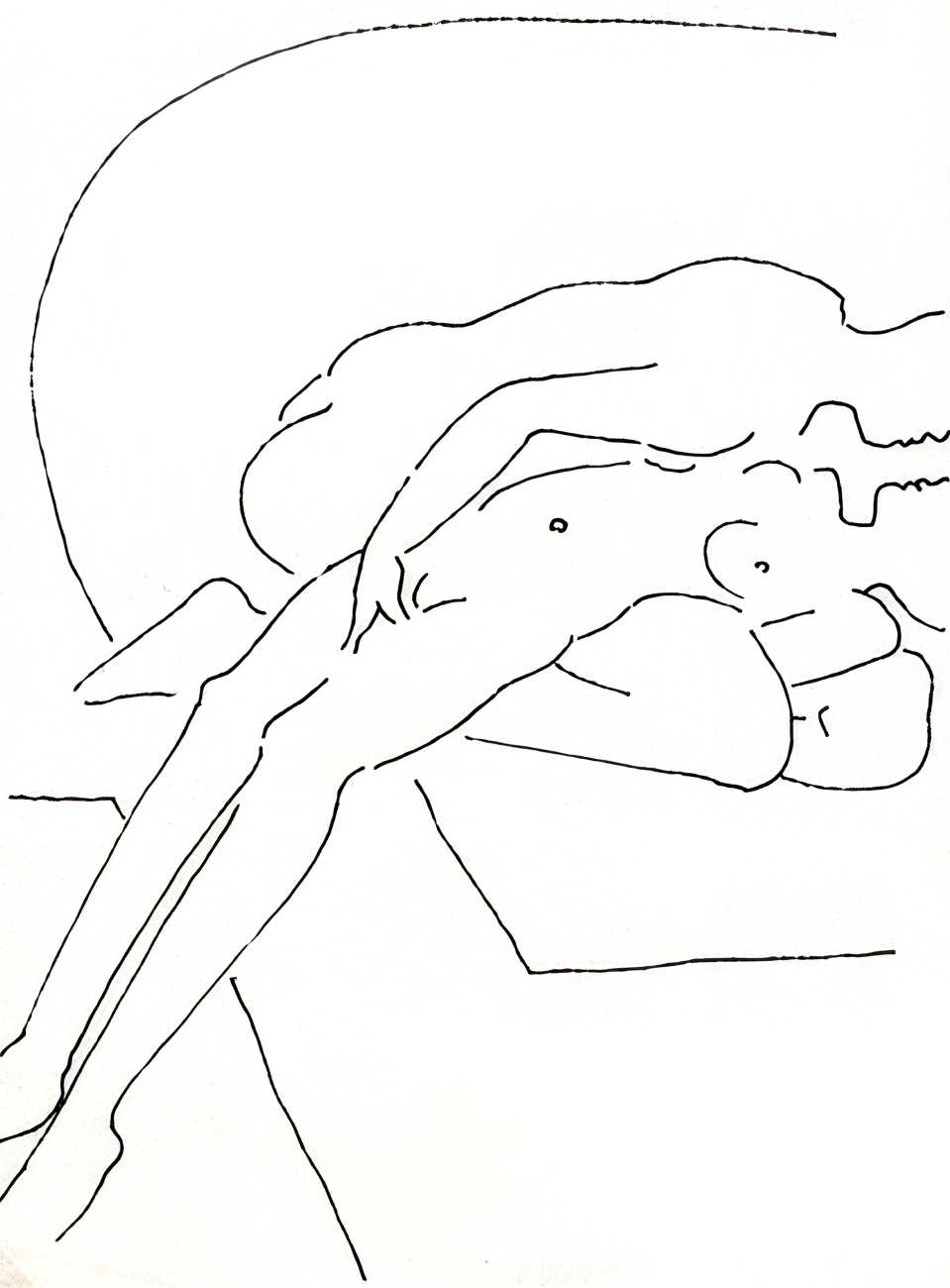
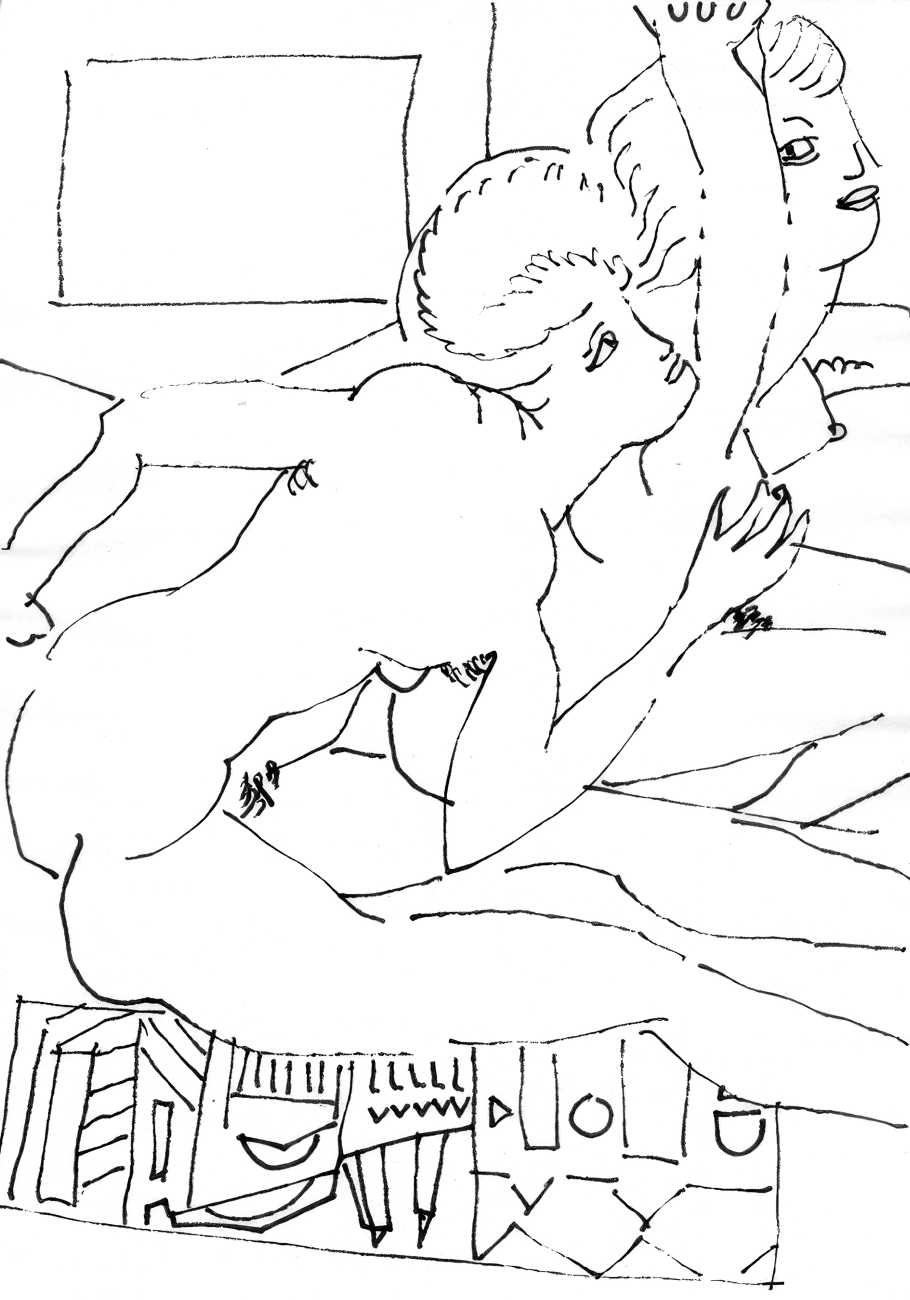
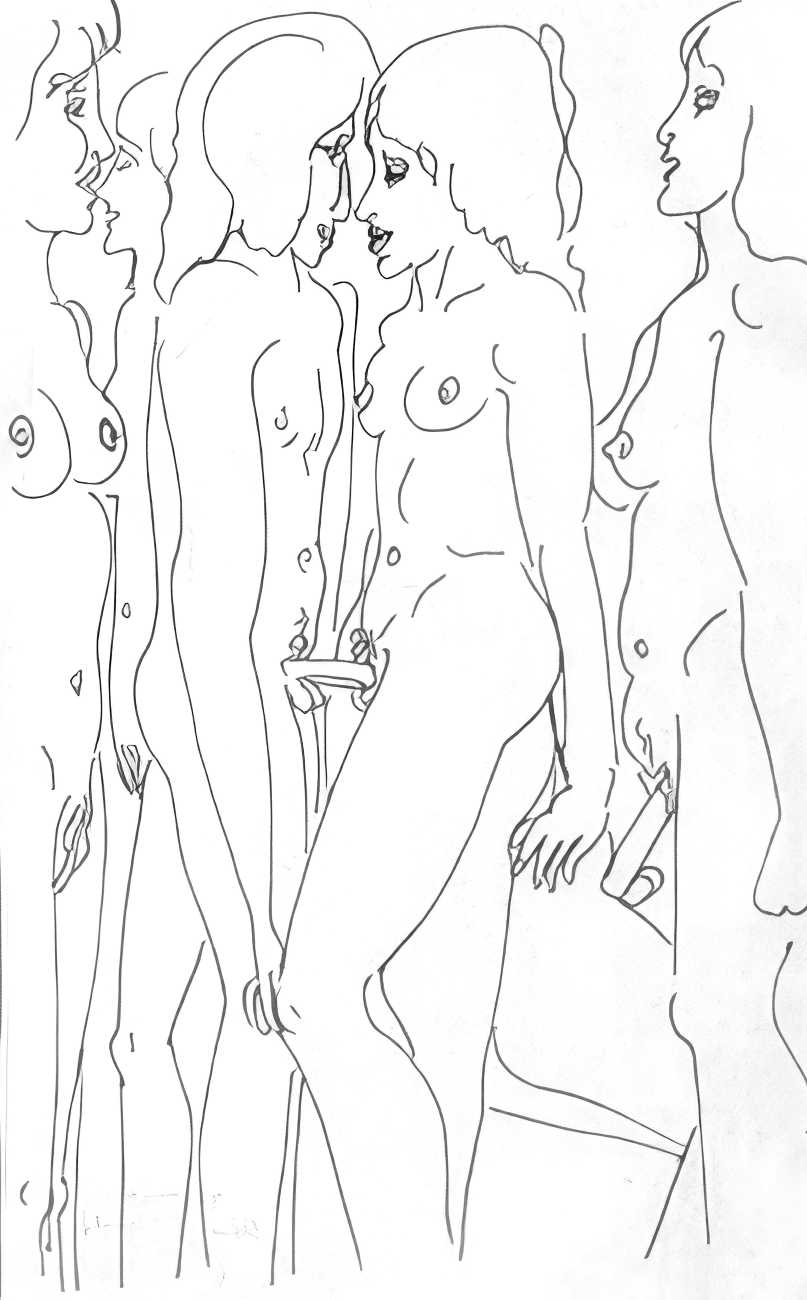
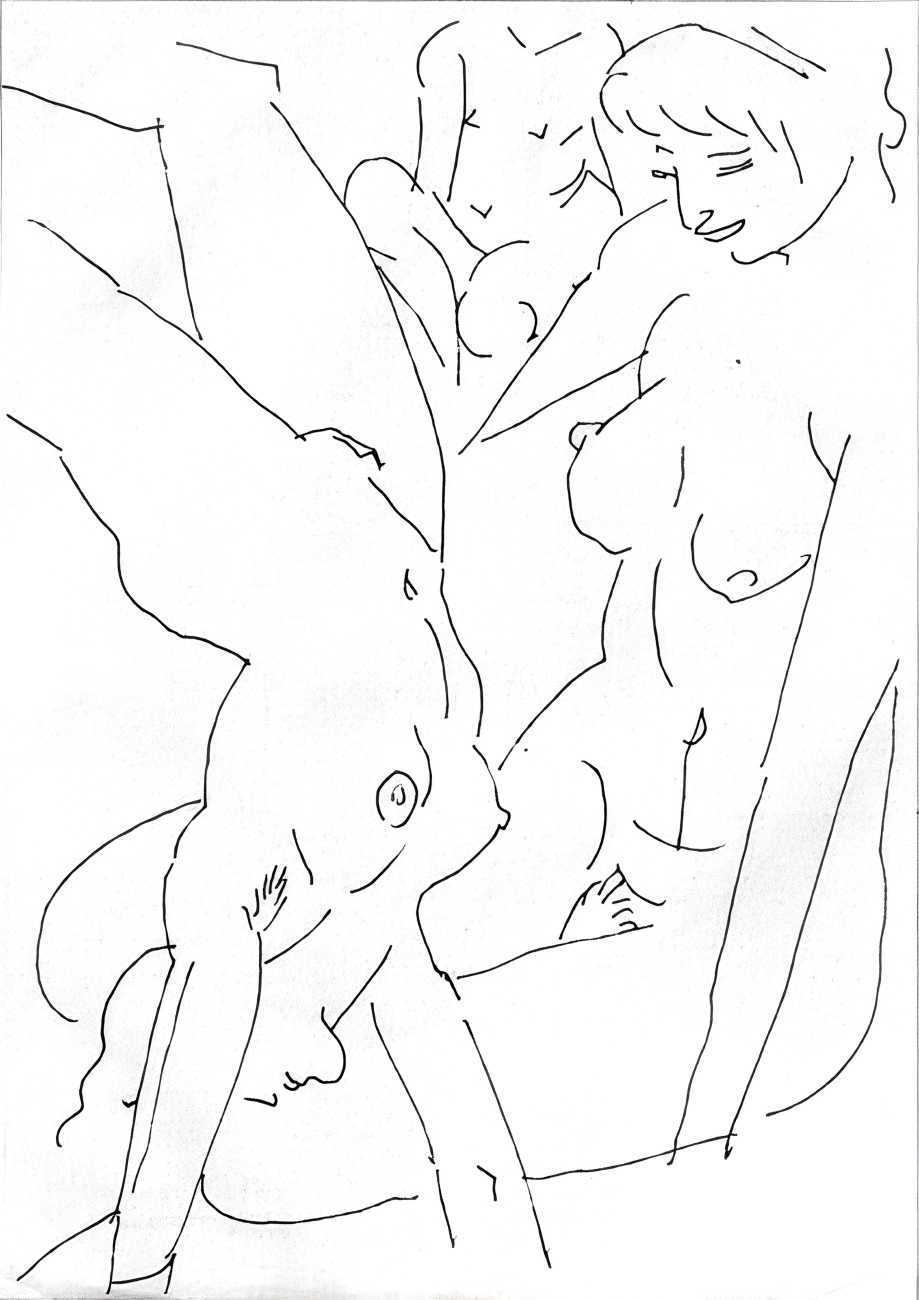
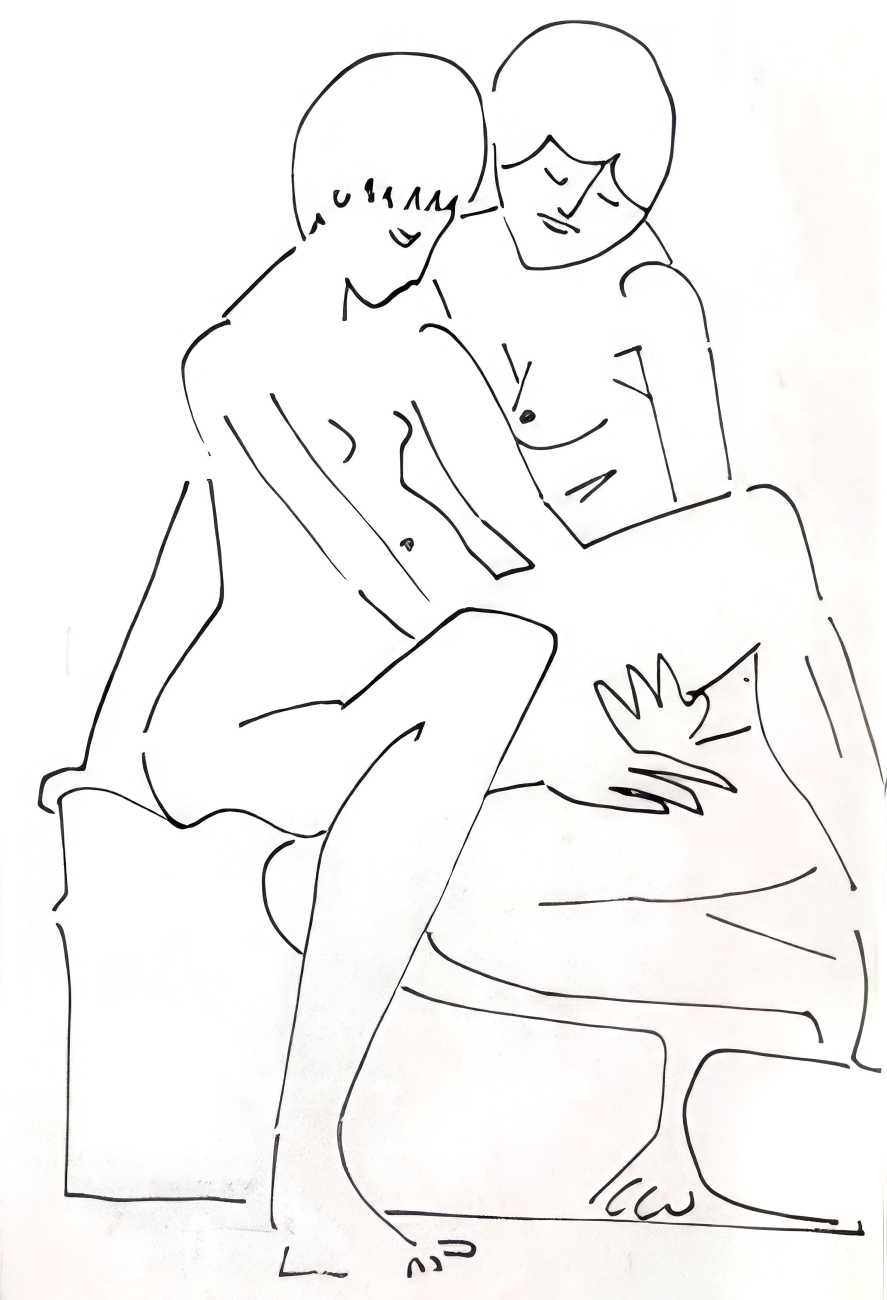
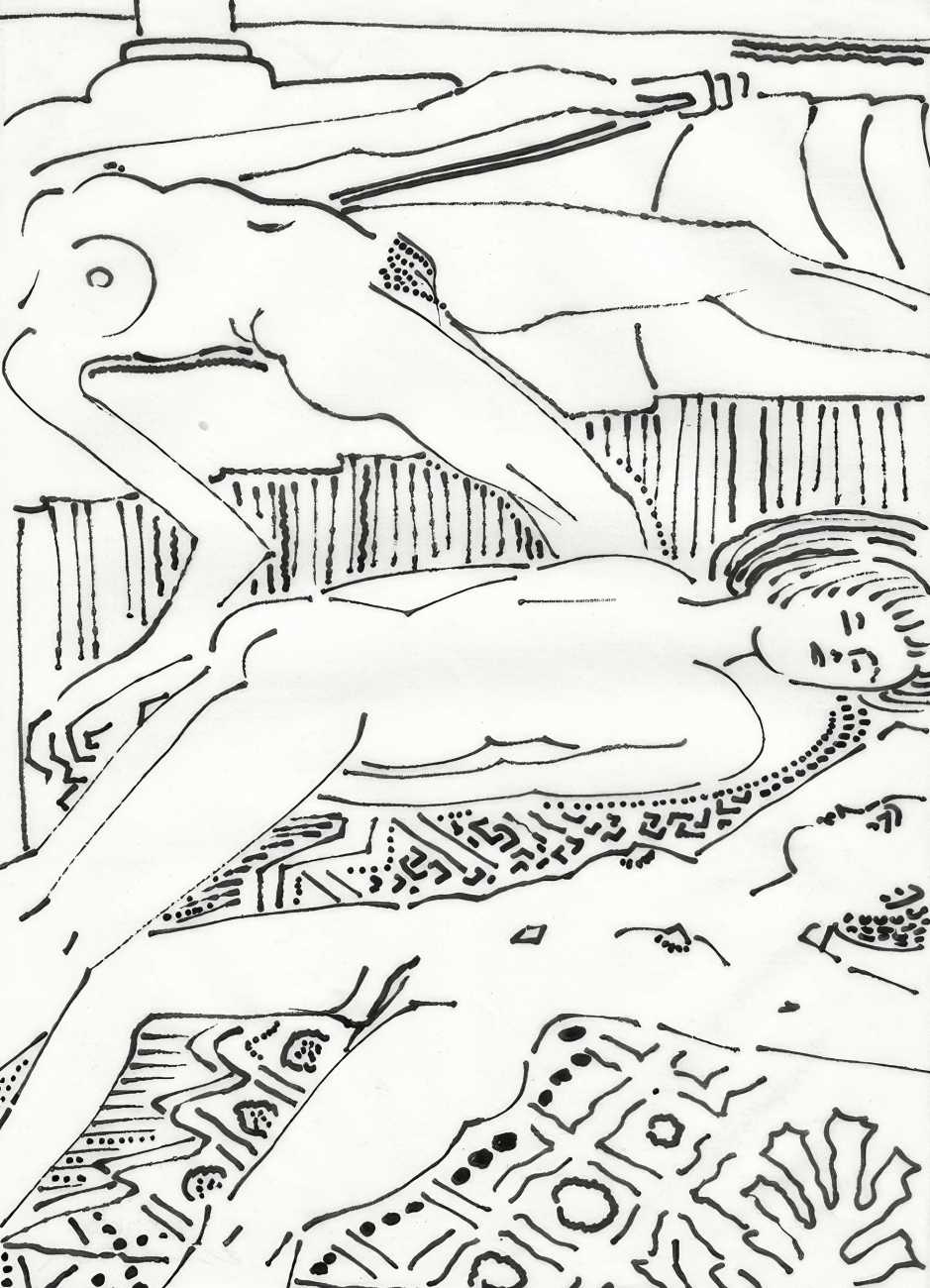
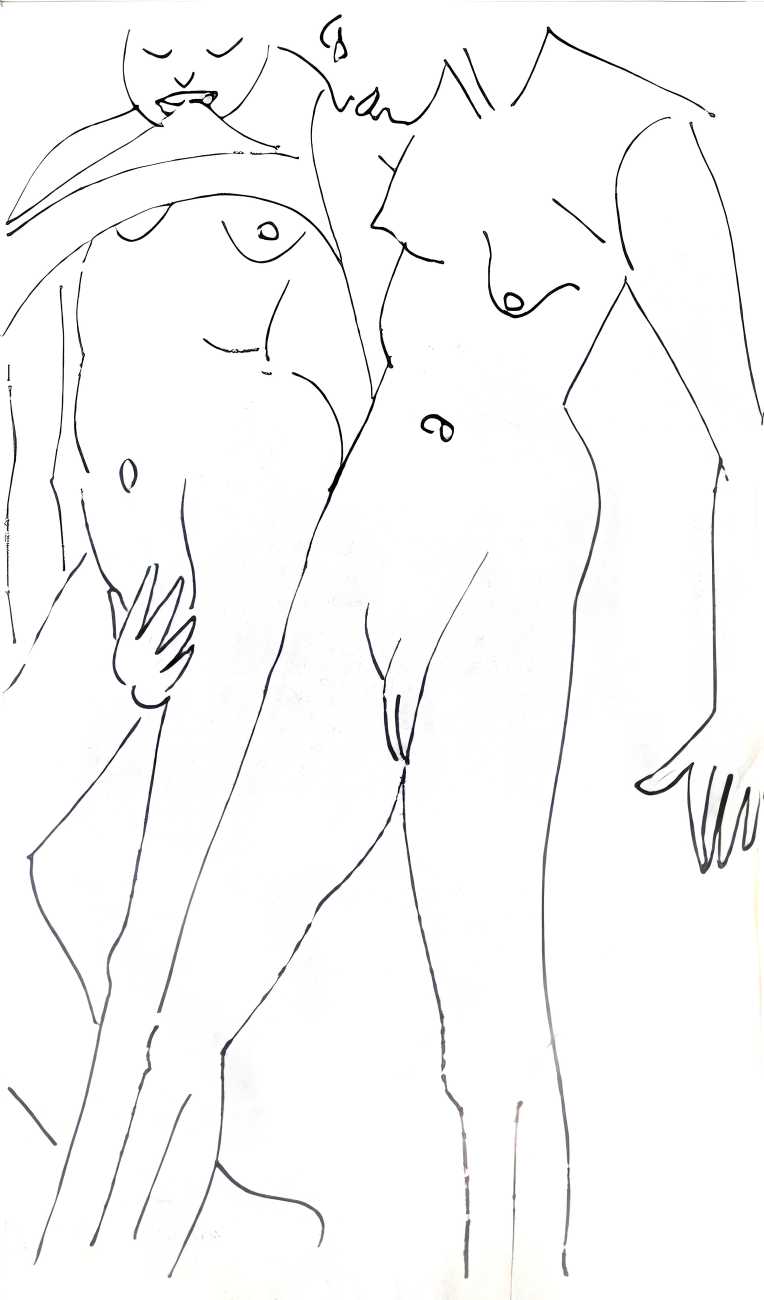
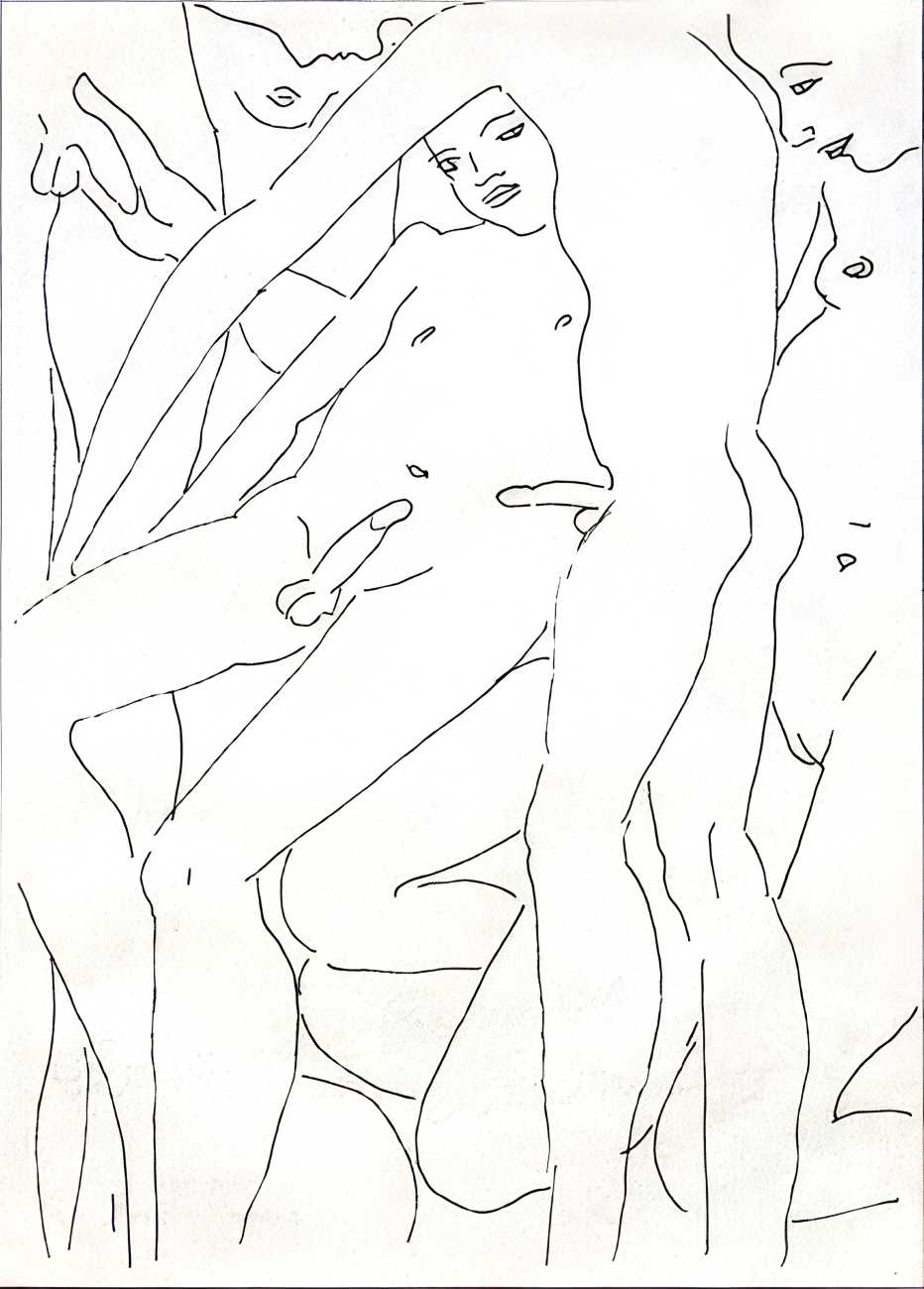
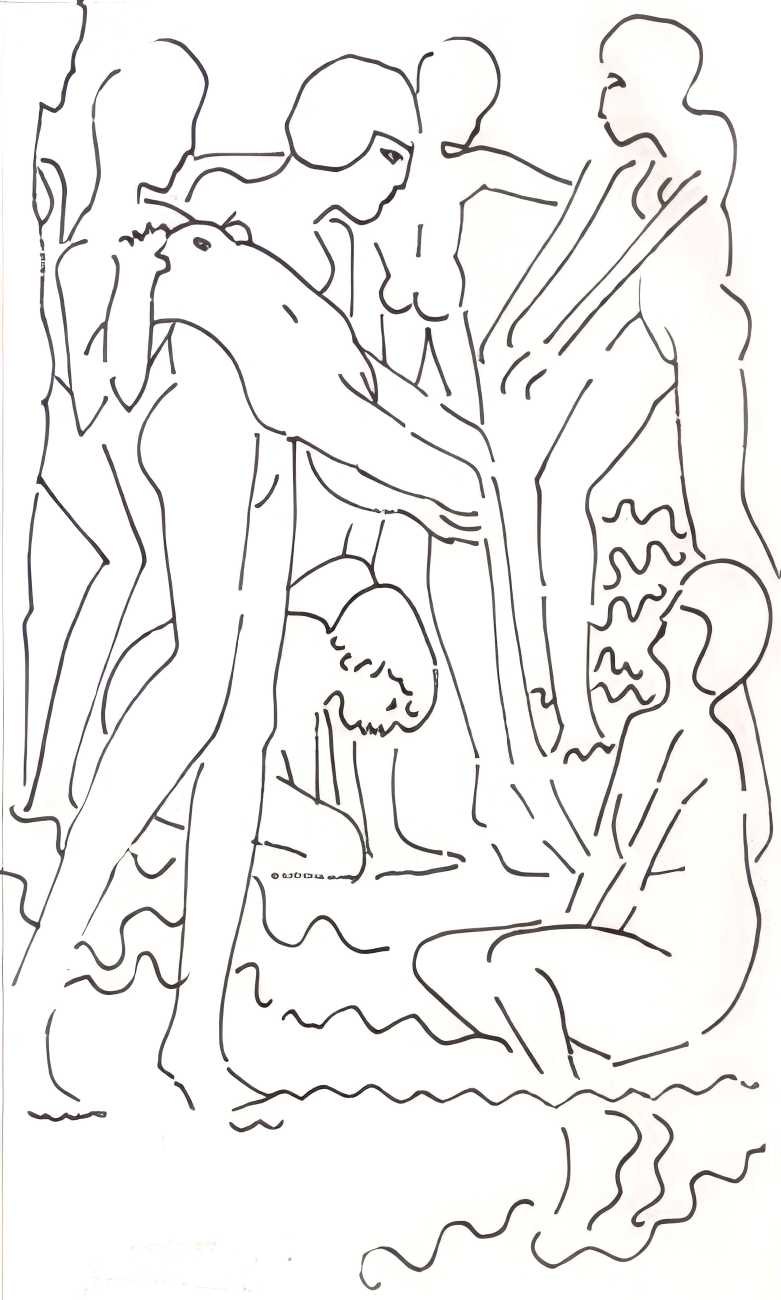
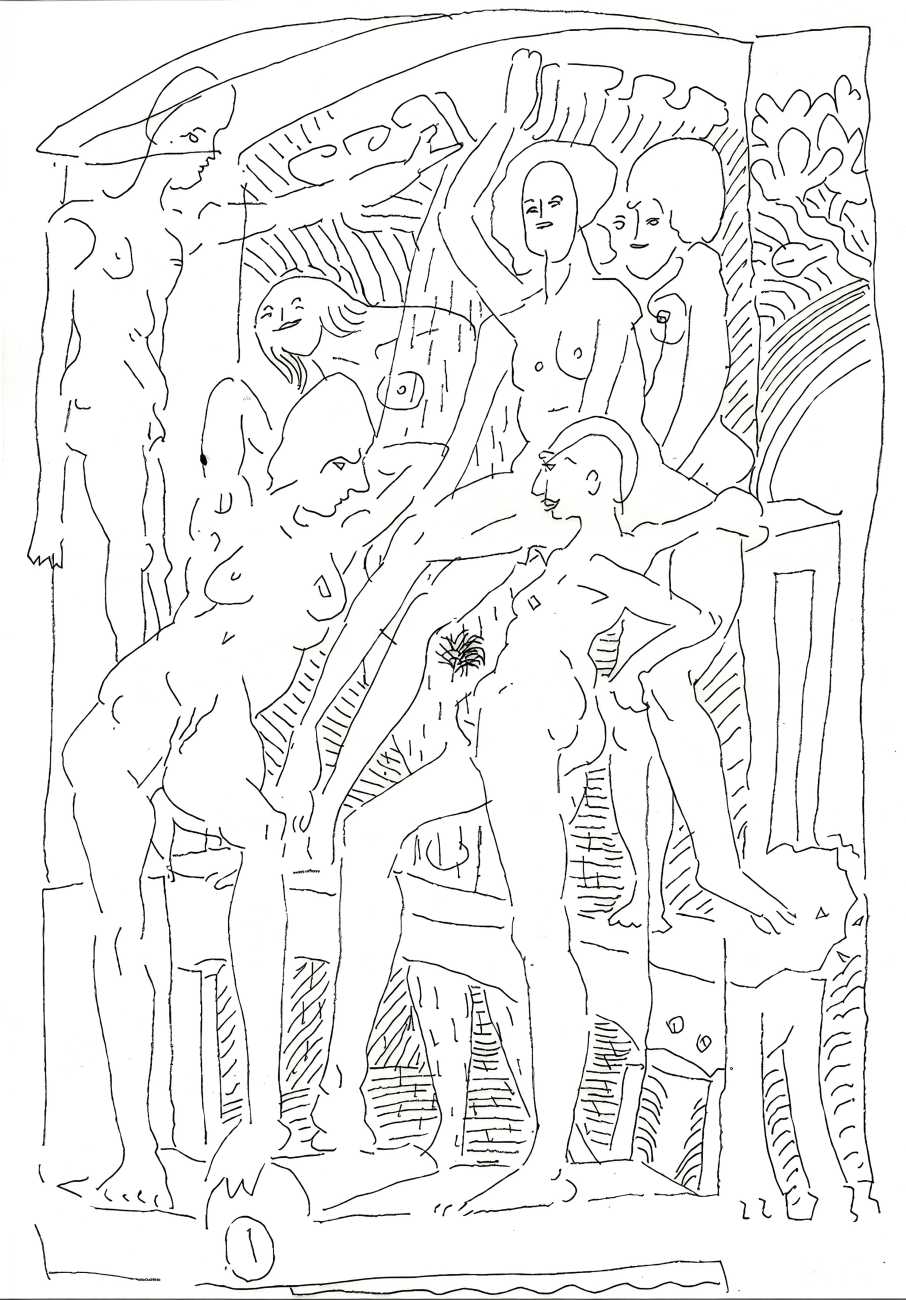
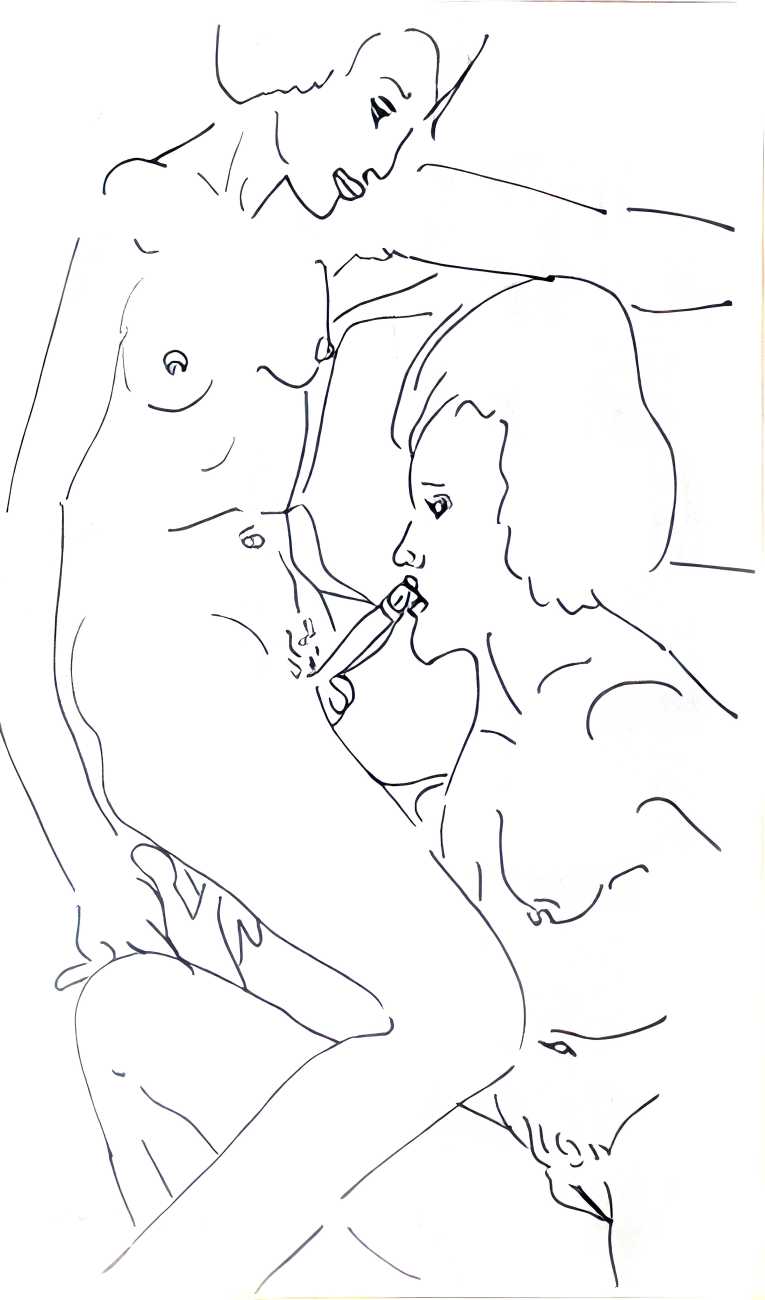
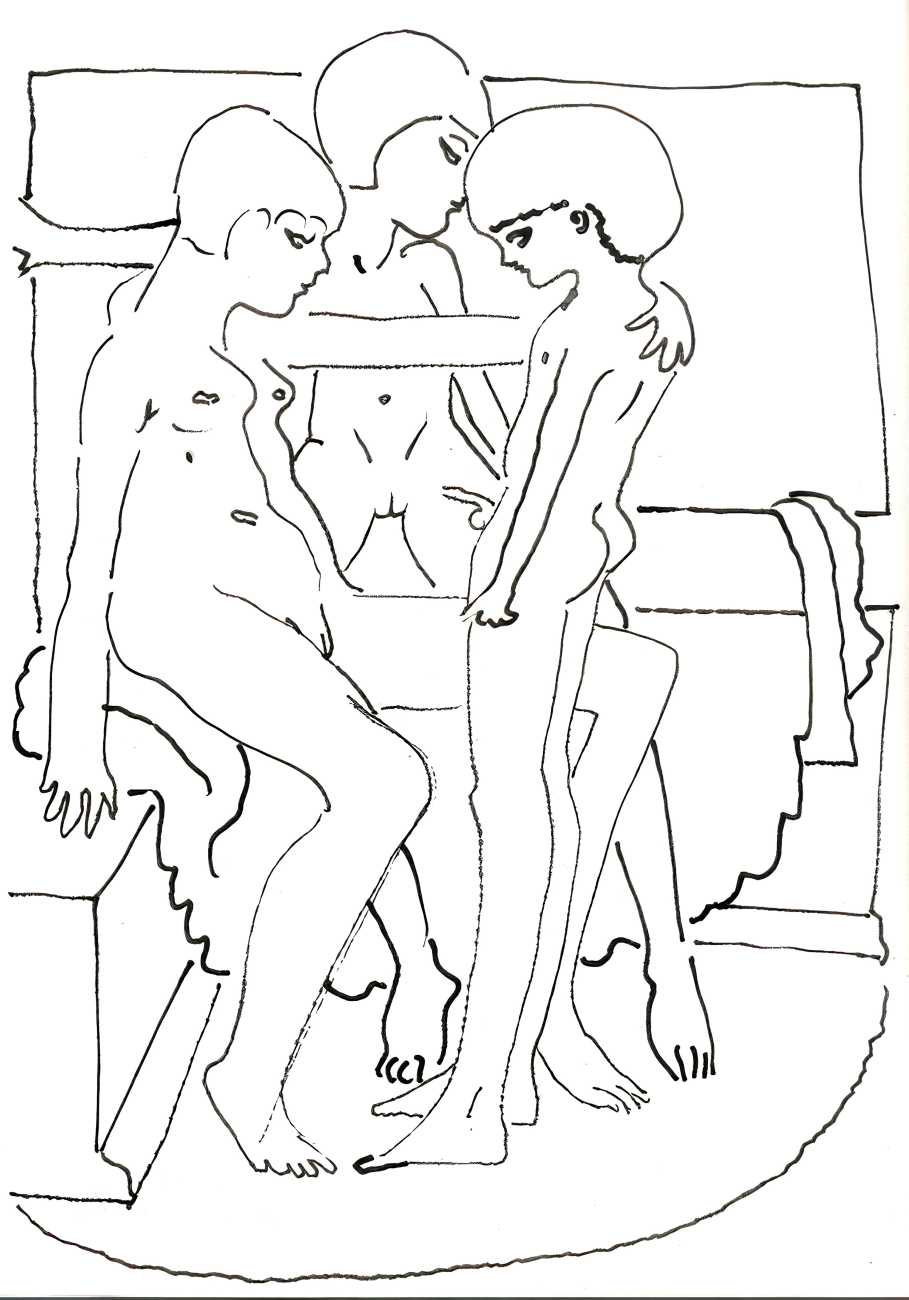
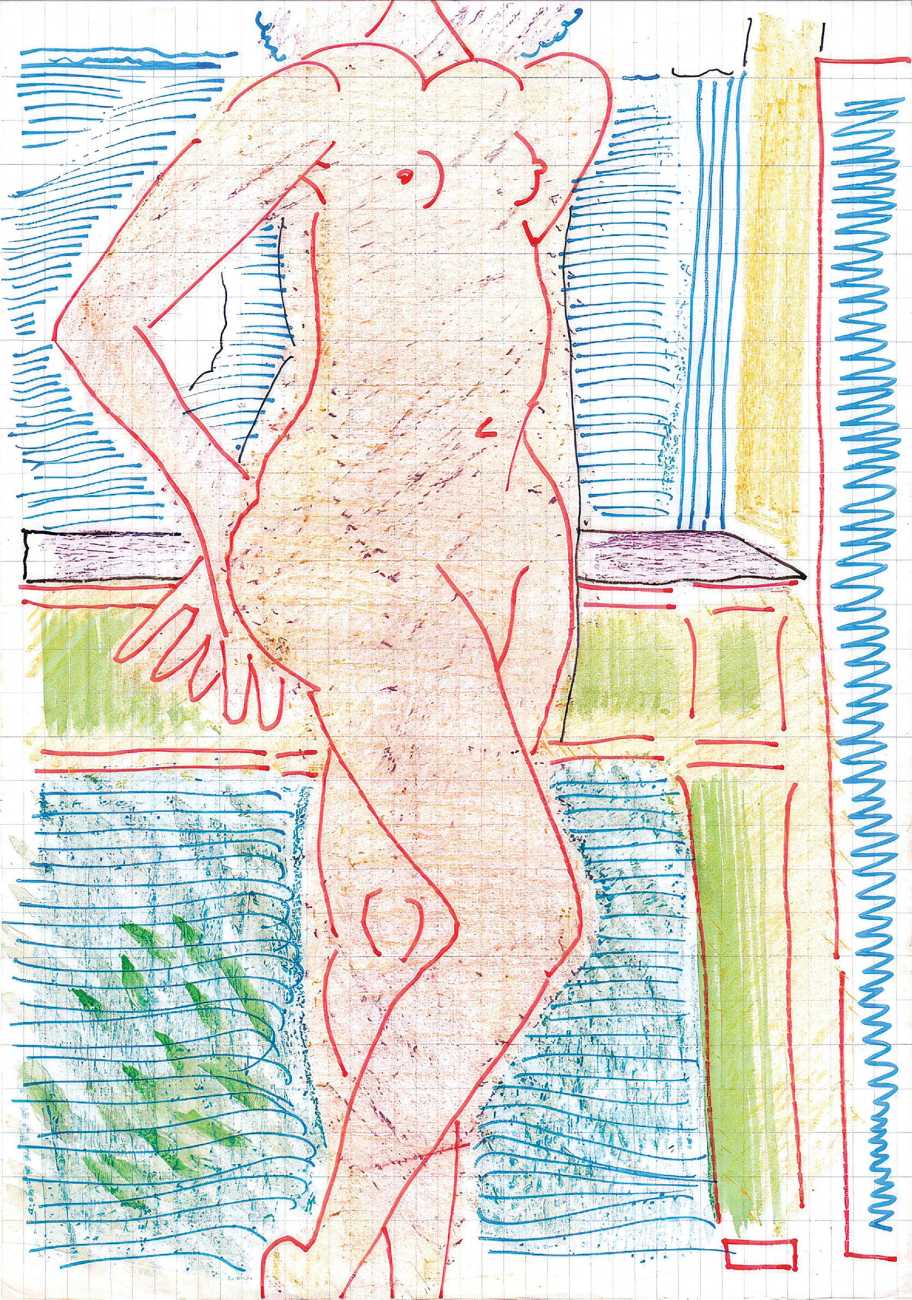
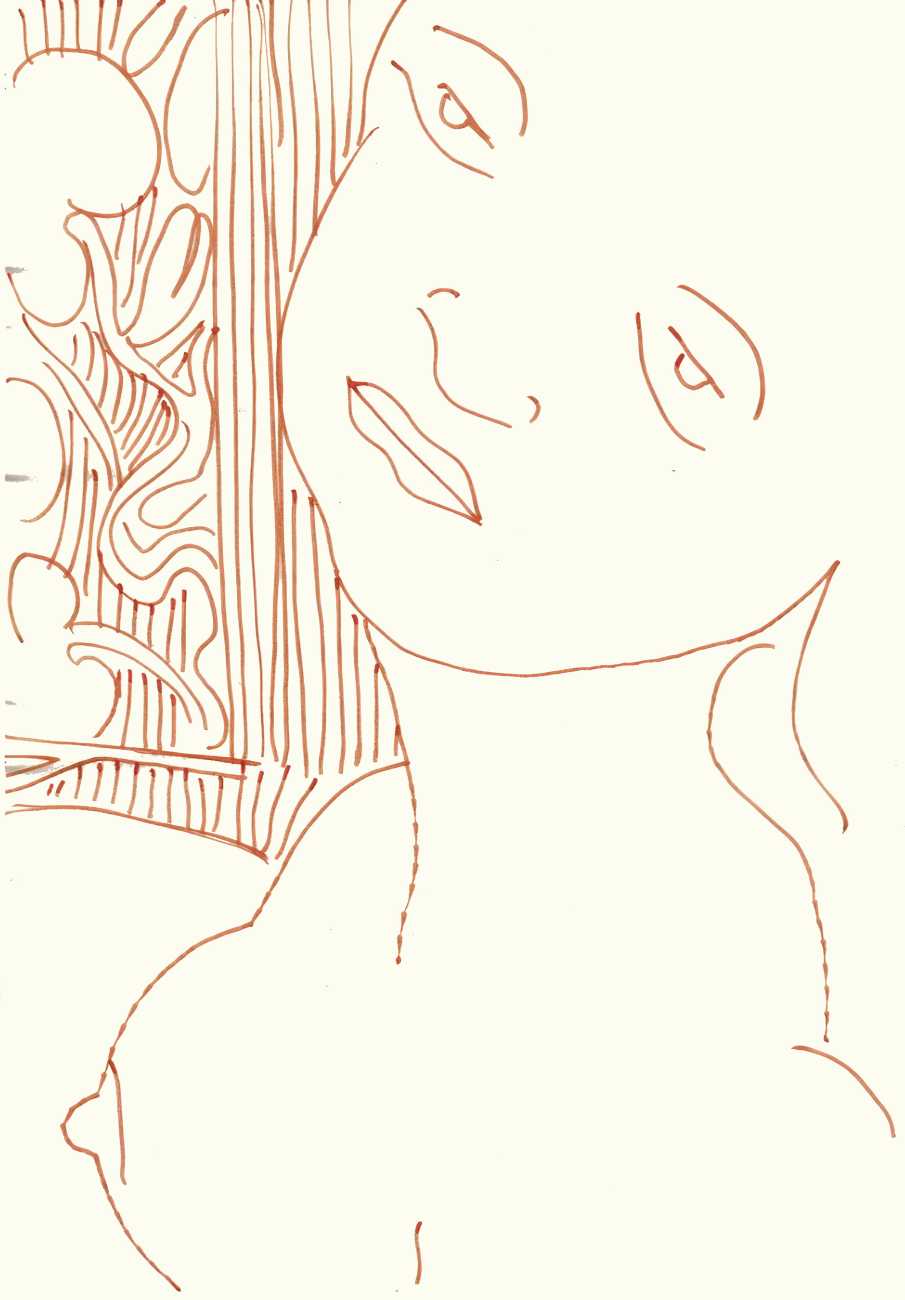
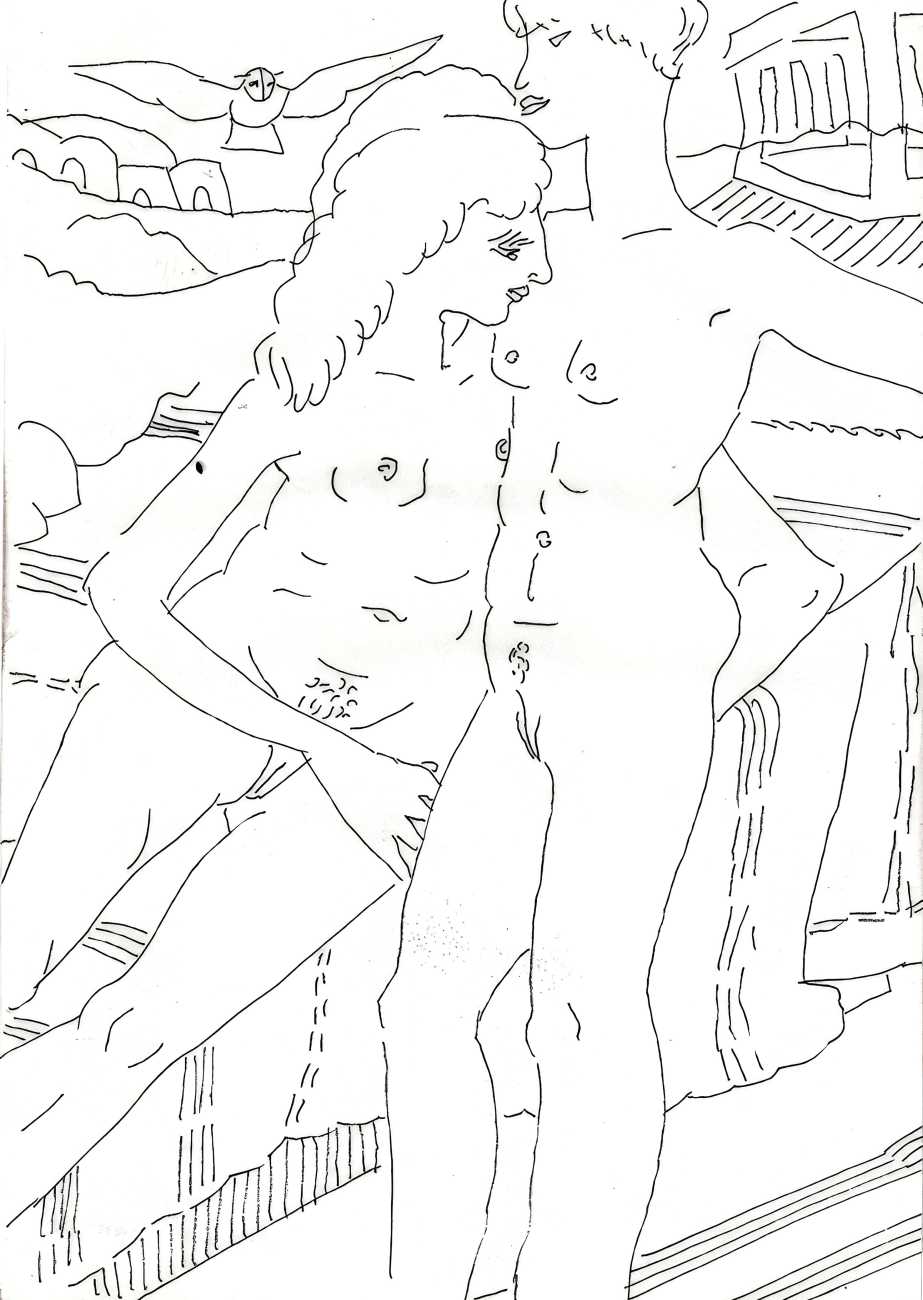
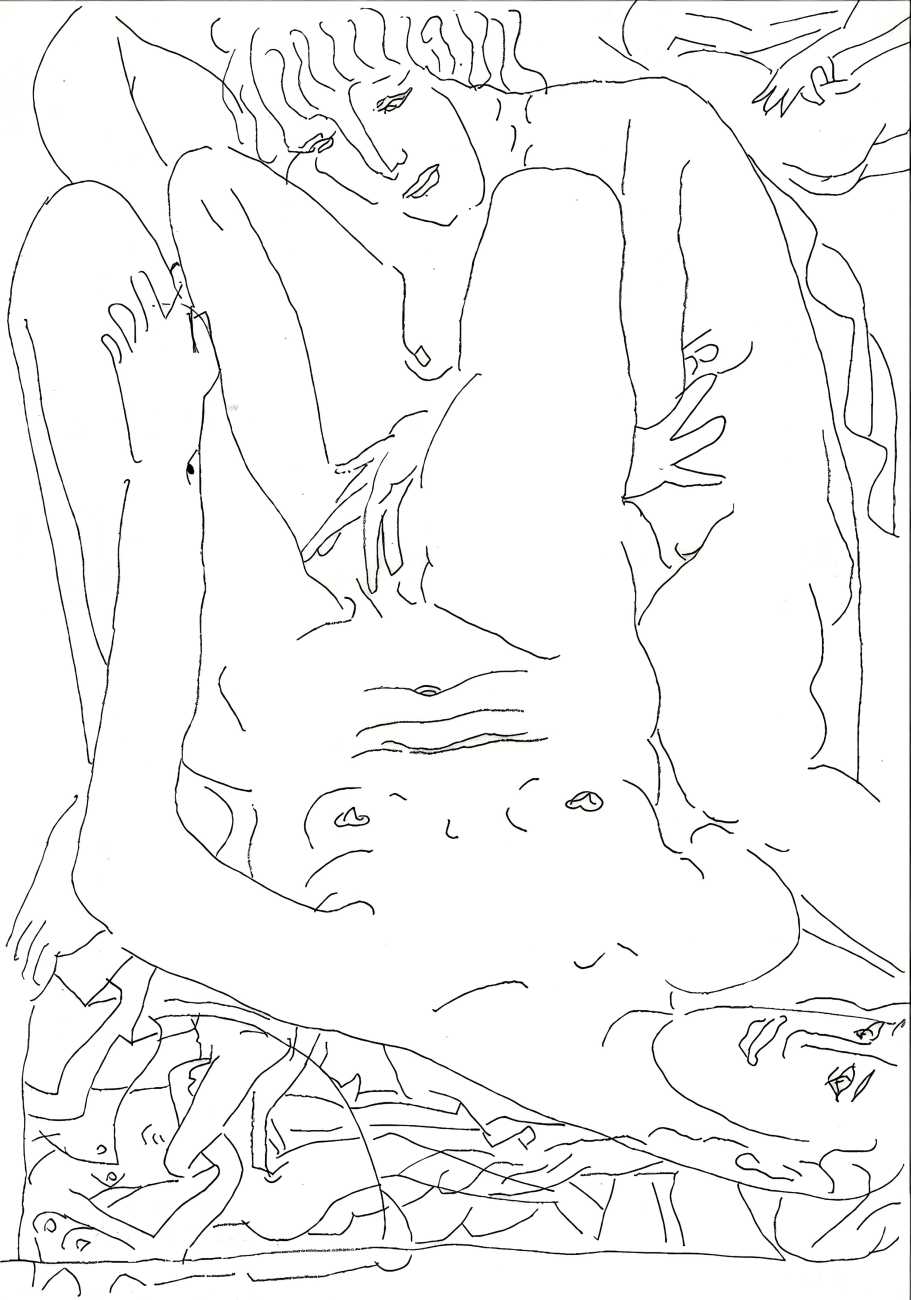
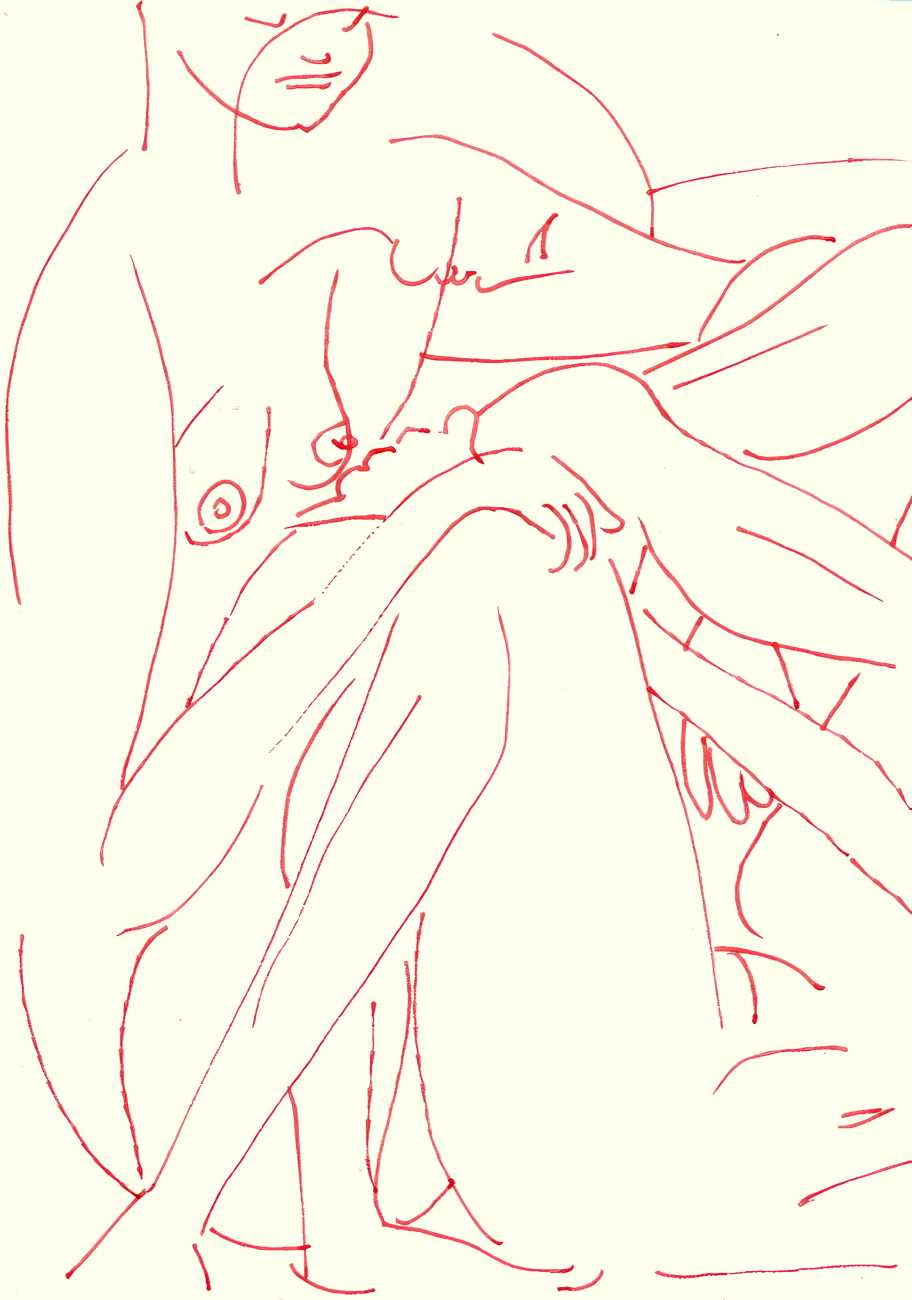
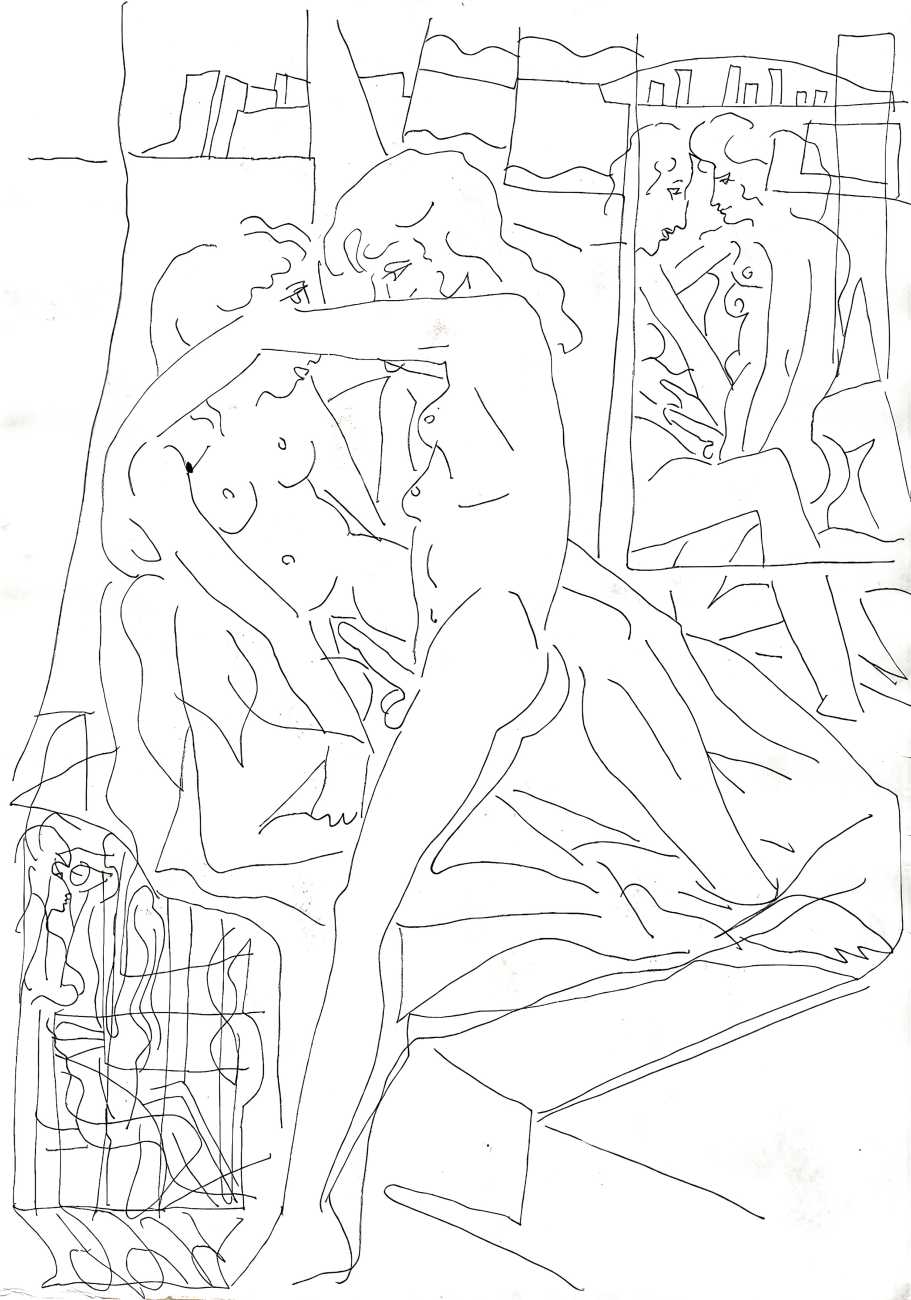
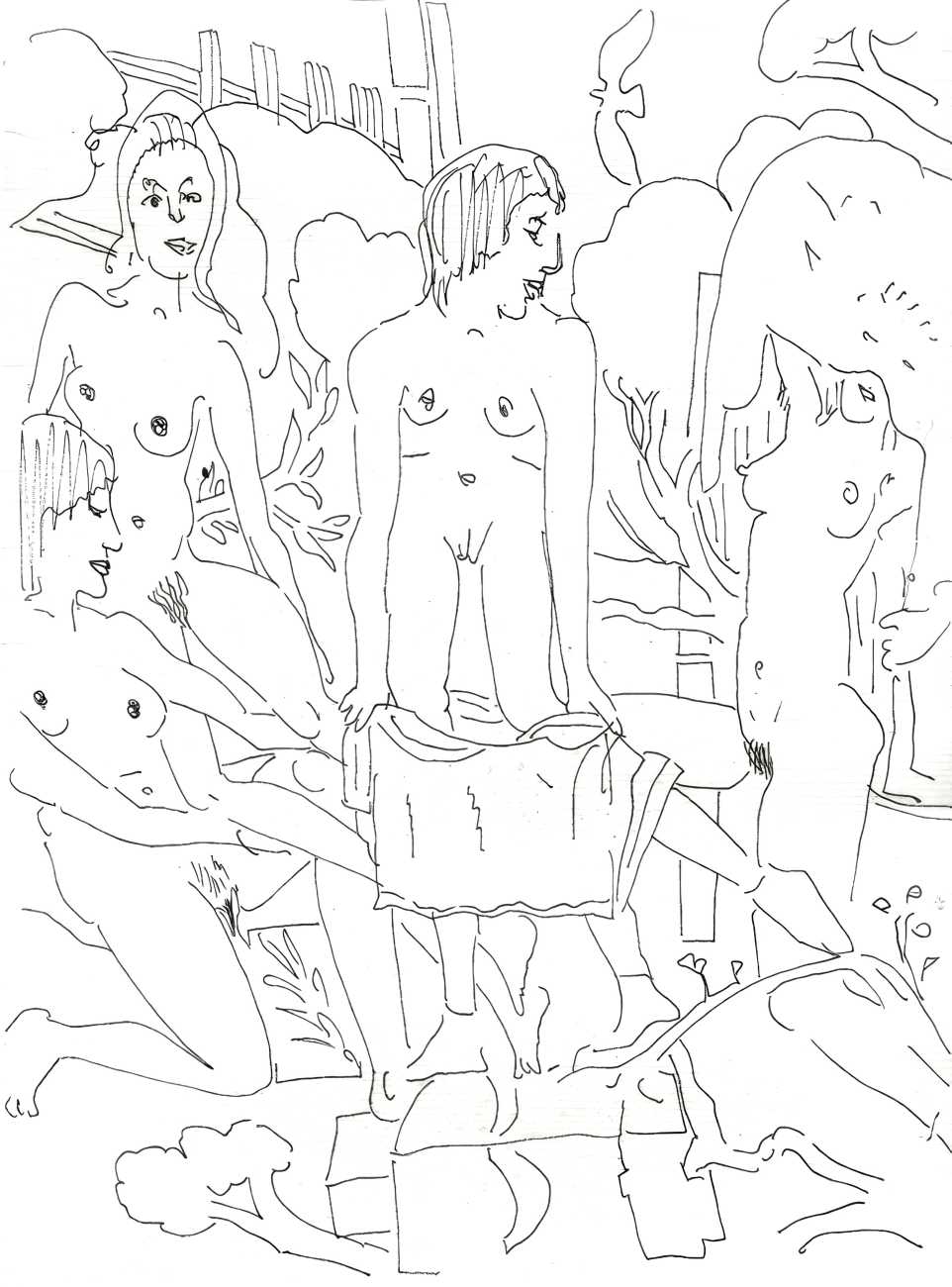
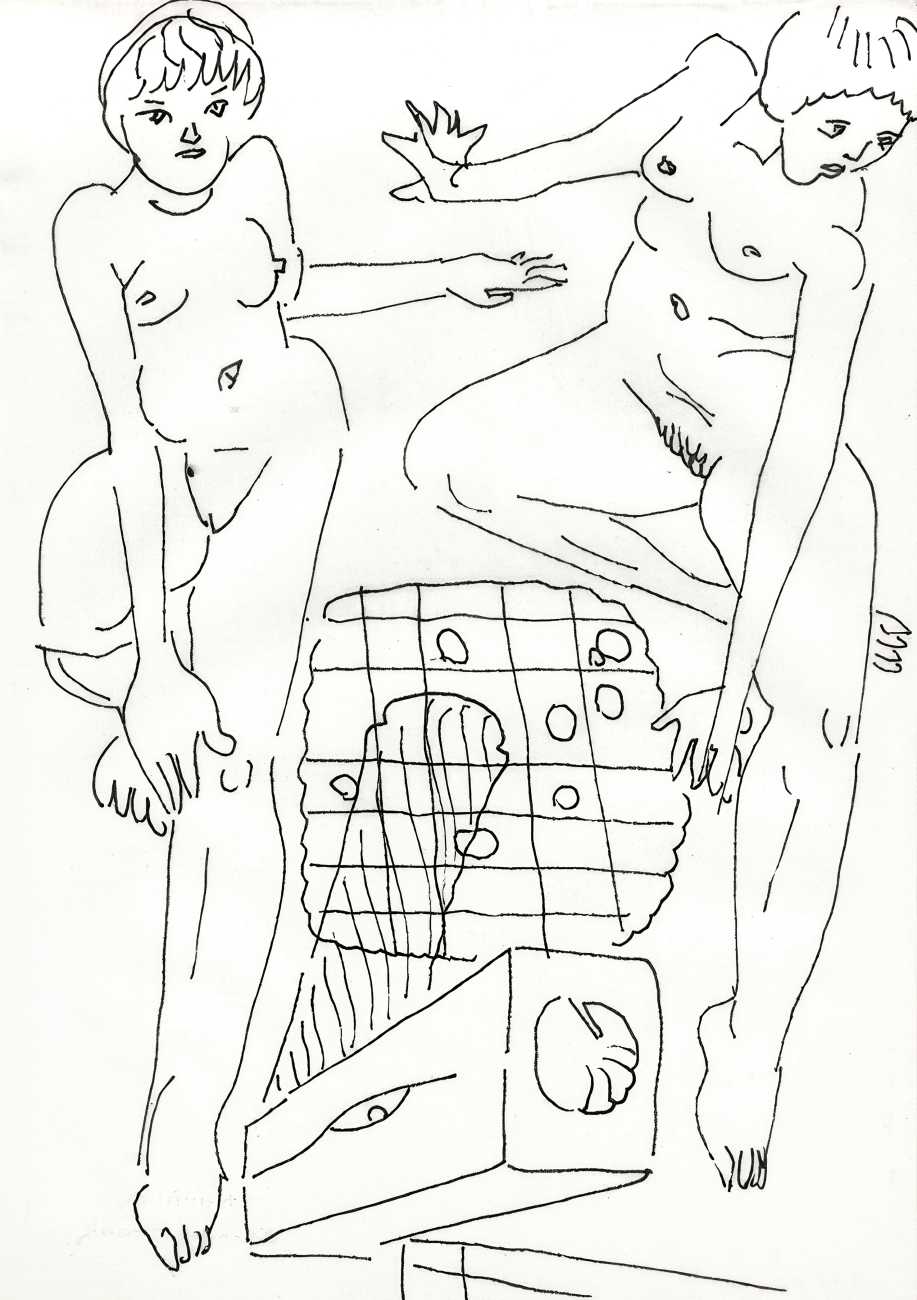
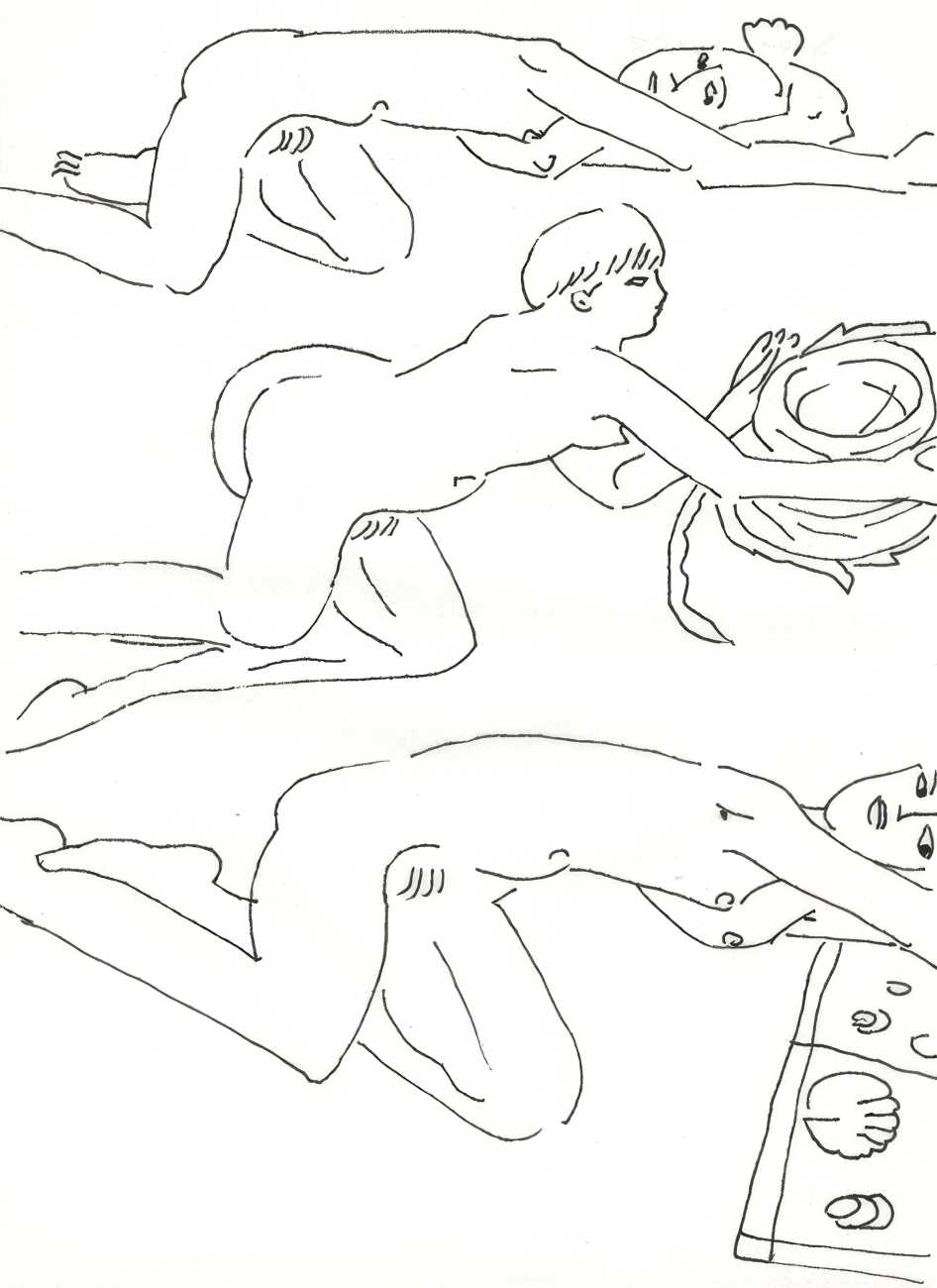
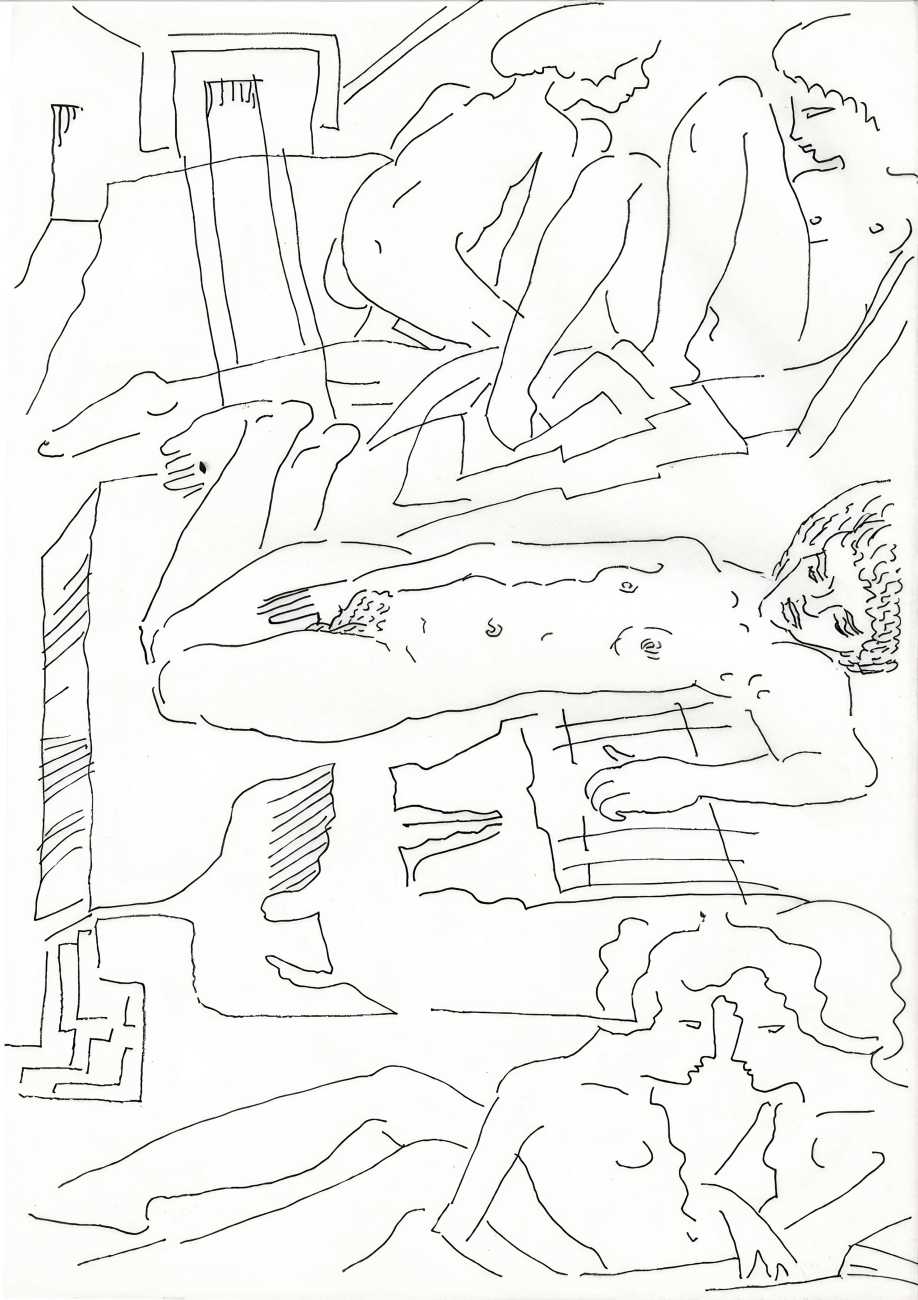
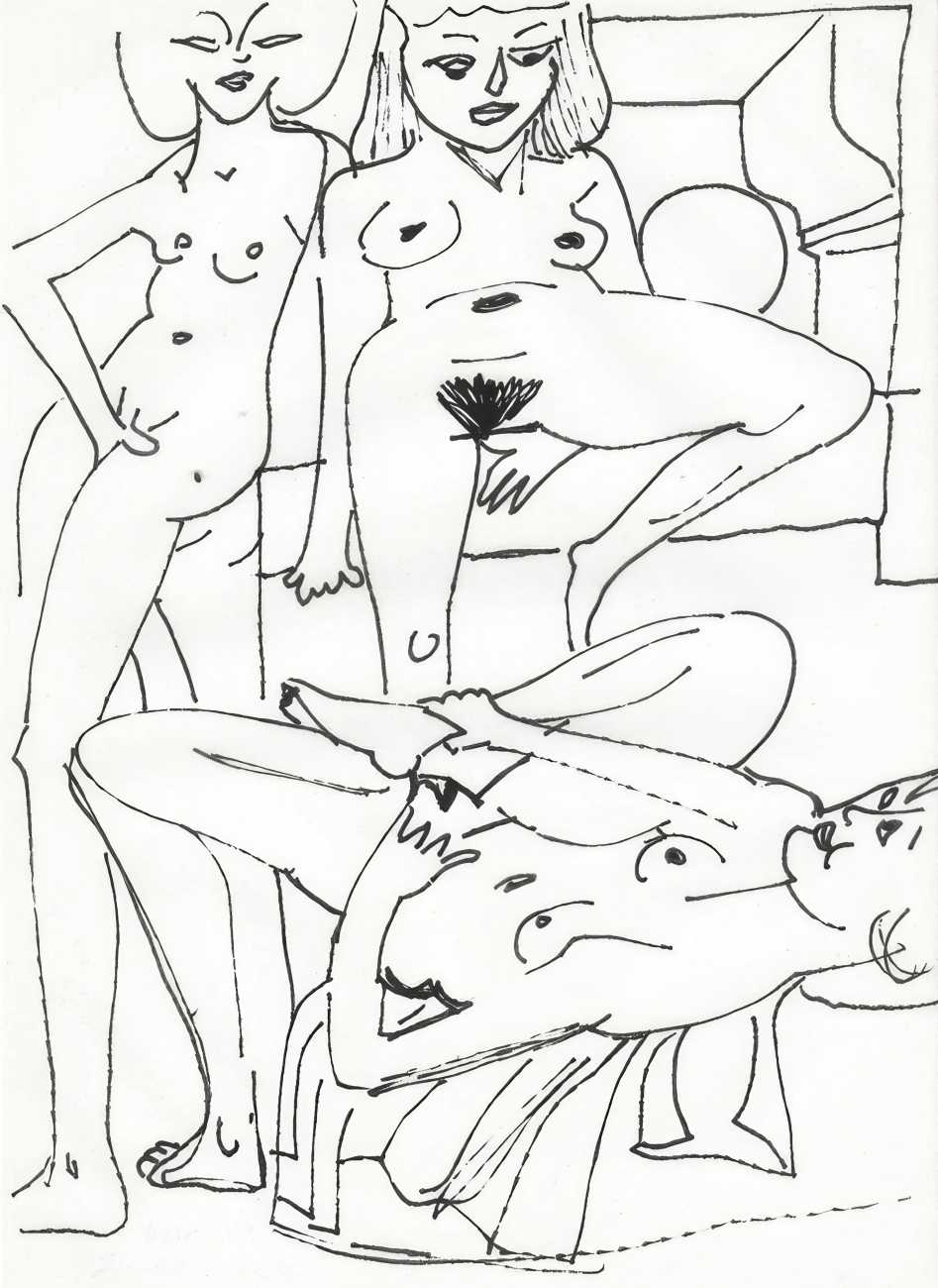
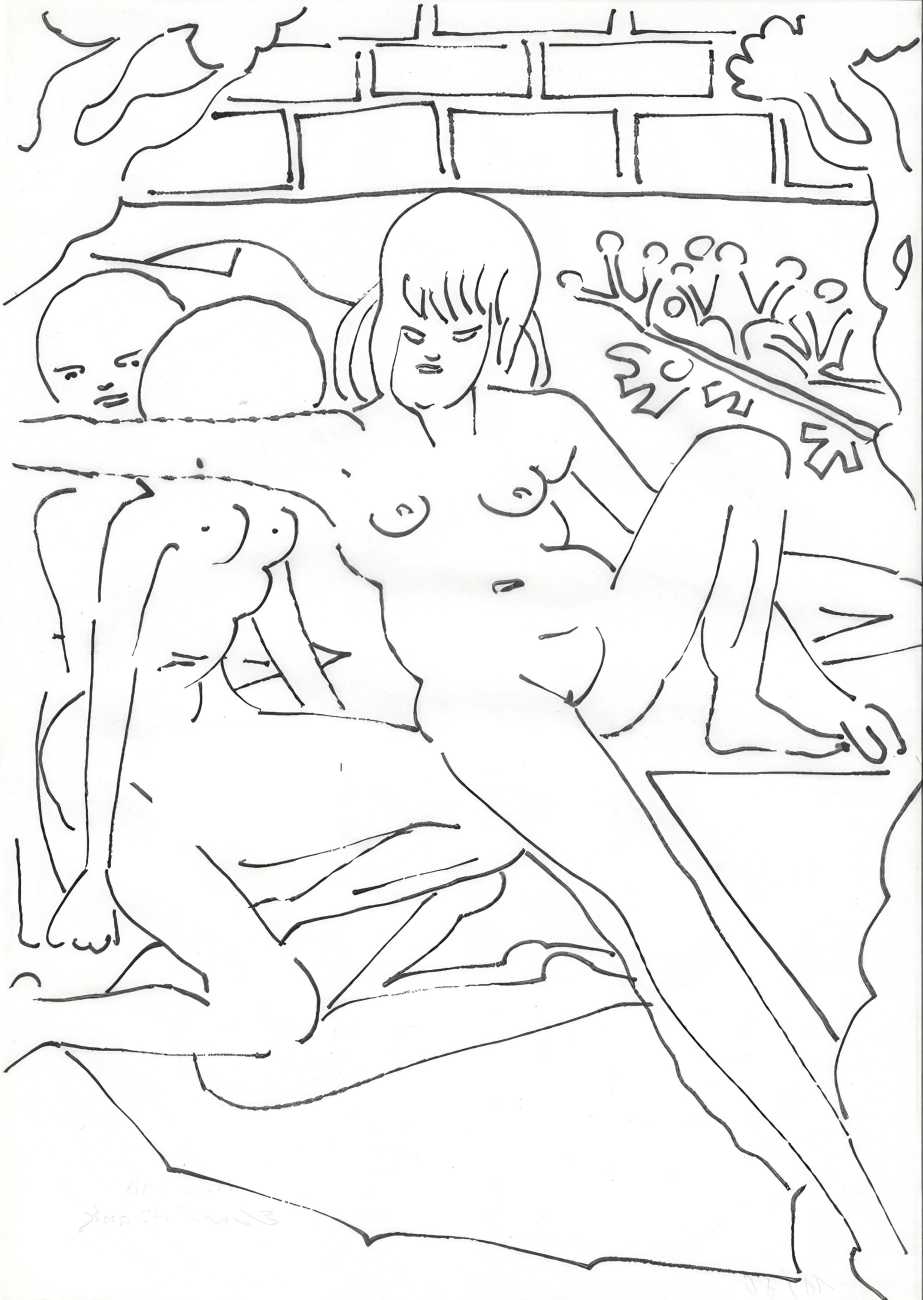
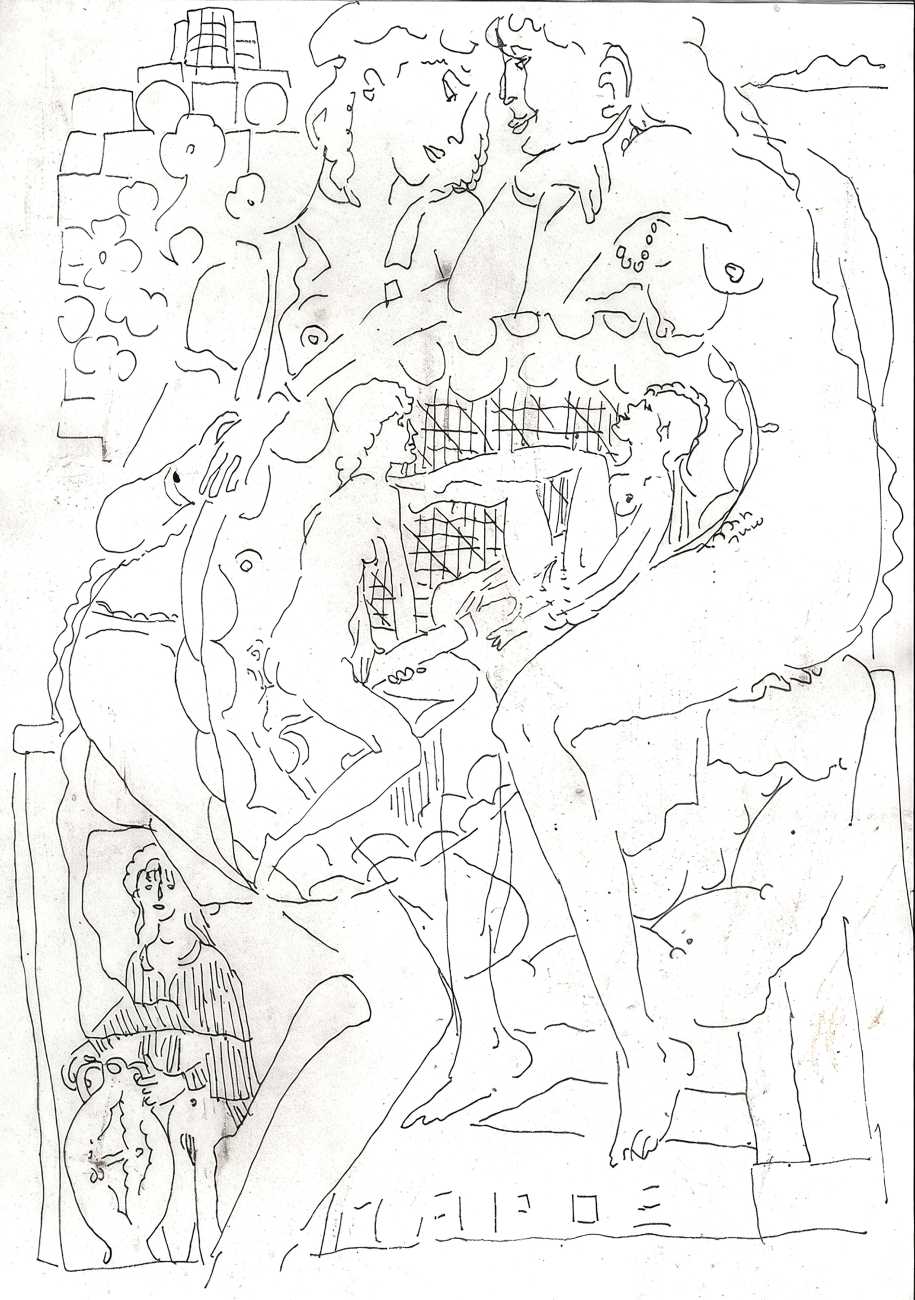
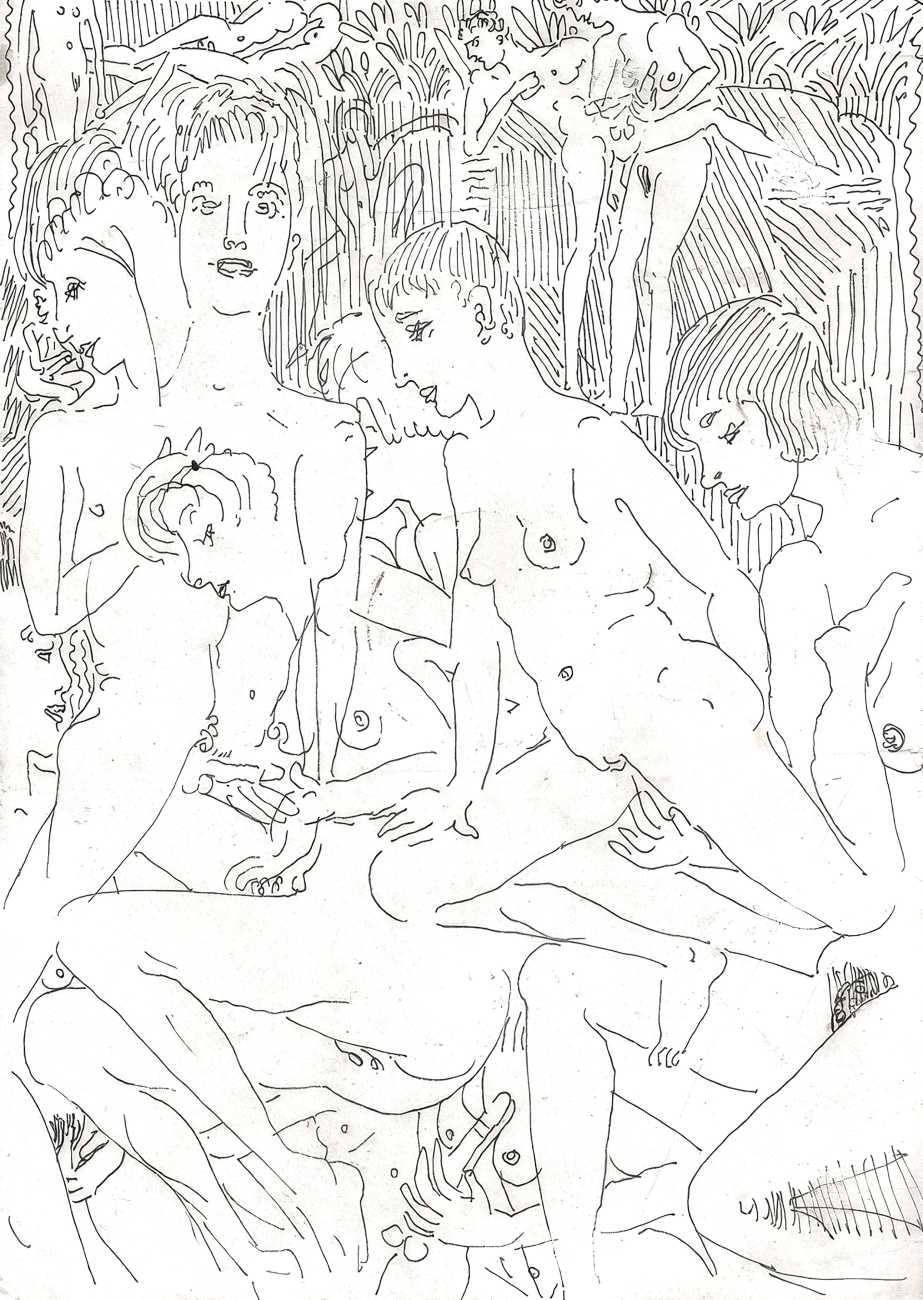
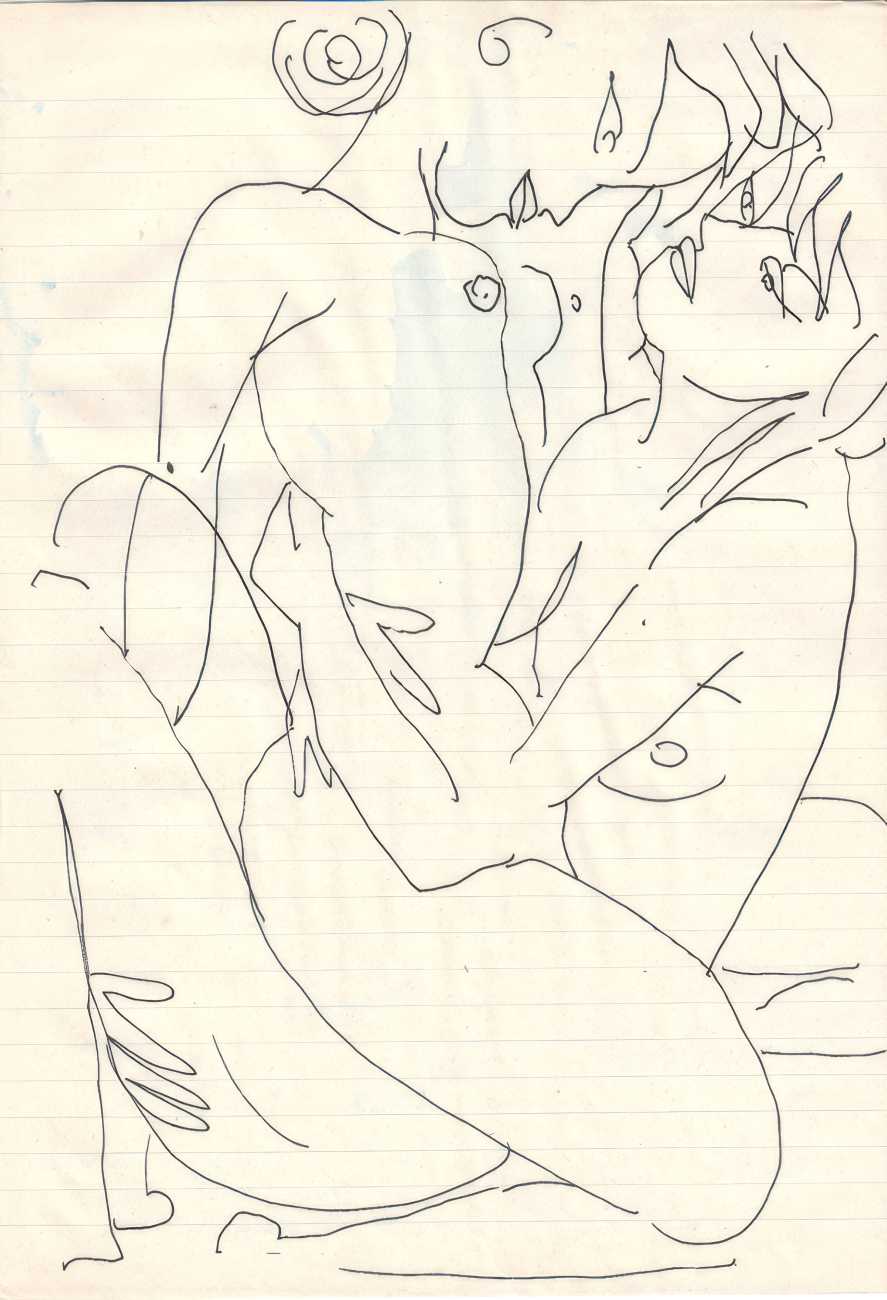
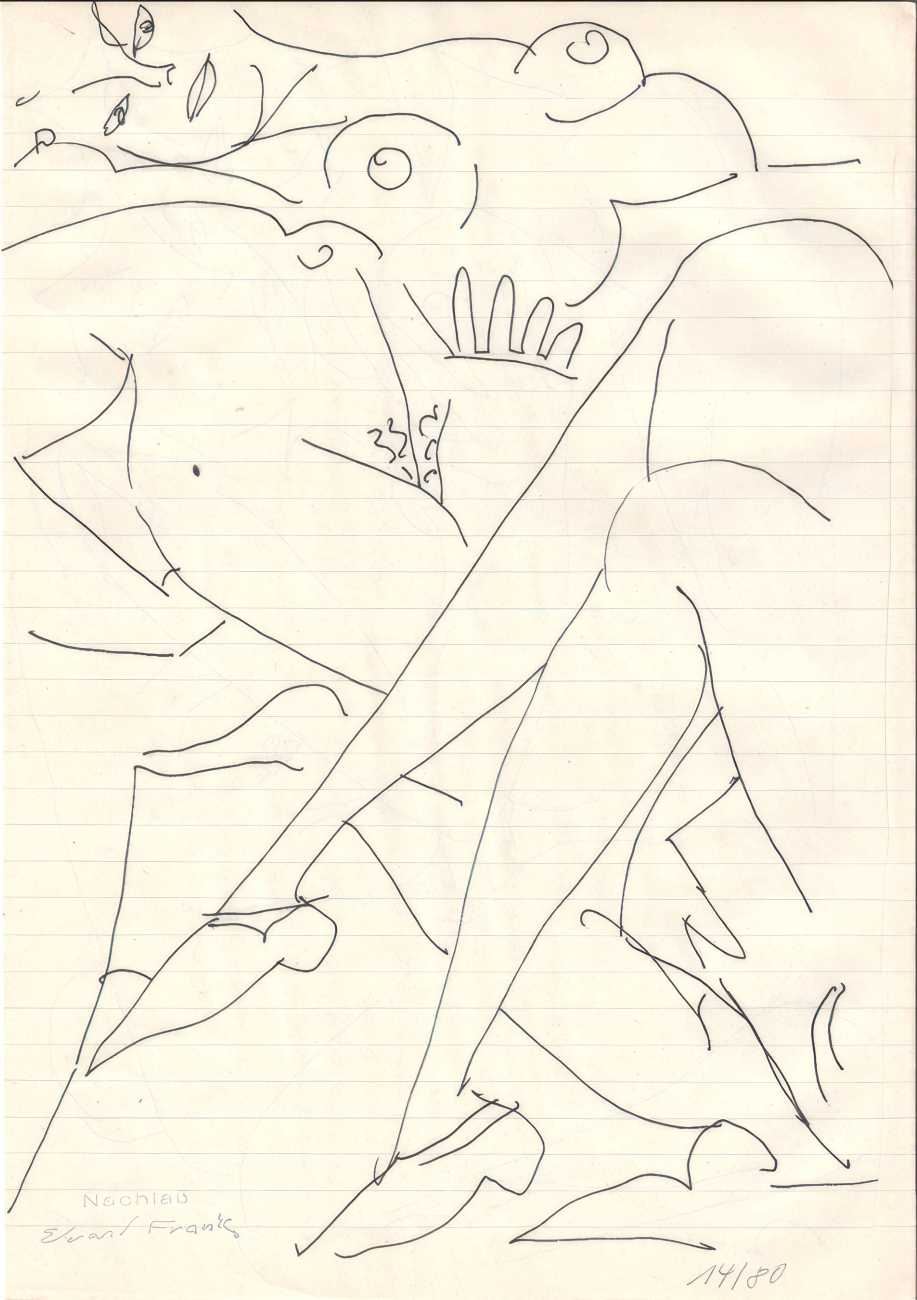
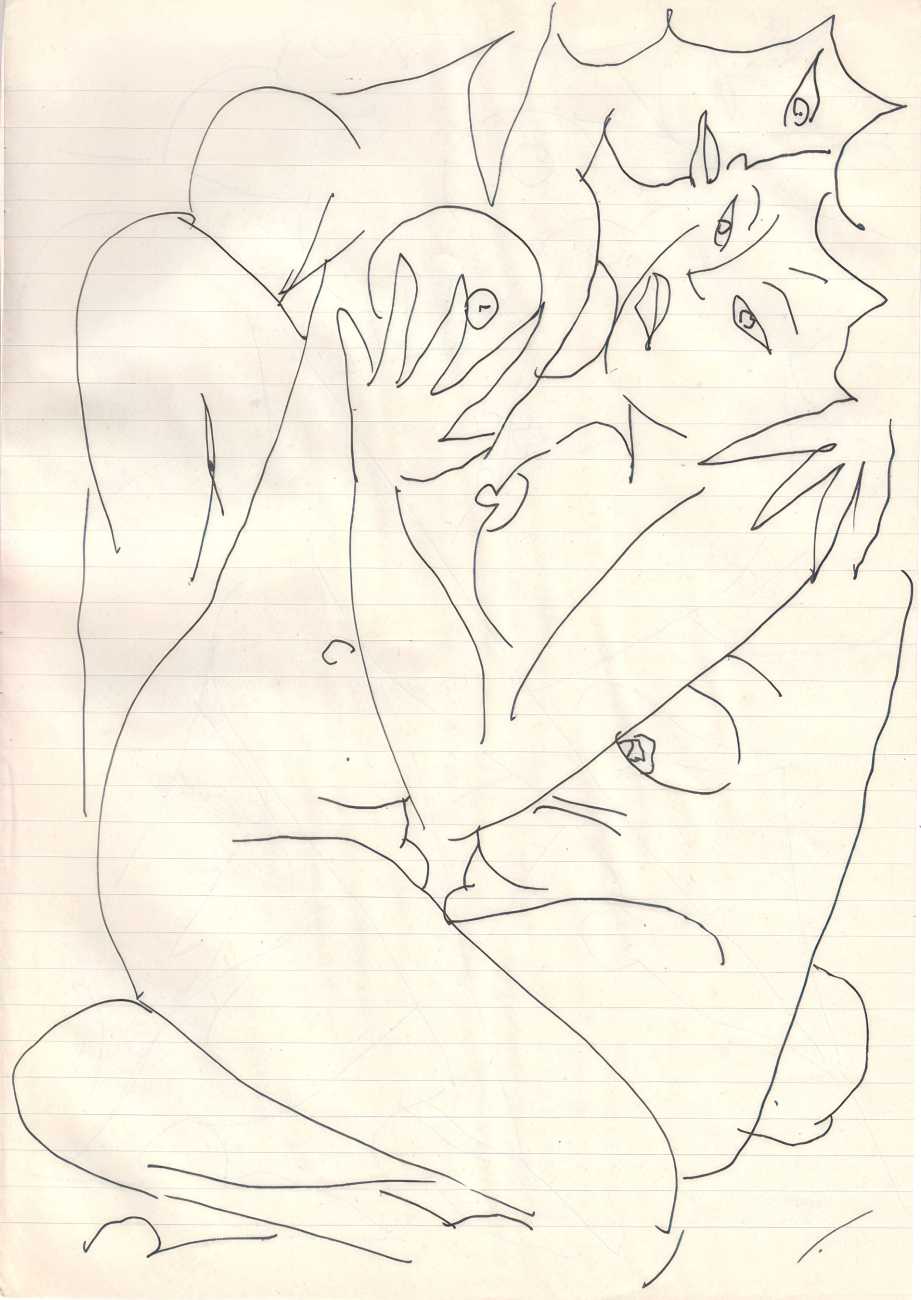
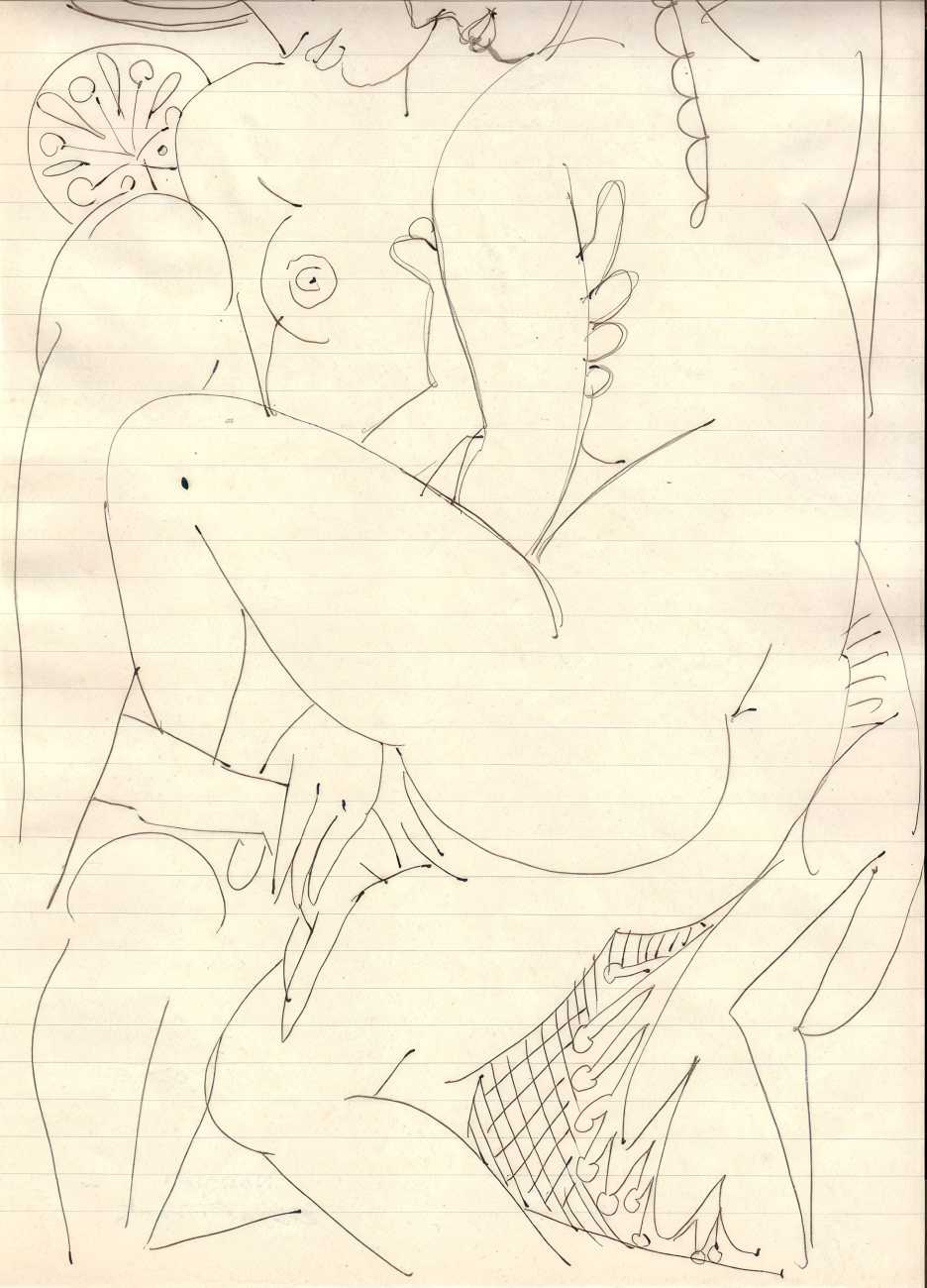
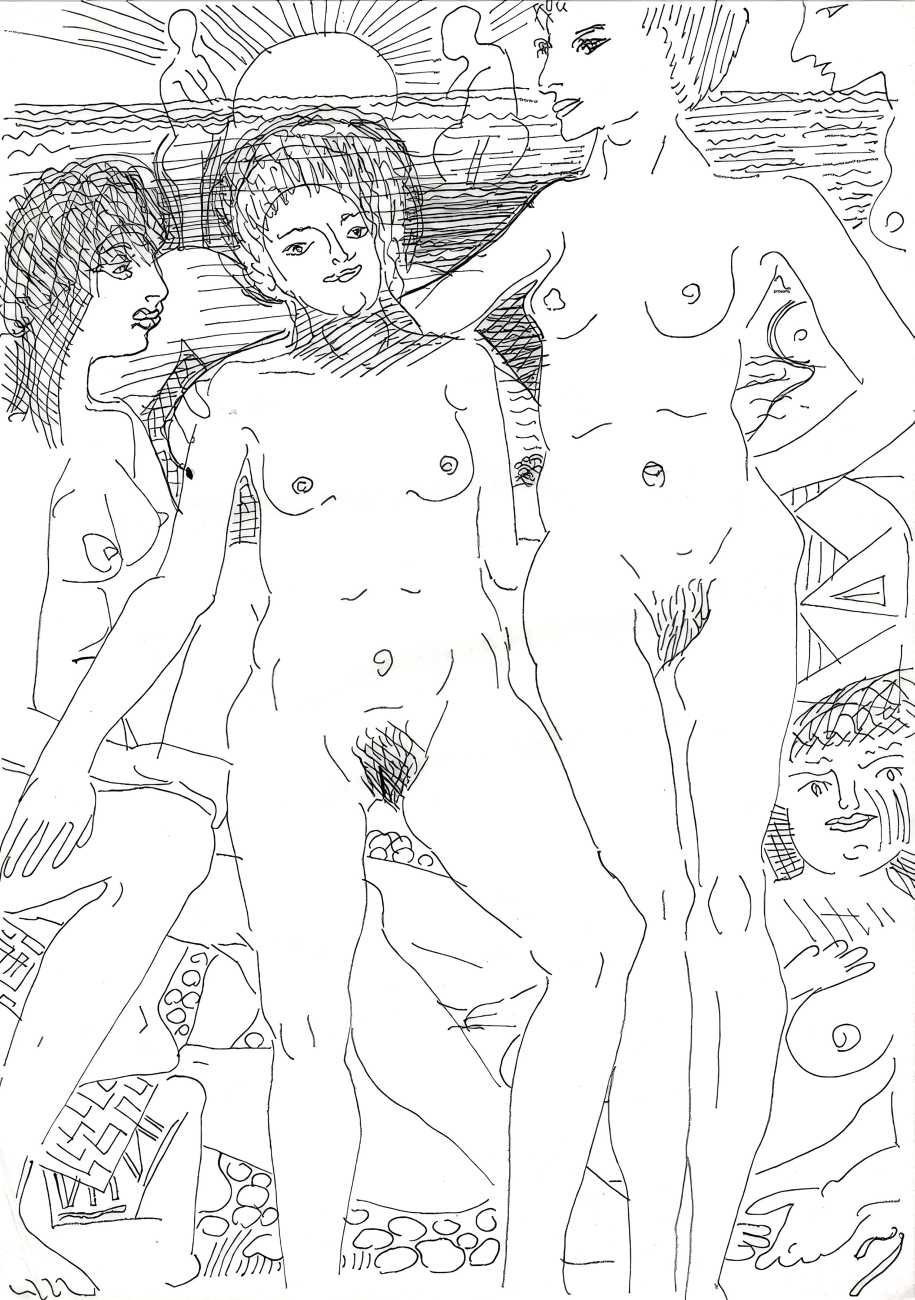
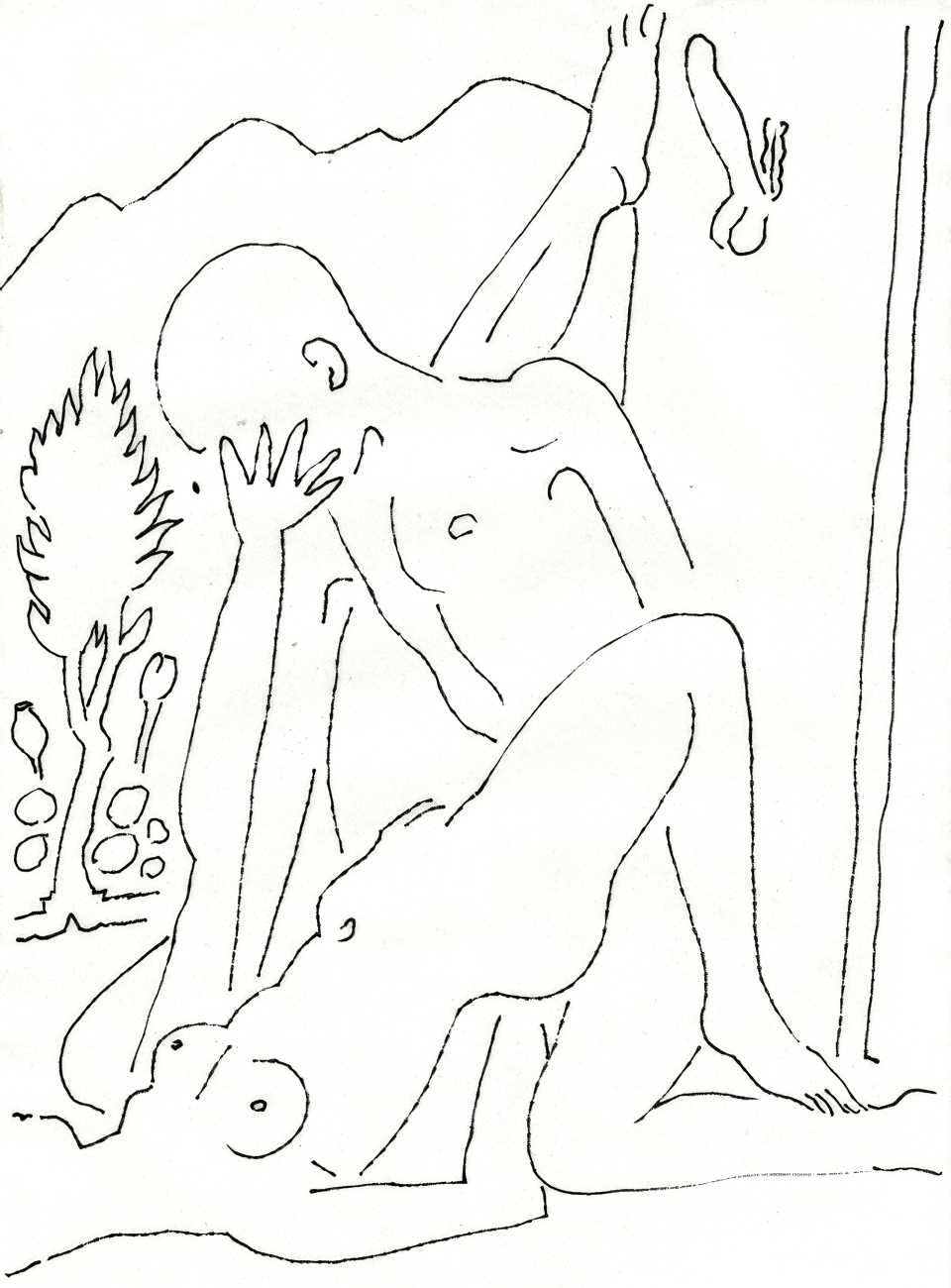
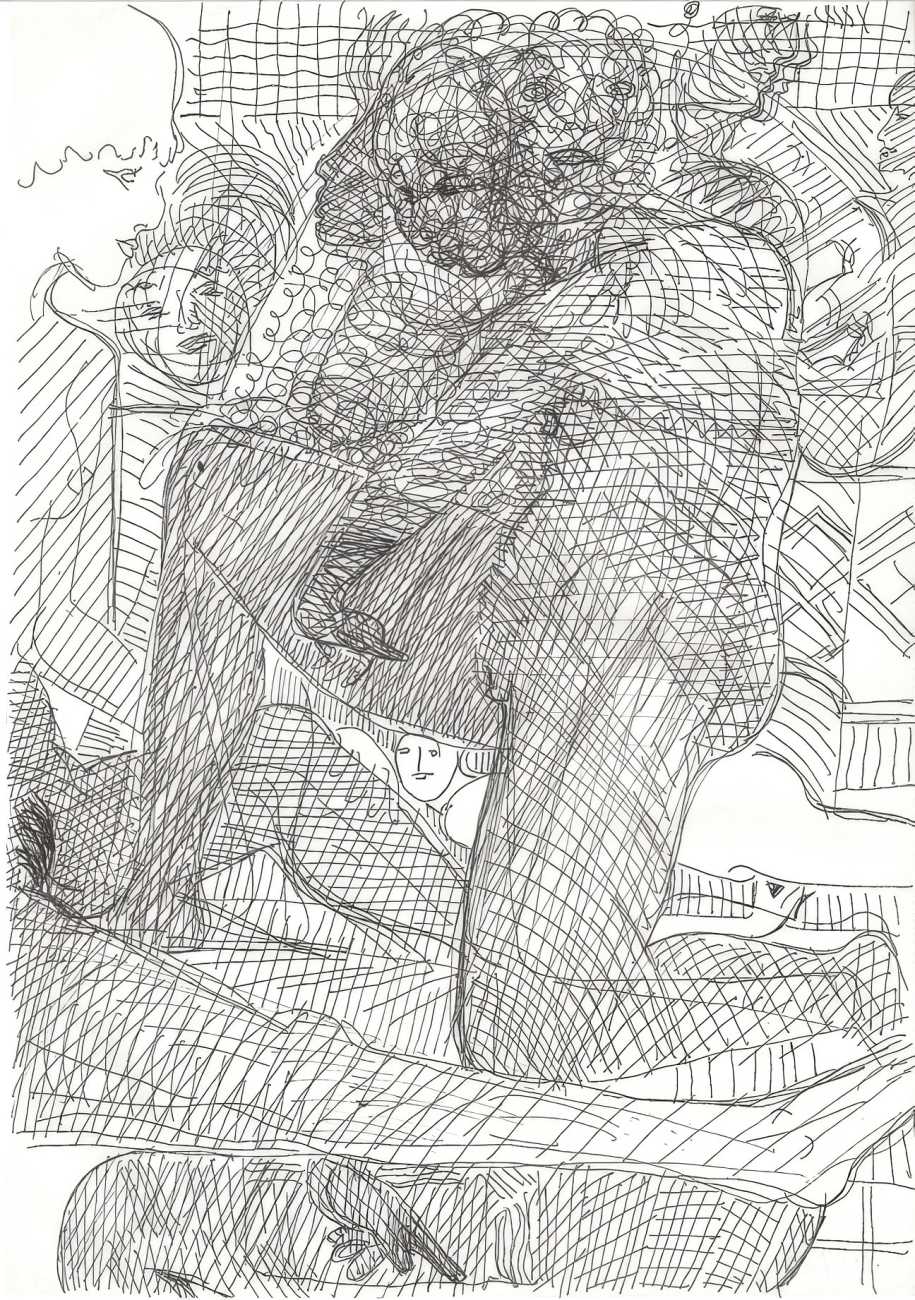
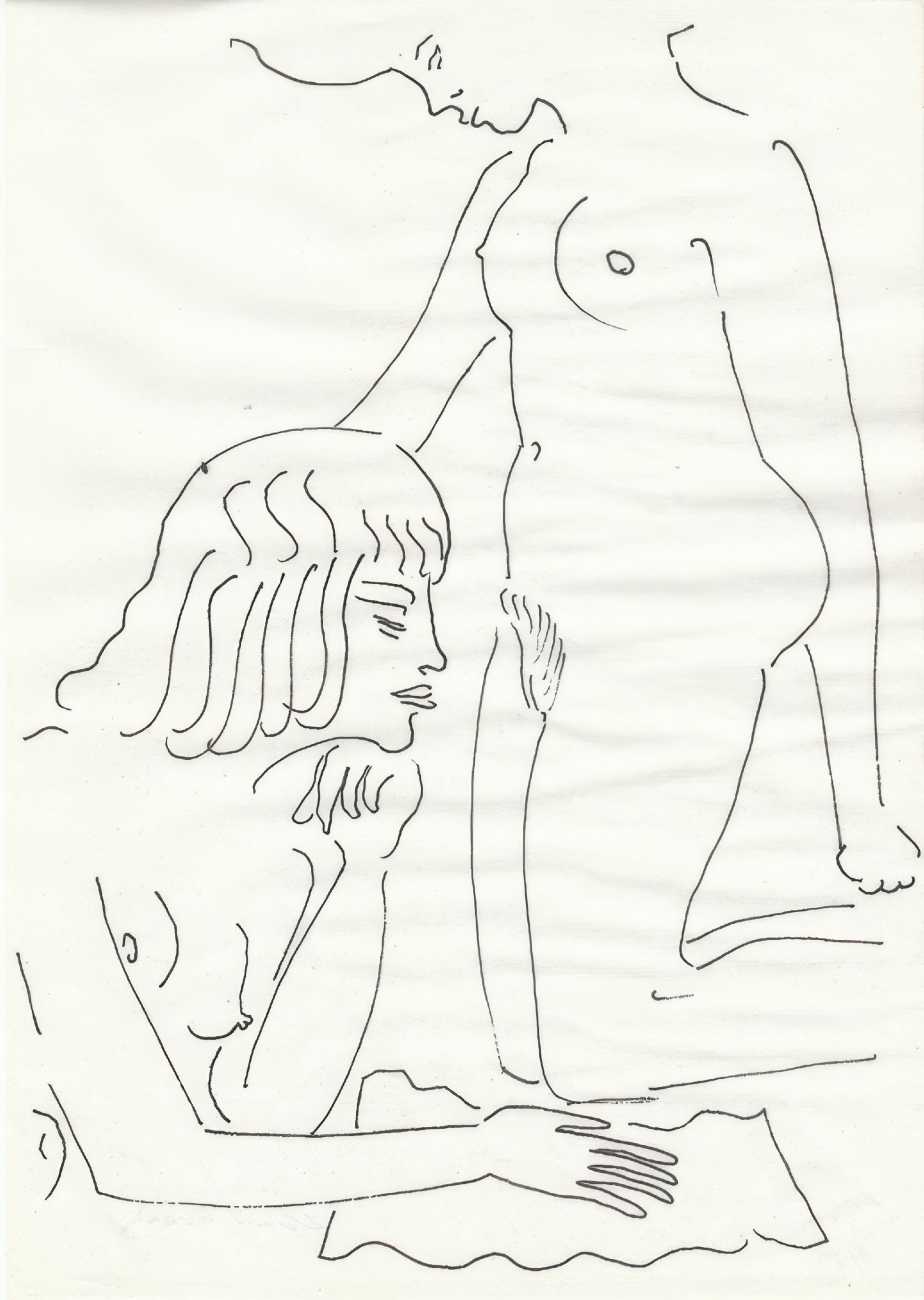
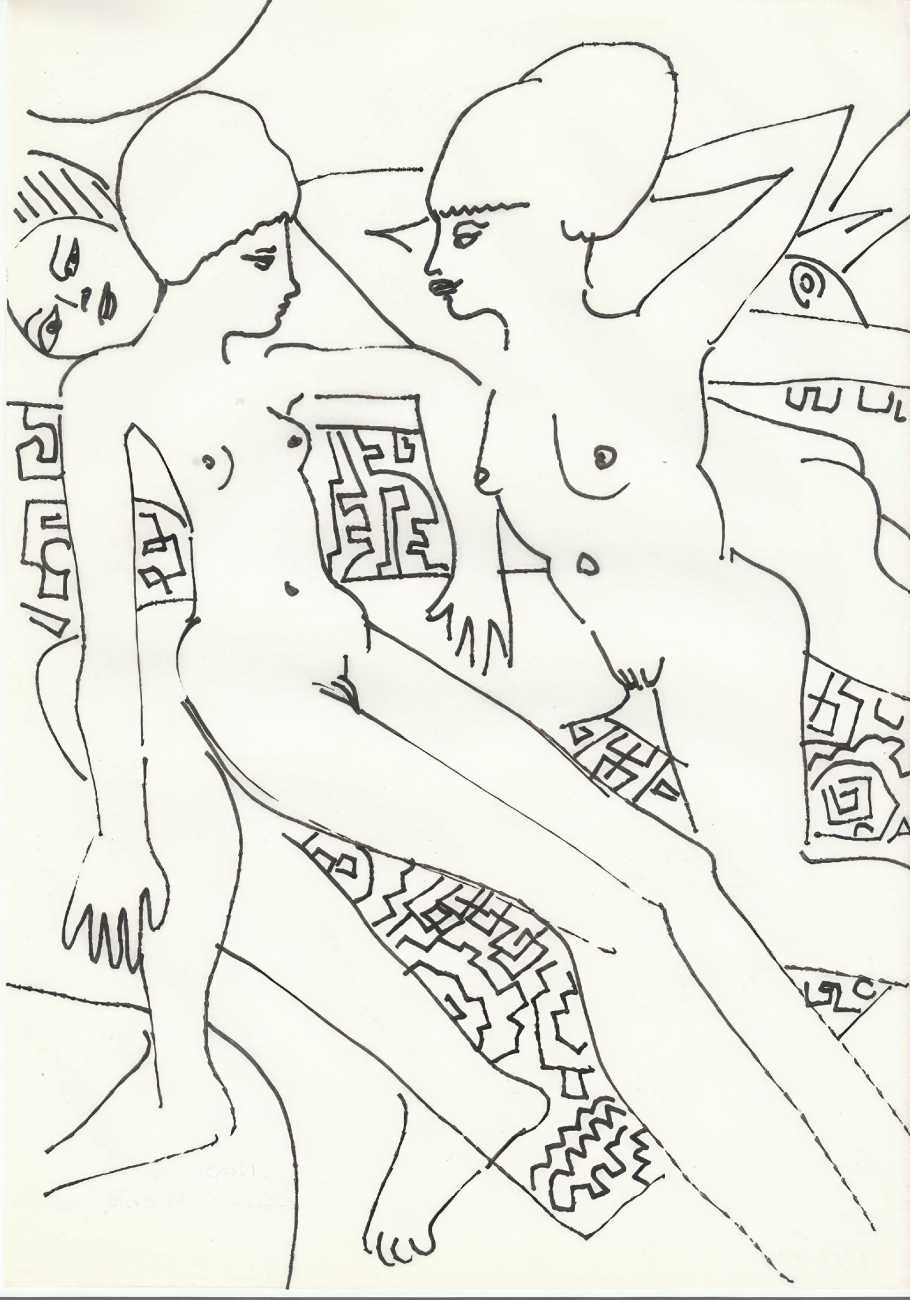
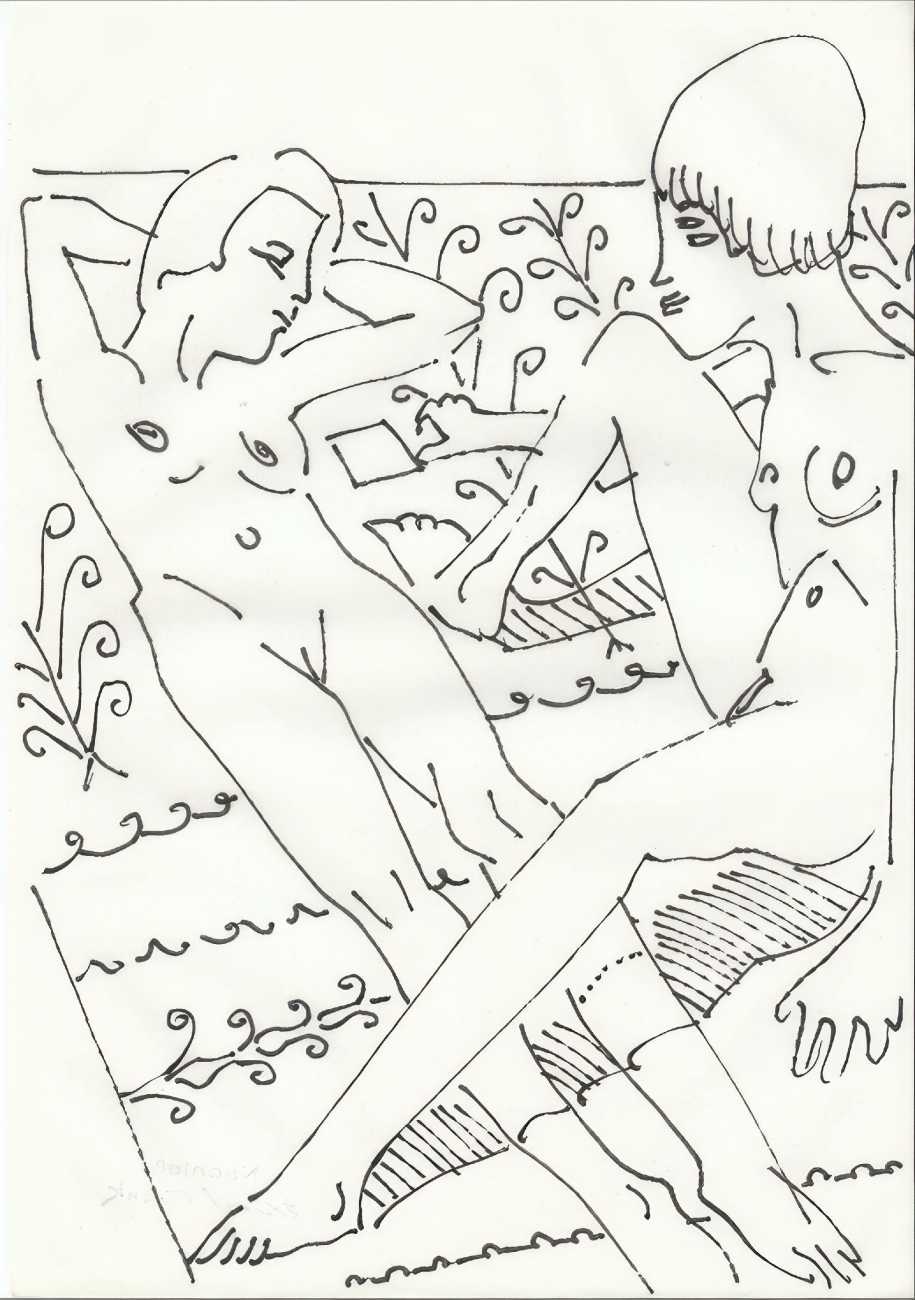
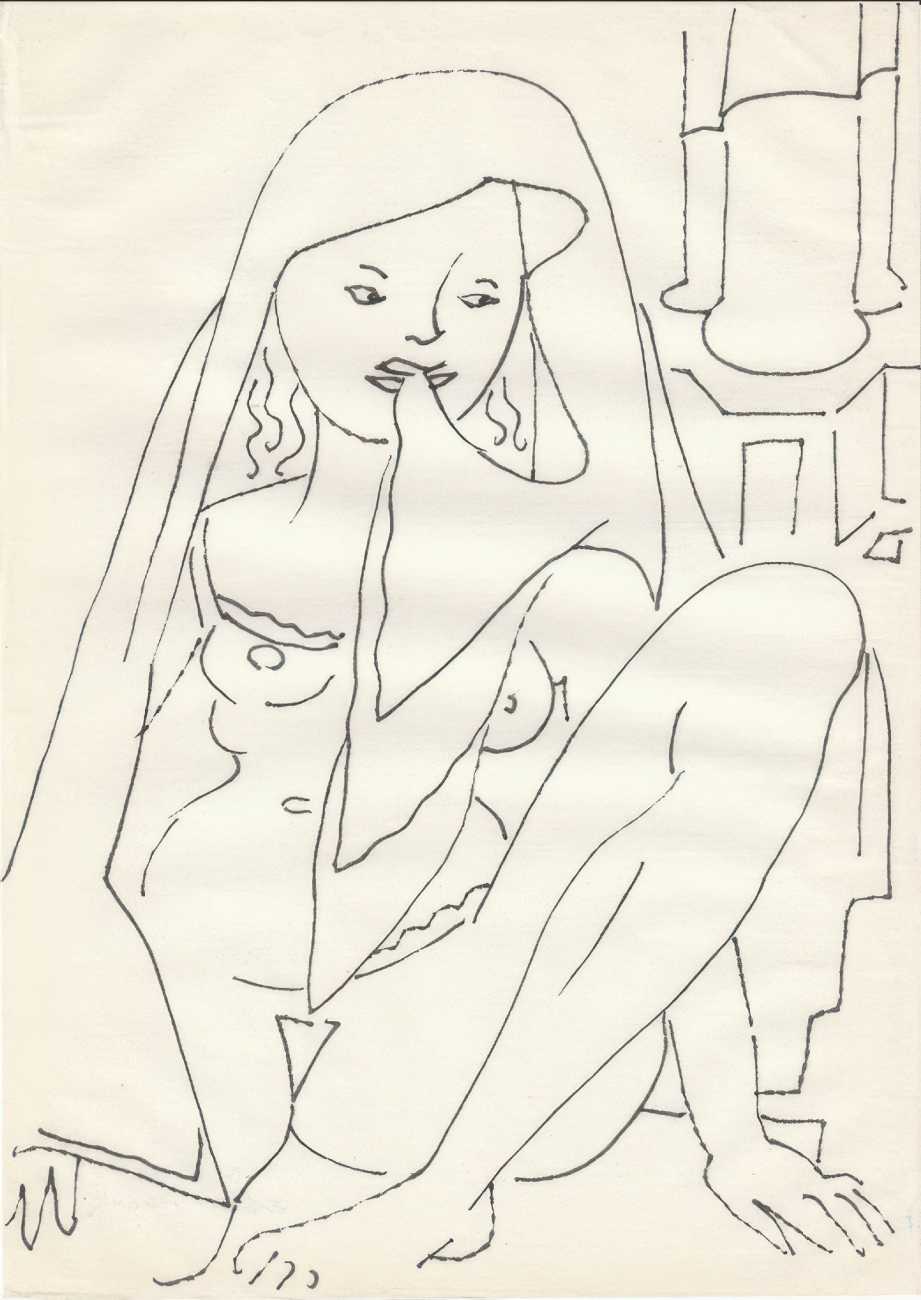
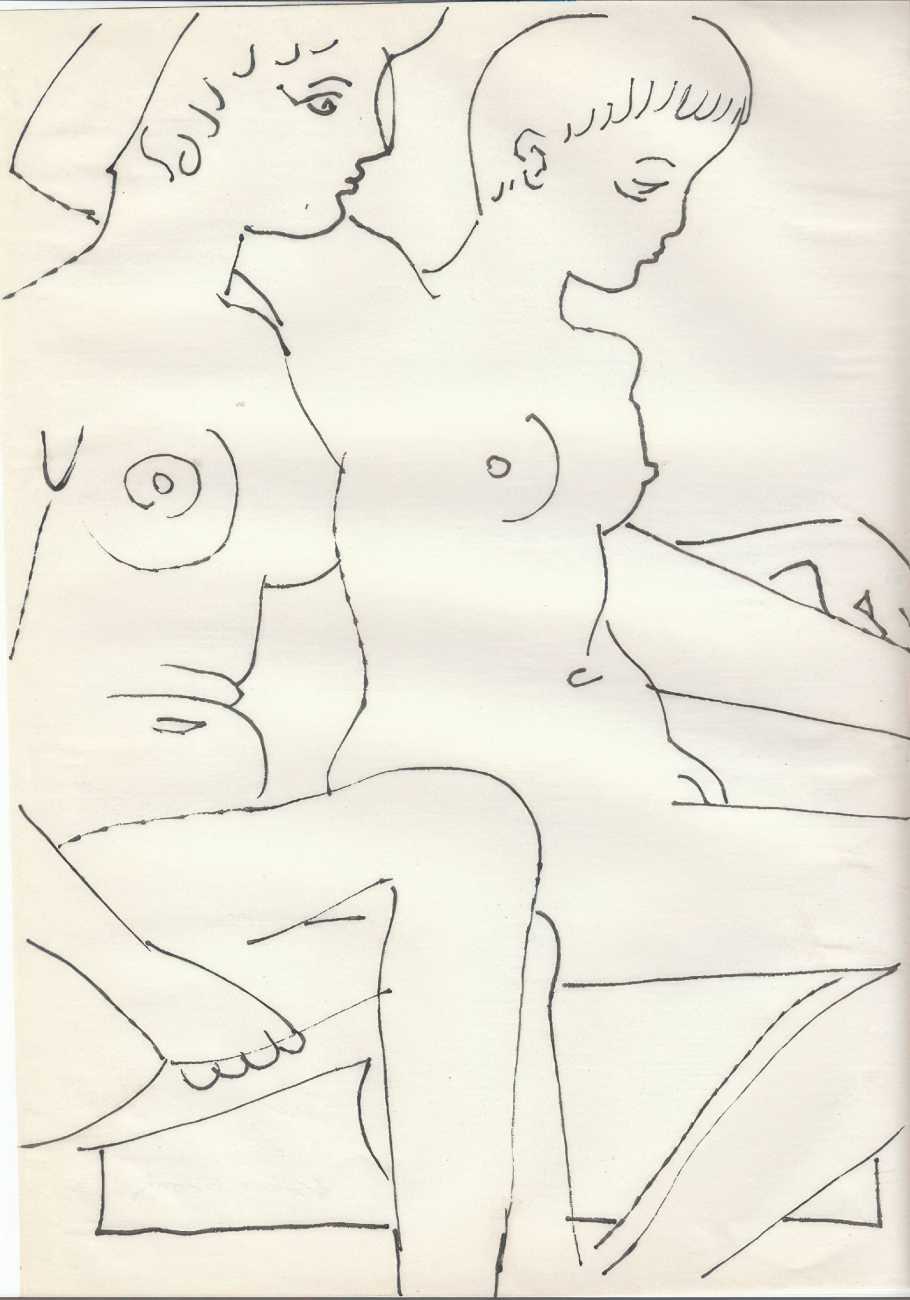
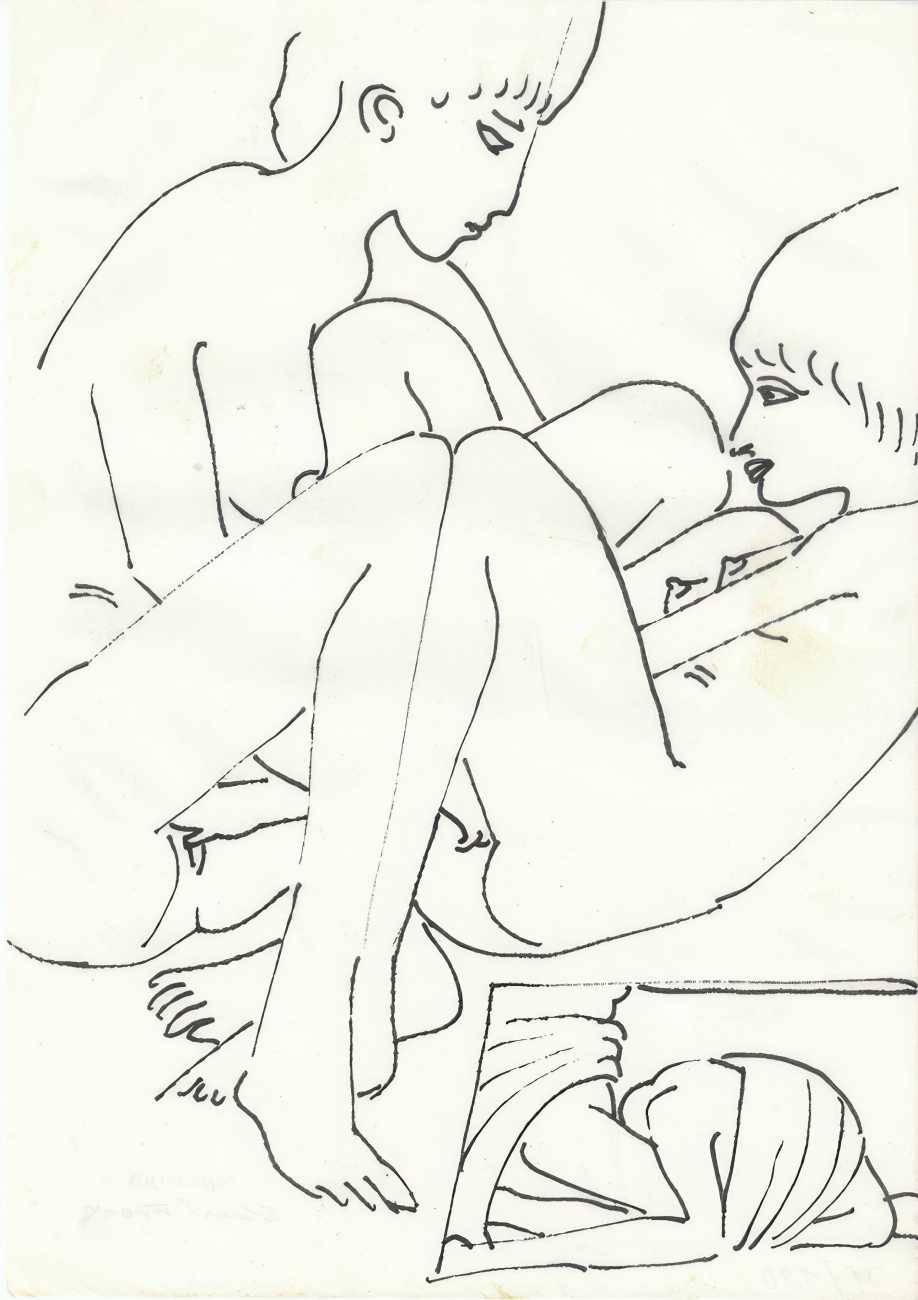
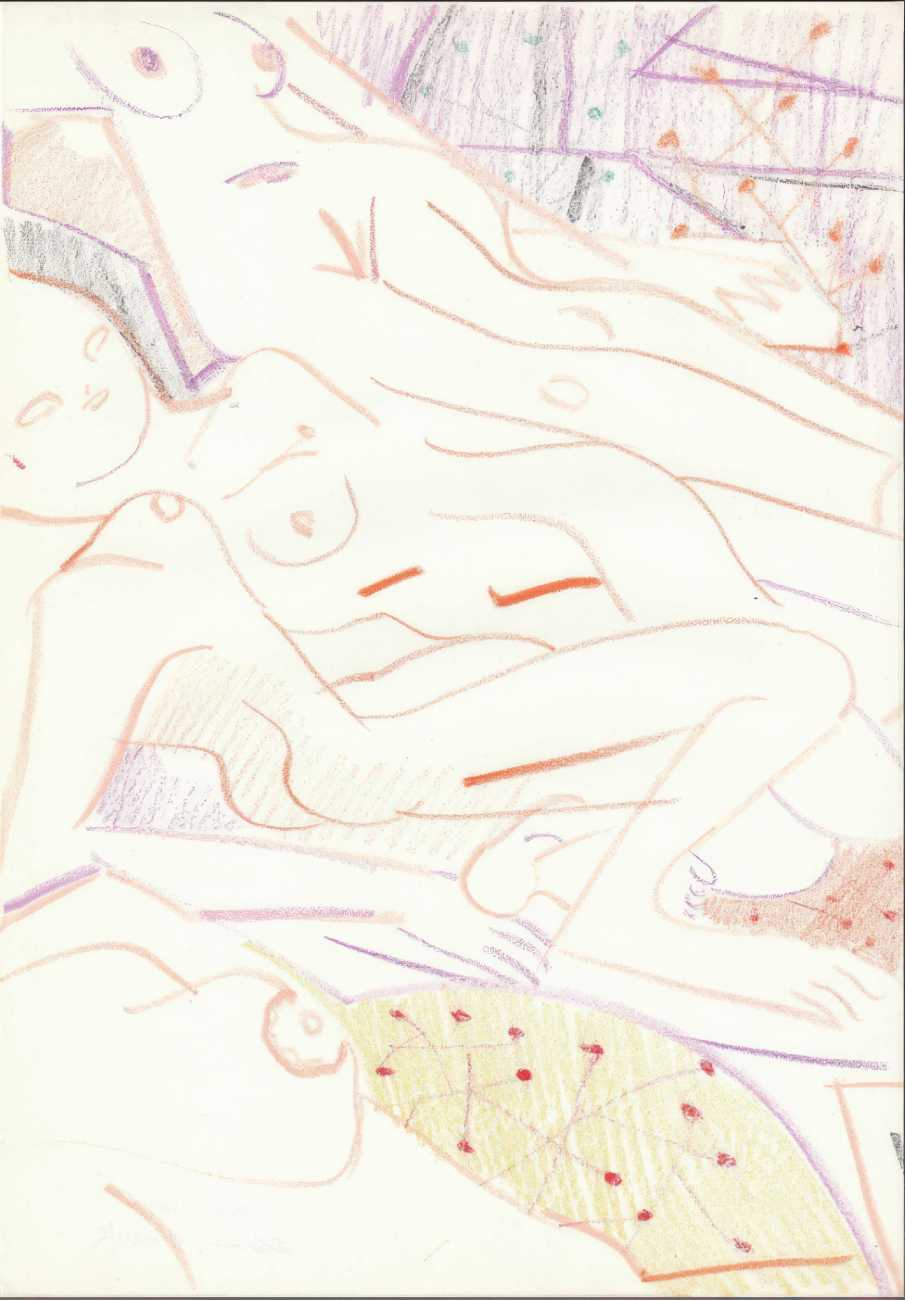
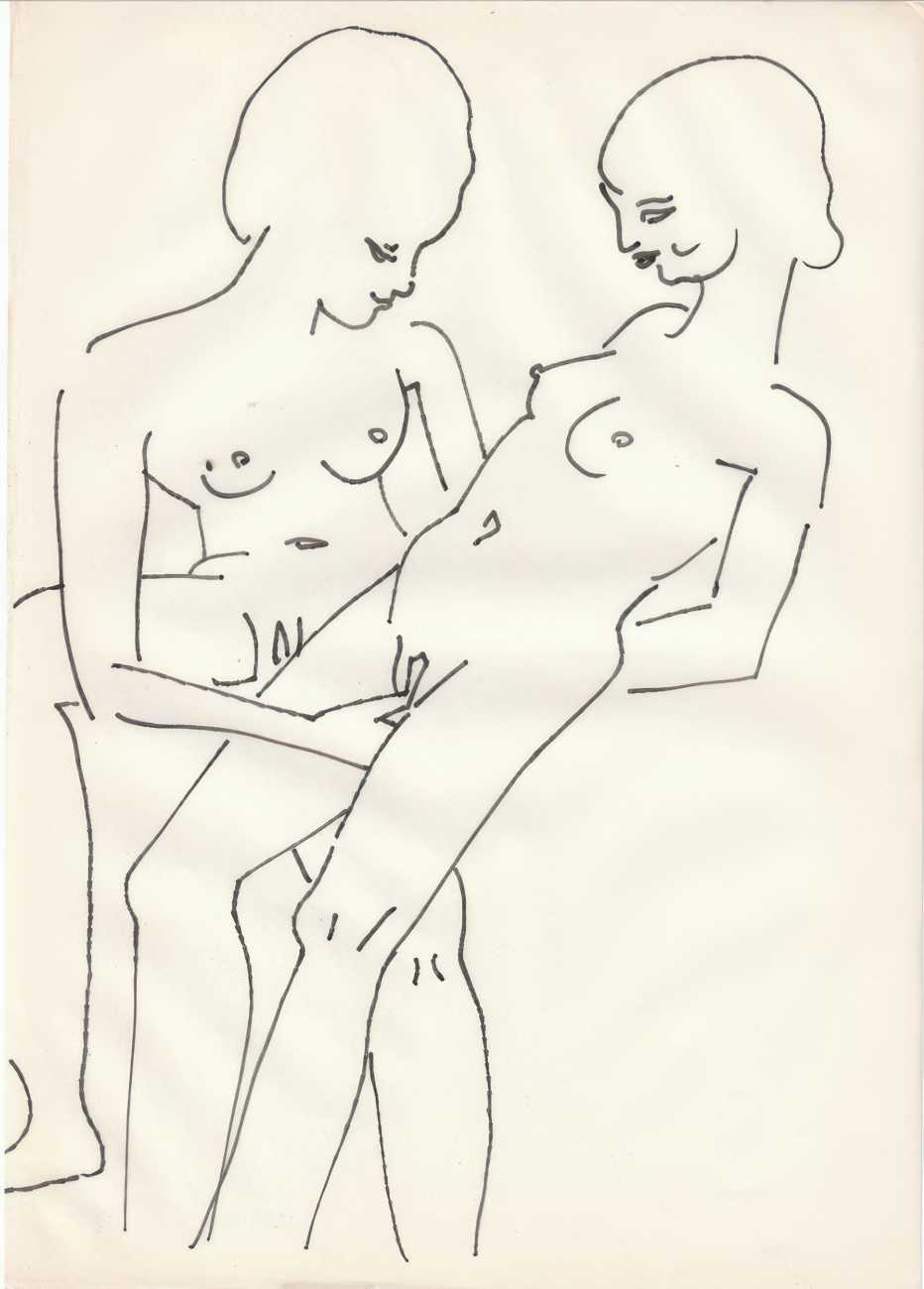
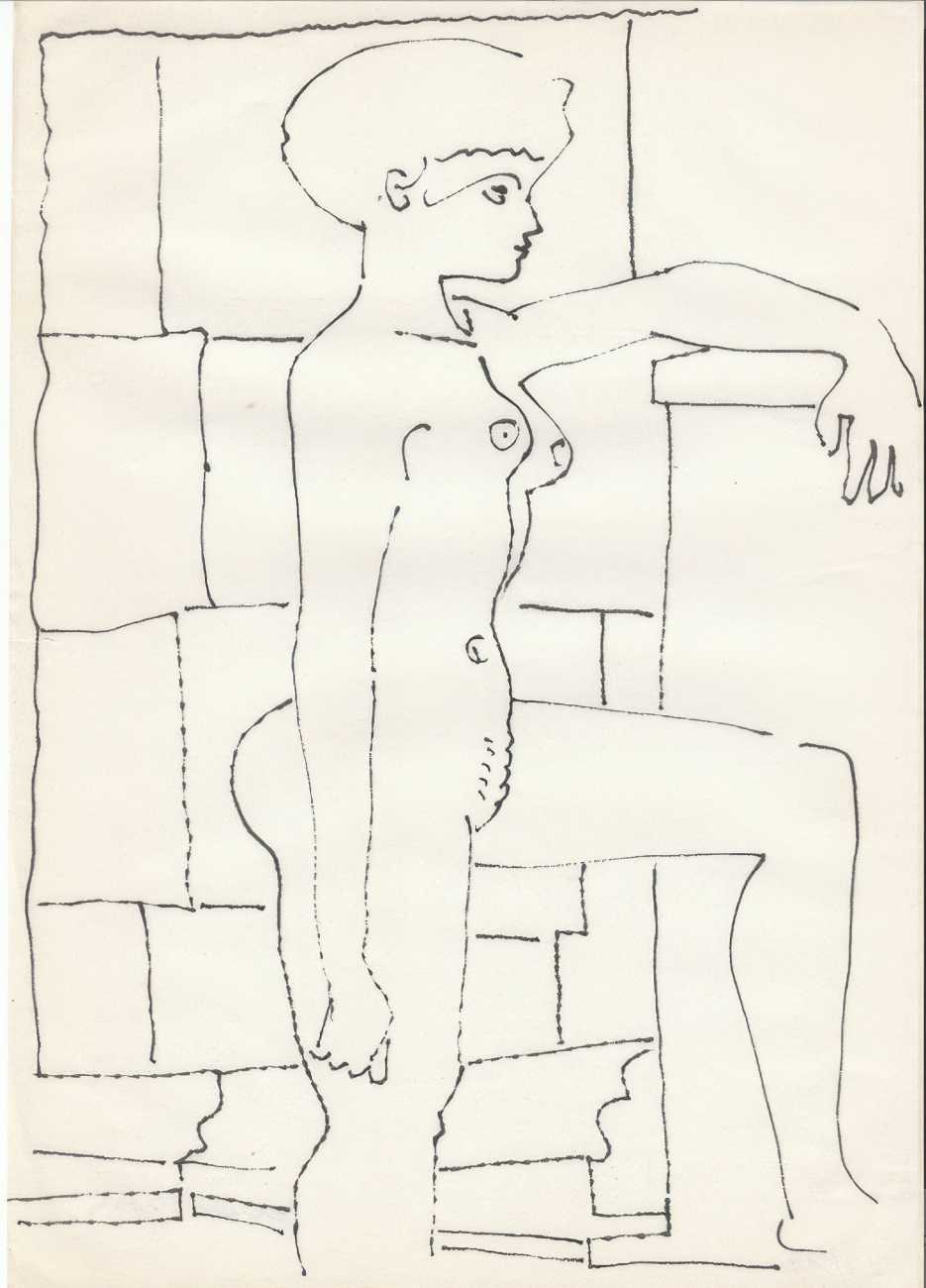
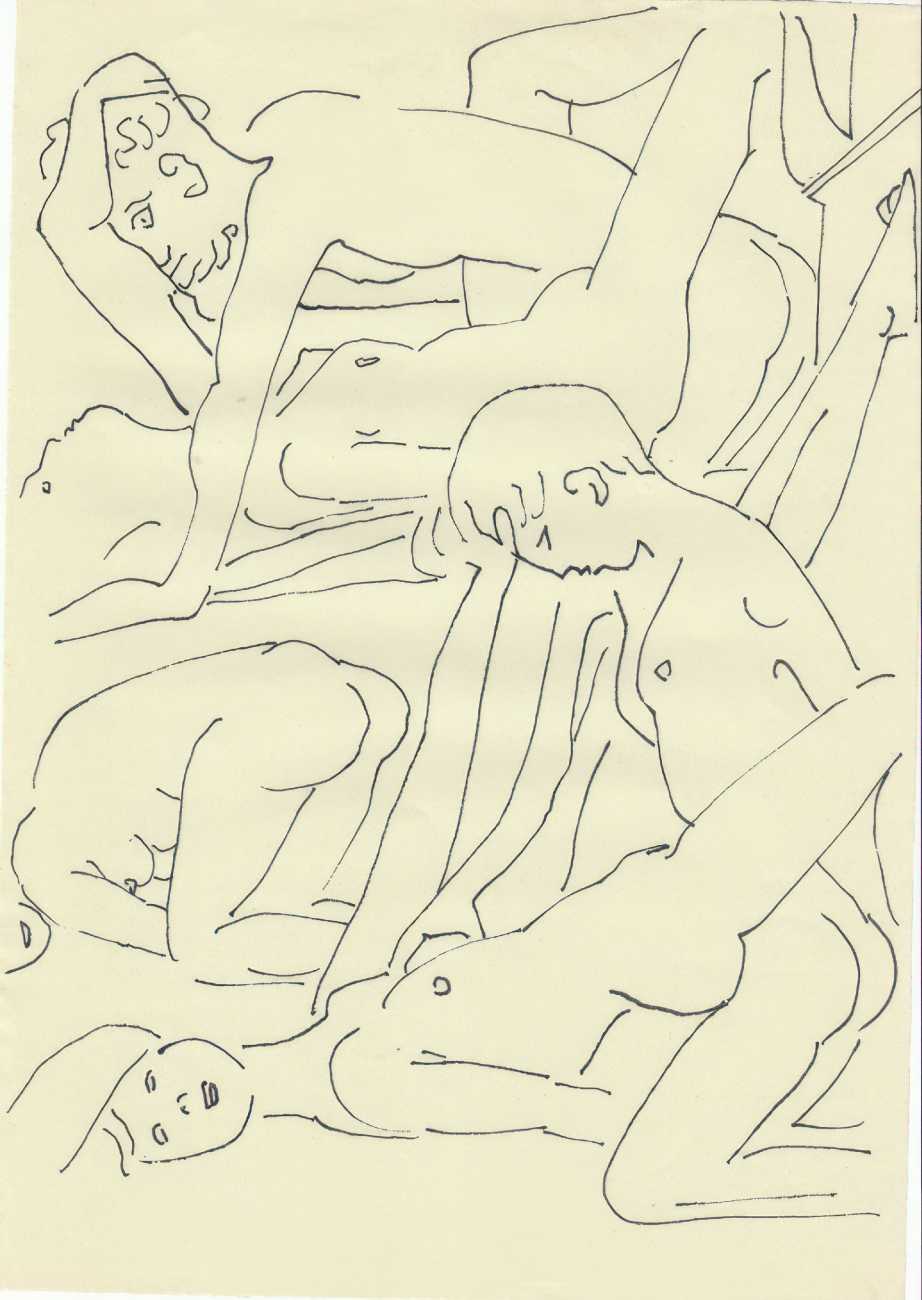
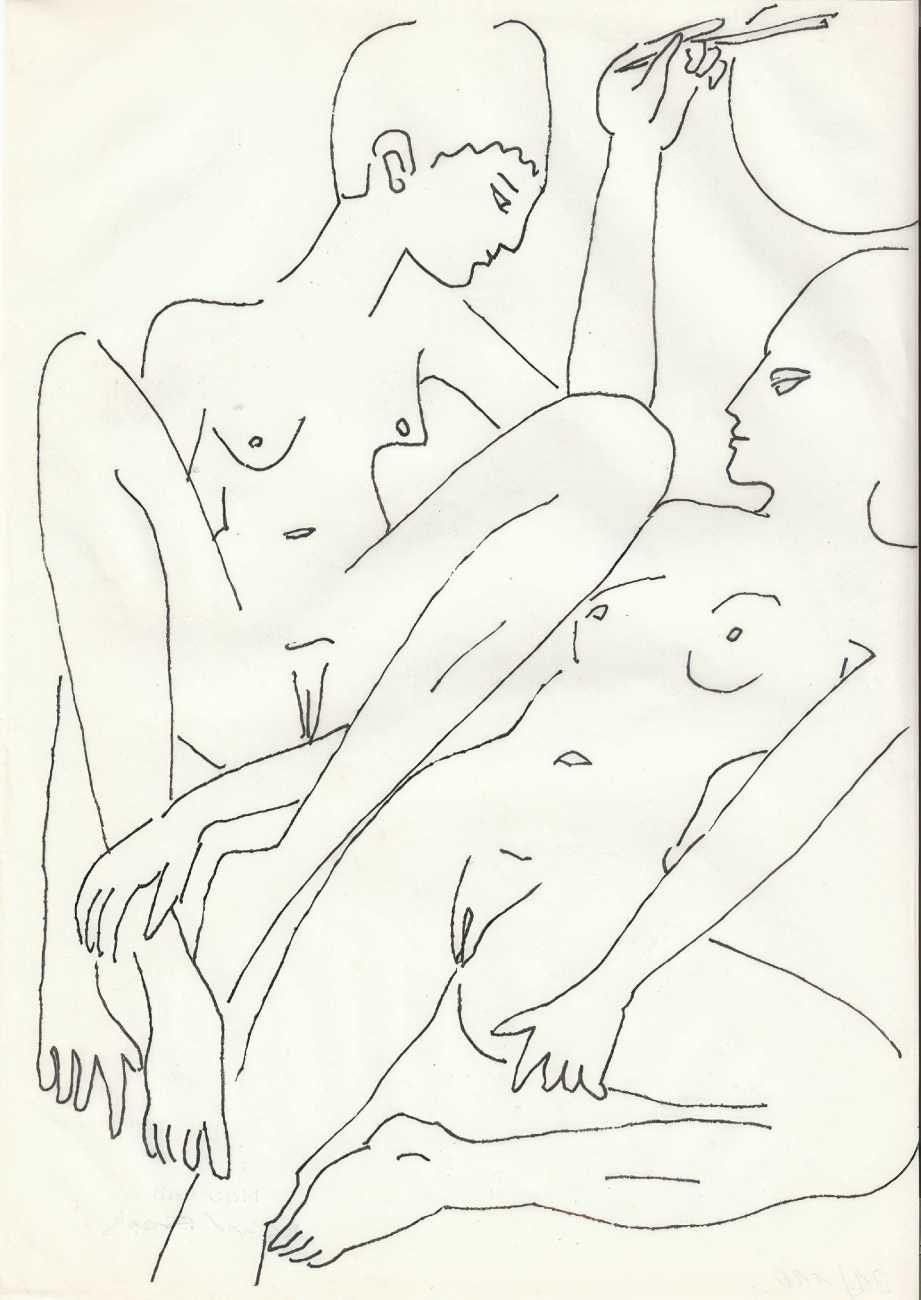
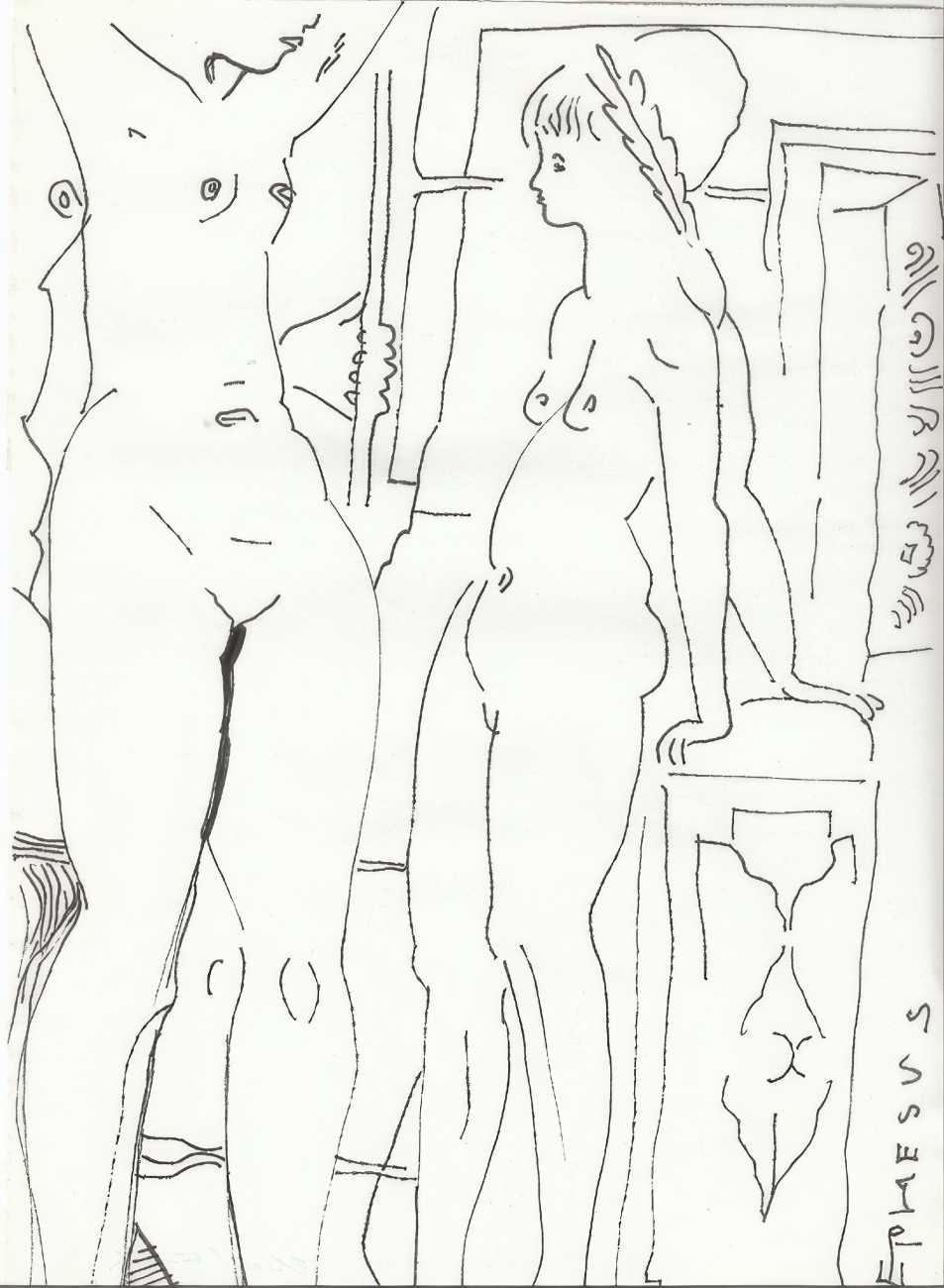
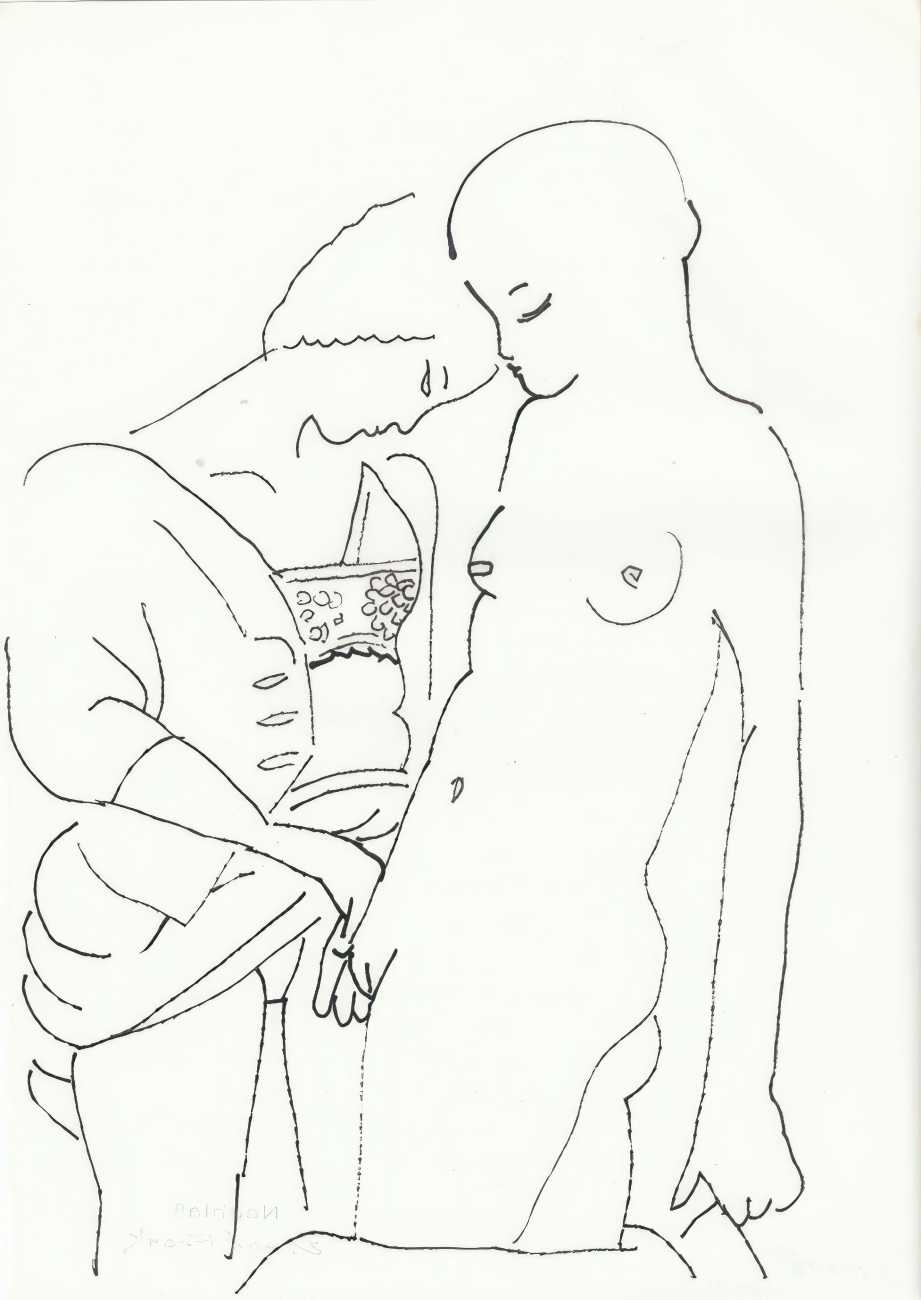
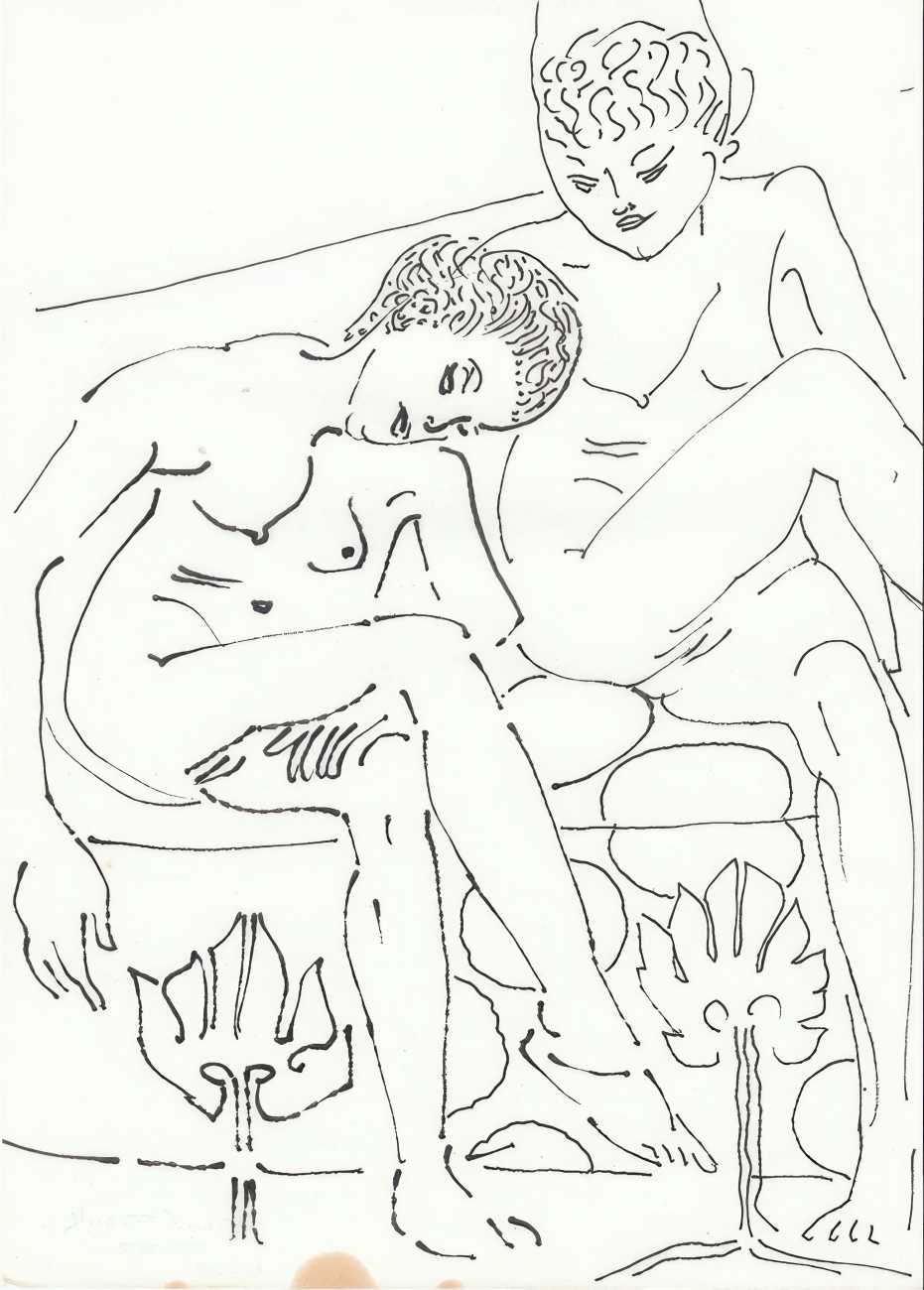
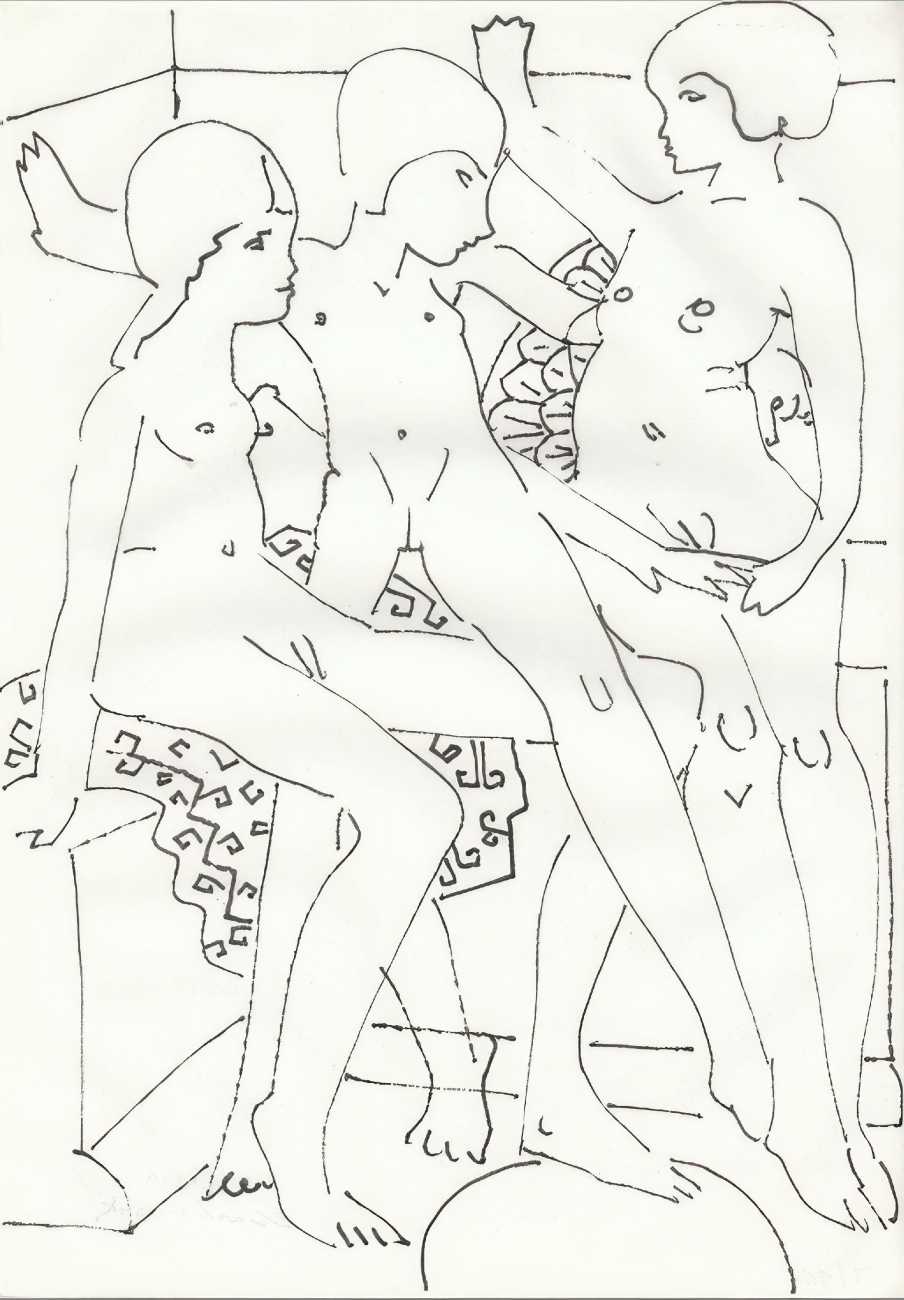
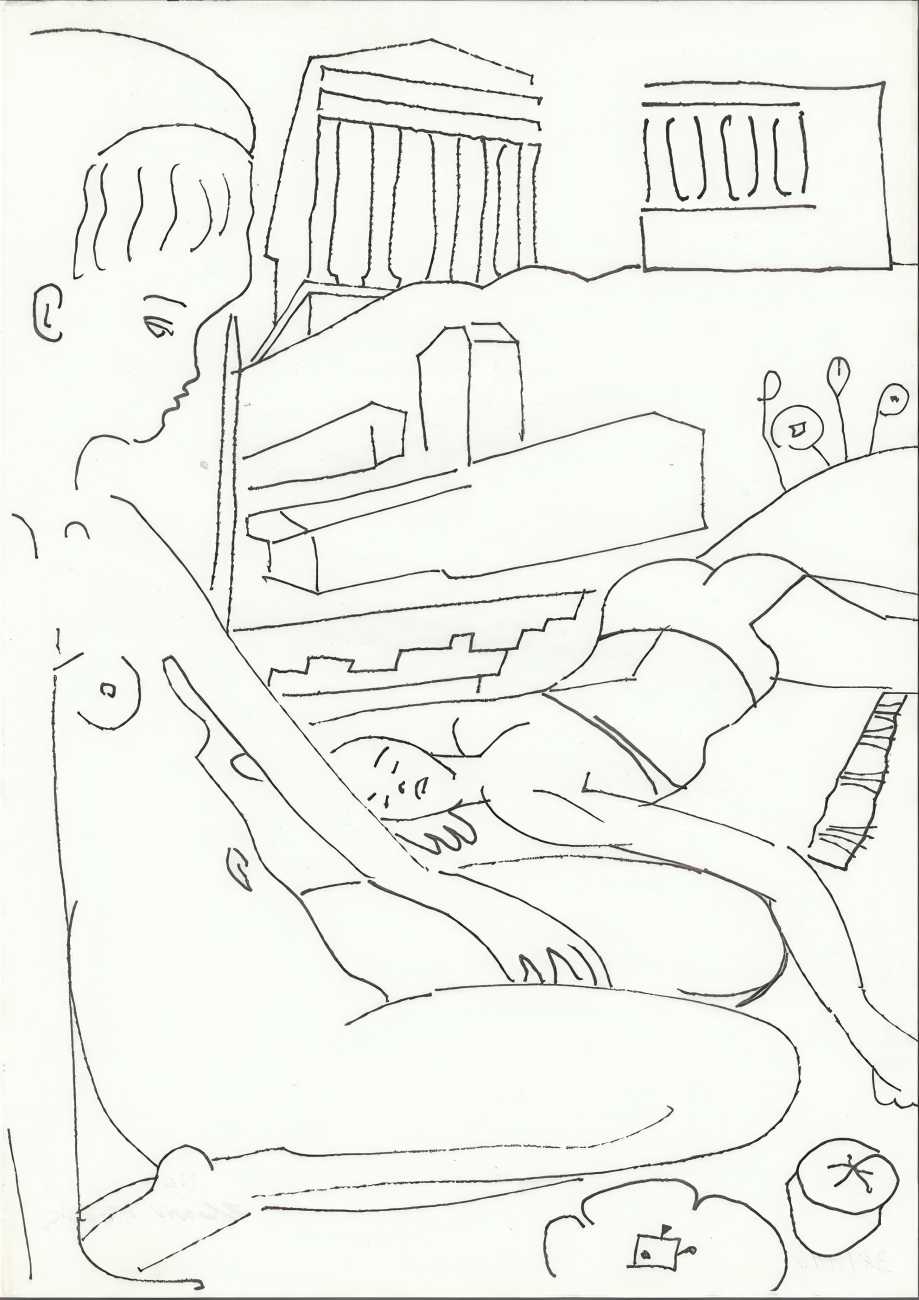
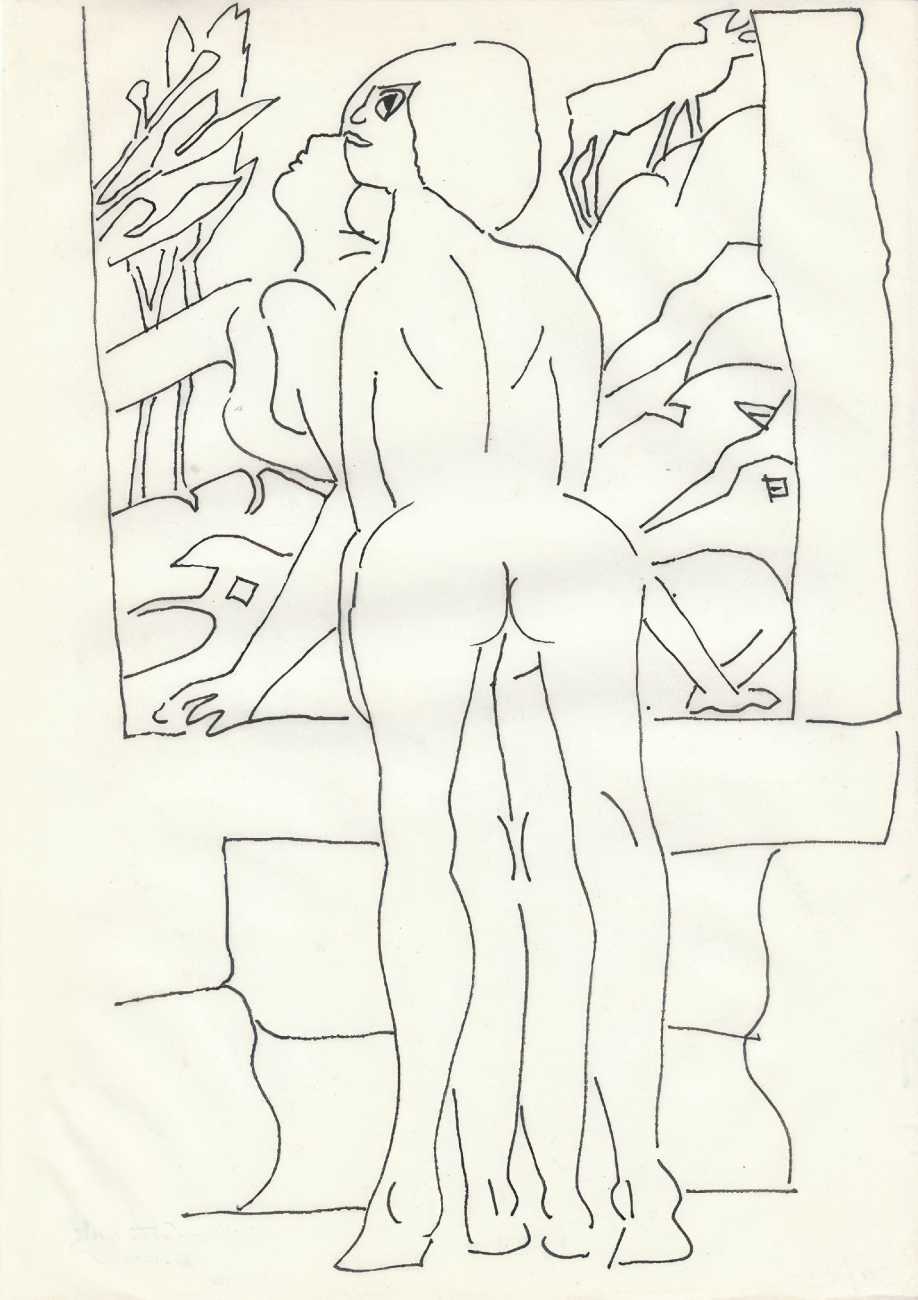
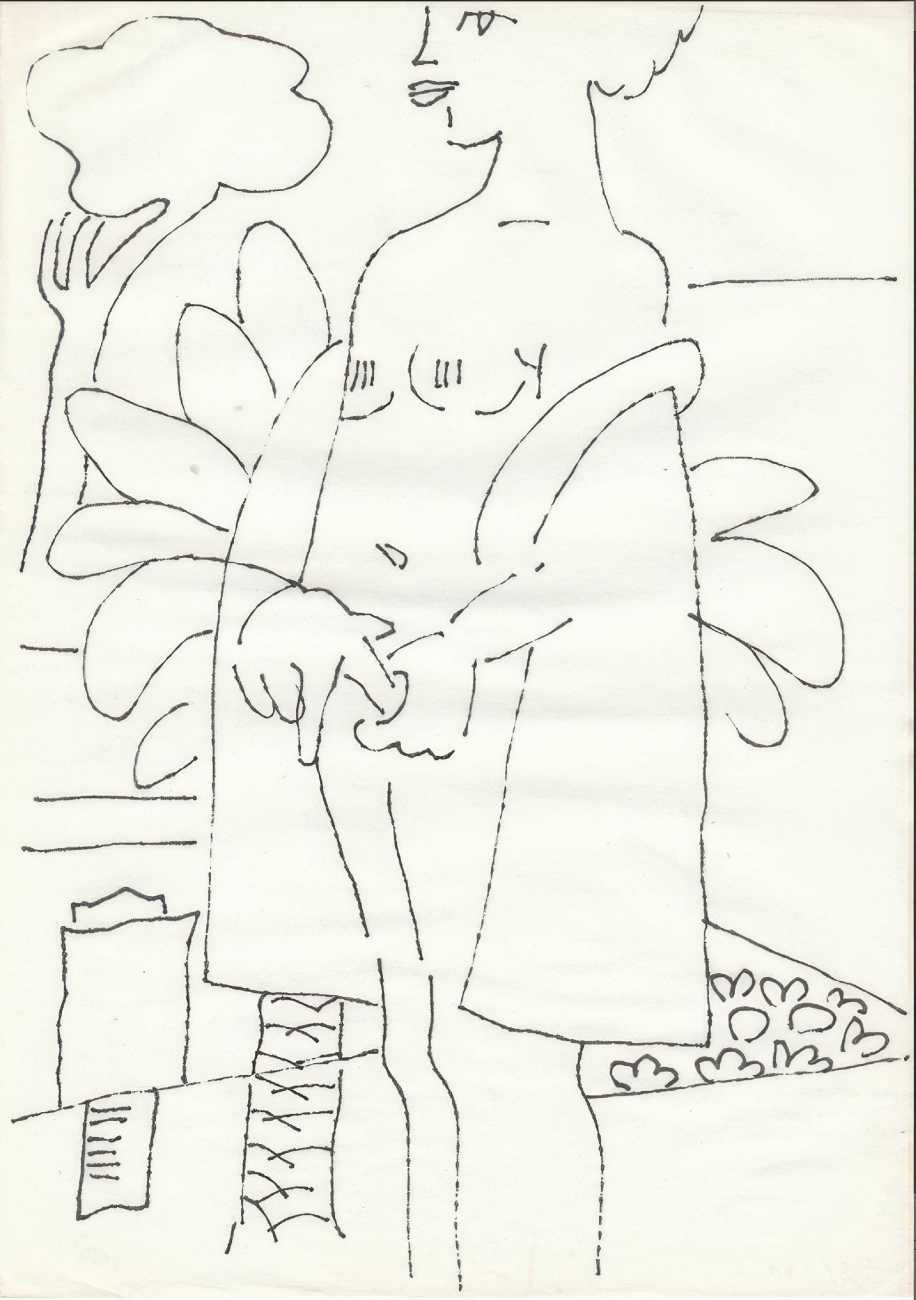
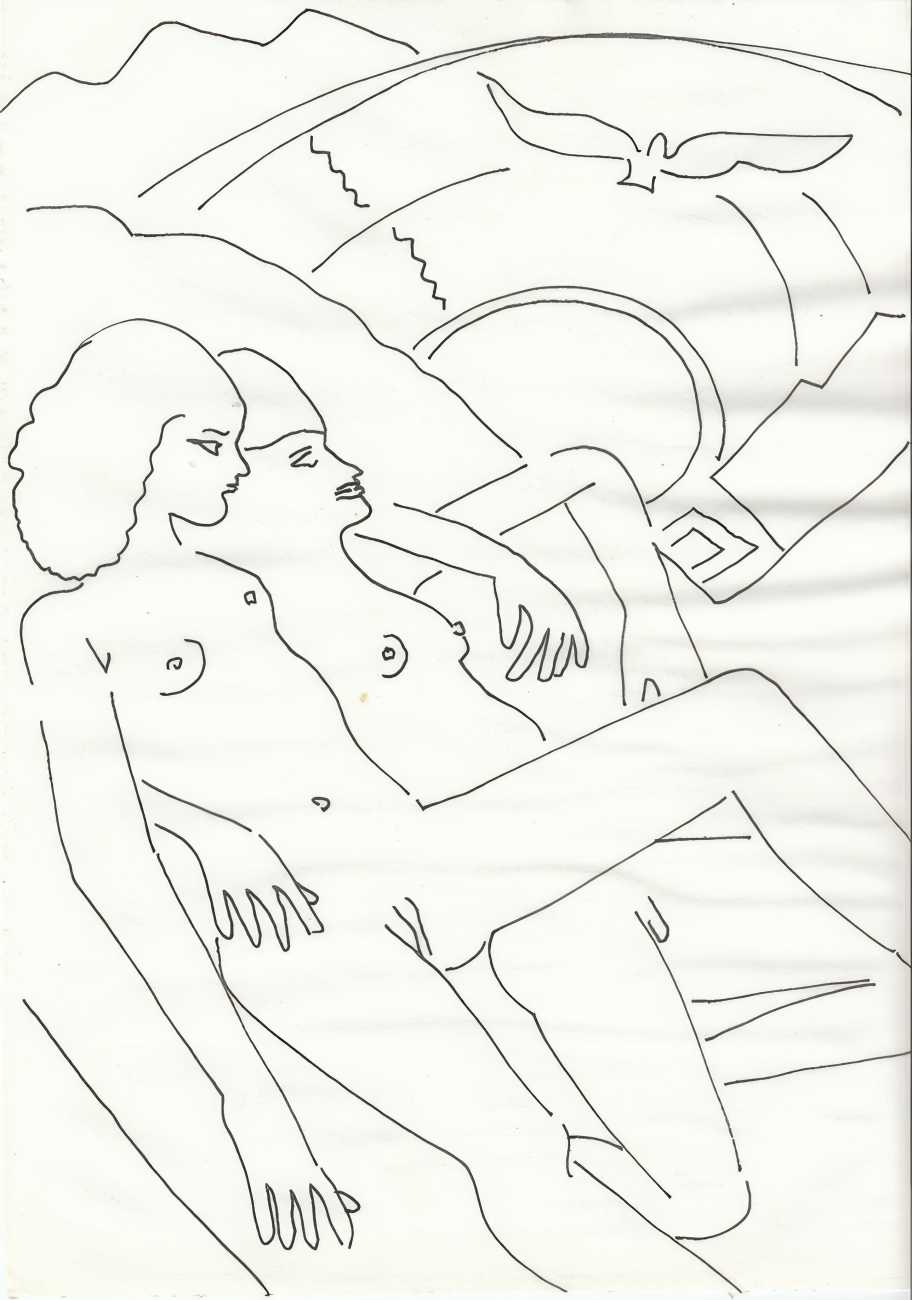
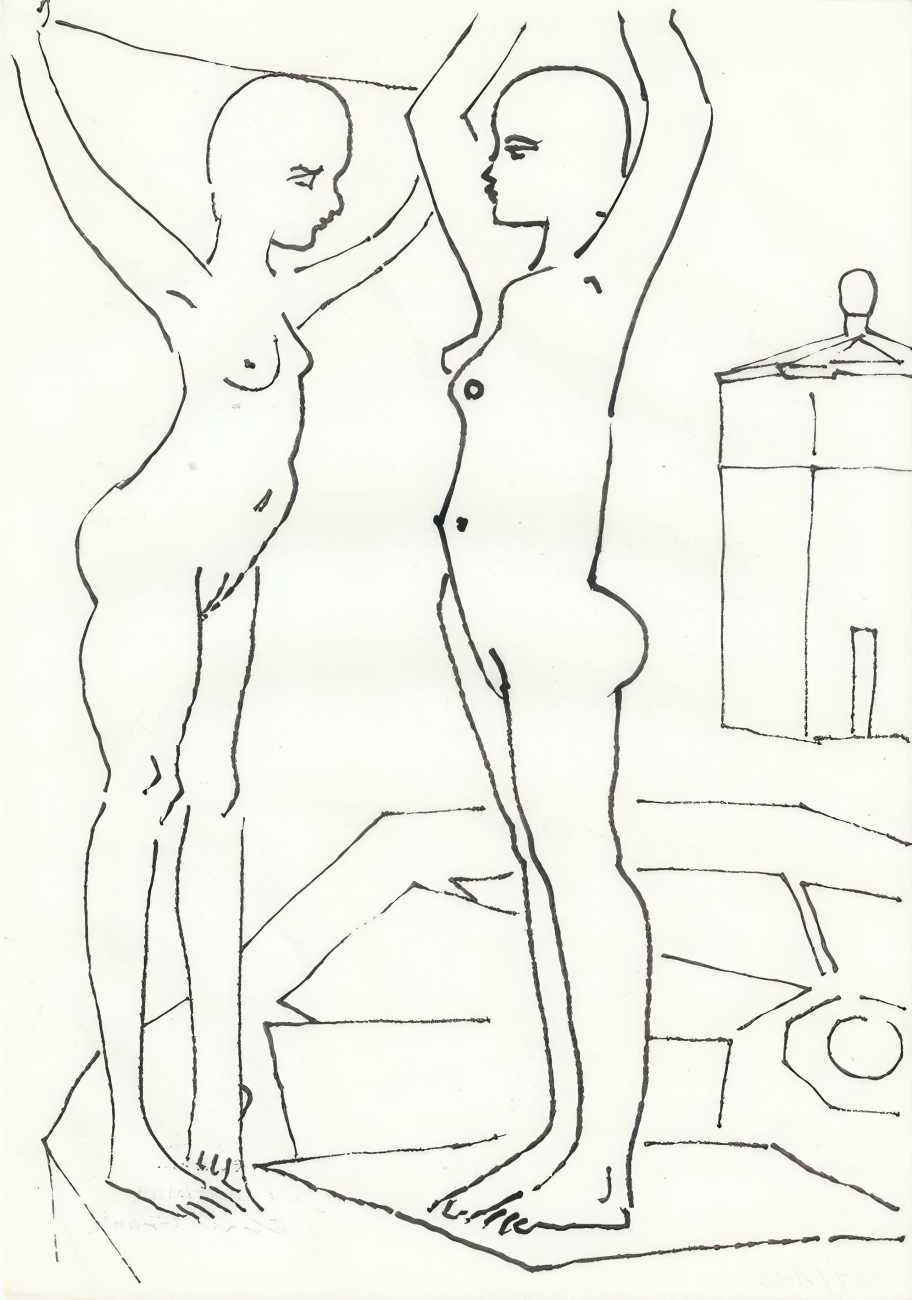
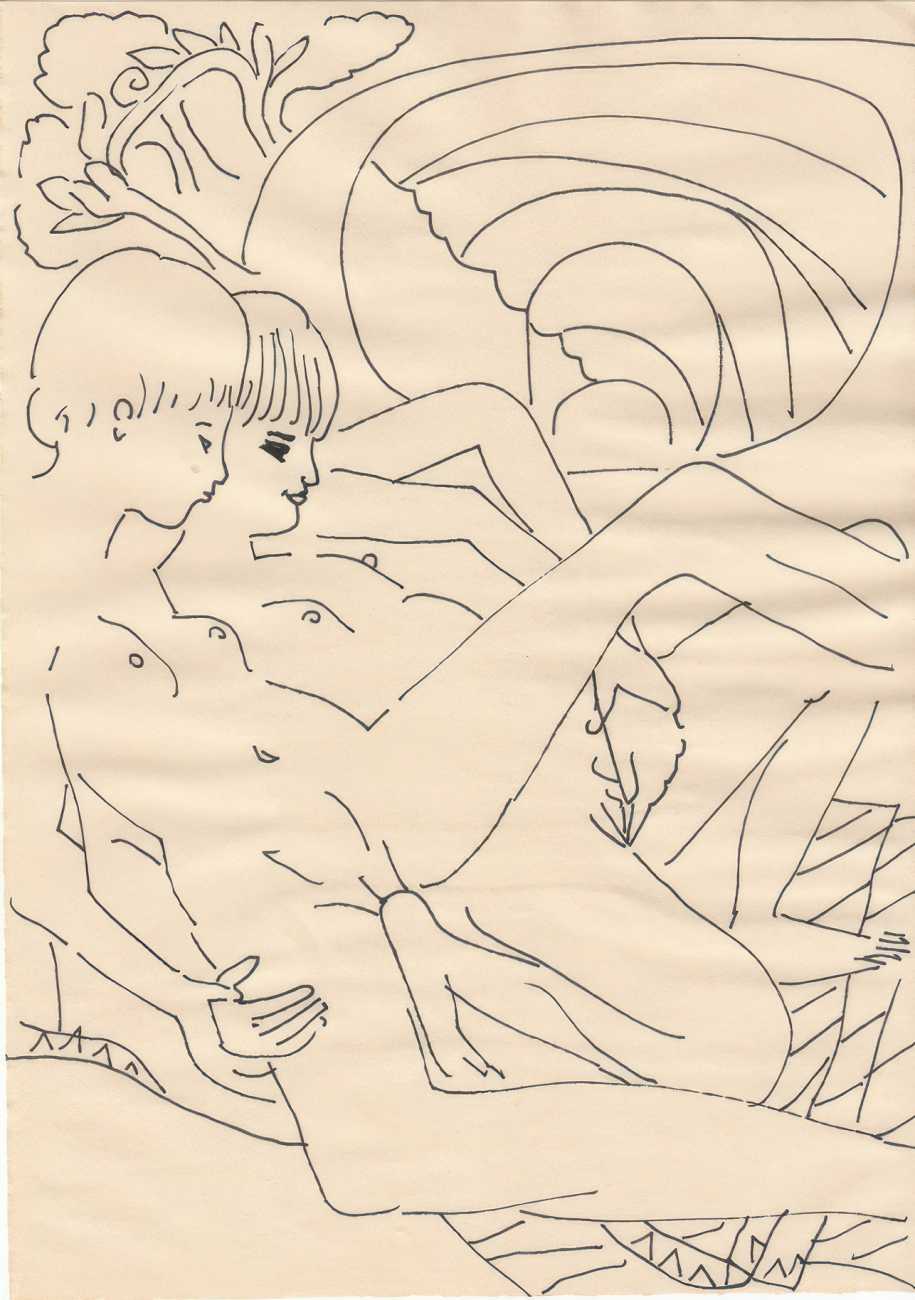
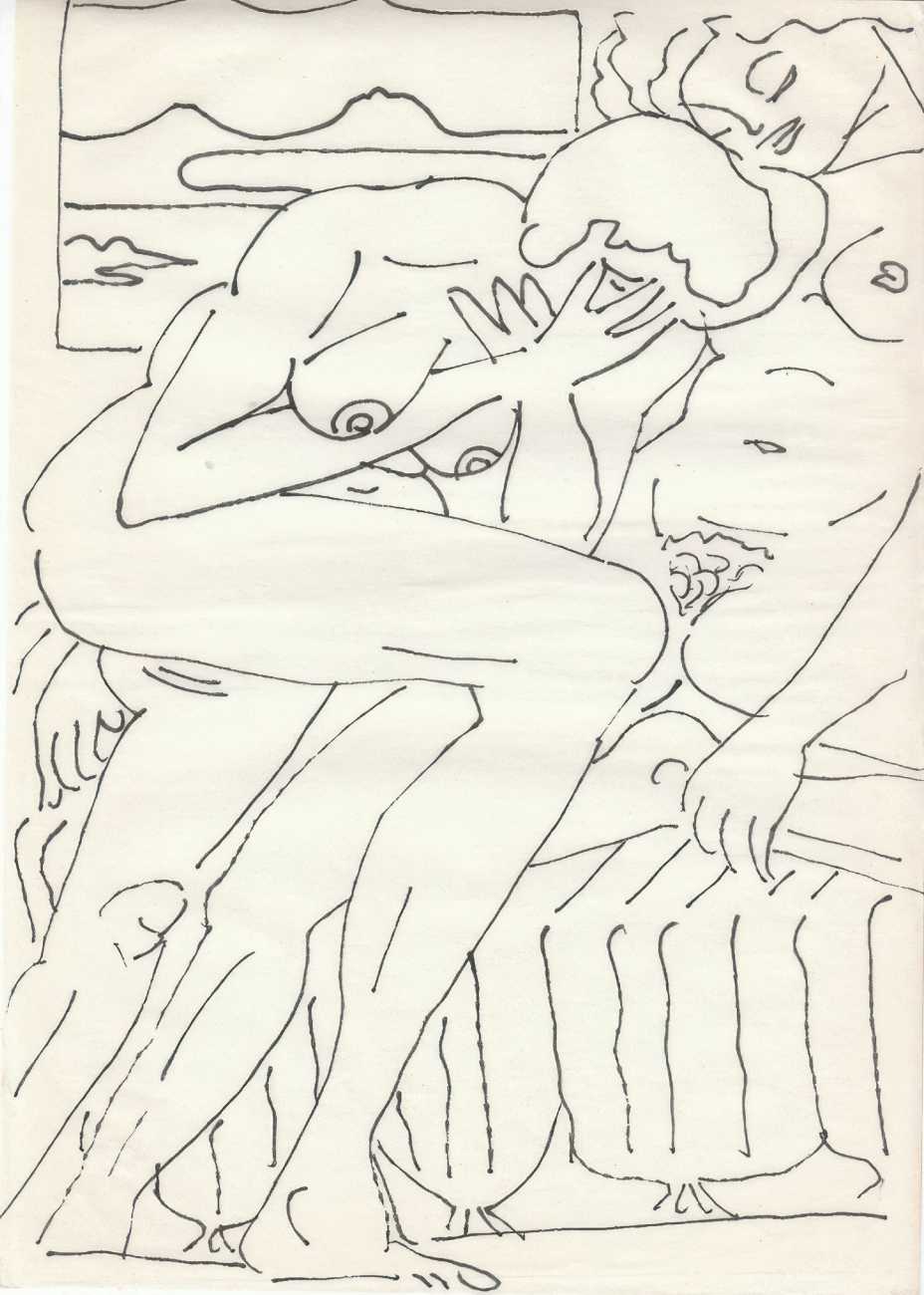
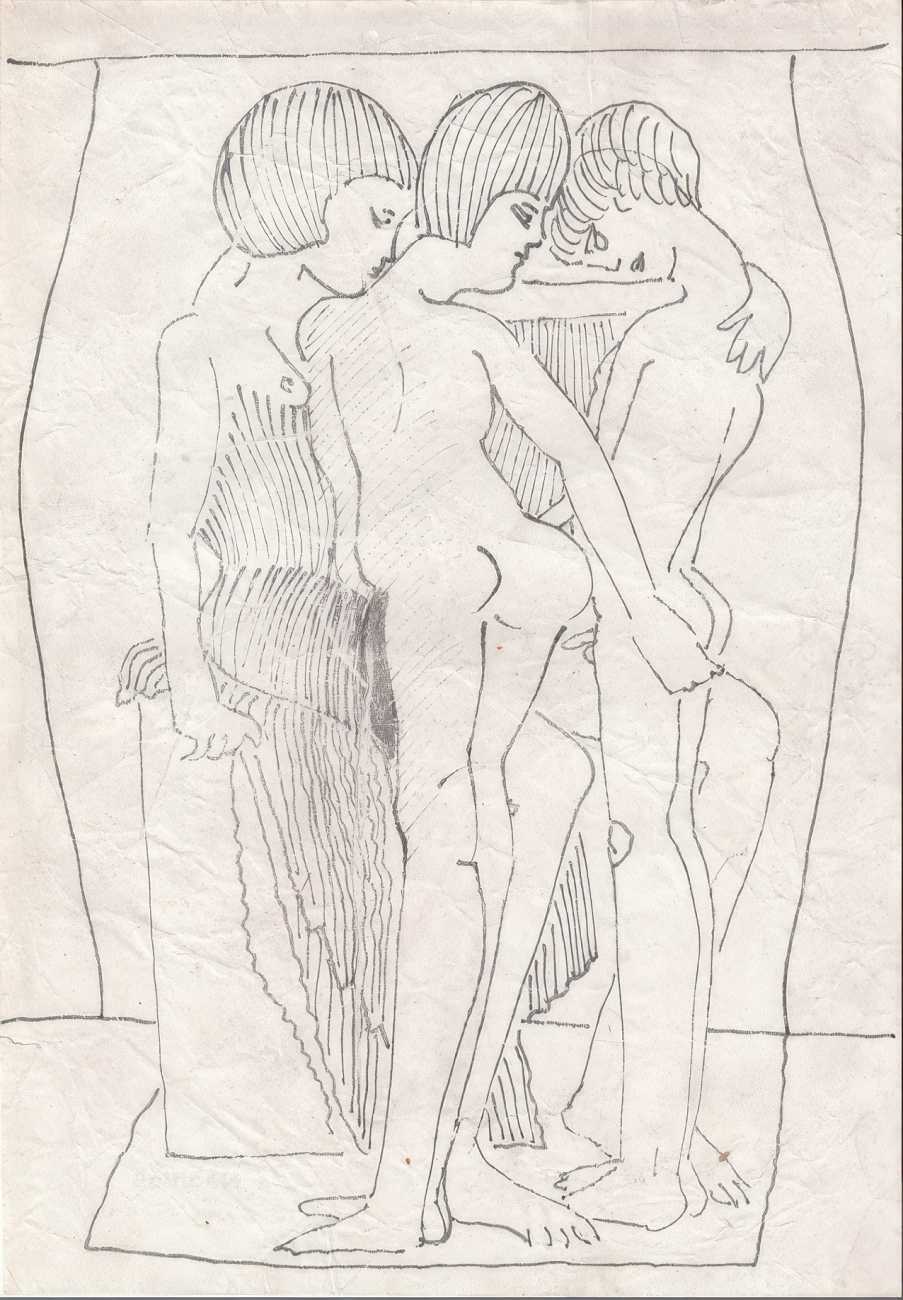
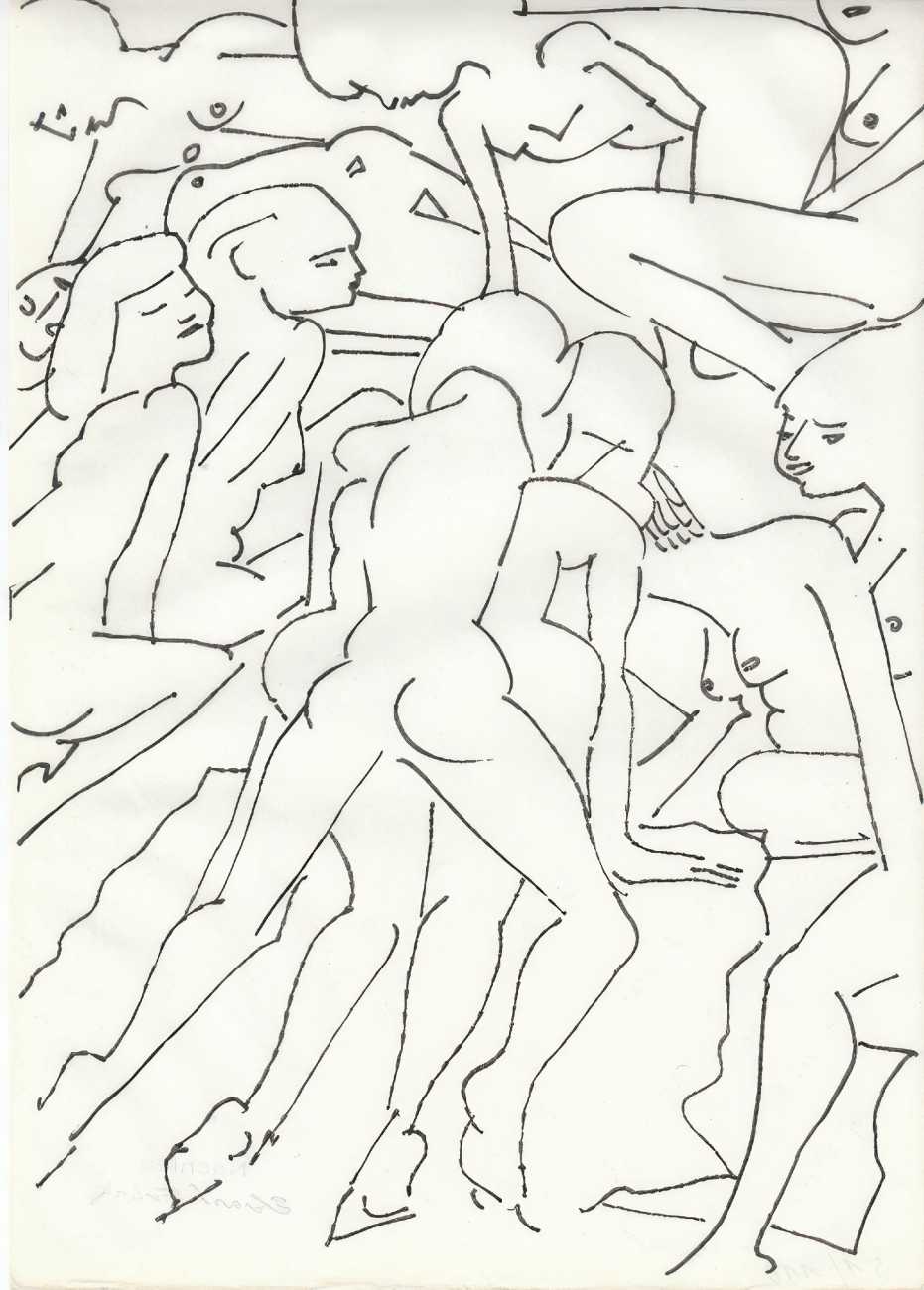
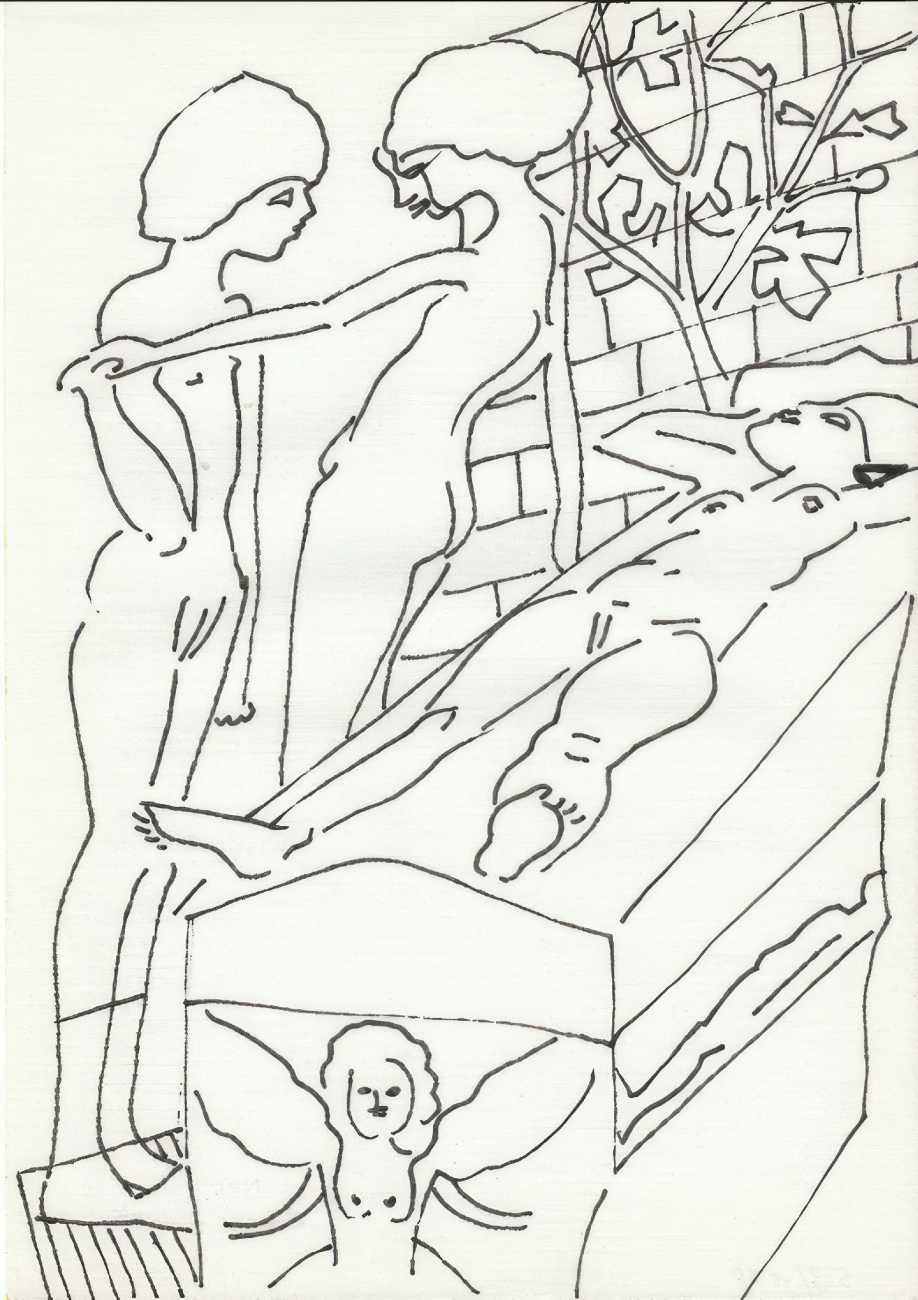
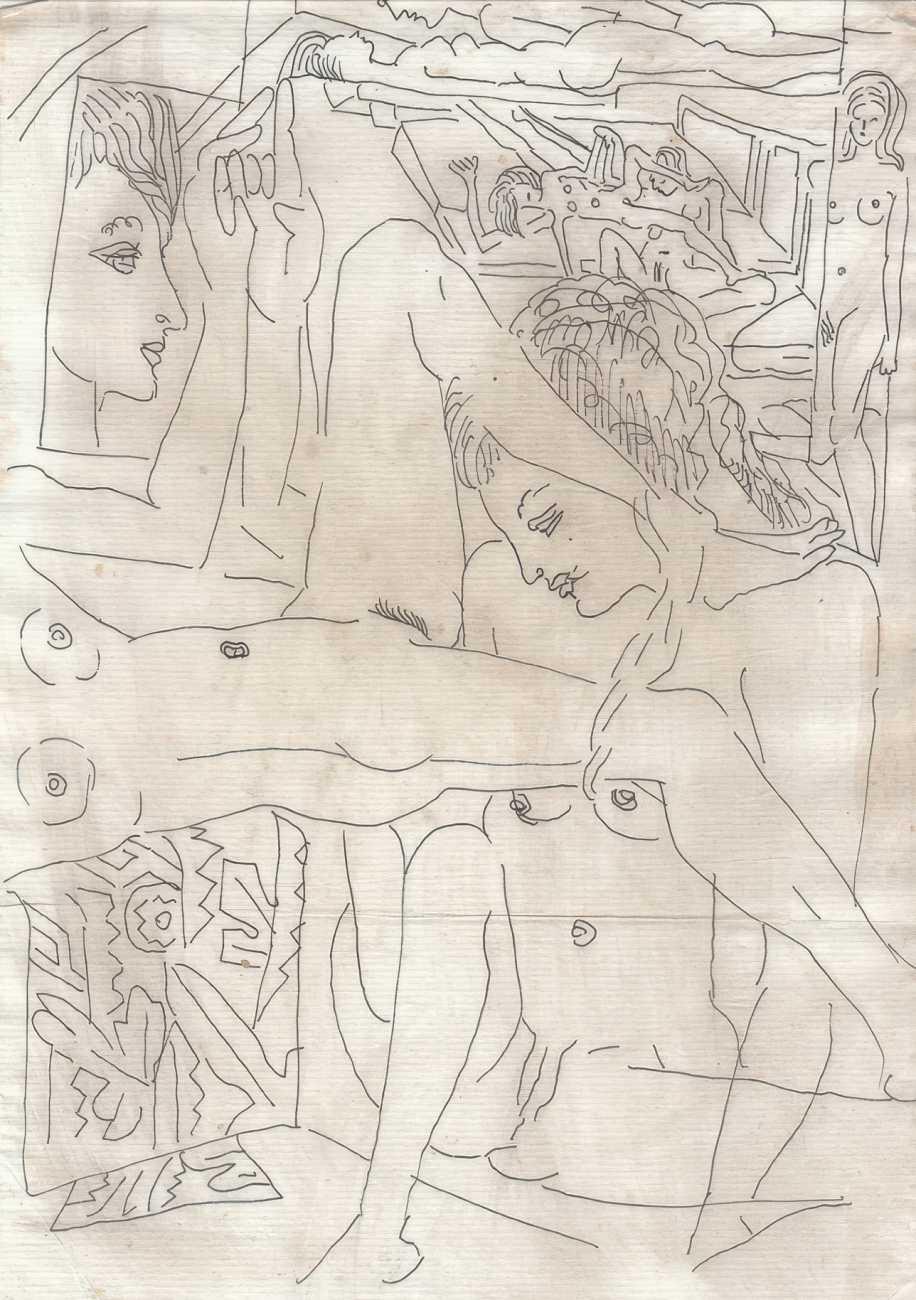
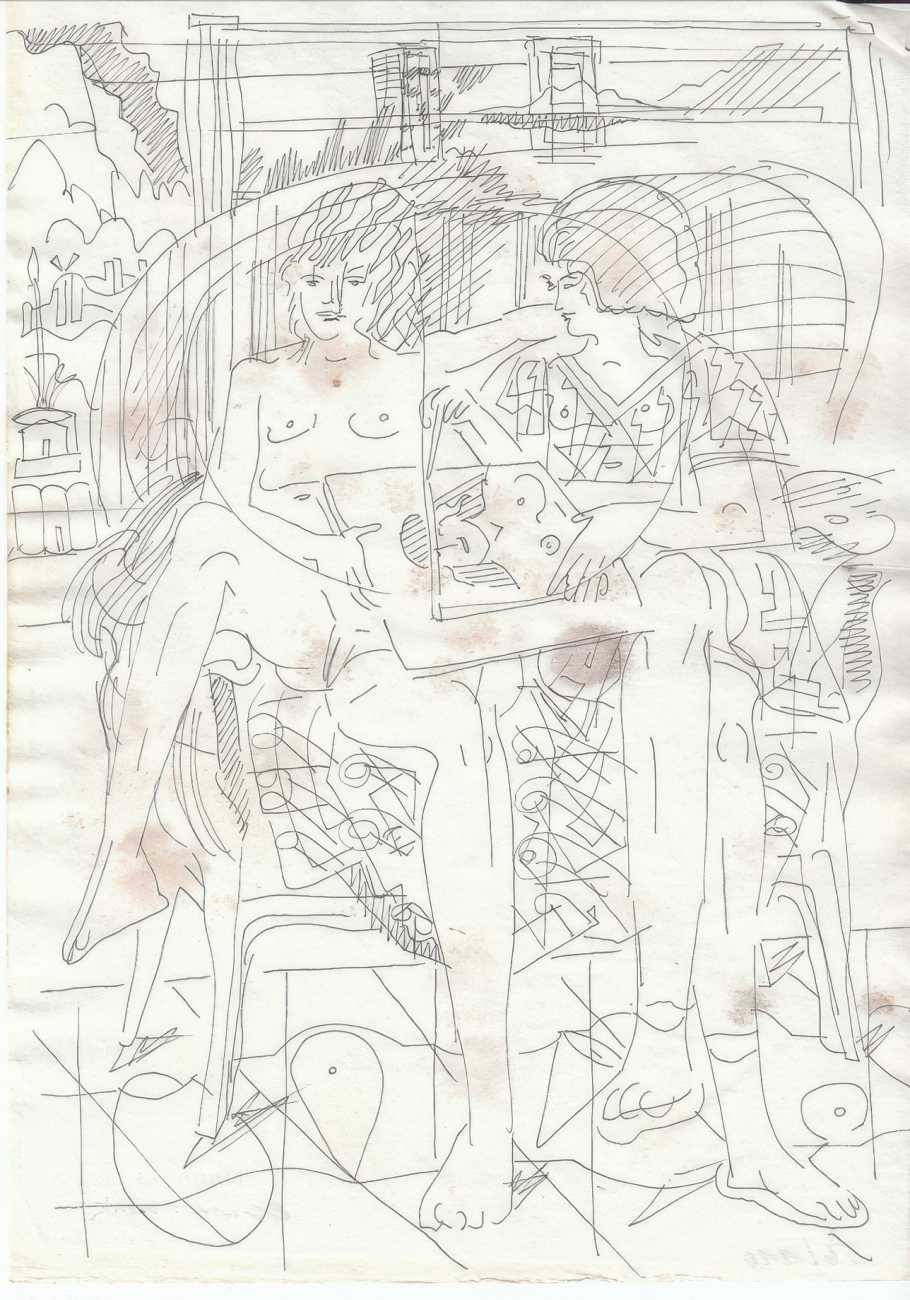
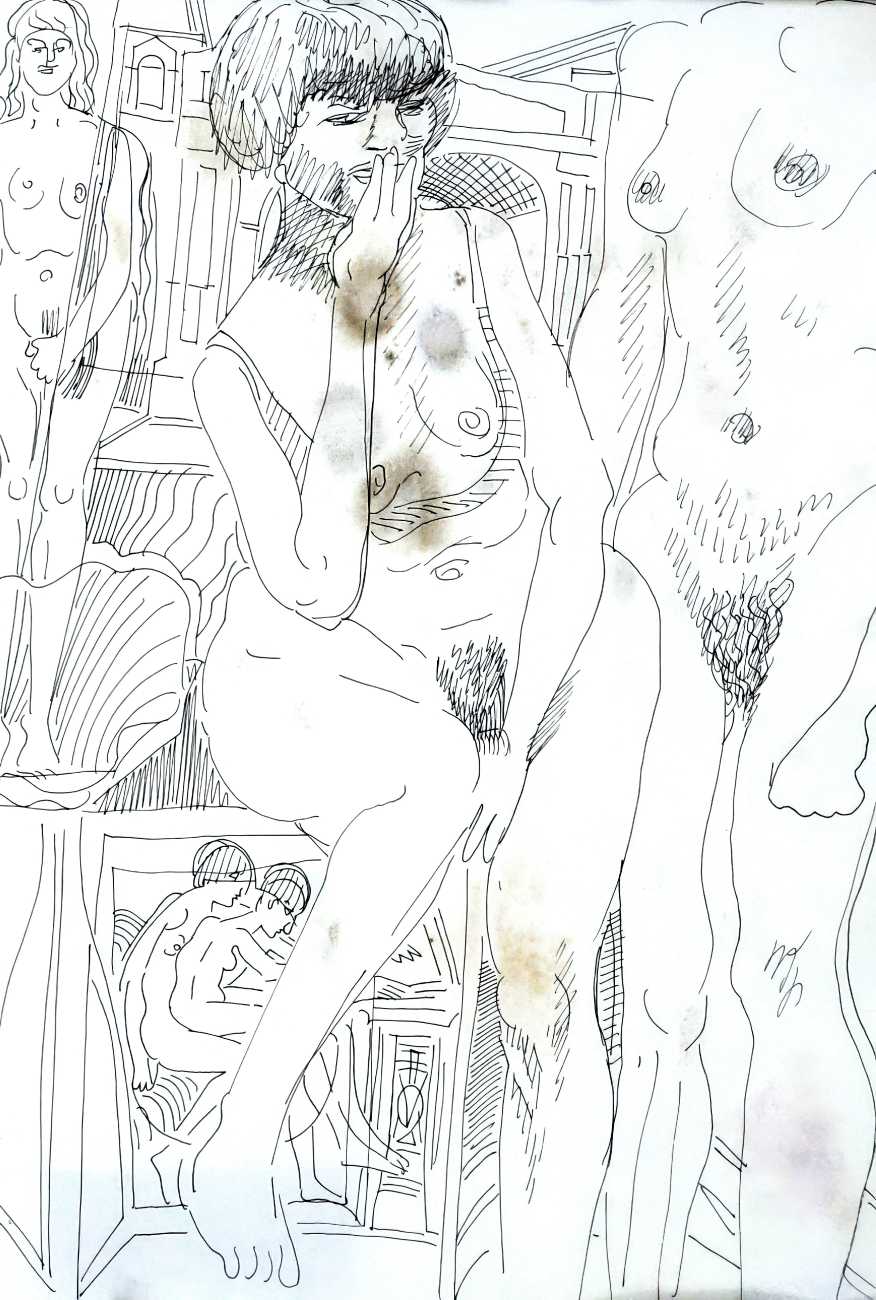
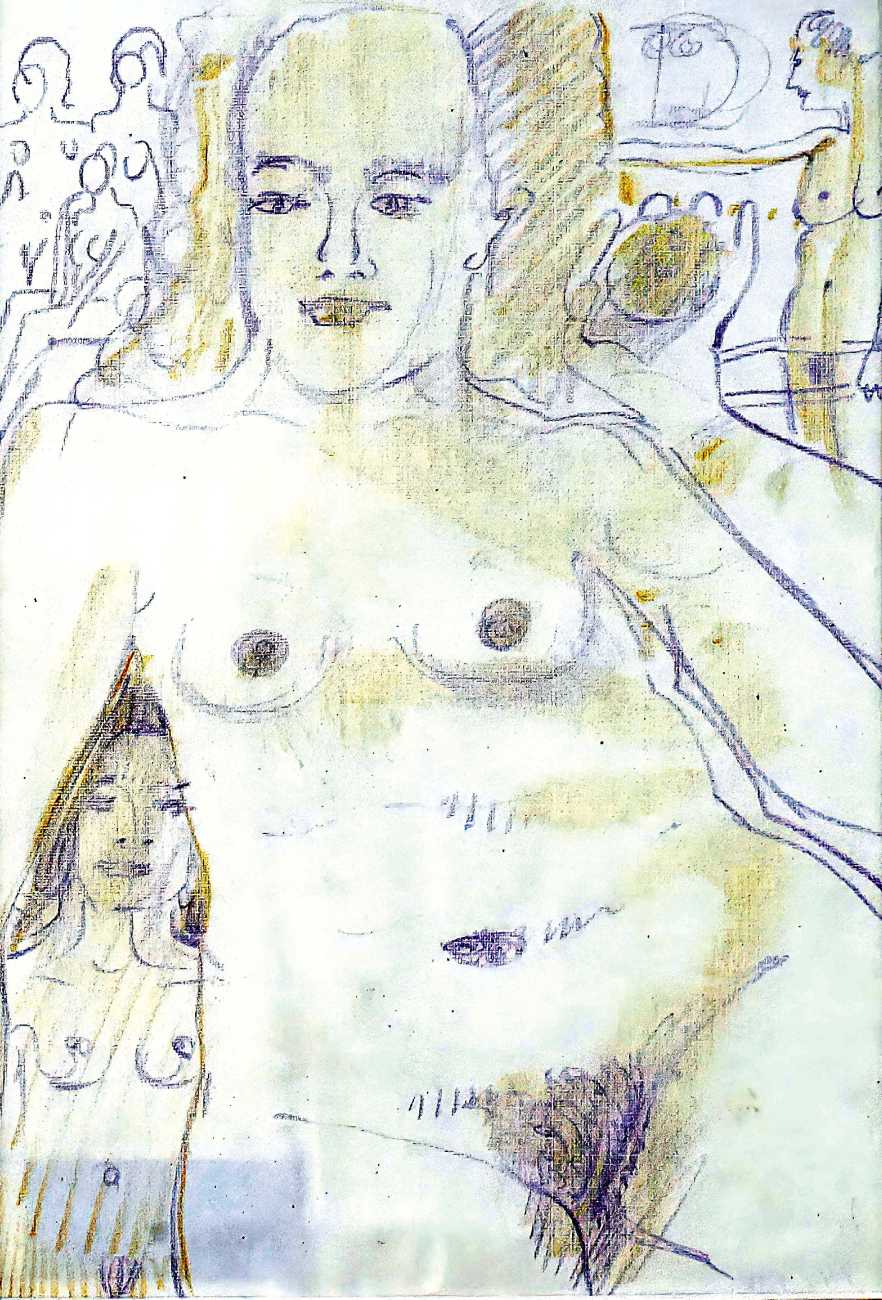
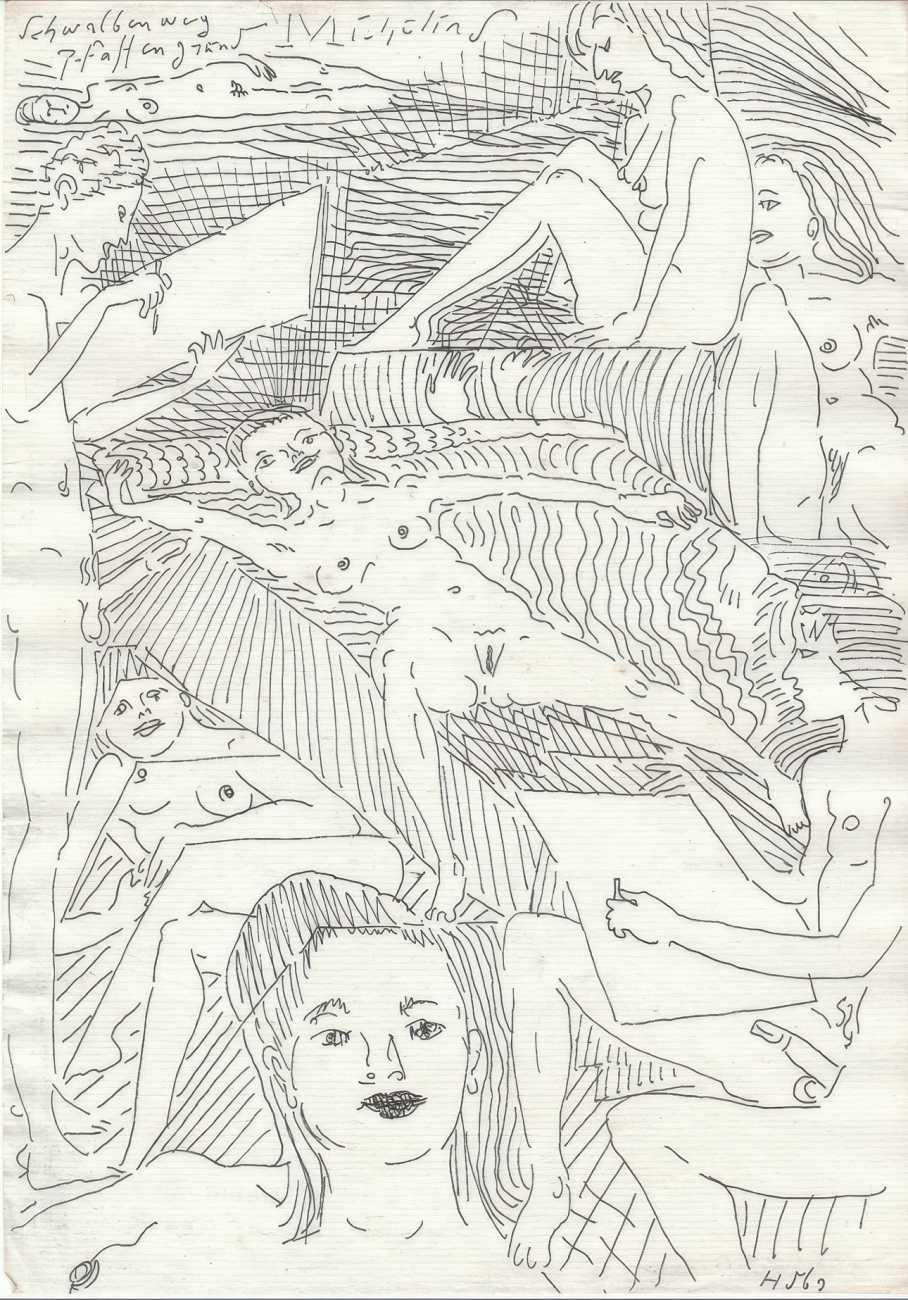
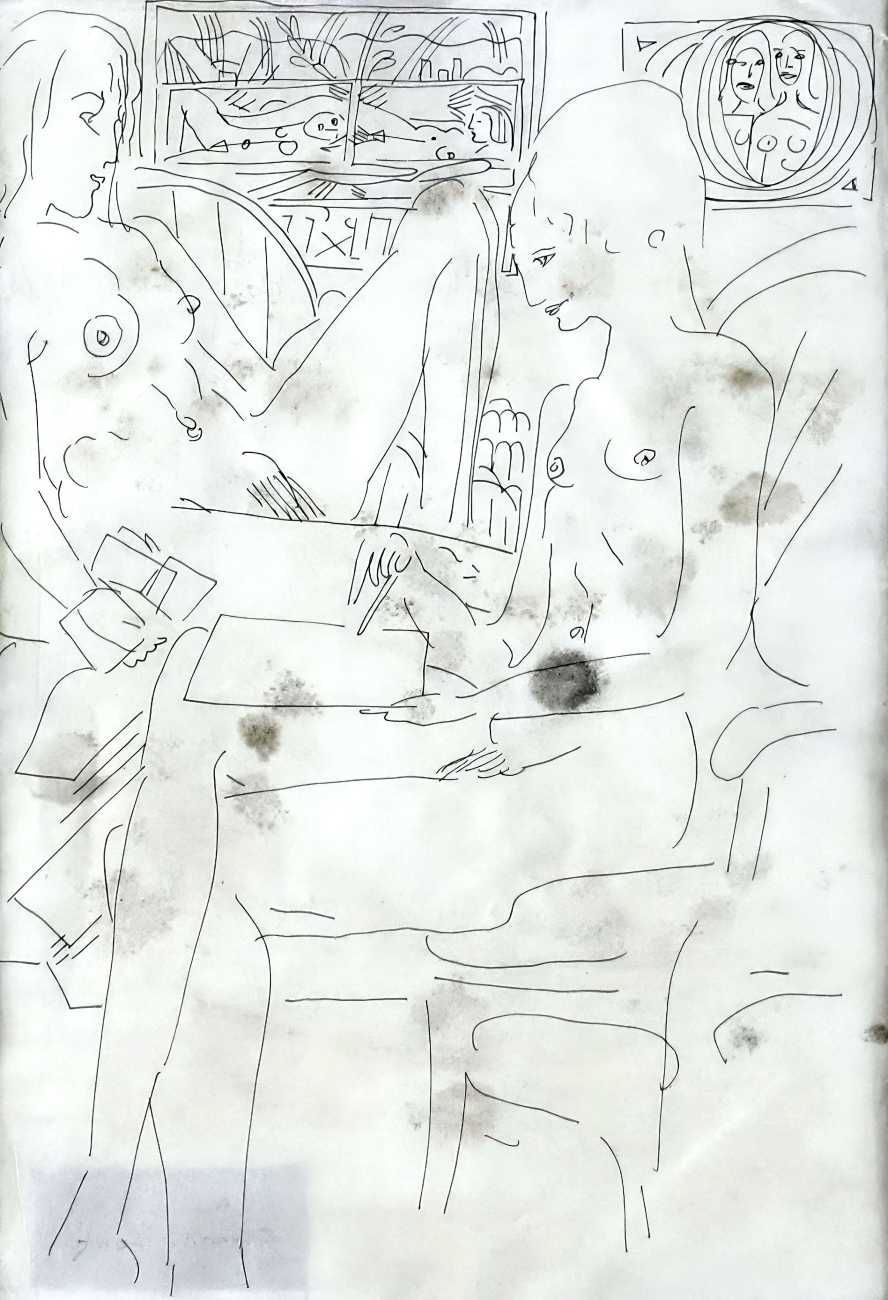
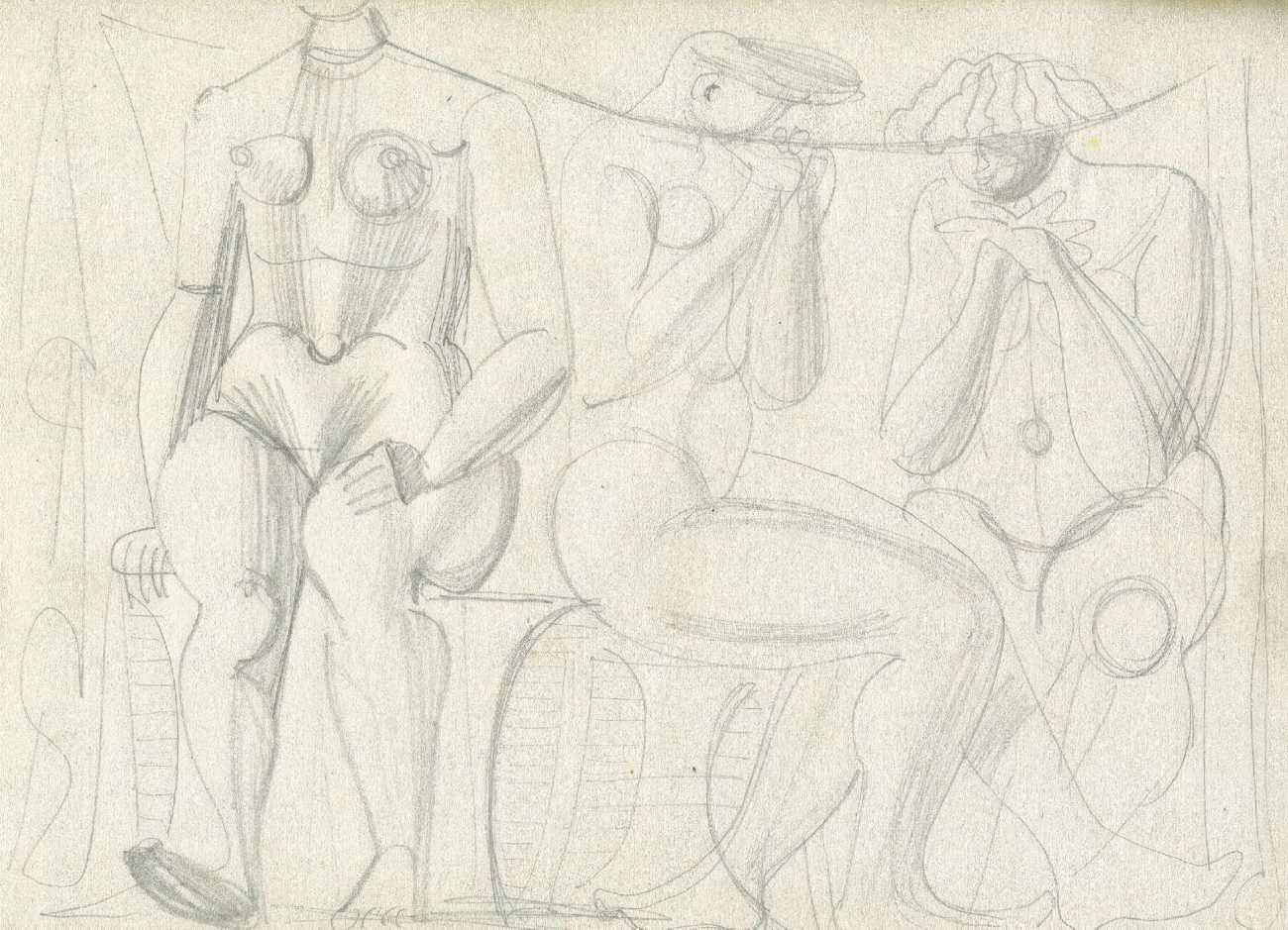
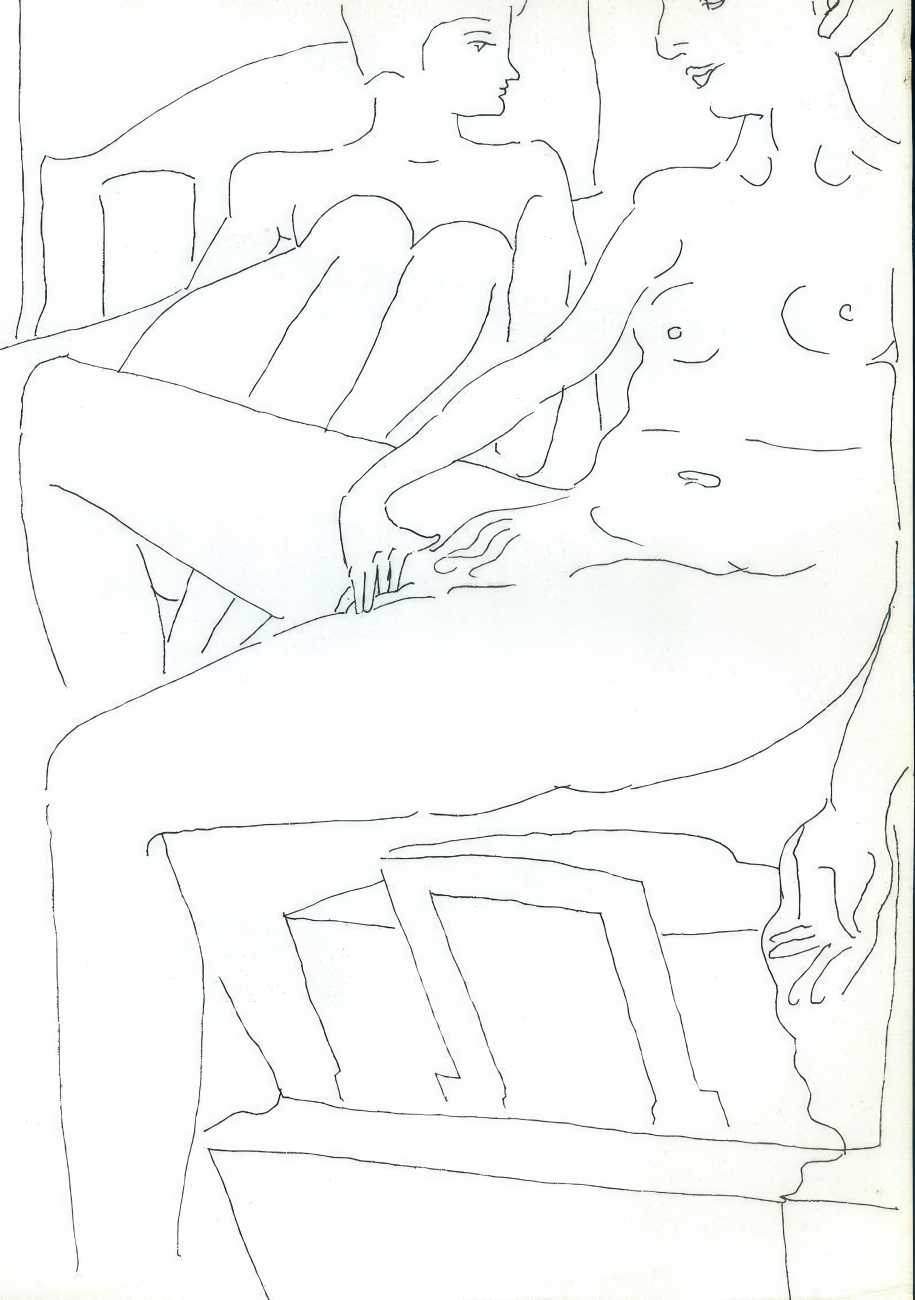
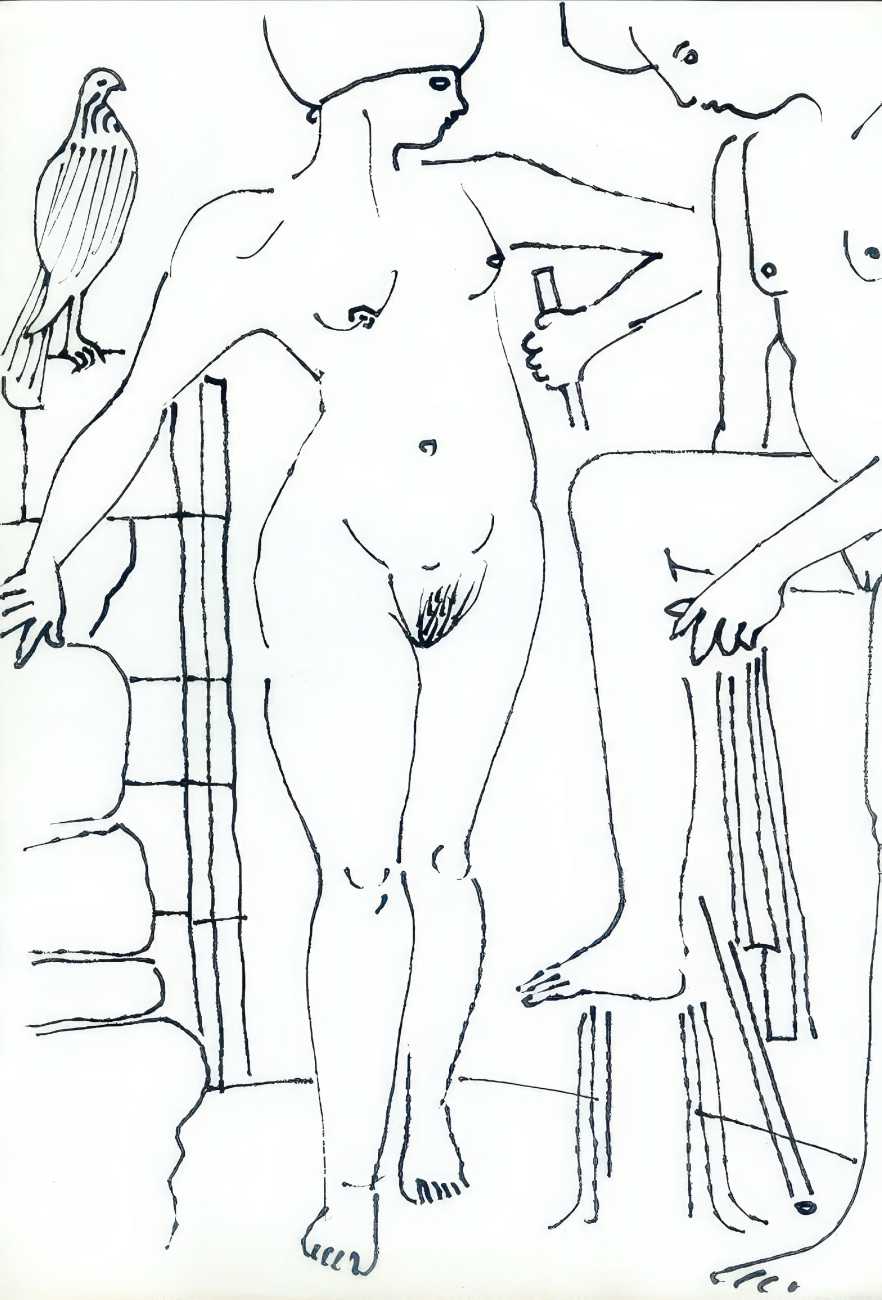
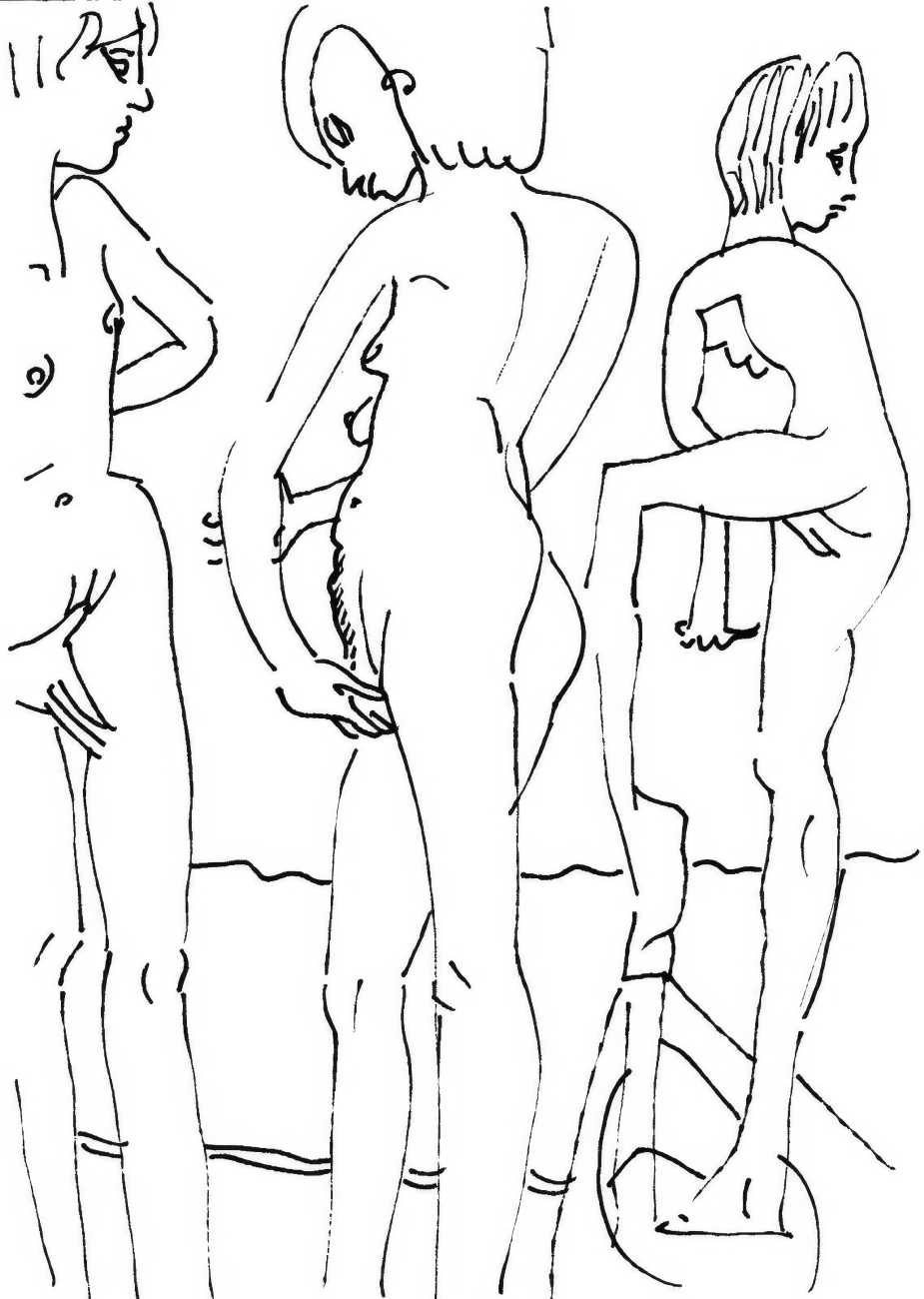
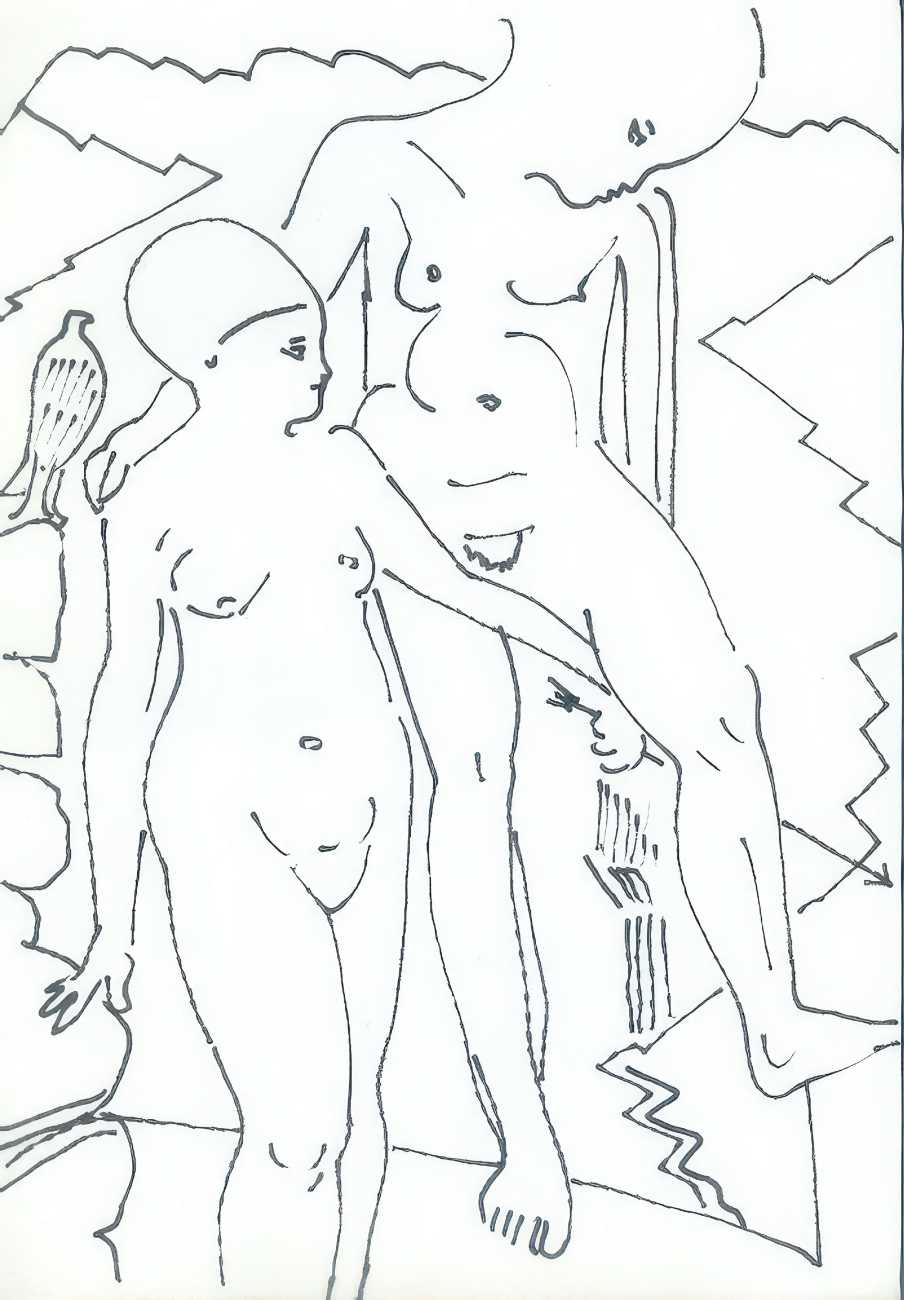
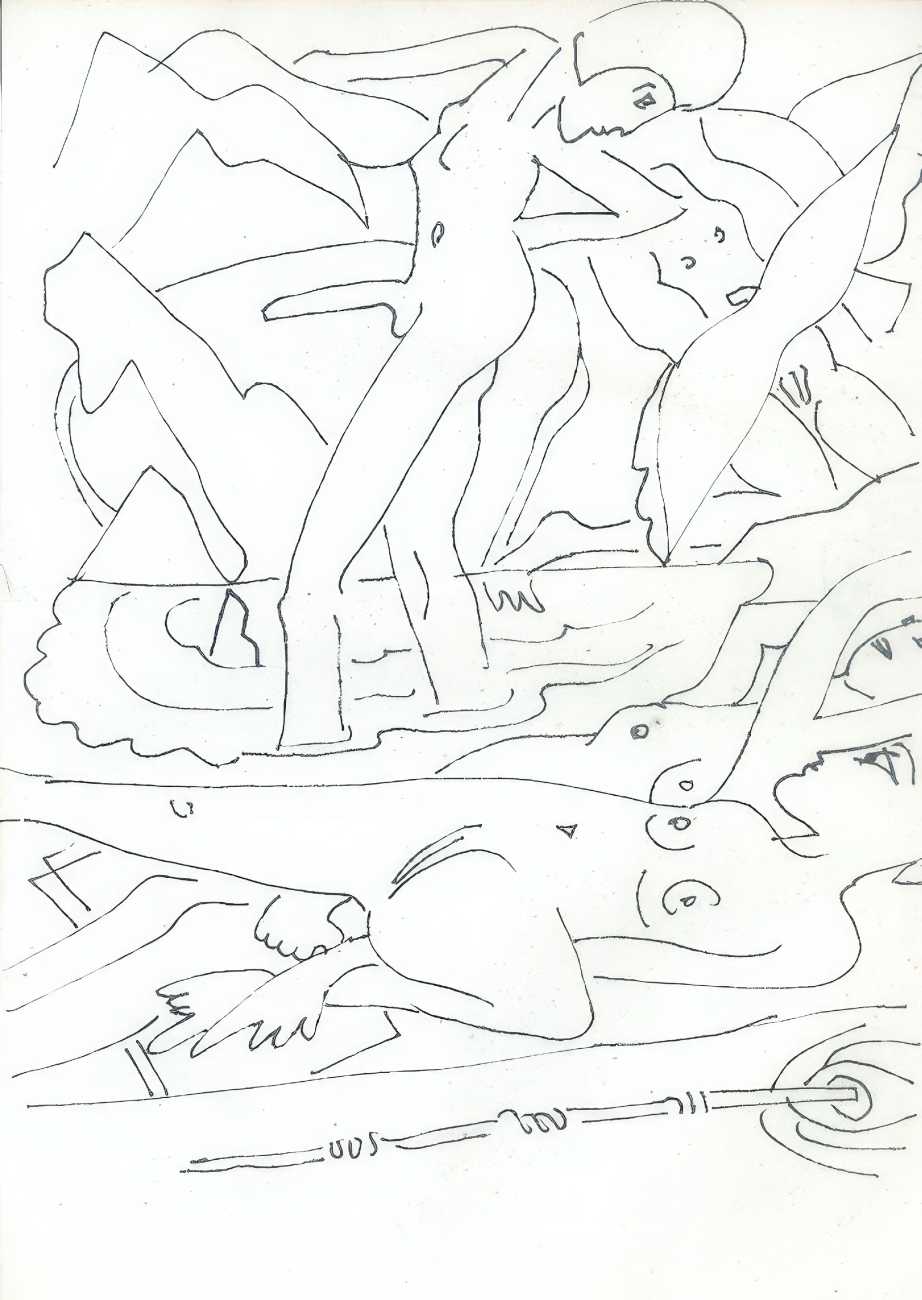
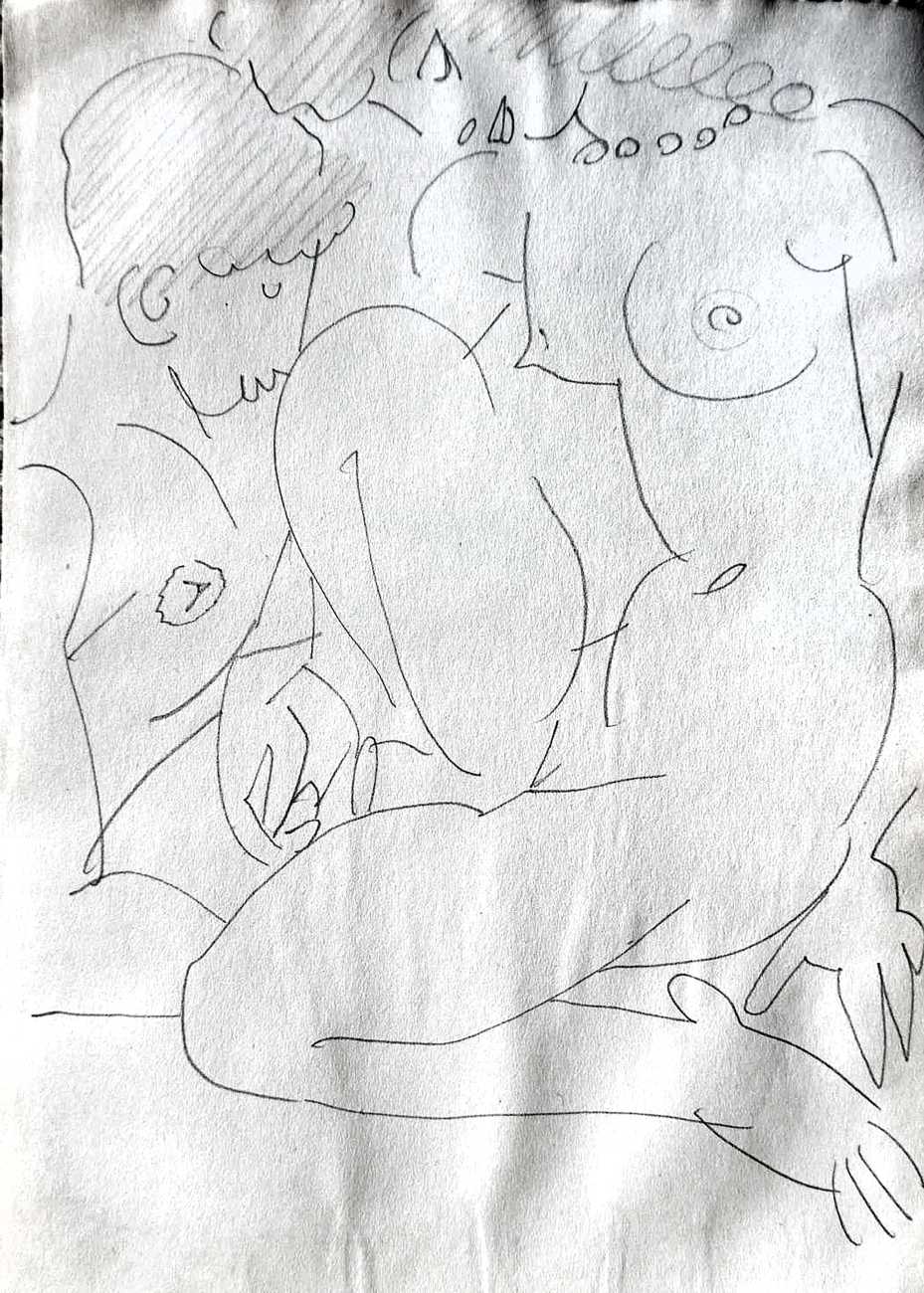
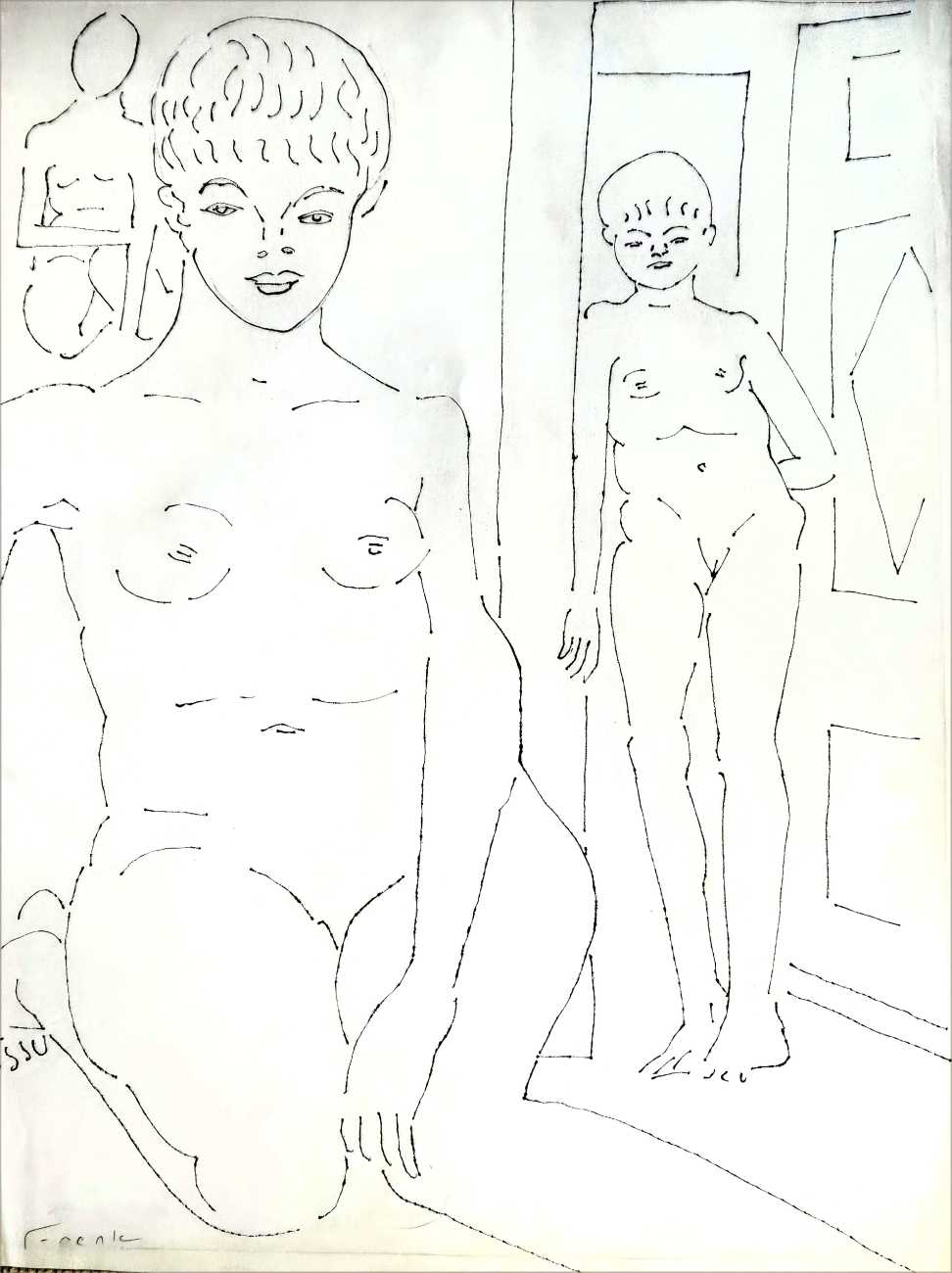
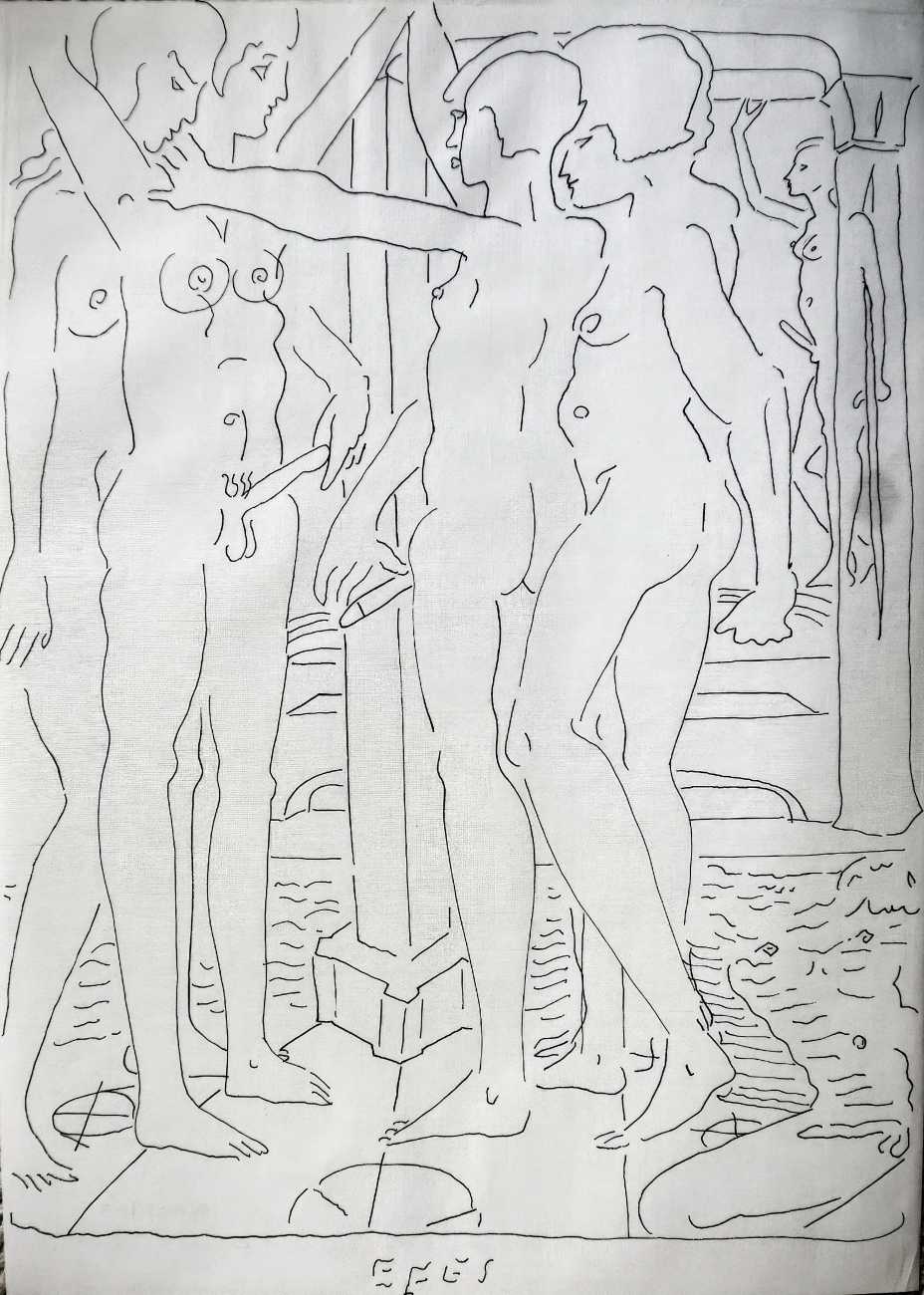
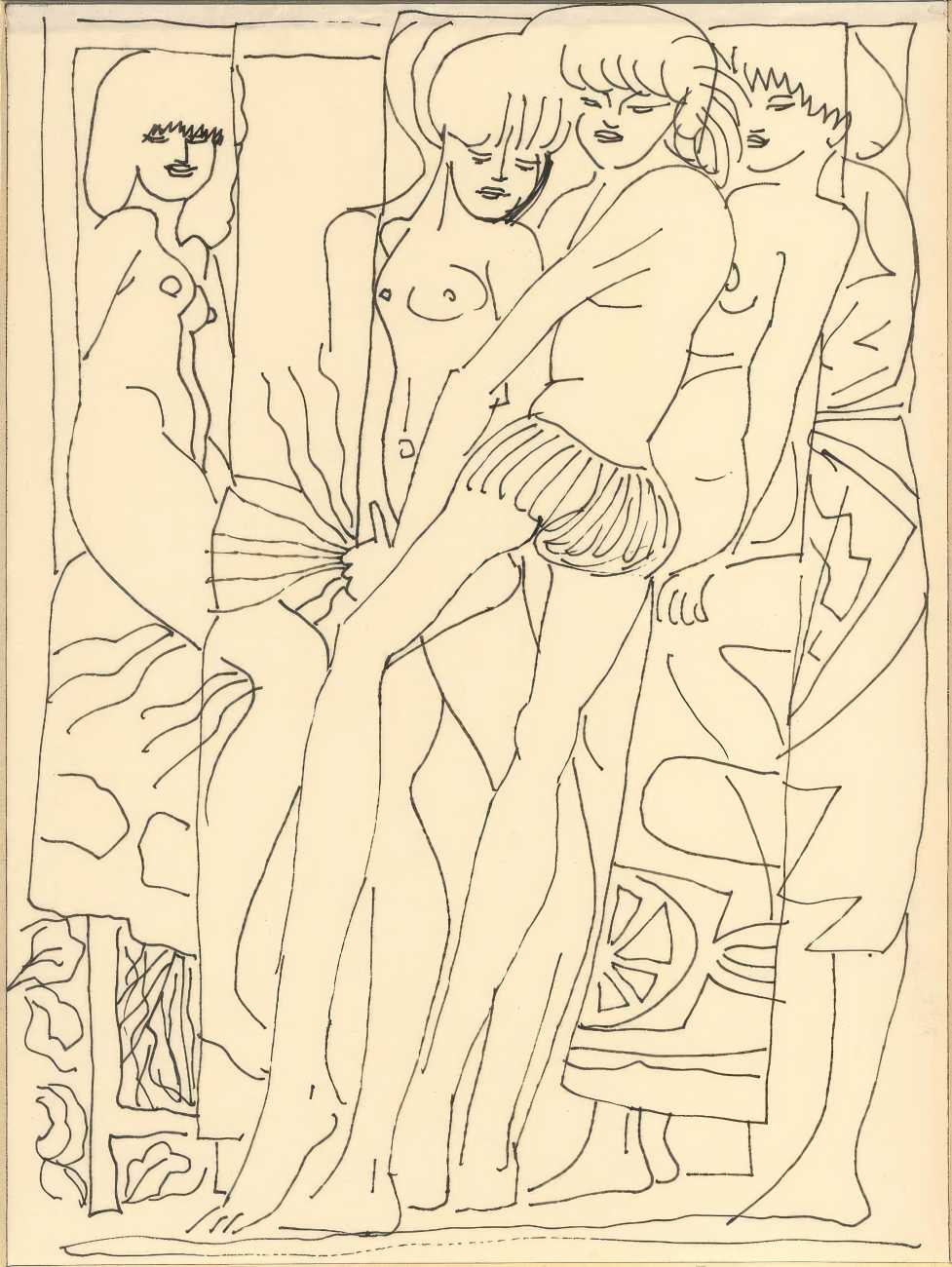
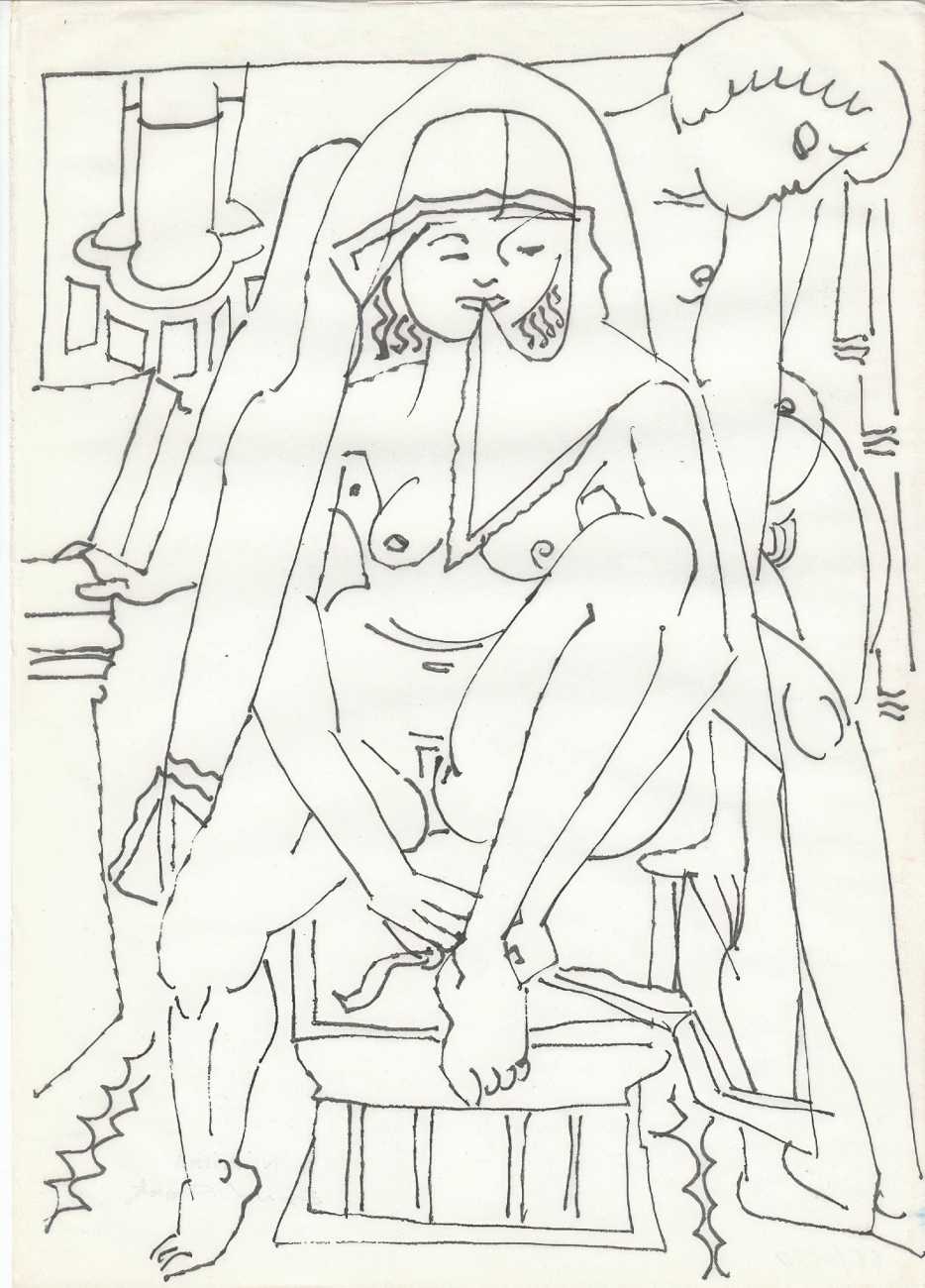
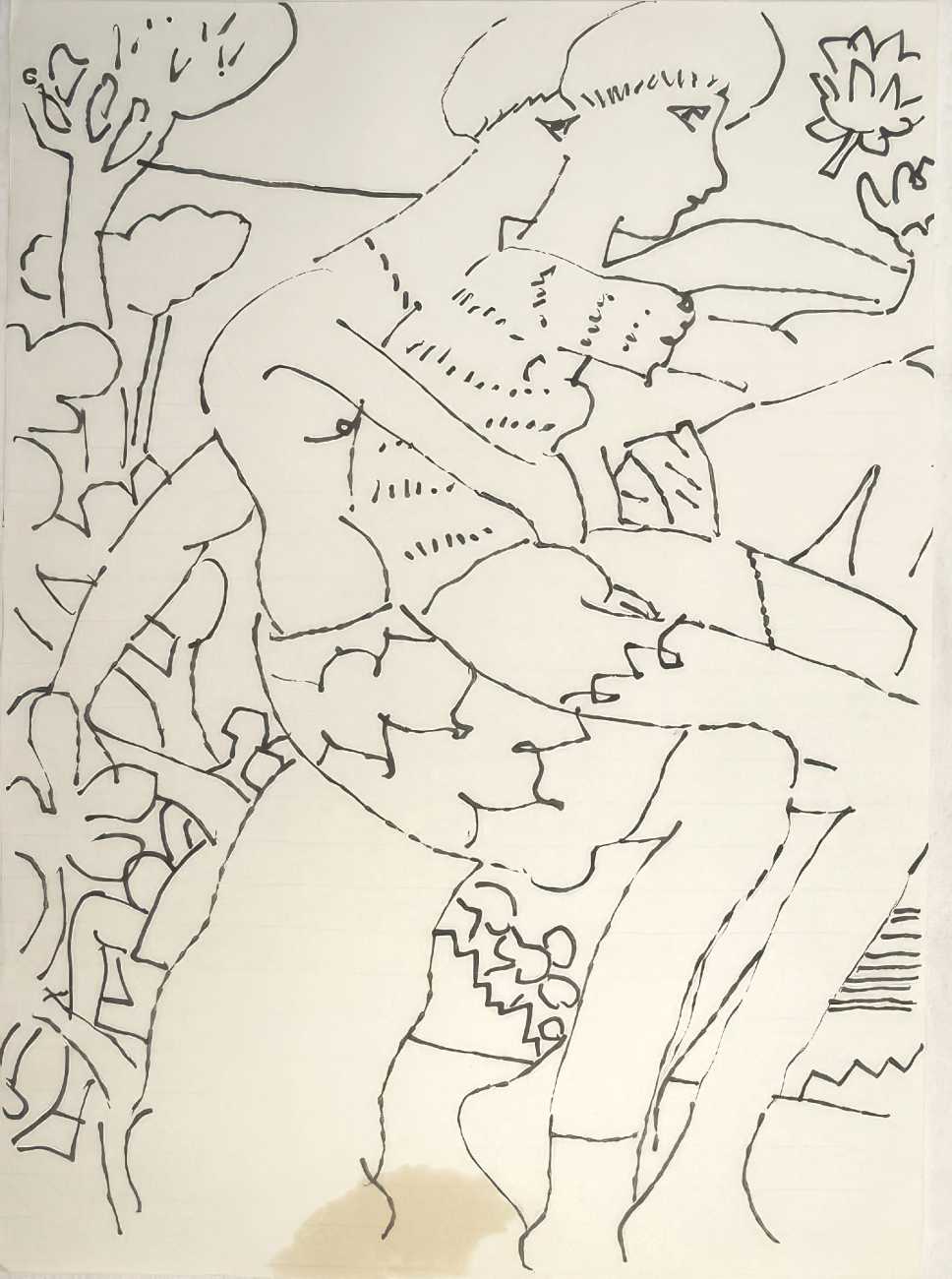
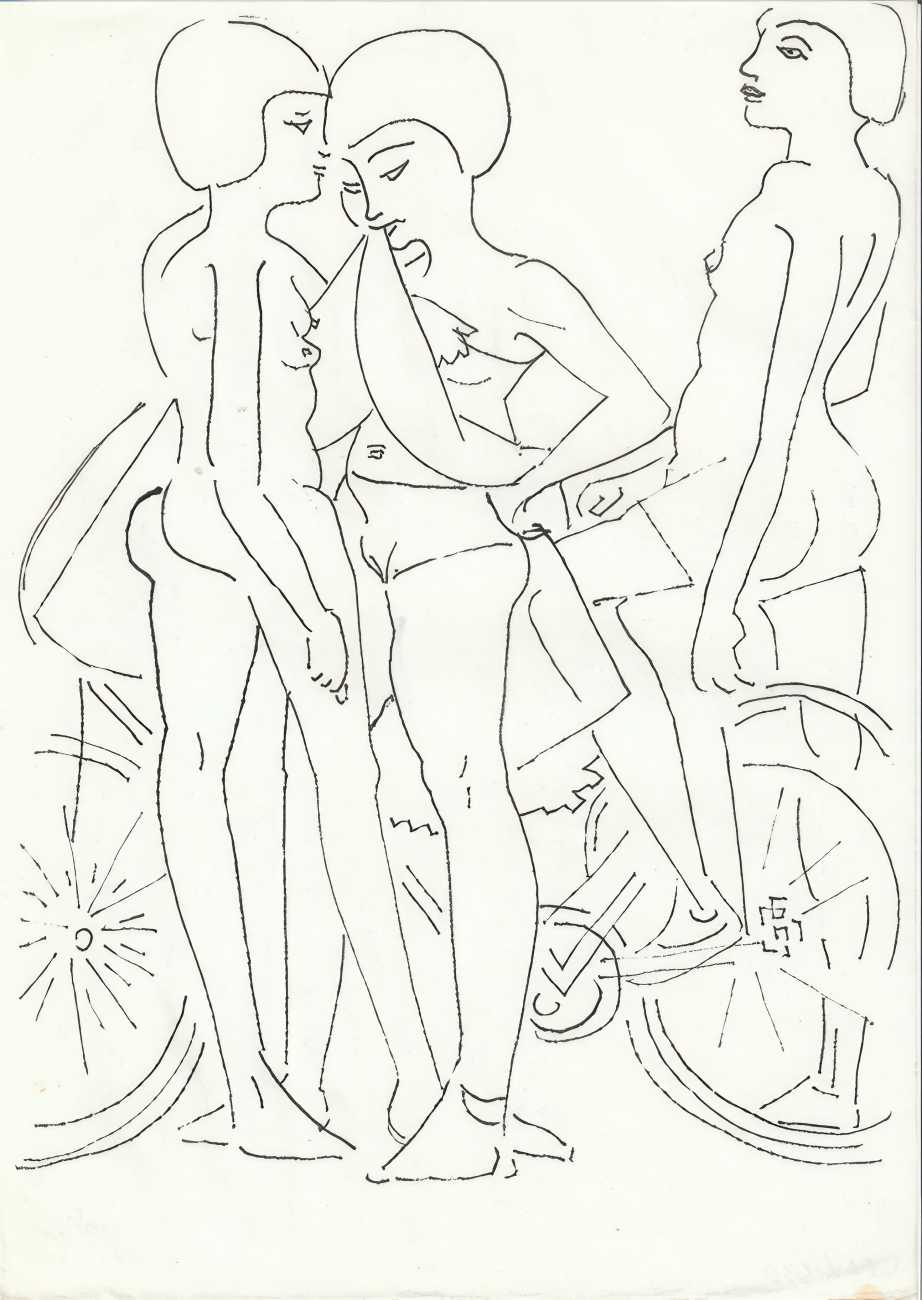
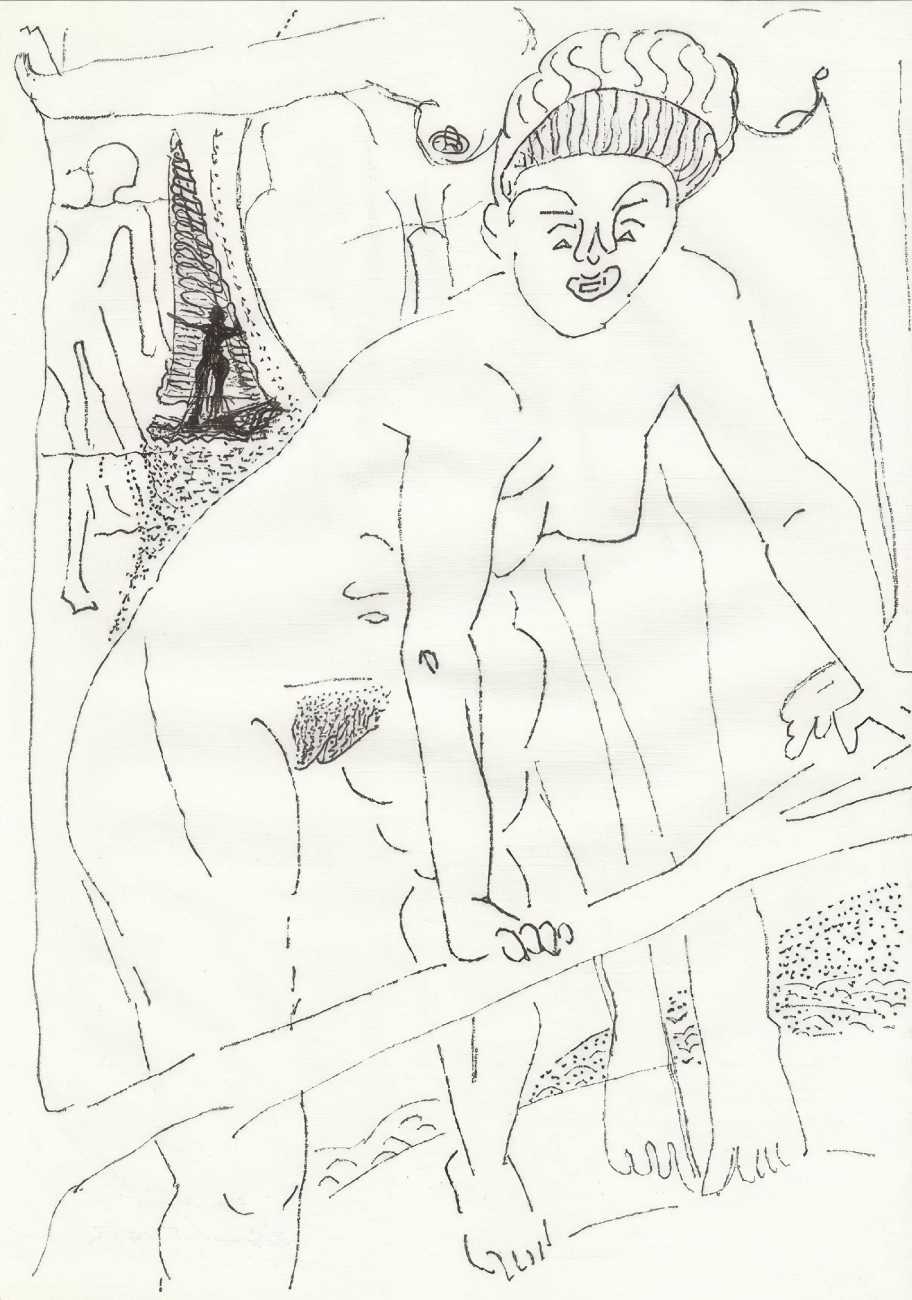
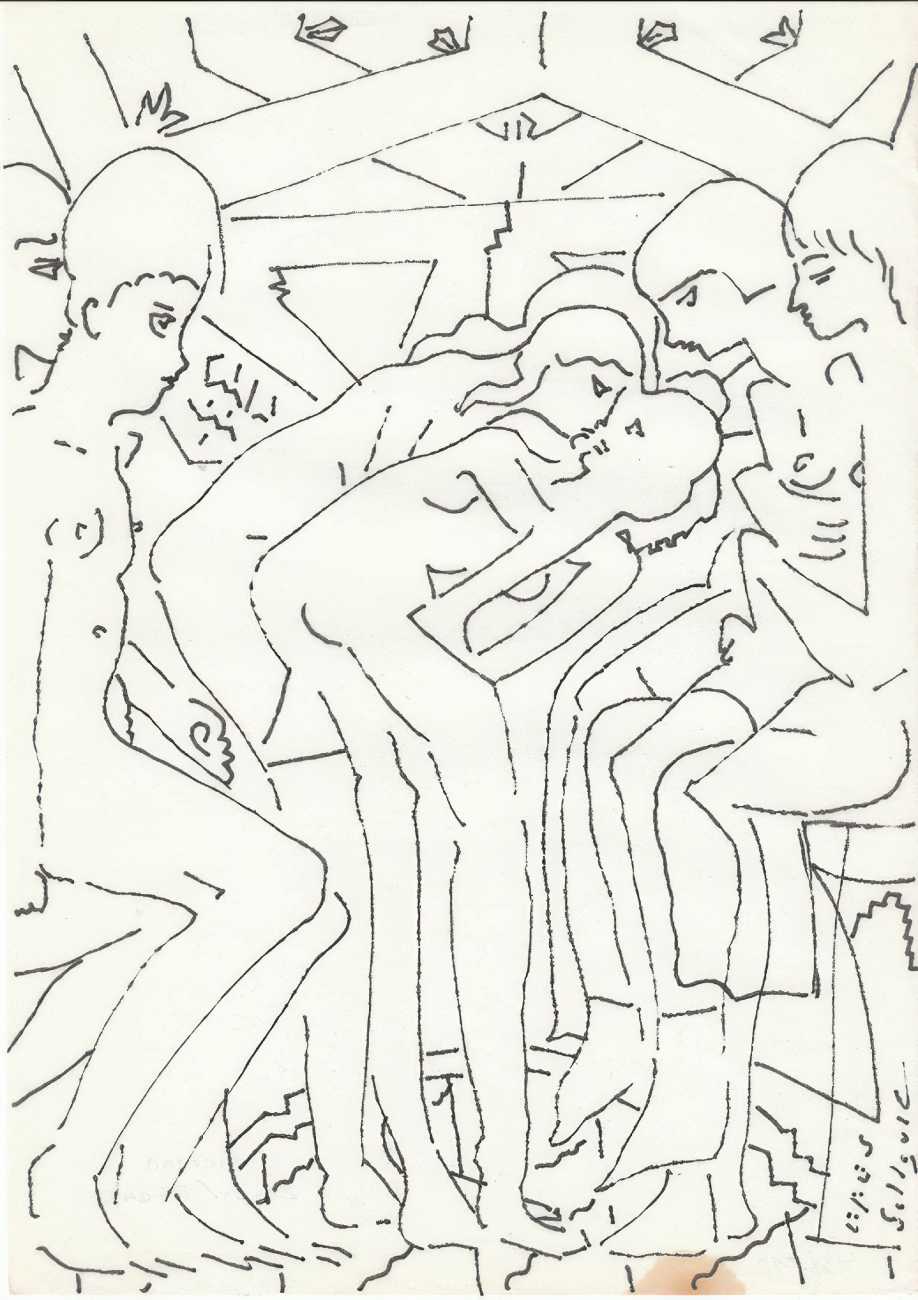
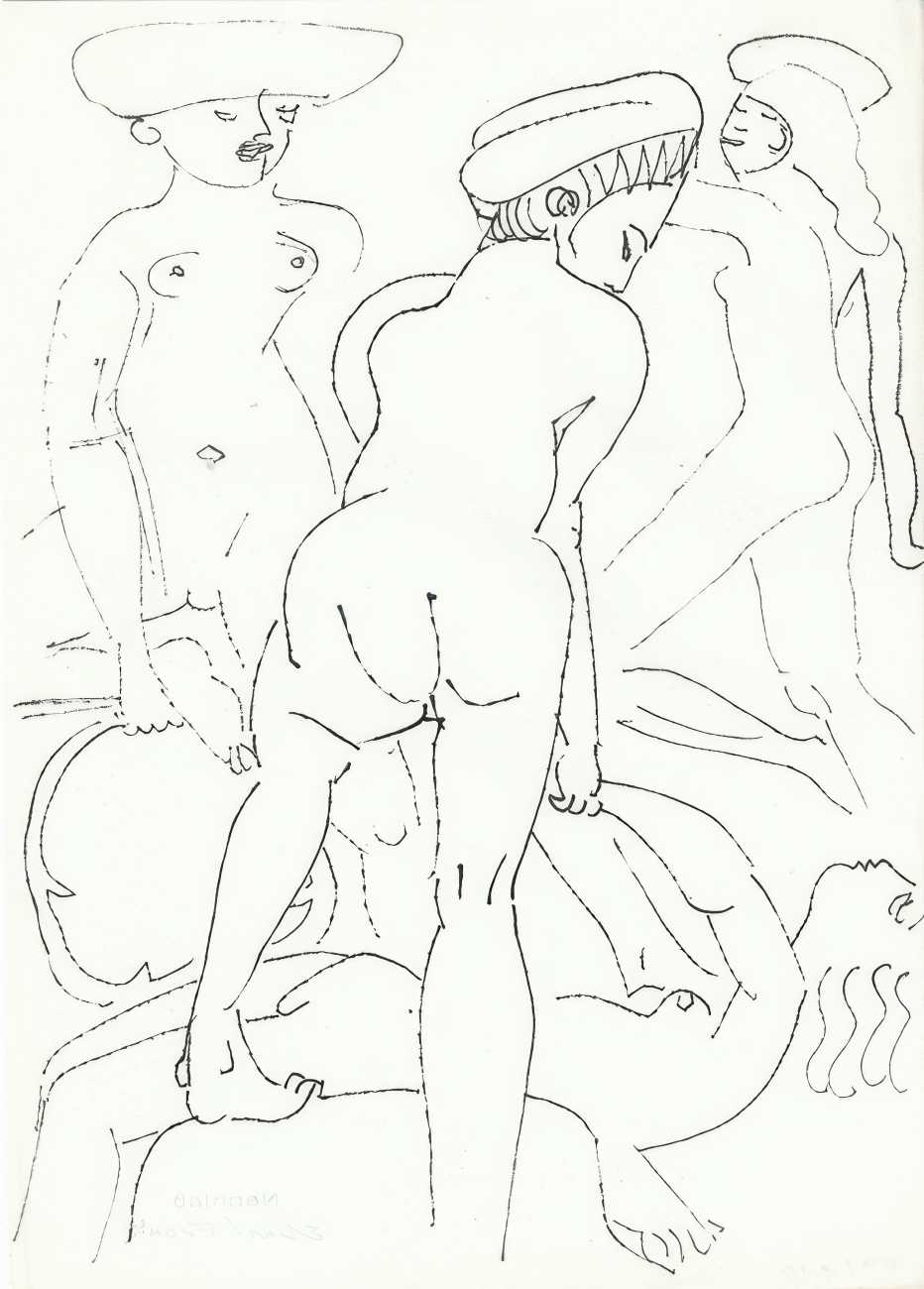
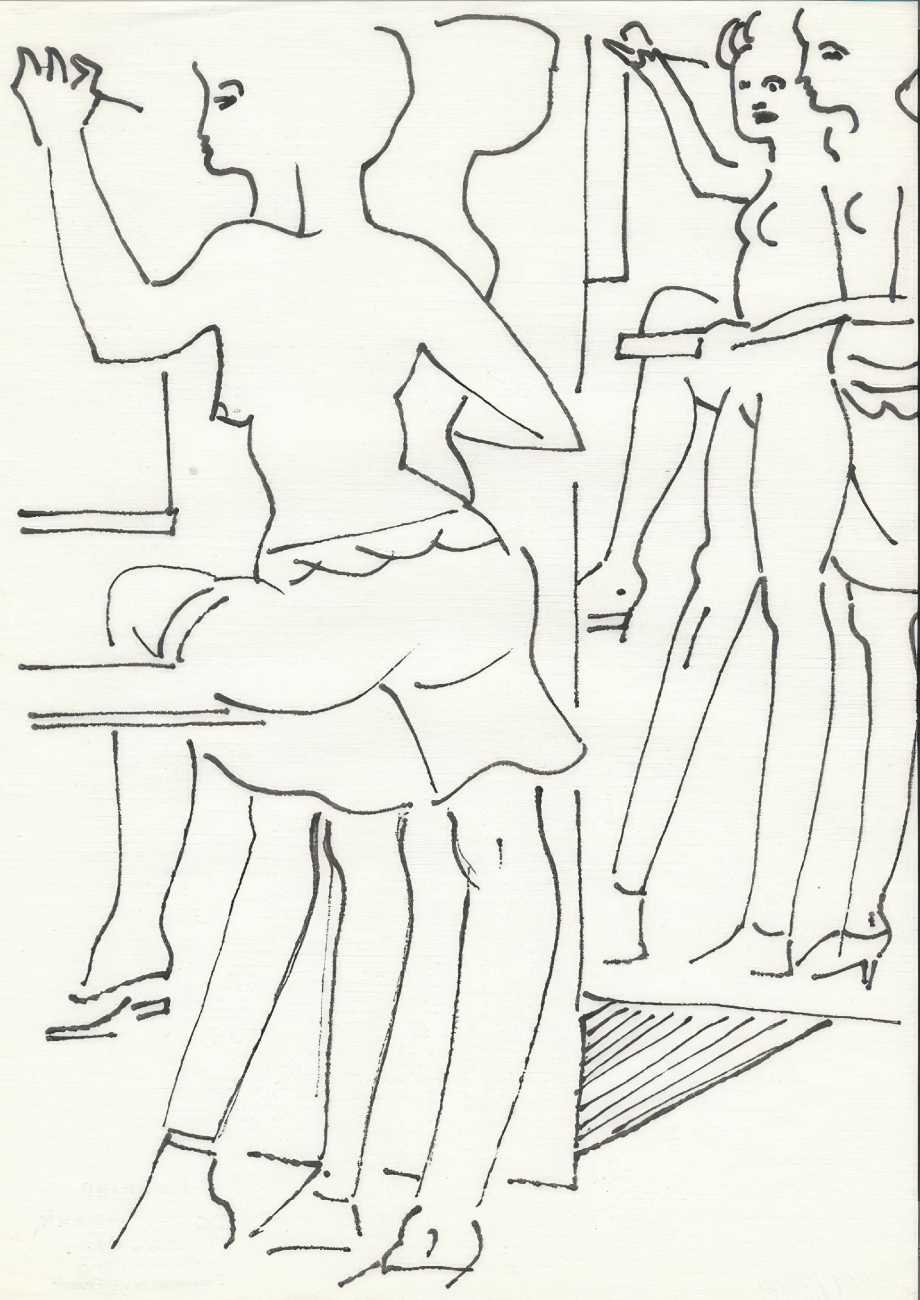
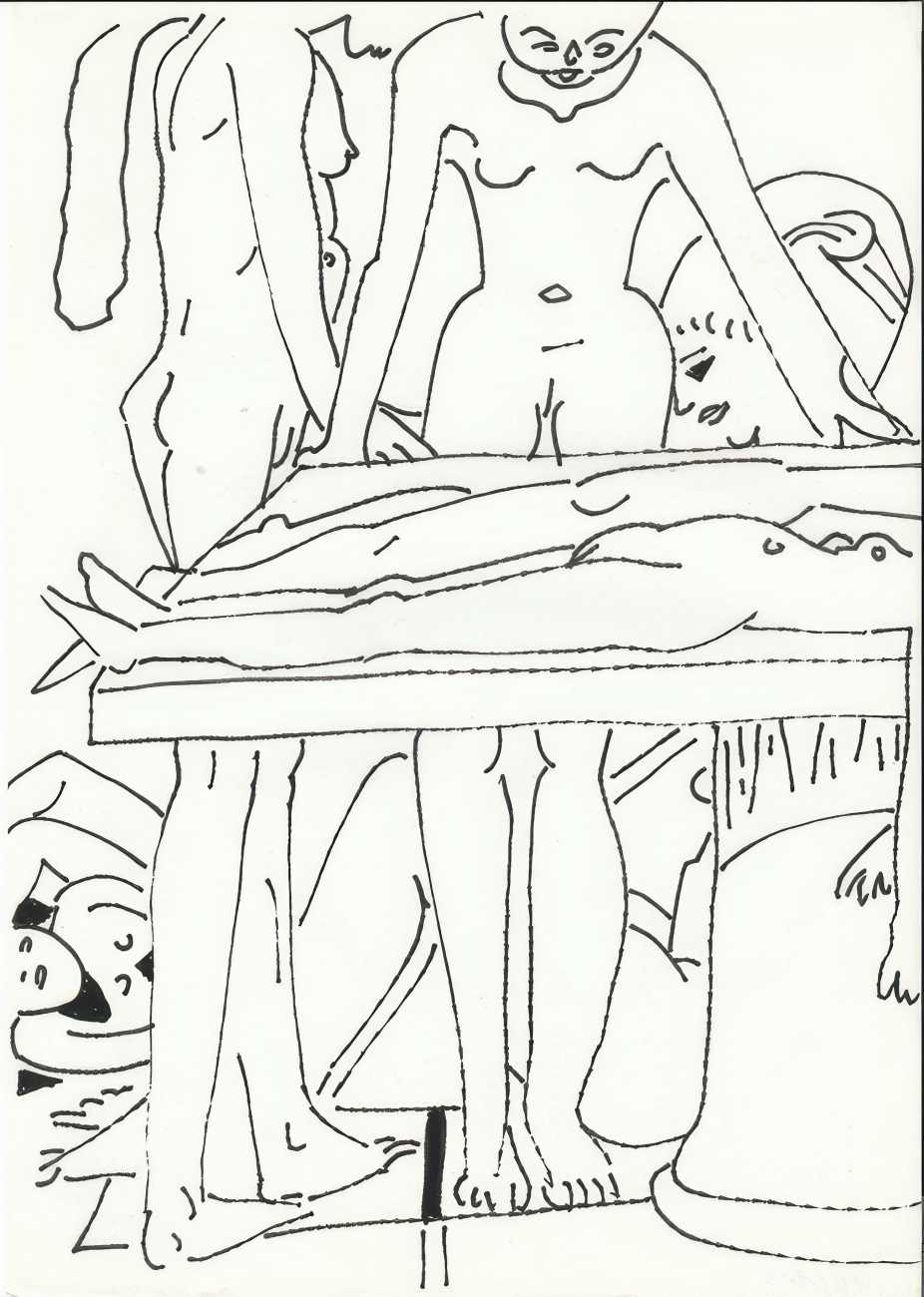
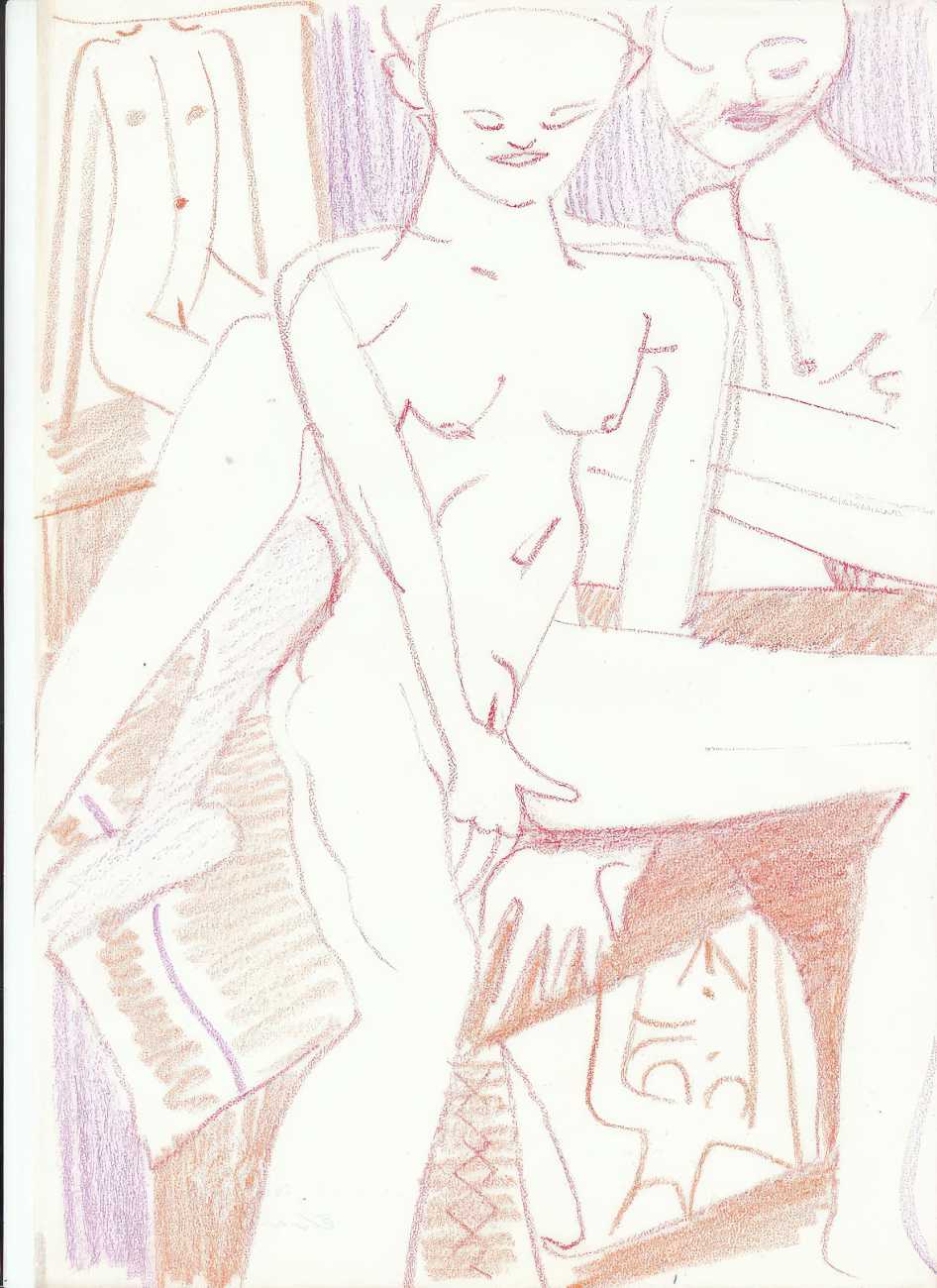
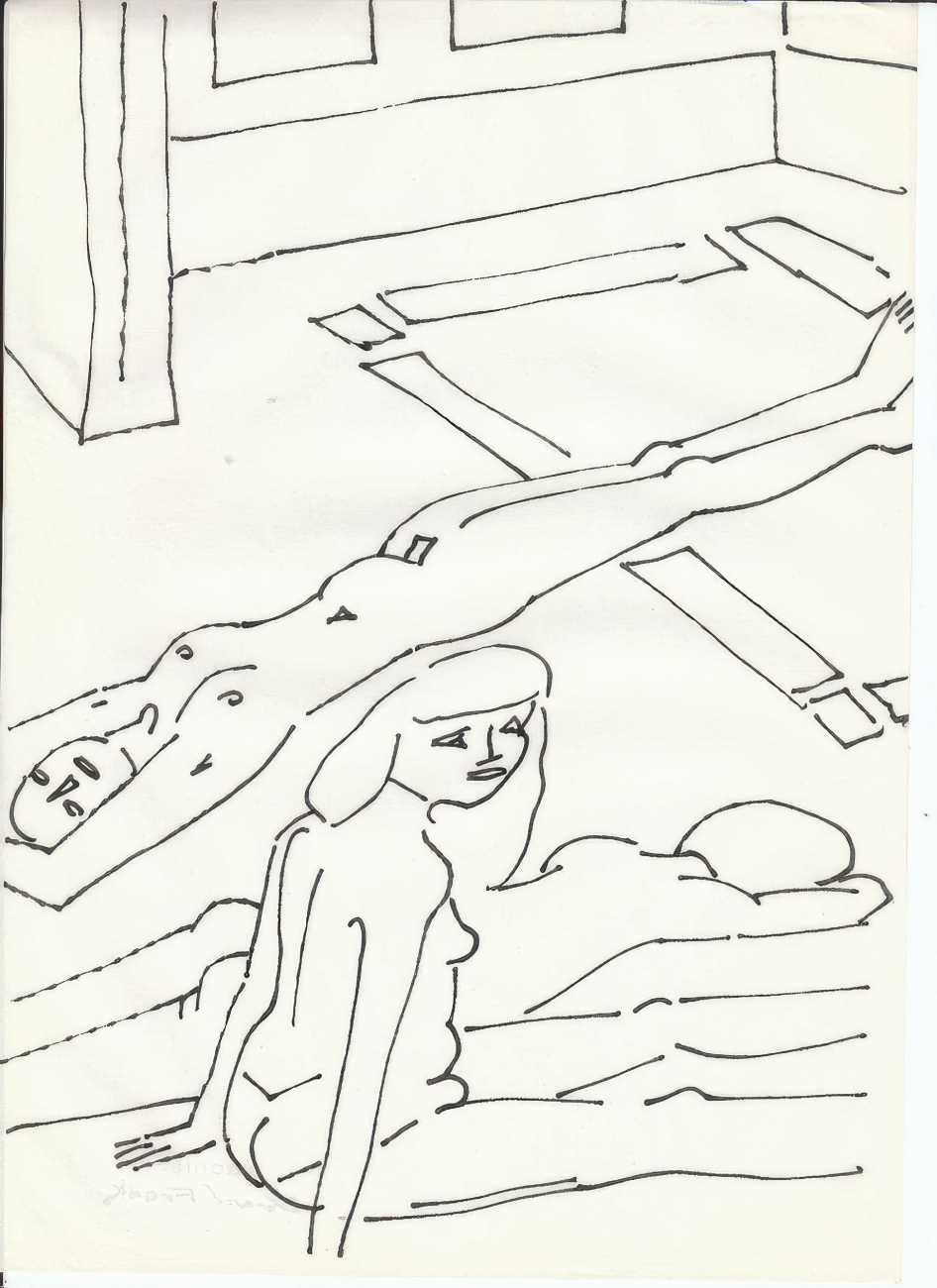
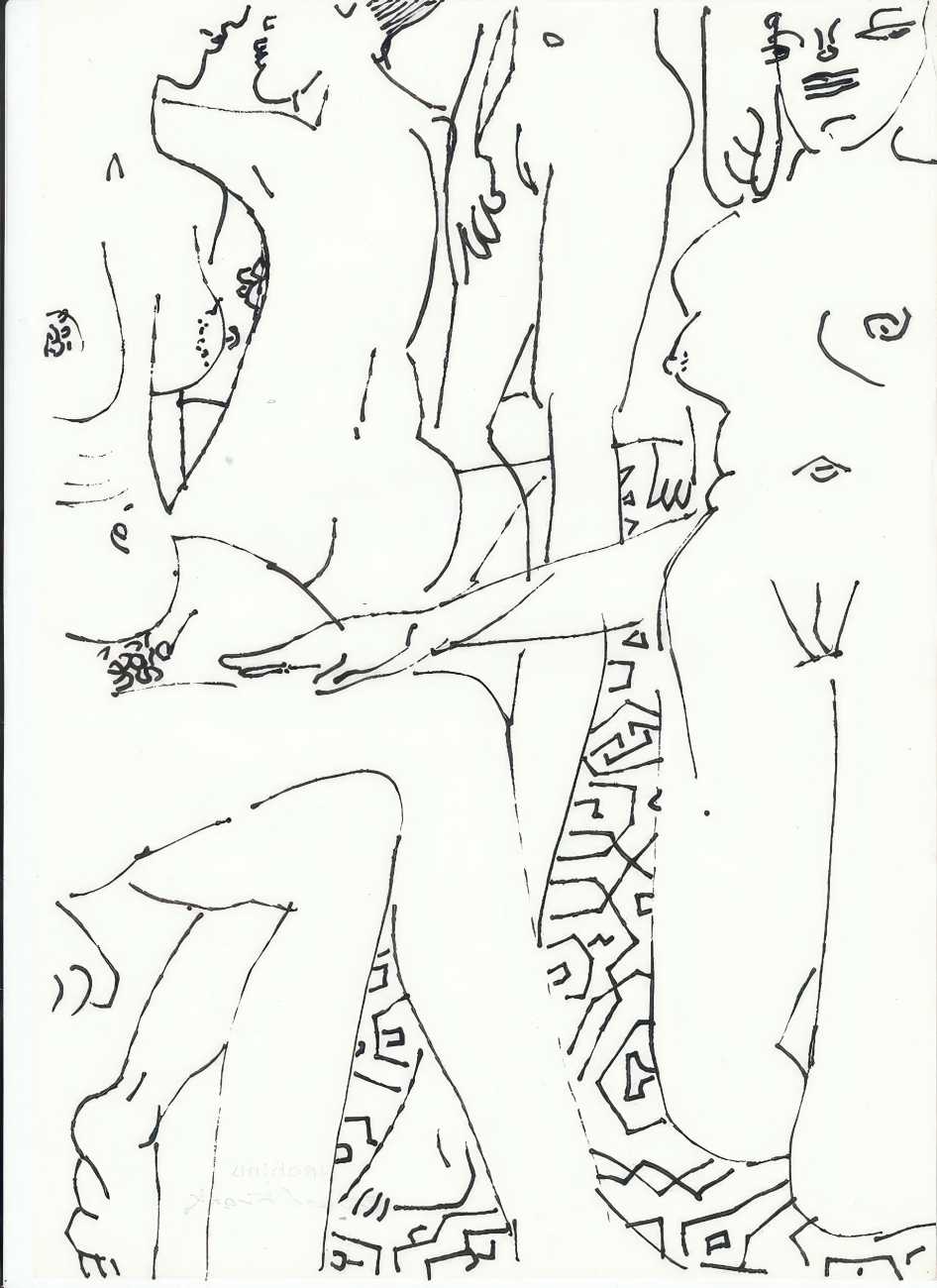
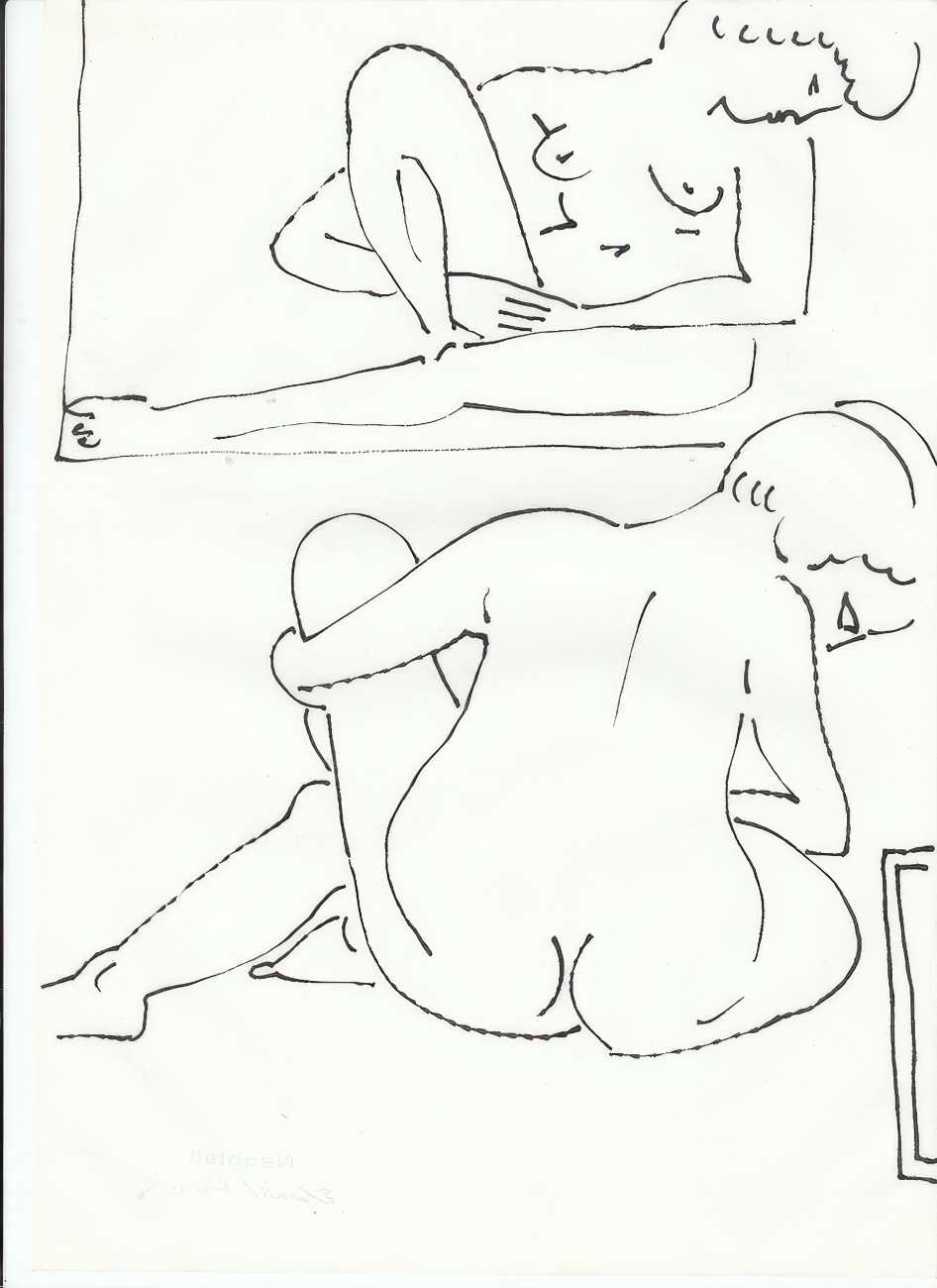
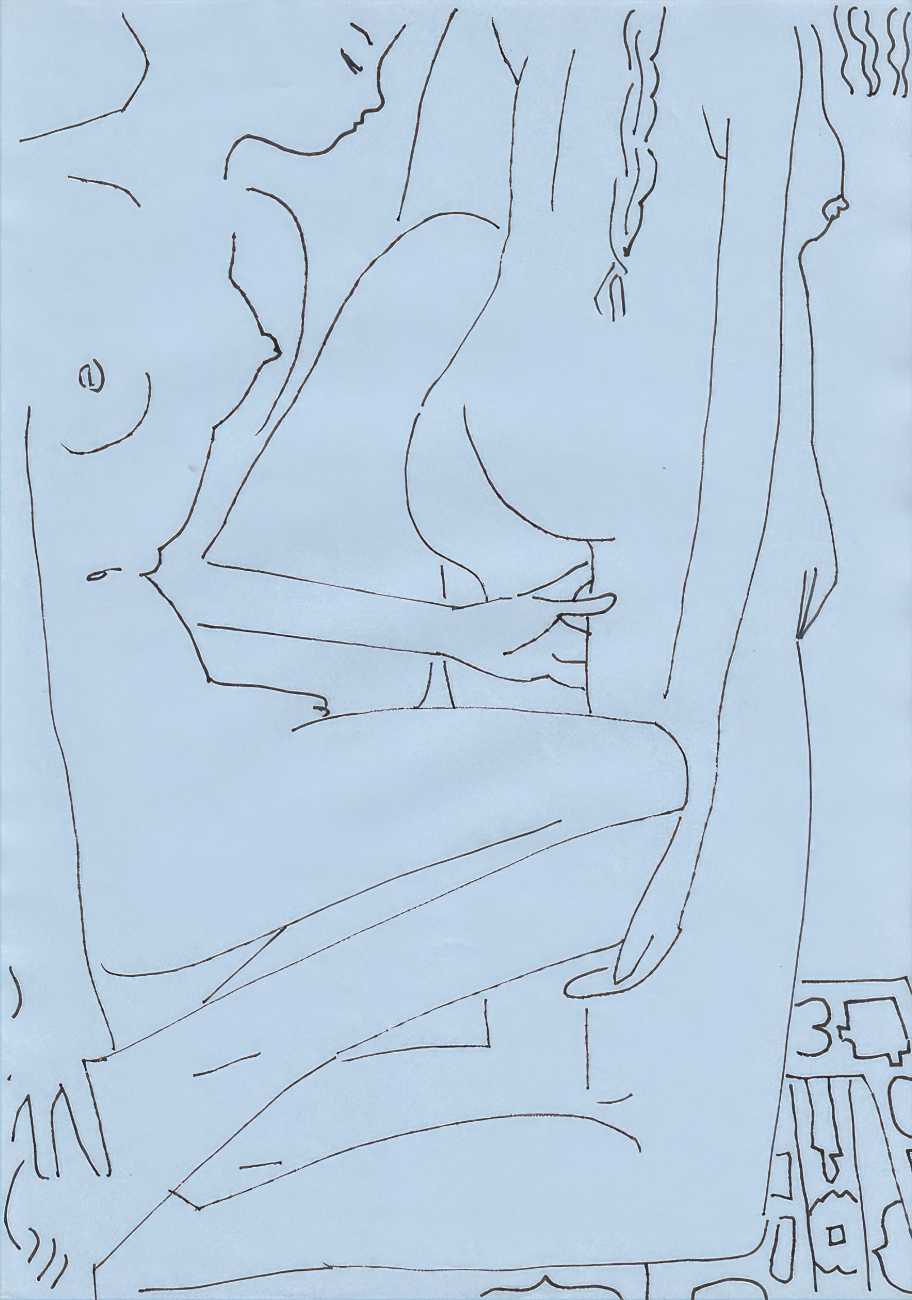
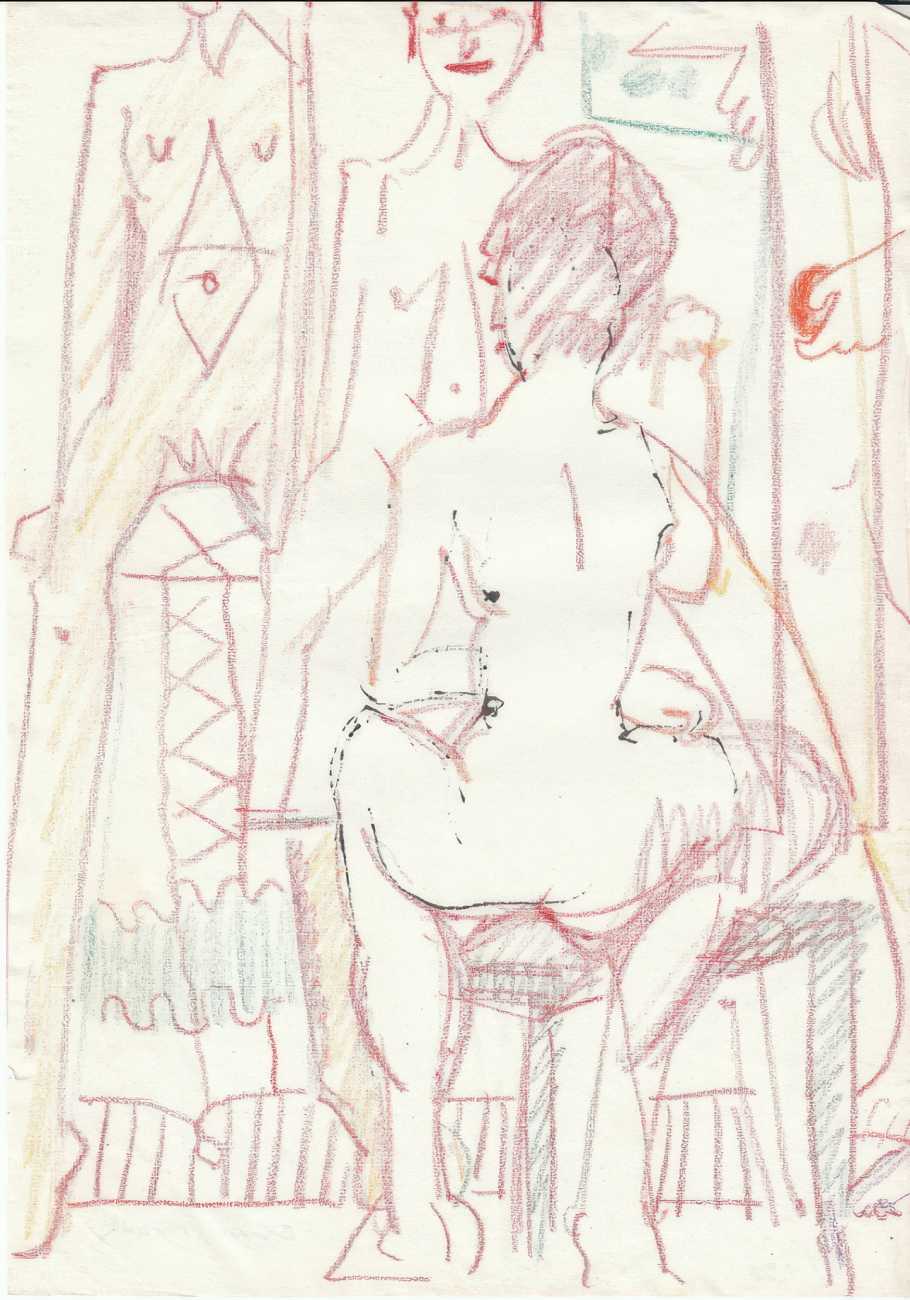
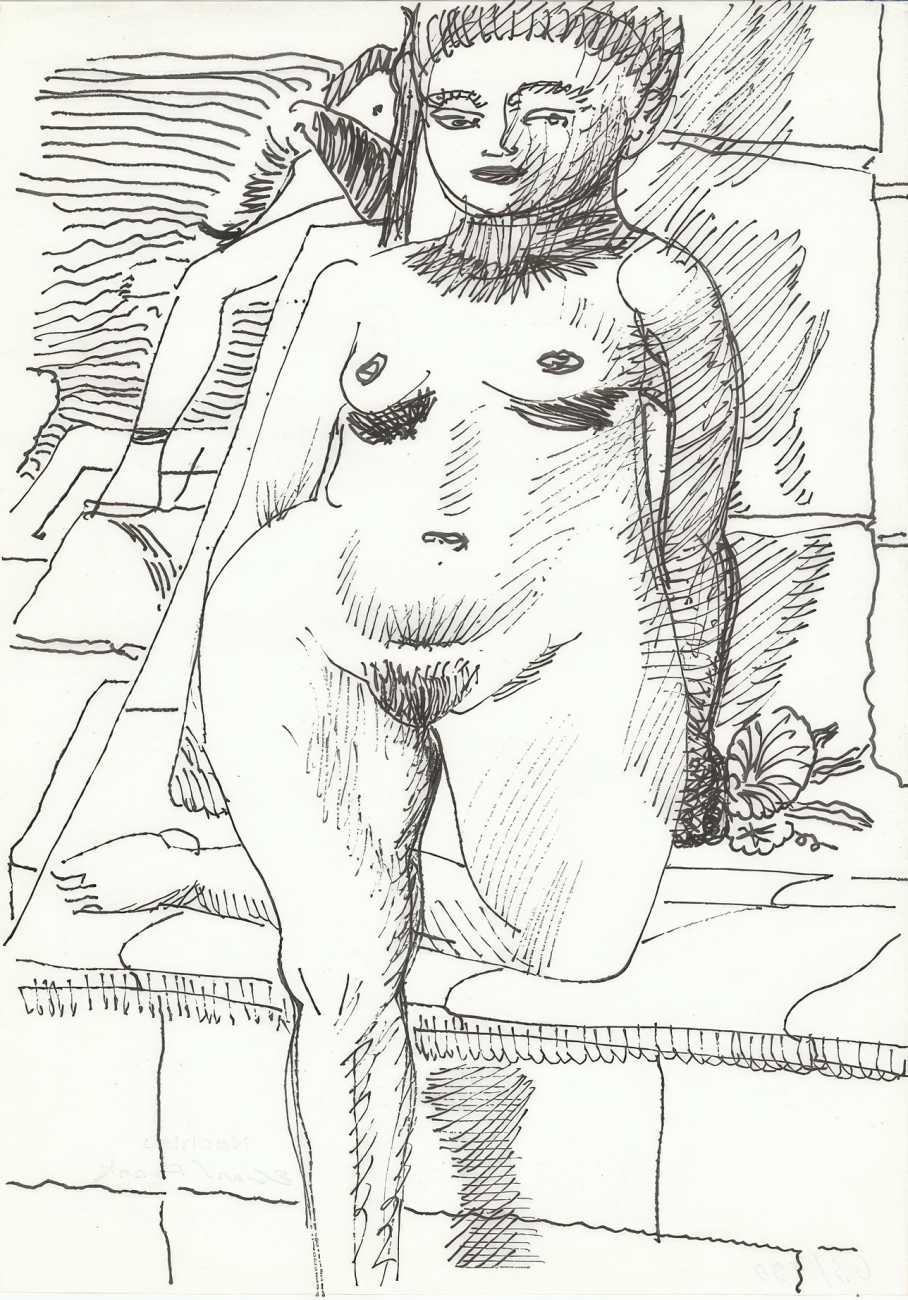
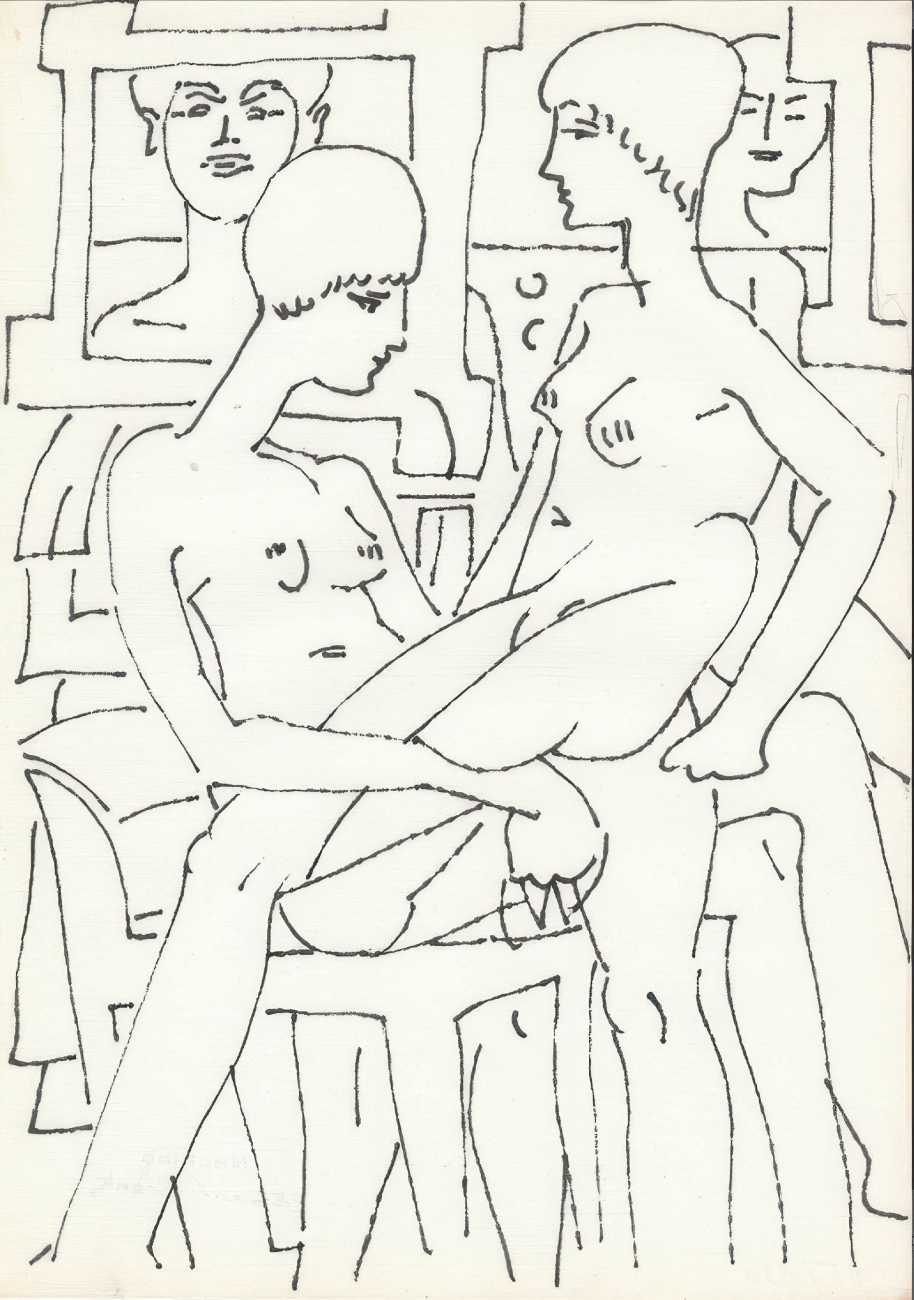
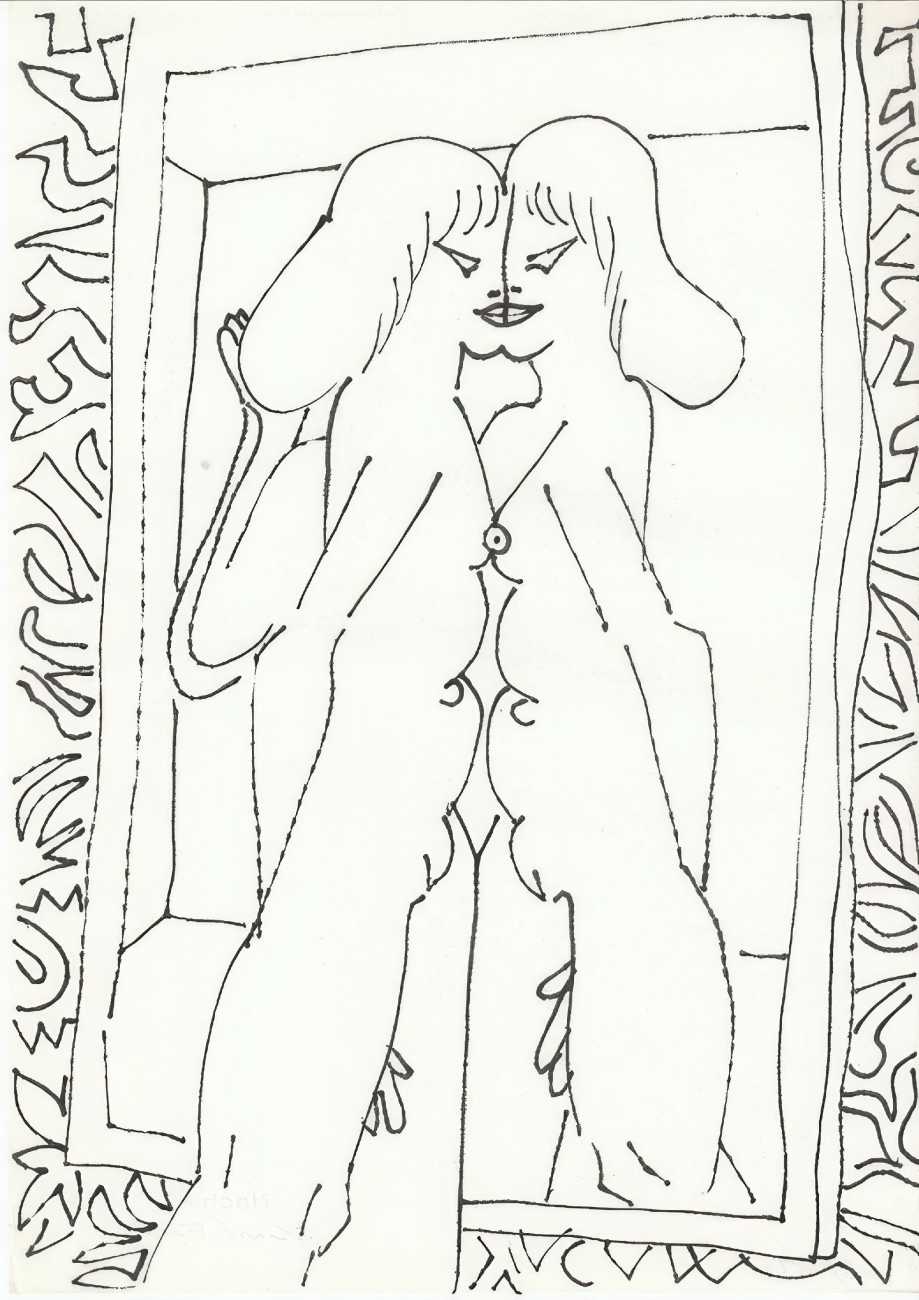
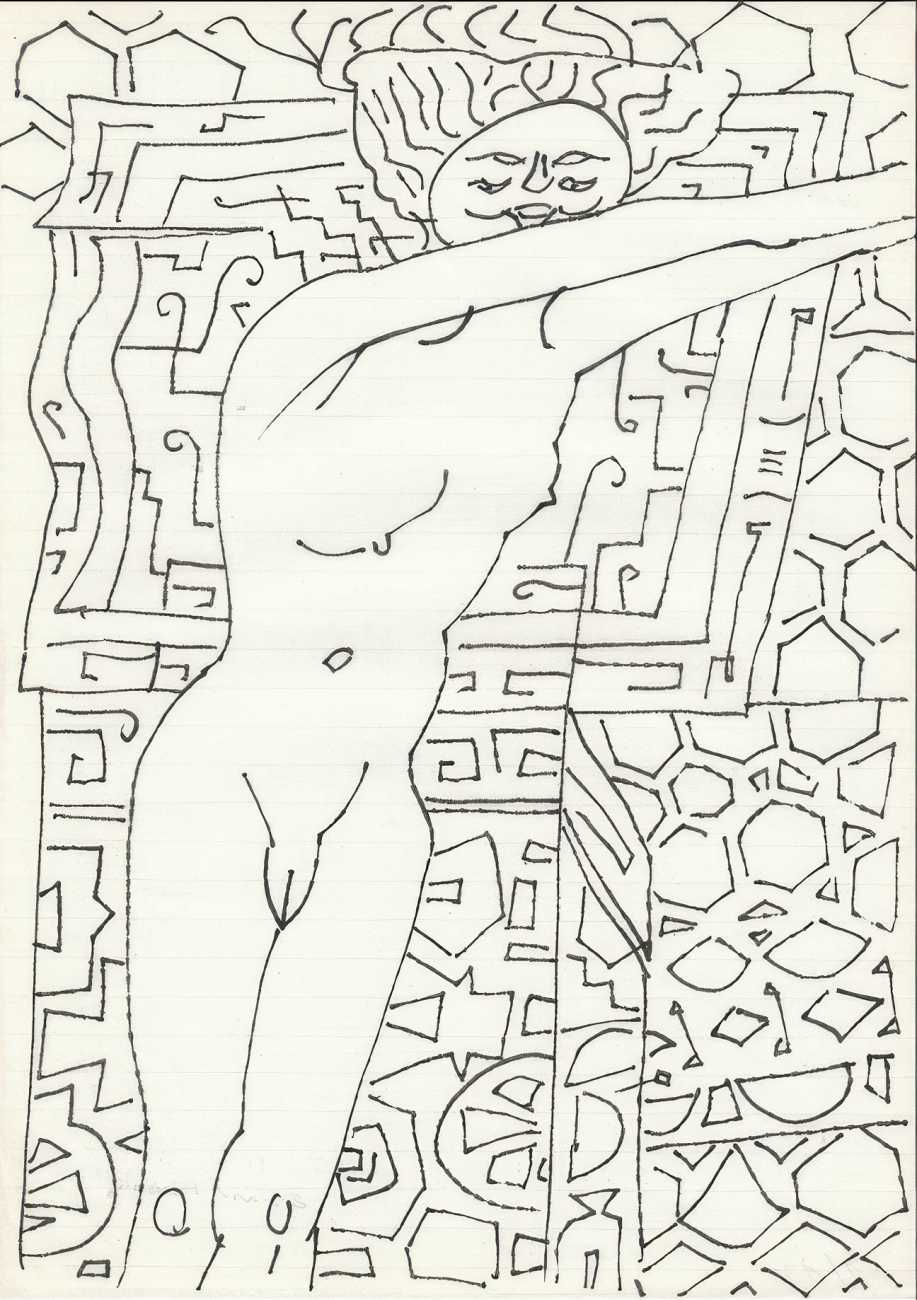
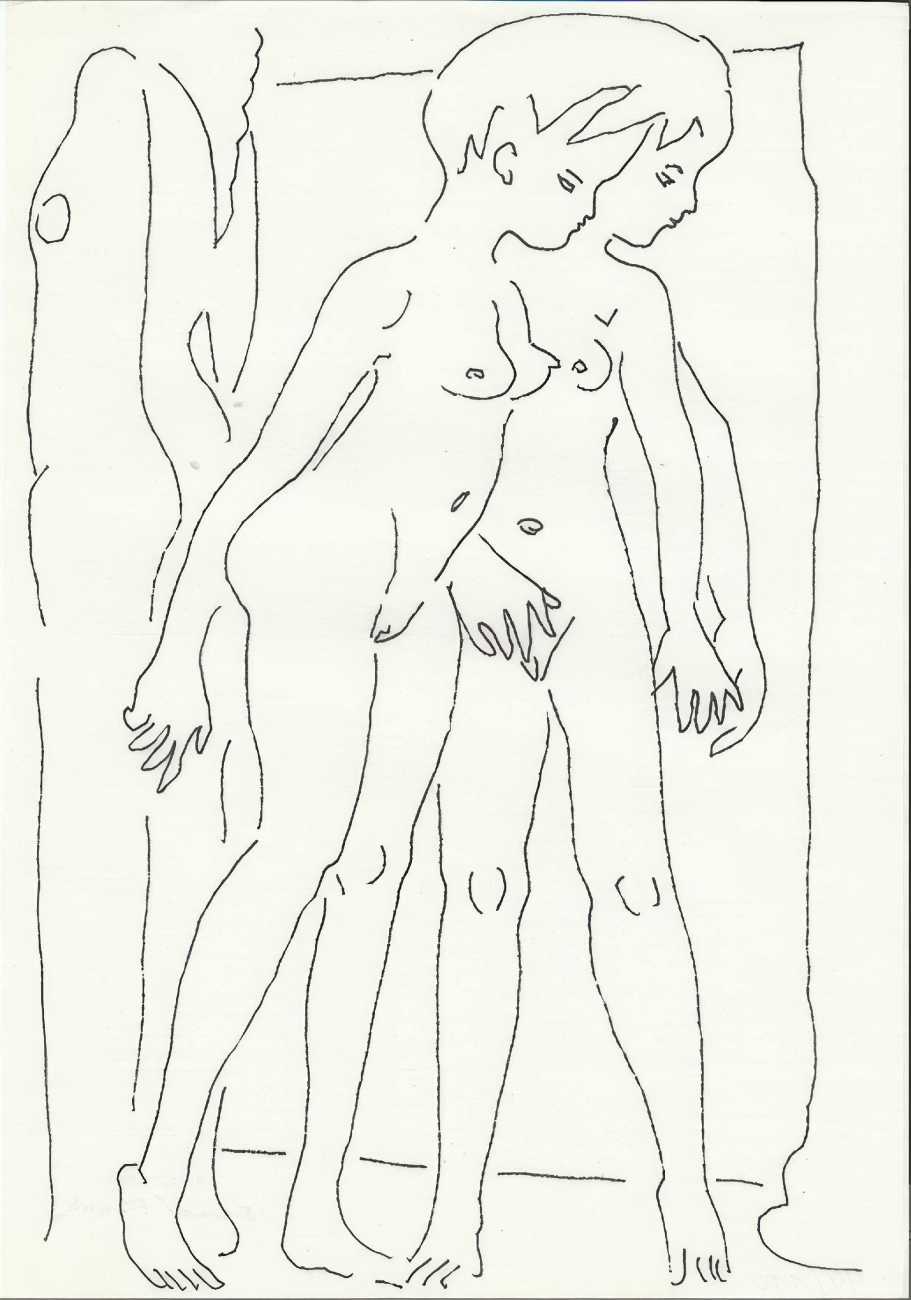
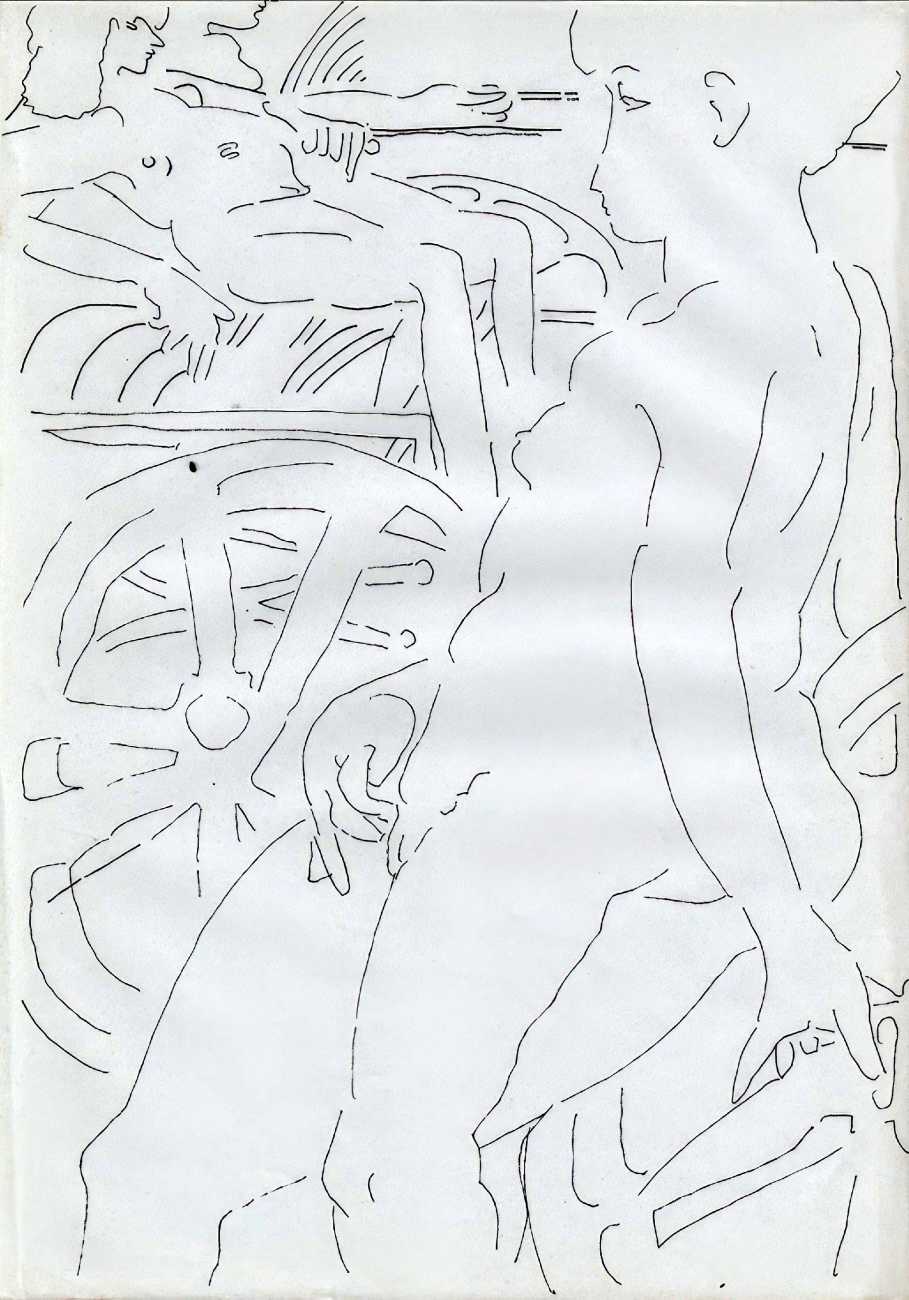
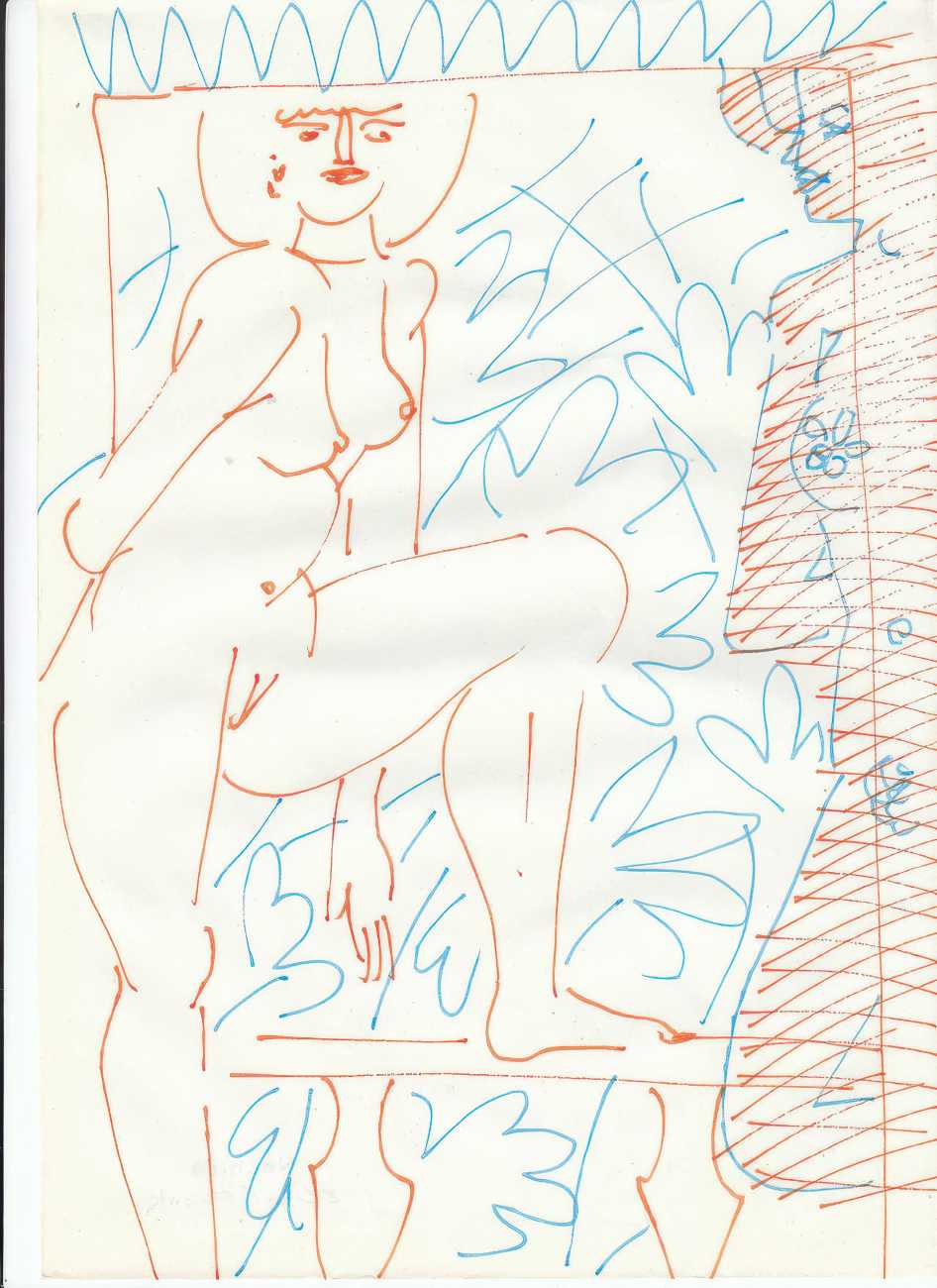
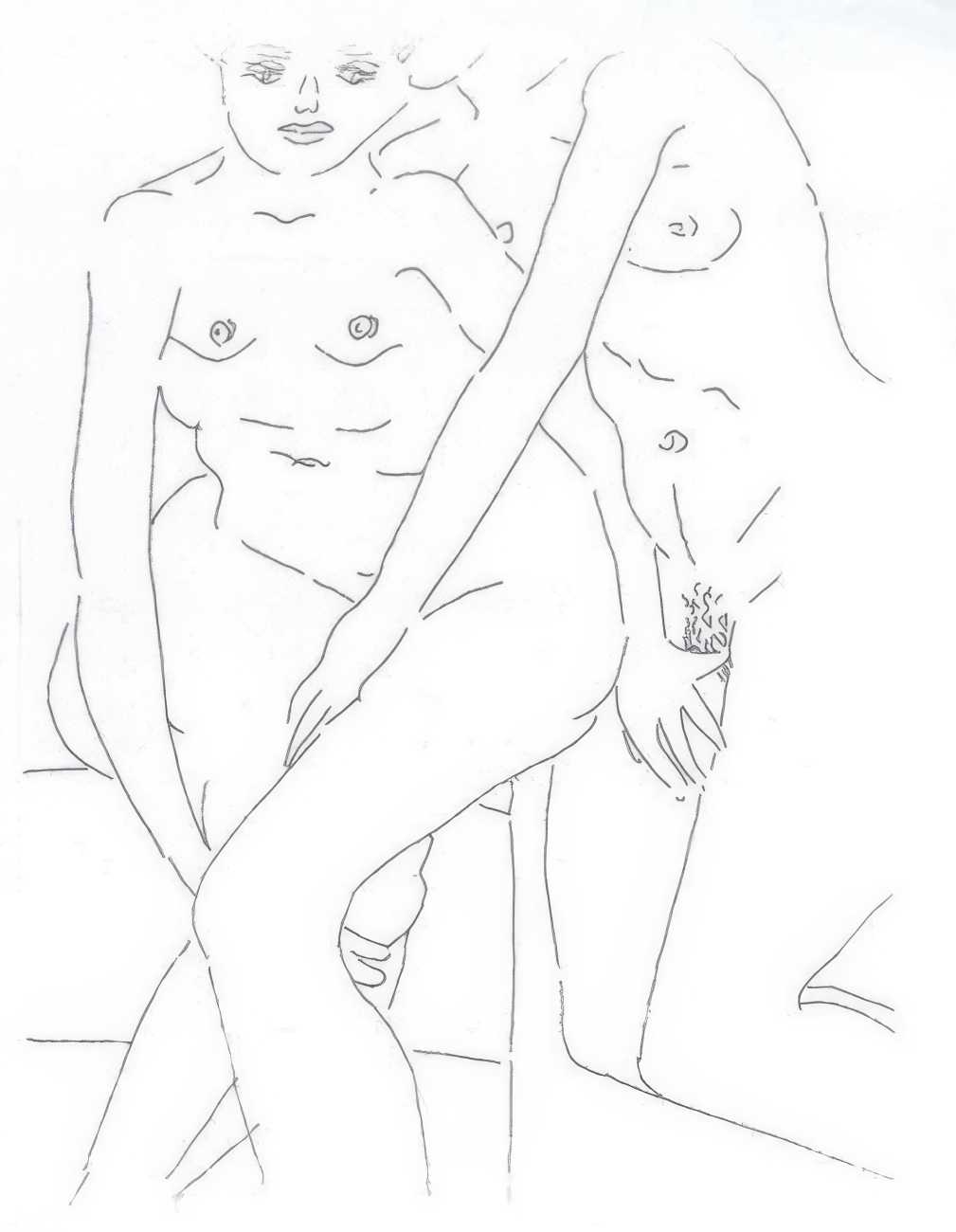
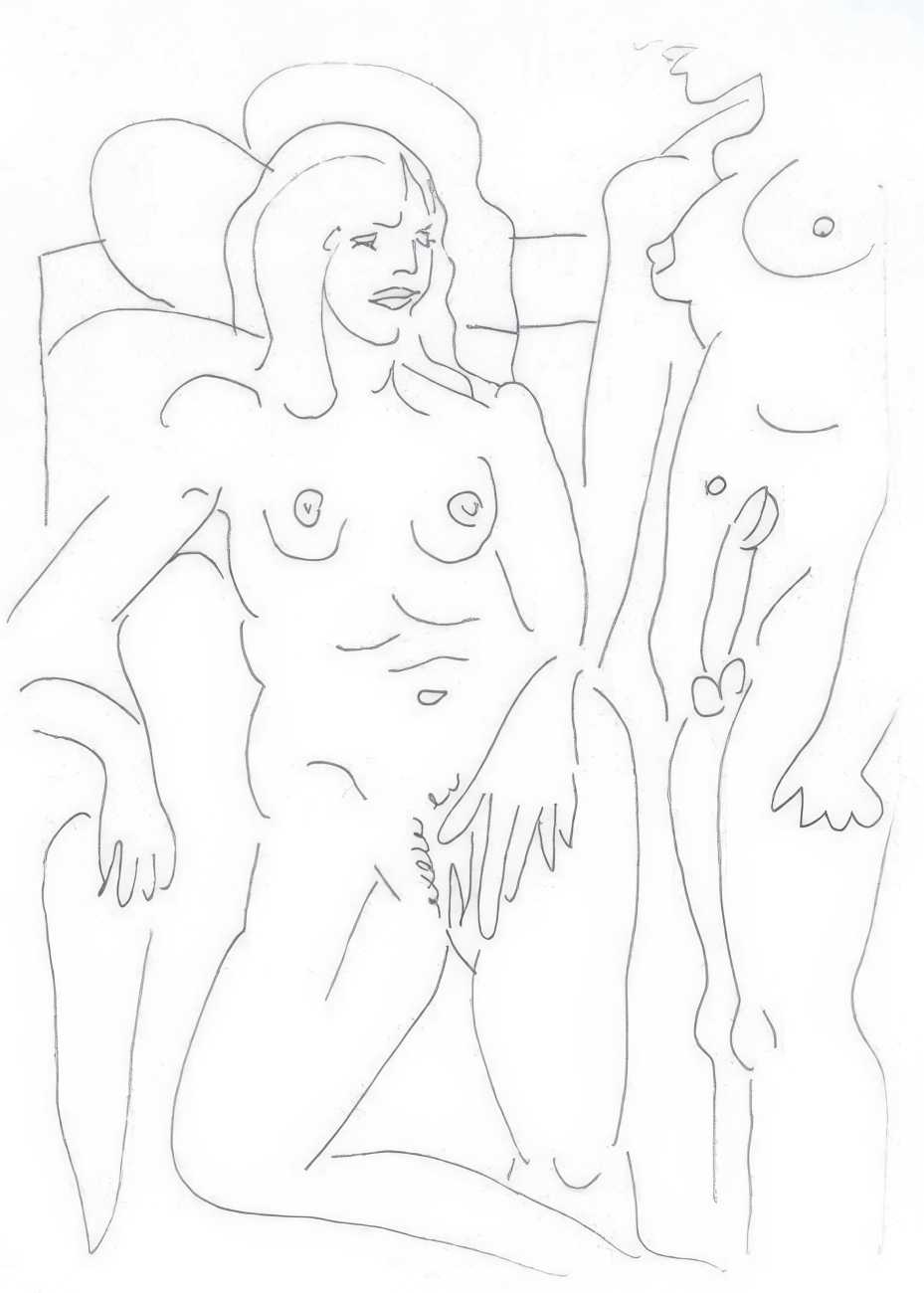
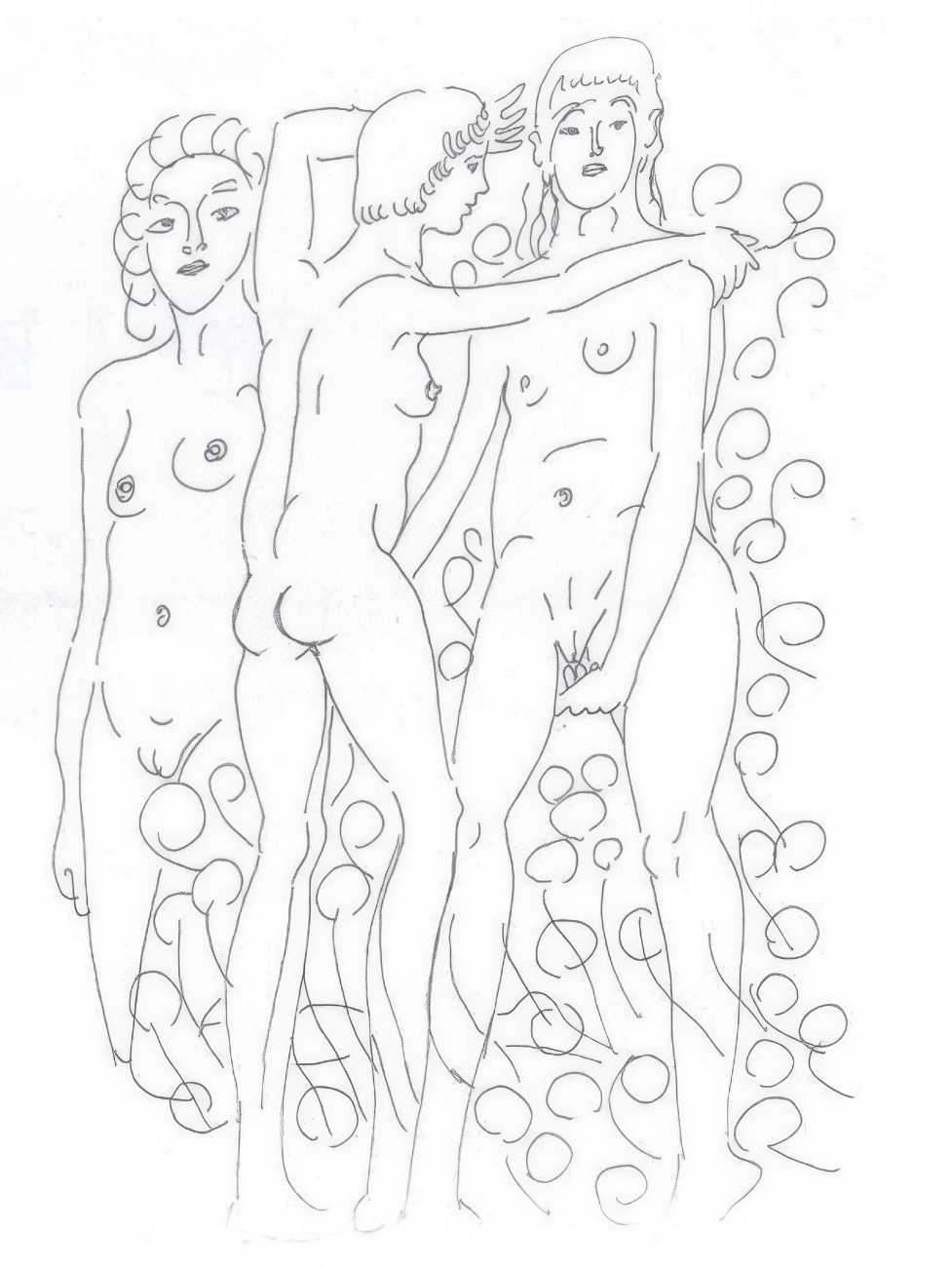
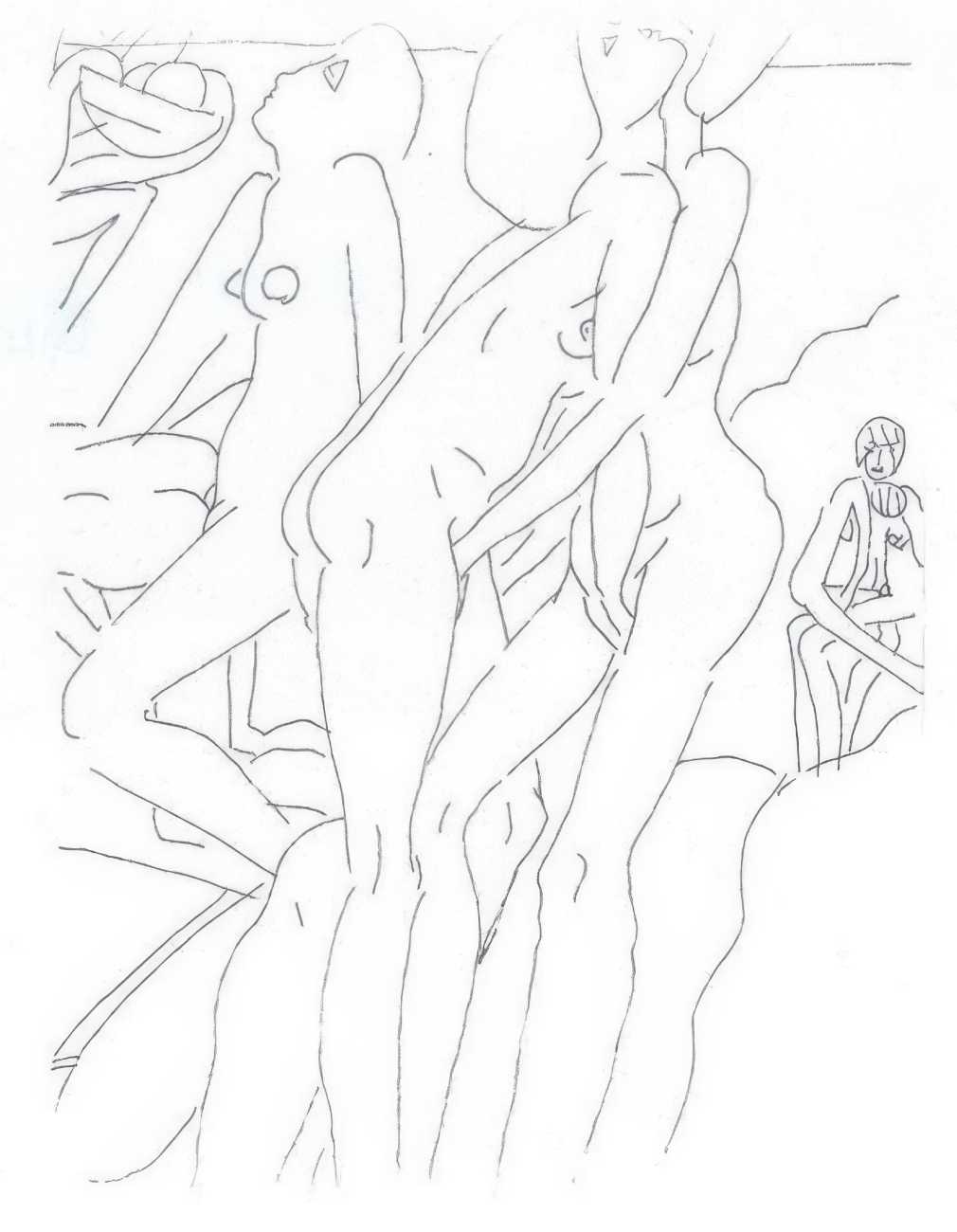
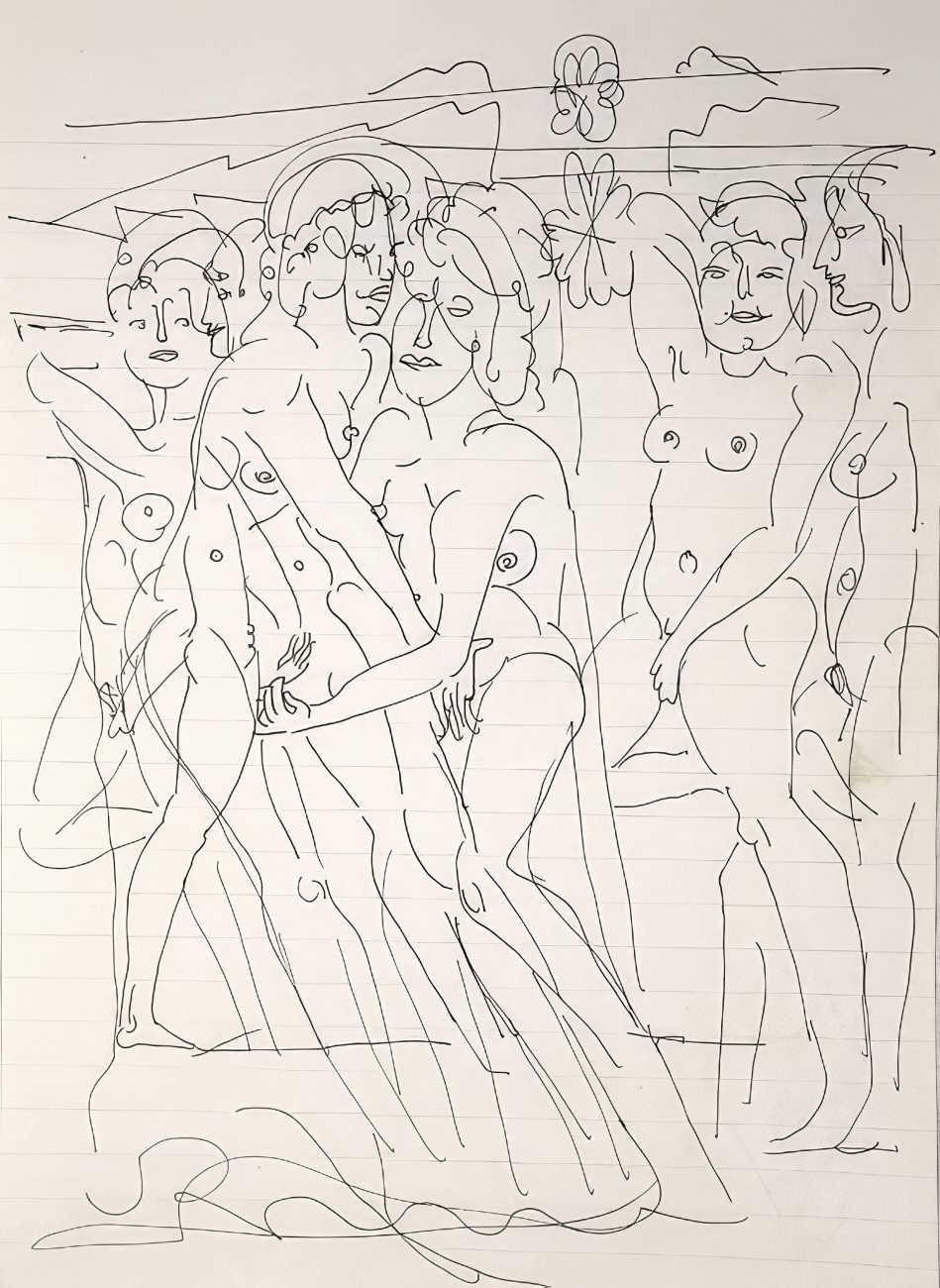
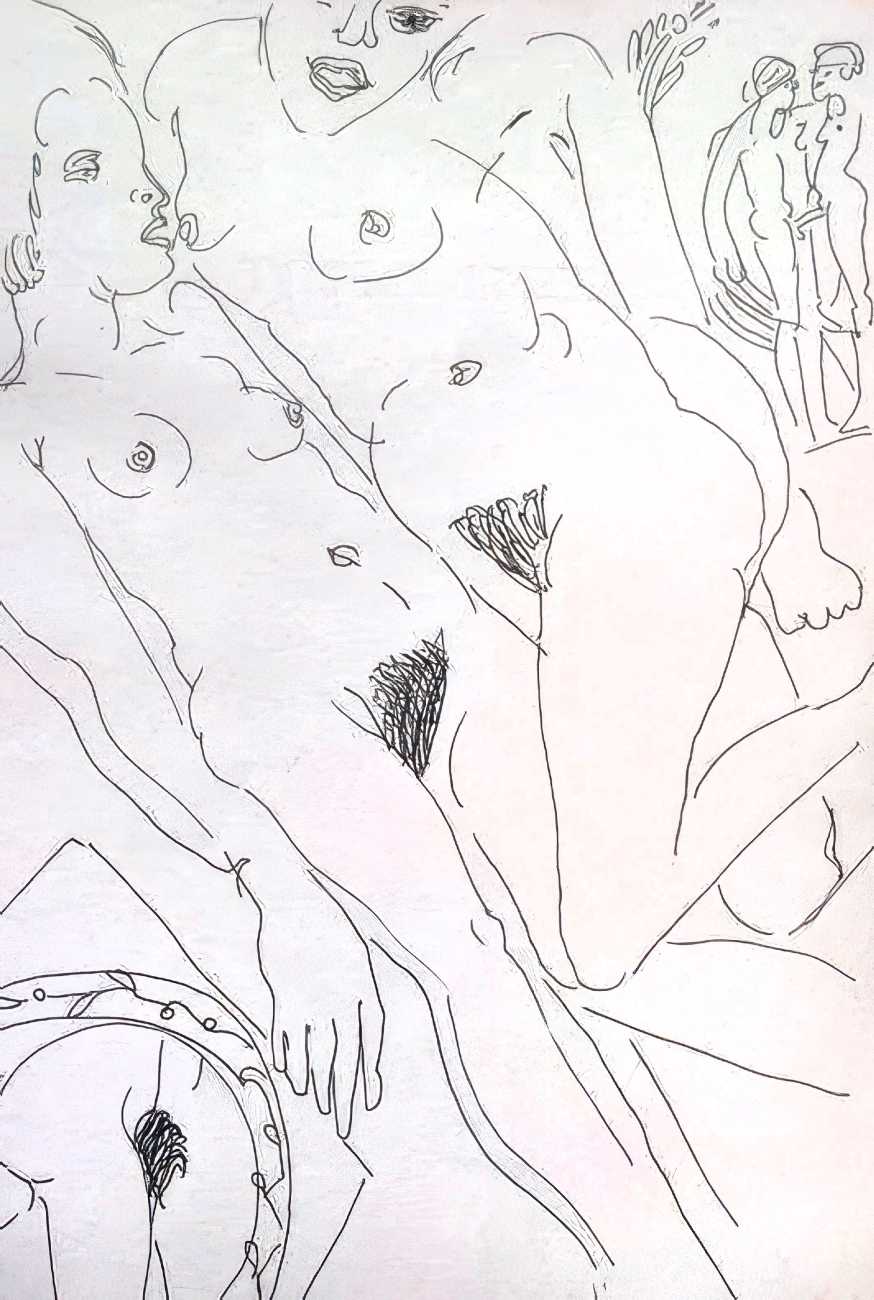
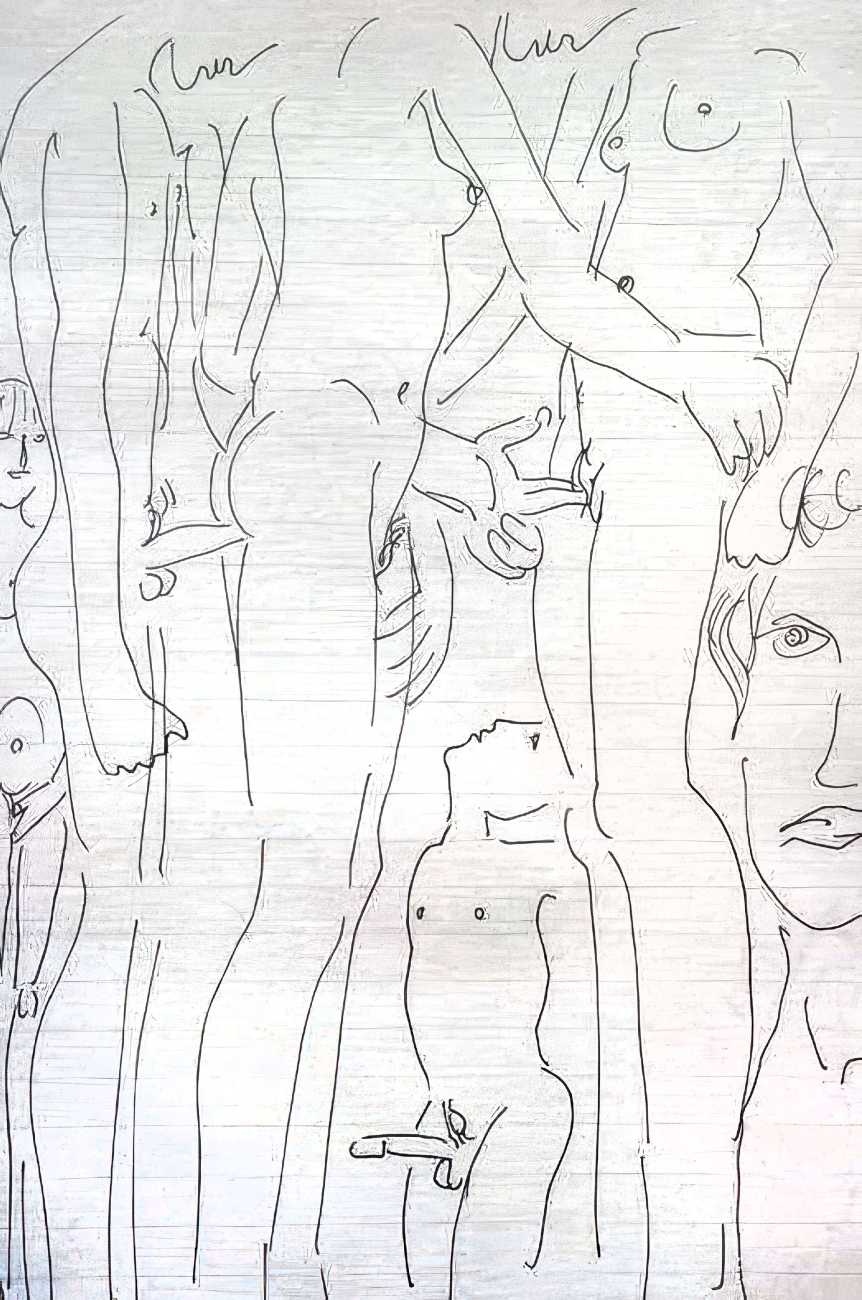
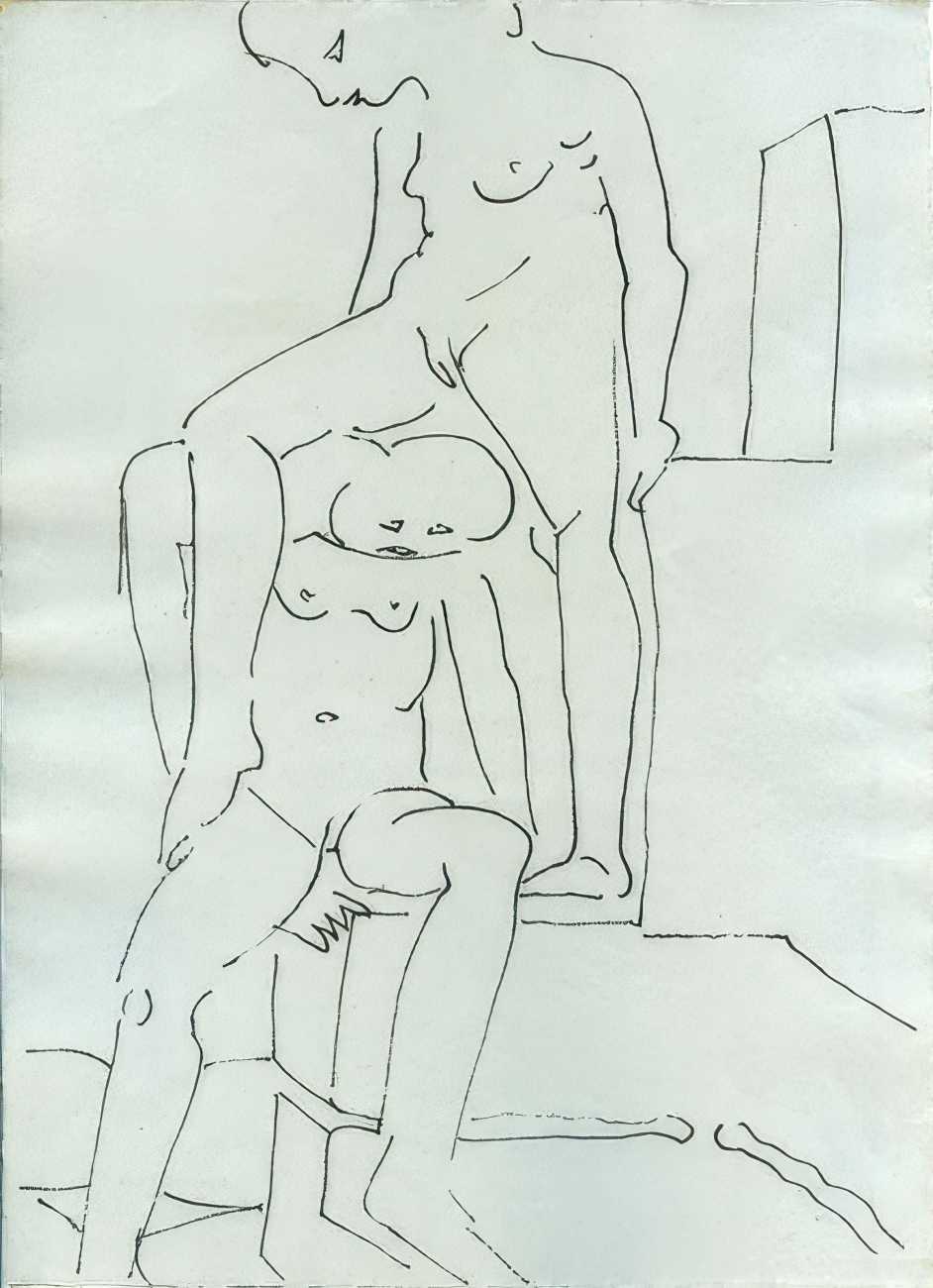
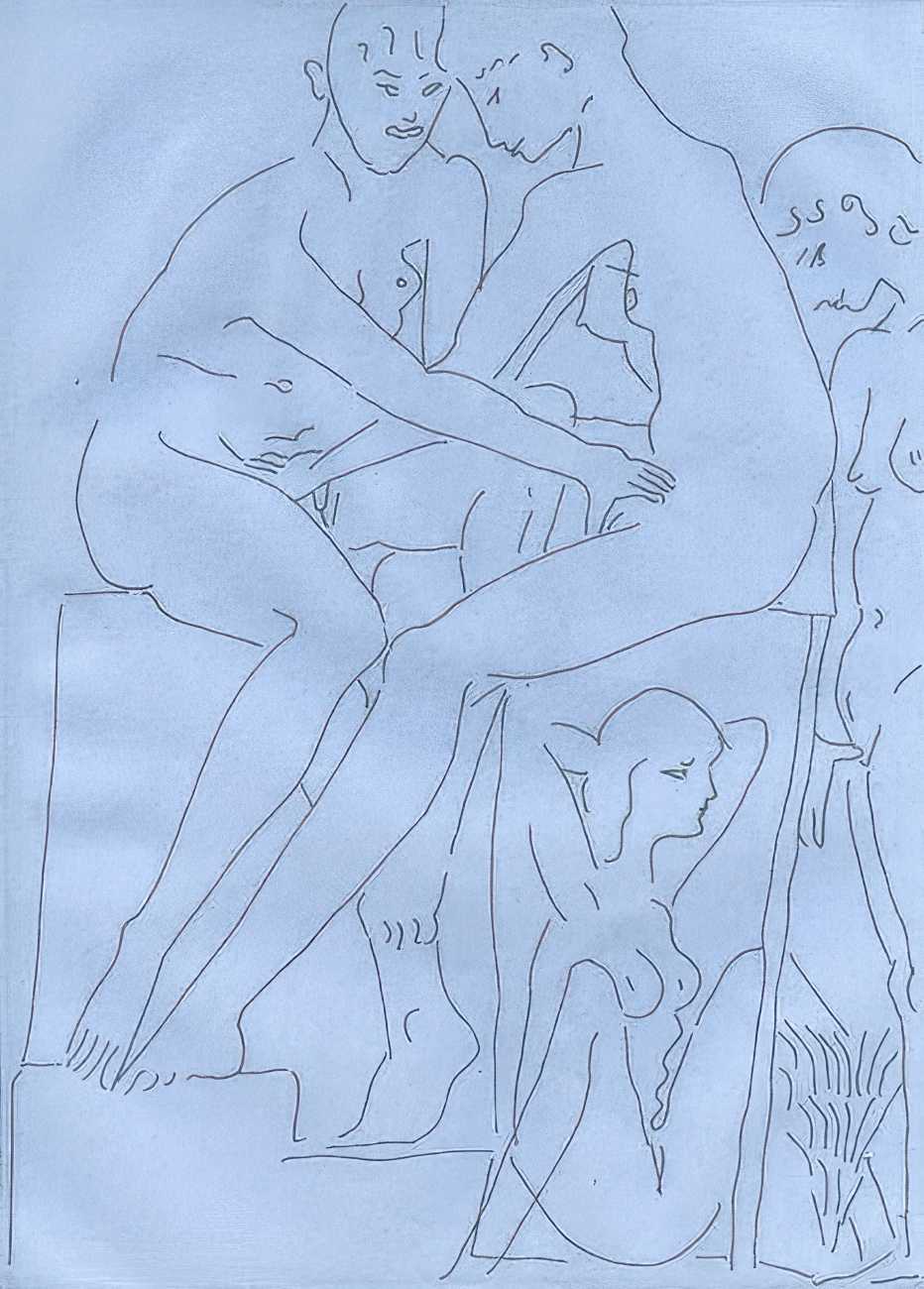
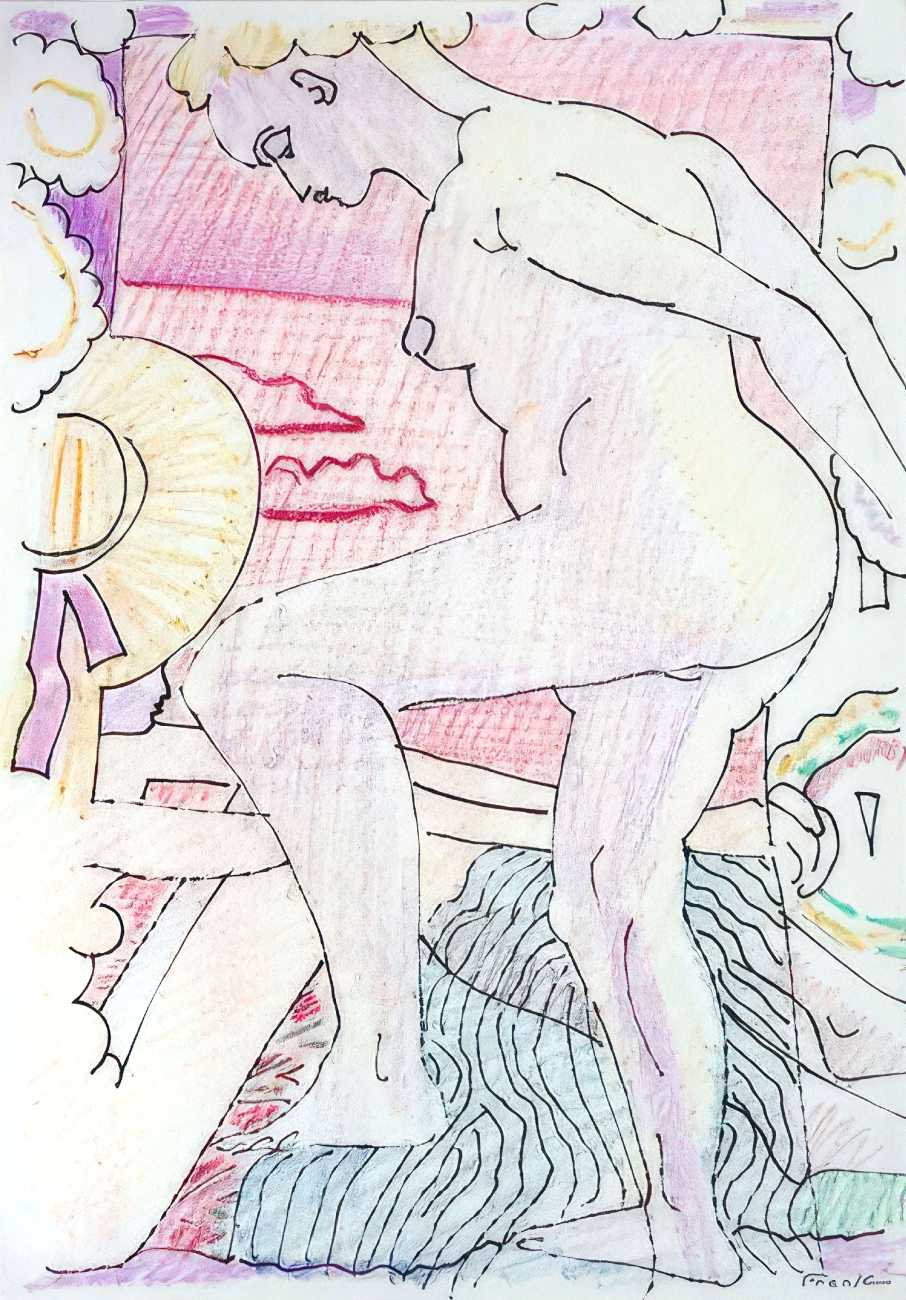
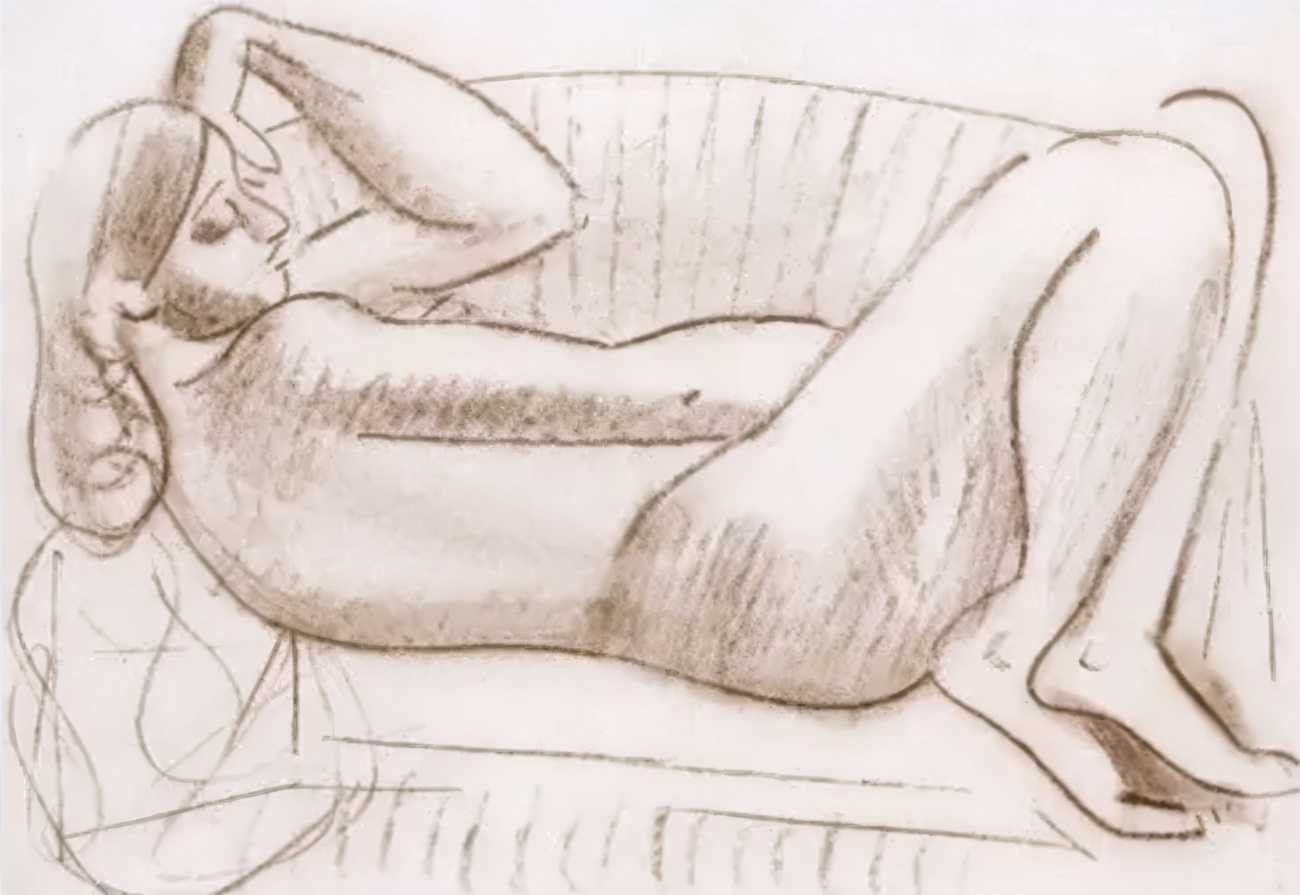
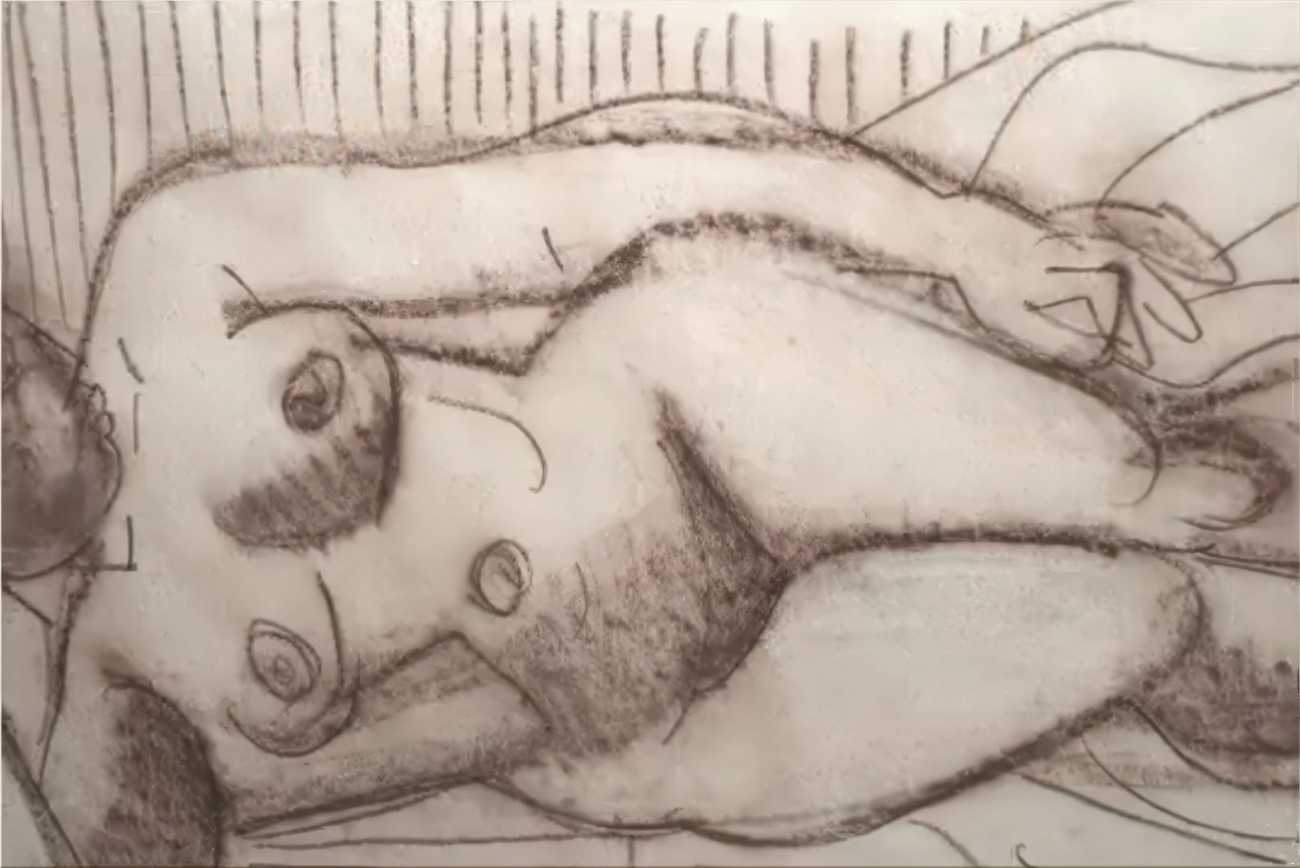
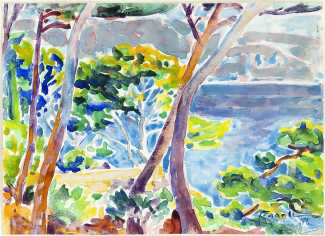
Frank became known exhibiting throughout Germany and in South America, mostly for his Mediterranean landscapes, which after 1960 became increasingly abstract. Less known during his lifetime were his paintings and drawings of naked models and groups of figures, many of which are explicitly sexual, demonstrating a repressed aspect of the artist’s imagination which may have been linked with his mental state.
In 1982, for a retrospective exhibition of Edvard Frank’s work at the Galerie im Kutscherhaus in Saarbrücken, the art historian Josef Schmoll wrote:
Anyone who ever saw and spoke to Edvard Frank will never forget this quiet man, who seemed slightly awkward, smiled reservedly, and made quiet remarks that compelled one to listen. He could offer insightful observations about artworks, human relationships or landscapes, haltingly and searching for words, all as if drawn with delicate strokes and marked with small question marks. From the corner of his eye, he observed those around him and always remained cautious in his assessment of their strengths and weaknesses. Caution was perhaps one of his defining characteristics, both endearing and vulnerable.
He silently and amusedly observed the boisterous revelry at wine-fuelled artists' gatherings, whether among the Darmstadt artists or the Palatinate Secession, to which he belonged from its re-establishment immediately after 1945 – but he could not keep up. His lyrical vein was drawn to poetry; Rilke's Duino Elegies resonated with his intellectual disposition.
Though he was commissioned to create a couple of murals, this artist, so sensitive and averse to any ostentatious gesture, was more of a creator of small and medium-sized works, possessing an inner grandeur, especially his masterful watercolours. Frank boldly and skilfully enlivened surfaces and interpreted them in a decorative-representational way. With his incredibly fresh brushstrokes, he could bring ocean waves, bouquets of flowers, baskets, patterned dresses, and the surfaces of floors and walls to life.
Frank held his own during the great wave of non-representational painting between 1950 and 1965 with his representational art. However, one senses his inner struggle with the temporary dominance of international non-figurative art. He utilised the insights he gained from observing the paintings of artists like Wilhelm Nay, but remained true to his vision of creating idealised images of humanity in a modern world using classical standards, thus aligning himself with Werner Gilles, Rolf Müller-Landau, and other Italian-German artists of his time. Spatiality became increasingly two-dimensional. While in the 1940s and 50s he designed his scenes like small stage sets, in which the figures, like statues, were assigned their places on a narrow action space, in the 1960s they became increasingly integrated with the painted surface.
Frank’s watercolours were first seen together in a larger group at the 1965 exhibition of the Koblenz Künstlerhaus Metternich: until then even his friends had been virtually unaware of many of these paintings. The judiciously curated 1965 exhibition showcased exquisite examples of his bright-toned oil paintings. Southern sun, Italian coastlines, golden-yellow landscapes, and turquoise distances shone in unbroken colours. Through these images, visions of a purified existence, one could glimpse the deep longing of this solitary man, who, although he had some friends and caring female companions, nevertheless gave the impression of a kindly, melancholic hermit, frightened by the world’s material bustle and brutality.
We are very grateful to our Russian friend Yuri for suggesting the inclusion of this artist, and for supplying most of the images.
Similar artists
Peter Flinsch – German-Canadian illustrator of mid-century homoerotic subjects.
Detlev Foth – German painter moving between expressive figuration and near-abstraction.
Alfred Hrdlicka – Austrian post-war painter of dark figurative eroticism.
Hans Schärer – Swiss post-war painter in similar figurative-erotic idiom.
Eberhard Schlotter – German post-war painter of figurative-erotic subjects.
Hanjo Schmidt – German realist painter of erotic figure compositions.
Willi Sitte – East German painter of body-political figurative work.
Example illustration