
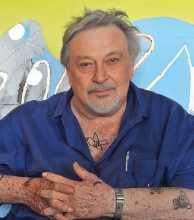
 The American painter, sculptor and muralist Knox Martin was born in Barranquilla, Colombia, the eldest son of the pioneering aviator, painter and poet William Knox Martin, the first pilot to fly across the Andes. His father was killed in a car accident when Knox was still a young child, after which his mother moved the family to New York City. Following service with the United States Coast Guard during the second world war, Martin studied at the Art Students League of New York on the G.I. Bill between 1946 and 1950. His teachers included Harry Sternberg, Vaclav Vytlacil, Will Barnet and Morris Kantor, while fellow students included Robert Rauschenberg, Cy Twombly and Al Held.
His career was launched in 1954 when Franz Kline arranged for one of his paintings to be included in the influential Stable Gallery Annual. The exhibition brought Martin to the attention of dealer Charles Egan, who offered him a solo exhibition and introduced him to the circle of artists who would define post-war New York painting. Although Martin’s work absorbed elements of abstract expressionism, colour field painting and later pop art, he consistently resisted affiliation with any single movement, preferring to follow his own visual instincts.
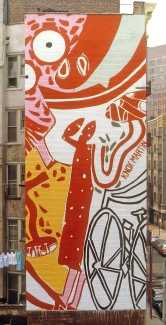
From the late 1960s onwards, the female body became the dominant motif in Martin’s work. Rather than depicting women naturalistically, he reduced the body to sweeping curves, fragmented silhouettes and vivid signs that conveyed both physical presence and symbolic power. His paintings celebrate femininity without sentimentality, treating the female body as a source of energy, invention and formal possibility. This fascination culminated in his celebrated New York murals Venus (1970) and Woman with Bicycle (1979), monumental public works that transformed the female figure into an urban icon. Alongside these large-scale paintings, Martin also produced a substantial body of drawings and prints, including a series inspired by Alice’s Adventures in Wonderland, in which his playful, sensuous approach to the figure found a more explicit expression.
Martin was married and had three children. During his marriage he began a relationship with Laura Bigler, a dancer with the José Limón Dance Company, who he had met when Bigler was modelling for a class at the Art Students League which Martin was attending. Their relationship intersected with Martin’s friendship with the artist Robert Rauschenberg, who expressed a desire to marry Bigler. She declined Rauschenberg’s proposal, affirming her commitment to Martin.
Teaching was equally important to Martin. For more than forty-five years he led the renowned Master Class at the Art Students League, while also teaching at Yale, New York University, the University of Minnesota and schools in Italy and India. His enthusiasm for drawing and direct observation influenced generations of younger artists.
Similar artists
Carroll Dunham – American painter of cartoon-derived figures with prominent genitalia.
Eric Fischl – American painter of suburban figurative scenes with psychological erotic content.
Claes Oldenburg – American pop artist of monumental soft sculptures.
Joan Semmel – American painter and pioneer of feminist body imagery.
Andy Warhol – American pop artist of repeated celebrity and erotic imagery.
Lisa Yuskavage – American painter of figurative-erotic subjects in a classical-revisionist mode.
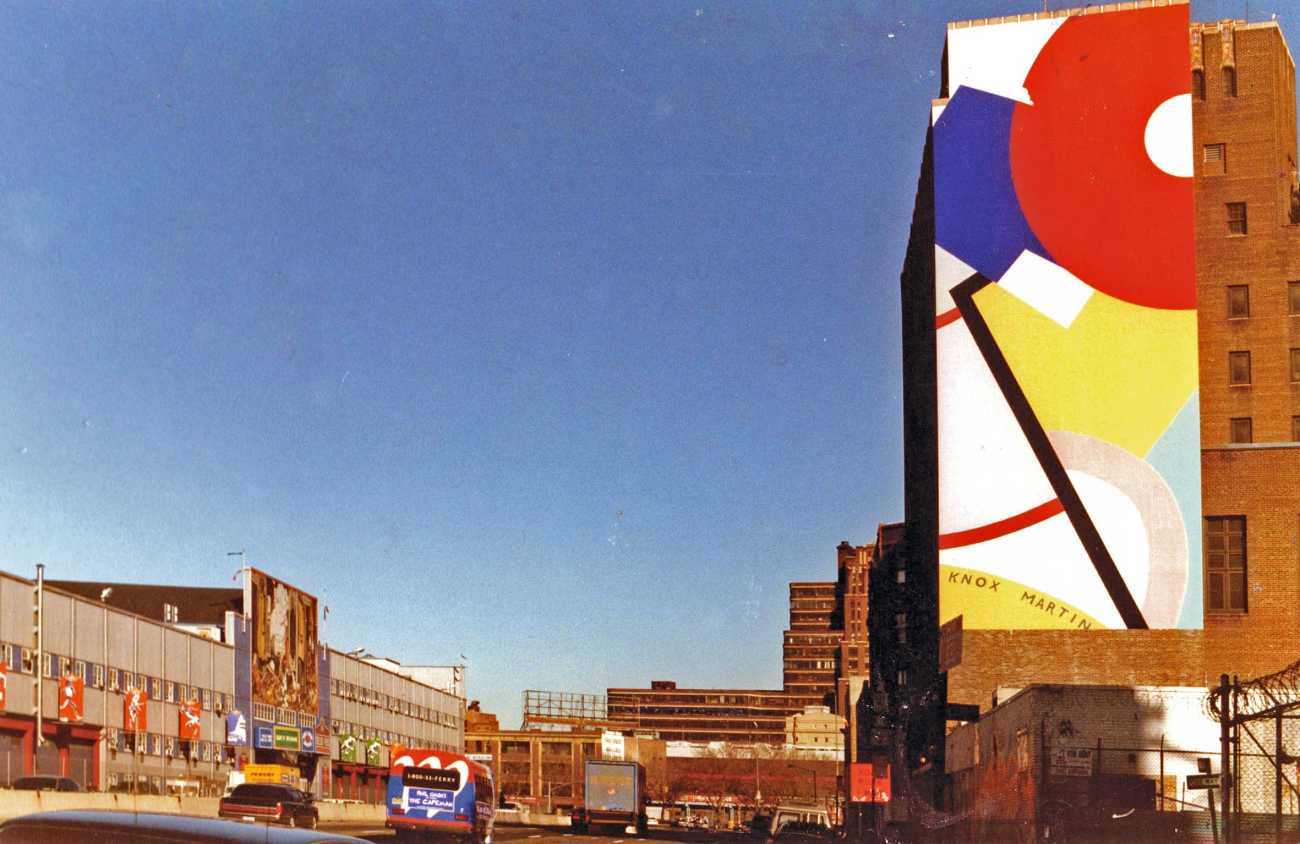
Example illustration


