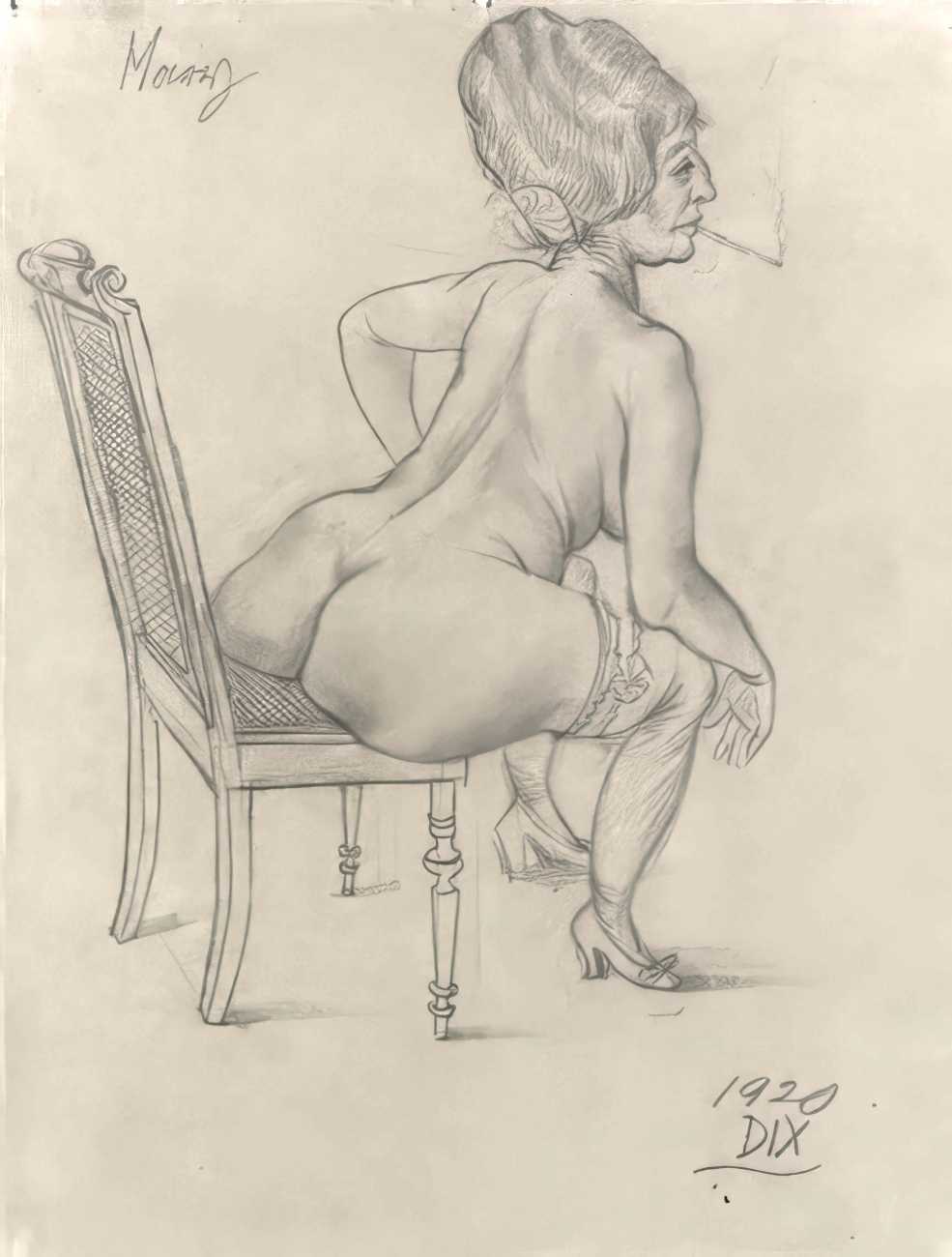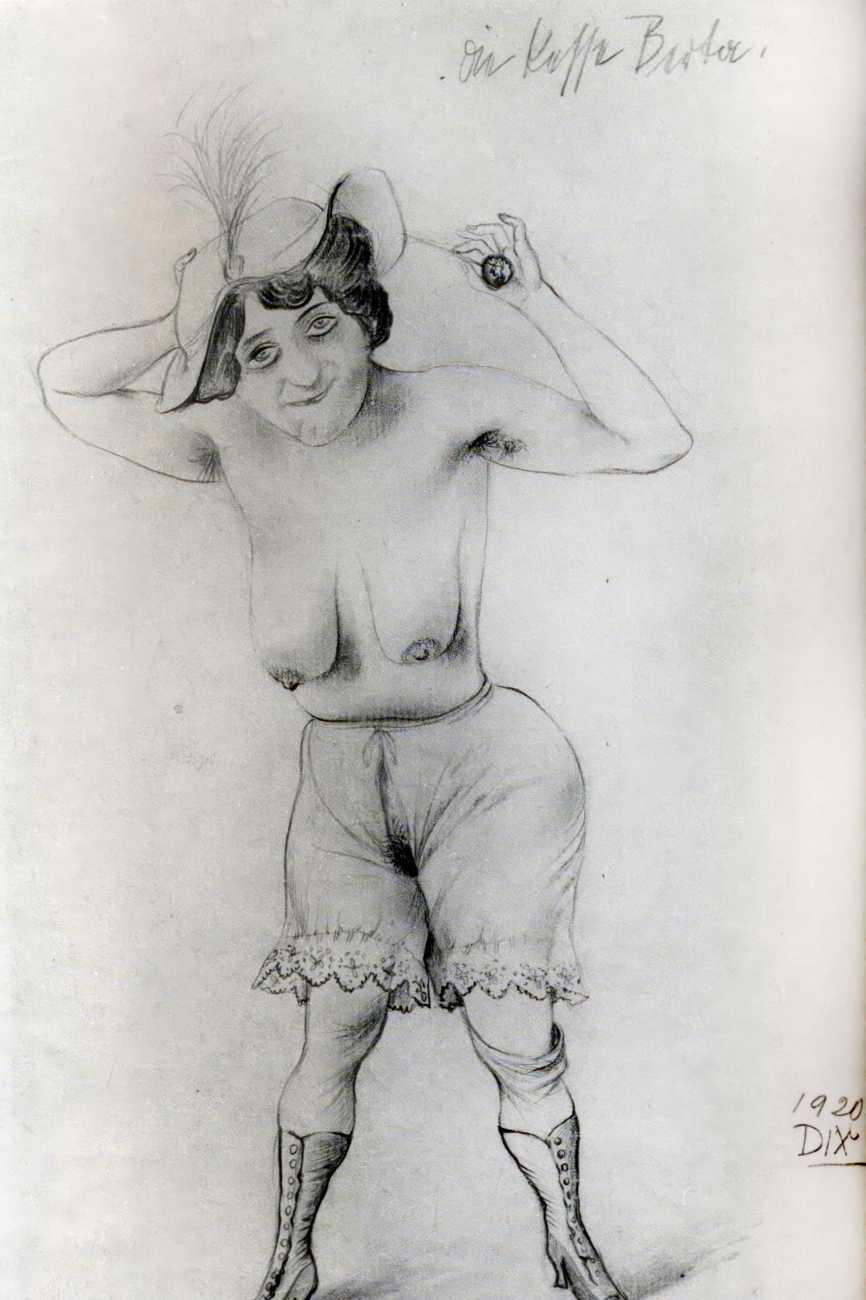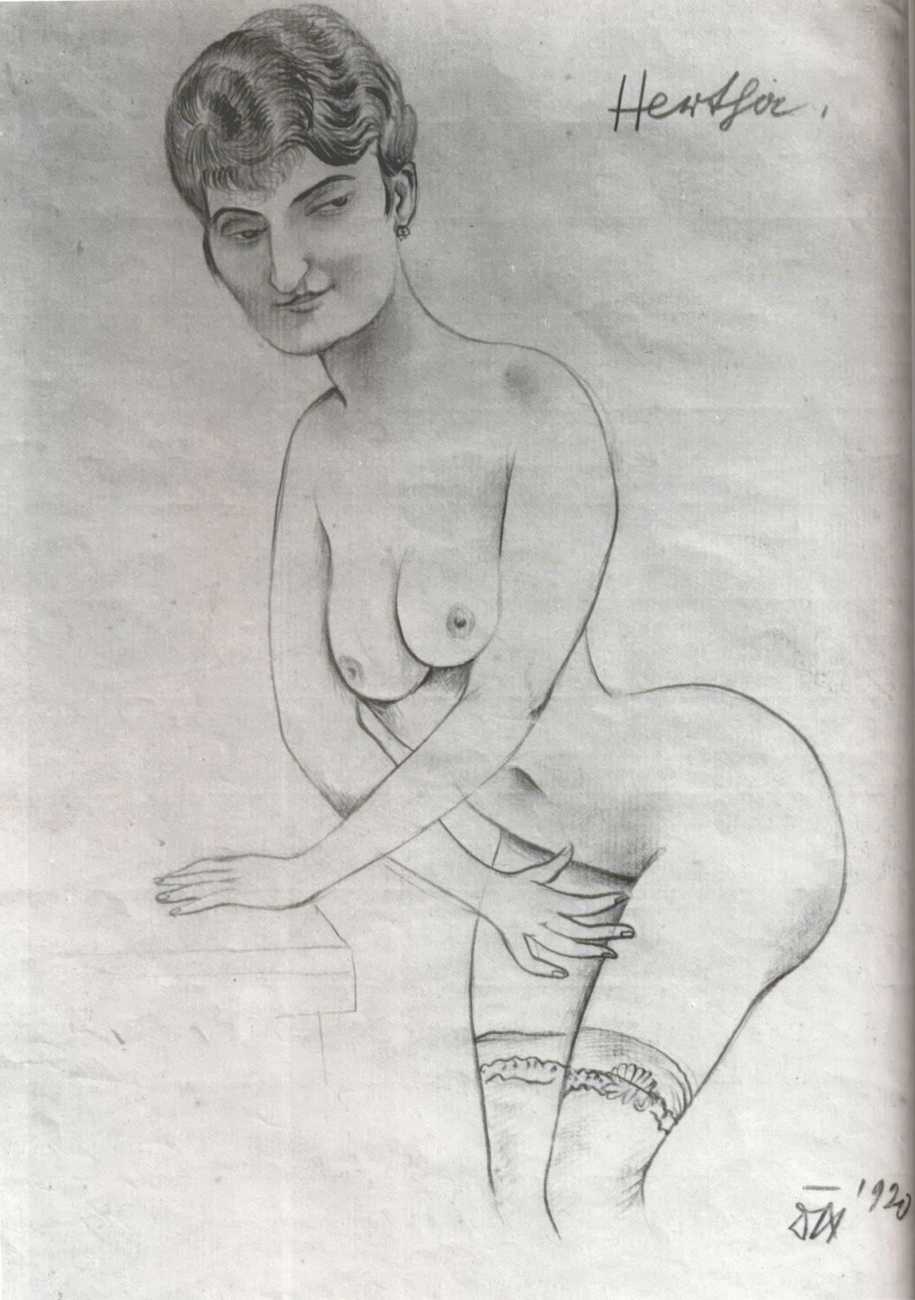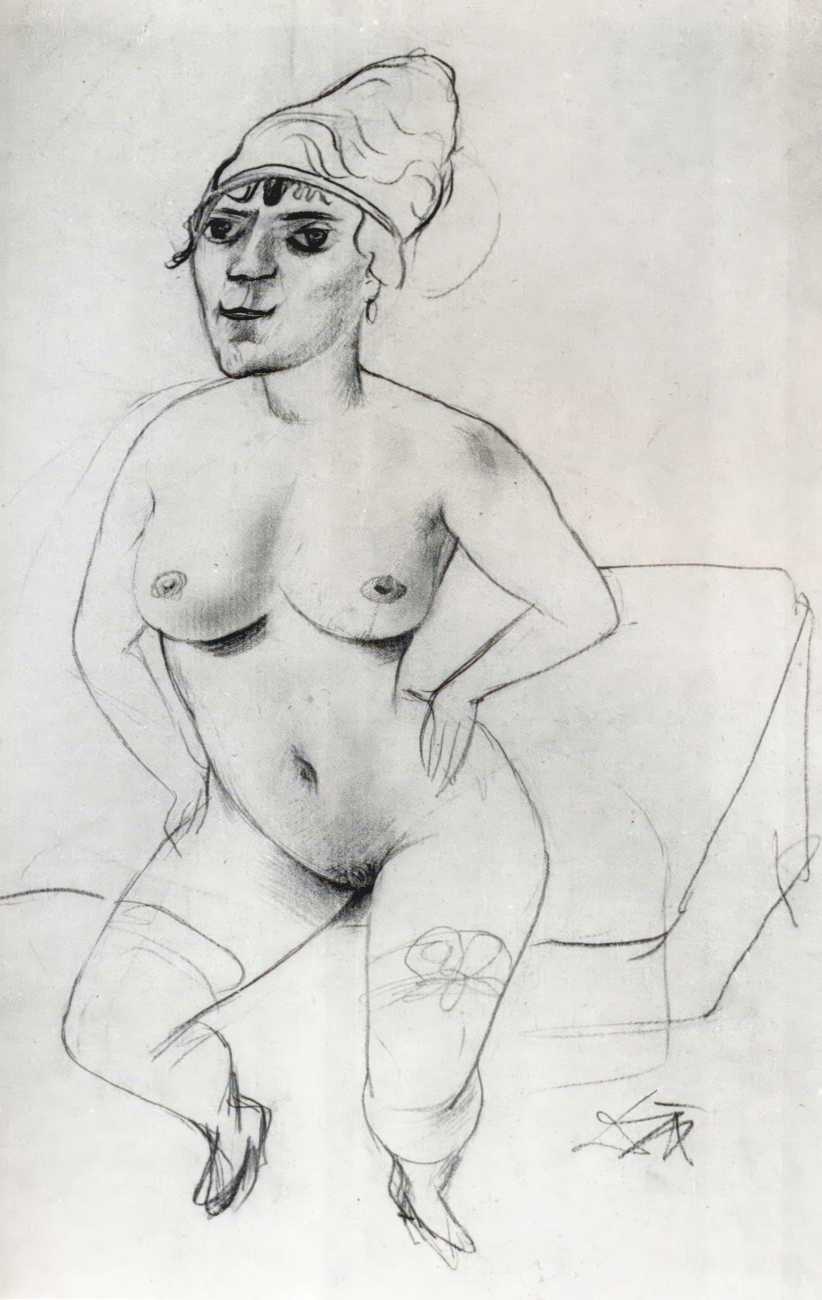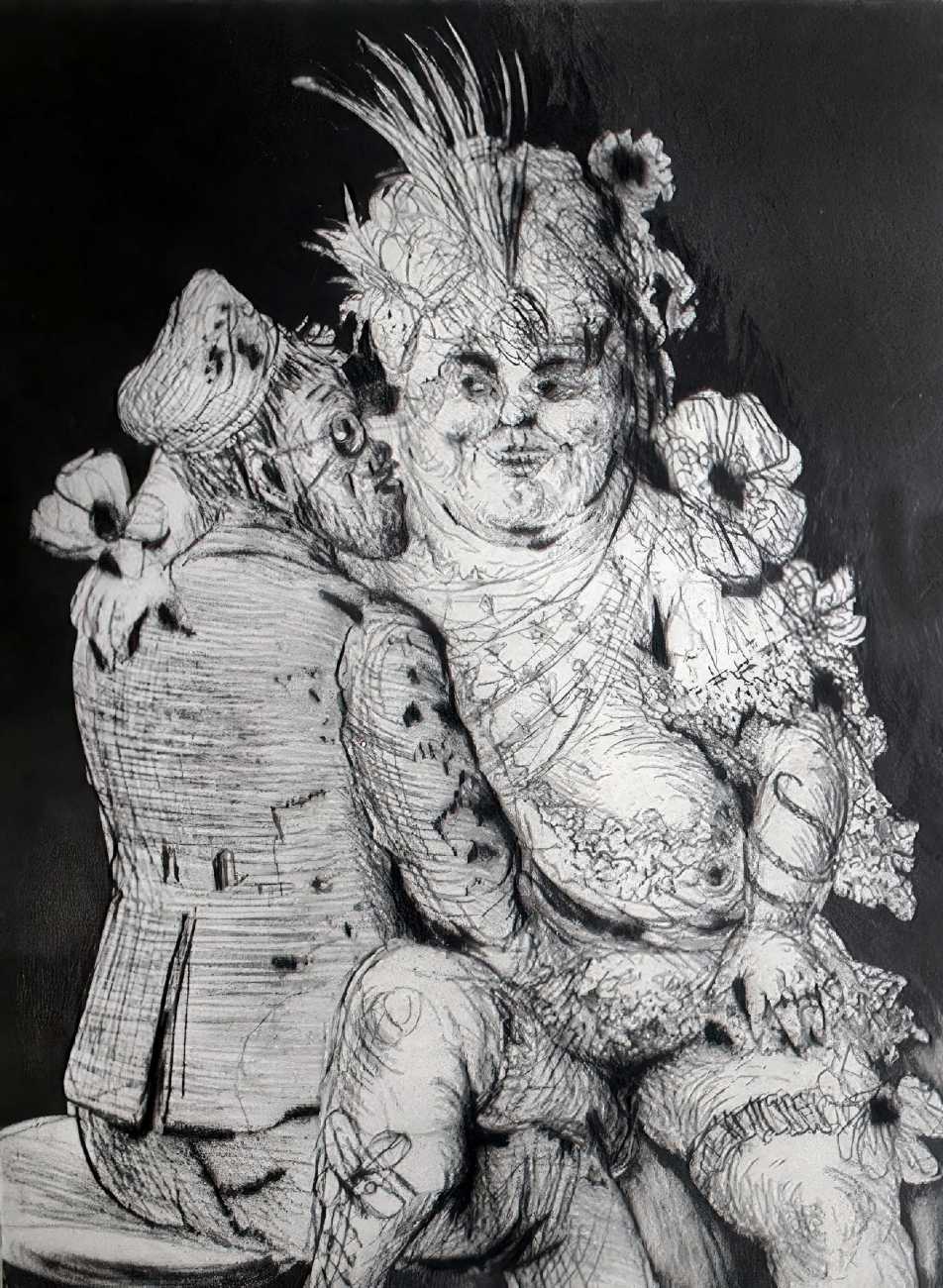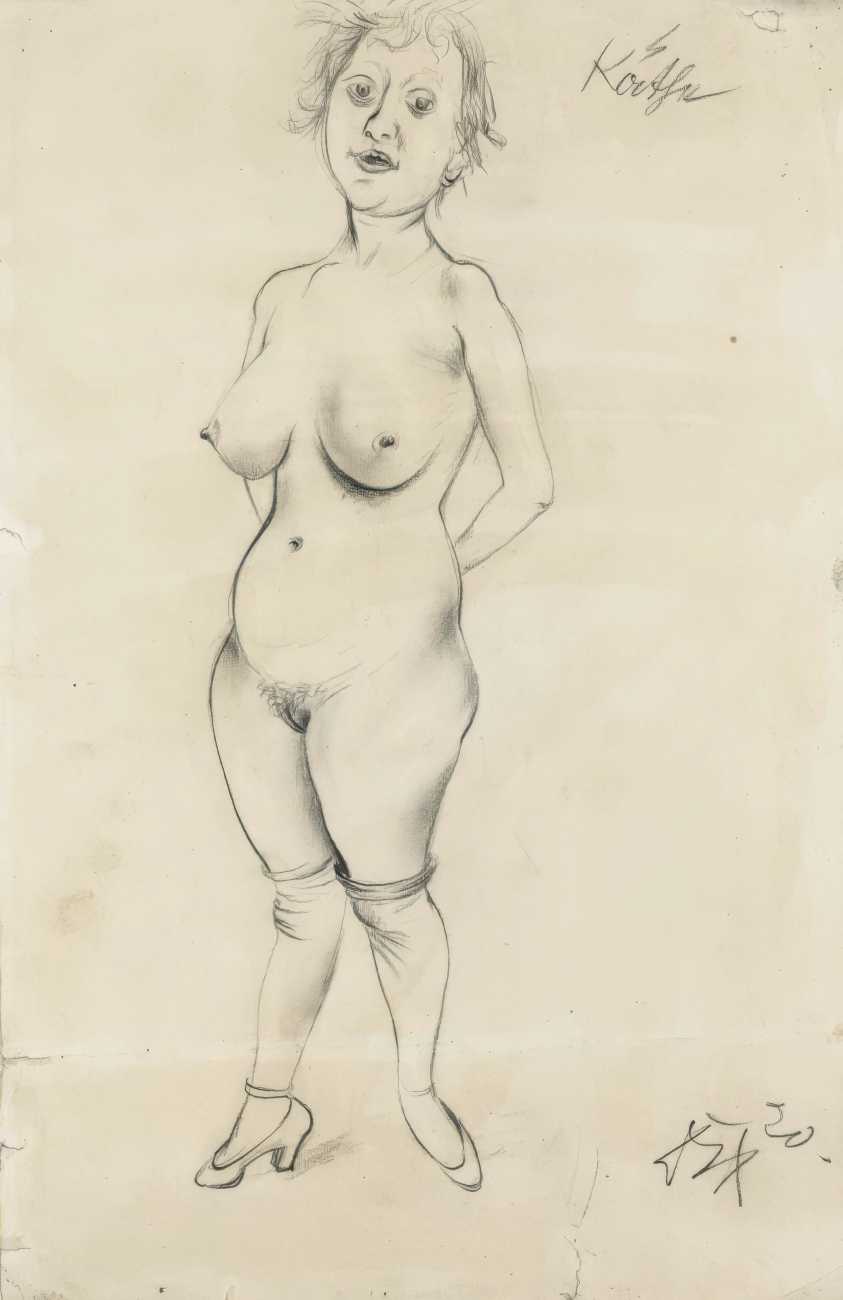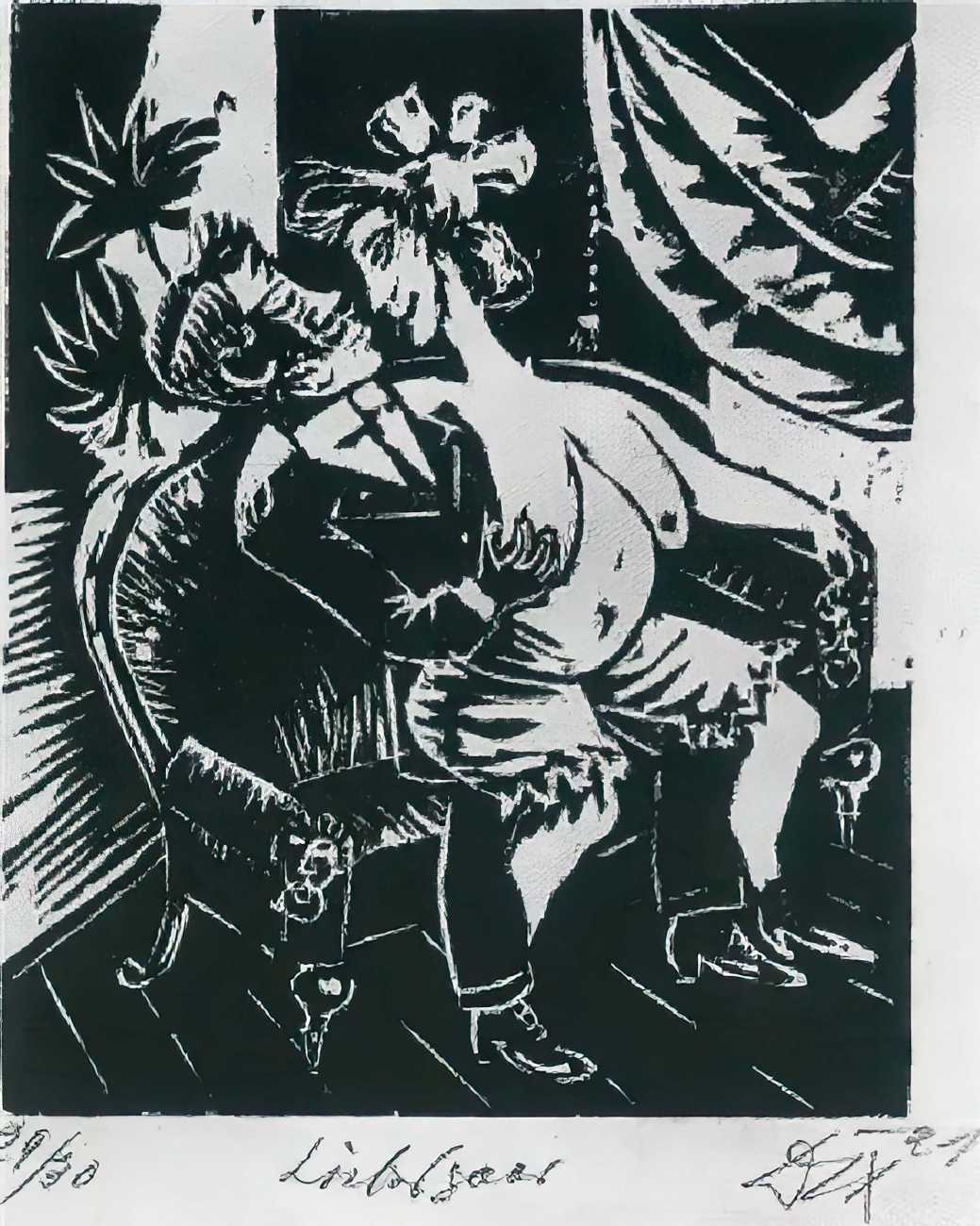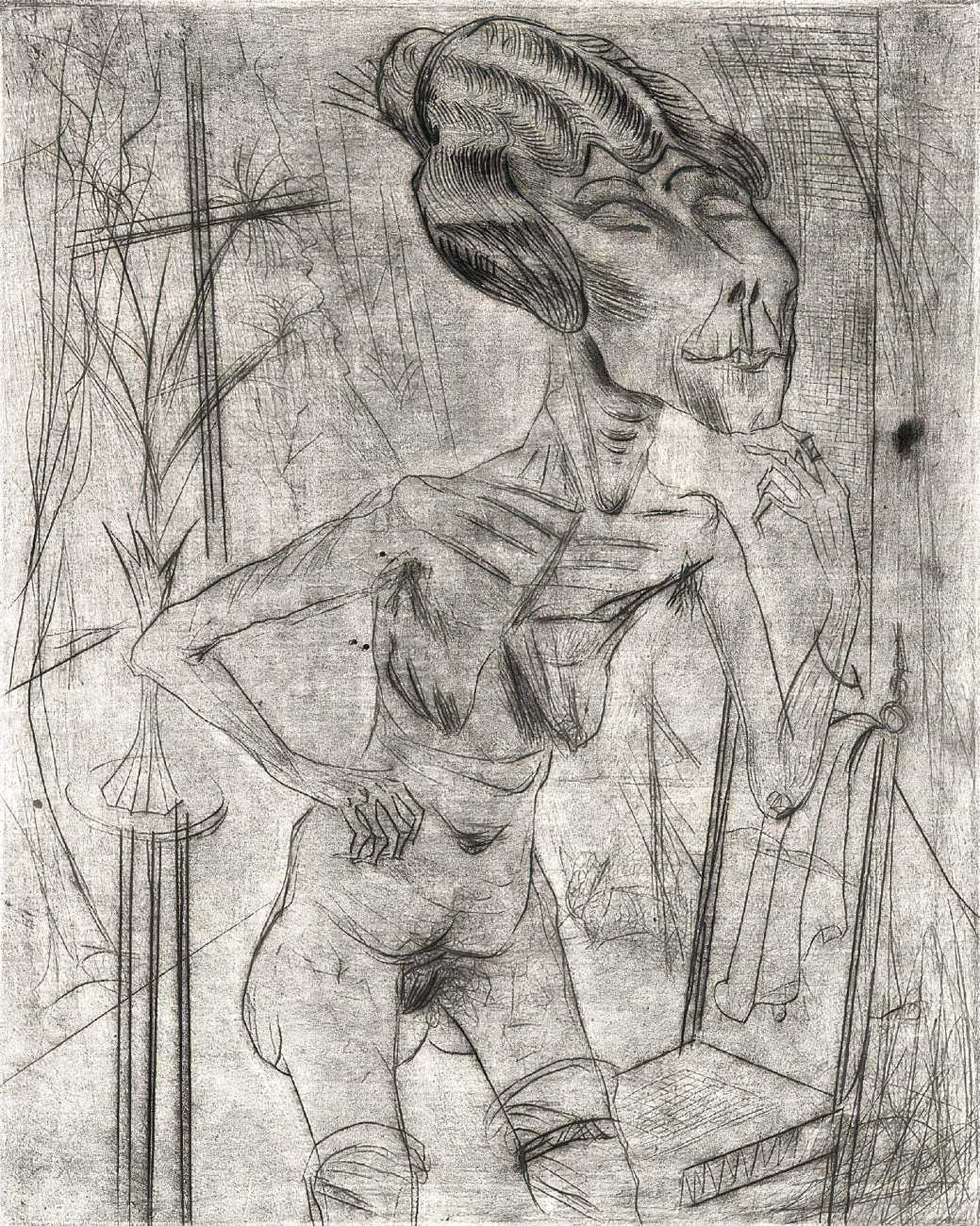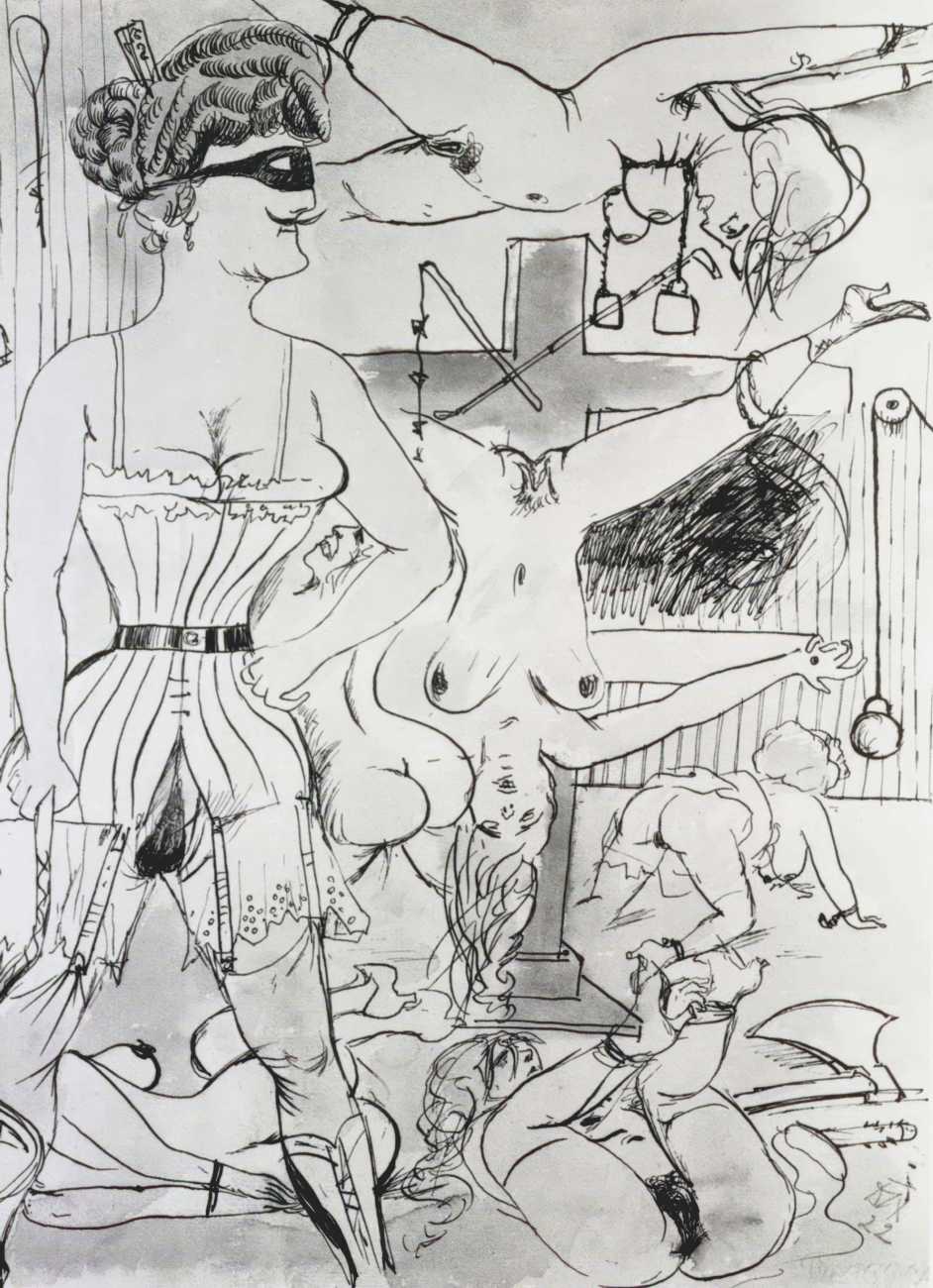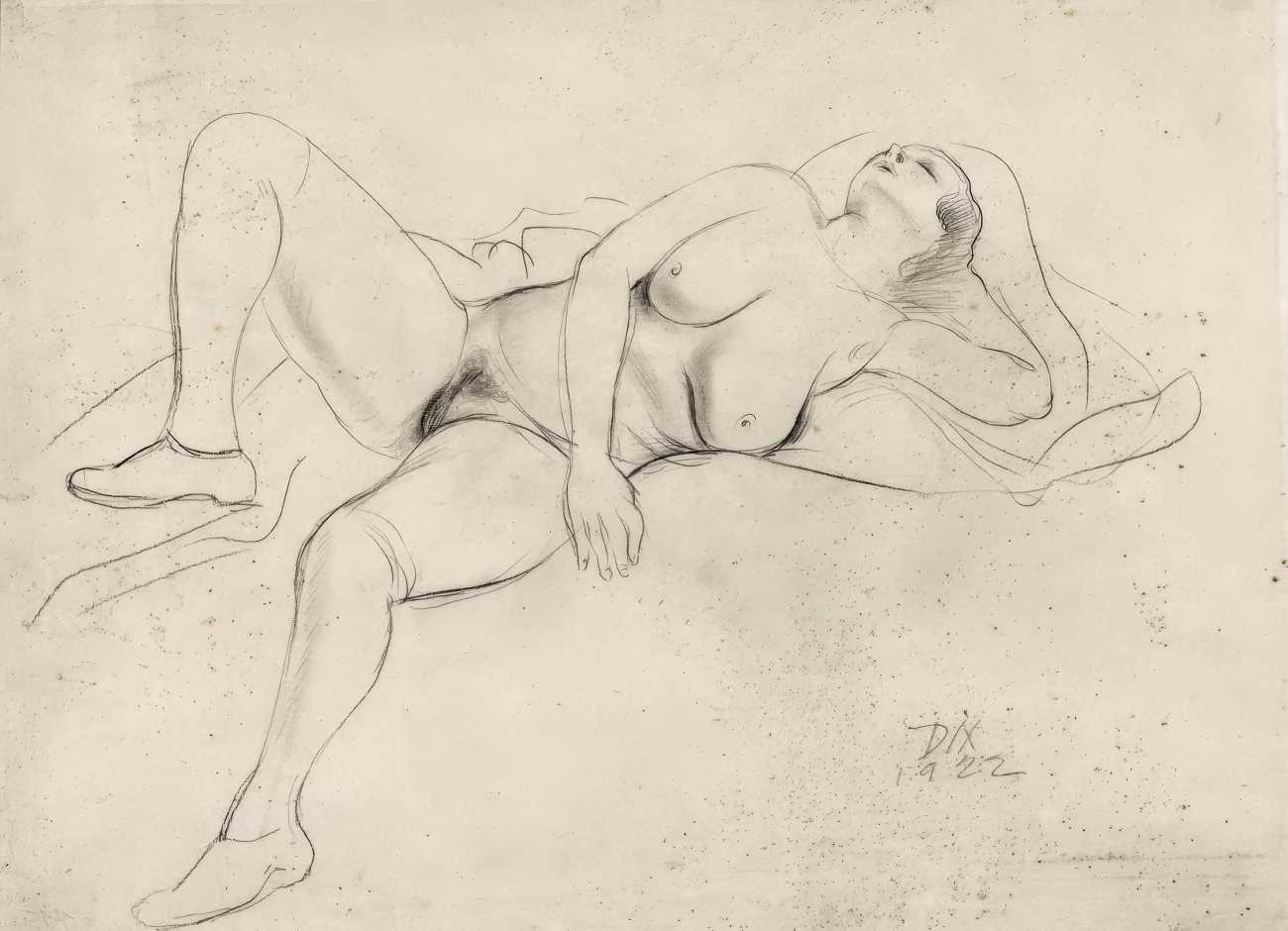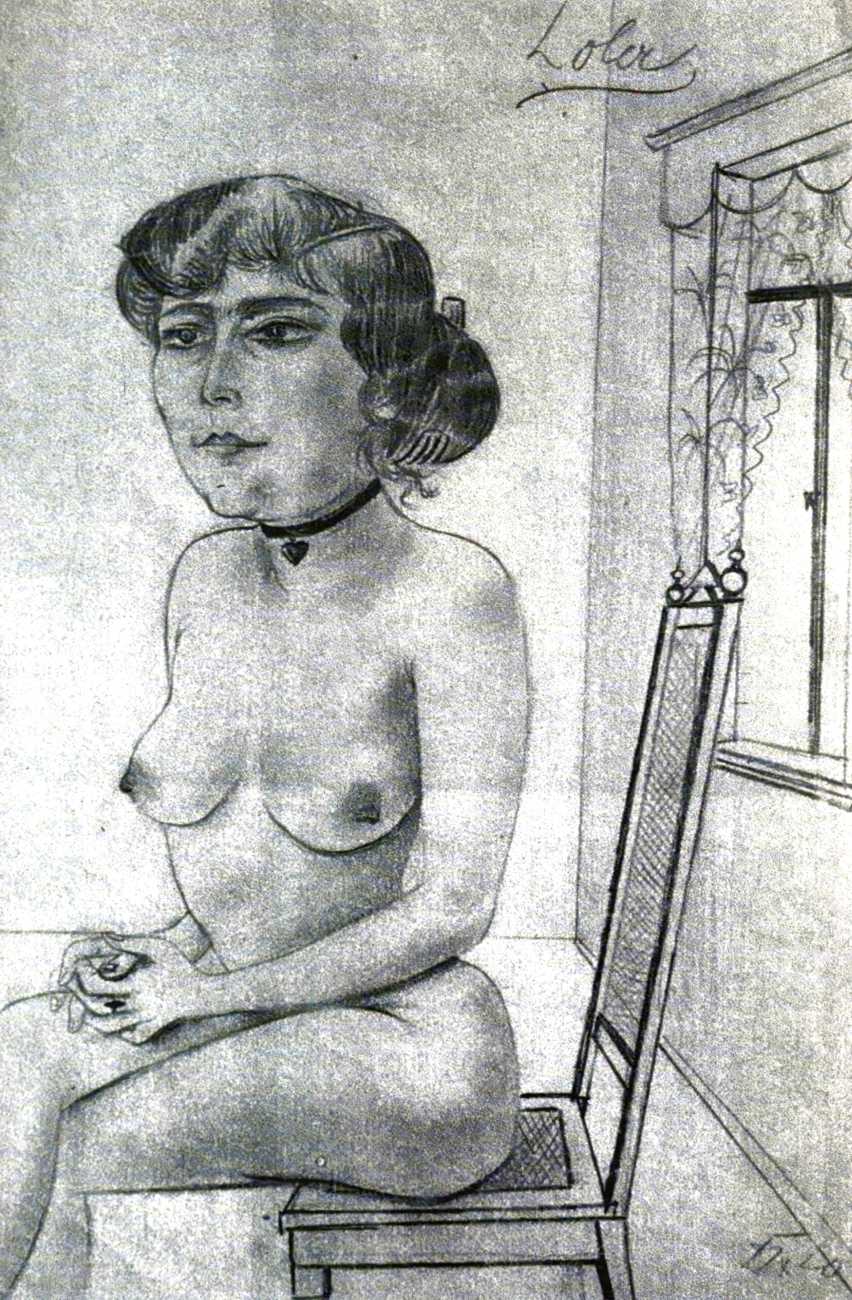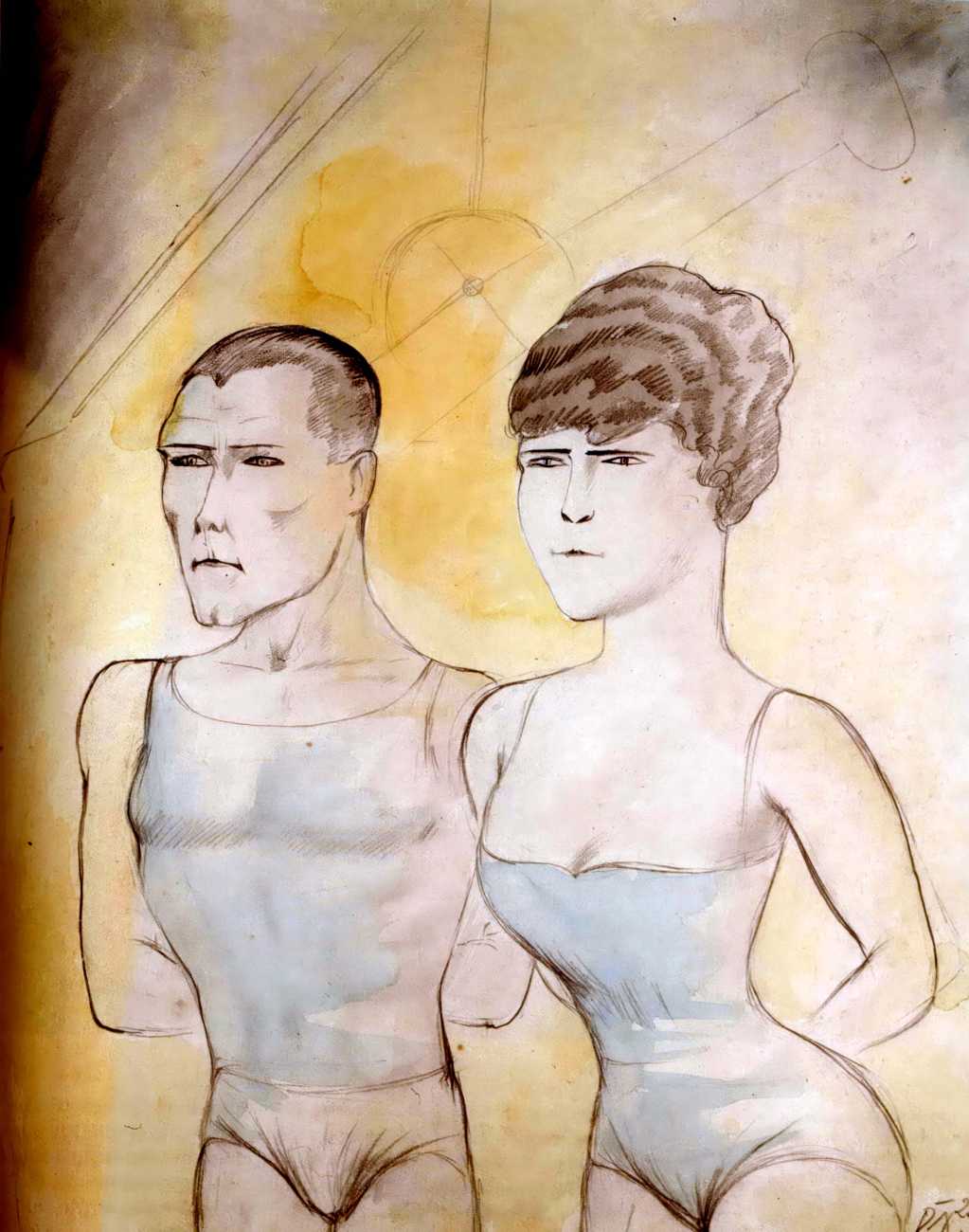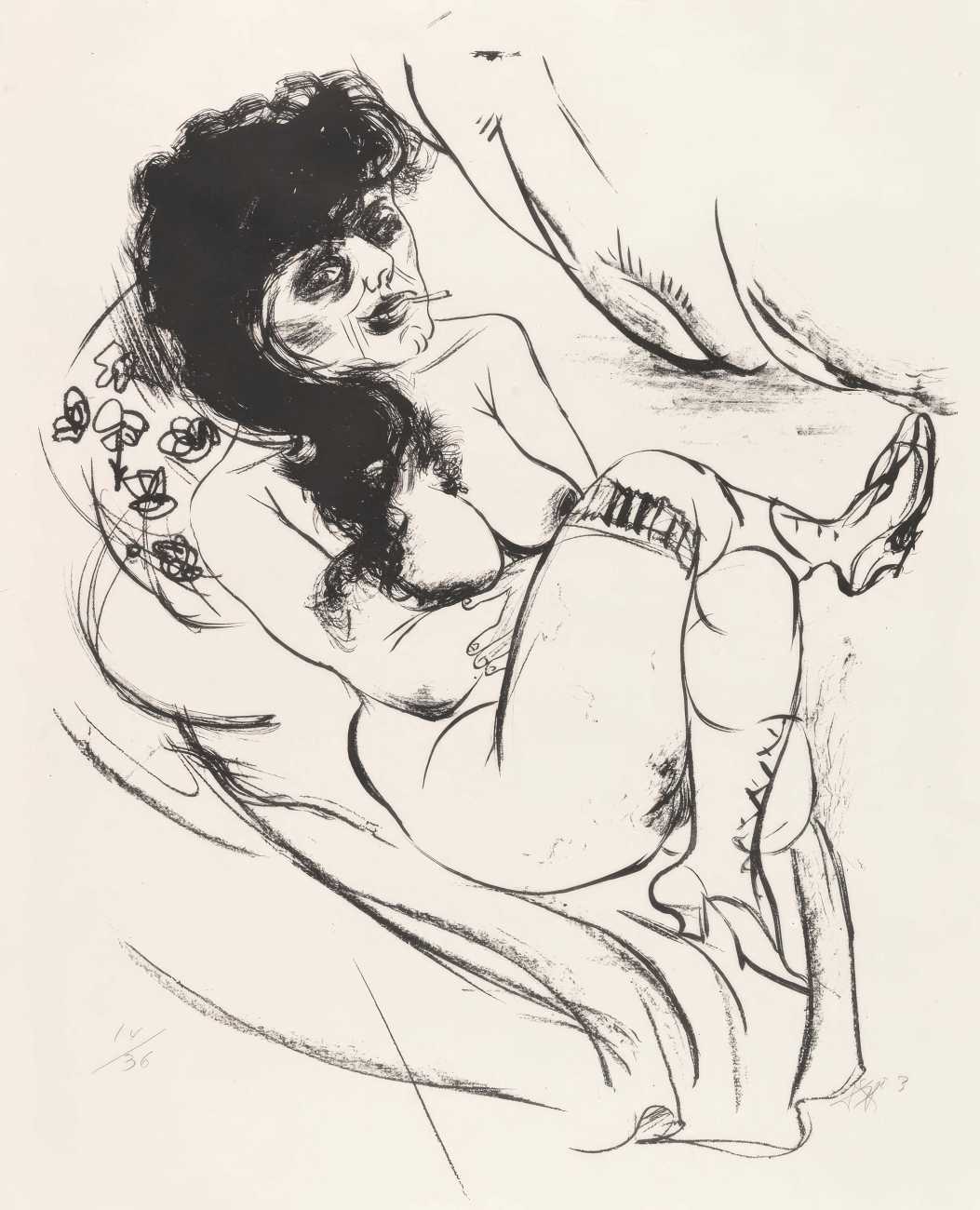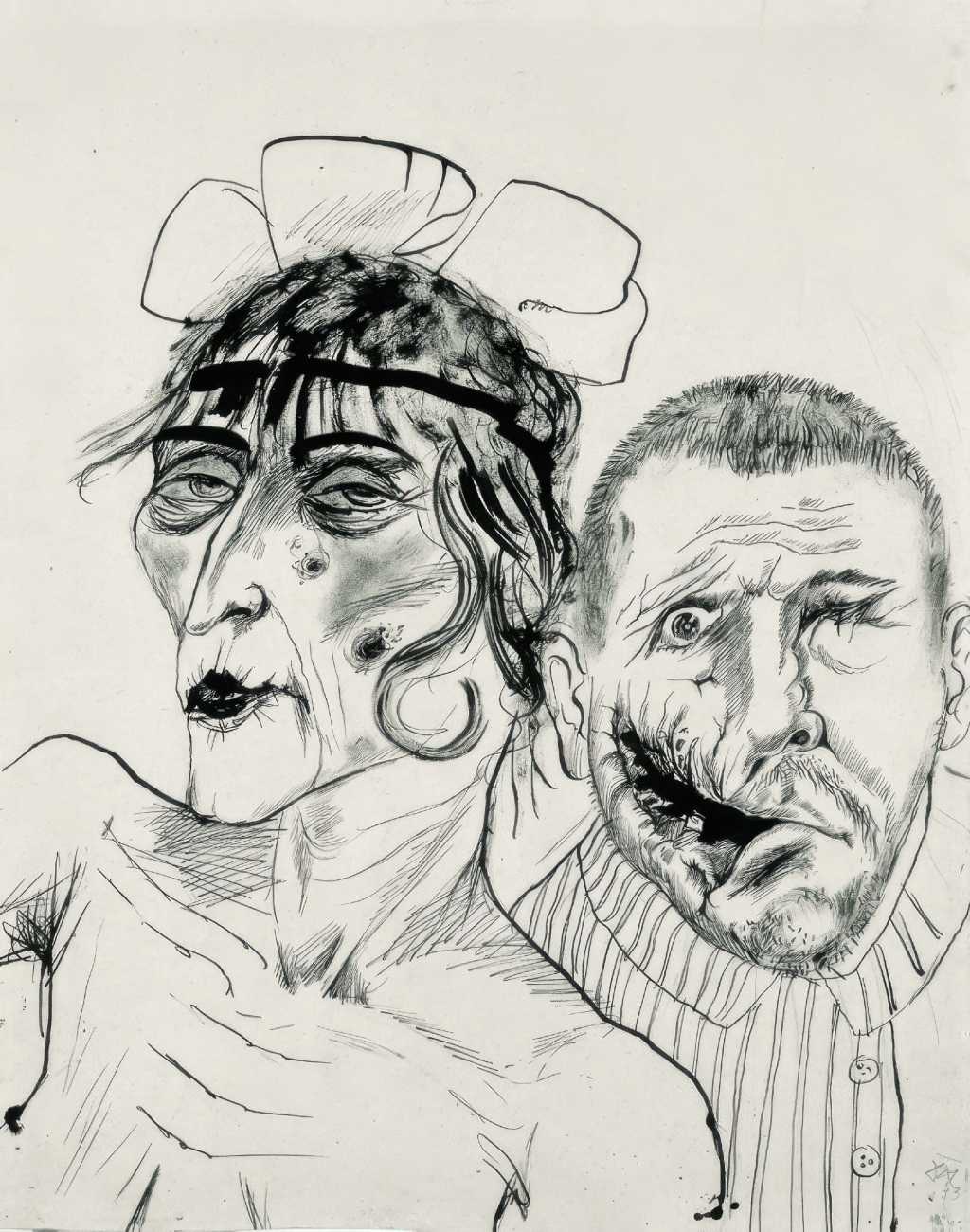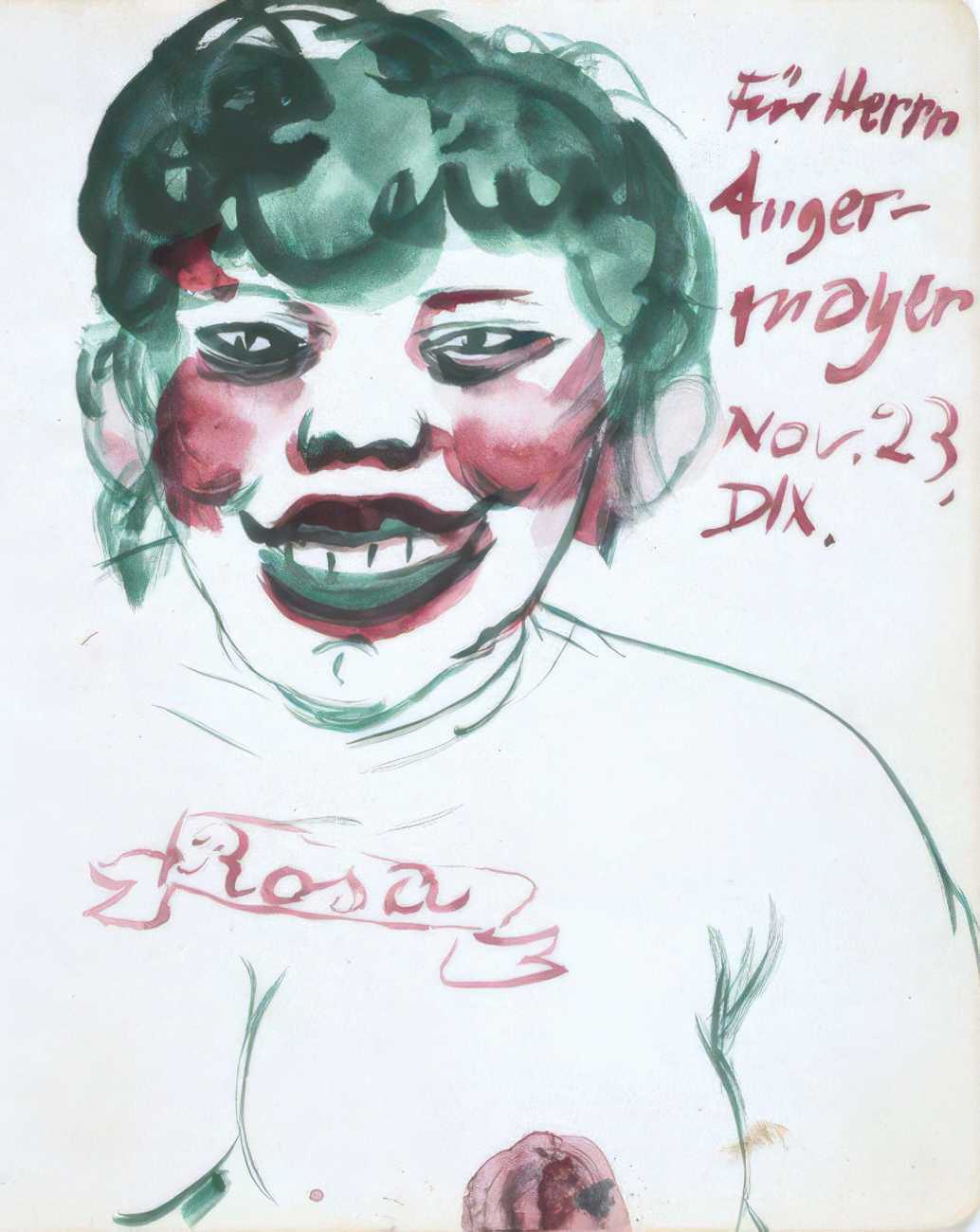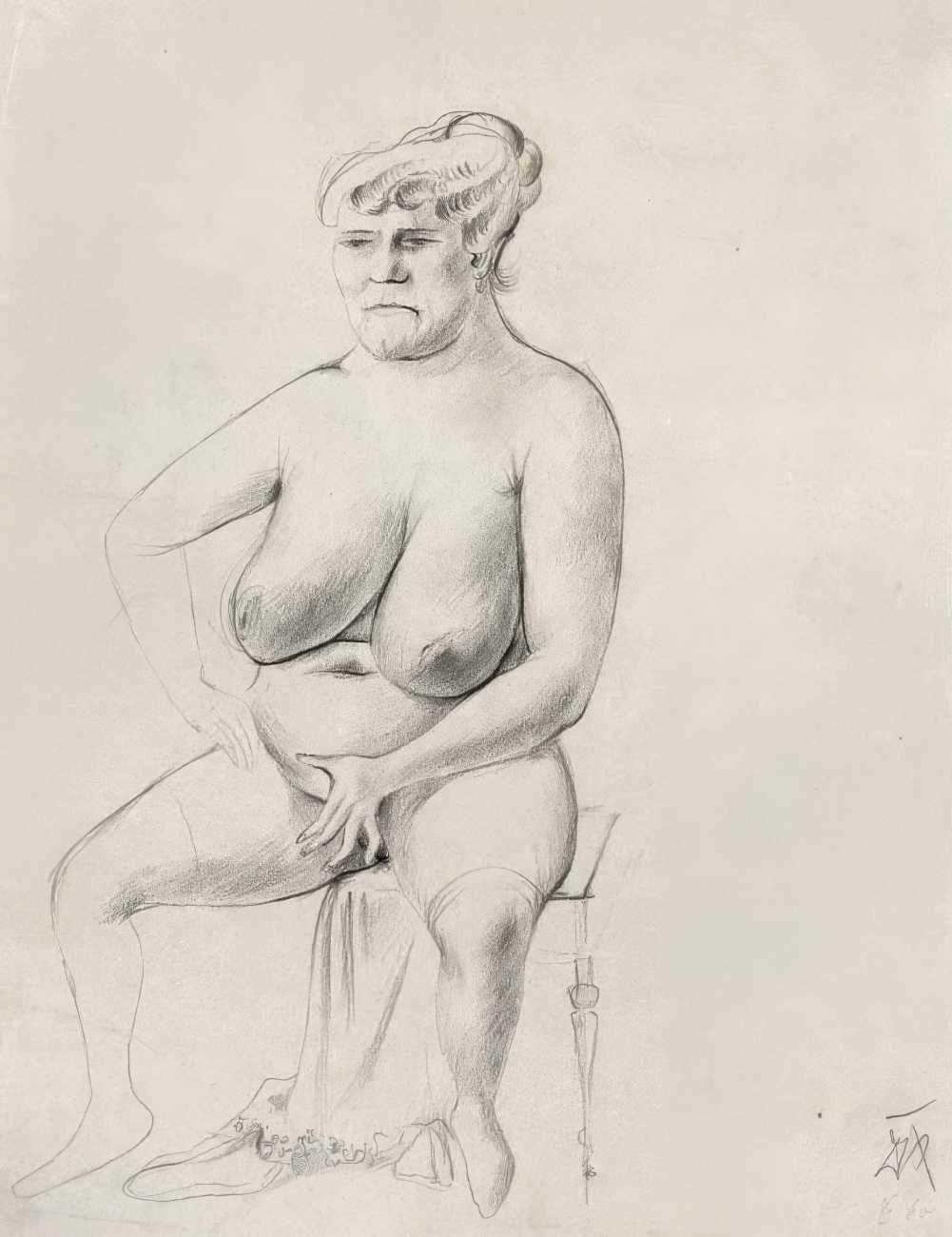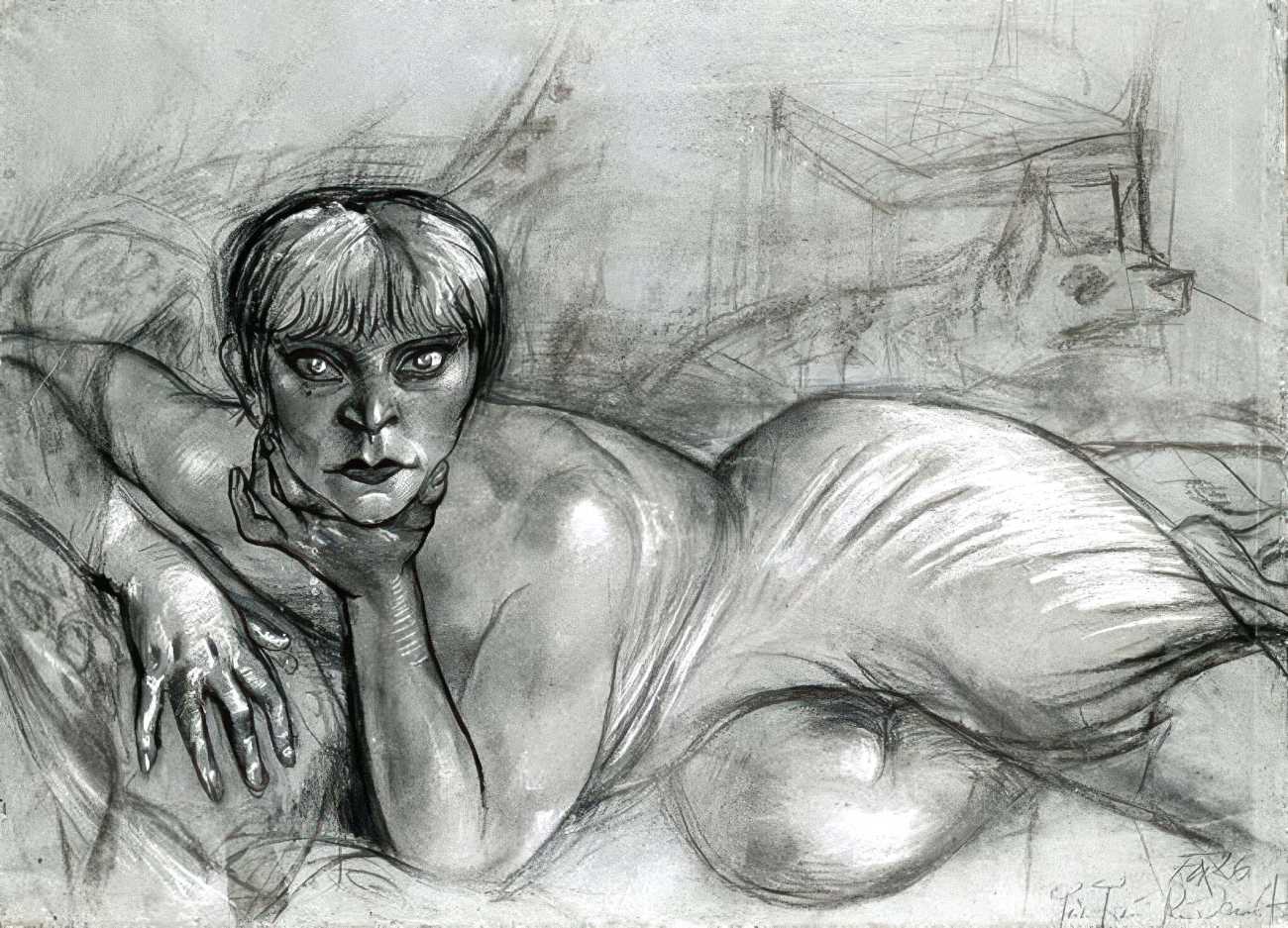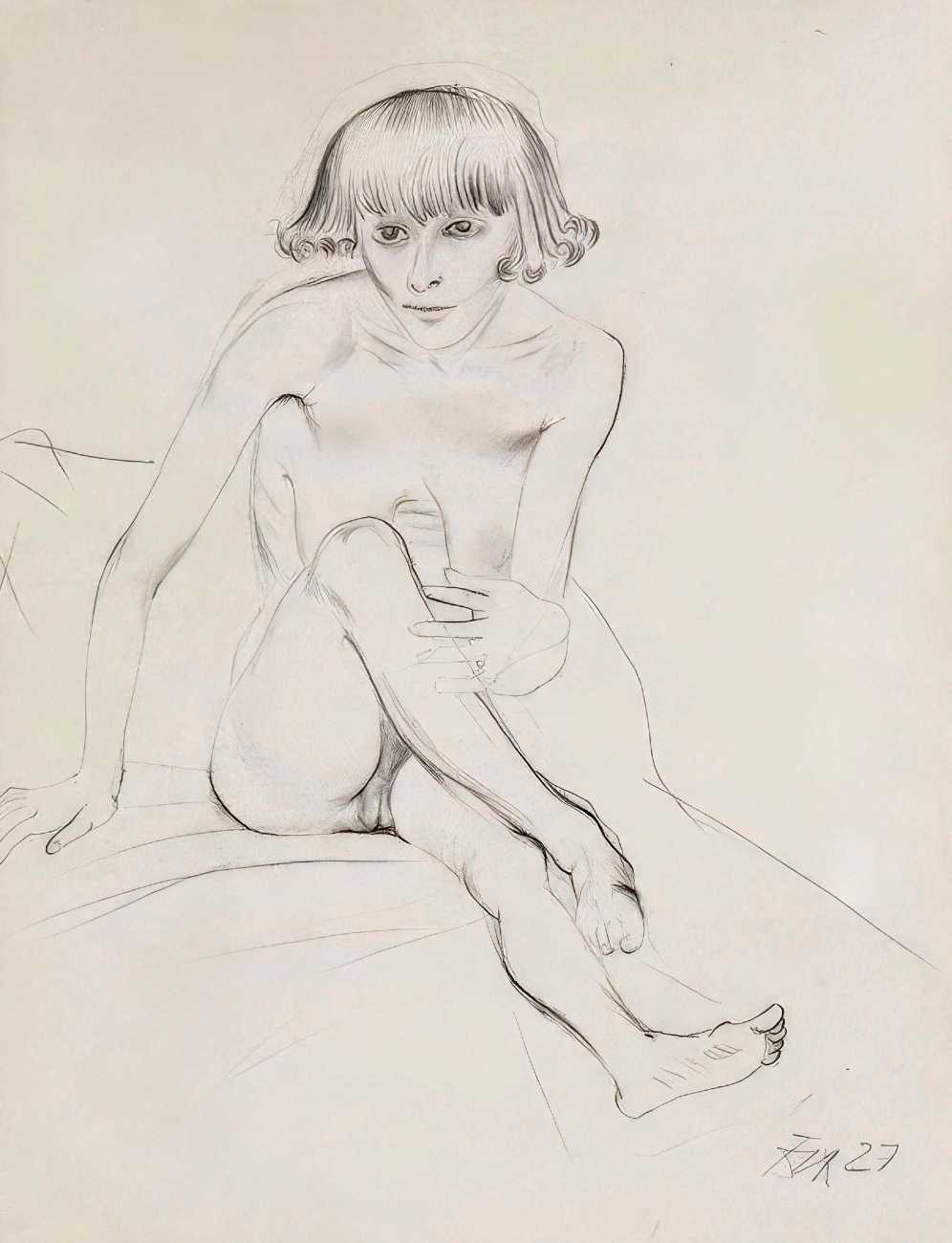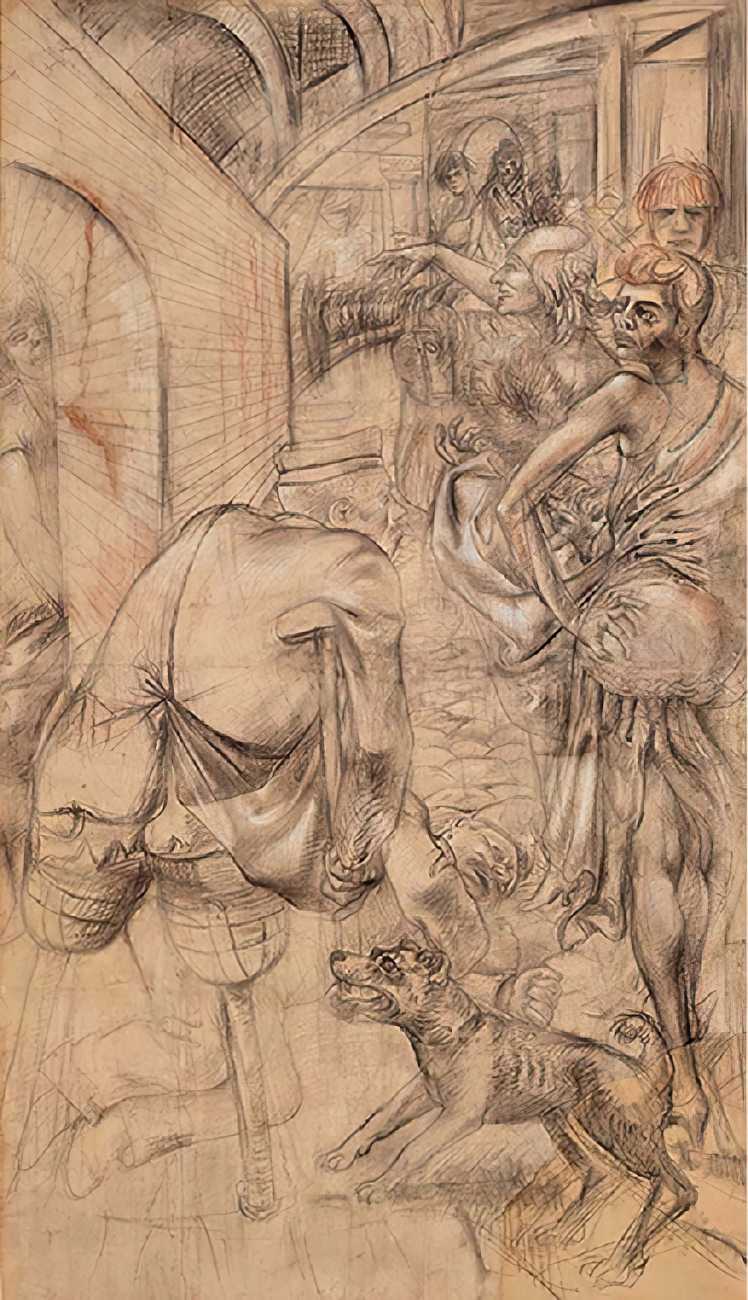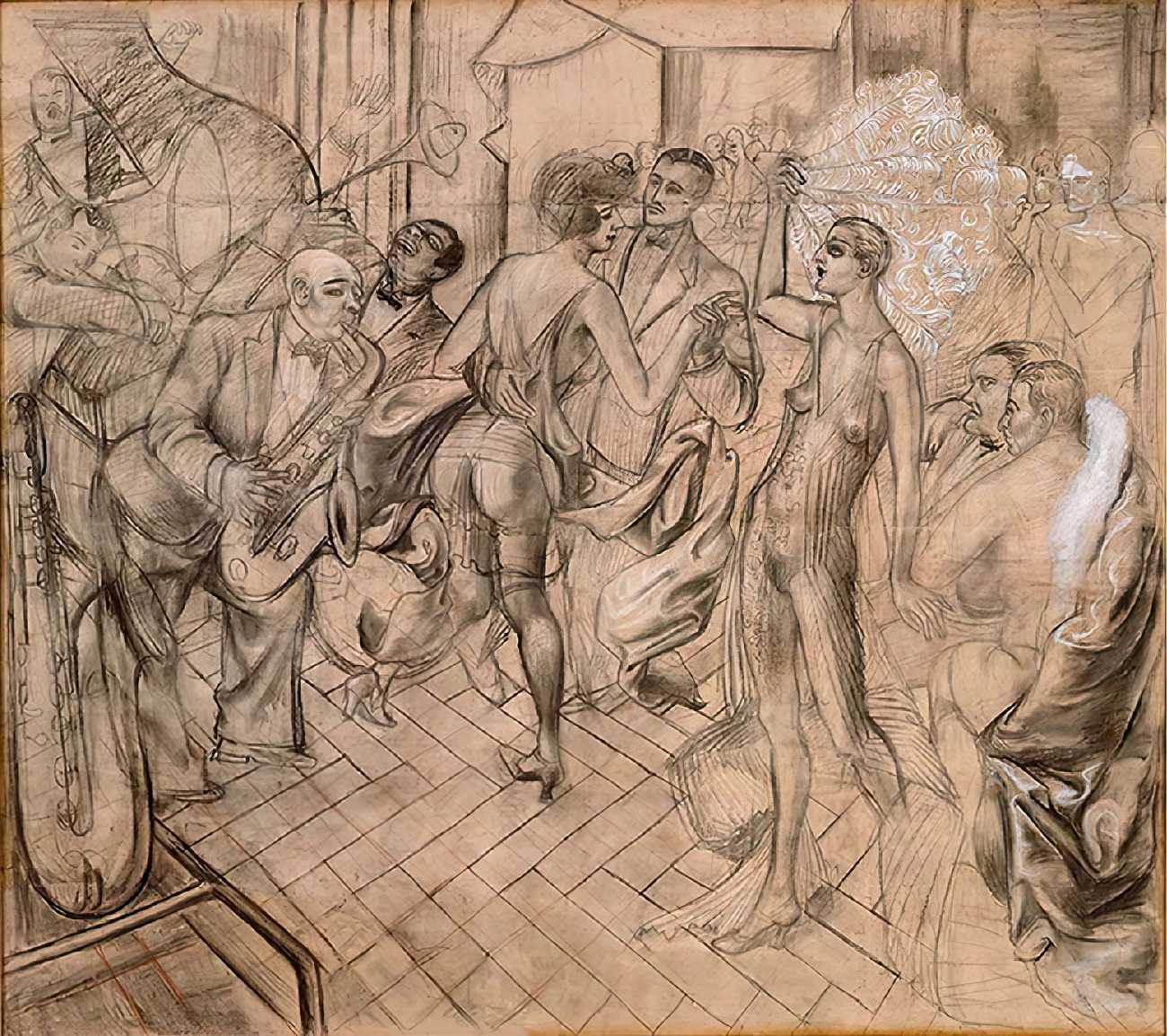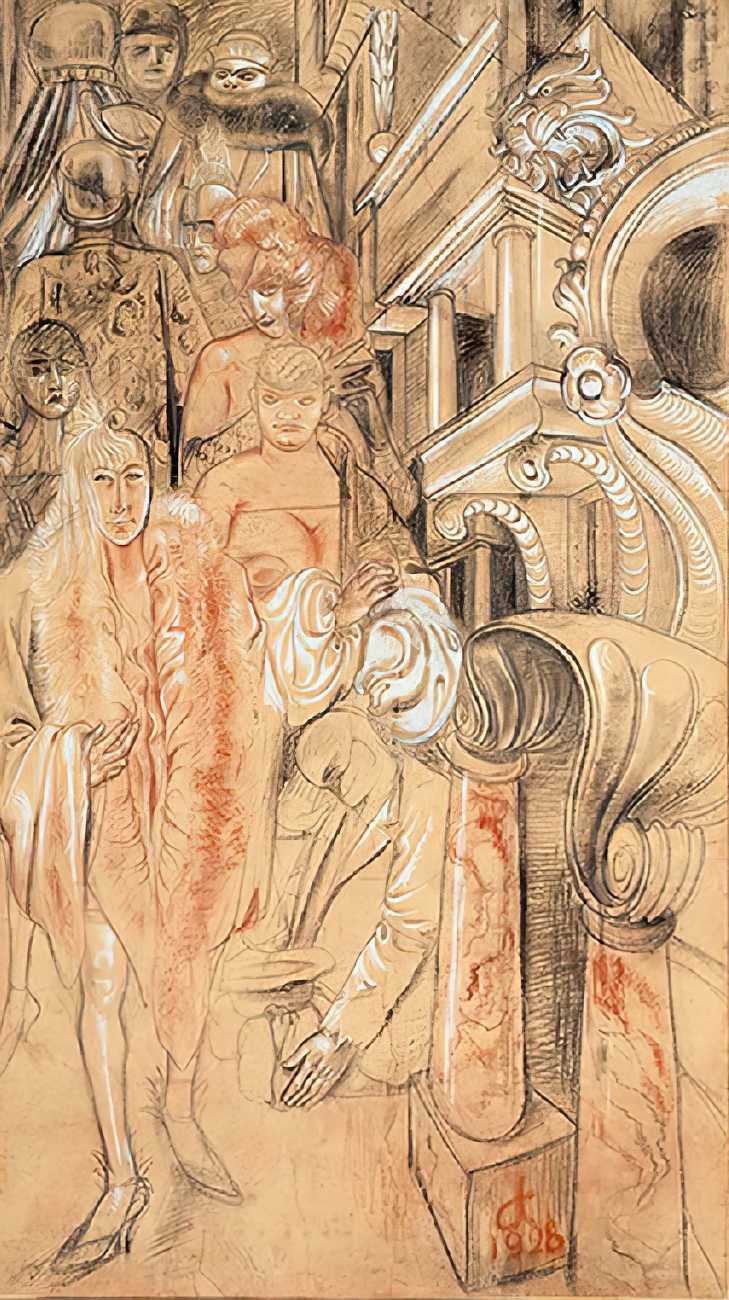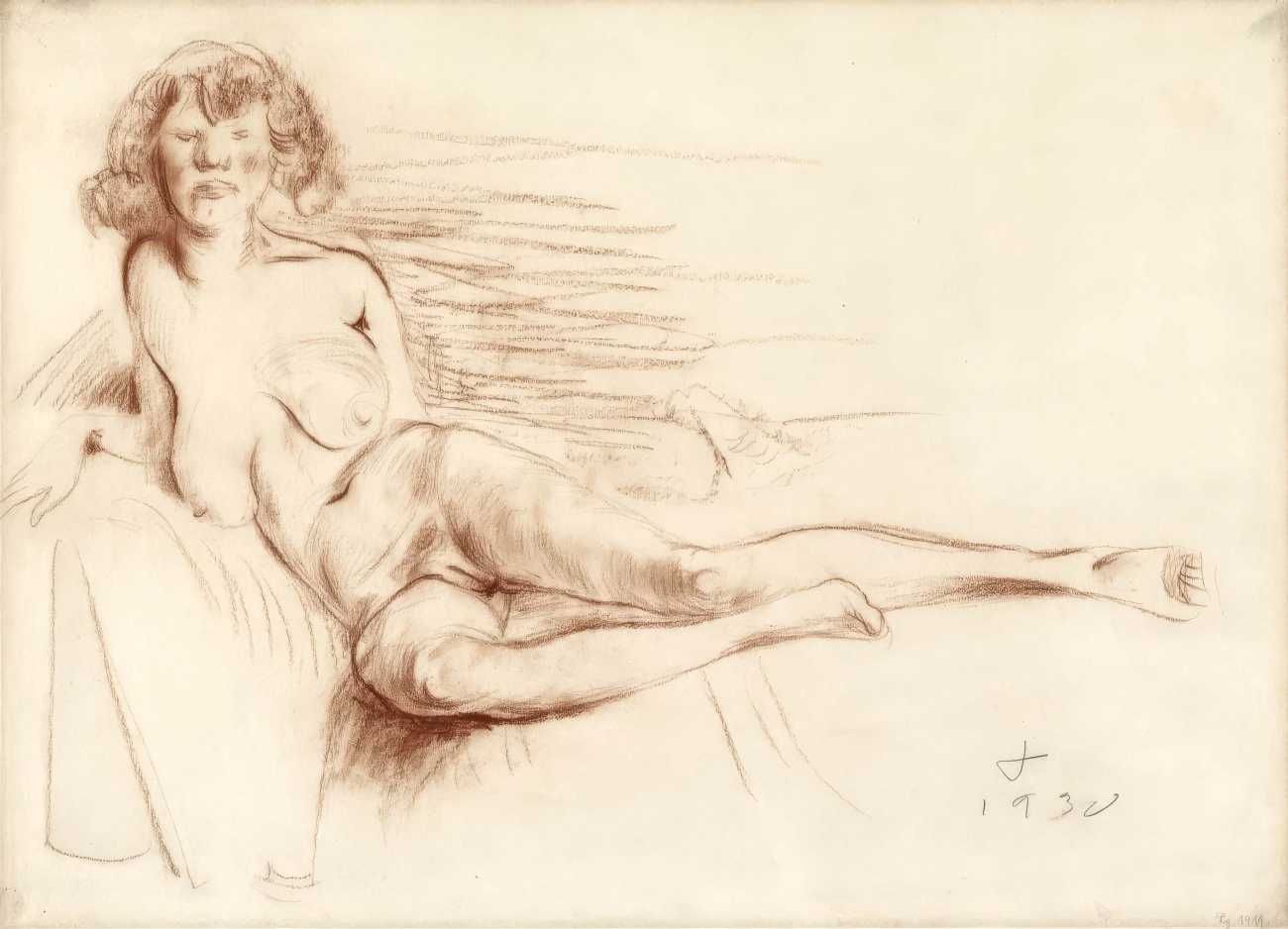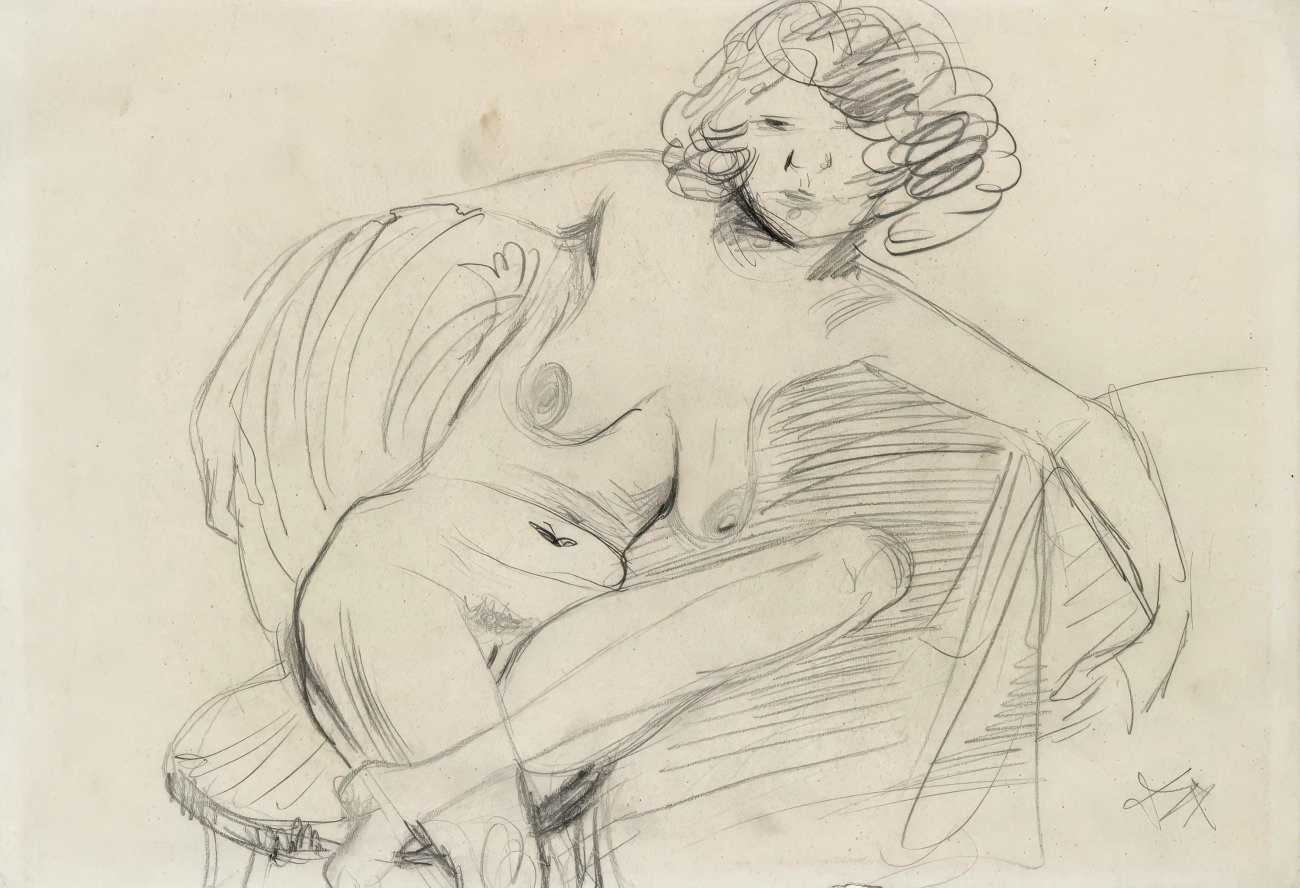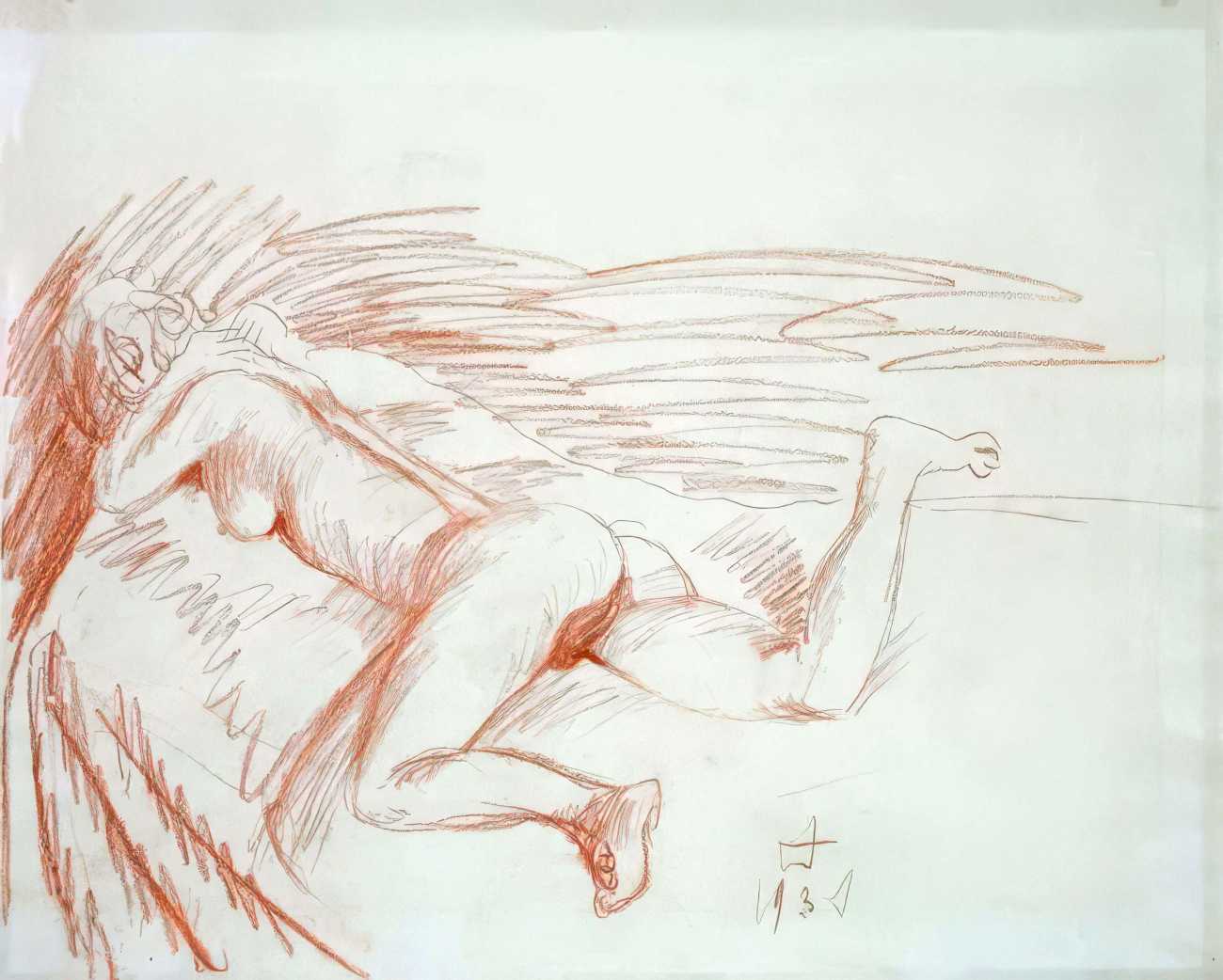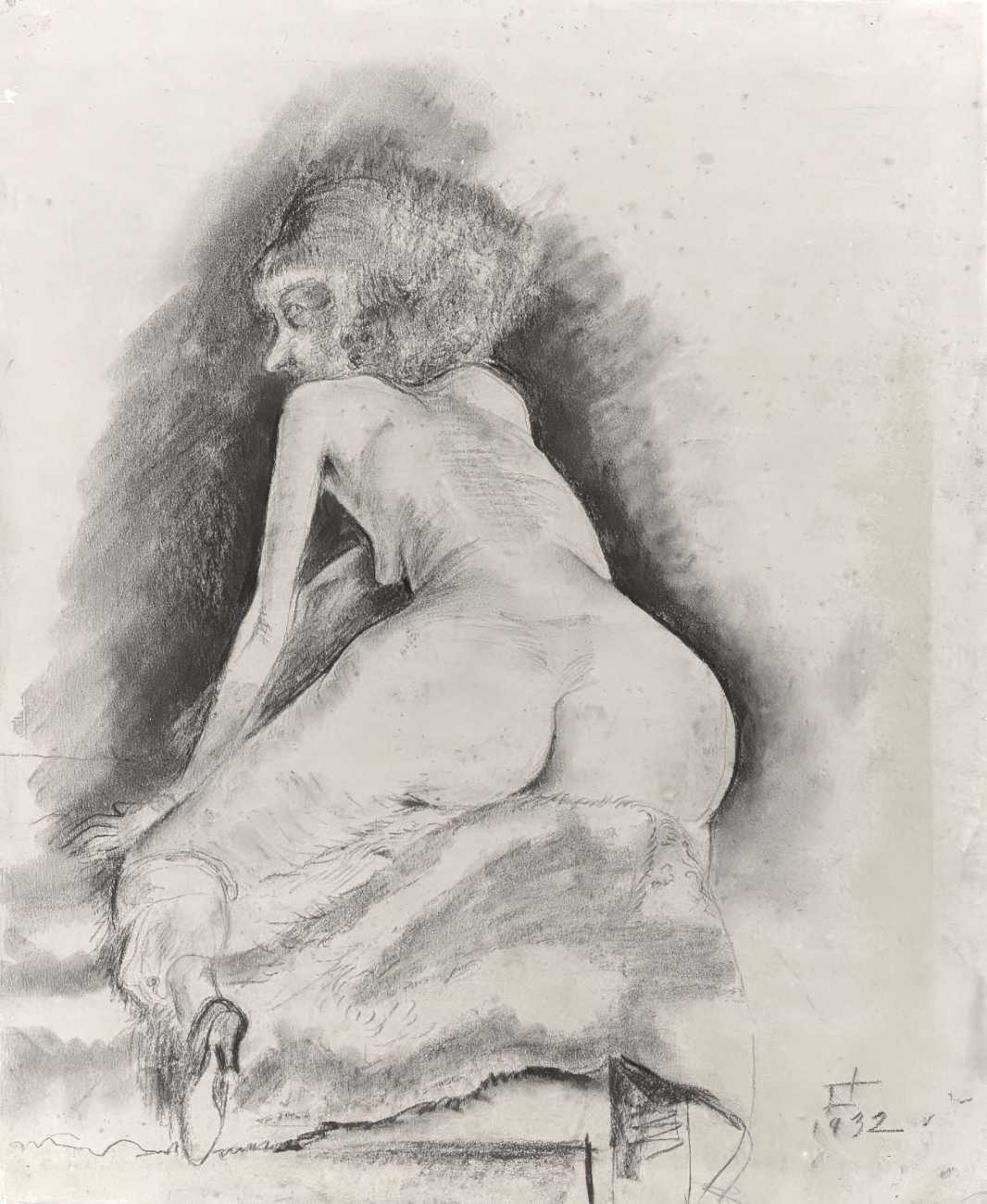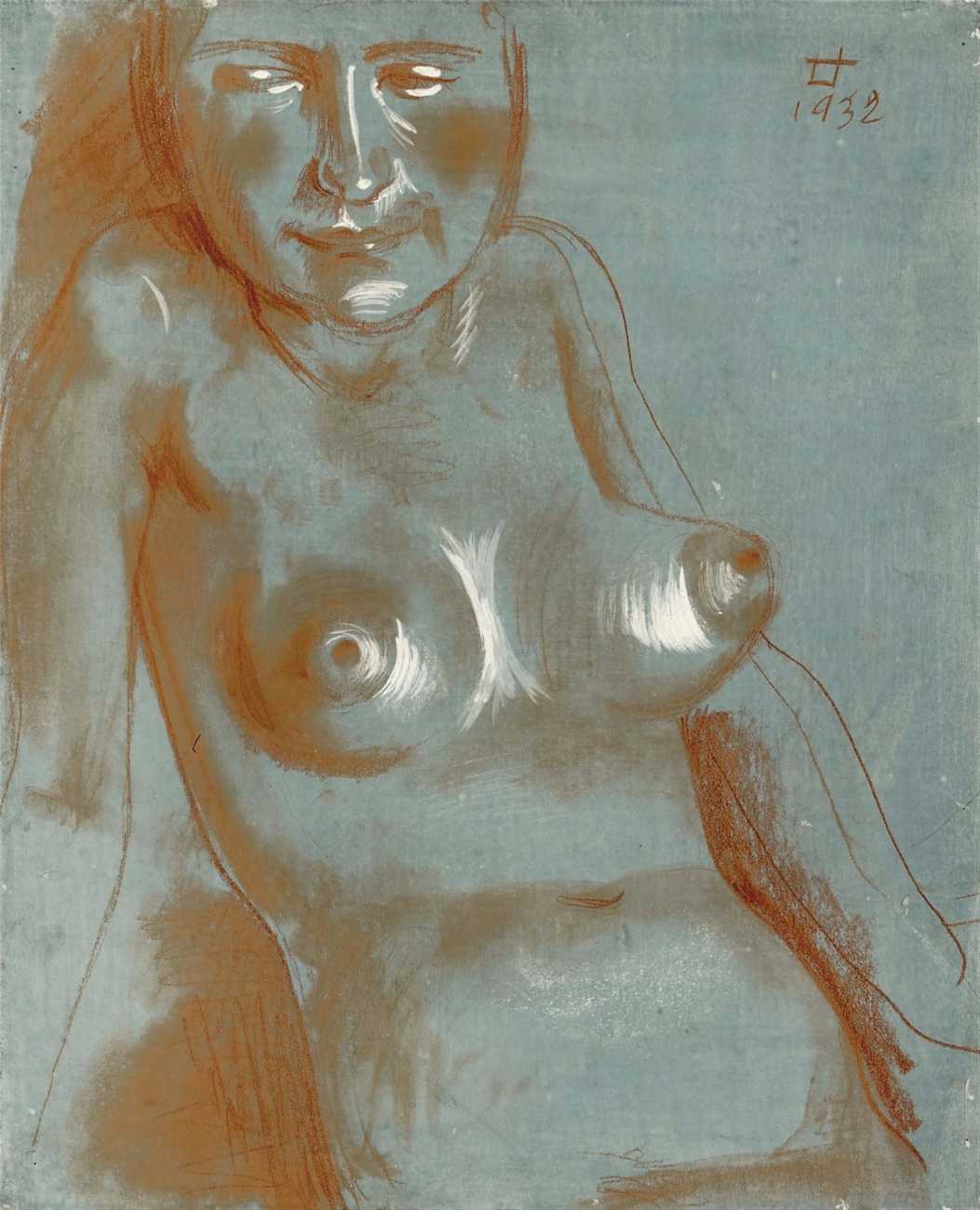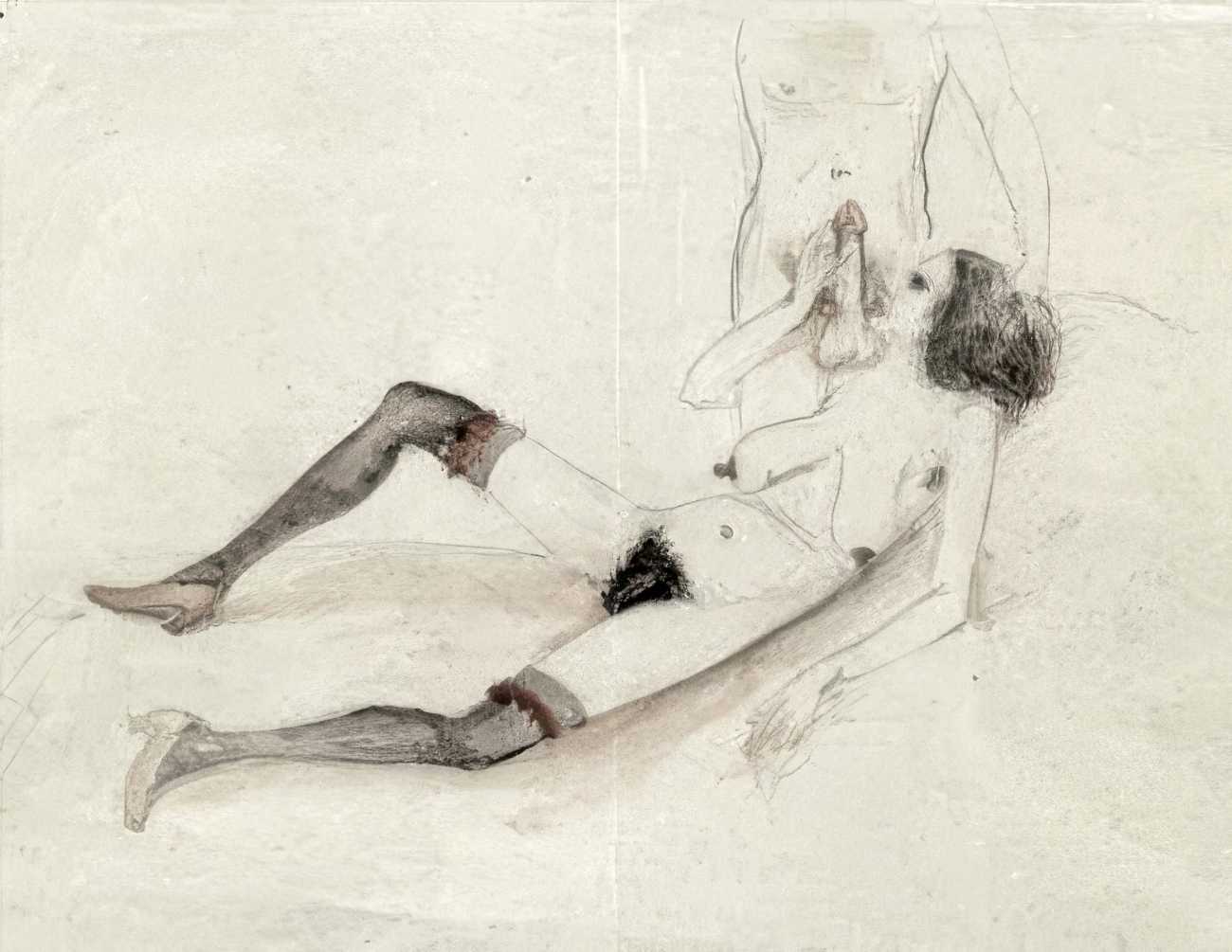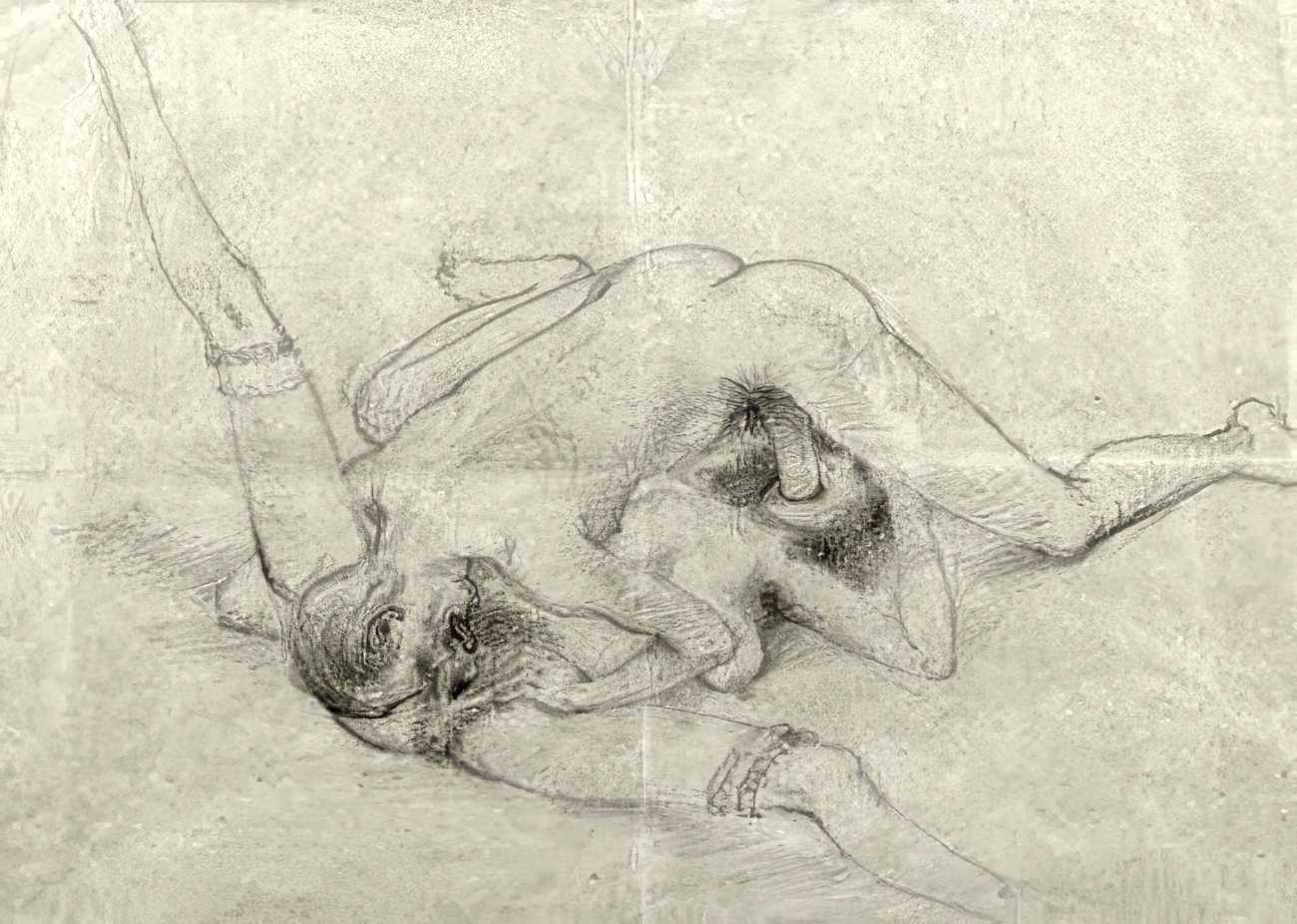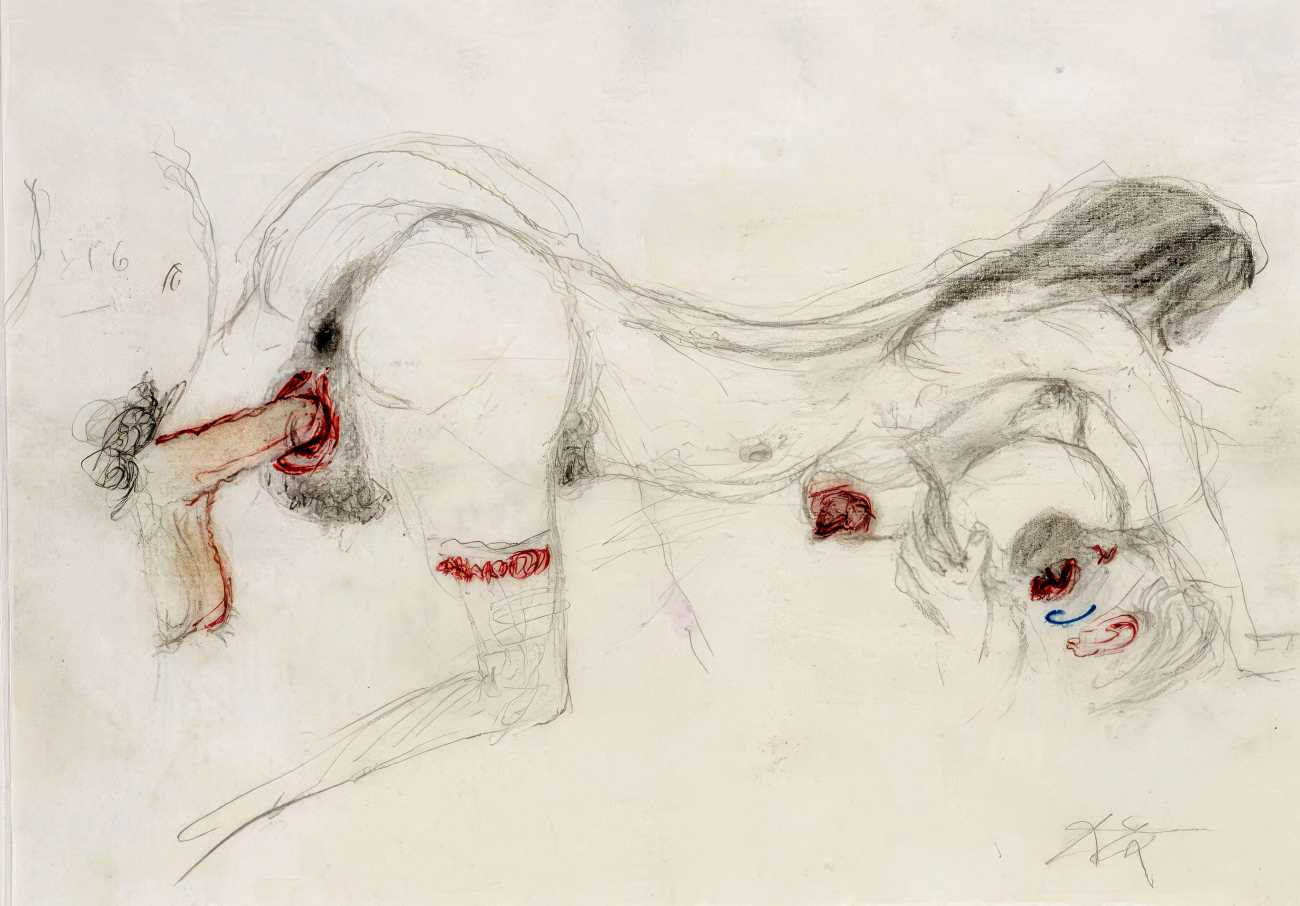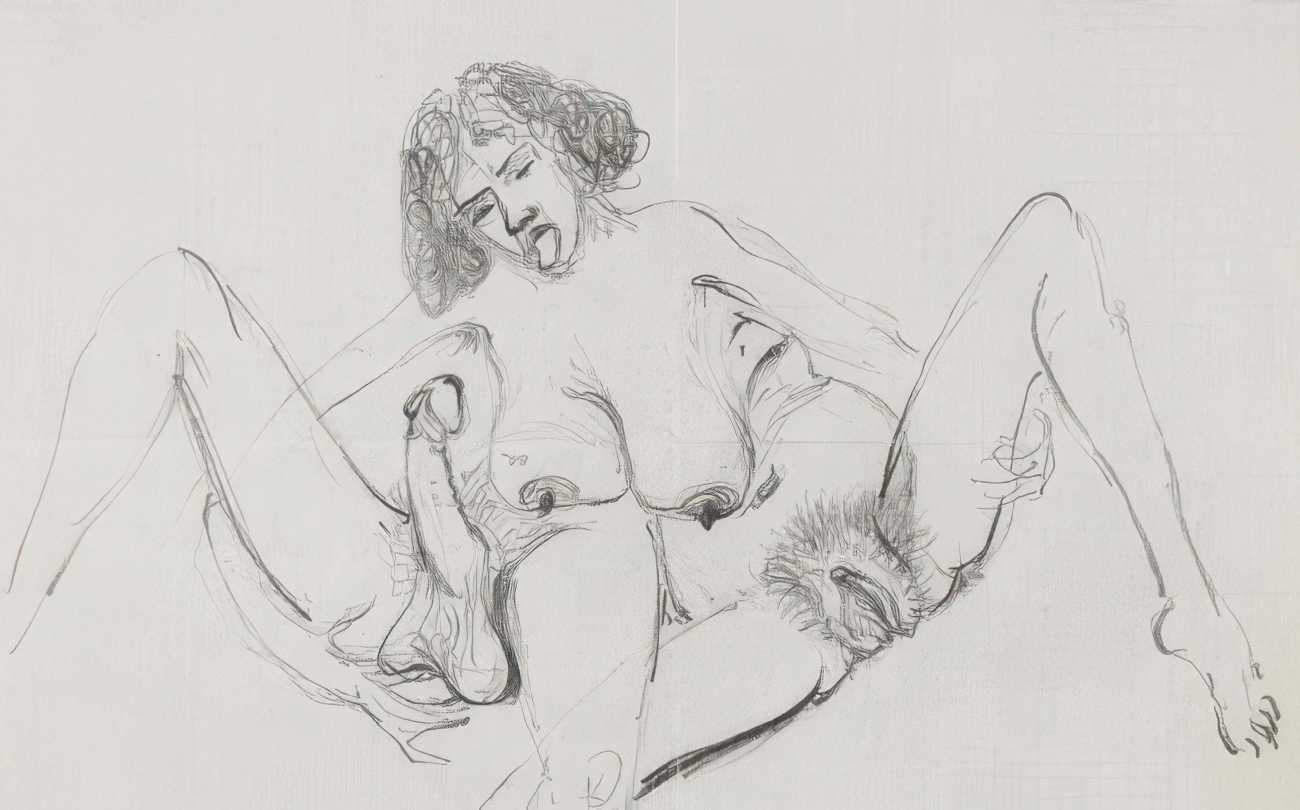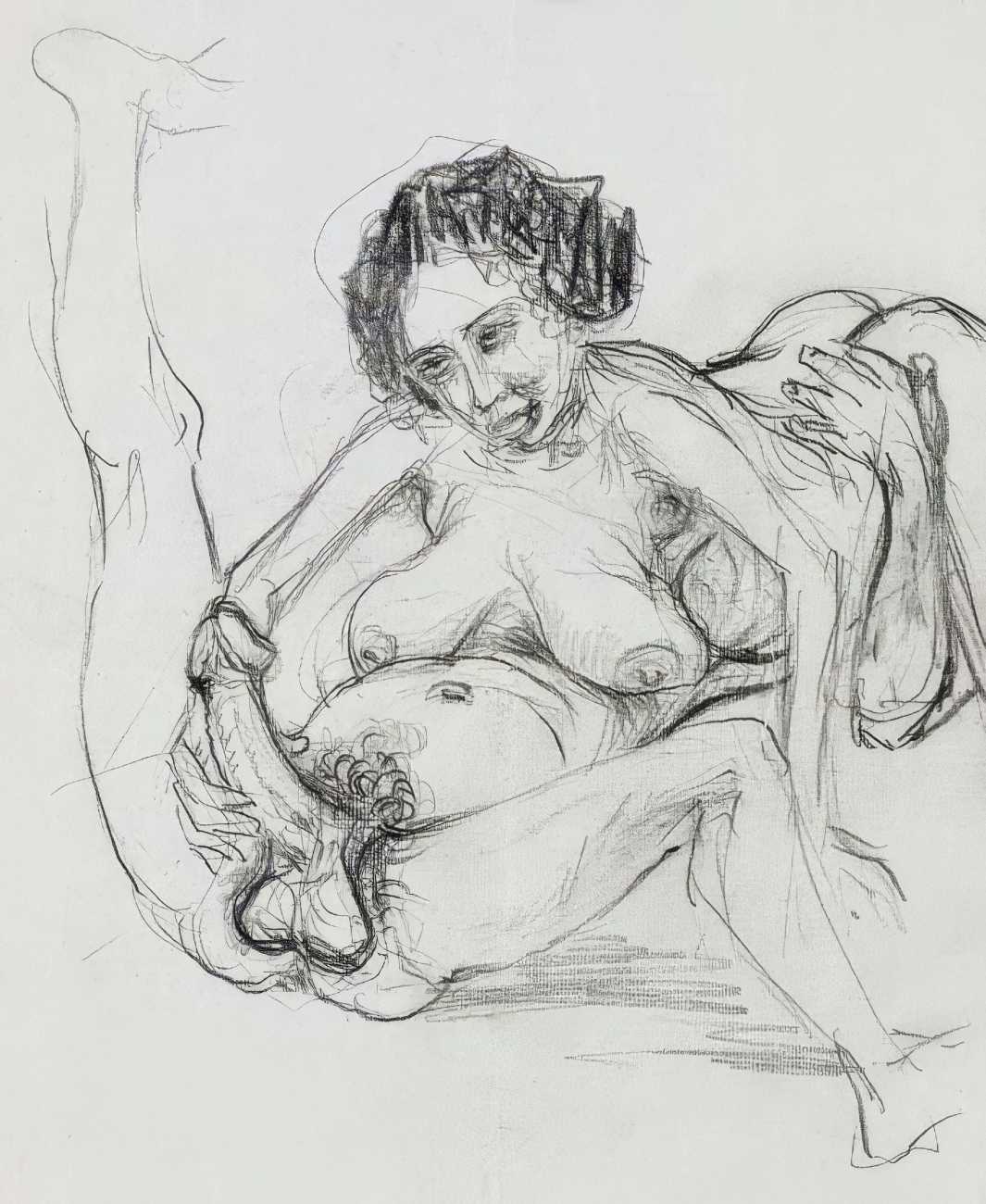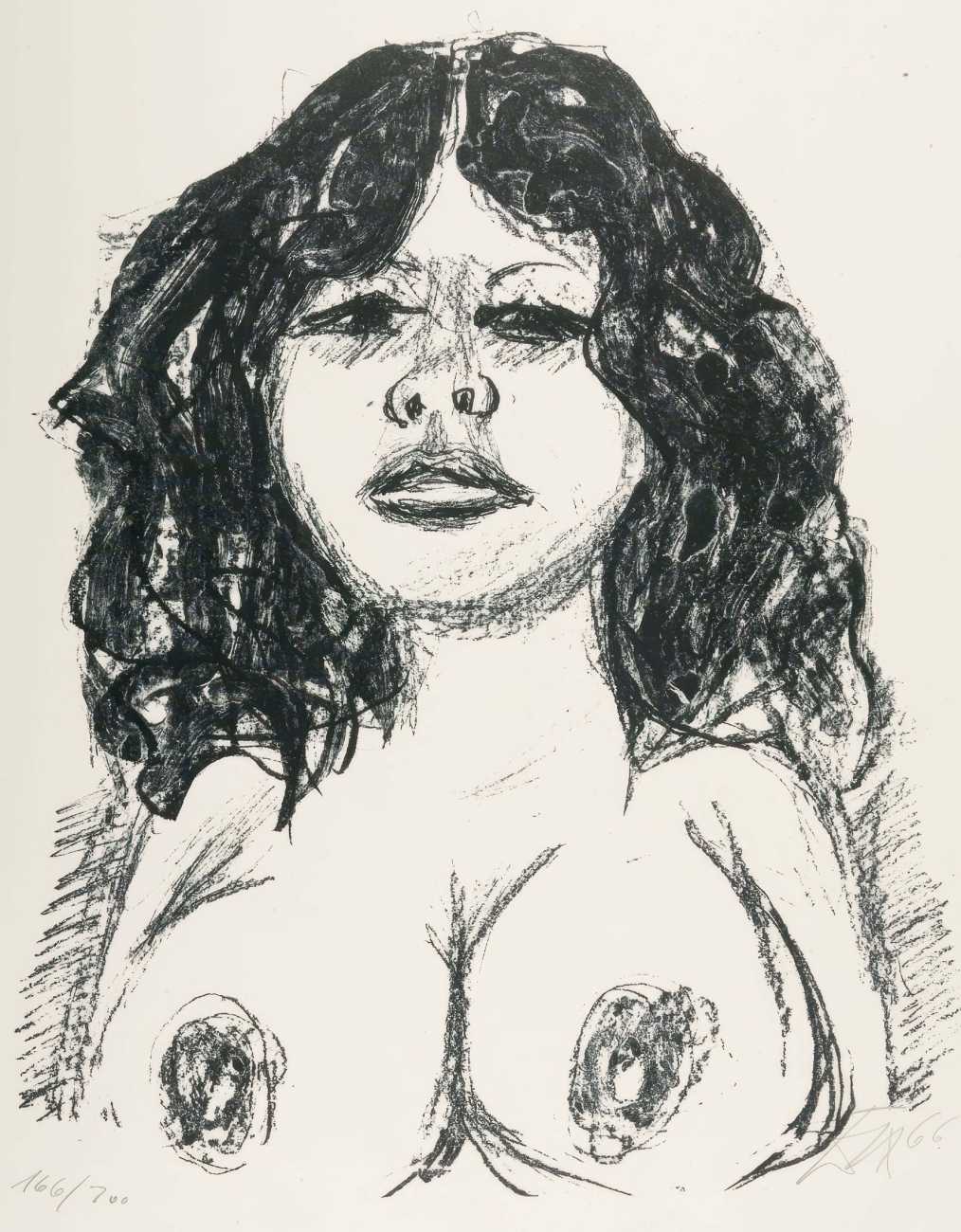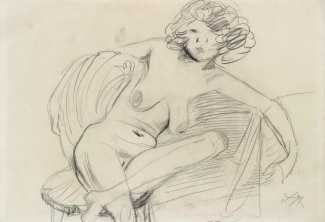
Drawing was fundamental to Otto Dix’s practice, and this selection, stretching from 1919 to 1966, shows how consistently he returned to the human figure throughout his career. The subjects range from prostitutes and sailors to veterans, lovers, performers, friends, family members and anonymous models. Some drawings are highly finished studies, while others have the immediacy of observations made quickly from life. Together they reveal an artist who was as interested in looking at people as in constructing finished pictures from them.
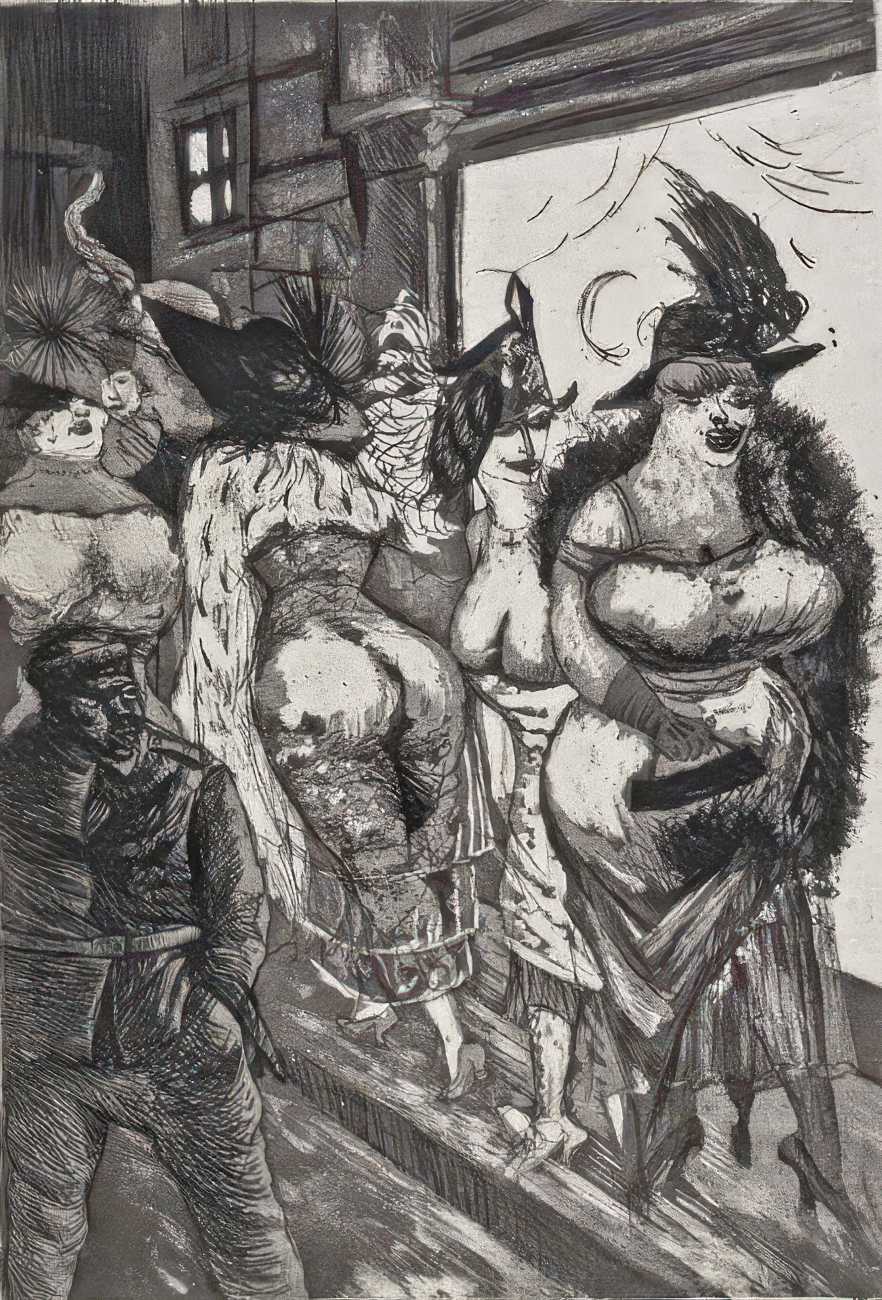
The early postwar drawings are particularly direct. Dix emerged from the first world war with an enormous store of visual memories, and his drawings became a way of recording the people and situations around him with little attempt to soften what he saw. Prostitutes, wounded soldiers and people living on the margins of respectable society appear repeatedly. His interest was not confined to their social circumstances: he was fascinated by faces, bodies, clothing, gestures and the physical details that distinguished one person from another.
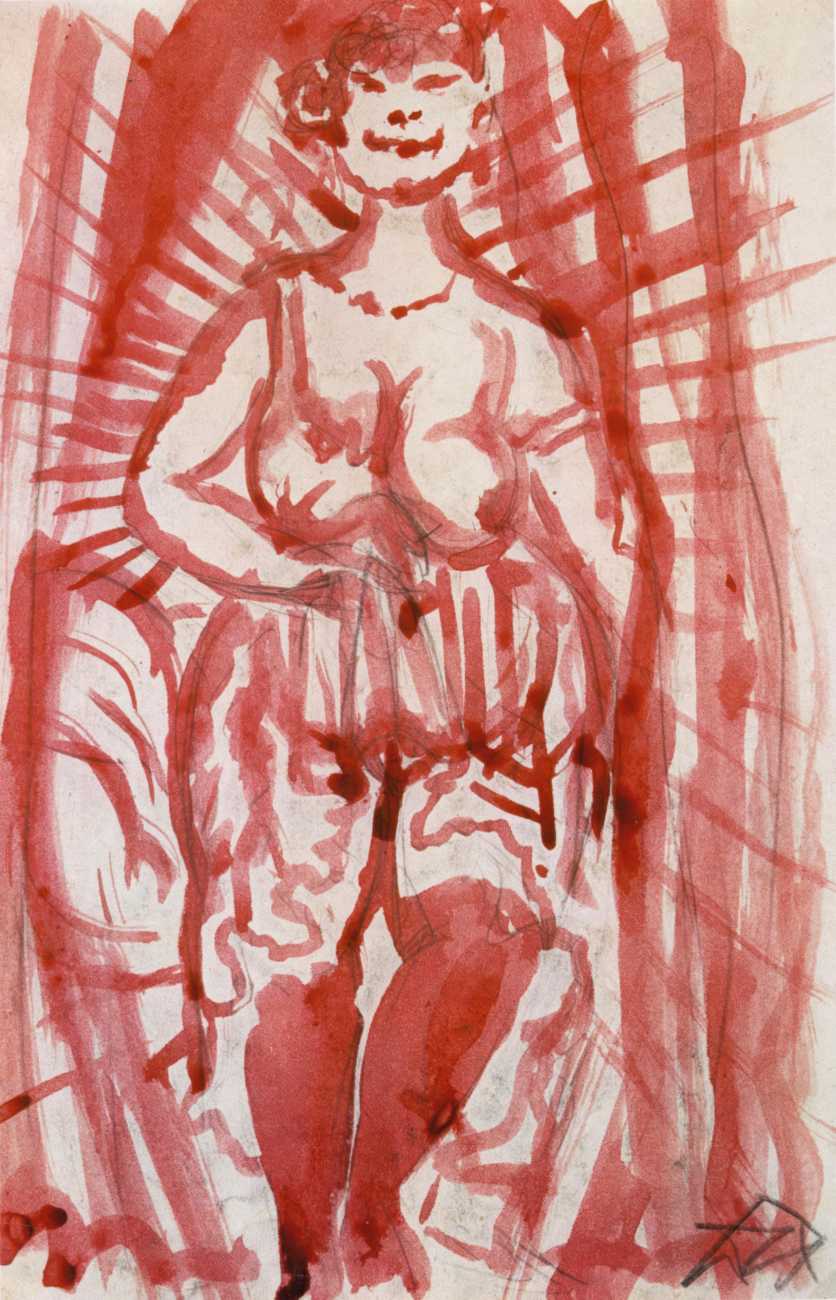
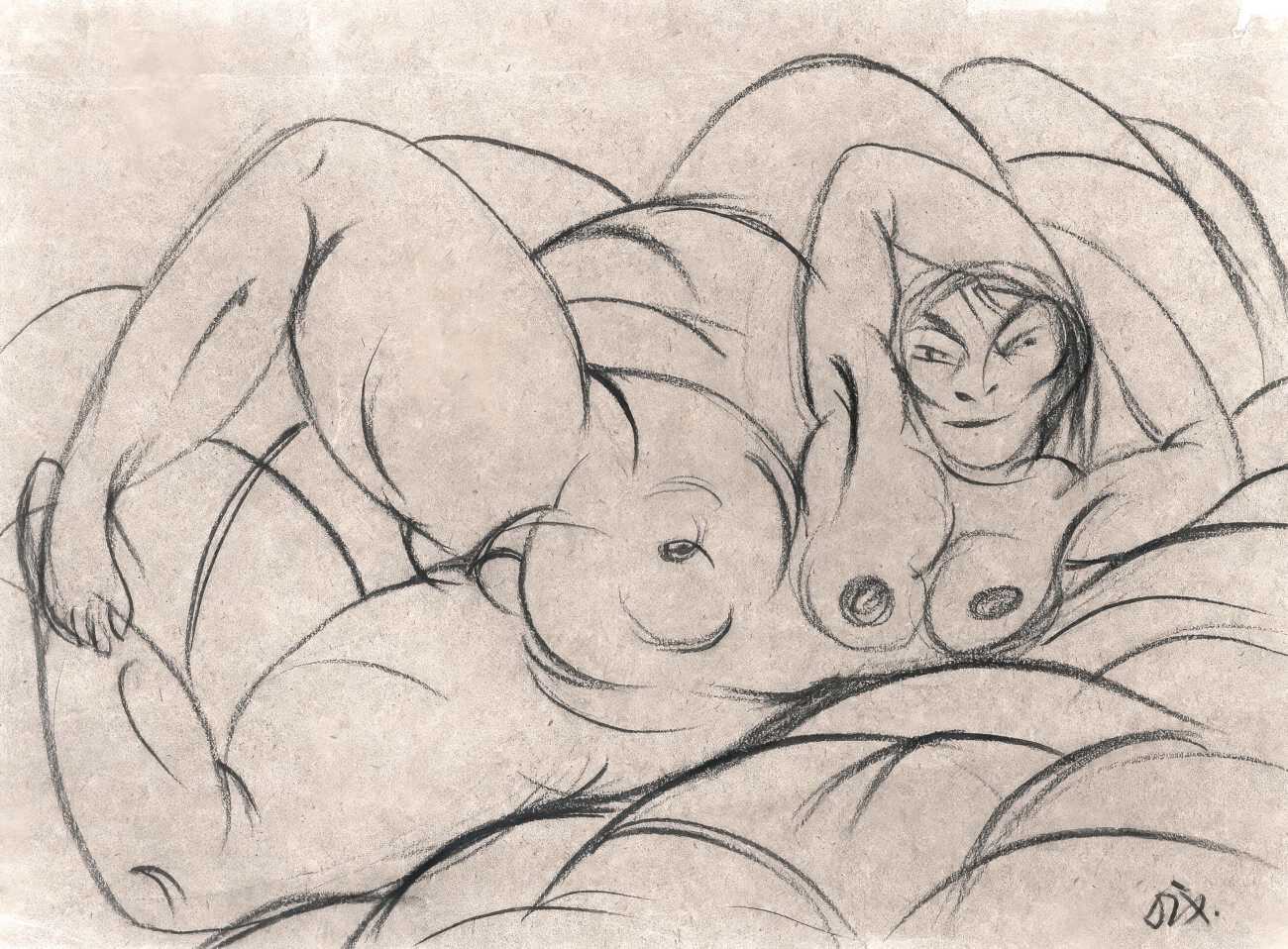
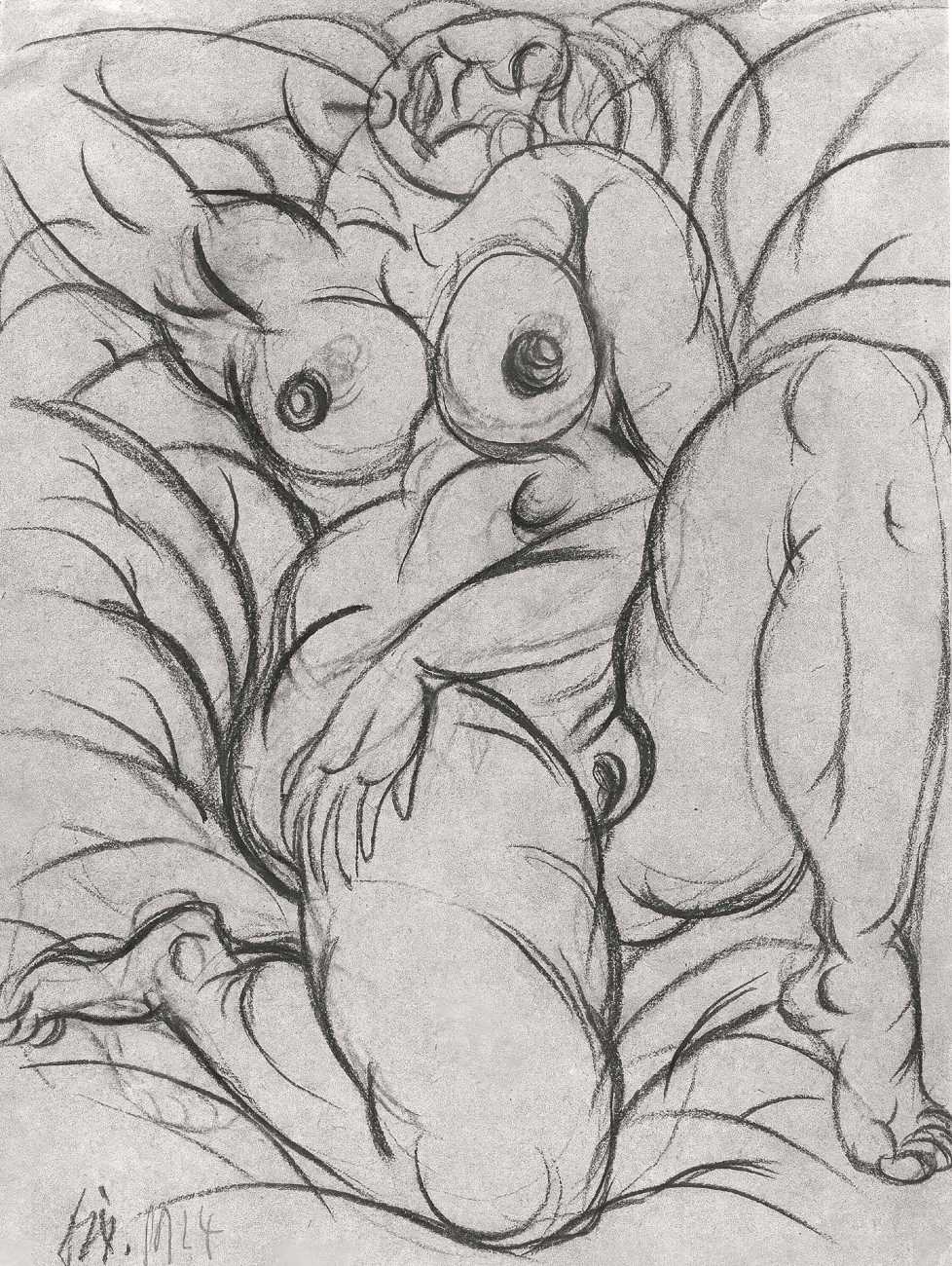
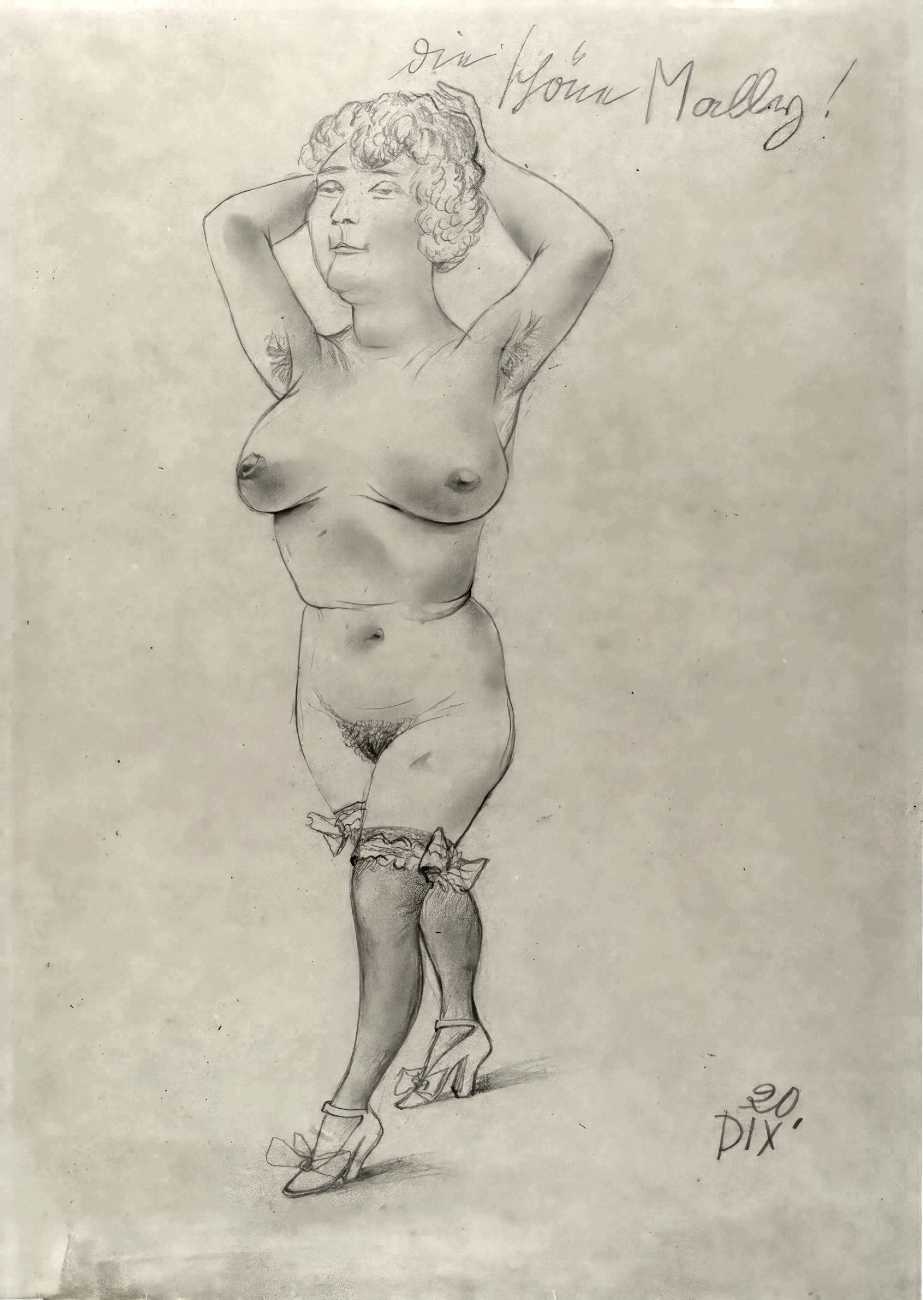
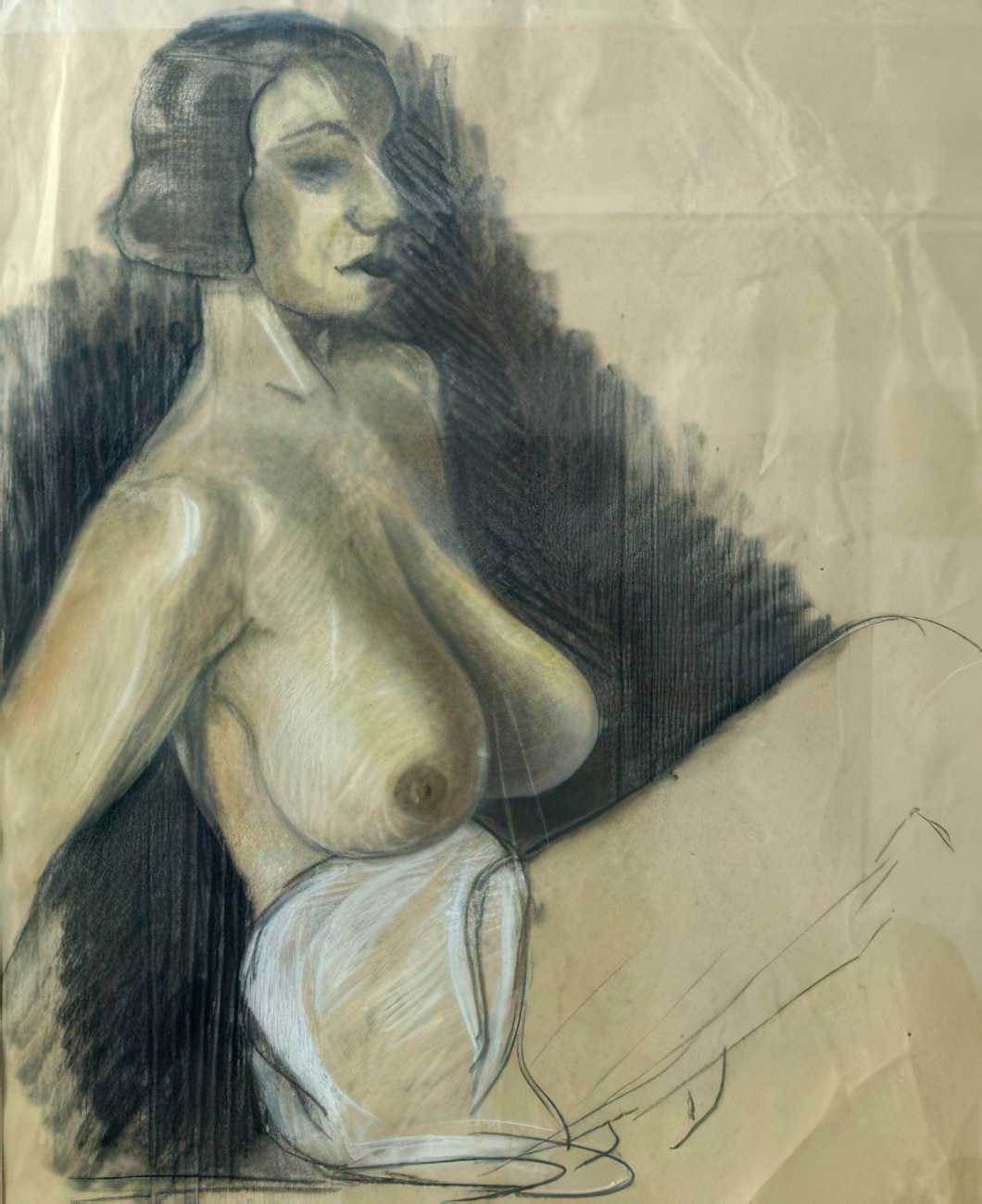
The female body occupies a large part of the selection. Dix drew women standing, sitting, reclining and posing, sometimes apparently as conventional models and sometimes in deliberately theatrical or provocative settings. His Die schöne Mally (Beautiful Mally) of 1920 is a relatively controlled portrait, while other drawings from the early 1920s are much more forthright studies of the body. The range is considerable – slender and heavy bodies, young women and older women, idealised poses and deliberately unflattering ones.
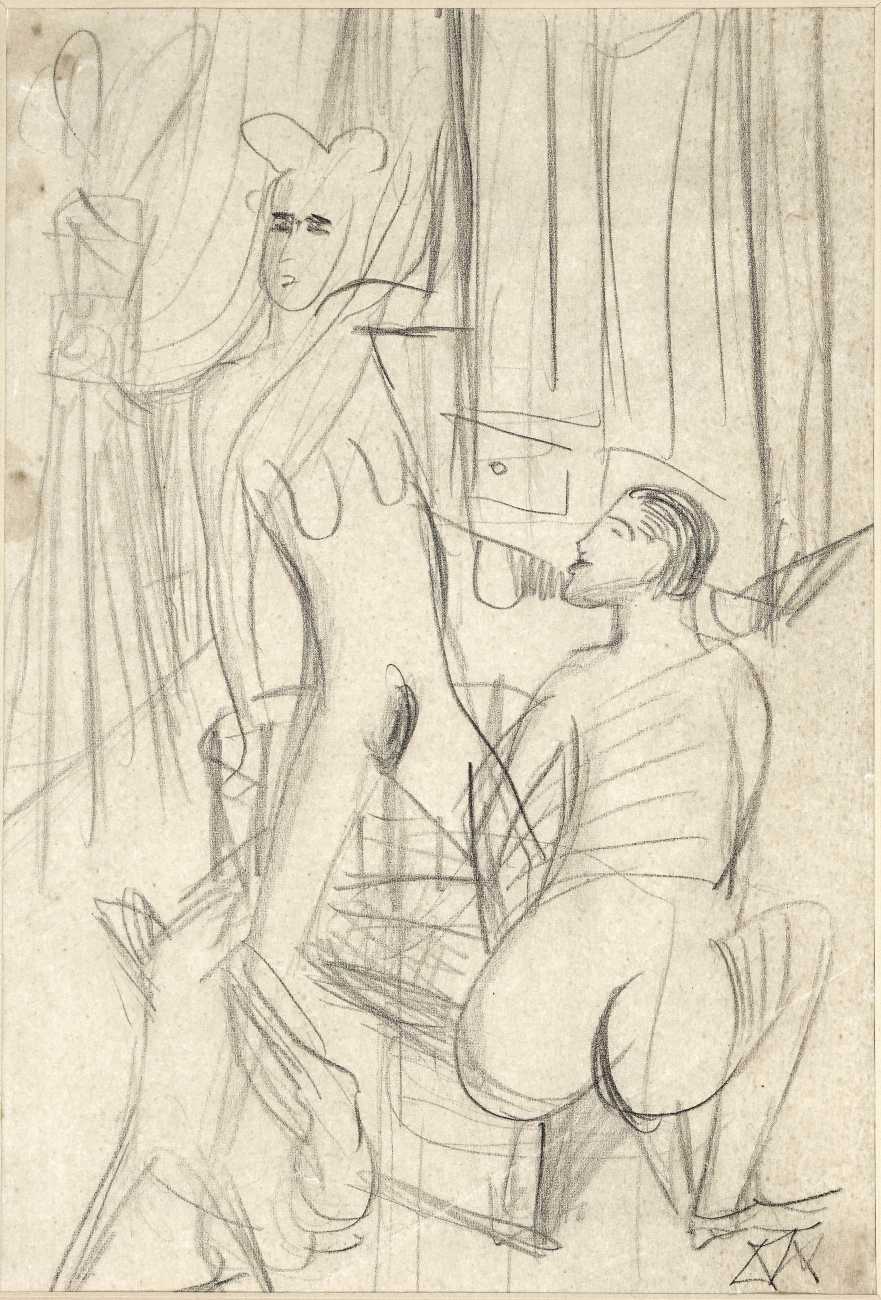
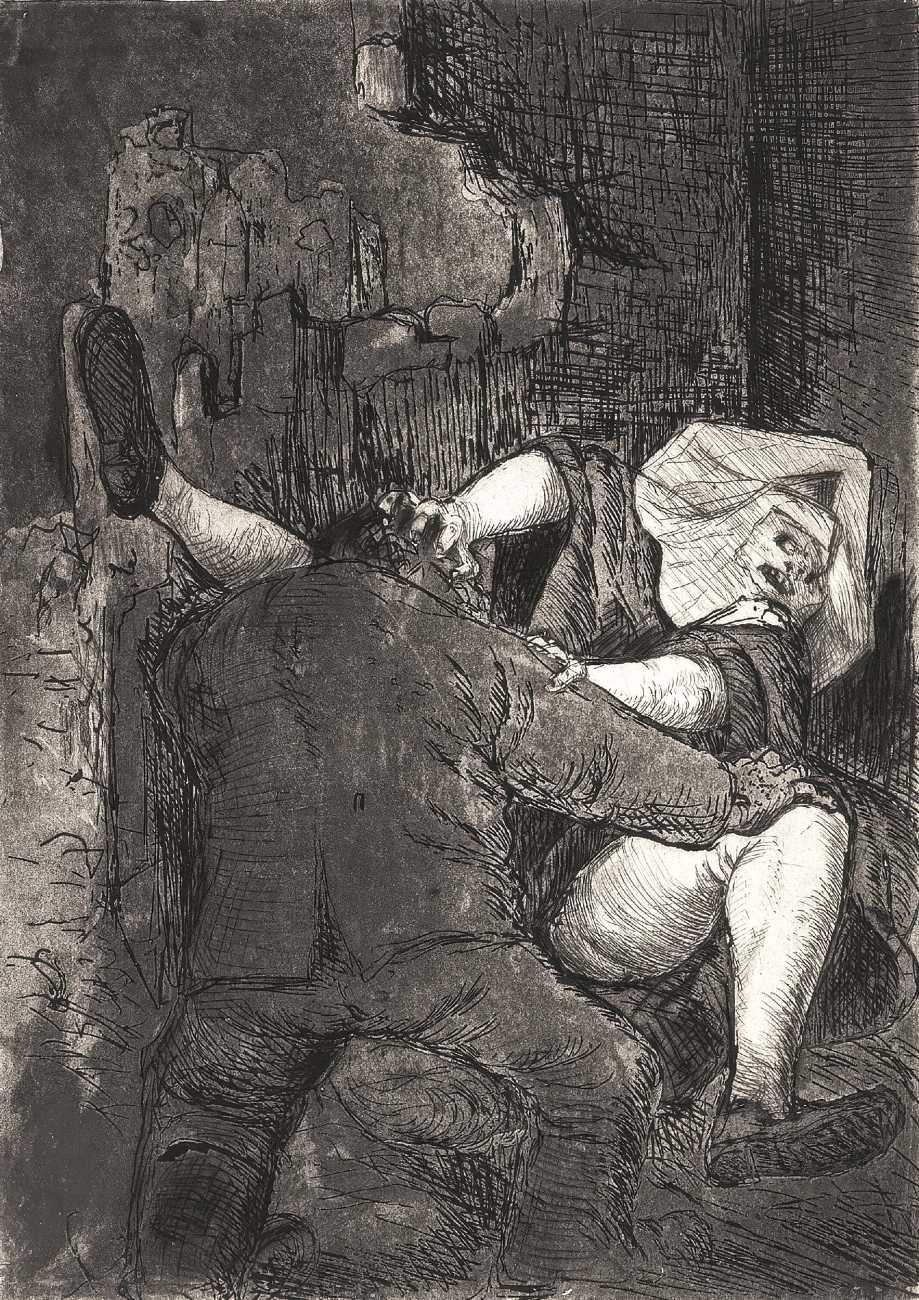
Dix’s drawings of couples and sexual encounters are equally varied. Lovers may appear tender, comic, awkward or explicitly sexual, while prostitutes and their customers are treated as part of the same contemporary social landscape. His fascination with sexuality was already evident in the woodcuts and drawings of 1919–20, in which erotic encounters, street life and grotesque transformations of the body were combined.
The drawings also preserve Dix’s interest in people beyond the erotic and the grotesque. Portraits of musicians, artists, friends and acquaintances sit alongside studies of children, workers and family members. Some of his wartime and post-war drawings are brutally descriptive; others are remarkably economical.
What is striking across almost five decades is the persistence of the act of looking. The youthful artist of 1919 and the much older Dix of the 1960s remained interested in bodies as individual, imperfect physical realities. The final drawings in this selection demonstrate that the human figure – and explicit sexual imagery – remained subjects of sustained interest almost to the end of his life.
The drawings are shown here in chronological order, from The Prostitute of 1913 to one of his last model studies from 1966.