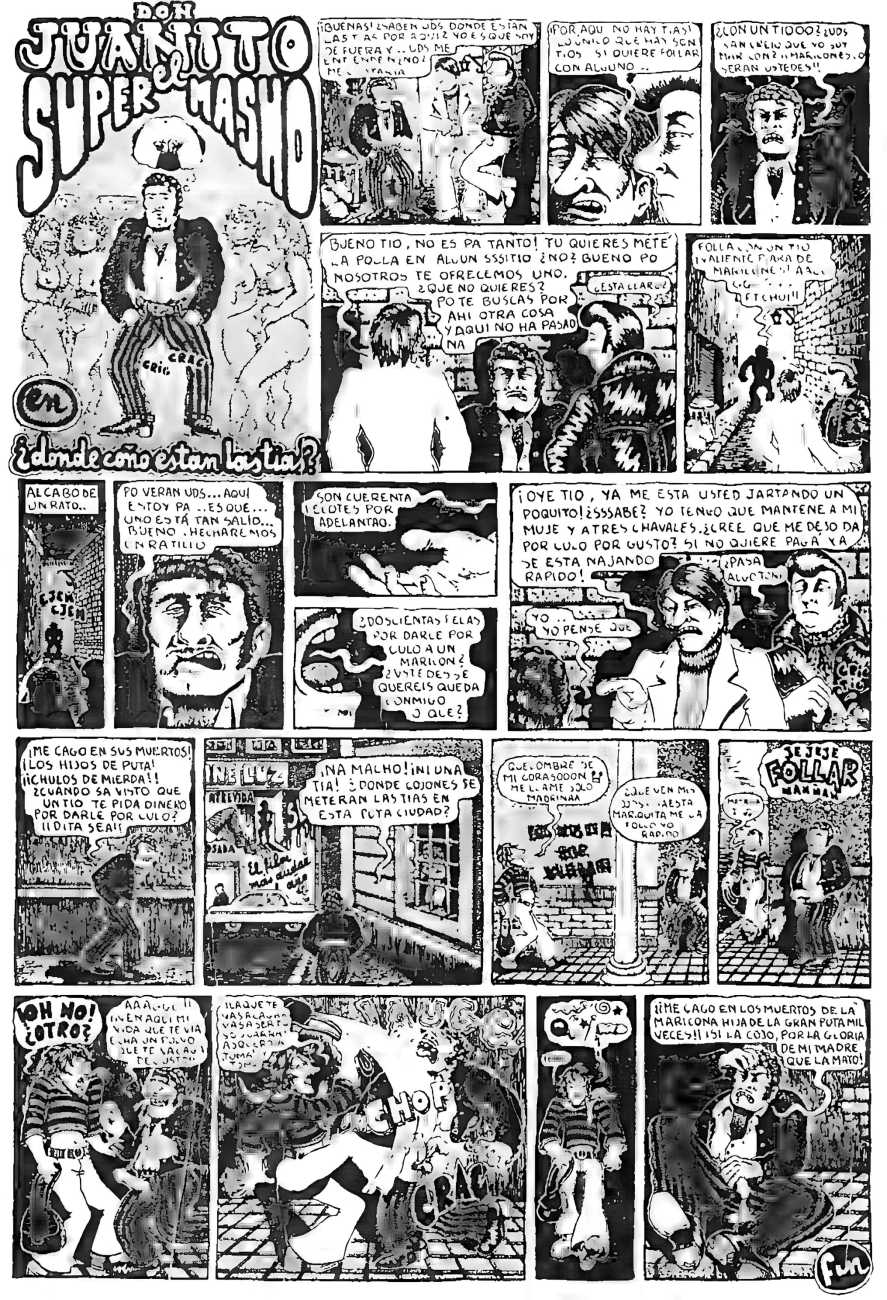
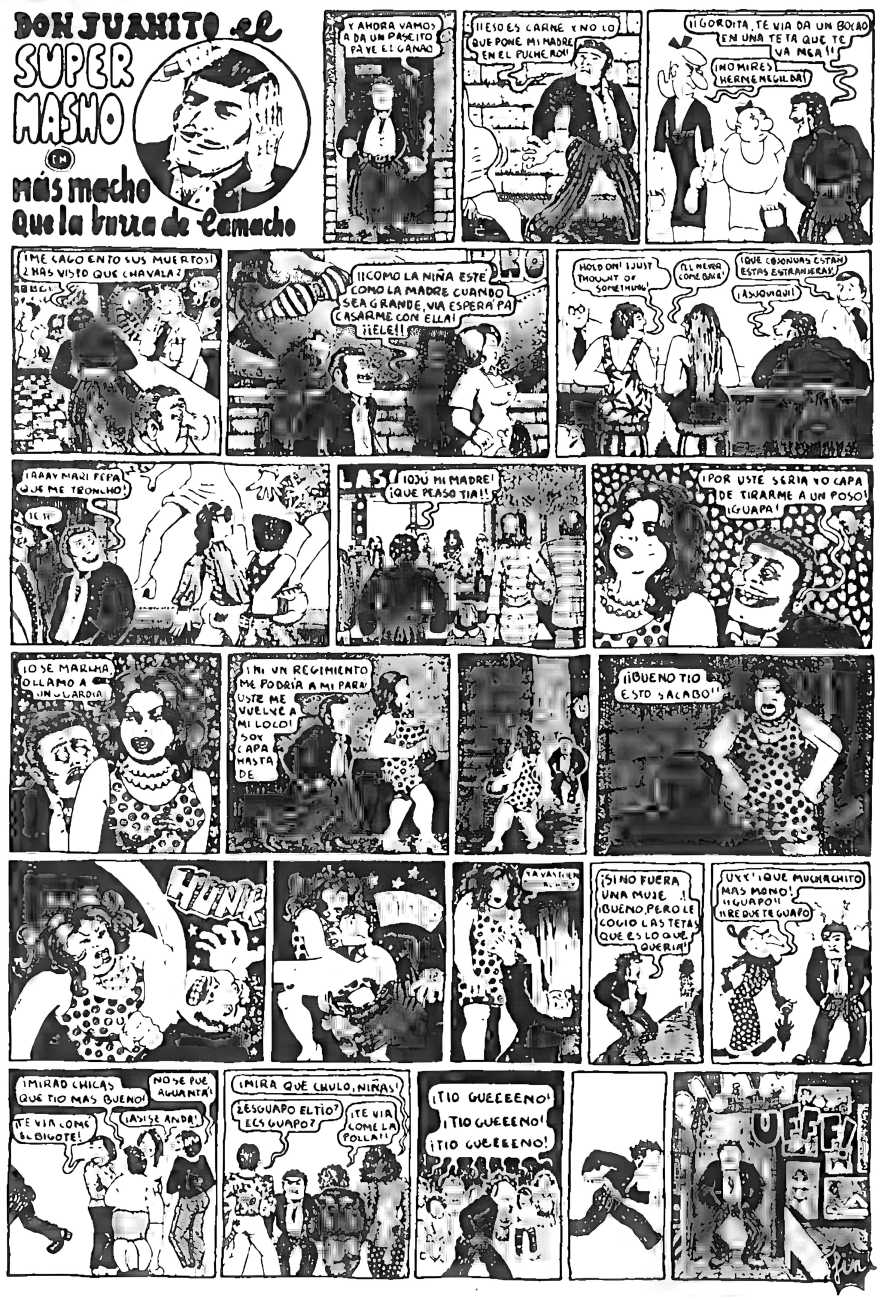
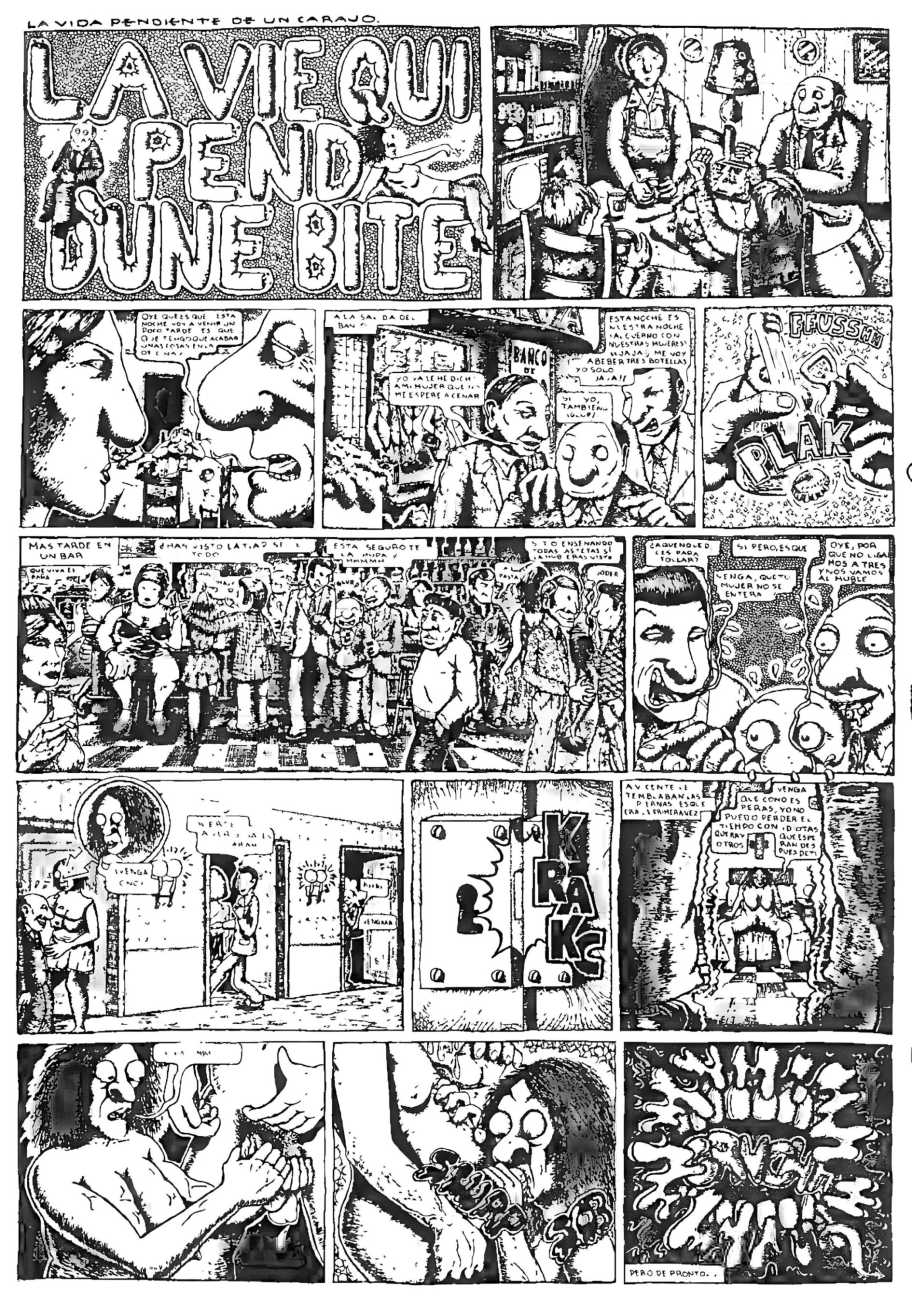
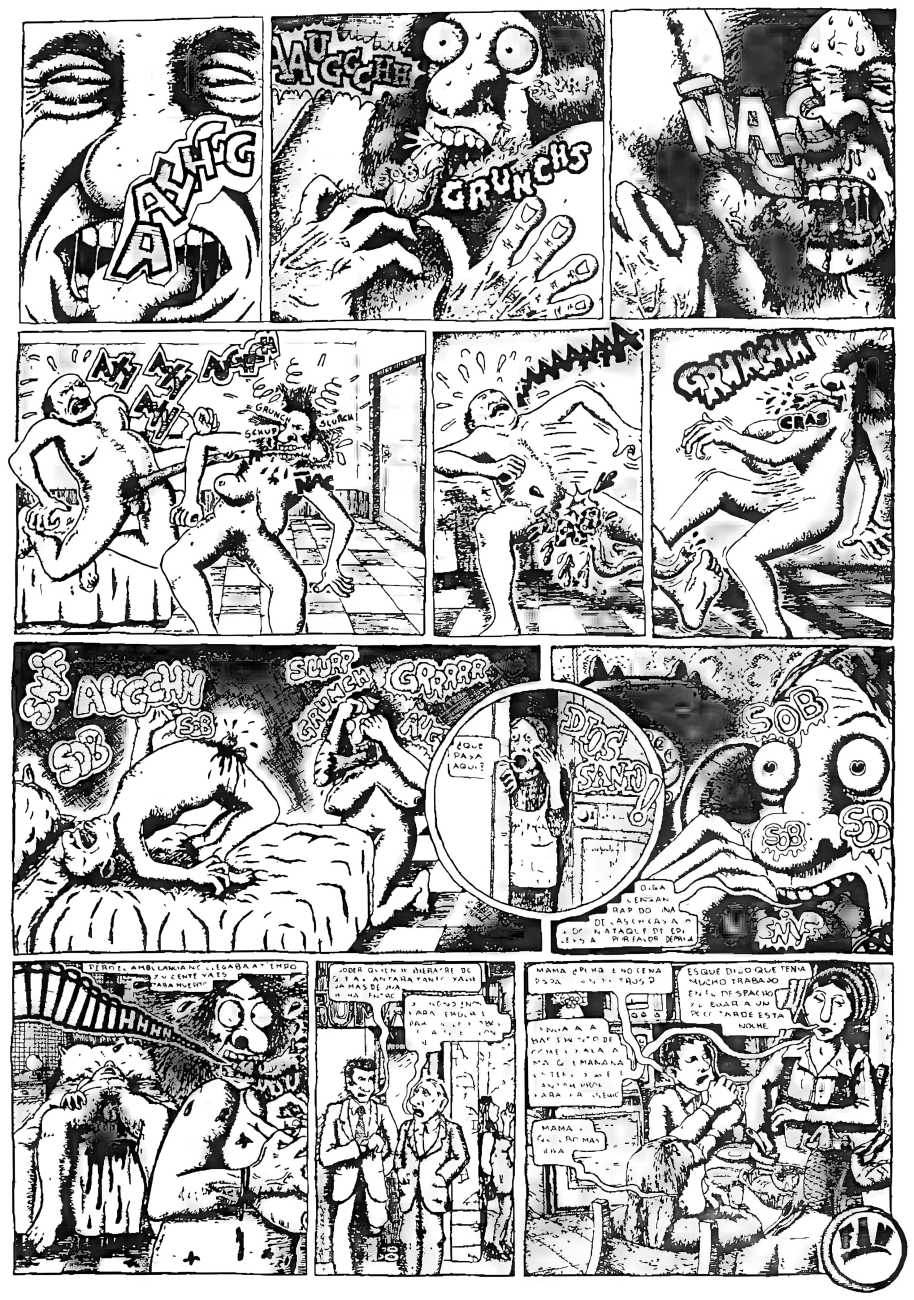
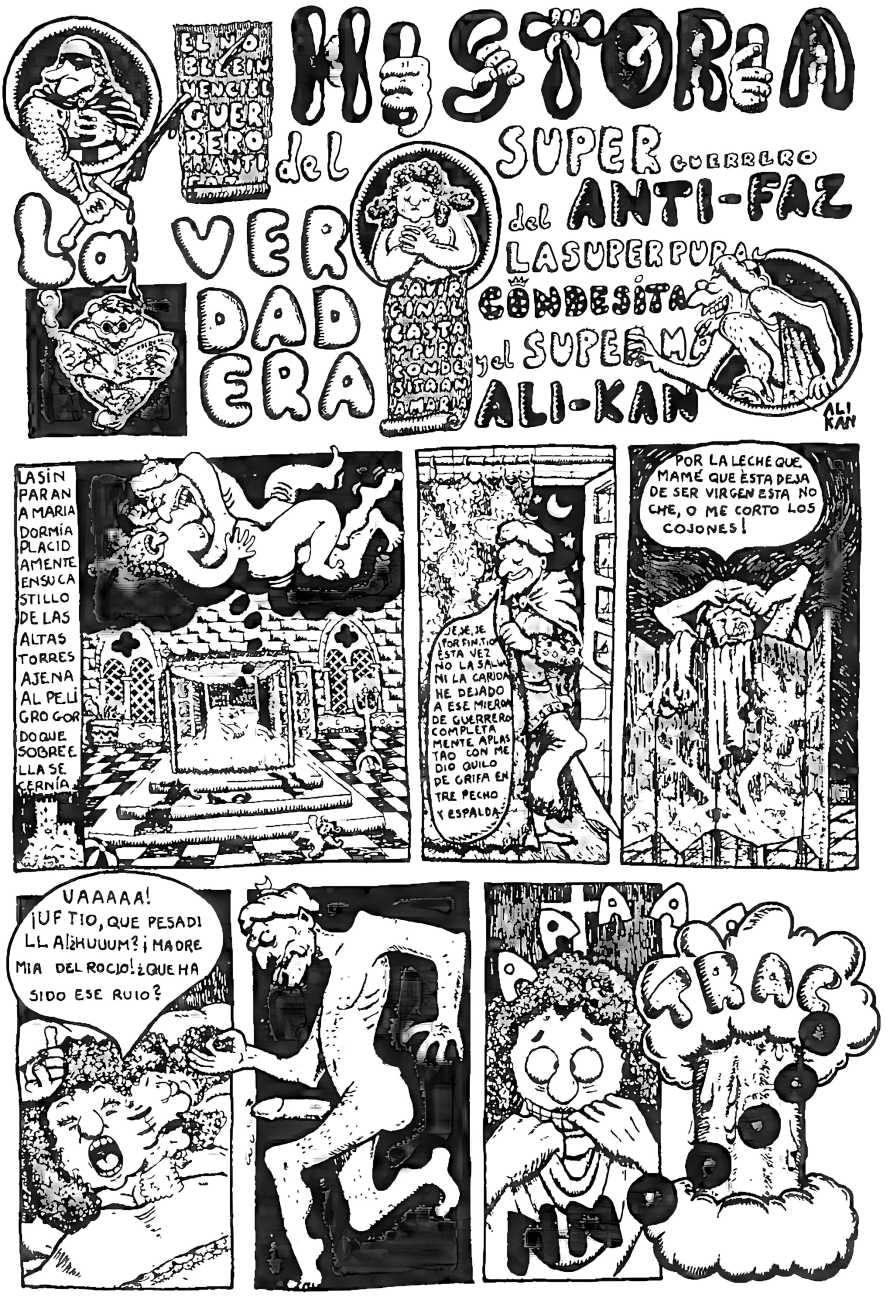
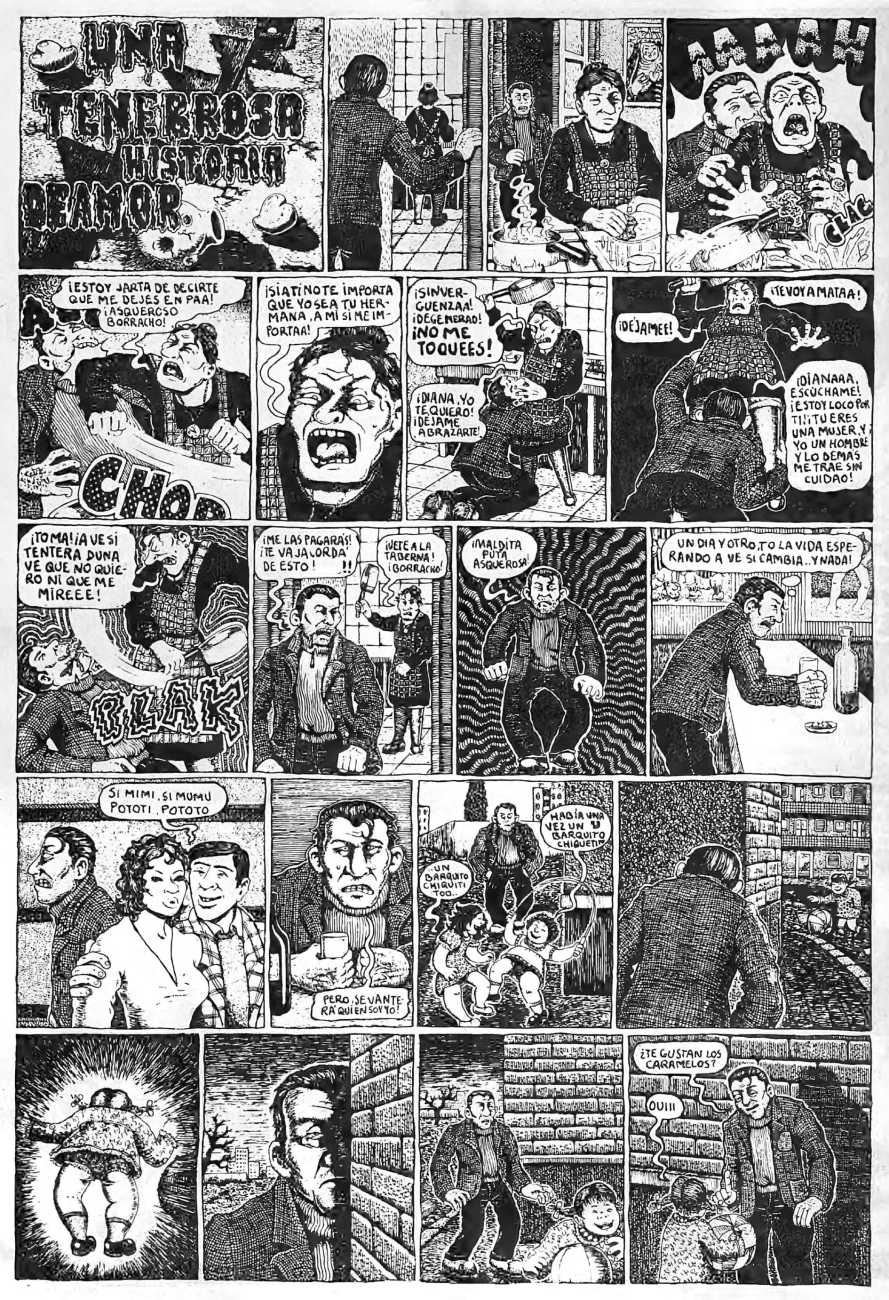
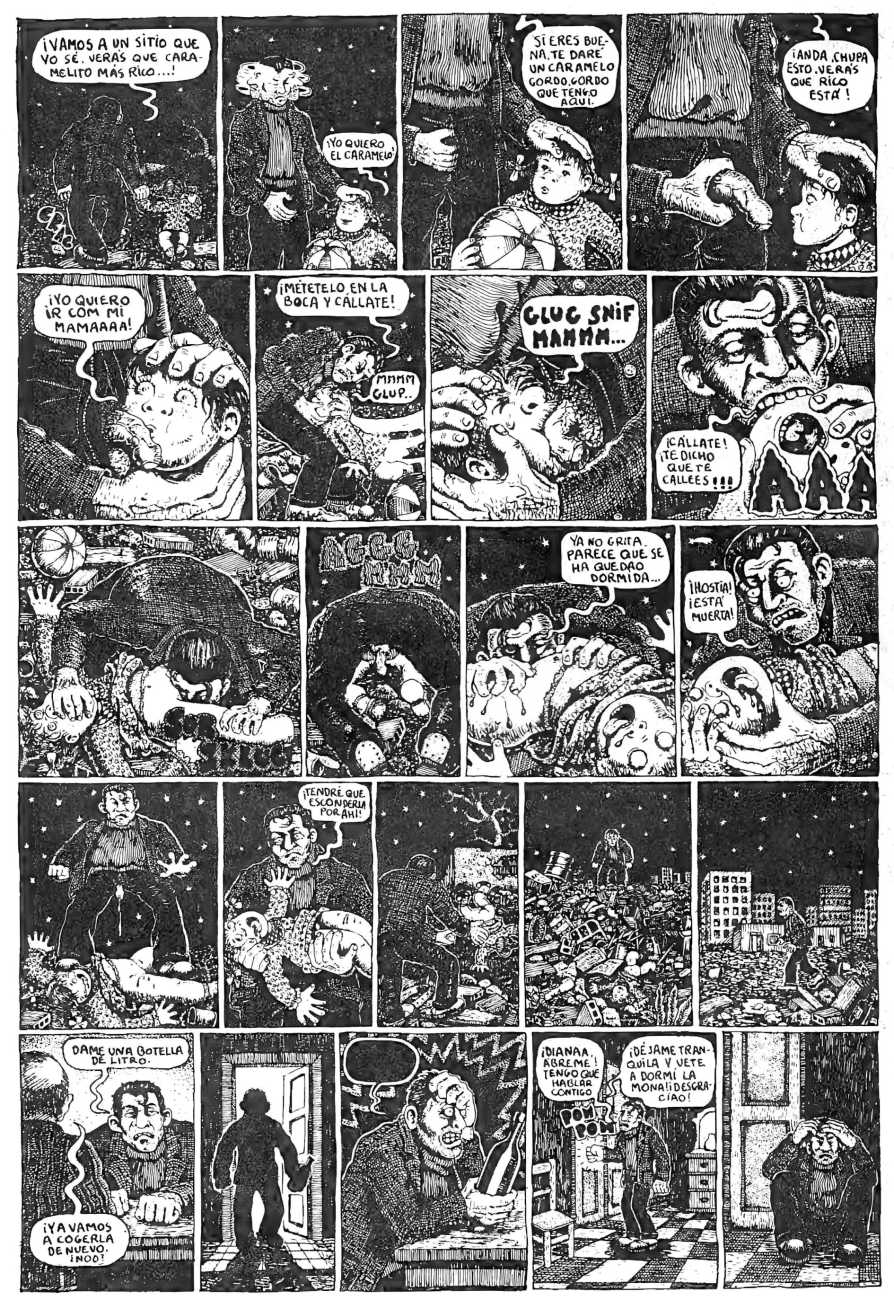
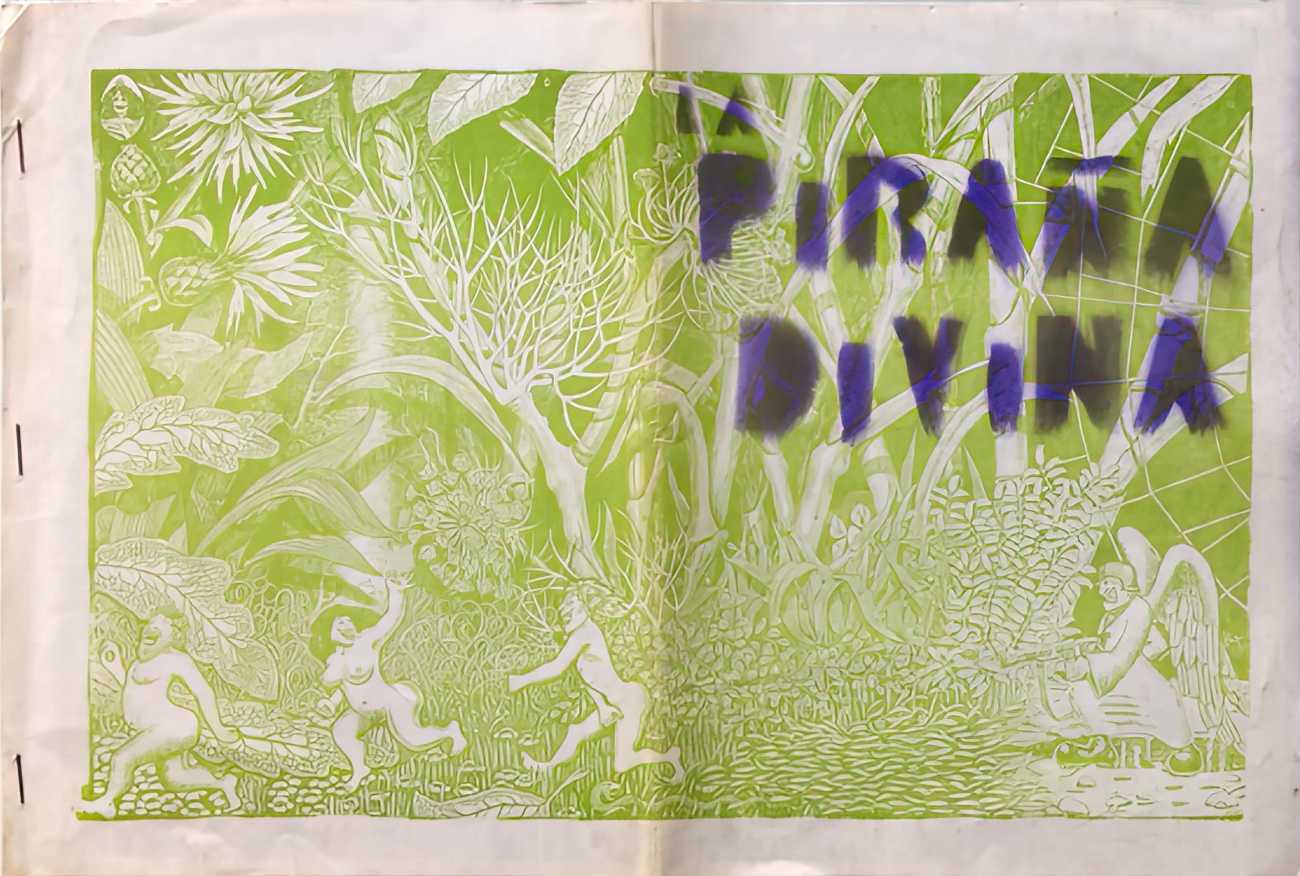
 La Piraña Divina (The Divine Piranha) occupies a unique place in the history of Spanish underground comics. Published clandestinely by Nazario in 1975, it was his first known monographic comic and, in the words of the Museo Reina Sofía, a particularly pure example of underground publishing – self-edited, uncensored and self-distributed. Nazario printed it secretly at the Barcelona engineering faculty and sold copies himself at the first Canet Rock festival that summer. A copy was intercepted by the police, contributing to the persecution that eventually brought the activities of the El Rrollo collective to an end.
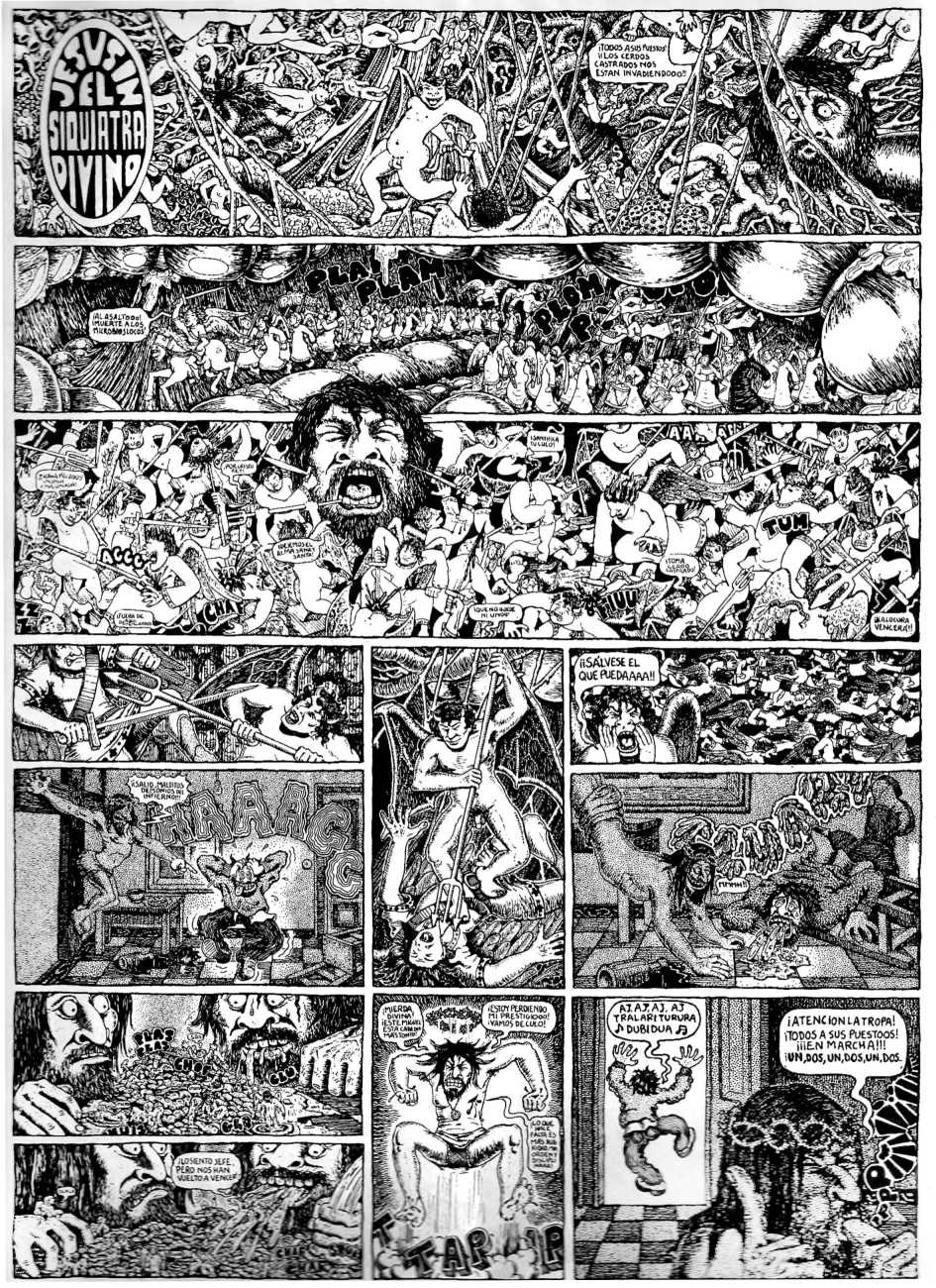
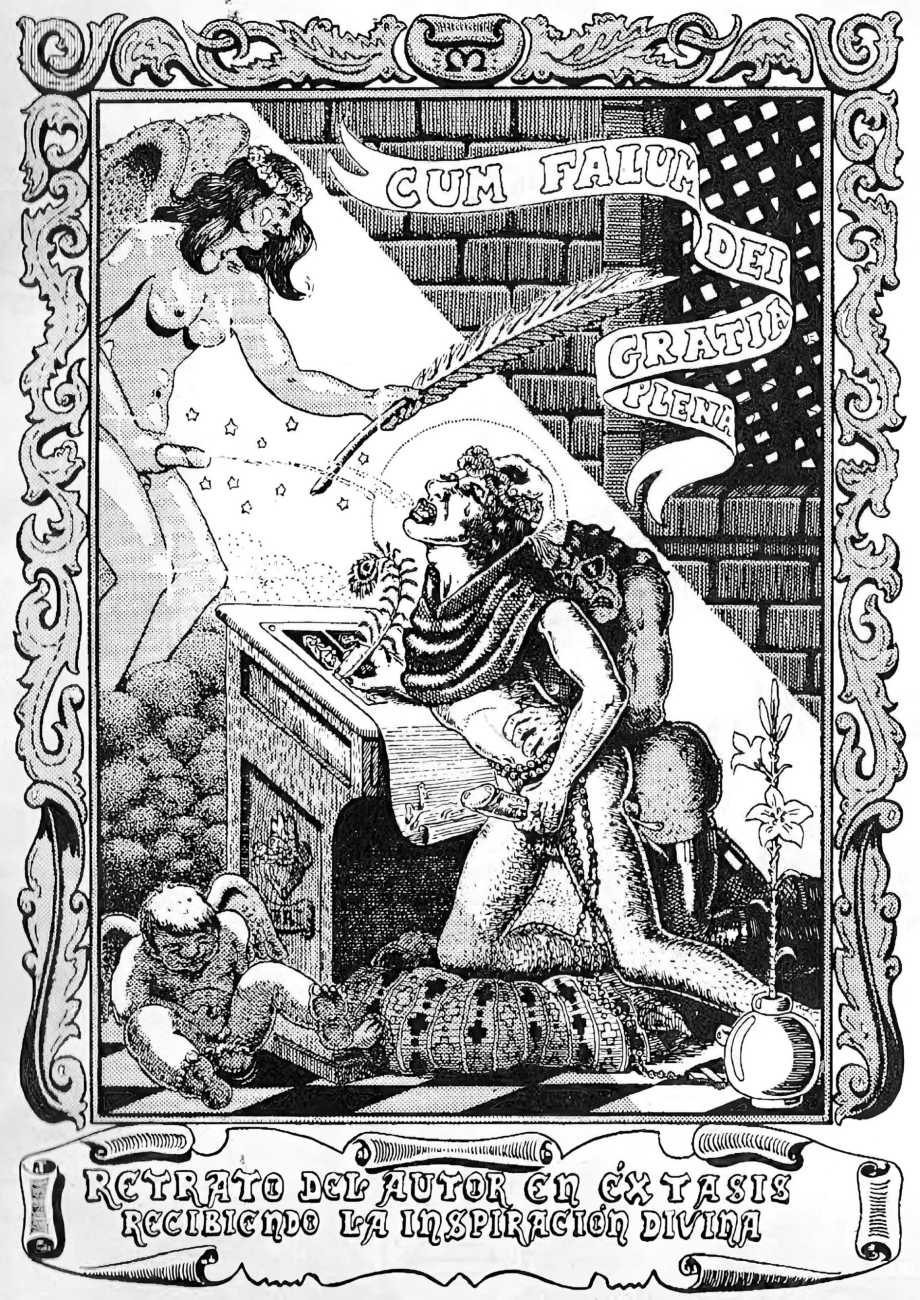
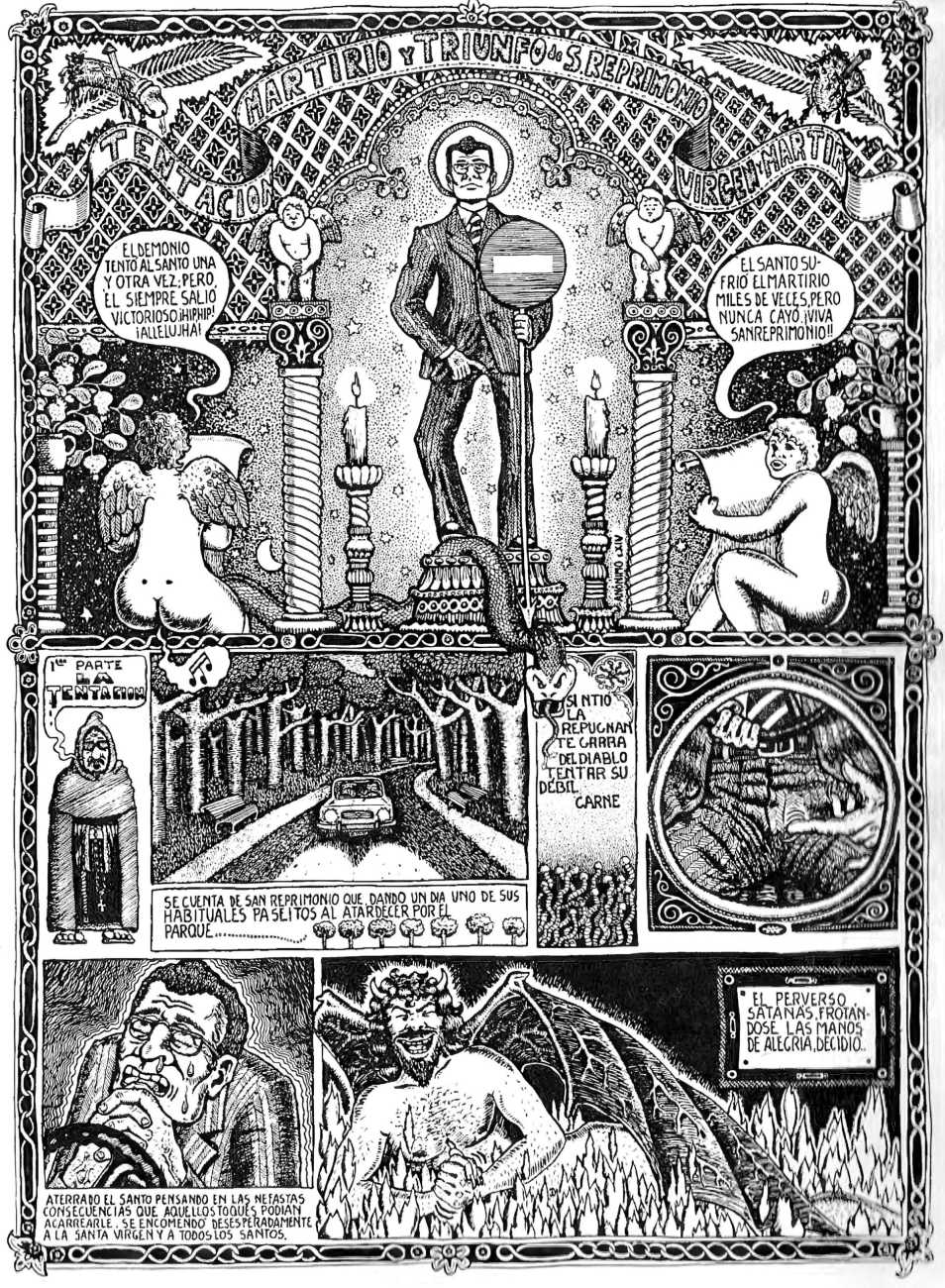
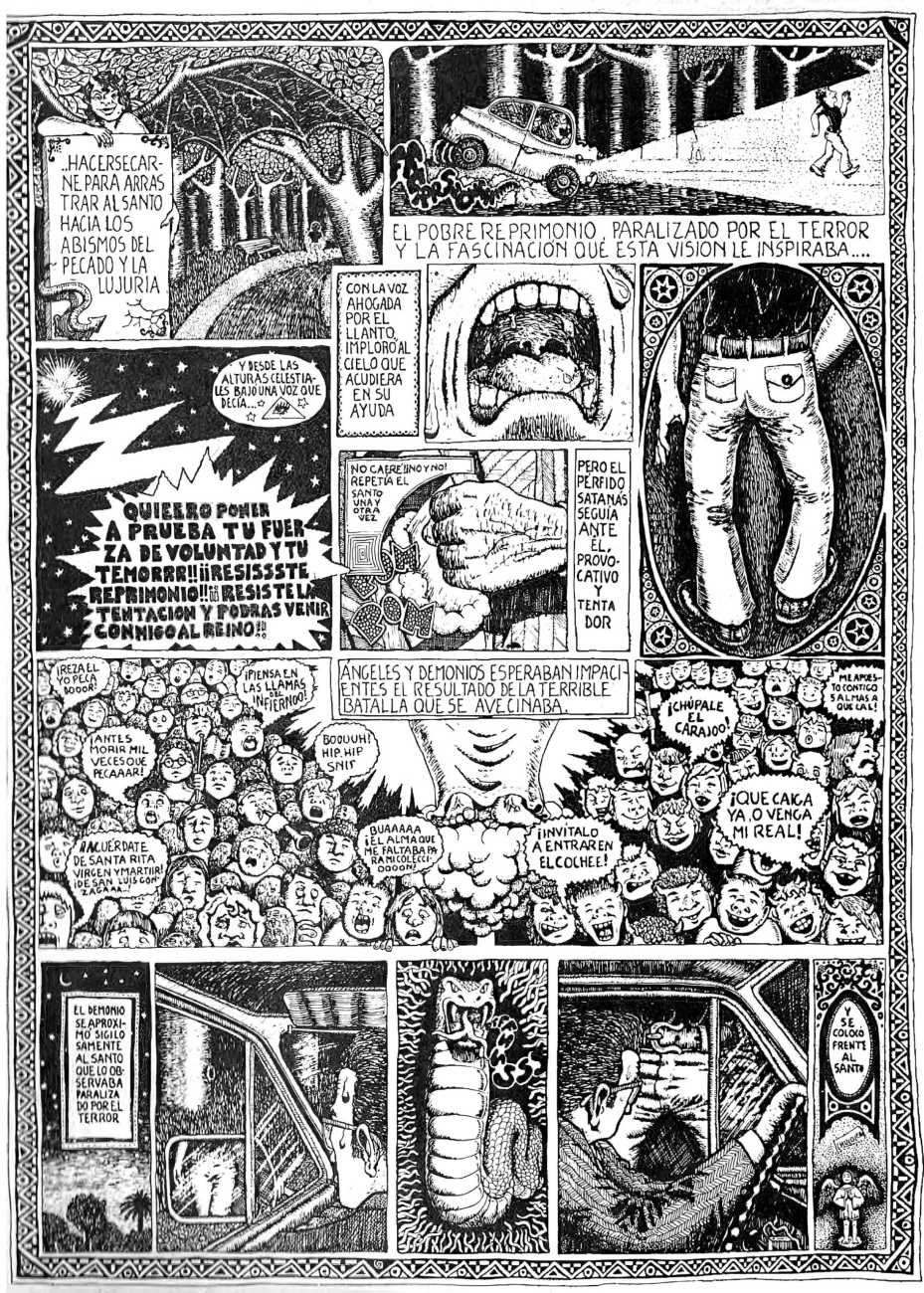
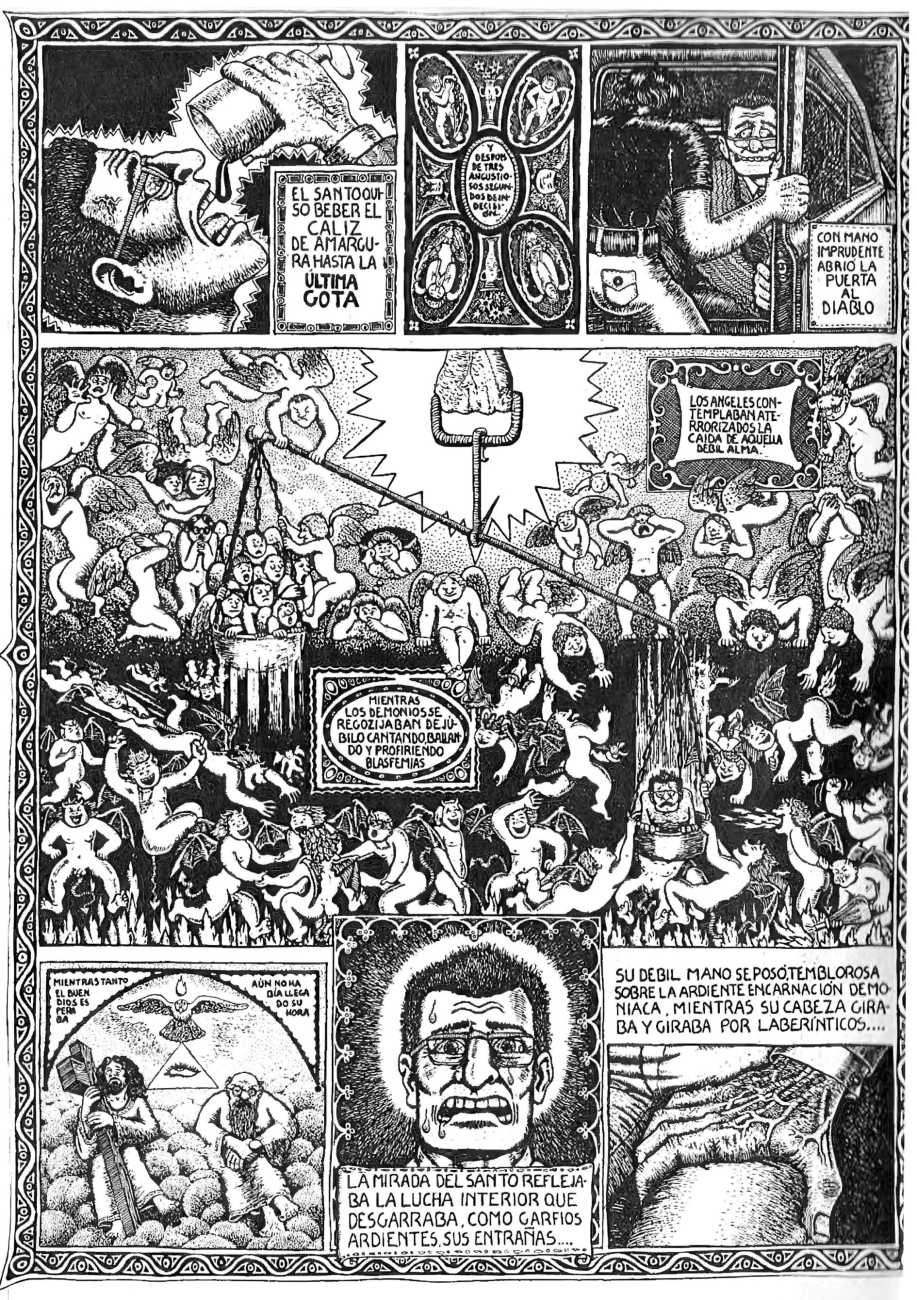
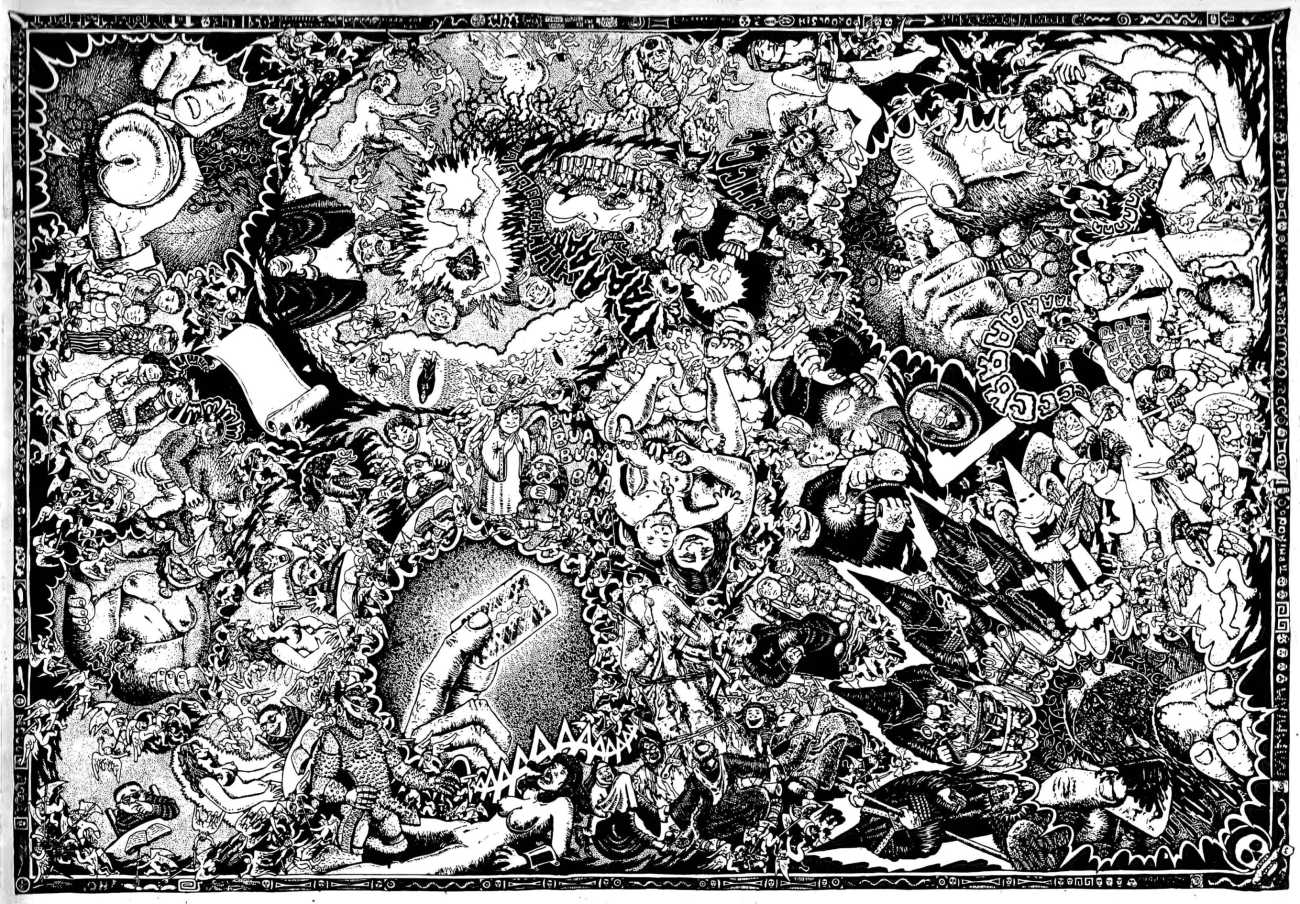
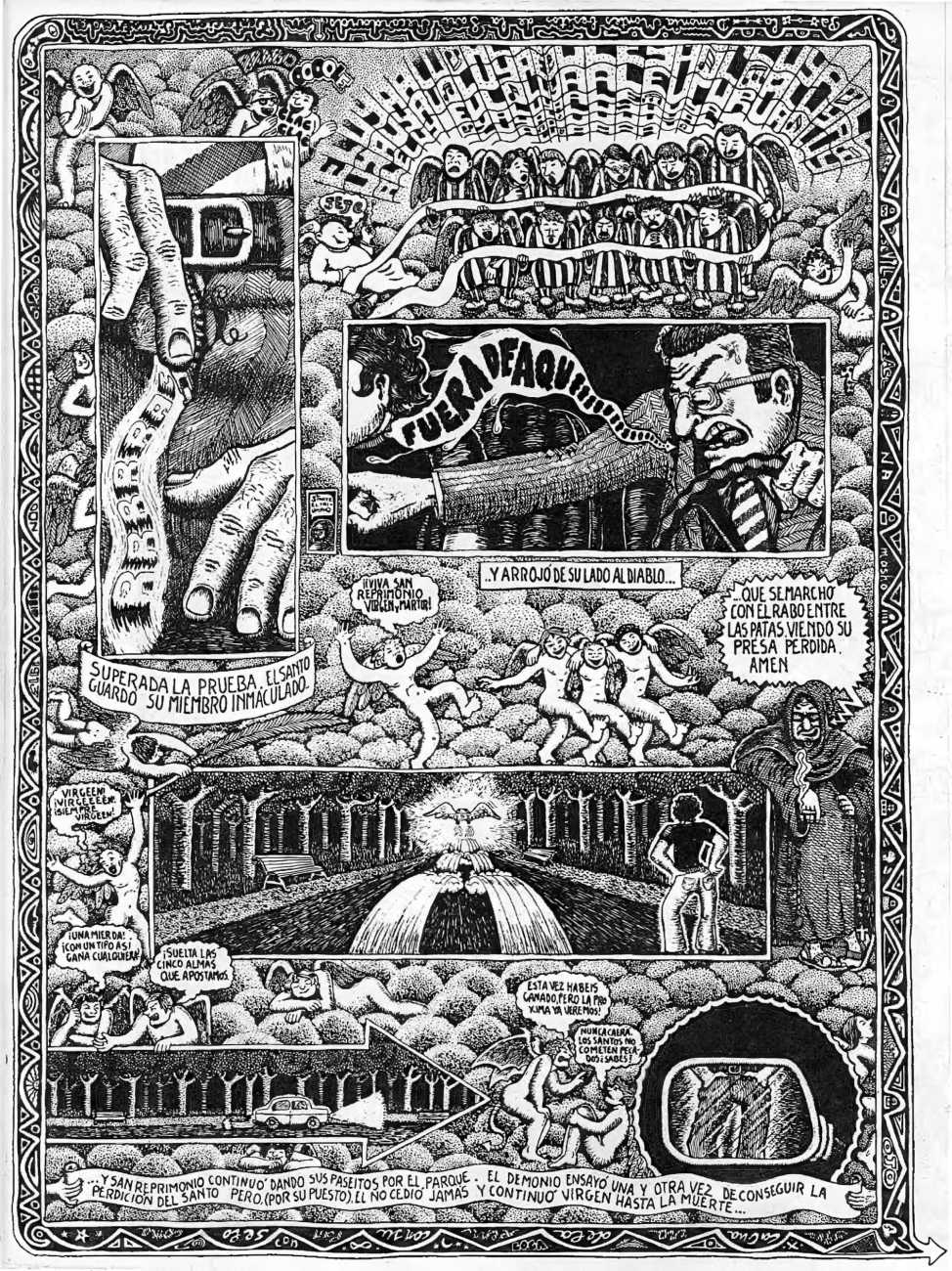
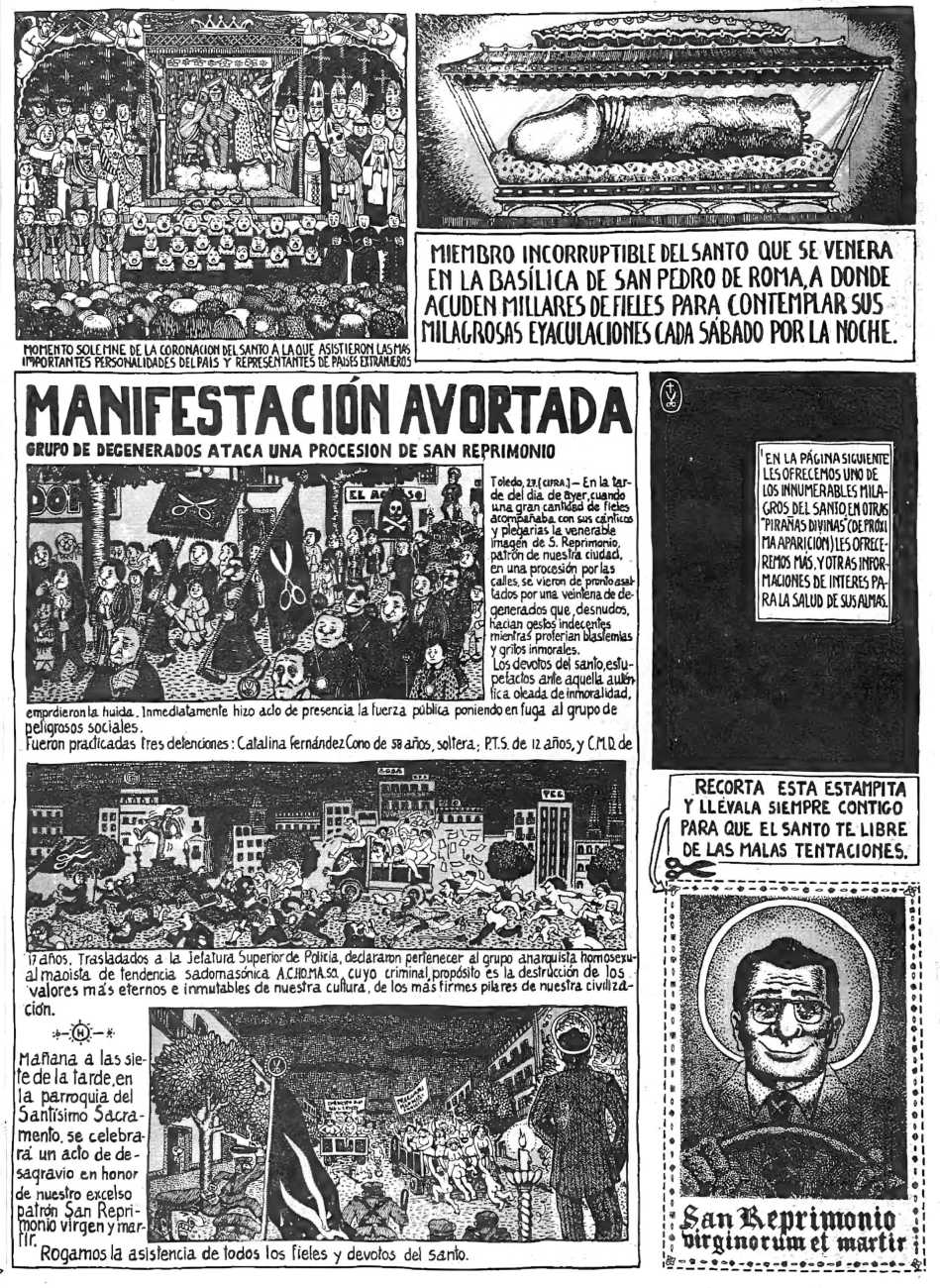
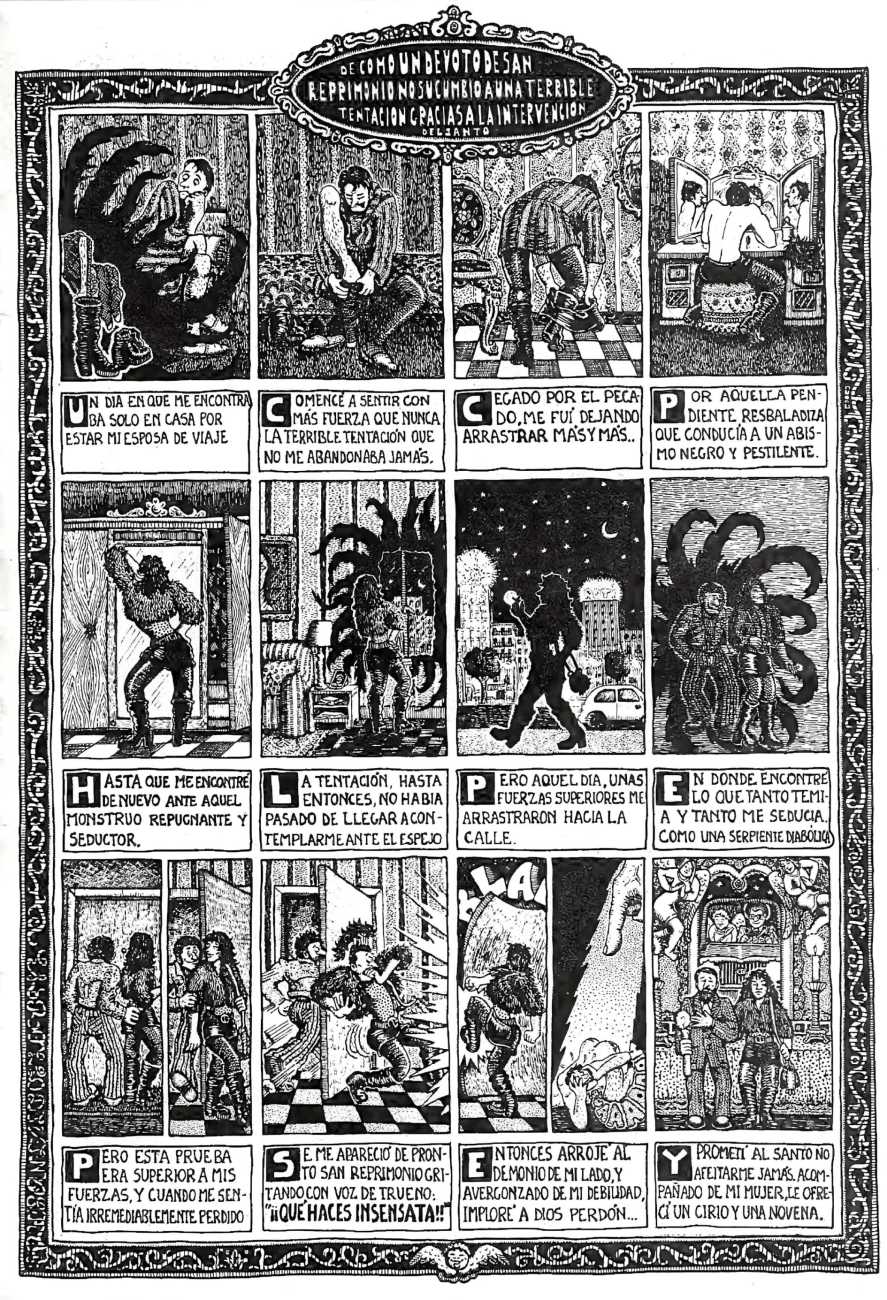
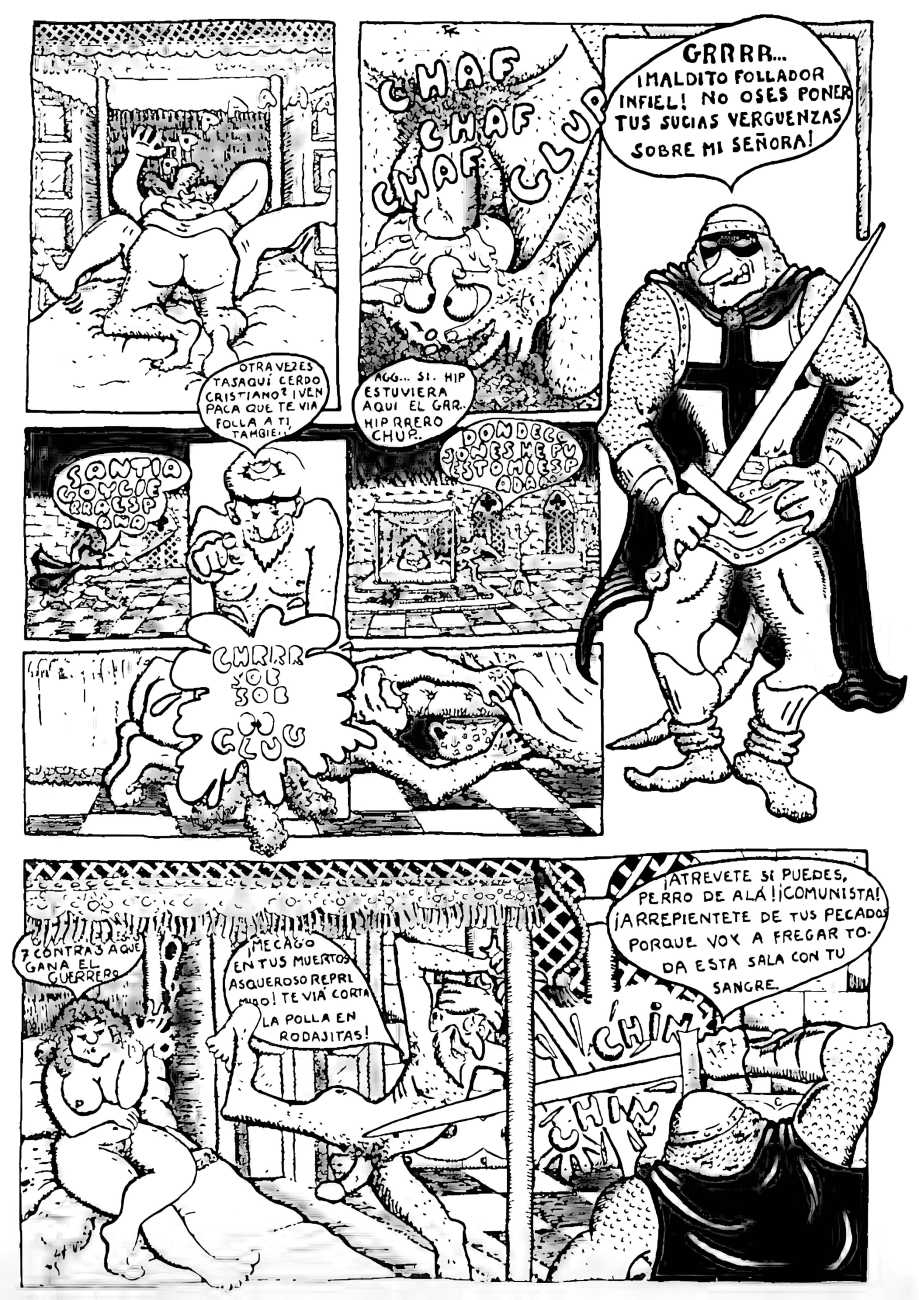
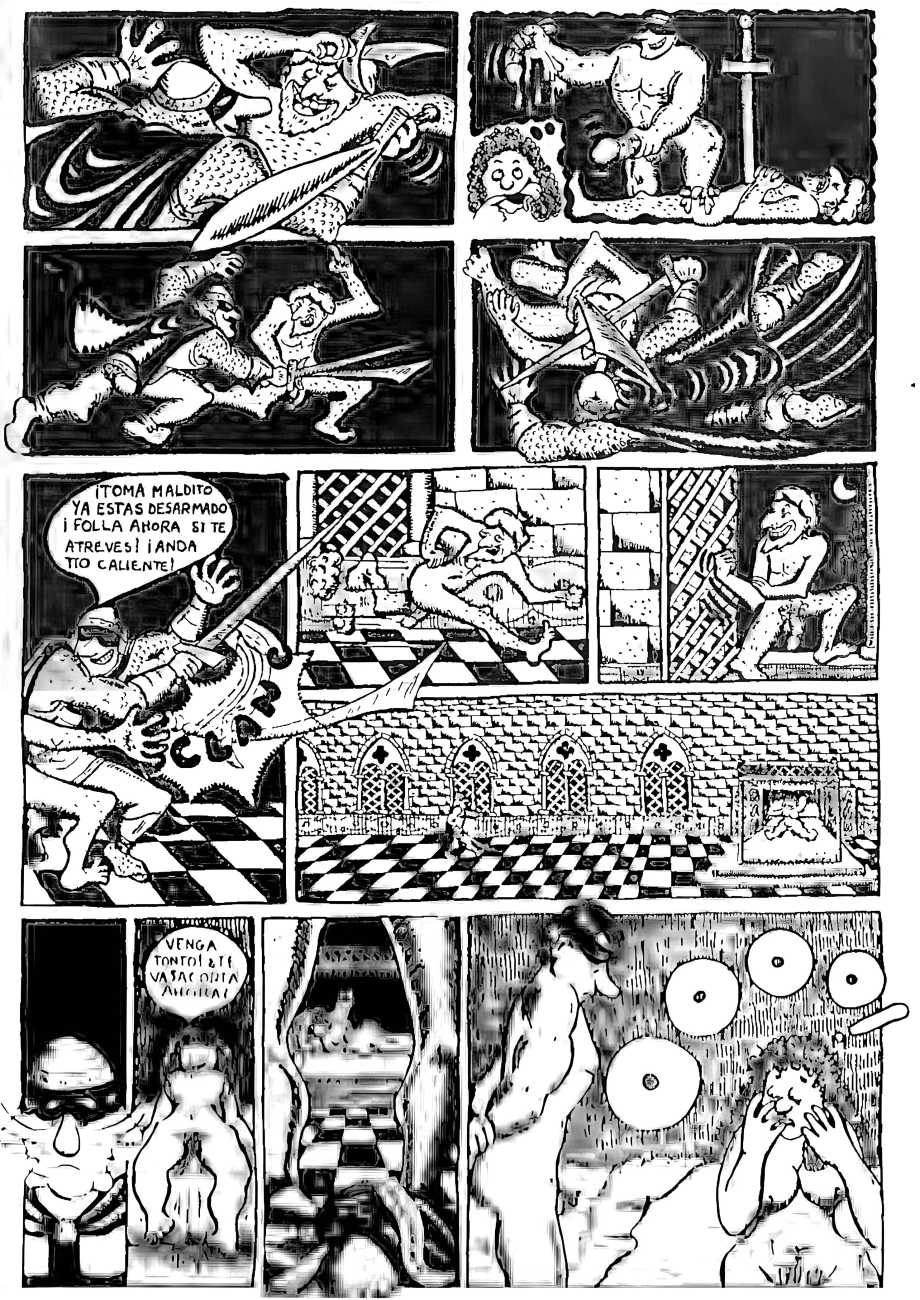
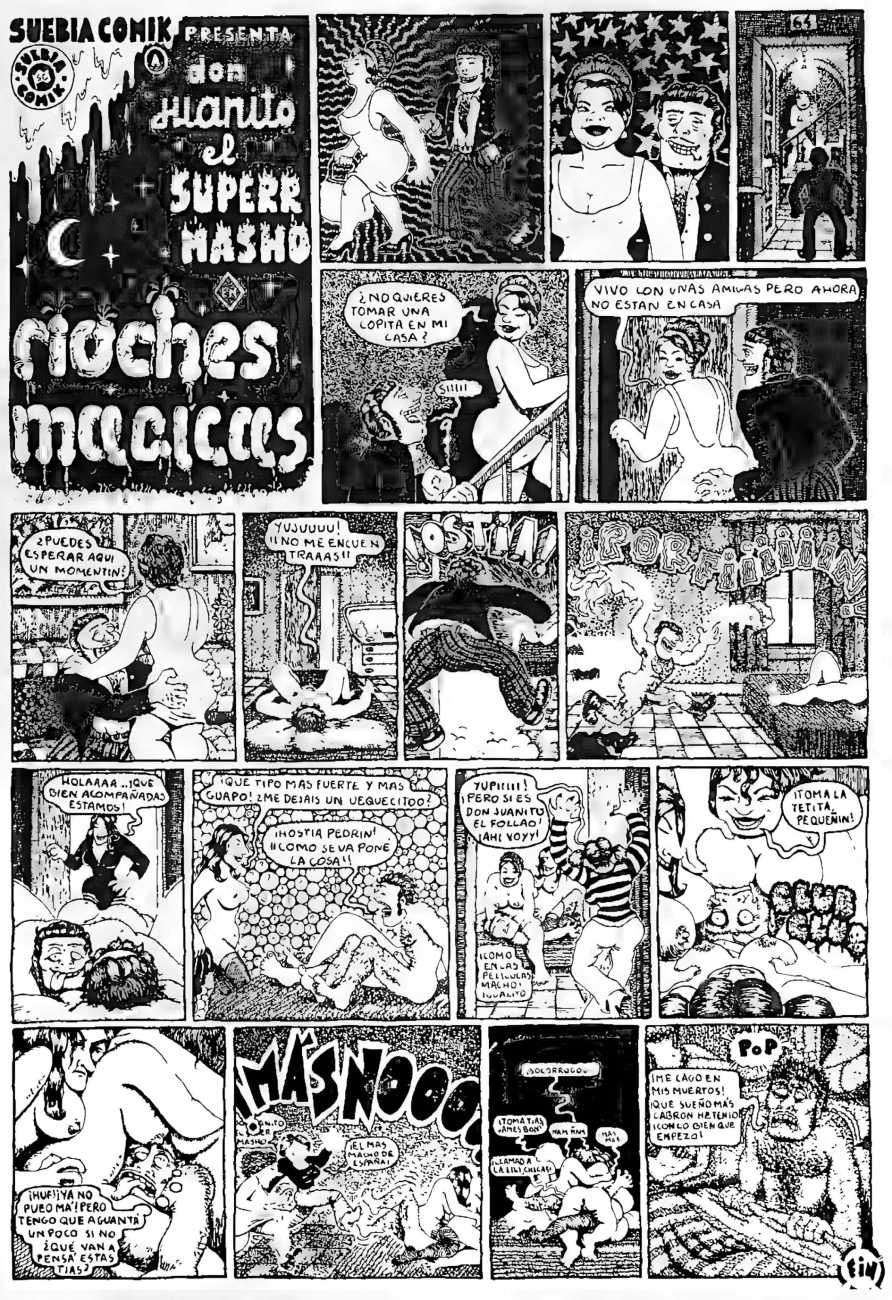
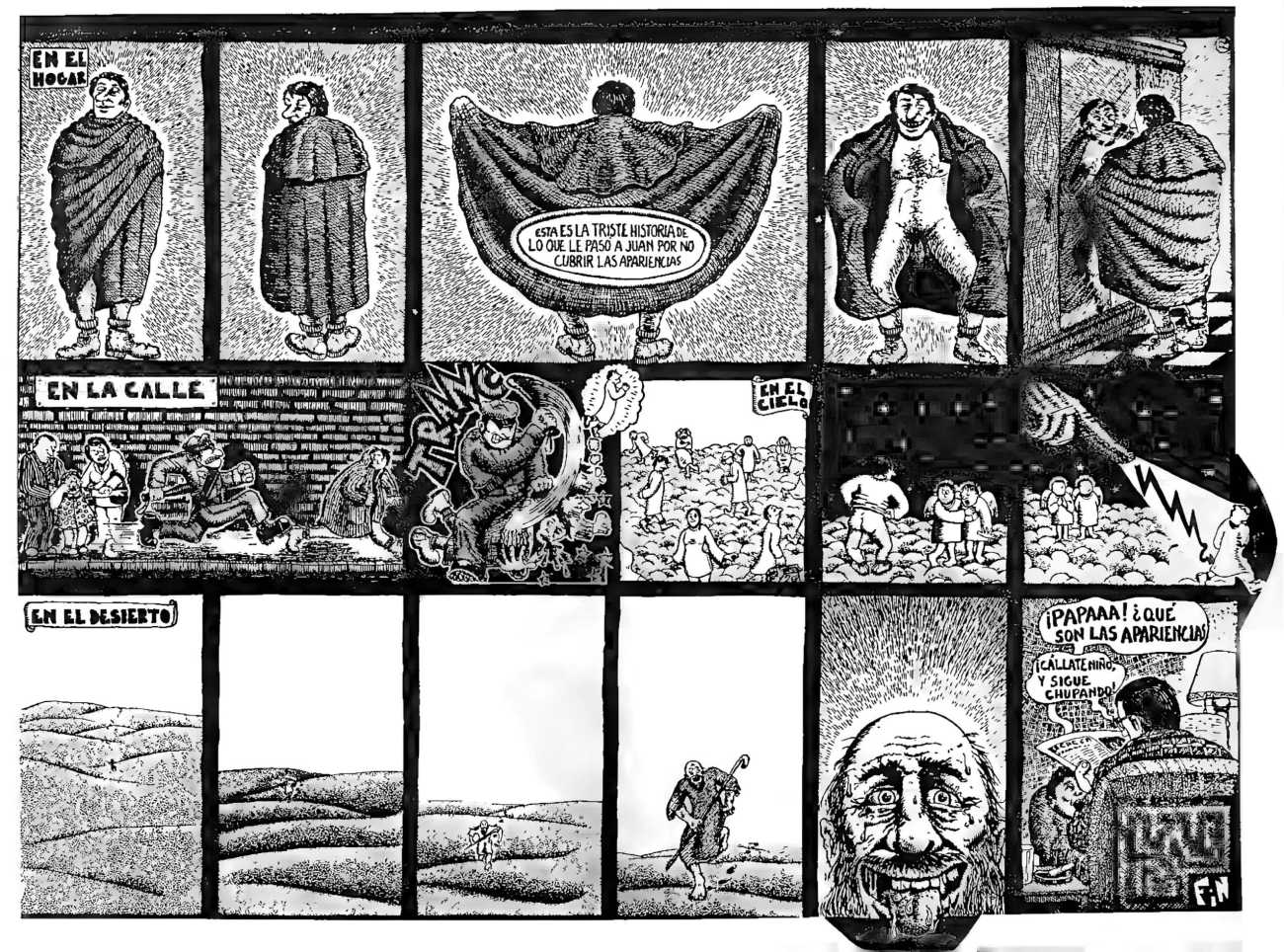
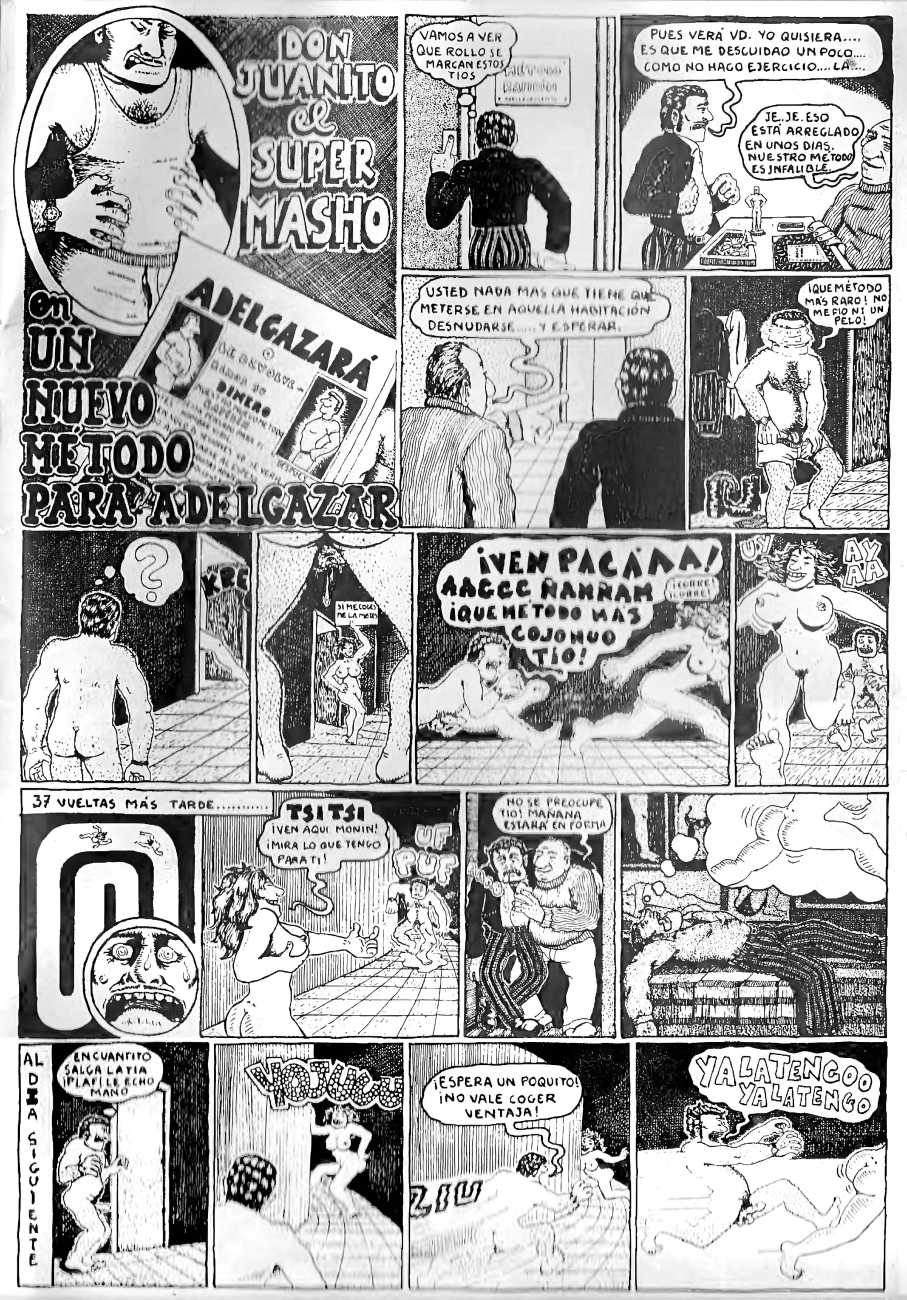
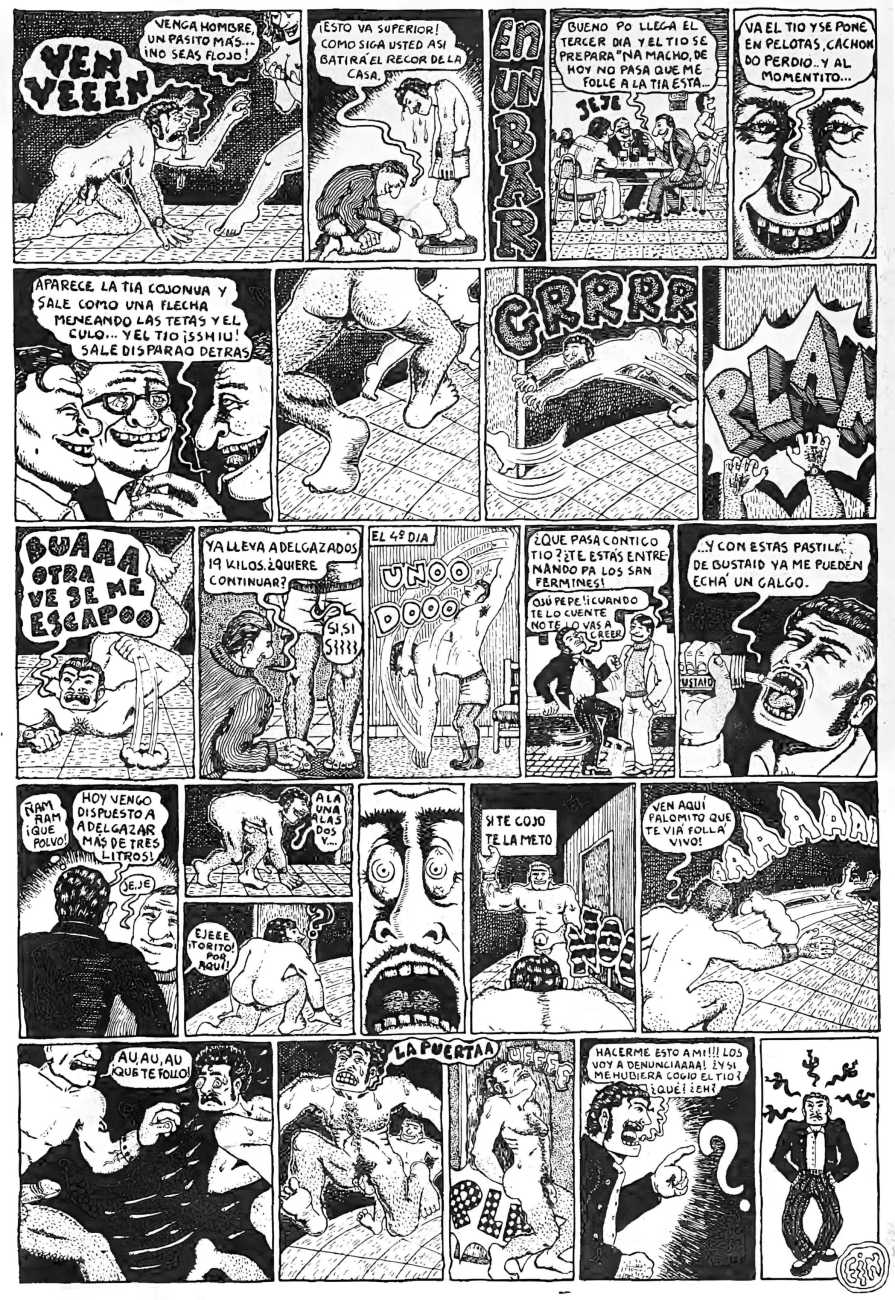
The circumstances of its publication are important, but La Piraña Divina is much more than a historical curiosity. Its pages are an extraordinary eruption of sex, blasphemy, fantasy and grotesque humour. Nazario fills his crowded compositions with naked bodies, sexual encounters, angels, devils, saints and sinners, often mixing the sacred and the obscene within the same image. Religious imagery is repeatedly turned inside out – Catholic iconography becomes the framework for an exuberant world in which sexual desire refuses to recognise the boundaries imposed by conventional morality.
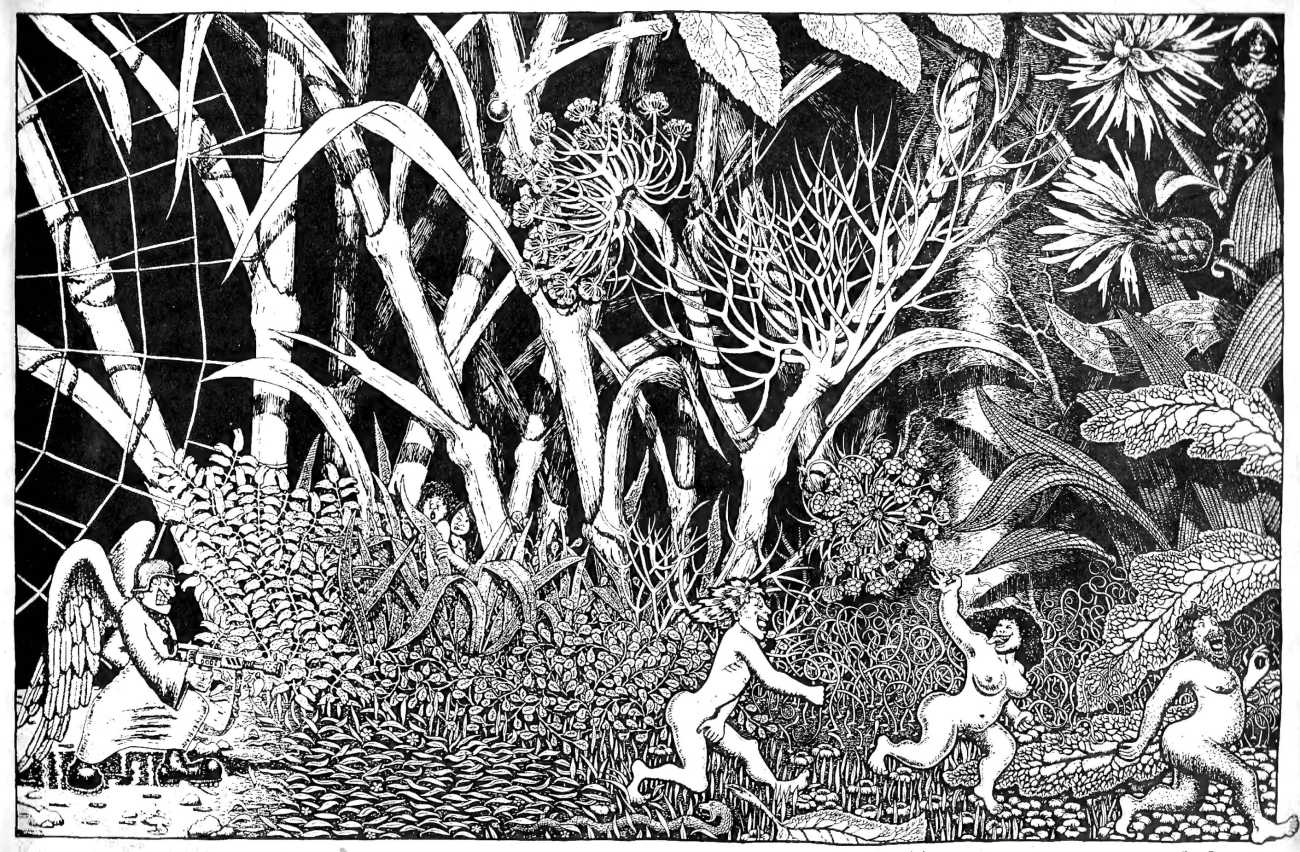
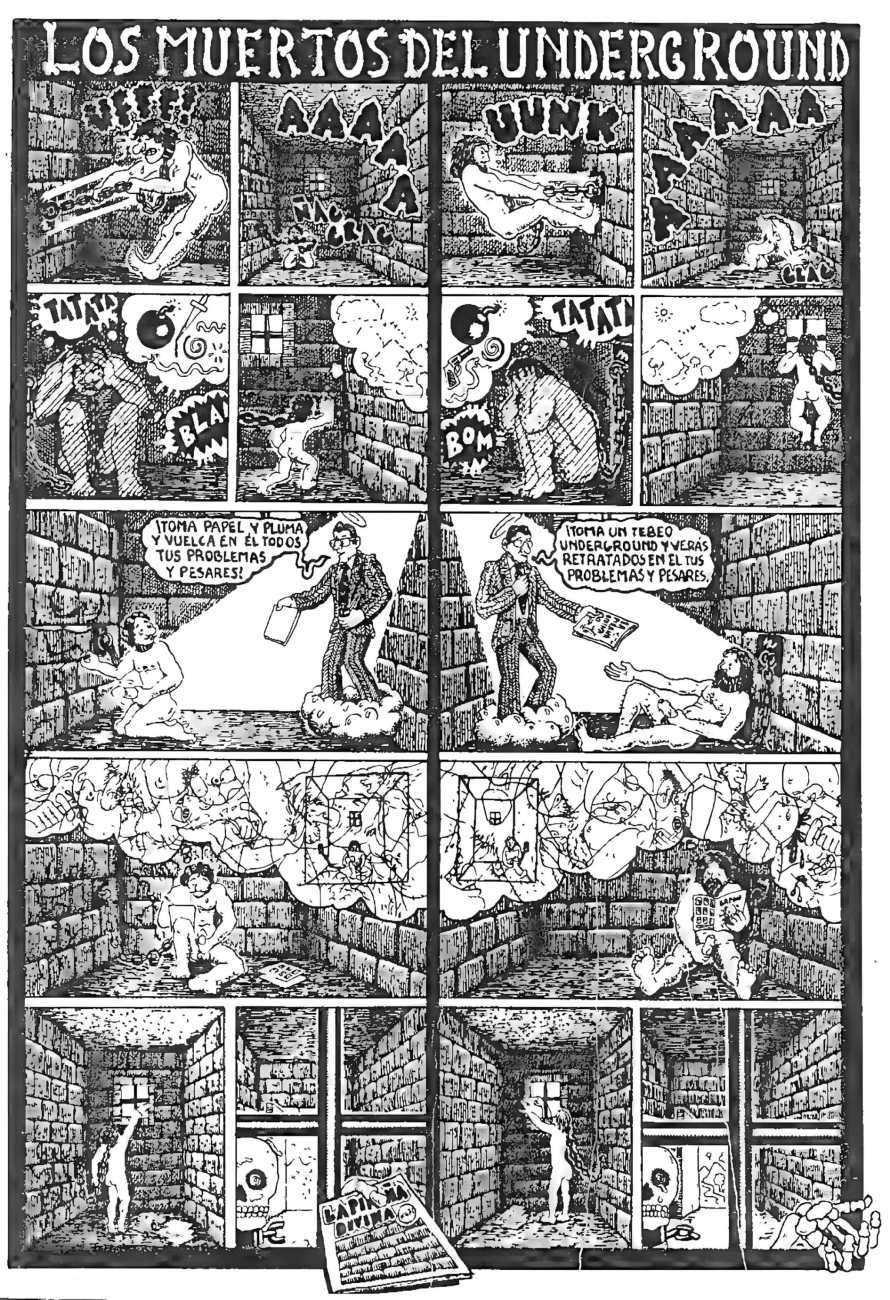
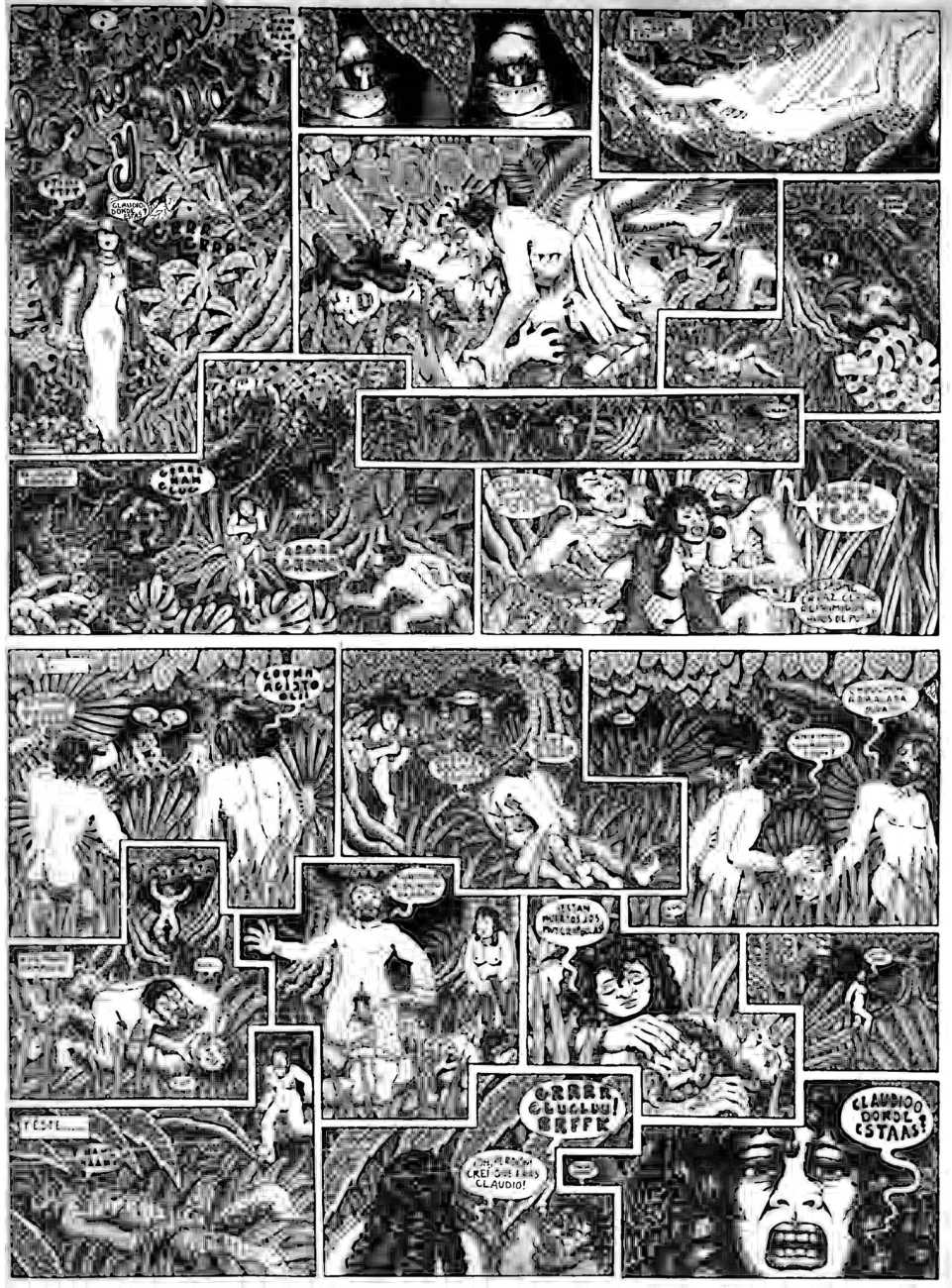
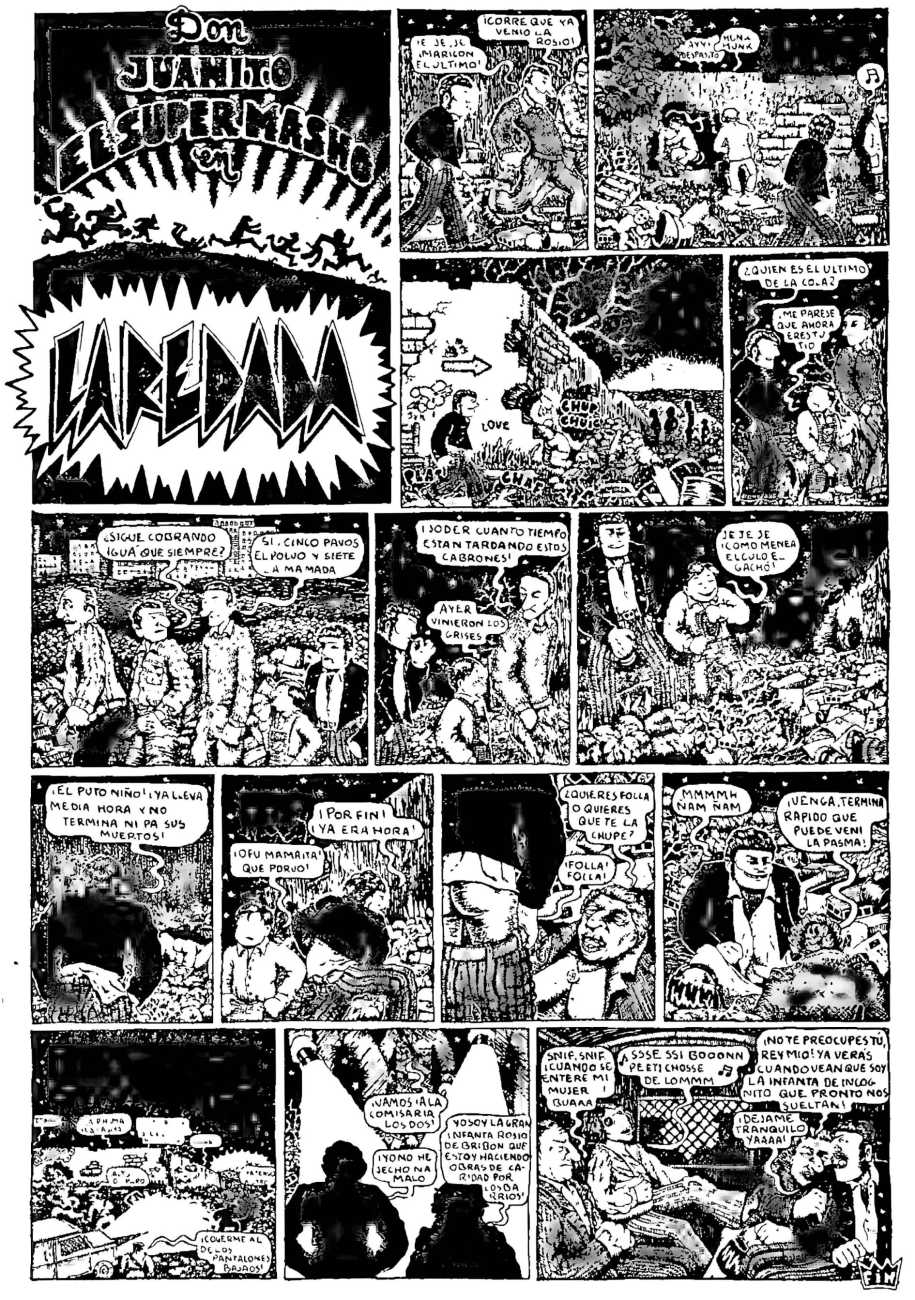
Visually these early pages are already unmistakably Nazario. Dense black-and-white linework, exaggerated bodies, intricate vegetation and fantastical creatures create an almost hallucinatory atmosphere. There is something deliberately excessive about the drawings, as though the sheer quantity of bodies and incidents might overwhelm the respectable world that sought to suppress them. Elsewhere, the humour becomes openly scatological and deliberately crude, but the apparent chaos is underpinned by an impressive ability to compose crowded pages and to control the rhythm of the narrative.
The stories draw on Nazario’s own experience of homosexuality and on the repressive Catholic culture of the Spain in which he grew up. Scholarship has particularly noted the way his religious vocabulary and imagery expose the contradictions of a society that condemned homosexuality while surrounding itself with imagery of the body, martyrdom, temptation and transgression.
La Piraña Divina represents both a personal liberation and an act of defiance. Its extraordinary mixture of eroticism, religious parody, fantasy and underground humour announces an artist determined to draw what could not yet be published openly. A remarkable beginning to Nazario’s career, it remains perhaps the purest expression of his early underground spirit.