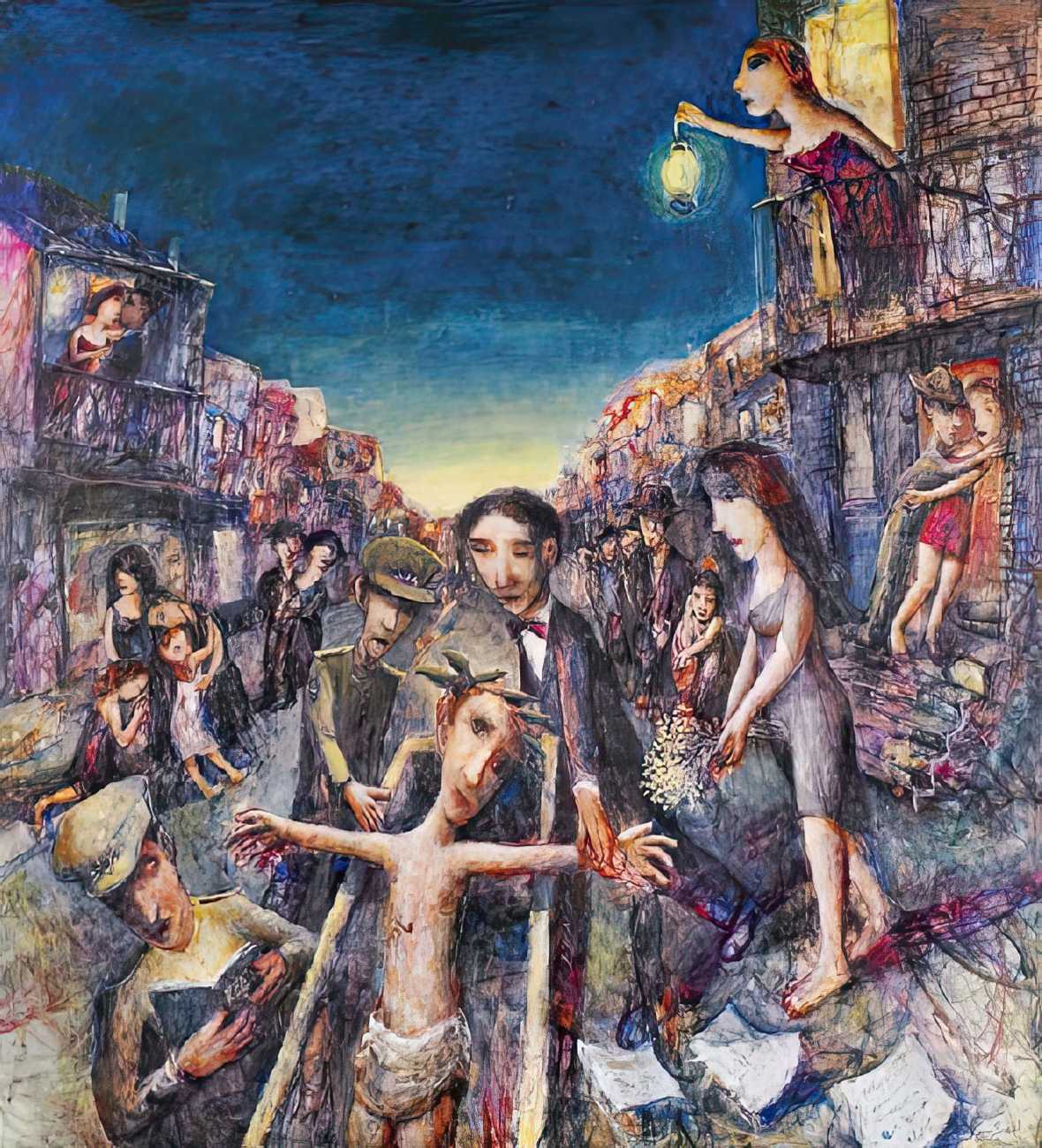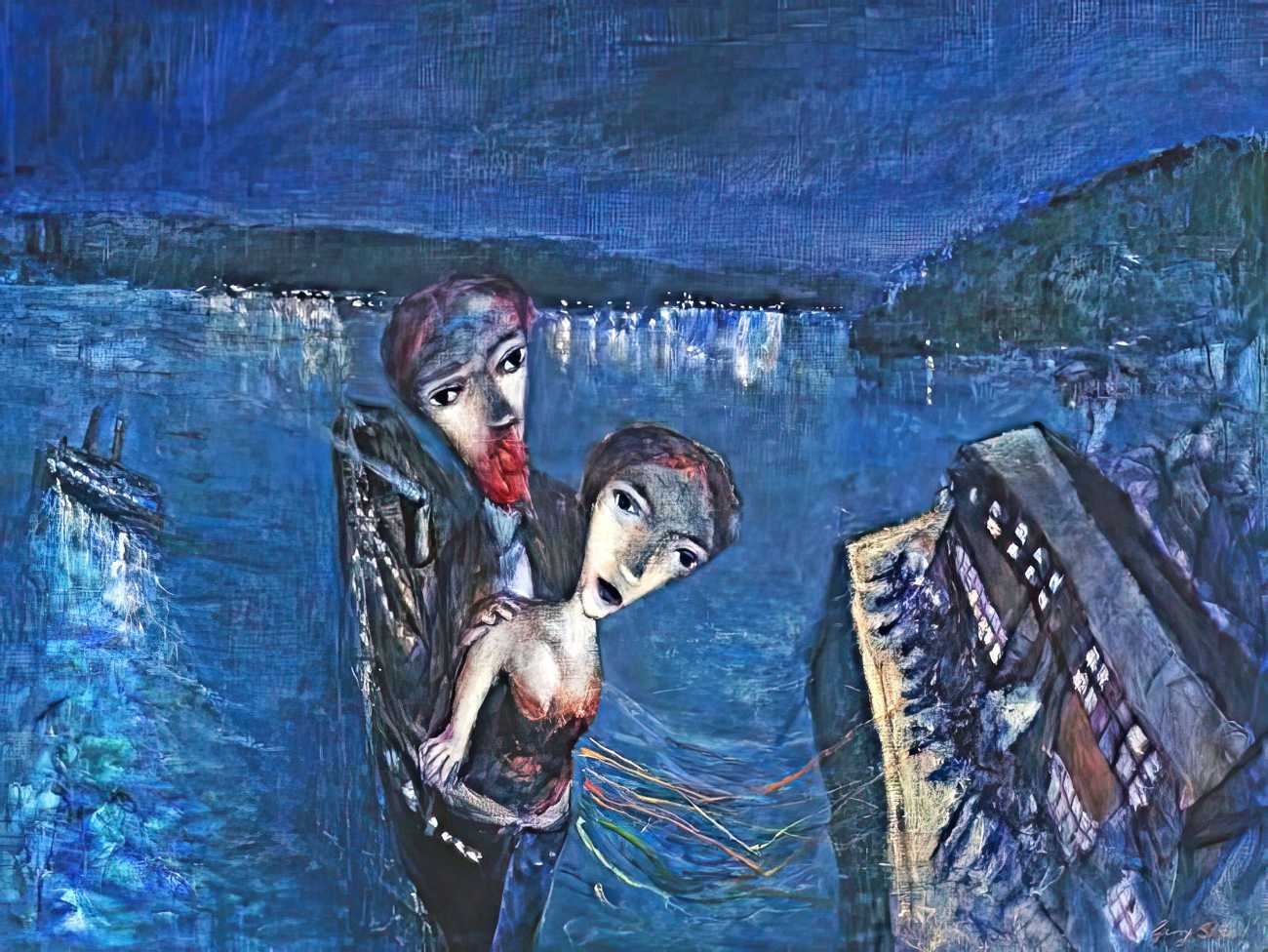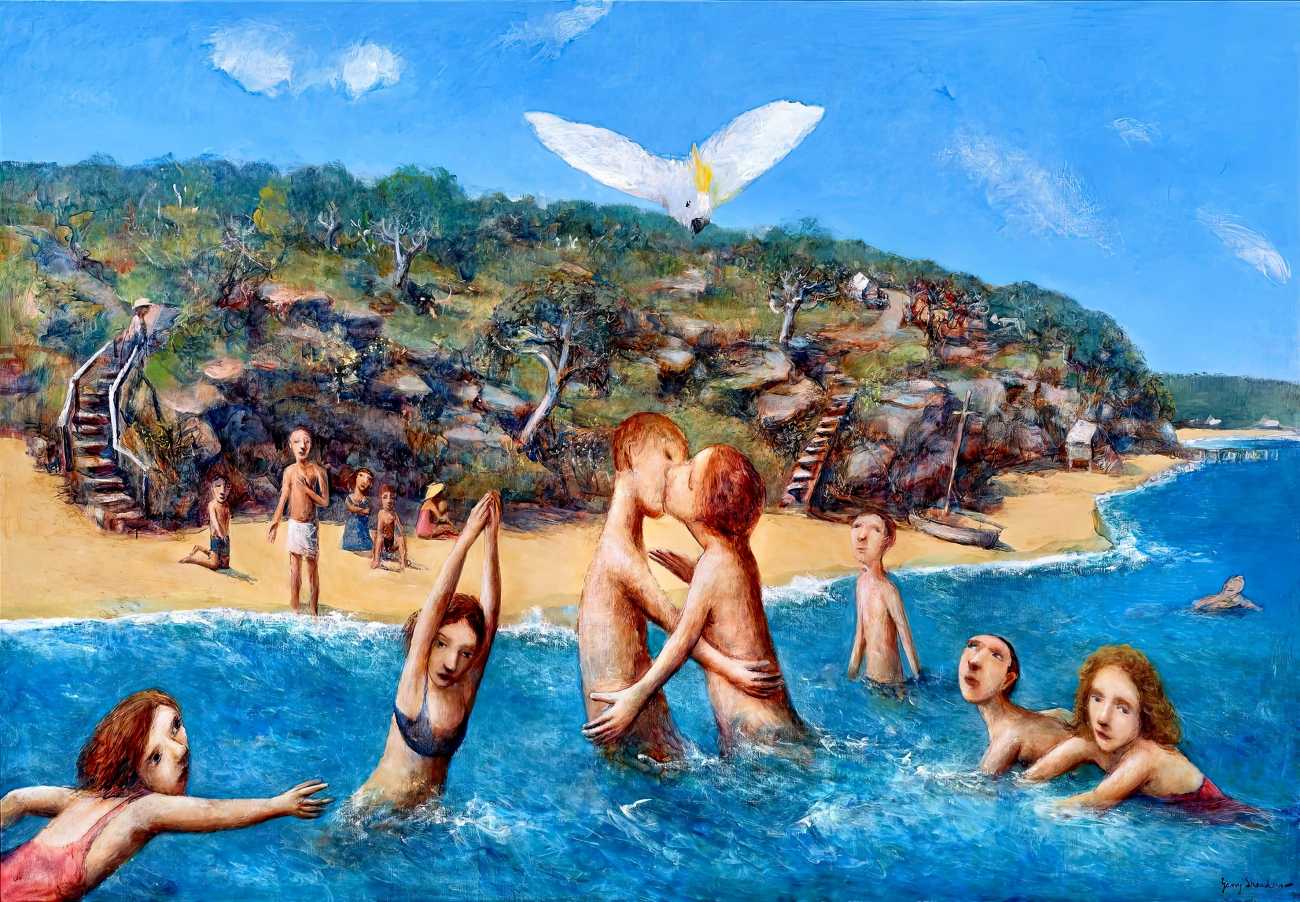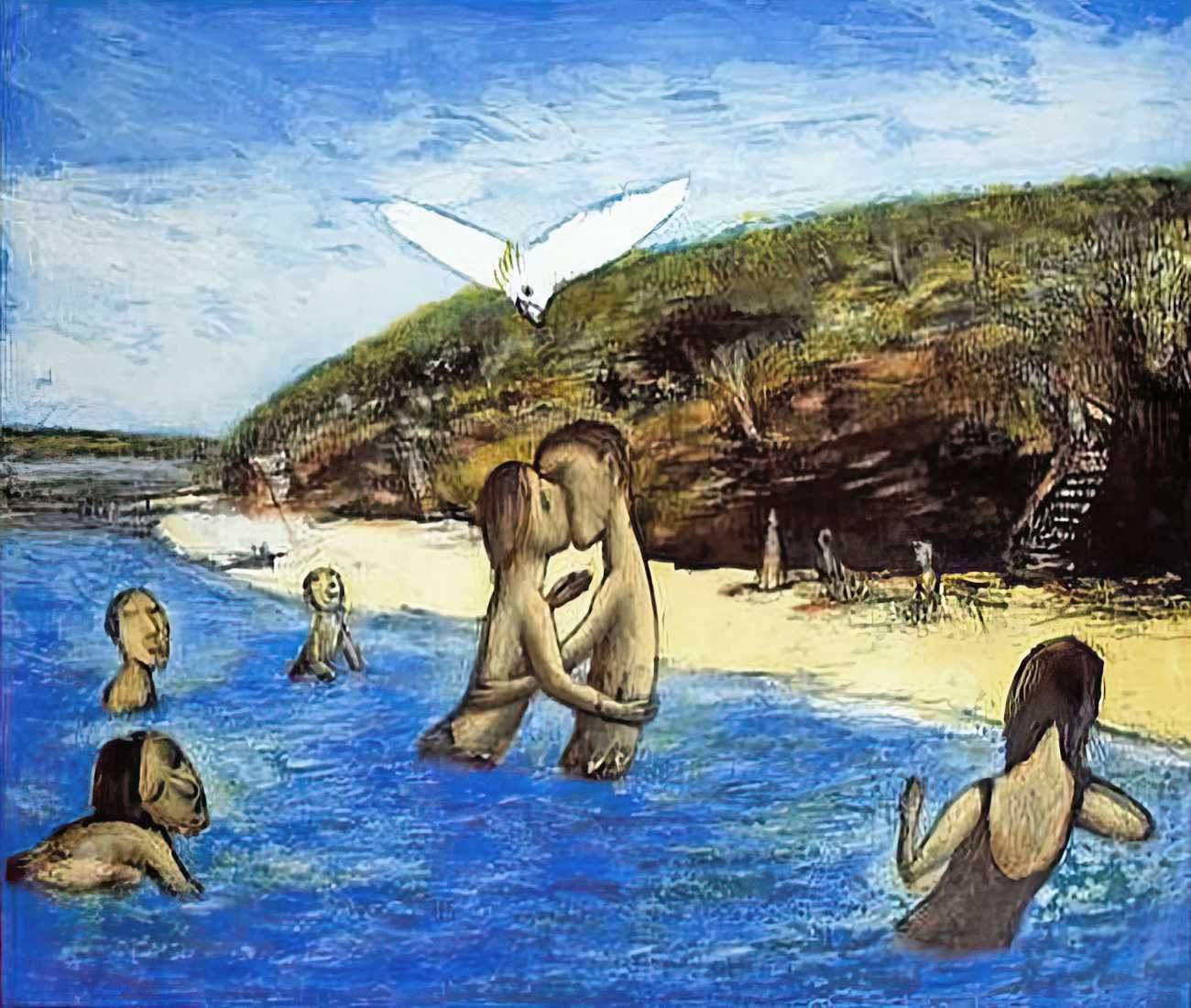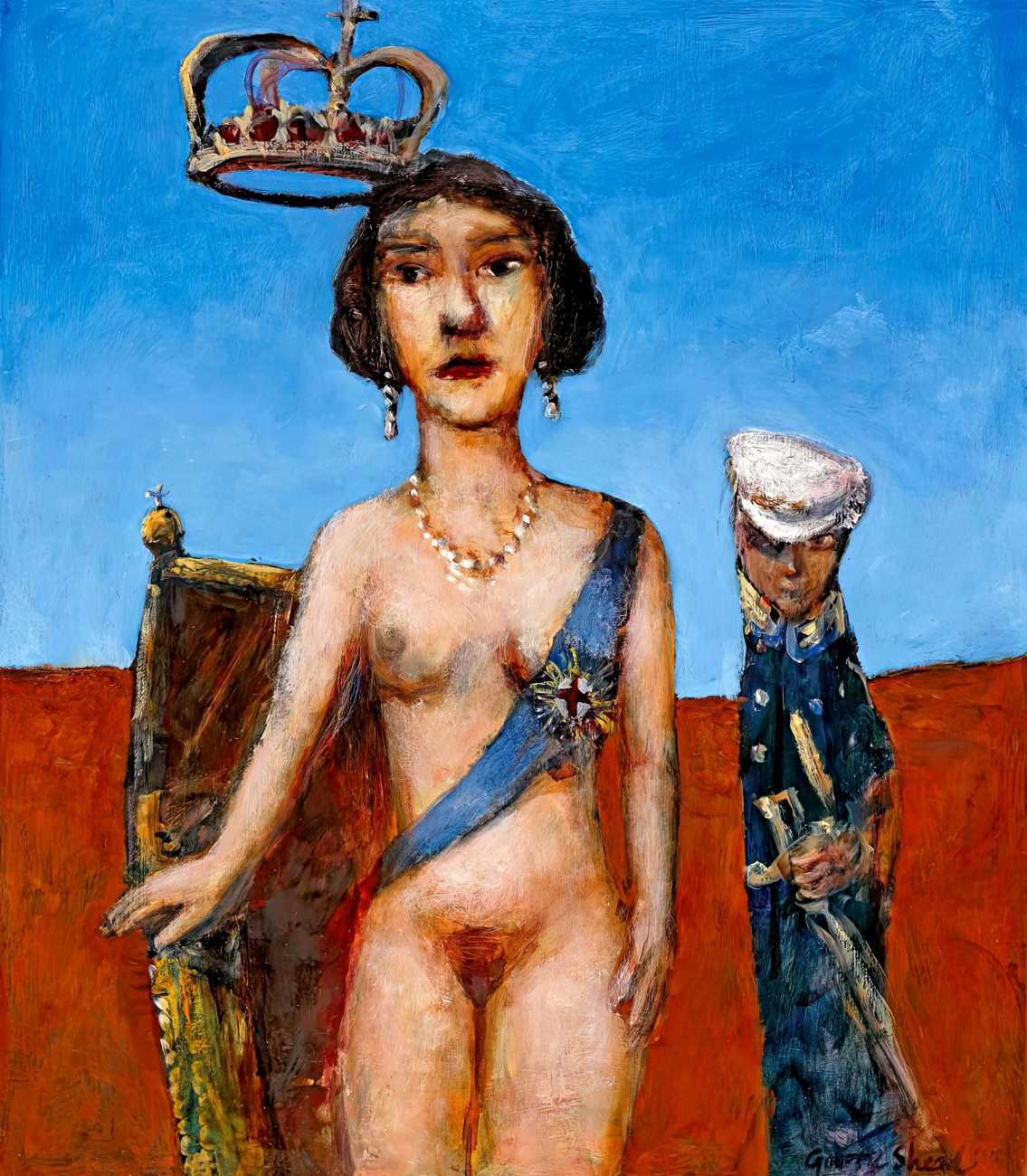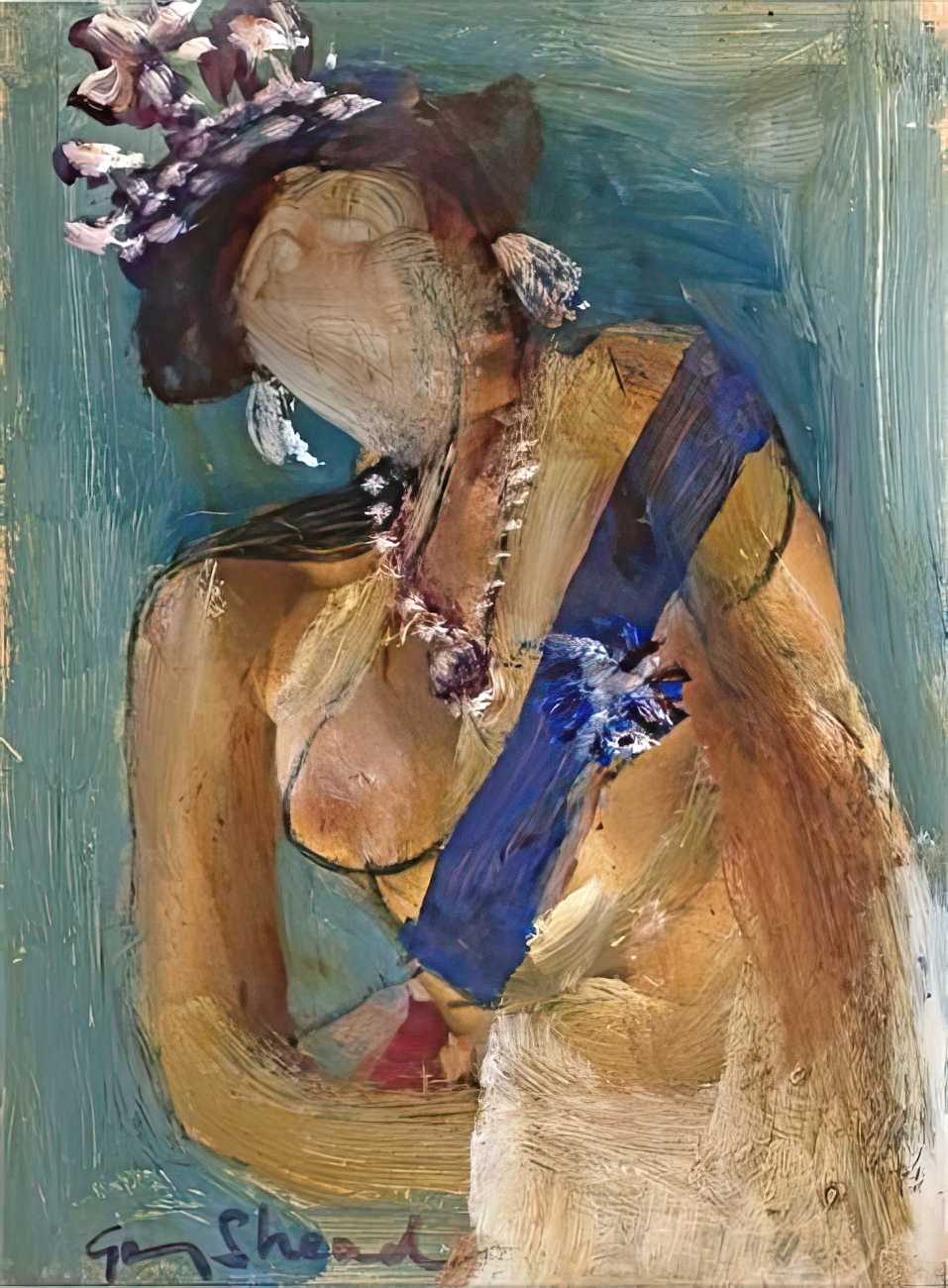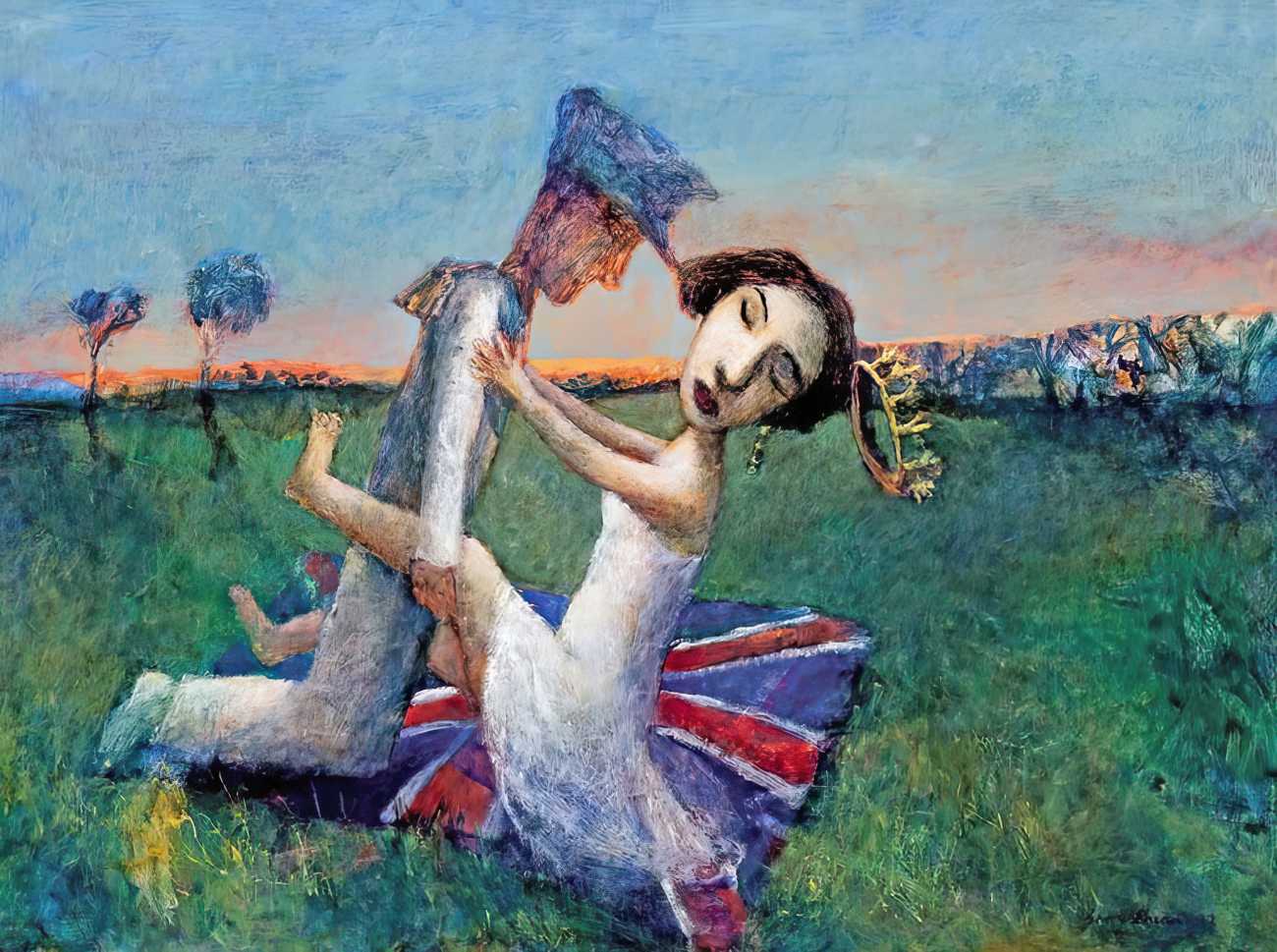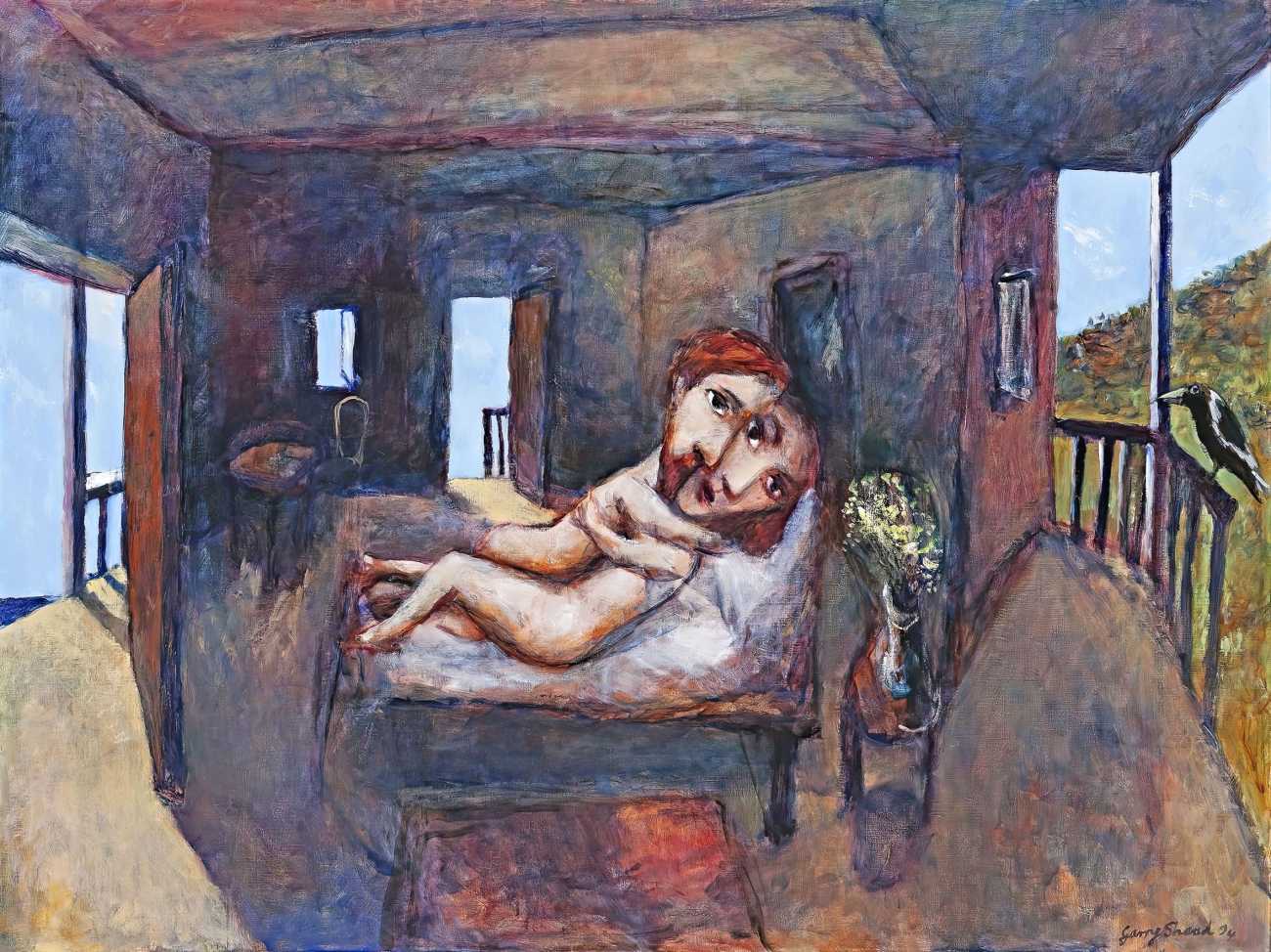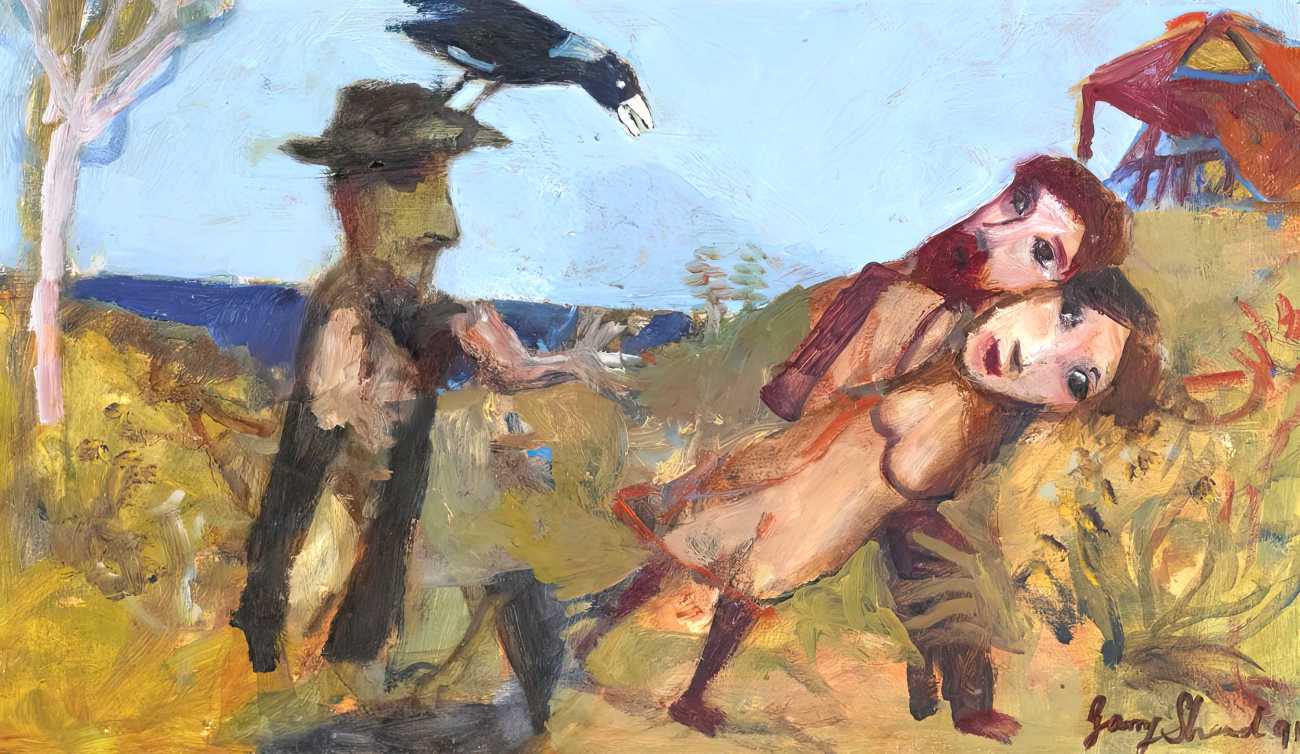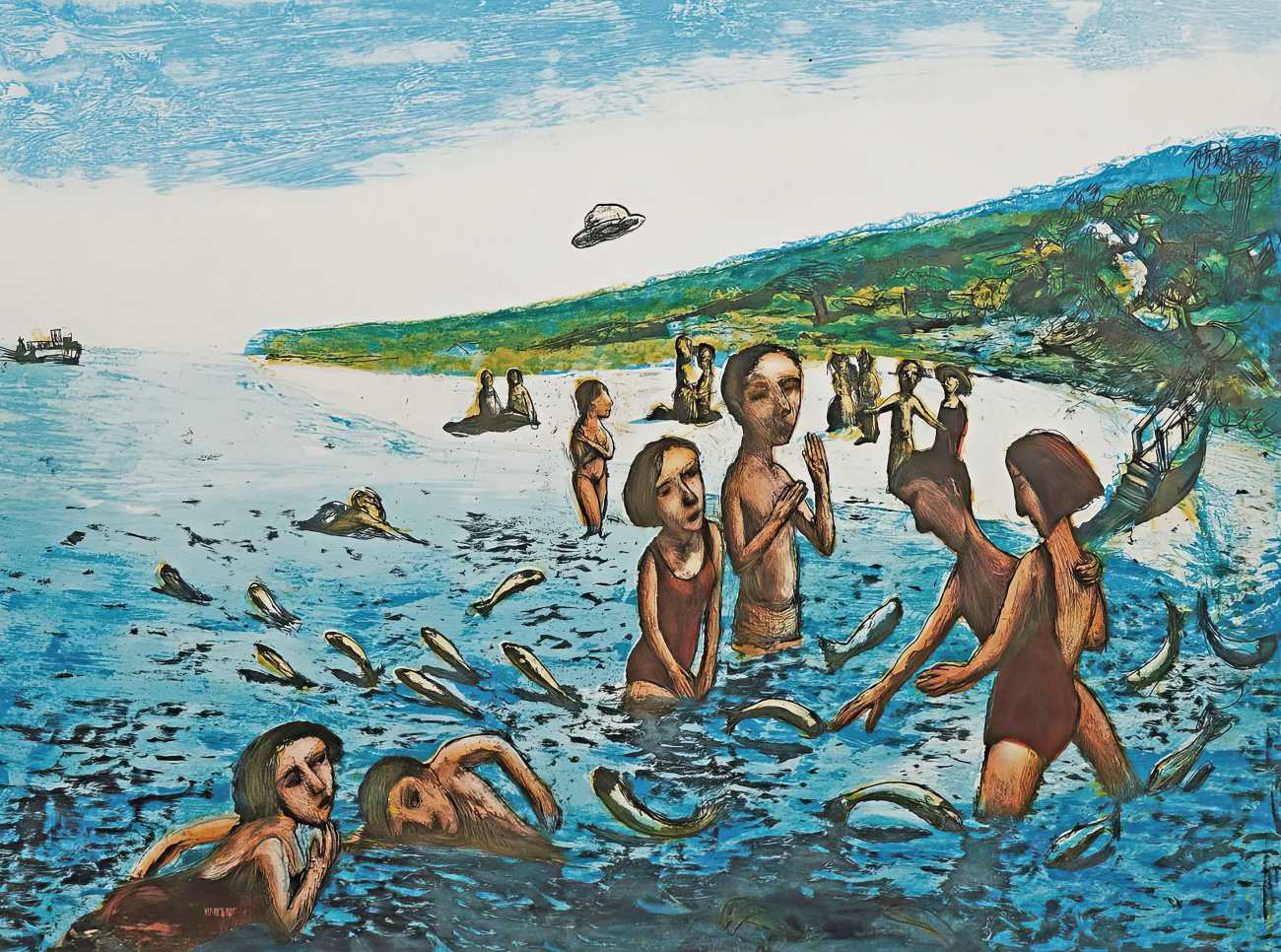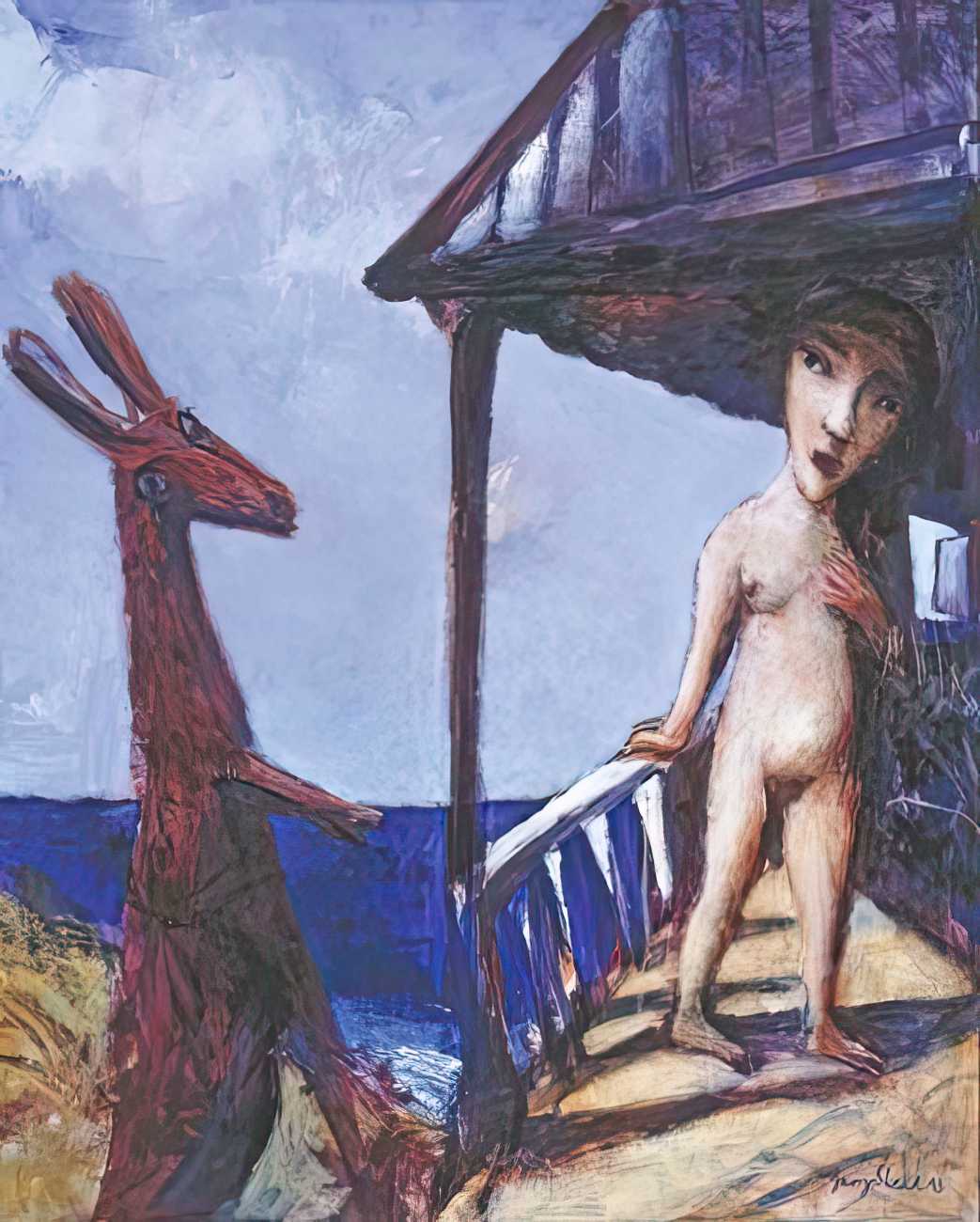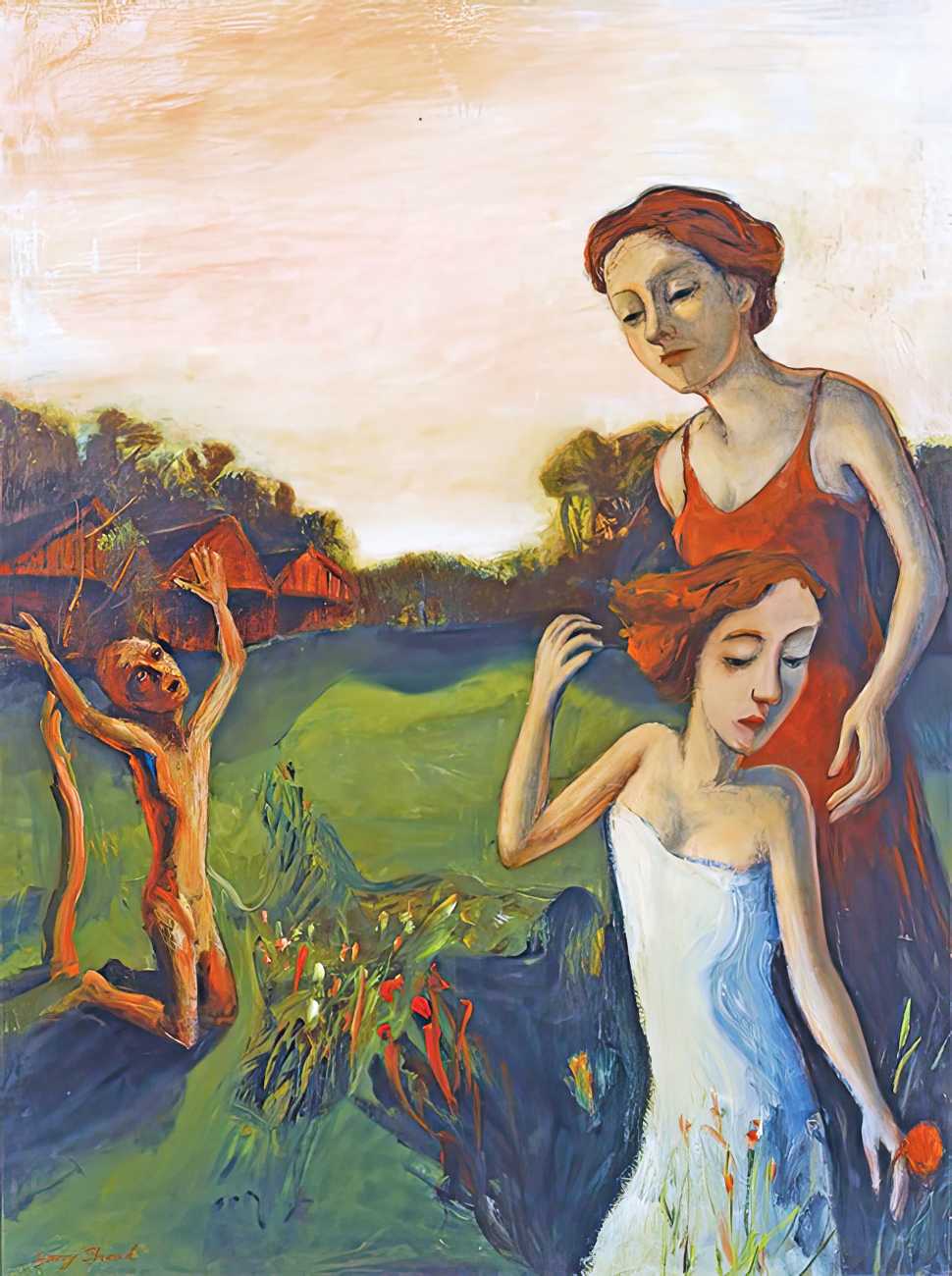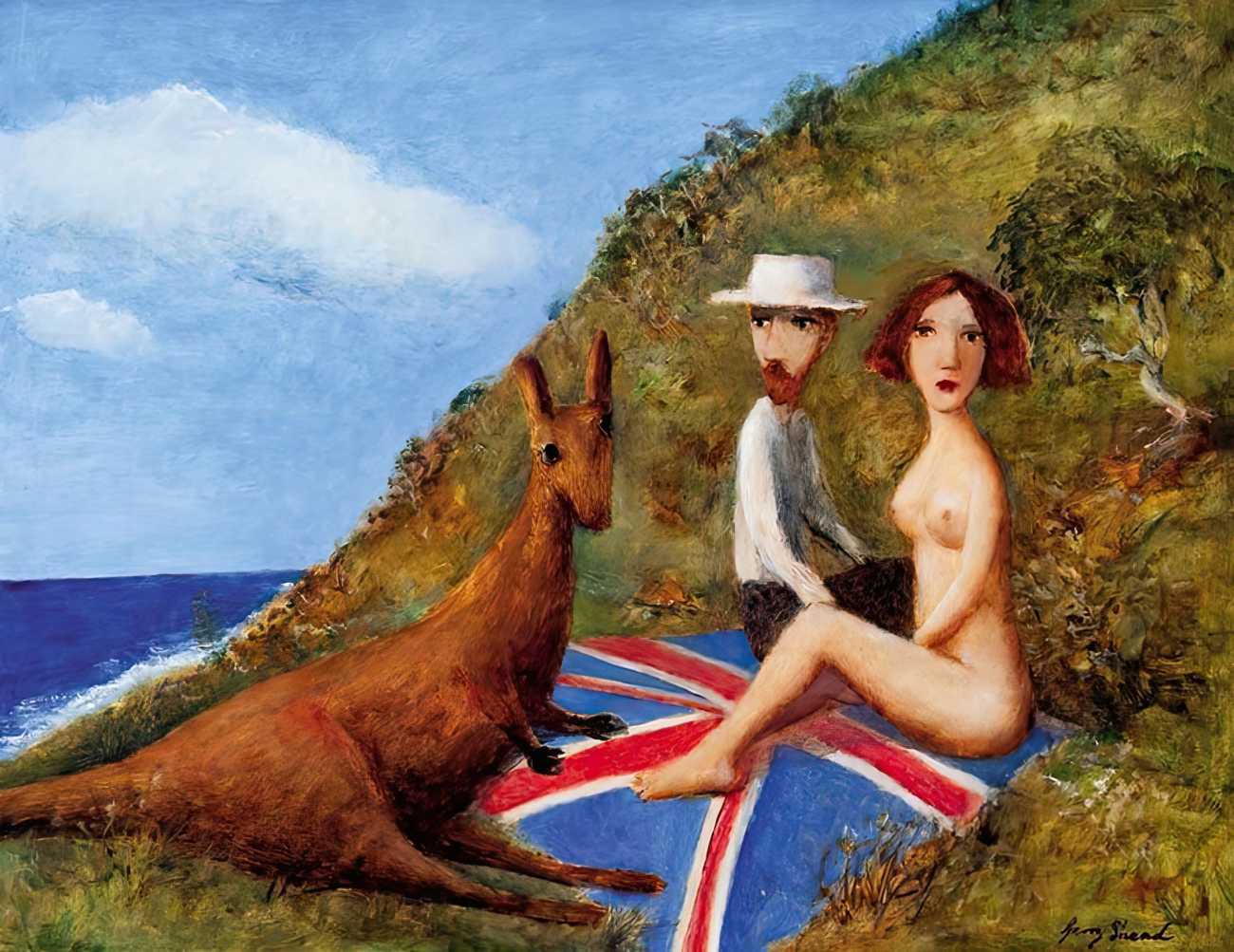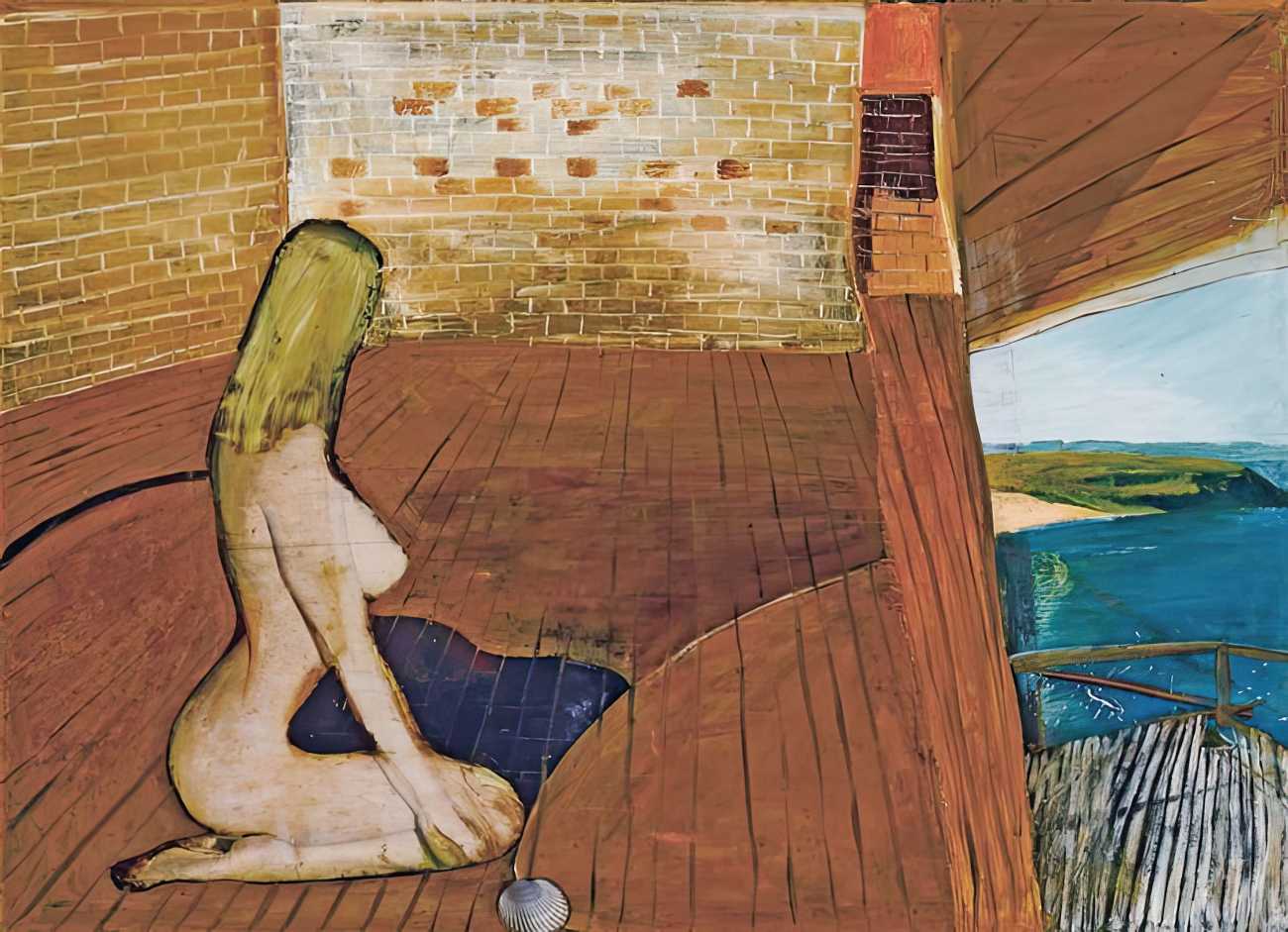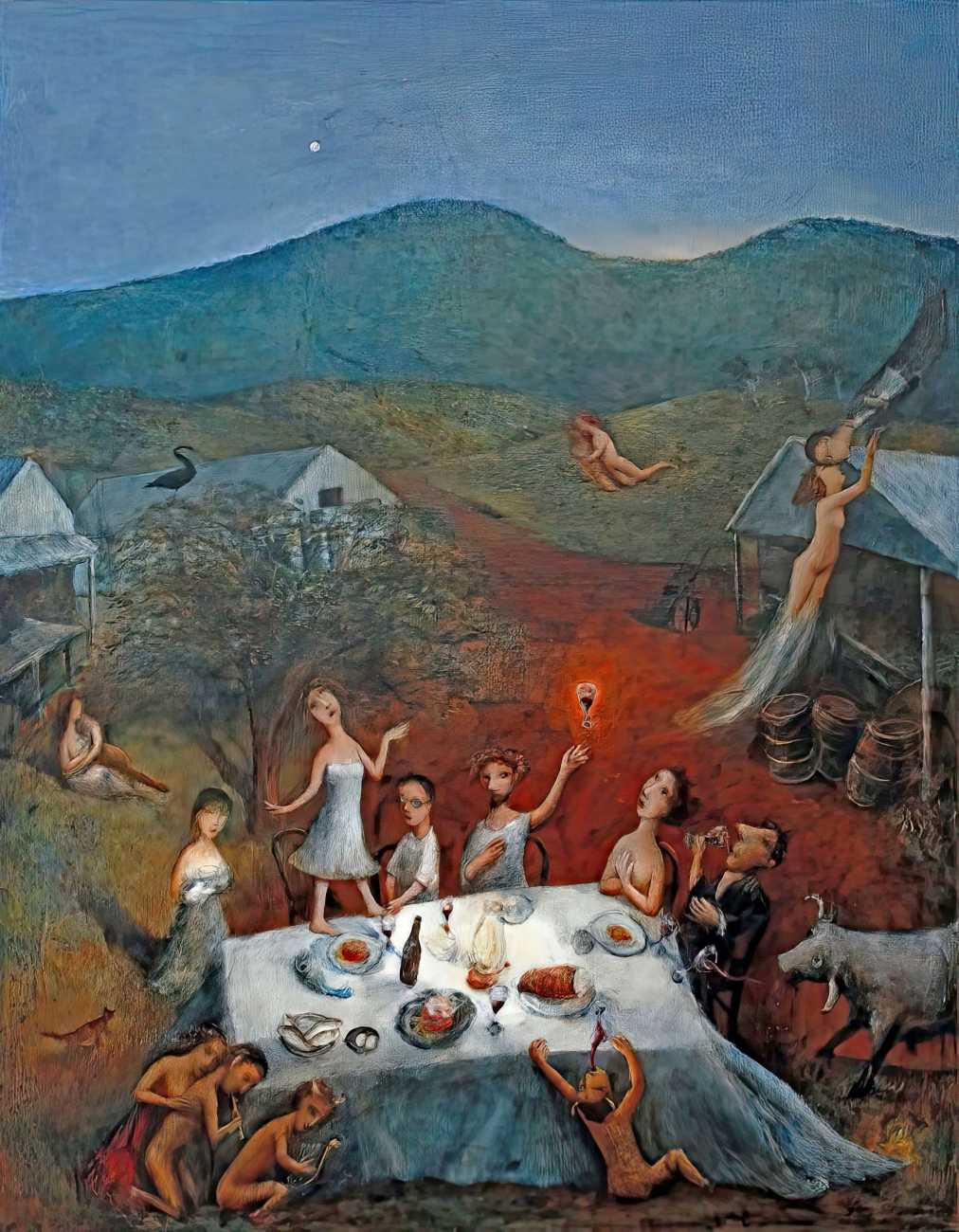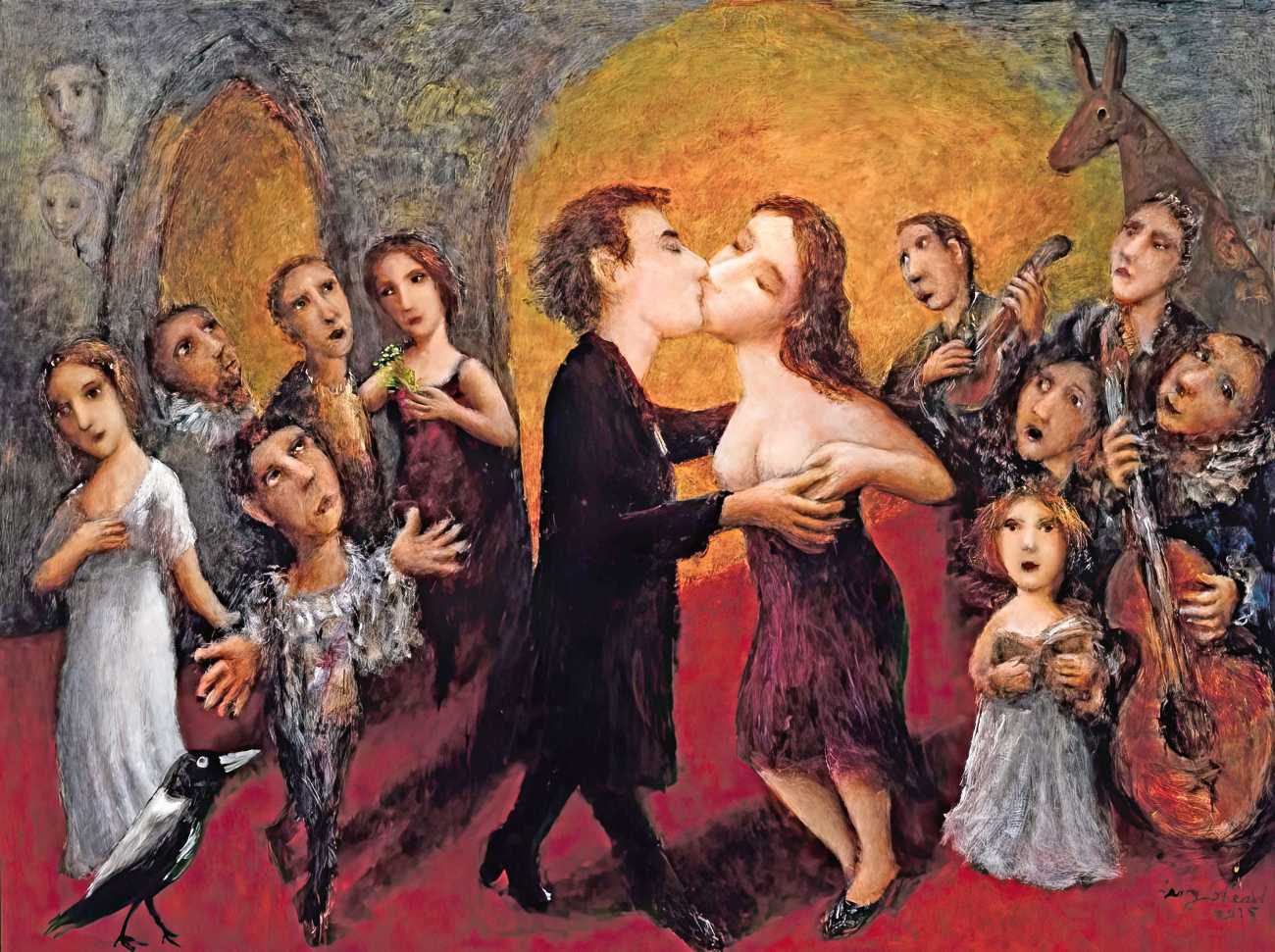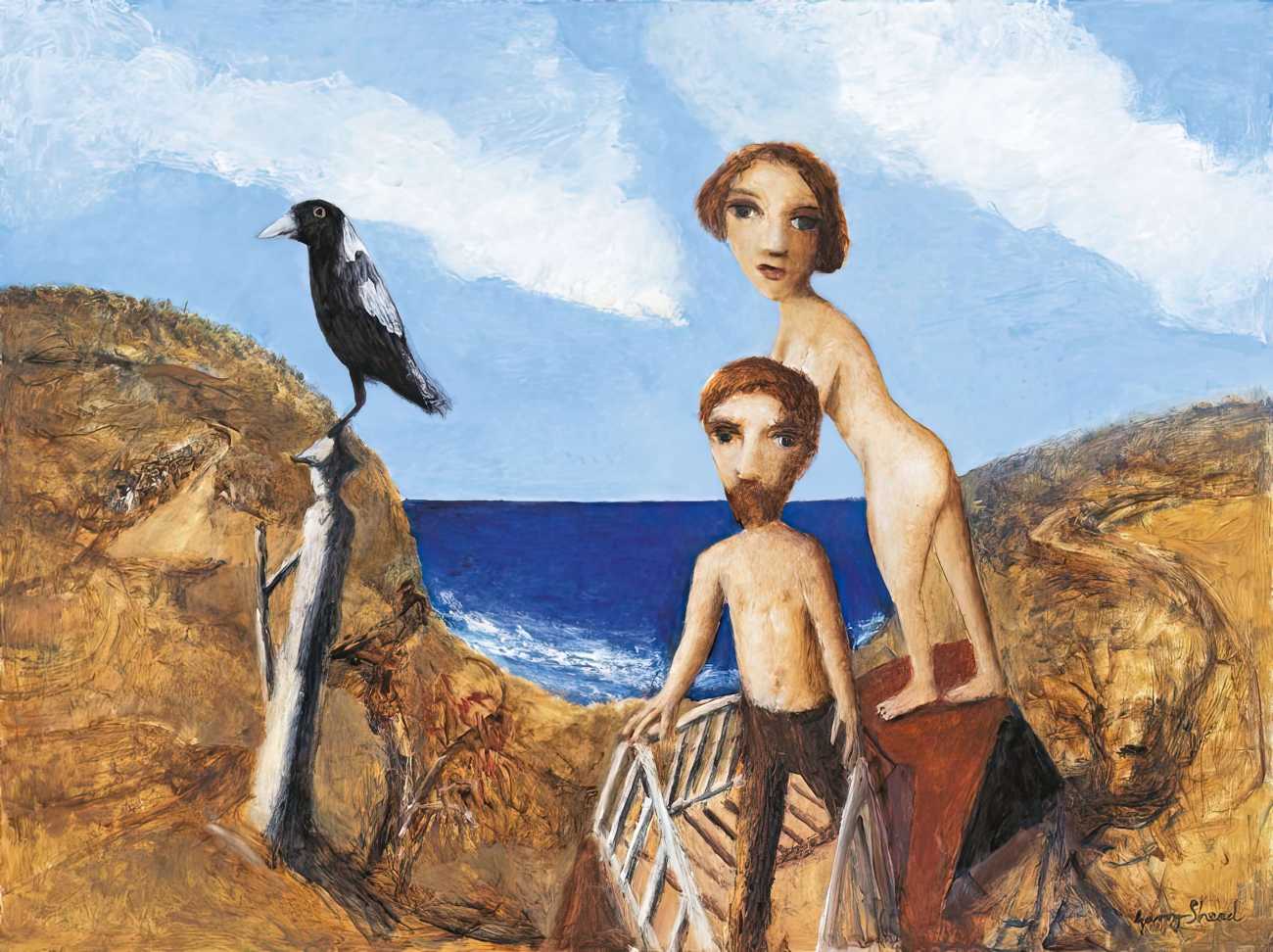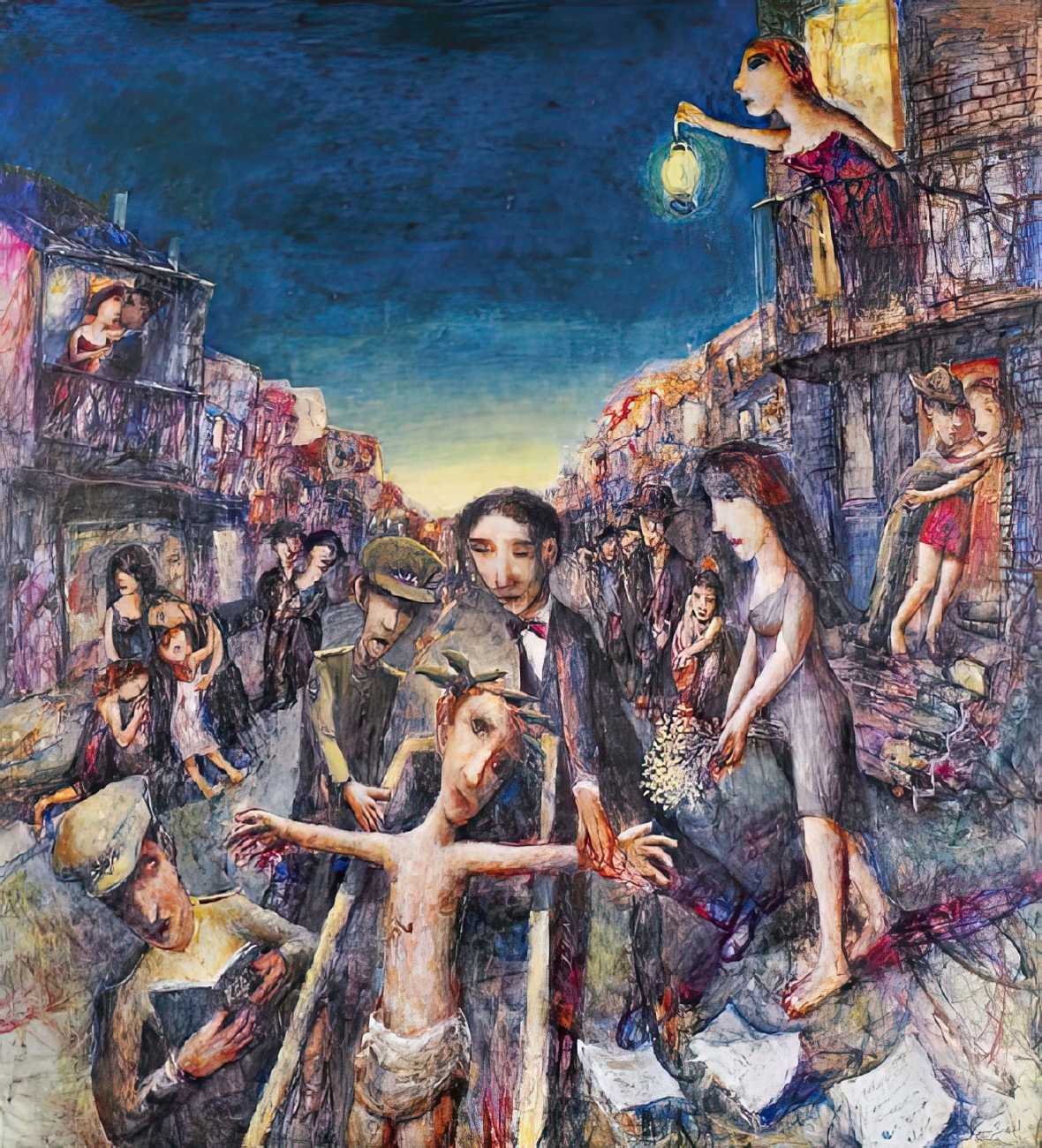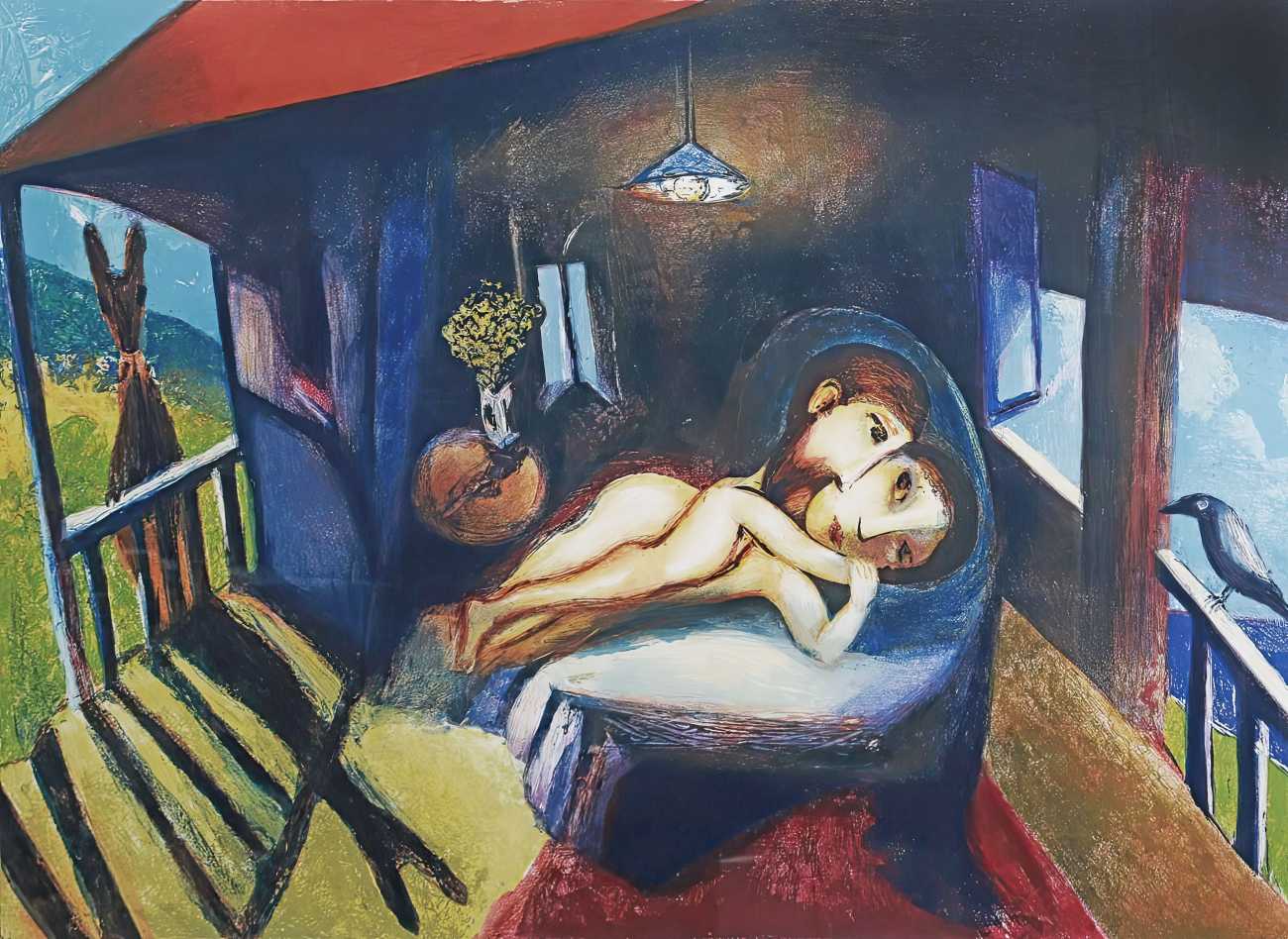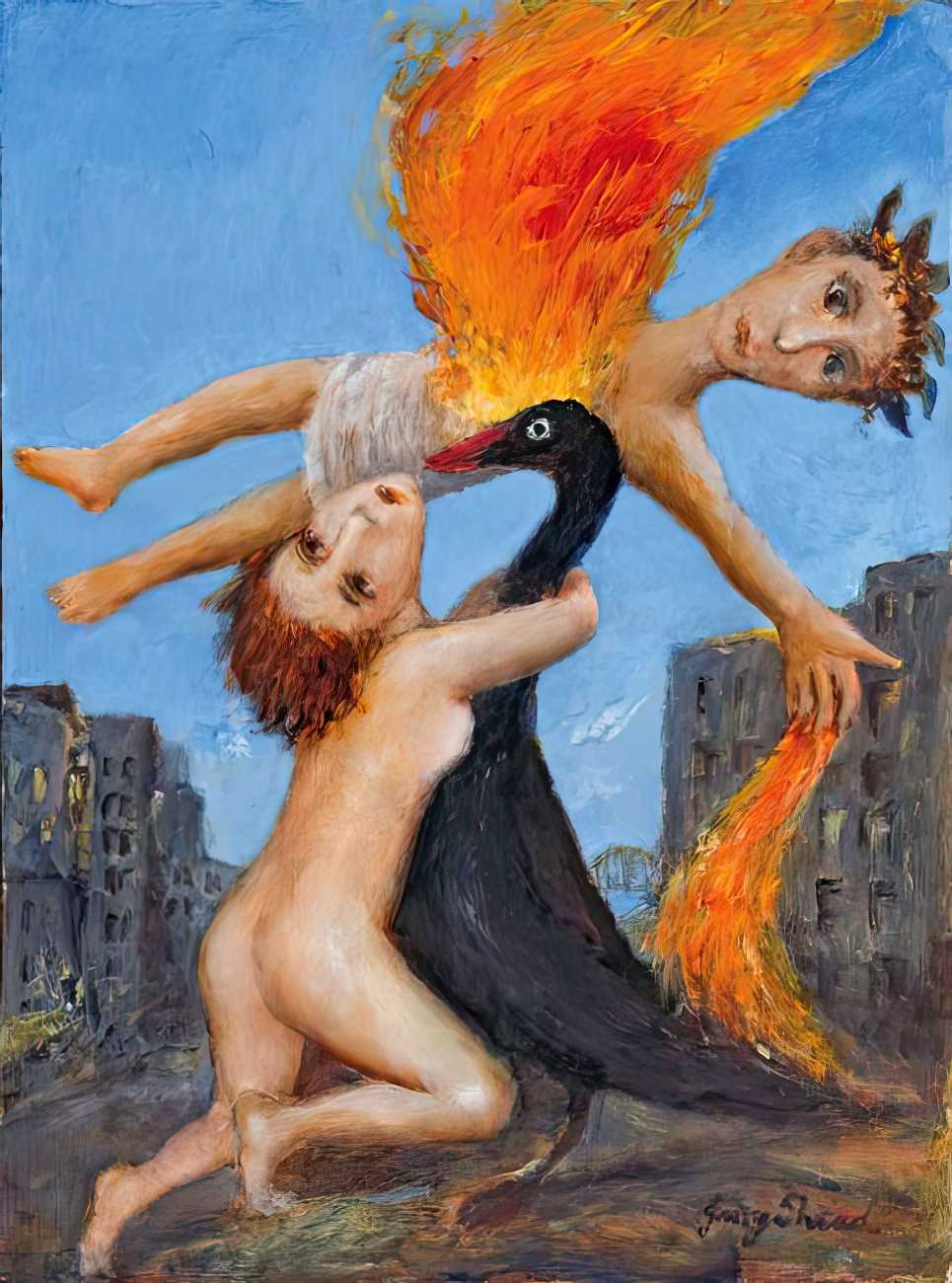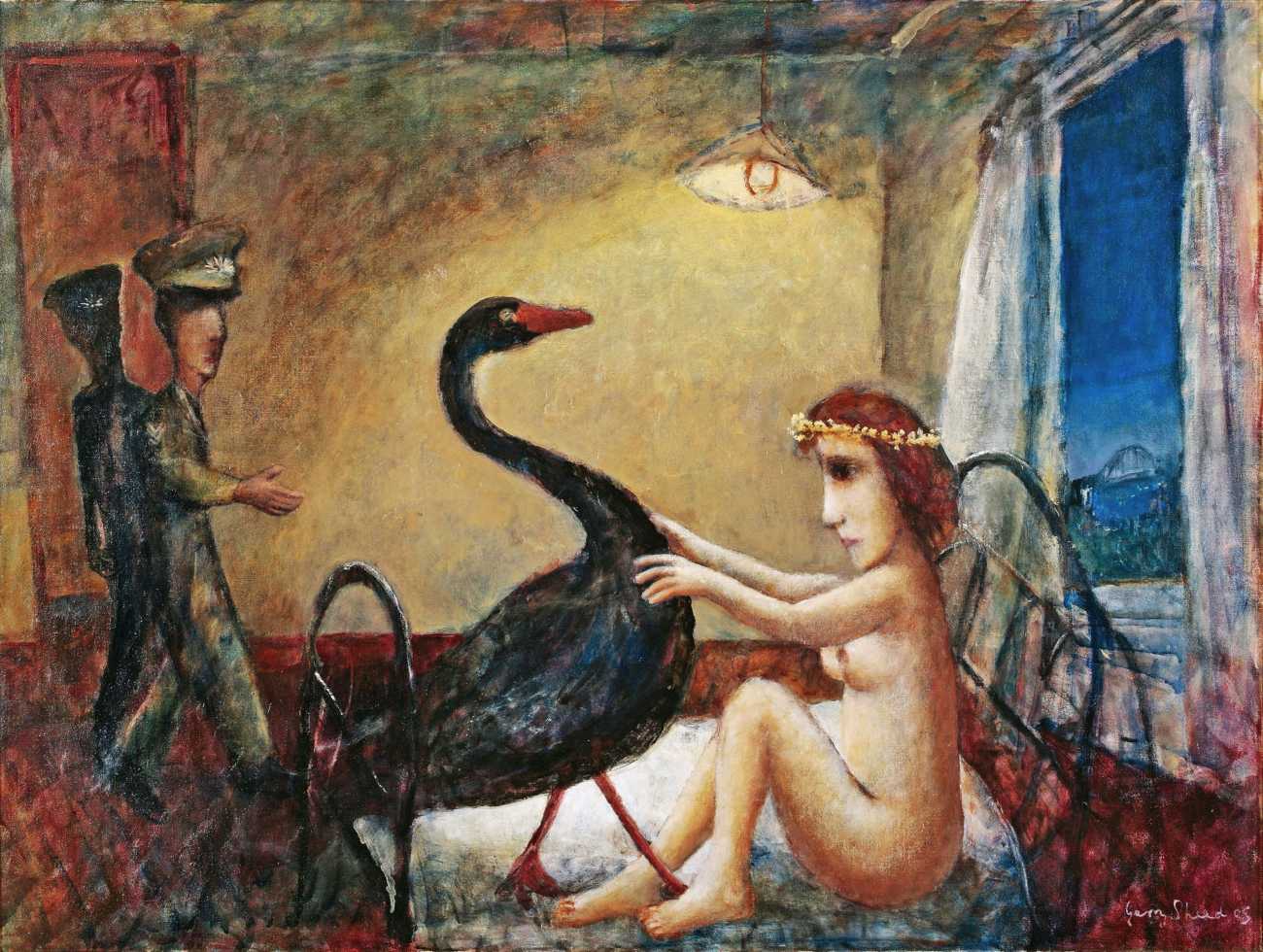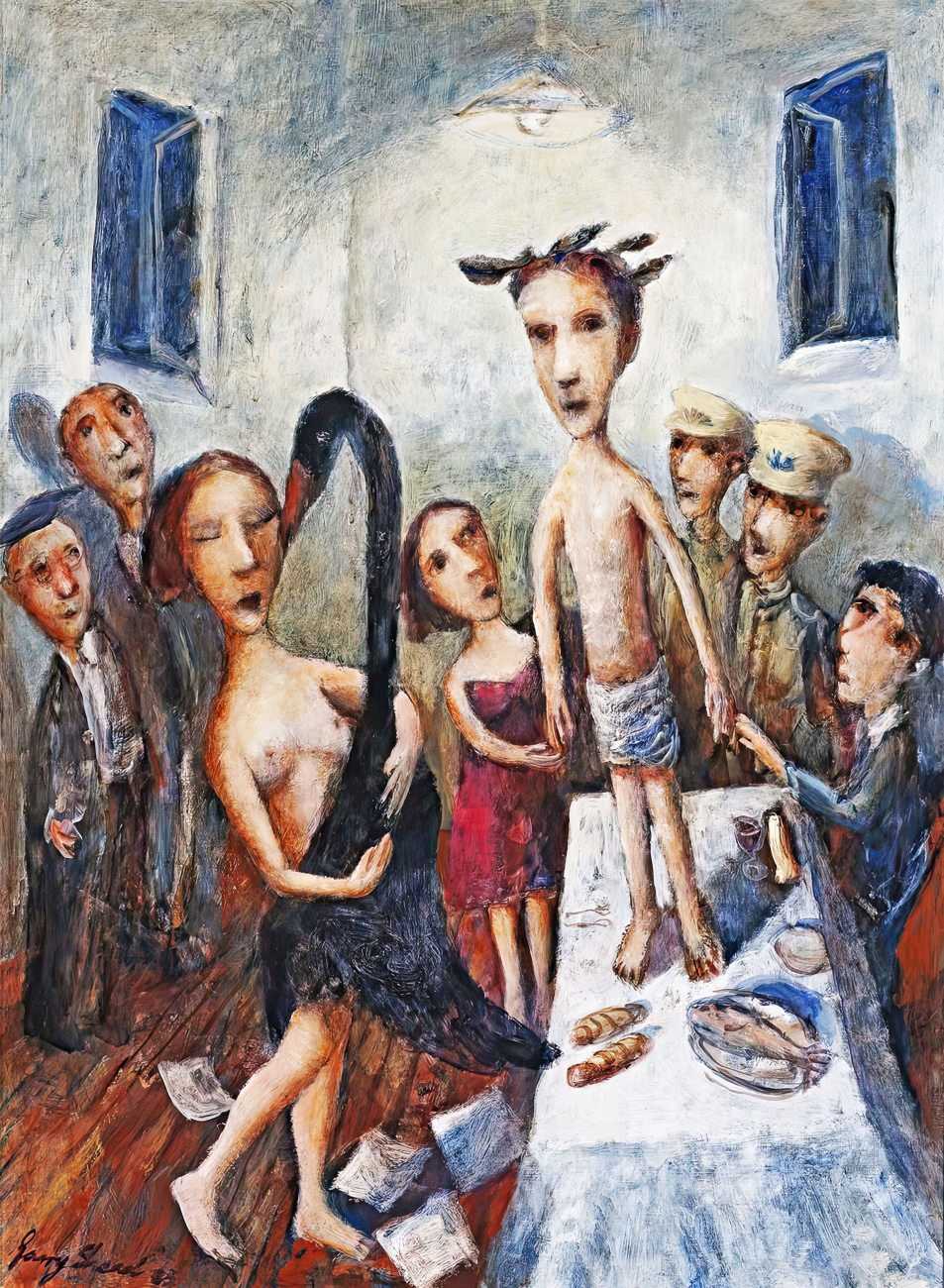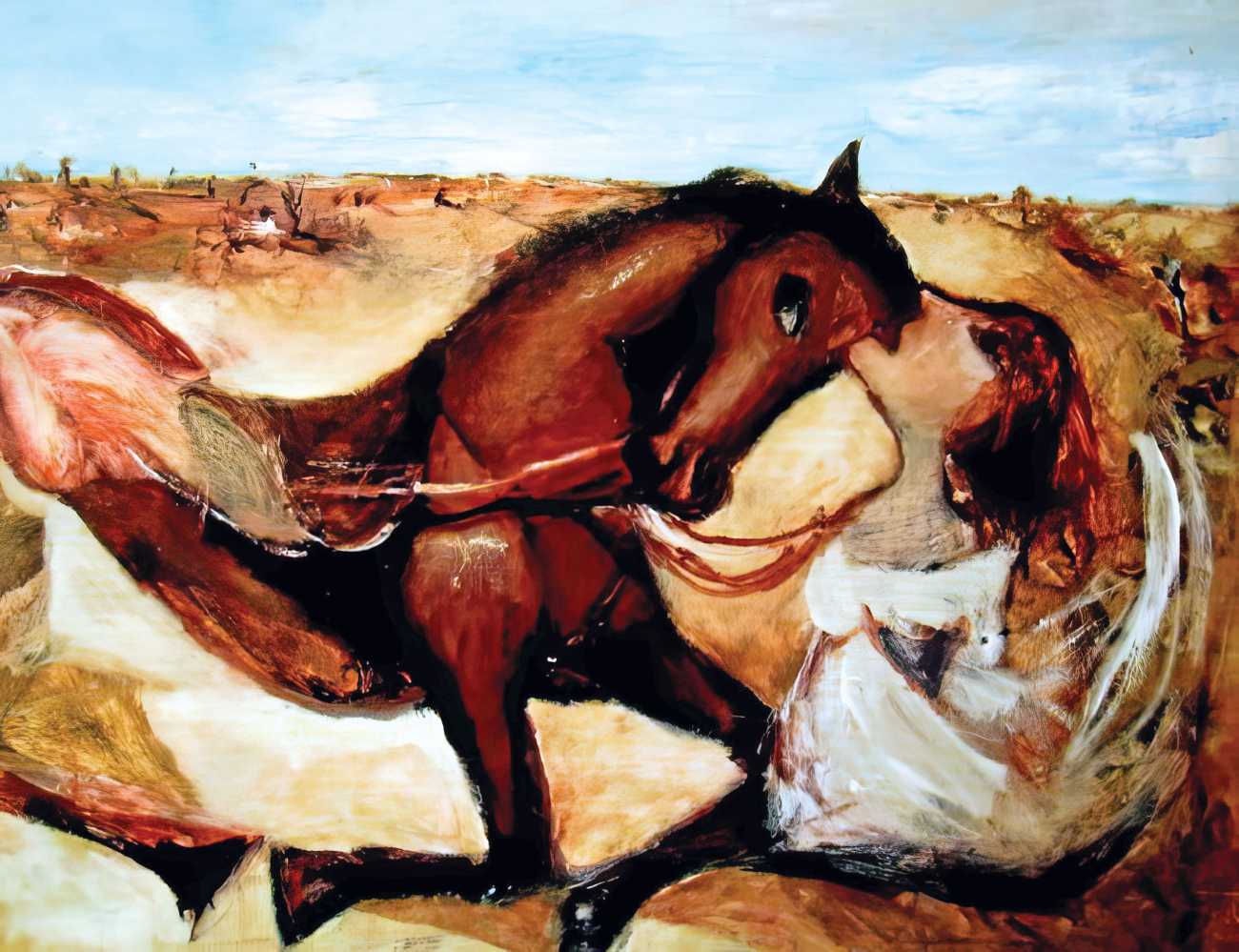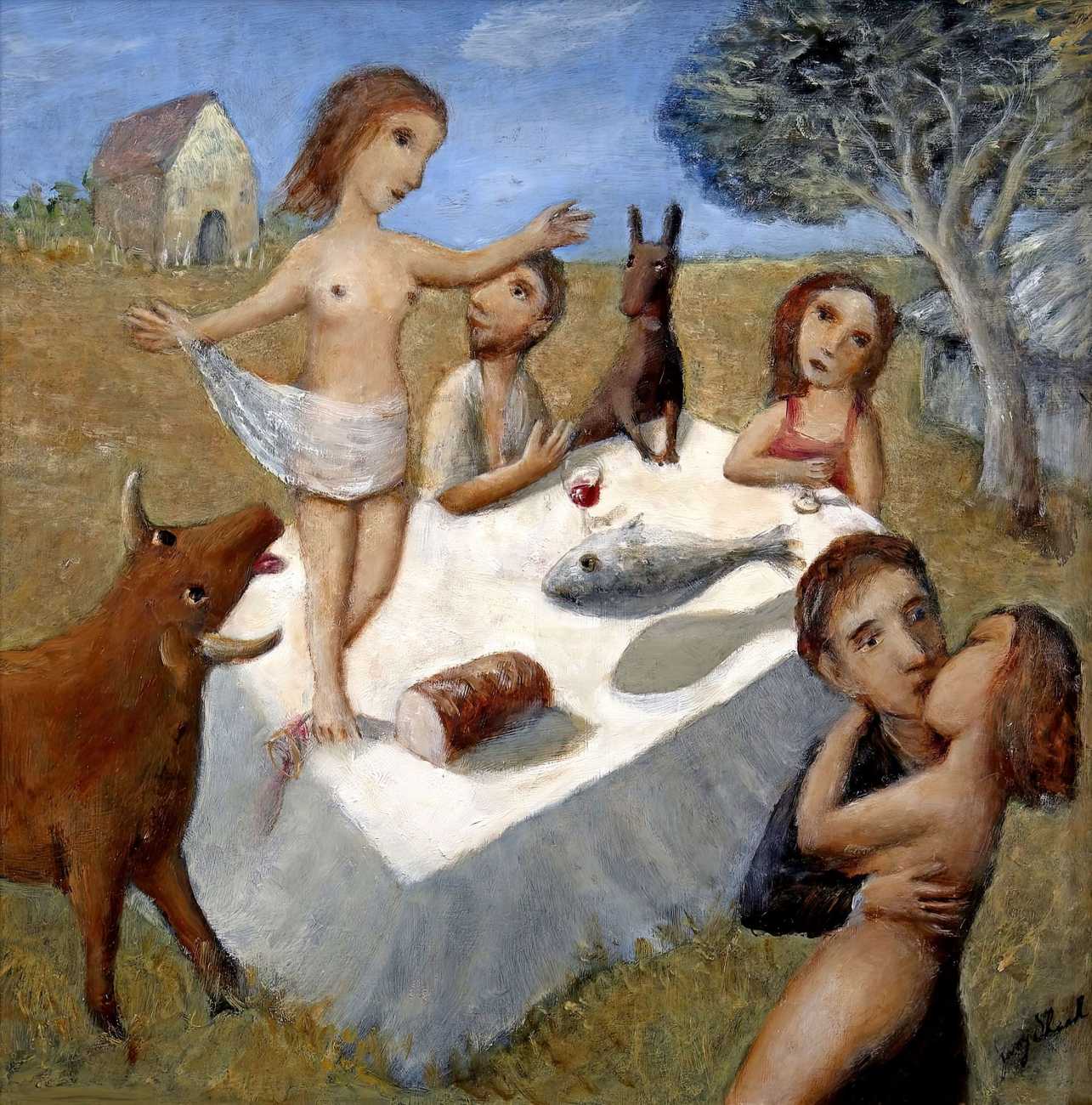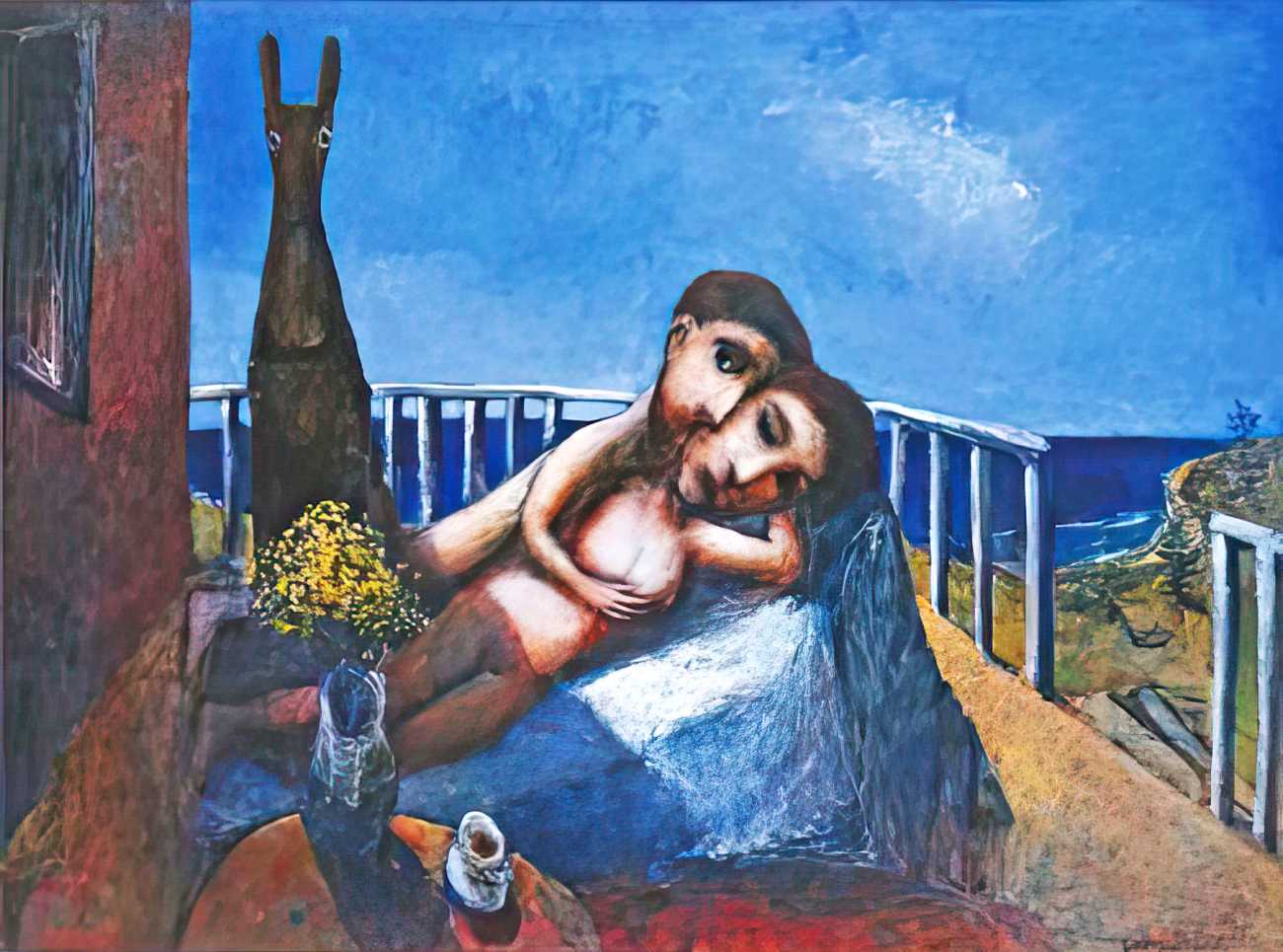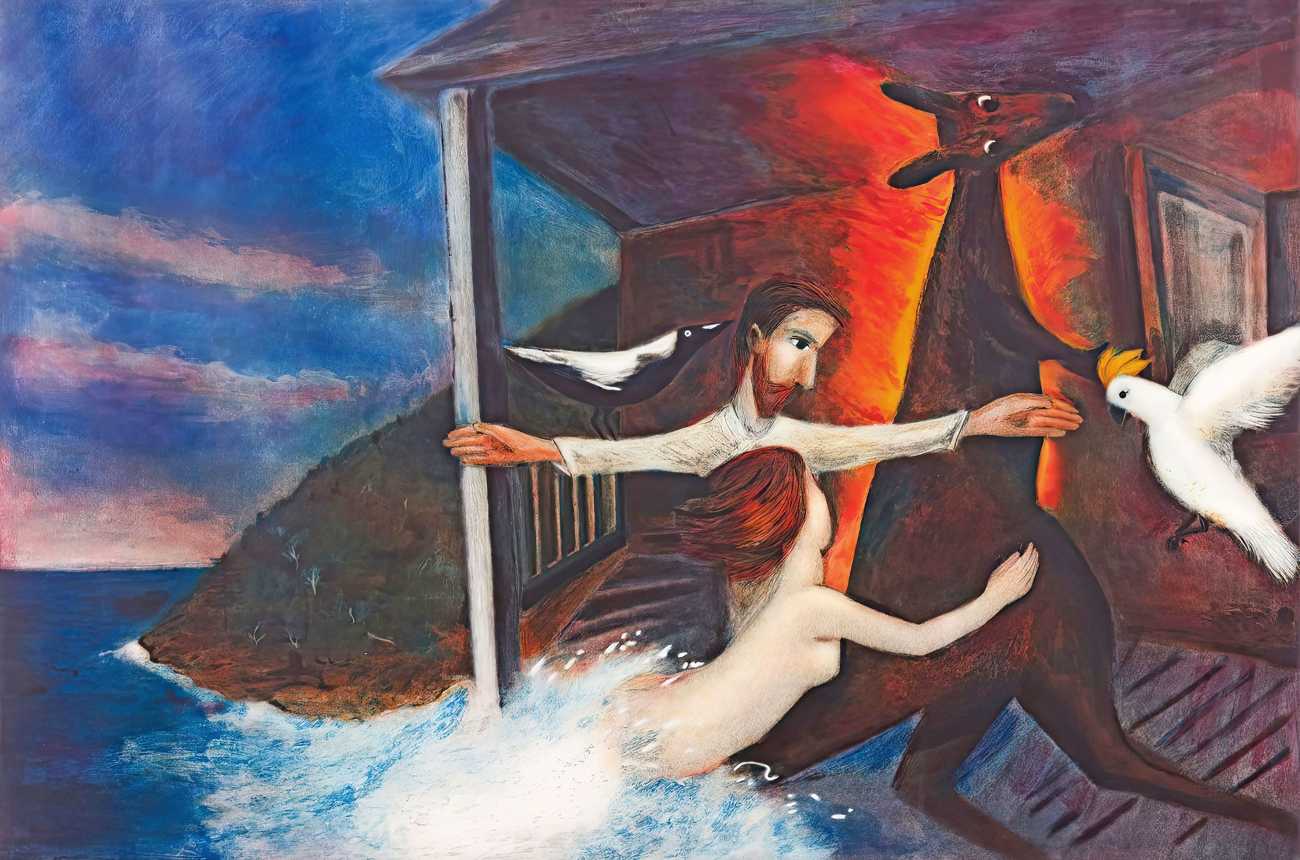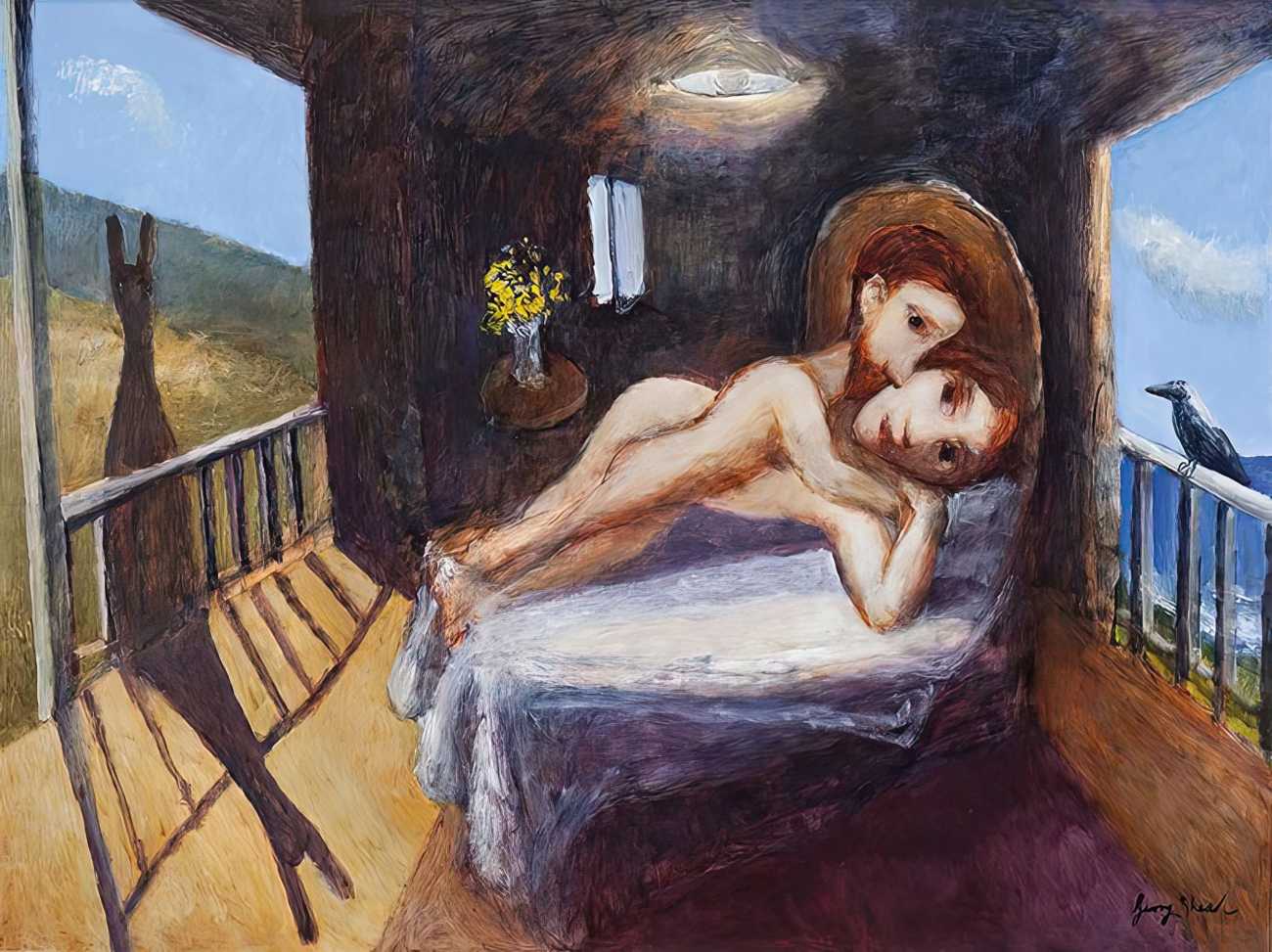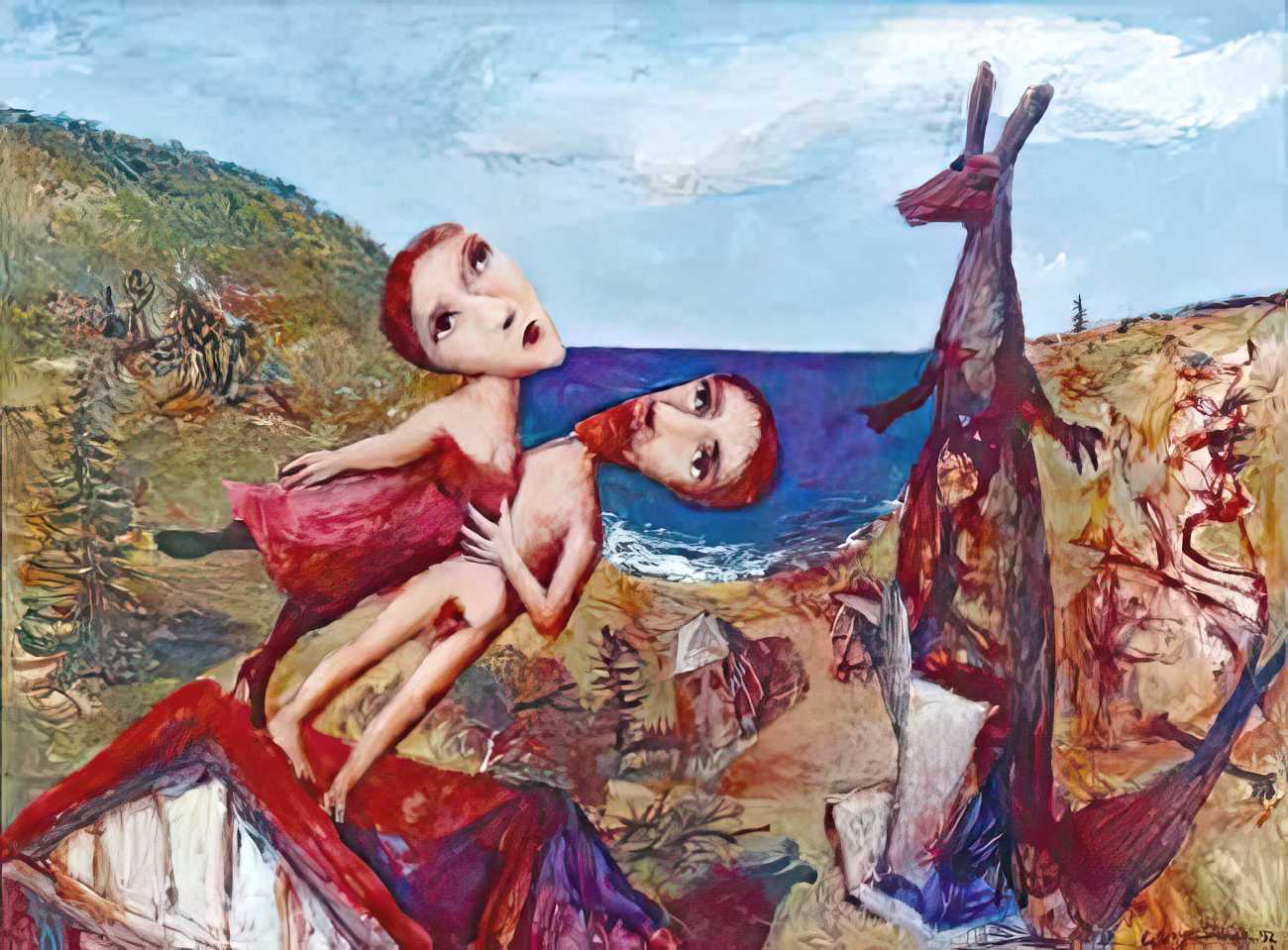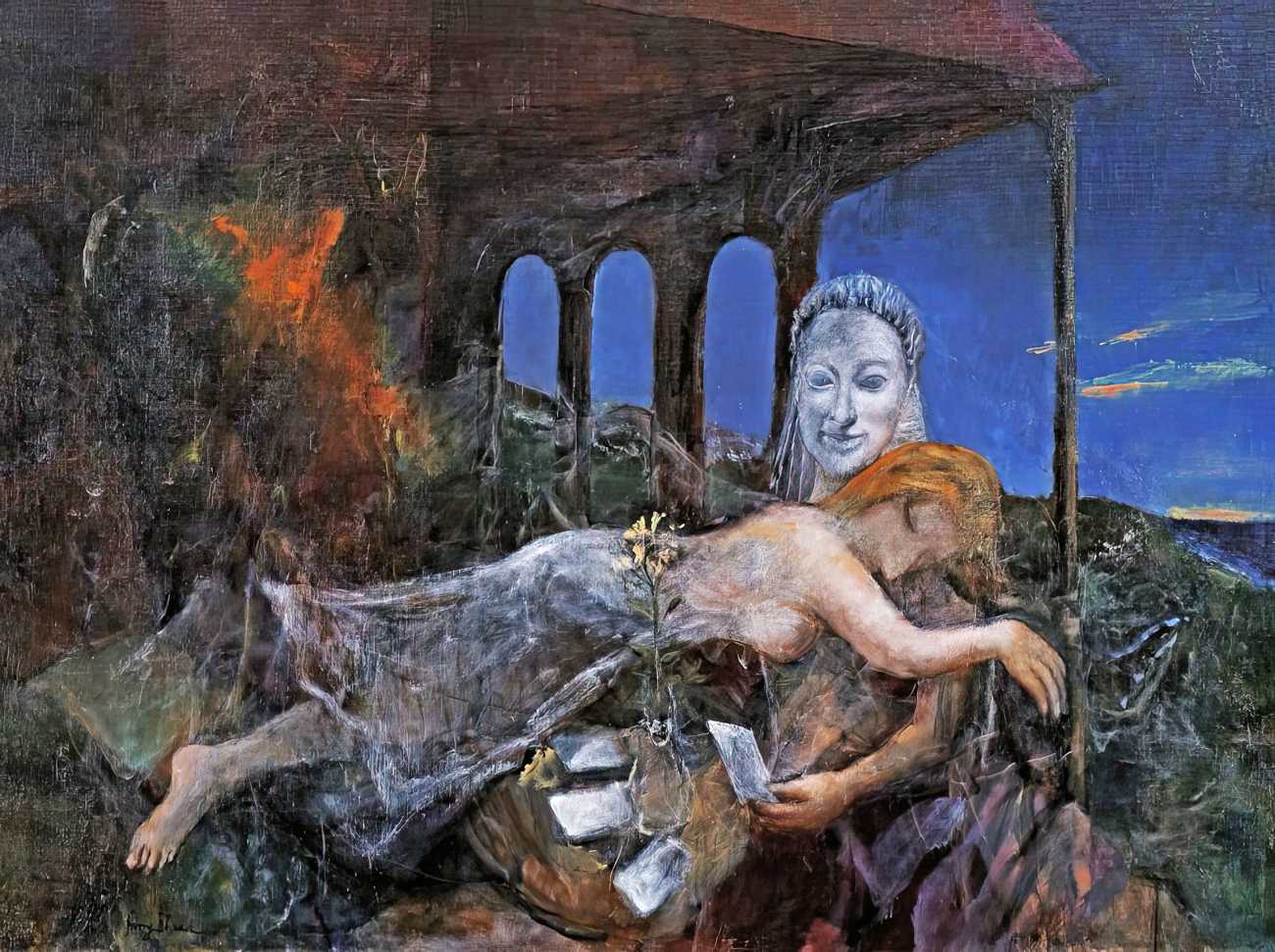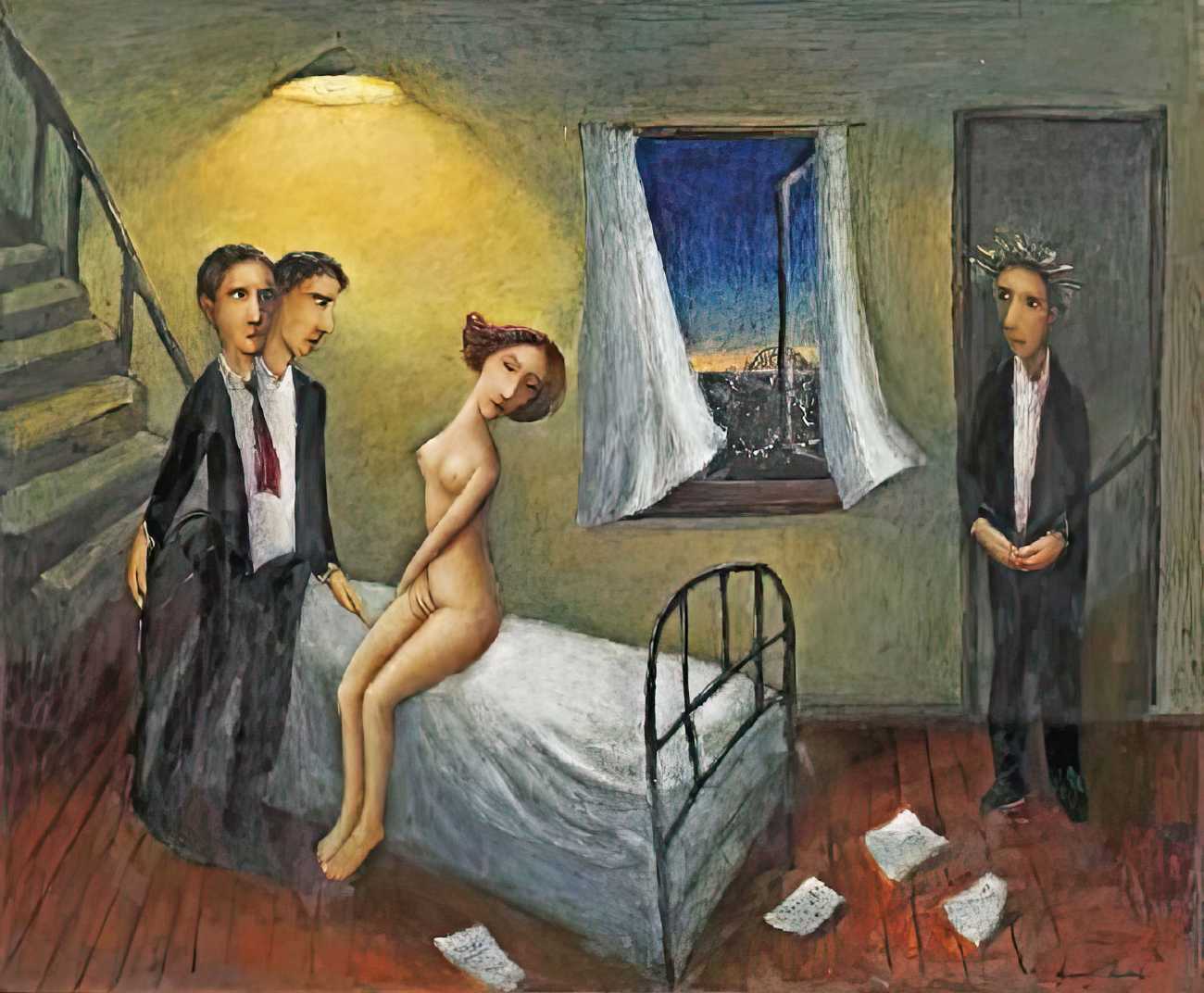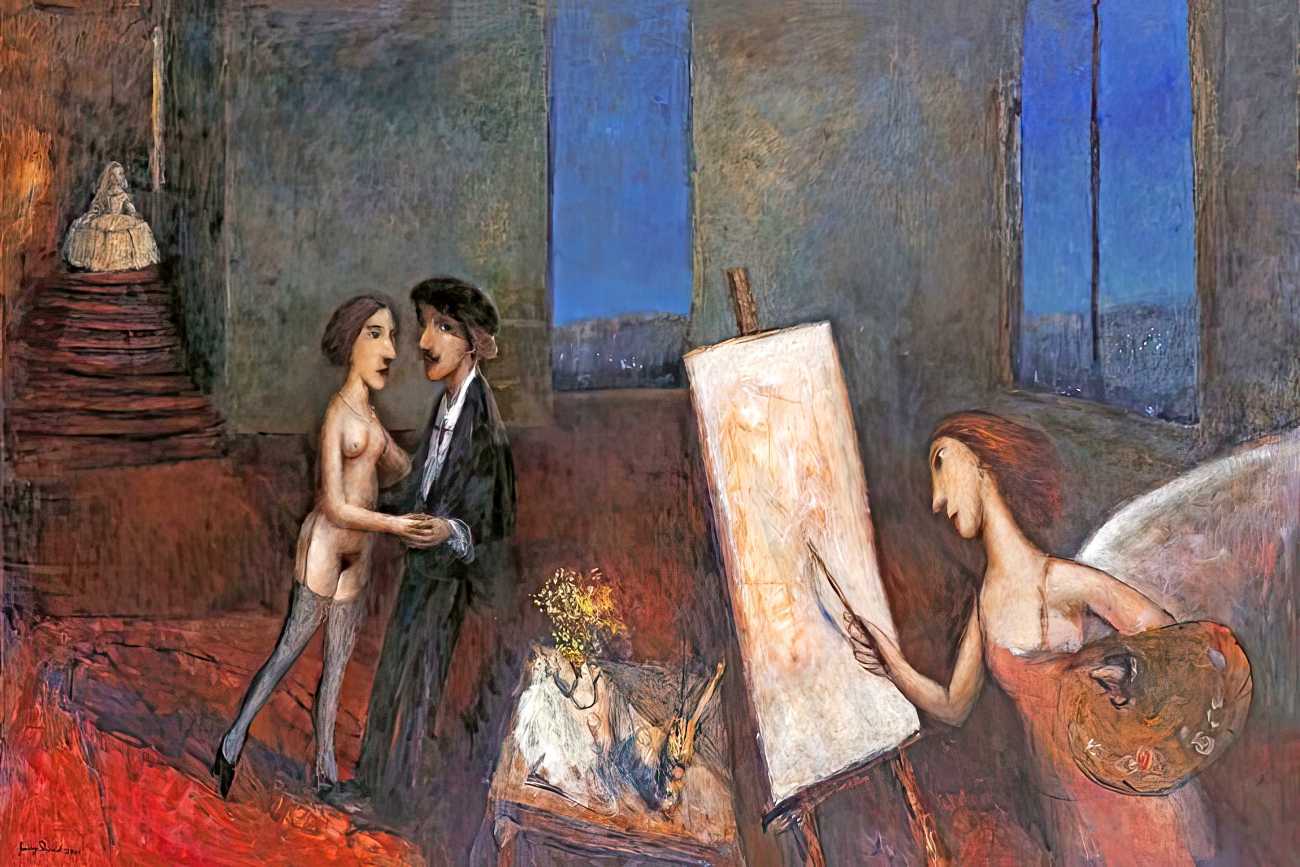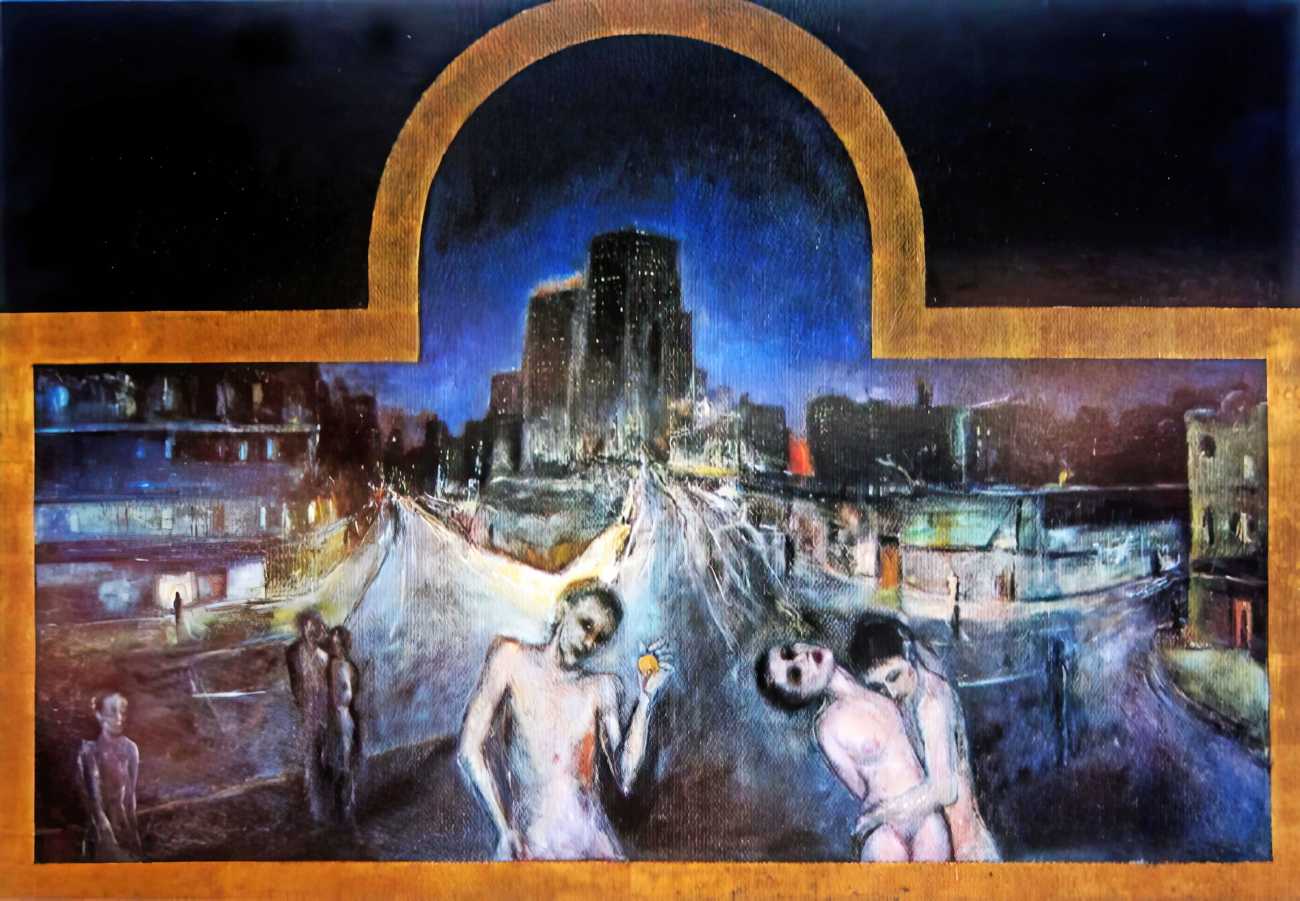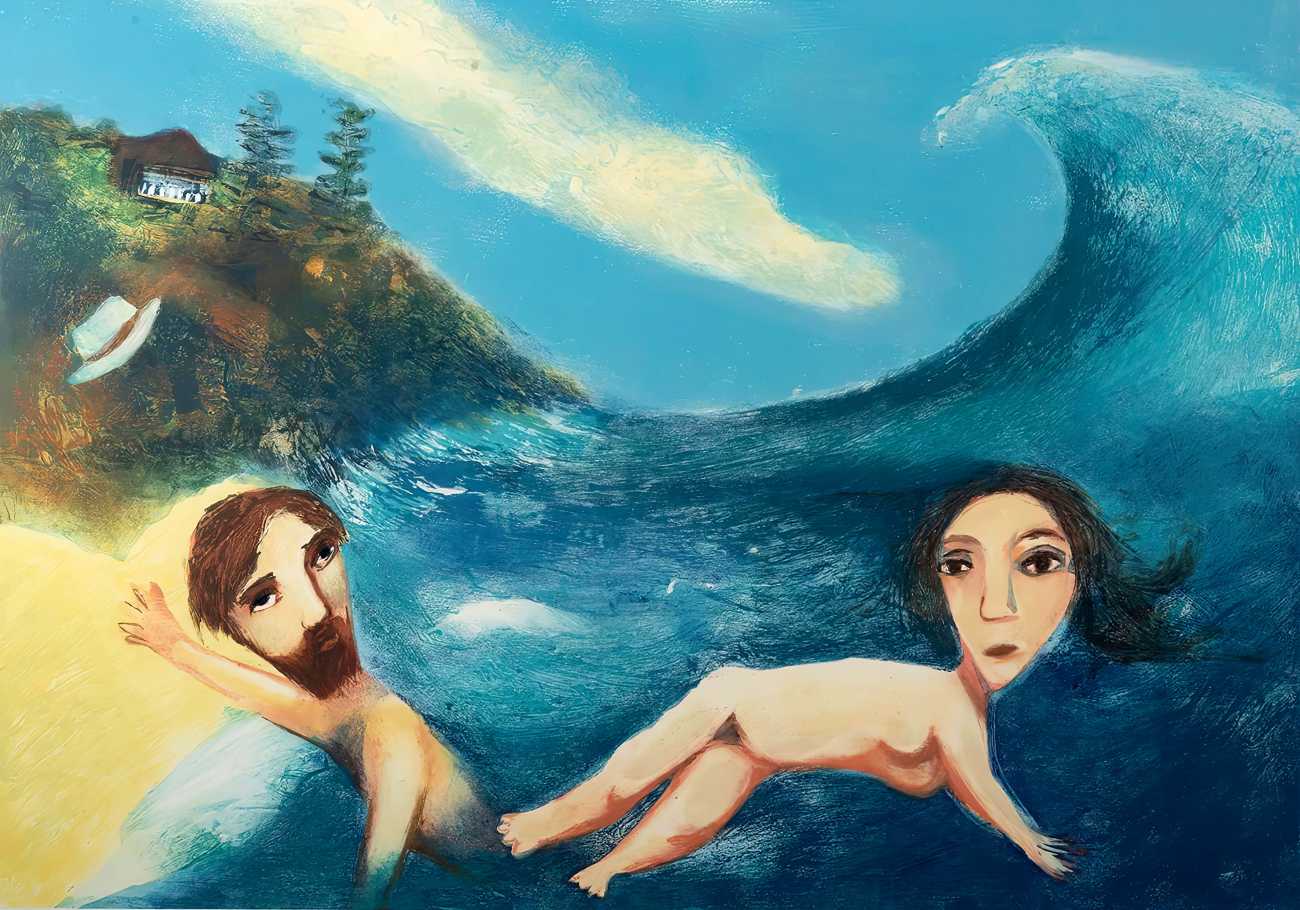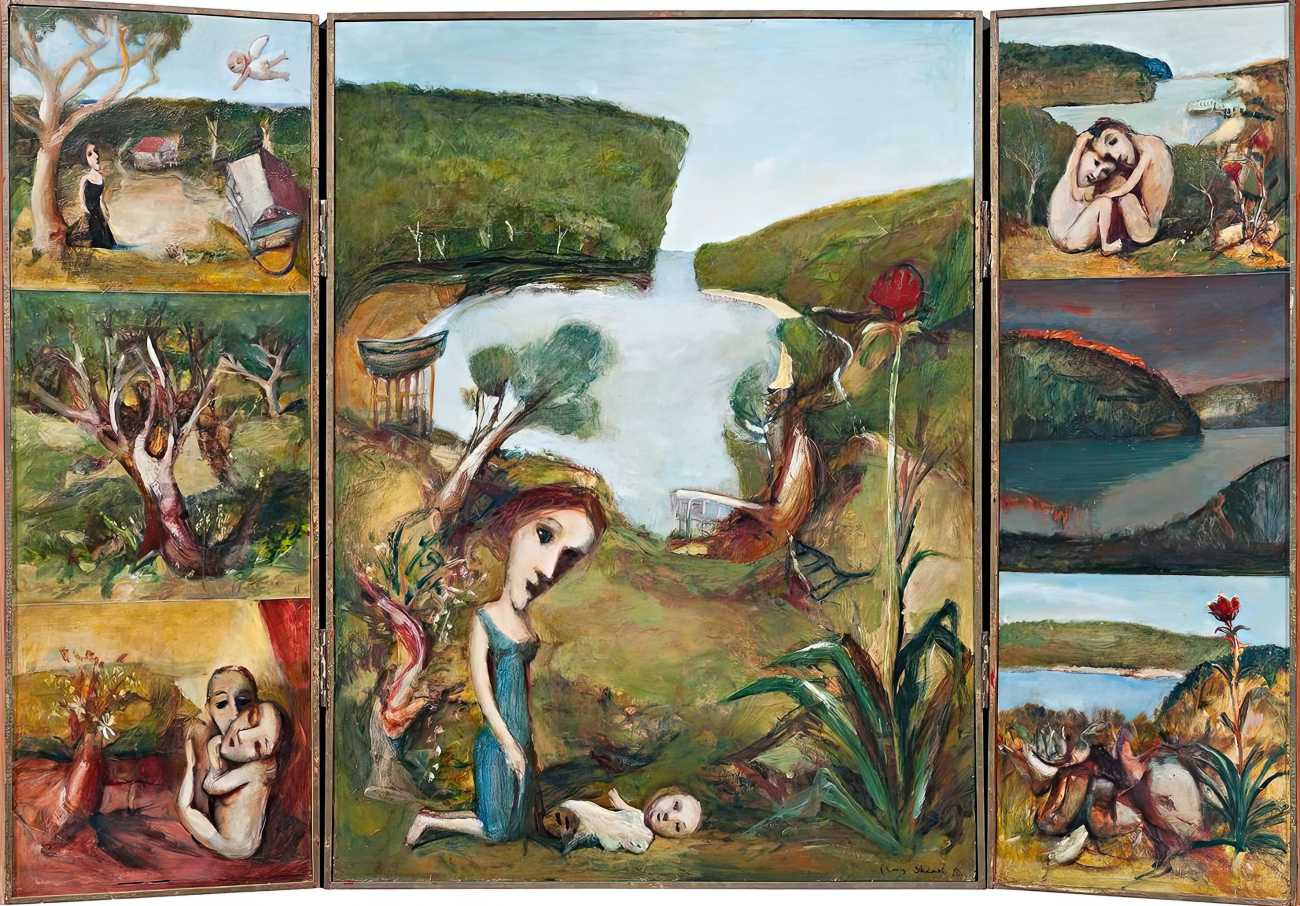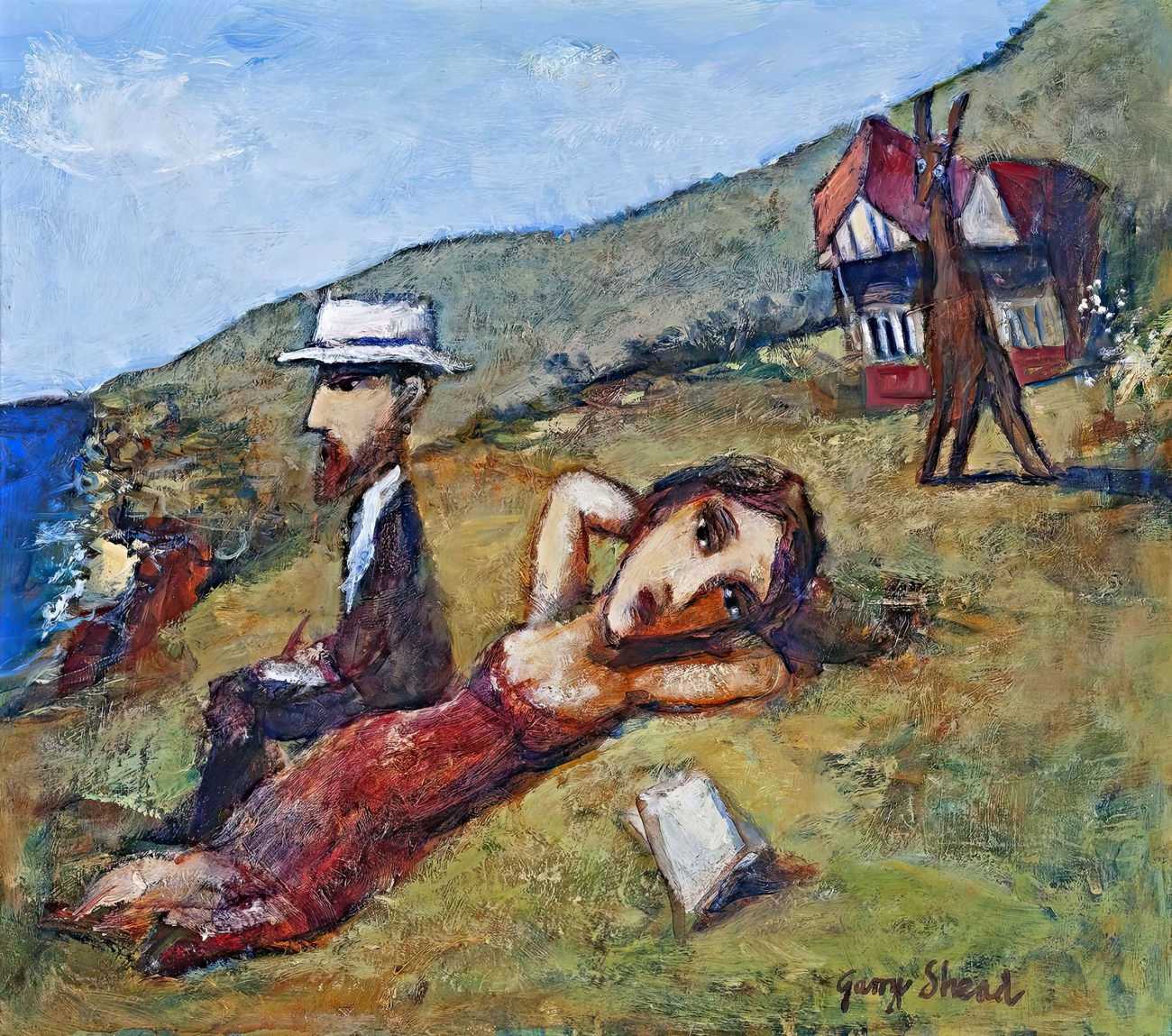
Storytelling runs throughout Garry Shead’s painting. Drawing on literature, mythology, religion, history and his experience of Australia, he creates scenes in which recognisable narratives mingle with personal imagery and erotic encounters. His subjects range from biblical episodes and classical gods to Shakespeare, D.H. Lawrence and the fictional poet Ern Malley. Rather than simply illustrate their sources, Shead uses them as starting points for paintings that are often enigmatic, humorous or unsettling.
Literature has been an important source of inspiration. Shead’s sustained engagement with D.H. Lawrence produced a series of paintings based on the writer’s life and work in Australia, particularly the period associated with Kangaroo. Lawrence’s relationships, ideas about sexuality, and responses to the Australian landscape offered material for exploring the tensions between desire, social convention and the natural world. Shead’s later Ern Malley paintings take a very different literary subject as their starting point, drawing on the celebrated Australian literary hoax in which the invented poet’s work became a vehicle for questions about art, authorship and cultural authority.
Religious and mythological subjects provide another strand. The Annunciation, the Garden of Gethsemane and the Tribute Money sit alongside Bacchus, Dionysus, and other figures associated with classical tradition. Shead approaches these familiar subjects without confining himself to conventional religious or historical imagery. Human forms, animals, landscapes and everyday objects appear in combinations that may seem incongruous, leaving the viewer to interpret how the original story has been transformed.
Australia itself supplies both setting and subject. Coastal scenes, rural buildings and the landscapes around Bundeena recur throughout Shead’s work, but the country is rarely just a backdrop. References to Australian cultural history sit alongside European literary and artistic traditions, bringing distant histories and cultural references into recognisable local settings. Works such as Spain Weeps in the Gutters of Footscray suggest how unexpected these encounters can be. Shead’s imagined Australia is neither an idealised landscape nor a straightforward portrait of national character; it’s a place where desire, cultural inheritance and competing ideas of identity meet.