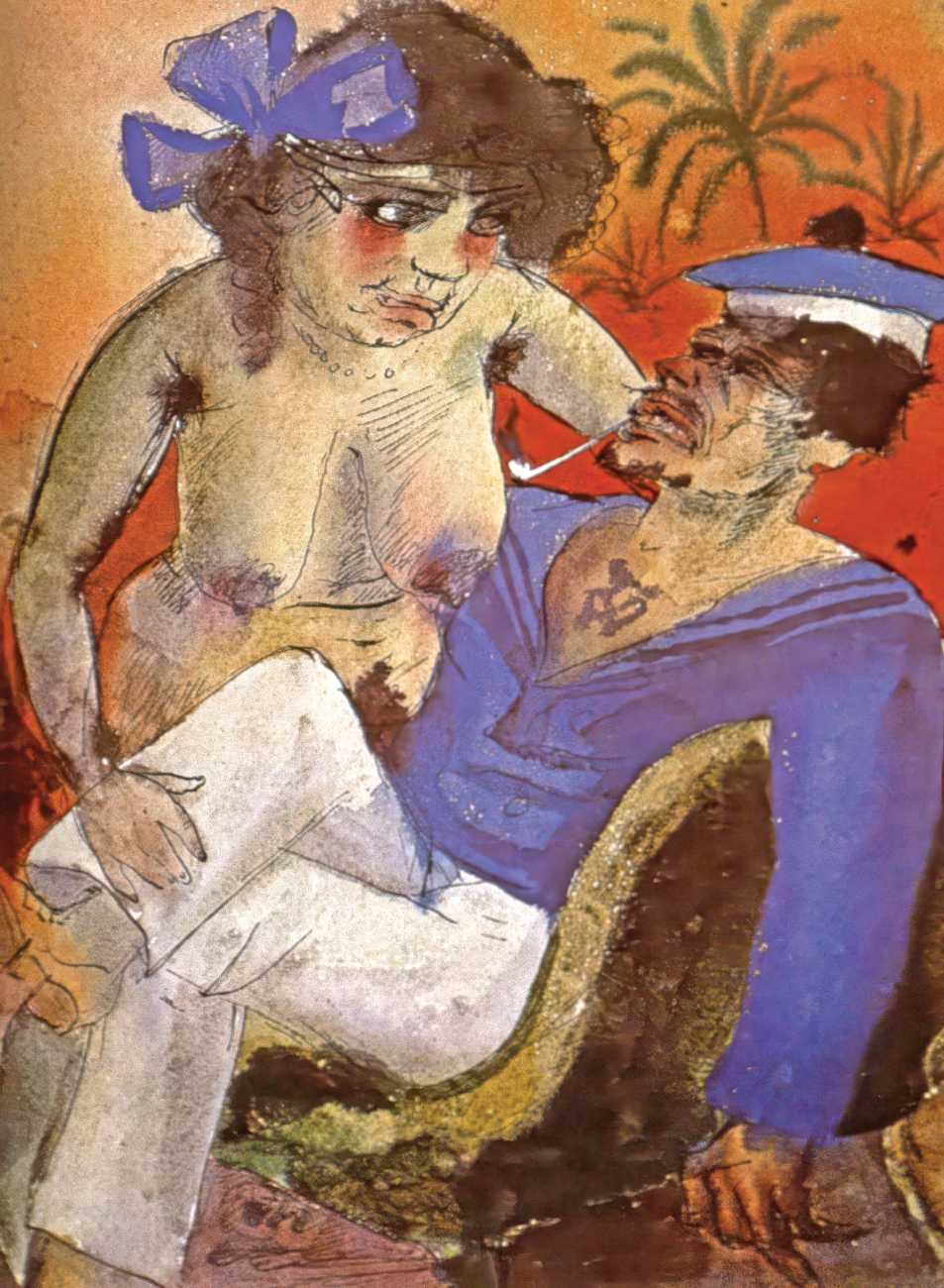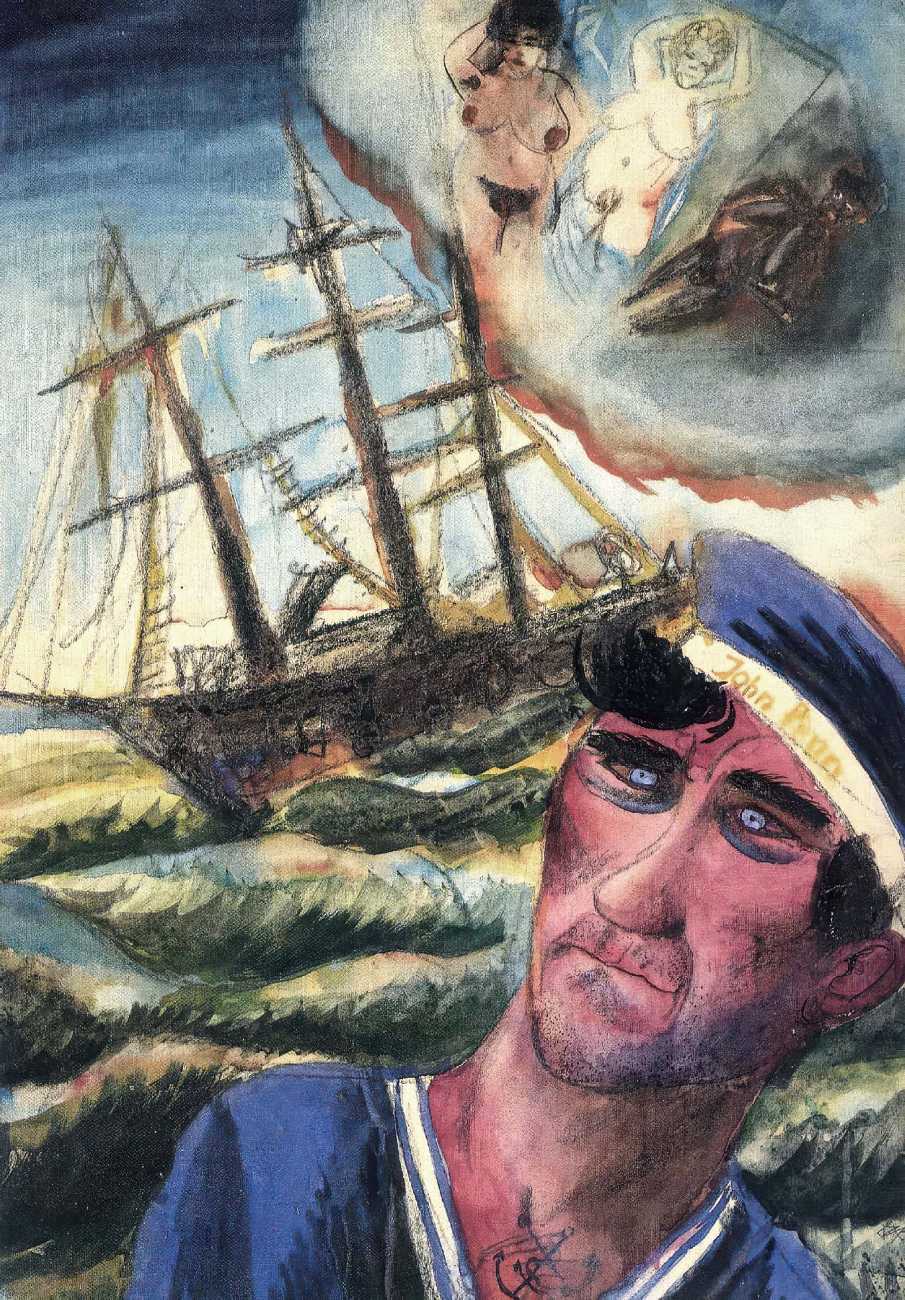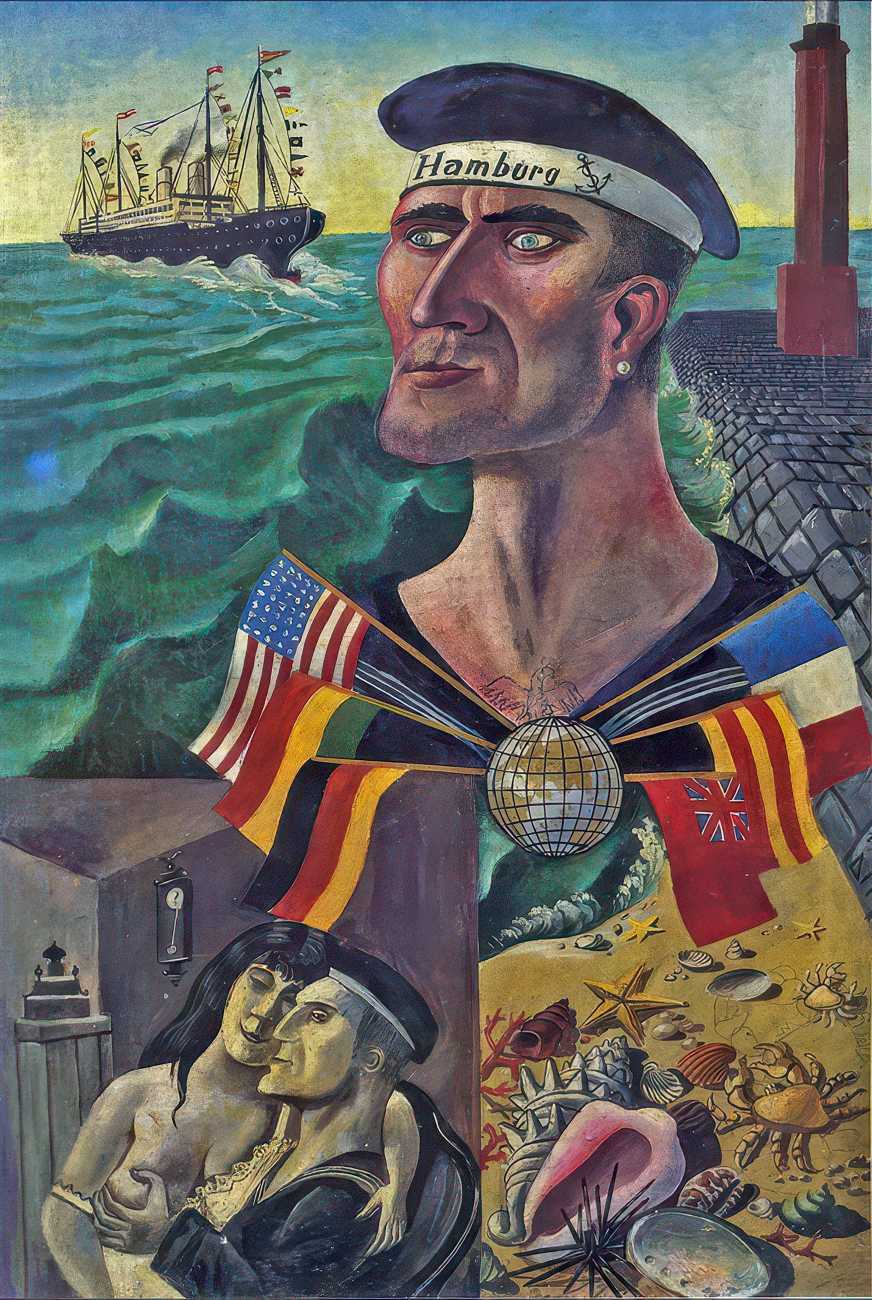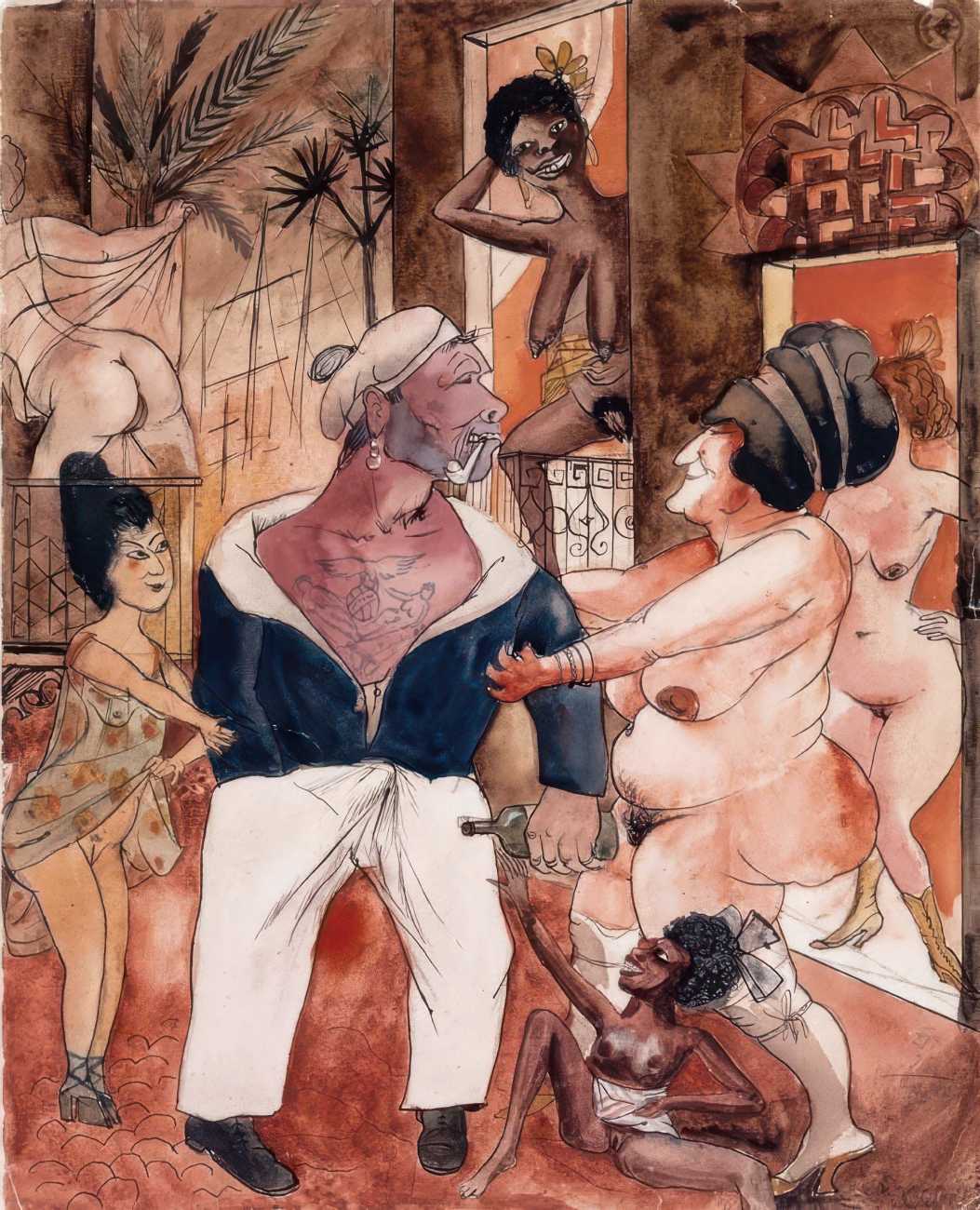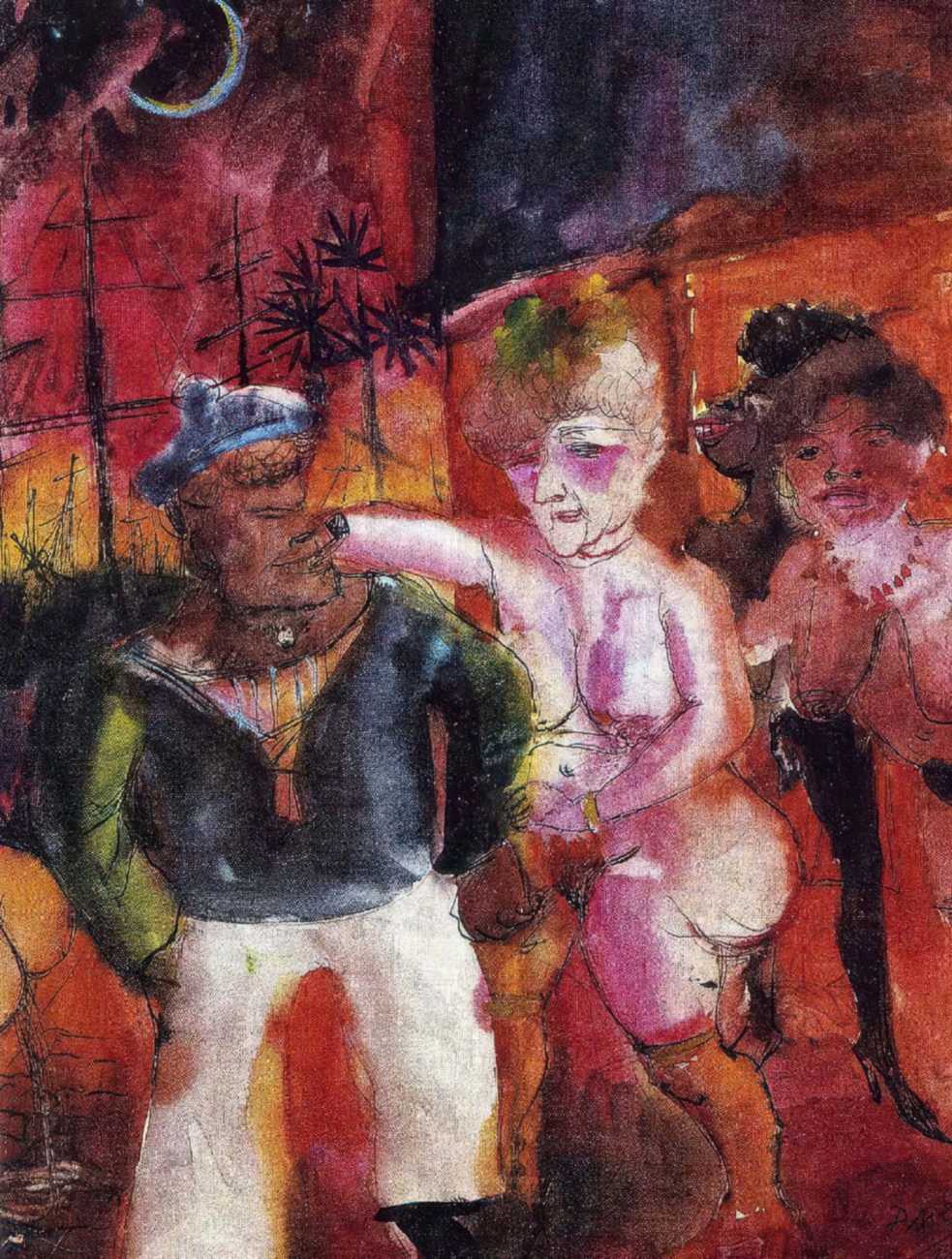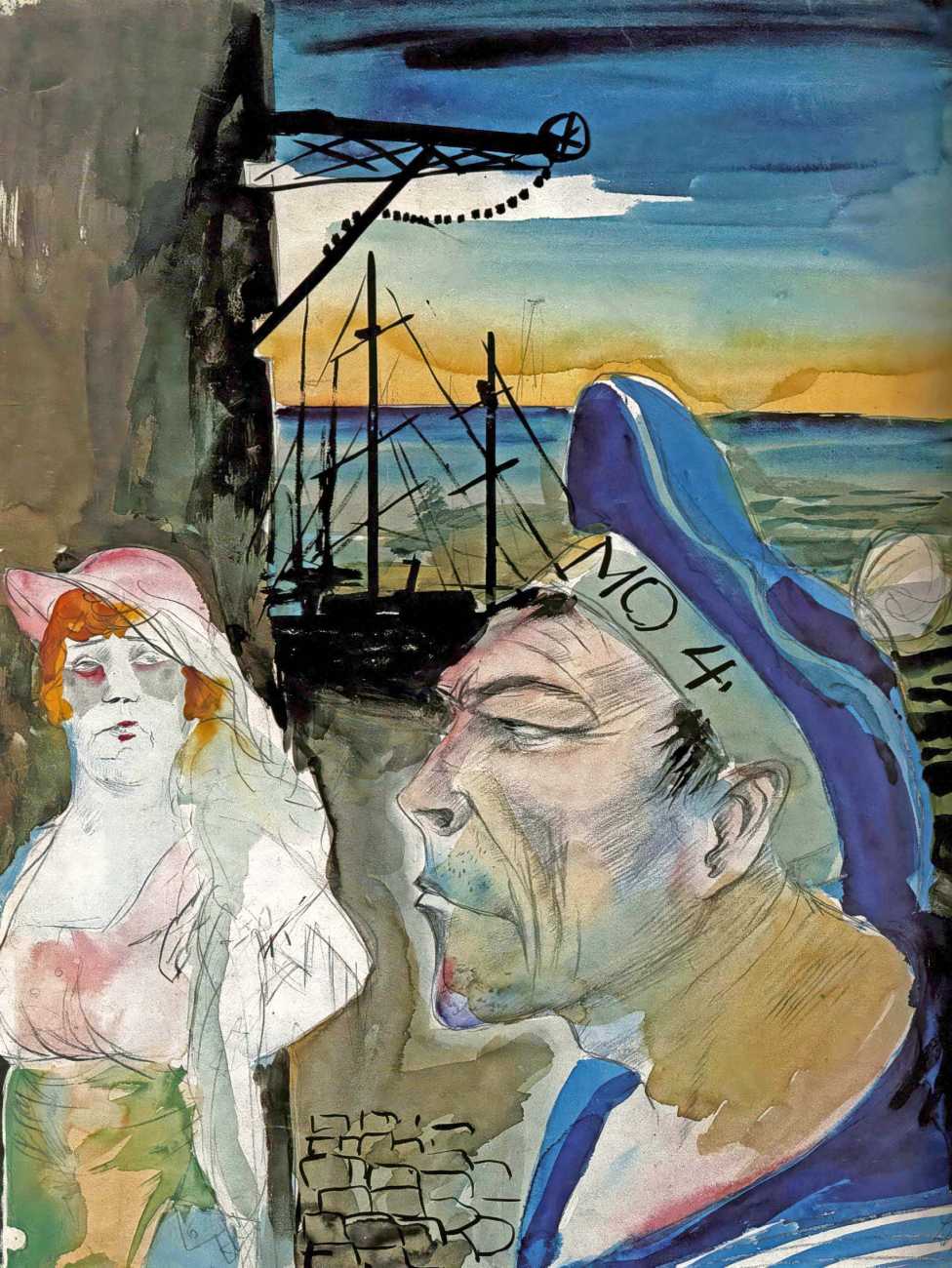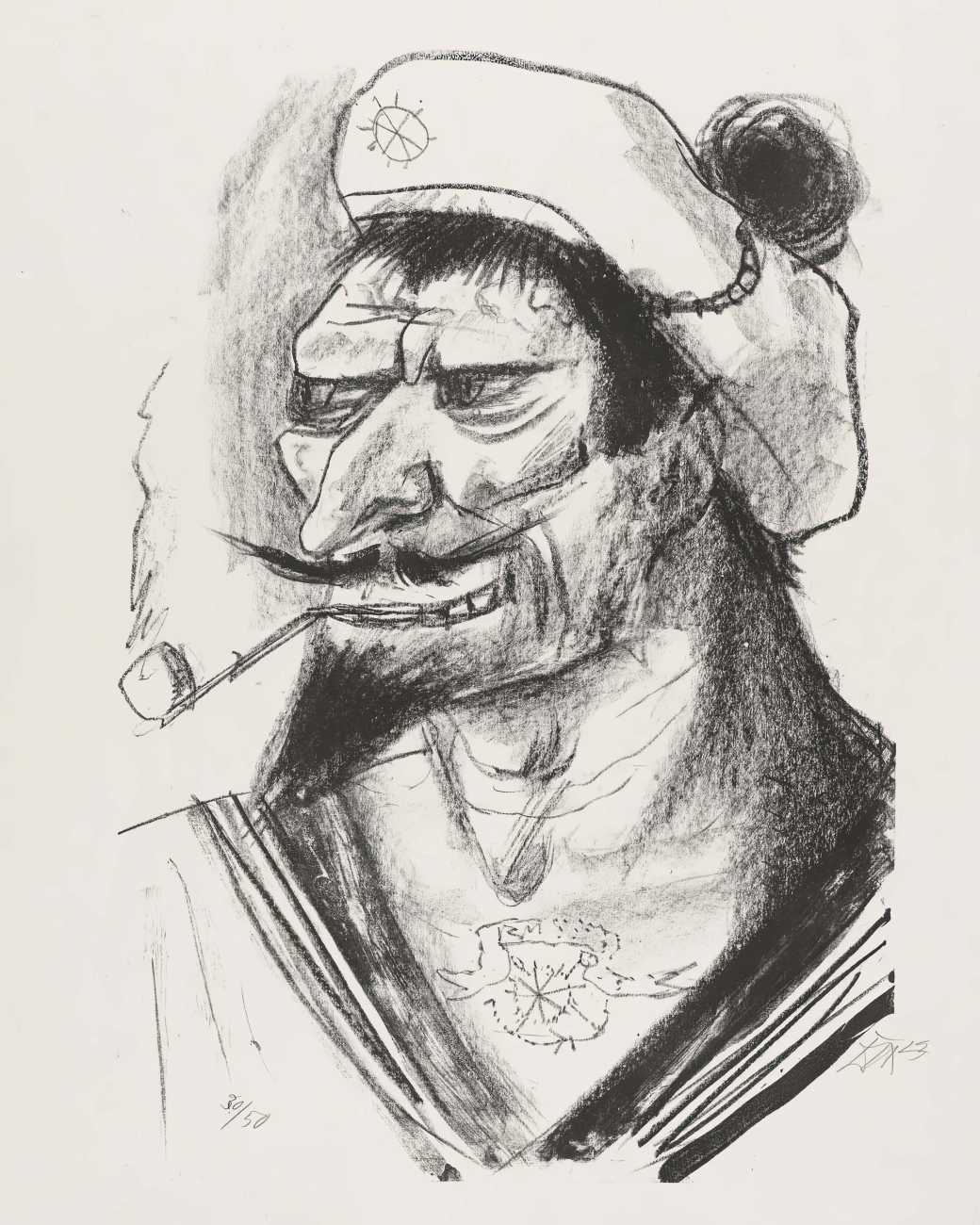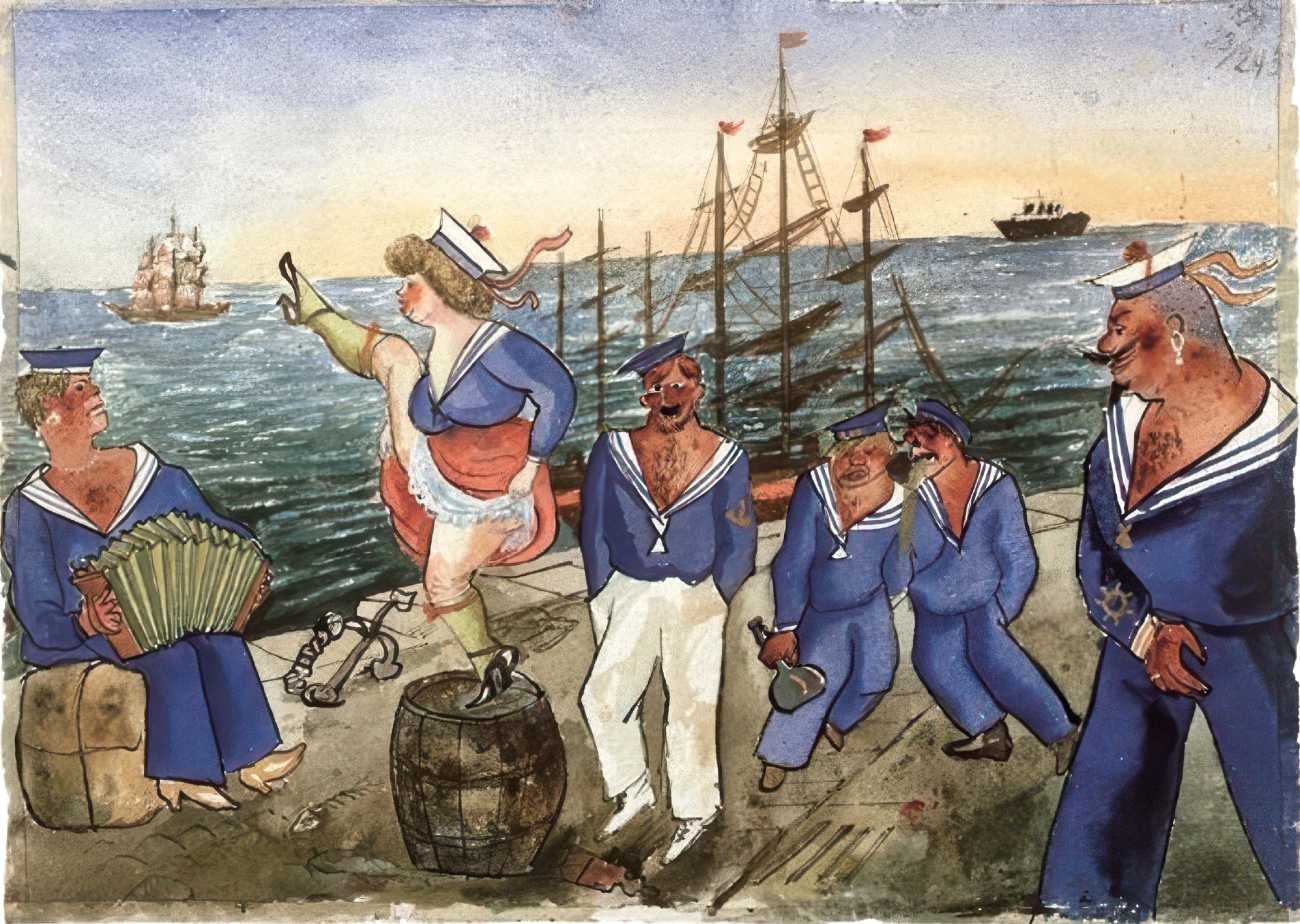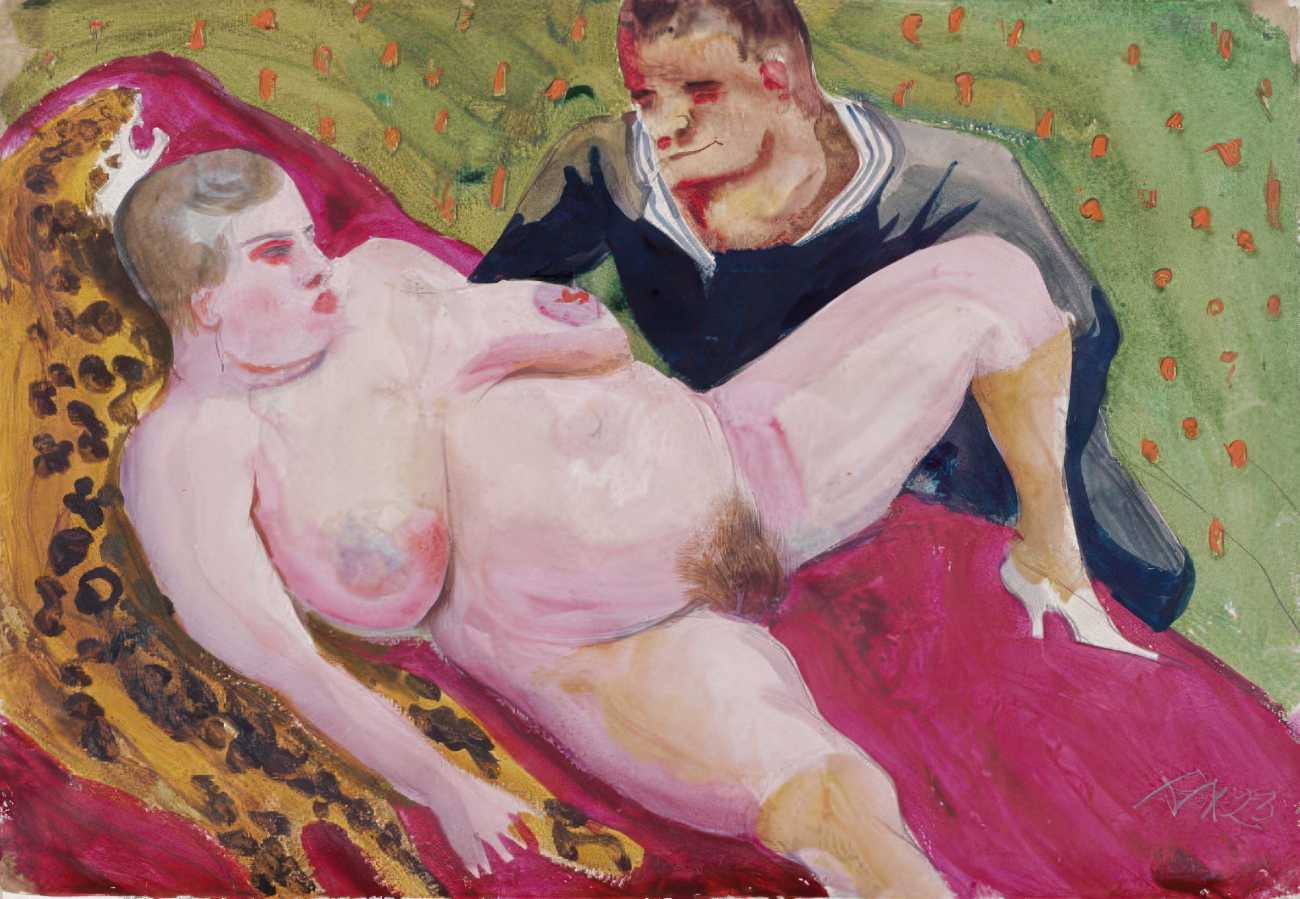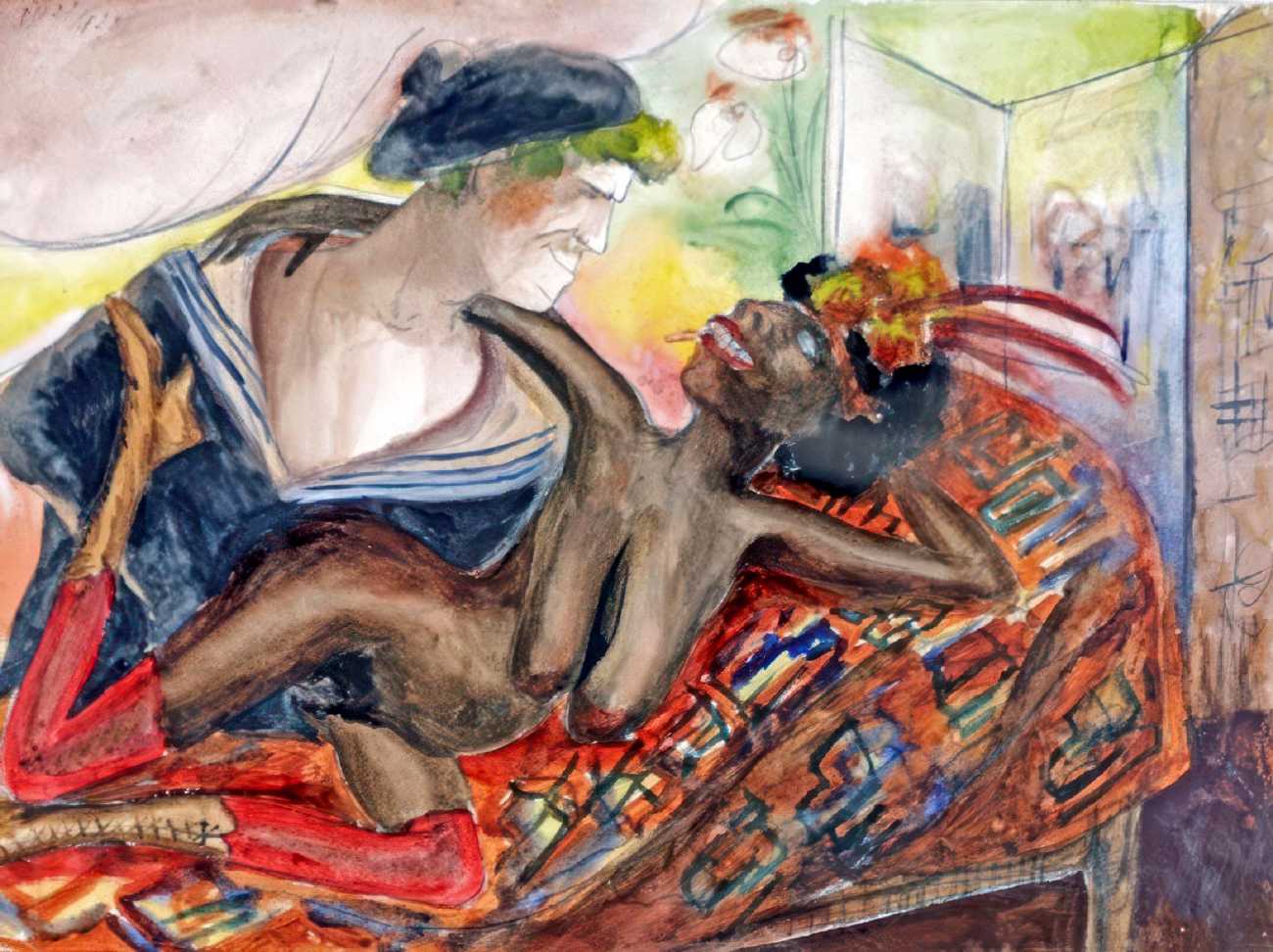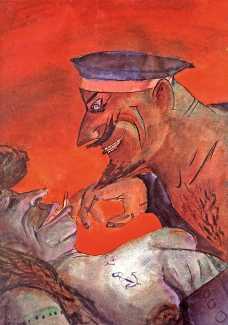
Dix’s sailors are a long way from the romantic figures of traditional seafaring imagery. For an artist who had spent four years as a front-line machine gunner, the sailor could represent something quite different: a member of the armed forces who had escaped much of the fighting. After the war, sailors on shore leave became a recurring presence in his images of Hamburg and other port cities, often appearing as blunt, heavily built and tattooed figures, their physicality suggesting the violence of military life carried over into civilian society.
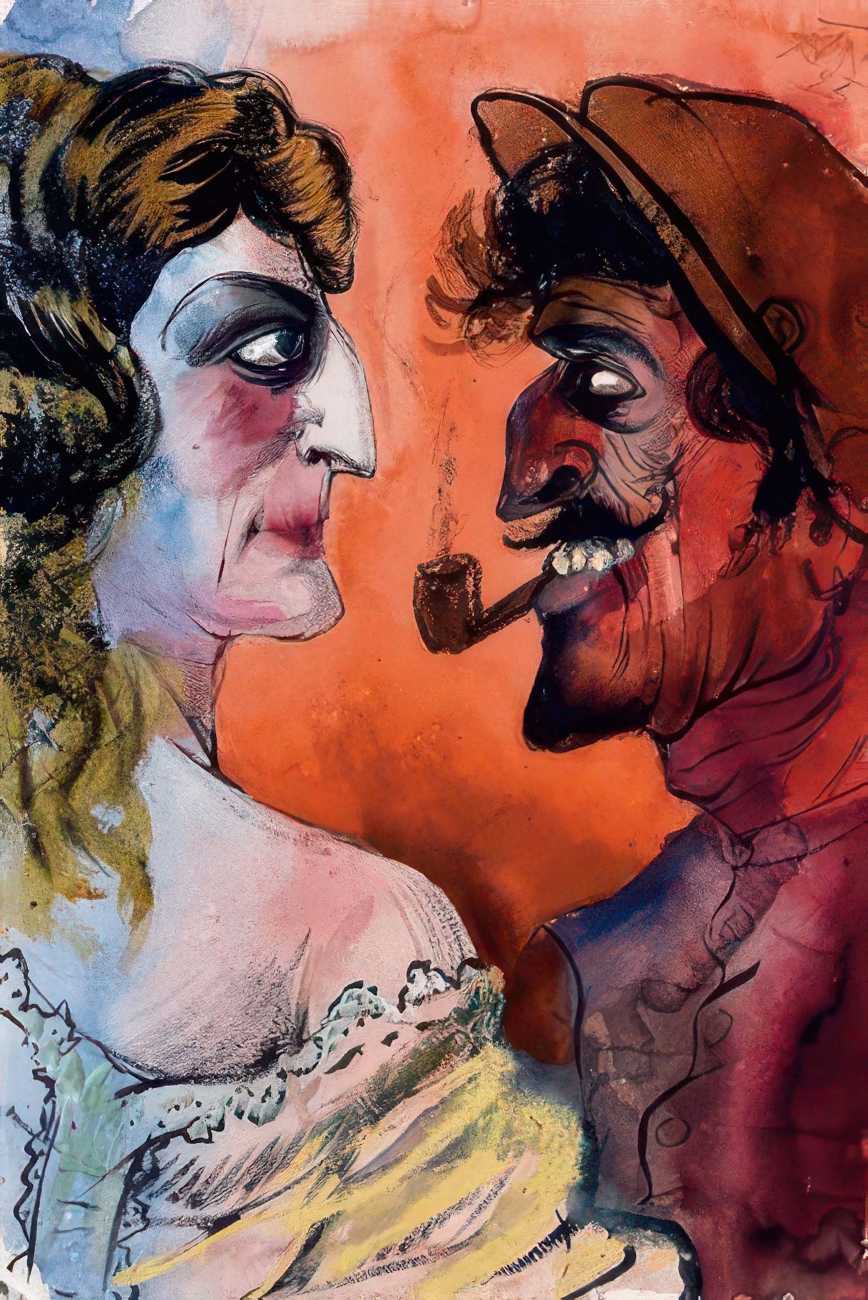
Dix was determined to confront the world around him rather than retreat into artistic convention. Writing in 1919, he said ‘I desire to get very close to our present, to be overwhelmingly contemporary, without submitting myself to any artistic dogma.’ His sailors and the women they encounter belong unmistakably to that present – the bars, brothels and streets of postwar Germany.
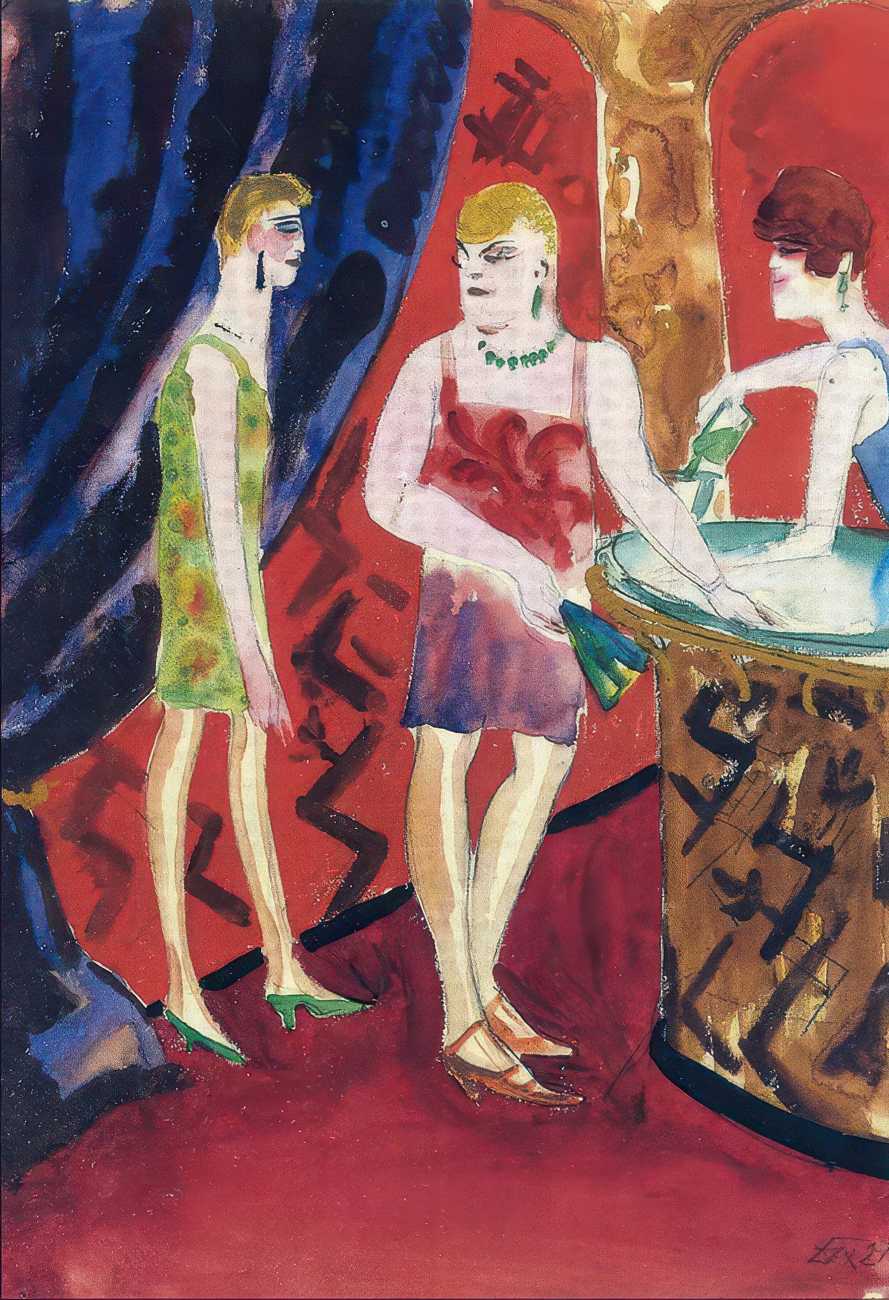
Dix frequently places sailors alongside prostitutes, creating encounters that are anything but romantic. The brothel becomes a setting in which military masculinity, sexual appetite and economic desperation meet. The sailor spends money; the woman sells access to her body. Their relationship is transactional, and Dix makes little attempt to disguise its brutality.
This was a society in which prostitution had become widespread, while poverty, inflation and the enormous social consequences of the war left many women economically vulnerable. Dix’s prostitutes are therefore not simply decorative figures in scenes of nightlife. They belong to an economy in which sex, money and survival are closely connected.
The effect is deliberately anti-erotic. Sailors and prostitutes are often given exaggerated or unsettling physical characteristics, while Dix avoids the idealised bodies and seductive atmosphere associated with conventionally erotic imagery. His position became explicit when Salon II, later destroyed by the Nazis, was the subject of an obscenity trial in 1925. Defending the work, he explained, ‘The idea of the painting is to depict the whole ghastly, dehumanising effect of prostitution. The way the women are portrayed is intended to be revolting, to arouse exactly the opposite feeling to lust.’
Dix repeatedly brought together two consequences of the war, the sailor, whose body belonged to the military, and the woman whose body had become a means of survival in the postwar economy. His sailors and prostitutes are therefore not simply participants in scenes of sexual licence – they belong to the same damaged society, in which bodies have acquired an economic value, and sexual encounters have become transactions between people with very different degrees of power.