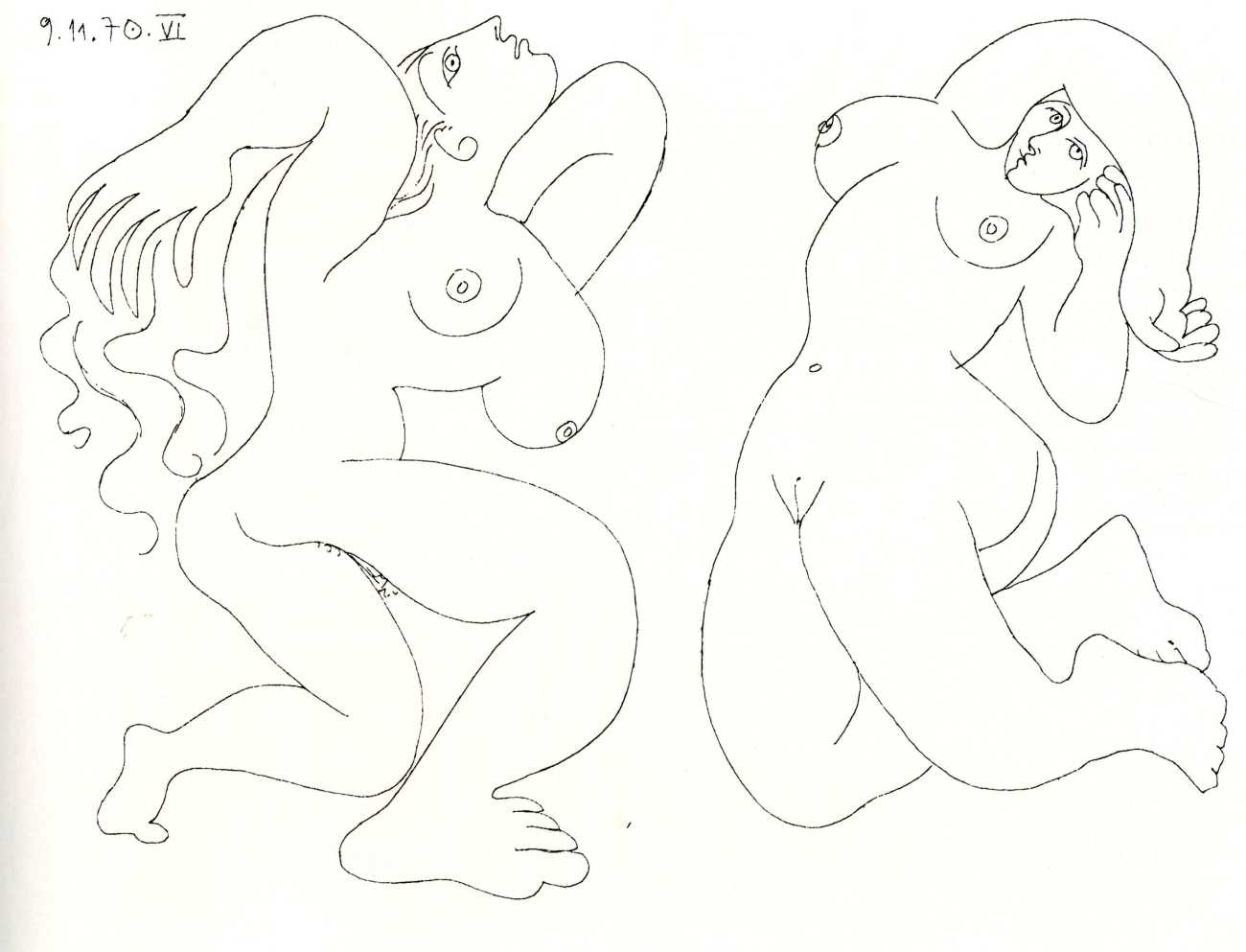
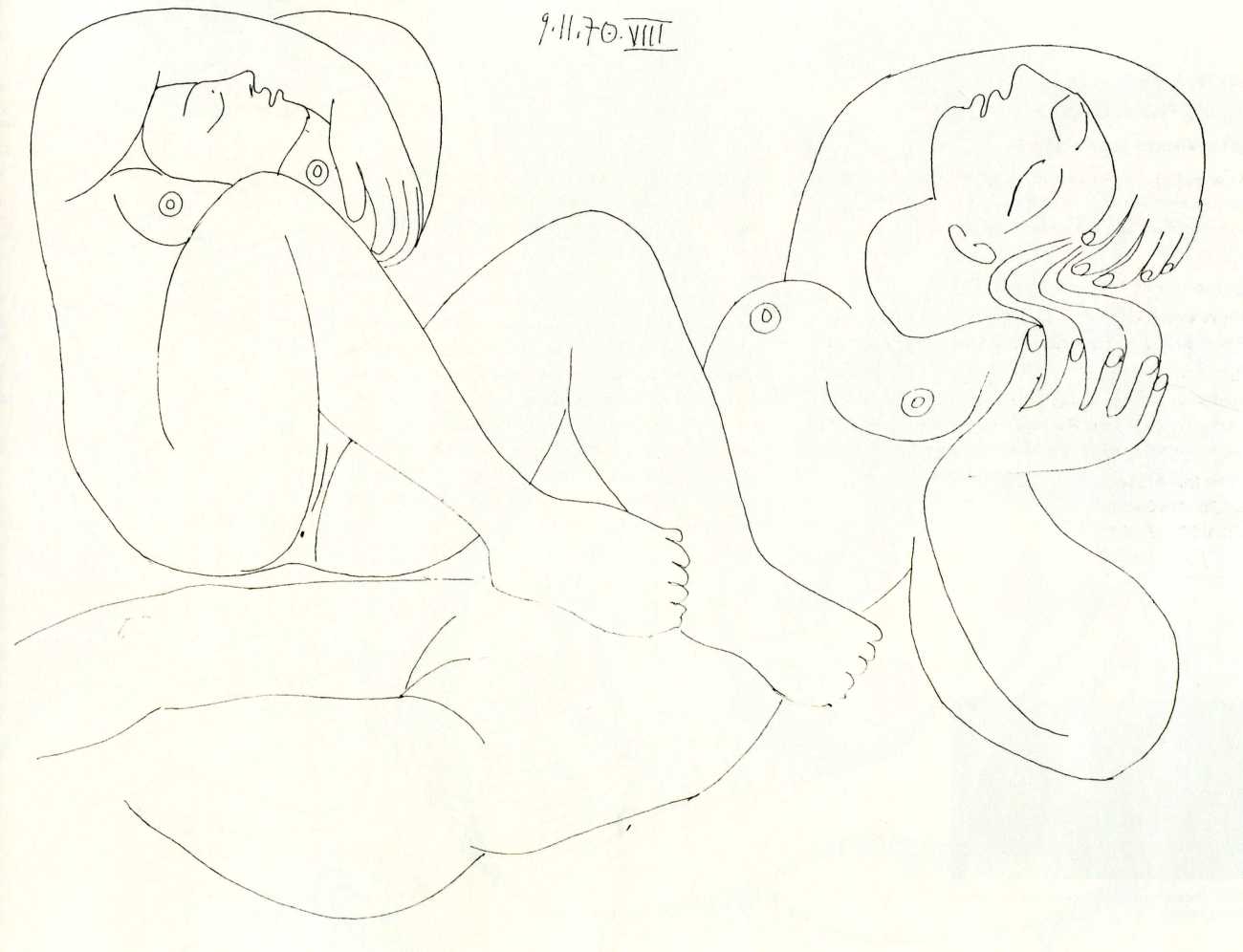
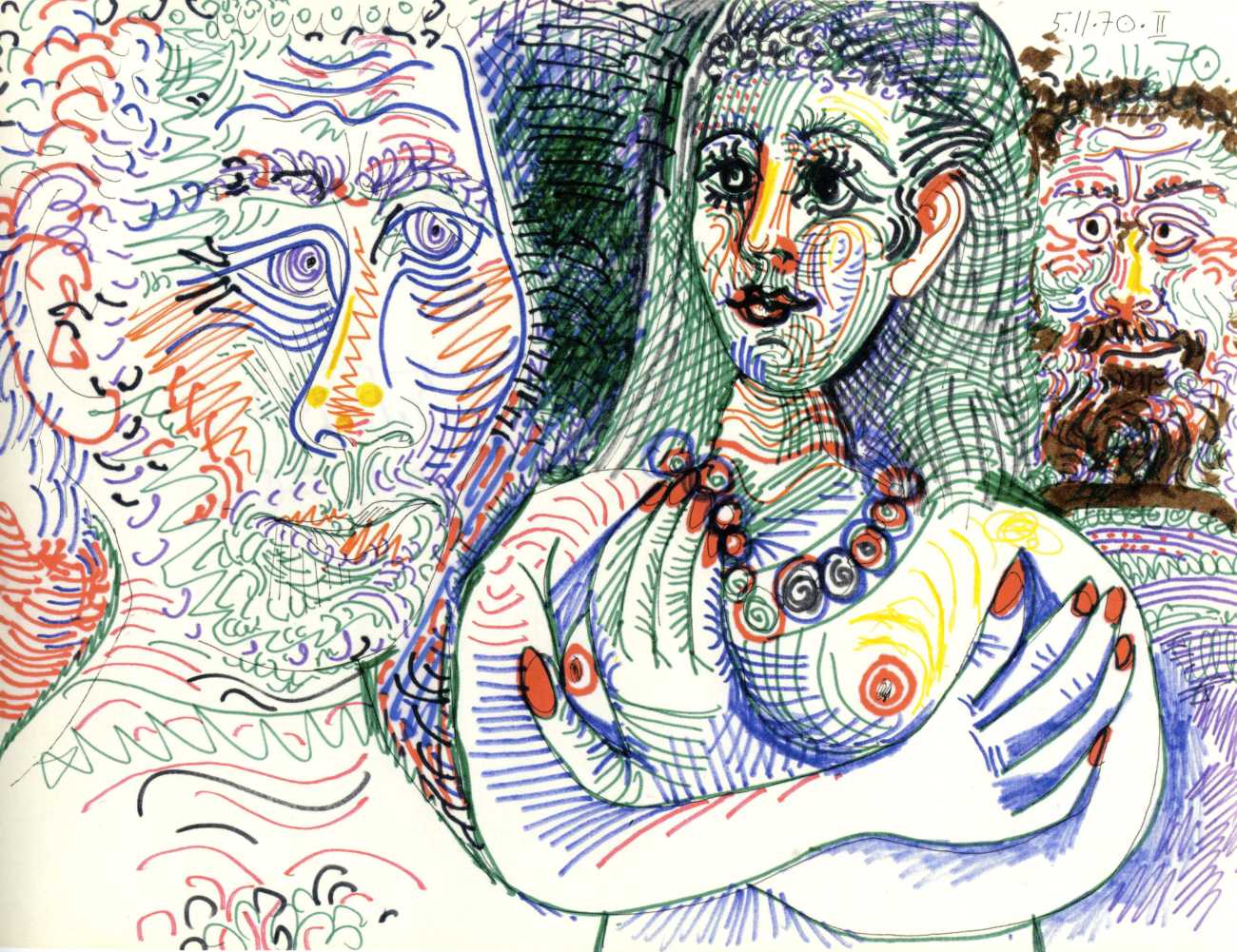
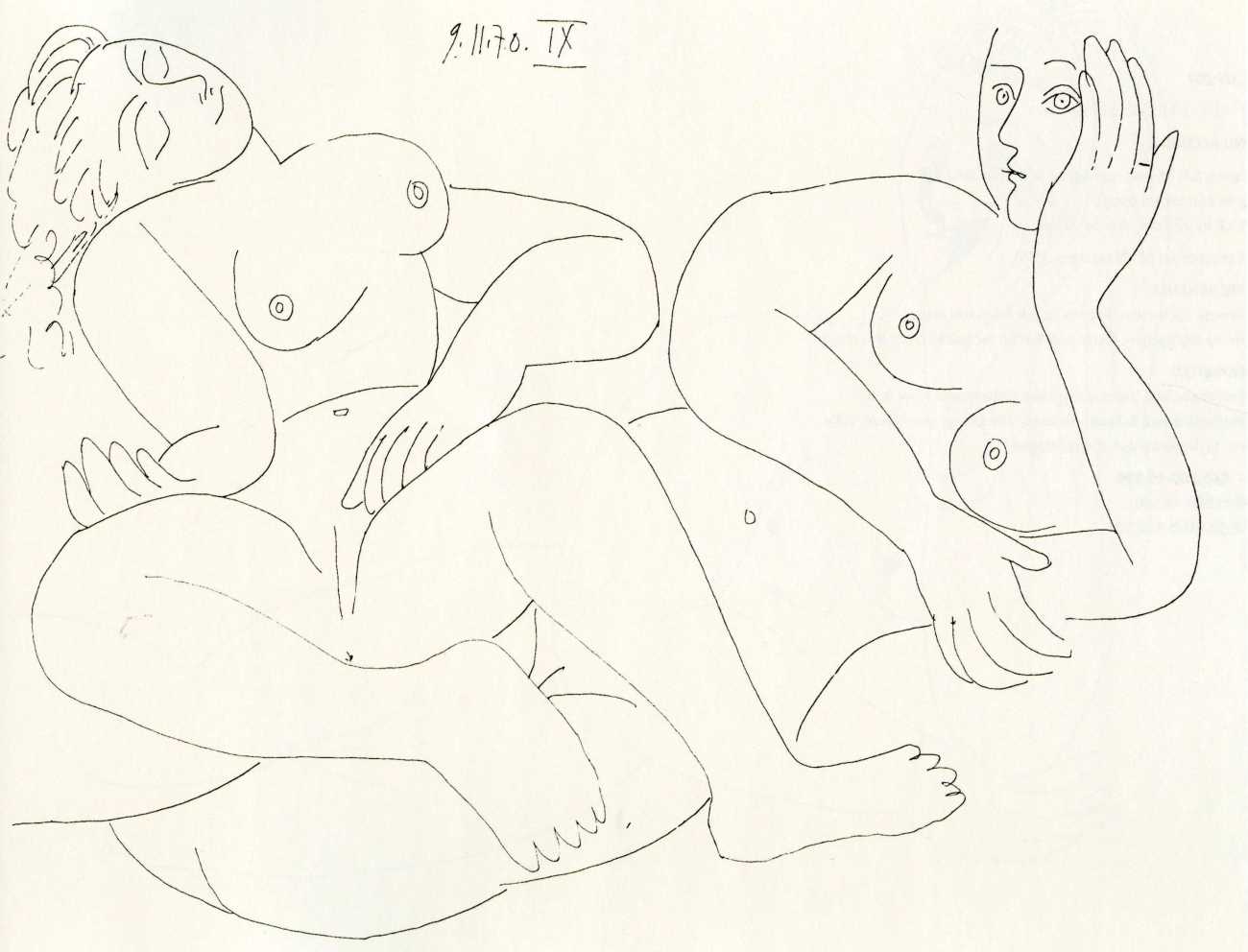
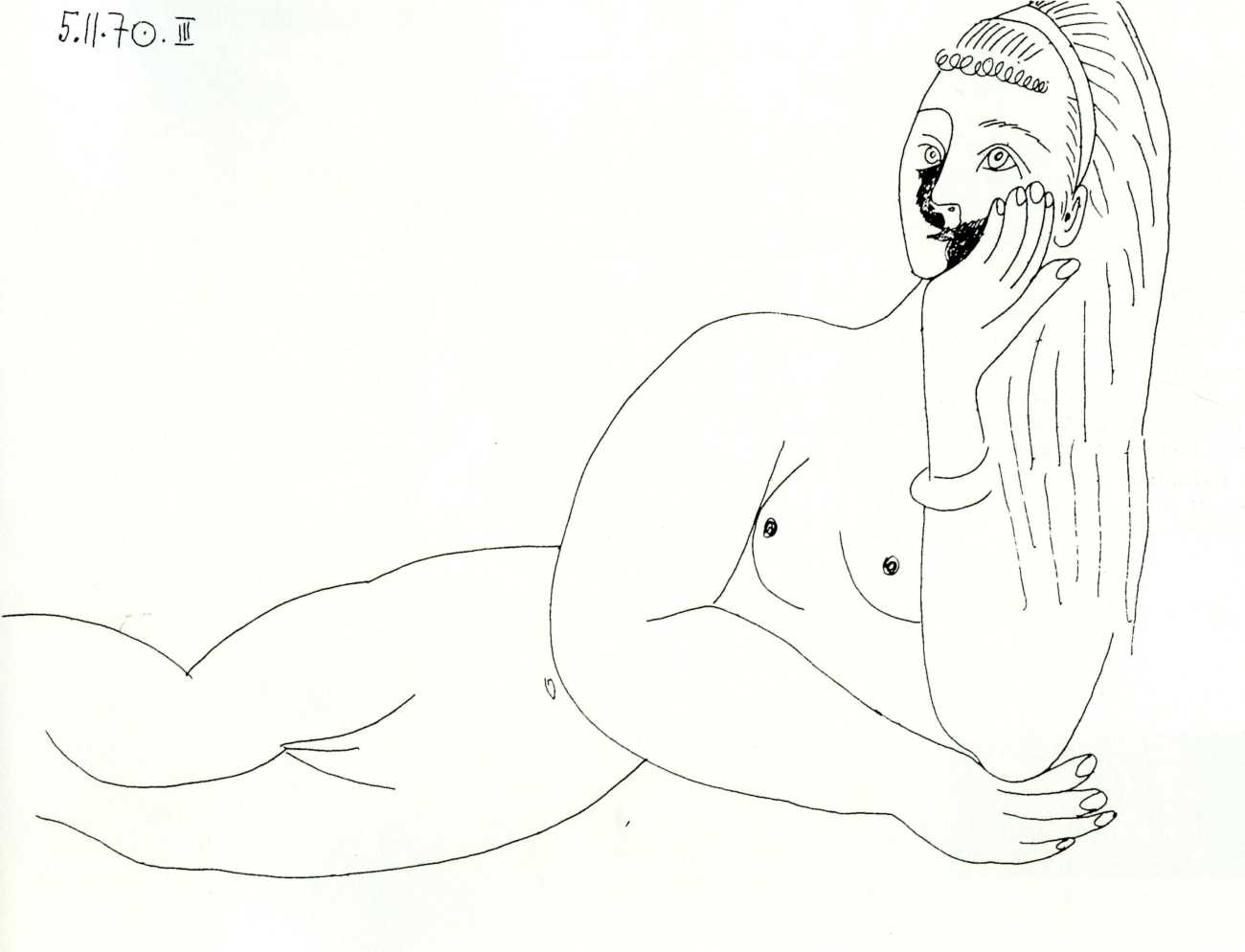
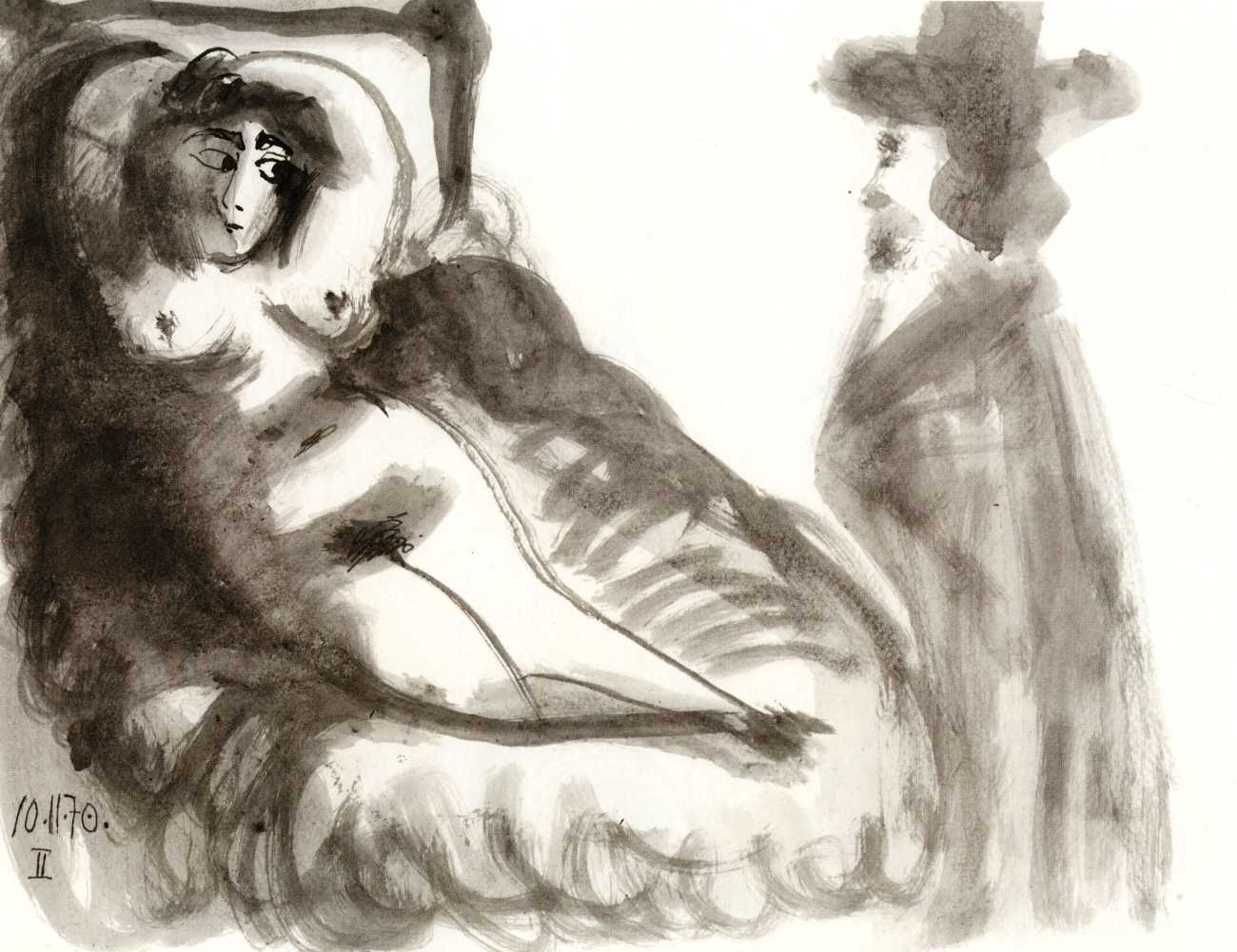
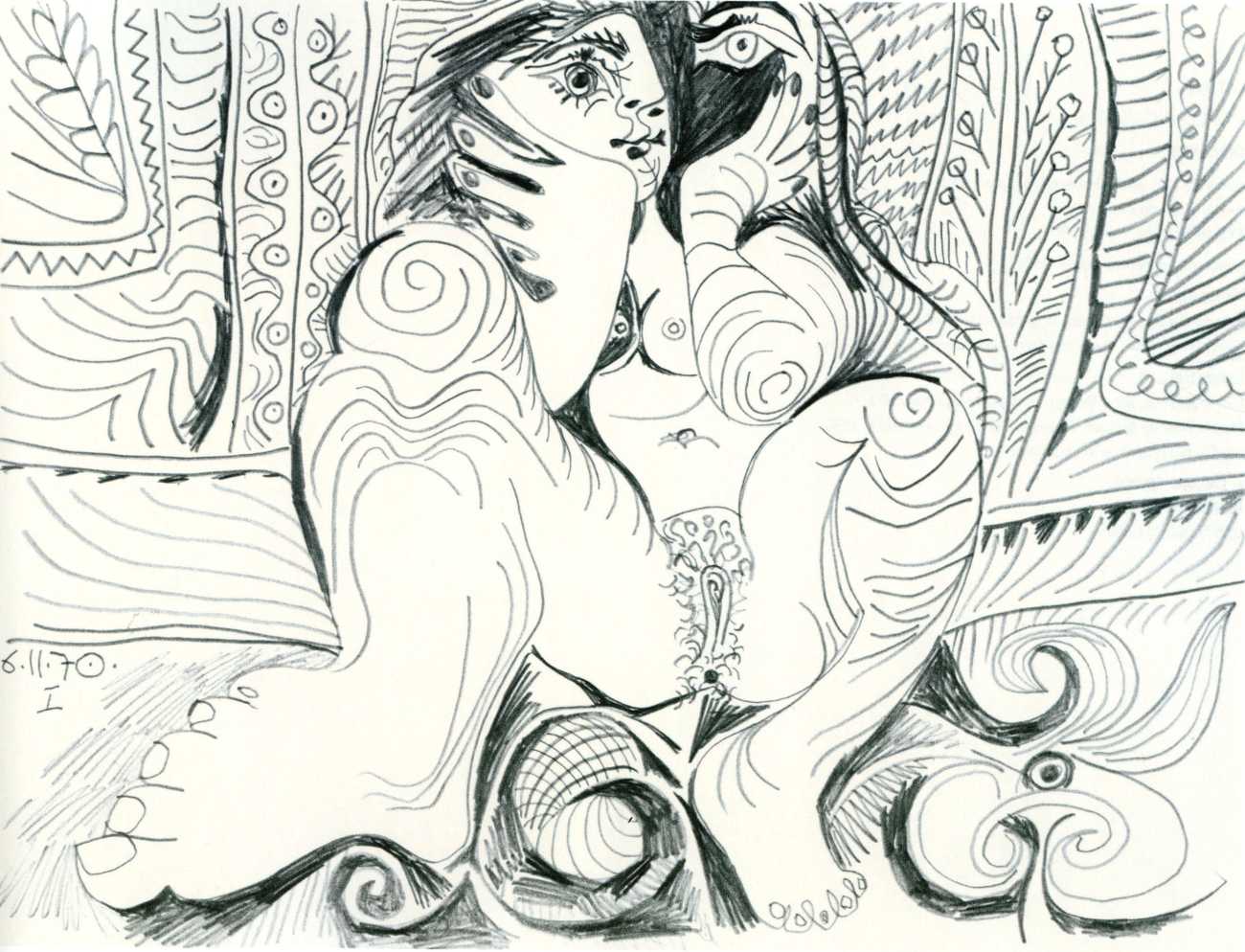
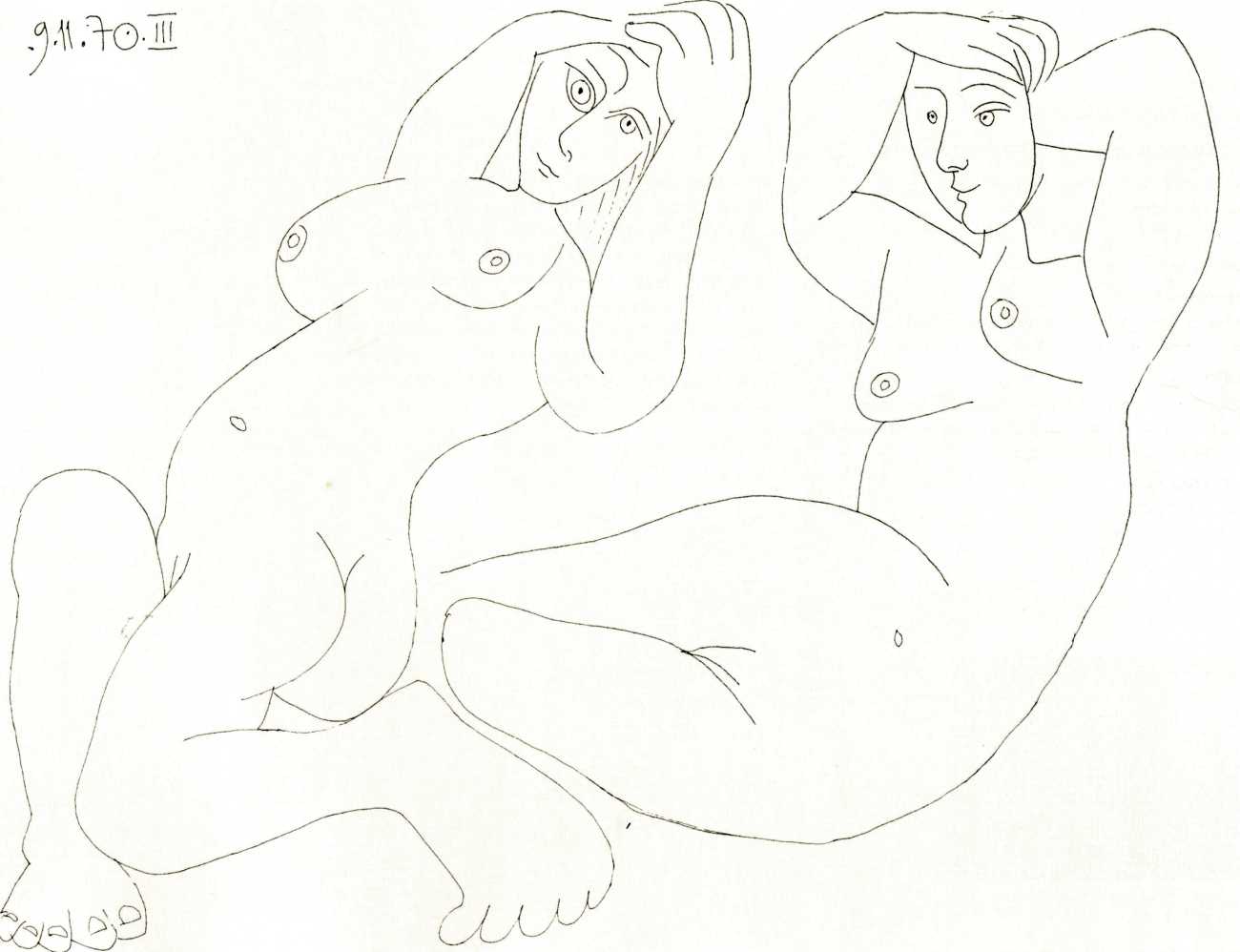
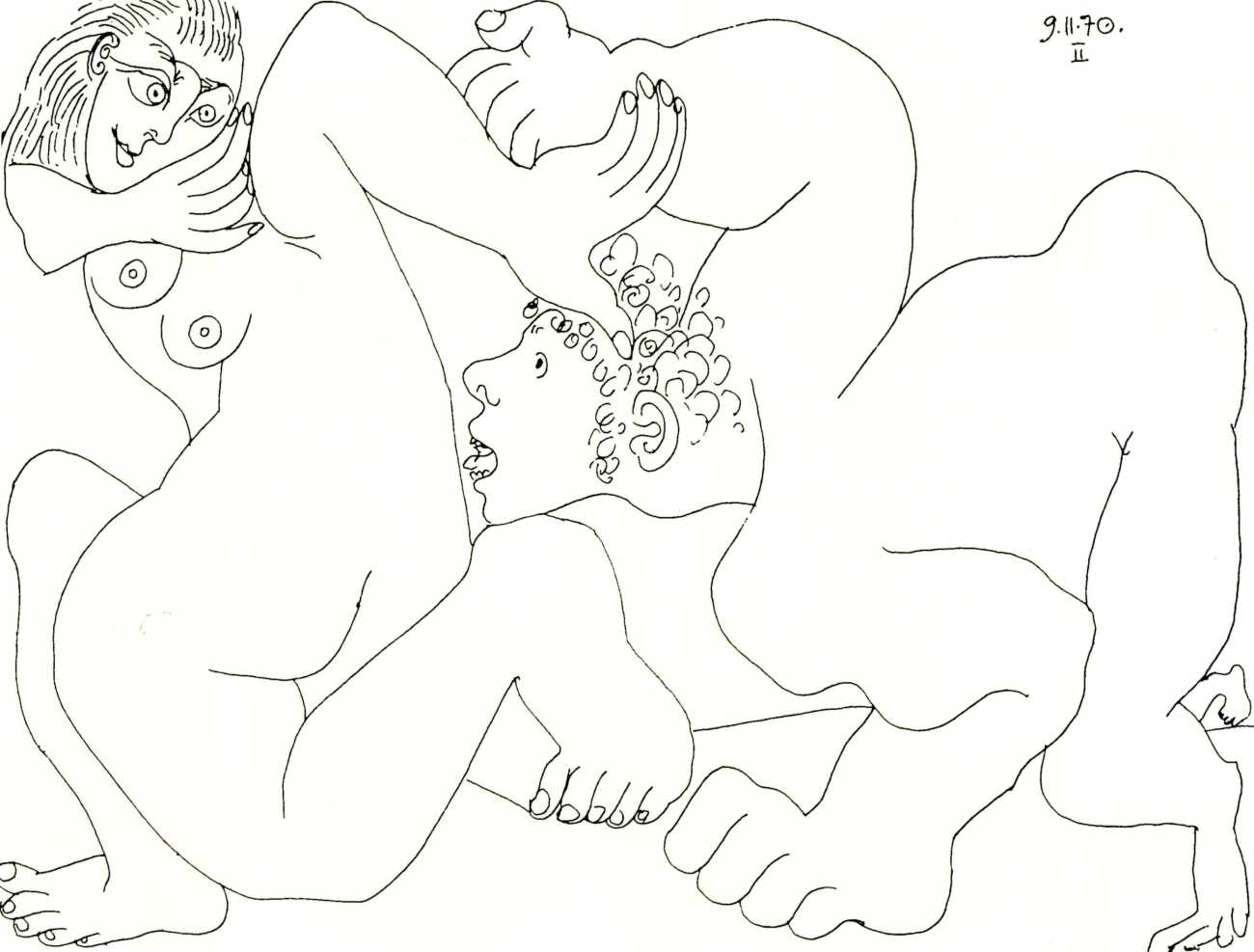
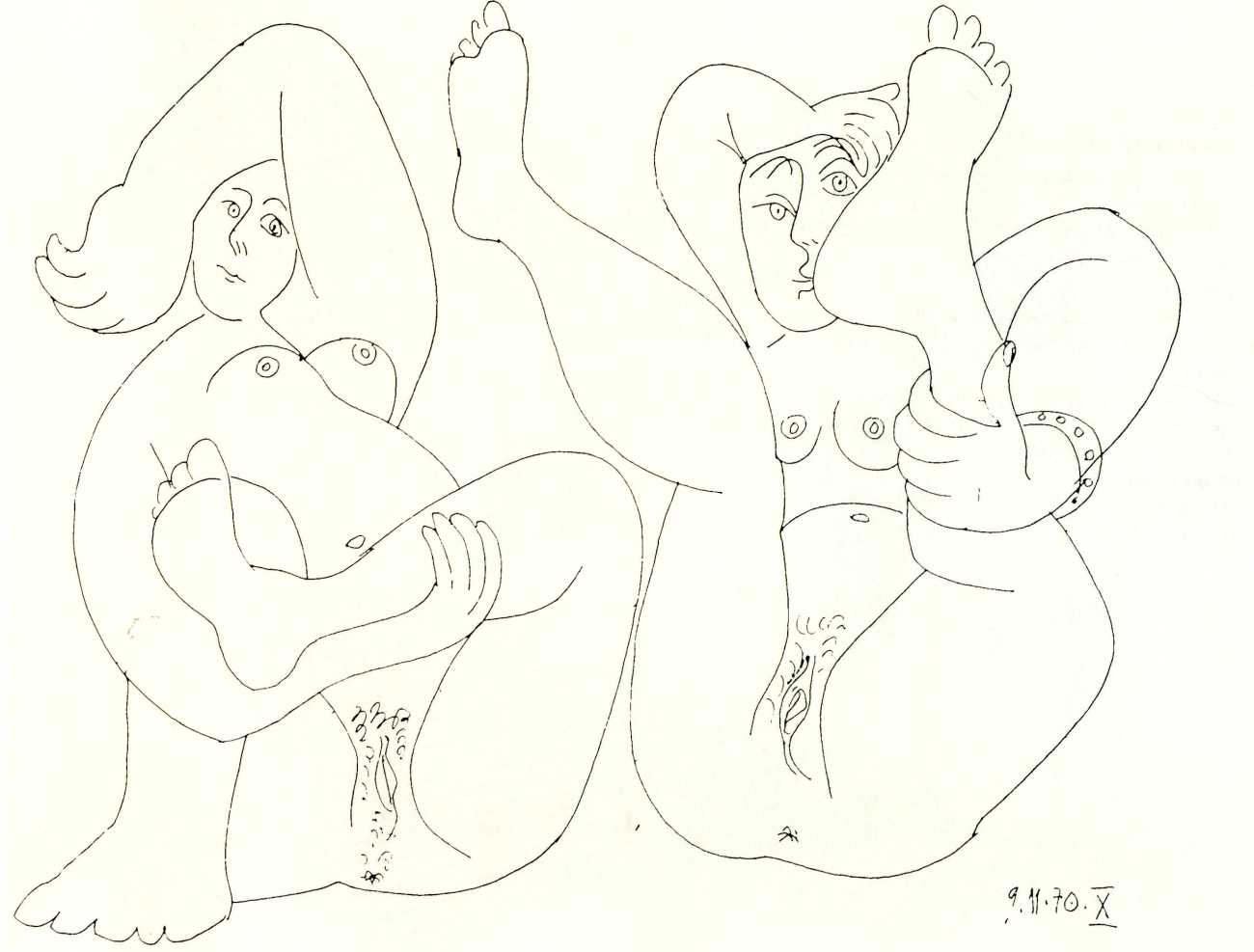
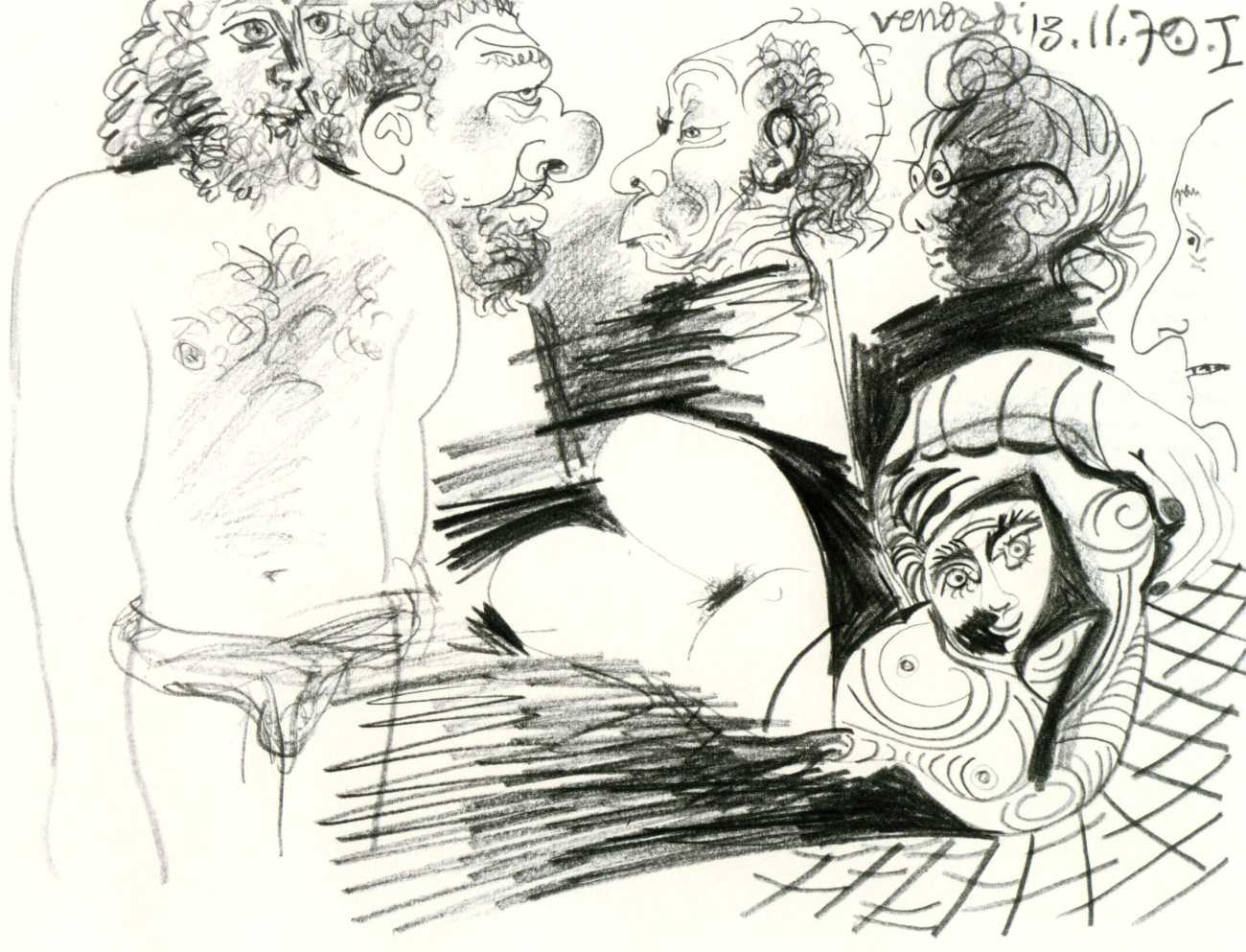
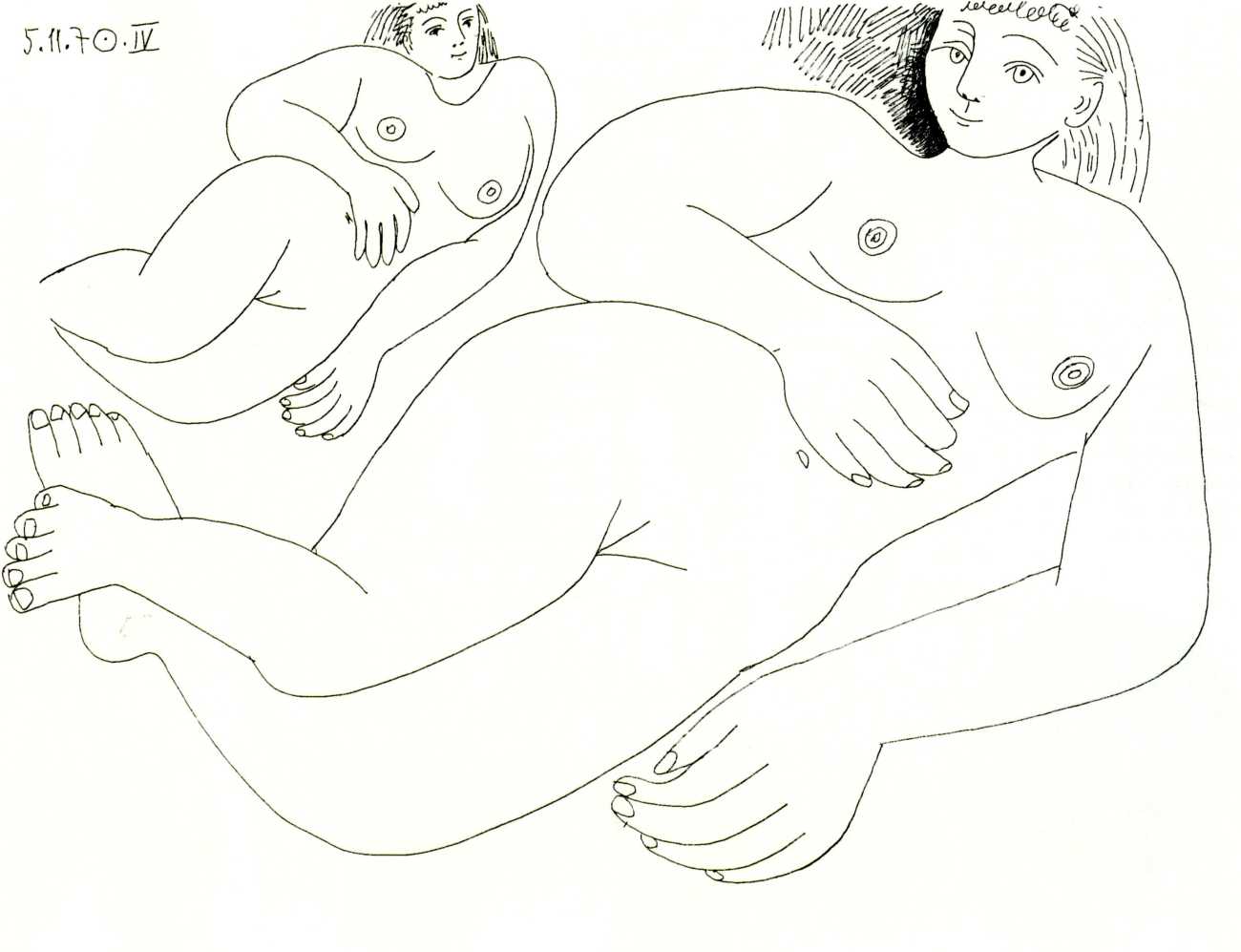
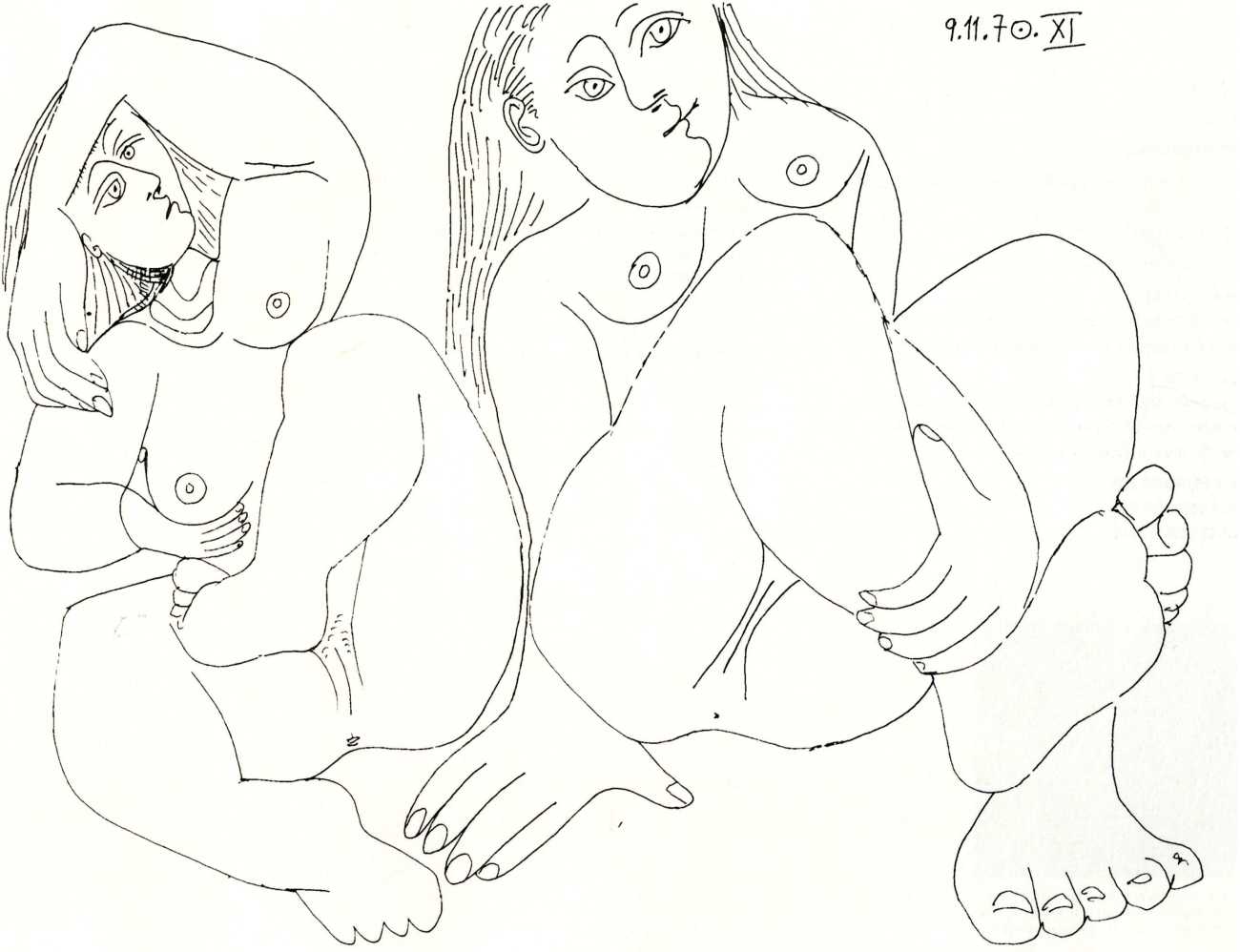
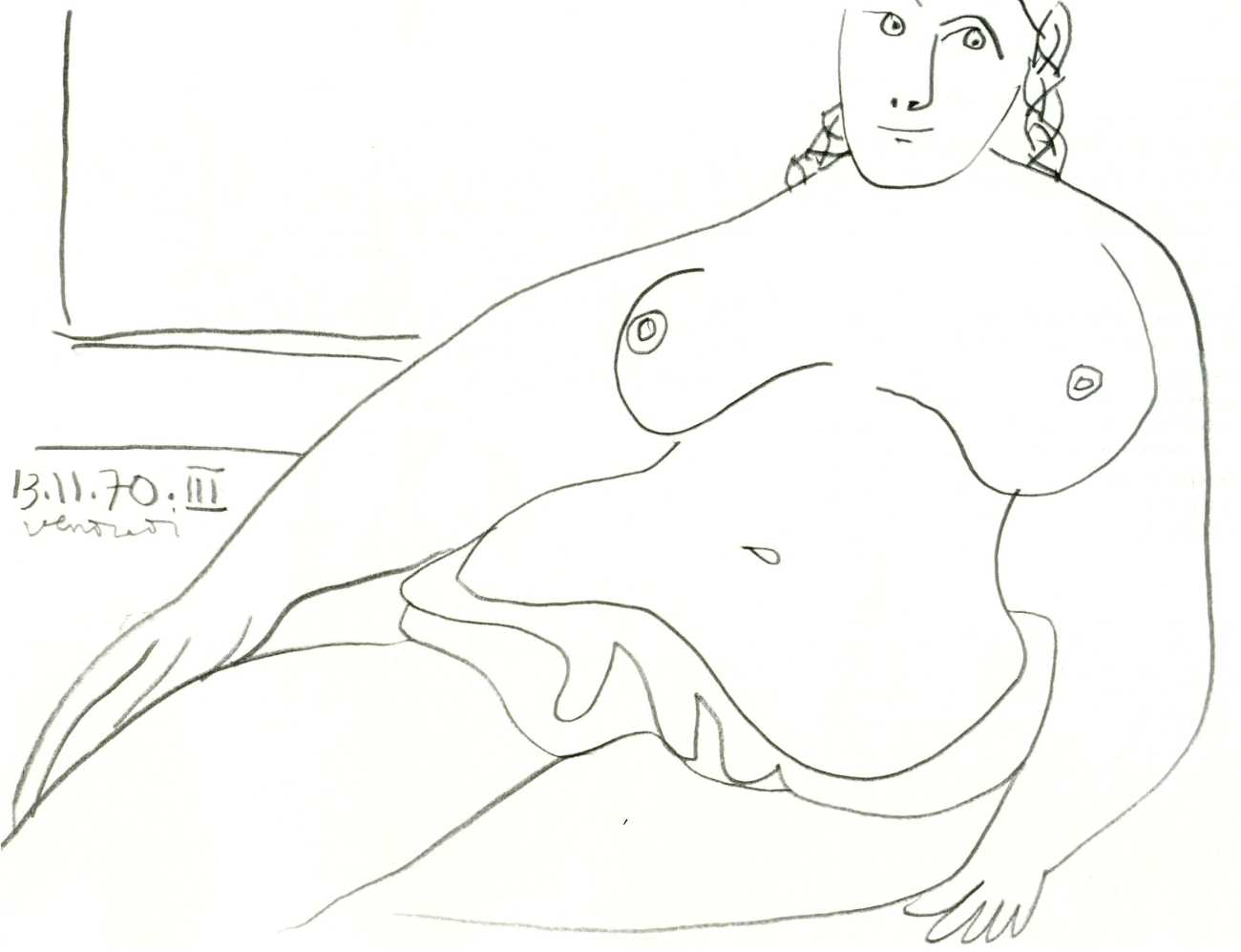
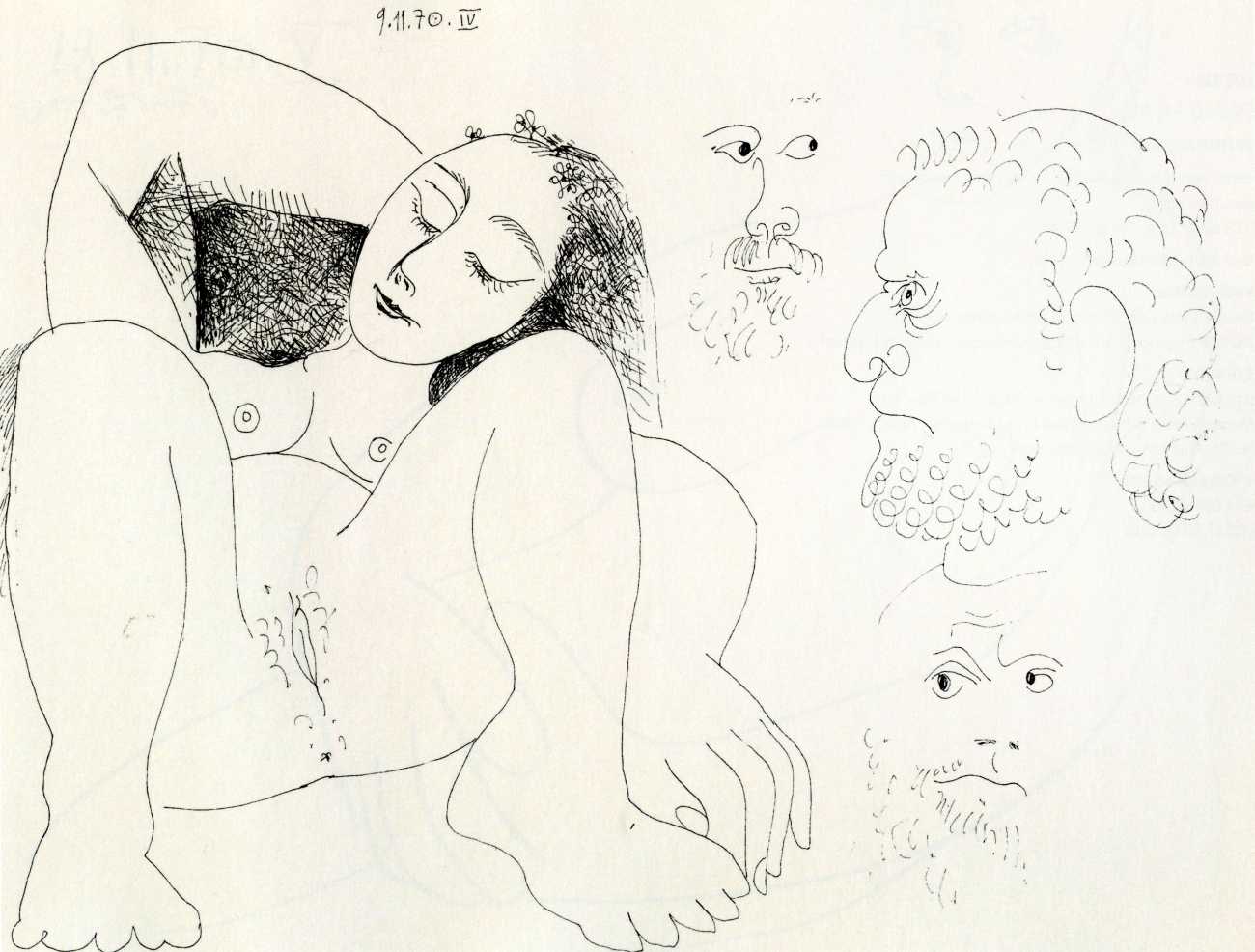
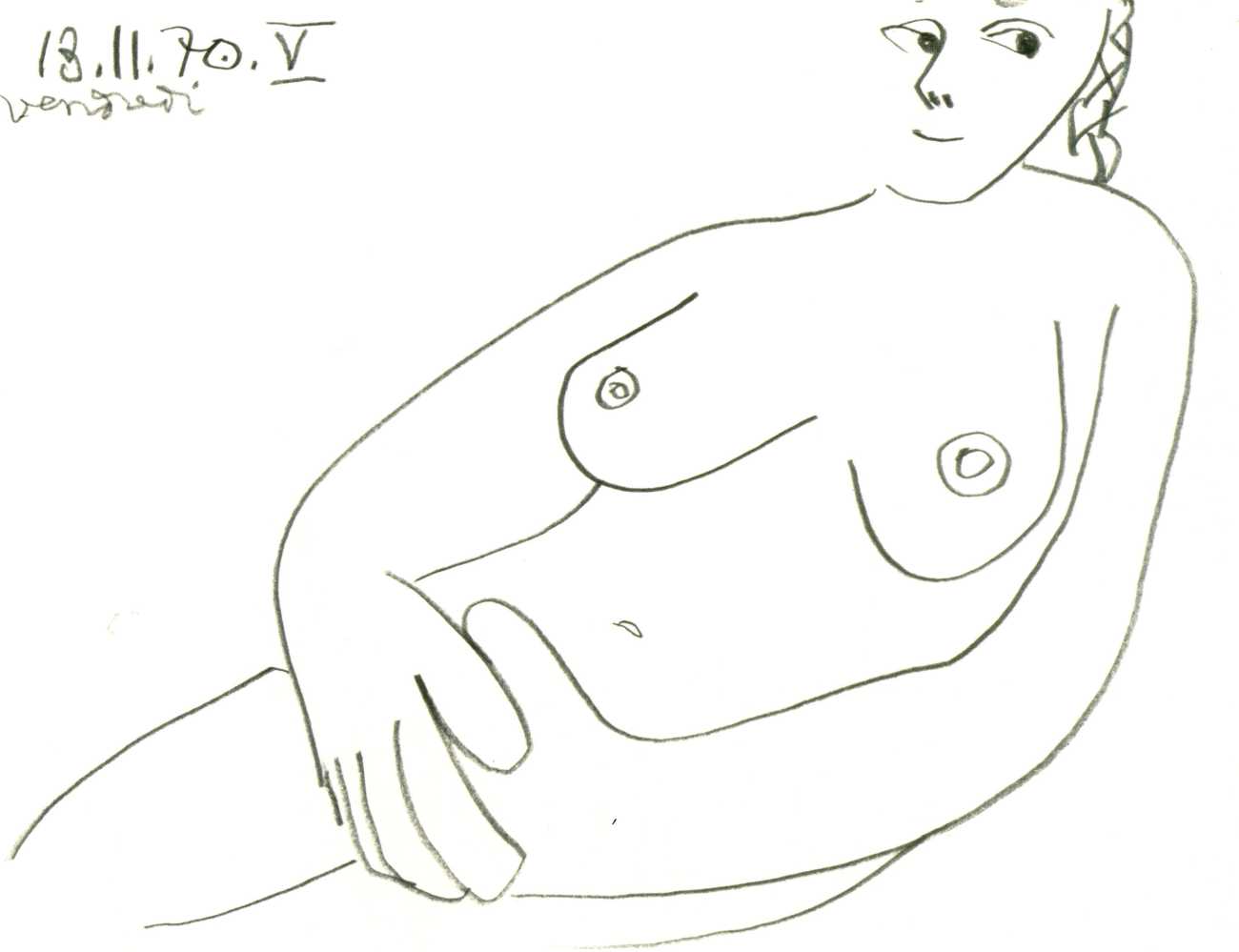
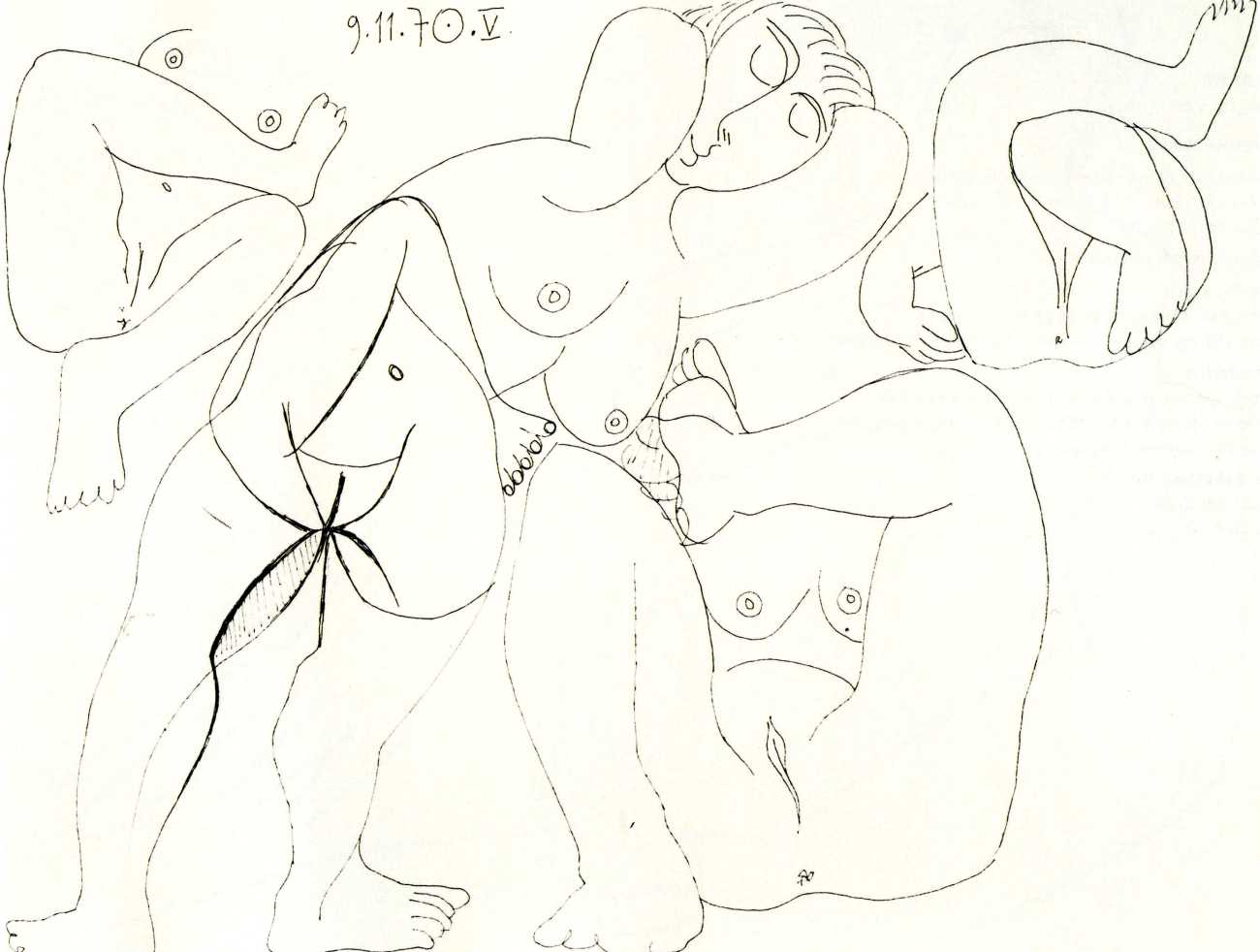
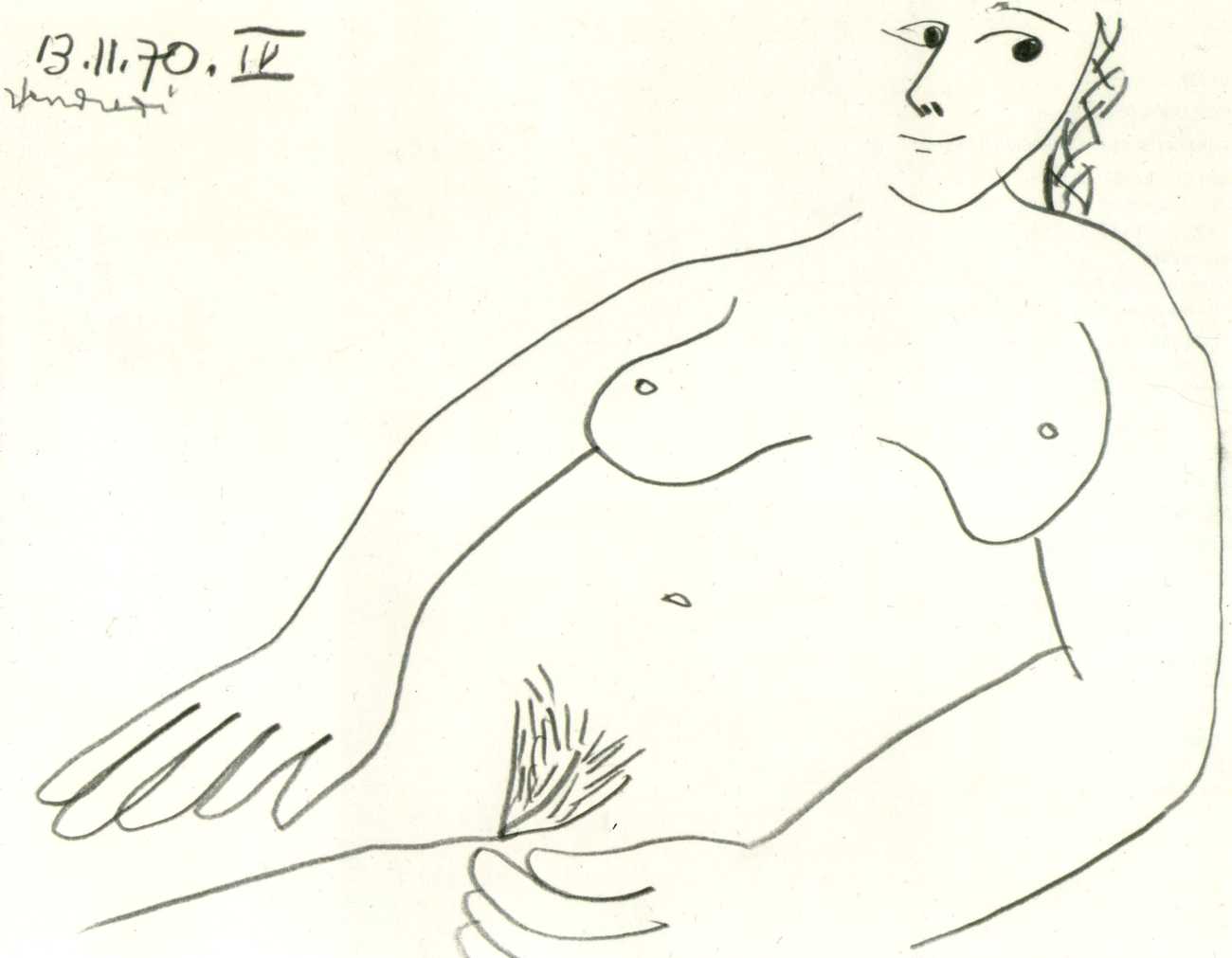
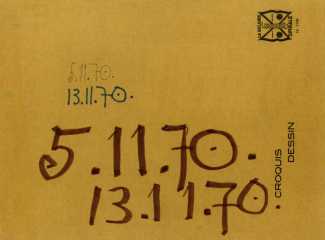
 Created between 5 and 13 November 1970, as Picasso approached his eighty-ninth birthday, this sketchbook belongs to one of the most productive periods of his final years. The weeks preceding it had seen him complete a series of large paintings inspired by a bullfight he had attended at Fréjus in early October. He now returned to drawing, partly to reassure himself that his skills remained undiminished. ‘I want to make sure that my hand has not developed a wobble,’ he told a friend. The resulting 26 drawings demonstrate that there was little cause for concern.
Picasso meticulously dated and numbered each drawing, hoping to understand how one image led to another and thereby unlock the mystery of his own creative process. The sketchbook takes its name from Heinz Berggruen, the German-born art dealer and collector who acquired it from a friend of Picasso’s; his son John subsequently published it as a facsimile in 2004. The drawings offer an unusually intimate glimpse into Picasso’s working methods, as he revisited subjects that had preoccupied him throughout his life, above all the human form, sexual desire, and the relationship between artist and model.
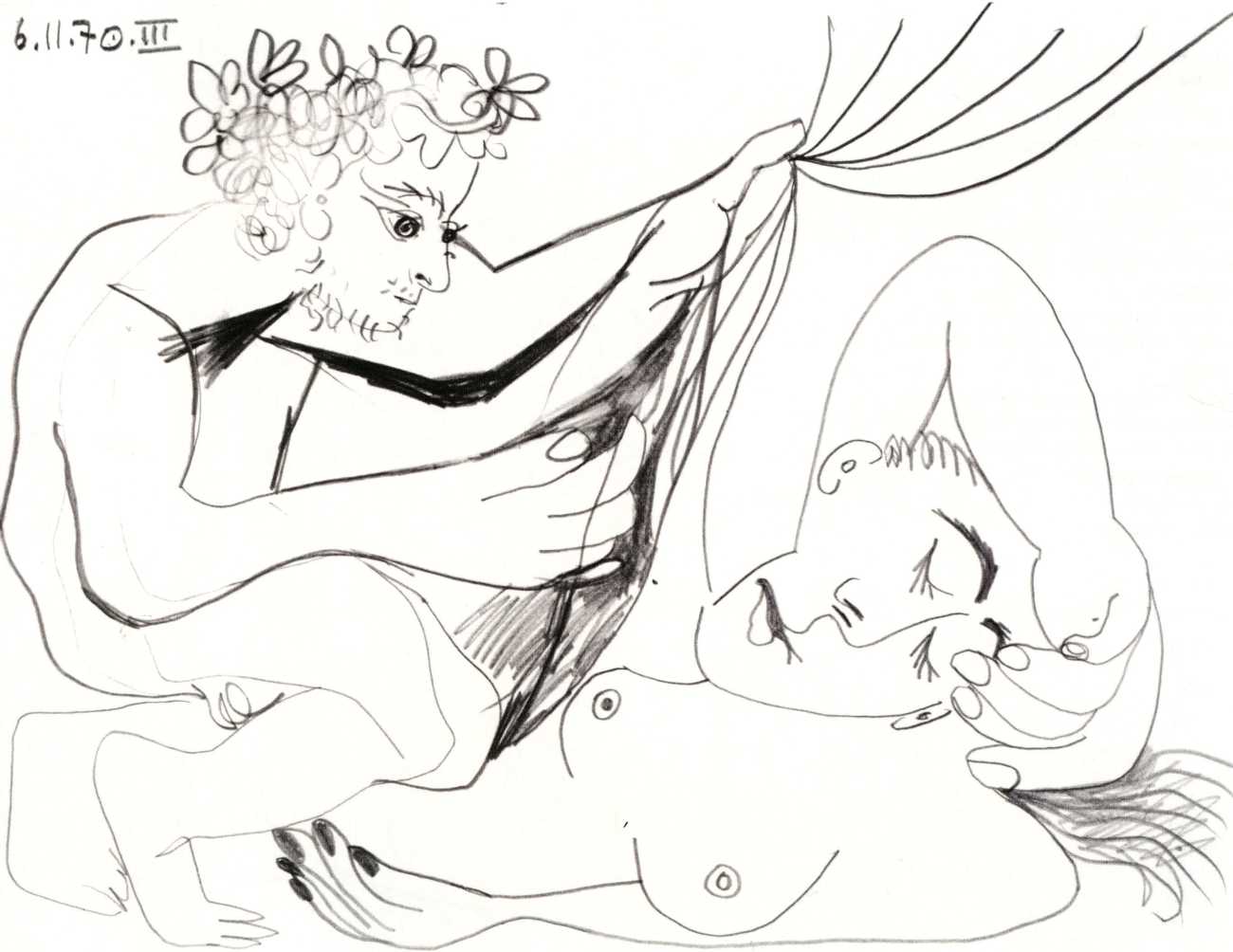
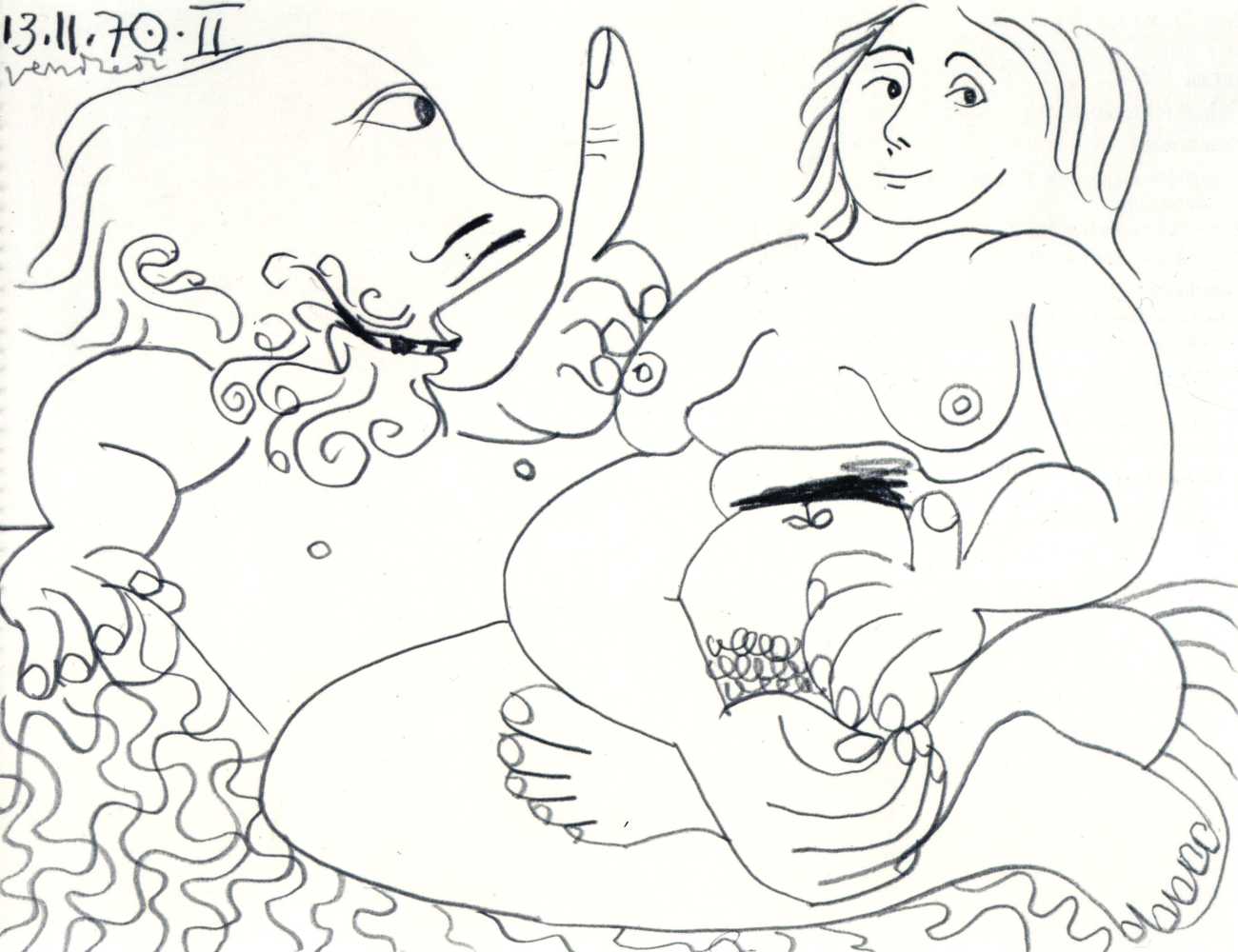
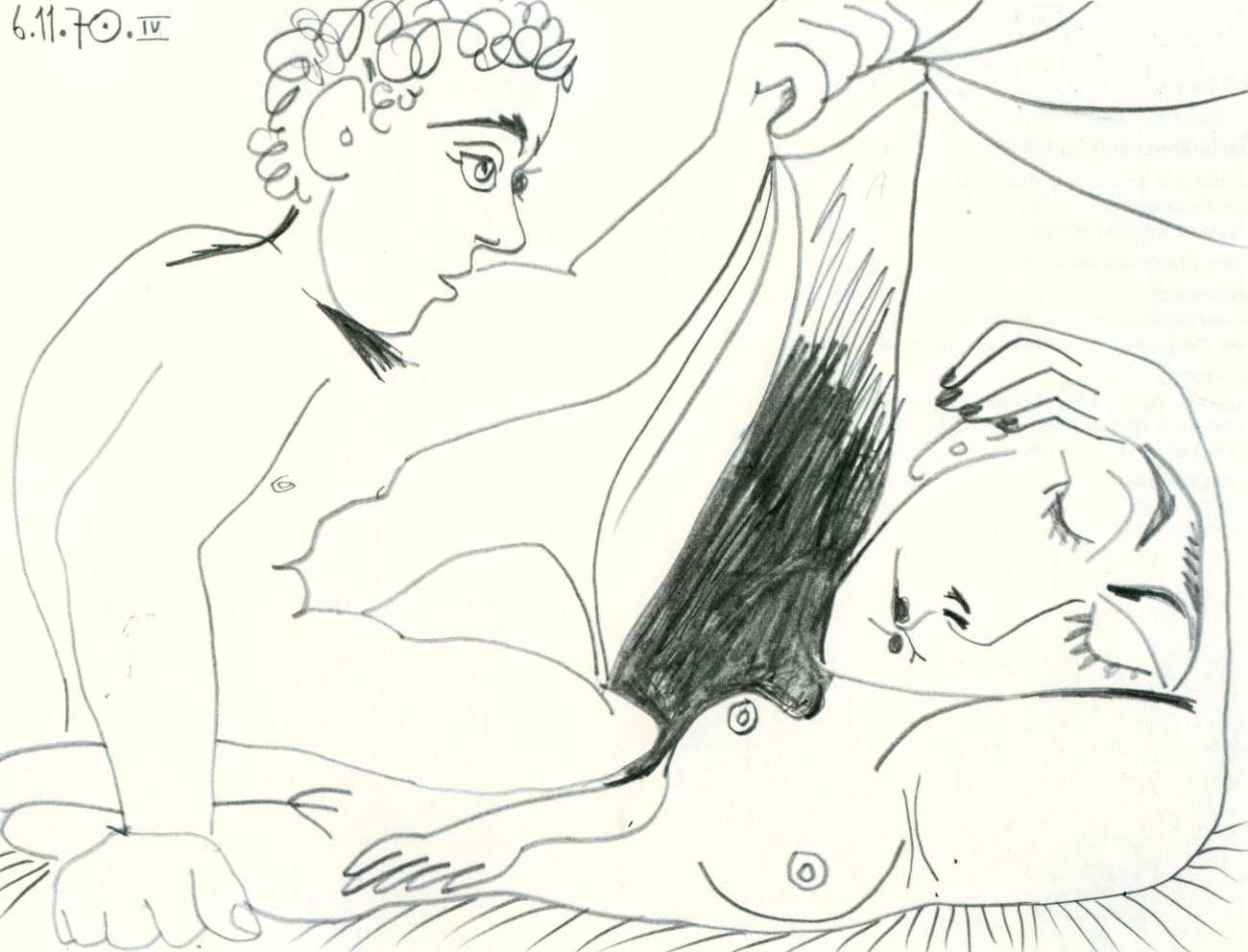
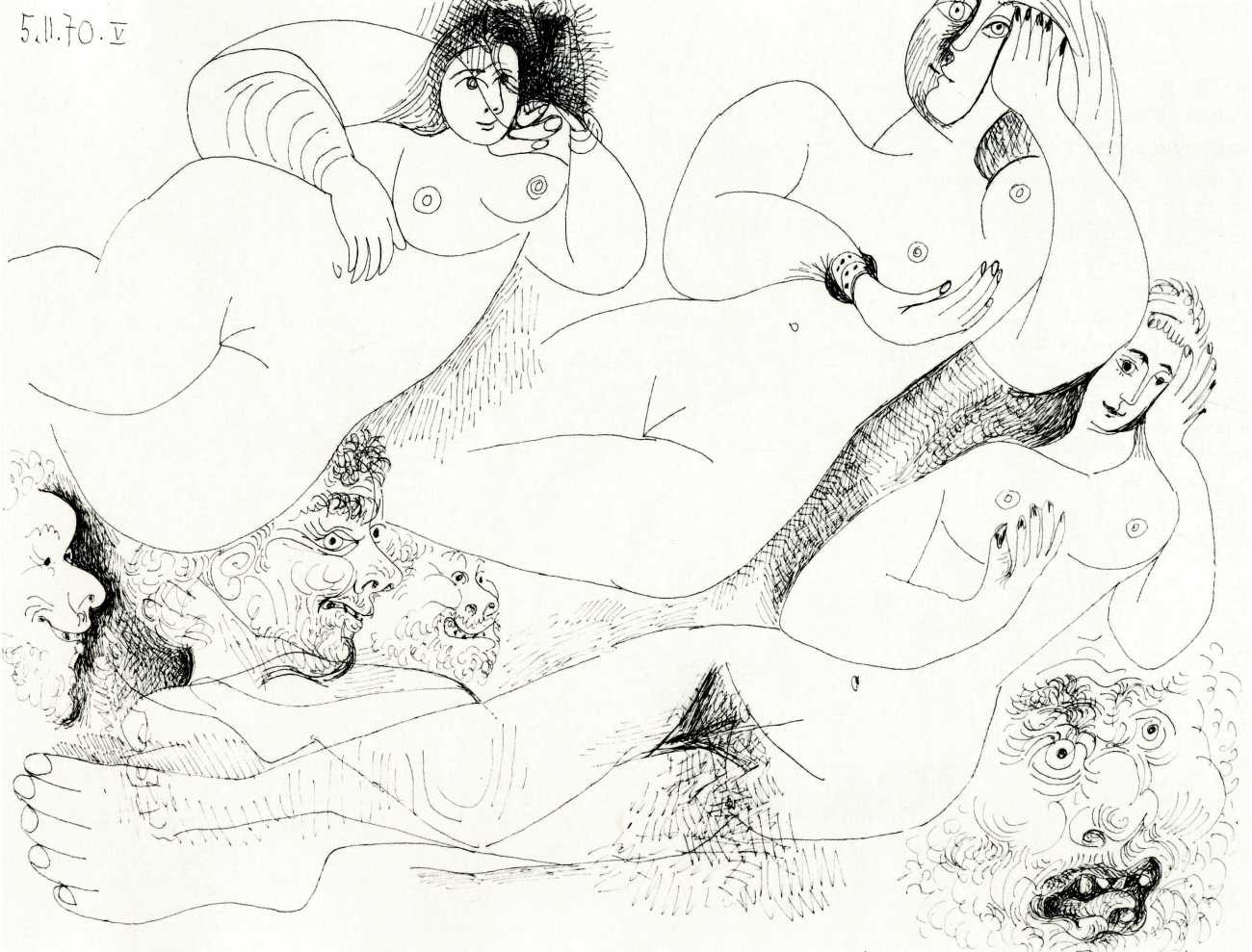
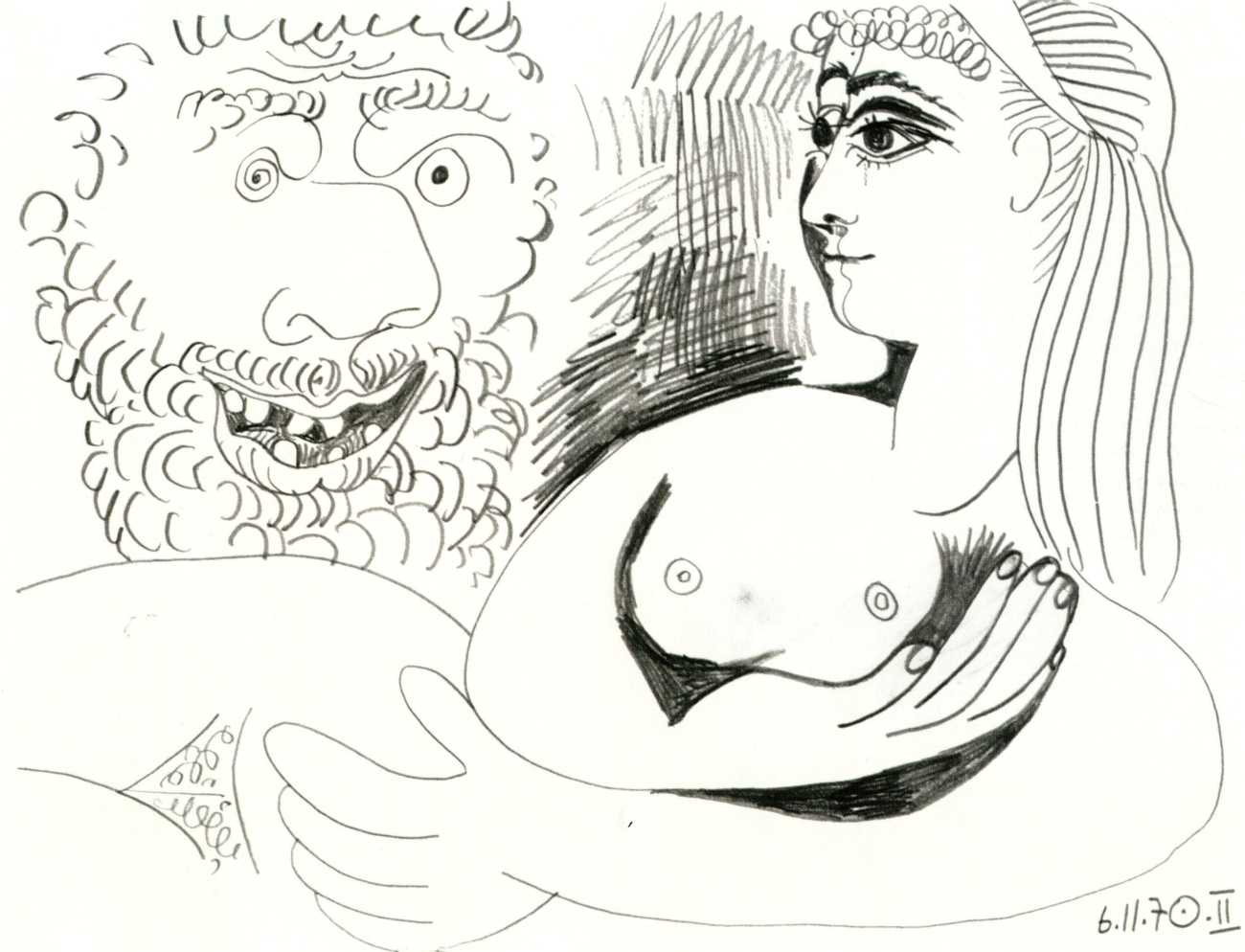
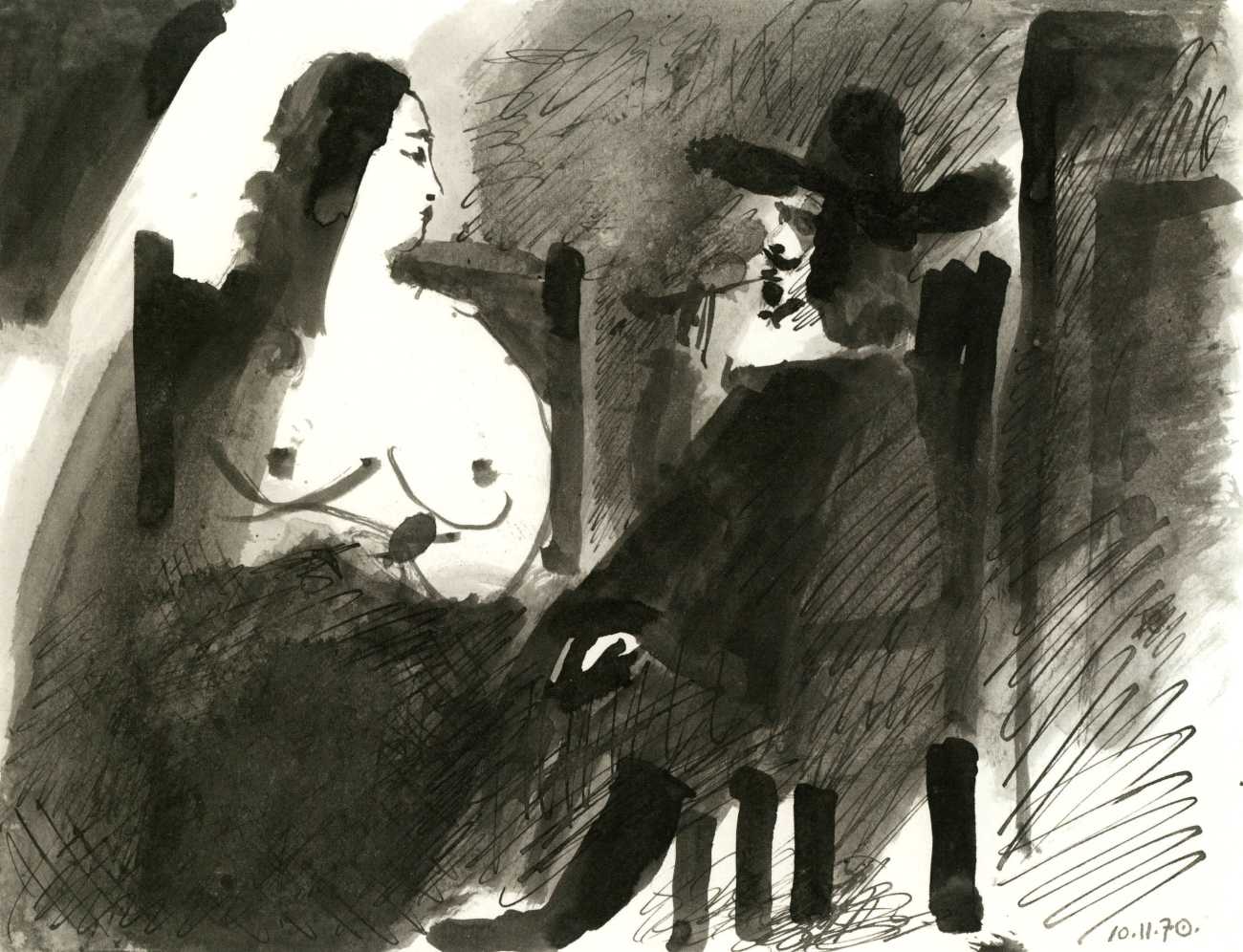
Voyeurism is a particularly prominent theme. In several drawings, languid, sexually confident women are scrutinised by bearded men whose expressions suggest a mixture of lust and curiosity. In two particularly revealing scenes, a young man, perhaps a faun, lifts a curtain to spy on a sleeping woman. Picasso invites us to share the intruder’s viewpoint, implicating the viewer in the act of looking. These scenes recall his earlier depictions of the artist and his model, as well as the erotic imagery of his 347 Series of etchings. The men who watch the women can also be read as projections of the ageing artist himself, giving these encounters a personal dimension.
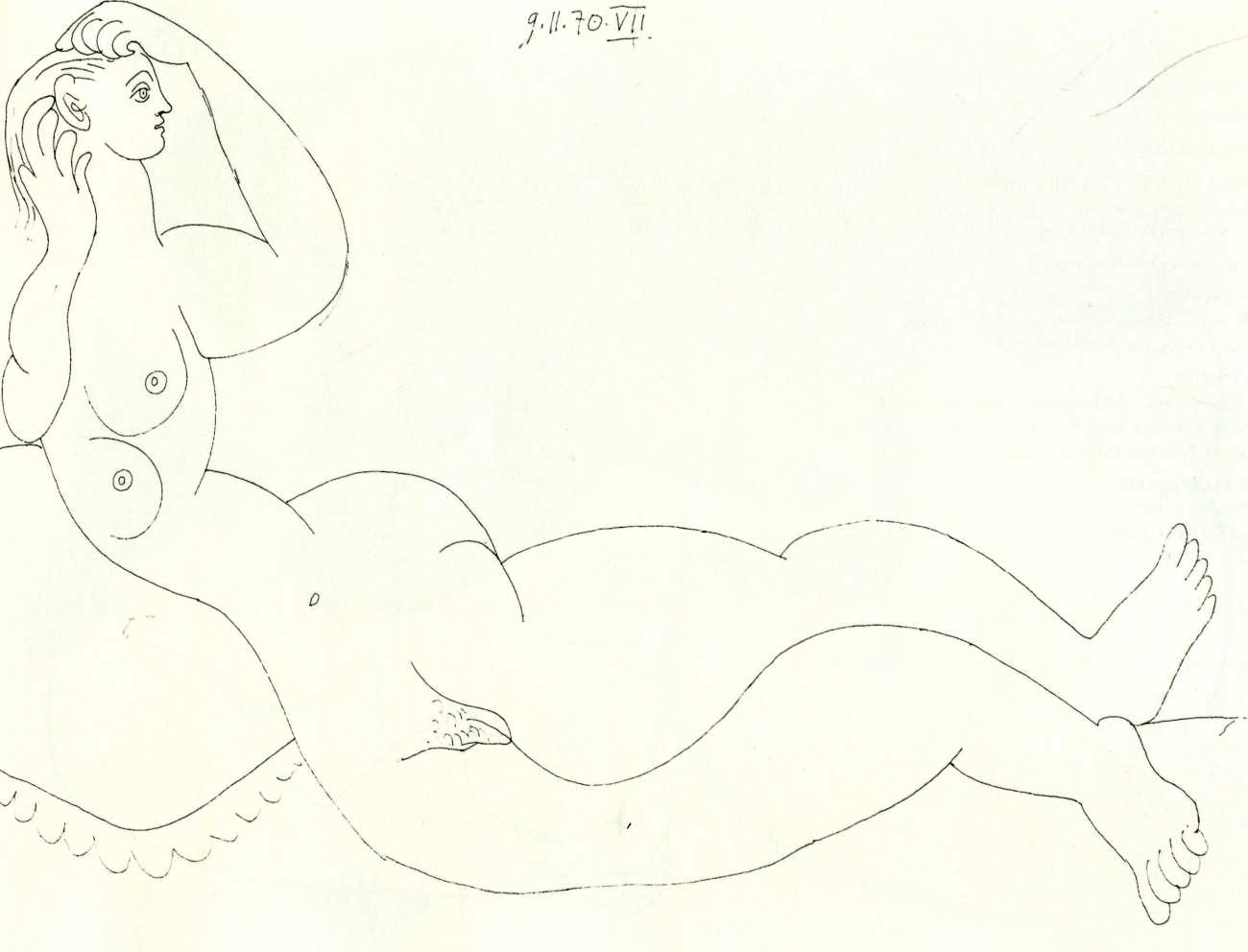
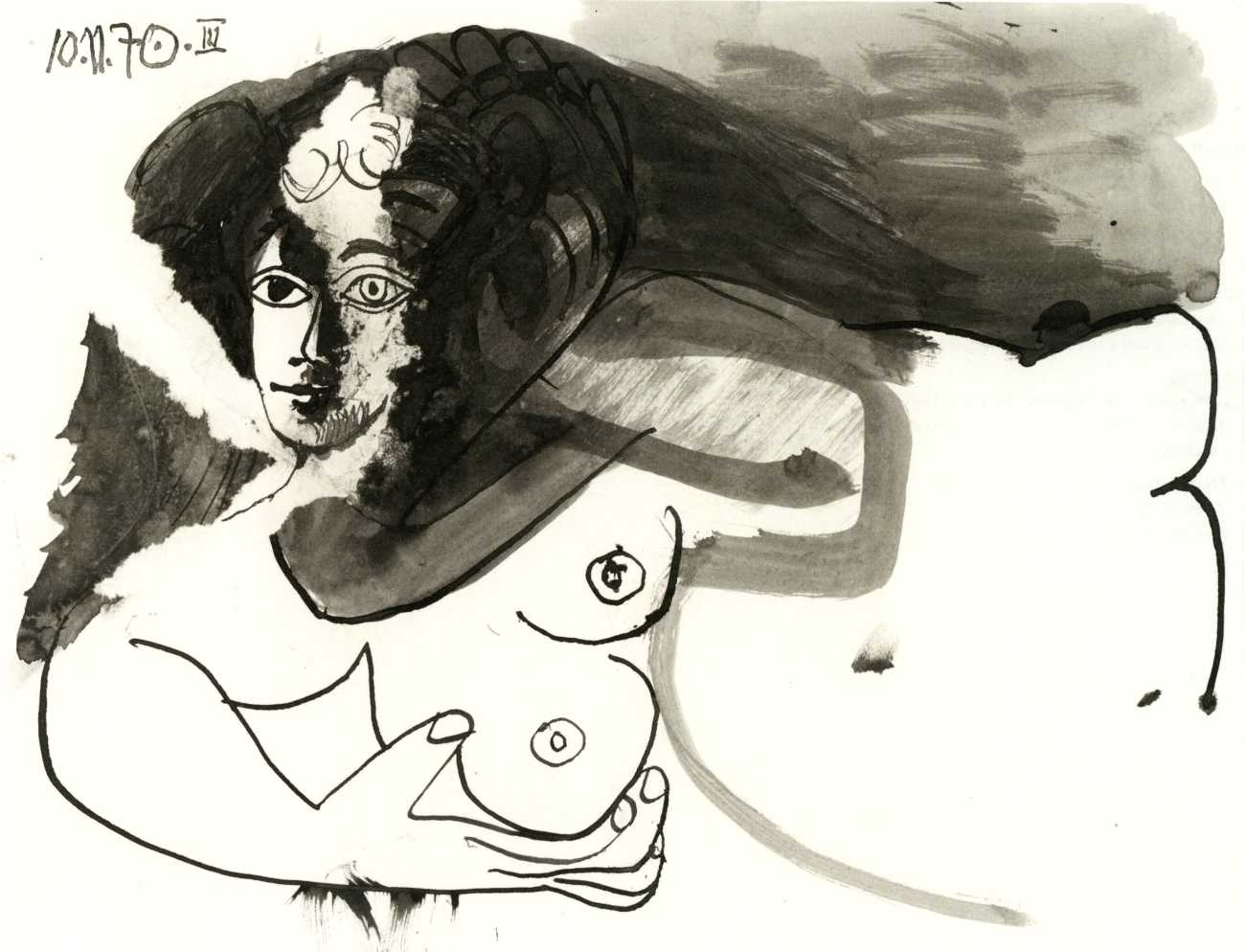
In these drawings Picasso explores the body through fluid, economical lines, stretching and transforming figures with apparent ease. Some are little more than a few curves on paper, while others develop into fuller compositions. Throughout, the sketchbook reveals an artist testing his abilities, pursuing his erotic preoccupations, and finding fresh possibilities in the simple act of drawing.
The individual drawings from the sketchbook were sold at auction by Sothebys in February 2005, fetching between £80,000 and £180,000 each.