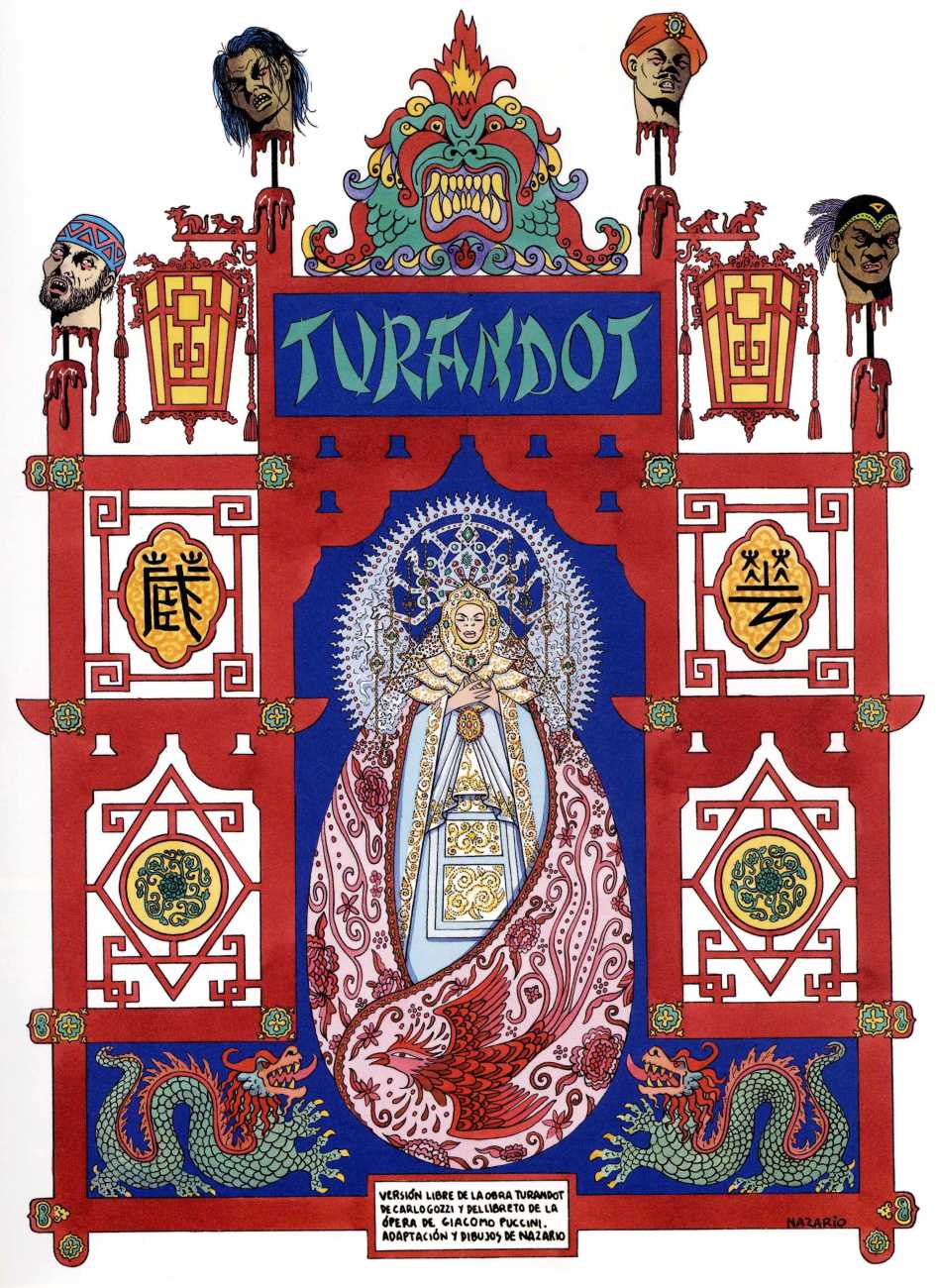
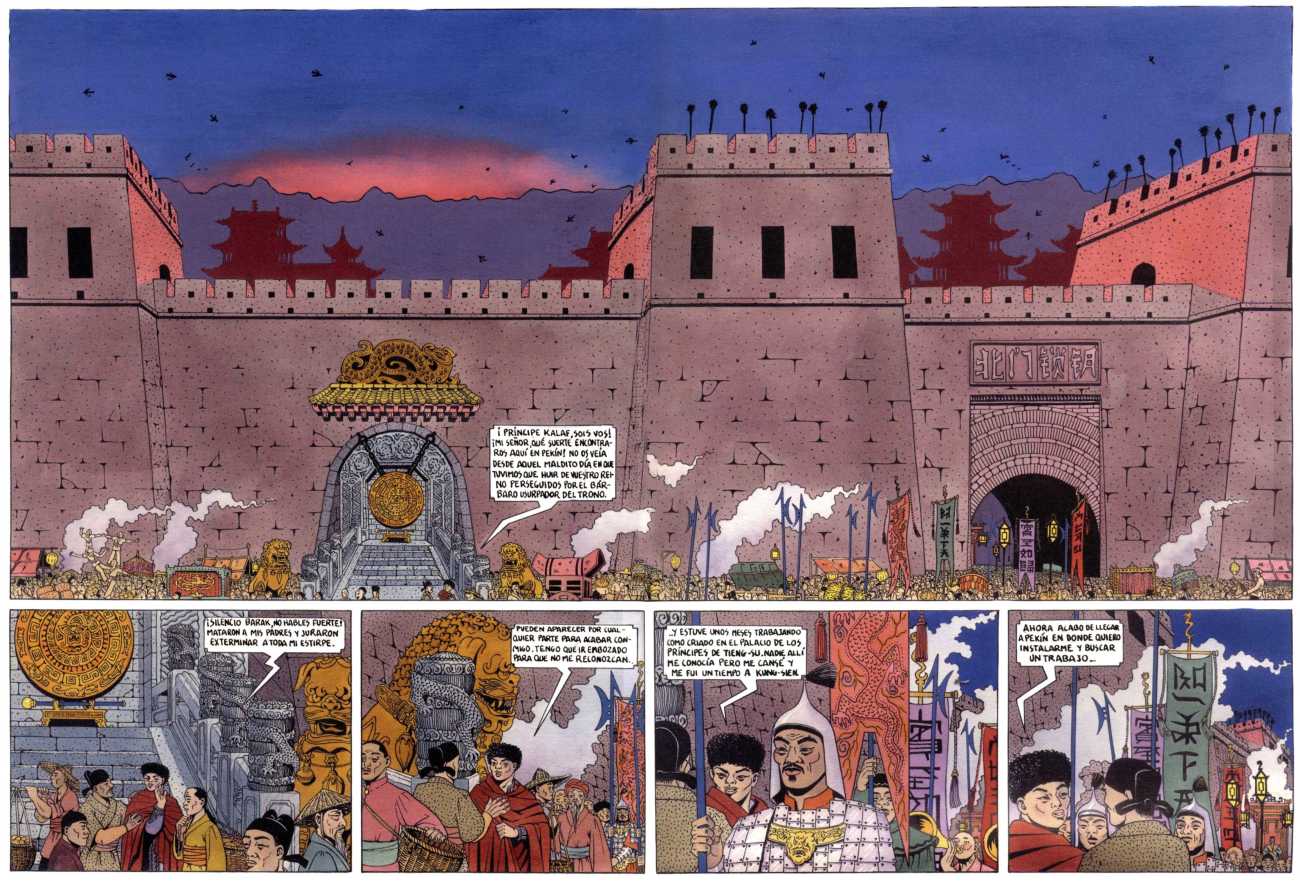
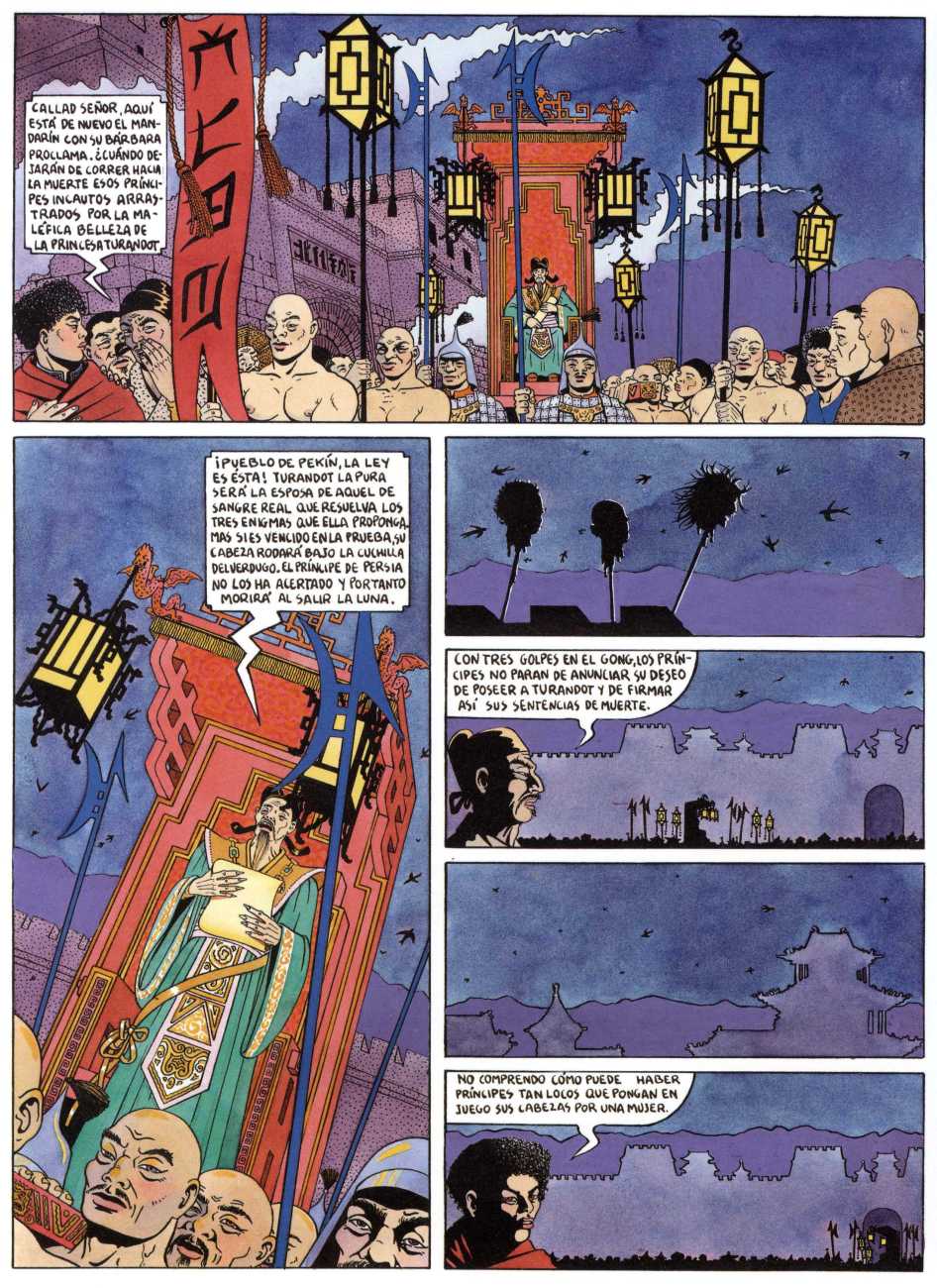
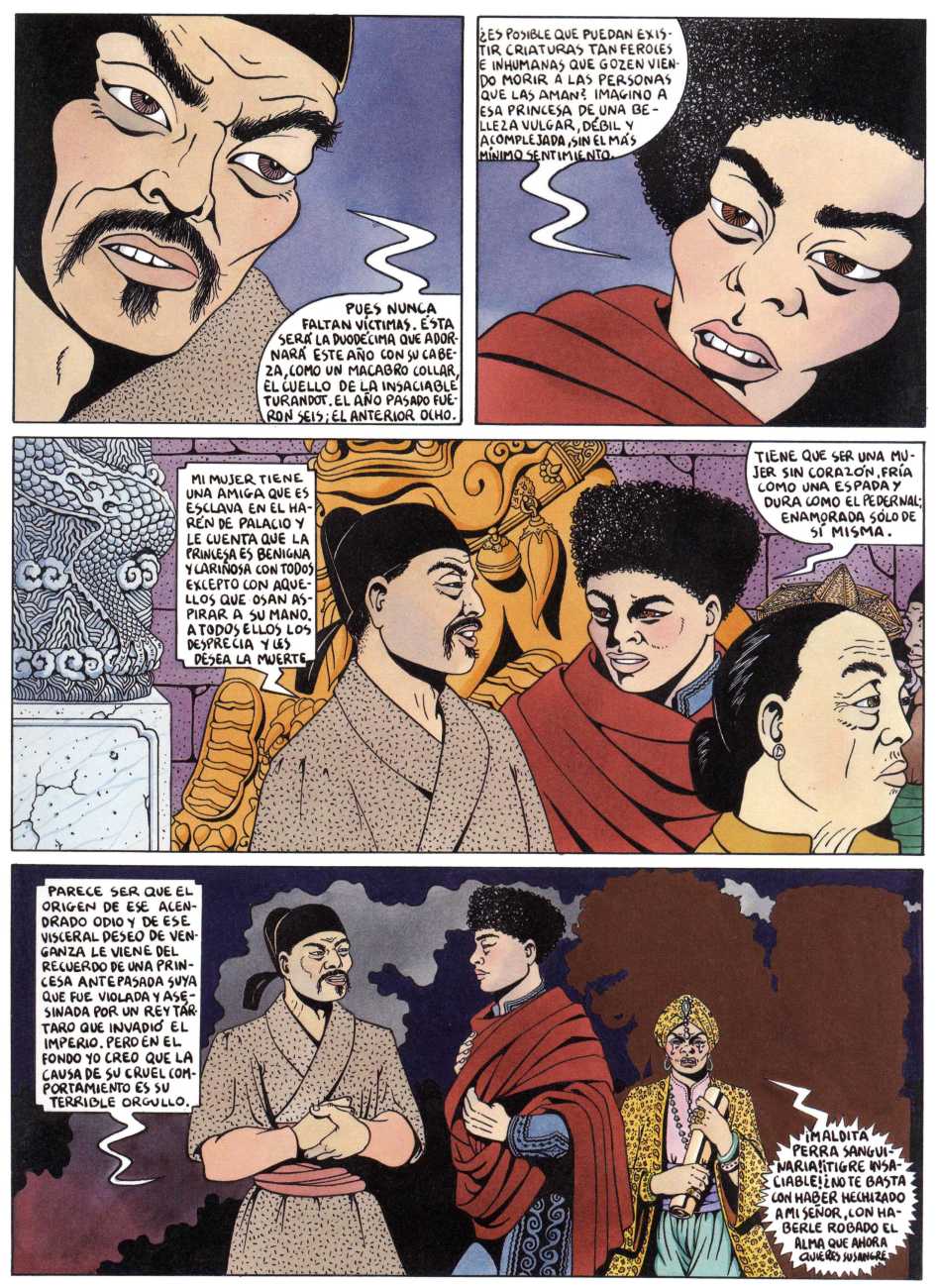
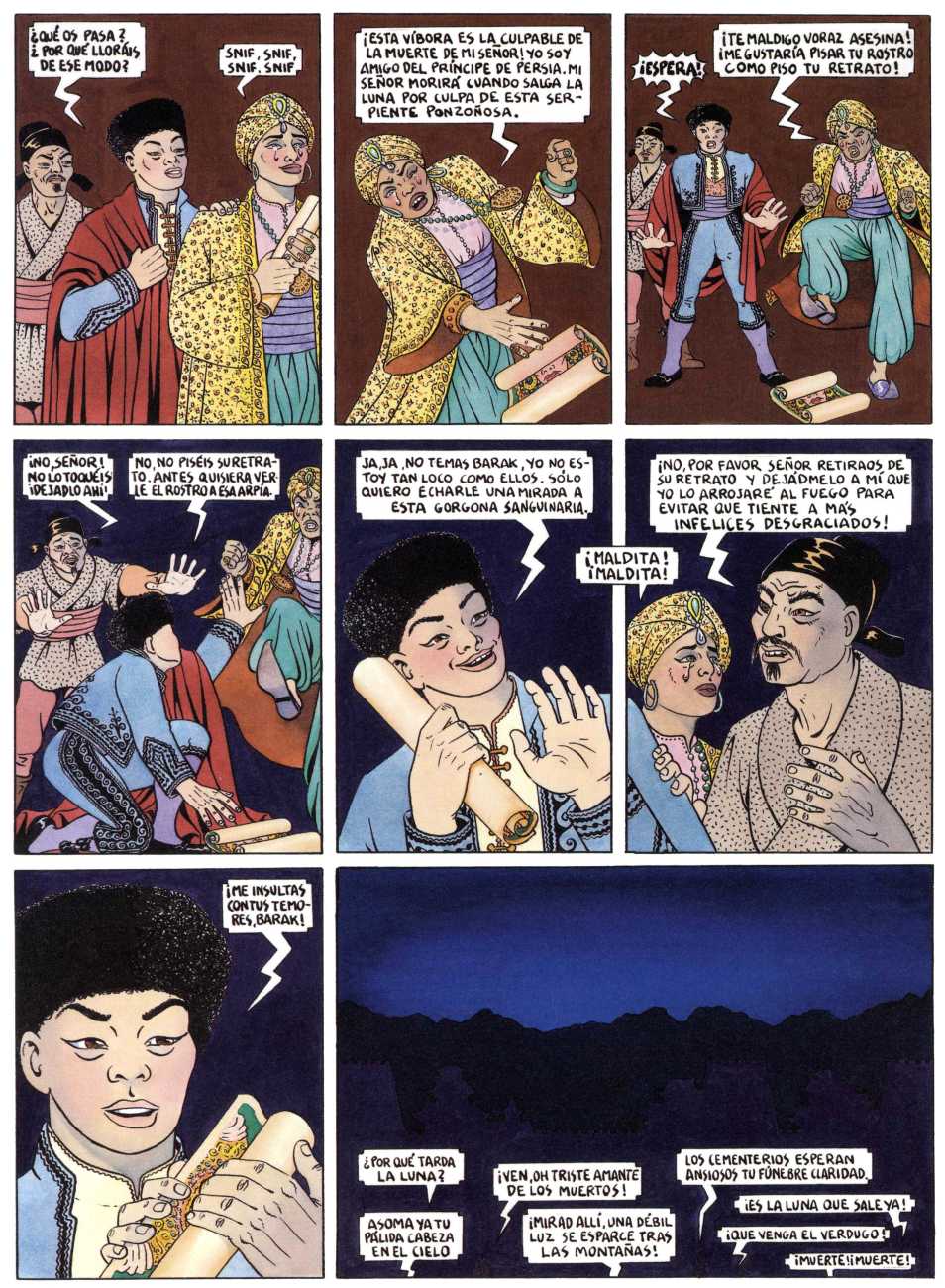
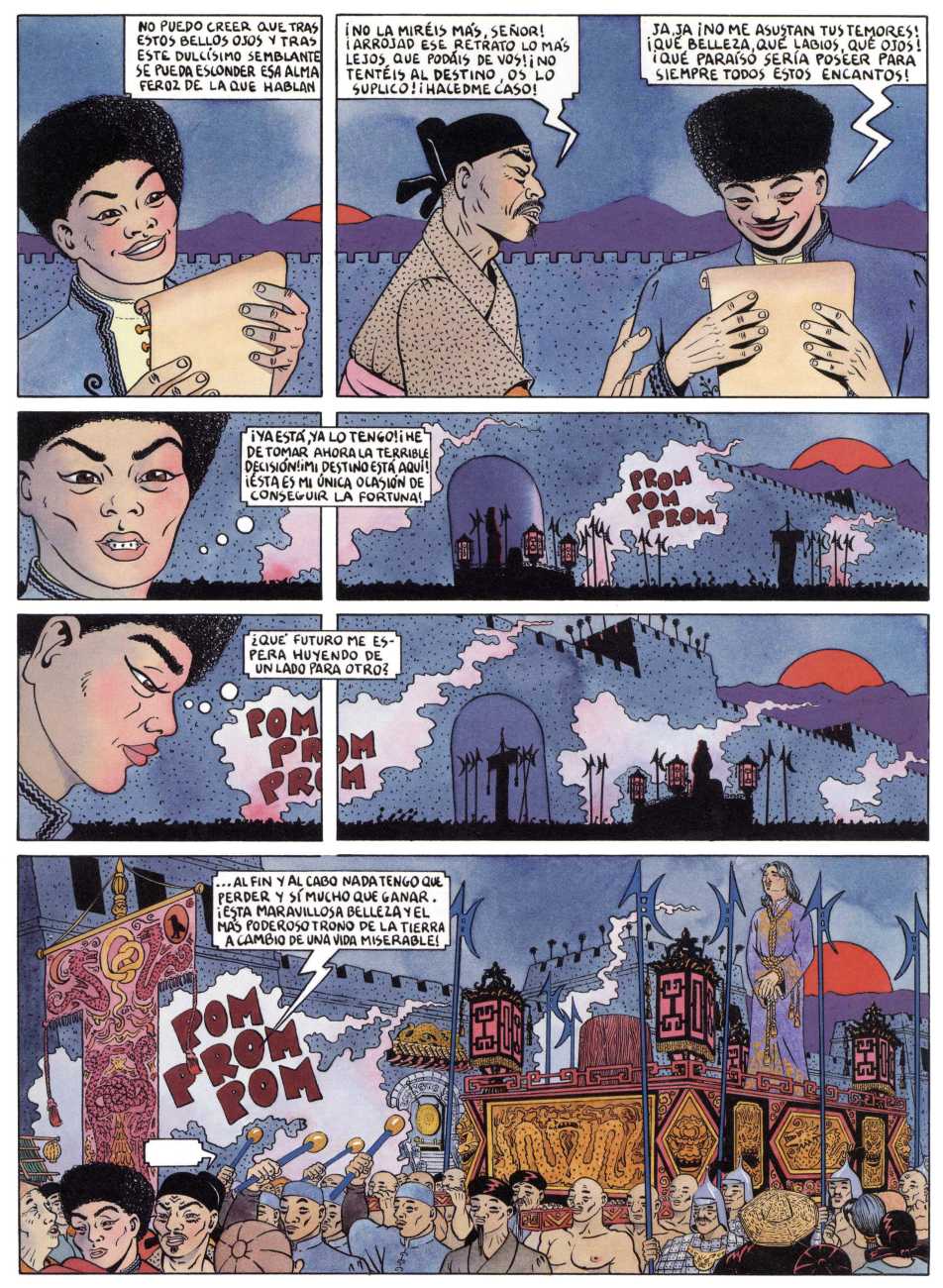
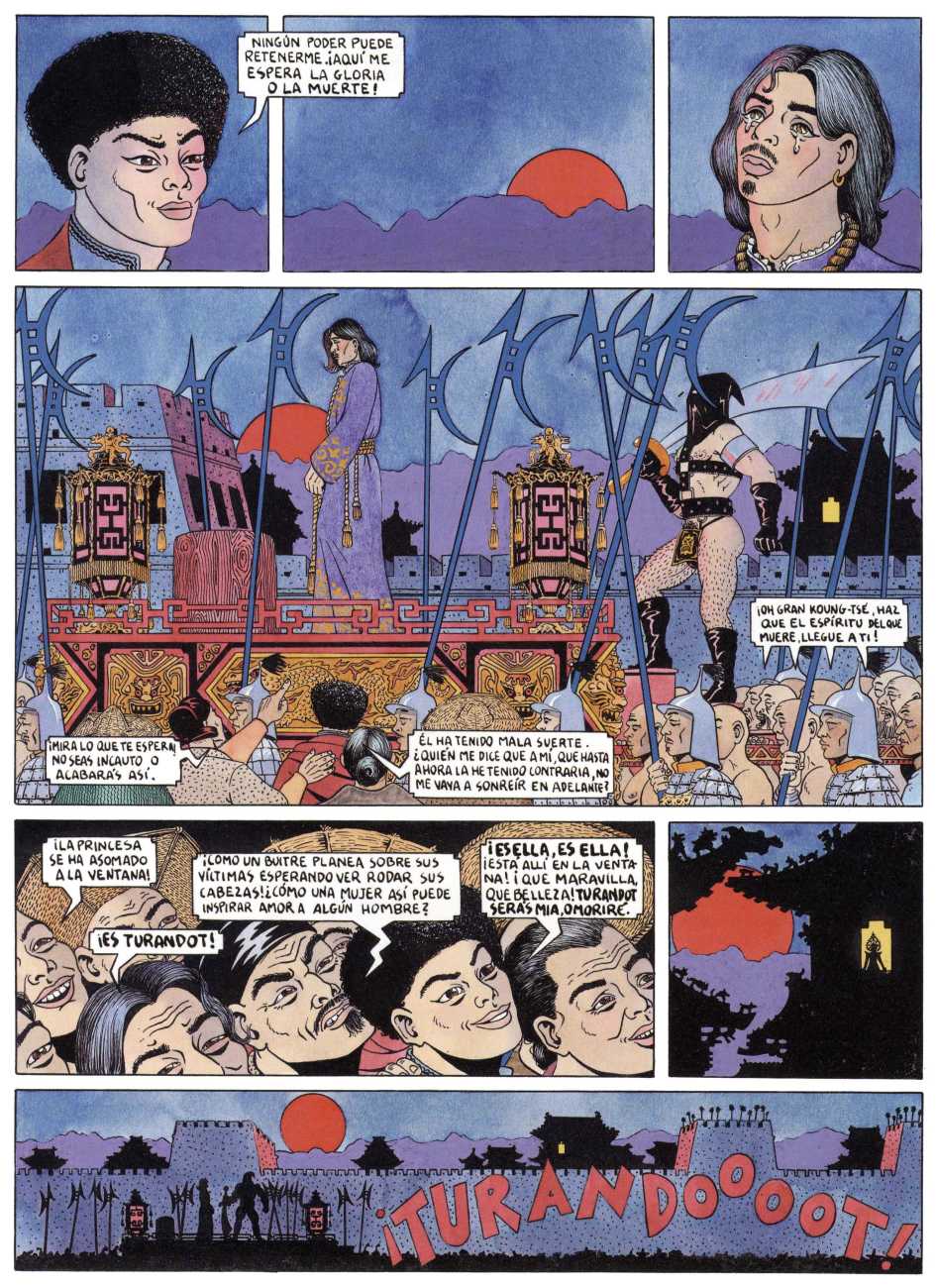
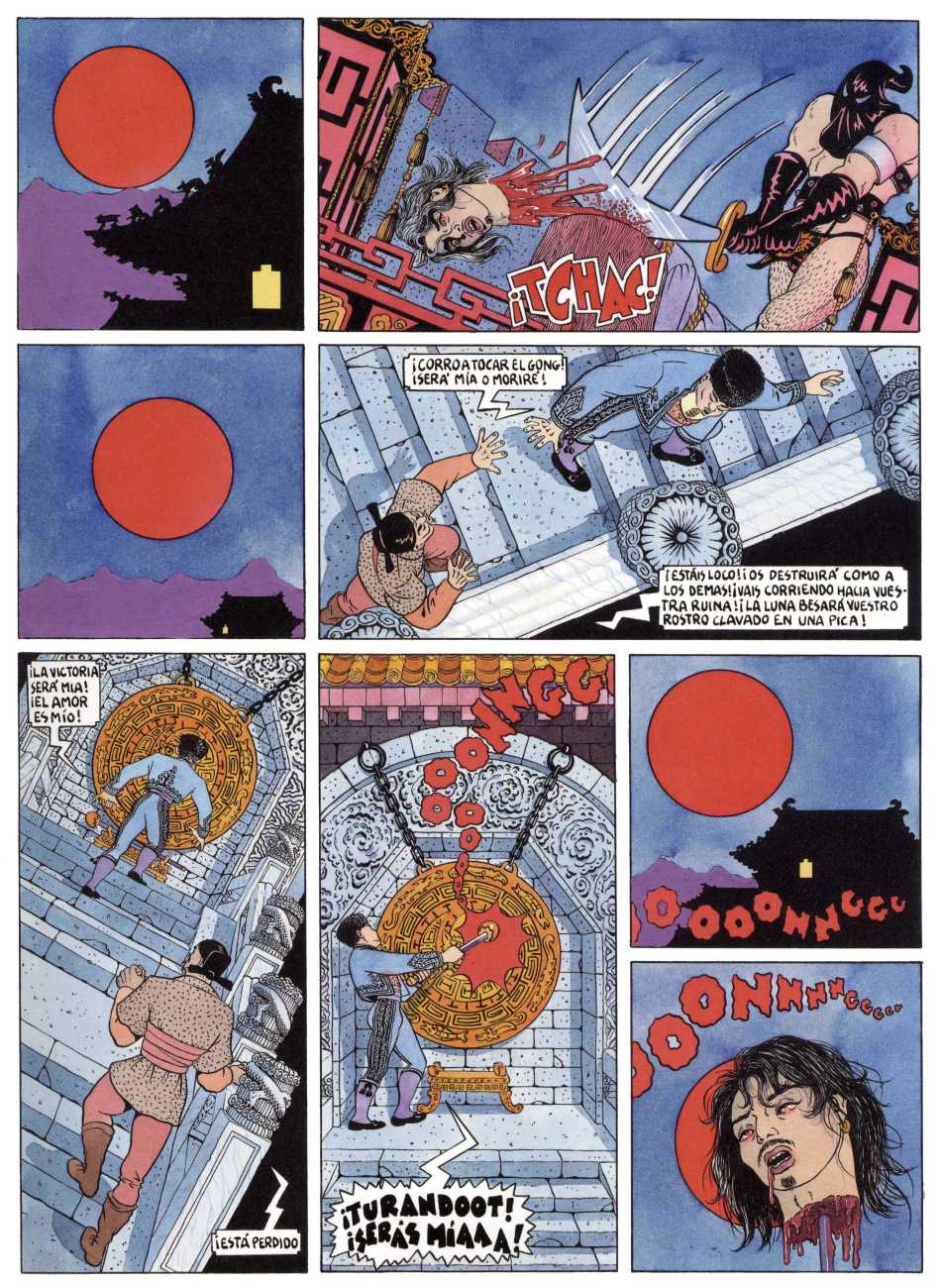
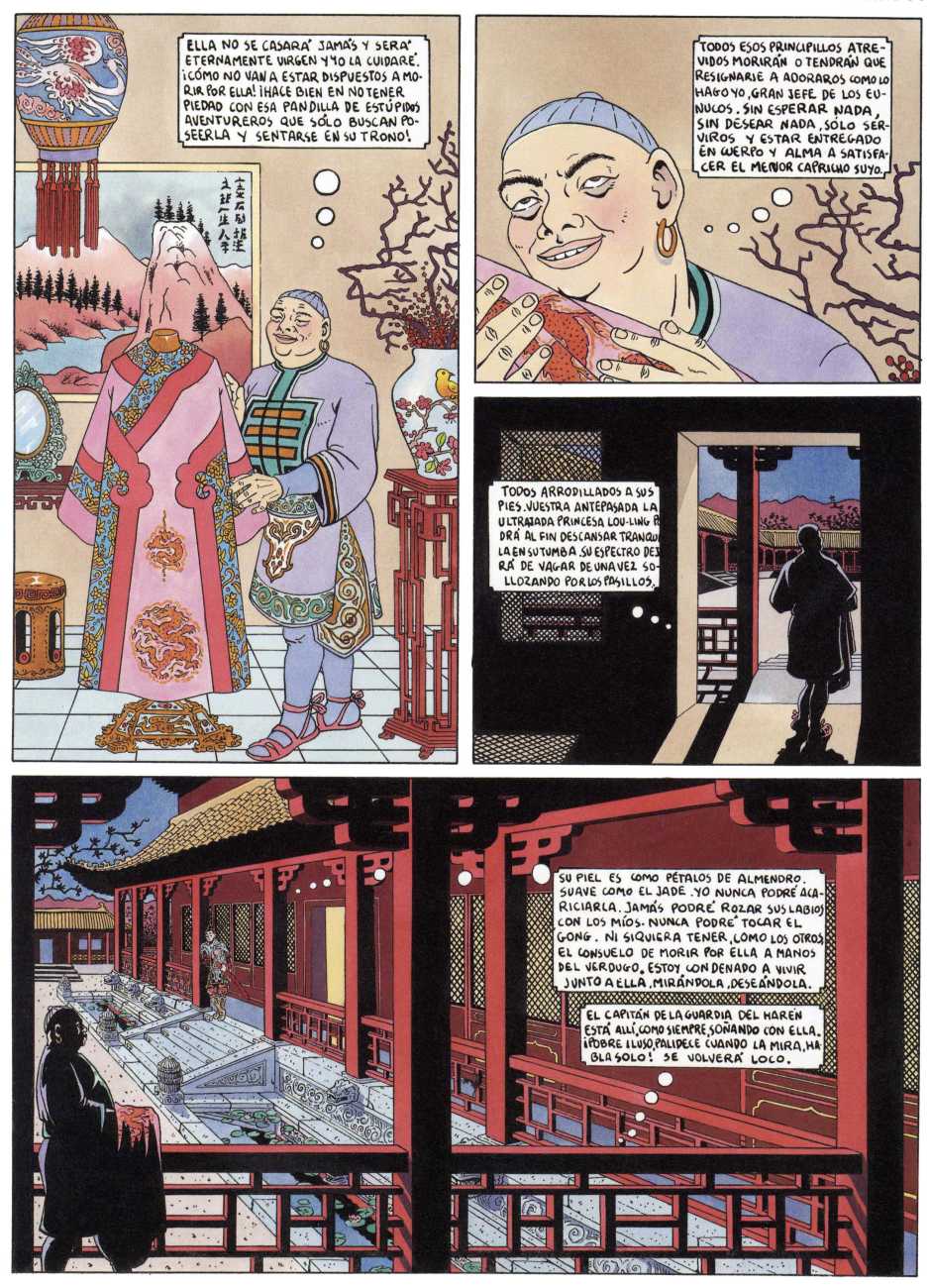
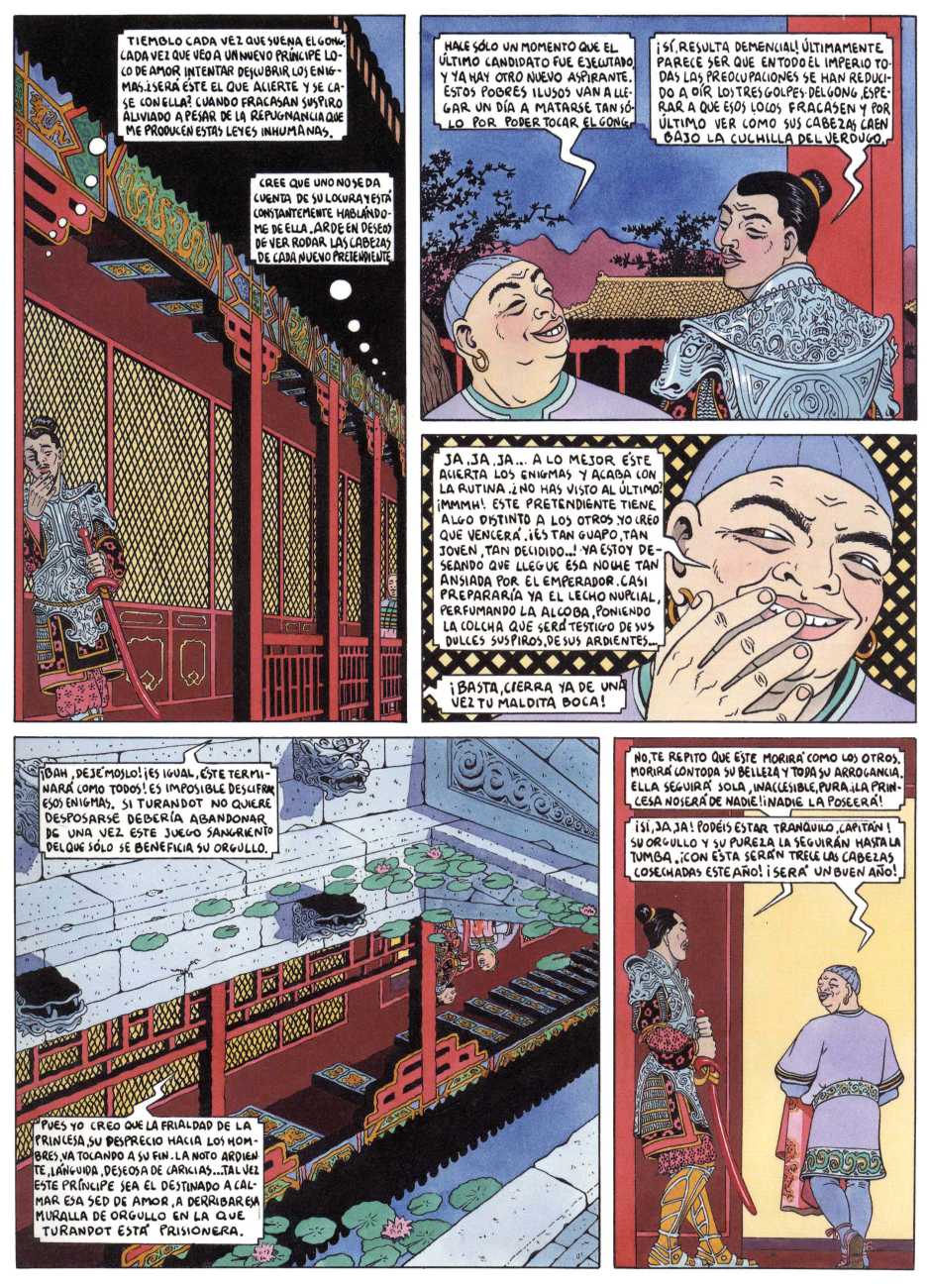
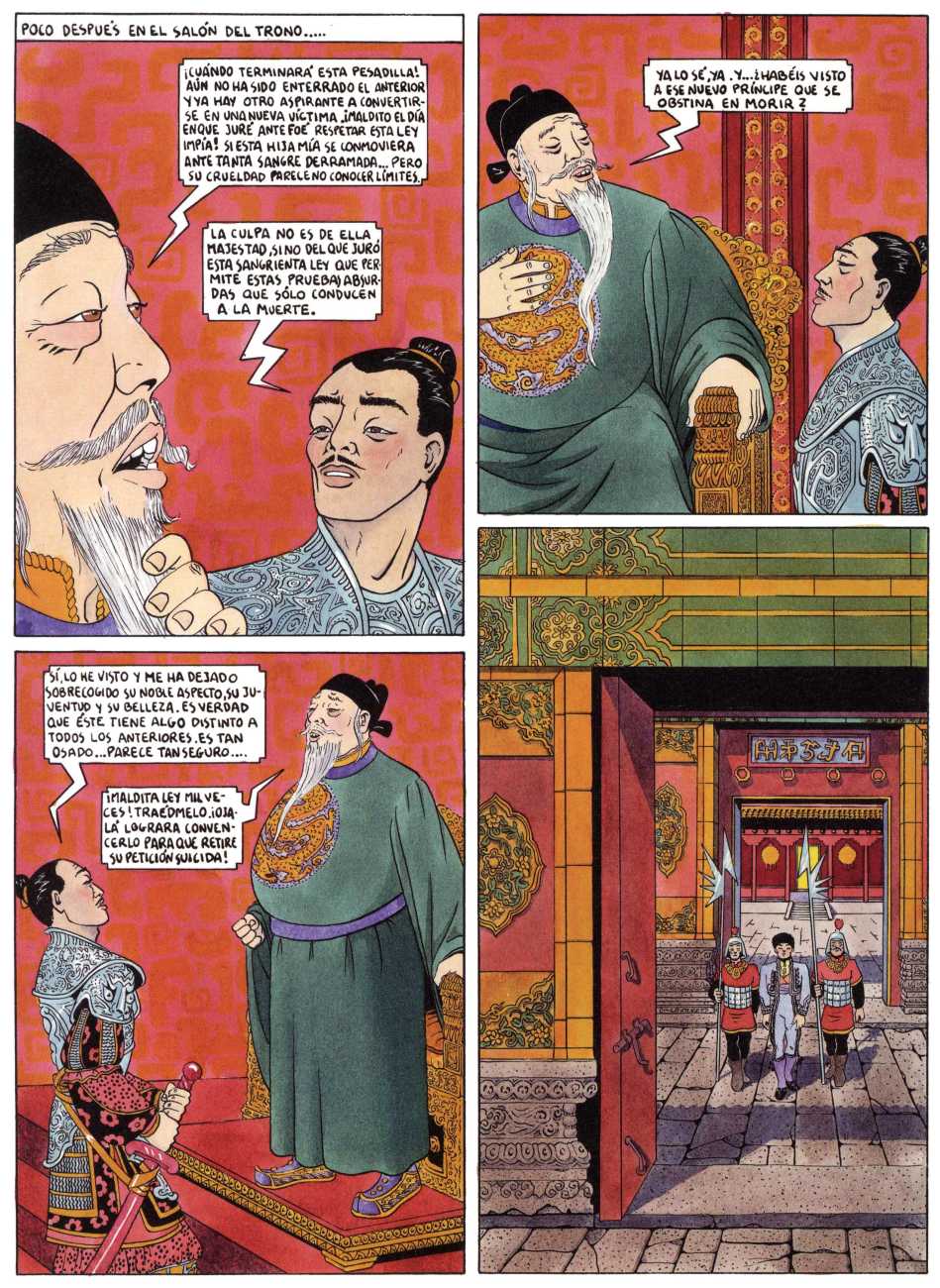
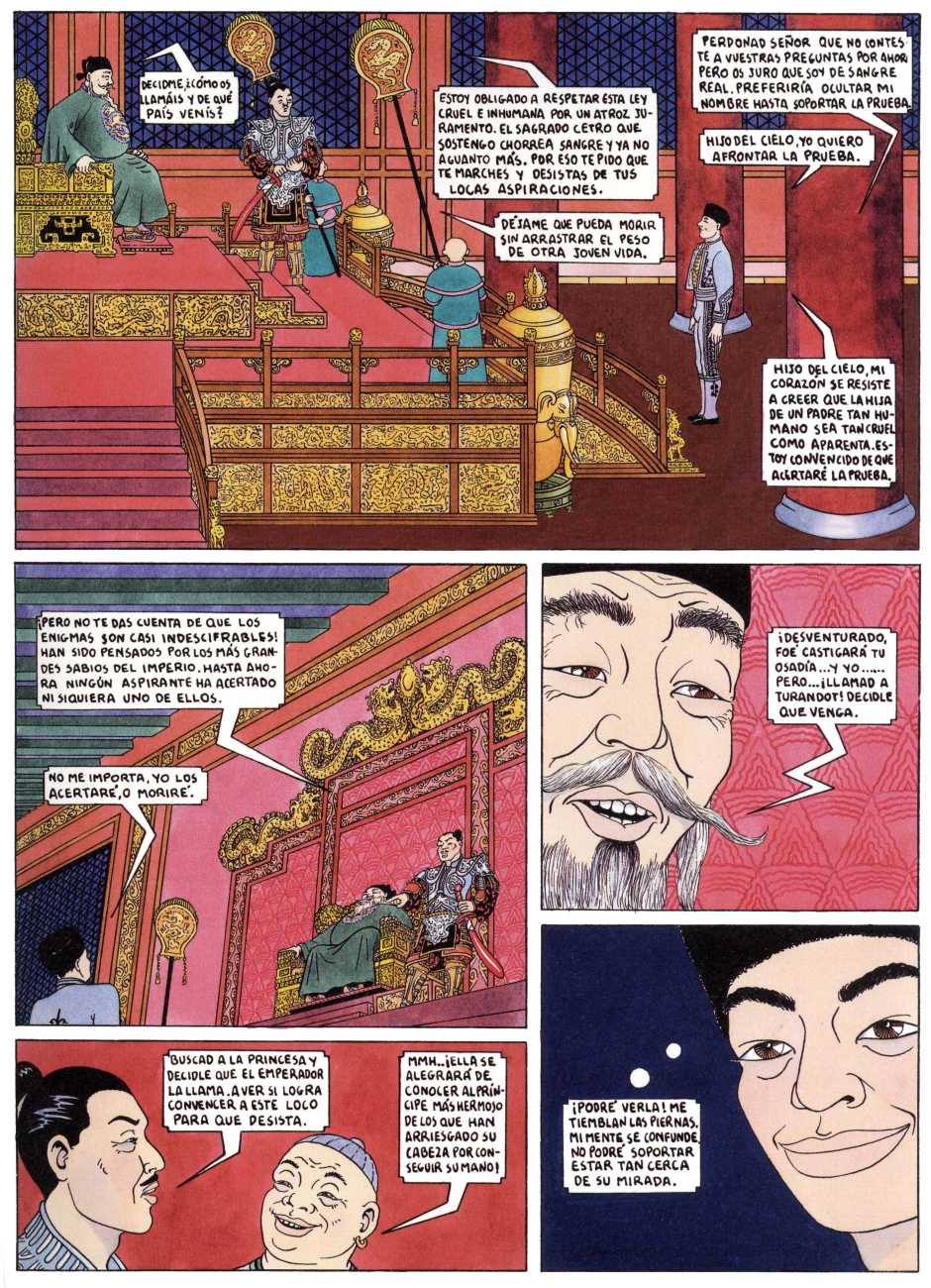
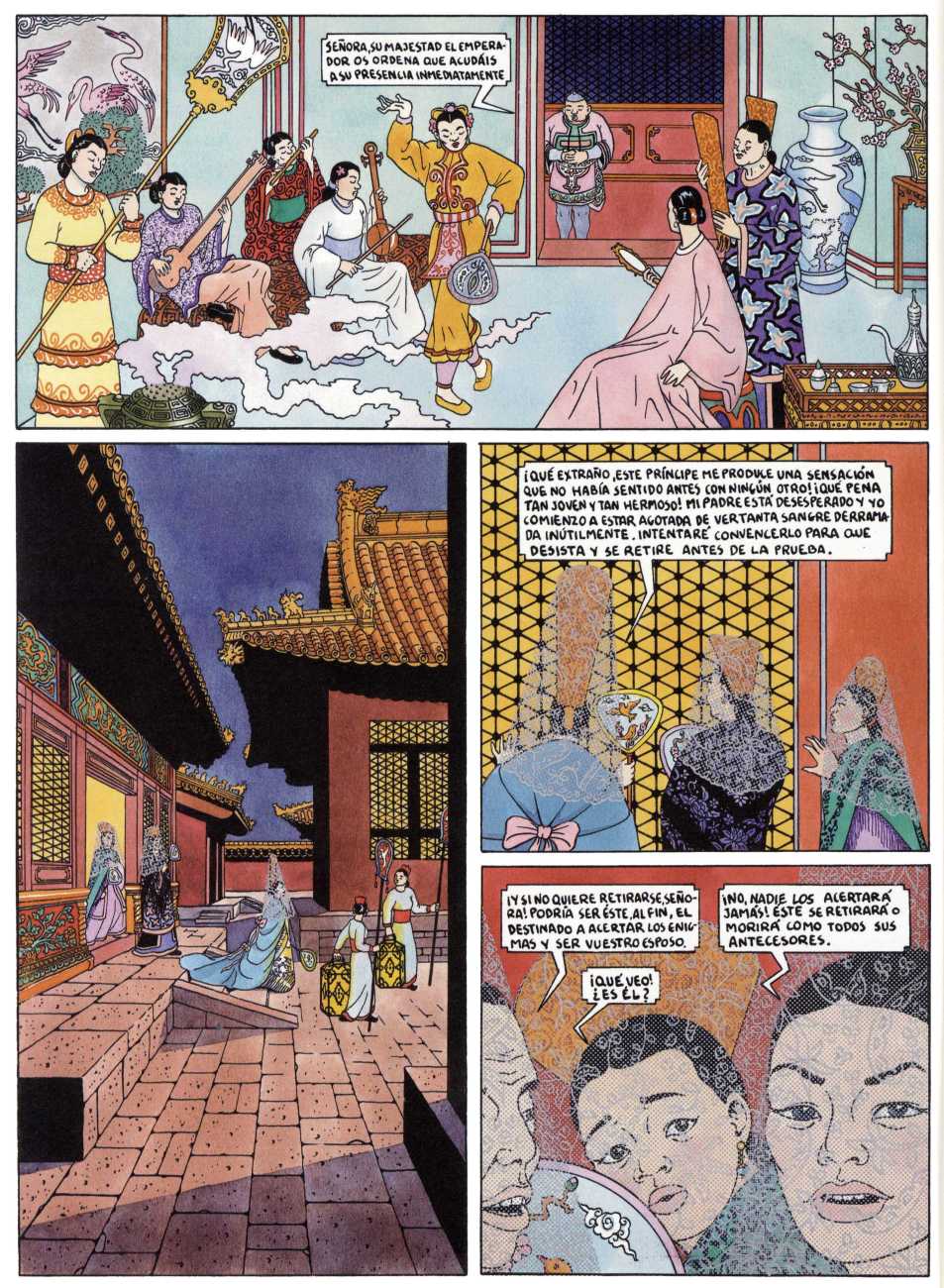
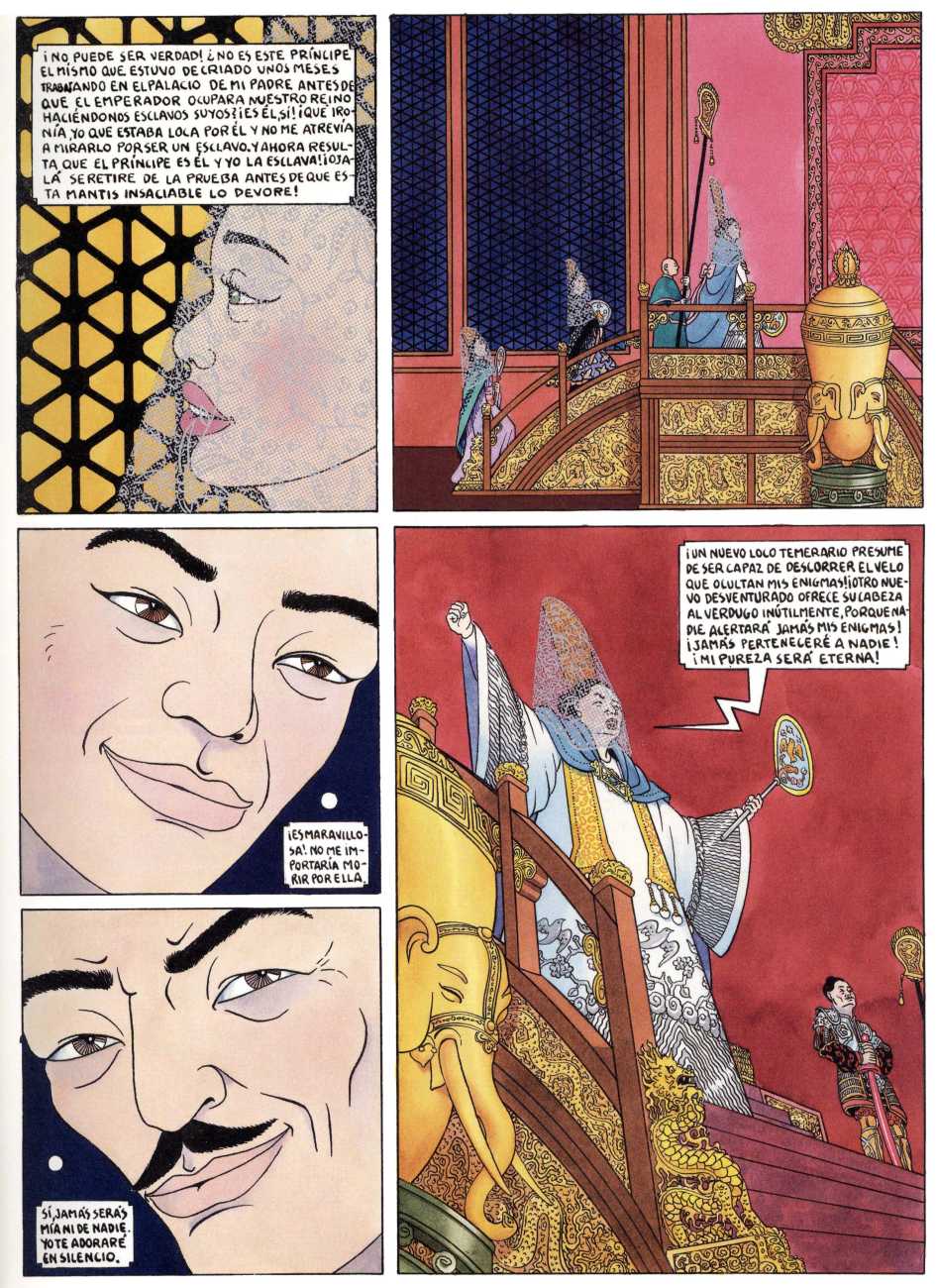
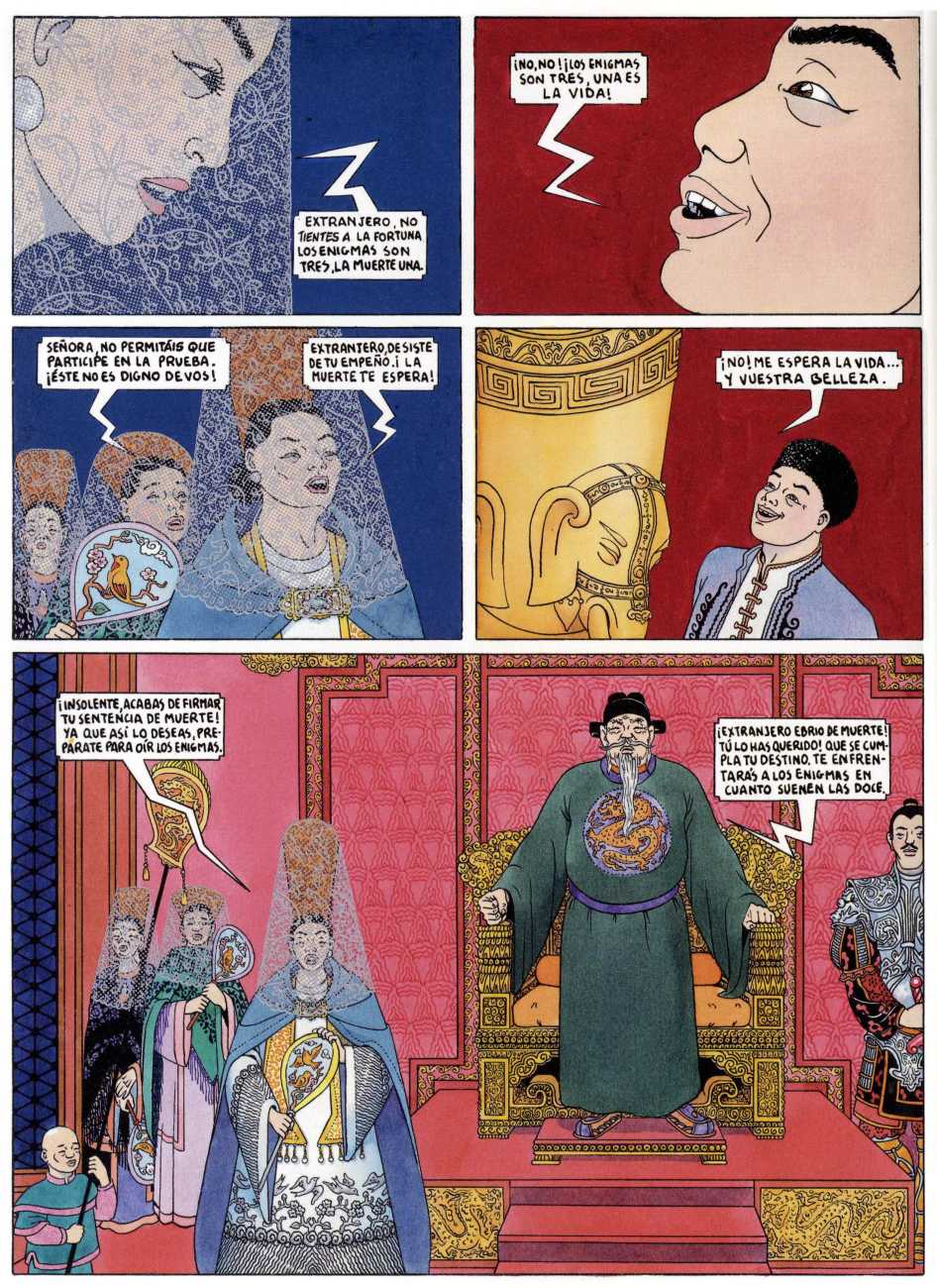
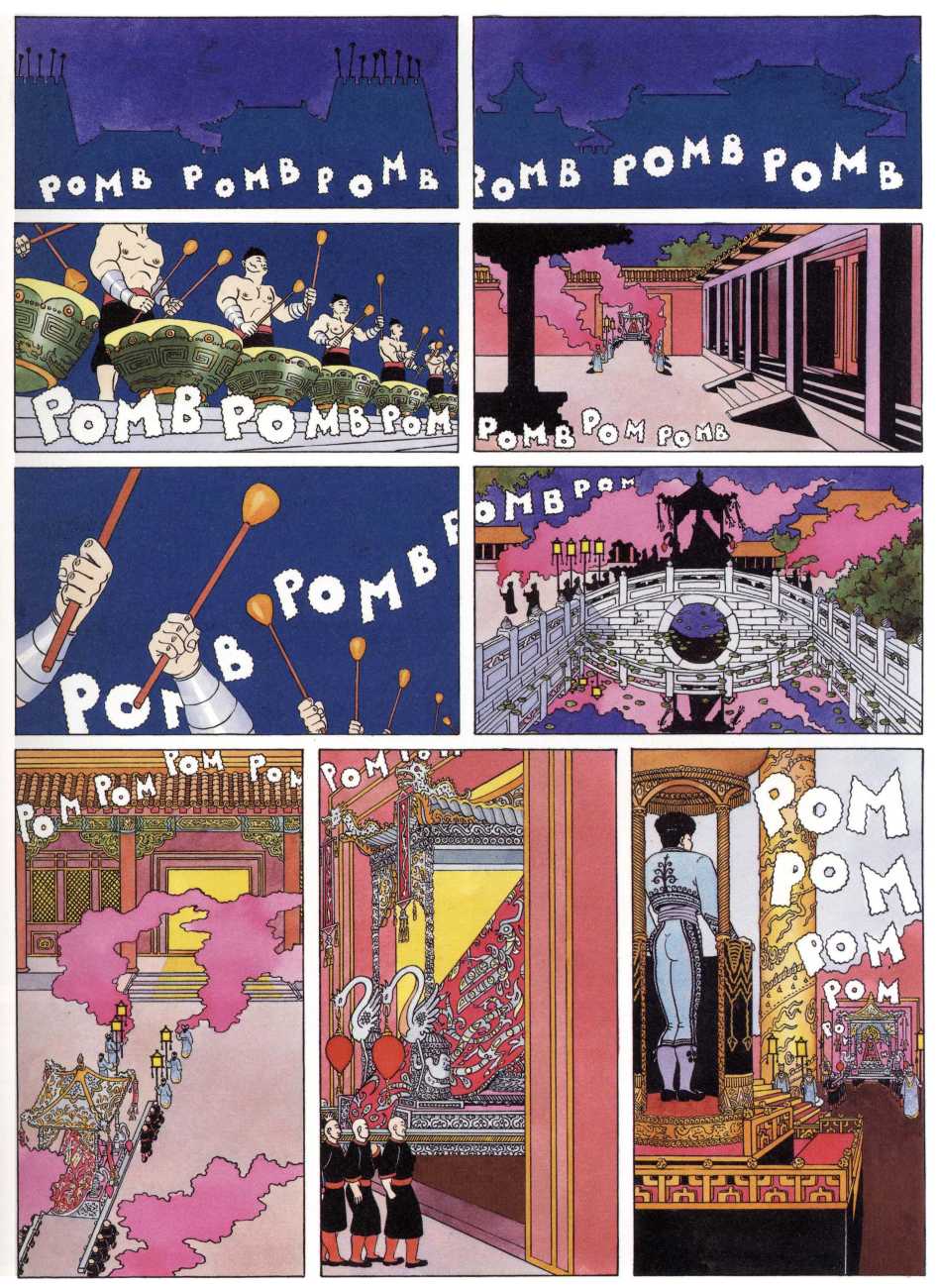
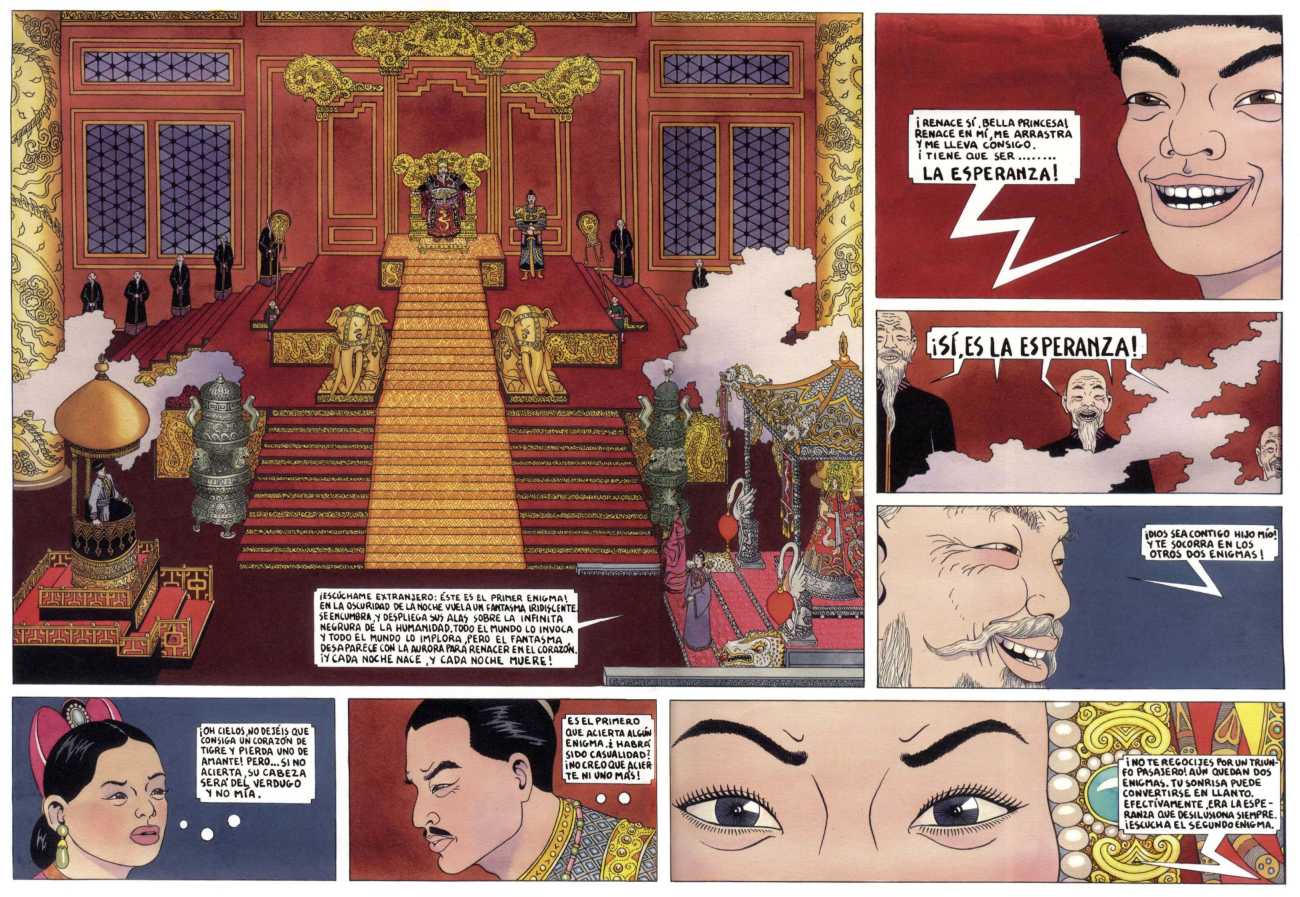
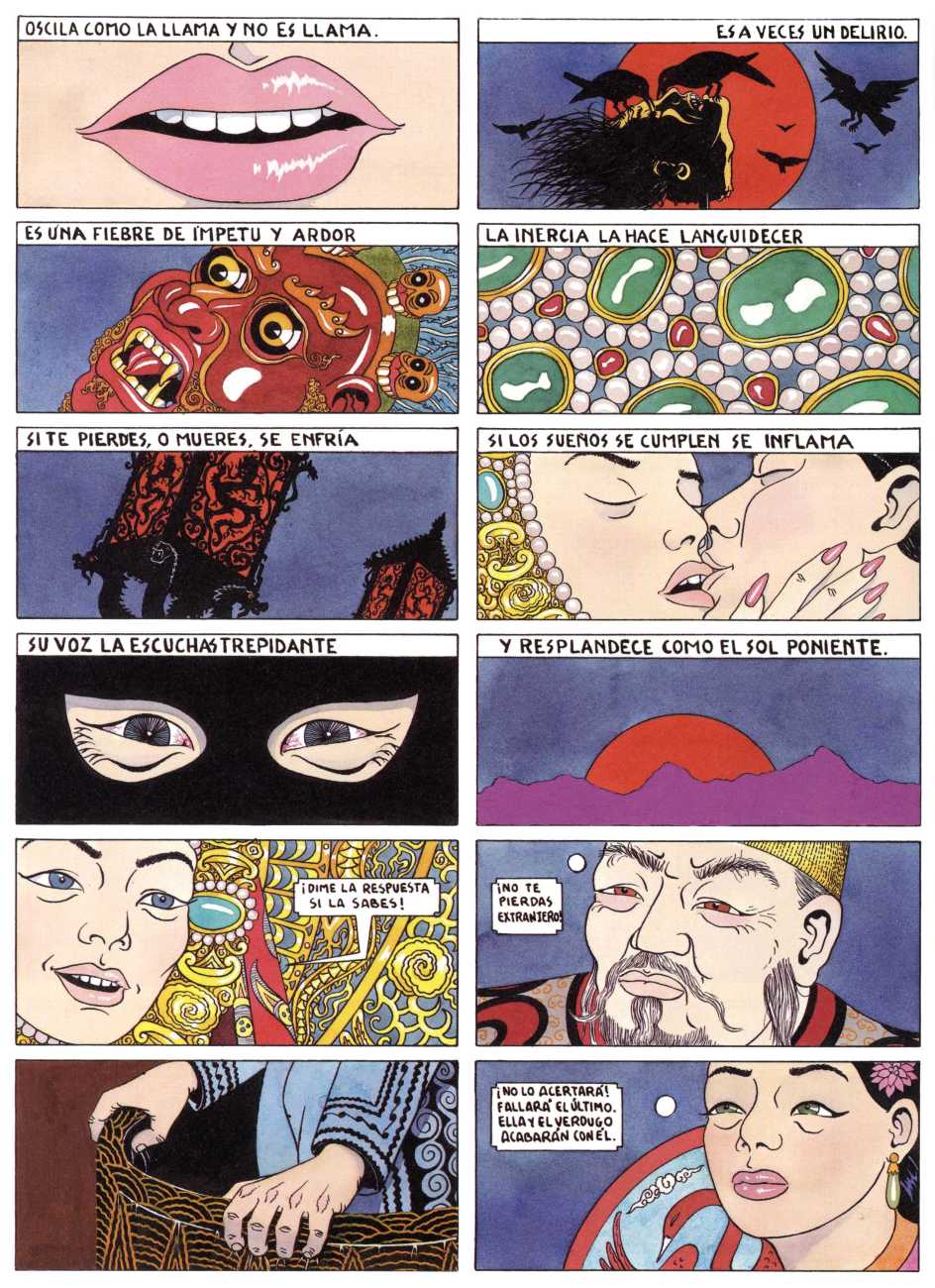
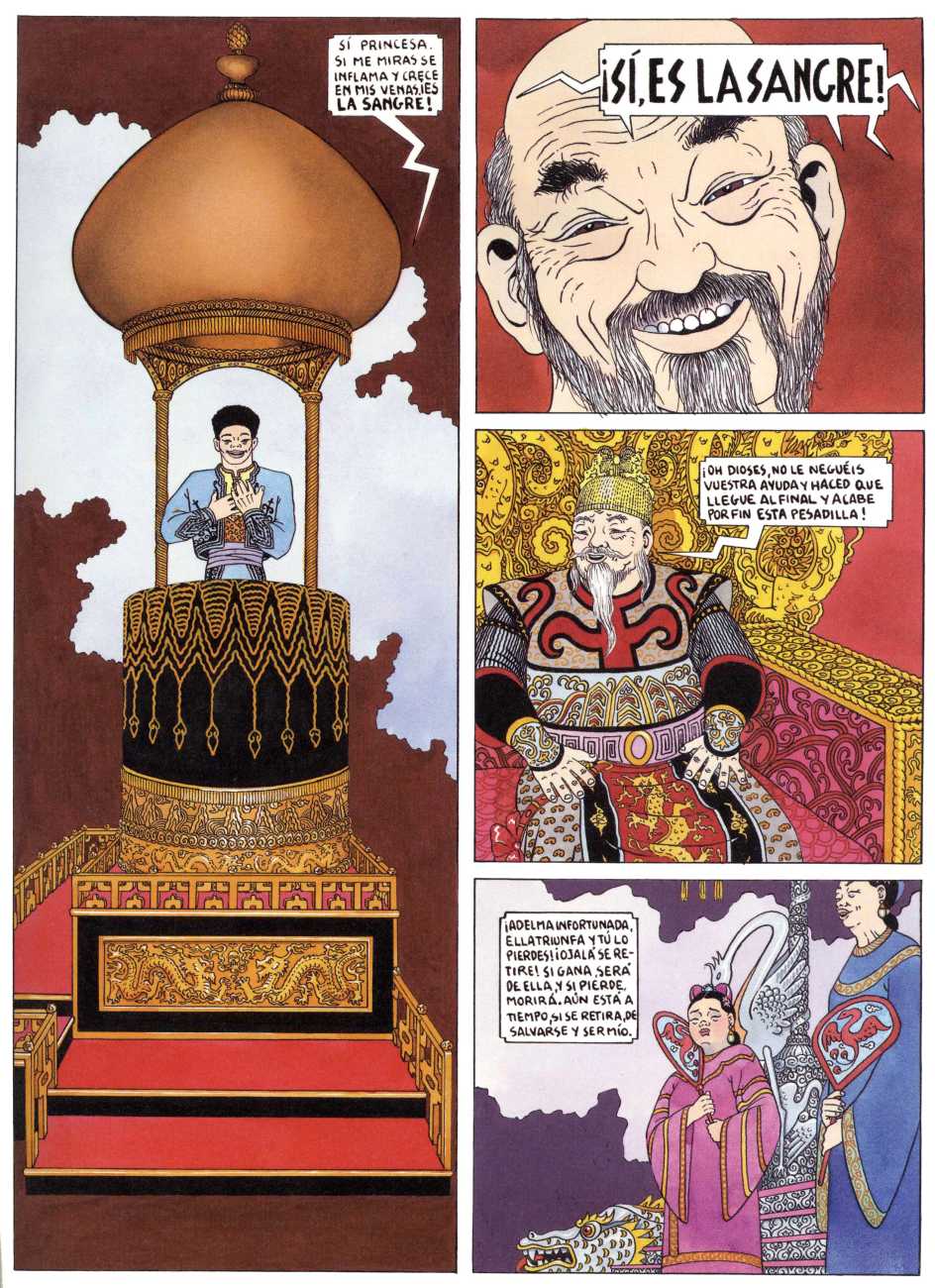
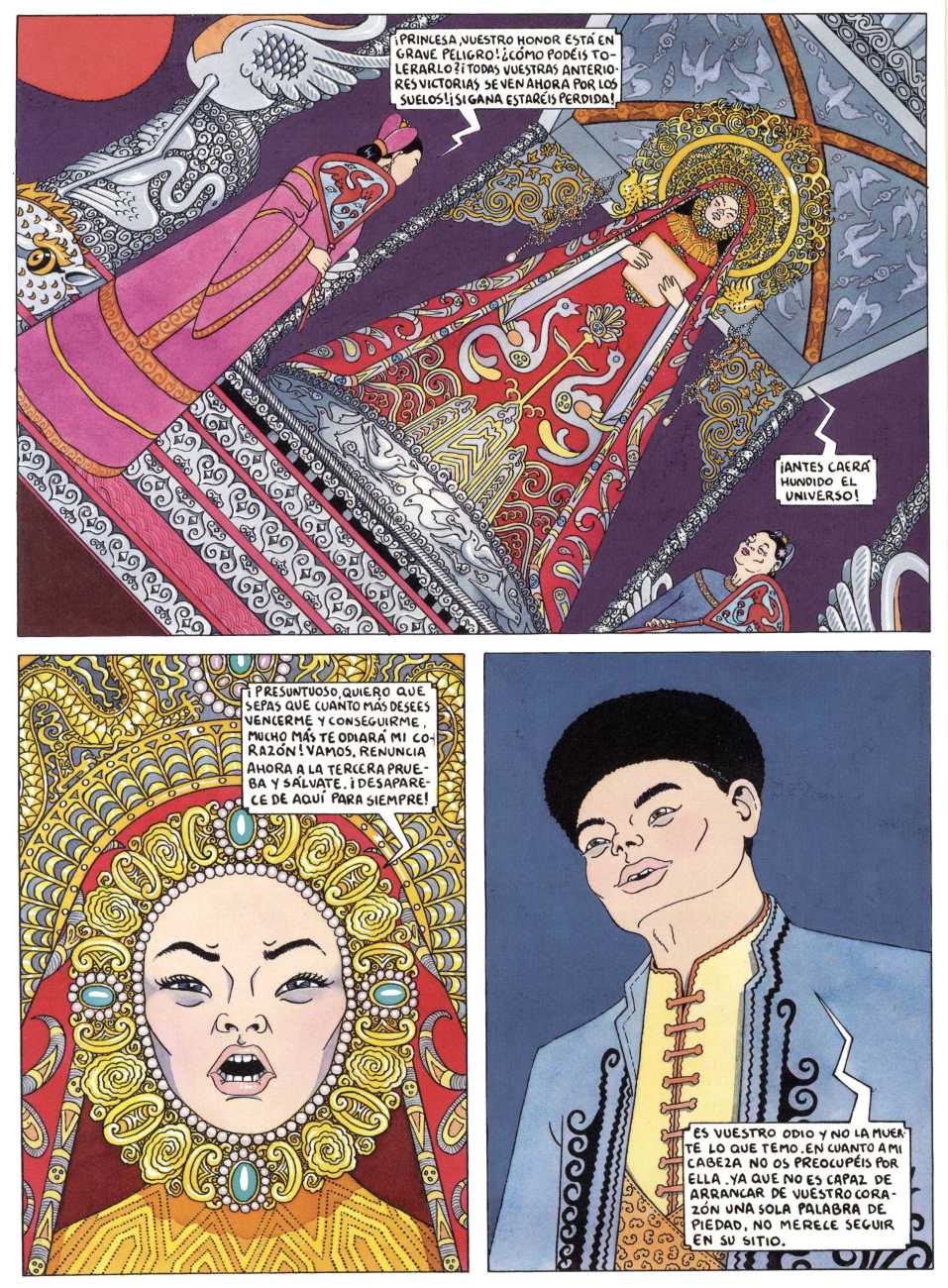
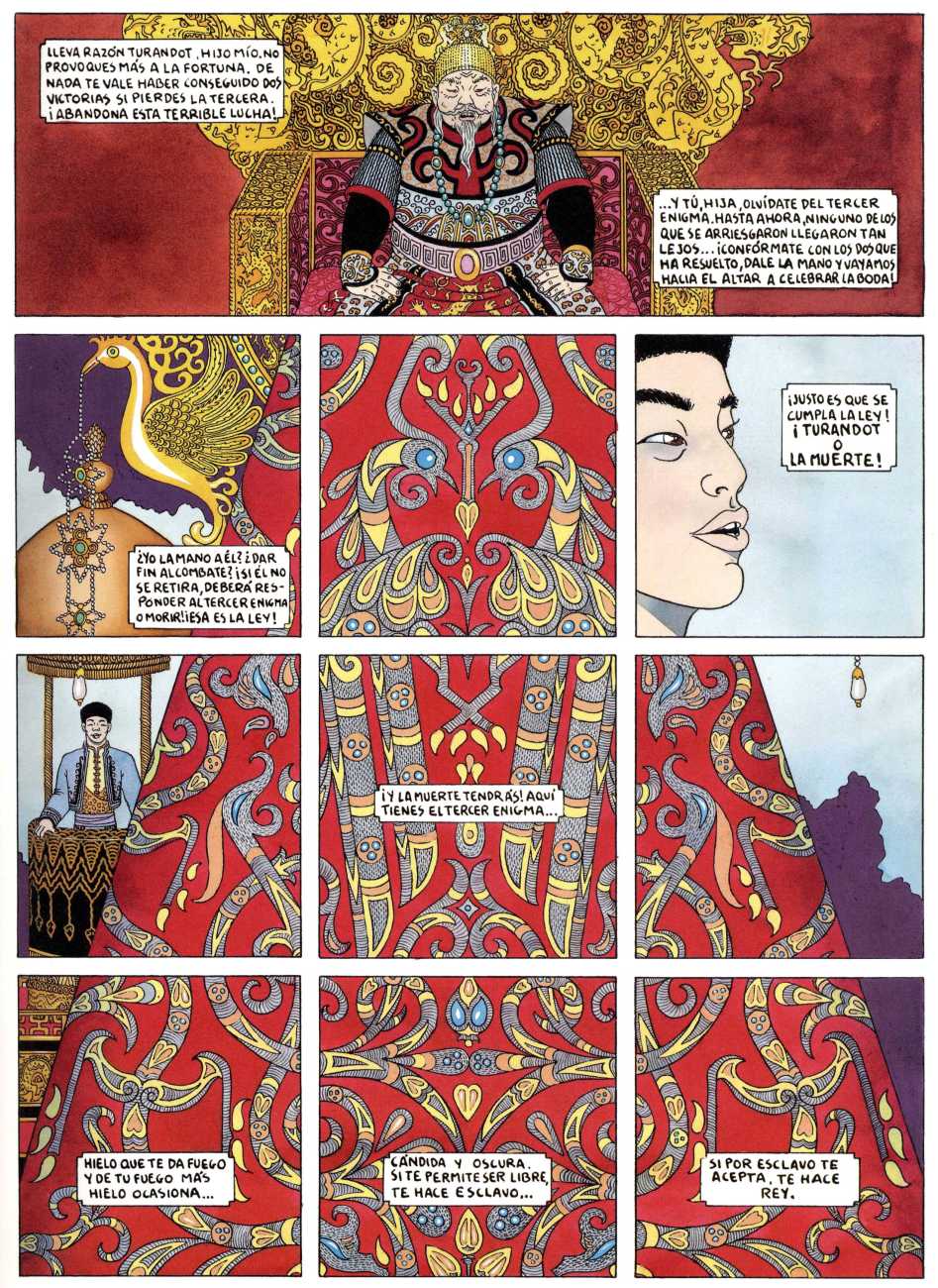
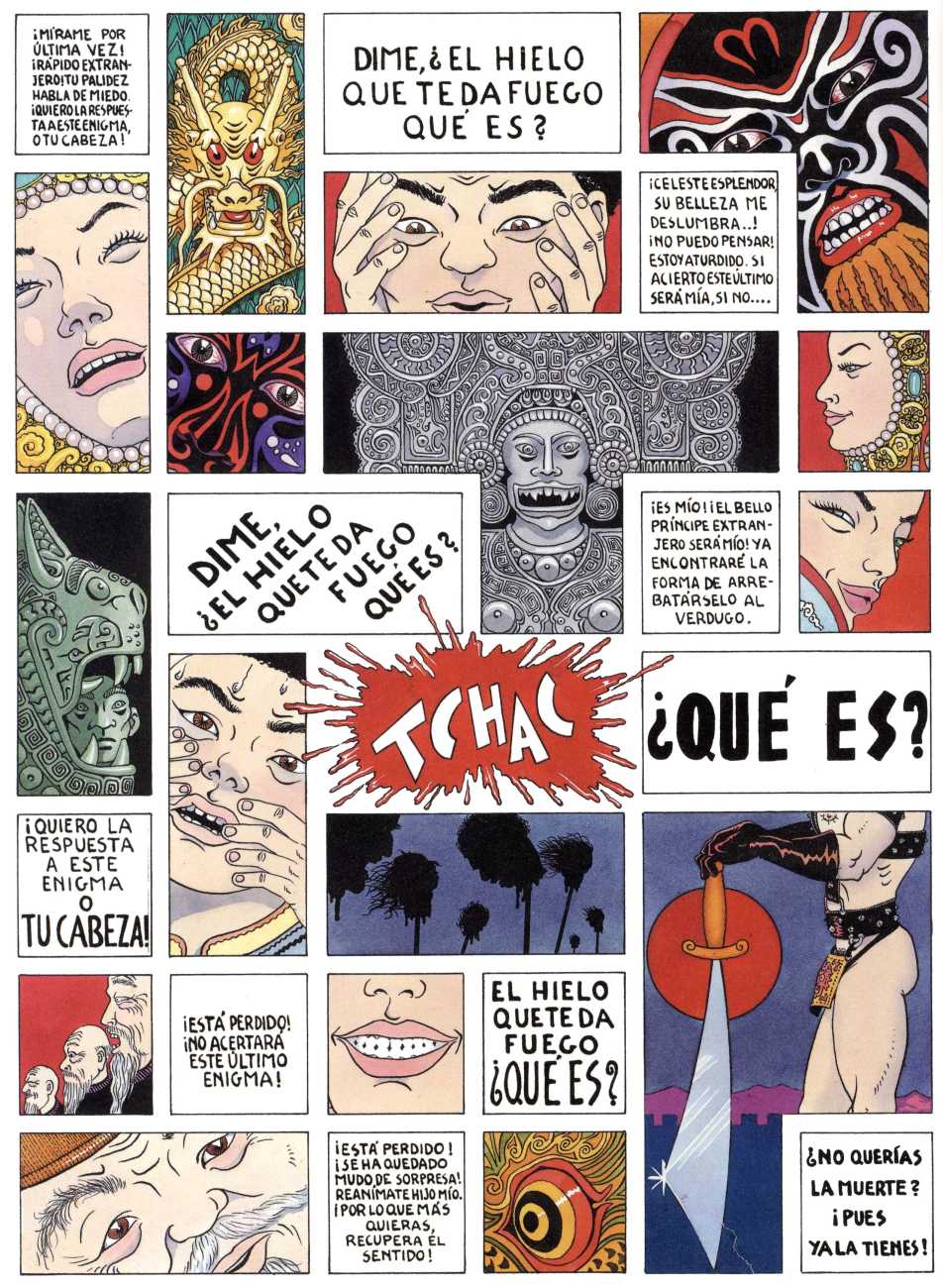
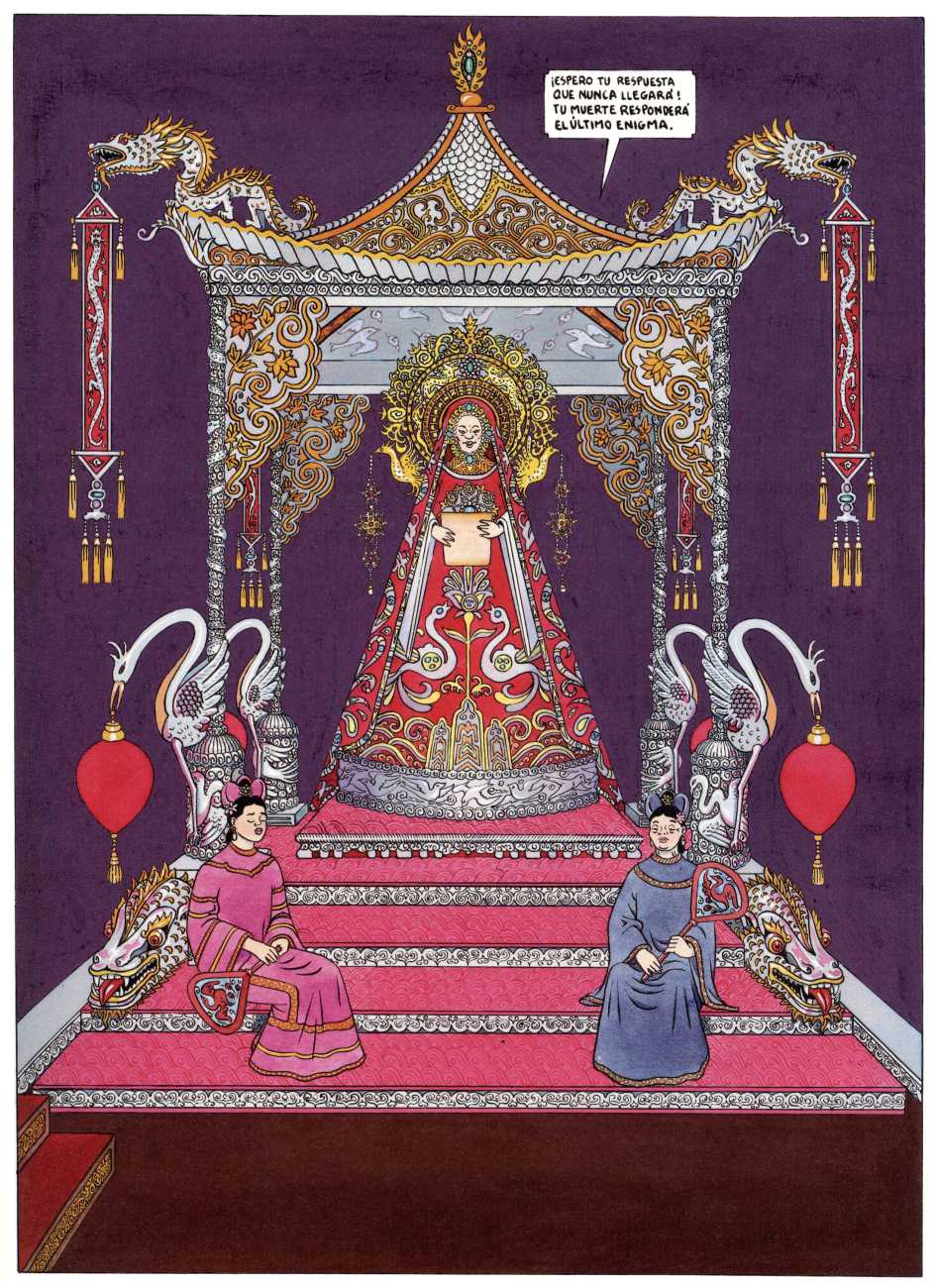
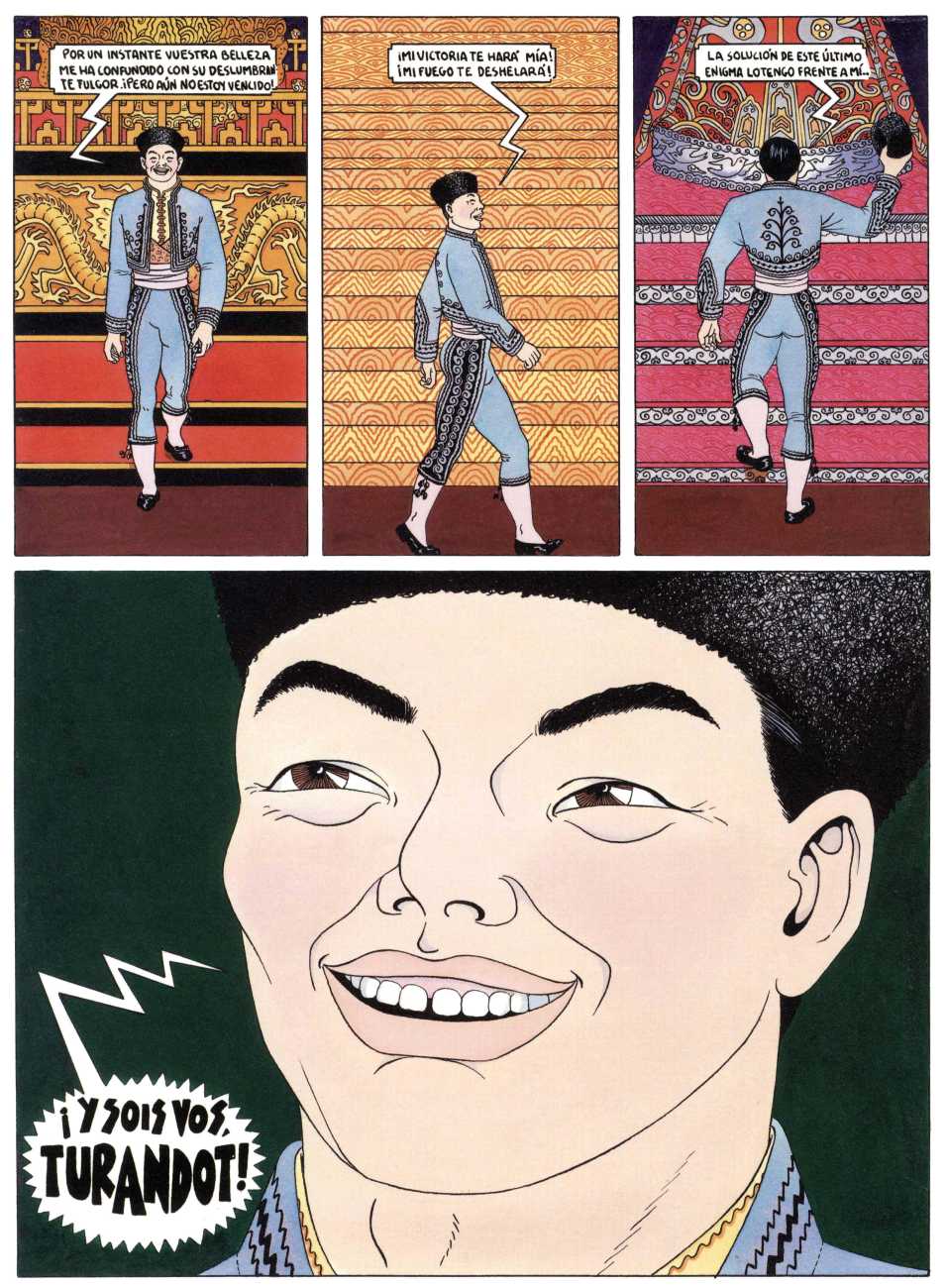
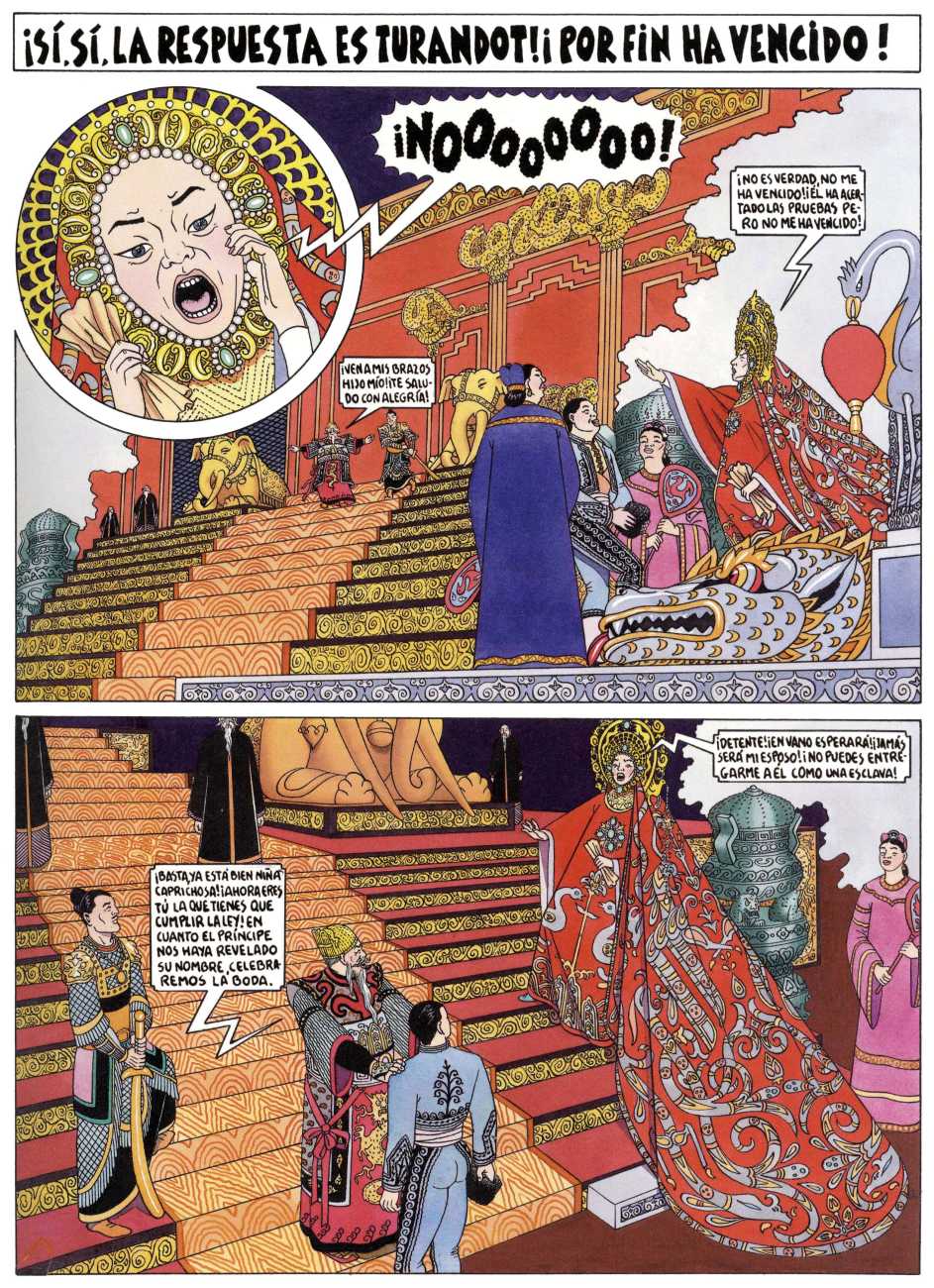
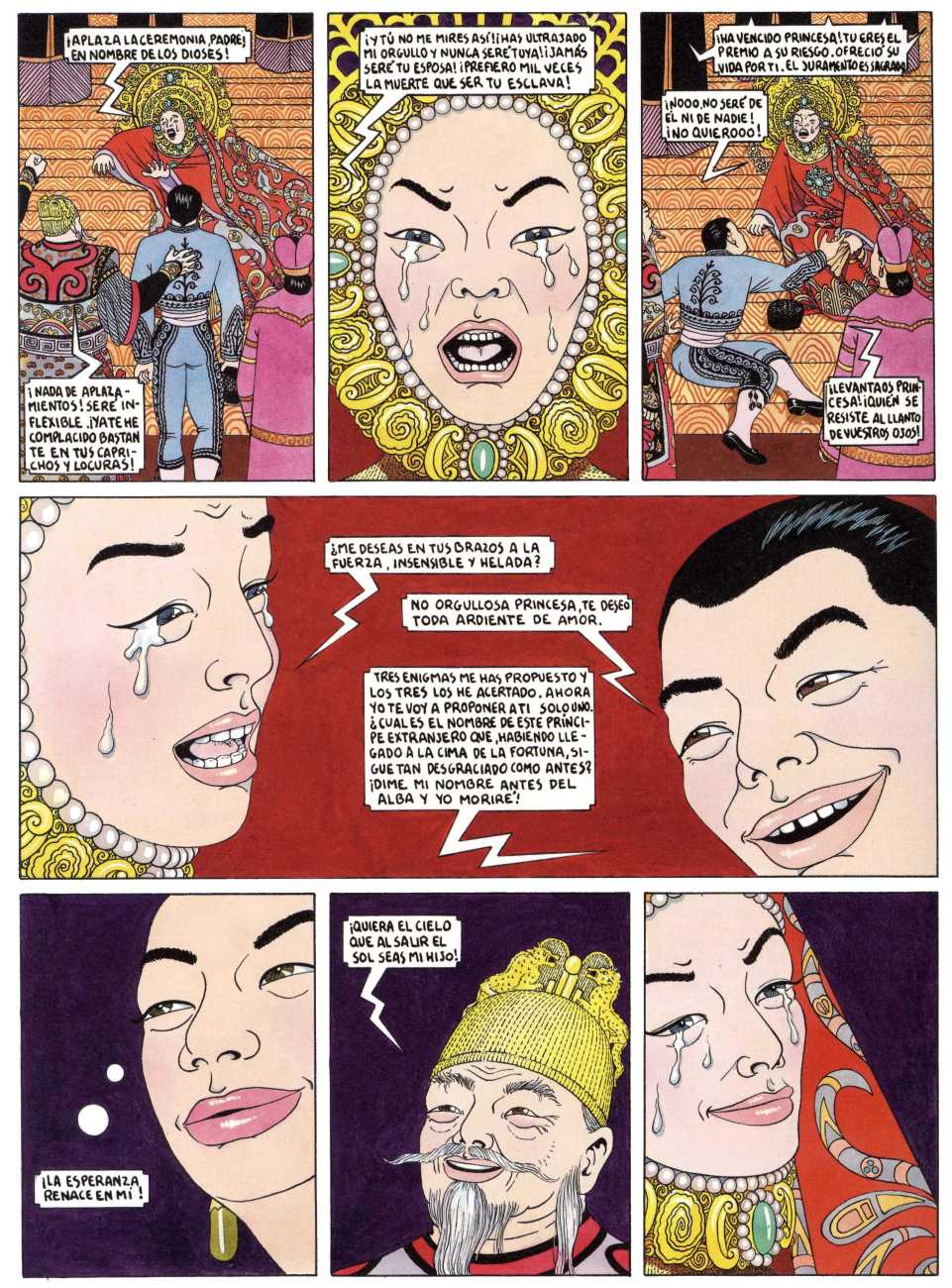
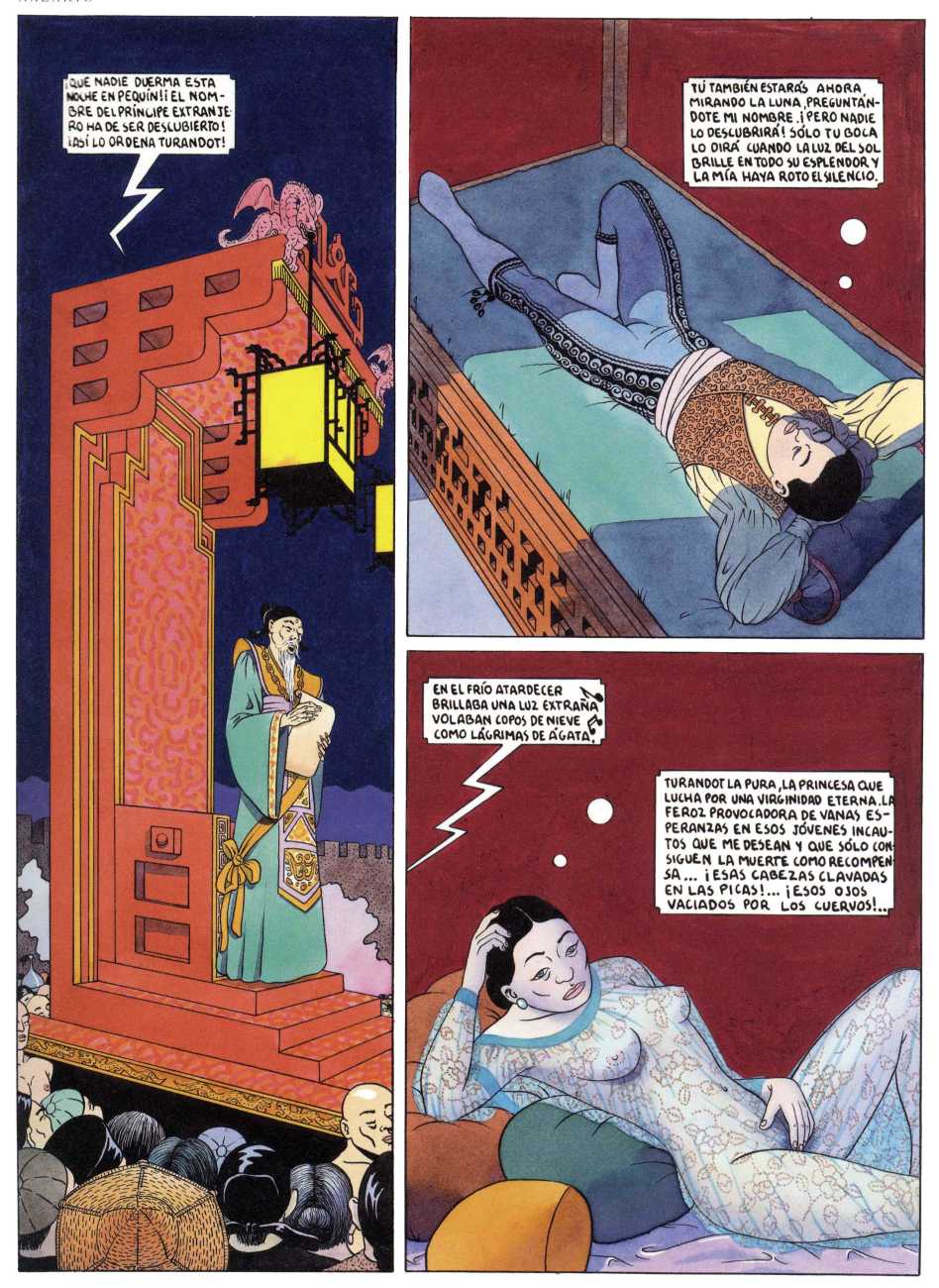
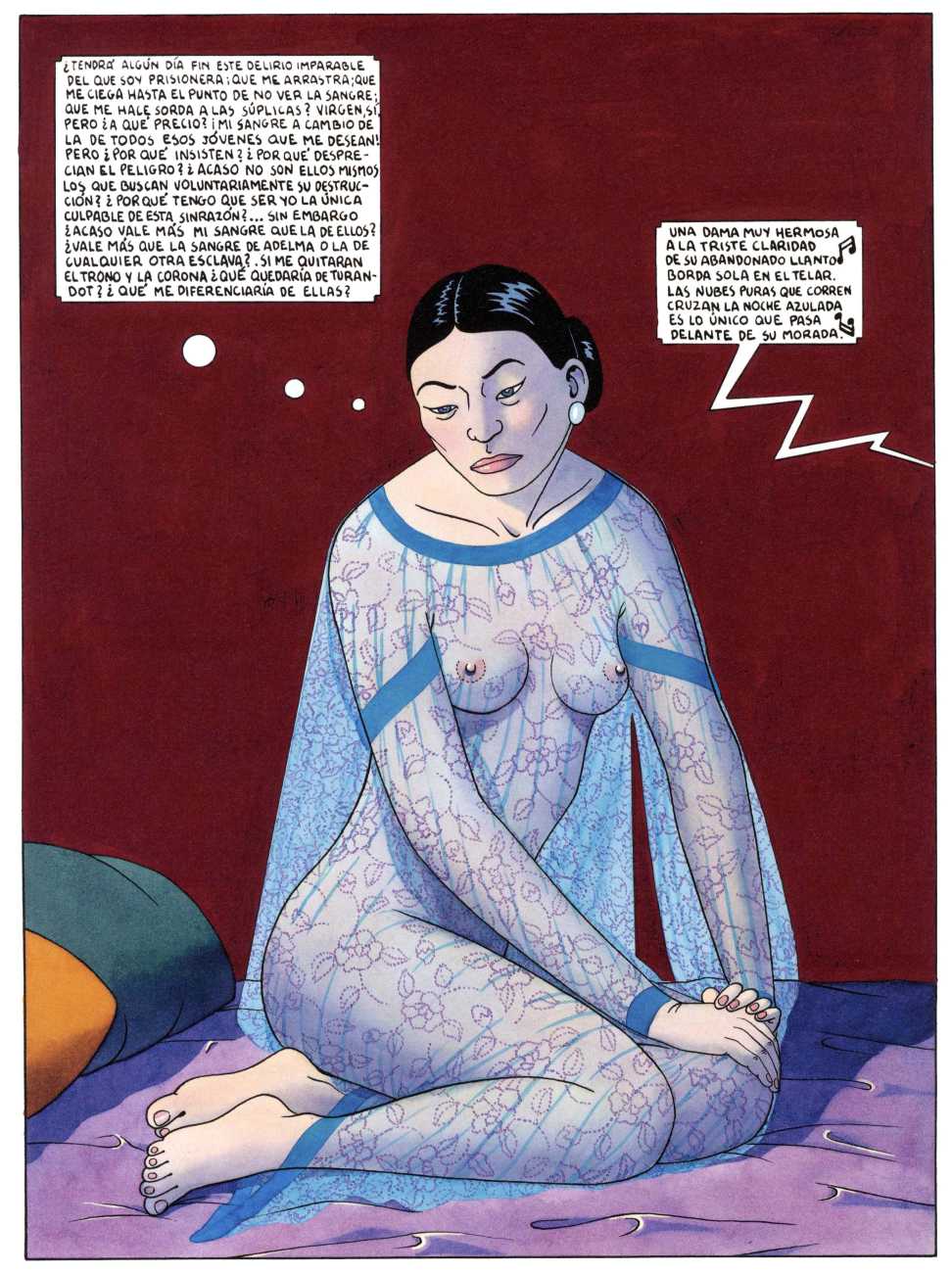
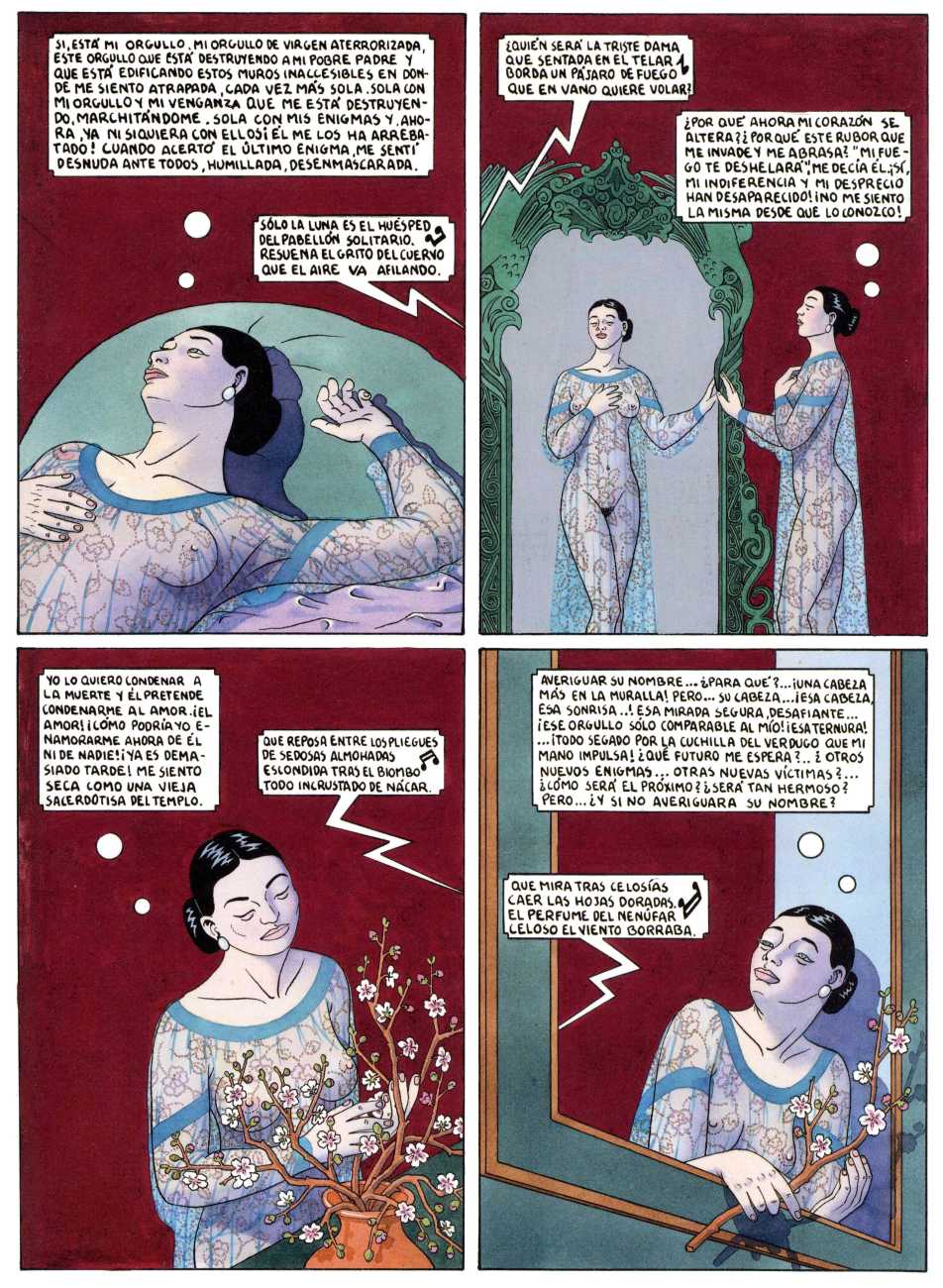
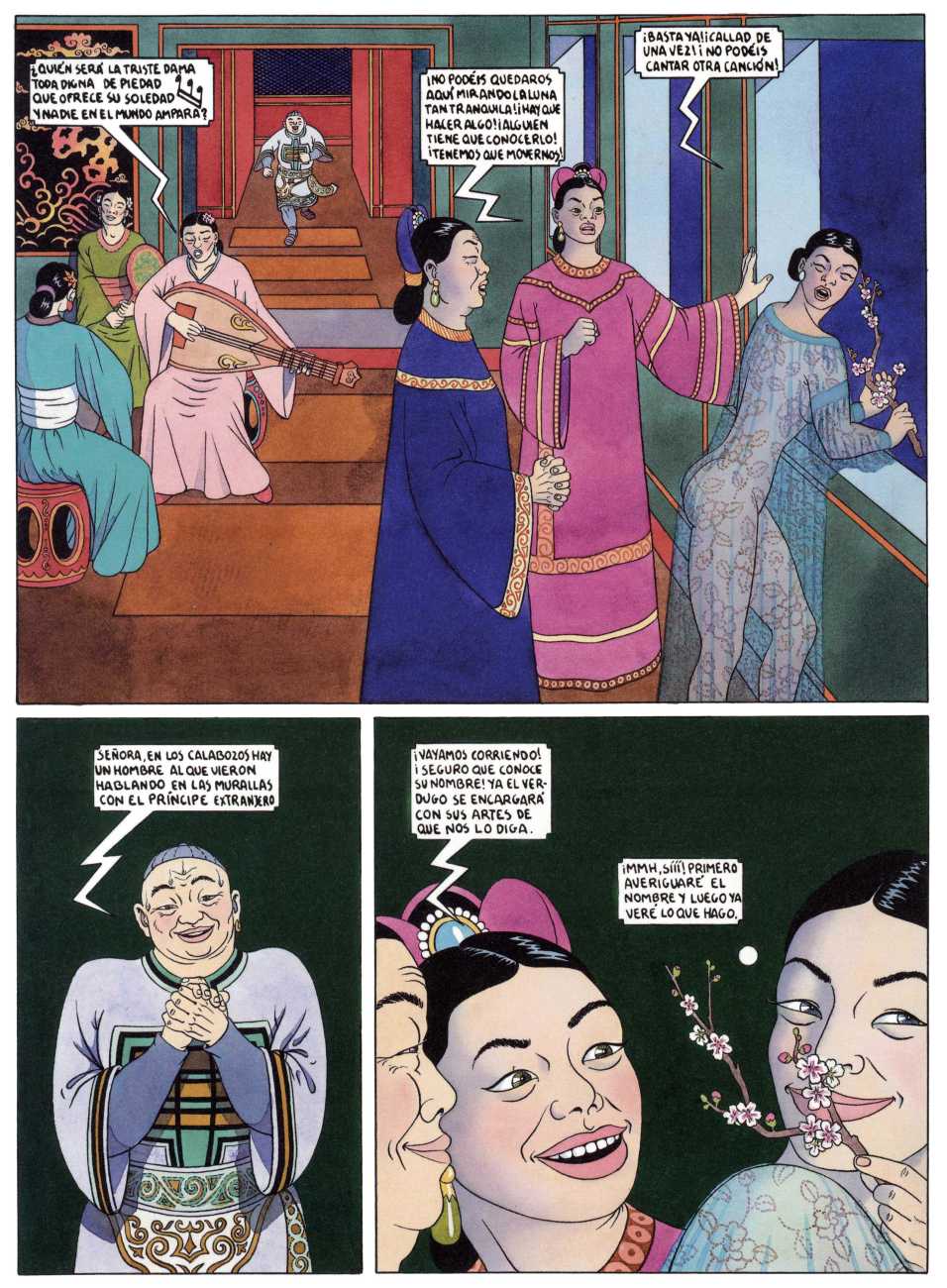
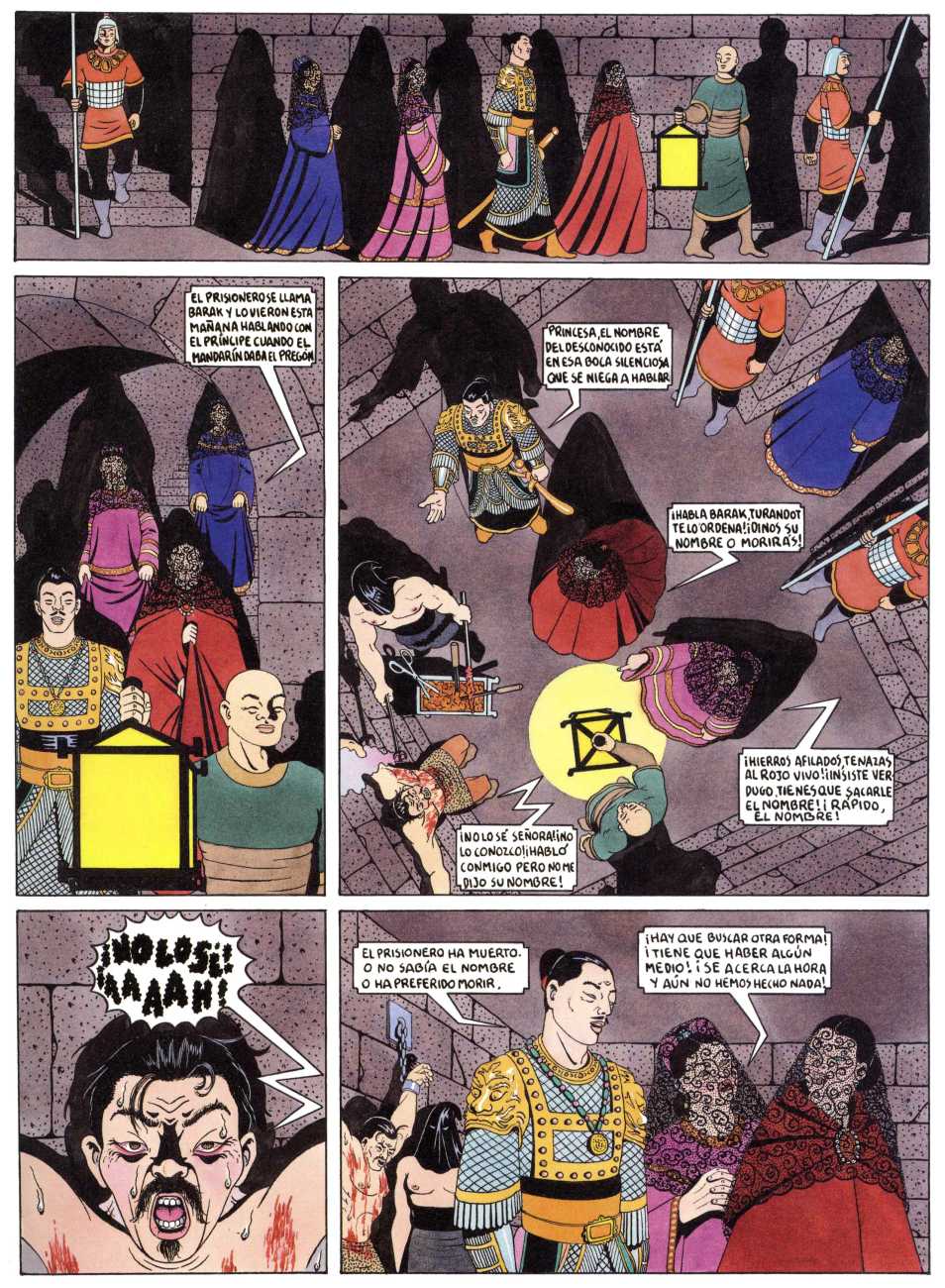
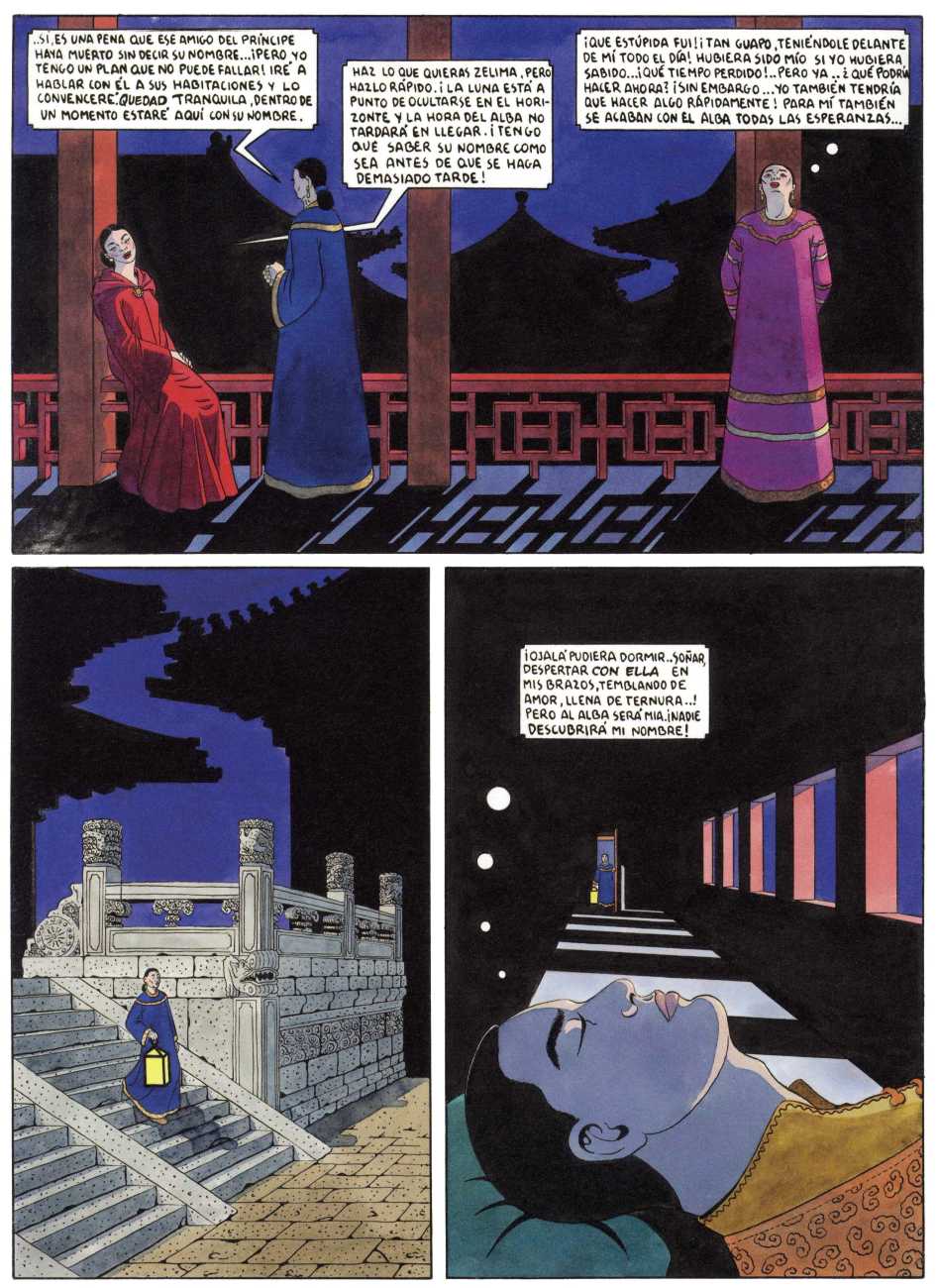
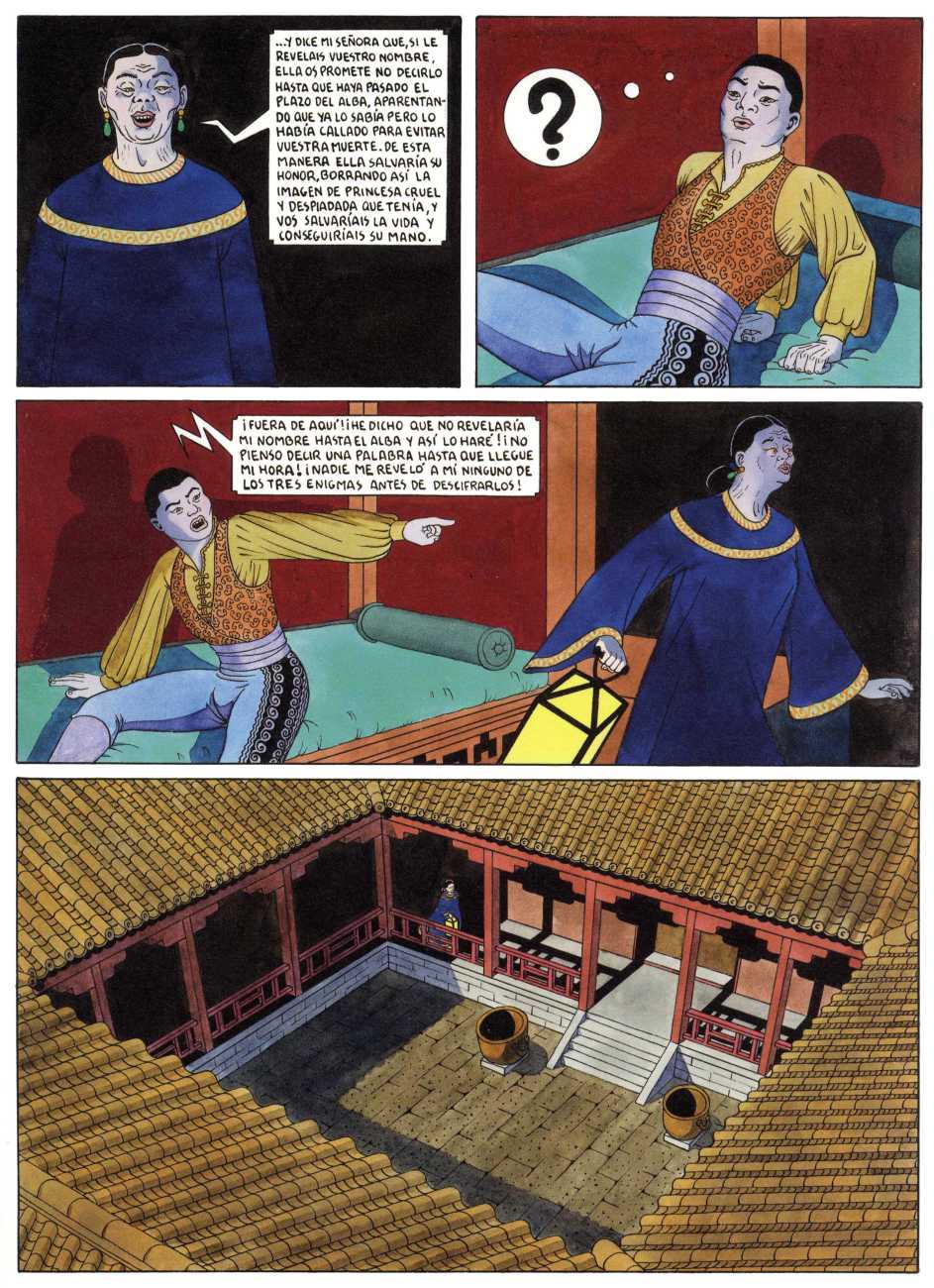
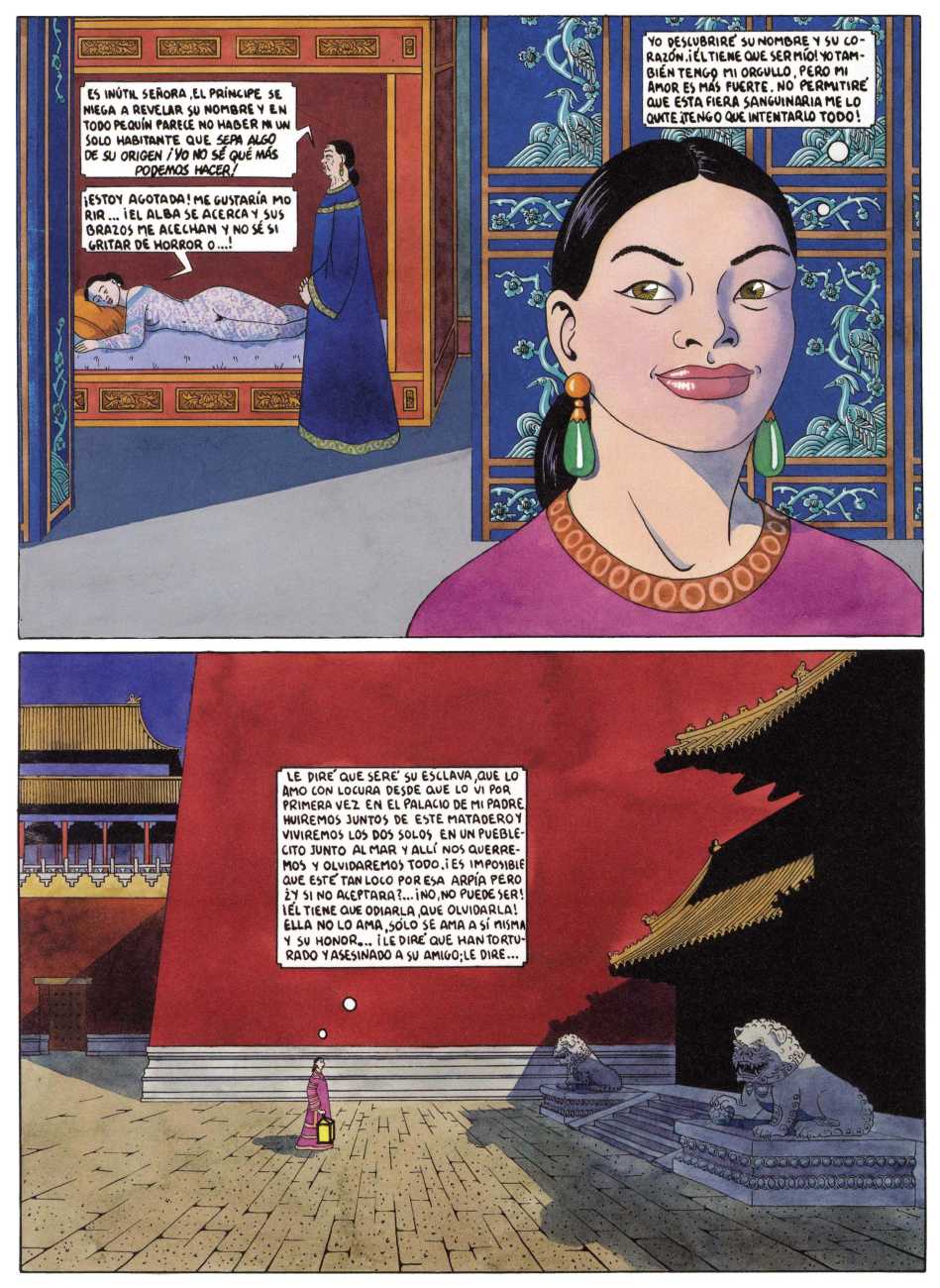
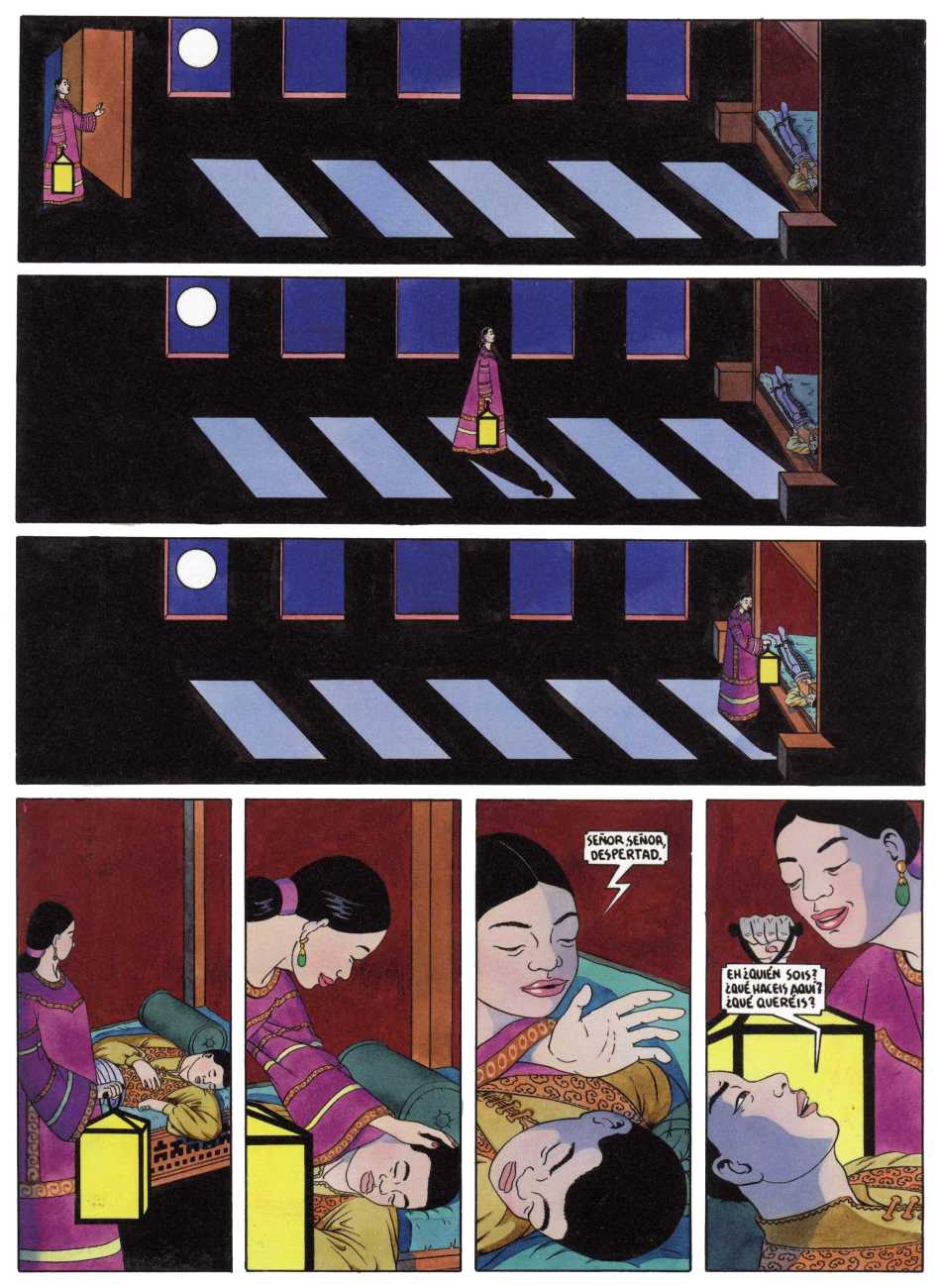
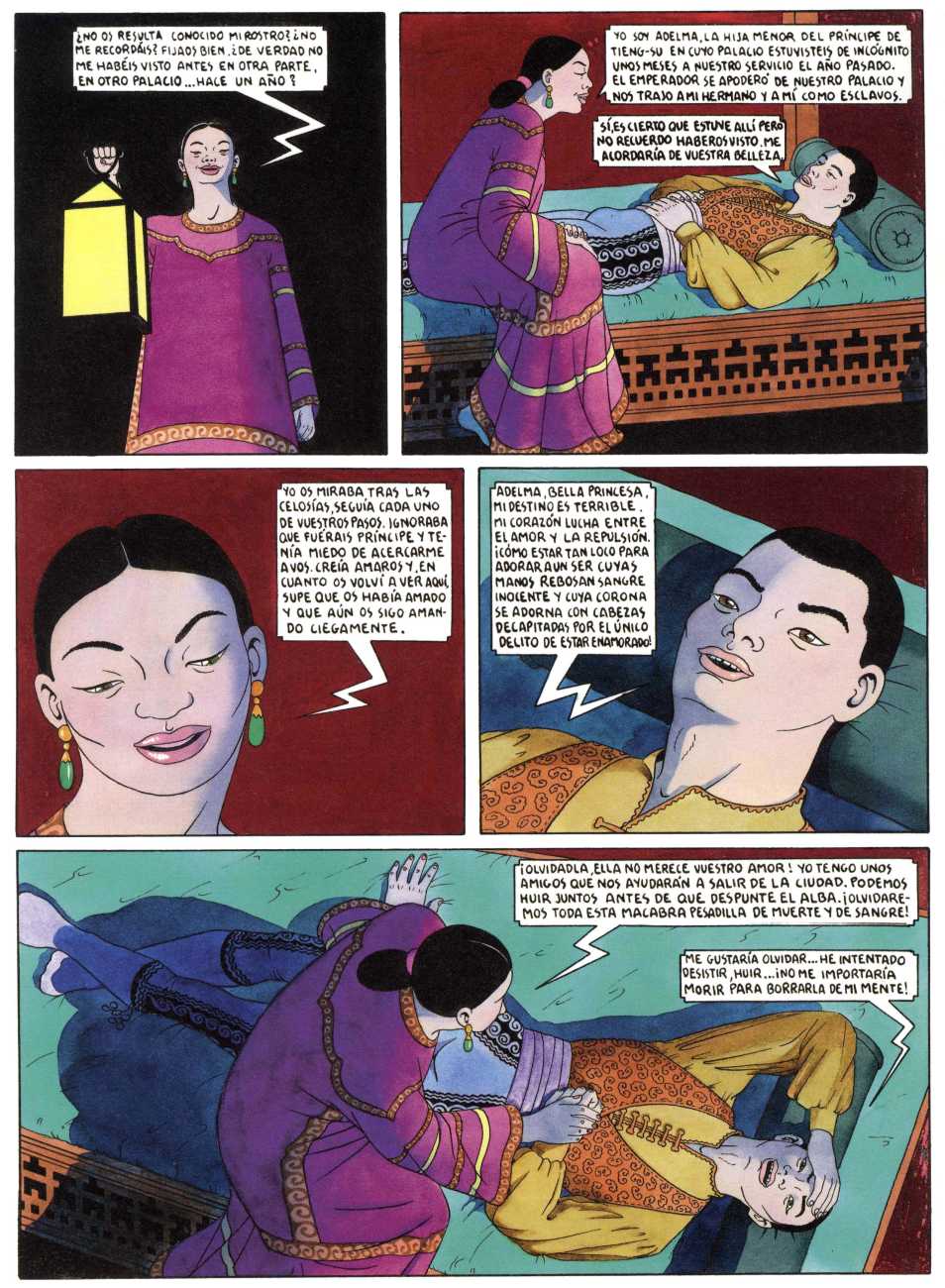
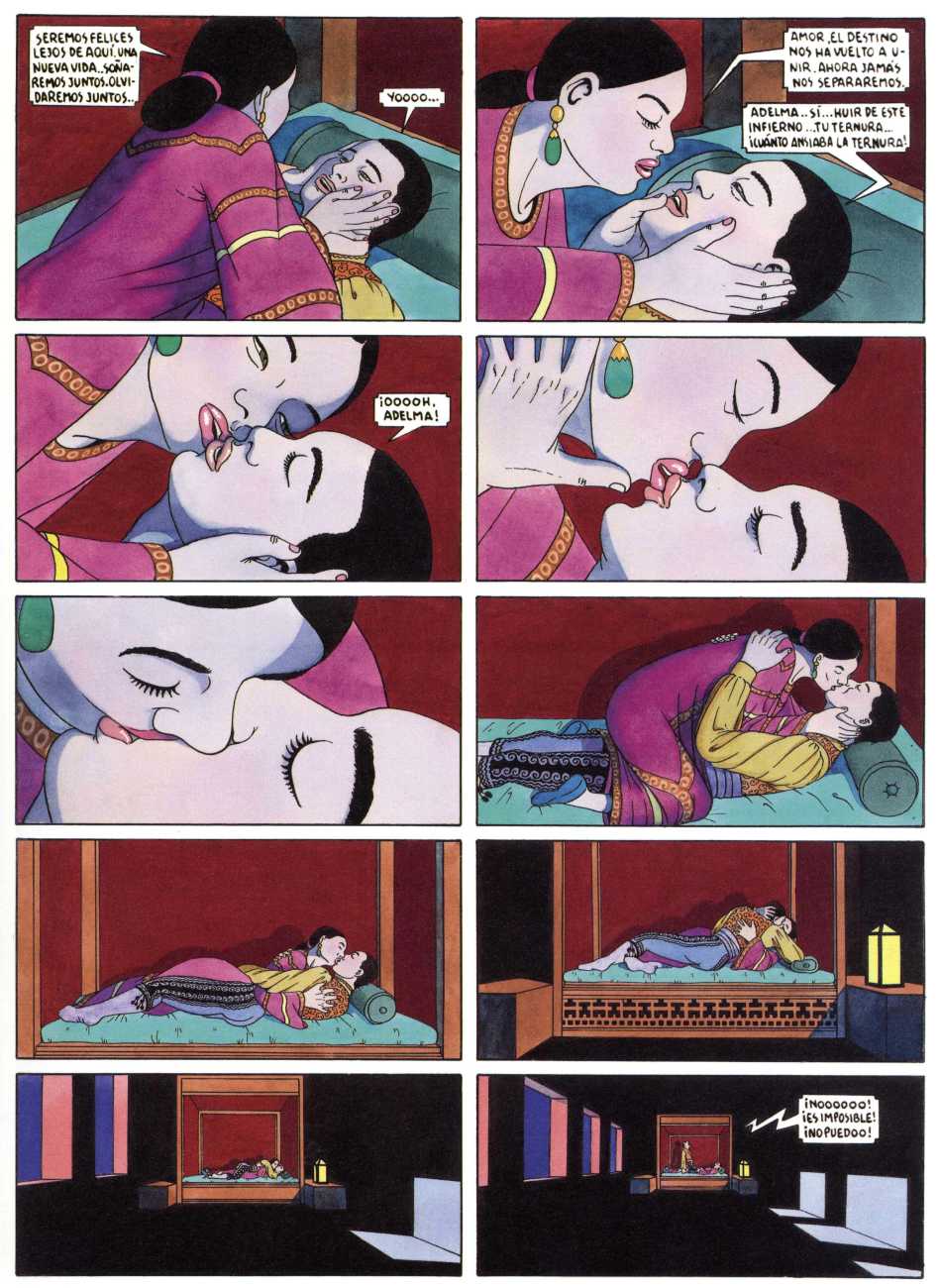
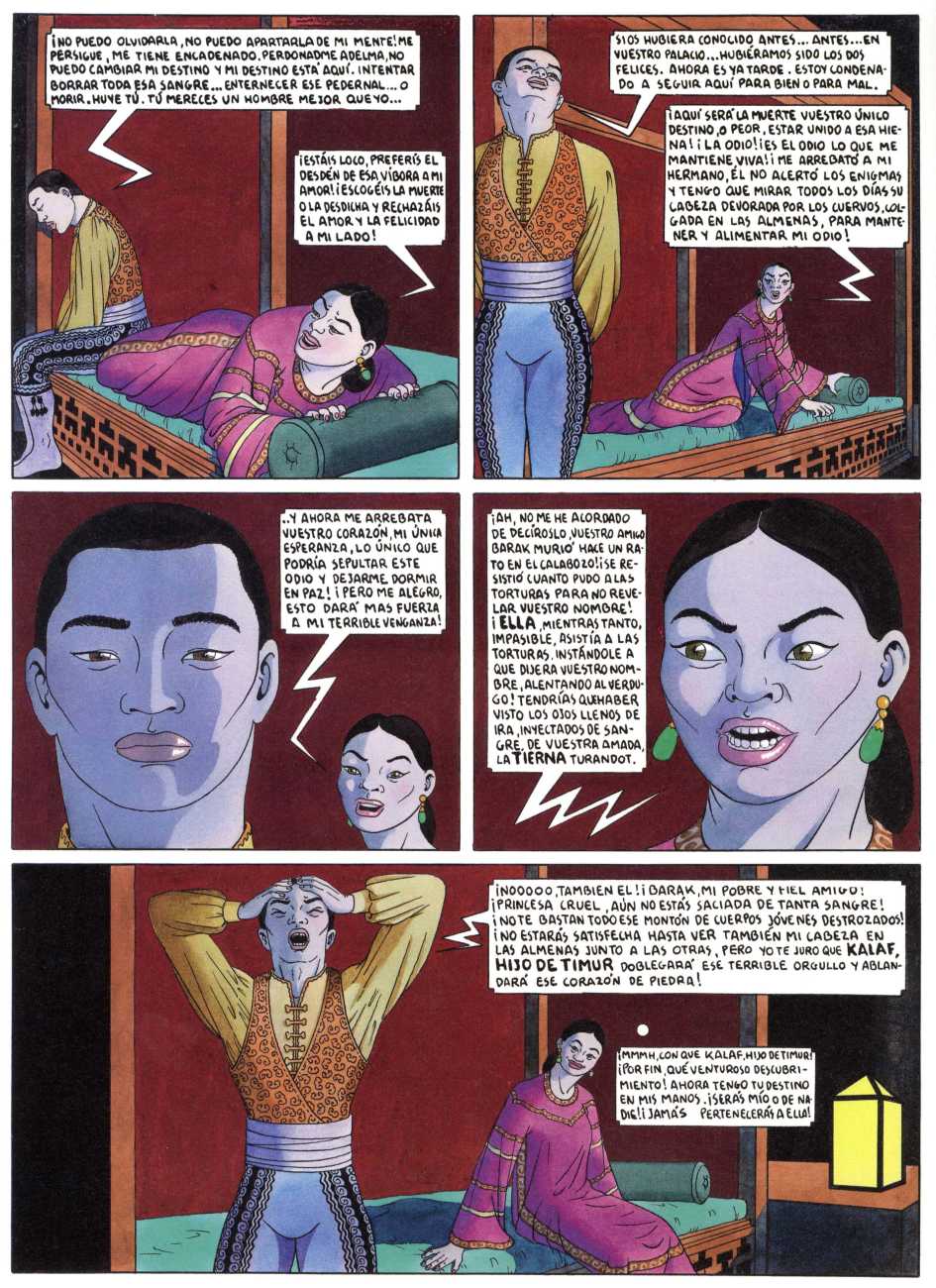
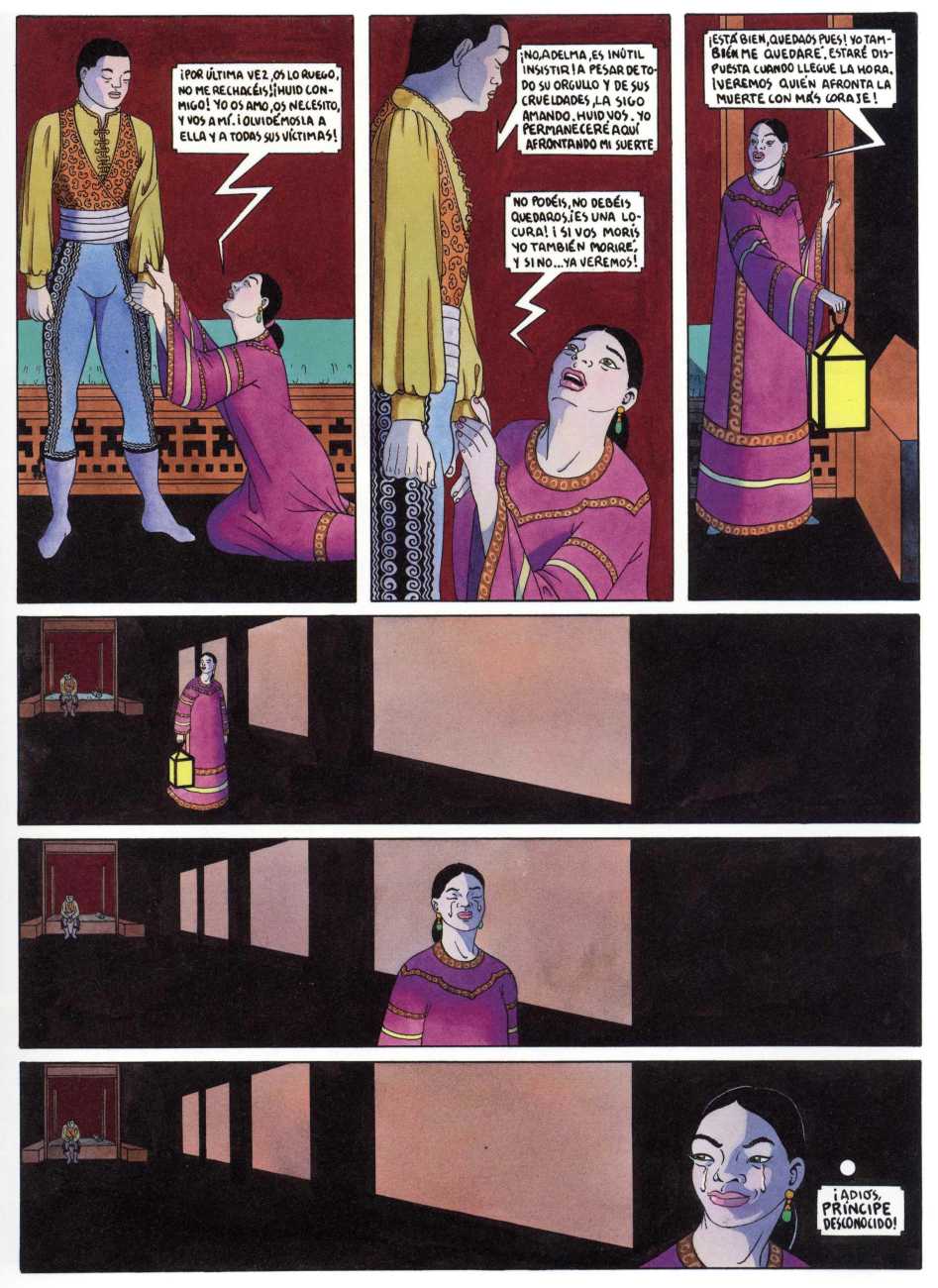
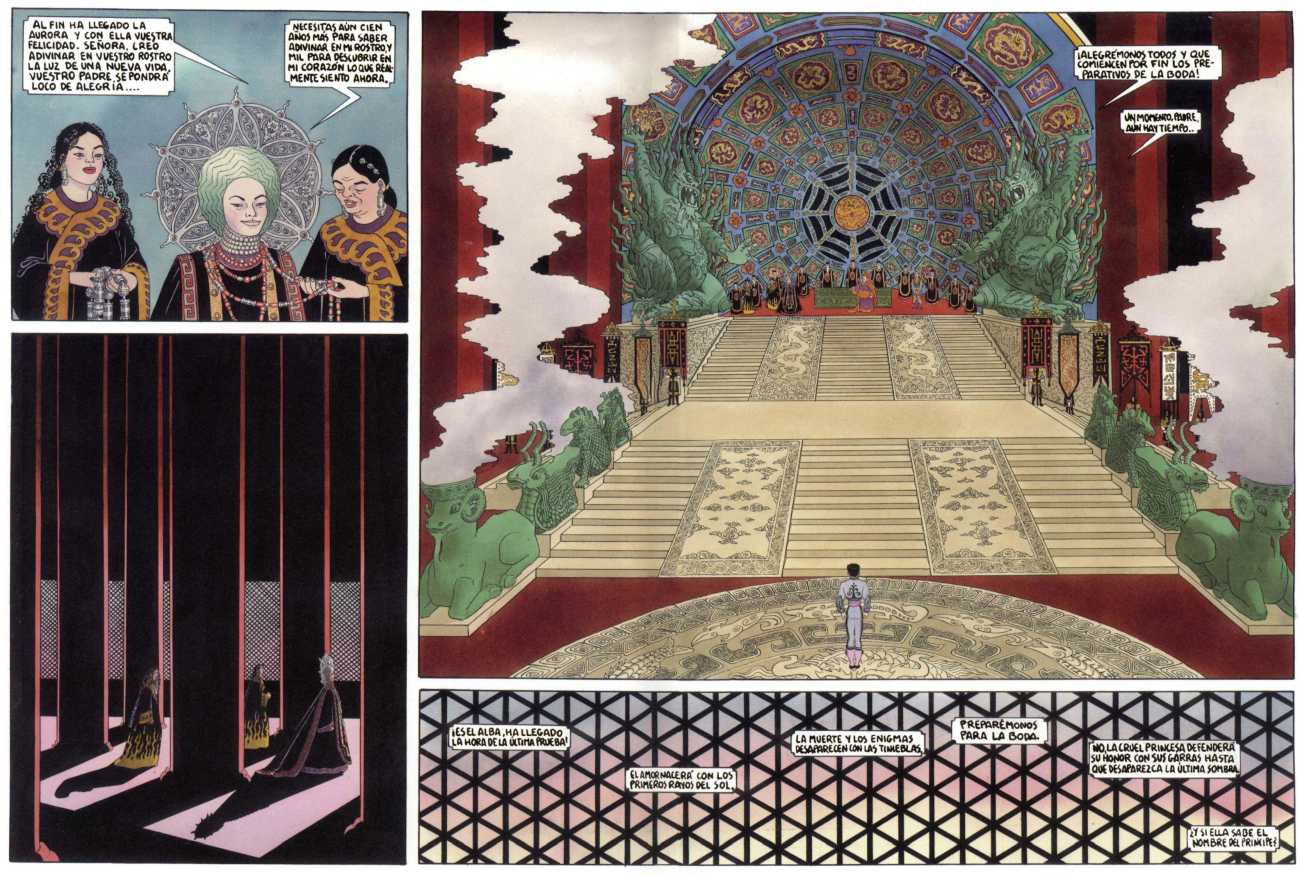
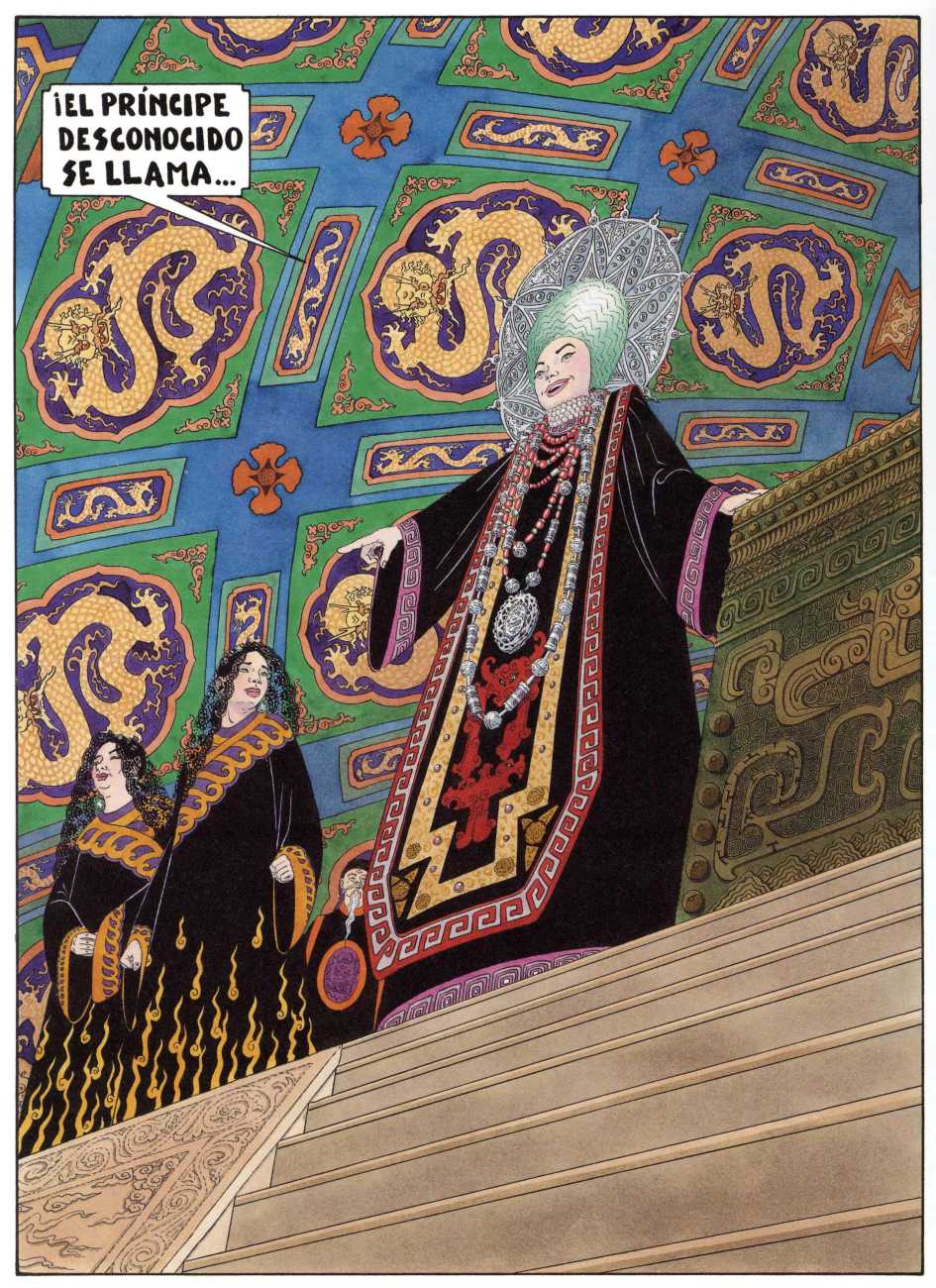
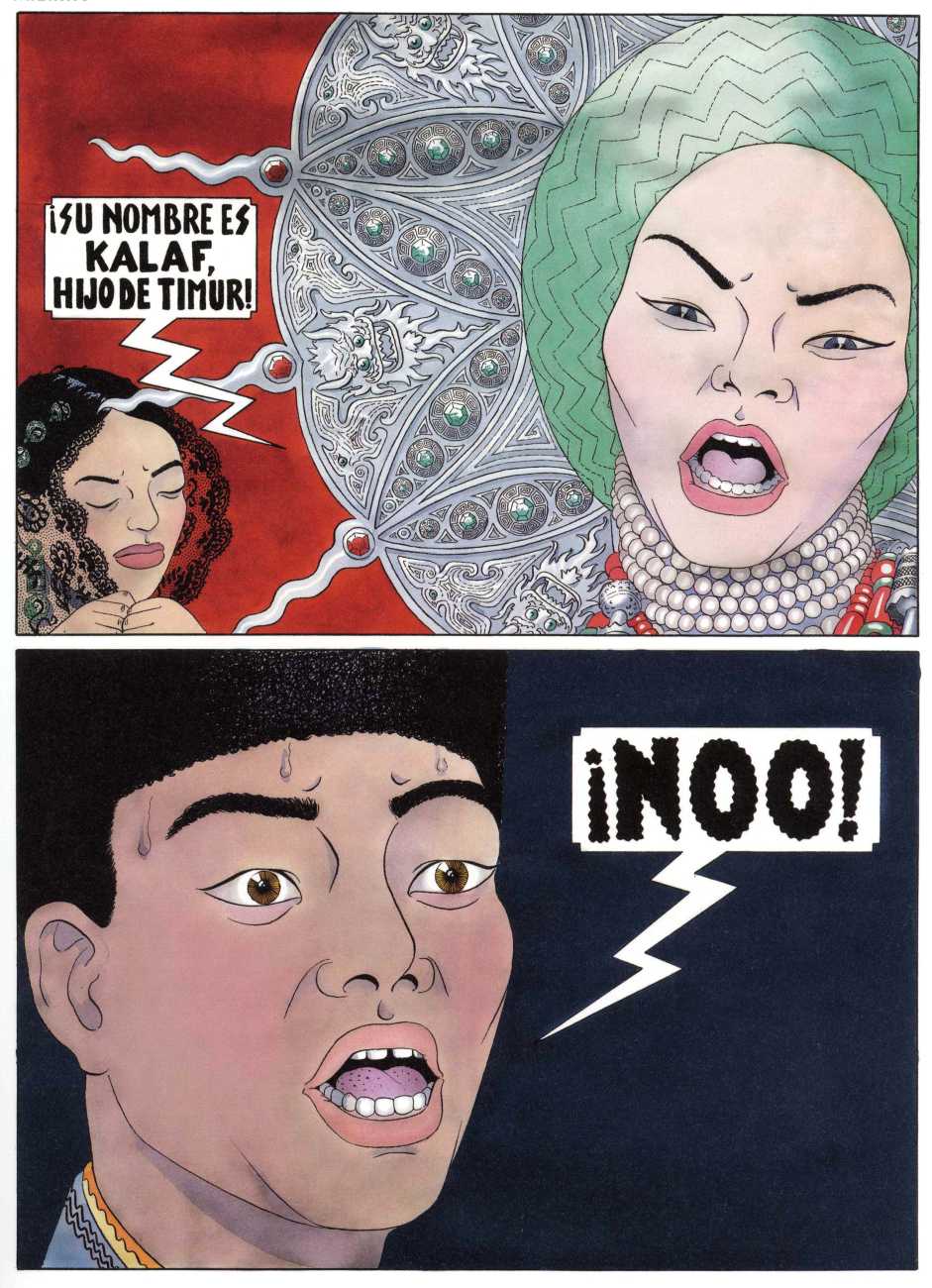
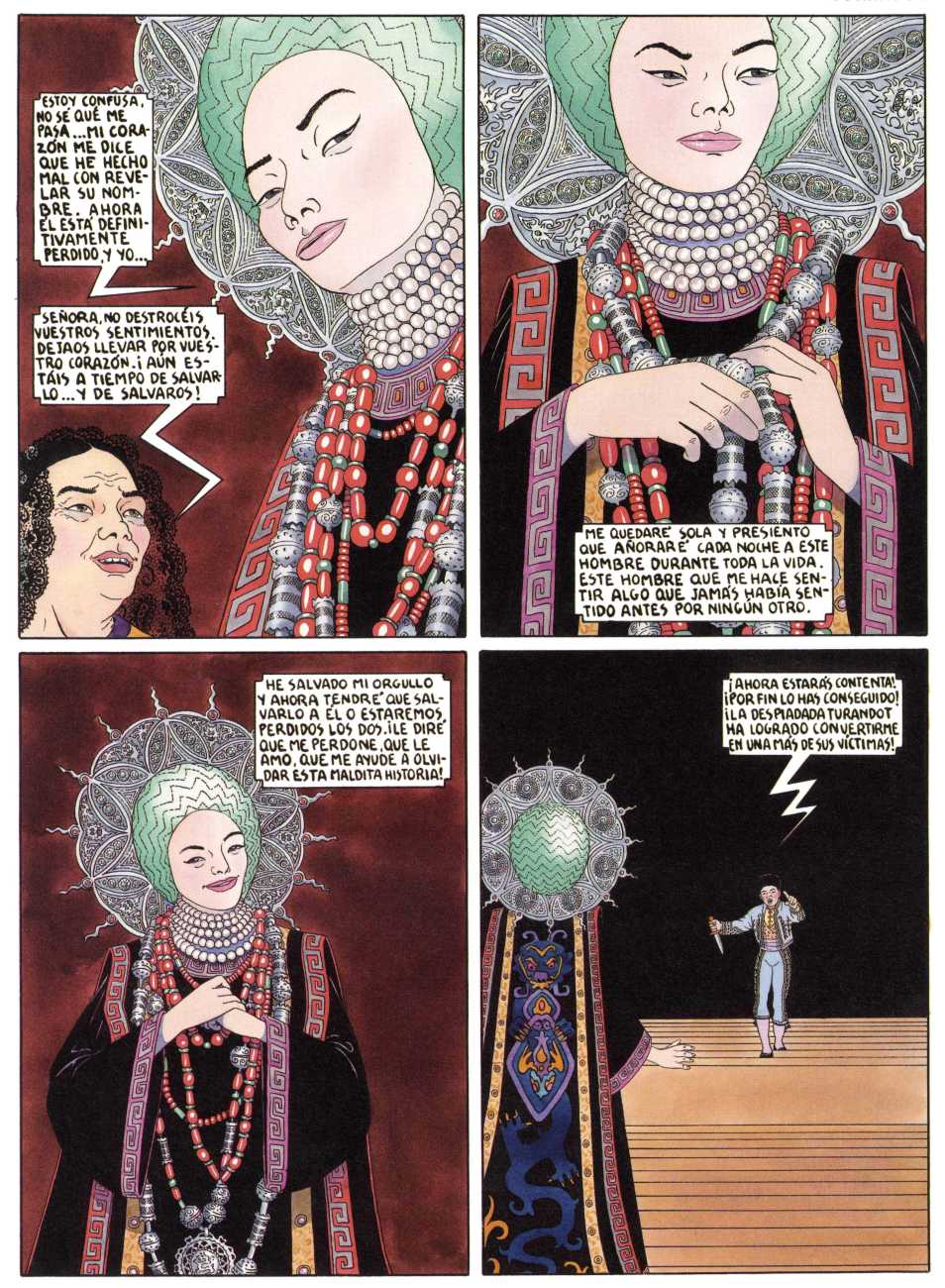
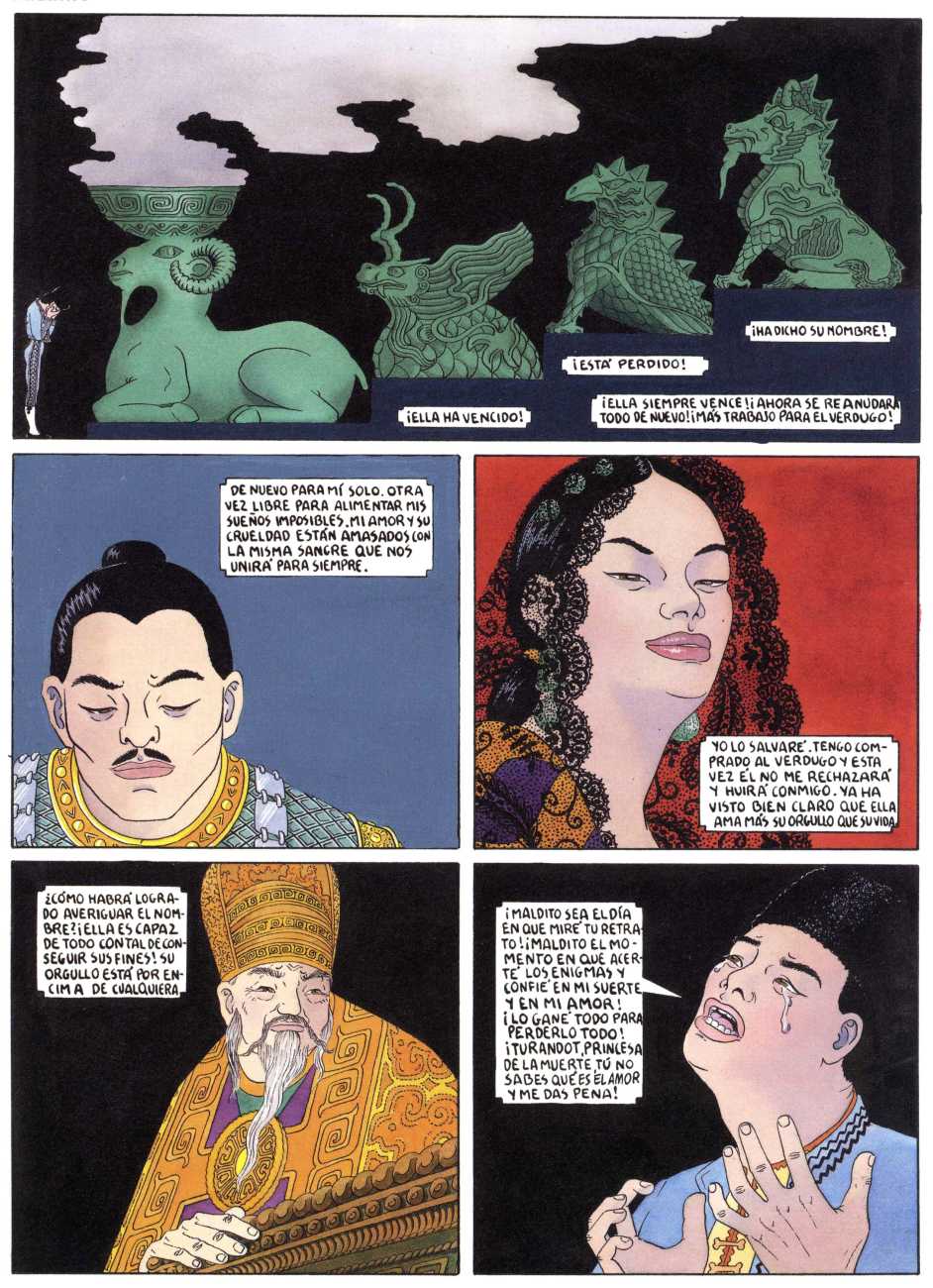
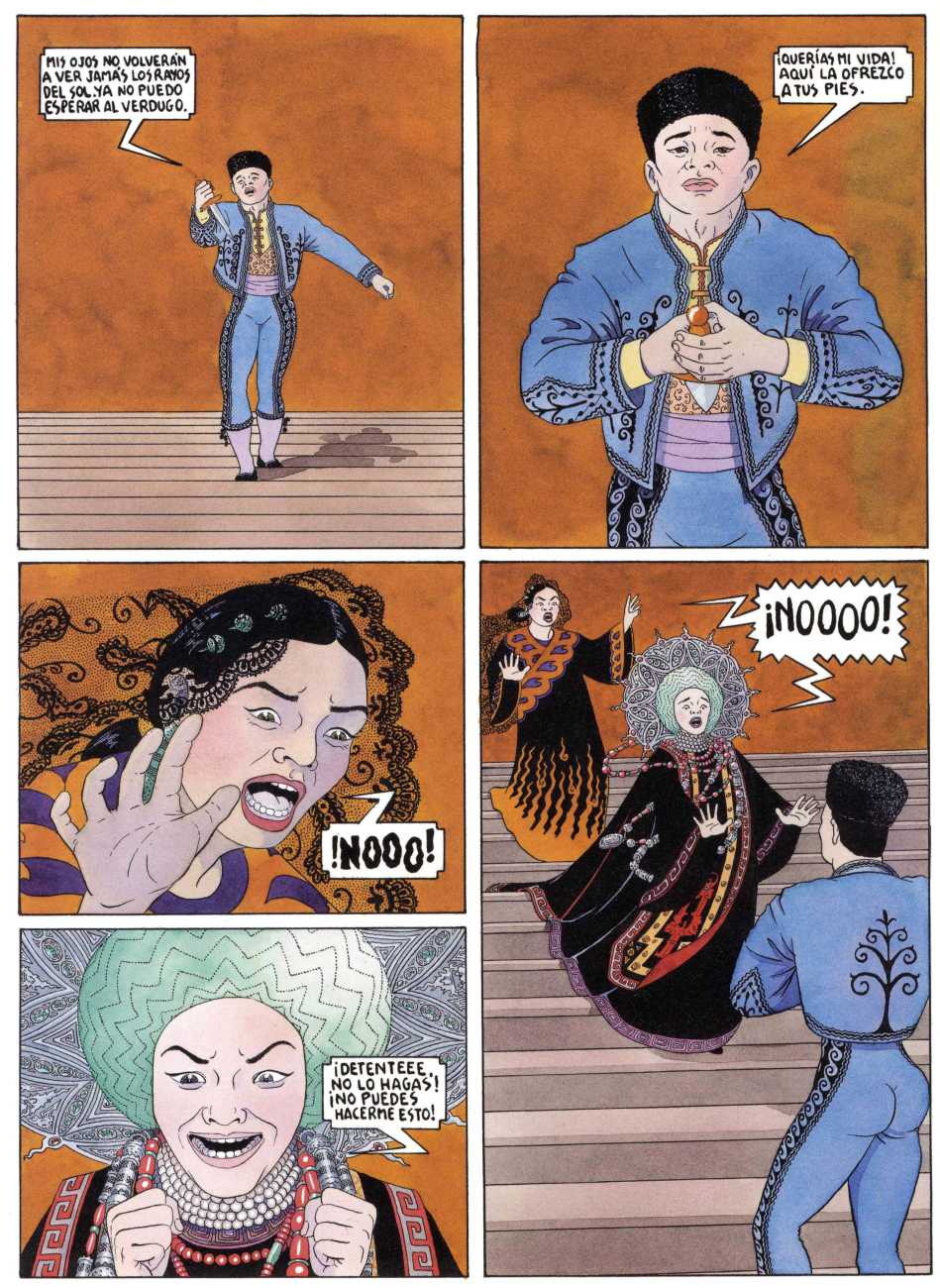
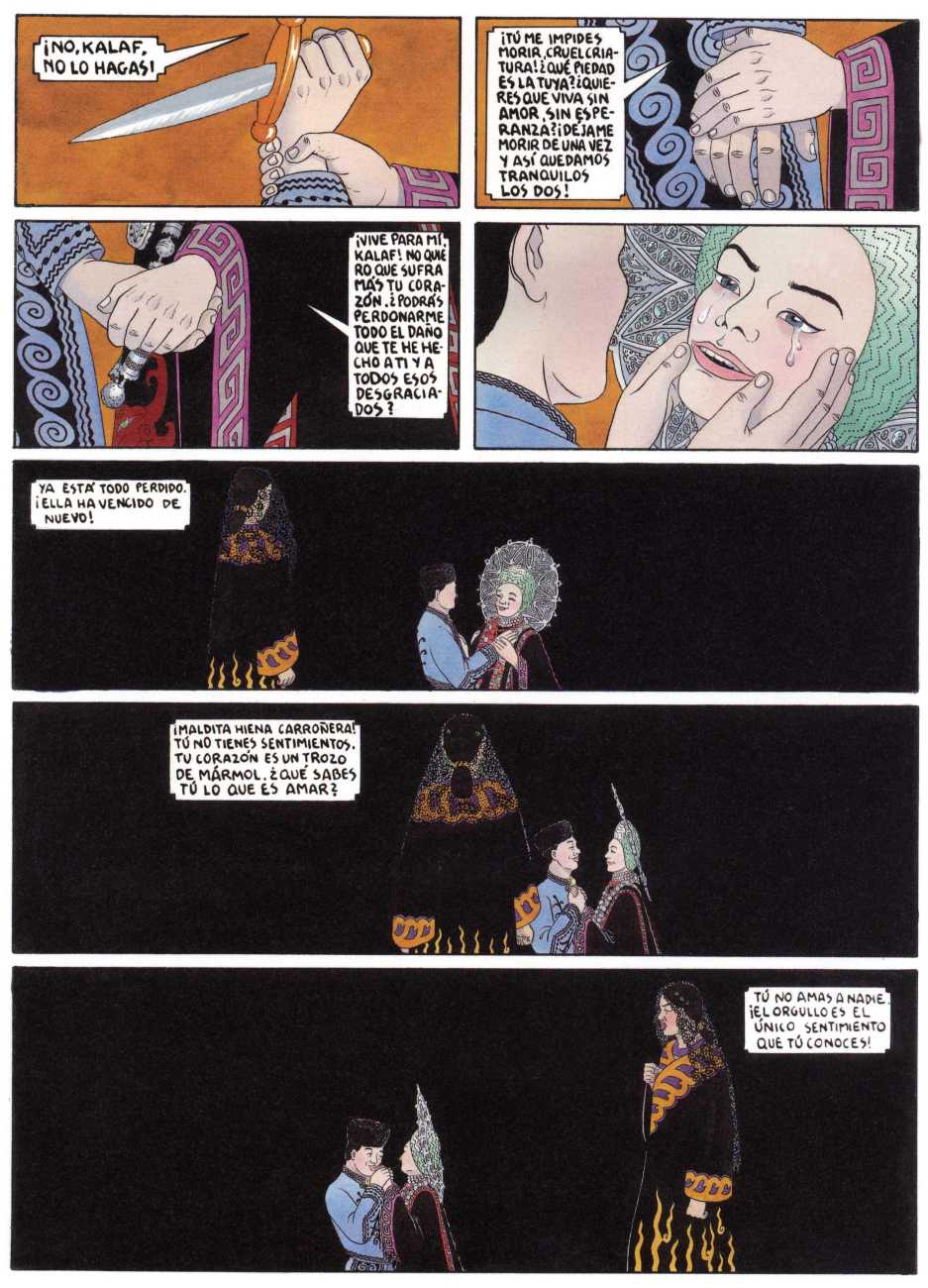
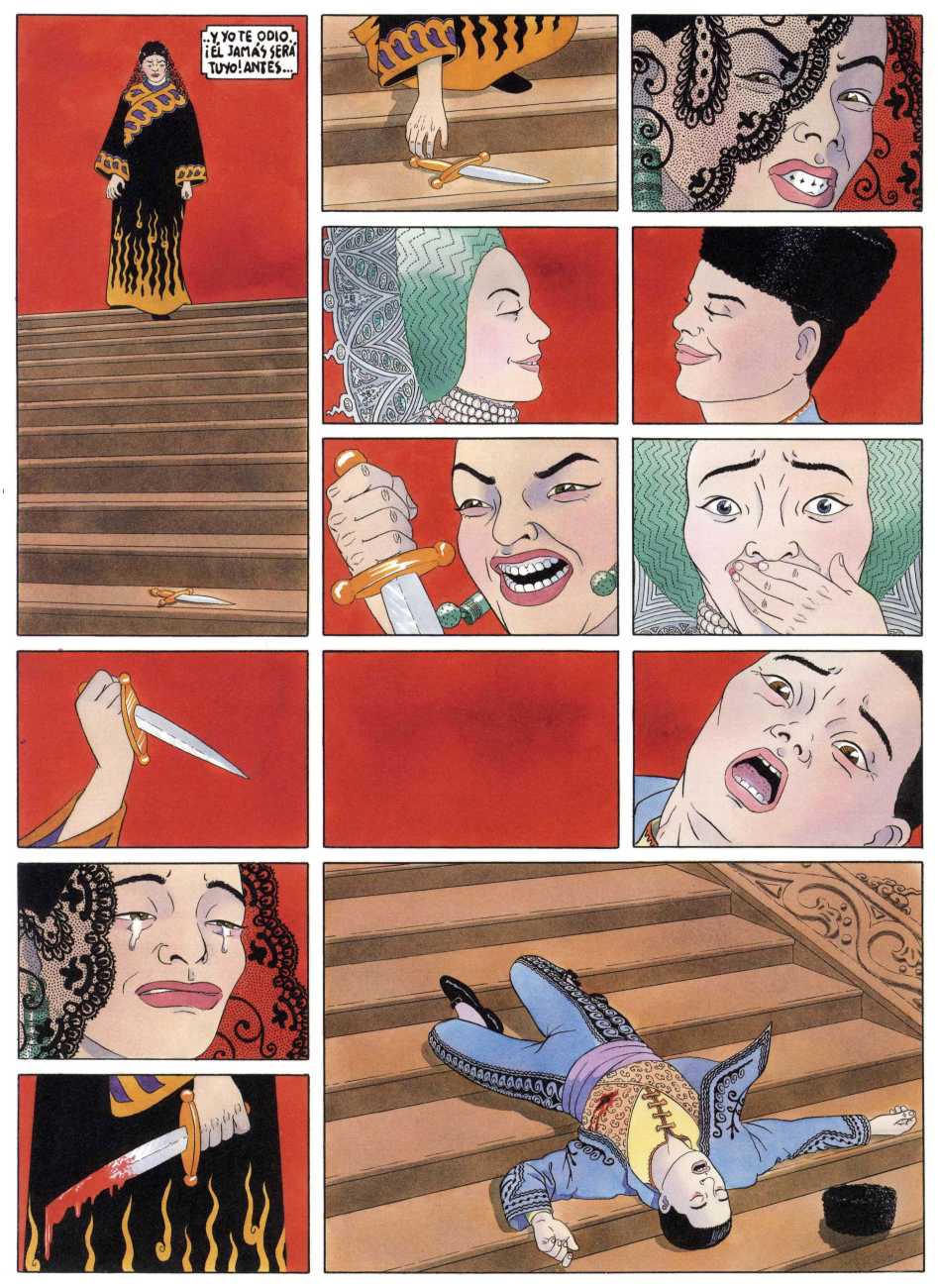
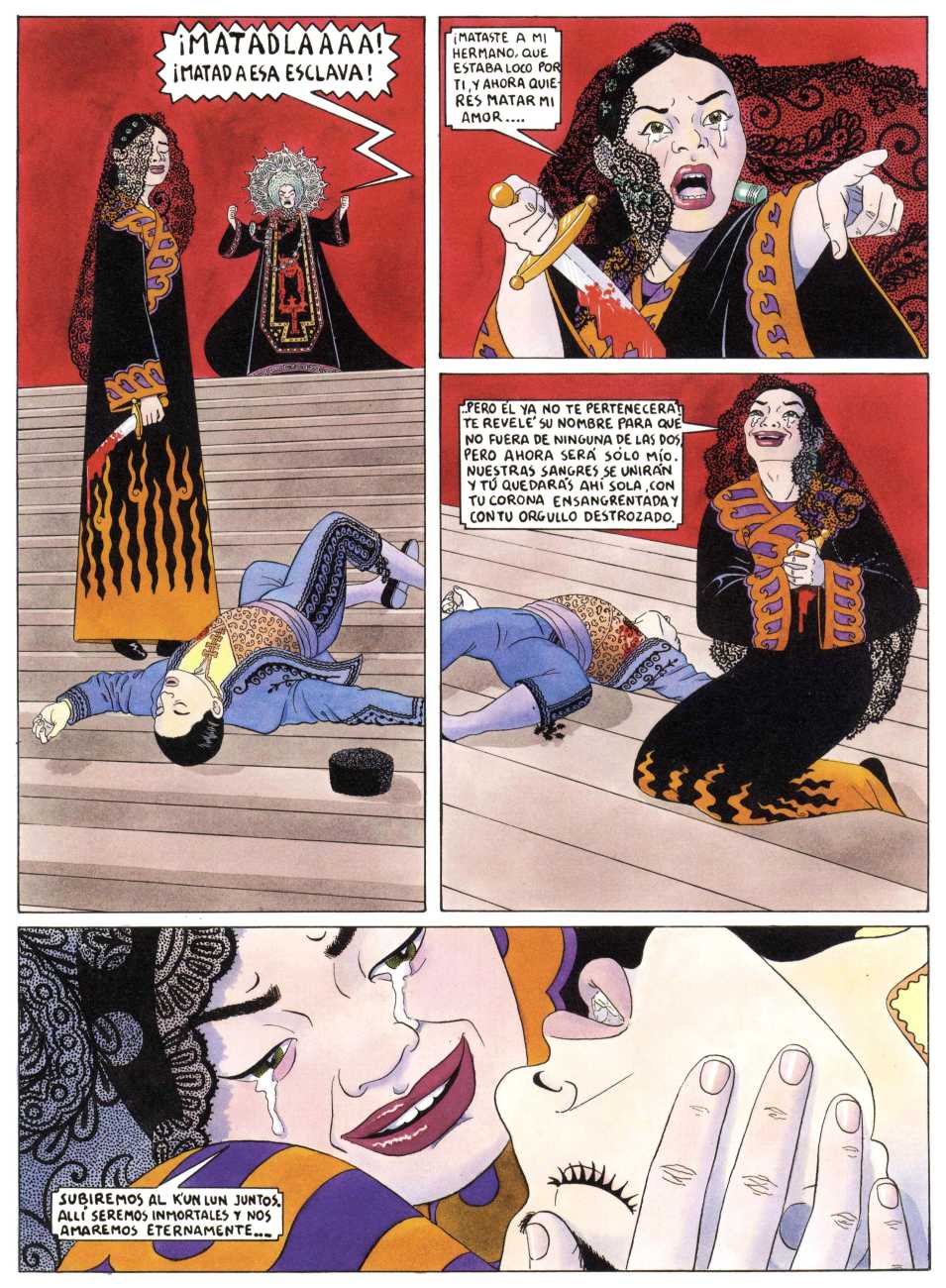
 With Turandot, Nazario reimagines the familiar story of the cold-hearted Chinese princess as a lavish, erotic and often brutal fantasy of desire, pride and revenge. The work draws on the tradition of the theatrical tale rather than simply illustrating Puccini’s opera. As Nazario explains in the accompanying text, his version owes more to Carlo Gozzi’s original play and Ferruccio Busoni’s opera than to Puccini, whose familiar treatment he substantially reshapes.
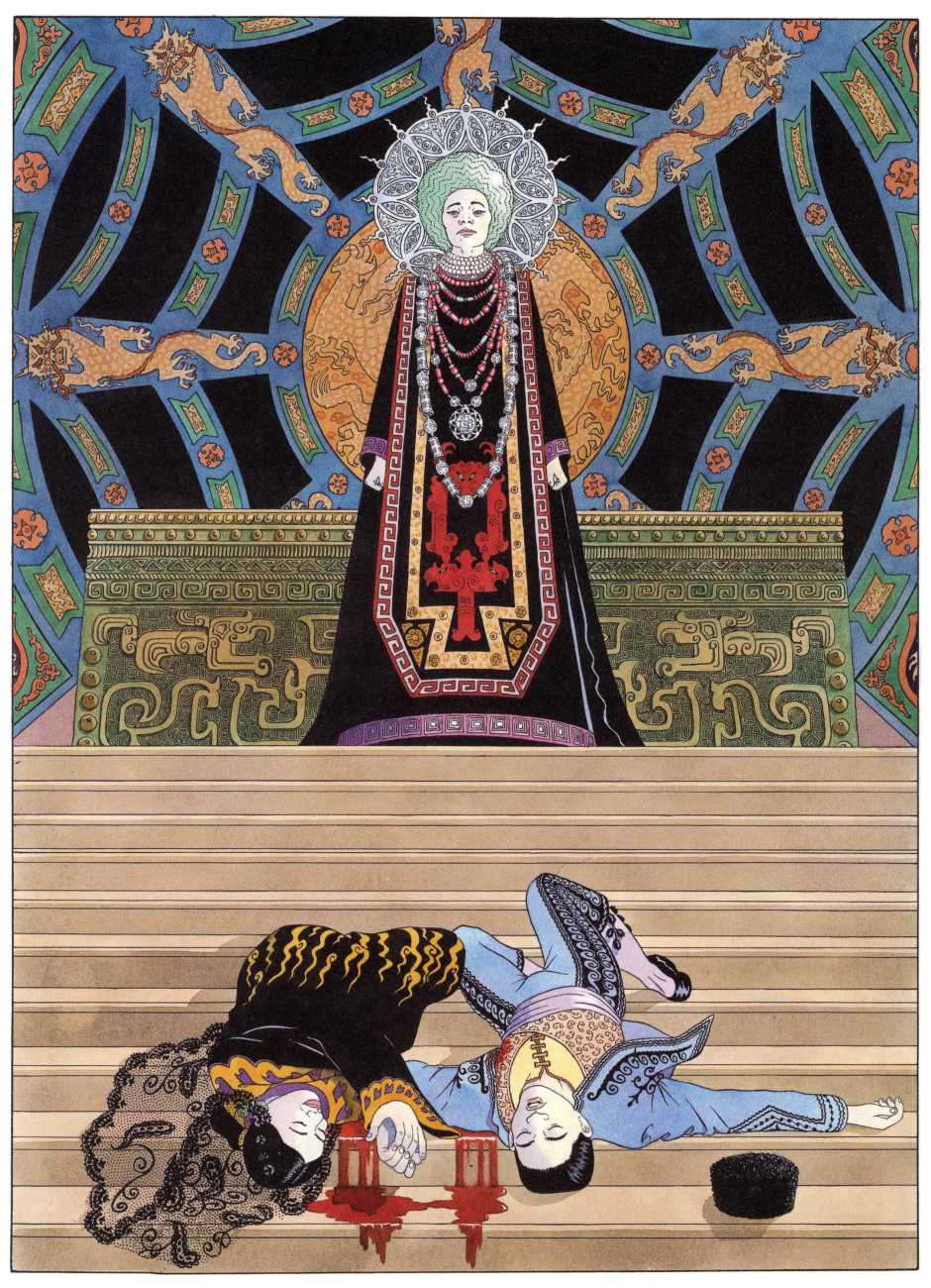
Turandot is a princess consumed by hatred and determined to avenge an ancestral wrong. Her suitors must solve three riddles, failure bringing death, while an exiled prince risks everything to win her hand. Yet the story’s emotional centre lies in the rivalry between two women – the imperious princess and a slave who secretly loves the prince. Nazario’s altered ending overturns the conventional romantic resolution, leaving Turandot humbled and alone while the slave’s jealousy results in murder and self-destruction.
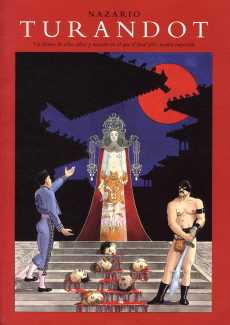
The result is a world of extravagant cruelty and unfulfilled longing. Decapitated heads litter the palace steps, while executions and torture sit alongside sensual encounters and languorous scenes of solitary contemplation. Eroticism is woven into a larger drama of power, obsession and vulnerability.
Visually, Turandot is a remarkable achievement. Elaborate palaces, tiled roofs, monumental gates and intricate interiors establish an imagined China of extraordinary richness. Against these architectural settings, Nazario’s figures move through compositions that shift between panoramic spectacle, tightly framed emotional drama and intimate detail. His colours are bold but carefully controlled, with deep blues, crimson reds, purples and golds creating an atmosphere at once sumptuous and ominous.
The result is one of Nazario’s most ambitious works, combining the visual exuberance of his mature colour comics with a darker, more tragic vision of love and desire, a world in which beauty and cruelty are never very far apart.
Turandot was published by Editorial Universidad de Sevilla.