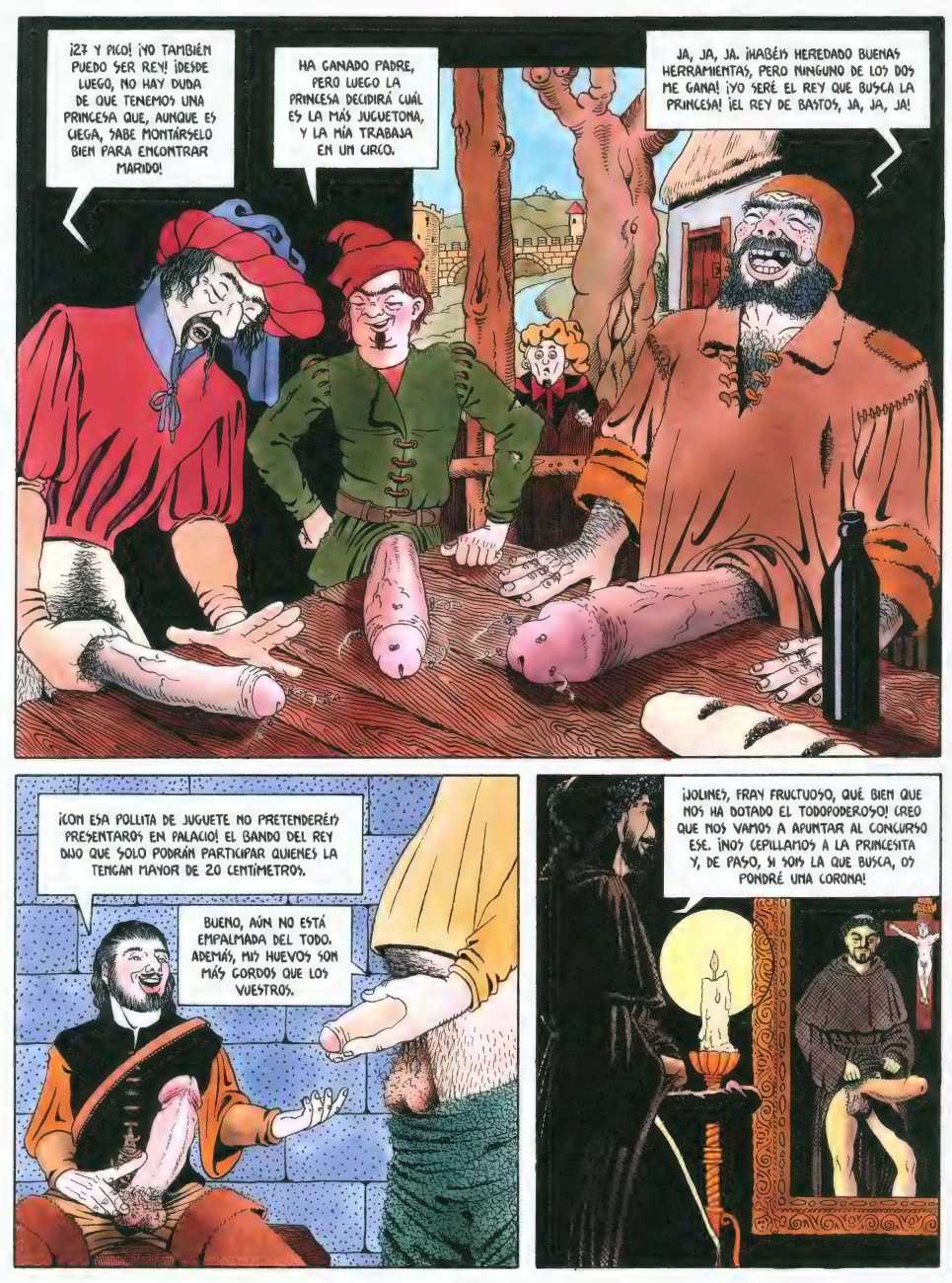
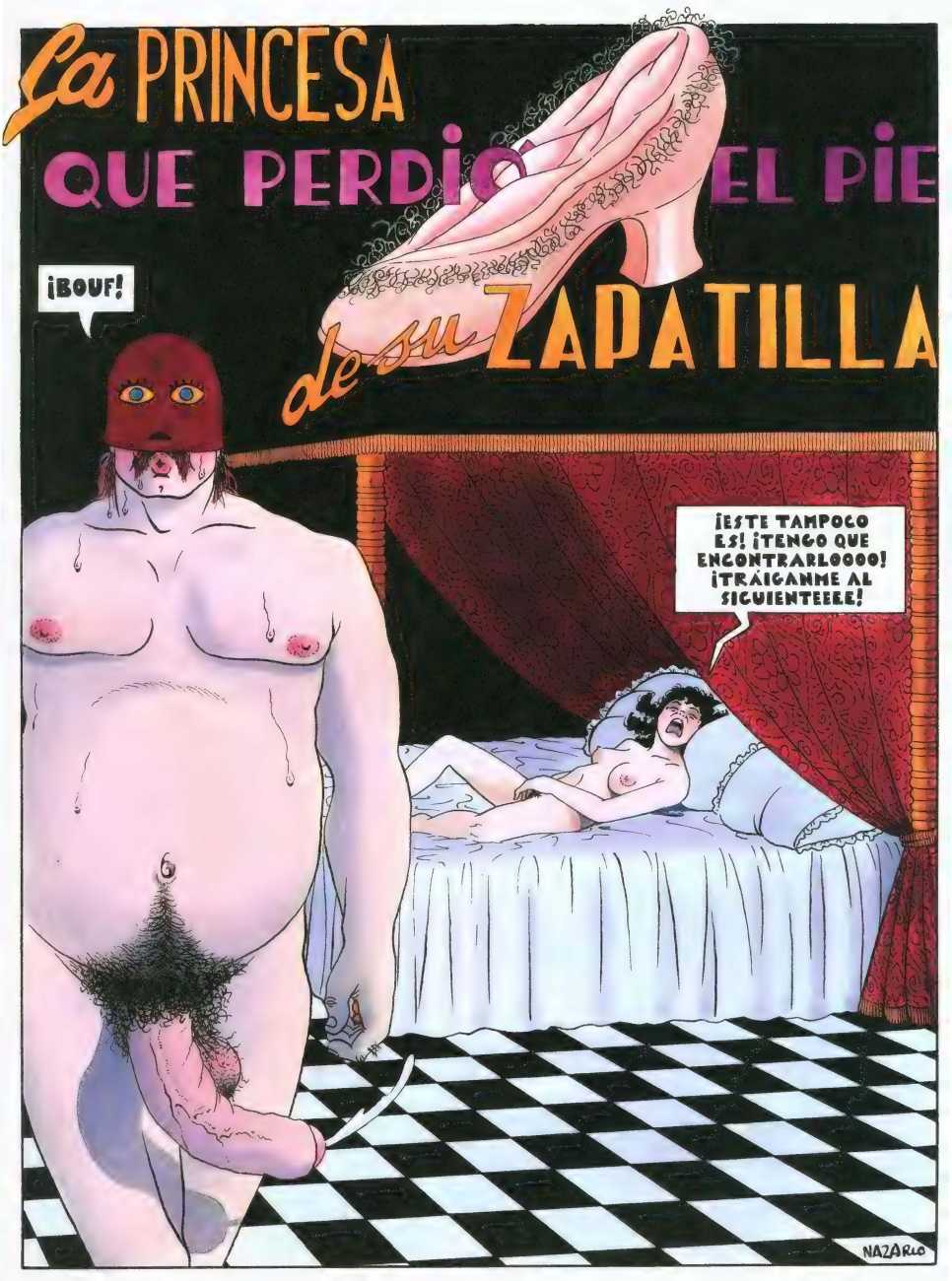
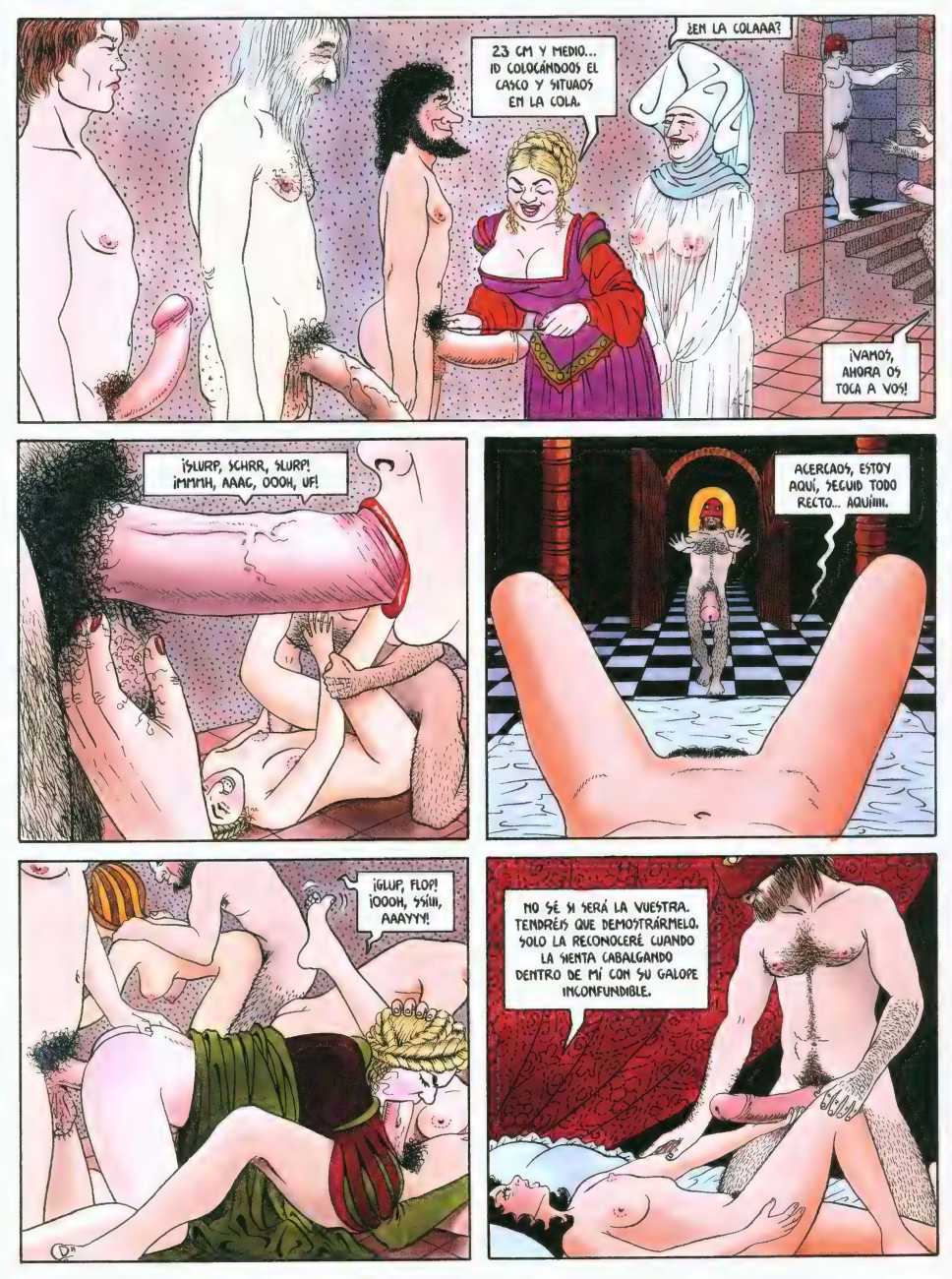
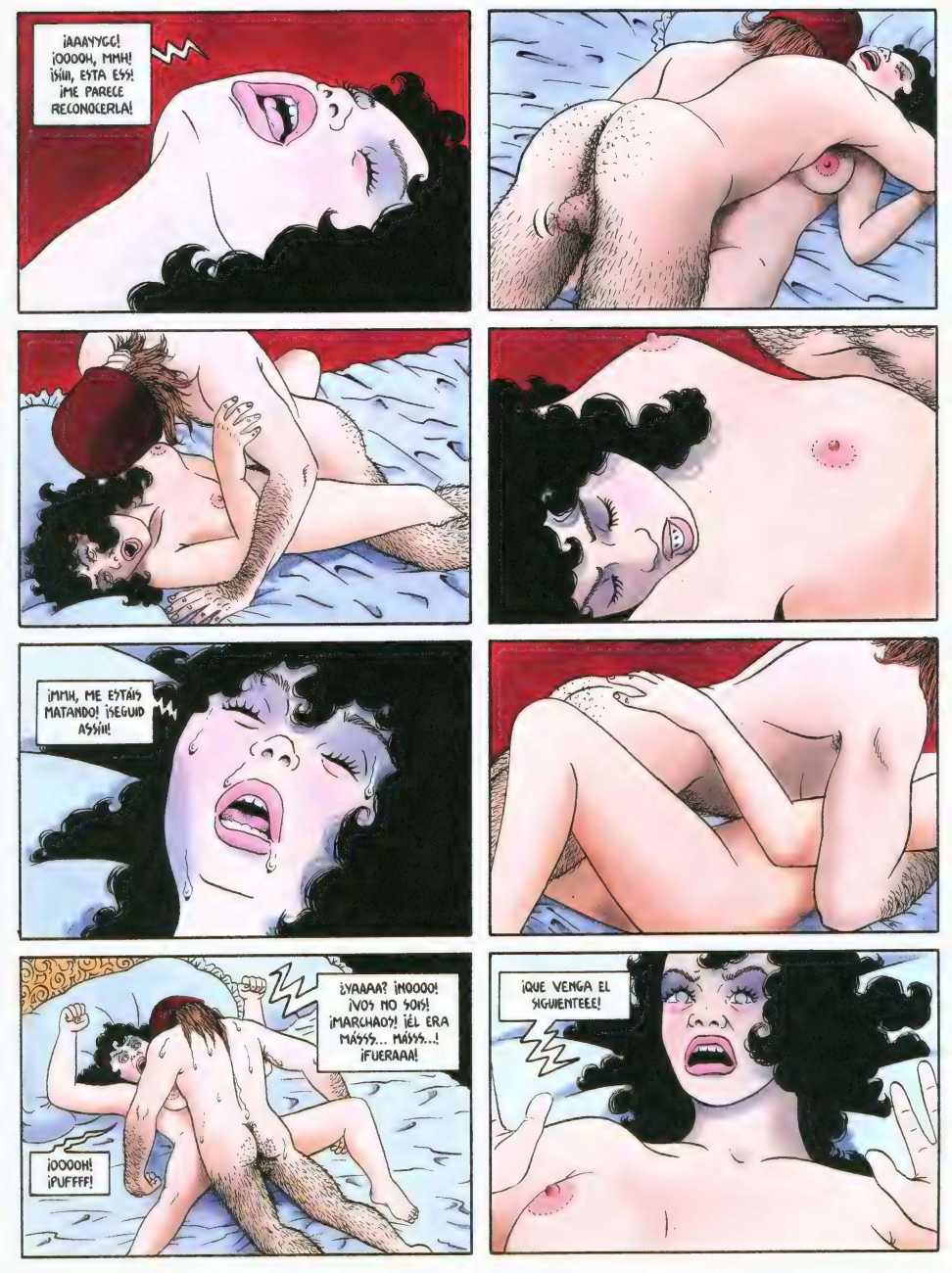
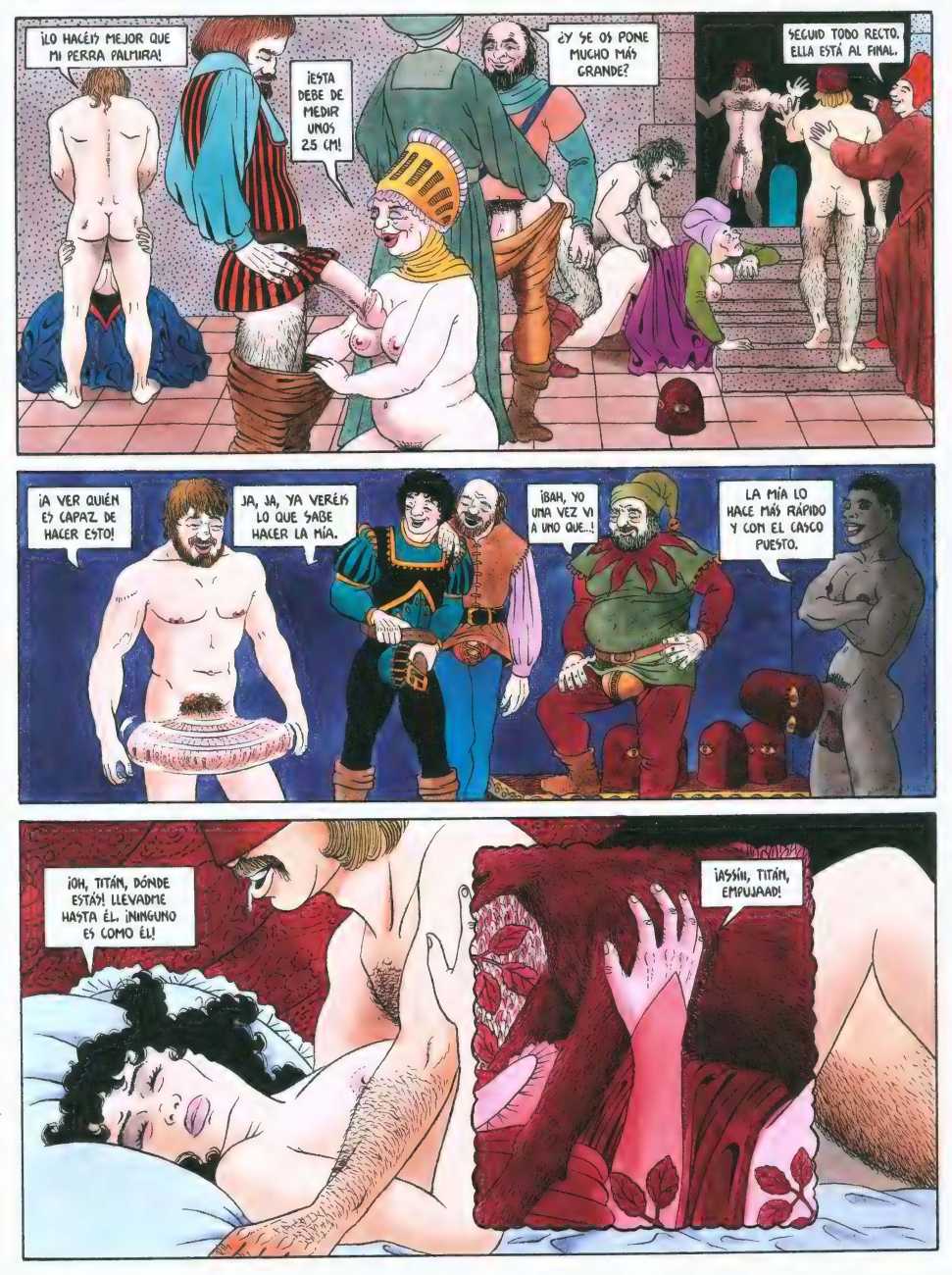
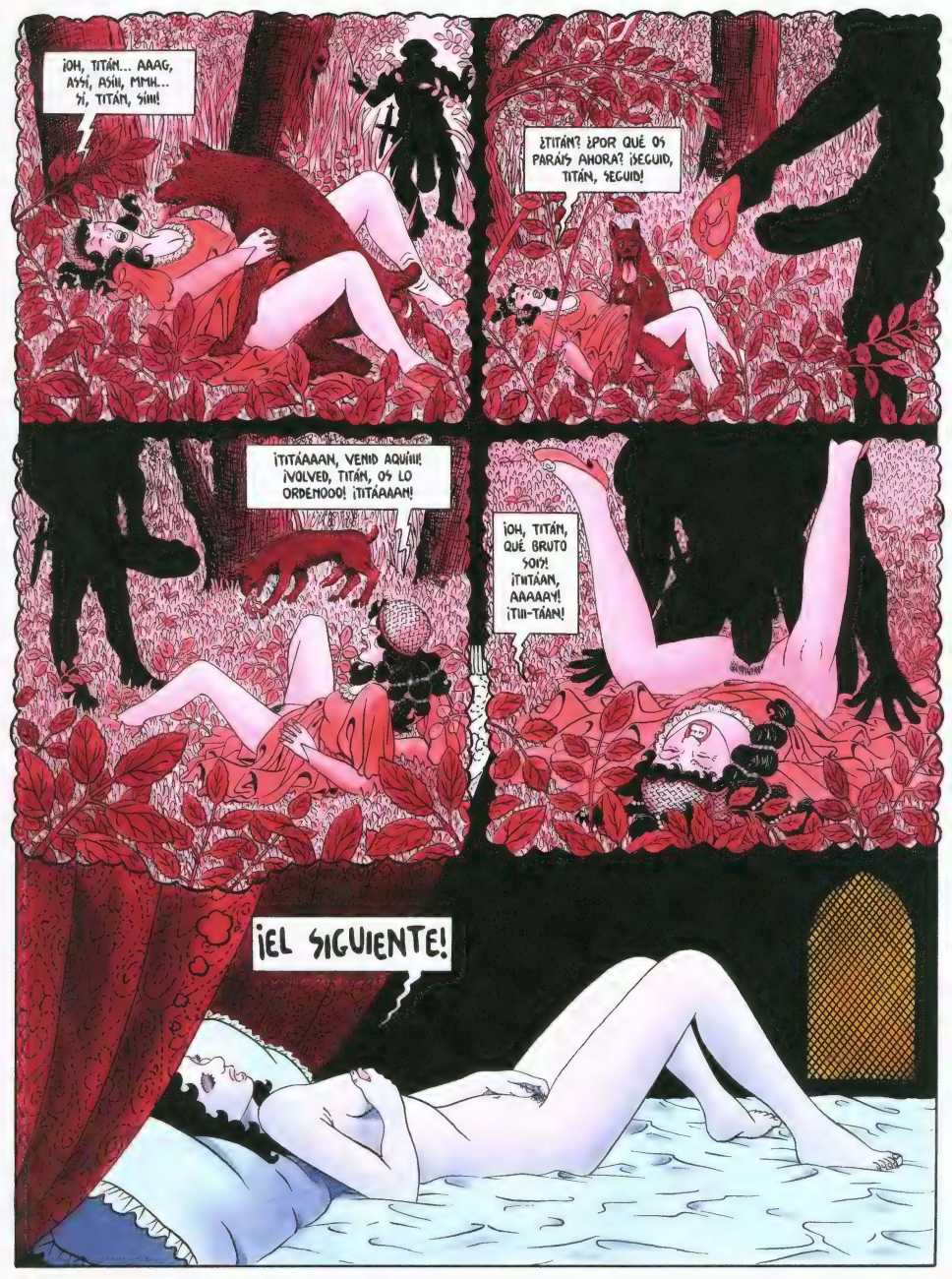
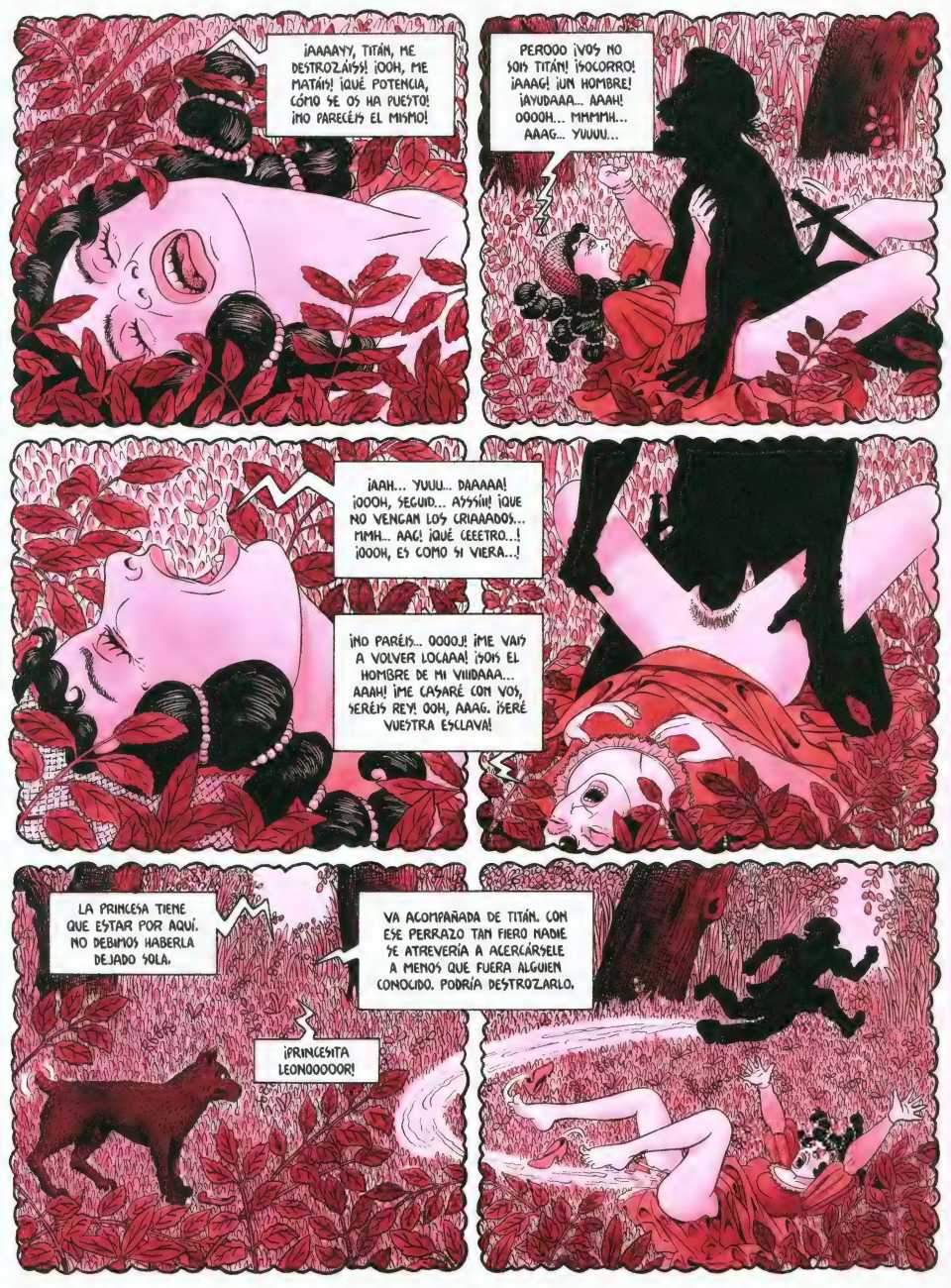
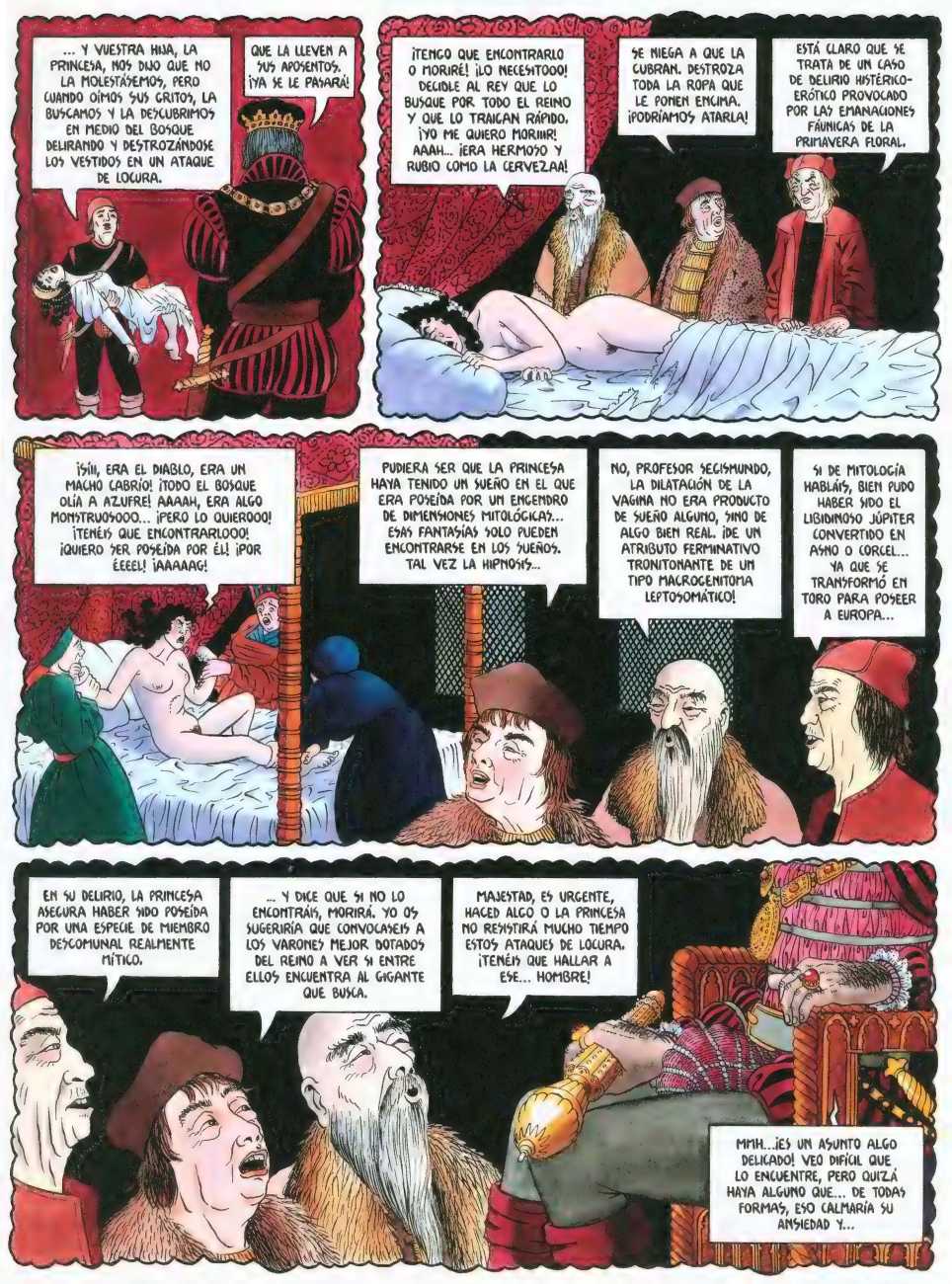
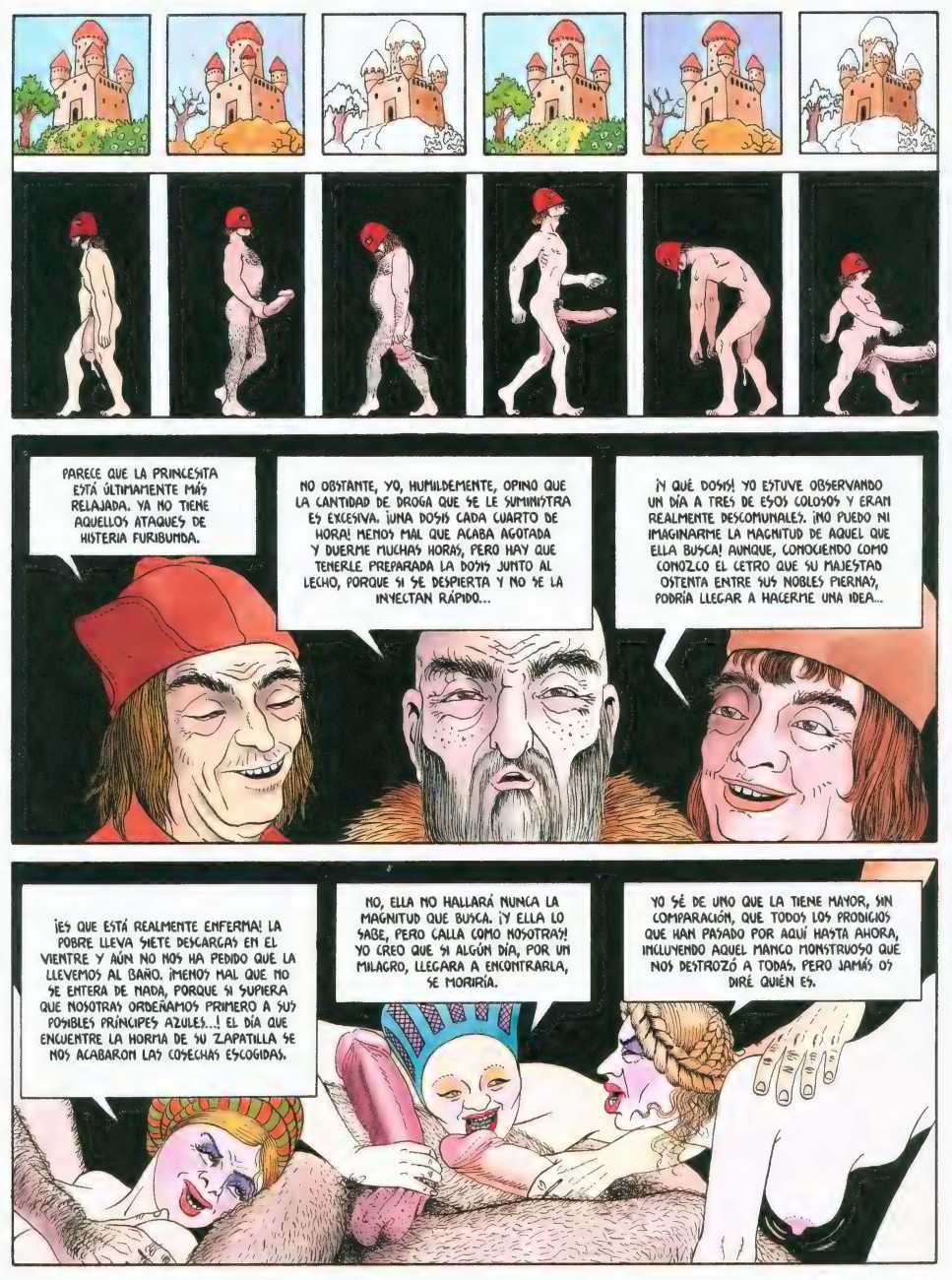
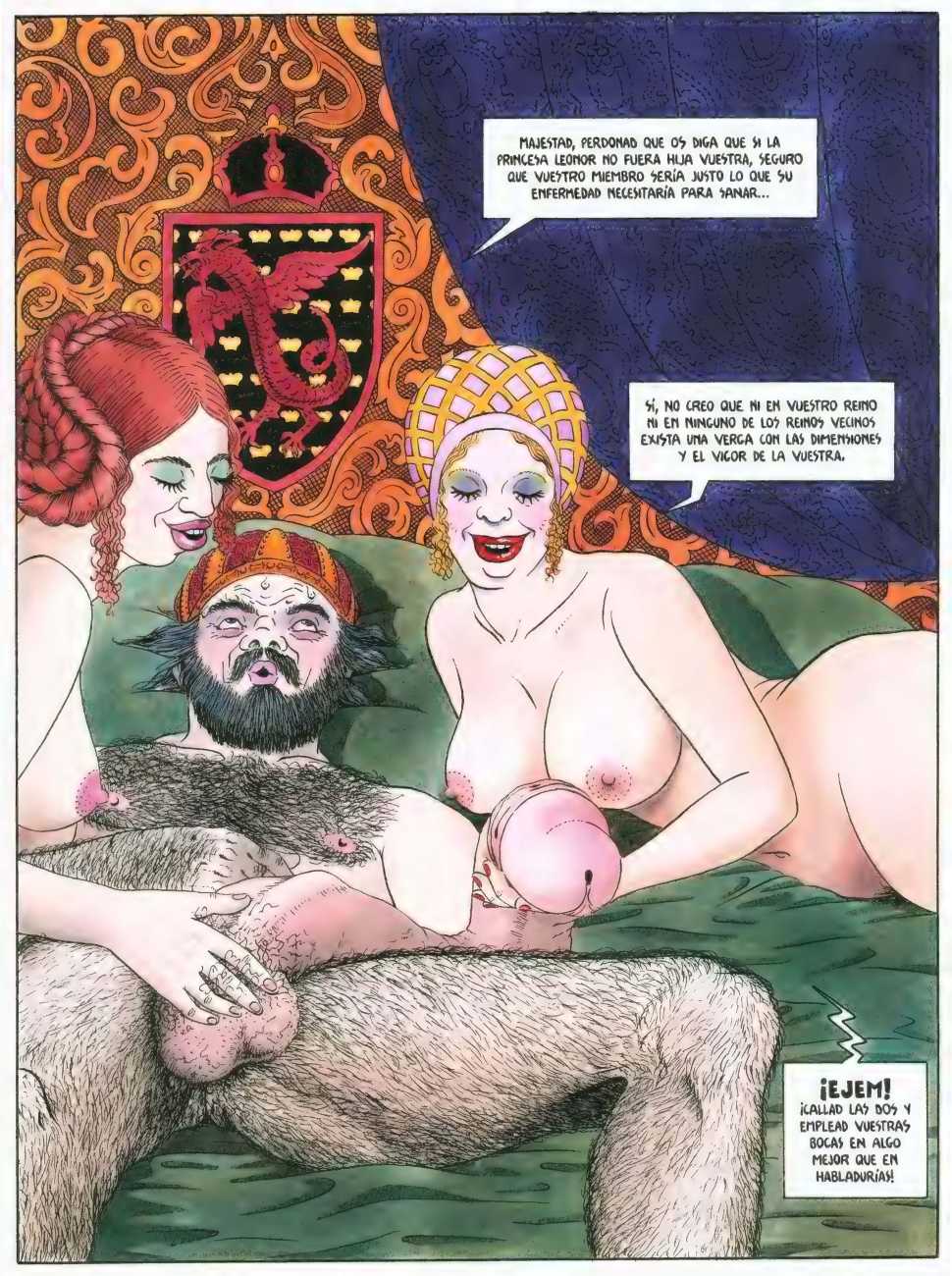
 La Princesa que Perdió el Pie de su Zapatilla (The Princess Who Loses Her Slipper) is Nazario’s reworking of the Cinderella tale, turning the familiar search for a suitable prince into an outrageous sexual farce. When a princess’s father decides that she must marry, her suitors are subjected to an absurd test of sexual prowess, with only those possessing suitably impressive attributes allowed to compete. But the princess’s own desires prove more difficult to manage than the royal marriage arrangements. When she disappears into the forest and is discovered in a state of extraordinary sexual excitement, the court summons its doctors and advisers, whose increasingly elaborate explanations mix pseudo-science, mythology and sheer comic absurdity.
Nazario delights in the contrast between the court’s solemn attempts to diagnose and control the princess and the exuberant, anarchic sexuality that disrupts its authority. The familiar ingredients of fairy tale, including the enchanted forest, the mysterious lover and the lost slipper, are transformed into opportunities for erotic wordplay and visual extravagance. The story’s richly coloured pages move between crowded comic scenes, mock-medical investigation and fantastical encounters, with the artist’s characteristic relish for exaggerated bodies and grotesque humour. Nazario turns the princess’s supposed affliction into a celebration of appetite and excess, while exposing the absurdity of the respectable world attempting to restrain her.
Nazario writes, ‘With La Princesa que Perdió el Pie de su Zapatilla I said goodbye to the world of comics. By then, when I was painting pictures for exhibitions – I was forced to take this step for financial reasons. My immersion in the gallery world required me to have a secure source of income that I could devote to painting. Painting and framing works in the hope of exhibiting and selling them was something new and risky. It wasn’t that El Víbora paid me a fortune for the pages, but it was only a secure income once they had been delivered. Returning to my well-worn world of princess stories, I chose Cinderella, and in this farewell to comics I feel I achieved the same high level of virtuosity in the mastery of drawing and colour that I had attained through the creation of my last great work, Turandot.’
This story was published in issue 168 of El Víbora and in the album Incunables.