
A sixteenth-century lesbian poem that has never been illustrated

The earliest poem in English about love between women has been sitting in John Donne’s collected works for four centuries, yet almost nobody seems to know that it exists. It’s intimate, emotionally direct, surprisingly explicit, and unlike almost anything else written in English at the time. And, unlike many other Donne poems, it has never been illustrated. It’s called Sapho to Philaenis, and Donne probably wrote it in the 1590s, though some scholars place it slightly later. Like much of his early erotic poetry, it originally circulated privately in manuscript among friends before finally appearing in print after his death in the 1633 edition of his poems.
Donne borrowed the format from Ovid’s Heroides, a series of imaginary letters from mythological women to absent lovers. Ovid’s Sappho writes despairingly to the ferryman Phaon before throwing herself from a cliff. Donne changed the story completely. His Sappho writes not to a man but to another woman, Philaenis, and the poem is a passionate argument for love and desire between women.
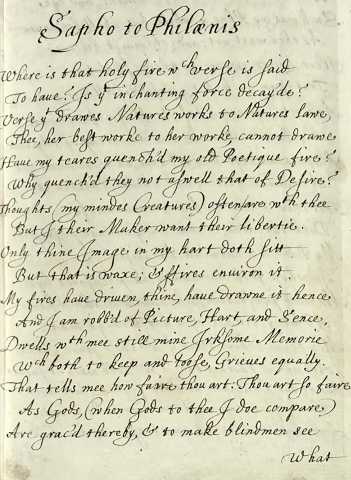
What makes the poem so striking is not simply that it depicts lesbian desire, but the seriousness with which it does so. Donne isn’t writing a joke, a bawdy aside, or a piece of cheap provocation. The poem is playful and sensual, but also philosophical. It insists that women do not need men in order to complete desire. Donne overturns the poetic tropes of comparing women to stars, flowers, marble or snow. Philaenis, Sappho says, needs no comparison beyond herself – one half of her body mirrors and answers the other.
That idea of ‘likeness’ – reciprocal intimate connection – runs through the entire poem. If hands can touch other hands, Donne asks, and lips other lips, why should breasts not meet breasts, or thighs touch thighs? The poem builds toward an intensely intimate climax in which Sappho touches herself and imagines that it is Philaenis she touches. Then suddenly the tone changes, and the poem dissolves into tears before a mirror, ending not in tragedy but in longing and a hope for reunion.
For centuries the poem sat awkwardly within Donne’s output. Editors seemed unsure what to do with it. In early editions it was shuffled into sections called Letters to Severall Personages, which conveniently disguised its erotic nature. Even in the twentieth century some scholars treated it as an embarrassment – too explicit, too unusual, too difficult to reconcile with the John Donne who later became Dean of St Paul’s Cathedral.
Modern criticism has transformed the poem’s reputation. Scholars like Janel Mueller and Heather Meakin have argued that Sapho to Philaenis should be taken seriously as an exploration of equality, desire and intimacy rather than dismissed as male fantasy or literary curiosity. Whether or not Donne fully escaped the assumptions of his age is debatable, but few critics now deny that the poem is extraordinary.
What remains odd is that artists seem to have ignored it completely. Donne’s poetry has been illustrated many times – there are beautiful engraved editions, private press editions, modern artist books, and print cycles inspired by the Songs and Sonnets and the Elegies. But Sapho to Philaenis appears to have escaped all of them. No known illustrated edition, no major print series, no suite of drawings, no visual reinterpretation – which is a pity, because the poem is intensely visual. It moves through mirrors, bodies, gestures, embraces, tears. It invites illustration.
So perhaps there is a genuine opportunity here. One of the boldest erotic poems in English literature has waited four hundred years for an artist to engage with it properly. And if that’s true, then the obvious question is – who will be the first? You, maybe?
Here are some passages from Sapho to Philaenis in Donne’s original spelling, followed by the whole poem in modern English.
Thou art not soft, and cleare, and strait, and faire,
As Down, as Stars, Cedars, and Lillies are,
But thy right hand, and cheek, and eye, only
Are like thy other hand, and cheek, and eye.
Such was my Phao awhile, but shall be never,
As thou, wast, art, and, oh, maist thou be ever.
Here lovers sweare in their Idolatrie,
That I am such; but Griefe discolors me.
Hand to strange hand, lippe to lippe none denies;
Why should they brest to brest, or thighs to thighs?
Likenesse begets such strange selfe flatterie,
That touching my selfe, all seemes done to thee.
My selfe I’embrace, and mine owne hands I kisse,
And amorously thanke my selfe for this.
Me, in my glasse, I call thee; But, alas,
When I would kisse, teares dimme mine eyes, and glasse.
Sapho to Philaenis
Where is that holy fire, which verse is said
To have? Is that enchanting force decayed?
Verse that draws Nature’s works from Nature’s law,
Thee, her best work, to her work cannot draw.
Have my tears quenched my old poetic fire;
Why quenched they not as well, that of desire?
Thoughts, my mind’s creatures, often are with thee,
But I, their maker, want their liberty.
Only thine image, in my heart, doth sit,
But that is wax, and fires environ it.
My fires have driven, thine have drawn it hence;
And I am robbed of picture, heart, and sense.
Dwells with me still mine irksome memory,
Which, both to keep and lose, grieves equally.
That tells me how fair thou art: thou art so fair,
As, gods, when gods to thee I do compare,
Are graced thereby; and to make blind men see
What things gods are, I say they are like thee.
For, if we justly call each silly man
A little world, what shall we call thee then?
Thou art not soft, and clear, and straight, and fair,
As down, as stars, cedars, and lilies are,
But thy right hand, and cheek, and eye, only
Are like thy other hand, and cheek, and eye.
Such was my Phaon awhile, but shall be never,
As thou wast, art, and, oh, mayst thou be ever.
Here lovers swear in their idolatry,
That I am such; but grief discolours me.
And yet I grieve the less, lest grief remove
My beauty, and make me unworthy of thy love.
Plays some soft boy with thee, oh there wants yet
A mutual feeling which should sweeten it.
His chin, a thorny hairy unevenness
Doth threaten, and some daily change possess.
Thy body is a natural paradise,
In whose self, unmanured, all pleasure lies,
Nor needs perfection; why shouldst thou then
Admit the tillage of a harsh rough man?
Men leave behind them that which their sin shows,
And are as thieves traced, which rob when it snows.
But of our dalliance no more signs there are
Than fishes leave in streams, or birds in air.
And between us all sweetness may be had;
All, all that Nature yields, or Art can add.
My two lips, eyes, thighs, differ from thy two,
But so, as thine from one another do;
And, oh, no more; the likeness being such,
Why should they not alike in all parts touch?
Hand to strange hand, lip to lip none denies;
Why should they breast to breast, or thighs to thighs?
Likeness begets such strange self-flattery,
That touching myself, all seems done to thee.
Myself I embrace, and mine own hands I kiss,
And amorously thank myself for this.
Me, in my glass, I call thee; but, alas,
When I would kiss, tears dim mine eyes and glass.
O cure this loving madness, and restore
Me to me; thee, my half, my all, my more.
So may thy cheeks’ red outwear scarlet dye,
And their white, whiteness of the Galaxy;
So may thy mighty, amazing beauty move
Envy in all women, and in all men love,
And so be change and sickness far from thee,
As thou by coming near keep’st them from me.