
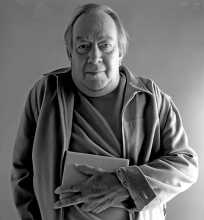
 Donald Friend occupies one of the most complicated positions in twentieth-century Australian art. An exceptionally gifted draughtsman, painter, printmaker, illustrator and diarist, he was celebrated for the elegance of his line, his wit, his sophisticated sense of colour and his ability to combine classical draftsmanship with decorative modernism. Yet his reputation today is inseparable from the posthumous publication of diaries in which he described, without remorse, the sexual abuse of children during the years he lived in Sri Lanka and Bali. Few artists present a sharper challenge to those attempting to reconcile artistic achievement with profound moral failure.
Born in Sydney, Friend showed artistic promise from an early age, studying under Sydney Long and Antonio Dattilo Rubbo before continuing his training at the Westminster School of Art in London. Restless by temperament, he spent much of his life travelling, living at different times in Nigeria, Italy, Sri Lanka and, most famously, Bali. During the Second World War he served as both a gunner and an official Australian war artist, producing drawings and paintings that remain among the most perceptive visual records of Australia’s wartime experience. His wartime journals, together with later published diaries, also established him as one of Australia’s finest literary diarists.
Throughout his career Friend was fascinated by the male figure. Inspired by artists ranging from Michelangelo and Hogarth to Bosch, Bruegel and Matisse, he developed an unmistakable style built upon fluid, calligraphic drawing and richly orchestrated colour. His work ranged from landscapes and war scenes to classical references, mythology and satire. Openly homosexual at a time when this carried significant social risks, he rarely disguised the homoerotic nature of his imagery, and many of his drawings celebrate the beauty of the male body with remarkable technical assurance.
In the mid-1960s Robert Hughes described Donald Friend as ‘one of the finest draughtsmen in Australia’, and noted his humanism and lack of sentimentality, though maintaining that he was not to be considered a major artist. Barry Pearce, however, writing in the study which accompanied Friend’s posthumous retrospective at the Art Gallery of New South Wales in 1990, believed that Hughes’ judgement was too harsh, and called for a re-evaluation of Friend as an artist whose contribution to the richness of Australian art was due for much greater recognition.
As well as being present in many of his paintings and drawings, eroticism also found expression in Friend’s books, most notably Bumbooziana (1979), an extravagantly illustrated and deliberately outrageous fantasy that has become one of the landmarks of twentieth-century Australian erotic publishing. Produced in a very limited edition, it combined elaborate calligraphy, watercolour, satire and exuberant sexual invention into what many regard as his erotic masterpiece.
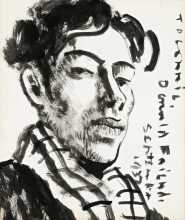
Friend's legacy changed irrevocably in 2006 with the publication of the fourth volume of his diaries, in which he described, in his own words, sexual relationships with underage boys during his years in Sri Lanka and Bali. Unlike many historical allegations, this evidence came from the artist himself, diaries intended for eventual publication, written with a candour that left little room for reinterpretation or denial. His achievements as a draughtsman, war artist and illustrator remained largely undisputed, but the question was no longer whether the abuse had occurred, it was how museums, art historians and audiences should respond to the fact that it most certainly had.
The issue received widespread public attention in 2016 when ABC Radio National broadcast Antony Funnell’s investigation Our Favourite Paedophile: Why is Donald Friend Still Celebrated? Funnell argued that Australian cultural institutions had been remarkably slow to confront the implications of Friend’s own writings. While his artistic achievements continued to be celebrated, his criminal behaviour was often ignored or reduced to a passing reference. As Funnell observed, Friend’s artistic reputation appeared to remain ‘unsullied by the serial sex crimes he committed’.
One of the article’s central criticisms was directed not only at Friend himself but at what campaigner Cathy Kezelman described as the art world’s longstanding ‘myopic adulation of celebrity’. She argued that artistic prestige had too often encouraged institutions to minimise or overlook serious abuse. Describing attempts to characterise Friend as somehow different from other child abusers, she rejected notions of a supposedly ‘benevolent paedophile’, insisting that ‘the sexual exploitation of children is predatory and decimating’ and that attempts to minimise its criminal nature were ‘as ignorant as they are poisonous’.
The debate extends beyond Donald Friend himself. It raises a broader philosophical question that museums, galleries and audiences increasingly face: can the artistic value of a work be separated from the conduct of the person who created it? The ABC article explored this question through the concept of aestheticism. Philosopher Laura D’Olimpio summarised the traditional argument that artworks should be judged primarily on their artistic qualities, with moral judgement remaining separate from aesthetic evaluation. Historically this distinction has often been used to resist censorship and defend artistic freedom.
Others argue that Donald Friend represents one of the clearest examples of the limitations of that approach. Philosopher Patrick Stokes suggested that while it may sometimes be possible to separate artists from their work, Friend presents a different problem because aspects of his artistic production directly reflect the abuse described in his diaries. As he observed, ‘you can’t separate the artist and the art anyway’, describing some of the works as ‘pretty clearly documentary evidence of child abuse’.
Museums have responded in different ways. Some institutions have quietly removed Friend’s work from permanent display while retaining it within their collections. Others continue to exhibit selected works but provide contextual information acknowledging the artist’s abuse of children. The Australian War Memorial perhaps expressed the dilemma most clearly, describing the position as ‘extremely difficult’: balancing ‘despising the now-known behaviour of the long-dead artist’ while recognising ‘the power of his works to convey an insight into the Australian experience of war’. Rather than erasing Friend entirely, the Memorial indicated that future displays would acknowledge his paedophilia while continuing to exhibit works considered historically important.
The debate continues. Writing in 2024, historian Ian Britain argued that removing Friend almost entirely from public galleries risks becoming a form of censorship. Stressing that his biography was not a defence nor a prosecution, Britain instead sought to present the documentary evidence while allowing readers to reach their own conclusions. He also noted that many major galleries now possess substantial collections of Friend’s work but choose not to display them.
Not everyone accepts that Friend’s relative absence from gallery walls is primarily the result of moral judgement. Art historian Chris McAuliffe has argued that curatorial decisions inevitably involve artistic as well as ethical considerations, remarking that ‘One of the reasons not many people are showing Donald Friend’s work is that it’s not very good’. More significantly, McAuliffe has developed the concept of a ‘dialogue with difficult objects’, encouraging museums to engage openly with works associated with trauma, exploitation or other troubling histories rather than simply removing them from view. In Friend’s case, he suggests that any exhibition must involve ‘a conversation with survivors of sexual assaults, or sexual relations imbalanced through cultural or economic power’, recognising that the experience of viewing such work may itself be deeply unsettling.
Donald Friend is no longer simply an artist whose work is judged on its technical merits. He has become part of a wider conversation about historical responsibility, institutional memory and the relationship between artistic achievement and personal conduct. Similar questions have been raised in relation to figures as diverse as Paul Gauguin, Roman Polanski and Rolf Harris, yet no single solution has emerged. Some advocate removal, others contextualisation, while others continue to argue for a distinction between aesthetic and moral judgement. For viewers today the challenge is not necessarily to resolve these competing arguments but to understand them. Friend’s artistic gifts are undeniable, yet so too are the crimes he described in his own words. The debate has become one of the clearest examples of how difficult art raises and illuminates difficult questions.
Similar artists
George Grosz – German Weimar painter and graphic artist of biting figurative content.
Alfred Hrdlicka – Austrian painter and sculptor of violent, raw figurative subjects.
Julius Klinger – Austrian Jugendstil illustrator who also illustrated Rochester's Farce of Sodom.
Richard Larter – Australian painter of unembarrassed, direct pop-art sexuality.
Norman Lindsay – Australian draughtsman of mythological erotic subjects.
Egon Schiele – Austrian expressionist of raw, psychologically intense figuration.
Example illustration


