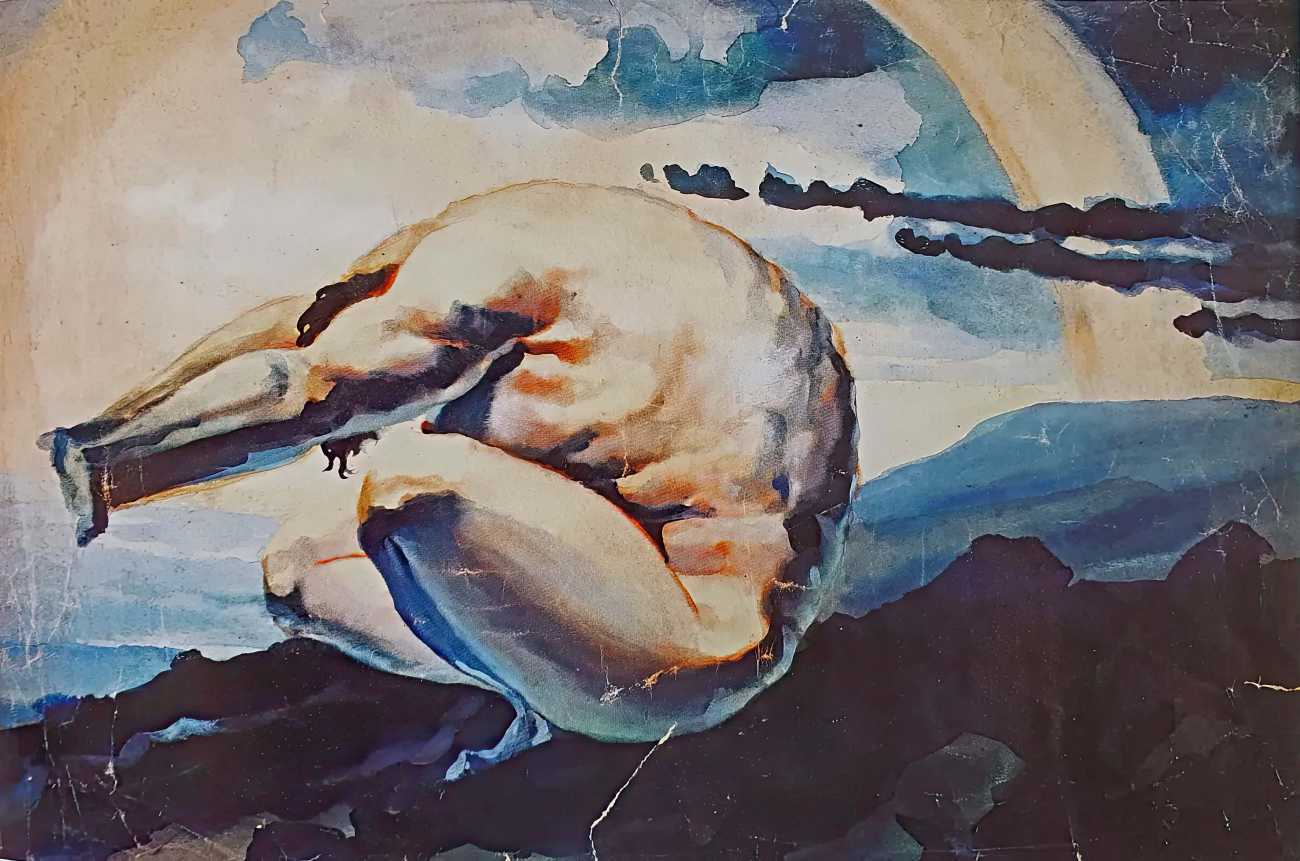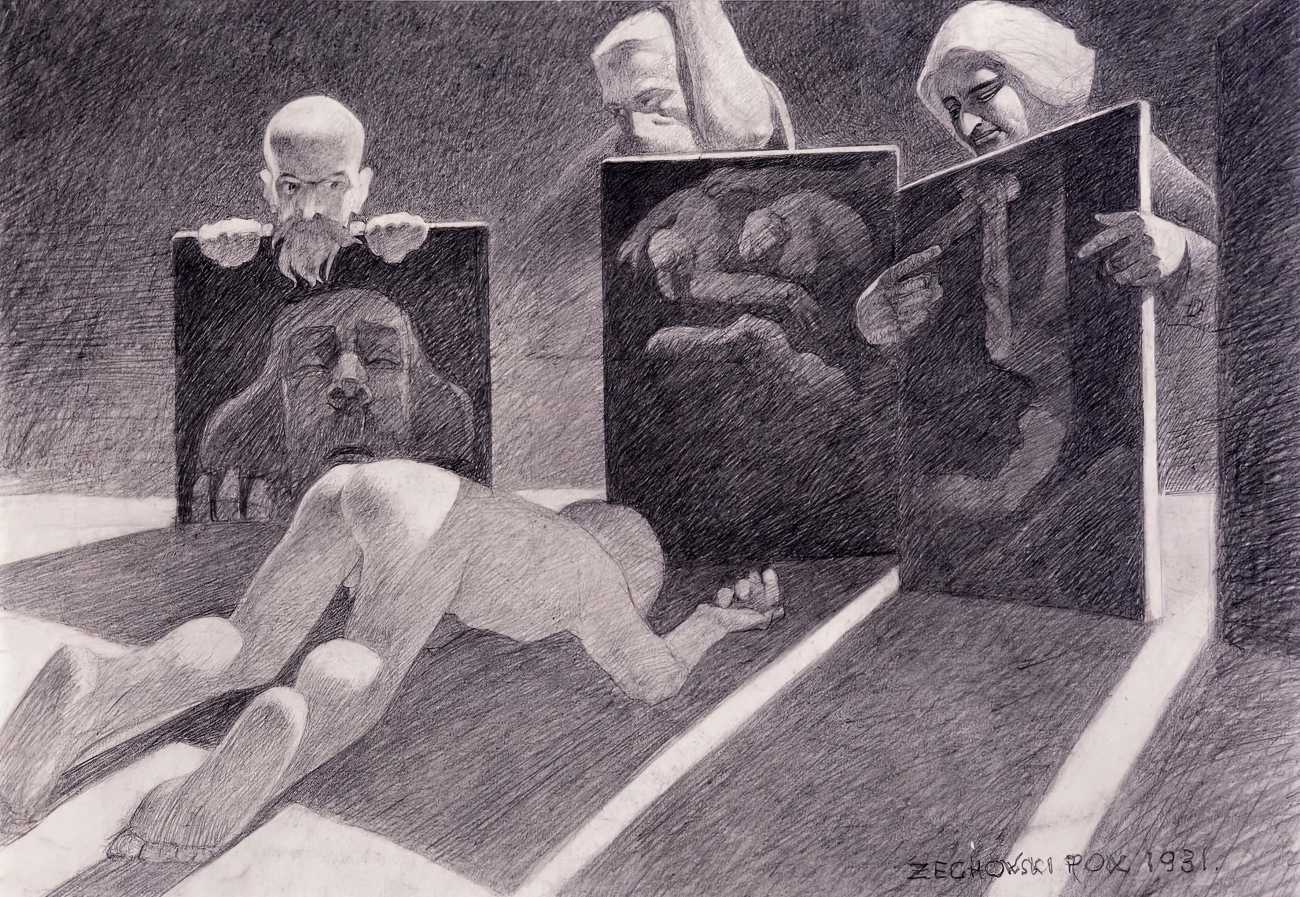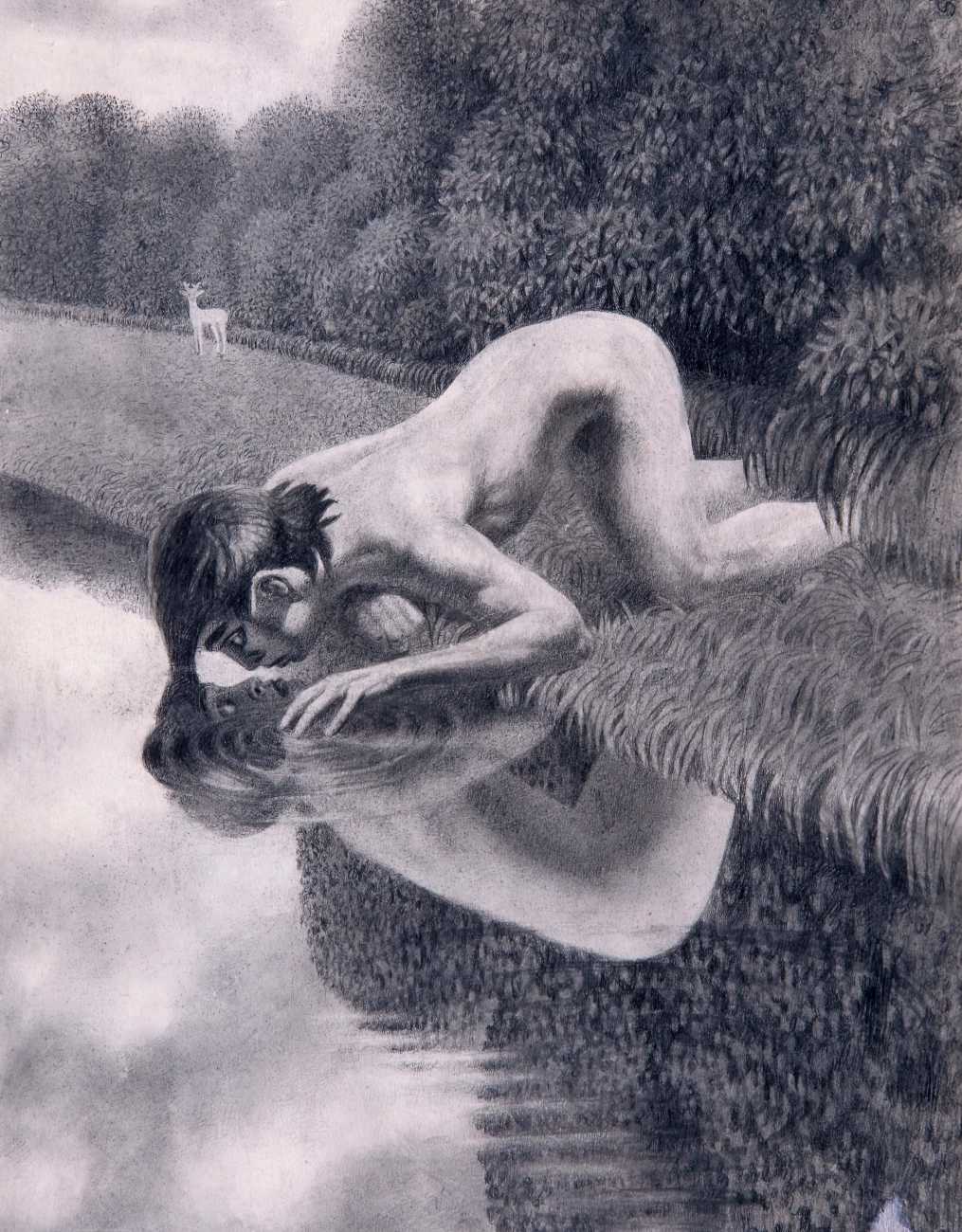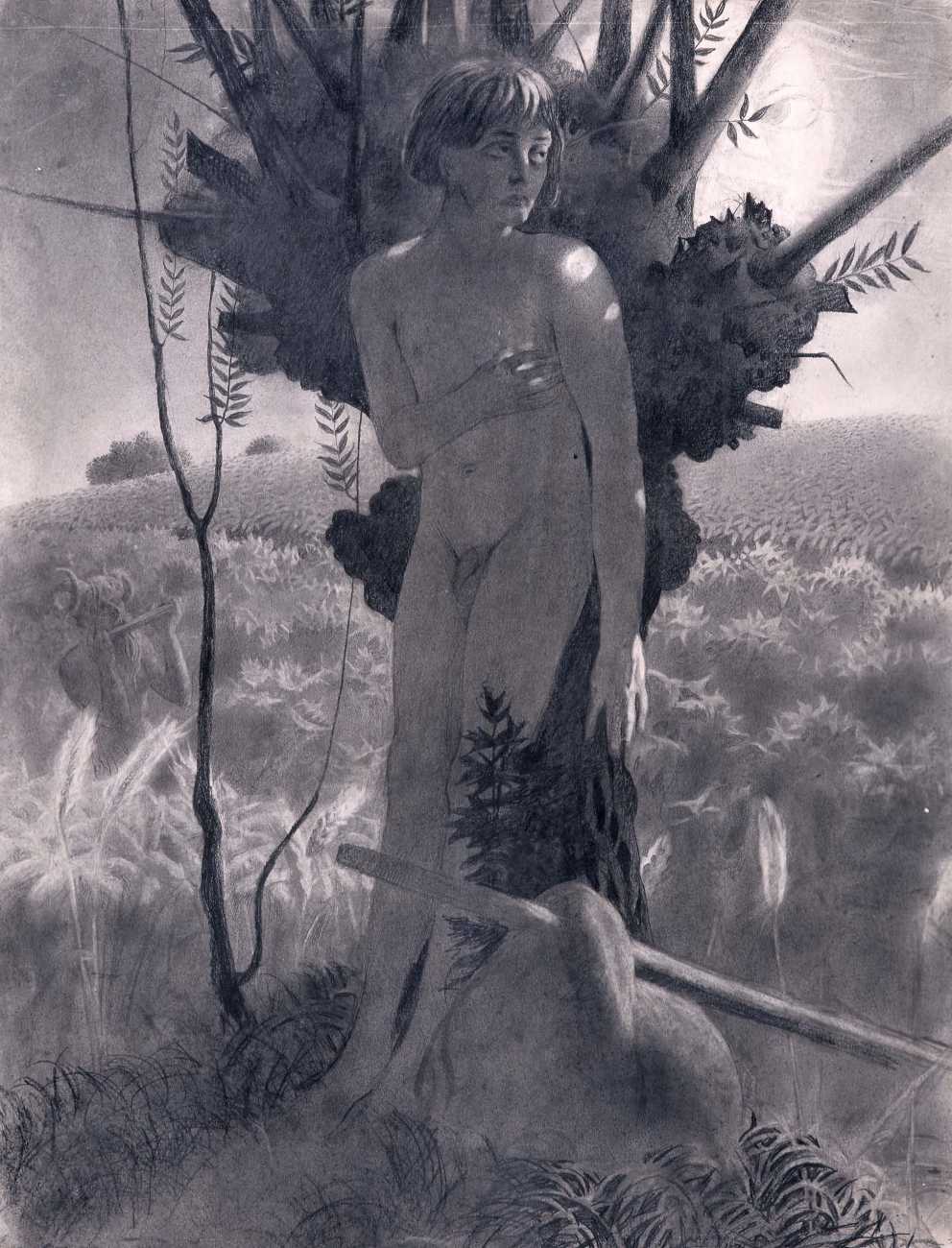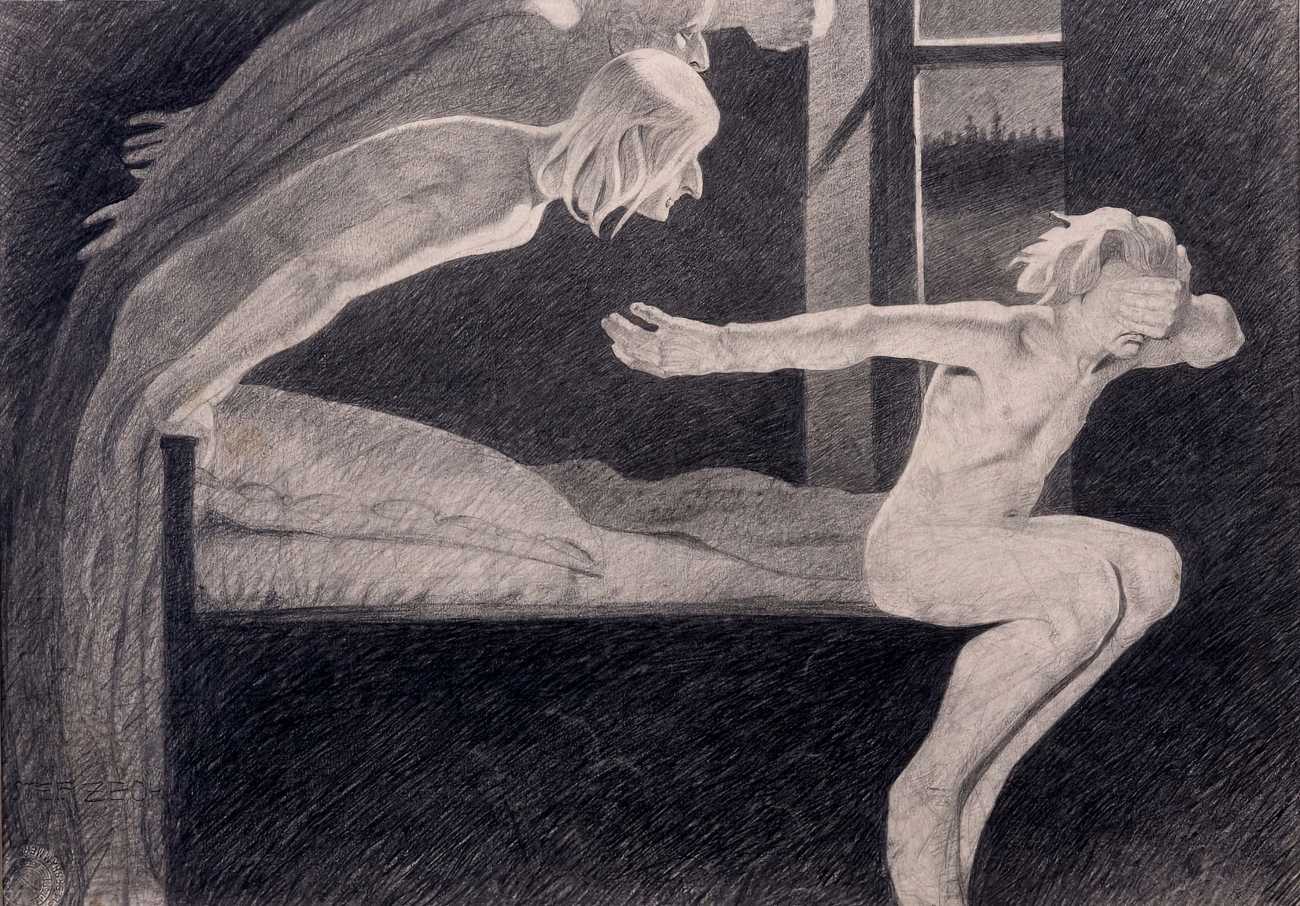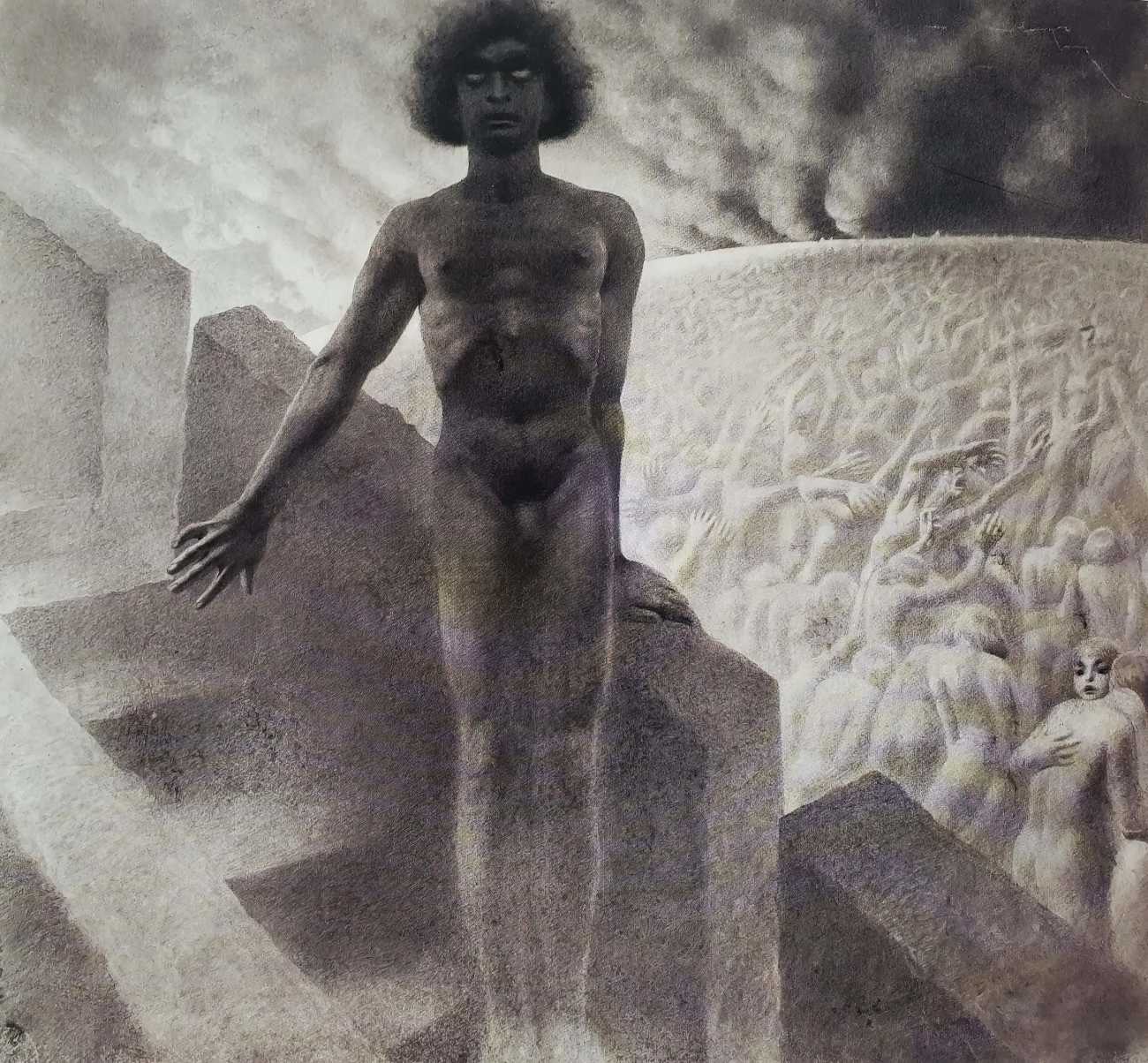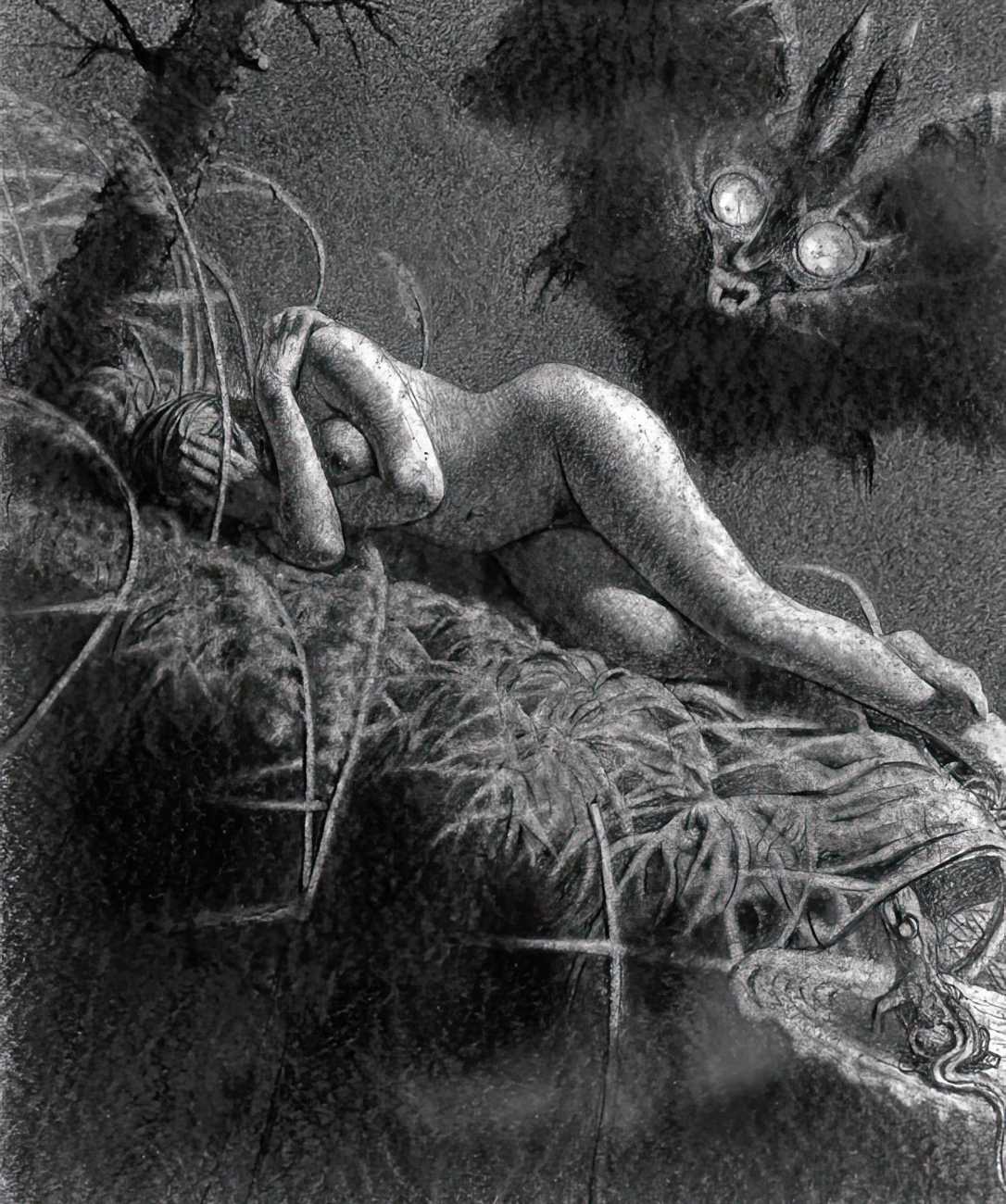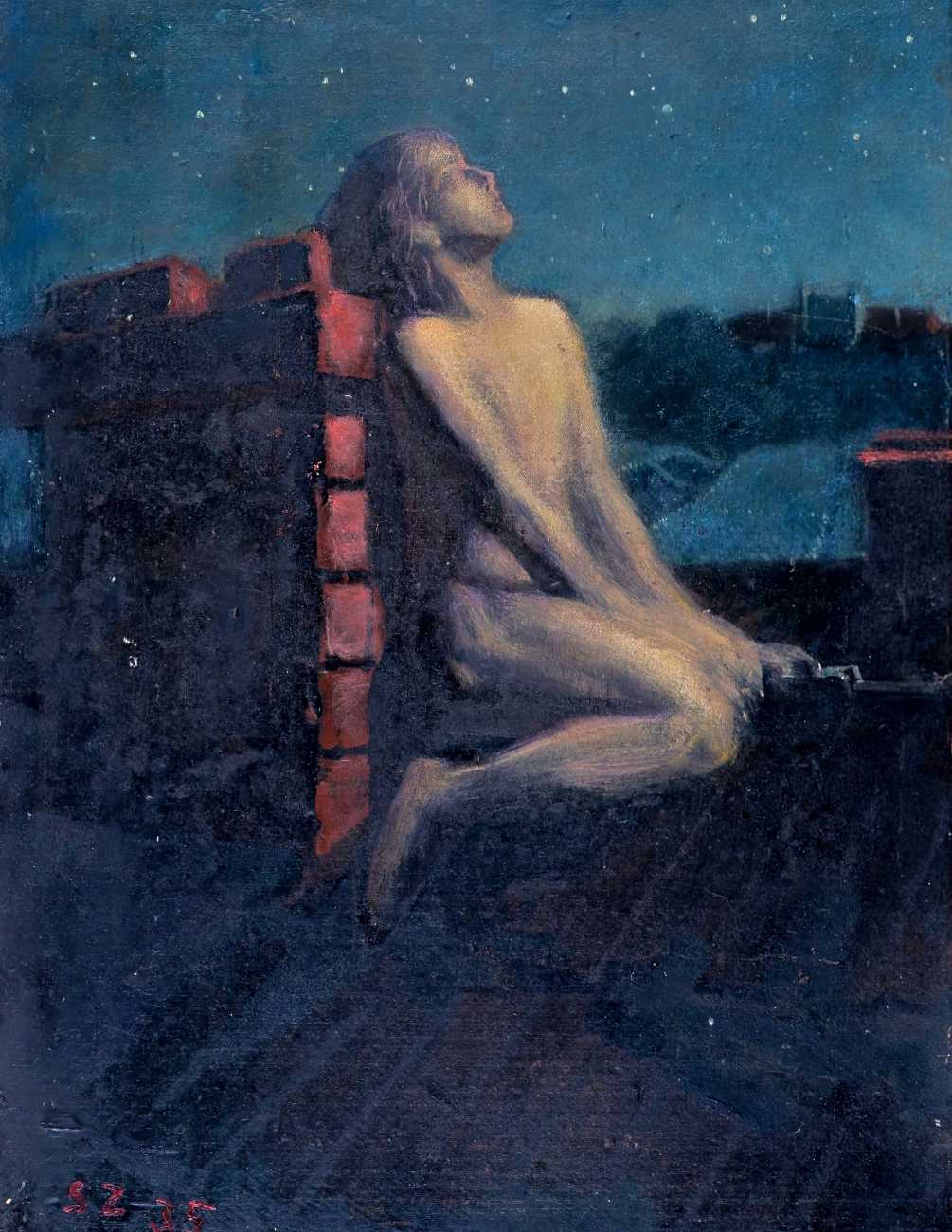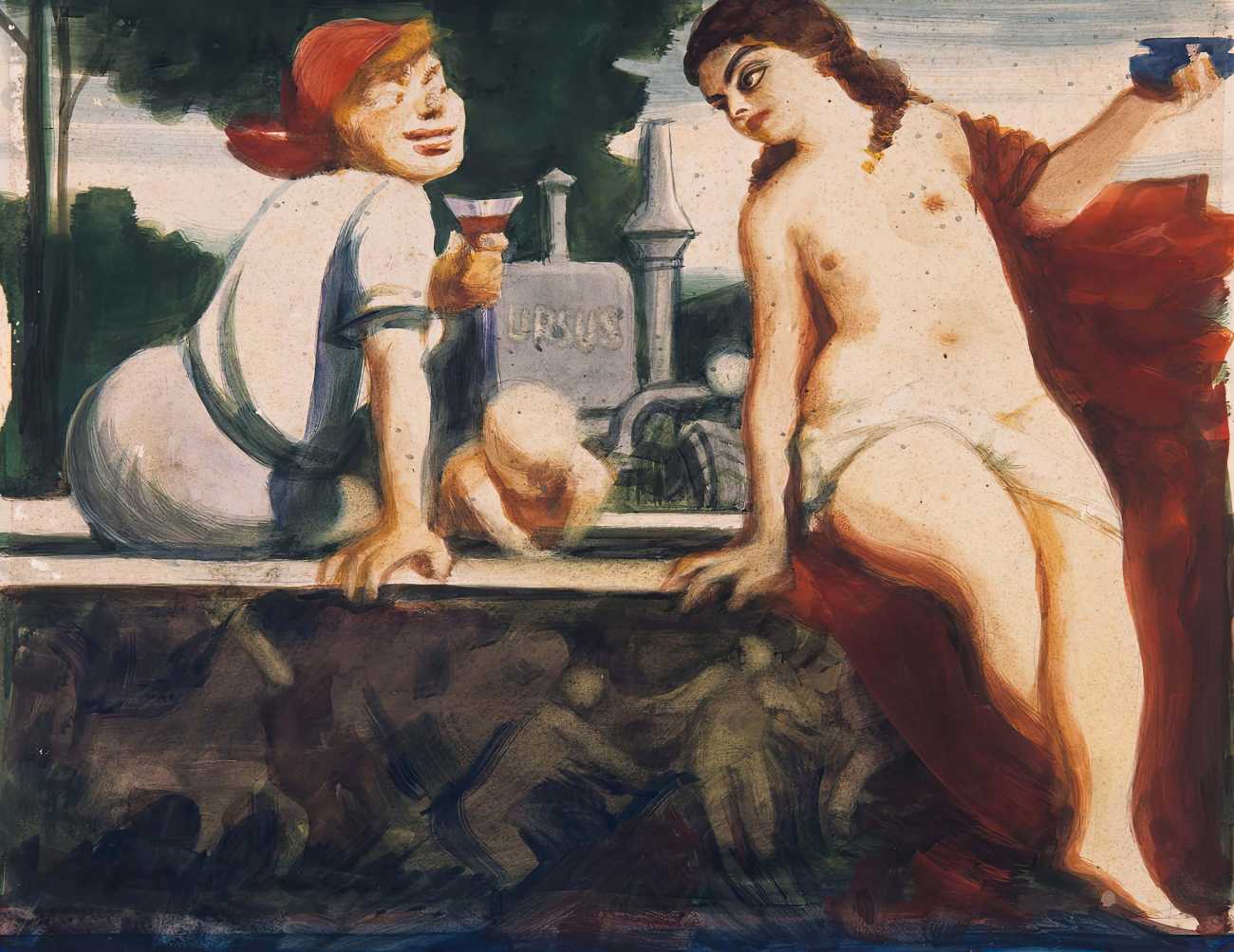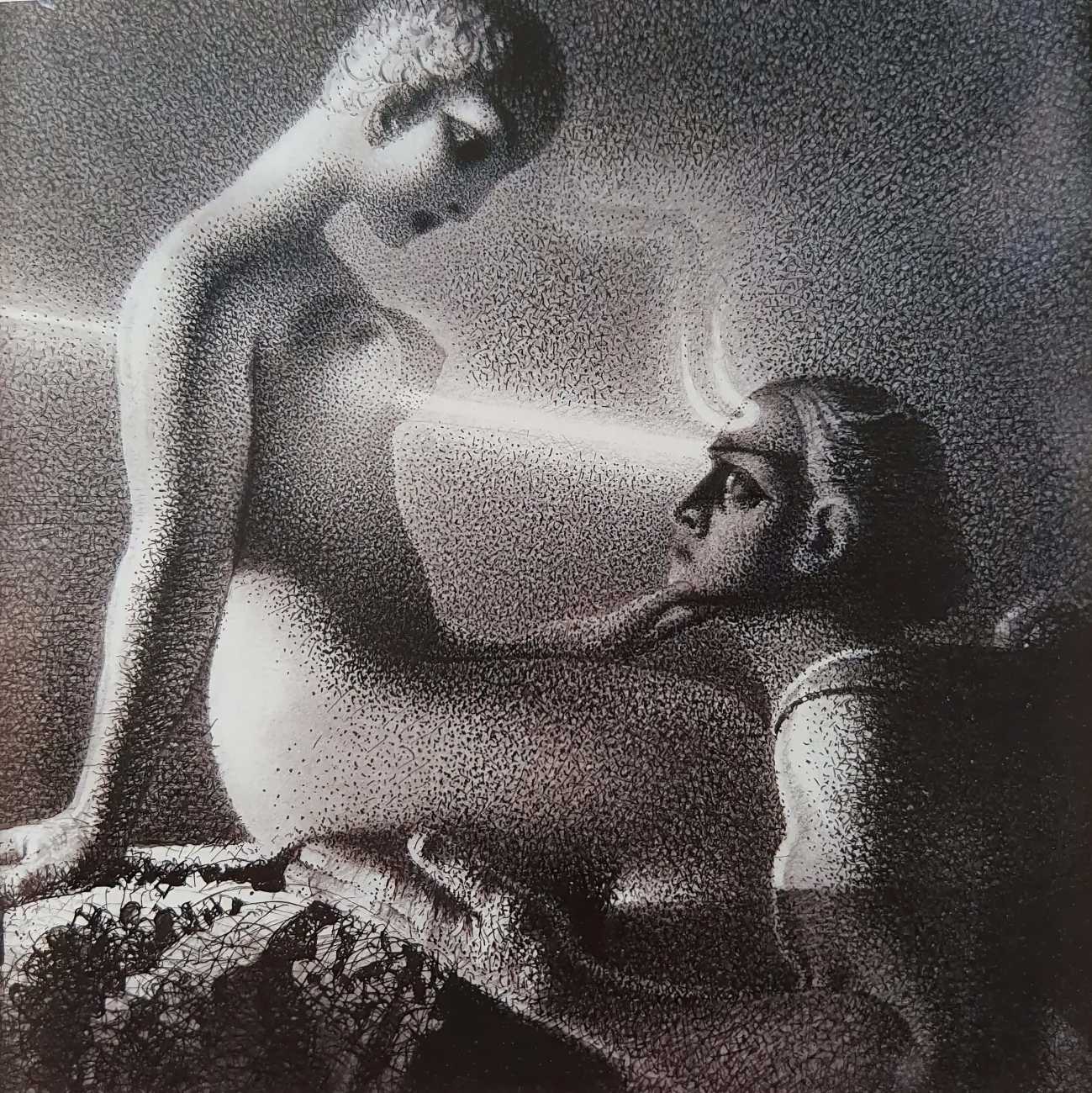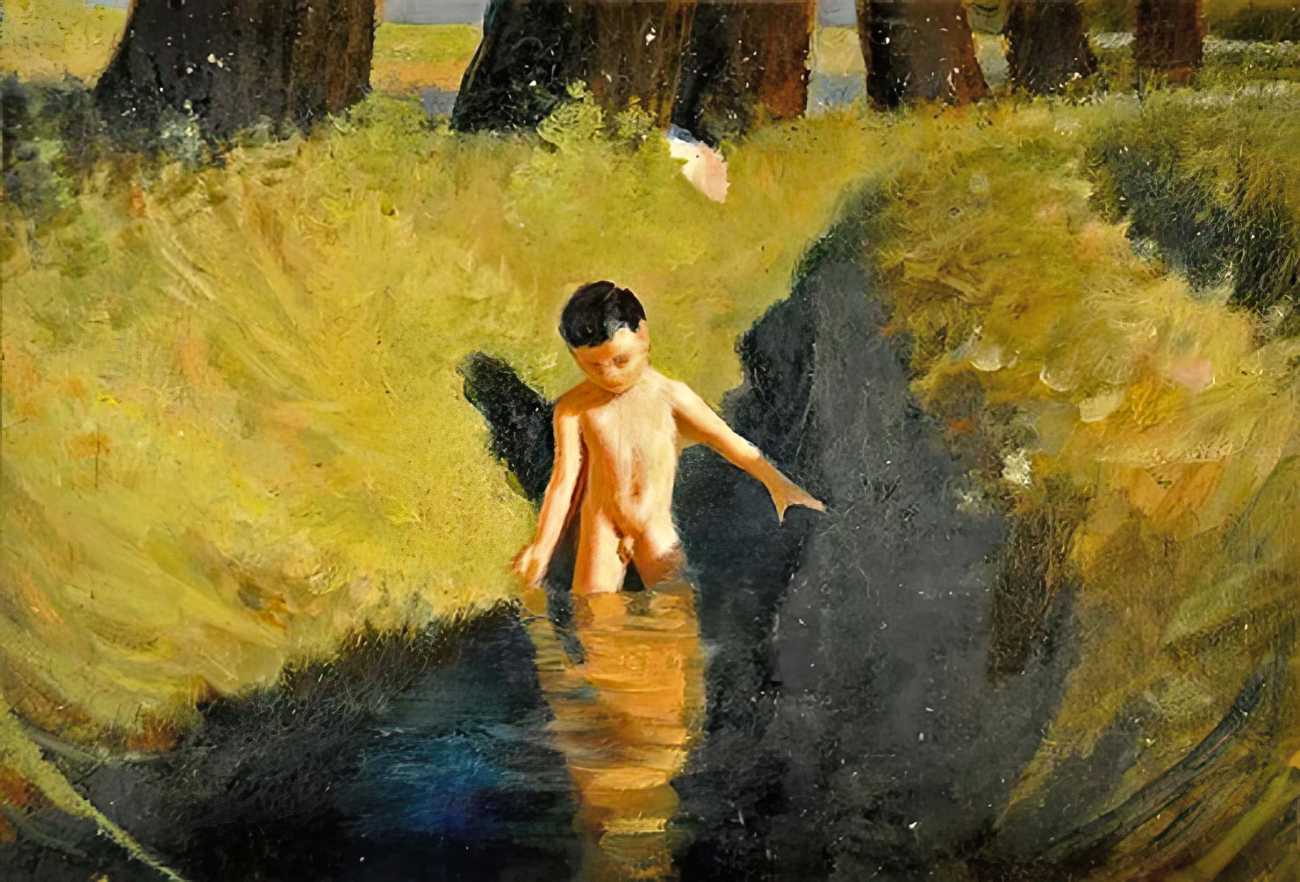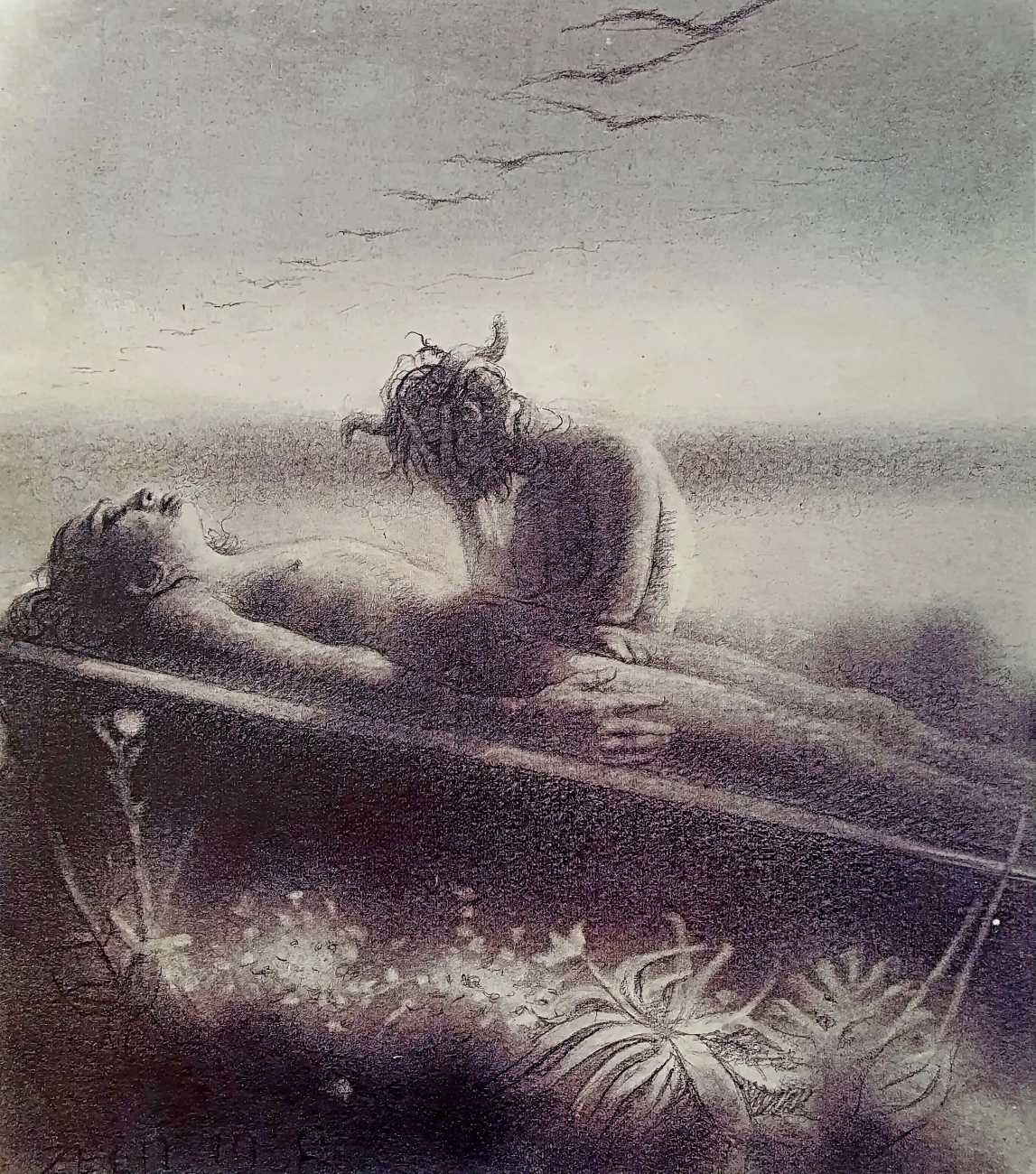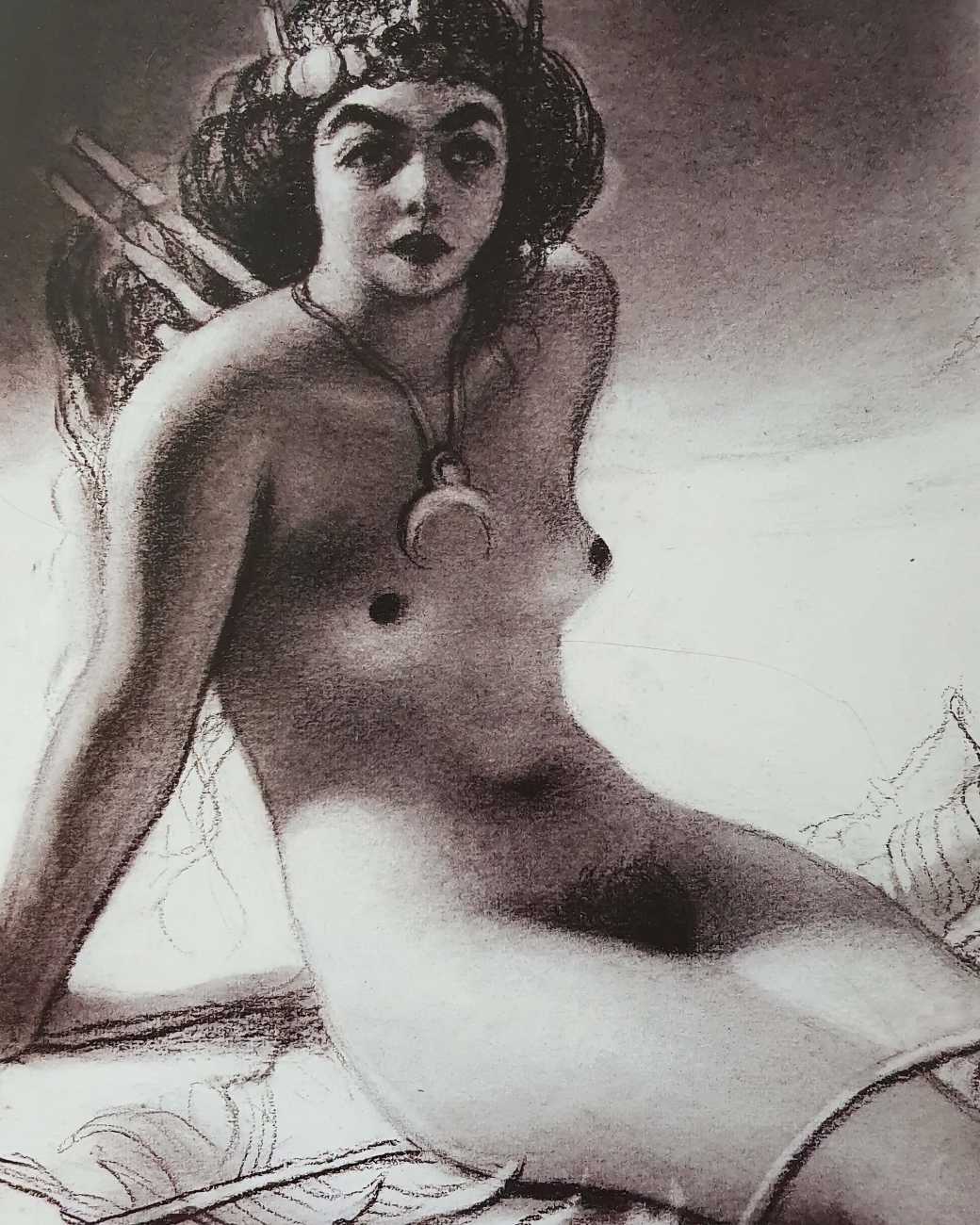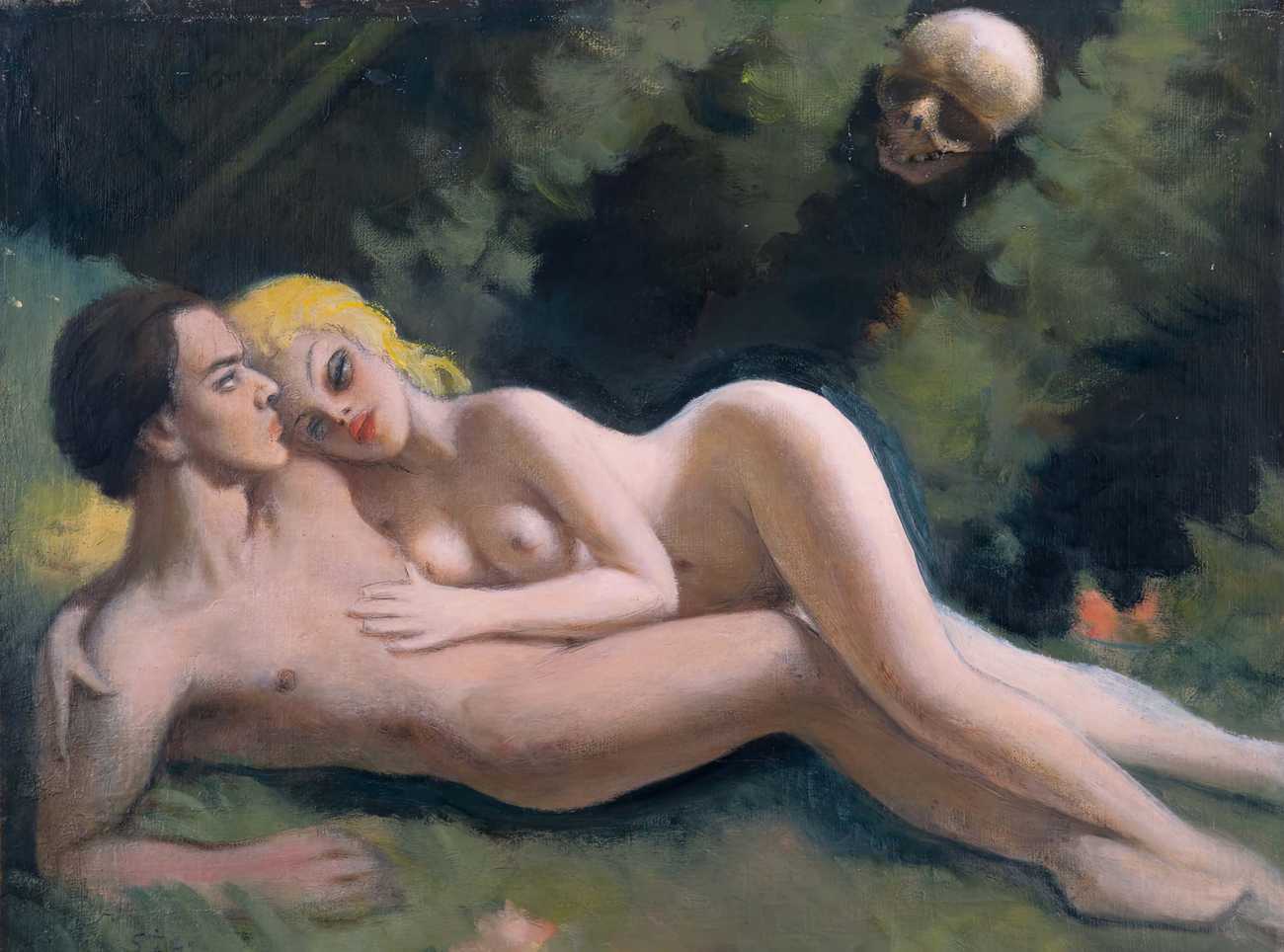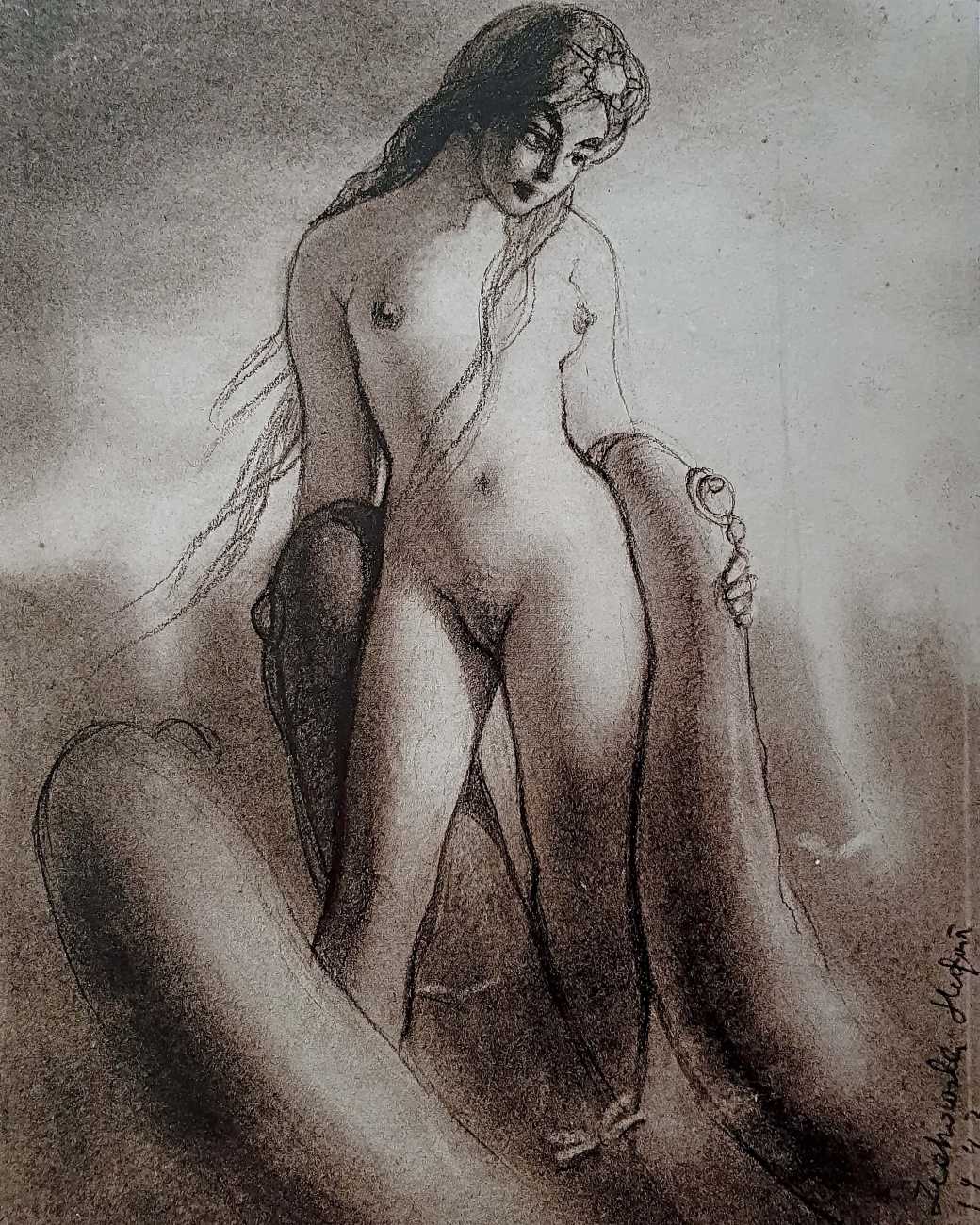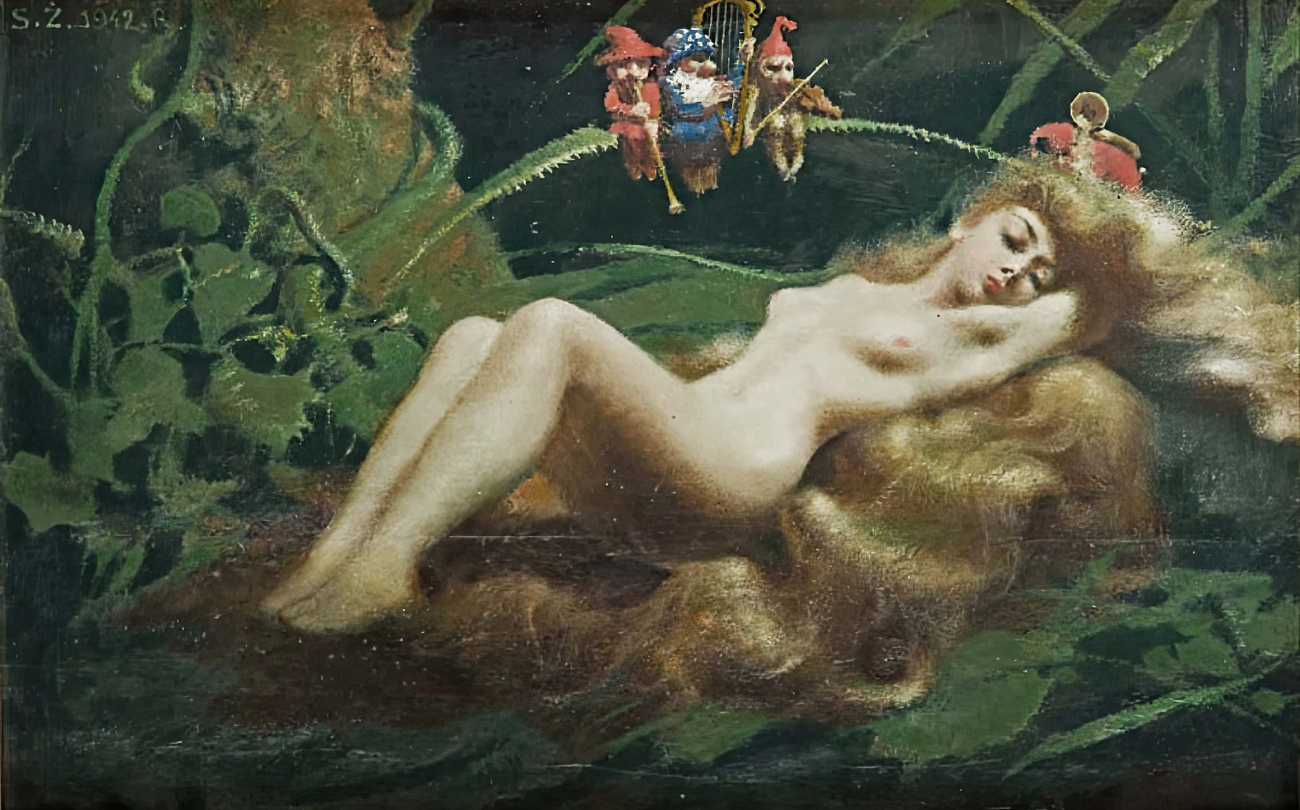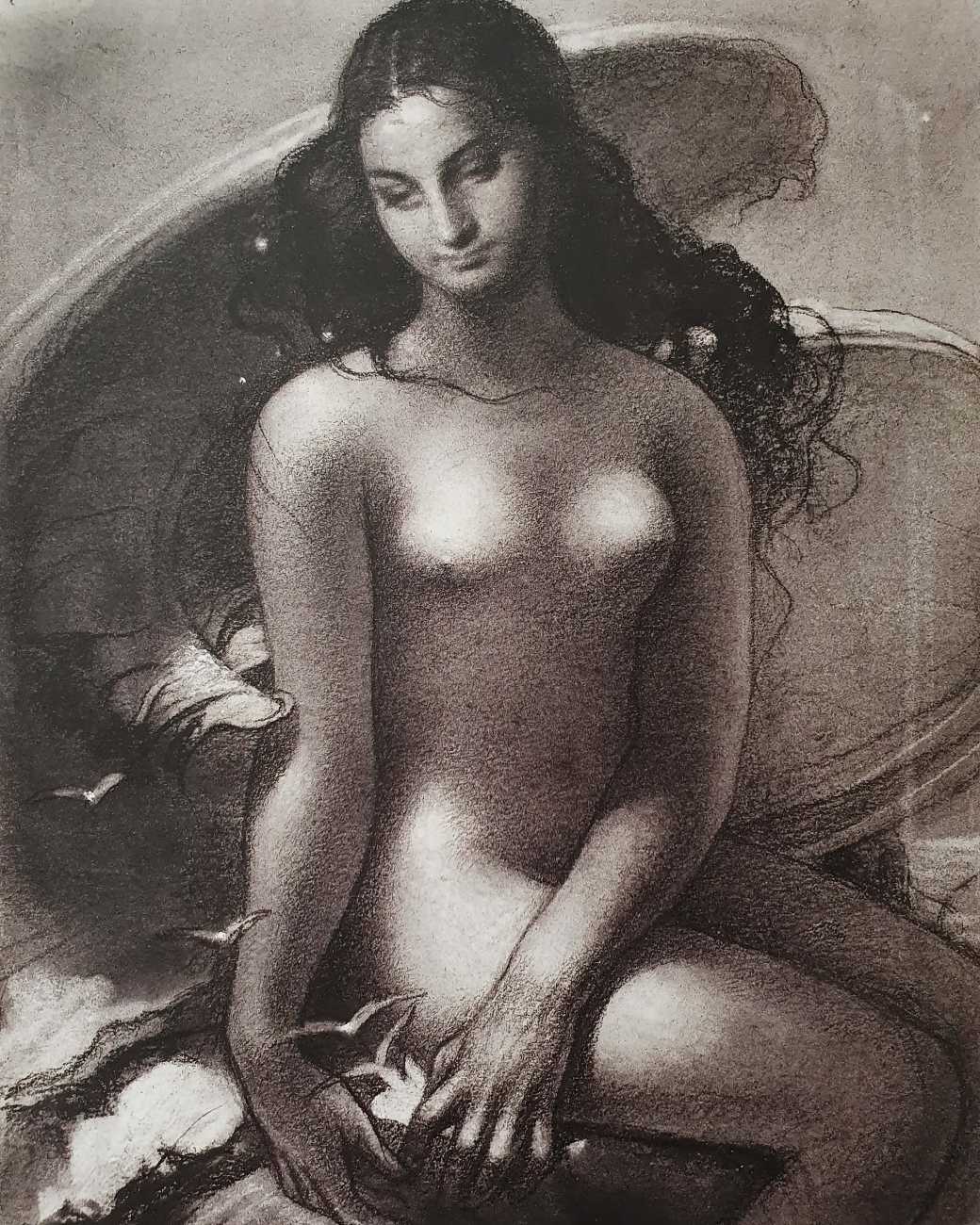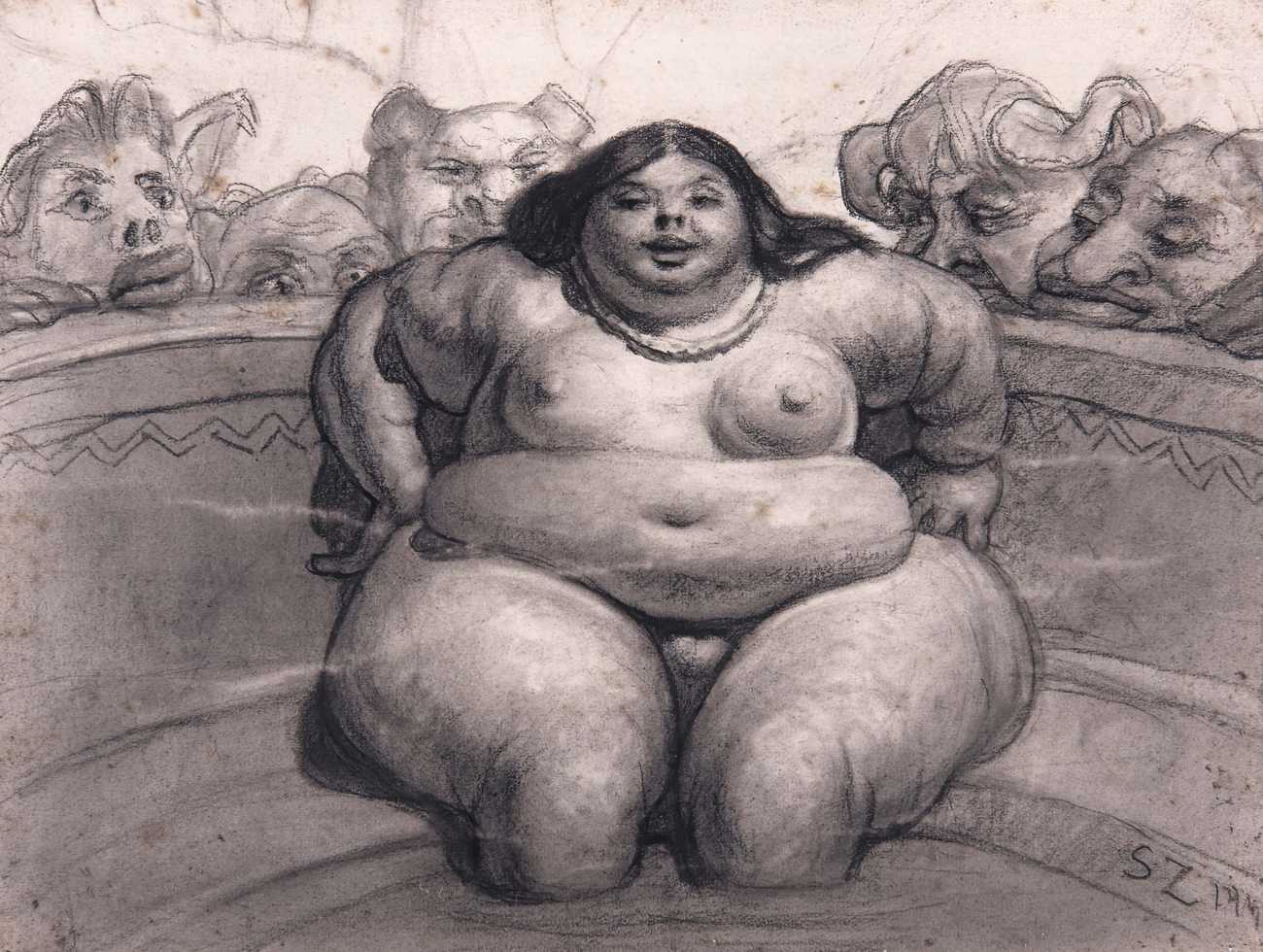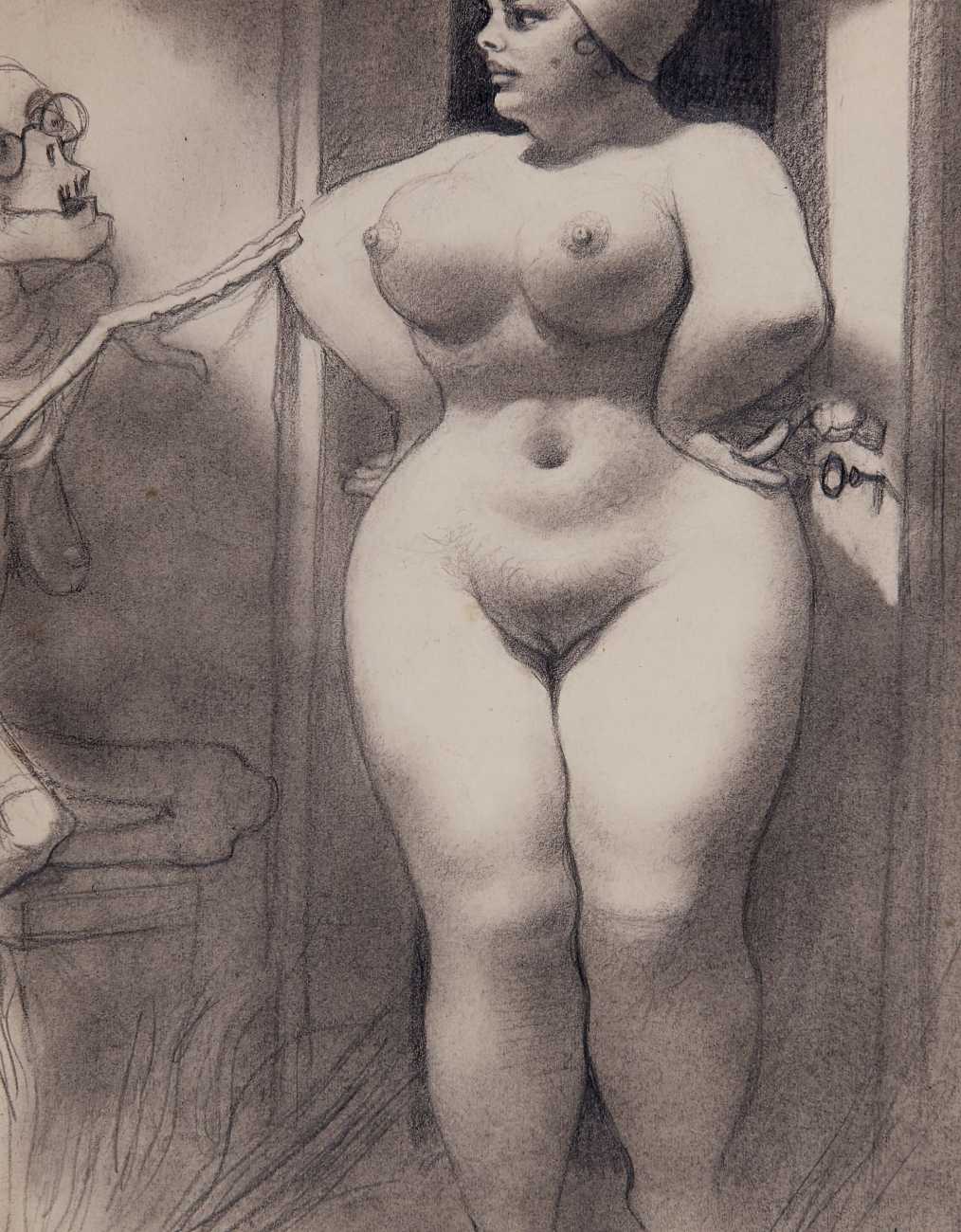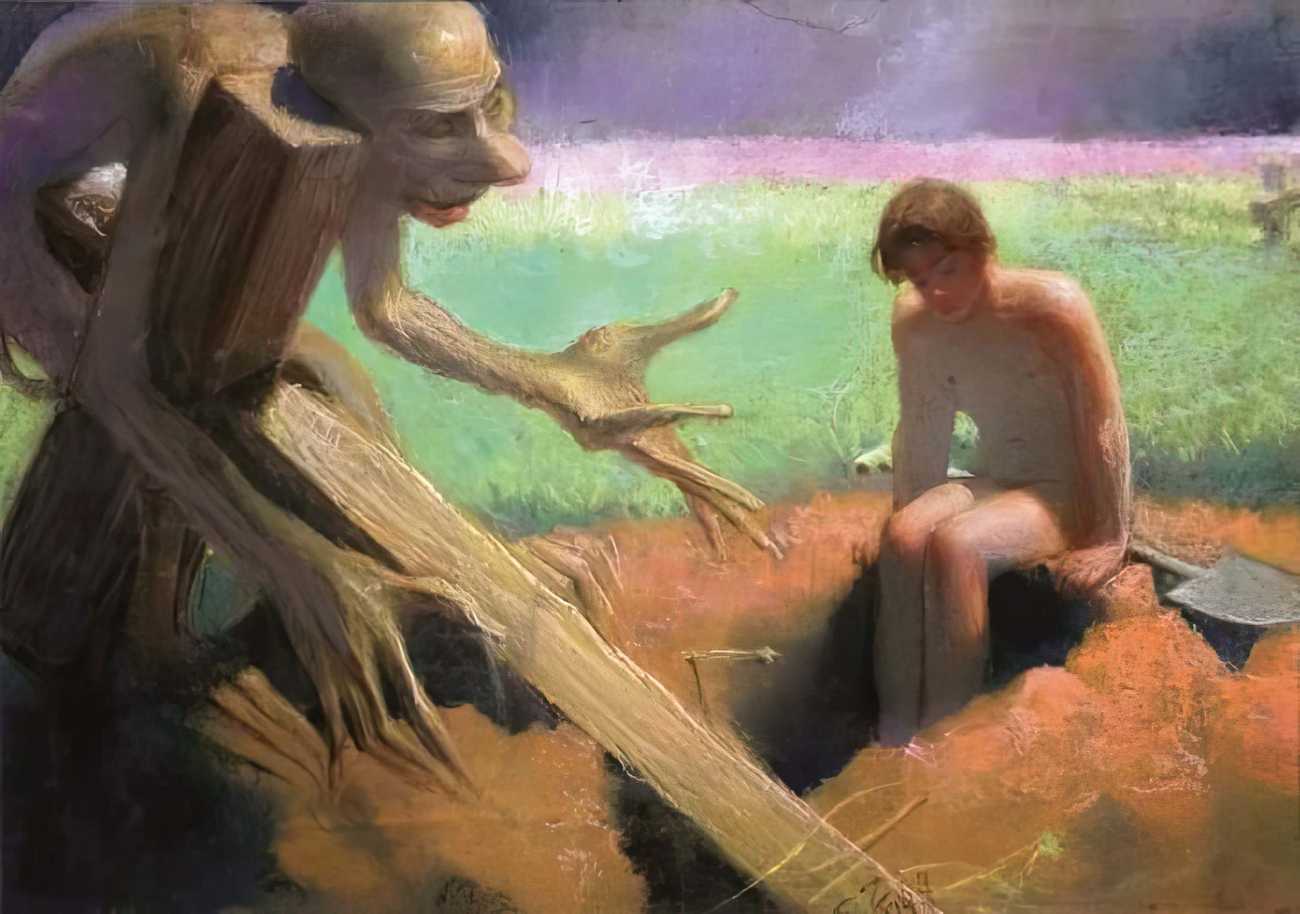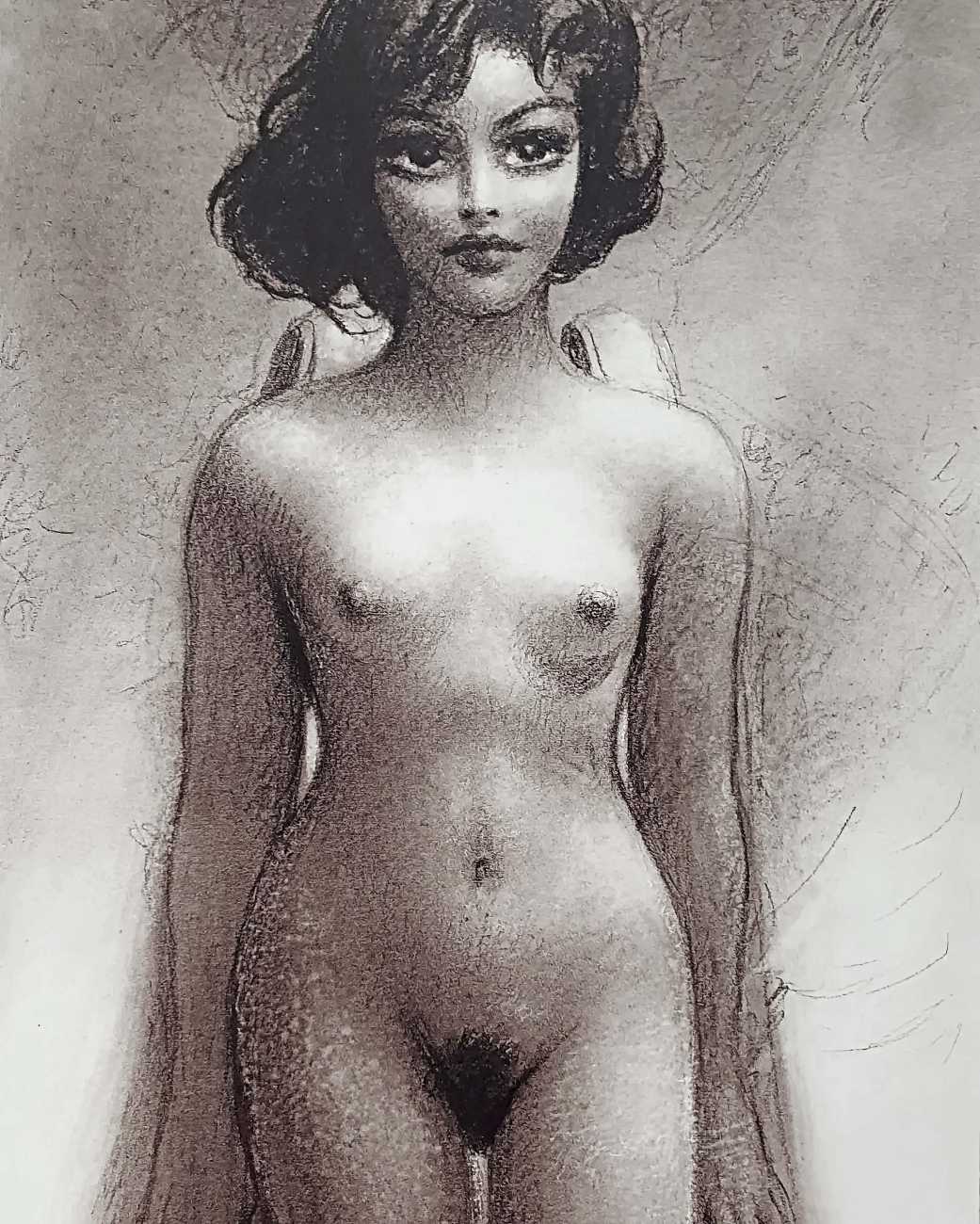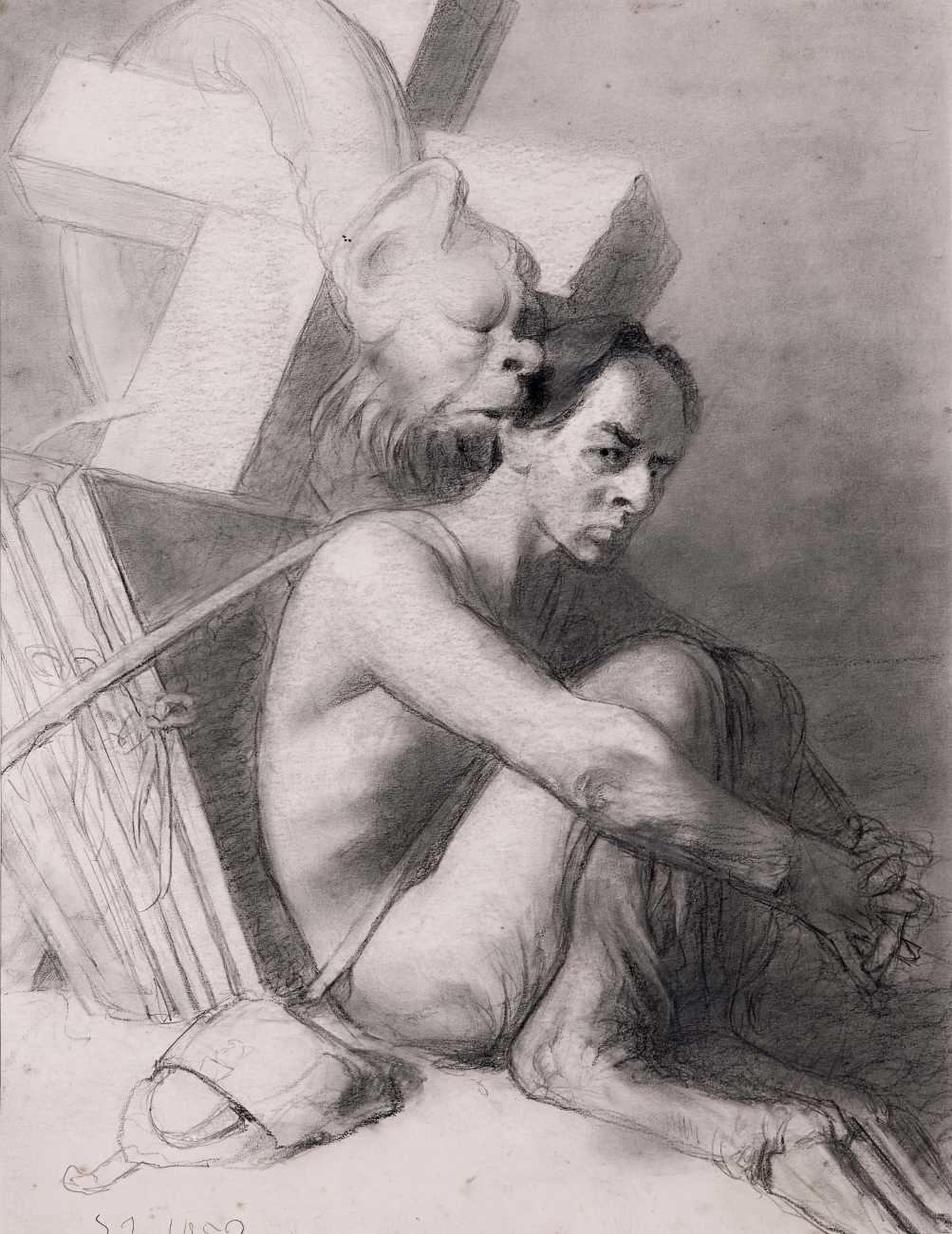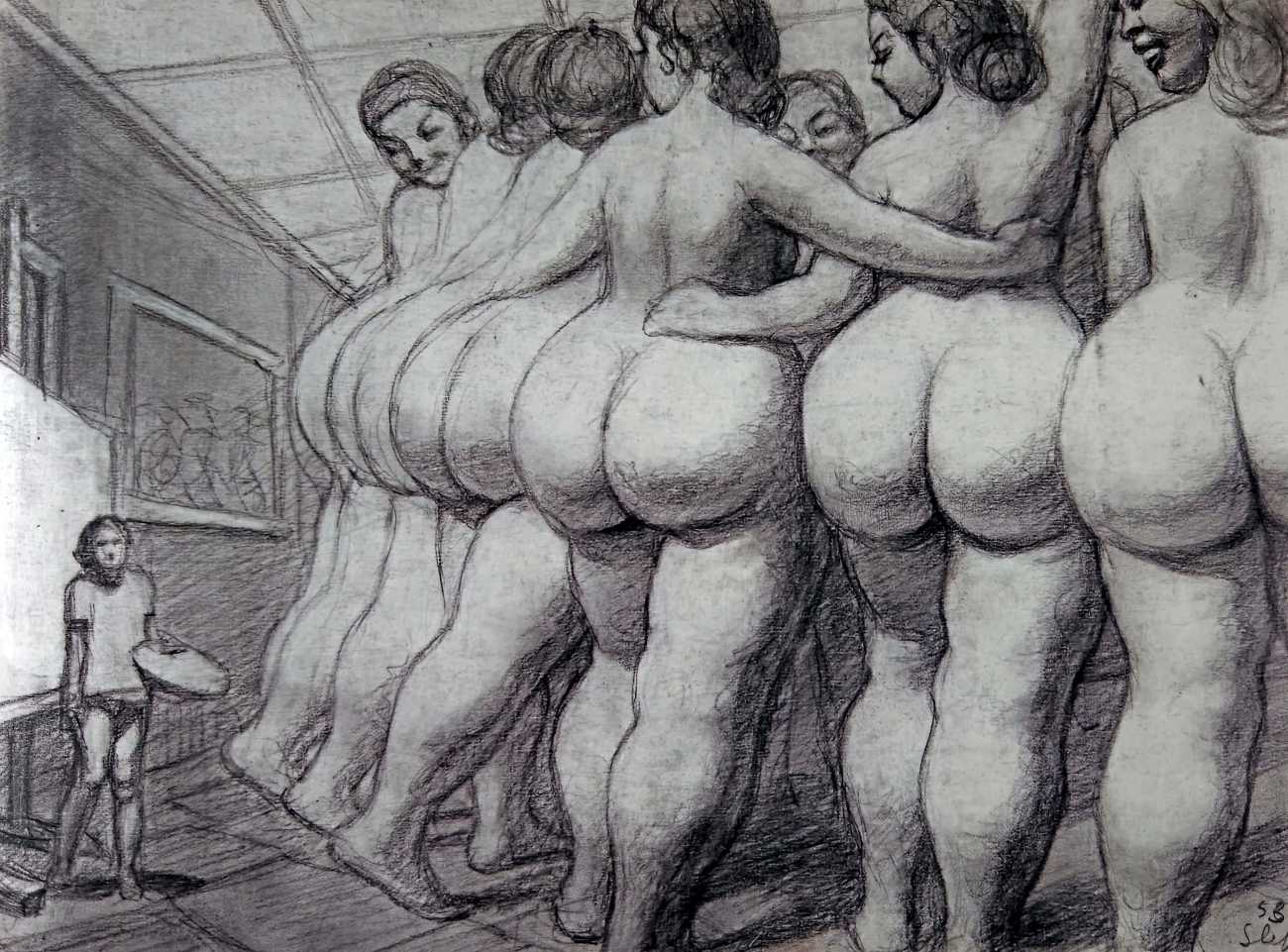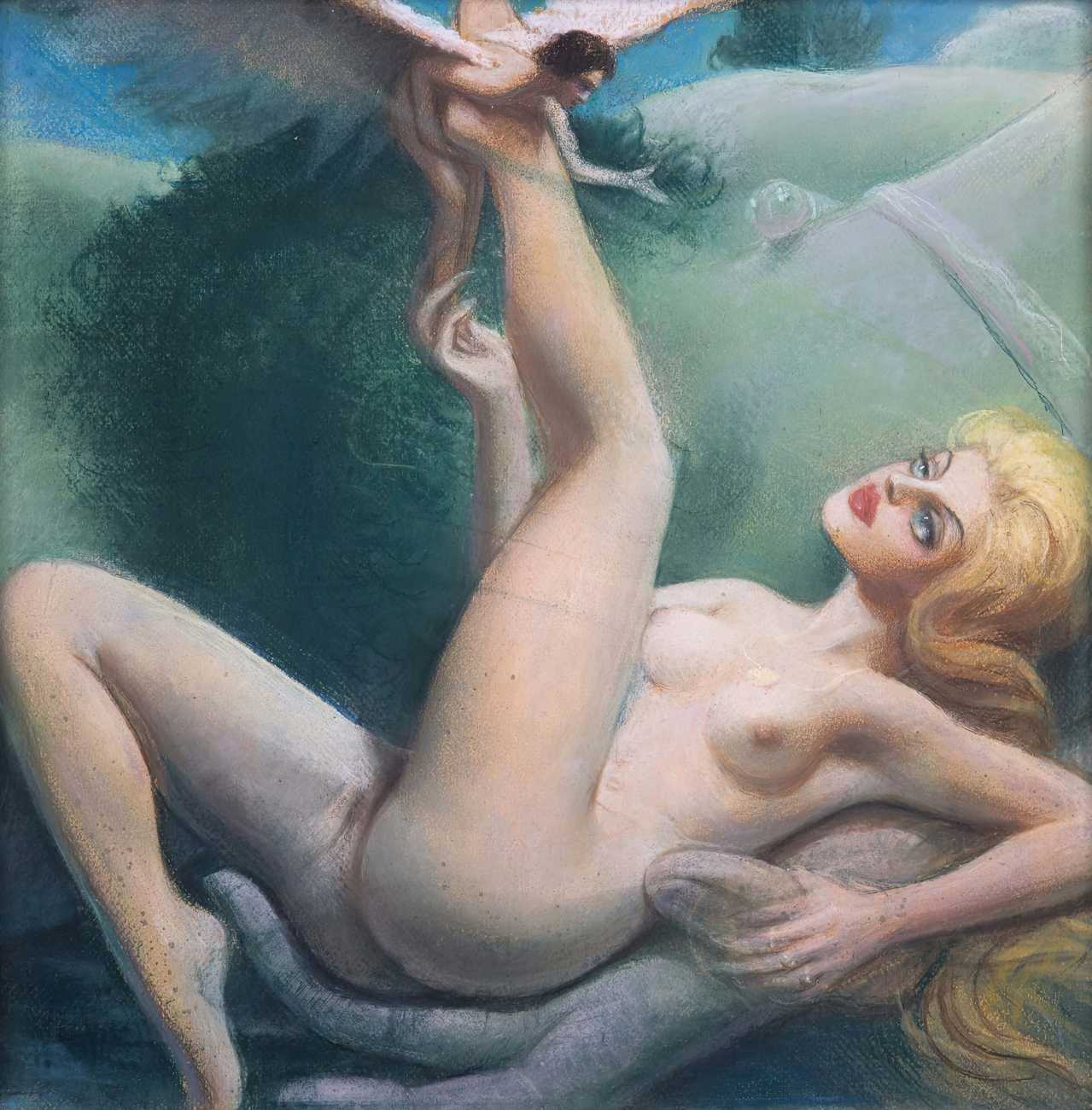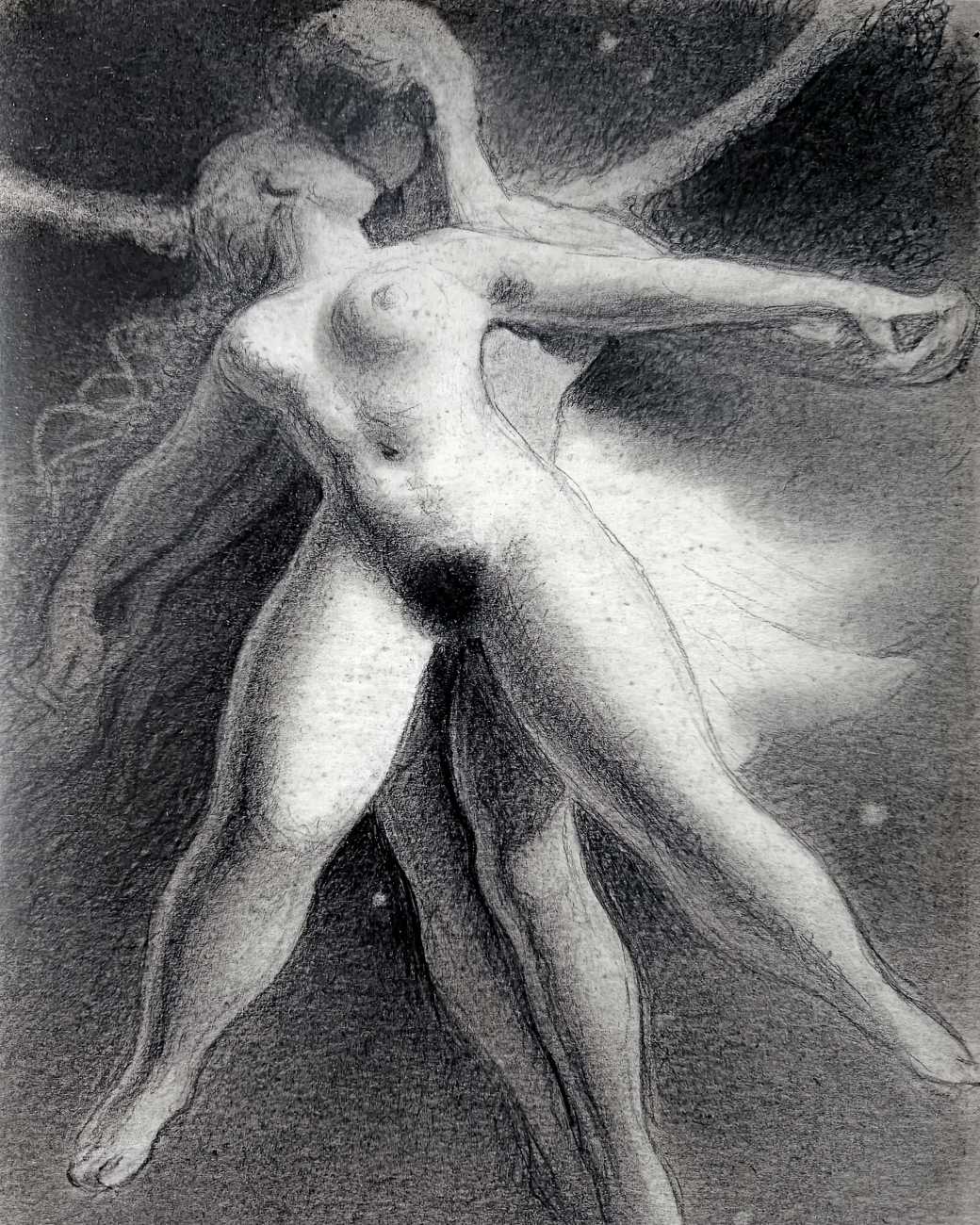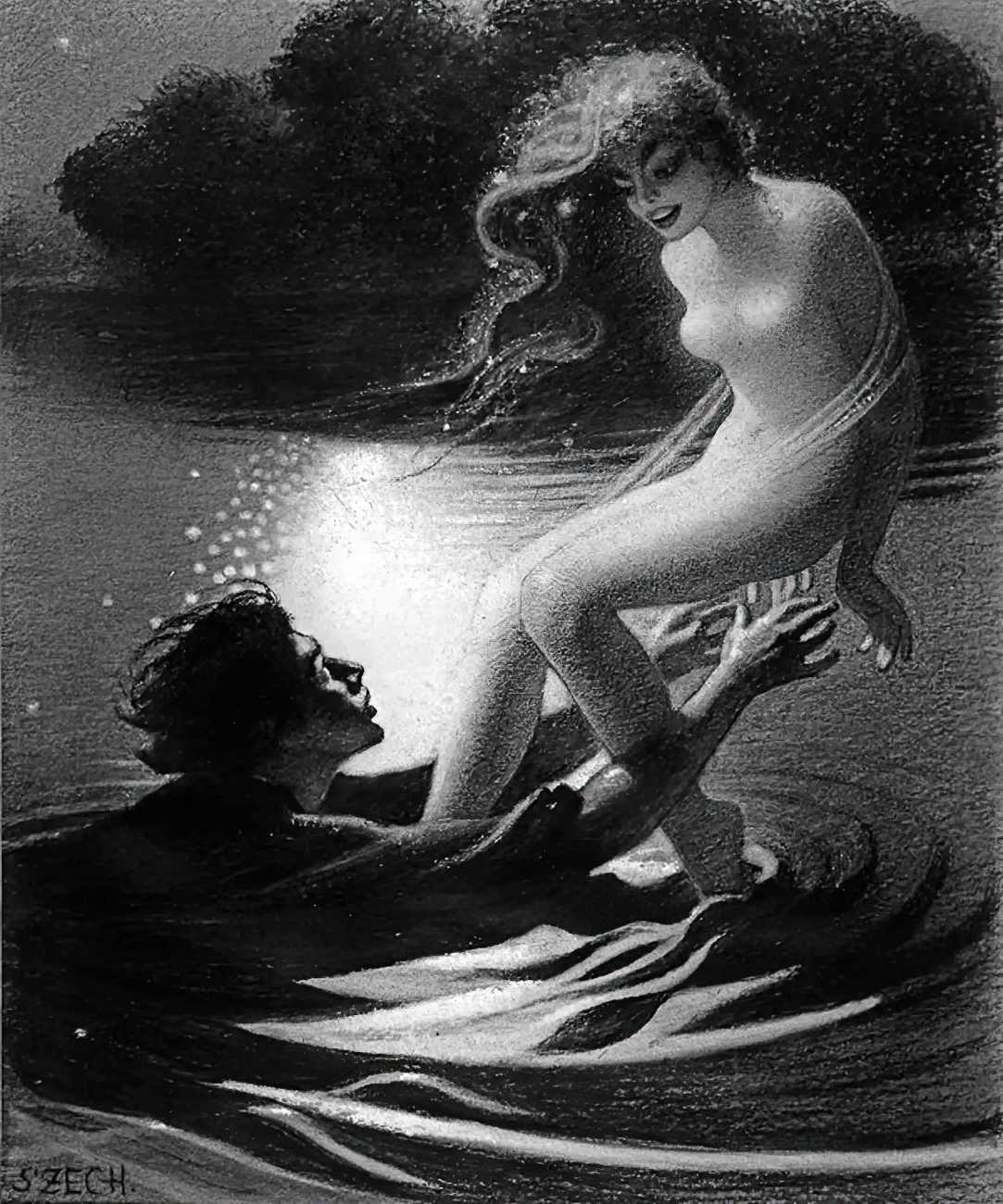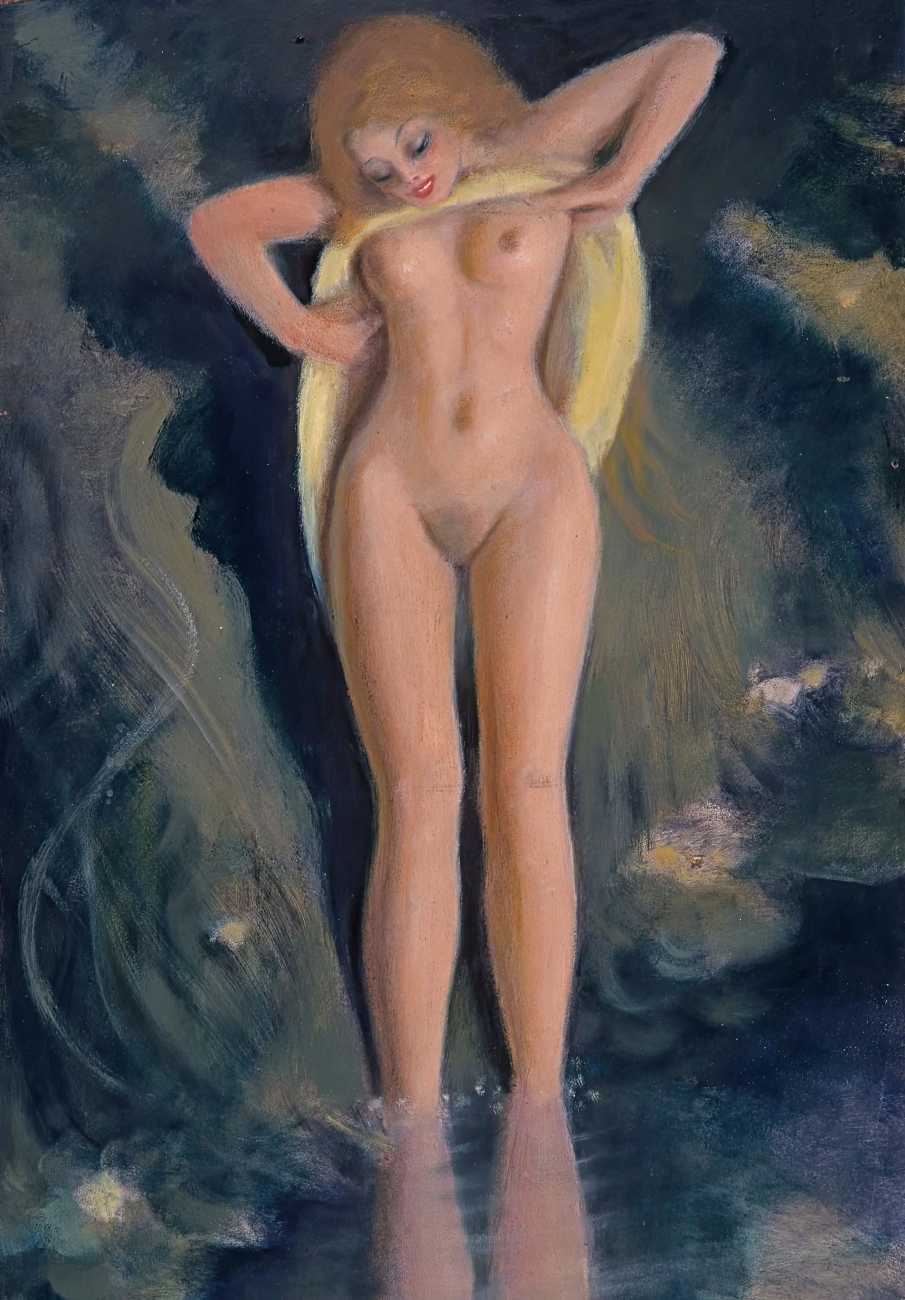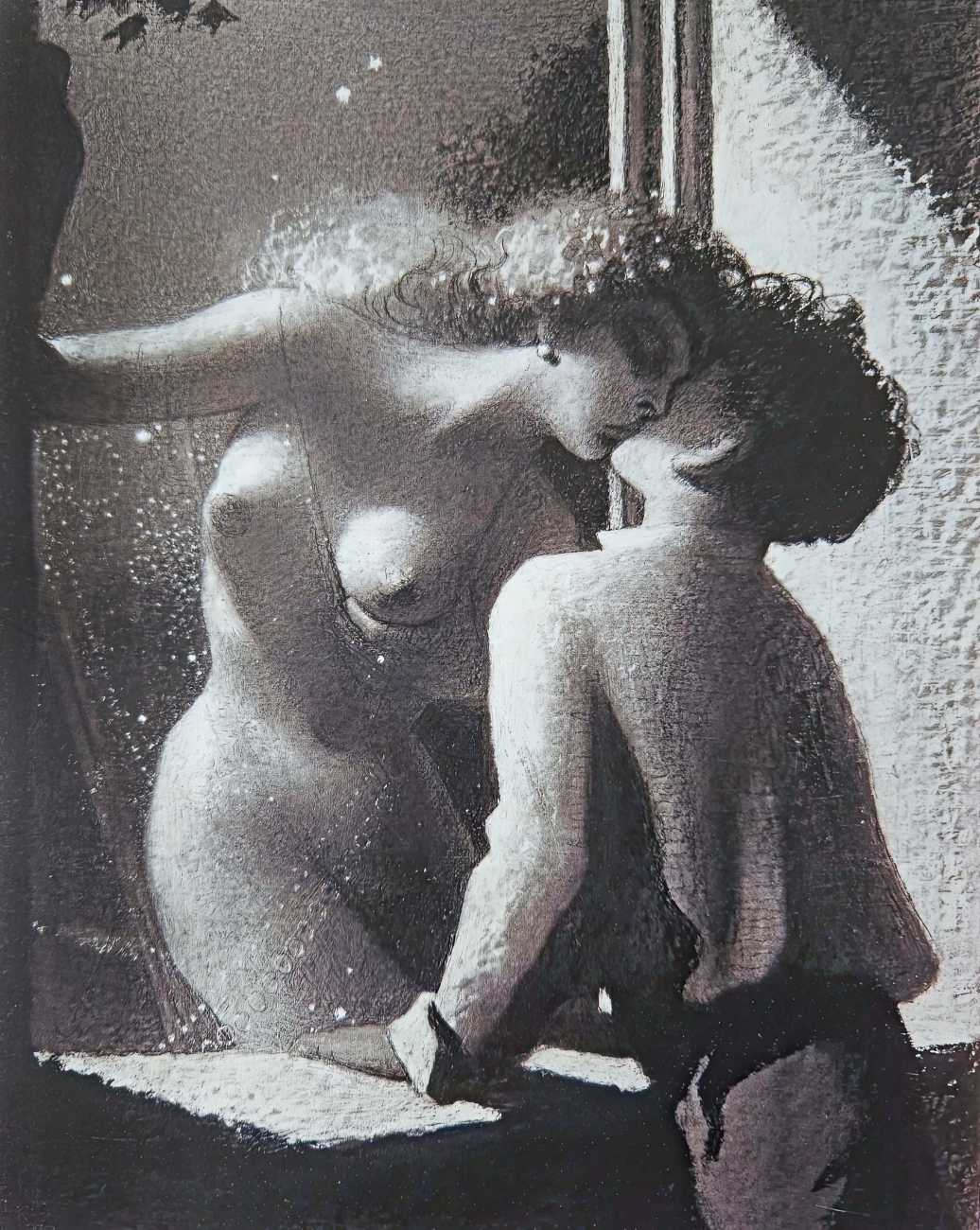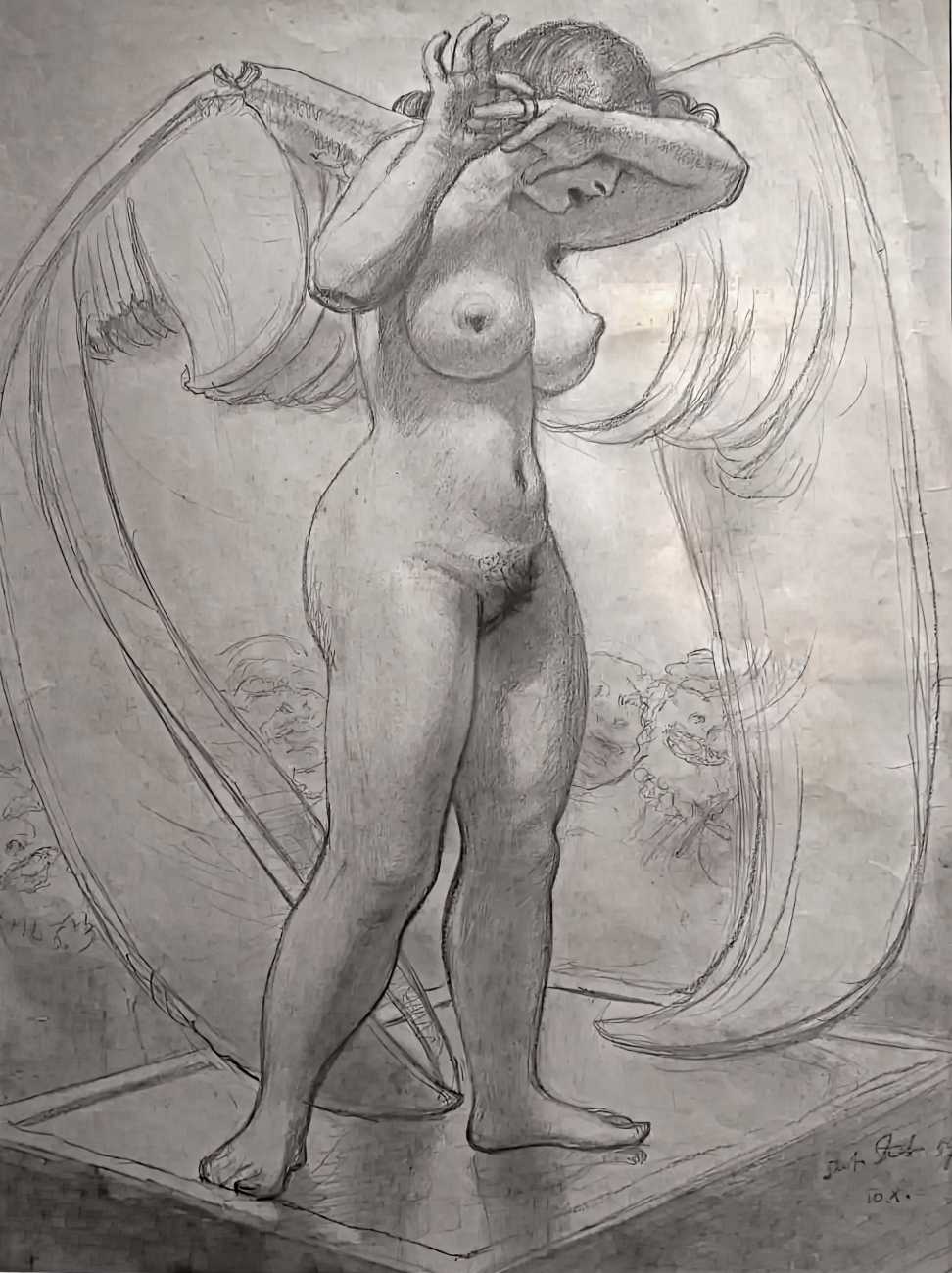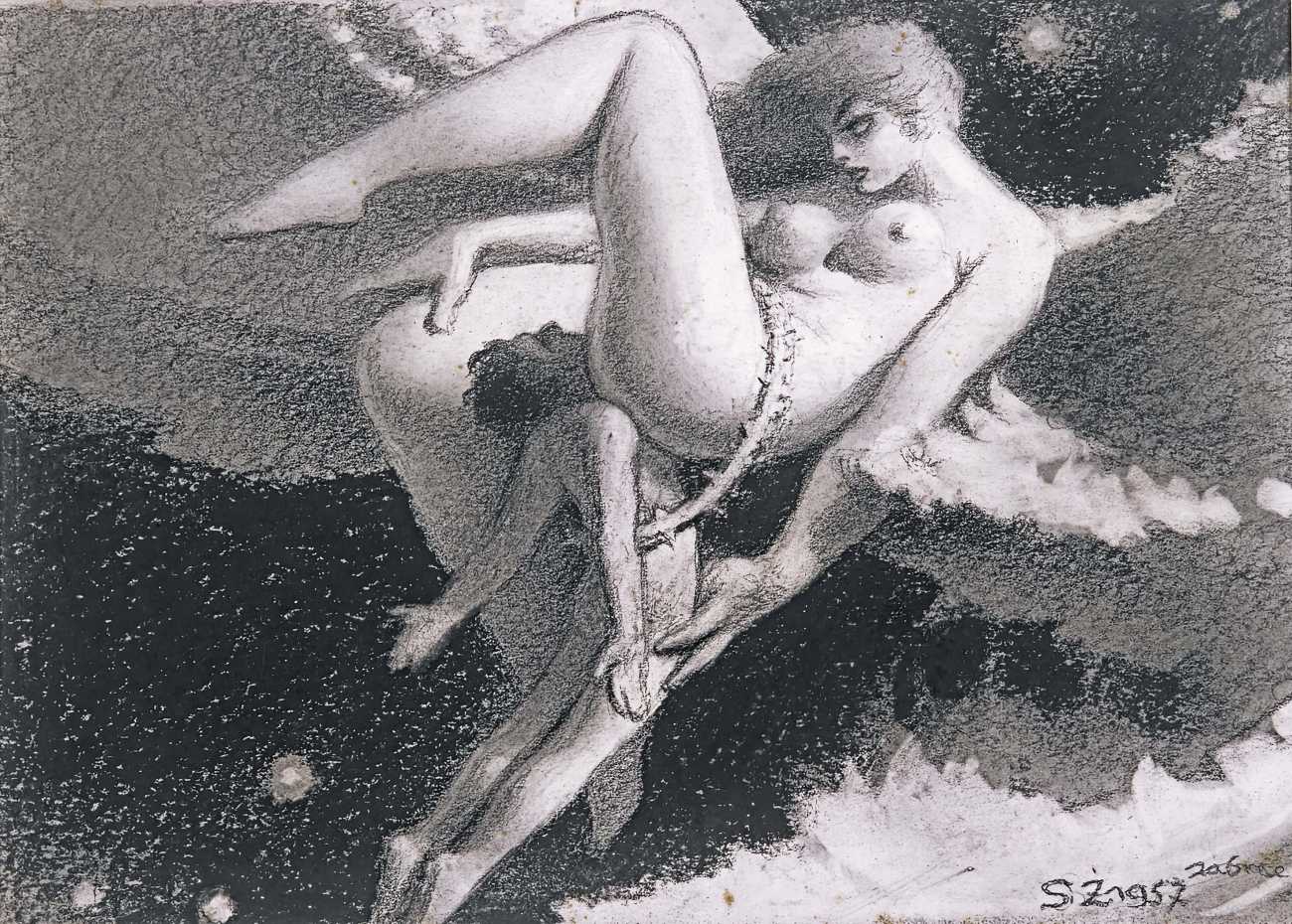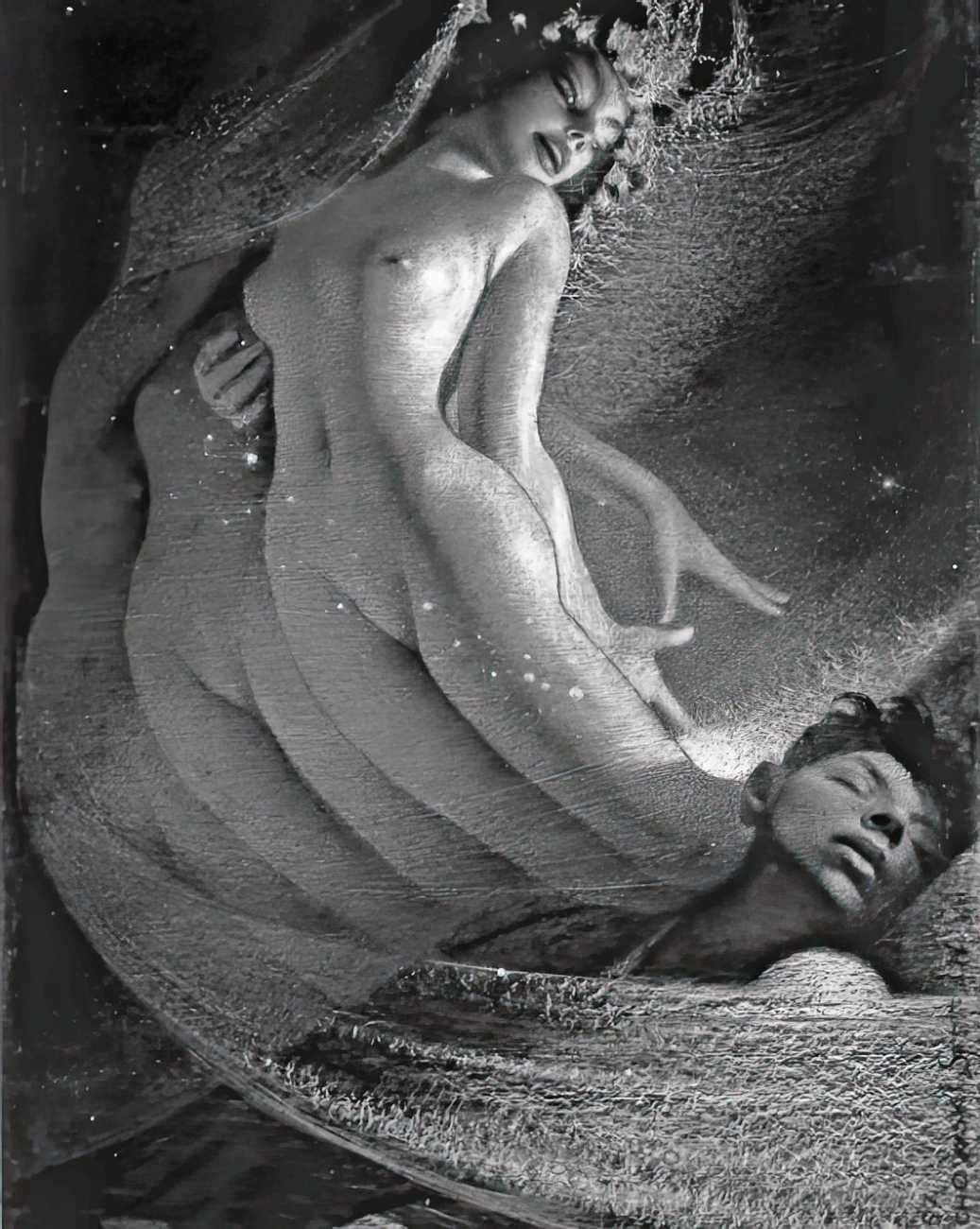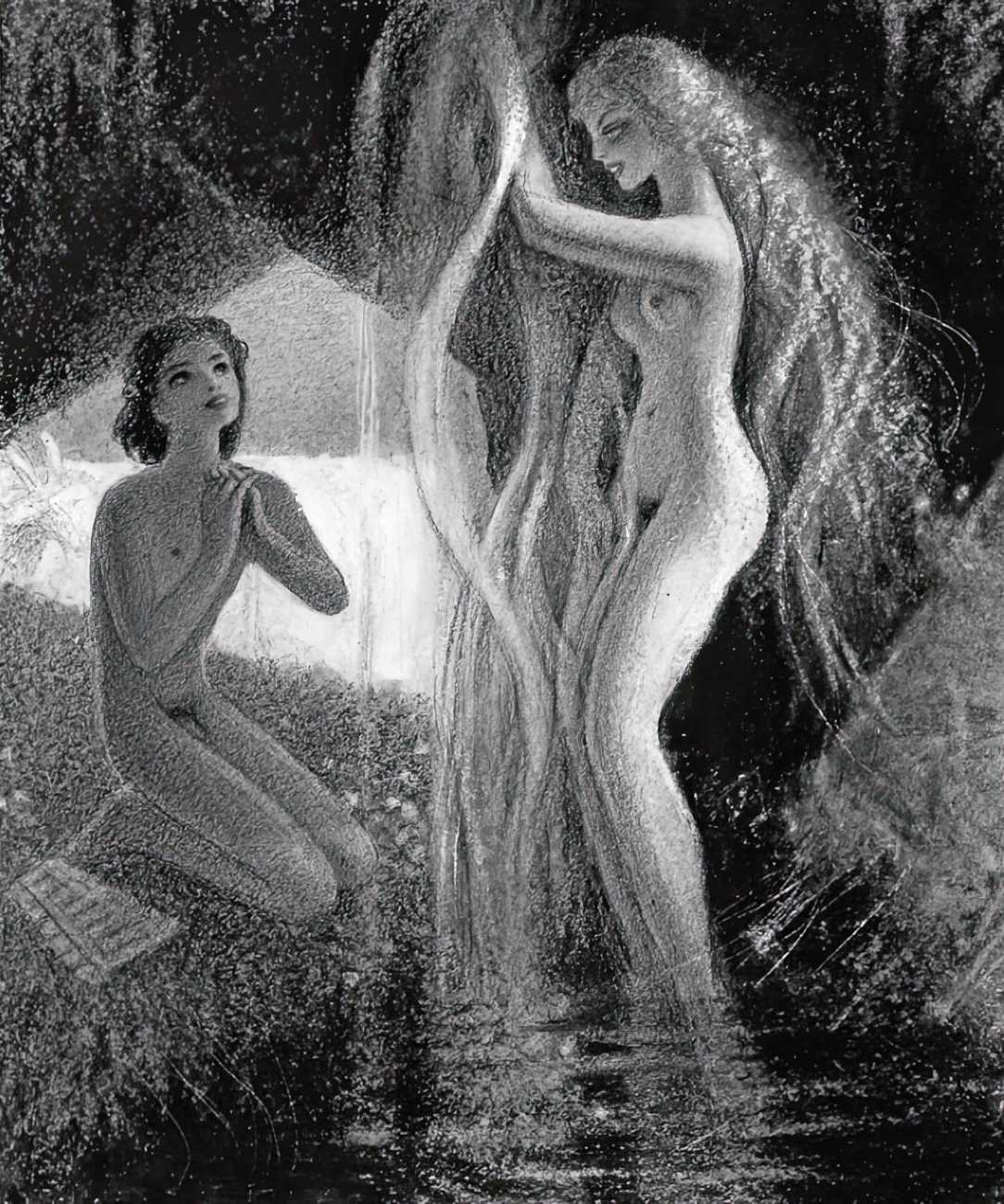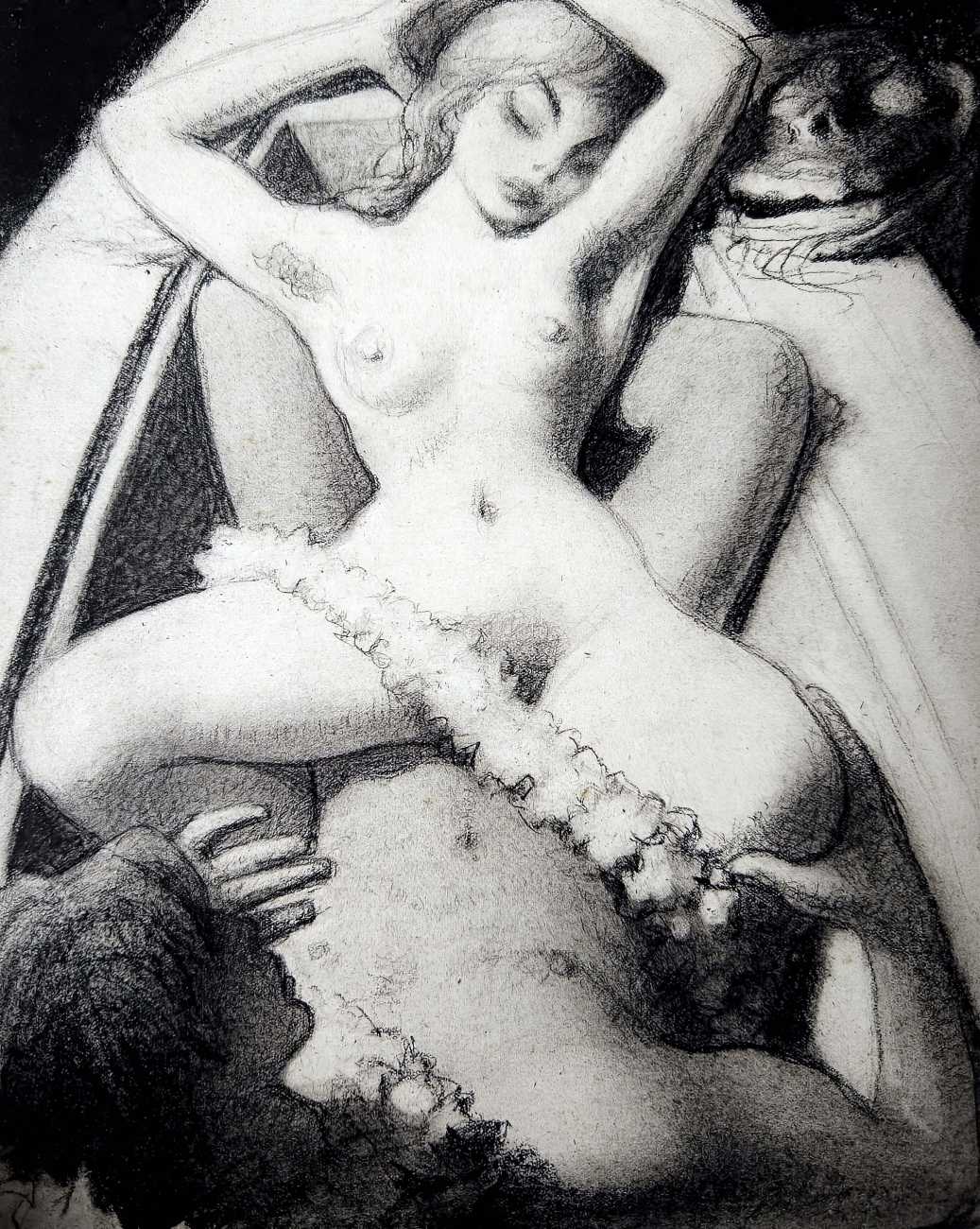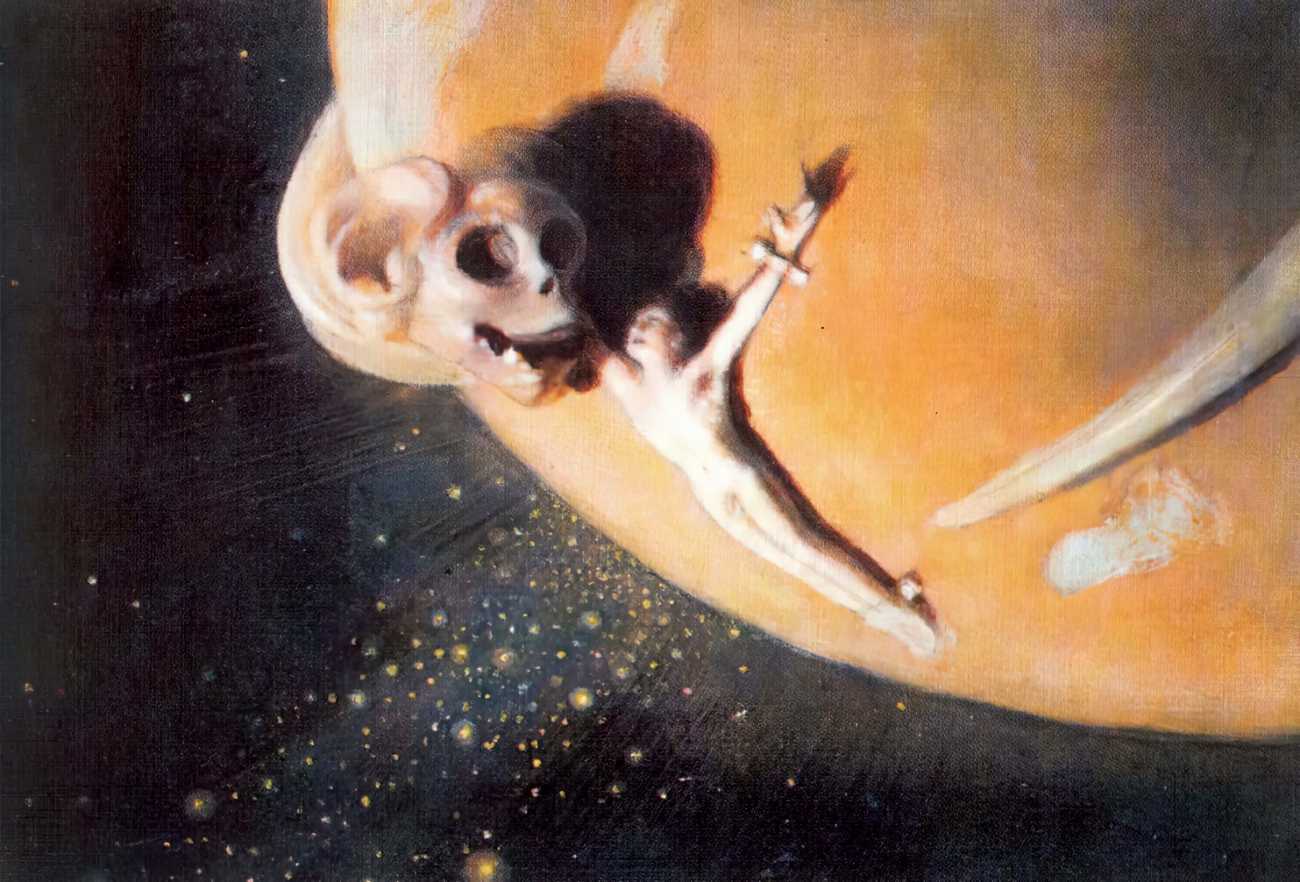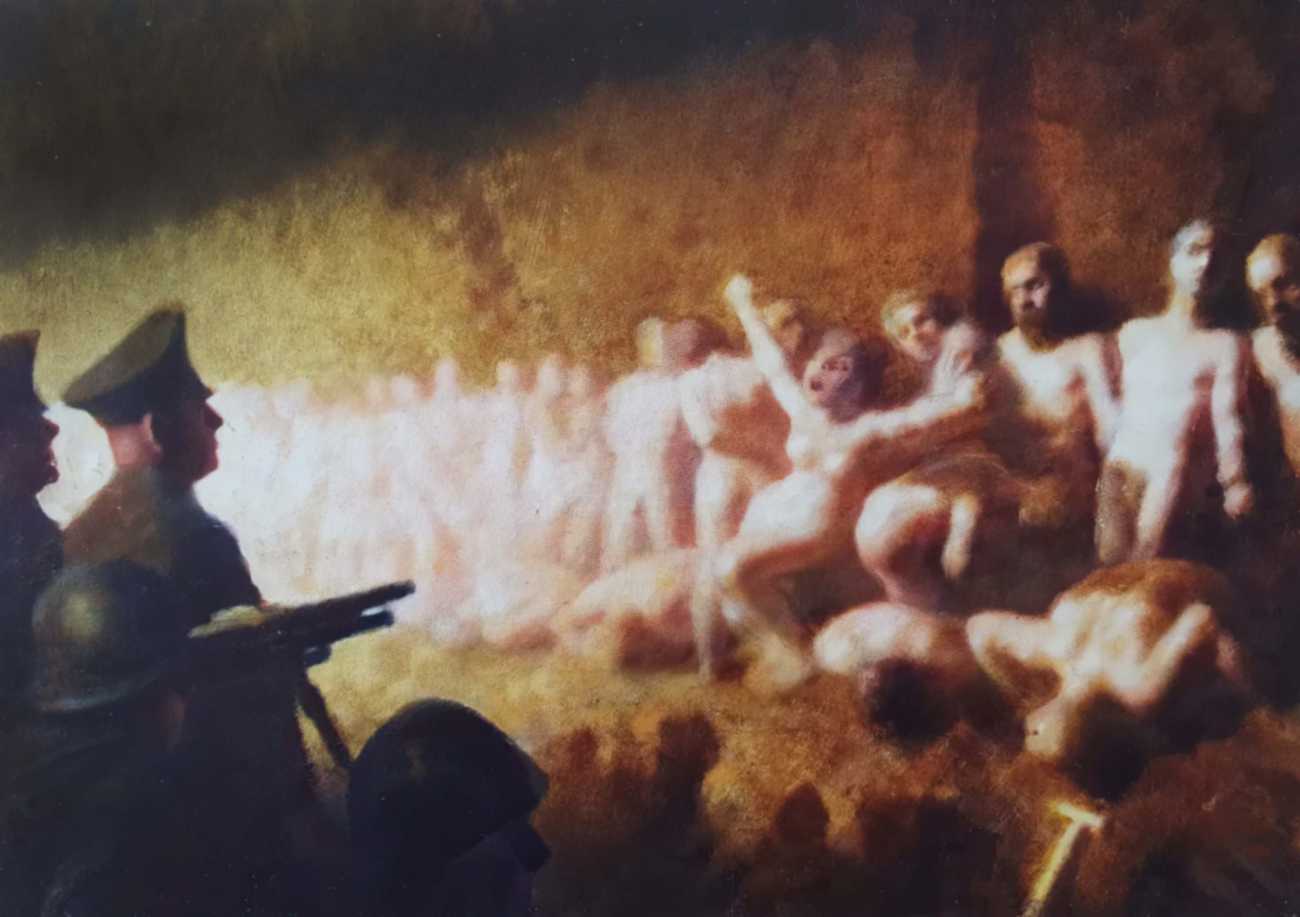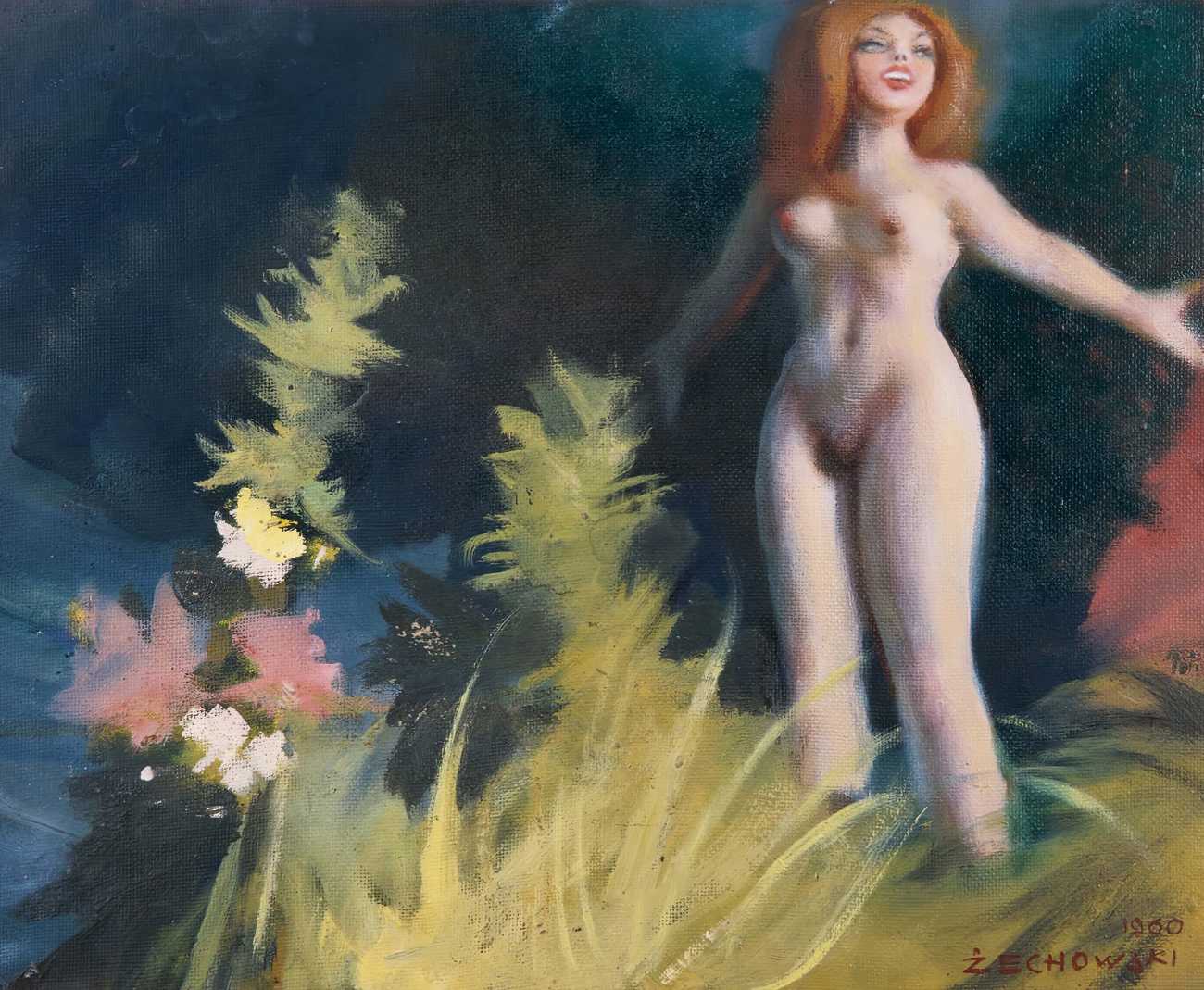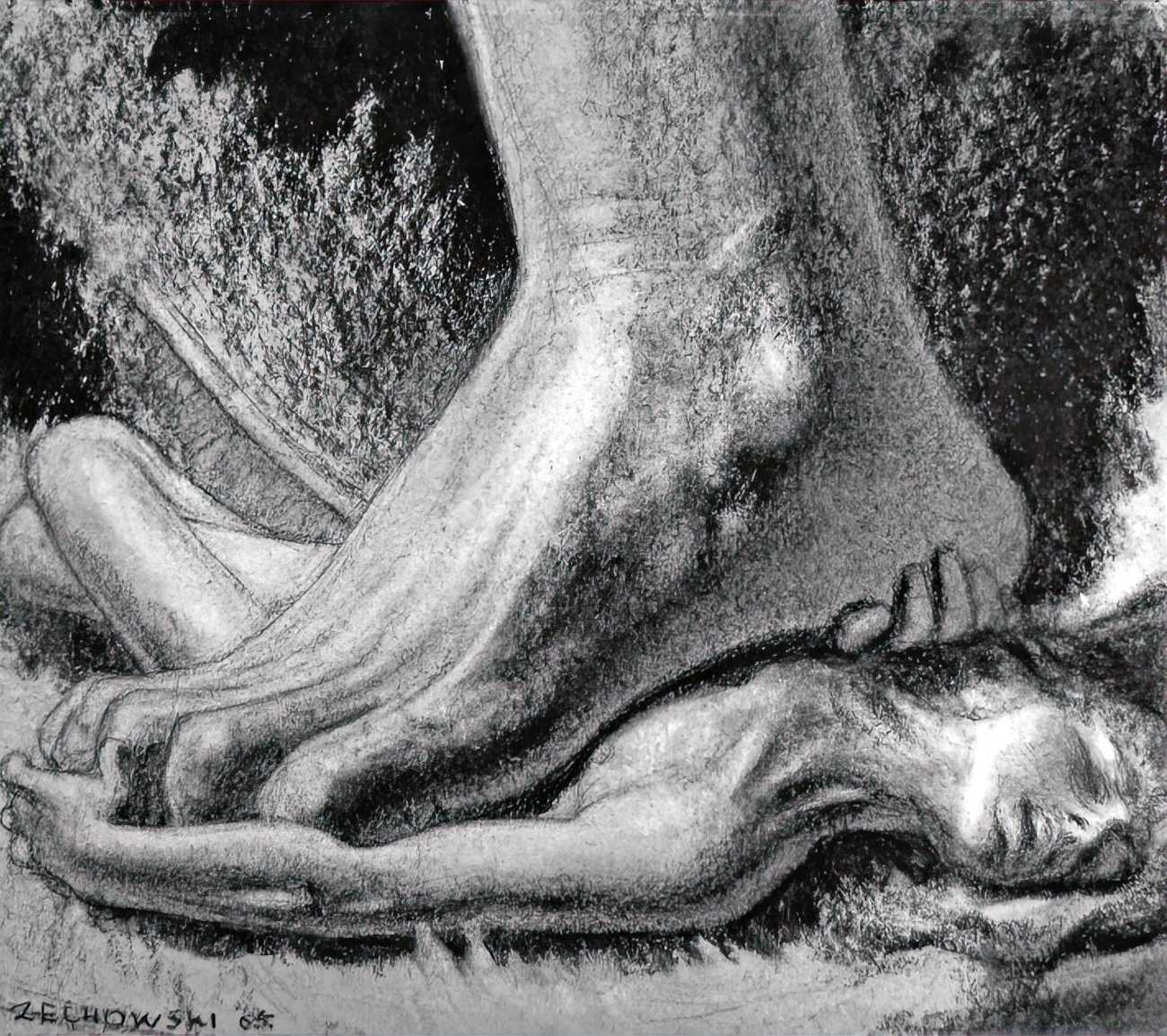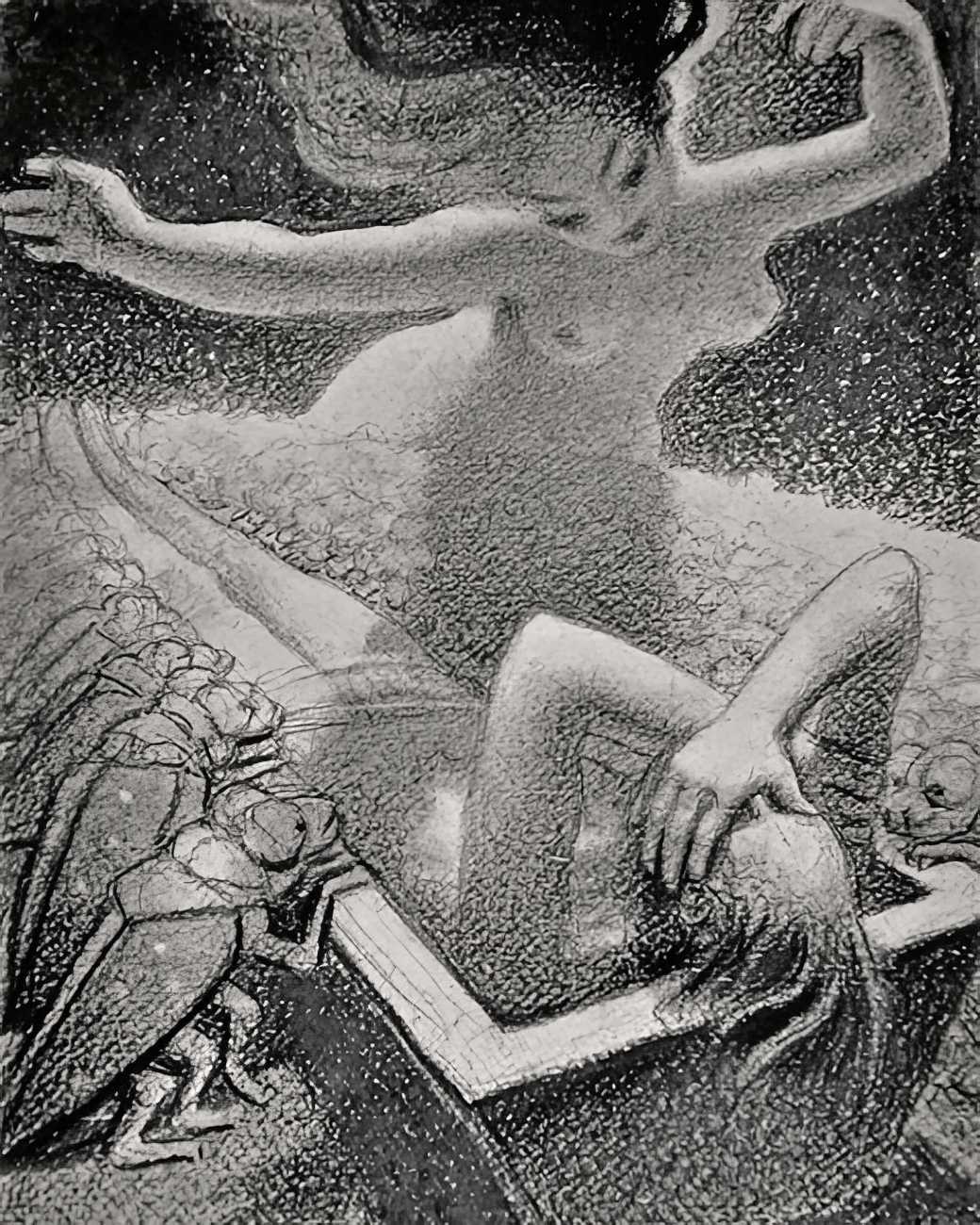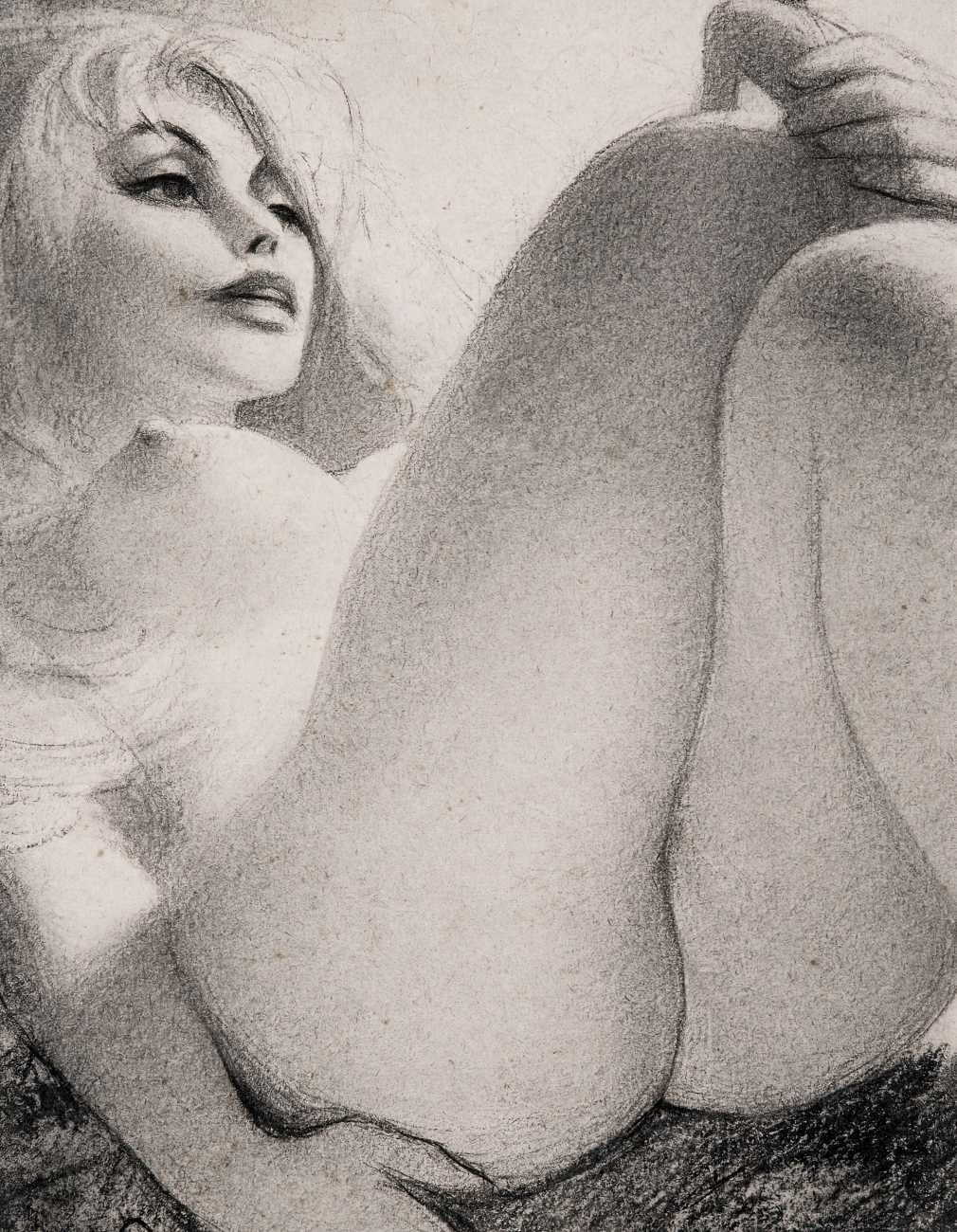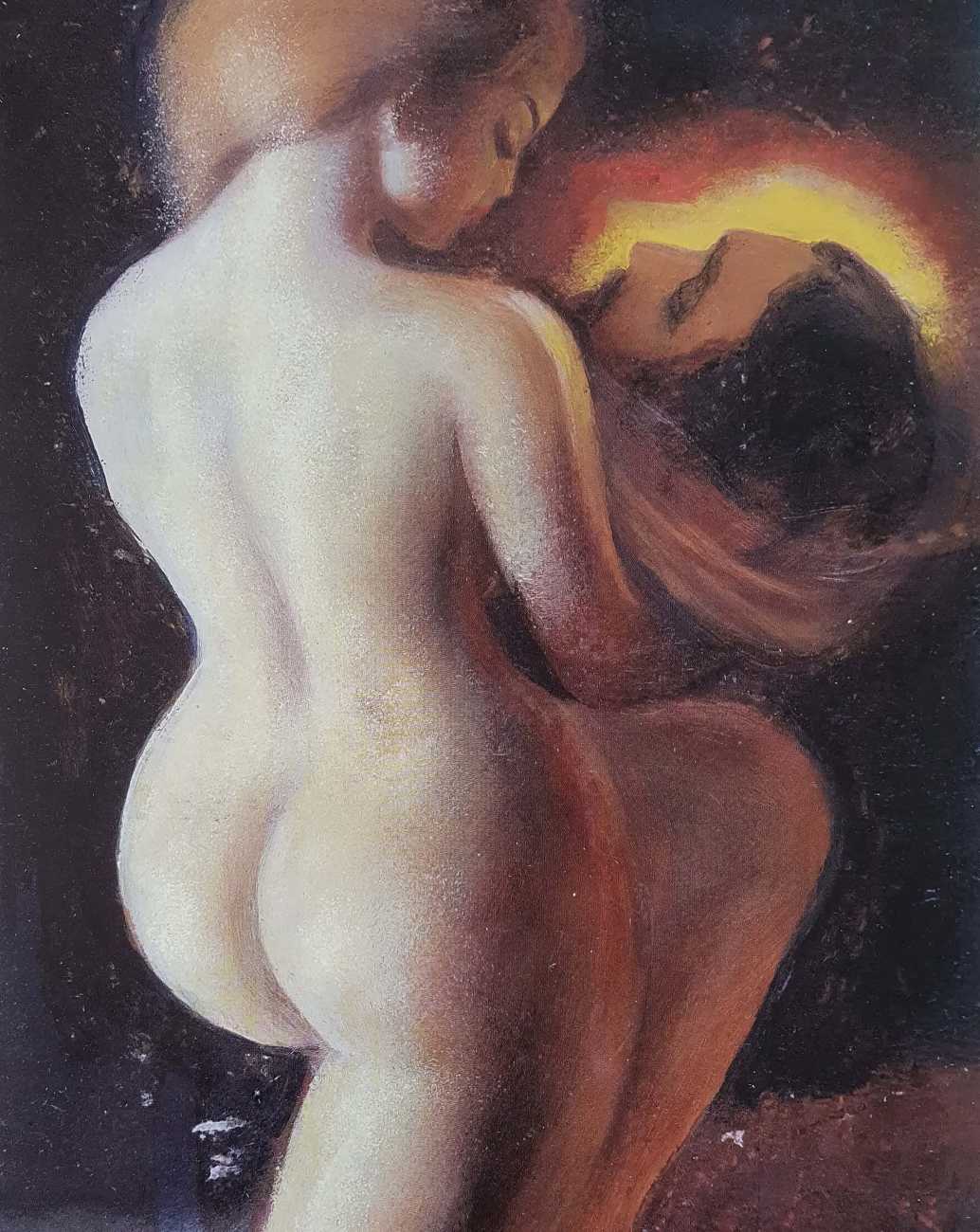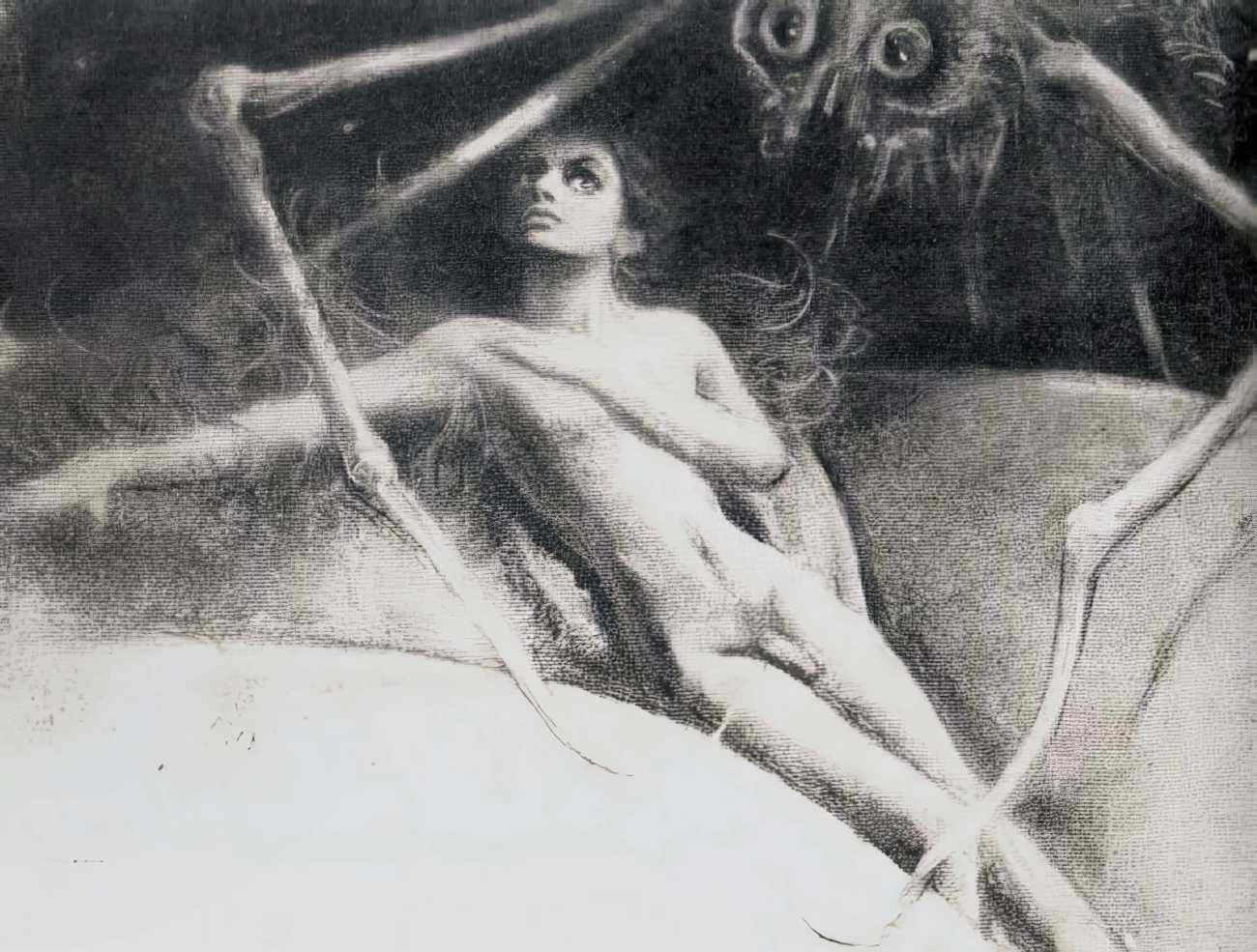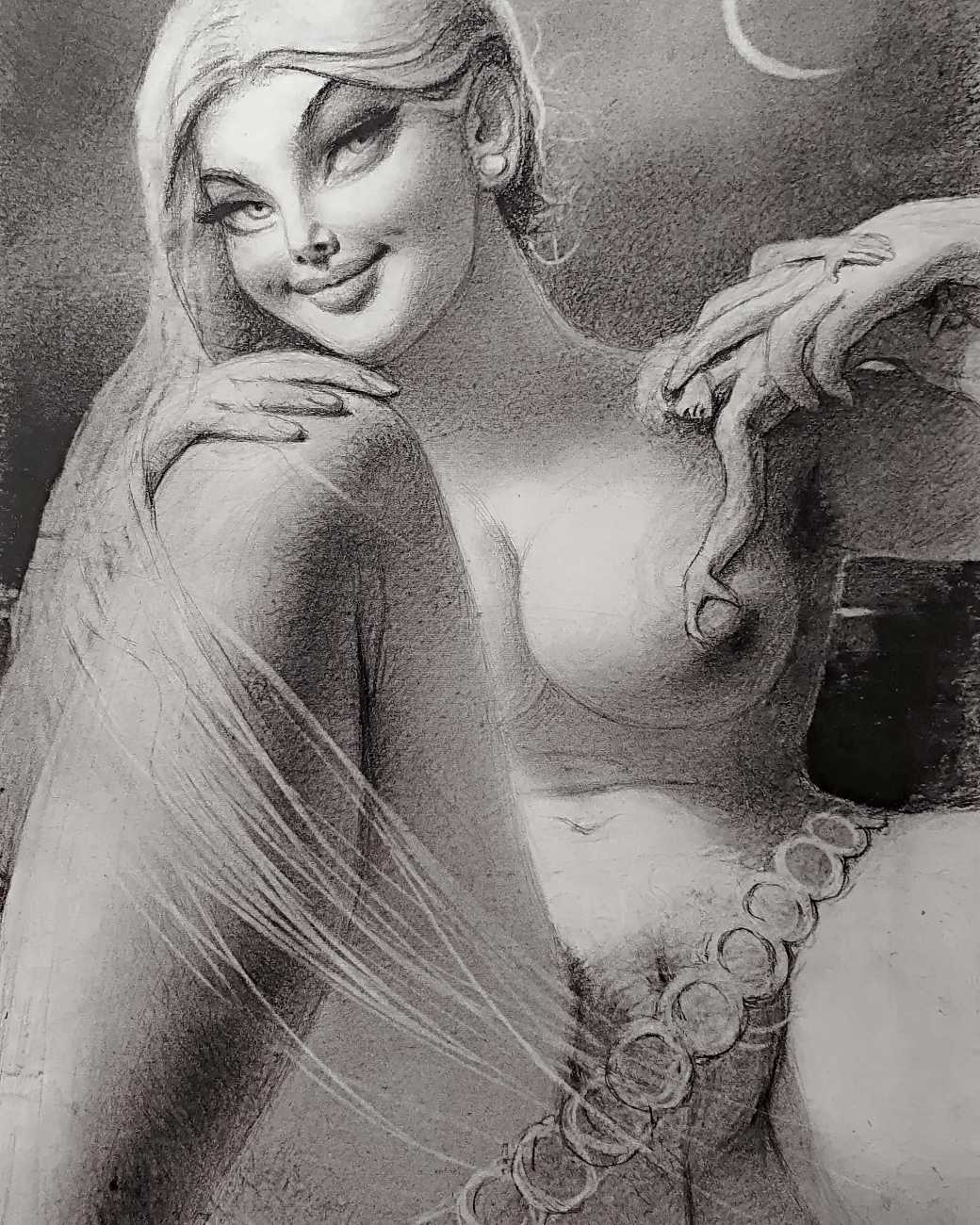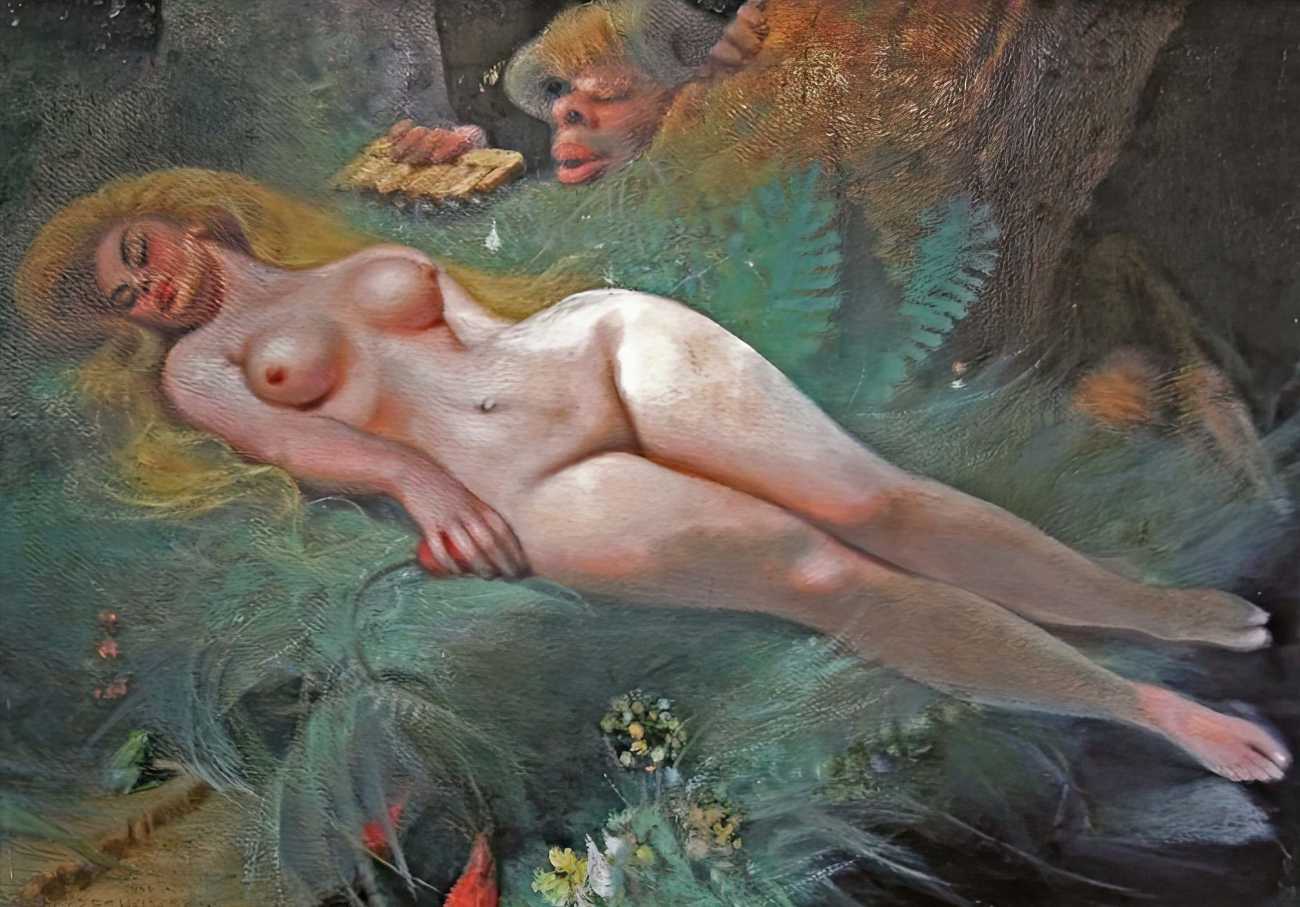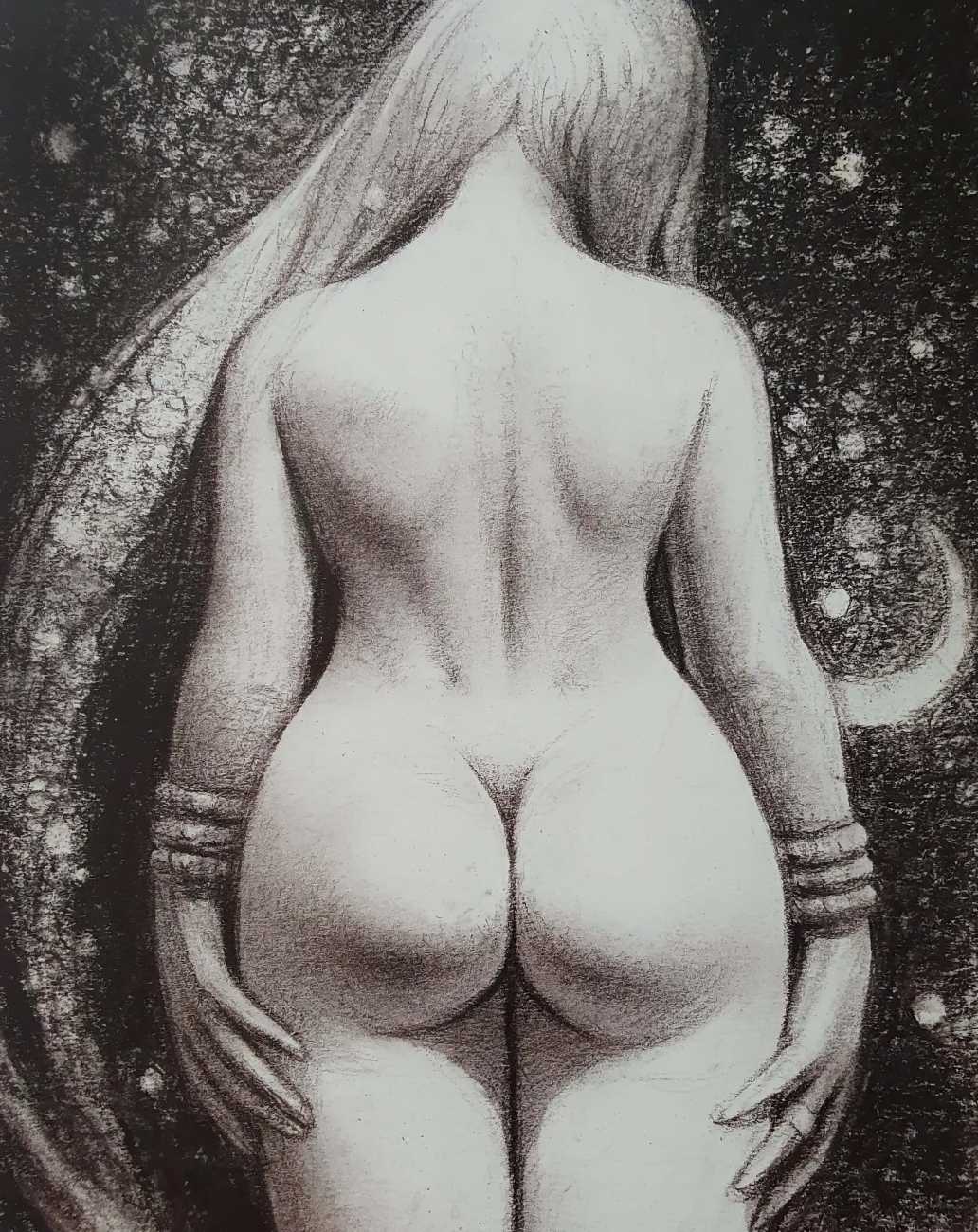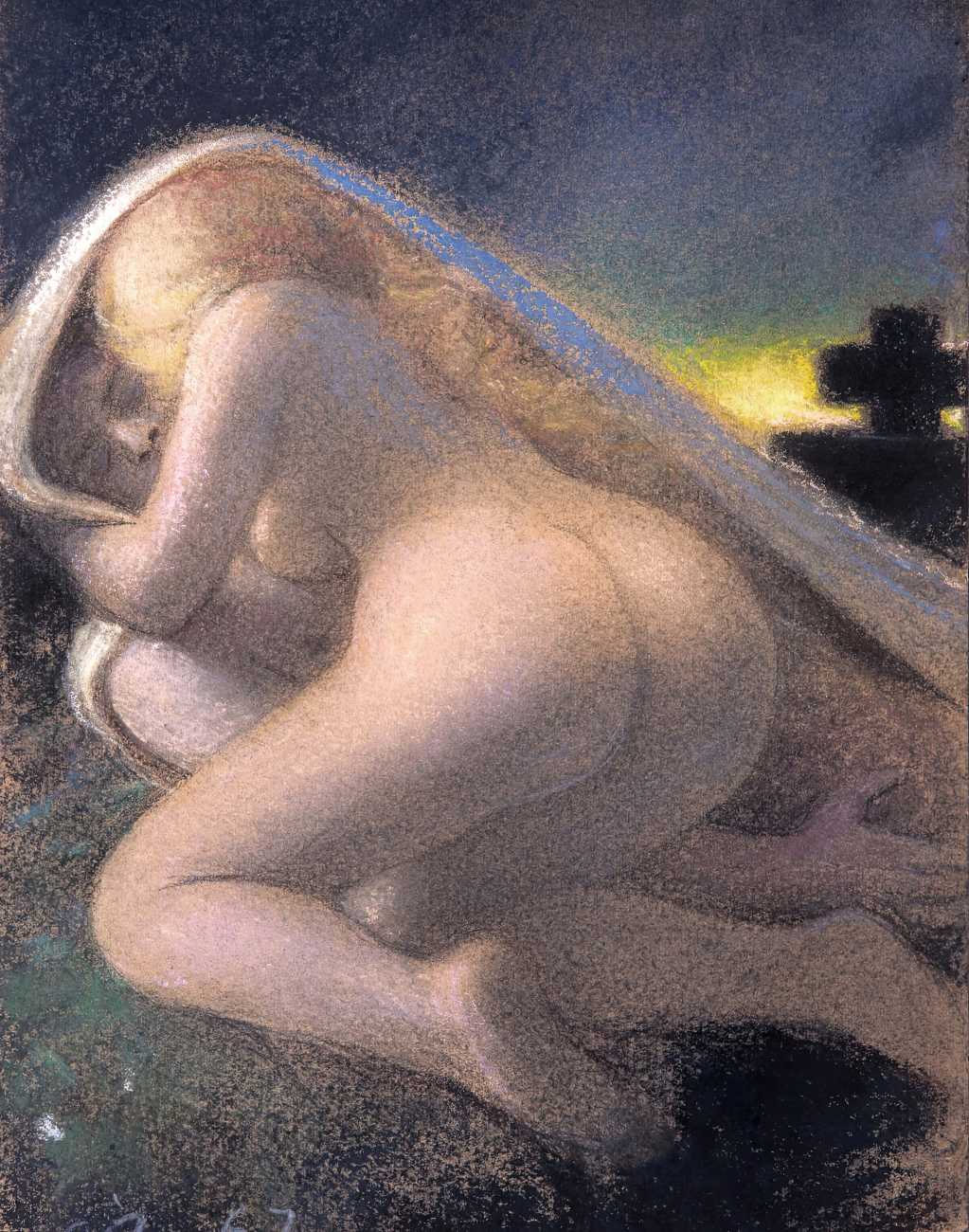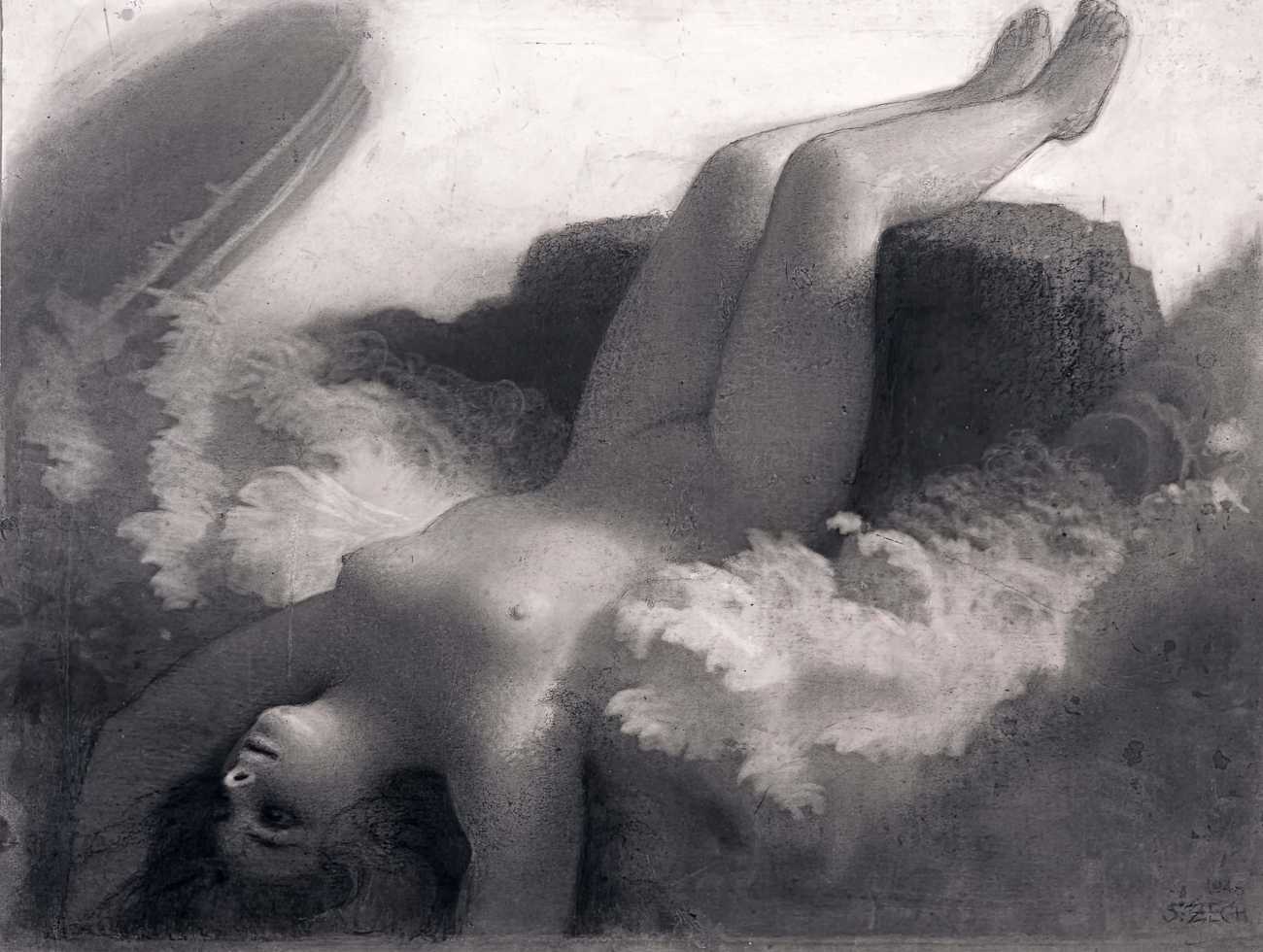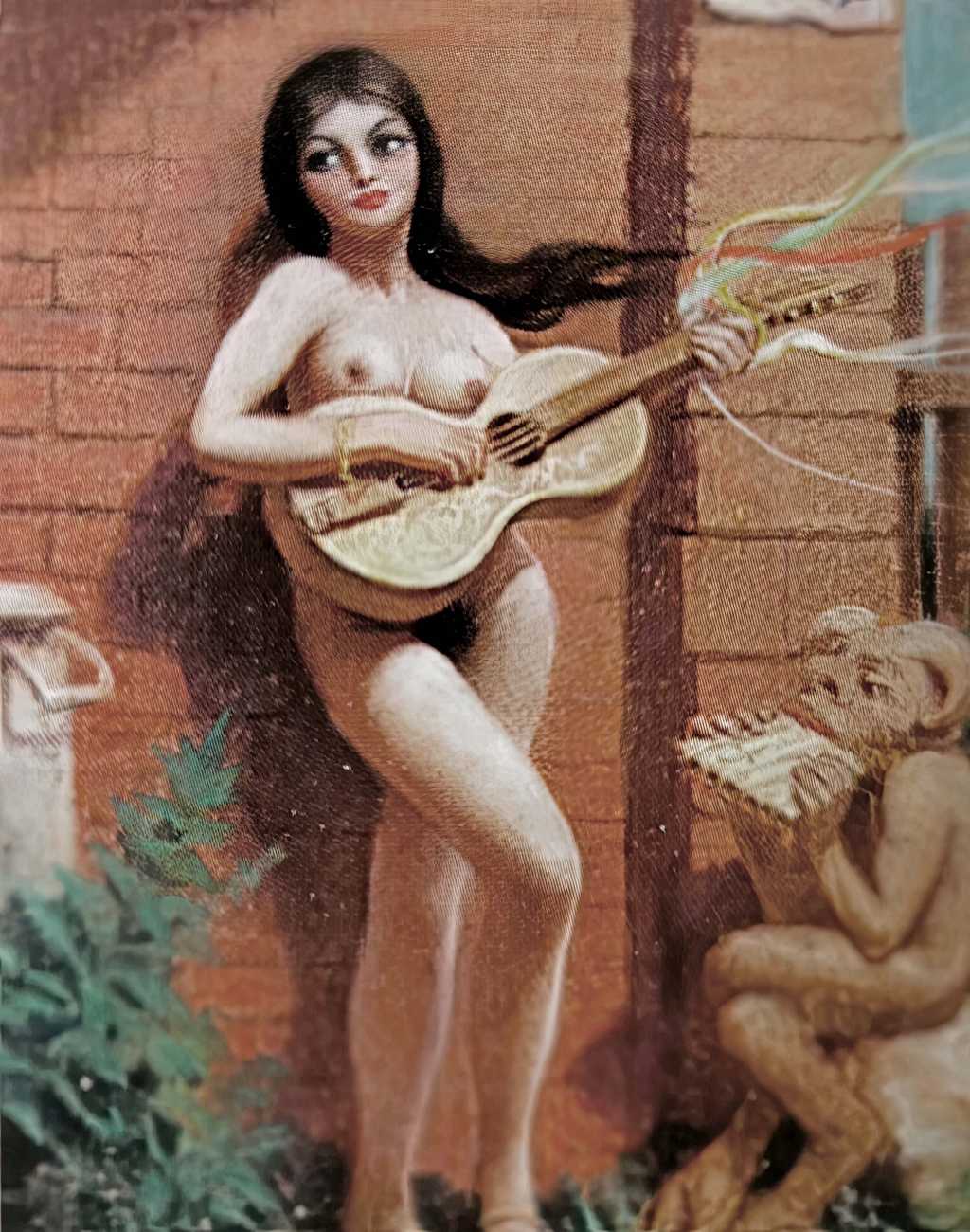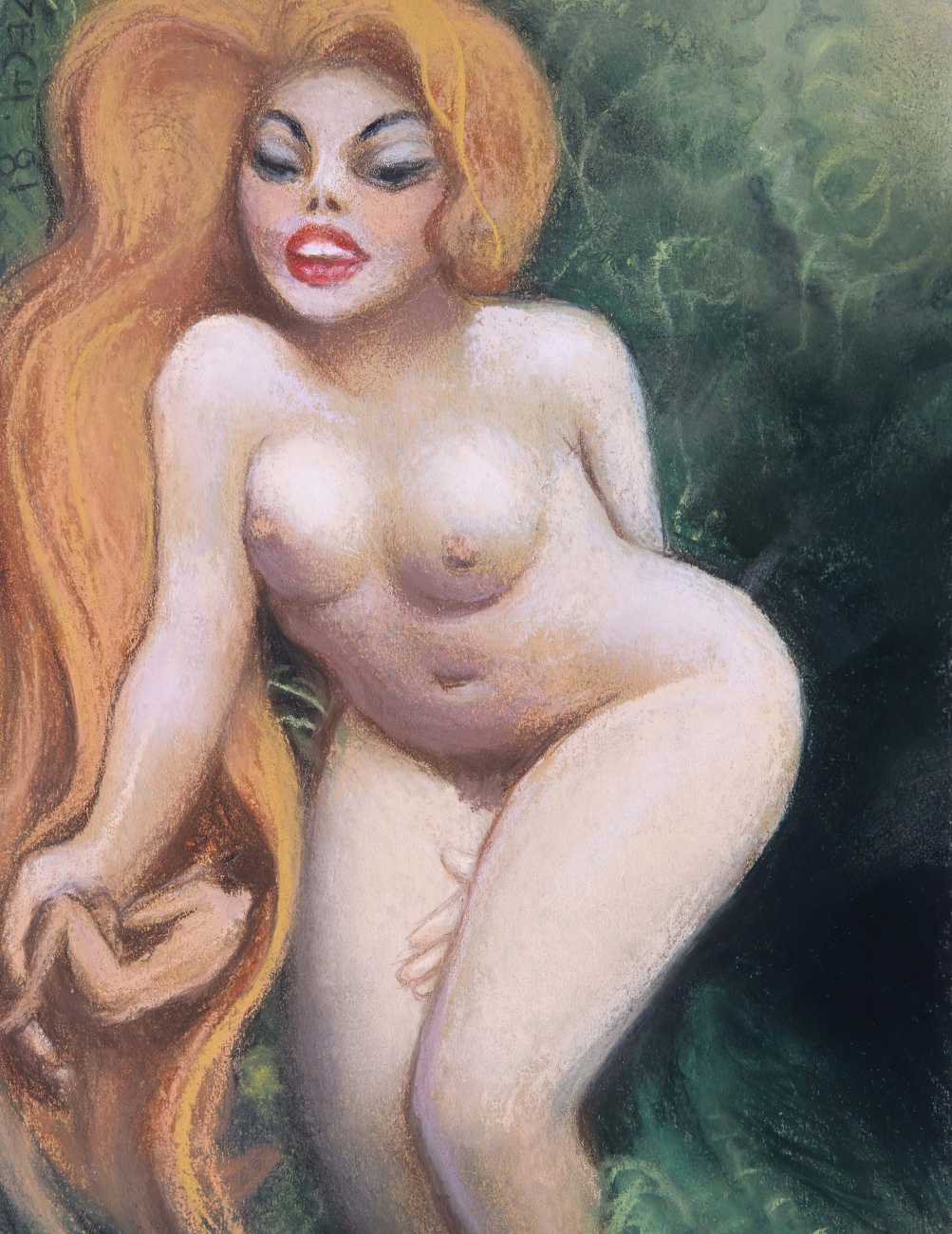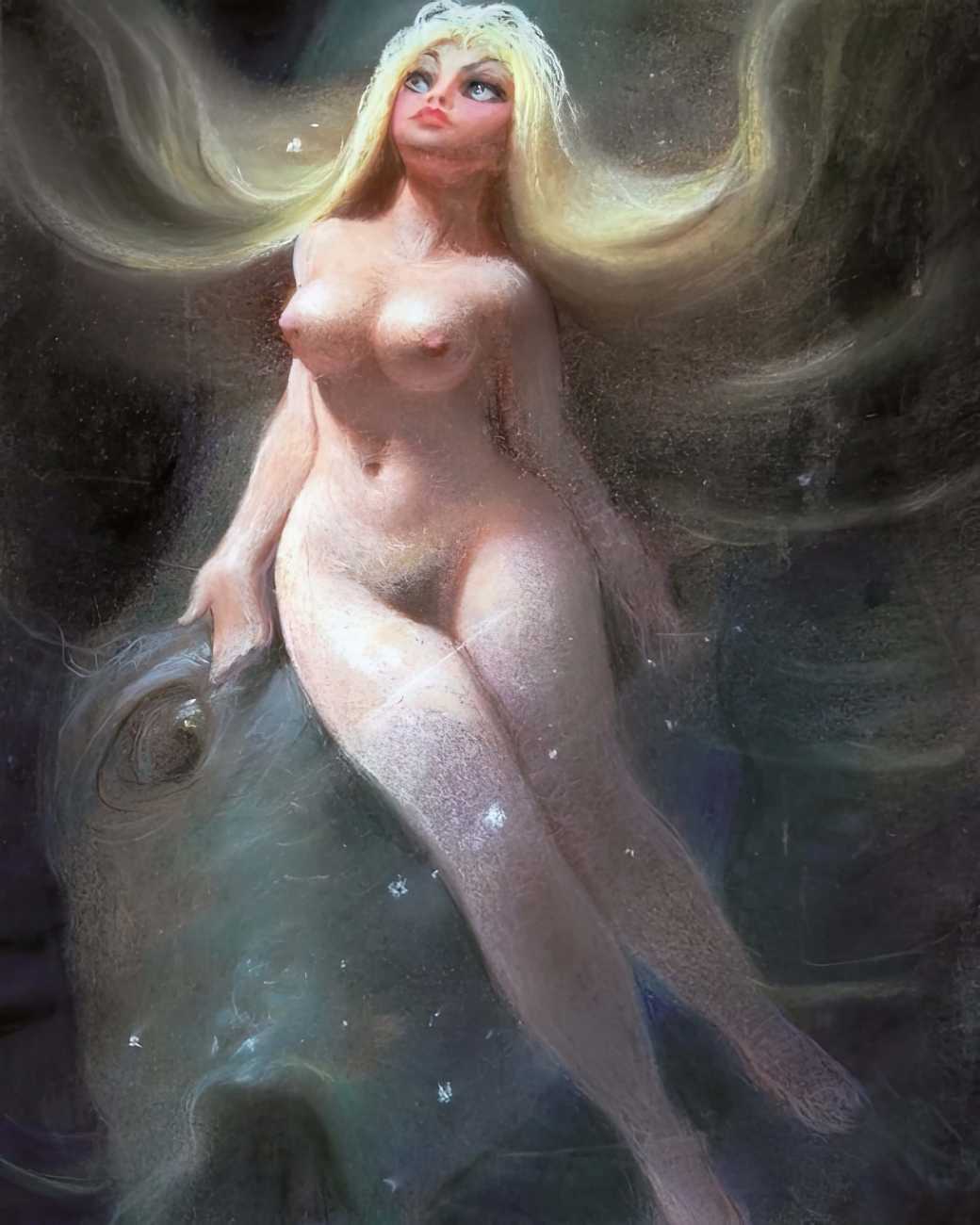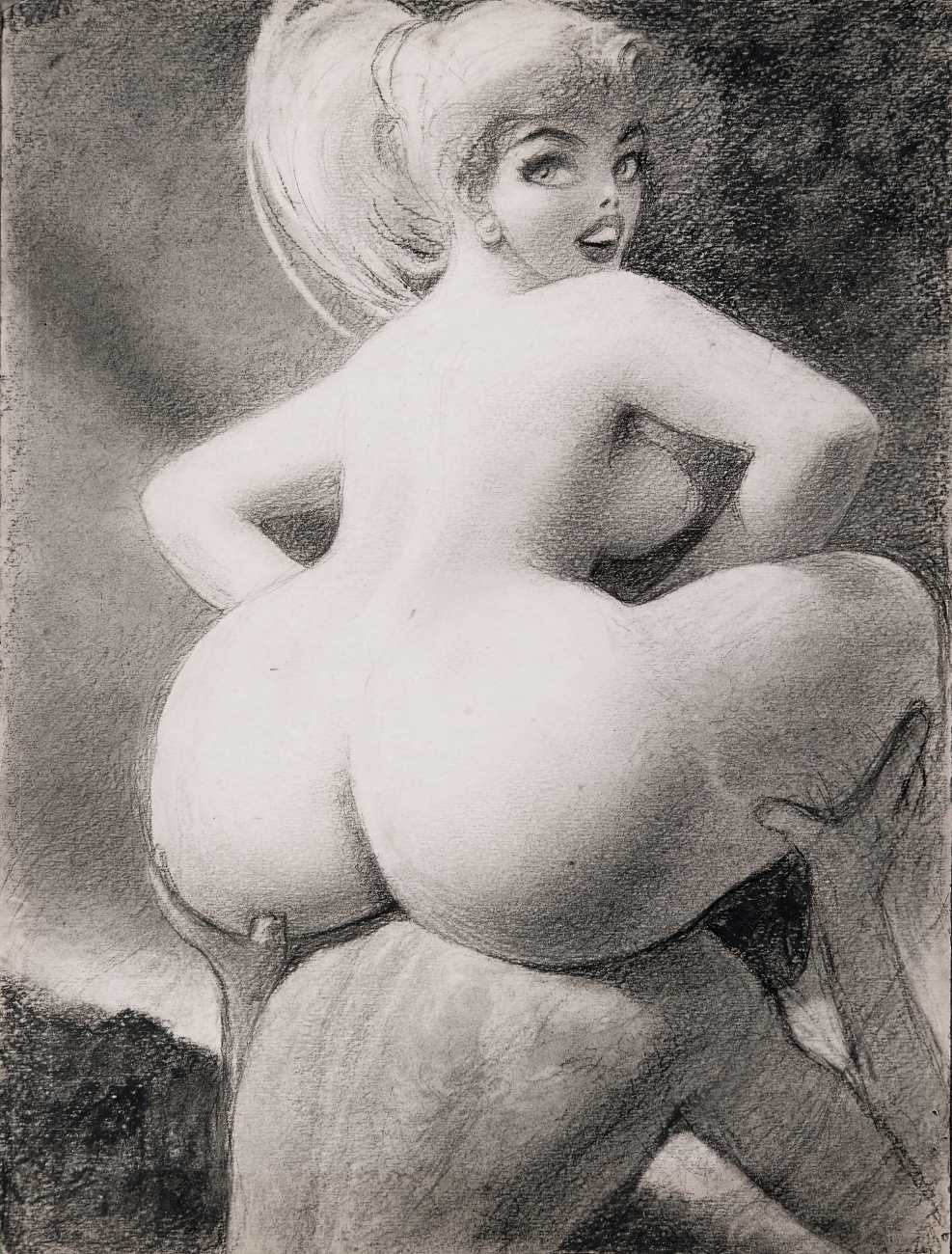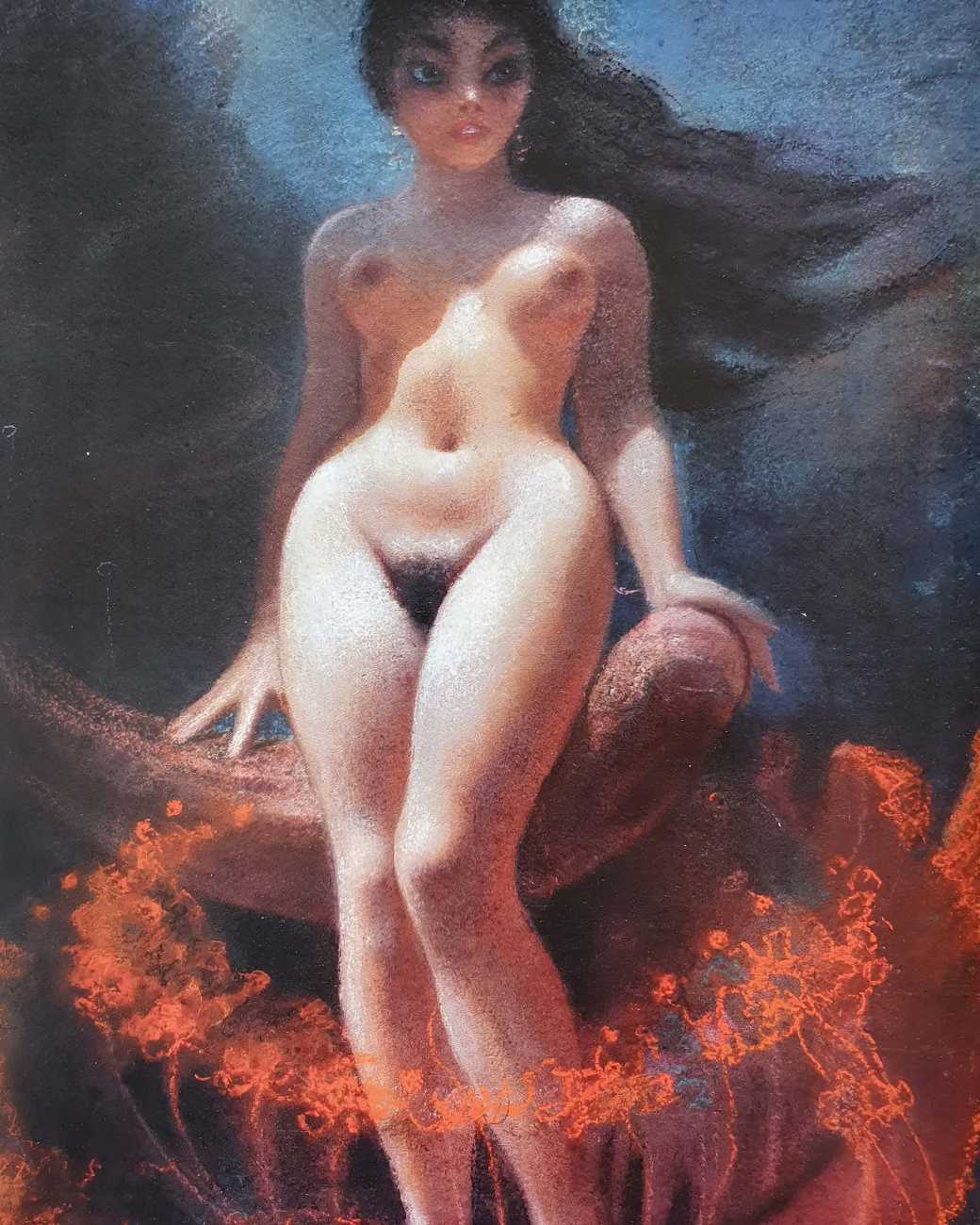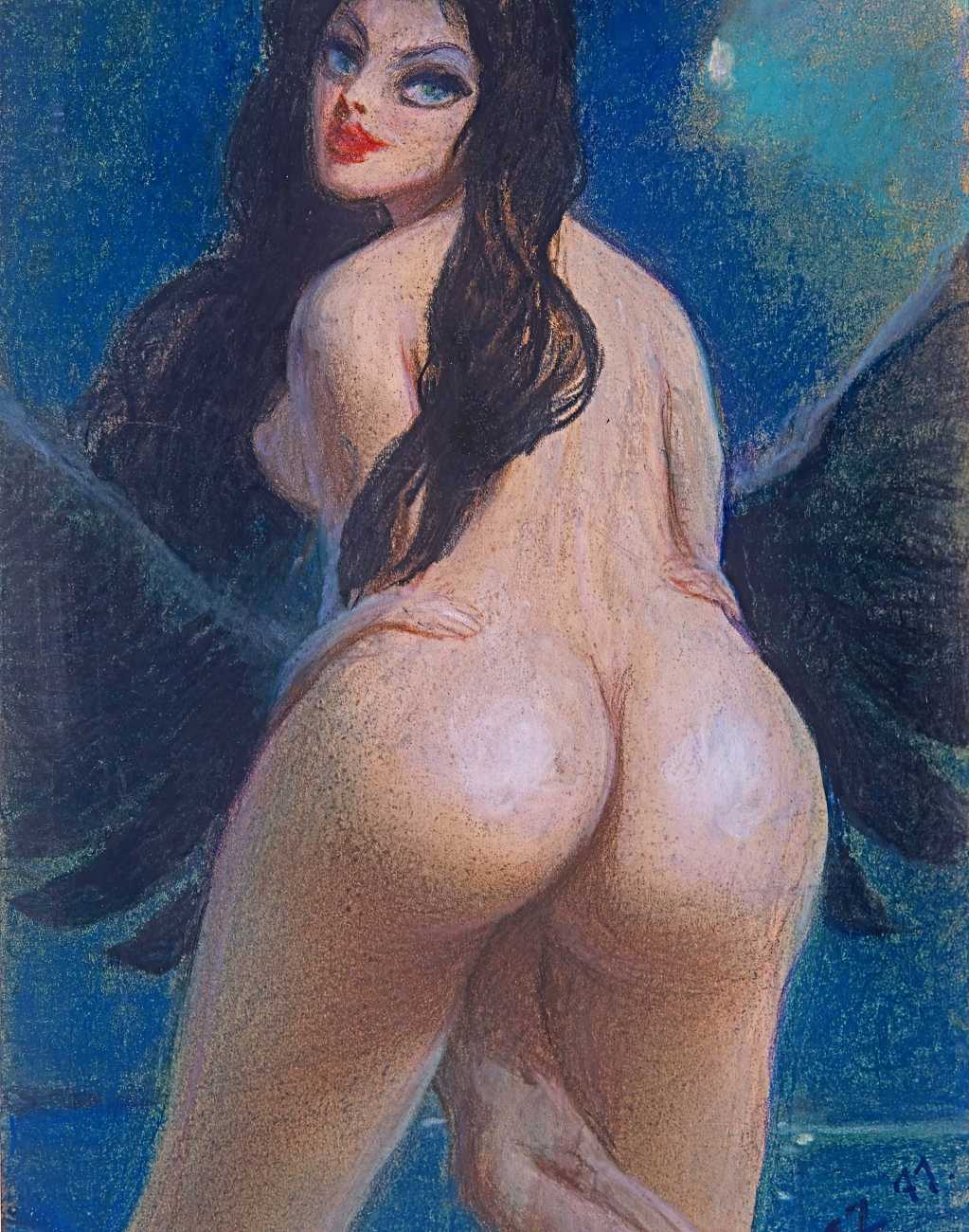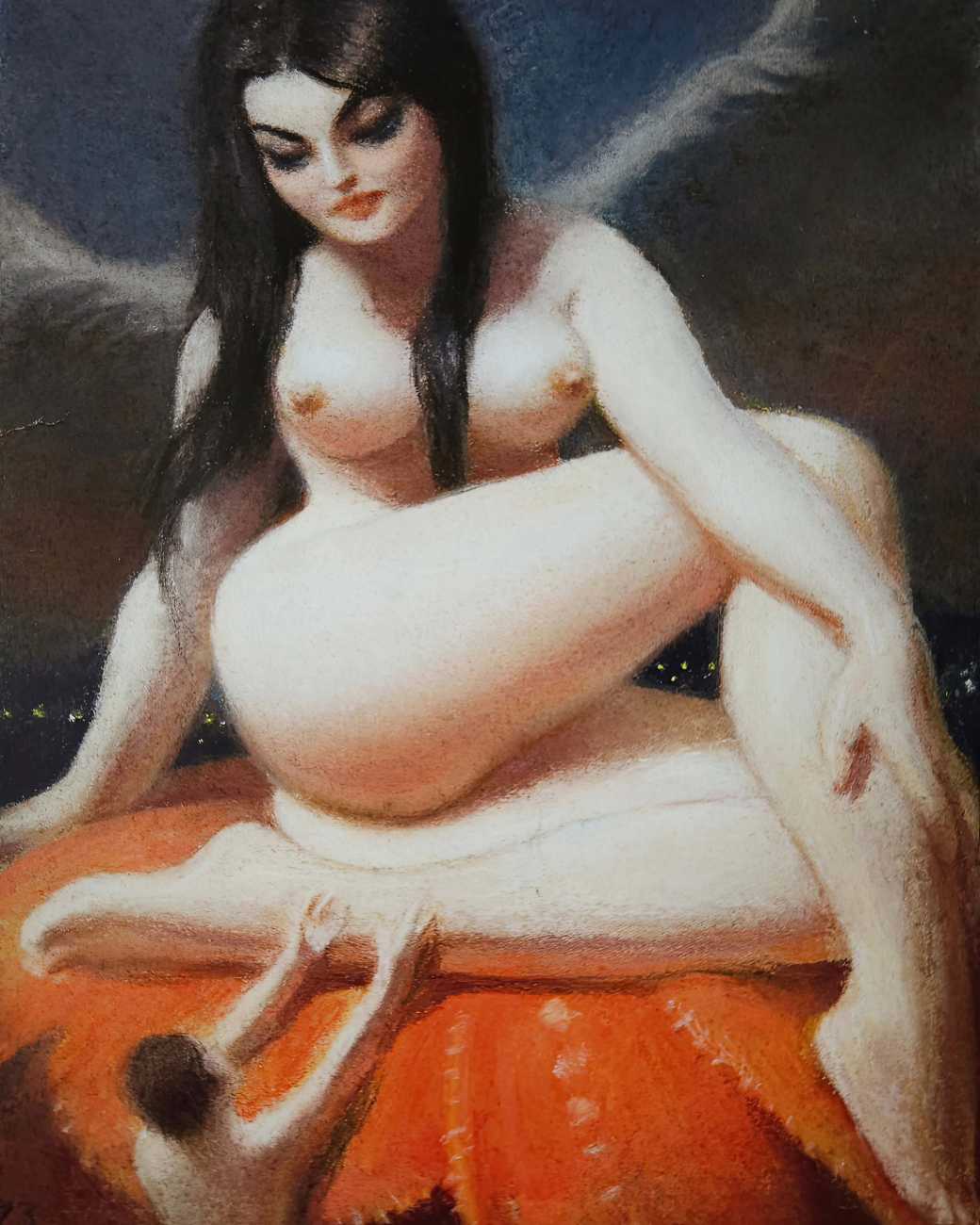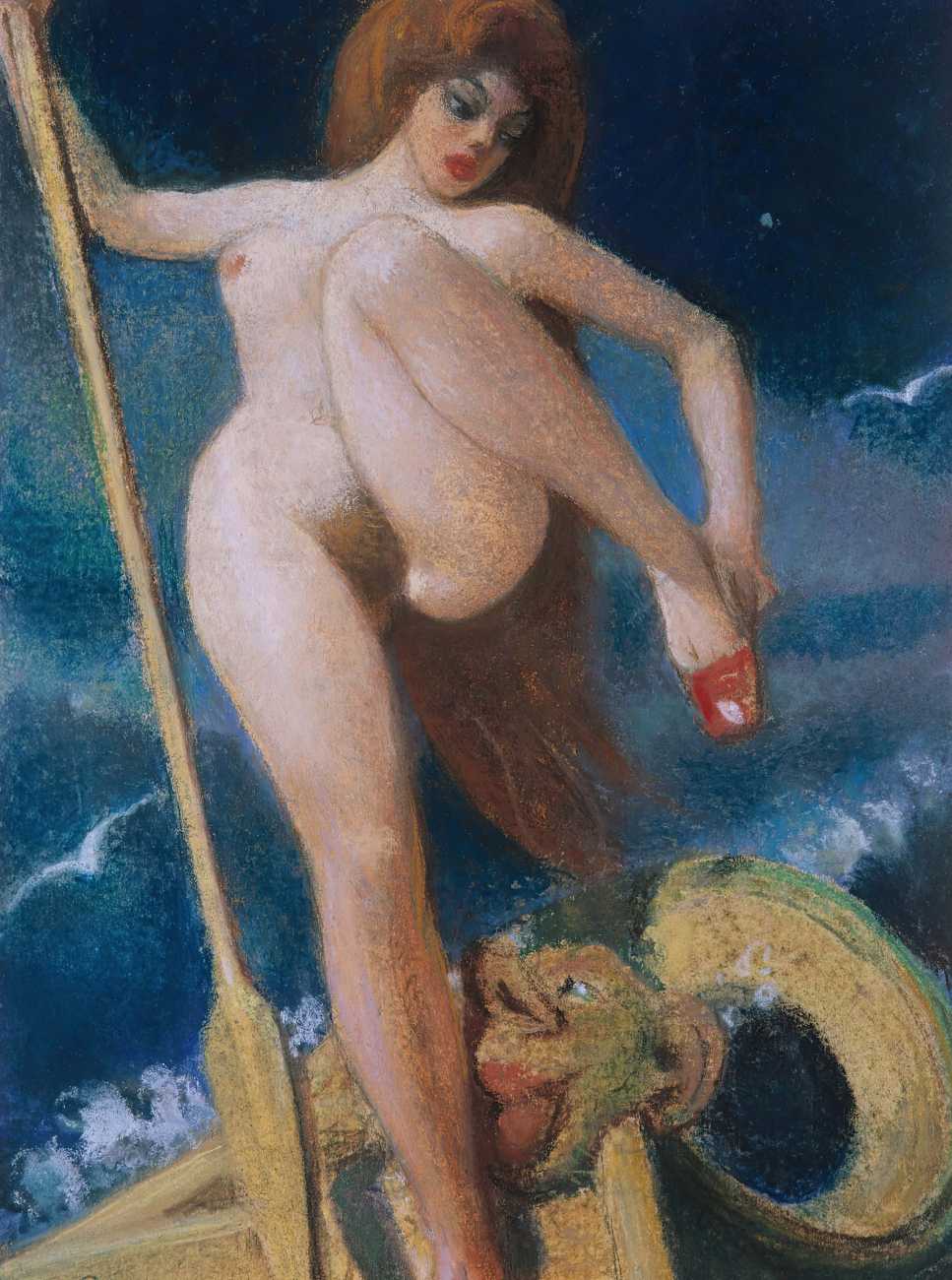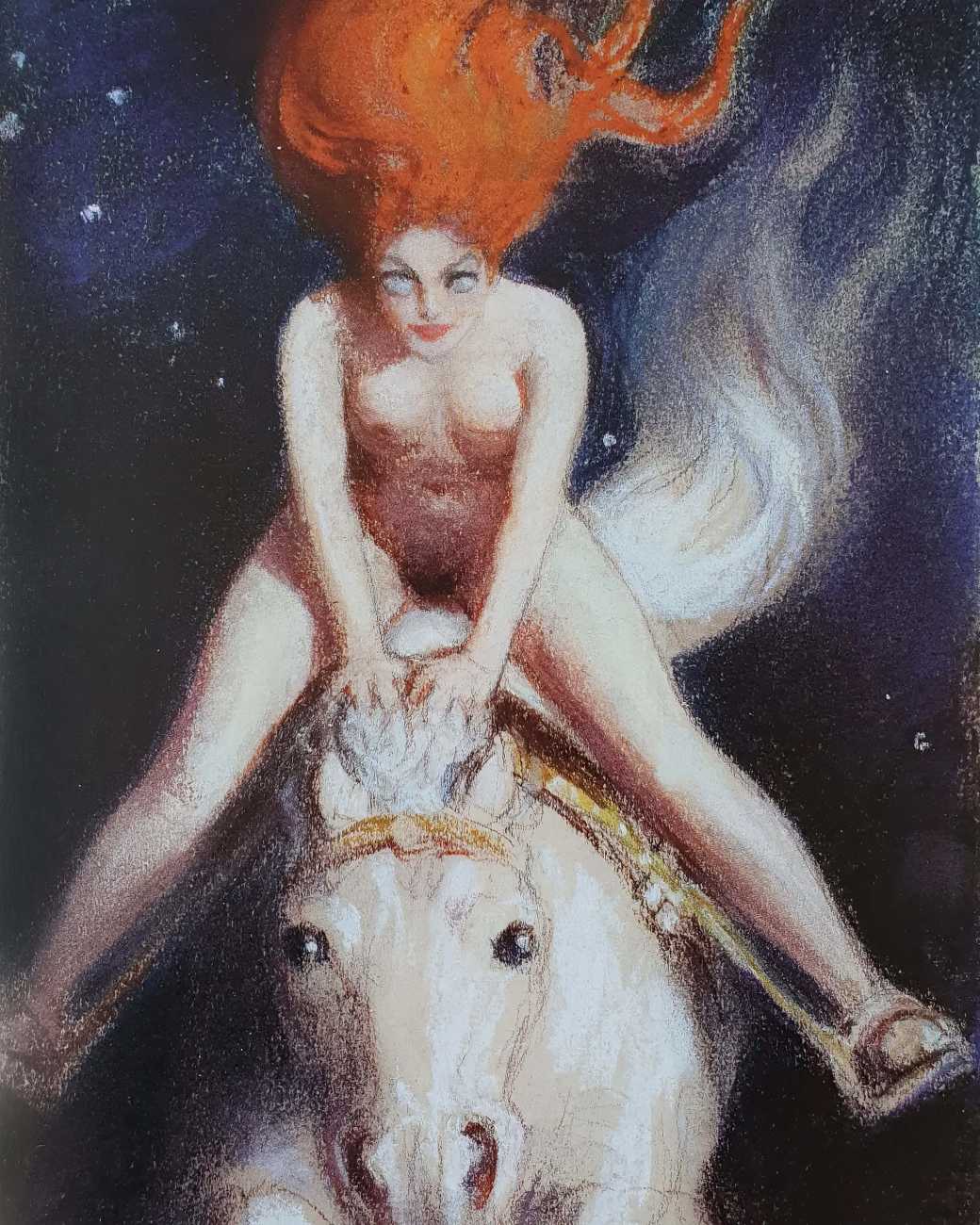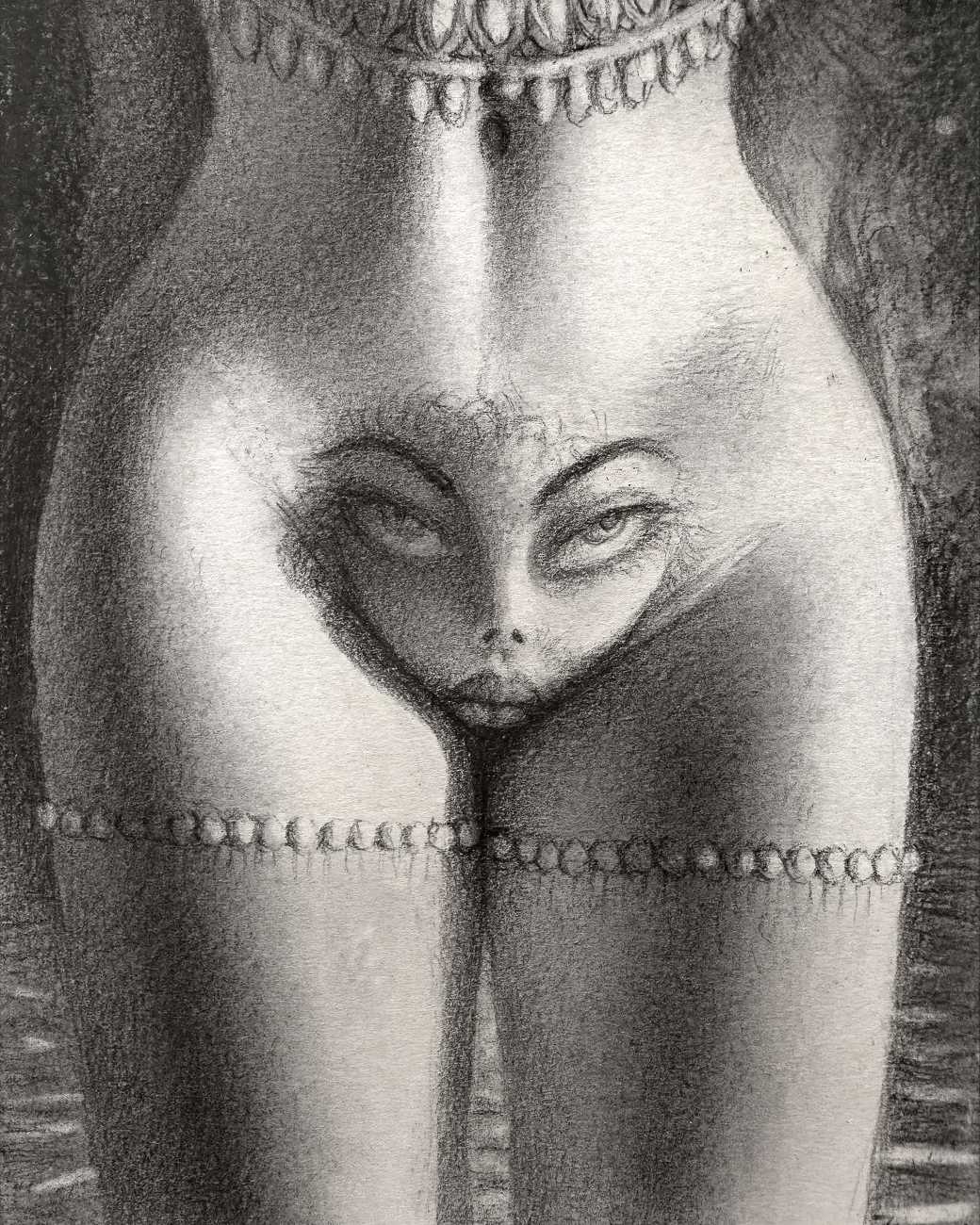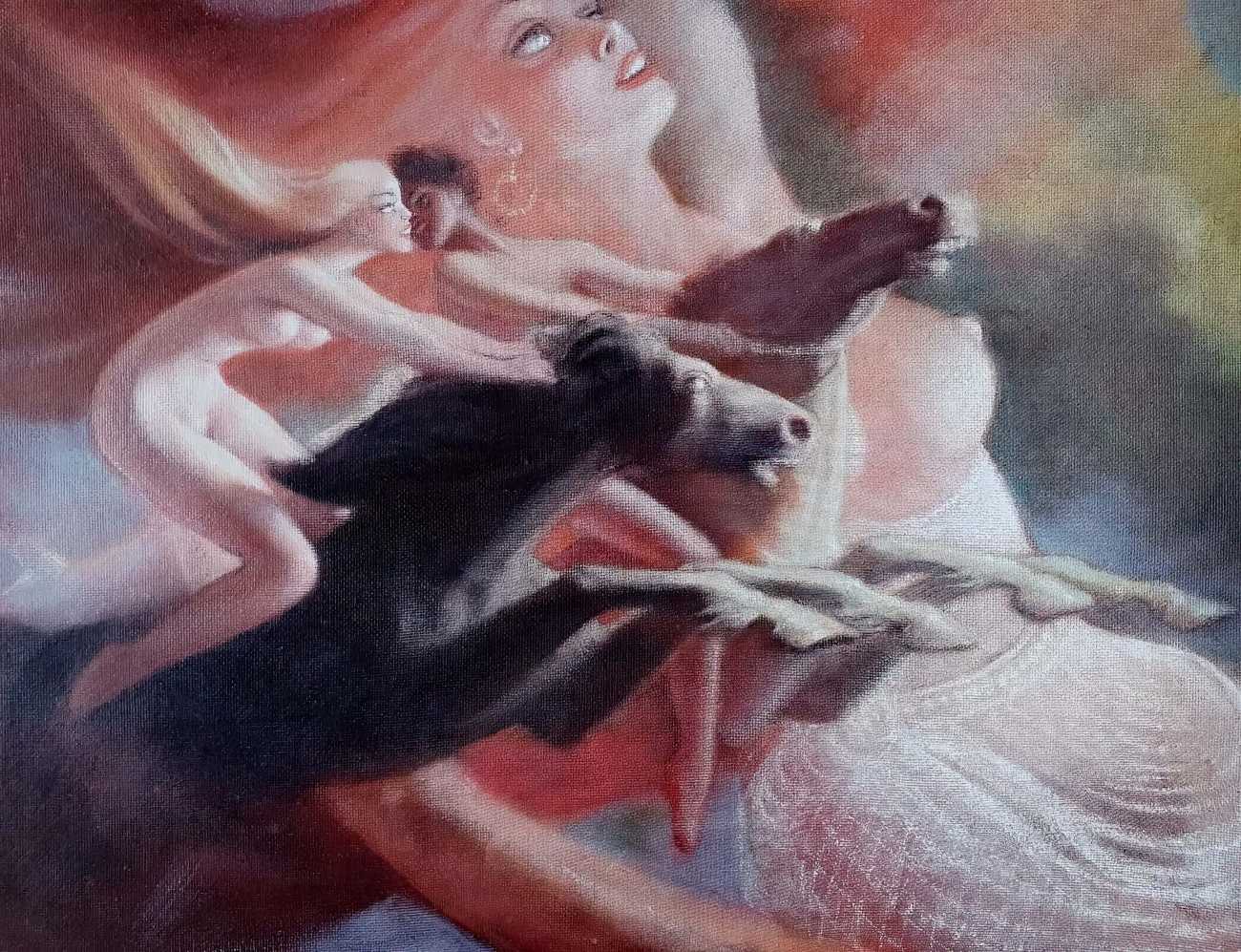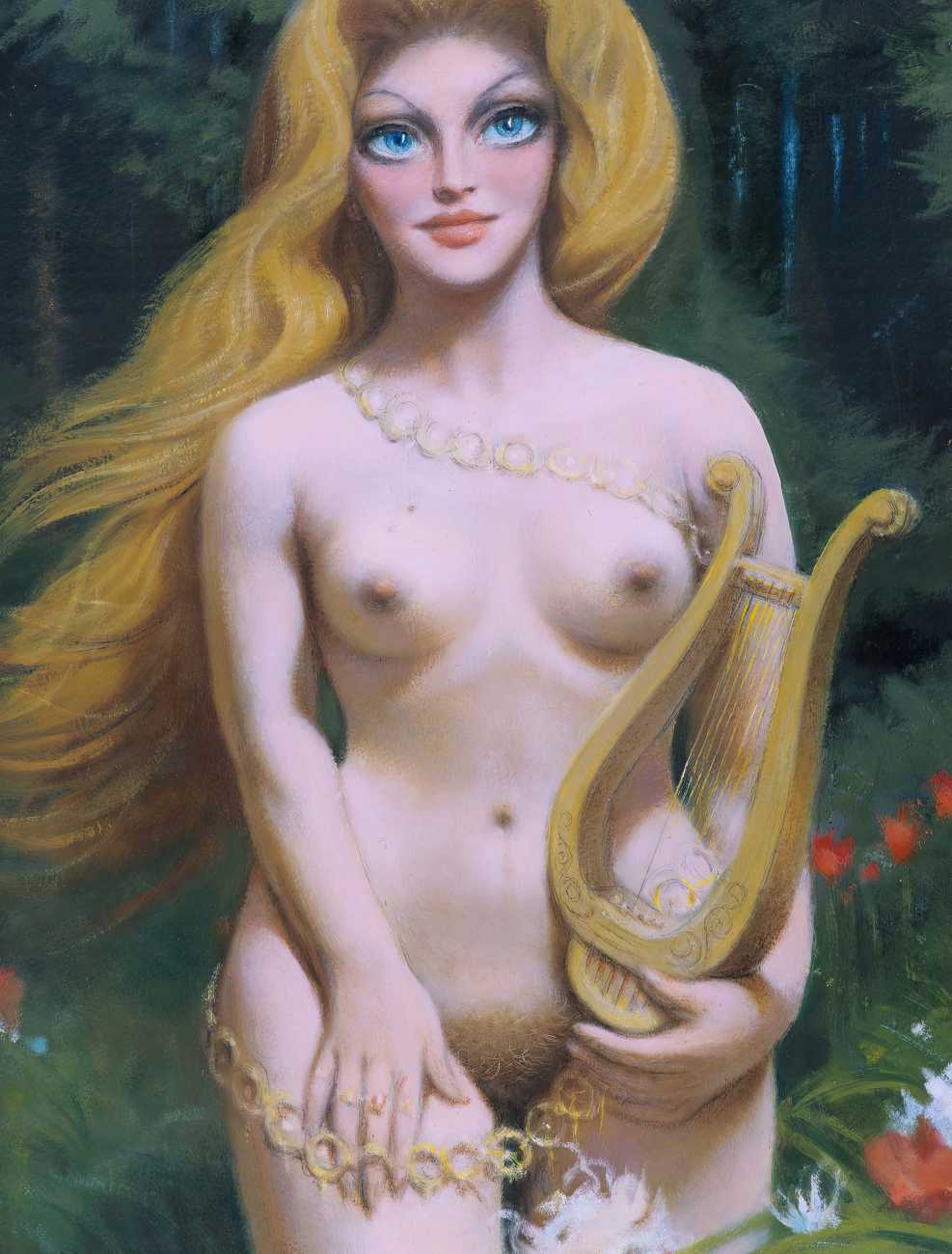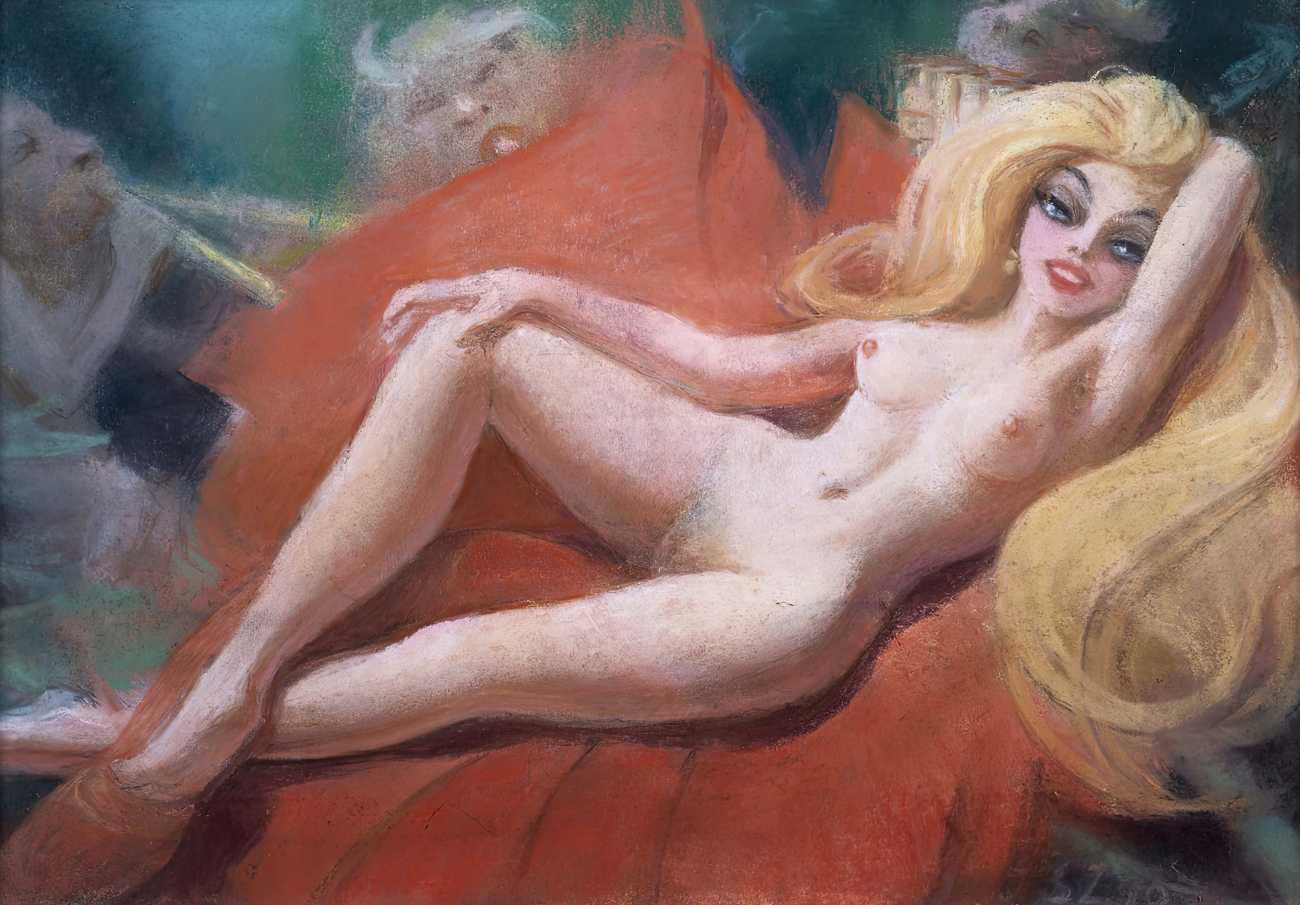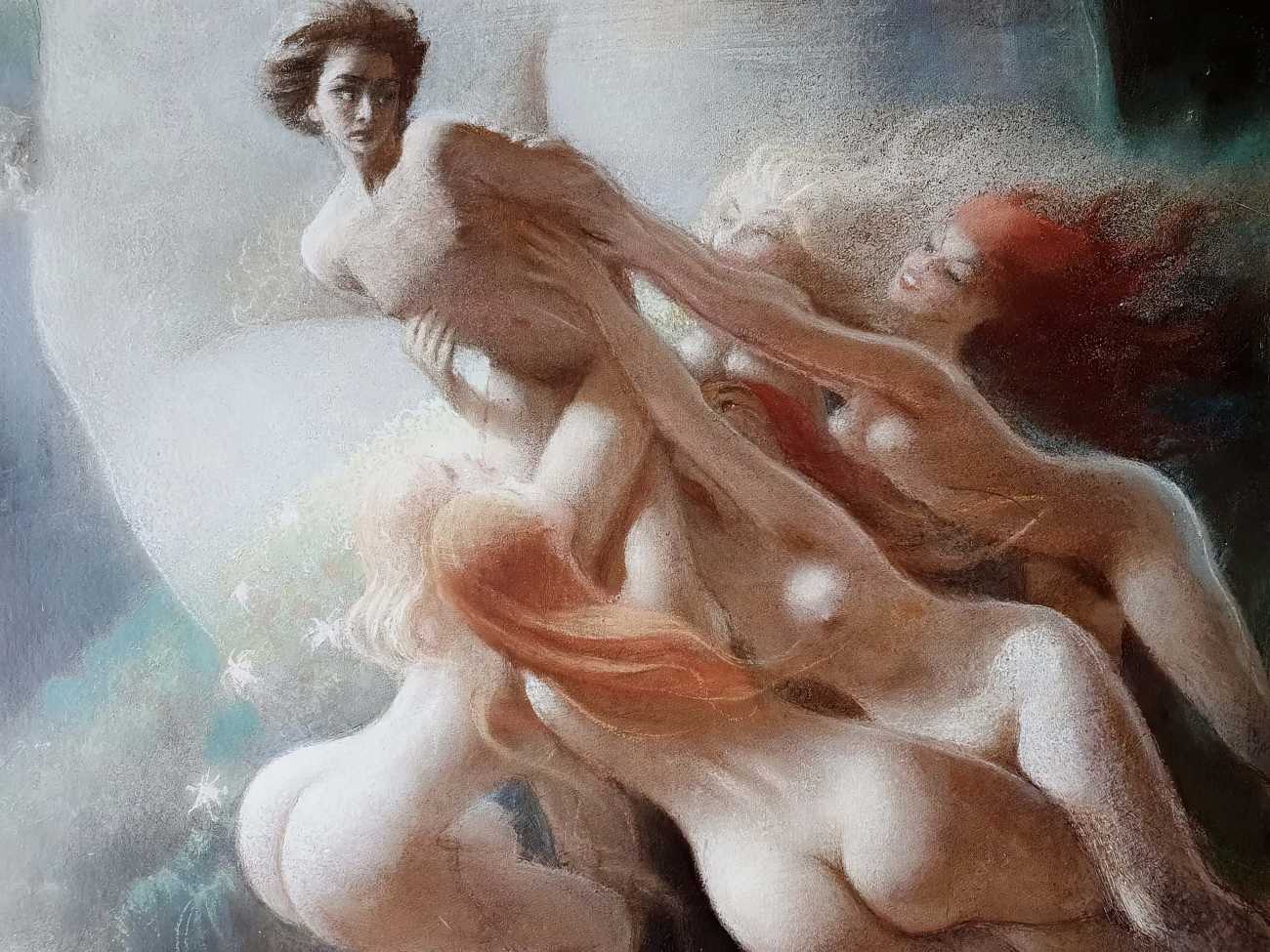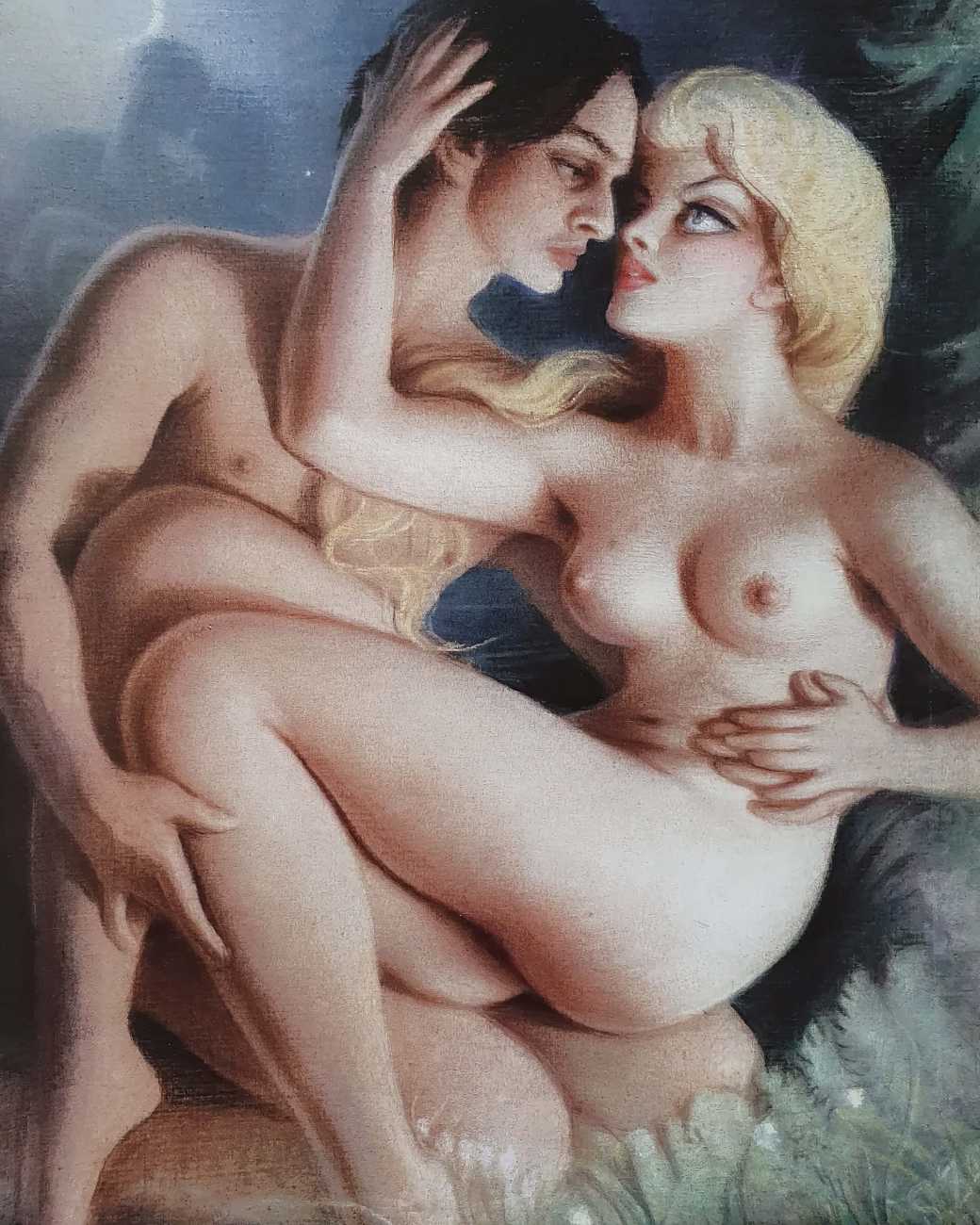
Stefan Żechowski’s artistic imagination was formed early around symbolism, romanticism and an intense fascination with the human figure. After studying in Kraków he joined Stanisław Szukalski’s Szczep Rogate Serce, absorbing its archaic, visionary approach to art. His work of the 1930s already combined meticulous draughtsmanship with erotic and symbolic imagery, culminating in the celebrated illustrations for Emil Zegadłowicz’s Motory in 1937.
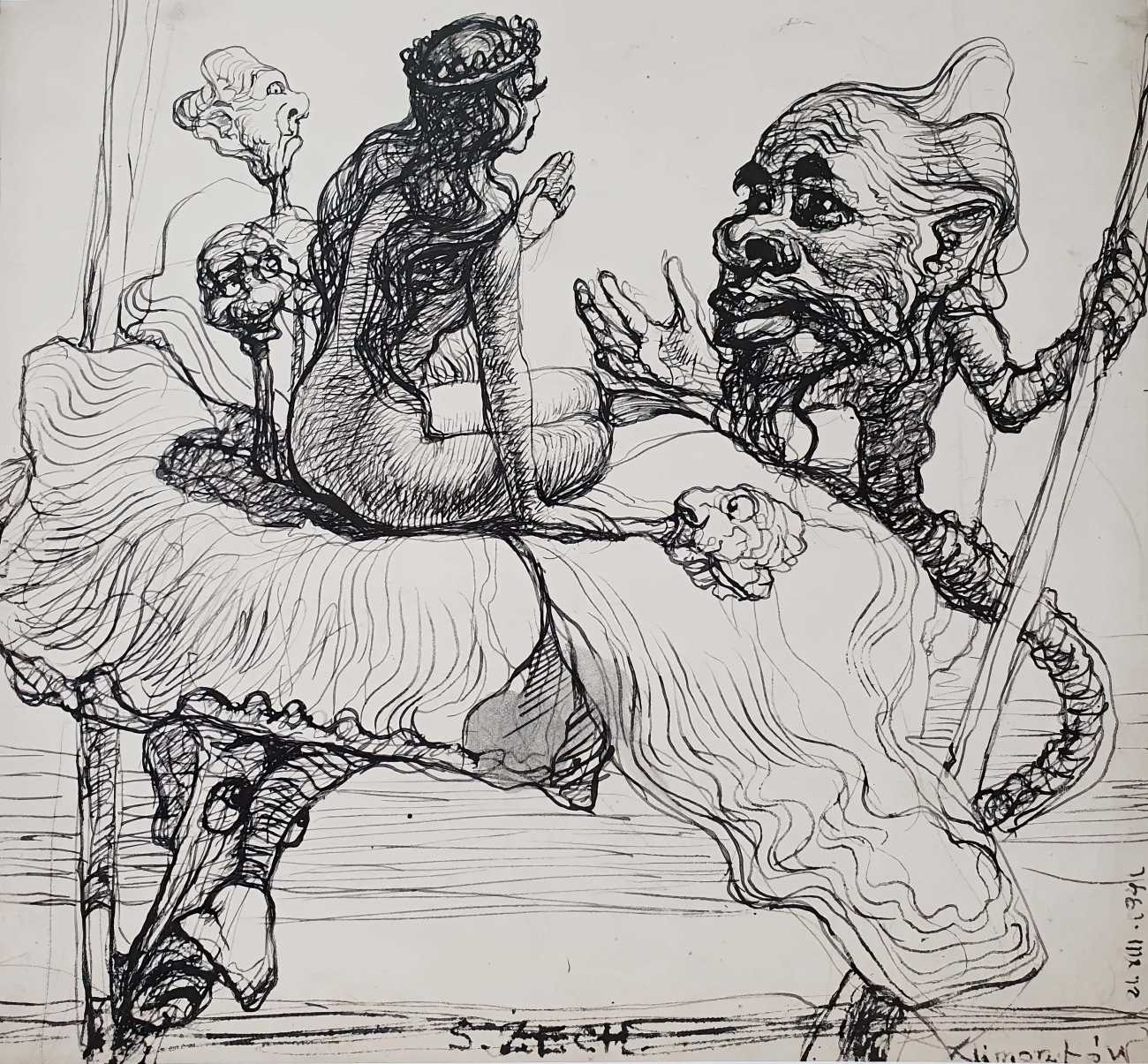
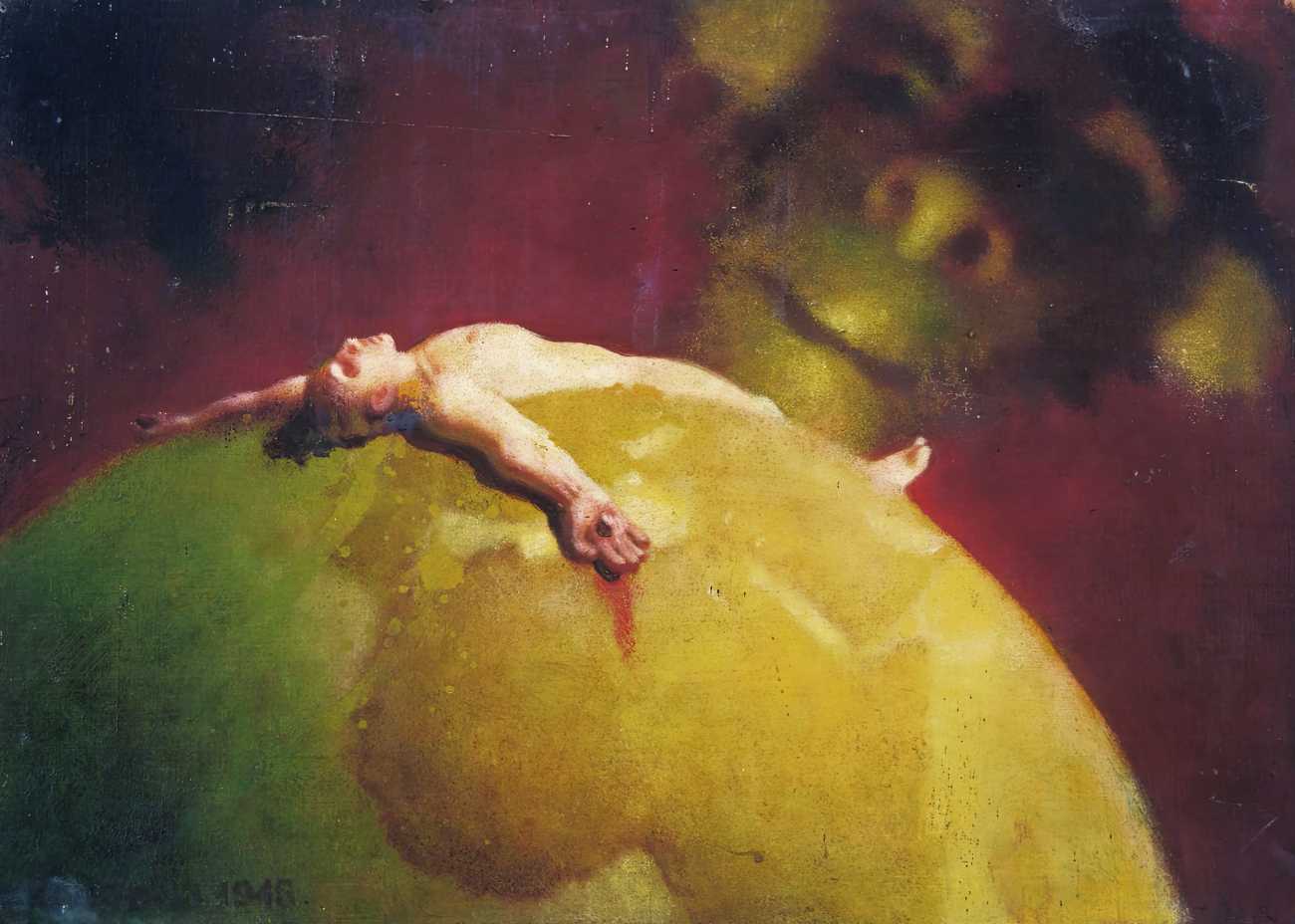
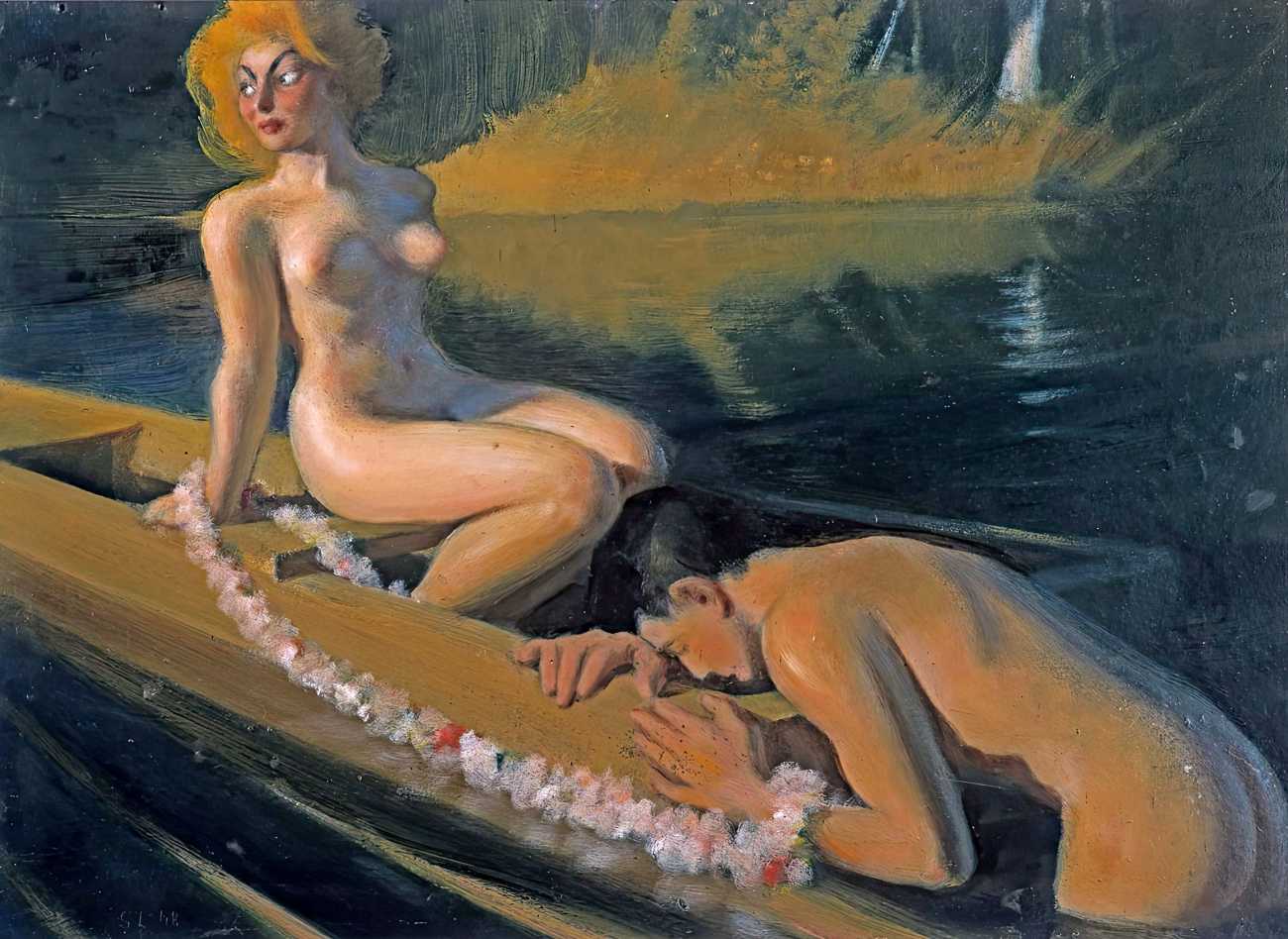
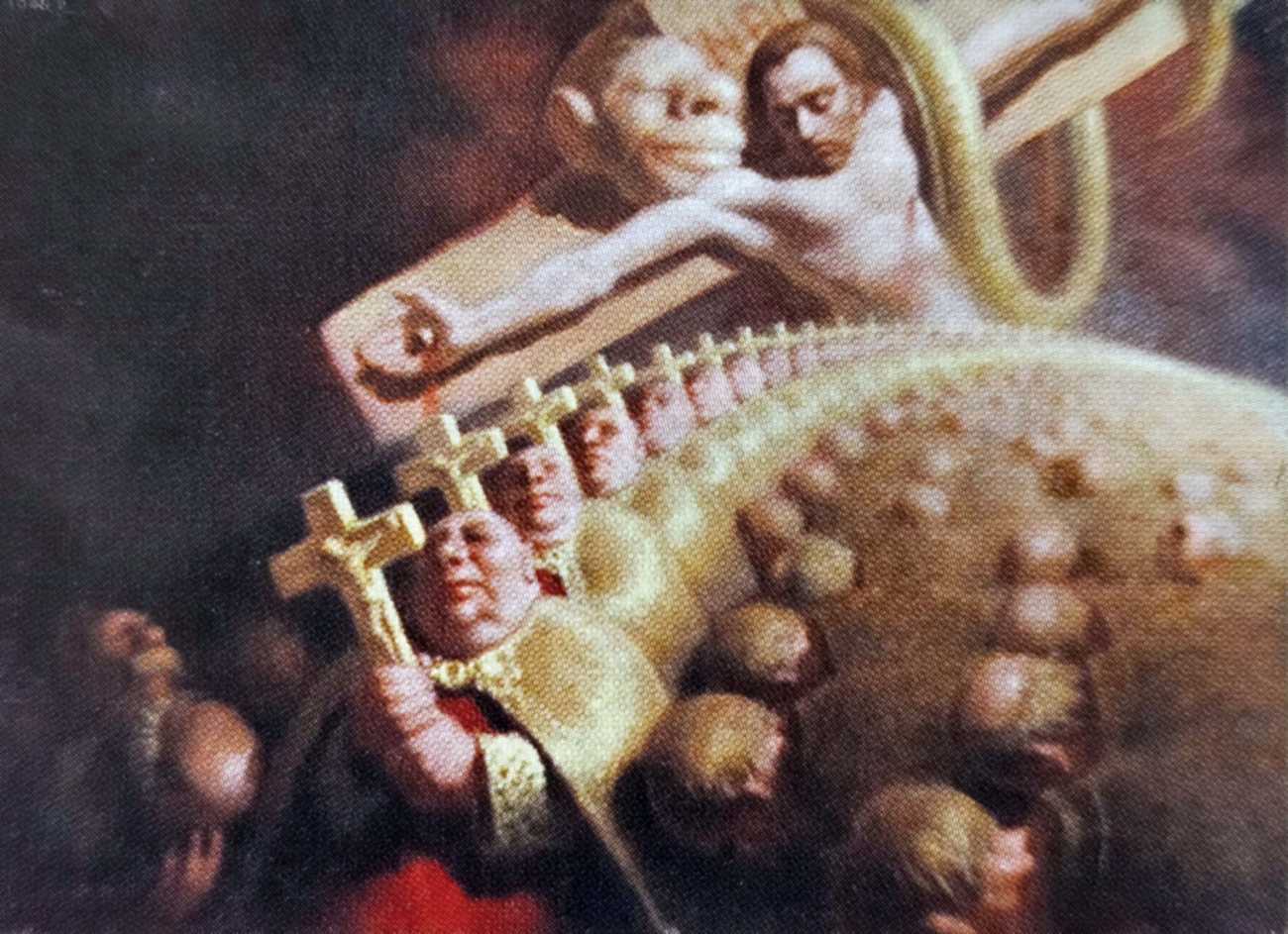
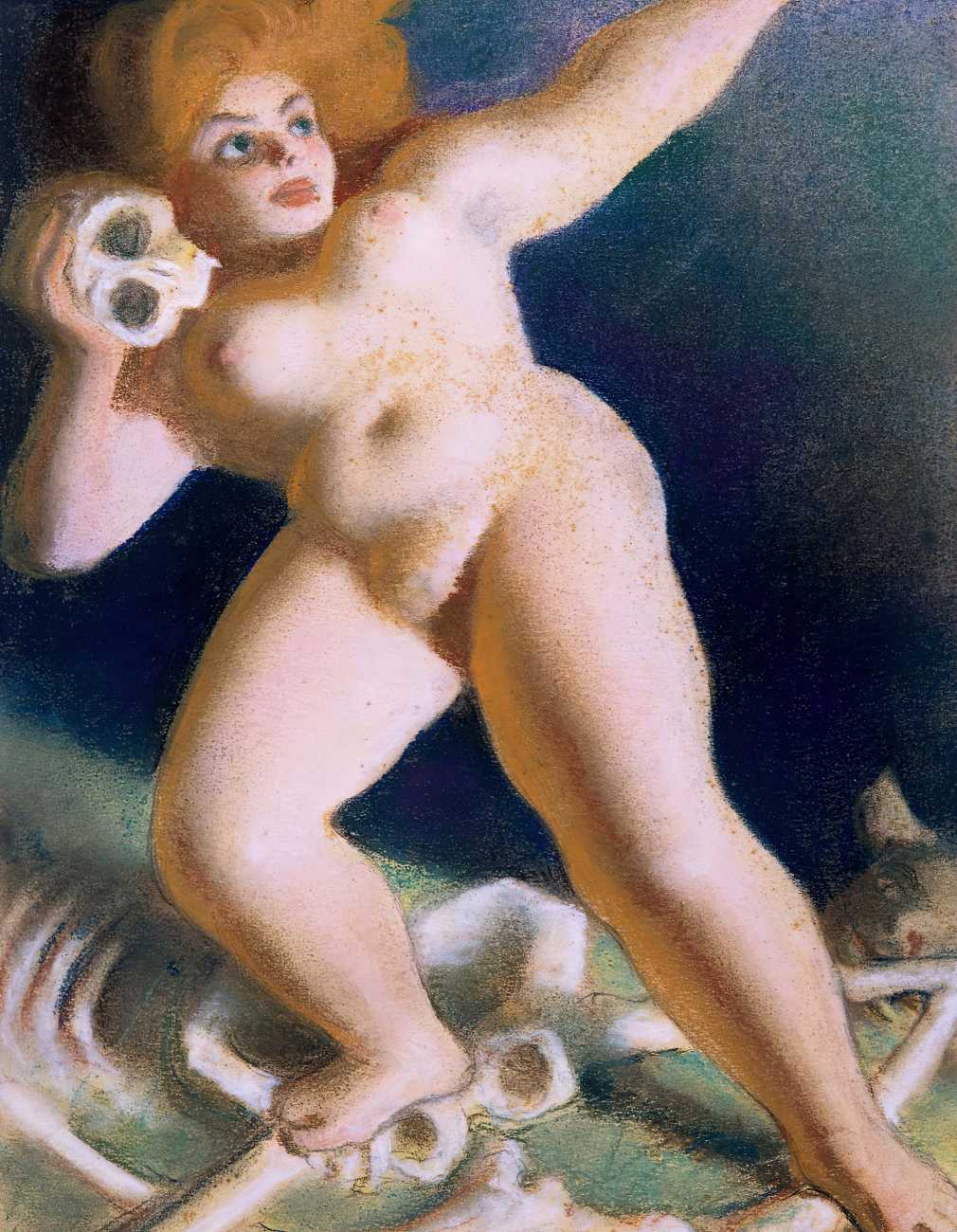
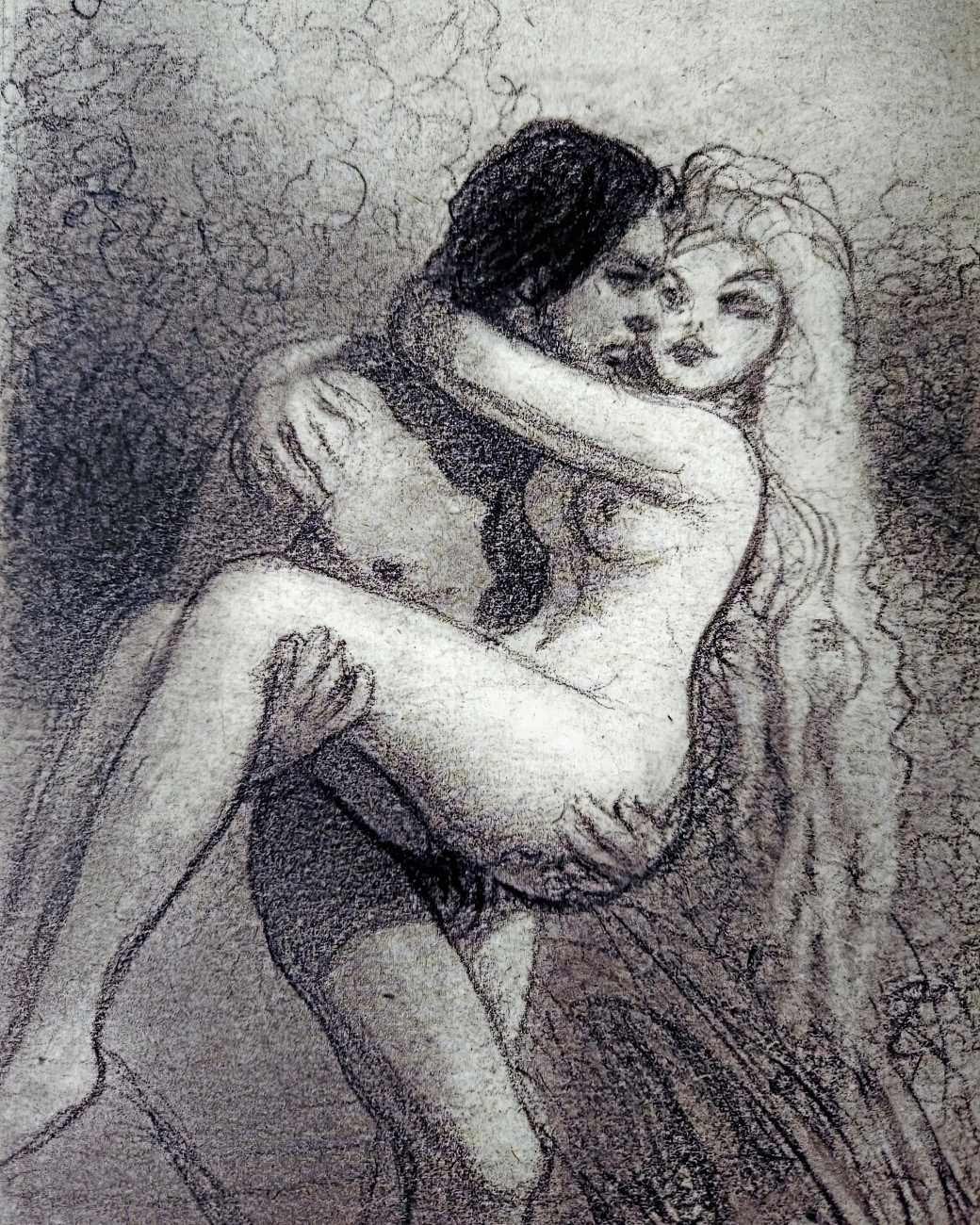
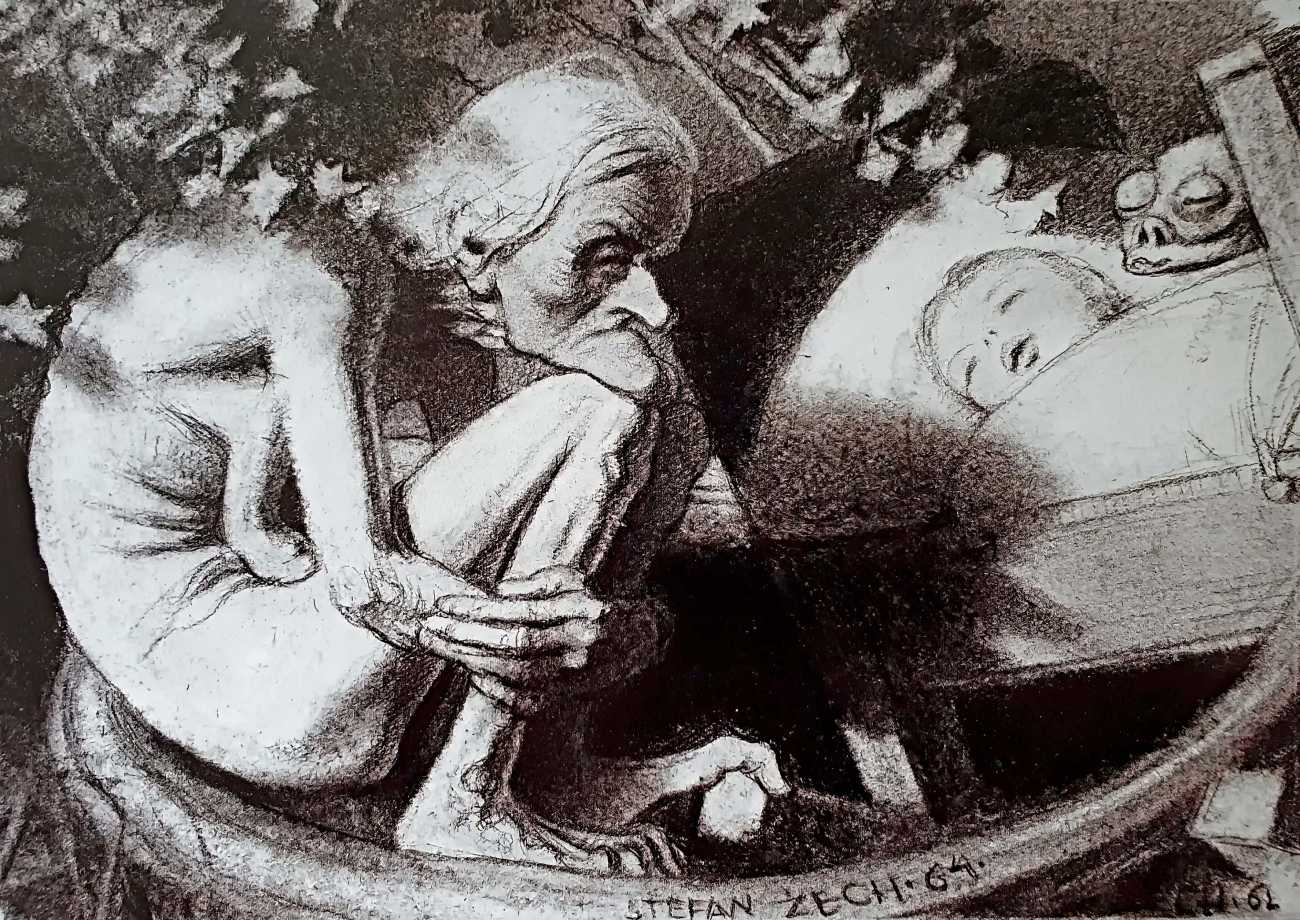
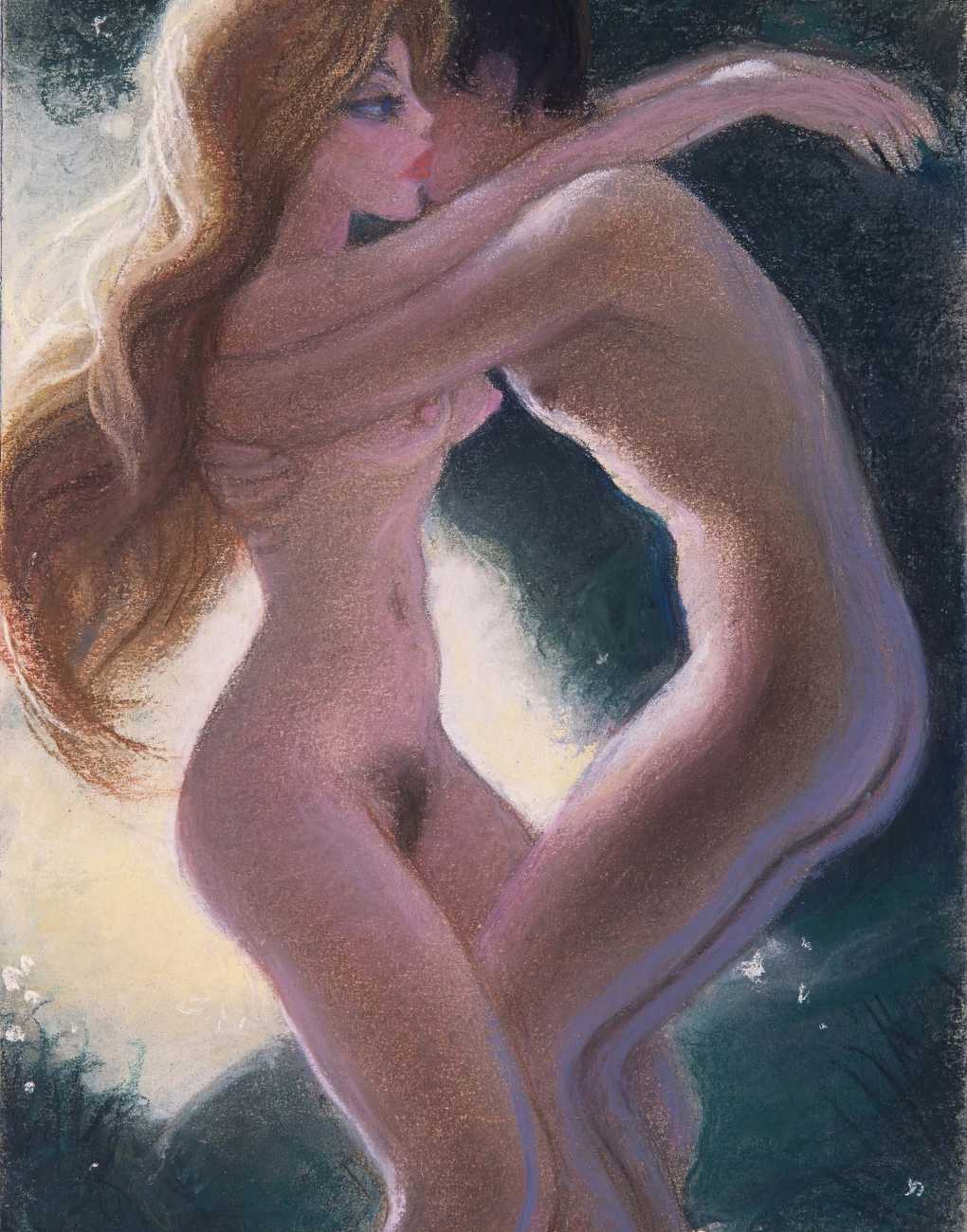
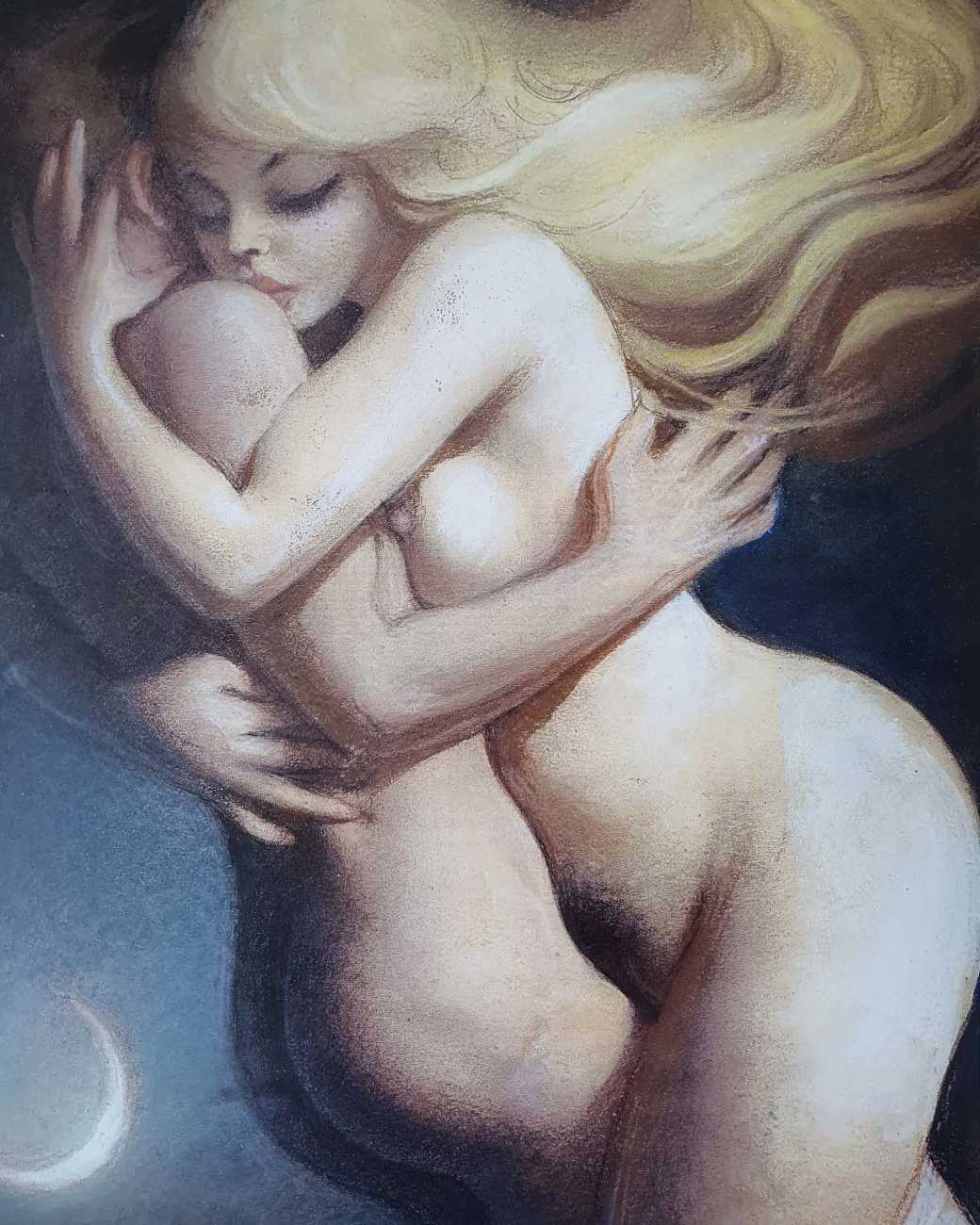
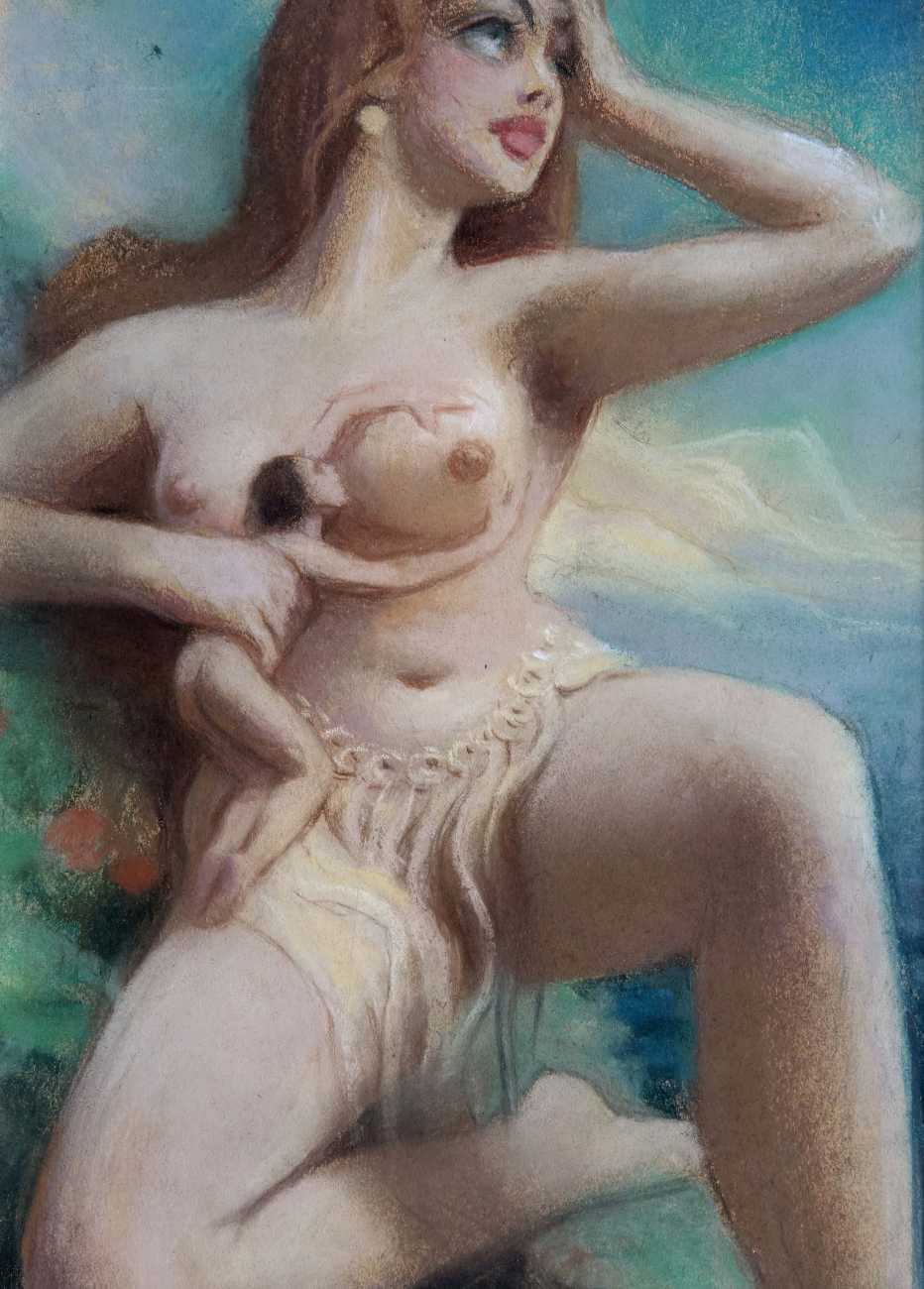
The works shown here, in chronological order, trace Żechowski’s very personal development. In the 1940s erotic imagery frequently becomes inseparable from darker visions of mortality, dreams, religion and the supernatural. Naked figures appear alongside skulls, demons, serpents and visionary landscapes, while Christian imagery and scenes inspired by Polish Romantic literature sit alongside more intimate fantasies. This was a turbulent period in Żechowski’s life – after the second world war he became involved in the new political order, producing portraits and works in the spirit of socialist realism, at the same time continuing to develop a more private imaginative world.
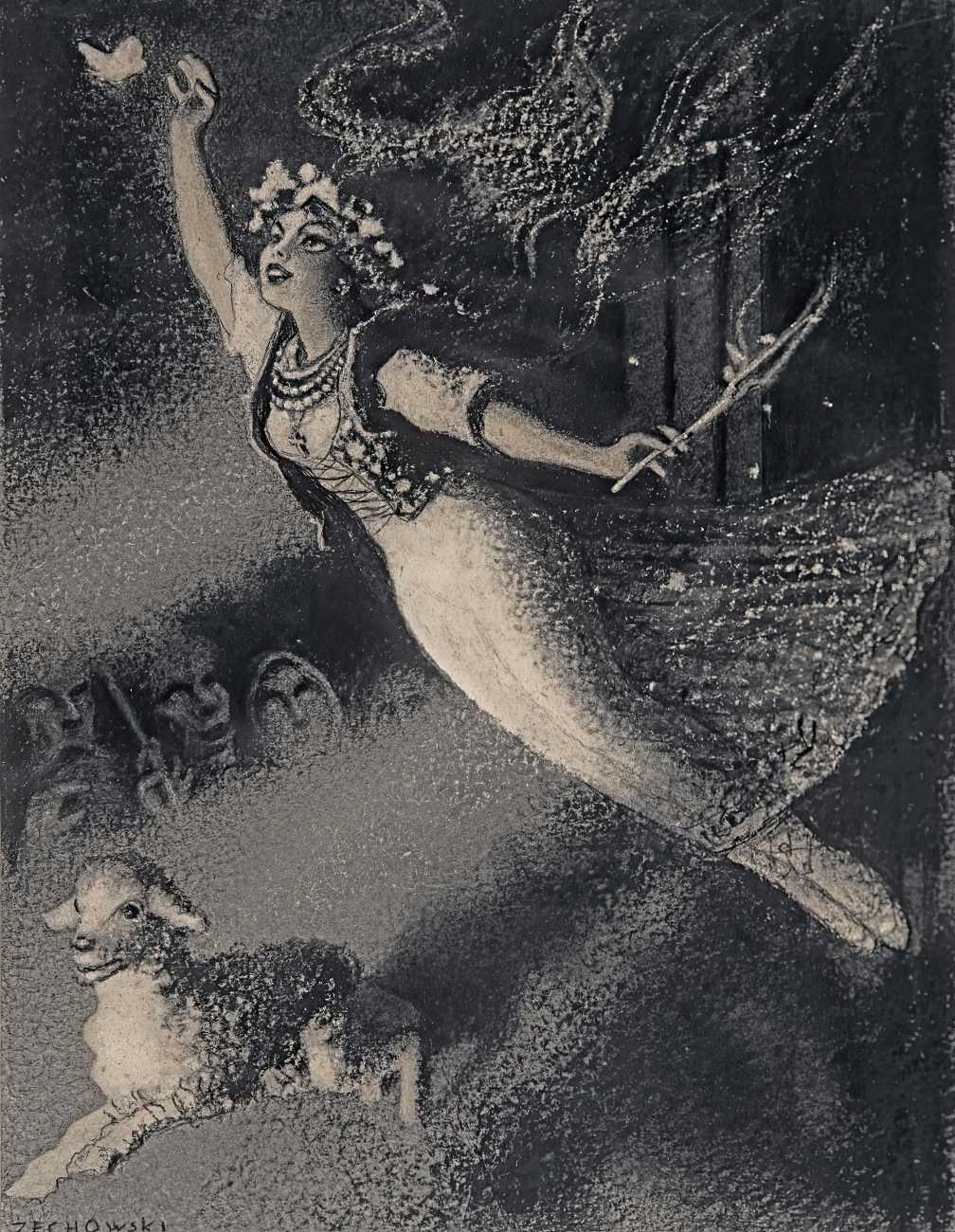
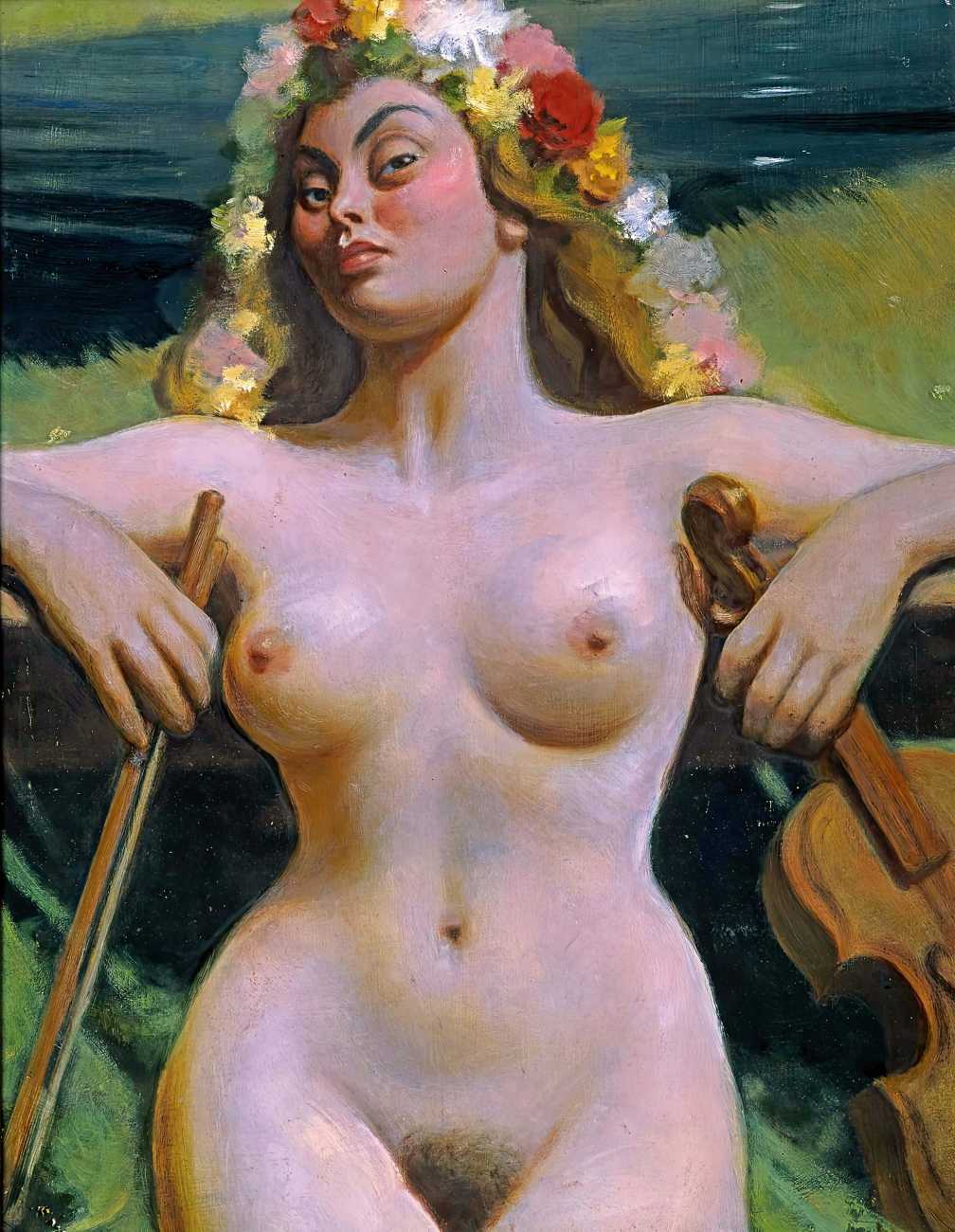
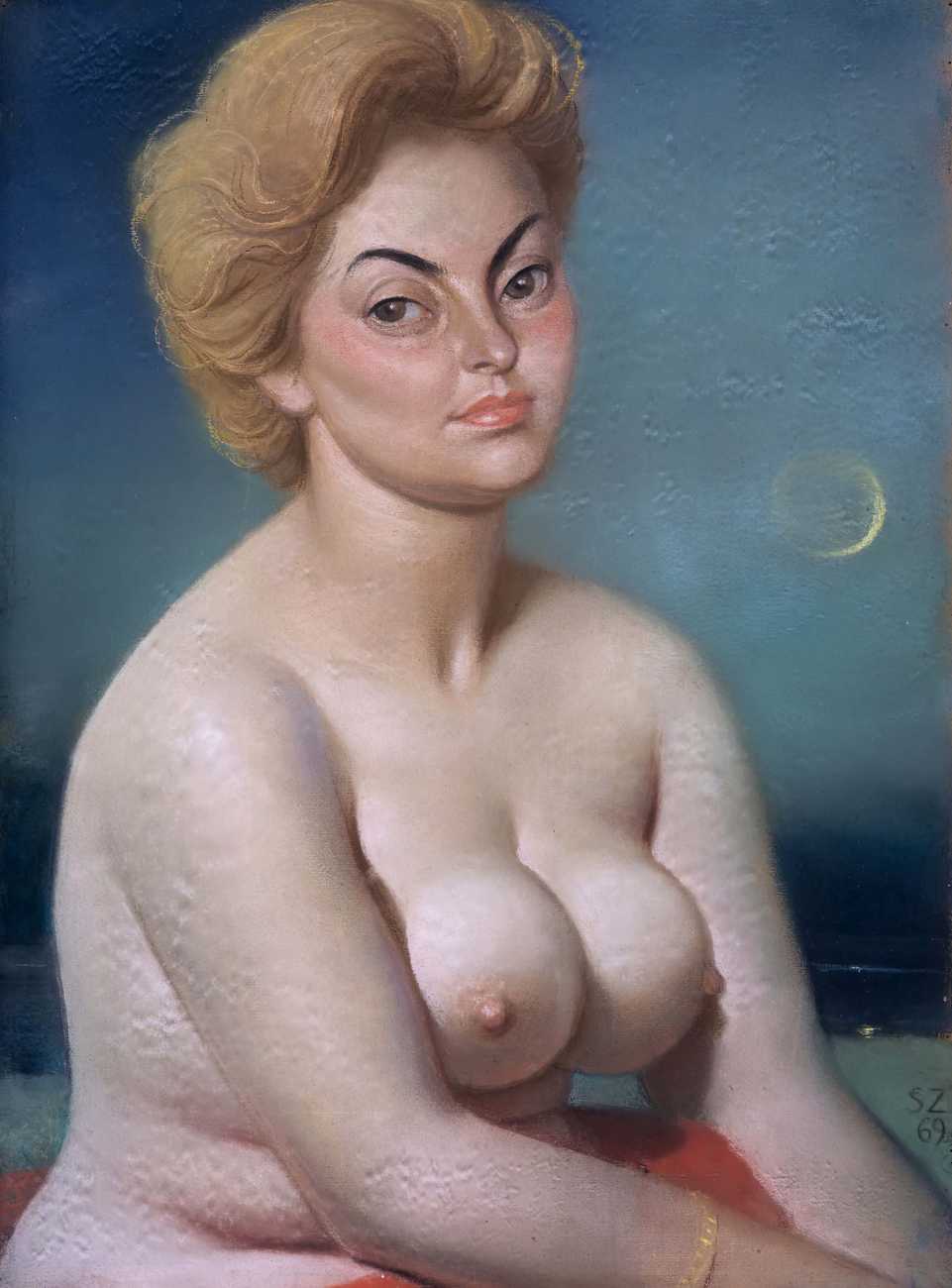
The literary impulse remained important. During the 1950s he illustrated works by writers including Emil Zegadłowicz and Jerzy Żuławski, and produced his own interpretations of Adam Mickiewicz. The destruction of his family home by fire in 1953 was followed by a gradual withdrawal from public artistic life. By the mid-1950s paintings and pastels of women had become the central subject of his work.
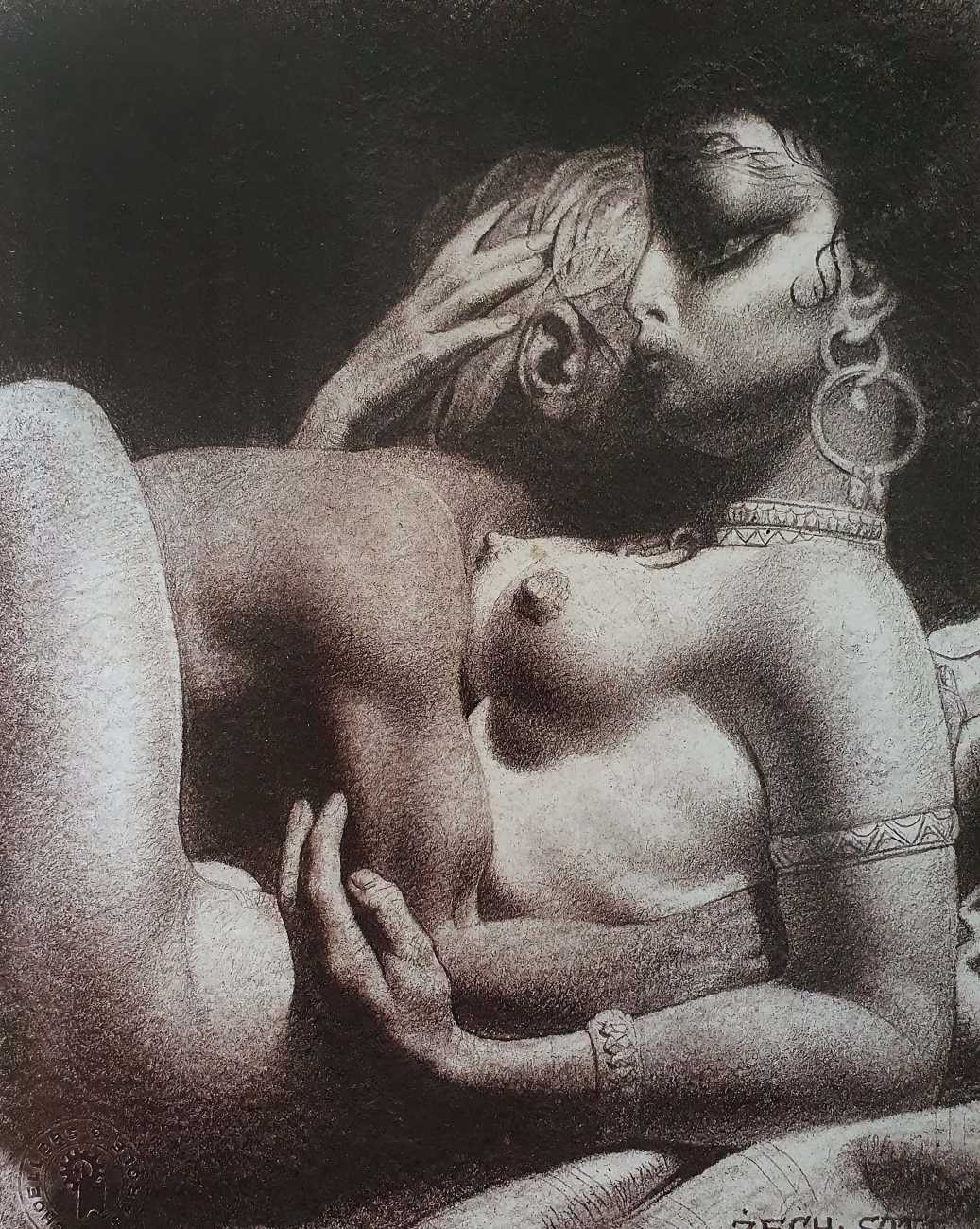
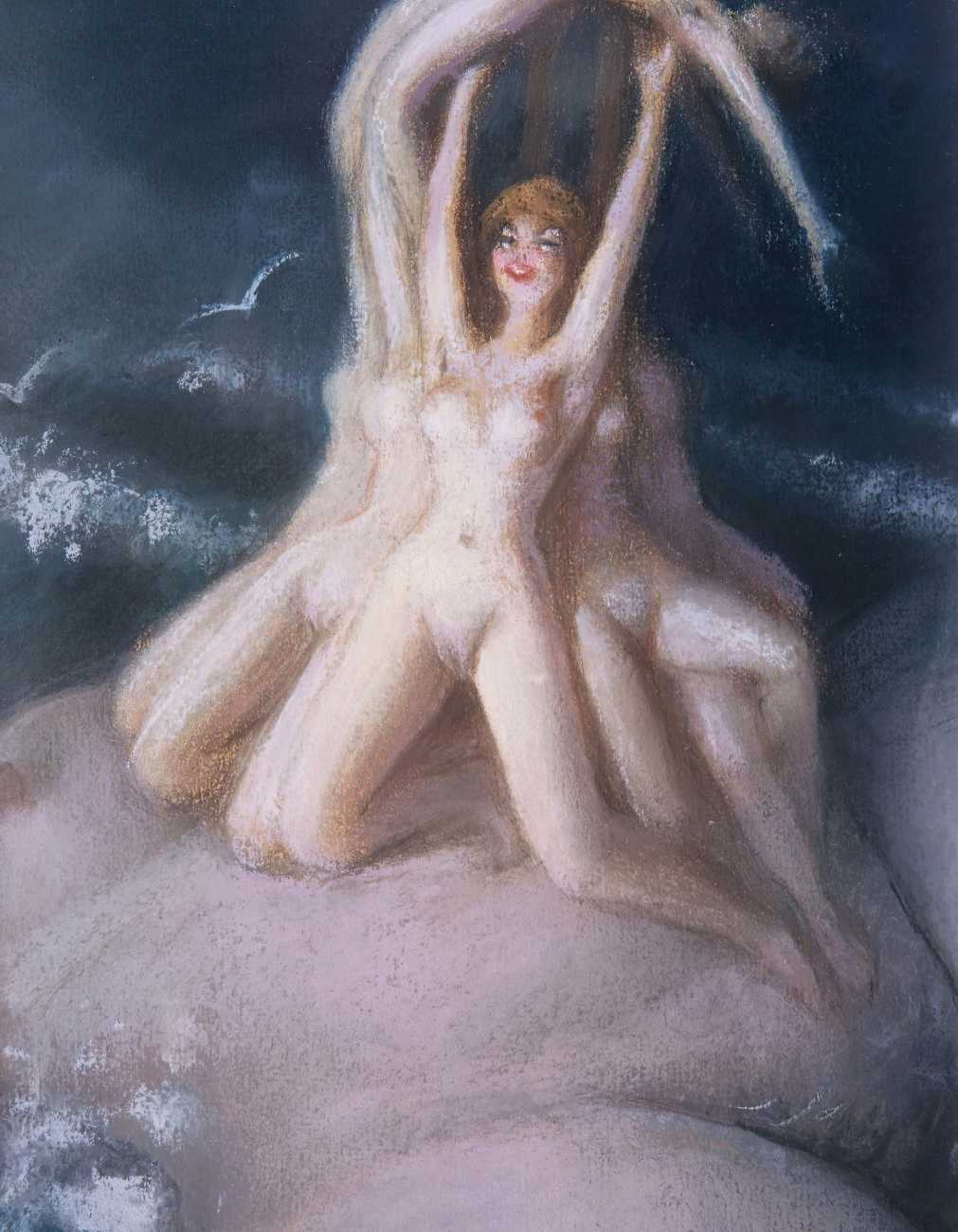
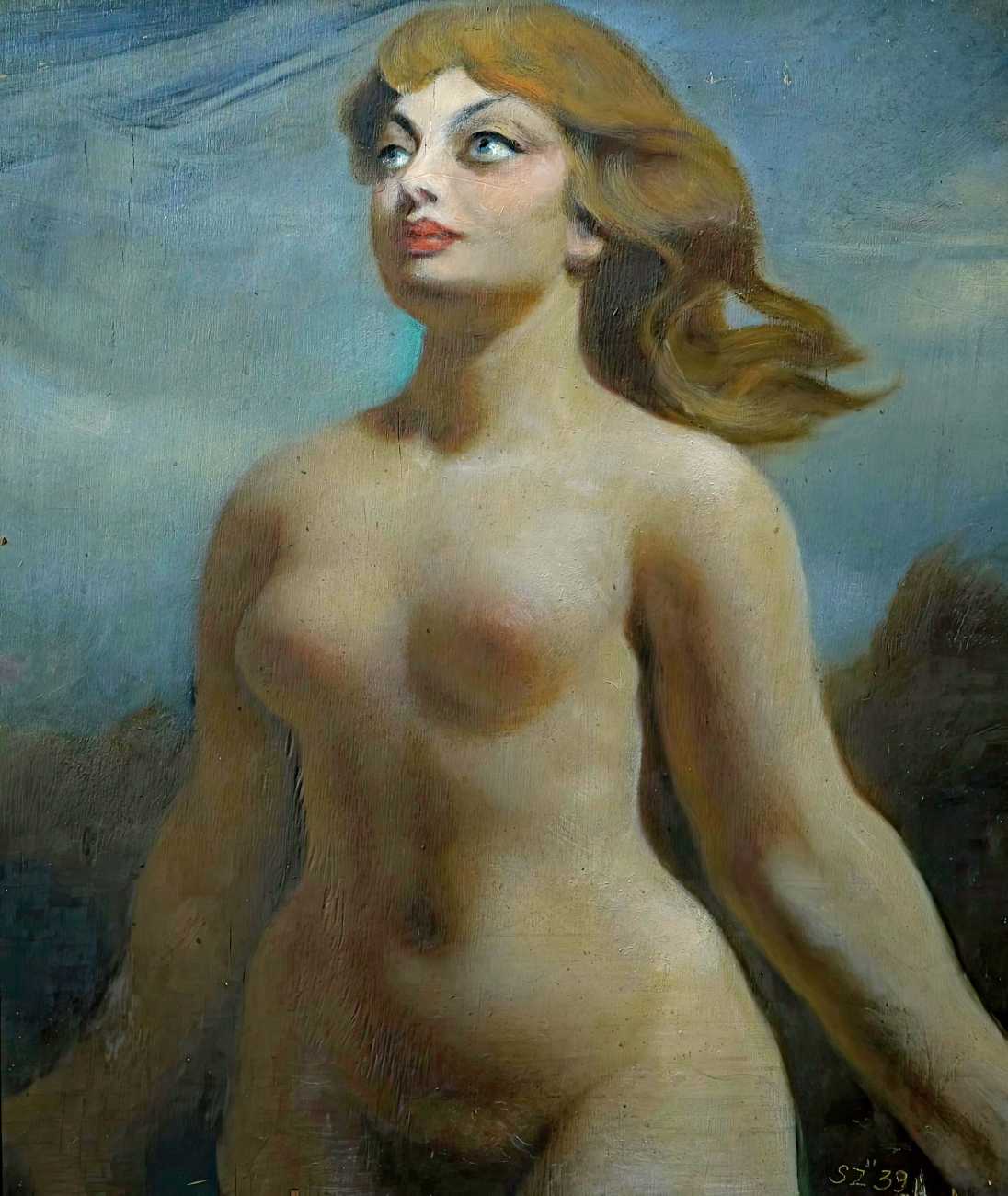
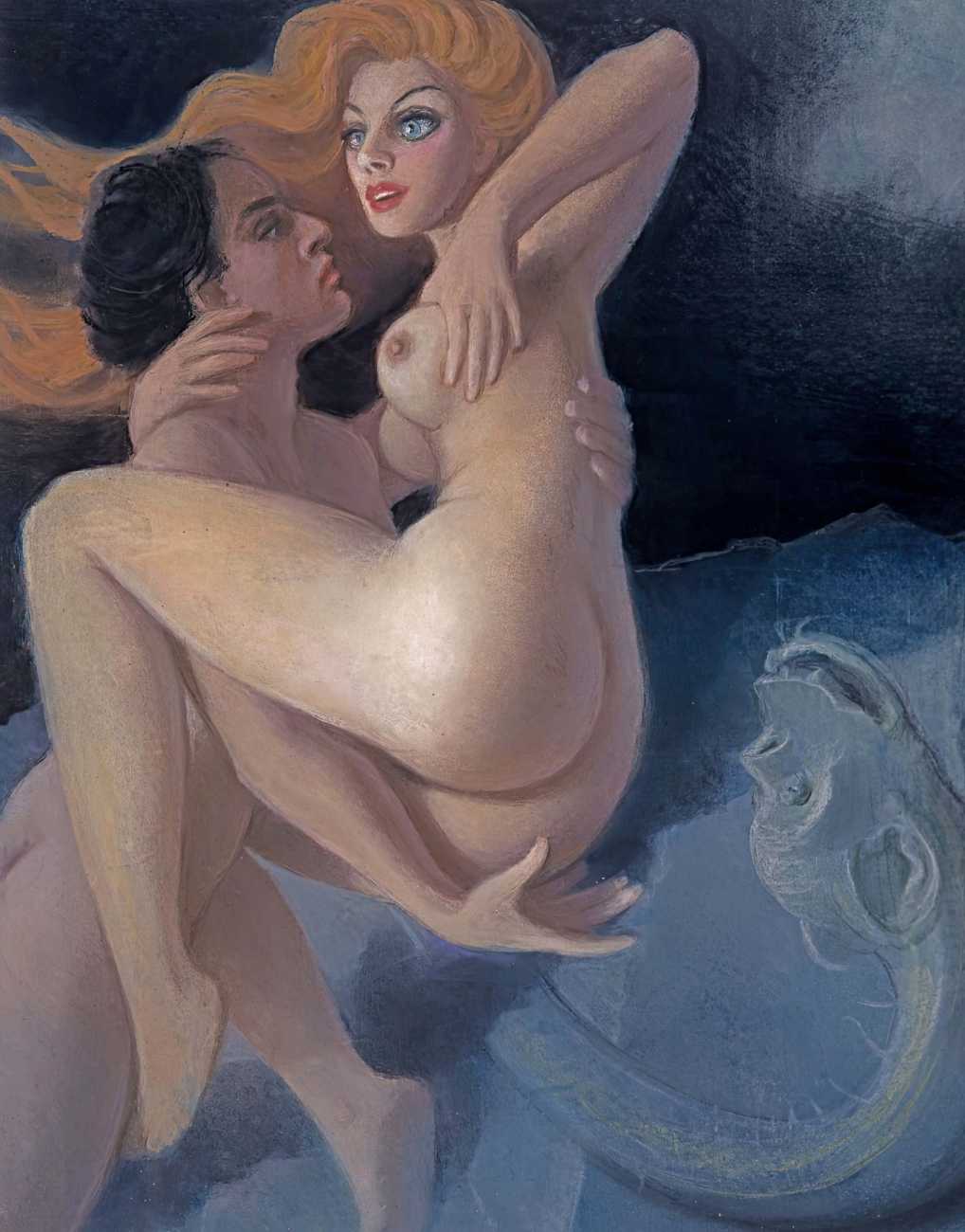
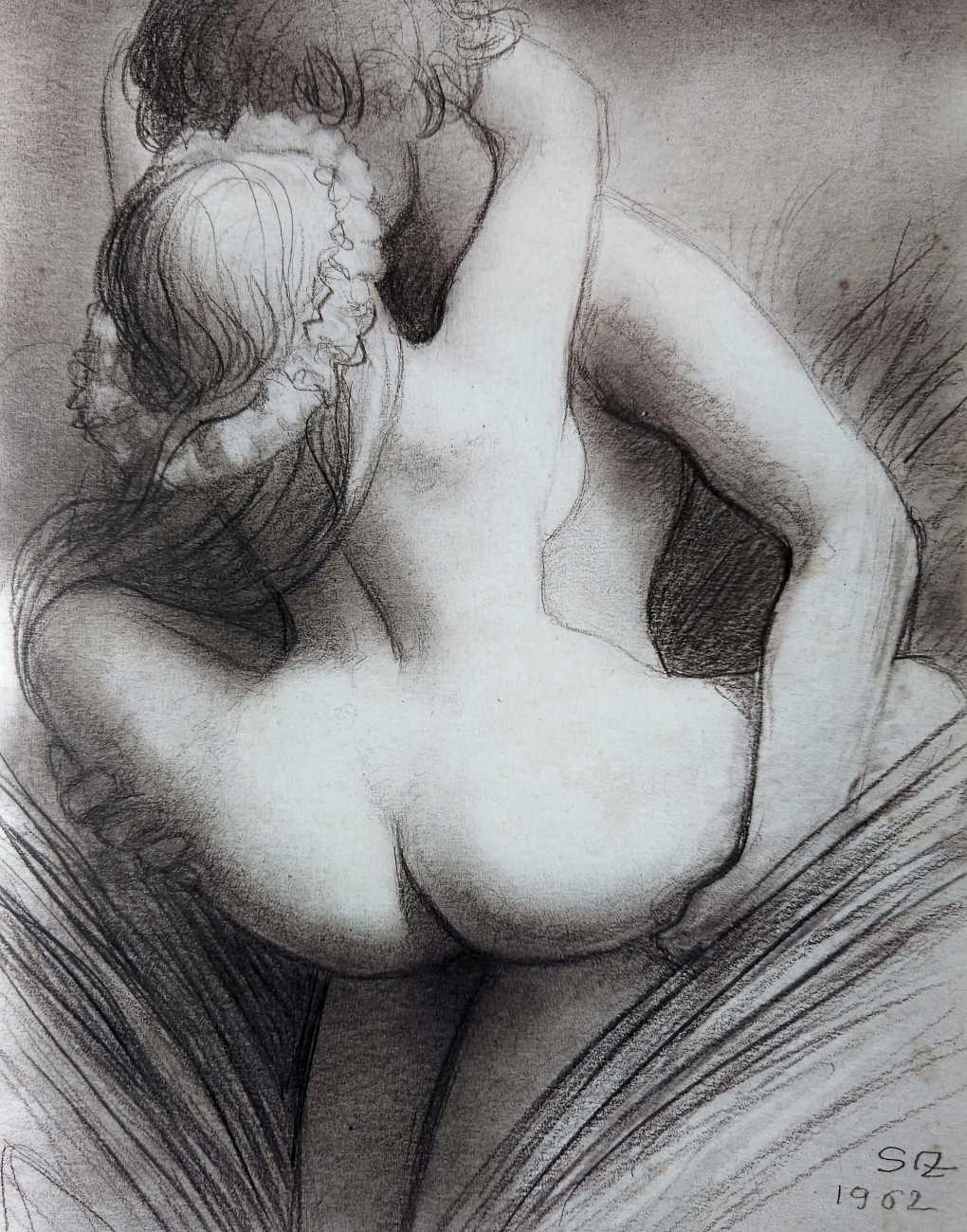
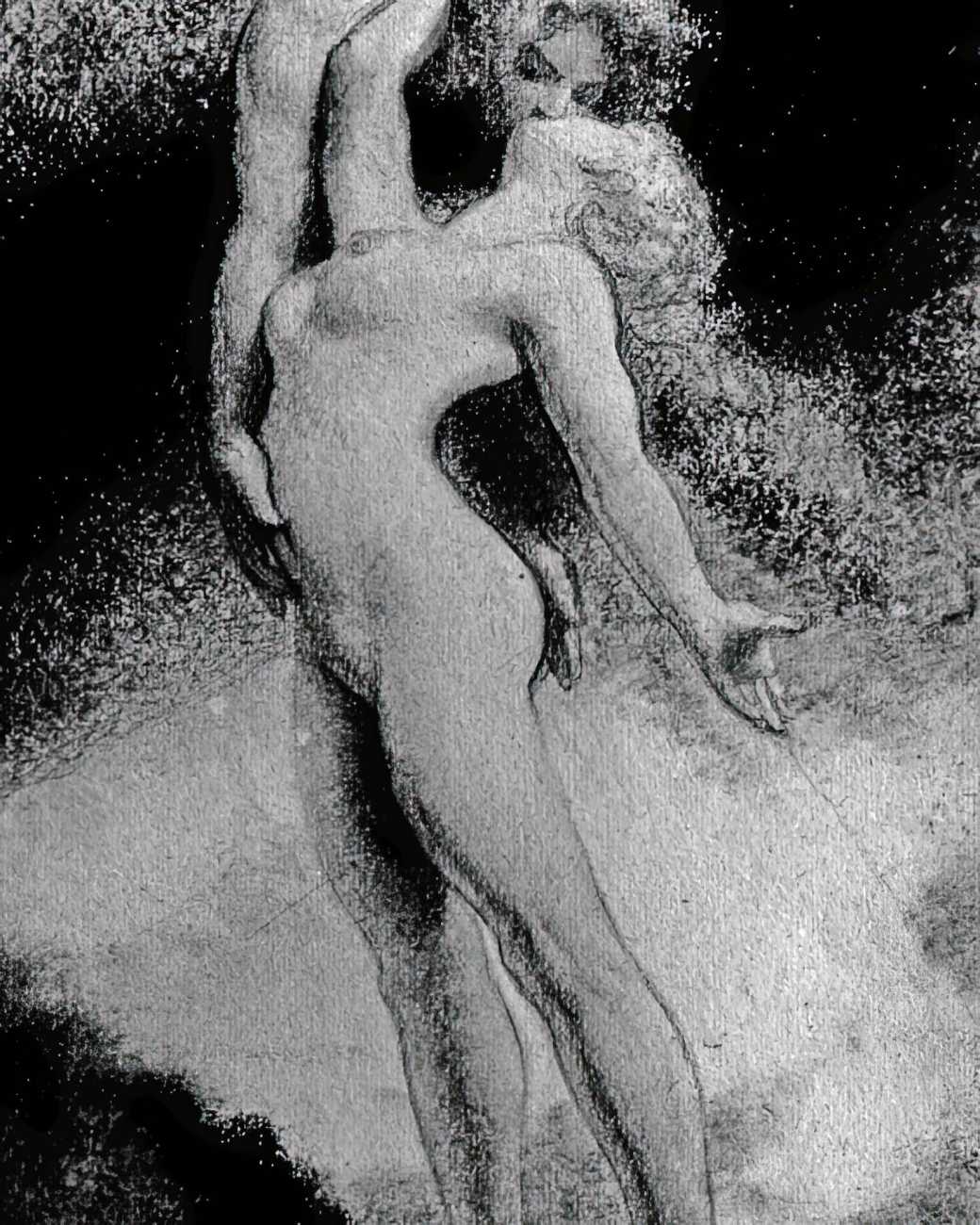
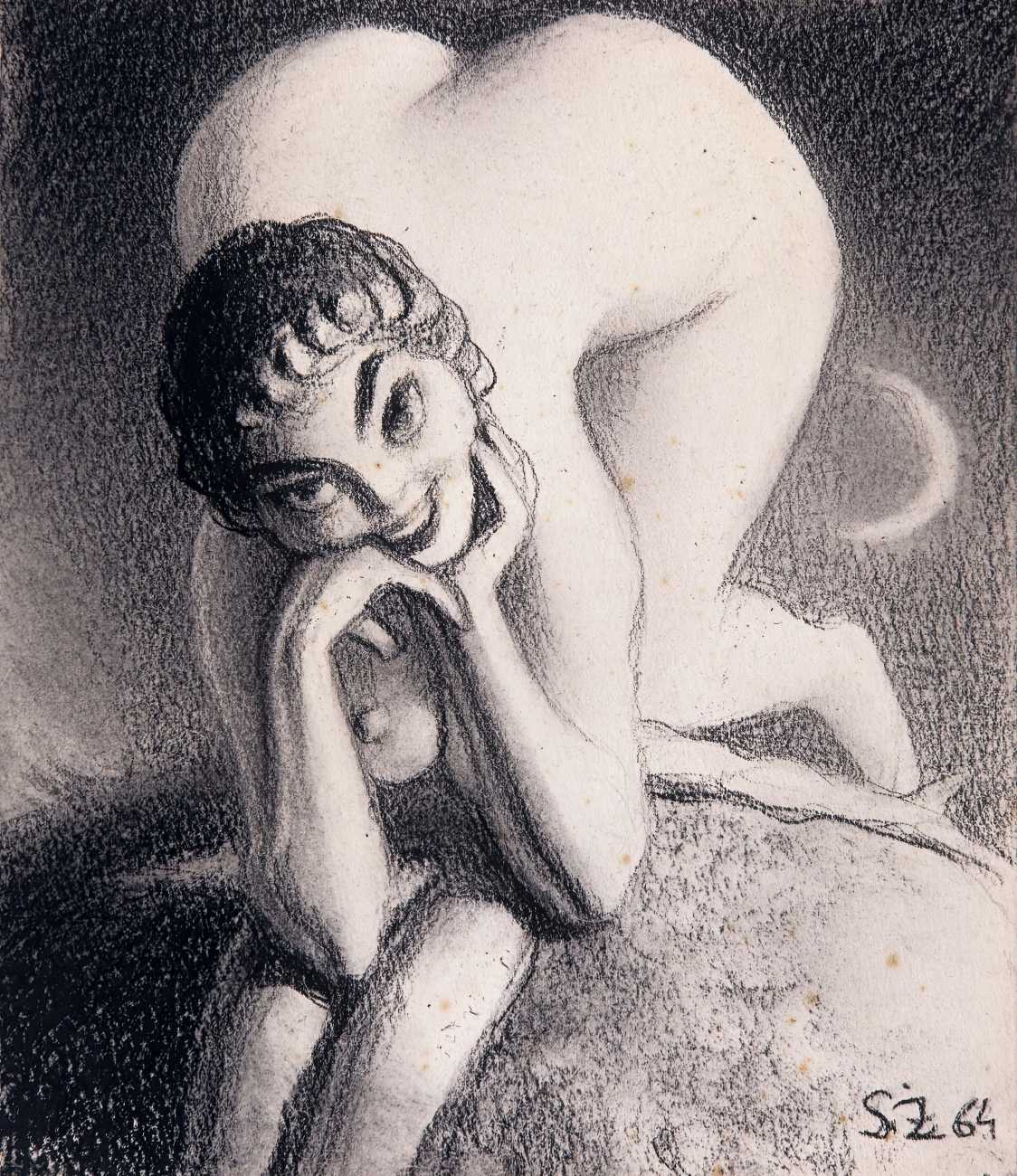
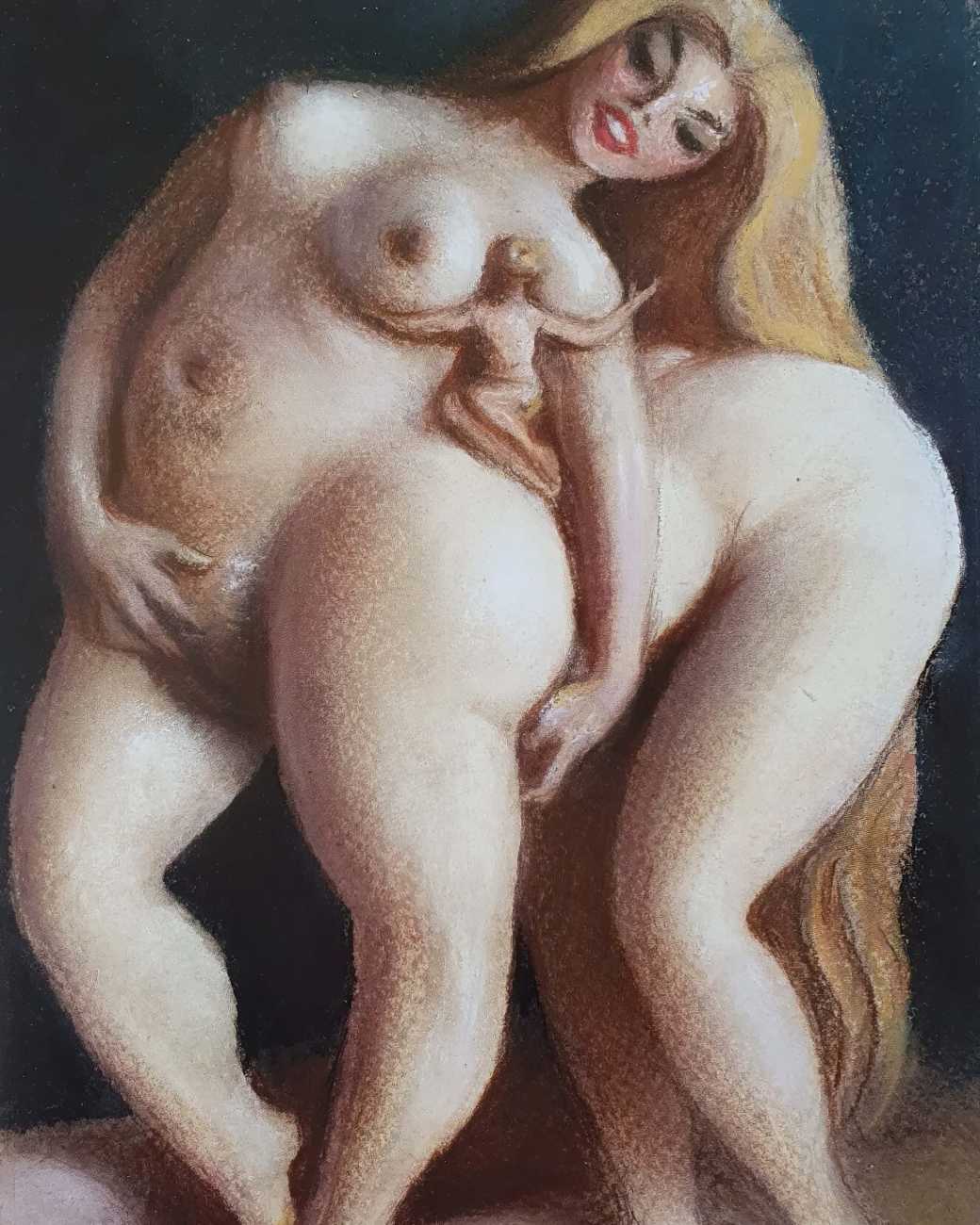
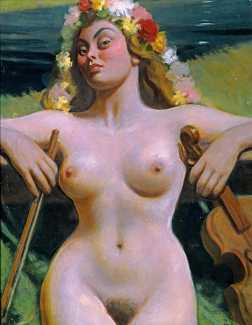
From the 1960s onwards eroticism increasingly came to the foreground. His women became dreamlike, sensual and fantastically stylised, often elongated or voluptuous, with flowing hair, luminous skin and a doll-like artificial beauty. By the mid-1970s erotic images dominated his output, executed in pastel and acrylic, yet these later images retained something of the visionary intensity of the earlier drawings – behind their seductive surfaces lies the same fascination with fantasy, symbolism, desire and power of the feminine that had characterised Żechowski’s art from the beginning.