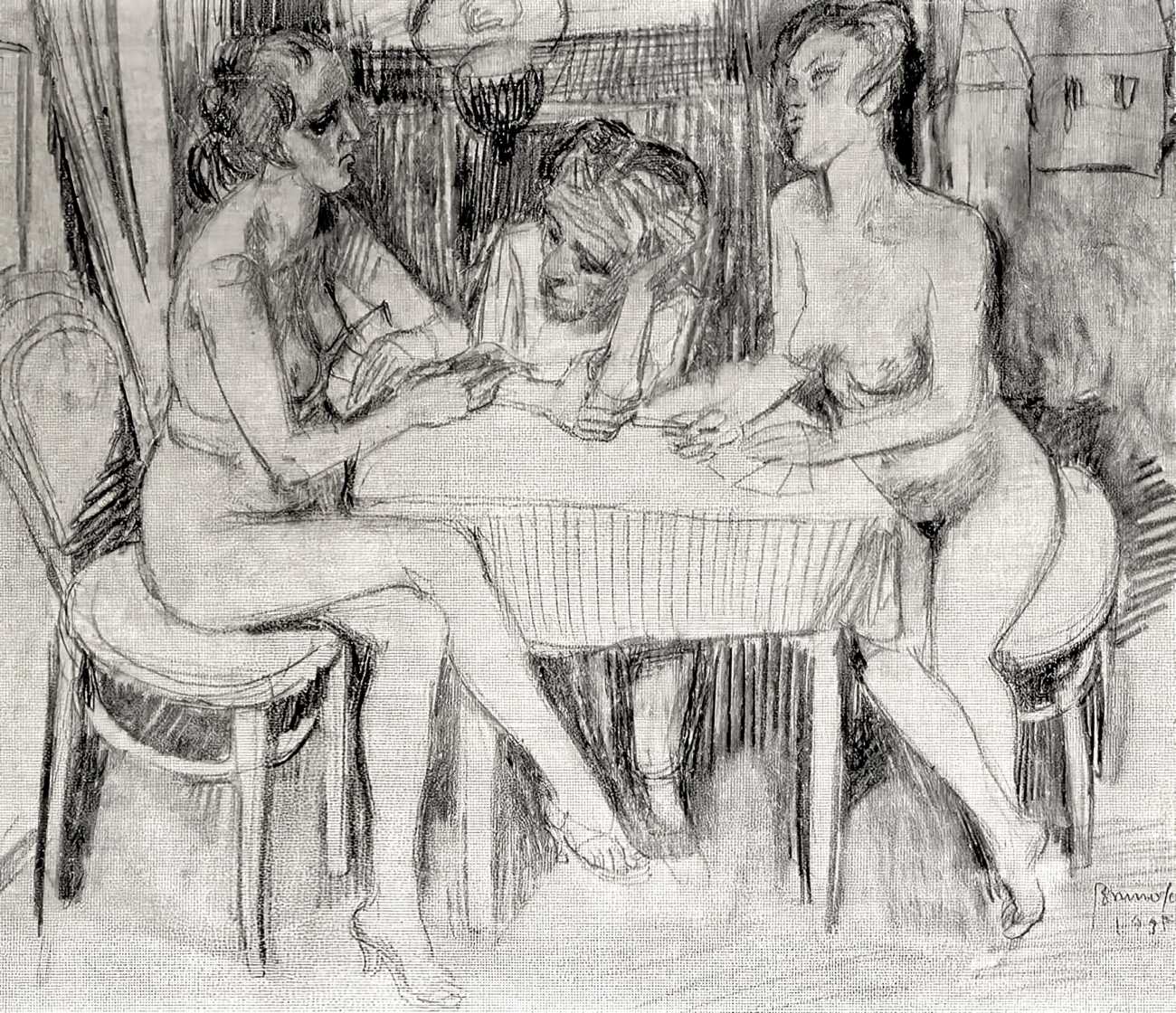
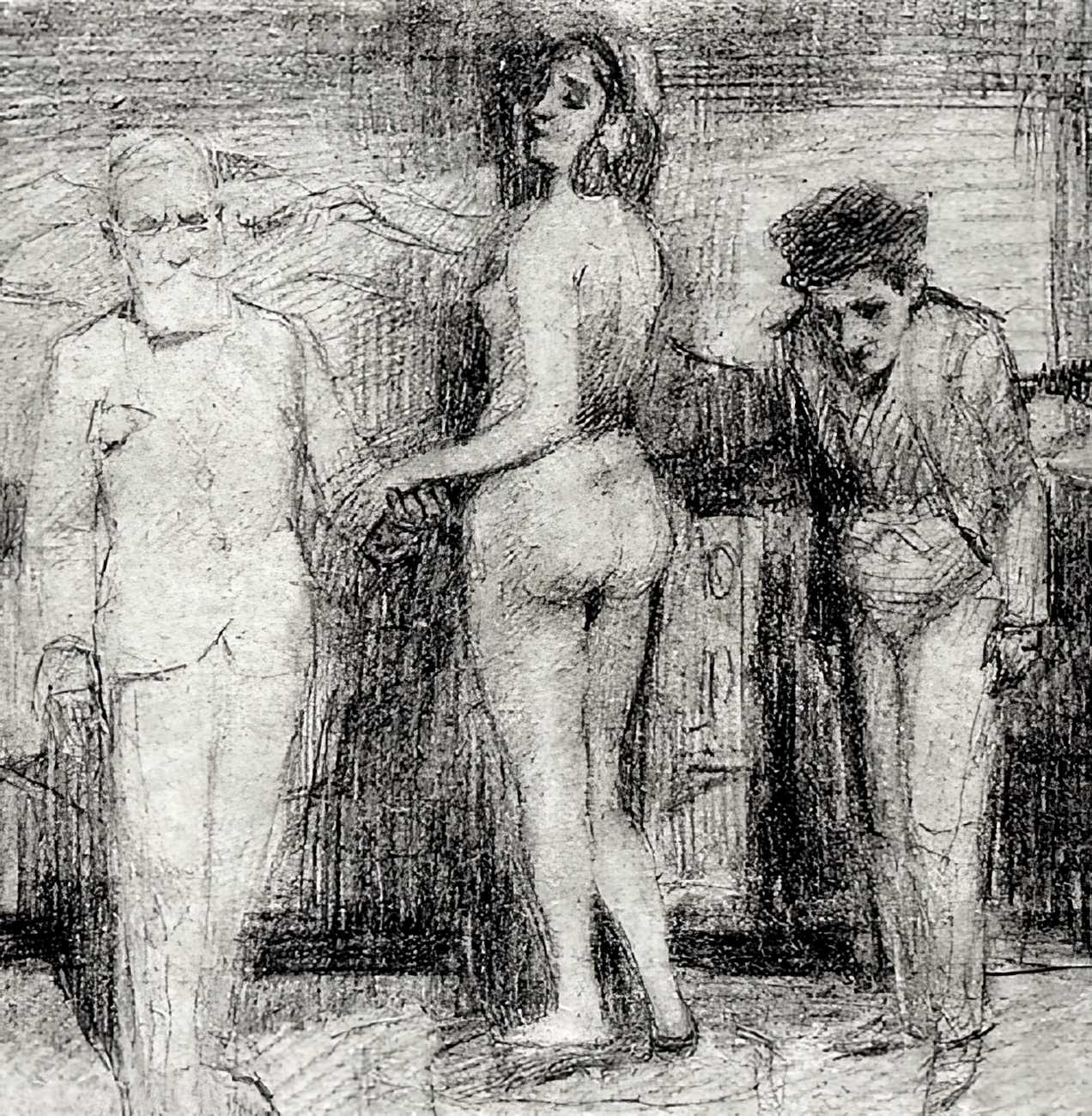
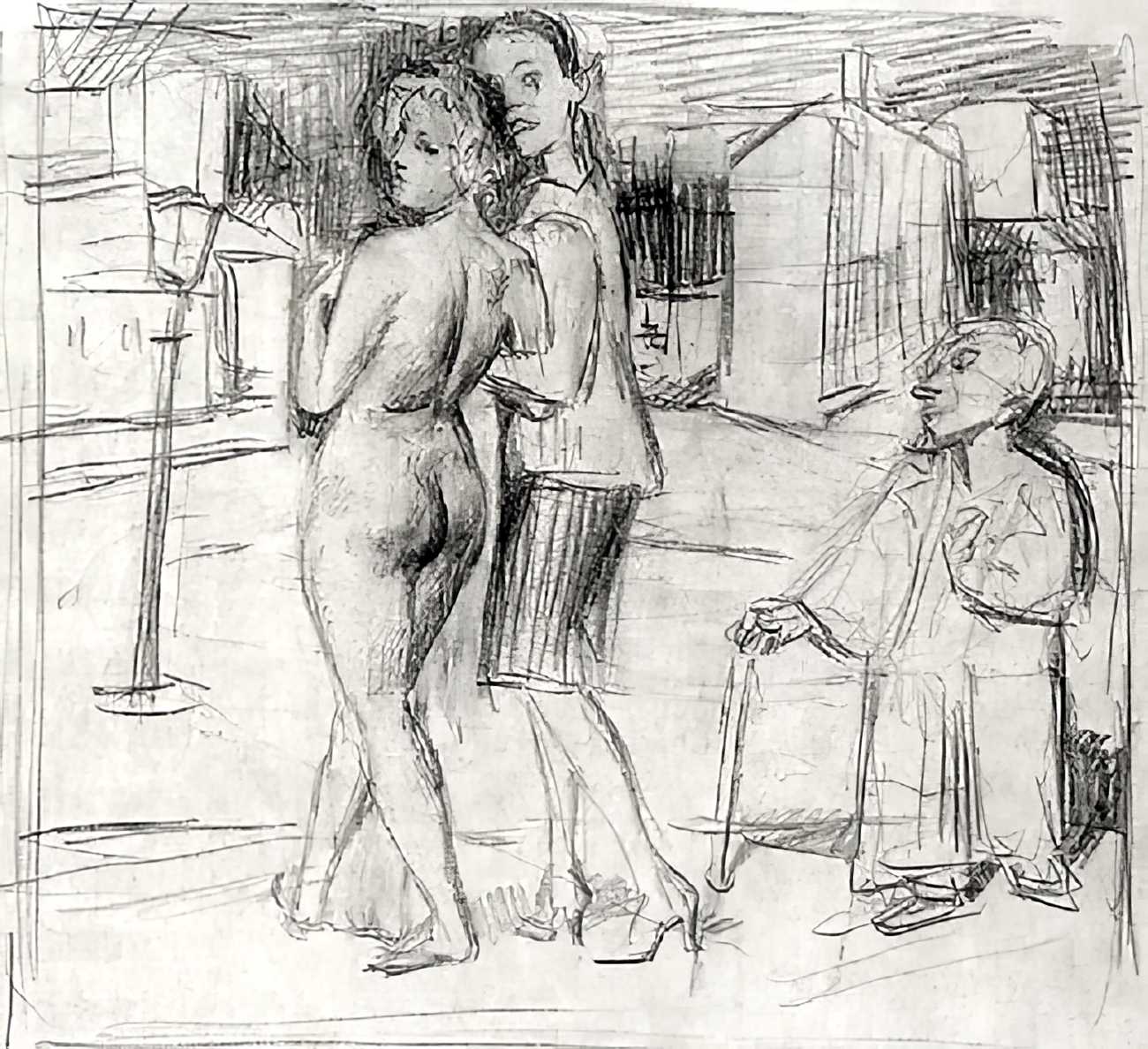
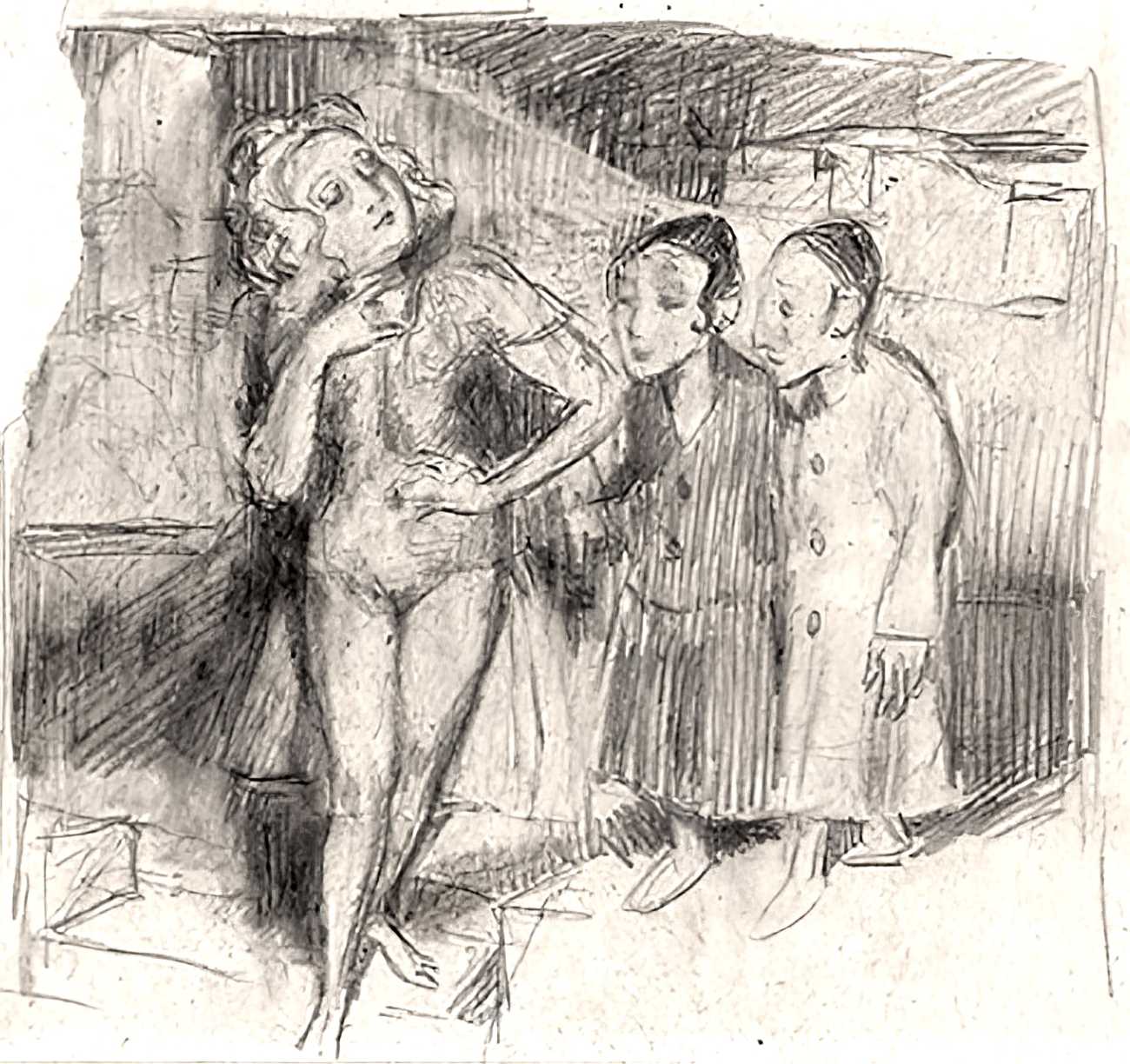
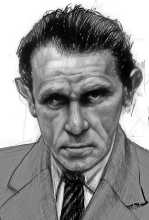
 Bruno Schulz grew up in Drohobycz, now in western Ukraine but then part of Austrian Galicia, the son of a cloth merchant. He developed an early interest in art and studied architecture at Lwów (Lviv) Polytechnic and briefly in Vienna, although illness prevented him from completing his studies. Returning to Drohobycz, he eventually became a teacher of crafts and drawing at his former school, a job he disliked but was obliged to retain as his principal source of income. His real ambitions were literary and artistic.
Schulz lived almost entirely within the world of his provincial hometown, despite the extraordinary succession of political regimes to which it was subjected. A Polish-speaking Jew fluent in German but not Yiddish, he drew his material from the streets, people and domestic life immediately around him. His imagination transformed this familiar world into something strange, grotesque and dreamlike. As a writer he eventually became recognised as one of the great Polish-language prose stylists of the twentieth century, publishing Sklepy Cynamonowe (The Cinnamon Shops) in 1934 and Sanatorium Pod Klepsydrą (Sanatorium Under the Sign of the Hourglass) three years later. He received the Golden Laurel of the Polish Academy of Literature in 1938.
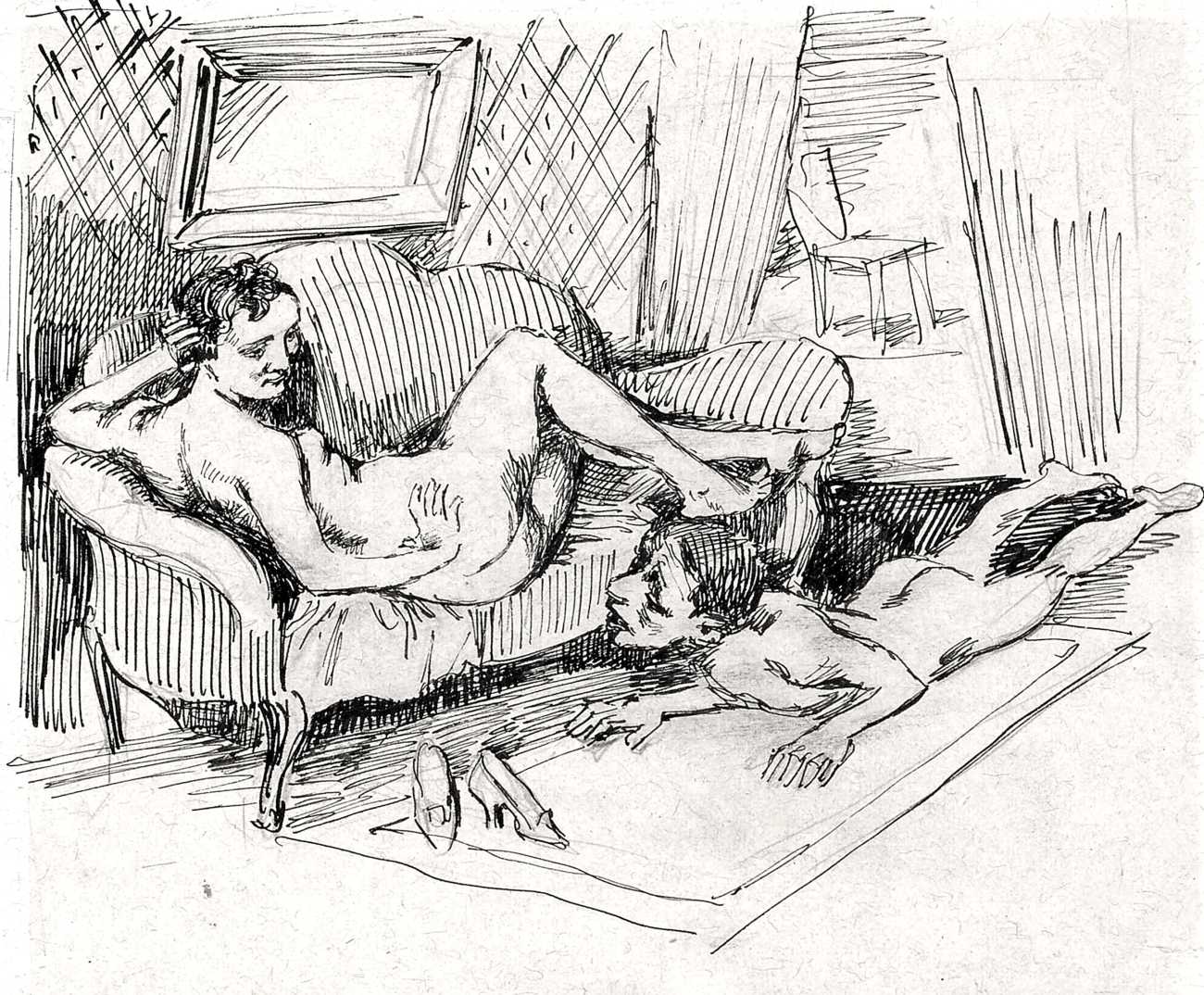
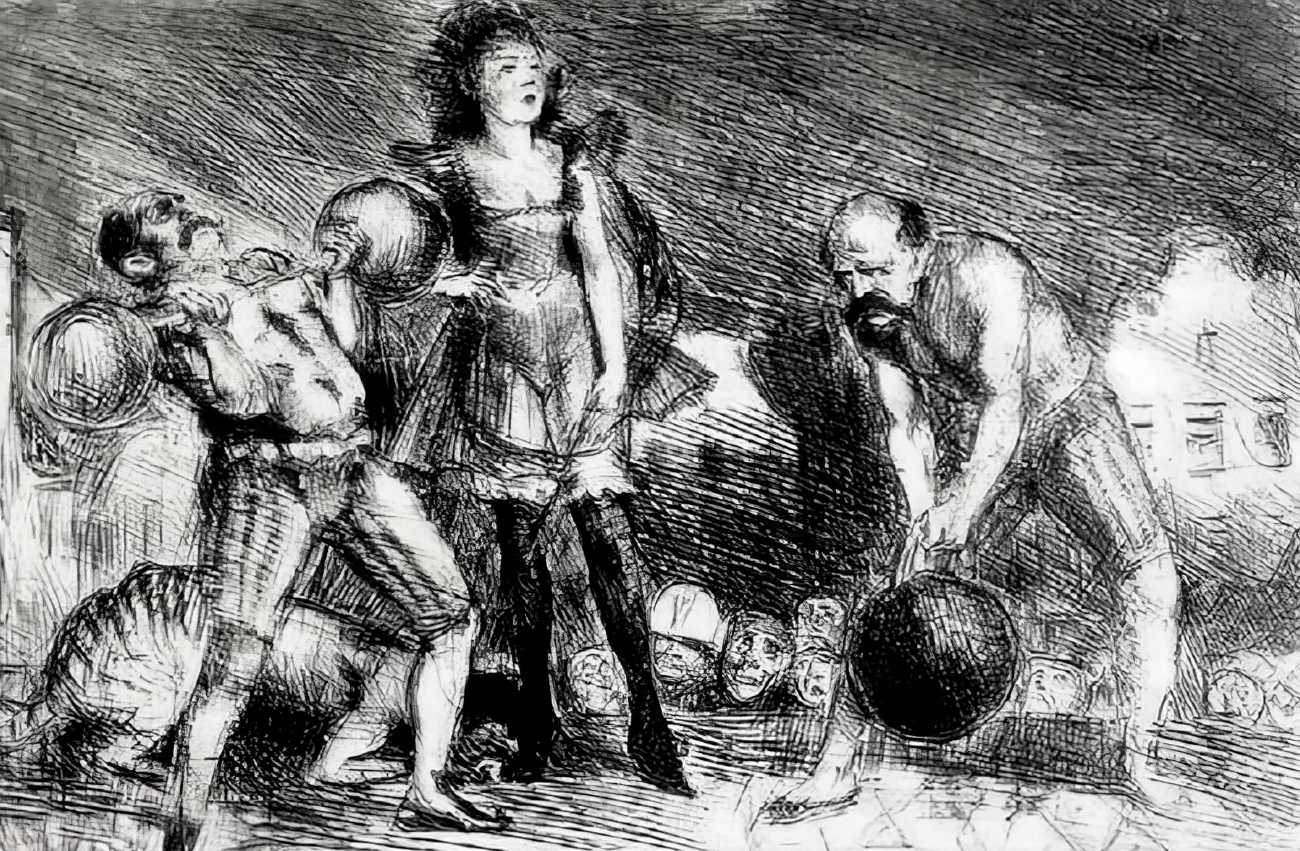
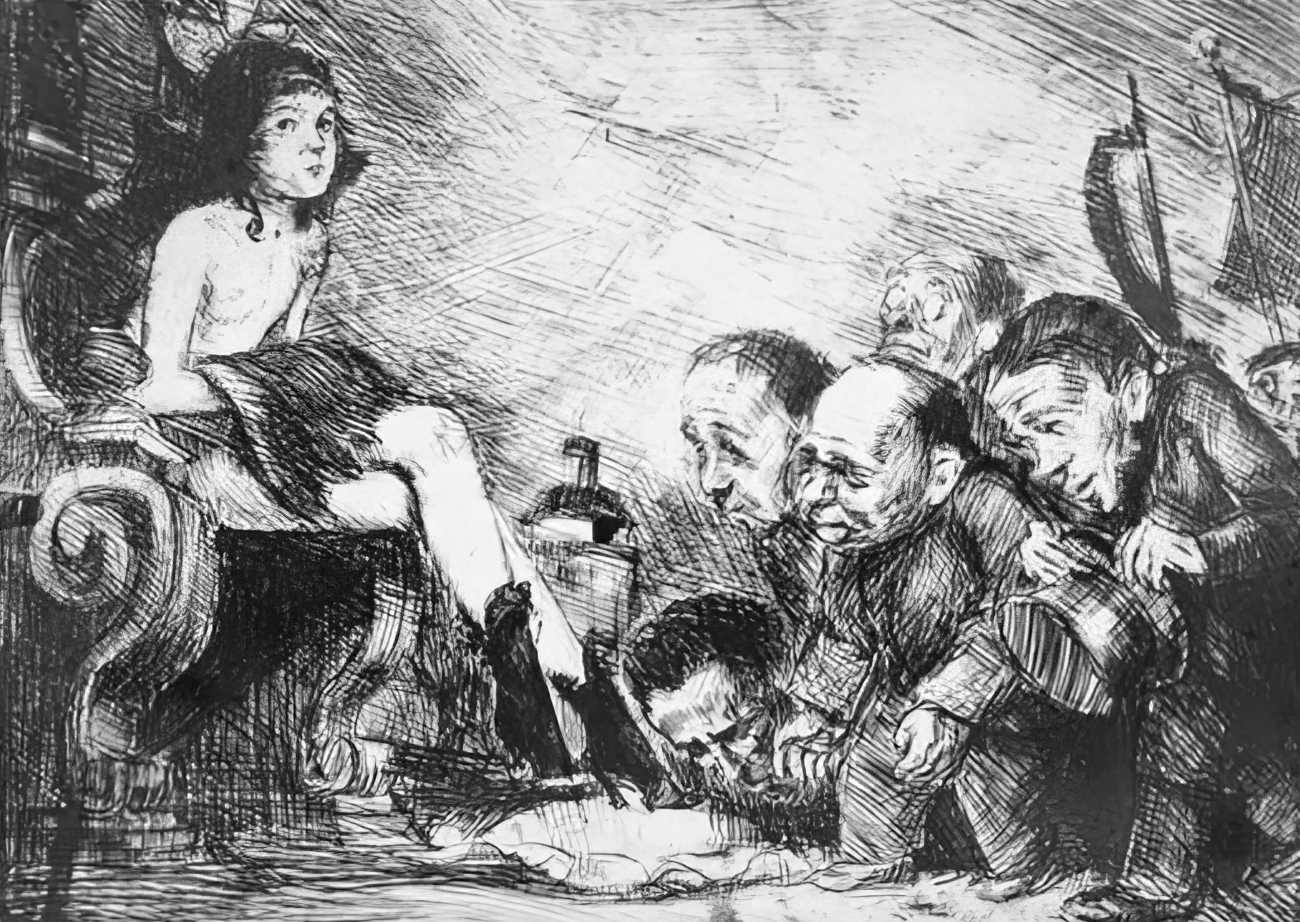
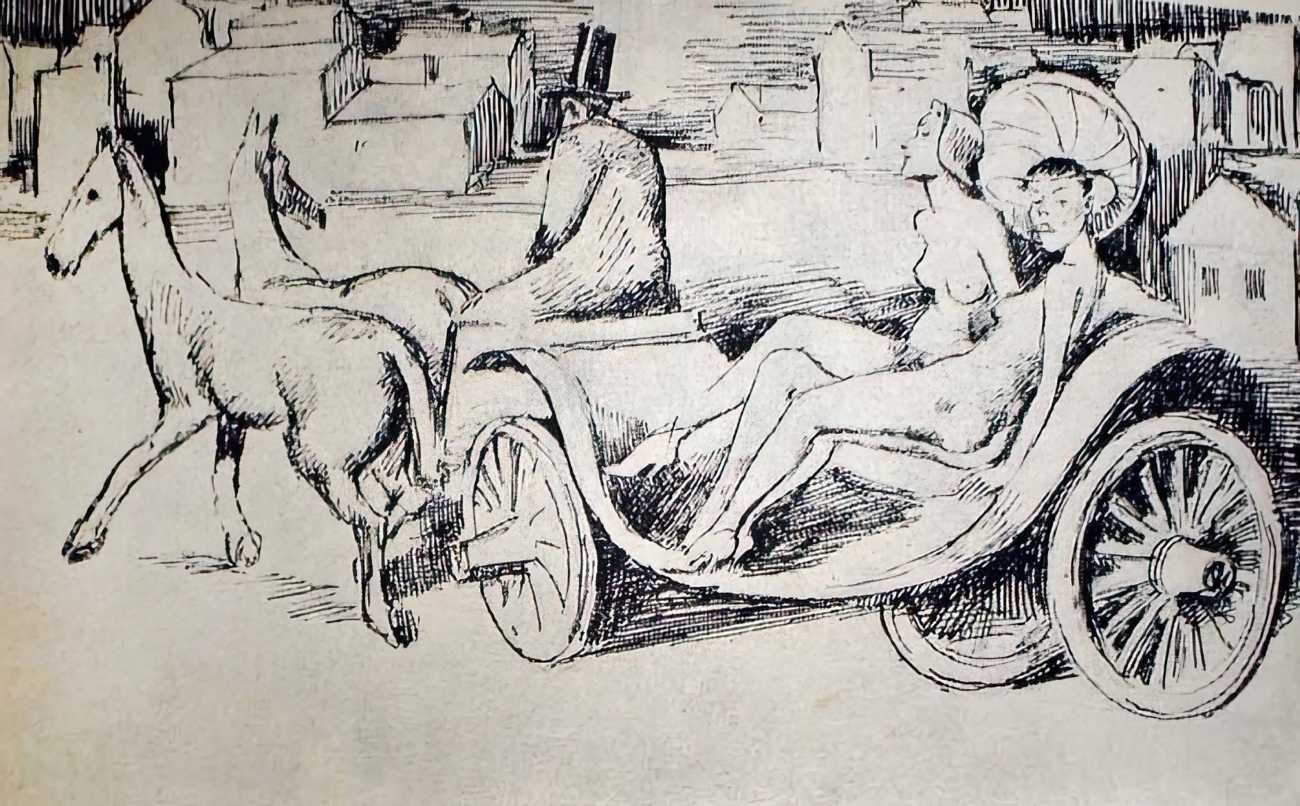
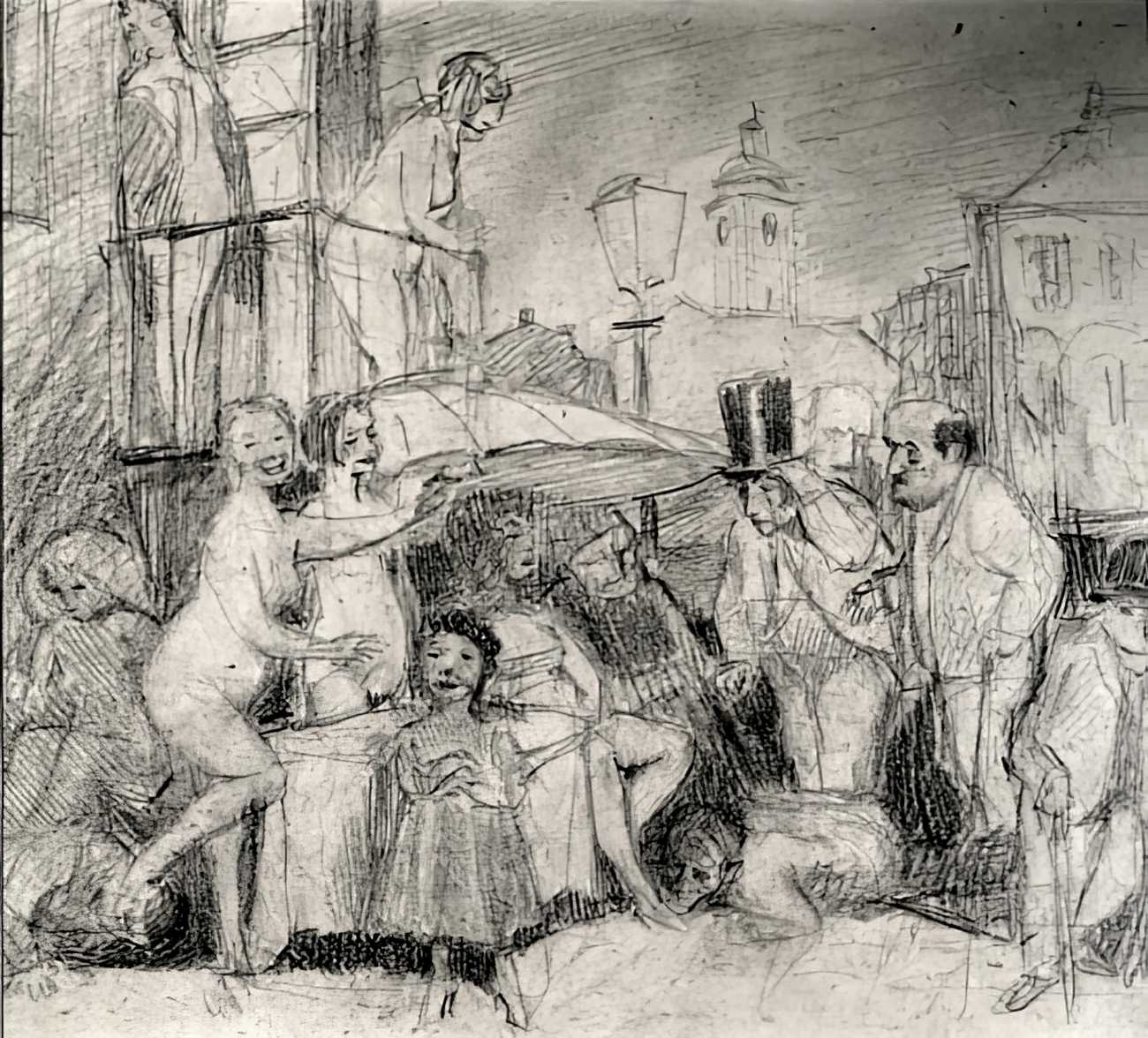
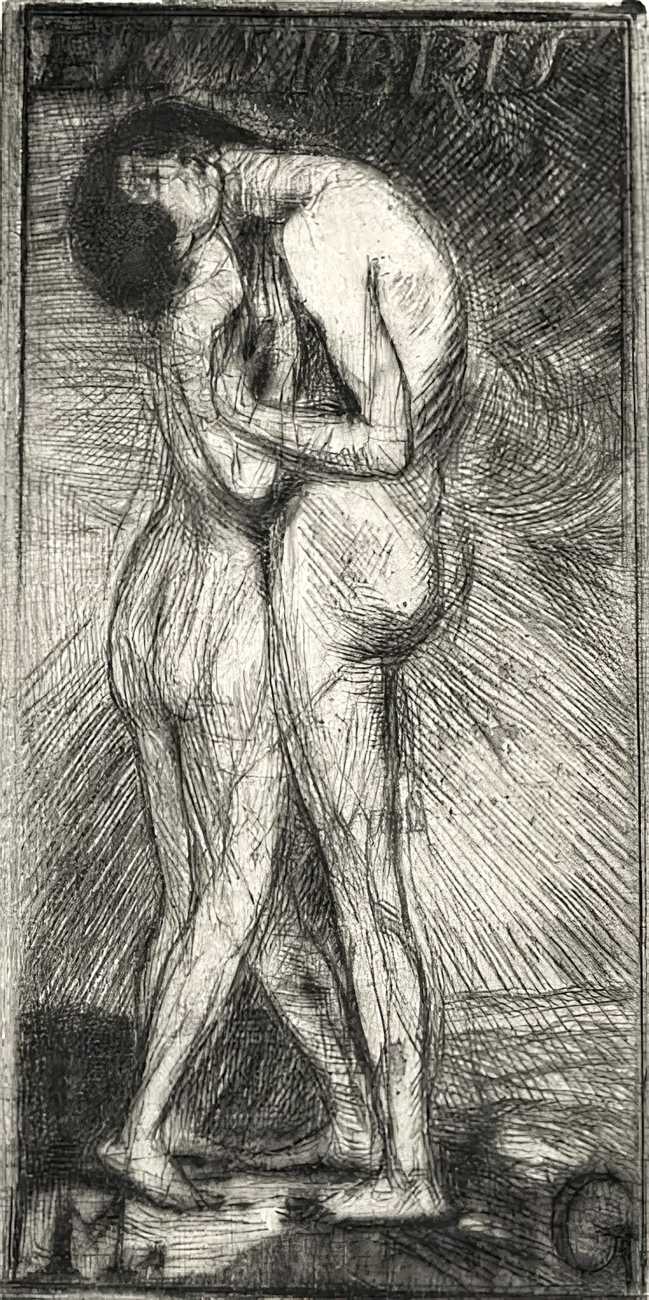
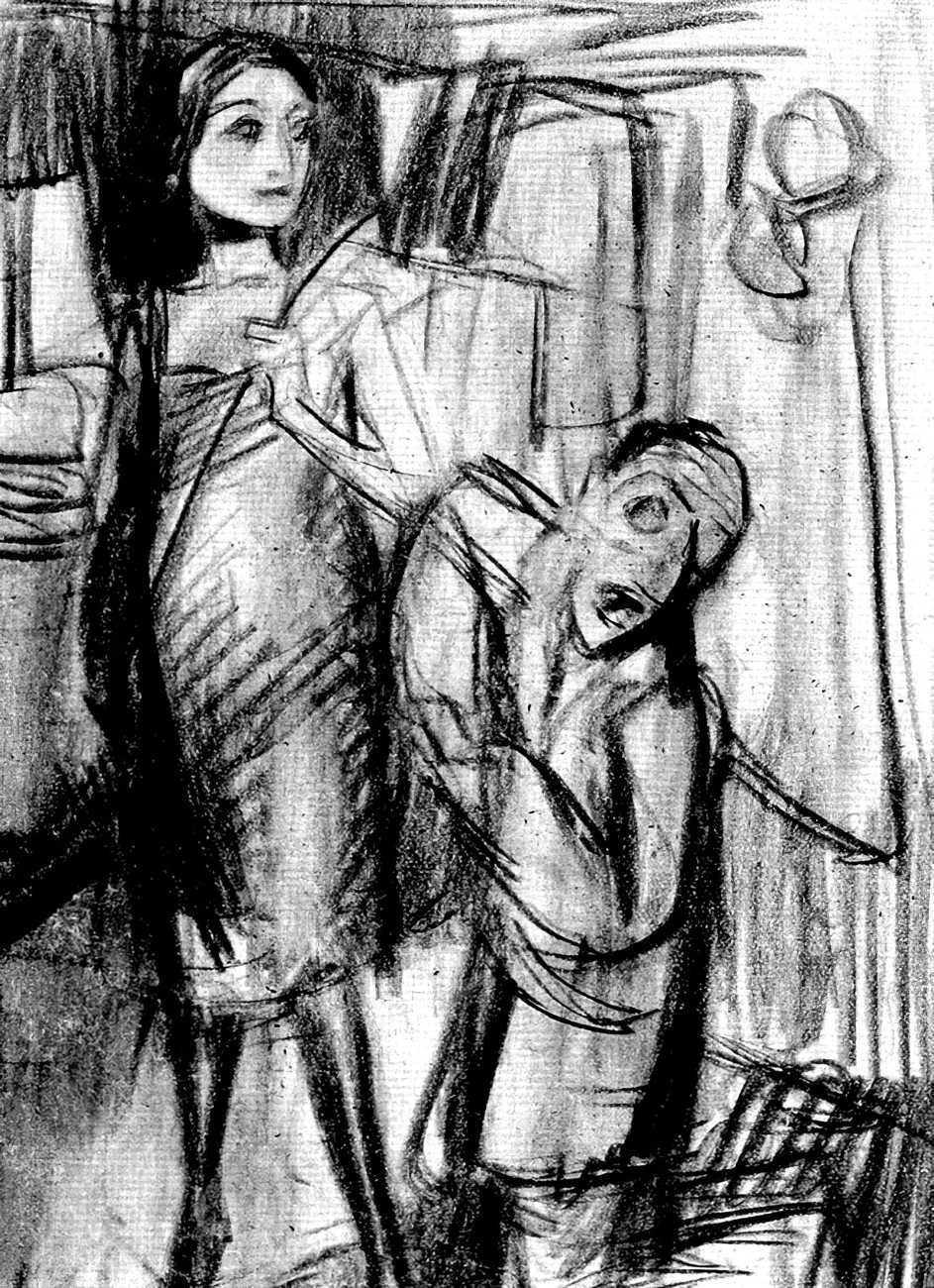
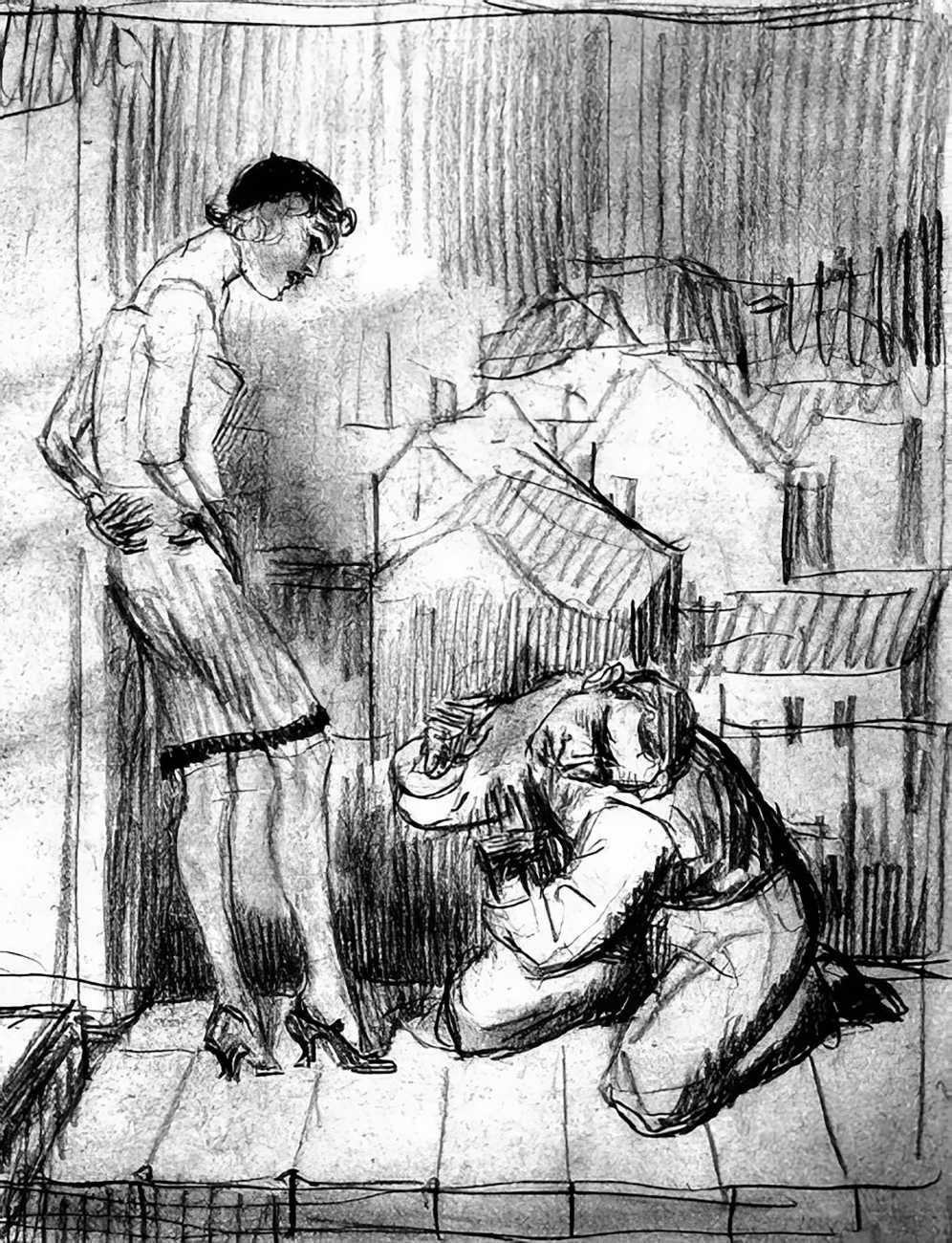
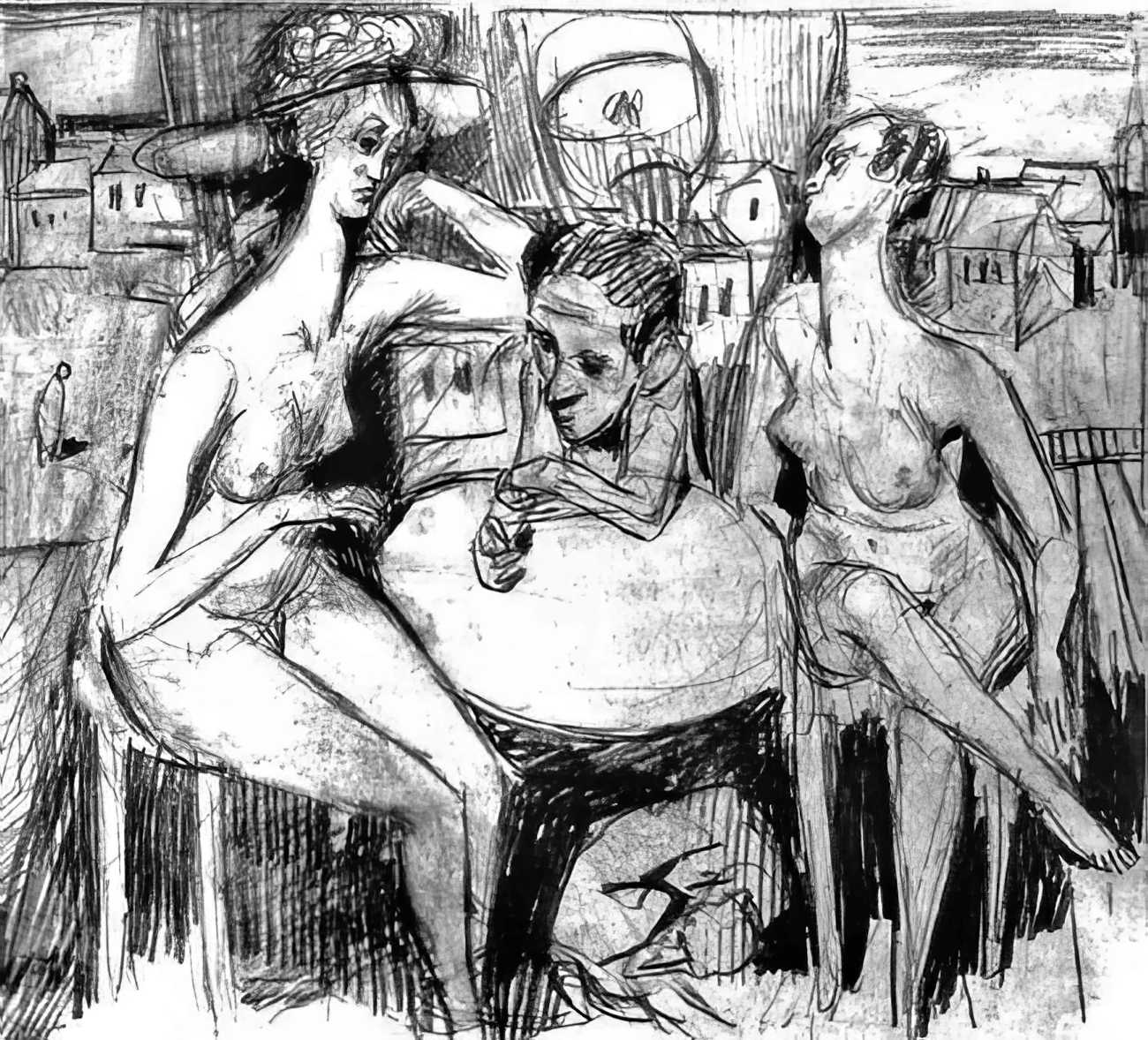
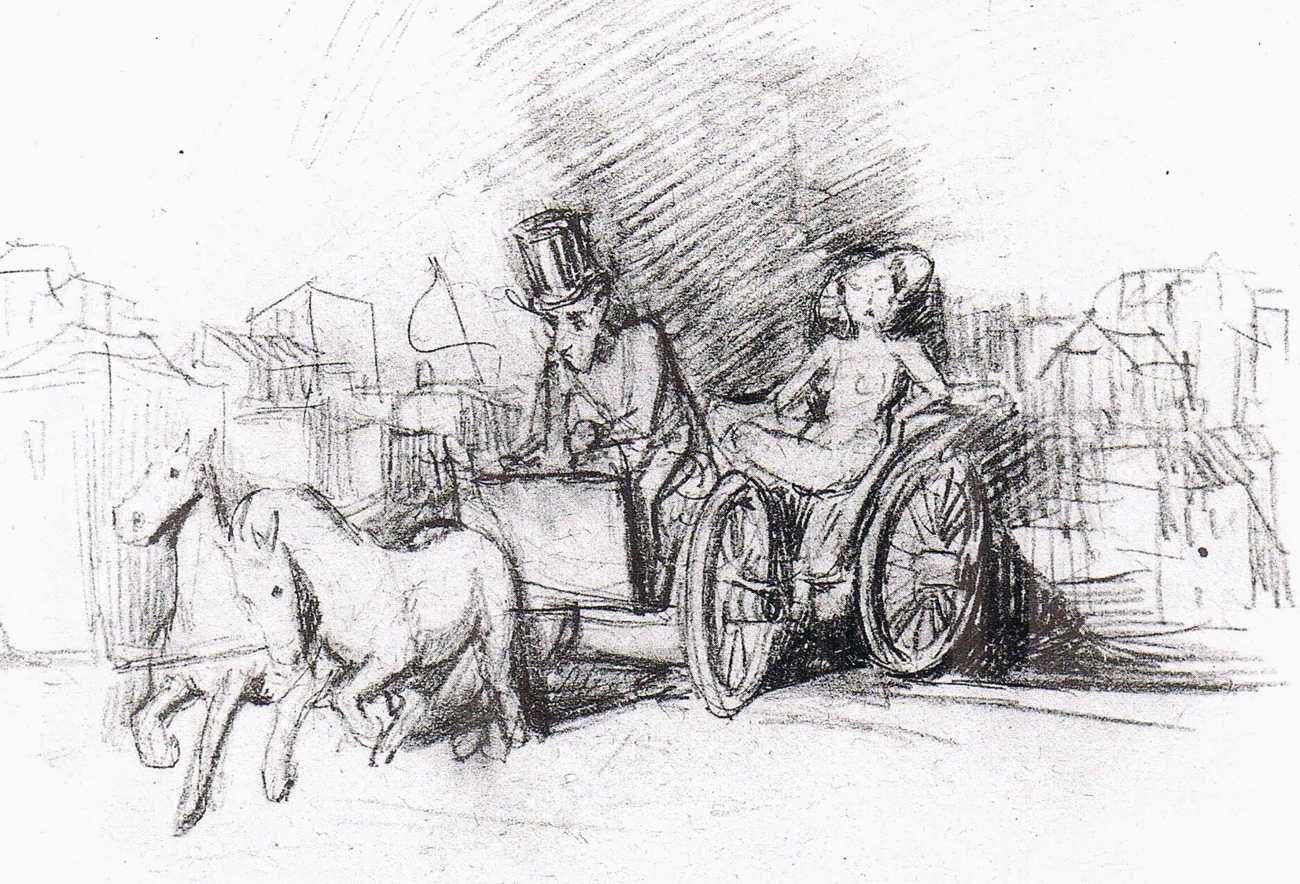
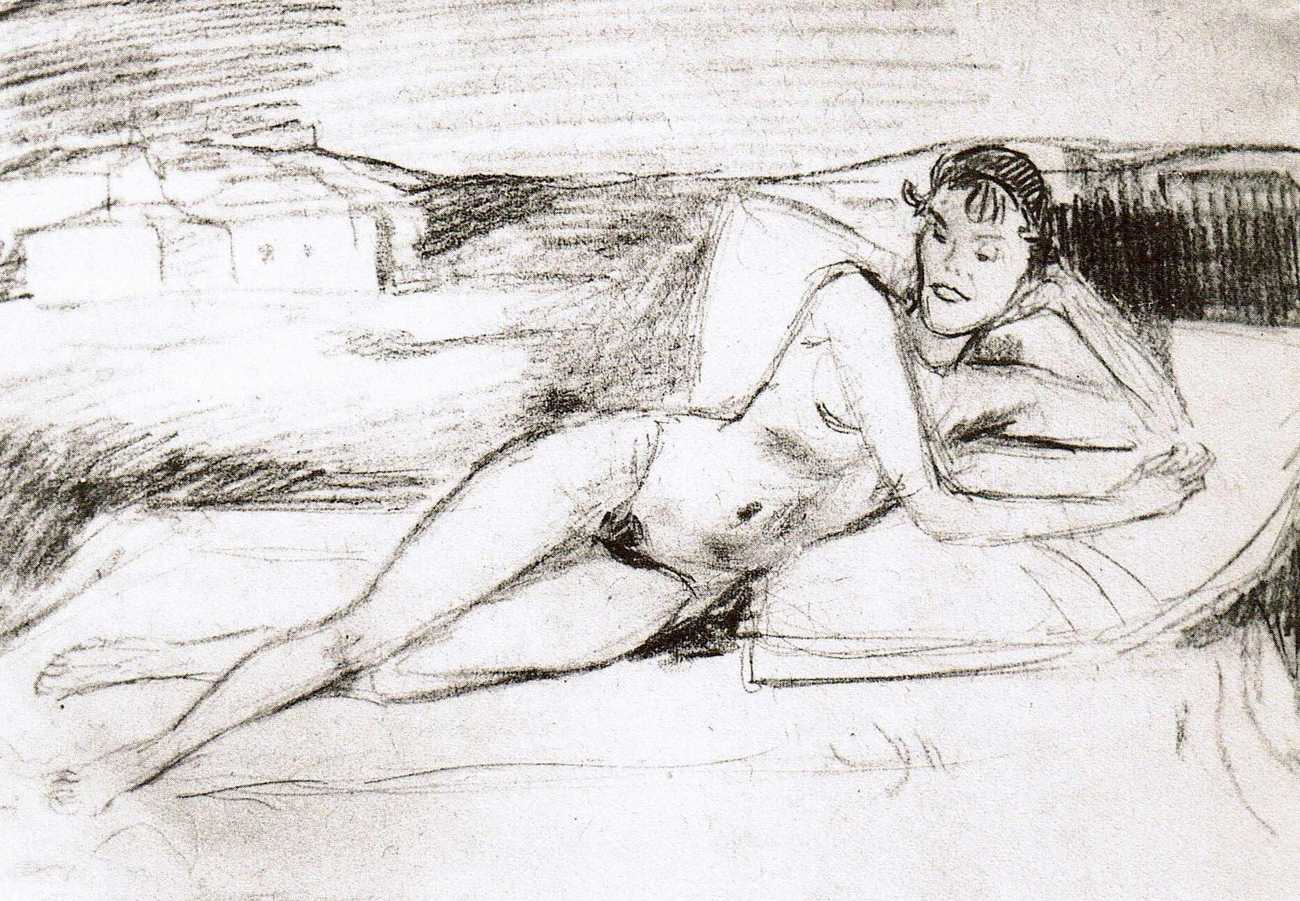
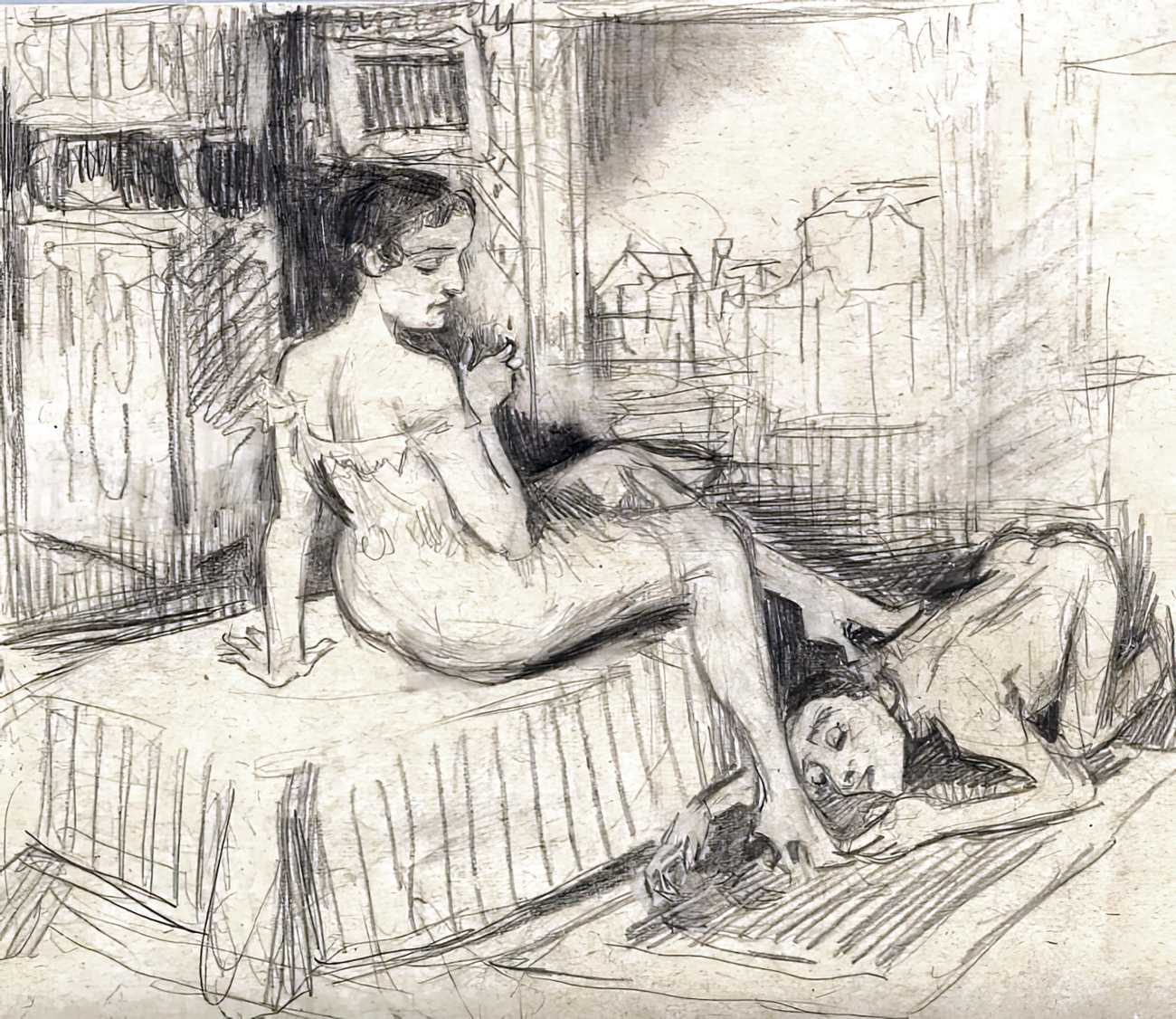
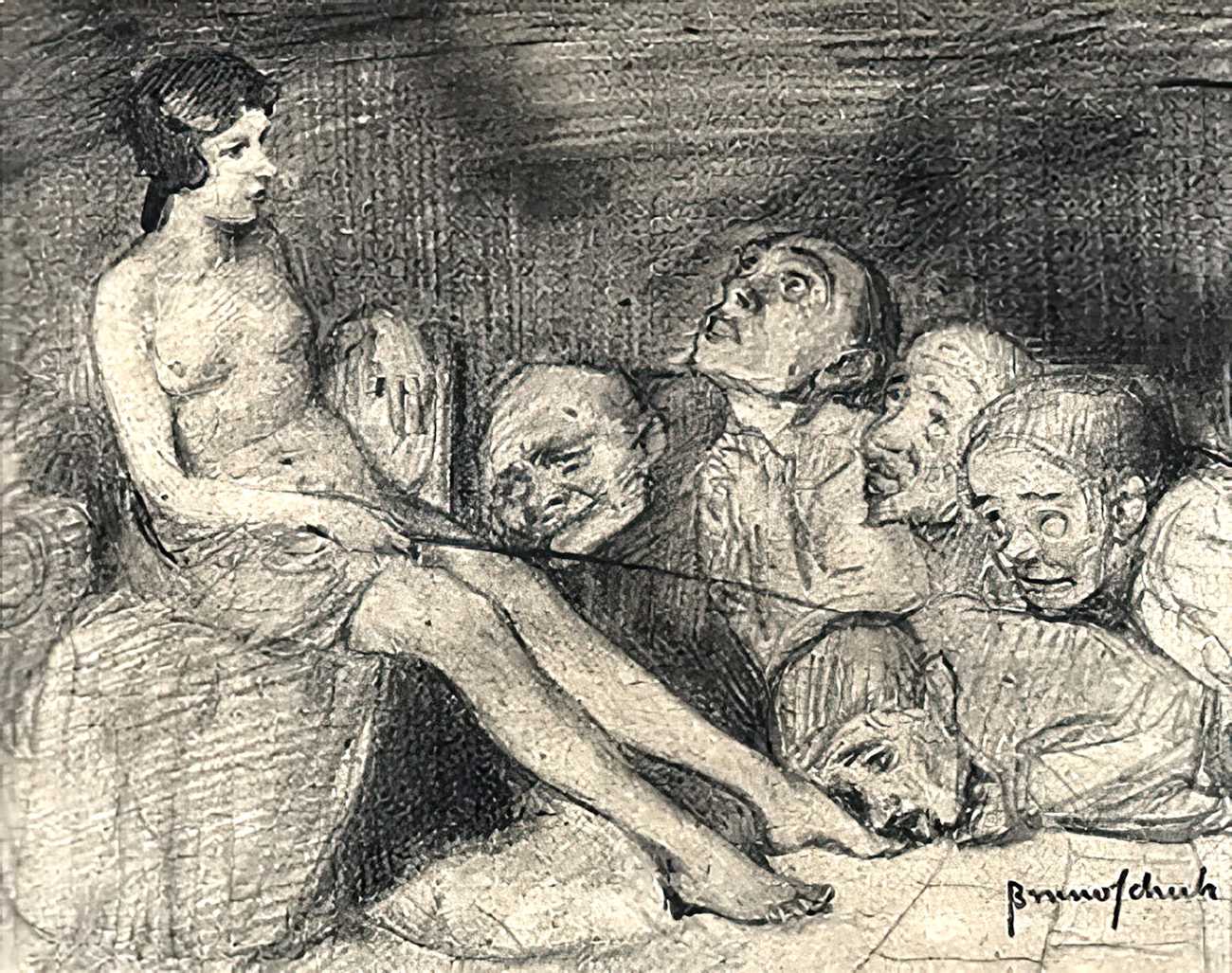
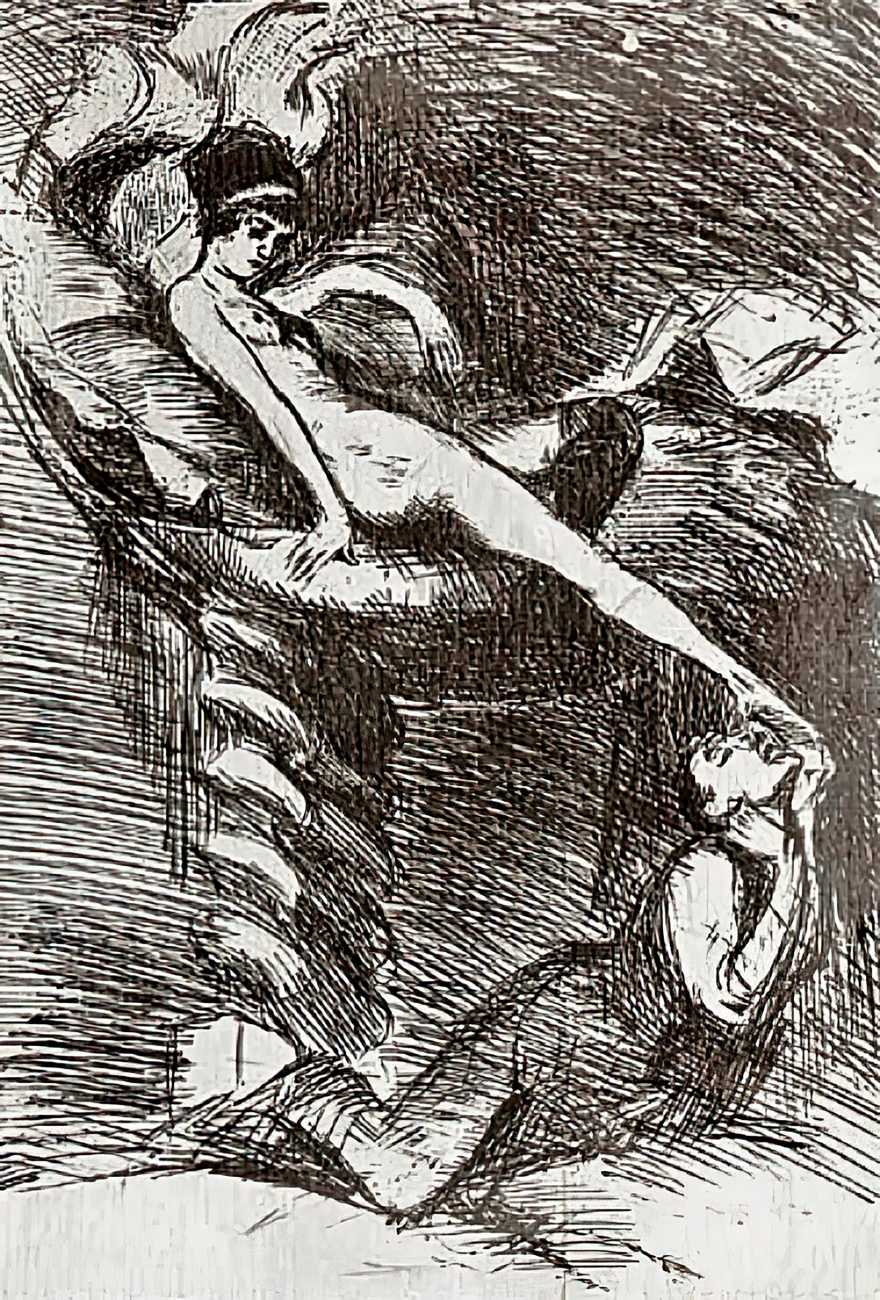
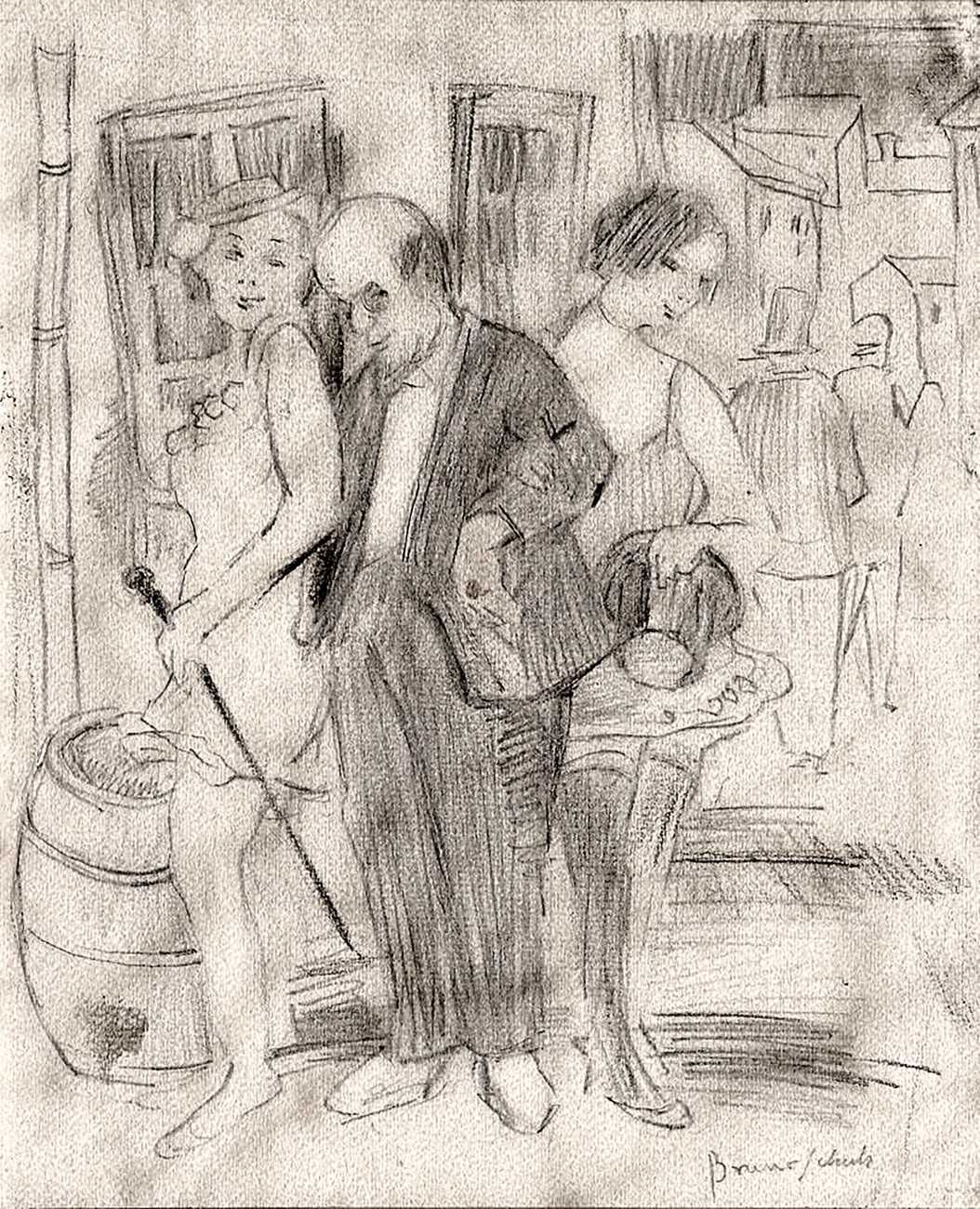
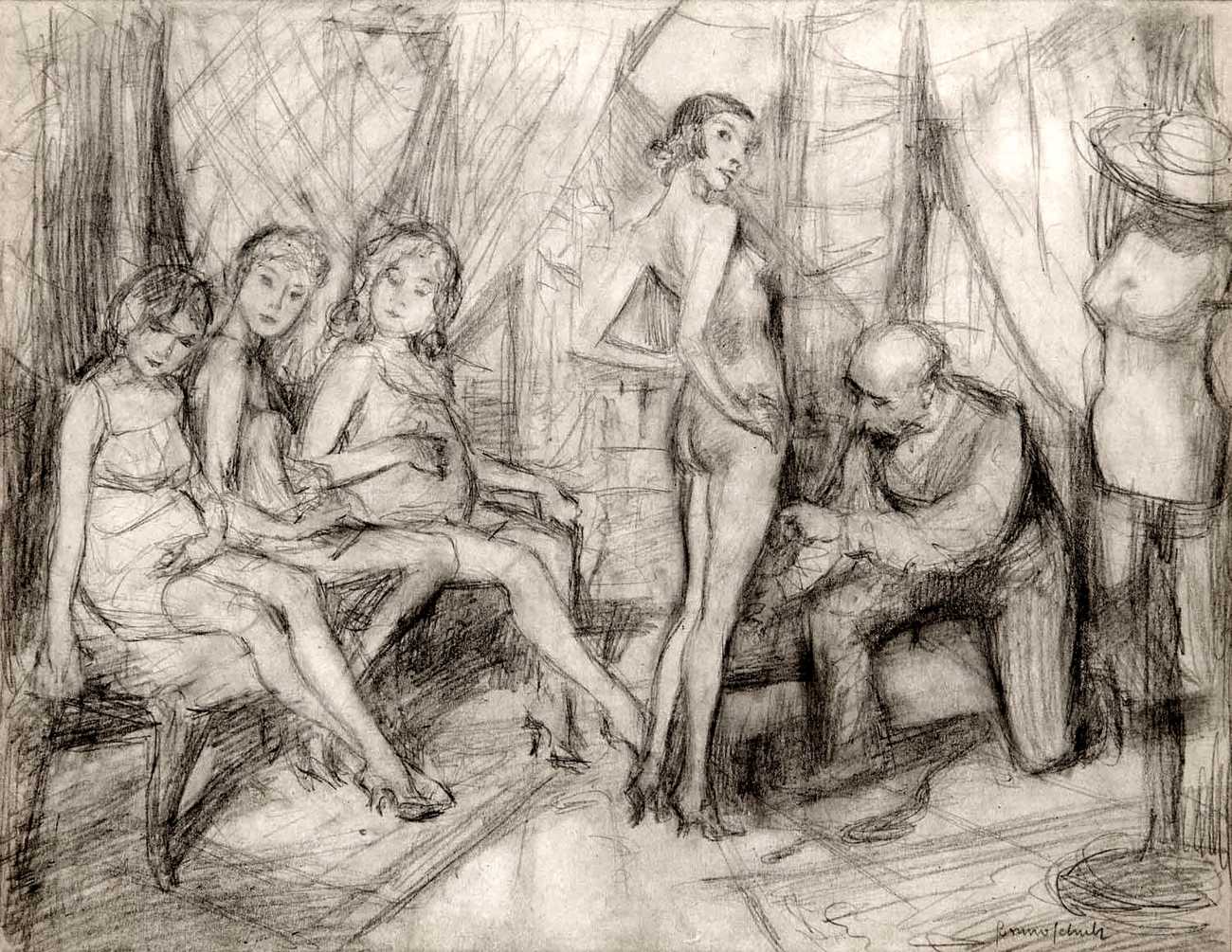
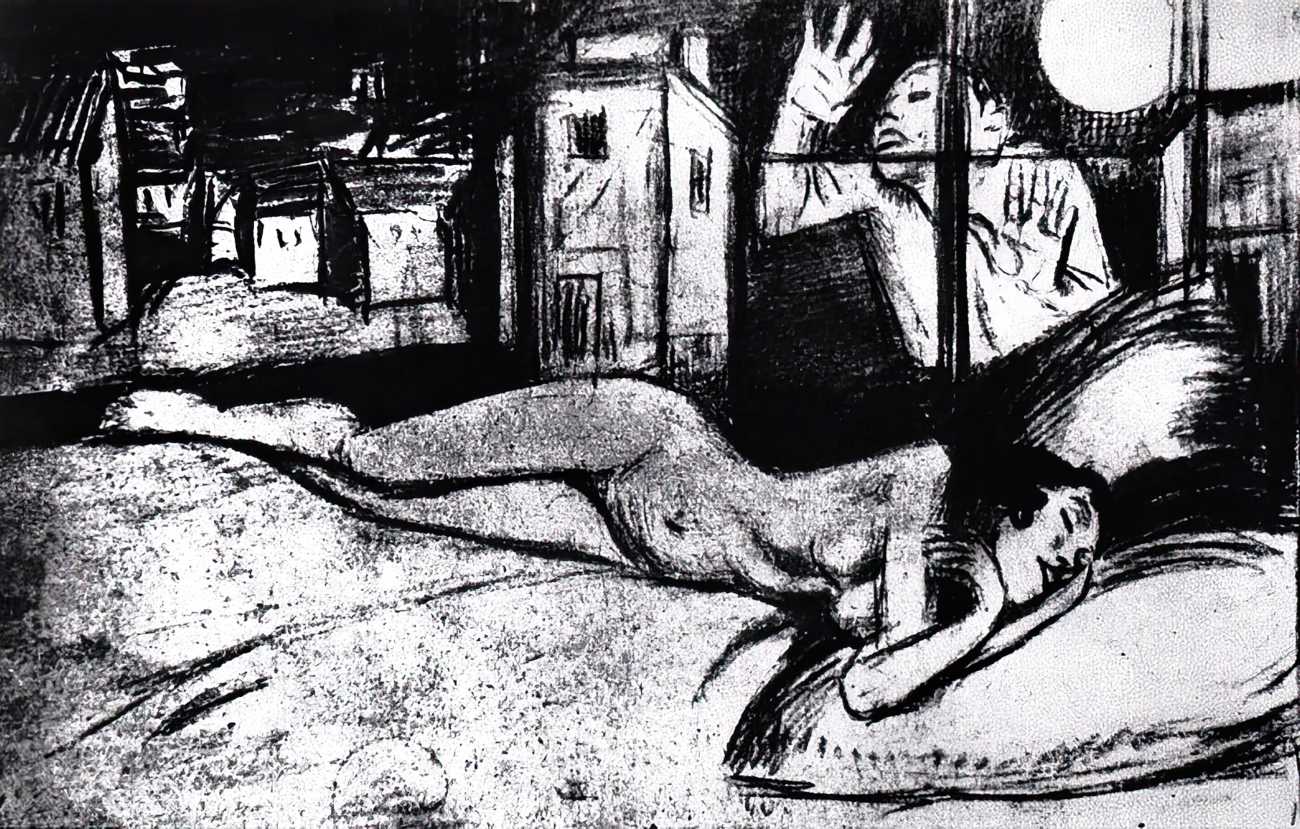
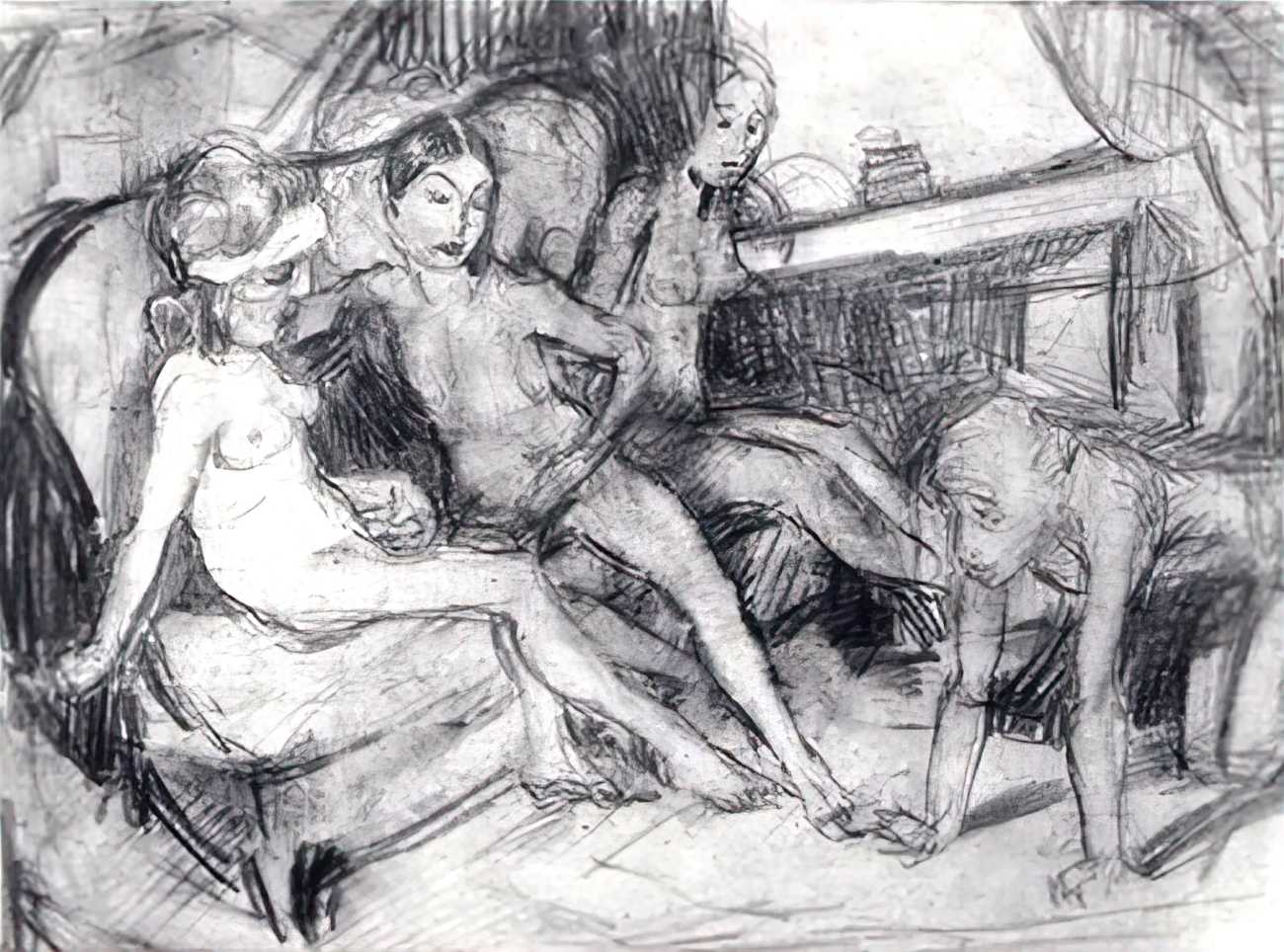
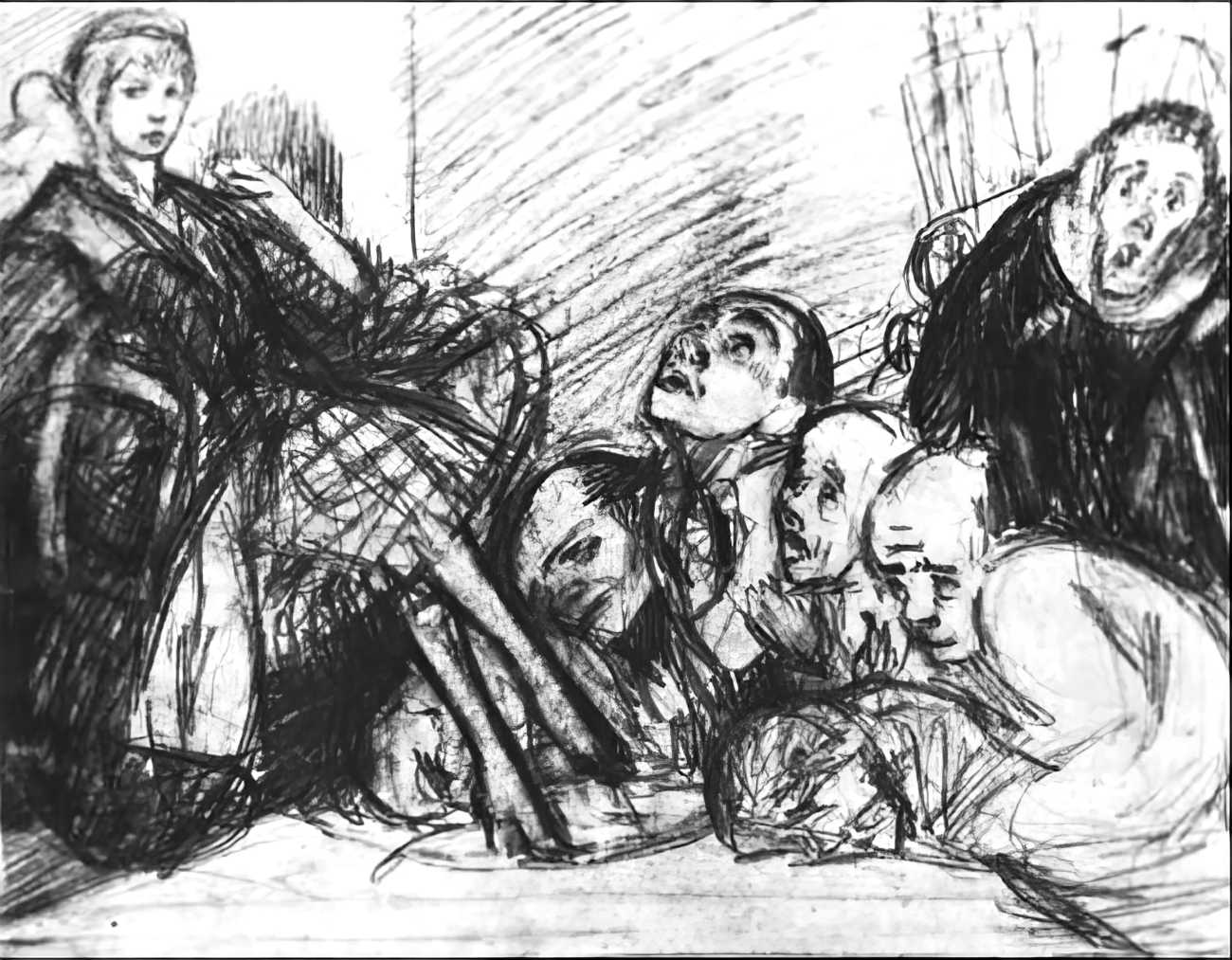
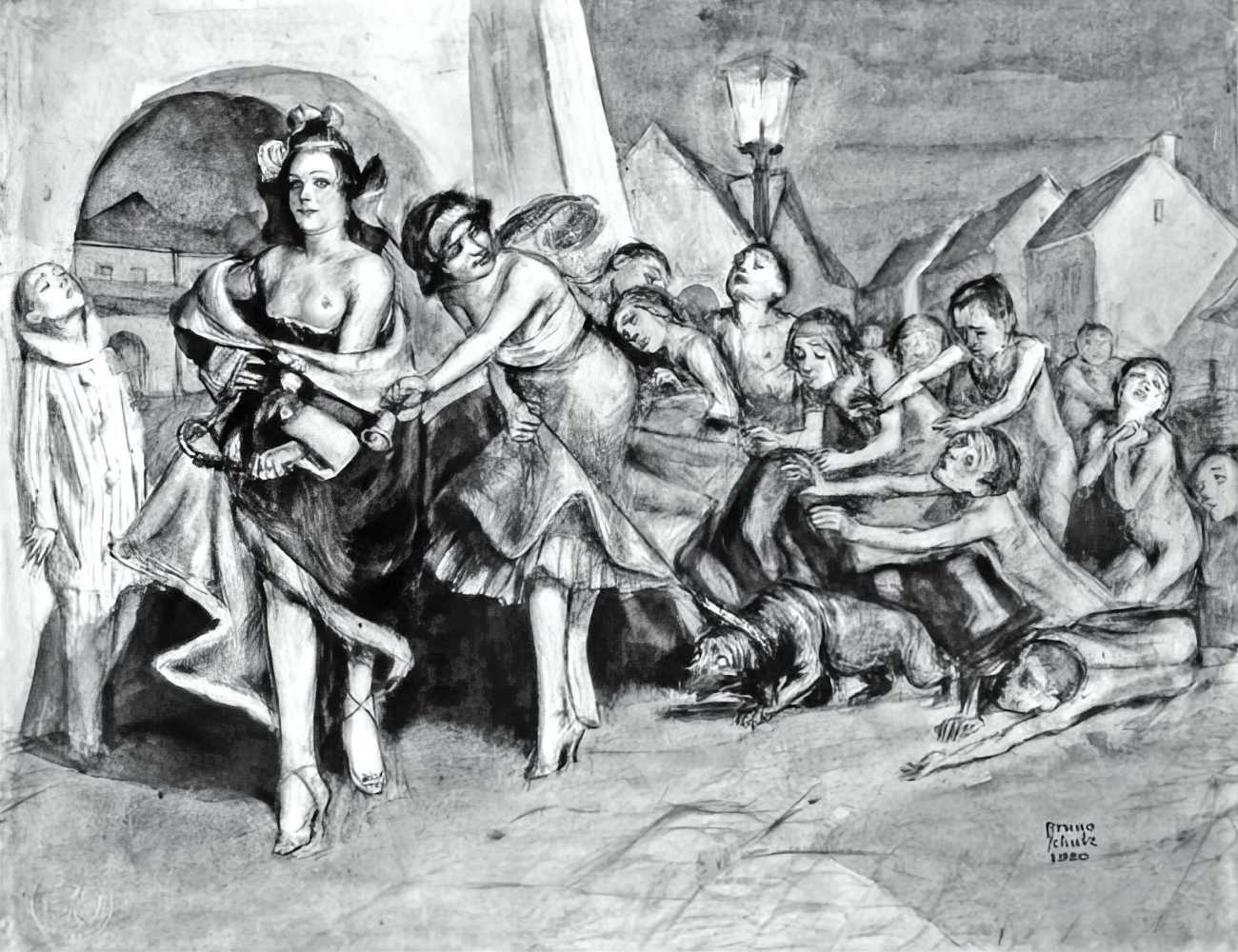
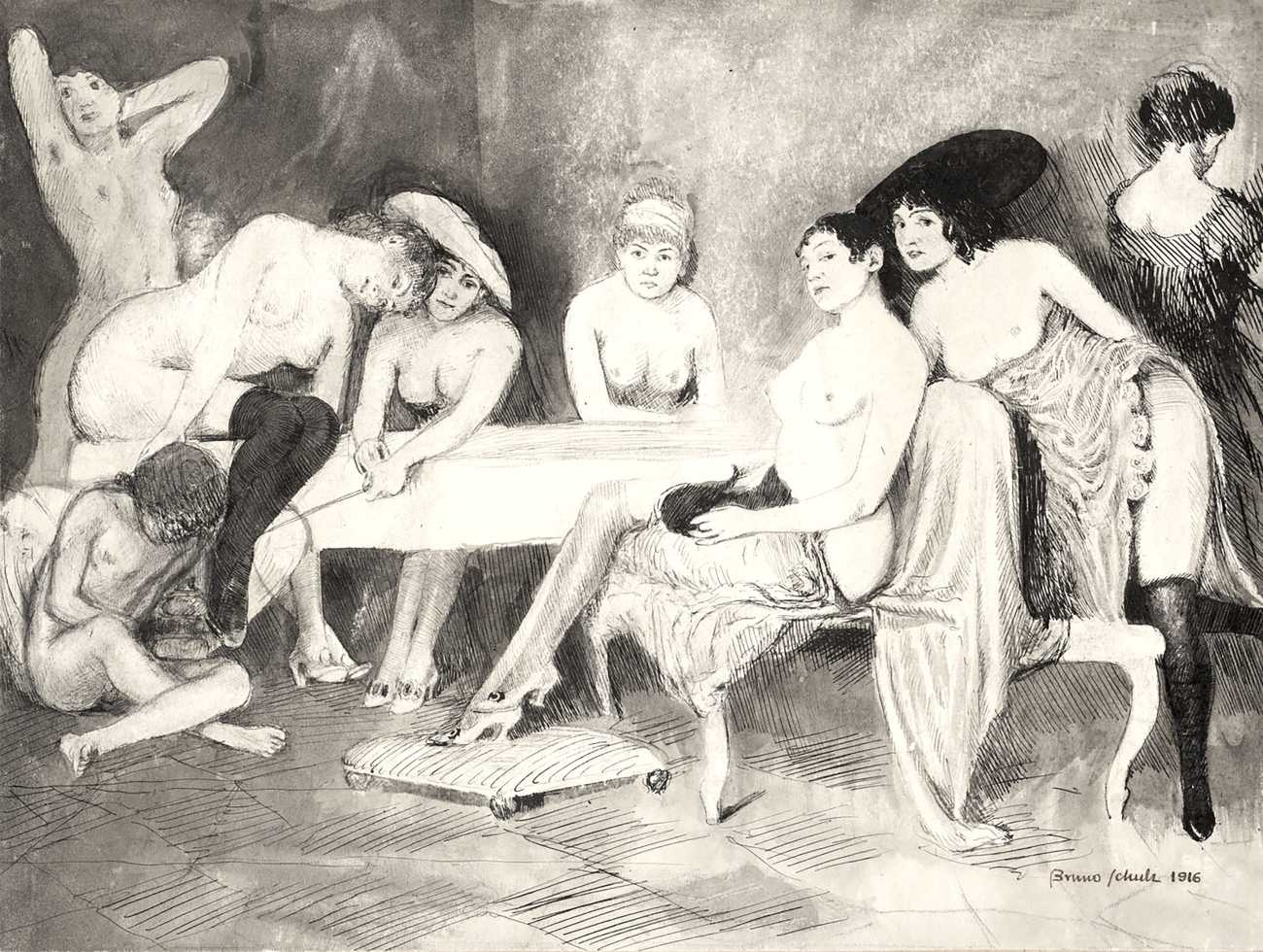
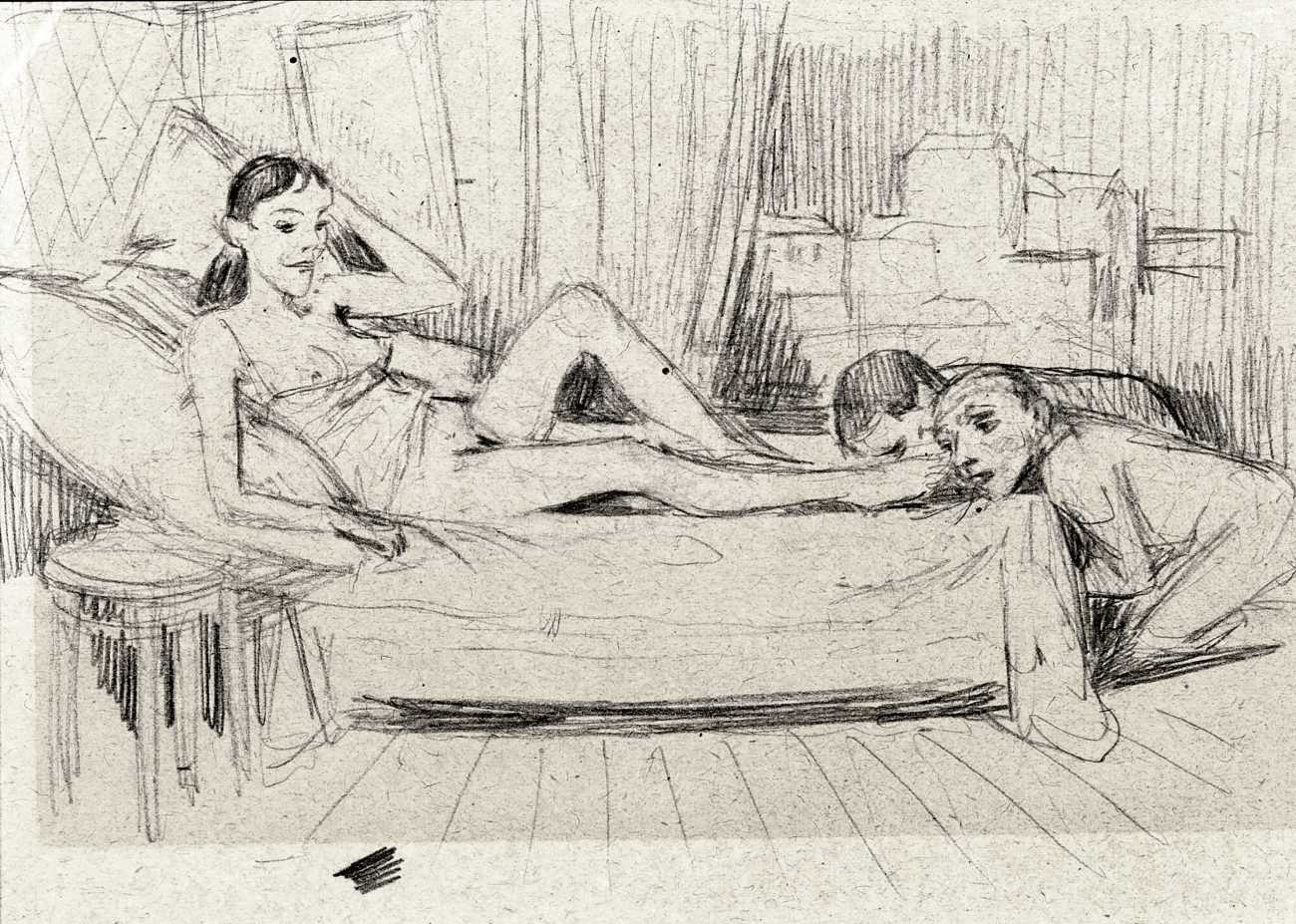
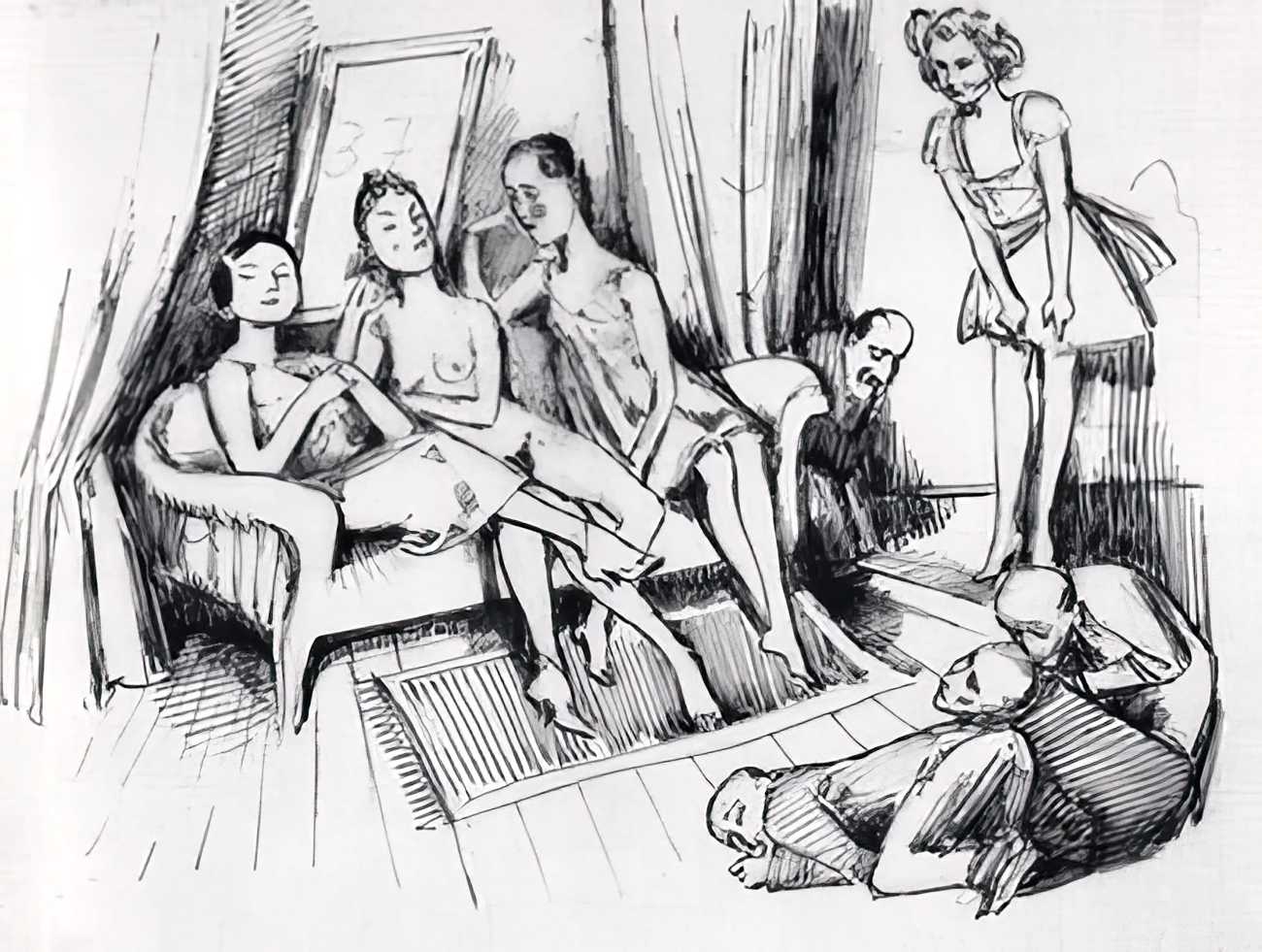
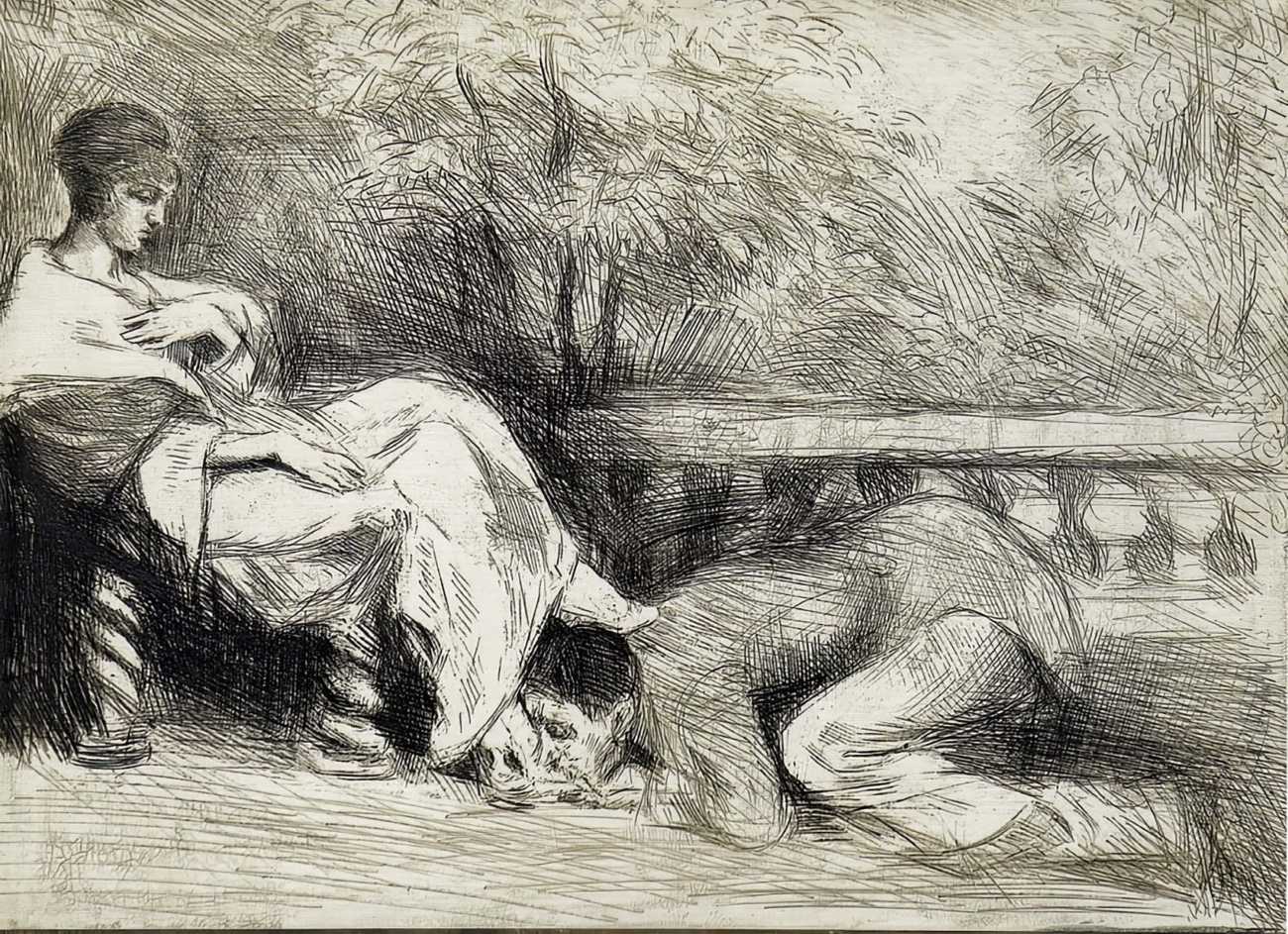
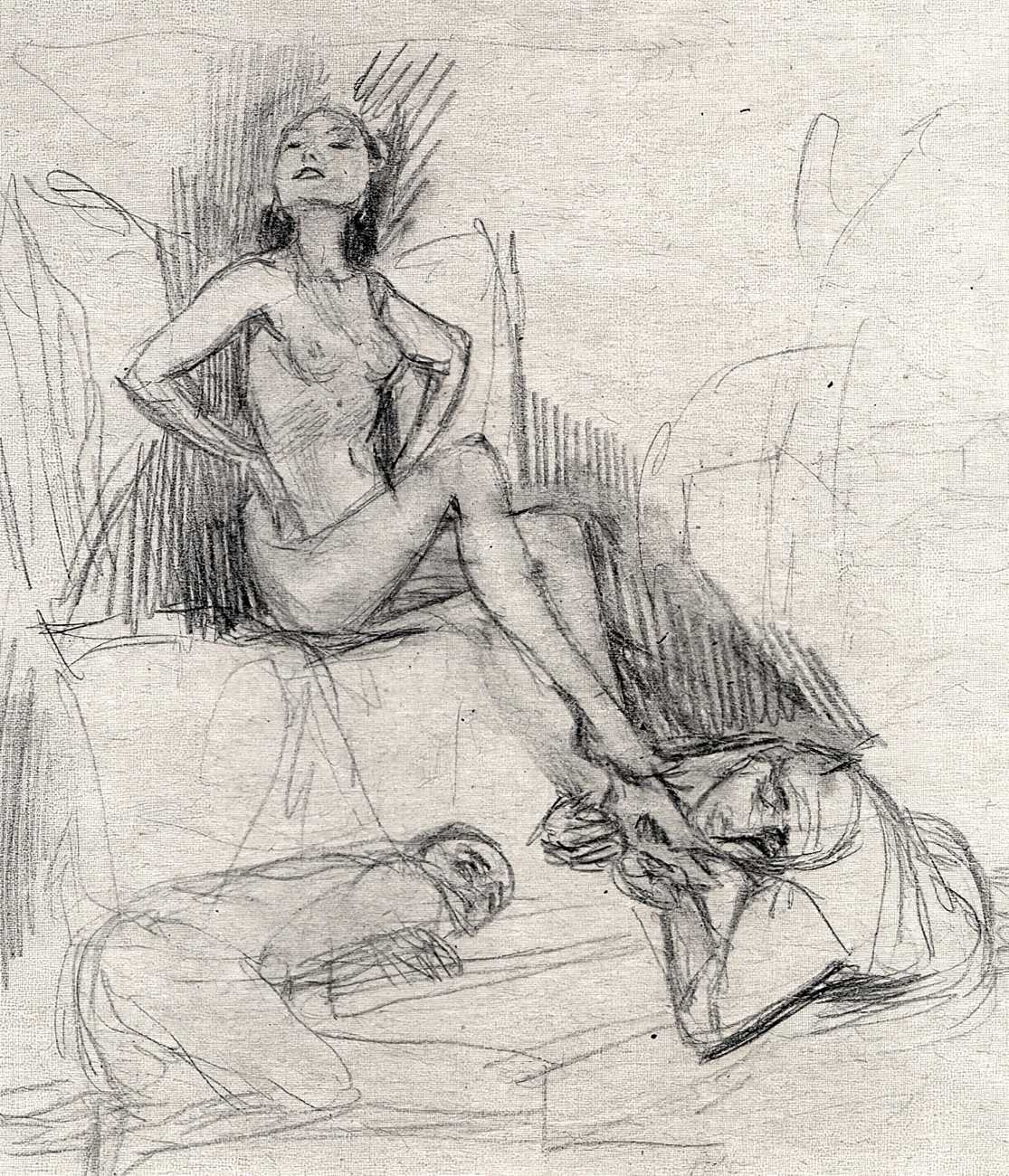
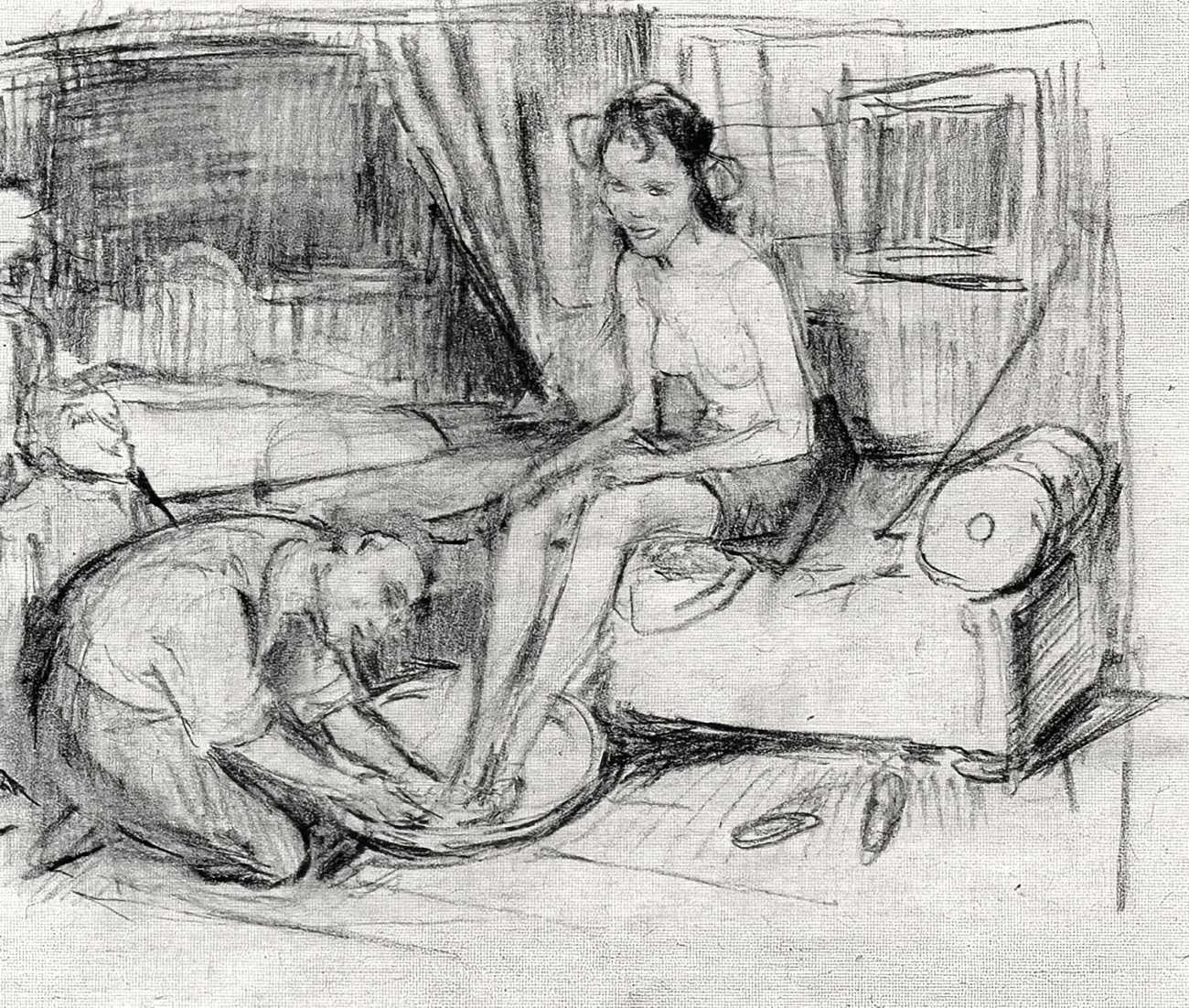
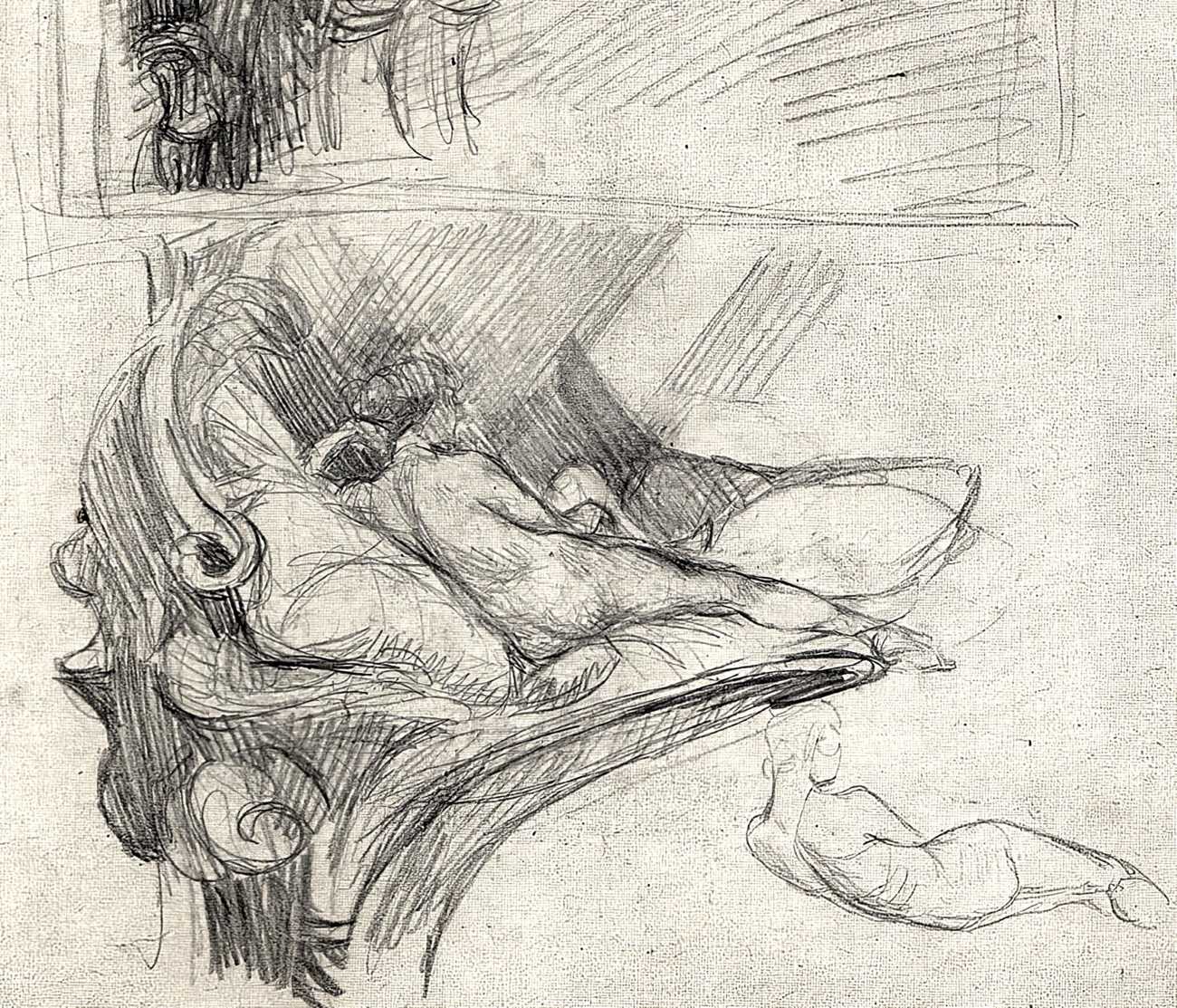
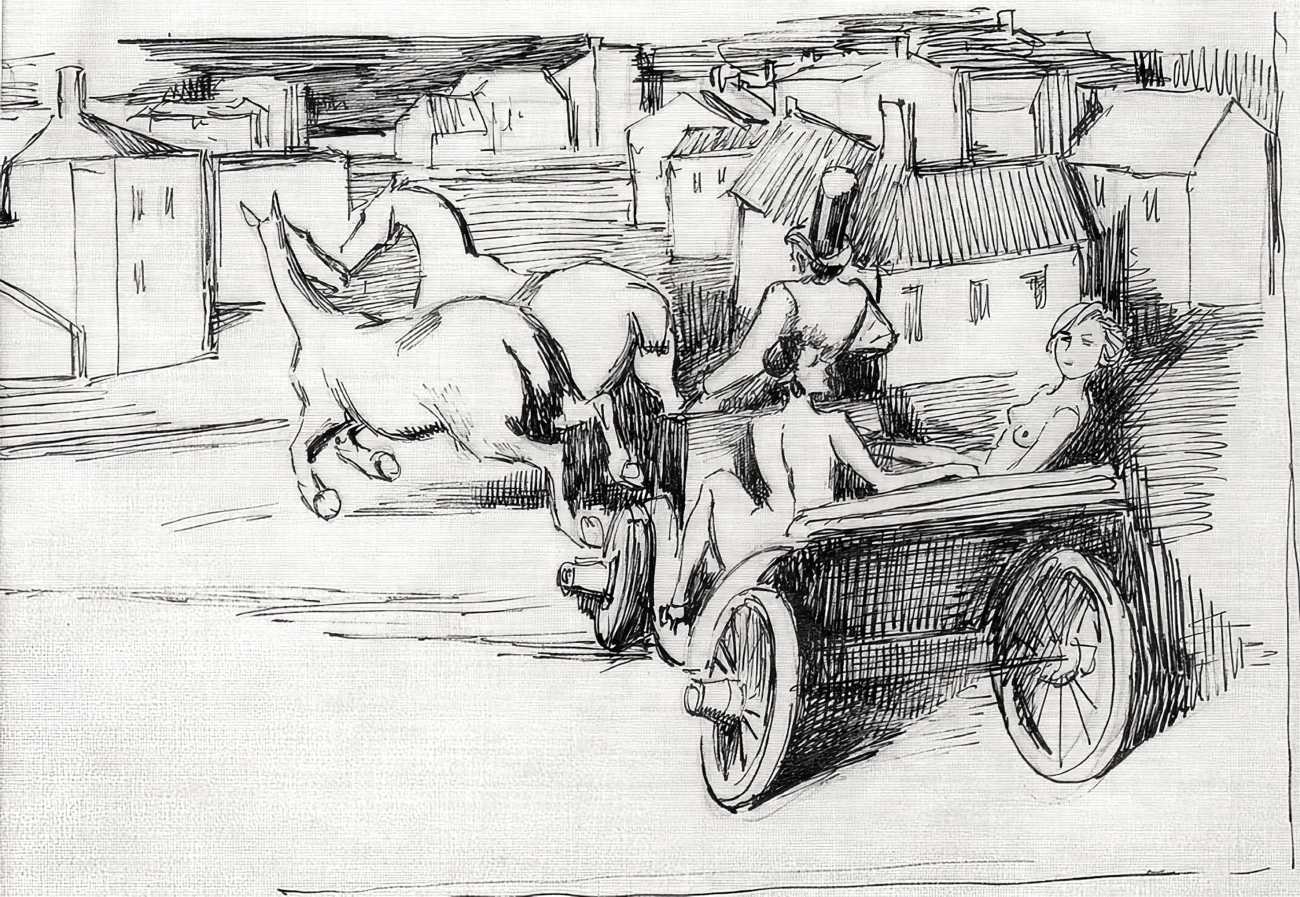
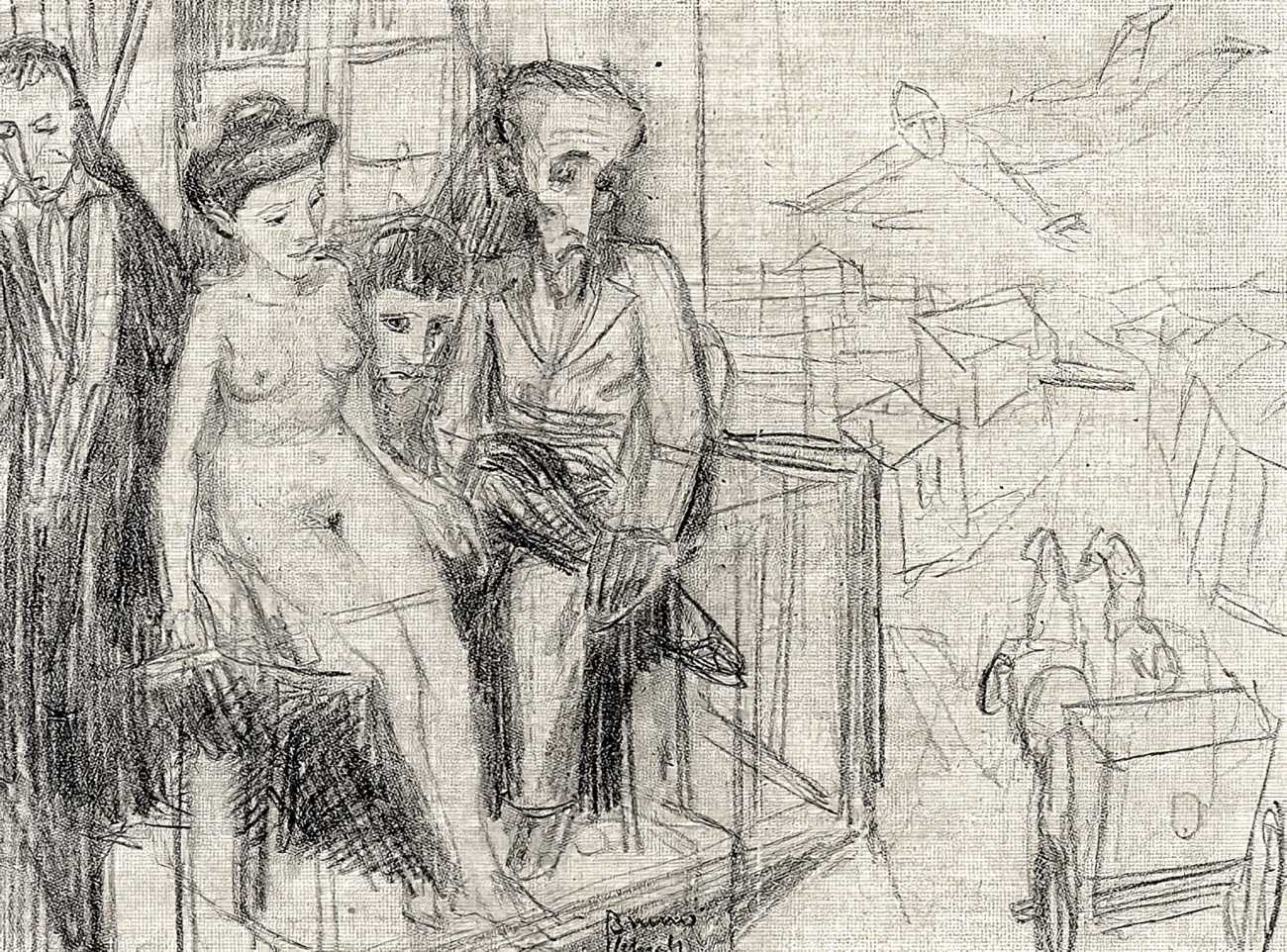
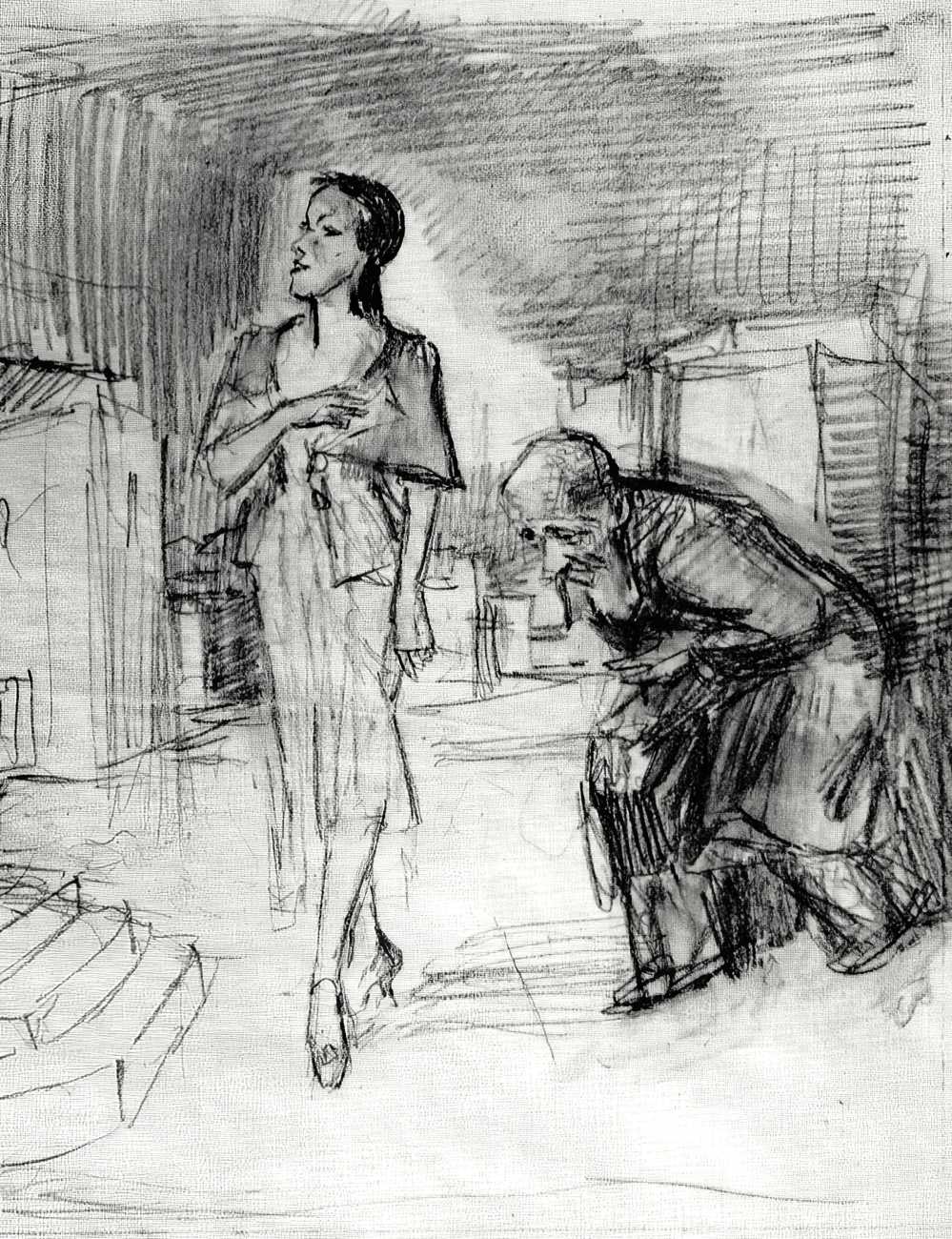
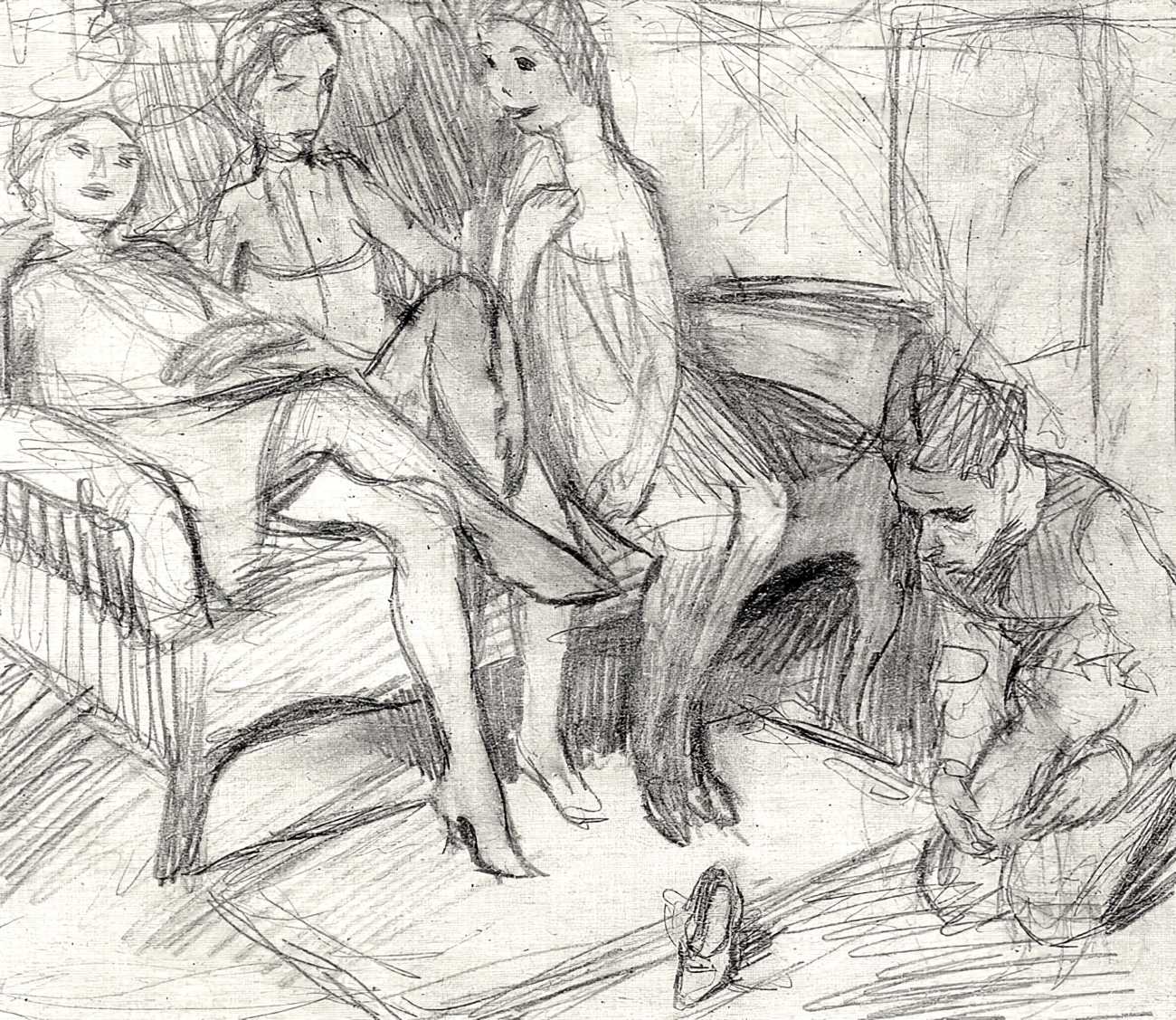
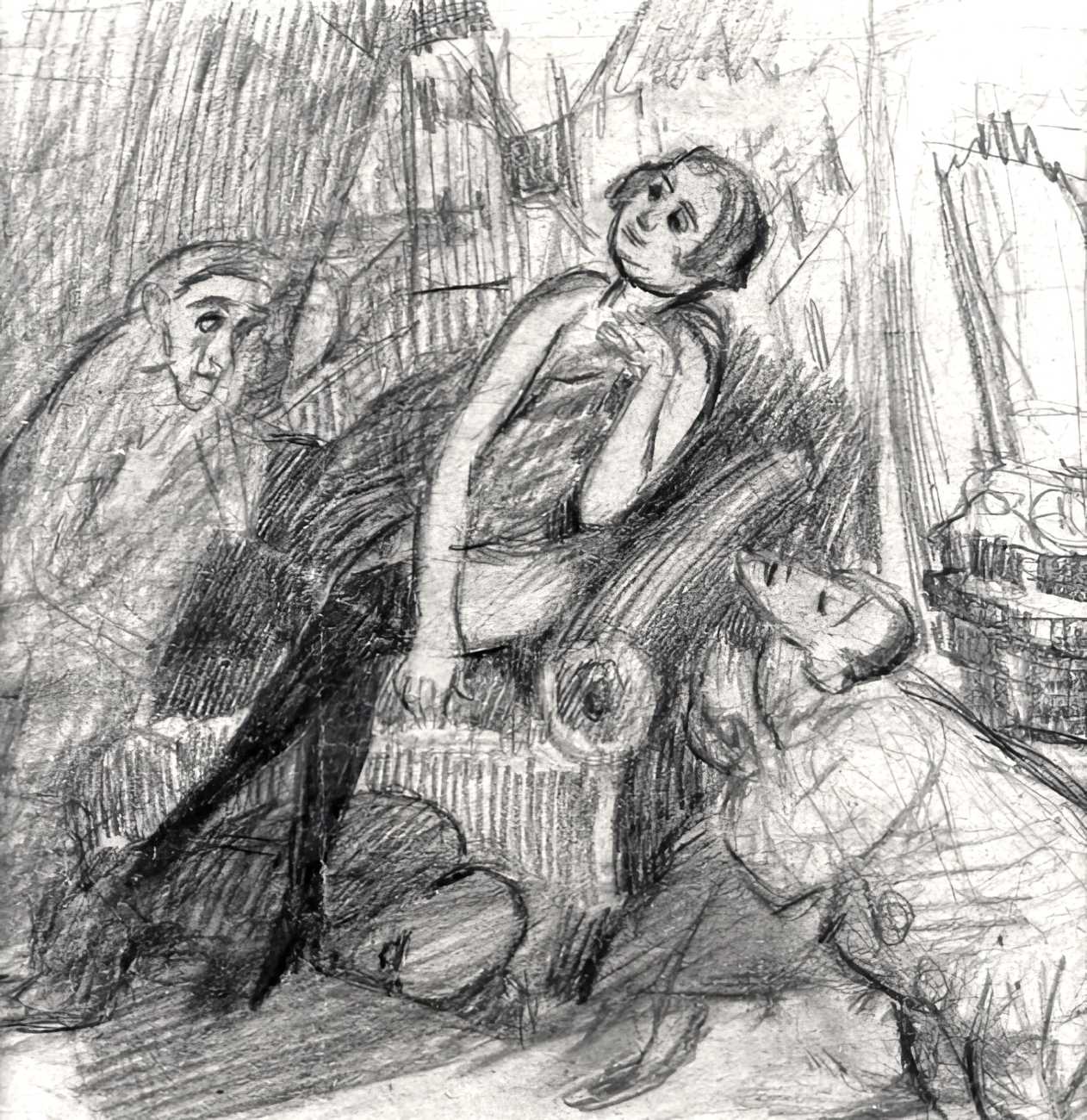
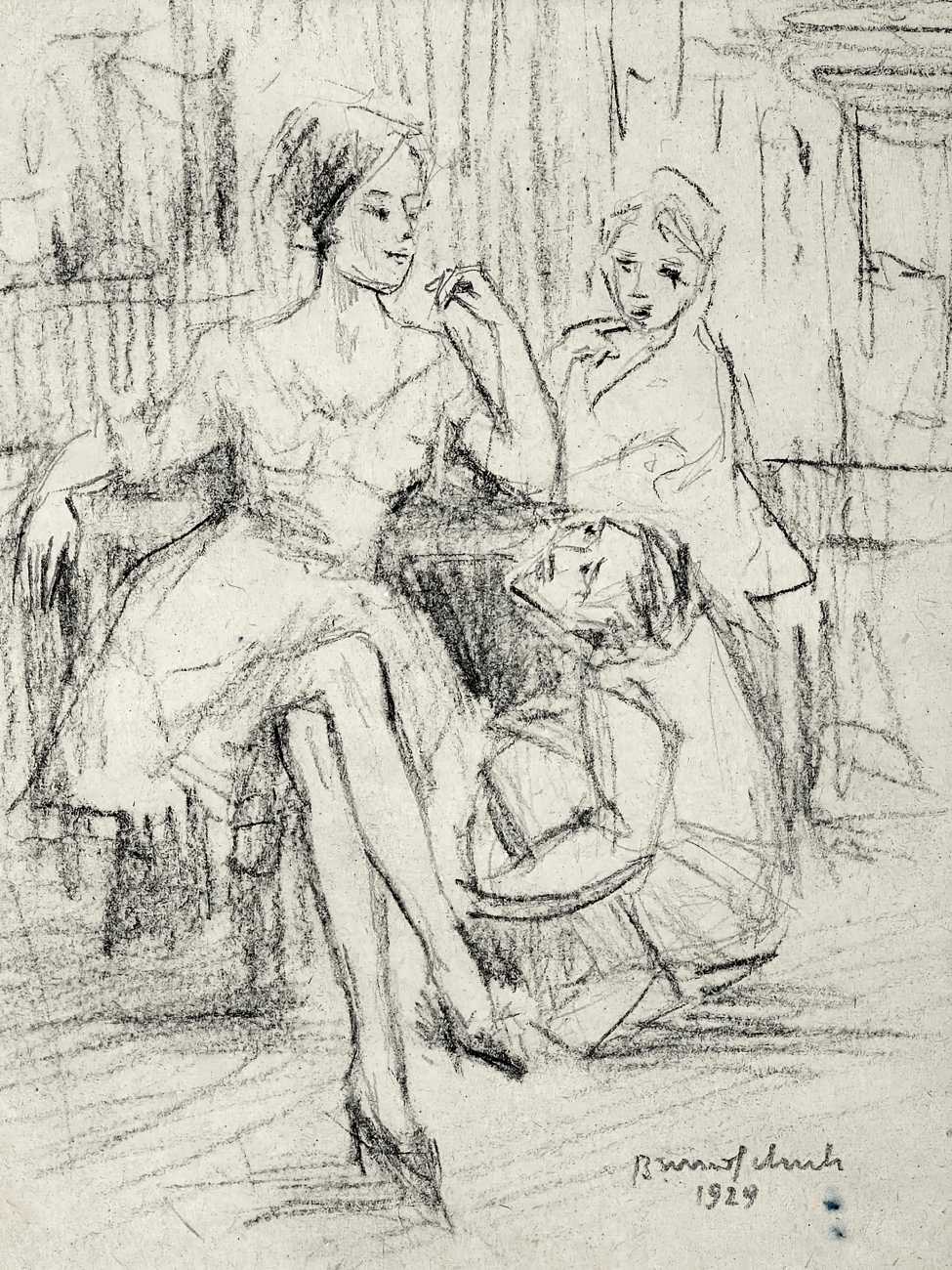
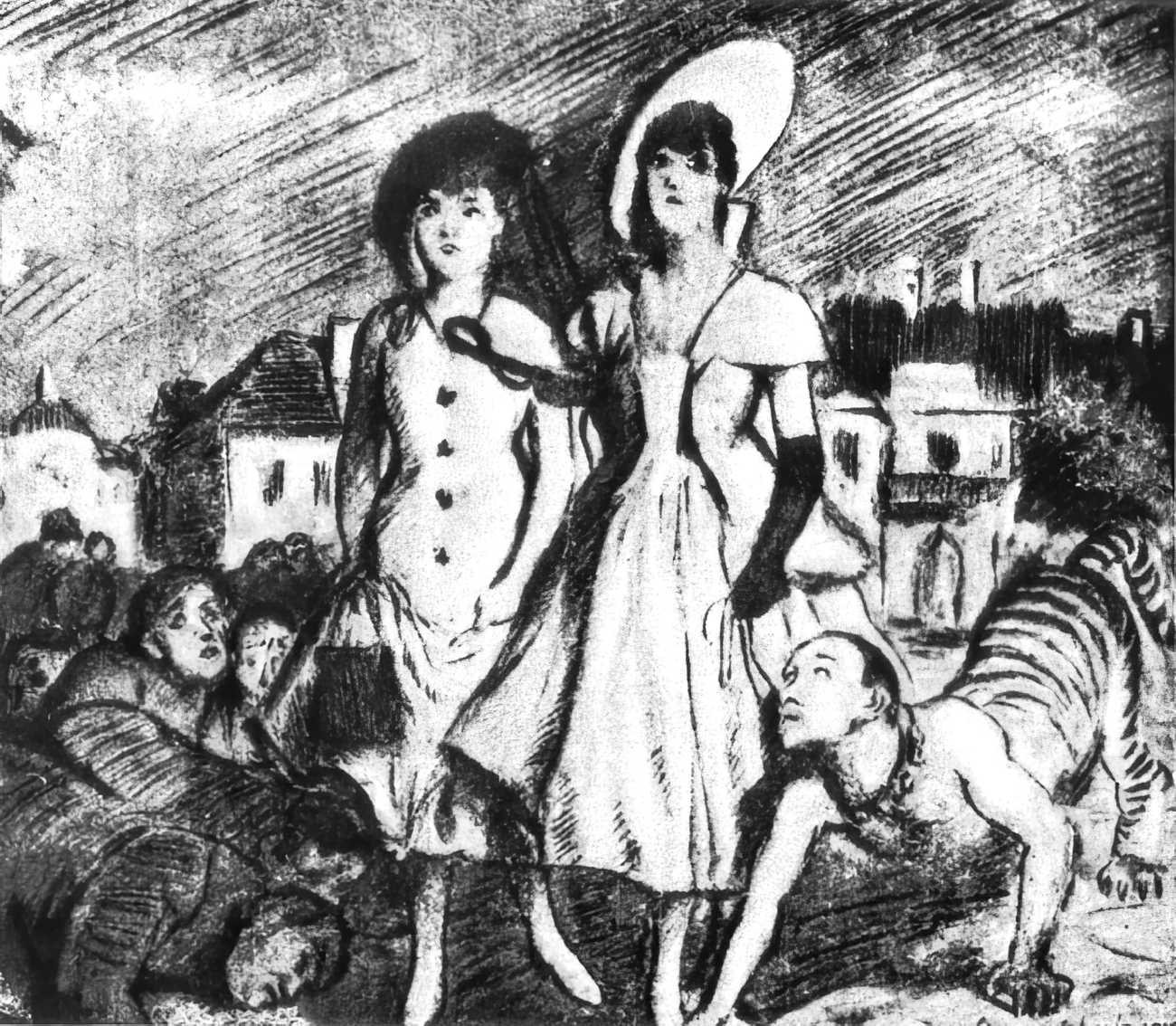
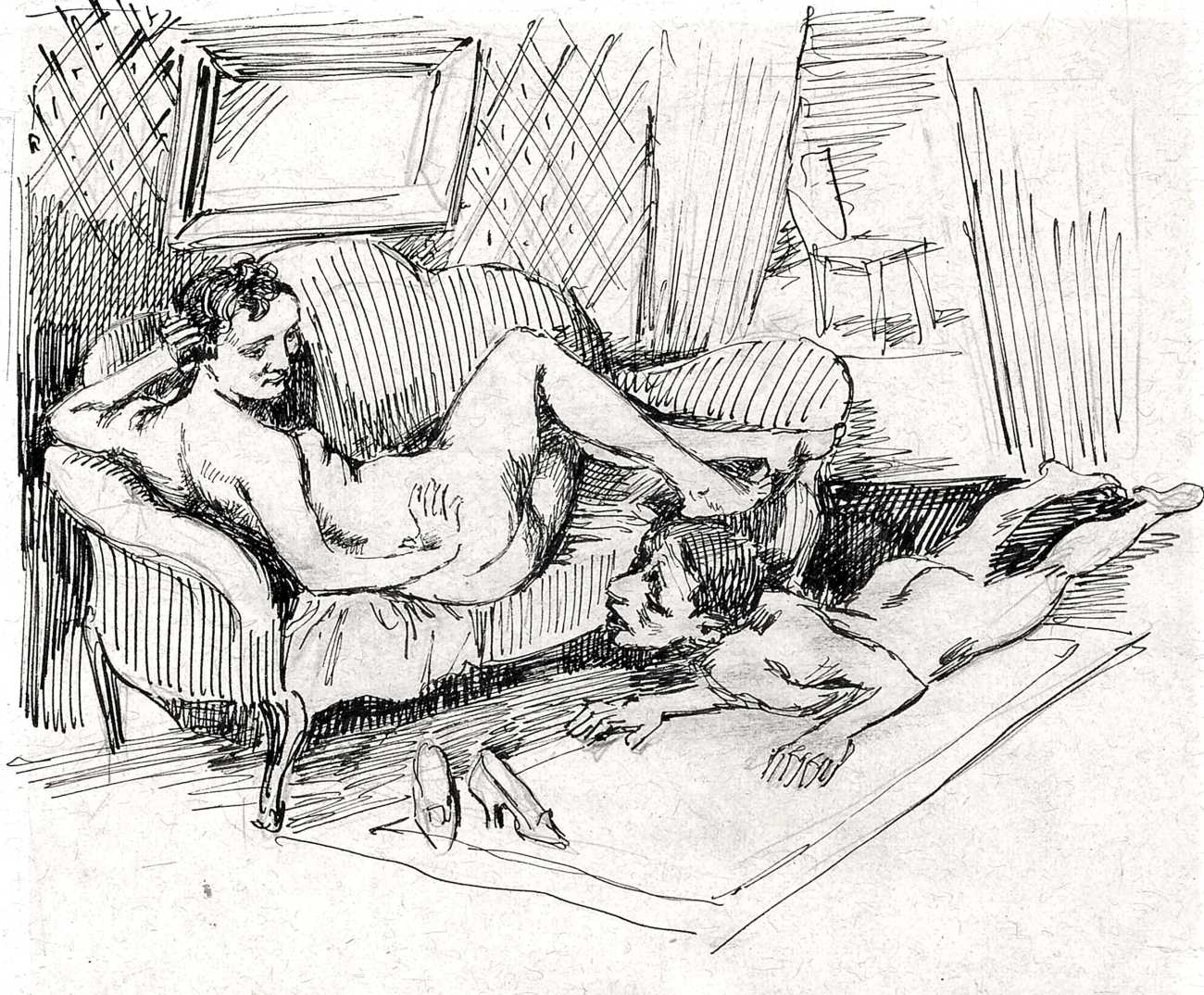
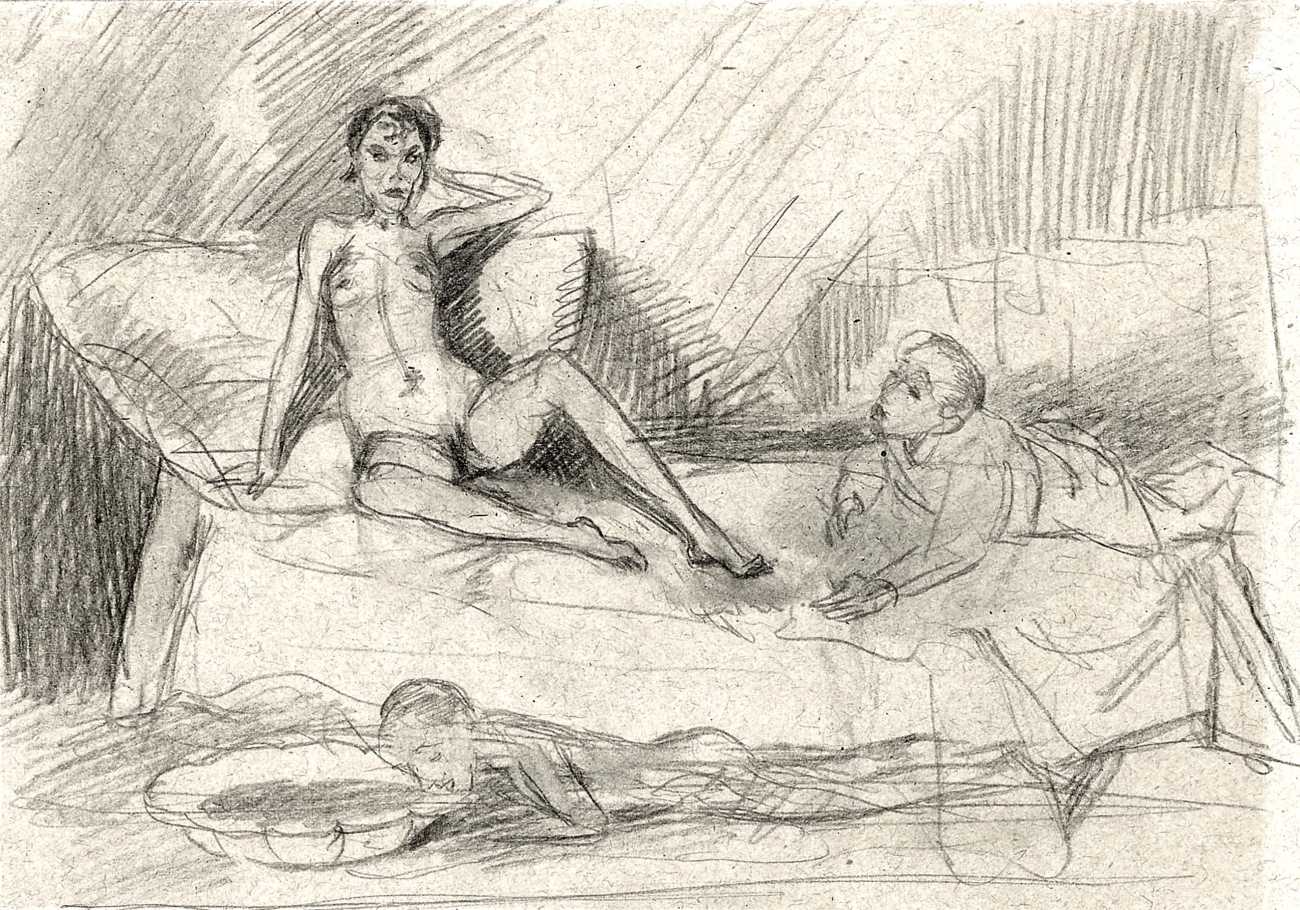
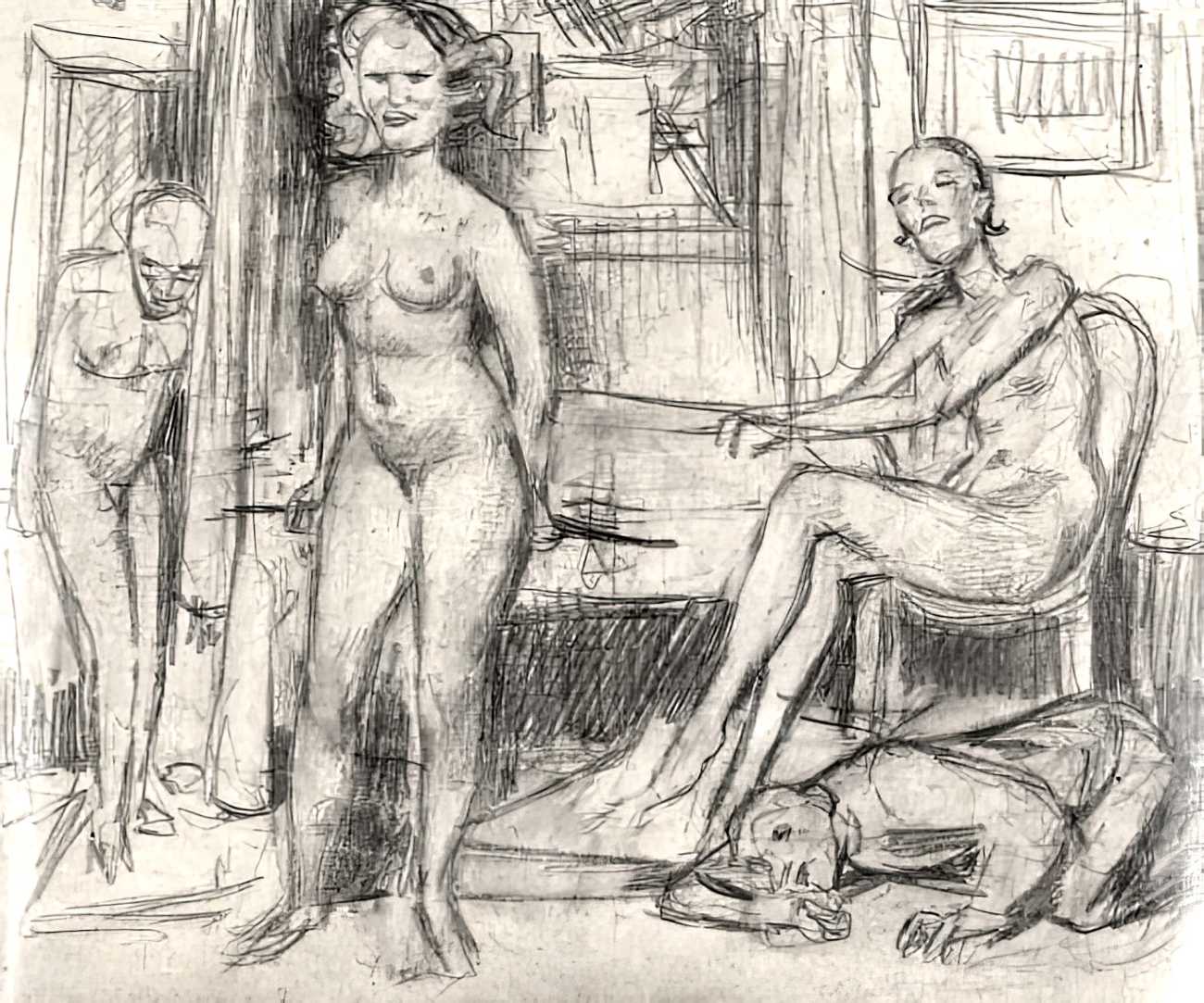
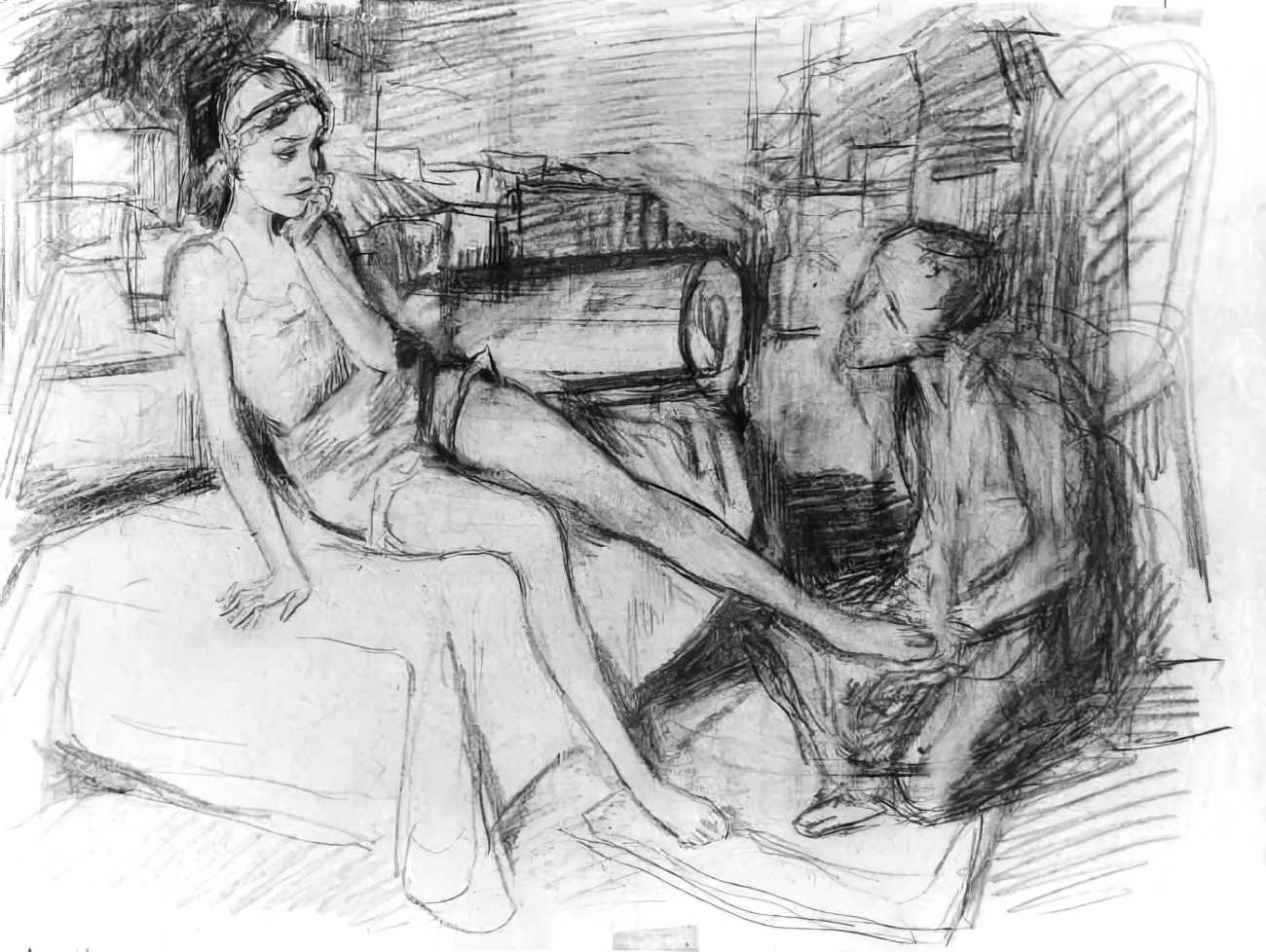
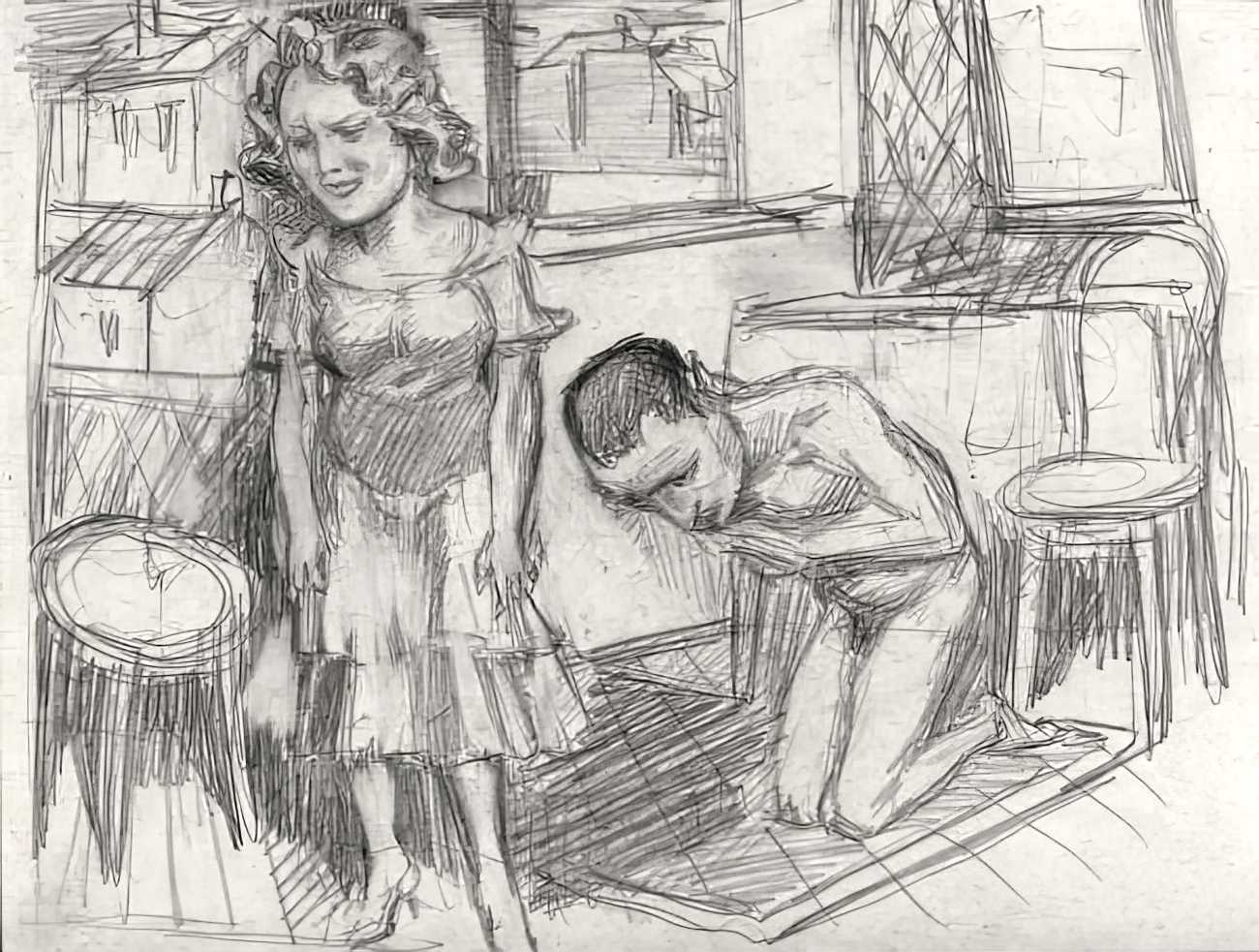
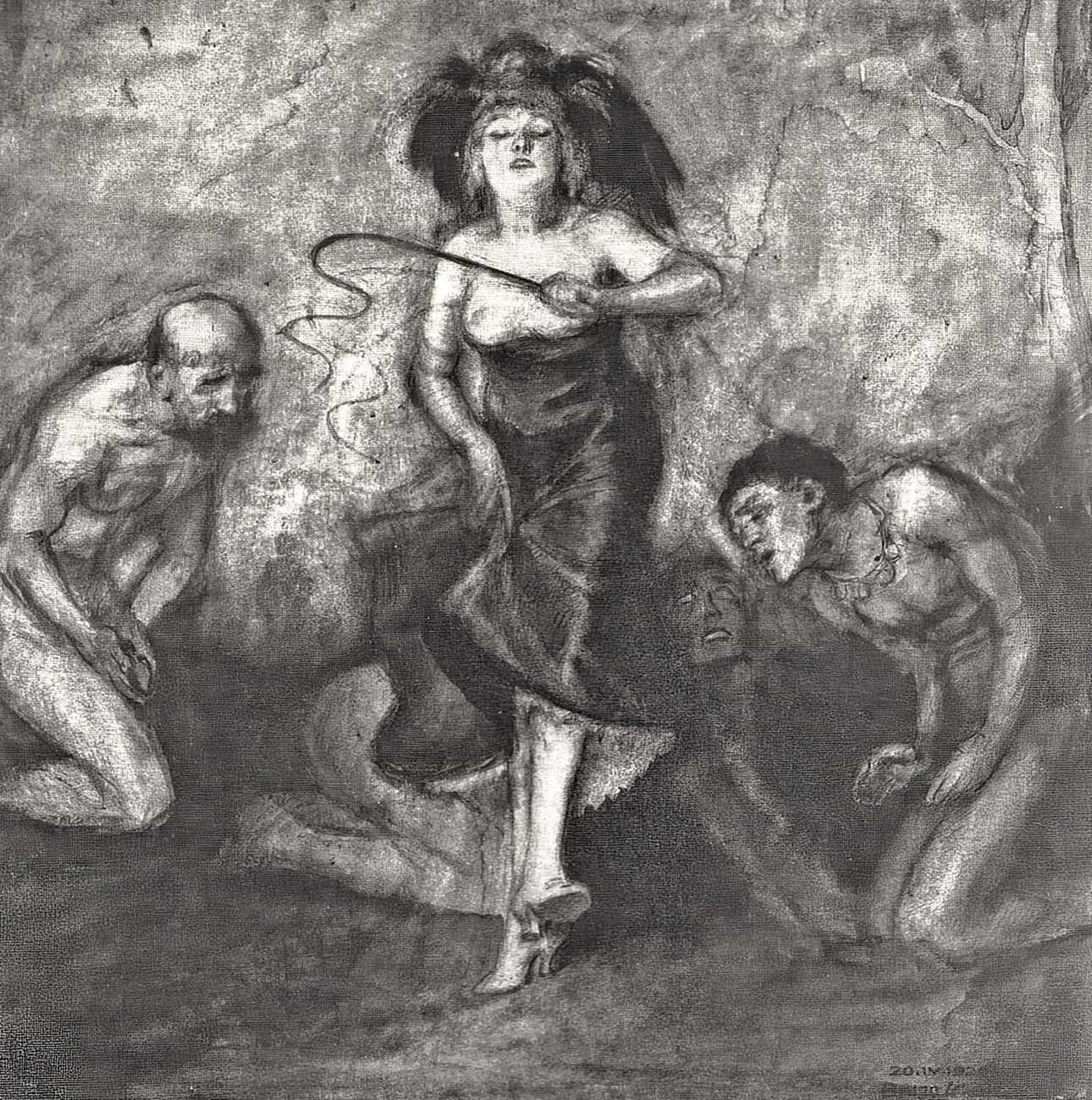
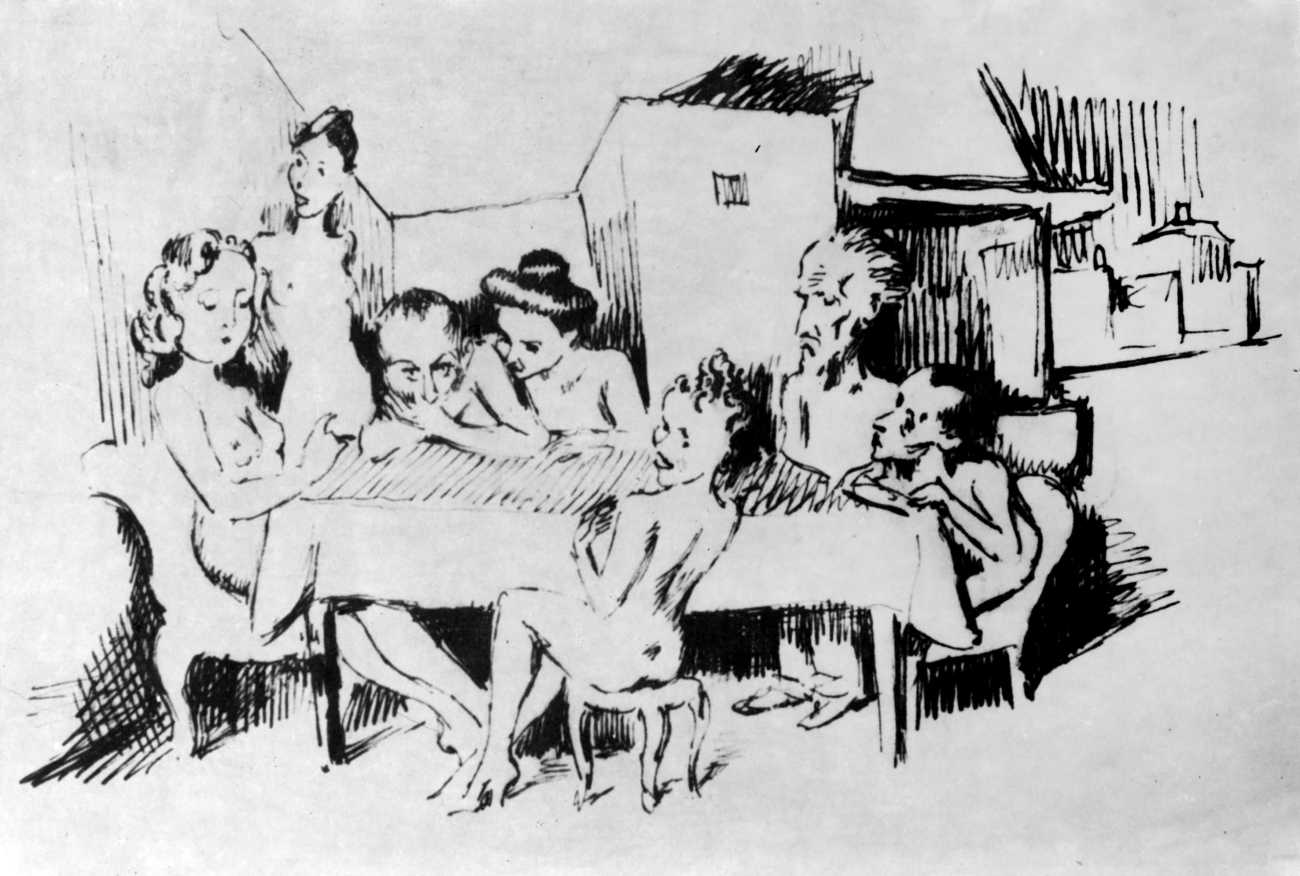
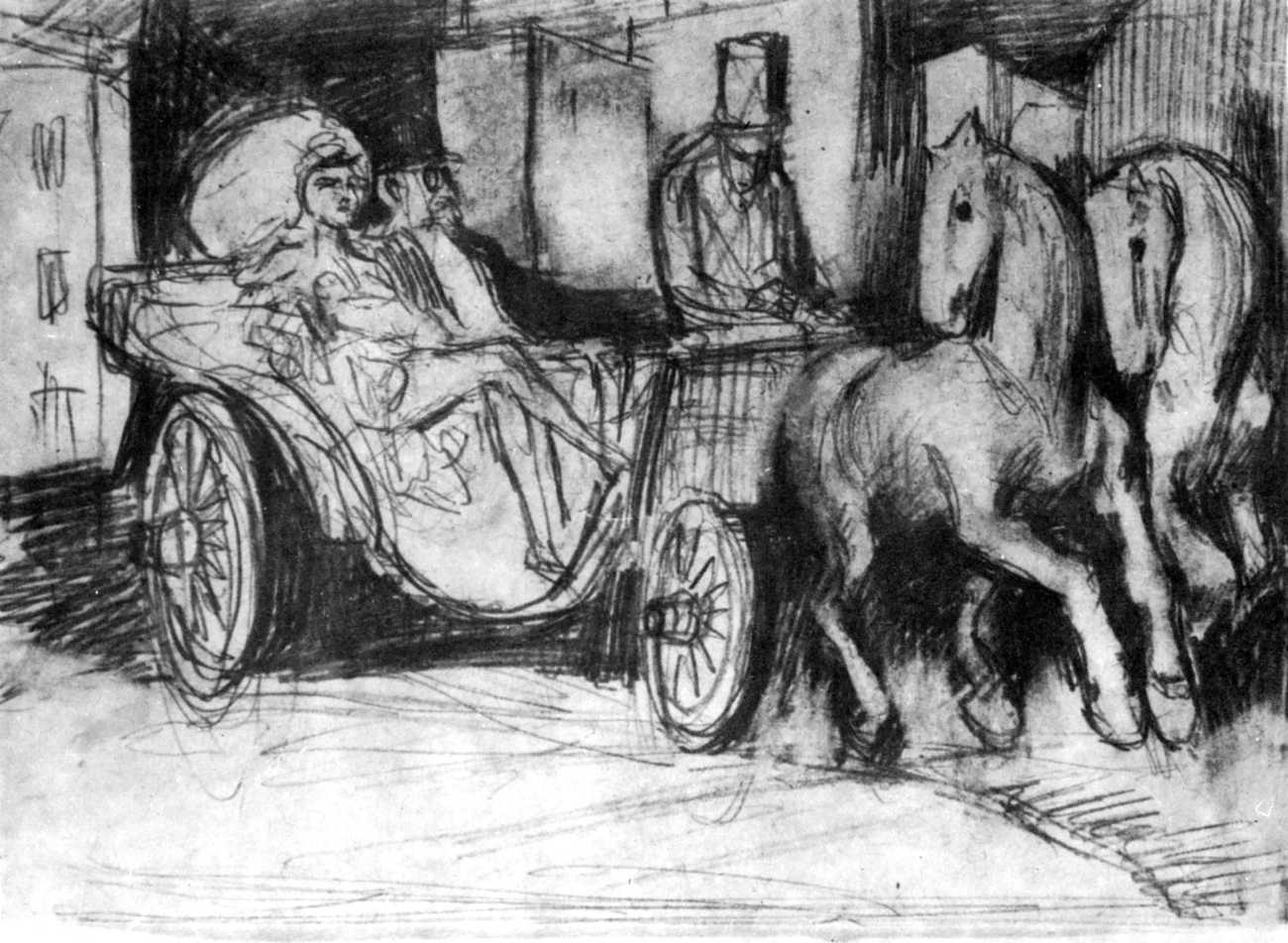
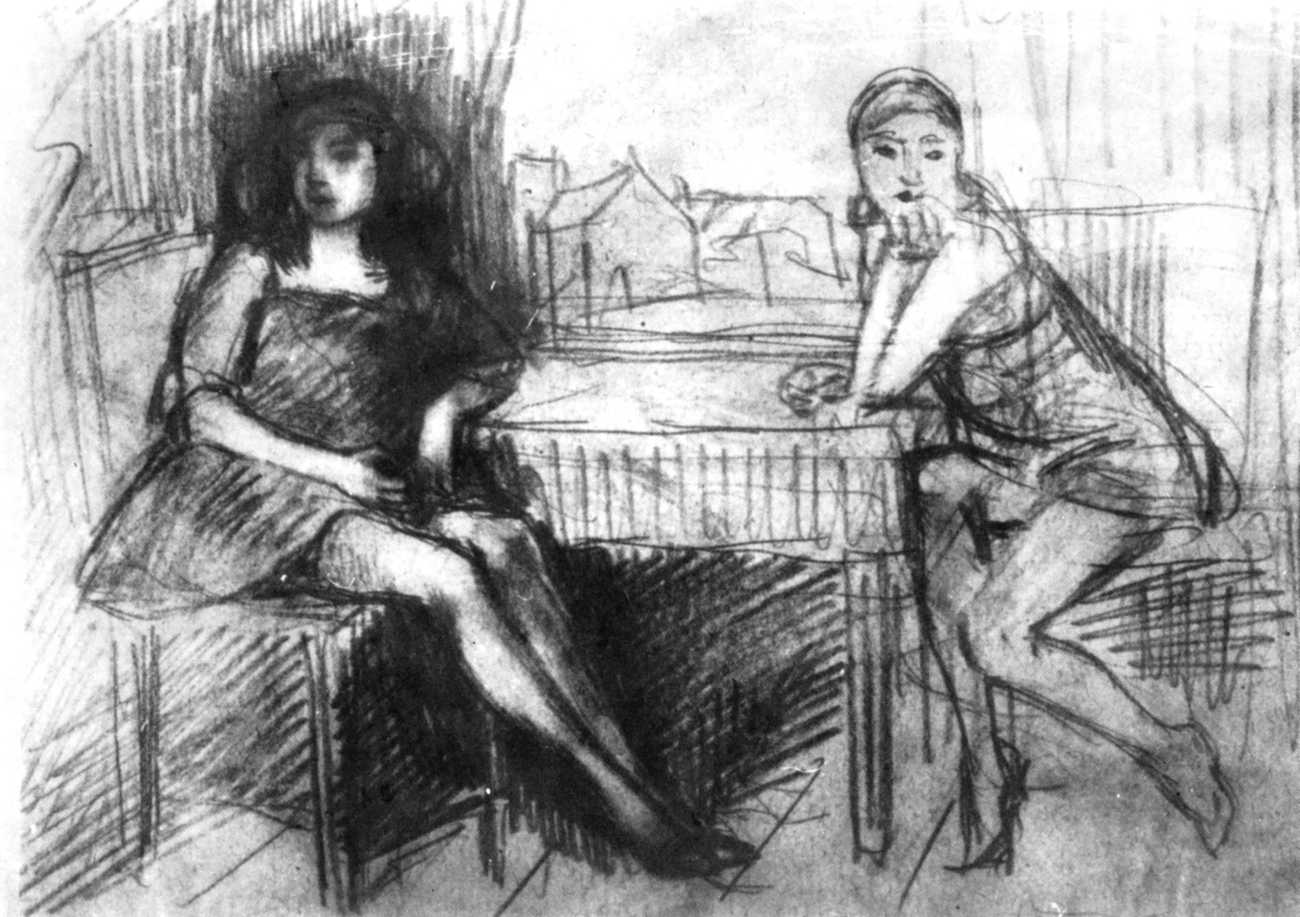
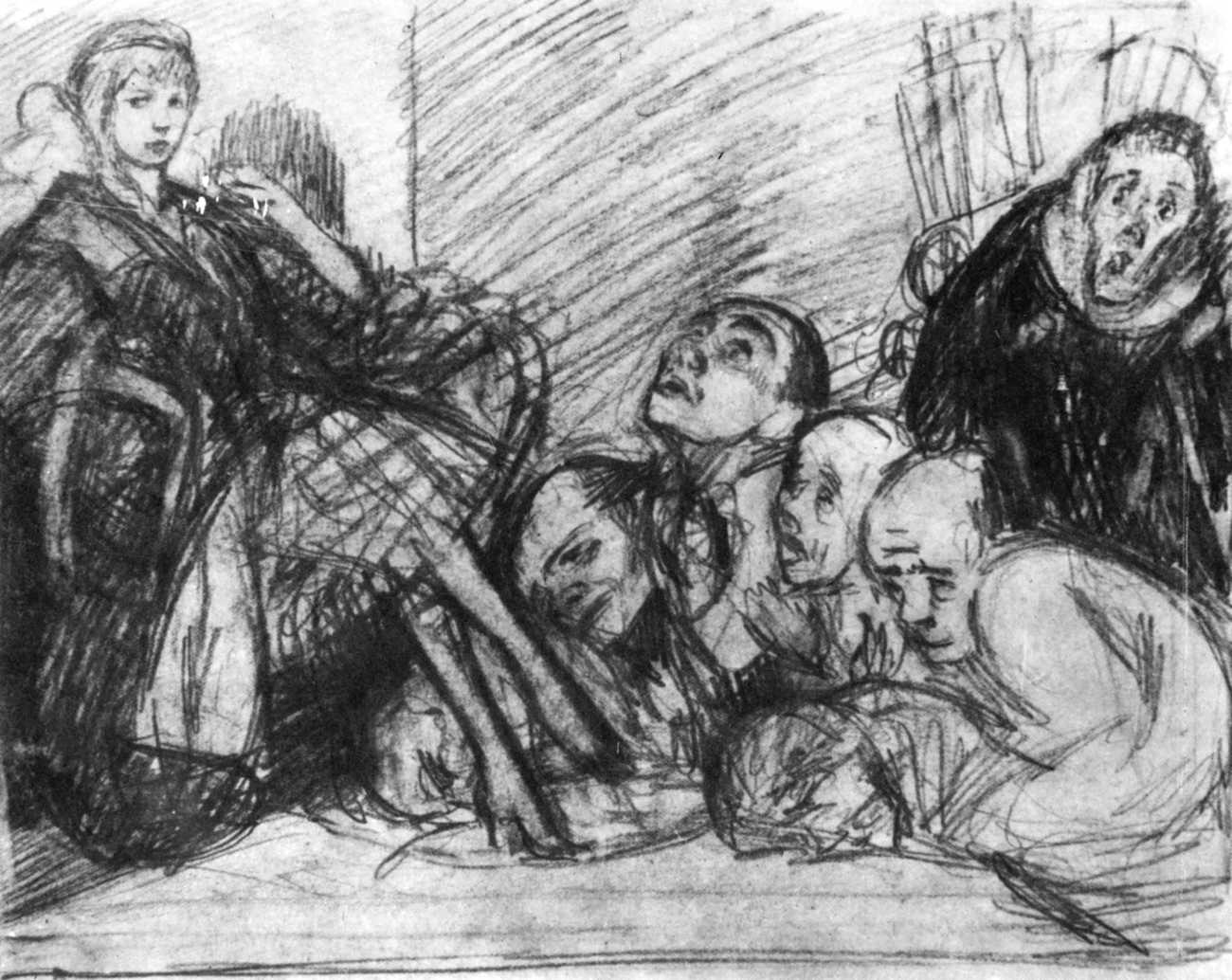
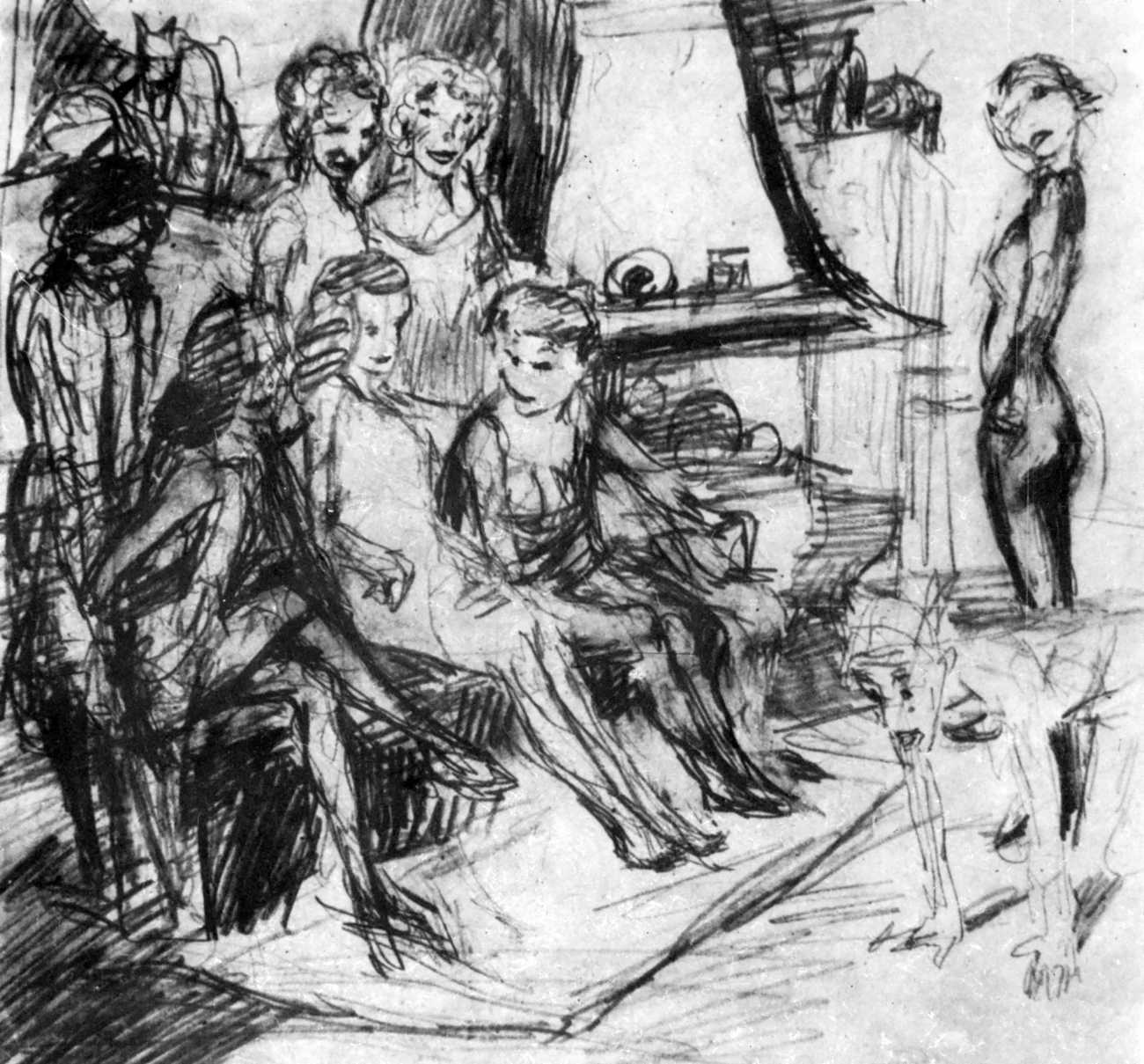
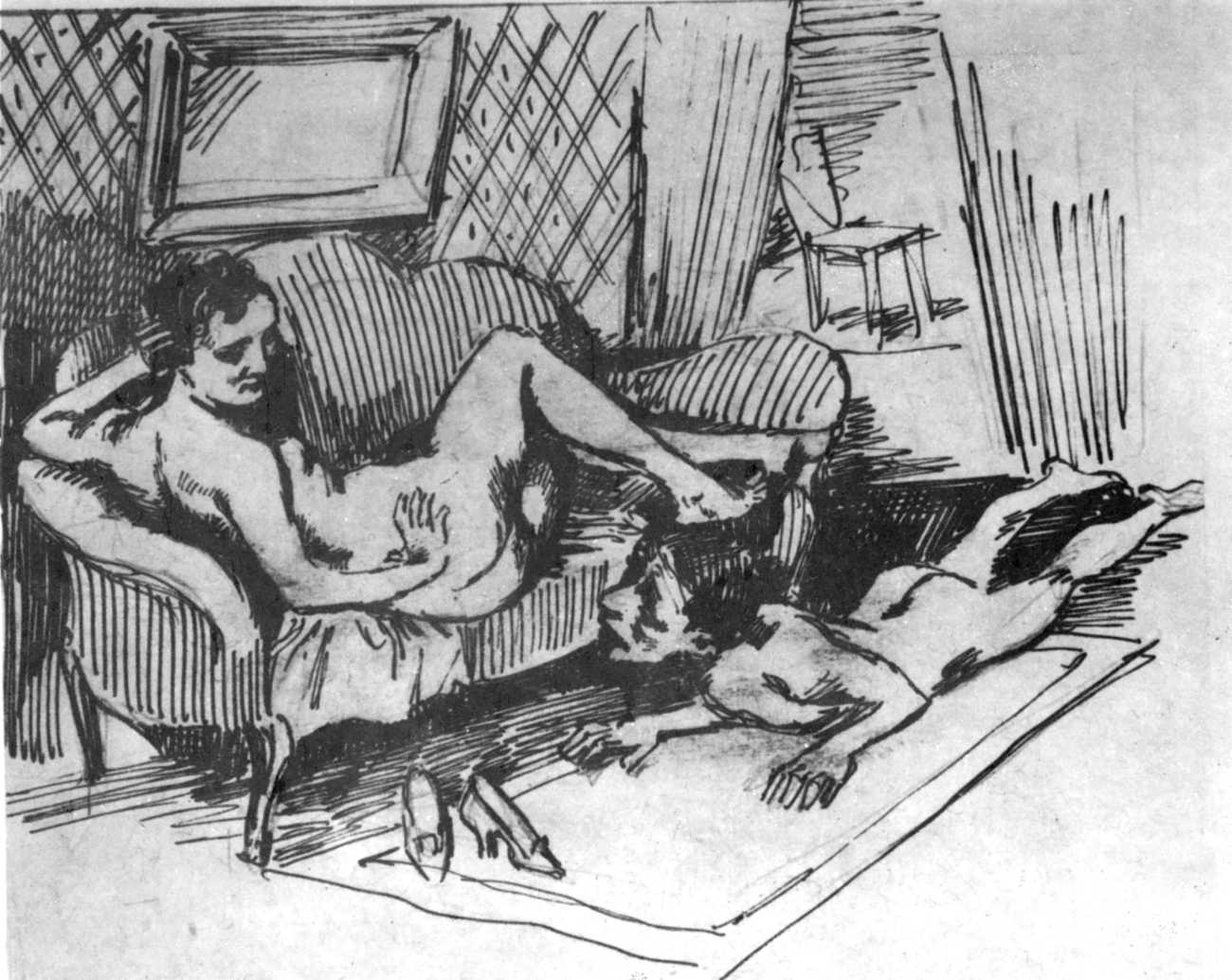
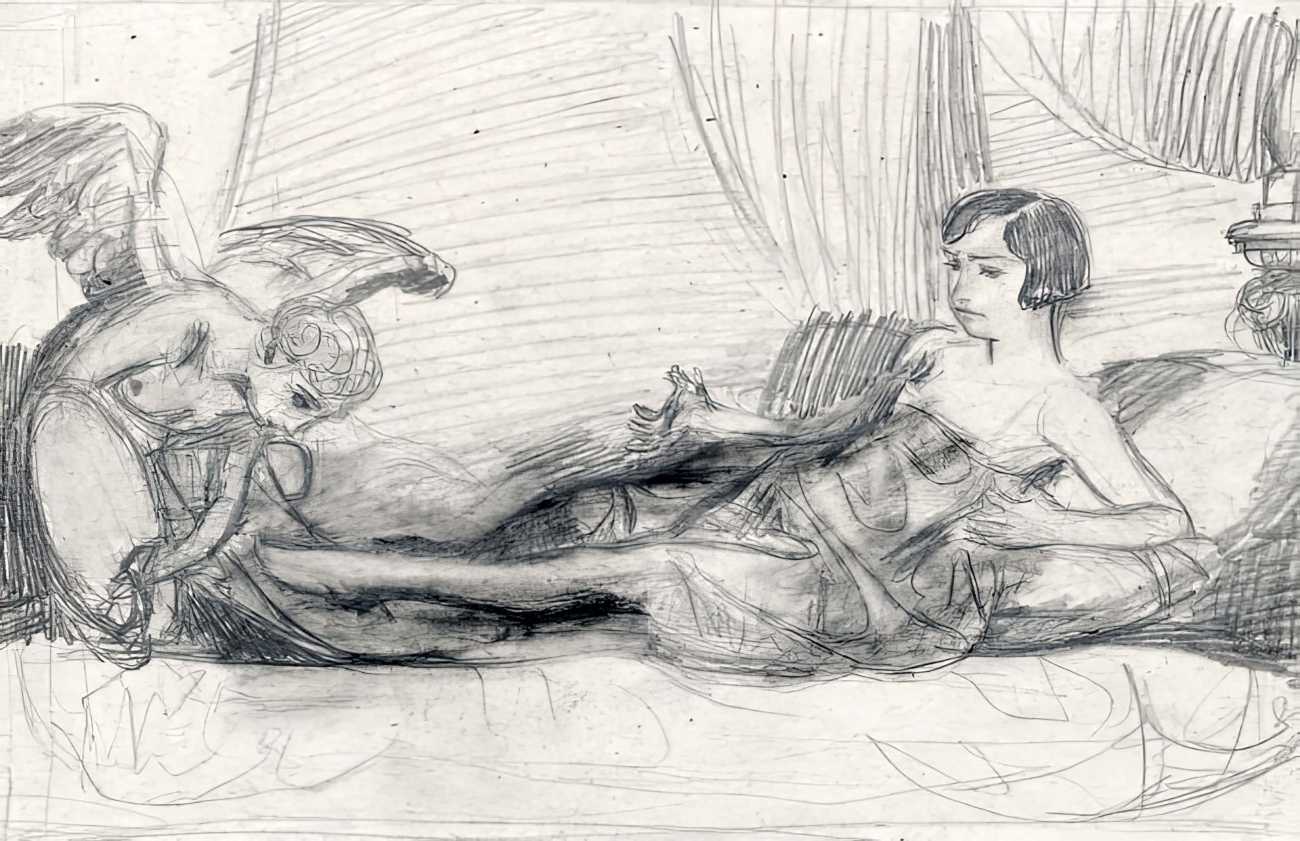
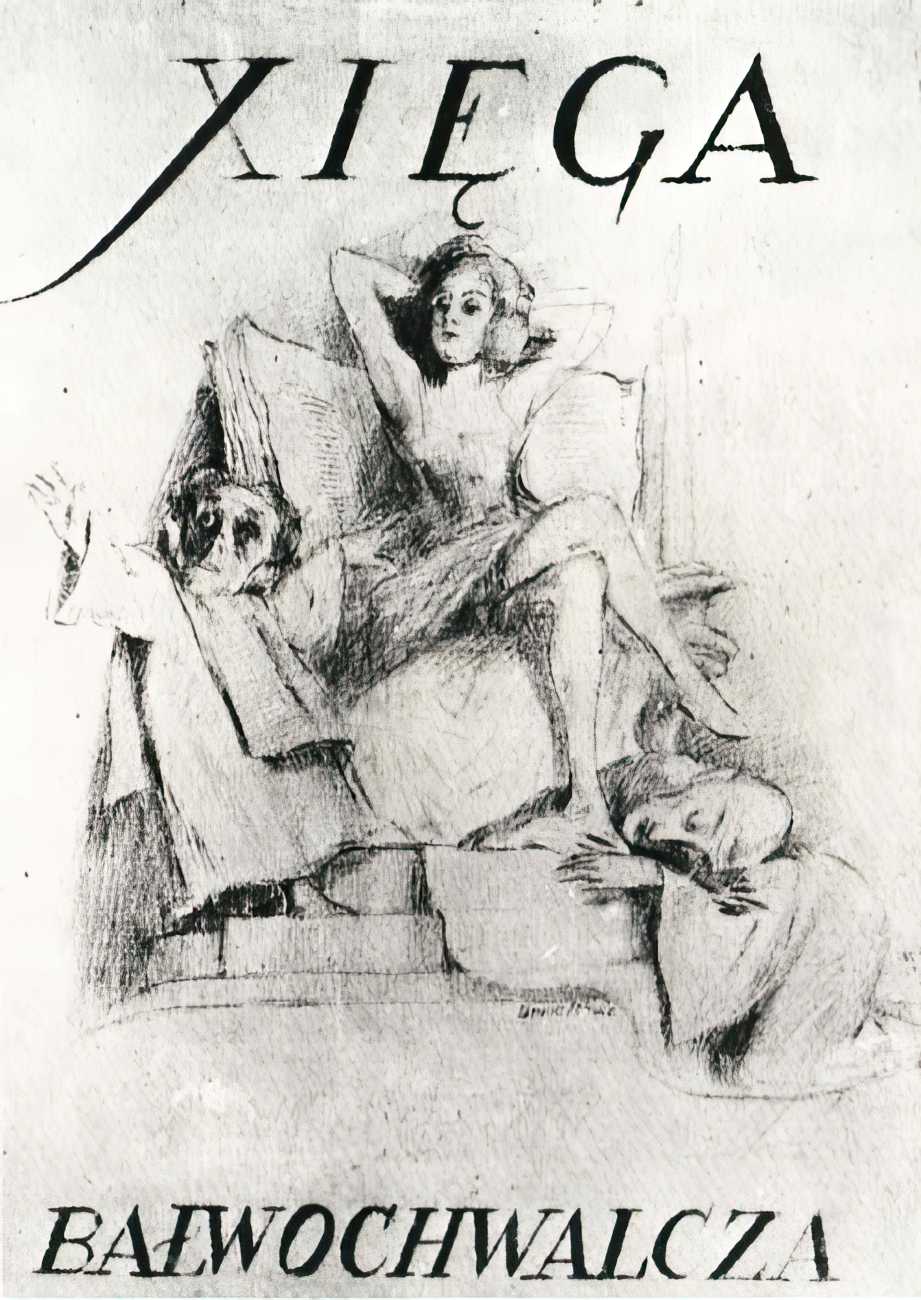
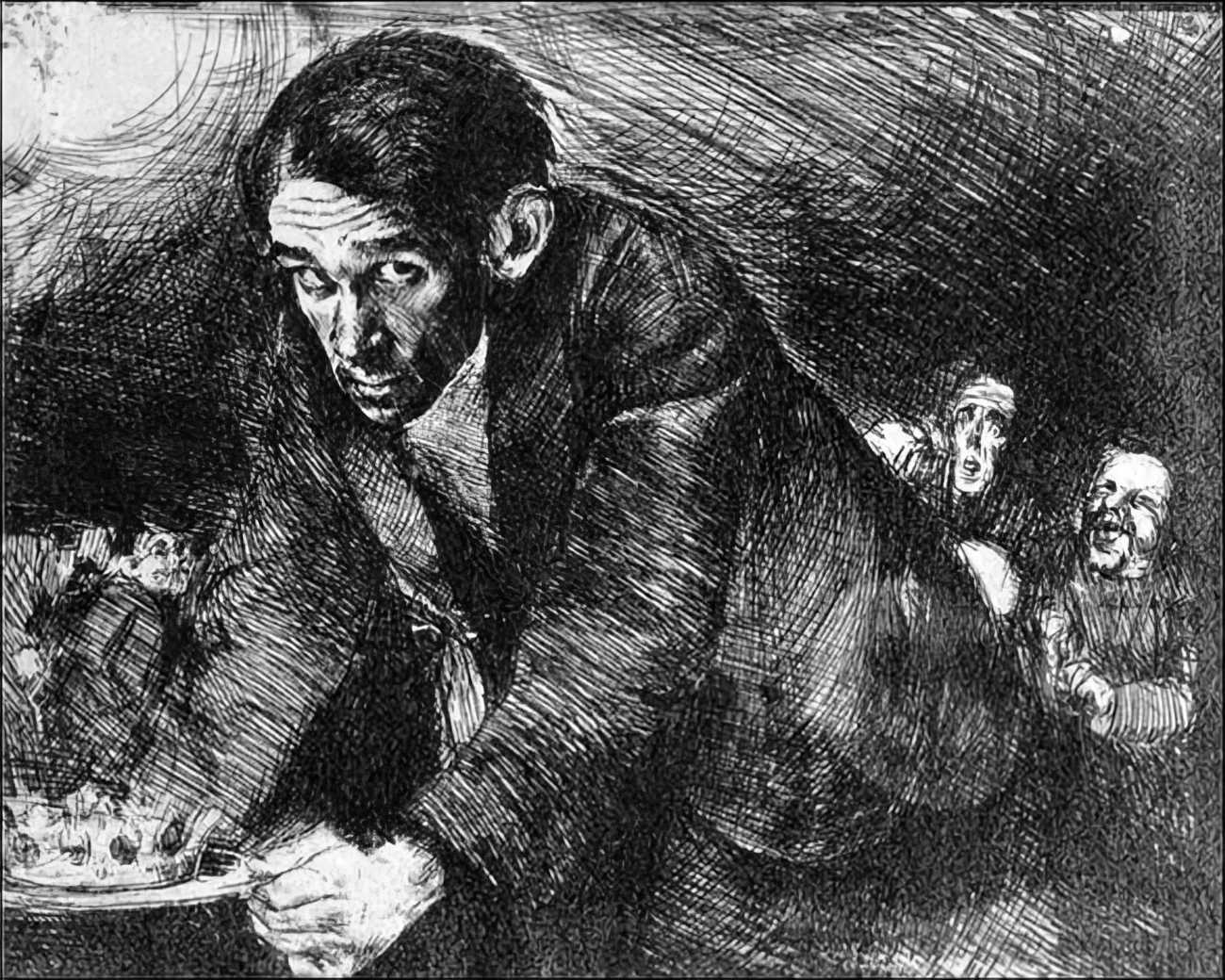
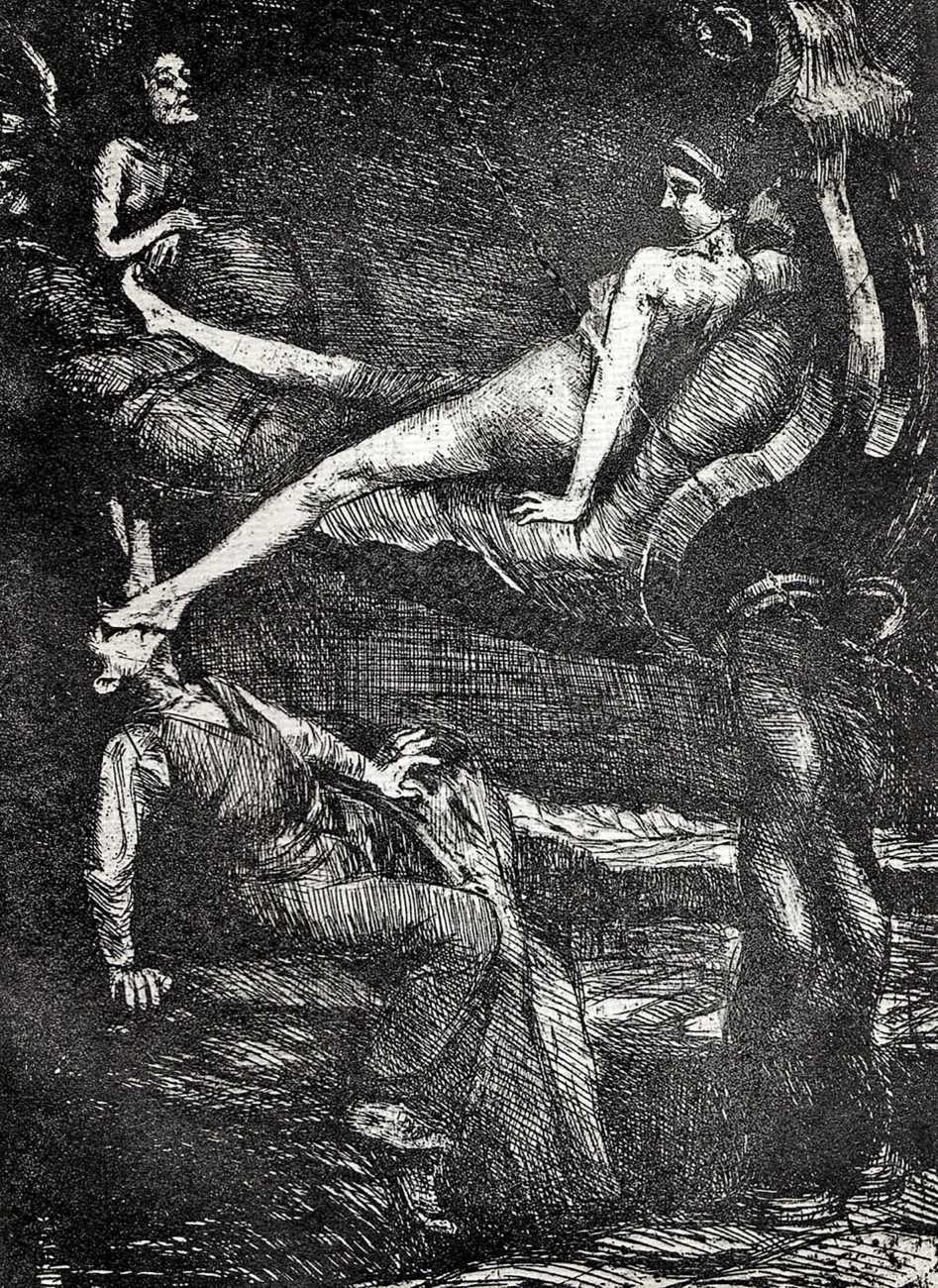
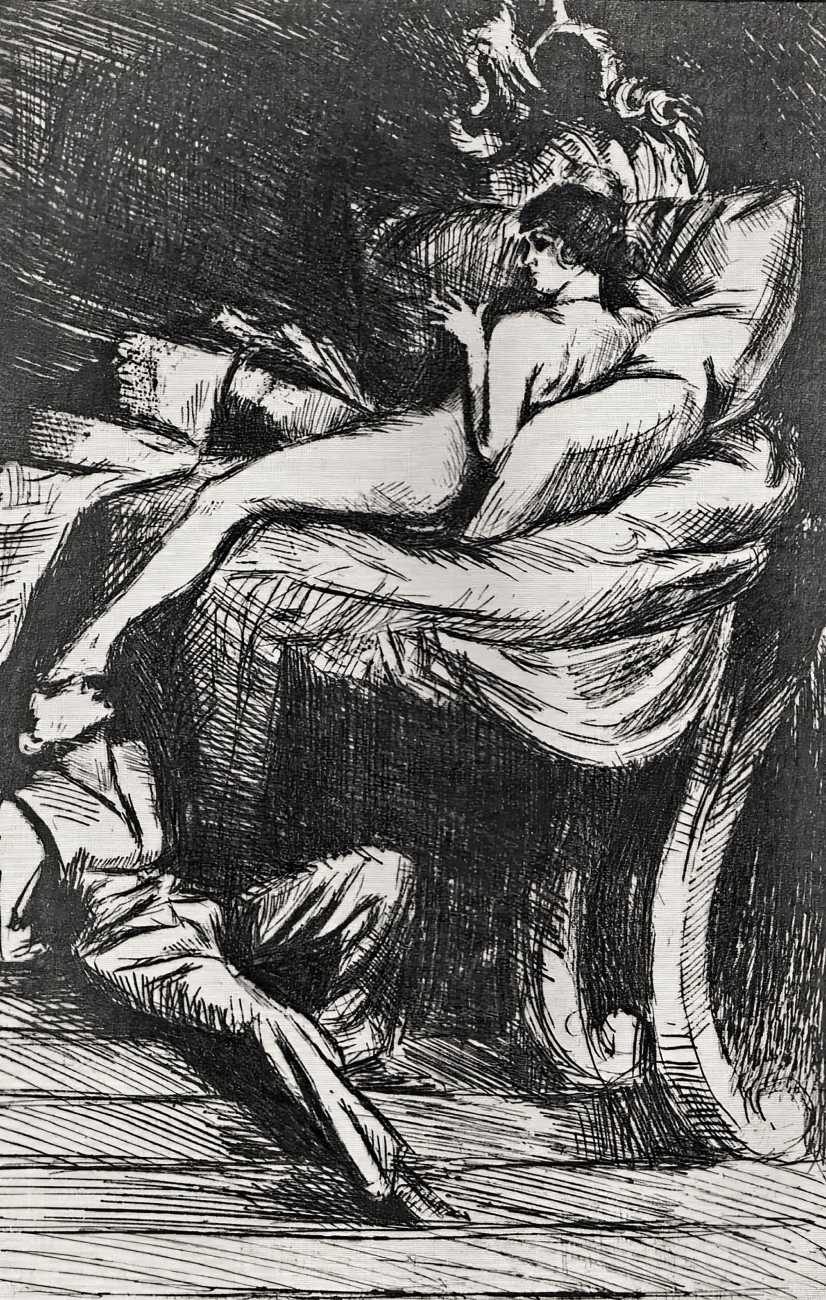
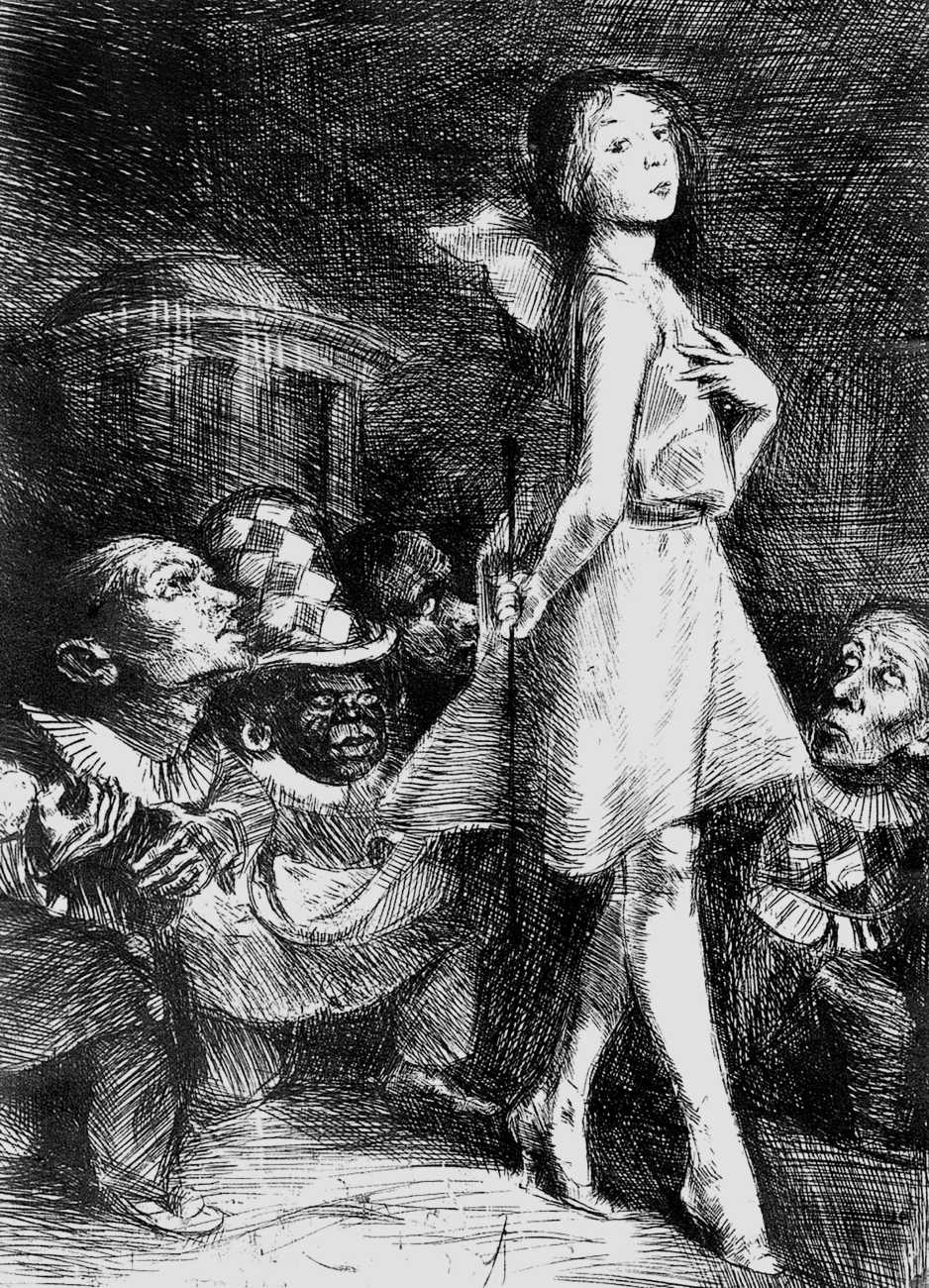
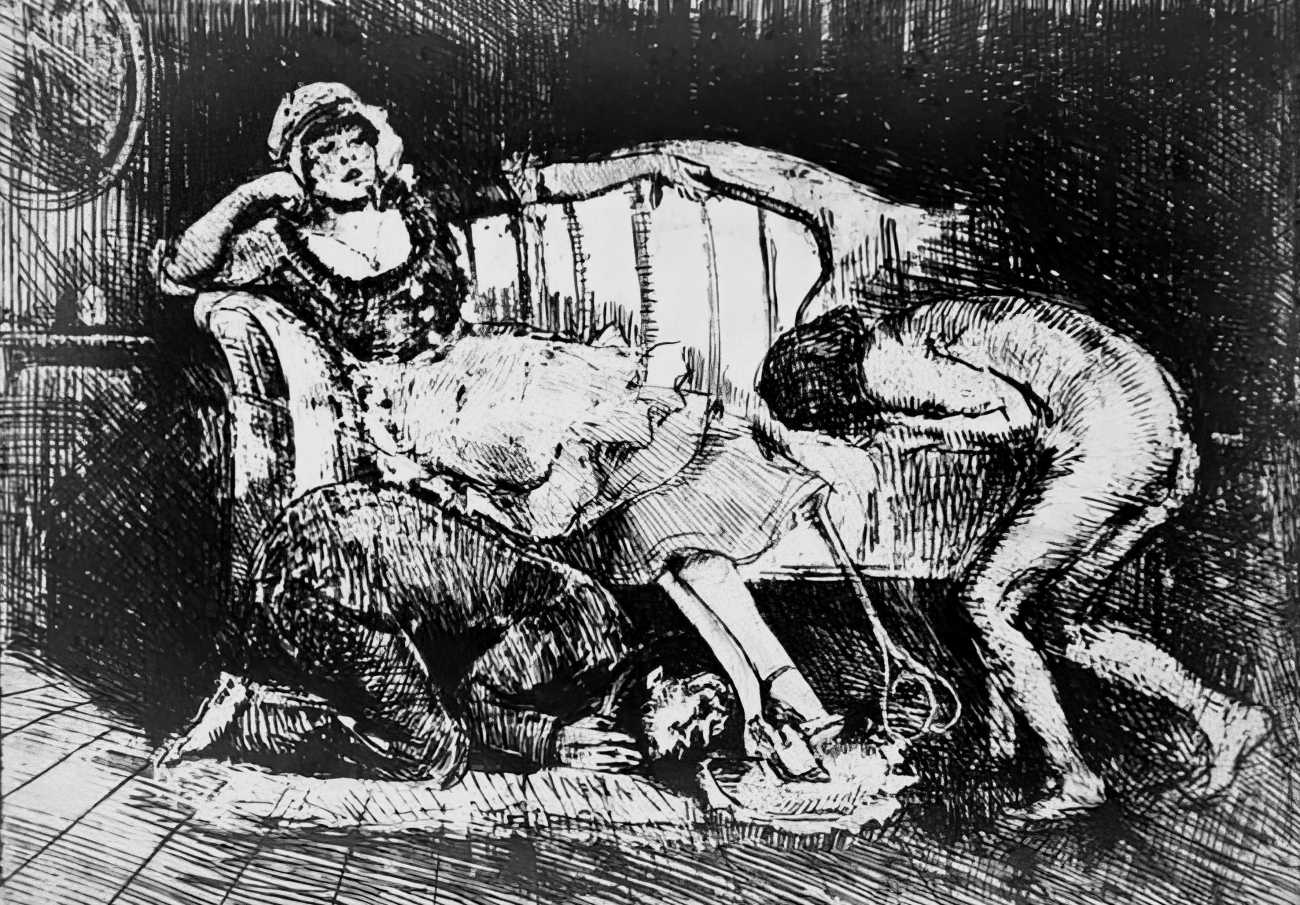
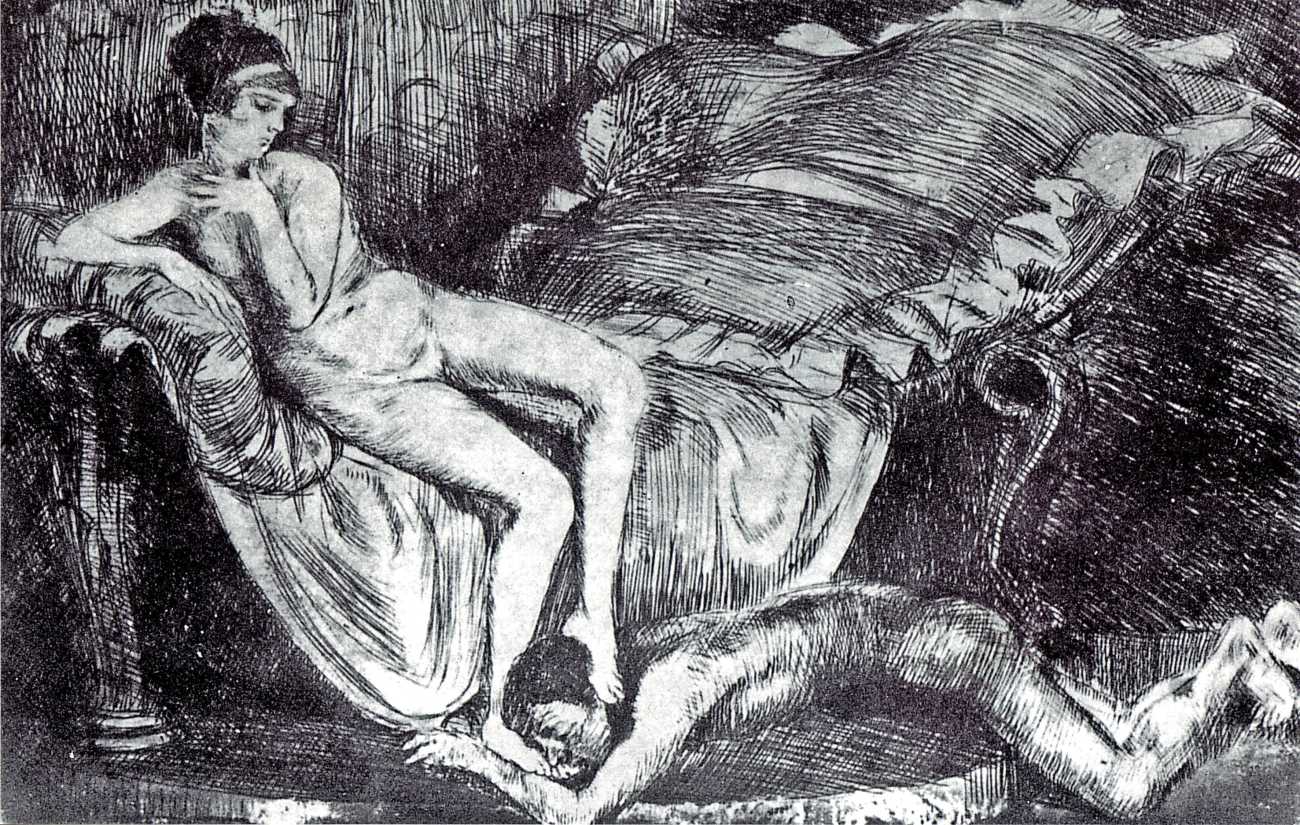
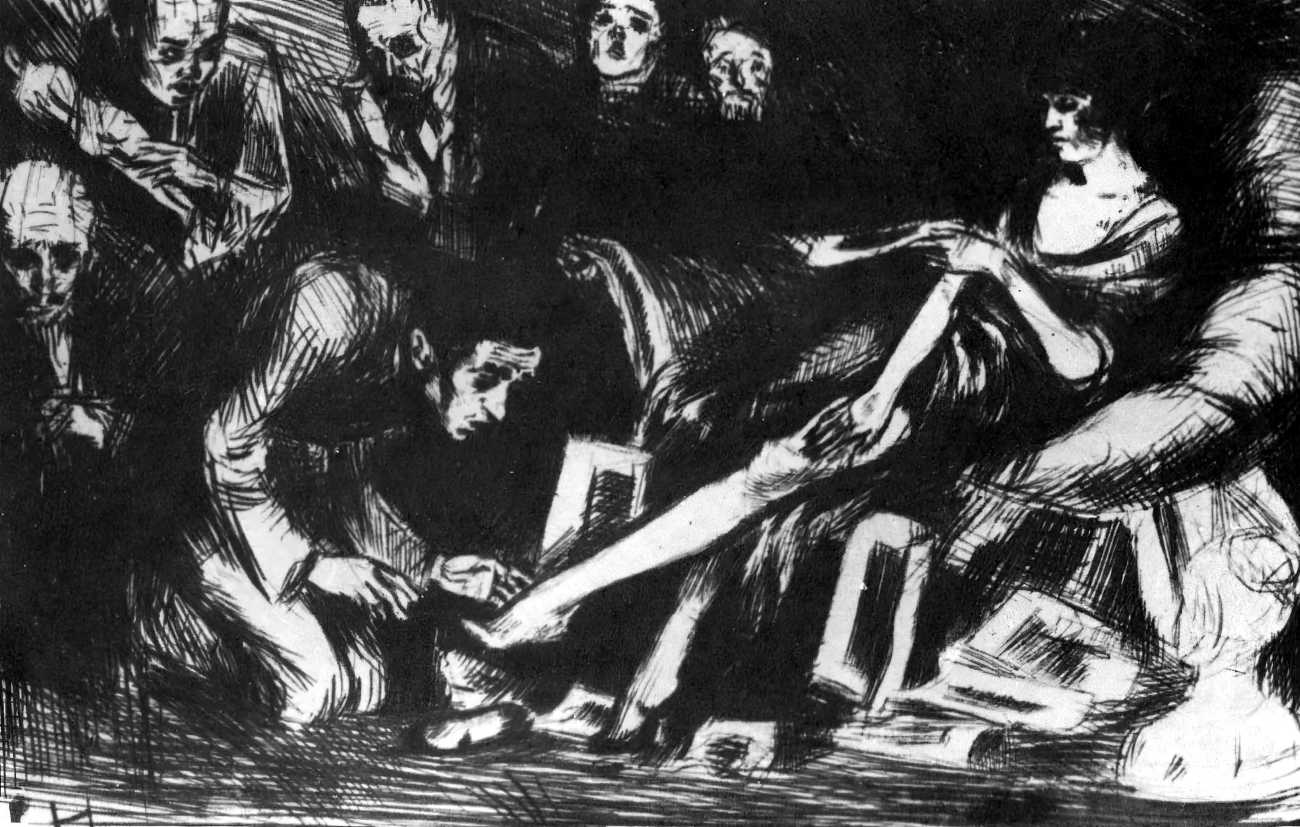
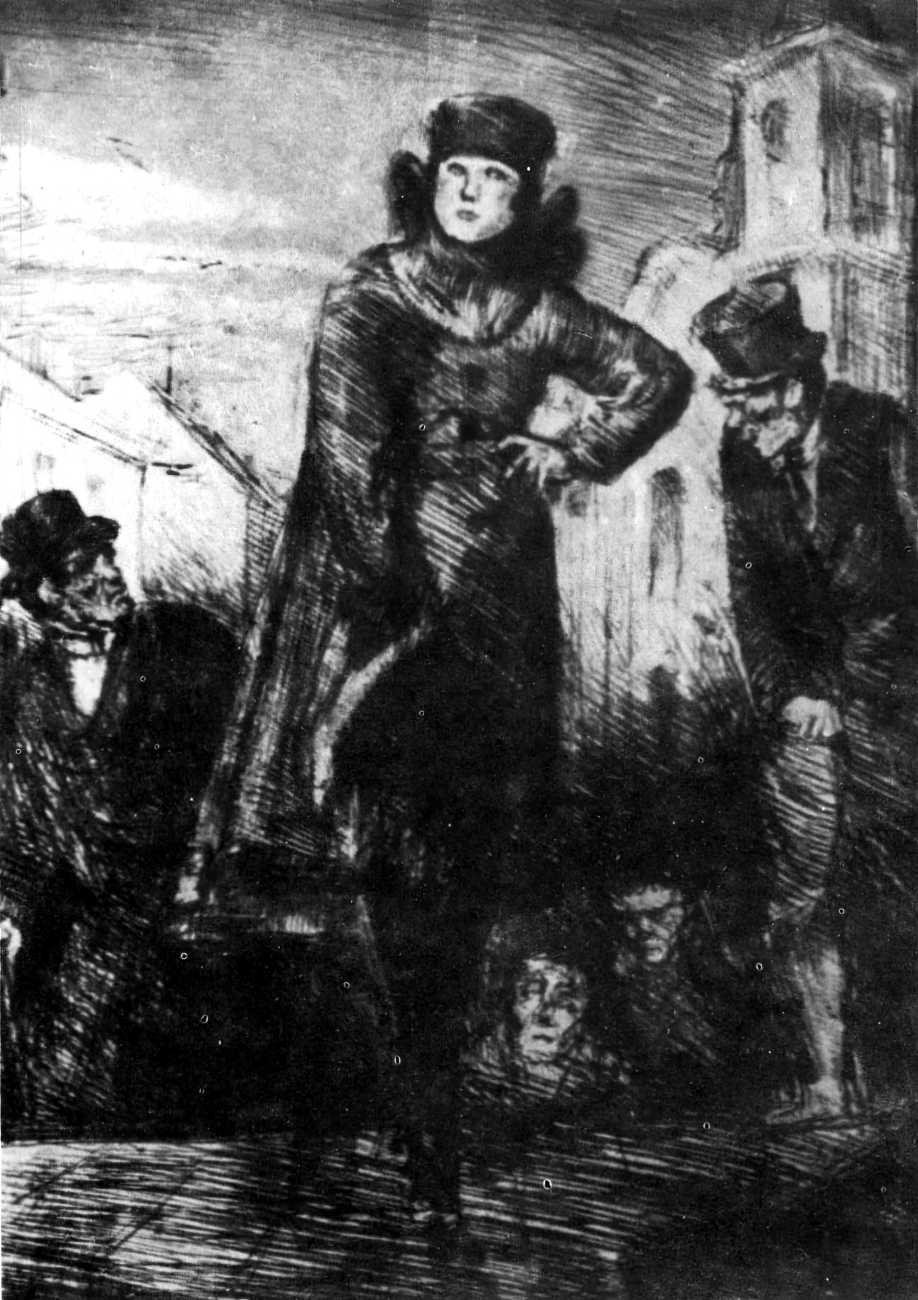
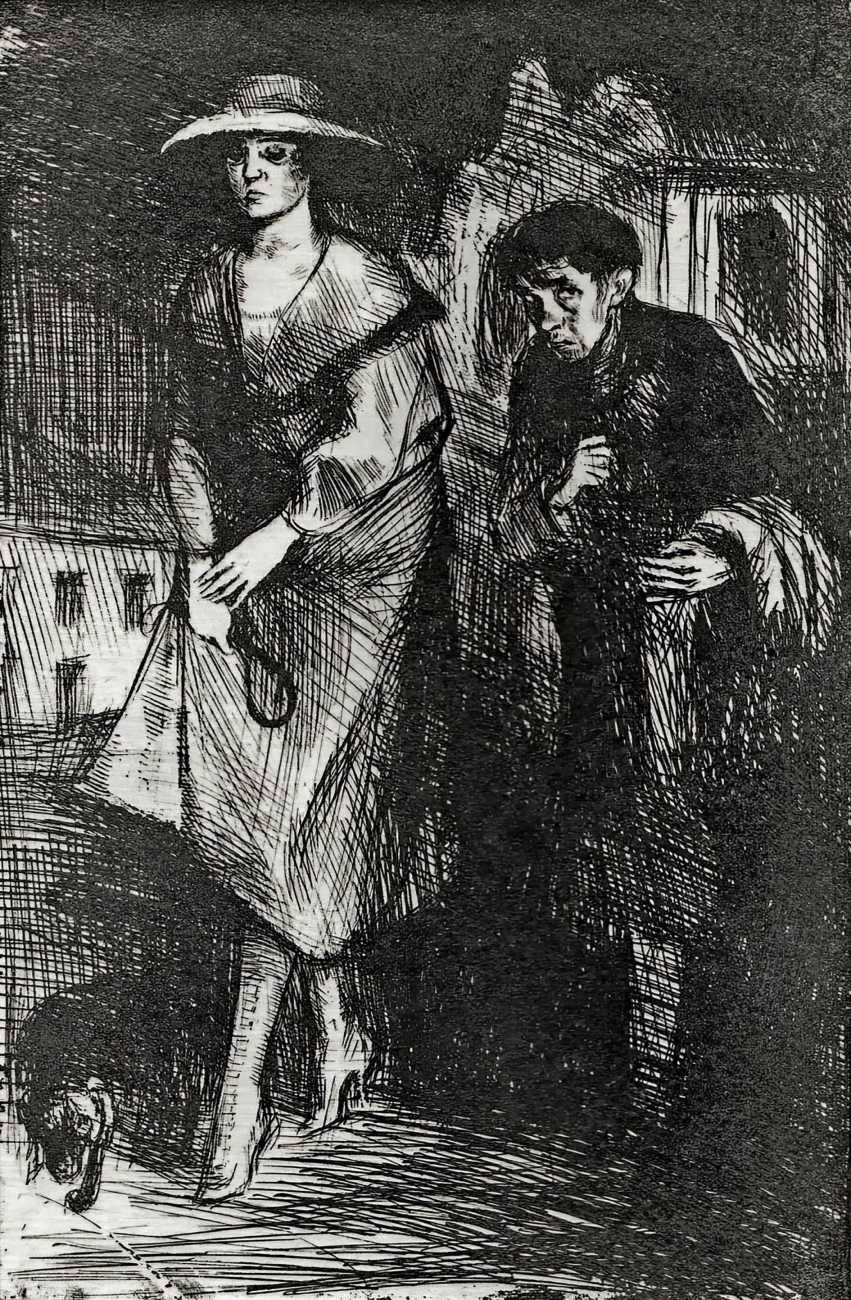
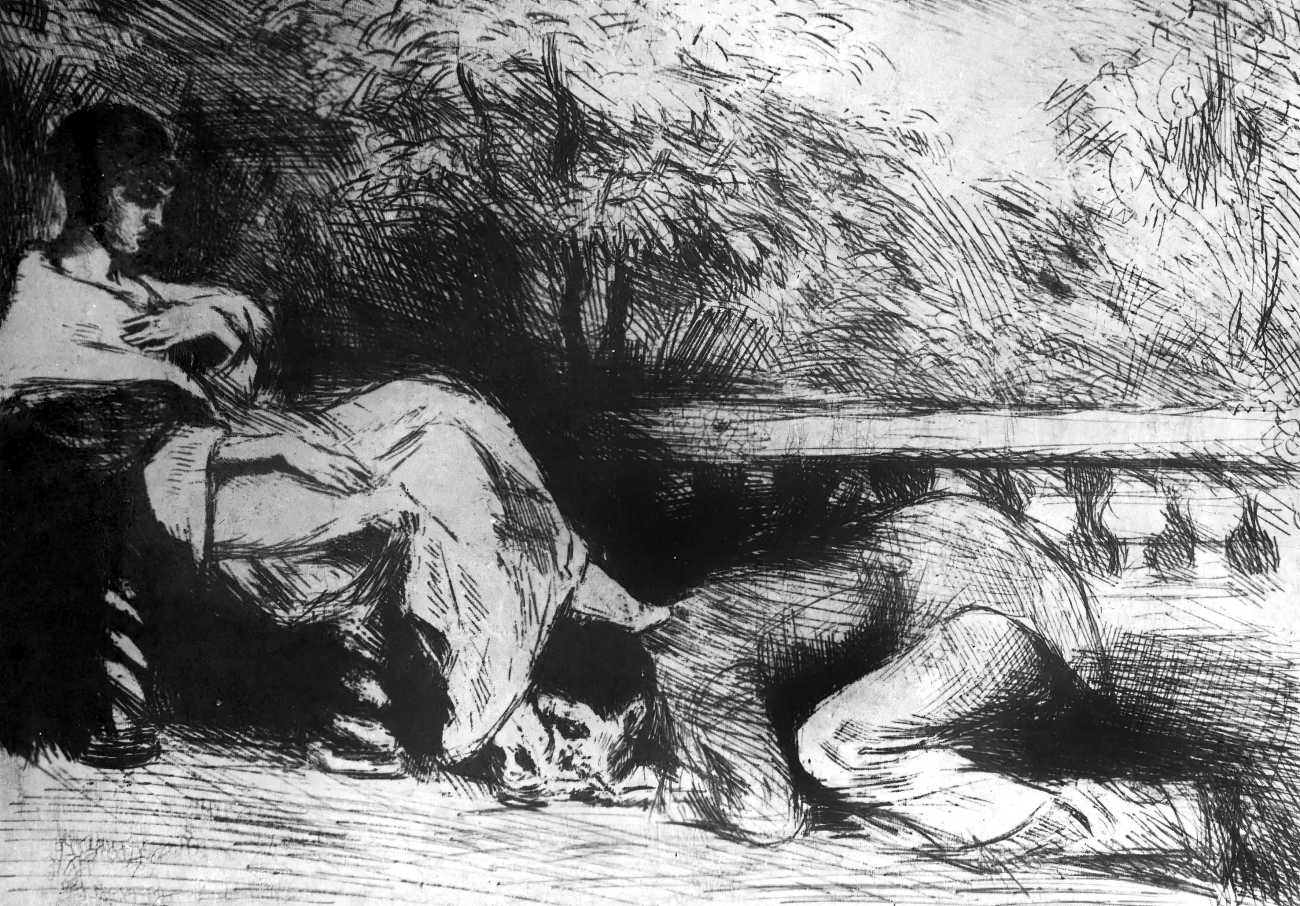
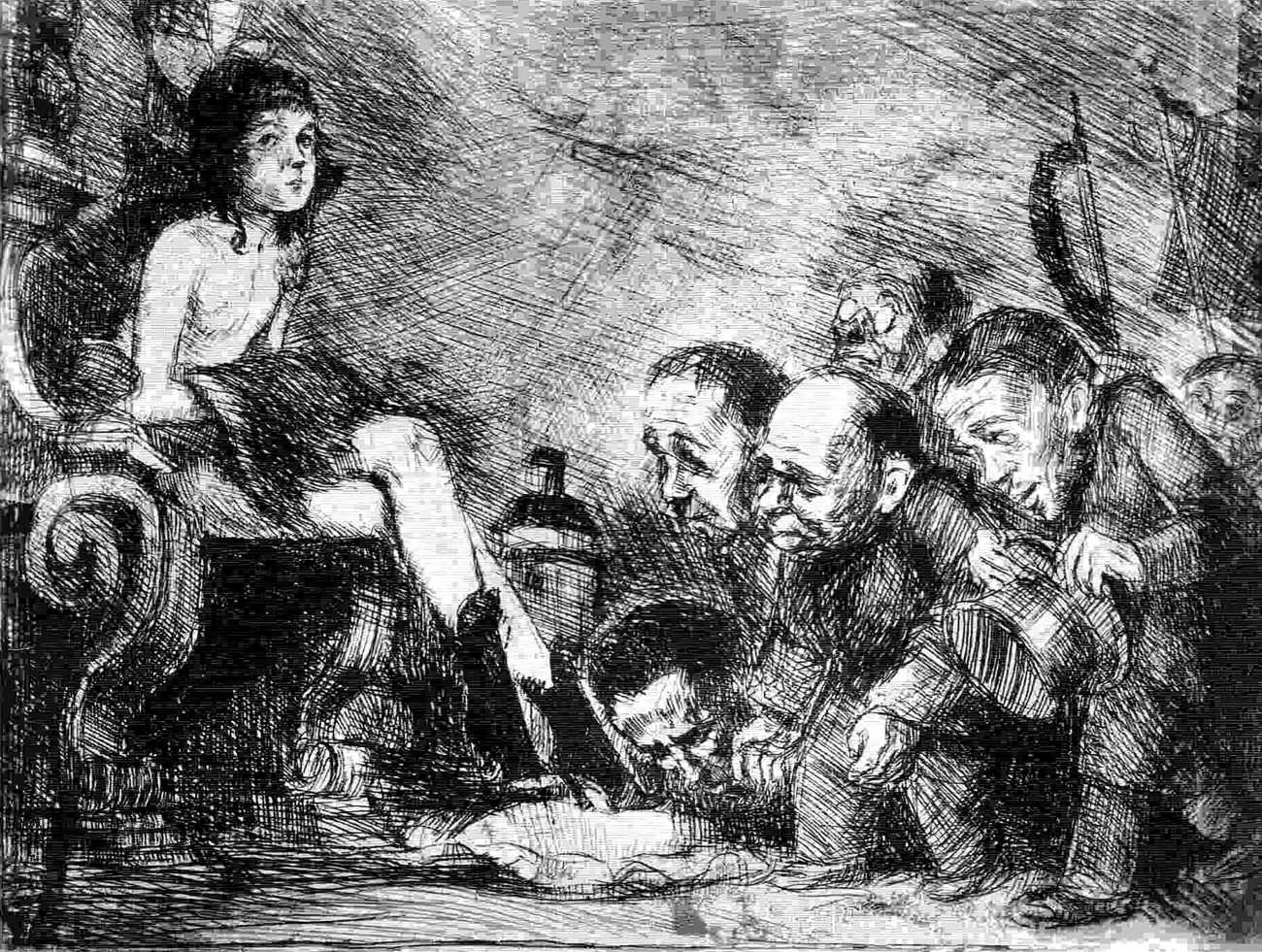
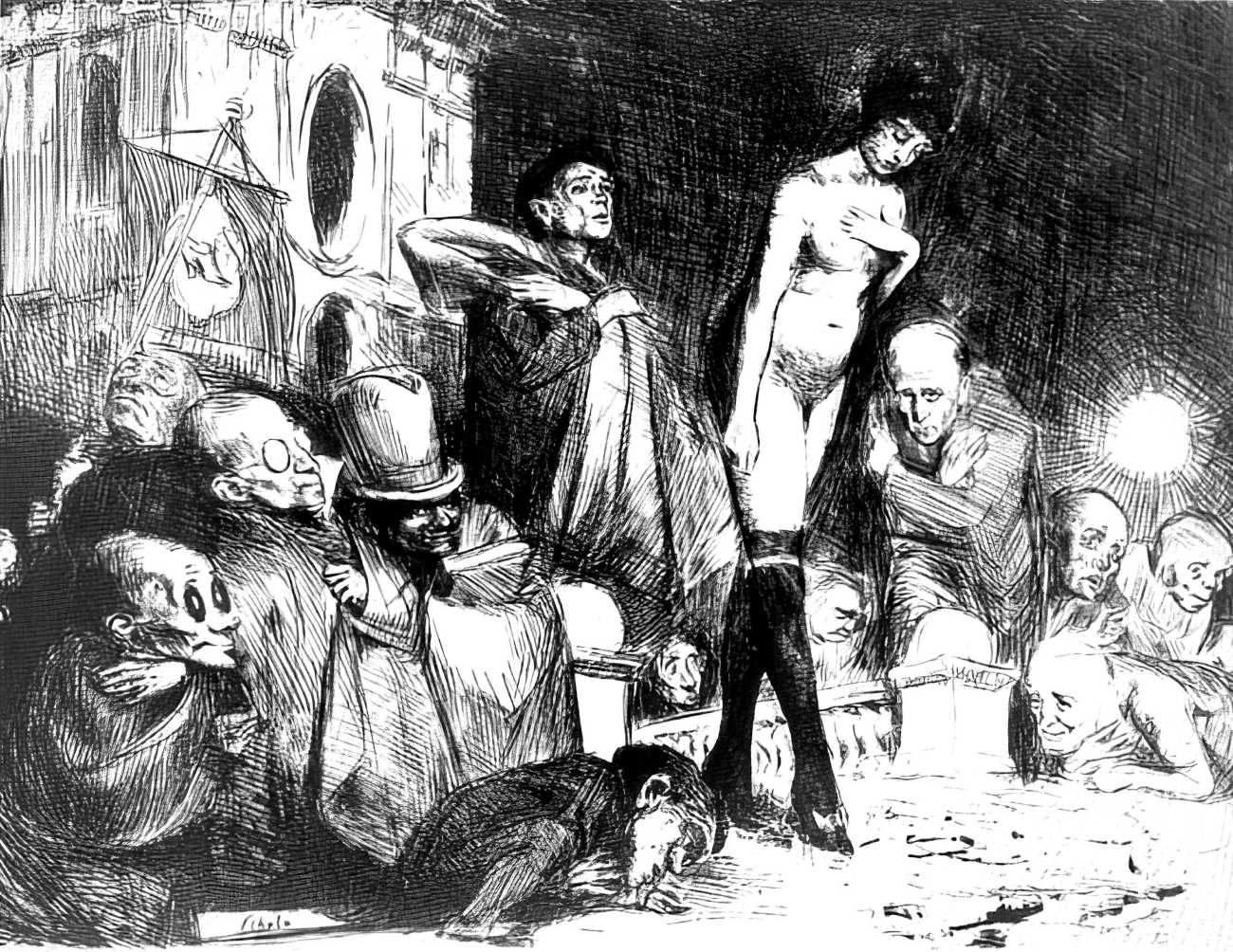
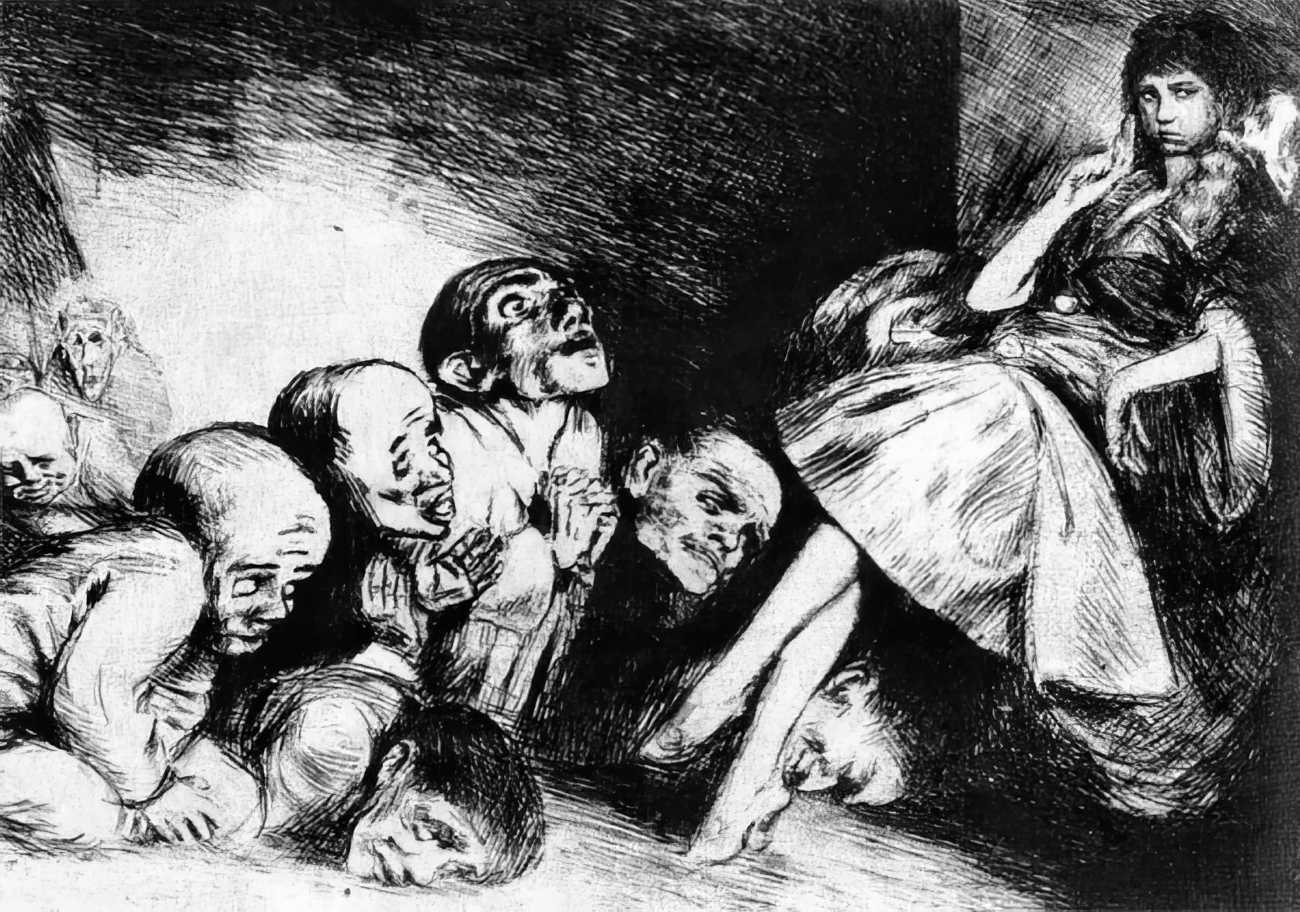
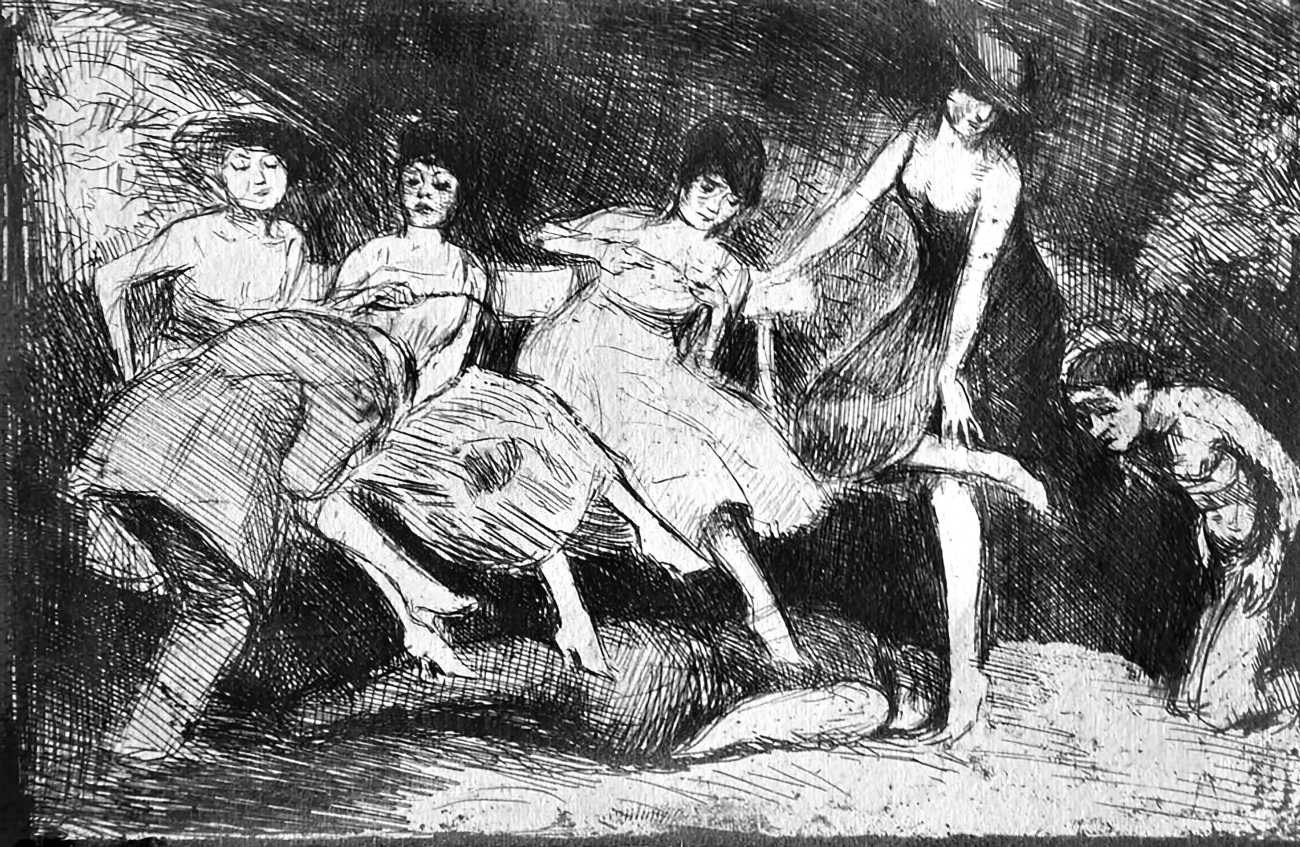
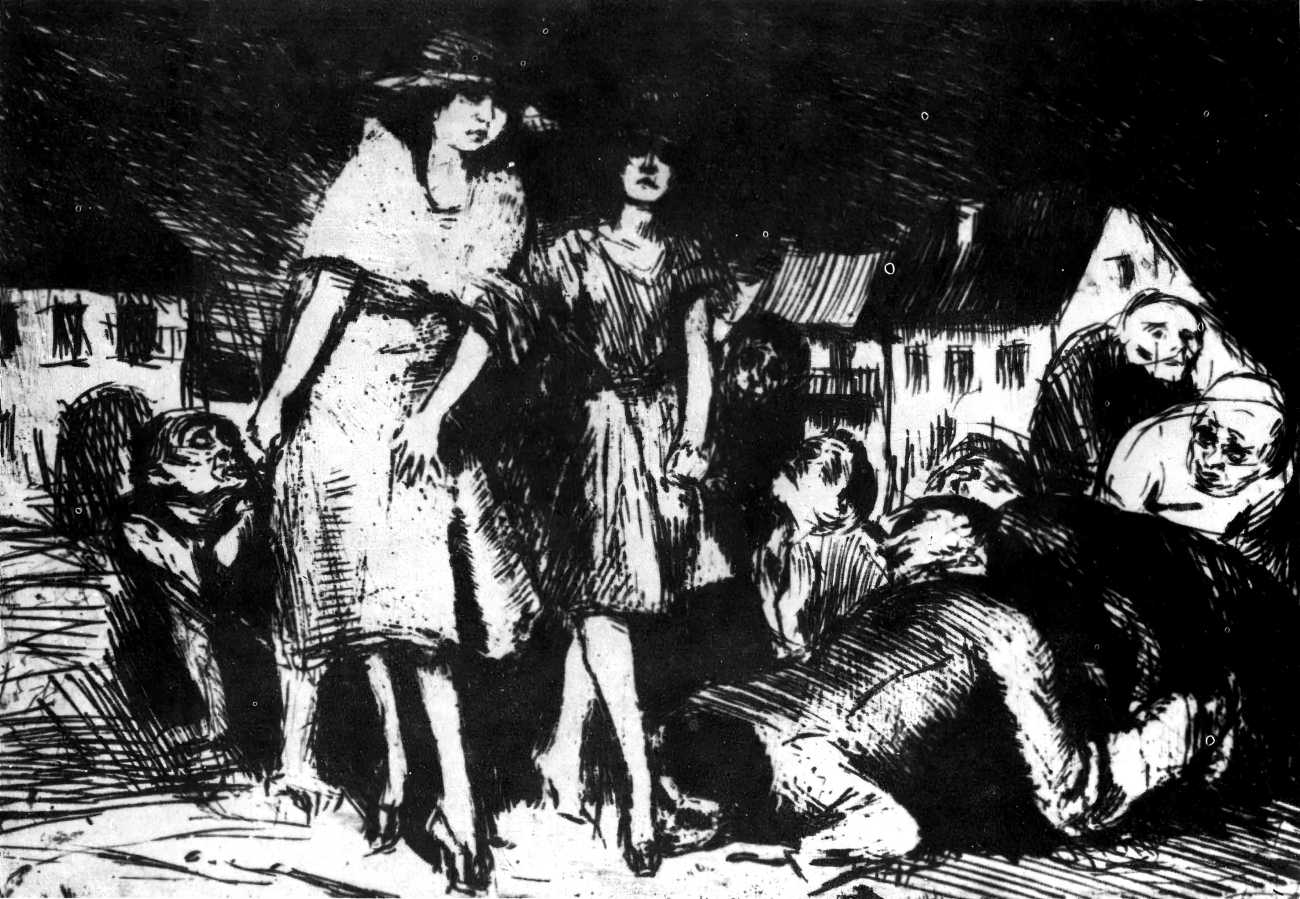
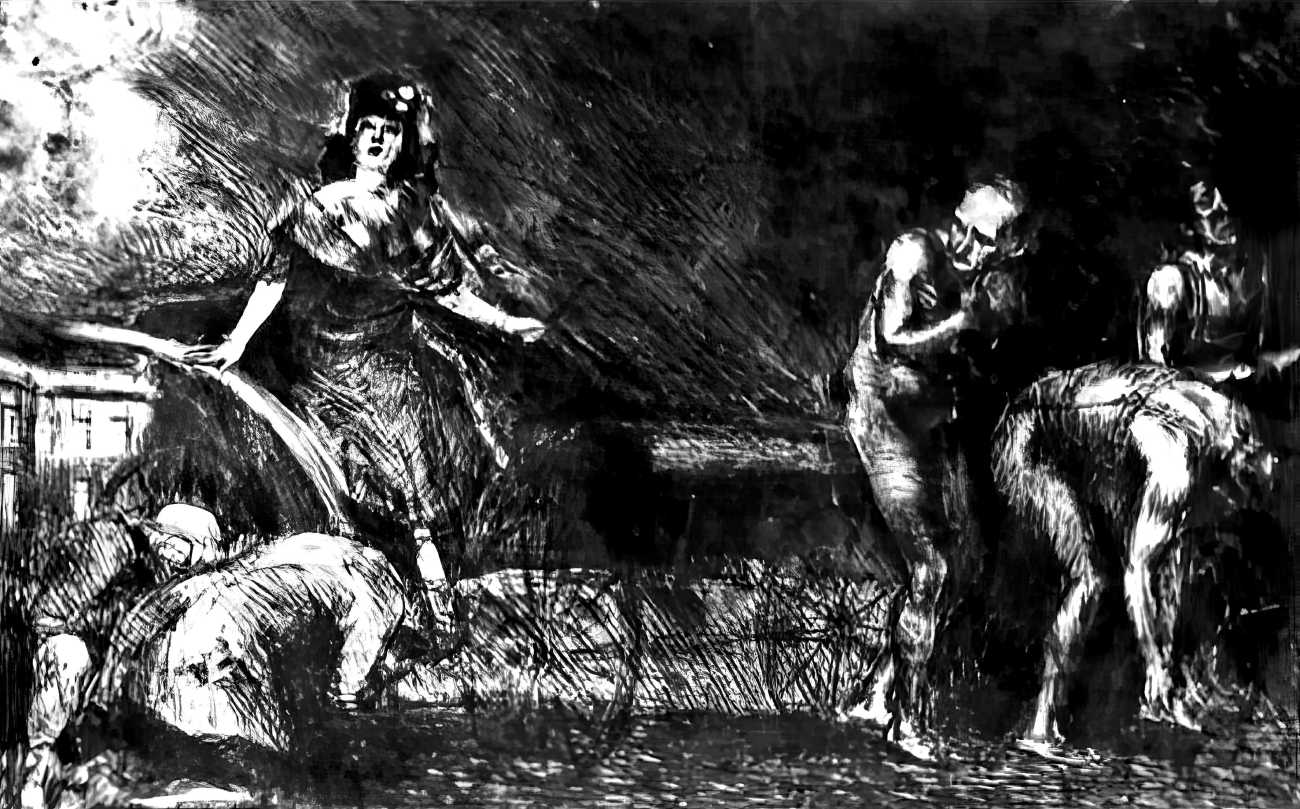
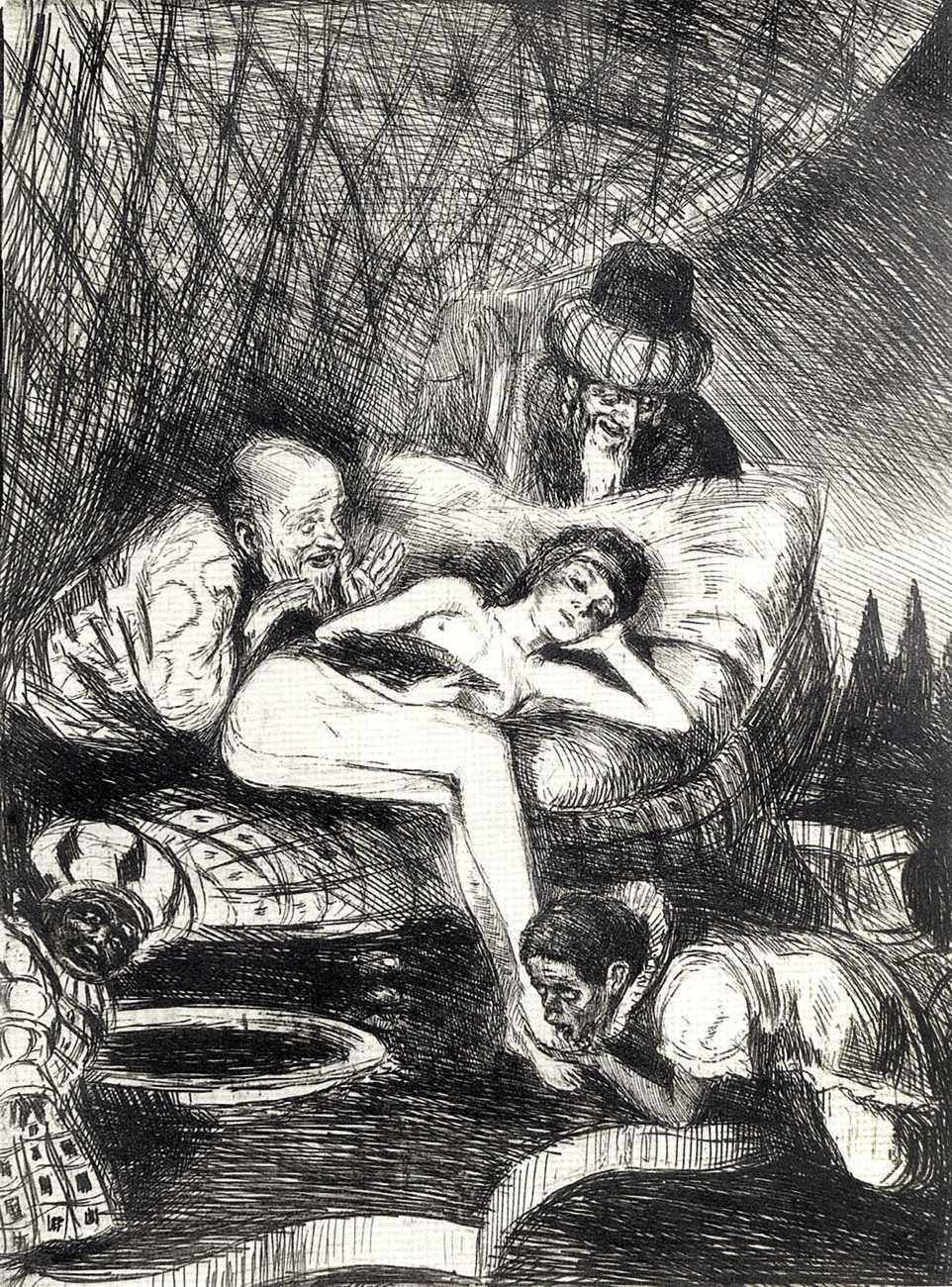
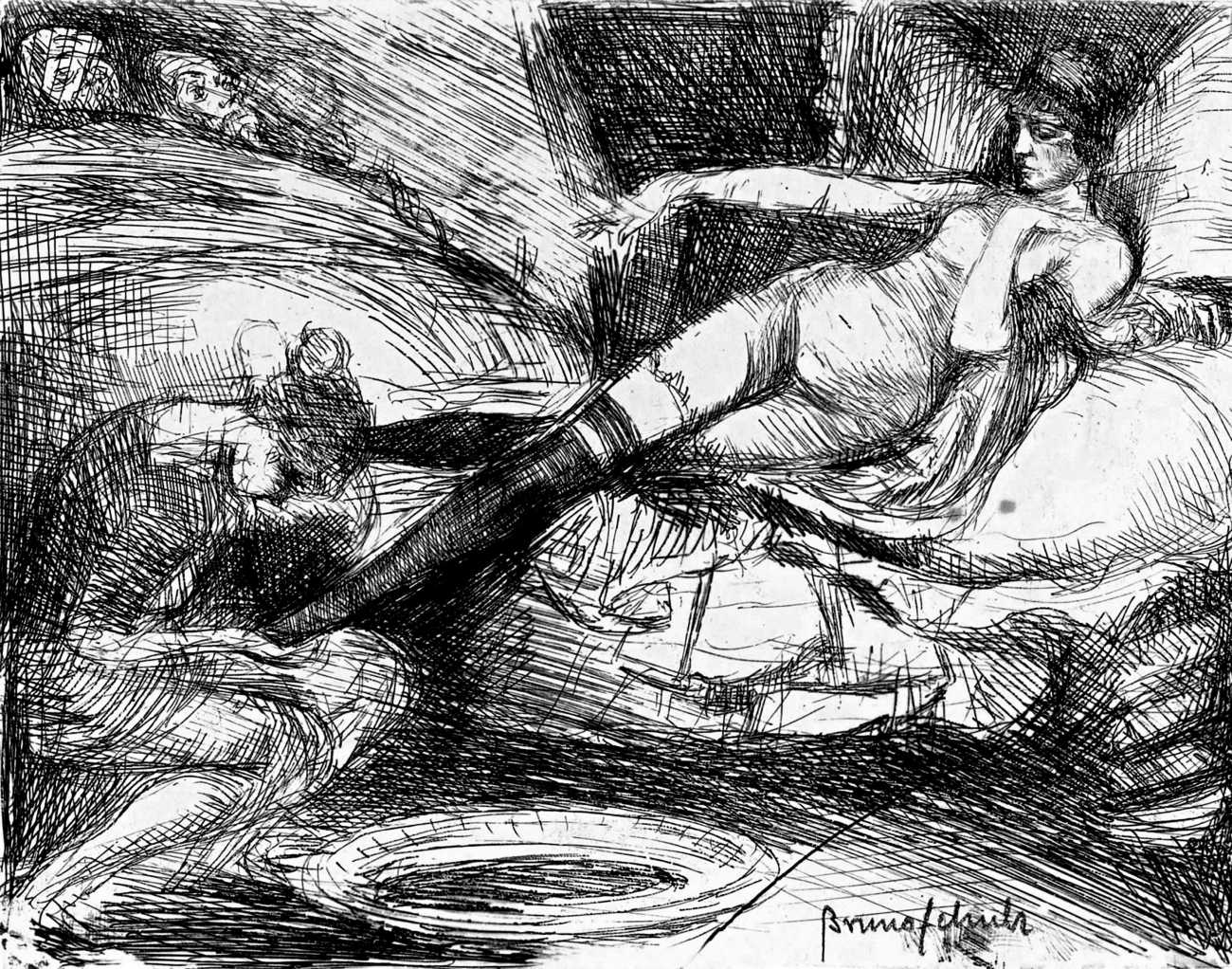
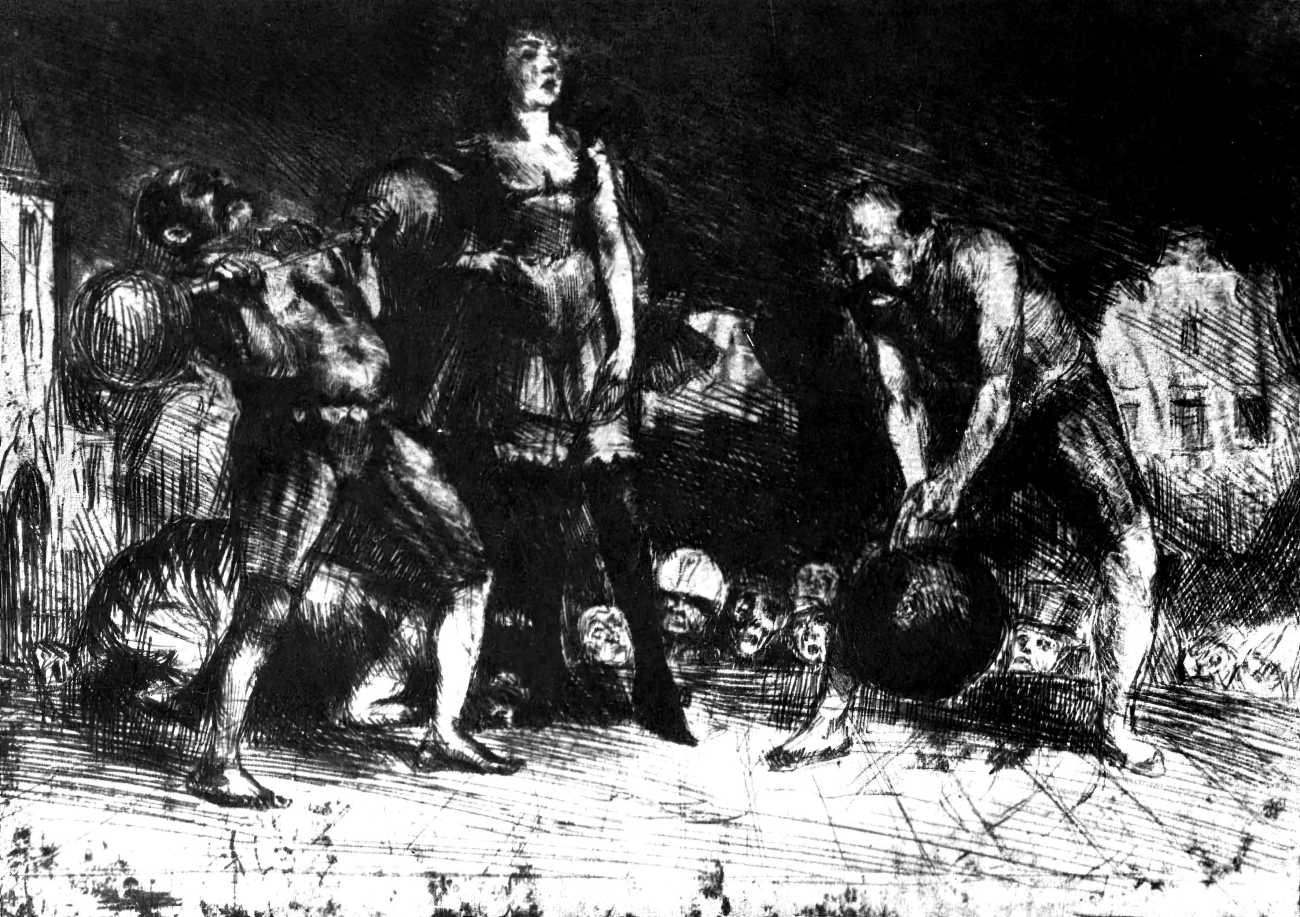
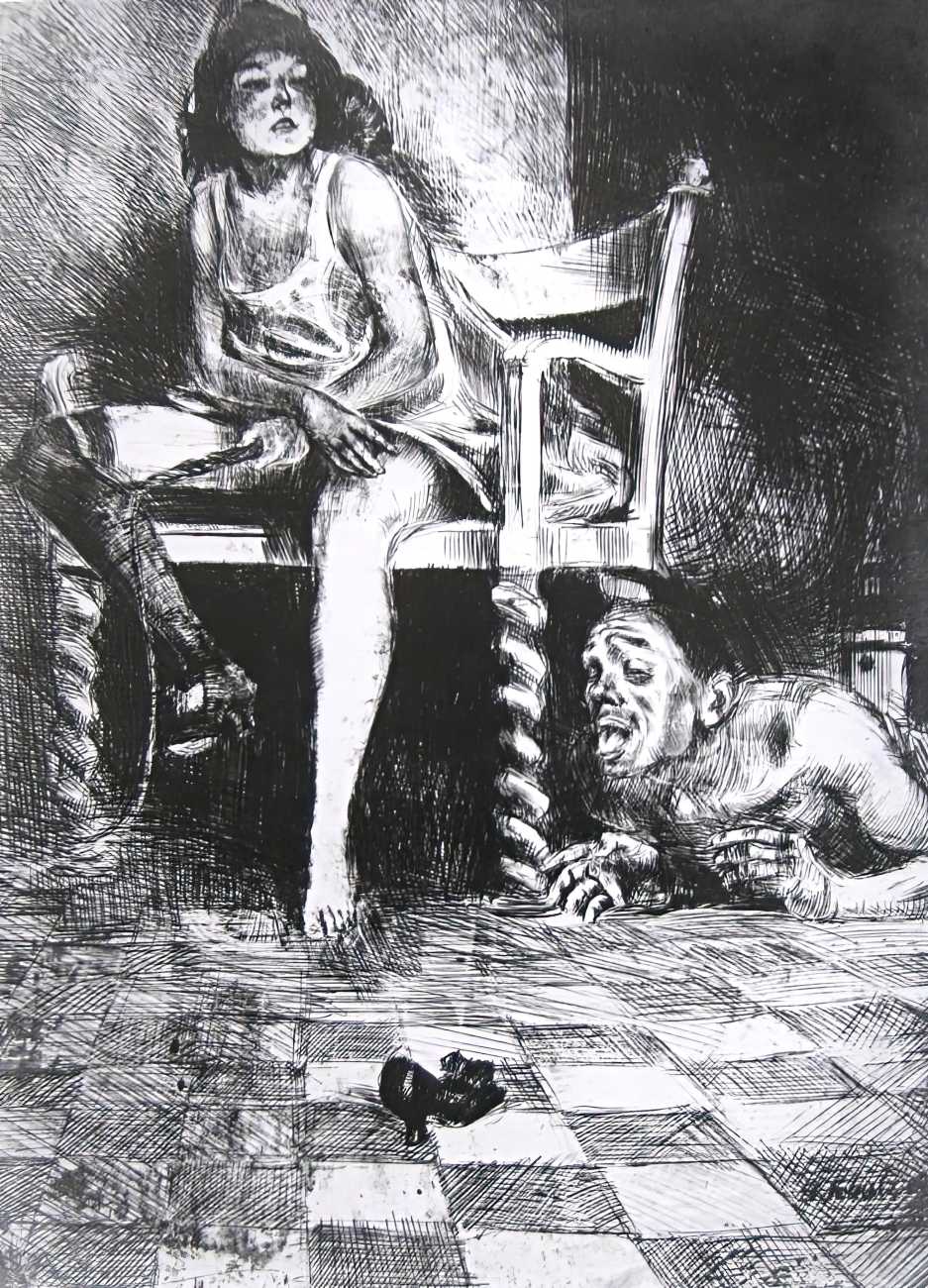
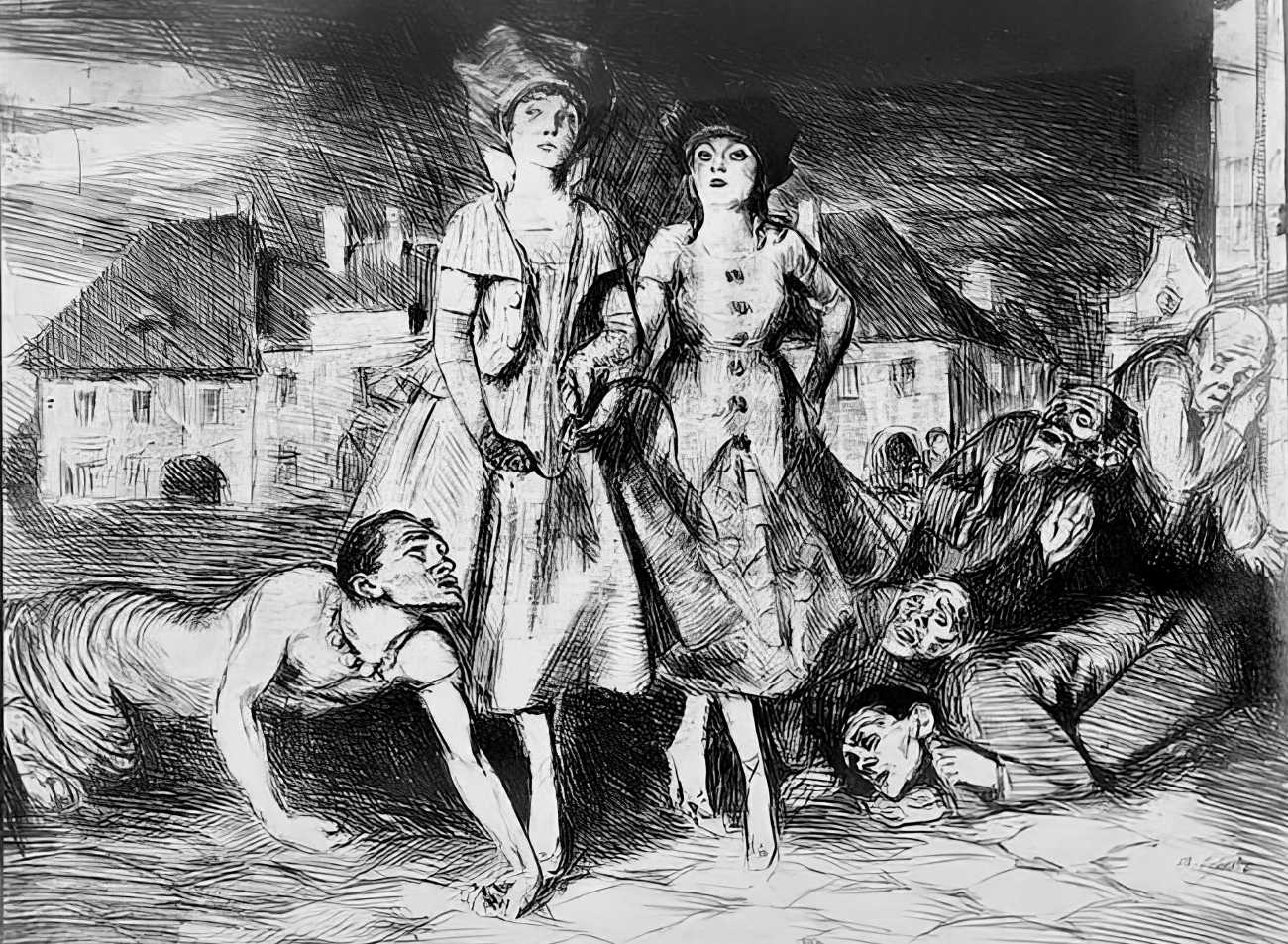
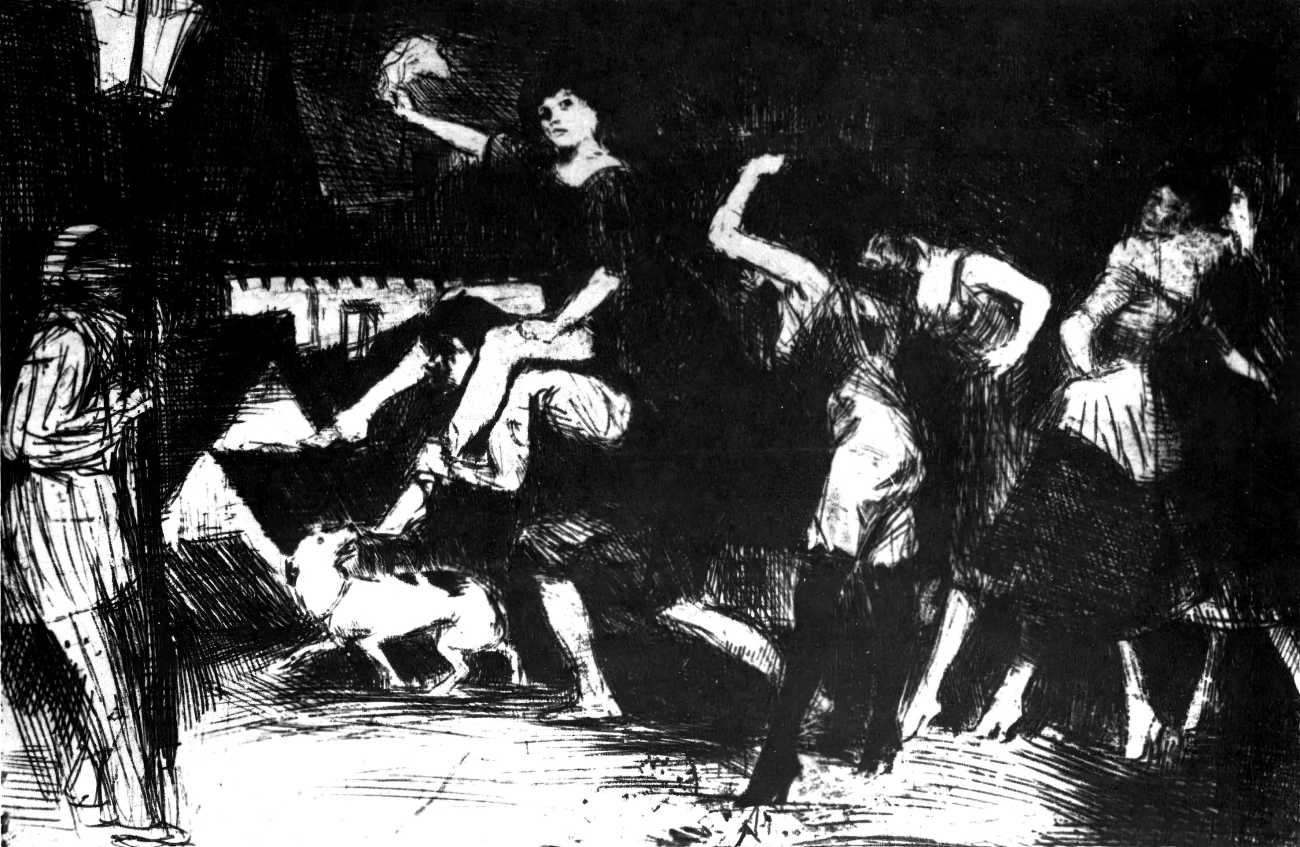
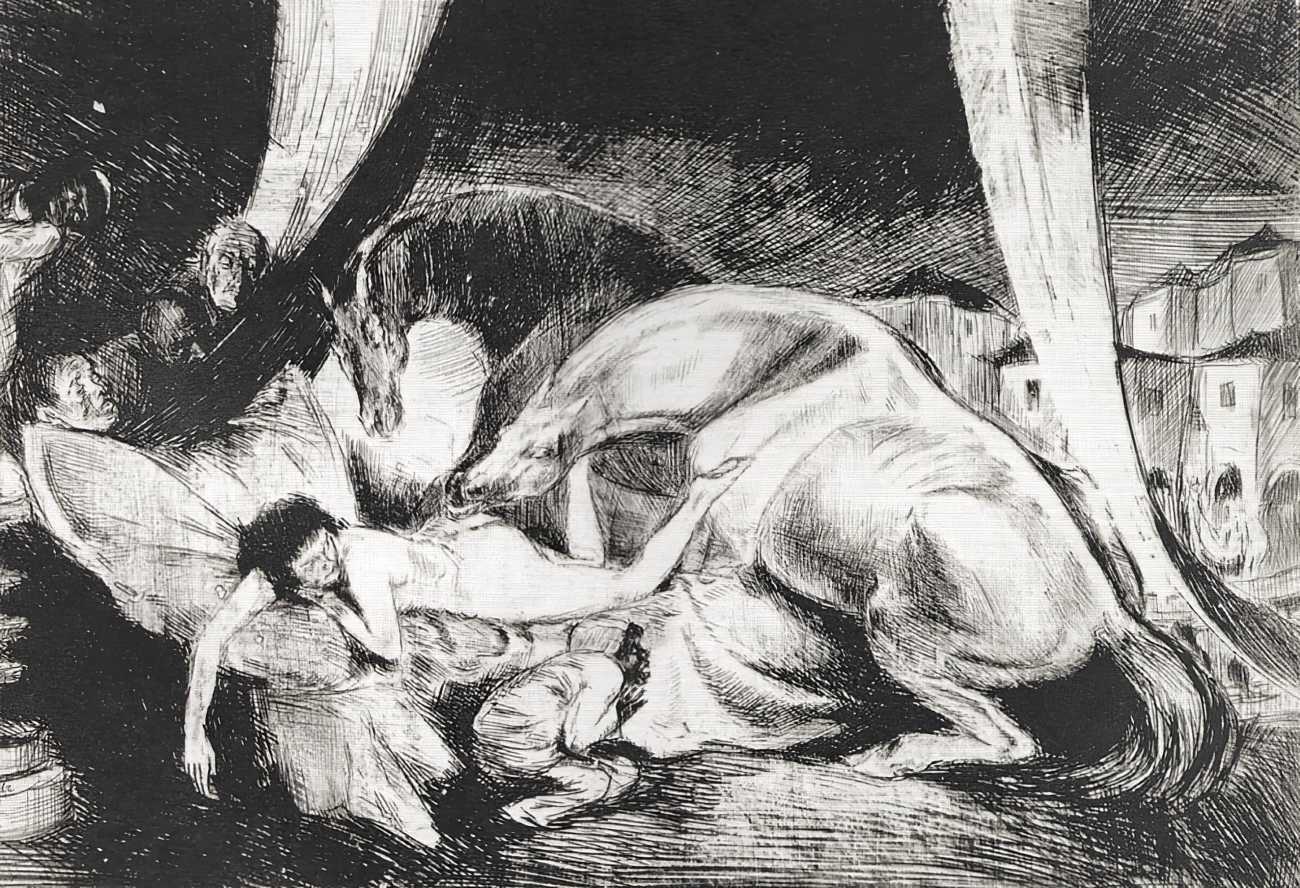
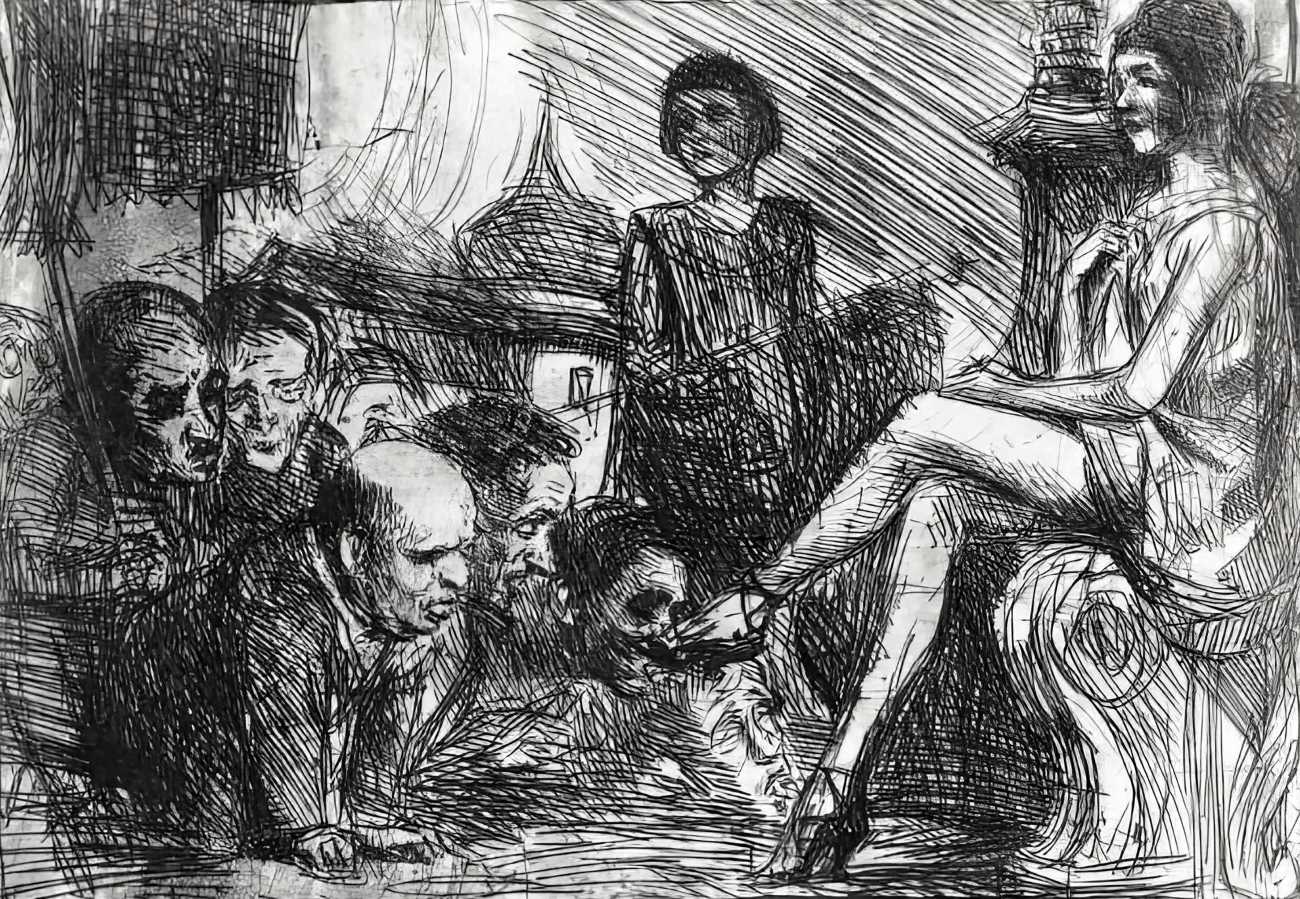
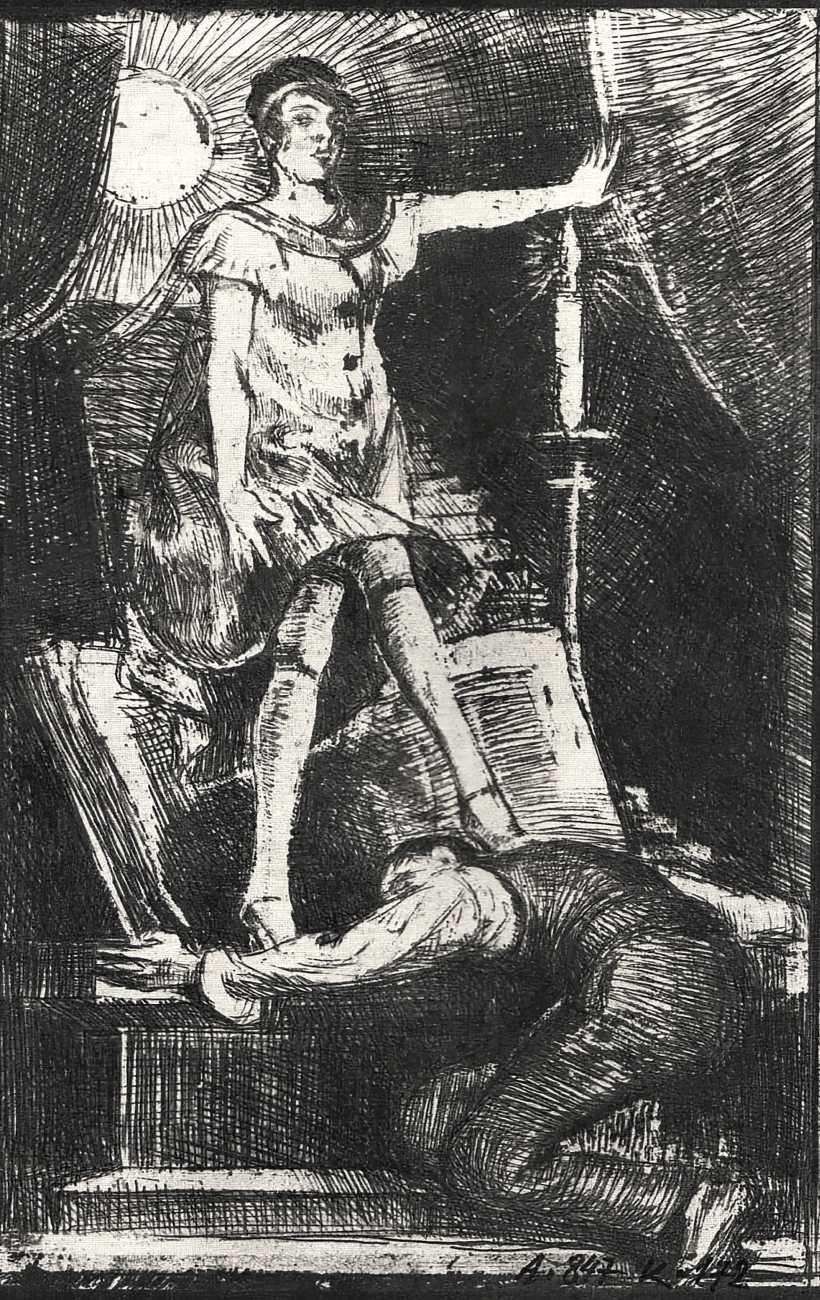
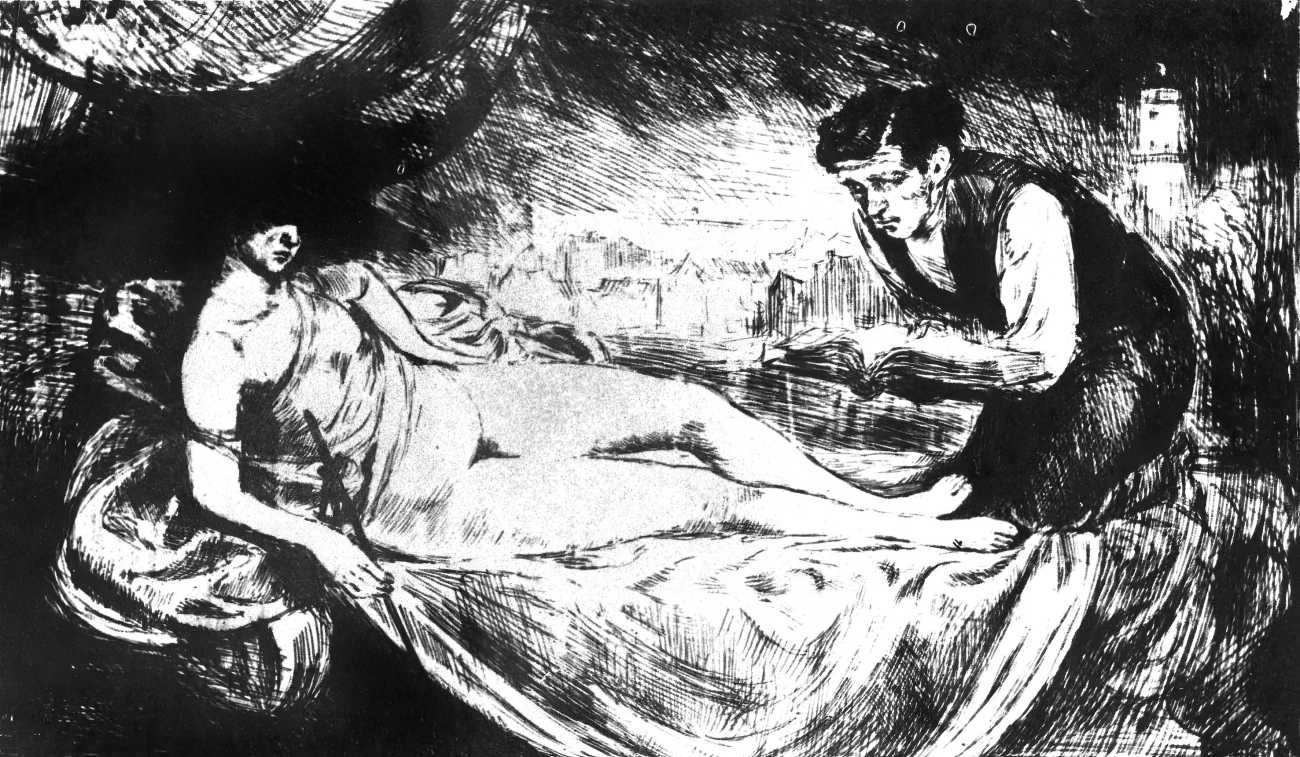
Before his literary reputation was established, however, Schulz was already producing intensely personal drawings and prints. Largely self-taught as an artist, he developed a distinctive visual language populated by grotesque figures, distorted bodies and recurring scenes of erotic domination and submission. His most important graphic work, Xięga Bałwochwalcza (The Book of Idolatry), was created in 1920–21, establishing themes that would continue to appear in his literary work, particularly the relationship between powerful women and submissive, humiliated men.
The artist and writer Stanisław Ignacy Witkiewicz was among the first to recognise the originality of these drawings, describing Schulz as ‘a demonologist’. Schulz himself was famously reluctant to explain his imagery, once remarking that he did not choose his subjects – they chose him.
Schulz’s private life was marked by friendship, intense correspondence and a preference for solitude. His closest literary friendship was with the writer and critic Debora Vogel, with whom he exchanged letters and early literary work; it was partly through their correspondence that some of the material that became The Cinnamon Shops first took shape. In 1933 he met Józefina Szelińska, a teacher of Polish and a graduate of Lwów University – she was the only woman to whom he proposed marriage. Schulz wrote her more than 200 letters and dedicated Sanatorium Under the Sign of the Hourglass to her. They planned to move to Warsaw together, but the engagement ended in 1937, broken off by Schulz. As he was known to have remarked, artists should not get married. Szelińska later recalled the relationship with considerable tenderness, saying that Schulz ‘gave me a meaning to life, a taste of being in a difficult atmosphere of heights with a man so utterly different from all the people I had met’.
His literary and visual worlds remained closely intertwined. He illustrated the first edition of Witold Gombrowicz’s novel Ferdydurke and his own Sanatorium Under the Sign of the Hourglass, while his prose repeatedly returned to the fantasies, transformations and erotic power relationships present in his drawings. Much of his work was lost during the second world war, including his unfinished novel Mesjasz (The Messiah). In 1941 he was forced into the Drohobycz Ghetto, and on 19 November 1942, while walking home with a loaf of bread, he was shot and killed by a Gestapo officer. He was fifty years old.
Similar artists
Jean-Jacques Lequeu – French architect-draughtsman of strange erotic studies.
Félicien Rops – Belgian symbolist printmaker whose erotic scenes often show dominant women.
Friedrich Schröder-Sonnenstern – German outsider artist of fantastical grotesque scenes.
Franciszek Starowieyski – Polish draughtsman and poster artist of macabre, baroque imagery.
Jindřich Štyrský – Czech surrealist of erotic collage and prose.
Antoni Uniechowski – Polish draughtsman of literary and erotic subjects.
Franz von Bayros – Austrian decadent illustrator of fin-de-siècle erotic scenes.
Example illustration