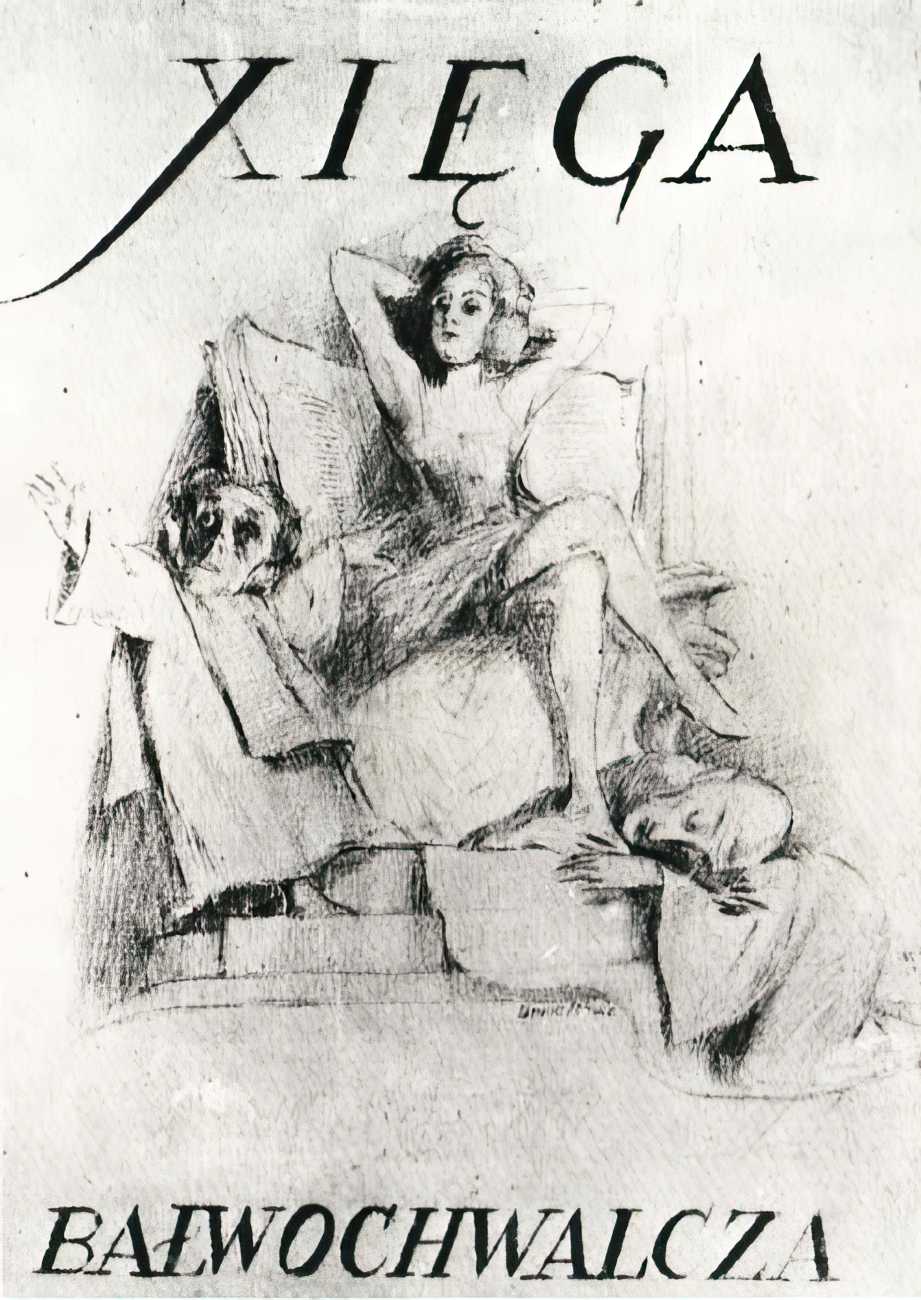
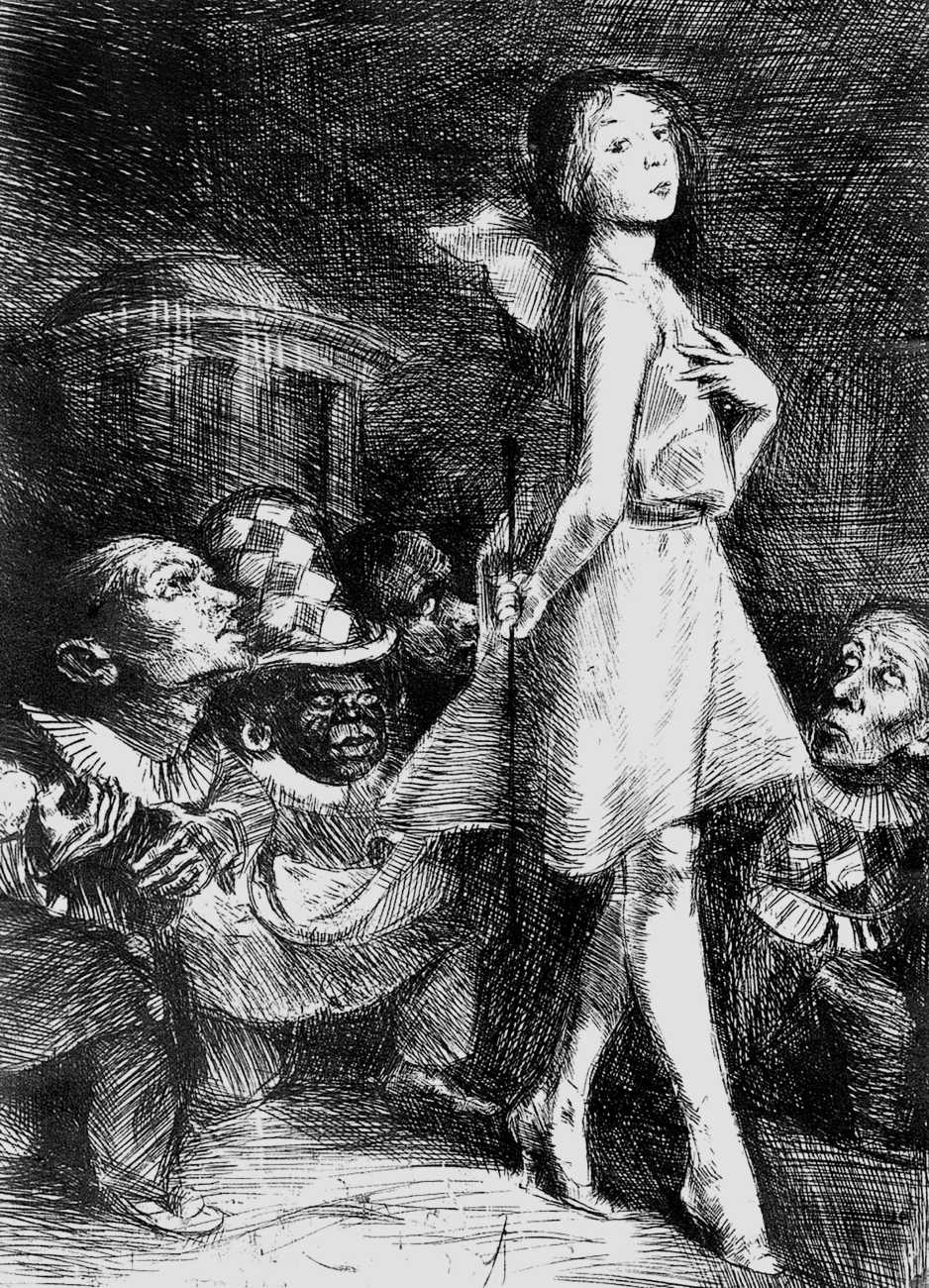
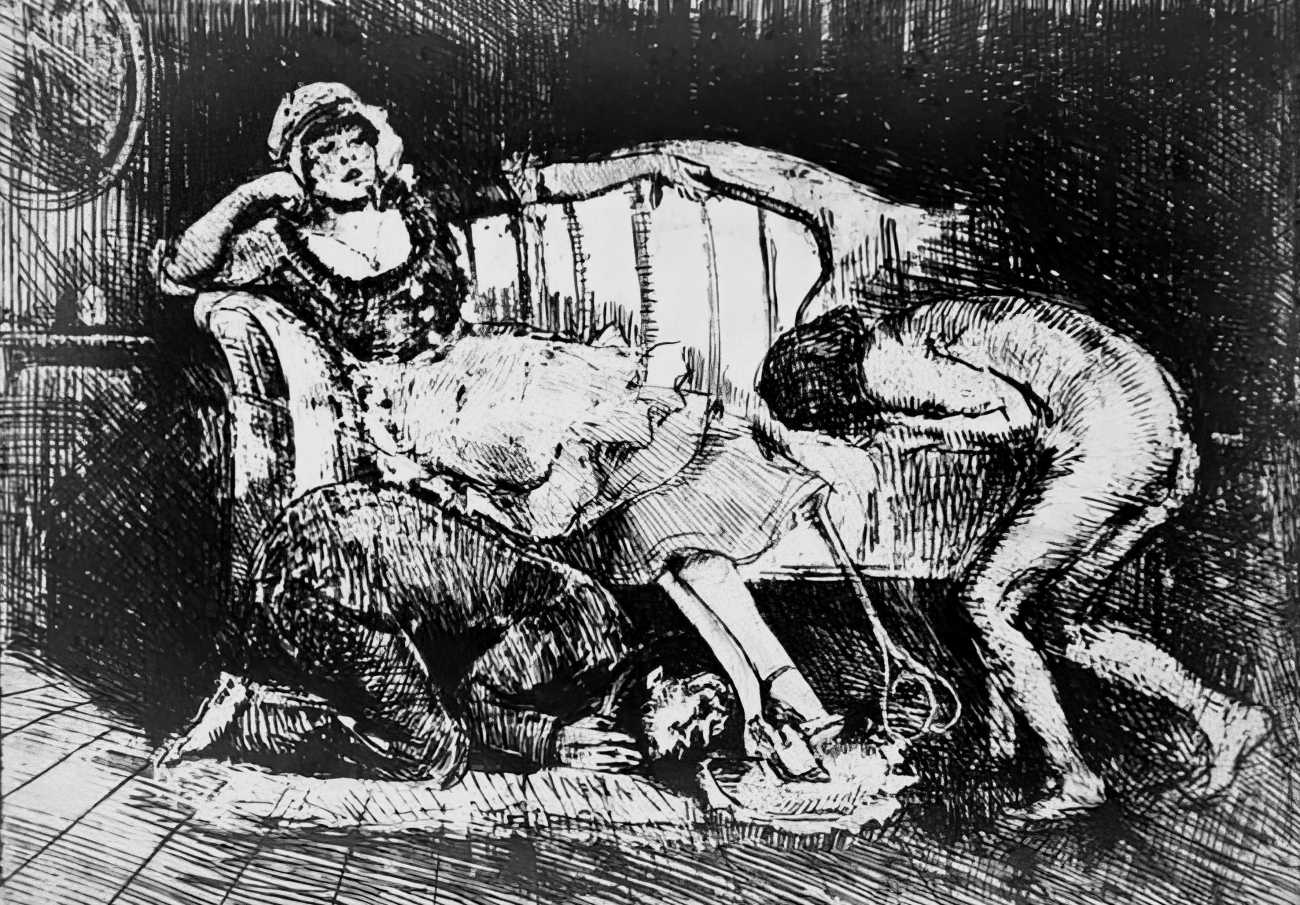
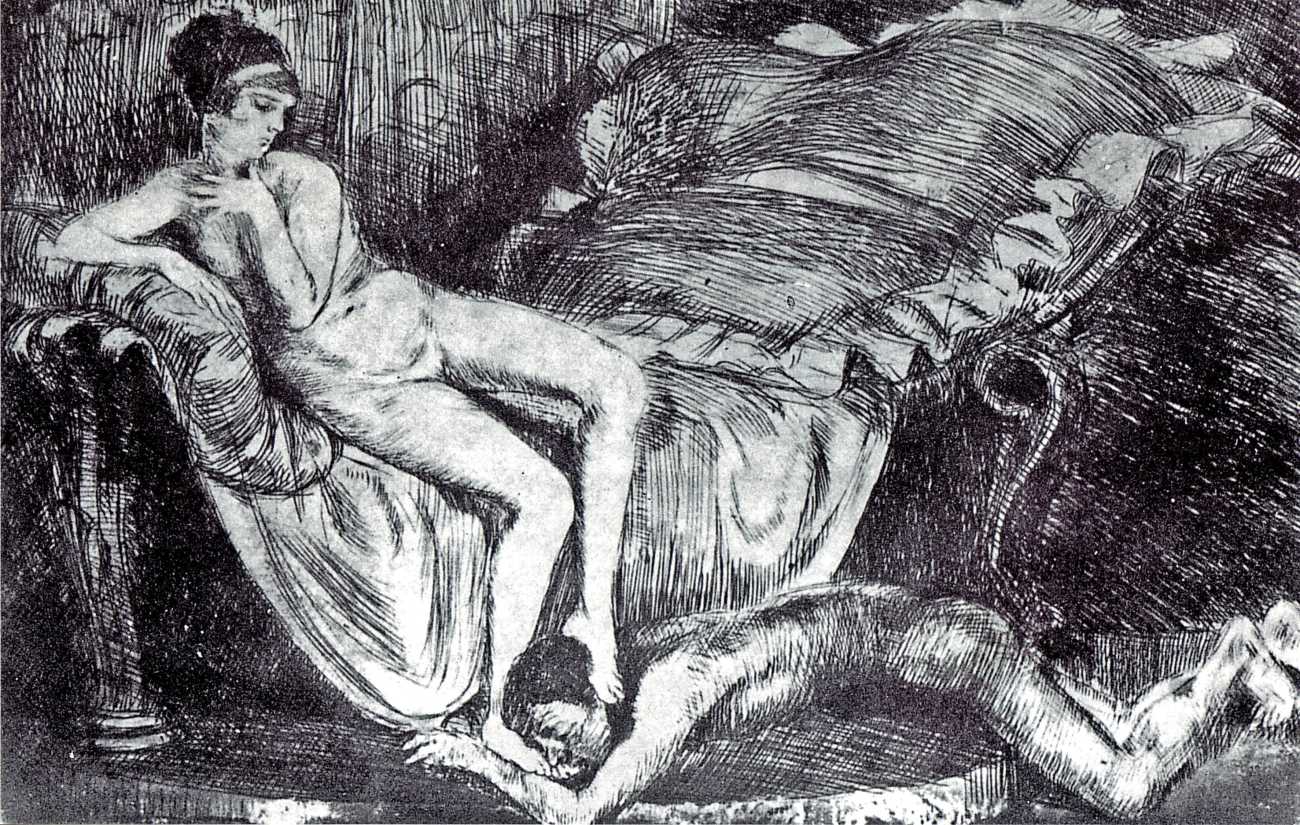
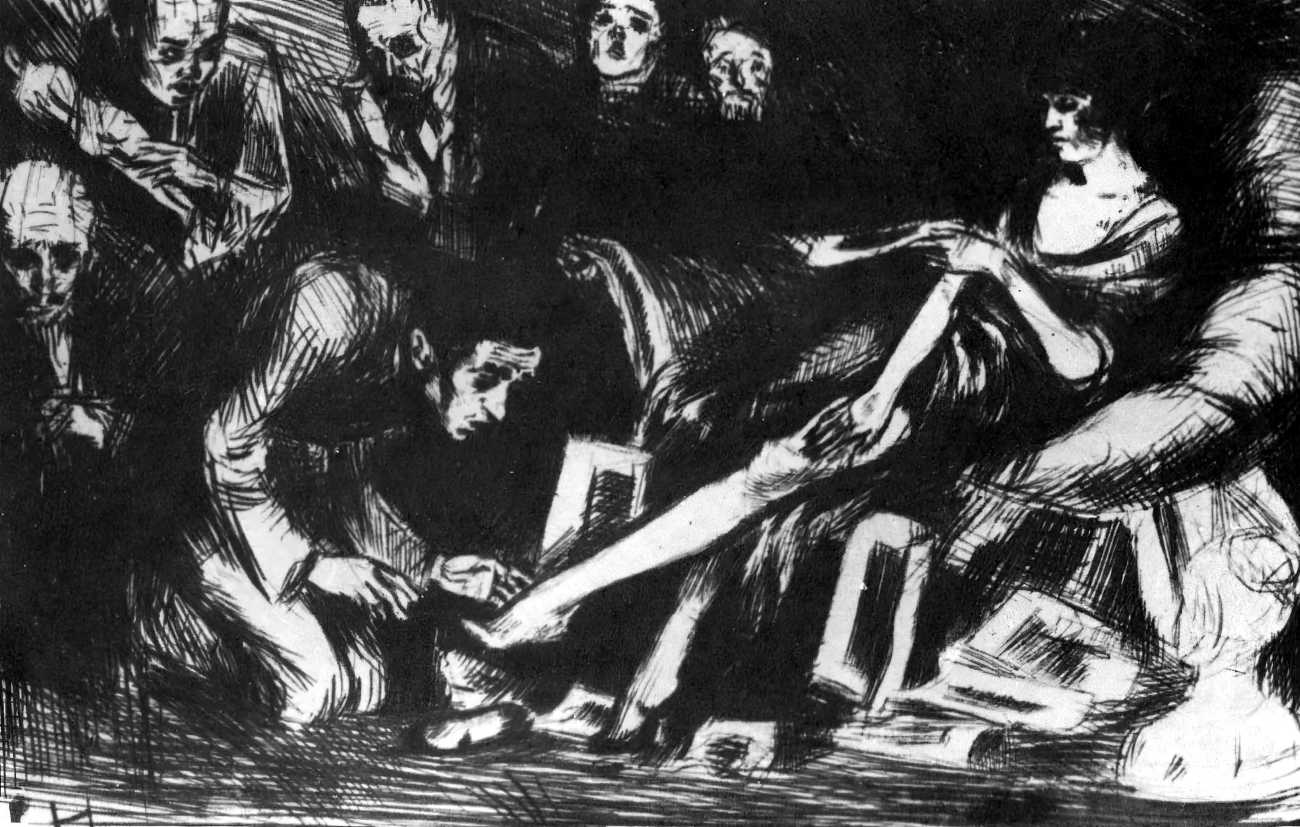
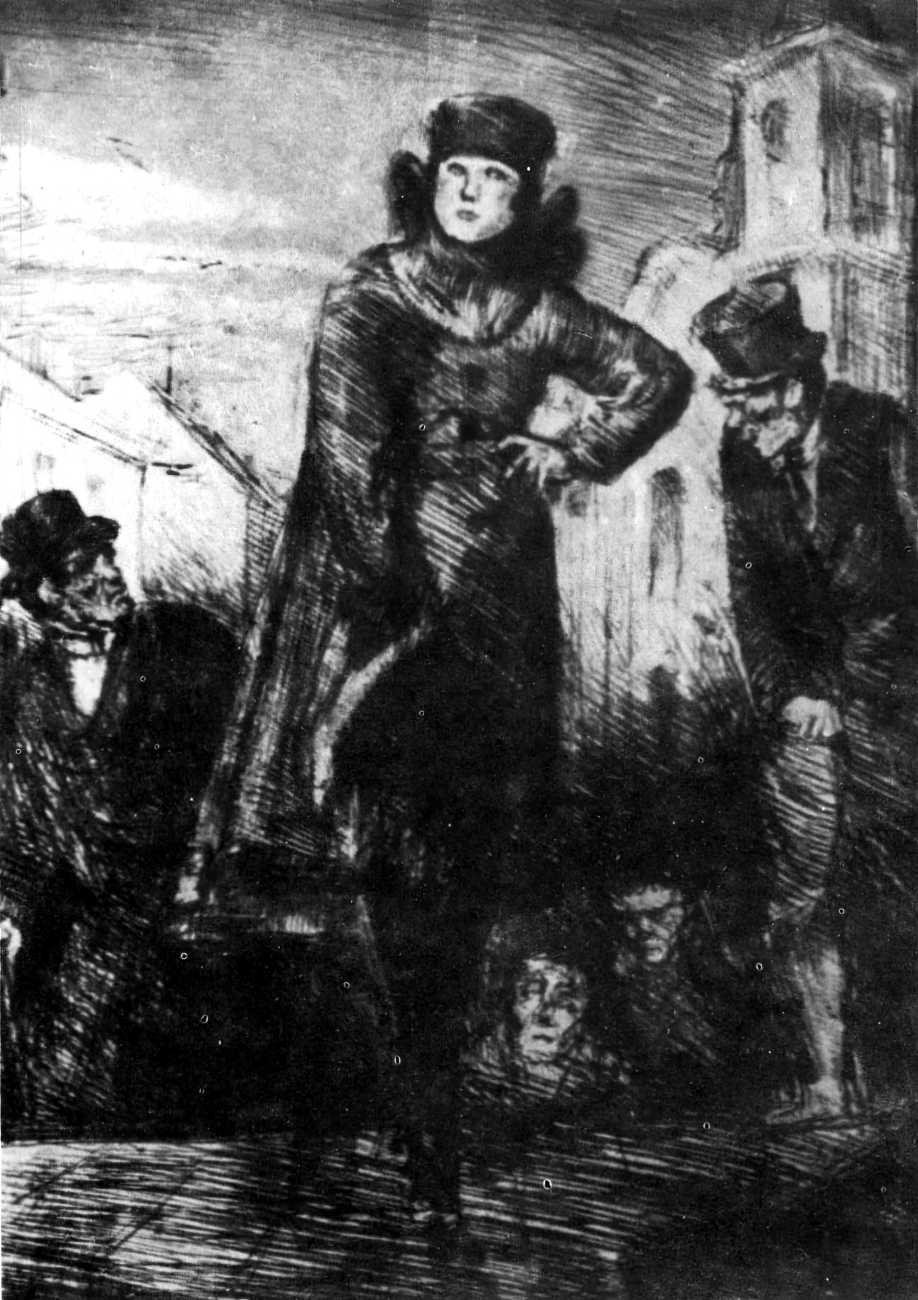
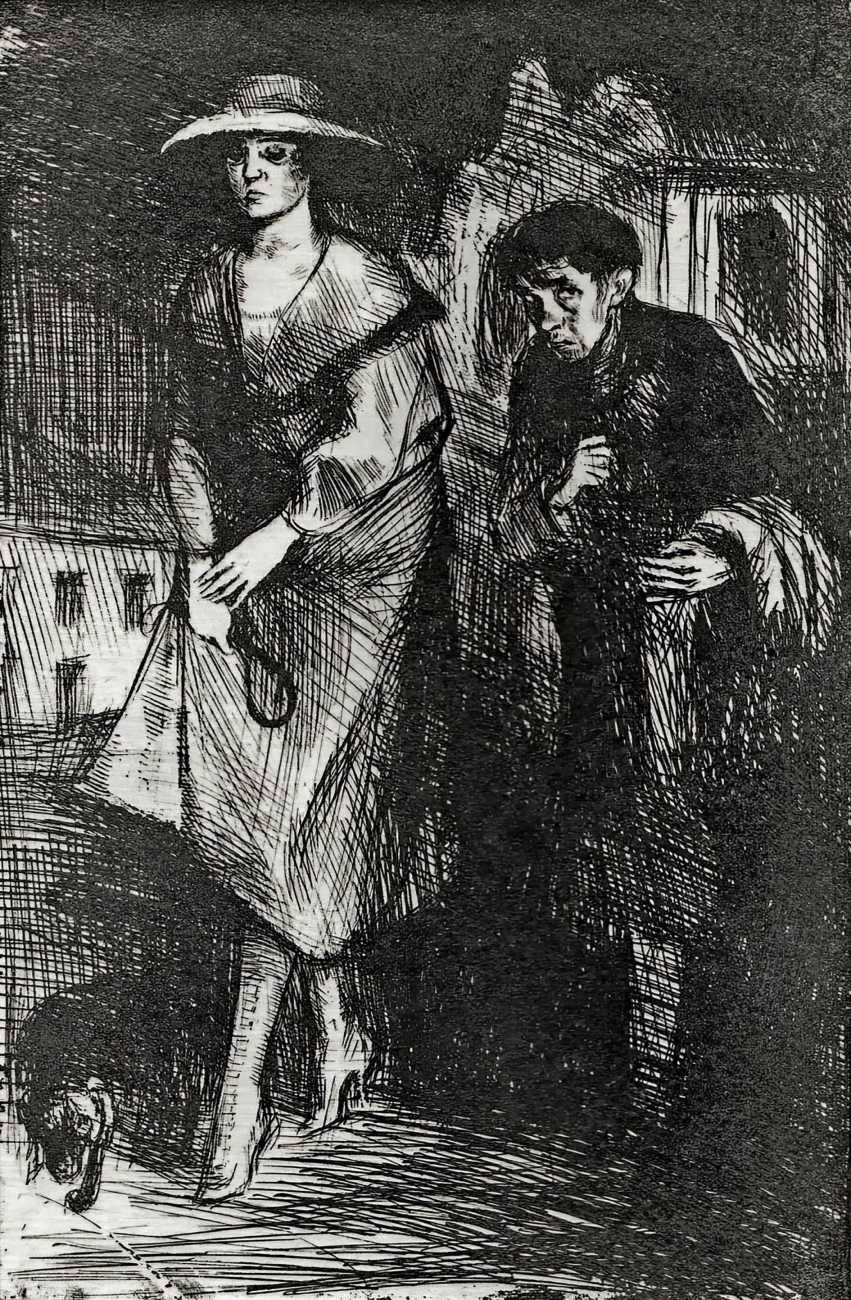
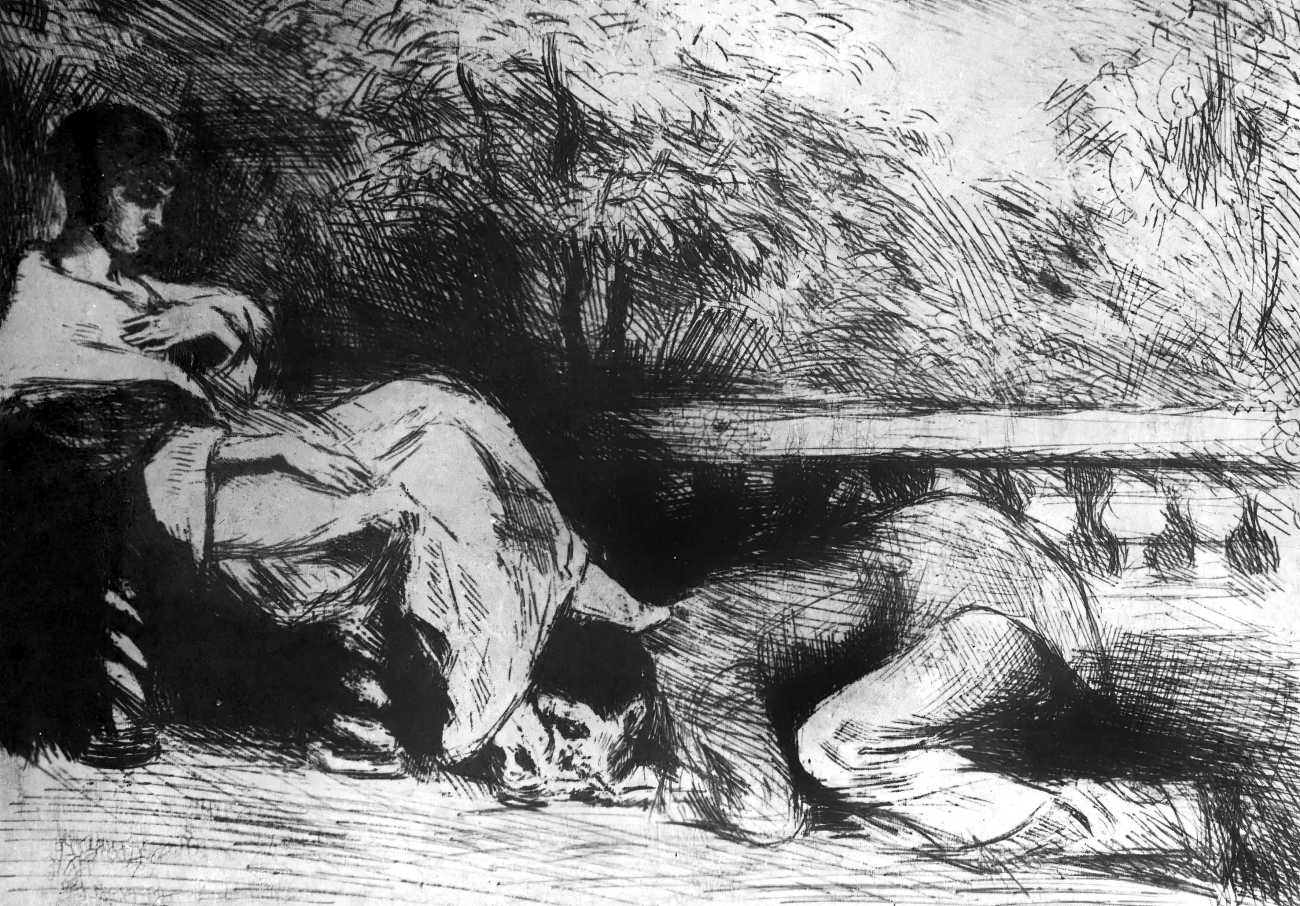
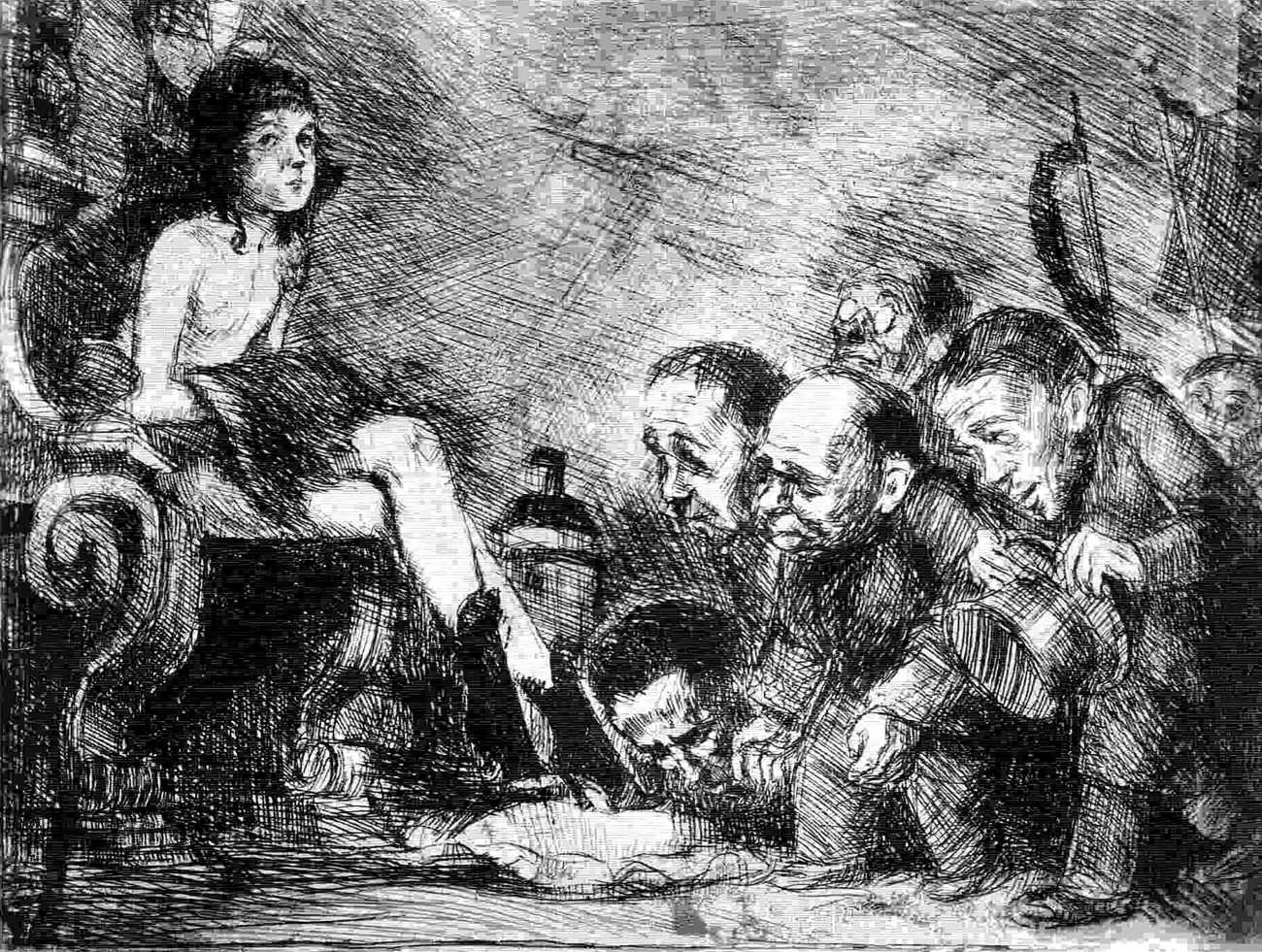
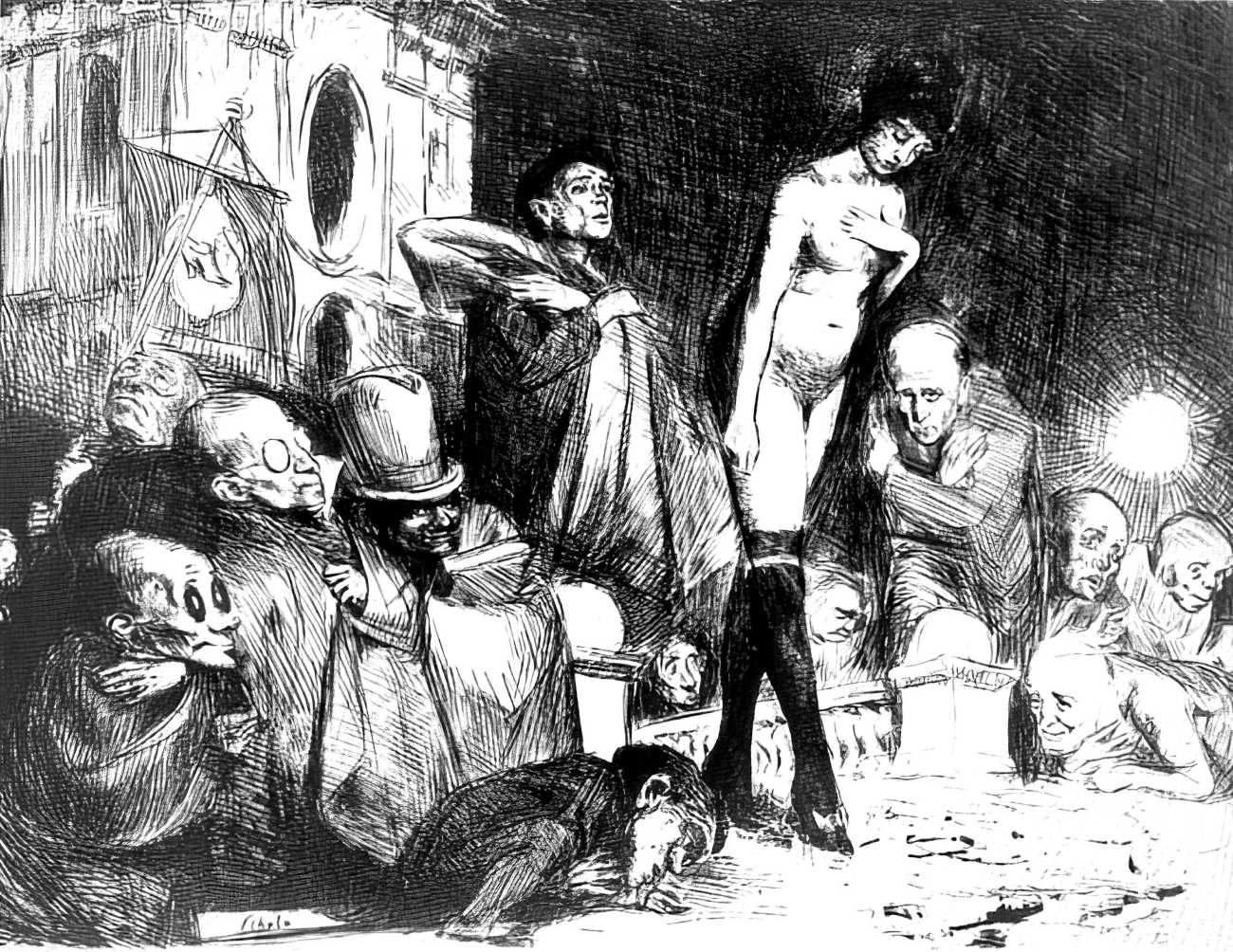
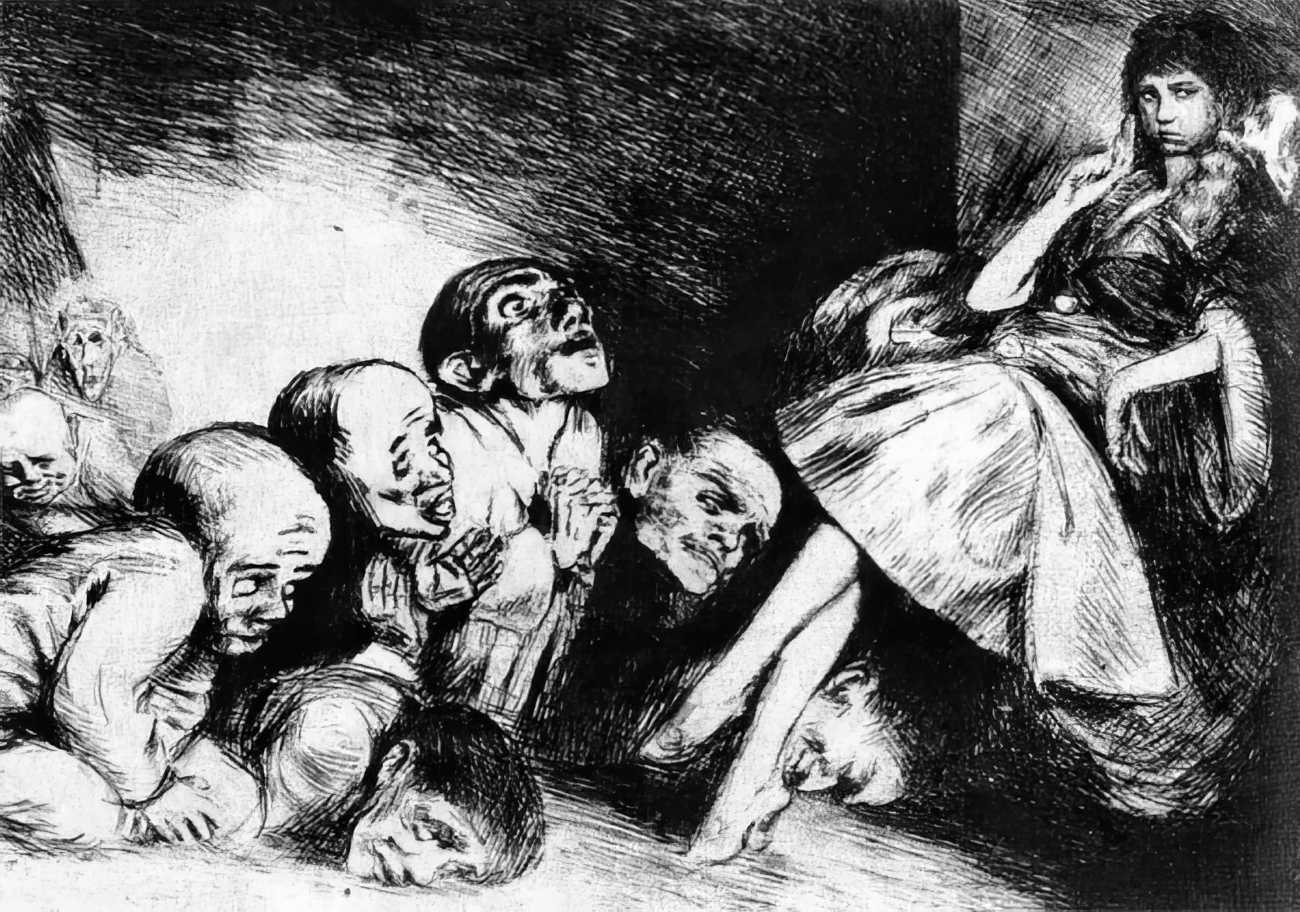
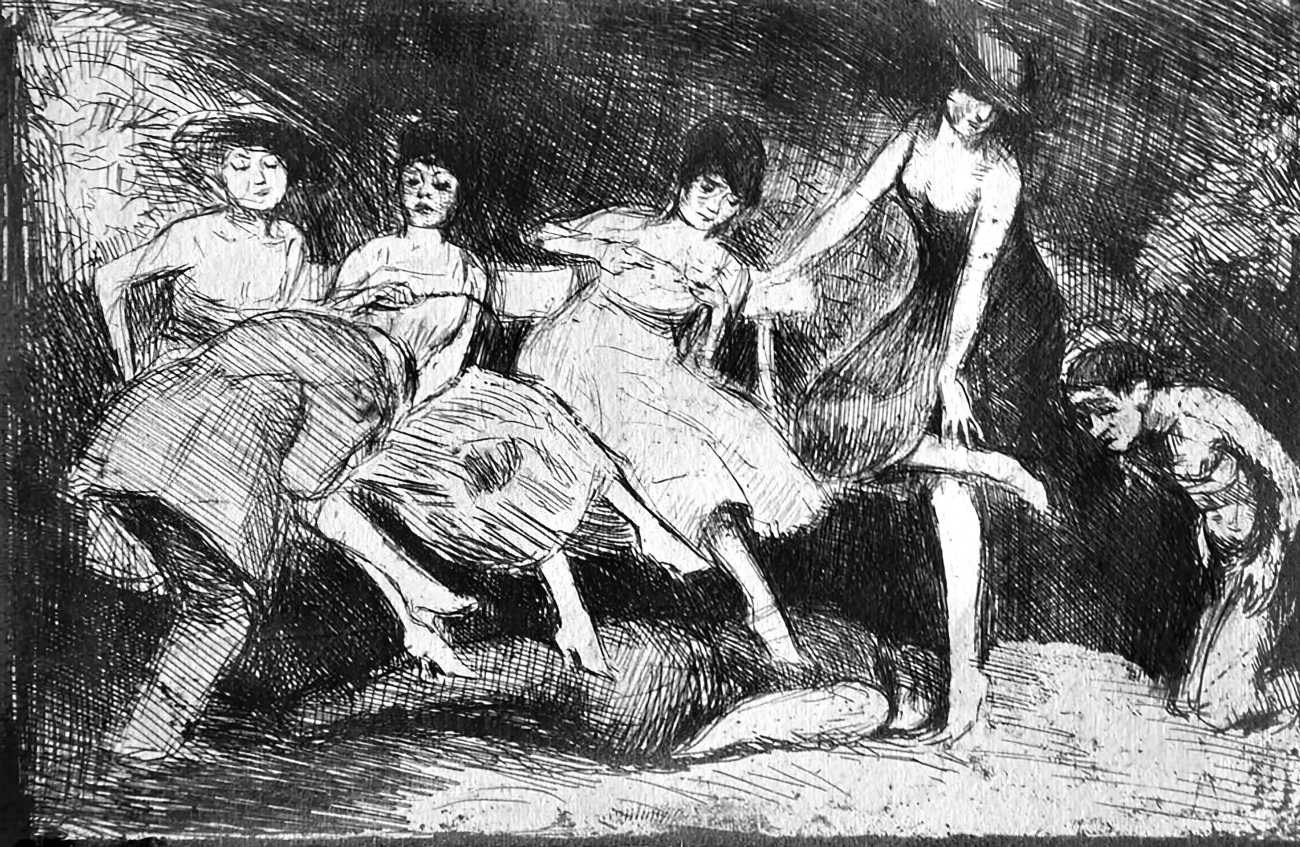
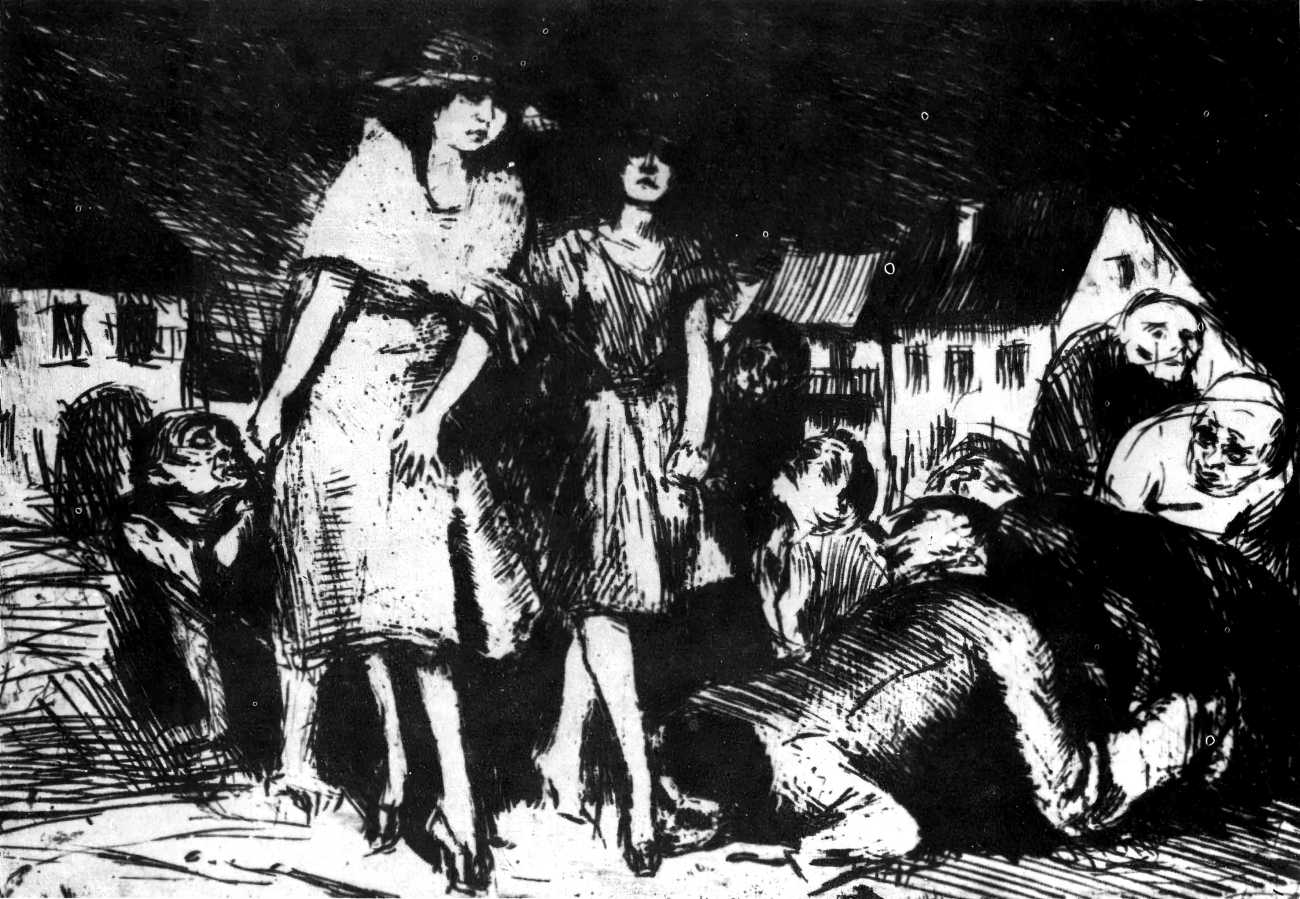
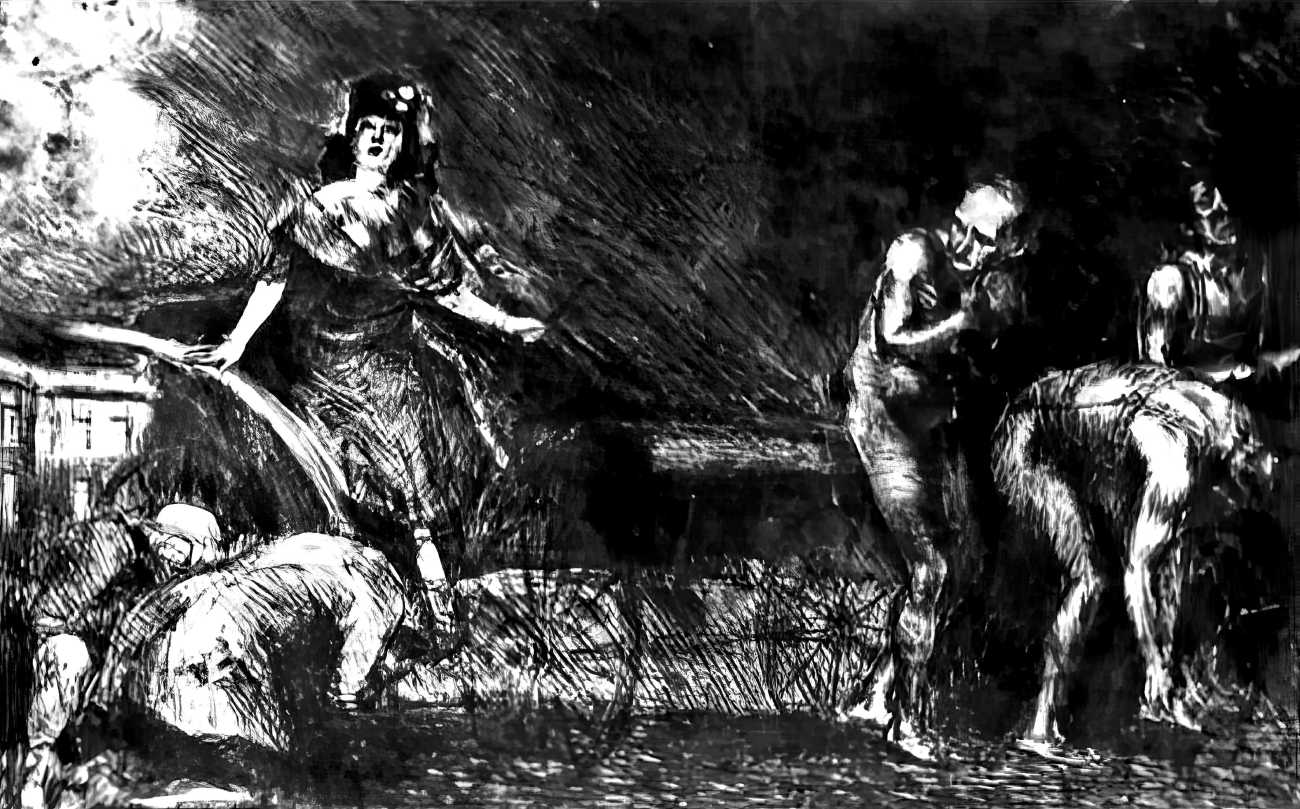
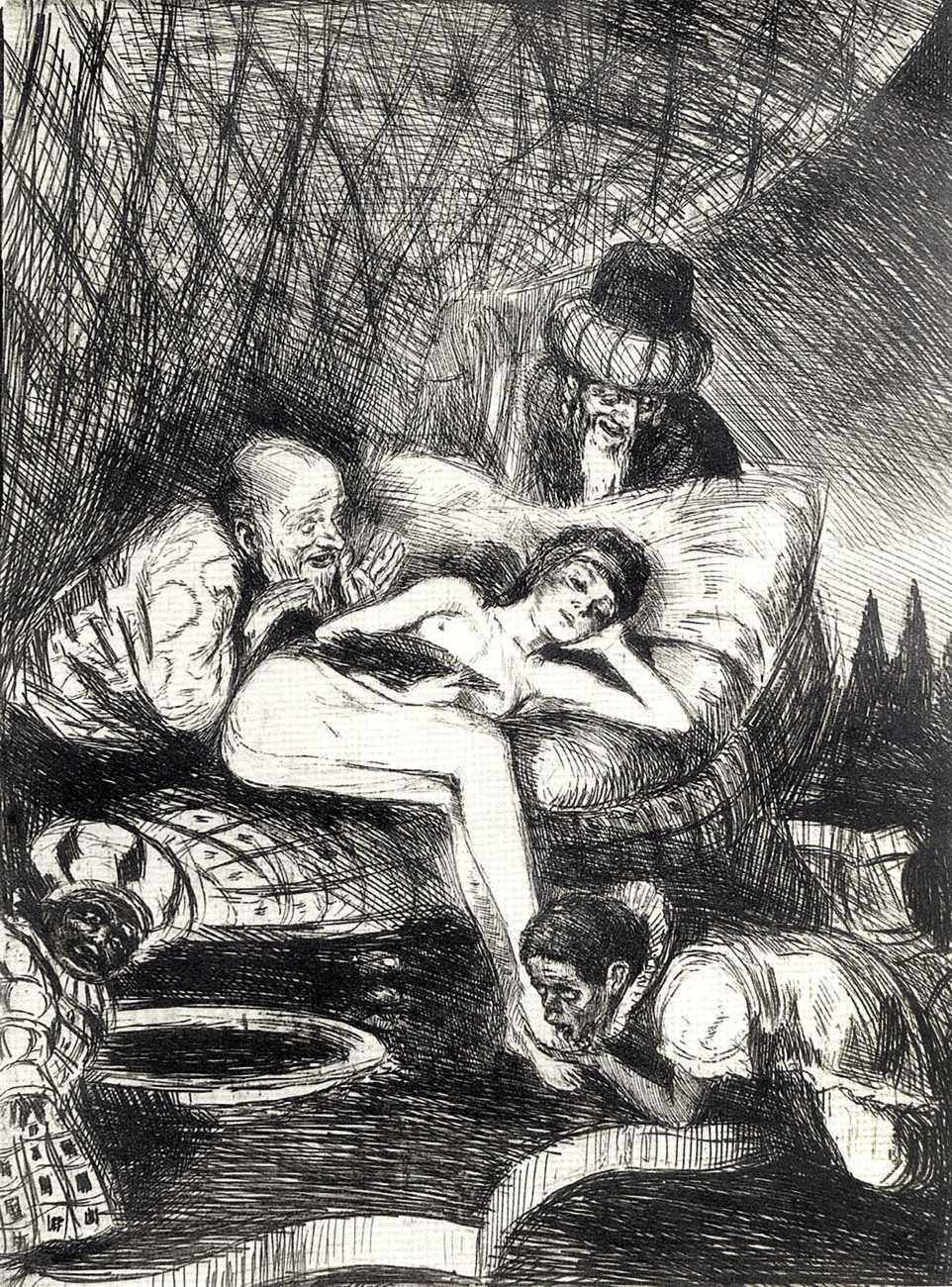
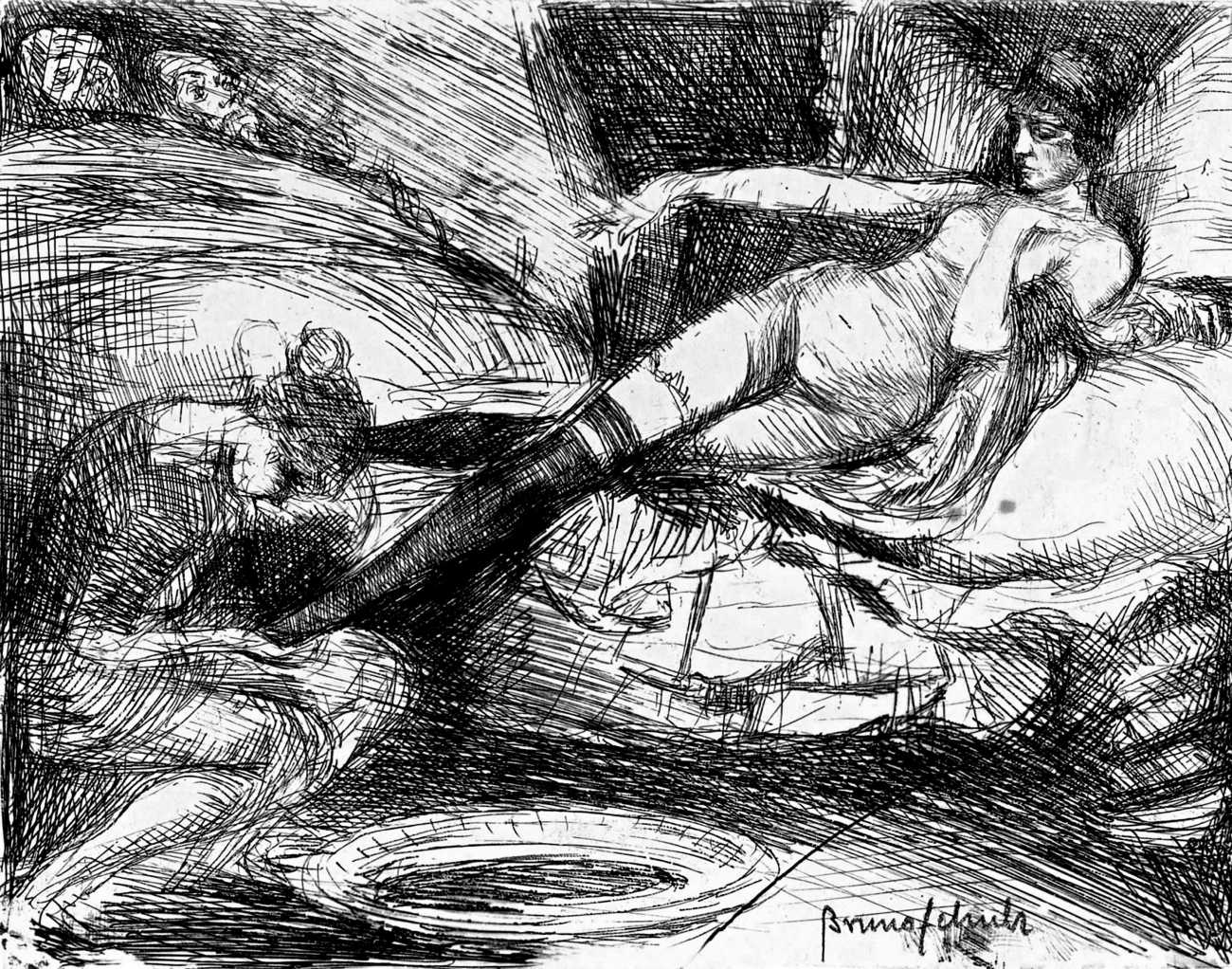
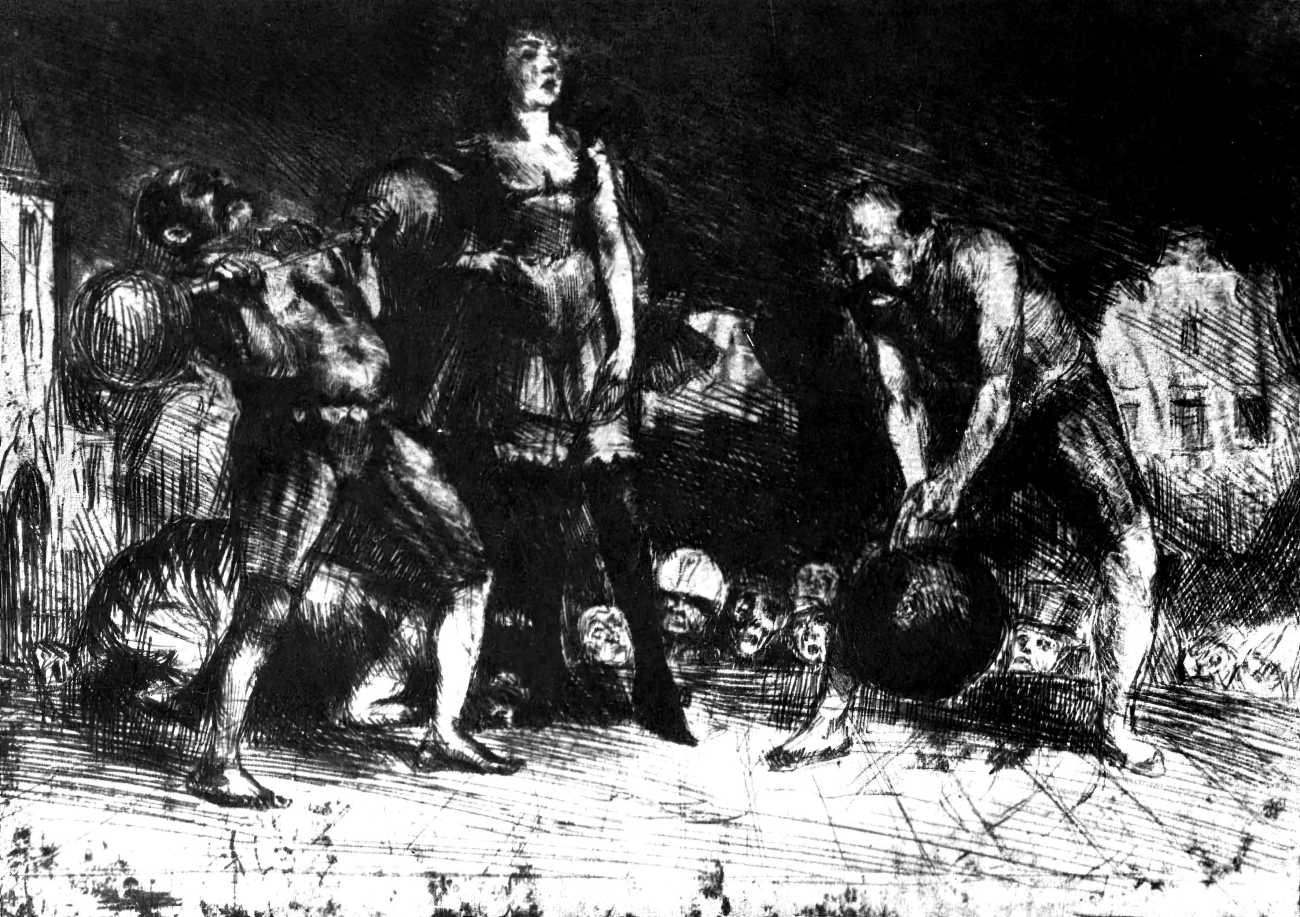
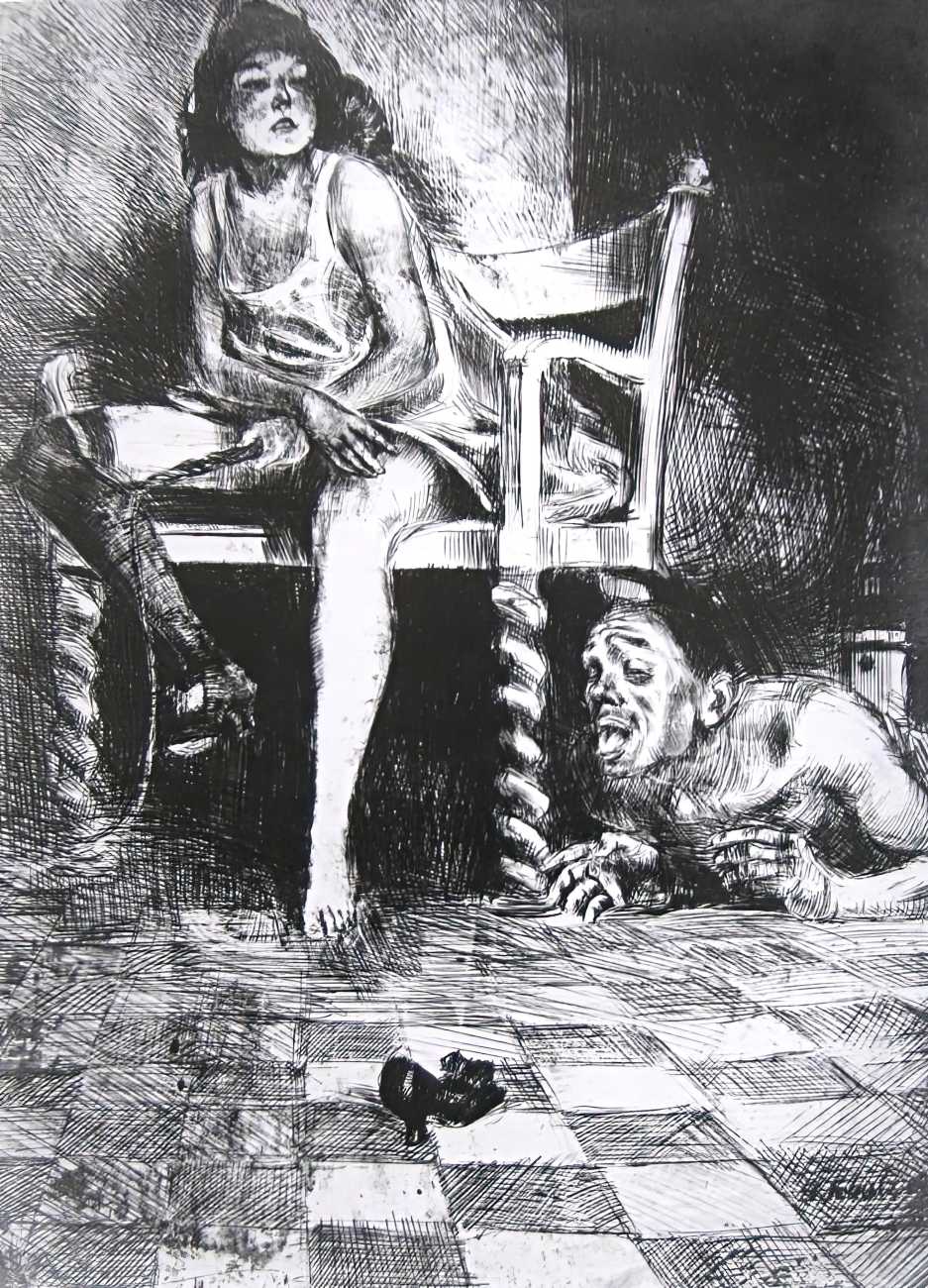
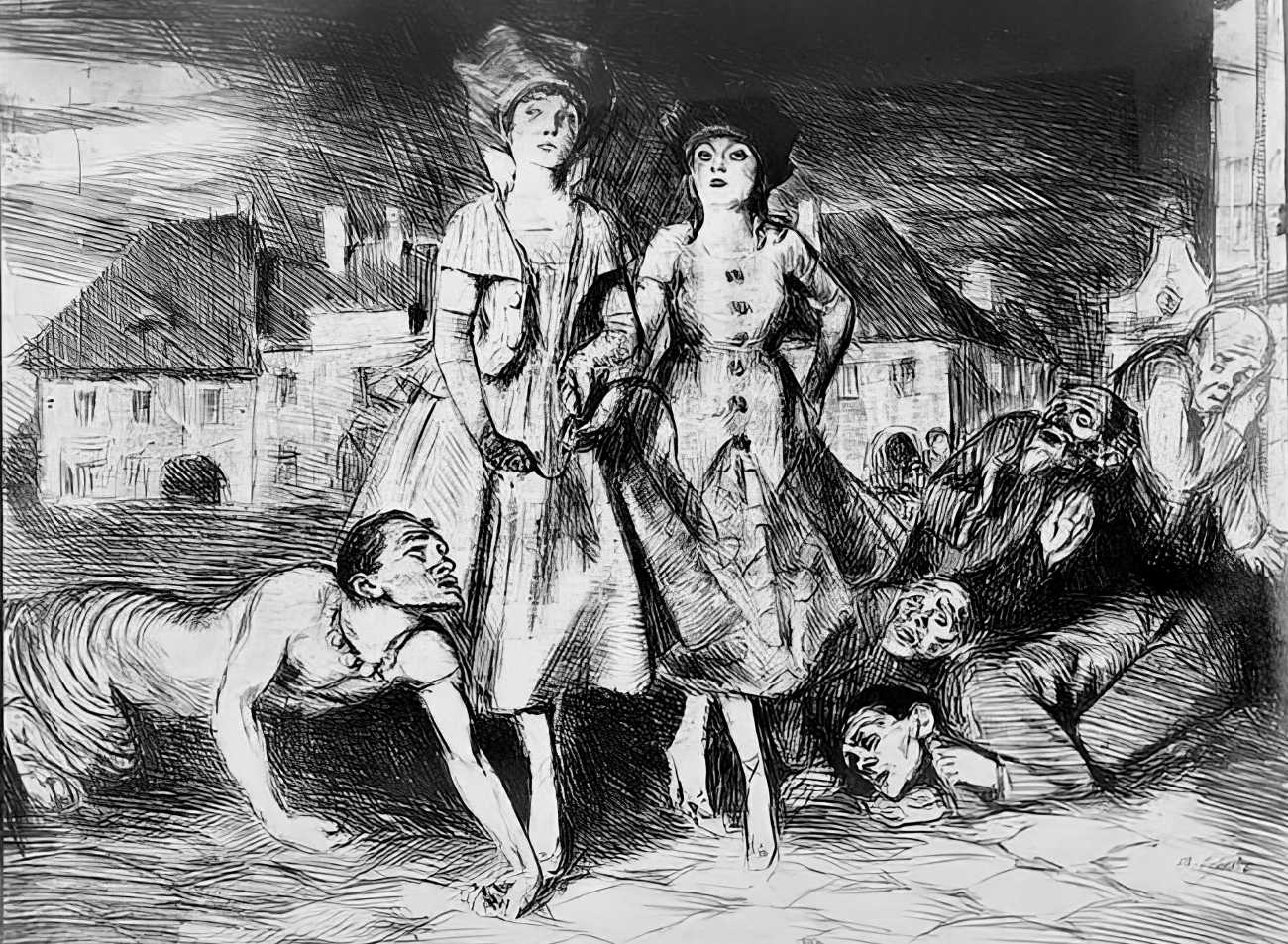
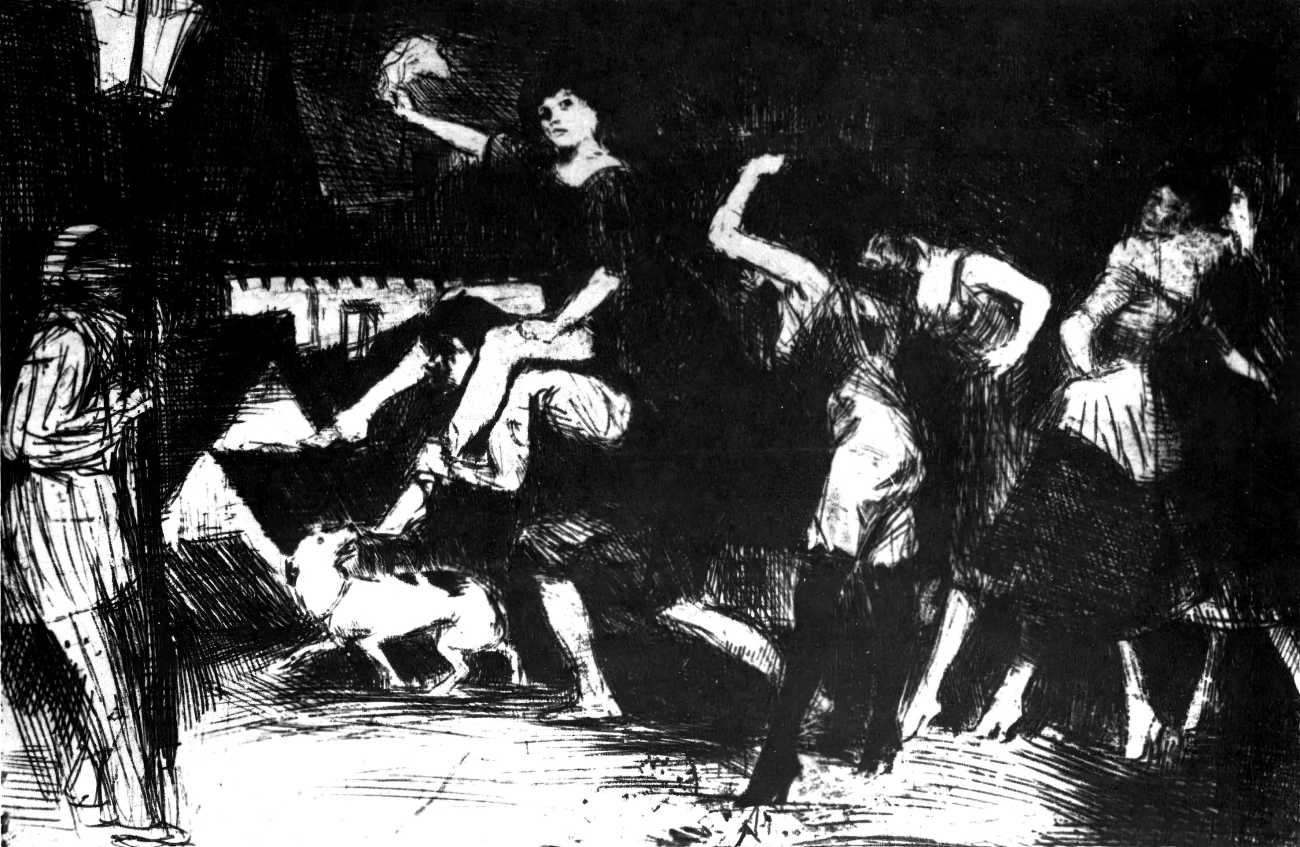
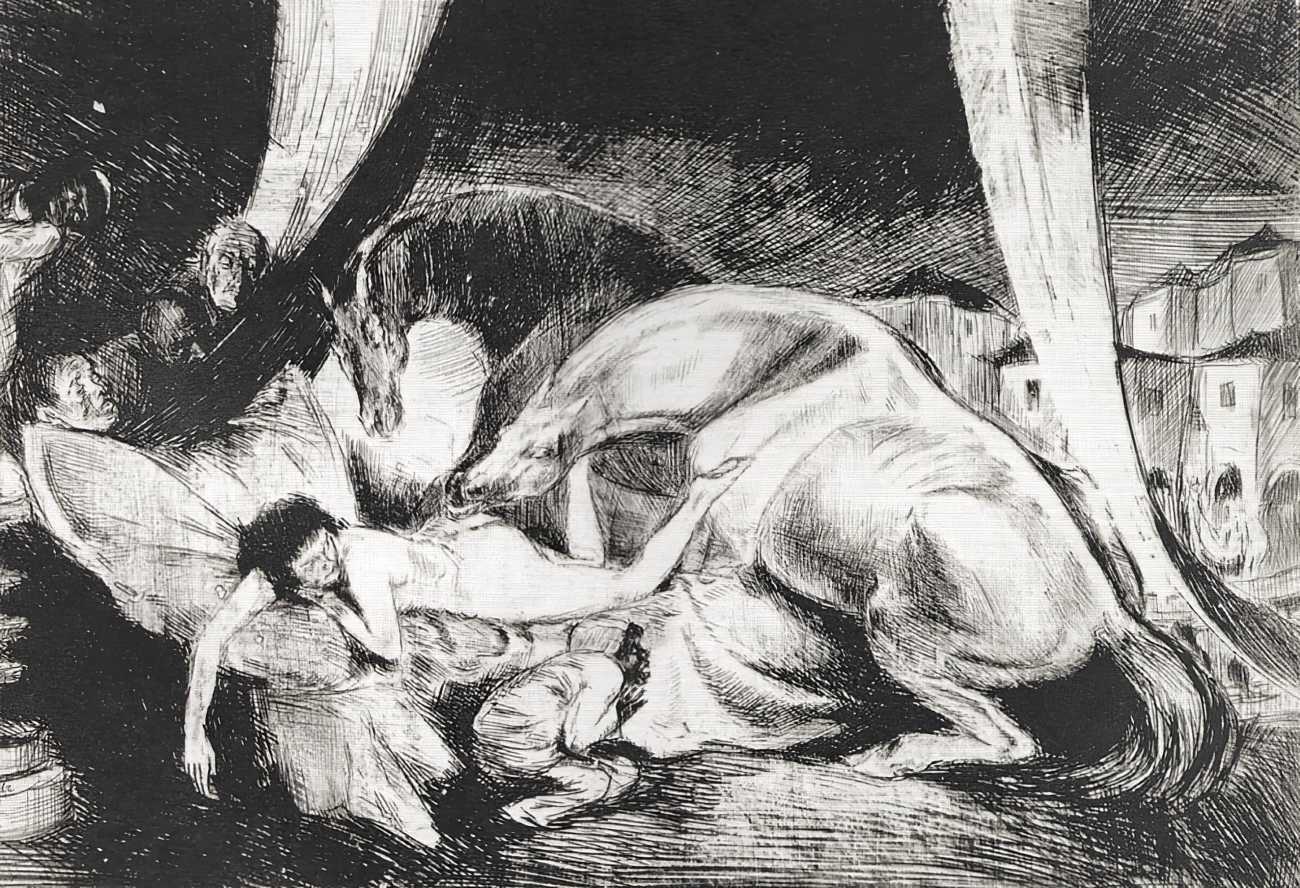
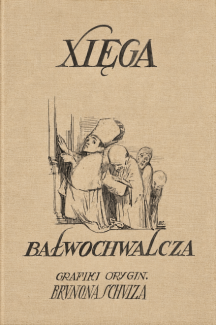
 Before Bruno Schulz became best known as a writer, he created one of the strangest and most compelling bodies of erotic graphic art of the early twentieth century. Xięga Bałwochwalcza (The Book of Idolatry), produced in several versions around 1921, consists of drawings made using the unusual cliché-verre process, in which an image is scratched into a coating on a glass plate and then transferred photographically to sensitised paper.
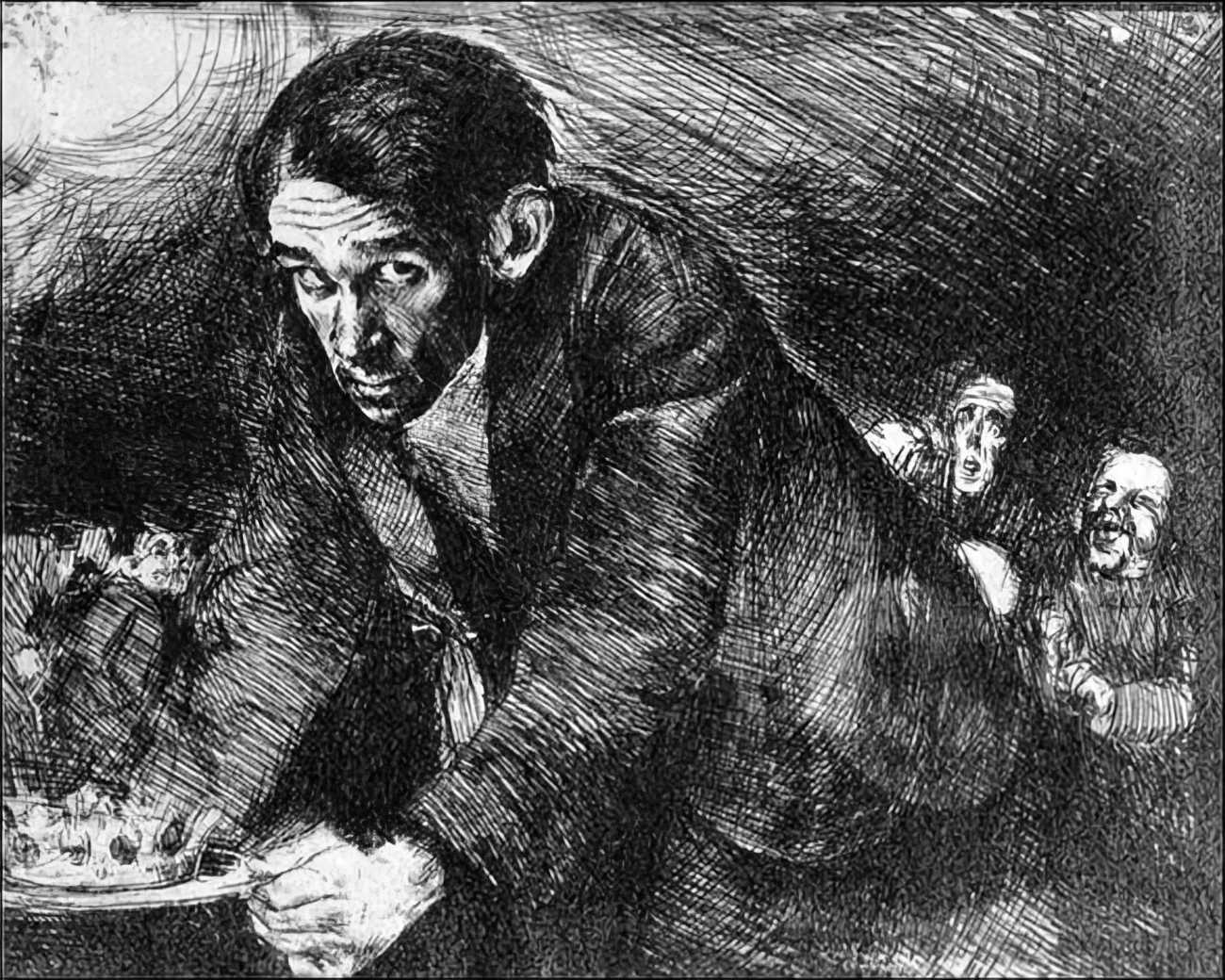
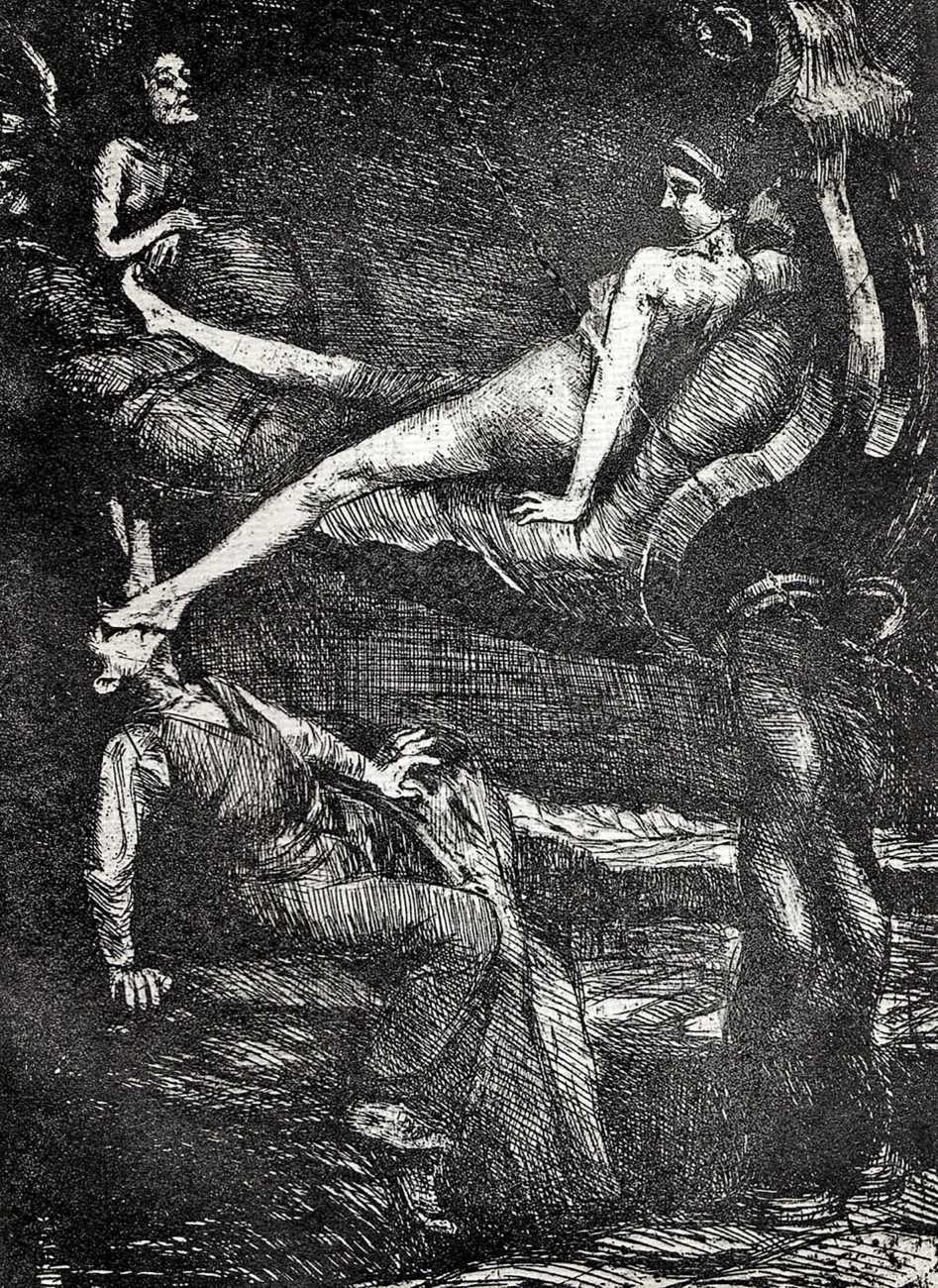
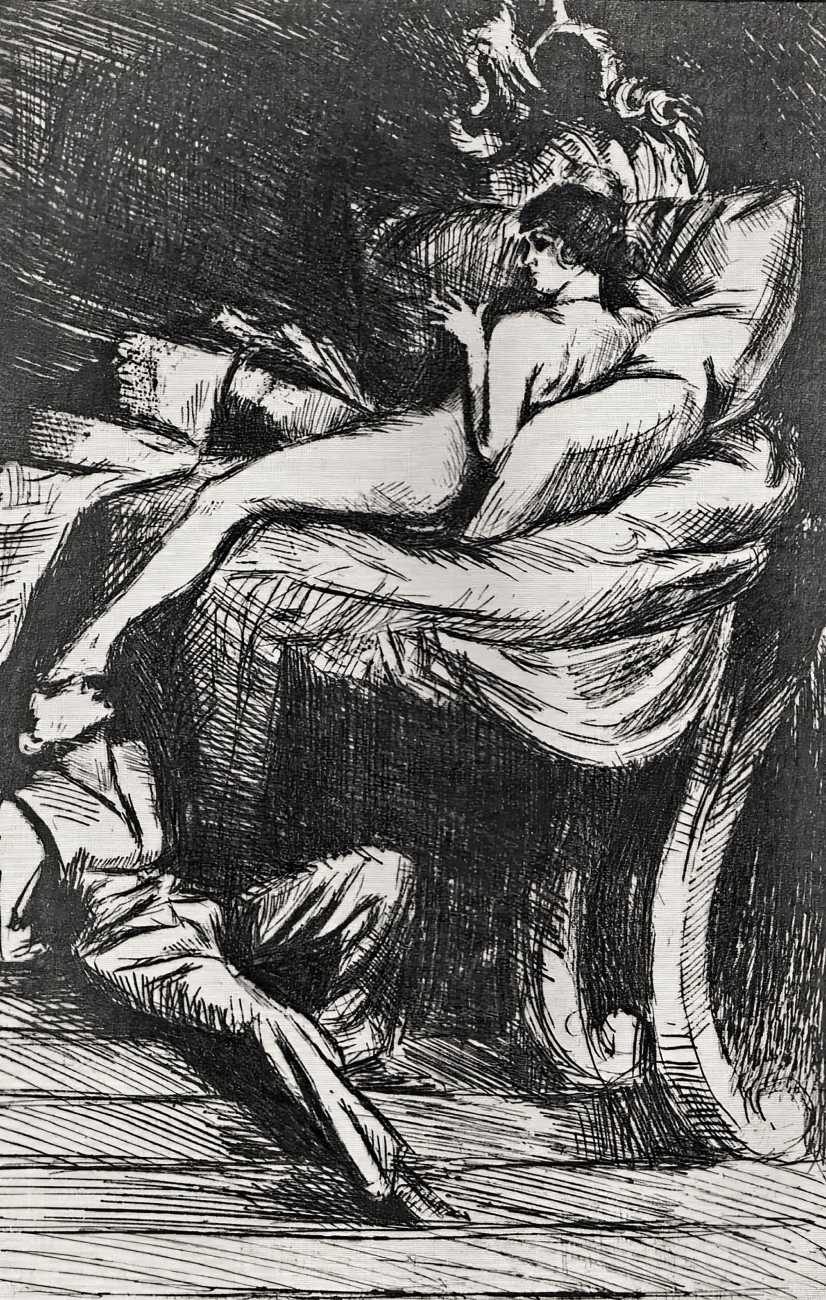
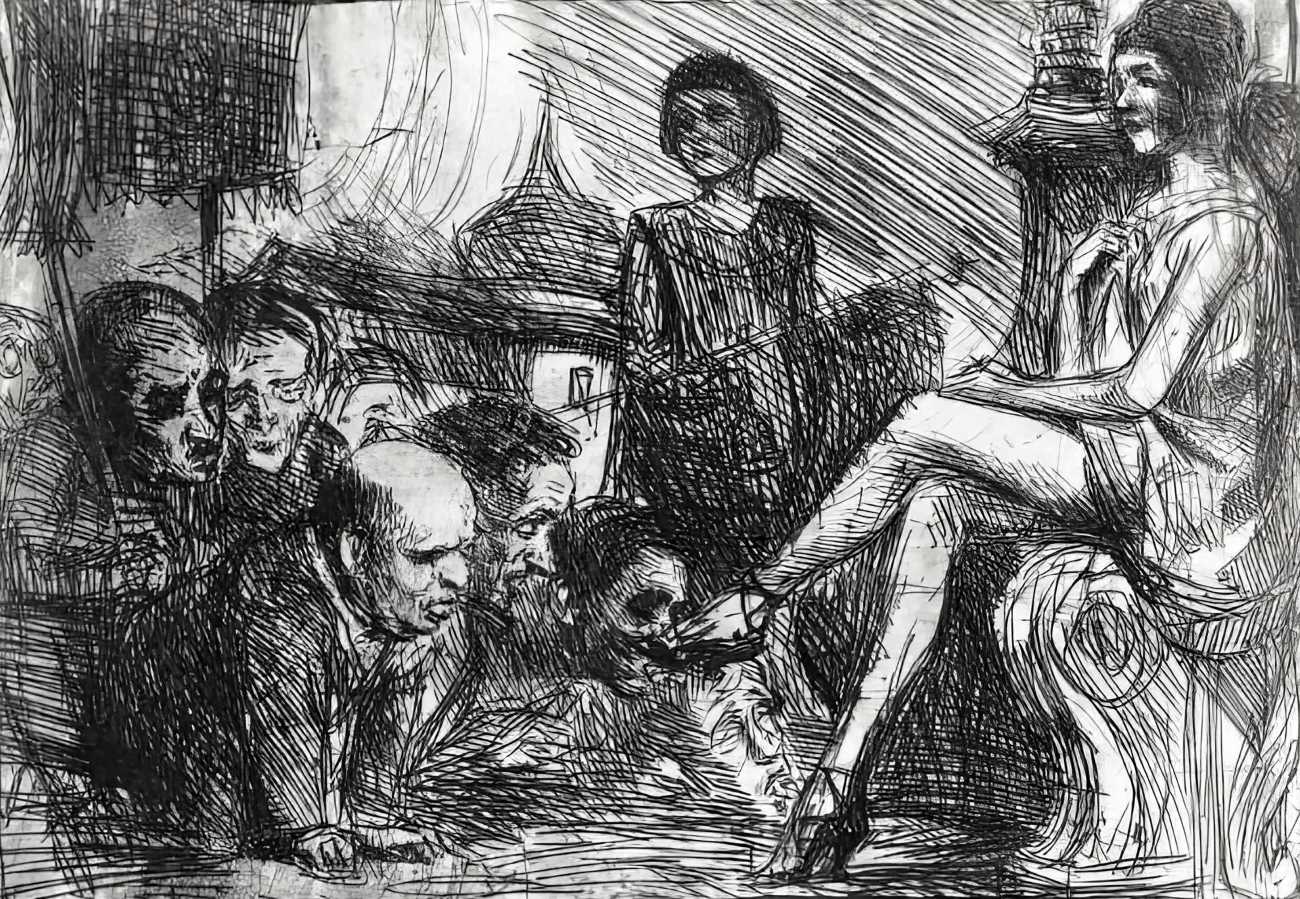
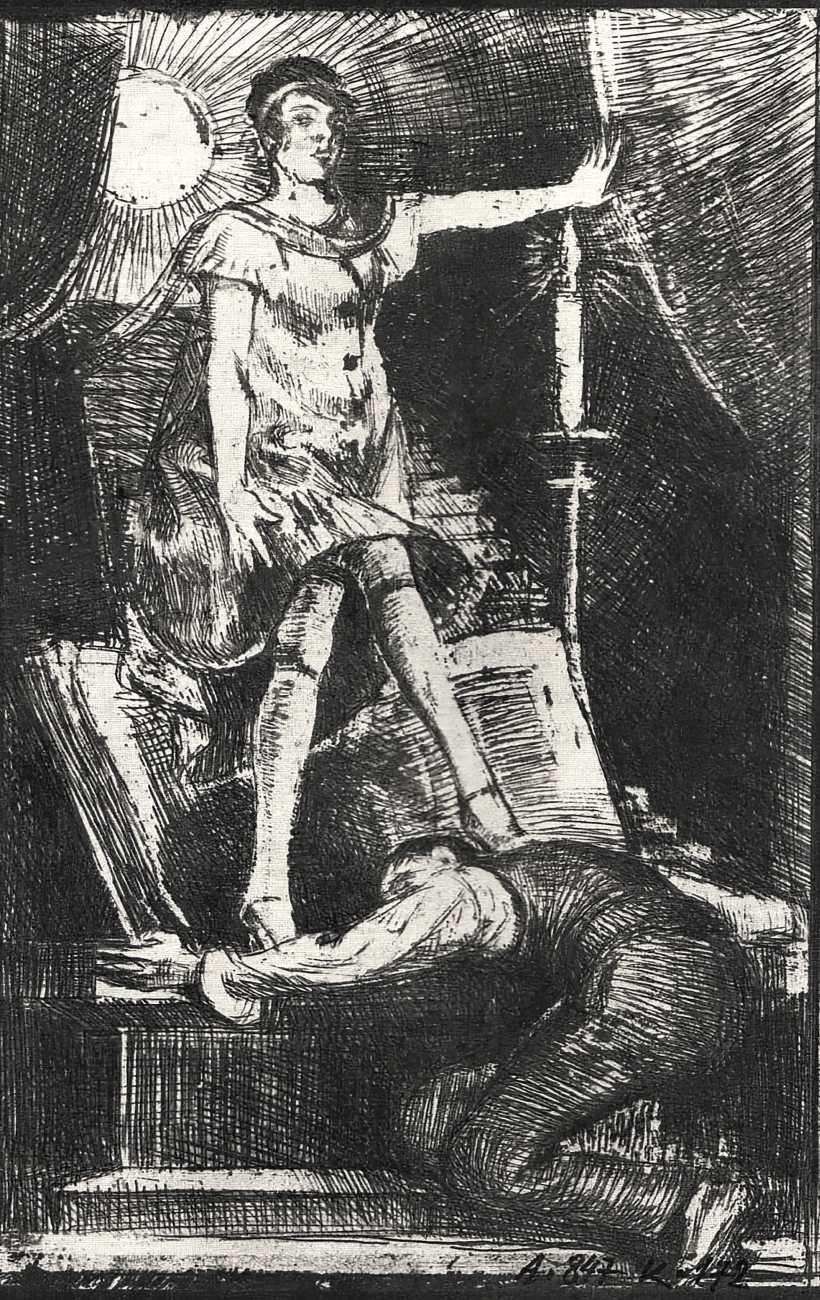
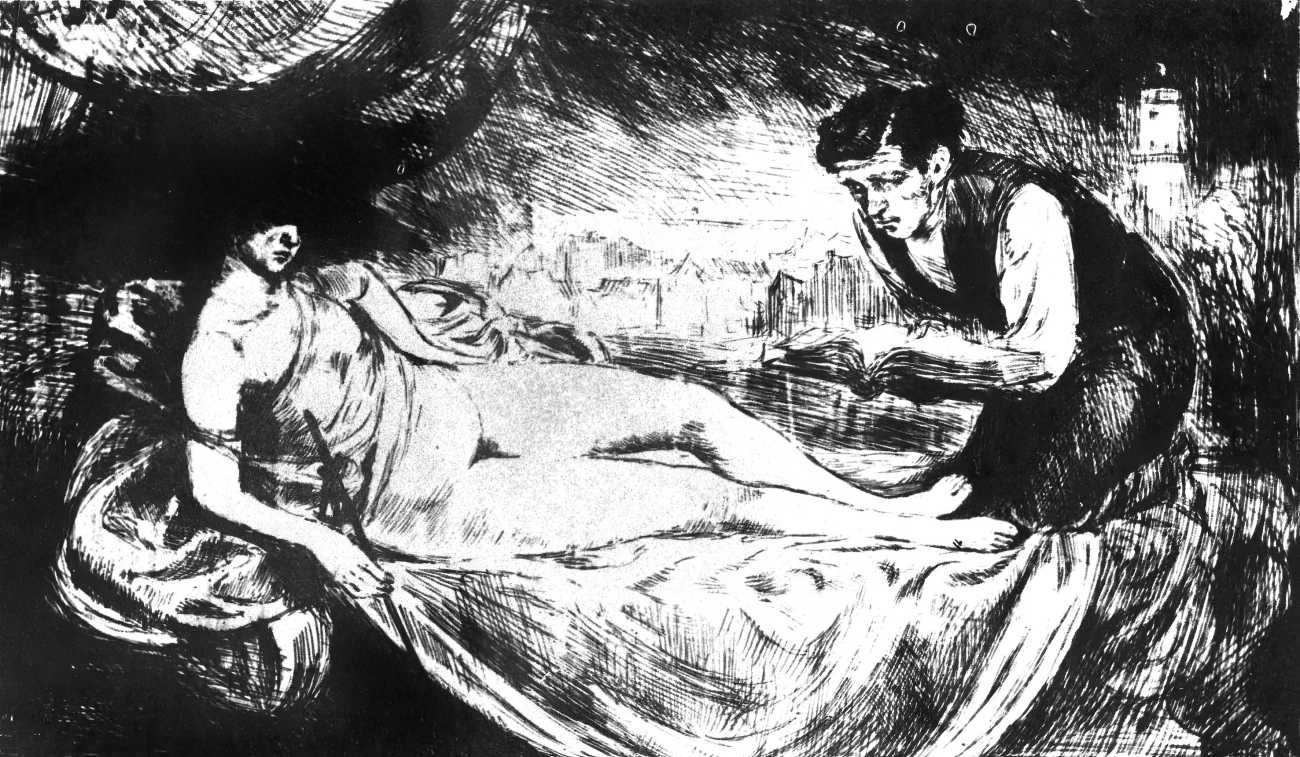
The images revolve around a recurring drama of female power and male submission. Women appear as commanding, imperious and often deliberately intimidating figures, while the men around them are reduced to worshippers, servants, supplicants or grotesque creatures. Some kneel or crawl before their female idols, while others seem overwhelmed by their presence. The eroticism is inseparable from an elaborate fantasy of hierarchy, humiliation and adoration. The series connects female sadism with male masochism, but Schulz’s imagination is much more complex than a simple catalogue of fetishistic encounters.
The women frequently have an exaggerated, almost monumental presence, while the male figures are distorted into caricatures of desire and subservience. Recurring motifs include stockings, shoes, elaborate clothing, and ritualised acts of worship. In several compositions the women are surrounded by men whose devotion borders on religious ceremony.
Schulz’s grotesque style prevents the images from becoming straightforward erotic illustrations. Bodies are elongated, faces distorted, and settings transformed into dreamlike stages. The result is simultaneously comic, unsettling, and intensely erotic. The drawings anticipate the atmosphere of his later fiction, in which domestic life repeatedly gives way to fantasy, metamorphosis and obsessive desire.