 ‘Dreams are fairy tales that we tell ourselves,’ explained Fellini in a 1964 interview. ‘They are the small and big myths that help people to understand. Of course, you shouldn’t ask your dreams for instant or constant help in changing your daily behaviour. And you shouldn’t completely abandon yourself to the pleasure of this night spectacle. The insensitive dreamer risks spending his days doing nothing, surrounded by brittle, evanescent things. Sometimes people are so immersed in that reality they dream only at night – but by then it’s too late for images.’
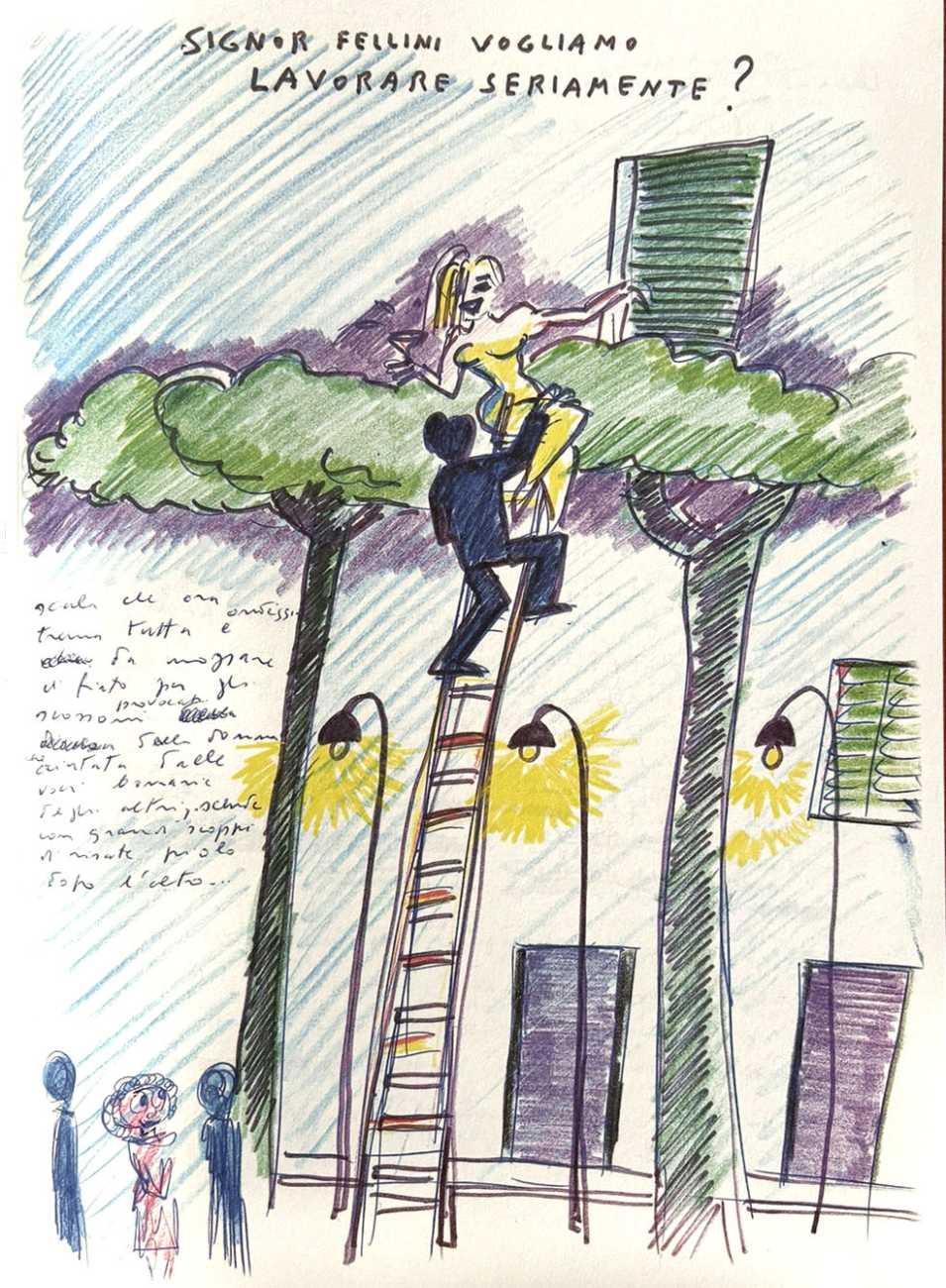
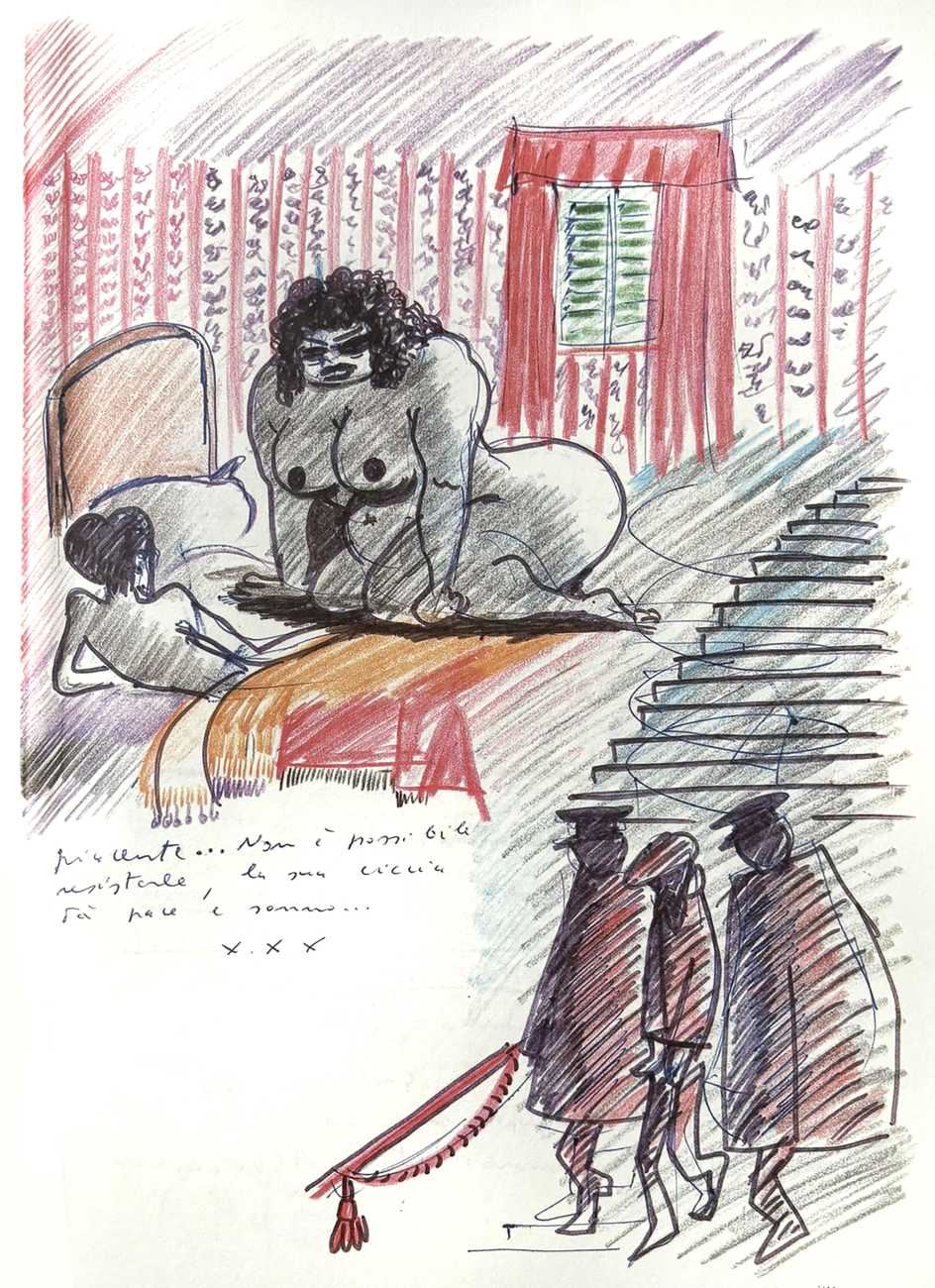
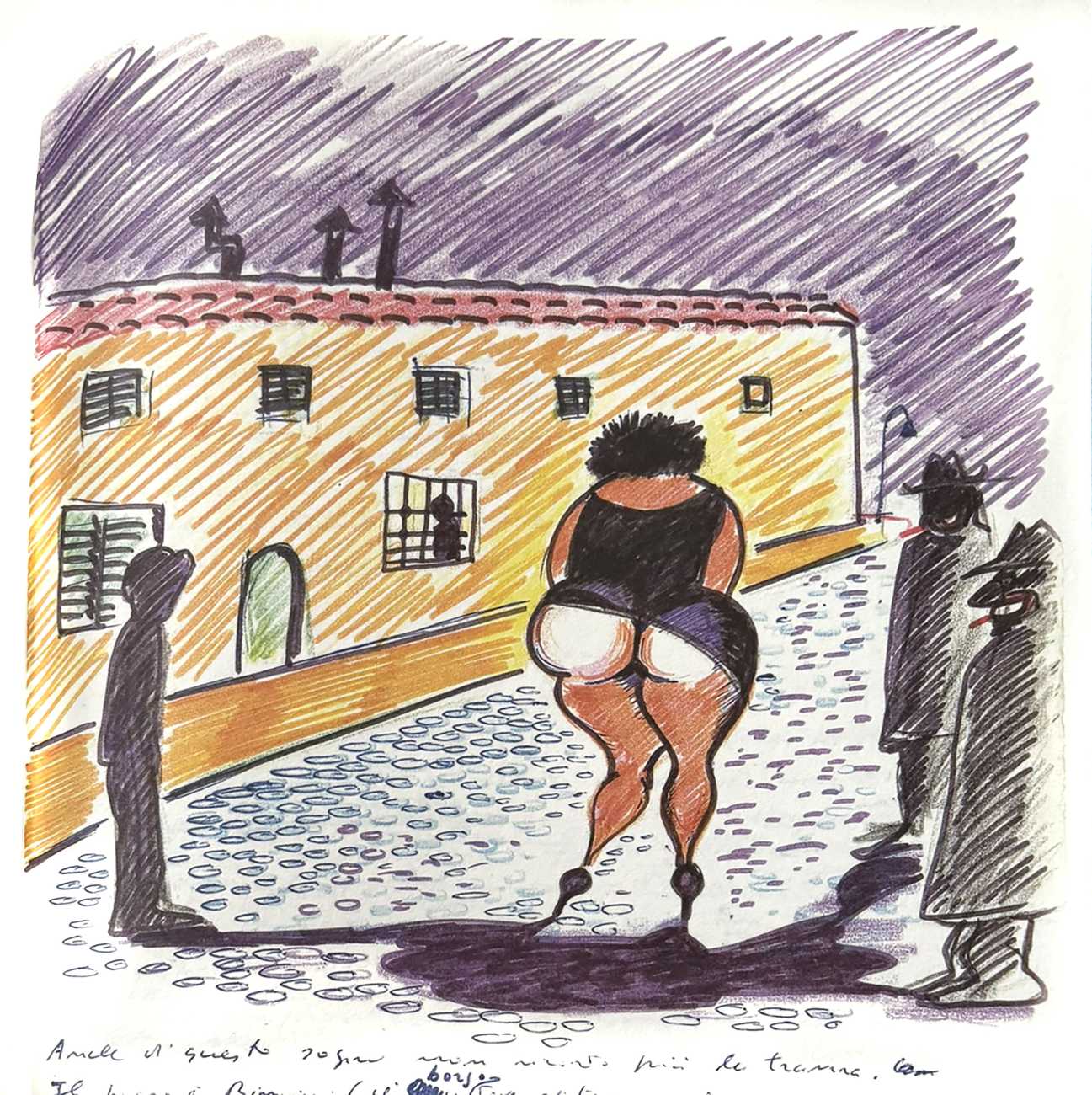
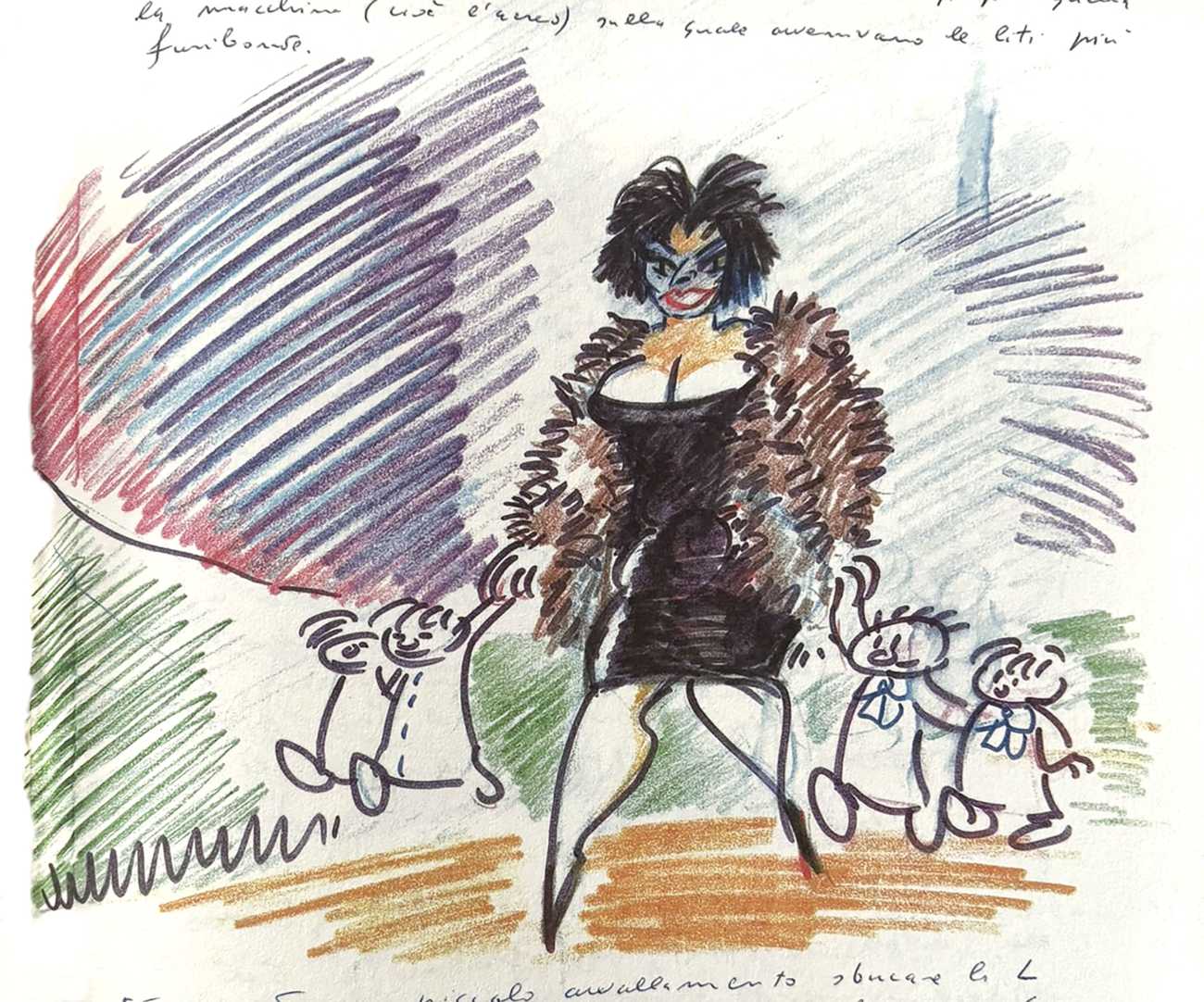
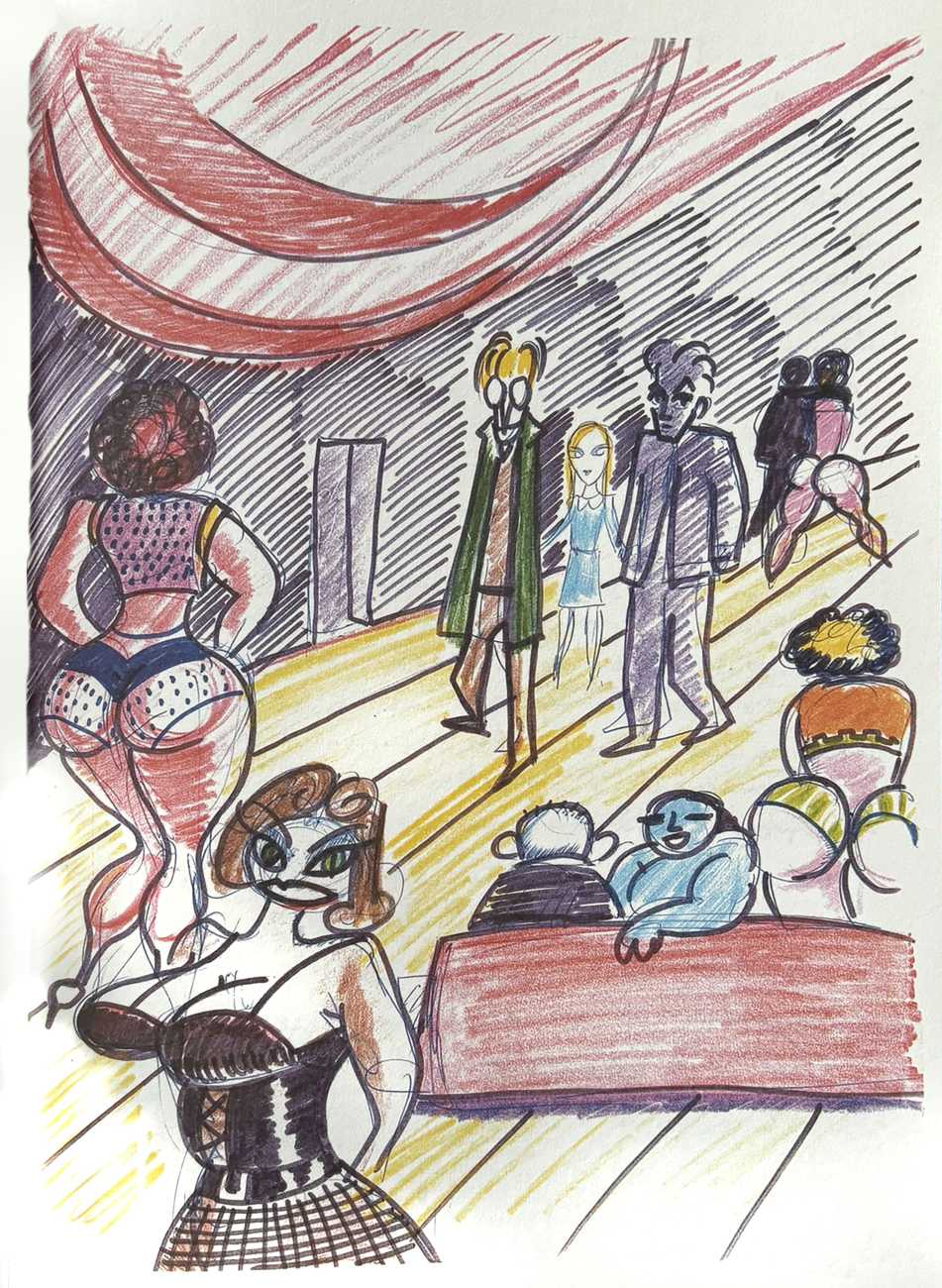
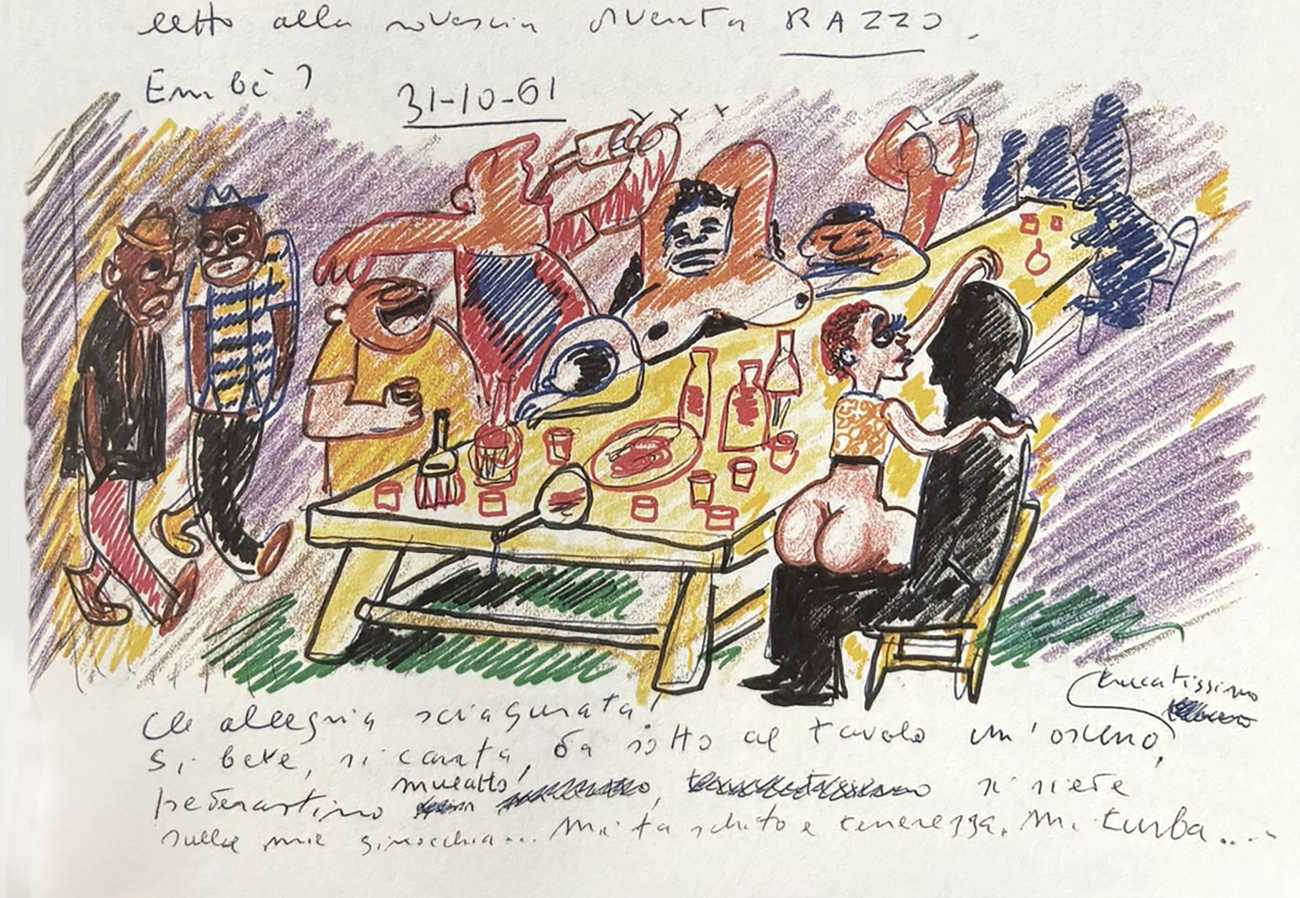
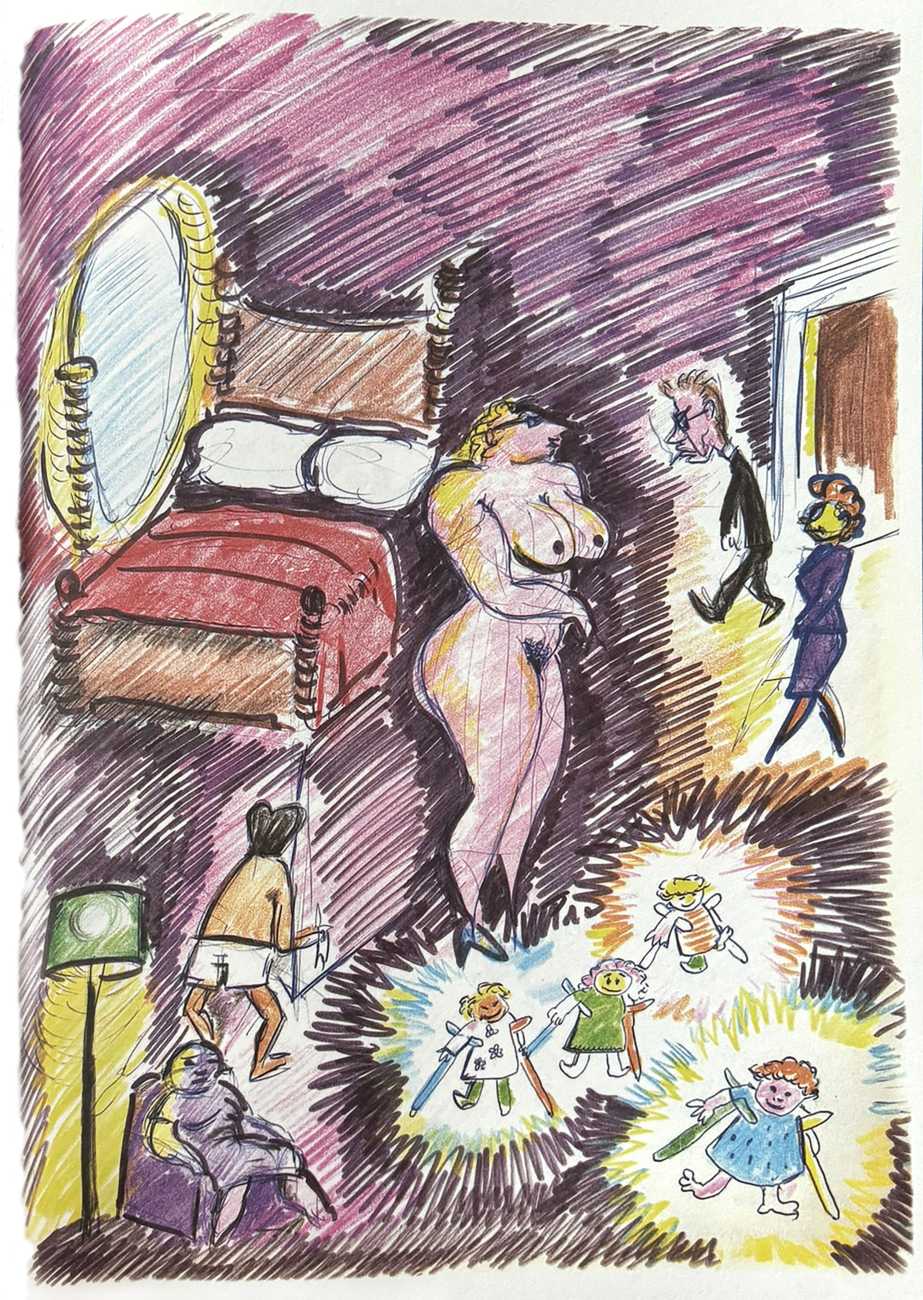
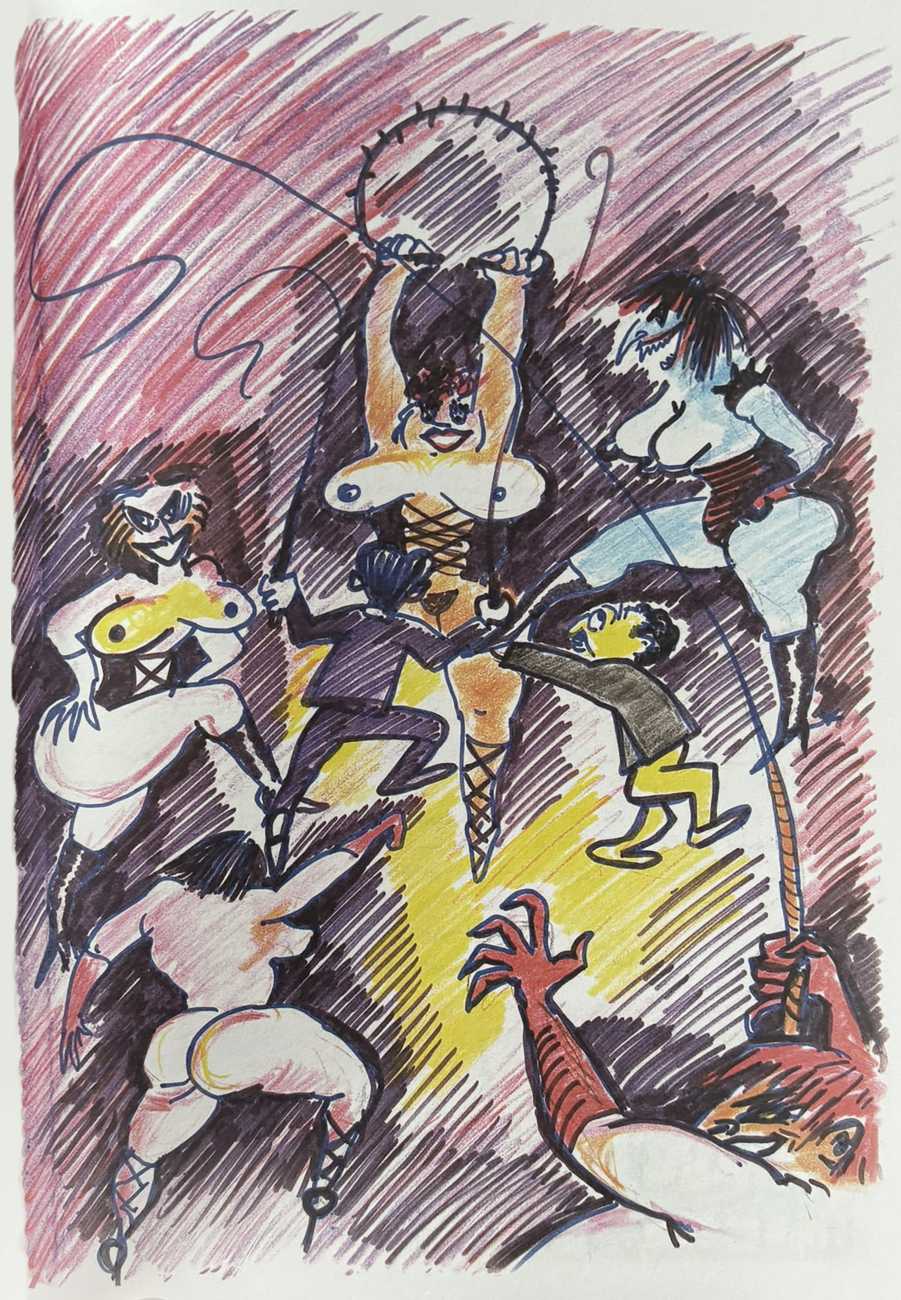
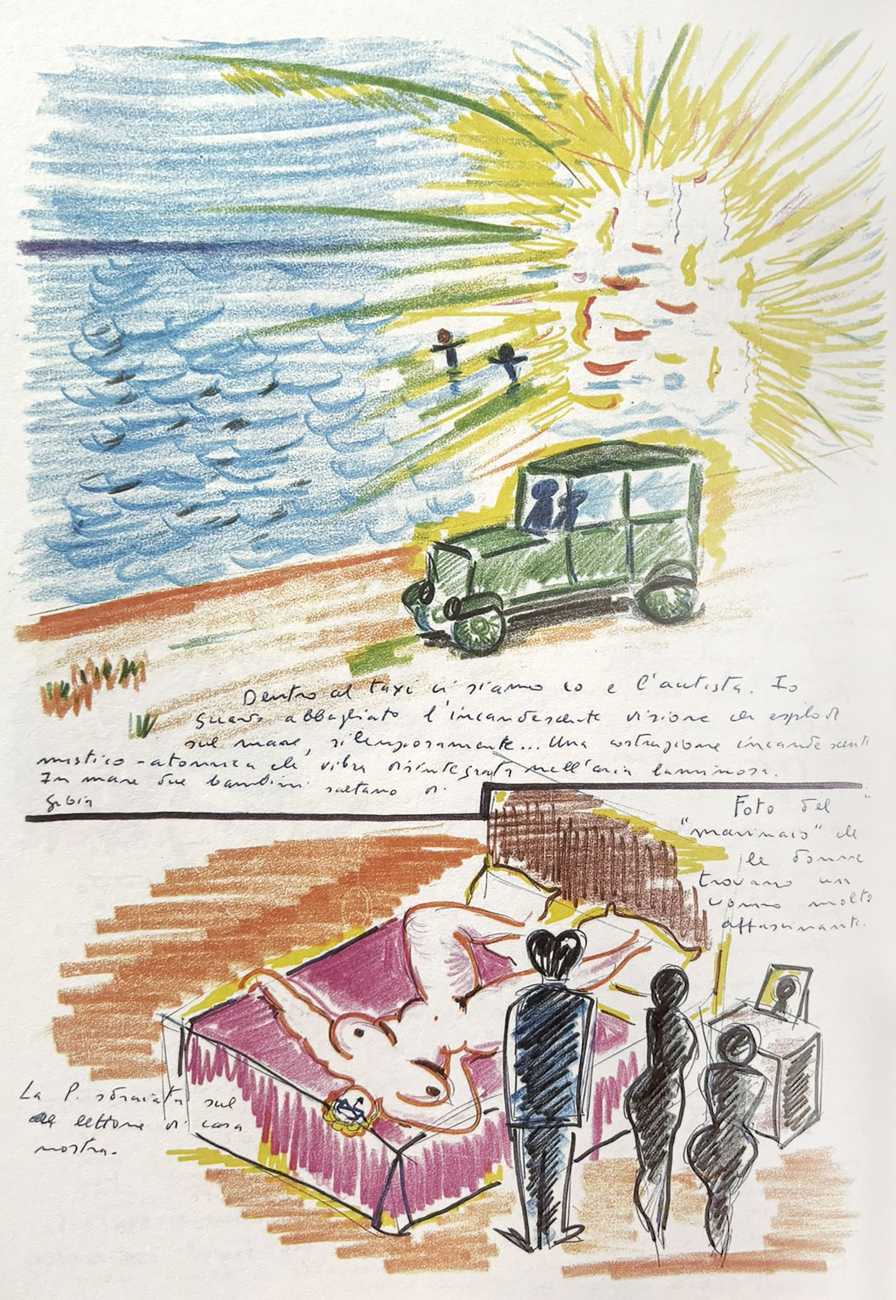
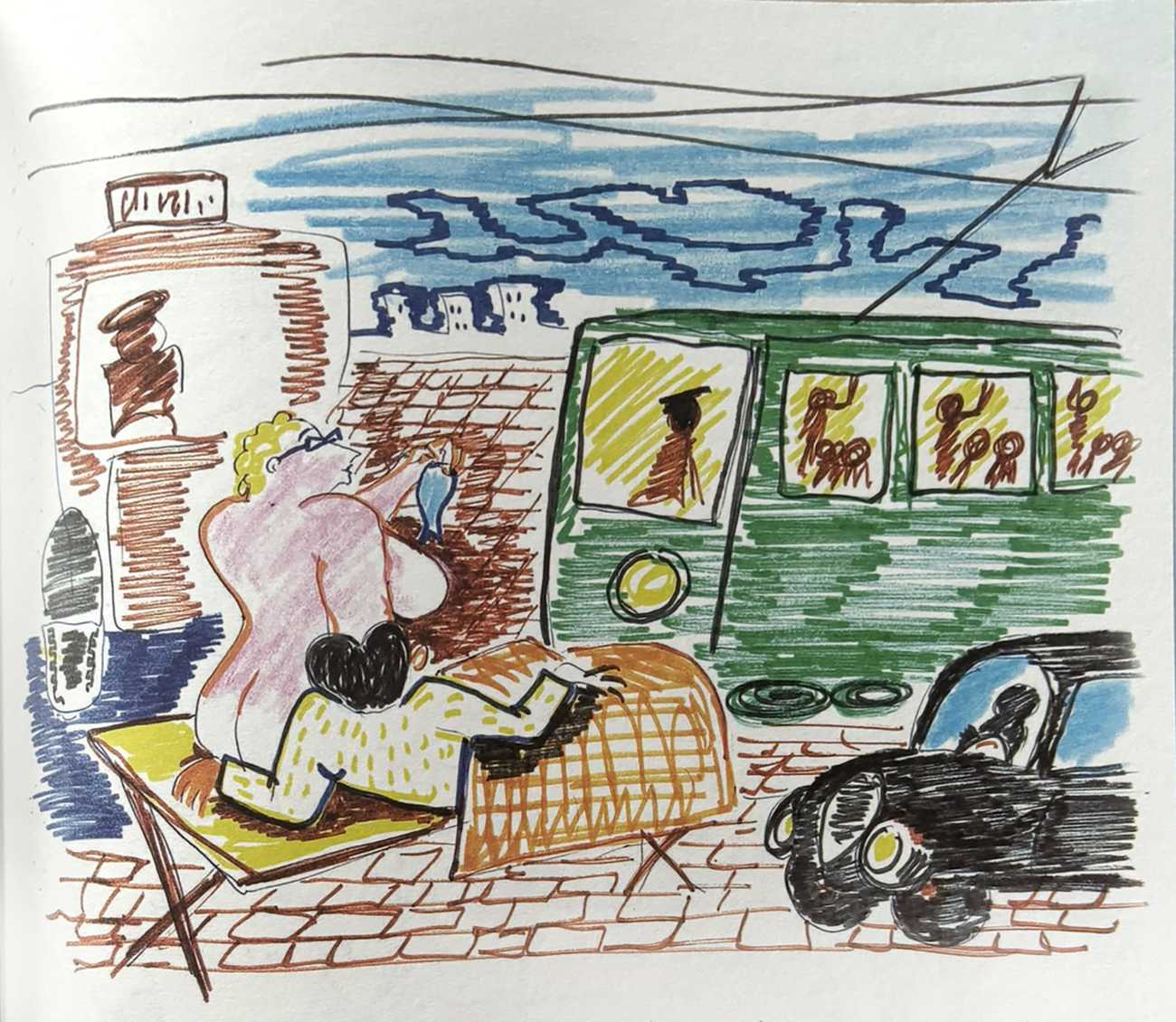
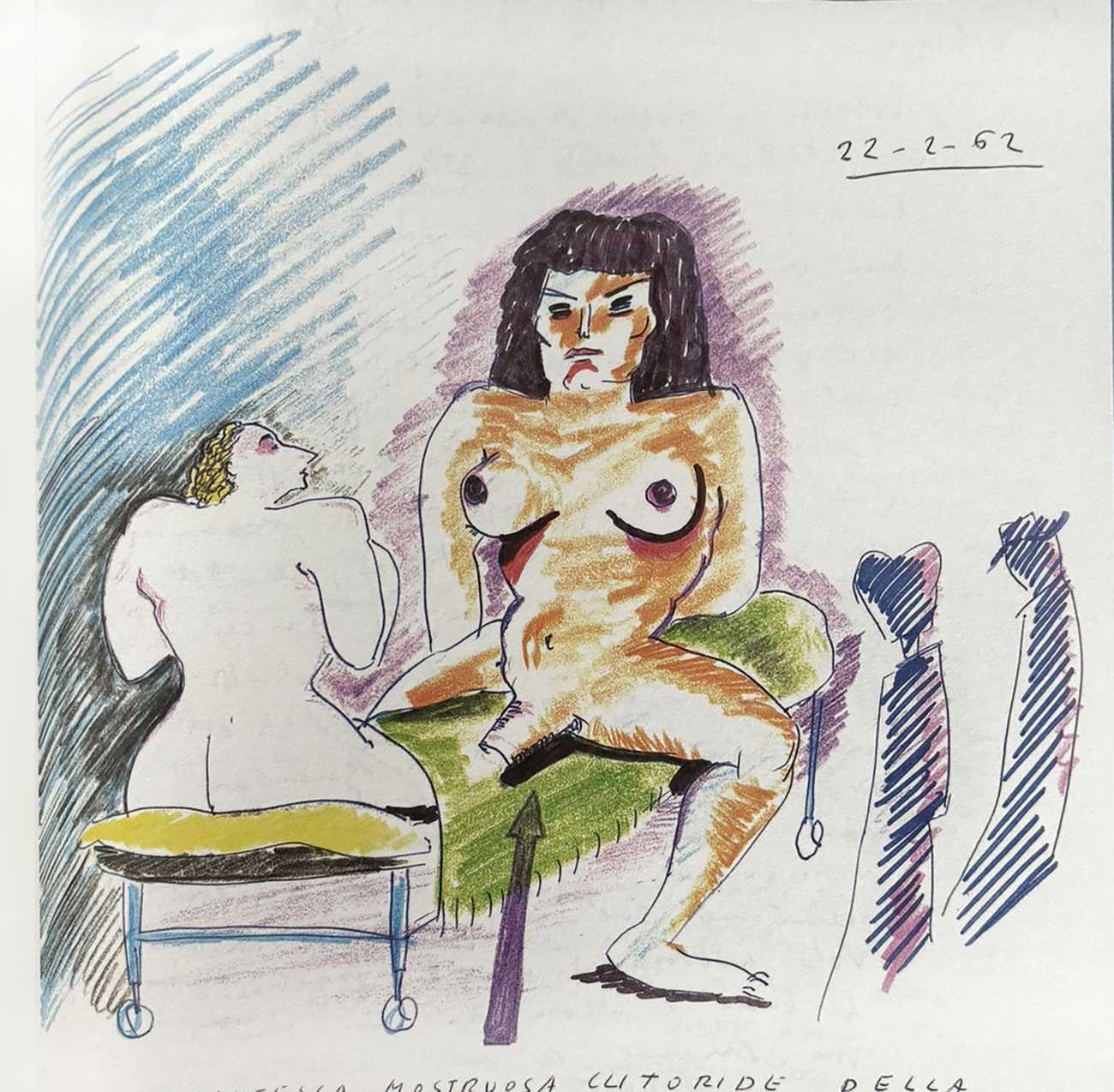
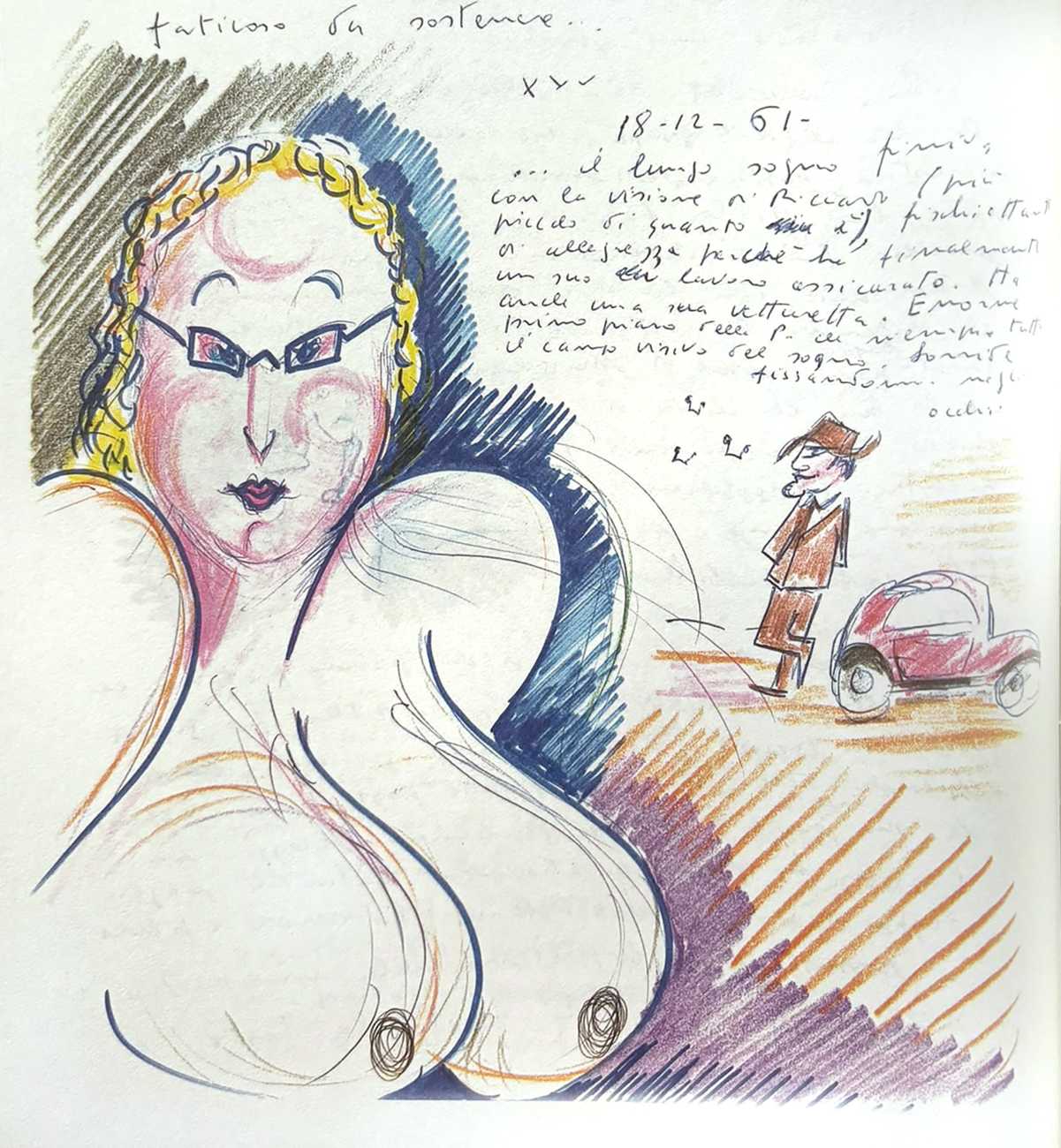
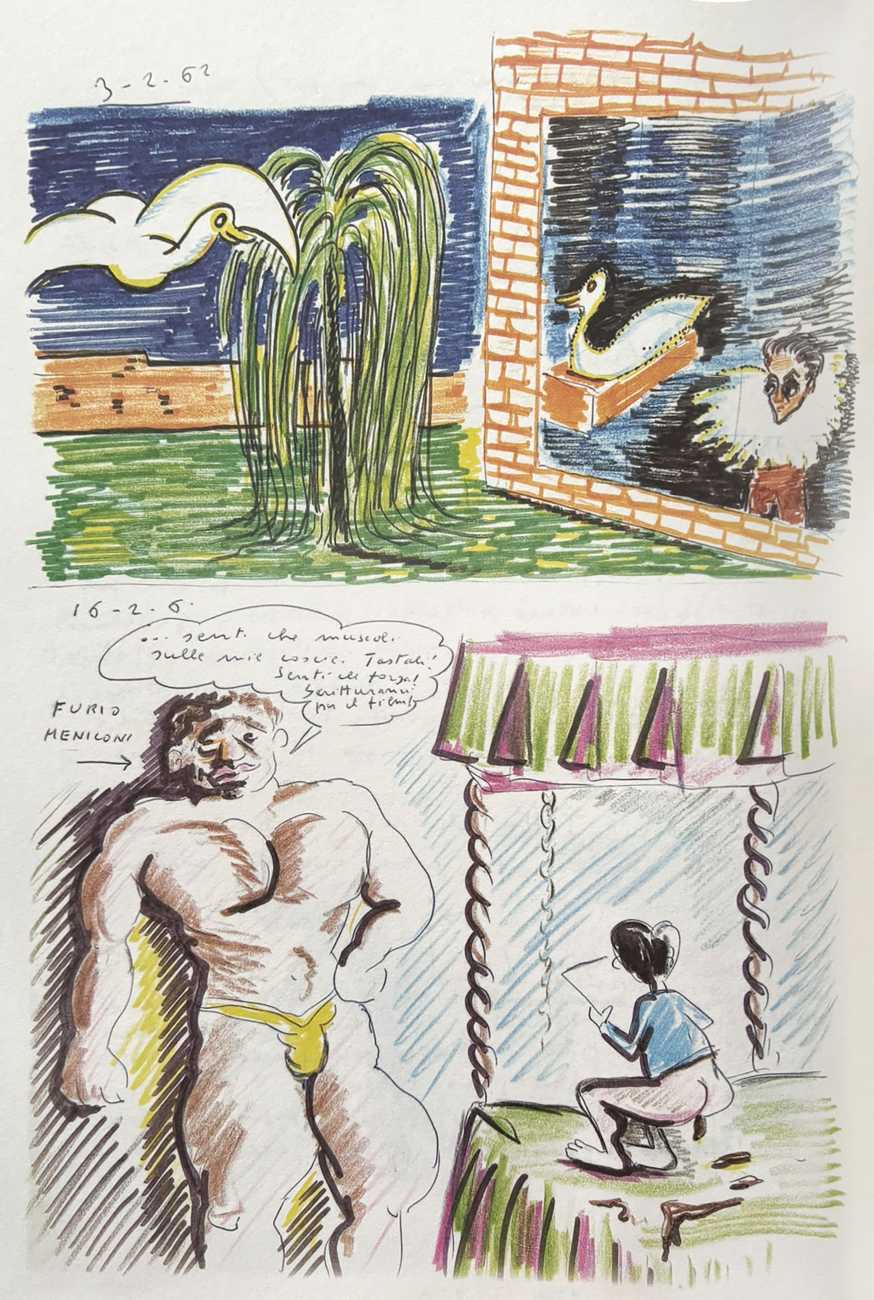
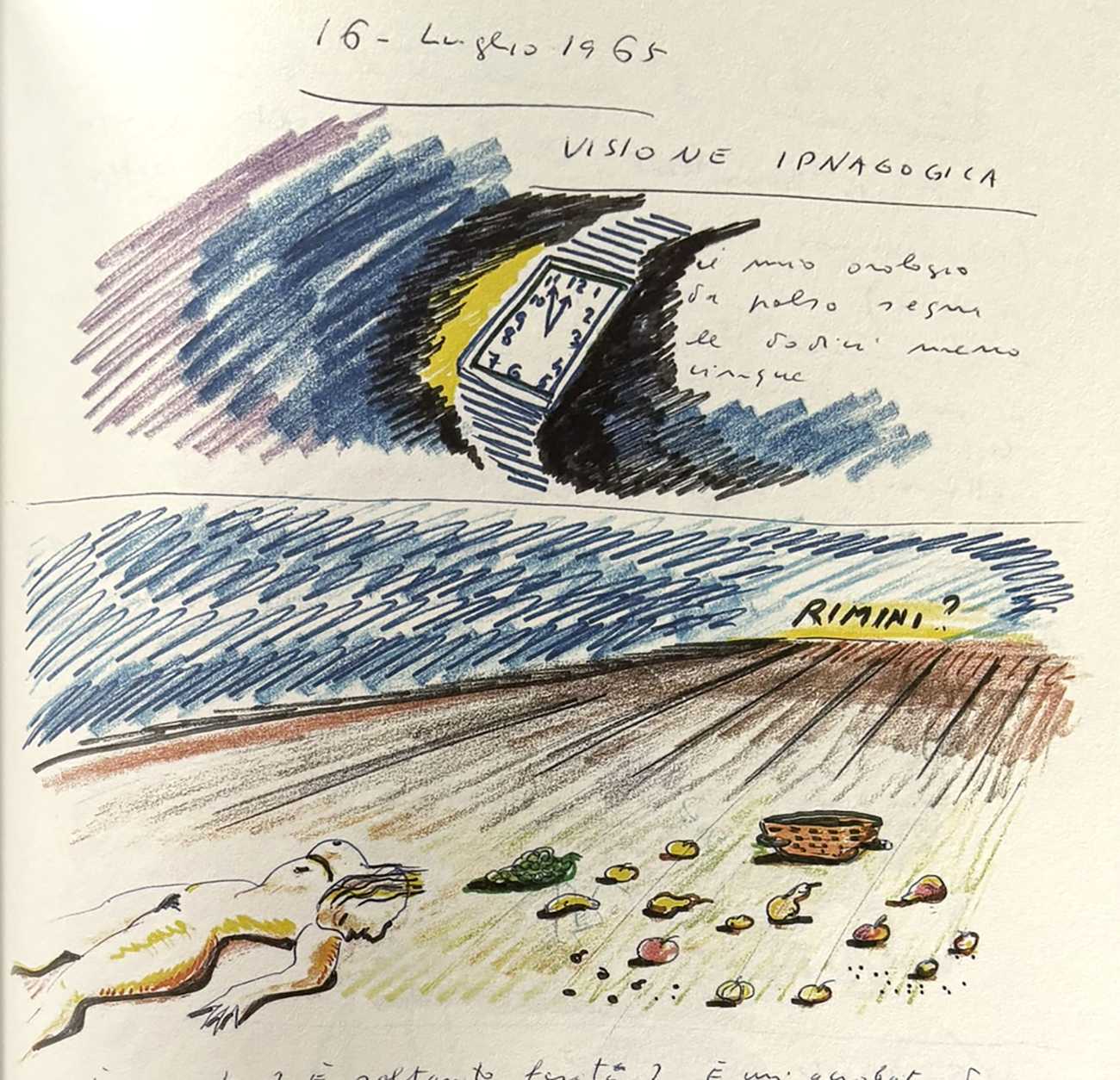
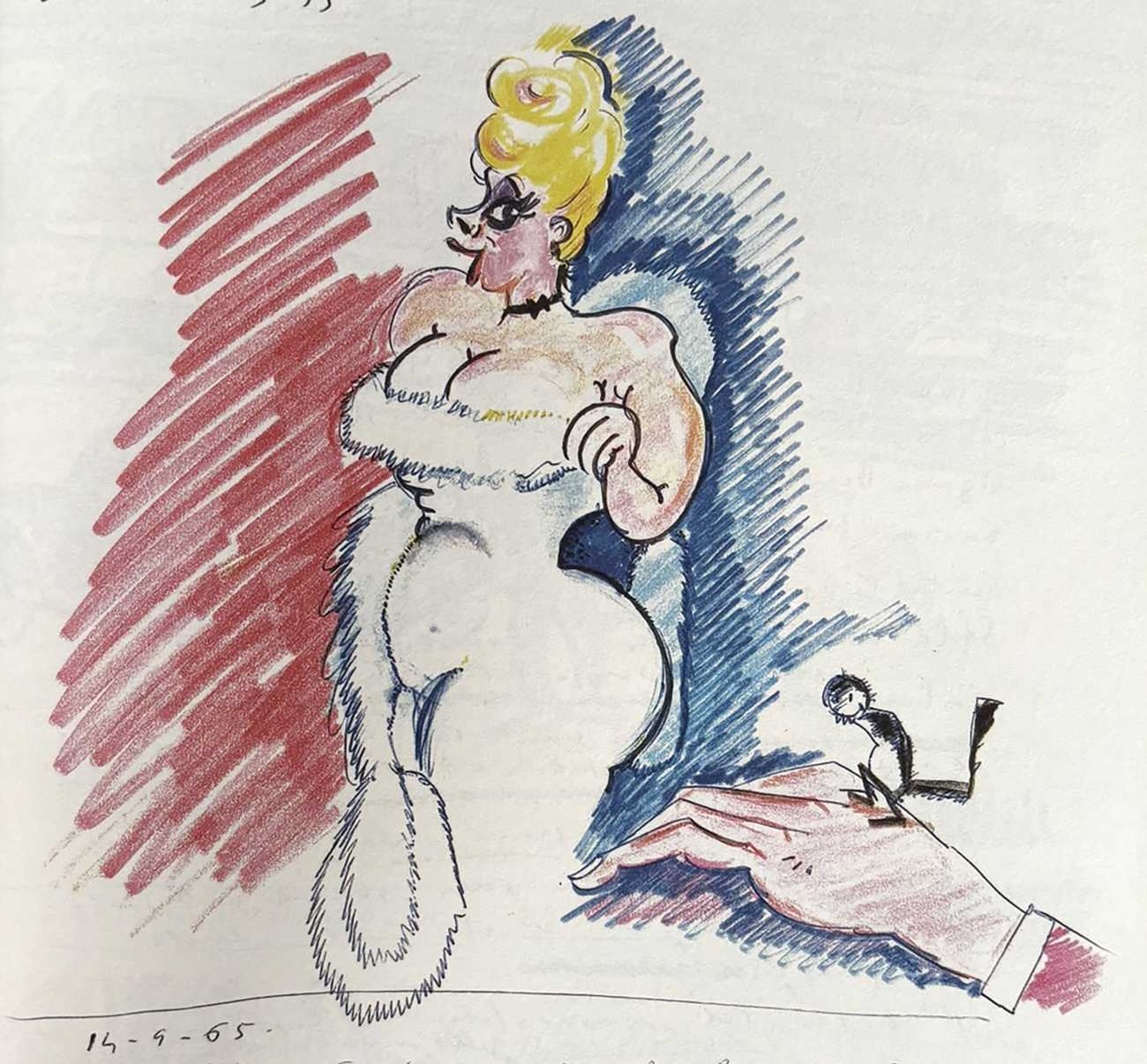
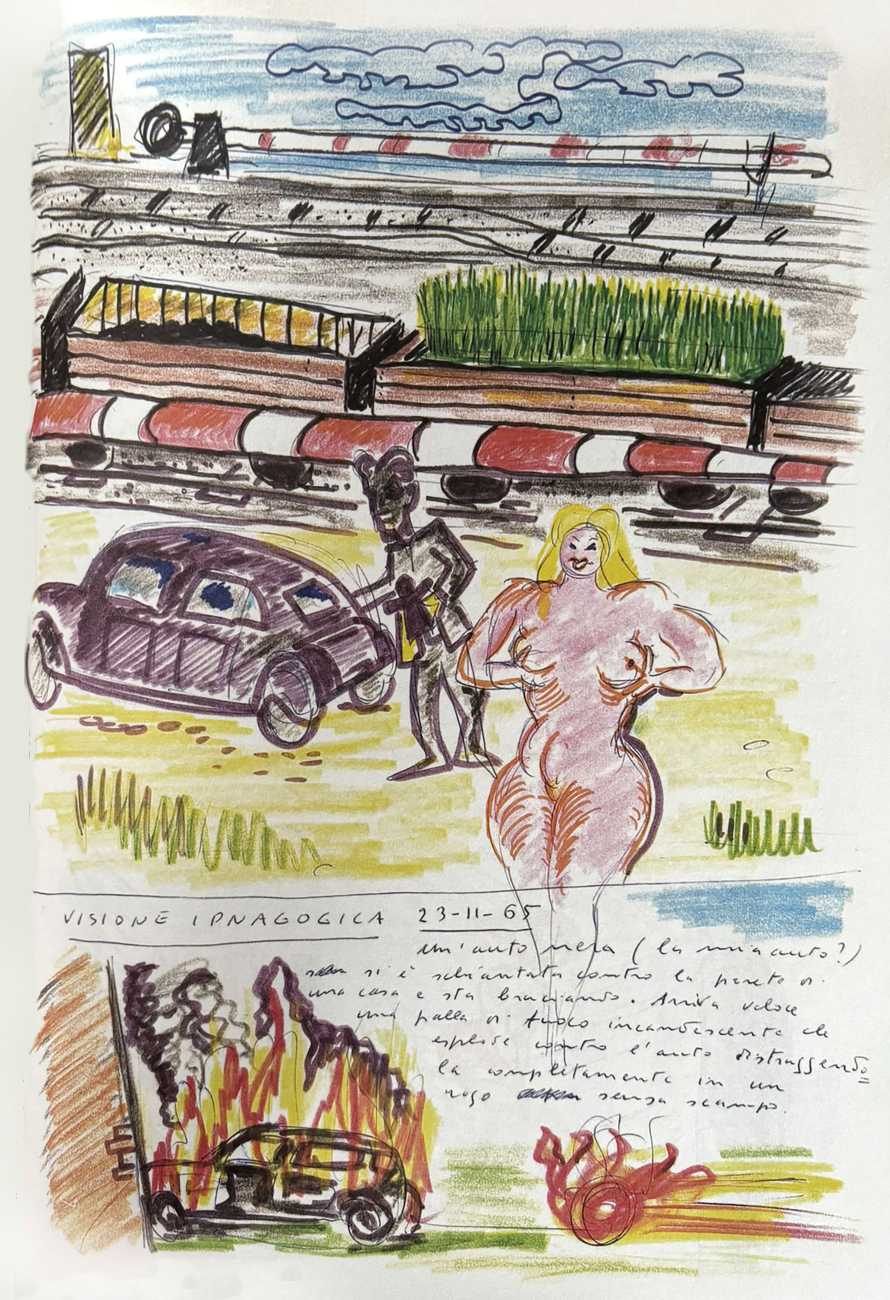
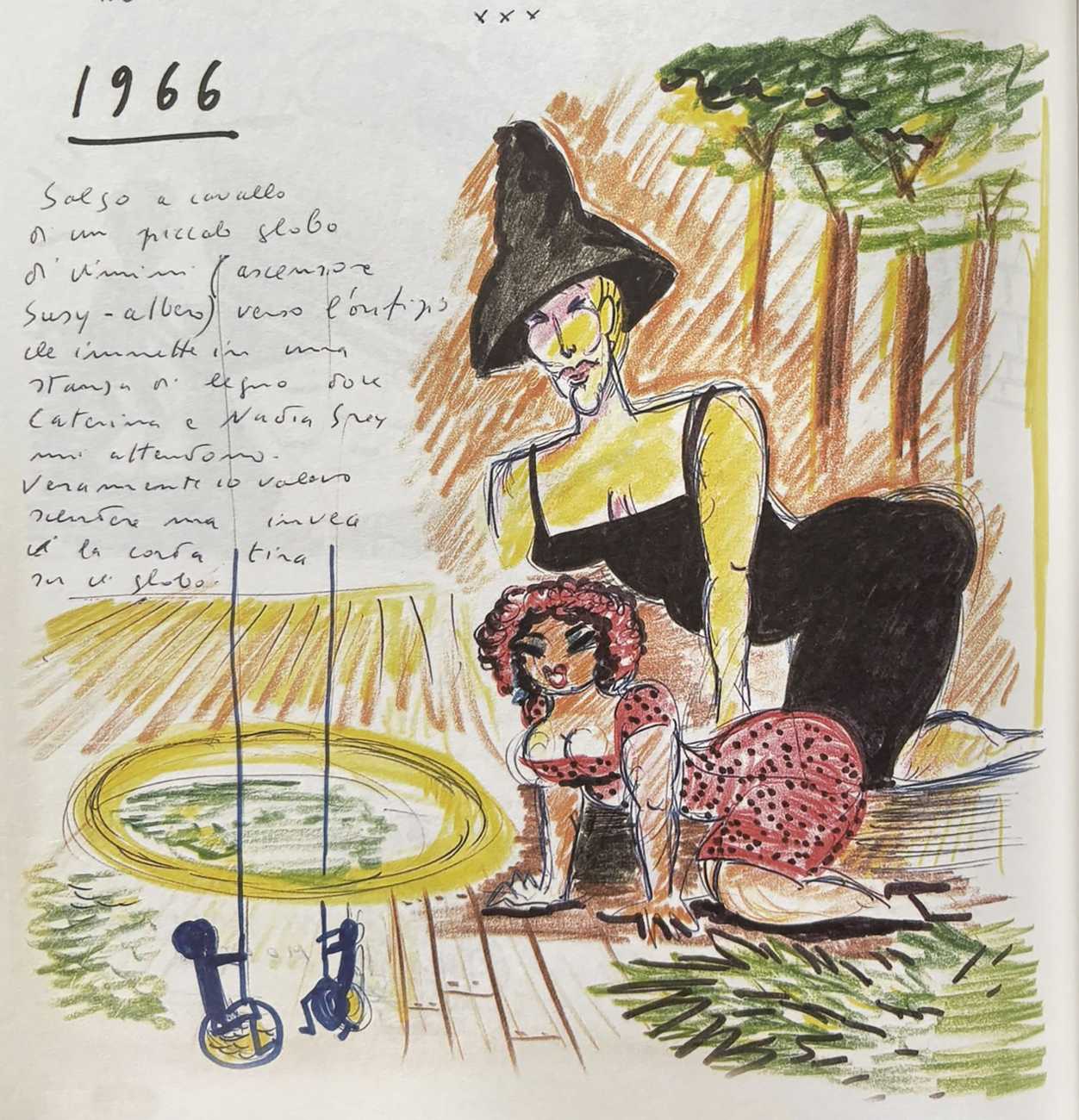
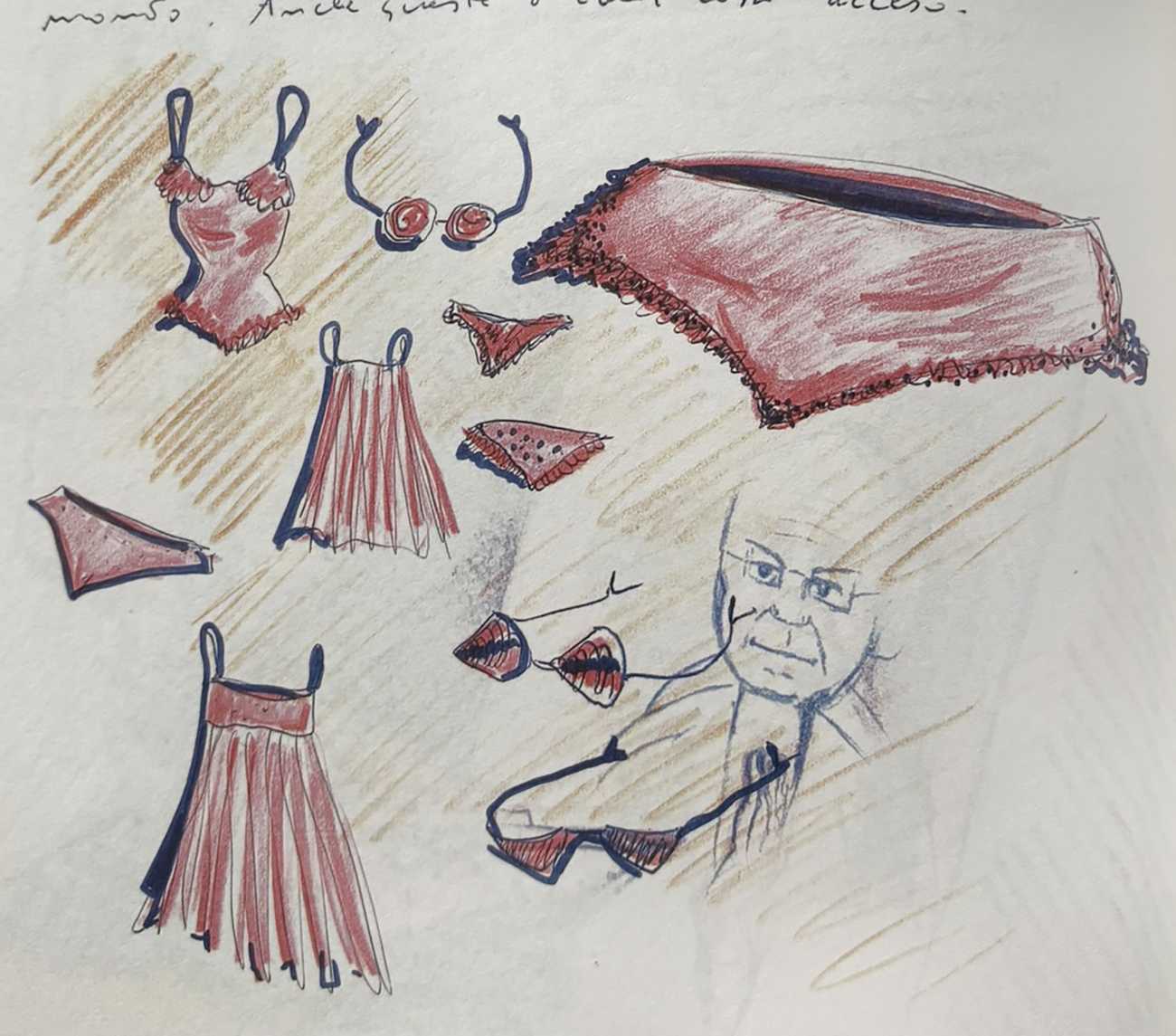
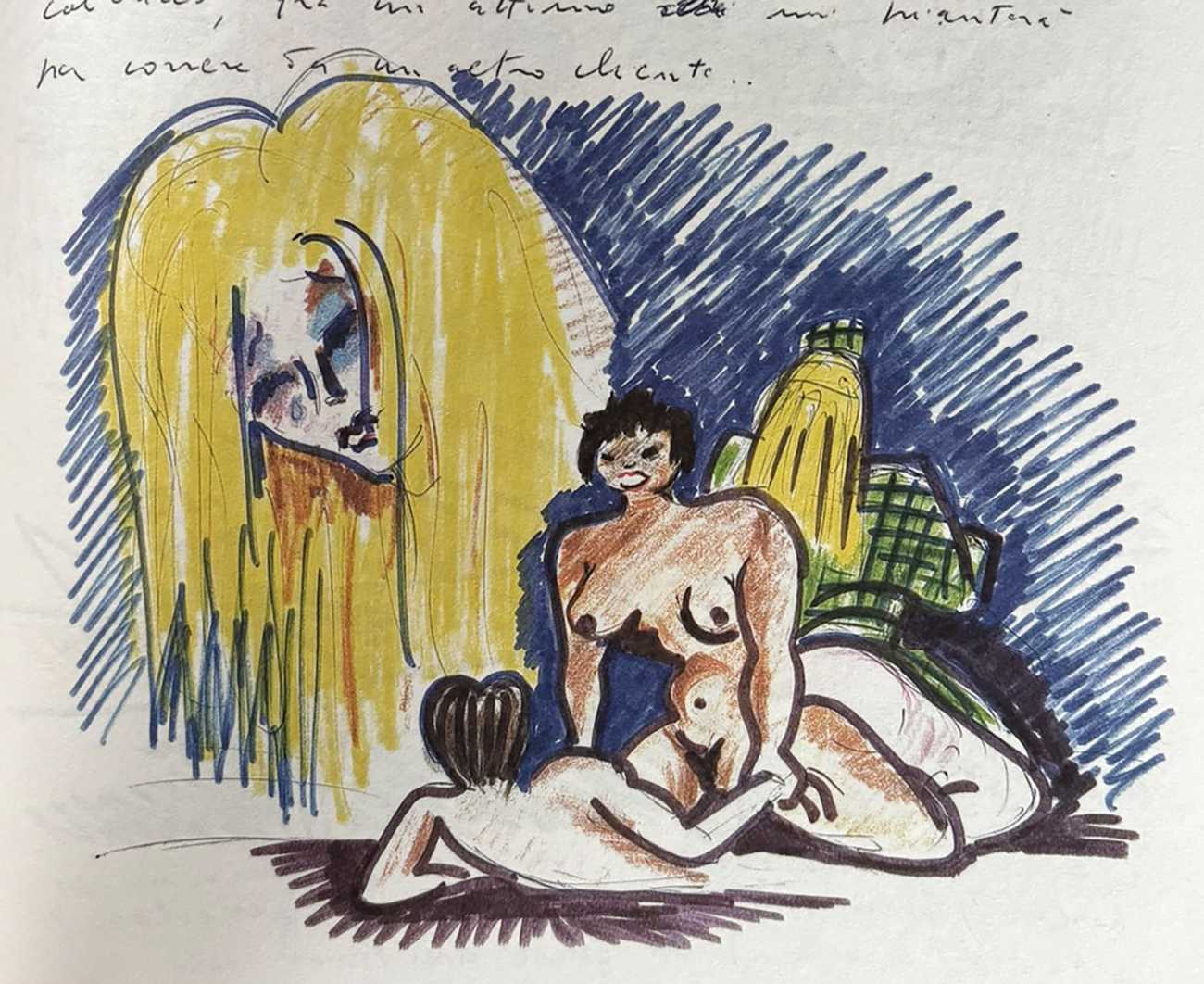
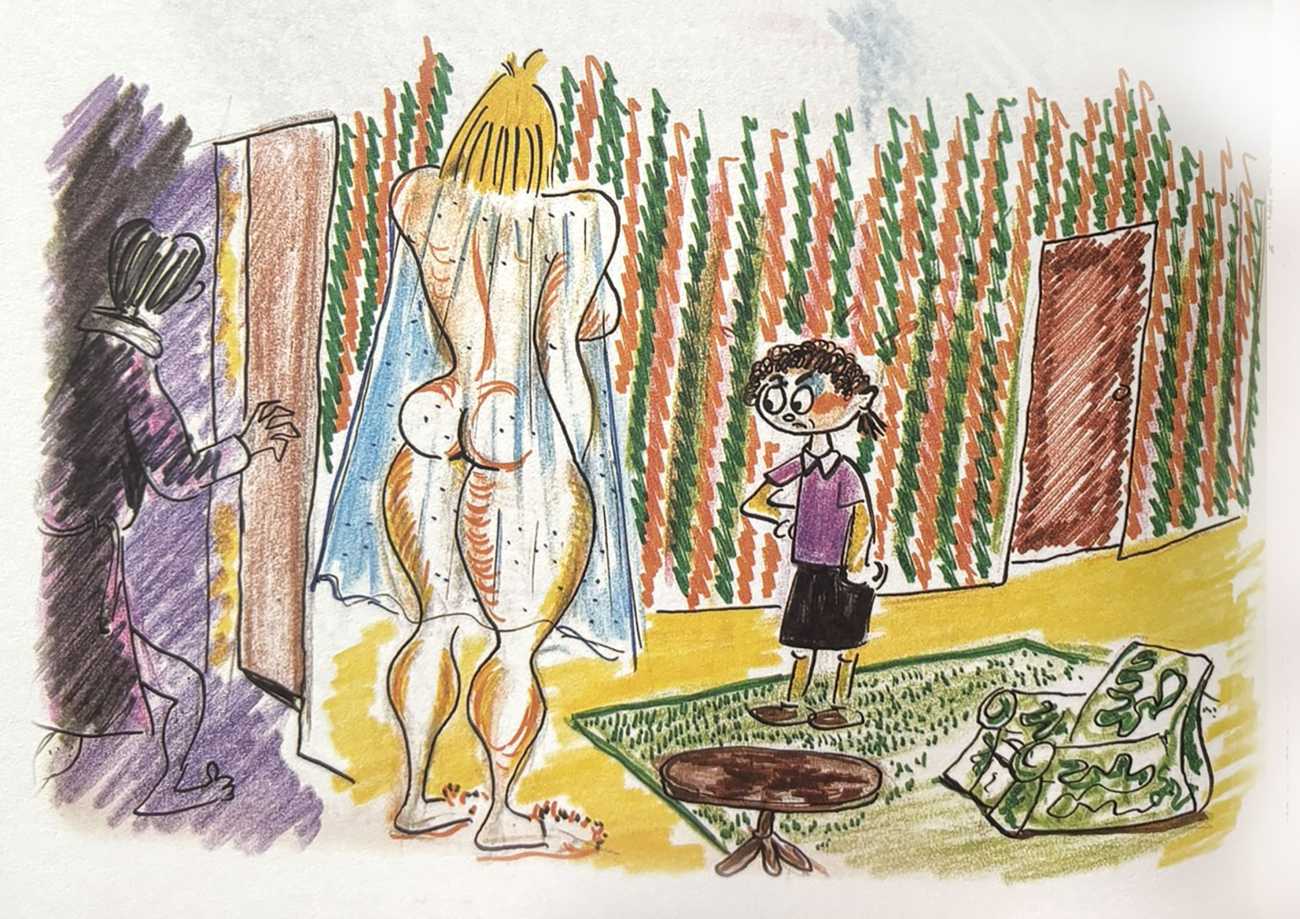
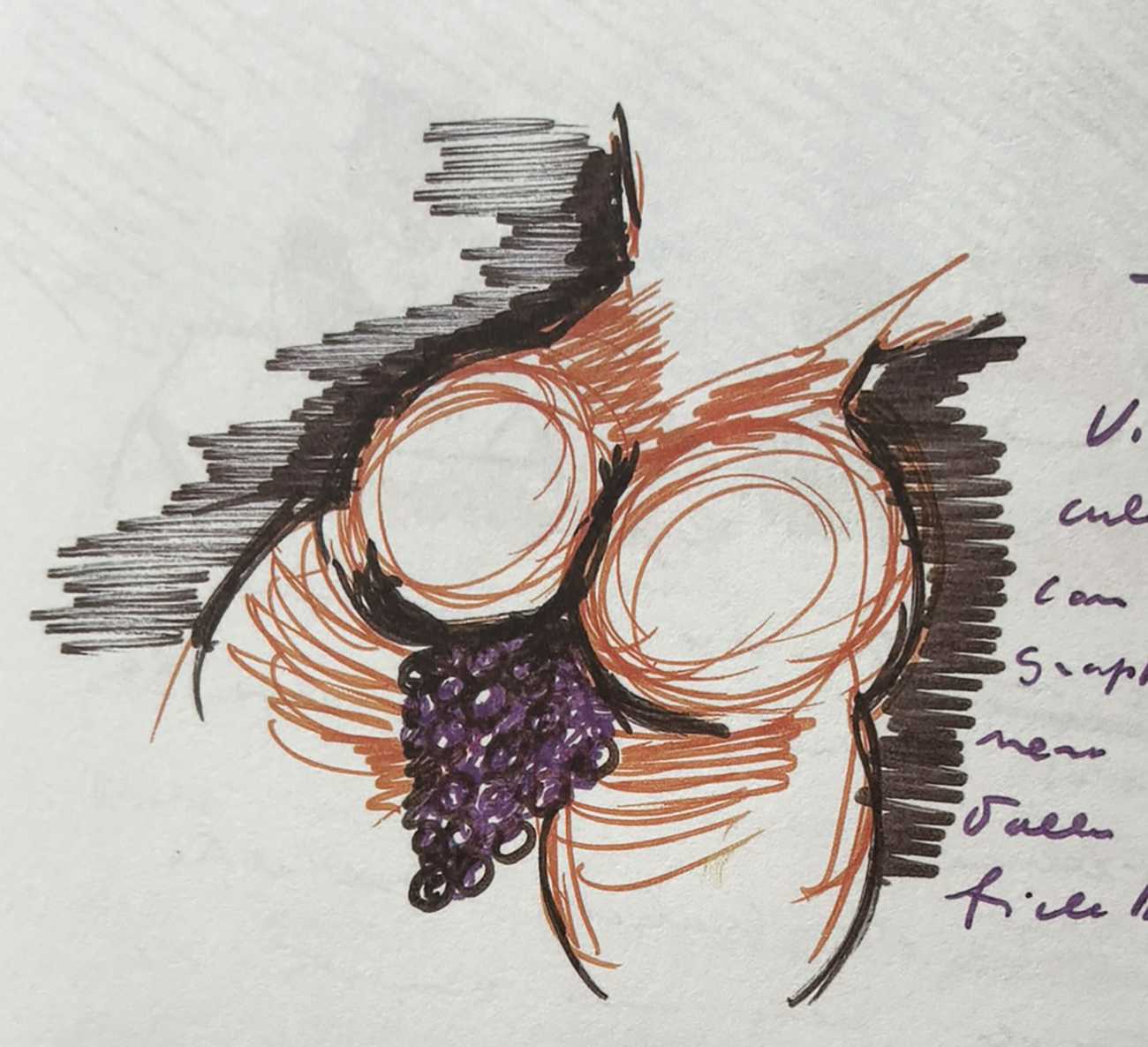
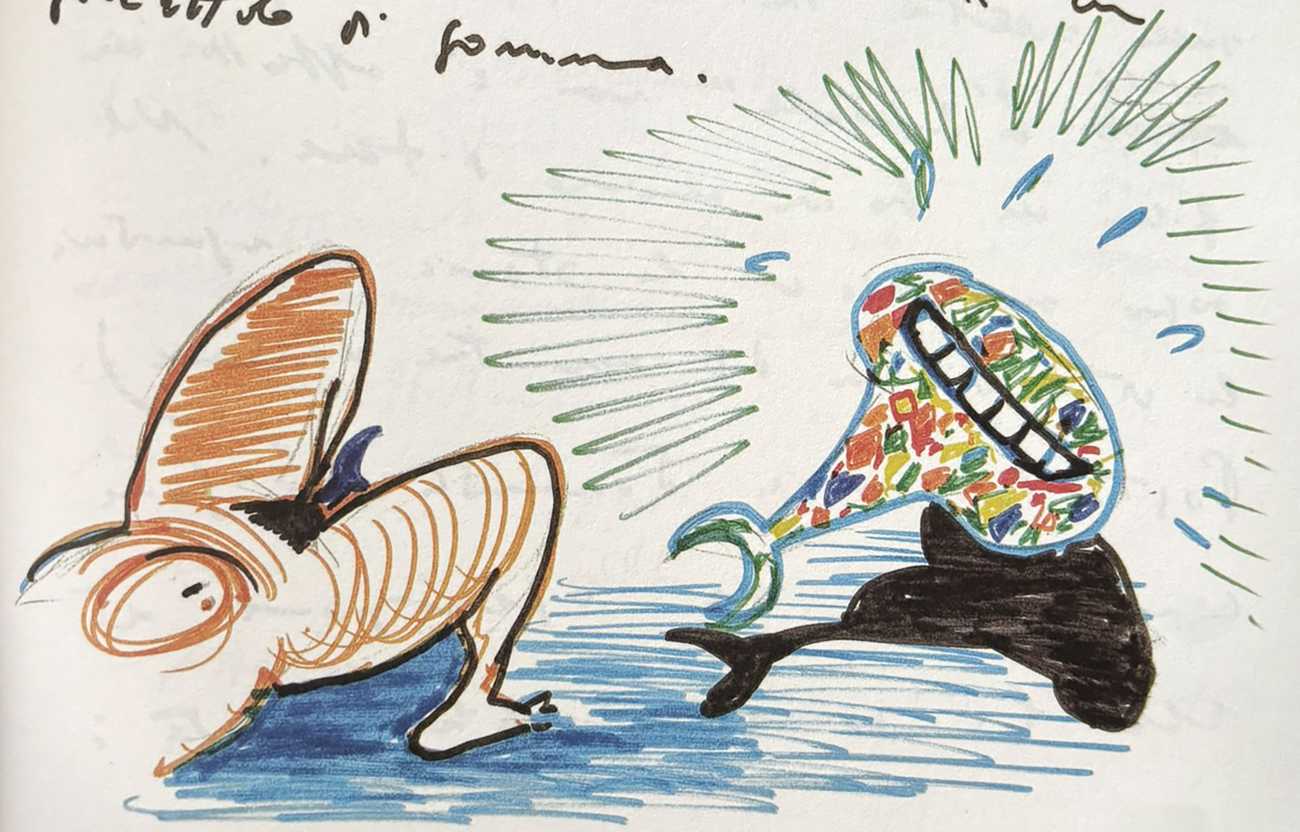
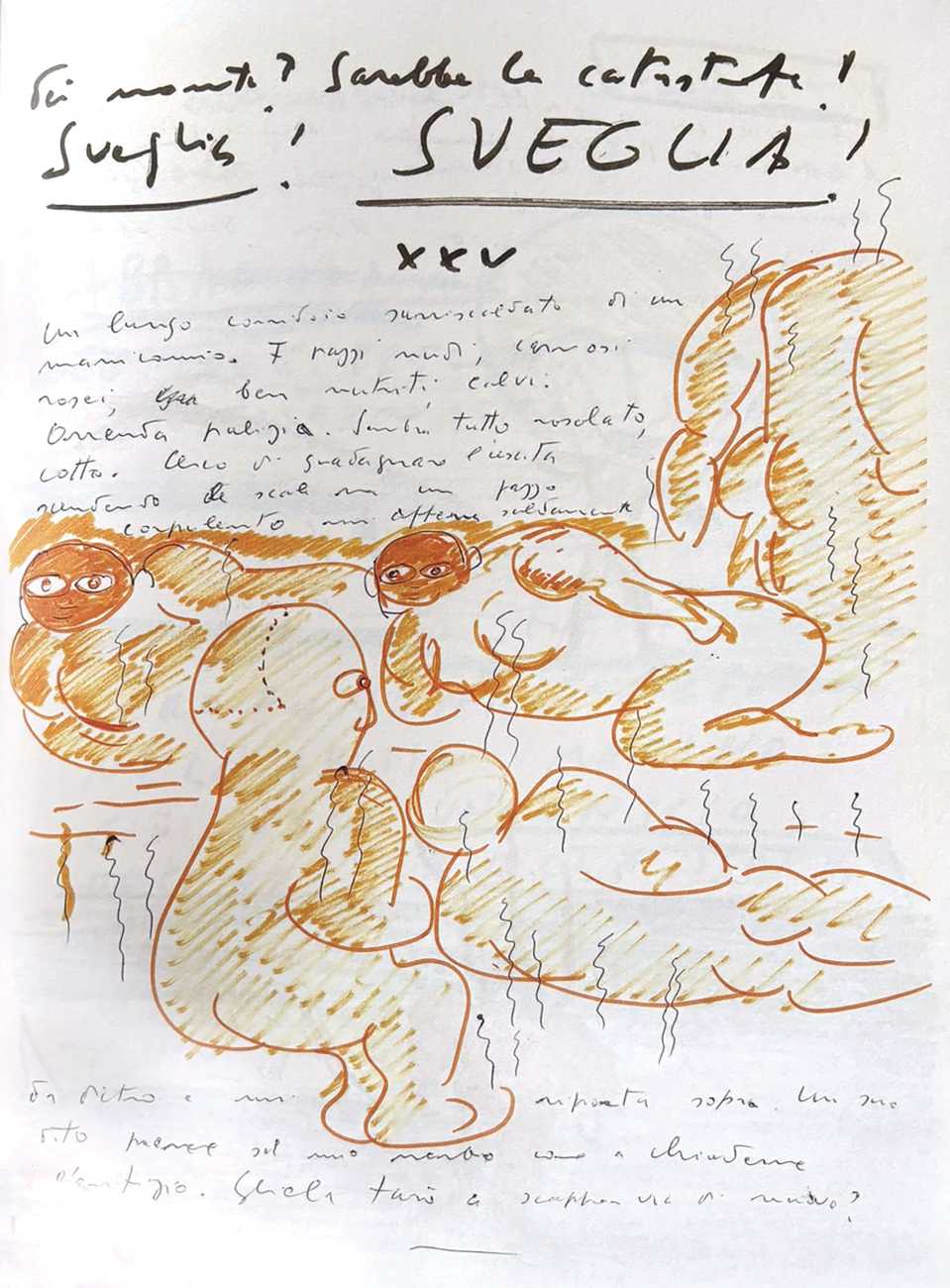
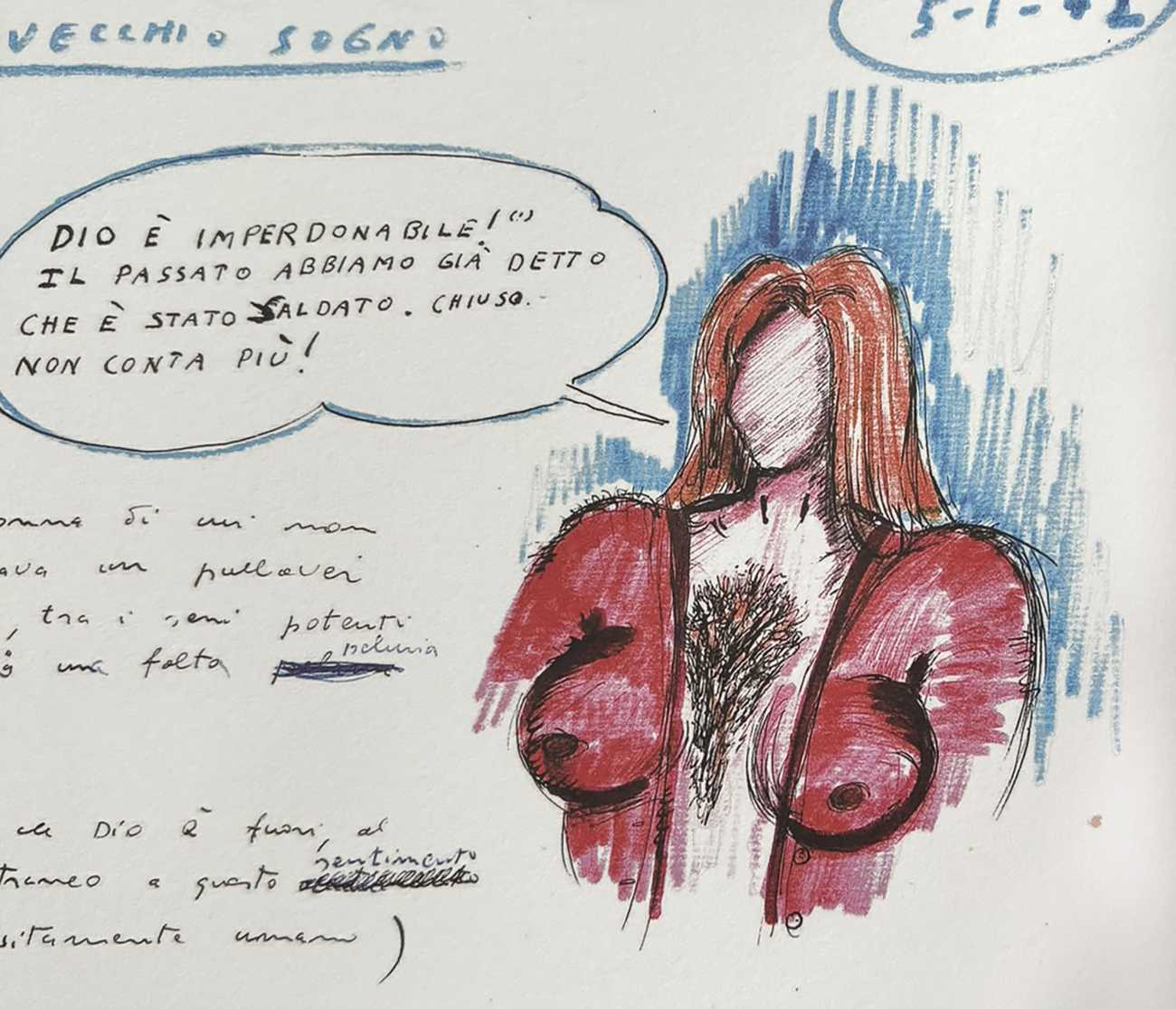
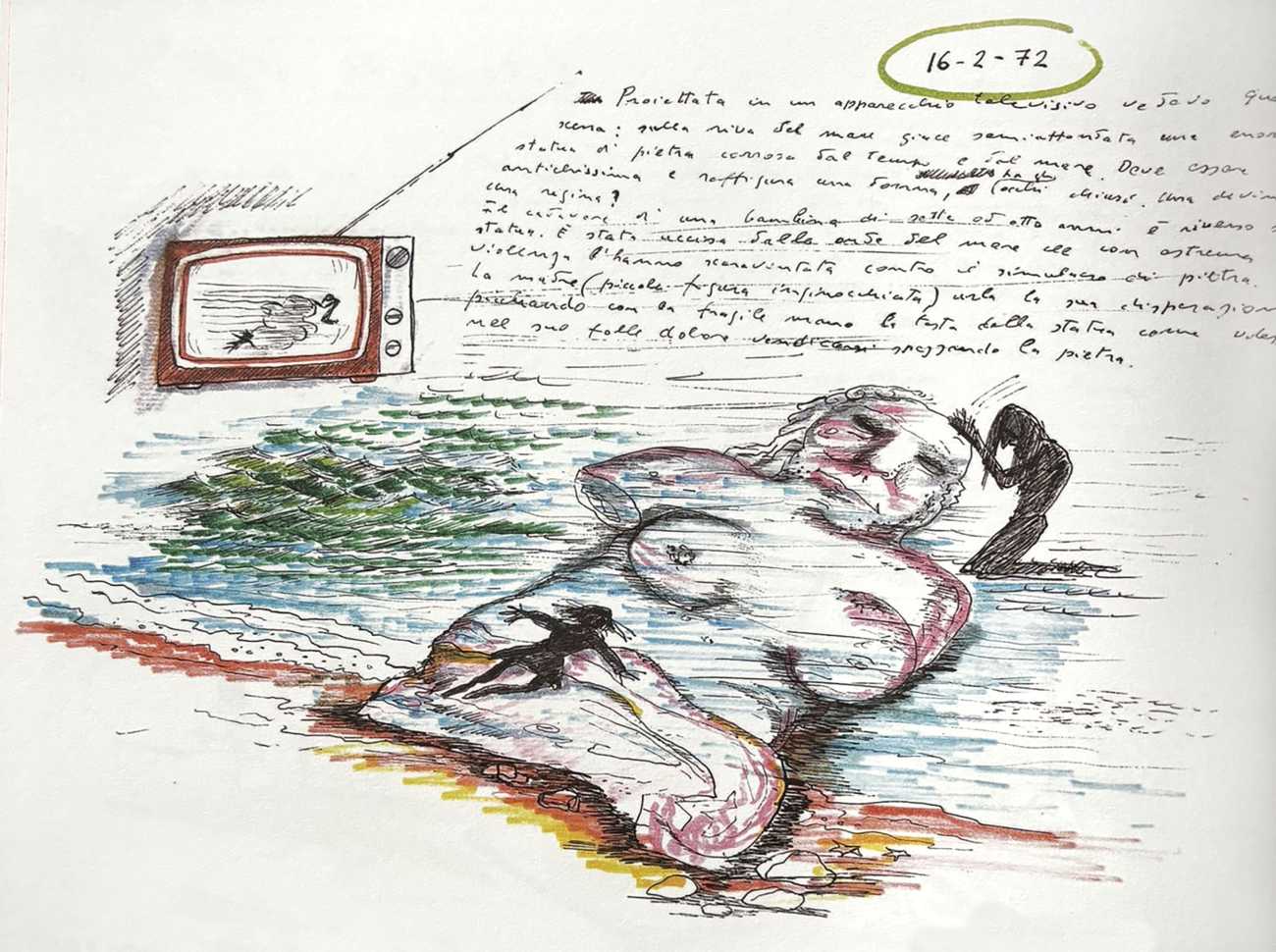
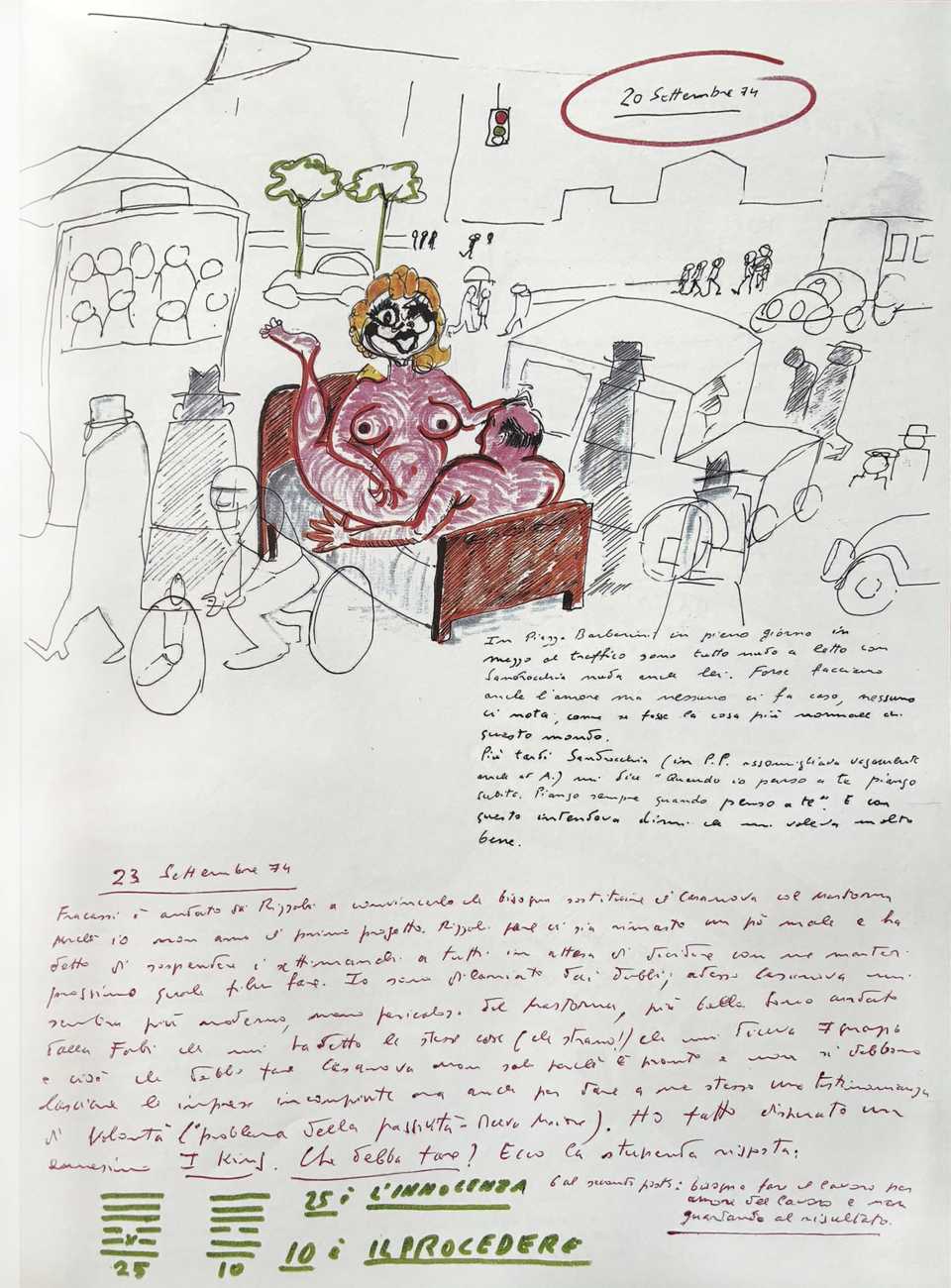
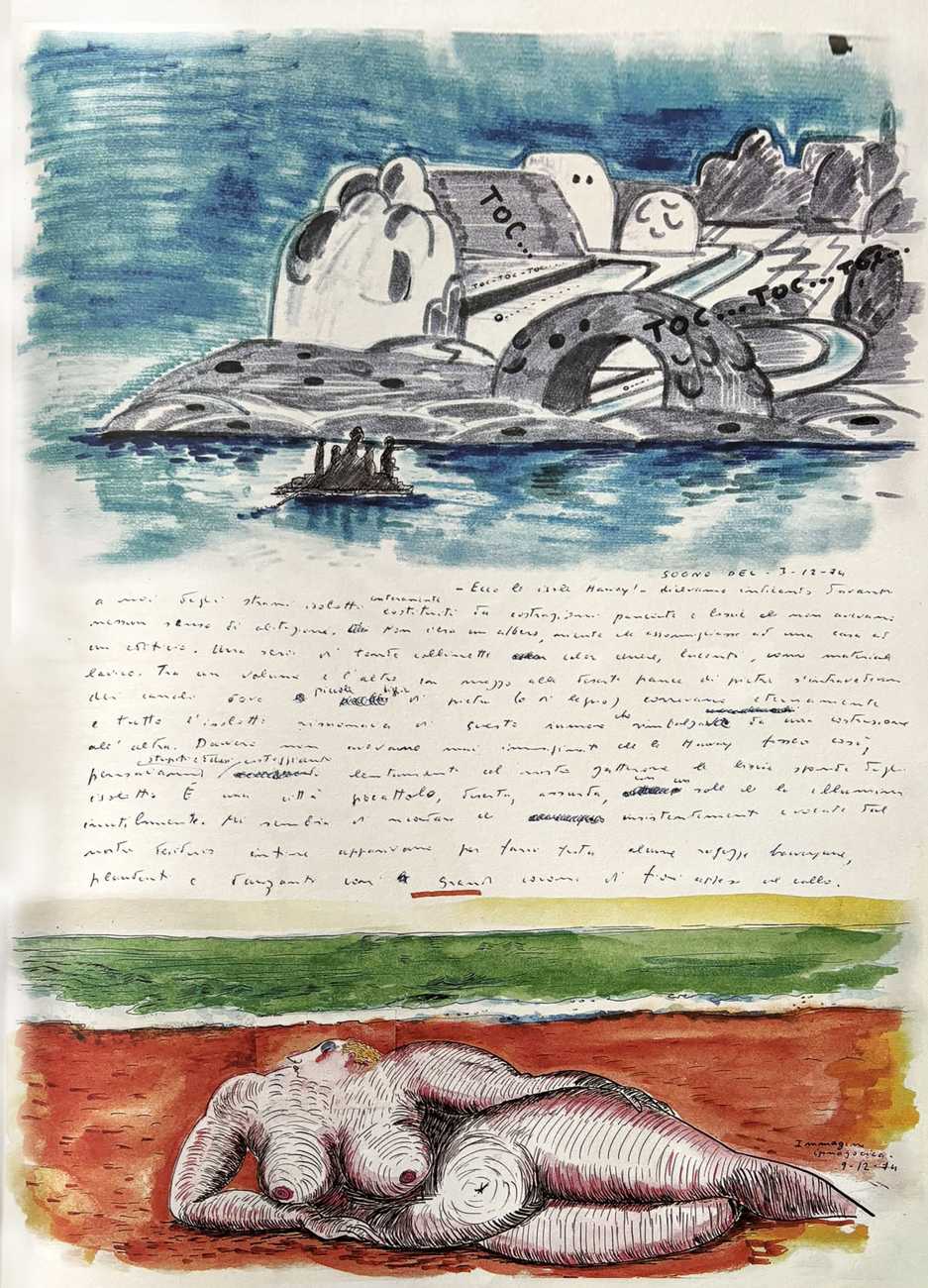
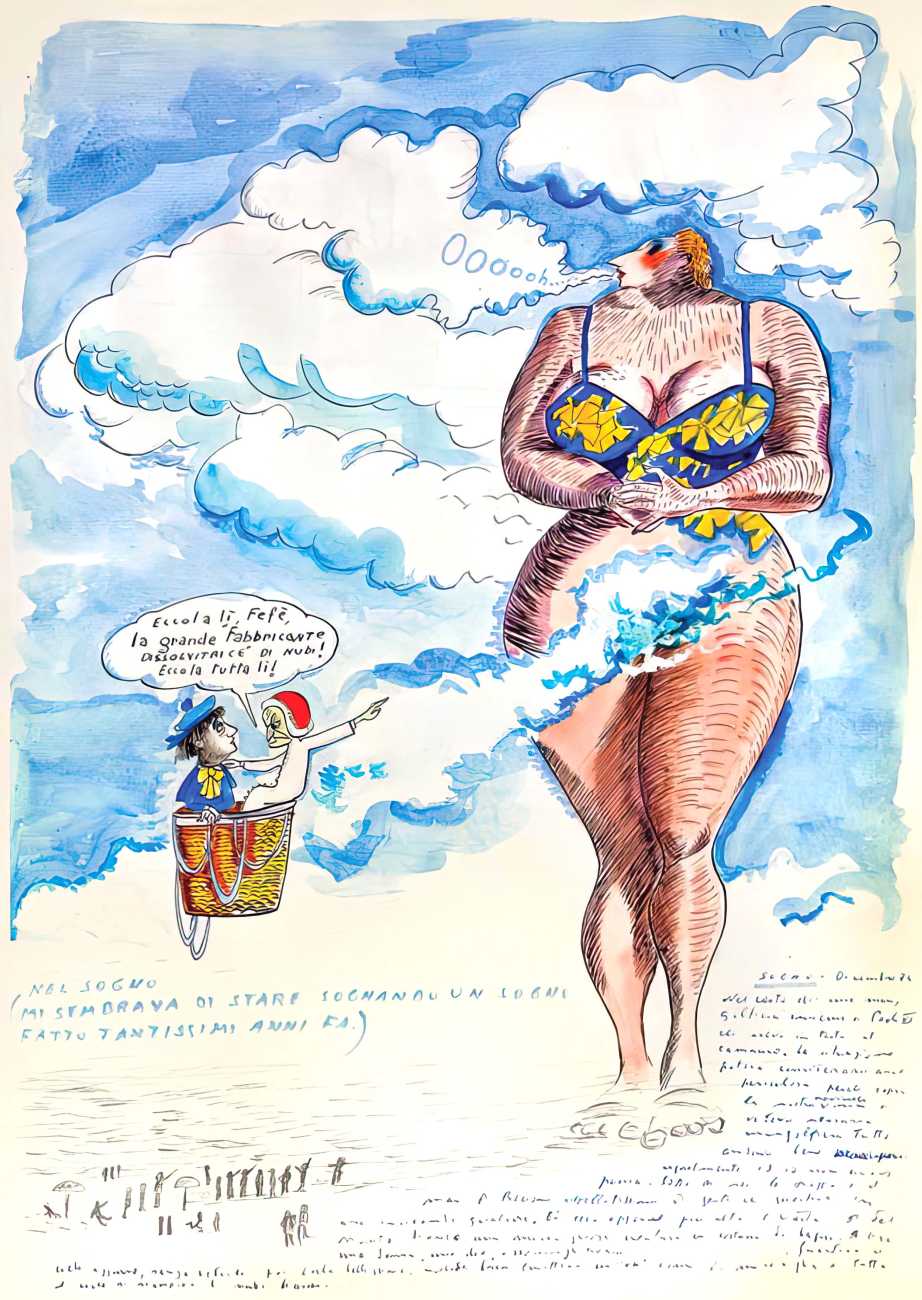
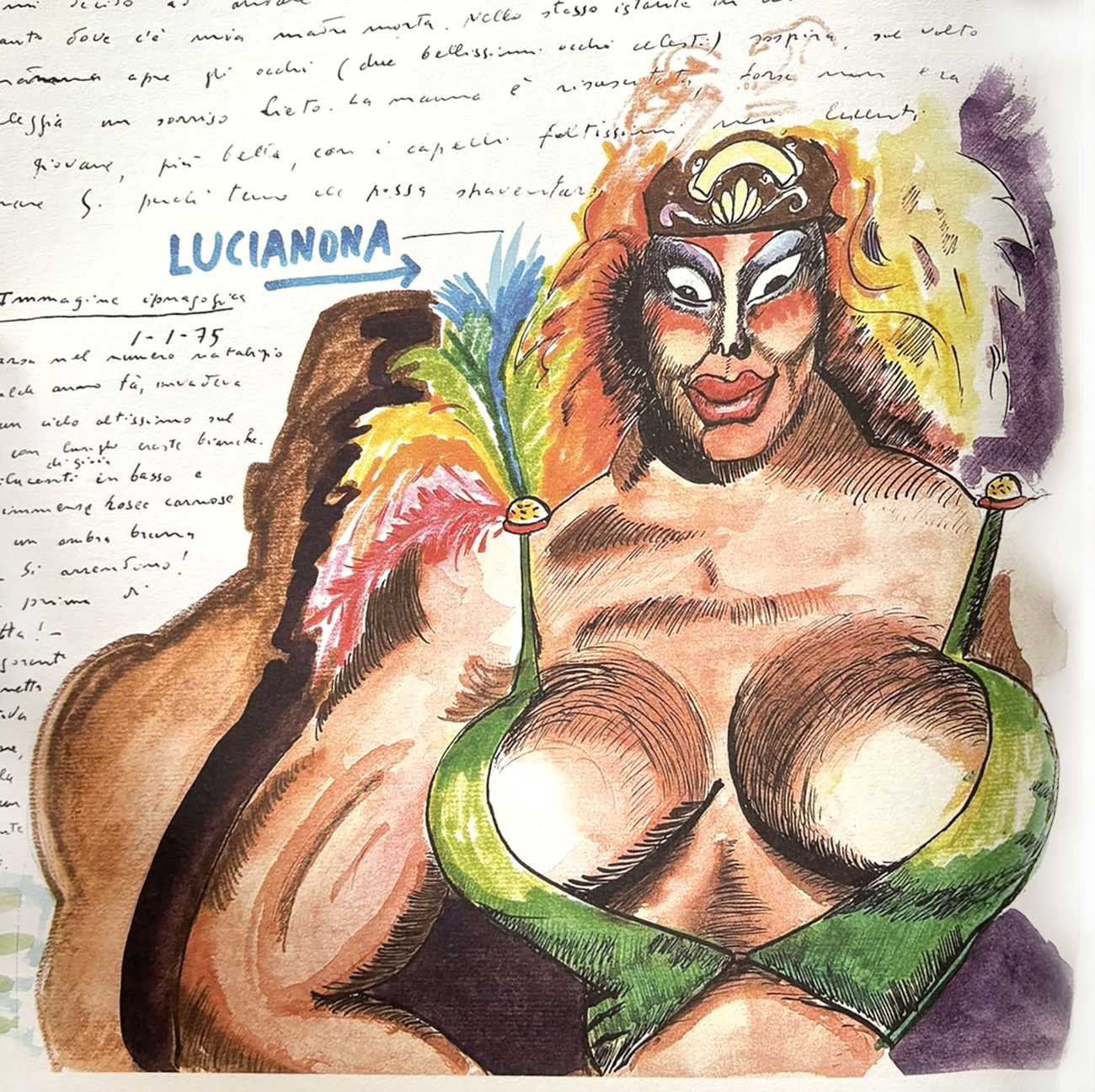
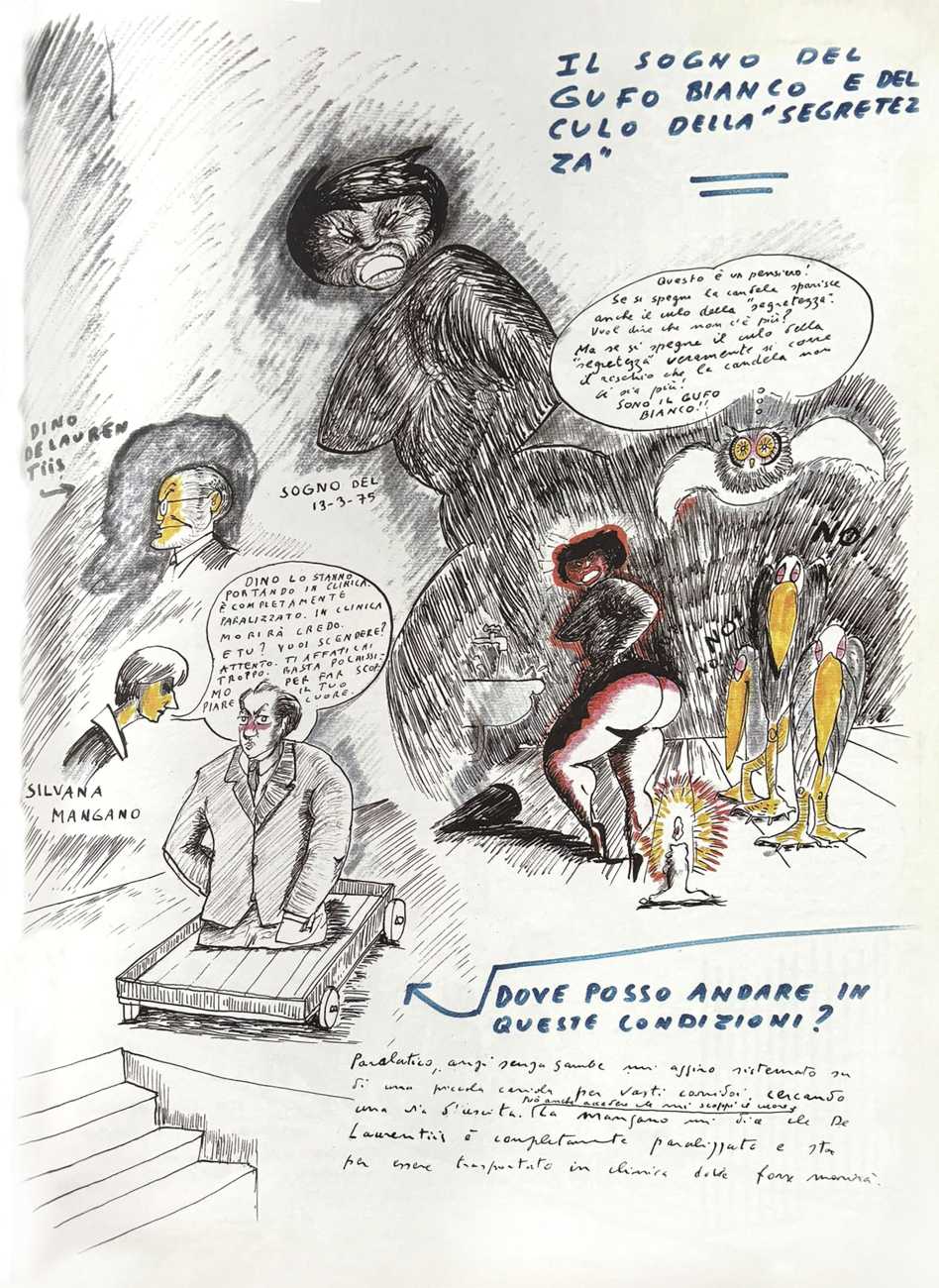
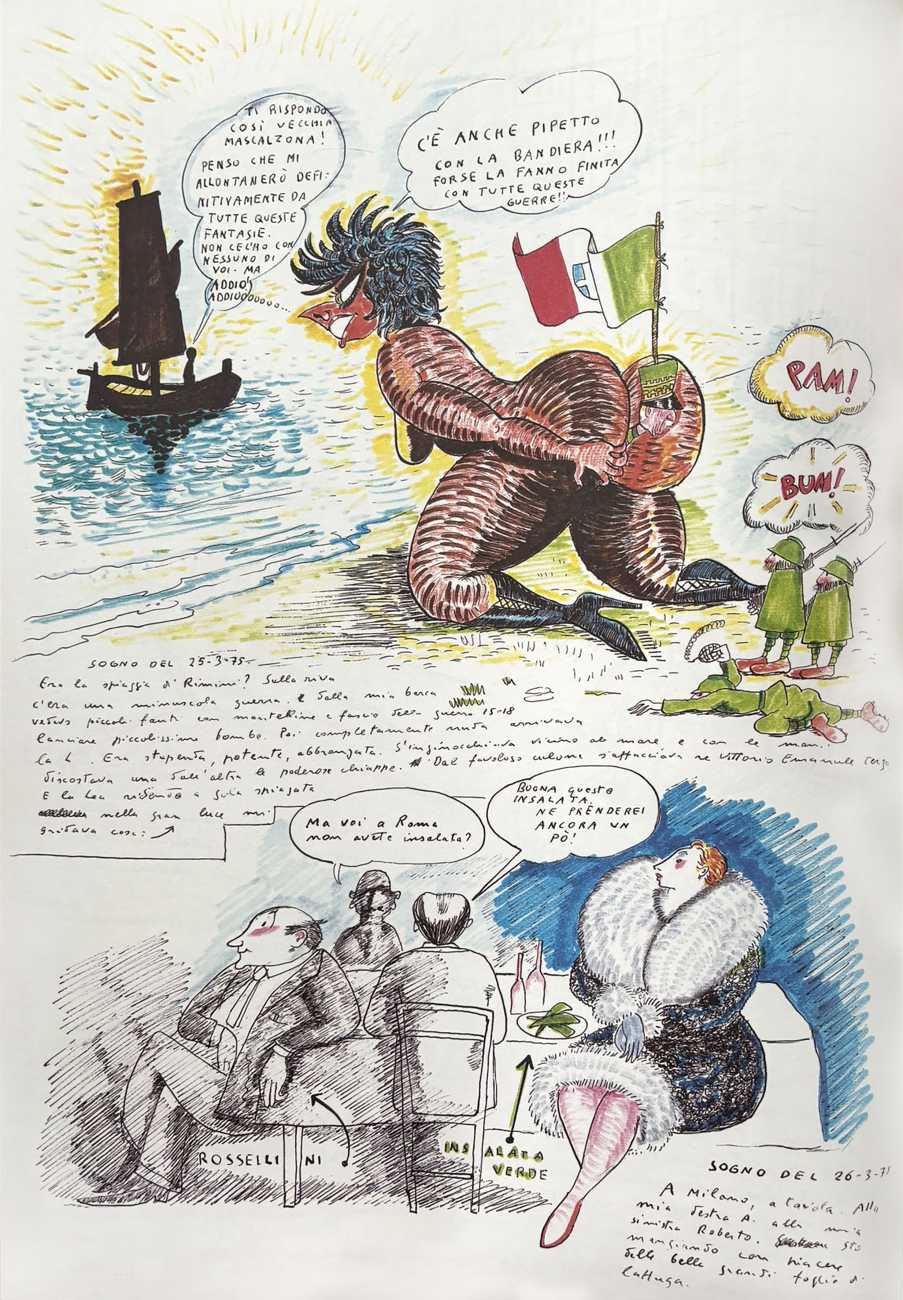
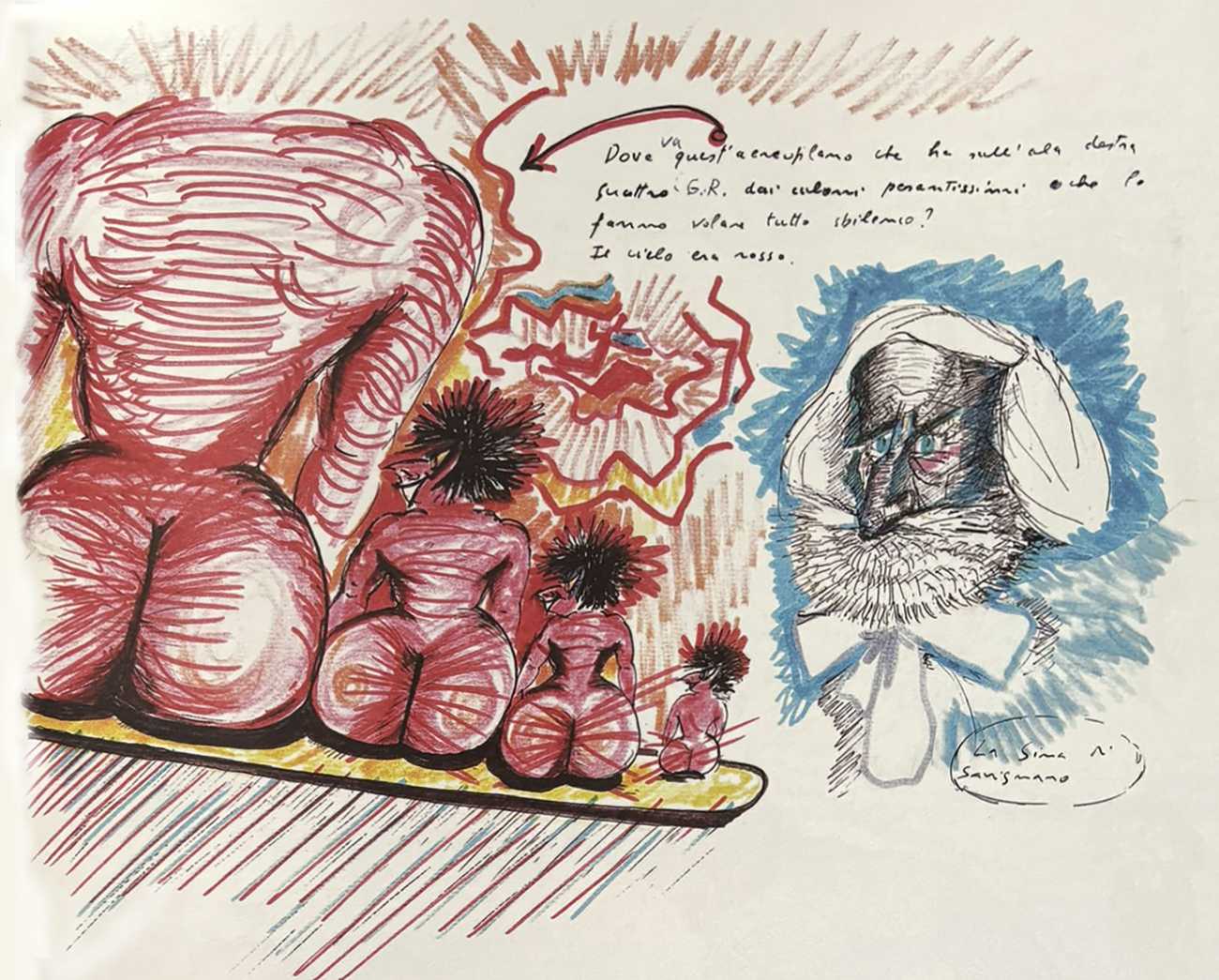
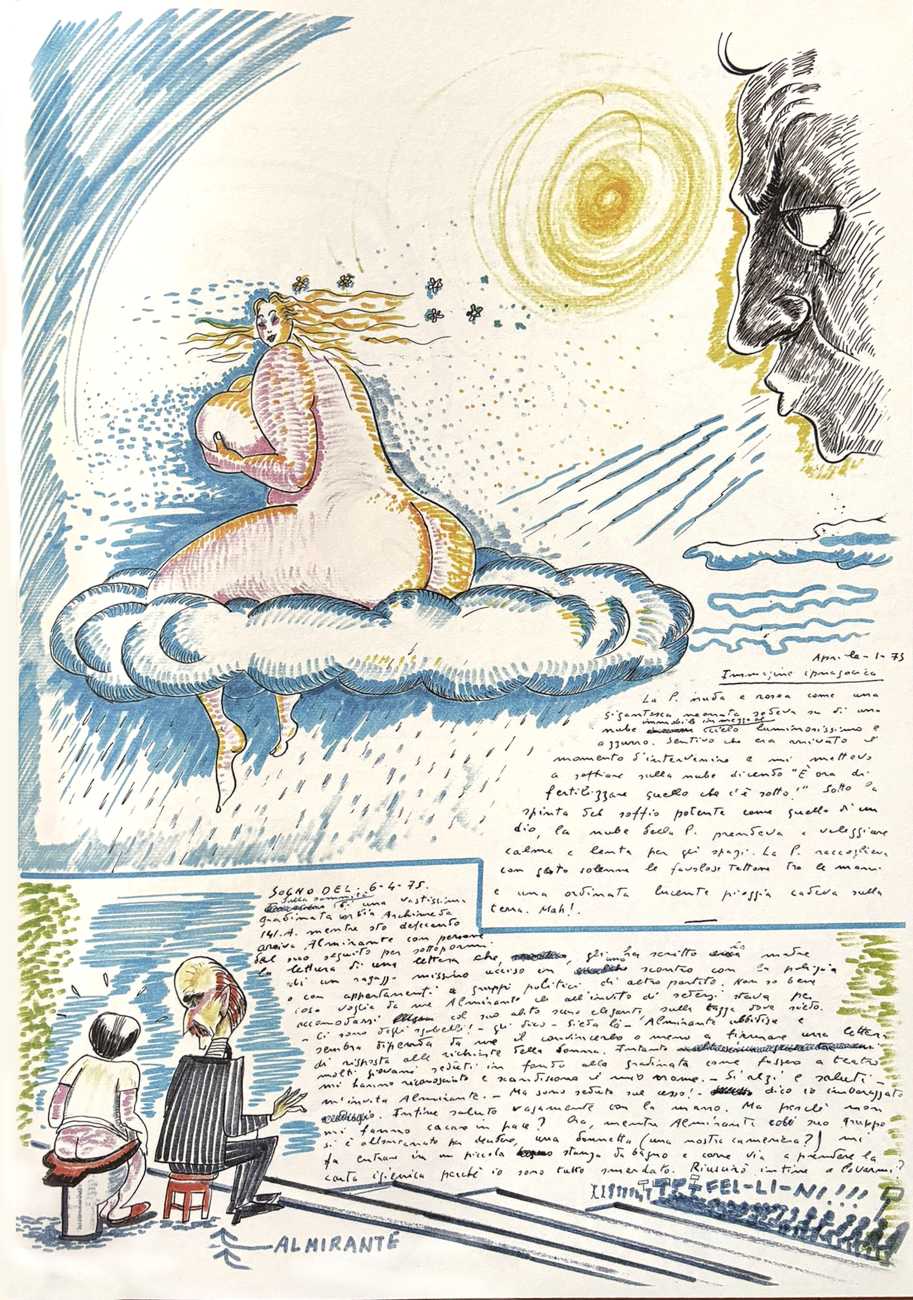
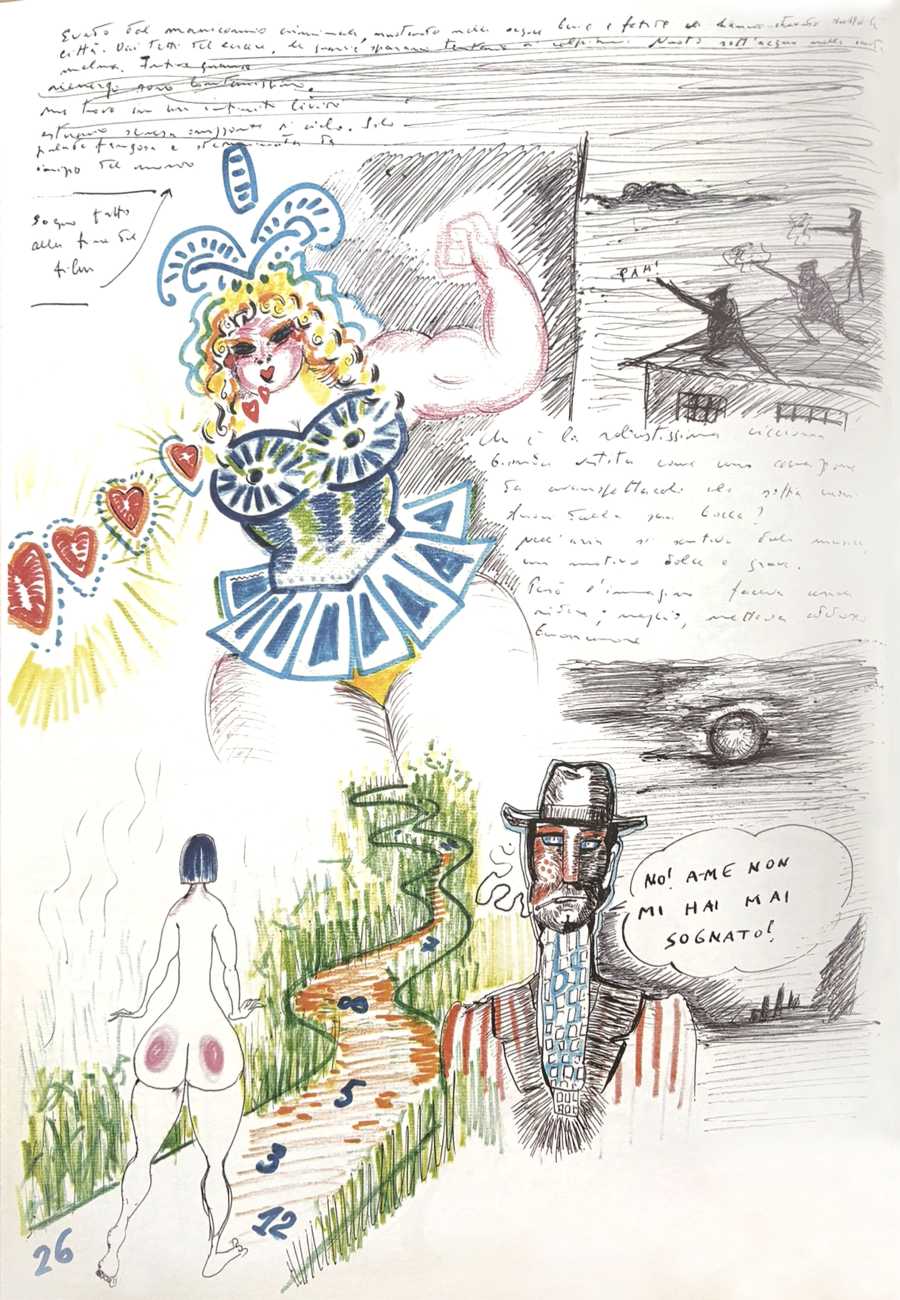
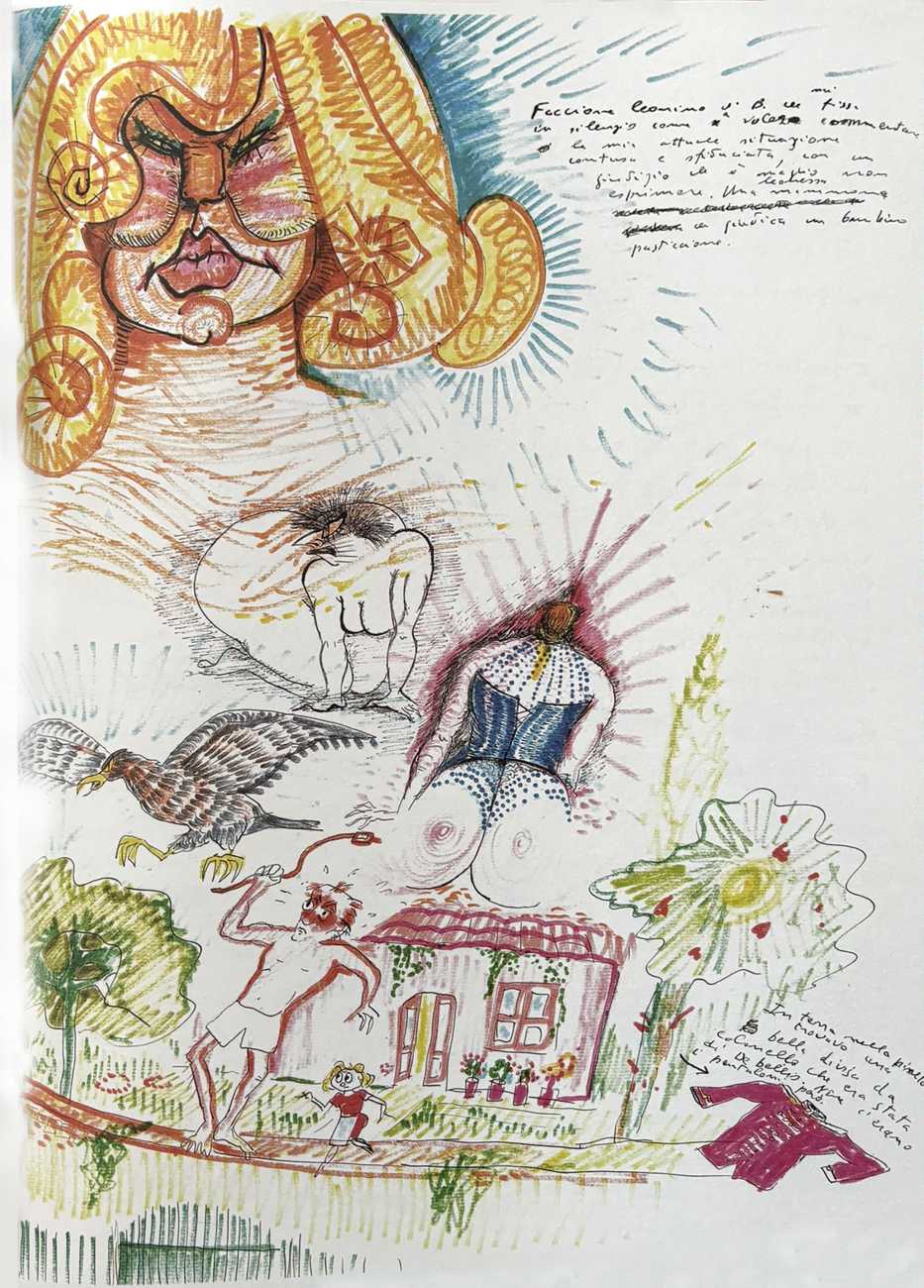
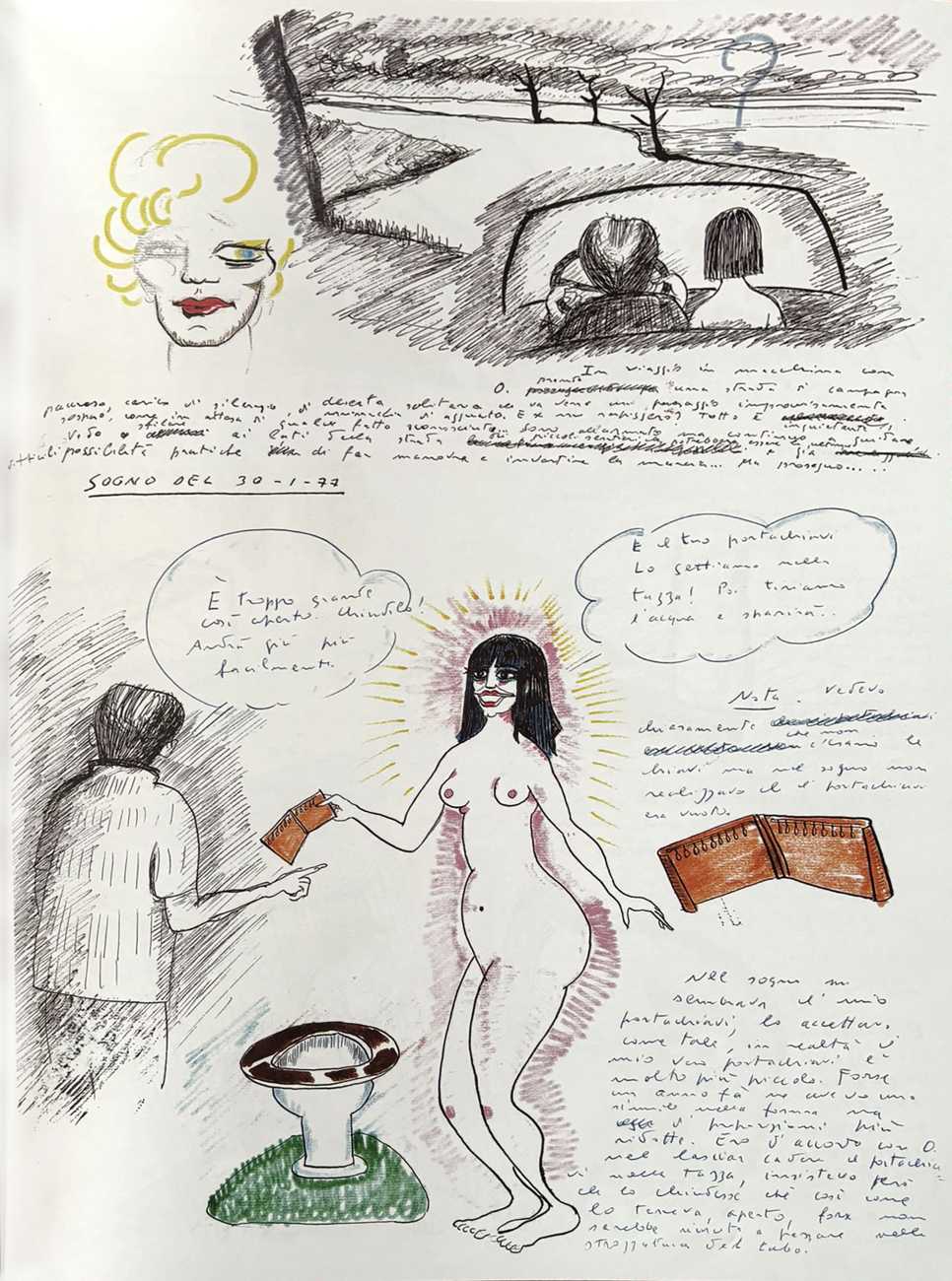
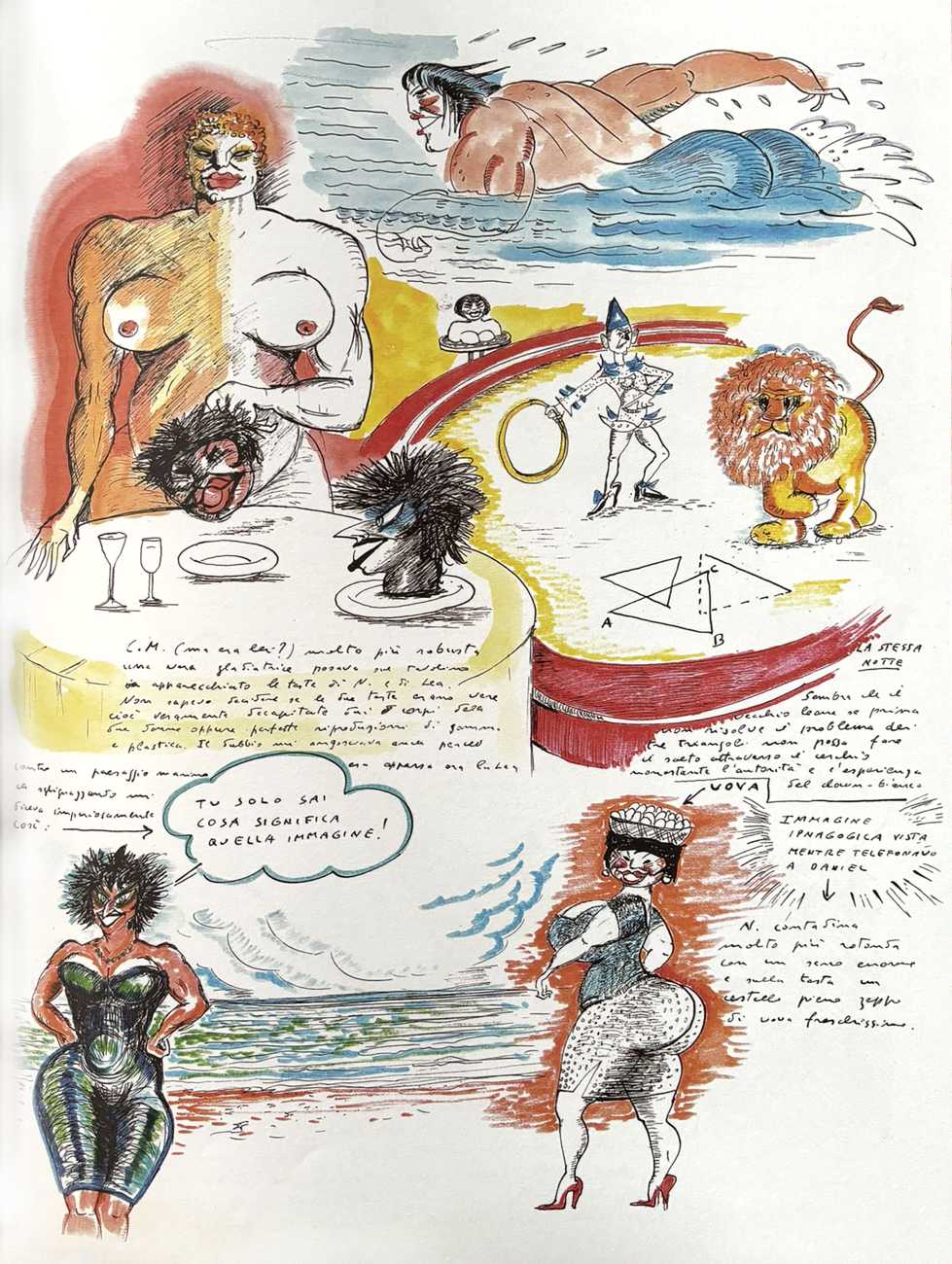
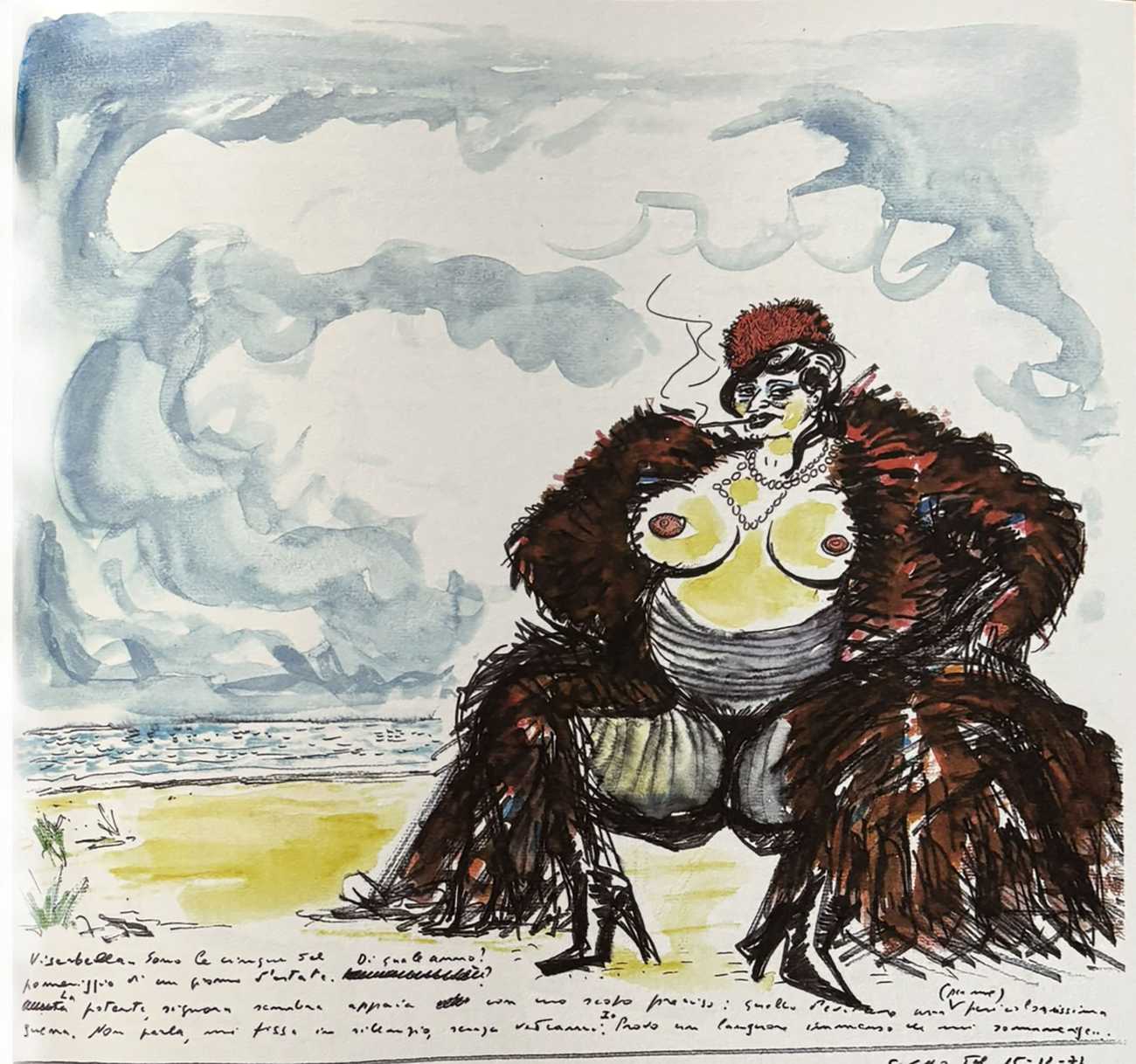
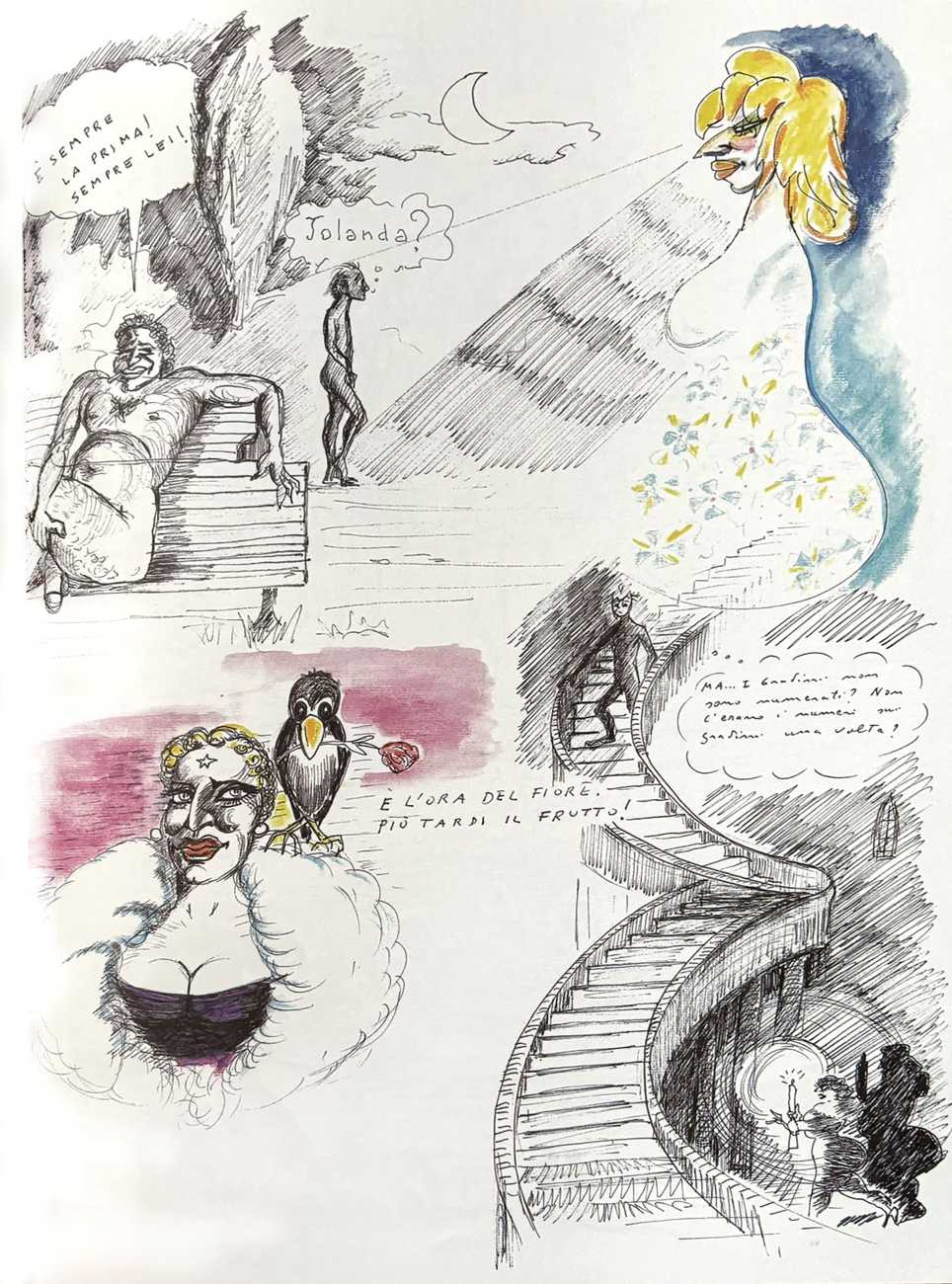
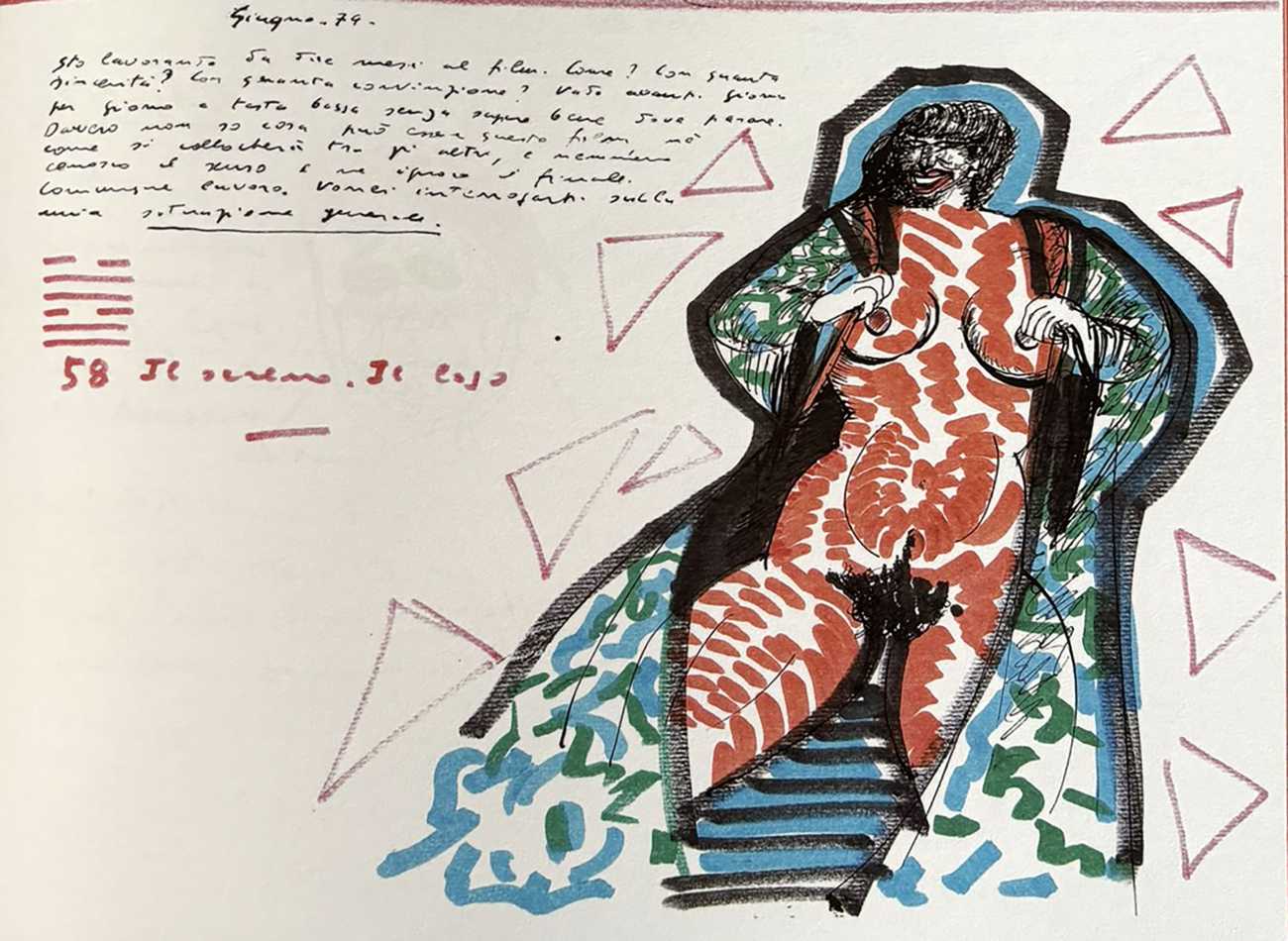
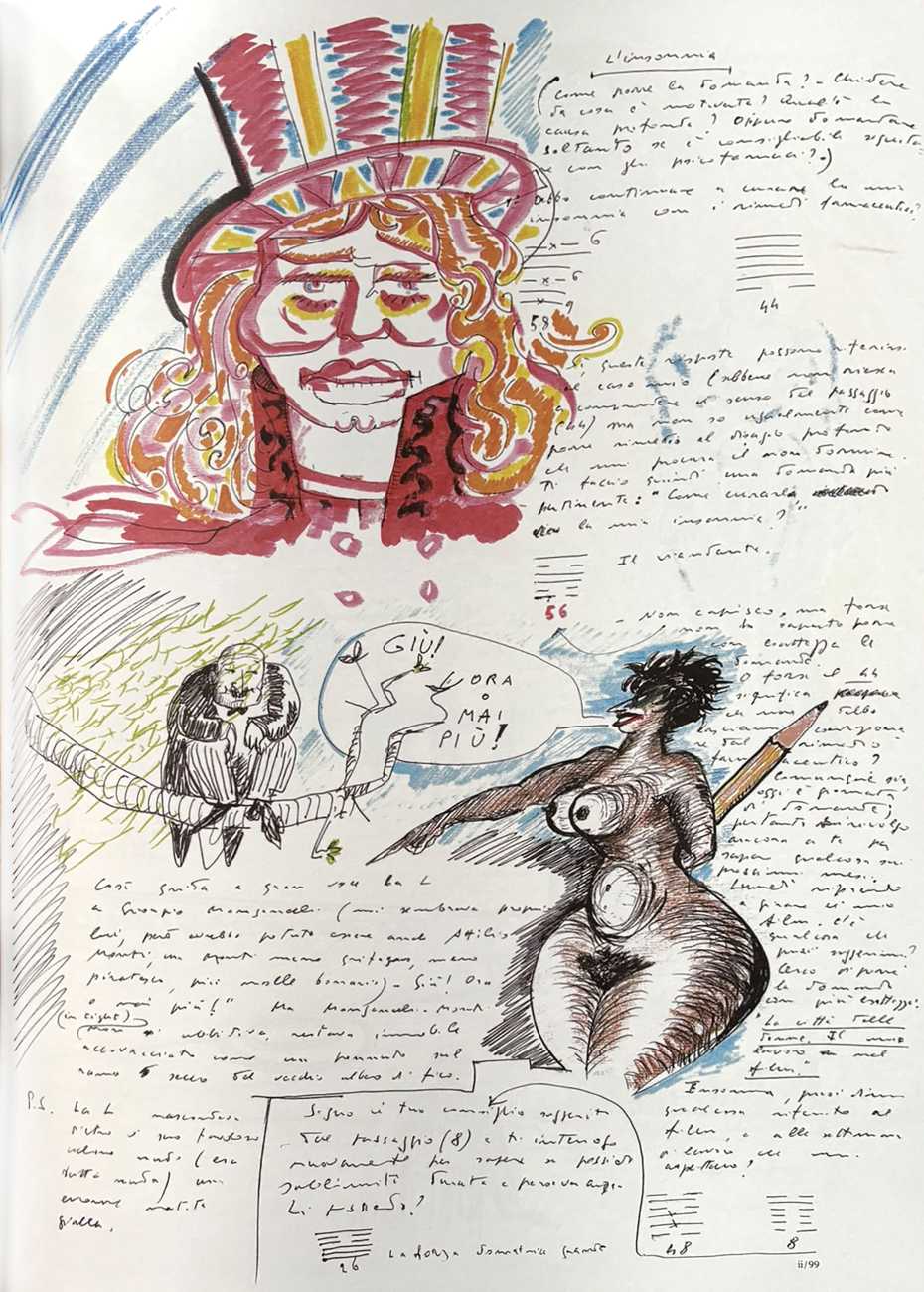
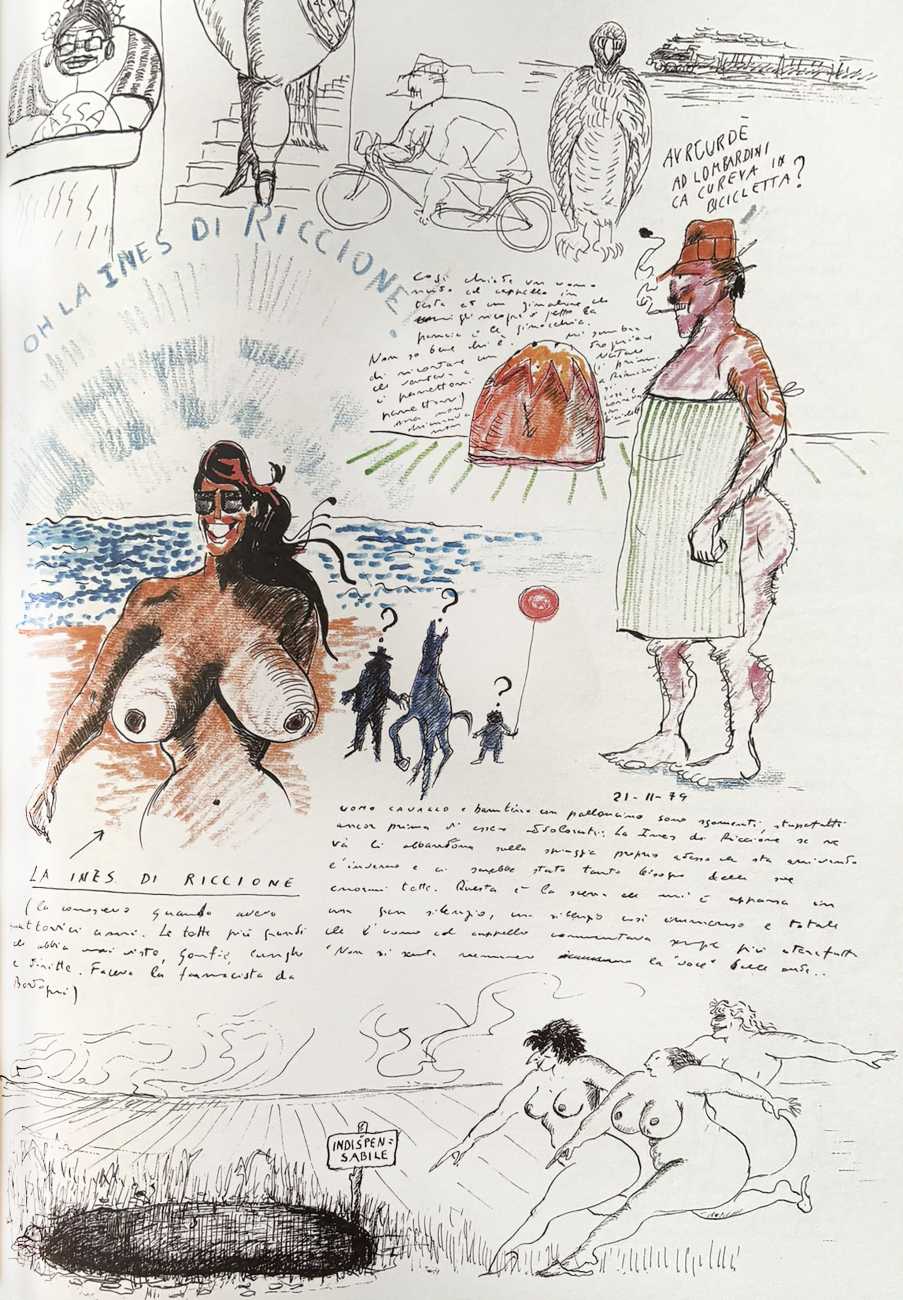
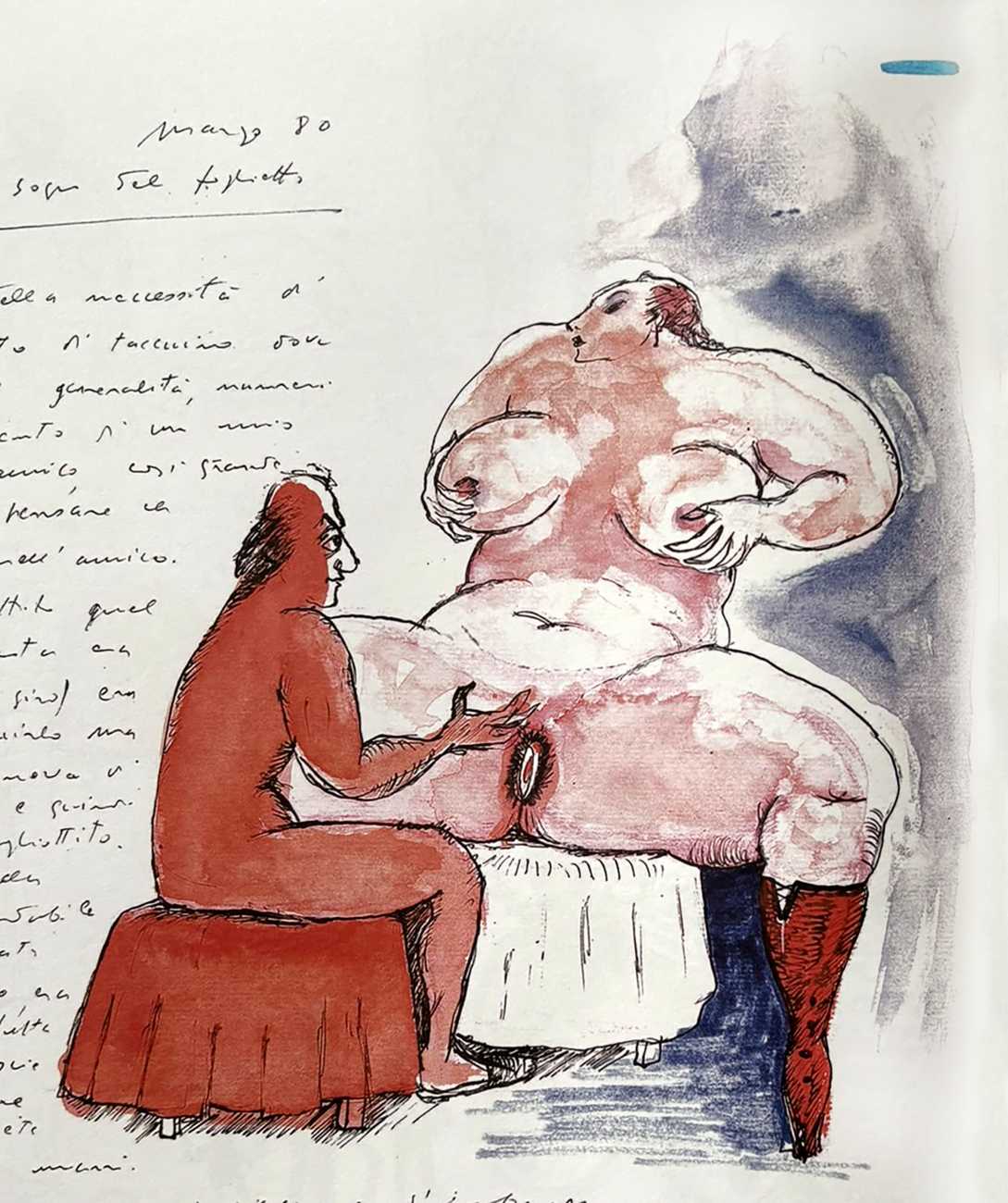
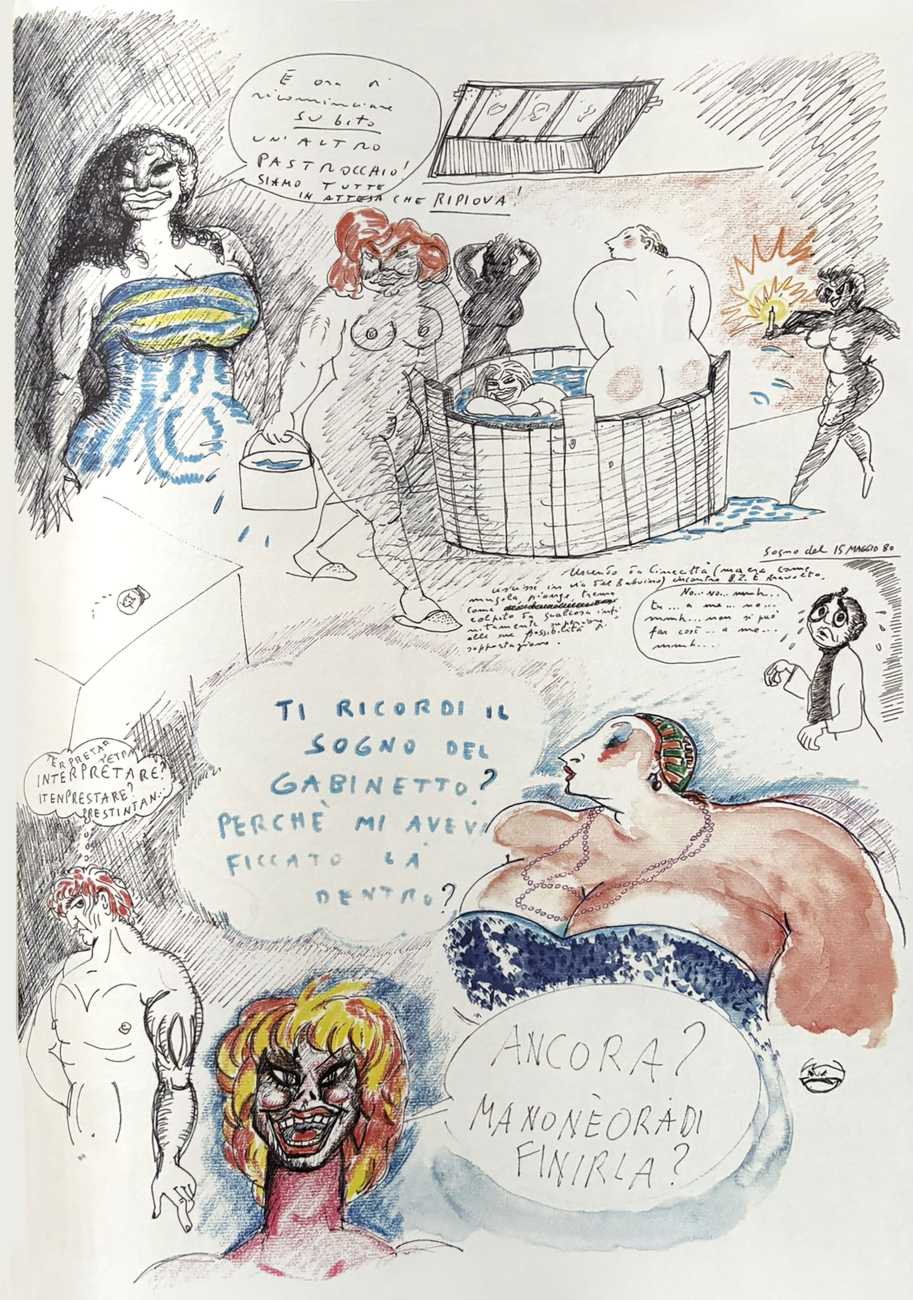
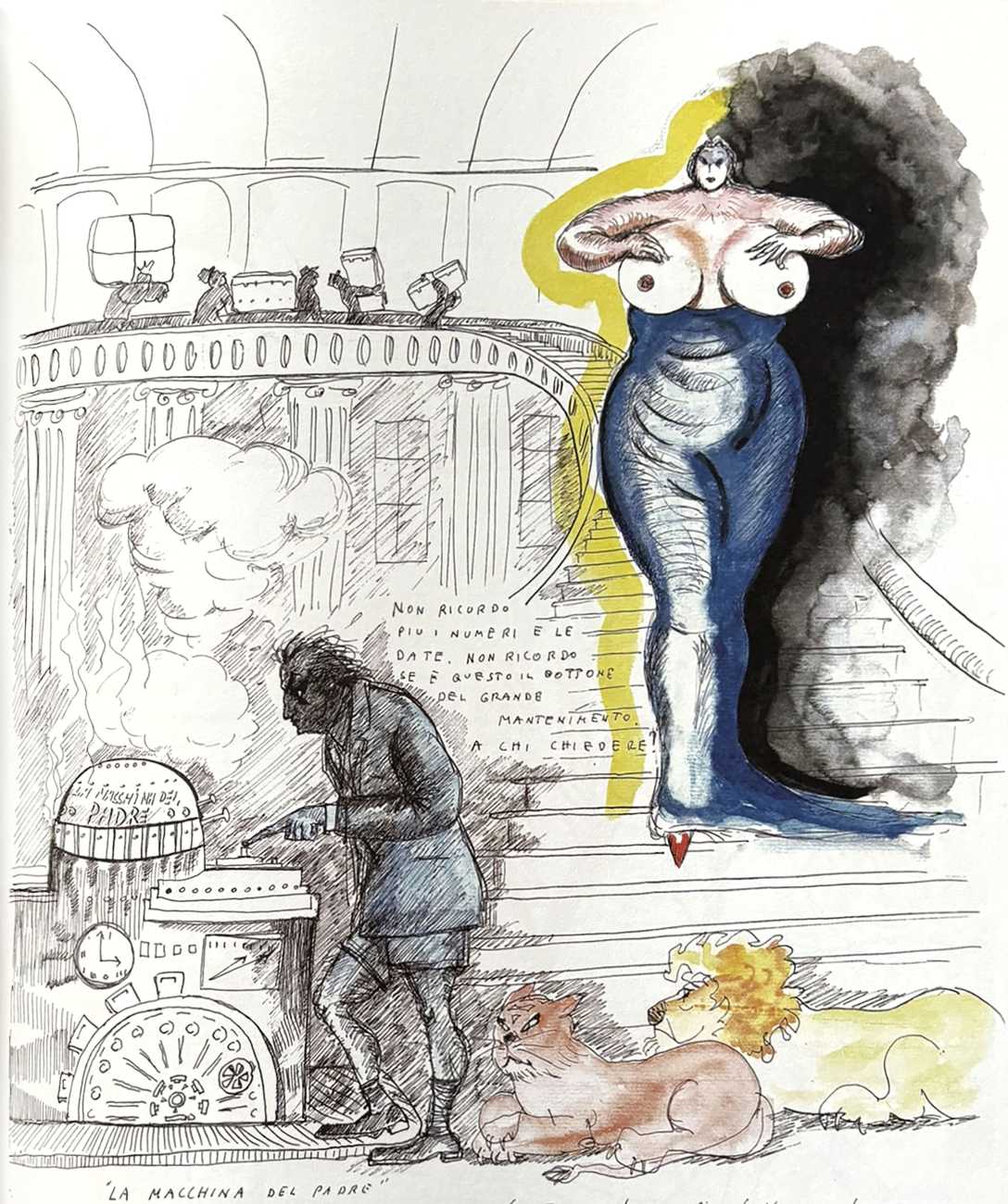
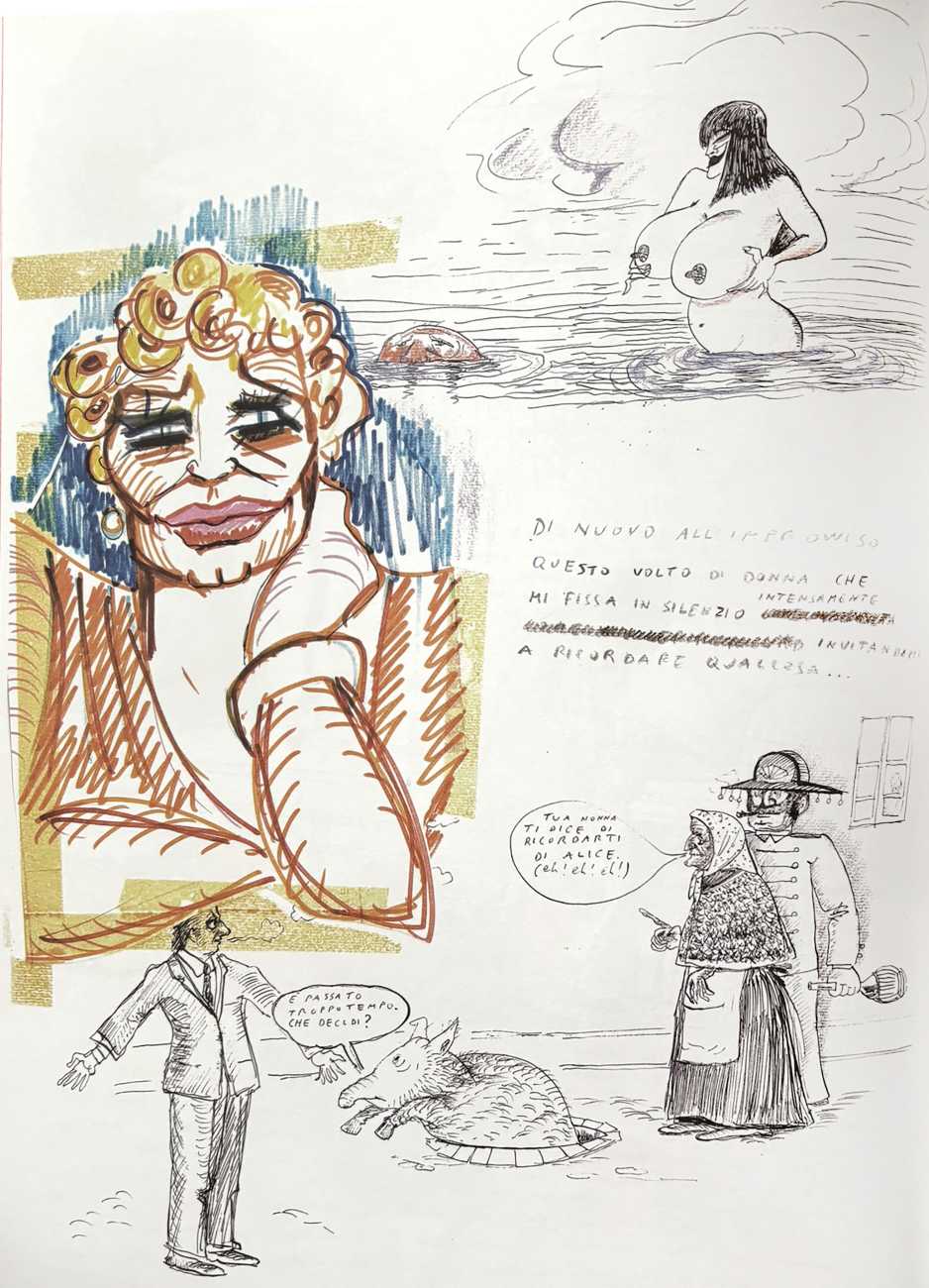
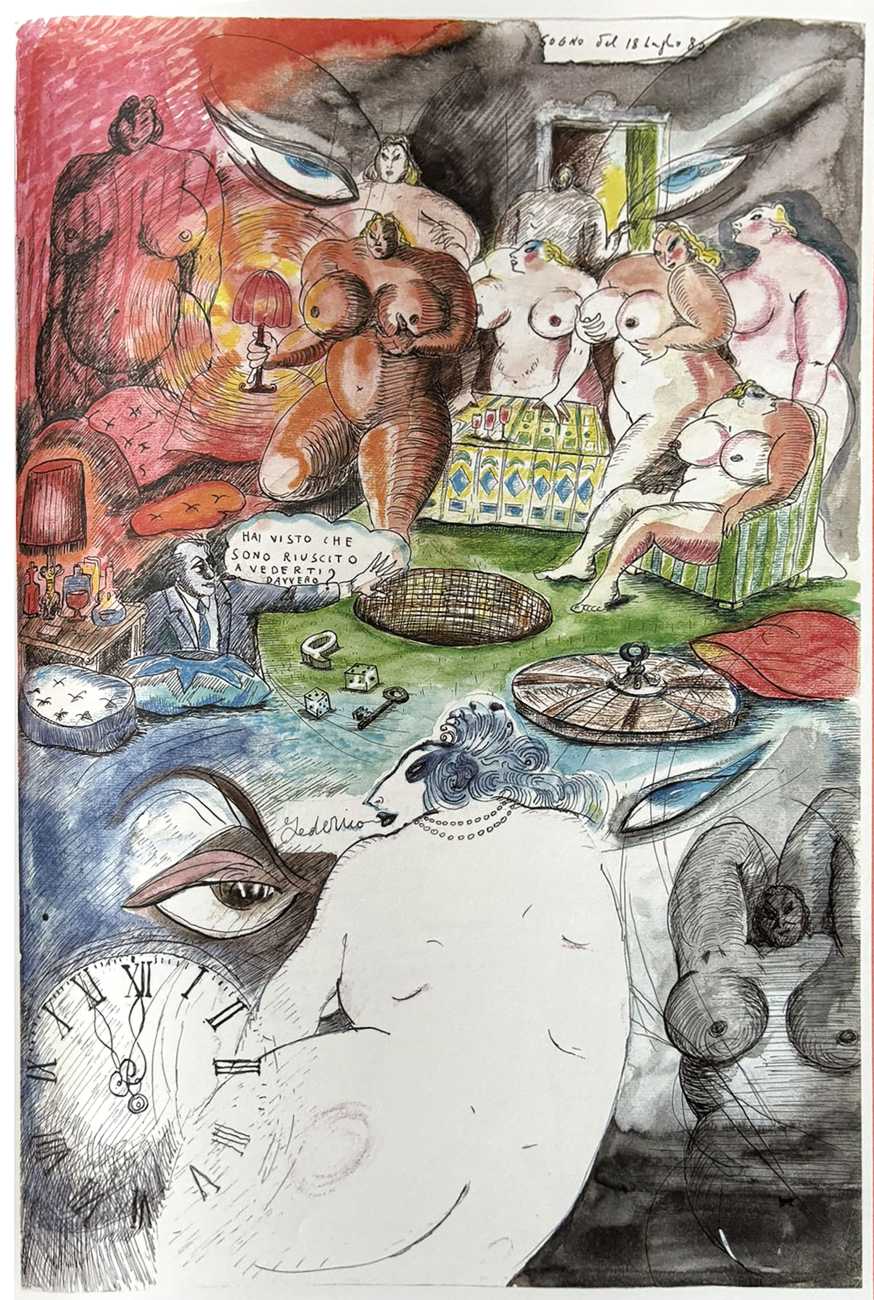
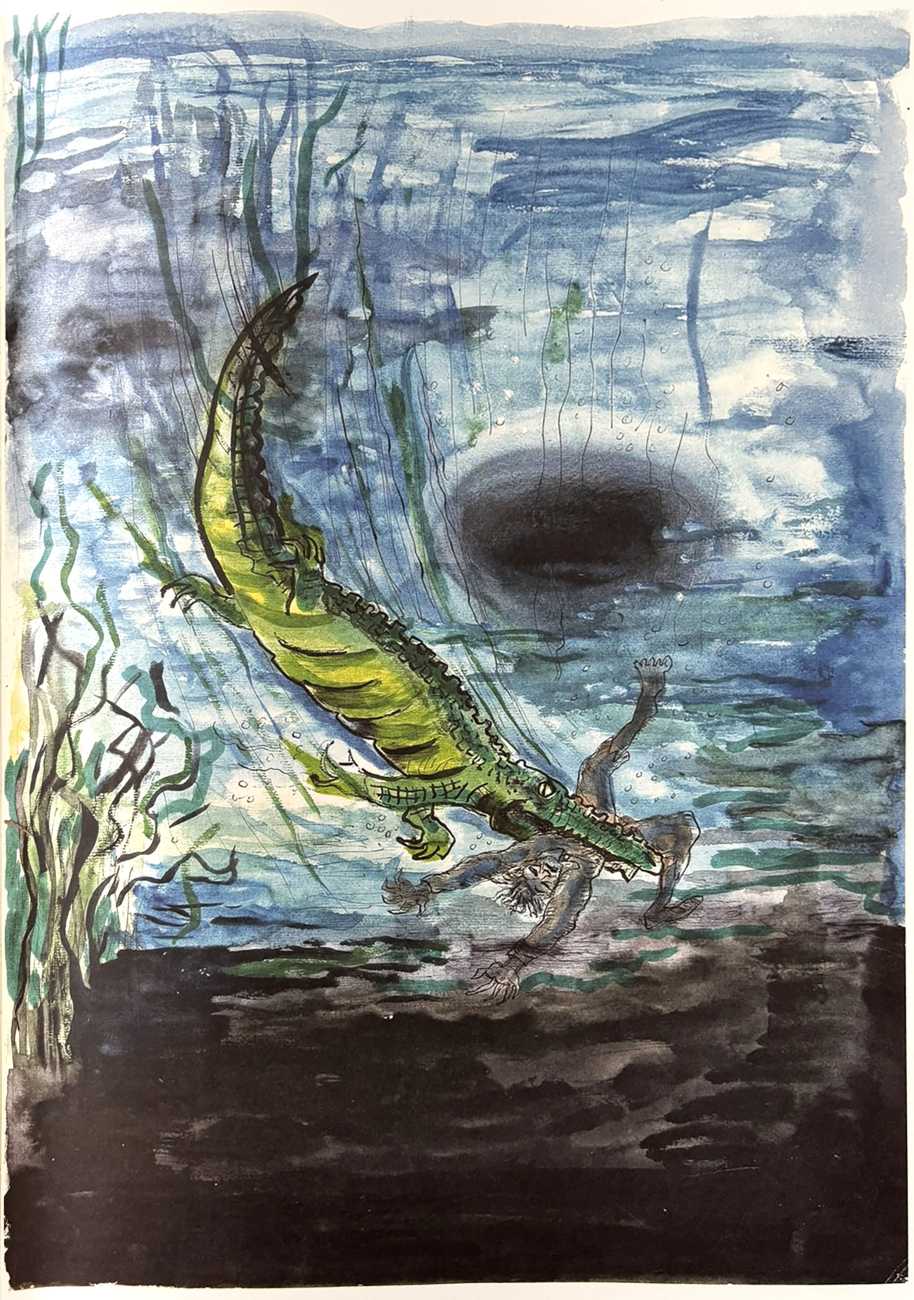
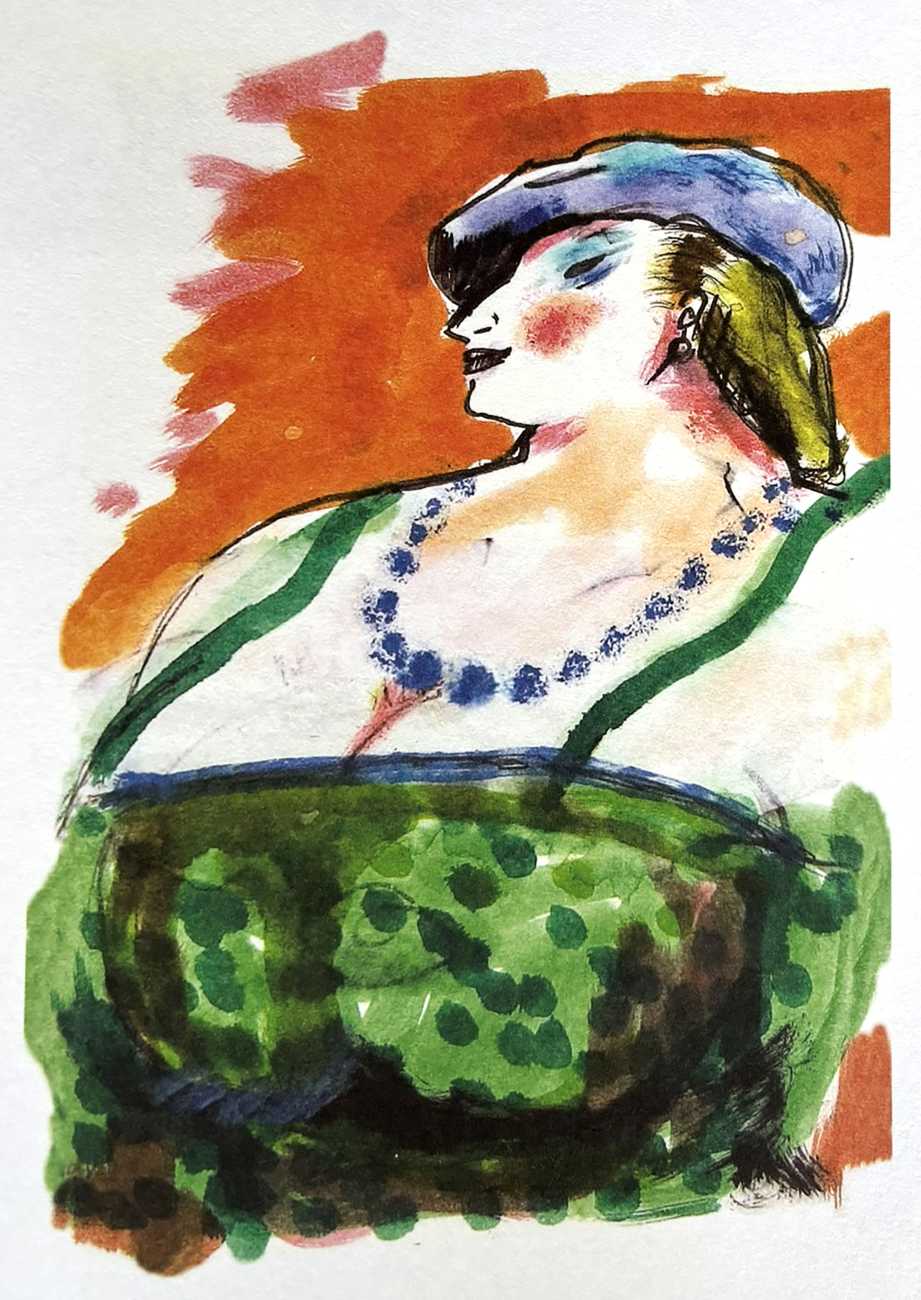
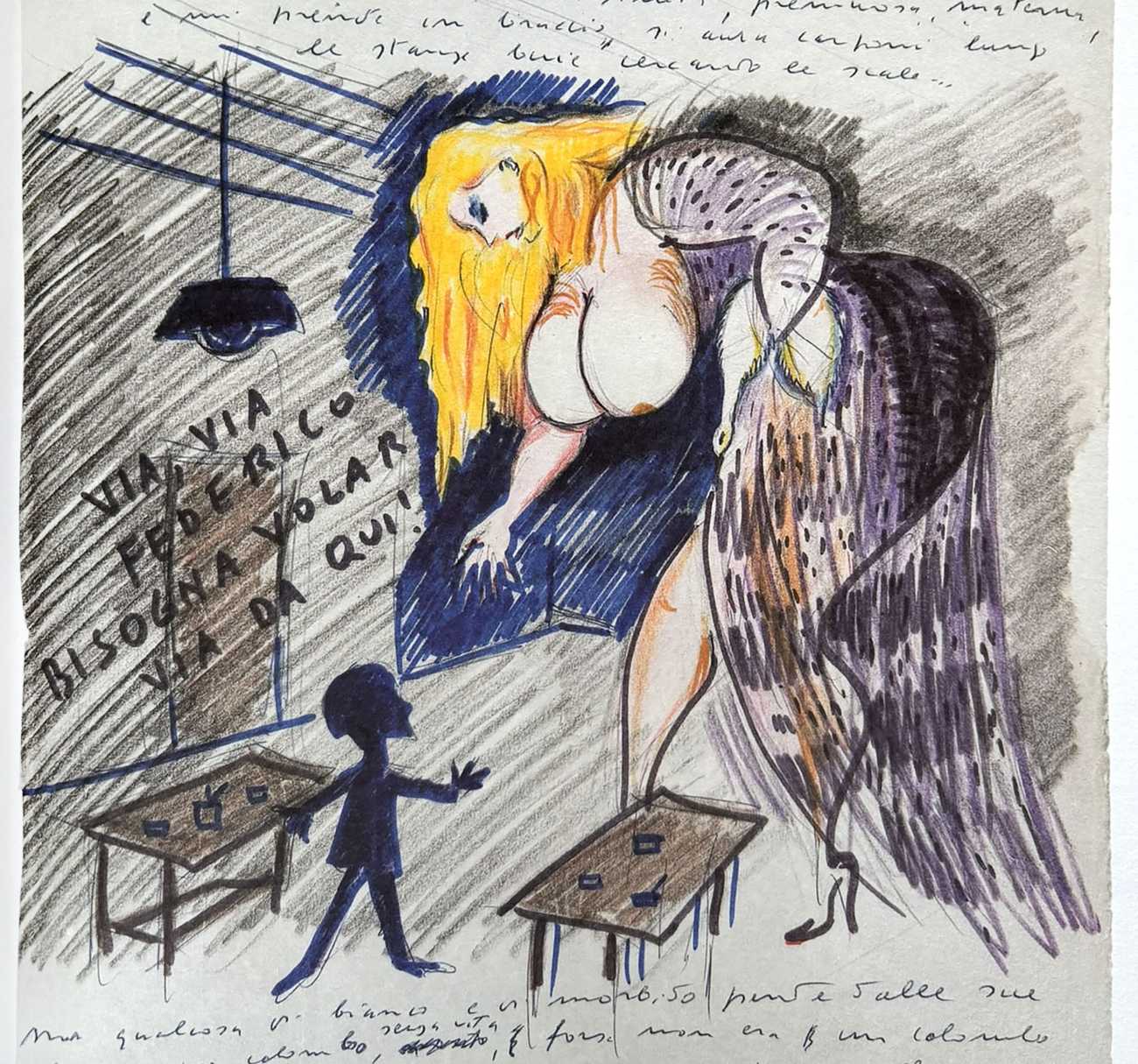
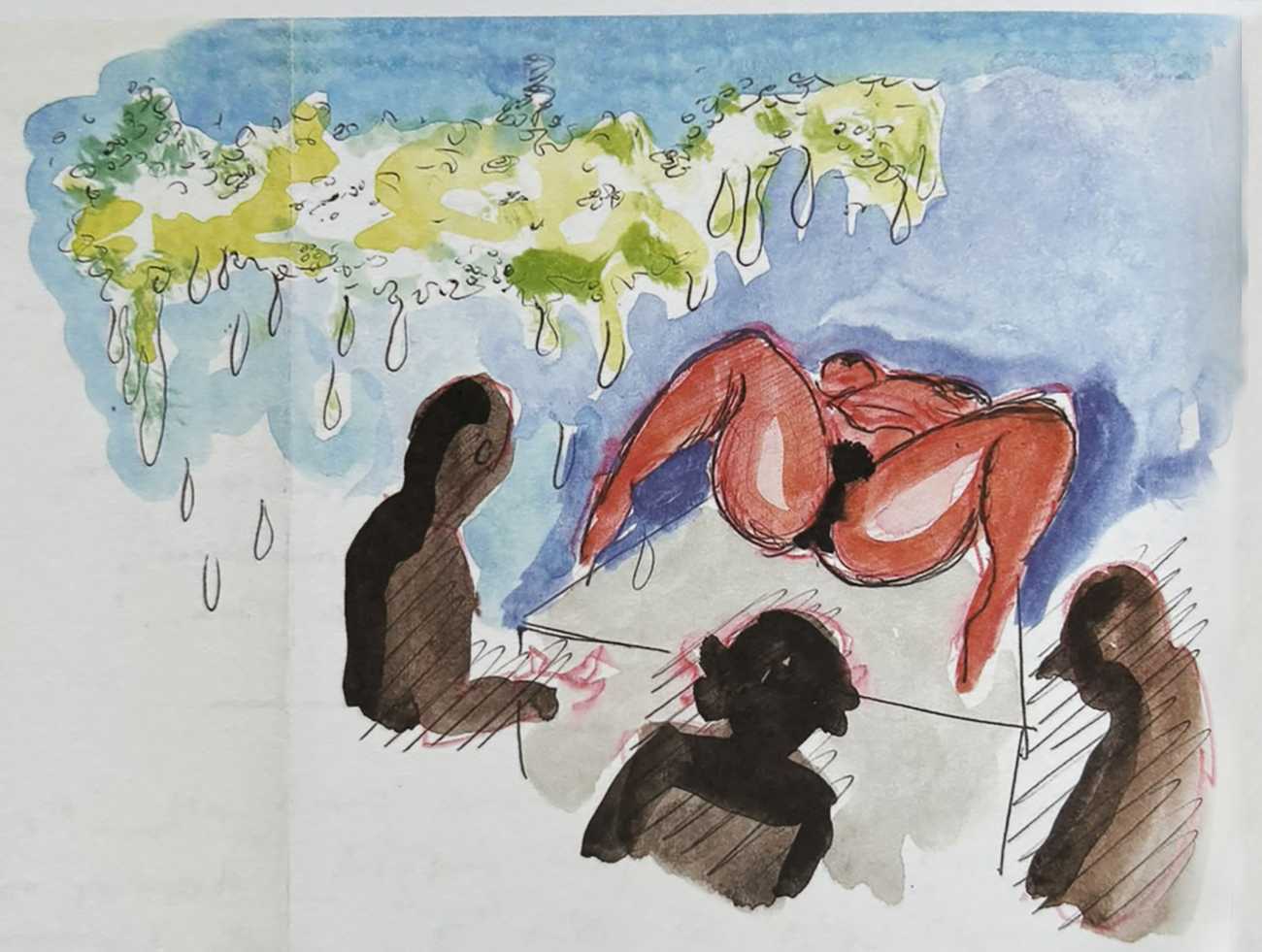
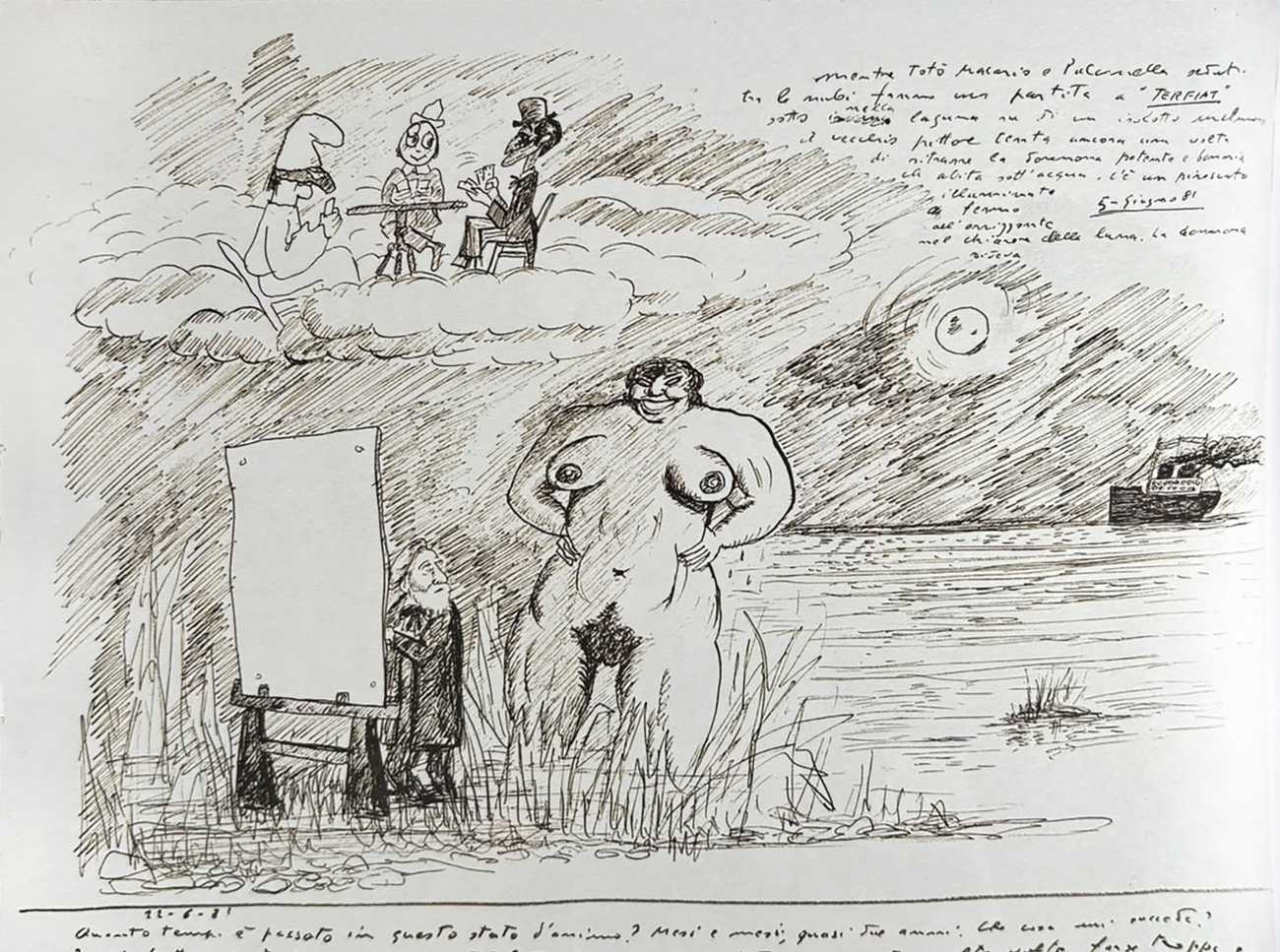
Federico Fellini began recording his dreams on 30 November 1960, between the making of La dolce vita and 8½. The practice developed as part of his Jungian psychotherapy with the analyst Ernst Bernhard. He would write down his dreams soon after waking, recording the images, people and situations that had occupied his unconscious mind. The written accounts were accompanied by drawings in pen and marker, and sometimes watercolour. Fellini was an accomplished cartoonist, and the notebooks became an extraordinary combination of personal diary, illustrated fantasy and psychological record.
He eventually filled two large notebooks. The first covers the period from November 1960 to August 1968, the second from February 1973 to 1982, with some additional loose pages dating from 1990. They contain appearances by friends, family members and professional collaborators, alongside recurring images of childhood, death, illness, anxiety and sexual desire. Familiar figures from his films and personal life mingle with strangers, grotesque creatures and fantastical transformations. The dreams have no consistent narrative or structure, moving freely between comedy, eroticism, fear and the absurd.
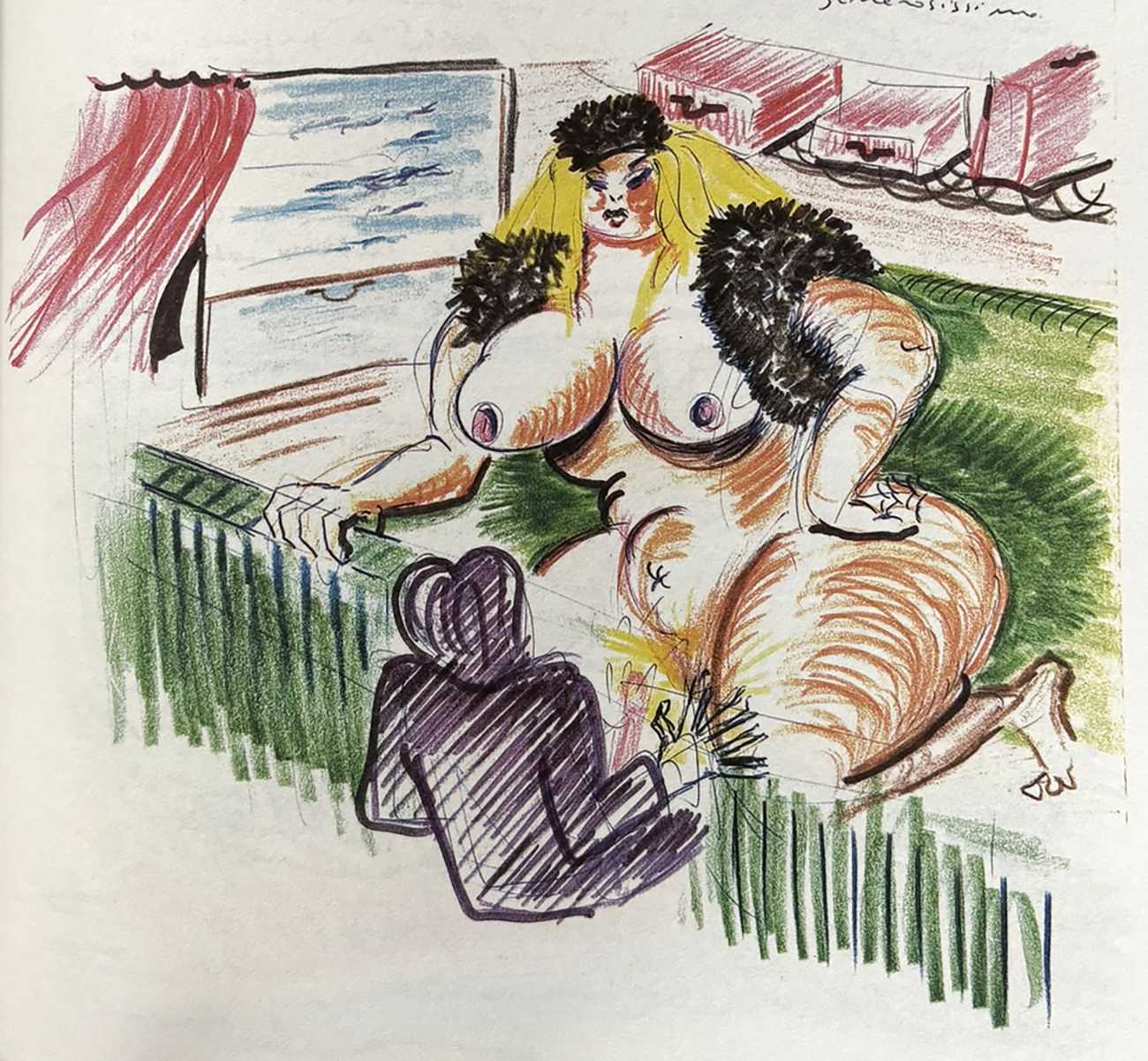
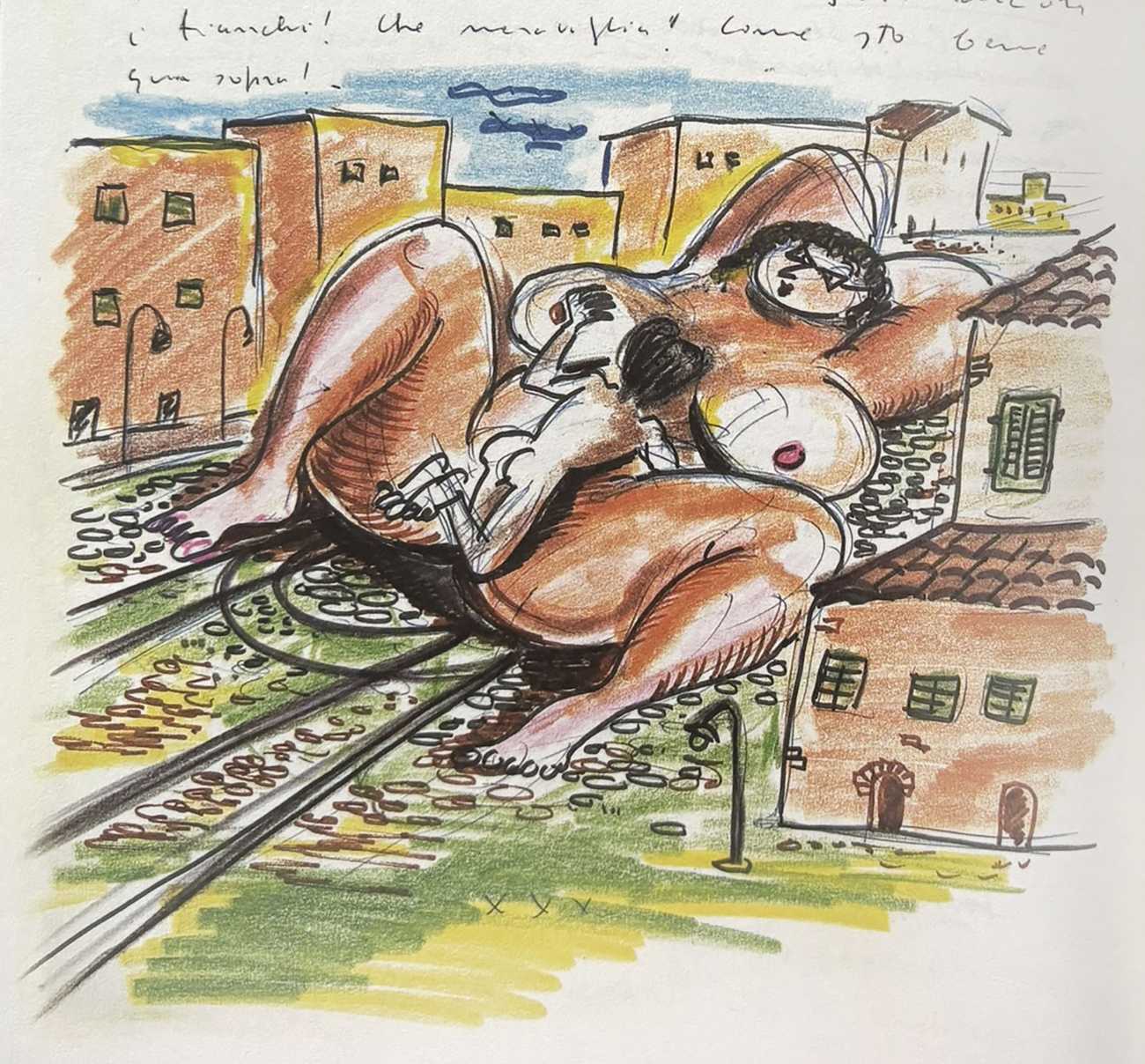
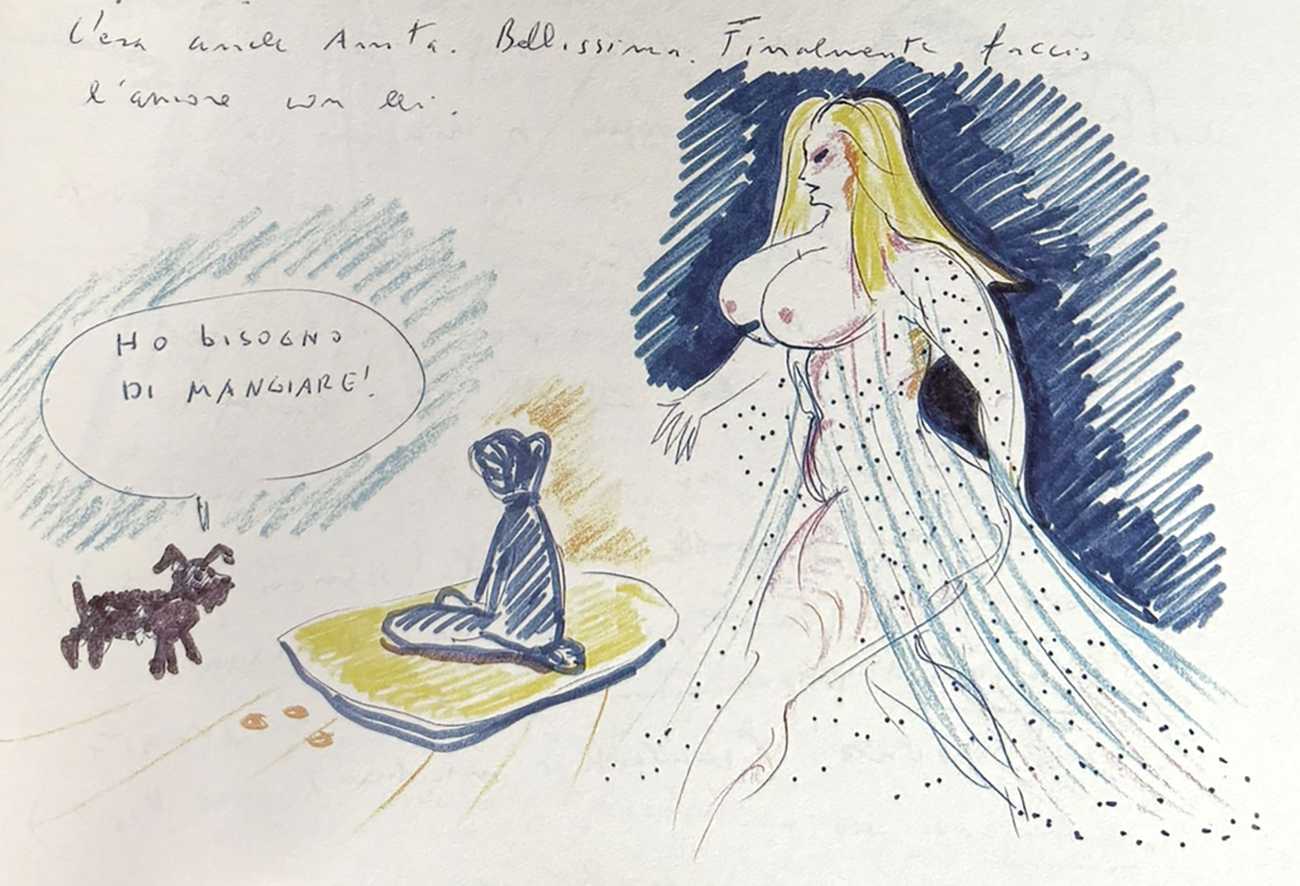
Women are particularly prominent. In his essay ‘Somnii Explanatio, or In the Realm Where Everything Is Possible’, reprinted in the 2025 edition, biographer Tullio Kezich describes the notebooks as a catalogue of women, with the predominance of what has come to be called the ‘Fellinian’ type – the buxom, often exuberant matron, depicted in uninhibited poses. They appear as objects of desire, sometimes inviting and sometimes overwhelmingly dominant. Kezich sees them as a joyous element in Fellini’s imaginary world, distracting him from darker thoughts. Yet he makes a clear distinction between these numerous, often transient presences and Giulietta Masina, whose place in Fellini’s emotional life was quite different. She represented the enduring companion whose presence he could not bear to lose. His dreams repeatedly imagine her dying, becoming seriously ill or departing for ever, revealing the anxieties beneath his apparent sexual freedom. Kezich also suggests that the characters Masina played in his films were Fellini’s most sustained attempts to understand the female psyche, although he never entirely succeeded in penetrating a personality so different from his own.
The original notebooks remained in a vault in Rome after Fellini’s death in 1993, eventually being acquired by the Fondazione Federico Fellini. Rizzoli first published an English-language edition in 2008, followed by an expanded centenary edition in 2020. In 2025, a limited edition of 1,000 numbered sets presented full-scale facsimiles of the two original notebooks, accompanied by a volume of English translations and a collection of critical essays.
The Book of Dreams offers an unusually intimate view of the imagination behind Fellini’s films. Whether these images reveal hidden truths, or are themselves shaped by the director’s formidable gift for invention, is a question the notebooks leave open.