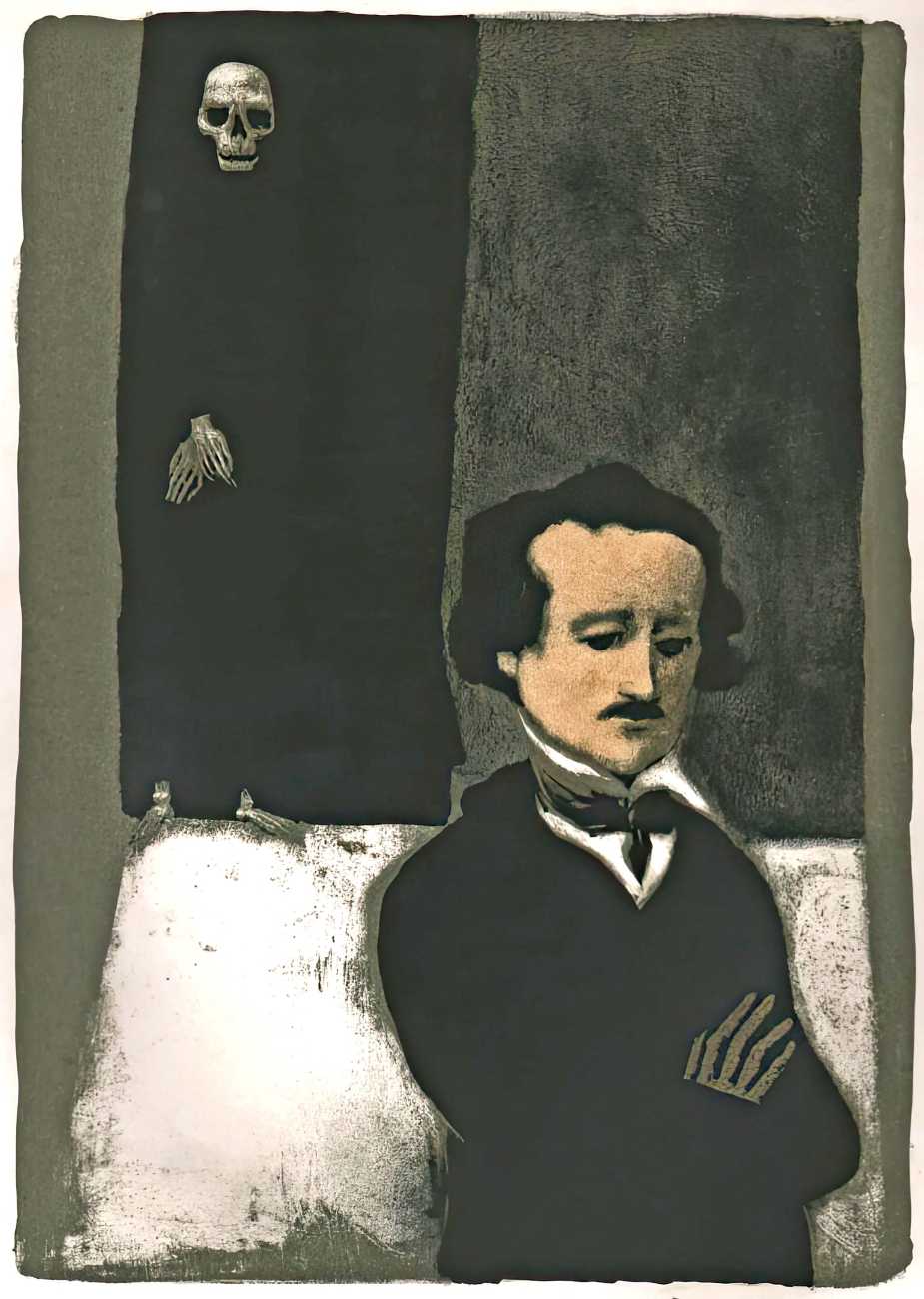
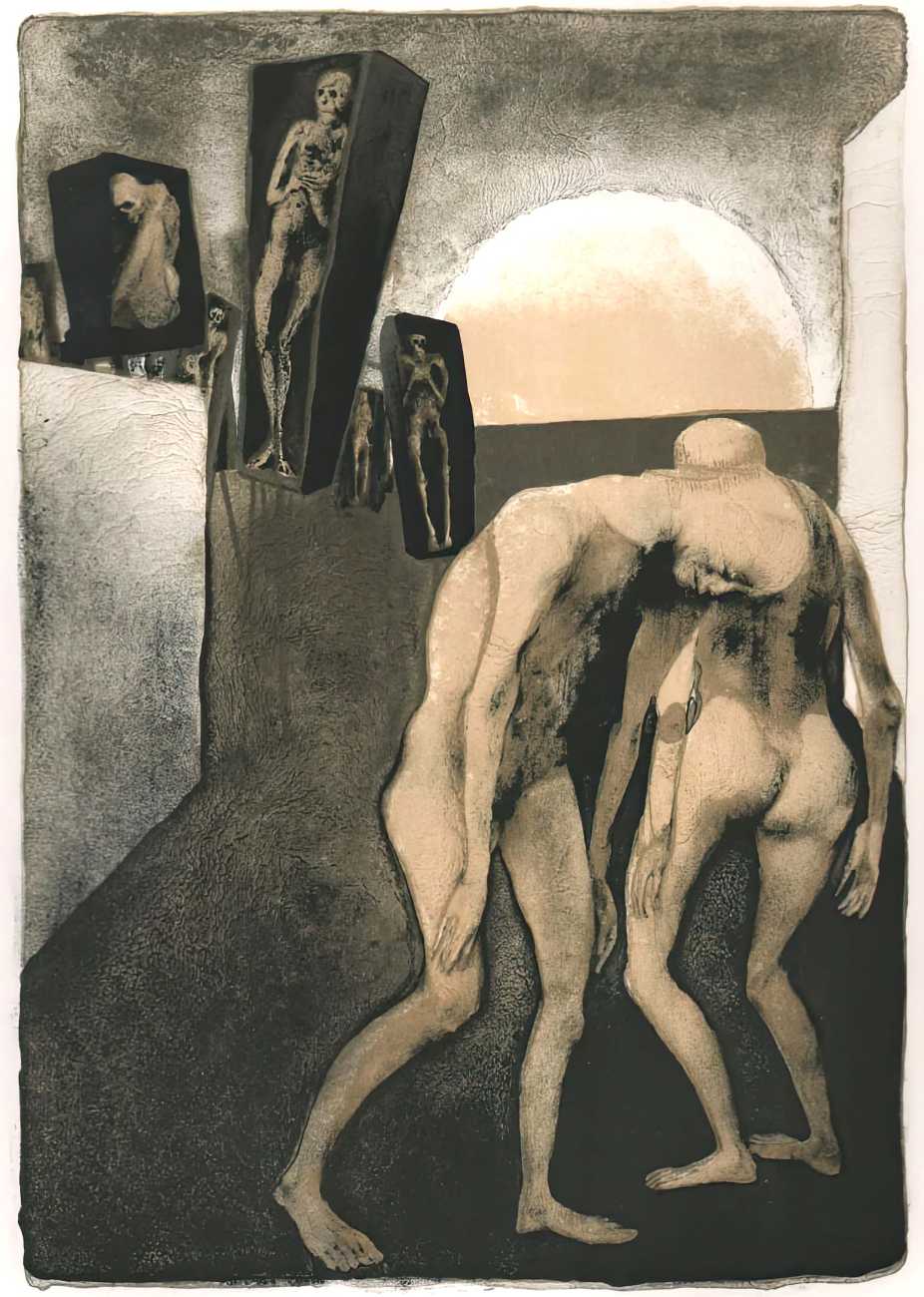
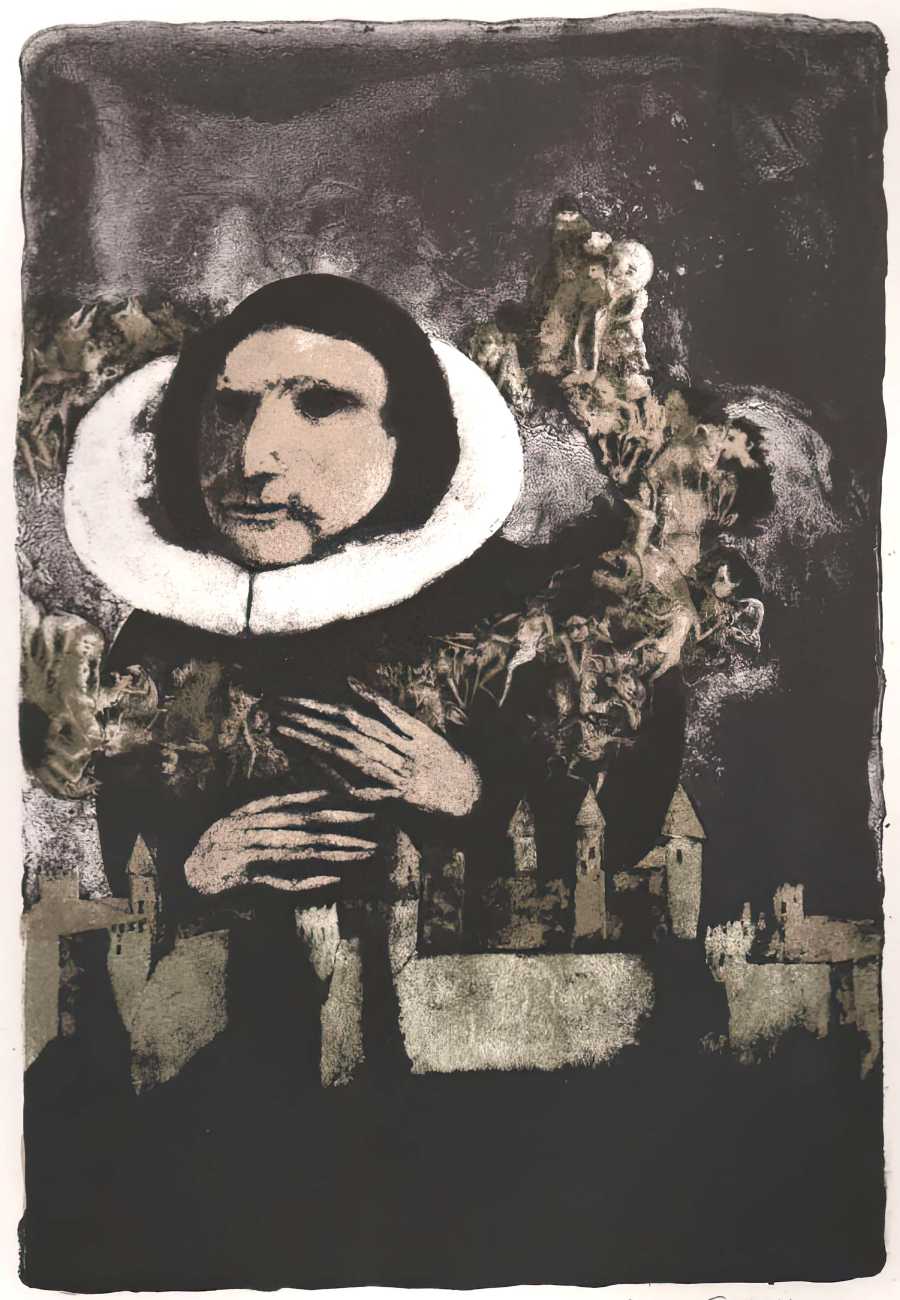
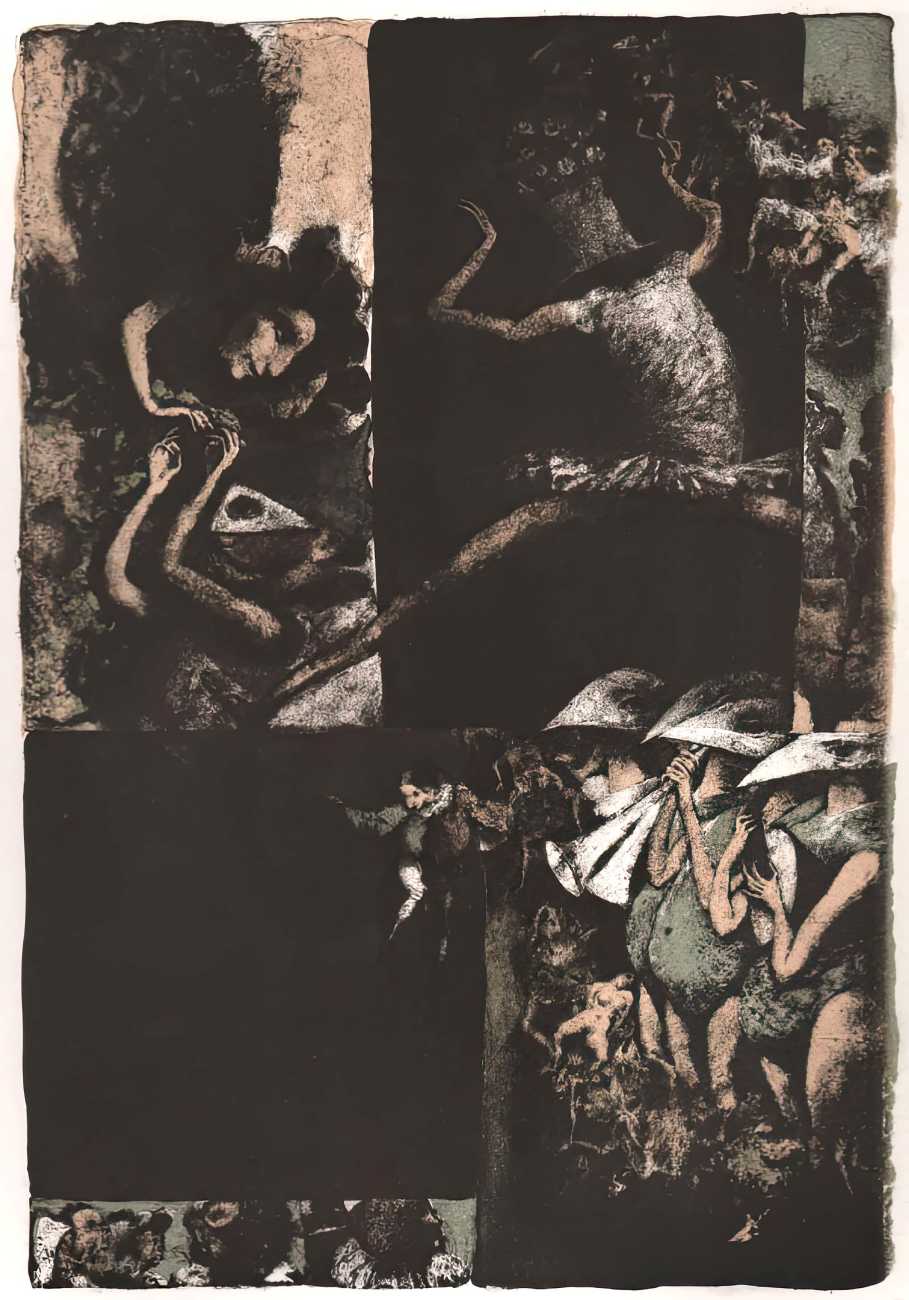
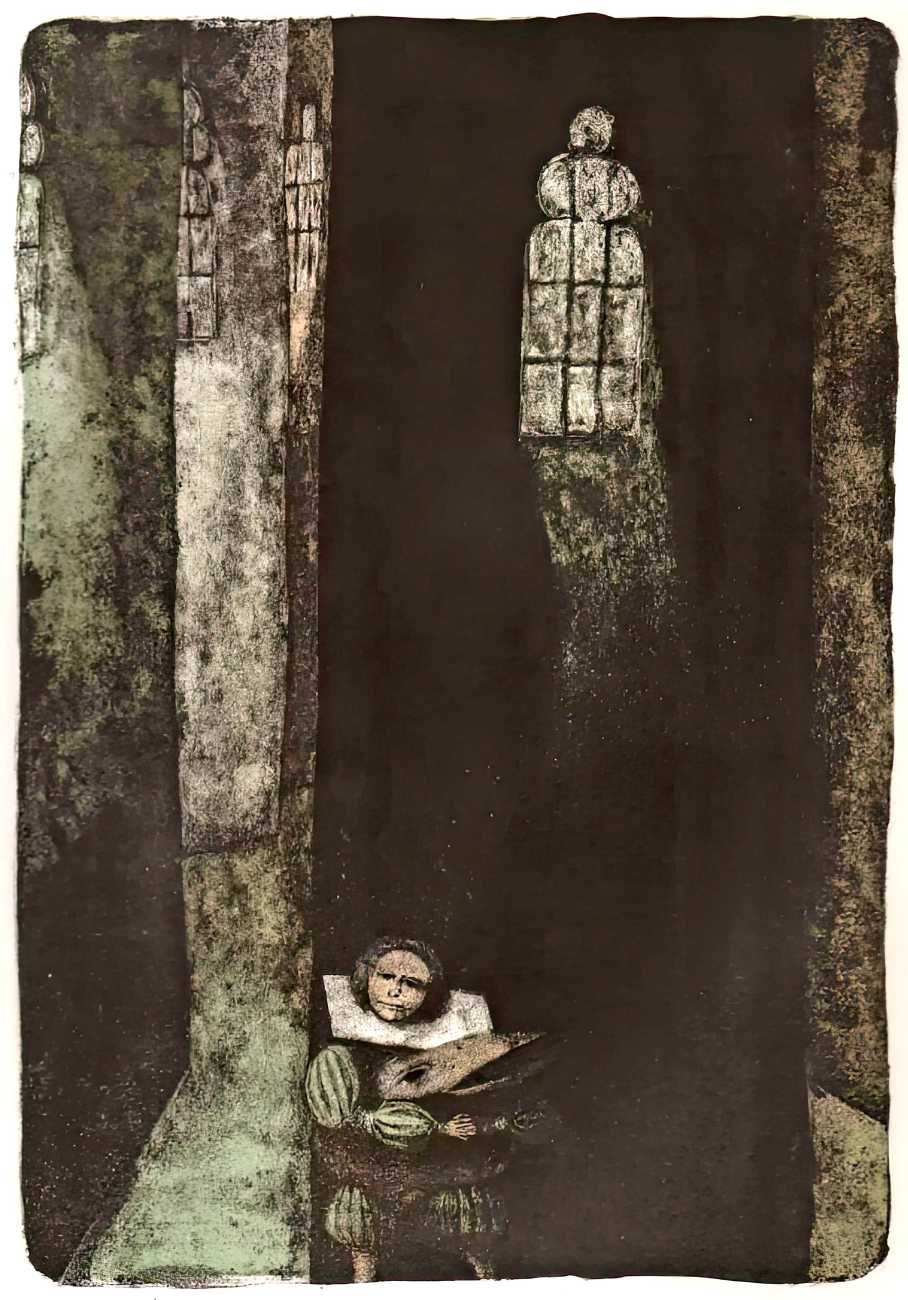
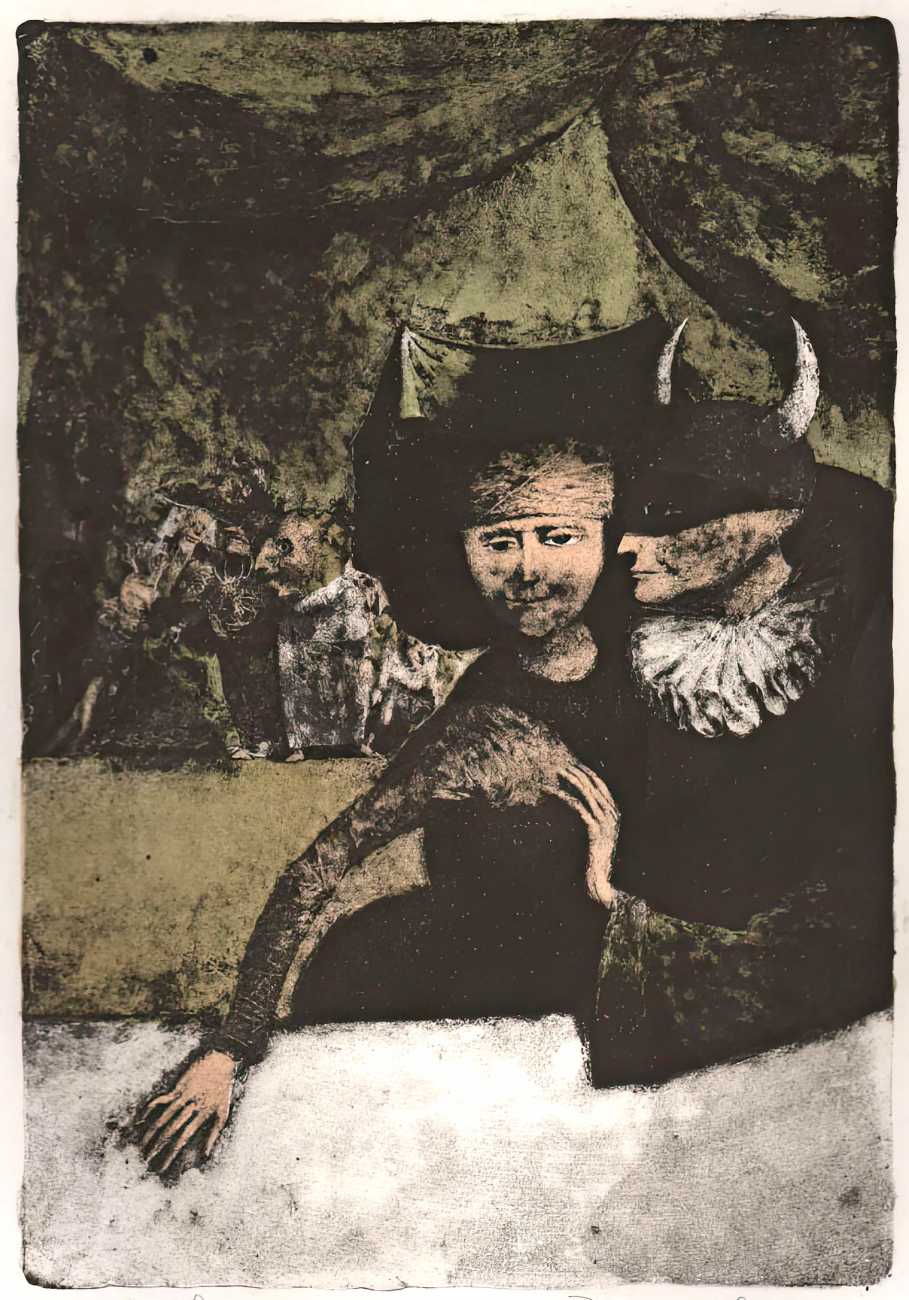
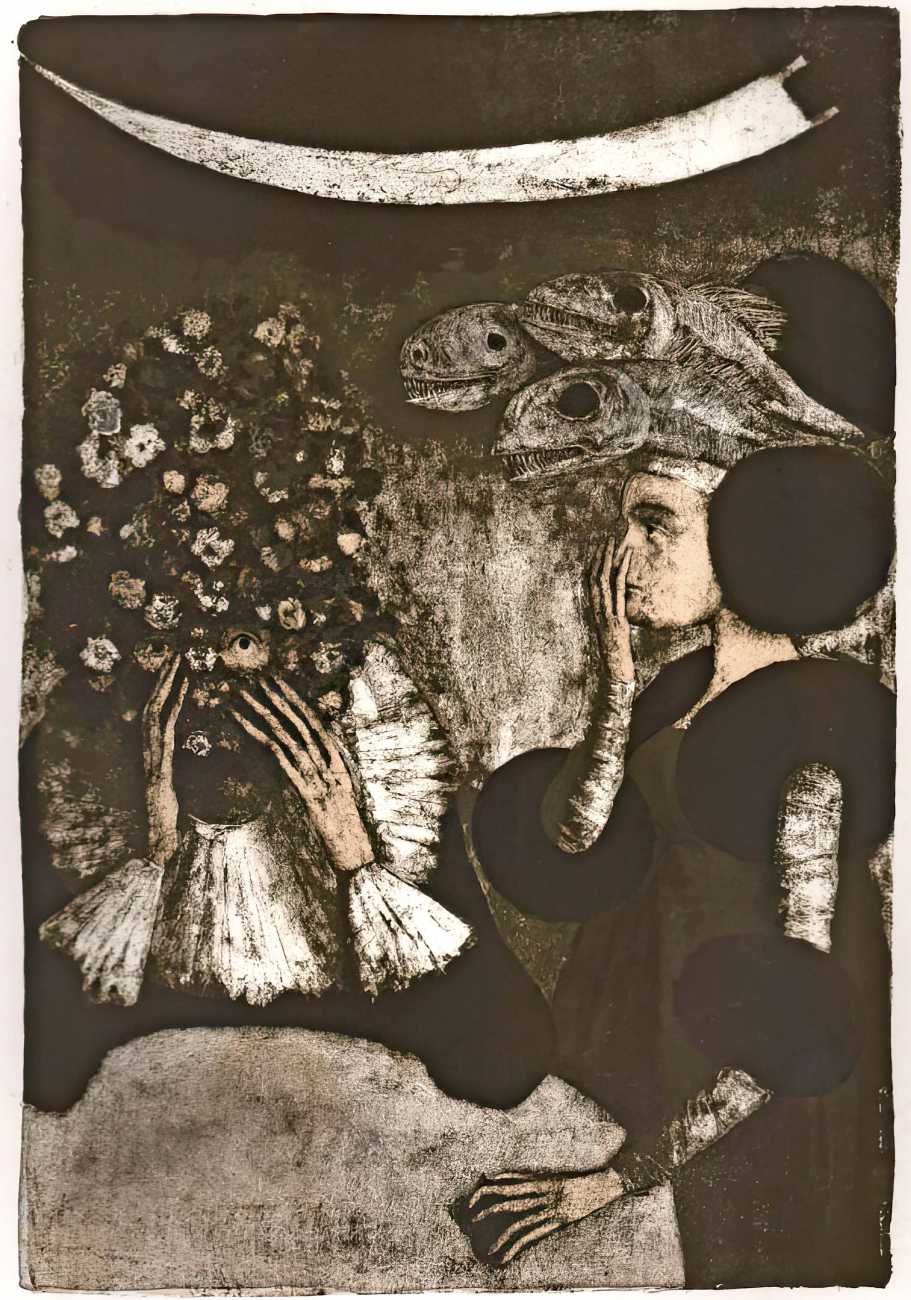
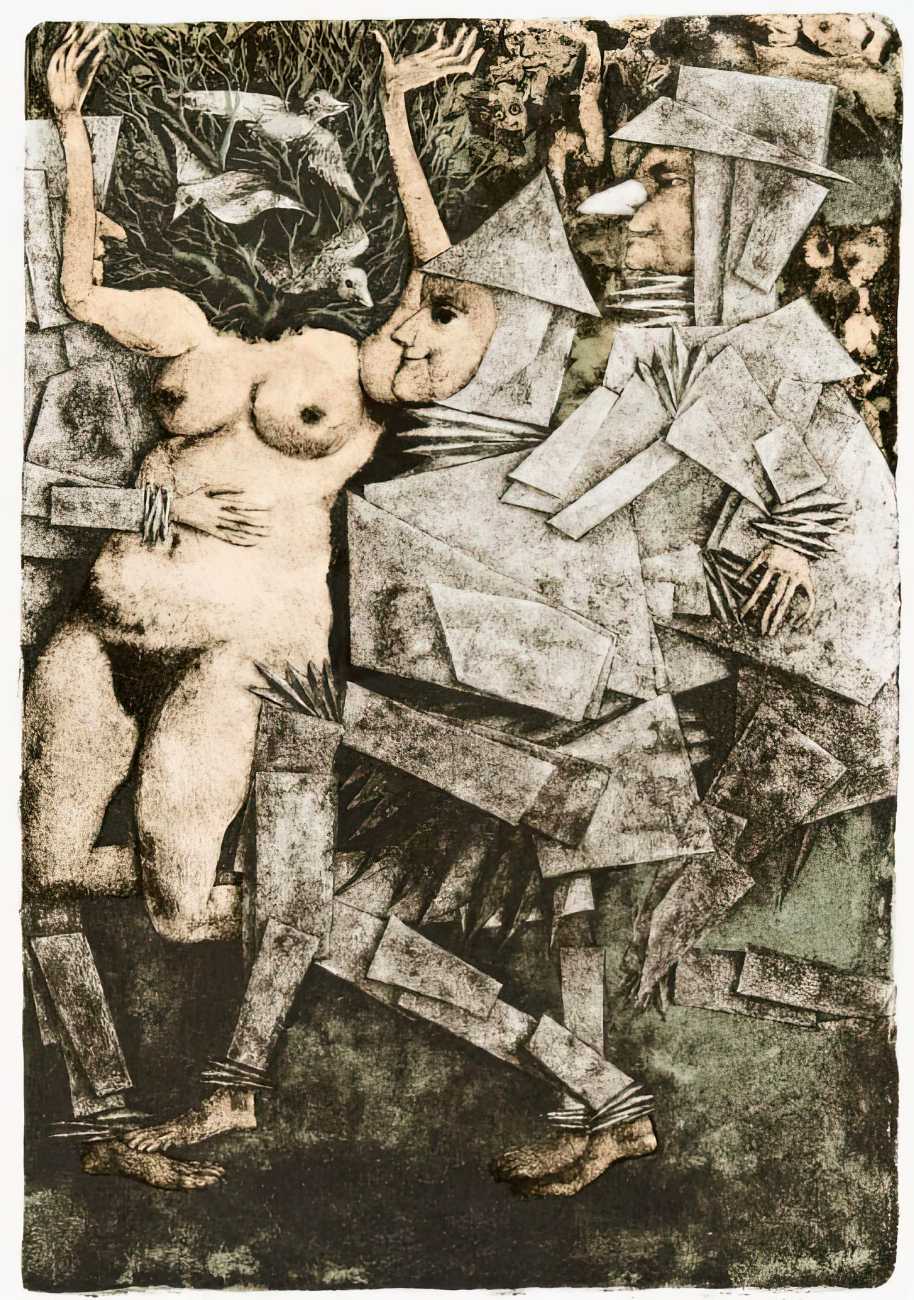
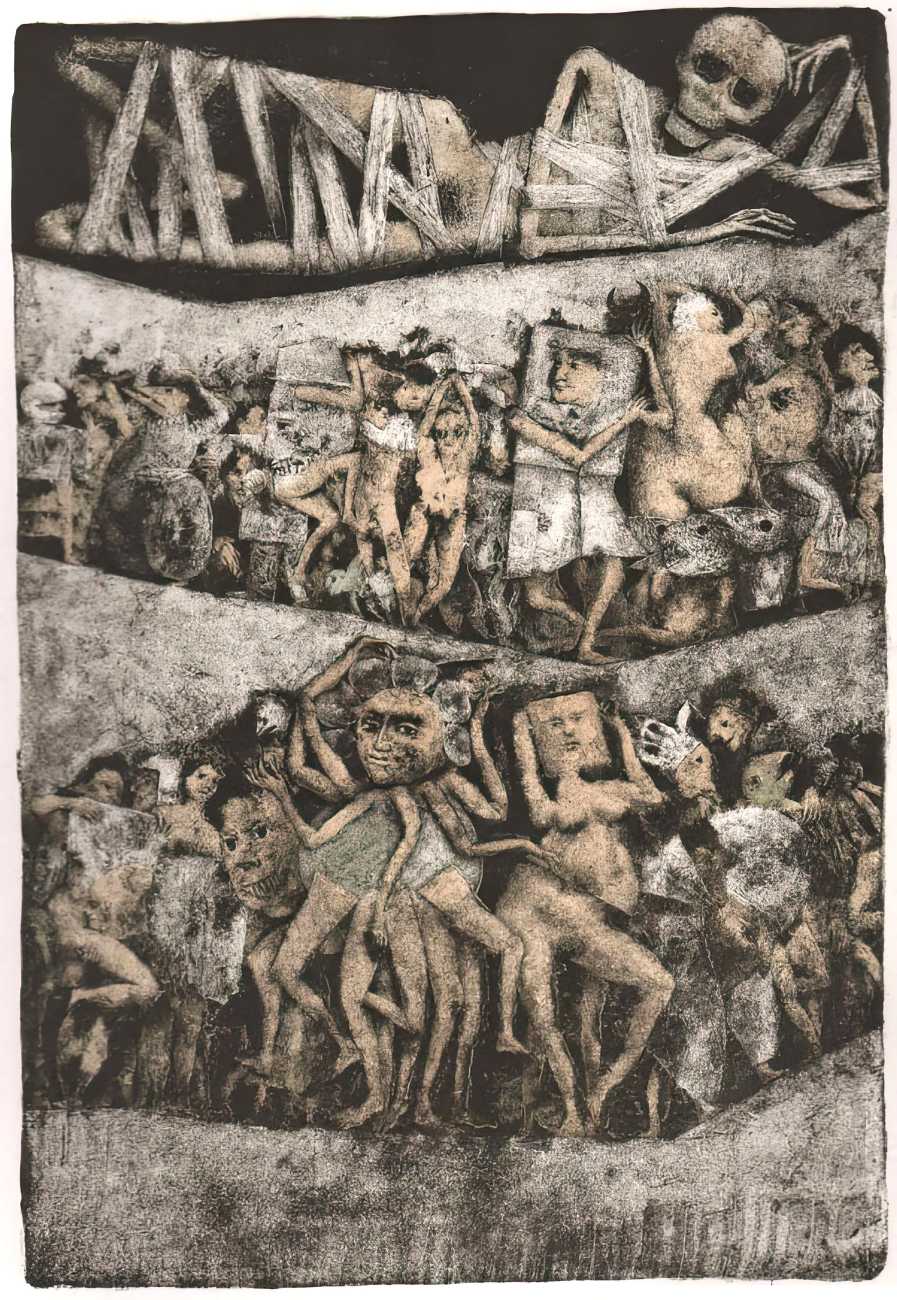
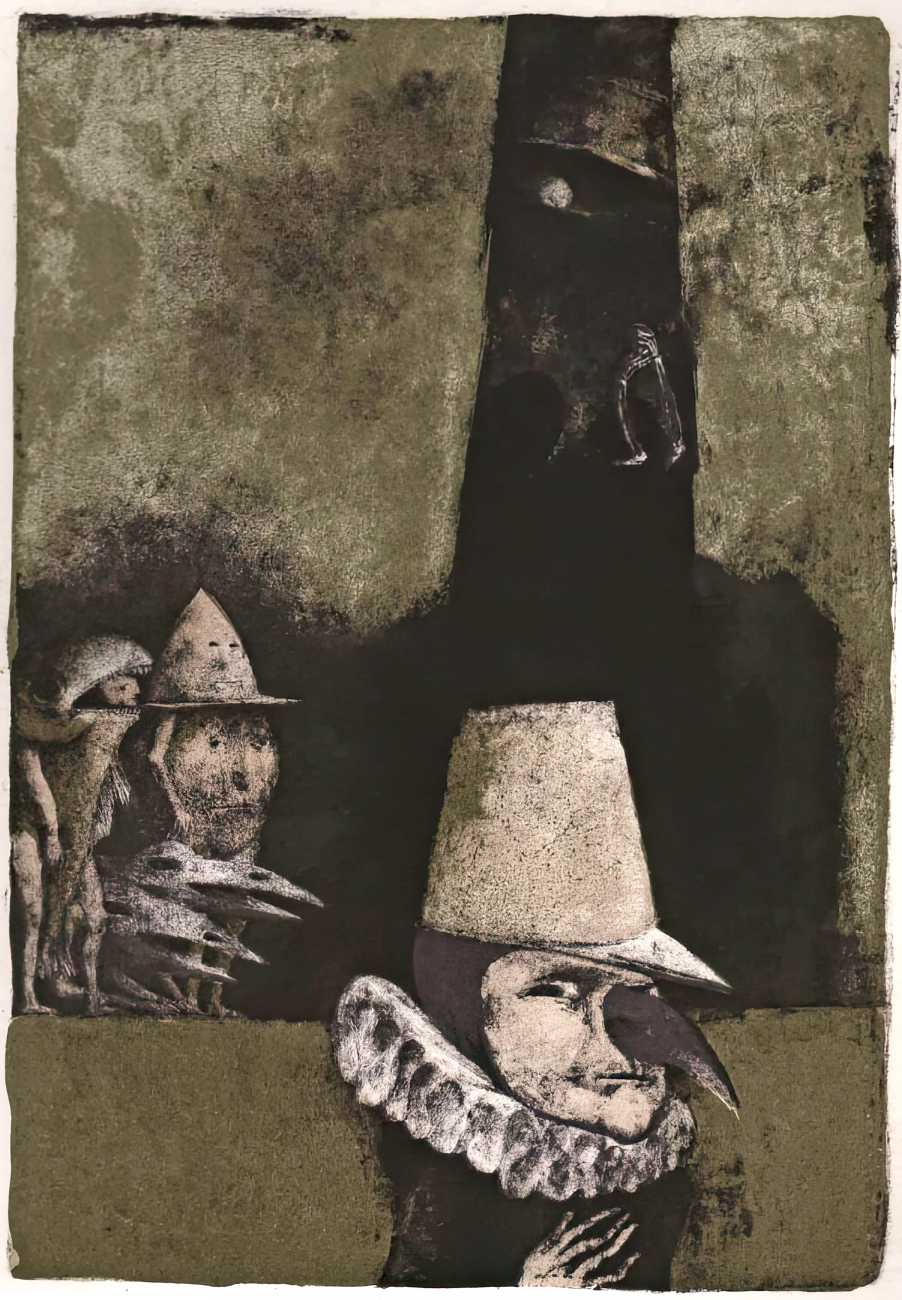
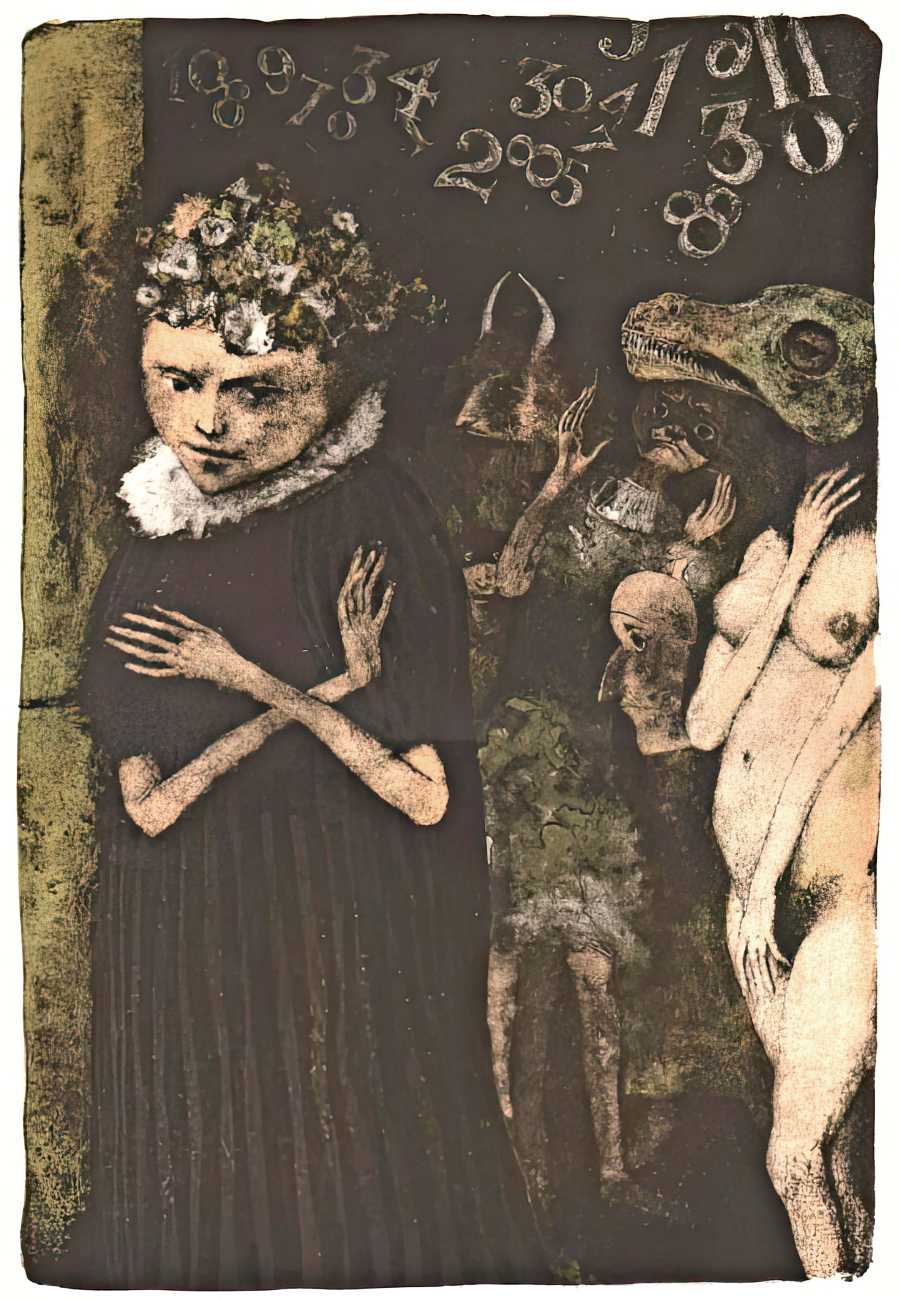
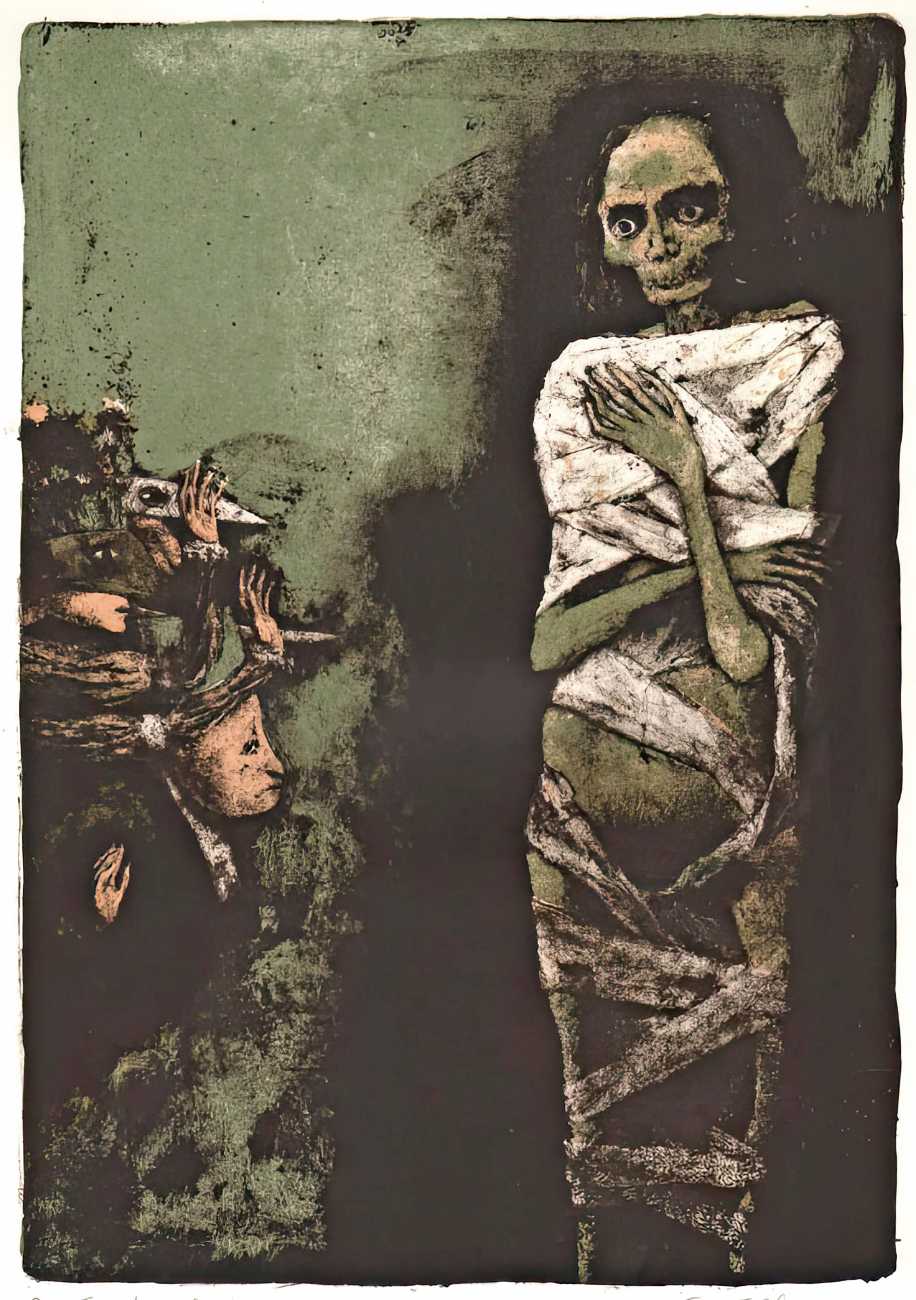
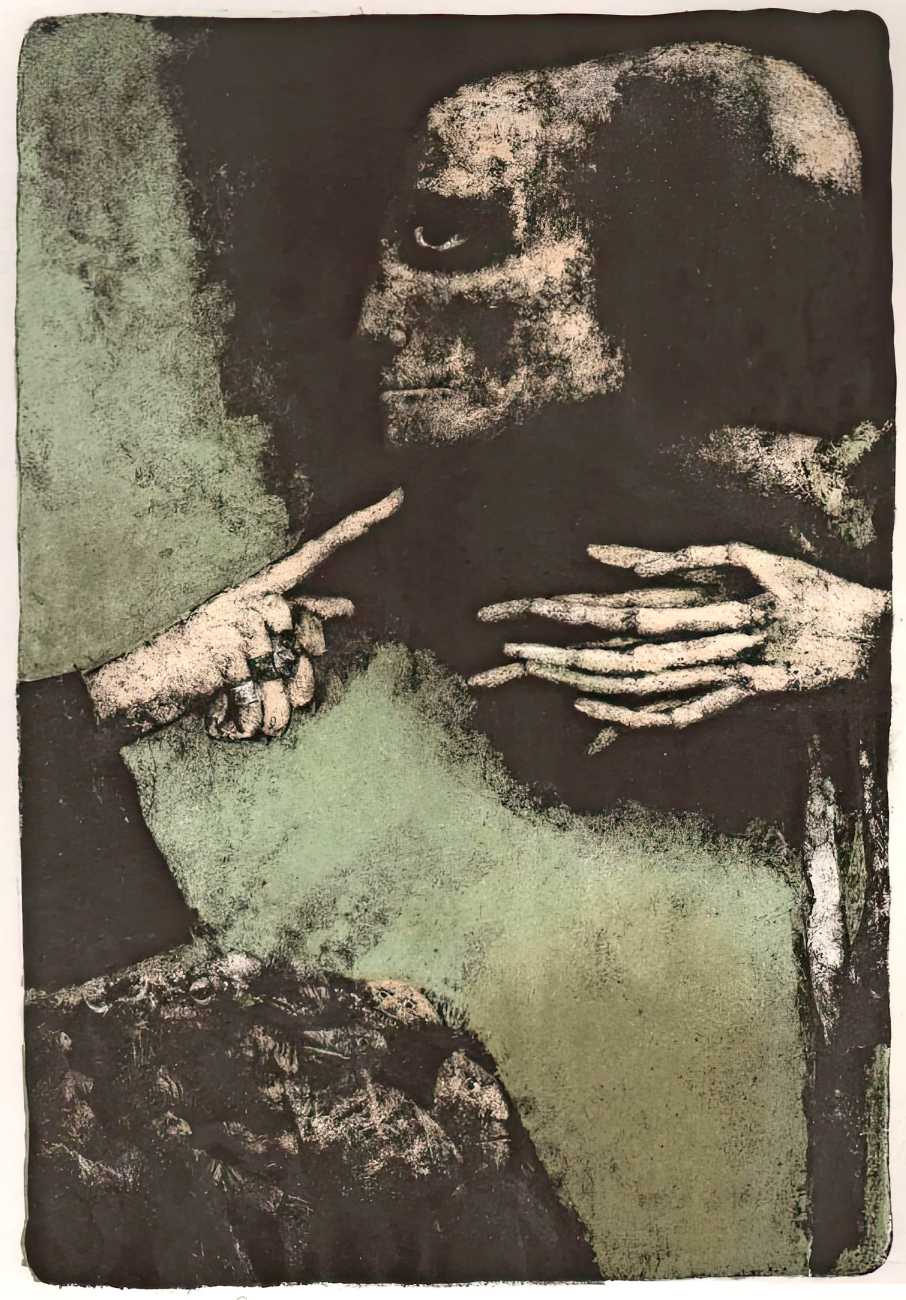
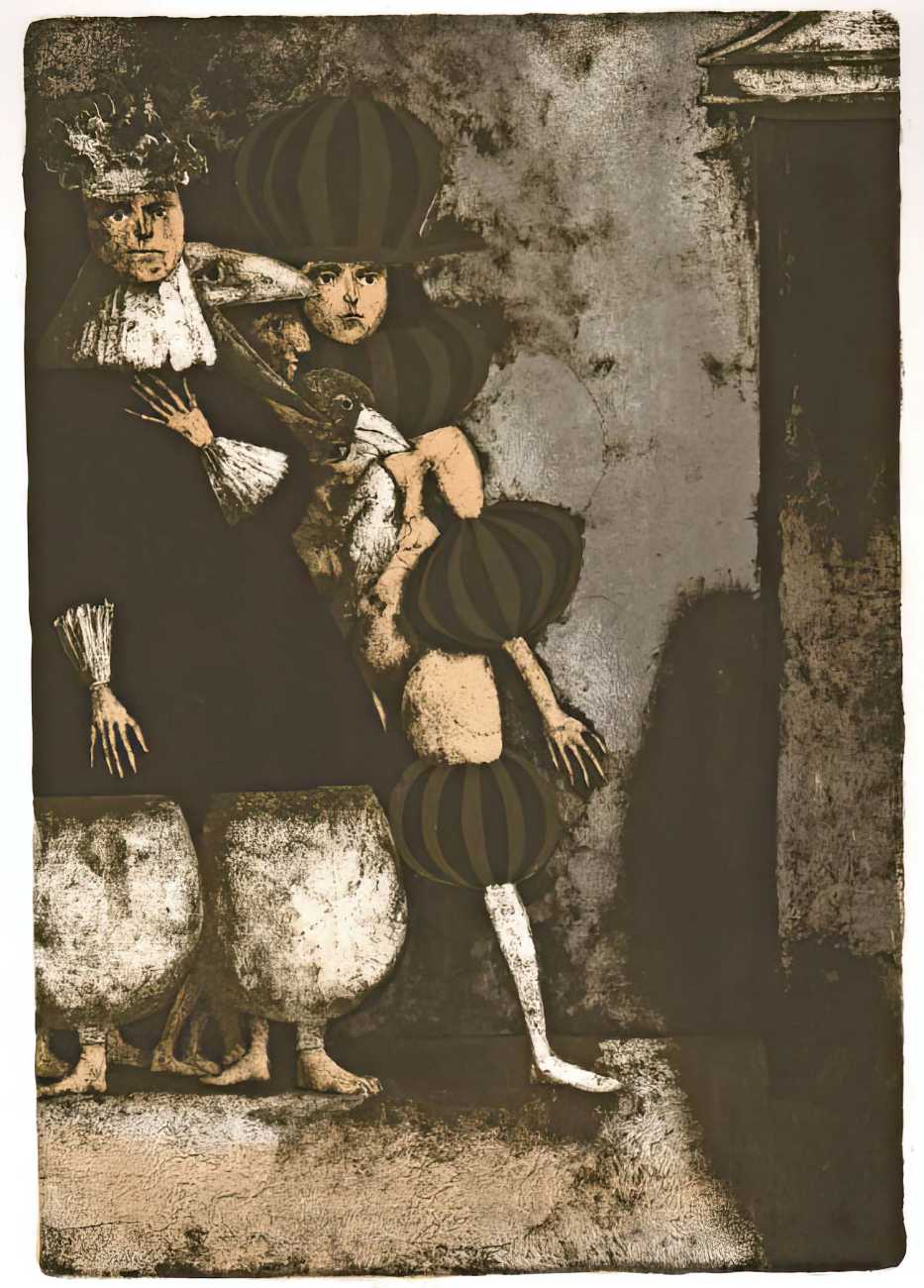
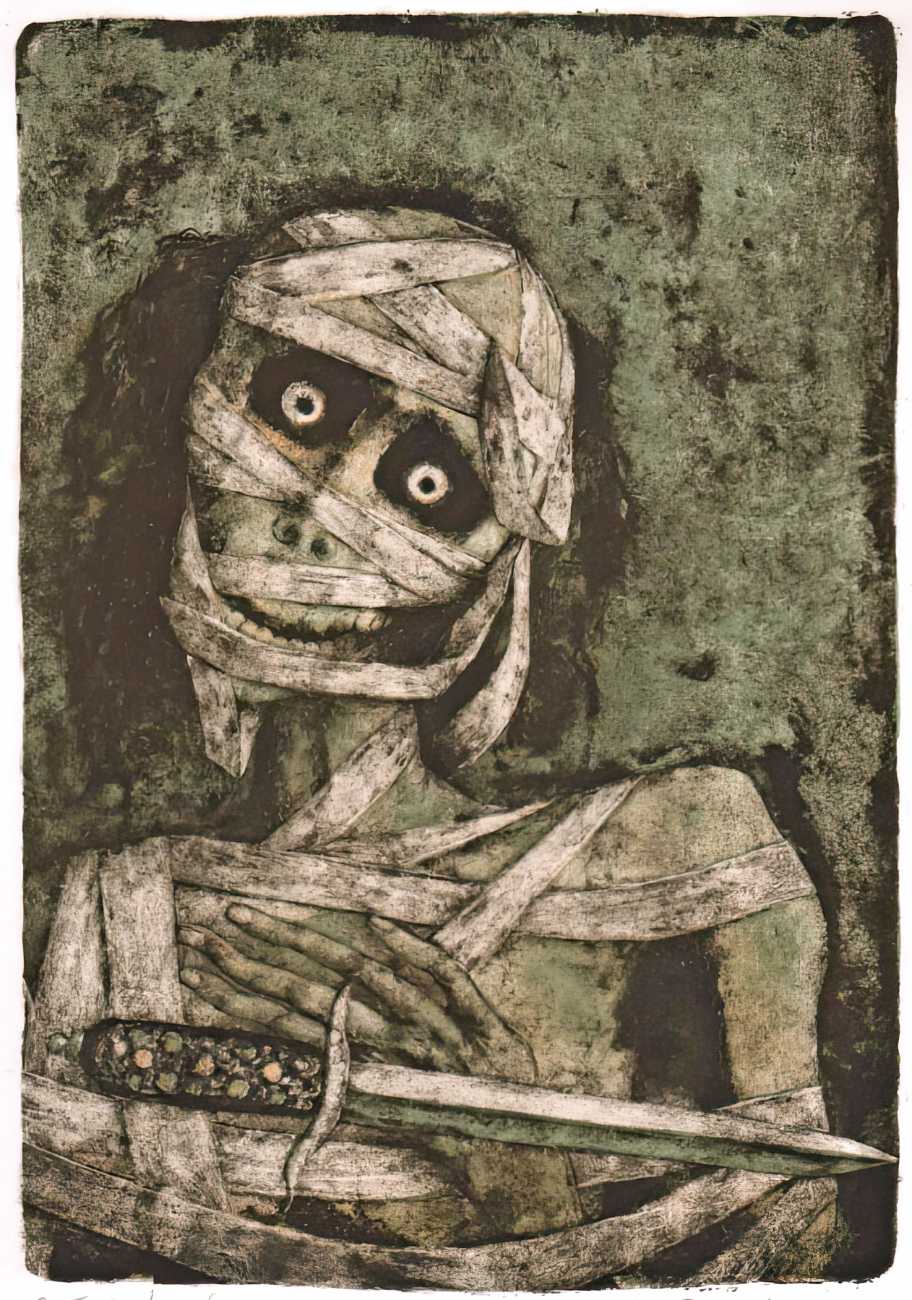
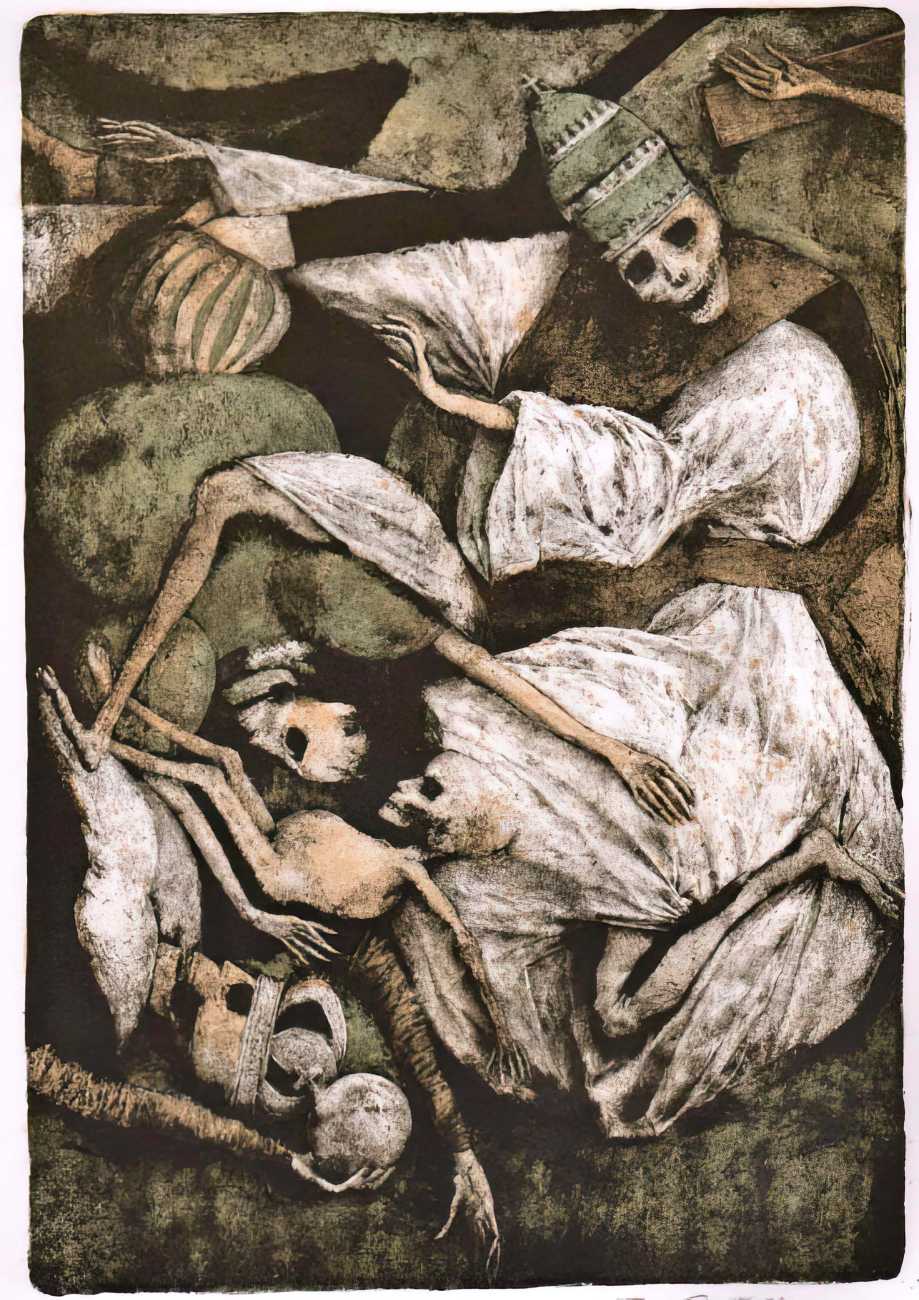
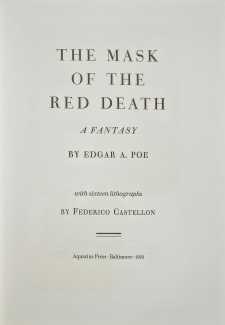
 Federico Castellón’s sixteen colour lithographs for Edgar Allan Poe’s The Masque of the Red Death transform the American writer’s macabre tale into a disturbing sequence of surreal, theatrical and often intensely physical images. Poe’s story follows Prince Prospero and his guests, who retreat into a fortified abbey to escape a devastating plague, only to discover that death has entered their midst in the guise of a mysterious masked figure. Castellón turns Poe’s masquerade into a strange world of distorted bodies, masks, skeletons and fantastical creatures.
Crowded scenes of revelry are populated by elaborately costumed figures whose bodies seem strangely detached from ordinary human proportions. Figures become isolated against dark expanses, wrapped or fragmented, transformed into skeletal or mask-like presences. Bodies intertwine, recline and contort, and several images introduce an unmistakably erotic dimension in which sexuality and mortality become intertwined.
The imagery has a distinctly theatrical quality. Costumes, masks, strange headpieces and stage-like interiors turn the abbey into a surreal performance space. His restricted palette of deep greens, blacks, greys, ochres and pale flesh tones further unifies the sequence. The effect is less an illustration of Poe than a surrealist reimagining of his world. Castellón takes Poe's exploration of pleasure and death and makes it visual, a place where eroticism, grotesque fantasy and mortality overlap.
Published in Baltimore by Aquarius Press in 1969, the book was the press’s first publication. The principal edition comprised 500 copies, with a special edition of twenty-five containing an additional suite of the lithographs.