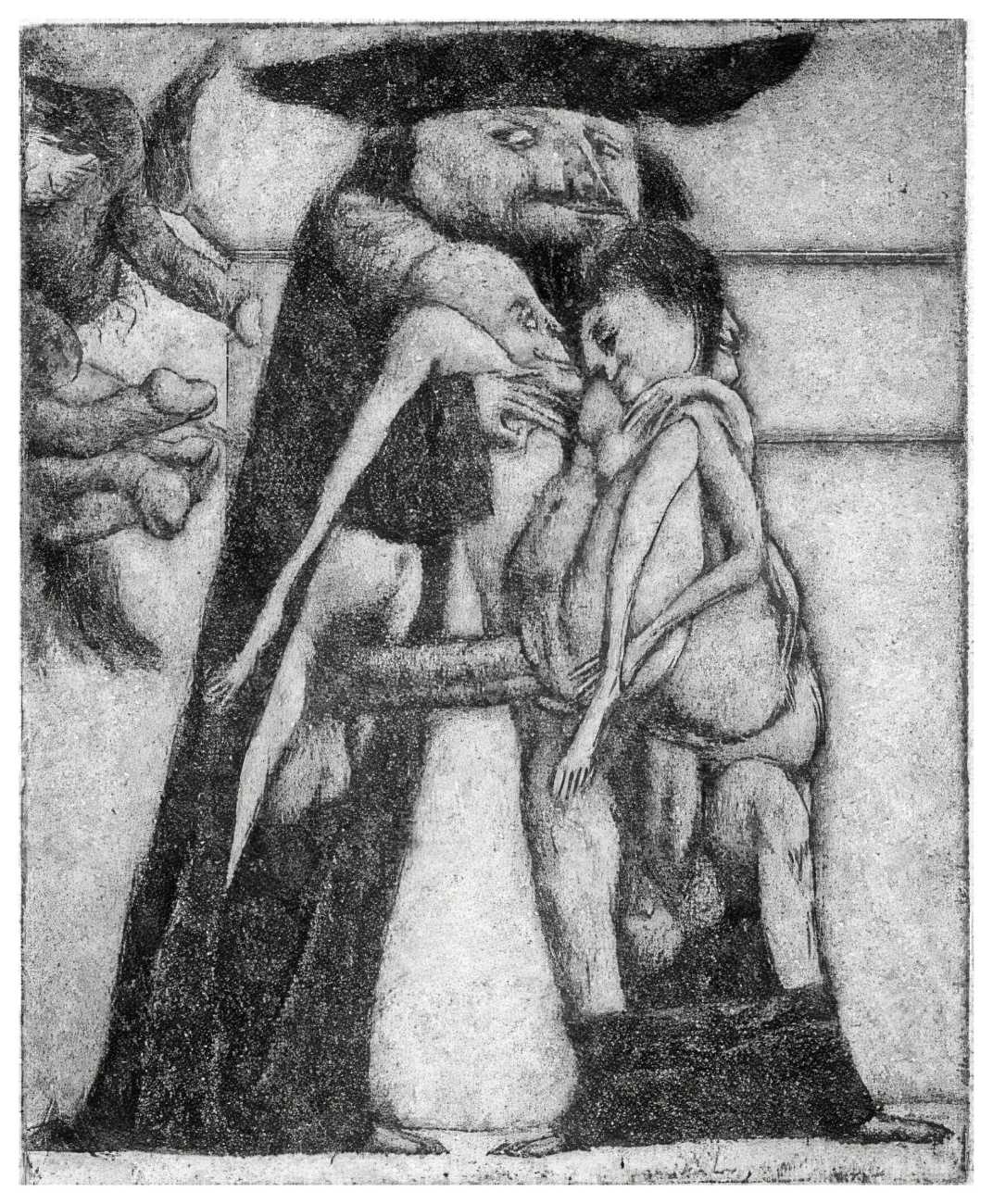
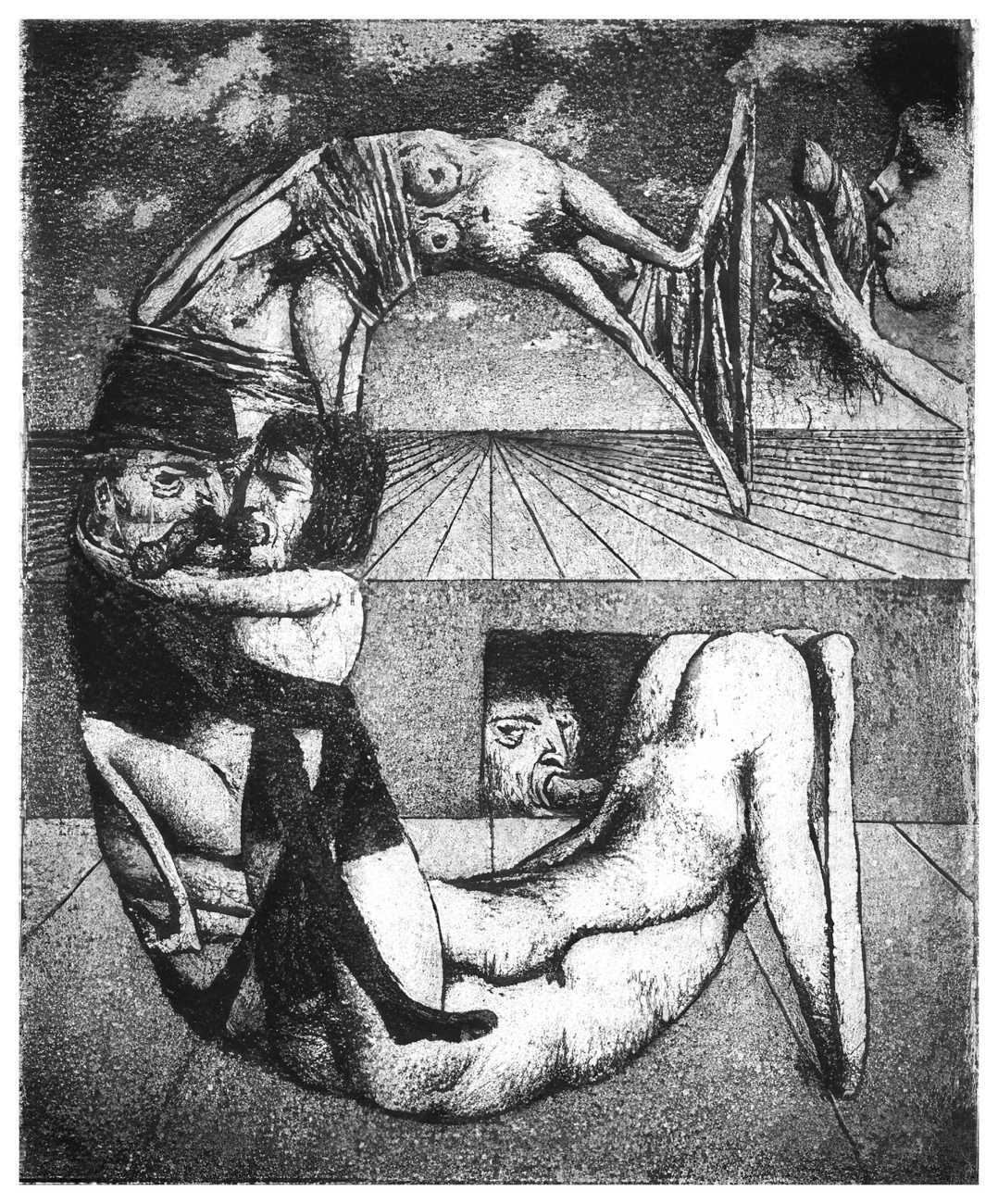
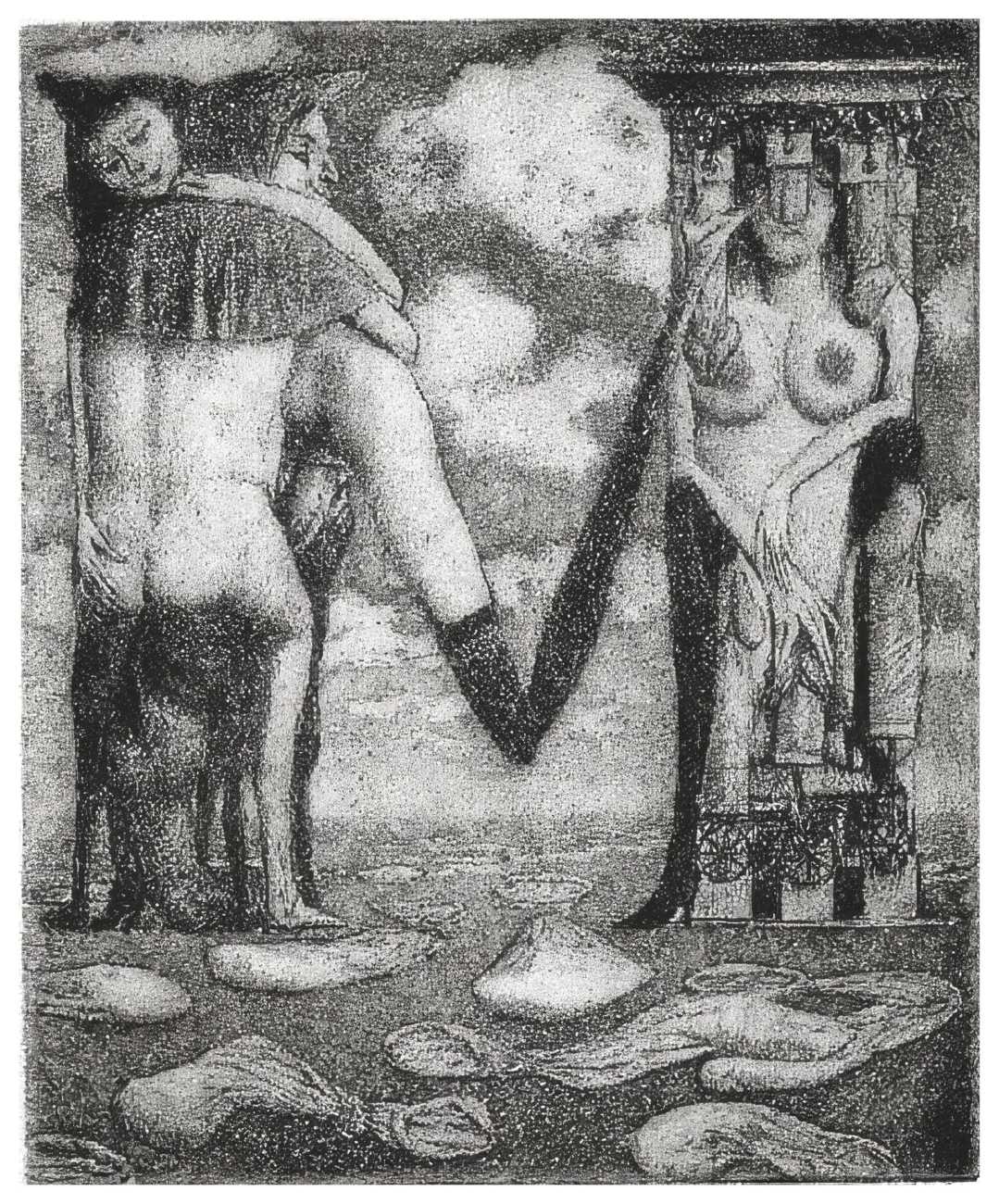
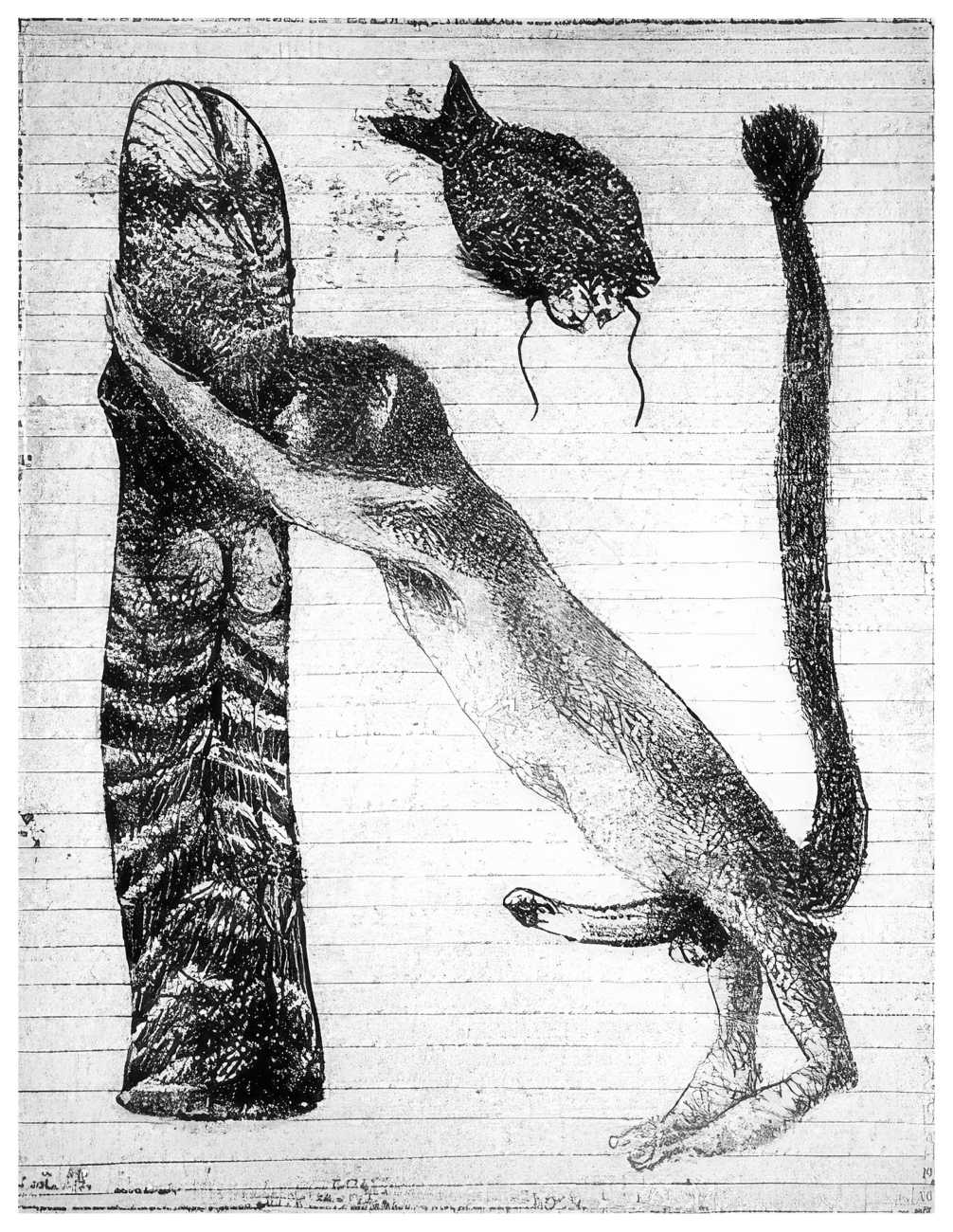
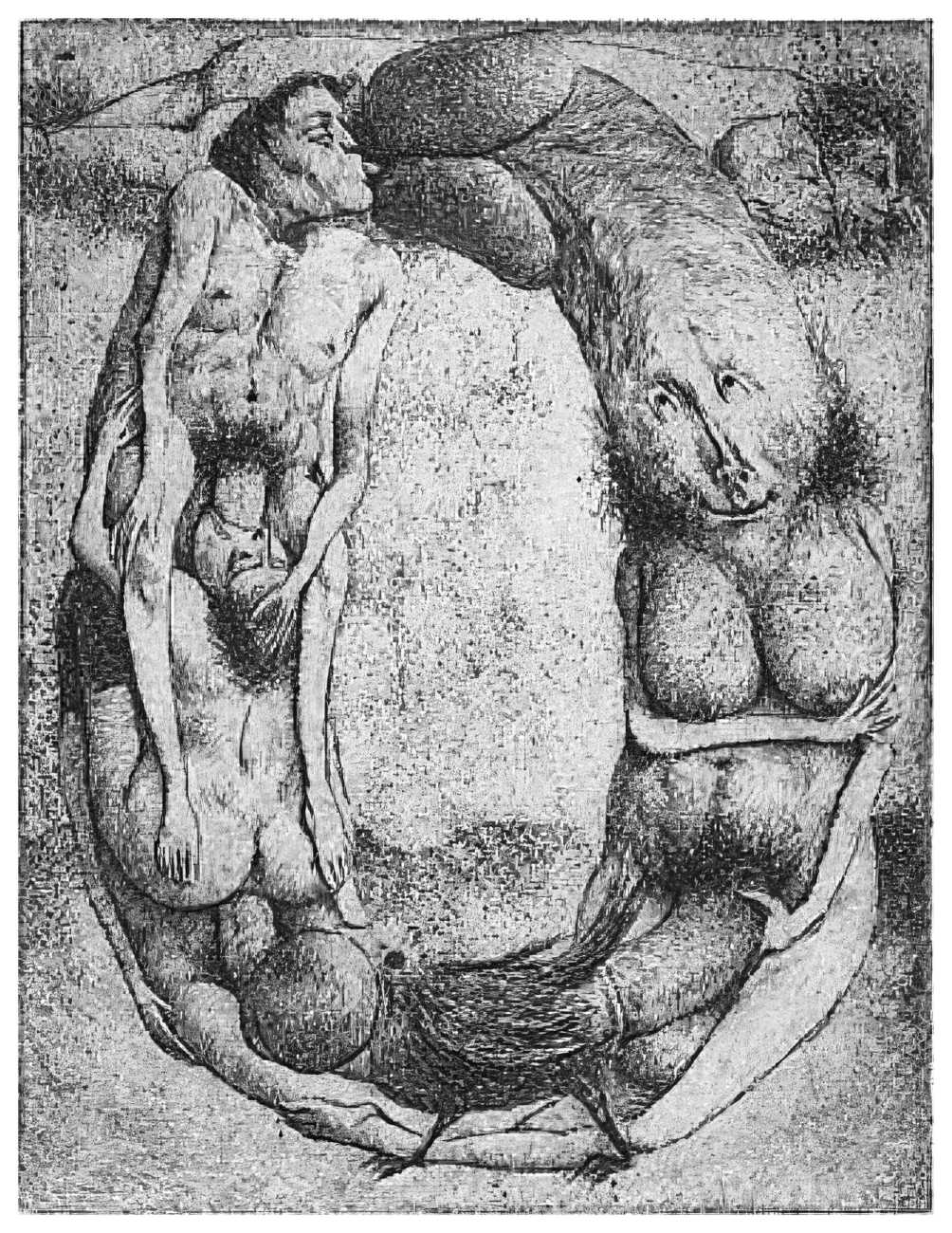
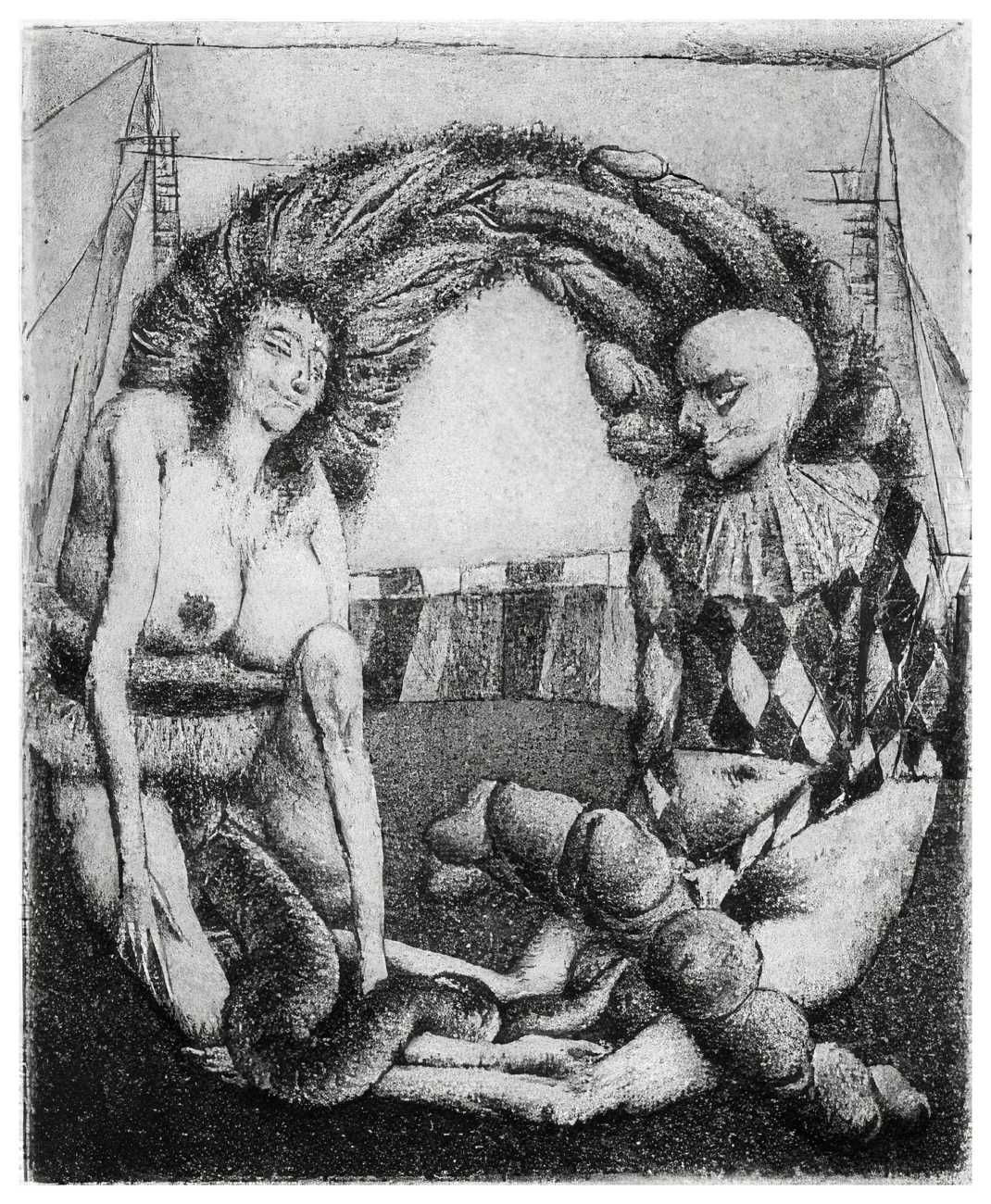
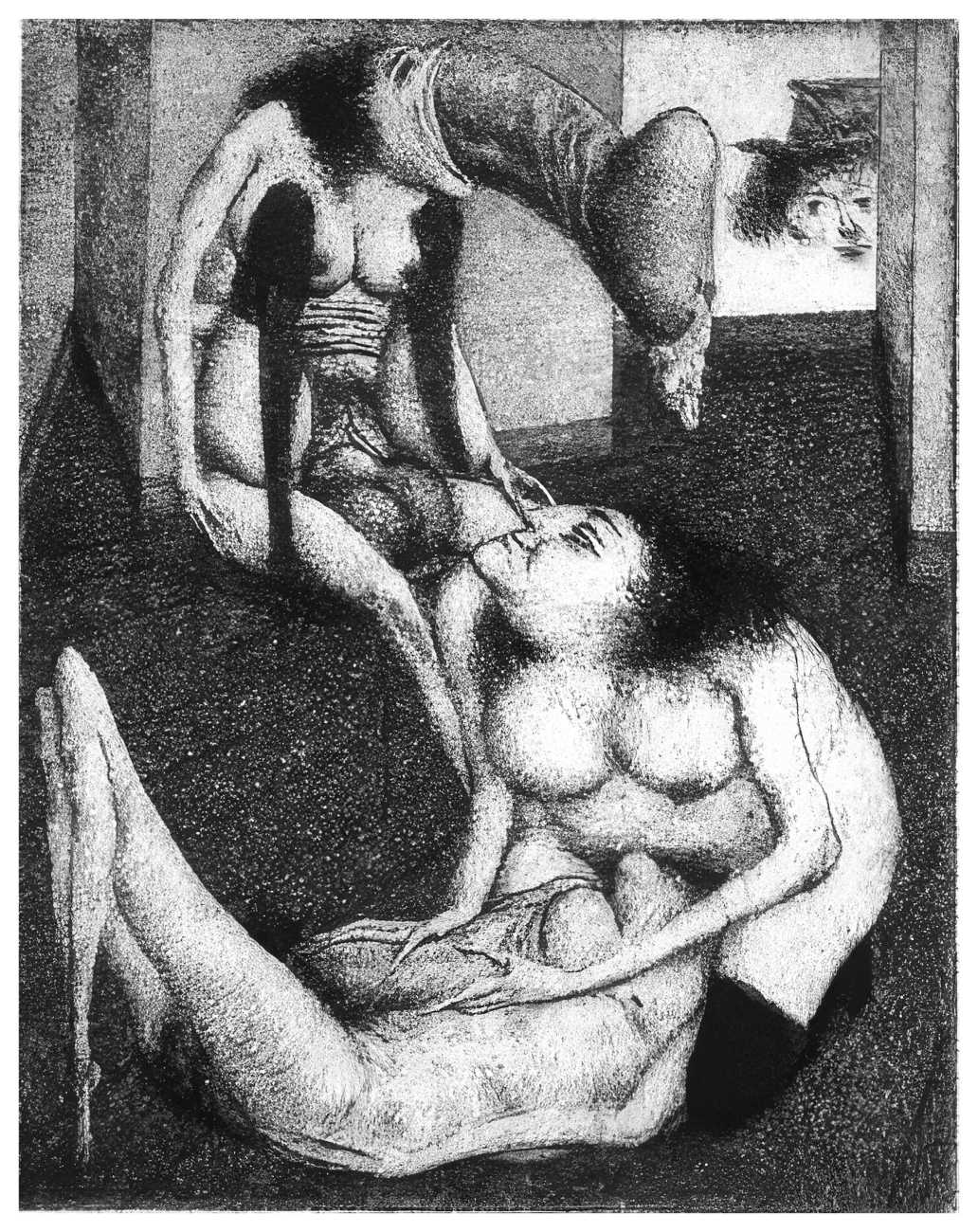
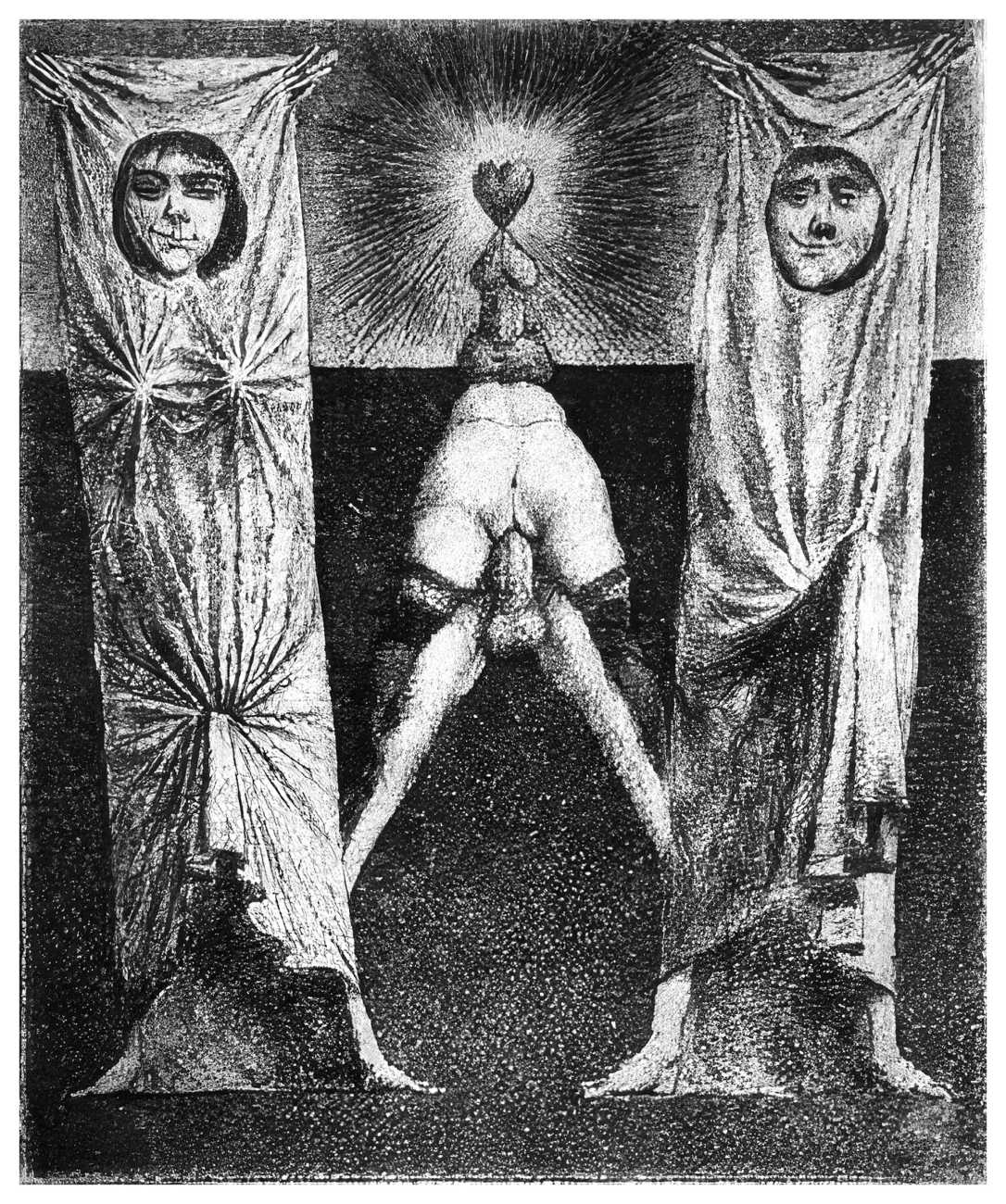
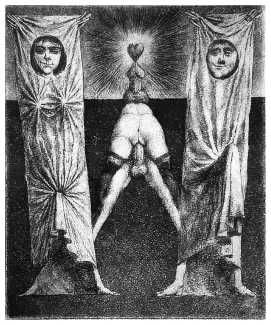
 In 1970, Federico Castellón collaborated with fellow artist Peter Paone on an ambitious erotic alphabet, each artist undertaking thirteen letters. The resulting prints transform the conventions of the alphabet into a series of surrealist explorations of the human body, sexuality and desire. This selection of eight images by Castellón demonstrates the imaginative freedom with which he approached the project, combining erotic encounters with grotesque transformations, dreamlike settings and a distinctly theatrical sense of the absurd.
Castellón’s figures inhabit strange, enclosed spaces in which bodies stretch, twist and merge with their surroundings. Some compositions suggest intimate encounters, while others introduce elements of fantasy and menace, with exaggerated features and contorted limbs lending the human form an unsettling, sometimes comic quality. In several images, the architecture of the scene becomes almost as important as its inhabitants, dividing the space into geometric planes or creating stage-like settings for these curious dramas. Animal forms and fantastical creatures complicate the distinction between human and non-human, desire and grotesquerie.
Executed in monochrome, the prints exploit the contrast between deep shadows and pale, textured surfaces. The coarse, granular marks give the figures a sculptural solidity, while the stark lighting and distorted perspectives intensify their surreal atmosphere. Rather than presenting sexuality as idealised or conventional, Castellón treats it as a source of visual invention, capable of being playful, disquieting and deliberately strange.
The project proved demanding even for an artist of Castellón’s experience. In an interview recorded in 1971, he recalled that he had begun to regret undertaking it well before he reached his thirteenth letter. These eight prints offer a compelling glimpse of his contribution to this unusual collaborative venture, bringing together erotic imagery, surrealist imagination and a boldly unconventional approach to the alphabet.