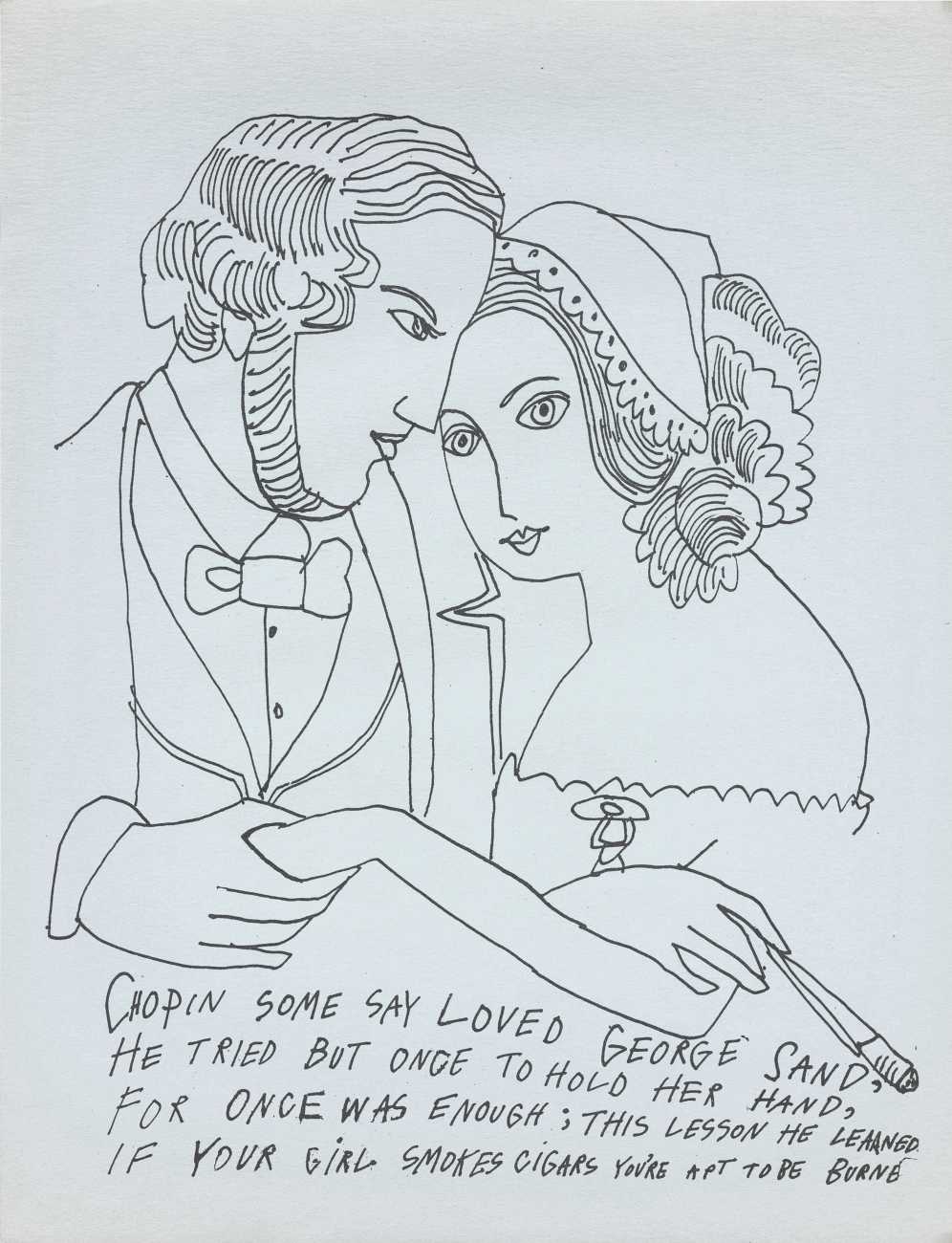
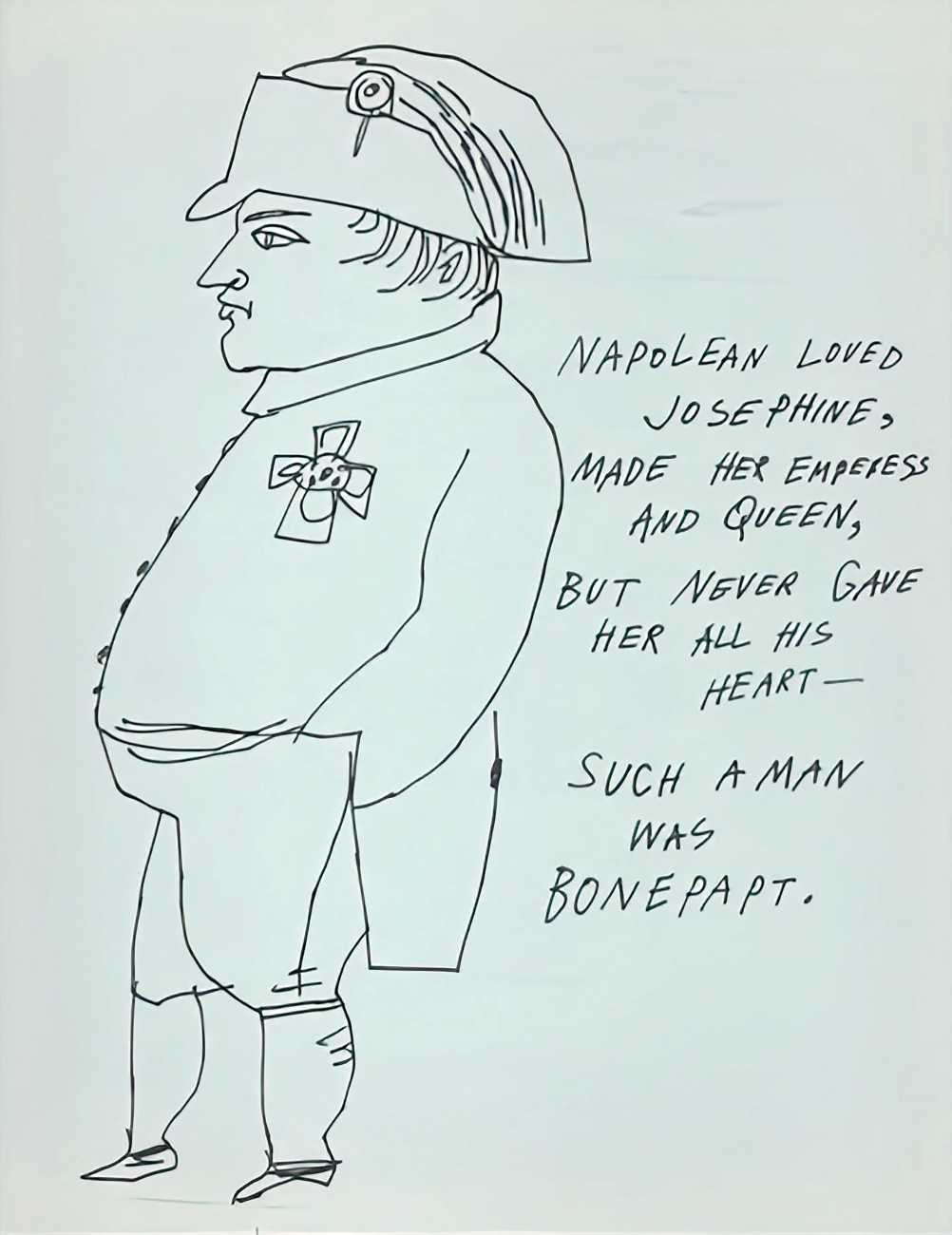
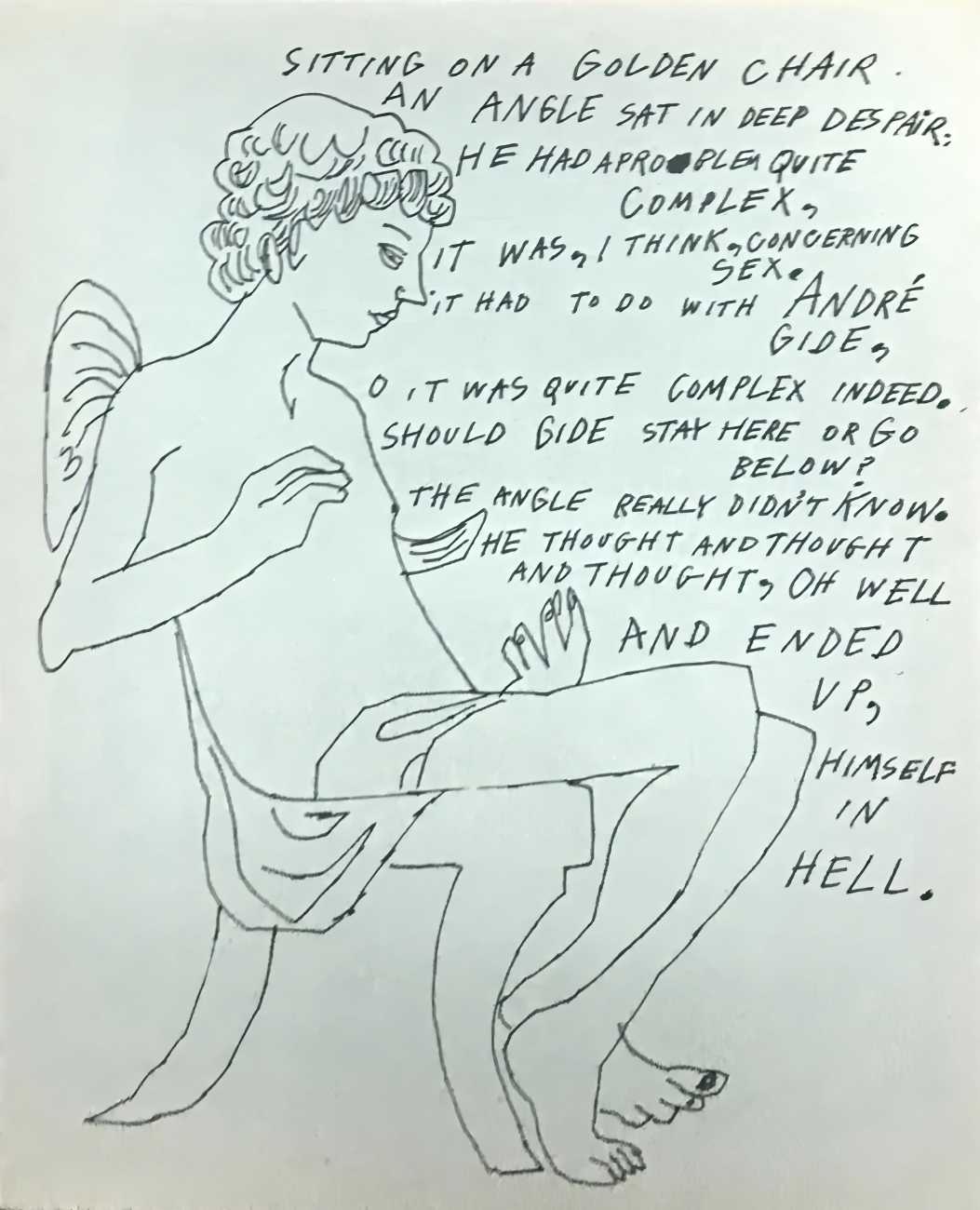
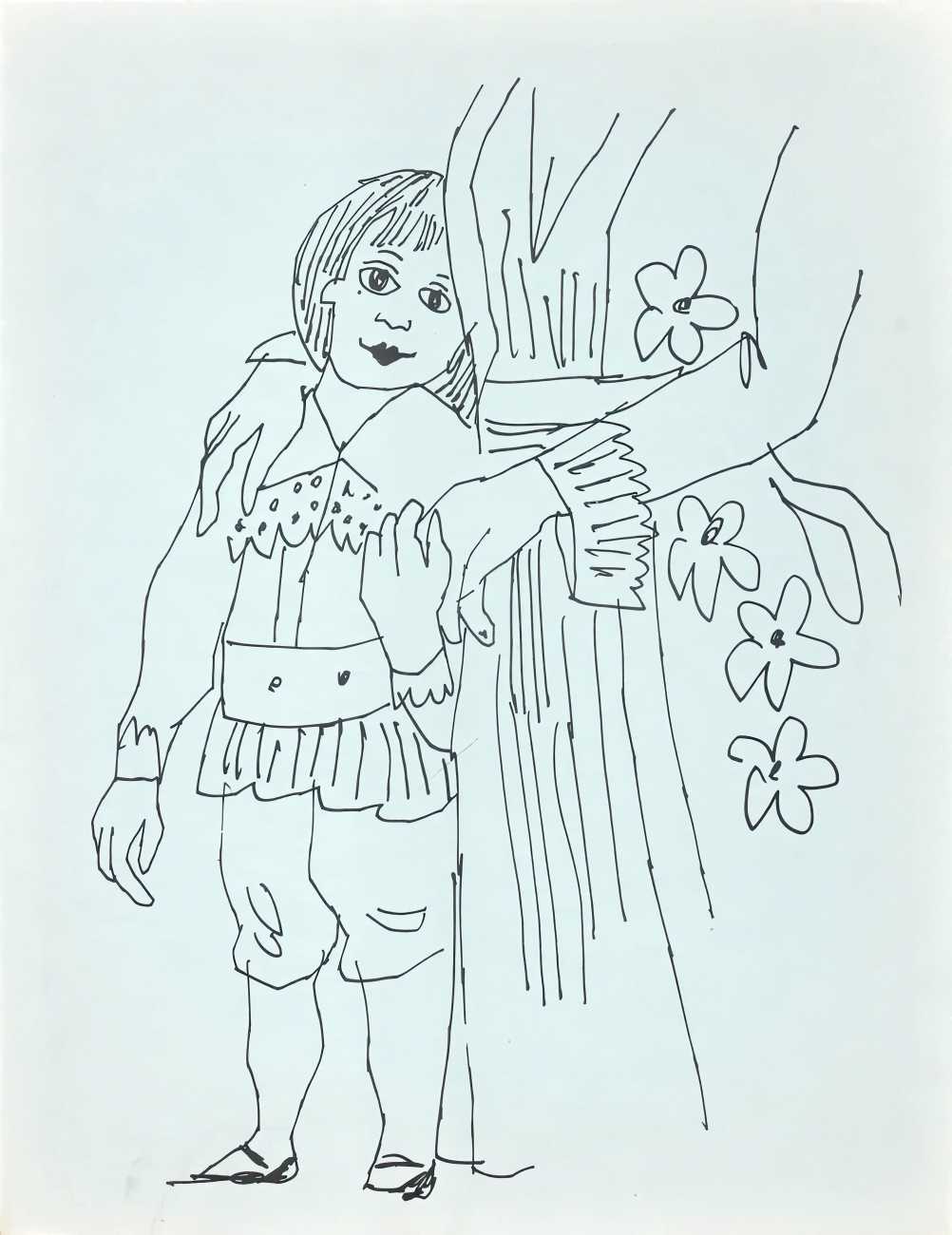
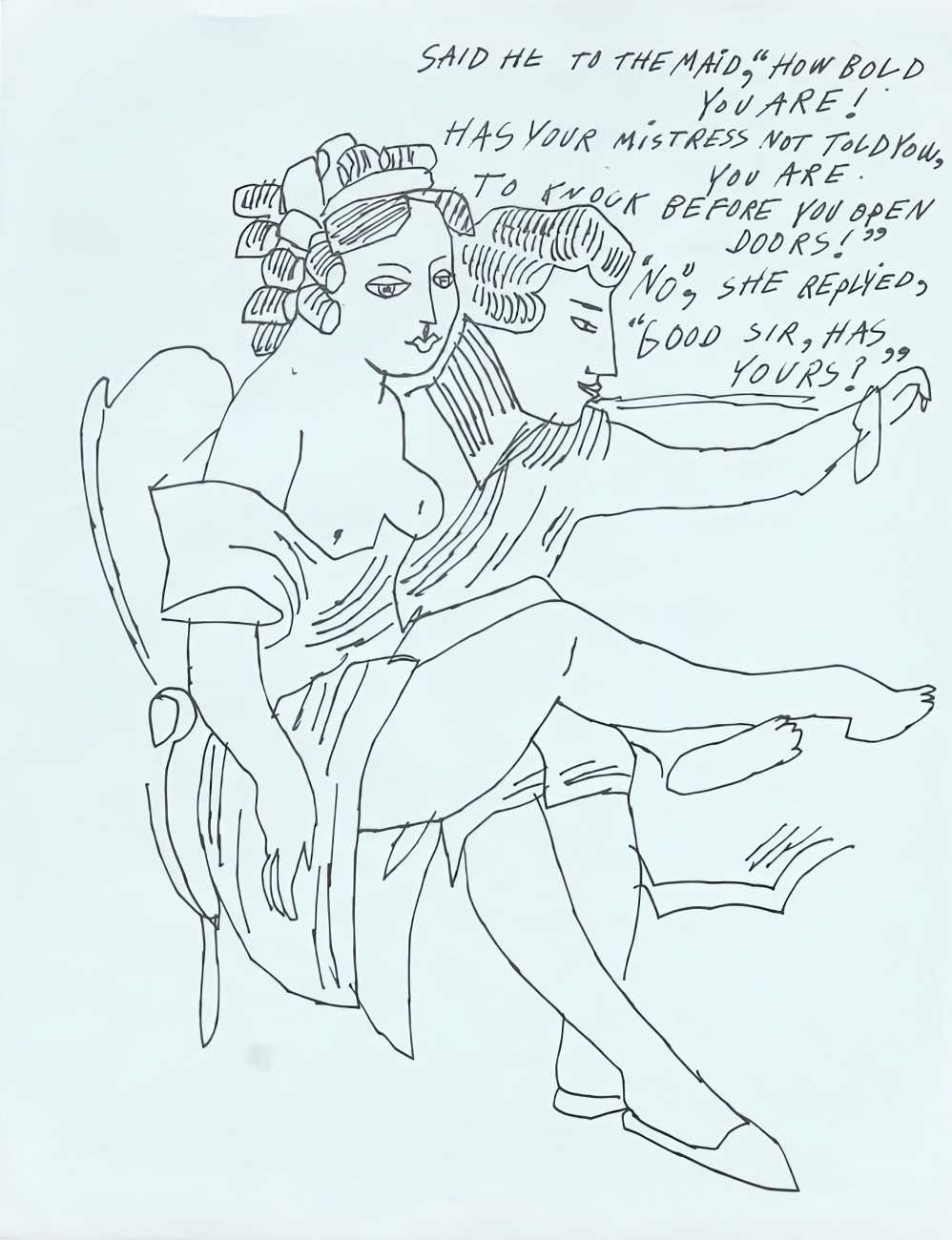
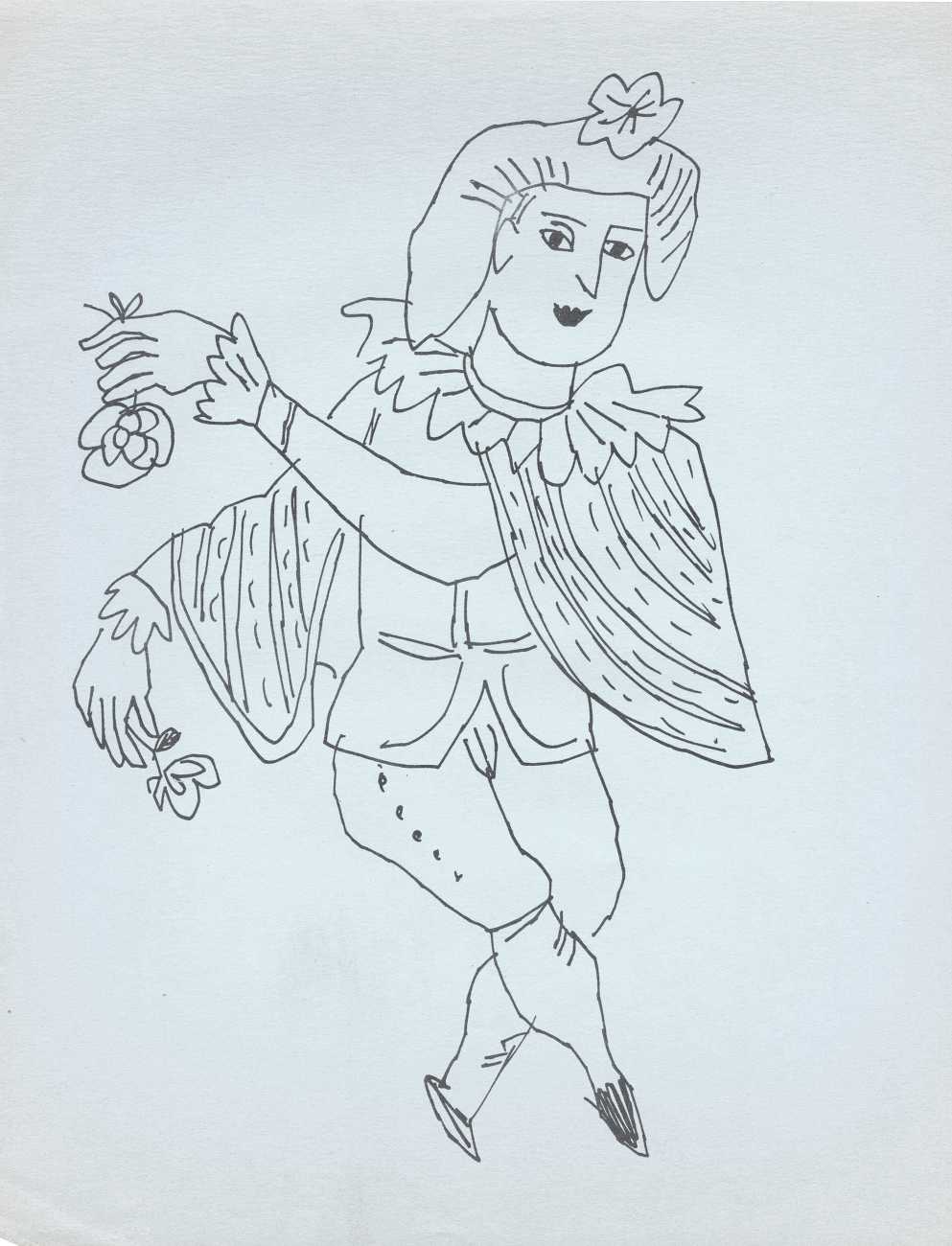
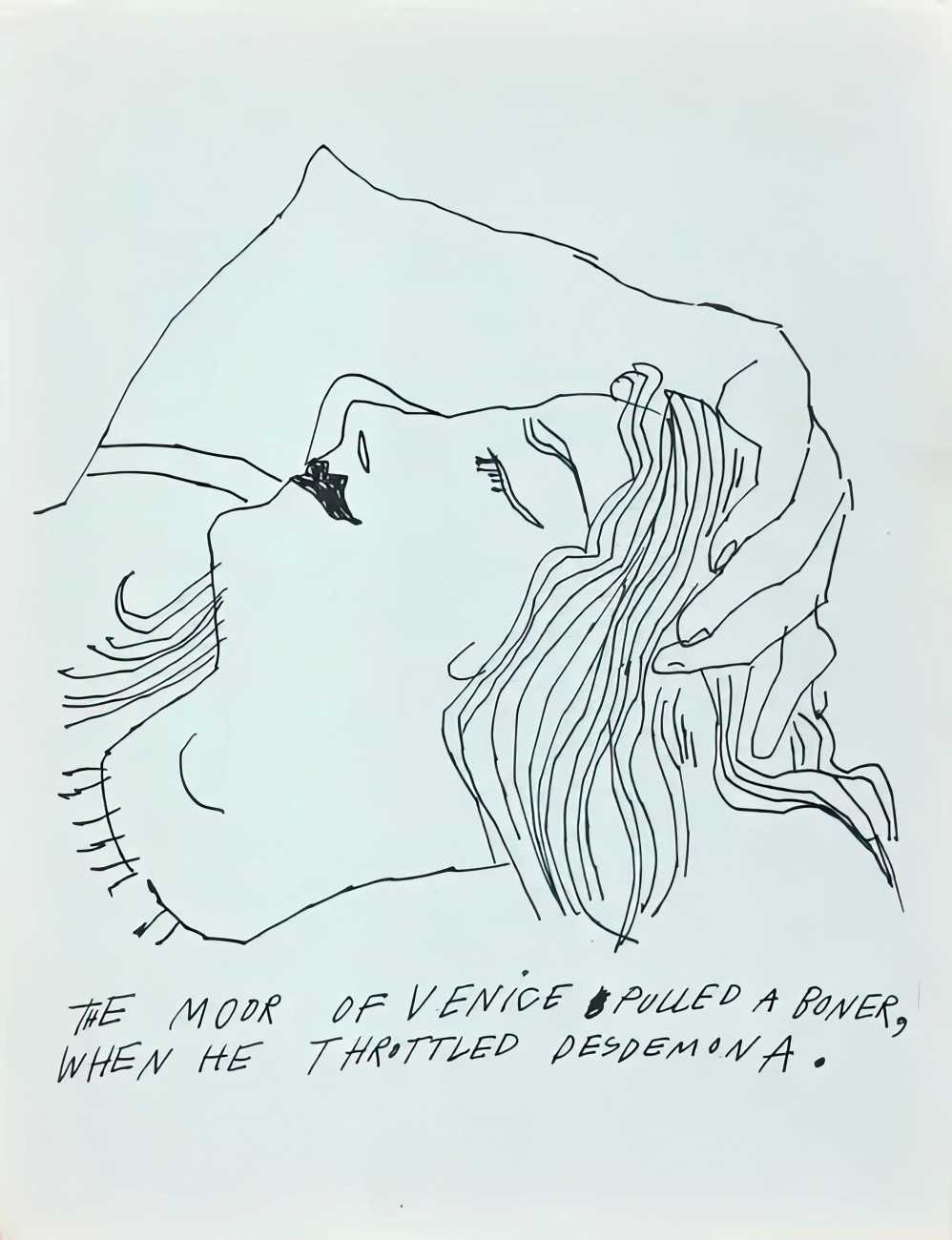
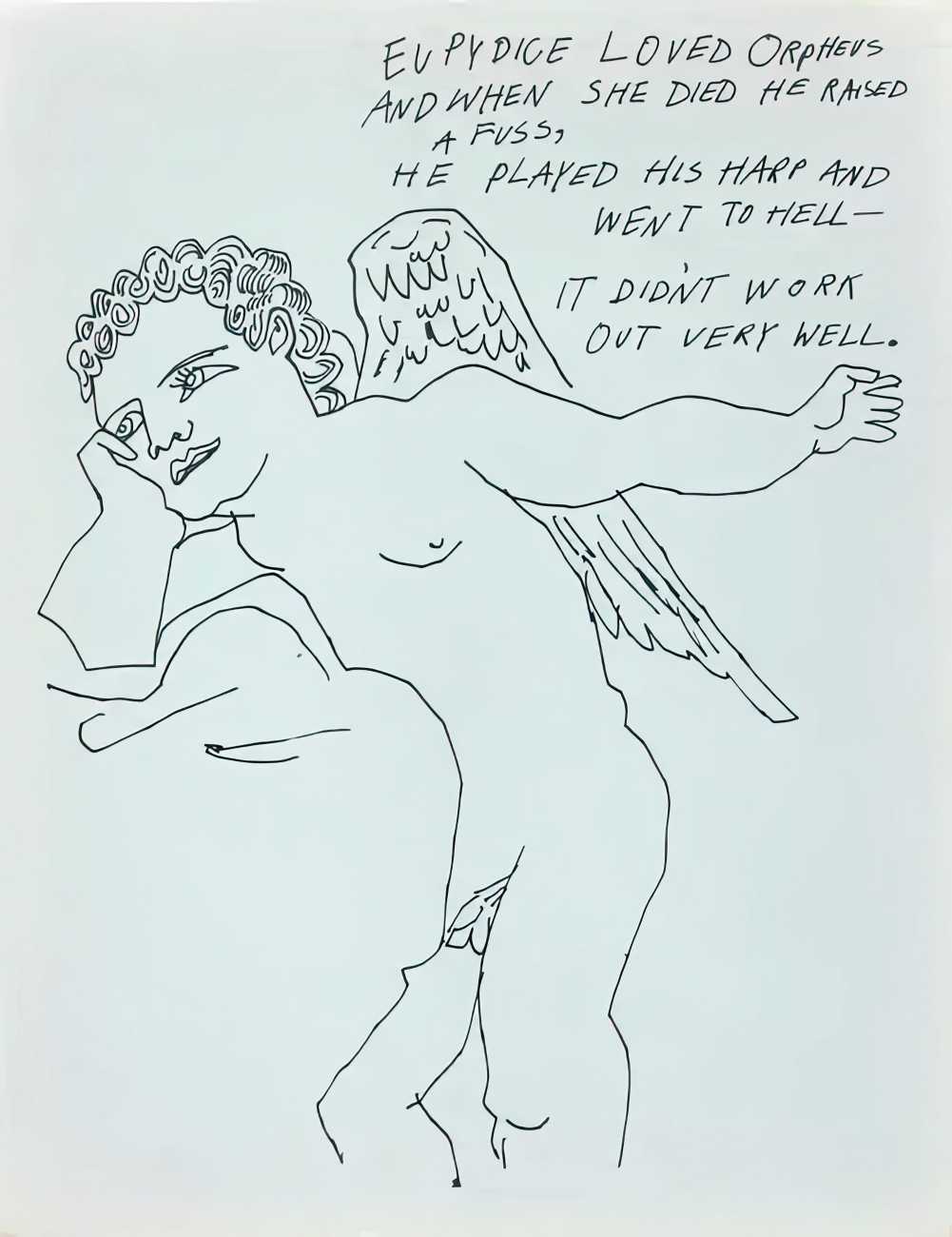
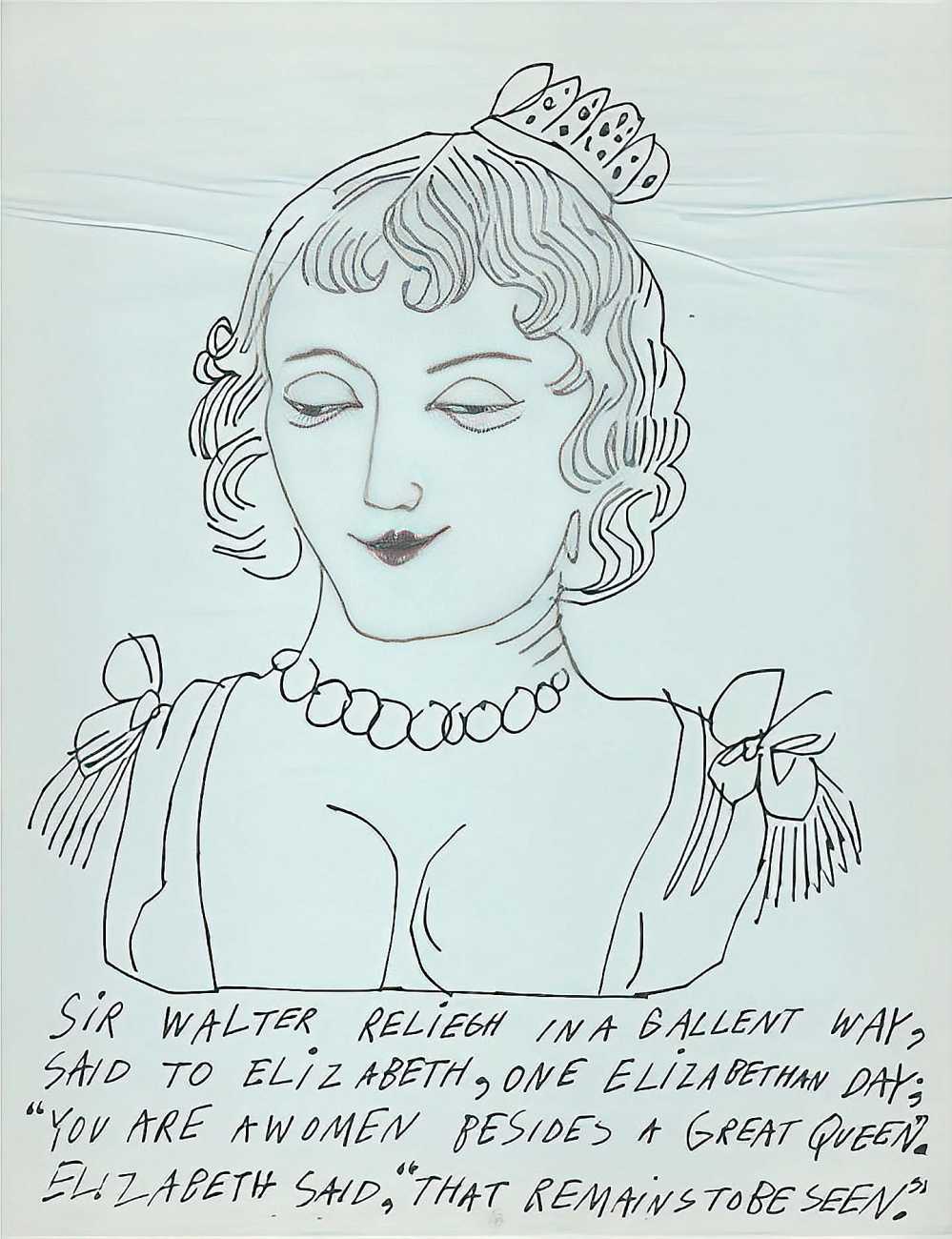
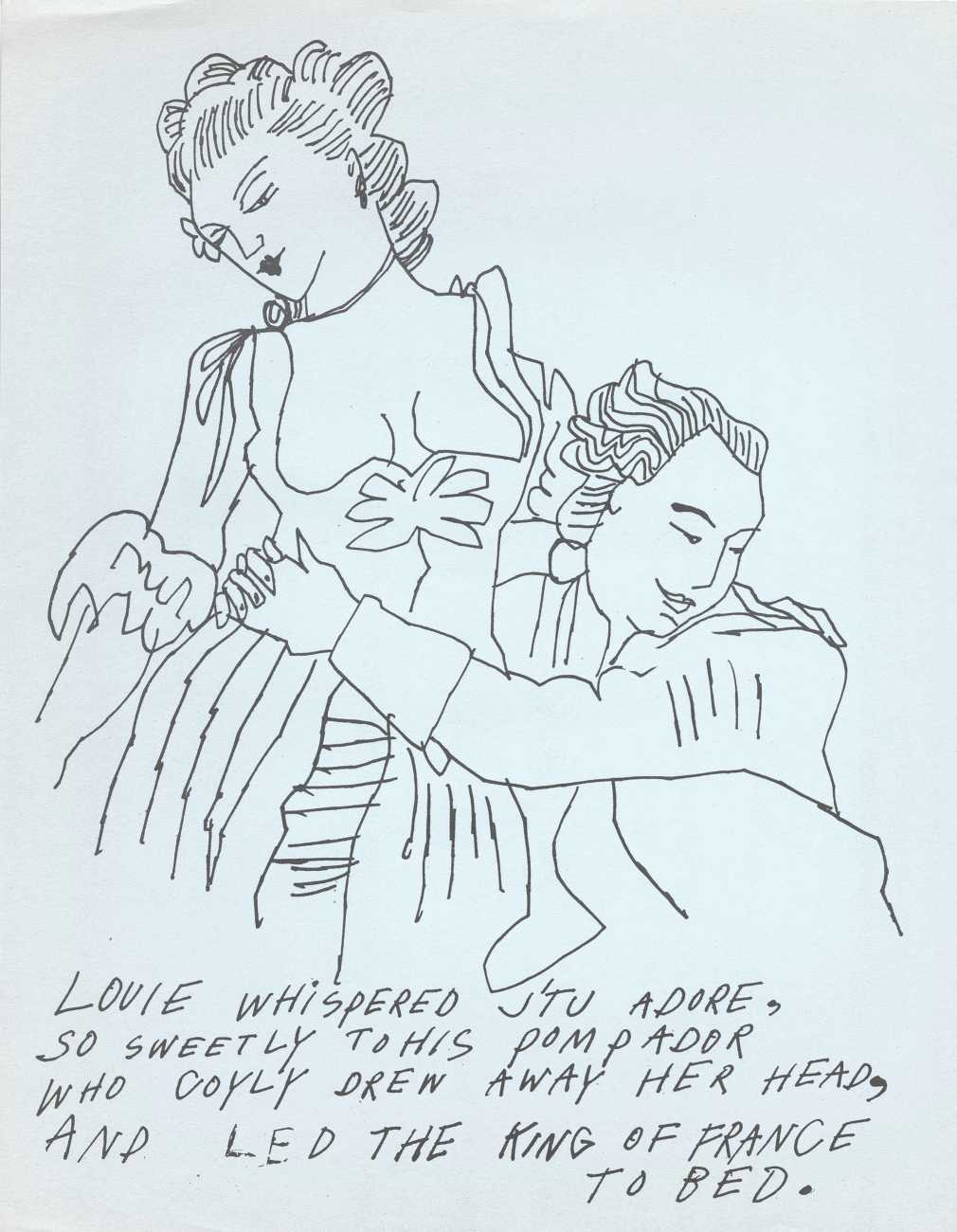
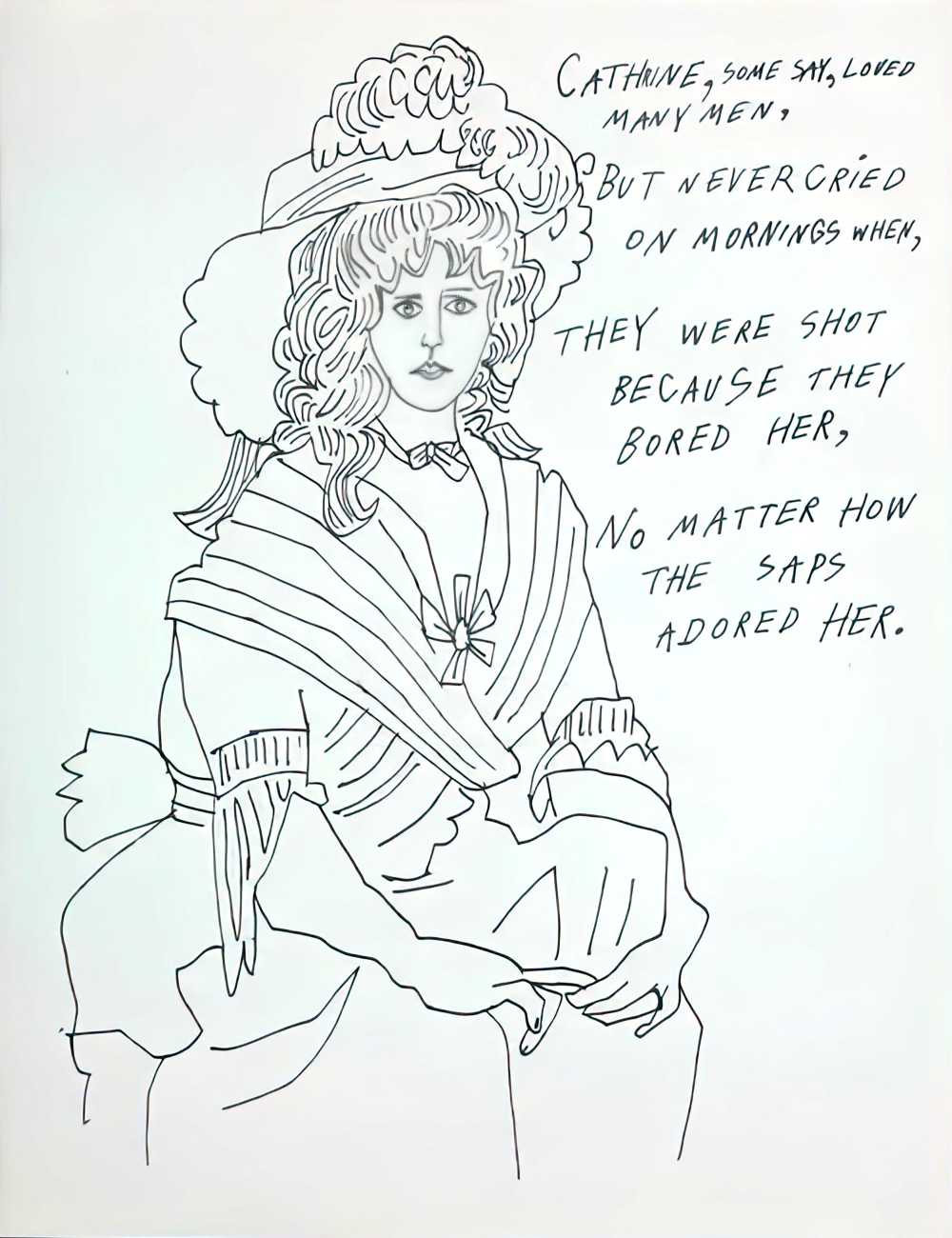
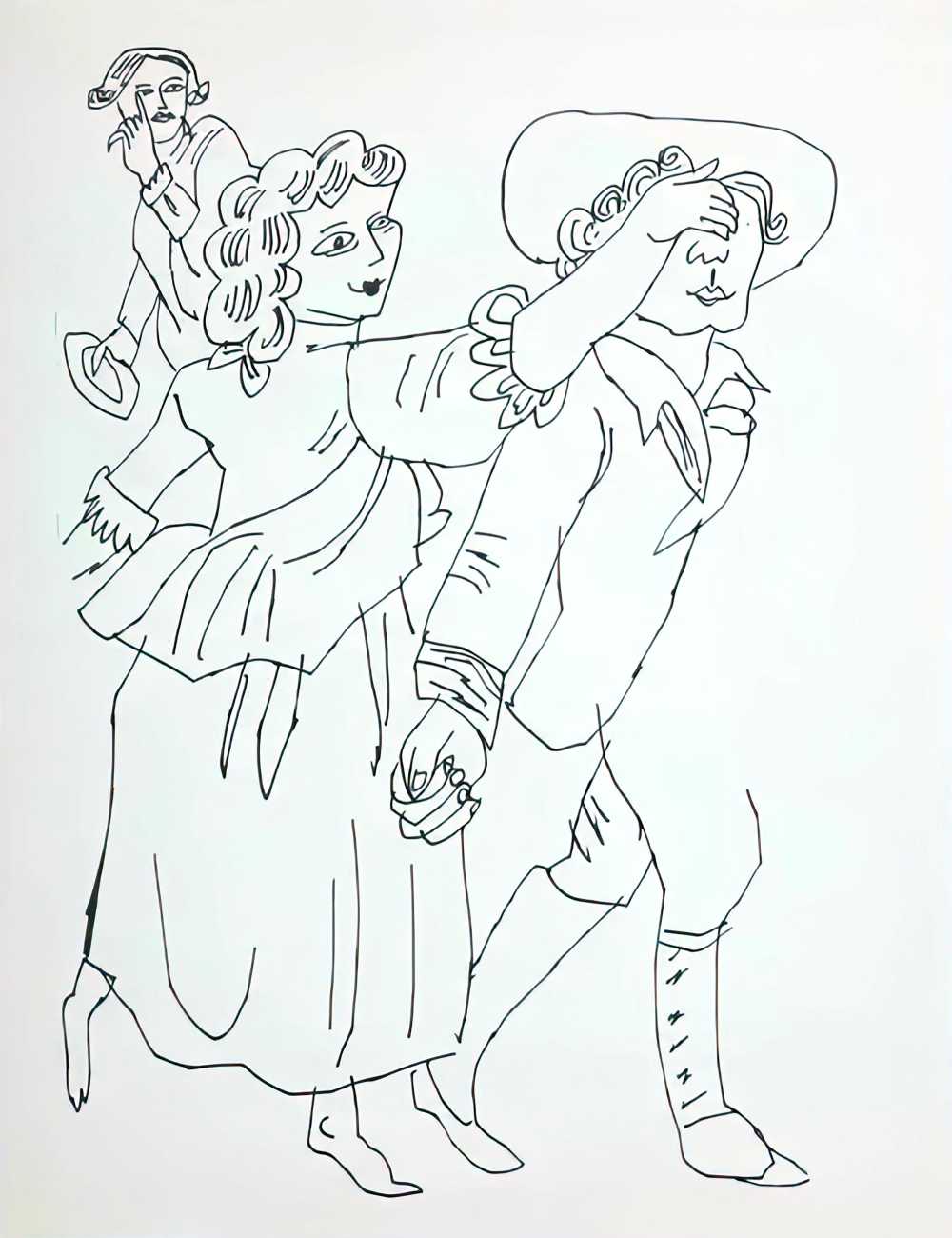
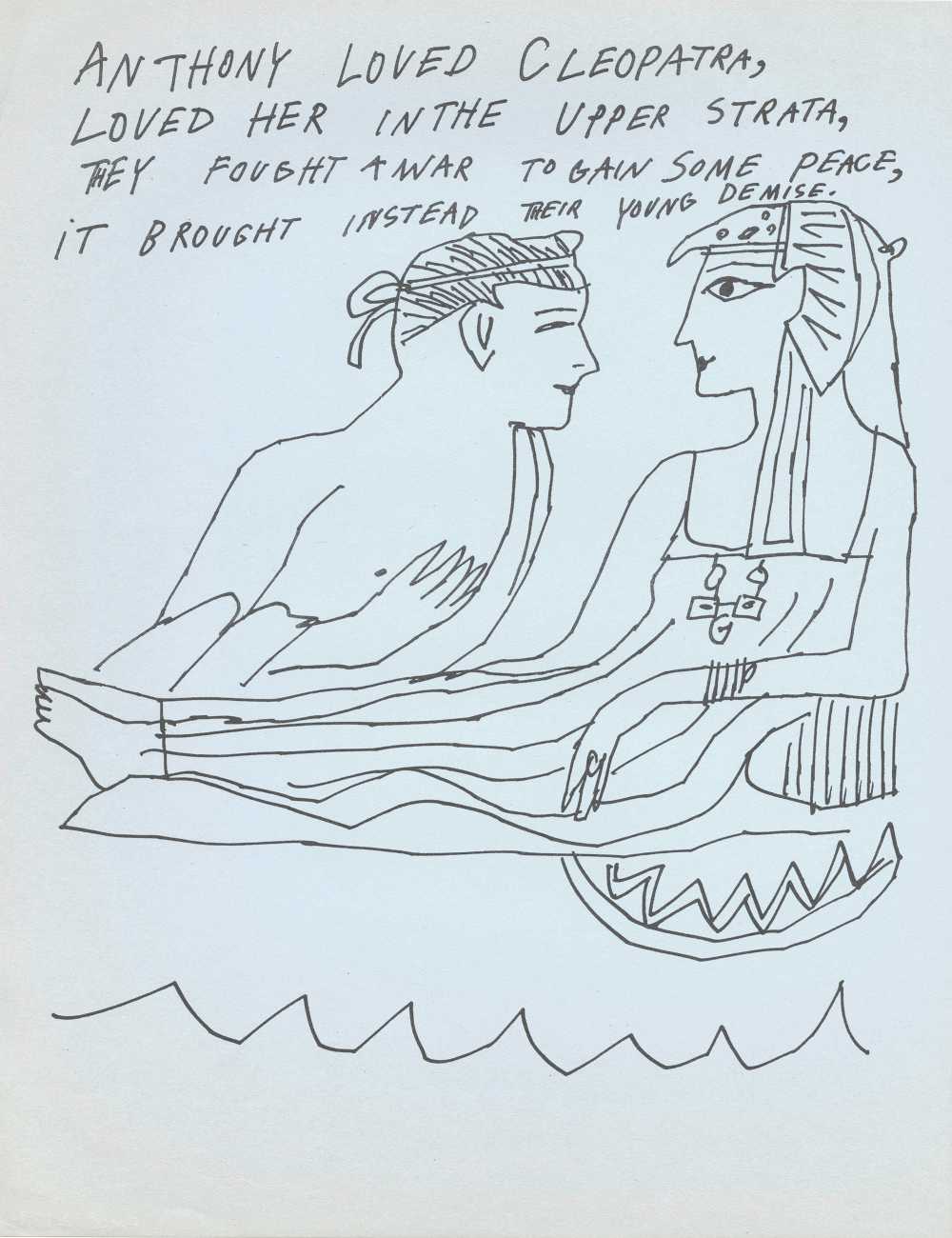
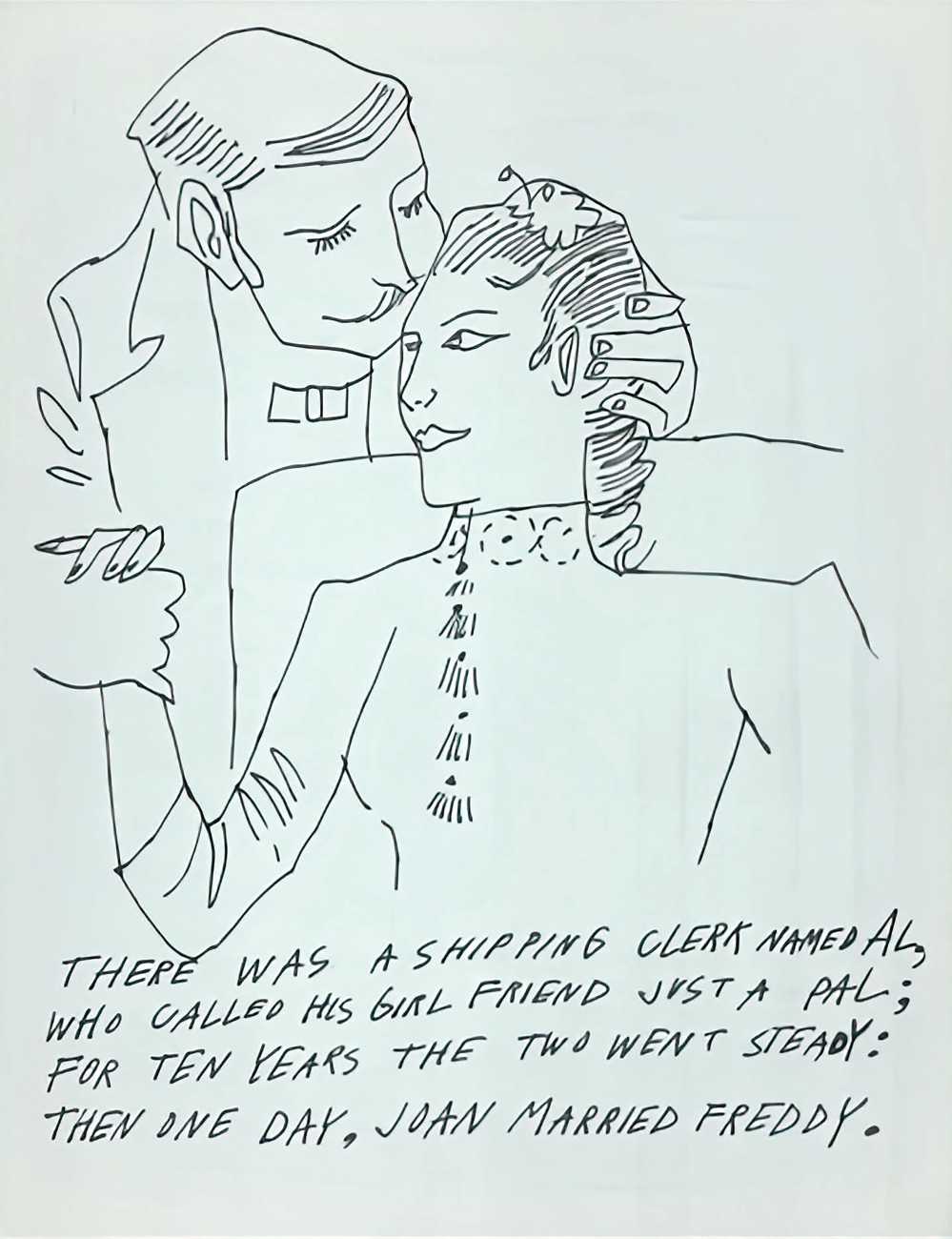
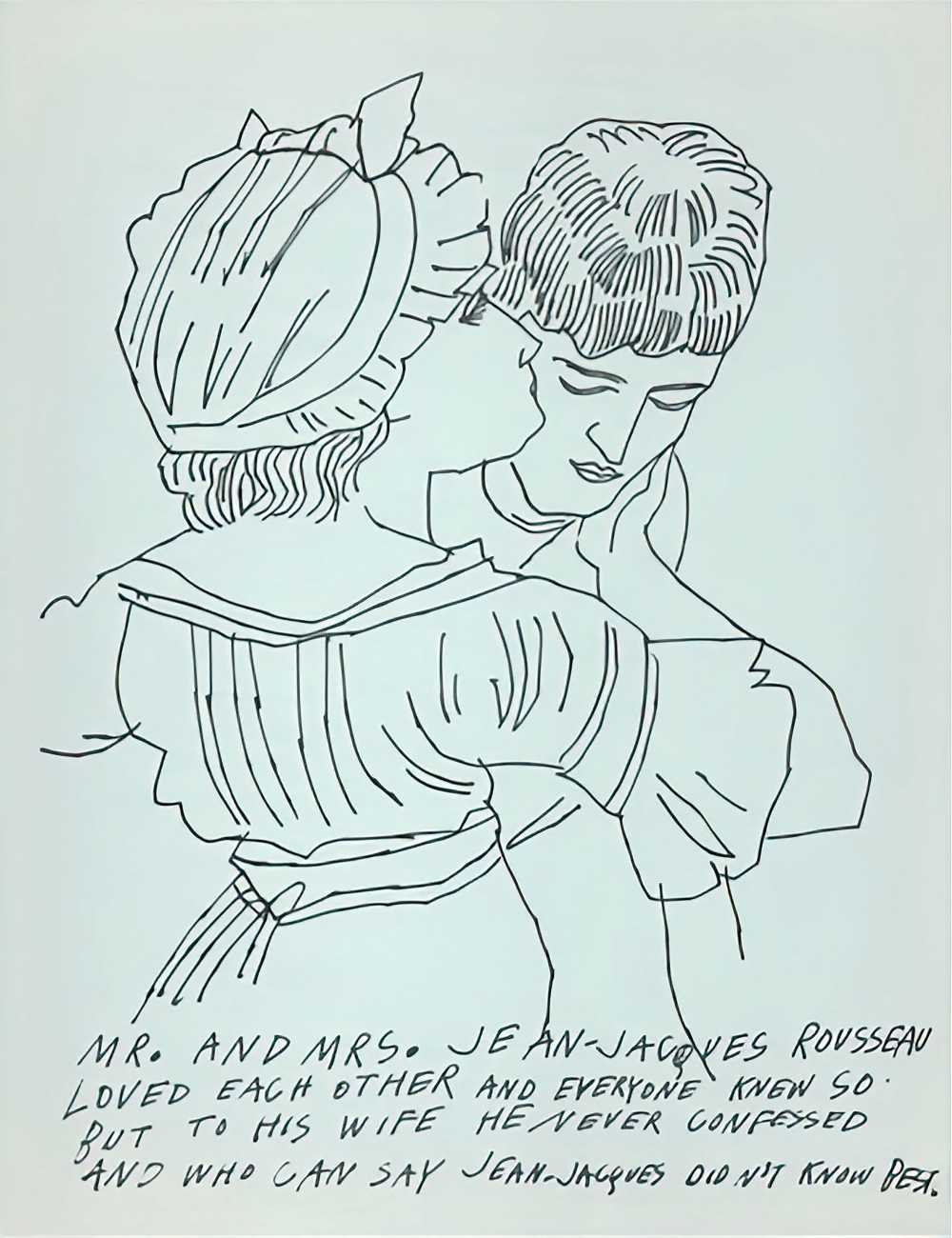
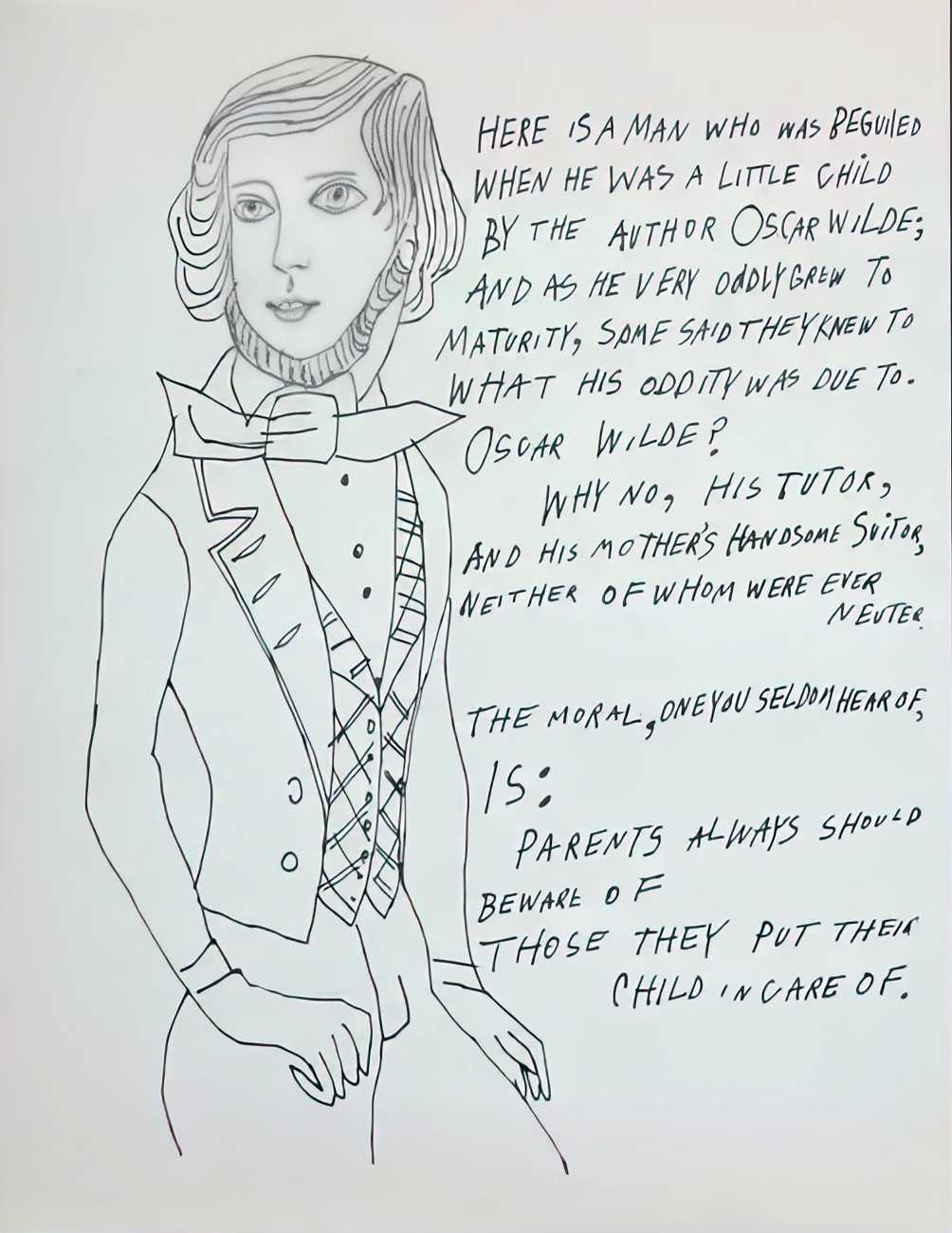
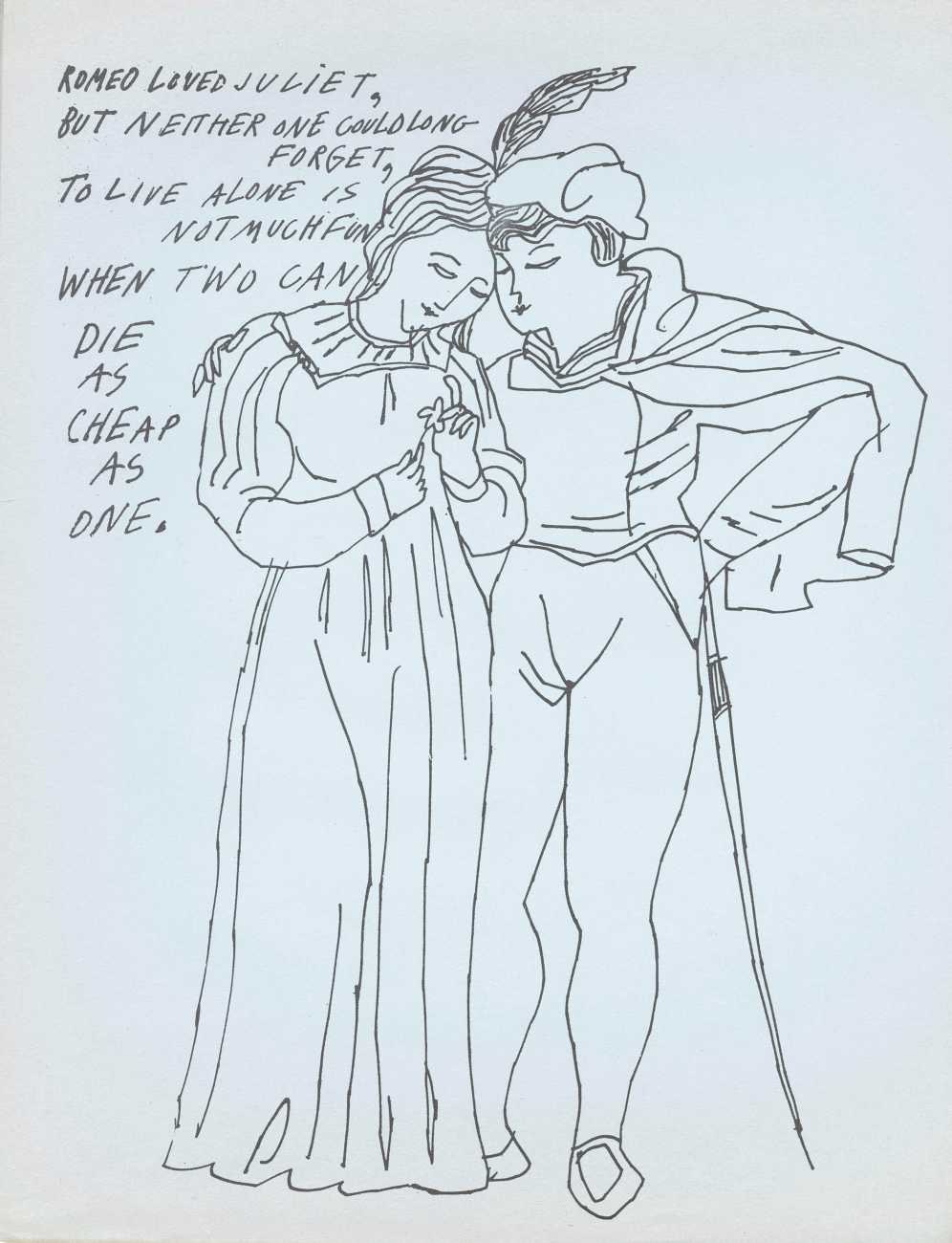
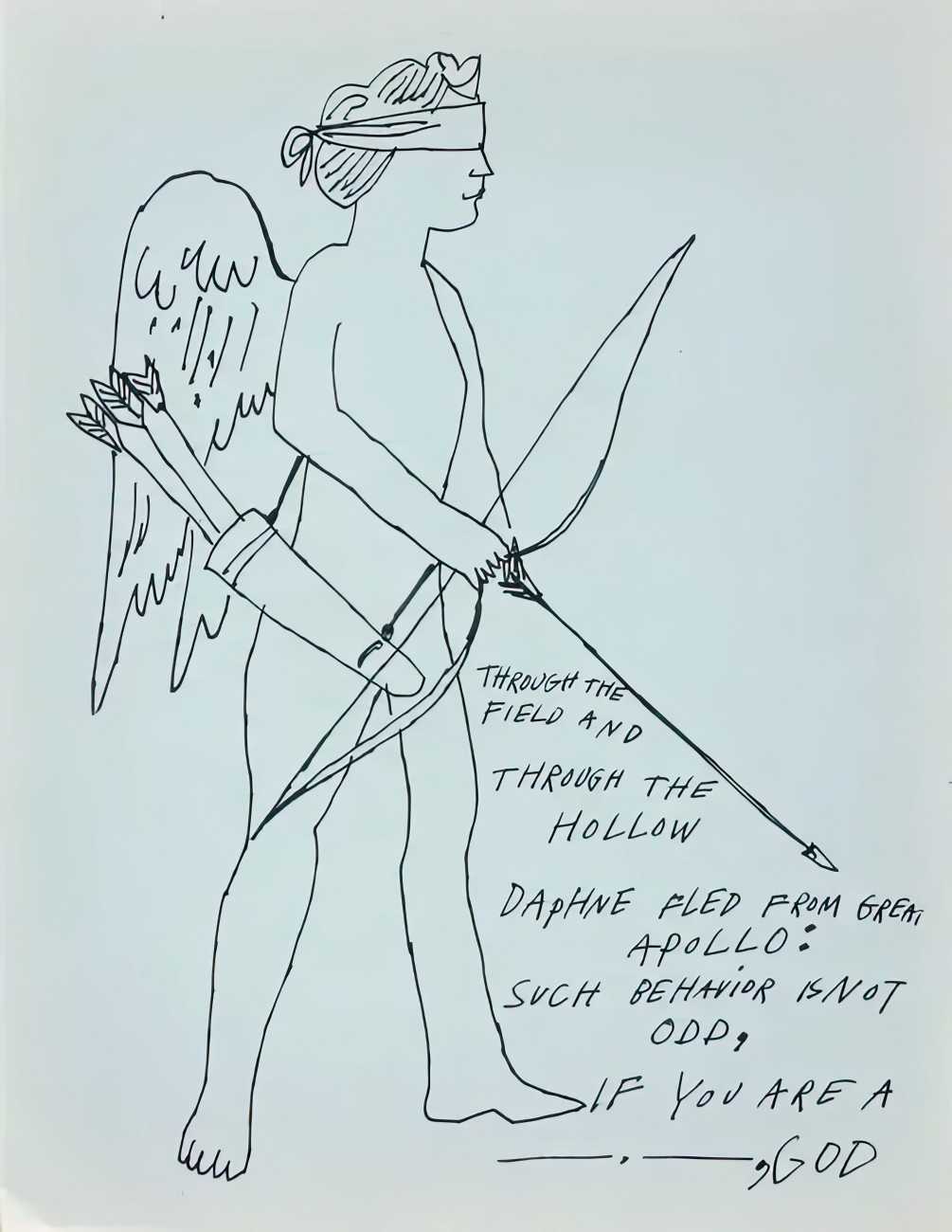
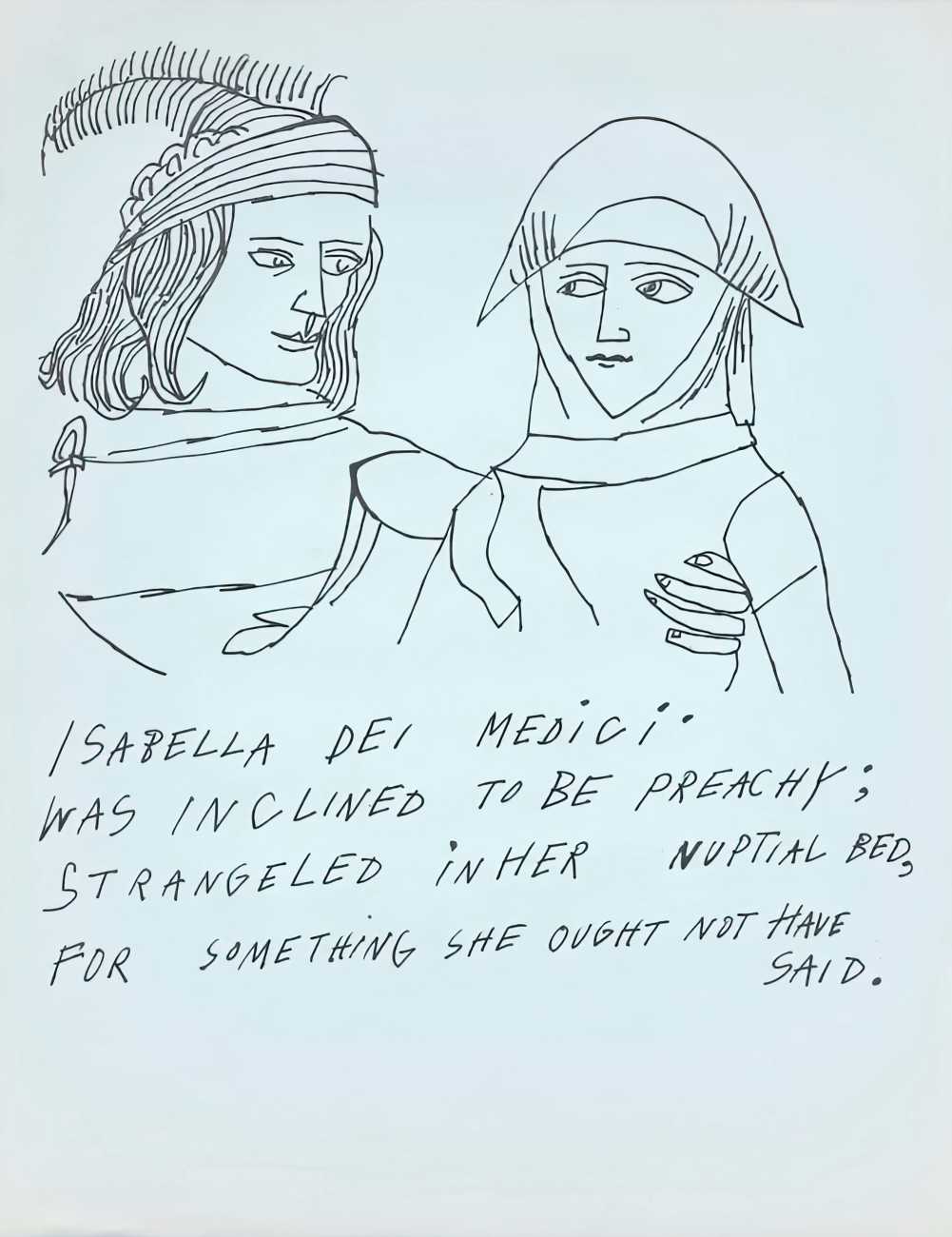
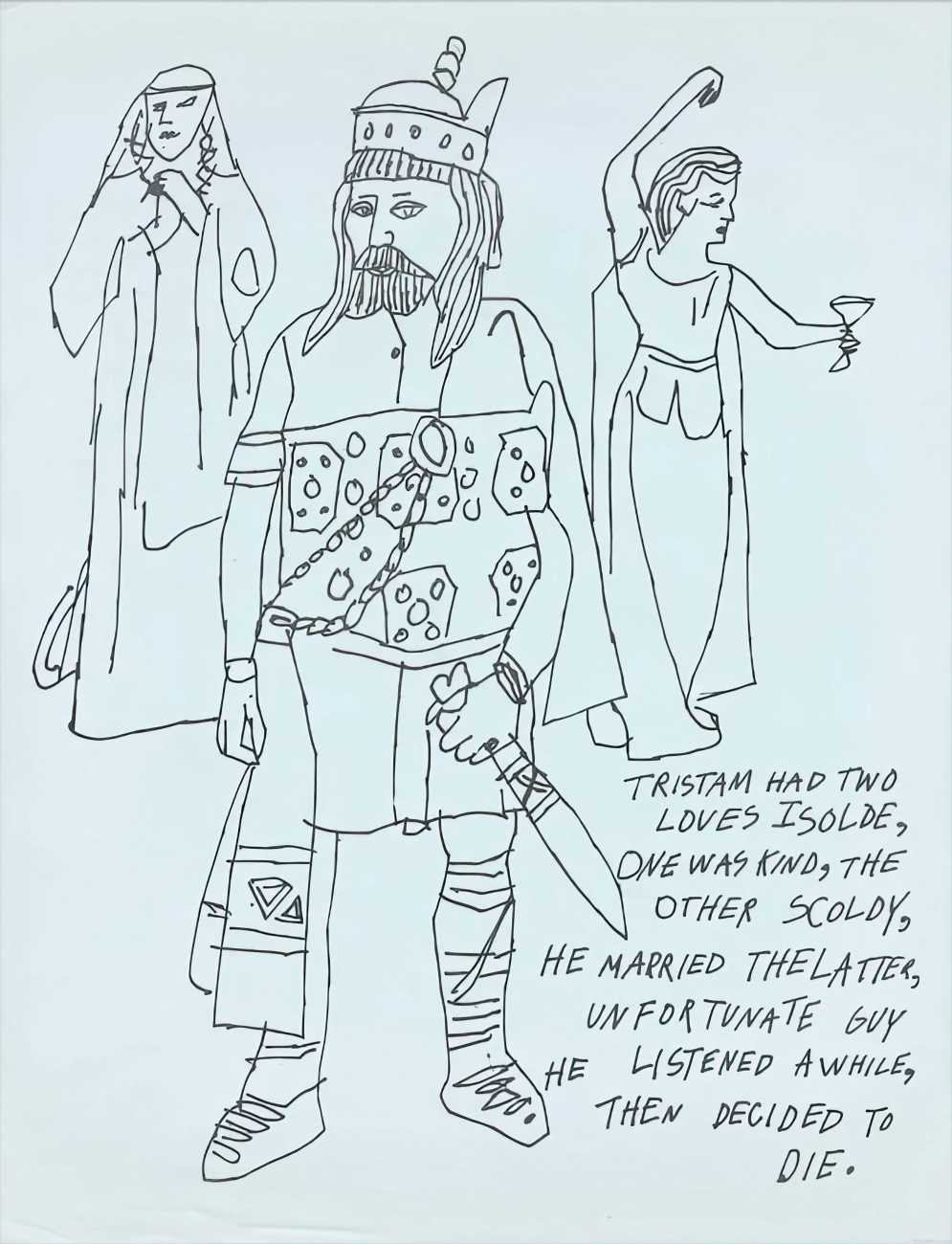
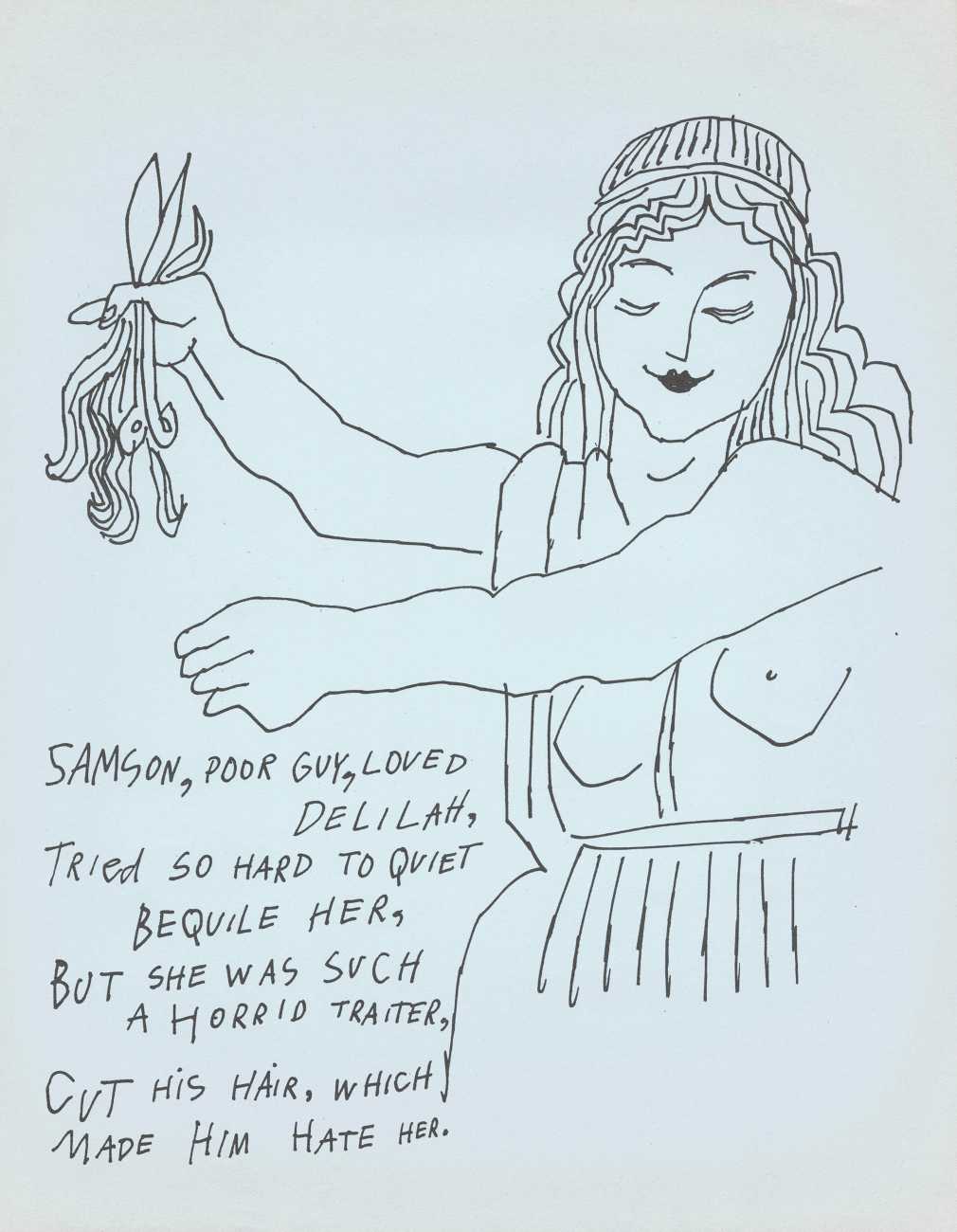
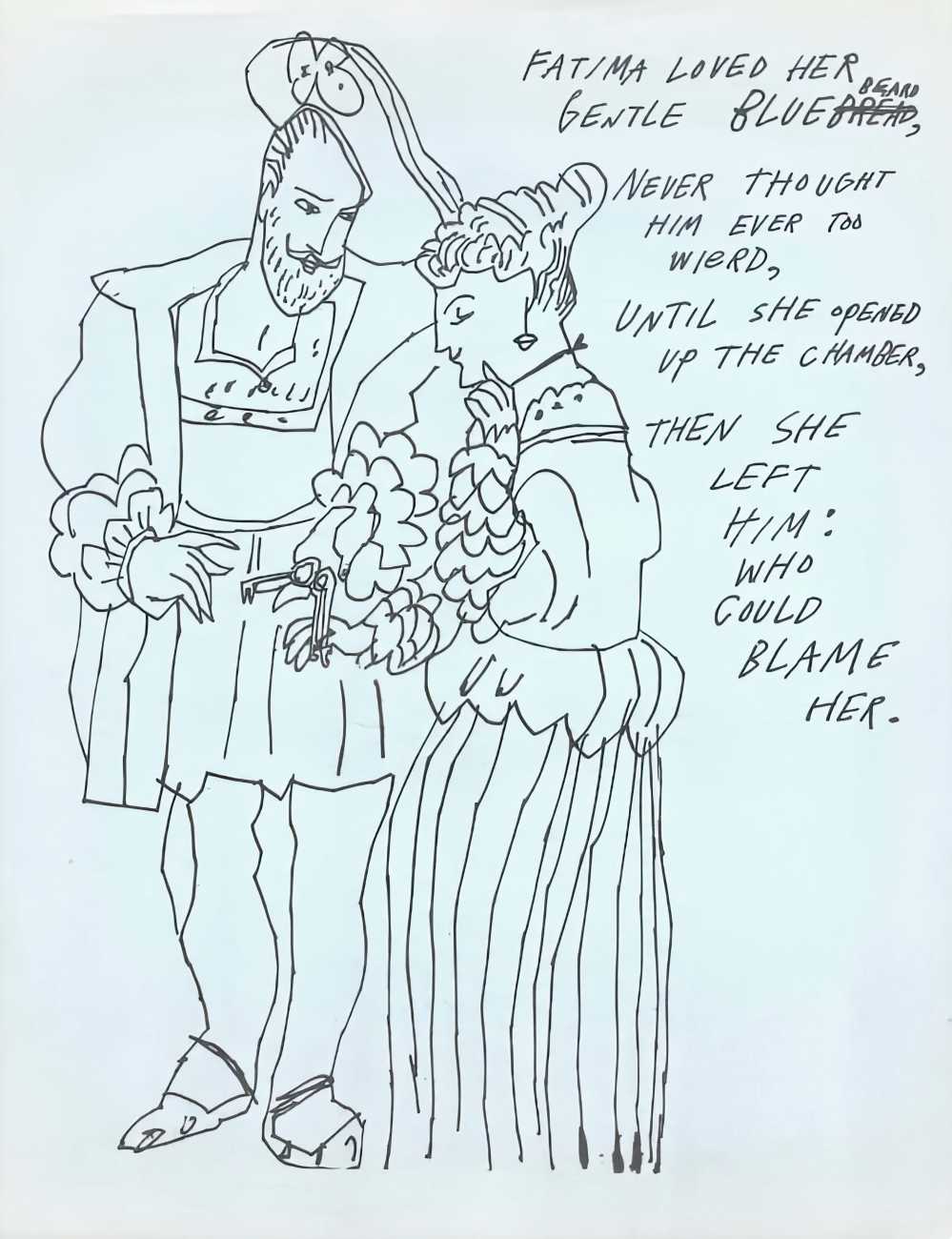
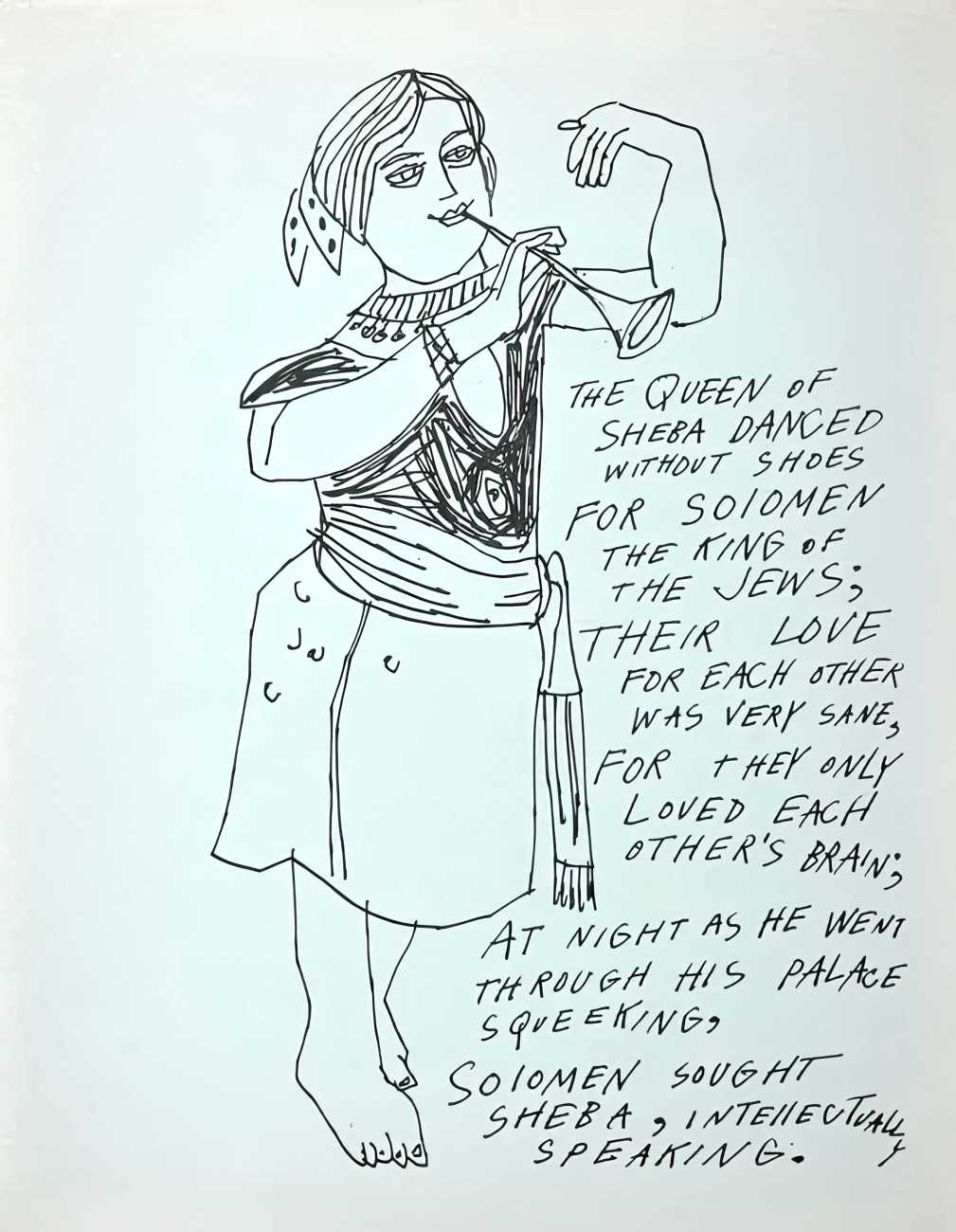
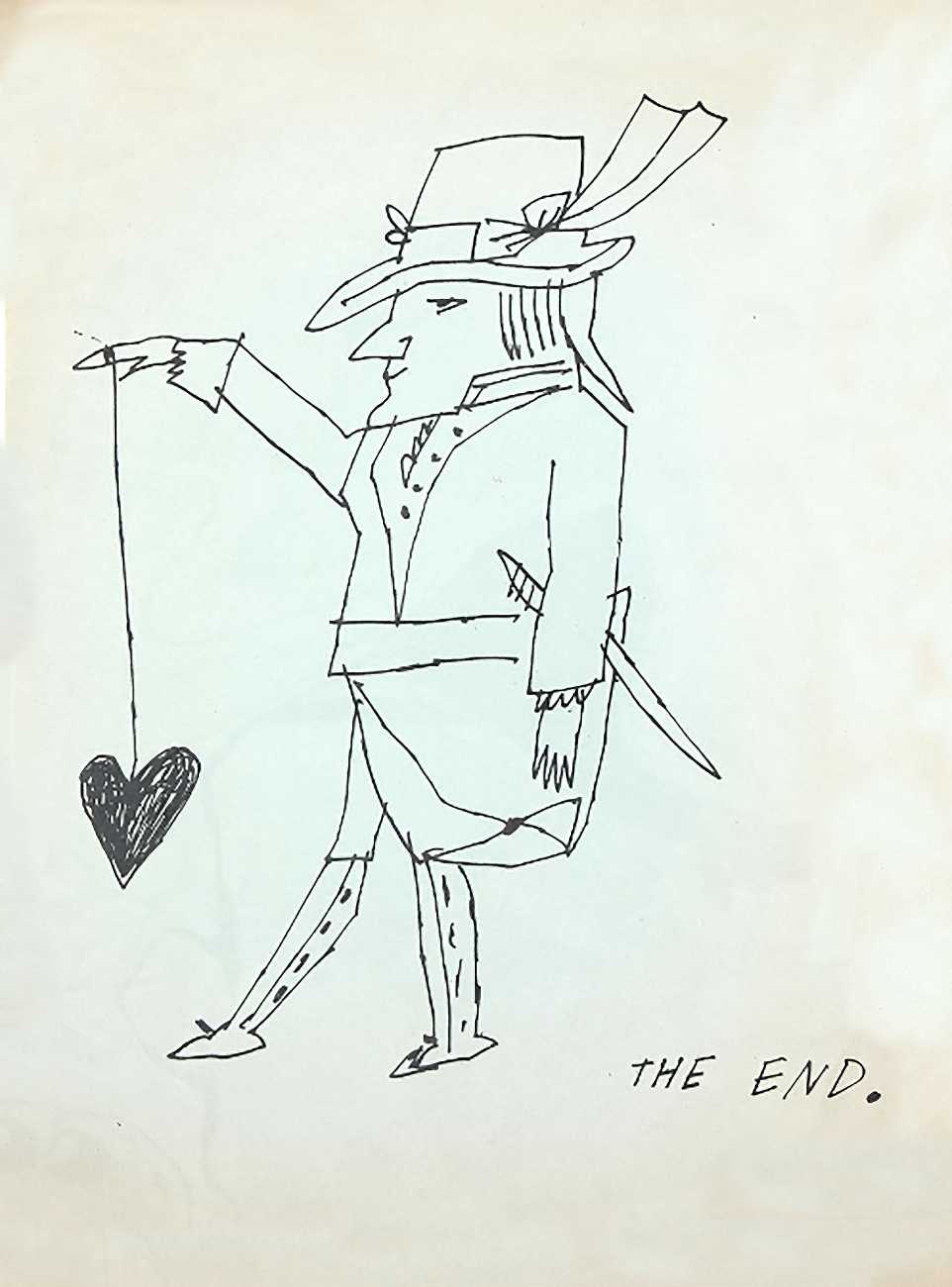
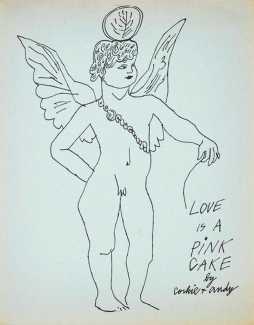
 Love Is a Pink Cake is one of Andy Warhol’s earliest self-published artist books. It belongs to a group of intimate, quasi-private works Warhol made in the early 1950s, combining whimsical drawing, handwritten text and a tone that oscillates between childish sweetness and emotional exposure. The verses, often including misspellings and sometimes crossing-outs, are poems by Ralph T. Ward.
The book’s central metaphor – love as something edible, decorative, ephemeral – sets the emotional register. Cakes are celebratory but fragile; they are meant to be admired briefly, then consumed. Warhol’s pink cake becomes a symbol of romantic longing that is both indulgent and precarious. The drawings reinforce the ambivalence of the verses.
Despite its playful presentation, Love Is a Pink Cake carries a strong undertow of queer feeling. The emotional world it depicts is coded rather than explicit, shaped by the social constraints of early-1950s America. Desire is displaced into metaphor, ornament and humour. The historical figures often appear isolated or delicately posed, suggesting yearning and disappointment rather than fulfilment.
The book also prefigures Warhol’s later fascination with commodities and desire. Cakes, like celebrities or consumer goods, are objects designed to be wanted, displayed and consumed. In this sense, Love Is a Pink Cake anticipates pop art’s logic, but without its later cynicism. There is no hard irony, only a tender awareness of how easily love dissolves. The work stands as a poignant early statement of Warhol’s exploration of the fragile nature of love.