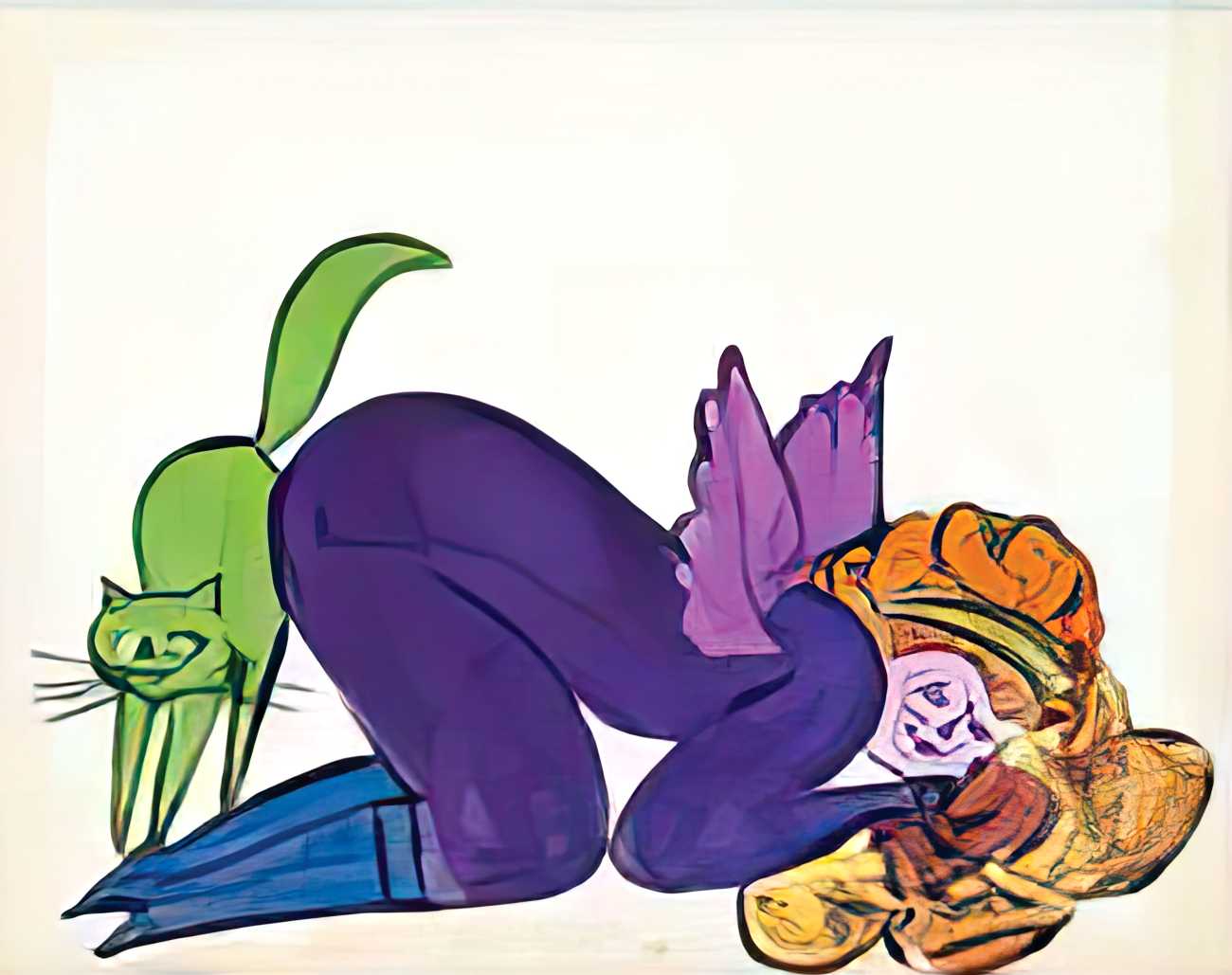
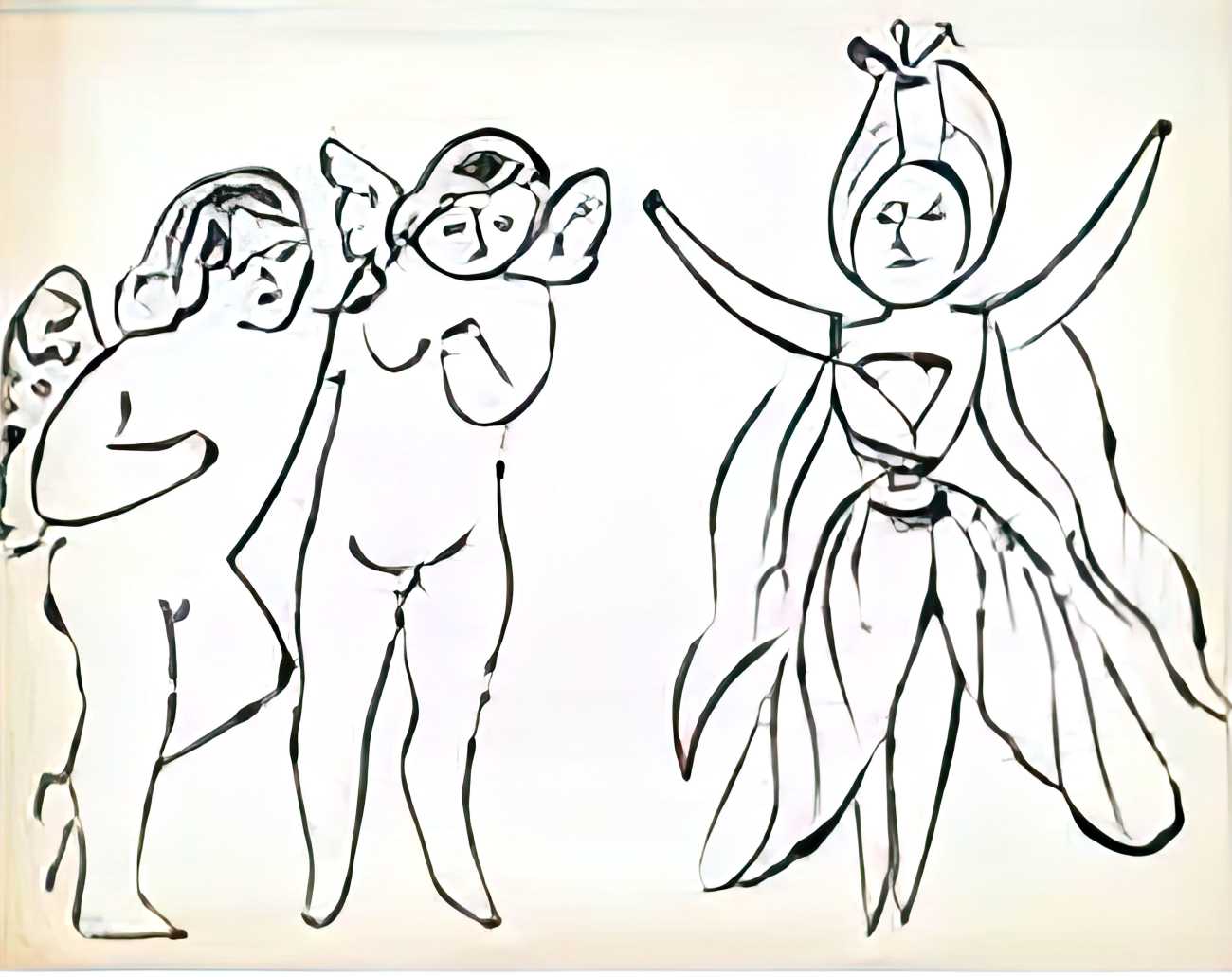
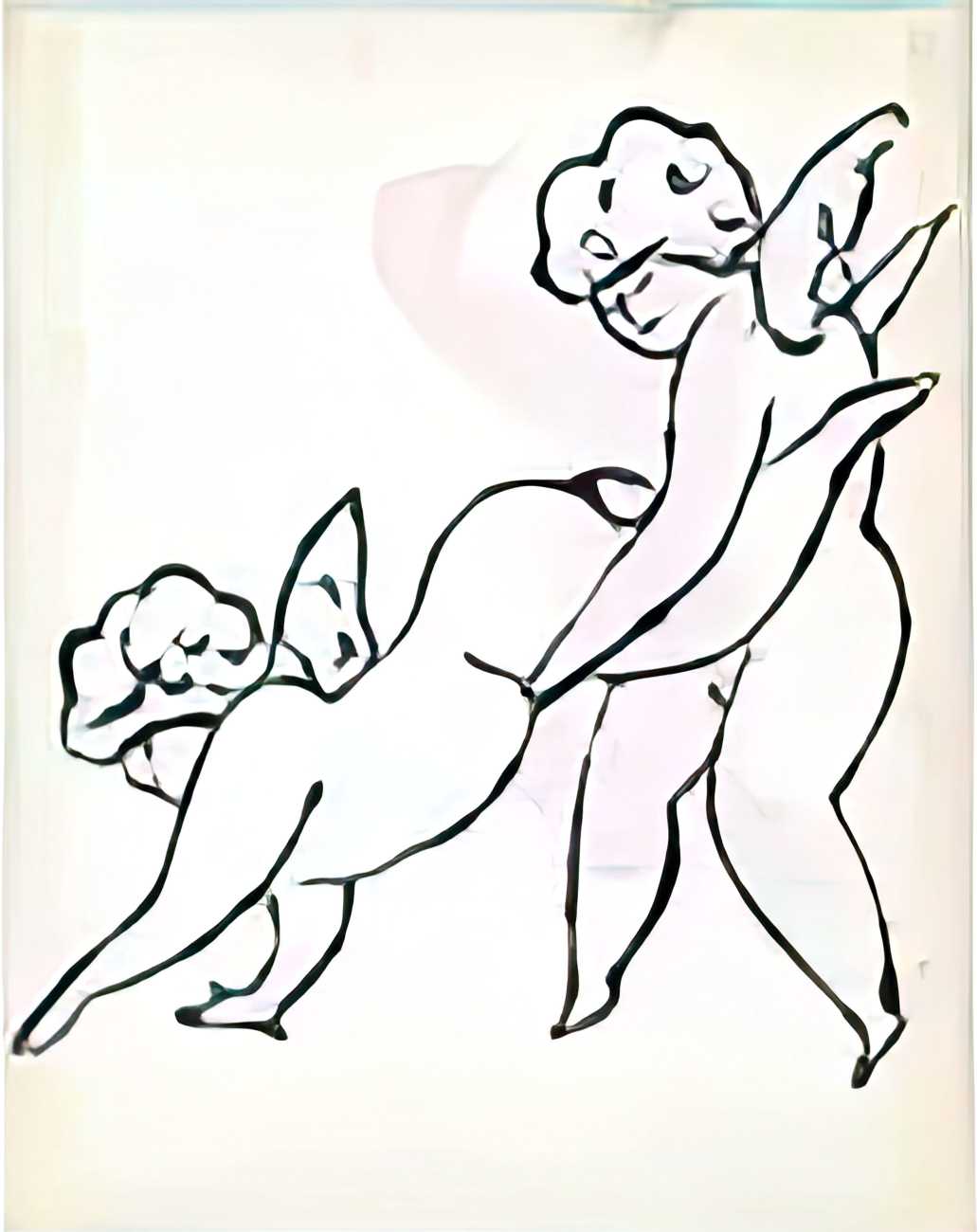
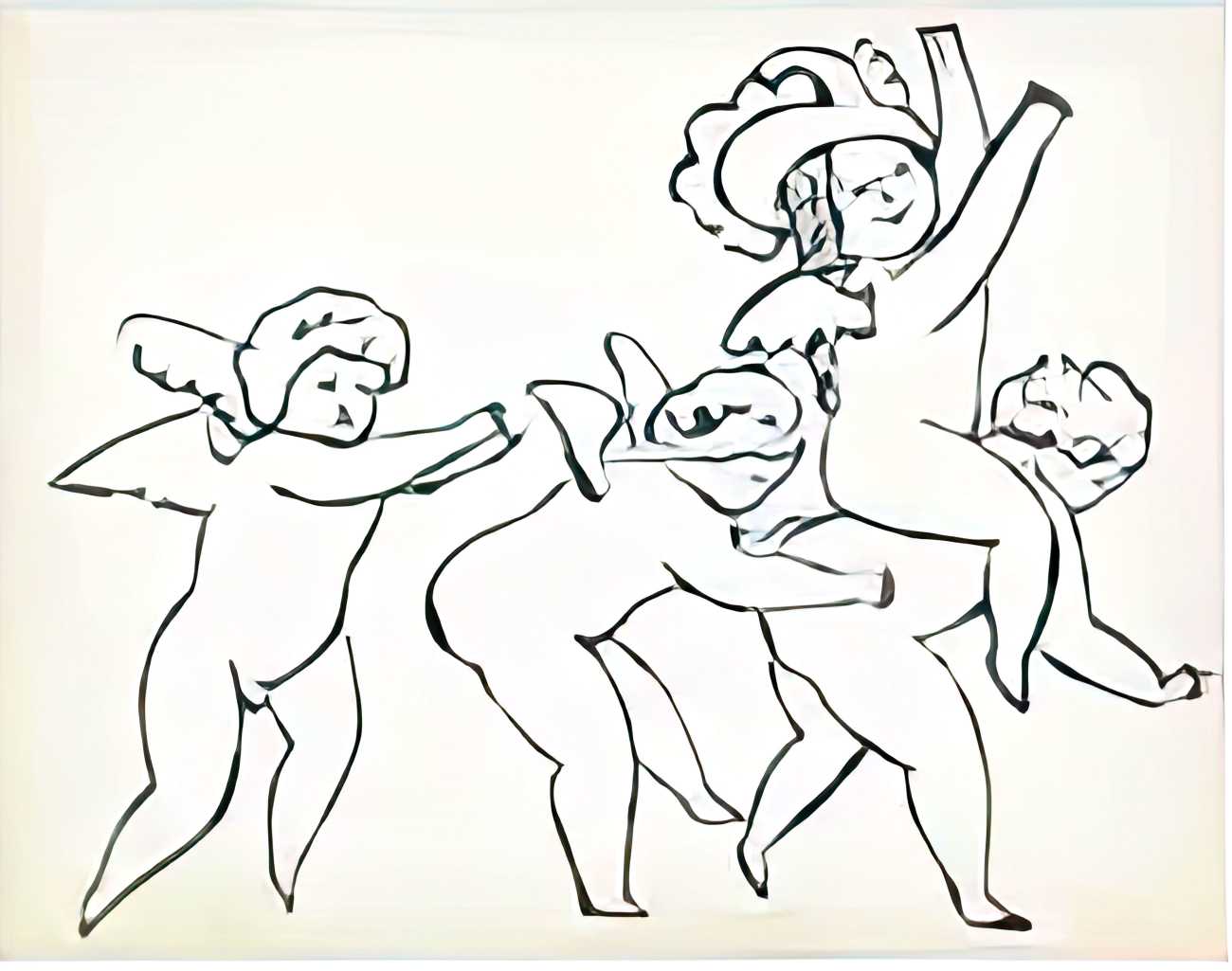
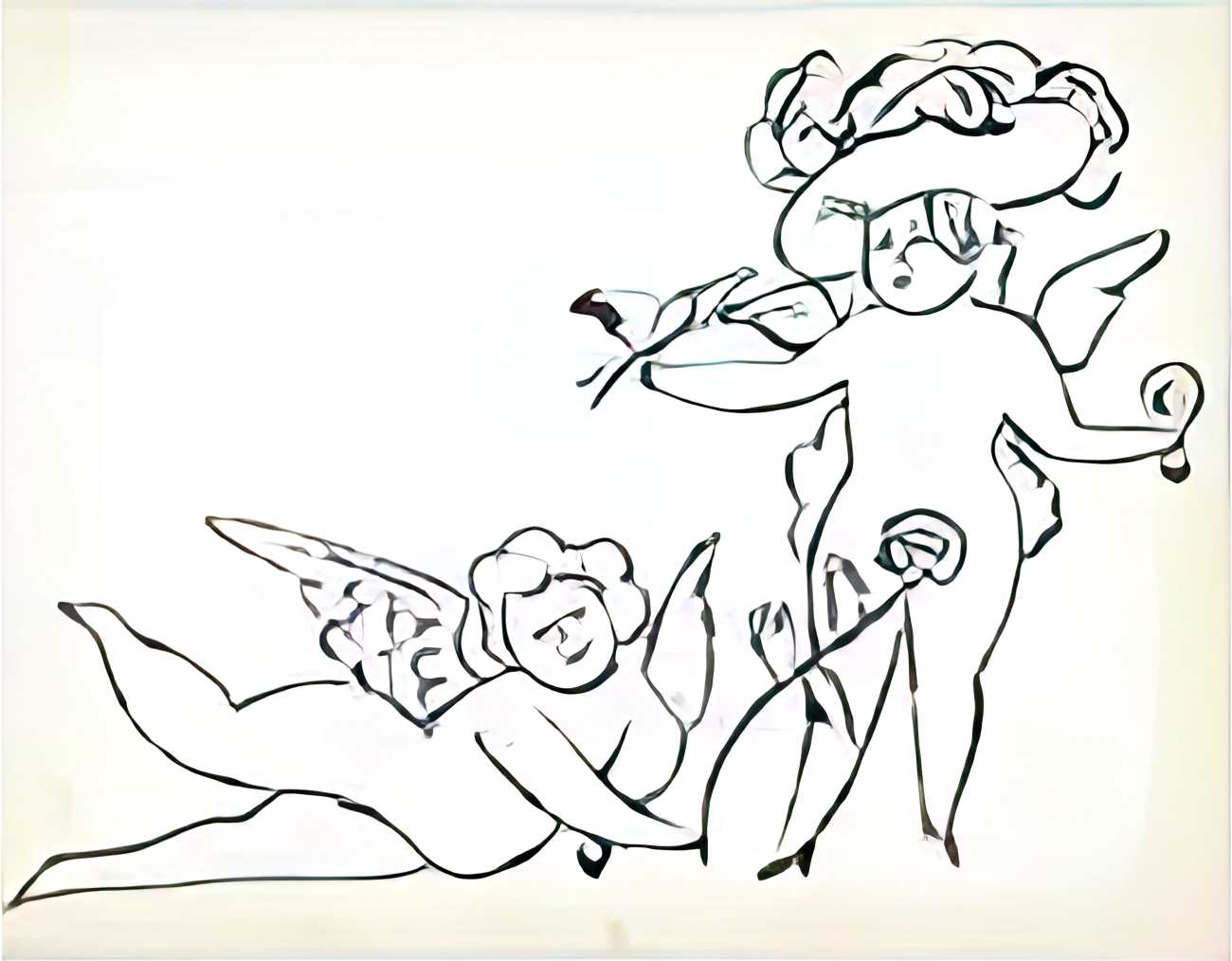
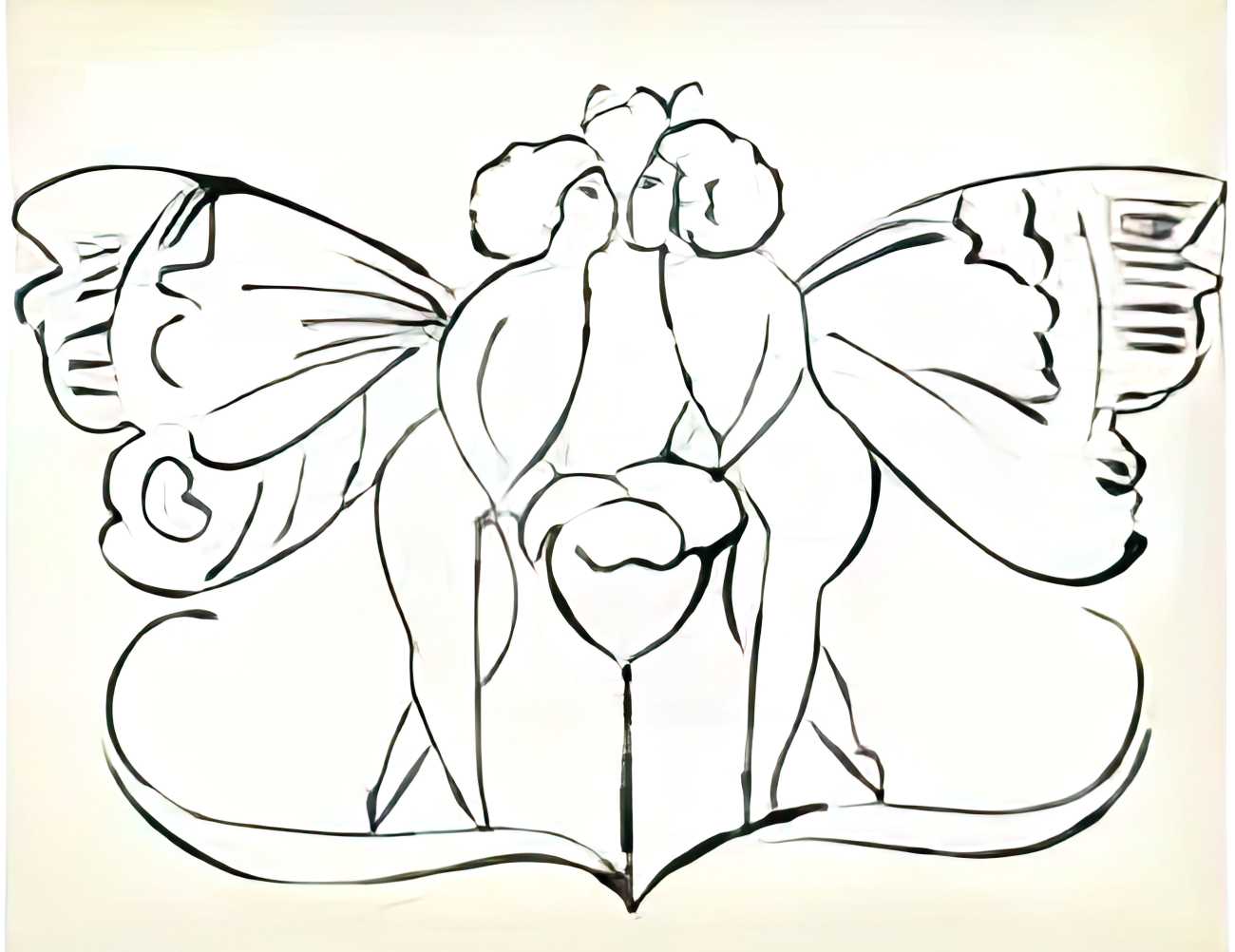
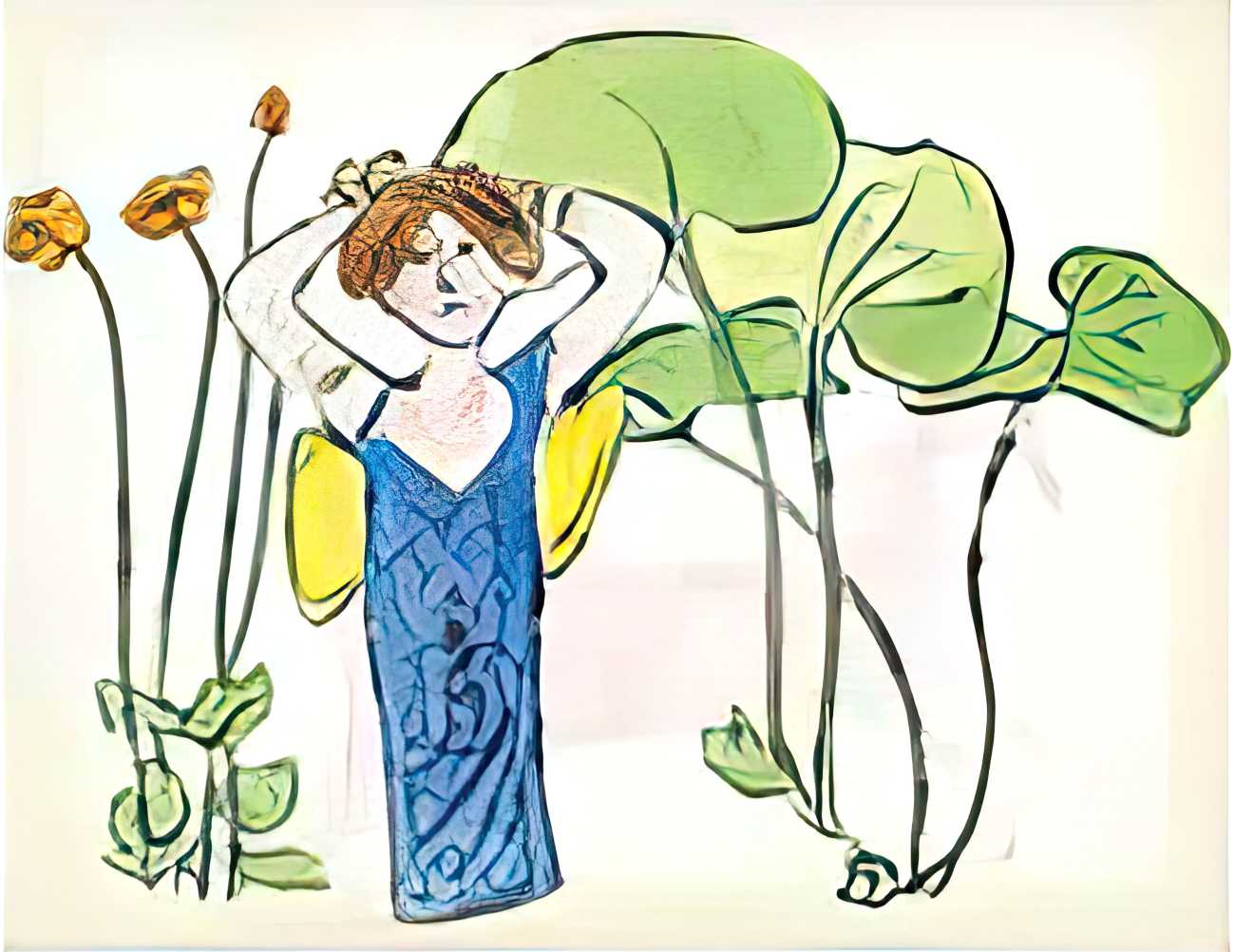
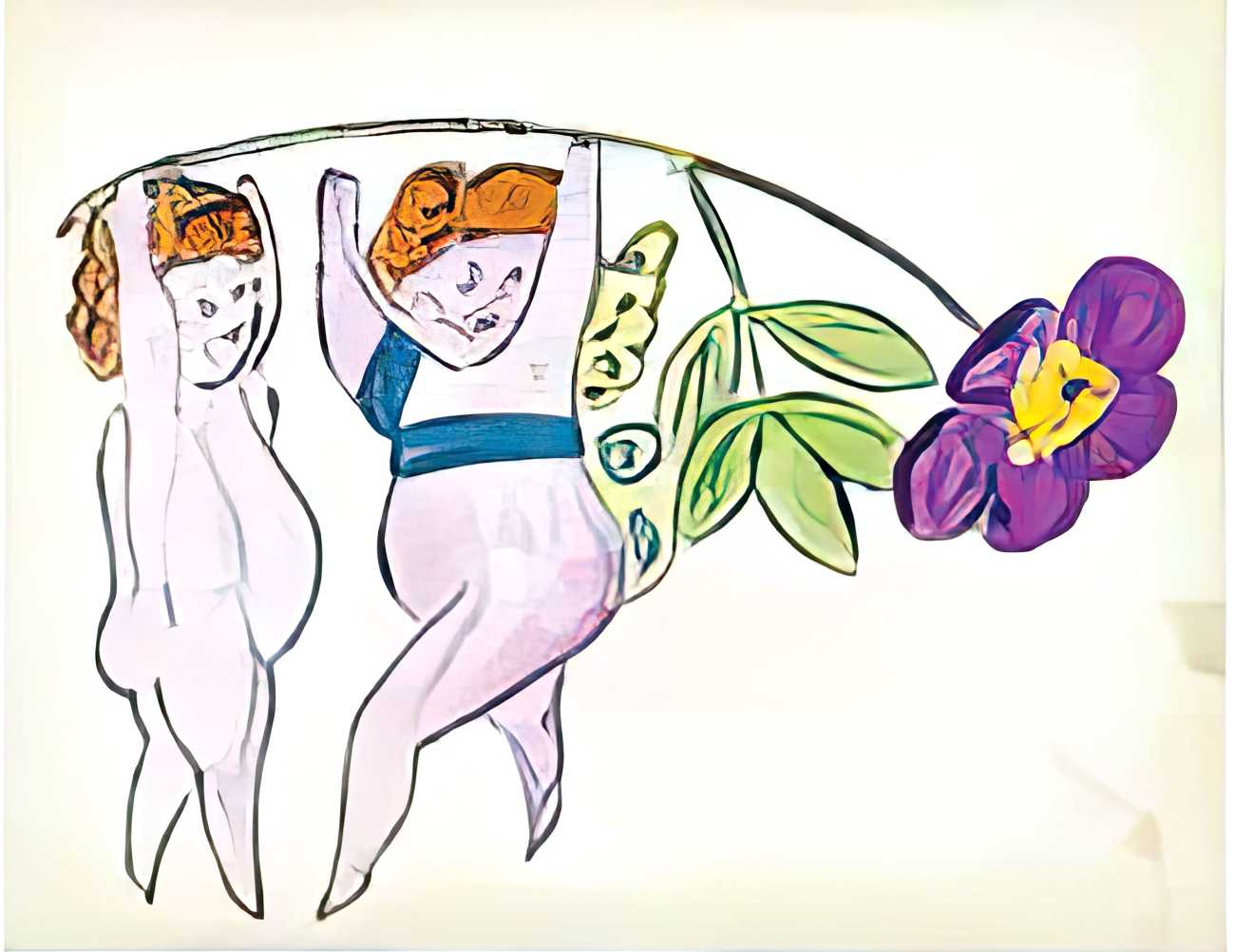
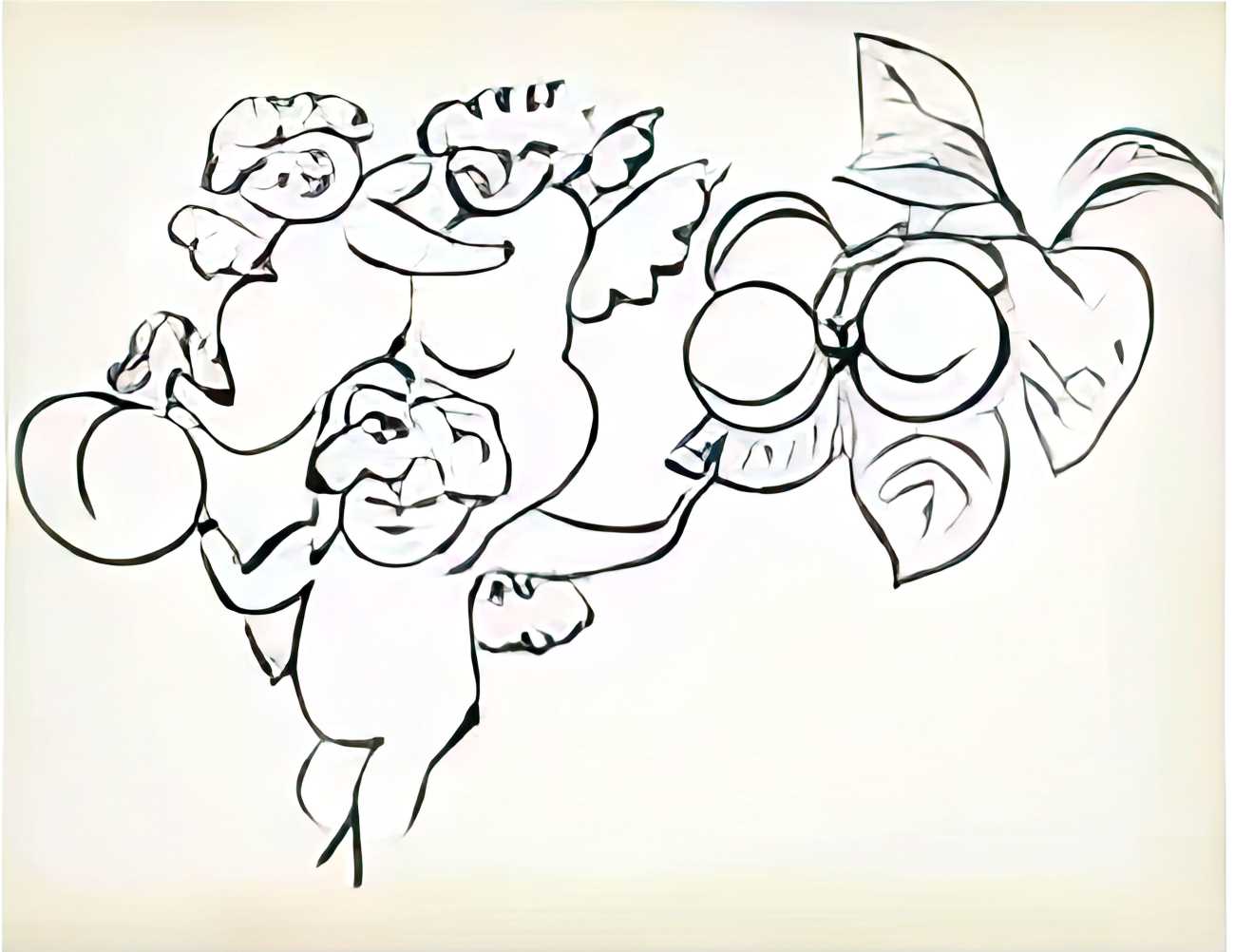
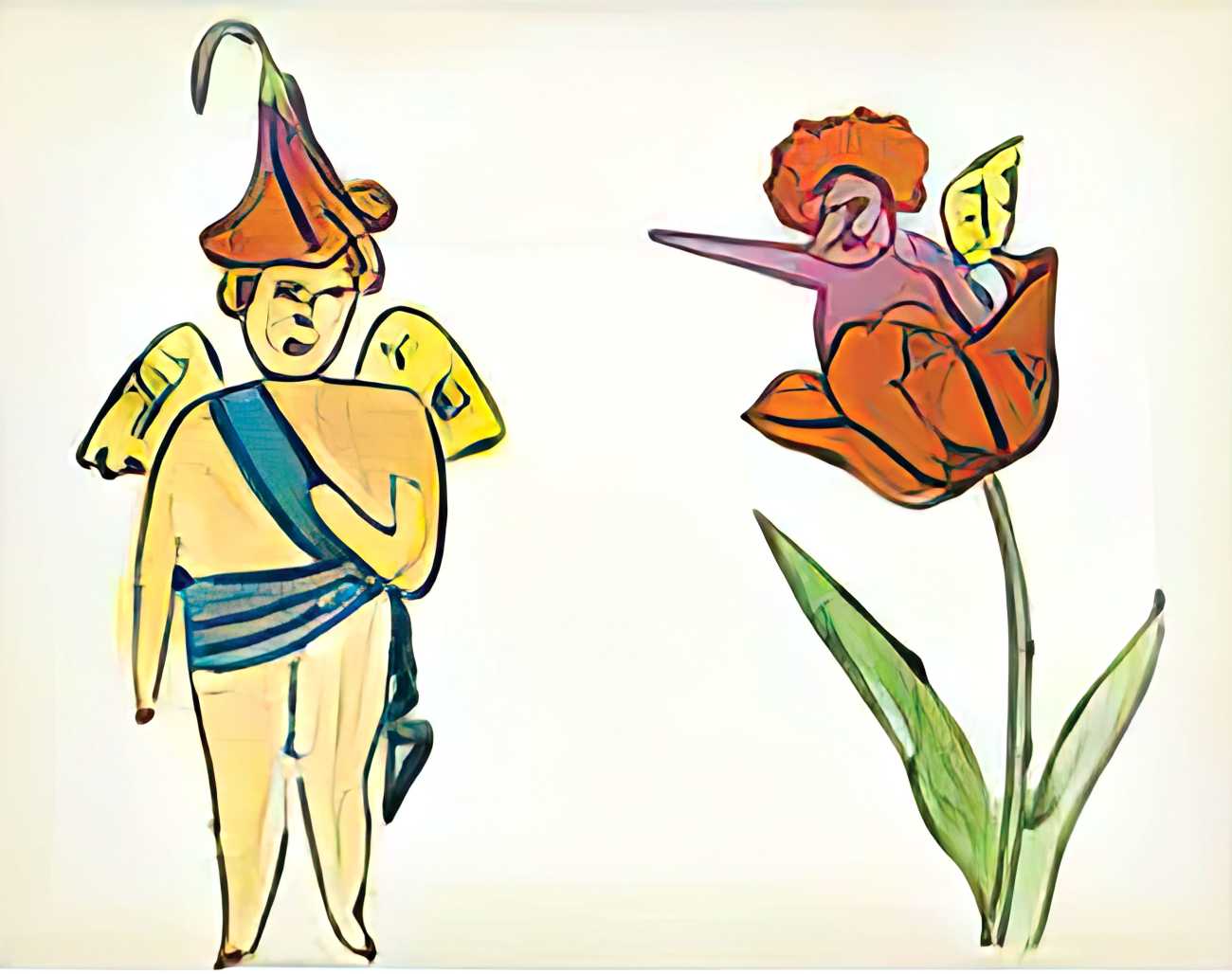
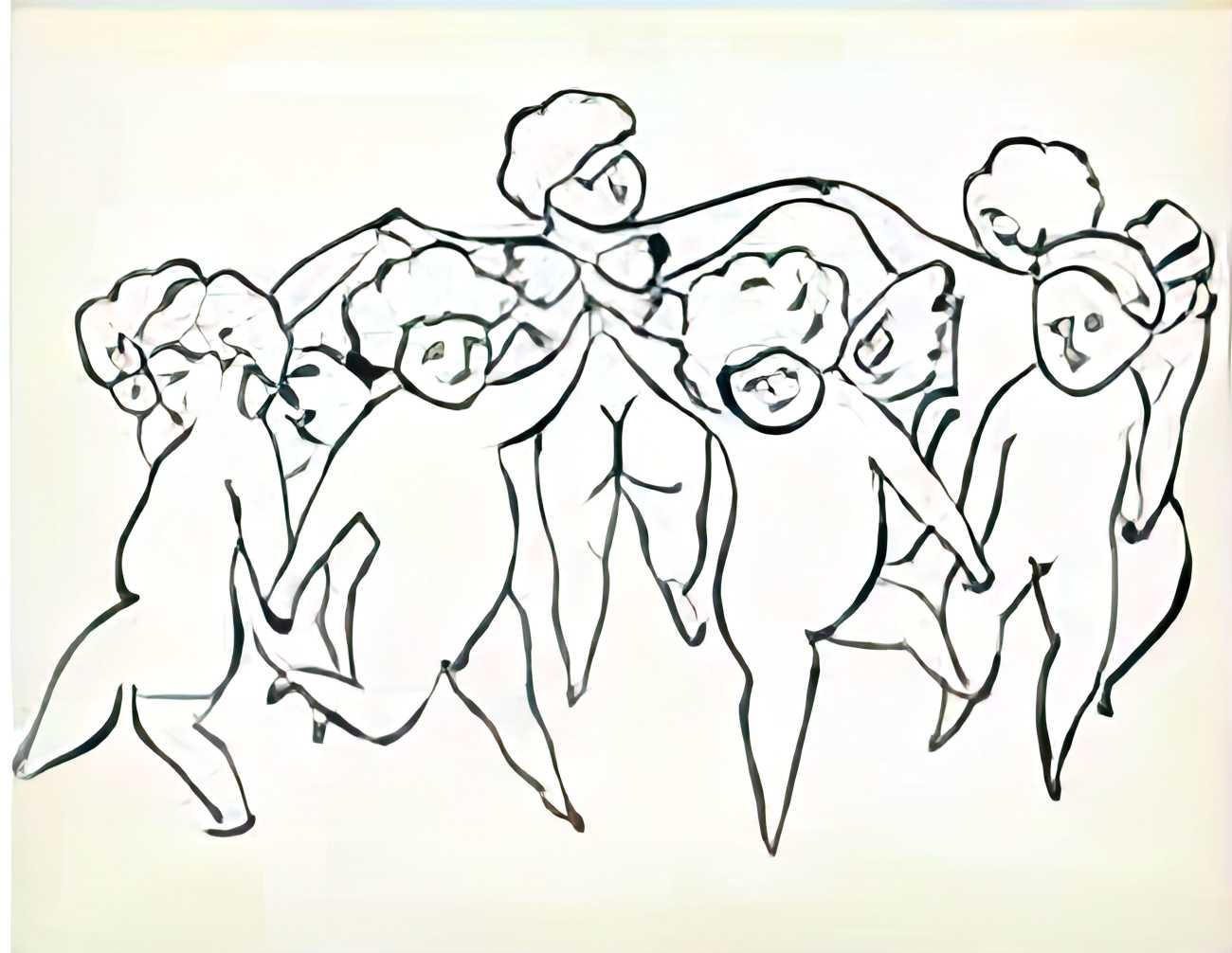
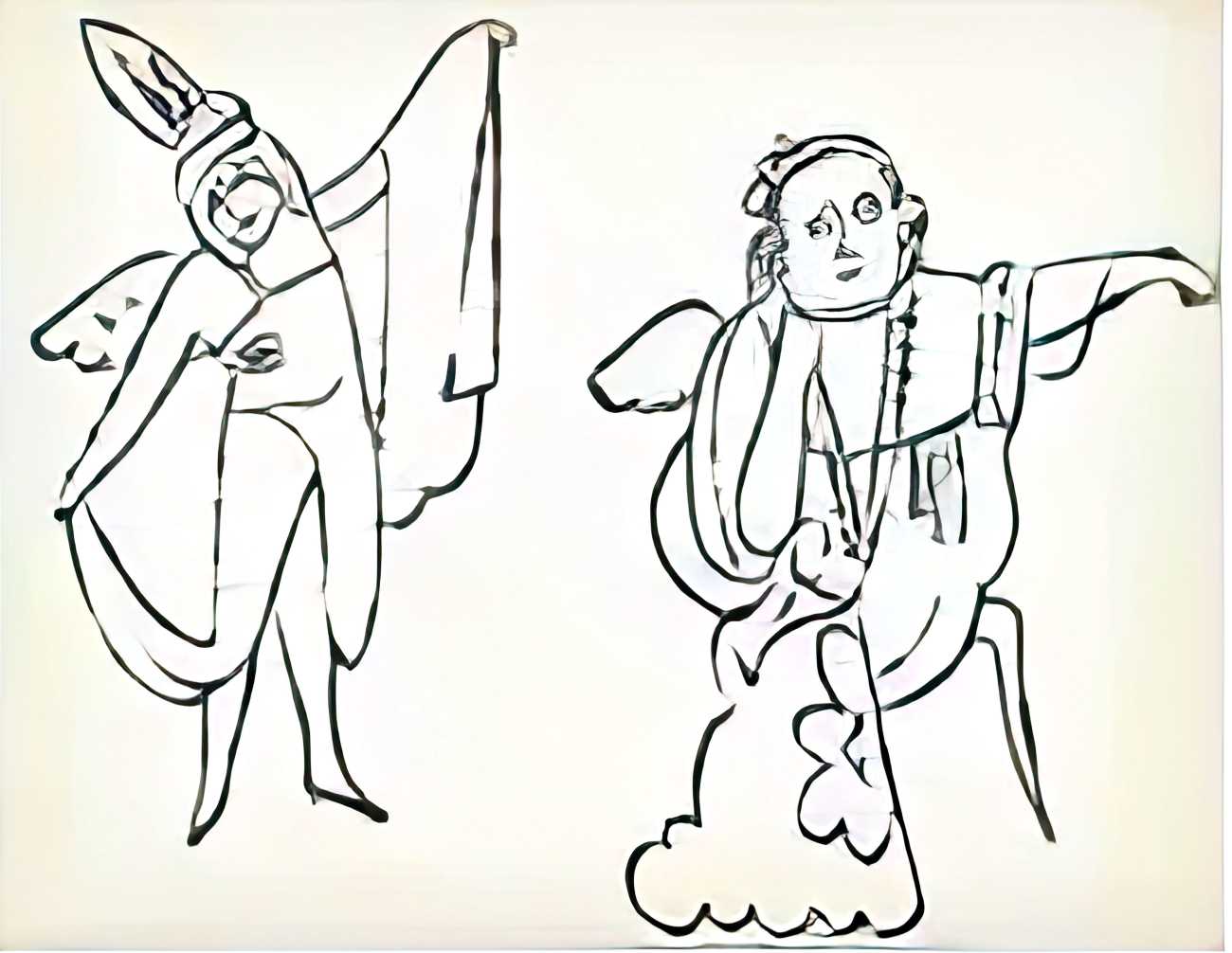
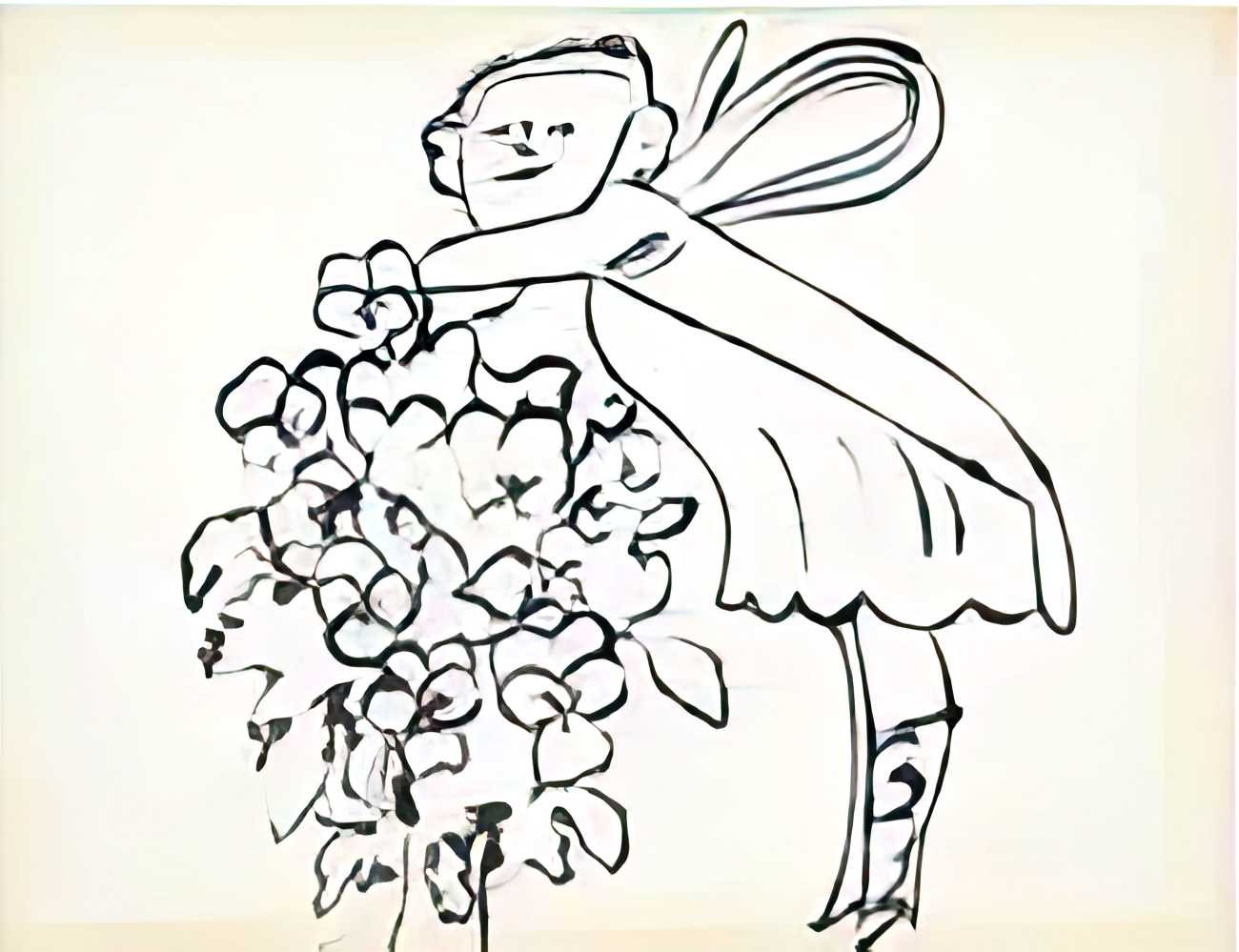
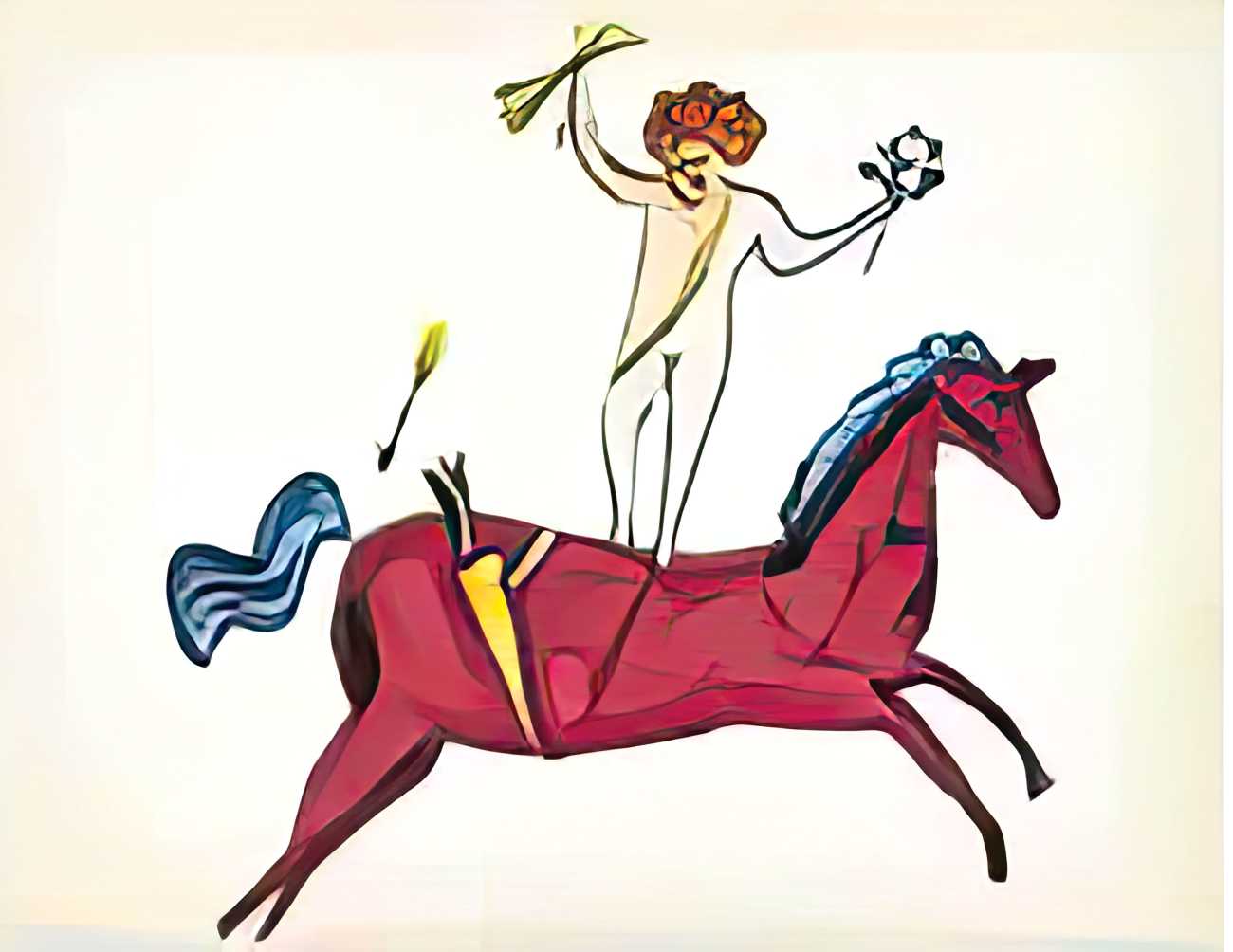
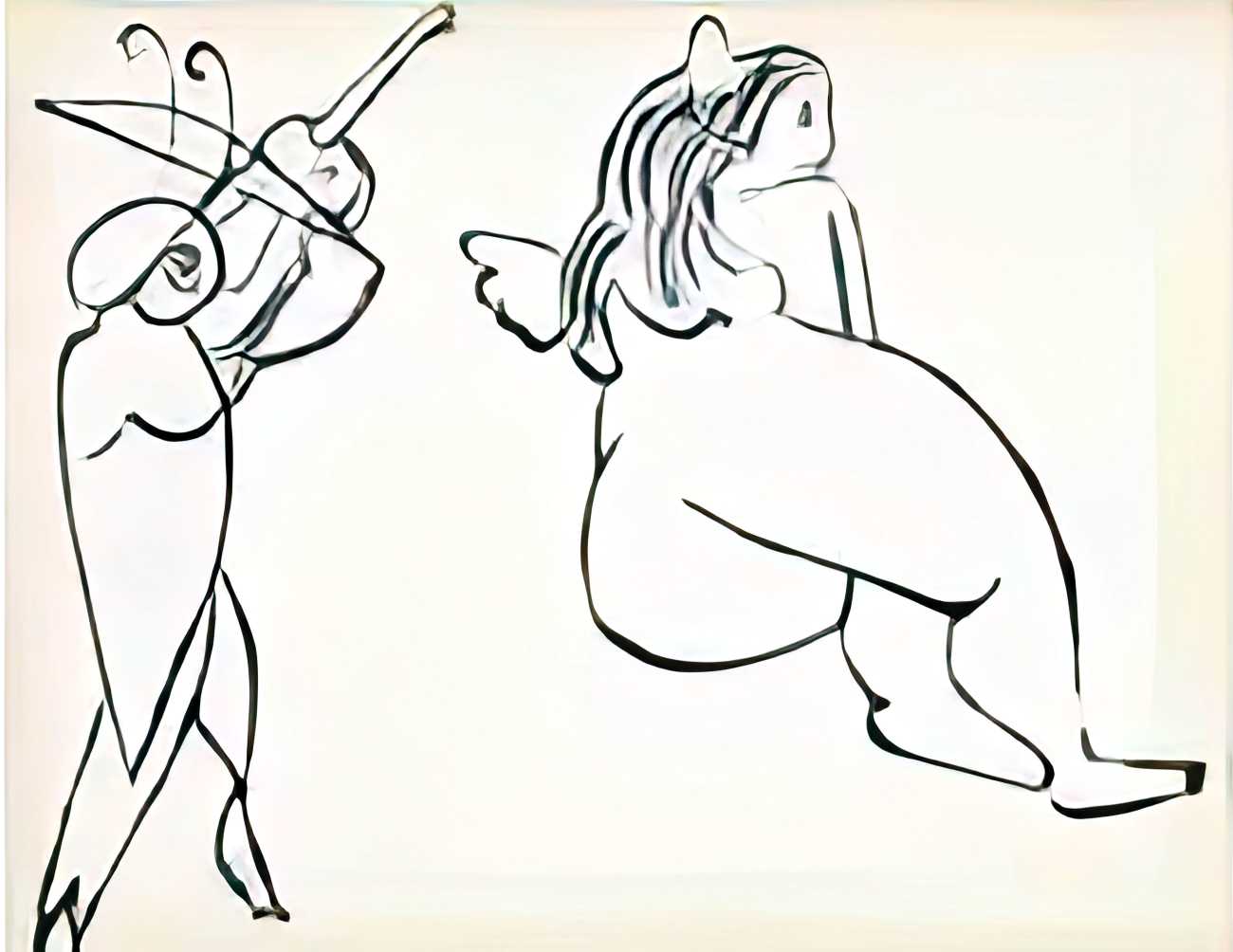
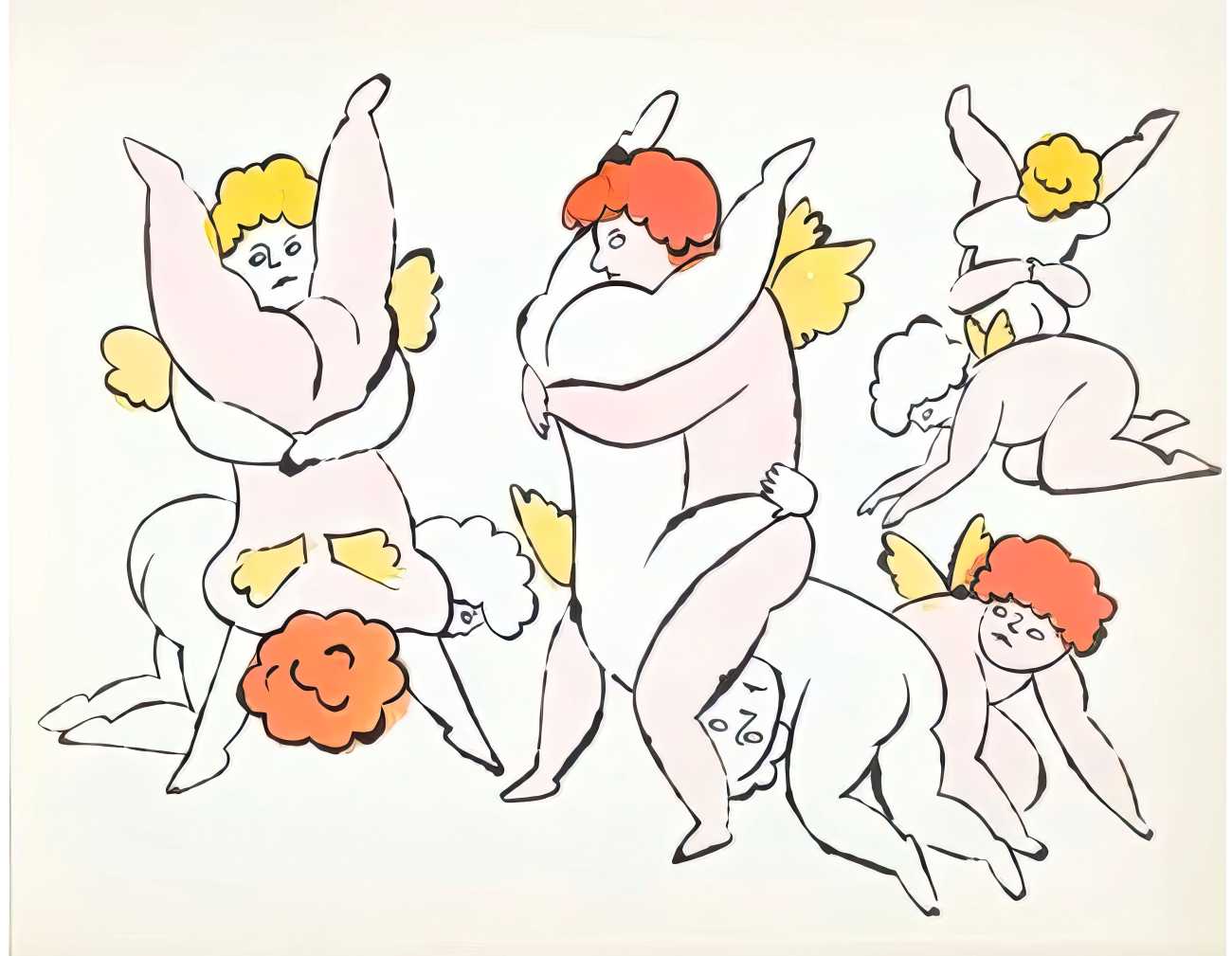
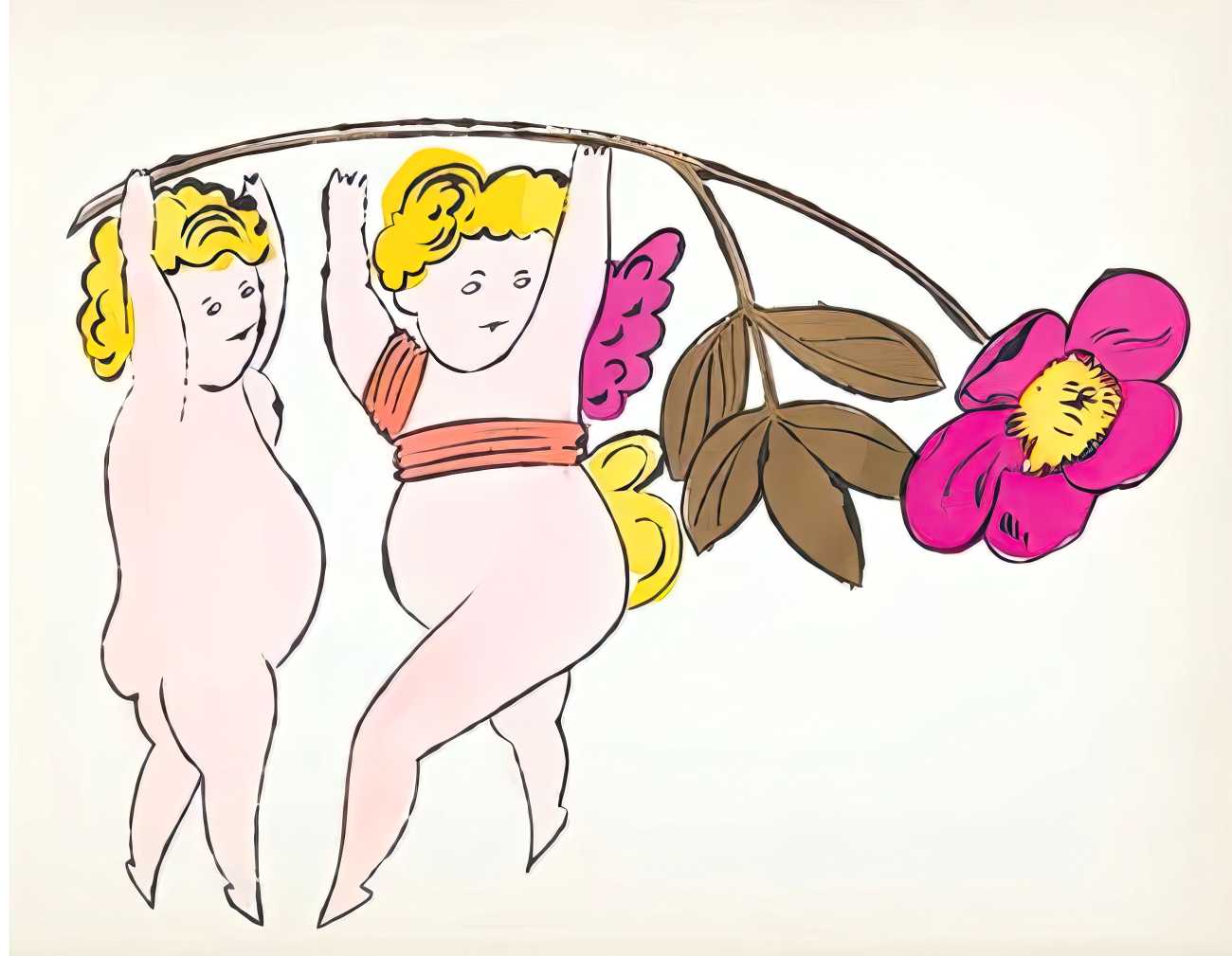
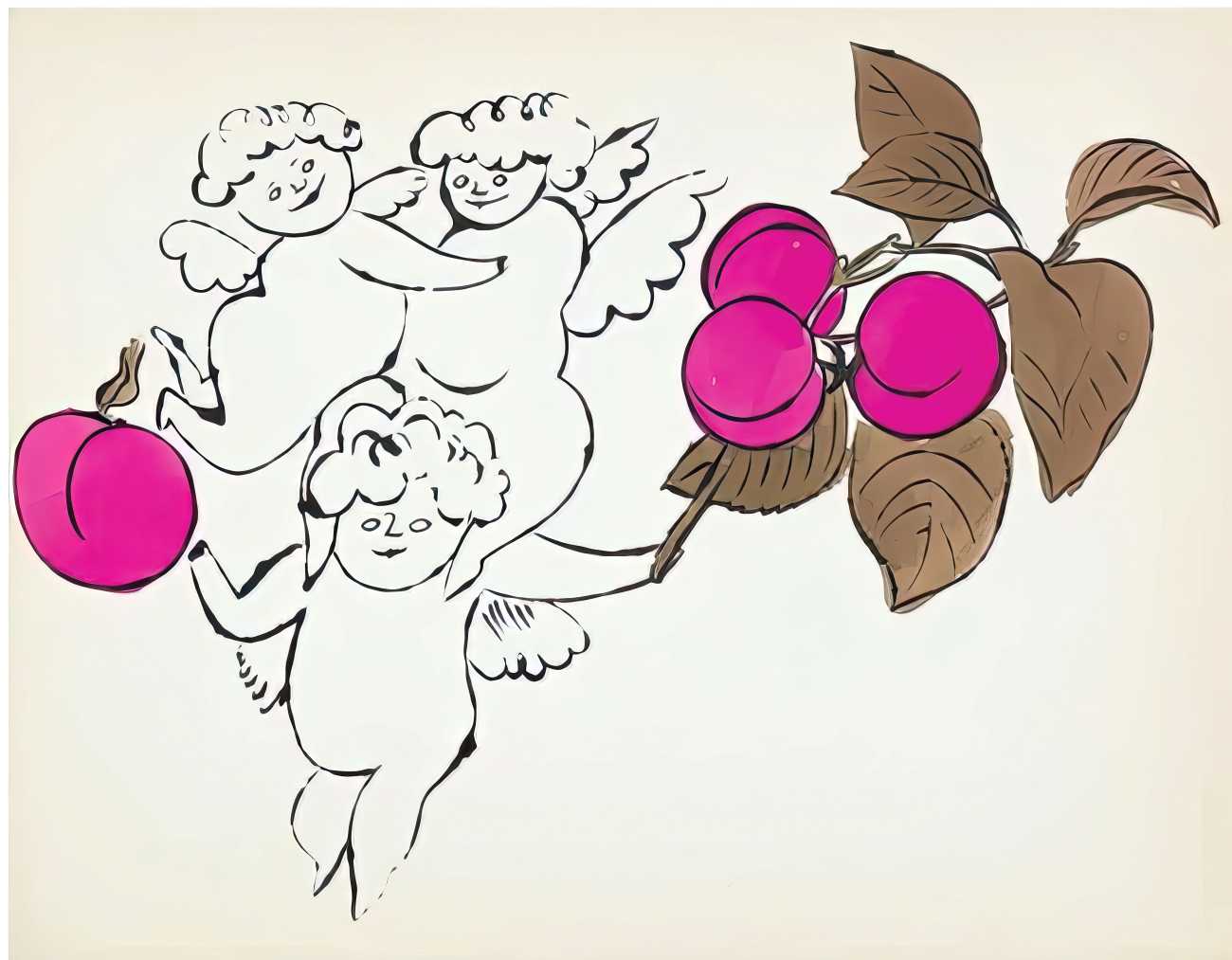
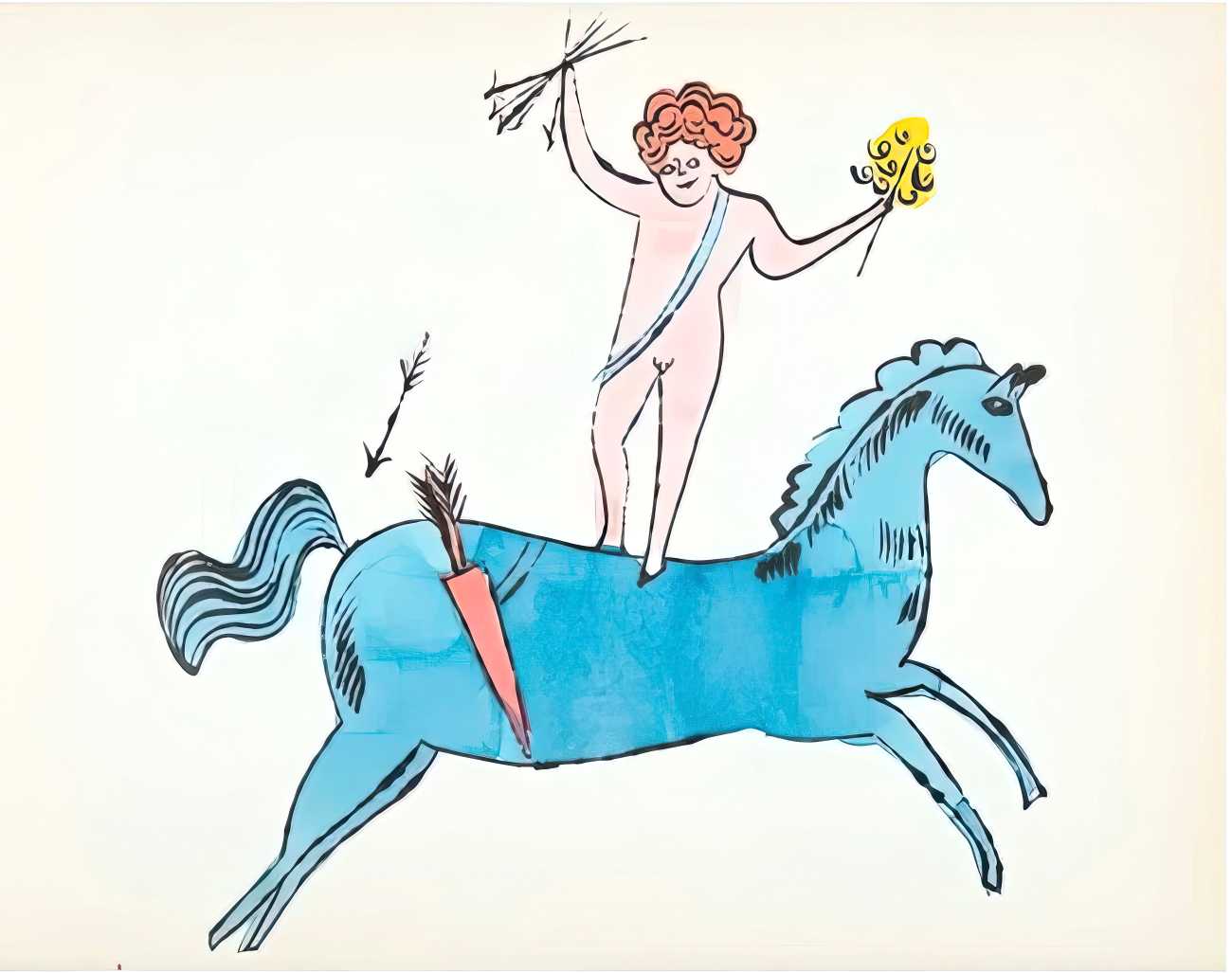
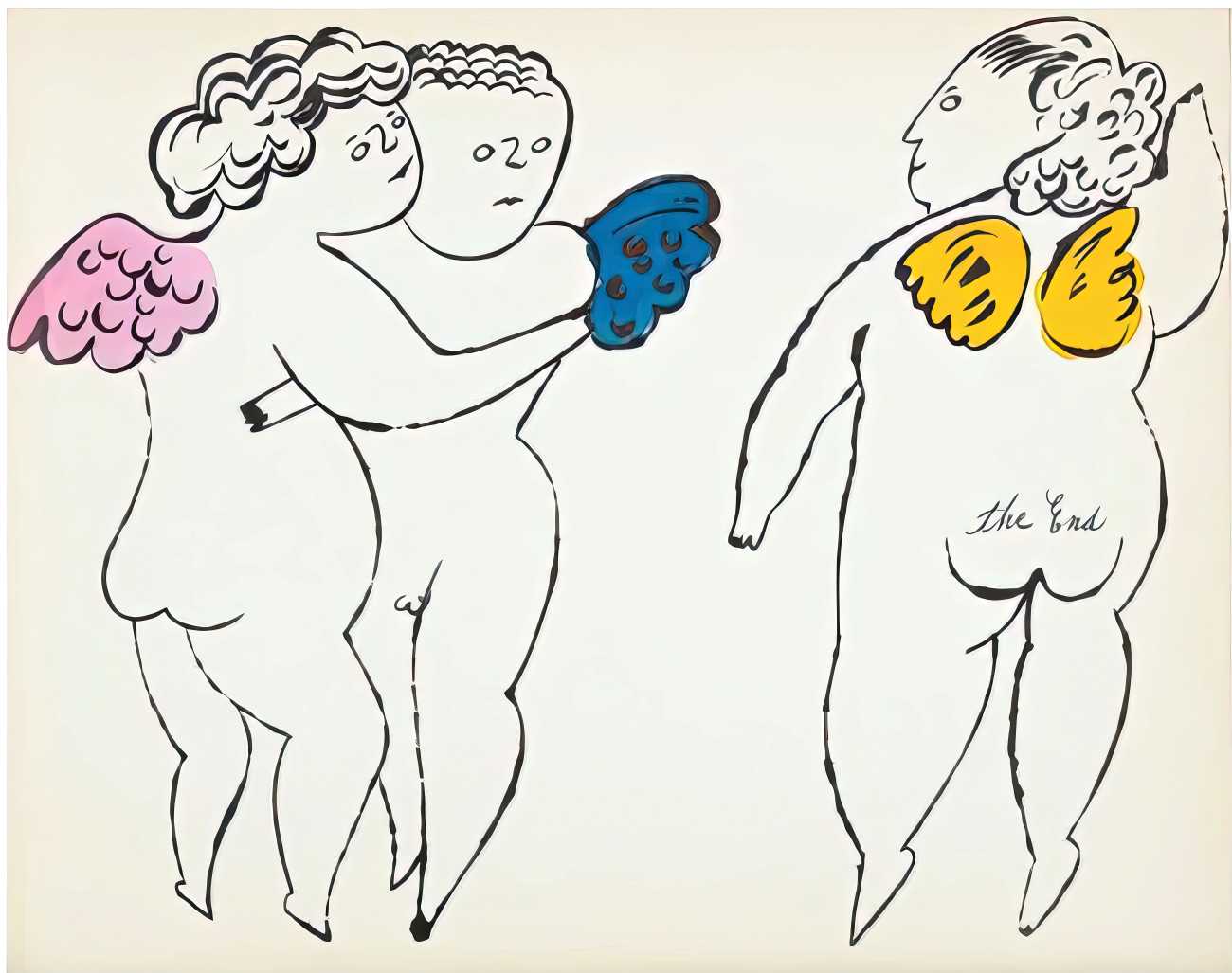
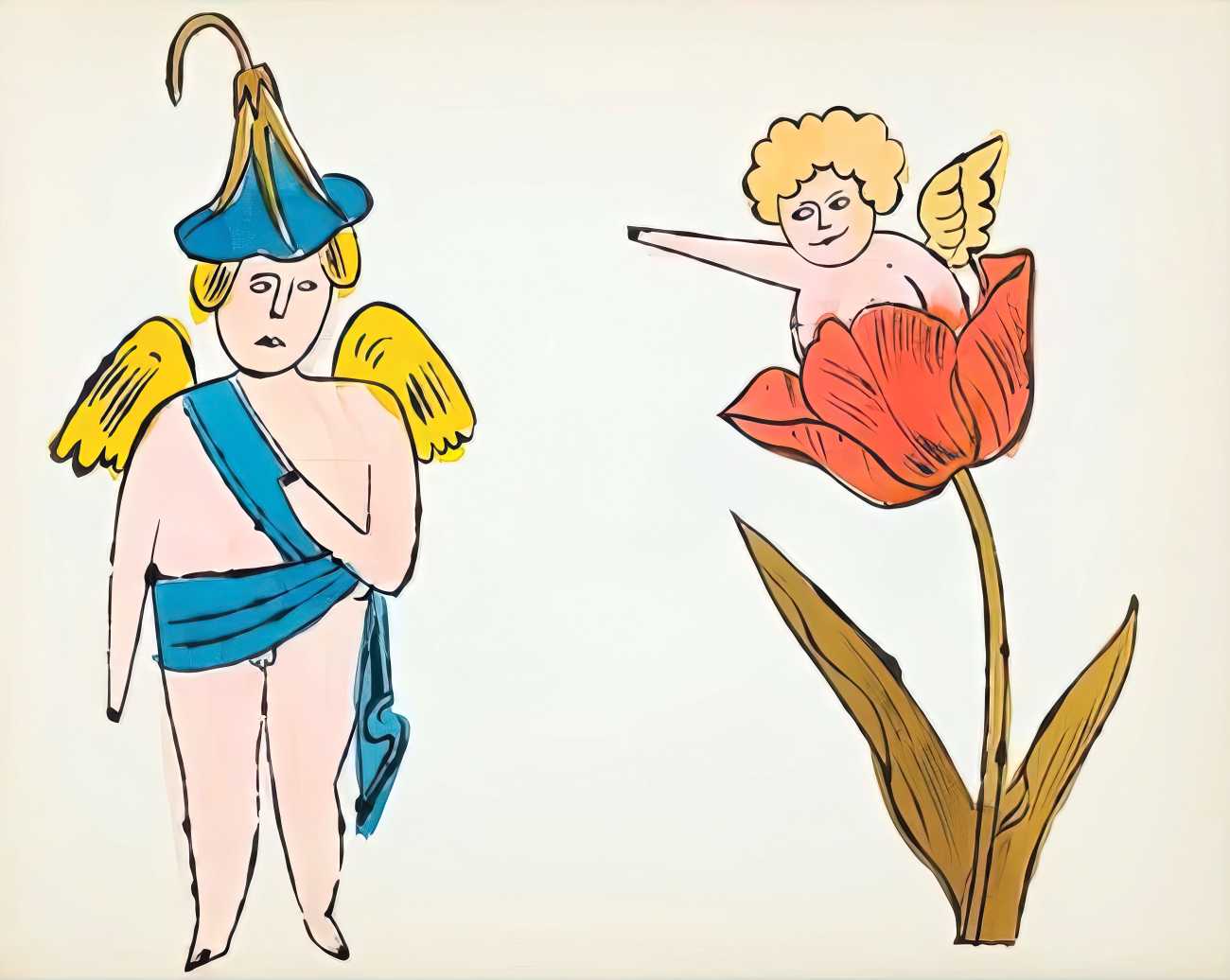
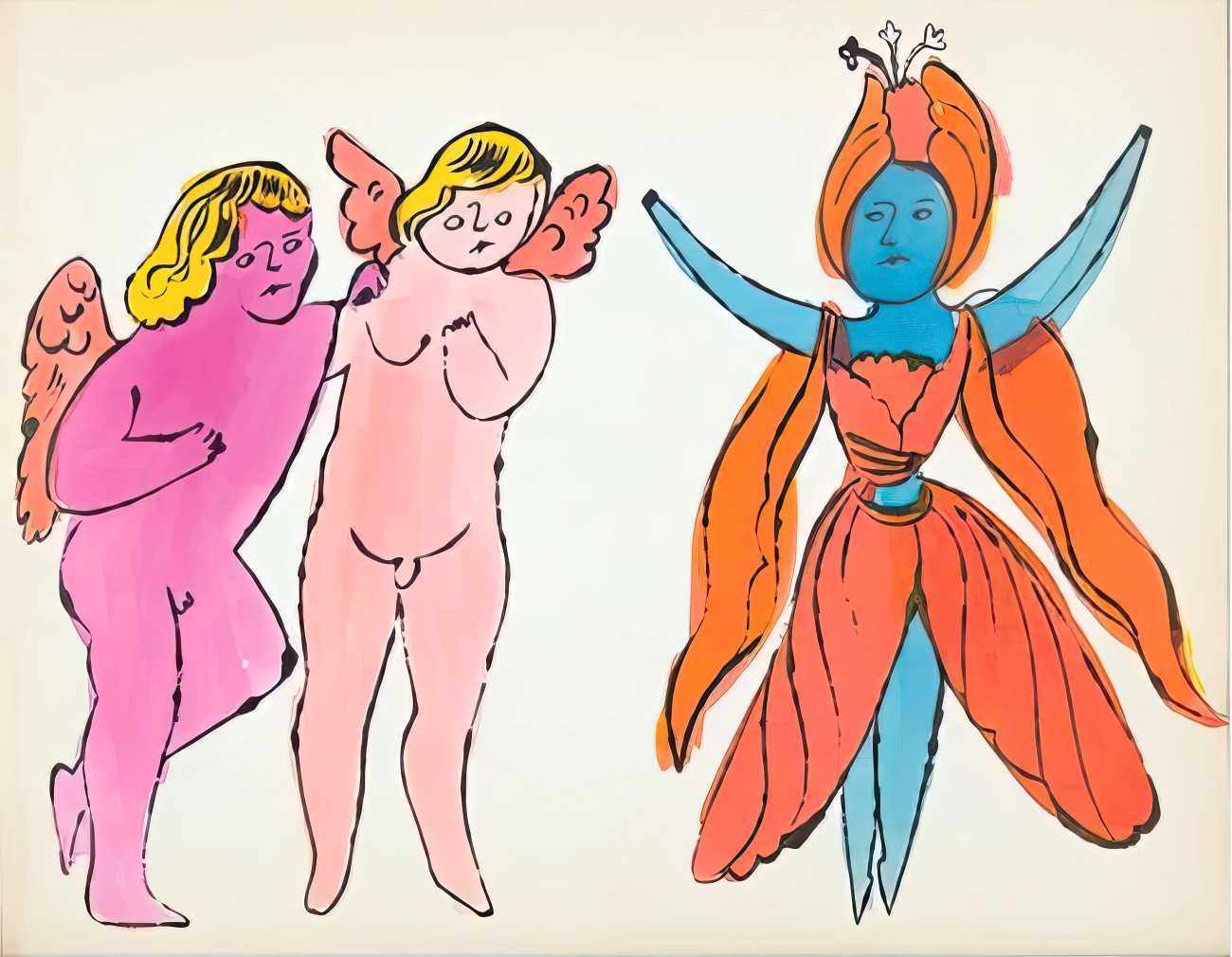
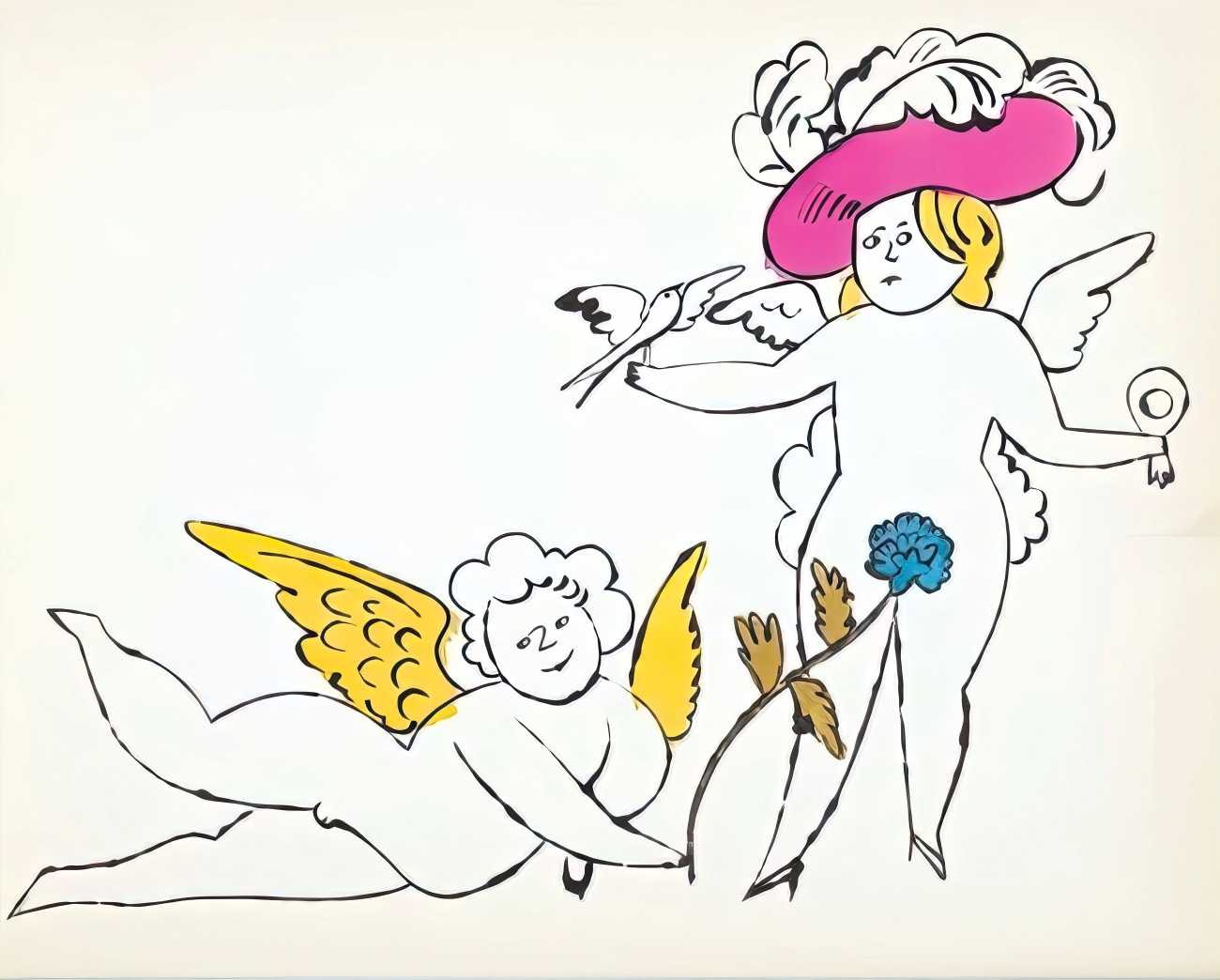
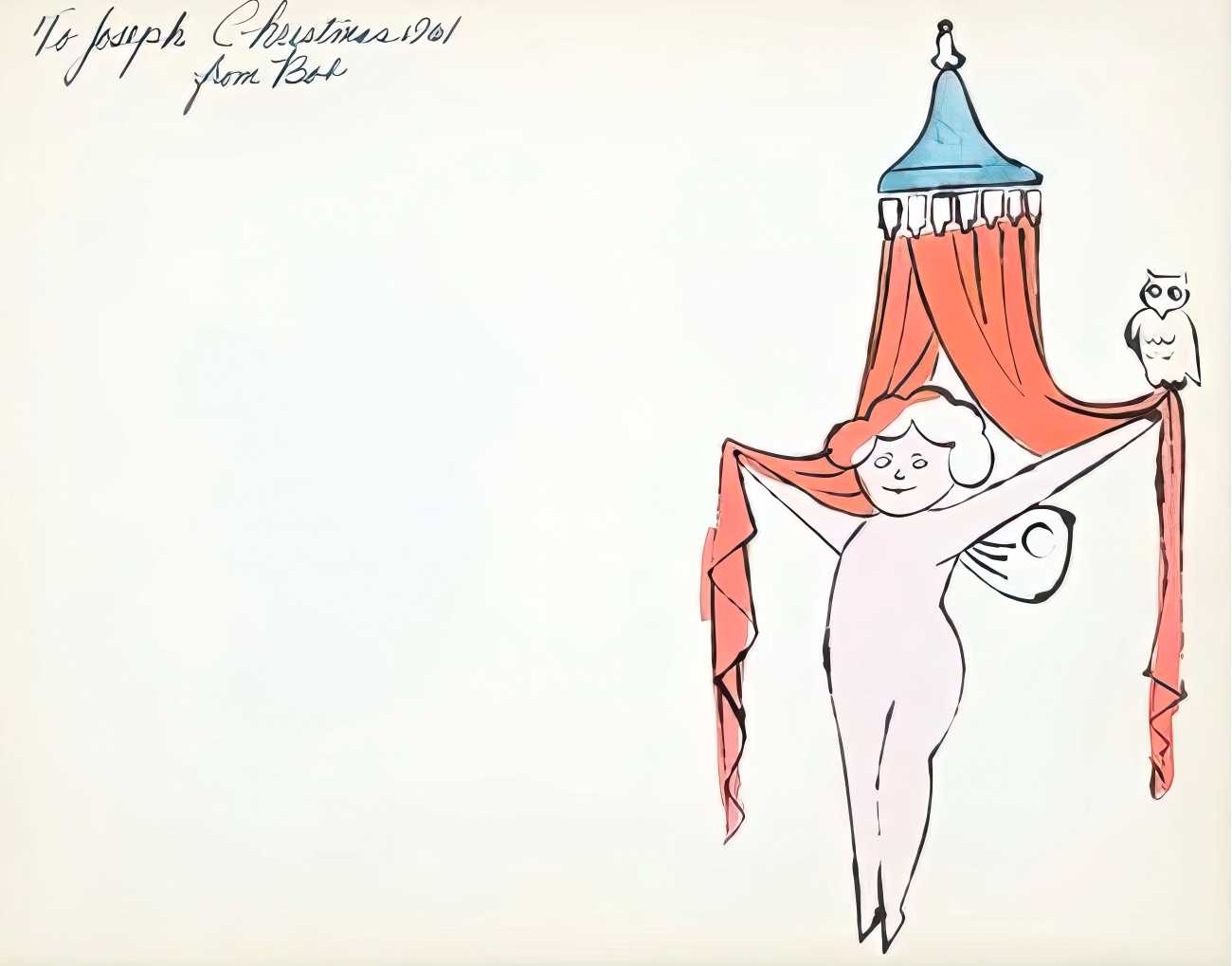
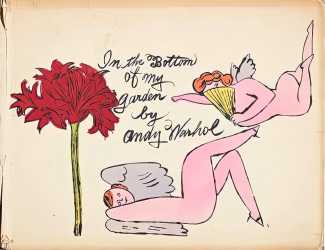
 Warhol’s 1956 series In the Bottom of My Garden occupies a revealing position in his early career, before the full emergence of the pop aesthetic that would make him famous. Produced while Warhol was still closely associated with commercial illustration, the book is a handmade, limited-edition volume combining whimsical line drawings. Its title, borrowed from a Victorian rhyme, signals a retreat into fantasy, delicacy and private reverie.
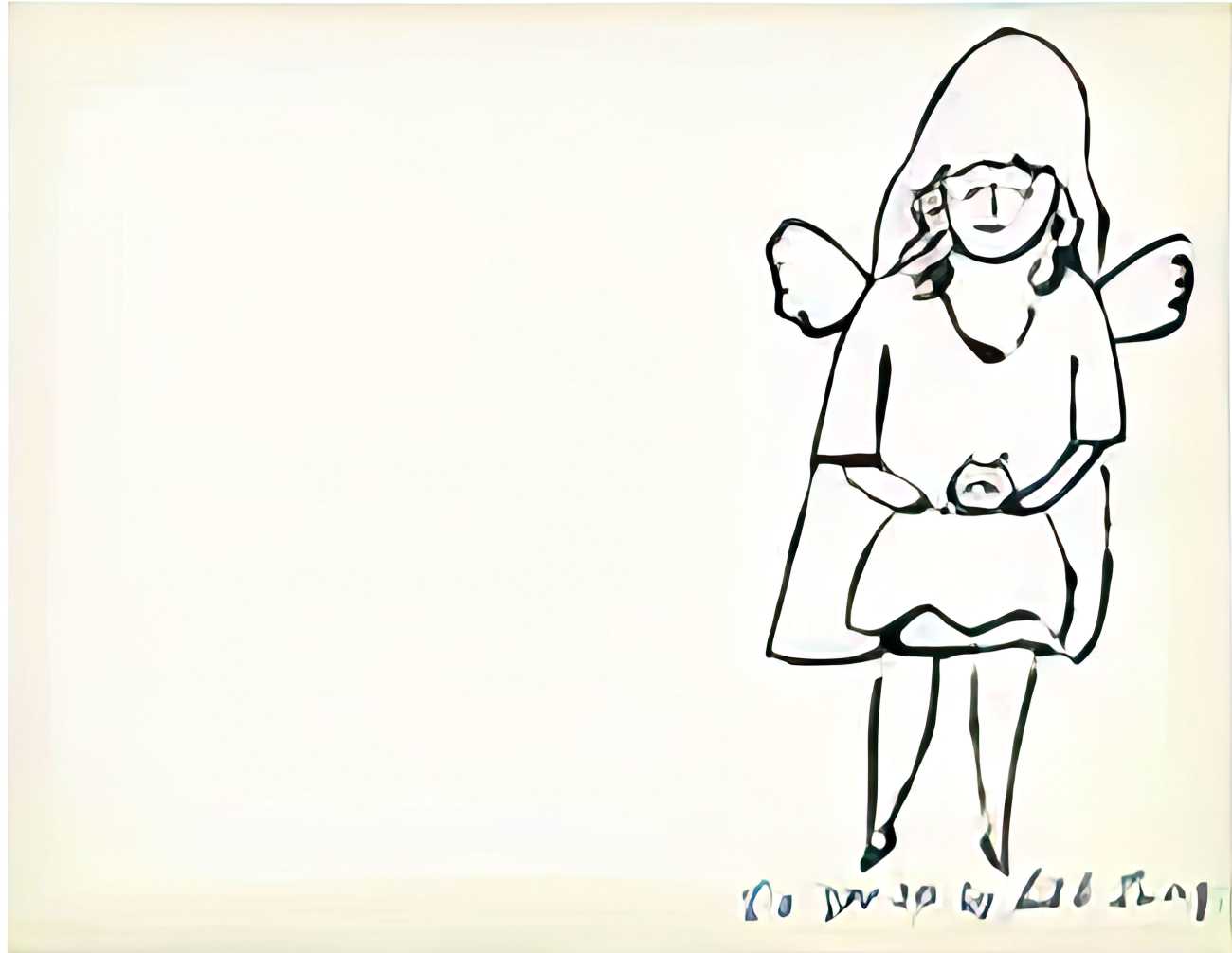
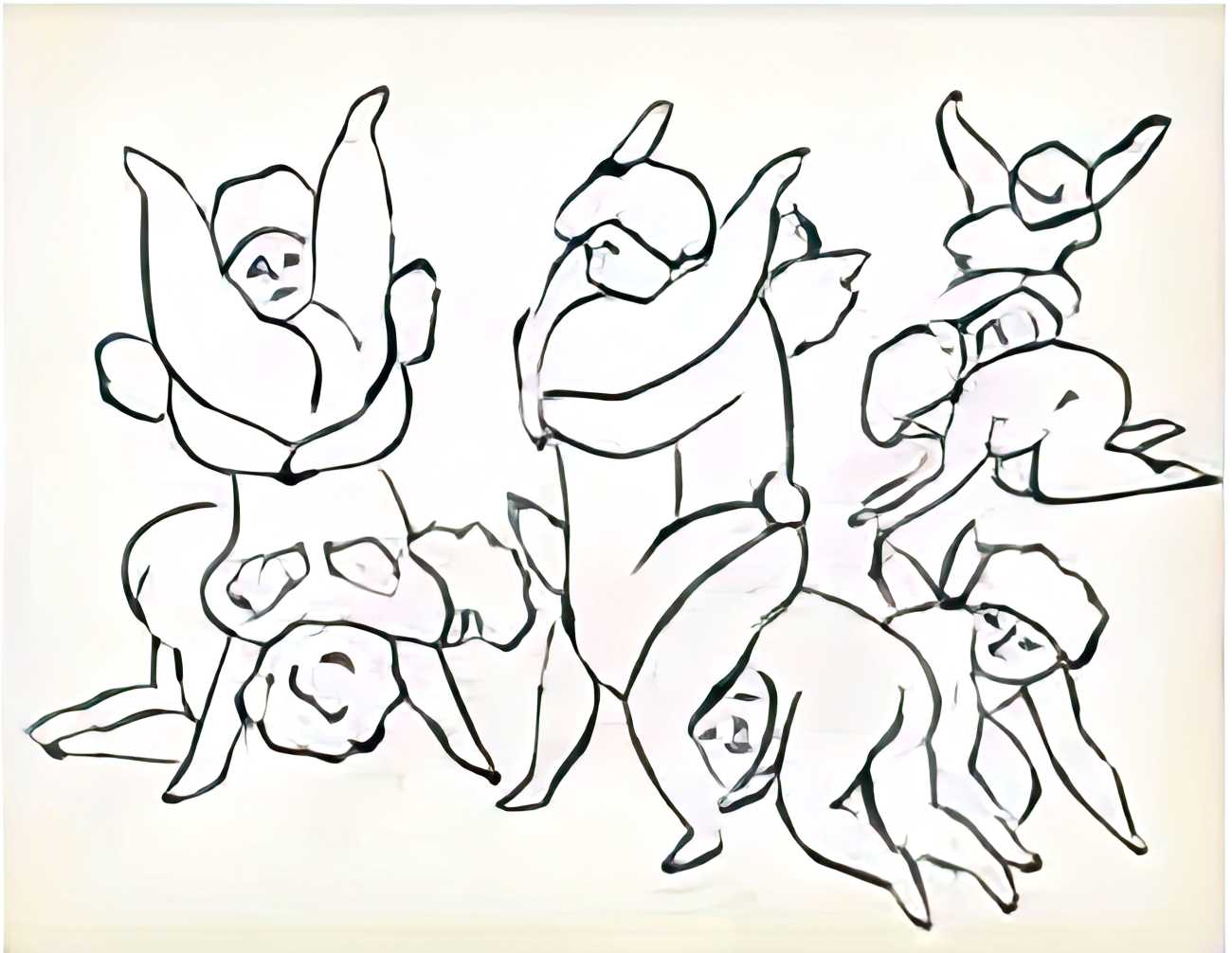
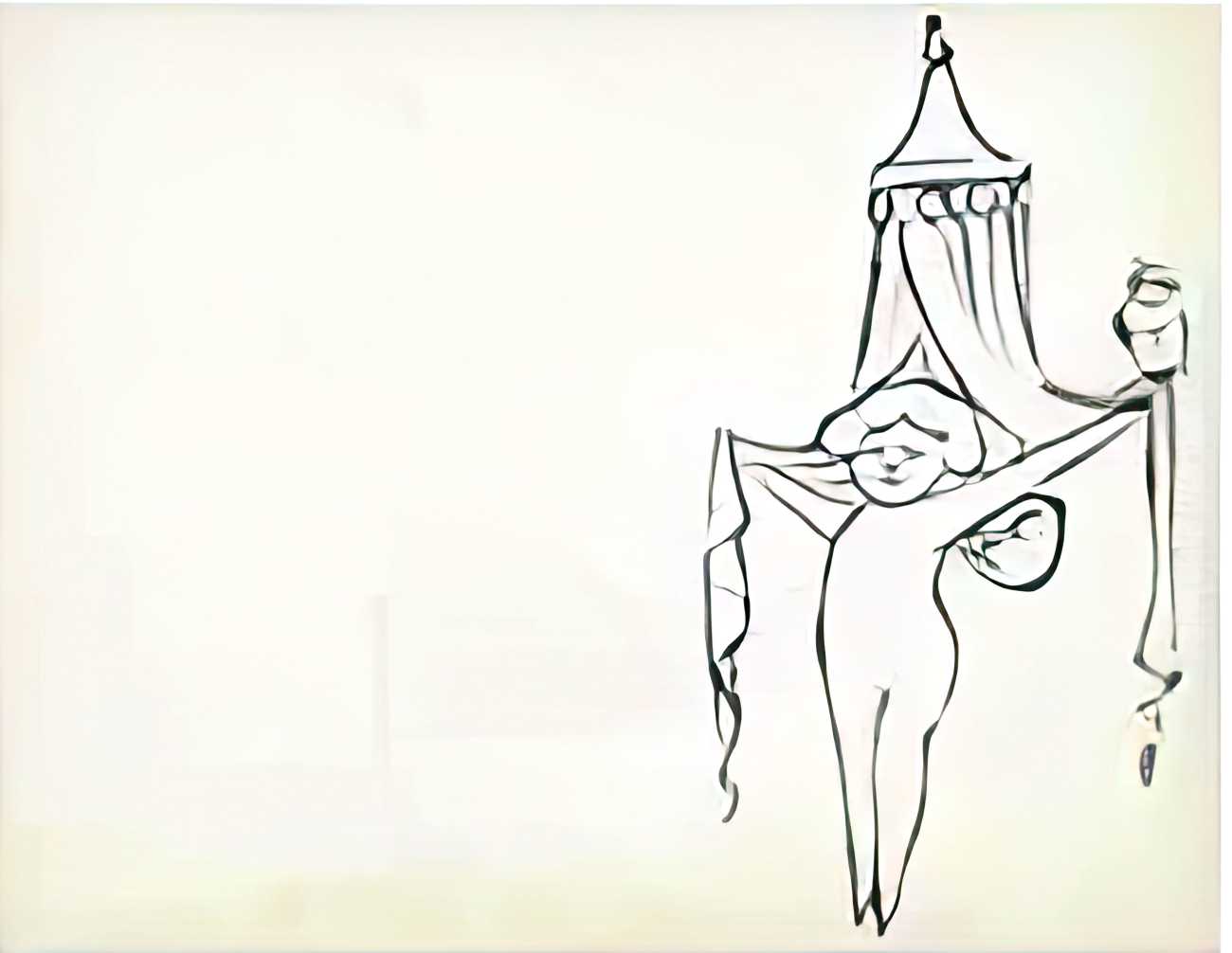
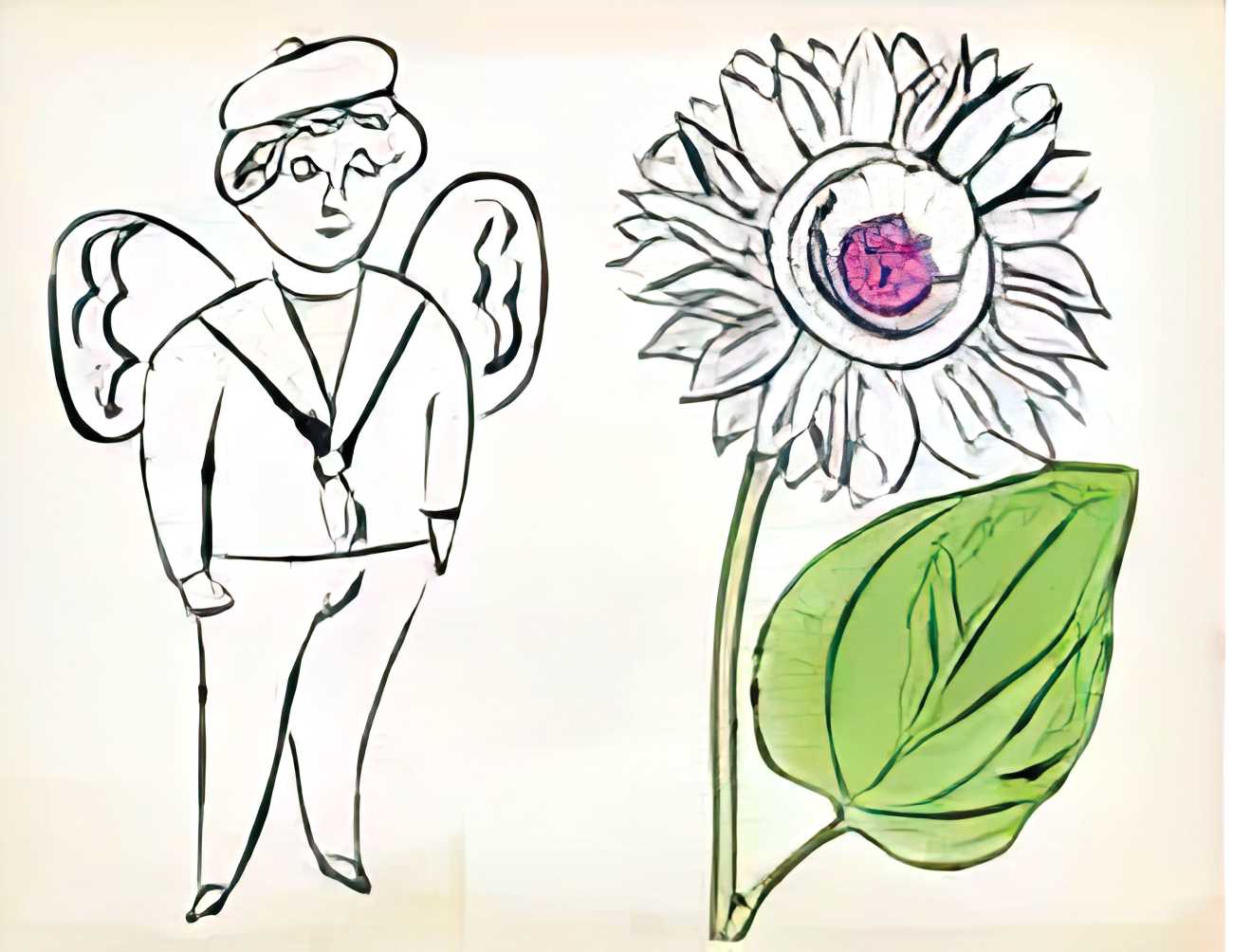
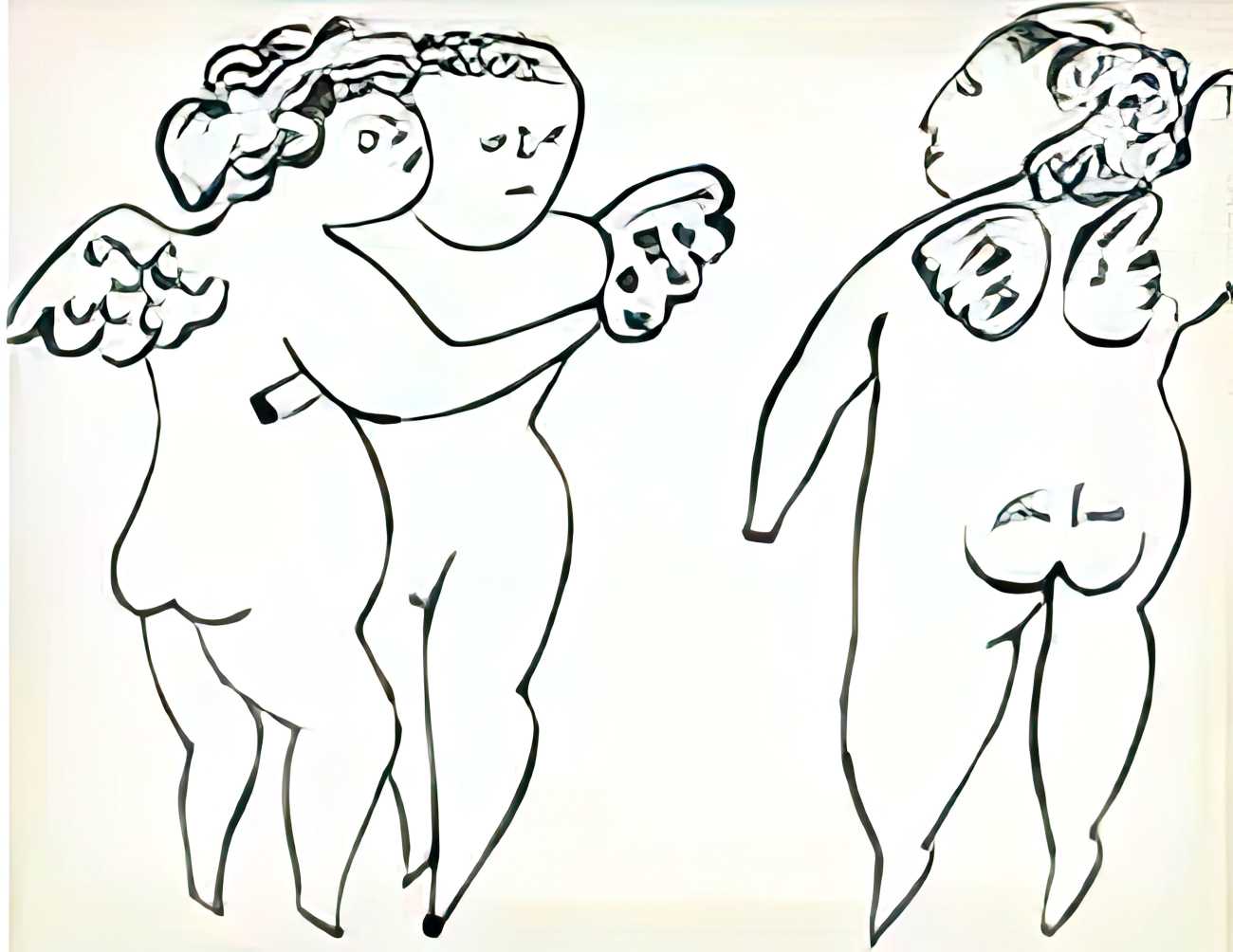
The imagery consists of playful, ethereal figures – fairies, putti, mythic creatures – drawn in Warhol’s distinctive line technique. This method, which allowed him to transfer inked drawings with slight irregularities, gives the figures a fragile, trembling quality. The images feel provisional and intimate, closer to doodles or marginalia than to finished fine art. Pastel colouring, applied sparingly and individually to some of the images, enhances the sense of gentleness and emotional vulnerability.
Beneath the apparent innocence, however, In the Bottom of My Garden has a quieter complexity. Many commentators have noted its coded eroticism and queer subtext. The bodies are often male or ambiguously gendered, graceful rather than muscular, and posed in ways that emphasise tenderness over power. In the context of 1950s America, this private, fantastical world can be read as a protective space – one in which same-sex desire, softness, and nonconformity could exist without explicit declaration. The garden becomes both refuge and metaphor: an enclosed, cultivated space where forbidden or unspeakable feelings might safely flourish.