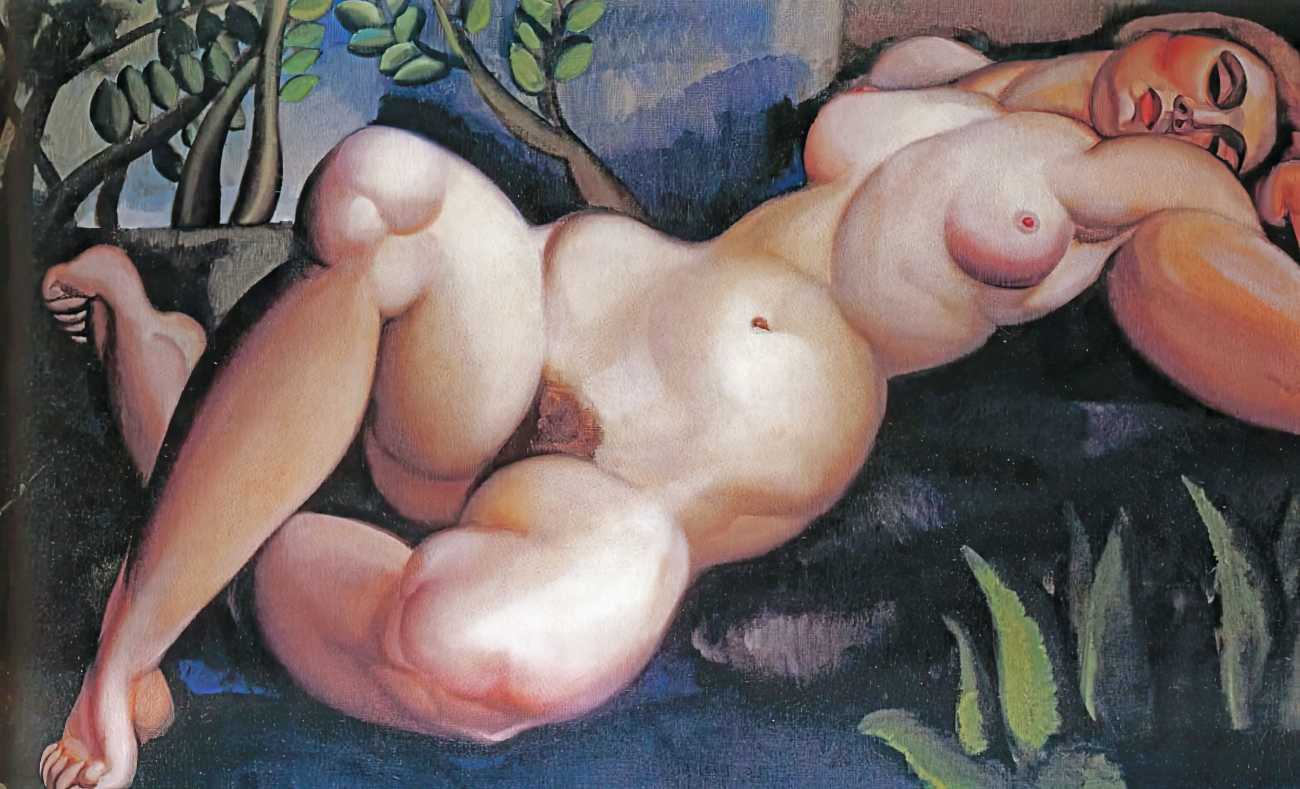
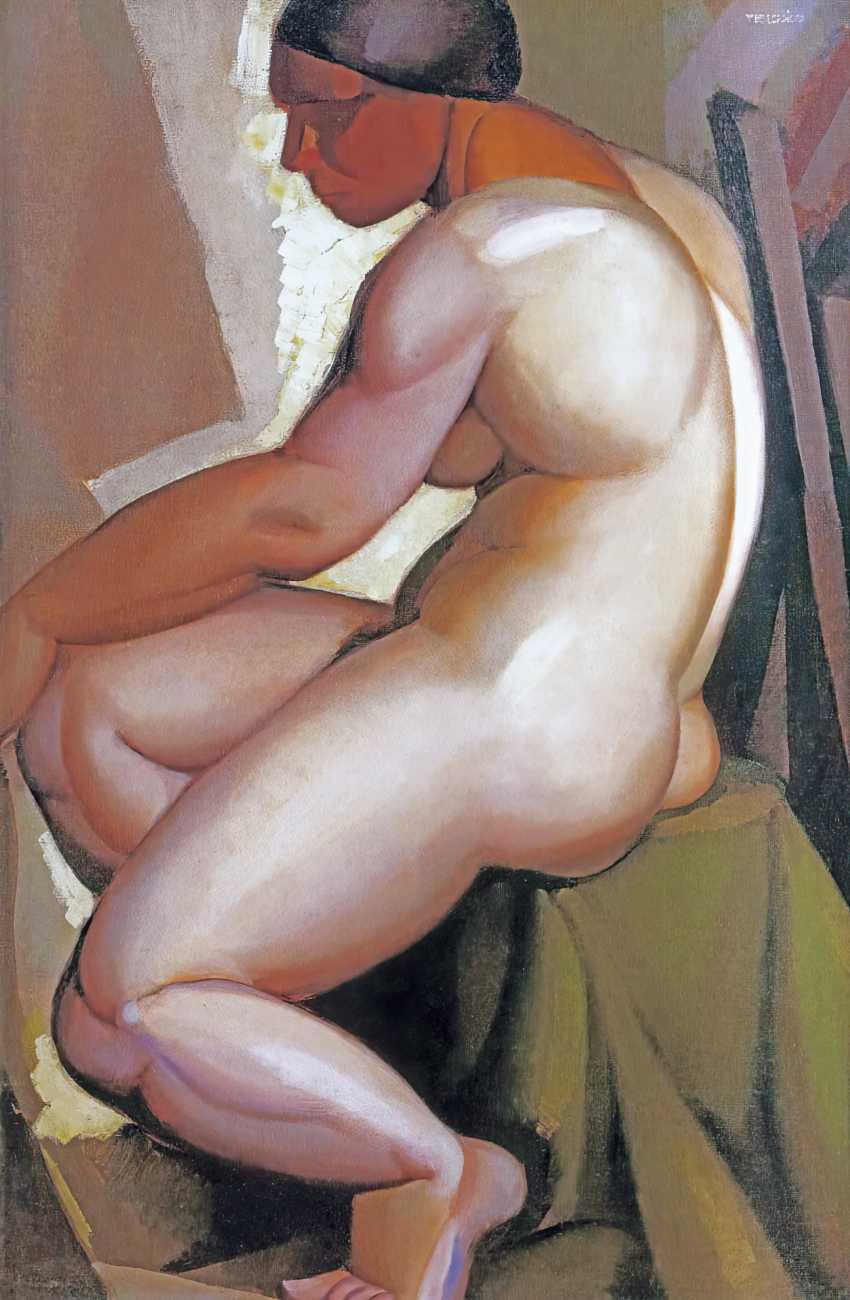
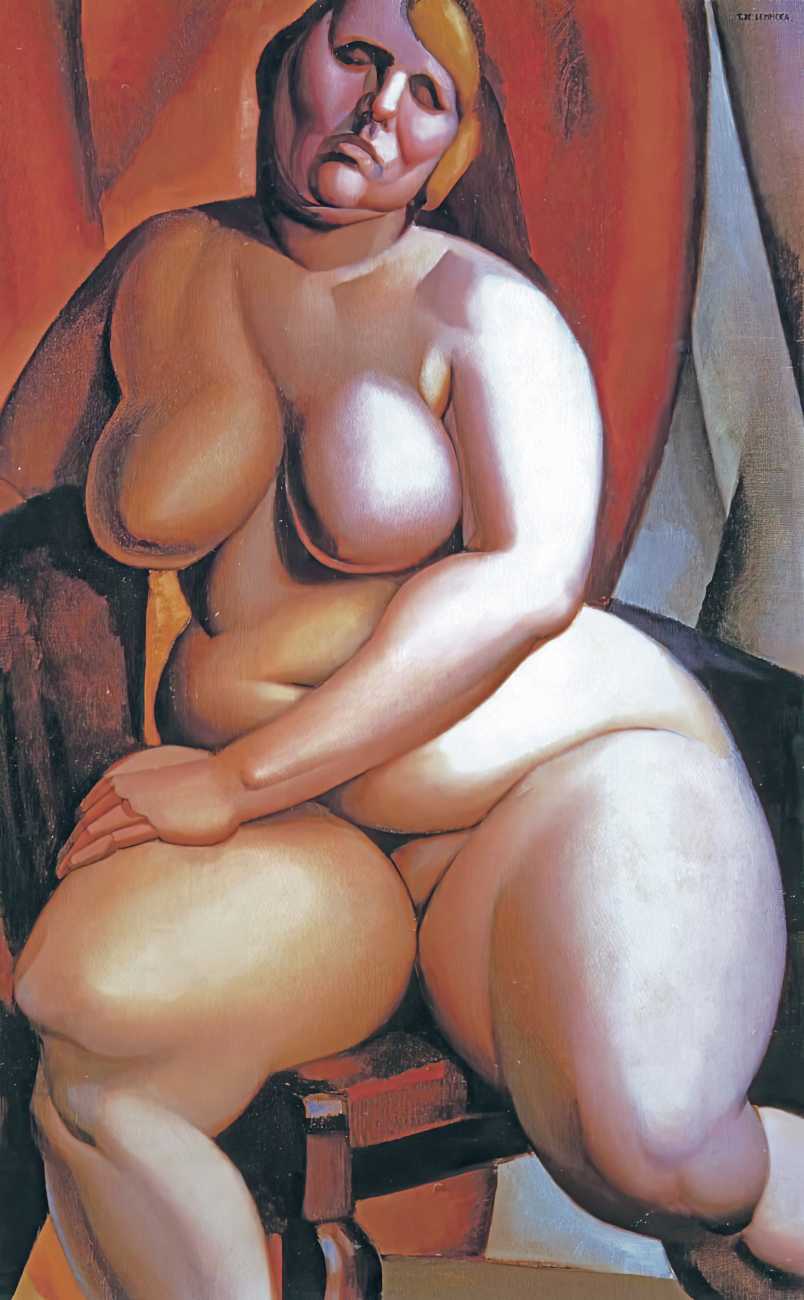
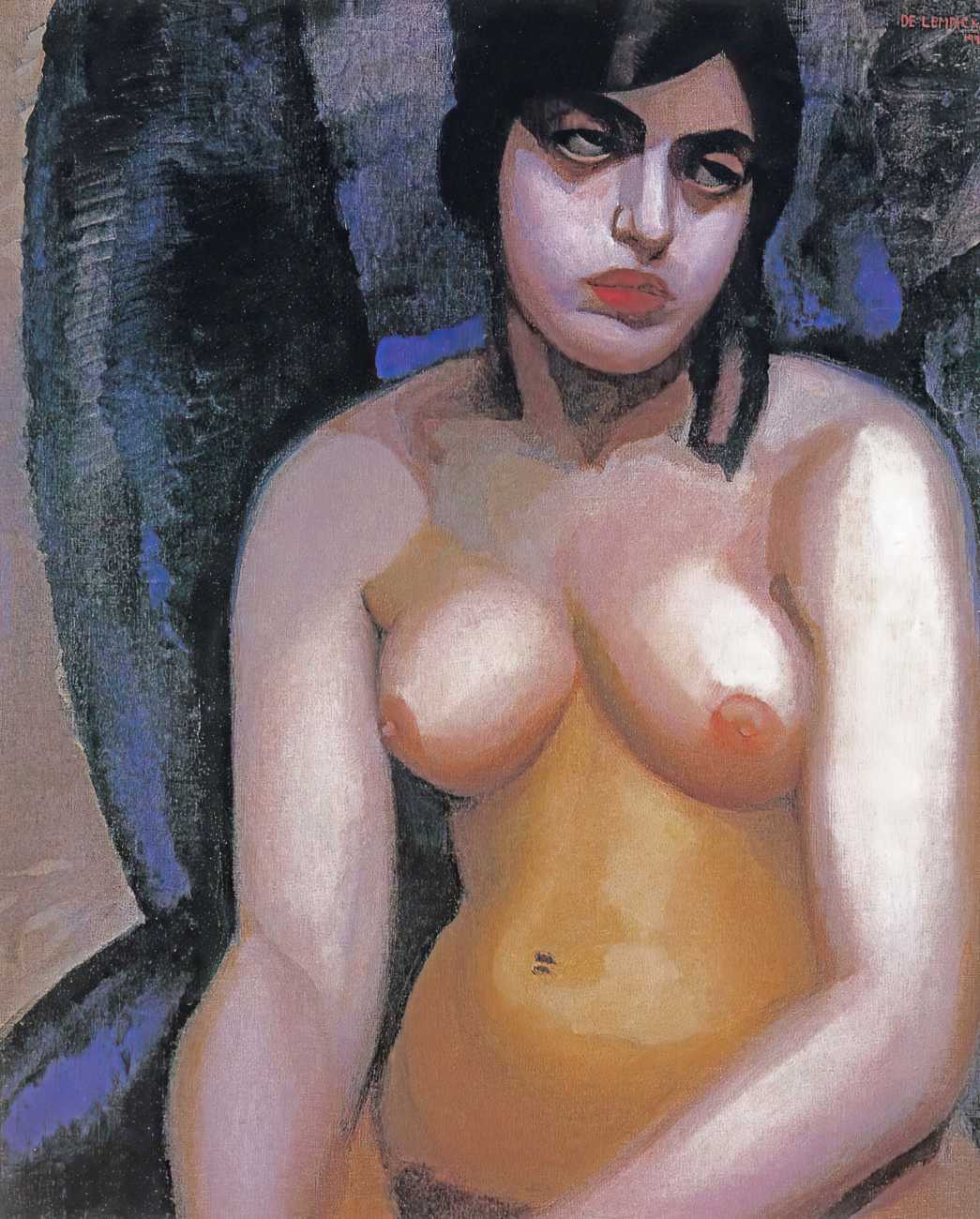
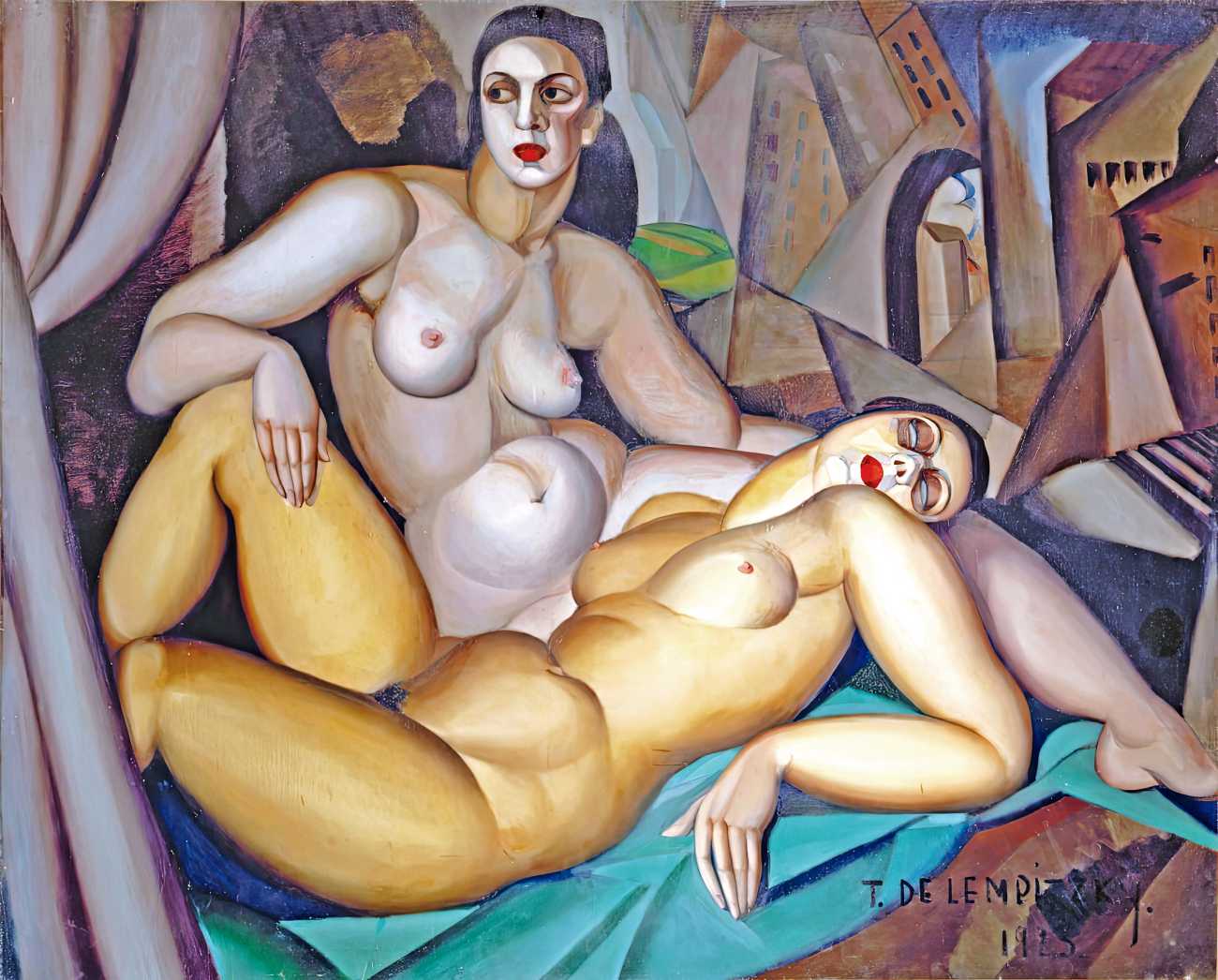
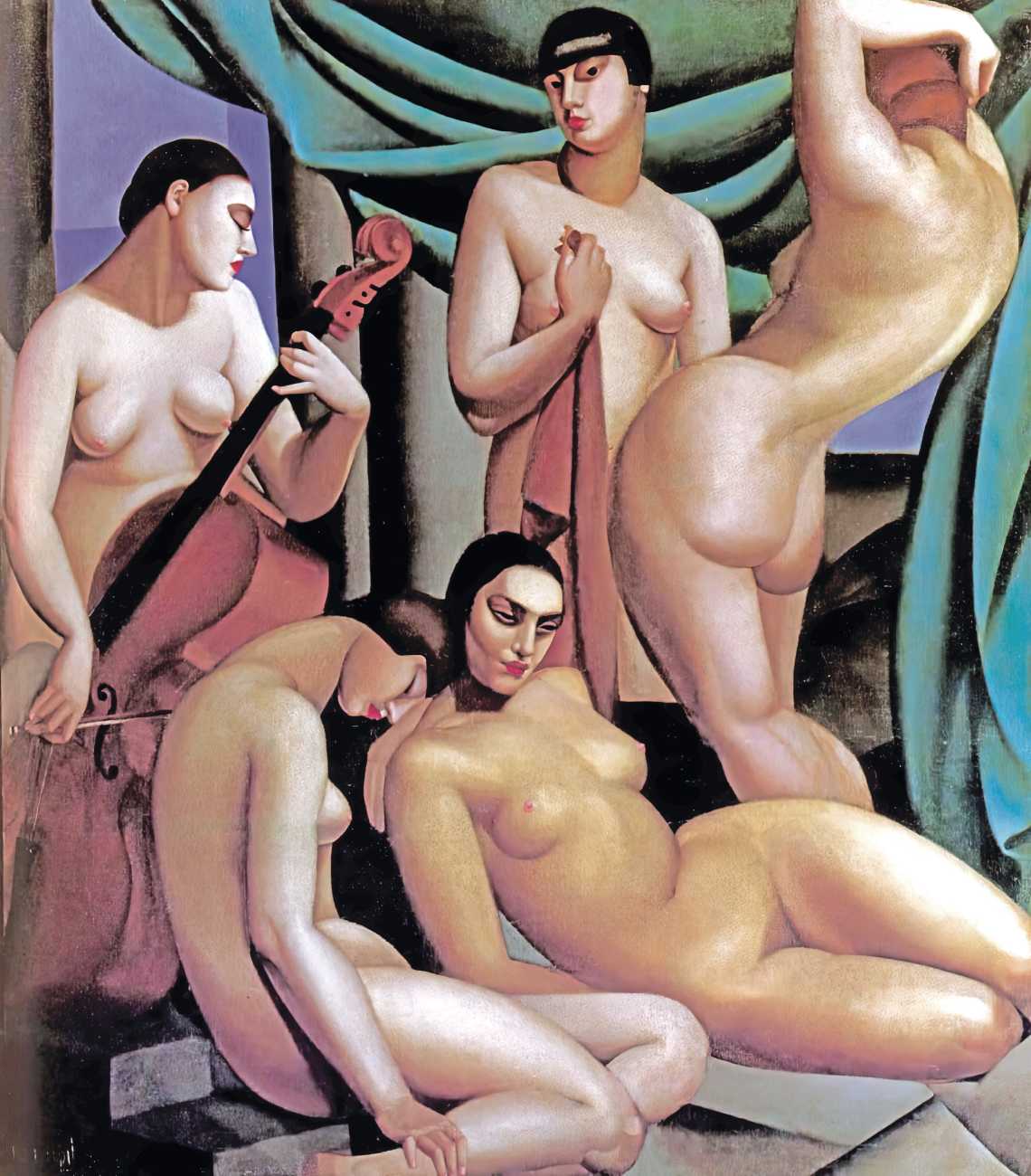
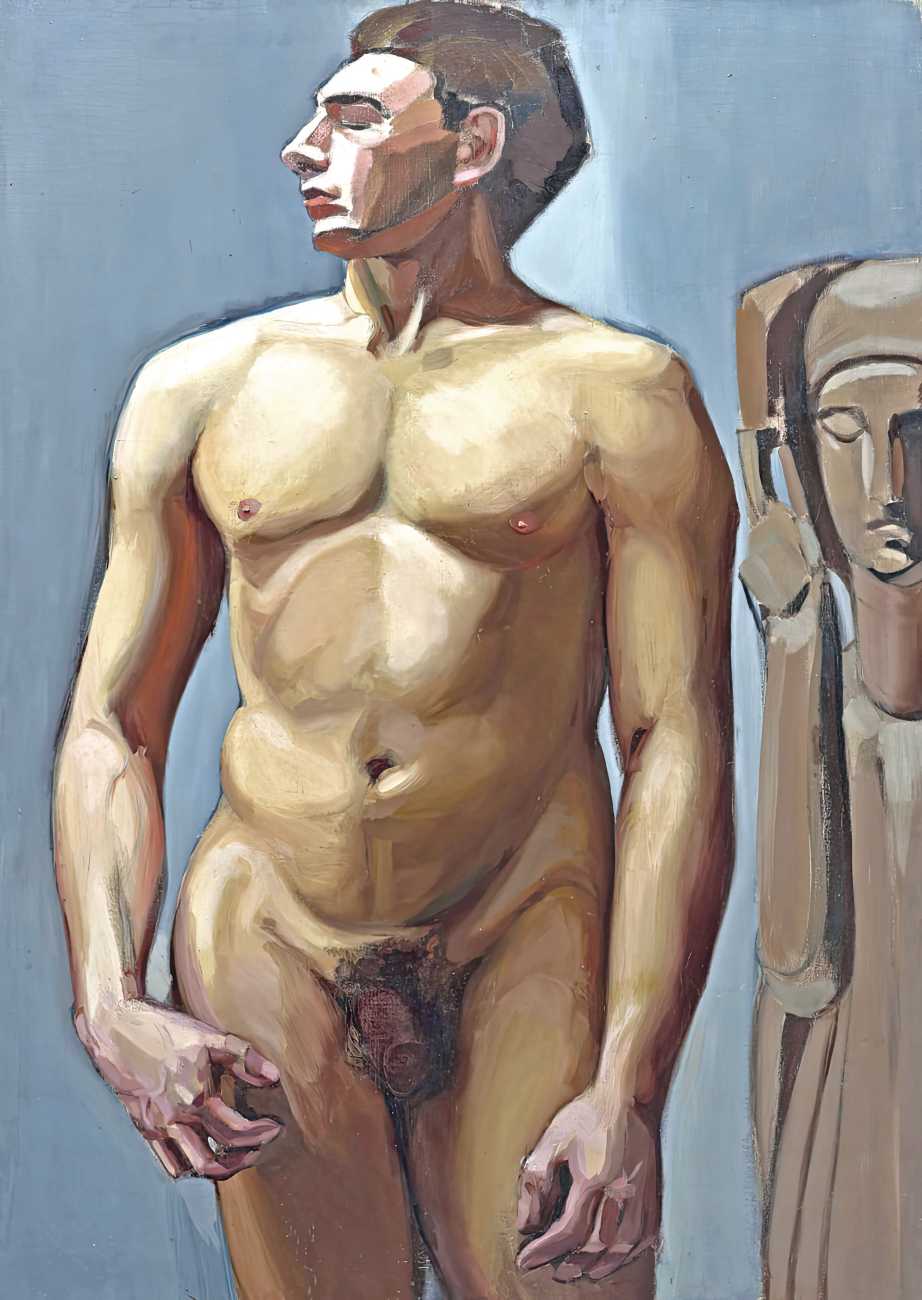
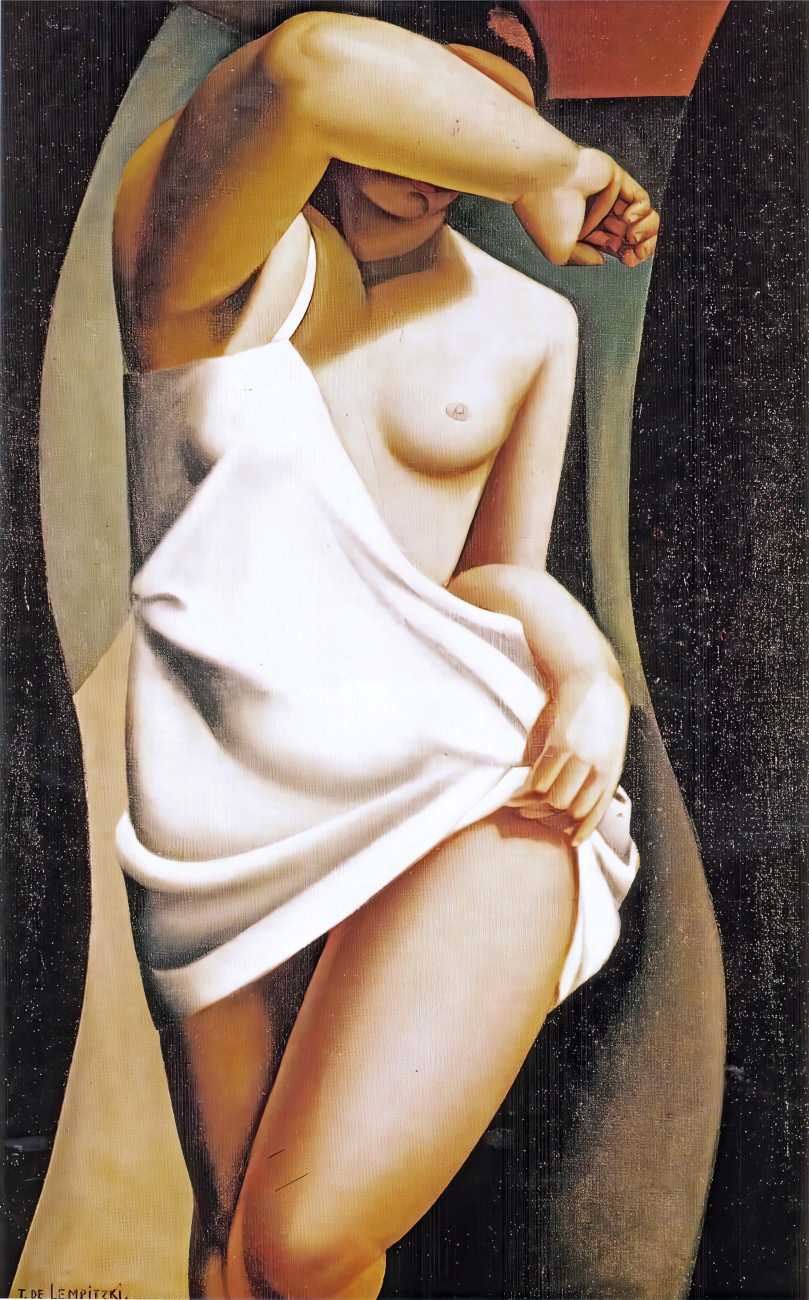
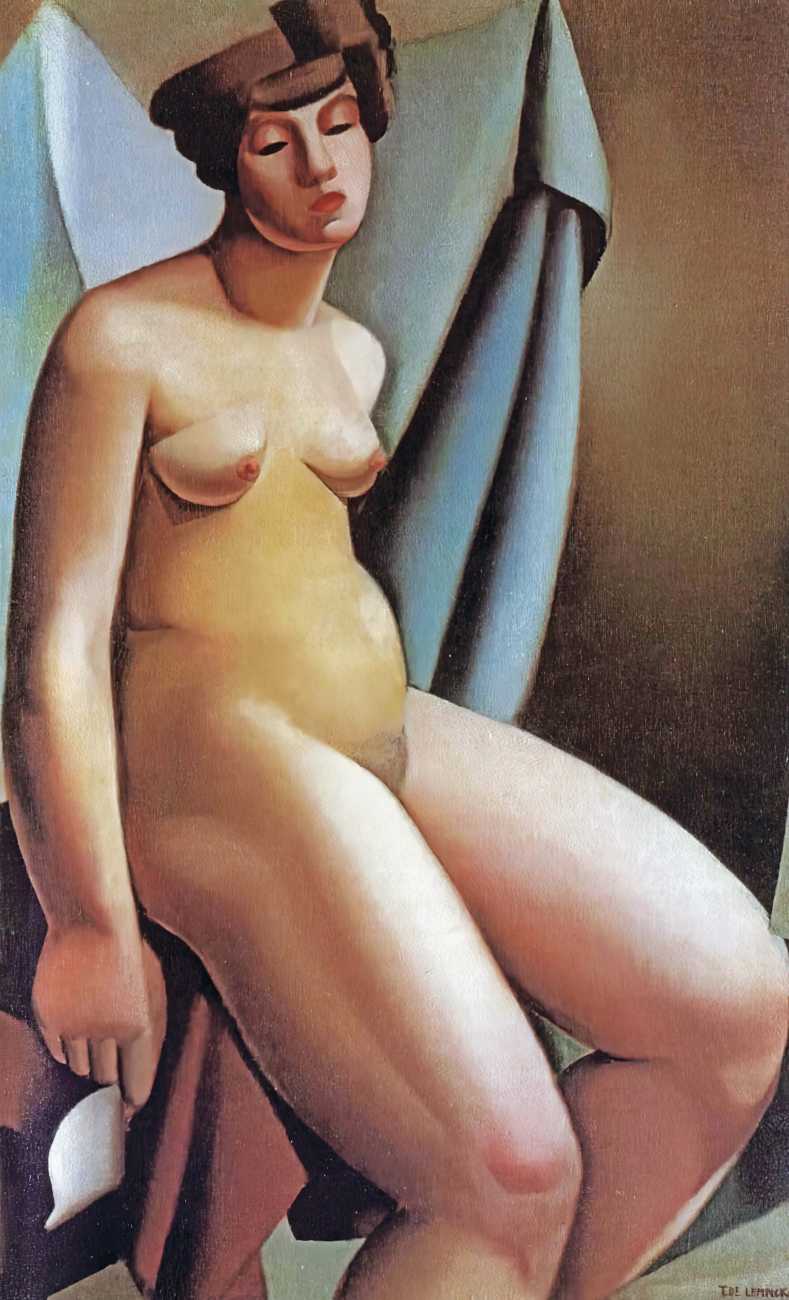
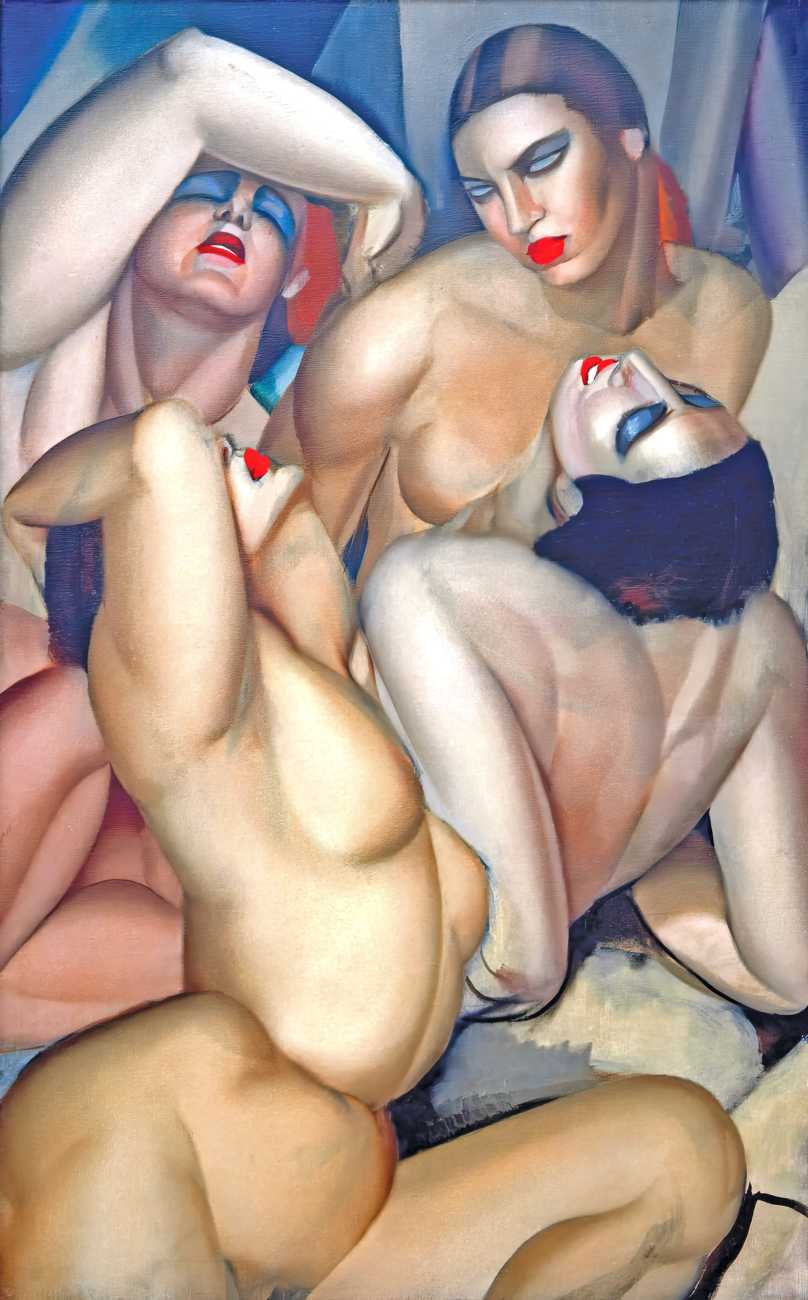
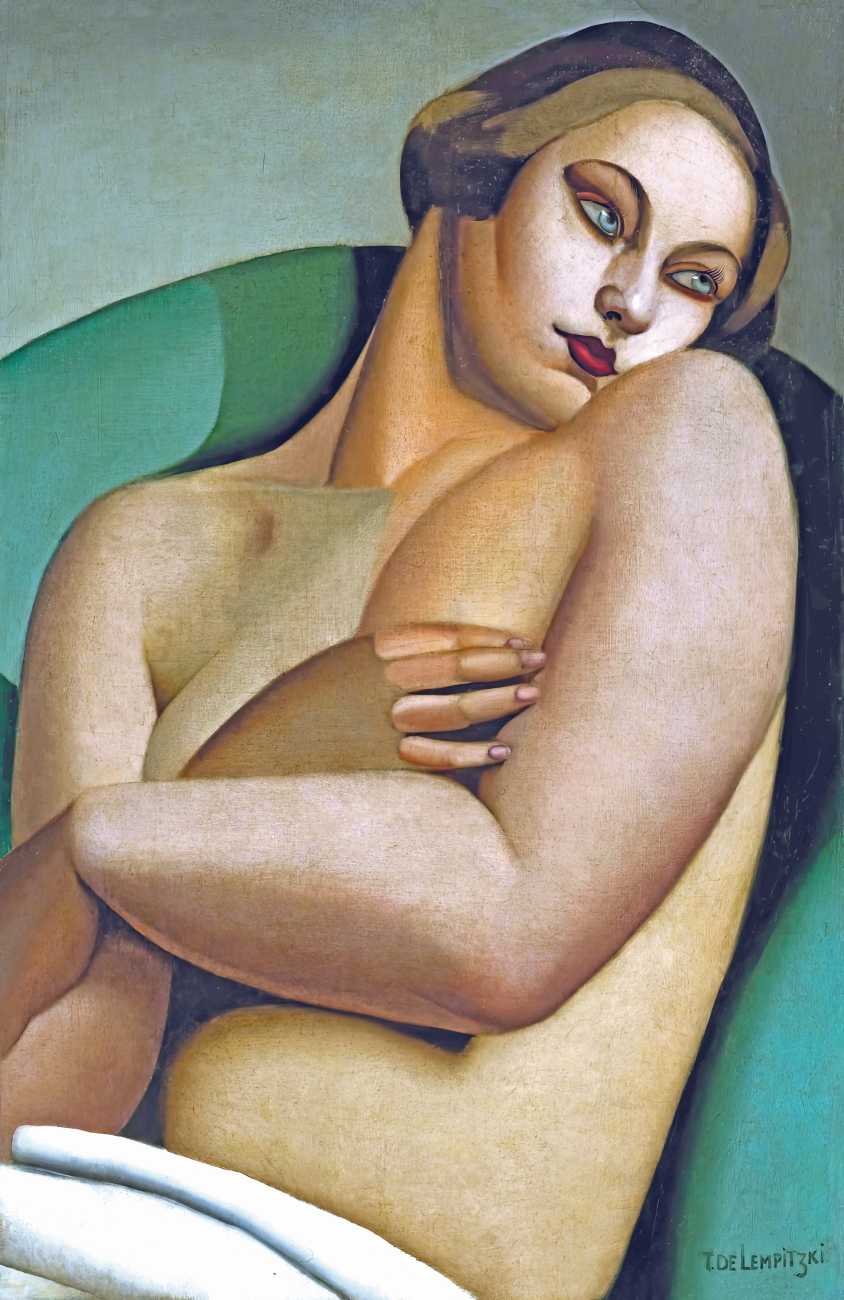
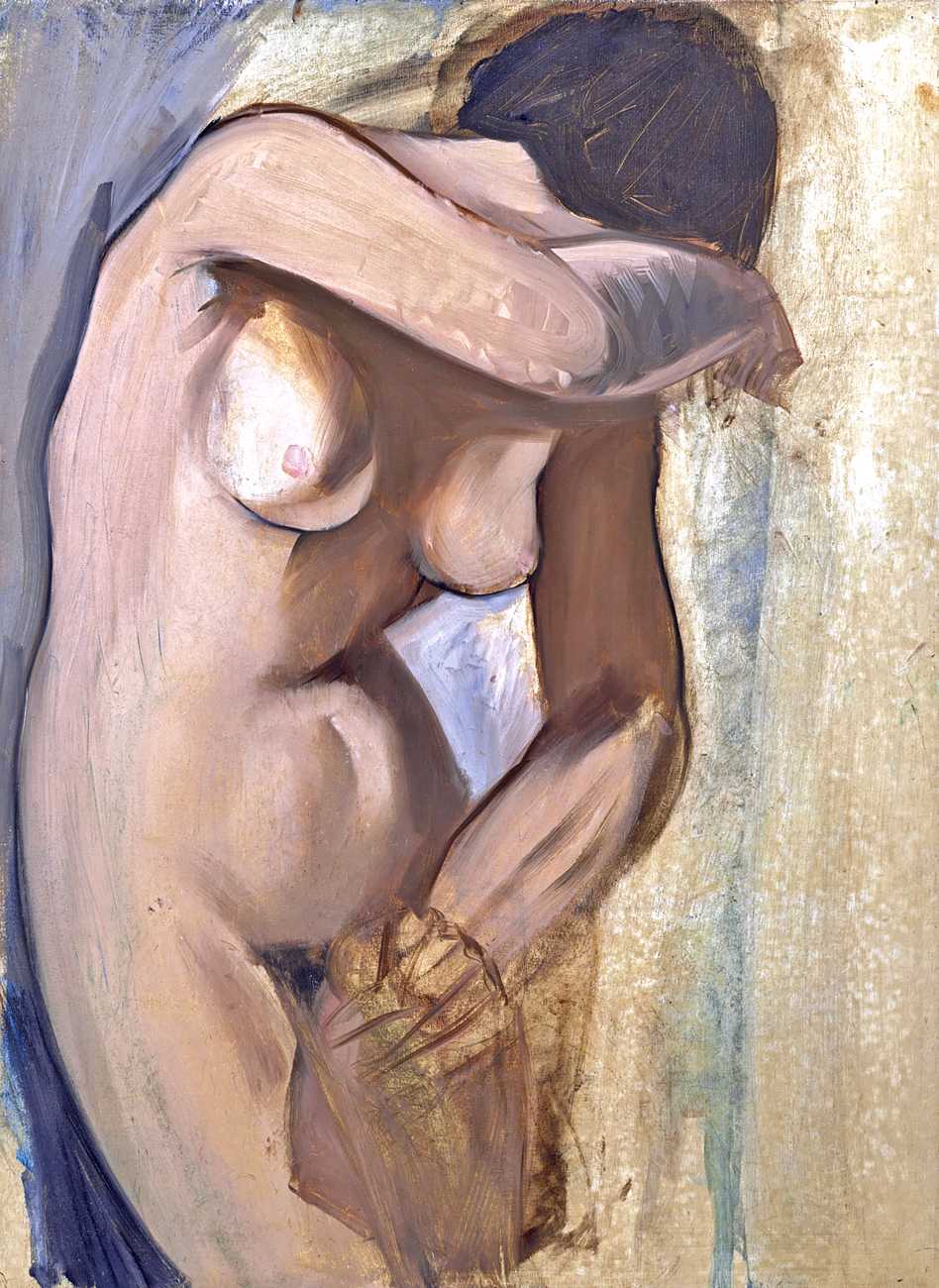
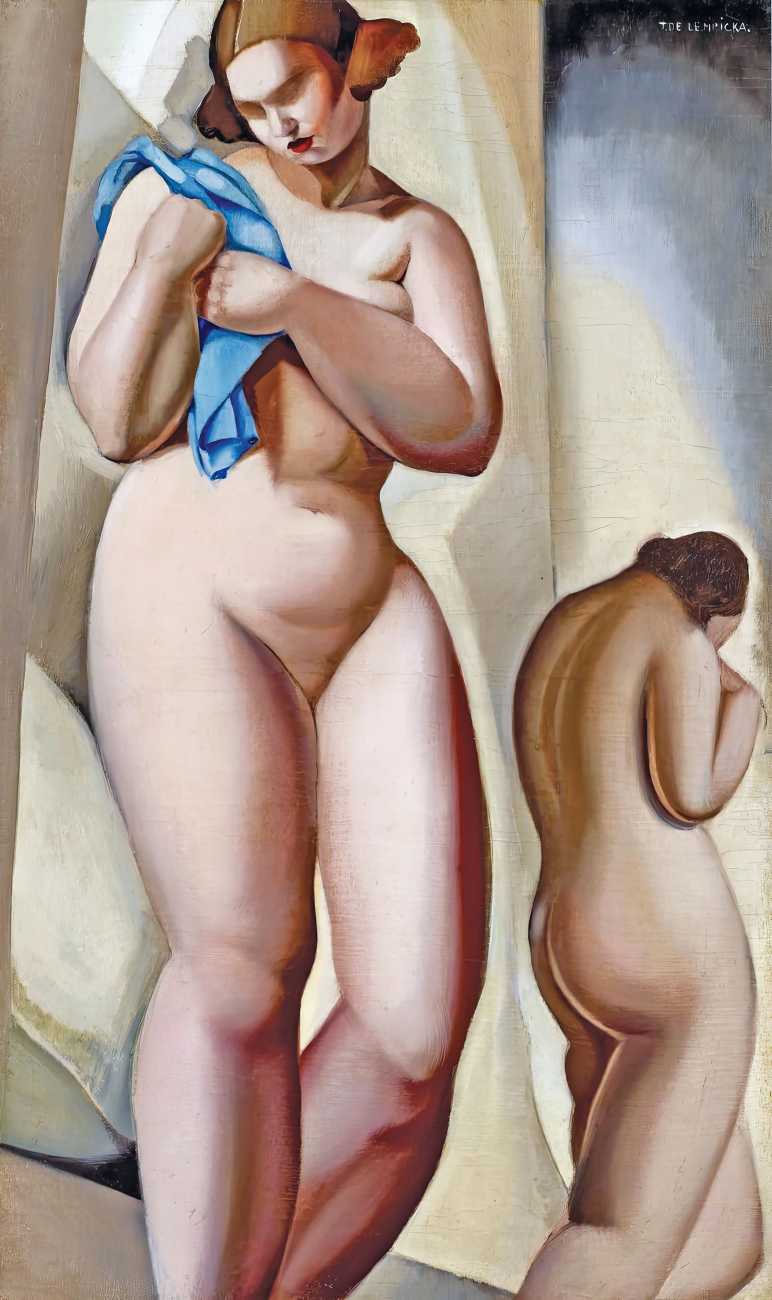
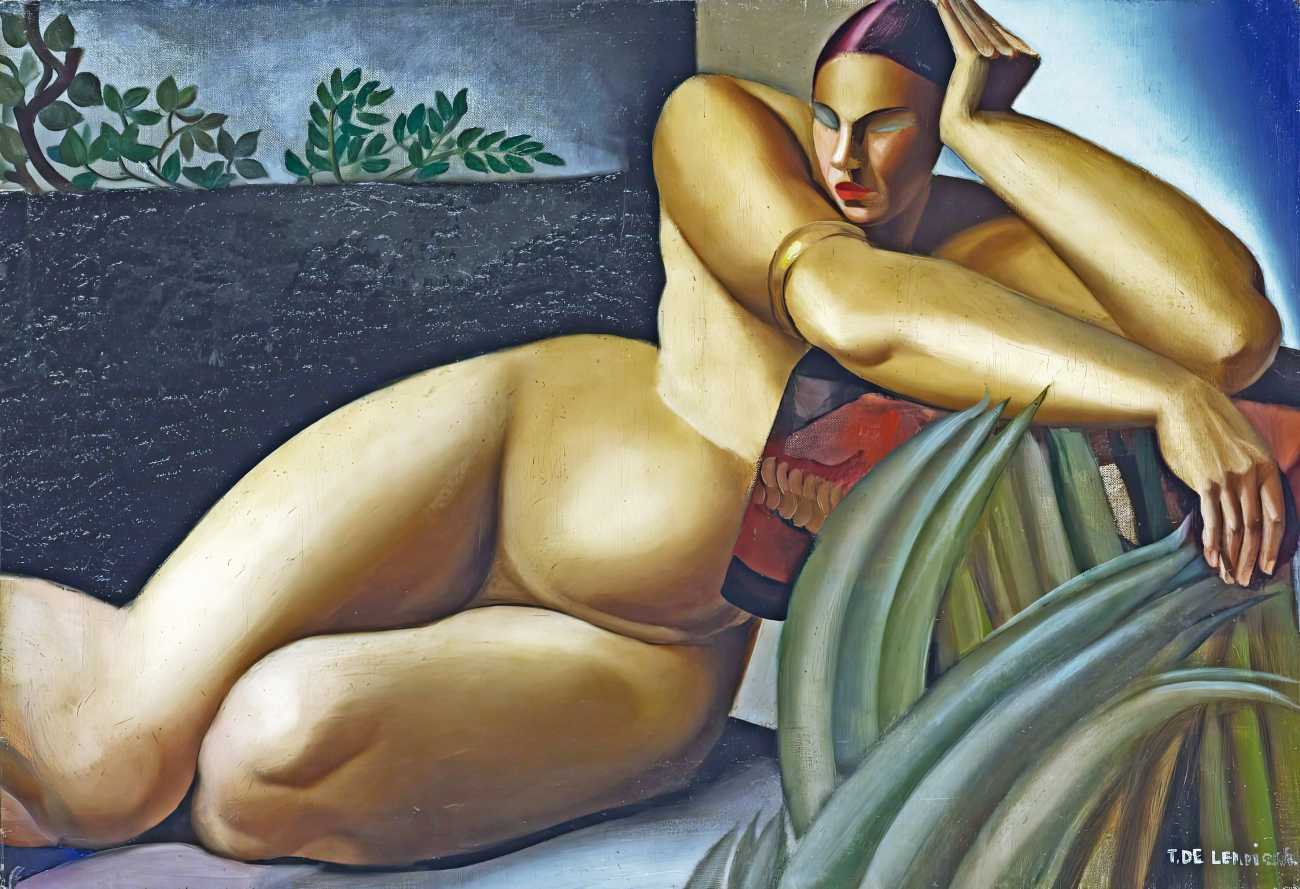
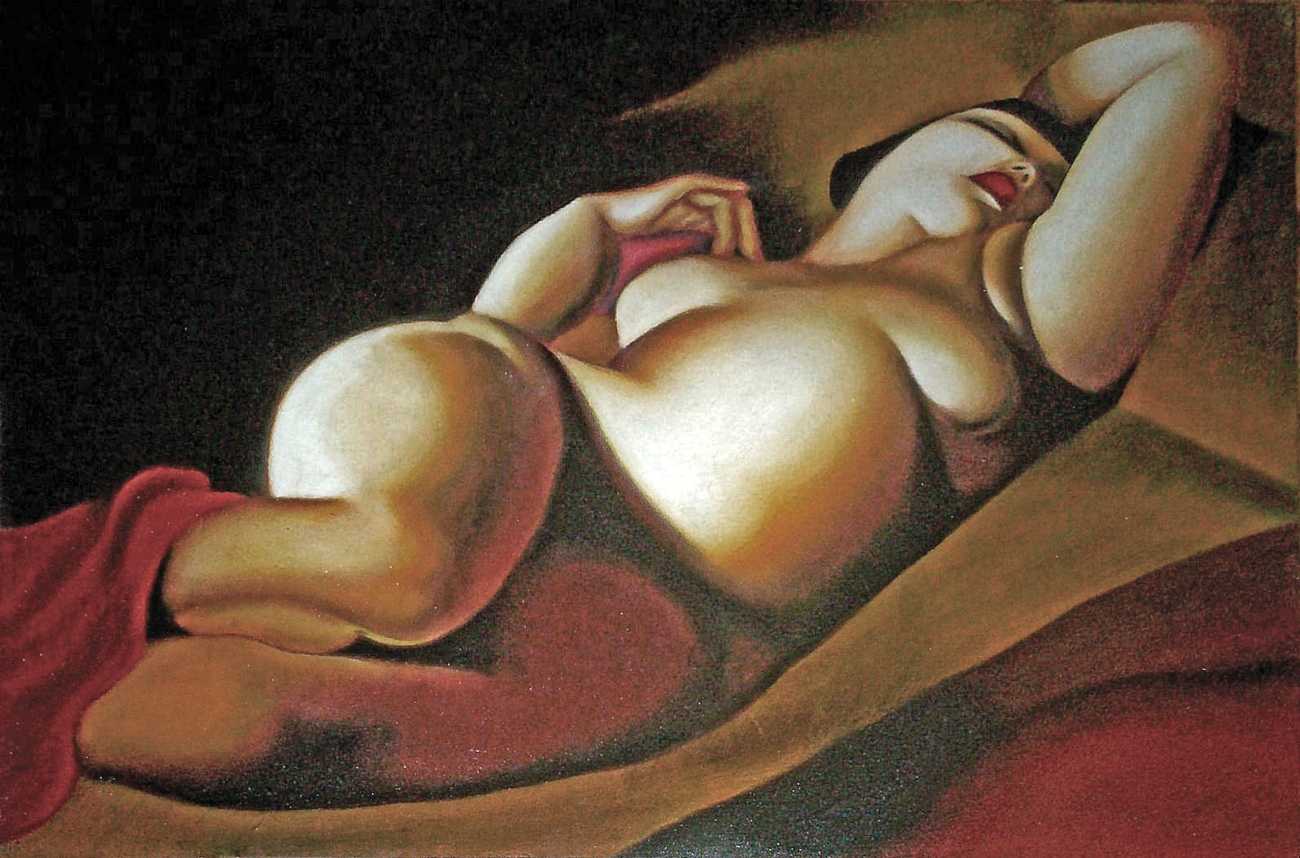
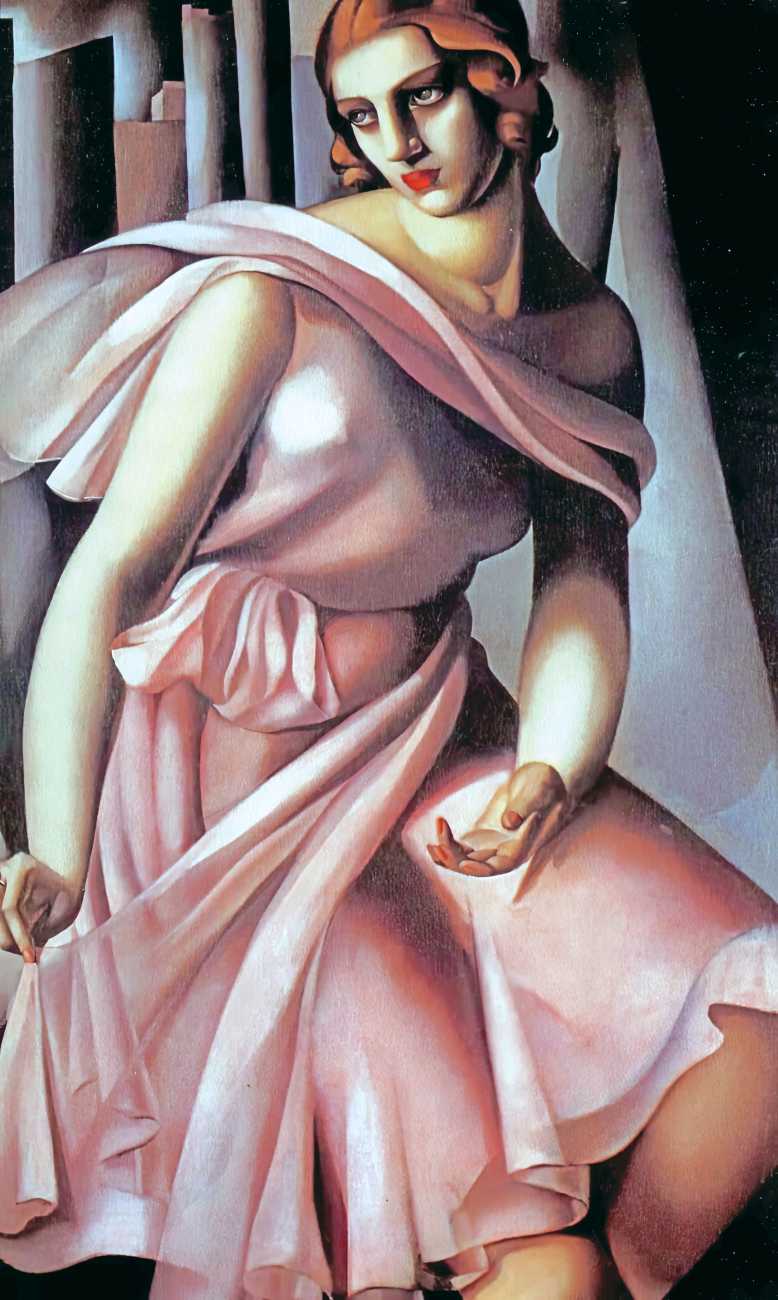
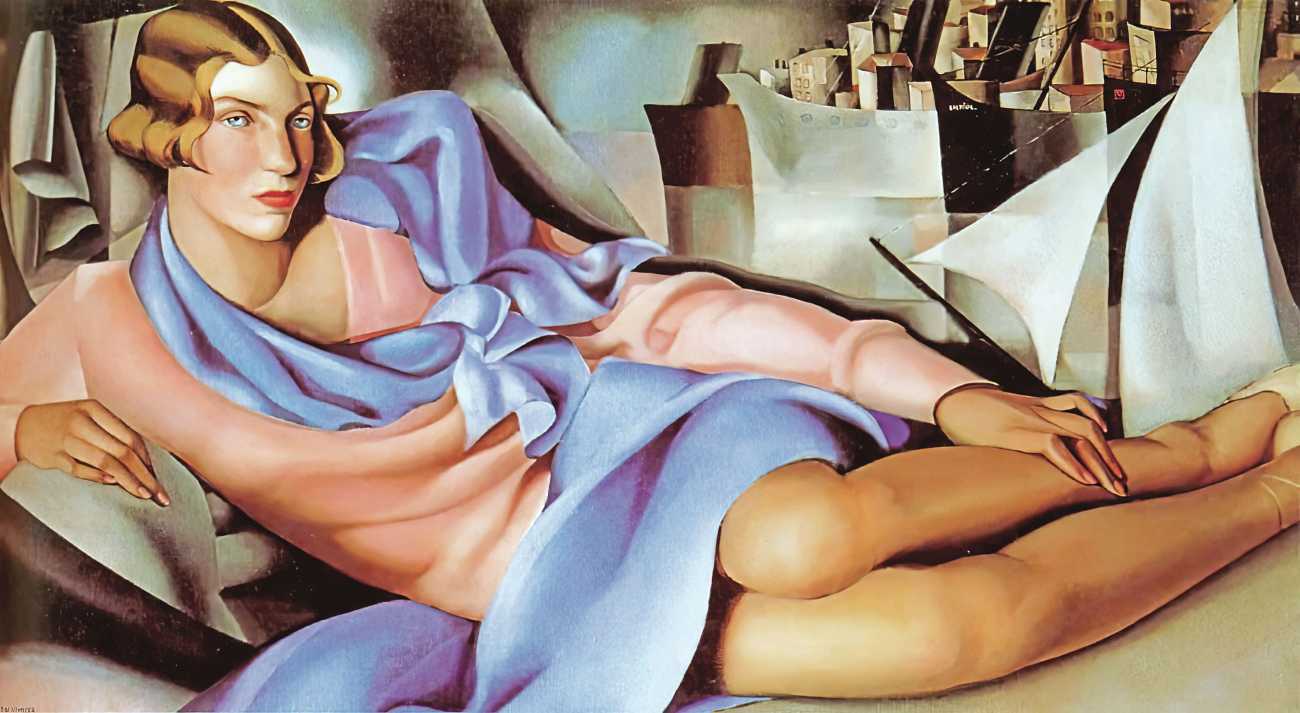
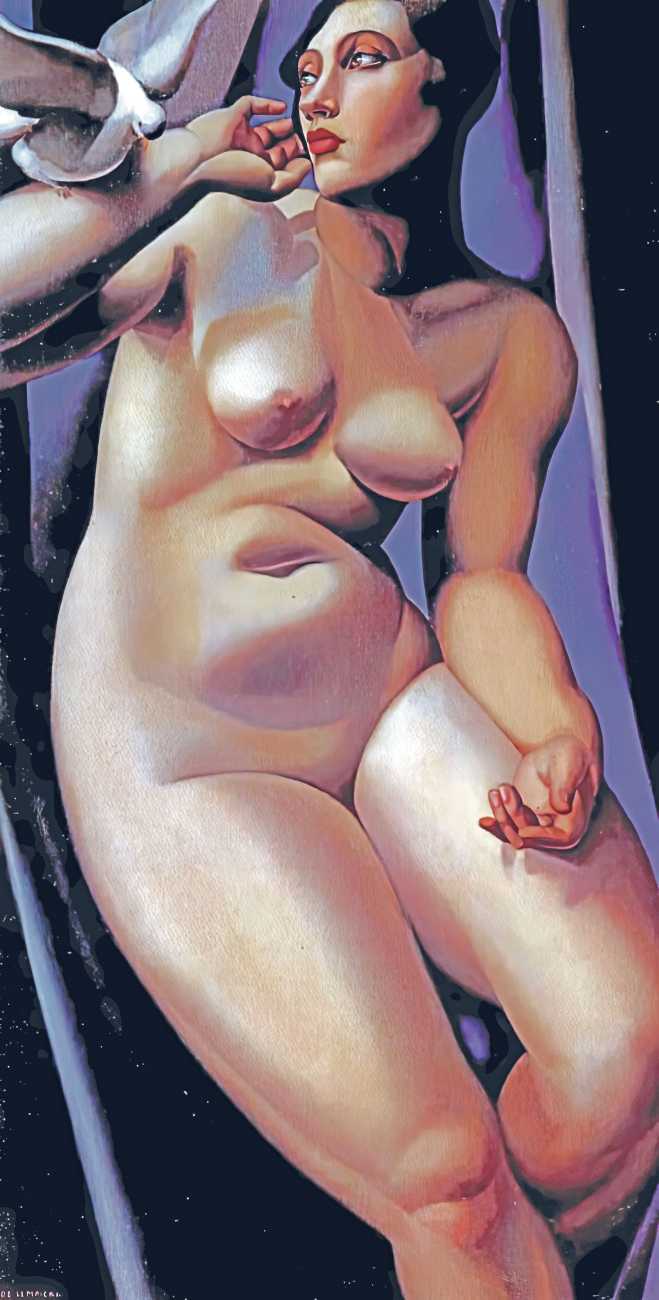
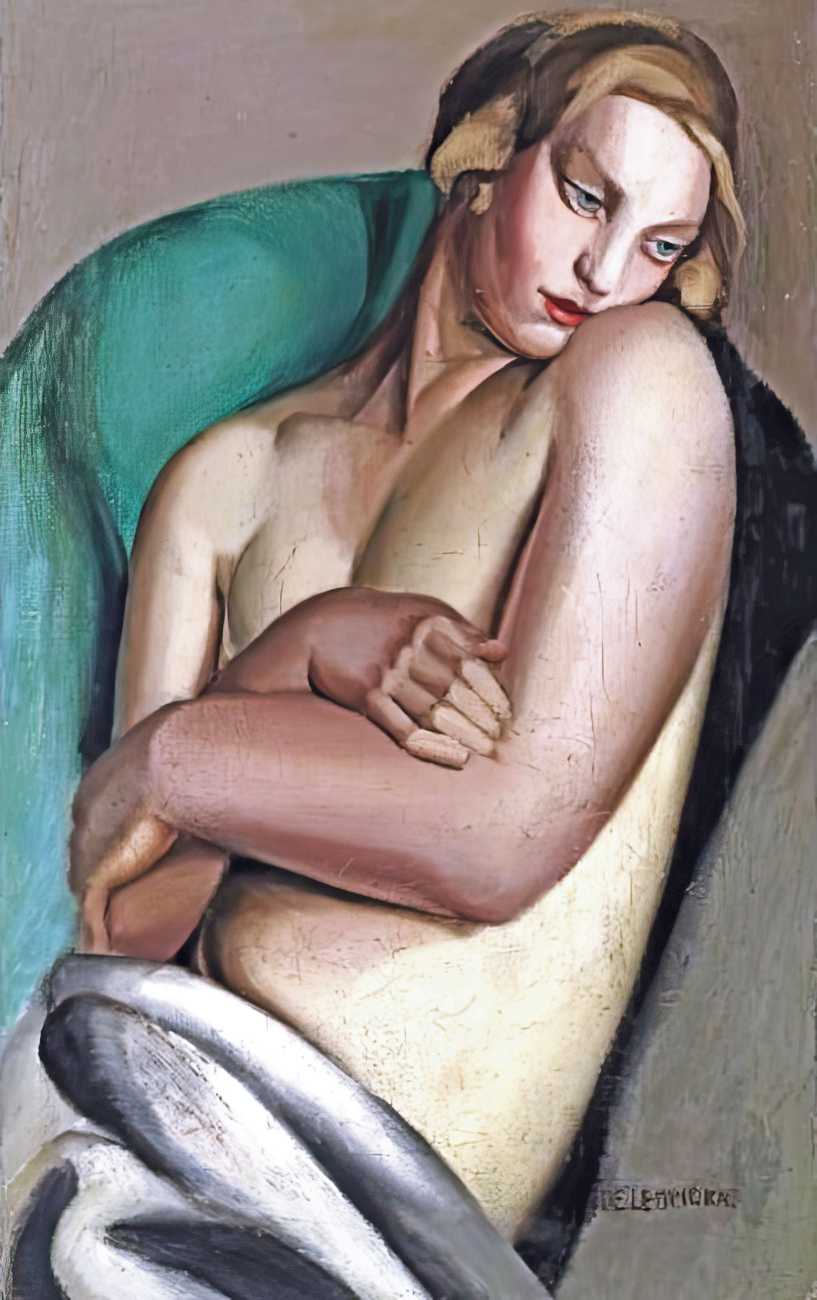
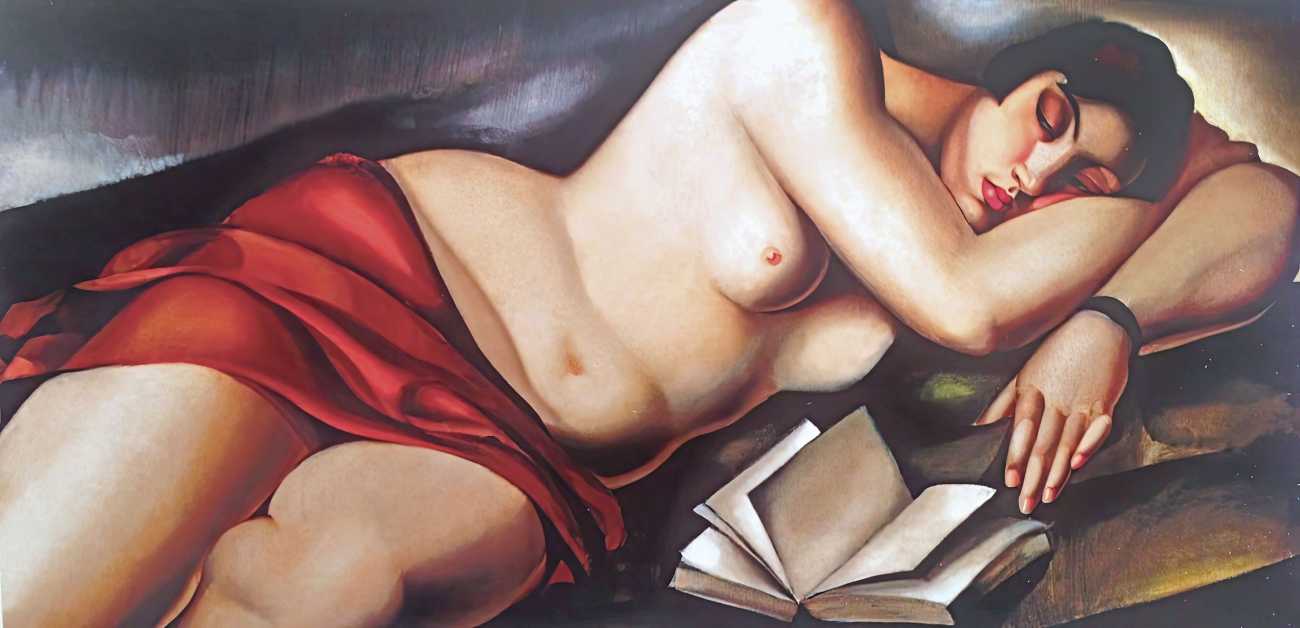
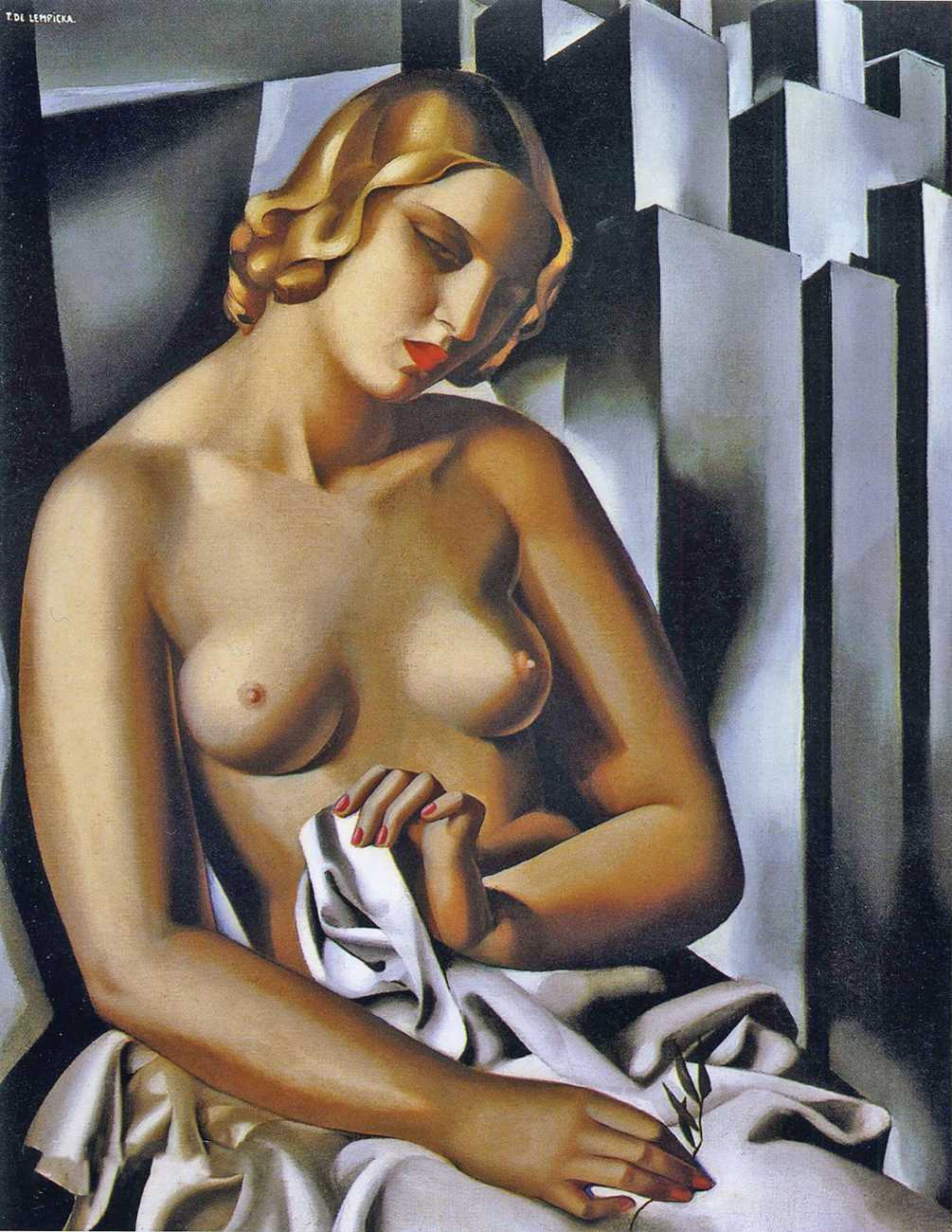
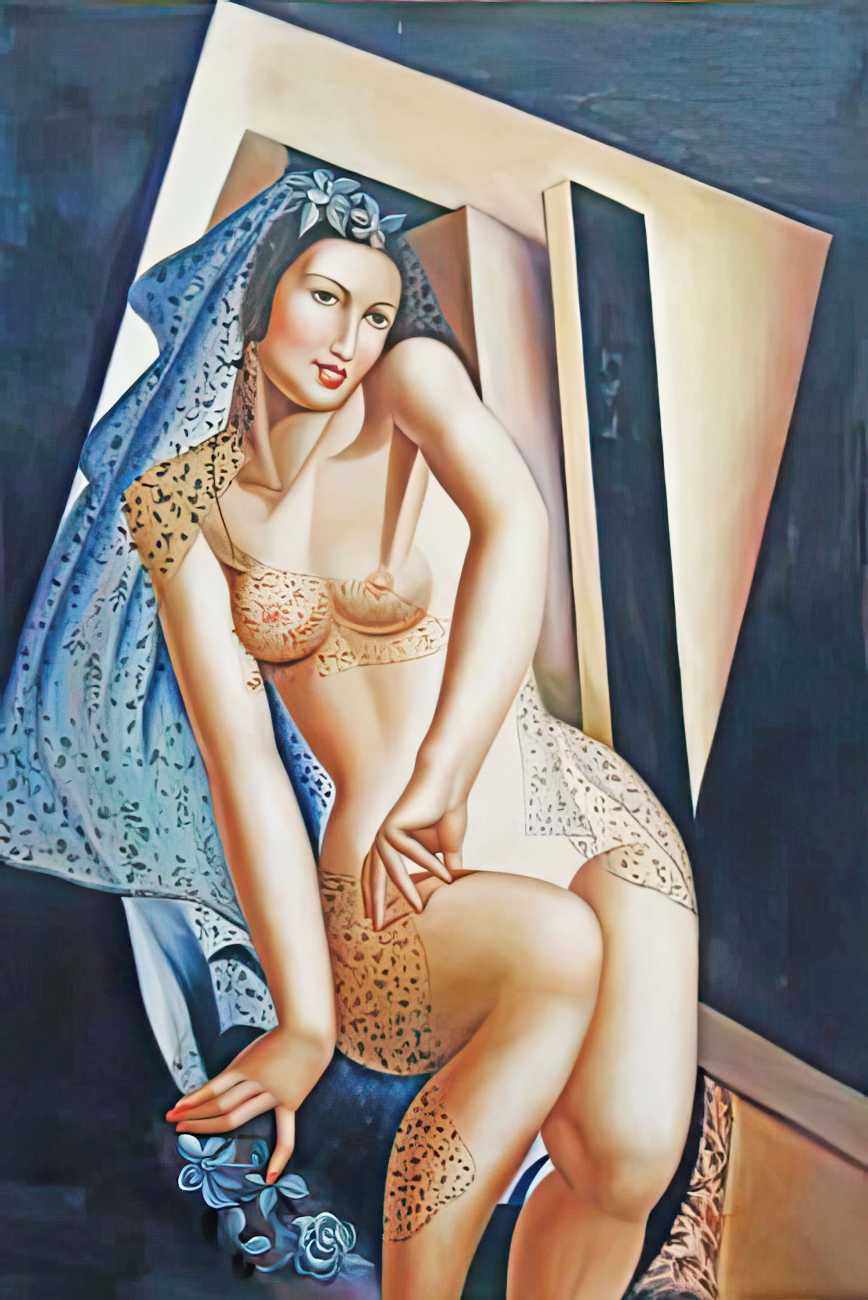
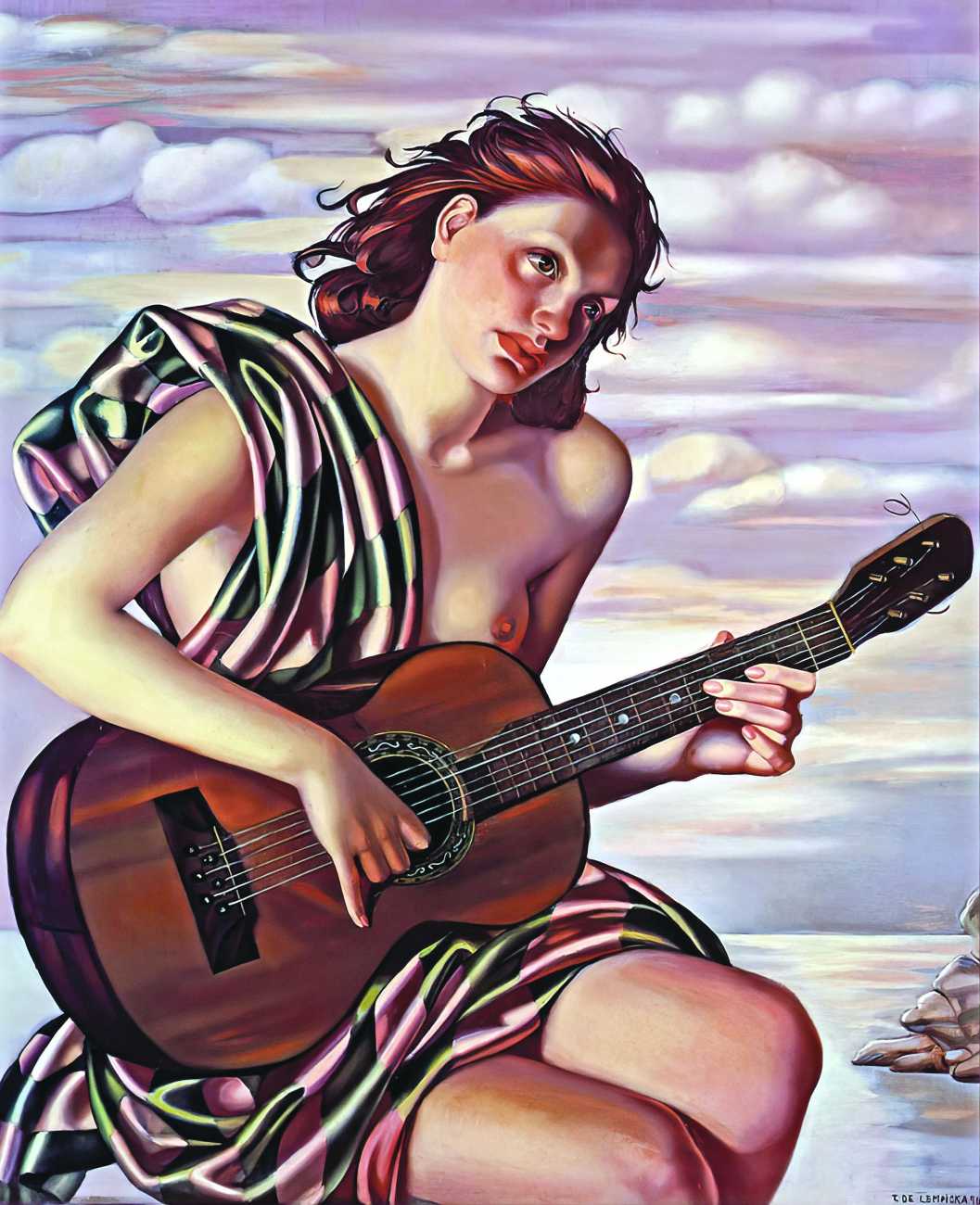
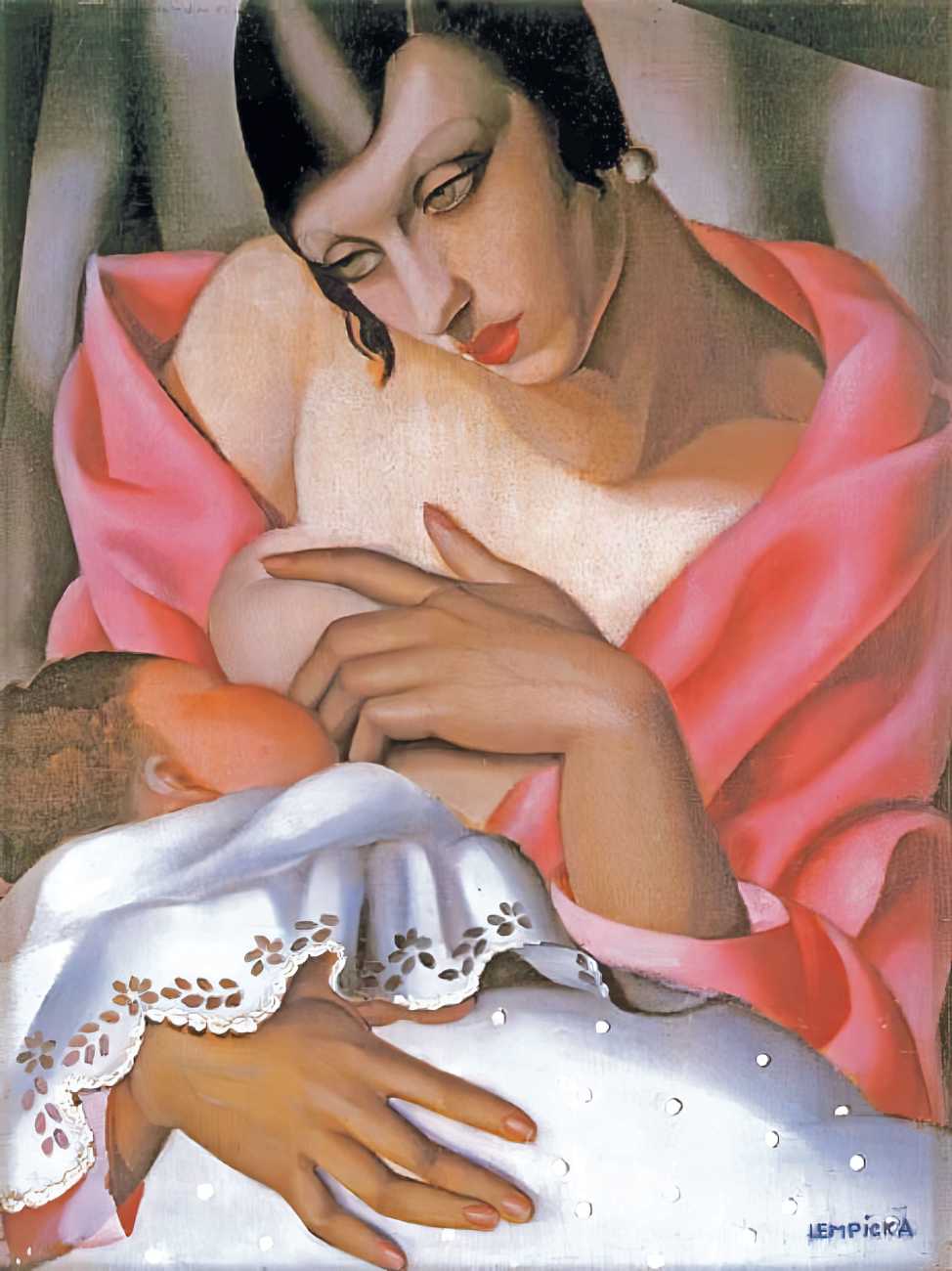
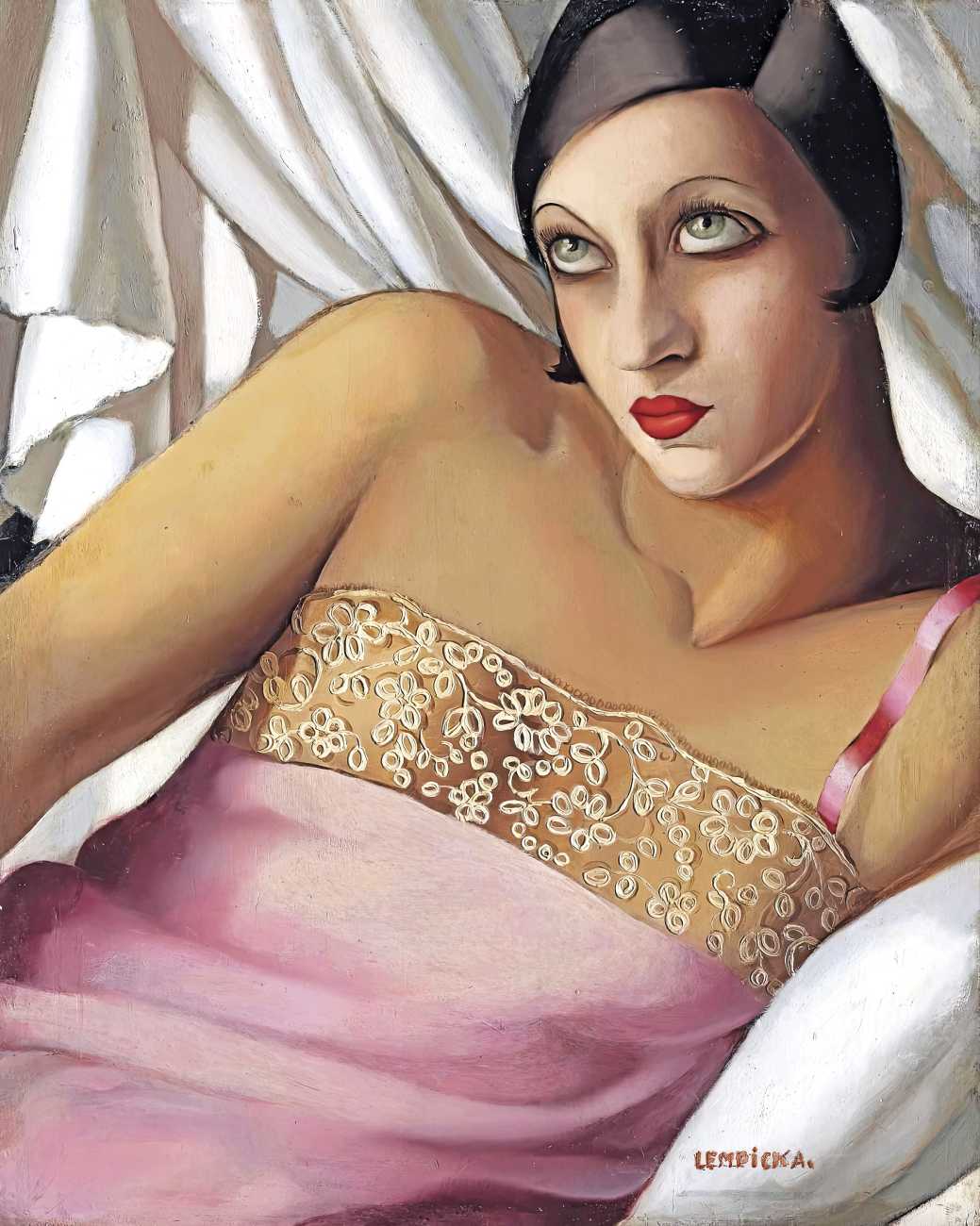
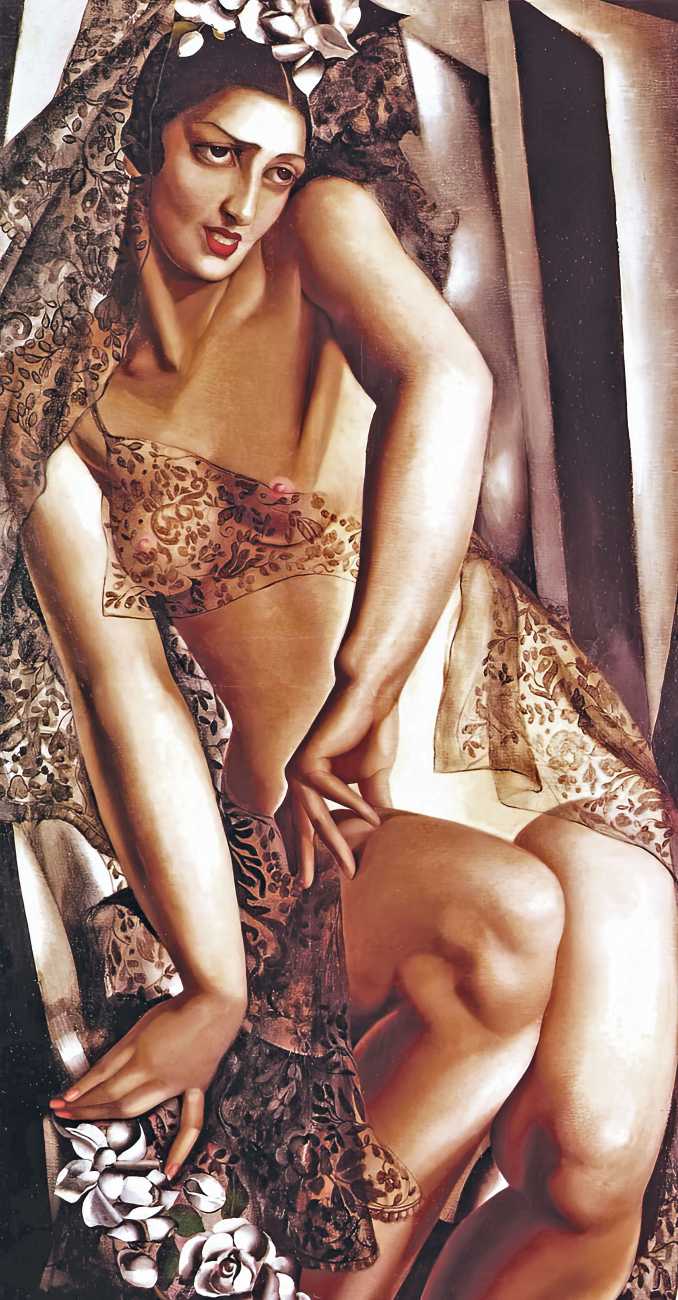
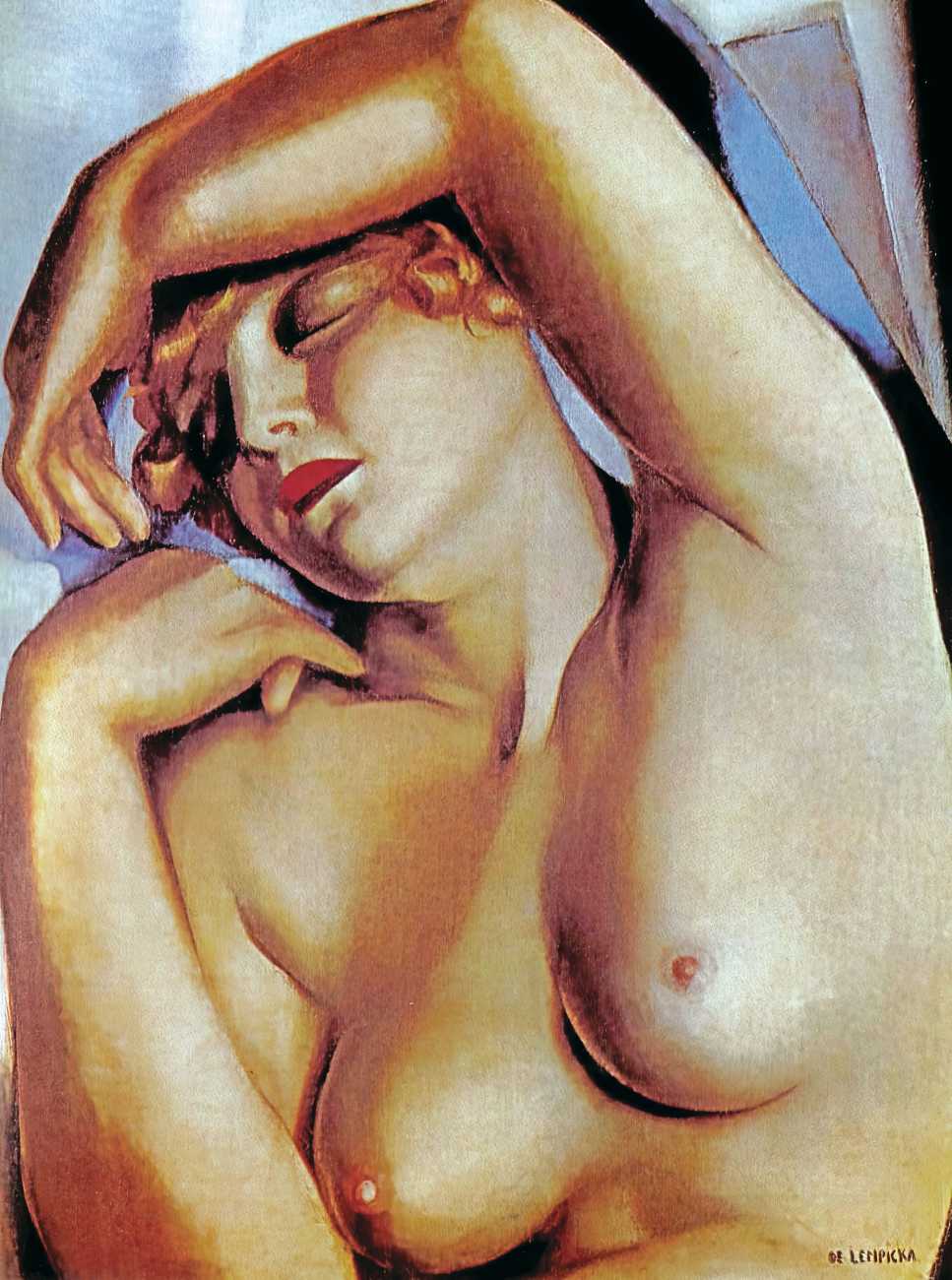
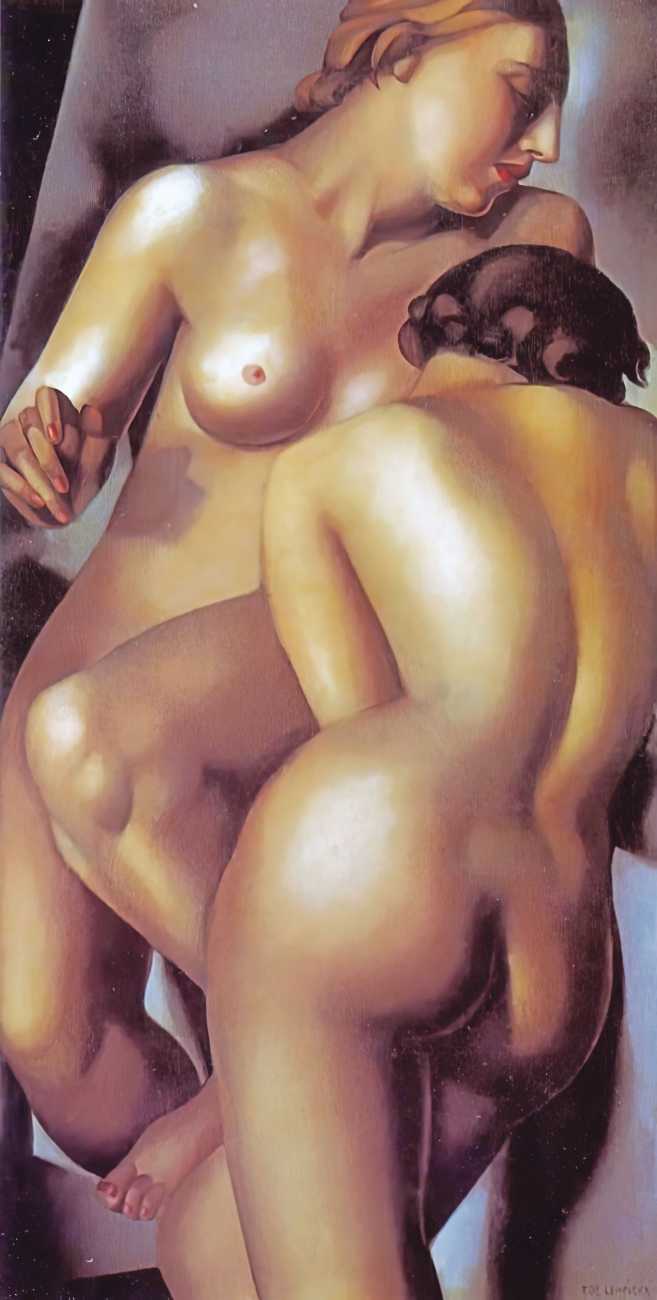
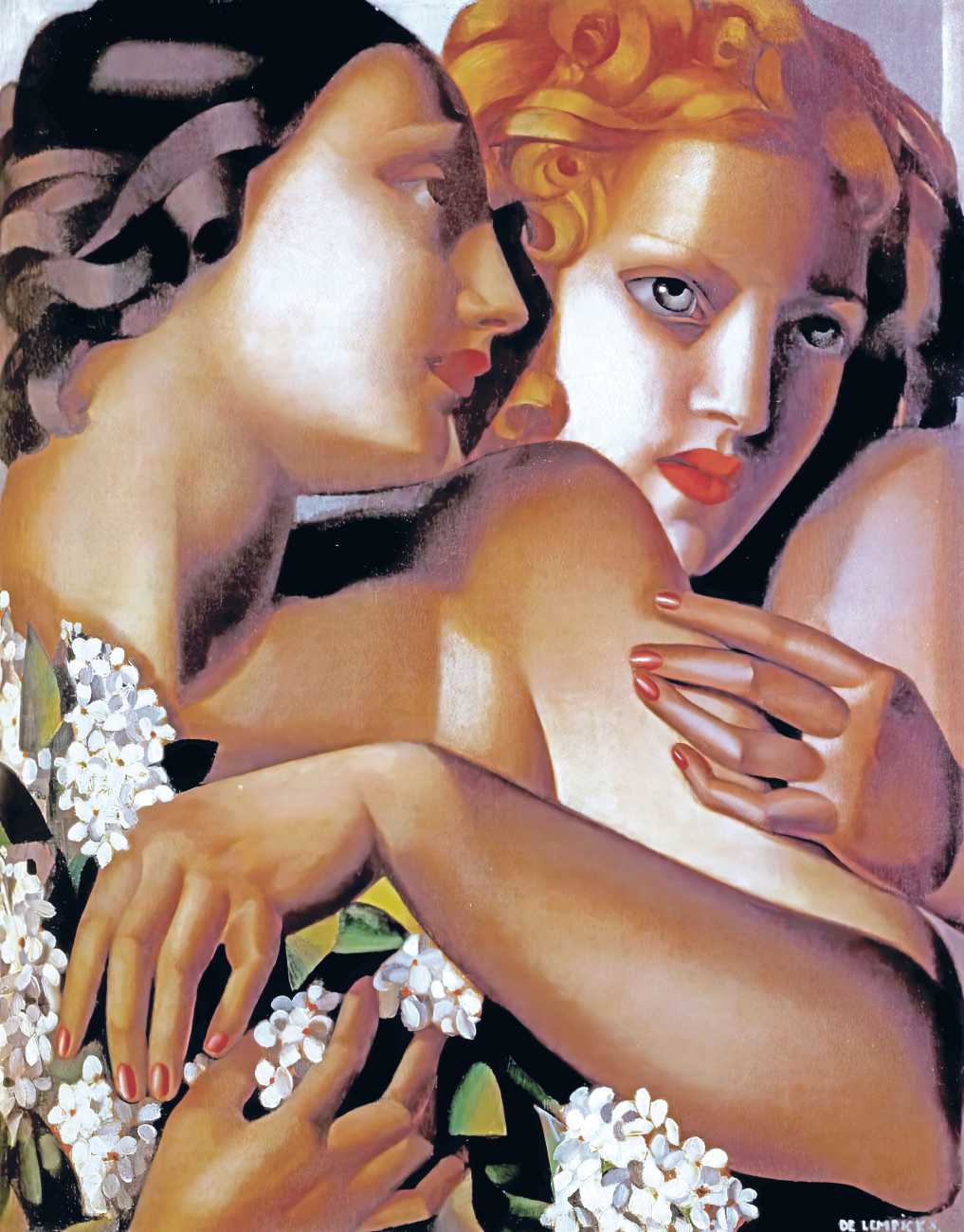
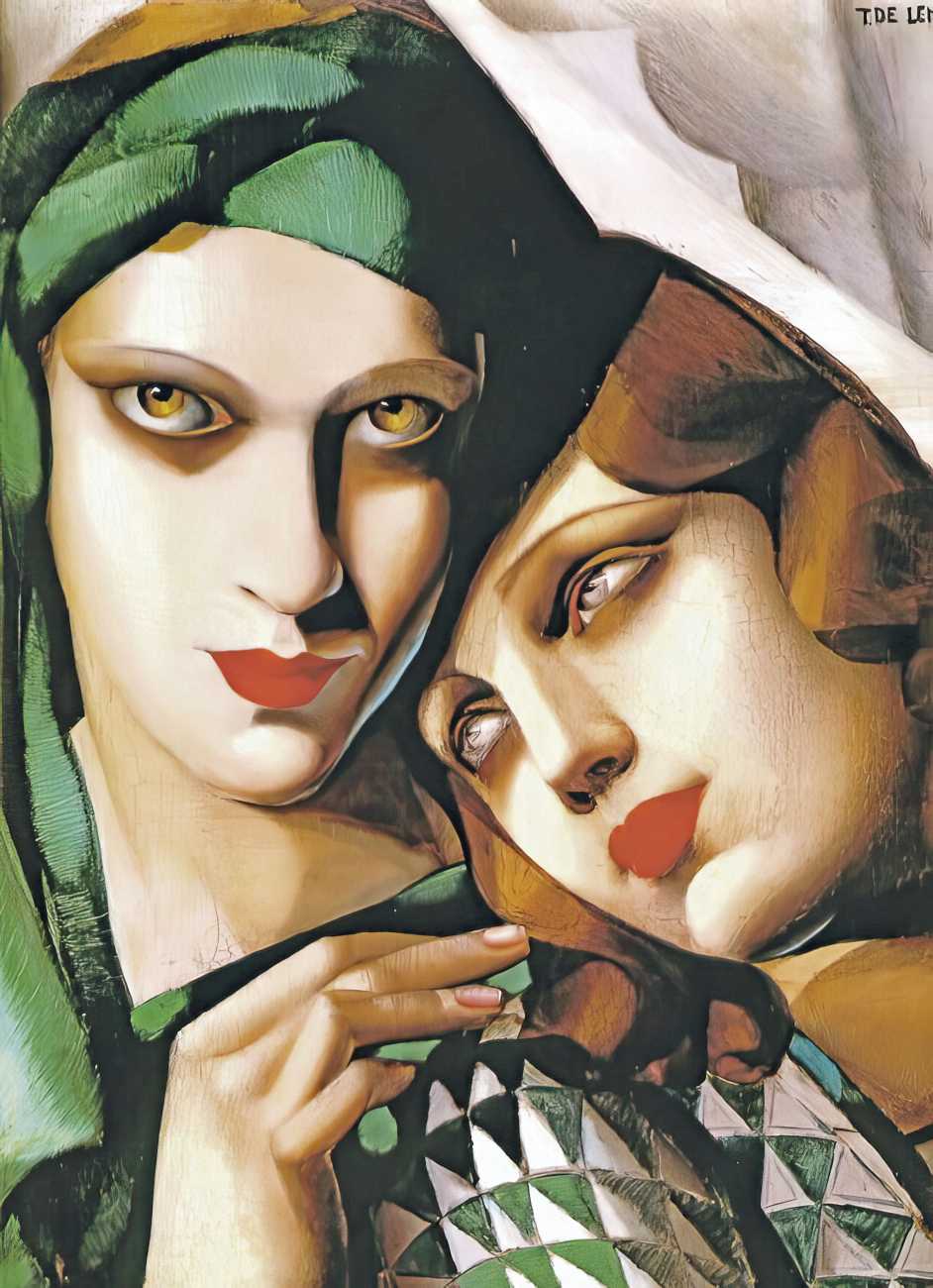
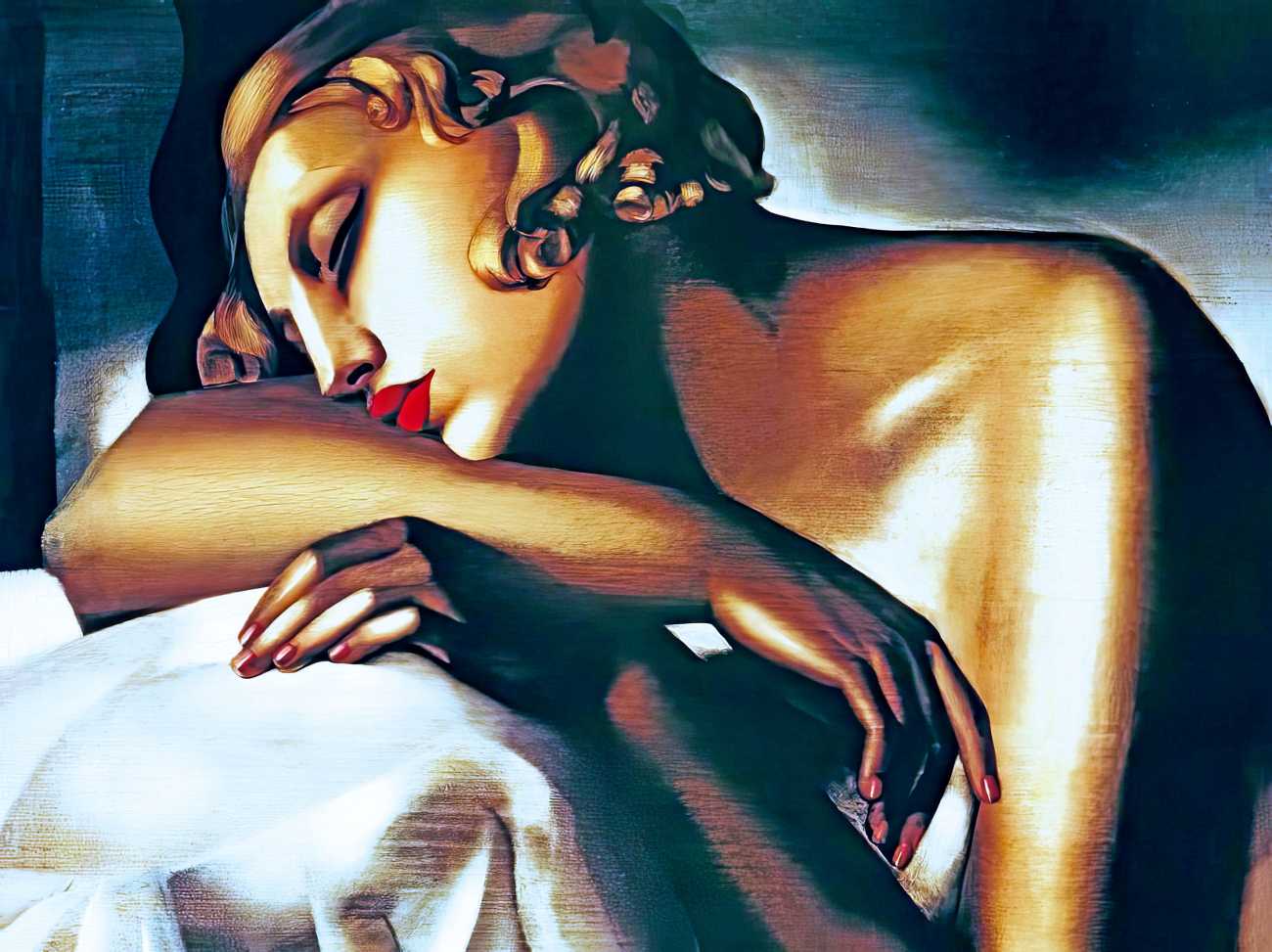
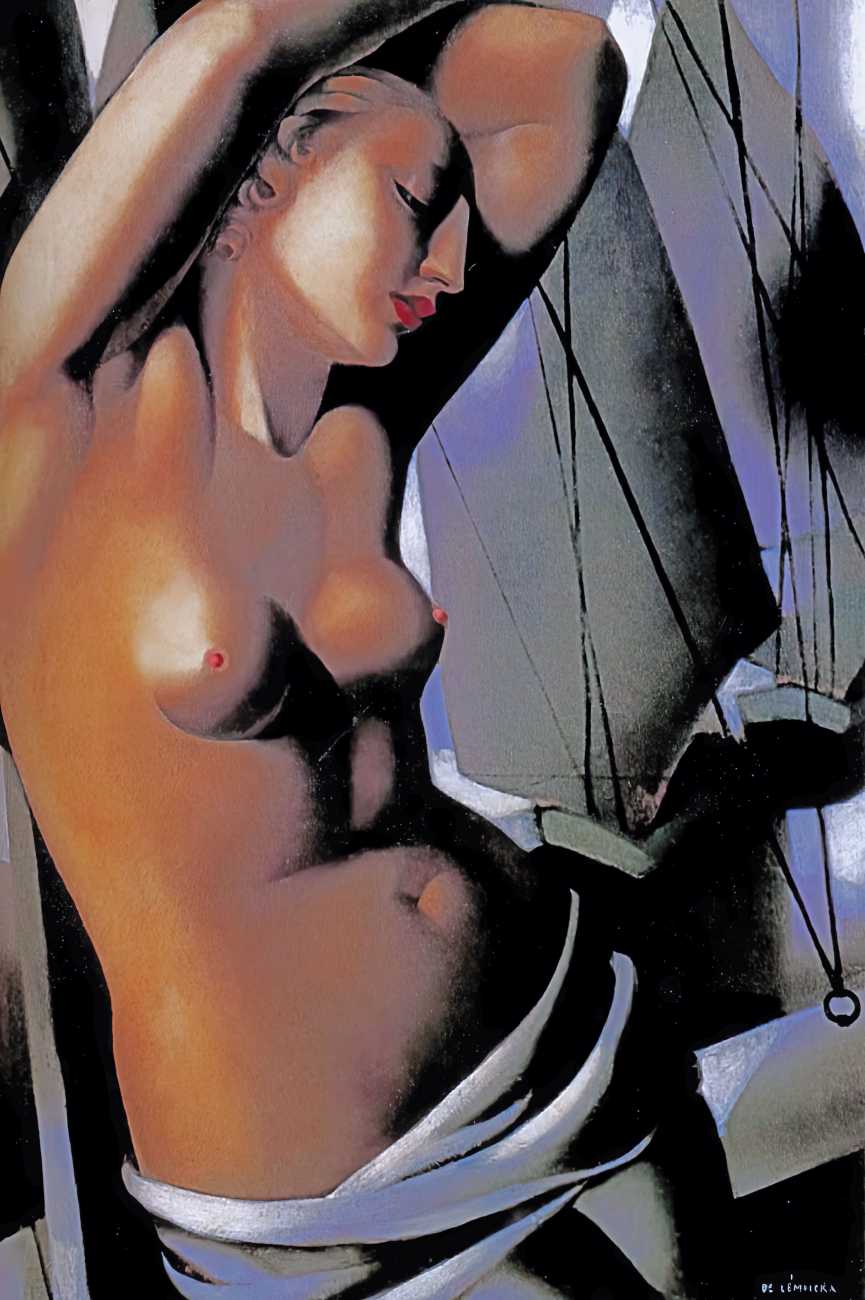
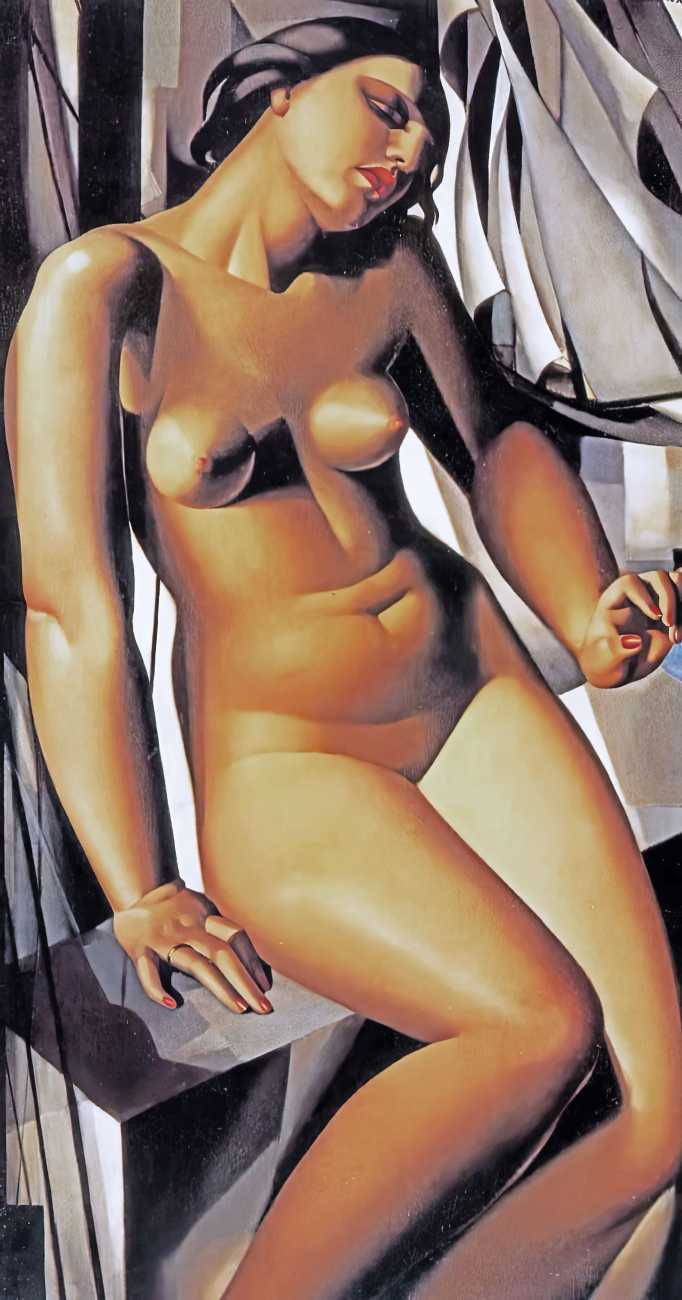
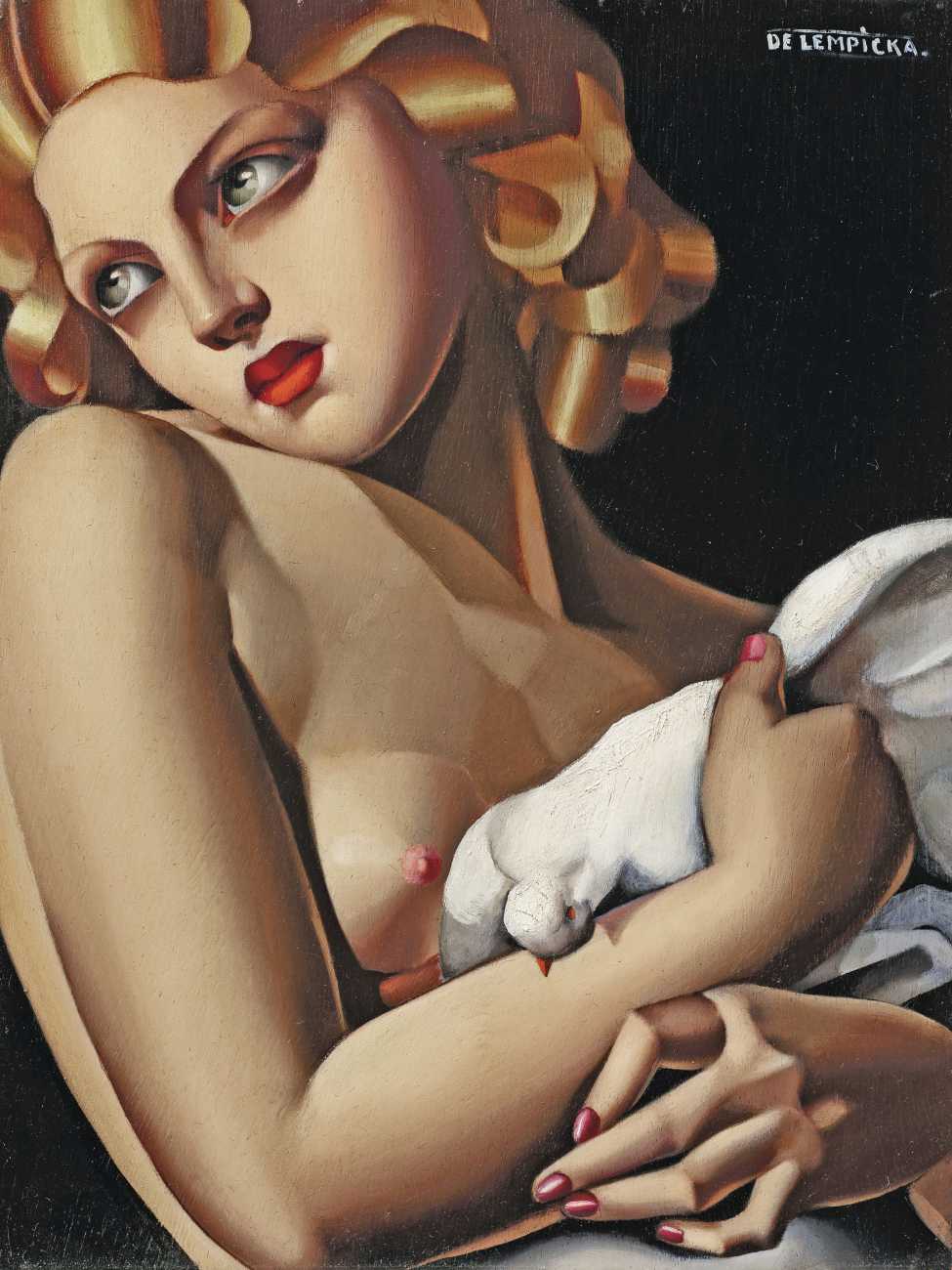
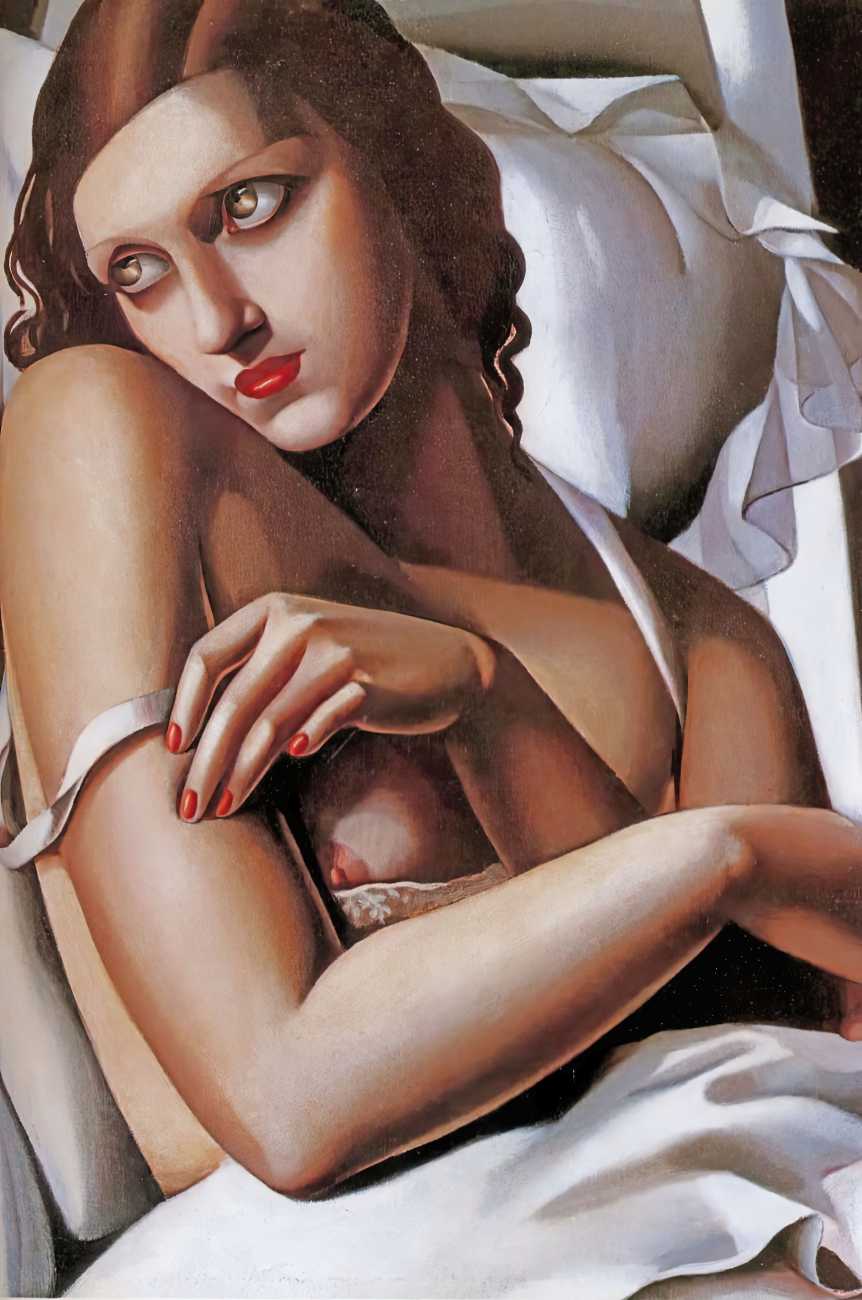
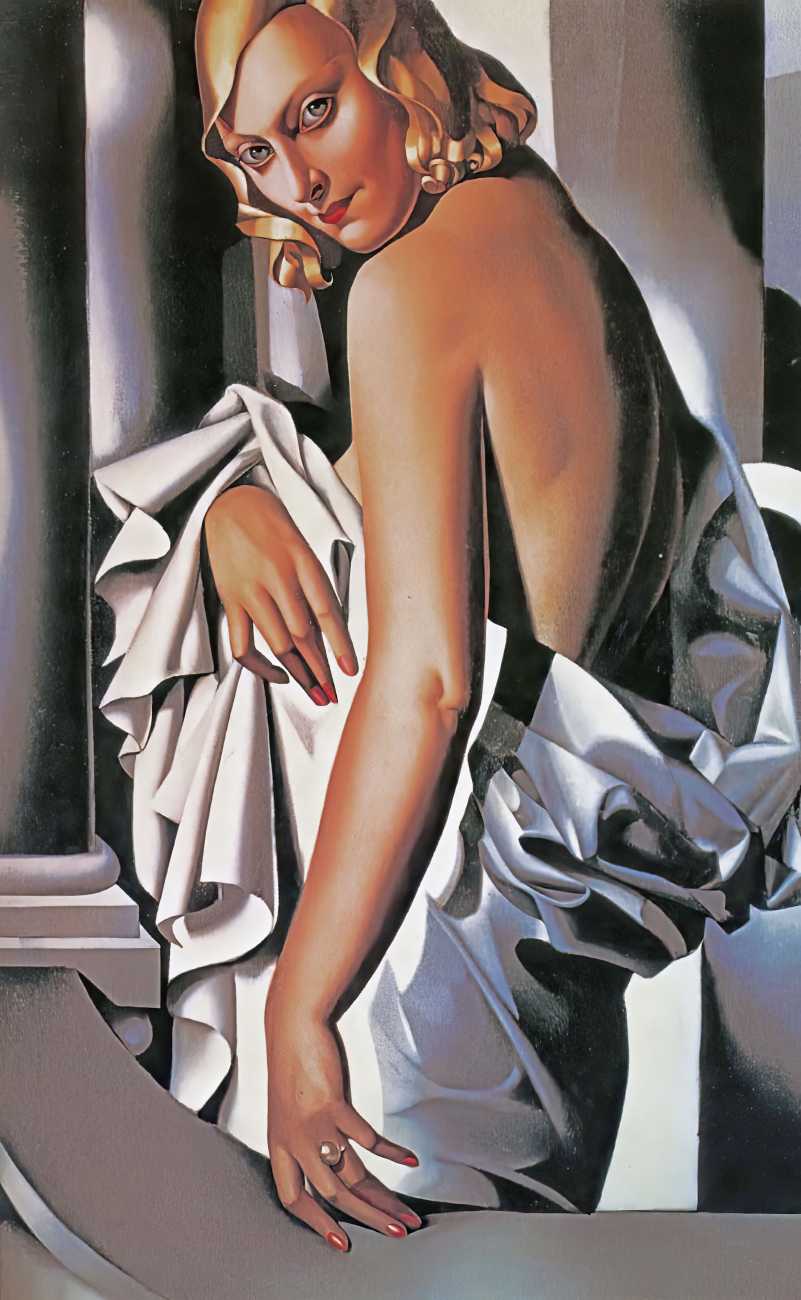
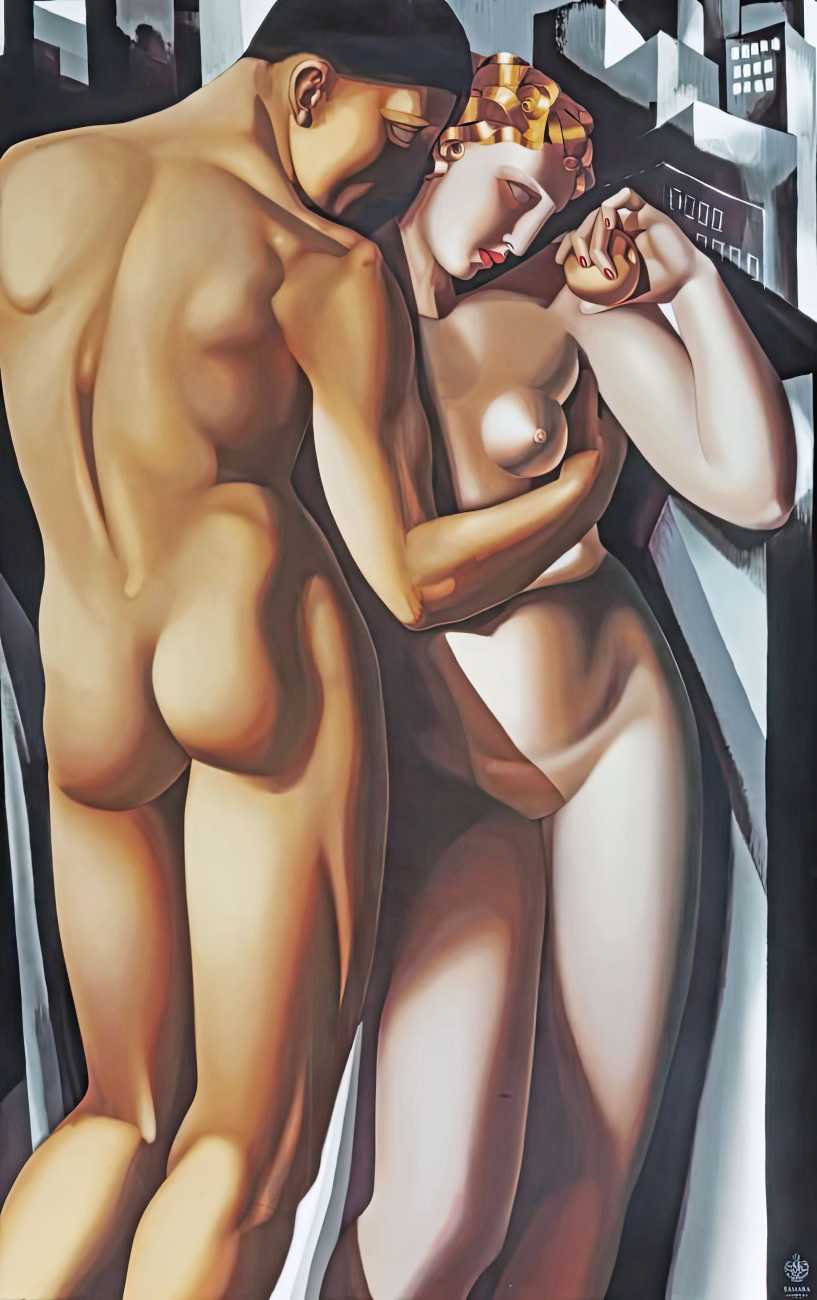
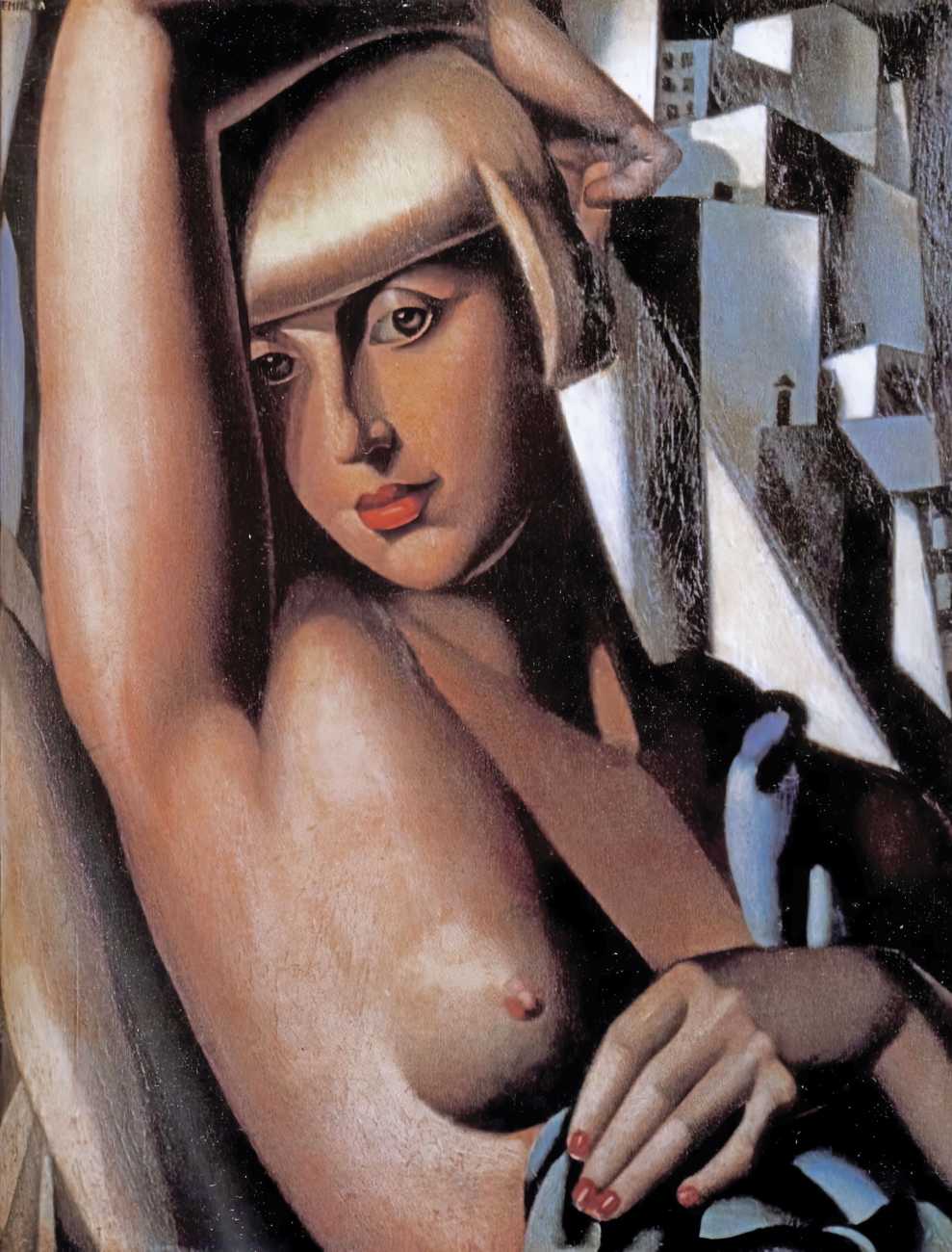
Whether Tamara de Lempicka can be described as an erotic artist depends largely on how eroticism itself is defined. She did not produce explicit sexual imagery in the traditional sense, nor did she work within the underground traditions often associated with erotic art. Yet sexuality – charged, stylised, and unapologetically modern – is central to her work, making eroticism a crucial component of her artistic identity.
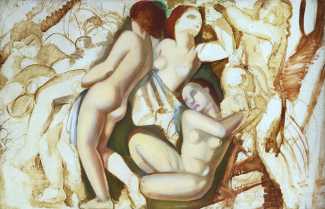
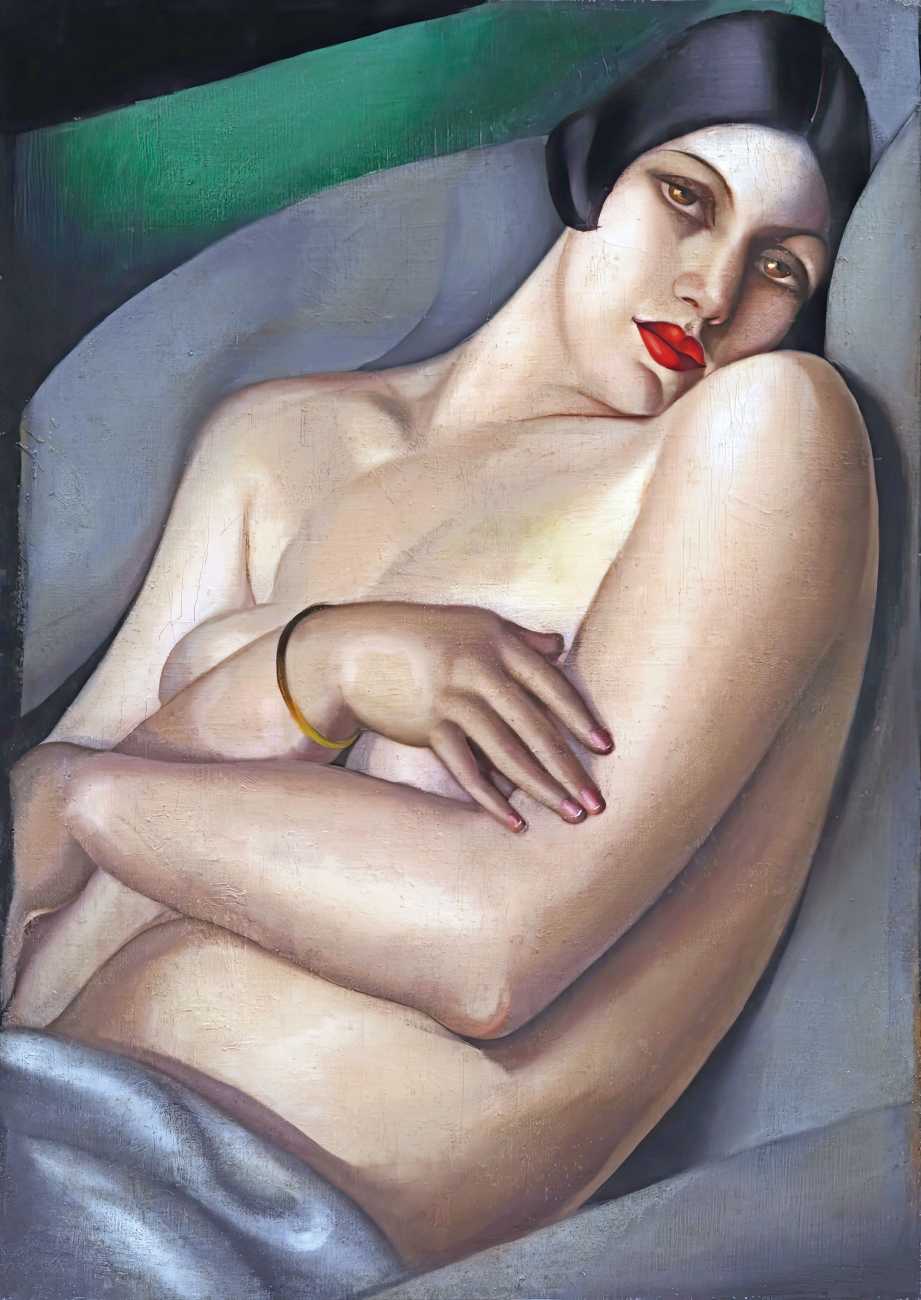
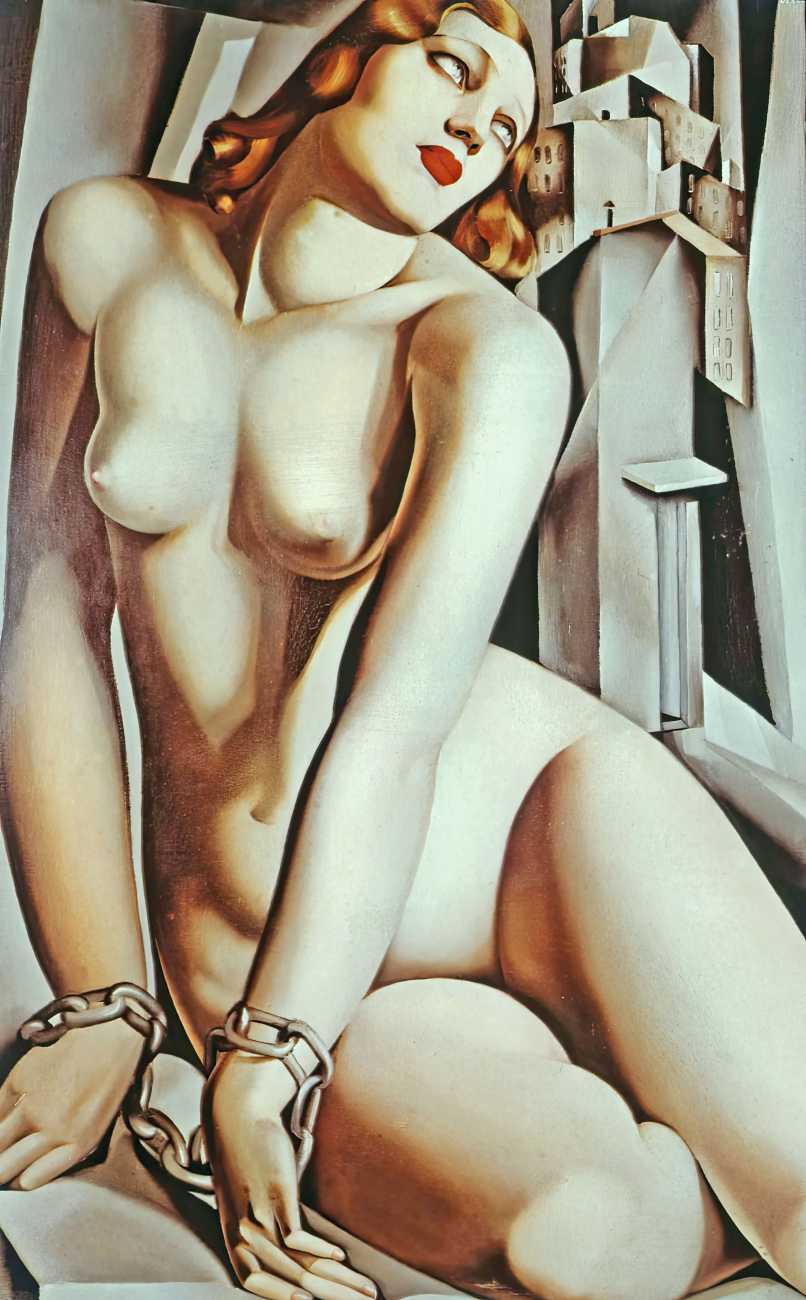
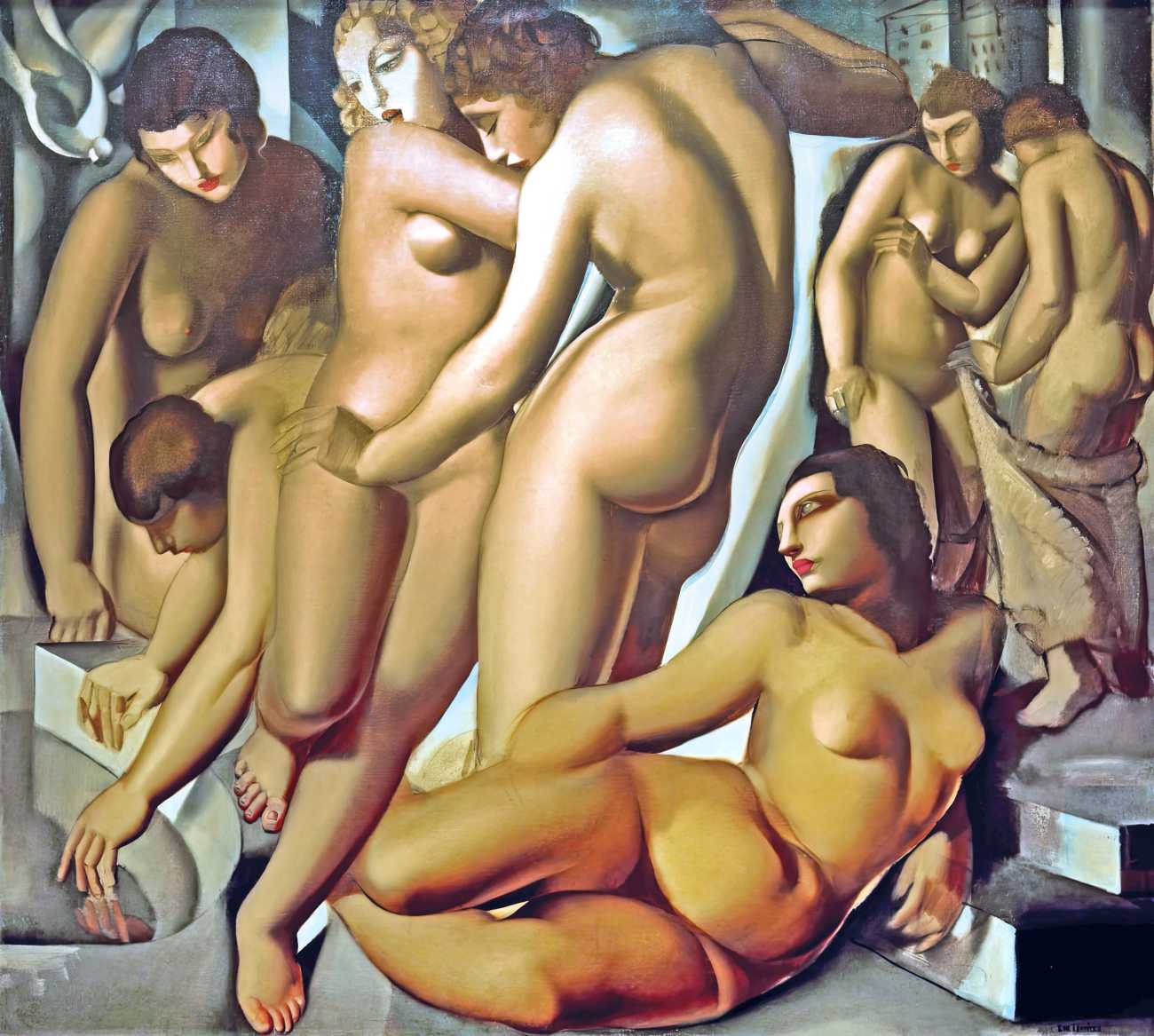
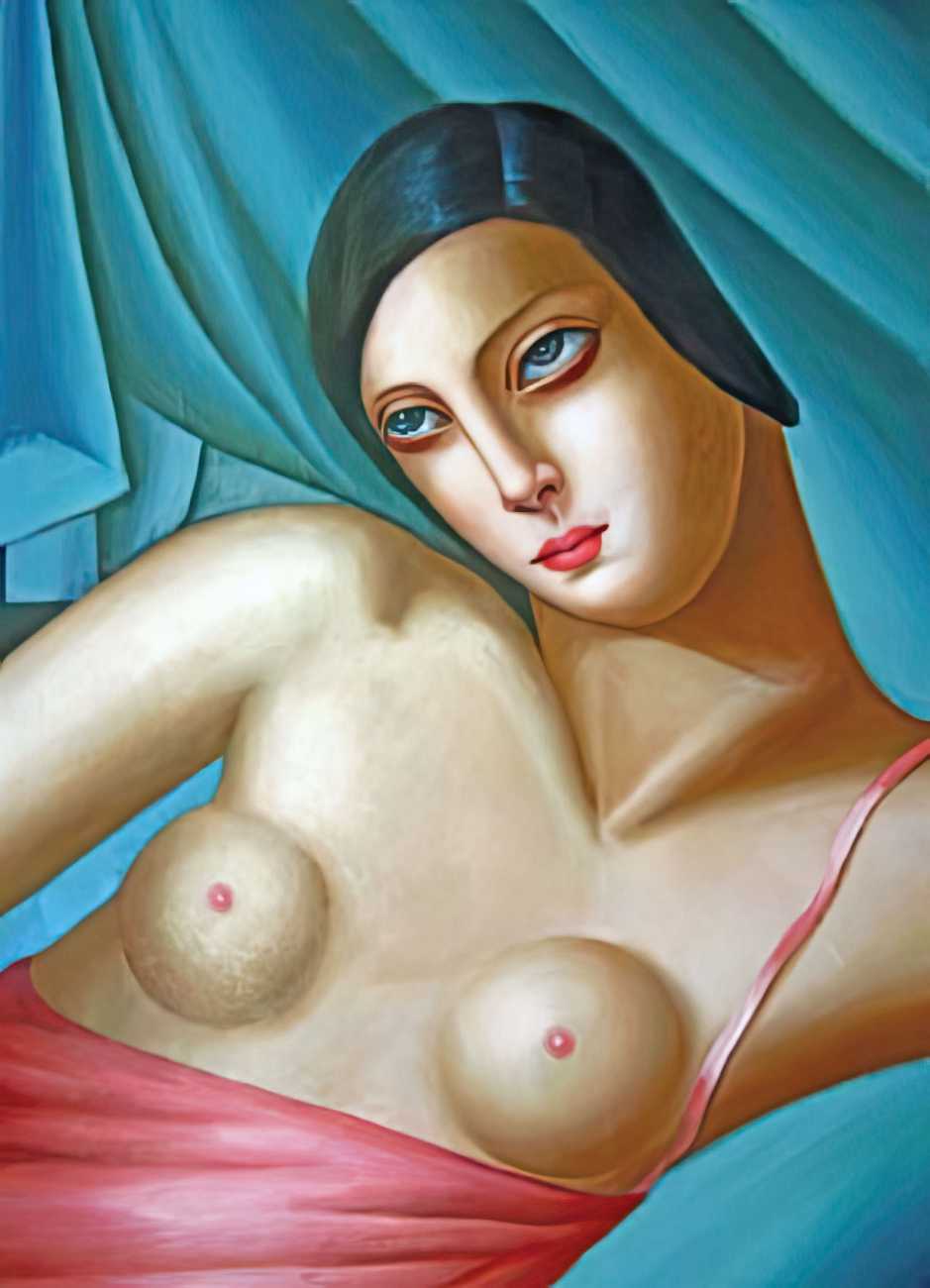
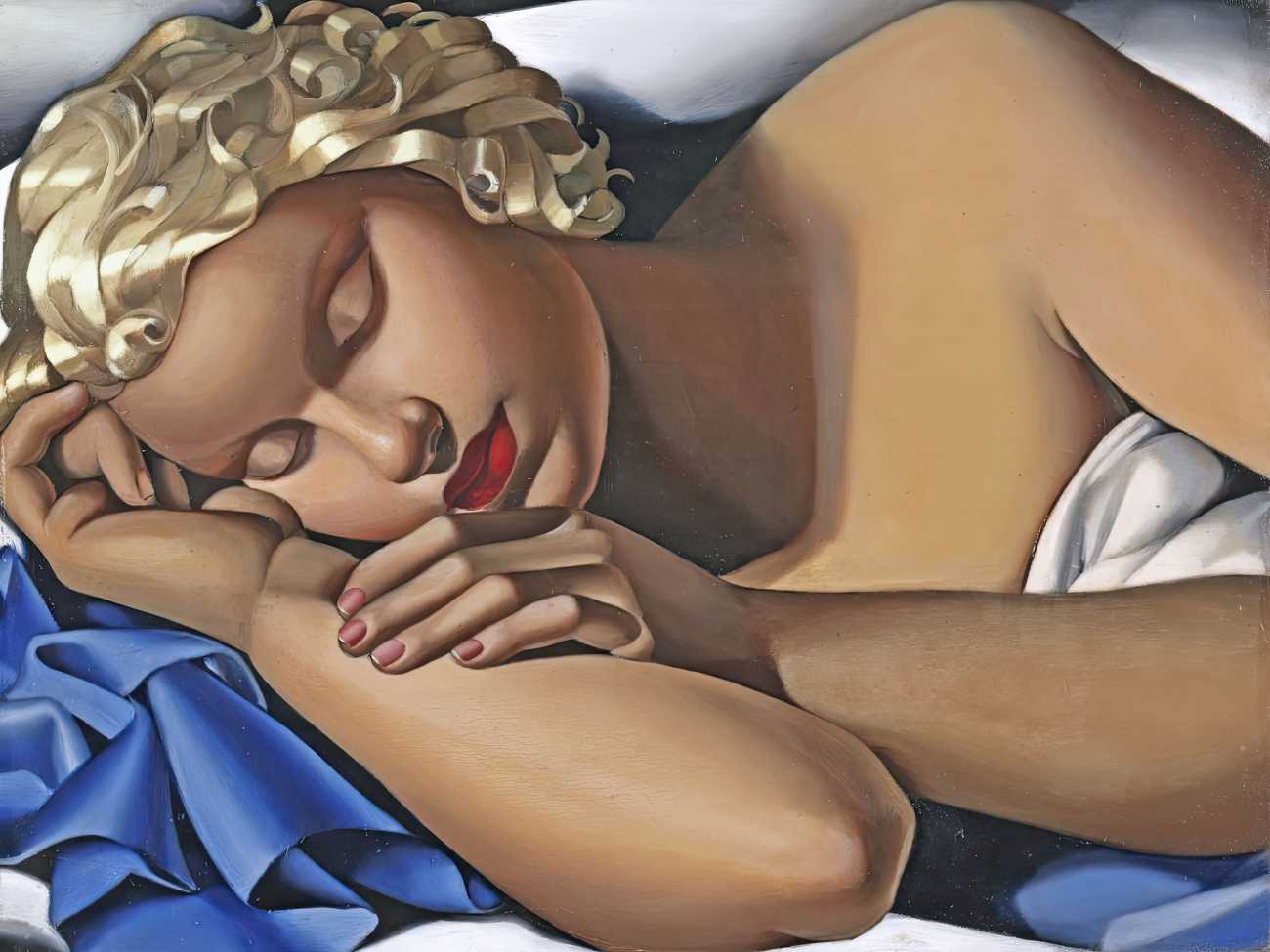
De Lempicka’s eroticism is primarily psychological and aesthetic rather than narrative or explicit. Her paintings of naked women, especially from the mid-1920s, are defined by a striking combination of sensuality and control. Her bodies are smooth, sculptural, and idealised, rendered with glossy precision that mirrors classical marble and contemporary fashion illustration. Flesh appears hard, cool, and almost metallic, creating a tension between physical availability and emotional distance, and this distancing effect is key – desire is present, but never soft or romanticised.
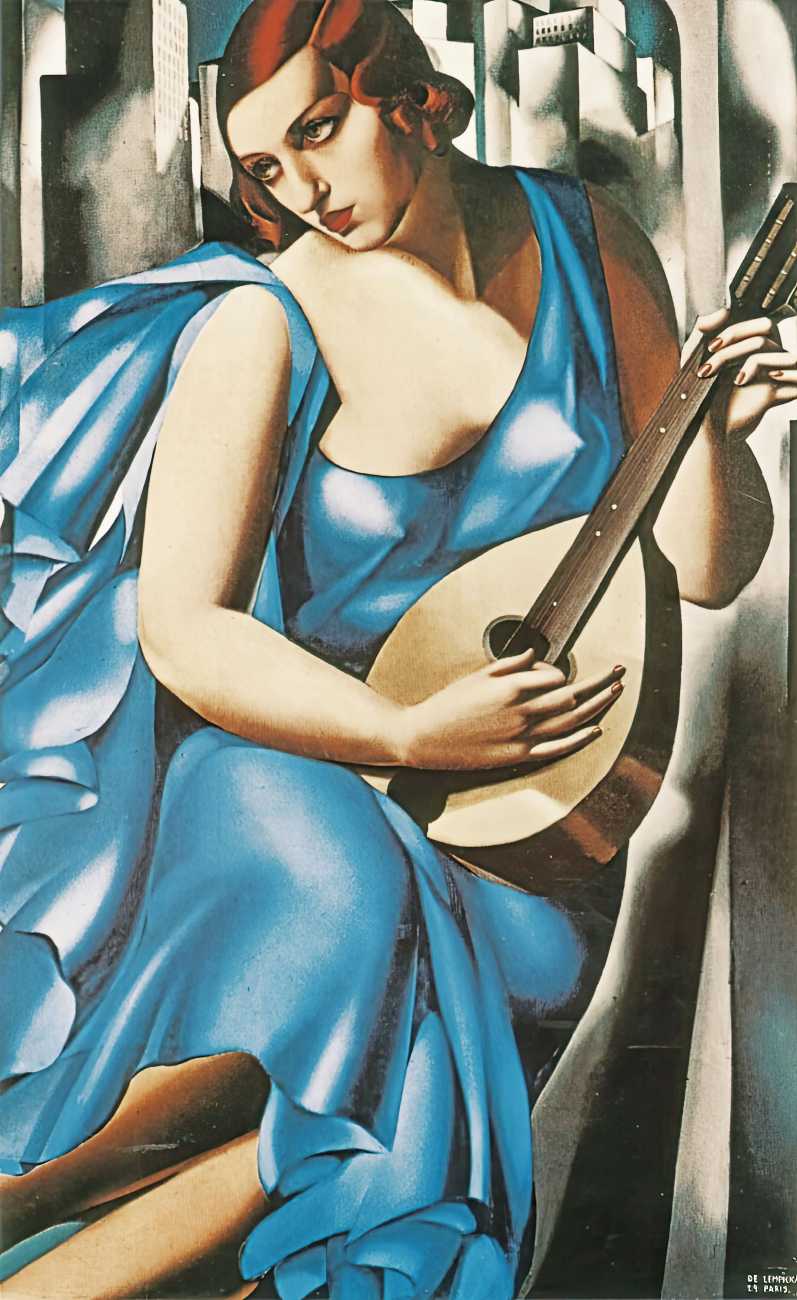
Her most overtly erotic works derive much of their power from the artist’s gaze. De Lempicka’s women are not passive objects of male desire but assertive, self-possessed figures who meet the viewer’s eyes or recline with deliberate confidence. The erotic charge lies less in the nudity itself than in attitude: the languid pose, parted lips, heavy eyelids, and sculpted curves signal pleasure without submission. In this sense, her eroticism aligns closely with her personal life and bisexual relationships, offering a distinctly queer female perspective. De Lempicka’s eroticism is inseparable from power, luxury and modernity. Her figures inhabit a world of wealth, speed, and urban sophistication, where sexuality is a form of agency rather than transgression.
Ultimately Tamara de Lempicka can be understood as an artist who eroticised modern identity. Her art does not merely depict desire, it embodies a new vision of sexual confidence, one shaped by independence. In doing so, she occupies a distinctive position on the boundary between erotic art, portraiture and modernist self-mythology.
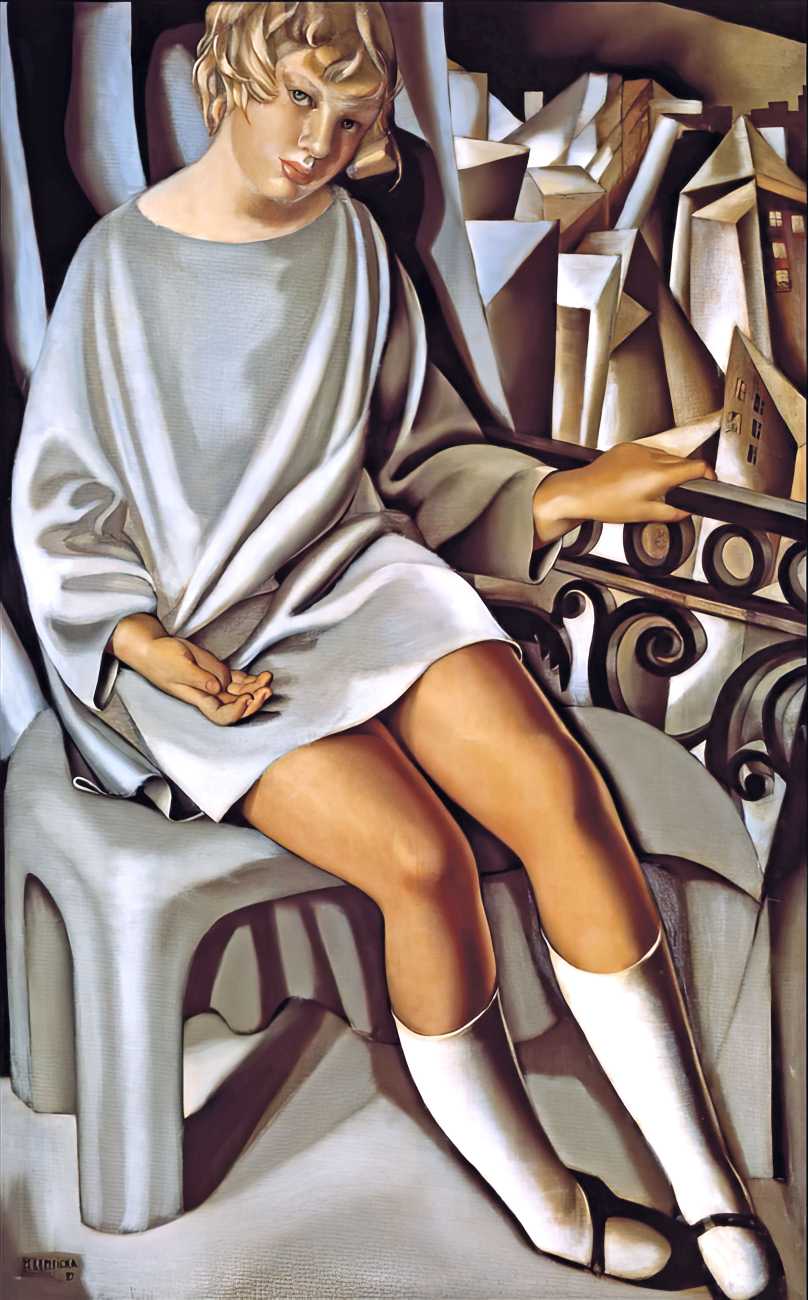
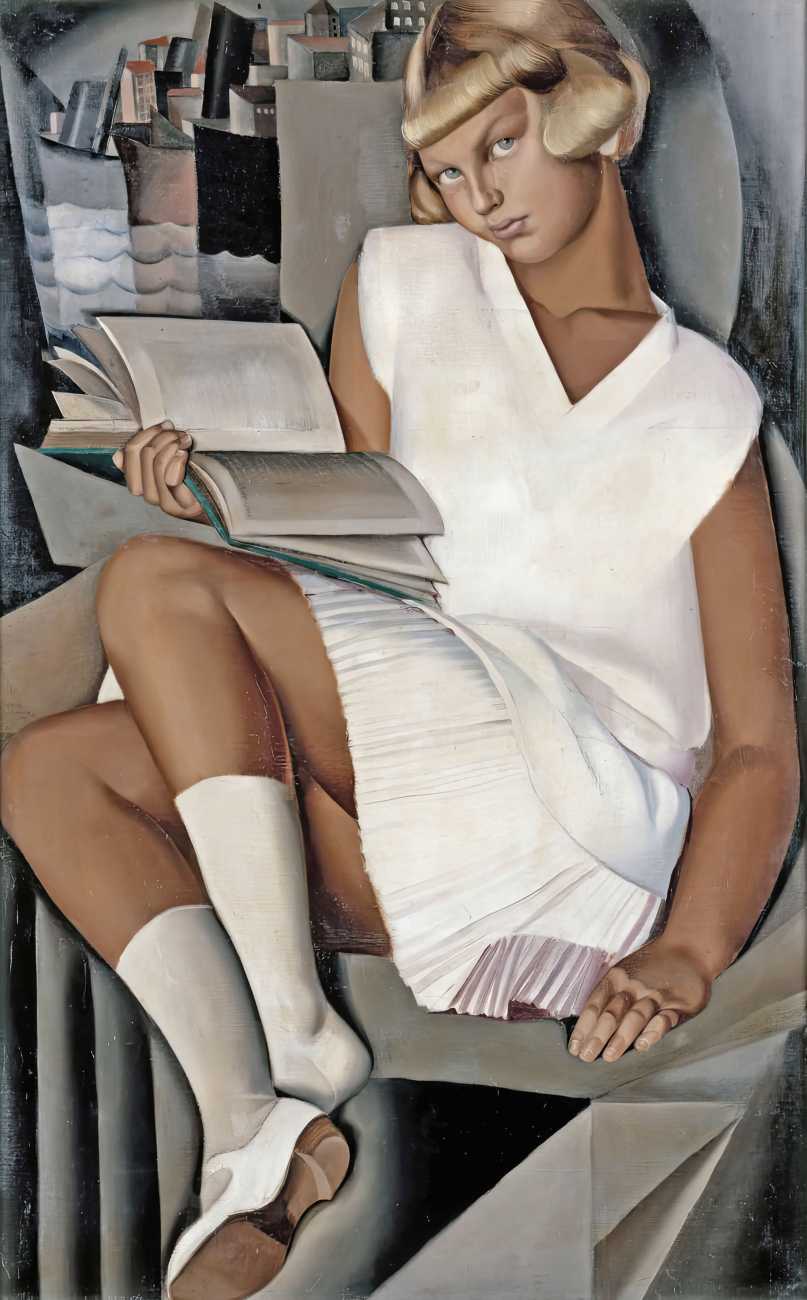
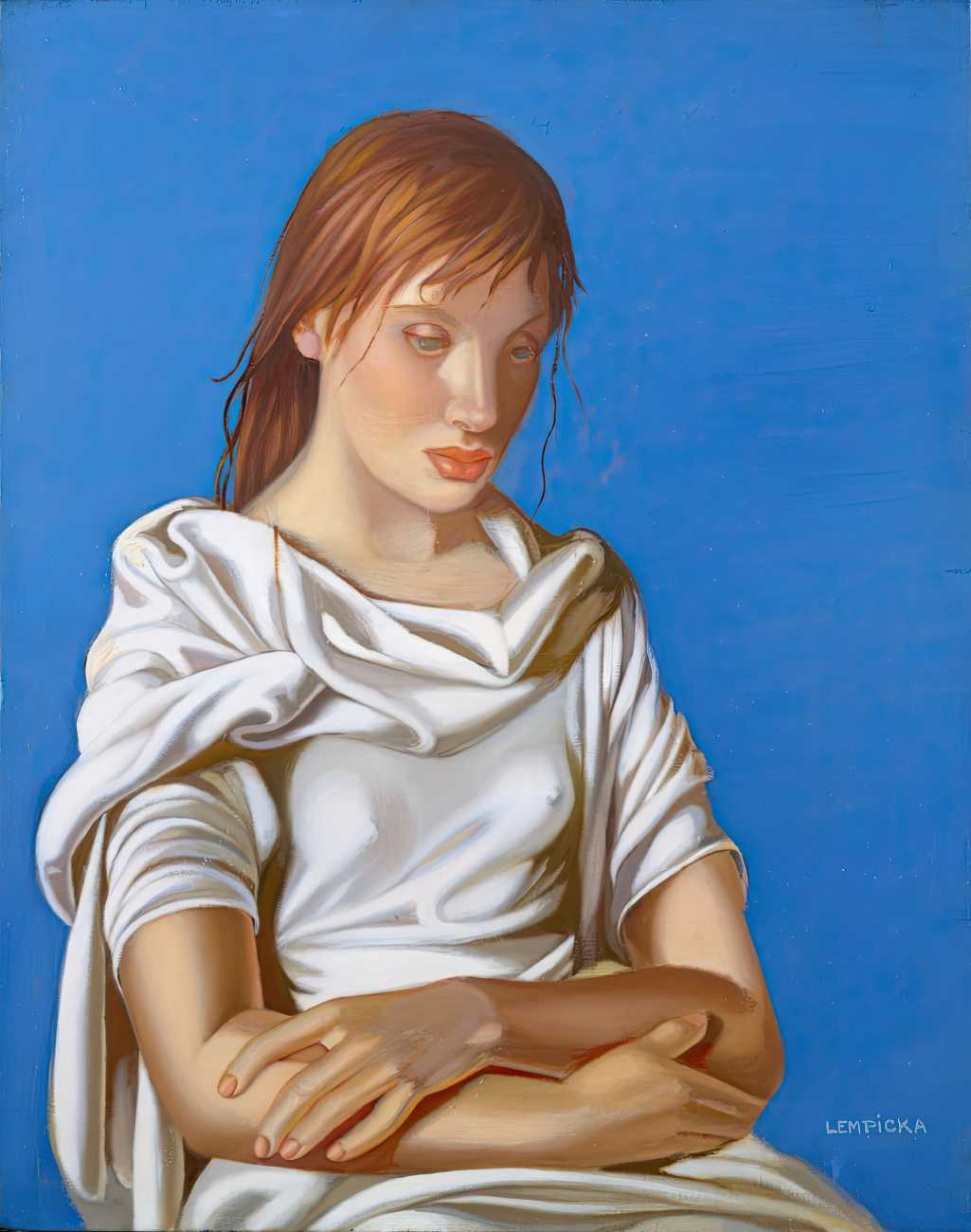
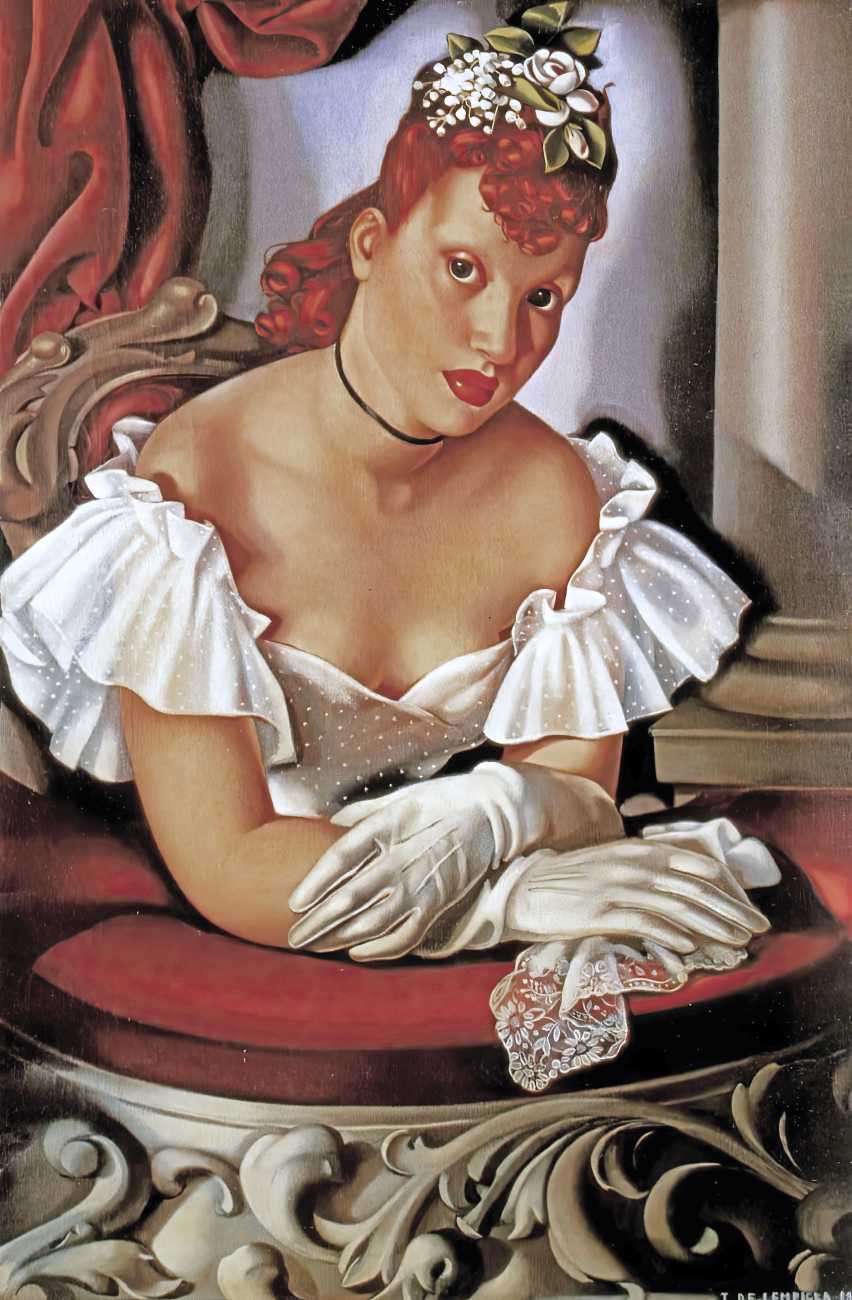
Tamara de Lempicka’s paintings are shown here in chronological order, from 1923 to 1939, after which her work became more abstract.