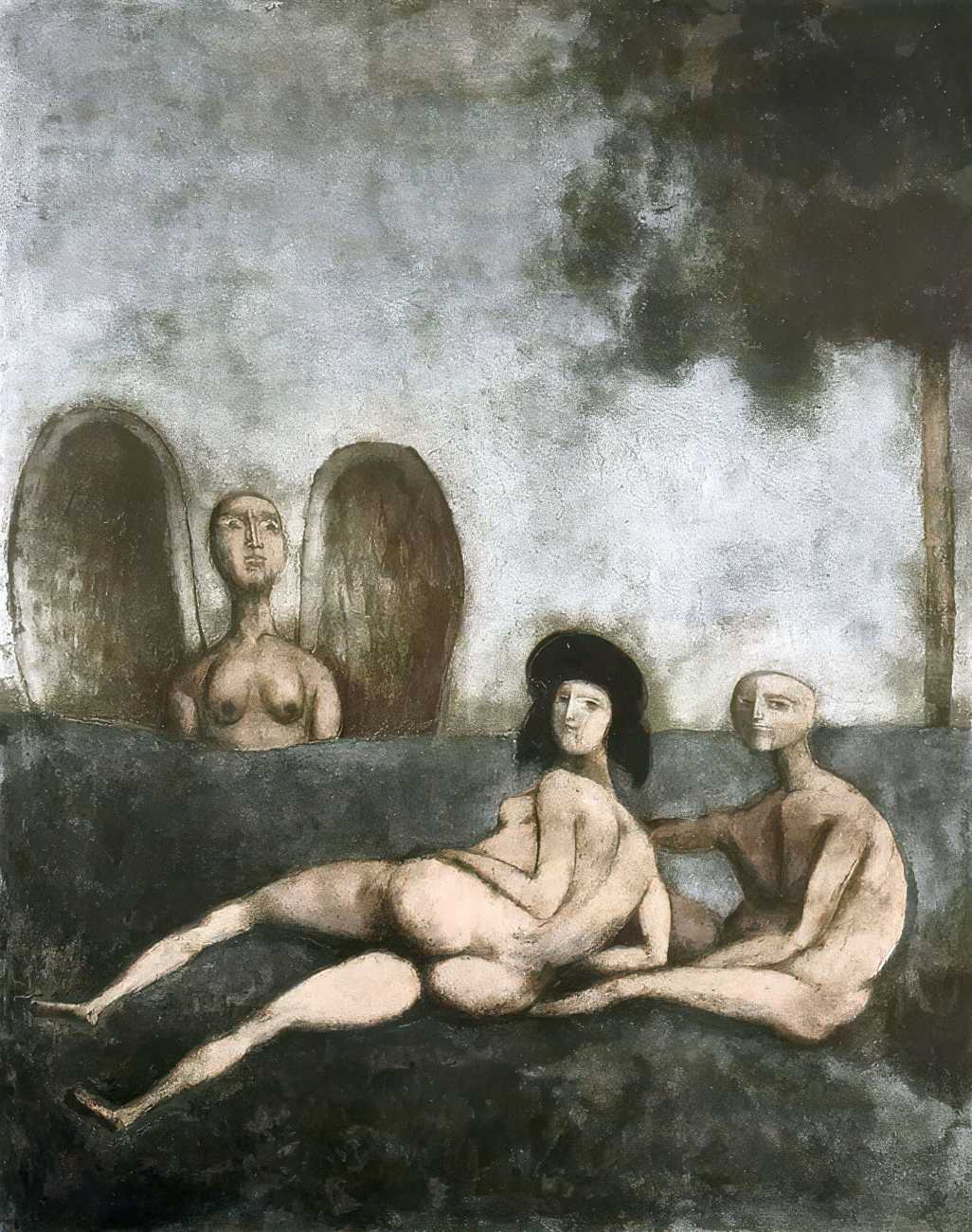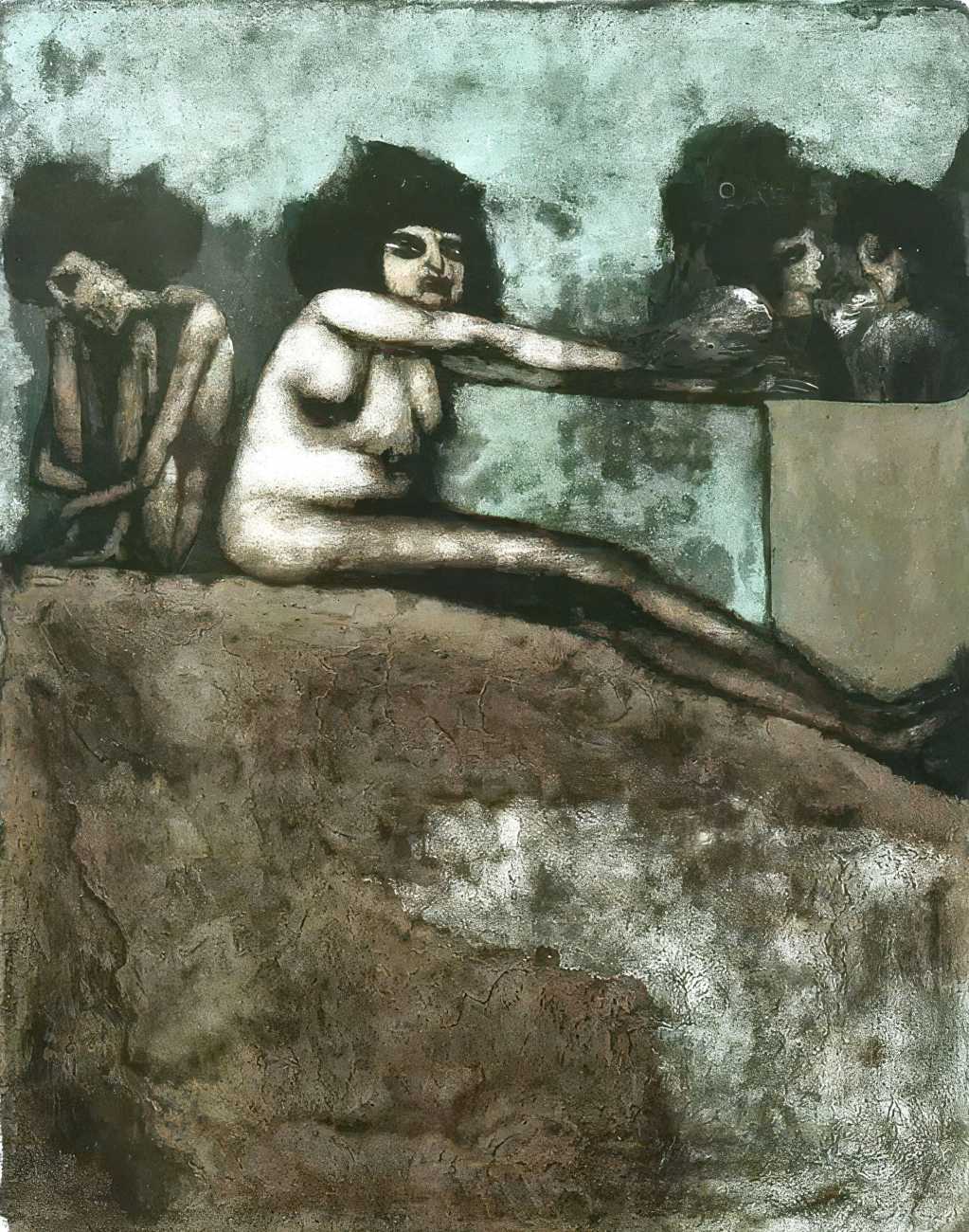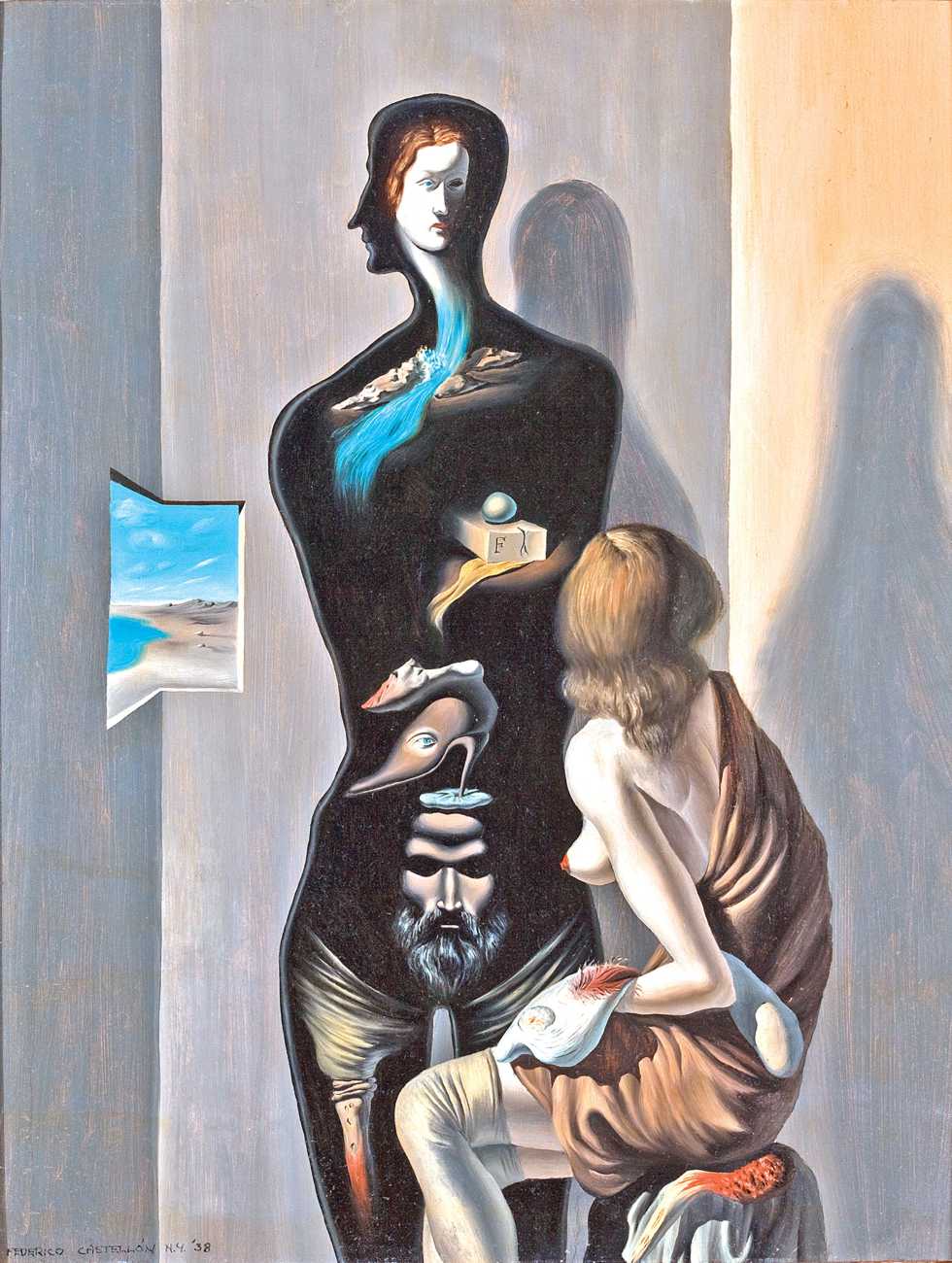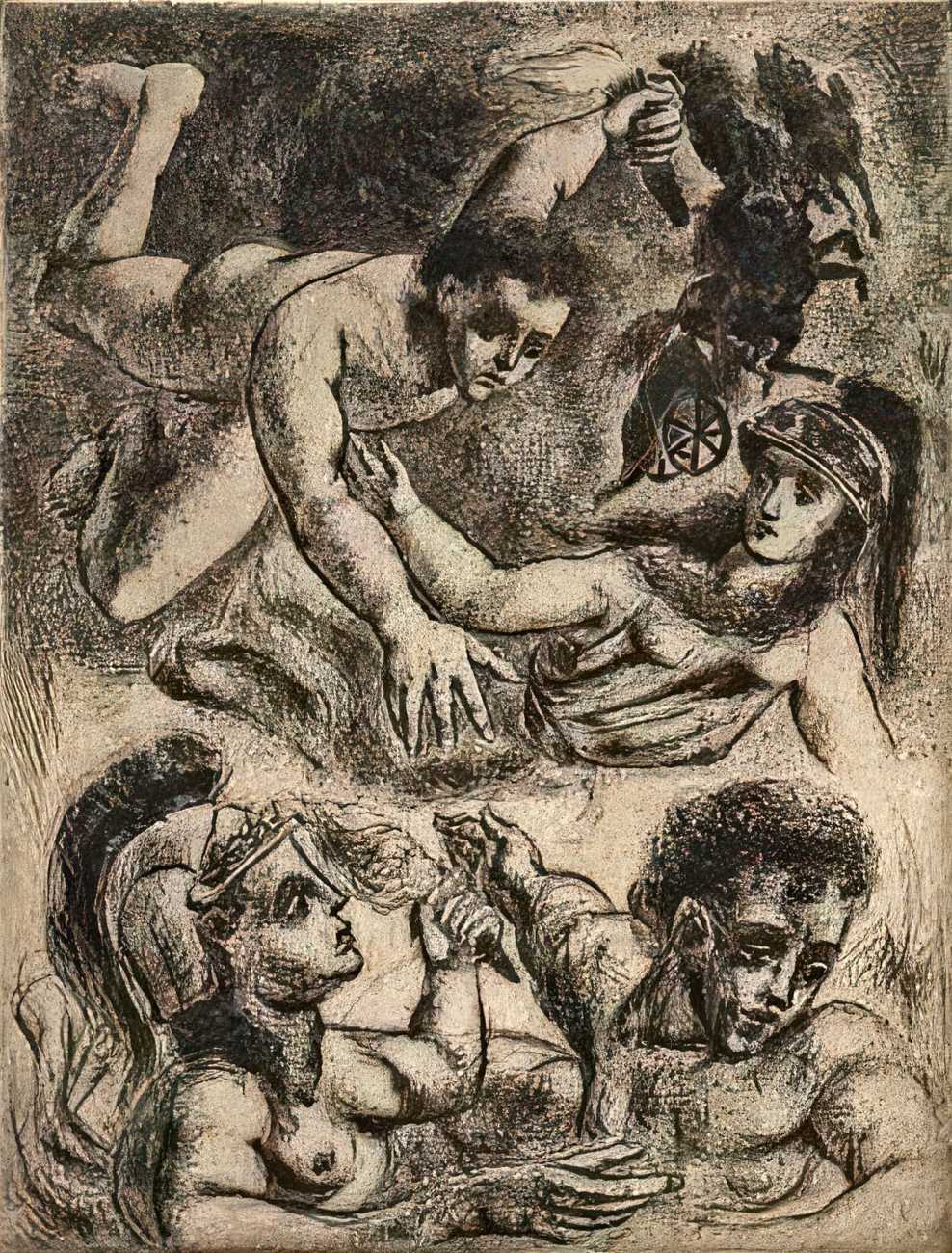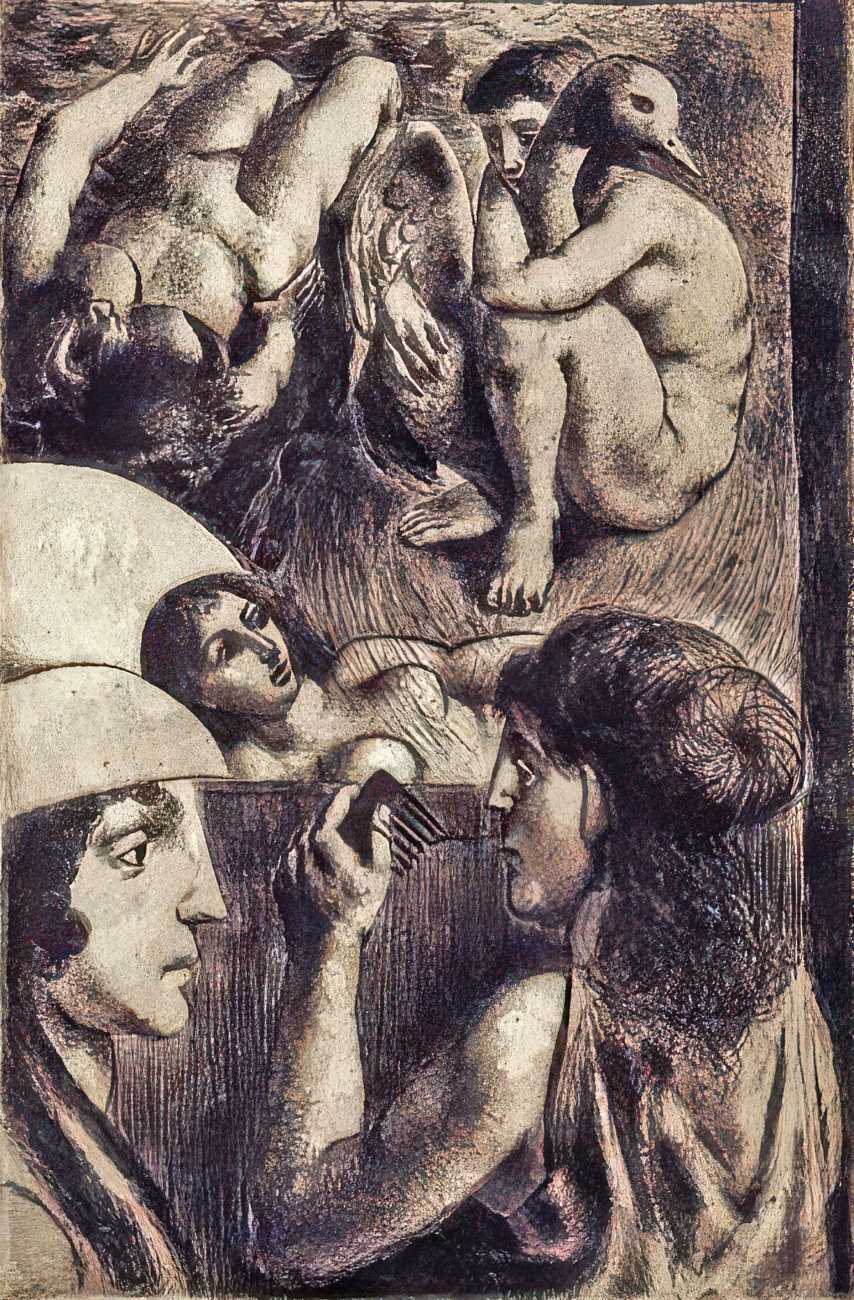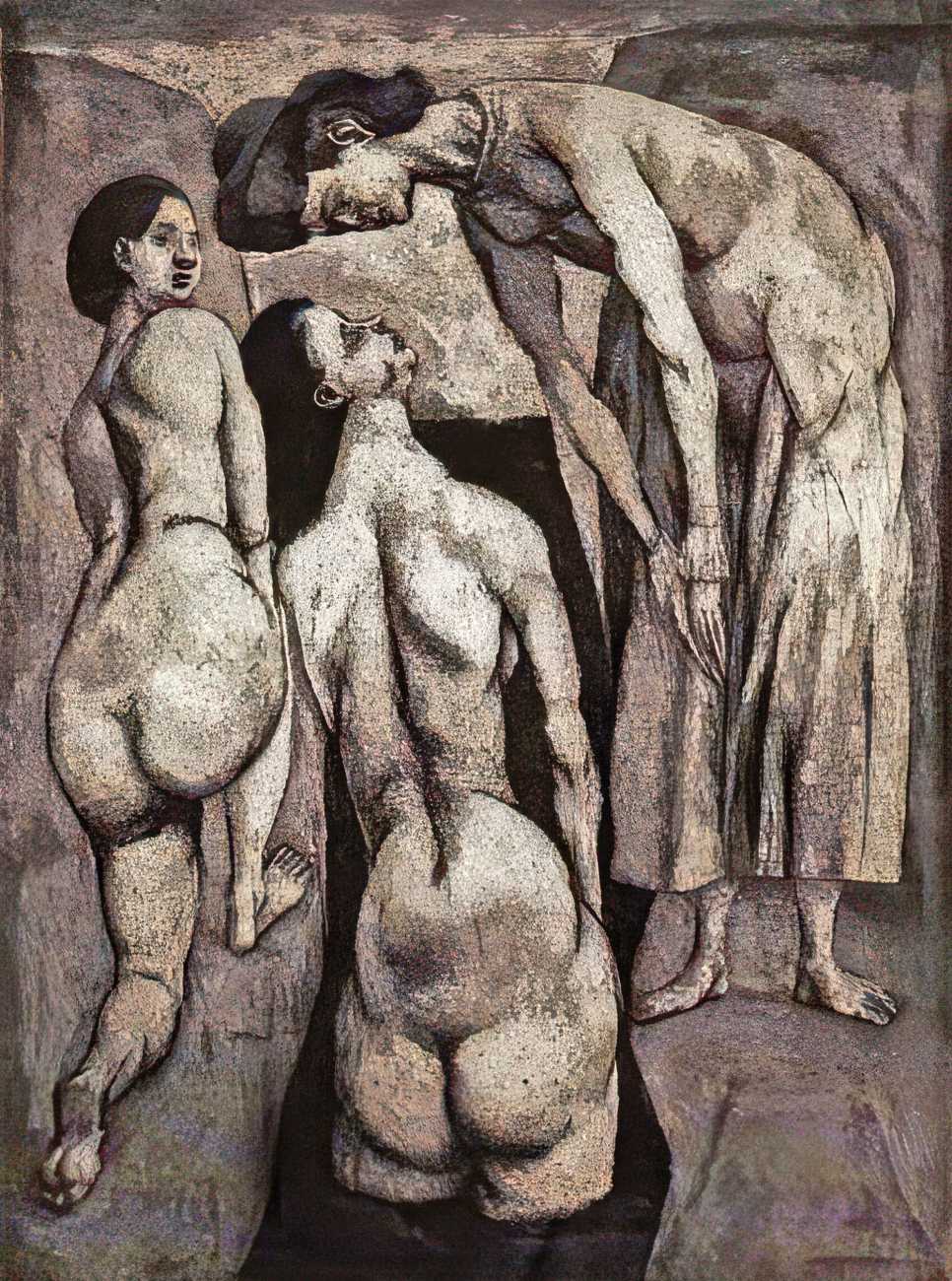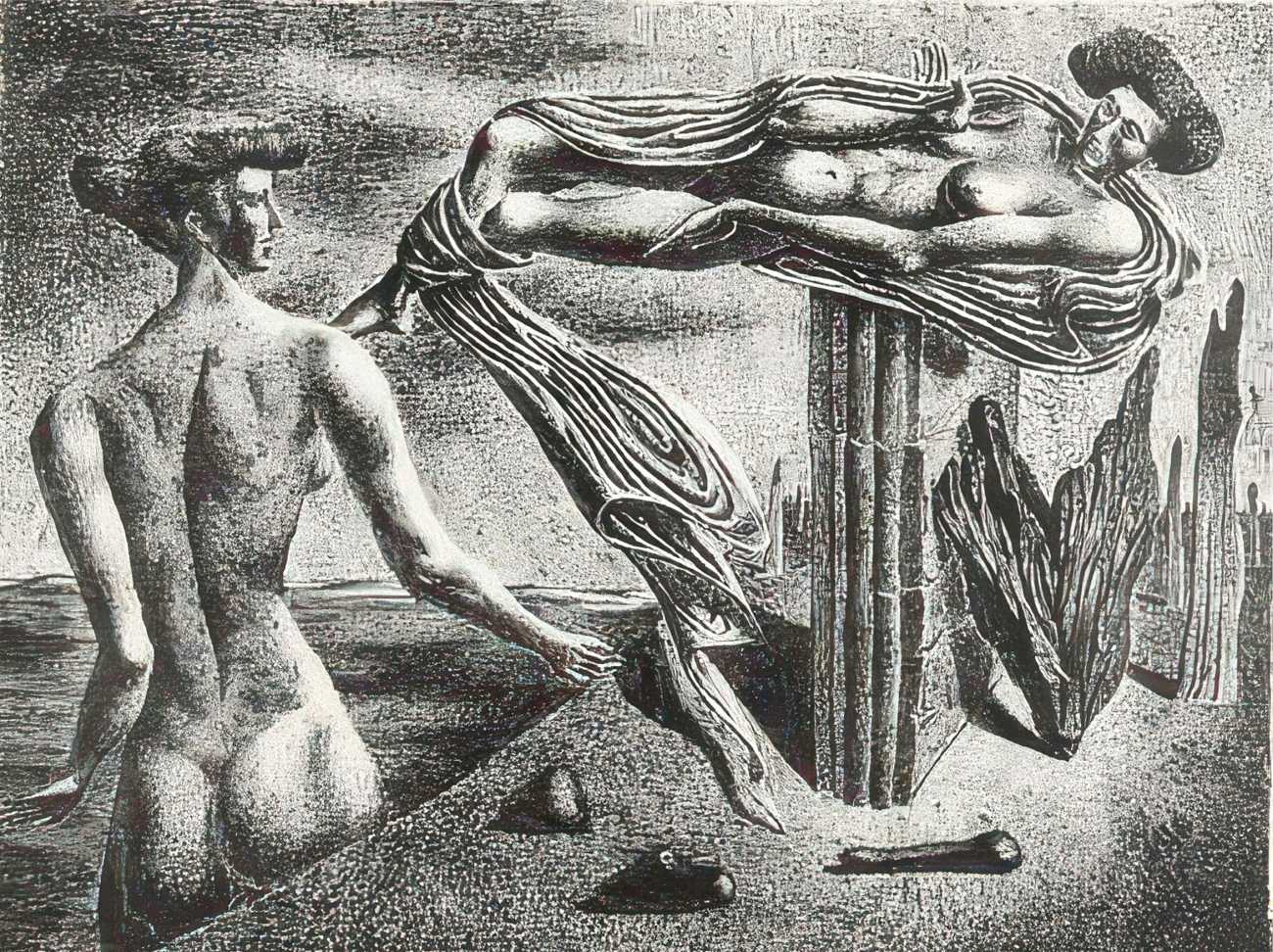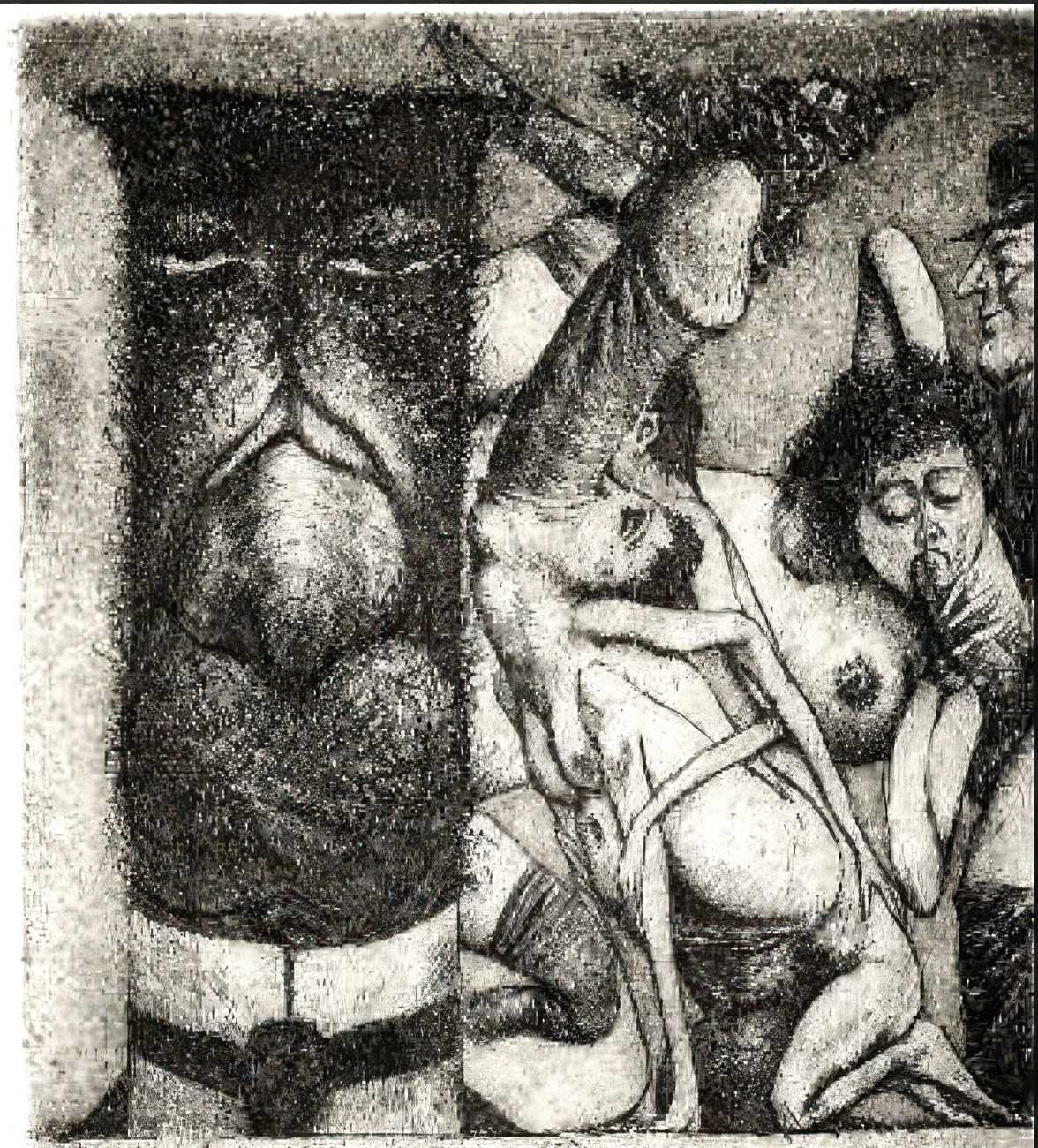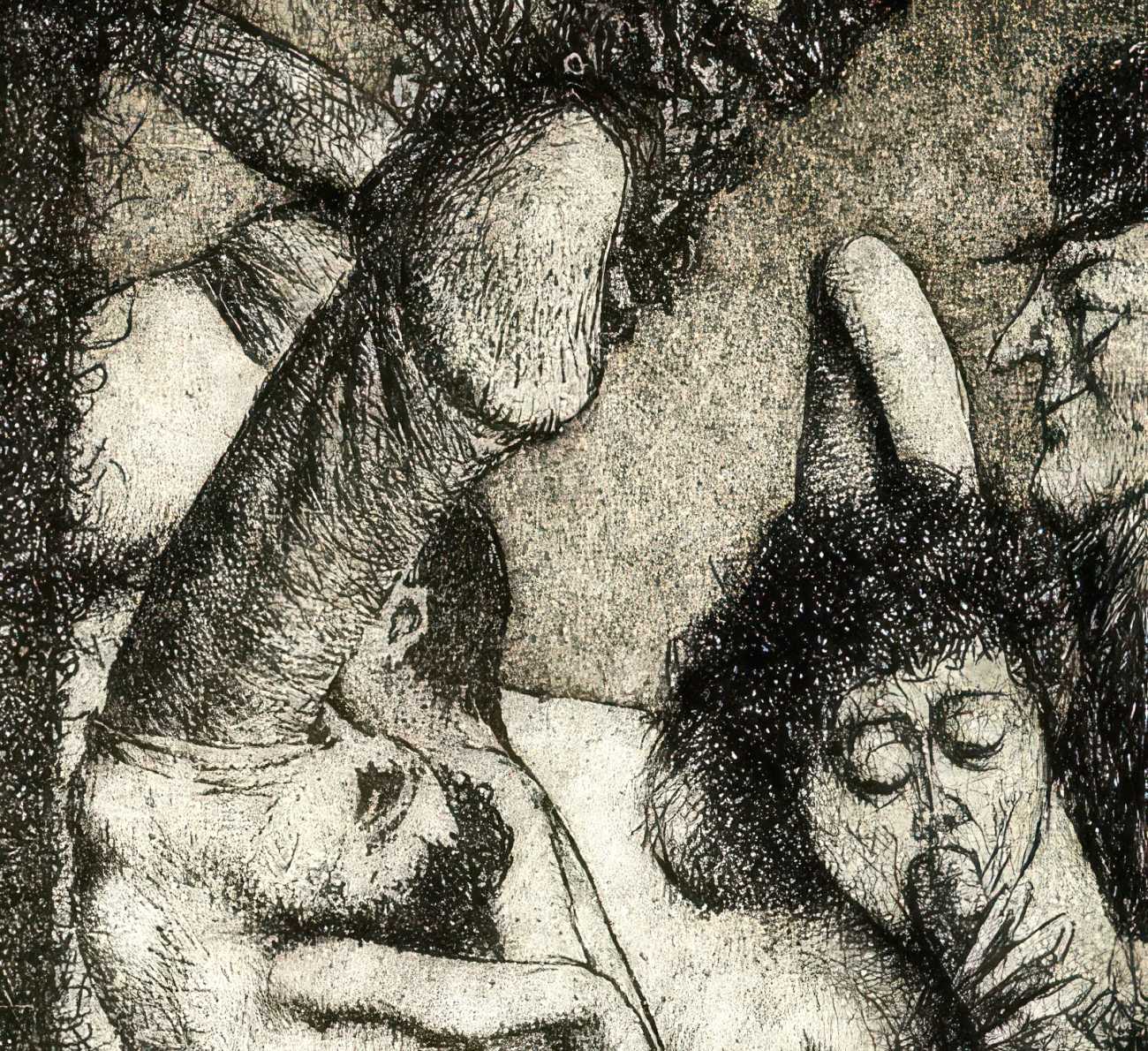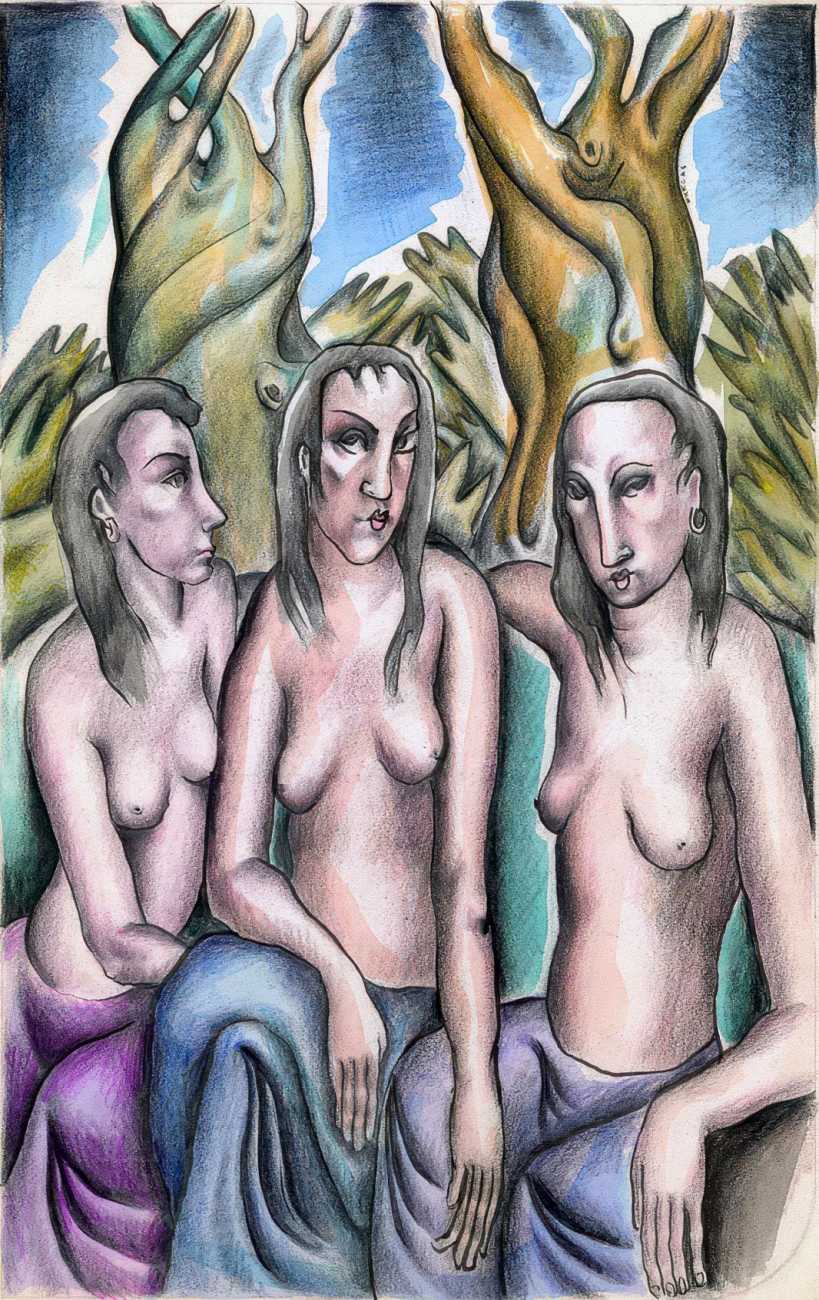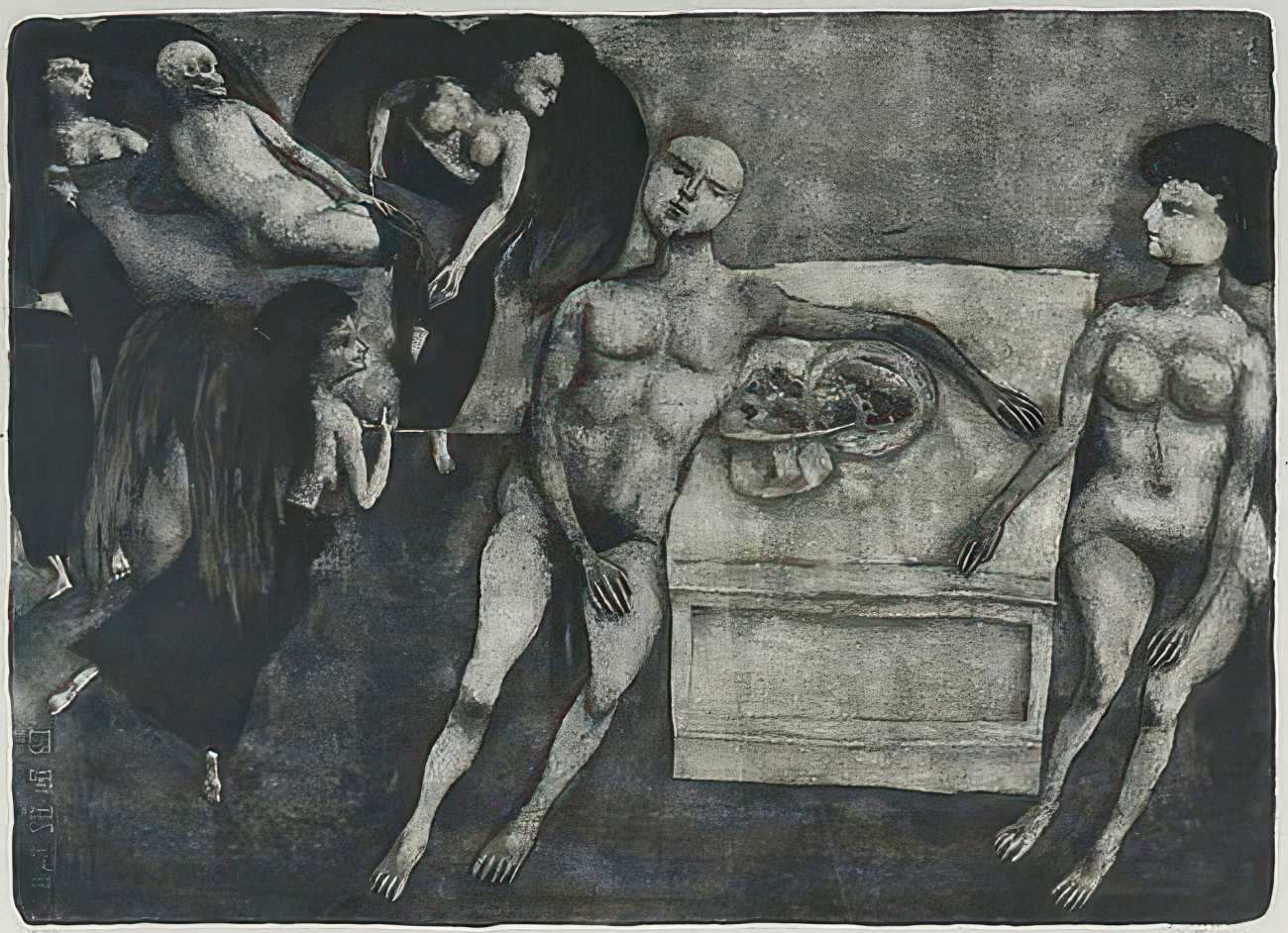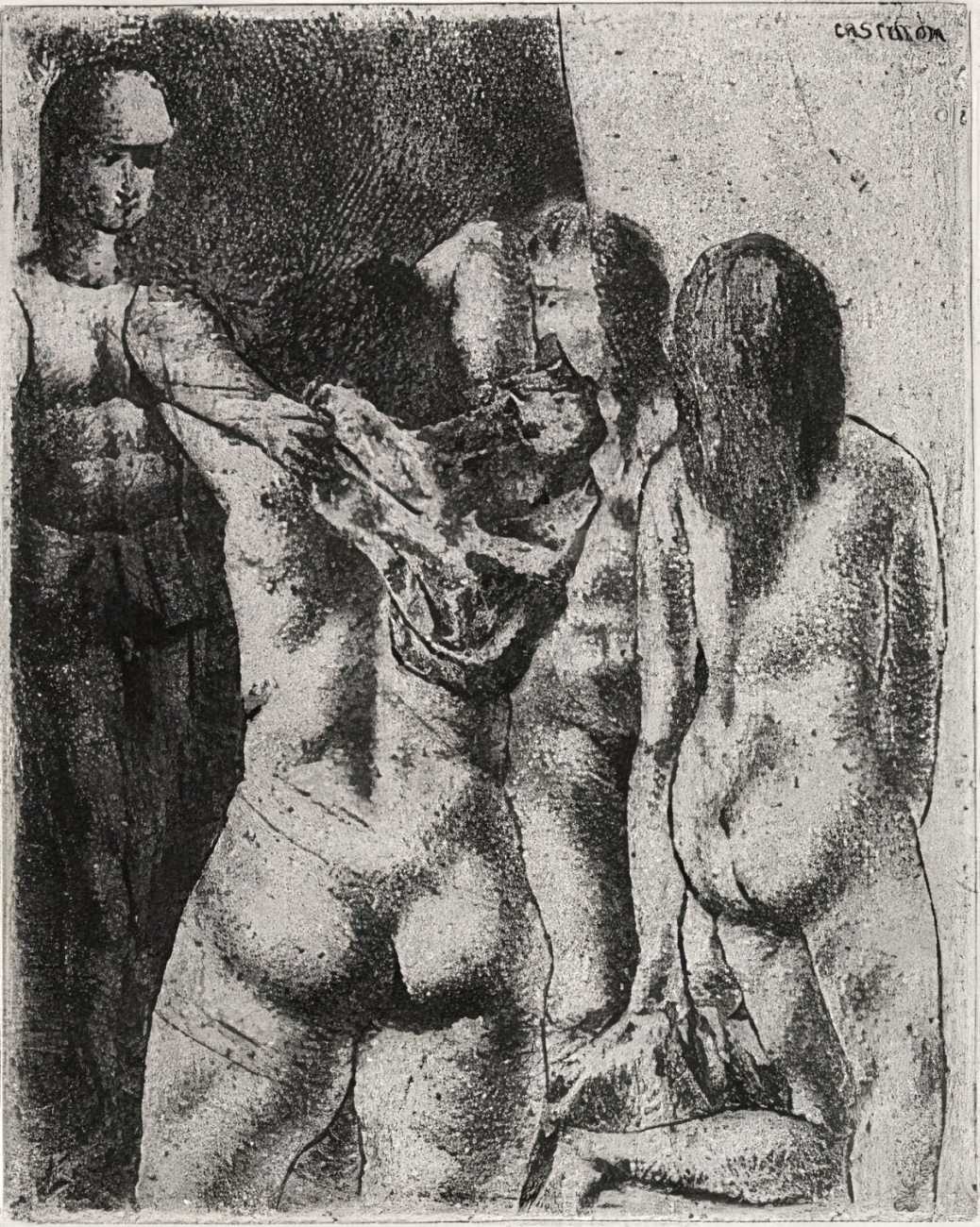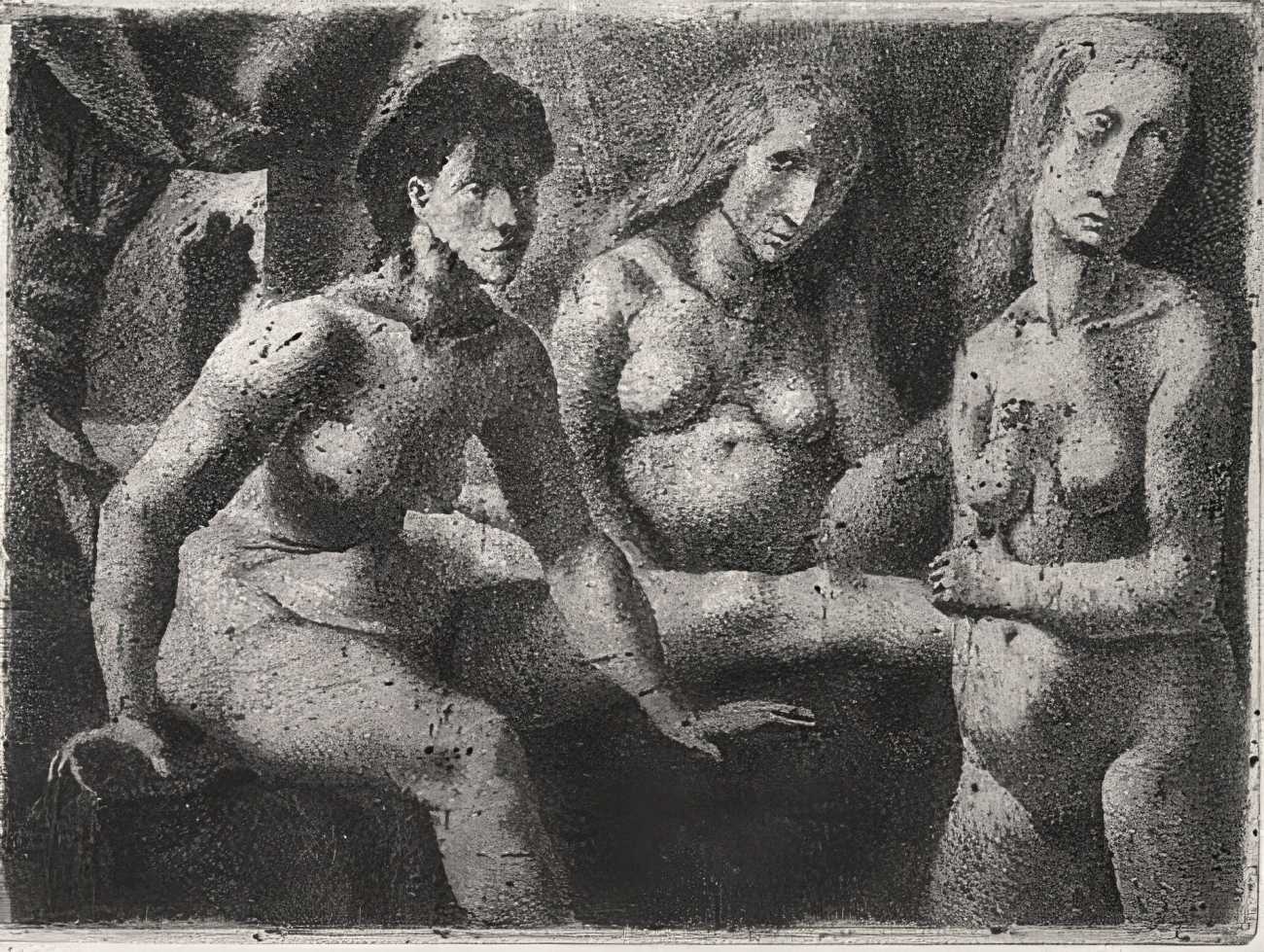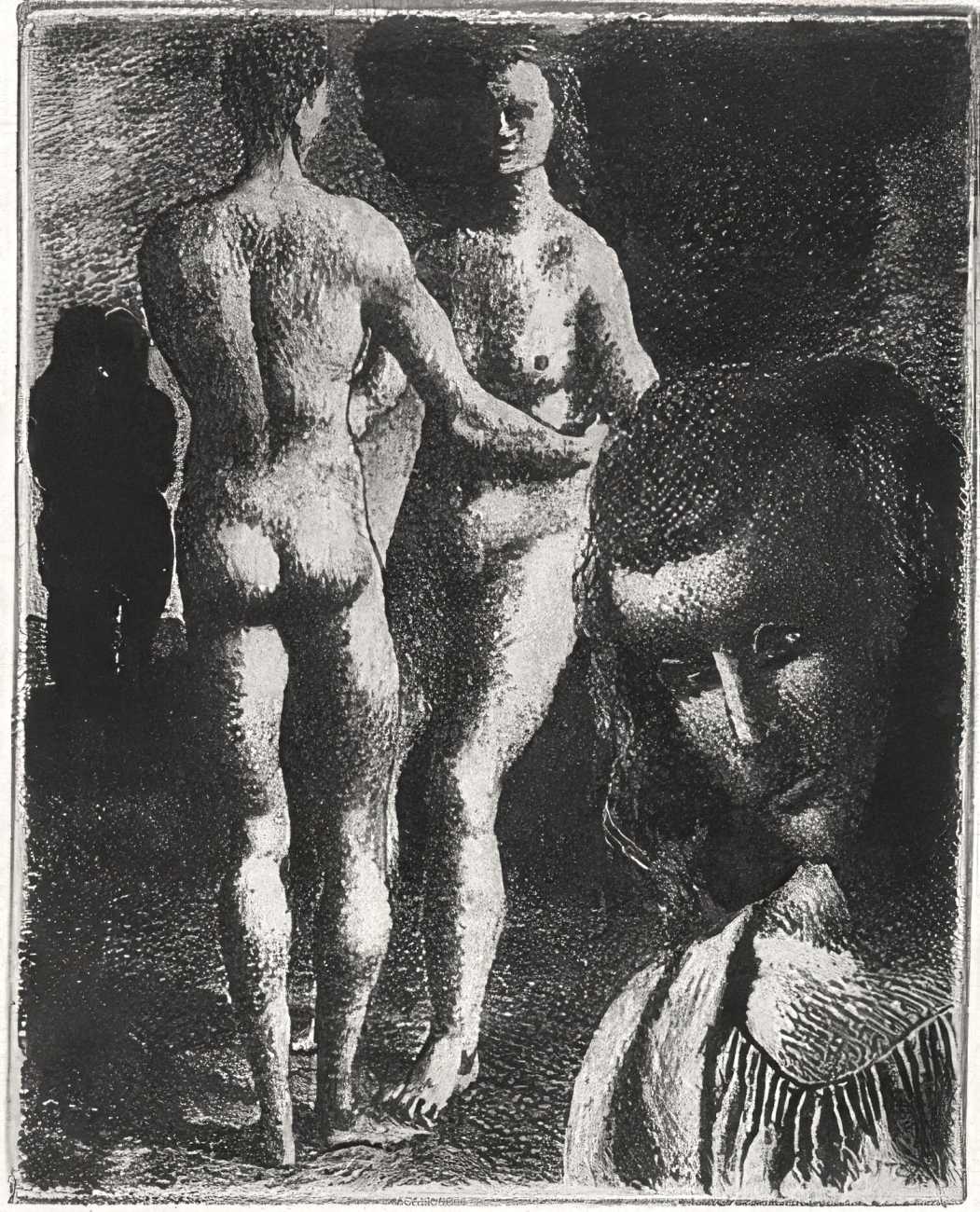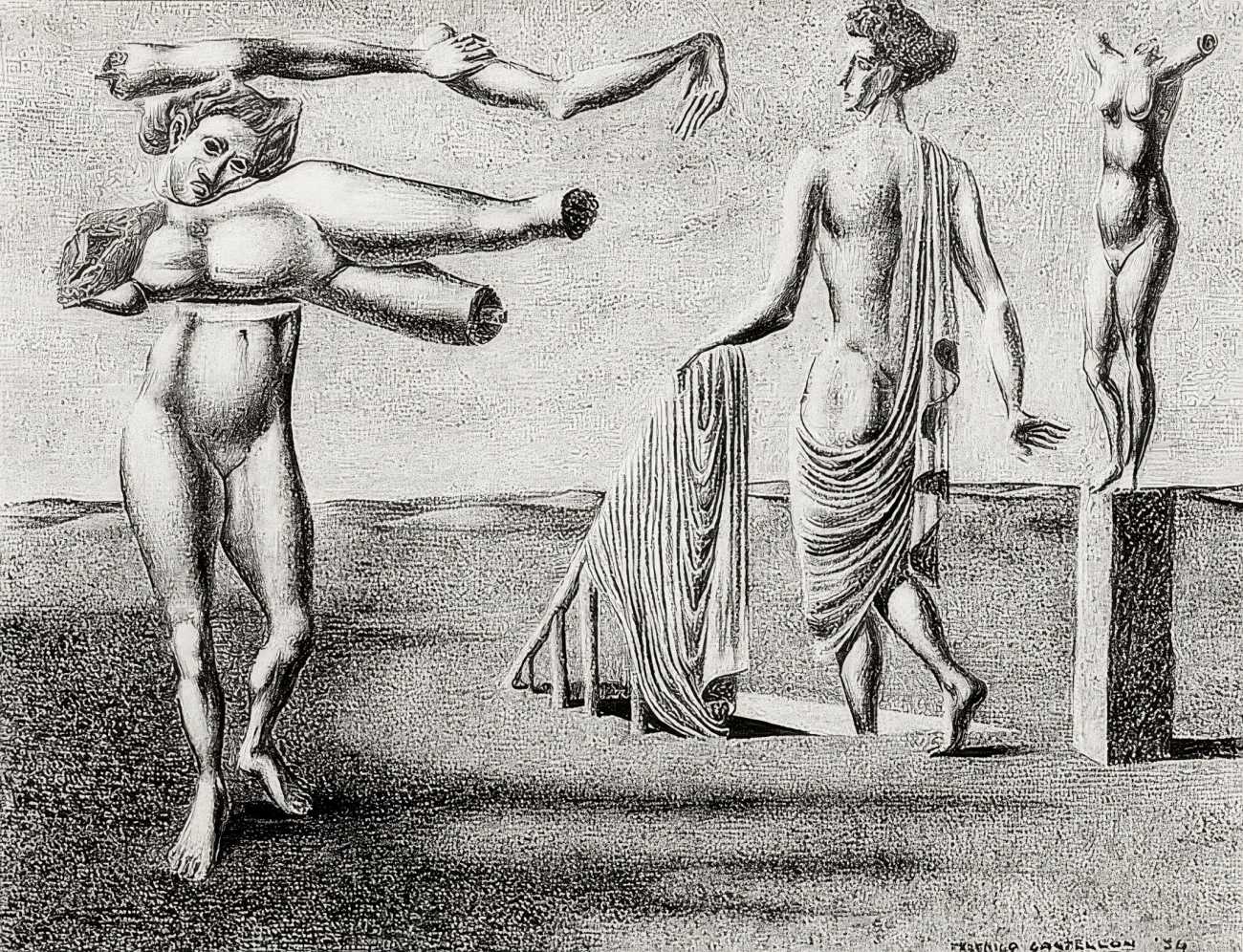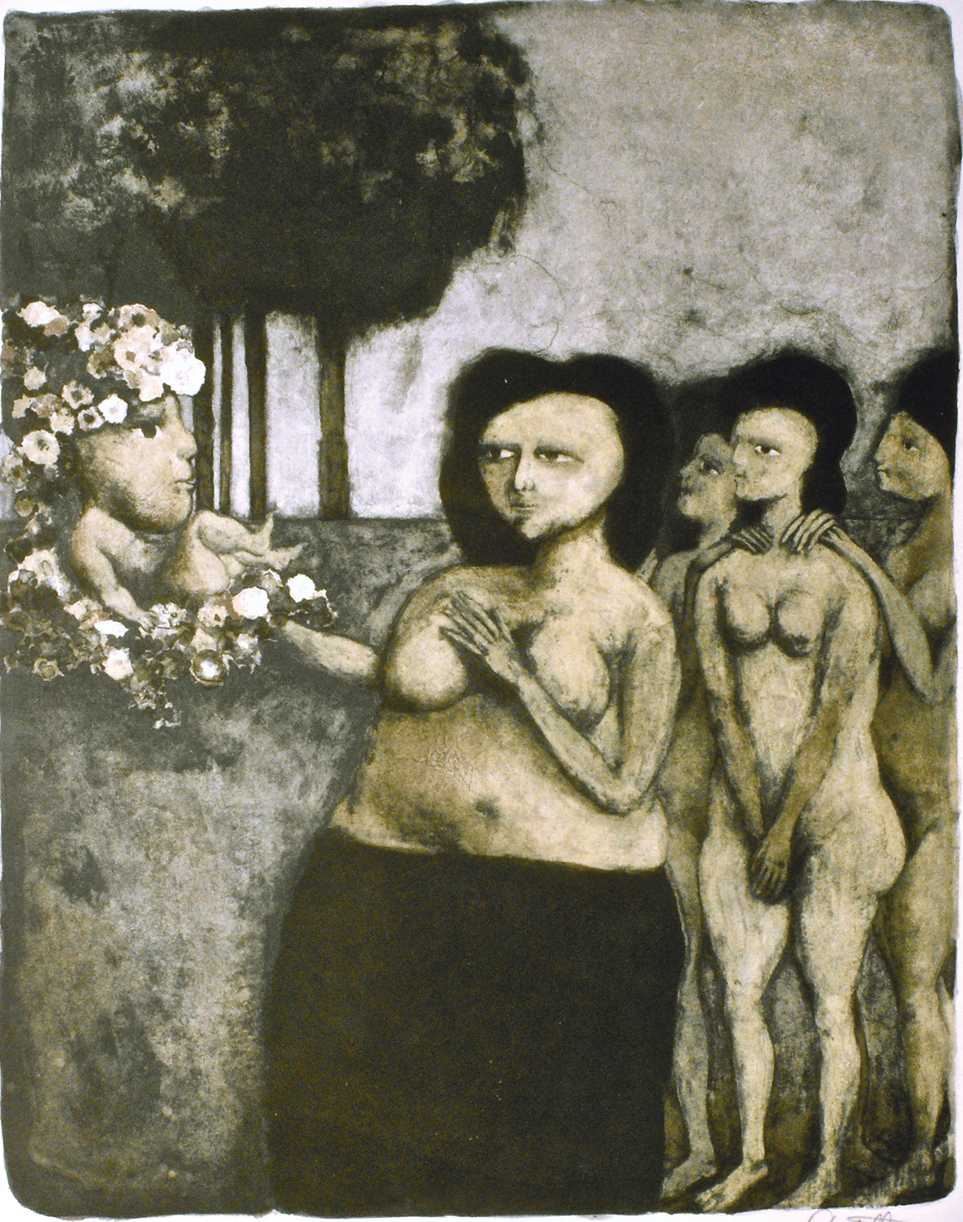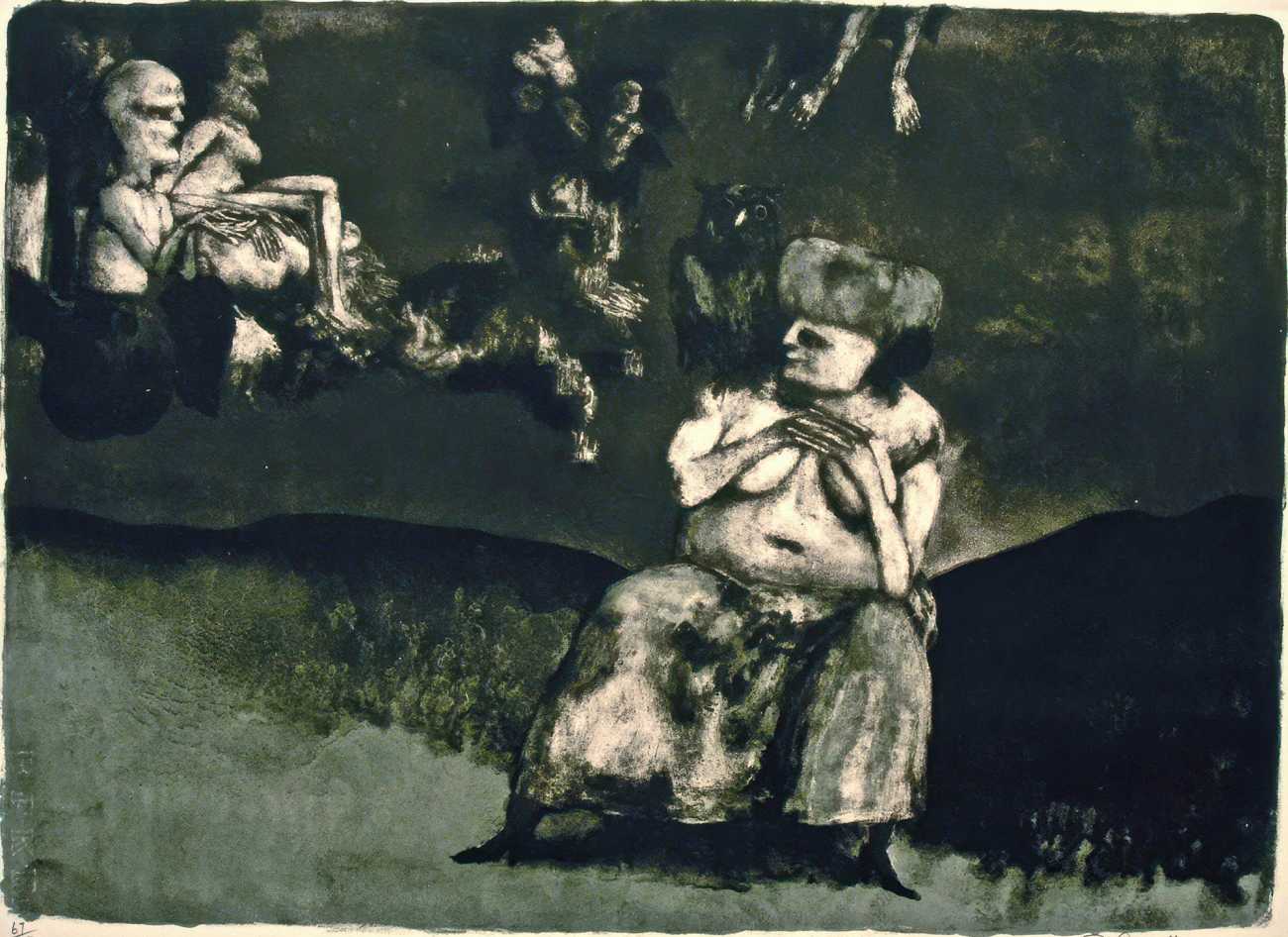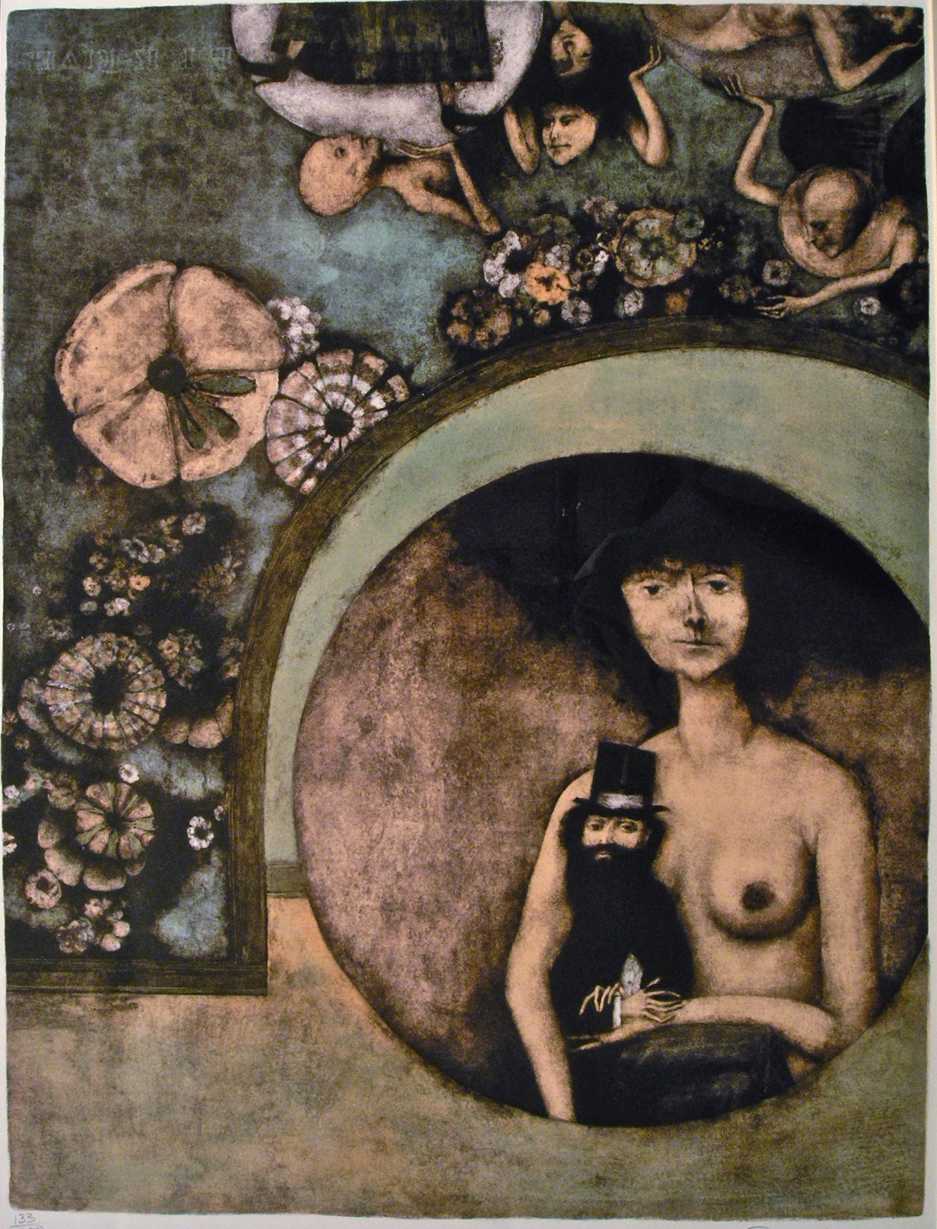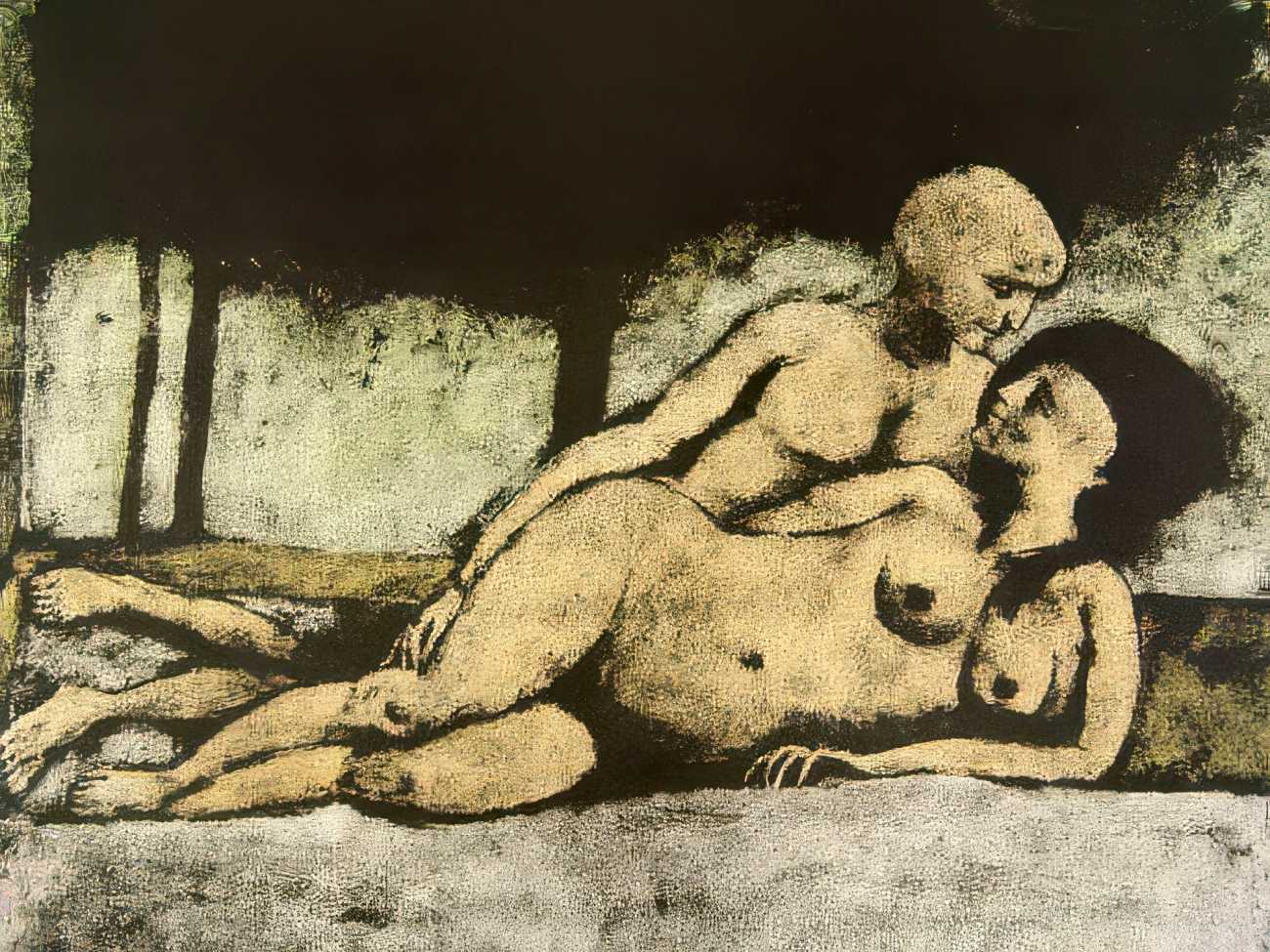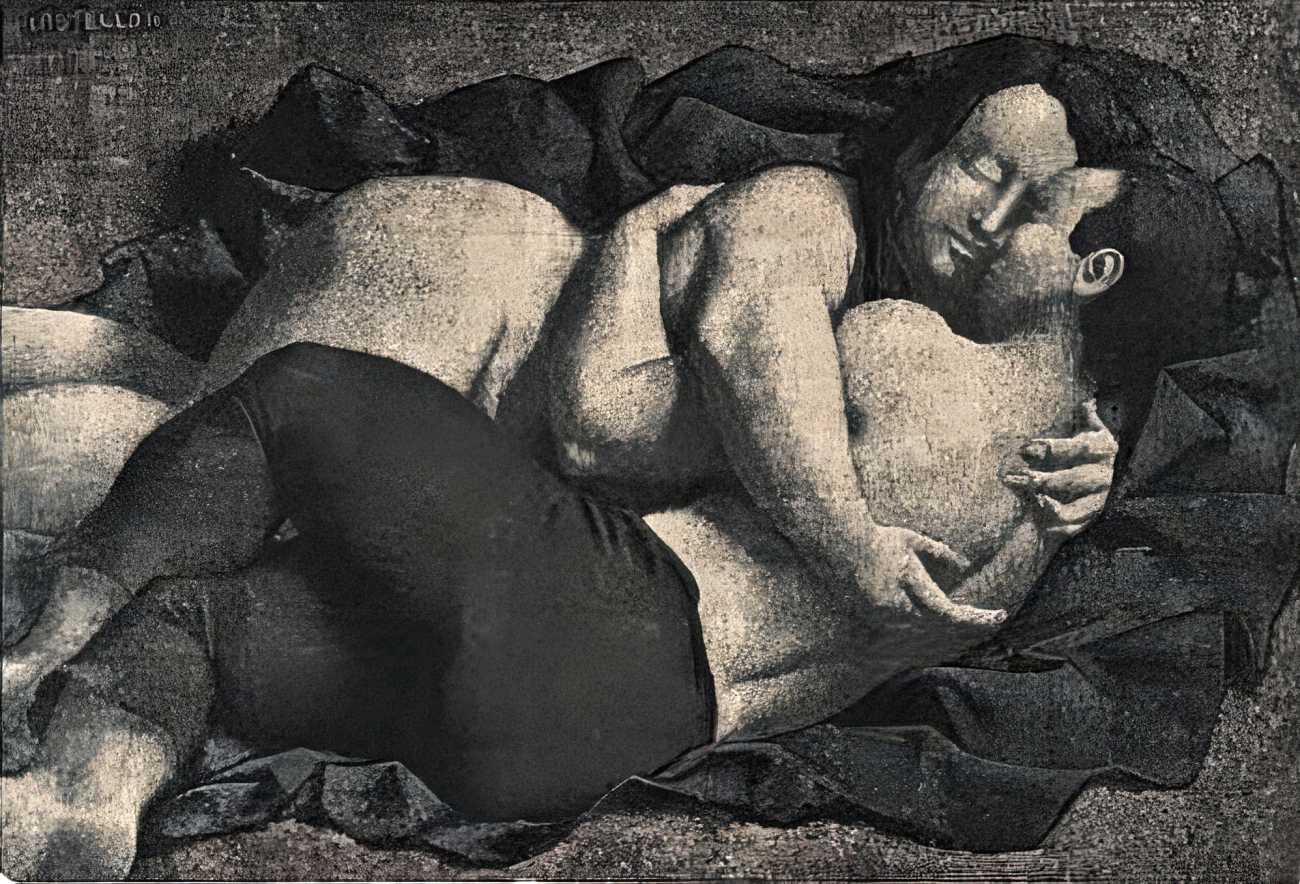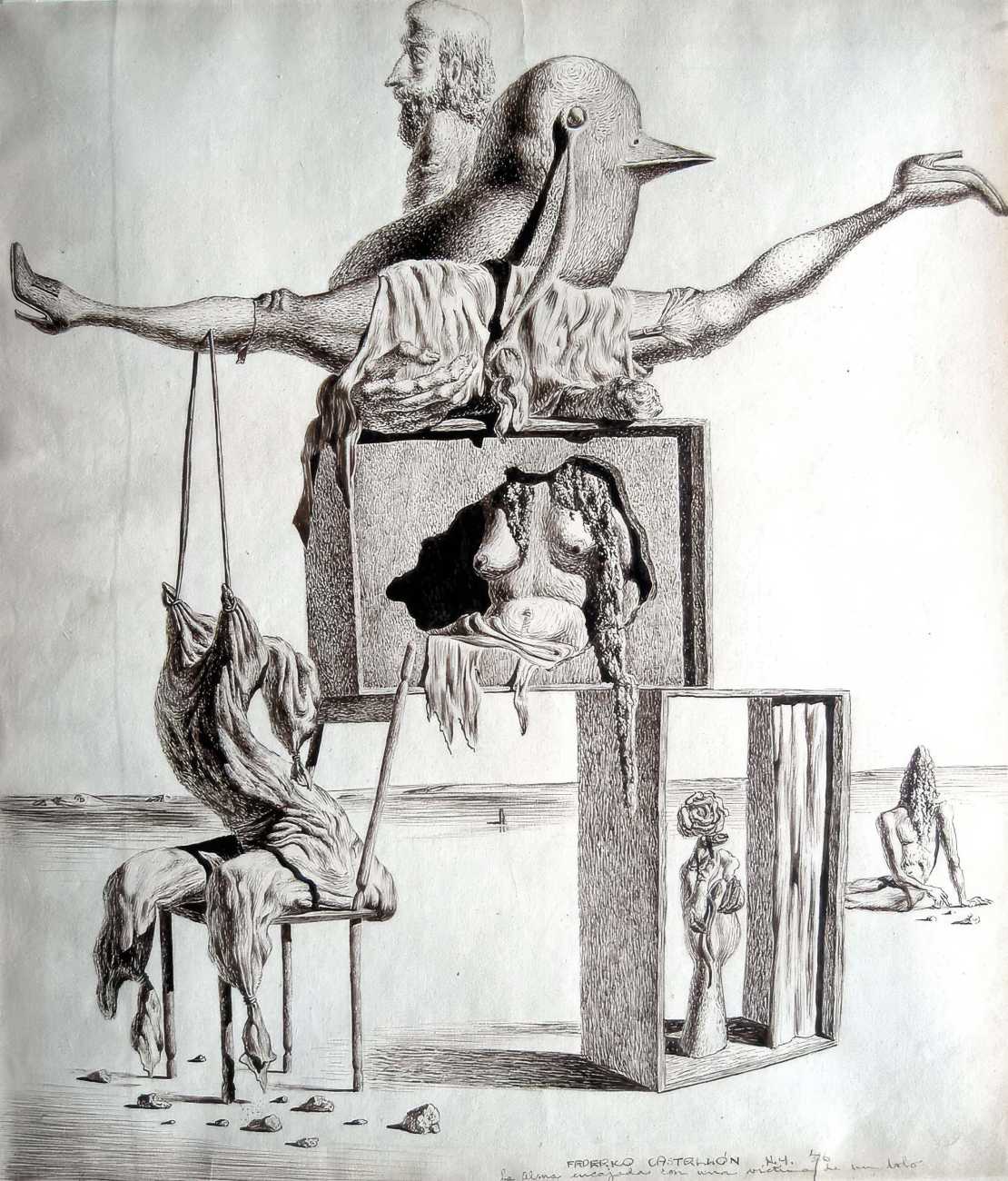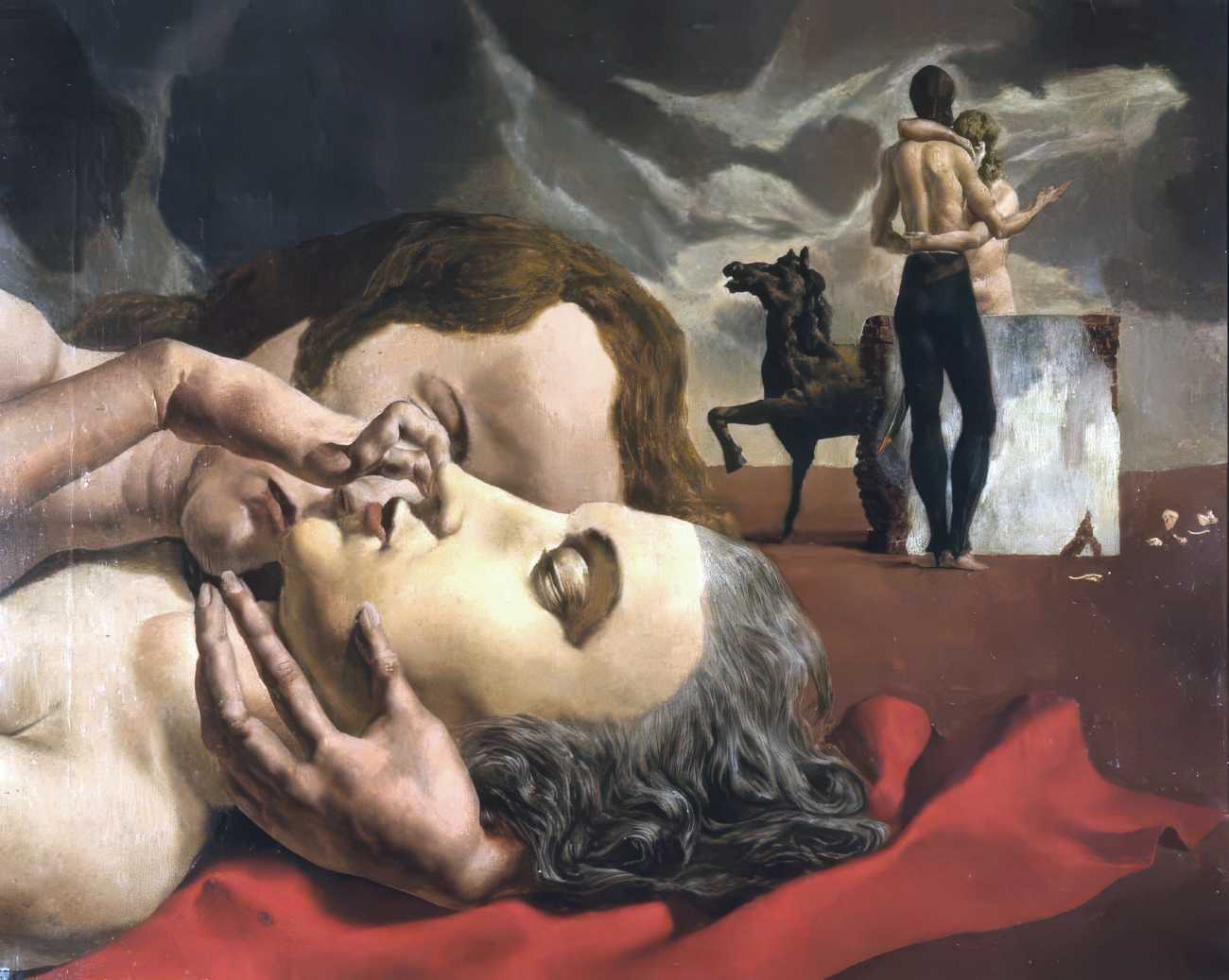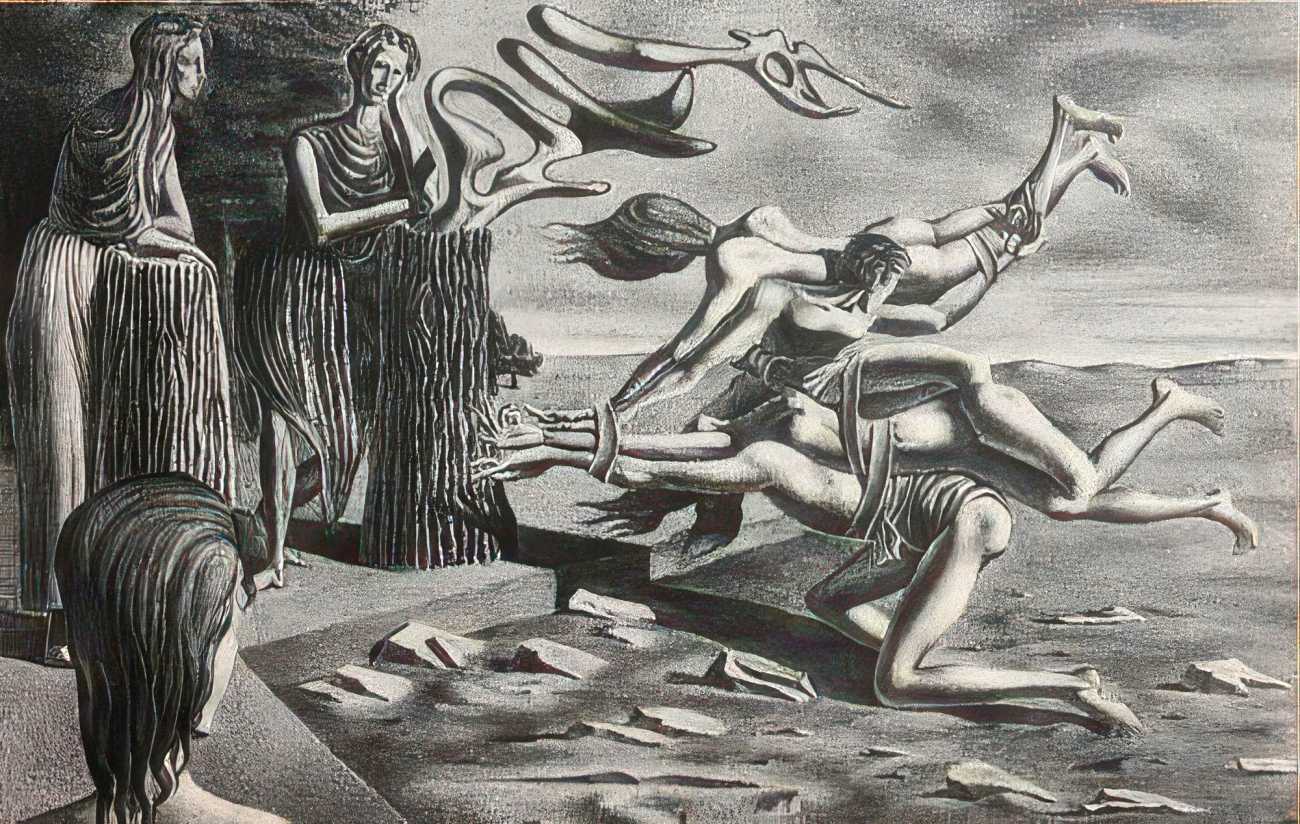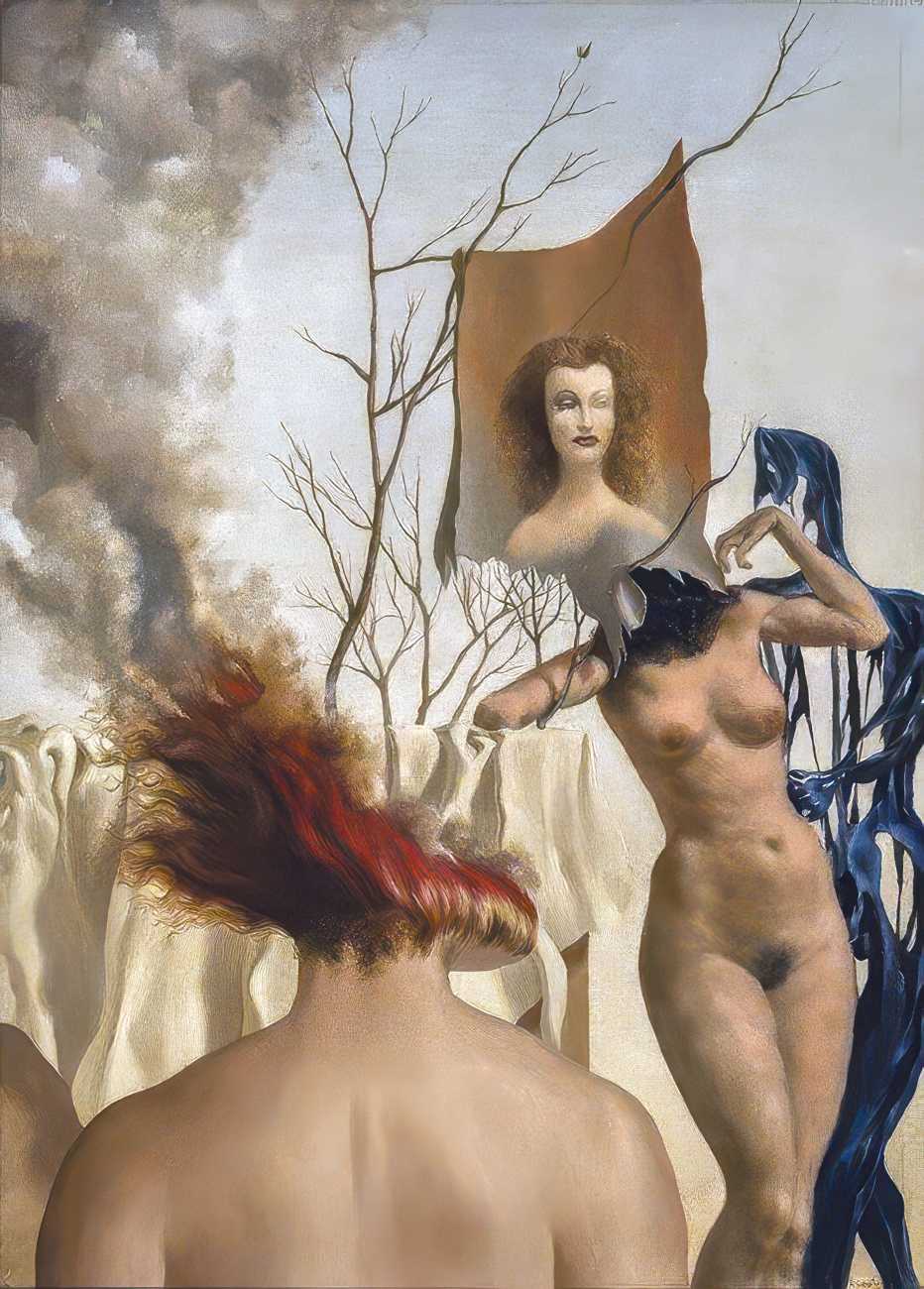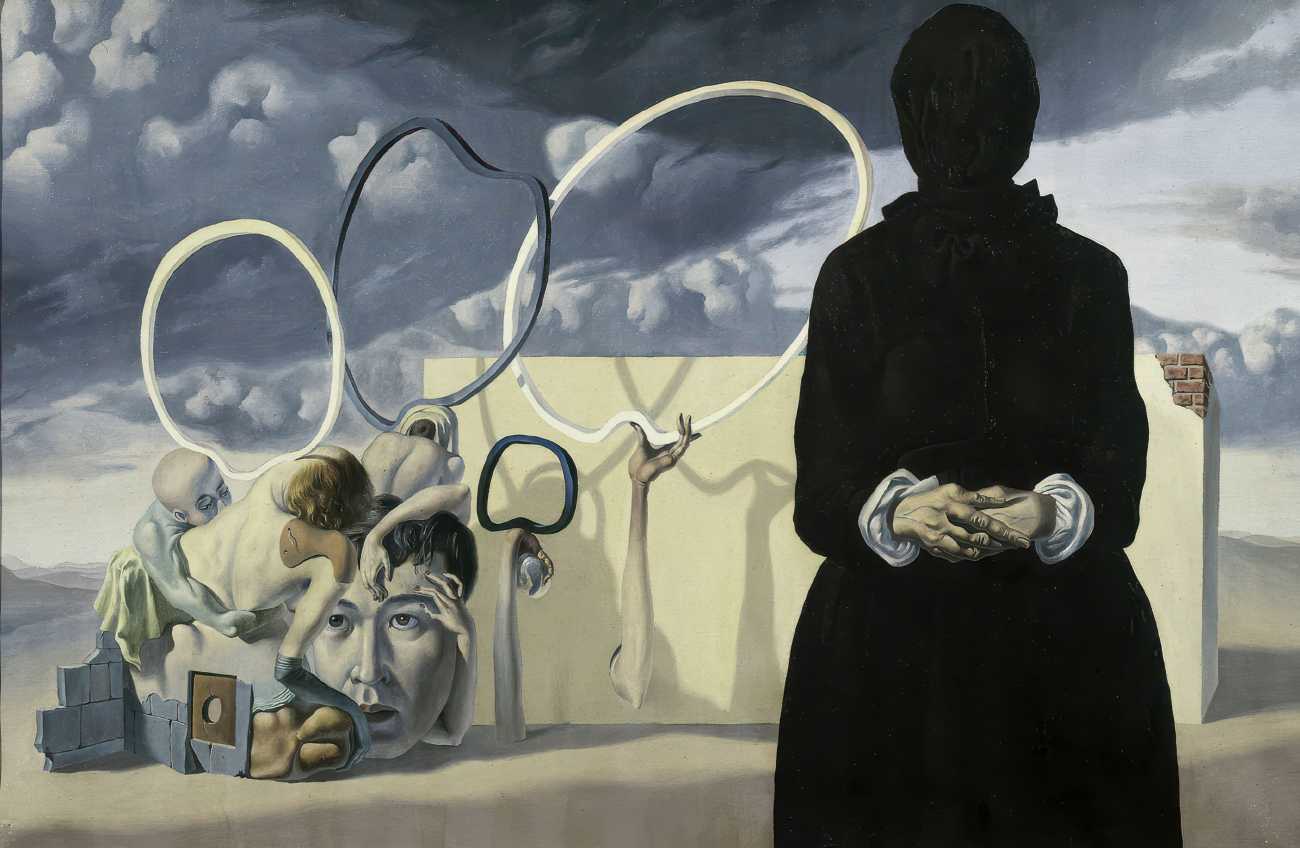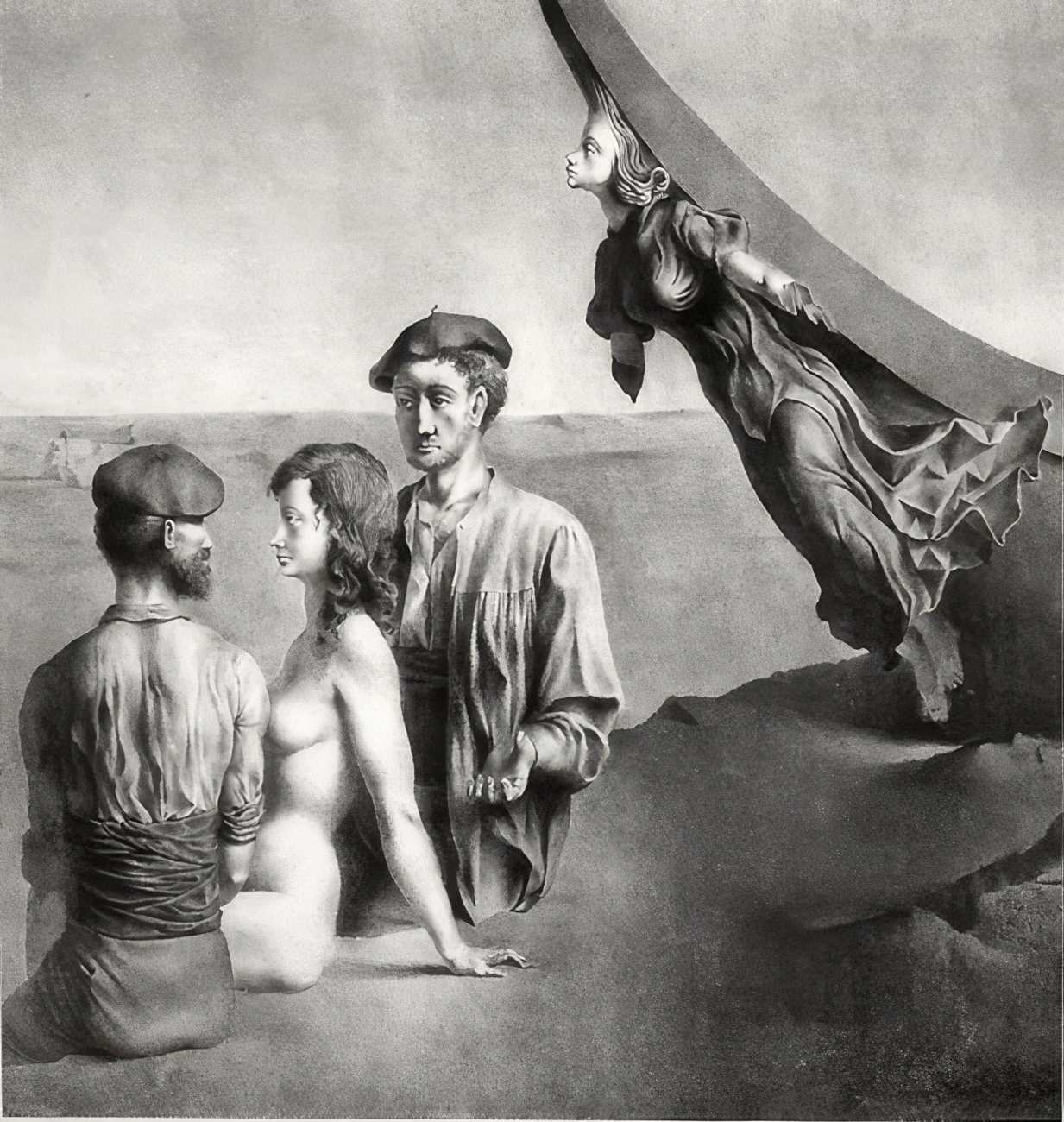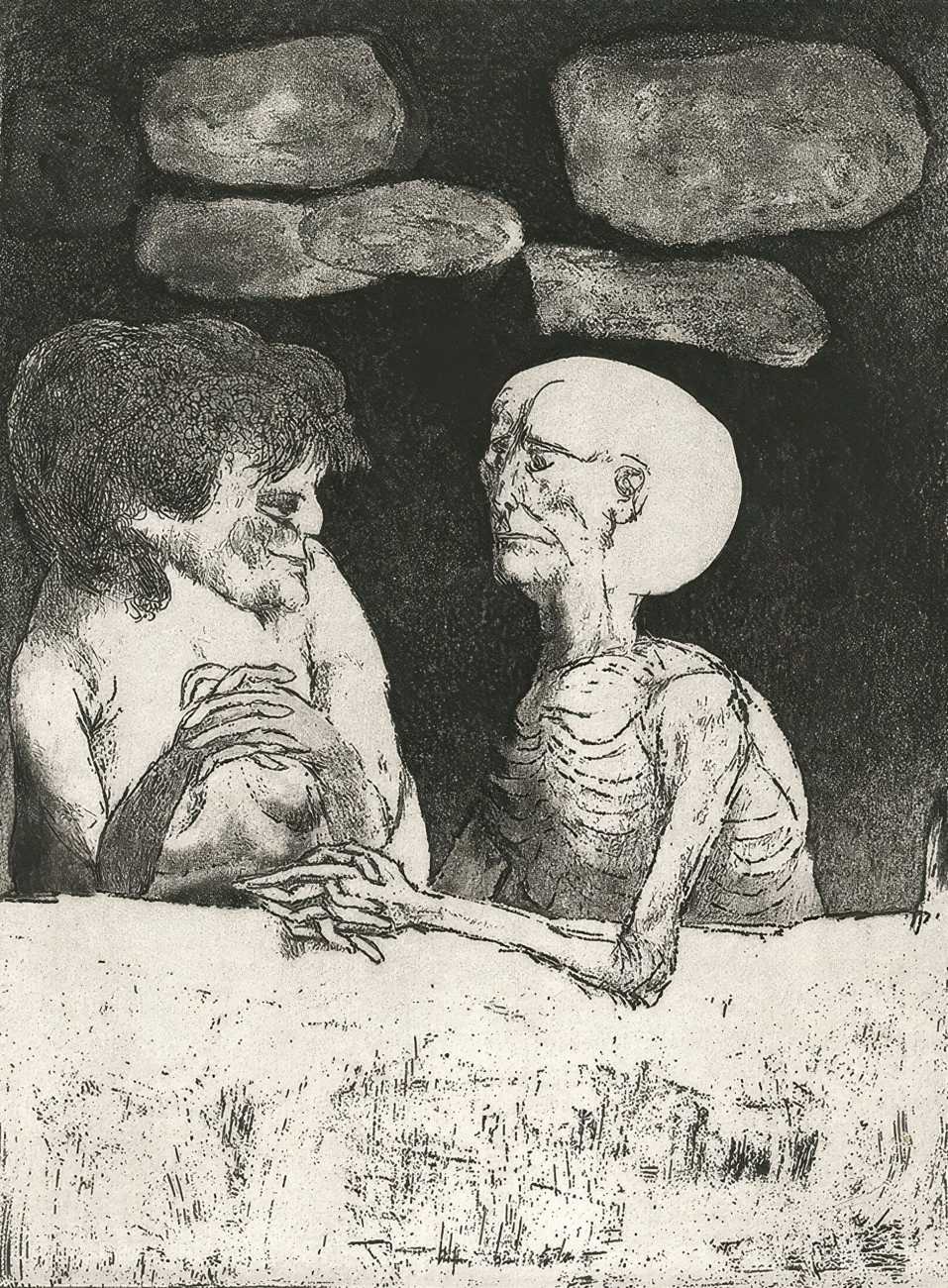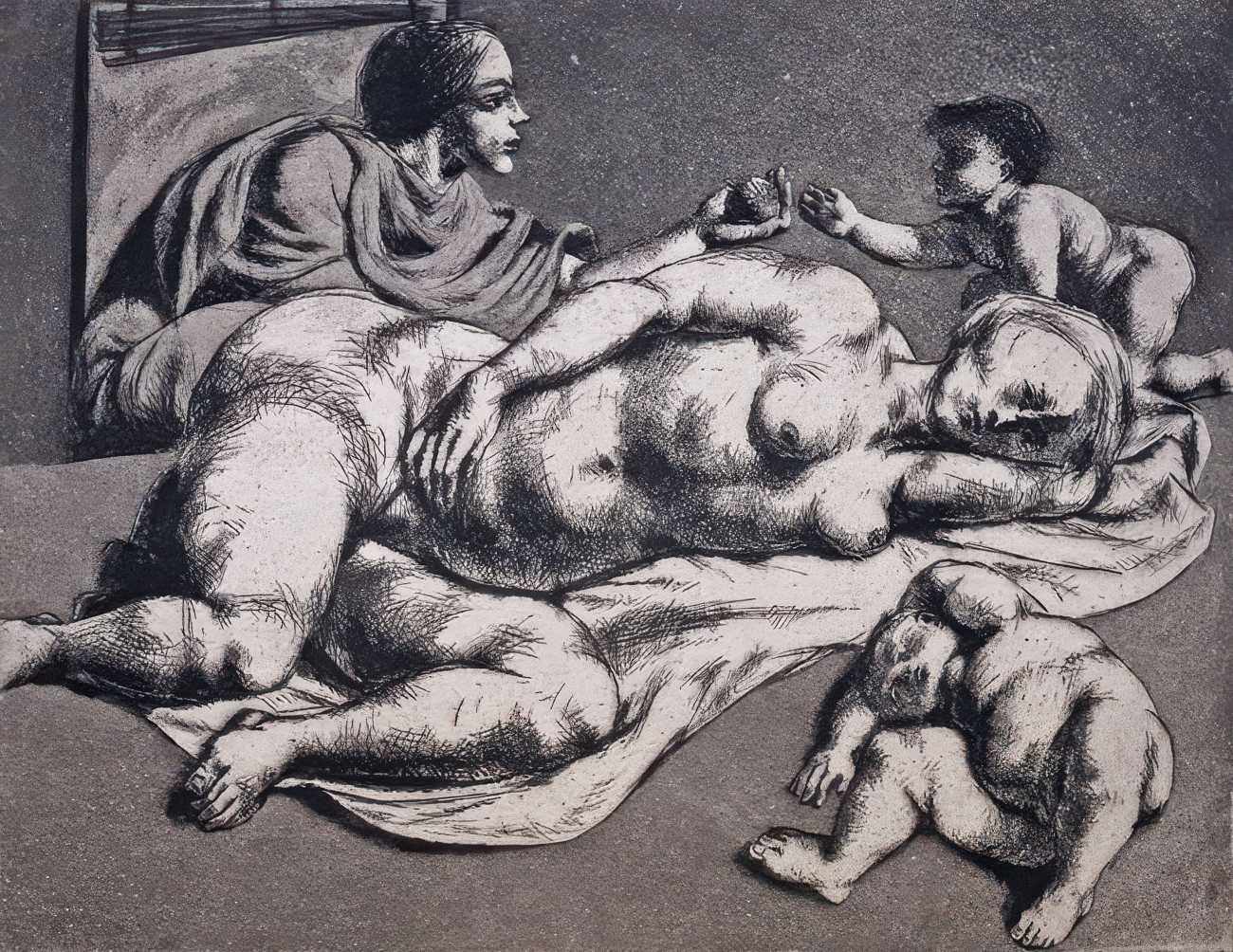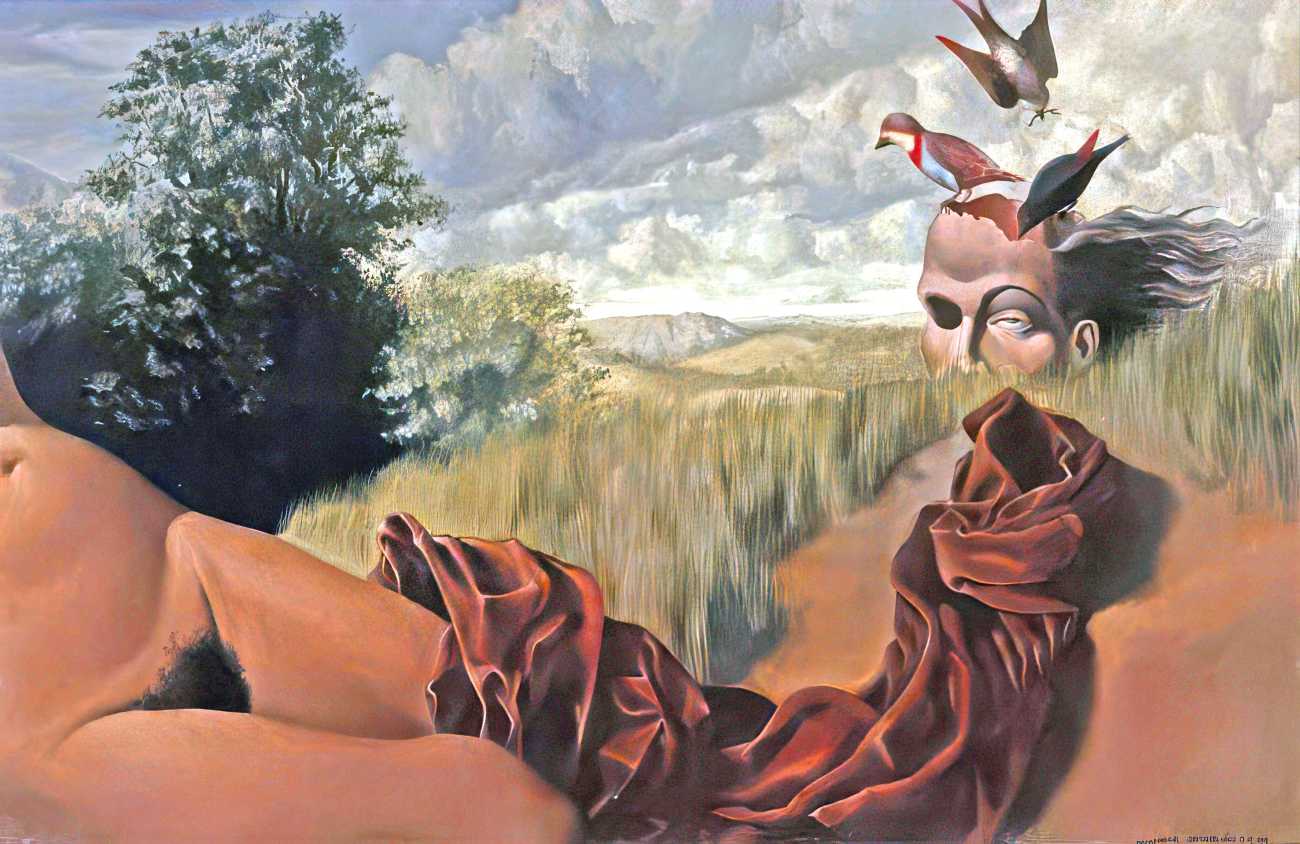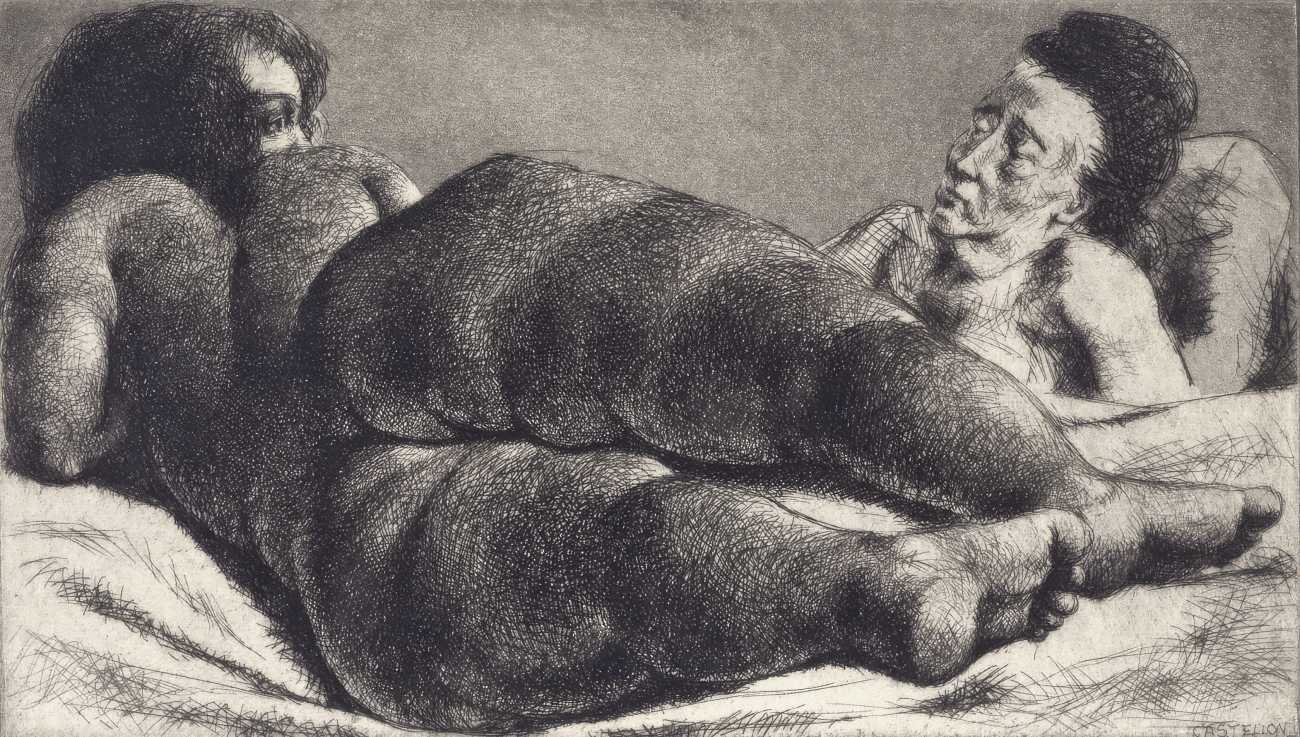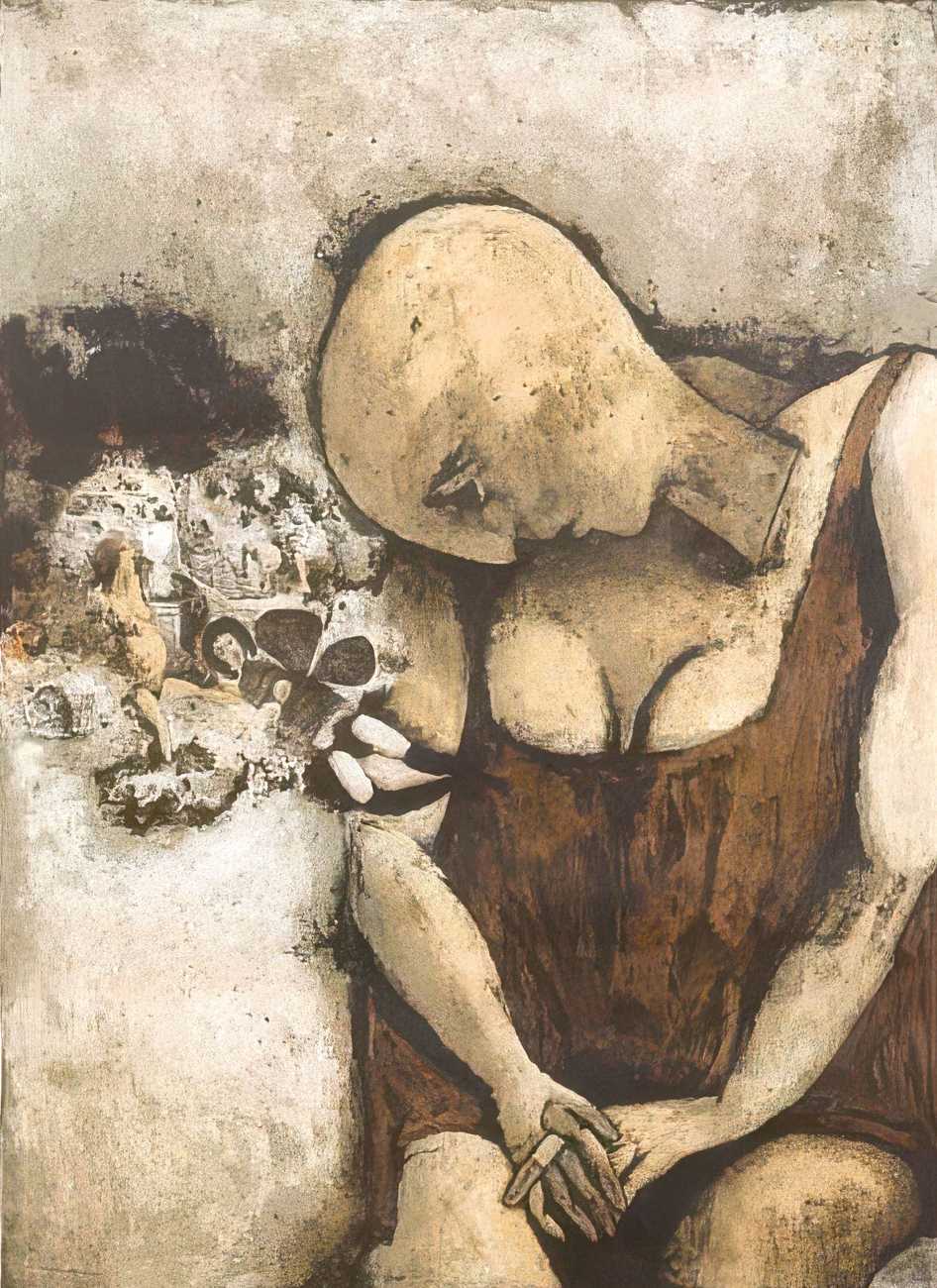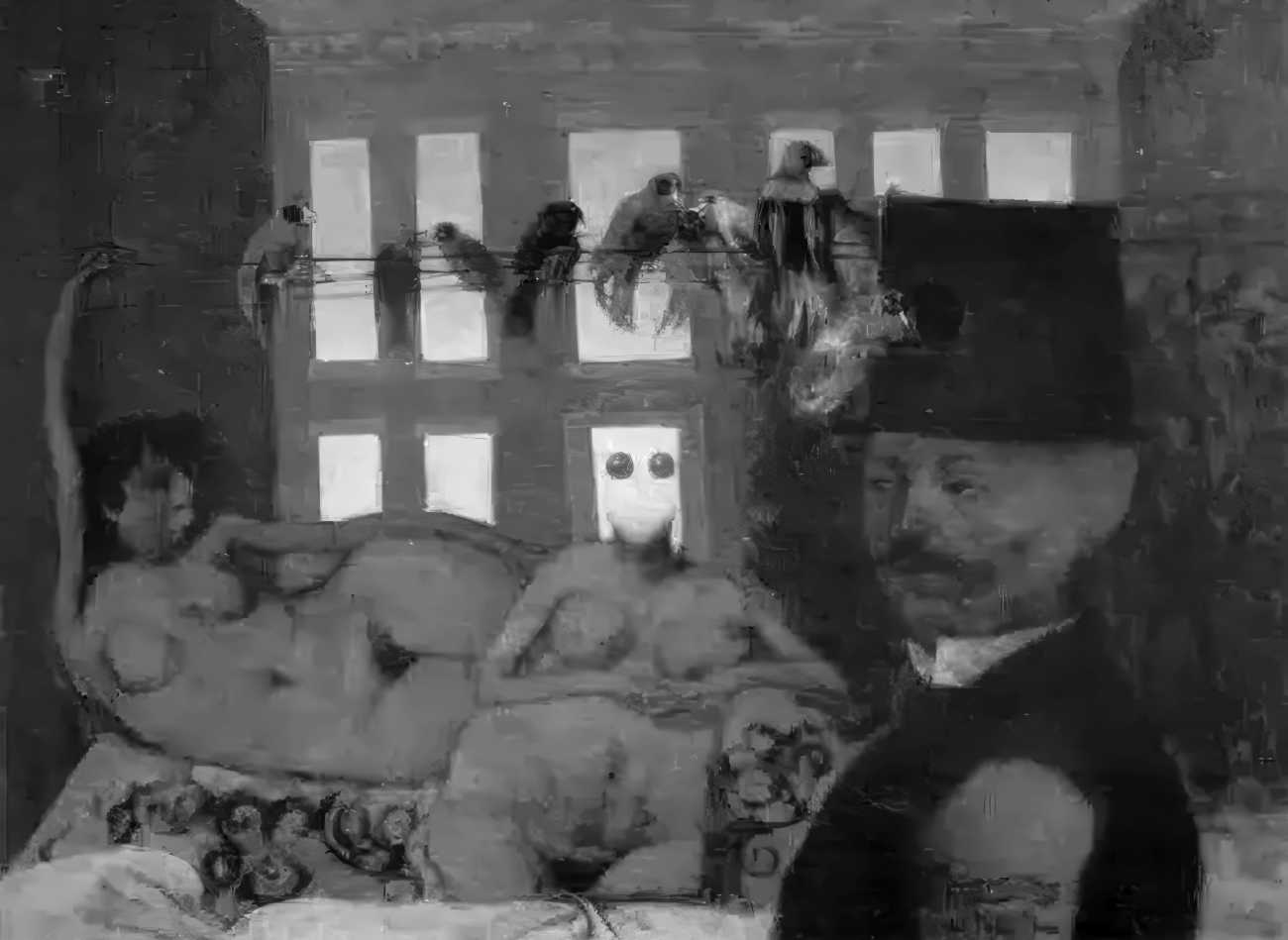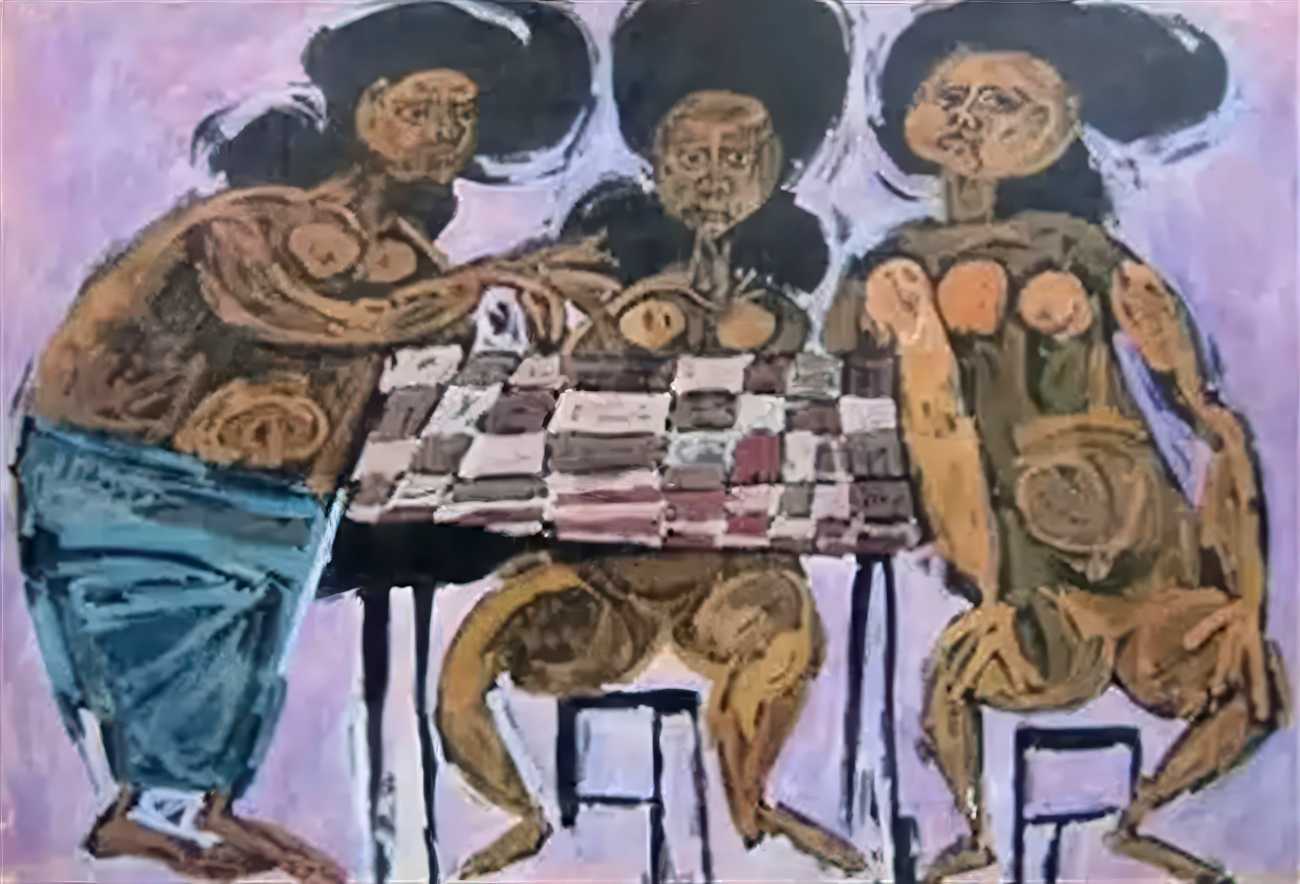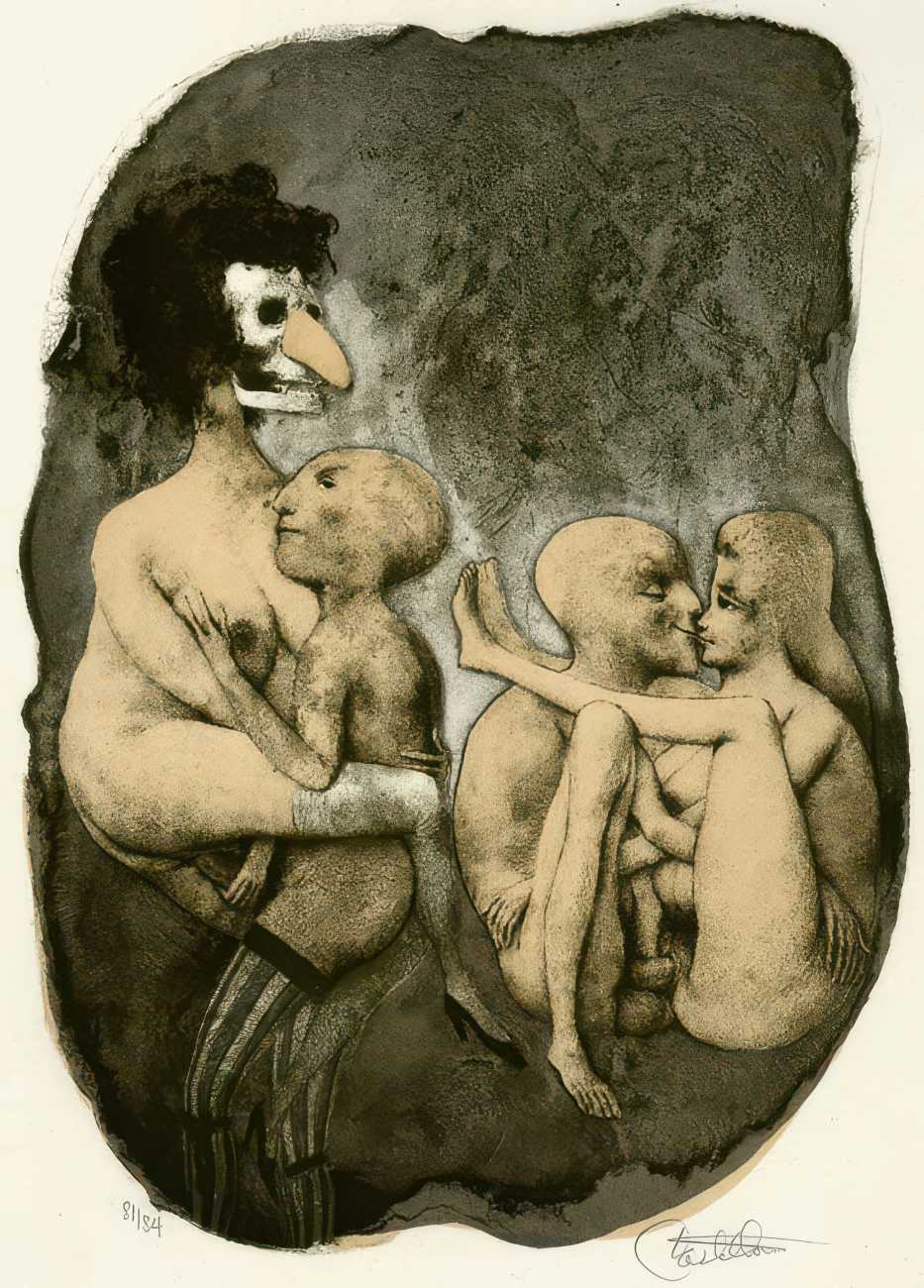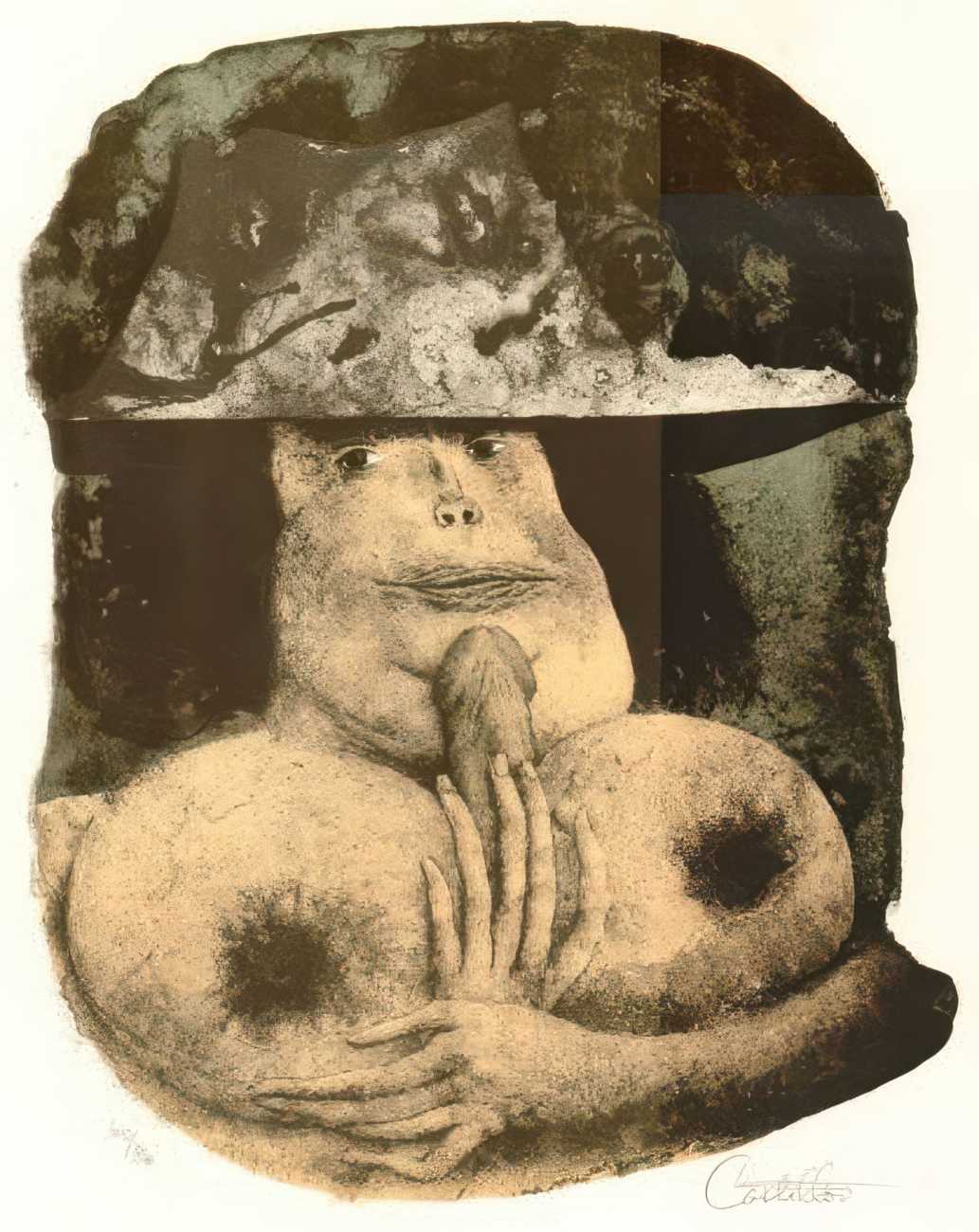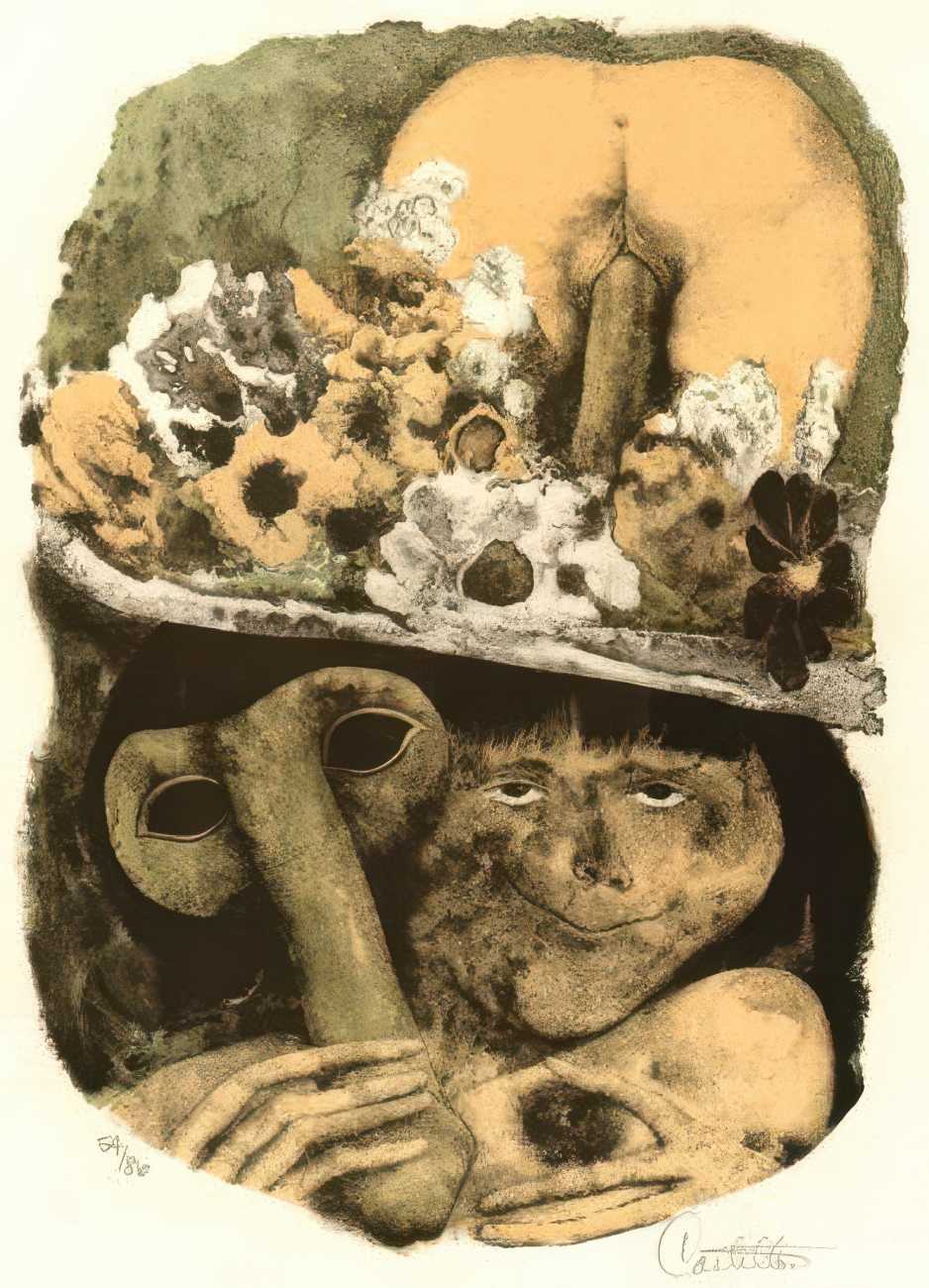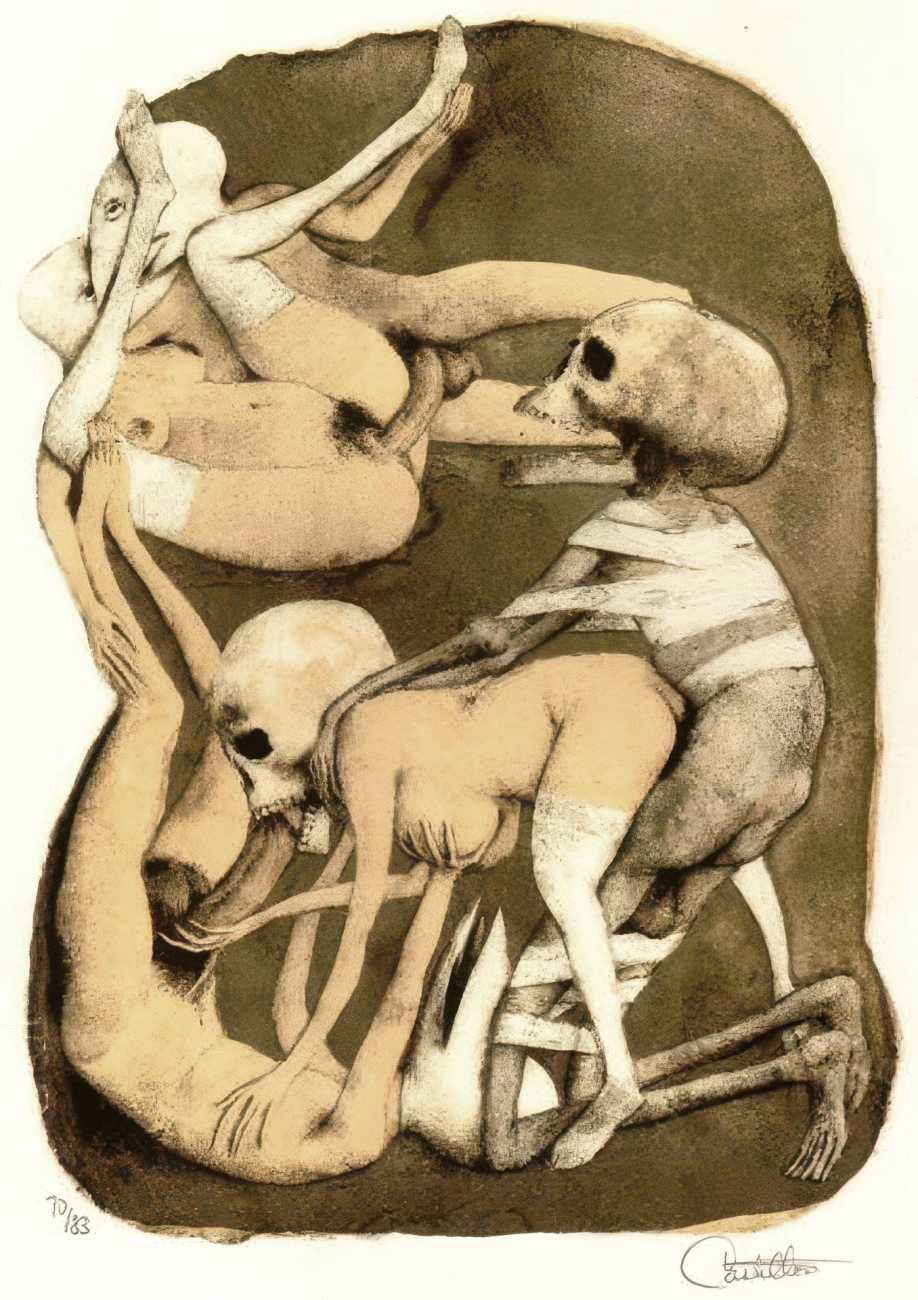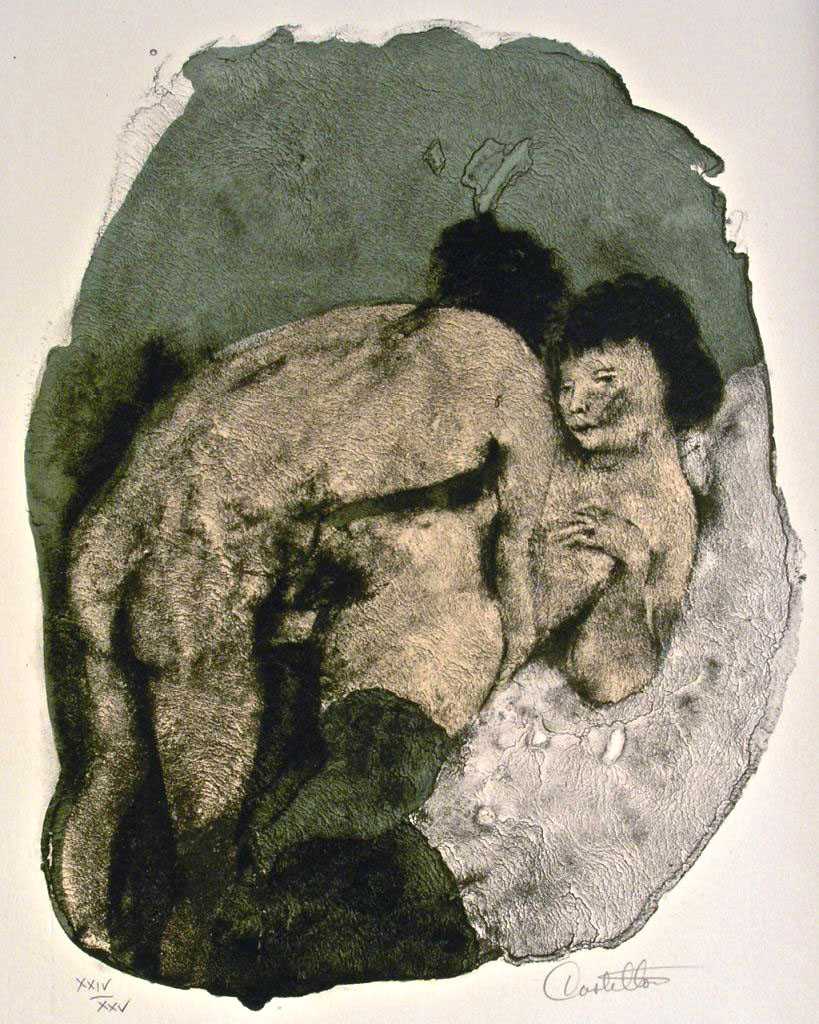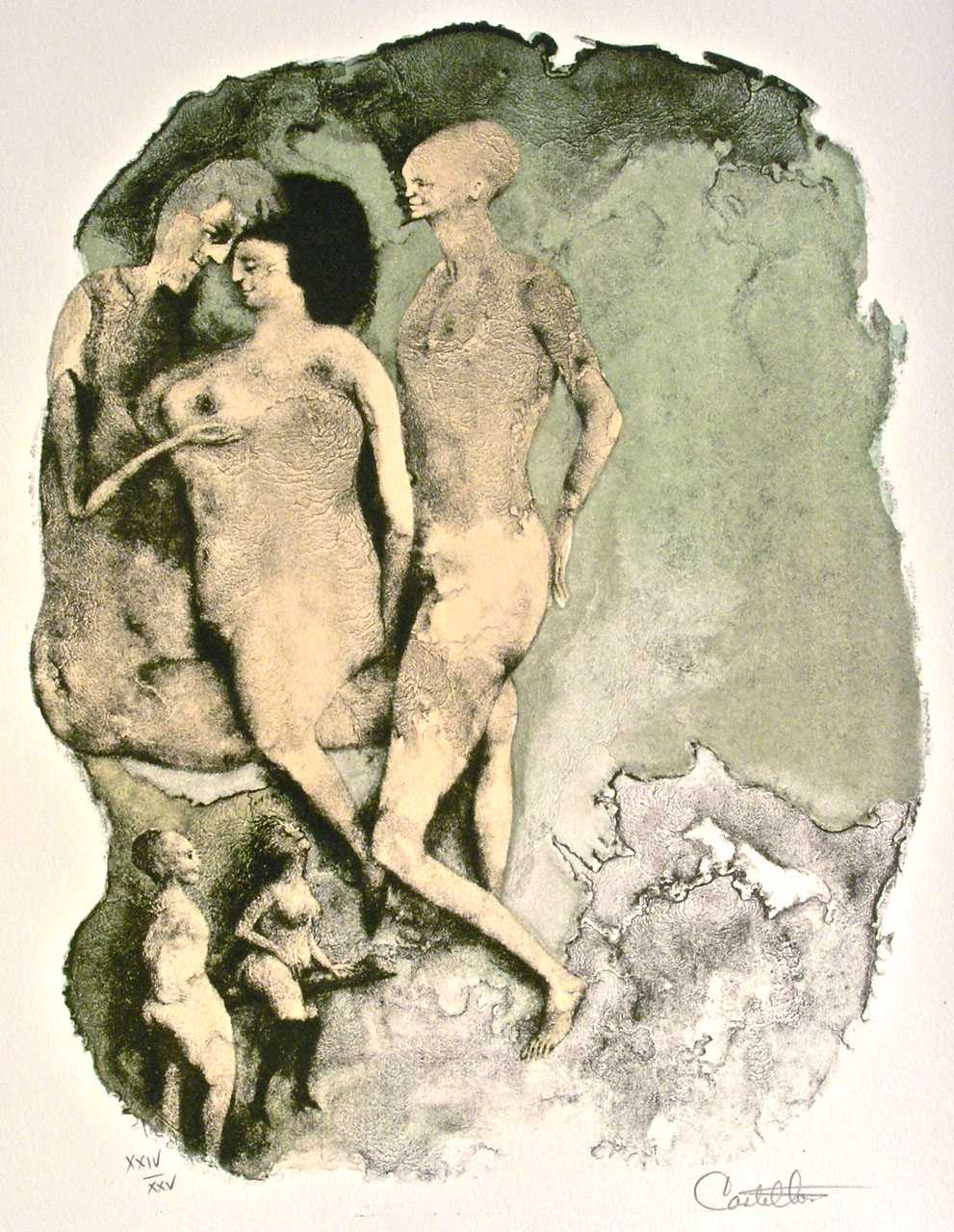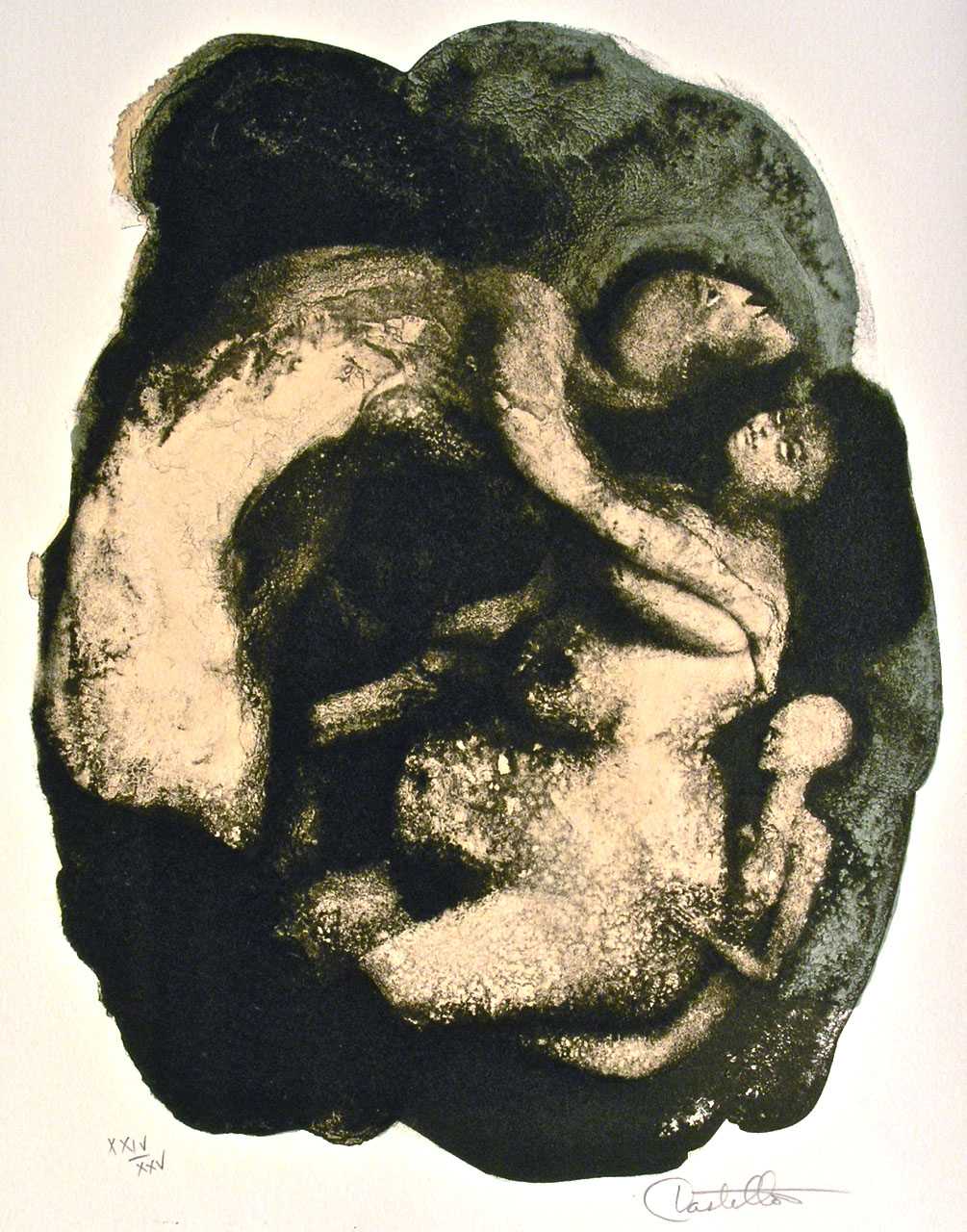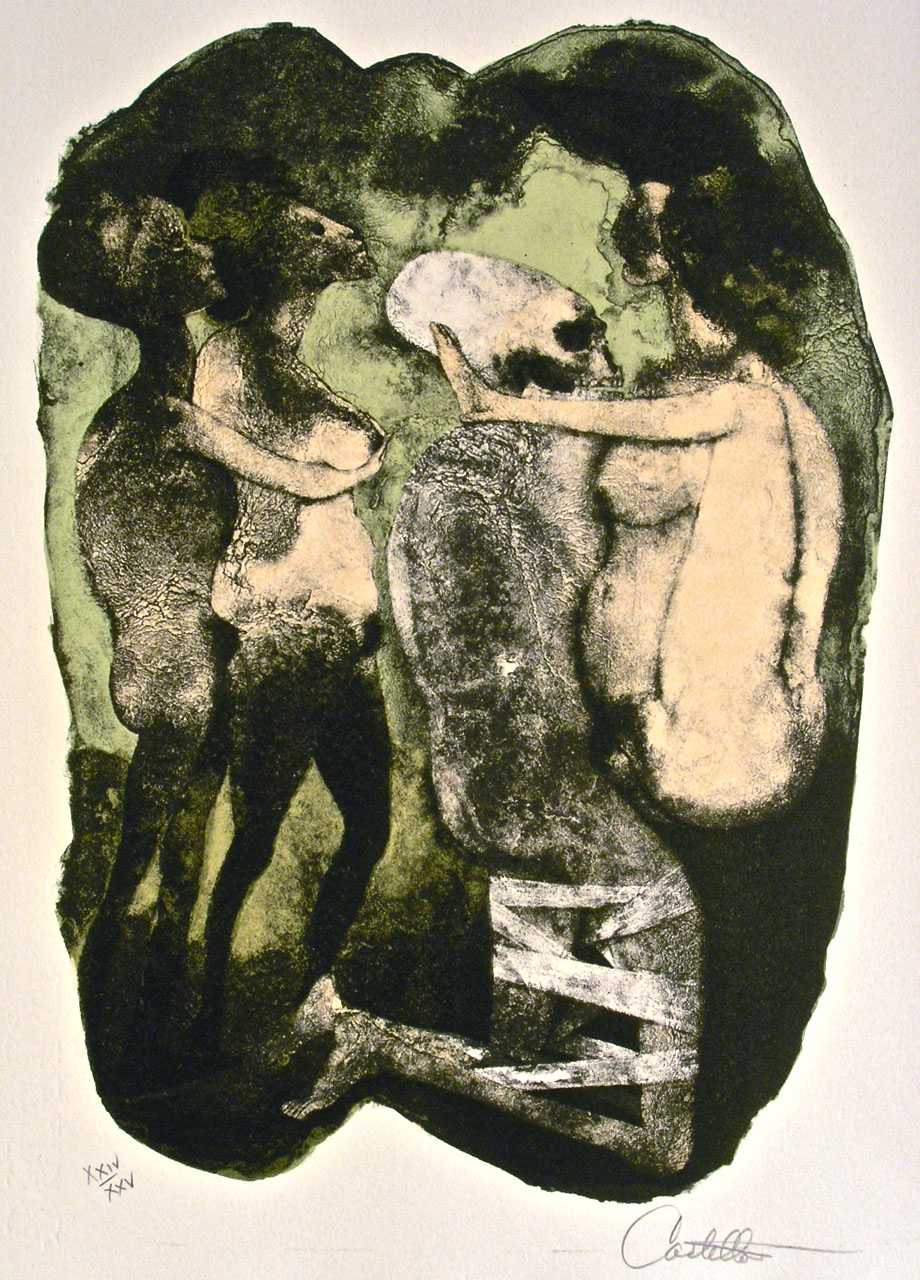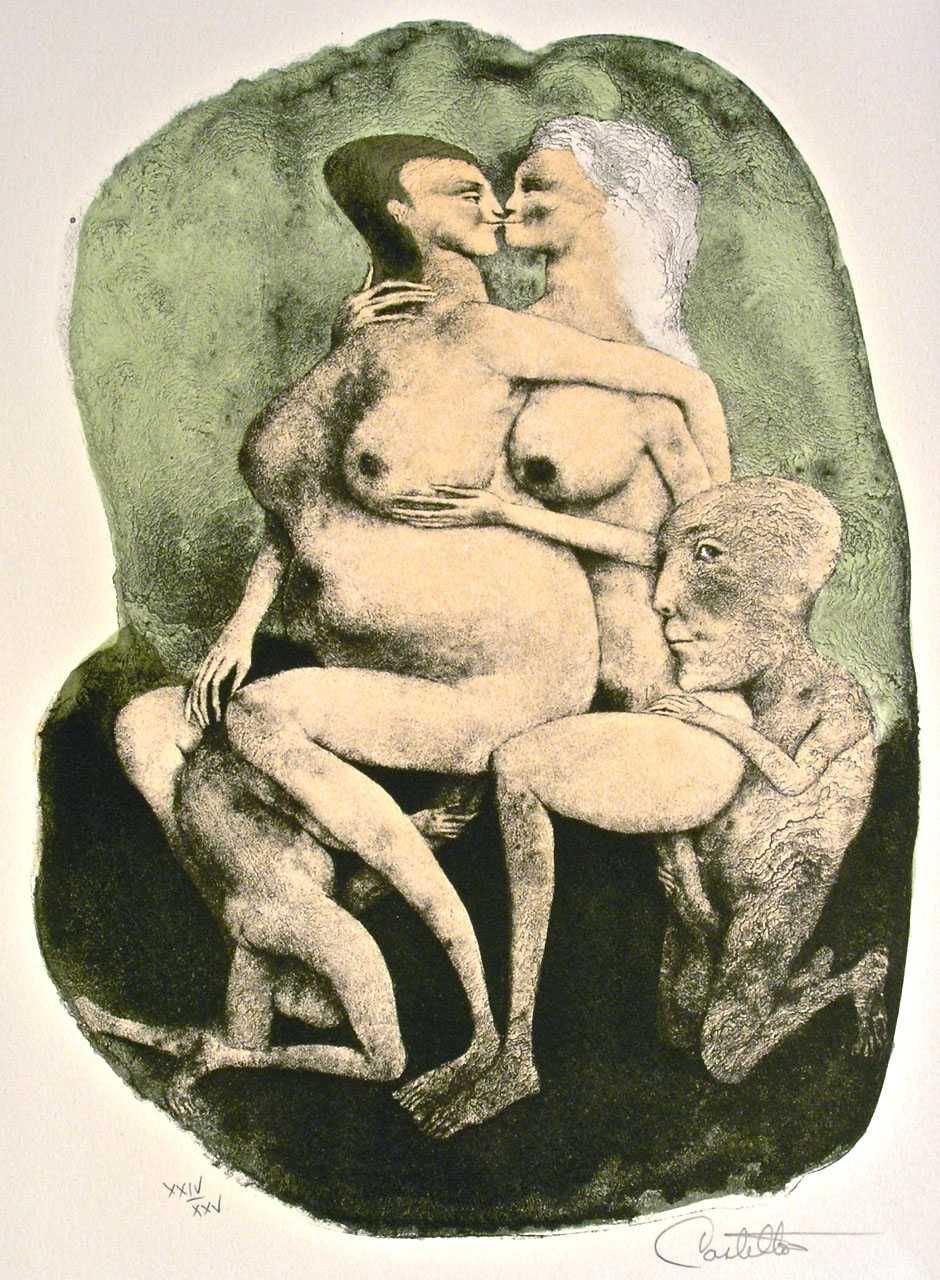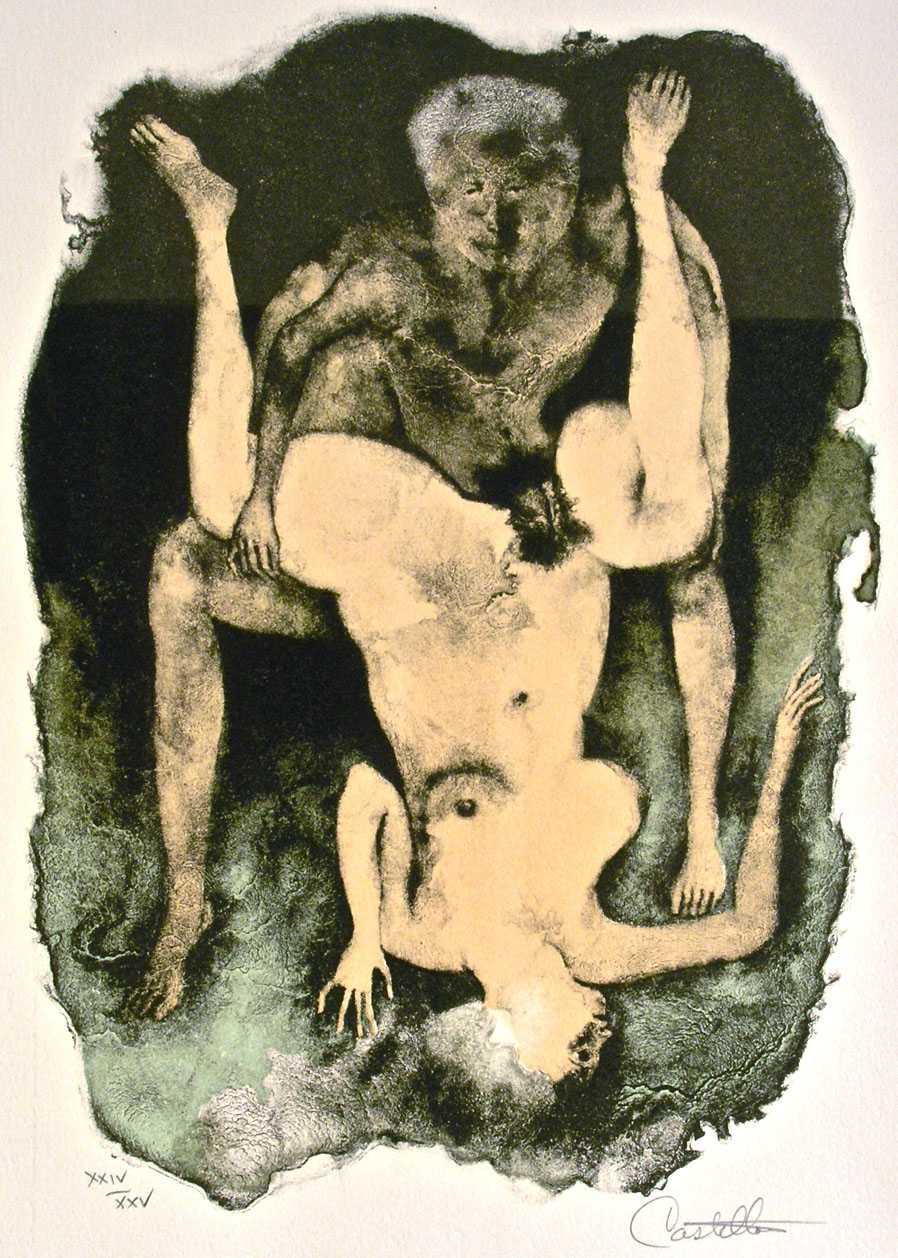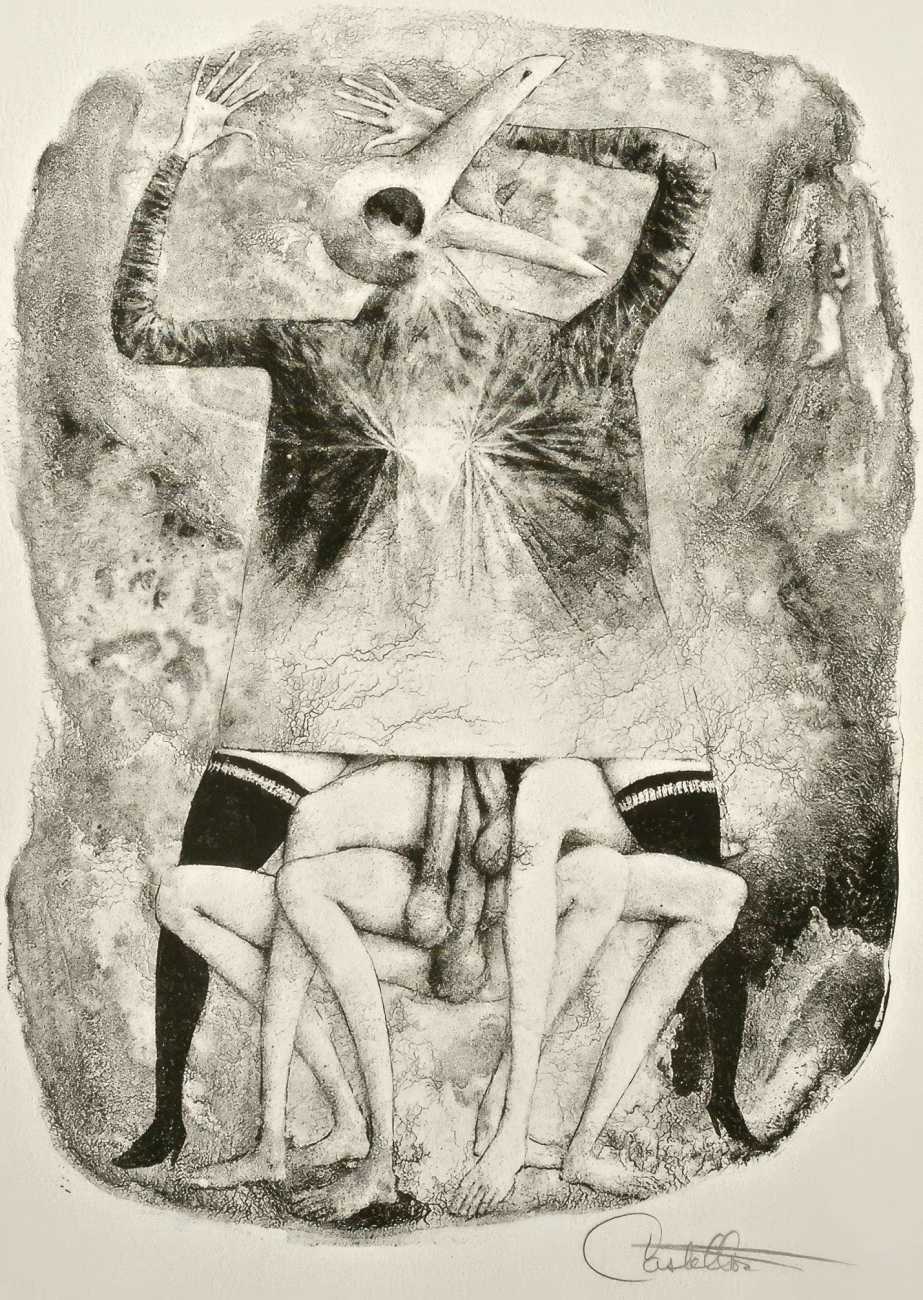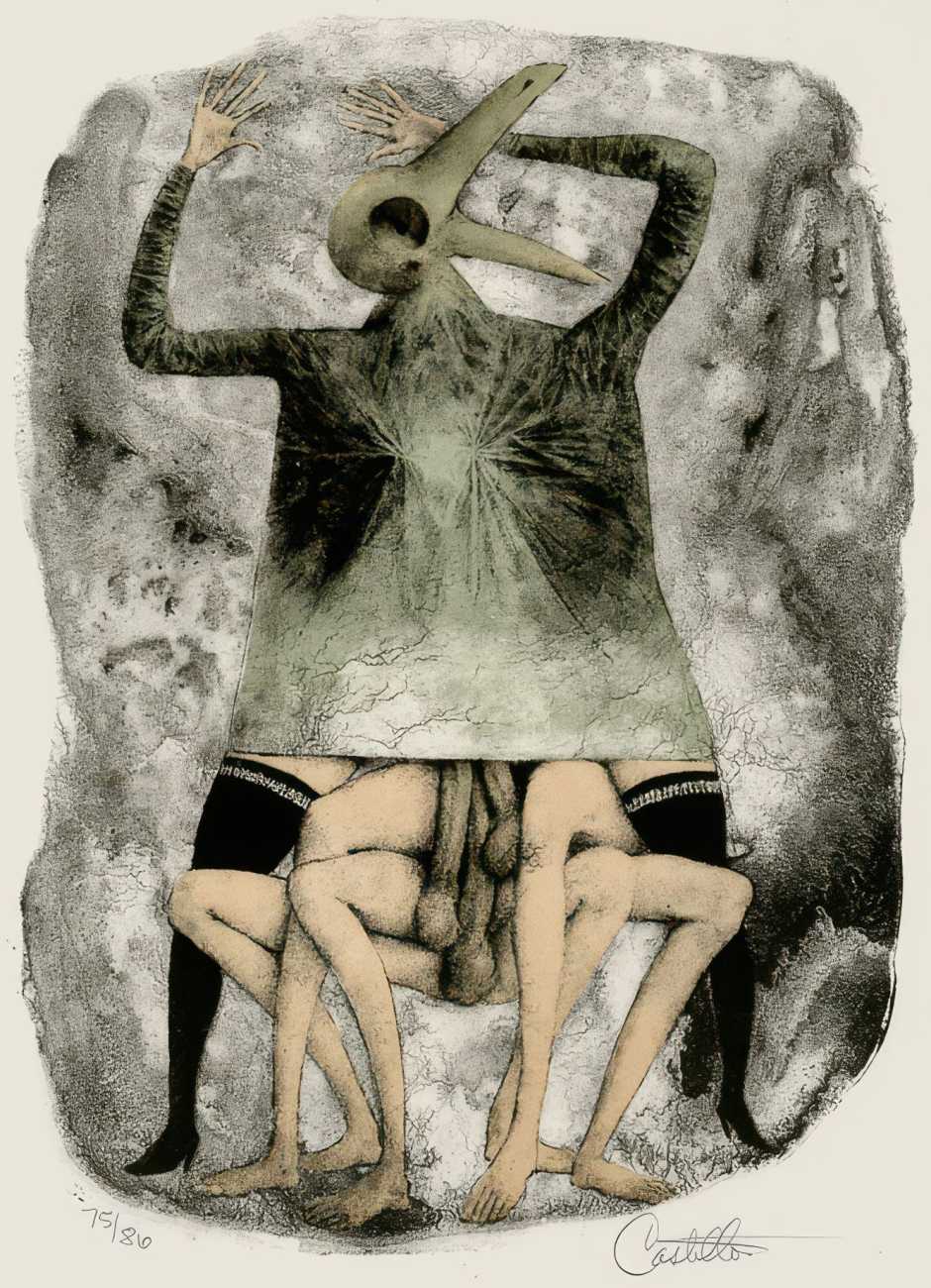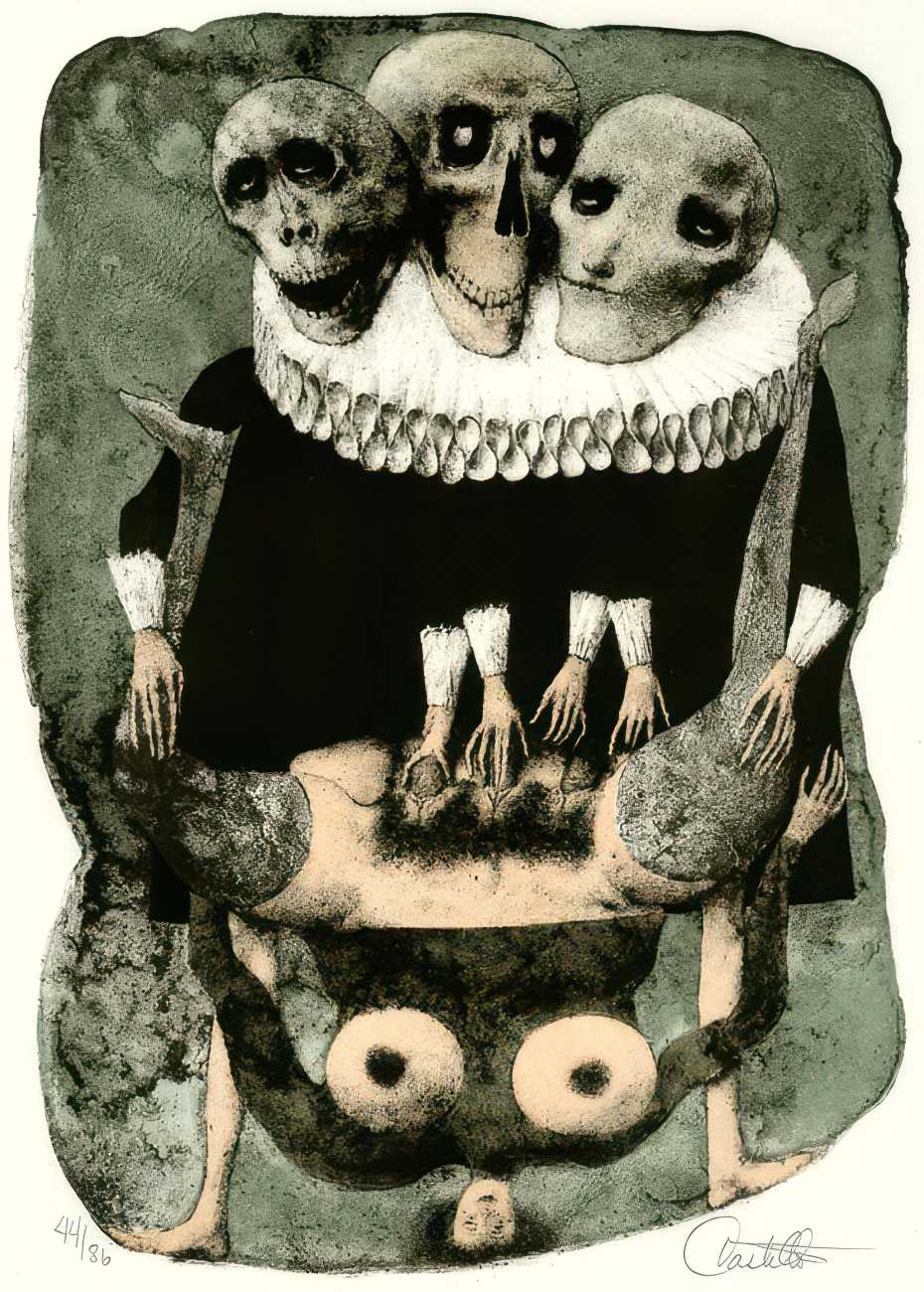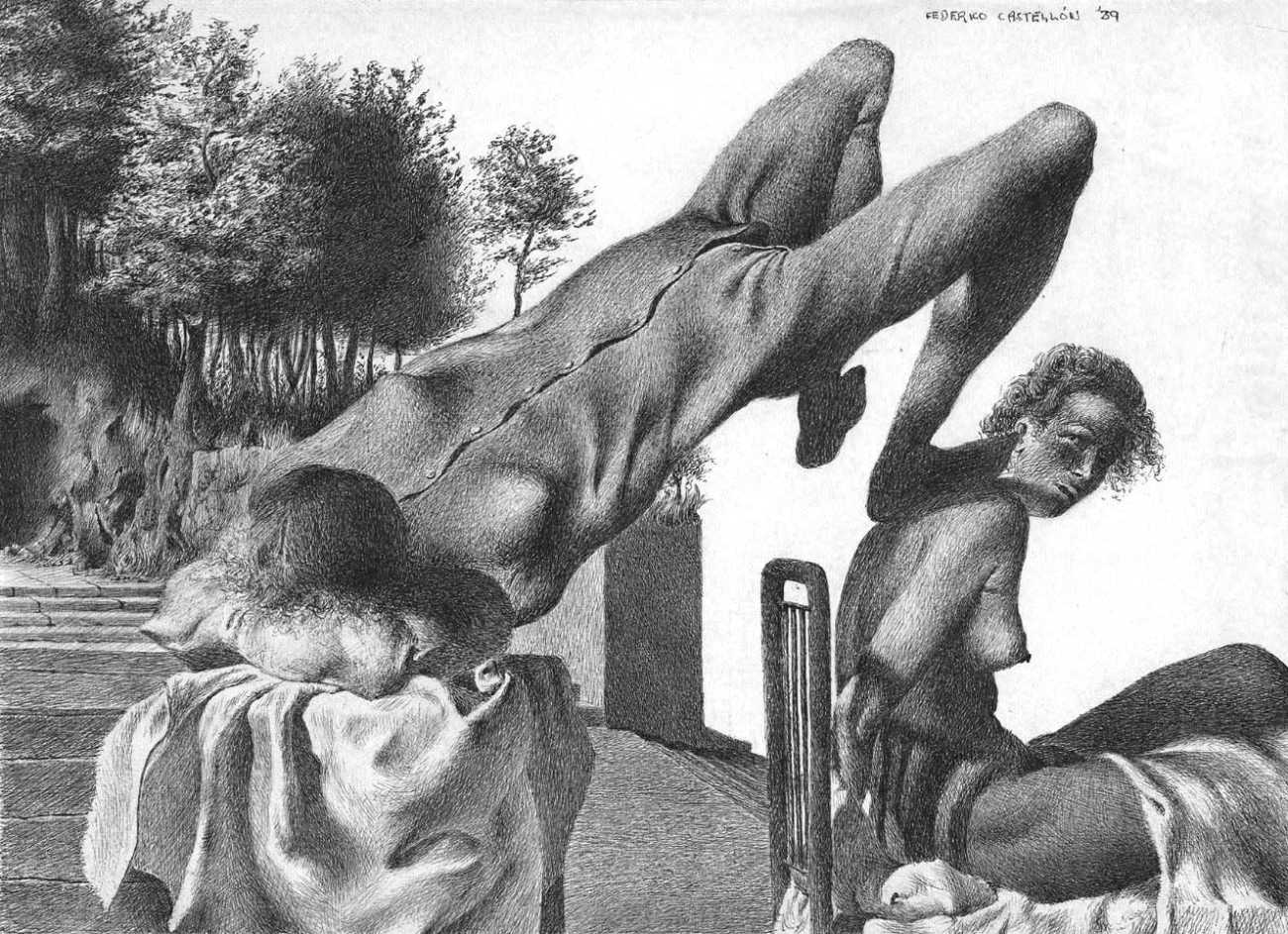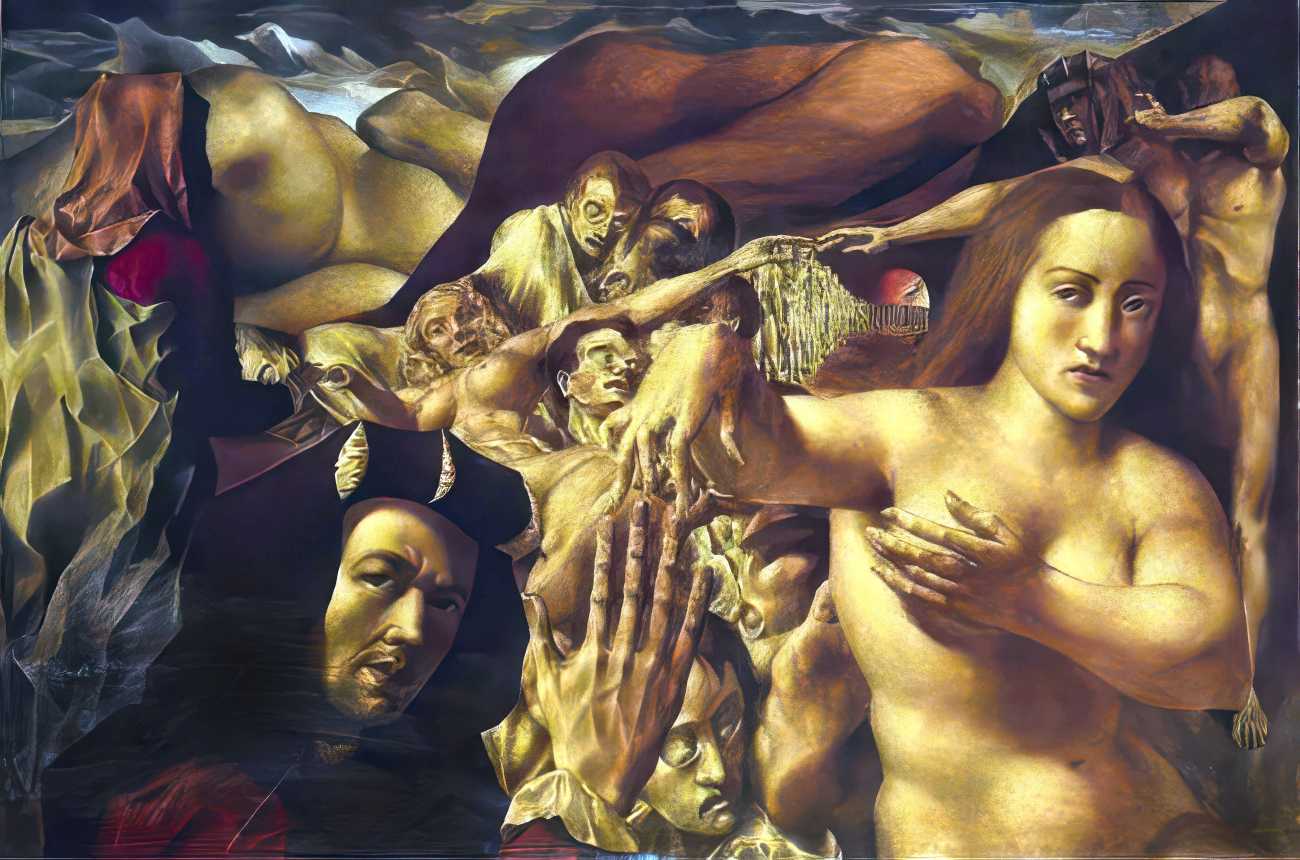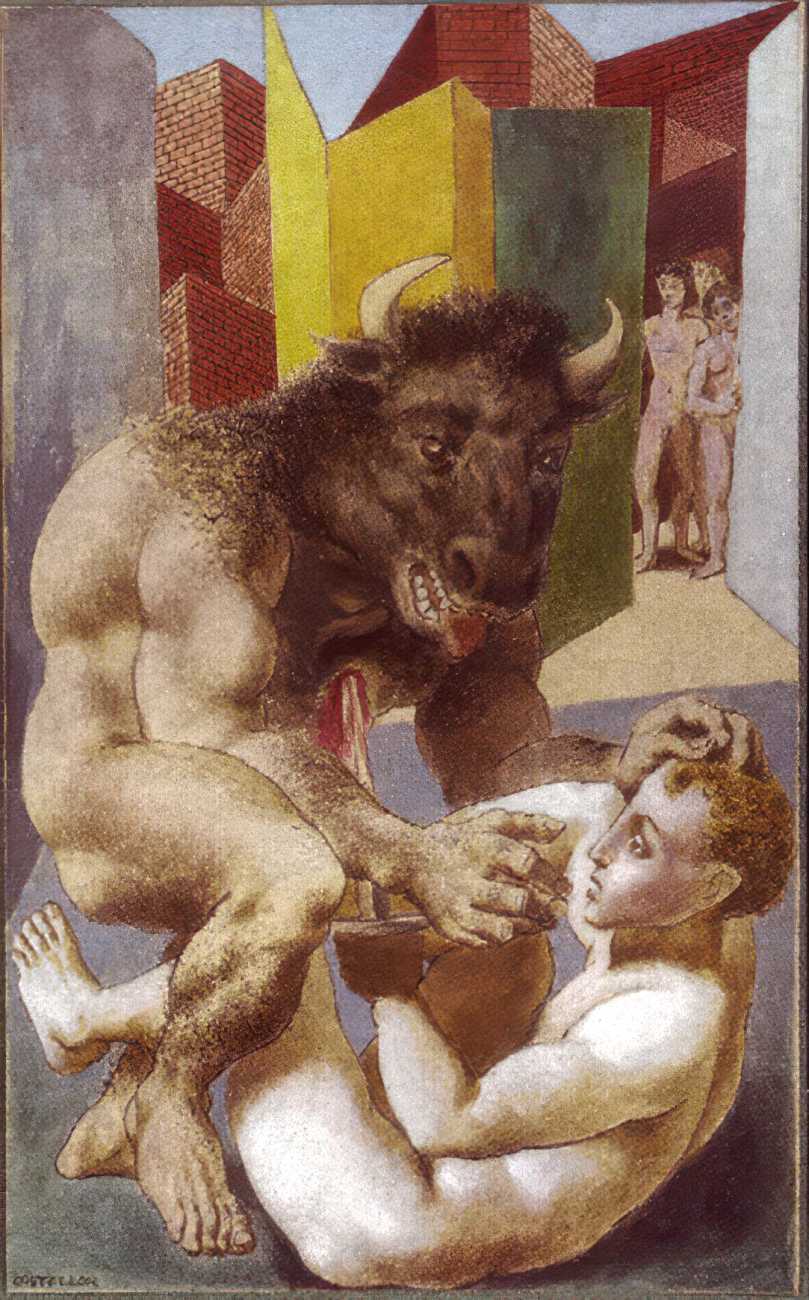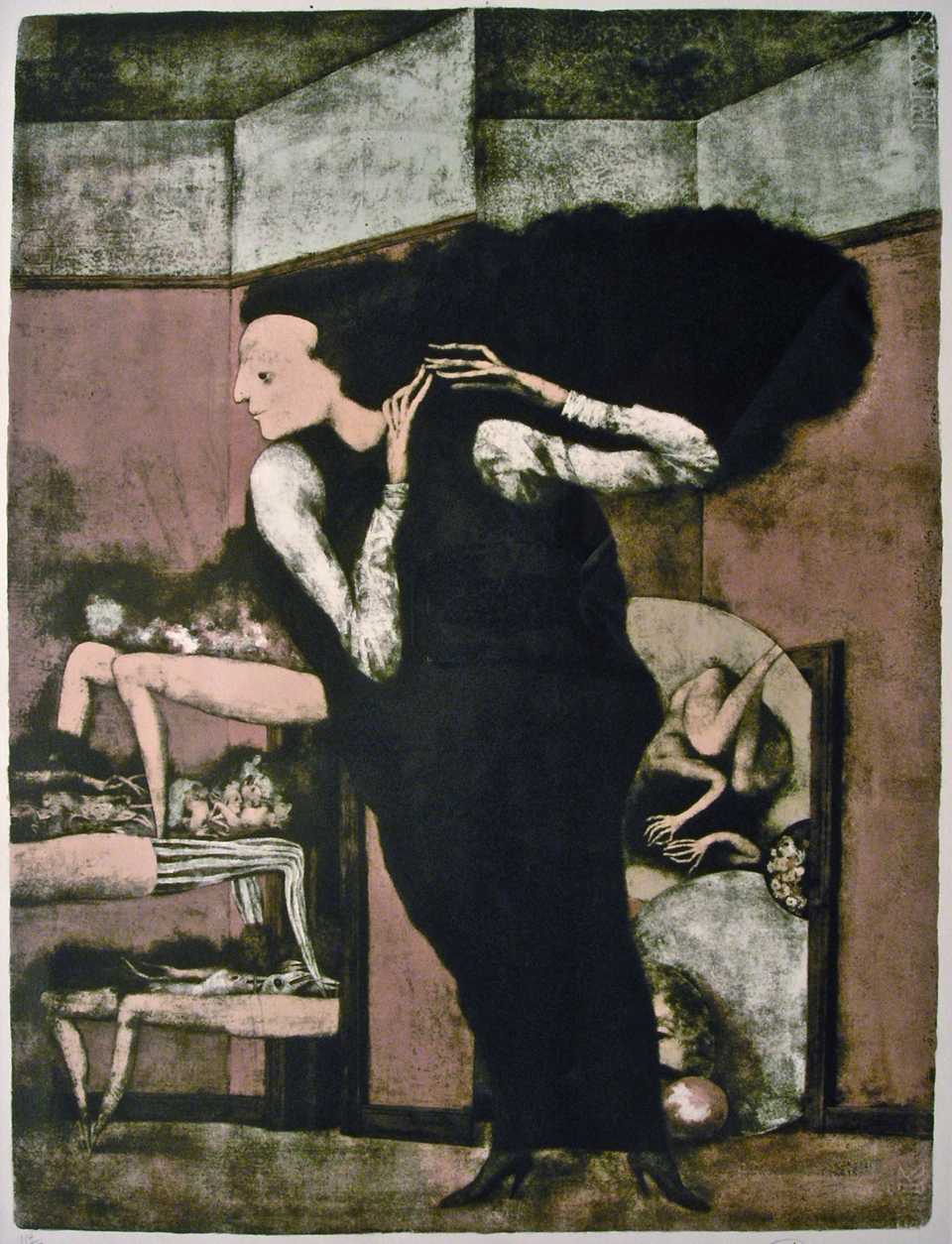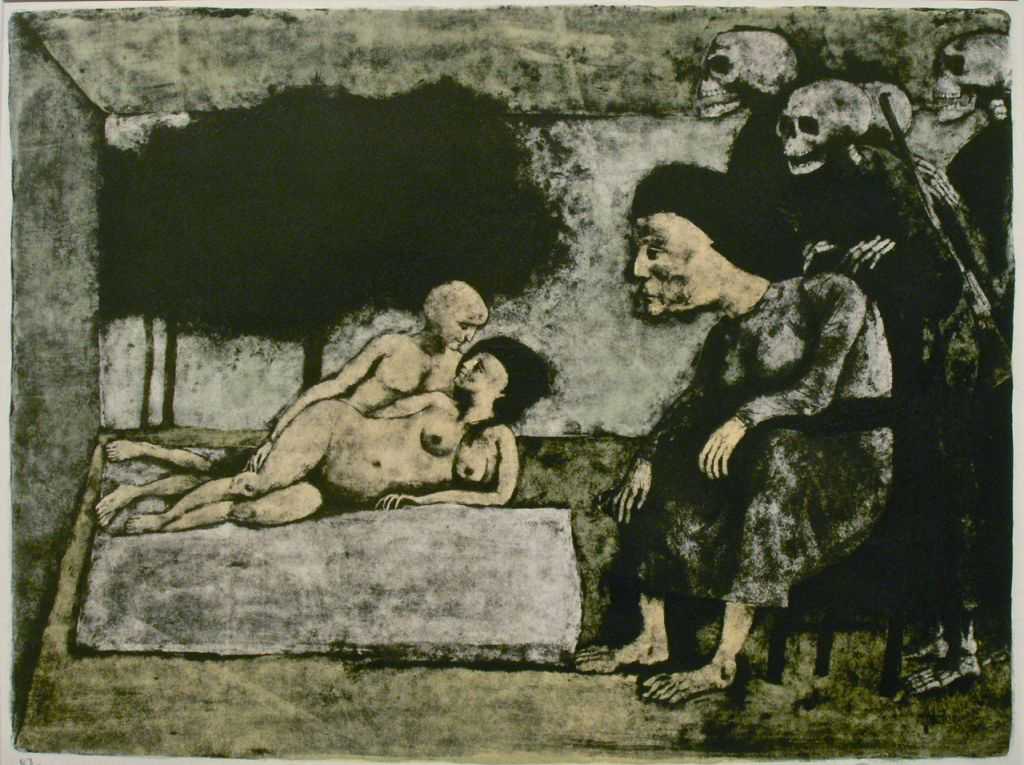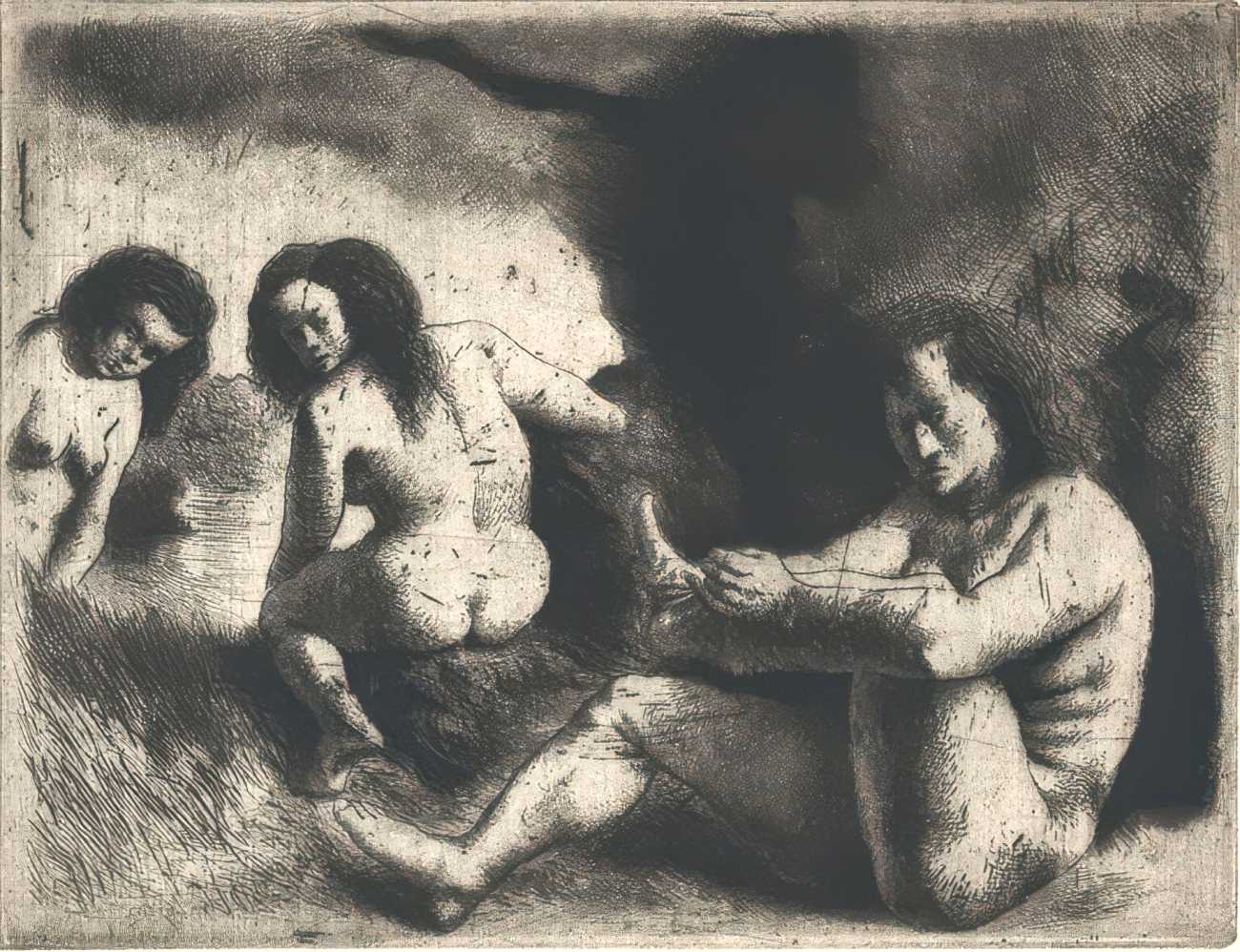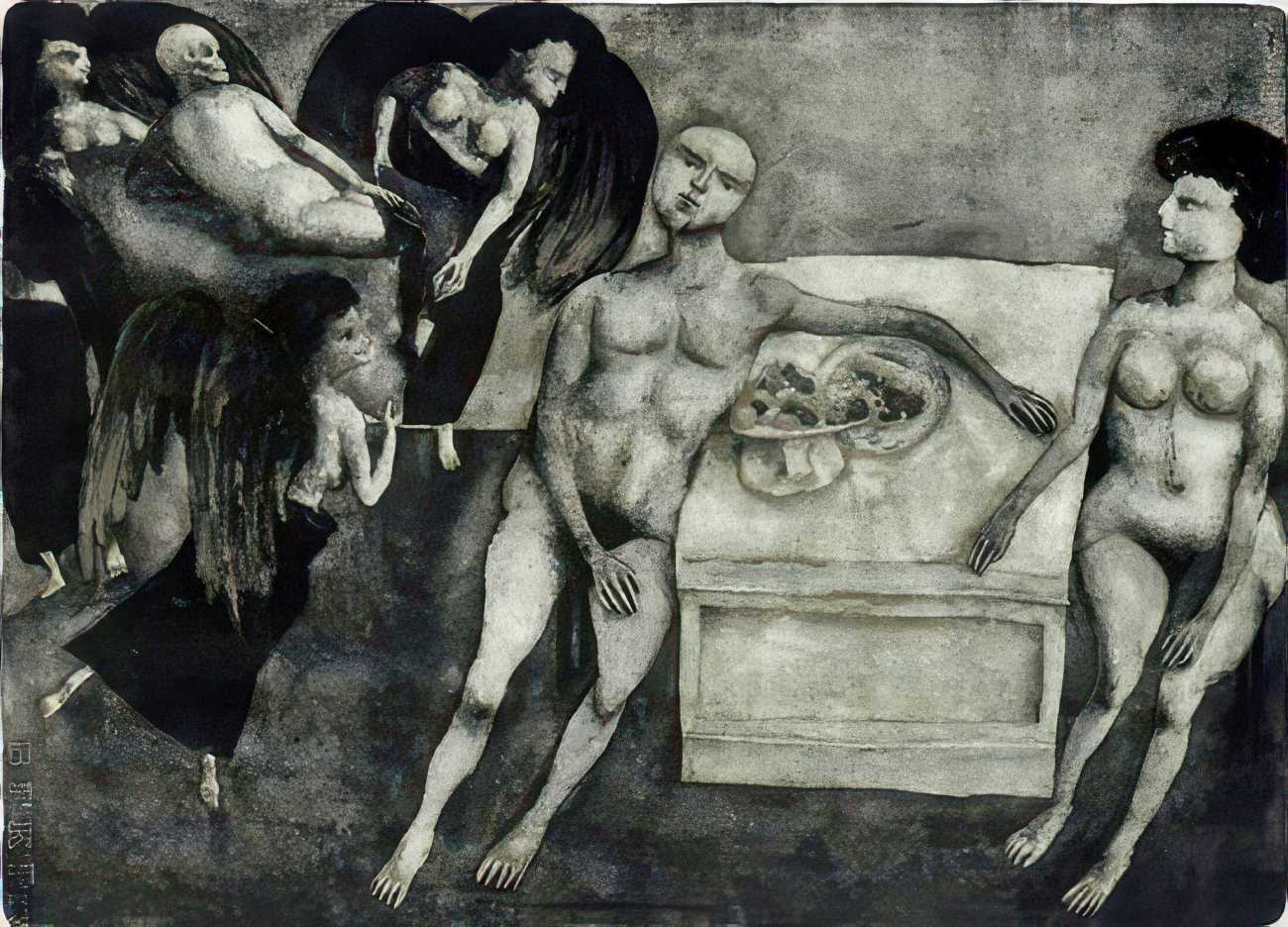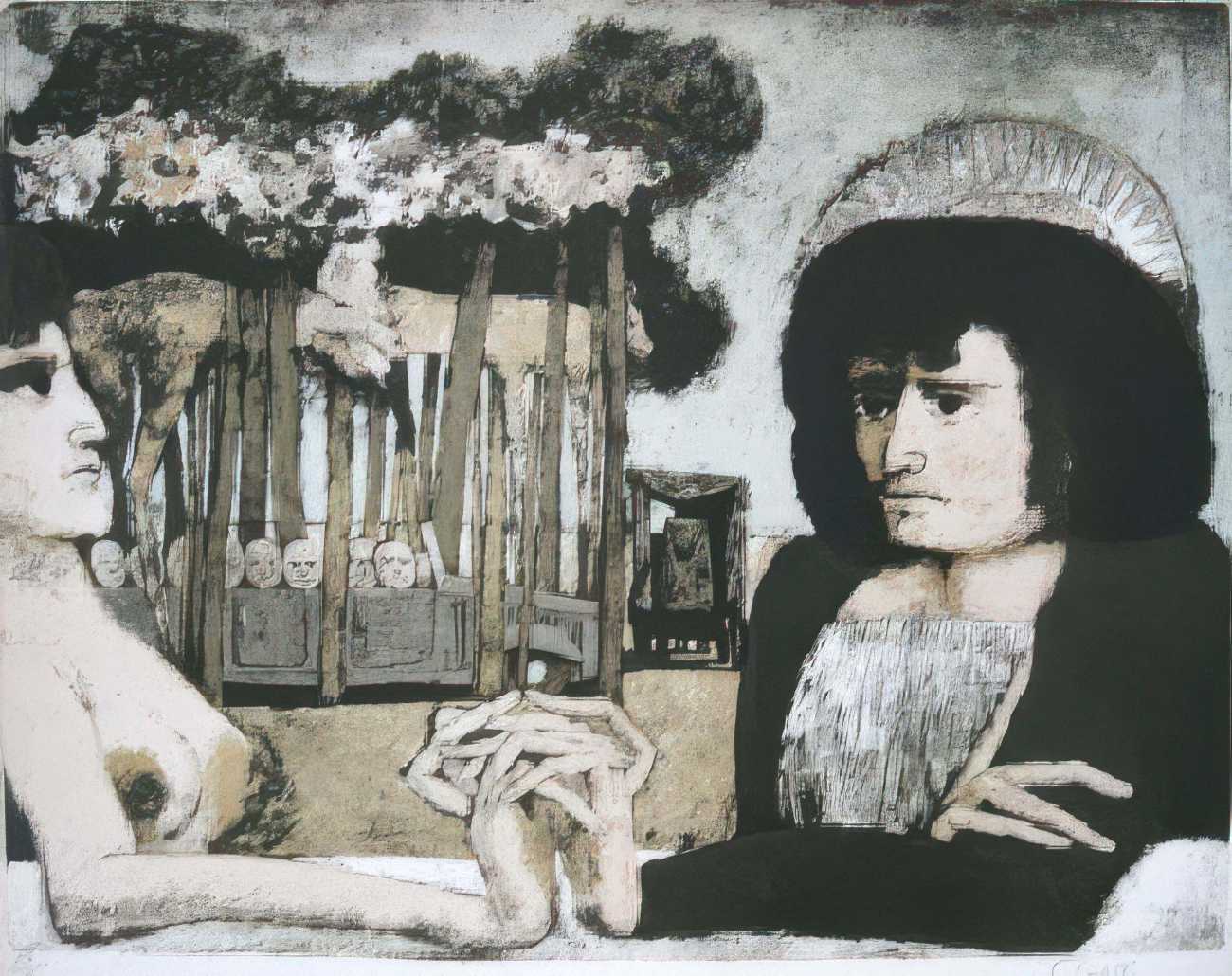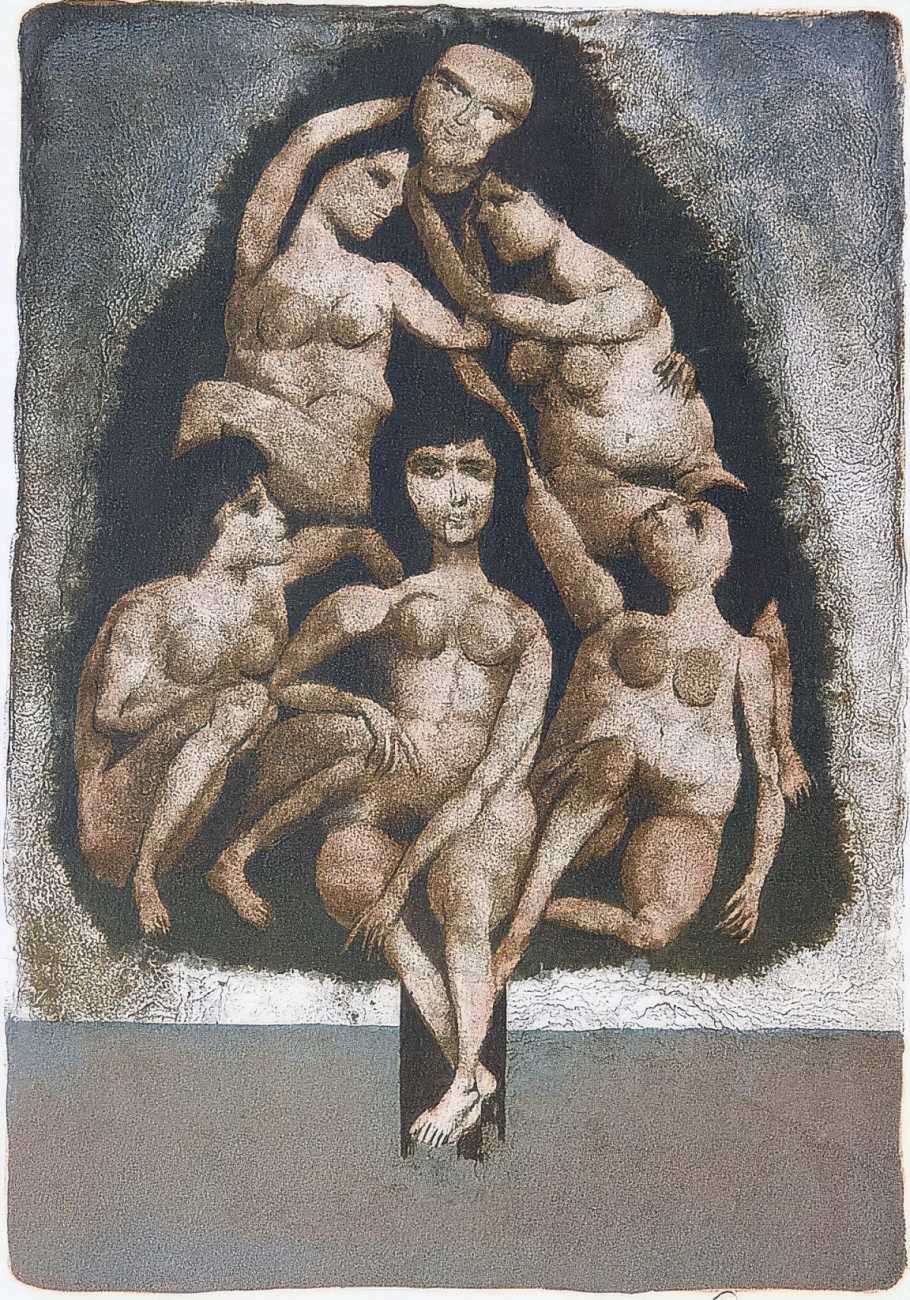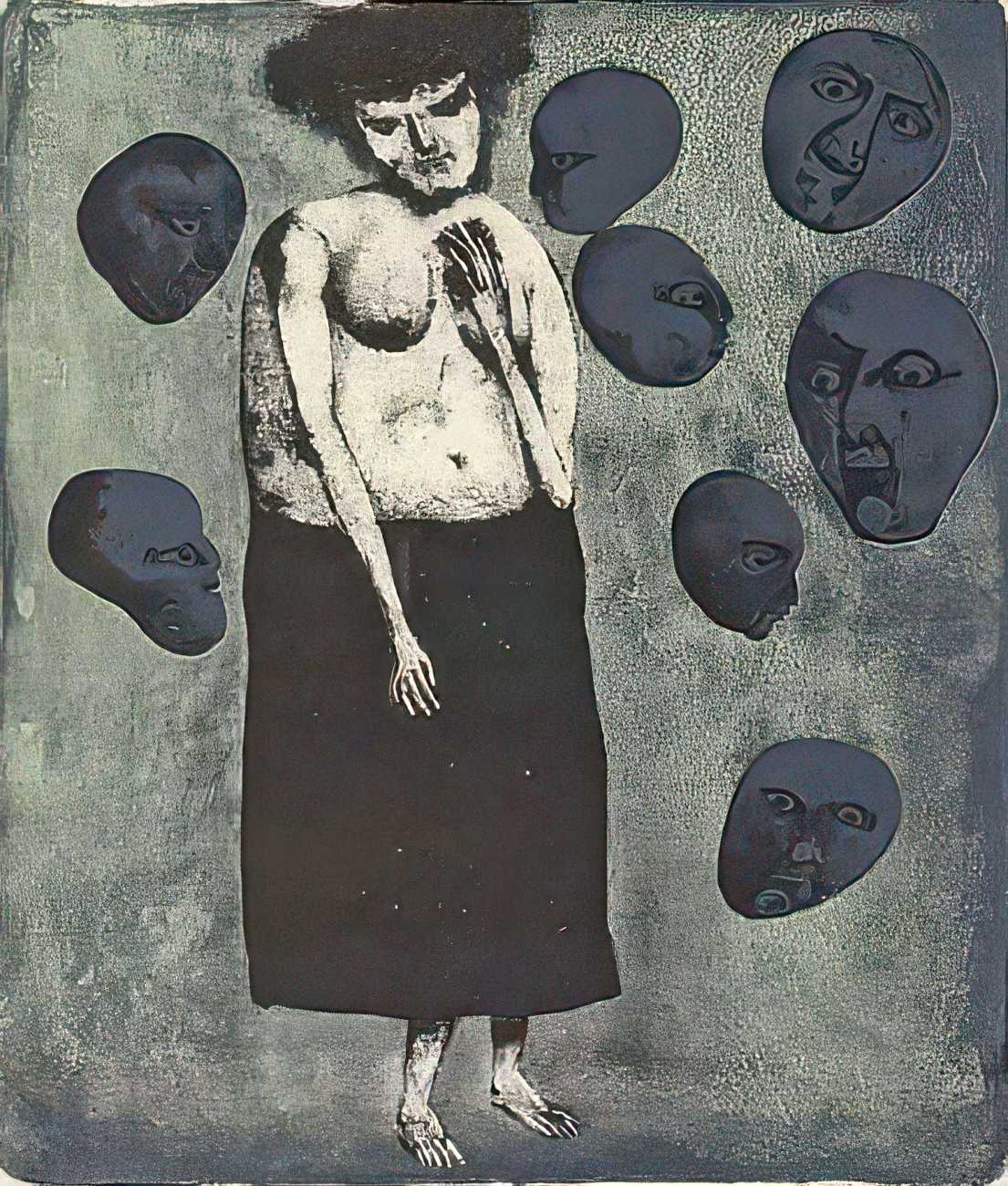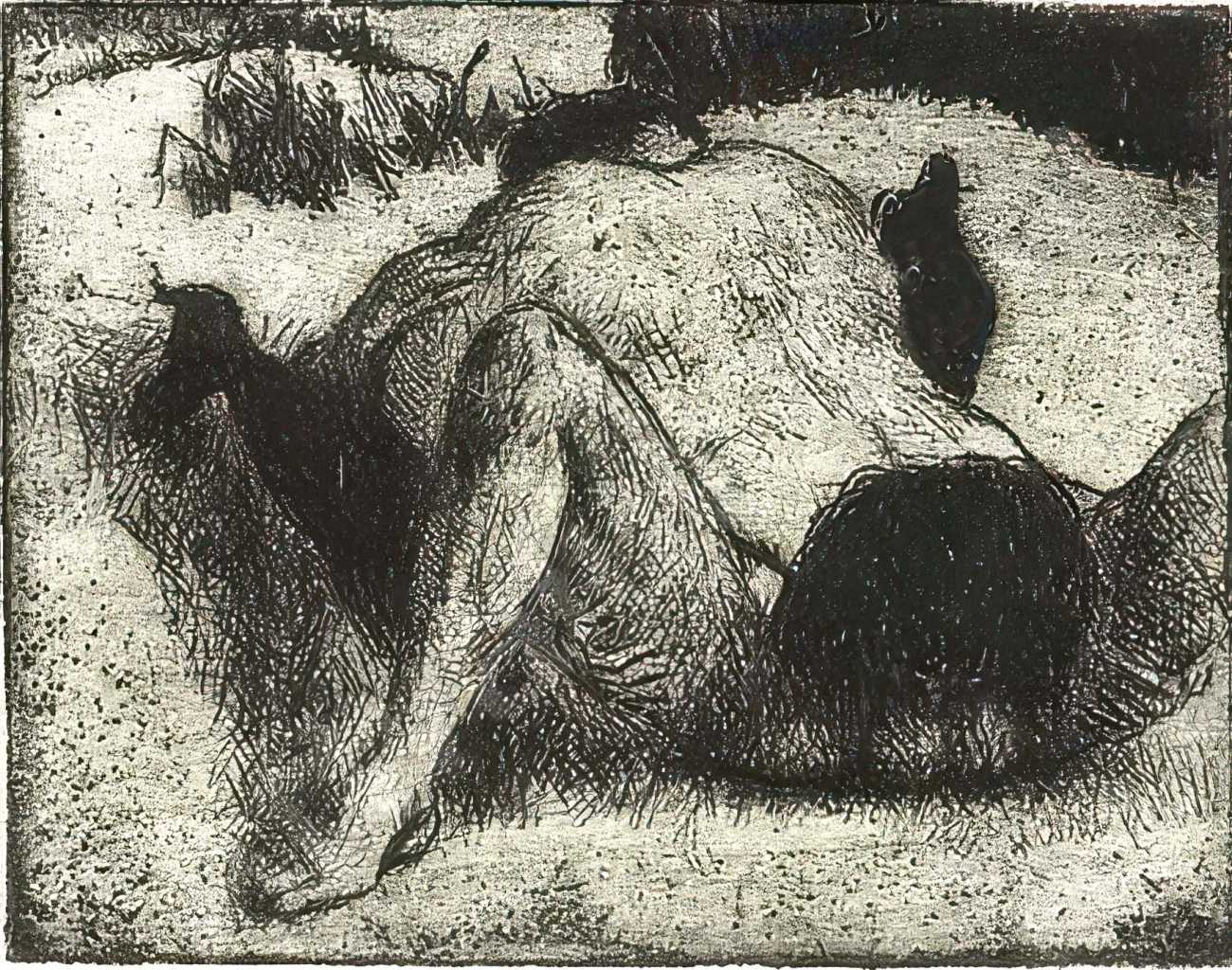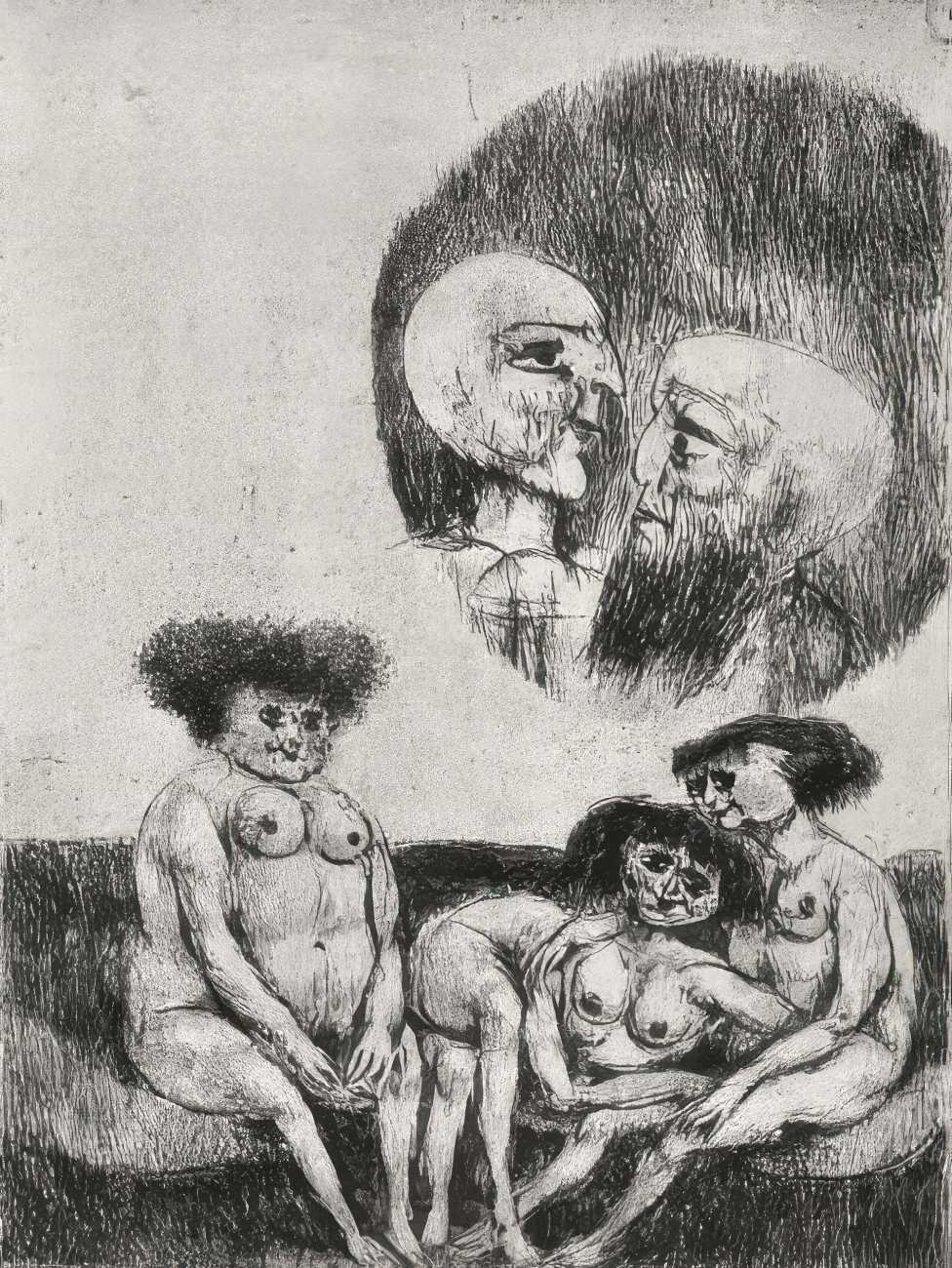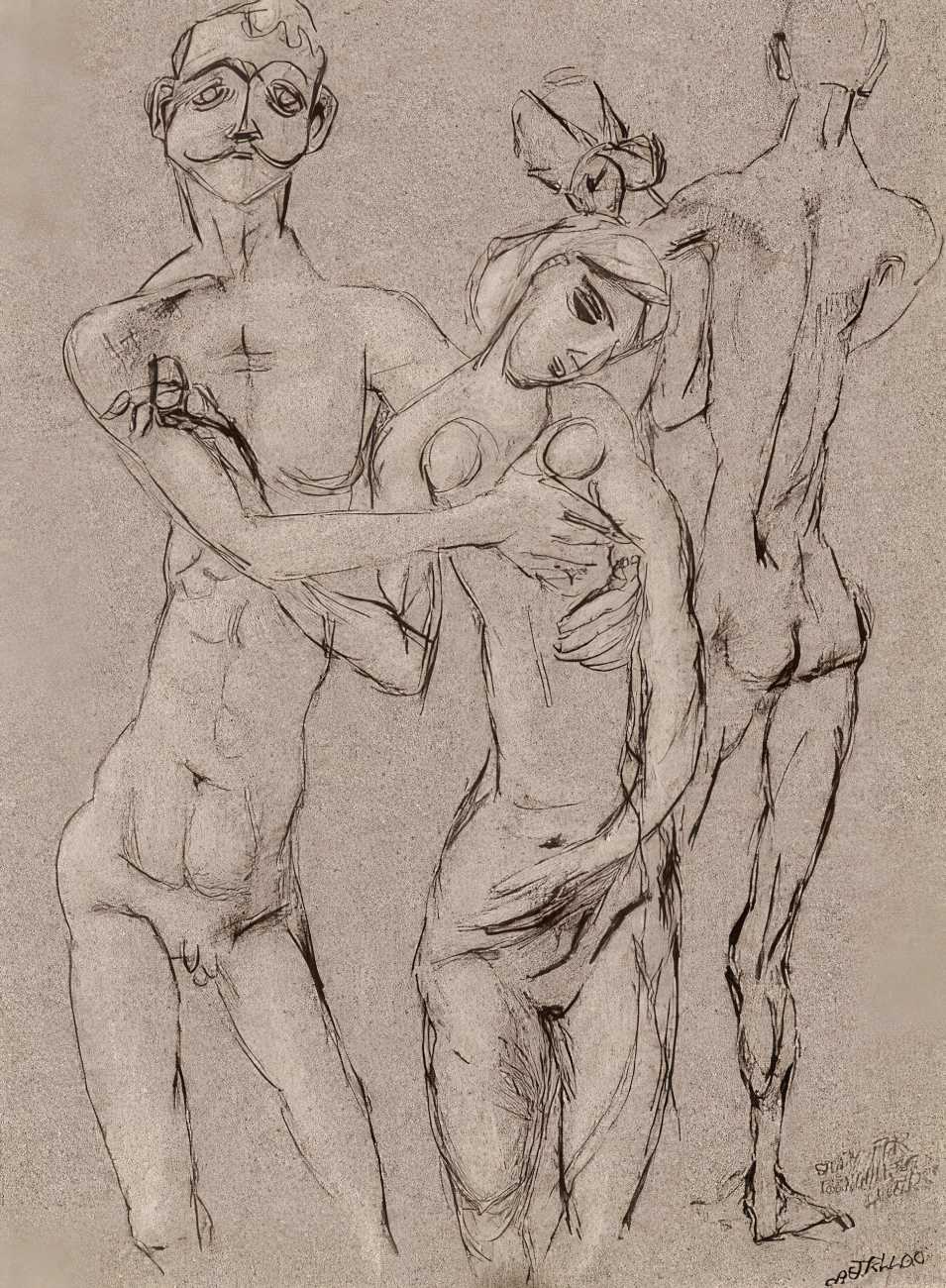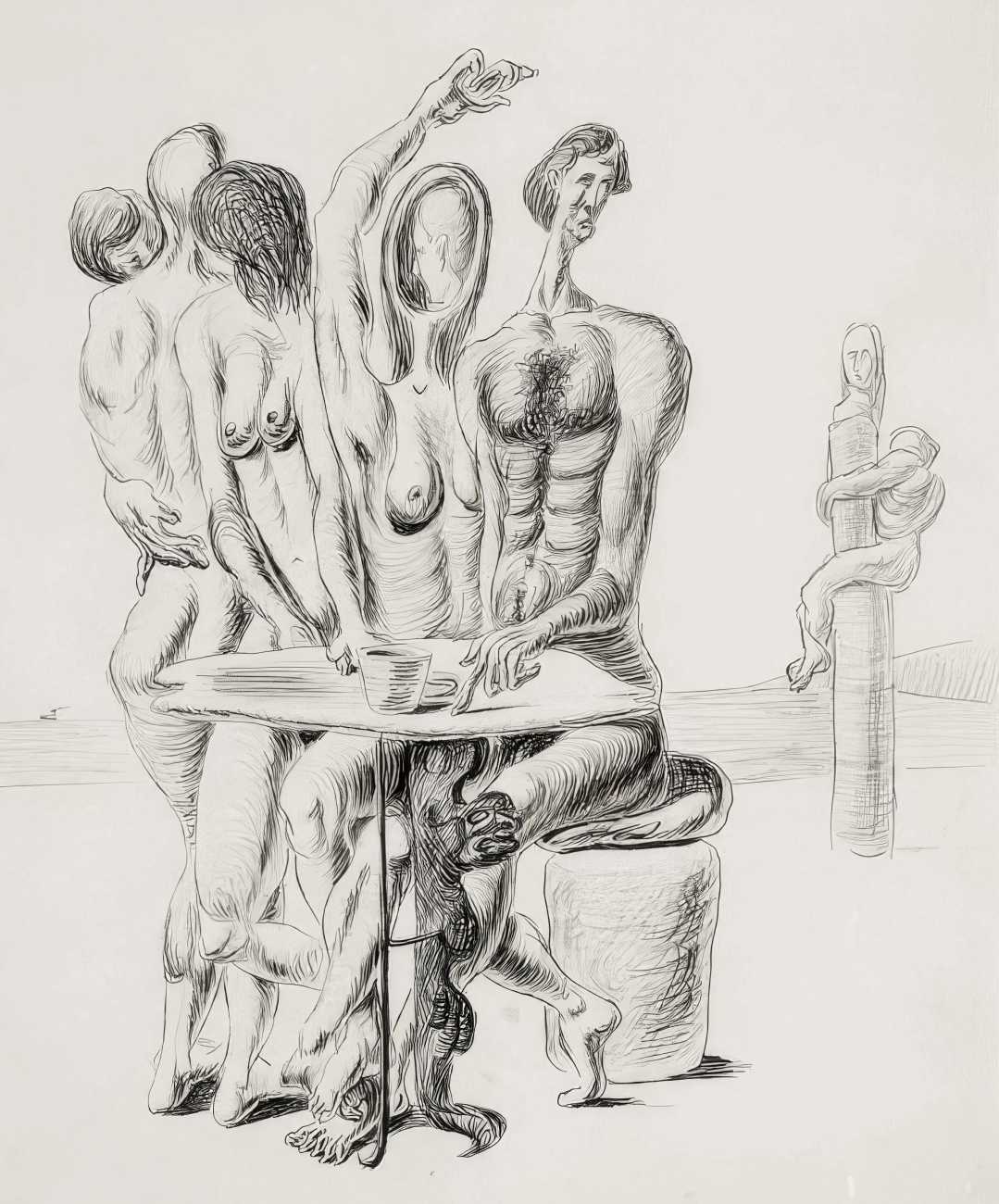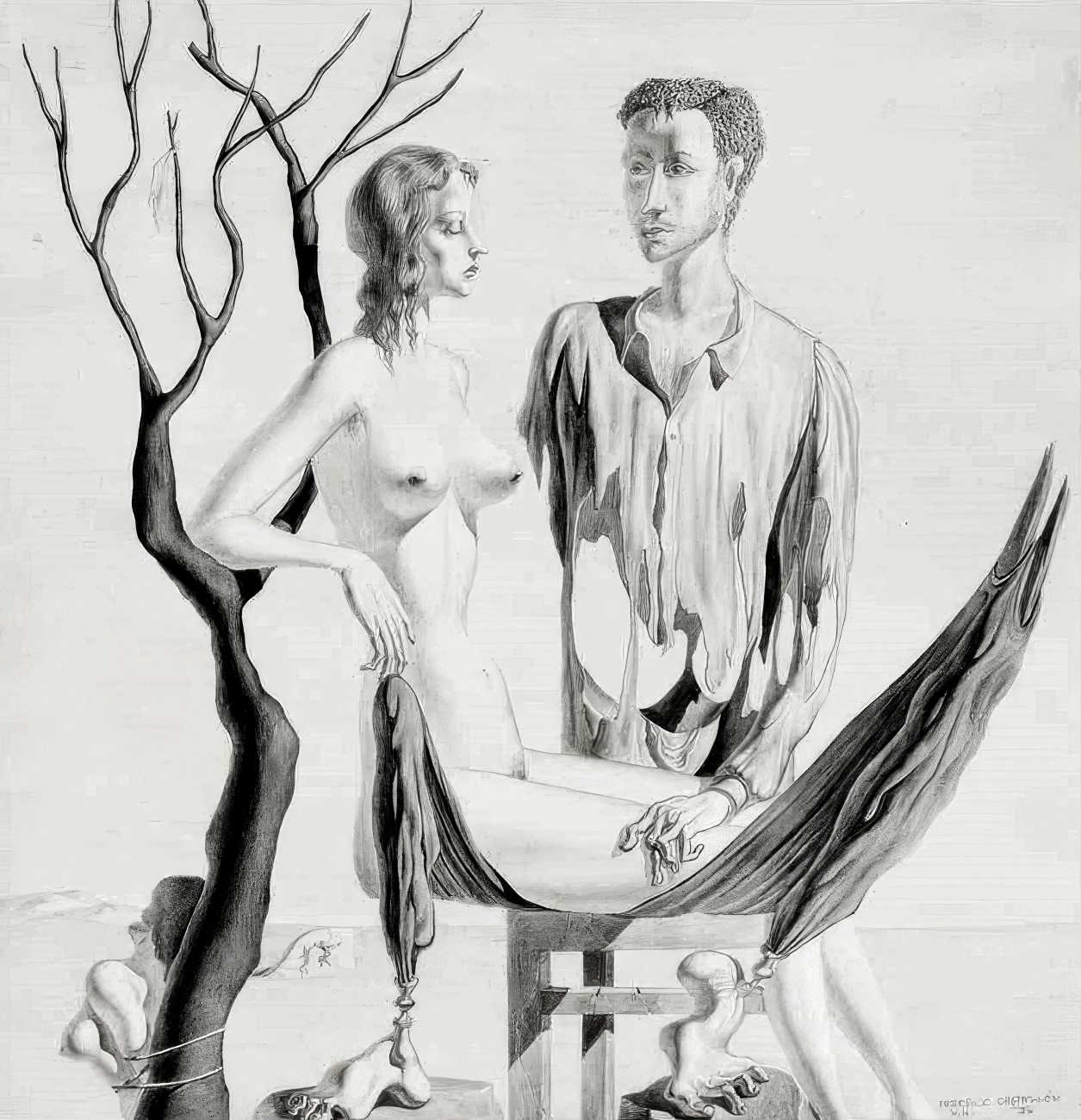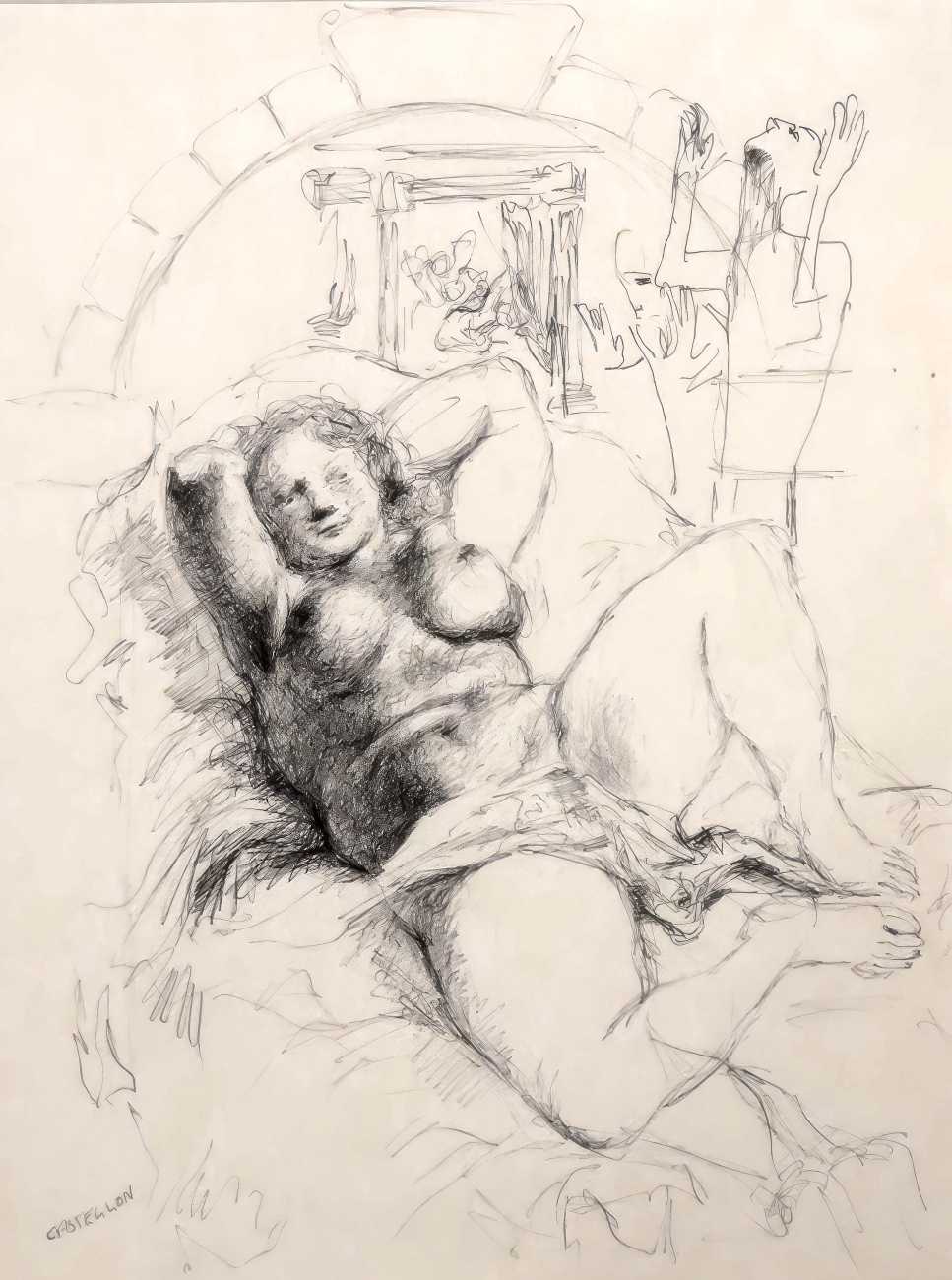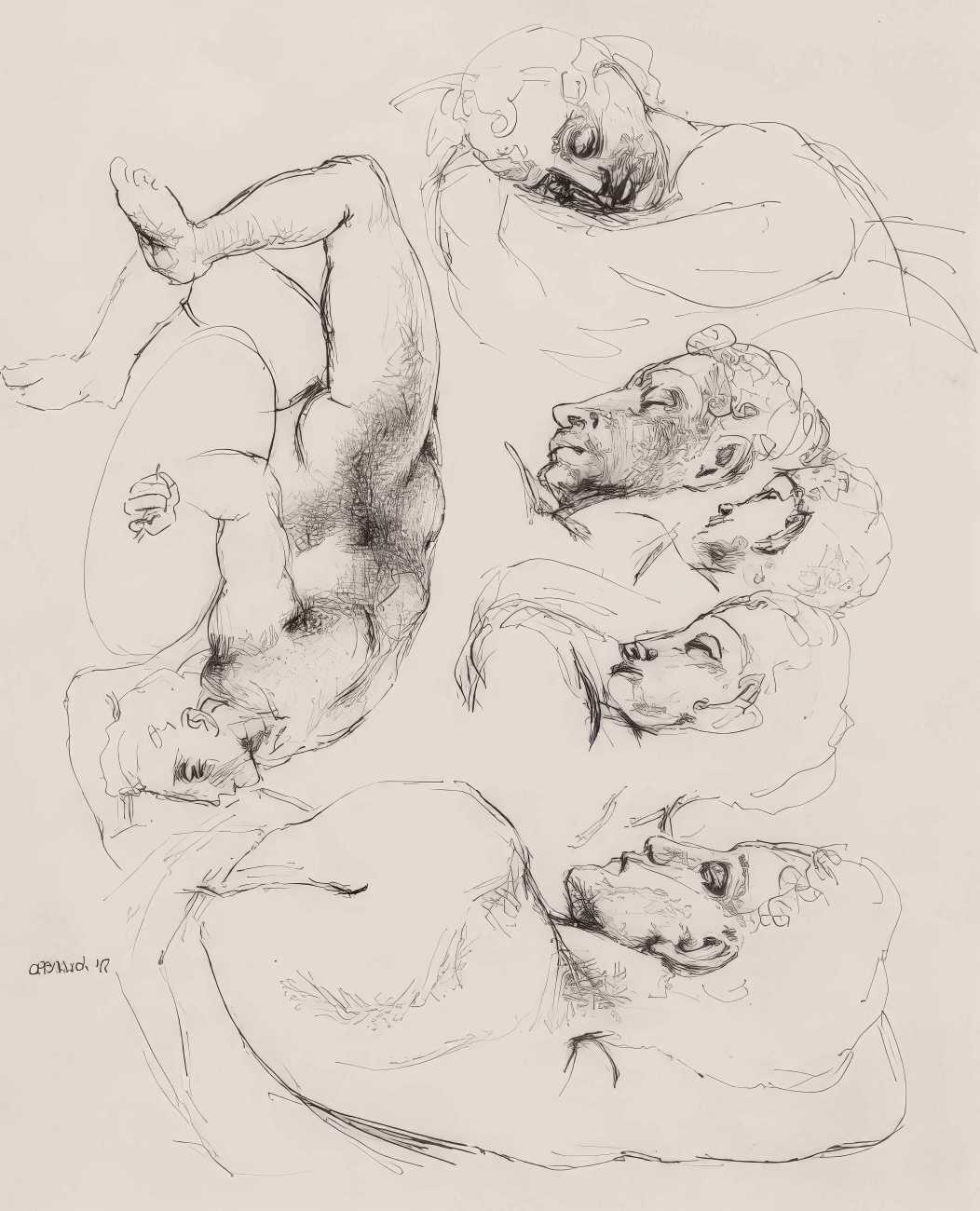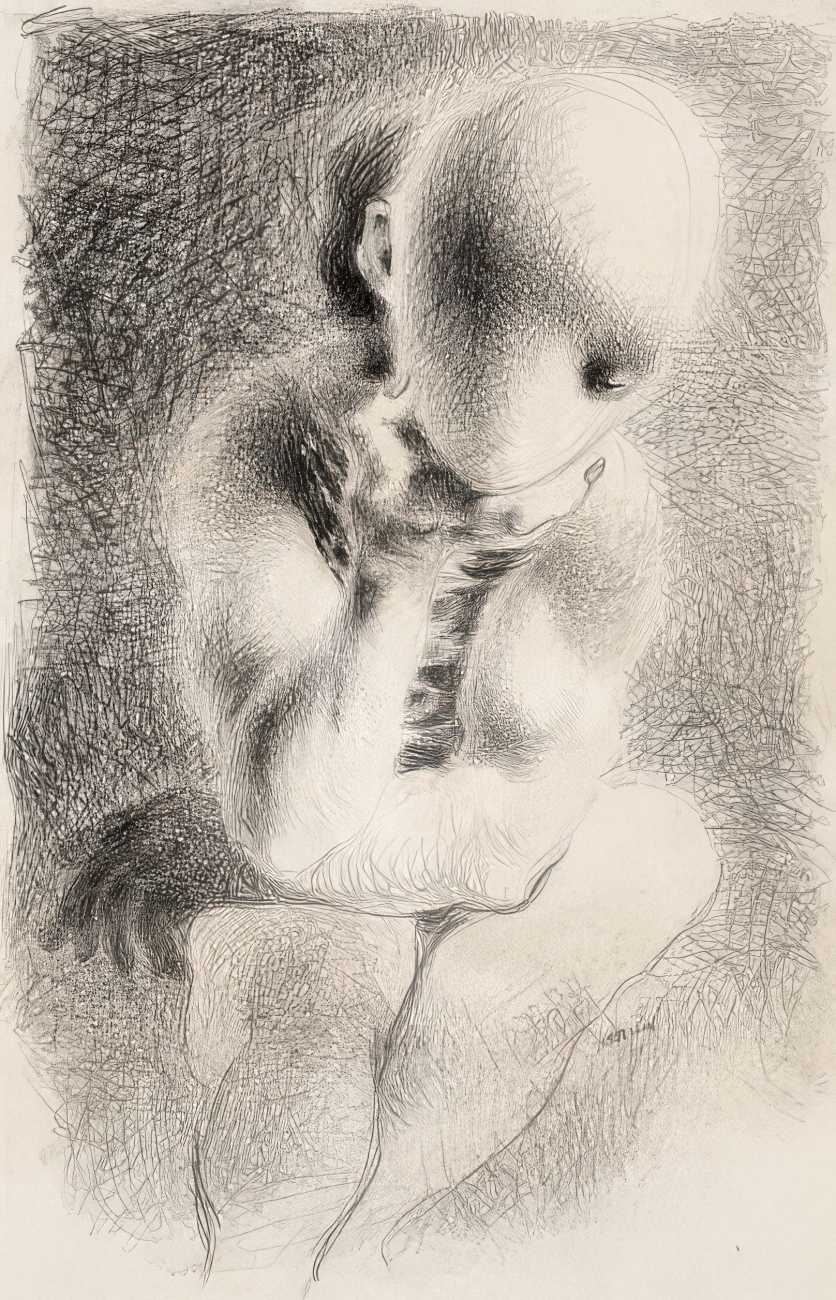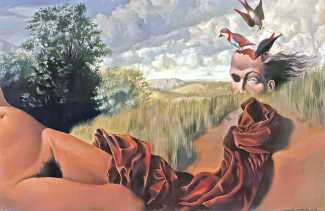
Federico Castellón’s paintings and prints explore a world in which erotic desire, psychological unease and surrealist fantasy frequently converge. From his early work in the 1930s to later compositions, he returned to the human body as a vehicle for investigating intimacy, fantasy and the stranger aspects of human relationships. His figures may be sensuous and monumental, but they are rarely straightforwardly idealised, often appearing distorted, mask-like or strangely detached from their surroundings.
Sexual encounters are presented in a variety of settings, from intimate groupings of intertwined figures to more theatrical scenes in which the human body becomes part of an elaborate visual puzzle. Castellón’s imagination moves freely between tenderness, humour and the grotesque. Lovers embrace or recline together, while other compositions introduce unsettling juxtapositions, hybrid creatures and figures whose exaggerated proportions lend them an almost sculptural presence. The eroticism is often inseparable from a sense of mystery, as though the scenes belong to dreams whose logic remains just beyond reach.
These works also demonstrate the range of Castellón’s artistic language. Some compositions employ muted colours, soft modelling and carefully arranged settings, recalling the atmosphere of old master painting while retaining a distinctly modern, surrealist sensibility. Others rely on stark contrasts of light and shadow, rough textures and boldly simplified forms. In his prints, the grain of the surface and the expressive force of the line can make the figures seem to emerge from darkness, intensifying the ambiguity of their encounters.